LegendThe Song cypress
An old cypress by the studio is said to have been planted in the Song garden of Shi Zhengzhi.
Source: No record proves its age
Suzhou, Jiangsu, China
网师园 · Wǎngshī Yuán
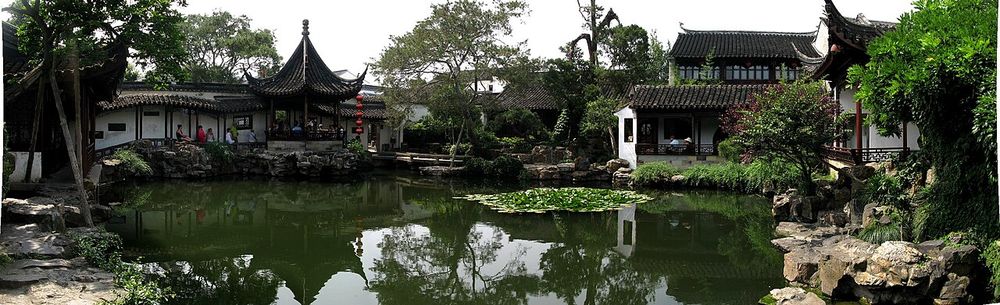
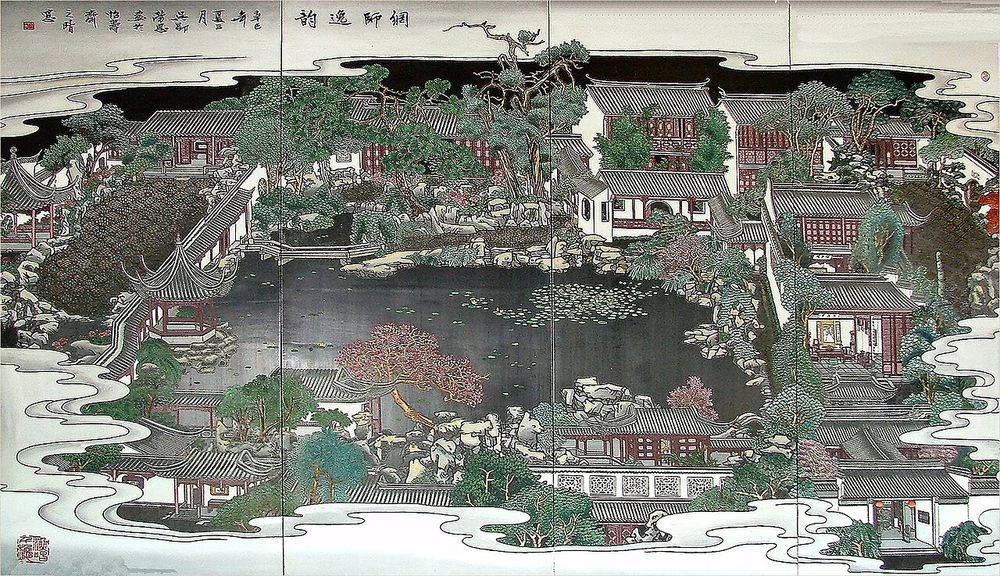
One of the smallest of the great Suzhou gardens, a house and a pond in half a hectare, so well made that a copy of one courtyard stands in the Metropolitan Museum in New York. Its name means the fisherman: a man who has left office to fish. A painter once kept a tiger here.
Photo: Fredlyfish4, CC BY-SA 4.0, Wikimedia Commons
In 1174, under the Southern Song (1127–1279), the official Shi Zhengzhi retired to Suzhou and built a house with a library called the Hall of Ten Thousand Volumes, and a garden he called the Fisherman's Retreat. Six hundred years later, about 1765, Song Zongyuan rebuilt the ruin and named it the Garden of the Master of the Nets. The lane outside was called Wangsi, and wangshi, master of the nets, sounds almost the same.
The fisherman is an old figure in Chinese poetry: the man who has given up office to live on the water, free. The garden is a reply to the world of officials, and also the home of officials: the house at the front for guests and ceremony, the garden behind for the family and for friends.
Part of Classical Gardens of Suzhou. Also there: Humble Administrator's Garden, Lingering Garden, Canglang Pavilion, Lion Grove Garden, Mountain Villa with Embracing Beauty, Garden of Cultivation, Couple's Retreat Garden, Retreat and Reflection Garden.
The day ticket covers the house and garden. The night garden has its own ticket. Astor Court is in New York.
| Part | Ticket |
|---|---|
| The house: sedan hall, brick gate, Hall of Ten Thousand Volumes | Day ticket |
| The central garden and pond | Day ticket |
| The Late Spring Cottage | Day ticket |
| Night garden | Own ticket |
| Astor Court, Metropolitan Museum of Art, New York | The Met's ticket |
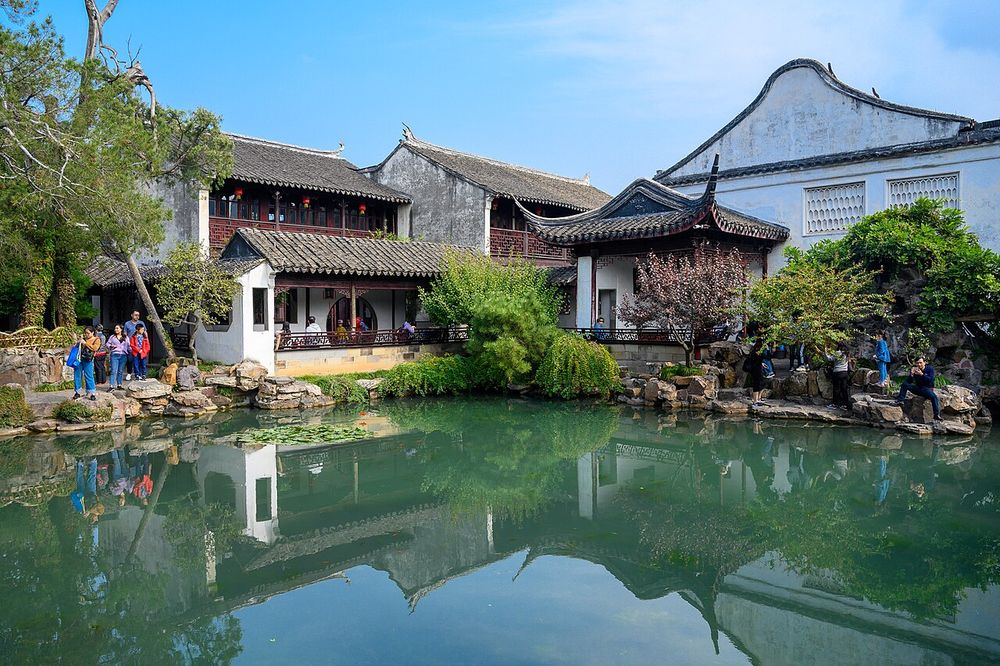
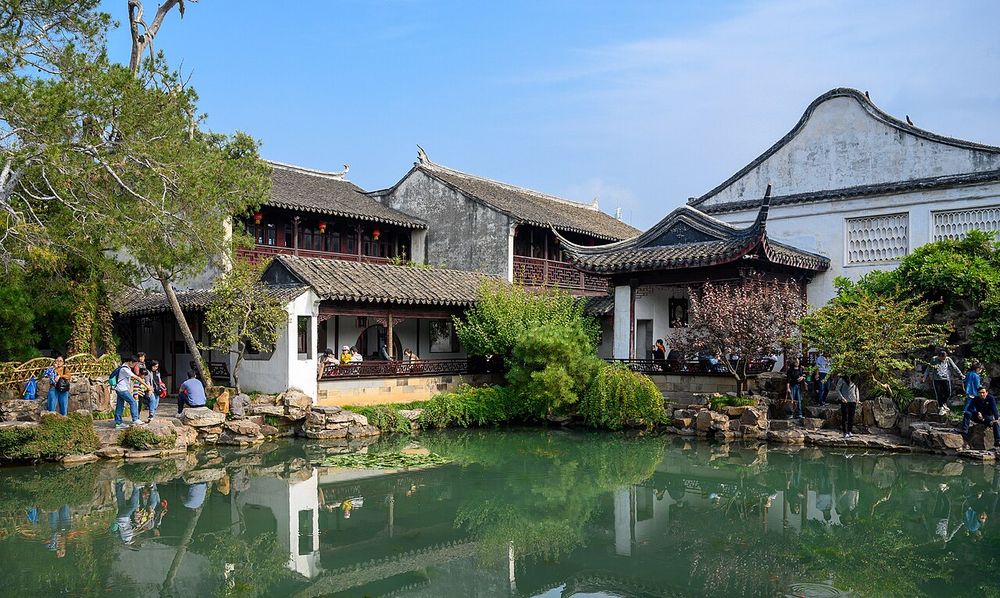
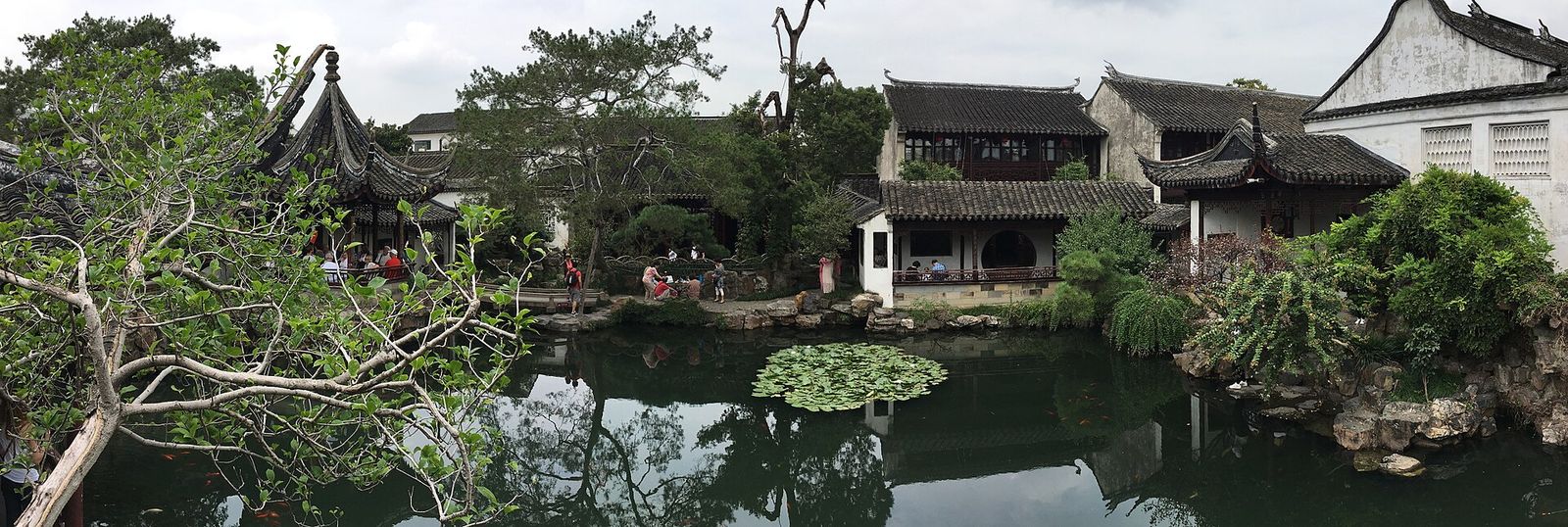
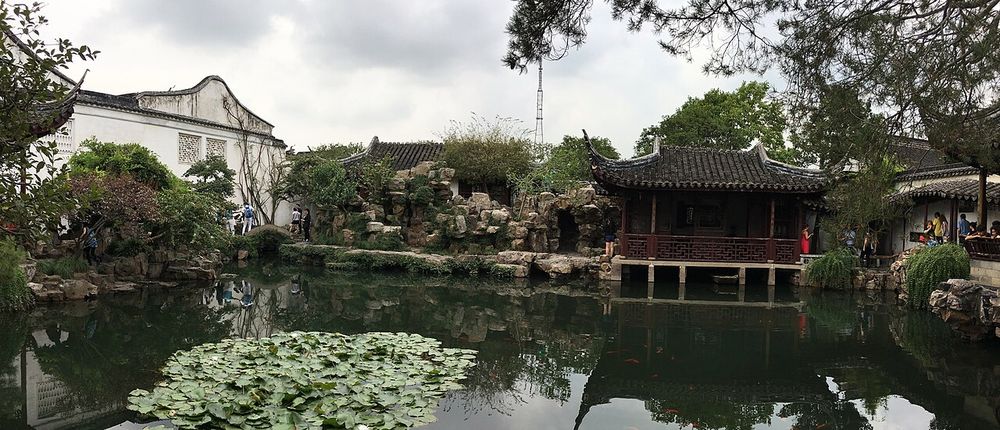
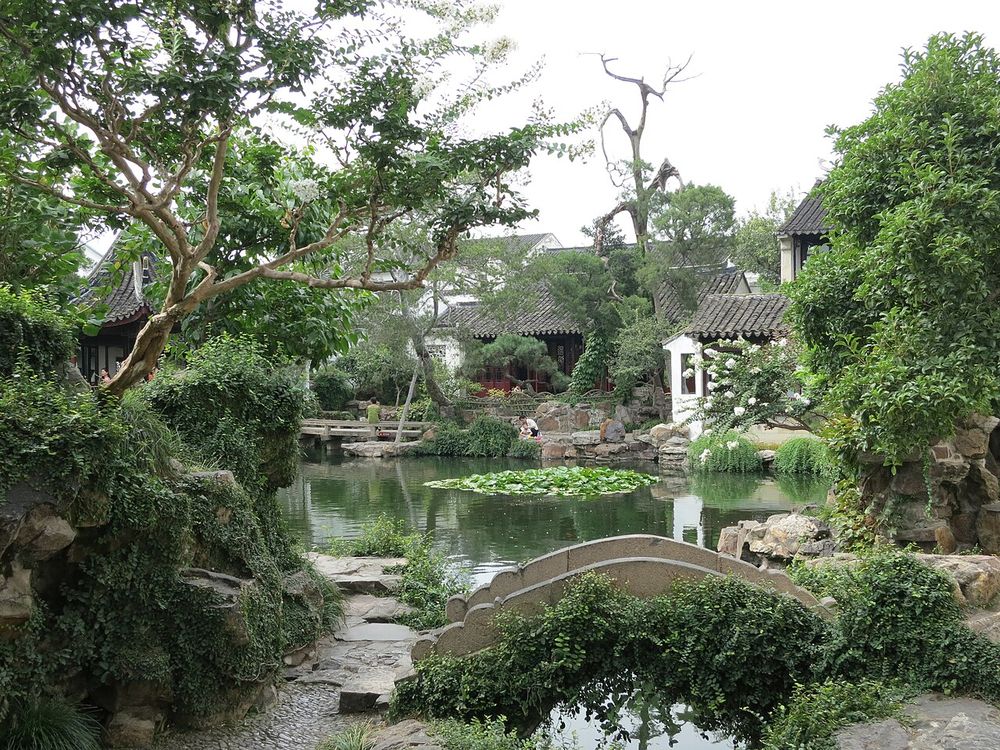
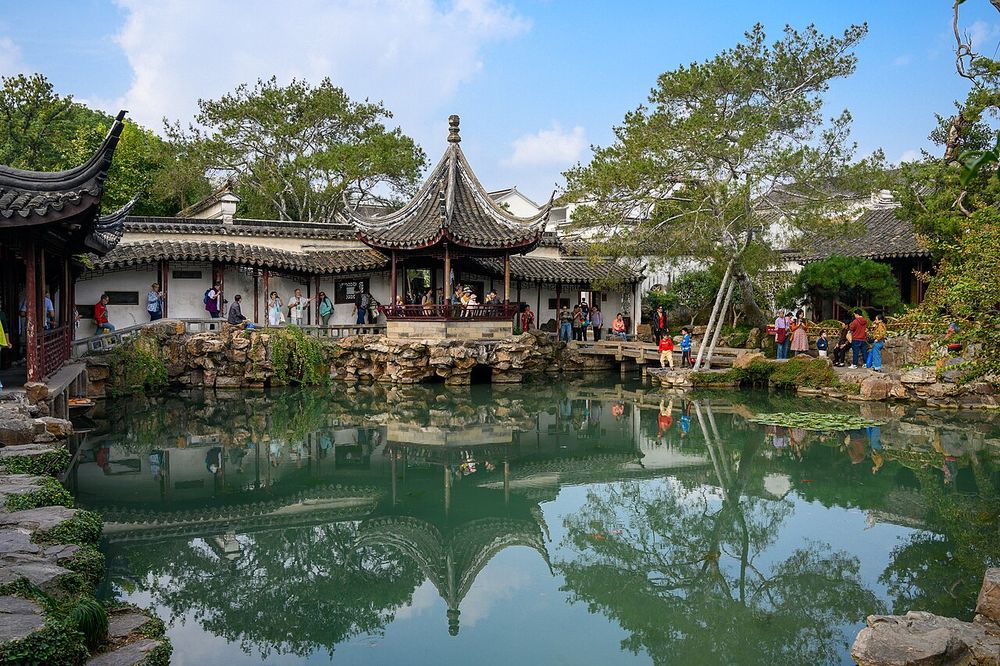
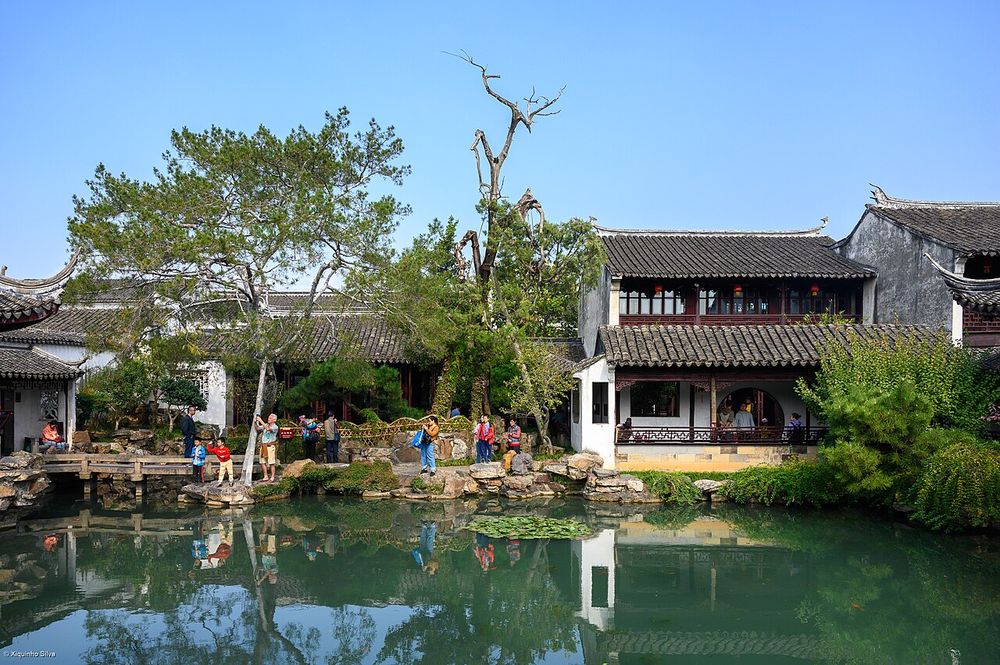
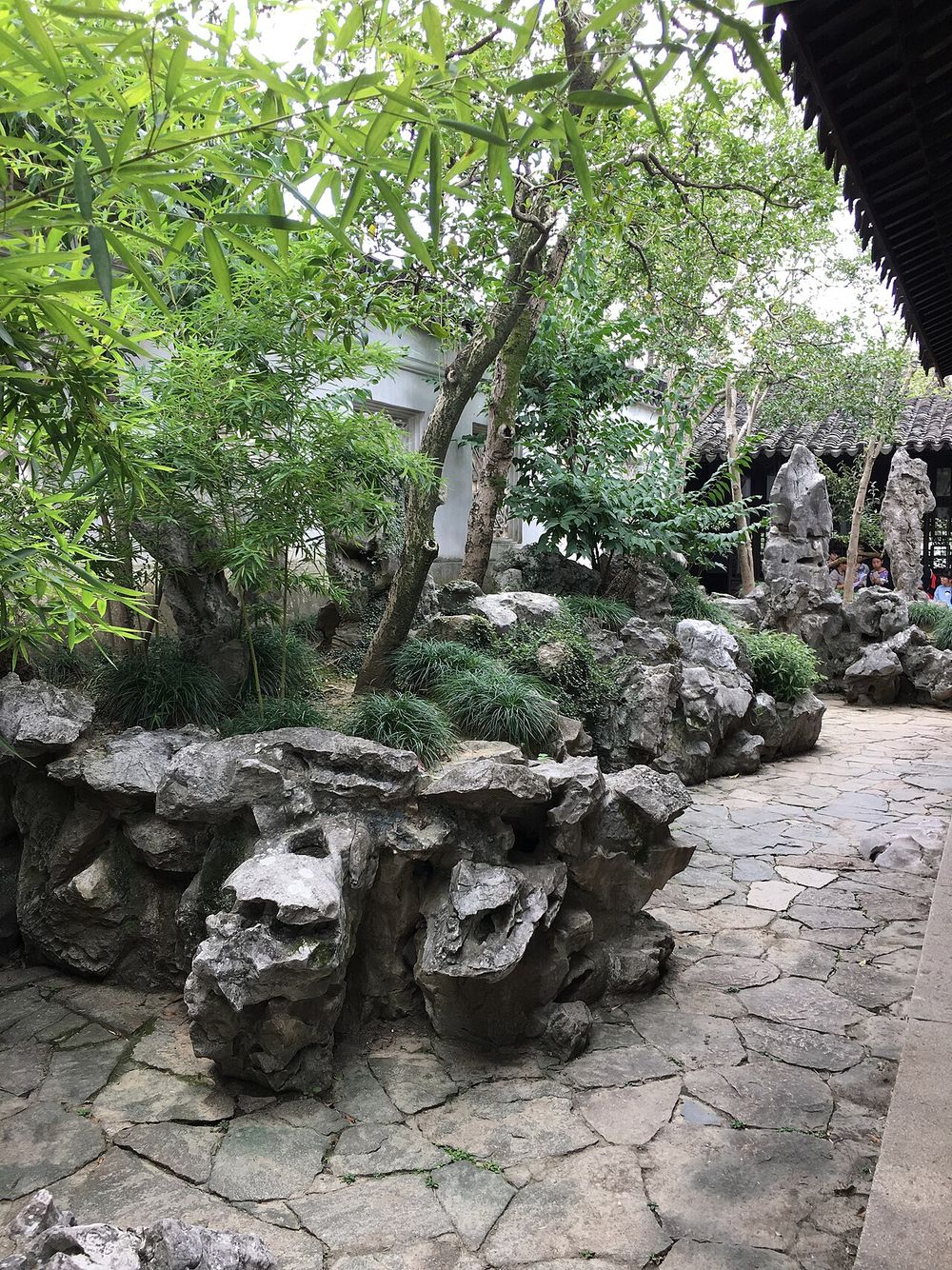
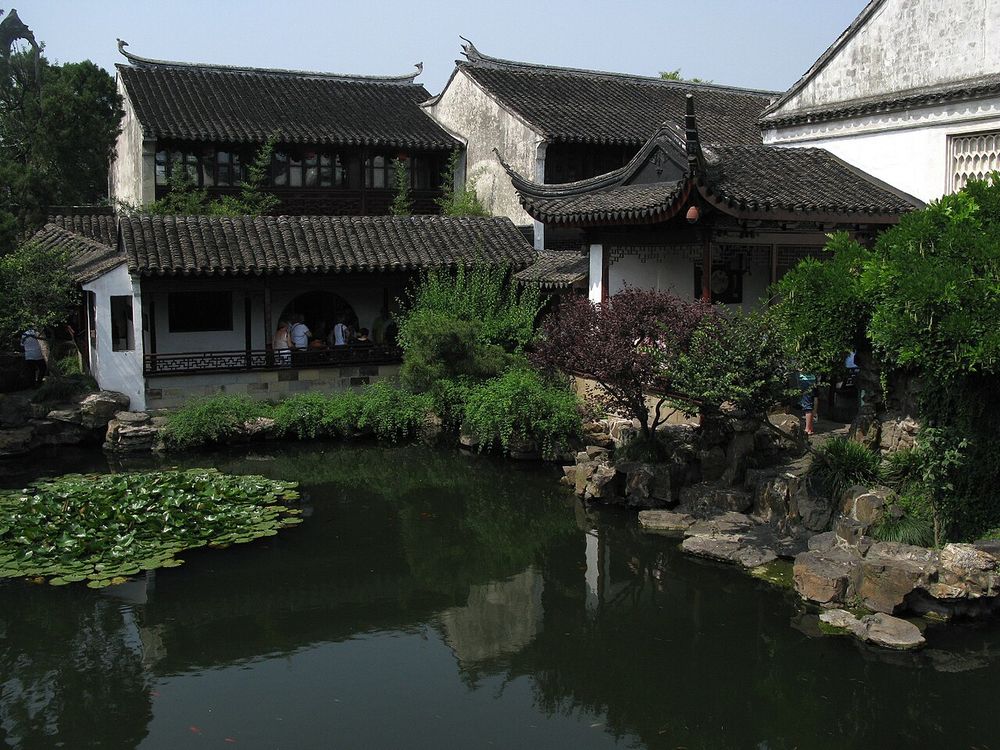
The pond is only about twenty metres across. But its banks are cut into small bays and inlets, so that you never see where it ends, and the buildings round it are kept low, so that the water seems wide. This is the trick of the whole garden: much in little.
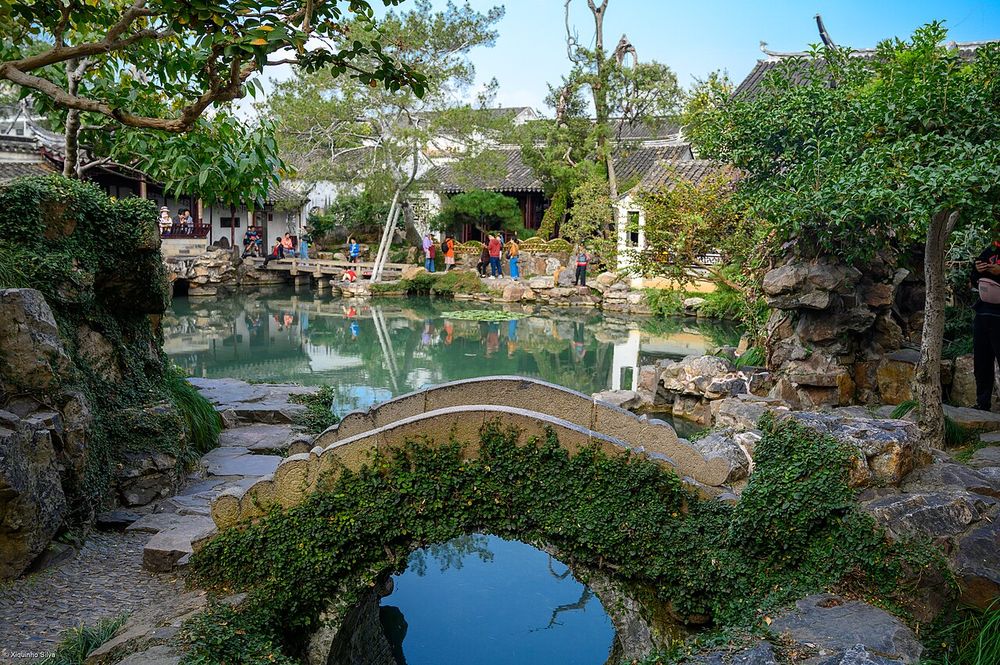
Look for the tiny stone bridge in the south-east corner. It has three steps and is often called the smallest arched bridge in the Suzhou gardens.
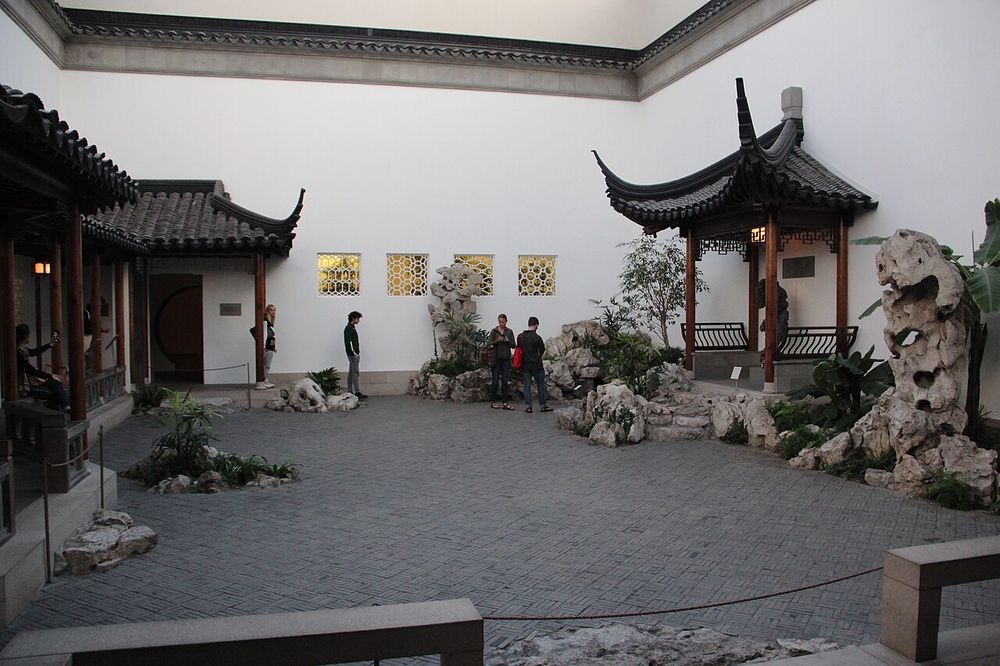
In 1980 the Metropolitan Museum of Art in New York asked Suzhou to build a Chinese courtyard in its galleries. They chose the Late Spring Cottage, the peony court at the back of this garden. Suzhou craftsmen made the pieces at home and assembled them in New York. Astor Court opened in 1981.
"The Master of the Nets was a fisherman." He was an official who liked the idea of fishing.
"It is Song." Only the history is. What you see was laid out in the Qing (1644–1912) and repaired in the 1940s and 50s.
"Small means quick." It is small, but every corner is meant to be looked at slowly. Sit down.
We searched Chinese sources first for this list, then English ones.
Go in through the house, round the pond, and out through the peony court. An hour is enough; two is better.
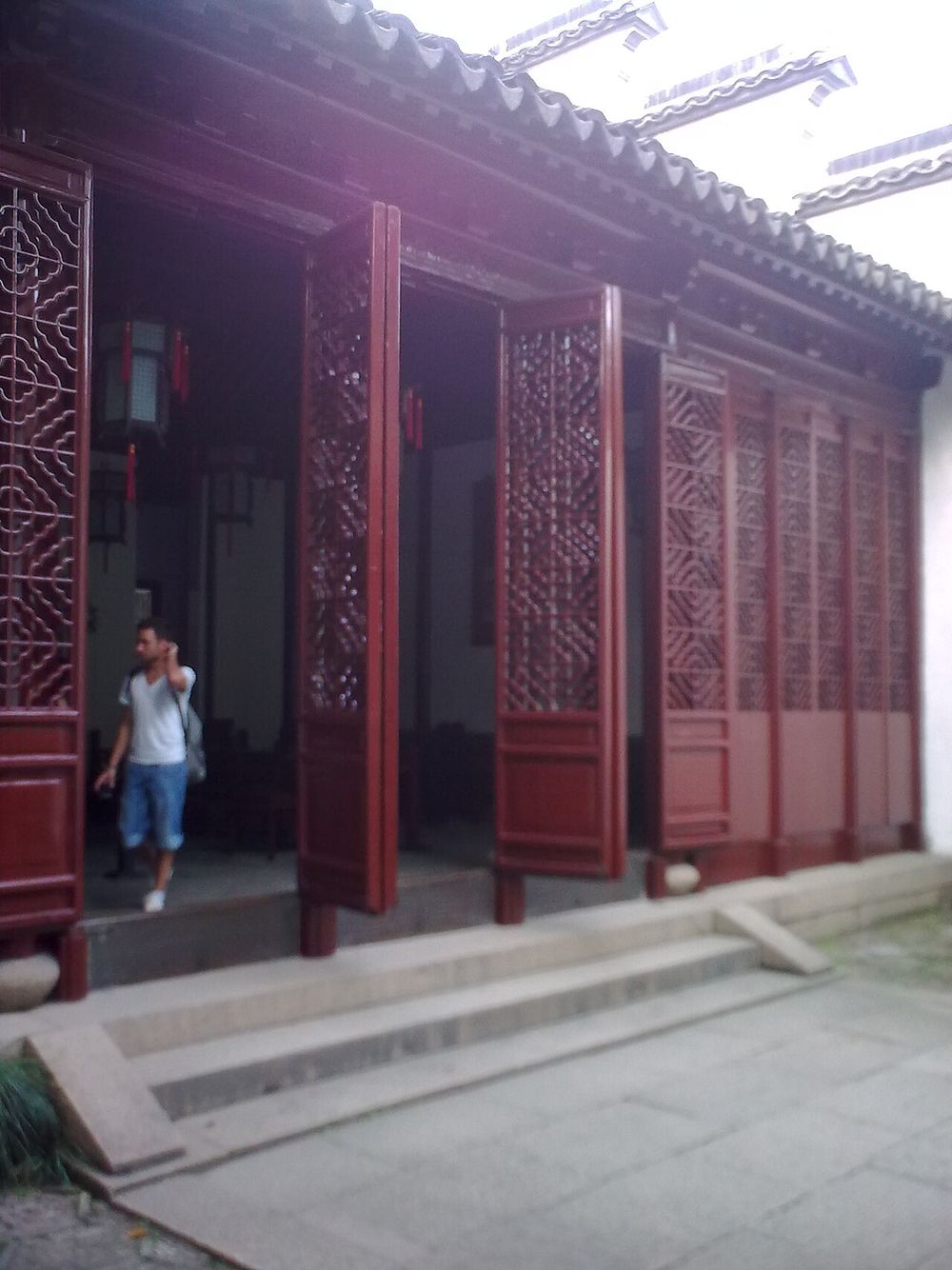
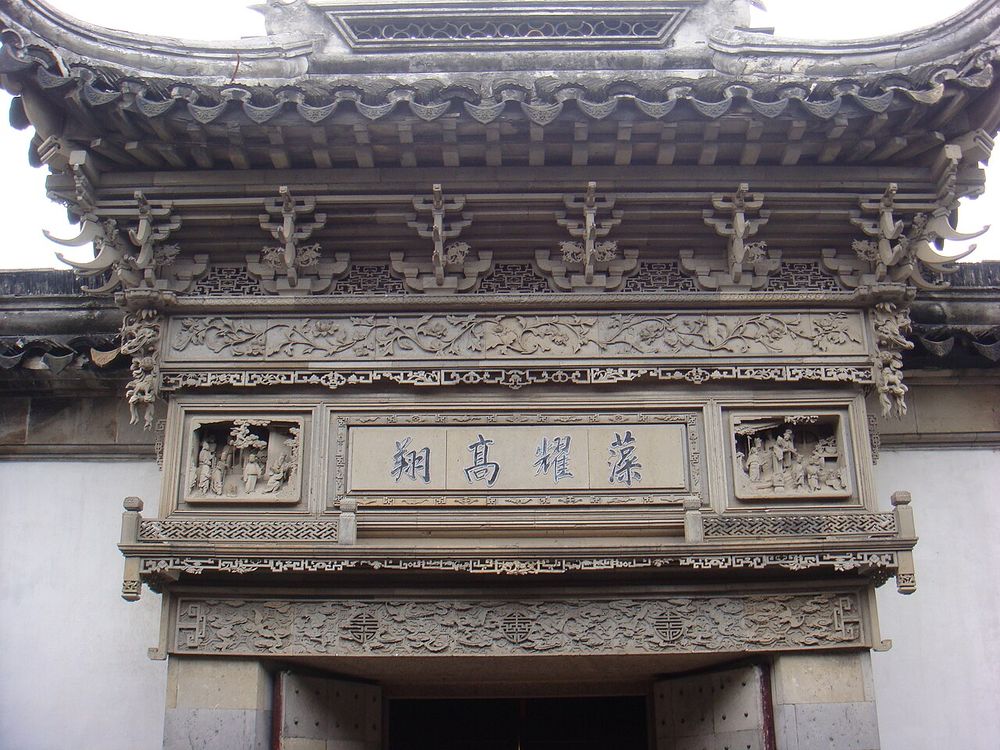
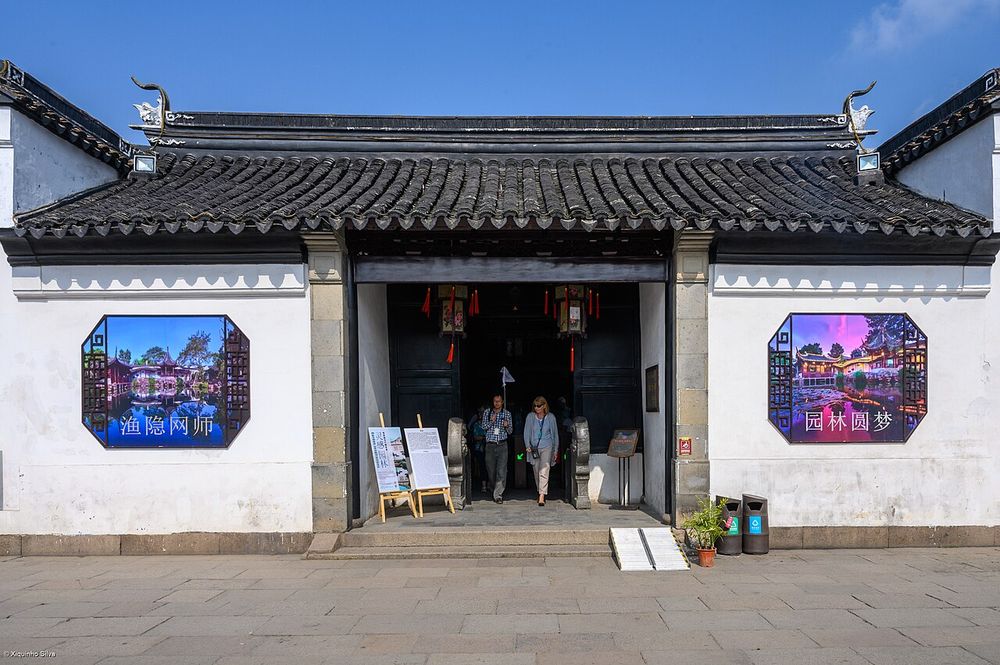
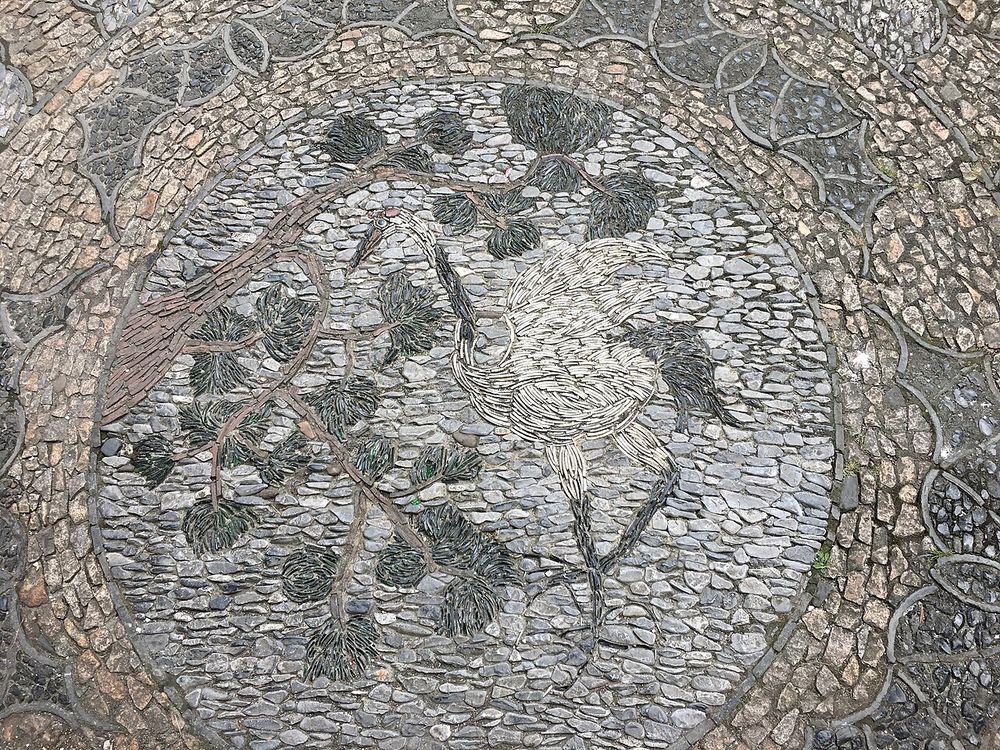
Guests arrived in sedan chairs and were set down in this hall. Turn round and look up at the gate behind you: a brick gateway carved in the Qing with figures from history, a deer, a crane and a phoenix. Its four characters say: brilliance soars high. It is often called the finest carved gateway in Jiangnan.
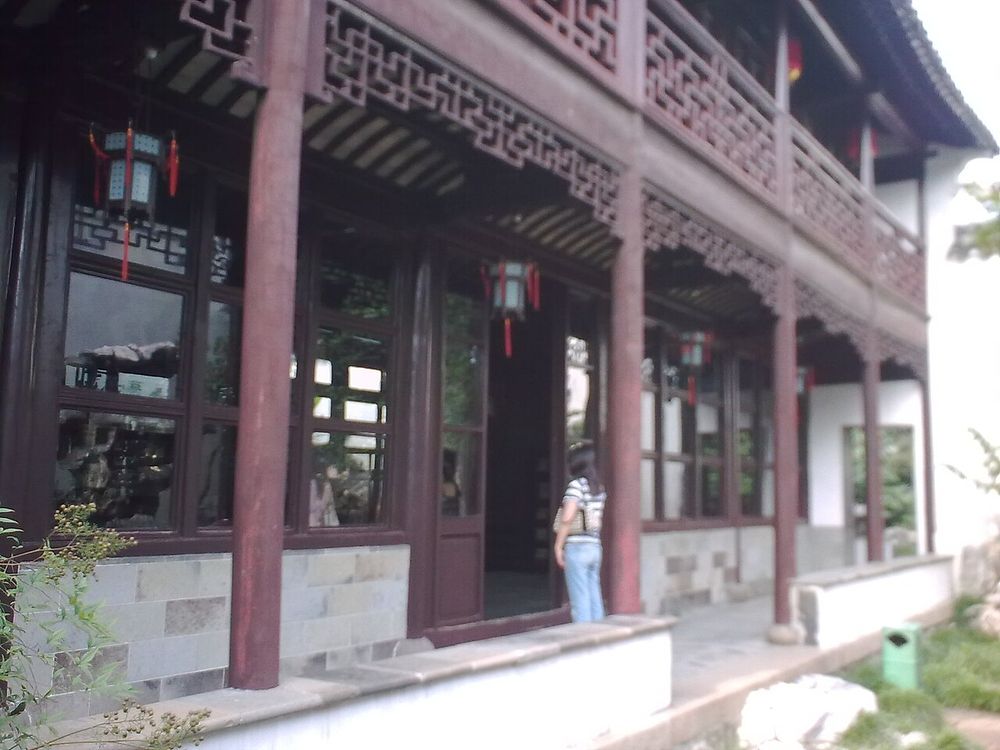
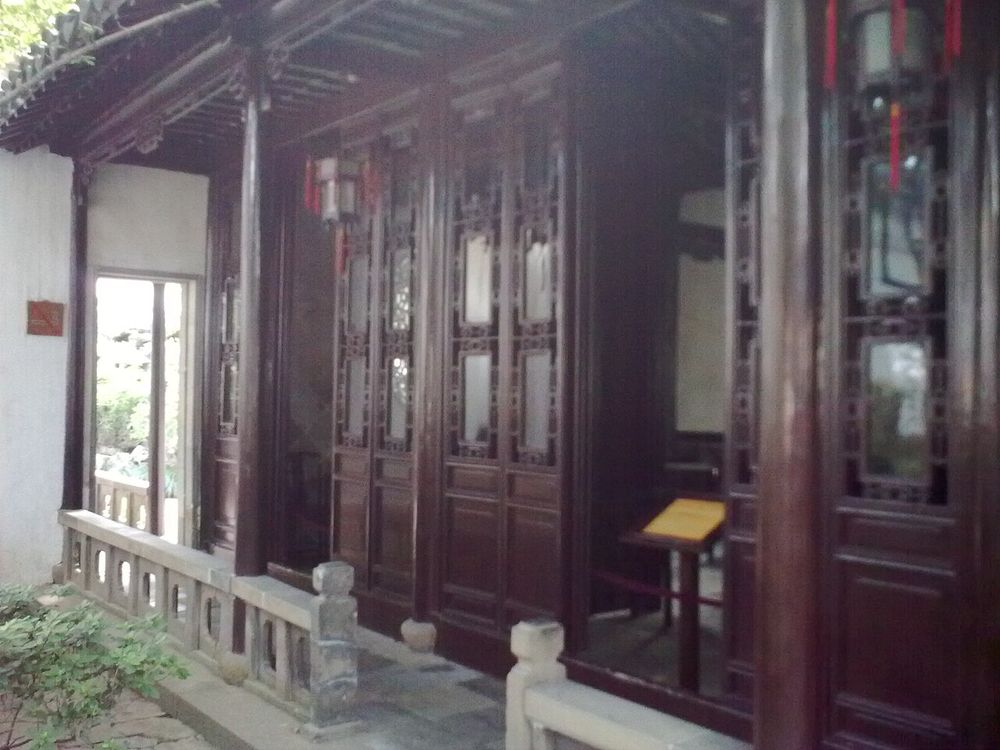
The main hall keeps the name of Shi Zhengzhi's library. This was the formal heart of the house, where the family received guests and held ceremonies. Behind it, the women's tower looks over the garden wall.
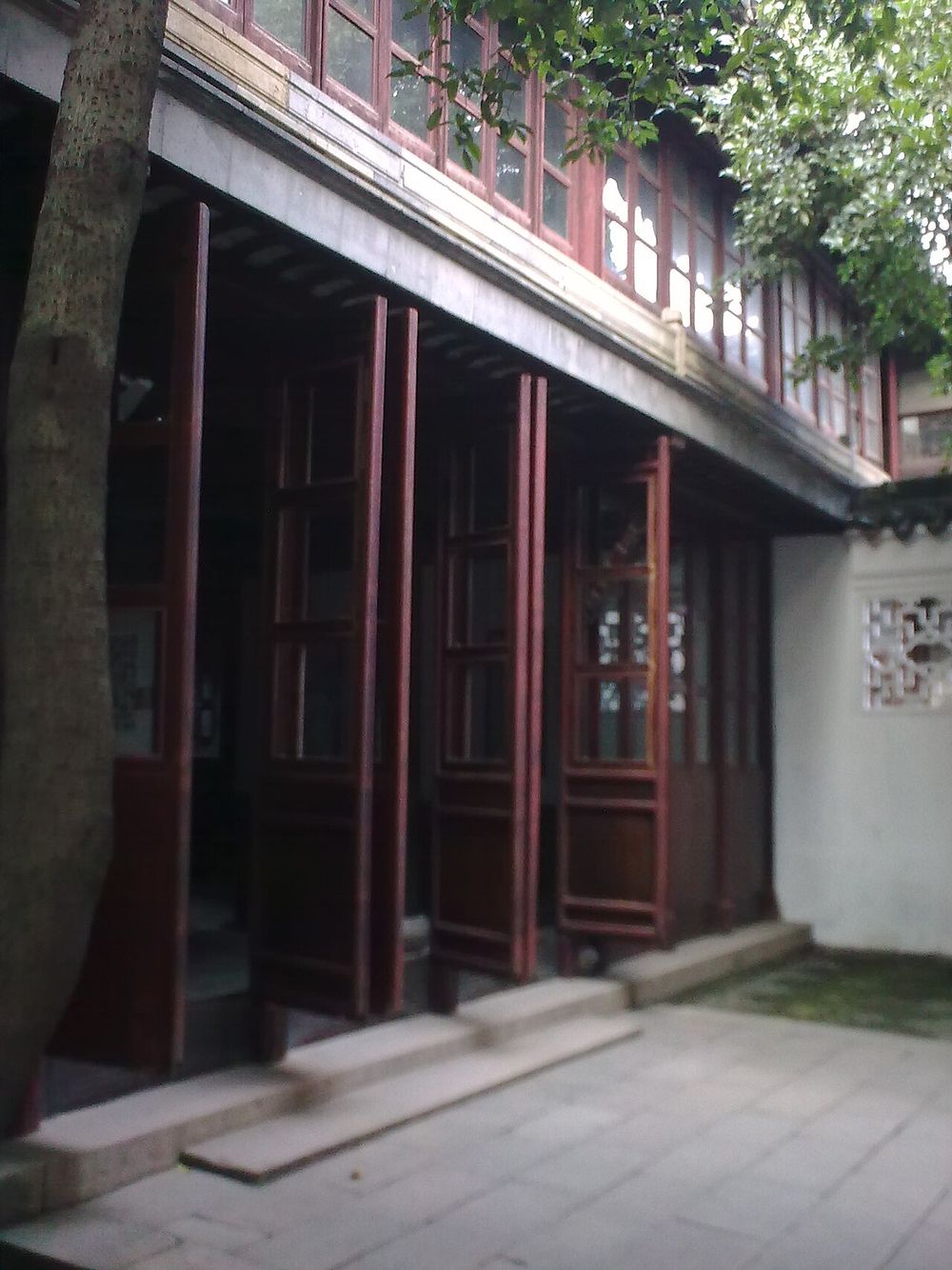
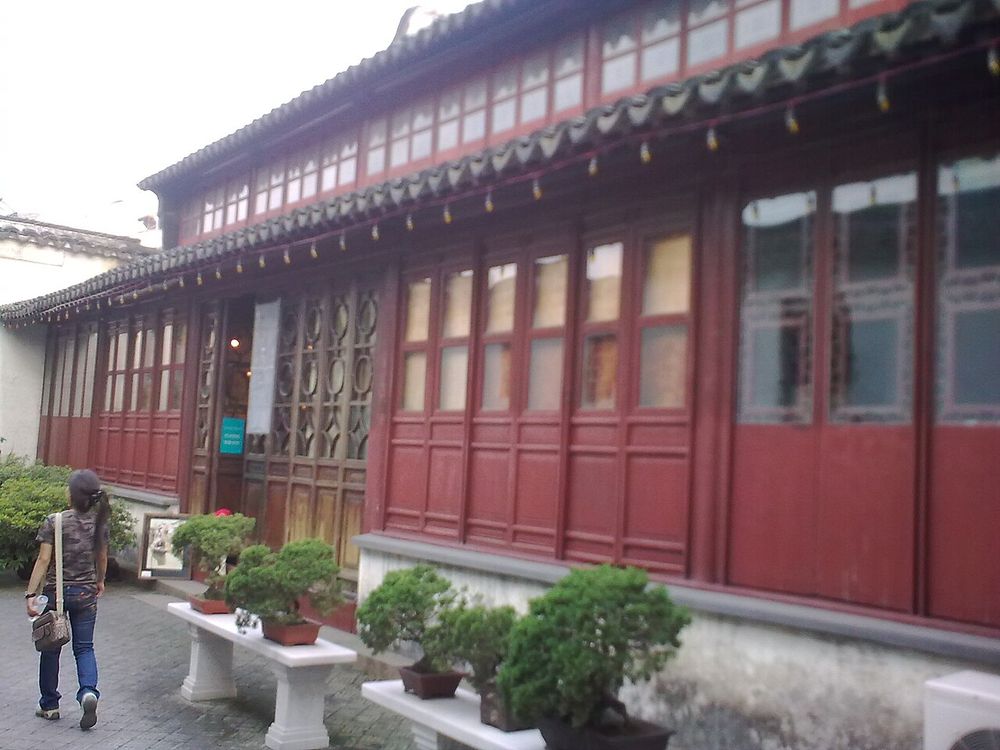
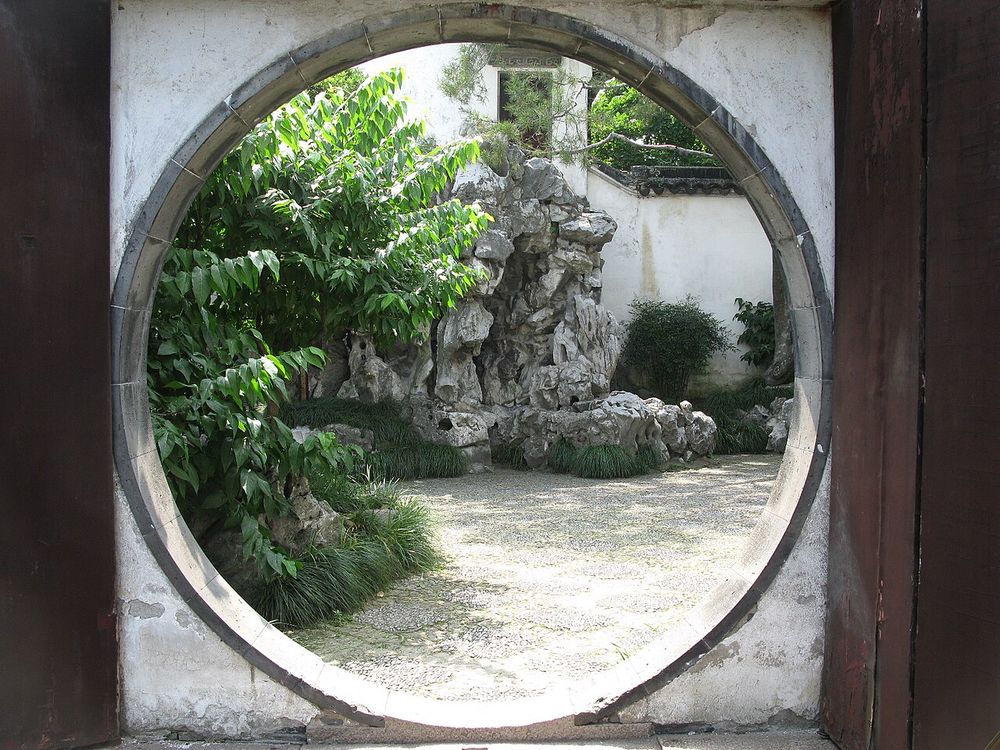
A small door leads from the house into the garden. The first hall is surrounded by osmanthus, which flowers in September and fills the air. Its name comes from a poem in the Songs of Chu inviting a hermit to stay in the hills.
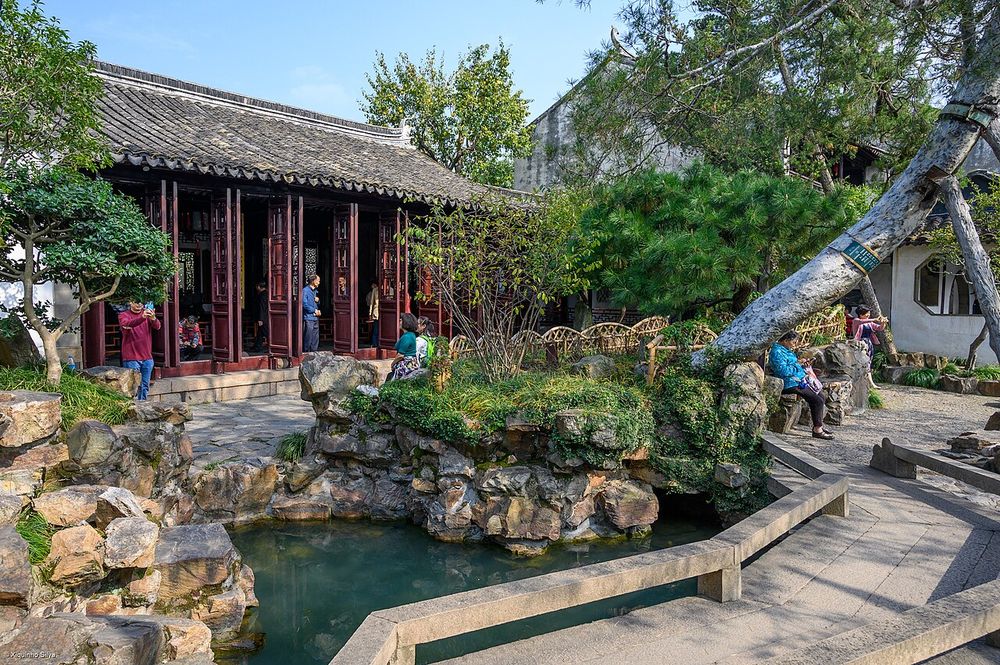
A small open pavilion over the water at the south of the pond. Its name comes from the fisherman's song: when the water is clear, wash the tassels of your hat in it. It is the same song that names the Canglang Pavilion nearby. In the evenings it is the stage for the garden's music.
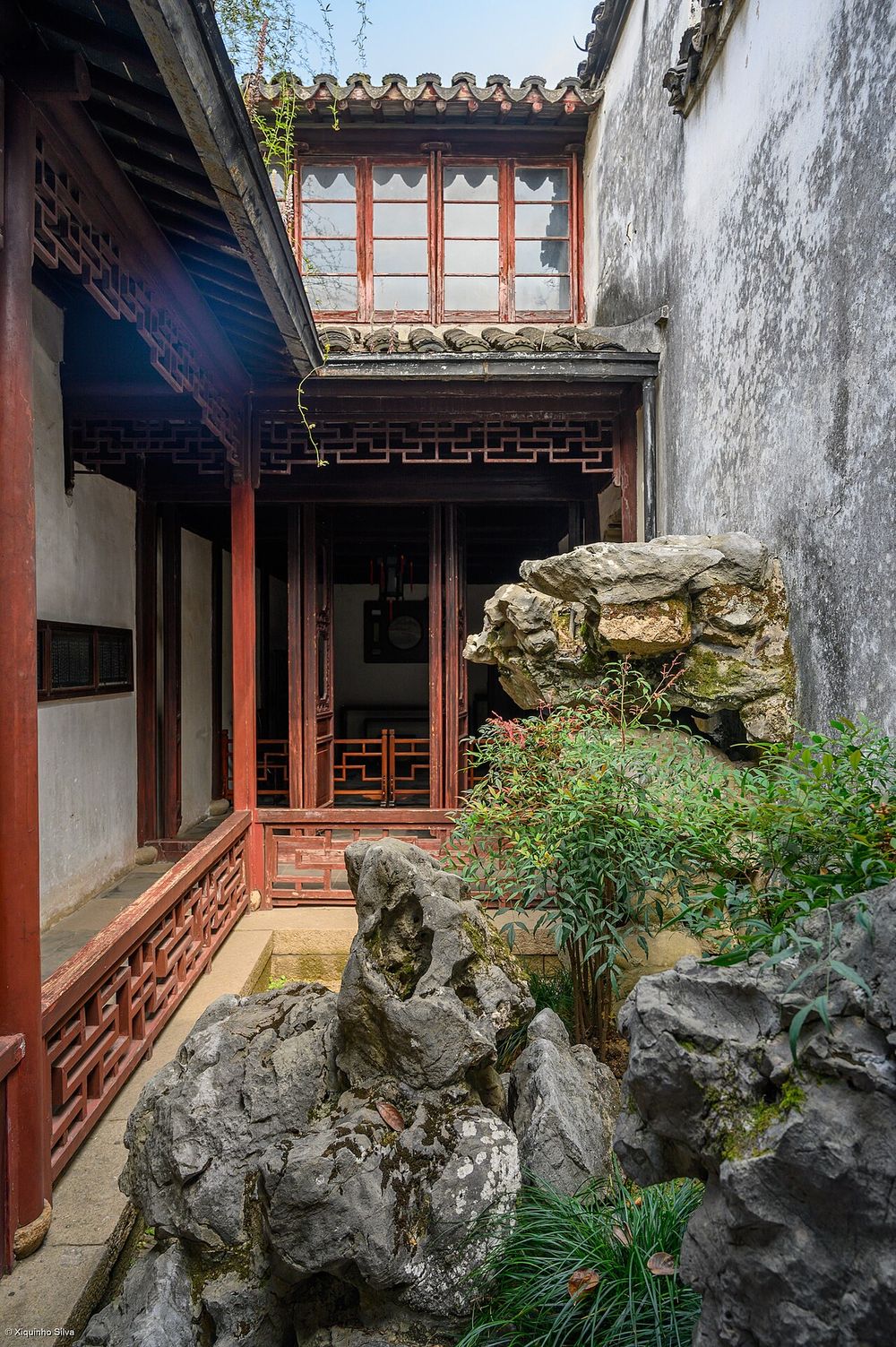
On the west bank, a pavilion faces east across the water, where the moon rises. Inside hangs a mirror that holds the moon a second time.
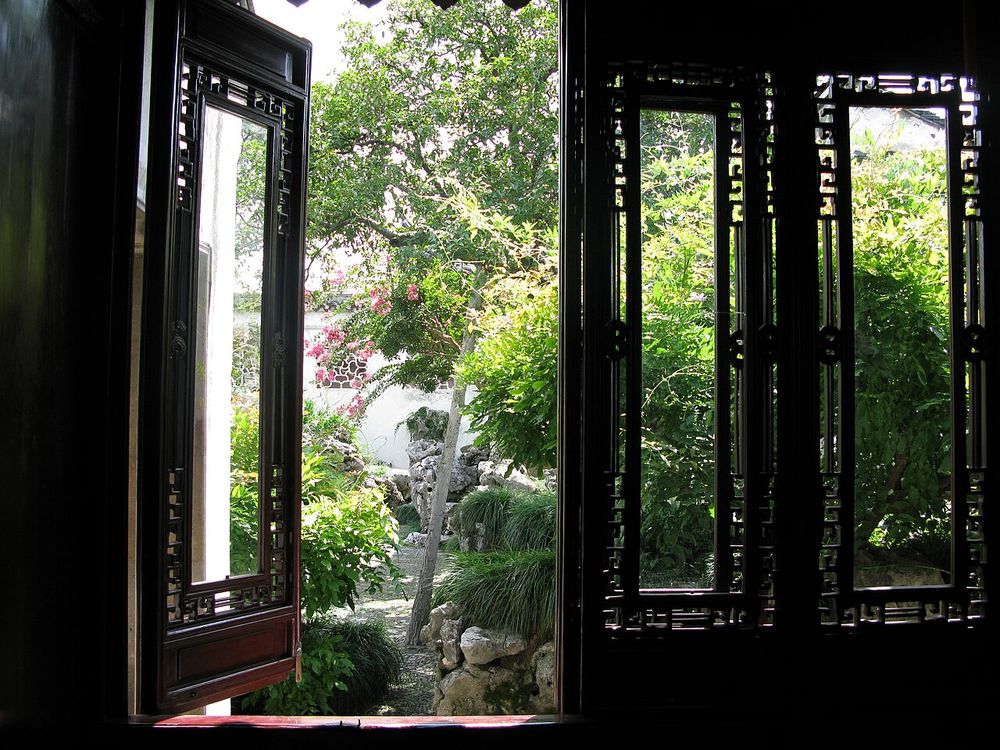
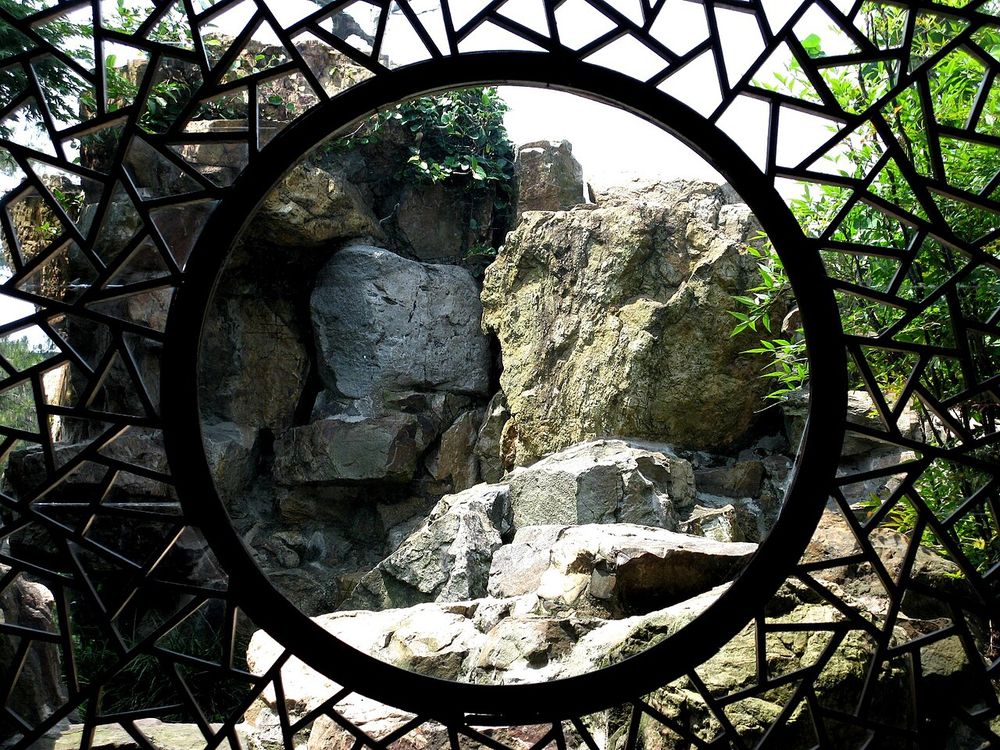
North of the pond, behind old pines and cypresses, a study. One cypress is said to be from the Song garden, which would make it over eight hundred years old.
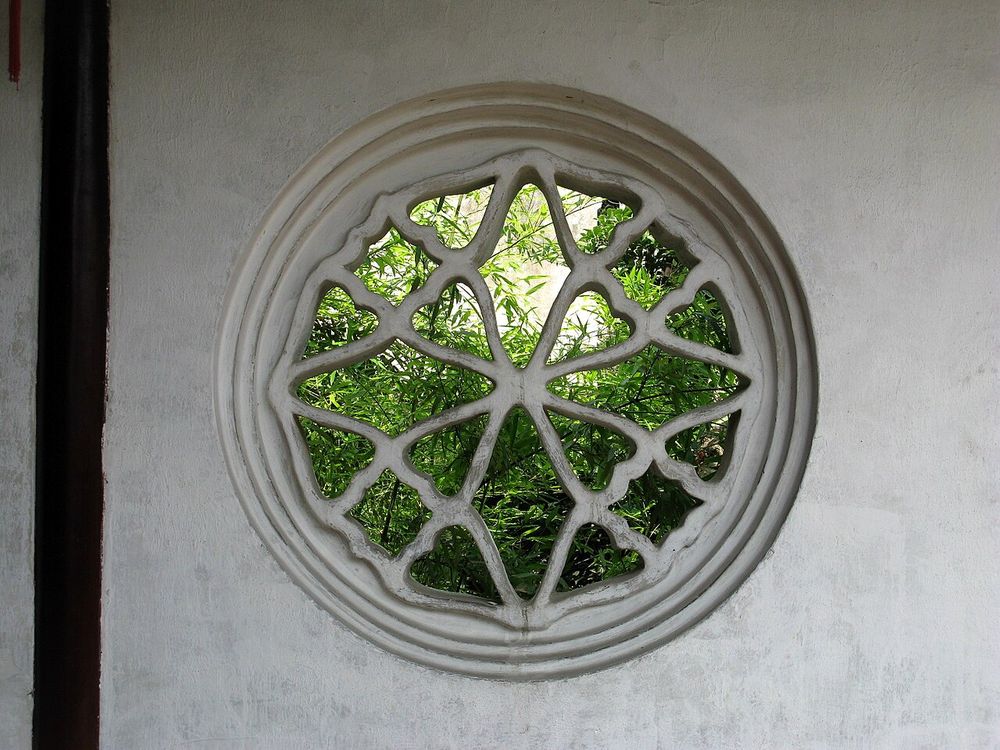
Look at the windows of the corridors: no two have the same lattice.
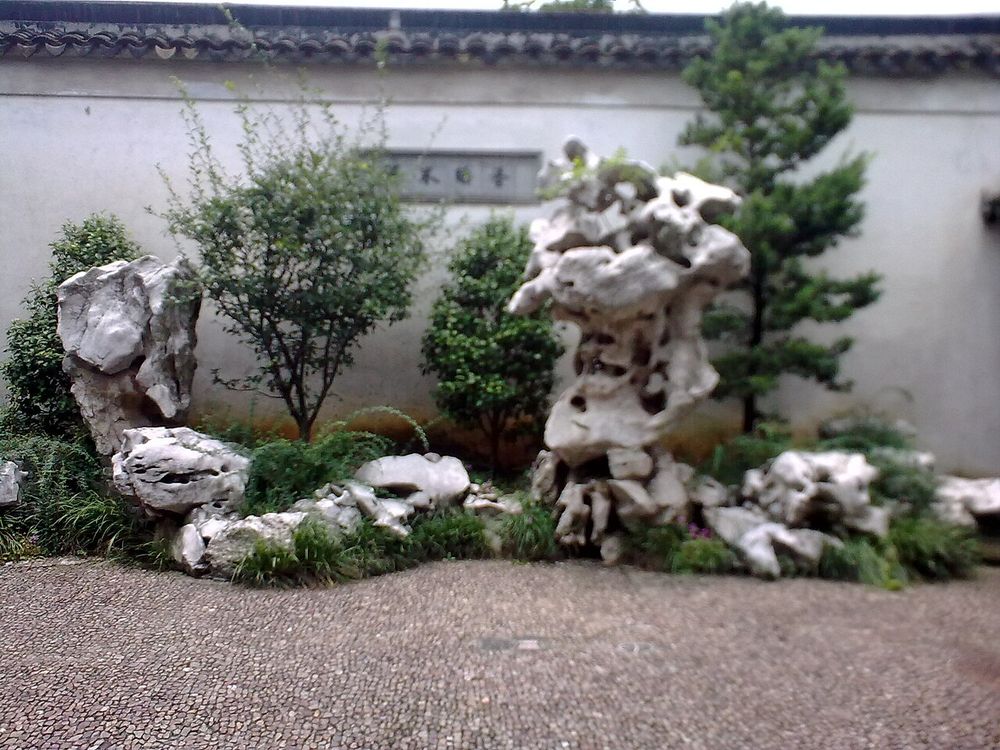
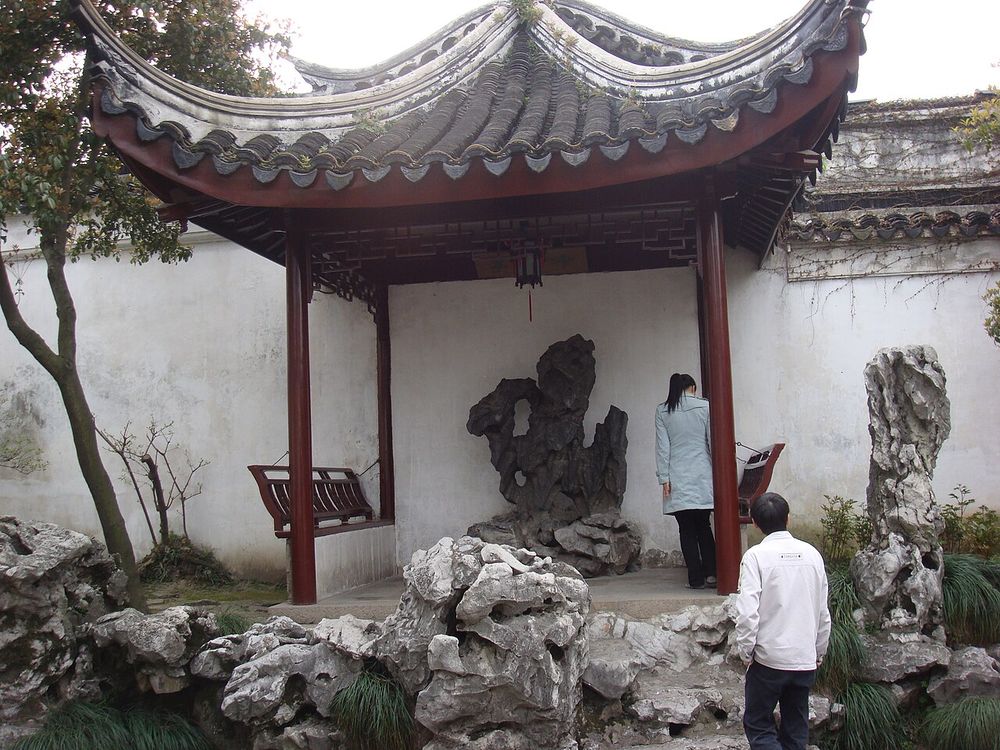
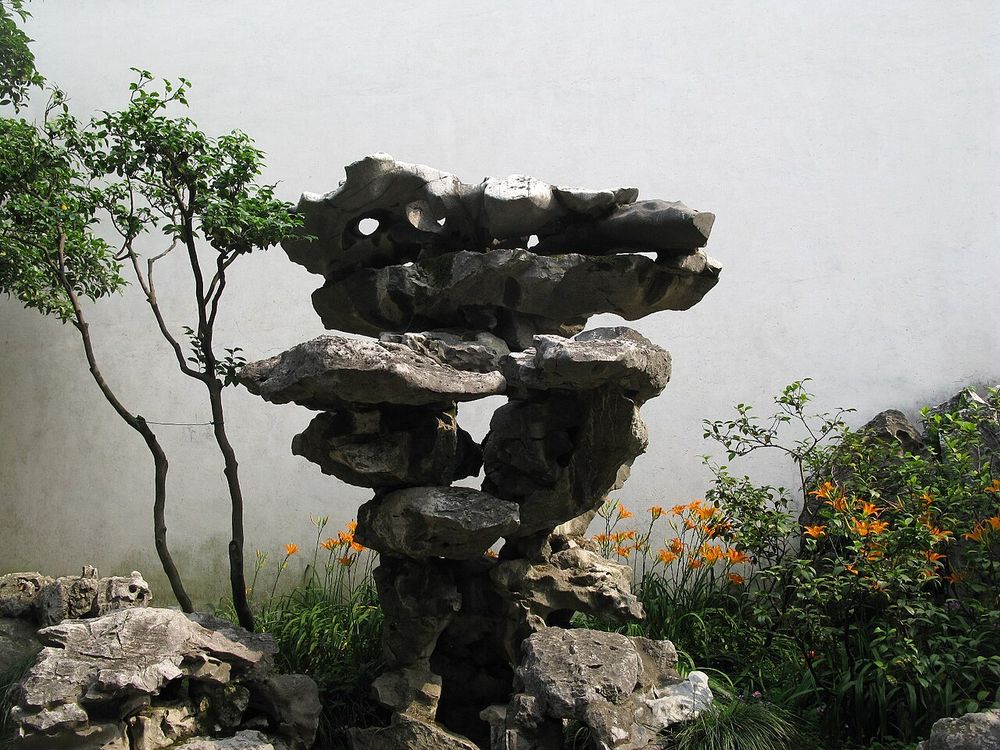
Peonies are the last flowers of spring, and this small court was made for them. It has a study, a spring in a corner, and a pavilion with a rock shaped like an eagle.
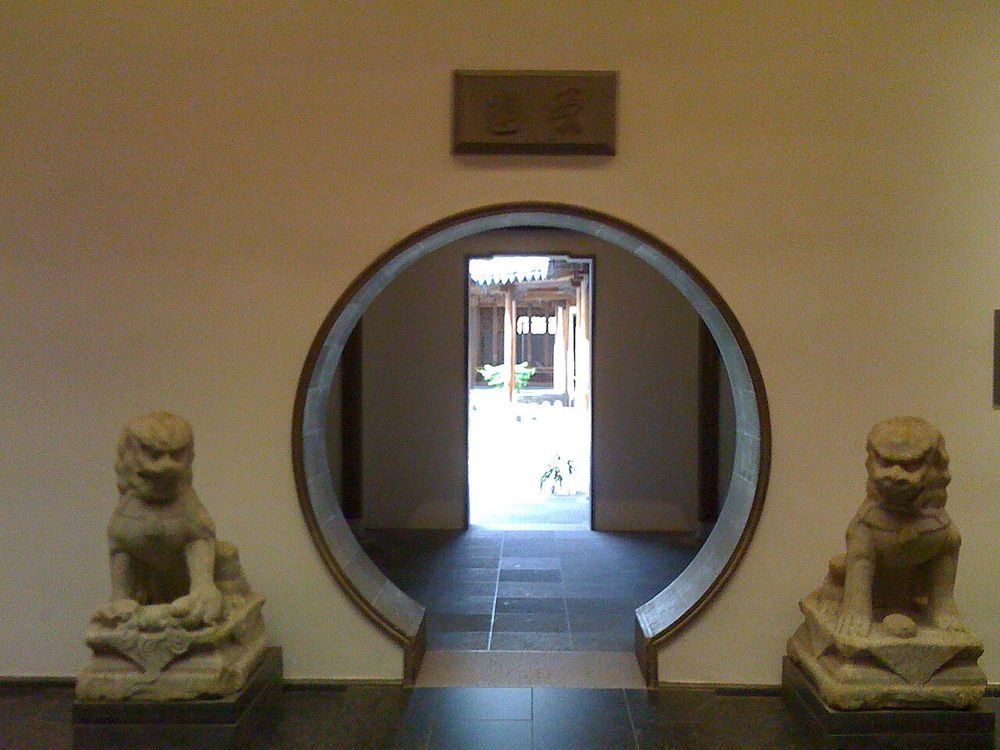
Compare it with the photographs of Astor Court in New York. The copy has the same moon gate, the same pavilion and the same plan, but no sky above it.
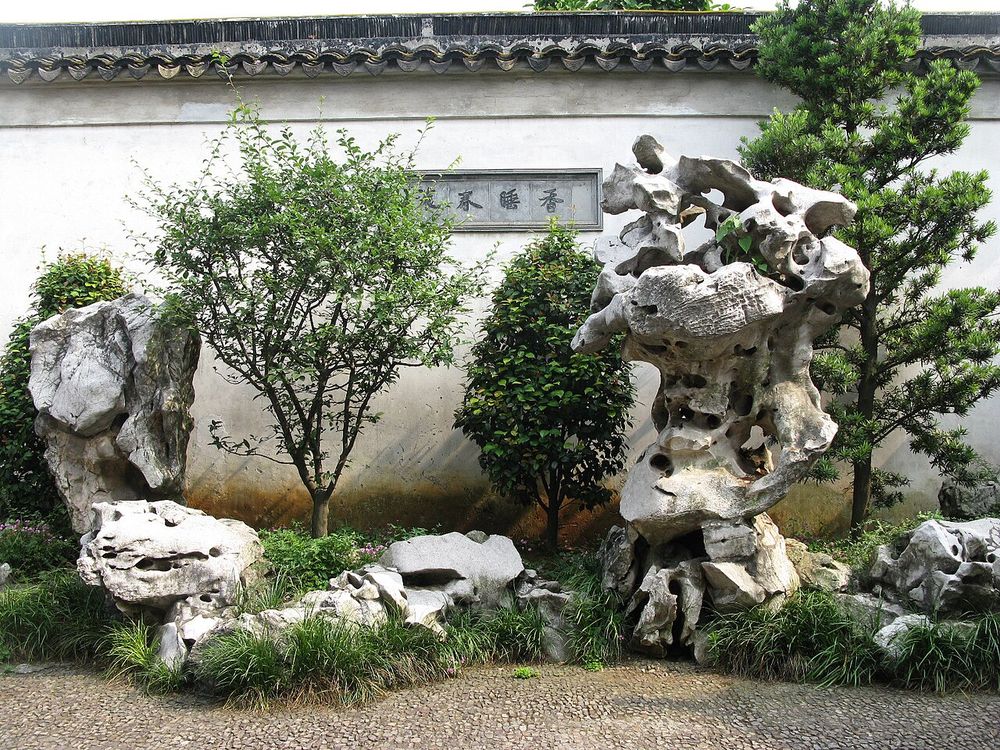
Somewhere in the garden is the gravestone Zhang Daqian wrote for his brother's tiger. Ask the staff where it is.
On evenings in the warm months the garden reopens for its night garden: each hall has a short performance, Kunqu, pingtan storytelling, the guqin or silk-and-bamboo music, and you walk from one to the next in the lamplight.
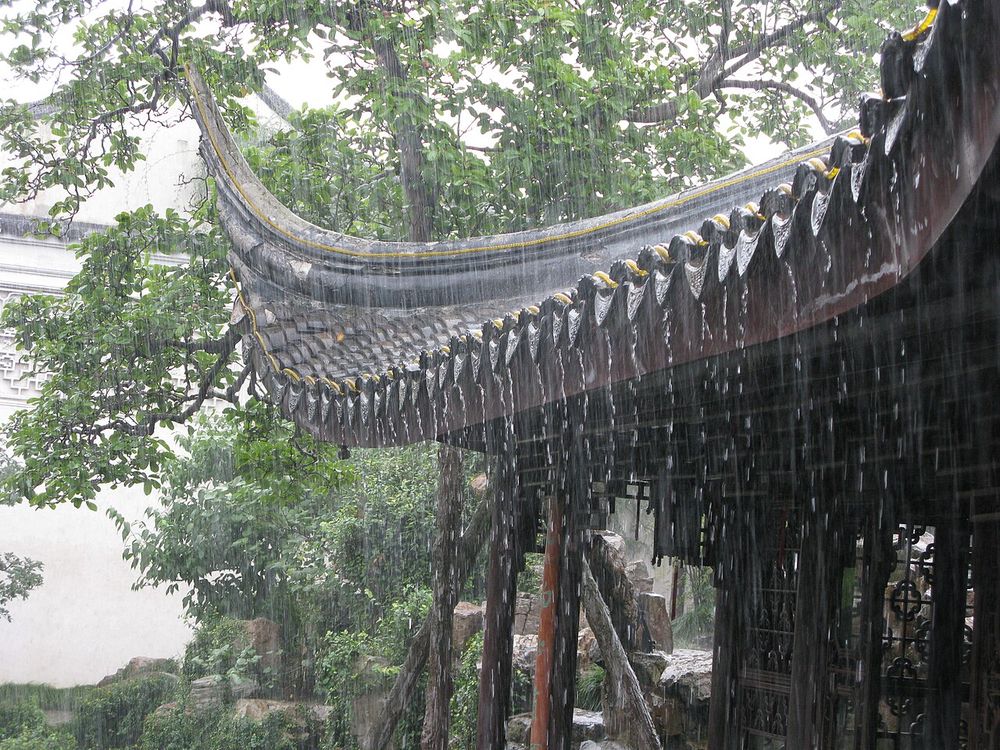
Shi Zhengzhi built in 1174, the year Saladin took Damascus. Song Zongyuan rebuilt about 1765, when the young Mozart was touring Europe. The garden opened to the public in 1958.
| Year | Here | Elsewhere |
|---|---|---|
| 1174 | Shi Zhengzhi builds the Hall of Ten Thousand Volumes | Saladin takes Damascus |
| 1765 | Song Zongyuan names it the Master of the Nets Garden (about this year) | The Stamp Act in Britain's American colonies |
| 1795 | Qu Yuancun rebuilds the garden | The metre is defined in France |
| 1932 | The painters Zhang Shanzi and Zhang Daqian move in | Amelia Earhart flies the Atlantic alone |
| 1958 | Opens to the public | Expo 58 in Brussels |
| 1981 | Astor Court opens in New York | The first space shuttle flies |
| 1997 | World Heritage | Hong Kong returns to China |
One line to remember: the smallest garden that went the farthest.
These are stories people tell about this place. They are legends, not history, and each one says where it comes from.
An old cypress by the studio is said to have been planted in the Song garden of Shi Zhengzhi.
Source: No record proves its age
People in the neighbourhood said the tiger walked the garden at night and roared, and children were afraid to pass the wall.
Source: Told in Suzhou; the tiger and its grave are real
Later, people who live here will be able to add the stories they grew up with, and say which of these they have heard.
Checked 2026-11-12 Suzhou Municipal Administration of Gardens. Tickets are sold through its WeChat account, 苏州园林旅游.
Last checked 2026-11-12. Suzhou Municipal Administration of Gardens, published prices and opening hours; travel reports of 2026.
Checked 2026-11-12
Opening hours are given in the local time of the place. Prices are in the local currency. The figure after ≈ is approximate, at exchange rates checked on 9 November 2026, in .
Stand at the site, sign in, press the button, and collect its stamp. Your browser will ask to use your location. It is sent to us once to confirm that you are at the site; we keep how far you were from it, not the spot where you stood.
Your stamps are saved to your account, so they follow you to any device. Checking from a browser cannot rule out every false location; stricter checks arrive with the app.
Photos here show the place, not people. Each one is credited to the visitor who took it and appears after our team has looked at it. A photo with you in it belongs under “I am here”.