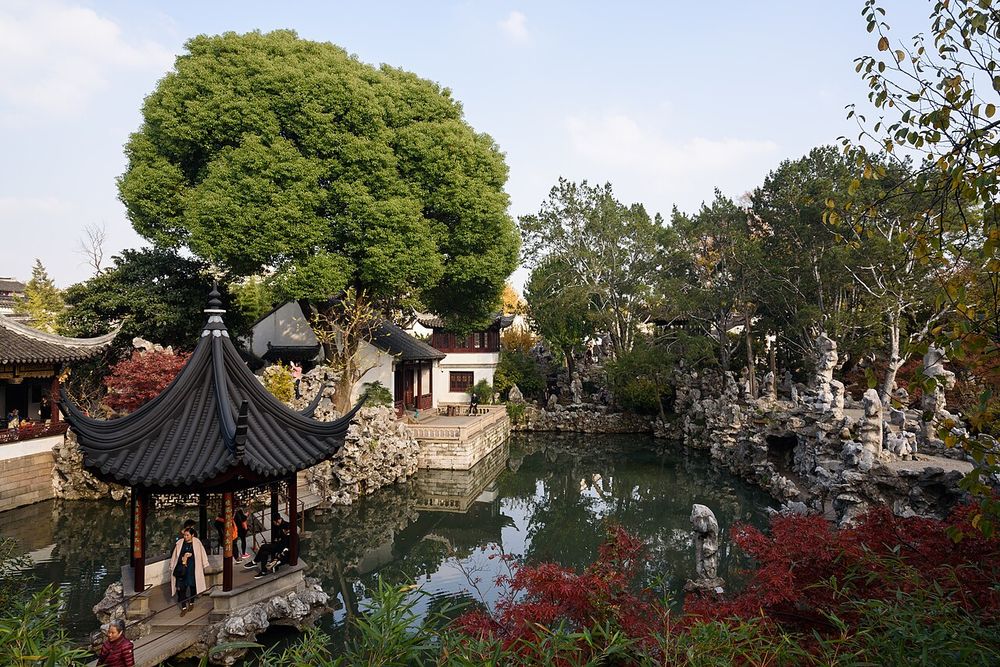
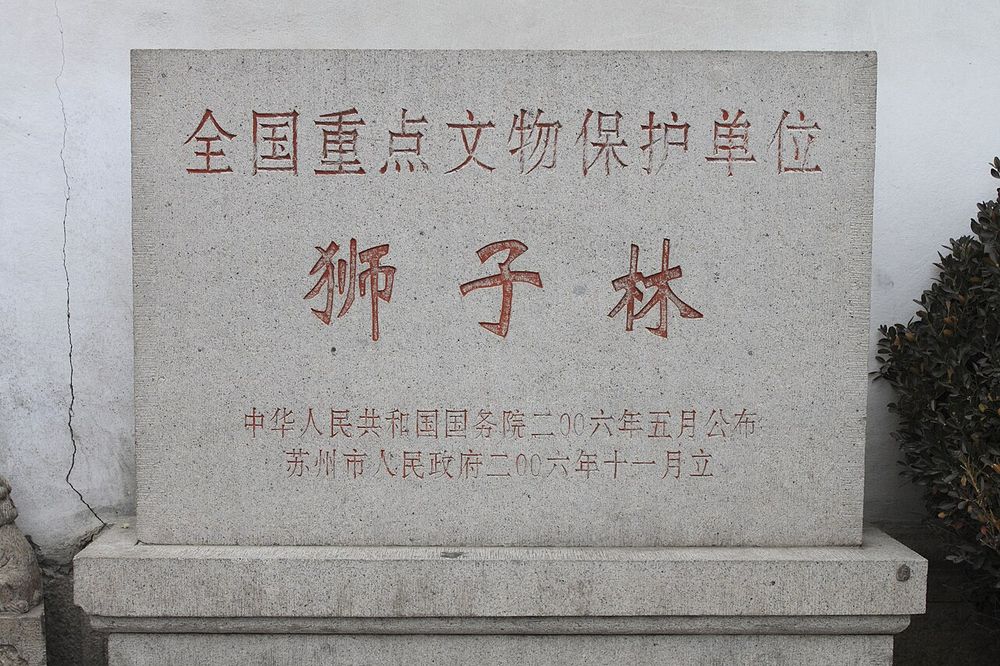
A Buddhist temple garden of 1342 that became a maze: a hill of lake rocks with caves, tunnels and paths on three levels, where children and emperors have got lost. The Qianlong emperor came again and again and had it copied twice. In the twentieth century it belonged to the family of the architect I. M. Pei.
Photo: King of Hearts, CC BY-SA 4.0, Wikimedia Commons
The story
In 1342, in the Yuan dynasty (1271–1368), the disciples of the Chan master Tianru Weize bought land in Suzhou and built him a temple. His own teacher had lived on Lion Rock in the Tianmu mountains, and in the scriptures the Buddha's teaching is called the lion's roar. So the temple garden, full of rocks that look like lions, was called the Lion Grove.
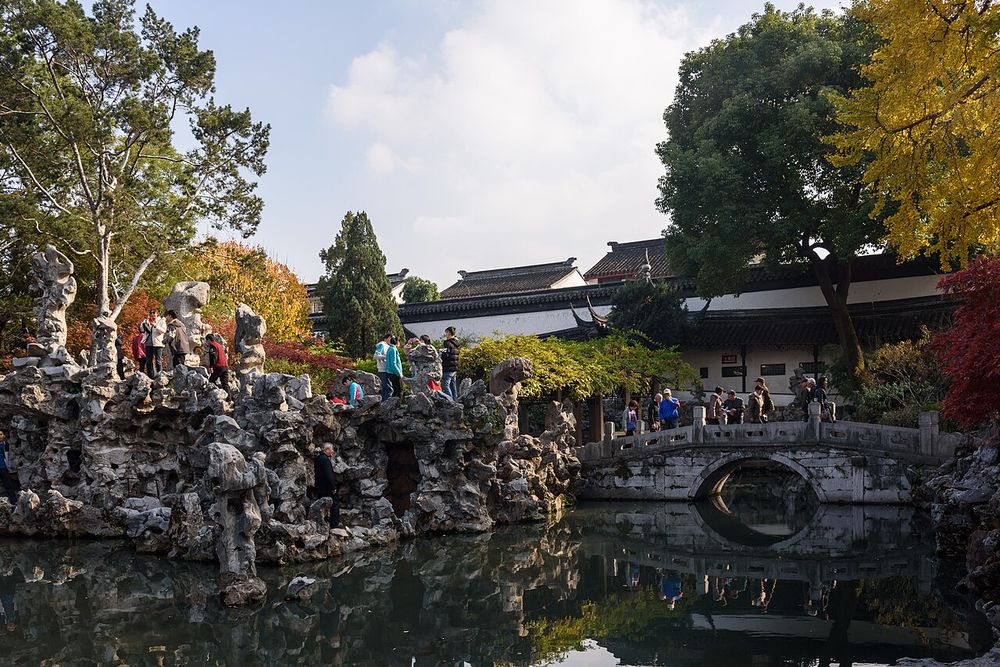
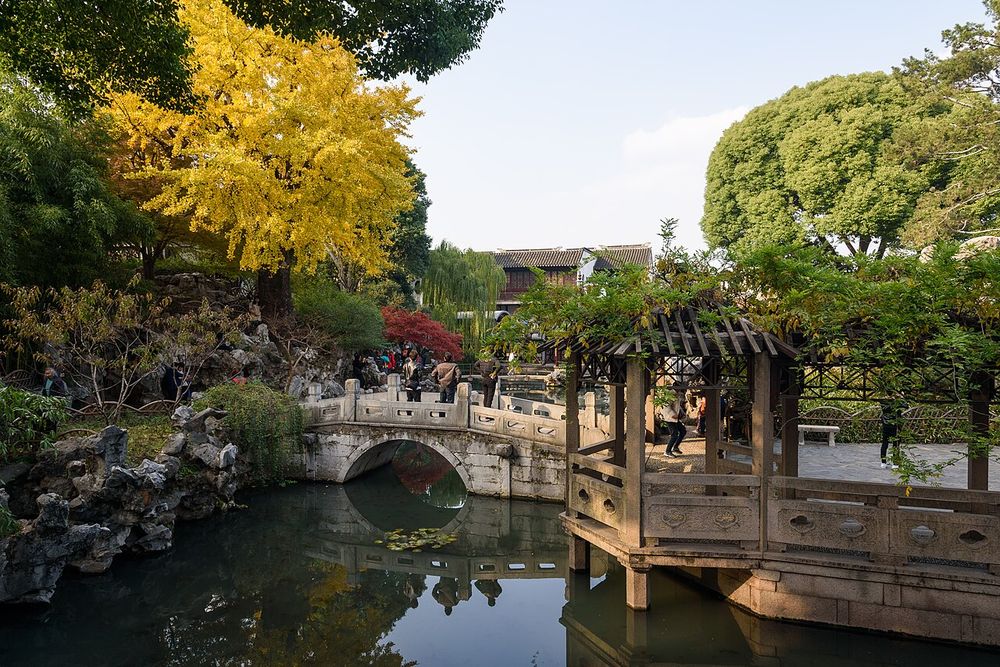
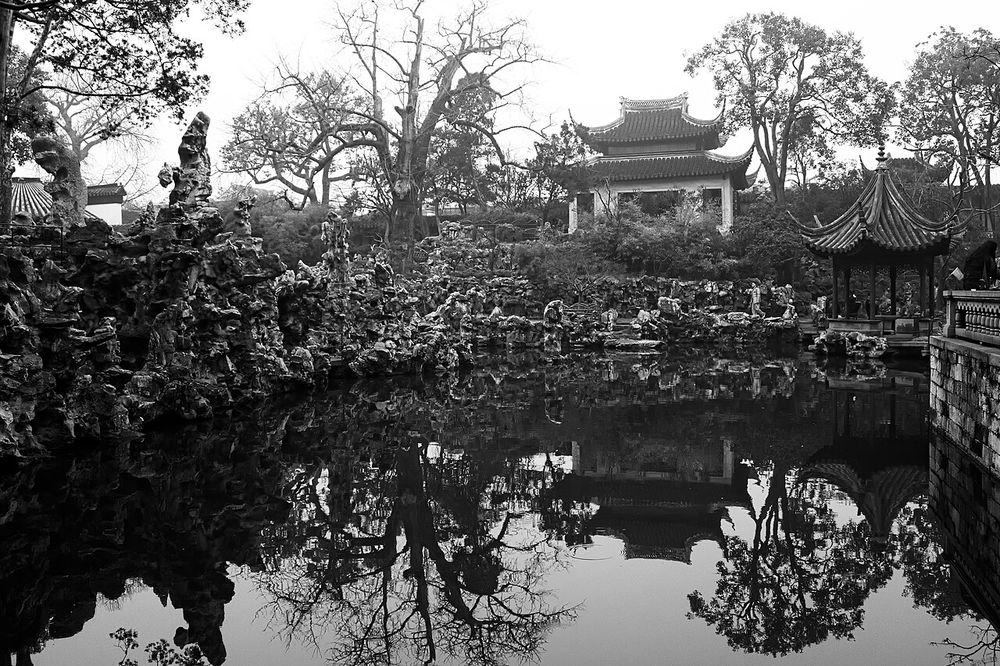
The rockery is the largest in the Suzhou gardens: a hill of lake rocks pierced by caves and tunnels, with paths on three levels that loop and cross. The usual account gives nine paths and twenty-one cave mouths. You can see your friends a few metres away and not be able to reach them.
One ticket covers the whole garden. The Suzhou Museum and the Humble Administrator's Garden are a few minutes away, with their own tickets or bookings.
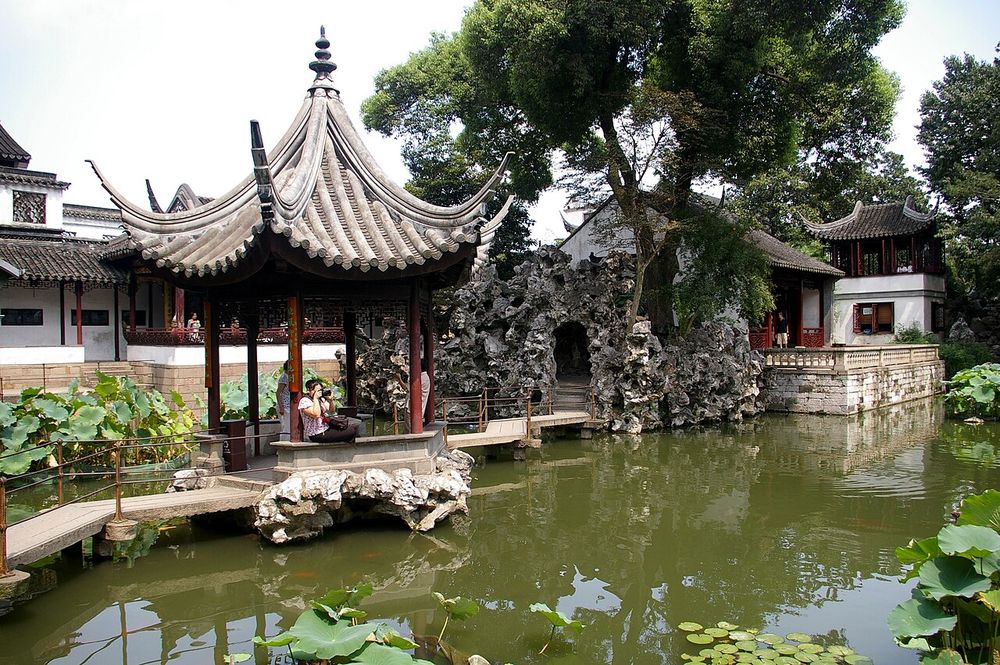
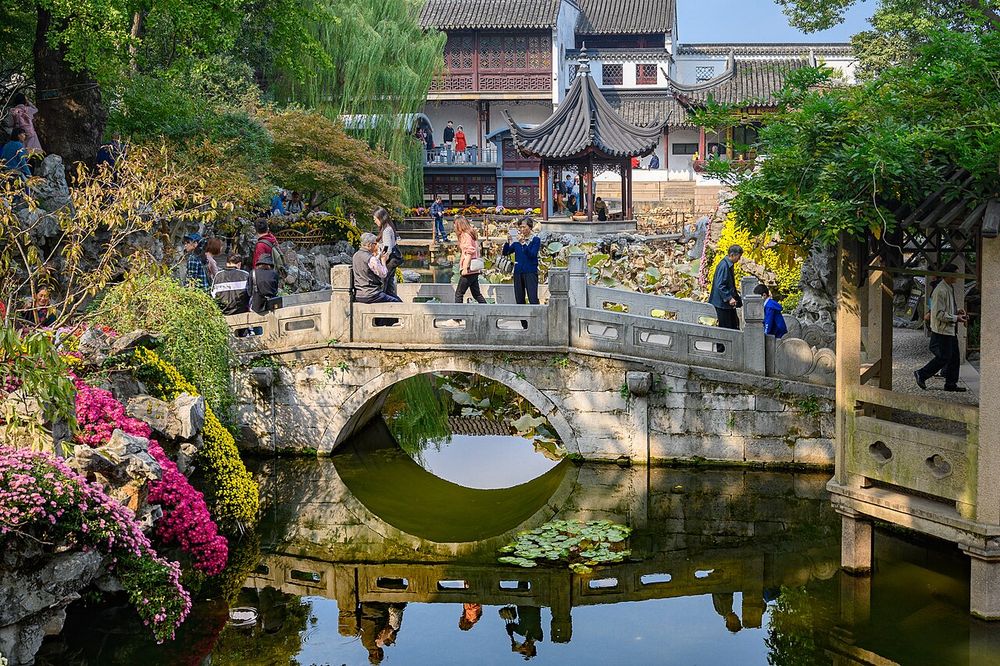
The rockery and a bridge, 2017King of Hearts, CC BY-SA 4.0
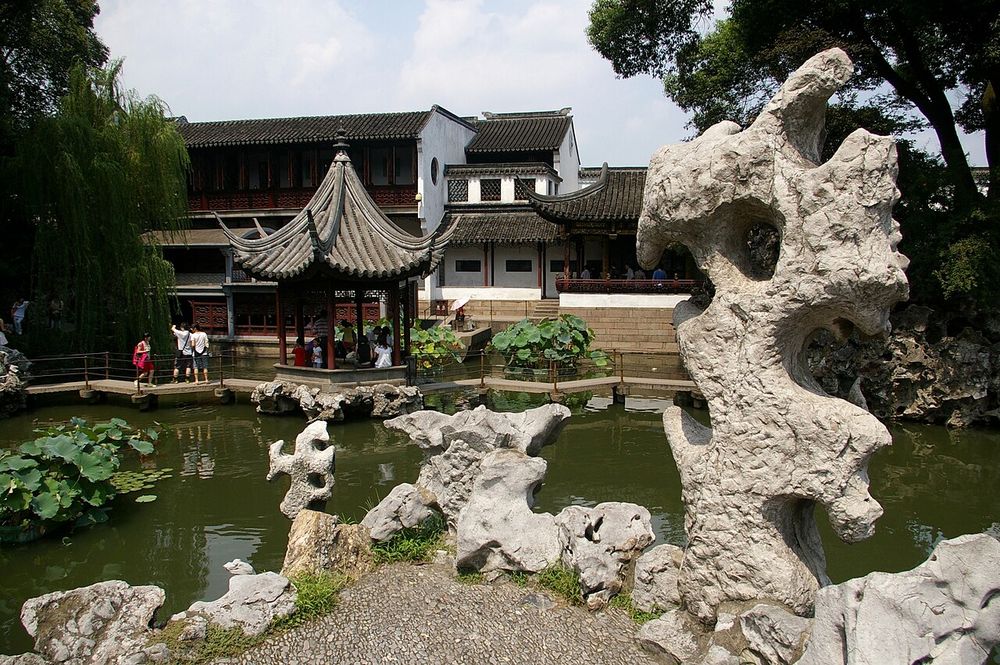
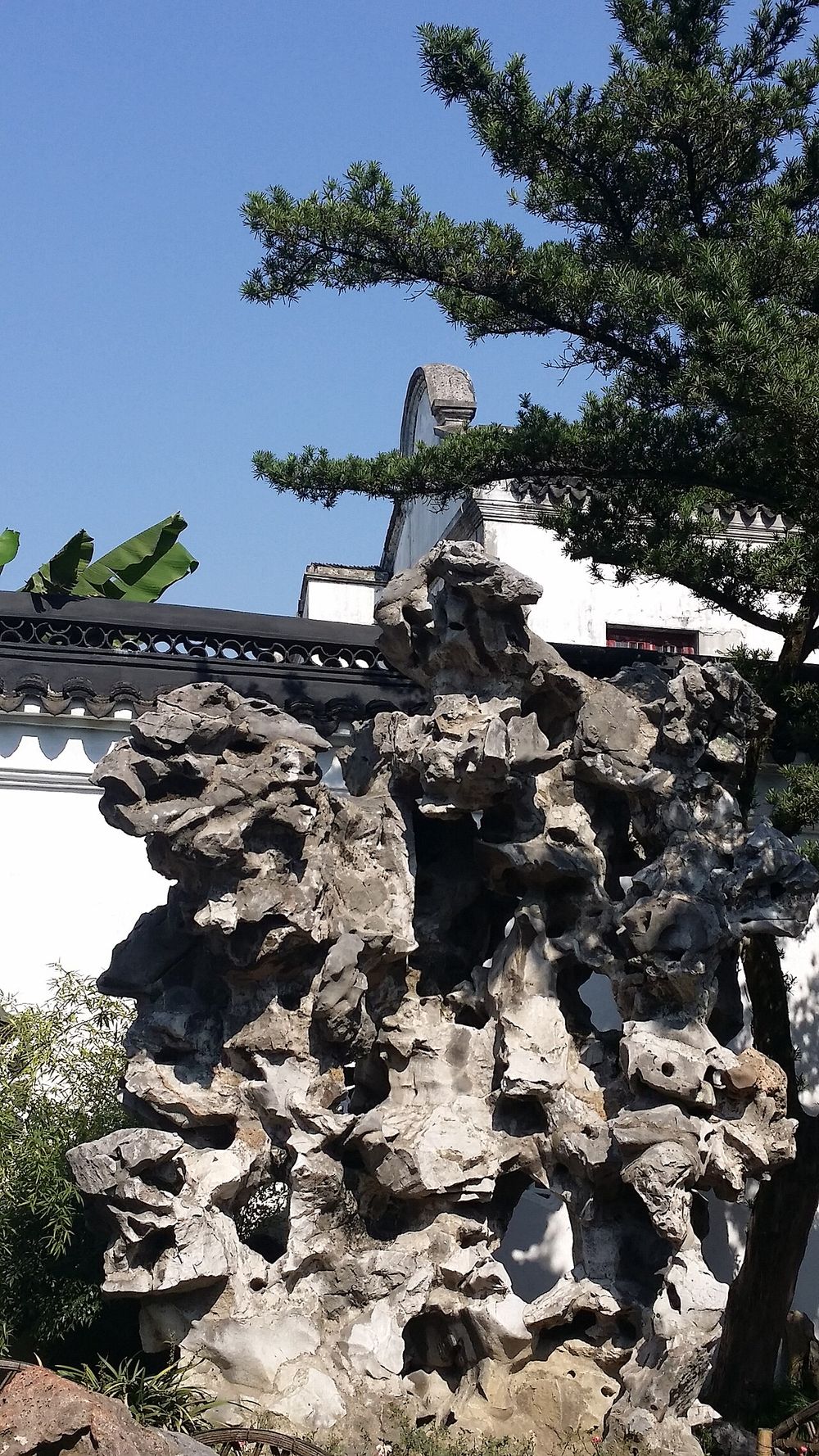
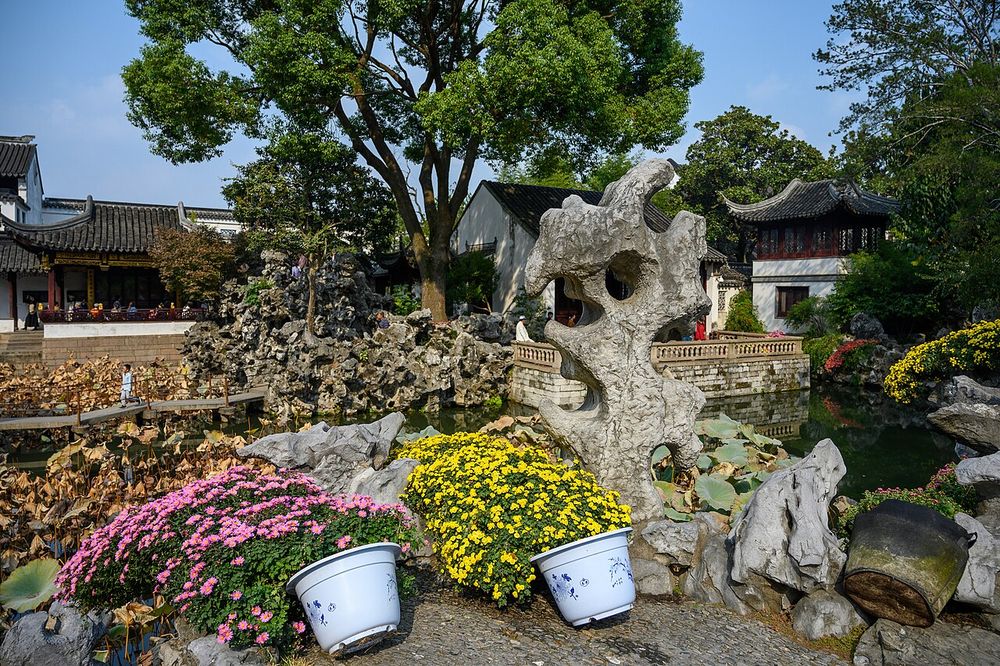
Look at the rocks around you and find a lion: a head, a mane, a tail, a paw. People say there are five hundred of them. Then try to reach the little pavilion on top without going back the way you came.
A rock said to hold nine lionsLamassu Design Gurdjieff (talk), CC BY-SA 3.0
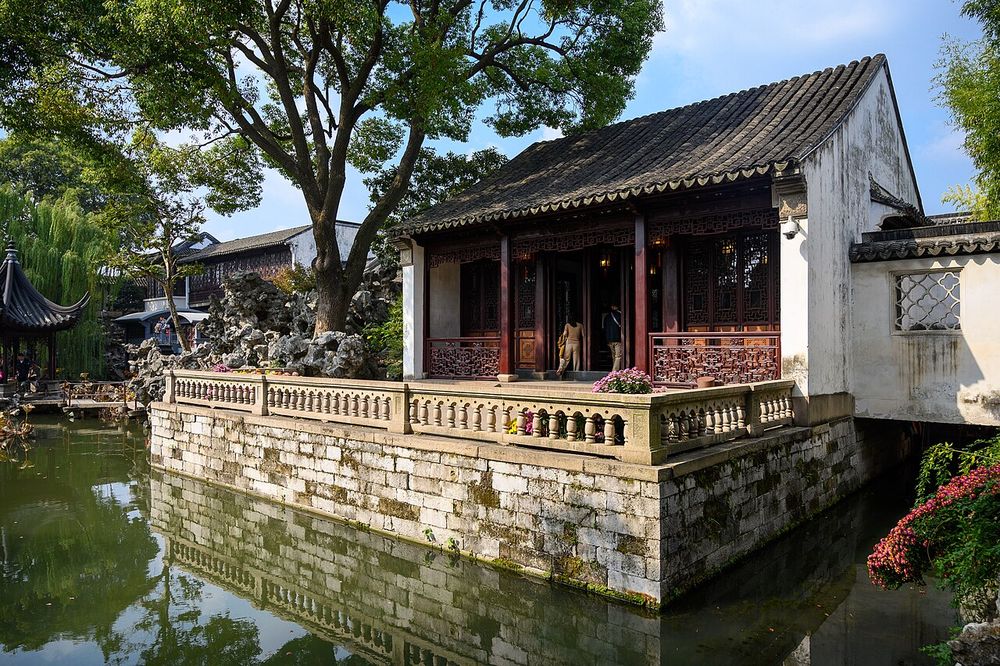
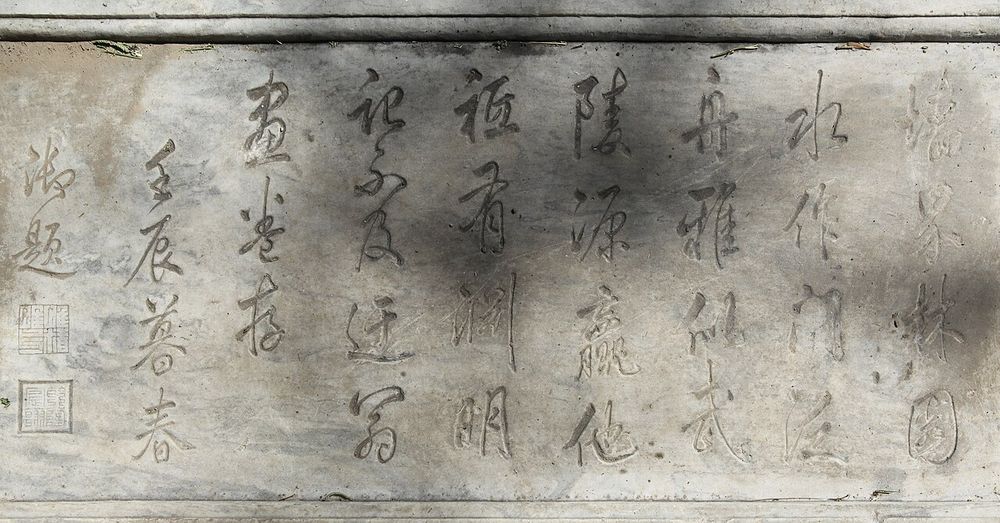
The Qianlong emperor (r. 1735–1796) visited on his southern tours and loved it. He had copies built in his own gardens, at the Old Summer Palace in Beijing and at the summer palace at Chengde. One of his inscriptions is still over a pavilion here: "true delight".
The True Delight PavilionLamassu Design Gurdjieff (talk), CC BY-SA 3.0
In 1917 the garden was bought by Bei Runsheng, a Shanghai merchant who had made his fortune in dyes. He restored it and added a family shrine and a stone boat. His grand-nephew, the young I. M. Pei, played in the rocks; seventy years later he designed the Suzhou Museum a few minutes away.
Things people often get wrong
"There are lions in the garden." There are only rocks, and the lion of the Buddha's teaching.
"It is a Ming garden like the others." It began as a Yuan temple, and the temple and garden were separated only in the Qing (1644–1912).
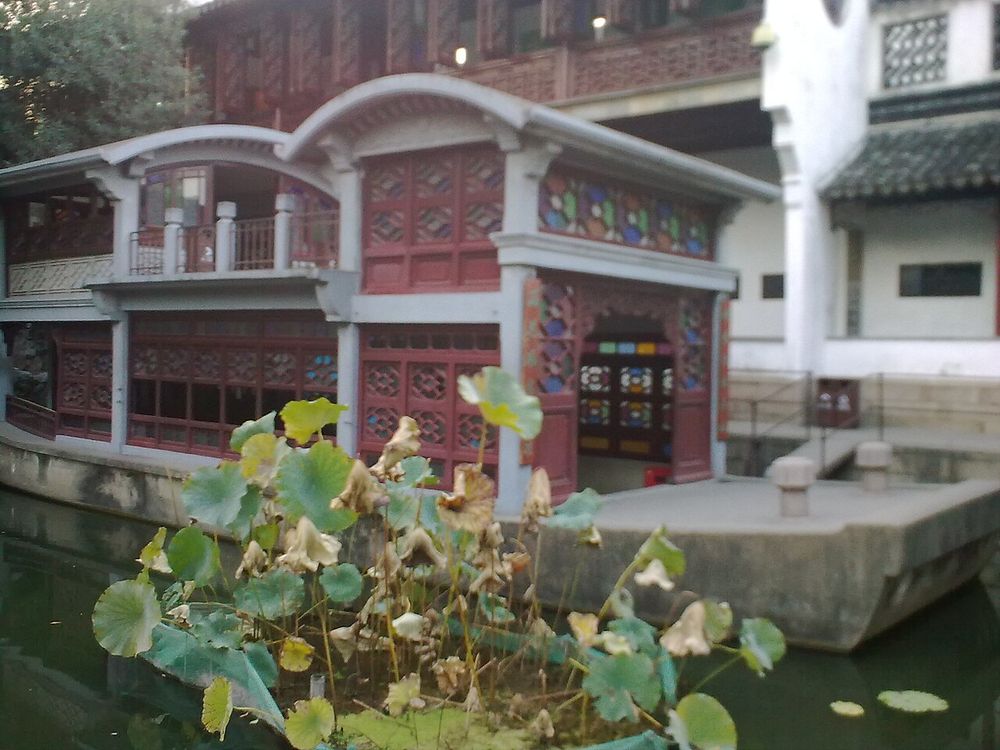
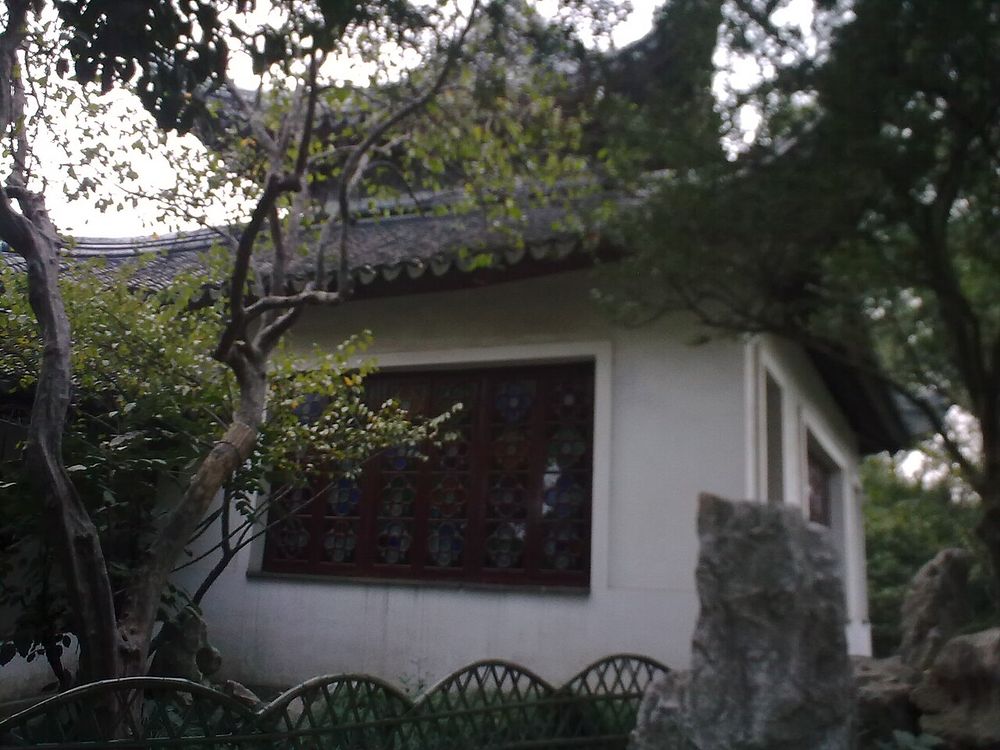
"The stone boat is old." It was built by the Bei family in the twentieth century, of concrete, with coloured glass in its windows.
People who stood here
We searched Chinese sources first for this list, then English ones.
Tianru Weize (Chan master, Yuan dynasty)His disciples built the temple for him in 1342. He wrote of the garden as a place of rocks and bamboo for quiet sitting.
Ni Zan (painter, 1301–1374)One of the four great painters of the Yuan, he painted the Lion Grove in 1373, and his scroll made the garden famous.
The Qianlong emperor (r. 1735–1796)He came on his southern tours, wrote poems about the garden and had it copied twice in the north.
Bei Runsheng (merchant, 1870–1945)The "king of dyes" of Shanghai bought the garden in 1917, spent years restoring it, and opened it to visitors.
I. M. Pei (architect, 1917–2019)He spent summers here as a boy and said the rocks taught him how man and nature can work together. His Suzhou Museum of 2006 has a rock garden of its own.
Go deeper: seven stops, in and out of the rocks
Go through the halls first, then into the rocks, then round the pond. Allow ninety minutes, more with children.
1. The Hall of Swallows' Praise
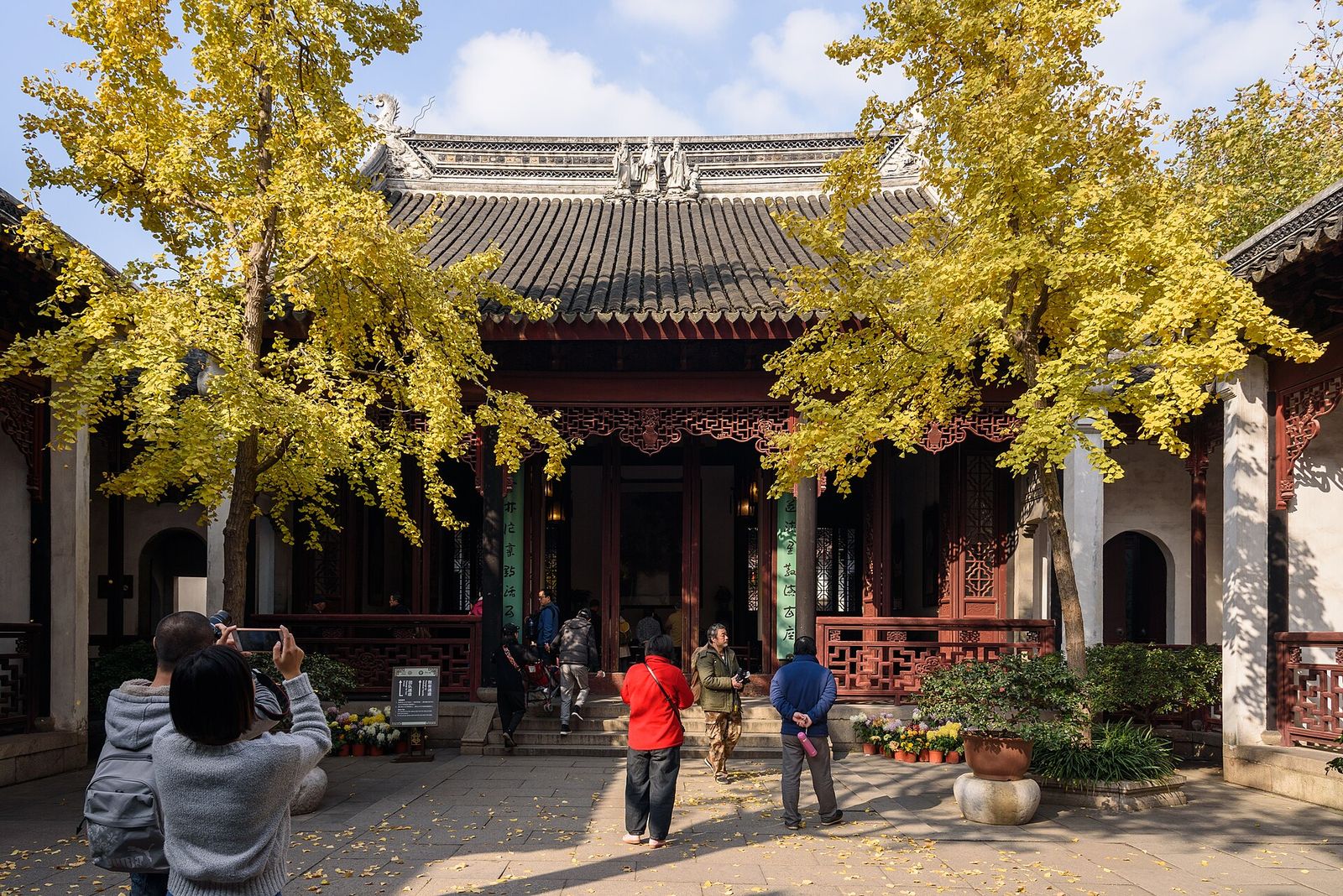
The Hall of Swallows' PraiseLamassu Design Gurdjieff (talk), CC BY-SA 3.0
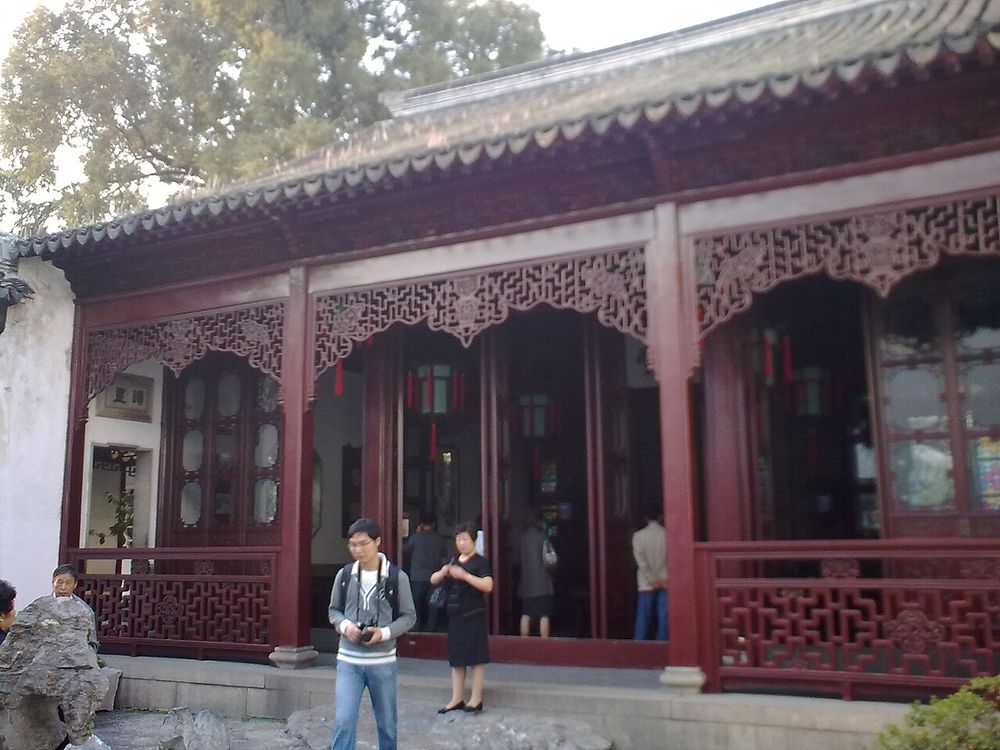
The main hall of the garden, a mandarin-duck hall in two halves, north and south. Its name comes from the Book of Songs, a line about feasting and good fame.
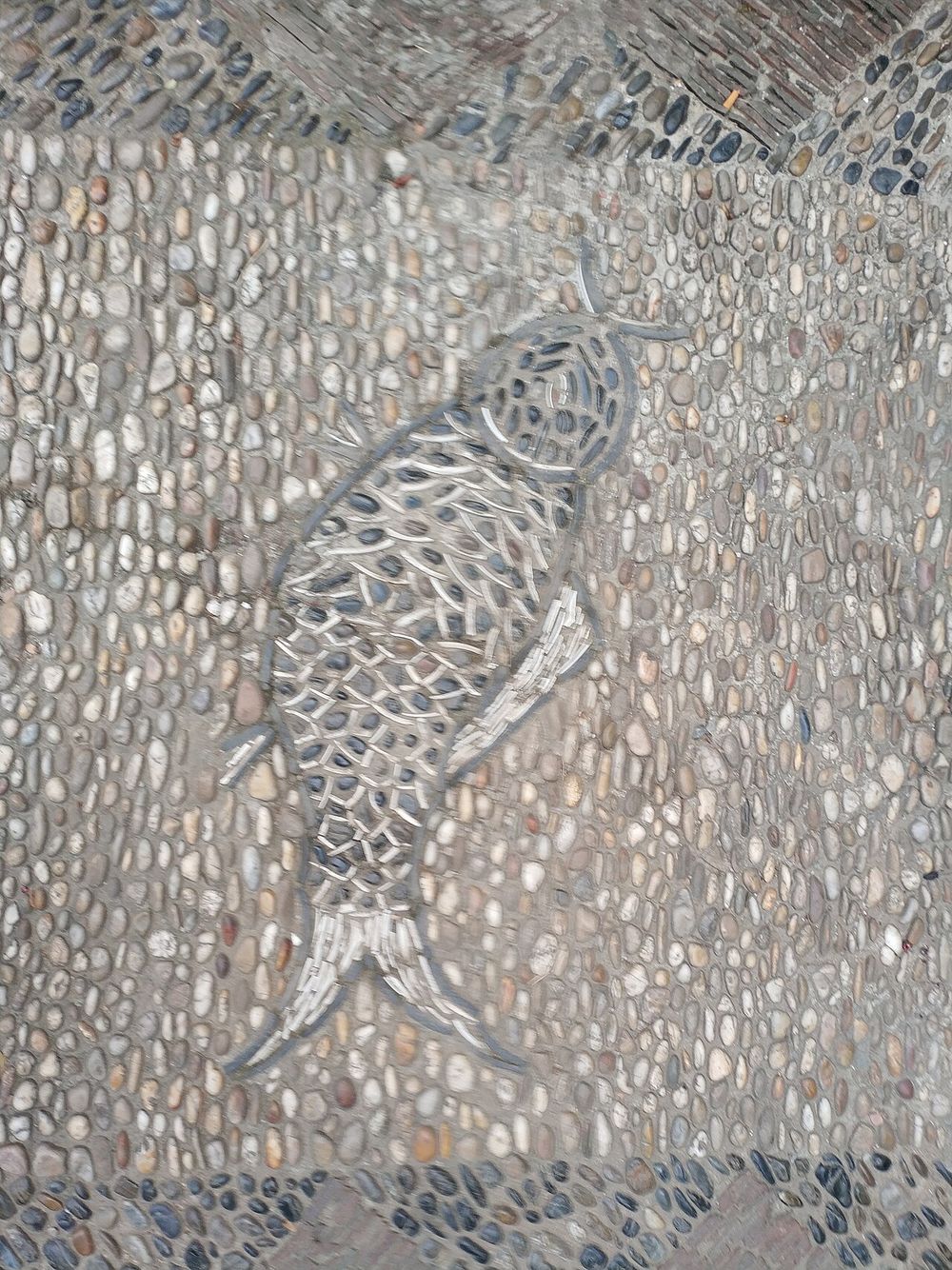
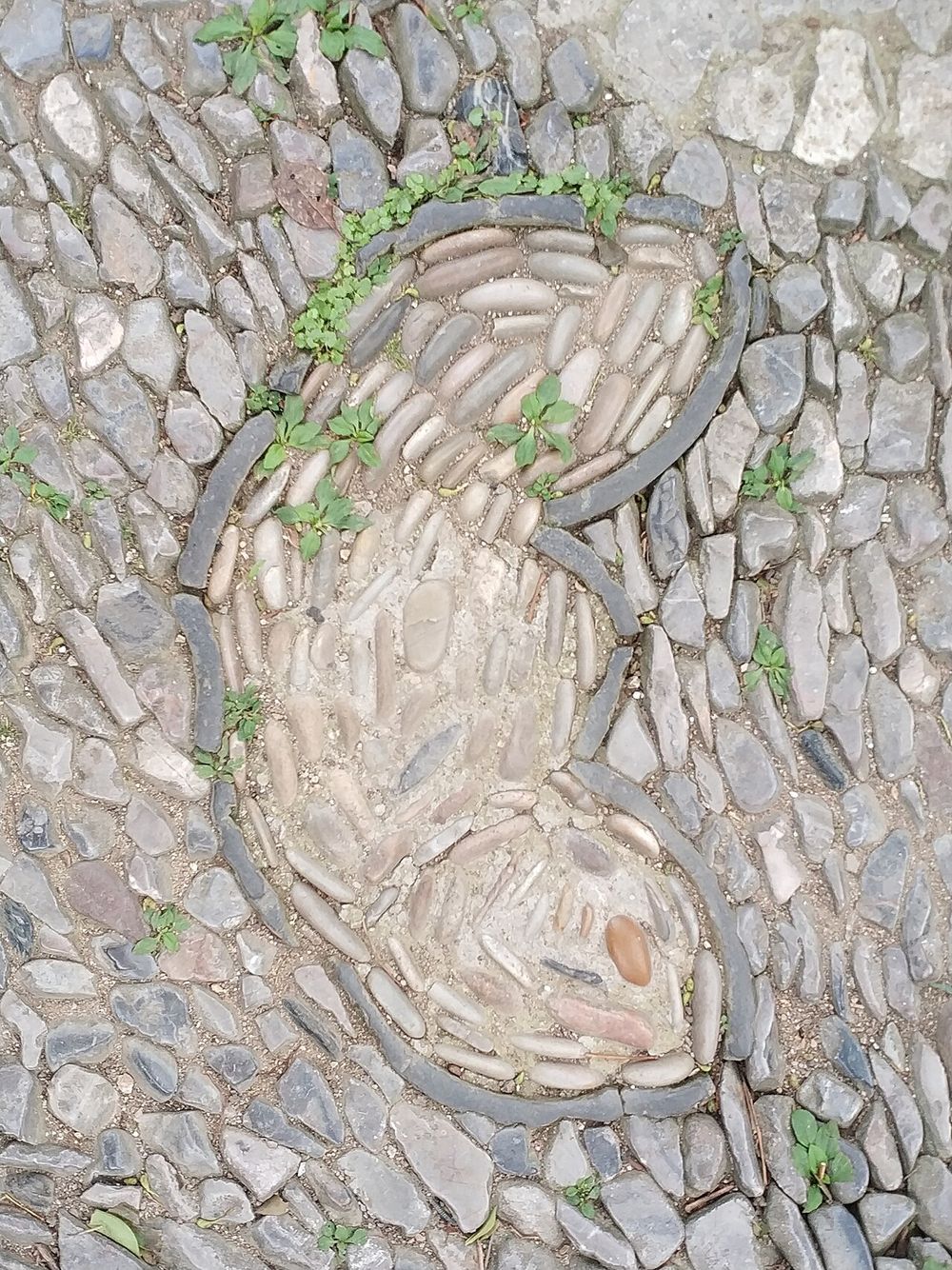
Look at the floors outside: pebbles laid in pictures of a carp, a gold ingot, coins and flowers.
A pebble carp in the floorDavidzdh, CC BY-SA 4.0
2. The Hall of Standing in the Snow
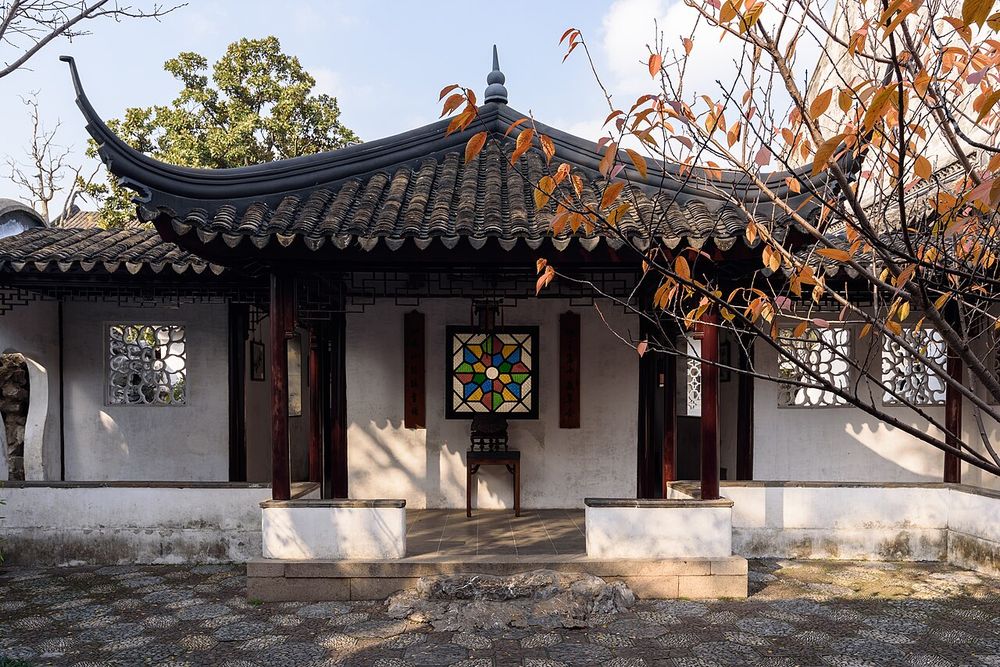
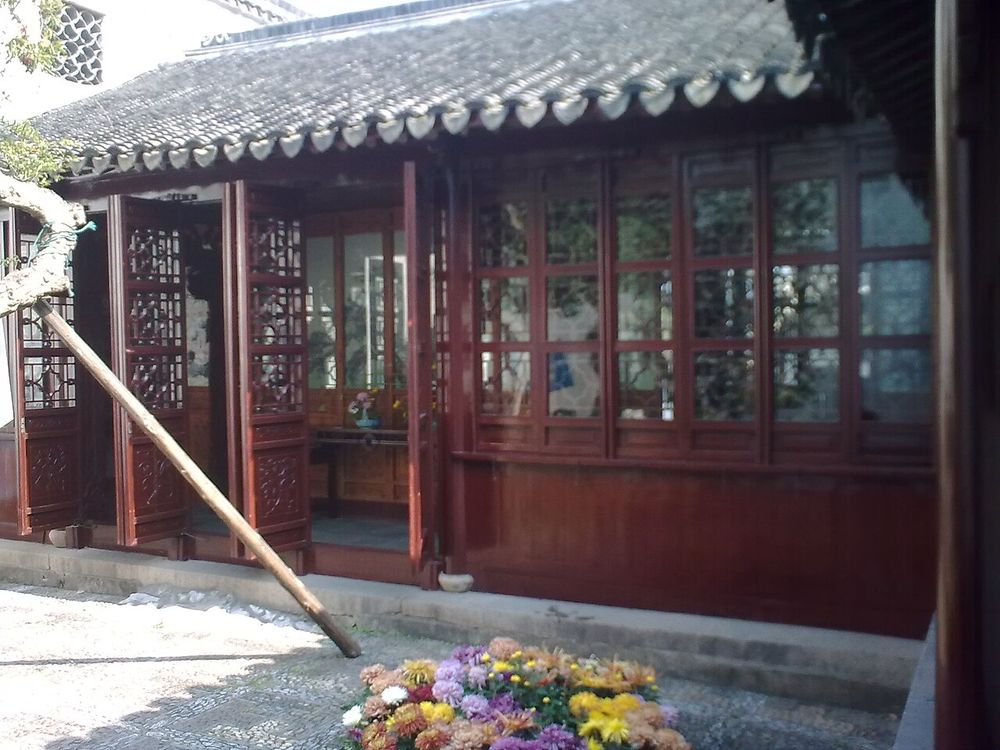
A hall in autumn, 2017King of Hearts, CC BY-SA 4.0
Its name recalls a Chan story: the monk Huike stood all night in the snow outside Bodhidharma's cave, asking to be taught. It is a reminder that this was a temple.
3. The rockery
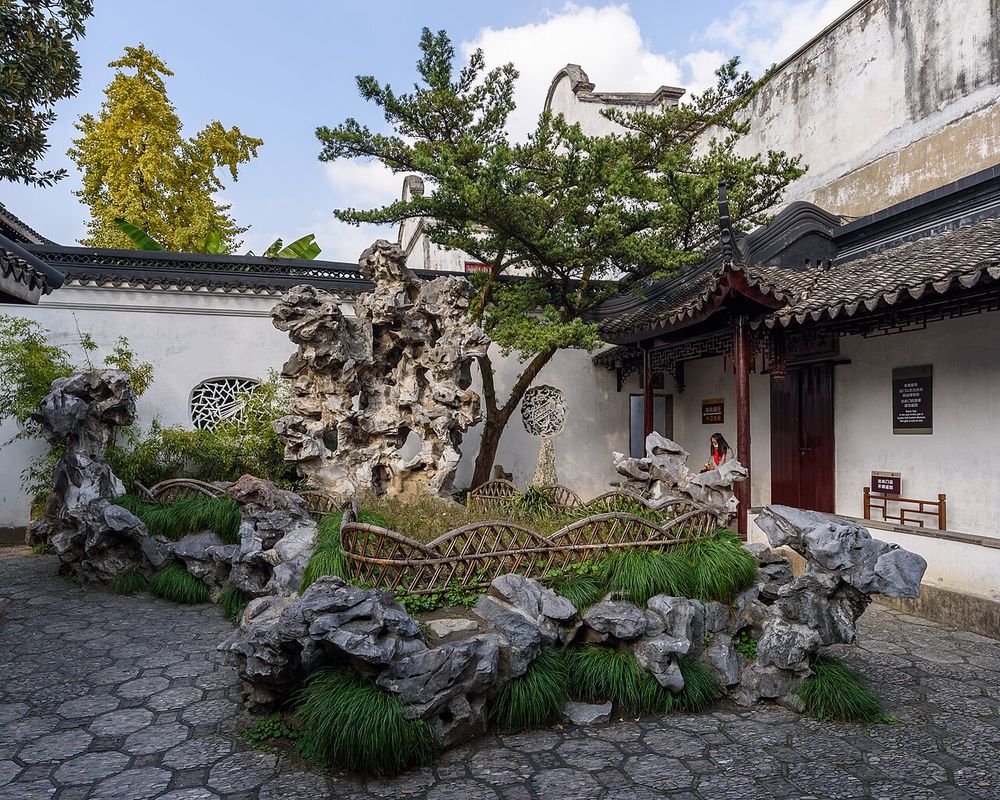
Rocks in a courtyard, 2017King of Hearts, CC BY-SA 4.0
Go in. The caves are low, so watch your head. Paths go up and down three levels, and a bridge crosses between two hills. Count the cave mouths you pass through.
Inside the maze, 2009Jakub Hałun, CC BY-SA 4.0
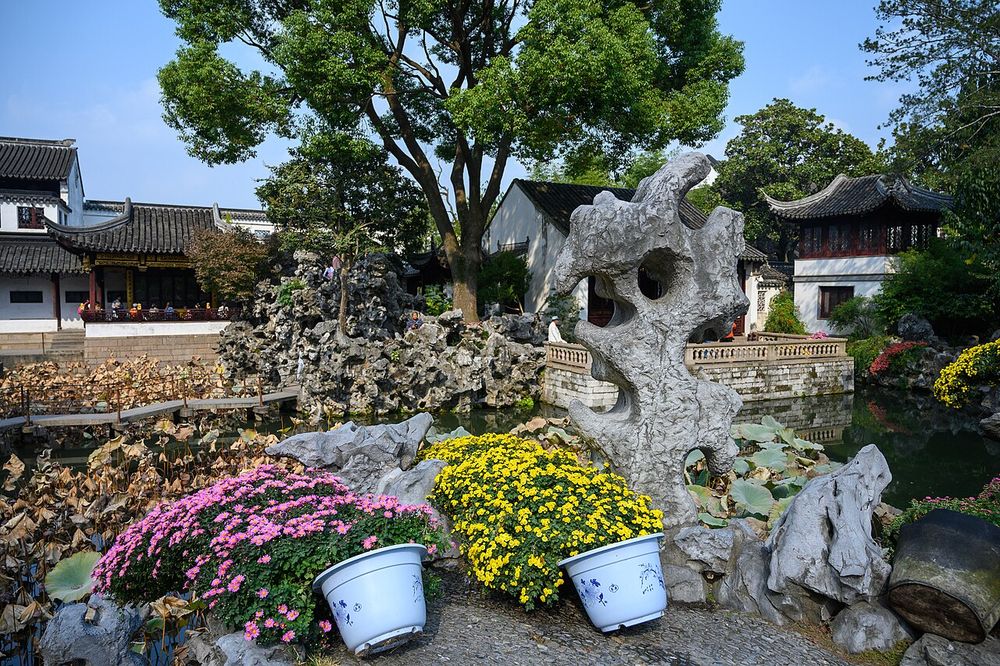
The rocks are lake rocks from Lake Tai, worn into holes by water over thousands of years. The best ones were chosen for their likeness to animals.
Lake rocks, 2019xiquinhosilva, CC BY 2.0
4. The True Delight Pavilion
The True Delight PavilionLamassu Design Gurdjieff (talk), CC BY-SA 3.0
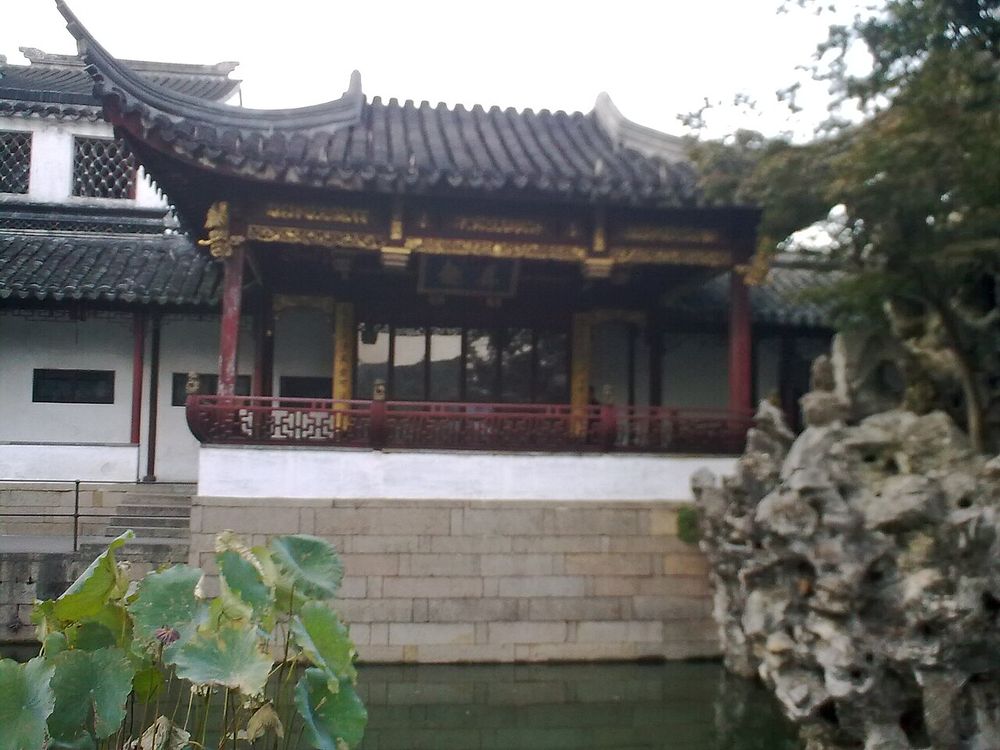
A pavilion on the water with carved and gilded beams, finer than the rest of the garden, because the emperor sat here. The board says "true delight" in Qianlong's hand.
5. The stone boat and the waterfall
The stone boatLamassu Design Gurdjieff (talk), CC BY-SA 3.0
A boat of stone and concrete moored at the edge of the pond, built by the Bei family. Its windows have coloured glass, a taste of 1920s Shanghai in a Yuan garden.
The waterfallLamassu Design Gurdjieff (talk), CC BY-SA 3.0
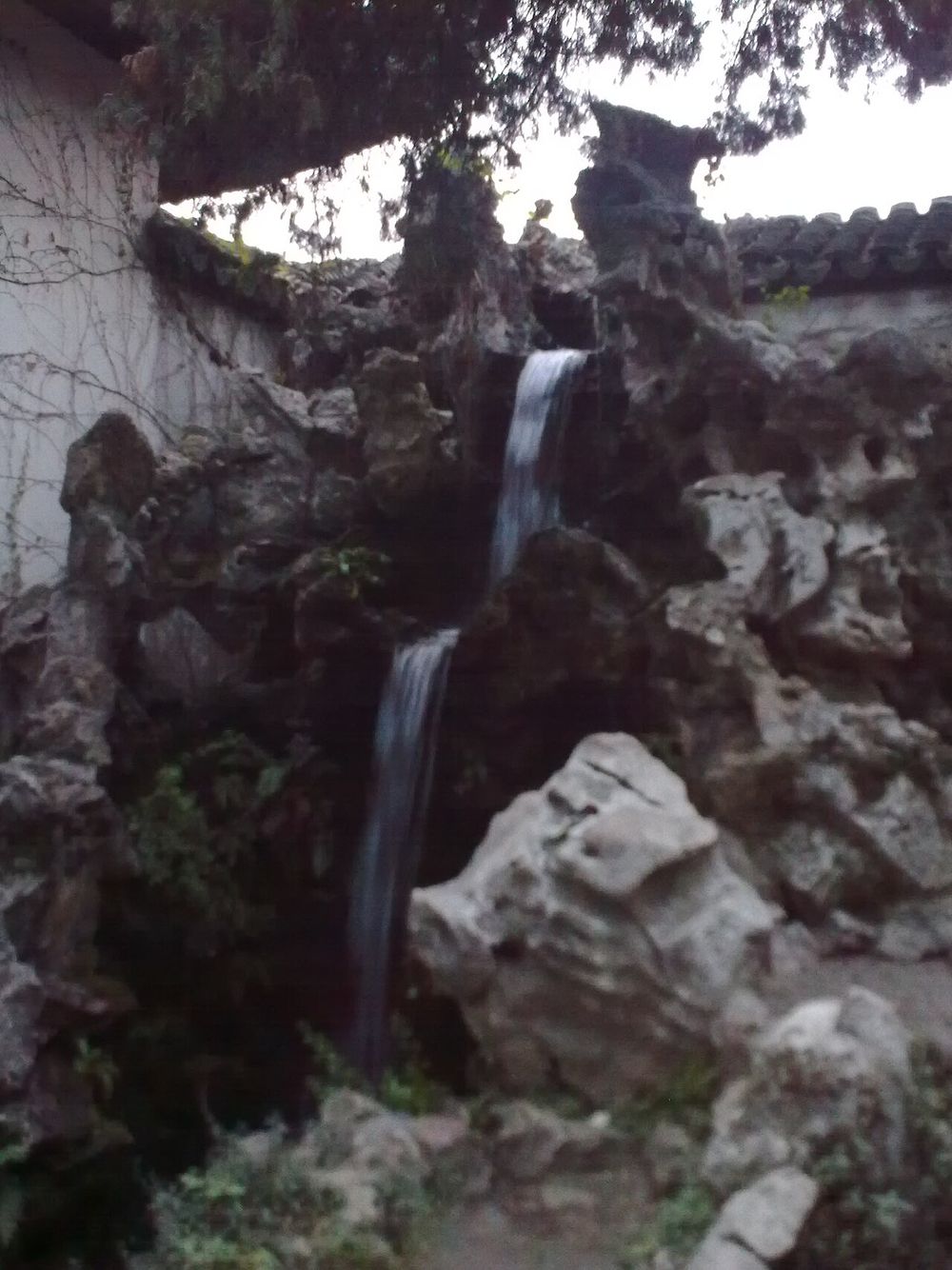
In the north-west corner, water falls down the rocks from a hidden tank. It is one of the very few waterfalls in a Suzhou garden.
6. The Asking Plum Pavilion and the Dark Fragrance Tower
The Asking Plum PavilionLamassu Design Gurdjieff (talk), CC BY-SA 3.0
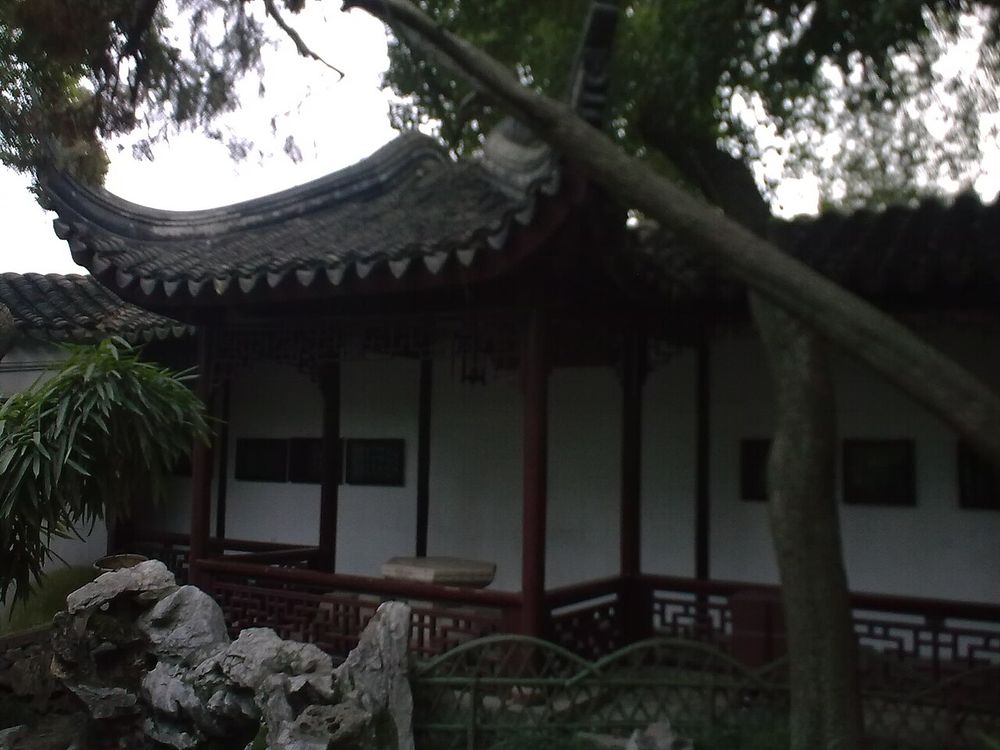
The plum tree is the flower of the scholar. In the Asking Plum Pavilion the windows, the tables and the floor are all in the shape of the plum blossom.
Near the Dark Fragrance TowerLamassu Design Gurdjieff (talk), CC BY-SA 3.0
The tower is named from a line of Lin Bu, the hermit who "took the plum tree for his wife": sparse shadows slanting across clear shallow water, dark fragrance drifting under the yellow dusk moon.
7. The pond and the bridges
The zigzag bridge, 2017King of Hearts, CC BY-SA 4.0
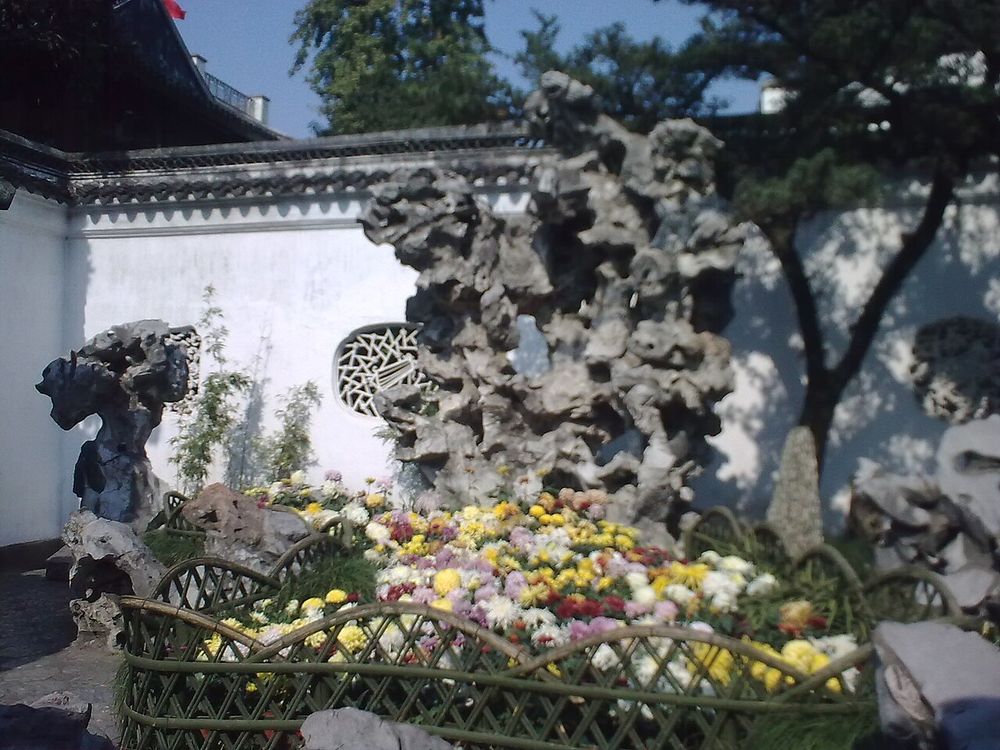
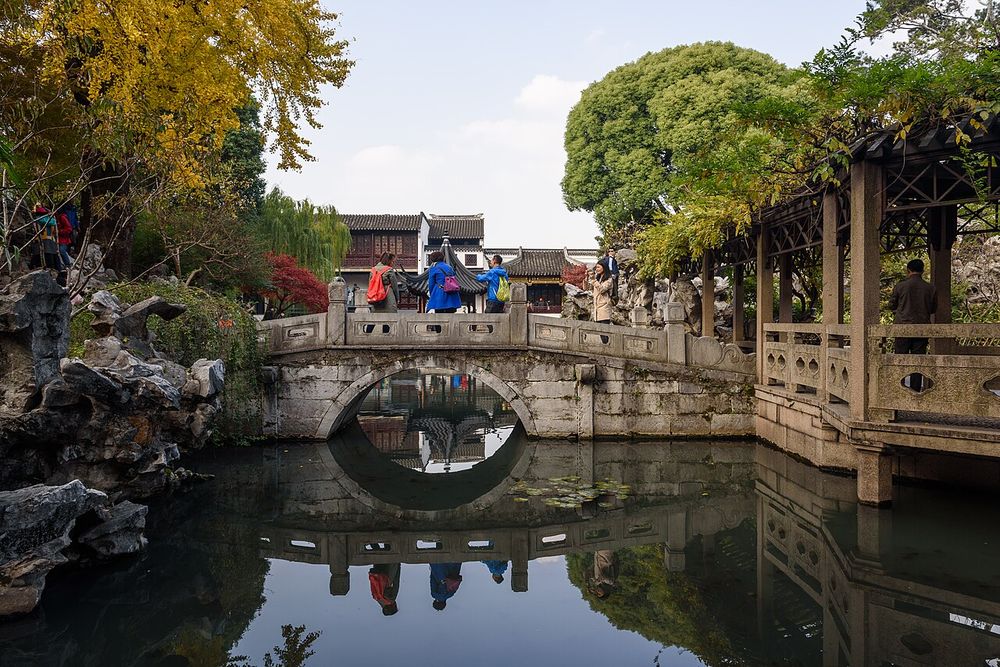
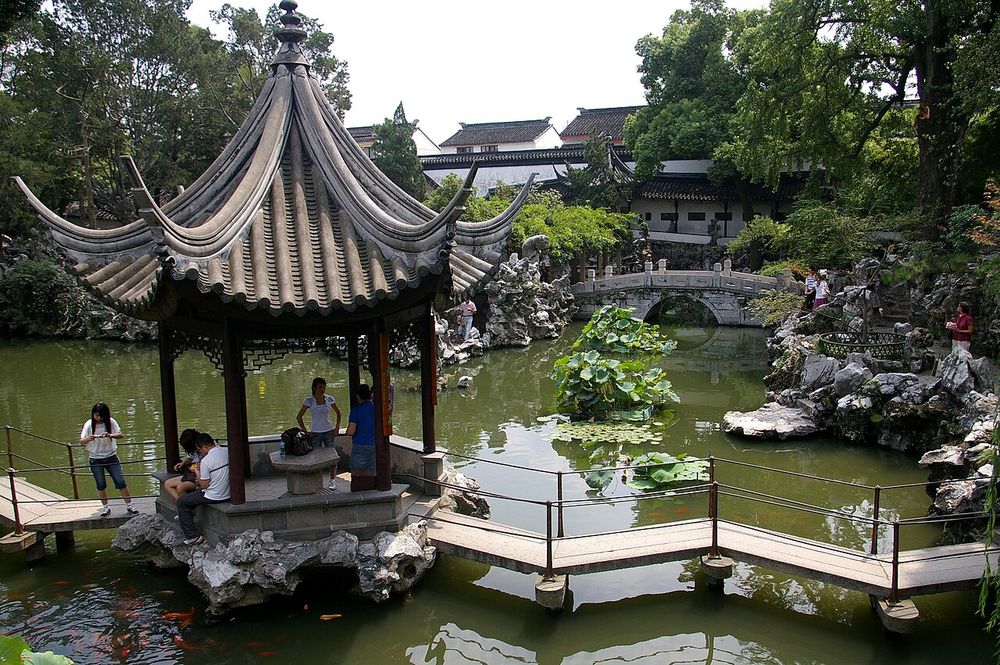
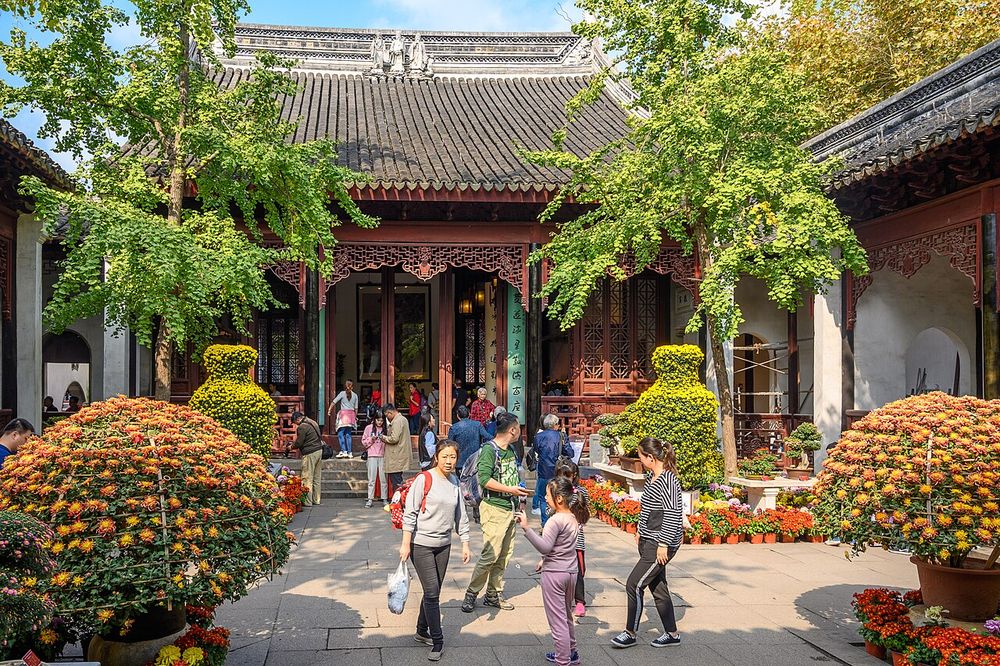
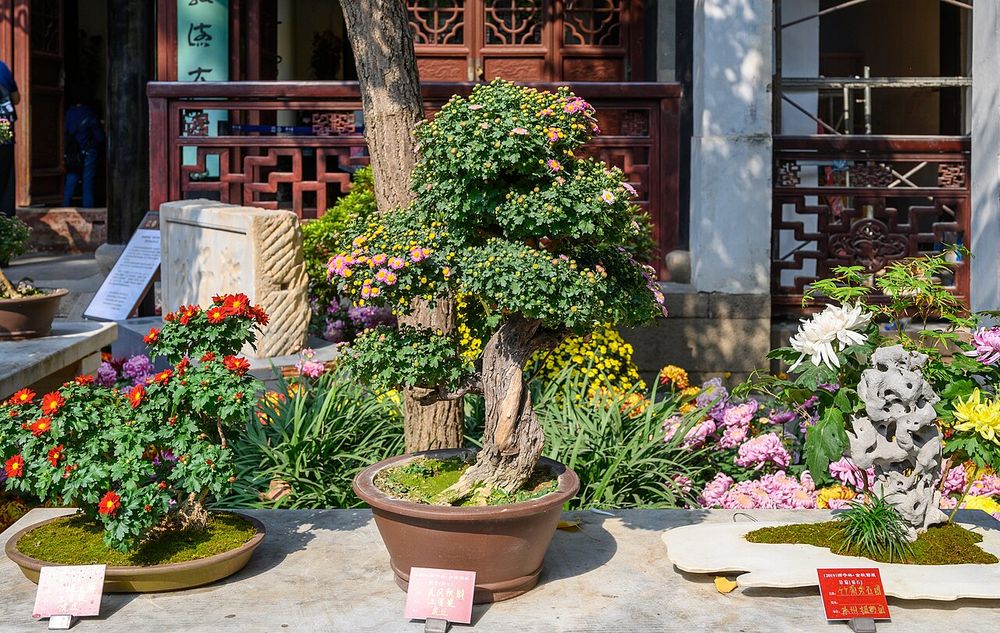
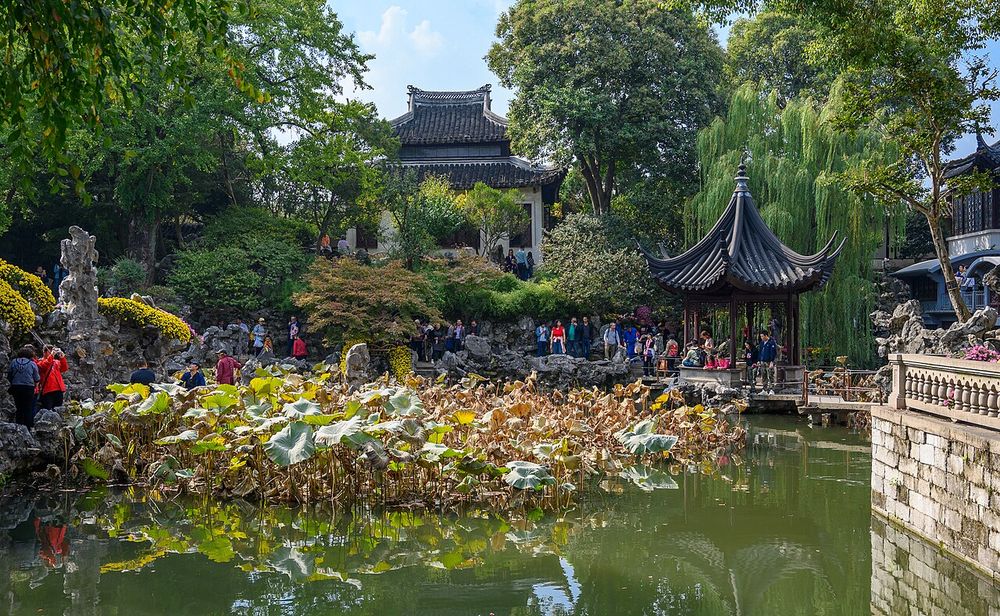
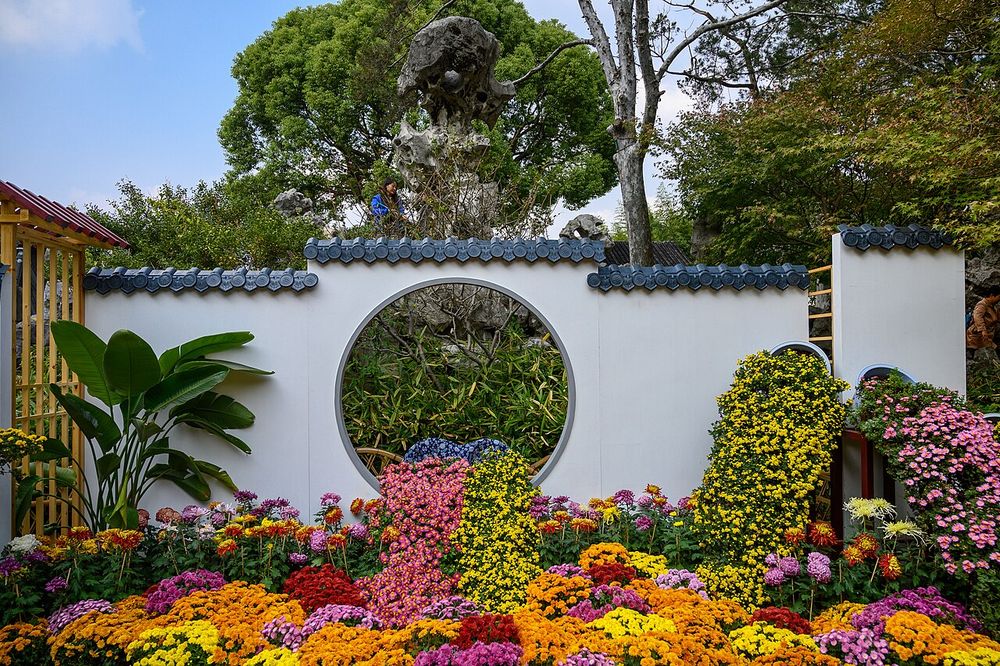
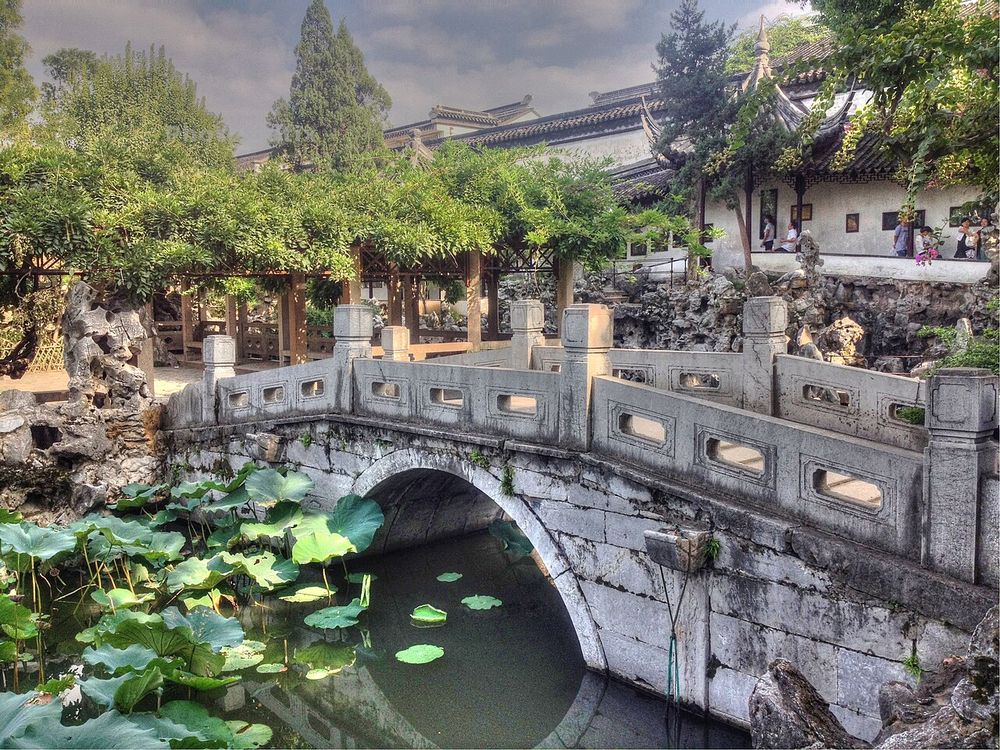
Round the pond, a stone bridge zigzags under the rocks and a lake-pavilion stands in the water. In autumn the ginkgo trees turn yellow and the chrysanthemum show fills the courtyards.
The bridge across the pond, 2019xiquinhosilva, CC BY 2.0
The garden and the same years elsewhere
The temple was built in 1342, five years after the Hundred Years' War began between England and France. Ni Zan painted it in 1373, five years after the Ming dynasty (1368–1644) was founded. Bei Runsheng bought it in 1917, the year of the Russian Revolution, the year his grand-nephew I. M. Pei was born.
Meanwhile in the world
Year
Here
Elsewhere
1342
The temple and its garden are founded
The Hundred Years' War is five years old
1373
Ni Zan paints the Lion Grove
Chaucer travels to Italy
1757
The Qianlong emperor visits on his second southern tour
The Battle of Plassey
1917
Bei Runsheng buys the garden
The Russian Revolution
1954
Opens to the public as a state garden
The Geneva Conference
2000
Added to the World Heritage list
The Millennium
One line to remember: a temple's rocks that became a maze.
Then and now
Ginkgo in autumn before the halls, 2017King of Hearts, CC BY-SA 4.0, Wikimedia CommonsA hall in autumn, 2017King of Hearts, CC BY-SA 4.0, Wikimedia CommonsRocks in a courtyard, 2017King of Hearts, CC BY-SA 4.0, Wikimedia CommonsThe rockery and a bridge, 2017King of Hearts, CC BY-SA 4.0, Wikimedia CommonsA pavilion by the pond, 2017King of Hearts, CC BY-SA 4.0, Wikimedia CommonsThe zigzag bridge, 2017King of Hearts, CC BY-SA 4.0, Wikimedia CommonsGinkgo and the pond, 2017King of Hearts, CC BY-SA 4.0, Wikimedia CommonsA pavilion on the rocks, 2017King of Hearts, CC BY-SA 4.0, Wikimedia CommonsThe rockery, 2009Jakub Hałun, CC BY-SA 4.0, Wikimedia CommonsPaths in the rocks, 2009Jakub Hałun, CC BY-SA 4.0, Wikimedia CommonsInside the maze, 2009Jakub Hałun, CC BY-SA 4.0, Wikimedia CommonsThe pond and the rockery, 2019xiquinhosilva, CC BY 2.0, Wikimedia CommonsLake rocks, 2019xiquinhosilva, CC BY 2.0, Wikimedia CommonsRocks and halls, 2019xiquinhosilva, CC BY 2.0, Wikimedia CommonsA rock said to hold nine lionsLamassu Design Gurdjieff (talk), CC BY-SA 3.0, Wikimedia CommonsAnother tall lion rock, 2017Jason M. C., Han, CC BY-SA 4.0, Wikimedia CommonsPenjing in a courtyard, 2019xiquinhosilva, CC BY 2.0, Wikimedia CommonsChrysanthemums by the pond, 2019xiquinhosilva, CC BY 2.0, Wikimedia CommonsRocks and flowers, 2019xiquinhosilva, CC BY 2.0, Wikimedia CommonsA moon gate and the chrysanthemum show, 2019xiquinhosilva, CC BY 2.0, Wikimedia CommonsThe bridge across the pond, 2019xiquinhosilva, CC BY 2.0, Wikimedia CommonsThe Hall of Swallows' PraiseLamassu Design Gurdjieff (talk), CC BY-SA 3.0, Wikimedia CommonsThe True Delight PavilionLamassu Design Gurdjieff (talk), CC BY-SA 3.0, Wikimedia CommonsThe stone boatLamassu Design Gurdjieff (talk), CC BY-SA 3.0, Wikimedia CommonsThe waterfallLamassu Design Gurdjieff (talk), CC BY-SA 3.0, Wikimedia CommonsThe Asking Plum PavilionLamassu Design Gurdjieff (talk), CC BY-SA 3.0, Wikimedia CommonsNear the Dark Fragrance TowerLamassu Design Gurdjieff (talk), CC BY-SA 3.0, Wikimedia CommonsA hall in the Five Pines courtLamassu Design Gurdjieff (talk), CC BY-SA 3.0, Wikimedia CommonsA stone bridge and lotus, 2013Charlie fong, CC BY-SA 3.0, Wikimedia CommonsA pebble carp in the floorDavidzdh, CC BY-SA 4.0, Wikimedia CommonsA pebble gold ingotDavidzdh, CC BY-SA 4.0, Wikimedia CommonsThe pond in black and white, 2015Nicolas Vollmer from Paris [France], CC BY 2.0, Wikimedia CommonsThe national monument stone, 2011Doctoroftcm, CC BY-SA 3.0, Wikimedia CommonsQianlong's inscription in the copy of the garden at the Old Summer Palace, BeijingMlogic, CC BY-SA 3.0, Wikimedia Commons
Local legends
These are stories people tell about this place. They are legends, not history, and each one says where it comes from.
LegendTrue delight
Qianlong is said to have taken up his brush to write "how very delightful", three characters. A quick-witted scholar of the family that owned the garden begged him for the middle one as a gift, and the emperor left "true delight".
Source: A story told by Suzhou guides
LegendFive hundred lions
People say there are five hundred lions hidden in the rocks, like the five hundred arhats of a Buddhist temple.
Source: A count no one has finished
Later, people who live here will be able to add the stories they grew up with, and say which of these they have heard.
Not certain, and where accounts conflict
Did Ni Zan really paint the Lion Grove?
A scroll in Taipei carries his name and the date 1373. Some scholars think it was painted with, or by, his friend Zhao Yuan.
How many caves?
Nine paths and twenty-one caves is the usual figure. It depends on what you count as a cave.
Checked 2026-11-12 Suzhou Municipal Administration of Gardens. Tickets are sold through its WeChat account, 苏州园林旅游.
Tickets and hours
40 yuan in April, May and July to October; 30 yuan in January to March, June, November and December.
Open from 7:30 to about 17:30 in summer and 17:00 in winter.
Last checked 2026-11-12. Suzhou Municipal Administration of Gardens, published prices and opening hours; travel reports of 2026.
Booking without WeChat
International booking platform International travel sites such as Trip.com sell the same tickets with a passport, for a little more.
WeChat or Alipay Tickets are sold only in advance, for a date and time, through the "苏州园林旅游" (Suzhou Garden Tourism) WeChat account. Use your passport number and show the passport at the gate.
Ticket window on site Since 2019 there are no tickets at the gate.
Note Weekends and school holidays sell out; book ahead.
Checked 2026-11-12
Where to start
The gate is on Yuanlin Road, a five-minute walk from the Humble Administrator's Garden; Metro Line 6, Zhuozhengyuan Subo station.
See it with the Suzhou Museum, and talk about Pei.
Before you go
Bring your passport itself.
Wear shoes with grip; the rock steps are smooth and uneven.
November for ginkgo and the chrysanthemum show.
Customs and manners
Children love the maze; hold small hands at the edges and on bridges.
Do not climb on the rocks outside the paths.
Opening hours are given in the local time of the place. Prices are in the local currency. The figure after ≈ is approximate, at exchange rates checked on 9 November 2026, in .
Look for these
Find a lion in the rocks.
Count the cave mouths you pass through.
Find the word "true delight".
Find a pebble carp in the floor.
Find the coloured glass in the stone boat.
I am here
Stand at the site, sign in, press the button, and collect its stamp. Your browser will ask to use your location. It is sent to us once to confirm that you are at the site; we keep how far you were from it, not the spot where you stood.
Your stamps are saved to your account, so they follow you to any device. Checking from a browser cannot rule out every false location; stricter checks arrive with the app.
Messages
Share your photos
Photos here show the place, not people. Each one is credited to the visitor who took it and appears after our team has looked at it. A photo with you in it belongs under “I am here”.