LegendThe Humble Administrator's Garden
Guides say that the son of Wang Xianchen, who built the garden, lost it in a single night at the gaming table. We found no reliable record.
Source: Told by guides; we found no written source
Suzhou, Jiangsu, China
苏州园林 · Sūzhōu Yuánlín
Nine private gardens, the oldest begun in the 1040s, each a landscape of rock, water, plants and rooms made inside the walls of a house. World Heritage since 1997 and 2000.
Photo: Zossolino, CC BY-SA 4.0, Wikimedia Commons
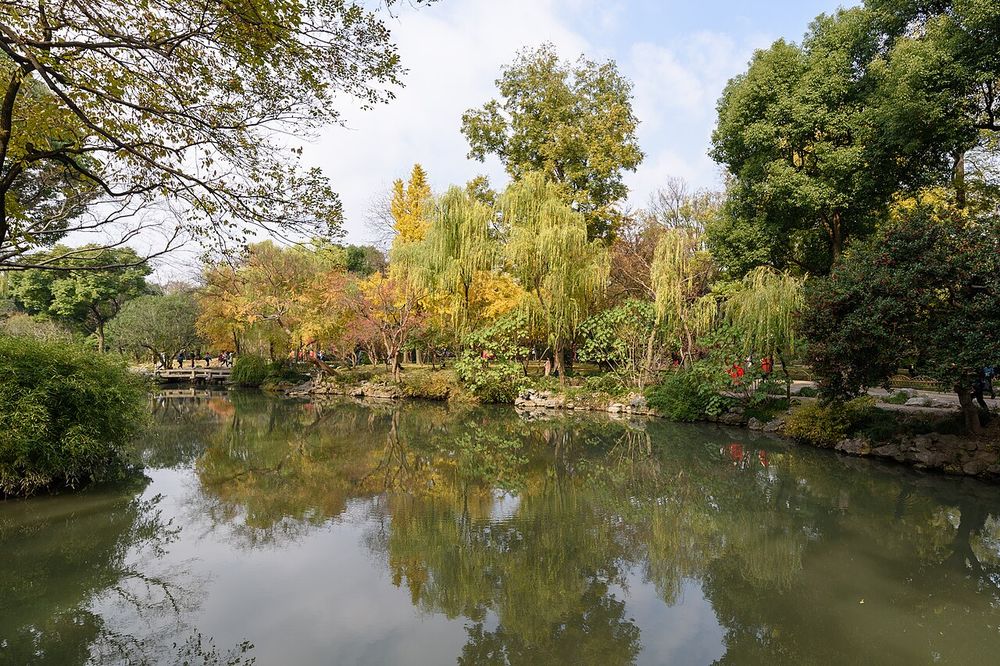
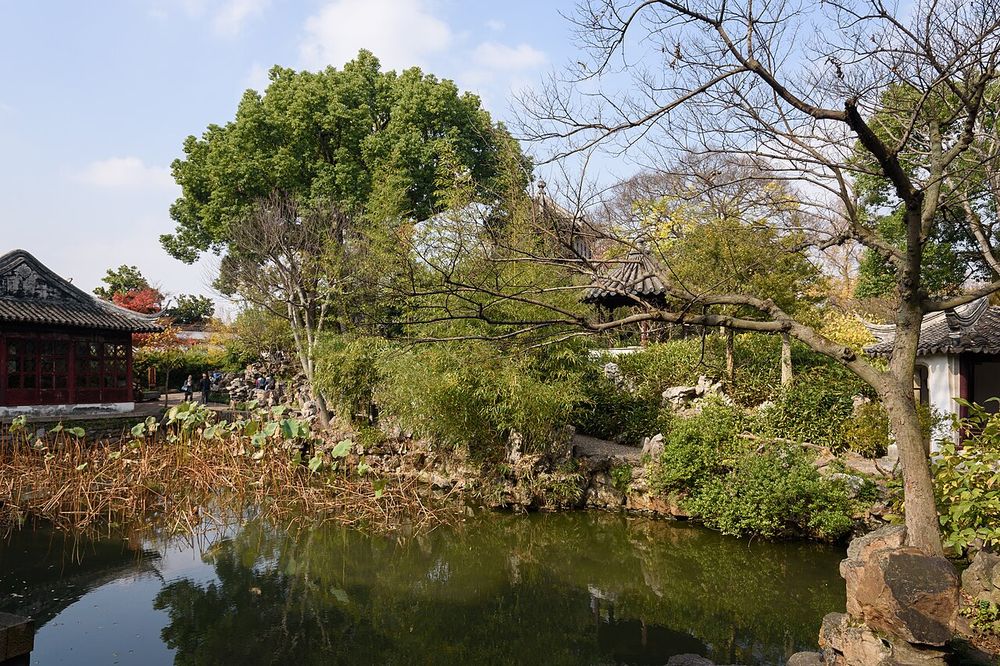
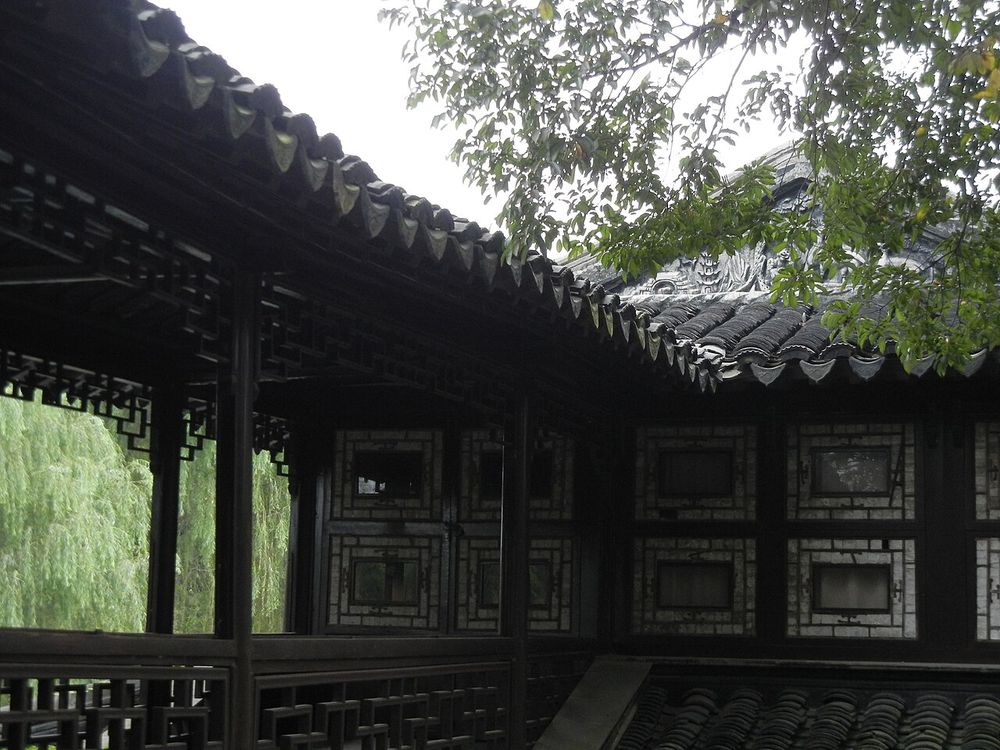
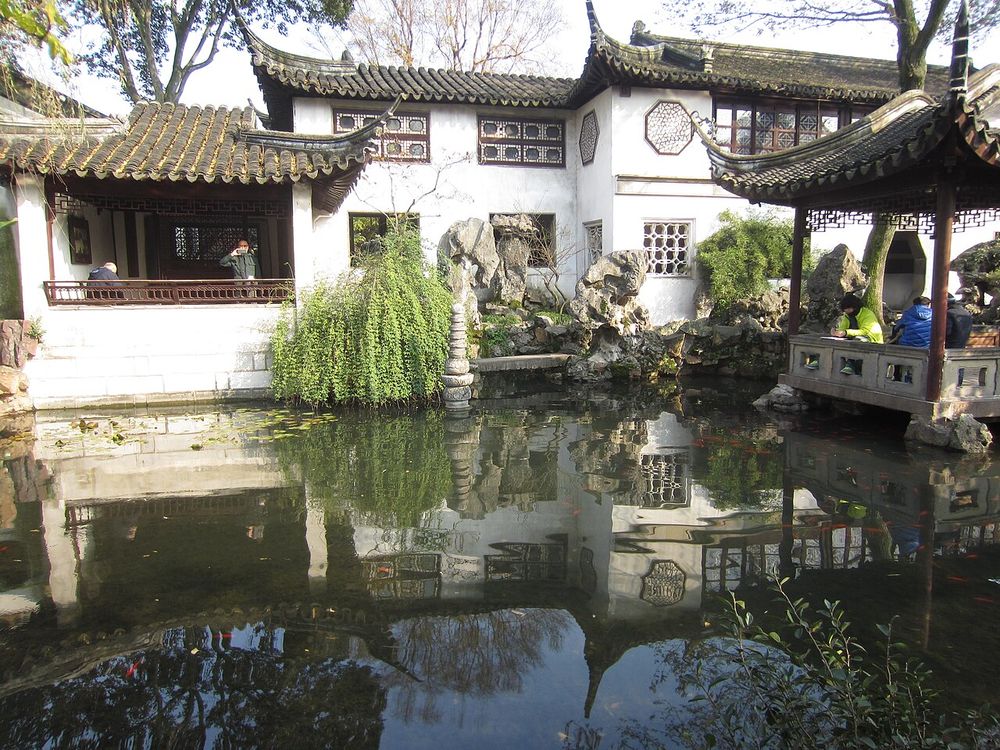
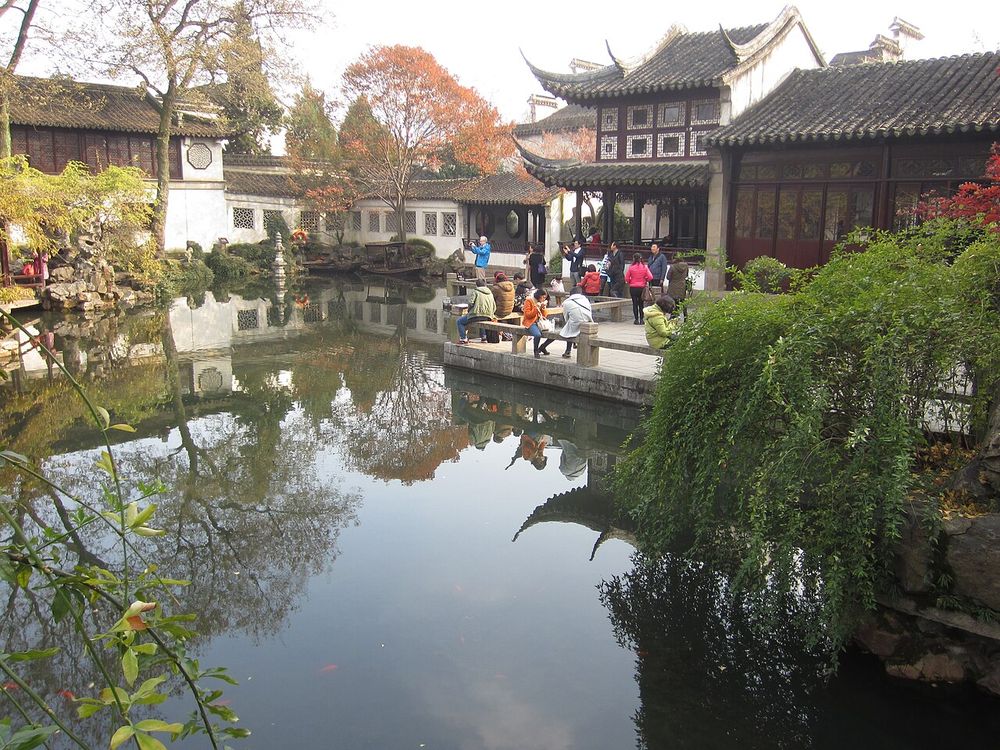
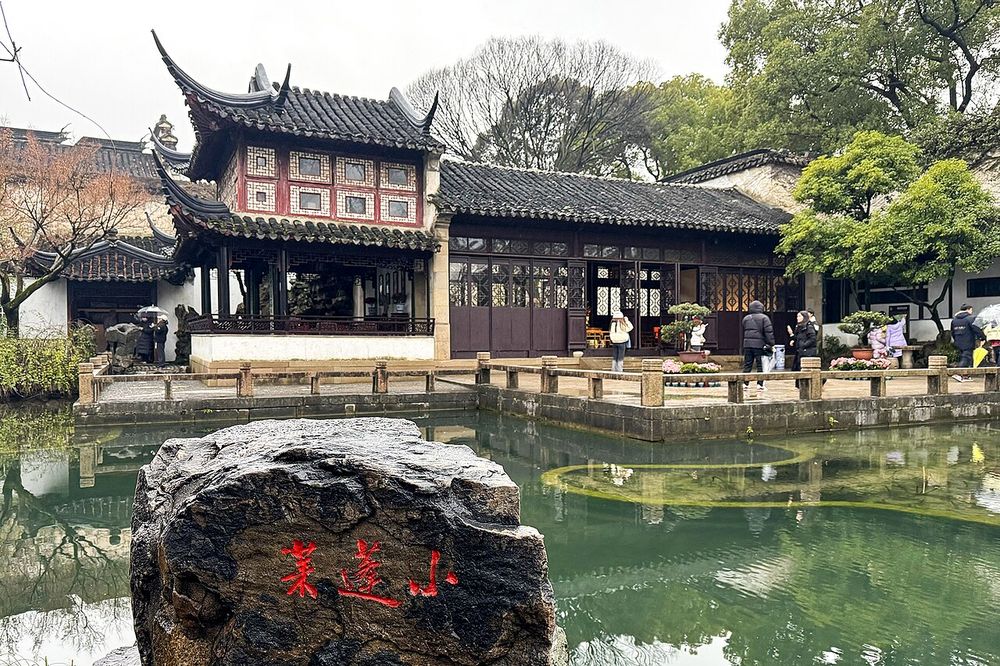
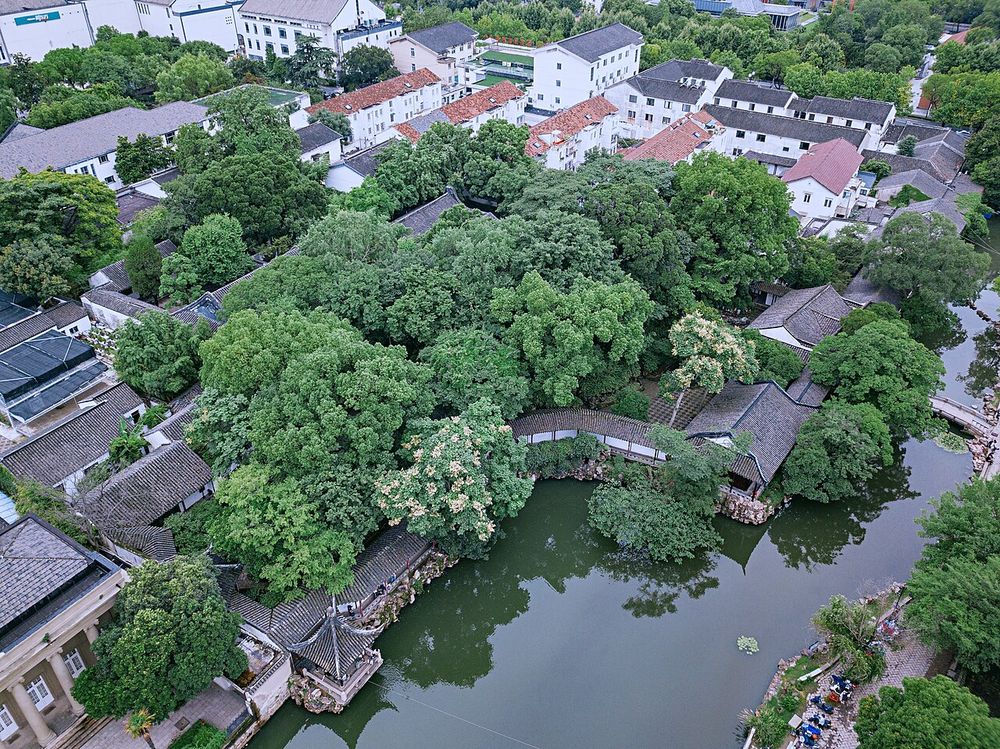
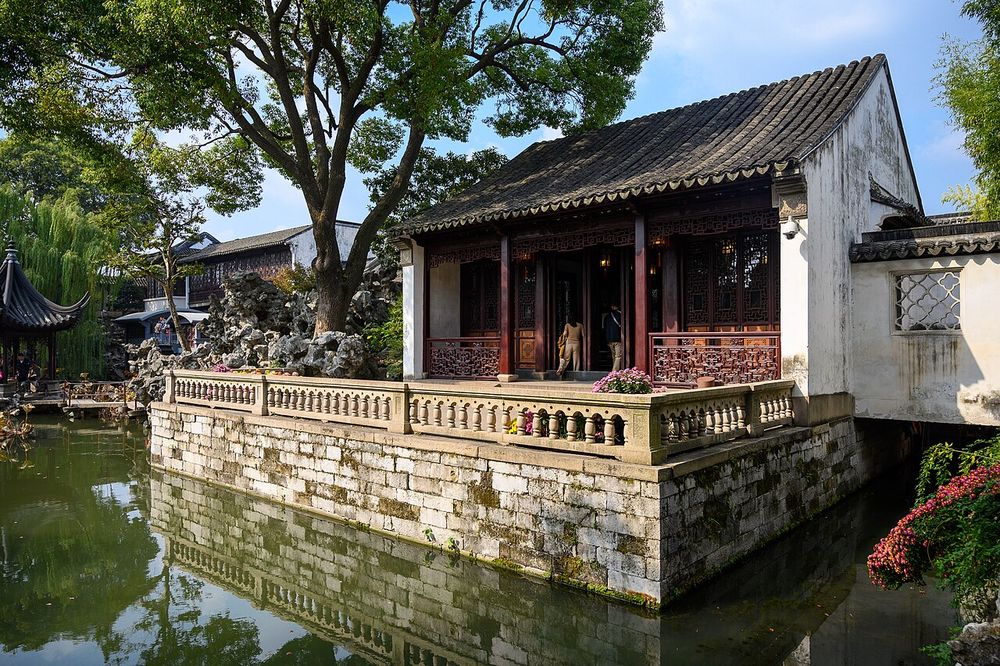
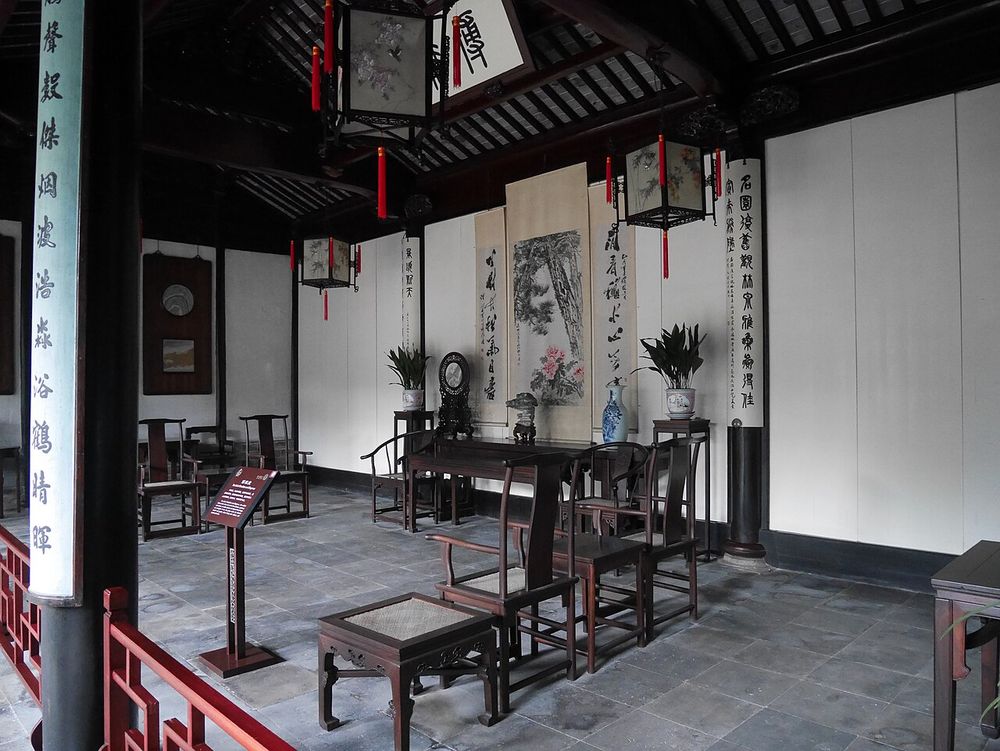
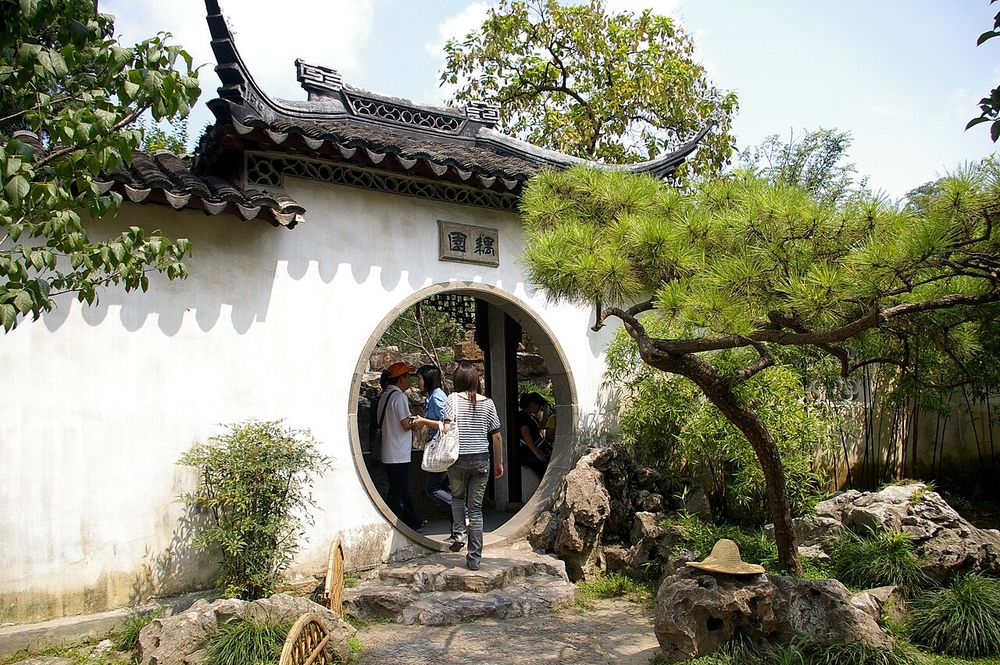
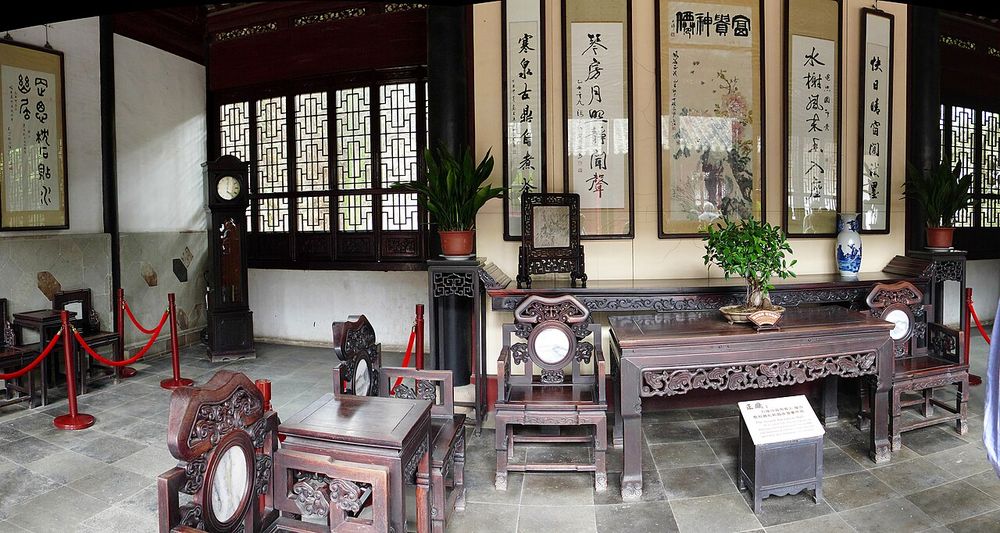
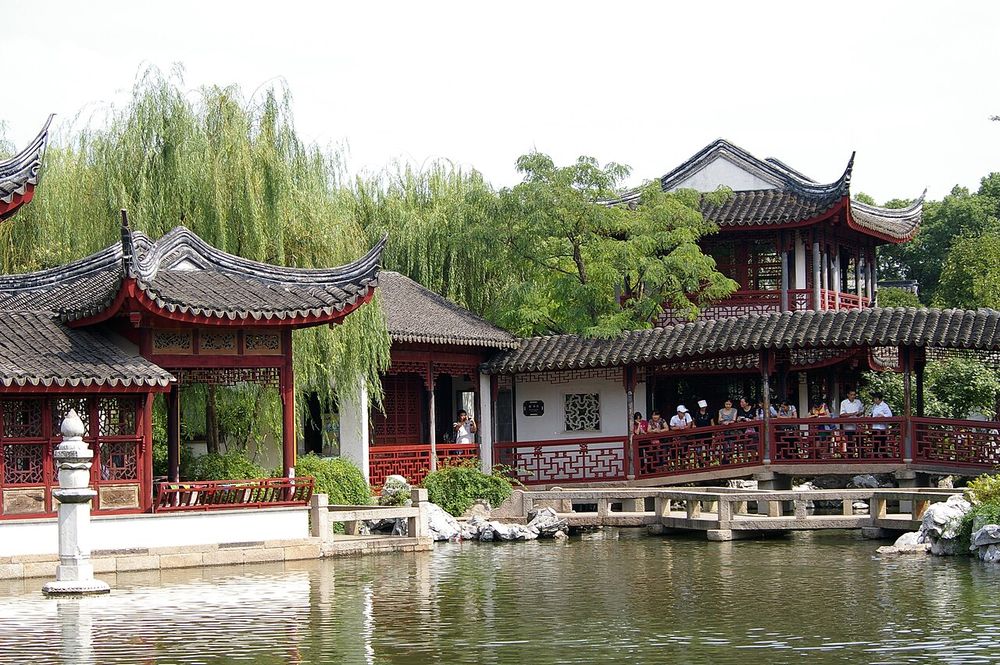
You are standing in somebody's home. The gardens of Suzhou were the private gardens of scholars and officials, who made a landscape of hills and water inside one wall out of rock, ponds, plants and rooms. The Humble Administrator's Garden is the largest. It was begun in the Zhengde years of the Ming dynasty (1368–1644), more than five hundred years ago.
"The Classical Gardens of Suzhou" is not one place. It is nine separate gardens: eight scattered through the old city and one in the water town of Tongli, twenty kilometres away. Each has its own gate and its own ticket, and nobody sees all nine in a day. The five below with a stop of their own are the ones to choose from first.
| Part | Ticket |
|---|---|
| The Humble Administrator's Garden (listed 1997) | Own ticket, about 80 yuan in season, 70 out |
| The Lingering Garden (1997) | Own ticket, about 55 / 45 yuan |
| The Master of the Nets Garden (1997) | Own ticket, about 40 / 30 yuan; night garden about 100 |
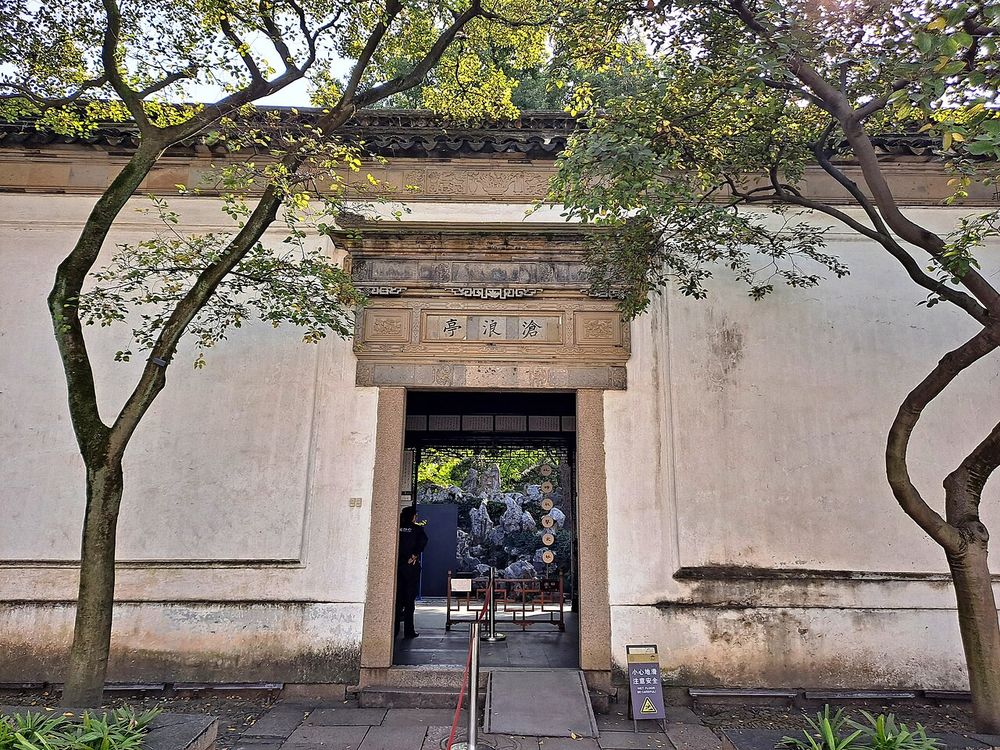
| The Canglang Pavilion (2000) | Own ticket, a small charge |
| The Lion Grove Garden (2000) | Own ticket, about 40 / 30 yuan |
| The Mountain Villa with Embracing Beauty (1997) | Own ticket; not always open |
| The Garden of Cultivation (2000) | Own ticket, a small charge |
| The Couple's Retreat Garden (2000) | Own ticket, a small charge |
| The Retreat and Reflection Garden, Tongli (2000) | Inside the Tongli old-town ticket |
| The Suzhou Museum, beside the Humble Administrator's Garden | Not one of the nine. Free, booking needed |
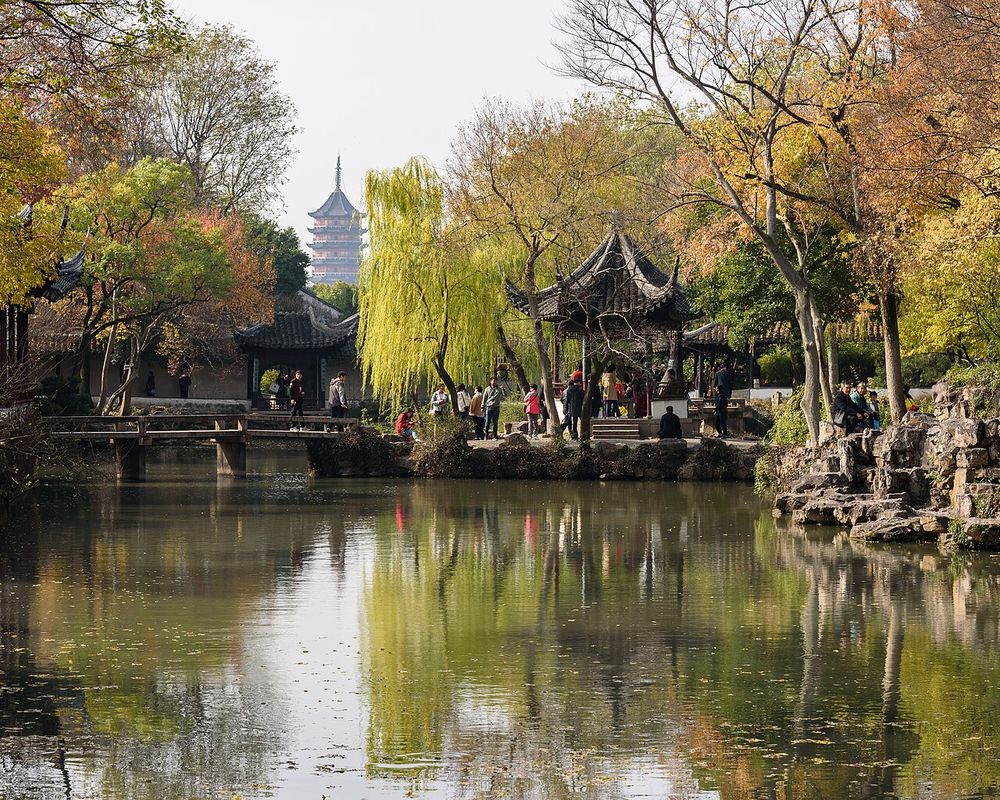
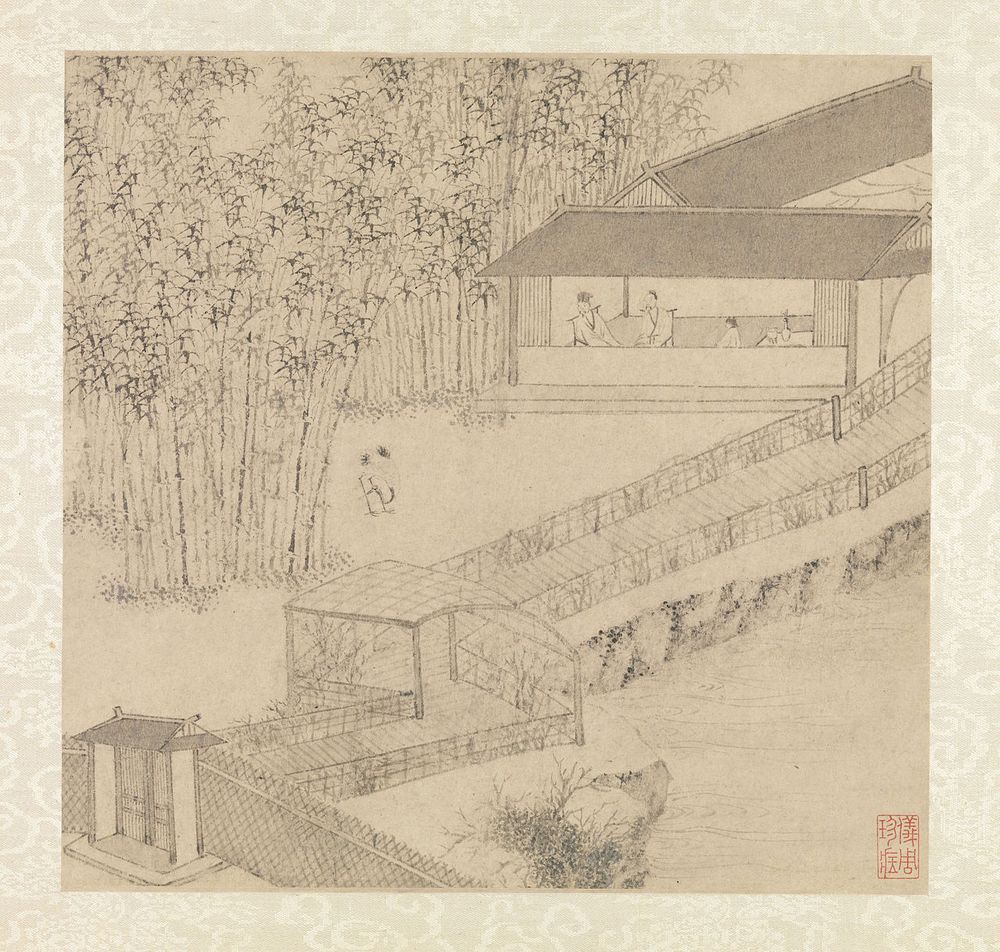
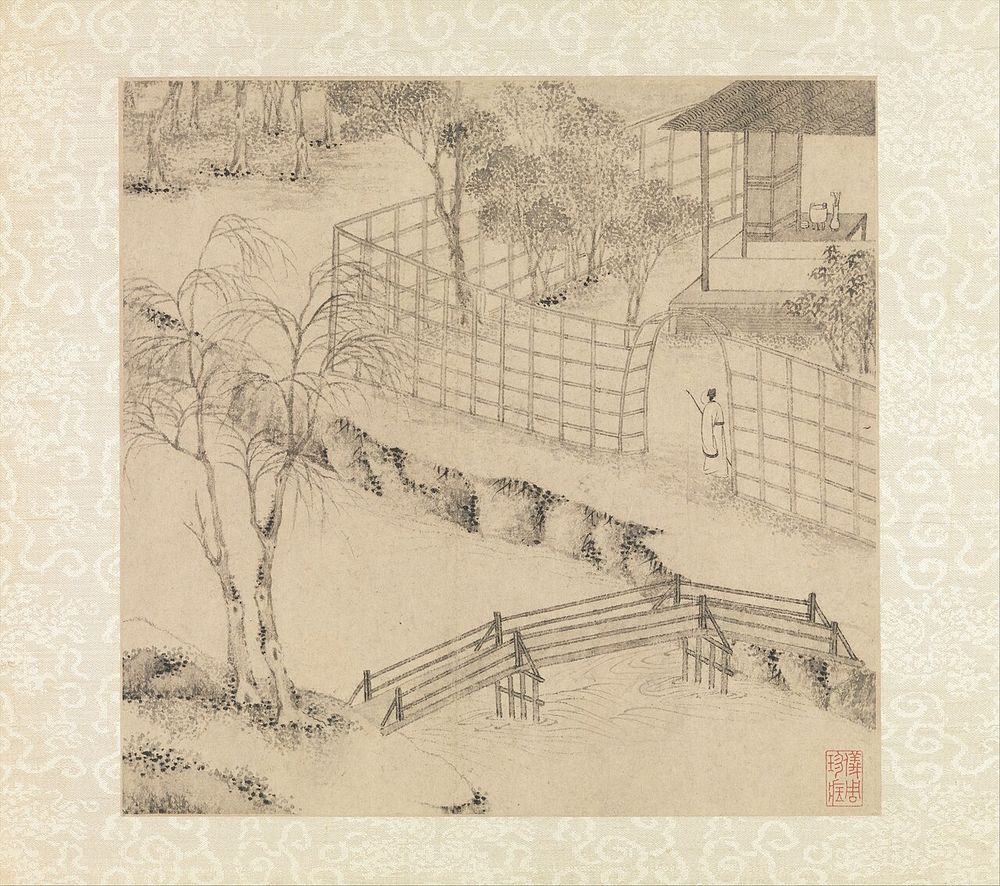
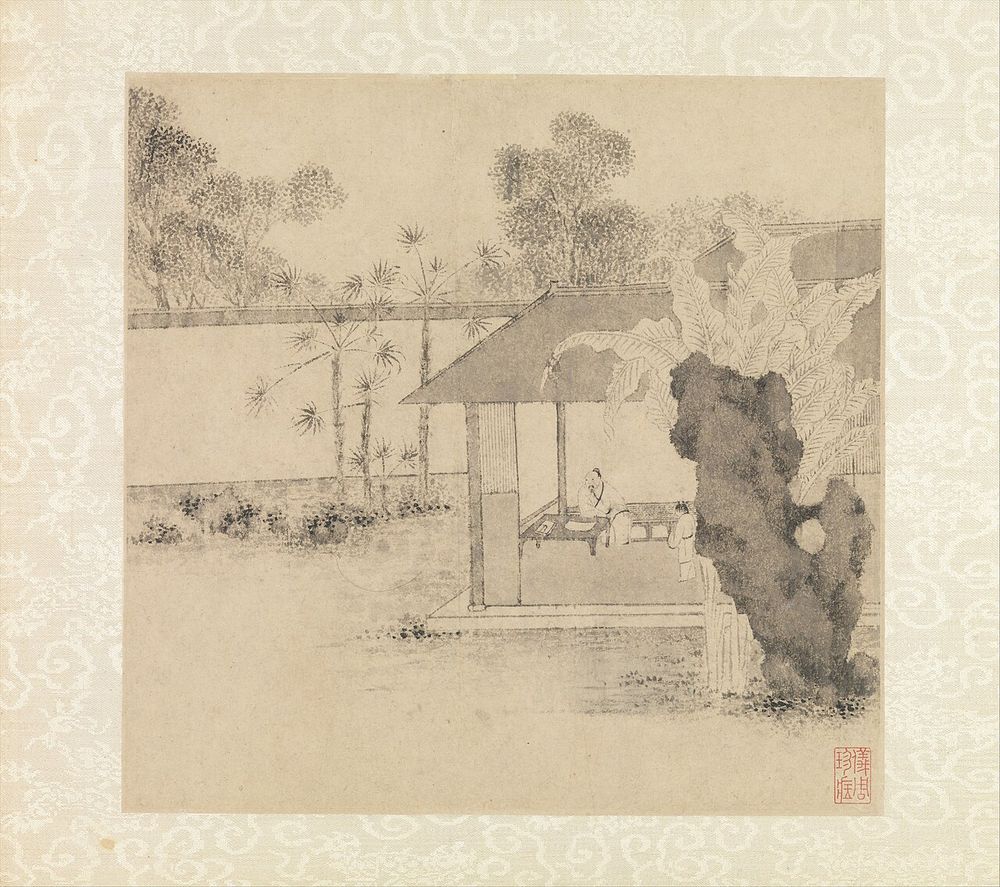
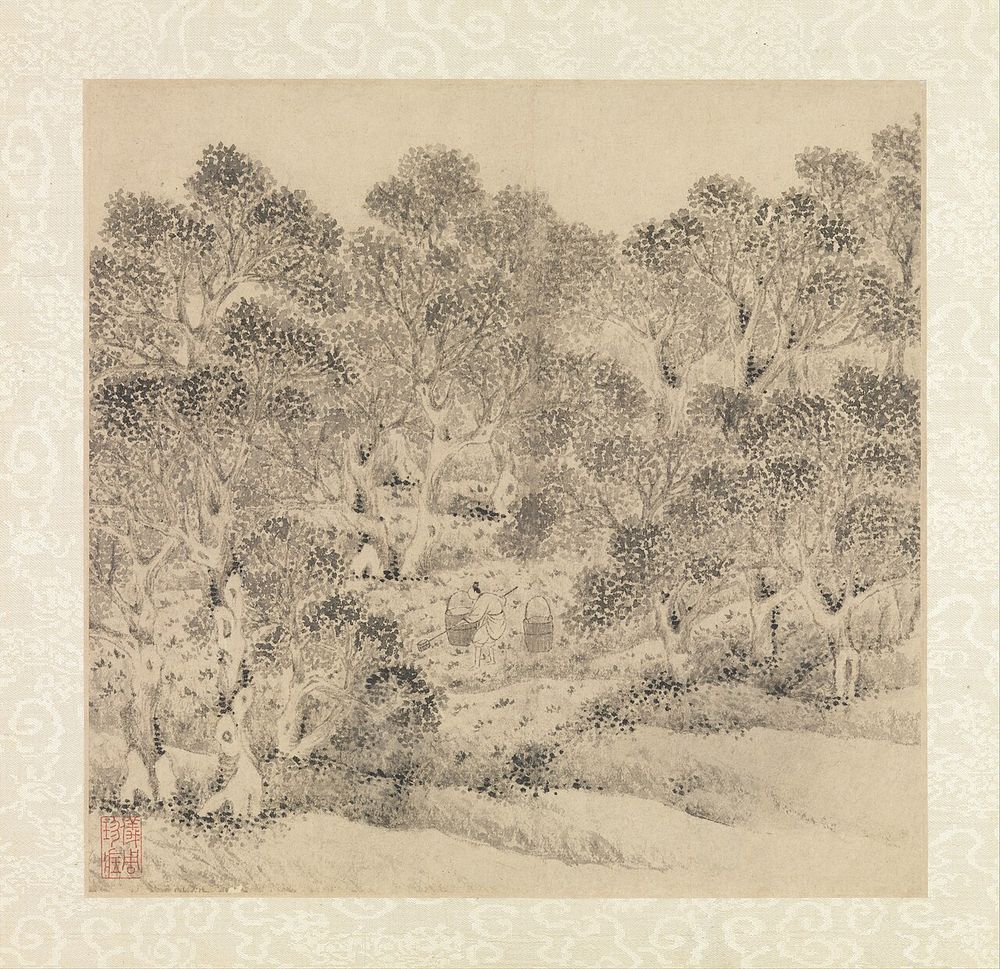
Wang Xianchen, a Ming official whose career had gone wrong, came home to Suzhou and built this garden. Its name comes from an essay of the Jin dynasty by Pan Yue: to water a garden and sell vegetables "is the way a clumsy man governs". His friend the painter Wen Zhengming painted its thirty-one views and wrote an account of it.
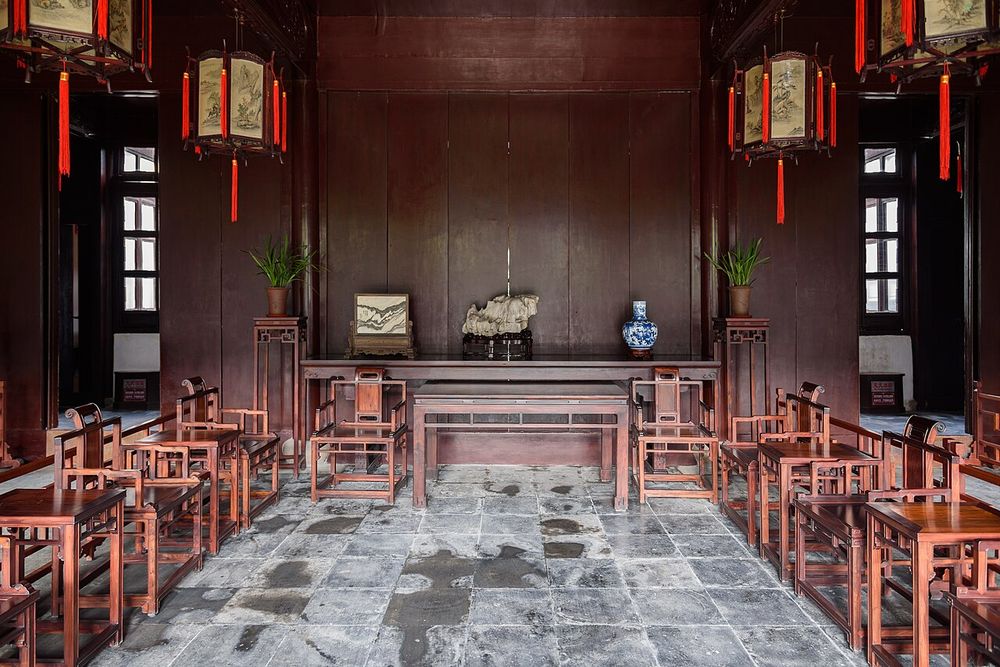
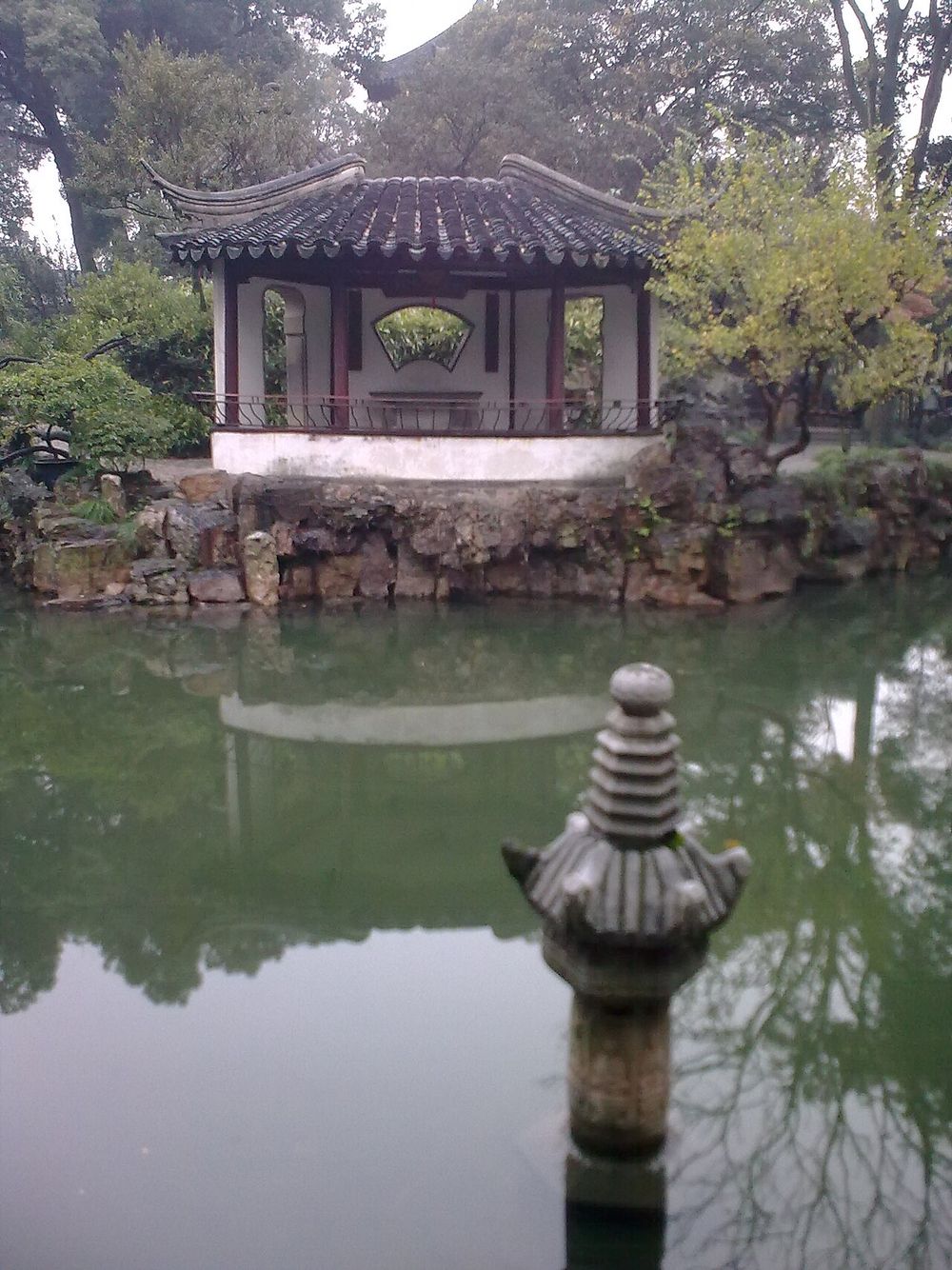
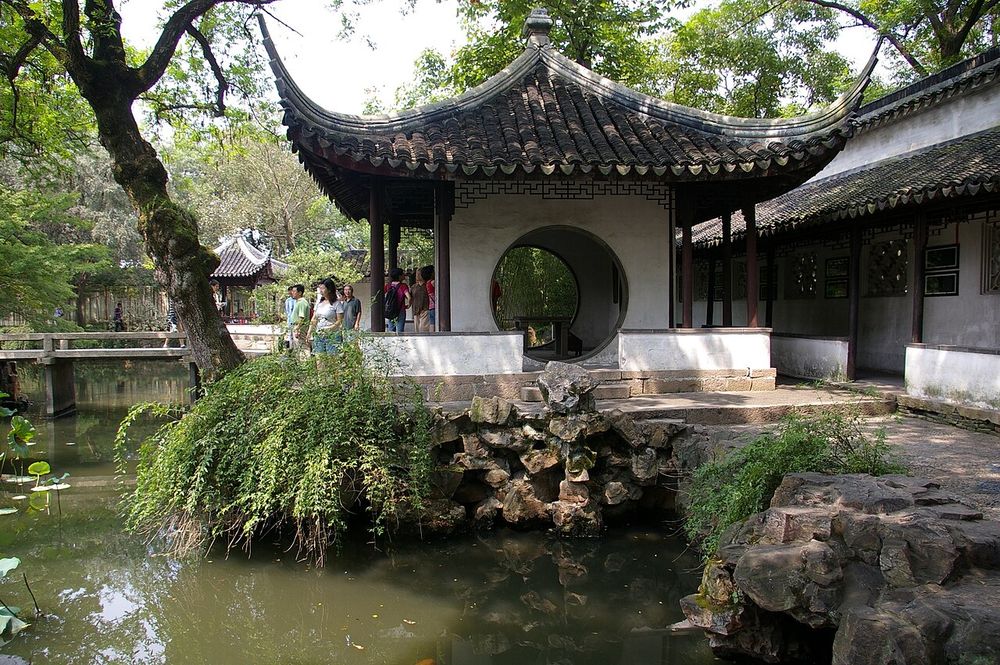
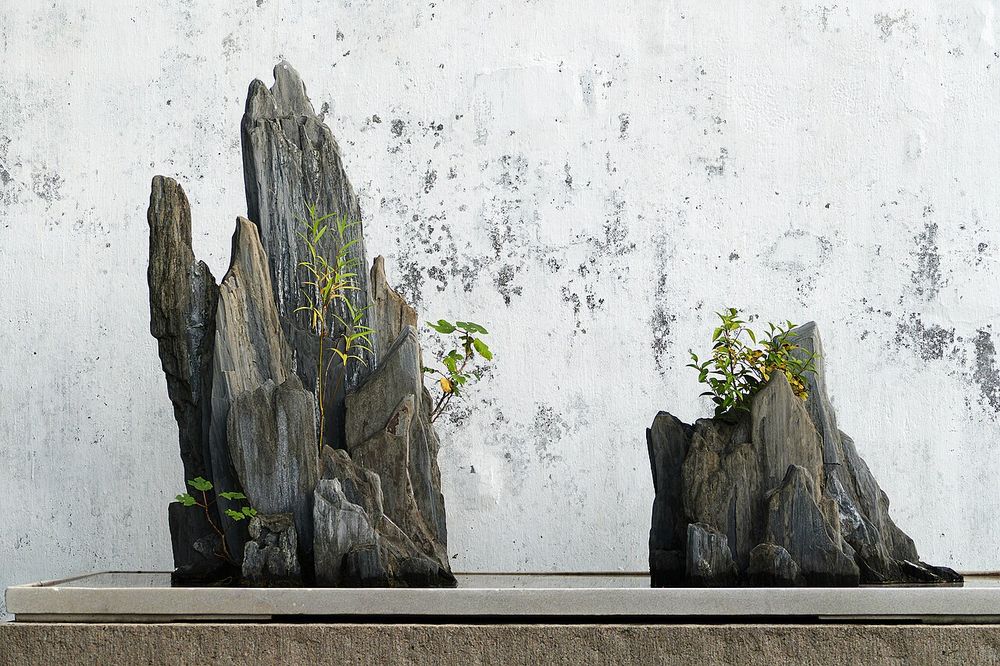
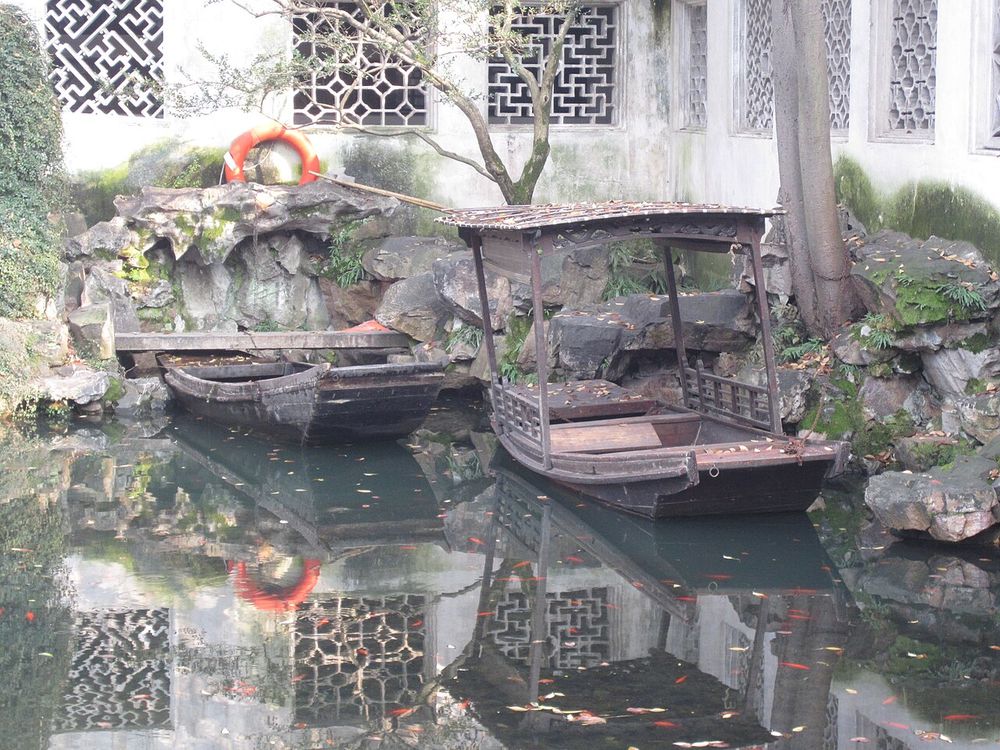
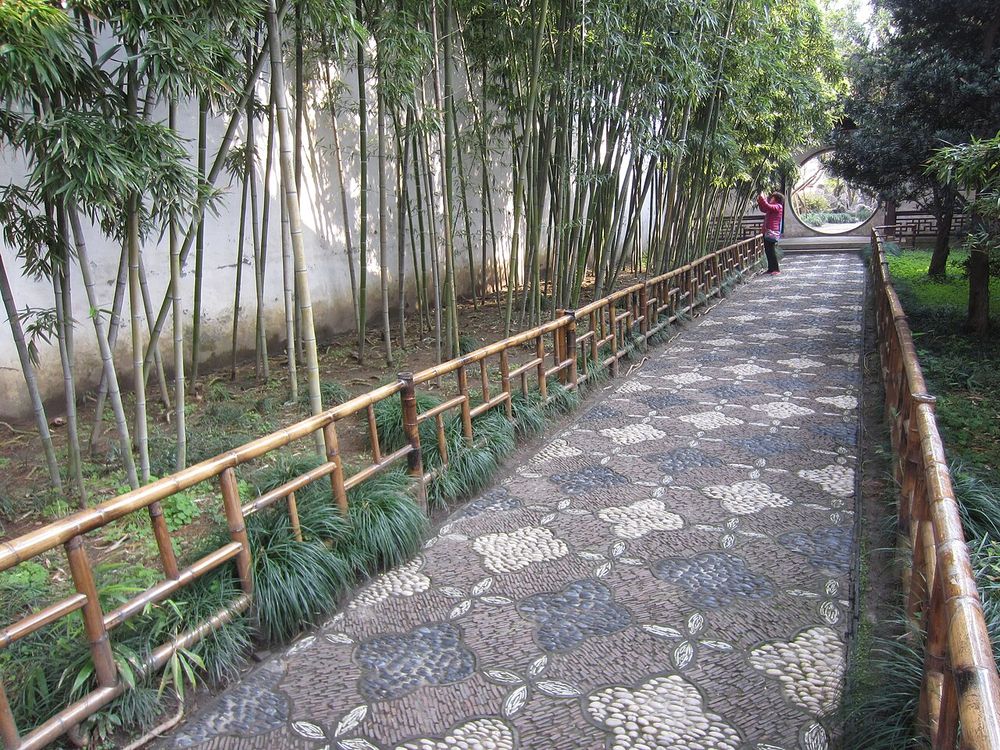
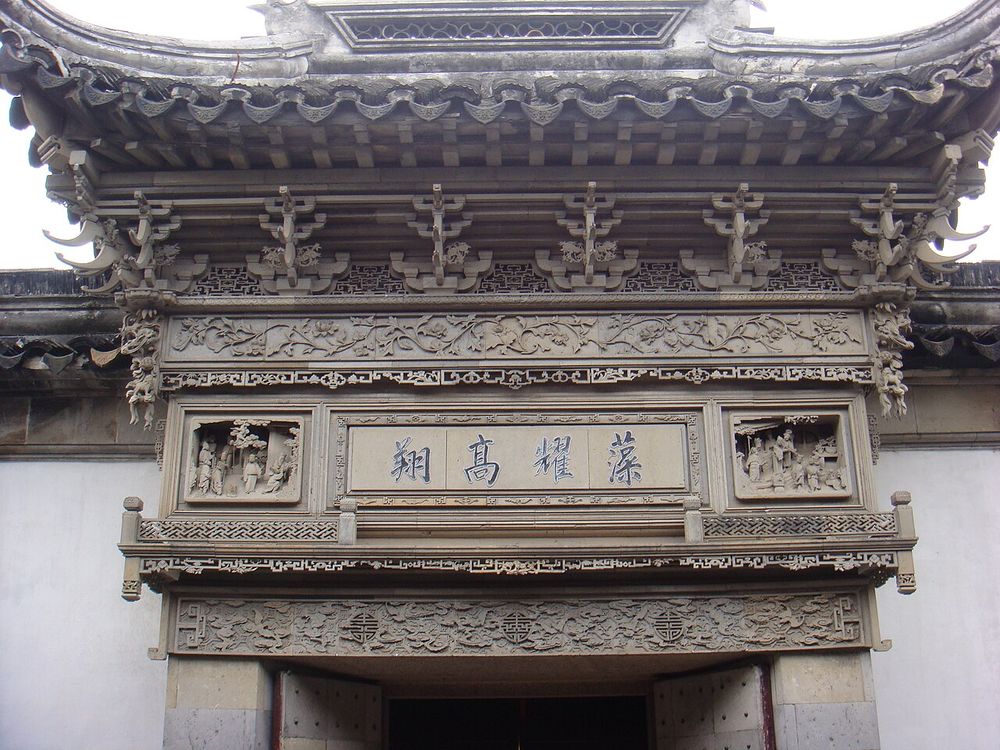
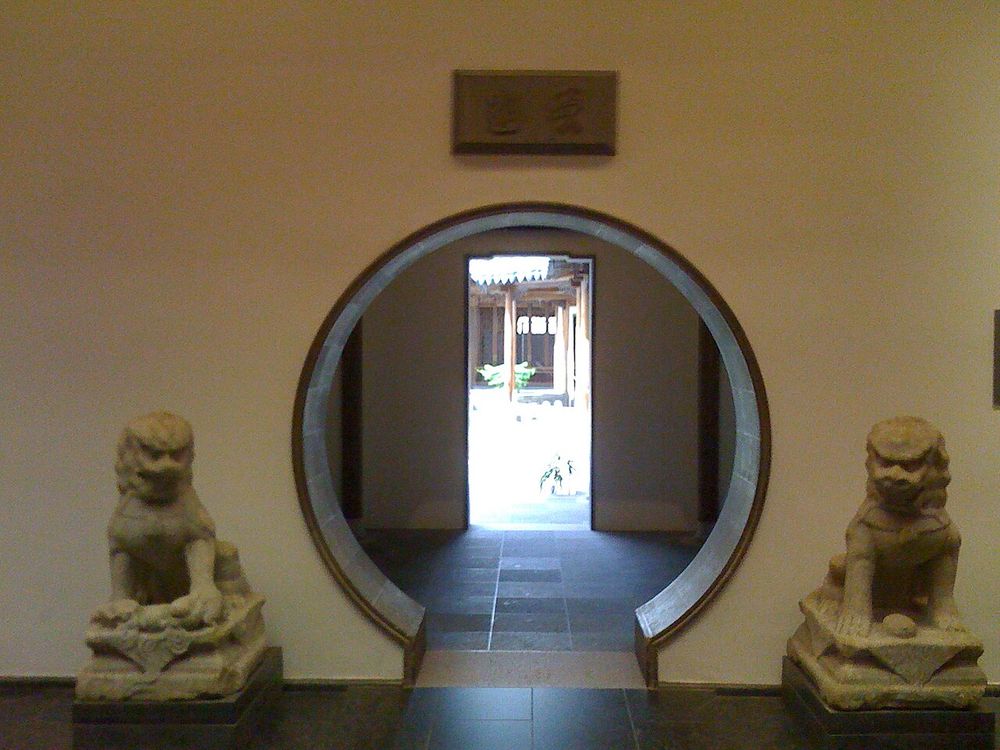
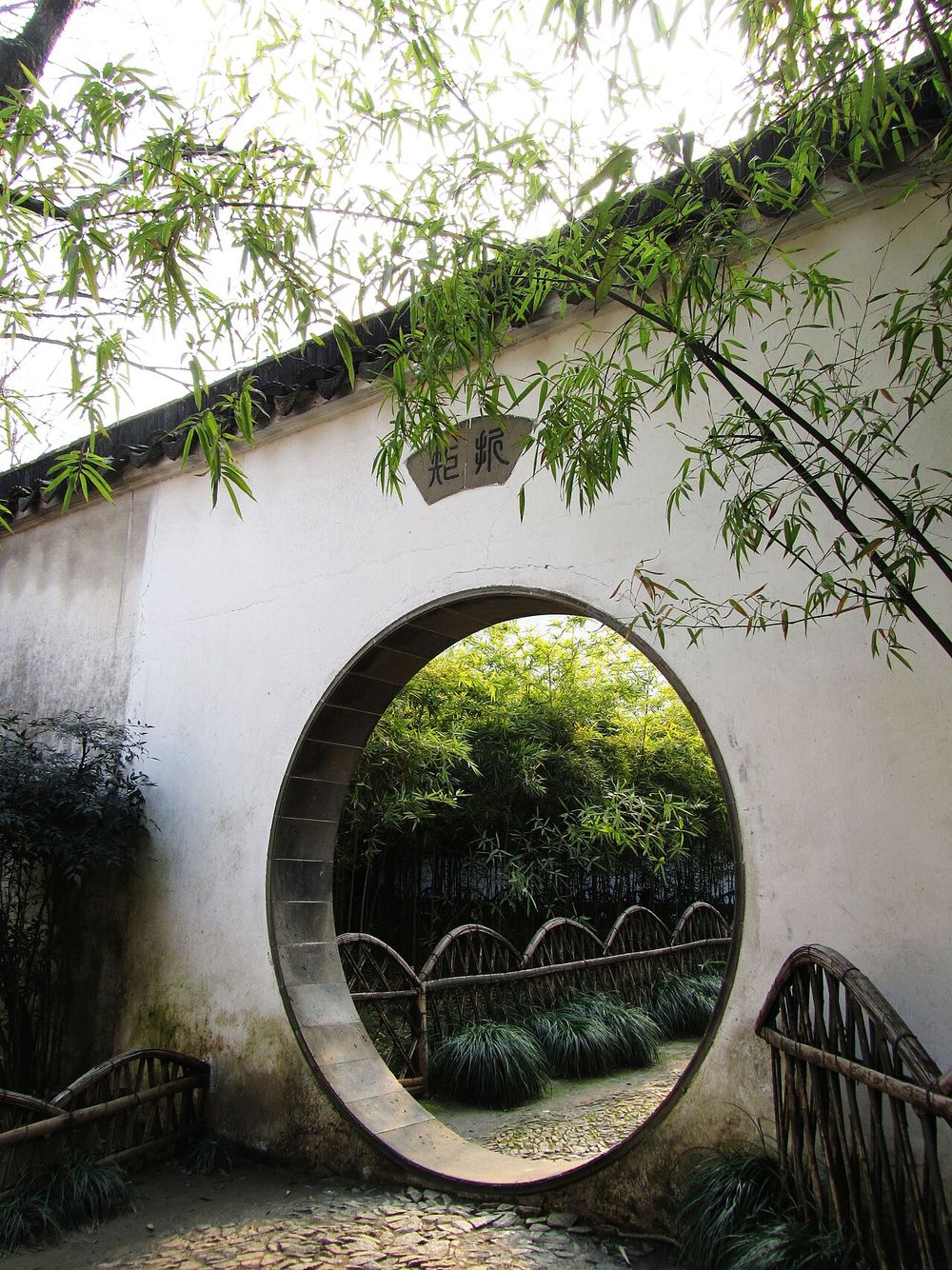
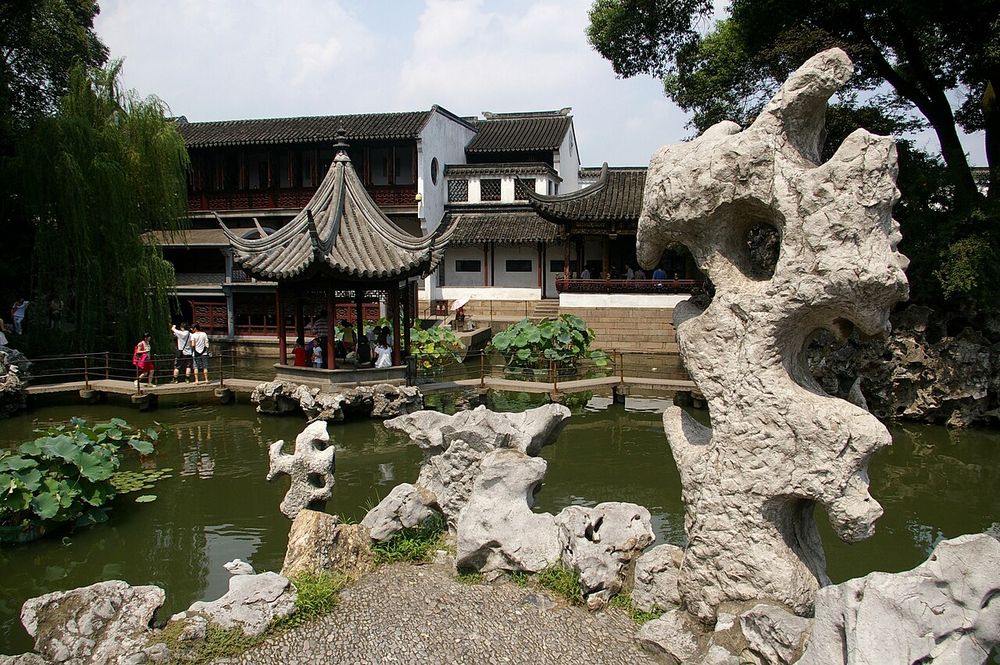
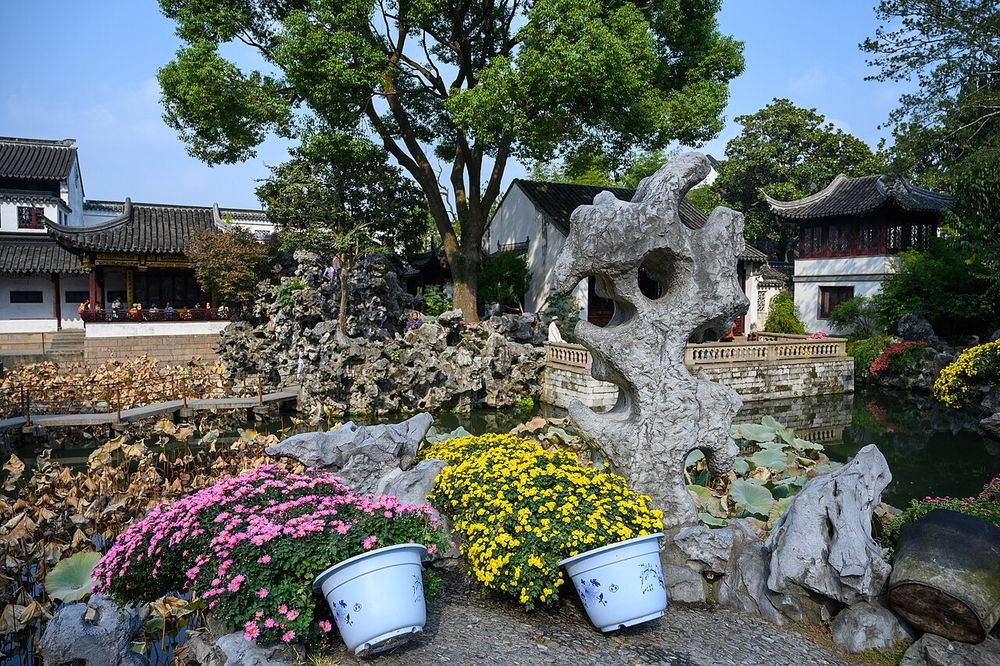
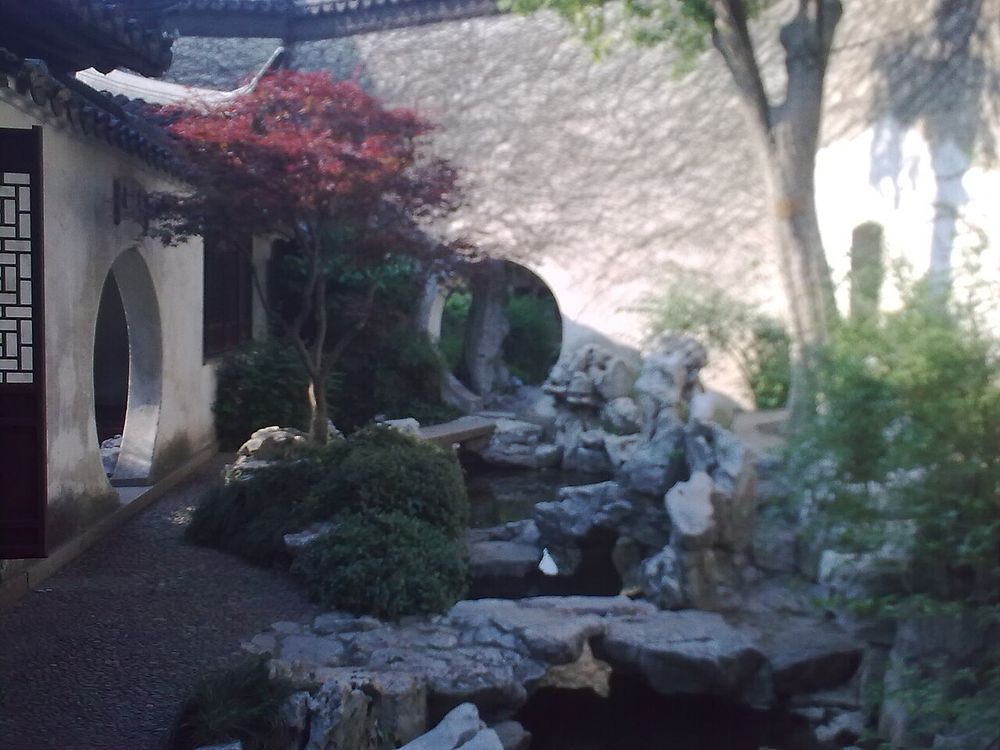
The skill of a Suzhou garden is to show much in little. A rock is a mountain and a pond is a lake. Every few steps the view changes, and doors and windows are picture frames.
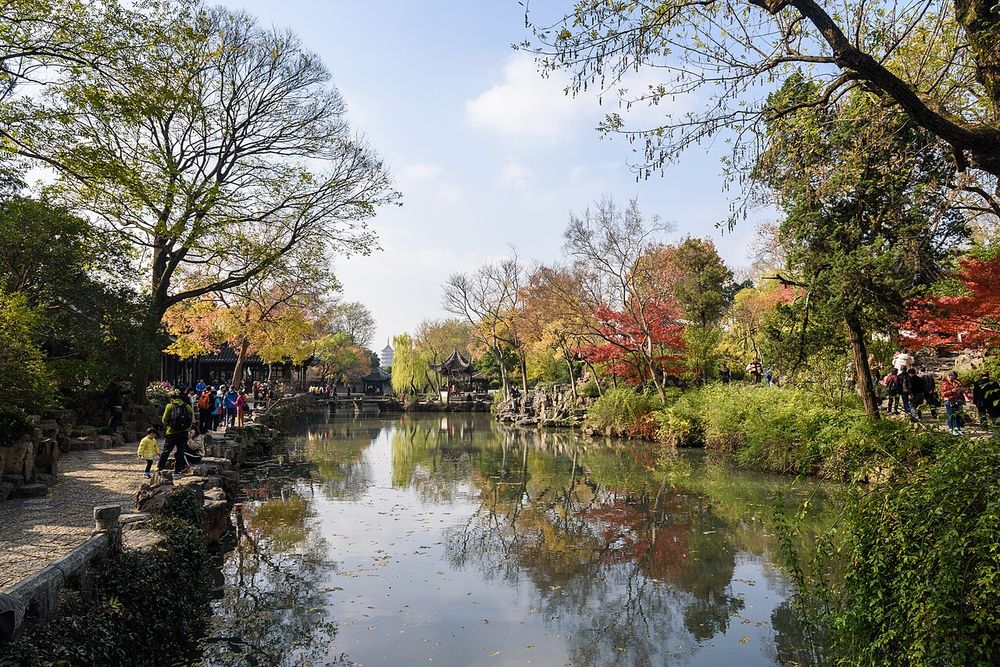
Stand at the east end of the central pond and look west. A pagoda rises beyond the trees. It is the North Temple Pagoda, a kilometre away and outside the wall, and the garden has taken it for its own. This is called borrowing a view.
Nine gardens are on the World Heritage list. The oldest, the Canglang Pavilion, is Northern Song (960–1127). The youngest, the Retreat and Reflection Garden, was built late in the Qing (1644–1912). Between them lie more than eight hundred years.
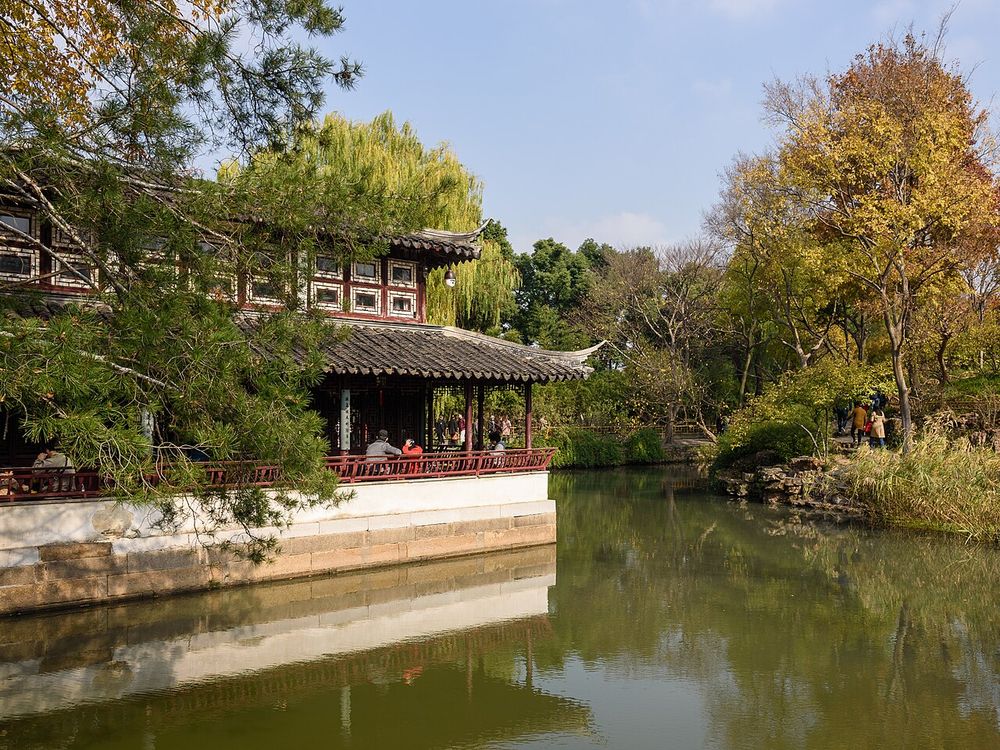
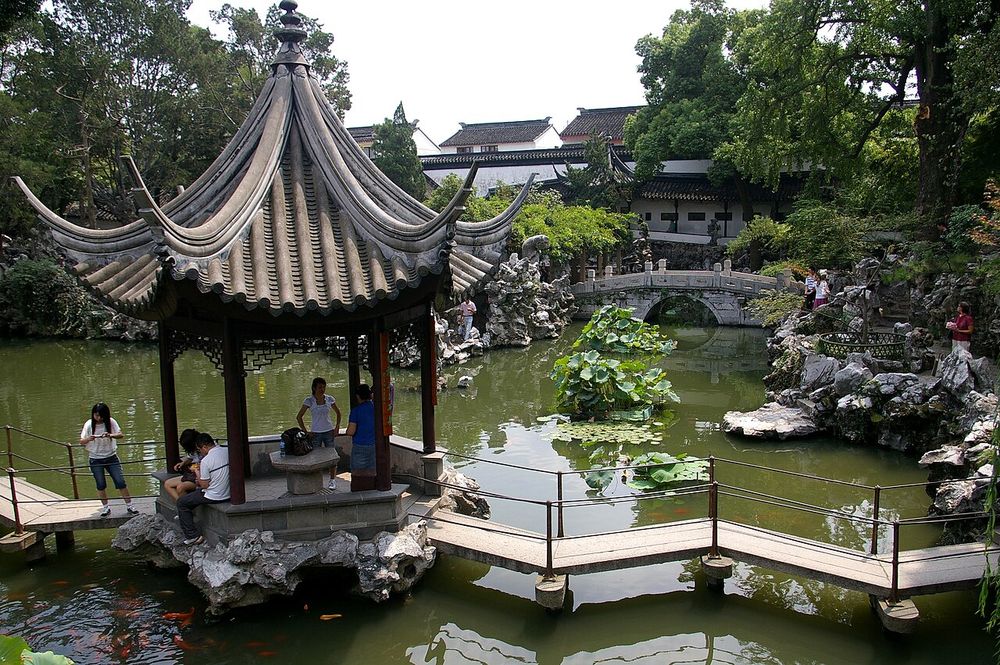
The largest of the Suzhou gardens is built around water and has three parts, east, central and west. The central part is the finest.
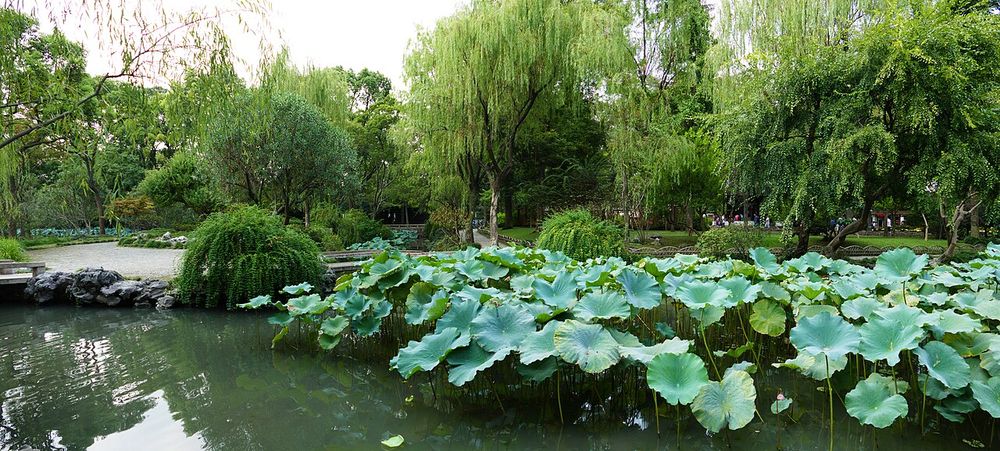
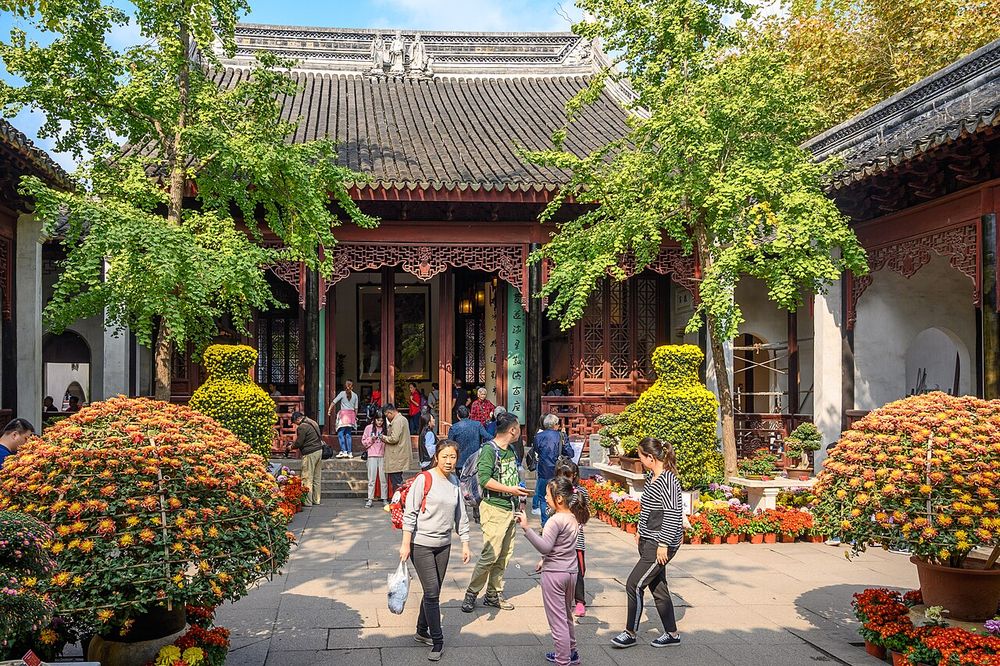
The Hall of Distant Fragrance faces a lotus pond. Its name comes from Zhou Dunyi's essay on the lotus: the fragrance, the farther it carries, the purer it is.
A small pavilion shaped like an open fan is called "With Whom Shall I Sit?" The name is a line by Su Shi: with whom shall I sit? The bright moon, the clear wind, and I.
Wen Zhengming's album of the garden survives. Compare his leaves with the garden and see what is still there.
Xu Taishi built the East Garden here in the Wanli years of the Ming. In the Qing, Liu Shu remade it as the Cold Emerald Villa, known as Liu's Garden. A later owner, Sheng Kang, kept the sound and changed the character: liu, "to linger".
You enter by a narrow, dim, winding passage, and only at its end does the garden open. This is deliberate: hold back first, then let go.
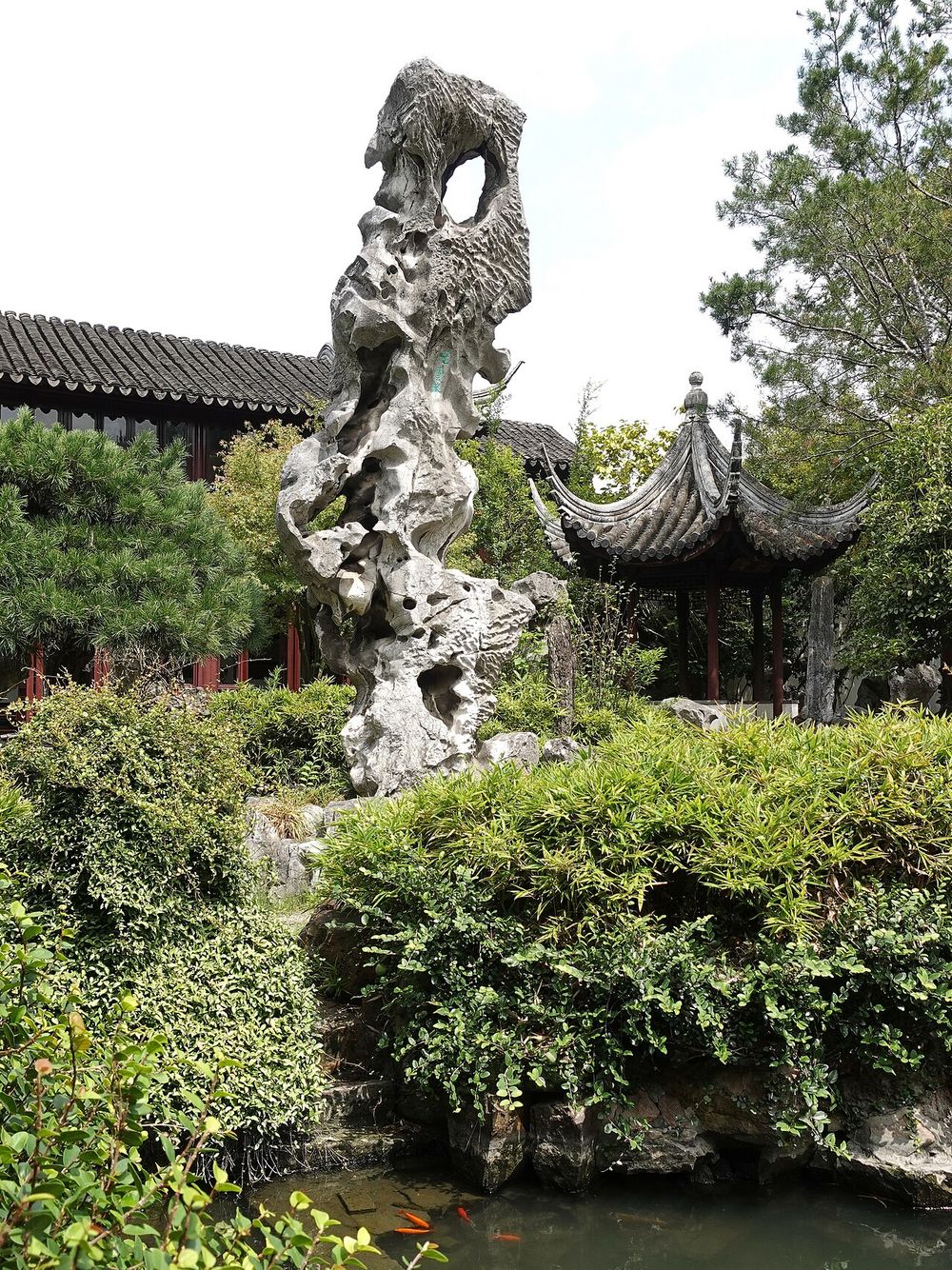
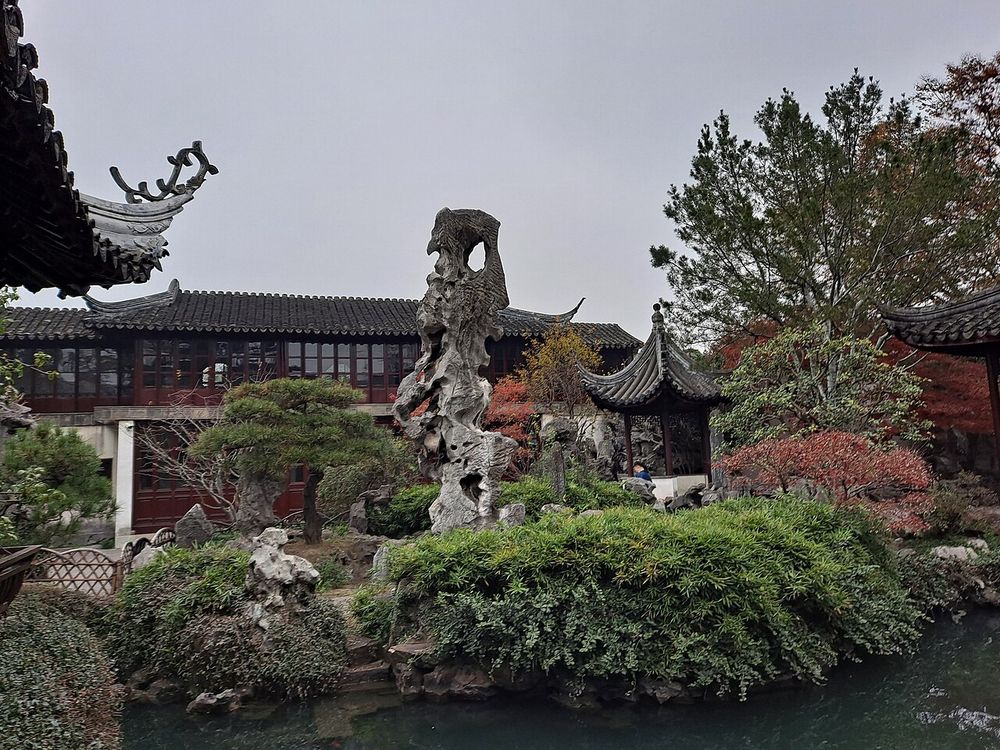
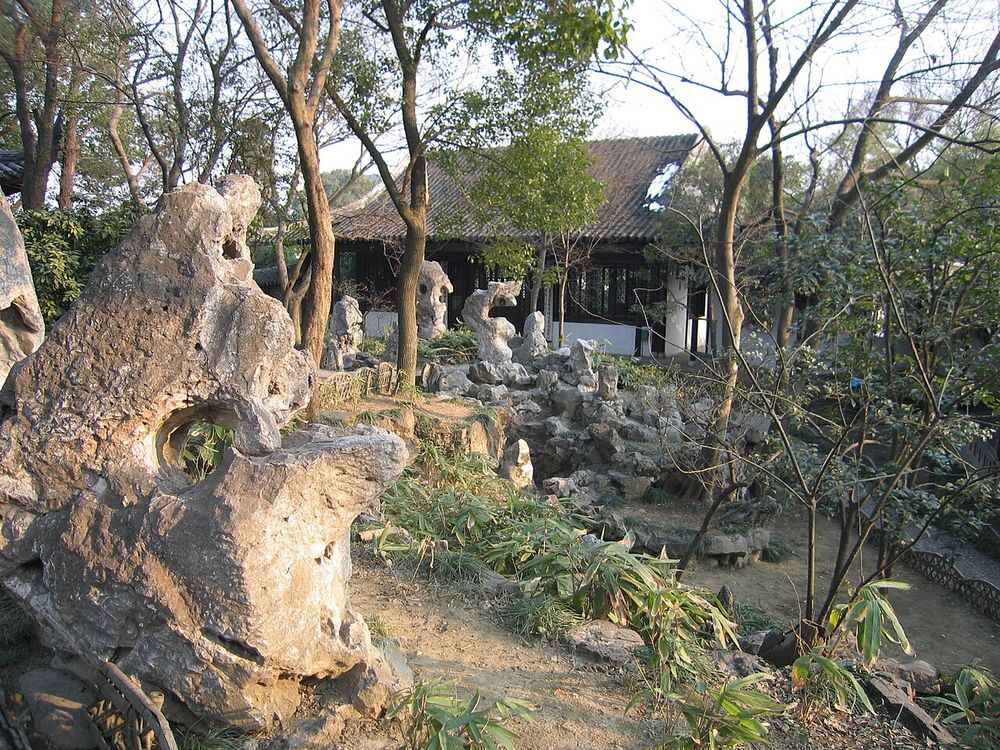
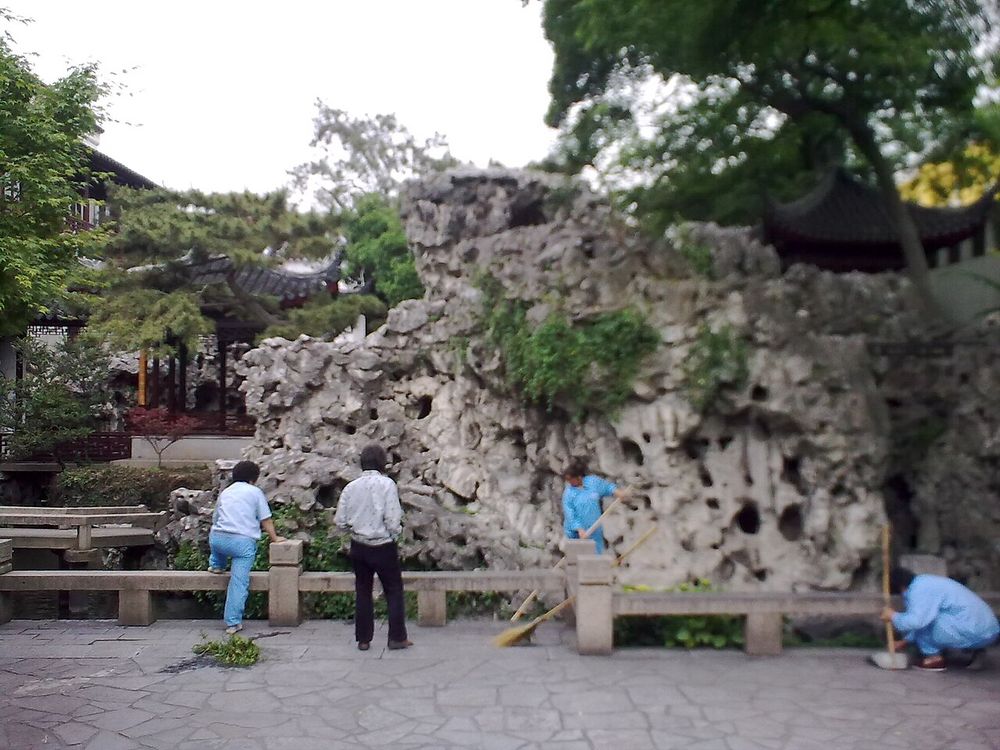
The Cloud-Capped Peak is a single huge stone from Lake Tai, usually said to be about 6.5 metres high. Judge it by the four old words for a good rock: thin, wrinkled, full of holes, and open so that light passes through.
Stand on one side of the stone and find a hole through which you can see the sky on the other side. That is "open".
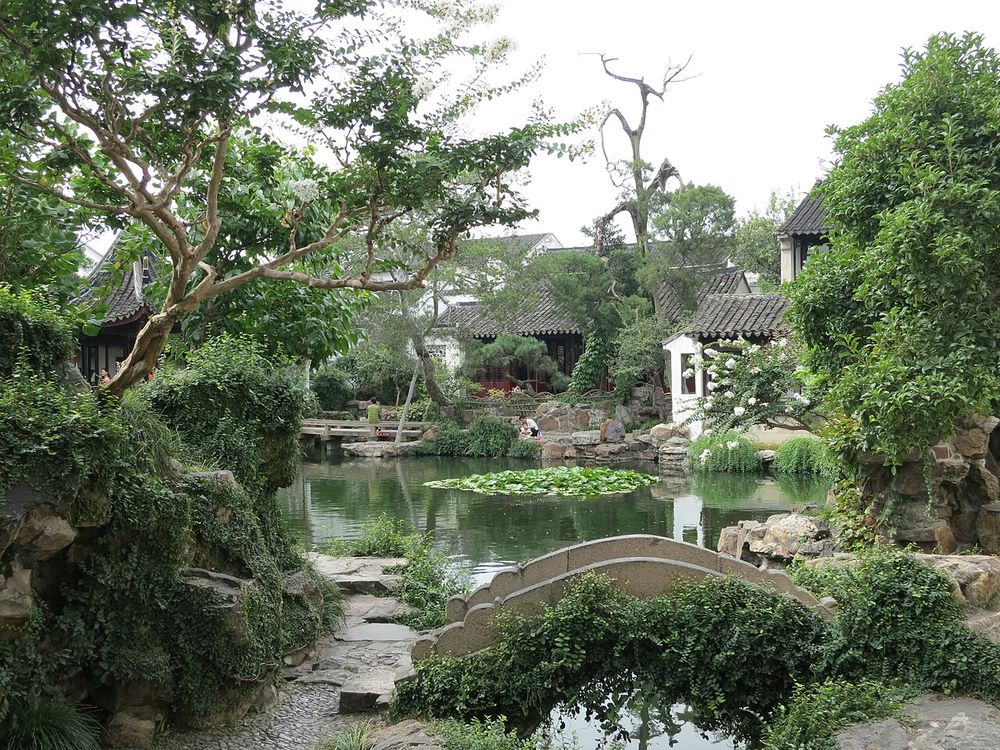
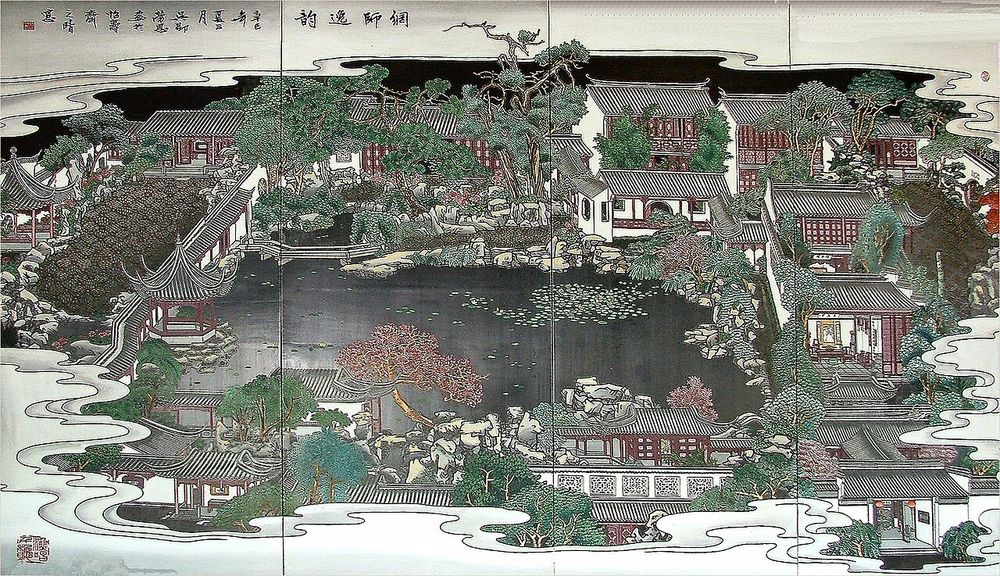
This is one of the smallest of the nine. It goes back to the Hall of Ten Thousand Volumes of Shi Zhengzhi in the Southern Song (1127–1279). In the Qing, Song Zongyuan named it after the fisherman, the "master of the nets", the old figure of a man who has left office.
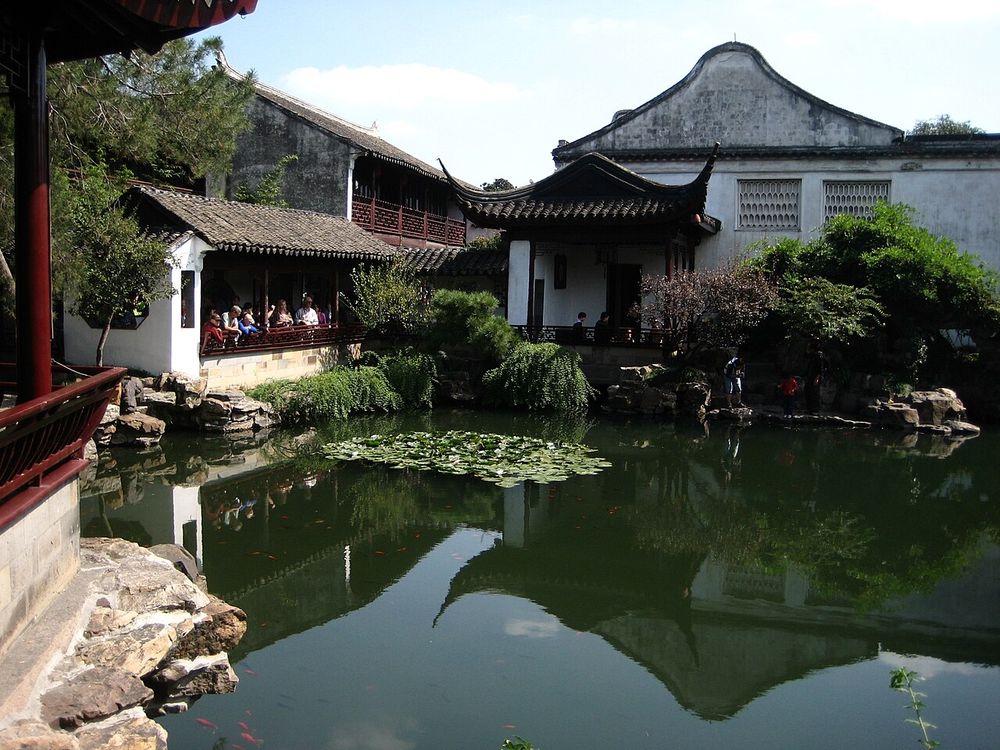
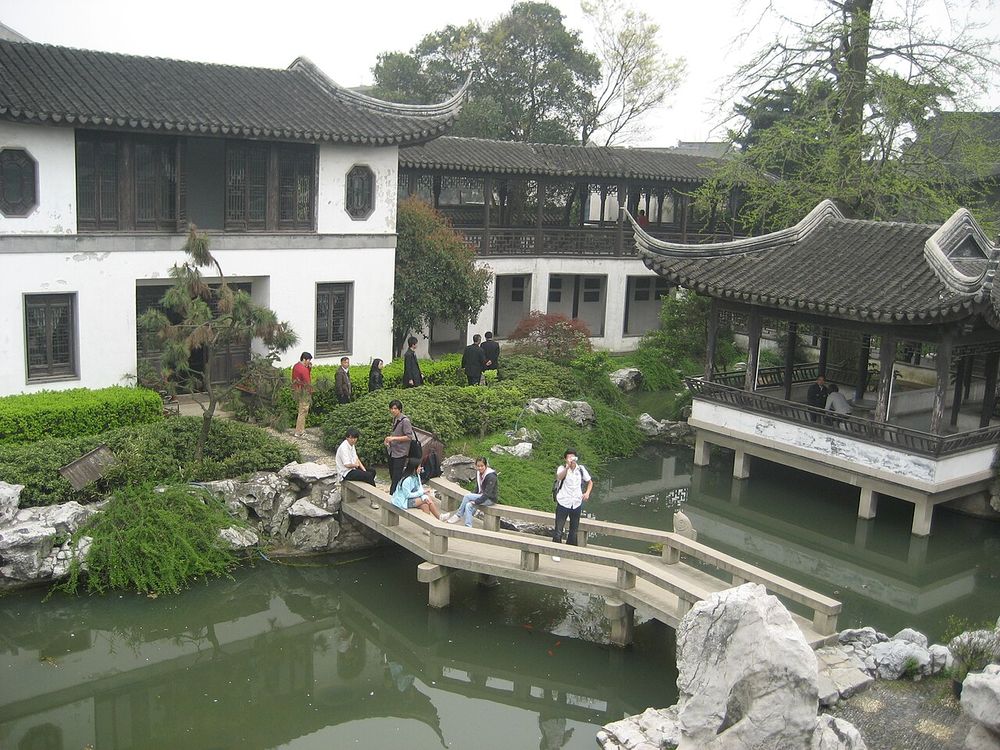
There is one pond with rooms and corridors round it. Look for the inlets and the small bay: they make you believe the water runs on to somewhere else.
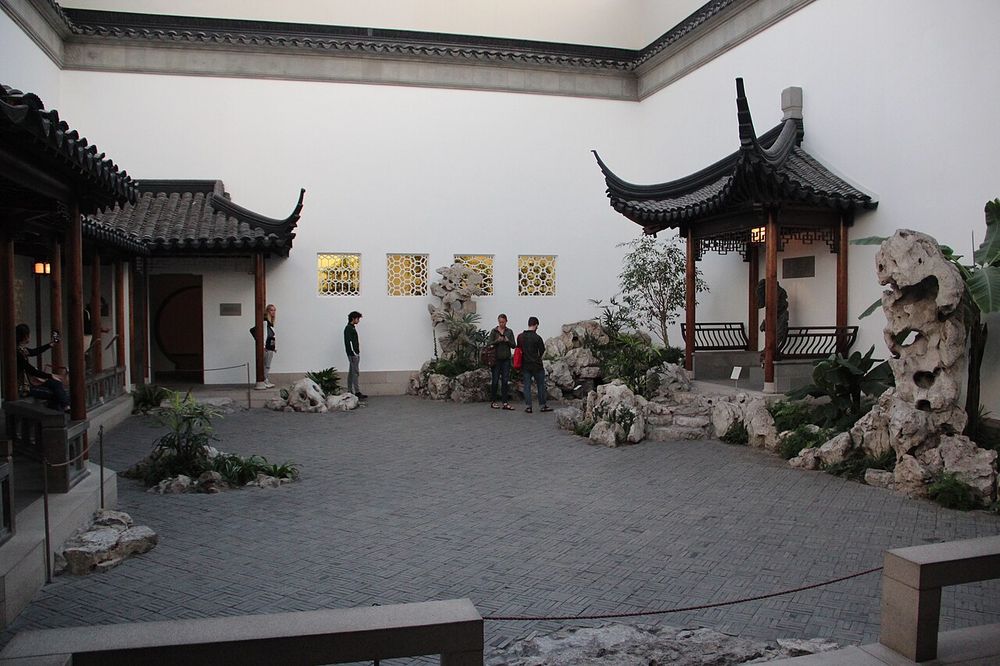
The Late Spring Cottage is a small courtyard. The Ming Room in the Metropolitan Museum of Art in New York was modelled on it and built by twenty-six craftsmen from Suzhou. It is often called the first Chinese garden made for export.
On evenings from spring to autumn the garden opens at night, with short scenes of Kunqu opera and music played in the halls.
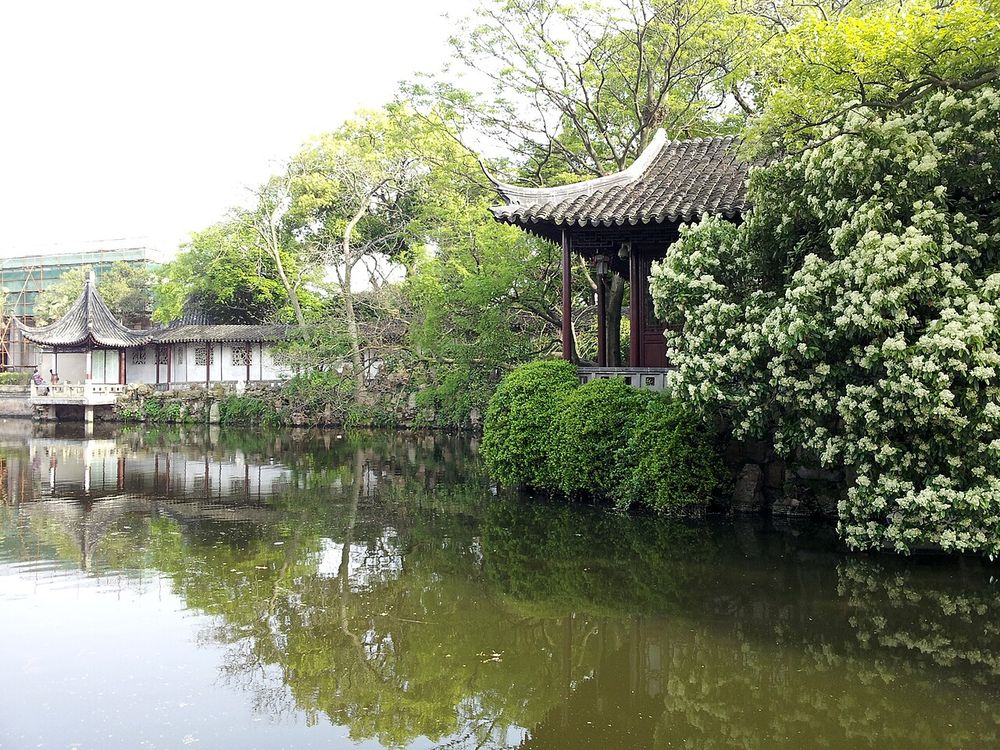
This is the oldest of the nine. In the Qingli years of the Northern Song the poet Su Shunqin, dismissed from office, bought an old garden in Suzhou.
The name comes from the Songs of Chu, where a fisherman sings: when the Canglang water is clear I wash my hat-strings in it; when it is muddy I wash my feet.
Other gardens begin with a high wall. This one begins with a canal. A double corridor, walked on both sides of one wall with windows in it, joins the water outside to the hill inside.
清风明月本无价 近水远山皆有情
The clear wind and the bright moon have no price the near water and the far hills all have feeling
Couplet on the pavilion, put together by Liang Zhangju in the Qing dynasty from lines by Ouyang Xiu and Su Shunqin
Shen Fu, who wrote Six Records of a Floating Life about his marriage, lived beside this garden. On some evenings an opera made from his book is played in the garden itself, and the audience walks with the actors.
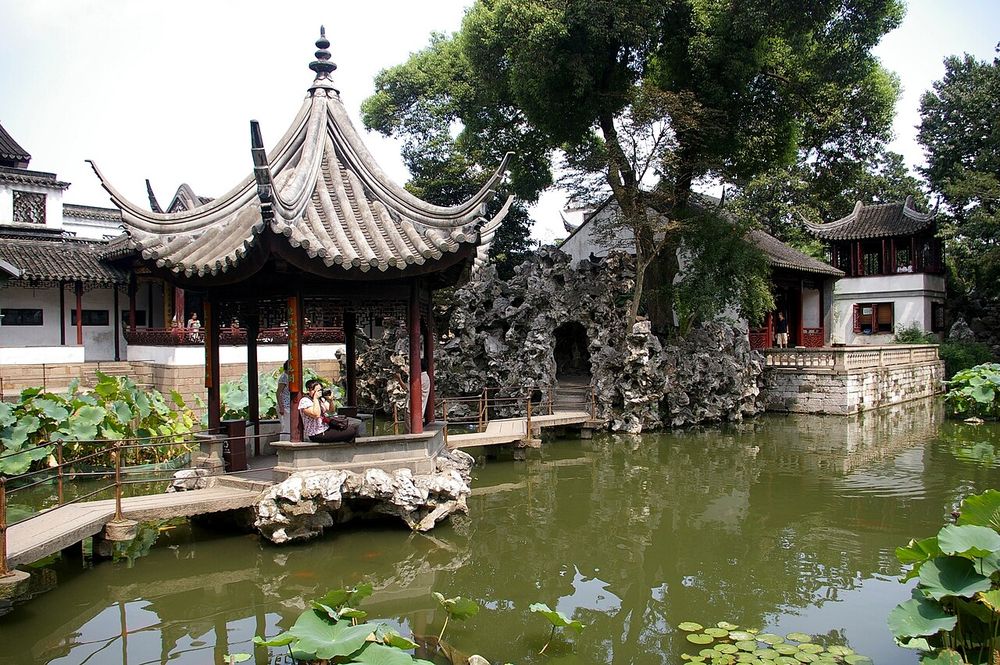
In 1342, under the Yuan dynasty (1271–1368), the pupils of the Chan master Tianru Weize built him a temple, and the garden was part of it. "Lion" means both the rocks that look like lions and the "lion's roar" of the Buddhist scriptures.
The rockery is on three levels. The usual account gives it nine paths and twenty-one cave mouths. It is very easy to get lost.
The Yuan painter Ni Zan painted the garden in 1373; the scroll is in the Palace Museum in Taipei.
Draw a map of the rockery and mark every cave mouth you went through.
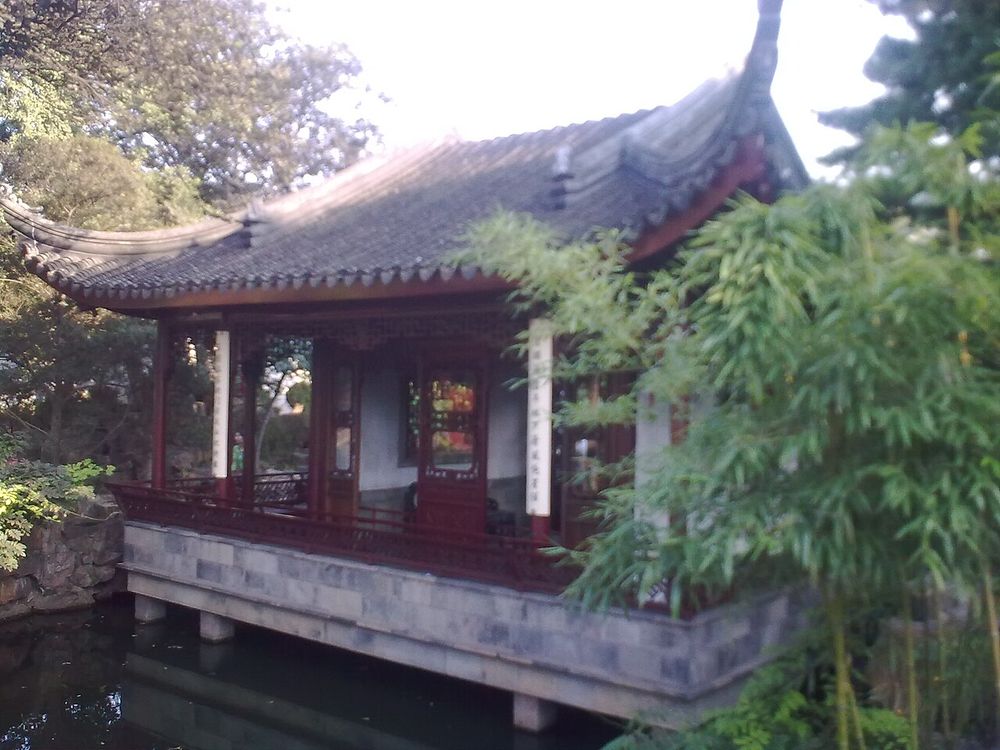
The Mountain Villa with Embracing Beauty covers only about a fifth of a hectare, but holds a rockery of Lake Tai stone by the Qing master Ge Yuliang, often thought the finest in Suzhou. It is not always open; check before you go.
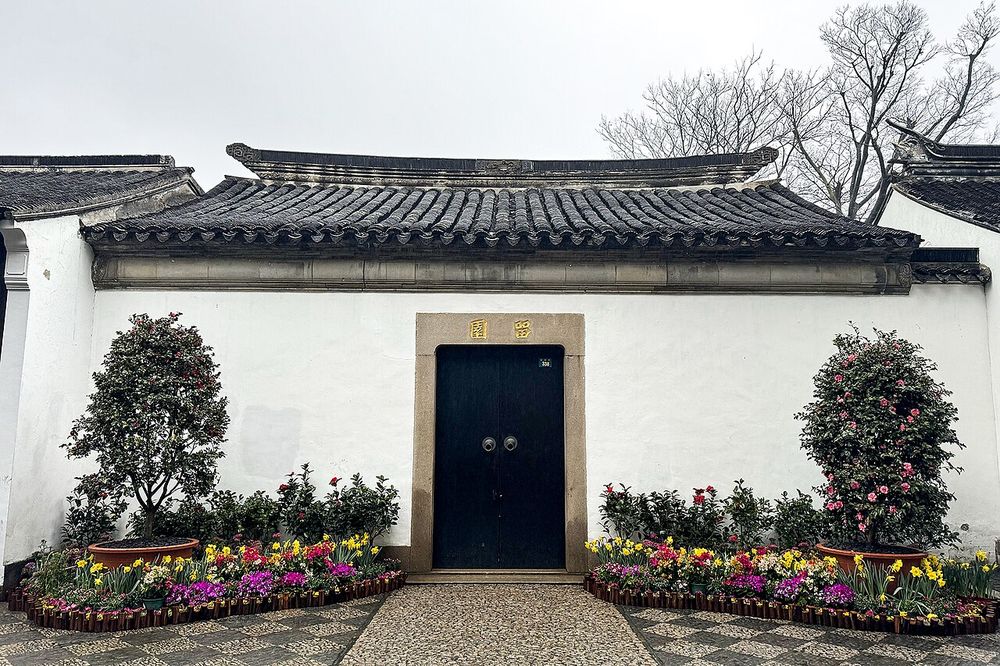
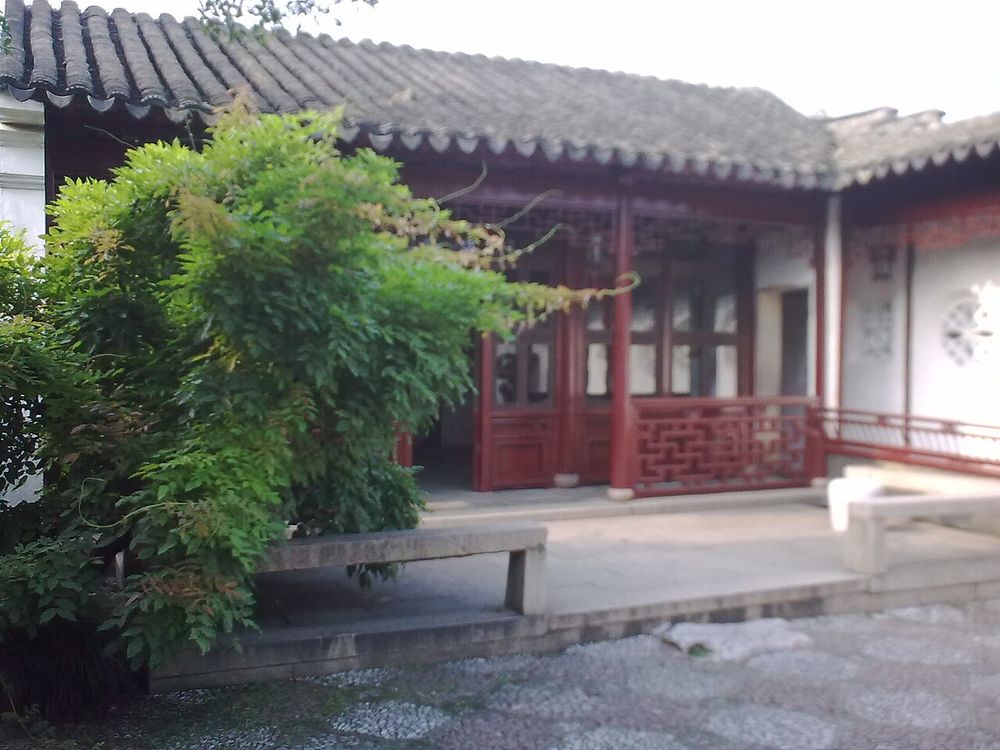
The Garden of Cultivation is hidden in a lane among ordinary houses. Its Ming layout is well kept and few visitors come.
The Couple's Retreat Garden is a house with a garden on each side and canals on three. The name is about a husband and wife withdrawing from the world together.
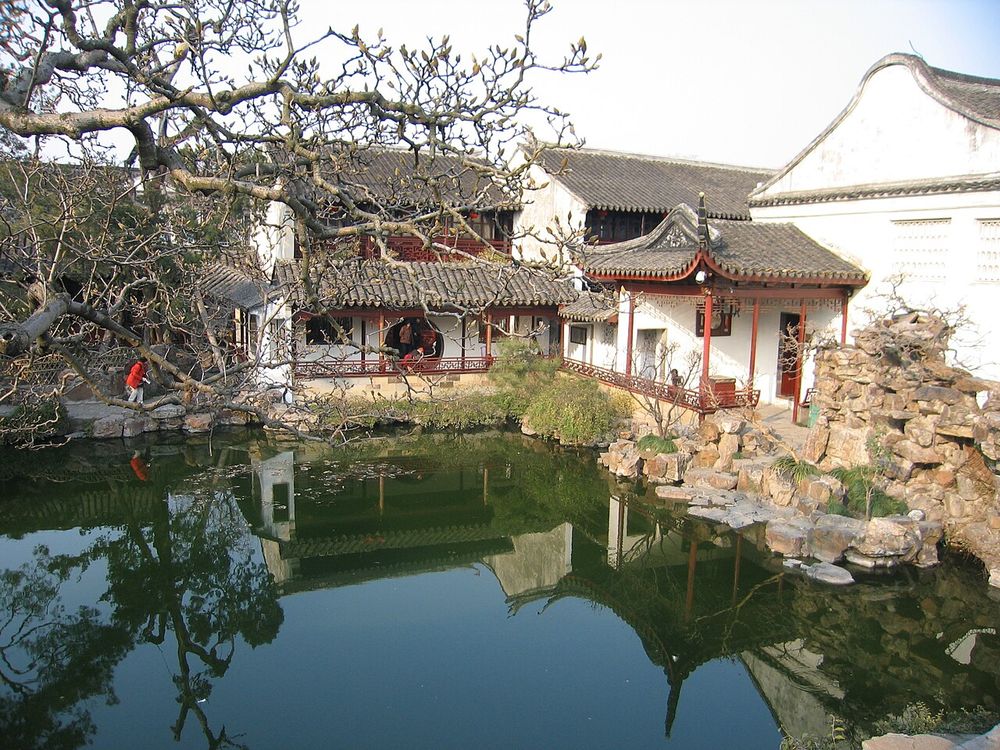
The Retreat and Reflection Garden is in the water town of Tongli, built late in the Qing. Its rooms sit so close to the pond that people call it the garden that lies on the water. The name comes from an old saying: in office think how to be loyal, in retirement think how to mend your faults.
Ji Cheng's The Craft of Gardens, written in 1631–1634, is the first systematic Chinese book on making gardens. Its best-known line: though made by people, it should seem the work of heaven.
The Kunqu opera The Peony Pavilion was written by Tang Xianzu in 1598. Its most famous scene is a girl walking into her own family's garden for the first time. Kunqu was born at Kunshan, next to Suzhou; opera and gardens belonged to the same people. In 2001 UNESCO named Kunqu among its first Masterpieces of the Oral and Intangible Heritage.
The Grand View Garden in Dream of the Red Chamber is not a Suzhou garden, but the ideas in the novel, such as the winding path that leads to a hidden place, are the same ideas.
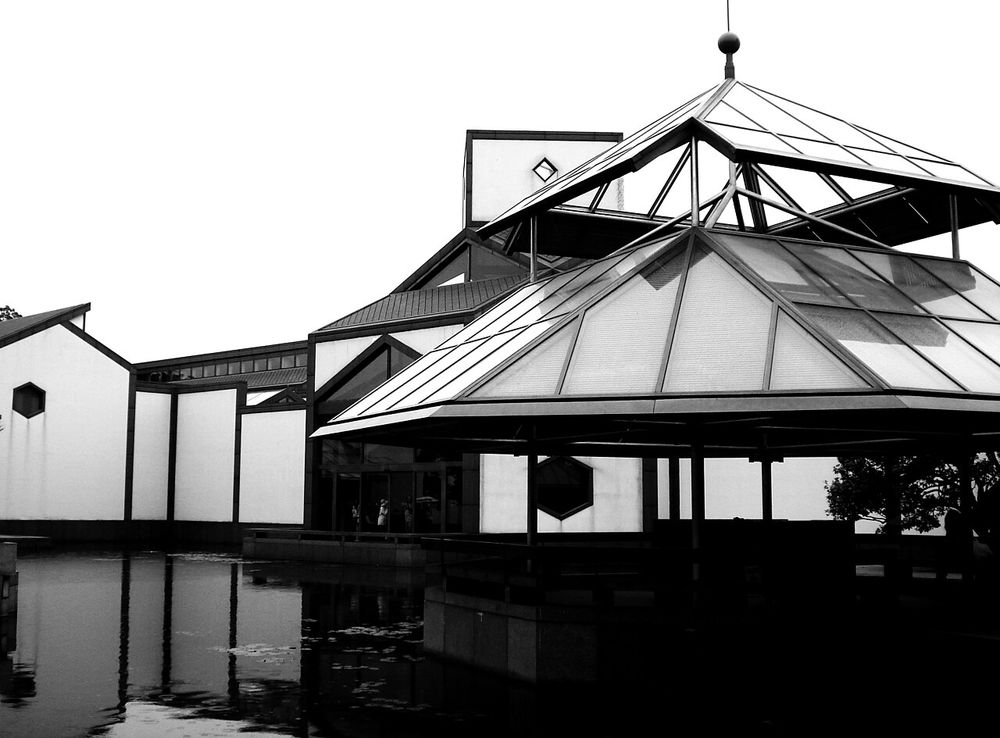
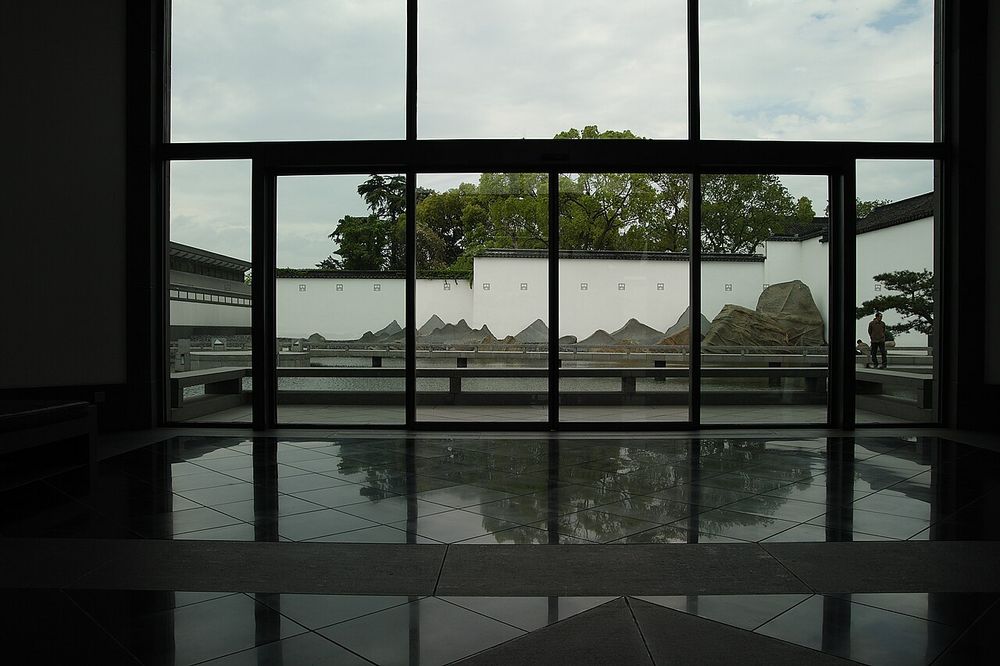
Many Chinese readers first met these gardens in a school text by Ye Shengtao, and Chen Congzhou's essays On Gardens are the modern classic. The Suzhou Museum of 2006, beside the Humble Administrator's Garden, was designed by I. M. Pei: white walls for paper and sliced stone for mountains, a Suzhou garden in modern form.
To compare elsewhere: the imperial gardens of the Summer Palace and Chengde copied these private gardens. The dry gardens of Kyoto also show much in little, but use raked gravel where Suzhou uses real water. Versailles takes the opposite road and makes nature obey geometry.
| Year | Here | Elsewhere |
|---|---|---|
| 1044–1045 | Su Shunqin builds the Canglang Pavilion | Fan Zhongyan's reforms at court; Su Shunqin lost his post for siding with them |
| 1342 | The Lion Grove is founded | Five years before the Black Death reaches Europe |
| 1509–1513 | Wang Xianchen begins the Humble Administrator's Garden | Michelangelo is painting the Sistine ceiling |
| 1593 | Xu Taishi builds the East Garden, later the Lingering Garden | Tang Xianzu will finish The Peony Pavilion in 1598 |
| 1631–1634 | Ji Cheng writes The Craft of Gardens | Versailles is still only a hunting lodge |
| 1772 | – | The English architect William Chambers publishes his book on oriental gardening; "Chinese" gardens are the fashion in Europe |
| 1980–1981 | The Ming Room opens at the Metropolitan Museum in New York | China and the United States opened diplomatic relations in 1979 |
| 1997 / 2000 | Nine gardens listed as World Heritage in two groups | The 1997 session also lists Pingyao and Lijiang |
| 2006 | The new Suzhou Museum opens beside the Humble Administrator's Garden | Its architect, I. M. Pei, is 89 |
One line to remember: a rock for a mountain, a pond for a lake, and a window for a picture frame.
These are stories people tell about this place. They are legends, not history, and each one says where it comes from.
Guides say that the son of Wang Xianchen, who built the garden, lost it in a single night at the gaming table. We found no reliable record.
Source: Told by guides; we found no written source
Later, people who live here will be able to add the stories they grew up with, and say which of these they have heard.
Last checked 2026-11-11. Travel and news reports, not the site's own notices.
Stand at the site, sign in, press the button, and collect its stamp. Your browser will ask to use your location. It is sent to us once to confirm that you are at the site; we keep how far you were from it, not the spot where you stood.
Your stamps are saved to your account, so they follow you to any device. Checking from a browser cannot rule out every false location; stricter checks arrive with the app.
Photos here show the place, not people. Each one is credited to the visitor who took it and appears after our team has looked at it. A photo with you in it belongs under “I am here”.