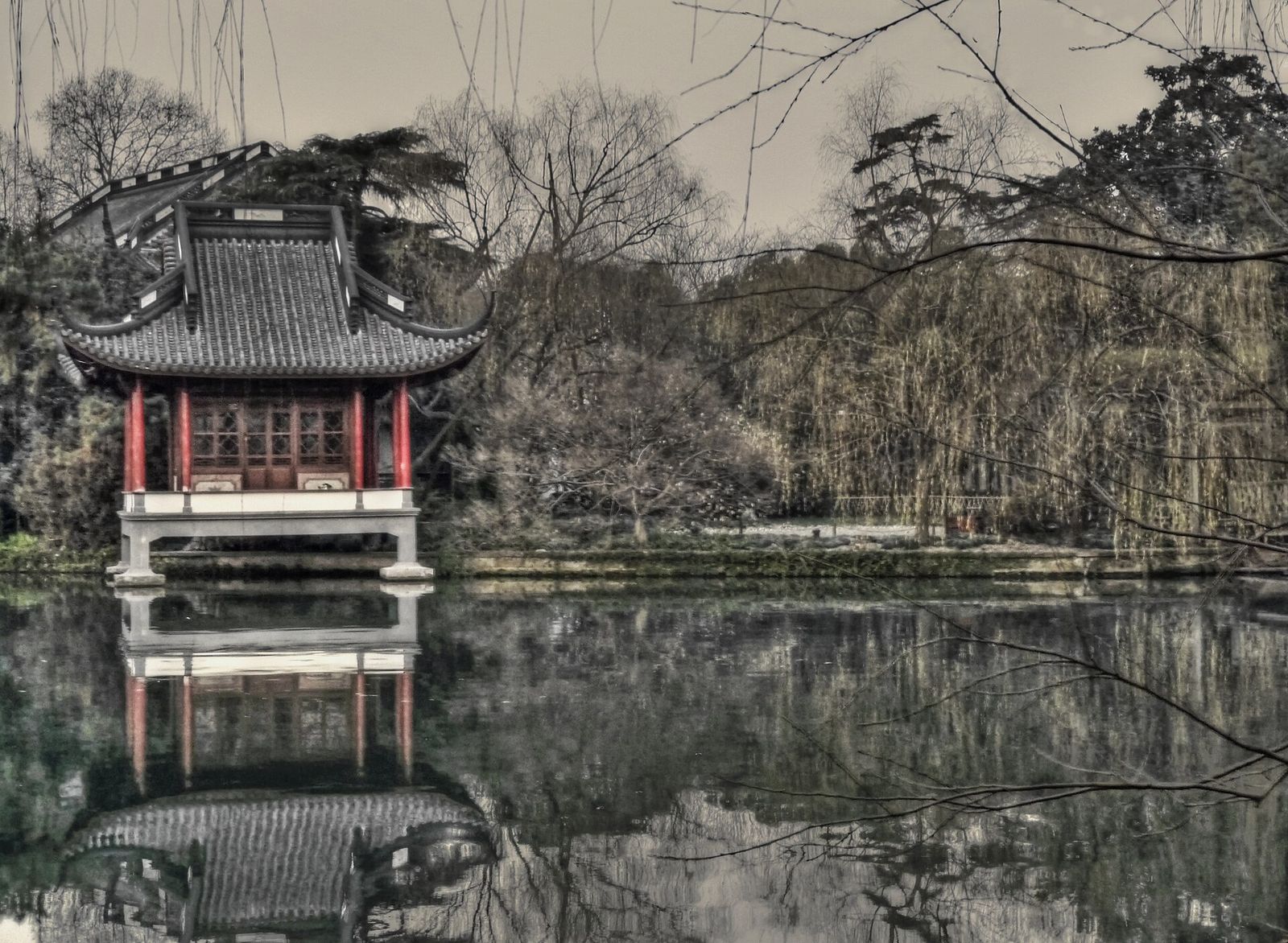
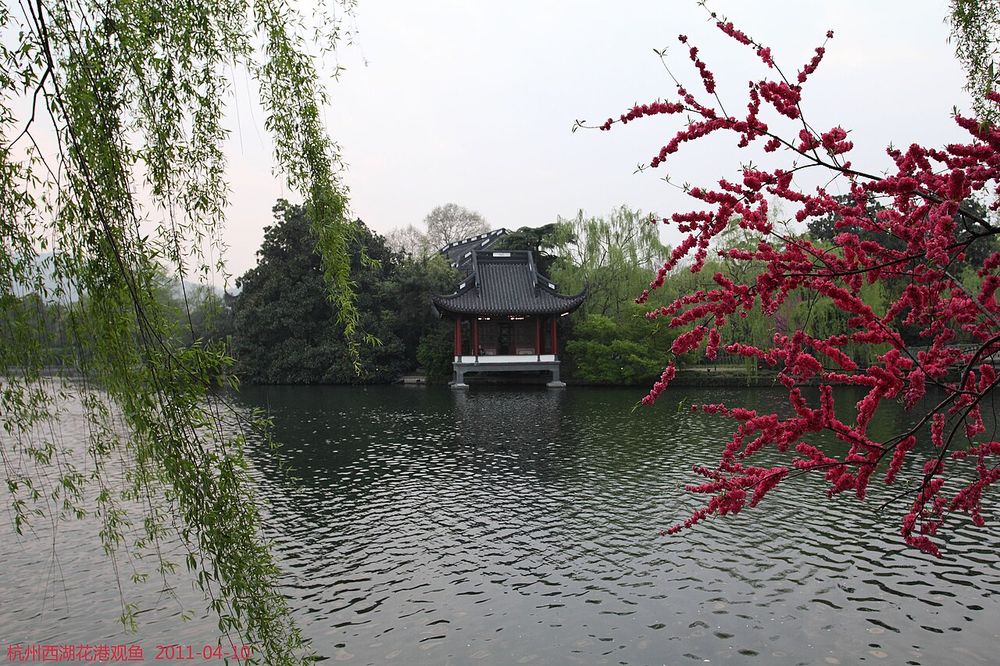
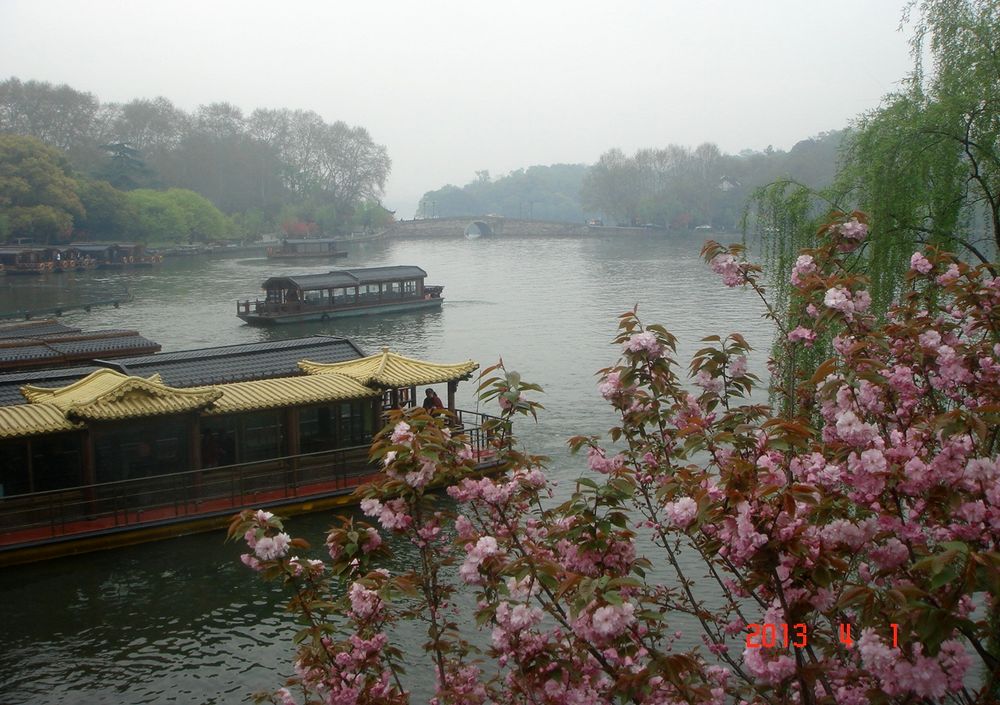
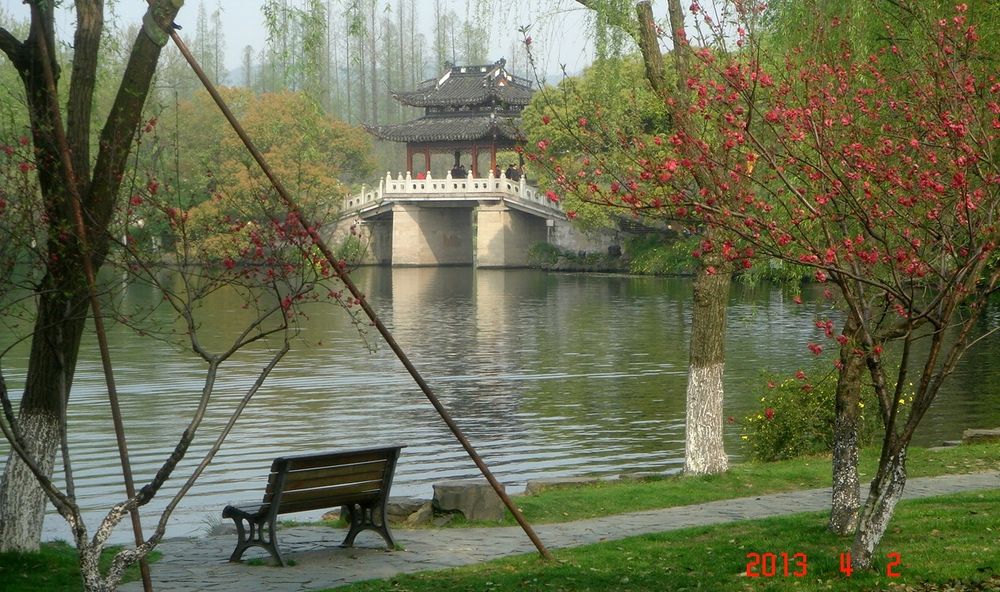
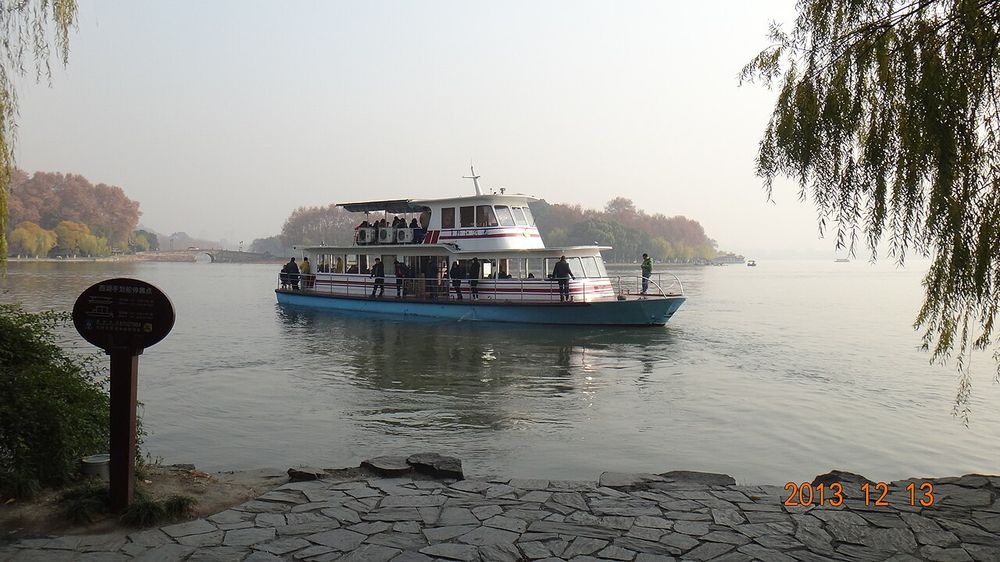
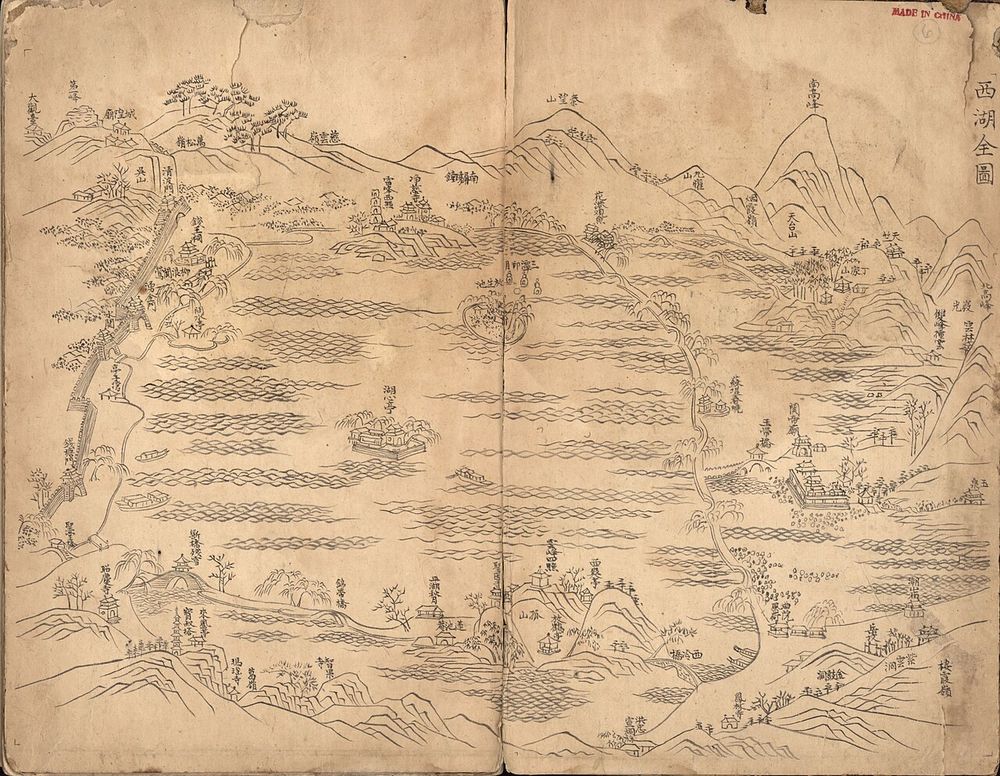
A road 2.8 kilometres long across the whole of West Lake from south to north, made in 1090 of the mud and weeds dug out of the lake by order of the poet Su Shi. Six stone bridges let boats through. In spring it is the first of the lake's Ten Scenes.
Photo: zhiyin586@163.com, CC BY 3.0, Wikimedia Commons
The story
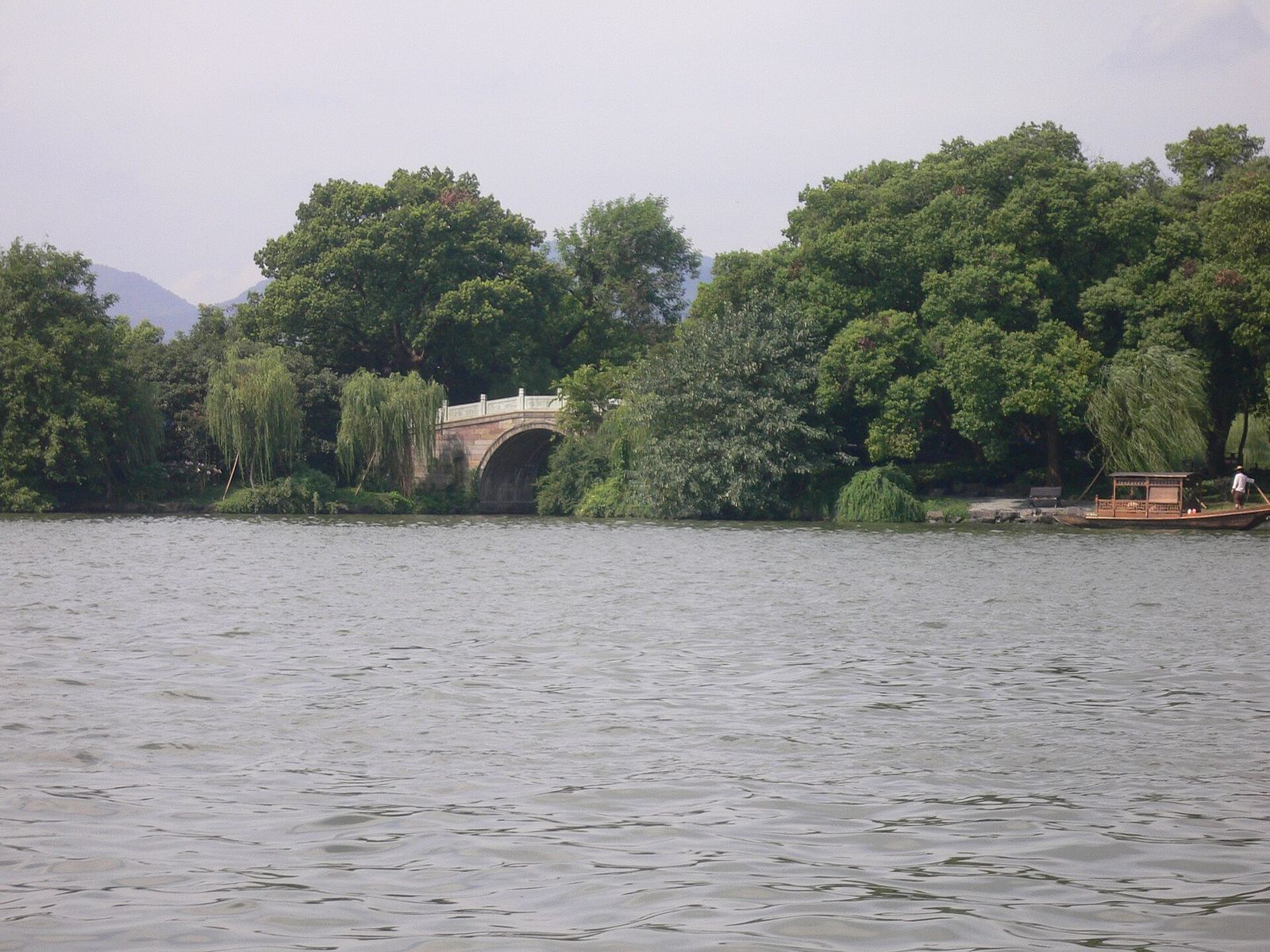
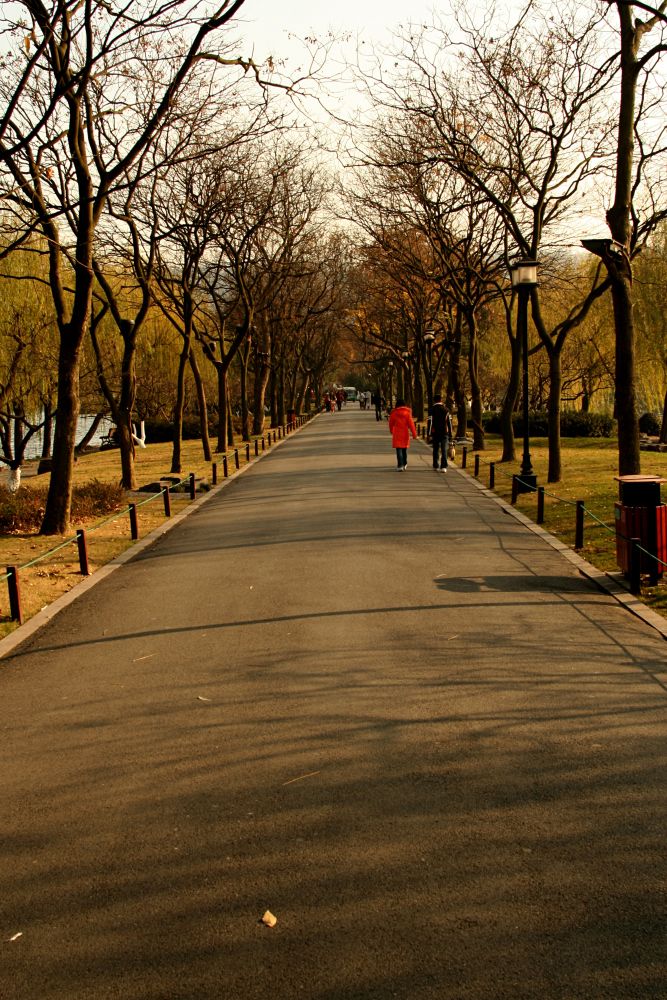
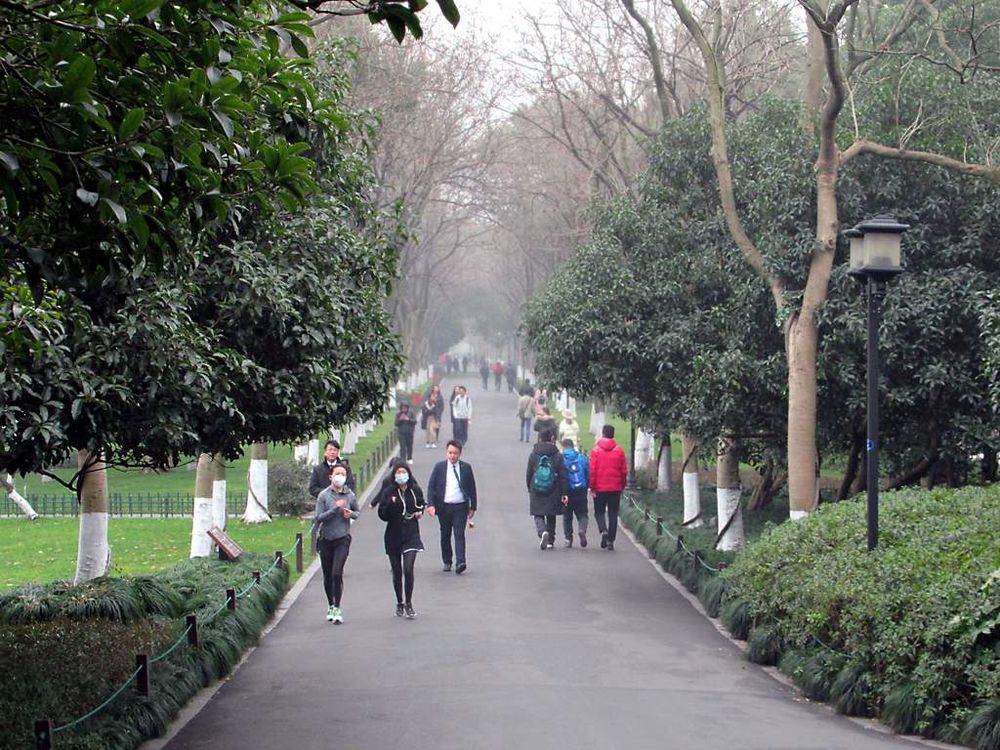
You are on a long, straight, tree-shaded path just above the water, with lake on both sides. Ahead it rises over a small stone hump of a bridge and runs on, under willows and big plane trees, for as far as you can see. To the right the water stretches away to the city; to the left a quieter lake runs to the hills.
In 1090 the poet Su Shi, then governing Hangzhou, had the choked lake dug out and piled what came up into this road, so that people could cross the lake on foot. In the same years in Europe the pope was calling for the First Crusade.
A pavilion on the causeway, reflected in the lakejoiseyshowaa from Freehold, NJ, USA, CC BY-SA 2.0
Su Shi knew the lake well. He had served here as deputy governor nearly twenty years earlier, and wrote some of his best poems about it. When he came back as governor he found half of it overgrown with water weed. He wrote to the throne that Hangzhou without the lake would be like a face without eyes, and was allowed to clear it.
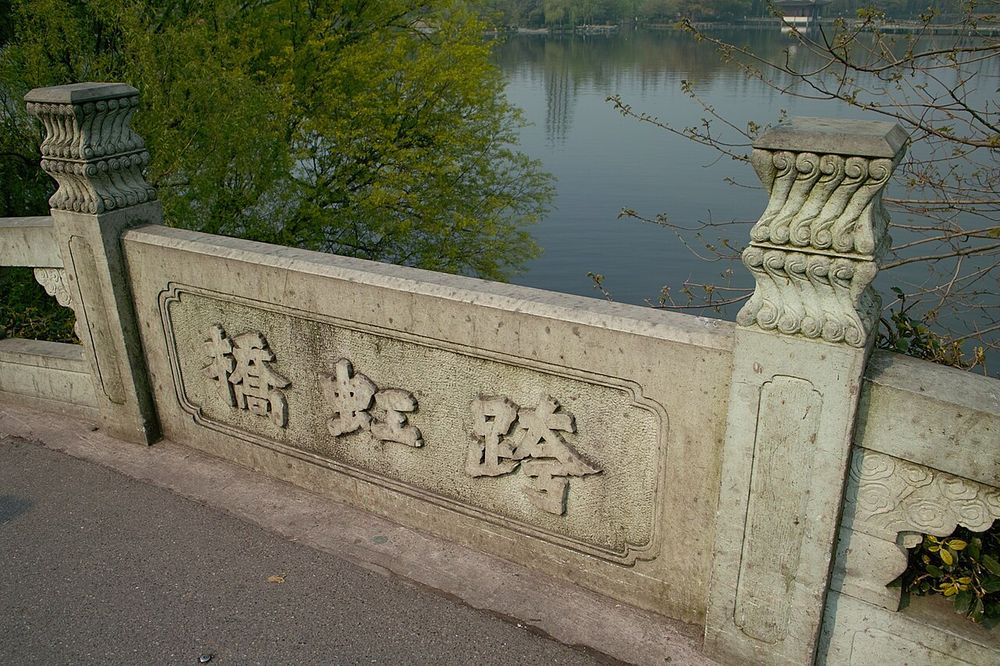
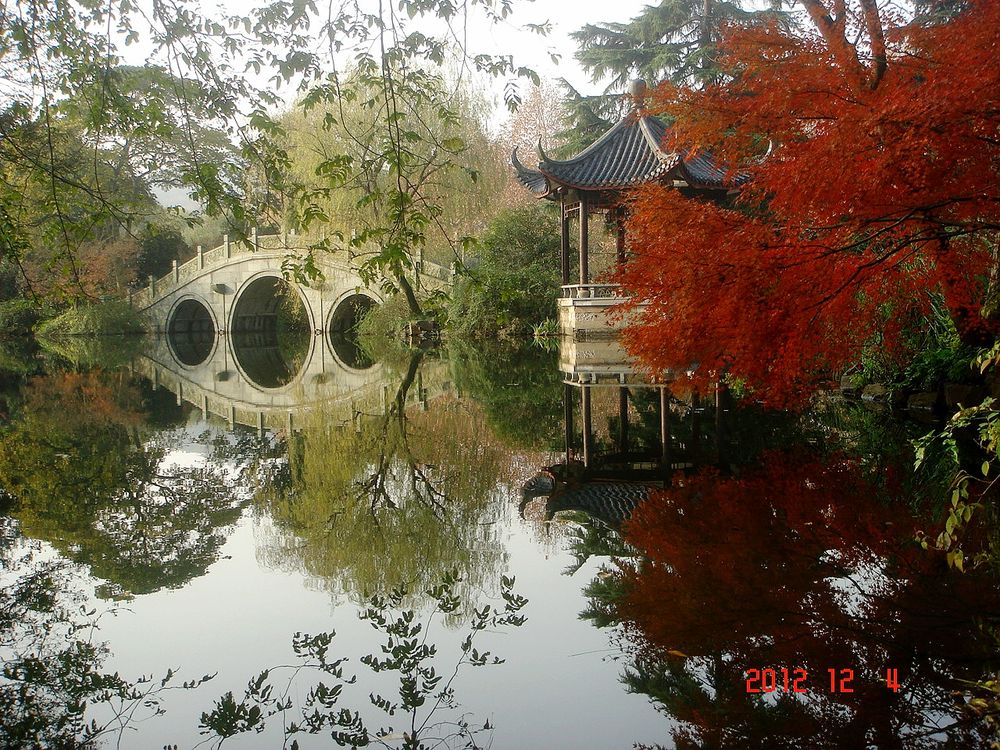
The causeway has six stone bridges with single round arches, so that boats can still pass from one side of the lake to the other. From south to north they are Yingbo, Suolan, Wangshan, Yadi, Dongpu and Kuahong.
Things people often get wrong
"It is a dyke to hold back water." It is a road across a lake, built to use up the dredged mud and to let people walk across.
"The trees are a thousand years old." The planting has been renewed again and again. The causeway was cut and neglected several times and restored in the Ming (1368–1644).
"You can walk it in twenty minutes." It is 2.8 kilometres. Without stopping it takes about forty minutes.
People who stood here
Su Shi (Su Dongpo, poet and governor, 1037–1101)The most admired writer of his age. He must have stood on the raw mud of the new causeway, watching weed and silt being piled into the road you are walking on.
The Qianlong Emperor (Qing (1644–1912) emperor, 1735–1796)He came to Hangzhou on all six of his tours of the south and saw this causeway. Back in Beijing he had a copy made at the Summer Palace: a long dyke with six bridges across Kunming Lake, which you can still walk today.
Go deeper: five stops from south to north
Walk from south to north, finishing at Yue Fei's temple and Solitary Hill.
1. The south end
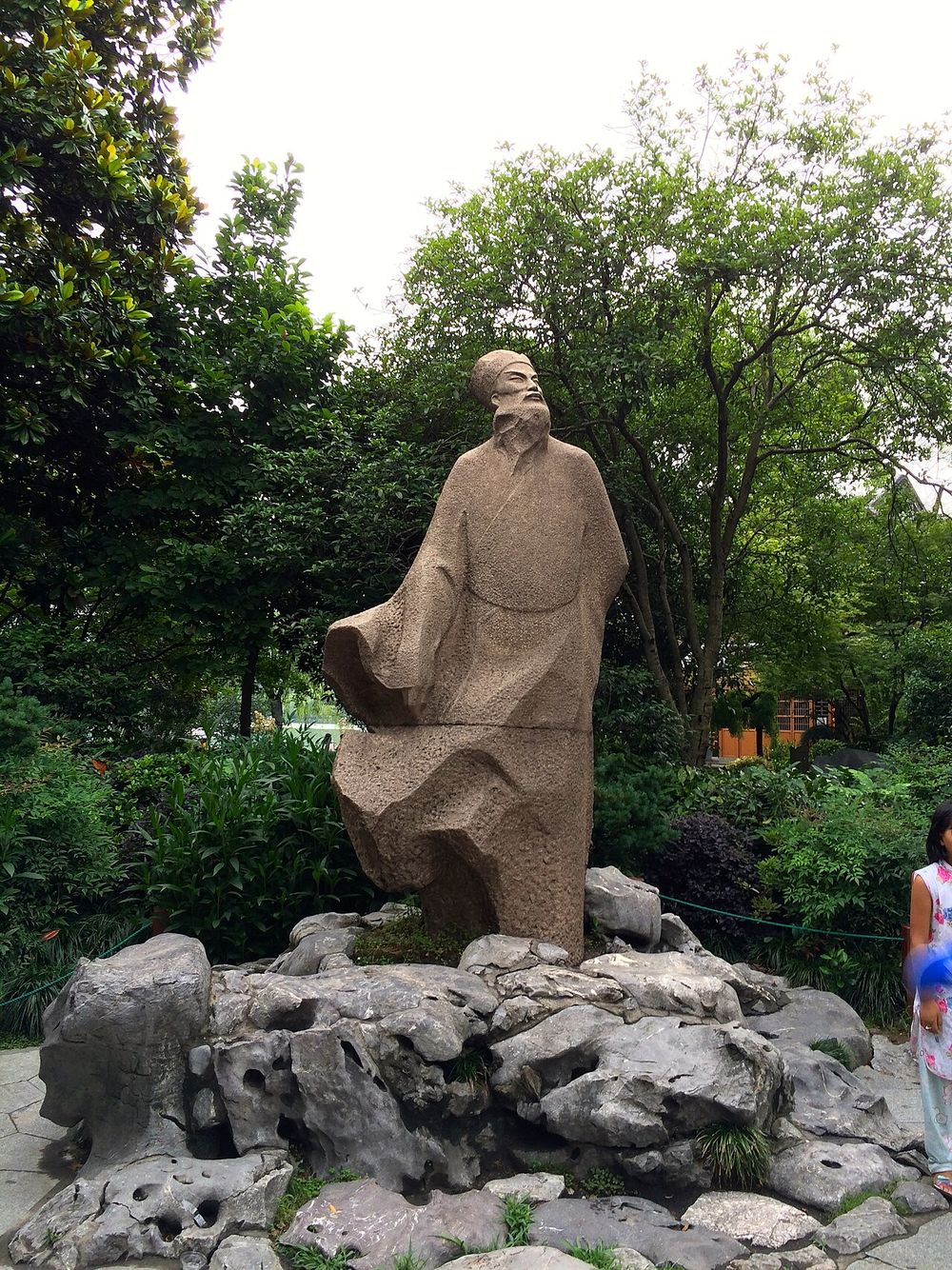
Su Shi at the south endJesseW900, CC BY-SA 4.0
At the south end, on Nanshan Road, a statue of Su Shi stands in a small garden, and beside it is a free memorial hall telling his life. From here Leifeng Pagoda is a short walk east.
2. The fish pond
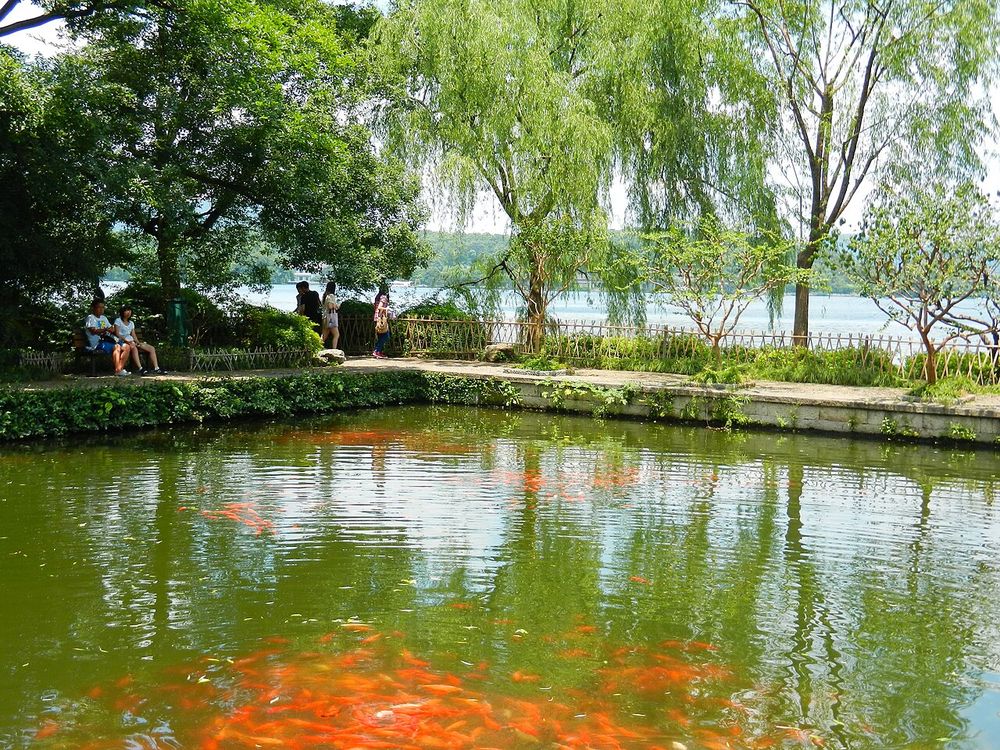
Carp in the pondlienyuan lee, CC BY 3.0
Just west of the south end is Viewing Fish at Flower Pond, another of the Ten Scenes. It began as the private garden of a Southern Song (1127–1279) official, where a stream ran down from the hills into the lake. Today its pools are full of red and gold carp, and the park around them is free.
3. The middle bridge
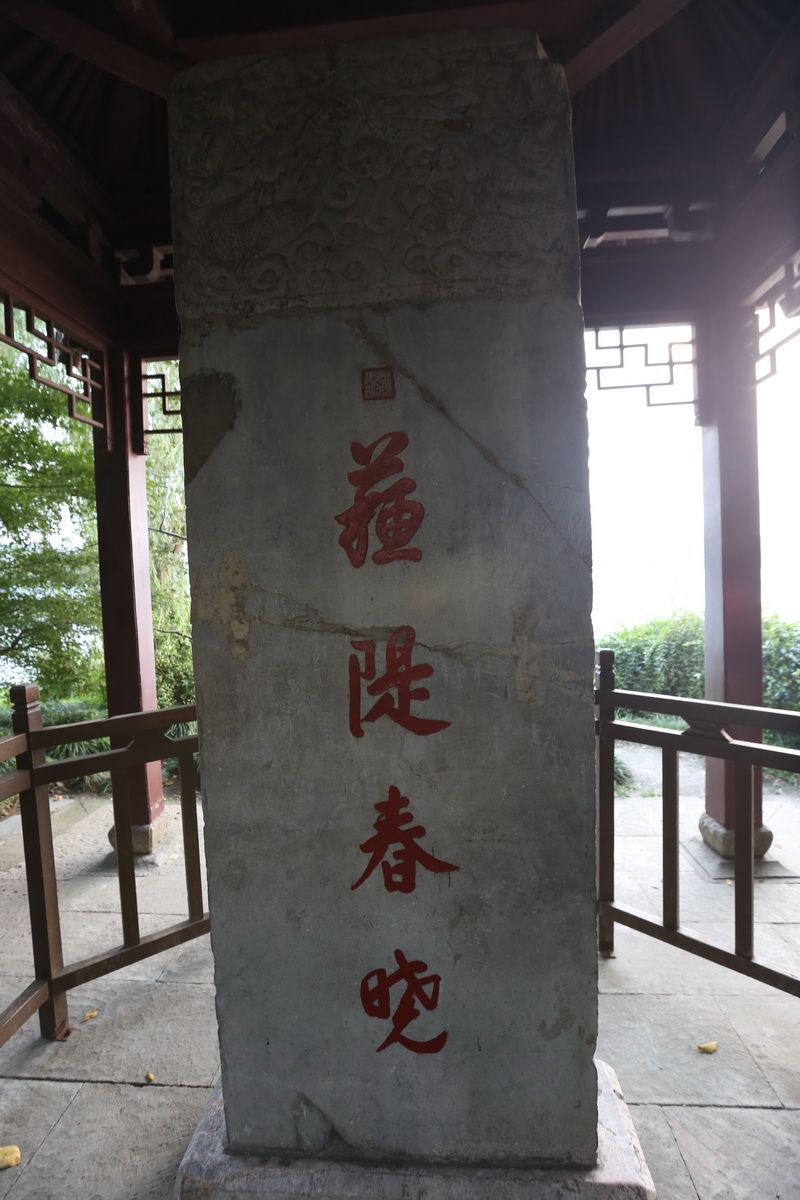
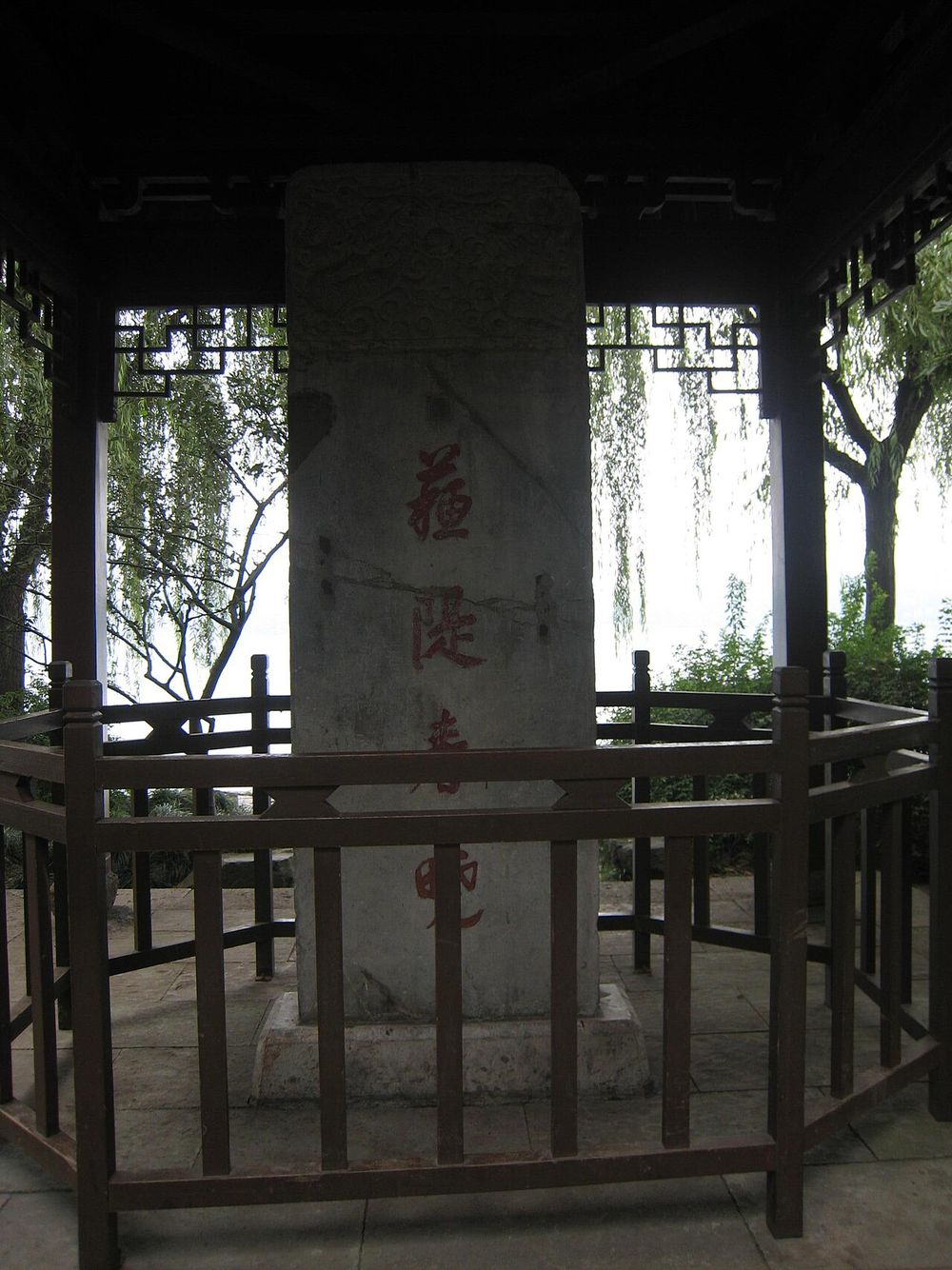
The tablet: Spring Dawn on the Su CausewayNekitarc, CC BY-SA 4.0
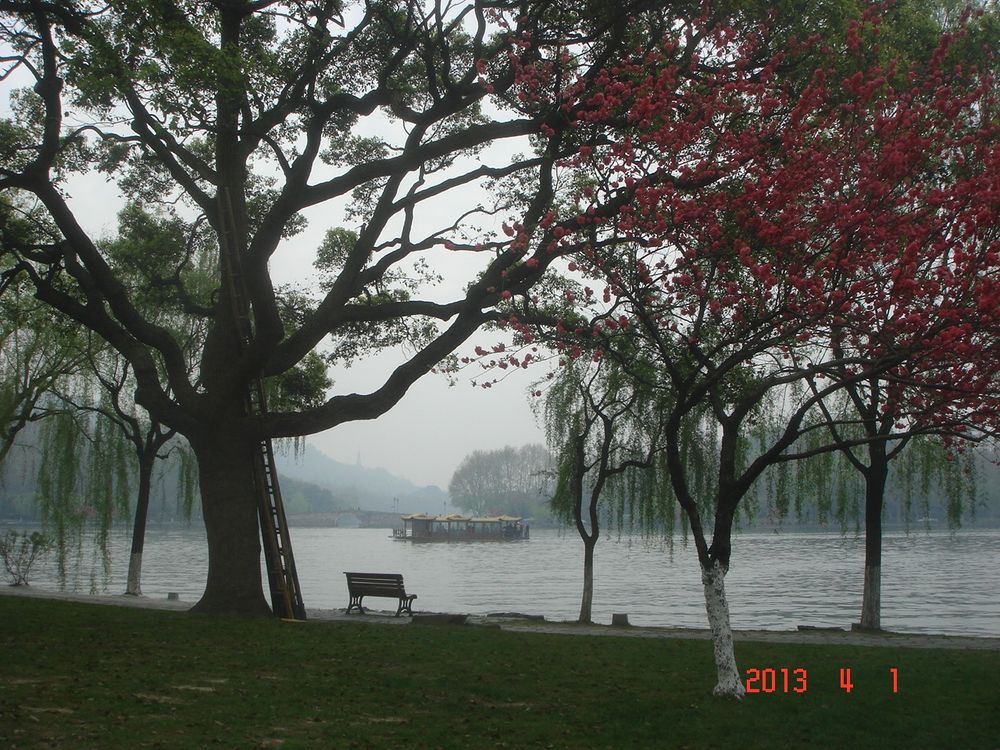
Near the fourth bridge, Yadi, is the pavilion with the tablet of Spring Dawn on the Su Causeway, the first of the Ten Scenes. Stand on the bridge in the early morning in April: mist on the water, willows, peach blossom, and the lake quiet on both sides.
黑云翻墨未遮山,
白雨跳珠乱入船。
卷地风来忽吹散,
望湖楼下水如天。
Black clouds like spilt ink, not yet covering the hills;
white rain like leaping pearls bouncing into the boat.
A wind sweeps over the ground and scatters it all;
below Lake-View Tower the water is like the sky.
Su Shi, Written Drunk at Lake-View Tower on the 27th of the Sixth Month, 1072
4. The two lakes
Spring on the West Inner Lakewanghongliu, CC BY-SA 3.0
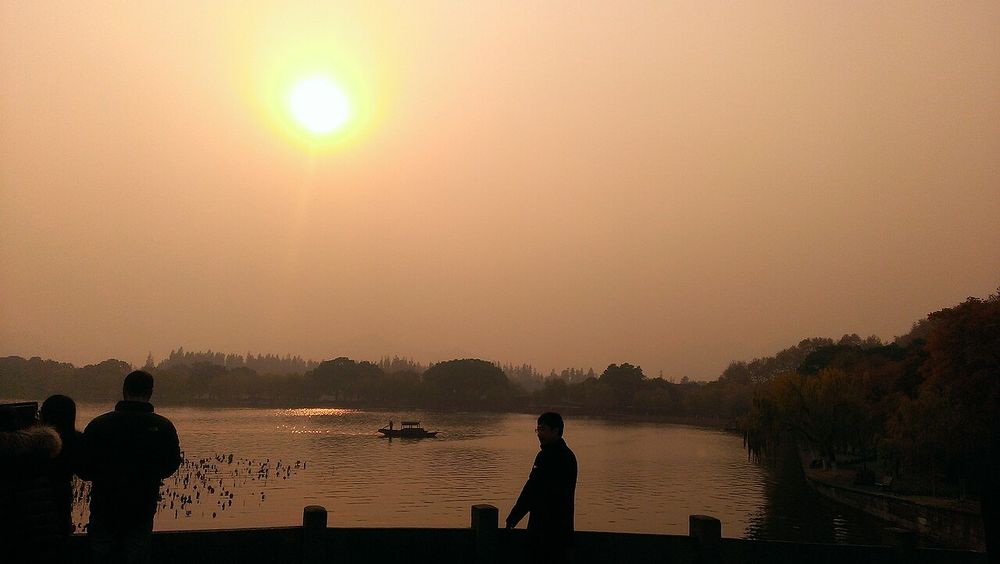
Look left and right from any bridge. To the east is the big outer lake with its islands and boats. To the west is a narrower, quieter water, the West Inner Lake, with the hills behind. Before the causeway it was all one lake.
5. The north end
The name of Kuahong Bridge, the last of the sixFarm, CC BY 3.0
The last bridge, Kuahong, "Spanning Rainbow", brings you down to Beishan Road. Turn left for Yue Fei's temple, right for Xiling Bridge and Solitary Hill.
Meanwhile in the world
Year
Here
Elsewhere
1071–1074
Su Shi serves in Hangzhou as deputy governor
The Battle of Manzikert (1071) opens Anatolia to the Turks
1090
The causeway is built
Bologna's university dates from 1088; the First Crusade sets out in 1096
1127–1279
Spring Dawn on the Su Causeway heads the Ten Scenes
Notre-Dame in Paris is begun (1163)
1751
The Qianlong Emperor makes his first tour of the south
The first volume of Diderot's Encyclopédie is published
Then and now
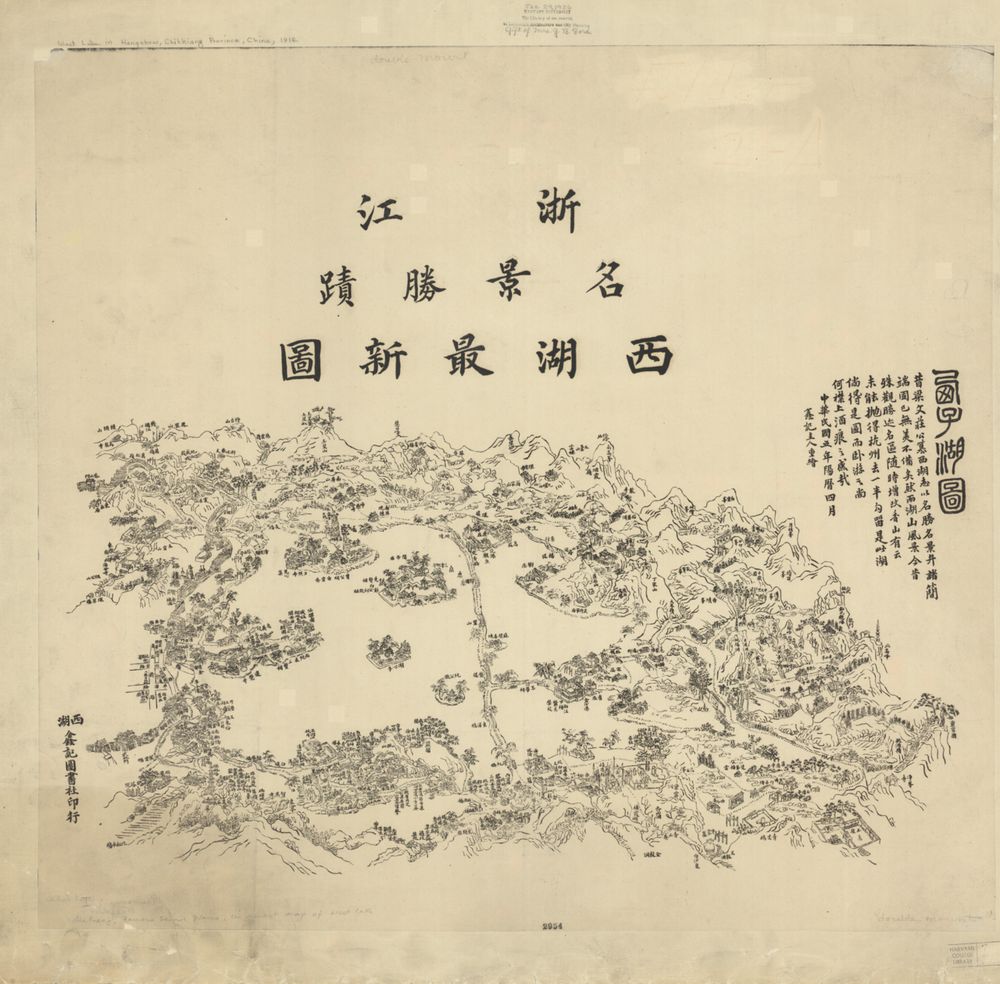
A pavilion on the causeway, reflected in the lakejoiseyshowaa from Freehold, NJ, USA, CC BY-SA 2.0, Wikimedia CommonsThe causeway across the water from the north shore江上清风1961, CC BY 3.0, Wikimedia CommonsThe path under the trees in autumnMlq4296, CC BY-SA 3.0, Wikimedia CommonsWalking the causeway on a misty dayDavid Stanley from Nanaimo, Canada, CC BY 2.0, Wikimedia CommonsThe tablet pavilion of Spring DawnHonmingjun, CC BY 3.0, Wikimedia CommonsThe tablet: Spring Dawn on the Su CausewayNekitarc, CC BY-SA 4.0, Wikimedia CommonsSu Shi at the south endJesseW900, CC BY-SA 4.0, Wikimedia CommonsThe name of Kuahong Bridge, the last of the sixFarm, CC BY 3.0, Wikimedia CommonsSunset over the lake from the causeway空之境界, CC BY 3.0, Wikimedia CommonsSpring on the West Inner Lakewanghongliu, CC BY-SA 3.0, Wikimedia CommonsA bench under old trees by the waterzhiyin586@163.com, CC BY 3.0, Wikimedia CommonsBoats and blossom near the north endzhiyin586@163.com, CC BY 3.0, Wikimedia CommonsThe Jade Belt Bridge seen from the causewayzhiyin586@163.com, CC BY 3.0, Wikimedia CommonsA tour boat off the causewayzhiyin586@163.com, CC BY 3.0, Wikimedia CommonsThe gate of Viewing Fish at Flower Pond钉钉, CC BY-SA 4.0, Wikimedia CommonsCarp in the pondlienyuan lee, CC BY 3.0, Wikimedia CommonsRed leaves and a stone bridge in the fish-pond parkzhiyin586@163.com, CC BY 3.0, Wikimedia CommonsWest Lake and the causeway on a map of about 1759Unknown authorUnknown author, Public domain, Wikimedia CommonsA map of West Lake published in 1916Xinji Bookstore, Public domain, Wikimedia Commons
Video
Films from official channels, played from YouTube. Nothing is loaded until you press play.
West LakeCCTV纪录 · China Central Television's documentary channel; 2 min · checked 2026-11-12
Local legends
These are stories people tell about this place. They are legends, not history, and each one says where it comes from.
LegendDongpo pork
When the causeway was finished, the people of Hangzhou sent Su Shi pork and wine to thank him. He had the pork stewed slowly in wine and sent it back to the workers. The dish has been called Dongpo pork ever since.
Source: Hangzhou folk tale; Su Shi did write a short poem on stewing pork, but at Huangzhou, years earlier
Later, people who live here will be able to add the stories they grew up with, and say which of these they have heard.
Not certain, and where accounts conflict
How long is it?
Usually given as 2.8 kilometres; some sources say 2.6 or 2.9, depending on where the ends are counted.
What did the original causeway look like?
Su Shi's petitions say how it was made, not how it looked. The road you walk is the Ming restoration, much rebuilt since.
Visiting
Tickets and hours
Free, at all hours.
Last checked 2026-11-12. Su Shi's own petitions of 1089–1090 and Chinese reference works; the causeway is free and has no ticket office.
Booking without WeChat
Official page in English The causeway is free. There is nothing to book.
Ticket window on site None needed.
Note Small electric carts sometimes run along the causeway for a fare; we did not check their prices or hours.
Checked 2026-11-12
Where to start
Start from the south end on Nanshan Road, near Leifeng Pagoda, and walk north.
Before you go
Early April, before eight in the morning, is the time for Spring Dawn.
There is little shade on the bridges and few places to buy water in the middle.
Customs and manners
Keep to the right; the path is narrow and busy at weekends.
Do not feed bread to the carp at the fish pond; buy fish food at the stalls if you want to.
Opening hours are given in the local time of the place.
Look for these
How many bridges do you cross?
Which two bridge names make a matching pair?
Is the lake on your left different from the lake on your right?
Find the tablet of Spring Dawn on the Su Causeway.
At the fish pond, how many colours of carp can you see?
From the middle of the causeway, can you see both pagodas?
I am here
Stand at the site, sign in, press the button, and collect its stamp. Your browser will ask to use your location. It is sent to us once to confirm that you are at the site; we keep how far you were from it, not the spot where you stood.
Your stamps are saved to your account, so they follow you to any device. Checking from a browser cannot rule out every false location; stricter checks arrive with the app.
Messages
Share your photos
Photos here show the place, not people. Each one is credited to the visitor who took it and appears after our team has looked at it. A photo with you in it belongs under “I am here”.