A kilometre of willows and peach trees on a strip of earth across the north of West Lake, from a bridge that is not broken to a hill that is not quite an island. It is the lake's front door, its most crowded spot, and the place where the White Snake met her husband.
Photo: User:CatOnMars, CC BY 4.0, Wikimedia Commons
The story
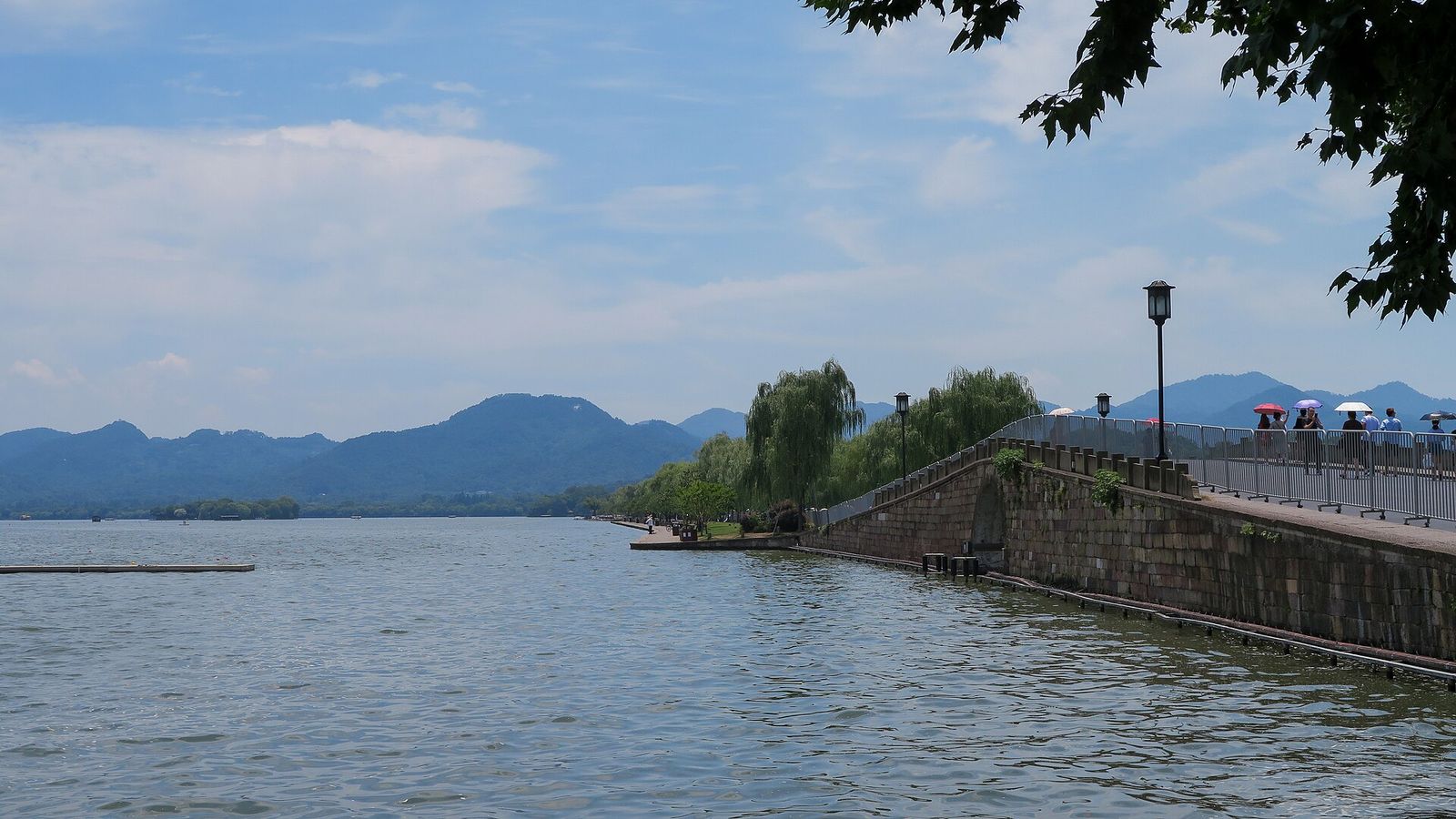
You are on a hump-backed stone bridge with a crowd round you. Ahead, a straight raised path runs out across the water, lined on both sides with weeping willows, and at its end is a wooded hill with pavilions. On your left the lake opens wide to the hills. On your right is a narrower stretch of water, still and green, with a thin pagoda on the ridge above it.
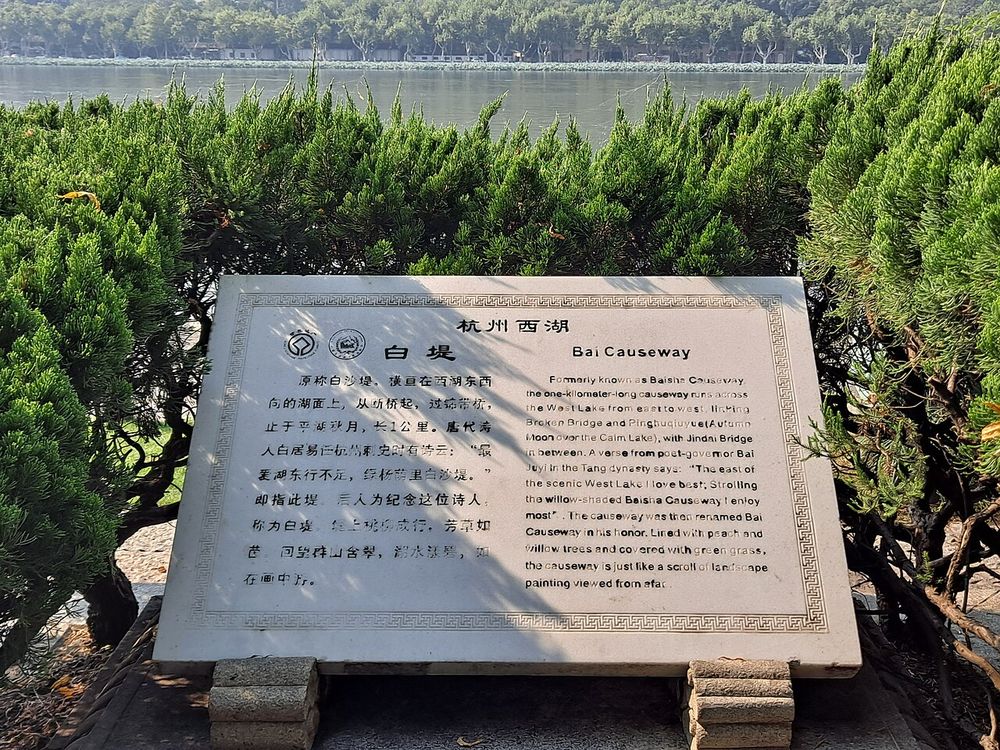
The causeway was already here in the Tang (618–907). The poet Bai Juyi, who governed Hangzhou from 822 to 824, rode along it in spring and wrote that he loved it best of all. He called it the White Sand Causeway. In Europe Charlemagne's son Louis the Pious ruled the Franks.
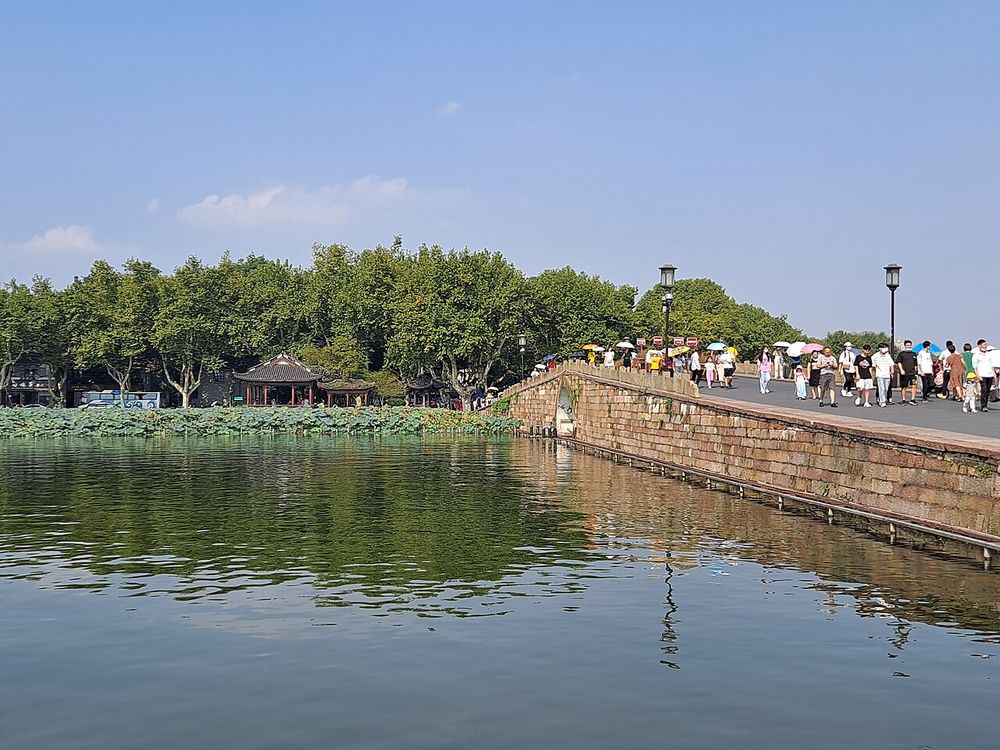
The Broken Bridge and the causeway running out to the hillsYinweichen, CC BY-SA 4.0
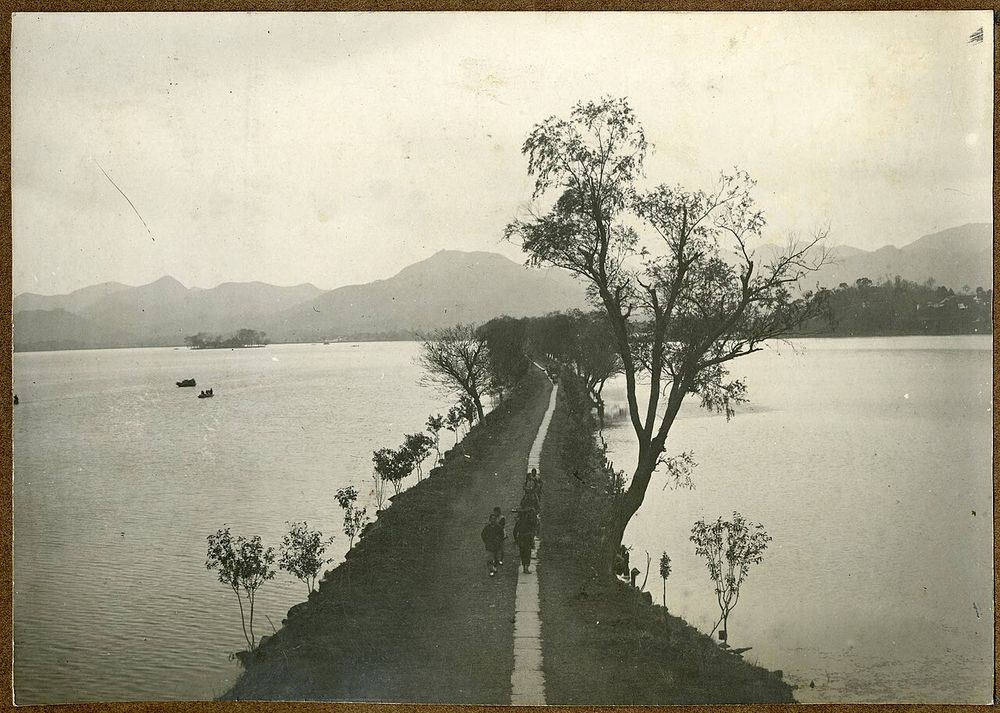
The causeway is about a kilometre long and joins the shore to Solitary Hill. It divides the lake: the big open water to the south, and the small, sheltered Beilihu, the "North Inner Lake", to the north. A second bridge in the middle lets the water through.
Bai Juyi did build a dyke while he governed the city, but it stood outside the old Qiantang Gate and has long gone. Later generations ran the two together, and the White Sand Causeway became the Bai Causeway.
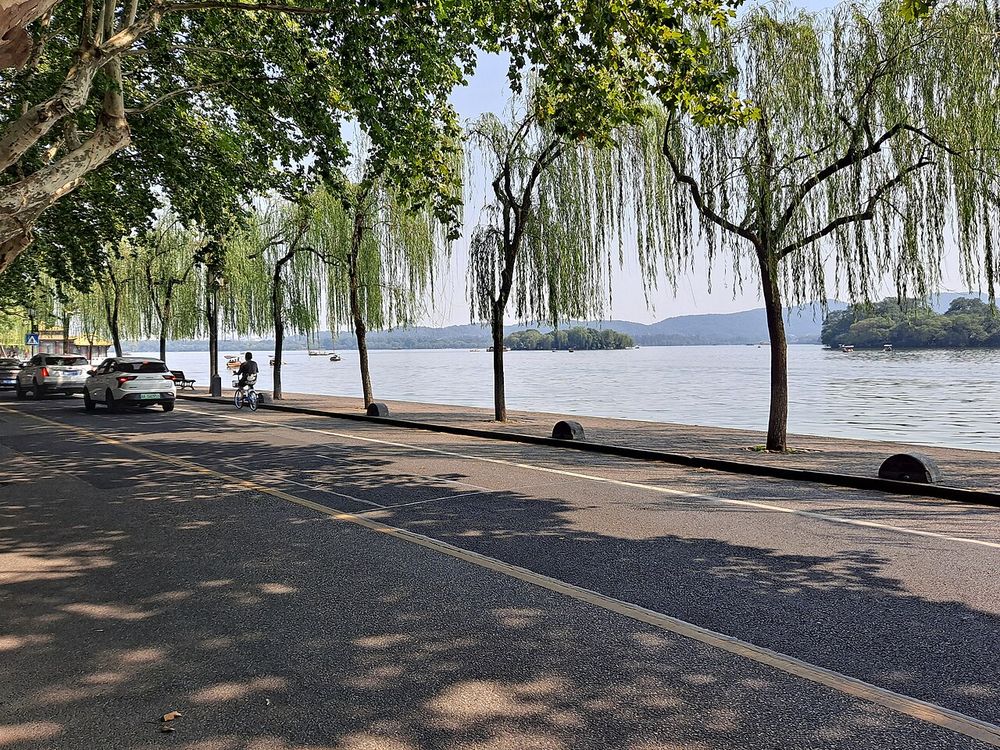
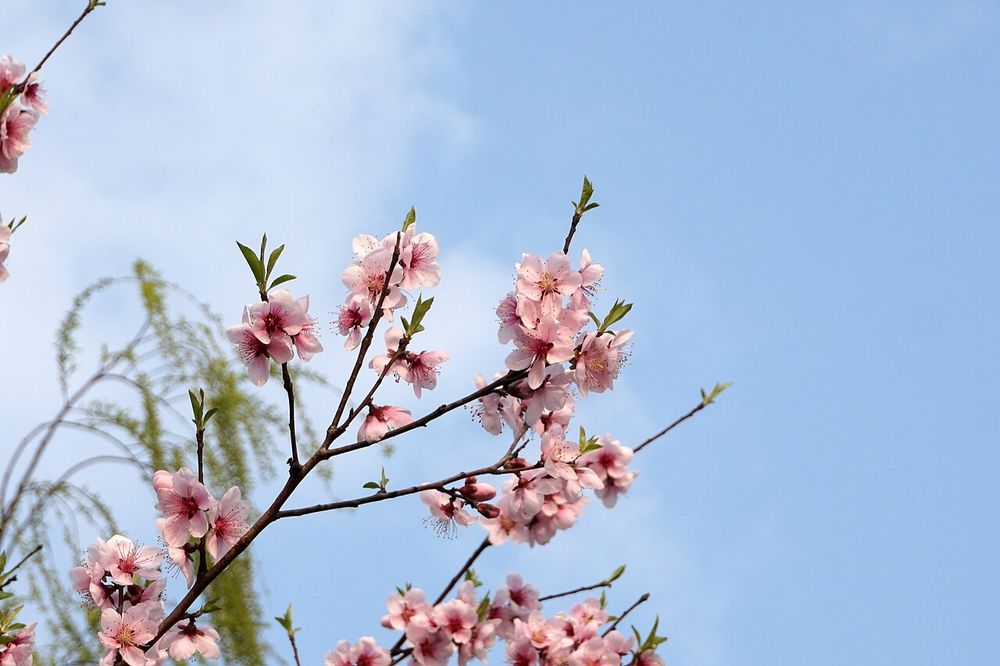
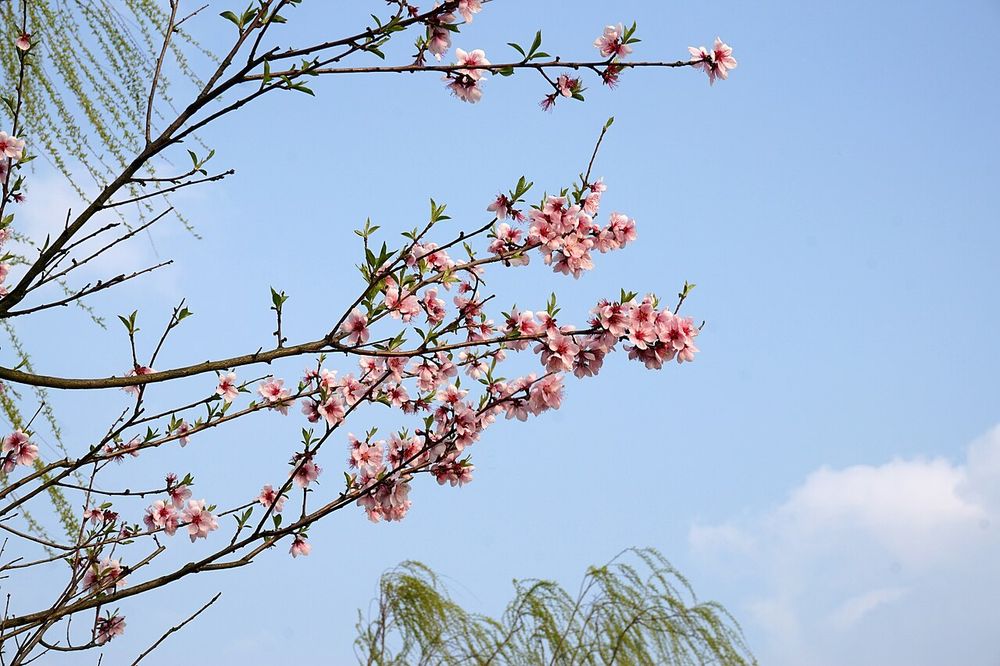
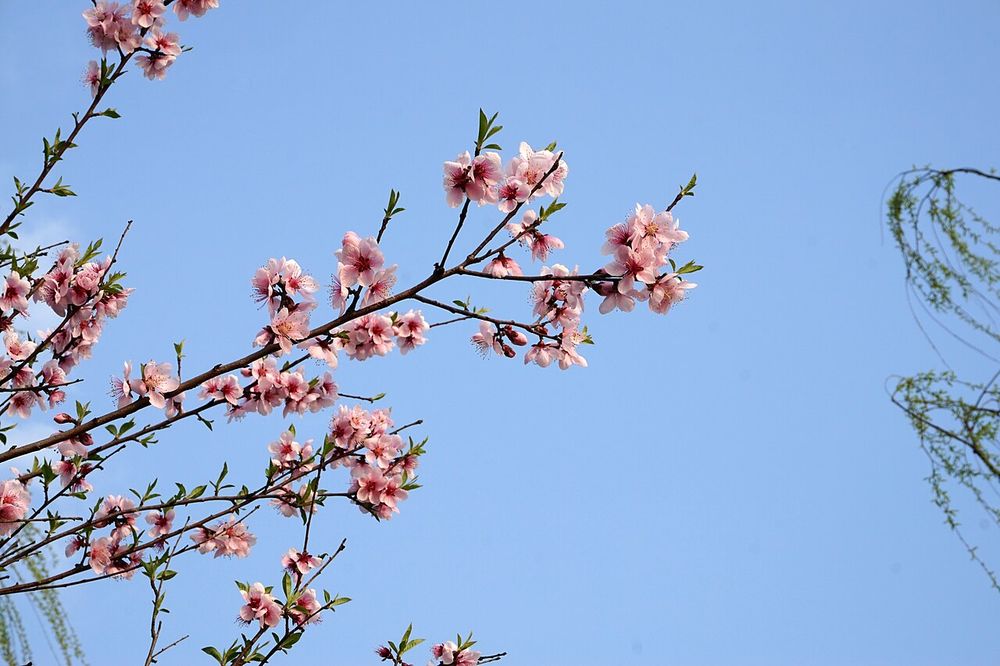
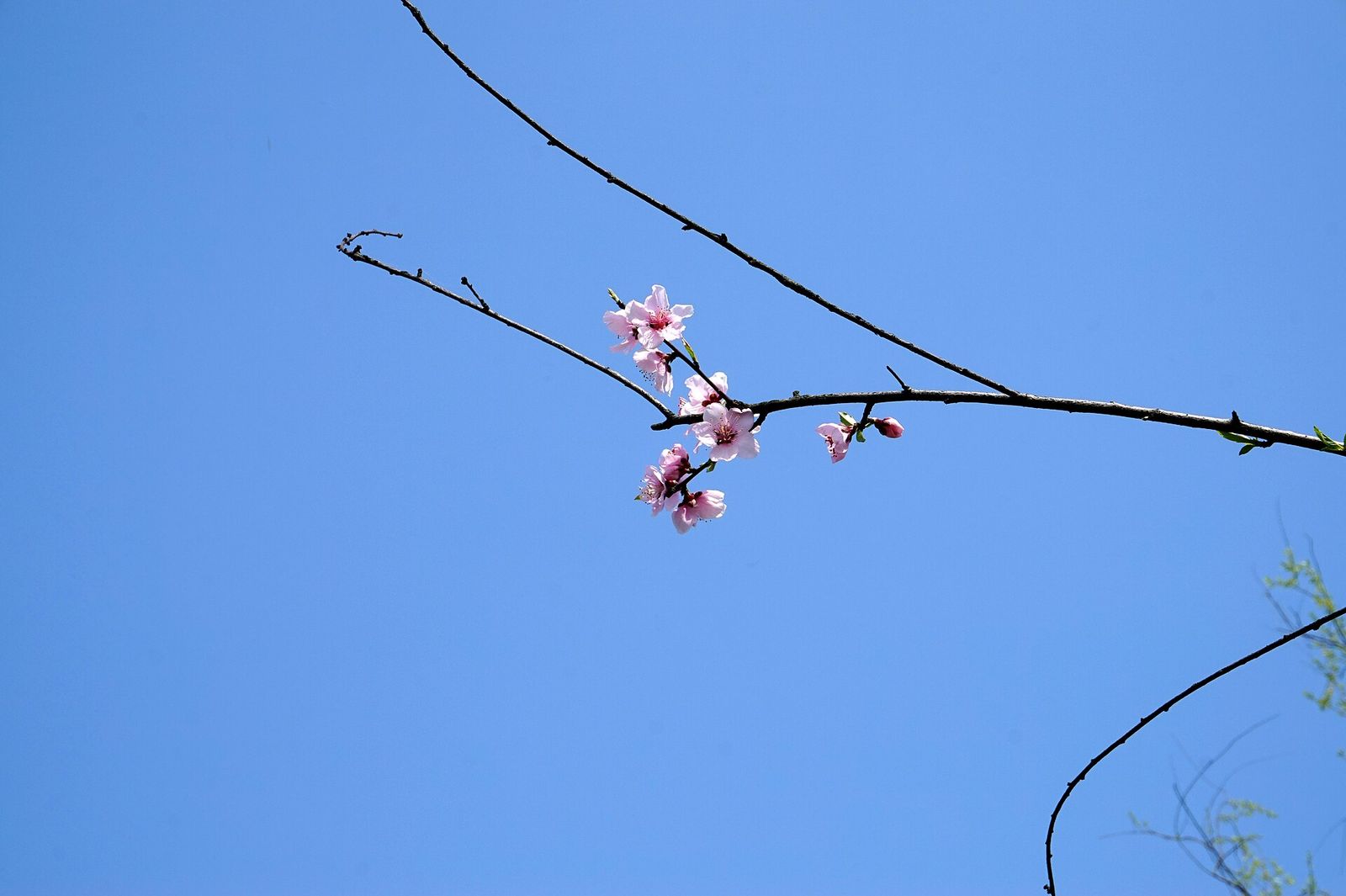
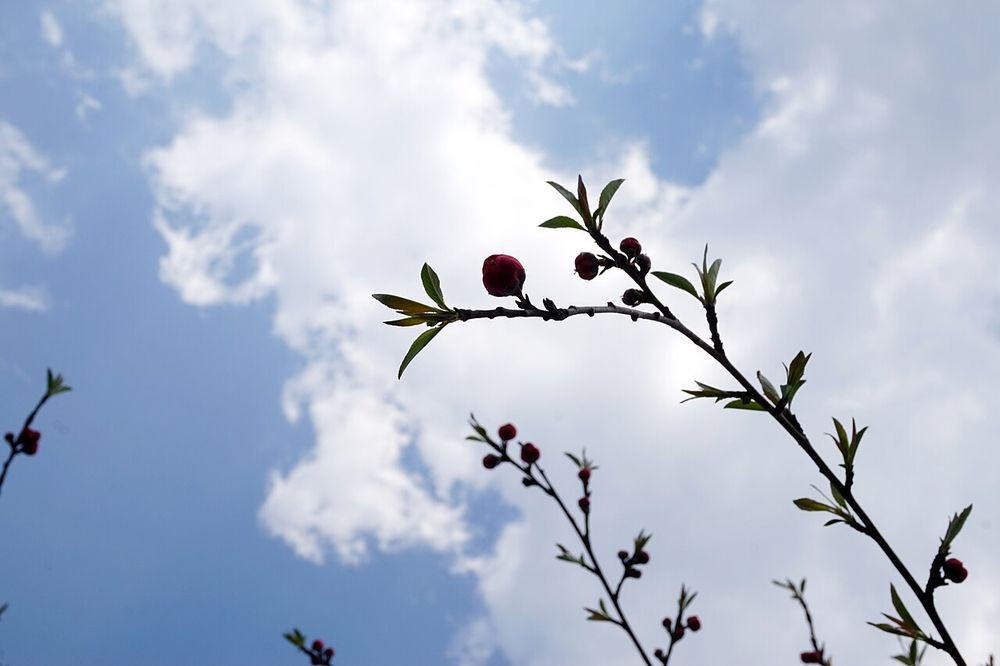
The willows and peaches are planted turn and turn about, so that in early spring the causeway is green and pink together.
Things people often get wrong
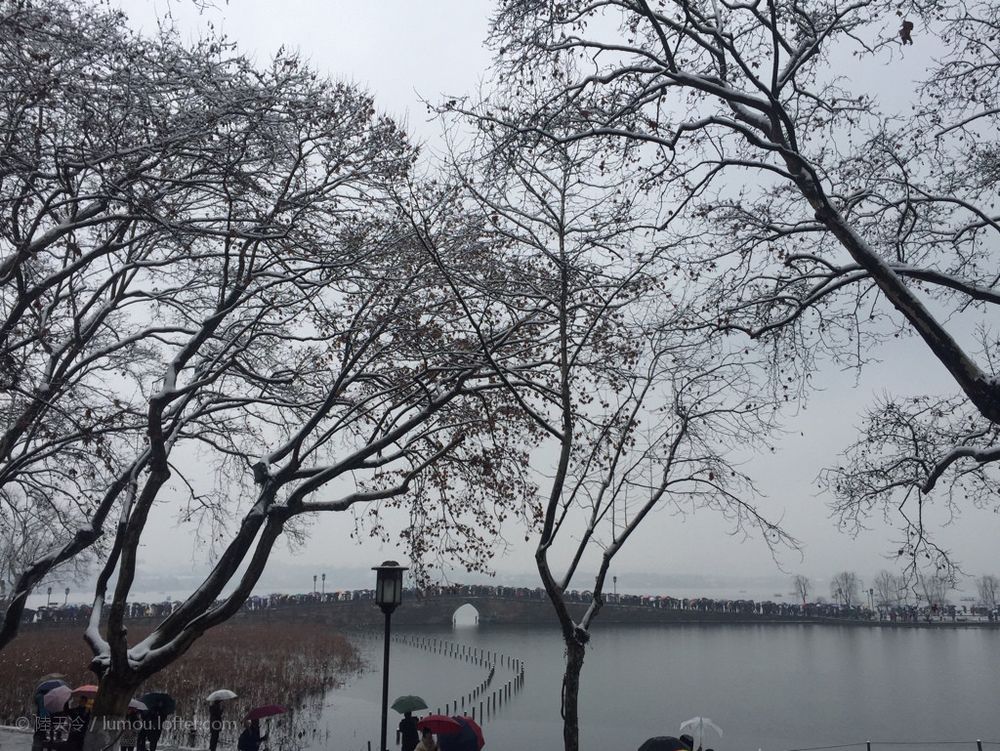
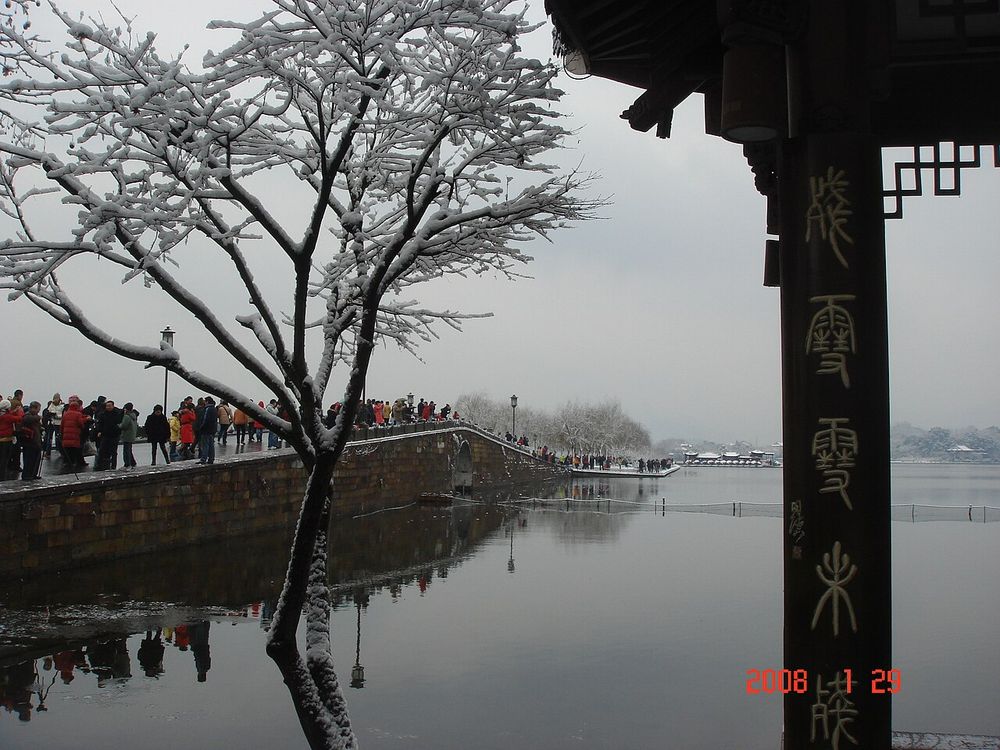
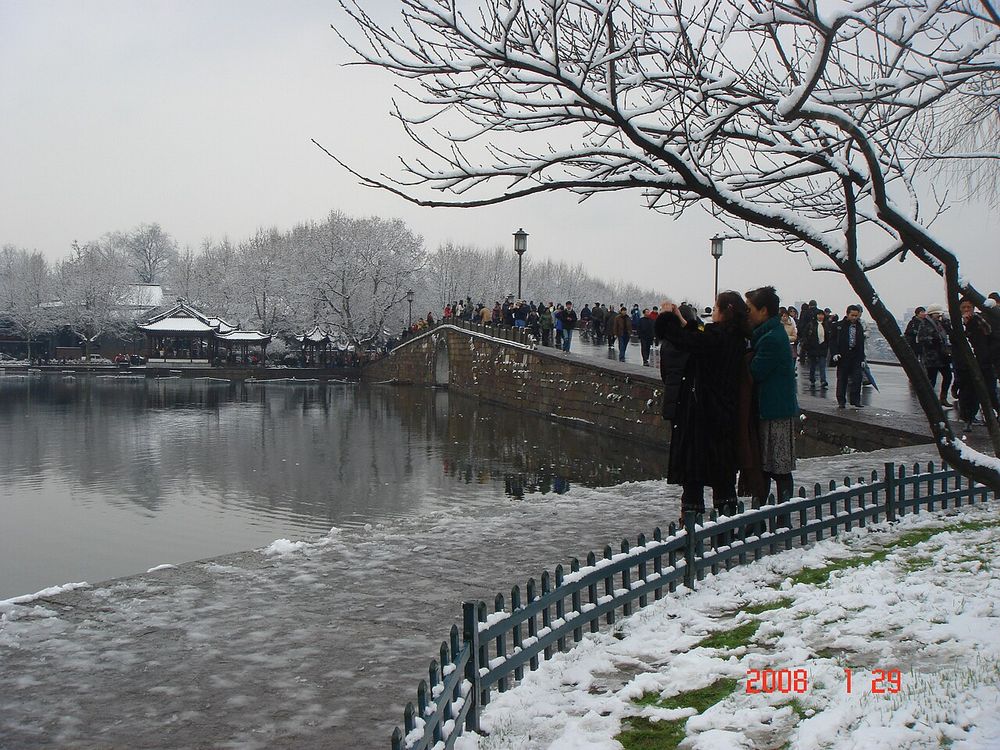
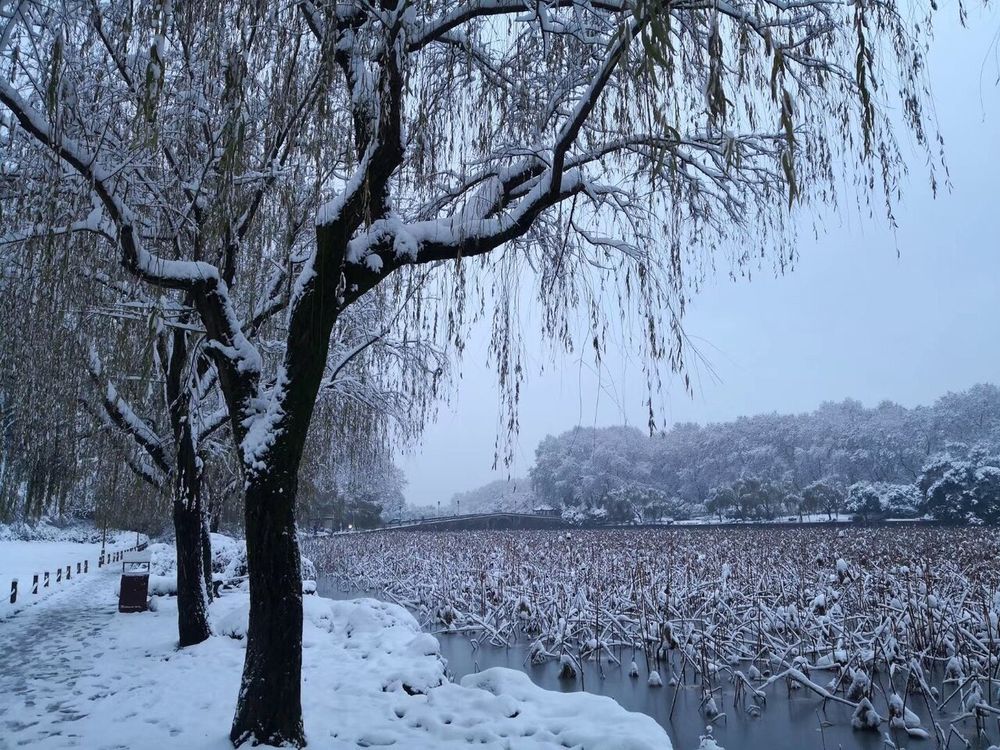
"The bridge is broken." It is whole. After snow the sunny crown melts first and from a distance the white arch seems to have a gap. Another explanation is older: this is where the road from Solitary Hill broke off.
"Bai Juyi built it." See above: he praised it, he did not make it.
"The bridge you see is a thousand years old." It has been rebuilt many times. The present arch dates from 1921 and has been repaired since.
People who stood here
Bai Juyi (Tang poet, governor of Hangzhou 822–824)On a spring ride he wrote that he loved the east of the lake best and could never ride it enough, in the shade of green willows on the White Sand Causeway. He may have reined in his horse very near where you stand.
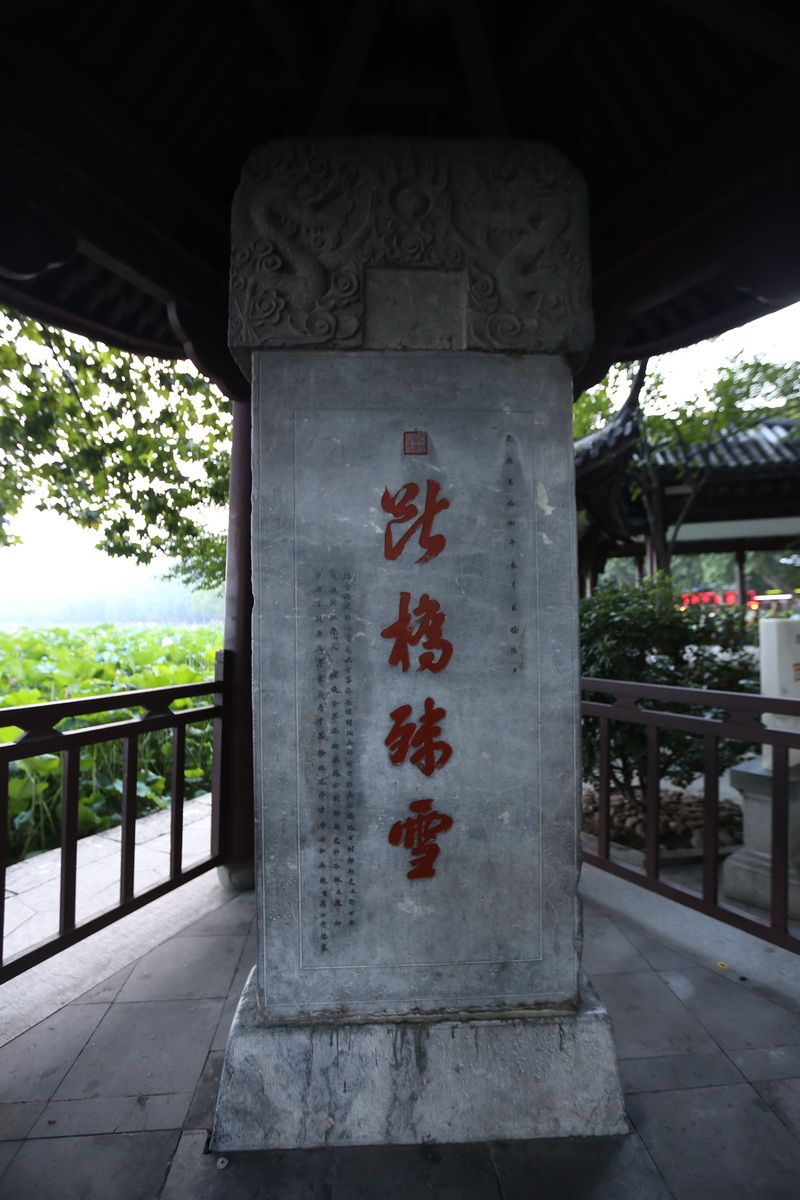
The Kangxi Emperor (Qing (1644–1912) emperor, 1661–1722)On his tours of the south he wrote the names of the Ten Scenes for stone tablets. The four characters for Lingering Snow on the Broken Bridge, in a pavilion at the east end of the bridge, are in his hand.
Go deeper: four stops from the bridge to the moon terrace
Walk from the Broken Bridge westward along the causeway to Solitary Hill. It takes twenty minutes without stopping.
1. The Broken Bridge
The Broken Bridge from the side钉钉, CC BY-SA 4.0
The low single arch carries the road from the shore onto the causeway. In the Southern Song (1127–1279), when Hangzhou was the capital, this was already one of the Ten Scenes.
The tablet of Lingering Snow on the Broken BridgeNekitarc, CC BY-SA 4.0
At the east end, in a small pavilion, stands the tablet with the Kangxi Emperor's four characters. Every one of the Ten Scenes has a tablet like it; finding them all is a good way to walk the lake.
2. The causeway
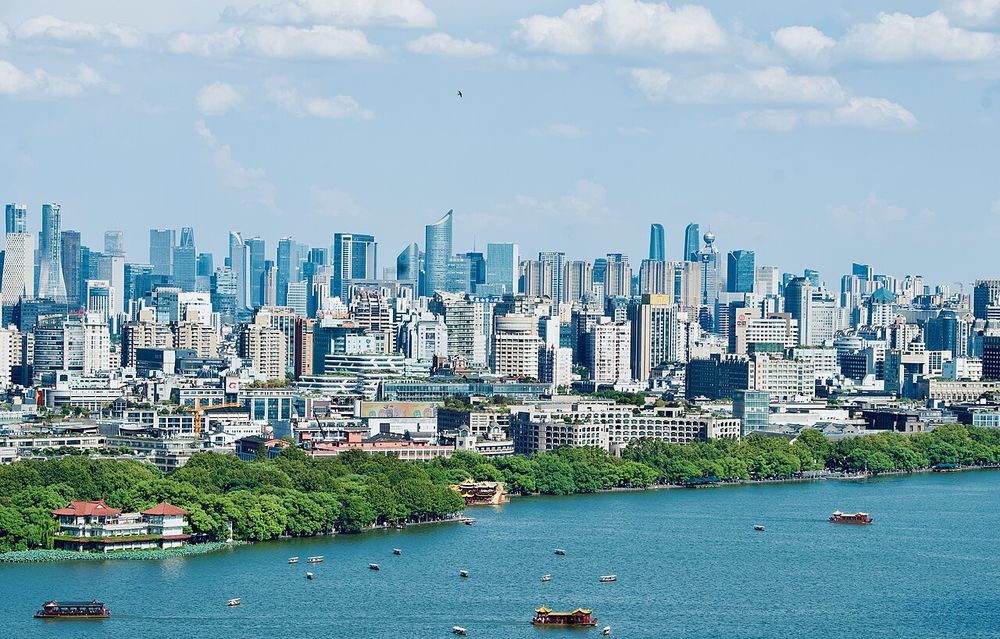
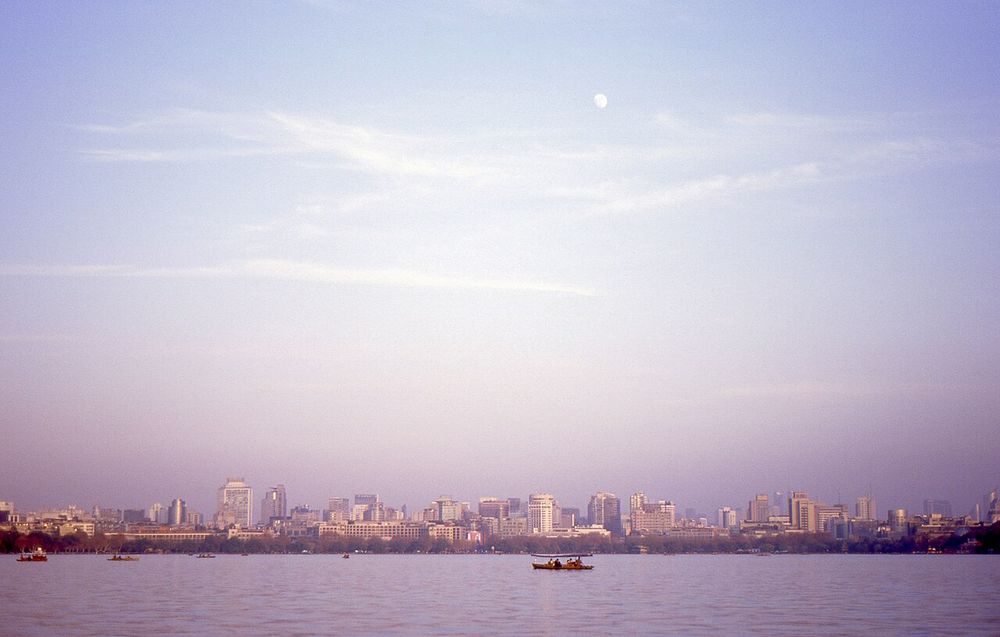
The lake and the causeway with the city behindUser:CatOnMars, CC BY 4.0
Look left and right as you walk. On the left the outer lake is wide and busy with boats. On the right the North Inner Lake is narrow and calm, and above it on Gem Hill stands the slender Baochu Pagoda, rebuilt in 1933 on a much older base.
North of Solitary Hill temple, west of the Jia pavilion,
the water lies level and the clouds hang low.
Here and there the first orioles fight for warm trees;
whose new swallows peck the spring mud?
Wild flowers begin to dazzle the eye;
the short grass barely hides a horse's hooves.
I love the east of the lake best and cannot ride it enough:
the White Sand Causeway in the shade of green willows.
Bai Juyi, A Spring Ride on Qiantang Lake, about 823
3. The middle bridge
Under the willows on the causeway钉钉, CC BY-SA 4.0
Half-way along, a second, smaller bridge lets water pass between the two parts of the lake. Its name means "Brocade Sash". From its top look back east: the city's towers rise straight out of the trees behind the Broken Bridge.
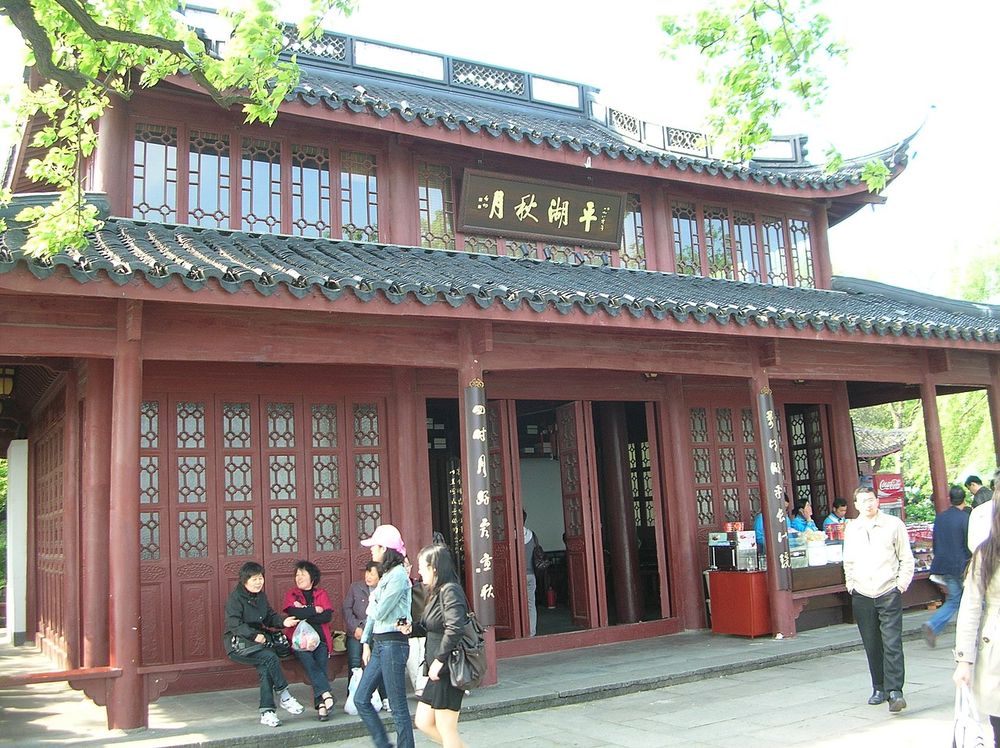
4. Autumn Moon on Calm Lake
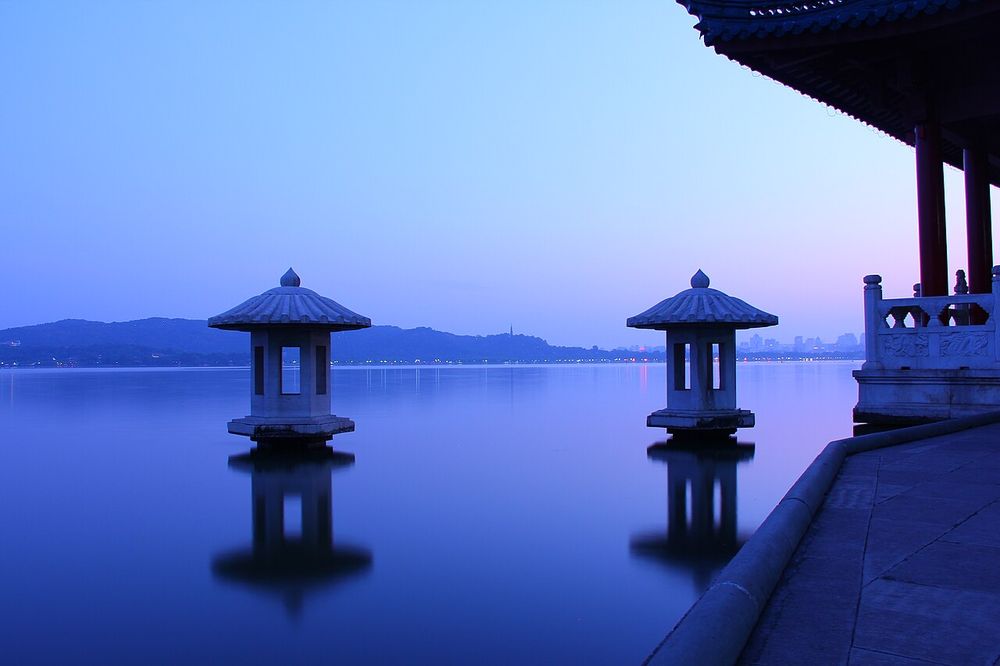
Stone lanterns at the terrace at duskJeff chenqinyi, CC BY-SA 3.0
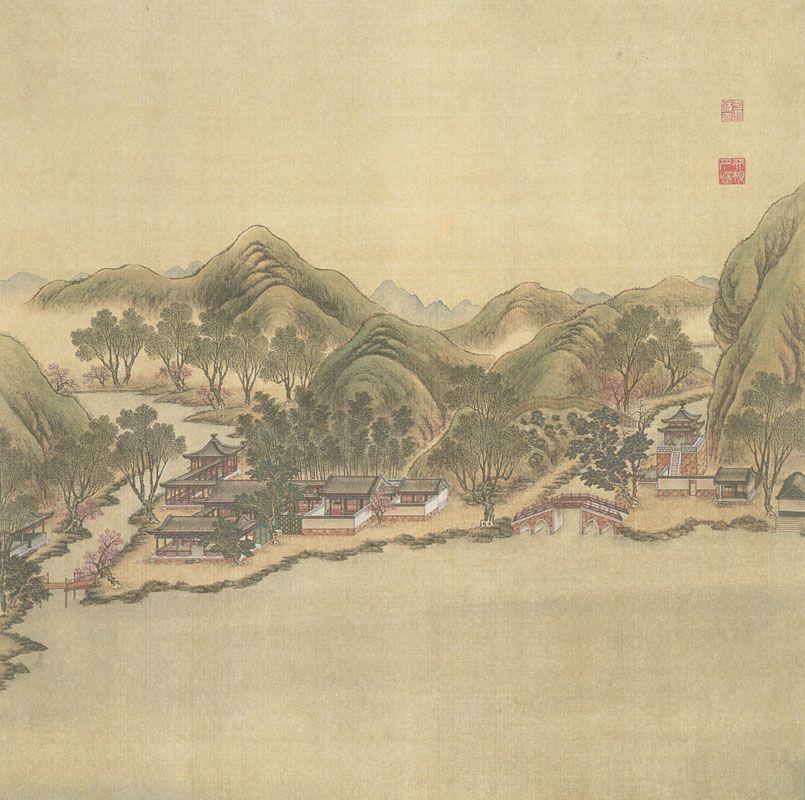
The causeway ends at a terrace built out over the water at the foot of Solitary Hill. This is another of the Ten Scenes. The water here is wide and low, and on an autumn night the moon seems to lie on it. The terrace, the pavilion and the tablet were rebuilt in the Qing (1644–1912).
From here the road runs on round the hill. Solitary Hill has its own page.
Meanwhile in the world
Year
Here
Elsewhere
822–824
Bai Juyi governs Hangzhou and rides along the causeway
Charlemagne's son Louis the Pious rules the Franks
1127–1279
The Broken Bridge becomes one of the Ten Scenes
Gothic cathedrals rise across France
1699
The Kangxi Emperor writes the names of the Ten Scenes
Peter the Great is reforming Russia
1921
The present bridge is built
The tenth year of the Republic of China; the year of the Washington Naval Conference
1933
Baochu Pagoda is rebuilt above the causeway
Hitler comes to power in Germany
Then and now
The lake and the causeway with the city behindUser:CatOnMars, CC BY 4.0, Wikimedia CommonsThe north shore and the cityUser:CatOnMars, CC BY 4.0, Wikimedia CommonsThe Broken Bridge and the causeway running out to the hillsYinweichen, CC BY-SA 4.0, Wikimedia CommonsThe Broken Bridge from the side钉钉, CC BY-SA 4.0, Wikimedia CommonsThe bridge in winter, under bare trees陸天冷, CC BY 2.5, Wikimedia CommonsThe causeway seen across the waterShujianyang, CC BY-SA 4.0, Wikimedia CommonsUnder the willows on the causeway钉钉, CC BY-SA 4.0, Wikimedia CommonsThe board telling the history of the causeway钉钉, CC BY-SA 4.0, Wikimedia CommonsPeach blossom on the causeway in spring三猎, CC BY-SA 4.0, Wikimedia CommonsPeach and willow together三猎, CC BY-SA 4.0, Wikimedia CommonsPeach blossom against the sky三猎, CC BY-SA 4.0, Wikimedia CommonsA branch of peach blossom三猎, CC BY-SA 4.0, Wikimedia CommonsThe first blossom of the year三猎, CC BY-SA 4.0, Wikimedia CommonsBuds before the blossom三猎, CC BY-SA 4.0, Wikimedia CommonsThe tablet of Lingering Snow on the Broken BridgeNekitarc, CC BY-SA 4.0, Wikimedia CommonsThe tablet pavilion at the east end of the bridge钉钉, CC BY-SA 4.0, Wikimedia CommonsSnow at the Broken Bridgezhiyin586@163.com, CC BY 3.0, Wikimedia CommonsThe bridge after snowzhiyin586@163.com, CC BY 3.0, Wikimedia CommonsSnow on the willows by the North Inner Lake94rain, CC BY-SA 4.0, Wikimedia CommonsThe city at dusk from Autumn Moon on Calm LakeVaykaaris, CC BY-SA 3.0, Wikimedia CommonsStone lanterns at the terrace at duskJeff chenqinyi, CC BY-SA 3.0, Wikimedia CommonsThe pavilion of Autumn Moon on Calm Lake董家康, CC BY-SA 3.0, Wikimedia CommonsAutumn Moon on Calm Lake in a Qing court paintingShen Yuan, Tangdai, Wang Youdun, CC BY-SA 3.0, Wikimedia CommonsThe causeway in an early photographPhotographs of YMCA buildings, people, and activities held in the collections of, CC BY 4.0, Wikimedia Commons
Video
Films from official channels, played from YouTube. Nothing is loaded until you press play.
West LakeCCTV纪录 · China Central Television's documentary channel; 2 min · checked 2026-11-12
Local legends
These are stories people tell about this place. They are legends, not history, and each one says where it comes from.
LegendThe umbrella on the bridge
On a spring day of sudden rain, the White Snake, who had taken the form of a young woman, stood with her maid on the Broken Bridge. A young man named Xu Xian lent them his umbrella, and that was how they met. Years later, after she escaped from the monk Fahai, they met again on the same bridge.
Source: Feng Menglong, Stories to Caution the World, 1624, and later operas
LegendThe bridge of the Duan family
A poor couple named Duan sold wine from a hut by this bridge. A traveller paid them with a magic gift that made their wine famous, and the bridge took their name, Duanjia Bridge, which became Duan Bridge, the "Broken Bridge".
Source: Hangzhou folk tale
Later, people who live here will be able to add the stories they grew up with, and say which of these they have heard.
Not certain, and where accounts conflict
Why "Broken"?
Three explanations are given: the melting snow, the road from Solitary Hill breaking off here, and the Duan family. None is certain.
When was the causeway first made?
It is in Bai Juyi's poem, so it existed by the 820s. No one knows who first built it.
Visiting
Tickets and hours
Free, at all hours.
Last checked 2026-11-12. Hangzhou city news reports of 2025 and 2026; the causeway is free and has no ticket office of its own.
Booking without WeChat
Official page in English The causeway is free and has no ticket. There is nothing to book.
Ticket window on site None needed.
Note The nearest metro is Longxiangqiao on line 1, fifteen to twenty minutes' walk from the Broken Bridge.
Checked 2026-11-12
Where to start
Start at the Broken Bridge on Beishan Road and walk west. Solitary Hill is at the far end.
For the classic view, climb Gem Hill behind the bridge and look down on the causeway.
Before you go
On holidays the bridge is so crowded that the crowd is sometimes made to walk one way. Come before eight in the morning.
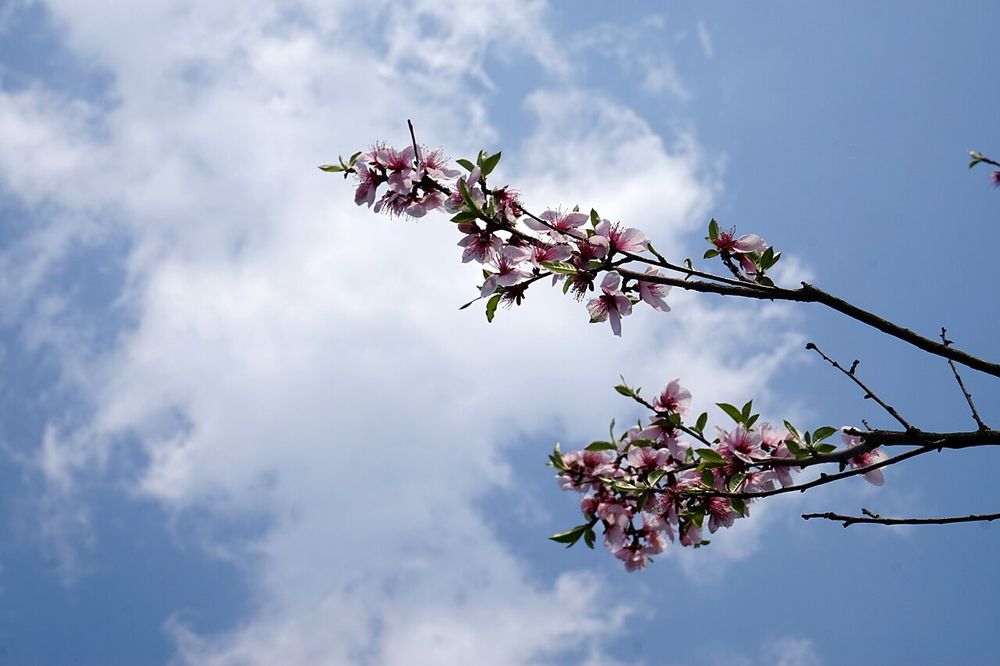
Peach blossom is usually at its best in late March.
Customs and manners
Do not stop to pose in the middle of the bridge when it is full. Step aside.
Opening hours are given in the local time of the place.
Look for these
Stand on the Broken Bridge. Can you see that it is not broken?
Find the tablet with four characters in the pavilion at the east end.
Is the planting really one willow, then one peach?
Which side of the causeway is calmer, left or right?
Find the thin pagoda on the hill above the North Inner Lake.
Find the second bridge half-way along.
I am here
Stand at the site, sign in, press the button, and collect its stamp. Your browser will ask to use your location. It is sent to us once to confirm that you are at the site; we keep how far you were from it, not the spot where you stood.
Your stamps are saved to your account, so they follow you to any device. Checking from a browser cannot rule out every false location; stricter checks arrive with the app.
Messages
Share your photos
Photos here show the place, not people. Each one is credited to the visitor who took it and appears after our team has looked at it. A photo with you in it belongs under “I am here”.