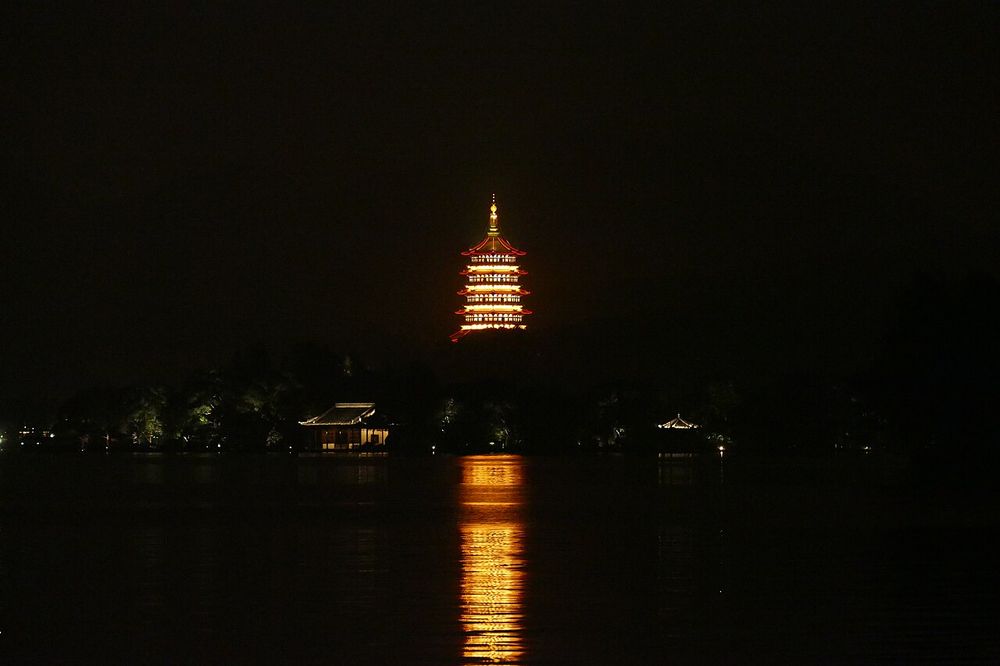
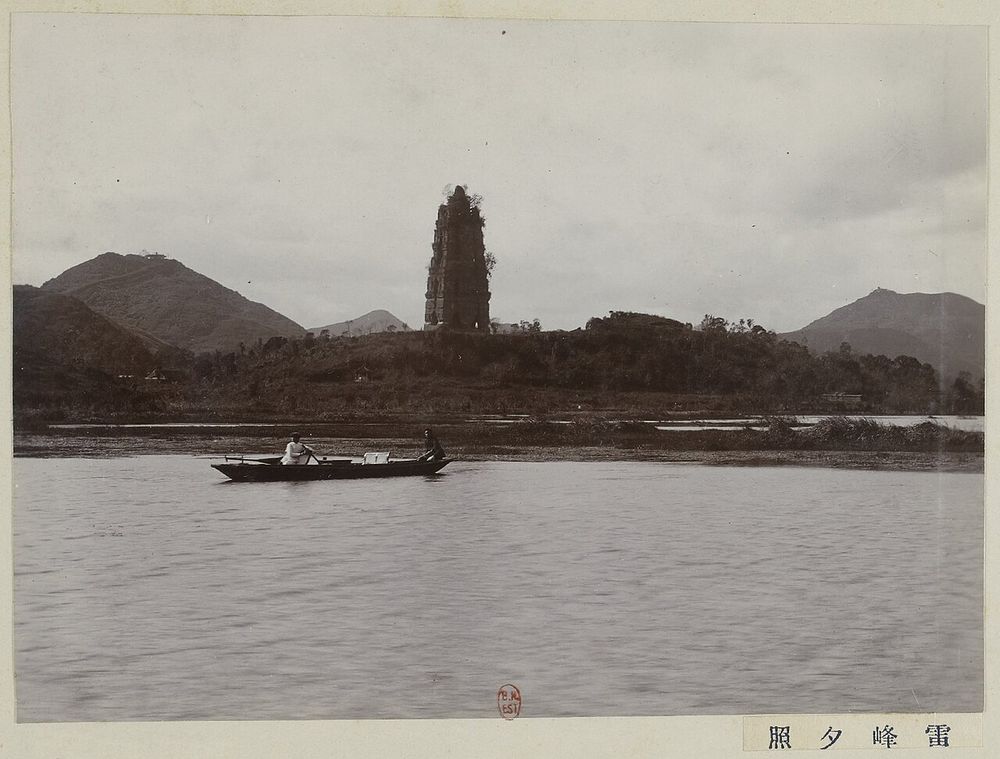
A pagoda built in 977 by the last king of an independent southern kingdom, burned by pirates, quarried brick by brick by people who thought its bricks were lucky, and fallen in 1924. A new one of steel and copper was built over the ruin in 2002, so you can stand inside it and look down at the old base. The White Snake is said to be shut beneath it.
Photo: HoweyYuan, CC BY-SA 4.0, Wikimedia Commons
The story
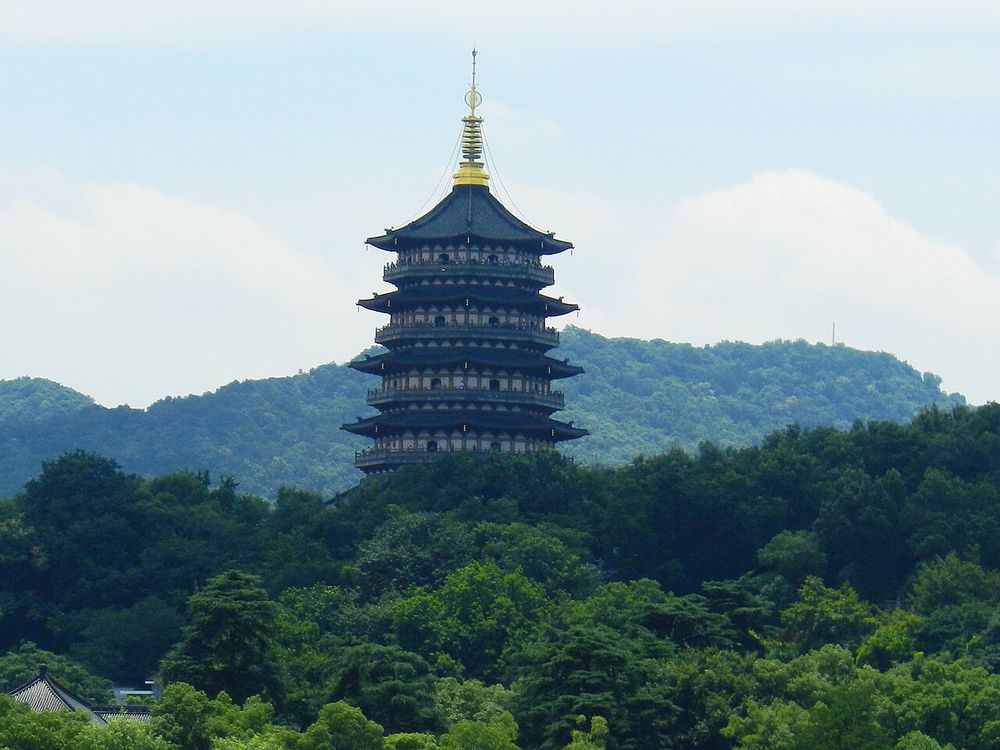
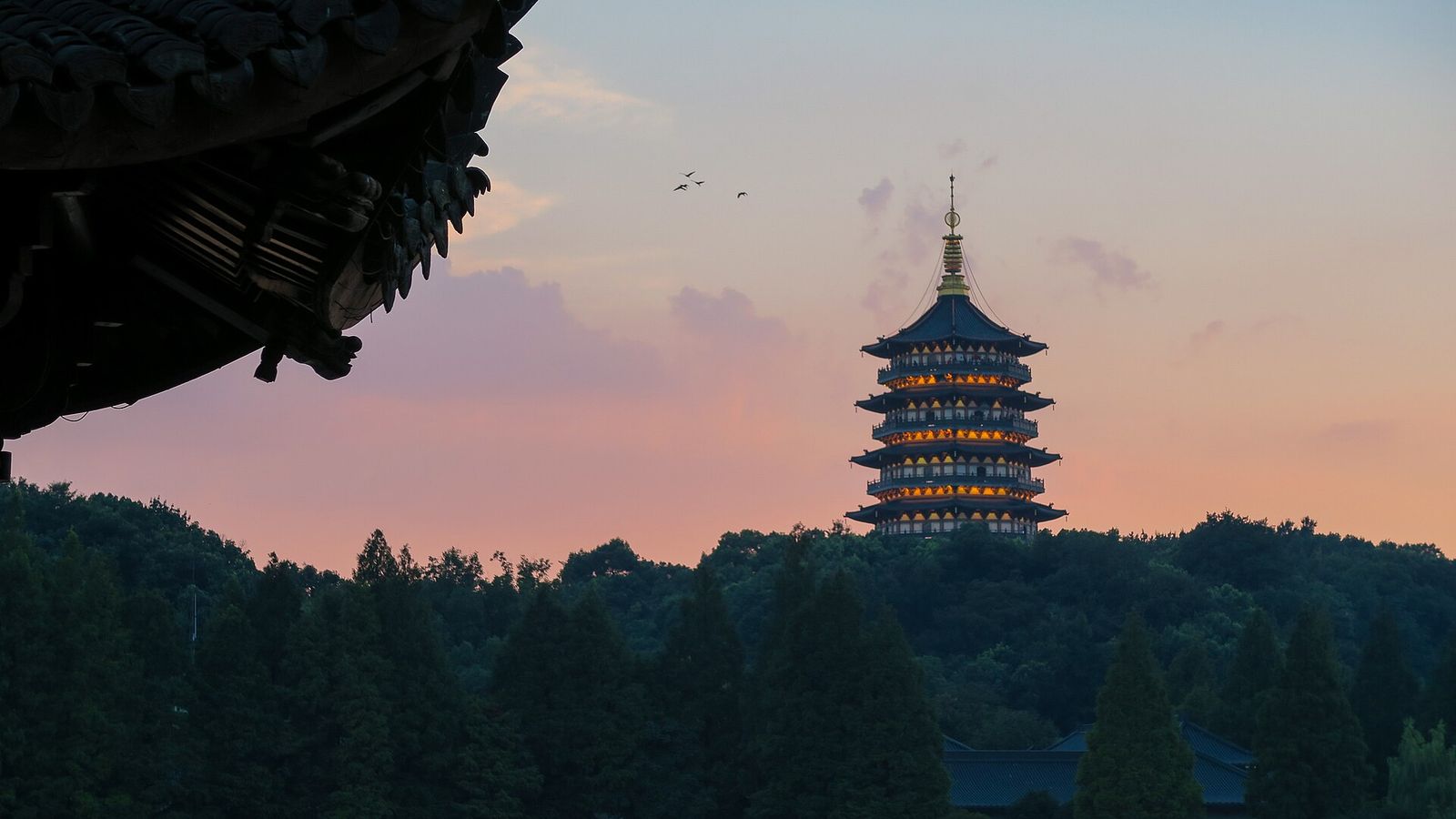
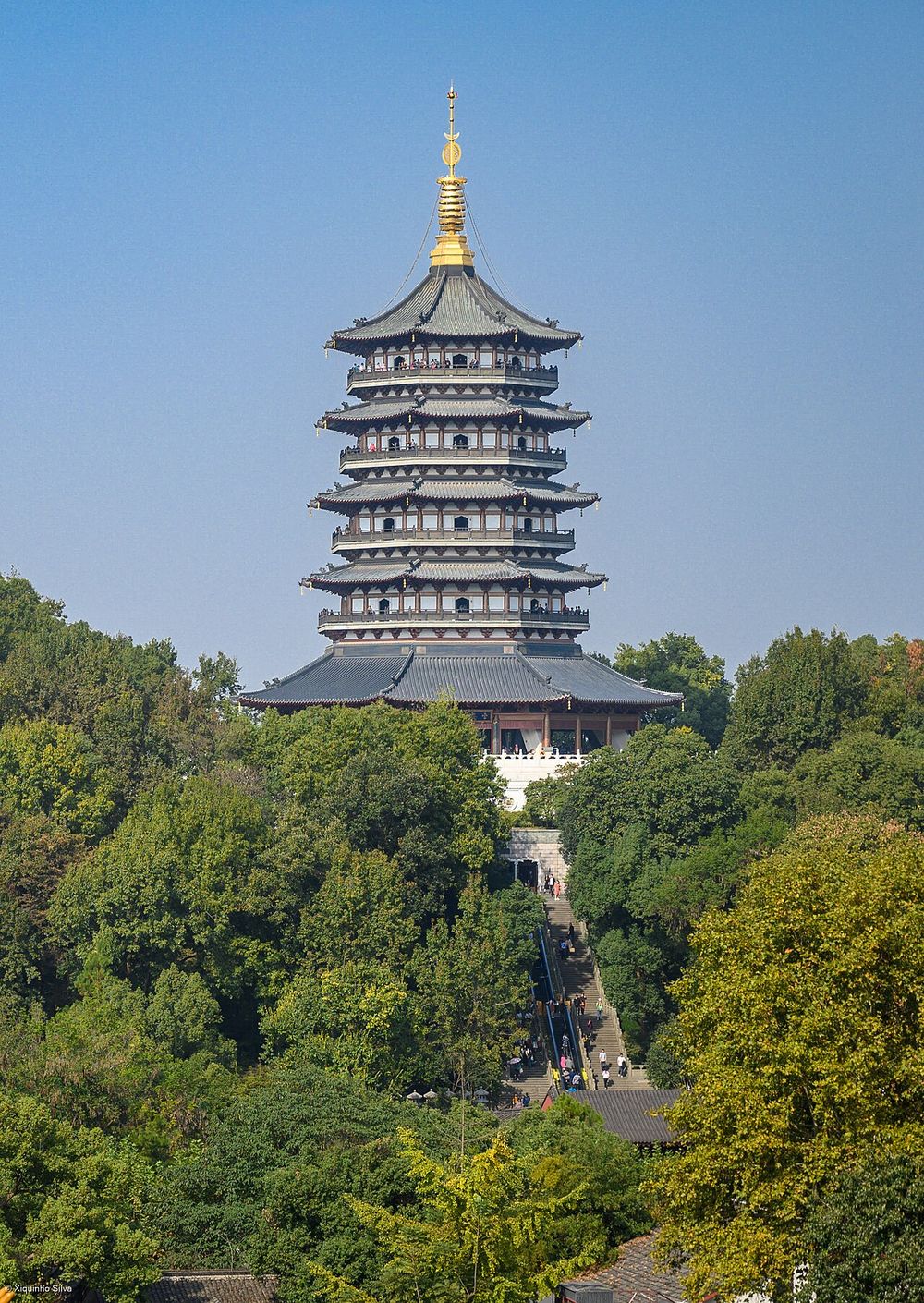
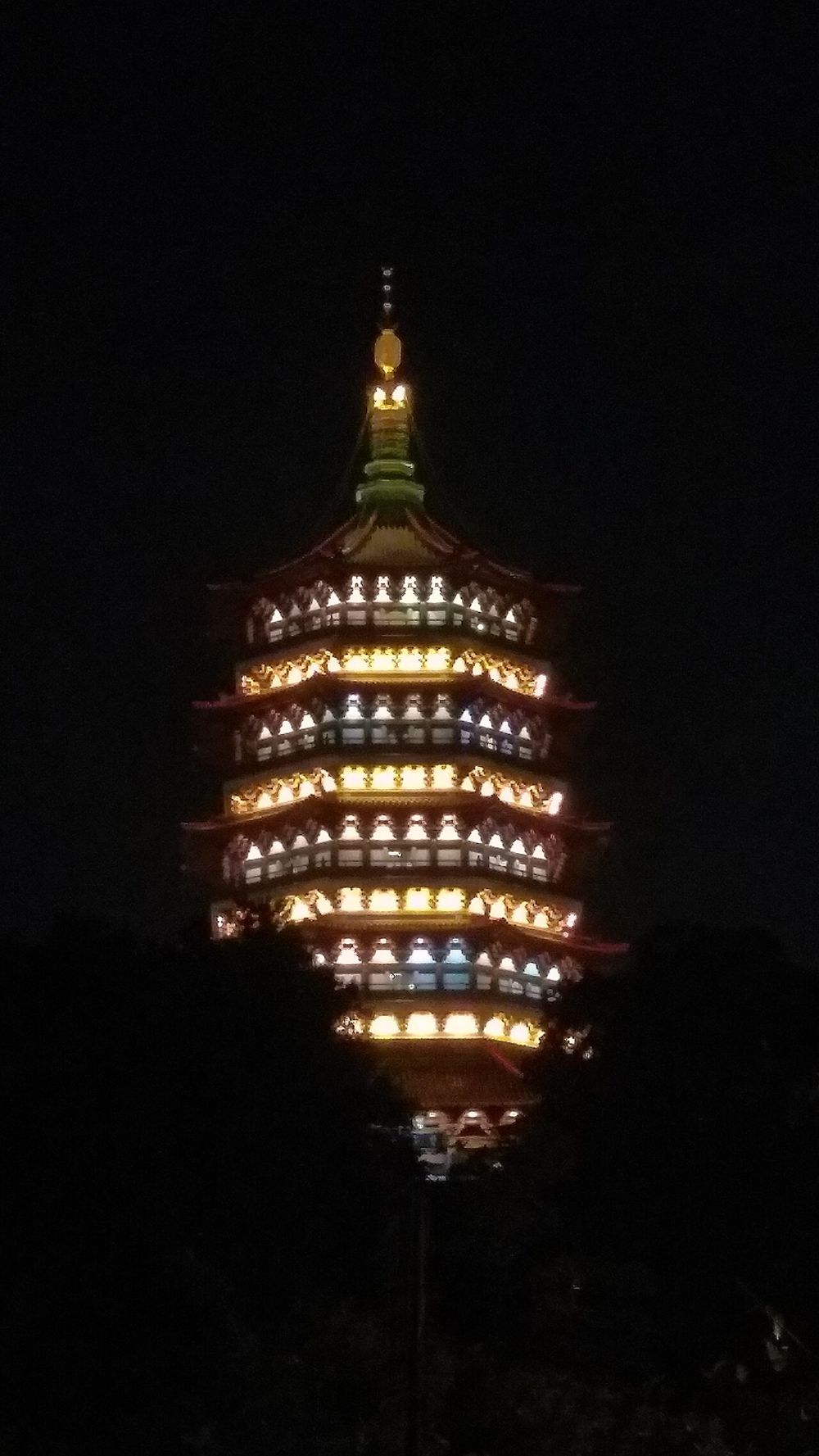
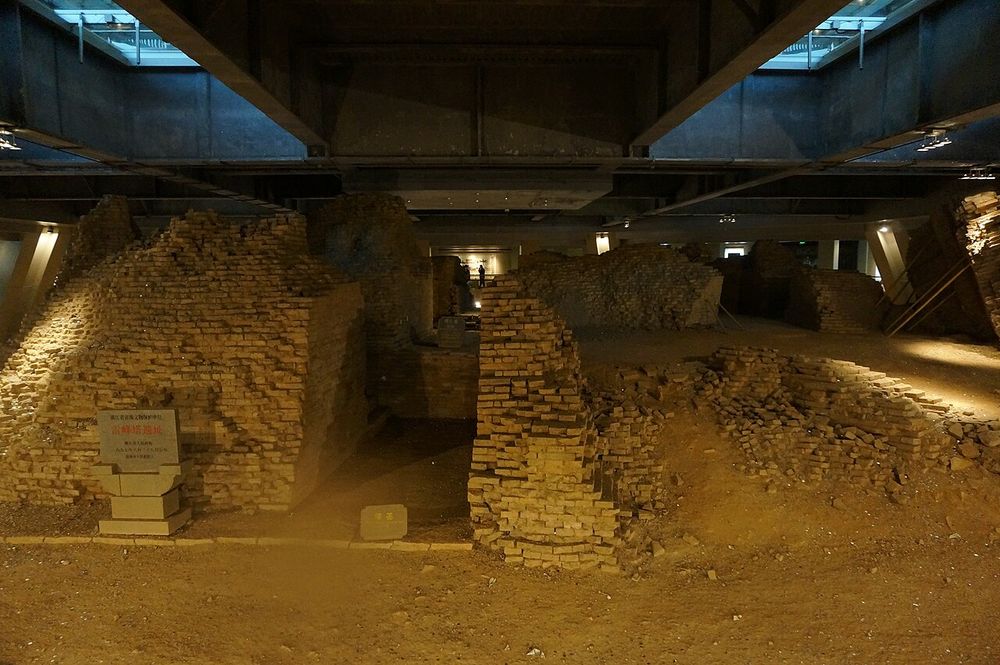
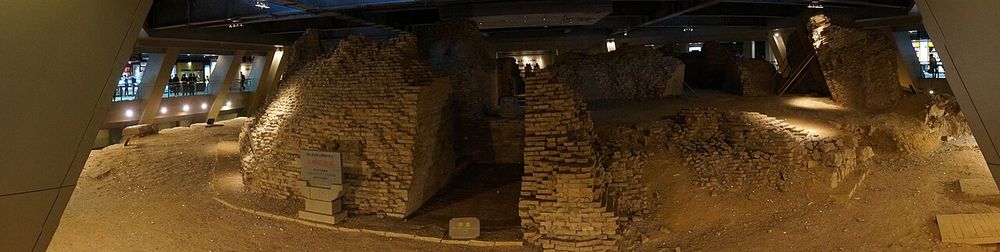
You are at the foot of a low wooded hill on the south shore of West Lake. Above you, at the top of an escalator, rises an eight-sided tower of five storeys, its roofs edged in bronze-gold, its brackets painted. It looks old and is new. Inside, under glass, is a heap of broken red-brown bricks: the tower that stood here for nine hundred years.
It was built in 977 by Qian Chu, the last king of Wuyue (907–978), to hold a relic said to be a lock of the Buddha's hair. A year later he gave his kingdom to the Song (960–1279) without a fight, and Hangzhou was spared a war. In England at that time, the young King Edward was murdered and Æthelred the Unready came to the throne.
The new tower above the treeslienyuan lee, CC BY 3.0
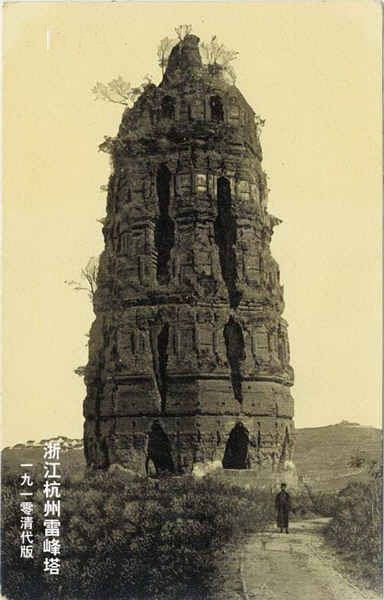
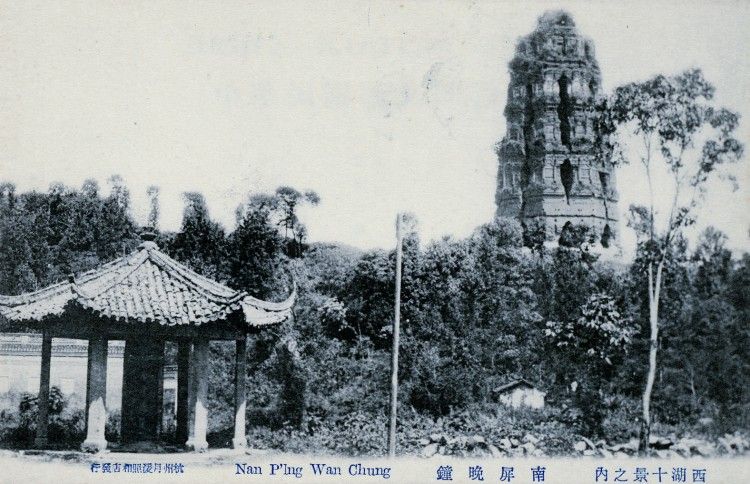
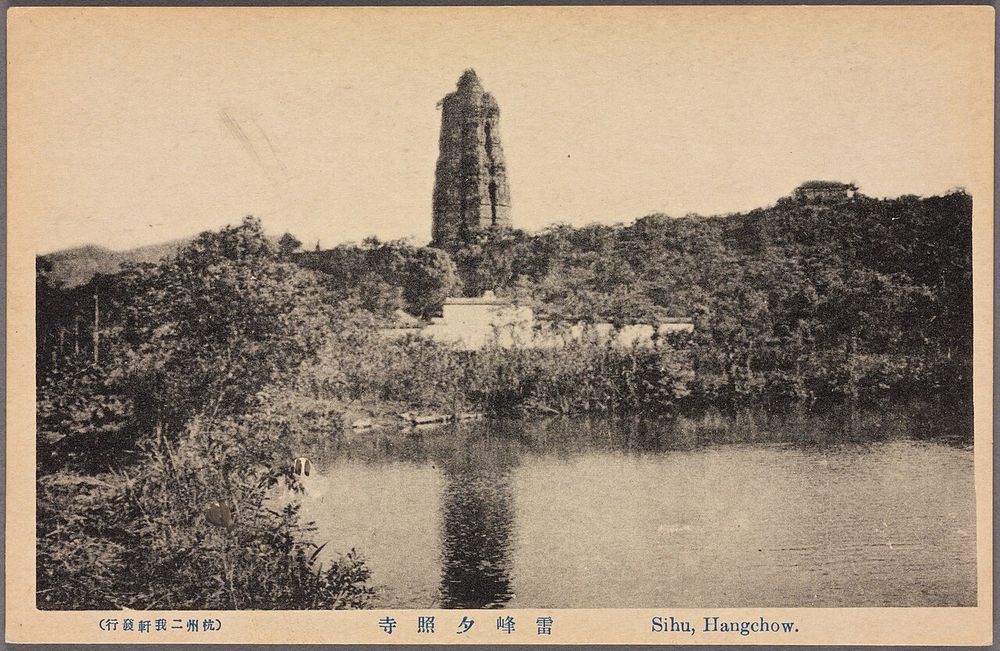
The old tower was brick, with wooden balconies and eaves round each storey. In the Ming (1368–1644) Japanese pirates set fire to the wood, and for four hundred years the tower stood as a bare brick stump, looking like an old monk.
People believed a brick from the tower kept evil away, brought sons and helped silkworms. Some bricks held printed sutras, and "sutra bricks" was misheard as "gold bricks". They dug at the base for centuries. On the afternoon of 25 September 1924 it fell.
The new tower, finished on 25 October 2002, is built over the old base on steel legs, so that the ruin is untouched beneath it.
Things people often get wrong
"This is the old pagoda." The old one fell in 1924. What you climb is a modern building of 2002, with lifts and escalators.
"The White Snake is a historical person." She is the heroine of a legend. The pagoda was built for a Buddhist relic, not to imprison anyone.
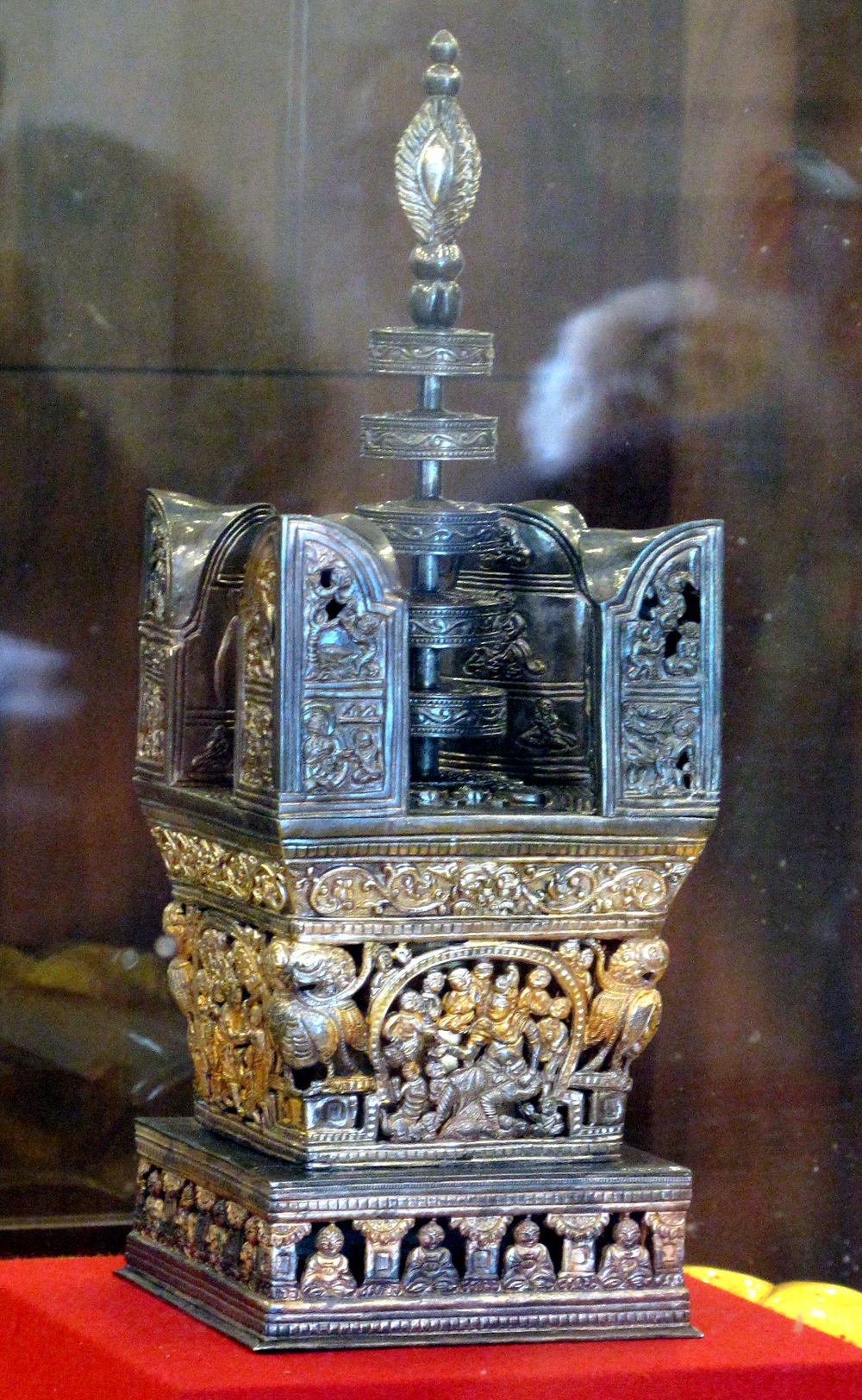
"The relic is in the pagoda." The crypt was opened in 2001. Its treasures, including the silver reliquary, are in the Zhejiang Provincial Museum.
People who stood here
Qian Chu (last king of Wuyue, 929–988)He built the tower to hold the relic and named it after his consort. The next year he travelled north and handed his kingdom to the Song emperor. He may have stood on this hill to see it finished.
Sidney Gamble (American sociologist and photographer, 1890–1968)In 1919 he photographed the brick stump from below, five years before it fell. His picture is one of the last of the old tower standing.
Go deeper: four stops from the ruin to the top
Escalators carry you up the hill. Inside the tower, lifts and stairs go up to the top floor. An hour is enough.
1. The old base
The old base inside the new towerHoweyYuan, CC BY-SA 4.0
On the ground floor, under glass and behind a rail, is the base of the tower of 977: rings of broken brick and the line of its eight sides. Look for bricks with a small hole in the end; those were the ones that held the rolled sutras.
2. The crypt
A copy of the silver reliquary from the cryptG41rn8, CC BY-SA 4.0
On 11 March 2001 archaeologists opened the crypt under the base, with eighteen hours of live television. Inside an iron case stood a small stupa of gilded silver in the form made famous by the Indian emperor Ashoka. Inside it was a small gold container for the relic. A copy is shown in the tower; the original is in the provincial museum.
3. The galleries
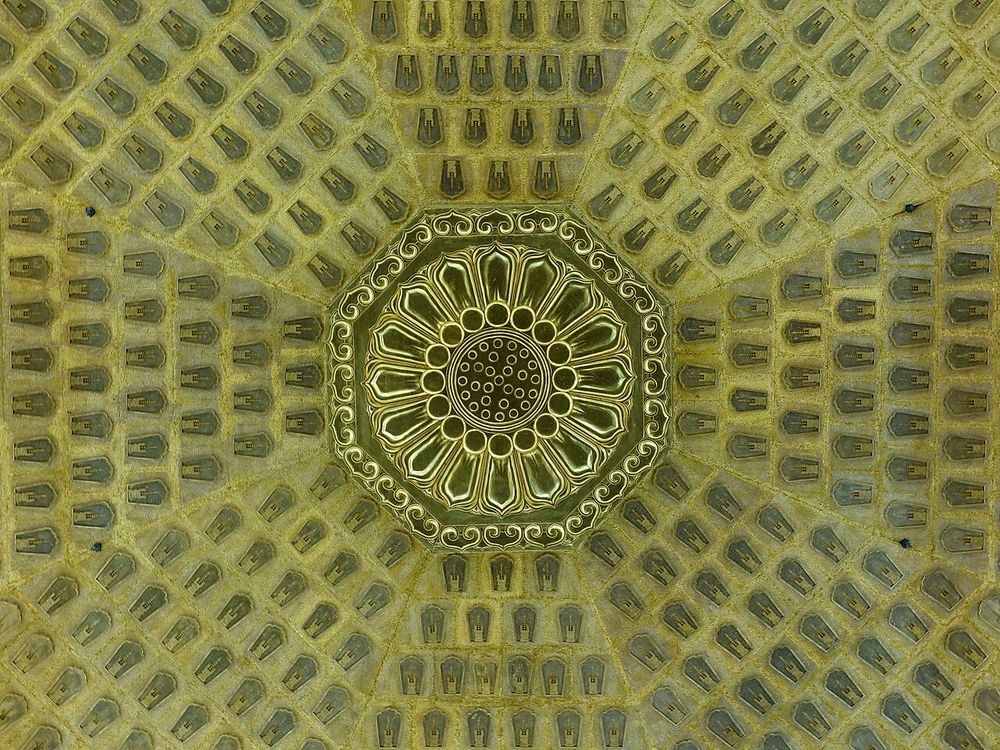
The gilded ceiling of the top floorTyg728, CC BY-SA 4.0
The upper floors tell the White Snake story in carved and painted panels, and the top floor has a gilded ceiling. The structure is modern; the woodwork and brackets copy the style of the Song (960–1279).
4. The view
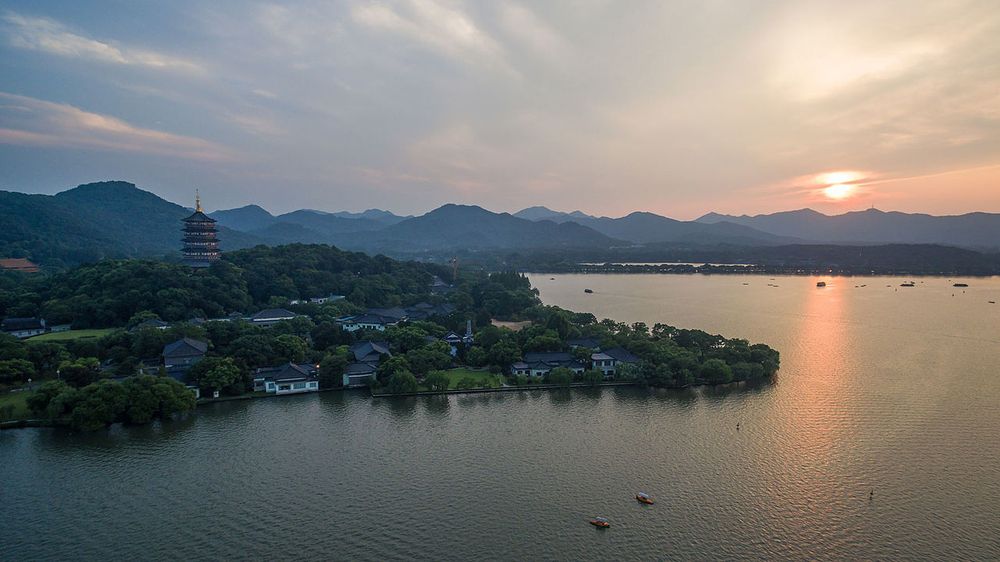
Sunset over the lake from the towerPromoteMyCity, CC BY-SA 4.0
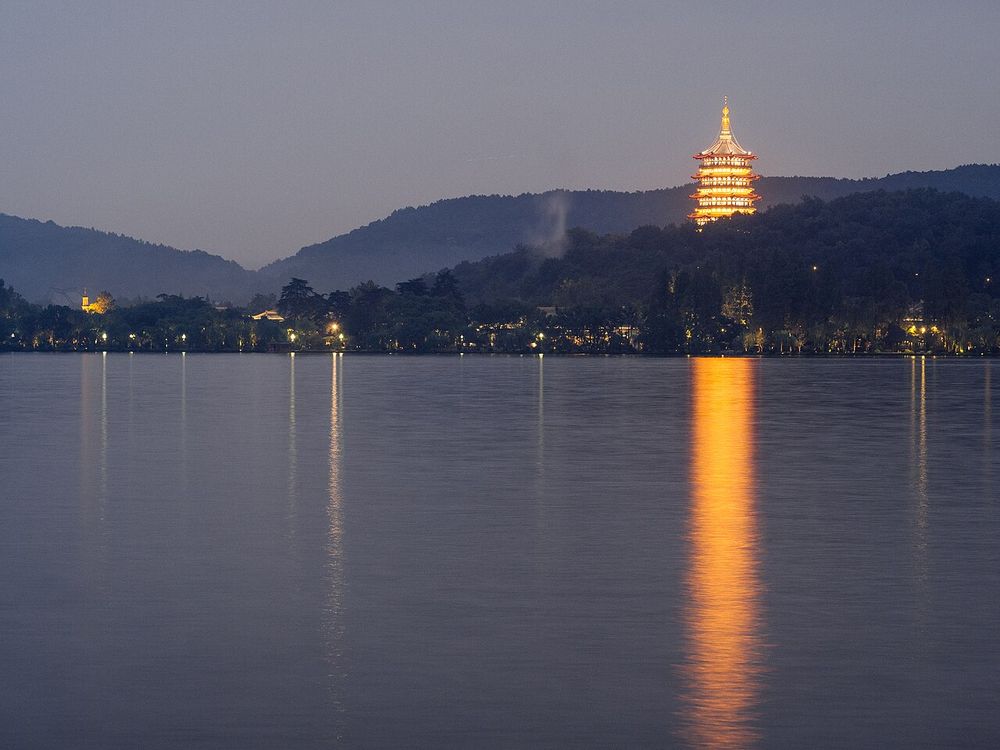
From the balcony you see the whole lake: the Su Causeway running north, the three stone towers off Xiaoyingzhou, the city on the east shore. At sunset this is the Ten Scene called Leifeng Pagoda at Sunset.
A hall of Jingci Temple across the roadxiquinhosilva, CC BY 2.0
Across the road at the foot of the hill is Jingci Temple, founded in 954. Its great bell is struck on New Year's Eve, and Evening Bell at Nanping is another of the Ten Scenes.
Meanwhile in the world
Year
Here
Elsewhere
954
Jingci Temple is founded at the foot of the hill
Otto I is about to defeat the Magyars at Lechfeld
977
The pagoda is built
Æthelred the Unready becomes king of England (978)
1555
Pirates burn the wooden eaves
The Peace of Augsburg divides Germany by religion
1924
The tower falls
Lenin dies; the first Winter Olympics are held
2001
The crypt is opened on live television
Wikipedia is founded
2002
The new tower opens over the ruin
The euro becomes cash
Then and now
The tower against the evening skyYinweichen, CC BY-SA 4.0, Wikimedia CommonsThe new tower above the treeslienyuan lee, CC BY 3.0, Wikimedia CommonsThe tower from belowxiquinhosilva, CC BY 2.0, Wikimedia CommonsThe tower lit at dusk across the lakemarroyo12, CC BY 2.0, Wikimedia CommonsThe tower on its hill in the mistCirca24, CC BY-SA 4.0, Wikimedia CommonsSunset over the lake from the towerPromoteMyCity, CC BY-SA 4.0, Wikimedia CommonsThe tower at night, reflected in the lakeHermann Luyken, CC0, Wikimedia CommonsThe tower lit upTheTokl, CC BY-SA 3.0, Wikimedia CommonsThe lit gateway at the foot of the hillHermann Luyken, CC0, Wikimedia CommonsThe old base inside the new towerHoweyYuan, CC BY-SA 4.0, Wikimedia CommonsThe broken bricks of the base猫猫的日记本, CC BY-SA 4.0, Wikimedia CommonsThe whole of the old base猫猫的日记本, CC BY-SA 4.0, Wikimedia CommonsA copy of the silver reliquary from the cryptG41rn8, CC BY-SA 4.0, Wikimedia CommonsThe gilded ceiling of the top floorTyg728, CC BY-SA 4.0, Wikimedia CommonsA hall of Jingci Temple across the roadxiquinhosilva, CC BY 2.0, Wikimedia CommonsThe brick stump about 1910AnonymousUnknown author, Public domain, Wikimedia CommonsThe tower on a postcard, about 1910Unlisted author., Public domain, Wikimedia CommonsThe lake and the tower about 1910Scan by NYPL, Public domain, Wikimedia CommonsLeifeng at sunset, photographed in 1911杭州二我轩照相馆, Public domain, Wikimedia CommonsThe great hall of Jingci Temple in 1918Sekino Tadashi, Public domain, Wikimedia Commons
Video
Films from official channels, played from YouTube. Nothing is loaded until you press play.
West LakeCCTV纪录 · China Central Television's documentary channel; 2 min · checked 2026-11-12
Local legends
These are stories people tell about this place. They are legends, not history, and each one says where it comes from.
LegendThe snake under the tower
The monk Fahai caught the White Snake in his alms bowl and buried her under Leifeng Pagoda. He said she would come out only when the lake ran dry and the pagoda fell.
Source: Feng Menglong, Stories to Caution the World, 1624
LegendThe son who saved her
Her son grew up, came first in the imperial examinations, and came to the pagoda to pray. The pagoda opened, and mother and son met again.
Source: Later operas and the Qing novel of the story
Later, people who live here will be able to add the stories they grew up with, and say which of these they have heard.
Not certain, and where accounts conflict
975 or 977?
Many sources give 977, the date of the inscription found at the site. Some give 975, when building may have begun.
Why did it fall?
Brick-taking is one account; long neglect and decay is another. Both probably played a part.
Why "Leifeng"?
The hill was called Leifeng, "Thunder Peak", after a man named Lei who lived on it, according to an old local record. The tower took the hill's name, not the king's.
Visiting
Tickets and hours
40 yuan for an adult in listings and visitors' reports in 2025–2026.
Listings give the opening time as 8:00; evening closing times vary with the season.
Last checked 2026-11-12. Hangzhou city news of 2024 and 2026 and booking listings for the price; the pagoda's own site could not be opened from abroad.
Booking without WeChat
Official page in English Tickets are sold at the gate on Nanshan Road and in the West Lake Tourism mini-programme in WeChat and Alipay; booking listings also sell them. The pagoda's own site could not be opened from abroad when we tried in November 2026.
Ticket window on site There is a ticket window at the foot of the hill on Nanshan Road.
Note The escalators and lifts make the visit easy for people who cannot climb stairs.
Checked 2026-11-12
Where to start
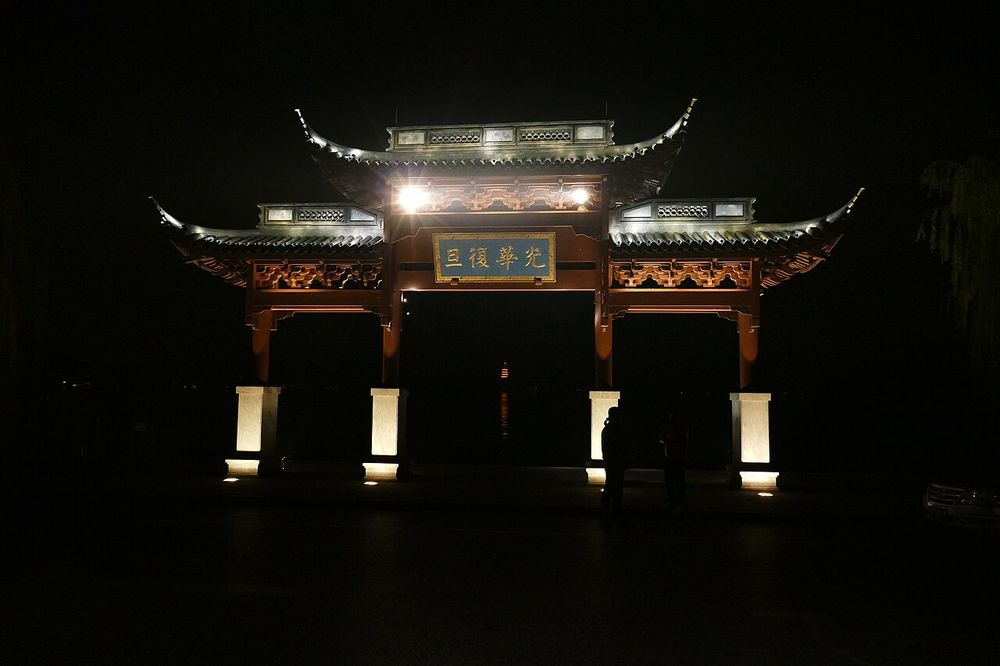
The gate is on Nanshan Road, at the south end of the Su Causeway.
Come an hour before sunset for Leifeng Pagoda at Sunset.
Before you go
The top balcony is crowded at sunset on weekends.
Customs and manners
Do not throw coins onto the old base.
Jingci Temple across the road is a working monastery; dress modestly and keep quiet in the halls.
Opening hours are given in the local time of the place. Prices are in the local currency. The figure after ≈ is approximate, at exchange rates checked on 9 November 2026, in .
Look for these
On the ground floor, find a brick with a hole in its end.
How many sides has the tower?
From the top, find the three stone towers in the lake.
Find the Su Causeway running north. How many bridges can you see?
Find the thin pagoda on the far shore.
I am here
Stand at the site, sign in, press the button, and collect its stamp. Your browser will ask to use your location. It is sent to us once to confirm that you are at the site; we keep how far you were from it, not the spot where you stood.
Your stamps are saved to your account, so they follow you to any device. Checking from a browser cannot rule out every false location; stricter checks arrive with the app.
Messages
Share your photos
Photos here show the place, not people. Each one is credited to the visitor who took it and appears after our team has looked at it. A photo with you in it belongs under “I am here”.