LegendThe black dragon of the spring
The Naxi and Han of Lijiang say a black dragon lives in the spring and gives the town its water, as long as it is respected.
Source: A belief behind the Dragon God temple
Lijiang, Yunnan, China
黑龙潭 · Hēilóng Tán
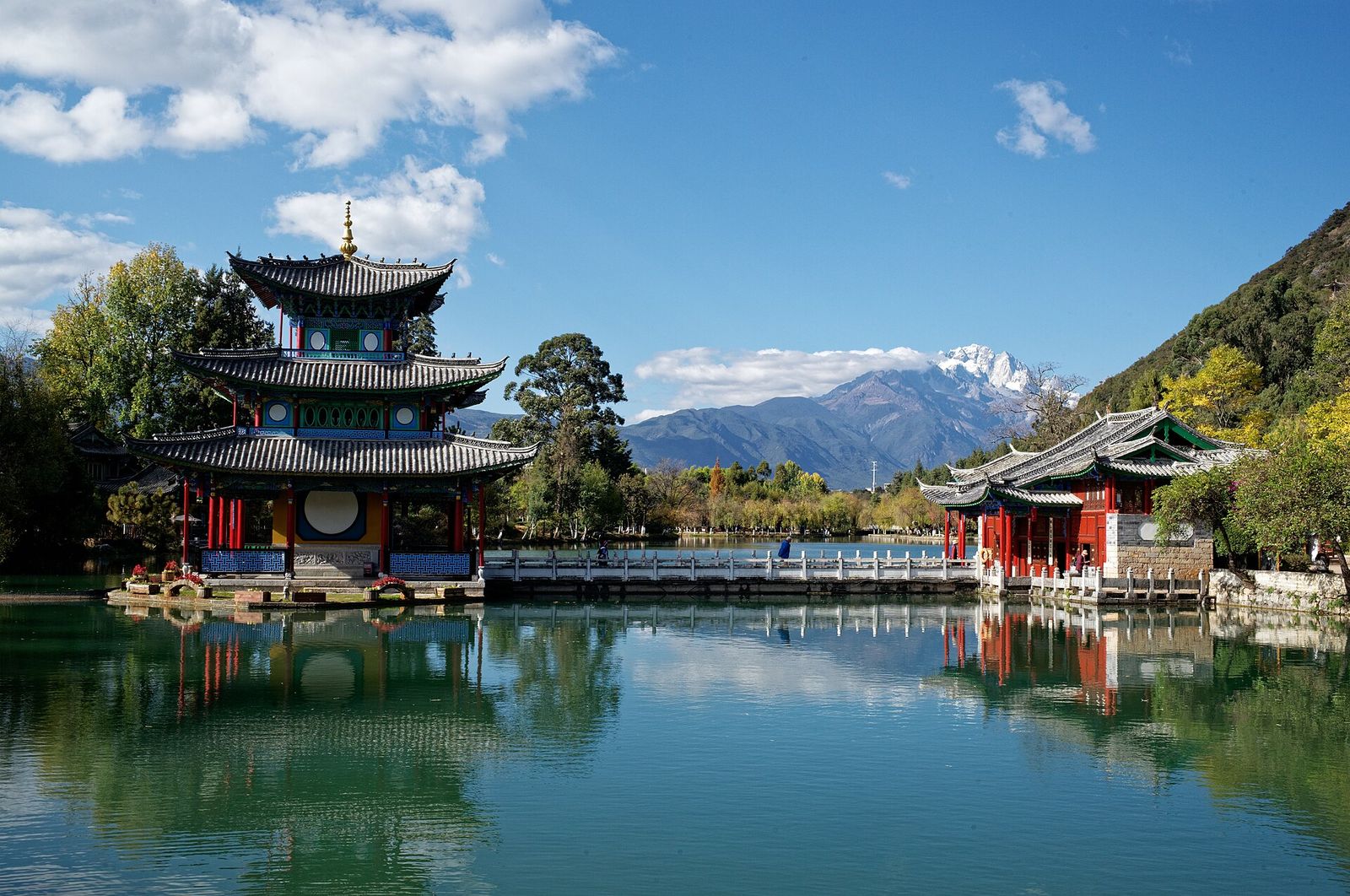
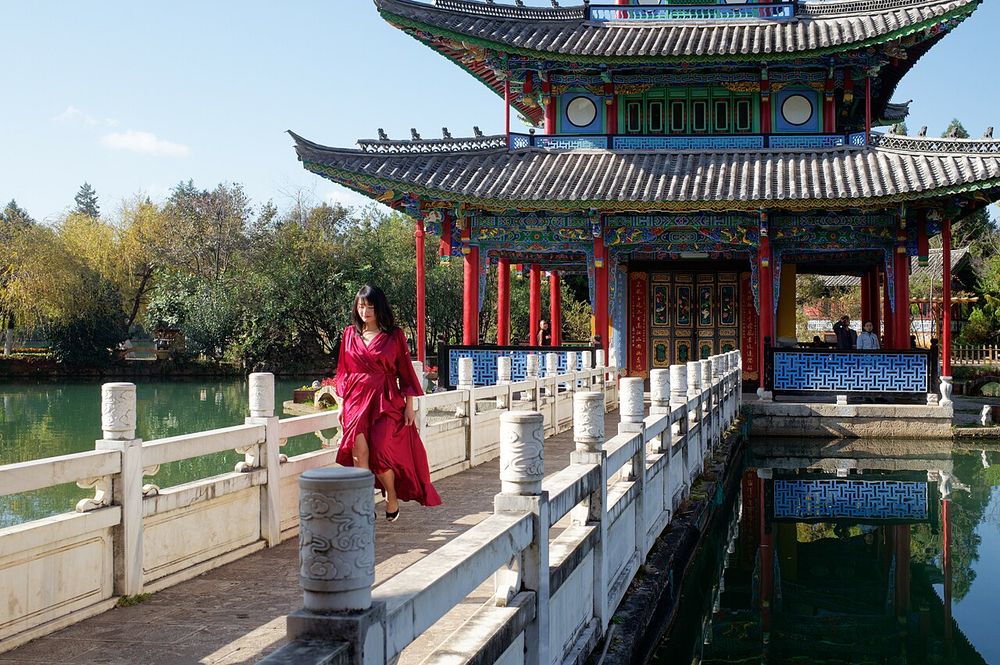
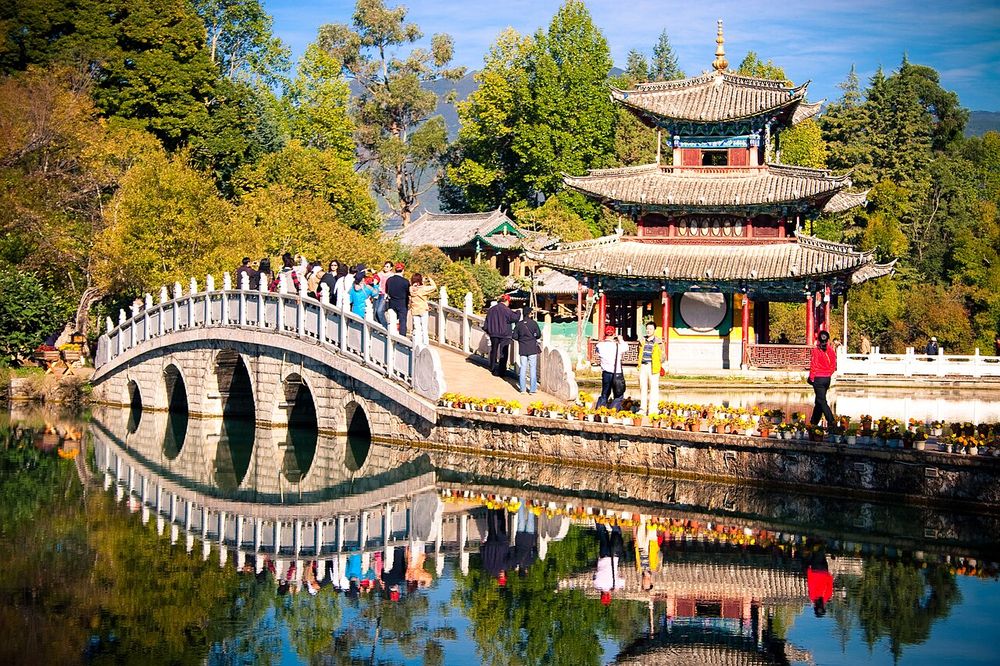
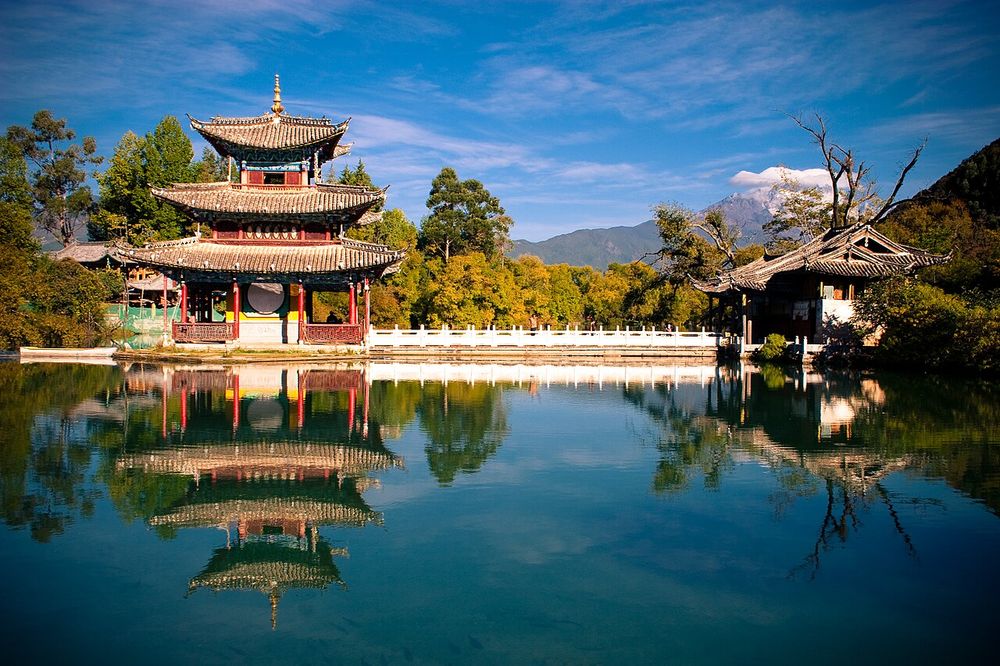
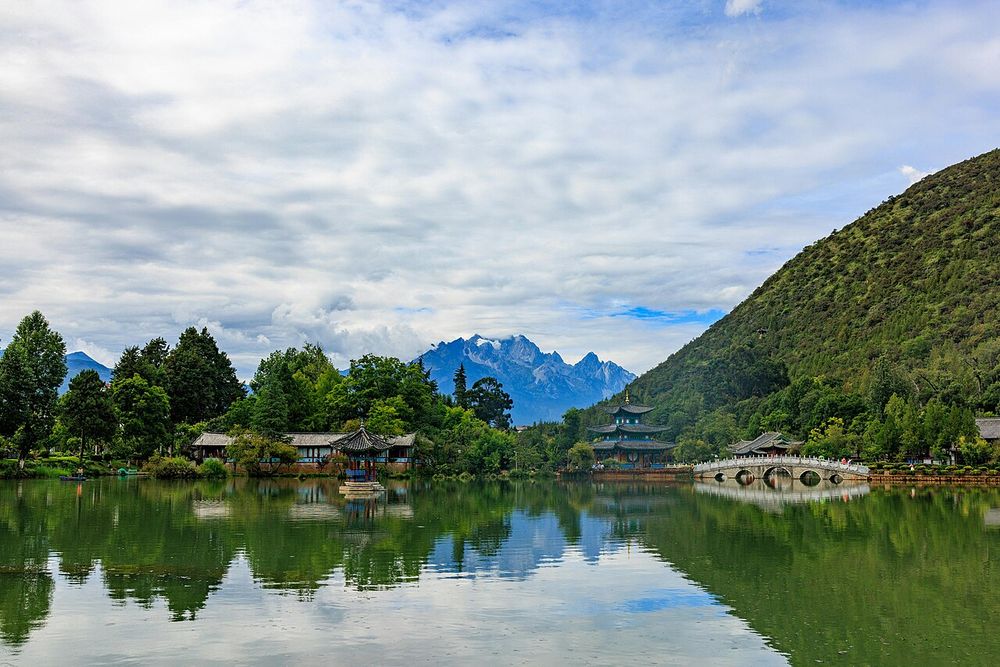
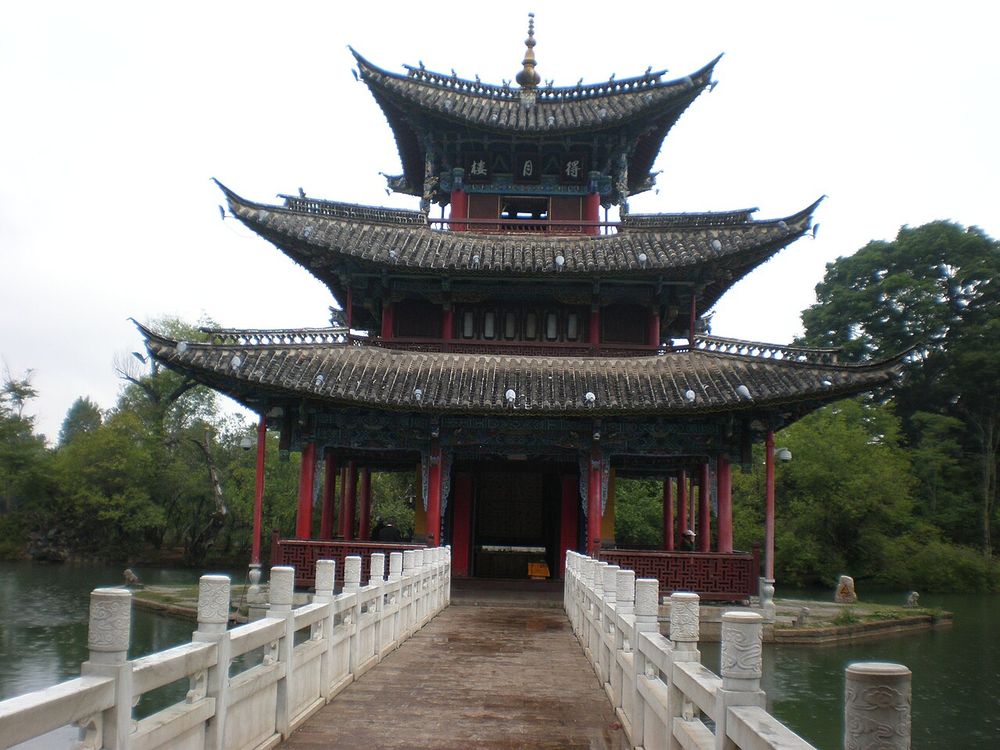
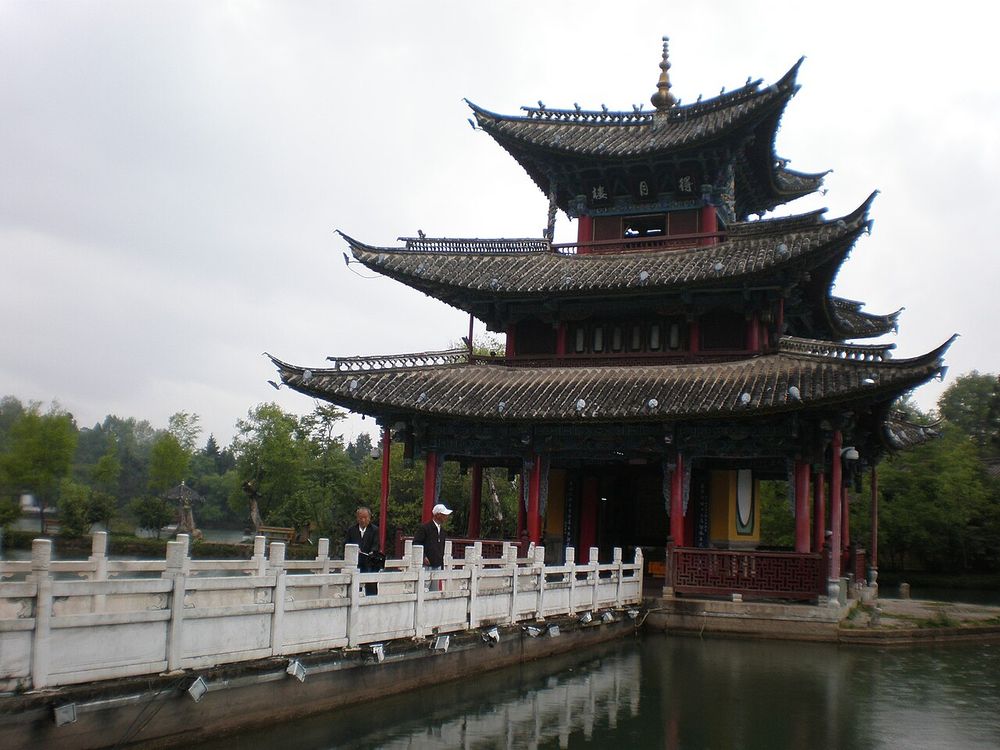
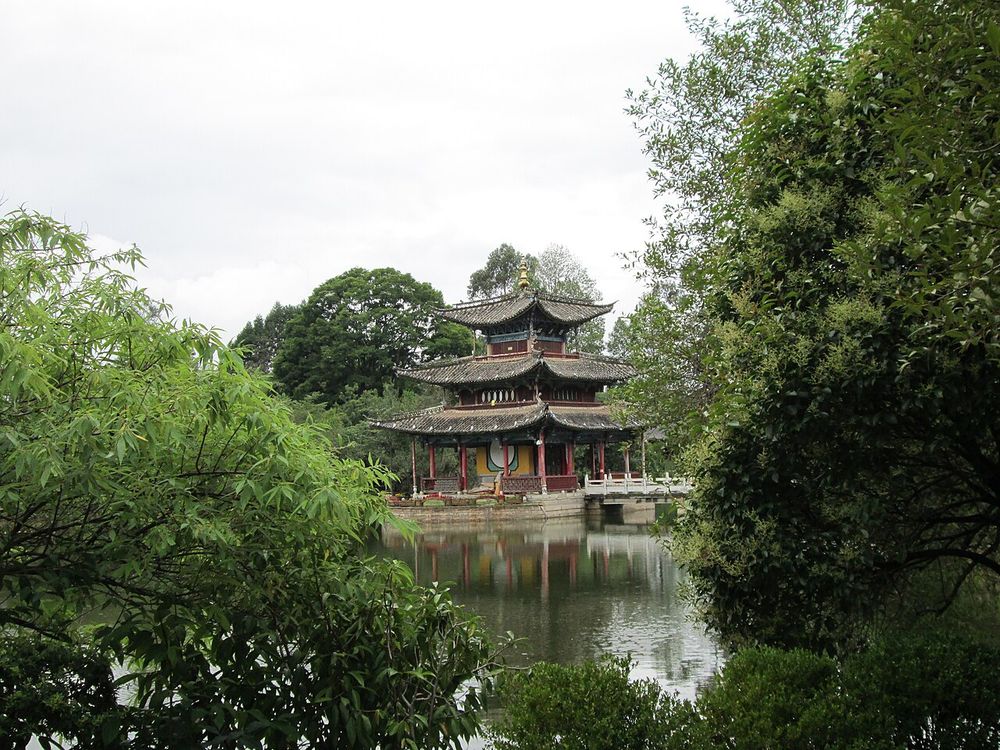
The spring at the foot of Elephant Hill that feeds every stream of Lijiang's old town. On a clear morning the white marble bridge, the Moon-Embracing Pavilion and Jade Dragon Snow Mountain stand in the water upside down, one of the best-known views in China. Around the pool stand Ming halls brought down from a Naxi temple in the hills.
Photo: madras91, CC BY 2.0, Wikimedia Commons
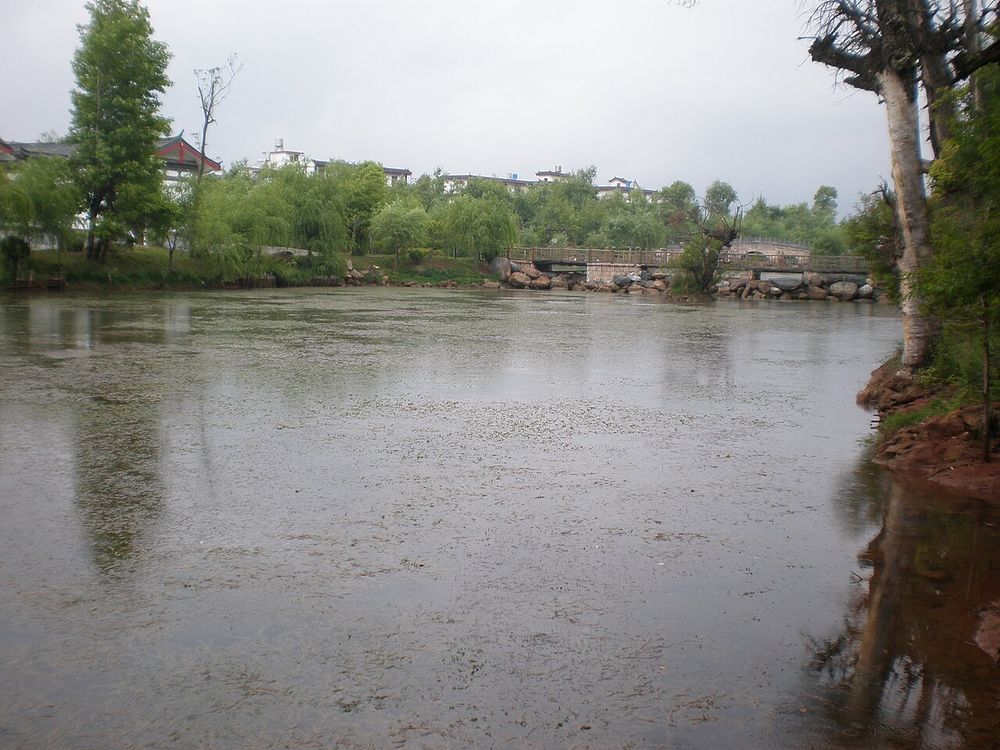
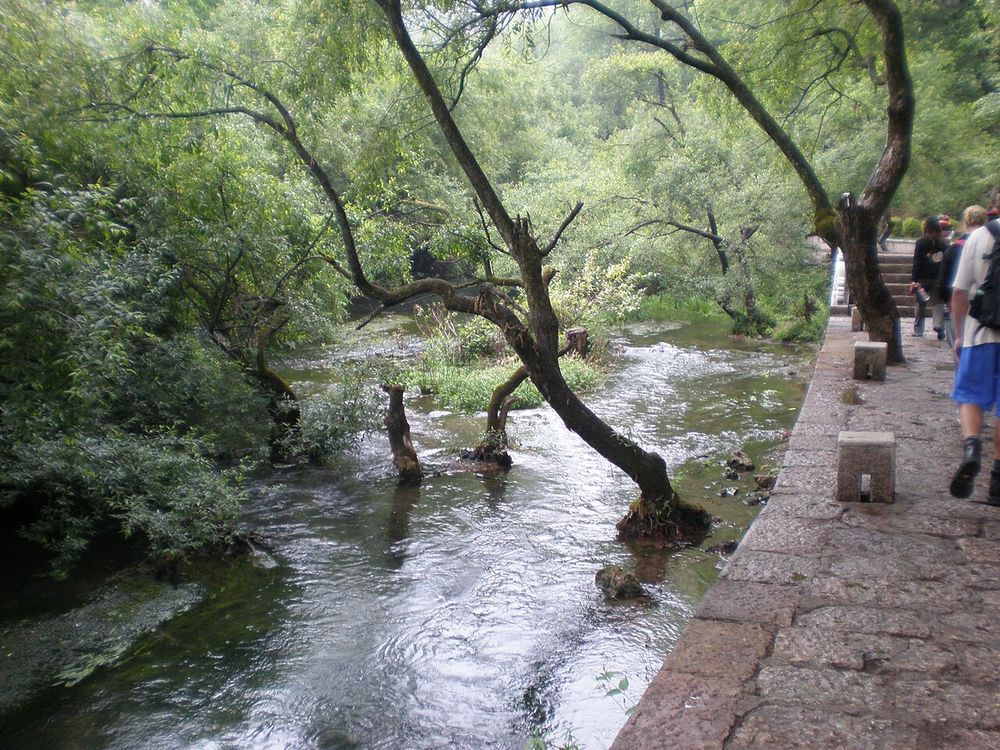
Lijiang has no city wall, but it has a spring. Water rises at the foot of Elephant Hill, two kilometres north of the old town, fills a clear pool, and runs south as the Yu River. Below the town the river splits into three, and the three split again until almost every Naxi house has water at its door.
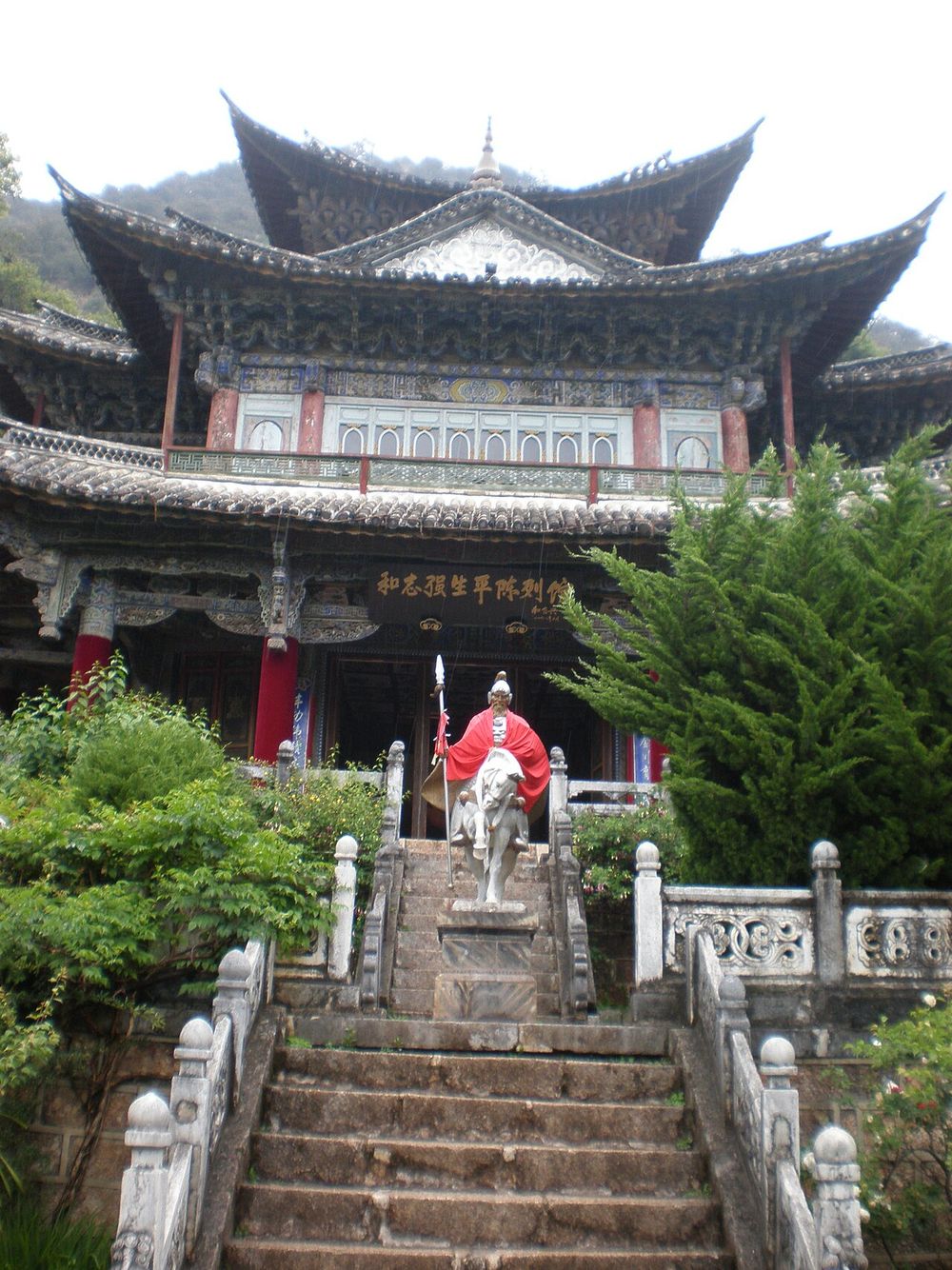
In the Qing a temple to the Dragon King, the god of springs and rain, was built by the water, and the pool took the name Black Dragon. Later buildings were added, and in the 1970s and 80s two Ming buildings from the Fuguo Temple, the Naxi rulers' temple in the hills west of town, were taken down and rebuilt here to save them.
Part of Old Town of Lijiang. Also there: Mu Mansion, Baisha, Shuhe.
The park is free. The Dongba institute's exhibition may have its own hours.
| Part | Ticket |
|---|---|
| The pool, bridge and Moon-Embracing Pavilion | Free |
| The Five Phoenix Tower and Jietuolin gate | Free |
| Dongba Culture Research Institute | Free |
| Elephant Hill | Free |
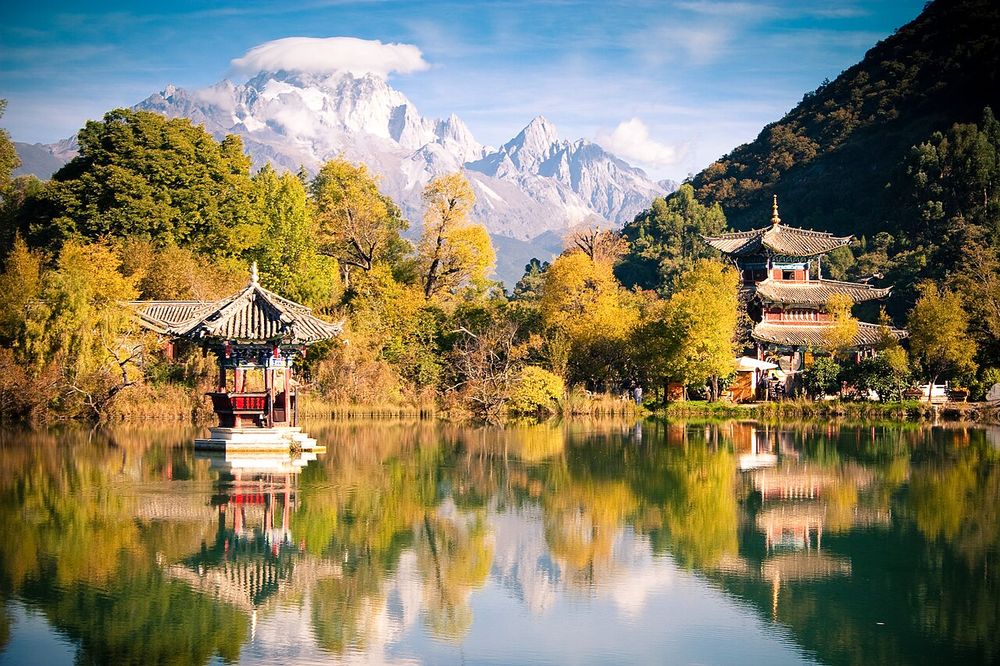
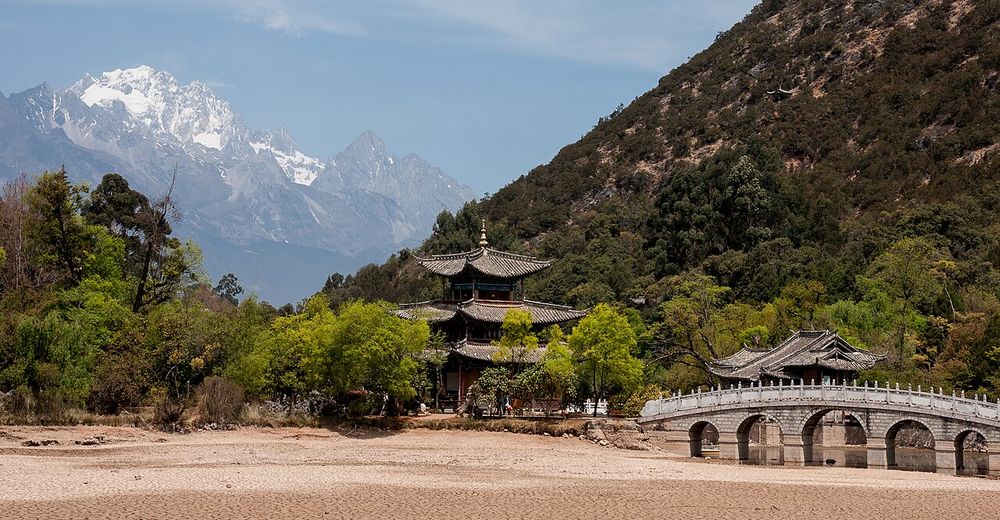
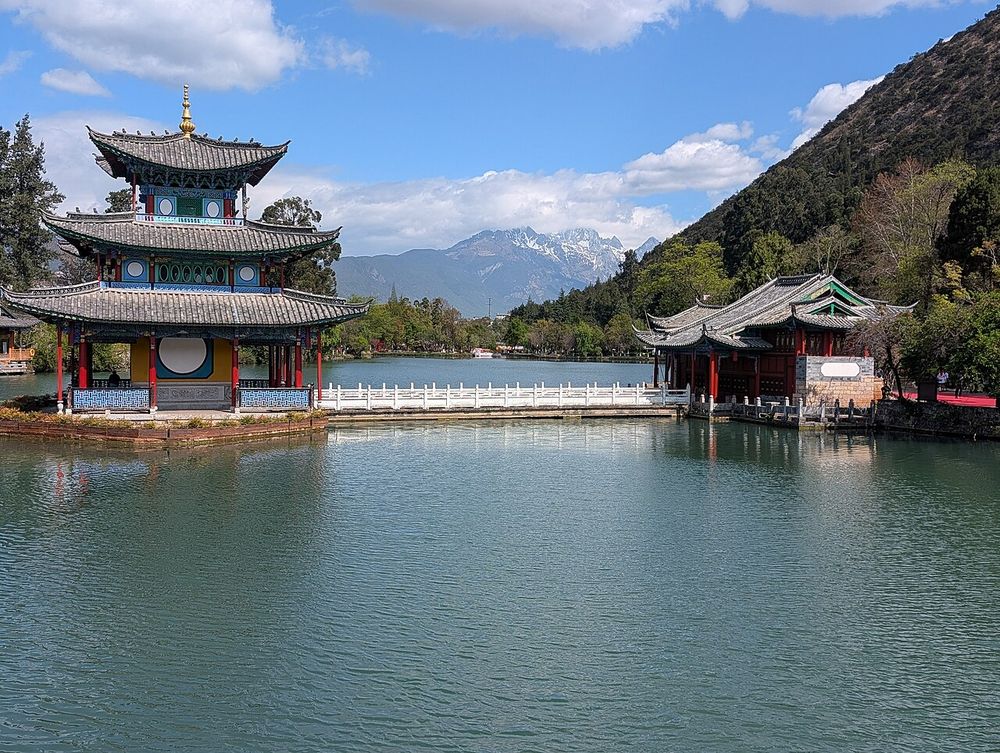
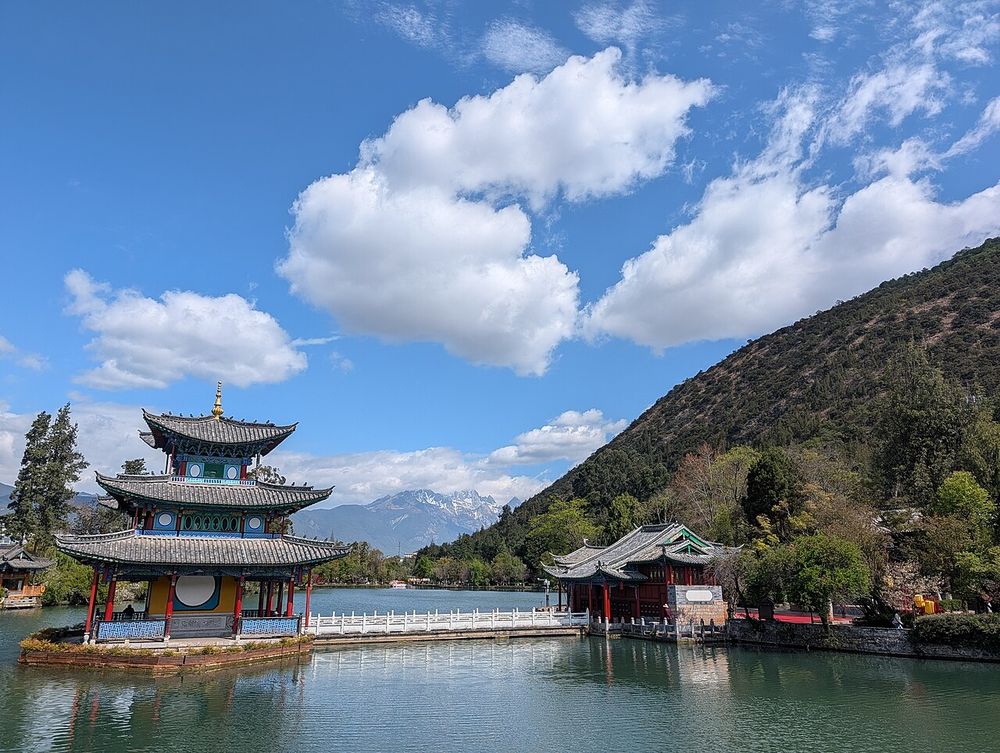
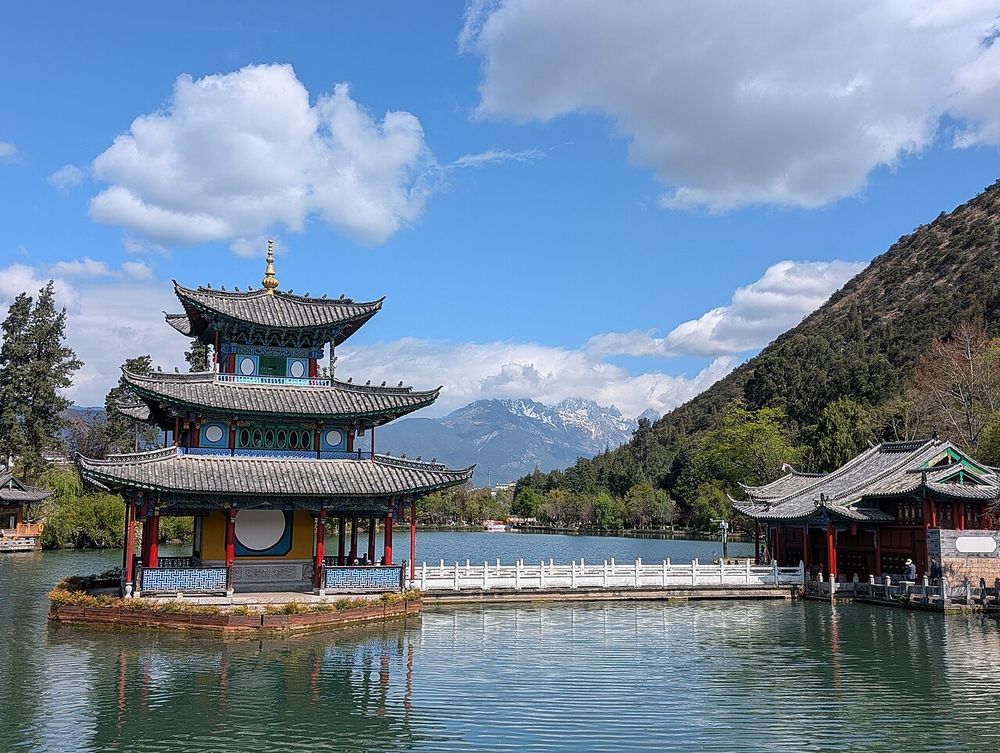
In front of you a white marble bridge of five arches, the Locking Green Bridge, leads to a three-tiered pavilion on the water, the Moon-Embracing Pavilion. Behind them rises Jade Dragon Snow Mountain, 5,596 metres, the sacred mountain of the Naxi. On a still morning all three stand in the water upside down.
Come early. The mountain is often clear at dawn and hidden in cloud by noon, and the wind that rises later breaks the reflection.
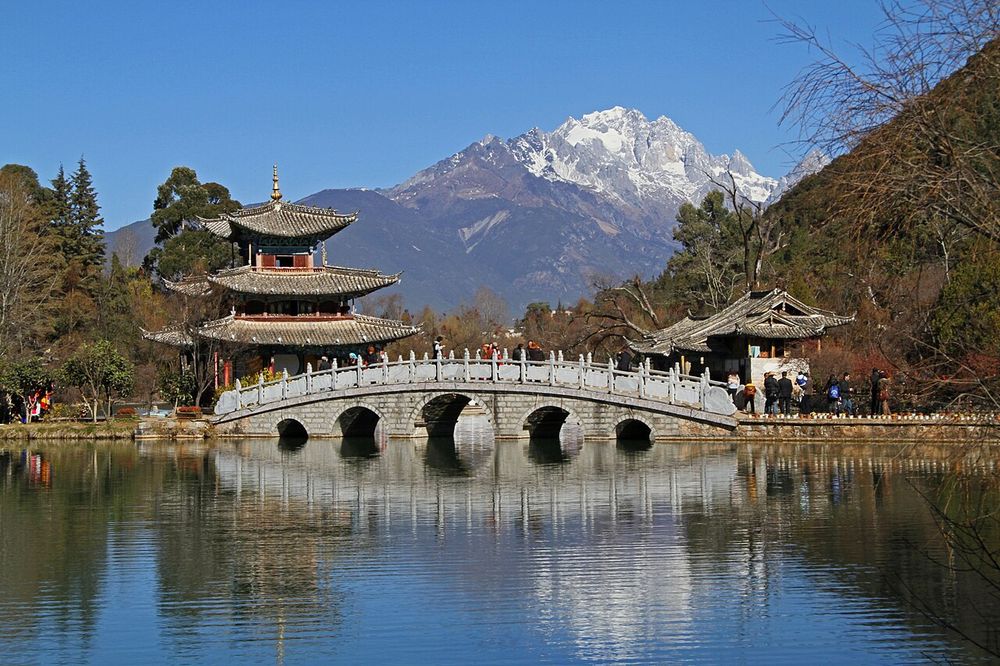
The water you see is the beginning of the old town. Follow it south along the Yu River, and in twenty minutes you are at the great water wheels at the town's north gate.
"The buildings are all old and all from here." The Five Phoenix Tower is Ming, of 1601, but it stood in the hills until 1979. Others are Qing or rebuilt.
"Black Dragon means the water is dark." The water is clear. The dragon is the god of the spring.
"The pool is always full." In dry years the spring has failed and the pool has shrunk almost to nothing, a worry for a town that lives on its water.
We searched Chinese sources first for this list, then English ones.
Enter from the south gate by the Yu River. Go up the east side to the Five Phoenix Tower, and back down the west. One to two hours.
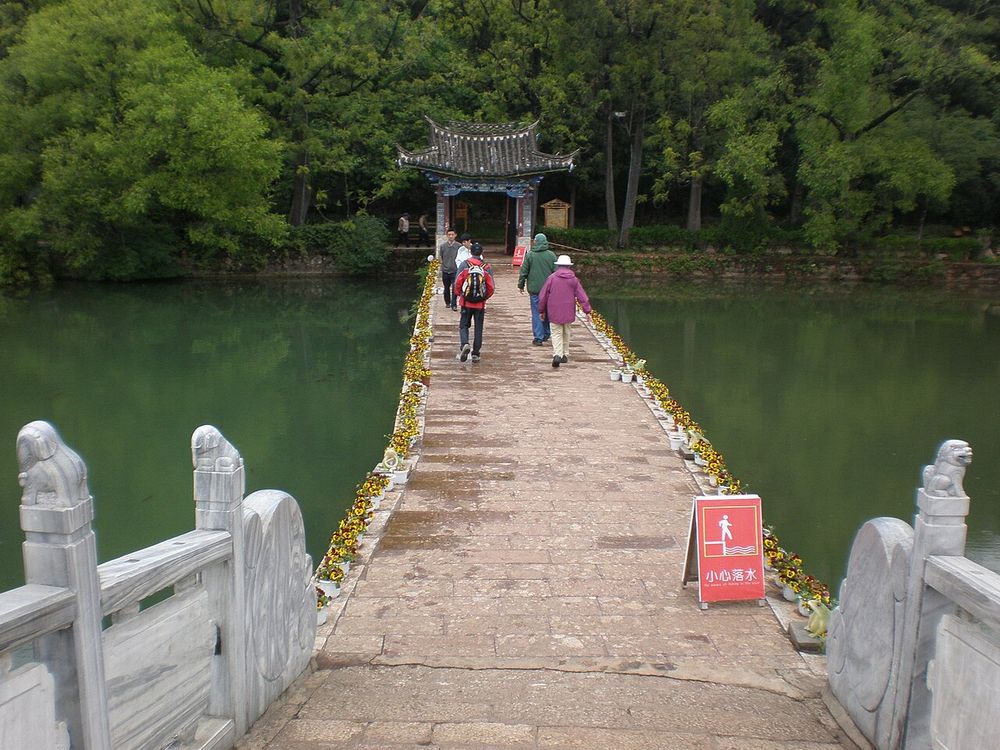
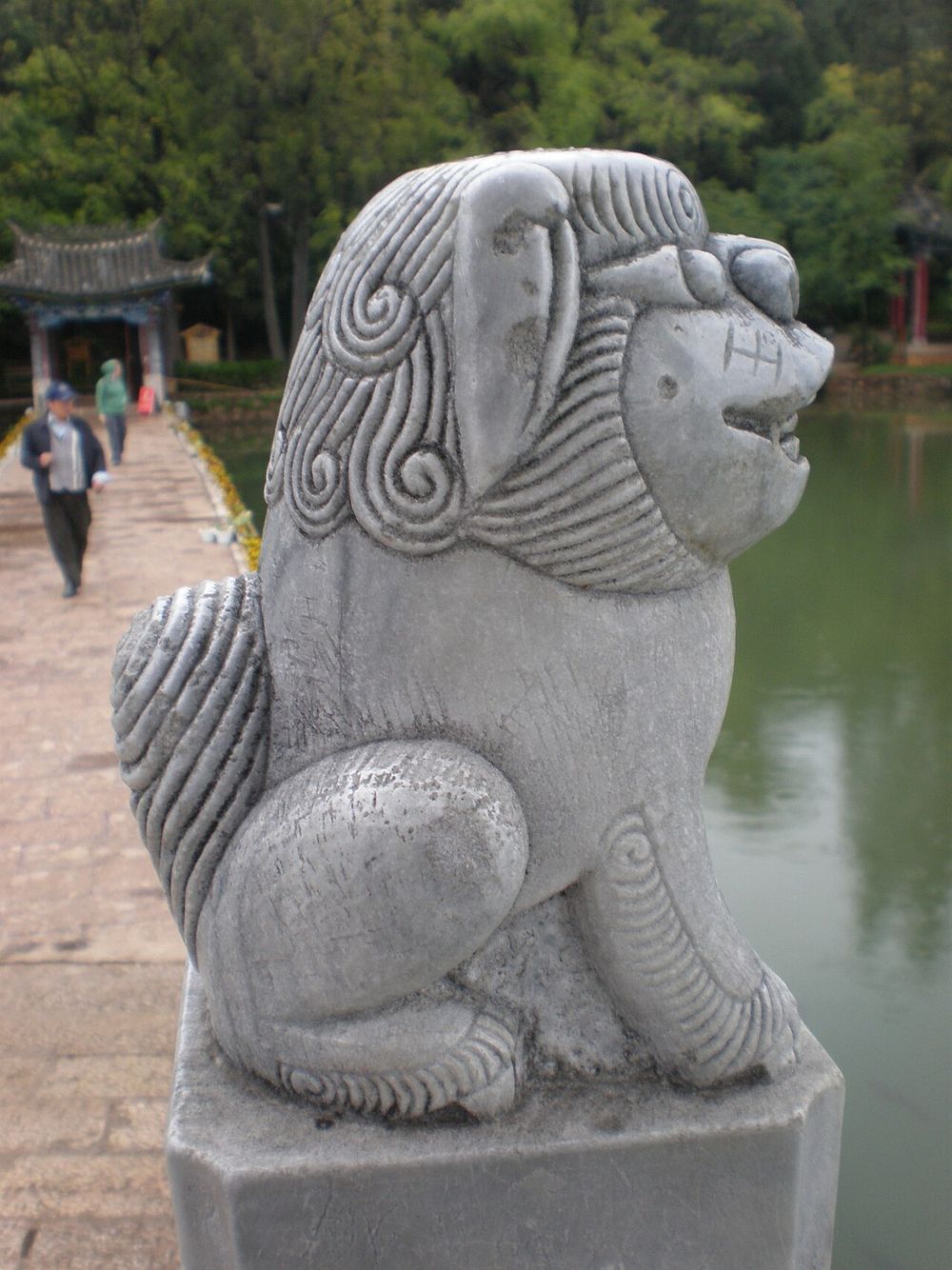
The bridge is carved with lions on its posts. The pavilion on its island has three roofs, and its name is a phrase for a building near water, which gets the moon first.
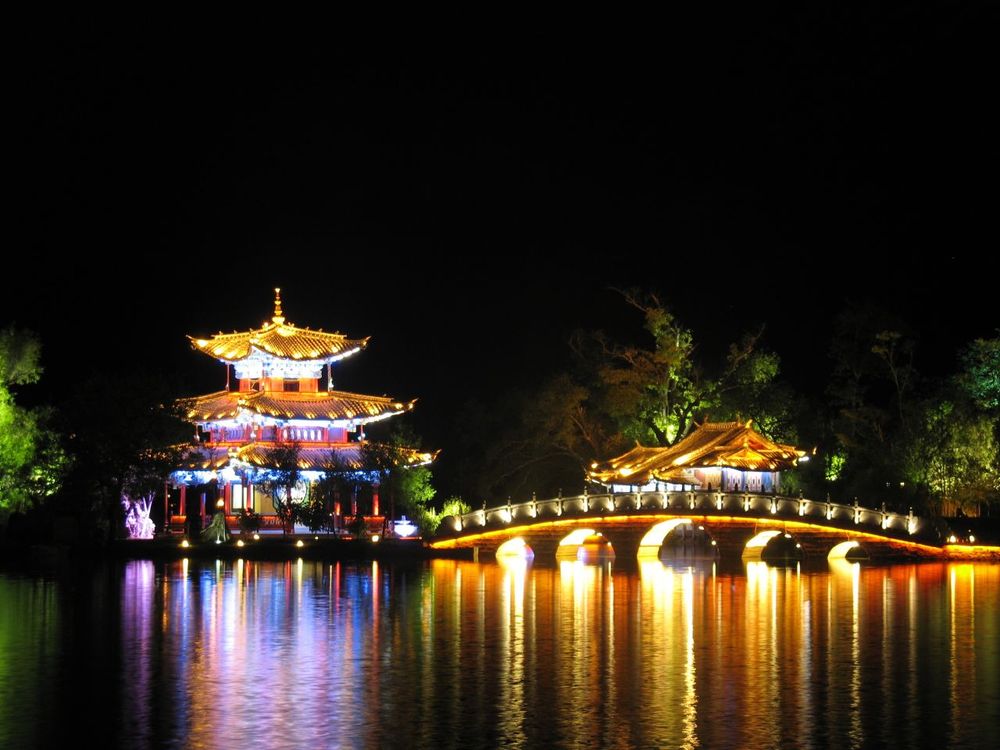
At night the pavilion and the bridge are lit.
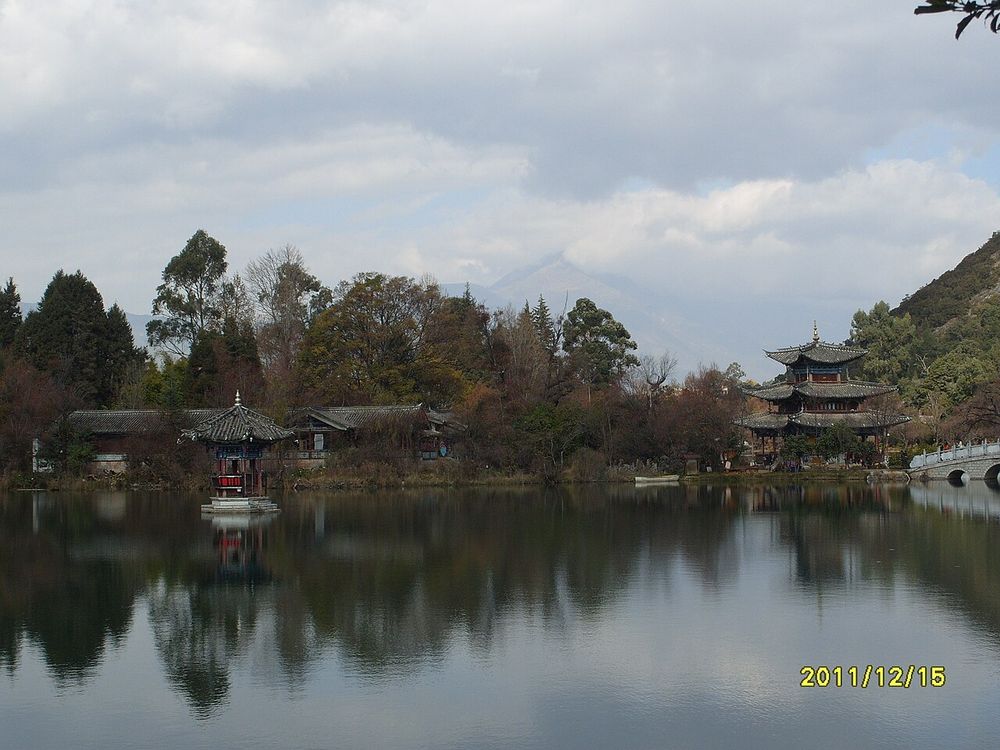
The small temple of the Dragon God stands by the spring. Prayers for rain were said here in dry years.
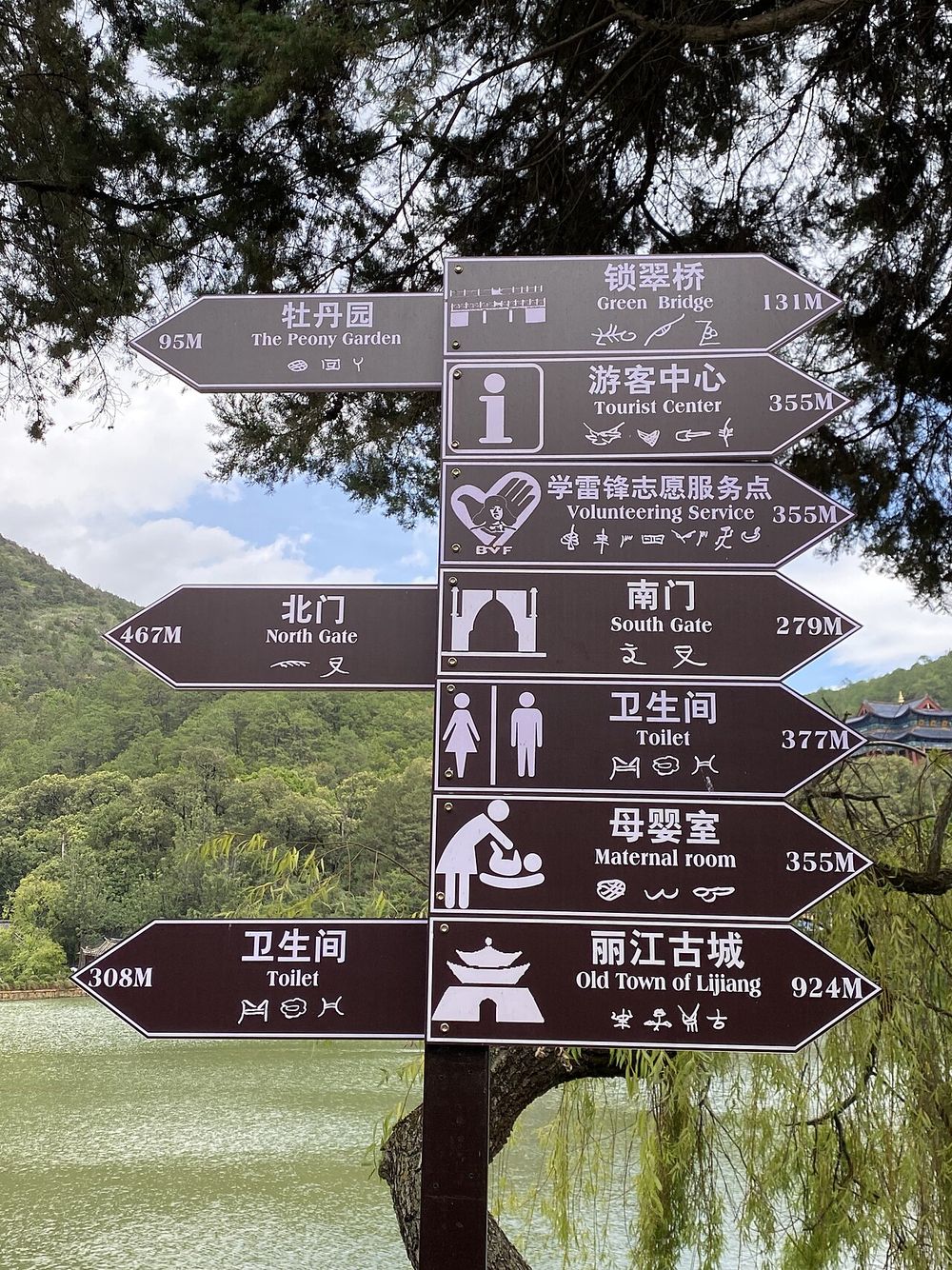
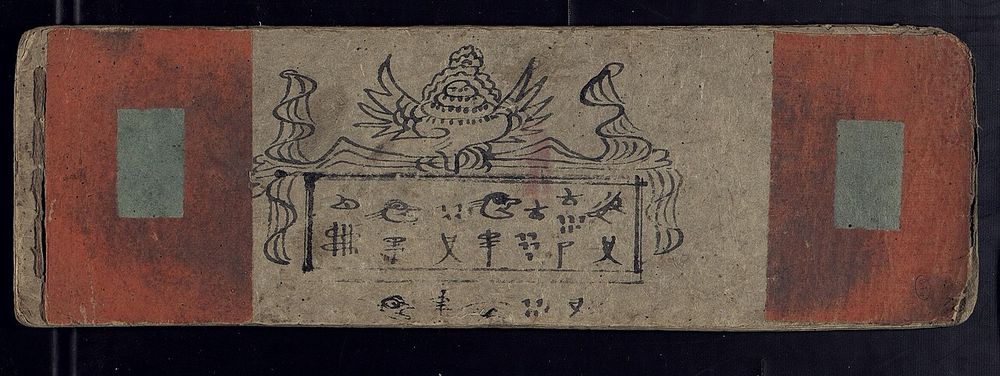
The Naxi have their own pictographic script, used by their priests, the dongba, to write ritual books. The institute in the park has spent decades translating them. Look at the signs in the park: Chinese, English and dongba pictographs side by side.
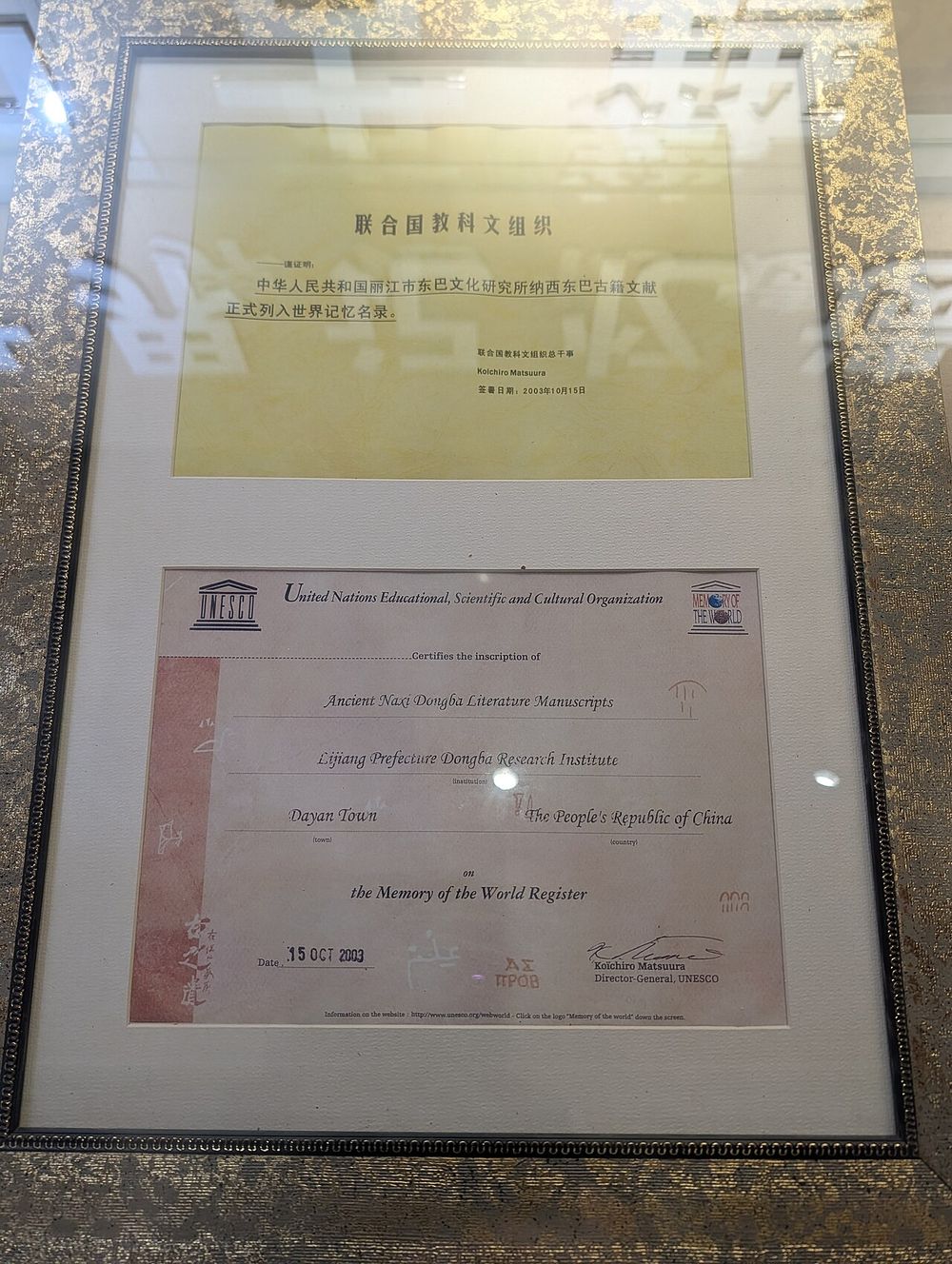
In 2003 the dongba manuscripts were added to UNESCO's Memory of the World register.
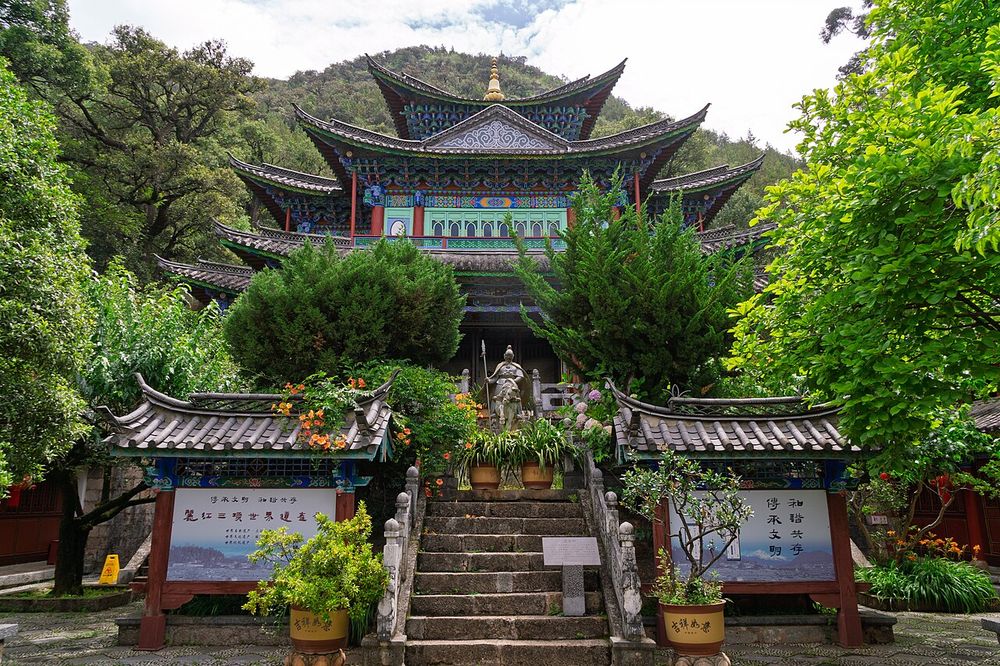
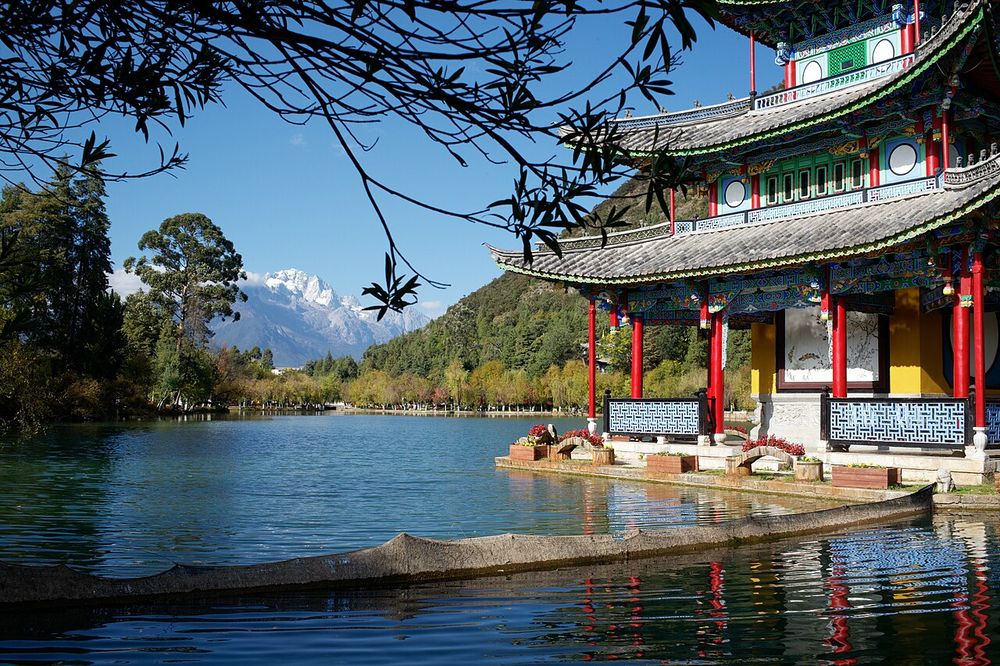
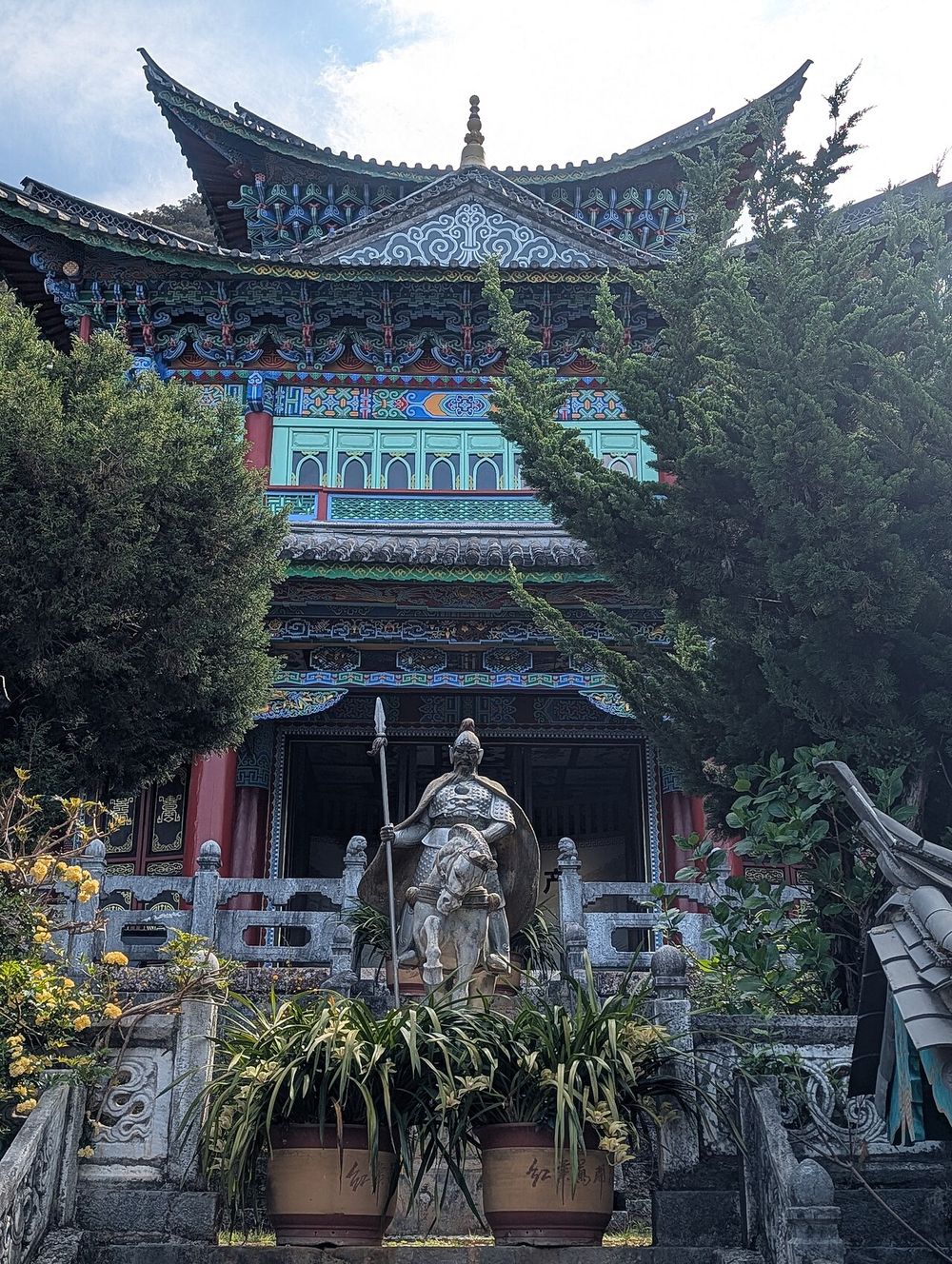
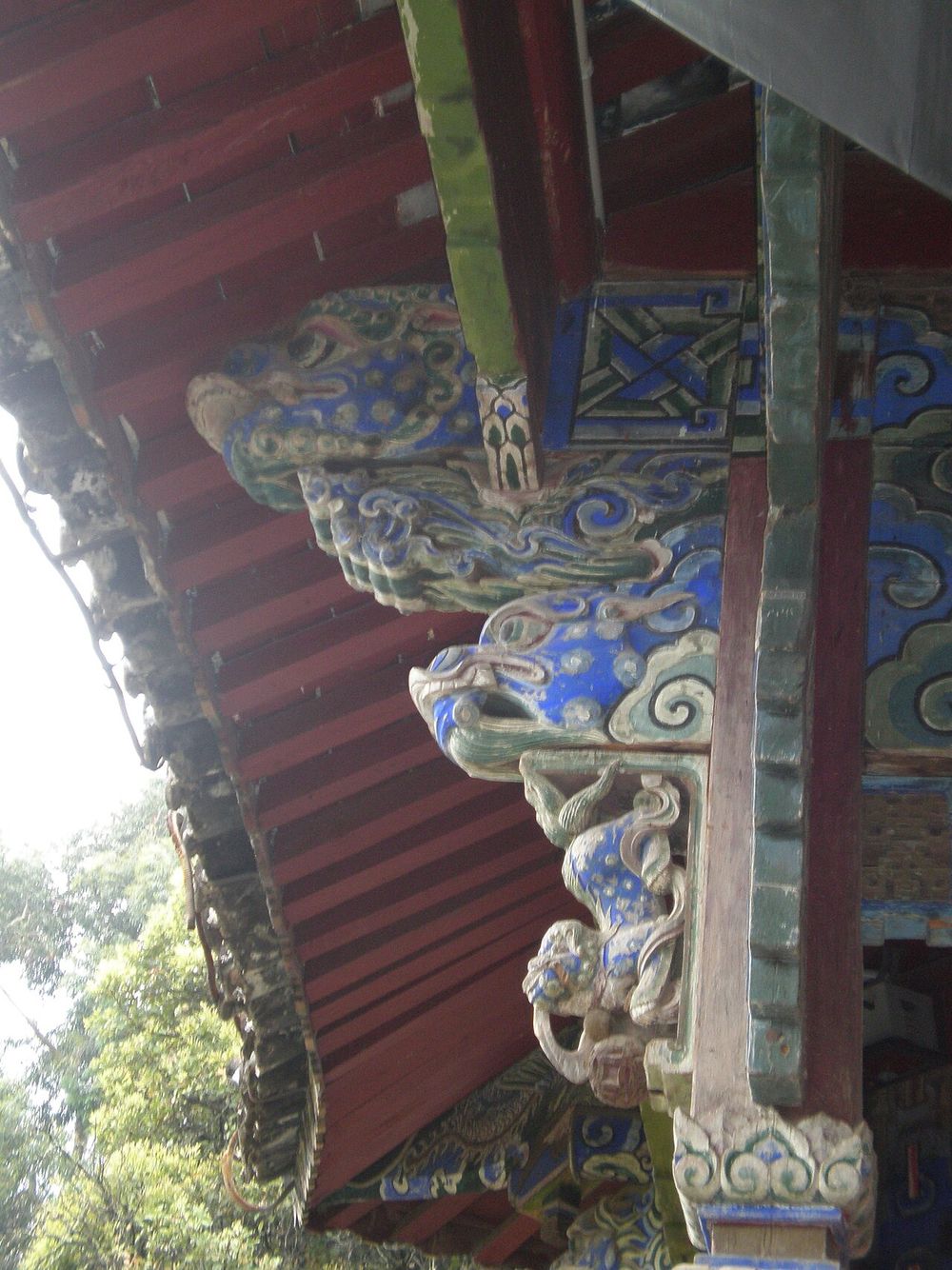
Built in 1601 at the Fuguo Temple and moved here in 1979. It is about twenty metres high, with three tiers of eaves and twenty-four upturned corners. From any side you see five corners rising like the wings of five phoenixes.
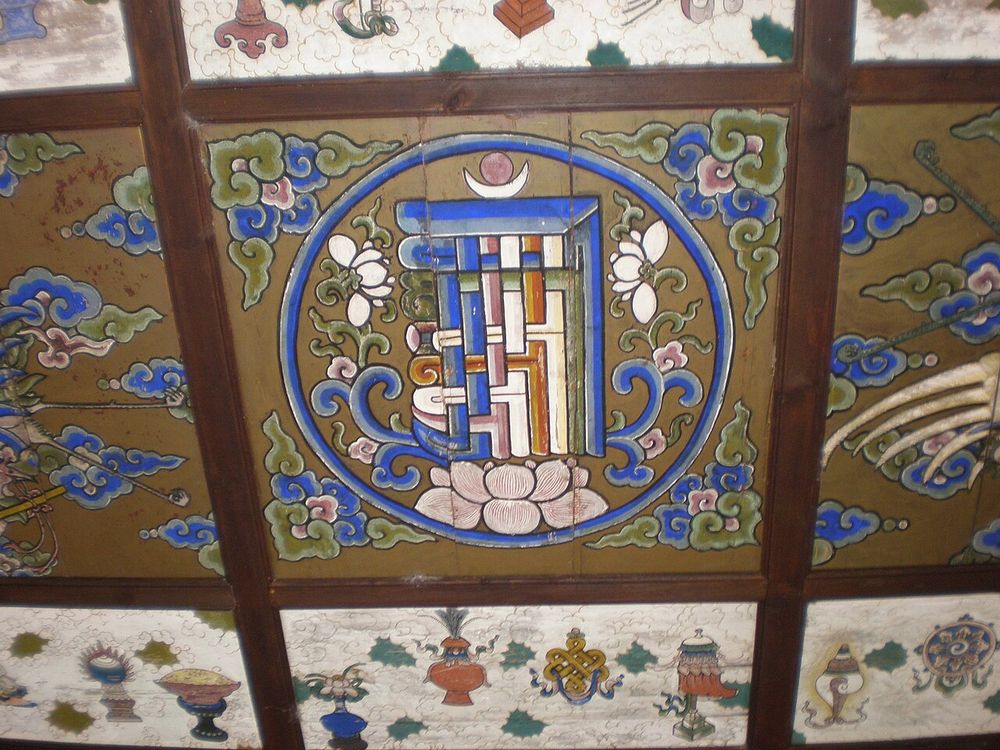
Look up at the ceiling inside: painted symbols of Daoism and Buddhism, the yin and yang and the eight trigrams.
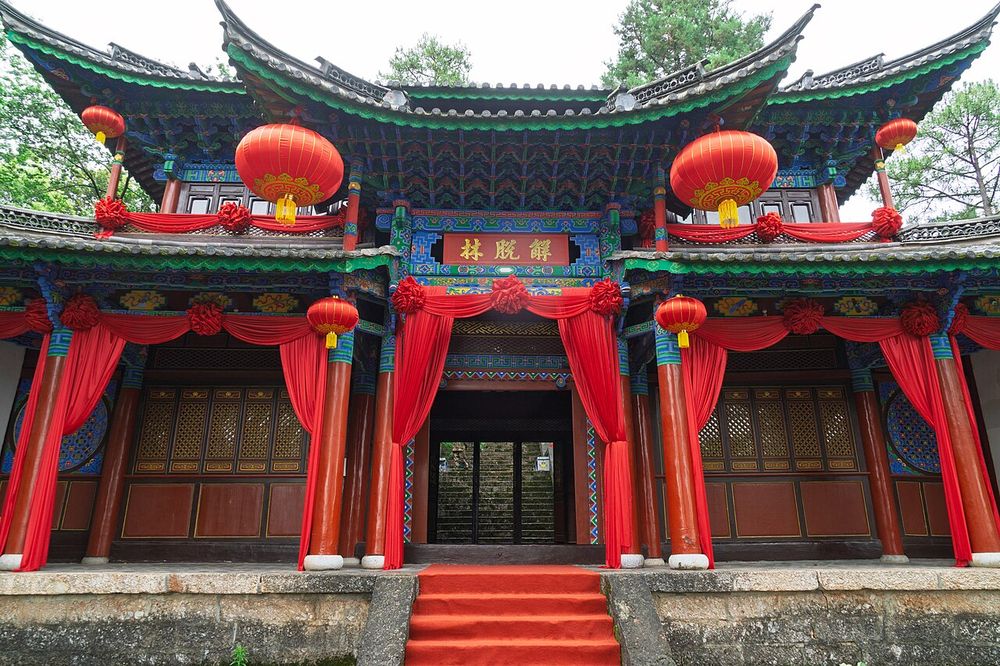
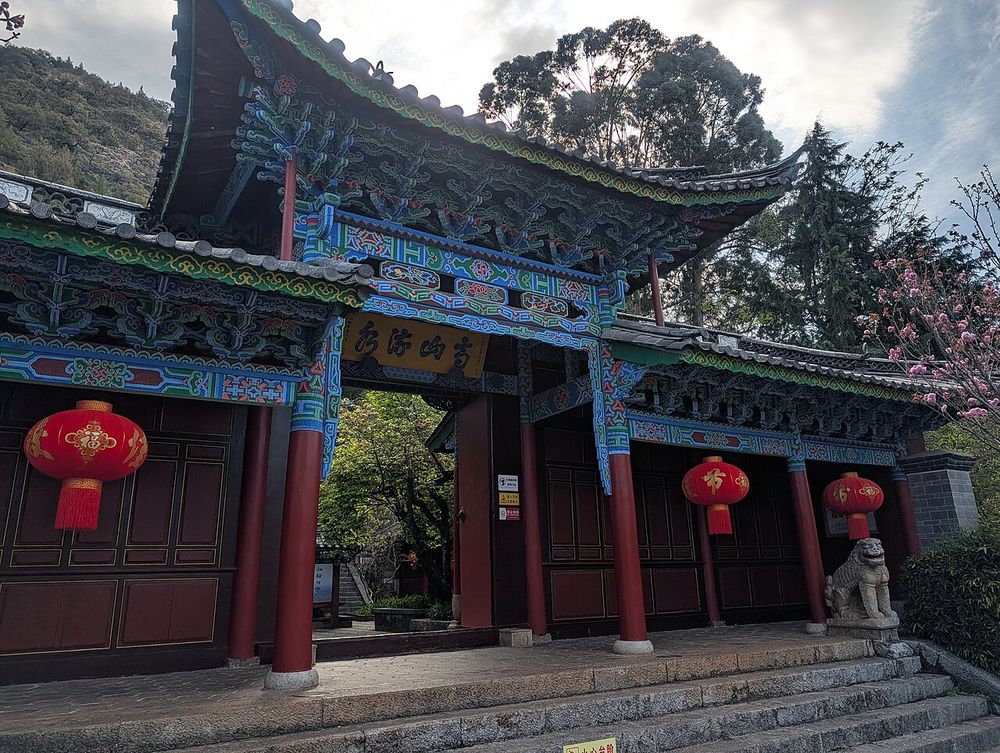
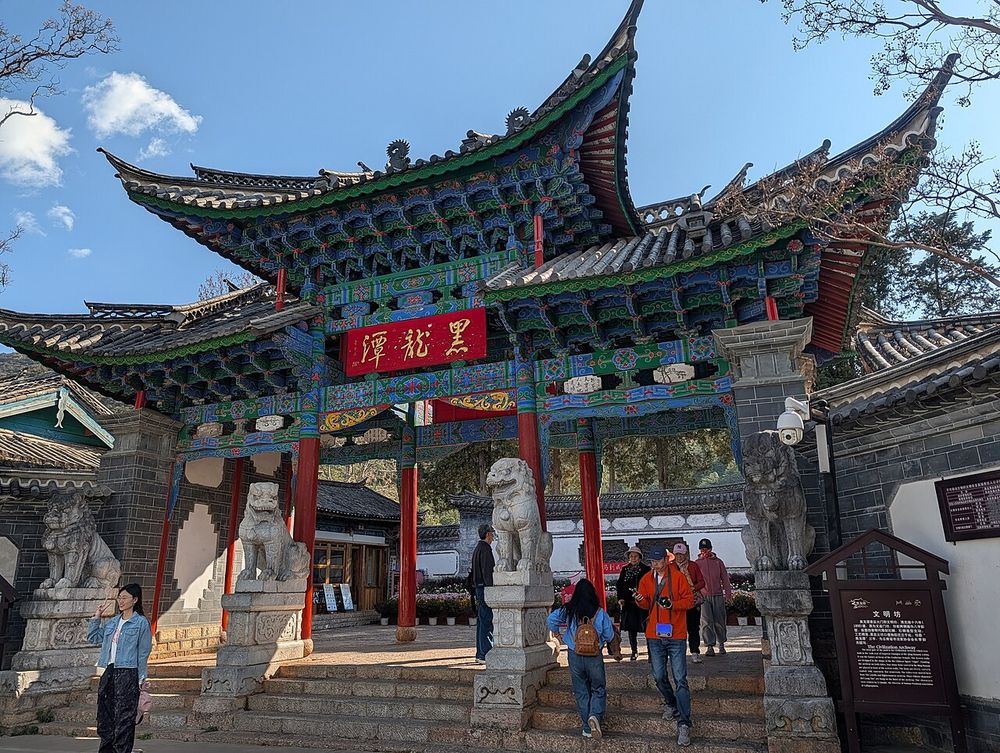
The gate of the part of the Fuguo Temple called Jietuolin, "the forest of release", where Xu Xiake stayed in 1639. It too was brought down from the hills.
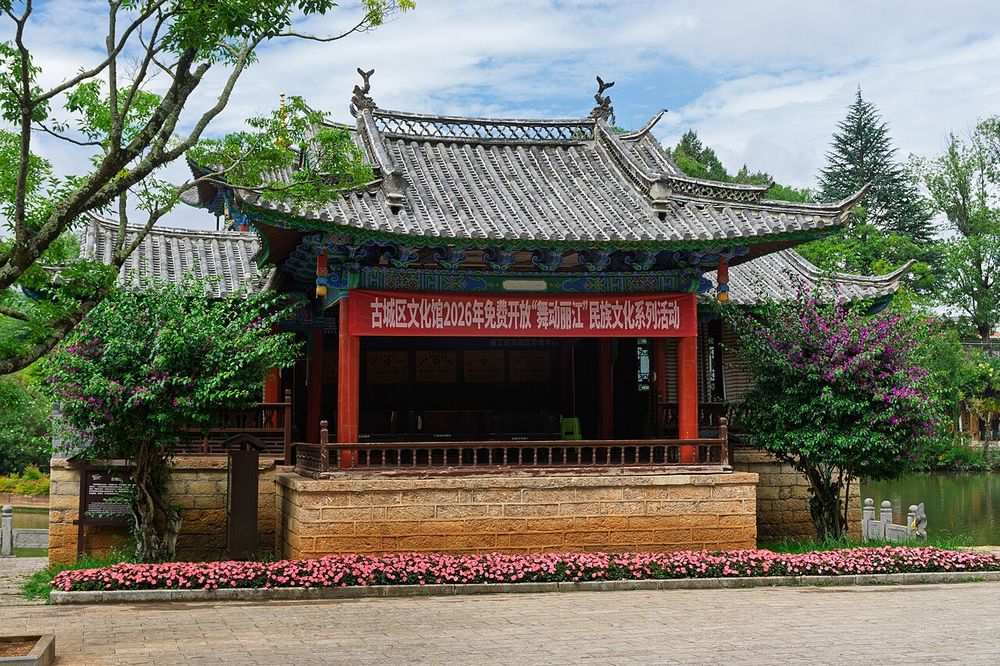
An old stage by the water, where Naxi music is sometimes played.
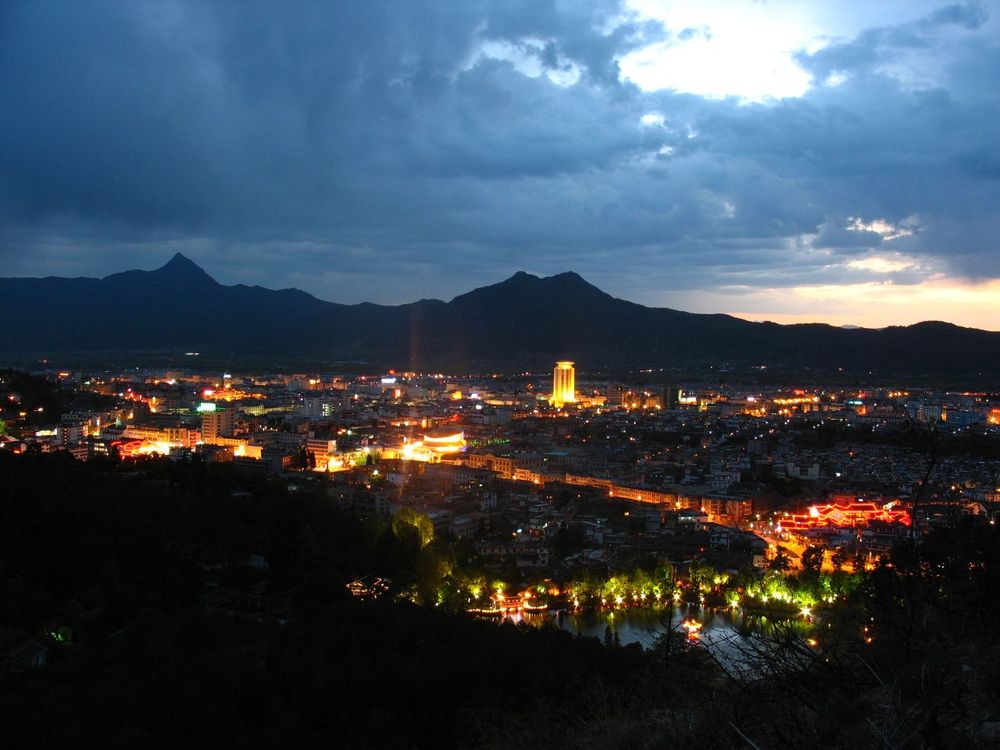
A path climbs Elephant Hill behind the pool. From the top, the old town spreads below, and at dusk its lights come on.
The Five Phoenix Tower was built in 1601, about when Shakespeare wrote Hamlet. Xu Xiake came in 1639, five years before the fall of the Ming (1368–1644).
| Year | Here | Elsewhere |
|---|---|---|
| 1601 | The Five Phoenix Tower is built at the Fuguo Temple | Shakespeare's Hamlet |
| 1639 | Xu Xiake stays at Jietuolin | The first printing press in British North America |
| 1979 | The Five Phoenix Tower is moved to the pool | The first Walkman |
| 1997 | Lijiang's old town becomes World Heritage | Hong Kong returns to China |
| 2003 | The dongba manuscripts join the Memory of the World | The Human Genome Project is completed |
One line to remember: the town's water starts here, with a mountain in it.
These are stories people tell about this place. They are legends, not history, and each one says where it comes from.
The Naxi and Han of Lijiang say a black dragon lives in the spring and gives the town its water, as long as it is respected.
Source: A belief behind the Dragon God temple
Later, people who live here will be able to add the stories they grew up with, and say which of these they have heard.
Last checked 2026-11-12. Travel reports of 2026 on free entry and opening hours; news of the Dongba manuscripts.
Checked 2026-11-12
Opening hours are given in the local time of the place.
Stand at the site, sign in, press the button, and collect its stamp. Your browser will ask to use your location. It is sent to us once to confirm that you are at the site; we keep how far you were from it, not the spot where you stood.
Your stamps are saved to your account, so they follow you to any device. Checking from a browser cannot rule out every false location; stricter checks arrive with the app.
Photos here show the place, not people. Each one is credited to the visitor who took it and appears after our team has looked at it. A photo with you in it belongs under “I am here”.