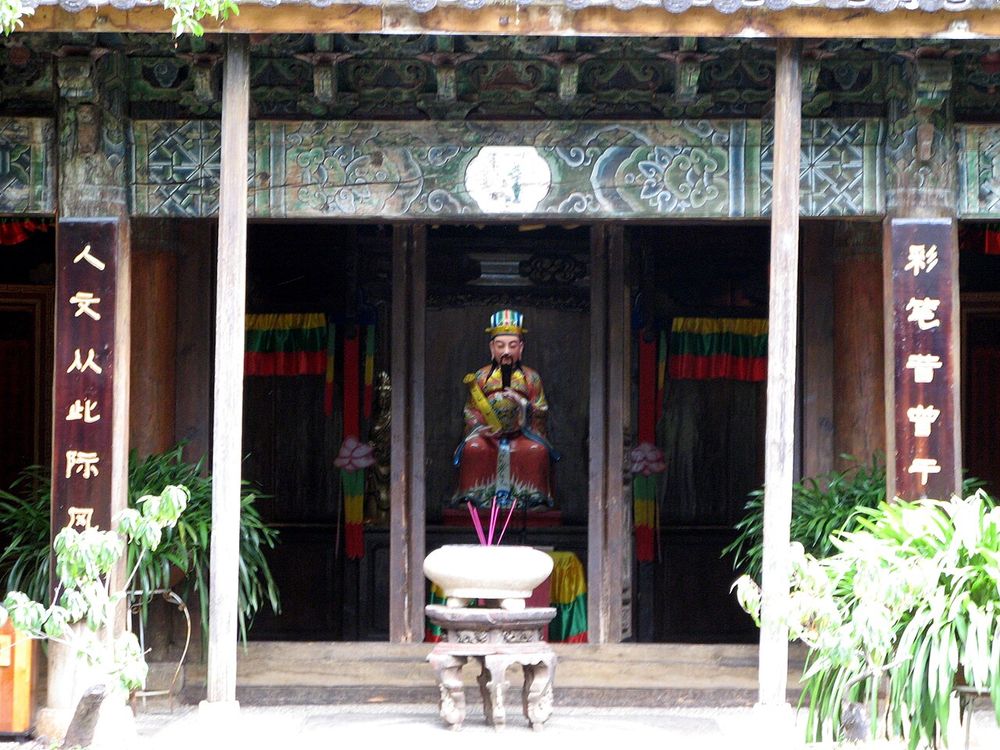
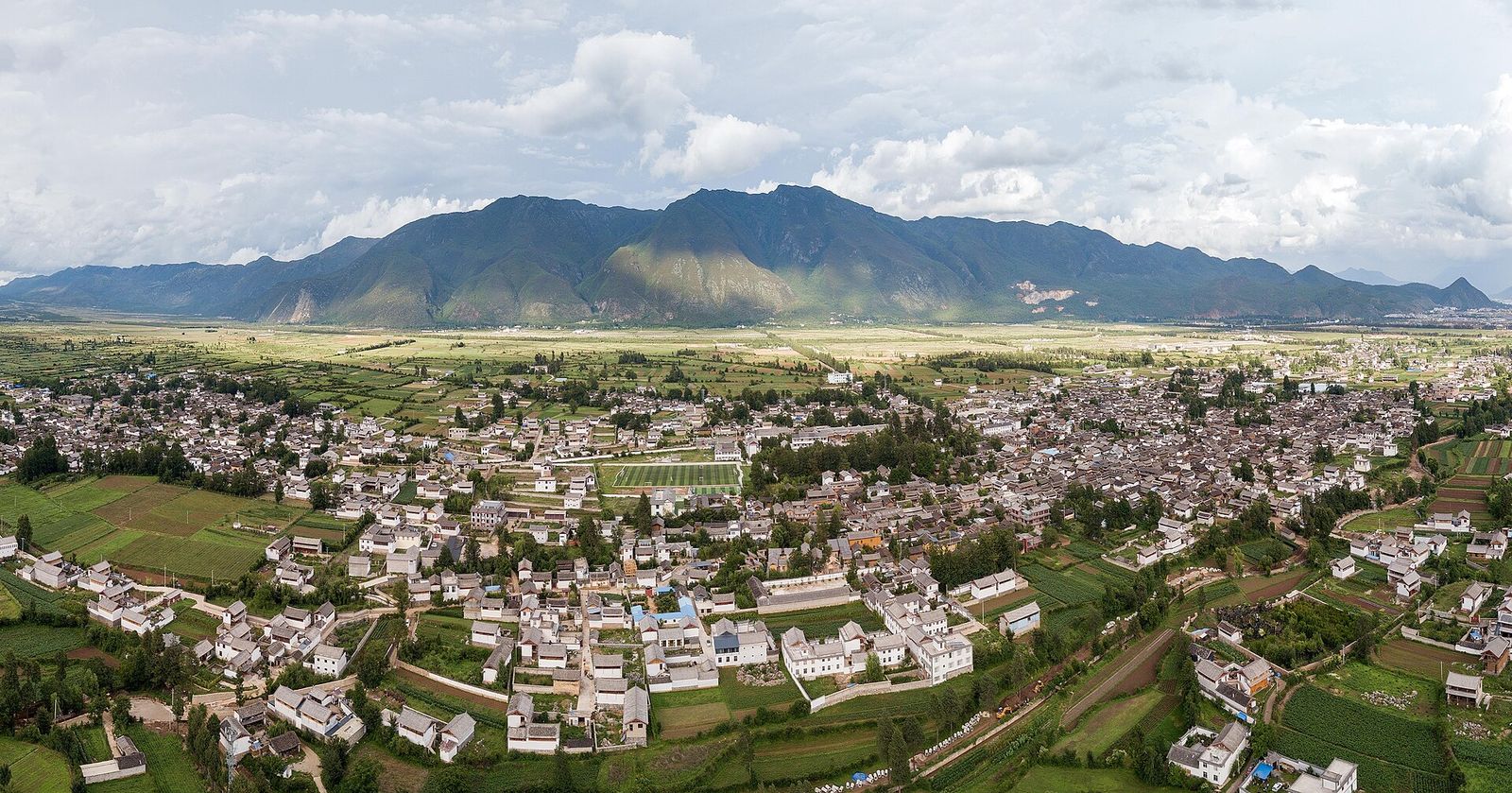
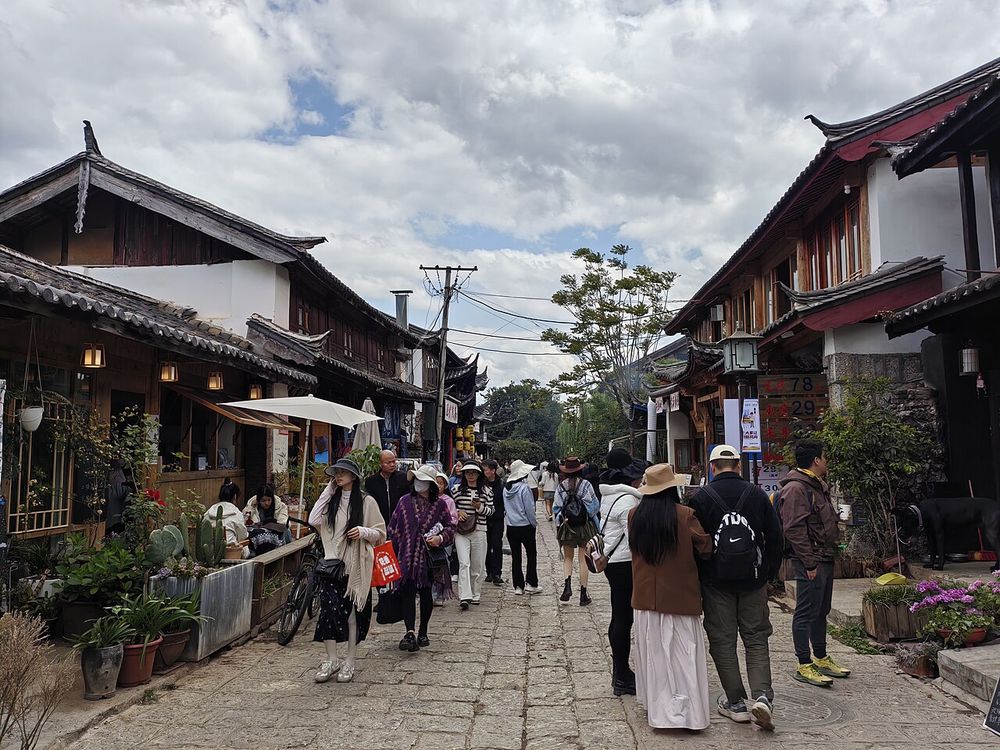
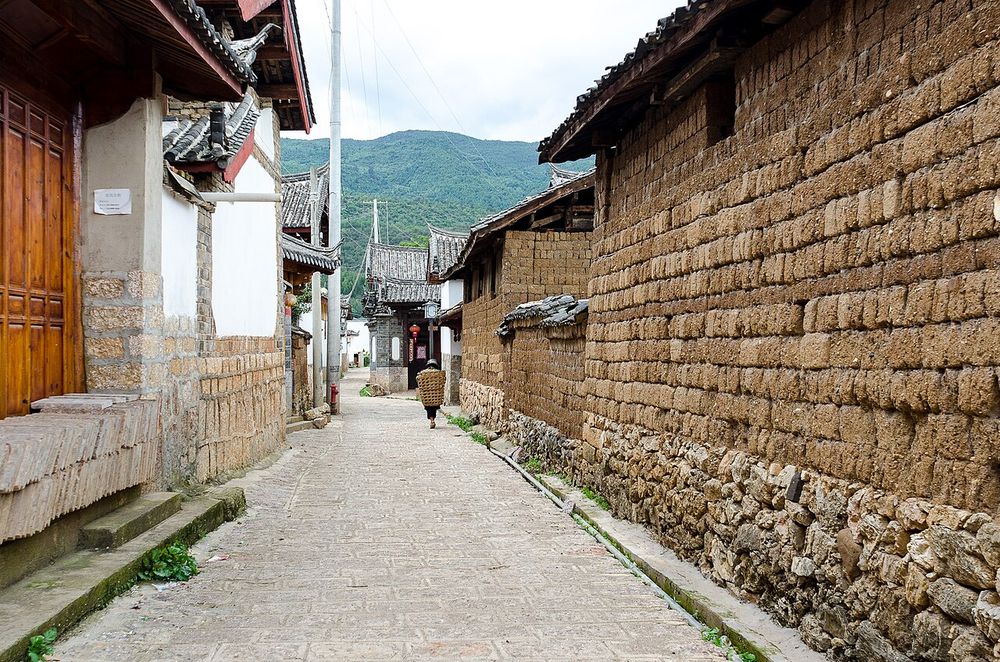
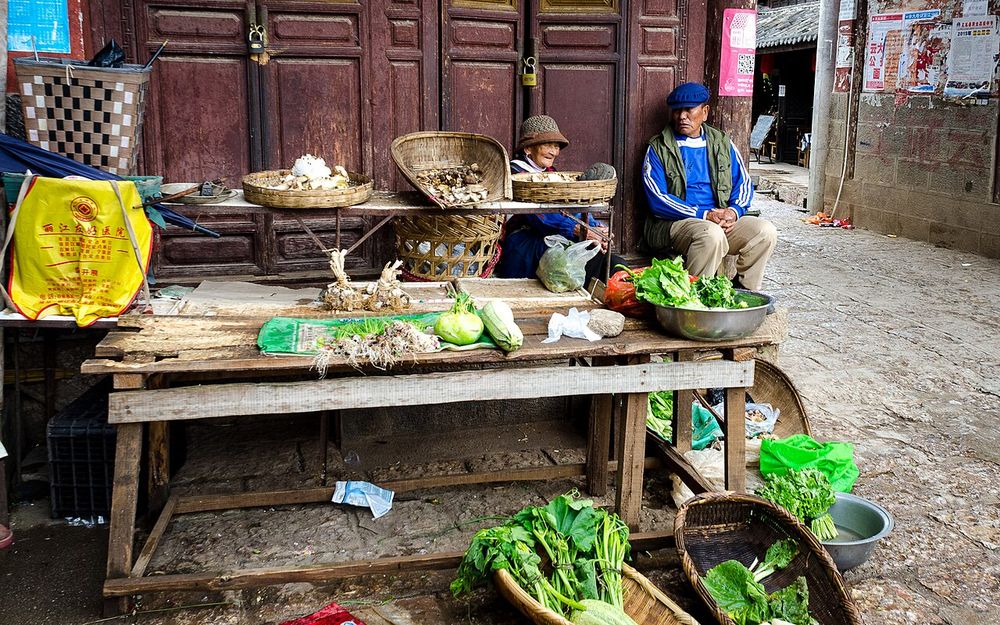
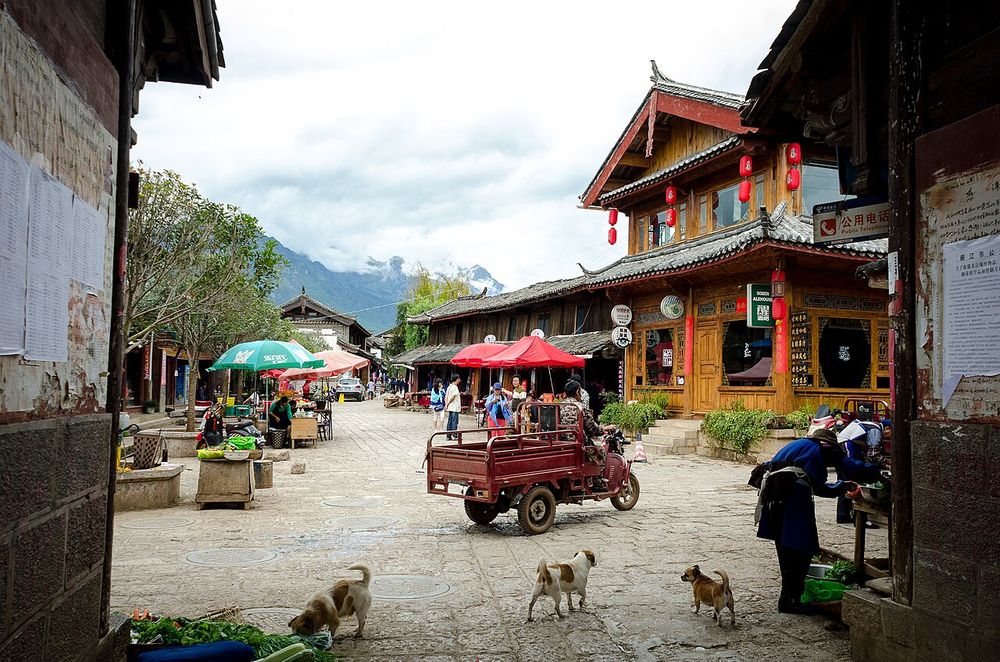
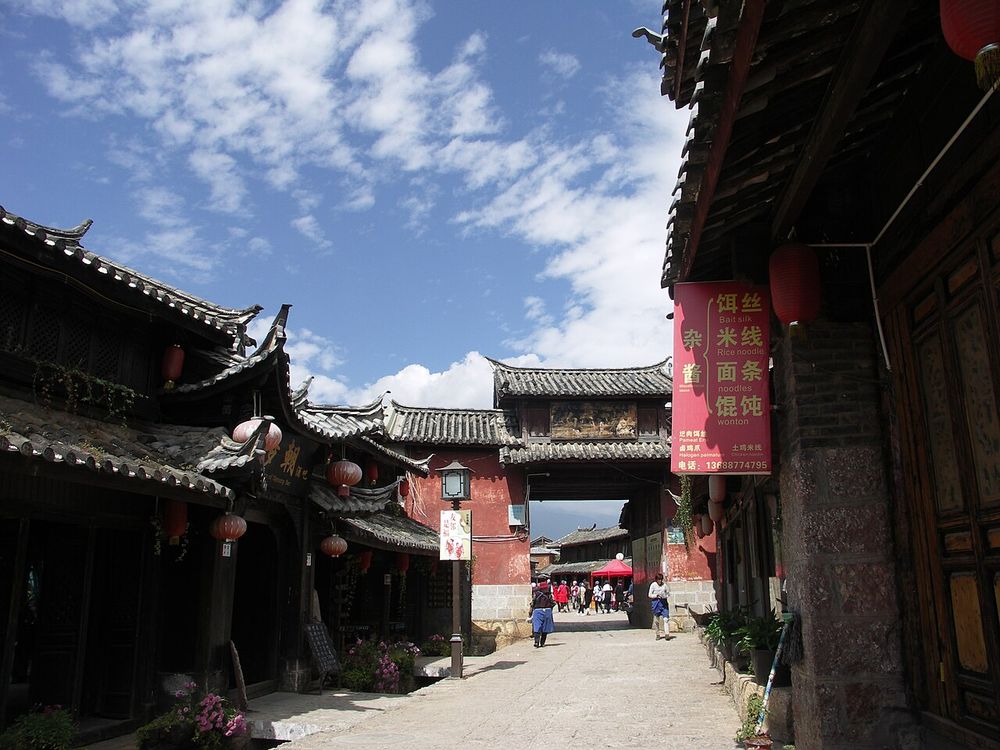
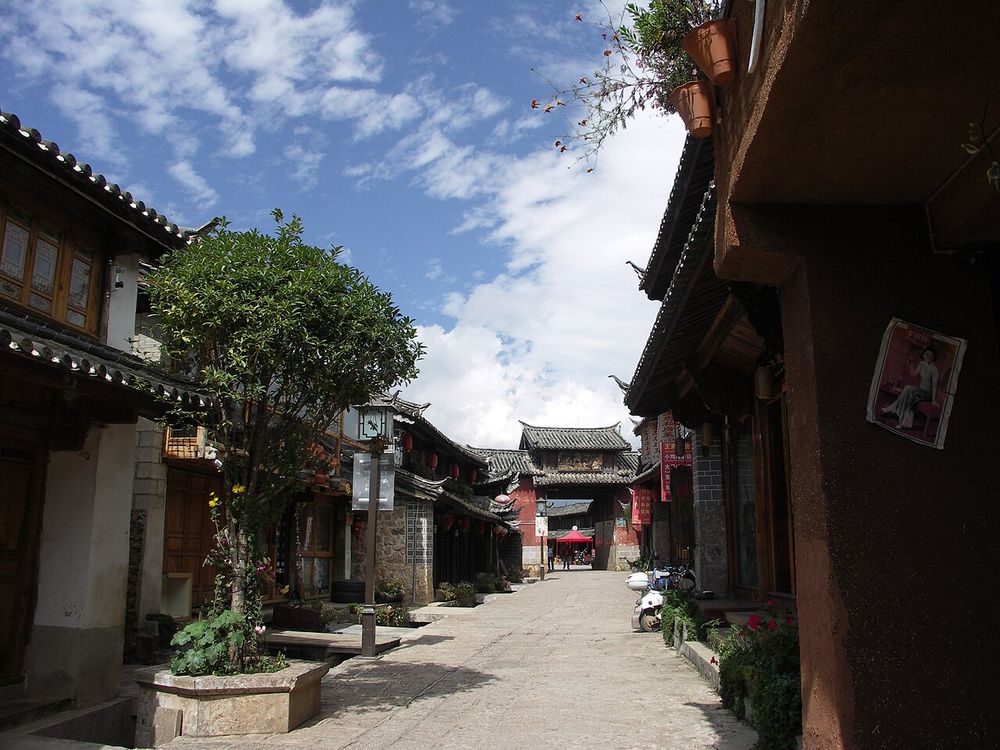
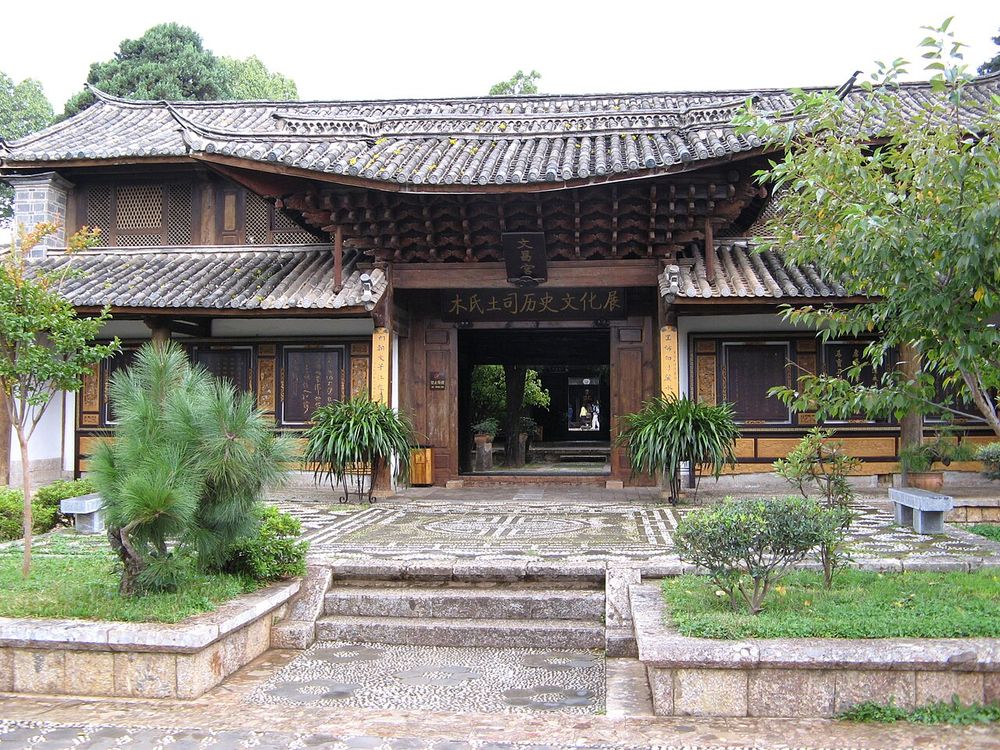
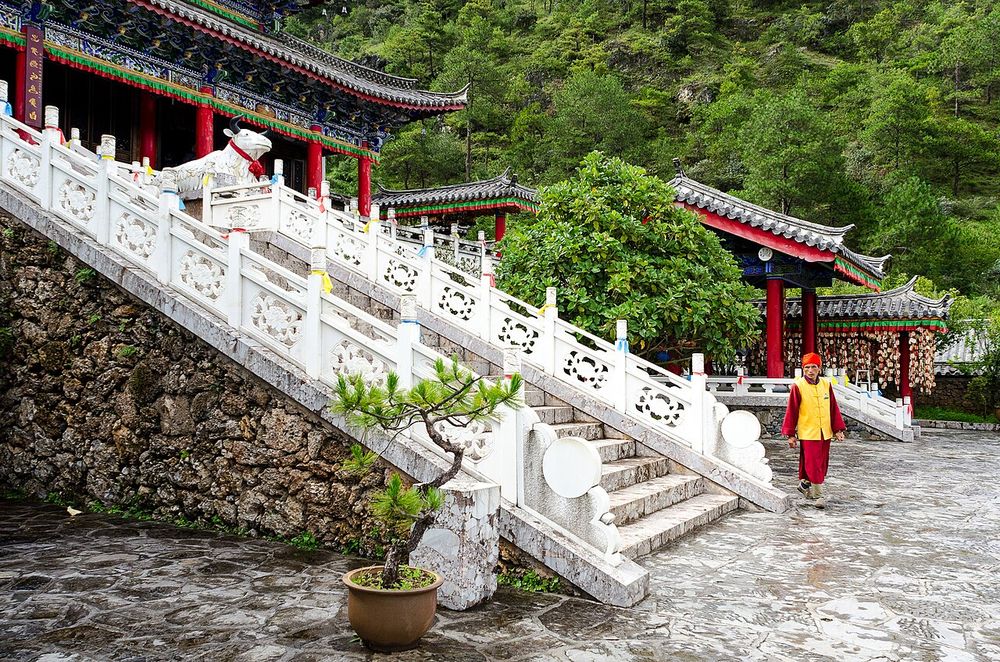
A Naxi village on the plain below Jade Dragon Snow Mountain, older than Lijiang's old town and the first seat of the Mu chiefs. In its temples are the Baisha murals of the Ming, painted by Han, Tibetan, Naxi and Bai artists side by side, with Buddhist and Daoist figures on the same walls.
Photo: Chensiyuan, CC BY-SA 4.0, Wikimedia Commons
The story
Ten kilometres north of Lijiang's old town, on the open plain under the snow mountain, Baisha was the centre of the Naxi before the old town grew. The Mu chiefs ruled from here before they built their palace in Dayan, and here they built their temples.
From the late fourteenth to the early seventeenth century the Mu called painters from many peoples to decorate the temples. Han painters from the interior, Tibetan painters from the north, Naxi and Bai painters from the region worked on the same walls. Fifty-five murals survive in four buildings. In China they are counted with the paintings of Dunhuang, the Fahai Temple in Beijing and the Yongle Palace in Shanxi as treasures of wall painting.
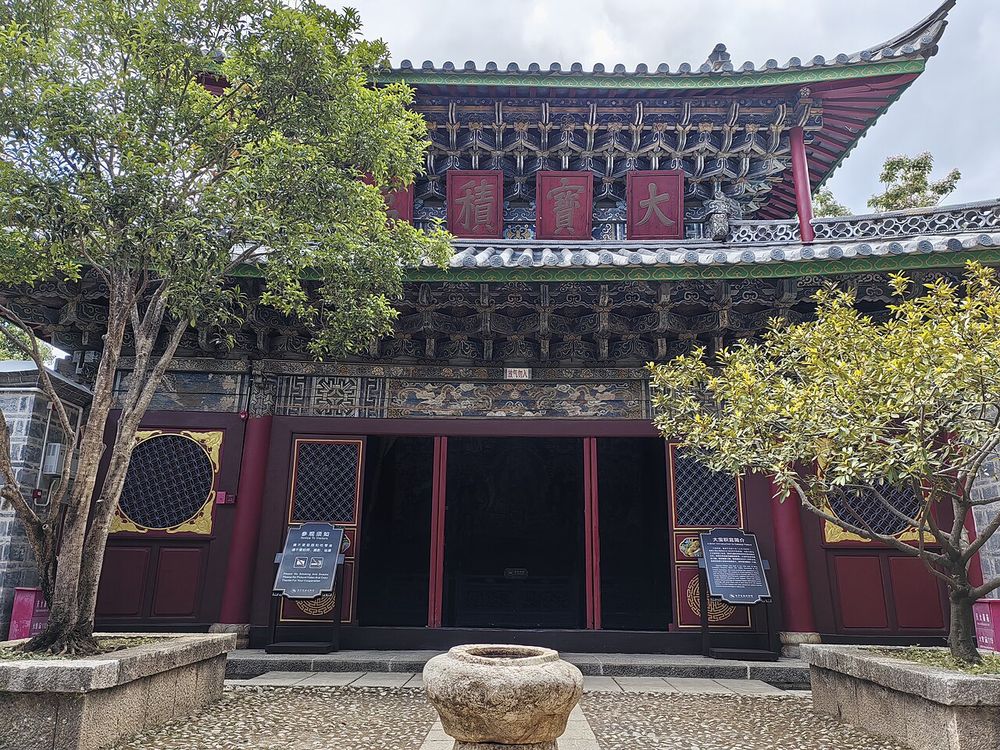
The hall in front of you was built in 1582. Inside, a single wall shows the Buddha and his followers in the Han (206 BC–AD 220) style, a Tibetan protector in flames, and Daoist immortals, all painted for the same patron. Look for the faces: some are Han, some Tibetan, some Naxi.
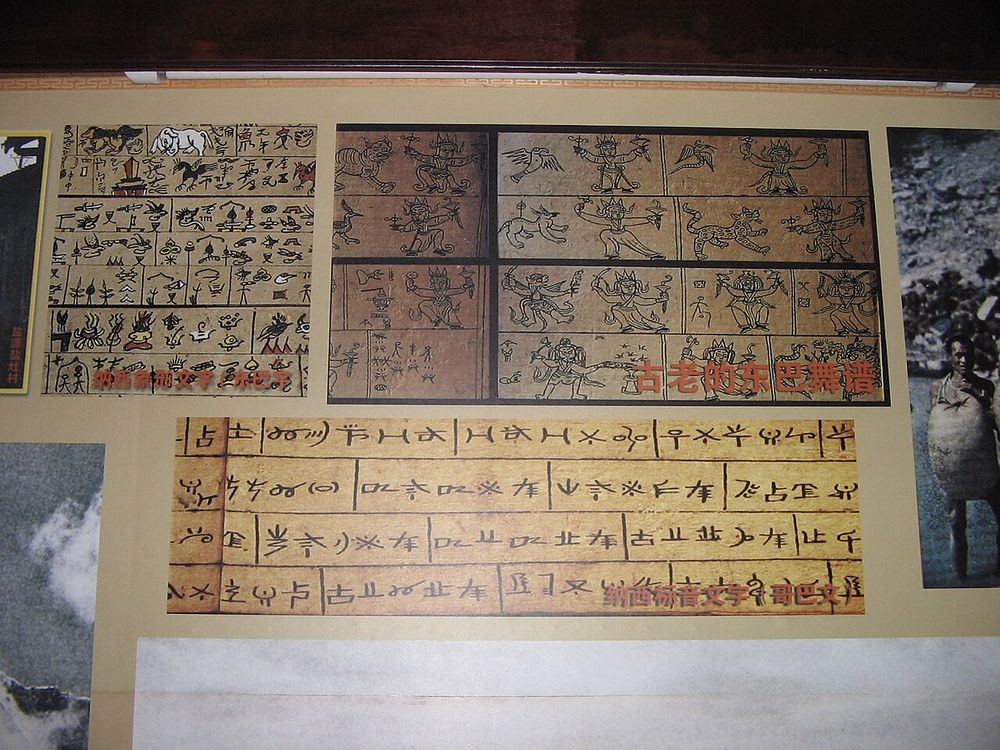
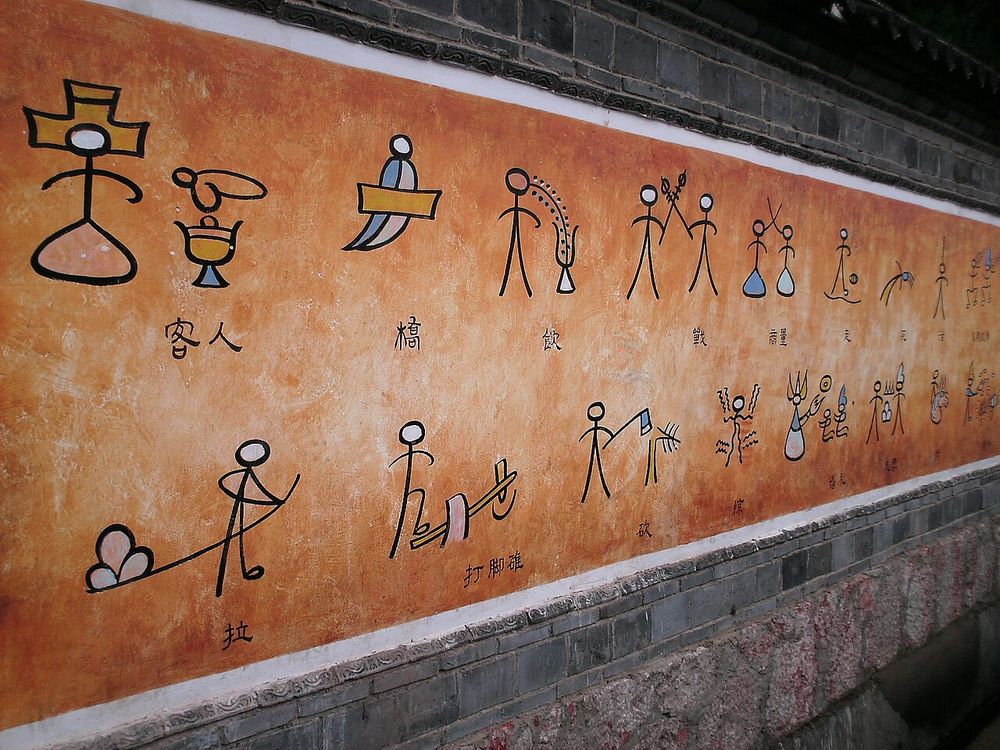
Panels in the murals site, 2005http://en.wikipedia.org/wiki/en:User:Funkydoodle, CC BY-SA 3.0
Much was damaged in the twentieth century; parts were scraped or cut away. What survives is protected now and partly shown in digital copies, so that you can see details close up without harming the walls.
Things people often get wrong
"Baisha is a copy of the old town." It is older, quieter and more of a working village, with fields up to its houses.
"The murals are Tibetan." They are a mix, which is their whole interest.
People who stood here
We searched Chinese sources first for this list, then English ones.
Mu Zeng (Naxi ruler and poet, 1587–1646)Under the Mu chiefs, Mu Zeng among them, painters were brought here from far away to work in the temples.
Joseph Rock (botanist and explorer, 1884–1962)From 1922 he lived in Yuhu, a village a few kilometres north of Baisha, and from there explored the mountains and studied Naxi ritual books. His house is now a small museum.
He Shixiu (Naxi herbal doctor, 1923–2013)His herbal clinic in Baisha became famous after foreign writers came to see him, and he welcomed travellers for decades.
Go deeper: five stops in one village
Walk the main street from south to north, visit the murals, then walk out into the fields. Half a day.
1. The main street
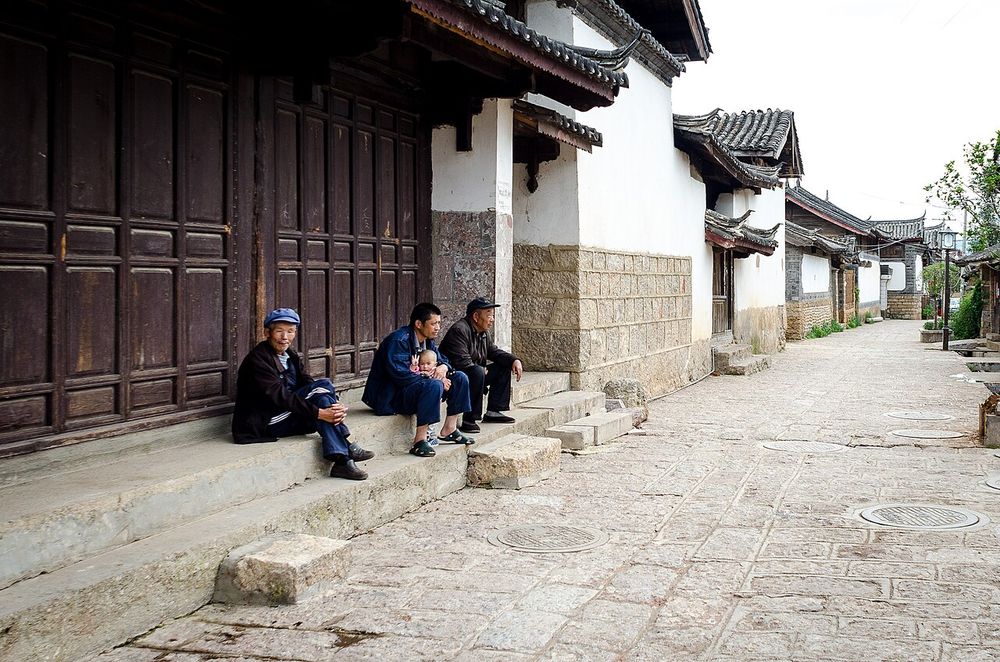
Evening on the main street, 2015Luca Casartelli, CC BY-SA 2.0
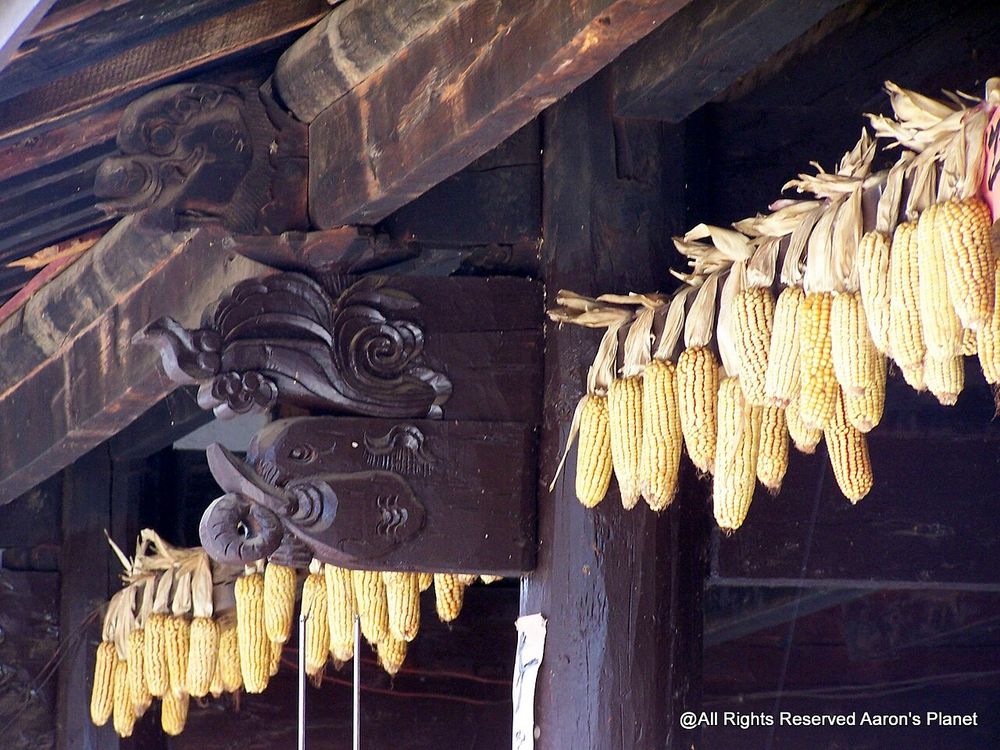
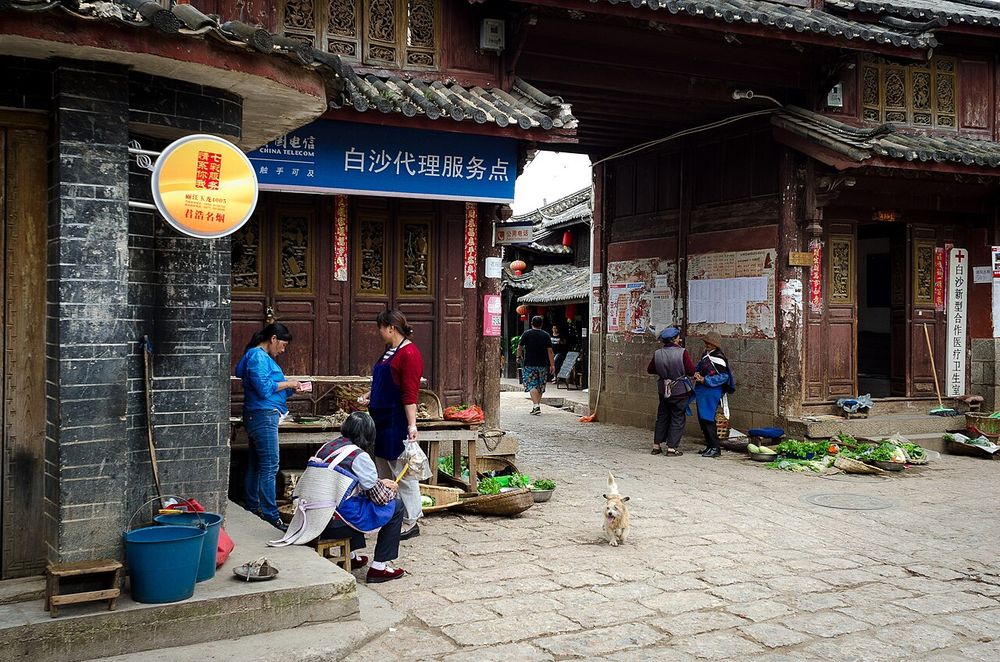
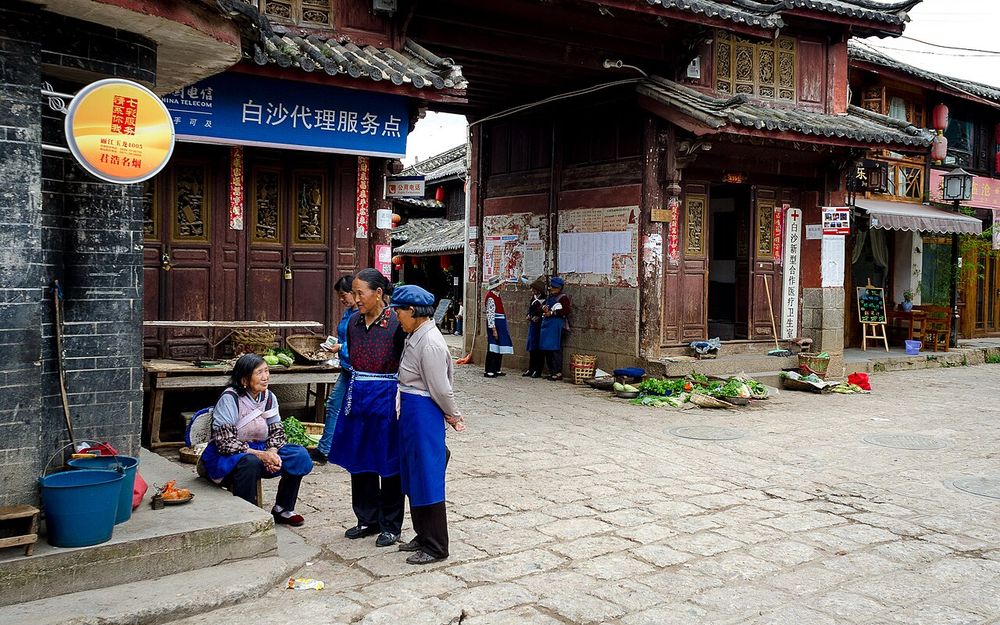
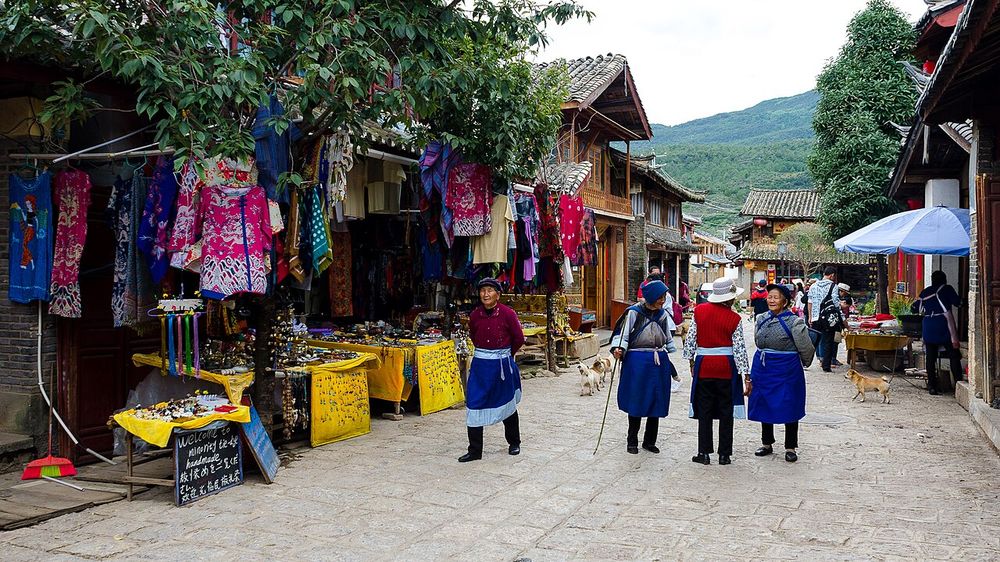
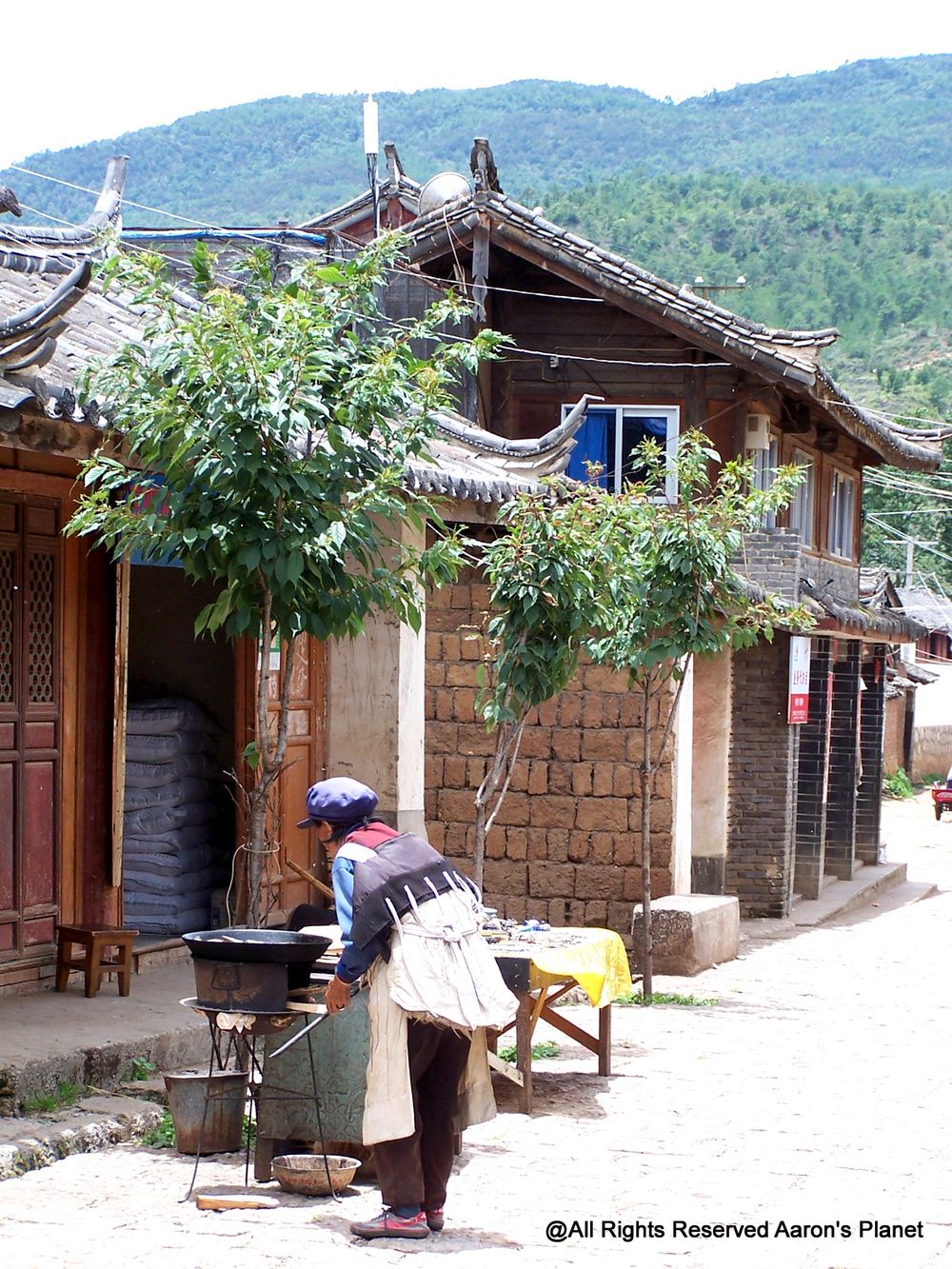
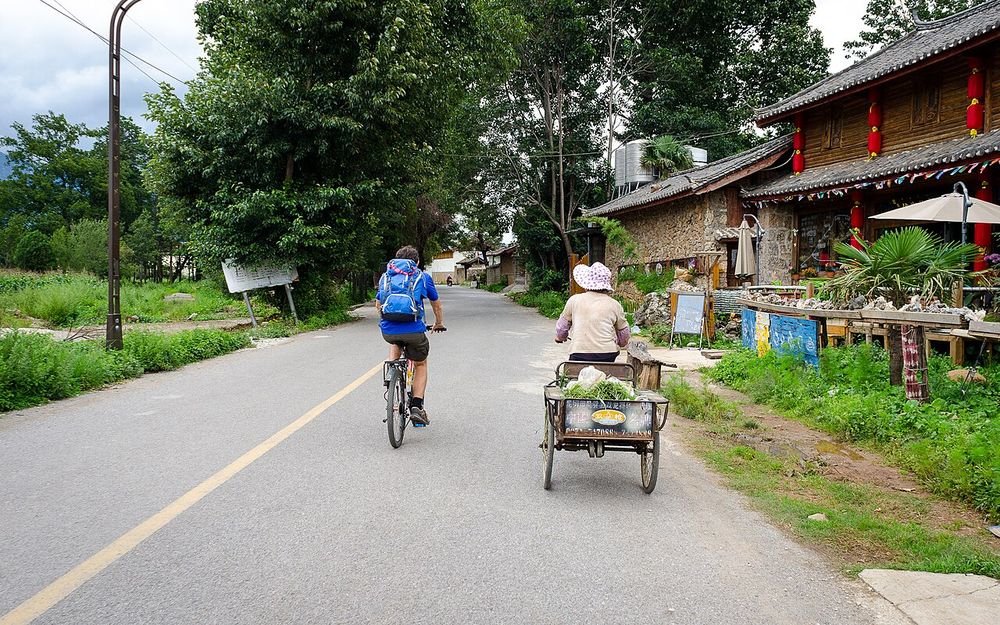
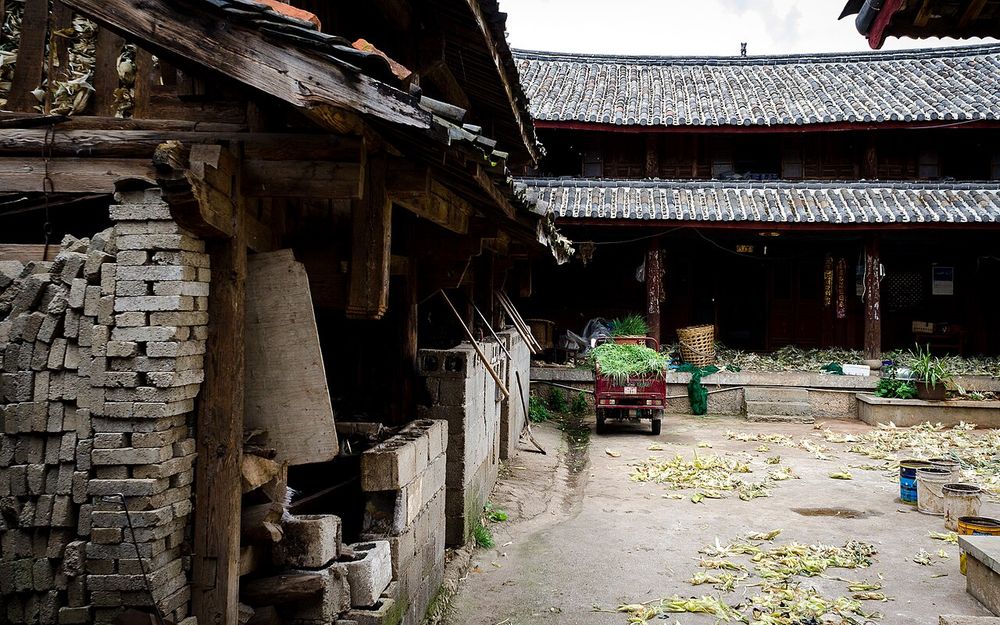
The street runs down a gentle slope towards the plain. Houses of earth brick and wood line it, many with a courtyard where maize is hung to dry.
Maize drying under the eavesAaron Zhu, CC BY-SA 3.0
2. The Dabaoji Palace and the Liuli Hall
The Dabaoji Palace, 2024Yumeto, CC BY-SA 4.0
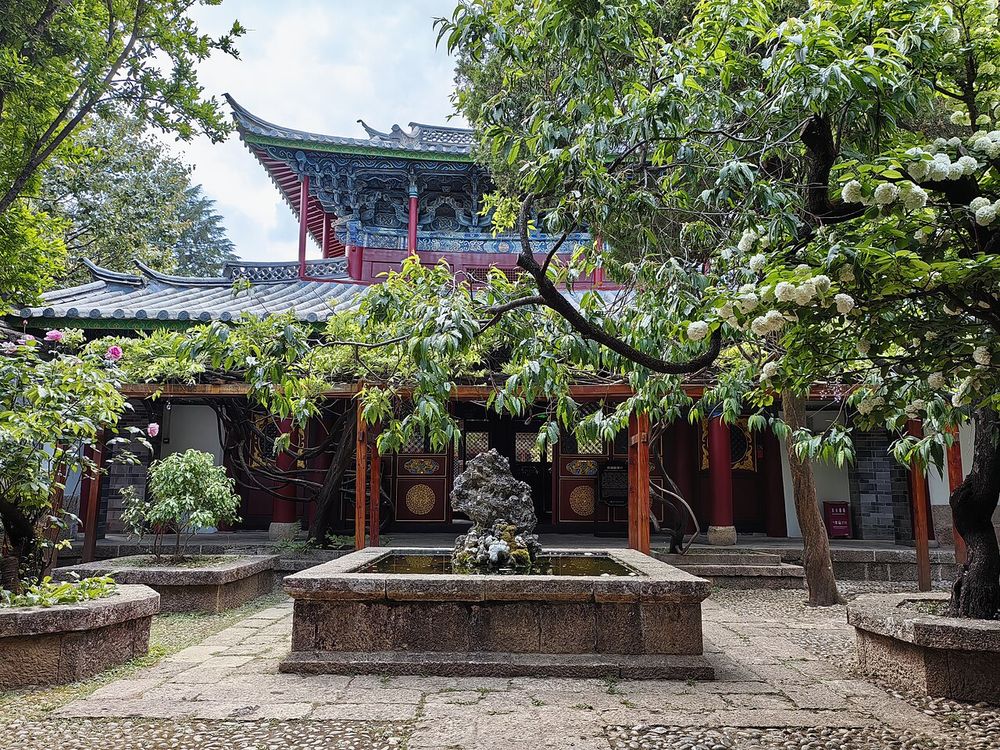
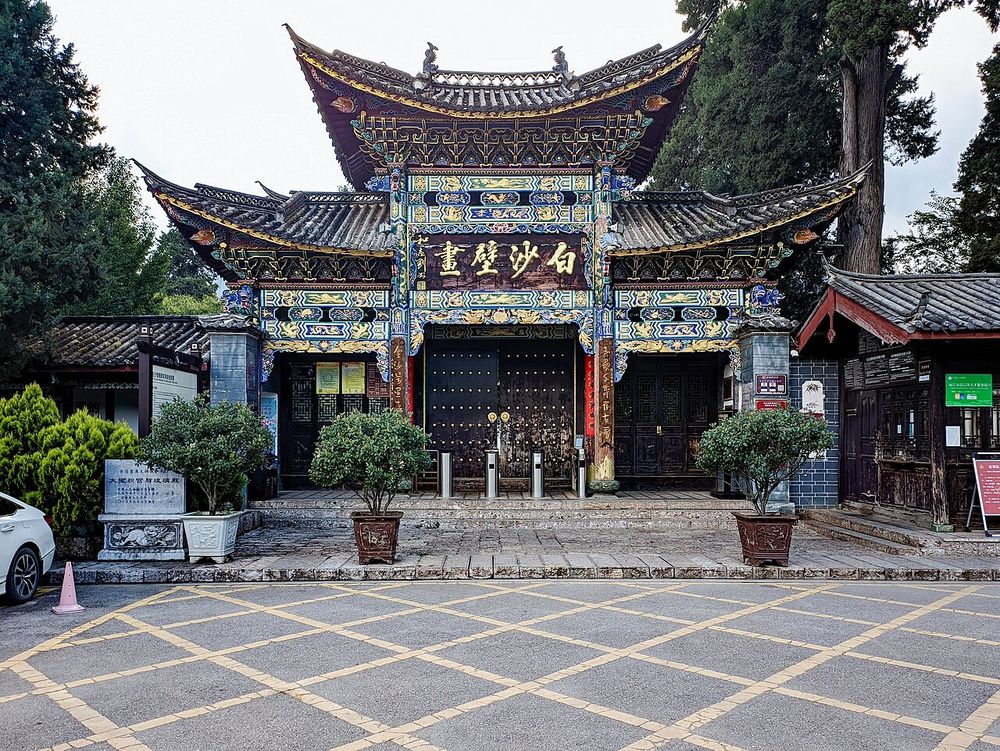
Two temple halls side by side hold most of the murals. The Liuli Hall, the Glazed Hall, is the older. Inside, it is dim: let your eyes get used to it.
The Liuli Hall, 2024Yumeto, CC BY-SA 4.0
3. The Wenchang Palace
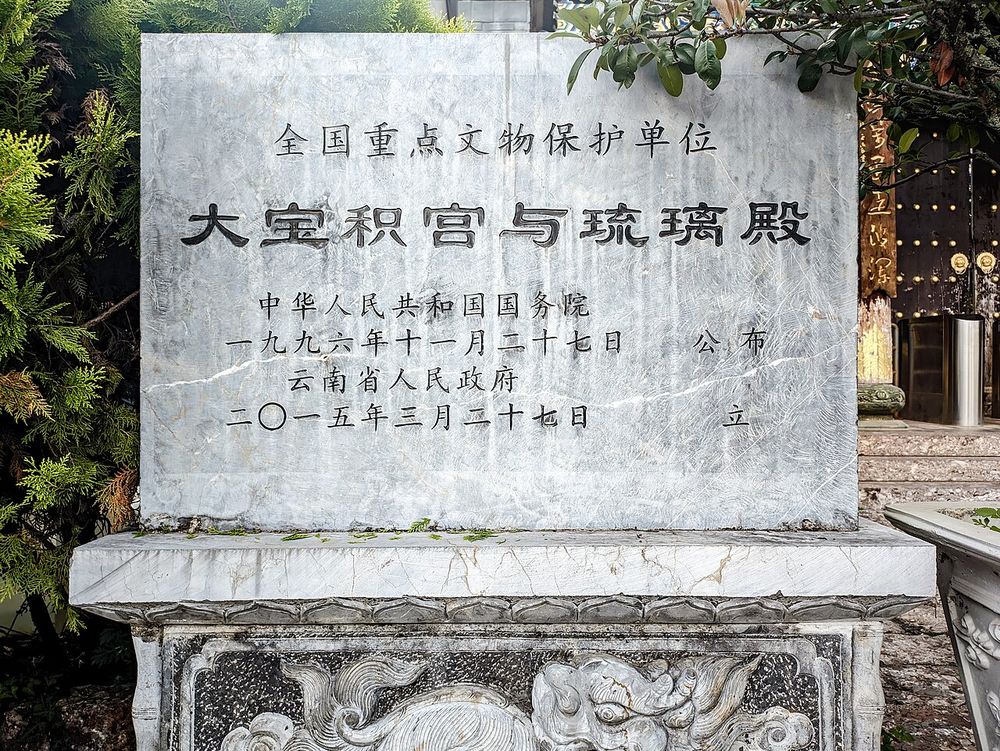
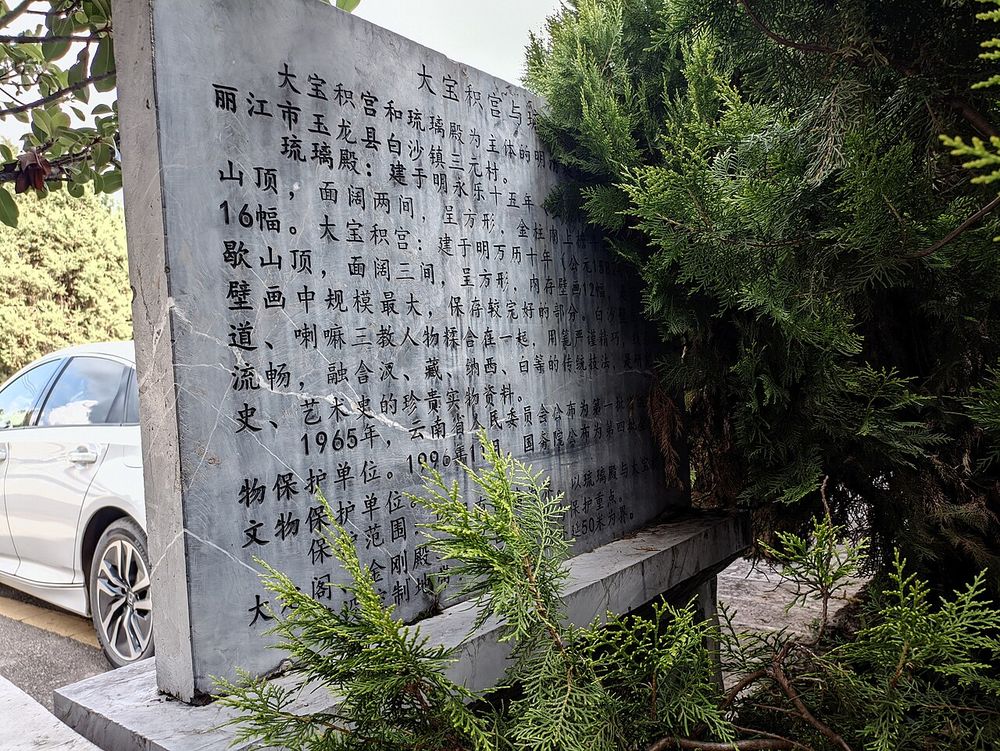
The national monument stone, 2024Kcx36, CC BY-SA 4.0
A temple to the god of literature and examinations, begun in the early Ming (1368–1644). Its Qing murals show the imperial examinations, a sign of how the Mu encouraged Chinese learning. It reopened in 2026 with digital displays.
4. Embroidery and the Naxi house
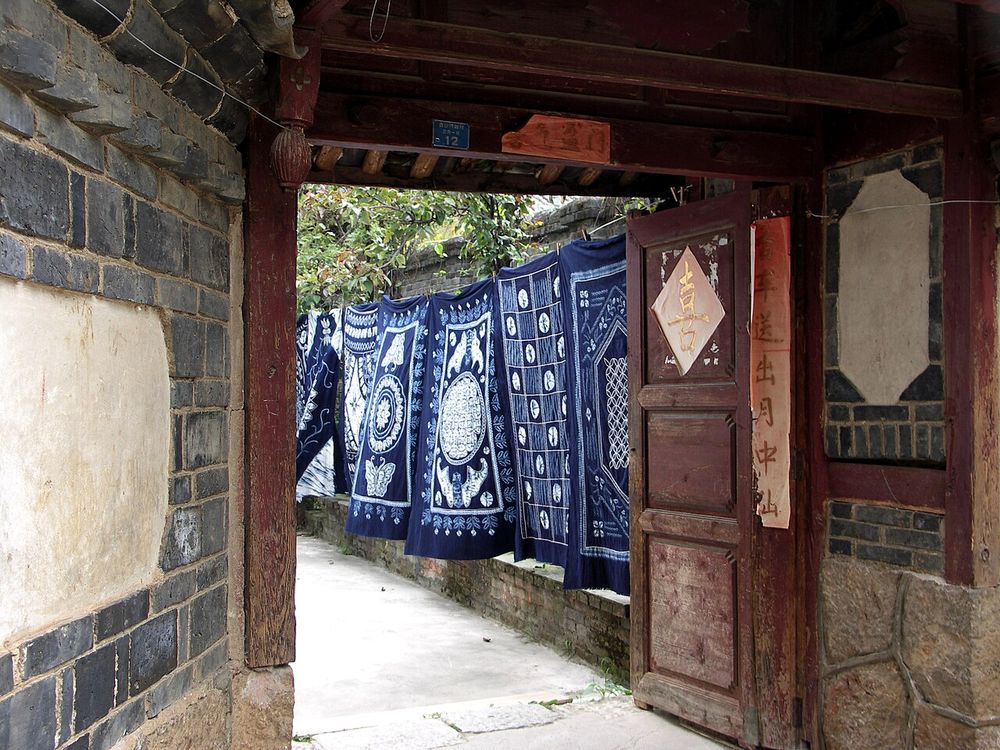
Blue cloth in a doorway, 2004Caitriana Nicholson, CC BY-SA 2.0
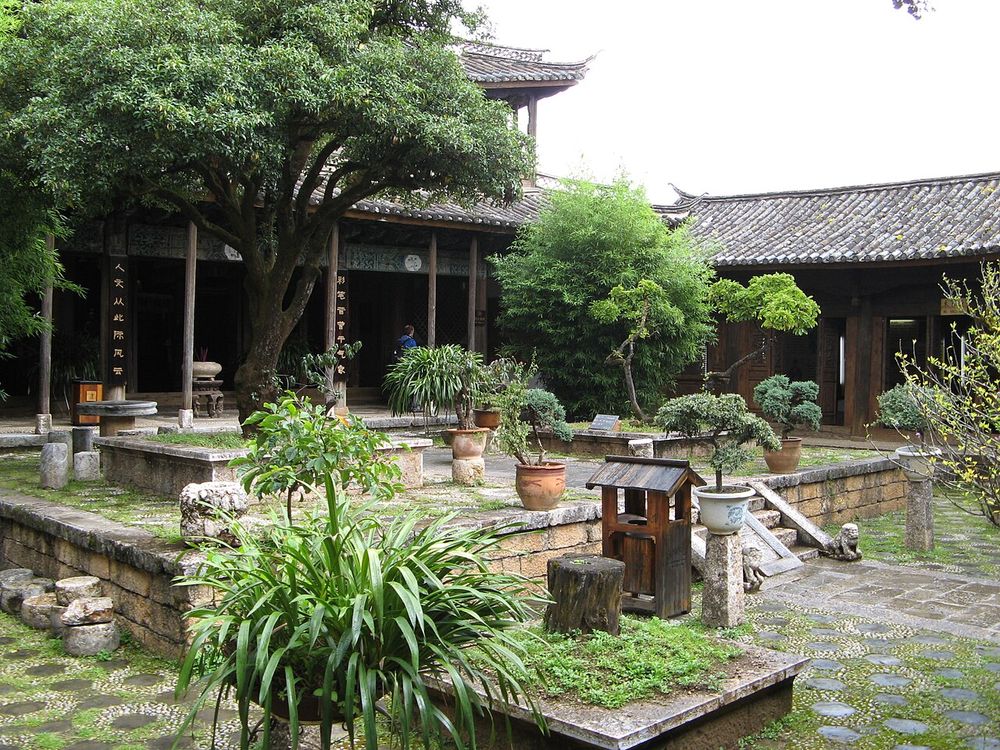
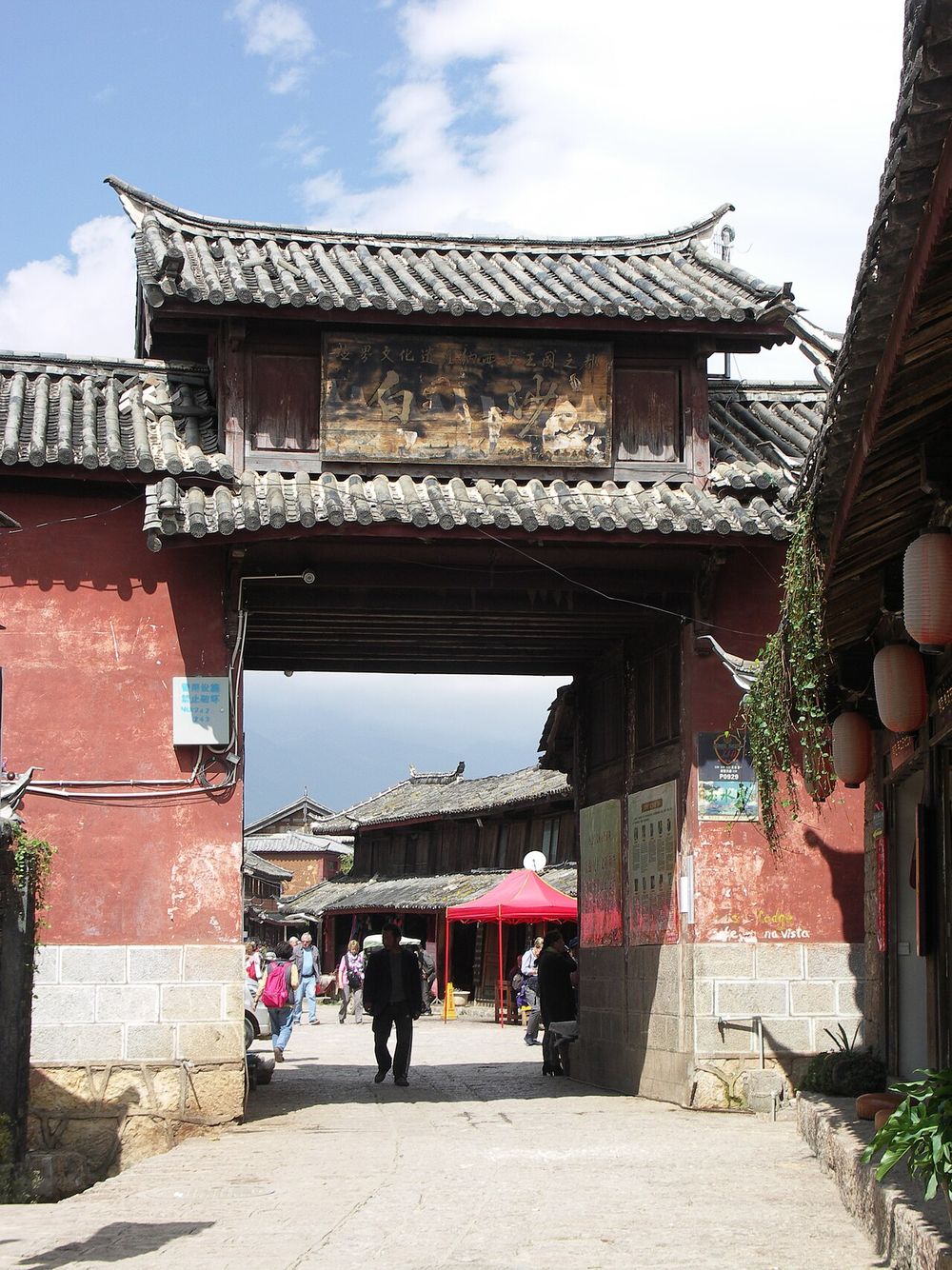
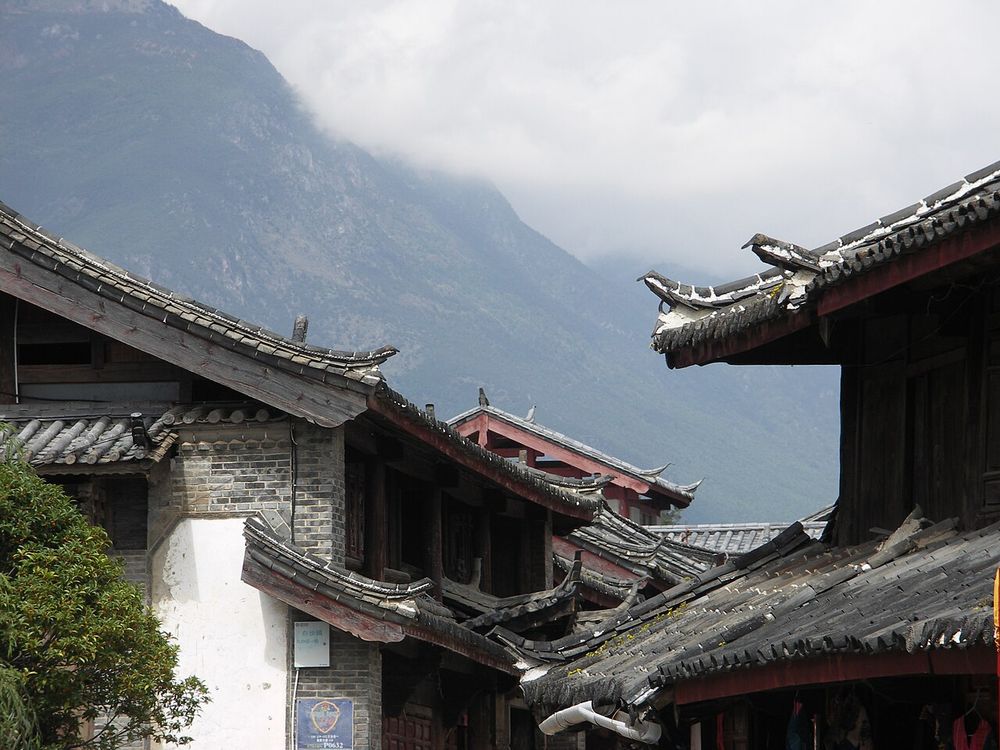
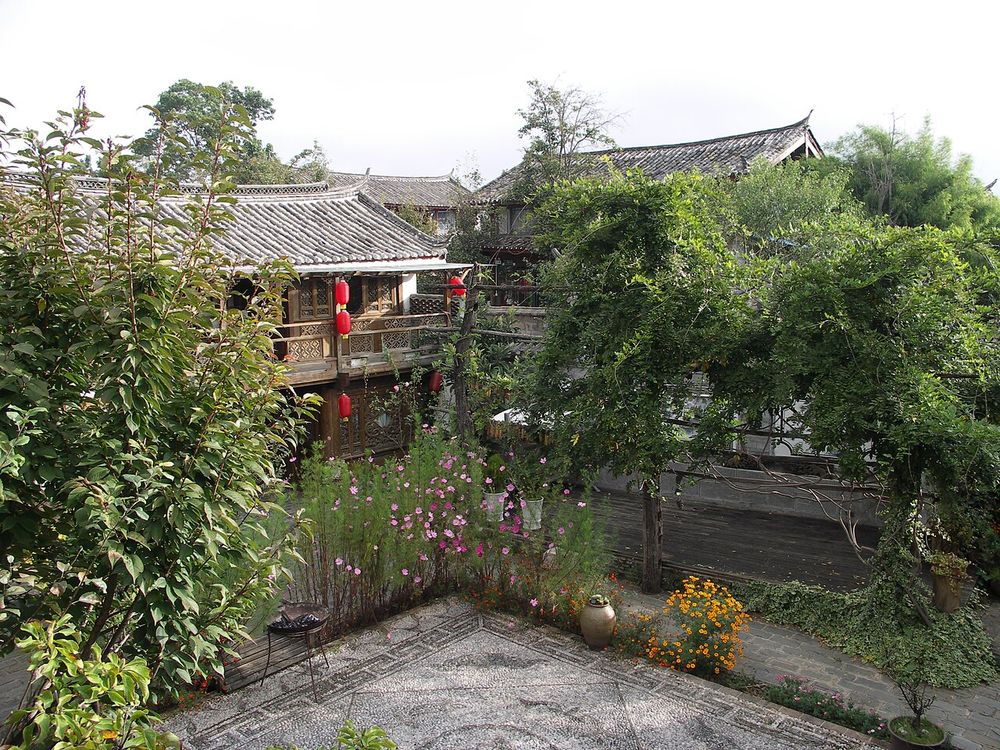
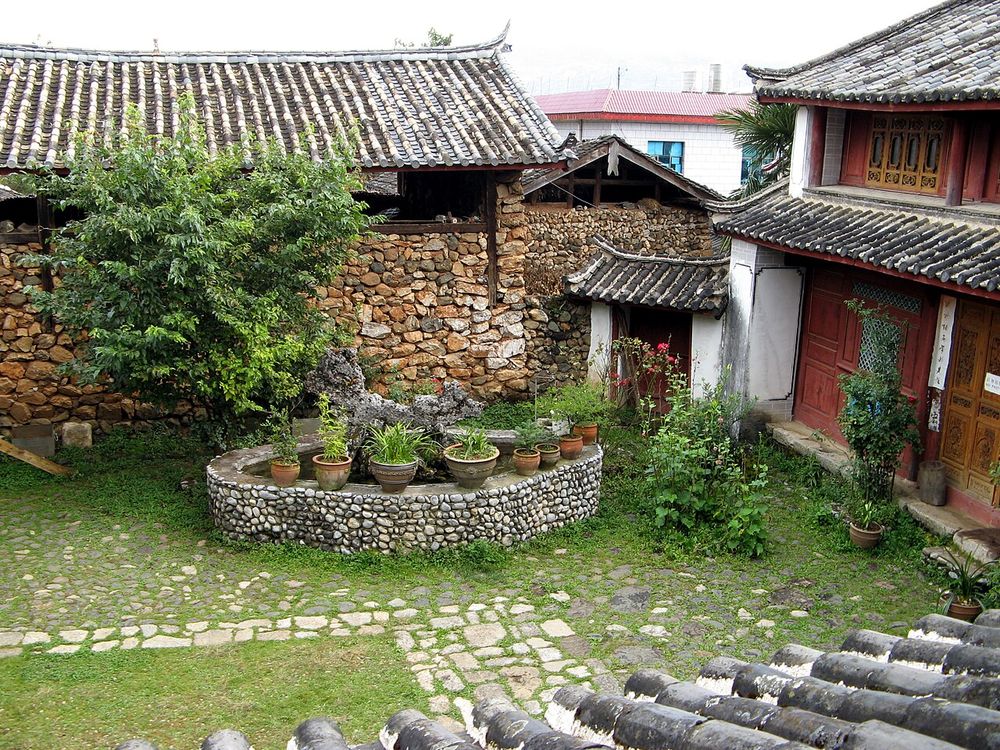
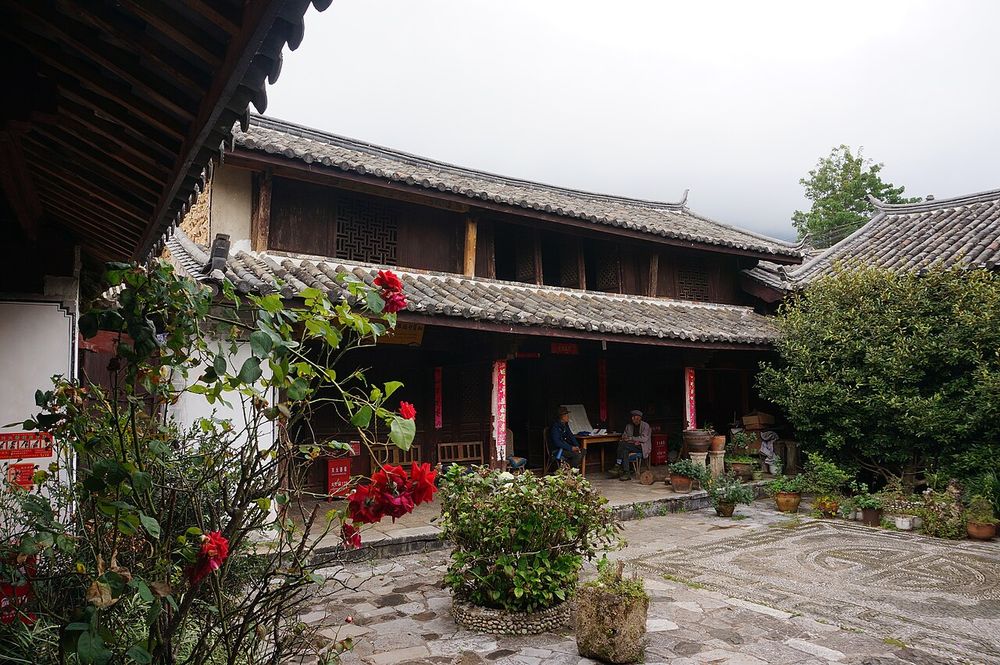
Baisha is known for Naxi embroidery; you can watch women working in the courtyards. Look at a house: walls of earth bricks on a stone base, a roof of grey tiles with a curve at the ends.
A courtyard with plants, 2007G41rn8, CC BY-SA 4.0
5. The fields and the snow mountain
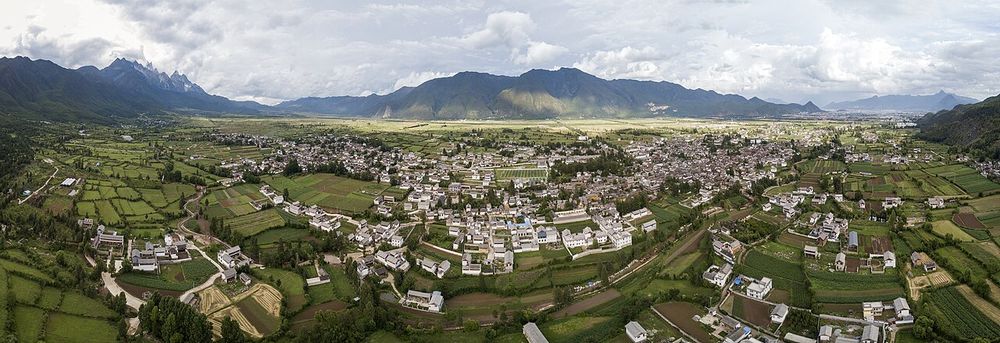
Baisha from the air, 2018Chensiyuan, CC BY-SA 4.0
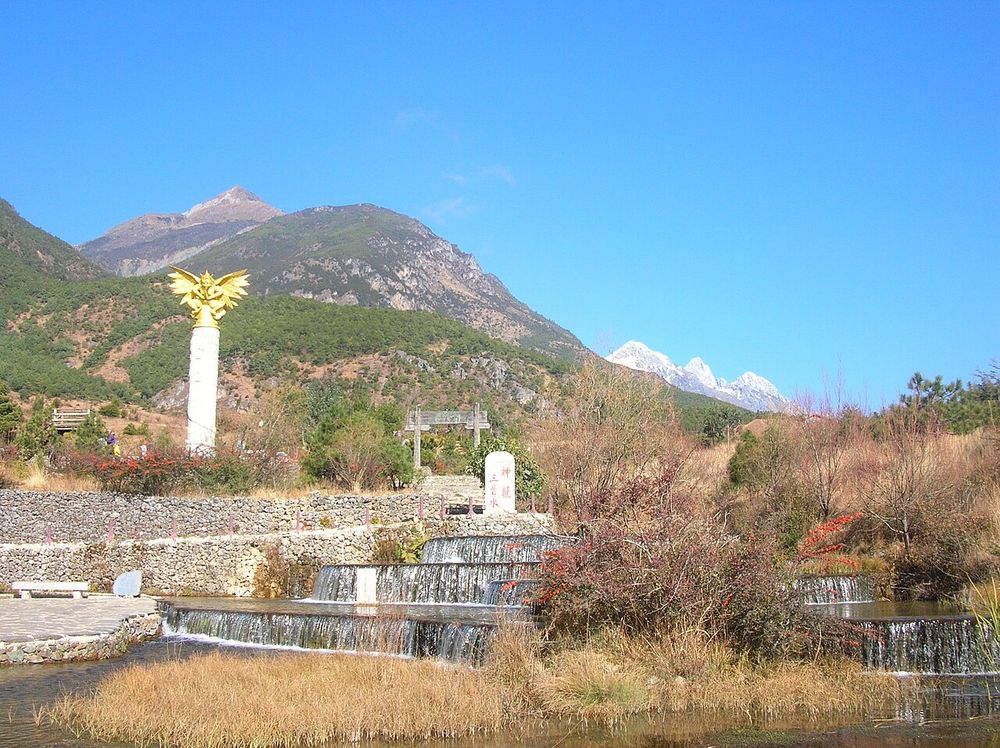
Walk out of the village to the north. The fields open, and Jade Dragon Snow Mountain fills the sky. A few kilometres on is Yuhu village and Joseph Rock's house; nearby, the Jade Water Village keeps a Naxi sacred spring.
Jade Water Village and the mountainsUser:Tdxiang, CC BY-SA 3.0
The village and the same years elsewhere
The Dabaoji Palace was built in 1582, the year Pope Gregory reformed the calendar. Its painters were at work in the same decades as the painters of the late Renaissance in Italy.
Meanwhile in the world
Year
Here
Elsewhere
1385
The earliest Baisha murals are painted (about this time)
The Battle of Aljubarrota in Portugal
1582
The Dabaoji Palace is built
The Gregorian calendar
1922
Joseph Rock arrives in the Lijiang area
The tomb of Tutankhamun is found
1997
Baisha is listed with the Old Town of Lijiang
Hong Kong returns to China
One line to remember: four peoples, one wall.
Then and now
Baisha and the plain below Jade Dragon Snow Mountain, 2018Chensiyuan, CC BY-SA 4.0, Wikimedia CommonsBaisha from the air, 2018Chensiyuan, CC BY-SA 4.0, Wikimedia CommonsThe main street, 2024Yumeto, CC BY-SA 4.0, Wikimedia CommonsAn earth-brick lane, 2015Luca Casartelli, CC BY-SA 2.0, Wikimedia CommonsA vegetable stall, 2015Luca Casartelli, CC BY-SA 2.0, Wikimedia CommonsThe street and the hills, 2015Luca Casartelli, CC BY-SA 2.0, Wikimedia CommonsEvening on the main street, 2015Luca Casartelli, CC BY-SA 2.0, Wikimedia CommonsShops on the street, 2015Luca Casartelli, CC BY-SA 2.0, Wikimedia CommonsA corner of the street, 2015Luca Casartelli, CC BY-SA 2.0, Wikimedia CommonsEmbroidery for sale, 2015Luca Casartelli, CC BY-SA 2.0, Wikimedia CommonsA gate tower, 2004Caitriana Nicholson, CC BY-SA 2.0, Wikimedia CommonsOld houses, 2004Caitriana Nicholson, CC BY-SA 2.0, Wikimedia CommonsA lane, 2004Caitriana Nicholson, CC BY-SA 2.0, Wikimedia CommonsRoofs under the mountain, 2004Caitriana Nicholson, CC BY-SA 2.0, Wikimedia CommonsBlue cloth in a doorway, 2004Caitriana Nicholson, CC BY-SA 2.0, Wikimedia CommonsA courtyard garden, 2004Caitriana Nicholson, CC BY-SA 2.0, Wikimedia CommonsA temple courtyard, 2007G41rn8, CC BY-SA 4.0, Wikimedia CommonsA temple hall, 2007G41rn8, CC BY-SA 4.0, Wikimedia CommonsA courtyard with plants, 2007G41rn8, CC BY-SA 4.0, Wikimedia CommonsA farmhouse, 2007G41rn8, CC BY-SA 4.0, Wikimedia CommonsThe Dabaoji Palace, 2024Yumeto, CC BY-SA 4.0, Wikimedia CommonsThe Liuli Hall, 2024Yumeto, CC BY-SA 4.0, Wikimedia CommonsThe gate of the murals site, 2024Kcx36, CC BY-SA 4.0, Wikimedia CommonsThe national monument stone, 2024Kcx36, CC BY-SA 4.0, Wikimedia CommonsThe stone with the history of the halls, 2024Kcx36, CC BY-SA 4.0, Wikimedia CommonsA detail of the Baisha muralseric_ho, CC BY 3.0, Wikimedia CommonsPanels in the murals site, 2005http://en.wikipedia.org/wiki/en:User:Funkydoodle, CC BY-SA 3.0, Wikimedia CommonsMaize drying under the eavesAaron Zhu, CC BY-SA 3.0, Wikimedia CommonsA Naxi farmhouseAaron Zhu, CC BY-SA 3.0, Wikimedia CommonsThe road to Baisha, 2015Luca Casartelli, CC BY-SA 2.0, Wikimedia CommonsA village yard on the way, 2015Luca Casartelli, CC BY-SA 2.0, Wikimedia CommonsThe Lijiang tram near Baisha, 2023N509FZ, CC BY-SA 4.0, Wikimedia CommonsJoseph Rock's former house in Yuhu village, 2017猫猫的日记本, CC BY-SA 4.0, Wikimedia CommonsJade Water Village near Baisha, 2015Luca Casartelli, CC BY-SA 2.0, Wikimedia CommonsWishing tablets at Jade Water Village, 2015Luca Casartelli, CC BY-SA 2.0, Wikimedia CommonsJade Water Village and the mountainsUser:Tdxiang, CC BY-SA 3.0, Wikimedia Commons
Local legends
These are stories people tell about this place. They are legends, not history, and each one says where it comes from.
LegendSanduo, the god of the snow mountain
The Naxi say their protector Sanduo is the spirit of Jade Dragon Snow Mountain, who rides a white horse in white armour. His temple stands near Baisha, and his festival falls in the second month of the lunar year.
Source: Naxi belief, honoured at the Beiyue Temple near Baisha
Later, people who live here will be able to add the stories they grew up with, and say which of these they have heard.
Not certain, and where accounts conflict
When were the murals painted?
The usual span is from the early Ming, about 1385, to the early seventeenth century, over more than two hundred years. Individual dates are often uncertain.
Visiting
Tickets and hours
The village is free. The murals site has a small ticket; check at the gate.
Last checked 2026-11-12. News of the reopening of the Baisha murals site, 2026; travel reports.
Booking without WeChat
Ticket window on site Tickets for the murals site are sold at the gate.
Note The village is open freely. The murals site sells tickets at its gate and on Chinese booking sites. Bring your passport.
Checked 2026-11-12
Where to start
Take the Lijiang tram, a bus or a taxi north from the old town, about ten kilometres.
Hire a bicycle and ride on to Yuhu village.
Before you go
Baisha is over 2,400 metres high and the sun is strong: bring a hat and water.
Bring your passport itself.
Customs and manners
No flash in the mural halls.
People live and farm here; ask before photographing anyone.
Opening hours are given in the local time of the place.
Look for these
On one wall, find a Han, a Tibetan and a Daoist figure.
Find maize drying under the eaves.
Find a woman embroidering.
From the fields, find the main peak of the snow mountain.
I am here
Stand at the site, sign in, press the button, and collect its stamp. Your browser will ask to use your location. It is sent to us once to confirm that you are at the site; we keep how far you were from it, not the spot where you stood.
Your stamps are saved to your account, so they follow you to any device. Checking from a browser cannot rule out every false location; stricter checks arrive with the app.
Messages
Share your photos
Photos here show the place, not people. Each one is credited to the visitor who took it and appears after our team has looked at it. A photo with you in it belongs under “I am here”.