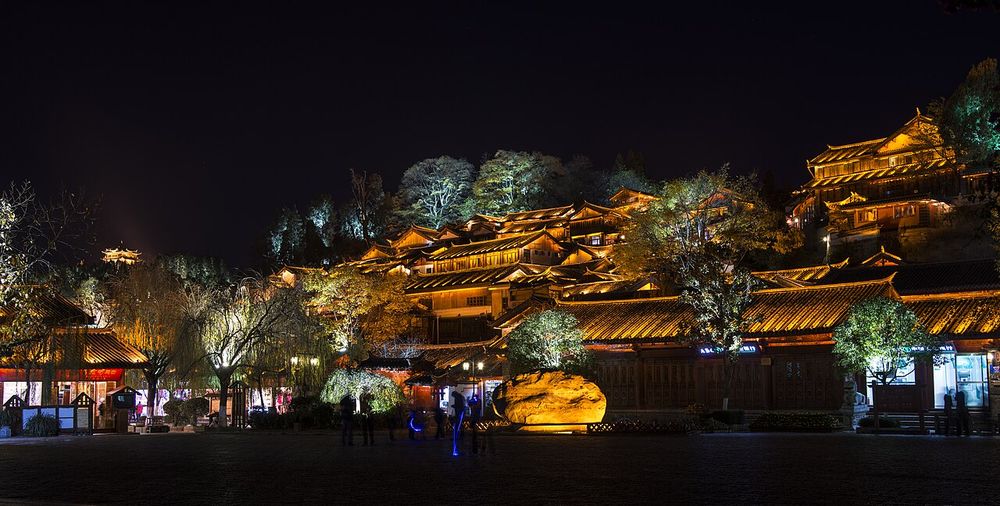
A town of the Naxi people at 2,400 metres, more than 800 years old, with no city wall and a stream past almost every door. World Heritage since 1997.
Photo: Chensiyuan, CC BY-SA 4.0, Wikimedia Commons
The story
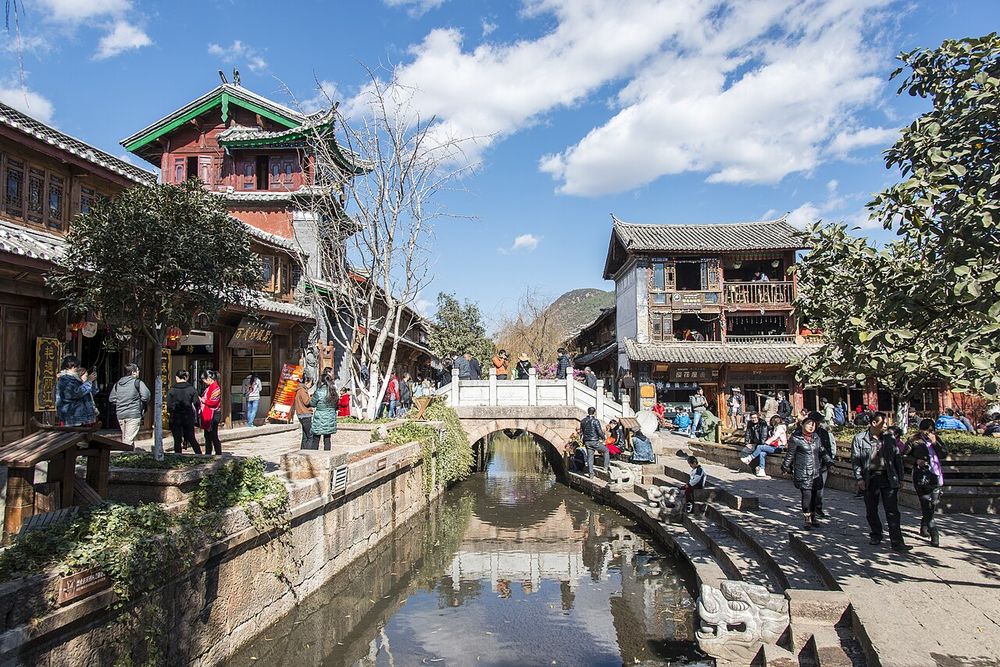
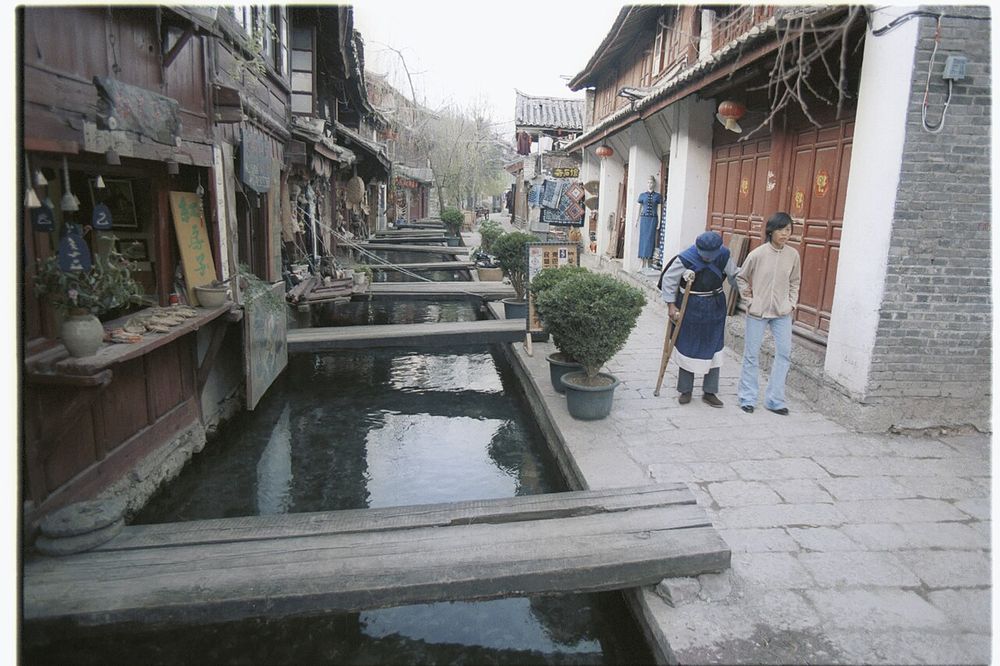
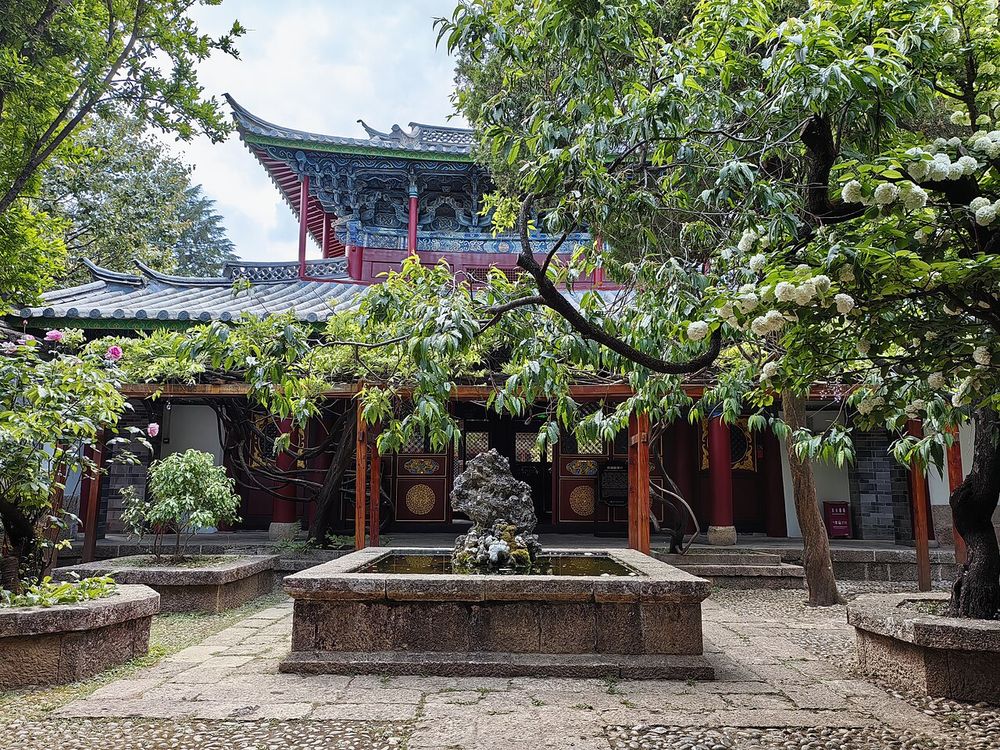
You are standing in a town that has no wall. Most old Chinese towns were built inside one. This one was built around water: a spring to the north feeds a stream, the stream splits in three at a stone bridge, and the three branches divide again and again until almost every house has running water at the door.
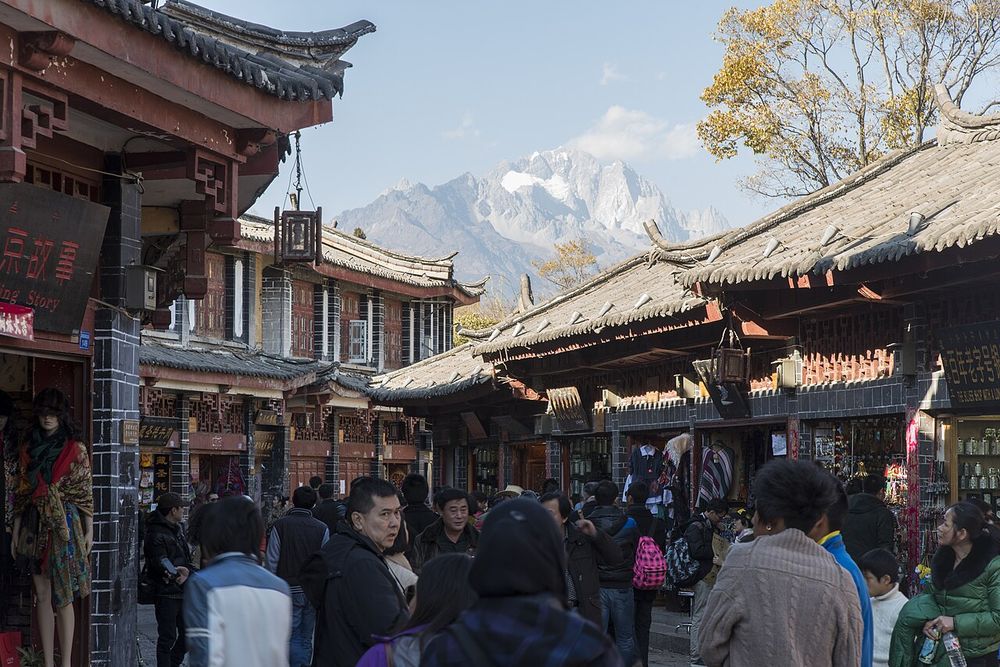
The town belongs to the Naxi, a people of about 300,000. It was built in the late Song (960–1279) and early Yuan dynasties (1271–1368), more than 800 years ago, and it stands 2,400 metres above the sea. The snow mountain to the north is Jade Dragon Snow Mountain.
What is here
The World Heritage site is three places, not one: the old town of Dayan with Black Dragon Pool at its head, and two older villages to the north, Baisha and Shuhe. The streets of all three are open; what sells tickets is a handful of buildings inside them.
Not part of the old town. A separate park with its own fees
If you have one minute
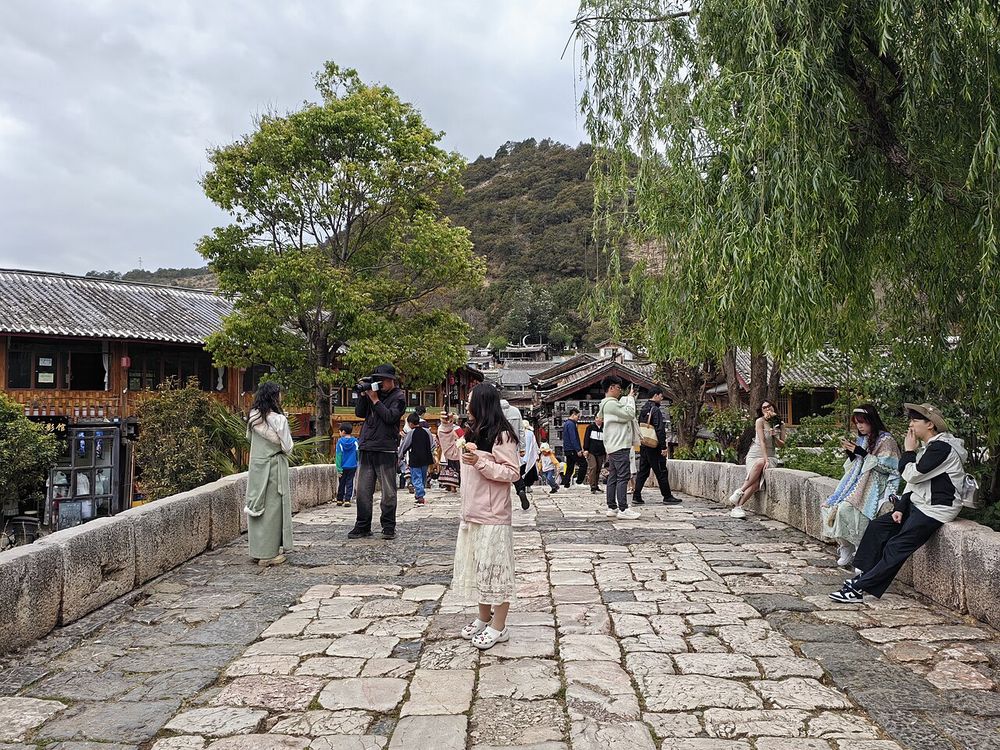
On any bridge in the old town
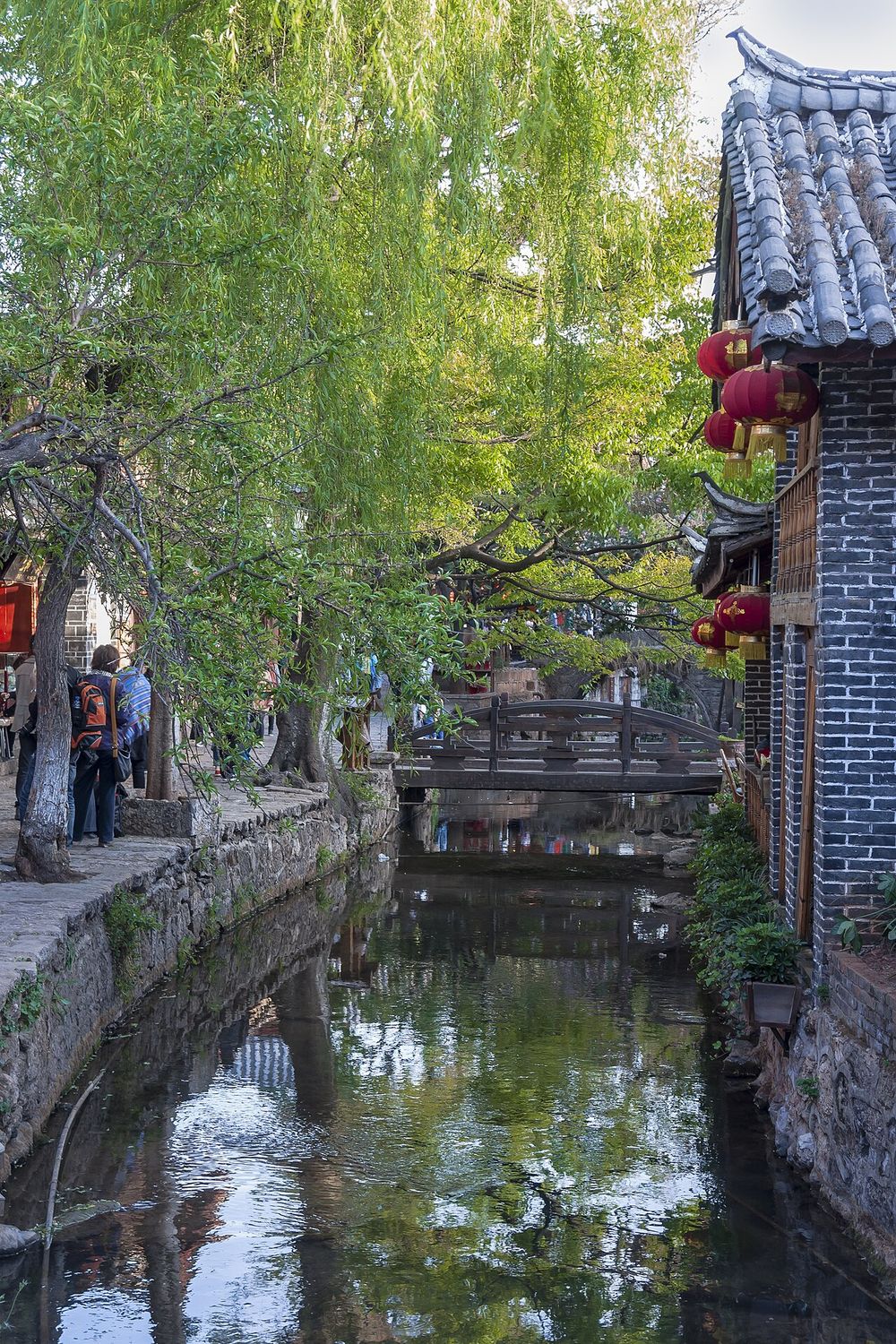
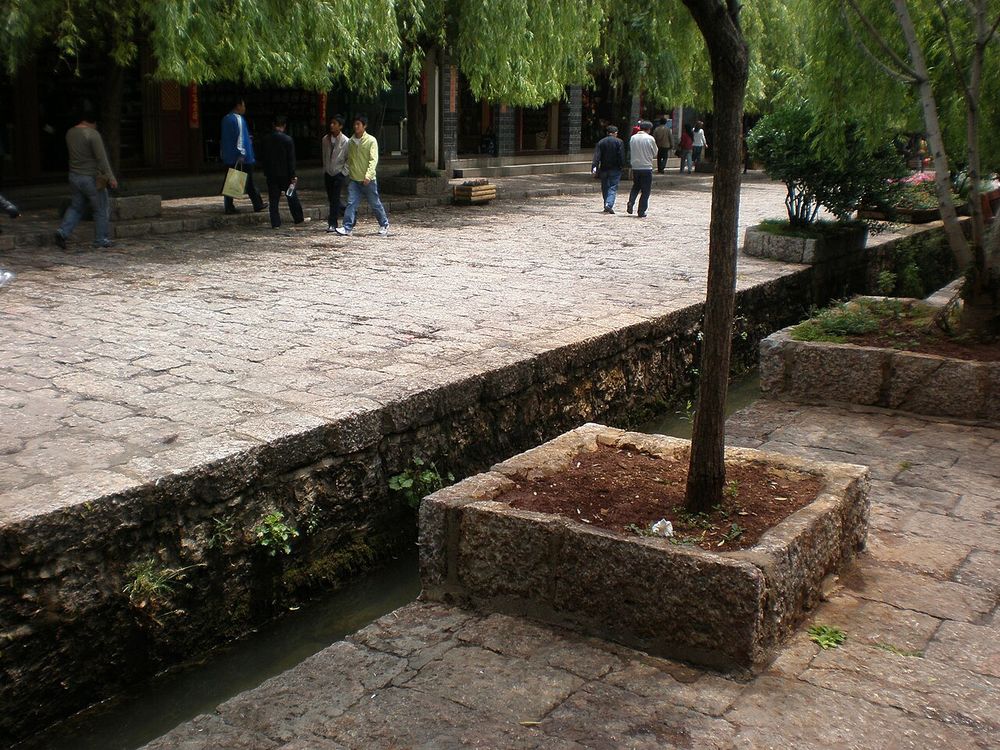
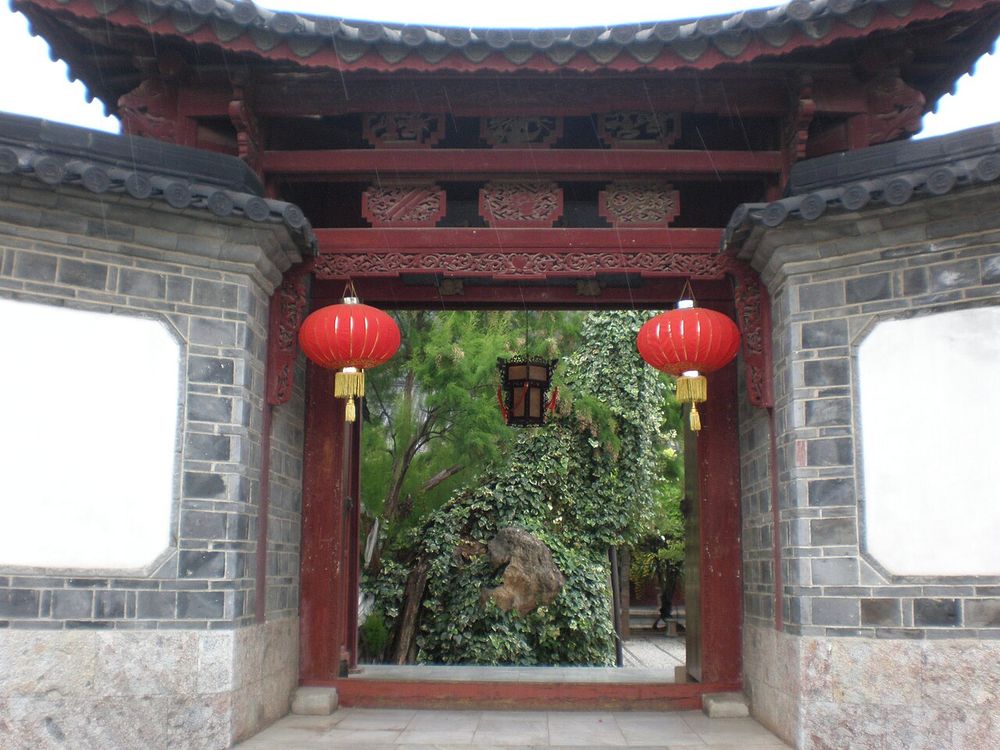
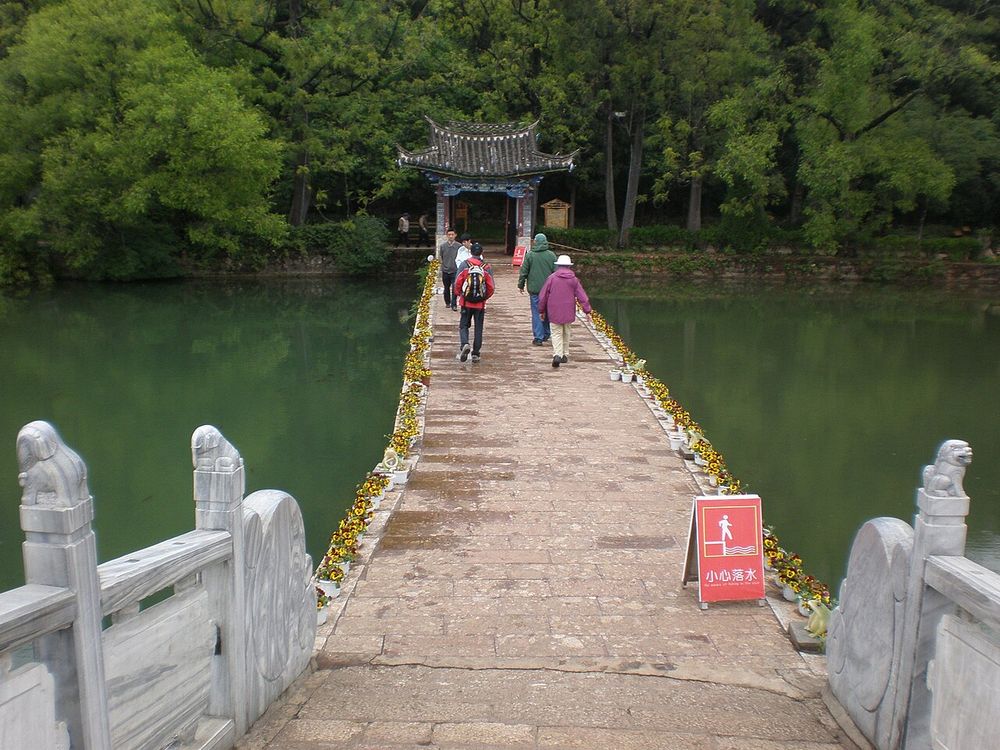
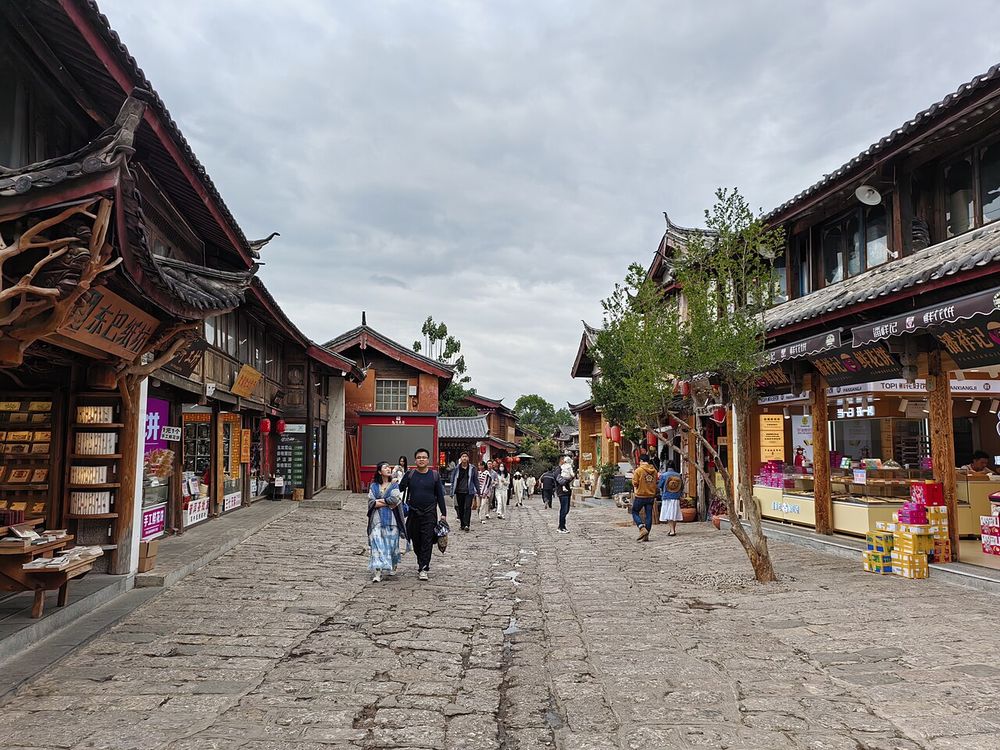
A stream, a lane and a row of doorsChensiyuan, CC BY-SA 4.0
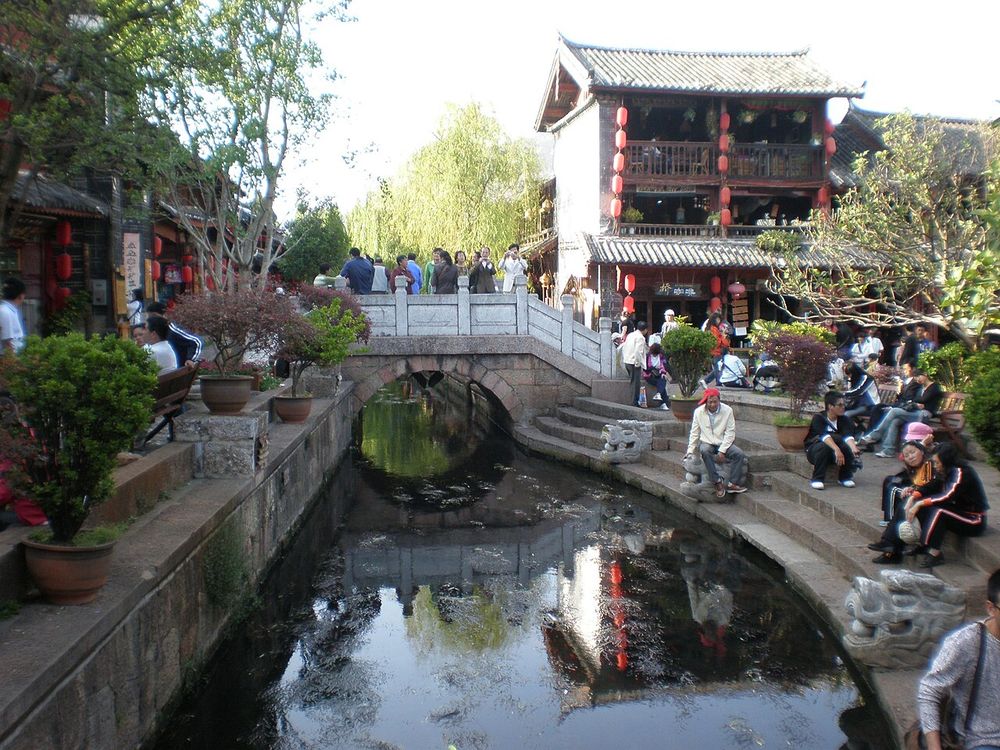
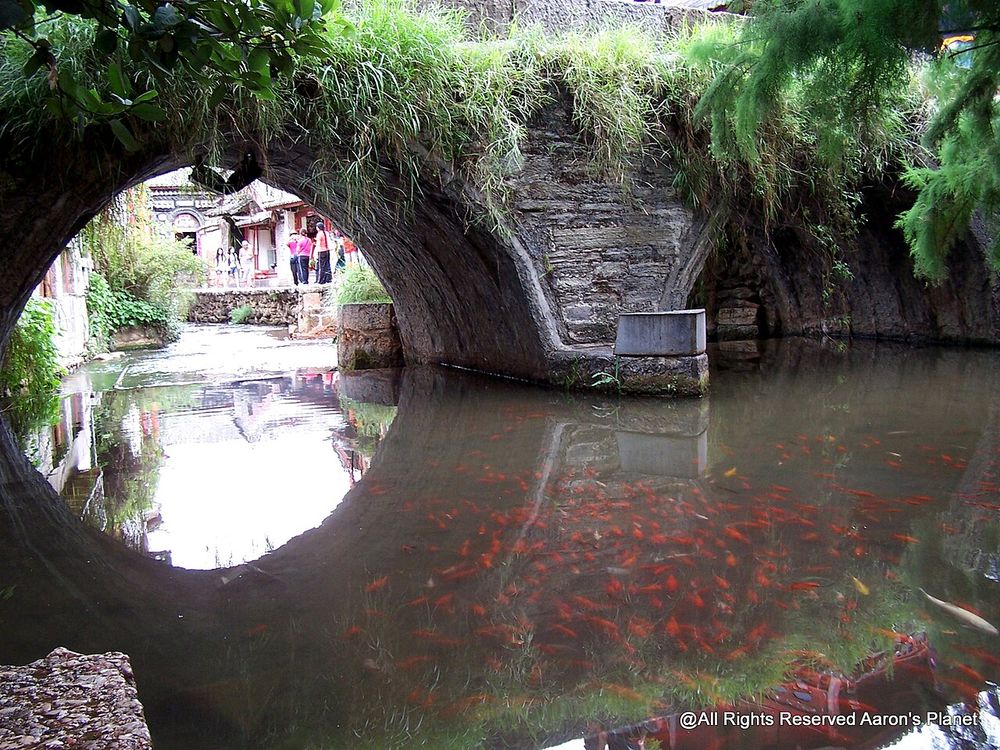
Look at the water under you. It comes from Black Dragon Pool, a spring-fed lake a kilometre north of the town. At Yulong Bridge it divides into the West, Middle and East rivers. By the usual count more than three hundred bridges cross them.
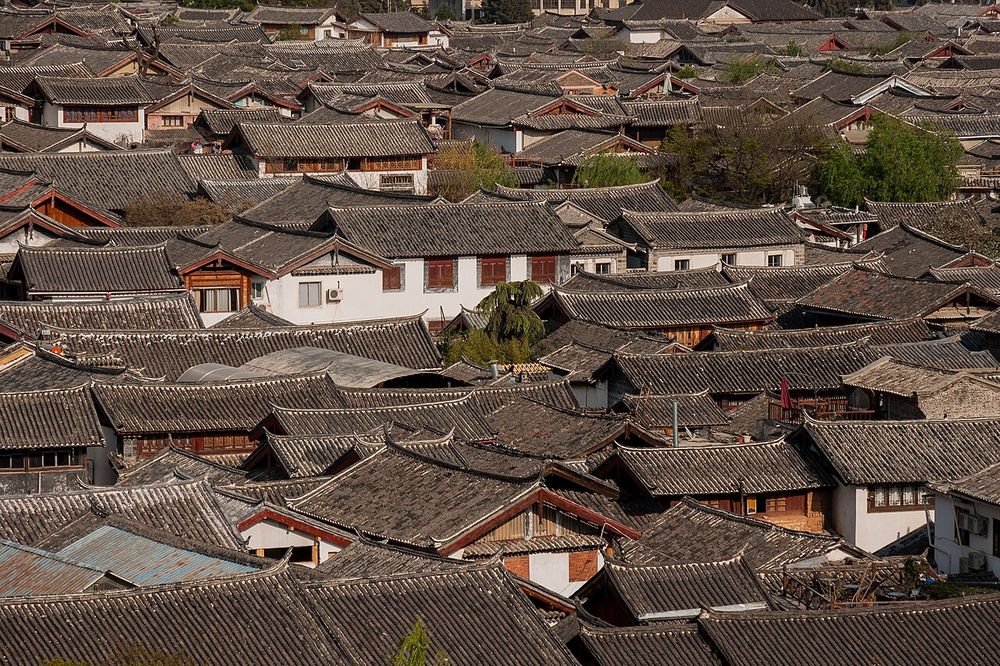
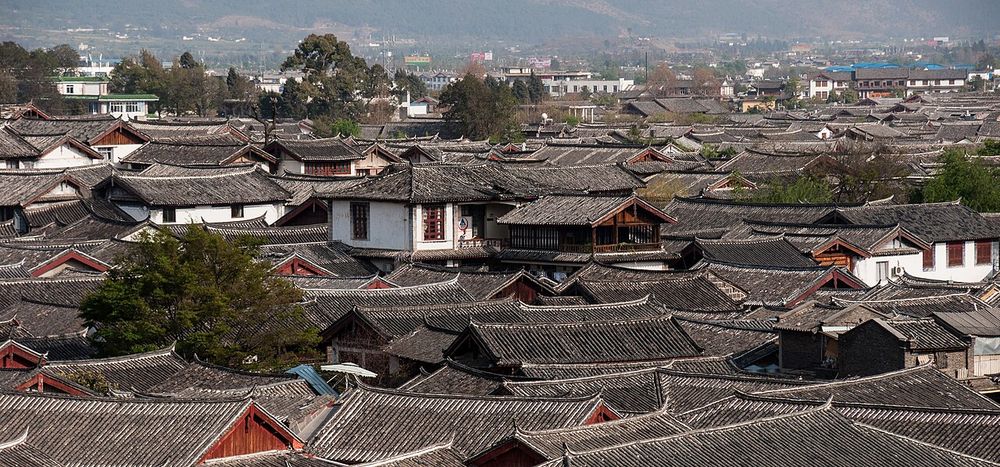
Look at the roofs. The houses are timber frames with tiled roofs, built to sway. On 3 February 1996 an earthquake of magnitude 7 struck. Many walls fell and the frames stayed up, and people here say of their houses: the walls fall, the house does not.
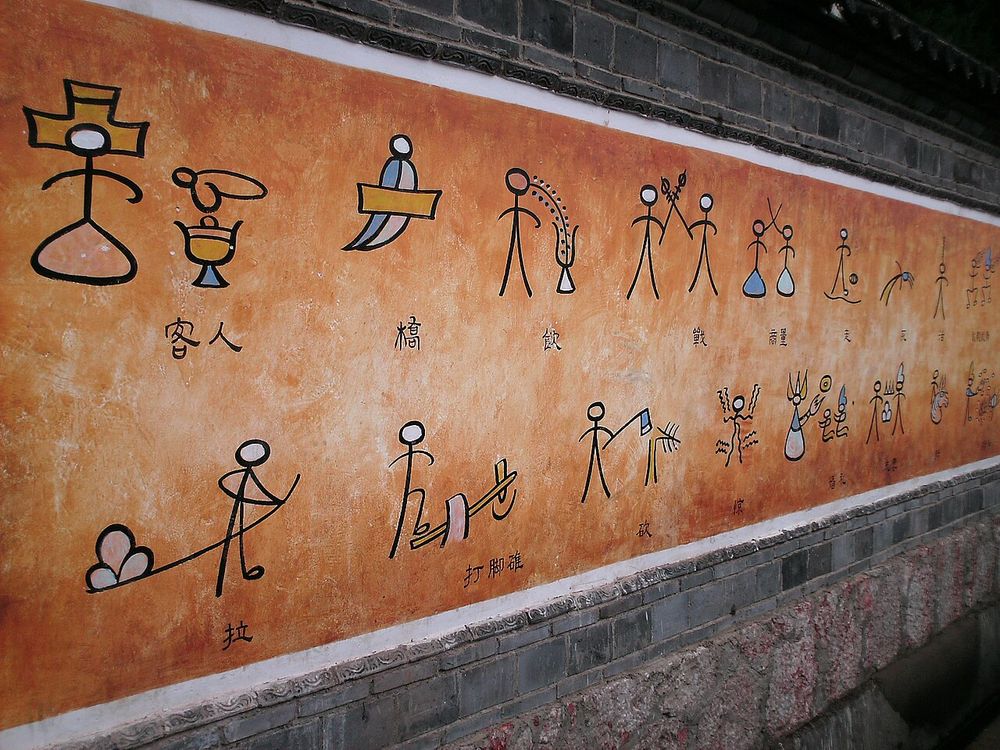
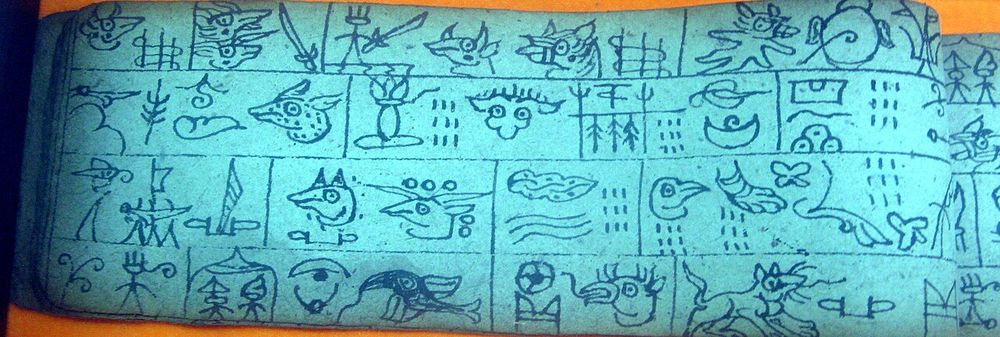
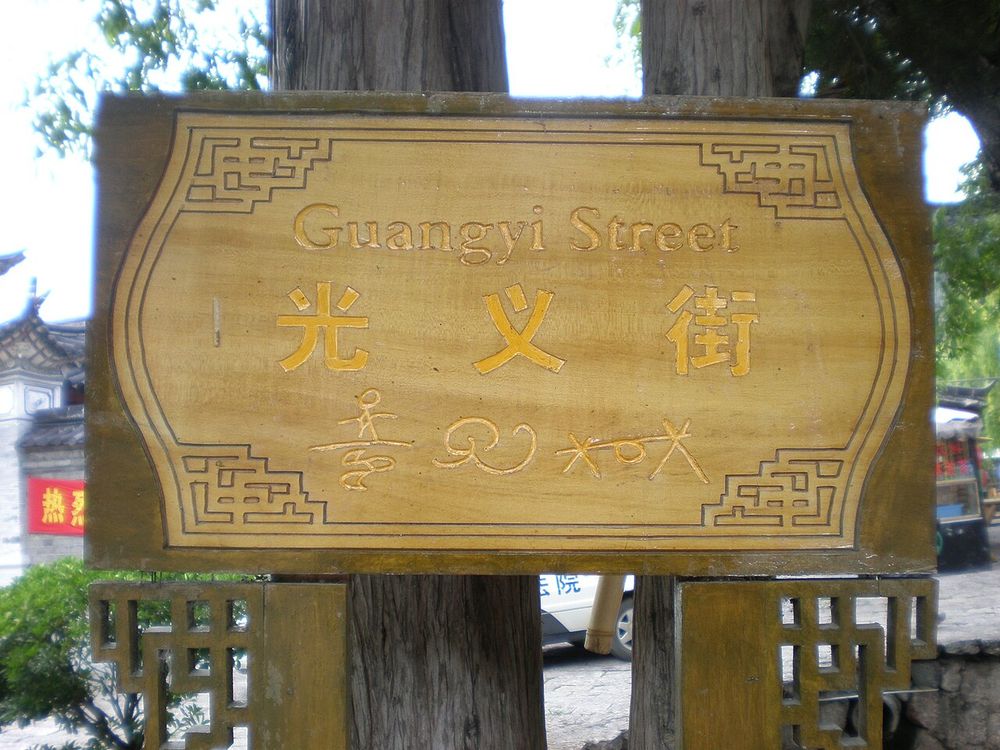
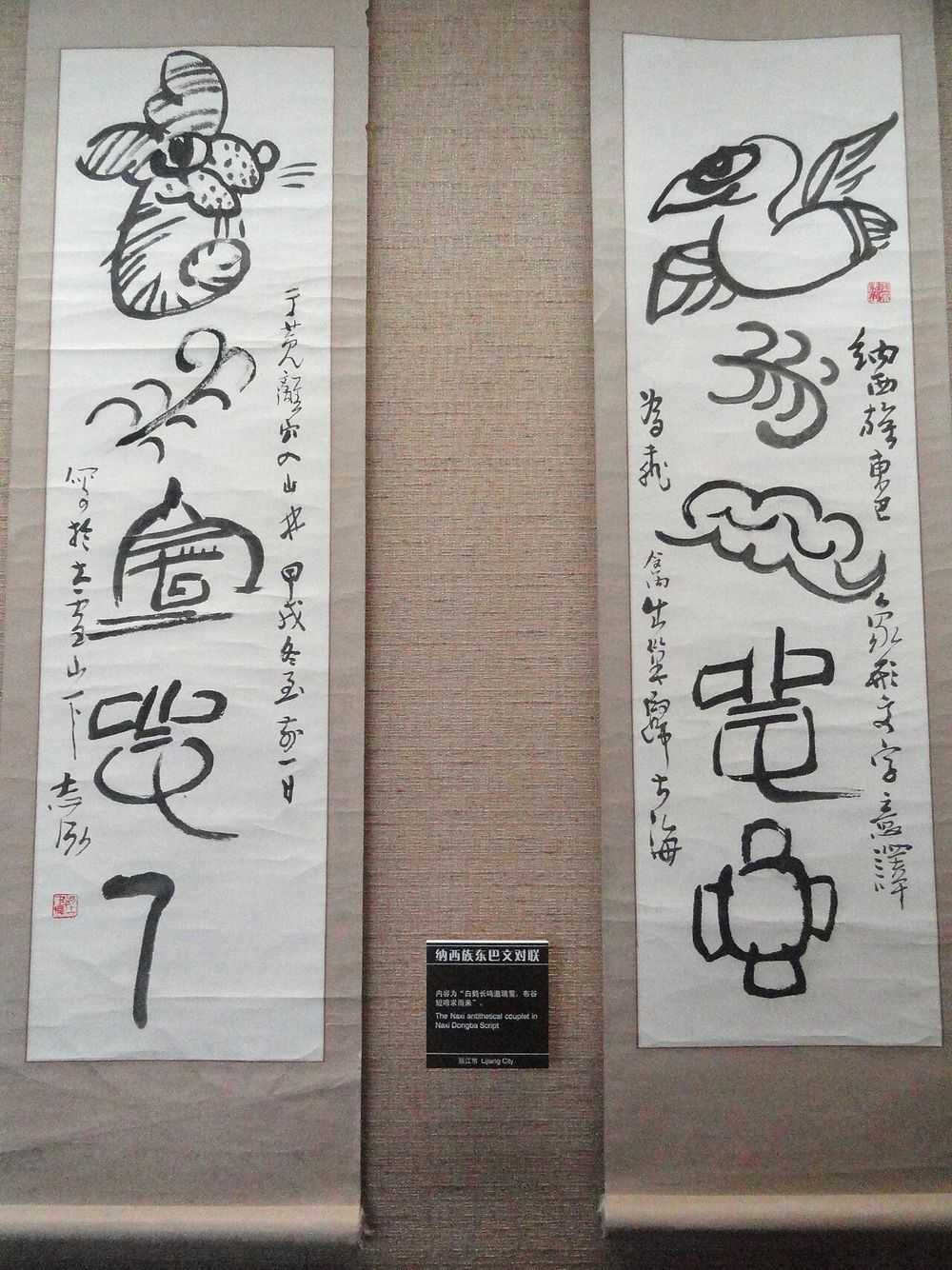
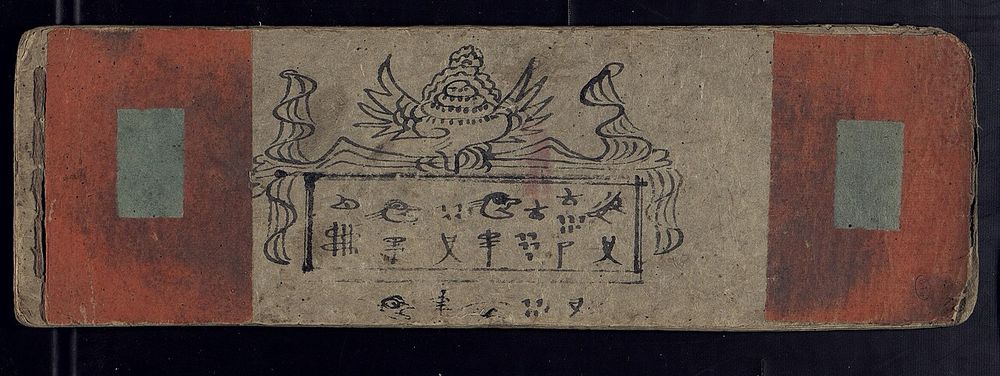
Look for writing made of small pictures on shop signs and street signs: a man, a bird, a mountain. This is Dongba script, the writing of Naxi priests, one of the very few picture scripts still in use.
Why no wall? Historians give a plain reason: the mountains were wall enough, and the Mu family held the passes.
The people of this place
The Naxi have their own language, their own religion and their own script. The priests are called dongba, and their books, written in pictures on handmade paper, record myths, medicine, calendars and rites. In 2003 the old Dongba manuscripts were entered on UNESCO's Memory of the World register.
Older Naxi women still wear a blue tunic and a sheepskin cape with seven embroidered discs on the back. The name people give it means "carrying the moon and the stars": out before dawn, home after dark.
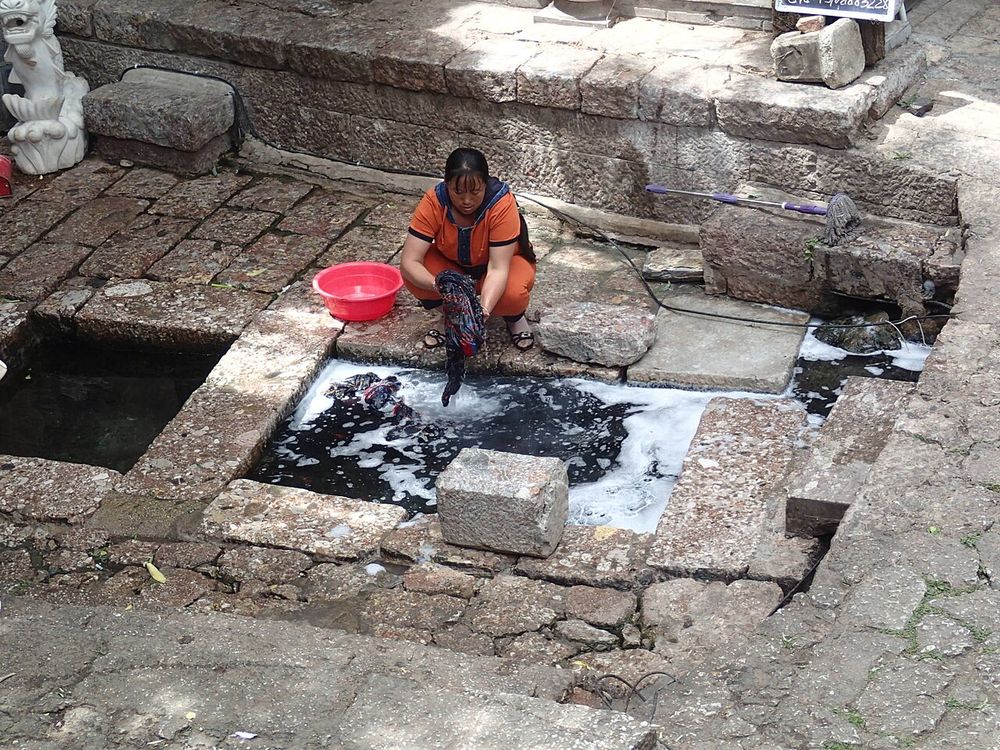
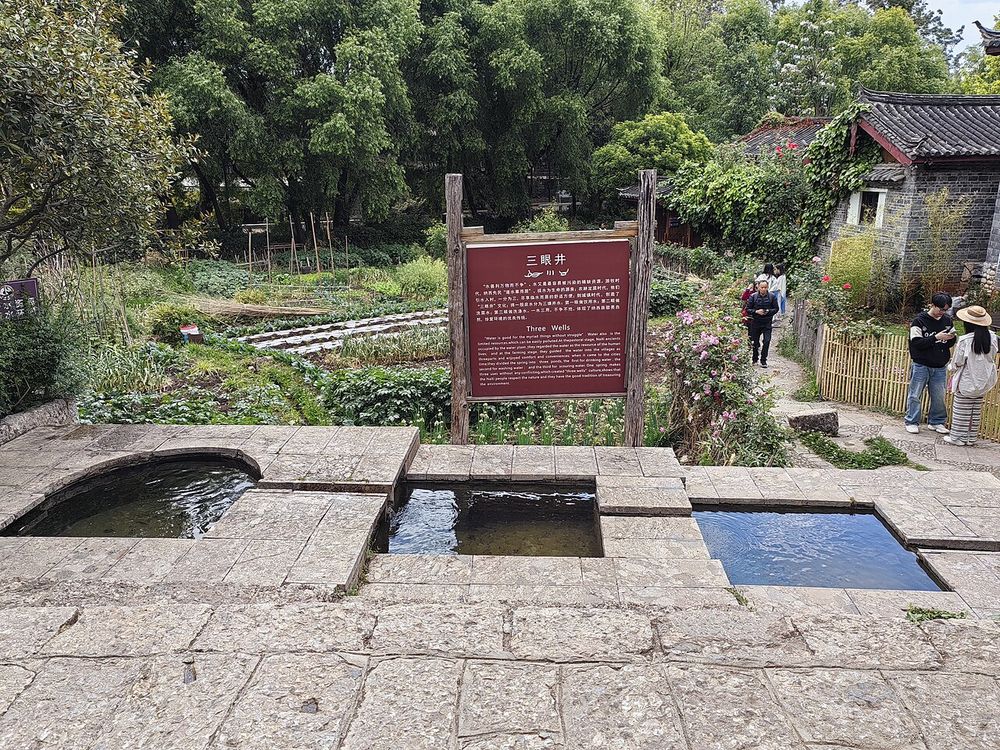
What differs from the rest of China for a visitor is mostly about water. A public well here has three basins in a row. The top one is for drinking, the middle one for washing vegetables, the bottom one for washing clothes. Do not rinse your hands or shoes in the top basin.
People who stood here
Kublai Khan, grandson of Genghis Khan and later founder of the Yuan dynasty, 1253He led a Mongol army south through this region to conquer the kingdom of Dali. The official history of the Yuan records that the army crossed the Jinsha River on inflated hides and rafts. Whether he stood on this spot nobody can say; the Naxi chief submitted to him, and the family ruled Lijiang for the next 470 years.
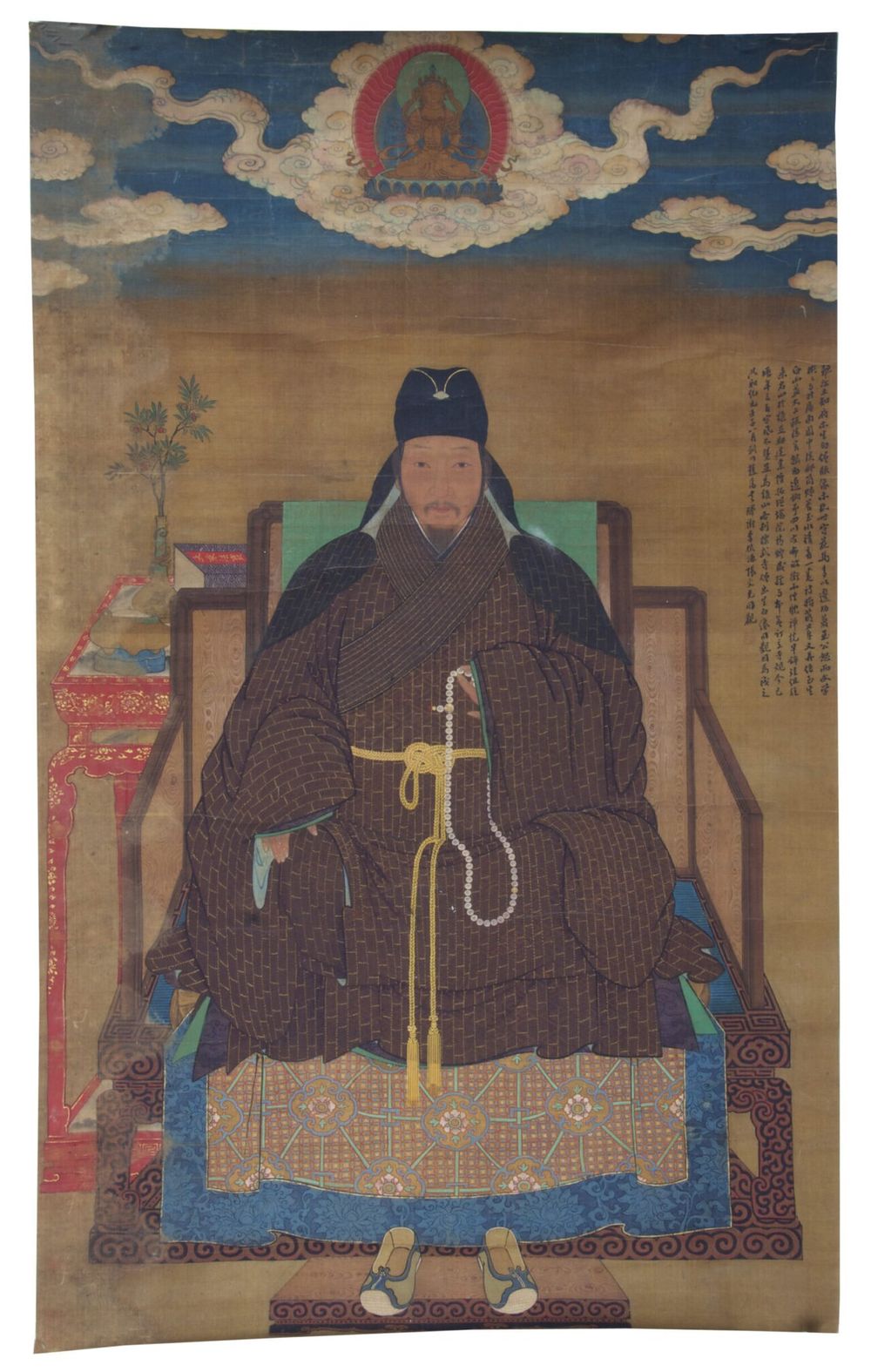
Xu Xiake, China's most famous travel writer, 1639He came as the guest of the chieftain Mu Zeng, near the end of thirty years on the road. Imagine him looking over these roofs toward the chieftain's residence. He wrote of it: the palace is so fine it could be a king's.
Go deeper: eight stops, from the spring to the two older villages
1. Black Dragon Pool: where the water starts
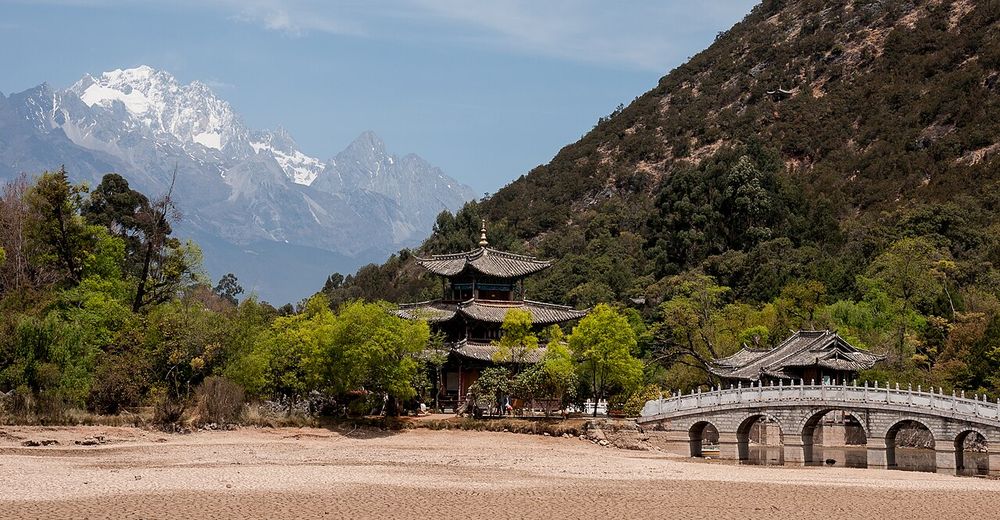
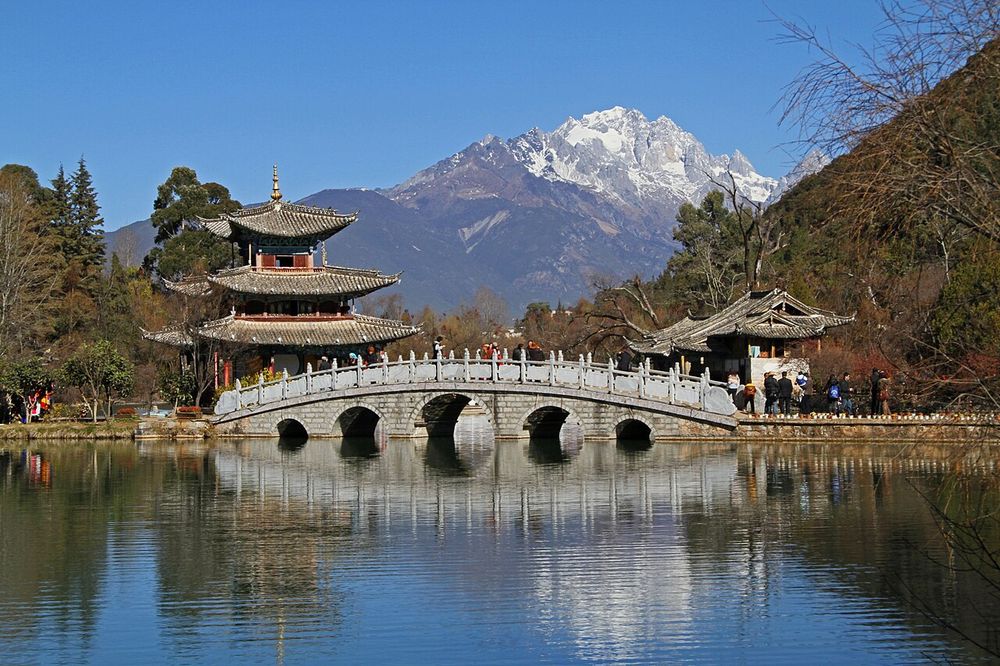
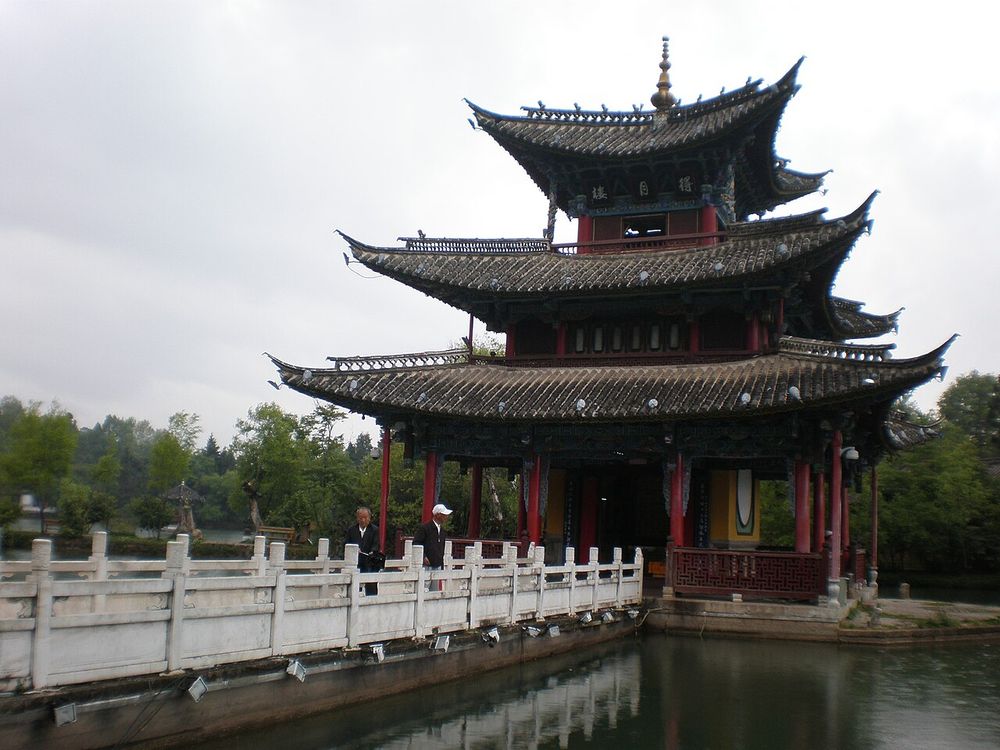
Black Dragon Pool: the bridge, the pavilion and the snow mountainCEphoto, Uwe Aranas, CC BY-SA 3.0
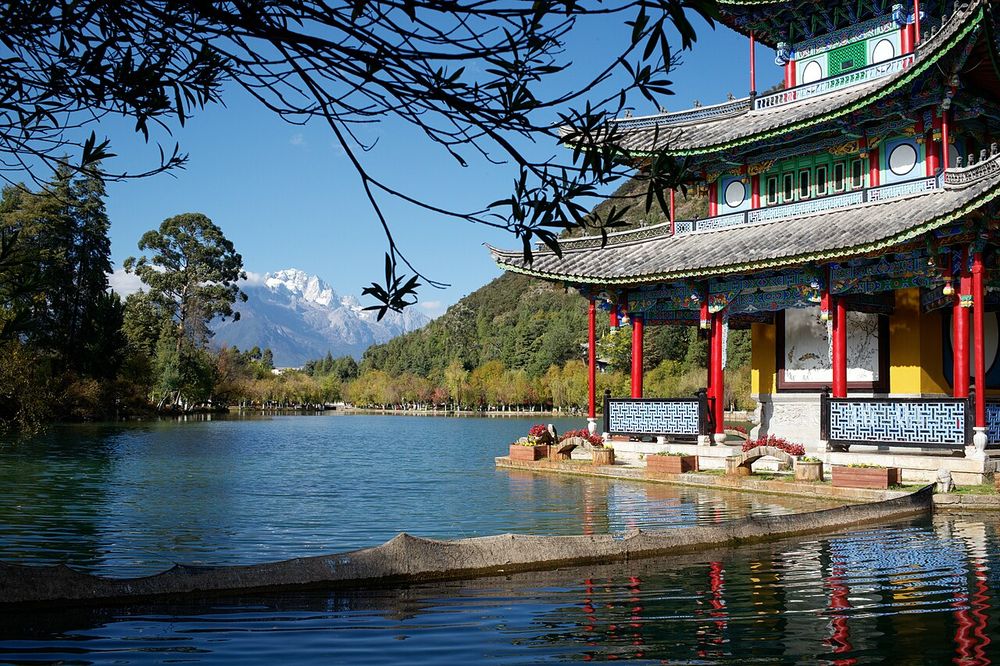
The pool lies at the foot of Elephant Hill, a kilometre north of the old town. Springs rise through the bed, and on a clear morning Jade Dragon Snow Mountain stands upside down in the water behind a white bridge of five arches. This is the most photographed view in Lijiang.
The Dragon God shrine dates from 1737. The pavilion in the water, the Moon-Embracing Pavilion, burned down in 1950 and was rebuilt in 1963. The Five Phoenix Pavilion was built in 1601 at a temple in the hills and moved here in 1979.
The Dongba culture research institute is inside the park. In some dry years the springs stop and the pool shrinks or empties, so the mirror view is not guaranteed.
2. The Yu River and its three branches
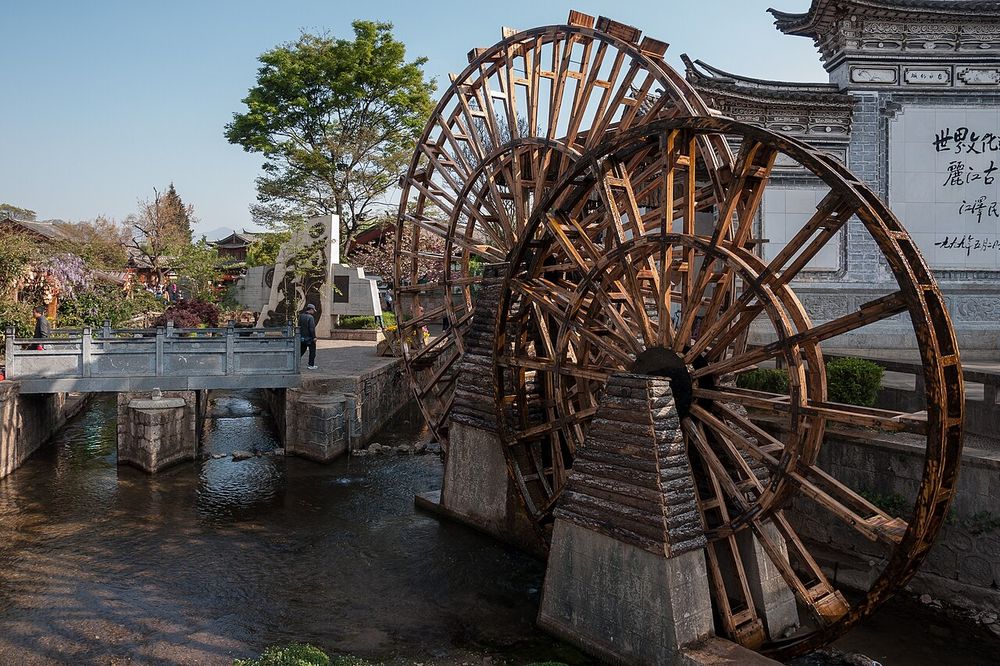
The water wheels at the north entranceCEphoto, Uwe Aranas, CC BY-SA 3.0
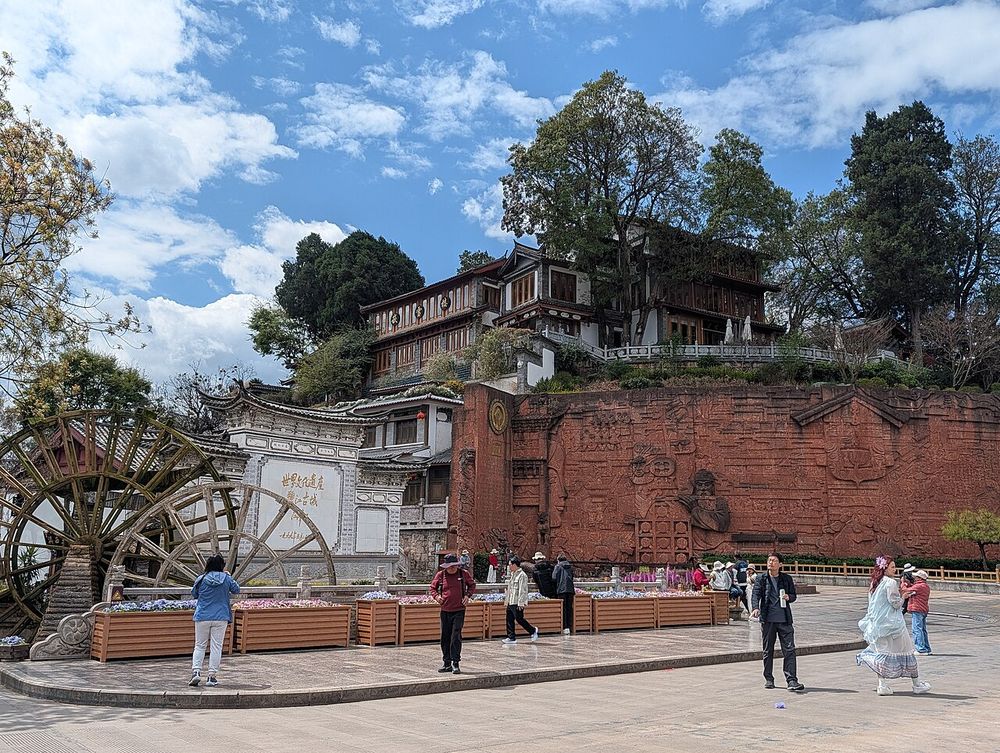
From the pool the Yu River runs south to the big water wheels at the north entrance. At Yulong Bridge it divides into three. Each branch splits into smaller channels, so the streets follow the water and none of them is straight.
When UNESCO listed the town it singled out this water system, old and intricate and still working. The town's own phrase is "a hundred bridges, a thousand lanes".
3. Sifang Street: the market square
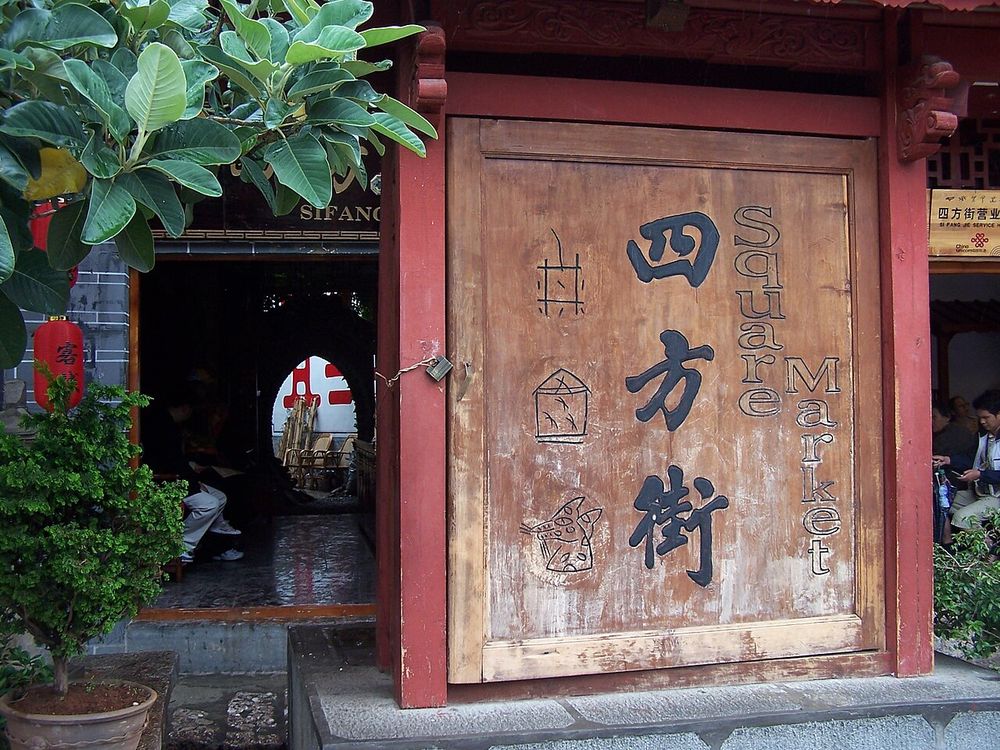
The name board of Sifang Street钟启明, CC BY-SA 3.0
Sifang Street is not a street. It is an open square about forty metres across where the main lanes meet, and it was the market of the tea-horse road, the caravan route that carried Yunnan tea to Tibet. Bridge and lane names nearby still say what was sold there: Duck Egg Bridge, Grass Market.
The square slopes a little. By closing a sluice on the West River, people sent water across the paving stones to wash the market clean. A 2022 report says this is still done on Wednesday and Saturday mornings; we could not confirm the present schedule.
4. A Naxi house
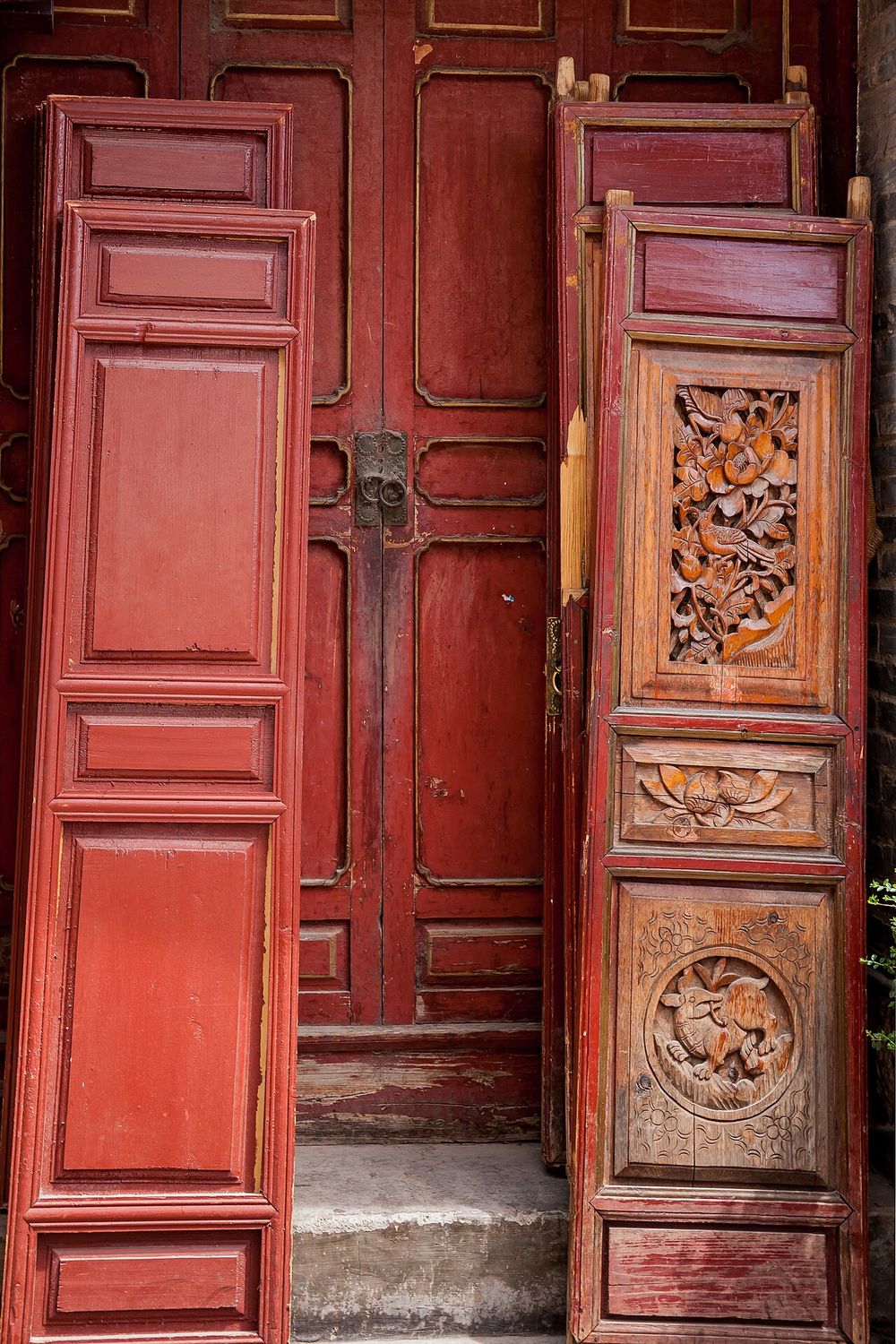
Carved doors of a Naxi houseCEphoto, Uwe Aranas, CC BY-SA 3.0
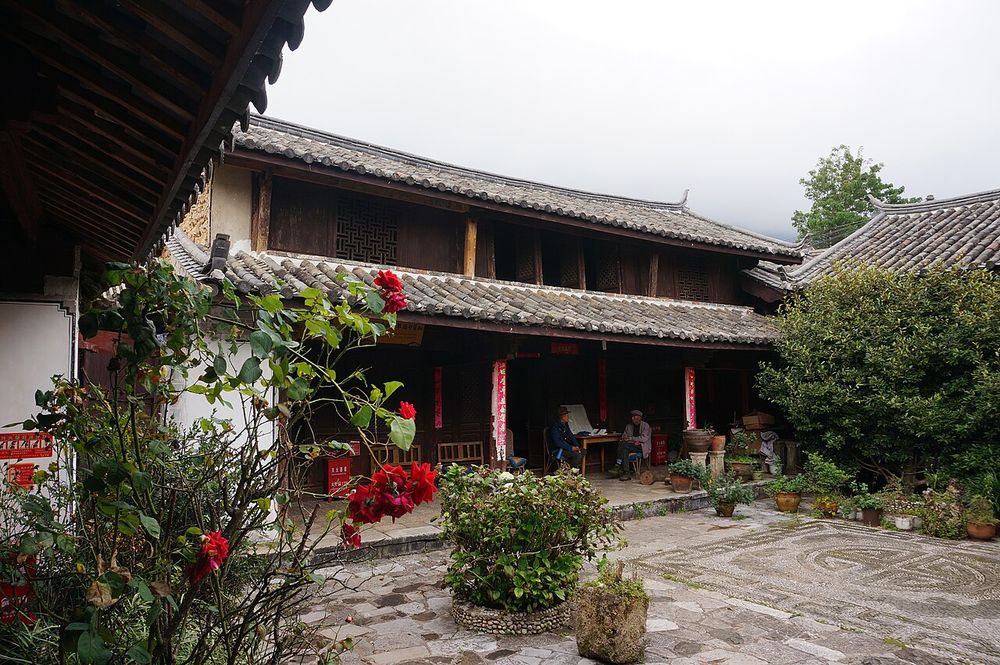
The usual plan is "three buildings and a screen wall": rooms on three sides of a courtyard and a white wall on the fourth to throw light back in. Bigger houses have "four buildings and five courtyards".
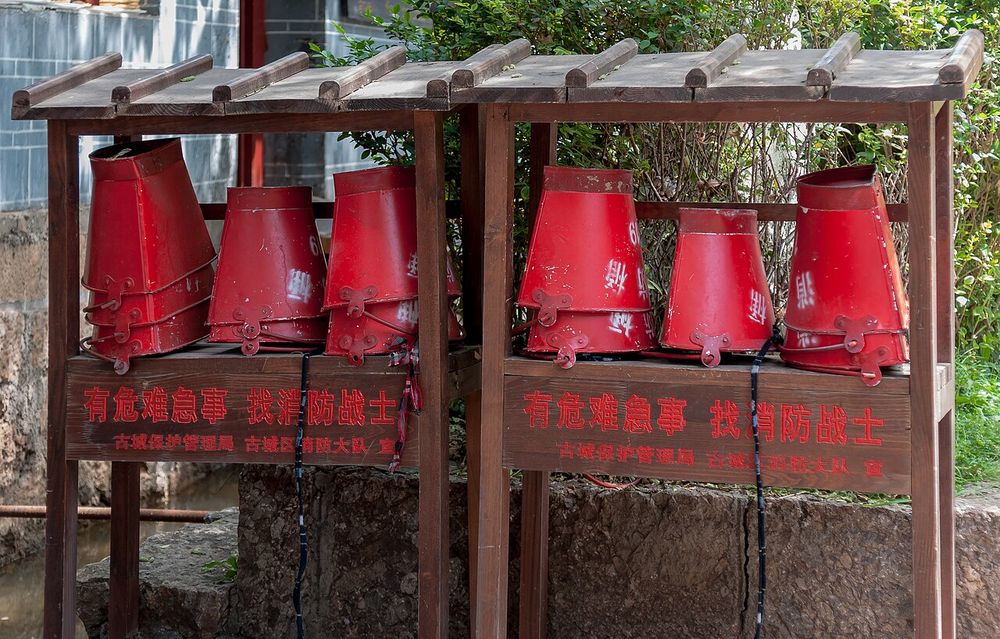
Look up at the gable ends for a carved wooden fish. Fish live in water, and a town of timber fears fire. The red buckets and hooks you see on street corners are for the same enemy.
The Hengyugong house, in the same family since 1875, is open as a museum of Naxi home life and has been free since 2010.
5. The Mu Mansion and Lion Hill
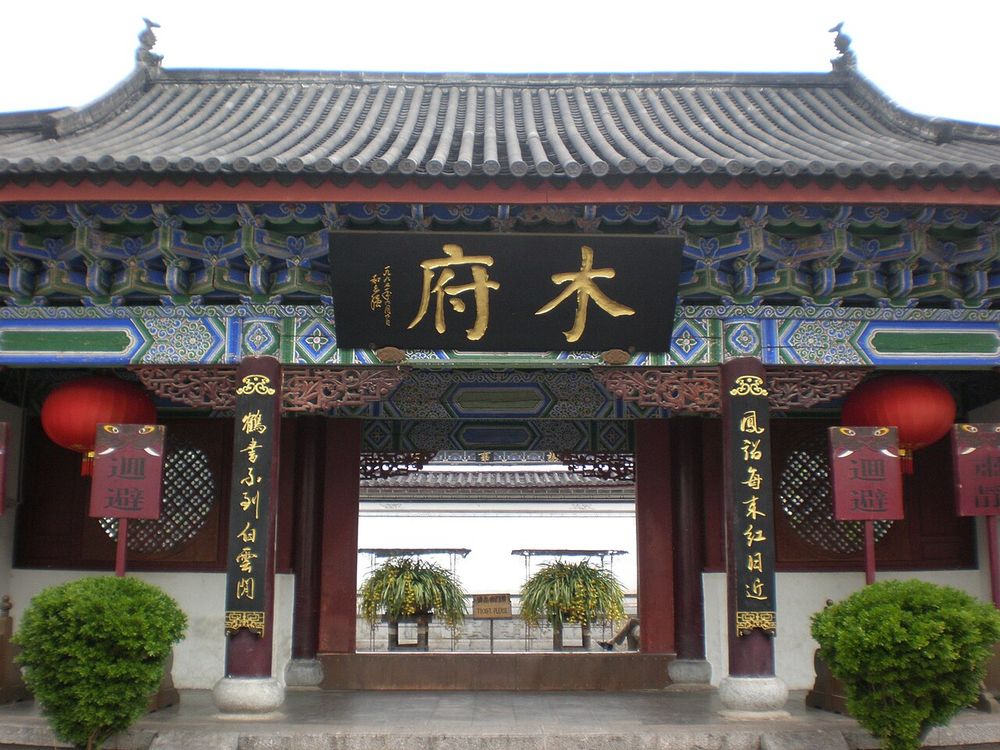
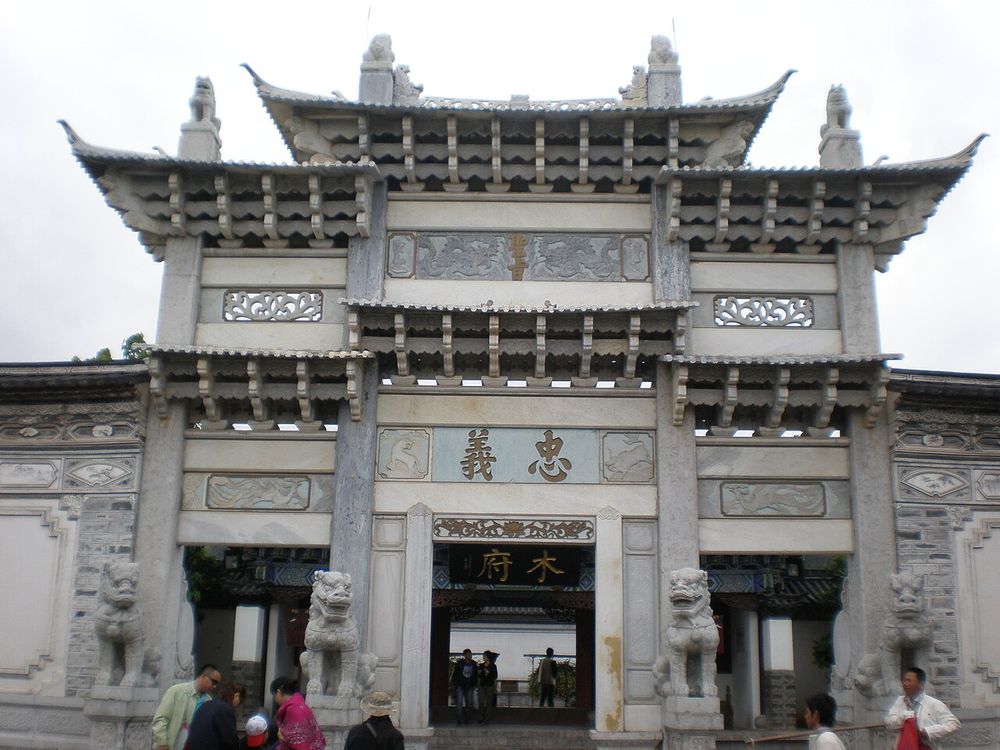
The gate of the Mu MansionBrokenSphere, CC BY-SA 3.0
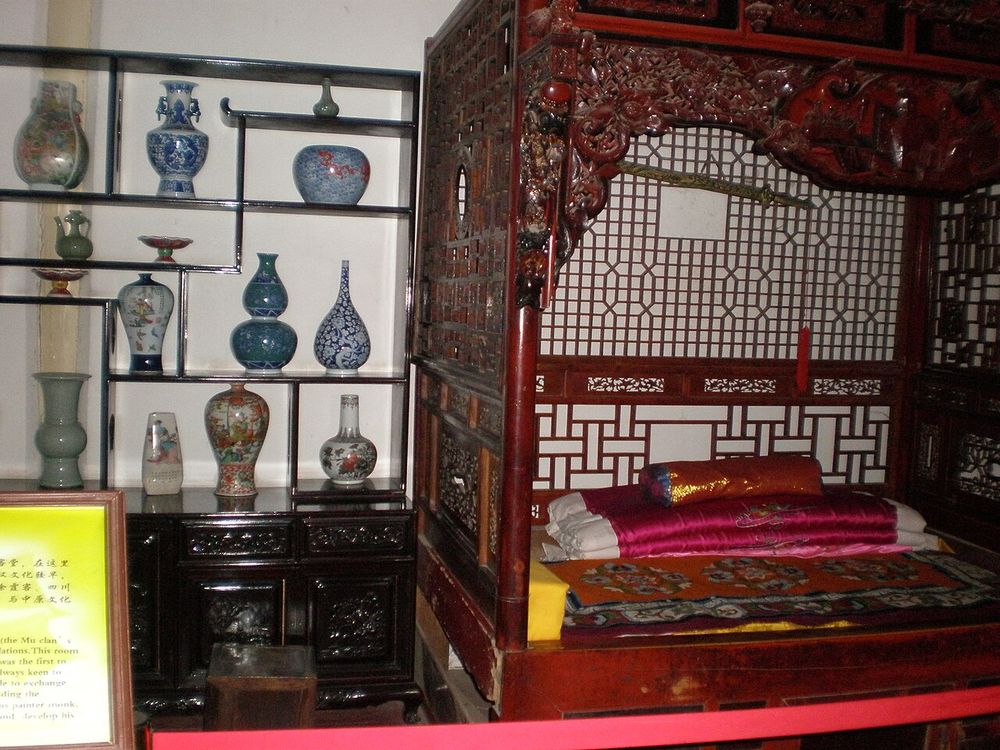
The Mu family governed Lijiang as hereditary chieftains for twenty-two generations. In 1382 the first Ming emperor gave the chief Ajia Ade the Chinese surname Mu. In 1723 the Qing (1644–1912) court replaced the chieftains with appointed officials.
What you walk through today was rebuilt in 1998 after the earthquake, with a World Bank loan, along an axis about 369 metres long. It follows the Ming layout; the buildings themselves are new. When the old mansion was destroyed is told differently in different accounts.
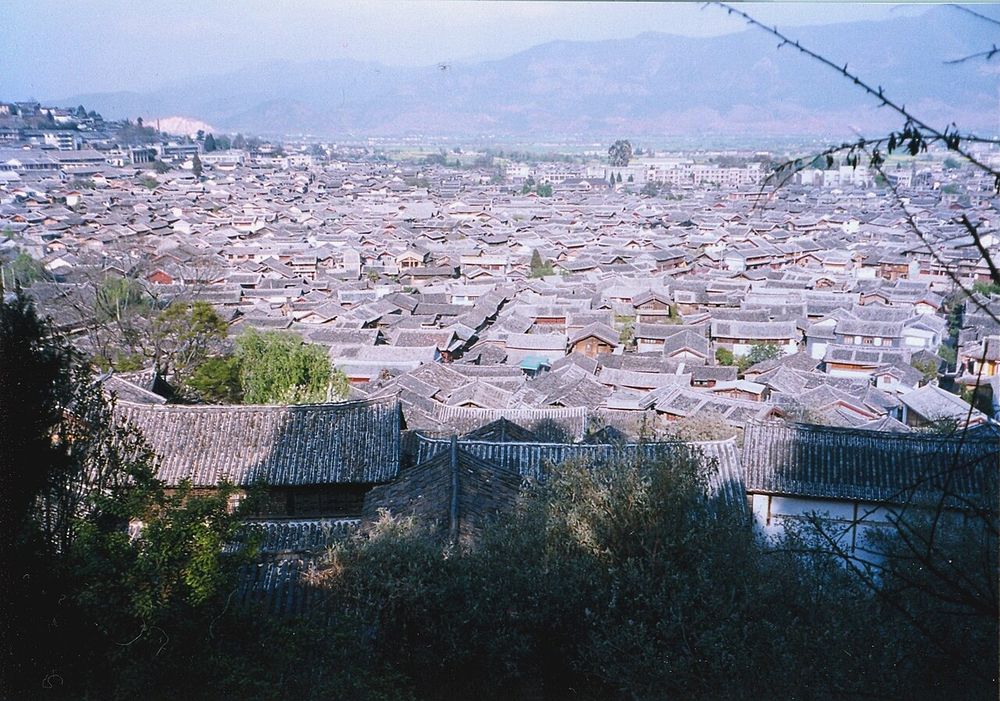
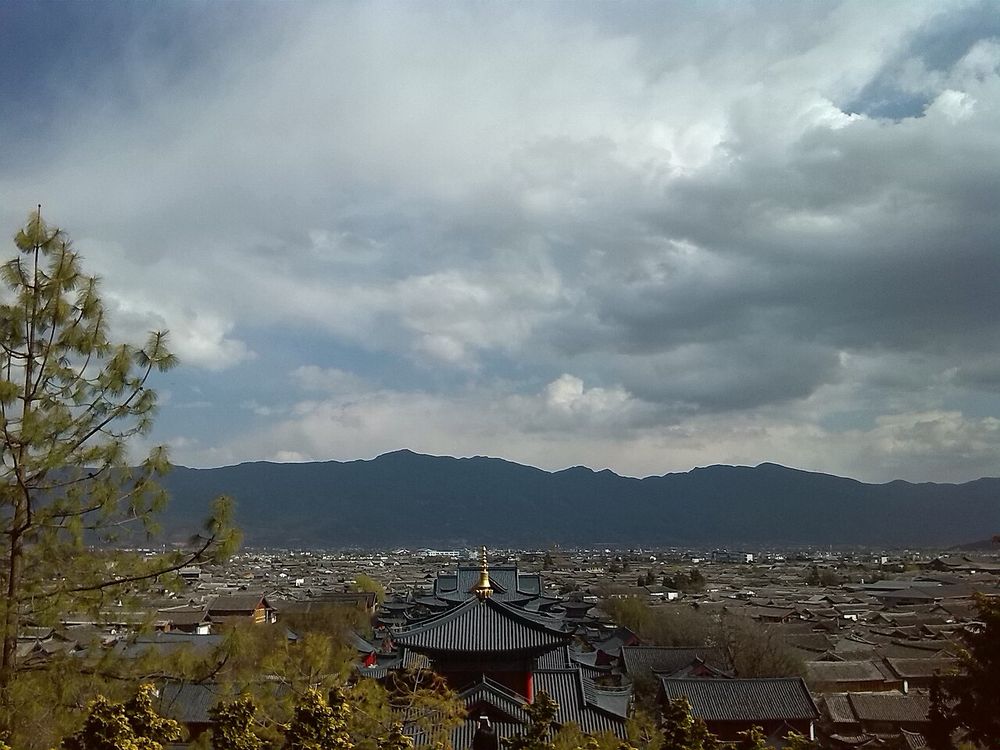
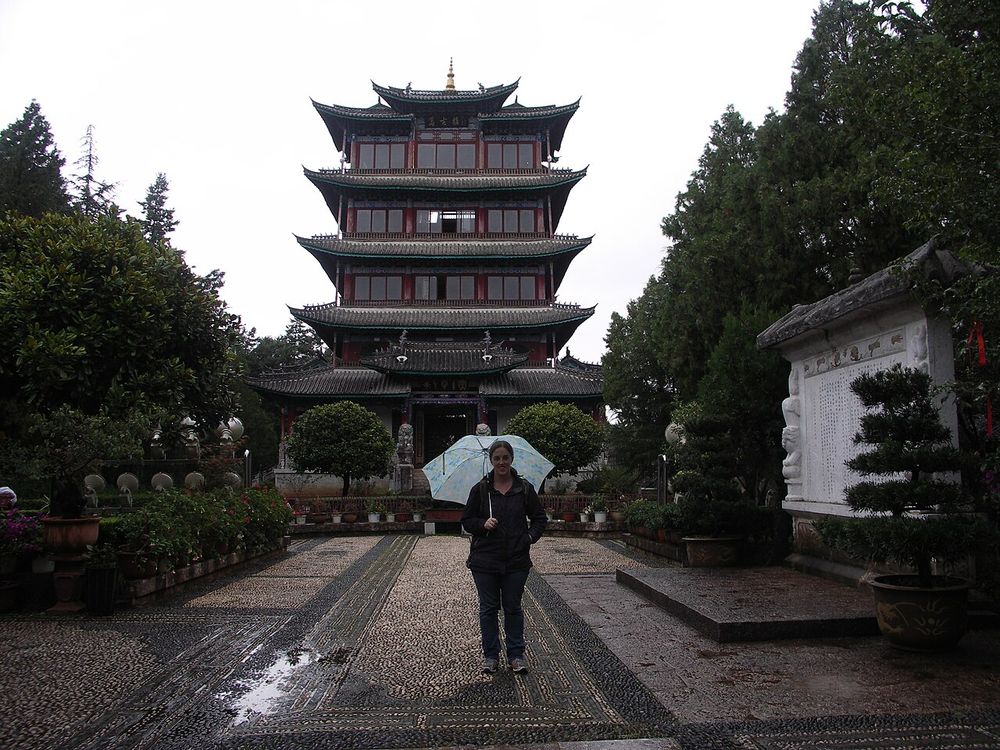
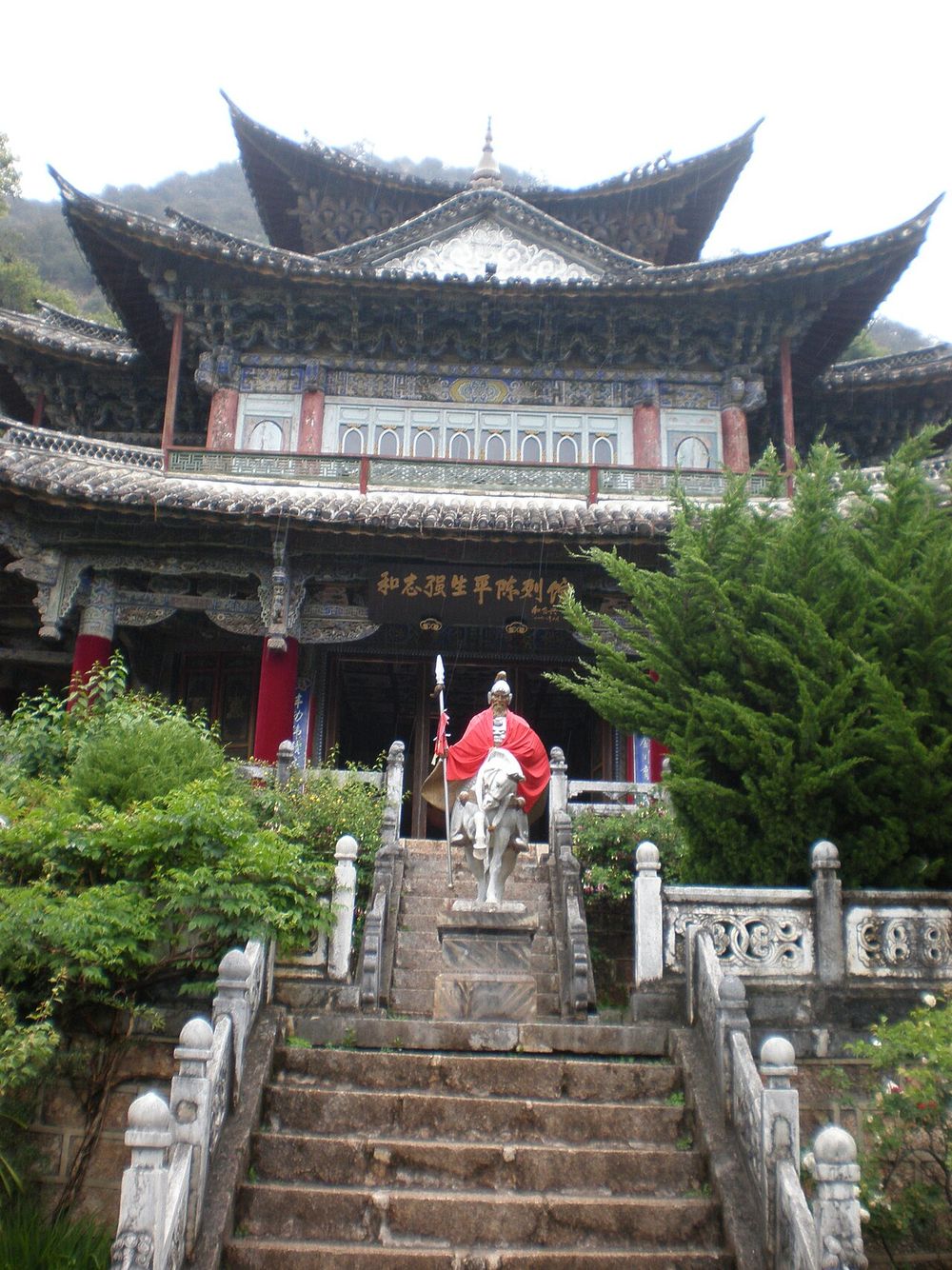
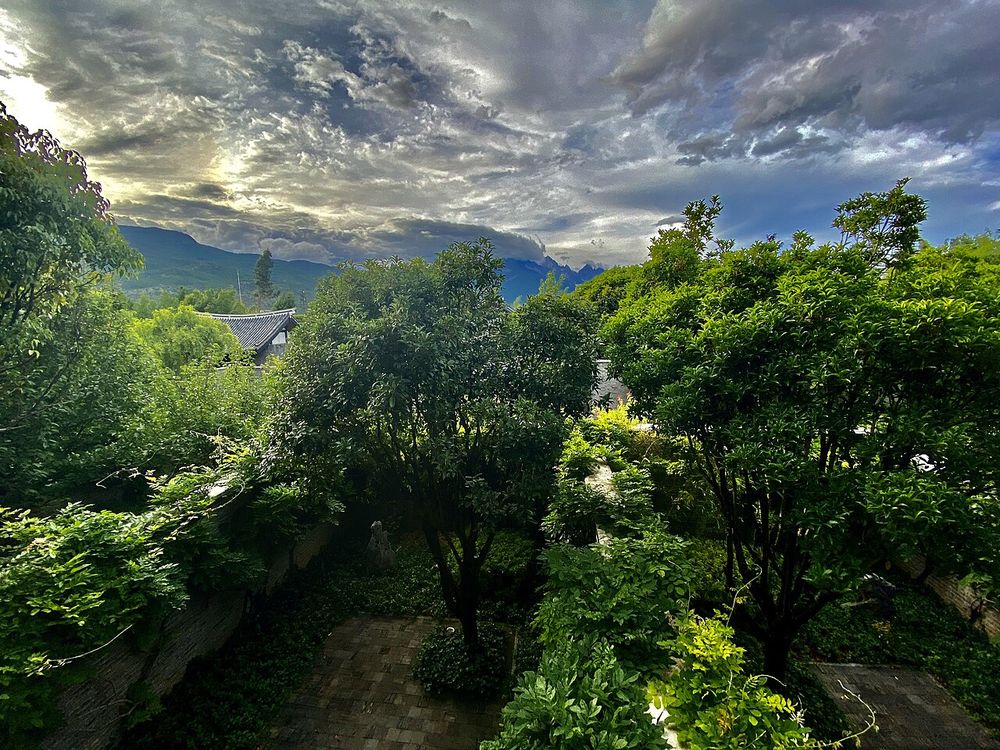
Behind it Lion Hill rises above the town. The five-storey Wangu Tower on top gives the view at the head of this page: grey roofs to the south and east, the snow mountain to the north.
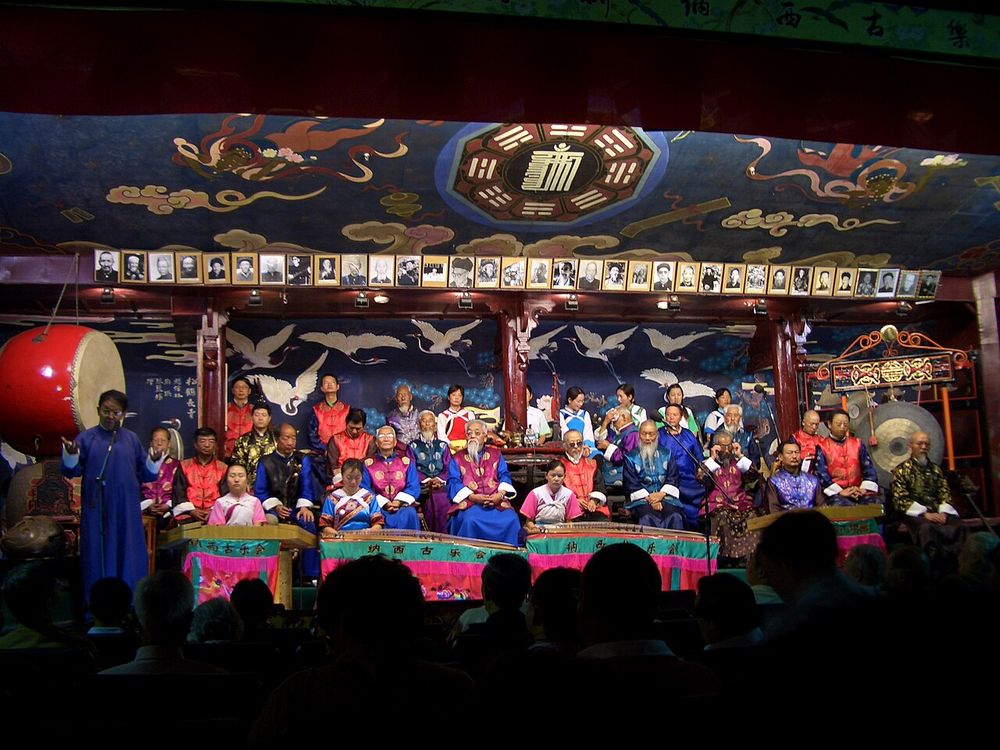
6. Naxi ancient music
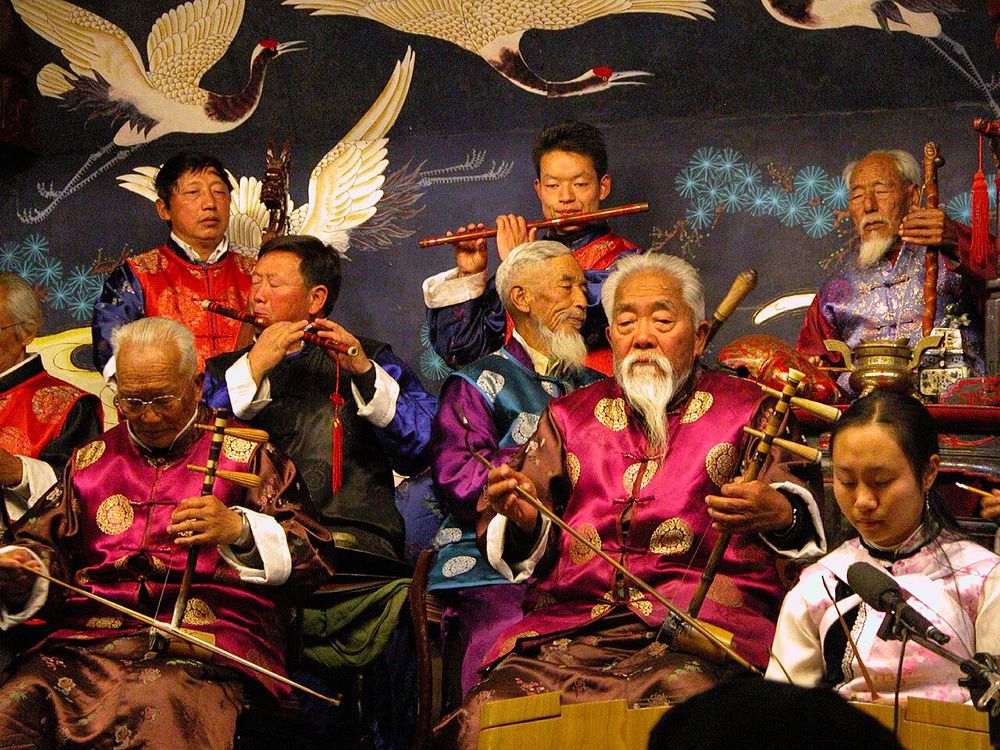
Players of Naxi ancient music, 2005Peter Morgan, CC BY 2.0
Two traditions go by this name. Dongjing music came from Daoist ritual in central China and survived here after it faded elsewhere. Baisha Fine Music is a local suite for mourning. Old instruments are played by old men, many of them over seventy.
The musician Xuan Ke (1930–2023) gathered the players into a concert orchestra and took them to Britain in 1995 and to Bergen in Norway in 1998.
7. Baisha: the first capital and its murals
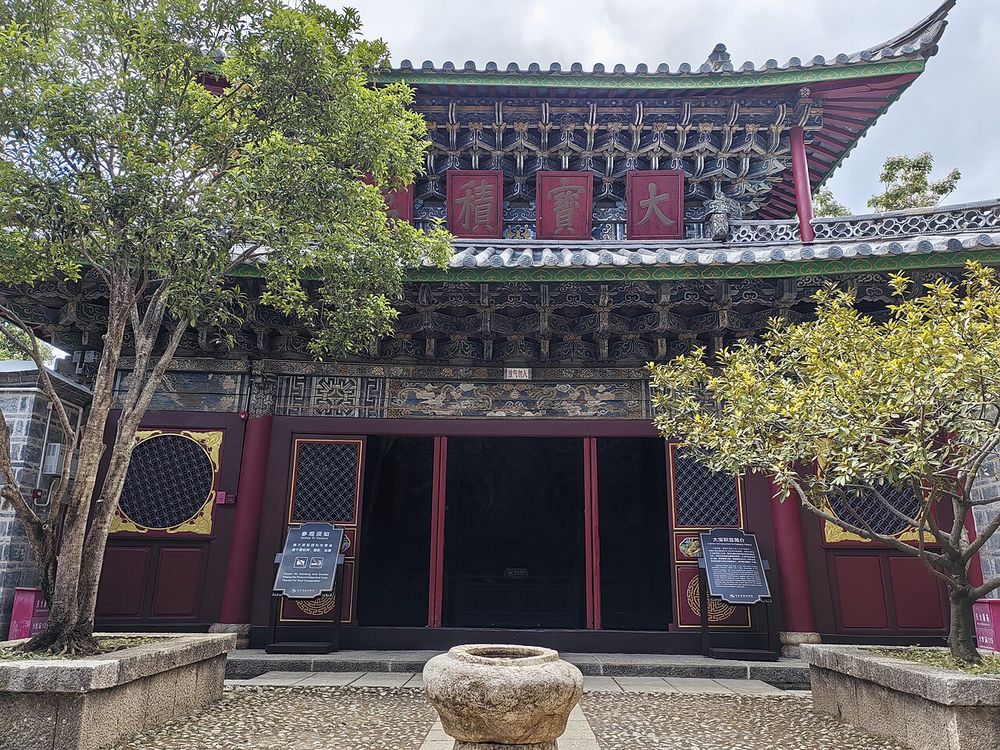
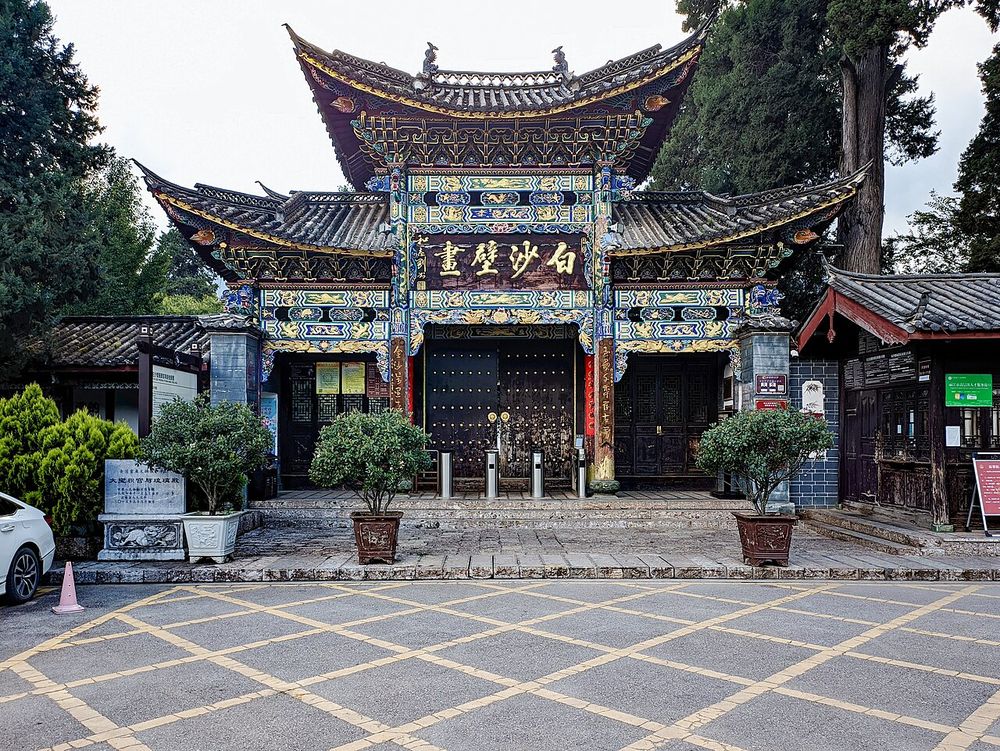
The Dabaoji Palace at Baisha, 1582Yumeto, CC BY-SA 4.0
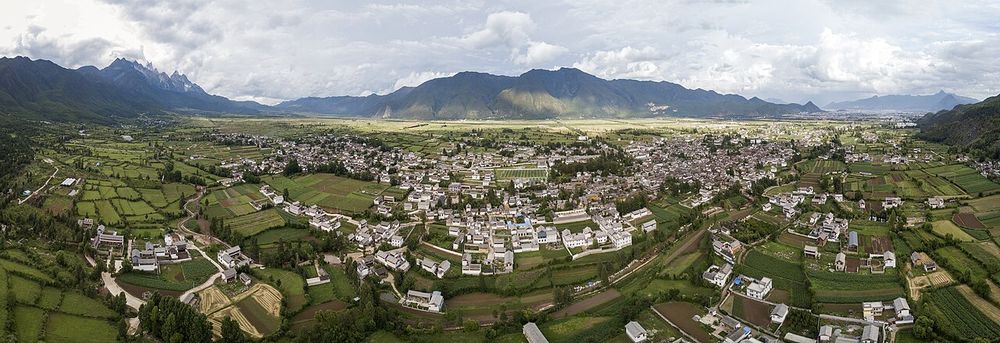
Baisha is a village nine kilometres north of the old town. The Mu family lived here before they moved to Dayan, so this is where Naxi rule began.
The murals are in three halls: the Liuli Hall of 1417, the Dabaoji Palace of 1582 and the Dading Pavilion. On one wall Tibetan Buddhist, Chinese Buddhist and Daoist figures sit together, painted by artists of several peoples. The largest painting measures 3.68 by 4.89 metres.
The halls are dark and the paint is fragile. No flash, and in most rooms no photographs at all.
8. Shuhe: the leather workers' village
Qinglong Bridge at ShuheYumeto, CC BY-SA 4.0
Shuhe, four kilometres north-west of the old town, was a stop on the tea-horse road, known for its leather workers, who made the boots and harness the caravans needed.
Cross Qinglong Bridge, a stone bridge built in the Ming dynasty (1368–1644). Walk up to Jiuding Dragon Pool, the spring that feeds the village. Then find a three-eye well and see the rule in use: the first basin for drinking, the second for vegetables, the third for laundry.
Outsiders who wrote Lijiang down
Joseph Rock's former house in a village below the snow mountain猫猫的日记本, CC BY-SA 4.0
Joseph Rock, an Austrian-American botanist, lived in a village below the snow mountain for much of the time between 1922 and 1949. He collected plants, photographed the Naxi for National Geographic and compiled a dictionary of Dongba script.
Peter Goullart, a Russian who ran cooperatives here in the 1940s, described the market, the wine shops and his neighbours in Forgotten Kingdom (1955).
James Hilton's novel Lost Horizon (1933) invented Shangri-La. One account says Rock's magazine articles were among Hilton's sources. Several places in Yunnan and Sichuan claim to be the original; Hilton never came to China.
On screen
Zhang Yimou's film Riding Alone for Thousands of Miles (2005) was shot in and around Lijiang. The television dramas A Metre of Sunshine and Mu Mansion (2012) did much to bring Chinese visitors here.
Meanwhile in the world
Year
Here
Elsewhere
1253
Kublai Khan's army passes through; the Naxi chief submits
The friar William of Rubruck sets out from Europe for the Mongol court
1382
The Ming emperor grants the surname Mu
About now the Bible is first translated into English
1601
The Five Phoenix Pavilion is built
Matteo Ricci is allowed to live in Beijing; Shakespeare is writing Hamlet
1639
Xu Xiake visits as the guest of Mu Zeng
Japan closes its ports to the Portuguese
1723
Chieftain rule ends; officials are sent from outside
J. S. Bach takes up his post in Leipzig
1922–1949
Joseph Rock lives and works near Lijiang
1922: Tutankhamun's tomb is found in Egypt
1996
A magnitude 7 earthquake
Dolly the sheep, the first cloned mammal, is born
1997
Listed as World Heritage, together with Pingyao and the gardens of Suzhou
Hong Kong returns to China
2003
Dongba manuscripts join the Memory of the World register
The human genome is read in full
One line to remember: no wall, three streams, and a script made of pictures.
In pictures
The old town with Jade Dragon Snow Mountain behindChensiyuan, CC BY-SA 4.0, Wikimedia CommonsThe roofs of the old townCEphoto, Uwe Aranas, CC BY-SA 3.0, Wikimedia CommonsA stream, a lane and a row of doorsChensiyuan, CC BY-SA 4.0, Wikimedia CommonsThe water wheels at the north entranceCEphoto, Uwe Aranas, CC BY-SA 3.0, Wikimedia CommonsBlack Dragon Pool: the bridge, the pavilion and the snow mountainCEphoto, Uwe Aranas, CC BY-SA 3.0, Wikimedia CommonsThe gate of the Mu MansionBrokenSphere, CC BY-SA 3.0, Wikimedia CommonsThe old town at nightChensiyuan, CC BY-SA 4.0, Wikimedia CommonsLooking over the tiled roofsCEphoto, Uwe Aranas, CC BY-SA 3.0, Wikimedia CommonsThe water wheels in April 2026Jeremy Thompson, CC BY 4.0, Wikimedia CommonsEvening beside one of the streamsCEphoto, Uwe Aranas, CC BY-SA 3.0, Wikimedia CommonsThe stream along East StreetBrokenSphere, CC BY-SA 3.0, Wikimedia CommonsThe stream by the Kegong archwayBrokenSphere, CC BY-SA 3.0, Wikimedia CommonsThe name board of Sifang Street钟启明, CC BY-SA 3.0, Wikimedia CommonsA stone bridge and its reflectionAaron Zhu, CC BY-SA 3.0, Wikimedia CommonsWashing in the lowest basin of a wellRaki_Man, CC BY 3.0, Wikimedia CommonsCarved doors of a Naxi houseCEphoto, Uwe Aranas, CC BY-SA 3.0, Wikimedia CommonsFire buckets on a street corner: a timber town fears fireCEphoto, Uwe Aranas, CC BY-SA 3.0, Wikimedia CommonsA street in February 2026祝鱼贵, CC BY-SA 4.0, Wikimedia CommonsNaxi women beside a stream, 2001Y.Shishido, CC BY-SA 3.0, Wikimedia CommonsThe roofs in April 2000, four years after the earthquakeUser:Doron, CC BY-SA 3.0, Wikimedia CommonsA Naxi woman in the old town, 2012Chensiyuan, CC BY-SA 4.0, Wikimedia CommonsAn inner gate of the Mu MansionBrokenSphere, CC BY-SA 3.0, Wikimedia CommonsA furnished room in the Mu MansionBrokenSphere, CC BY-SA 3.0, Wikimedia CommonsThe stone Zhongyi archway in front of the Mu MansionBrokenSphere, CC BY-SA 3.0, Wikimedia CommonsThe town from the hill behind the Mu MansionHappyNikita, CC BY-SA 4.0, Wikimedia CommonsWangu Tower on Lion HillCaitriana Nicholson, CC BY-SA 2.0, Wikimedia CommonsThe snow mountain reflected in Black Dragon PoolMiltos Gikas, CC BY 2.0, Wikimedia CommonsBlack Dragon Pool in 2019madras91, CC BY 2.0, Wikimedia CommonsOn the five-arch bridgeBrokenSphere, CC BY-SA 3.0, Wikimedia CommonsThe Moon-Embracing Pavilion, rebuilt in 1963BrokenSphere, CC BY-SA 3.0, Wikimedia CommonsThe Five Phoenix Pavilion of 1601, moved to the park in 1979BrokenSphere, CC BY-SA 3.0, Wikimedia CommonsBaisha from the air, 2018Chensiyuan, CC BY-SA 4.0, Wikimedia CommonsThe entrance to the Baisha muralsKcx36, CC BY-SA 4.0, Wikimedia CommonsThe Dabaoji Palace at Baisha, 1582Yumeto, CC BY-SA 4.0, Wikimedia CommonsThe Liuli Hall at Baisha, 1417Yumeto, CC BY-SA 4.0, Wikimedia CommonsDongba picture-writing on a wall in Baisha (modern)eric_ho, CC BY 3.0, Wikimedia CommonsA street in ShuheYumeto, CC BY-SA 4.0, Wikimedia CommonsShuhe under the hillsLuke Chantrell, CC BY-SA 4.0, Wikimedia CommonsQinglong Bridge at ShuheYumeto, CC BY-SA 4.0, Wikimedia CommonsA three-eye well: drink, wash vegetables, wash clothesYumeto, CC BY-SA 4.0, Wikimedia CommonsDongba picture-writingG41rn8, CC BY-SA 4.0, Wikimedia CommonsA street sign in English, Chinese and Dongba scriptBrokenSphere, CC BY-SA 3.0, Wikimedia CommonsDongba writing on scrolls, Yunnan Nationalities Museum, KunmingDaderot, Public domain, Wikimedia CommonsPlayers of Naxi ancient music, 2005Peter Morgan, CC BY 2.0, Wikimedia CommonsA Naxi ancient music concertYokyau1, CC BY-SA 3.0, Wikimedia CommonsJoseph Rock's former house in a village below the snow mountain猫猫的日记本, CC BY-SA 4.0, Wikimedia CommonsThe chieftain Mu Zeng, Xu Xiake's host, in a monk's robe; painted in the 17th centuryUnknown, Public domain, Wikimedia CommonsA Naxi manuscript of the 19th century, now in a Paris library (BULAC)BULAC, CC0, Wikimedia Commons
Local legends
These are stories people tell about this place. They are legends, not history, and each one says where it comes from.
LegendThe town without a wall
The rulers here were the Mu family. The character for Mu, 木 (wood), with a frame drawn round it becomes 困, “trapped”. So, the story goes, the Mu chieftains would not build a wall round their own name.
Source: Local folk tale
Later, people who live here will be able to add the stories they grew up with, and say which of these they have heard.
Not certain, and where accounts conflict
The earthquake
3 February 1996, magnitude 7.0 by the Chinese measure; some foreign sources give a slightly lower figure.
How many died
309 in most Chinese accounts; about 200 in some others.
How much of the town is old
Much was repaired or rebuilt after 1996, and accounts of how much differ. The street plan and the water system are old; many houses are not.
When the town was founded
"Late Song, early Yuan" is the usual wording. No exact year is known.
How many Baisha murals survive
45 in some accounts, 55 in others.
Why there is no wall
The story about the character 木 becoming 困 is a legend.
When the old Mu Mansion was destroyed
Accounts differ: war in the Qing dynasty, later decay, the 1996 earthquake. We say only that today's buildings date from 1998.
How many Dongba characters there are
Counts run from about 1,400 to over 2,000, depending on what is counted as one sign.
Washing the square
A 2022 report says Wednesday and Saturday mornings. Not confirmed for this year.
Lost Horizon
That Rock's articles inspired Hilton rests on one account.
The entry fee
For years visitors paid a "maintenance fee" (80 yuan, later 50). Most 2026 reports say it is no longer collected; a few still mention 50 yuan.
Visiting
Tickets and hours
The streets of the old town are open day and night. Most 2026 reports say entry is free and the old maintenance fee is no longer collected, though a few still mention 50 yuan; several say you should book ahead on the town's official WeChat account 丽江古城 and enter with your passport.
Inside the town two places sell their own tickets: the Mu Mansion, reported at 40 yuan, 8:30 to 17:30, and Wangu Tower on Lion Hill, reported at 35 yuan.
Black Dragon Pool: most 2026 reports say free; one says it has its own charge. Ask at the gate.
Shuhe and the lanes of Baisha are reported free. The Baisha murals have a separate ticket; we found no reliable current price.
Jade Dragon Snow Mountain is a different trip: a park fee, a cable car booked days ahead, and altitudes over 4,000 metres.
Last checked 2026-11-11. Travel and news reports, not the site's own notices.
Where to start
Half a day in the old town: enter at the water wheels, follow the stream to Sifang Street, go on to the Mu Mansion, then climb Lion Hill for the roofs.
Go to Black Dragon Pool early in the morning, when the air is still and the mountain is clear. It is a twenty-minute walk north from the water wheels.
Give Baisha and Shuhe a second day. A bus or taxi takes fifteen to thirty minutes; many people cycle.
Before you go
Lijiang is at 2,400 metres. Walk slowly on the first day, drink water and use sun cream; the sun is strong even when the air is cool.
The lanes are paved with smooth stone that is slippery when wet. Wear flat shoes. Wheeled suitcases are hard work here.
The streets round Sifang Street are crowded and loud at night. For quiet, walk before nine in the morning or stay in the lanes to the south.
Bring your passport; ticket offices and bookings ask for it.
Customs and manners
At a three-basin well, the top basin is drinking water. Wash nothing in it.
The streams are still the town's water. Do not throw anything into them.
Ask before photographing older Naxi people in traditional dress.
If the circle dance starts in the square in the evening, anyone may join.
Tipping is not expected in China.
Look for these
Stand on Yulong Bridge and count the branches of the river. Which one would you follow?
Find a wooden fish under the peak of a roof. Why a fish?
Find a sign in Dongba script and guess one of the pictures.
Find a well with three basins. Which one is for drinking?
At Sifang Street, work out which way the square slopes. Where would the water run when the street is washed?
From Lion Hill, look for anything that looks like a town wall.
At Black Dragon Pool, find the mountain twice: once in the sky, once in the water.
I am here
Stand at the site, sign in, press the button, and collect its stamp. Your browser will ask to use your location. It is sent to us once to confirm that you are at the site; we keep how far you were from it, not the spot where you stood.
Your stamps are saved to your account, so they follow you to any device. Checking from a browser cannot rule out every false location; stricter checks arrive with the app.
Messages
Share your photos
Photos here show the place, not people. Each one is credited to the visitor who took it and appears after our team has looked at it. A photo with you in it belongs under “I am here”.