LegendThe king's brush
When Velázquez was made a knight, the king himself took a brush and painted the red cross on the painter's chest in Las Meninas.
Source: Antonio Palomino, 1724, who says only that some believe it
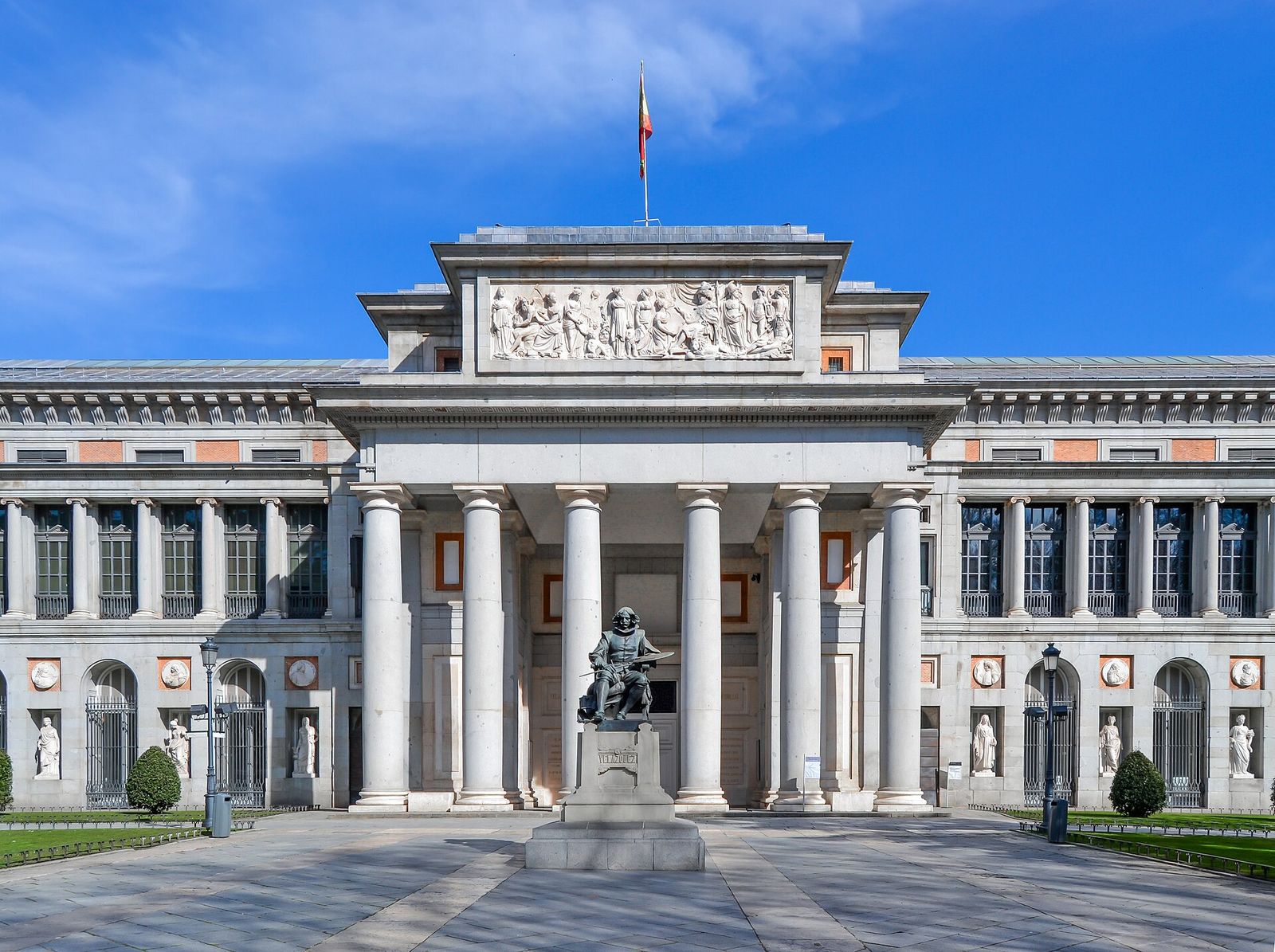
Paseo del Prado, Madrid, Spain
Museo Nacional del Prado · moo-SAY-oh del PRAH-doh
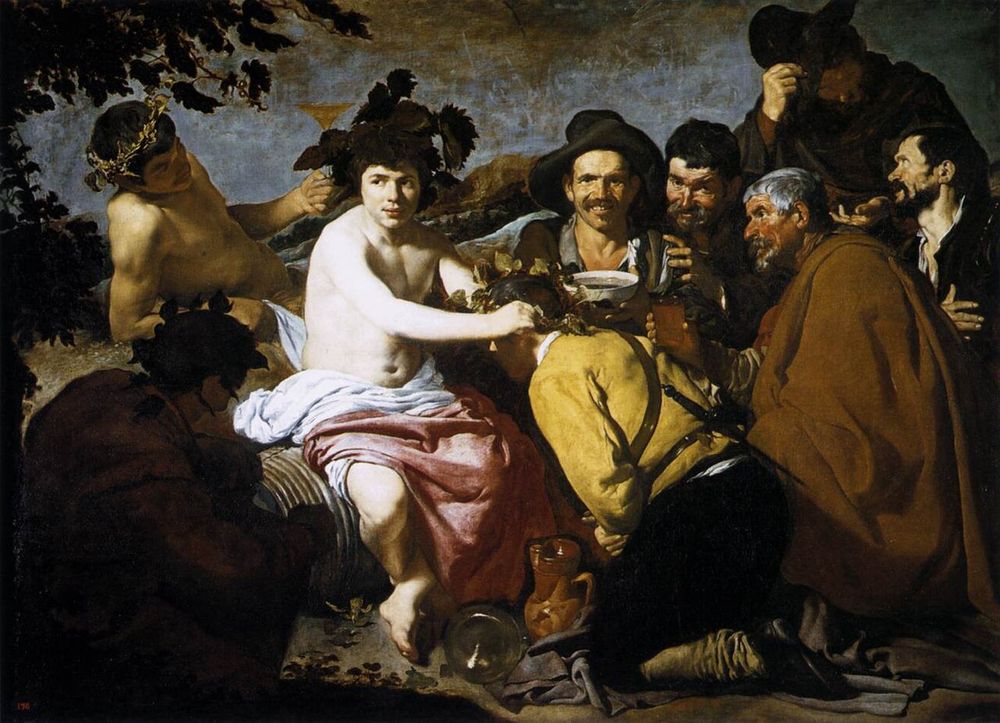
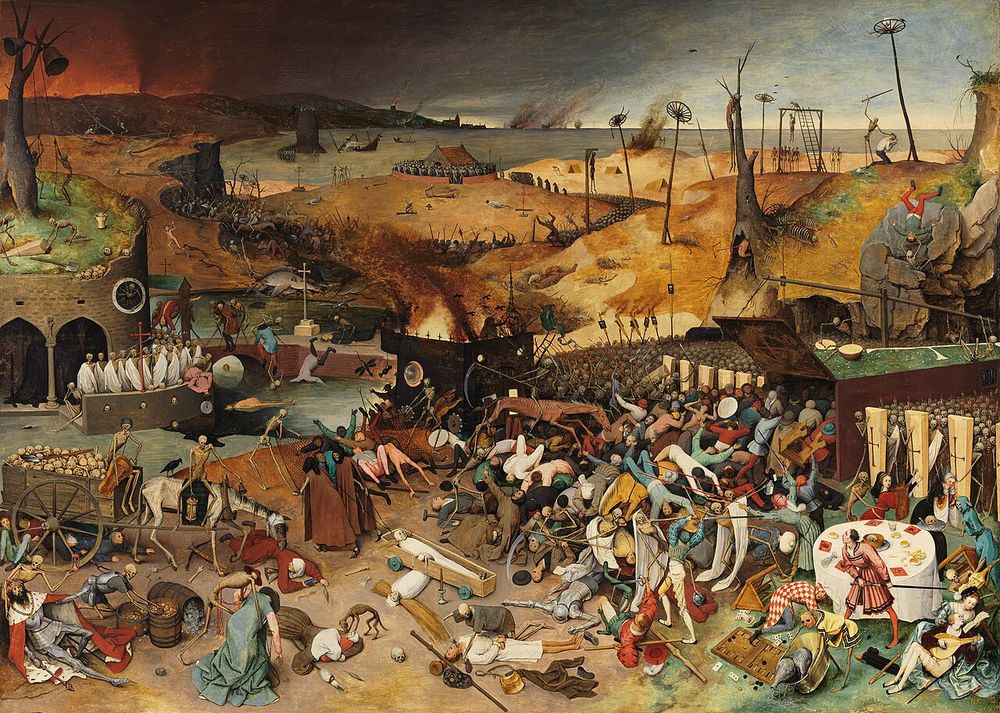
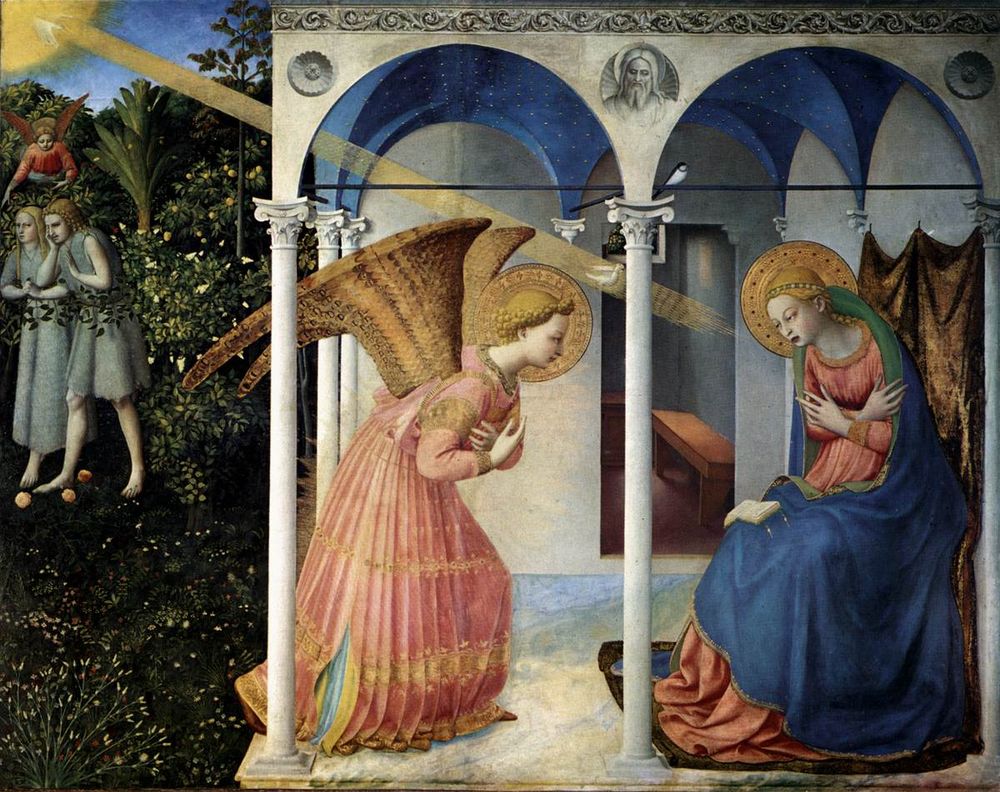
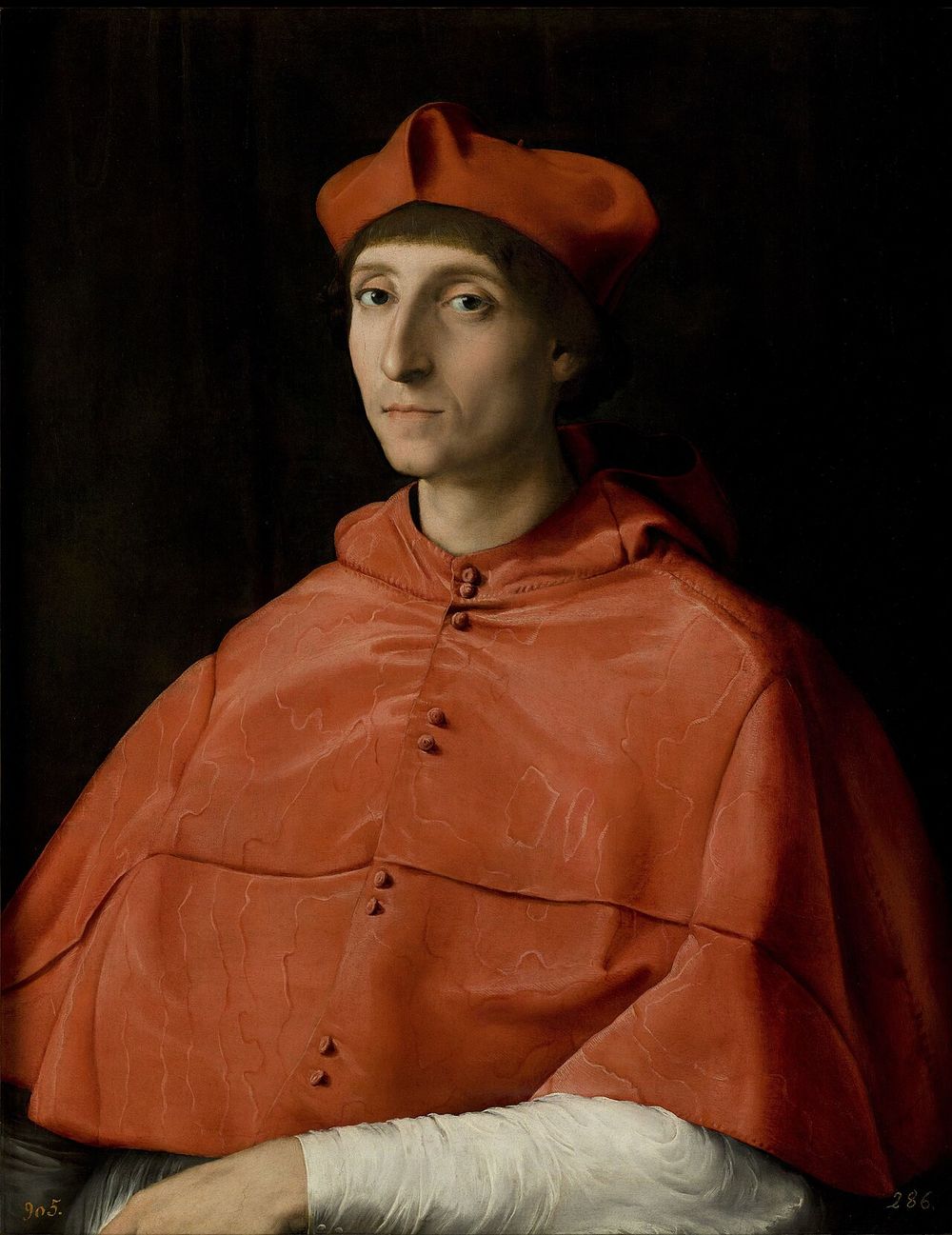
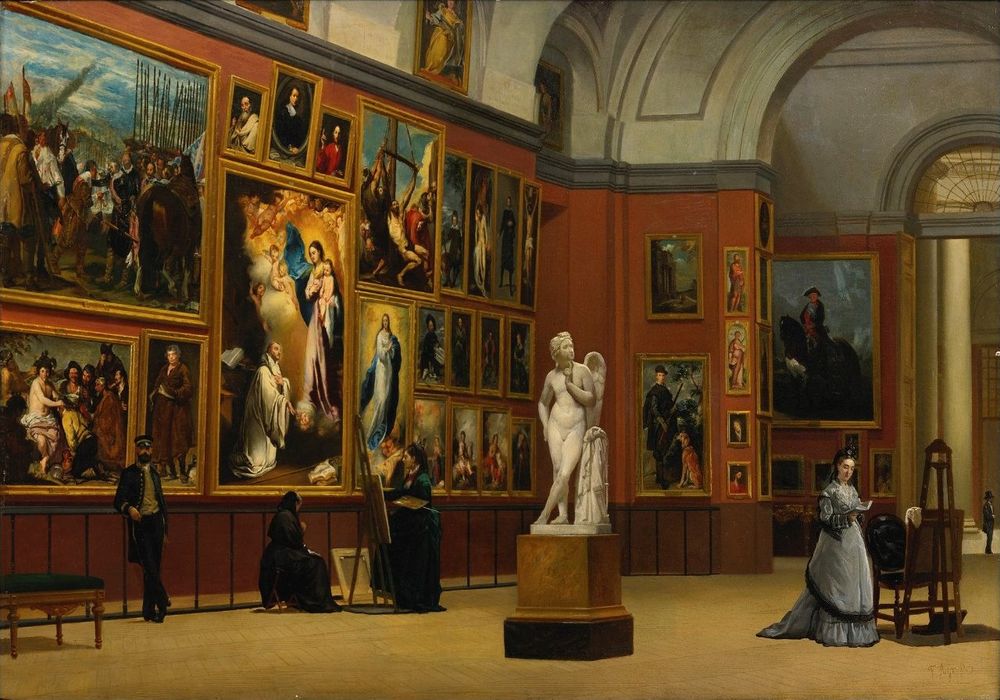
The picture collection of the kings of Spain, opened to the public in 1819. It was not put together to teach the history of art. It is what three hundred years of kings liked and could afford, and they liked Titian, Bosch, Rubens, and their own court painters, Velázquez and Goya. Nowhere else has so much of those five.
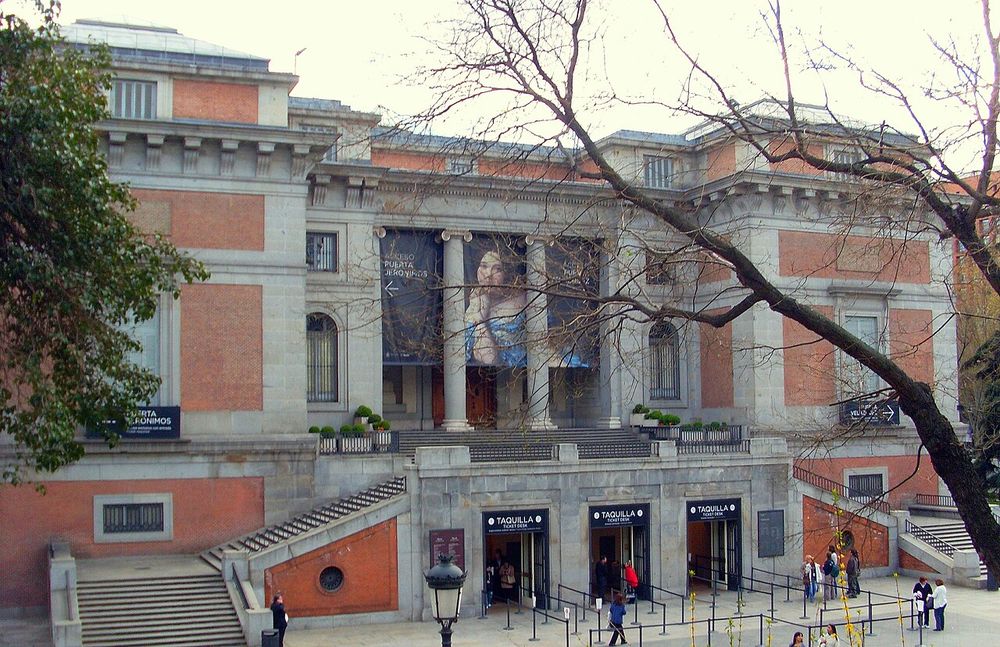
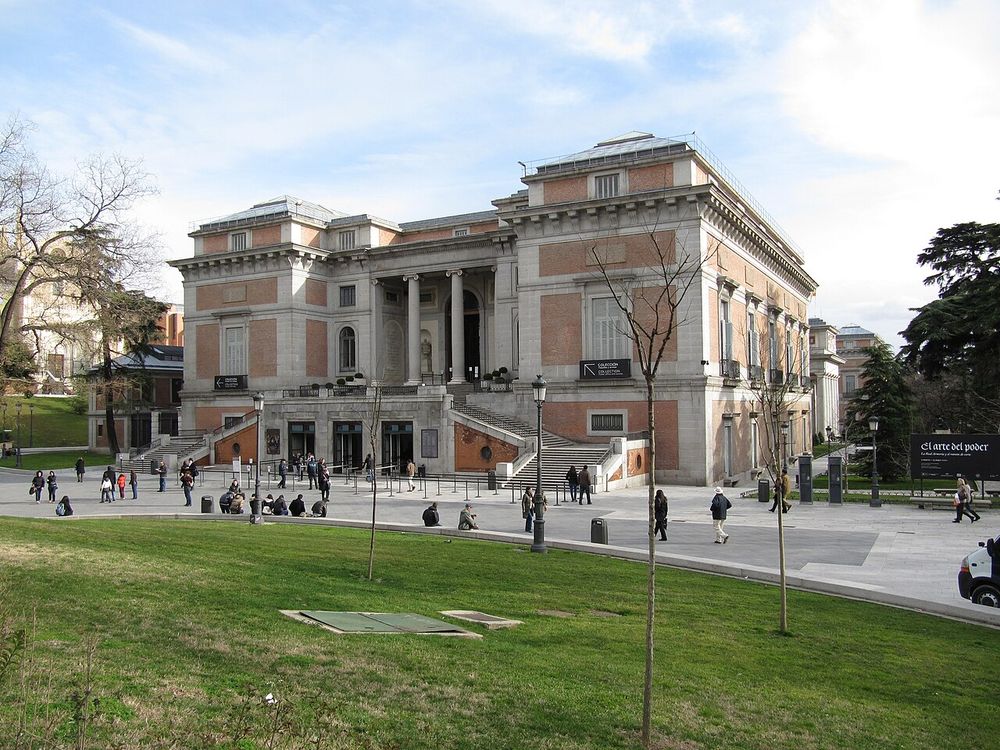
Photo: Emilio J. Rodríguez Posada, CC BY-SA 2.0, Wikimedia Commons
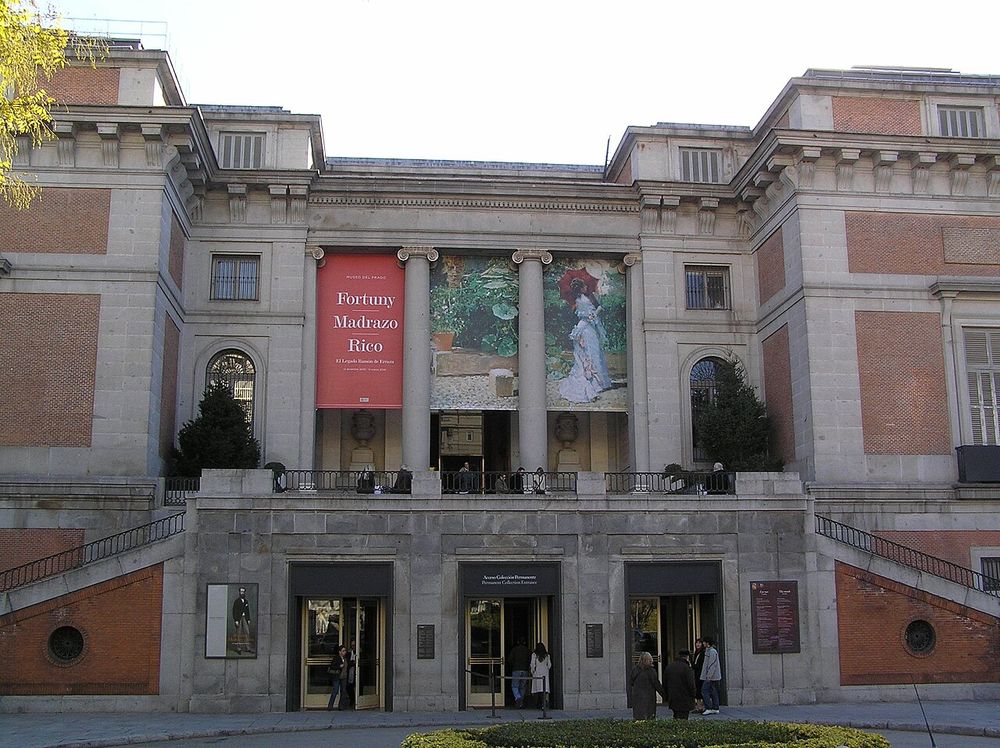
The long building was begun in 1785 as a museum of natural history. Napoleon's cavalry used it as a barracks and stripped the lead from its roof. When the French had gone, the king's young wife, María Isabel of Braganza, persuaded him to repair it and hang his pictures in it. She died a year before it opened.
It opened on 19 November 1819 with 311 paintings, all Spanish. In China this is the twenty-fourth year of Jiaqing of the Qing dynasty (1644–1912). The pictures themselves run from the 1100s to about 1900.
Close by, with a page of its own: Royal Palace, Madrid, The Louvre, Musée d'Orsay.
One ticket covers the whole museum. The free hours cover the permanent rooms only.
| Part | Ticket |
|---|---|
| Ground floor: early Flemish, Bosch, Goya's black paintings, the two days in May | Museum ticket |
| First floor: Velázquez, Titian, Rubens, El Greco, Goya's portraits | Museum ticket |
| Second floor: Goya's tapestry designs | Museum ticket |
| The building and the statues outside | Free |
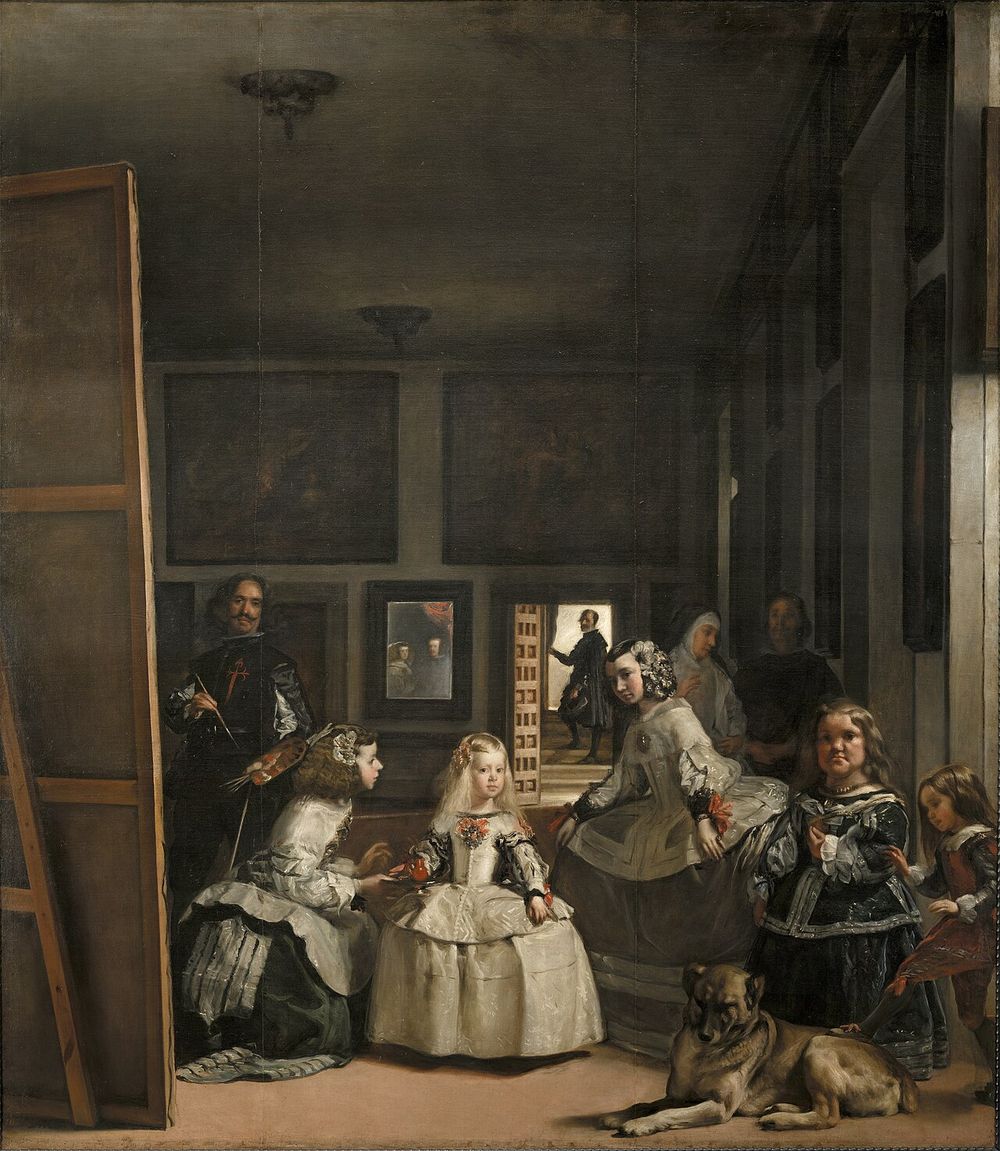
The painting is three metres high. A little princess of five stands in the middle with her maids, two dwarfs and a dog. On the left a painter looks out from behind a huge canvas. That is Velázquez. He is looking at you.
Now find the mirror on the back wall. Two small figures are reflected in it: the king and the queen. So they are standing where you stand, and the picture shows what they see. Or the mirror shows what is on the painter's canvas. Nobody has settled which.
Go close. The princess's dress, the red jug, the hand of the painter are made of a few loose strokes that mean nothing at arm's length. Step back four metres and they are silk, clay and flesh.
Look at the red cross on the painter's chest. It is the badge of a knightly order that he was given three years after he finished the picture. Someone added it later.
"It is the Spanish Louvre: a bit of everything." It is the opposite. It has almost no Dutch pictures, because Holland was the enemy, and few English or French. What it has, it has in depth: about fifty paintings by Velázquez and more than a hundred by Goya.
"Guernica is here." Picasso's Guernica hung in an annexe of the Prado from 1981 to 1992. It is now in the Reina Sofía museum, ten minutes' walk south.
"You can photograph the pictures." You cannot. No photographs are allowed in the rooms at all.
"The Mona Lisa is in Paris only." A second one hangs here. It was painted in Leonardo's workshop, beside the original, by a pupil. Its black background was cleaned off in 2012 and a landscape appeared.
Room numbers are those of 2026 and can change. Take the free plan at the door.
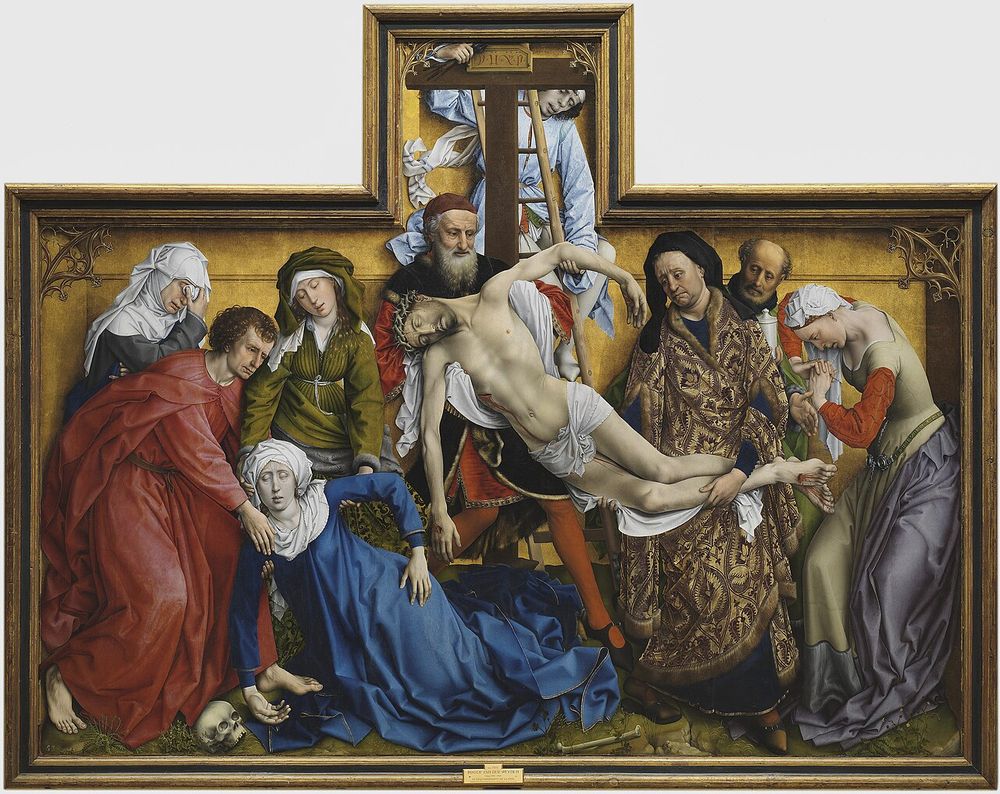
Start with the oldest of the great pictures: the Descent from the Cross by Rogier van der Weyden, painted in Flanders about 1435. Ten figures are packed into a gold box no deeper than a shelf. Look at the tears: each one has a highlight.
The body of Christ and the body of his fainting mother make the same curve. The curve is the shape of a crossbow. The men who paid for the picture were the crossbowmen's guild of their town, and there are tiny crossbows in the corners.
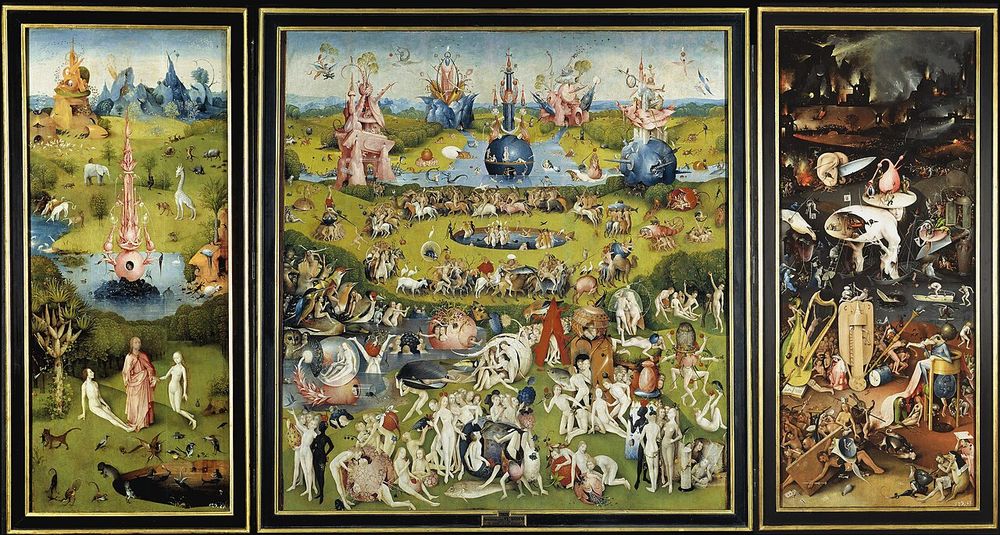
Hieronymus Bosch painted this about 1500. Read it left to right: God brings Eve to Adam; then a world of naked people riding birds, eating giant strawberries, living inside shells; then night, fire, and a man with a body like a broken egg who looks back at you.
Philip II, the most severe king Spain ever had, bought it and kept it where he could see it. On the buttocks of one sinner in hell is a line of written music. In 2014 a student wrote it out and played it.
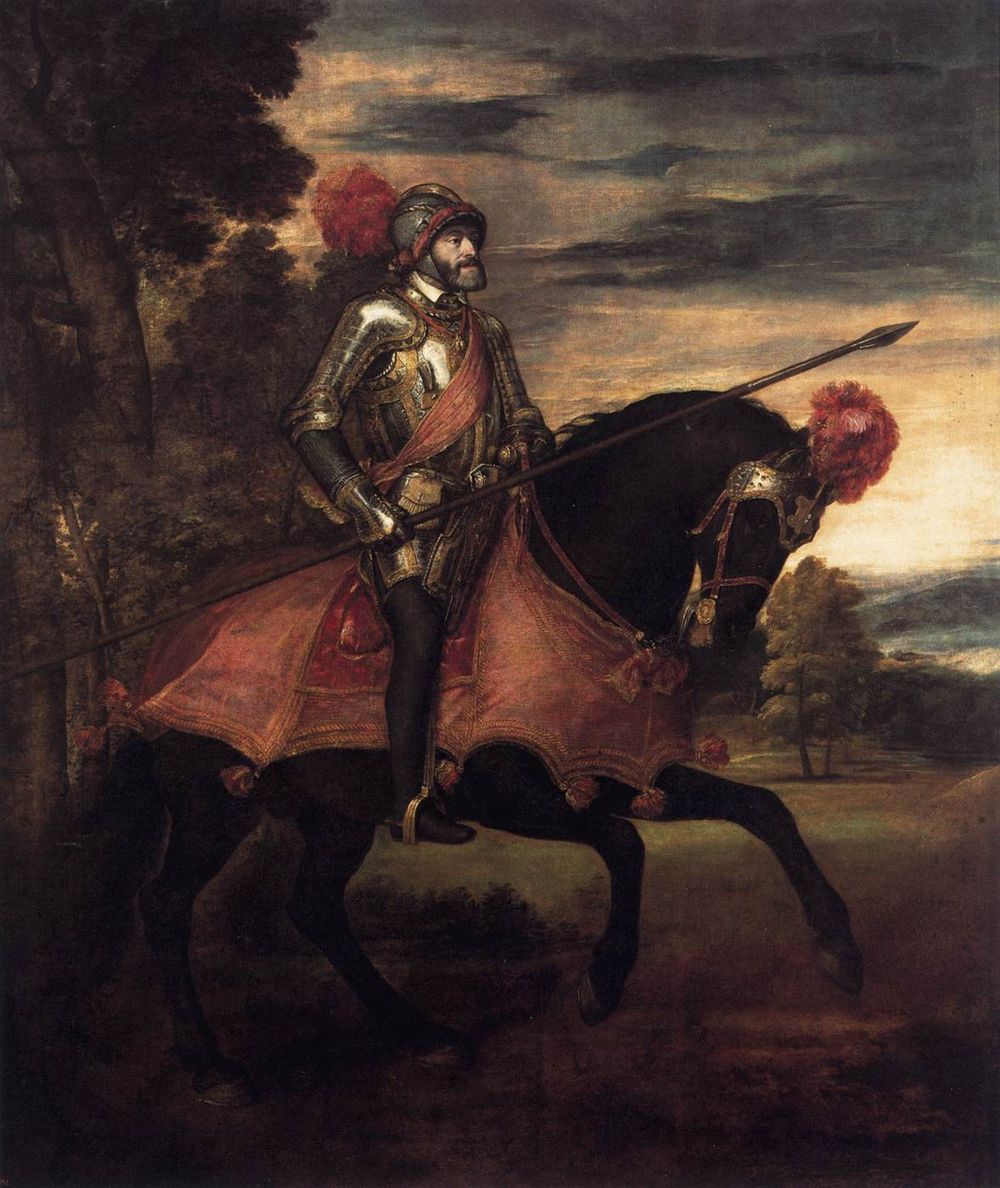
Titian painted Charles V in 1548, the year after his victory over the German Protestants. The emperor was ill with gout that day and had been carried to the field in a litter. Titian put him on a black horse at sunset, alone. The armour he wears still exists. It is in the Royal Palace, across the city.
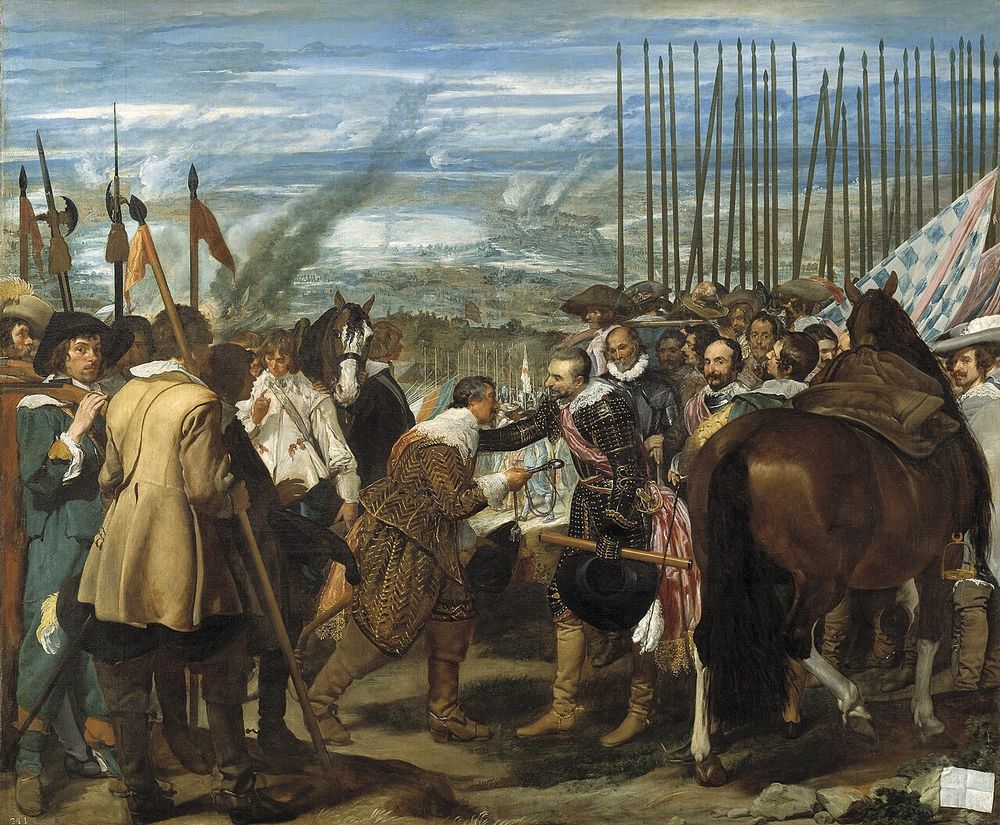
Velázquez painted the surrender of a Dutch town to Spain. The Dutch commander bends to hand over the key. The Spanish general has got off his horse and puts a hand on his shoulder to stop him going lower. On the right stand the Spanish lances, upright. On the left the Dutch pikes lean every way.
Y por ti el gran Velázquez ha podido, diestro cuanto ingenioso, ansí animar lo hermoso, ansí dar a lo mórbido sentido con las manchas distantes
And through you the great Velázquez has been able, as skilful as he is inventive, so to give life to beauty, so to give feeling to soft flesh with blots set far apart
Francisco de Quevedo, "Al pincel" (To the Paintbrush), about 1629; the first description of how Velázquez painted, by a poet he had painted; our translation
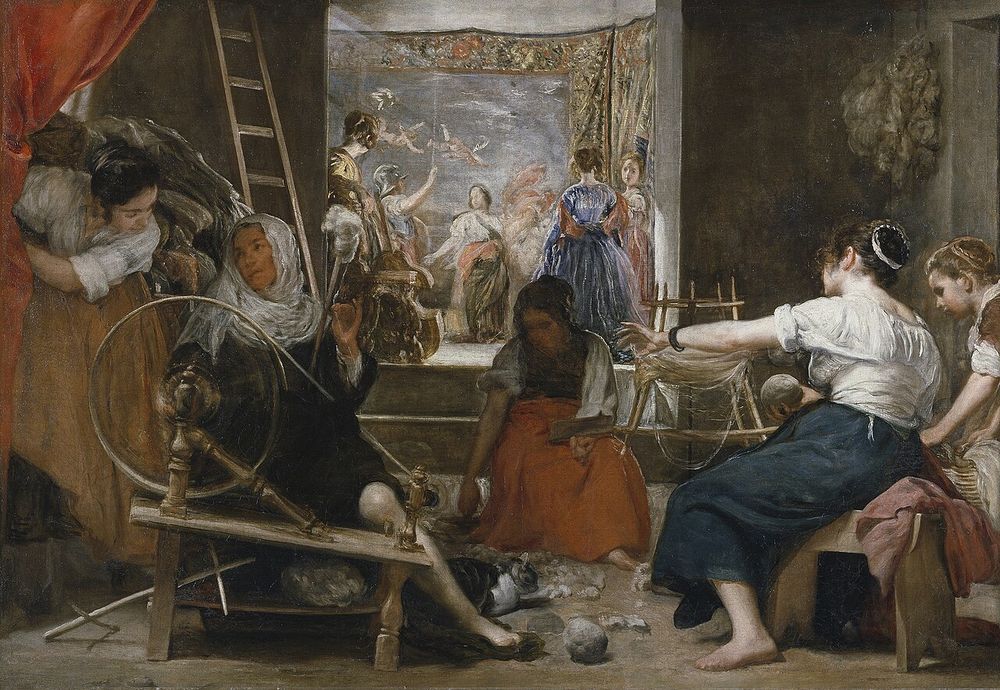
You have seen the great picture. In the same room look for a smaller one of women spinning wool. The wheel is spinning so fast that Velázquez left out the spokes. It is one of the first times anyone painted a blur.
The same shot: you may not photograph, so stand in the right place. For Las Meninas it is about four metres back and a step to the left of centre, in line with the mirror. That is where the king and queen are standing.
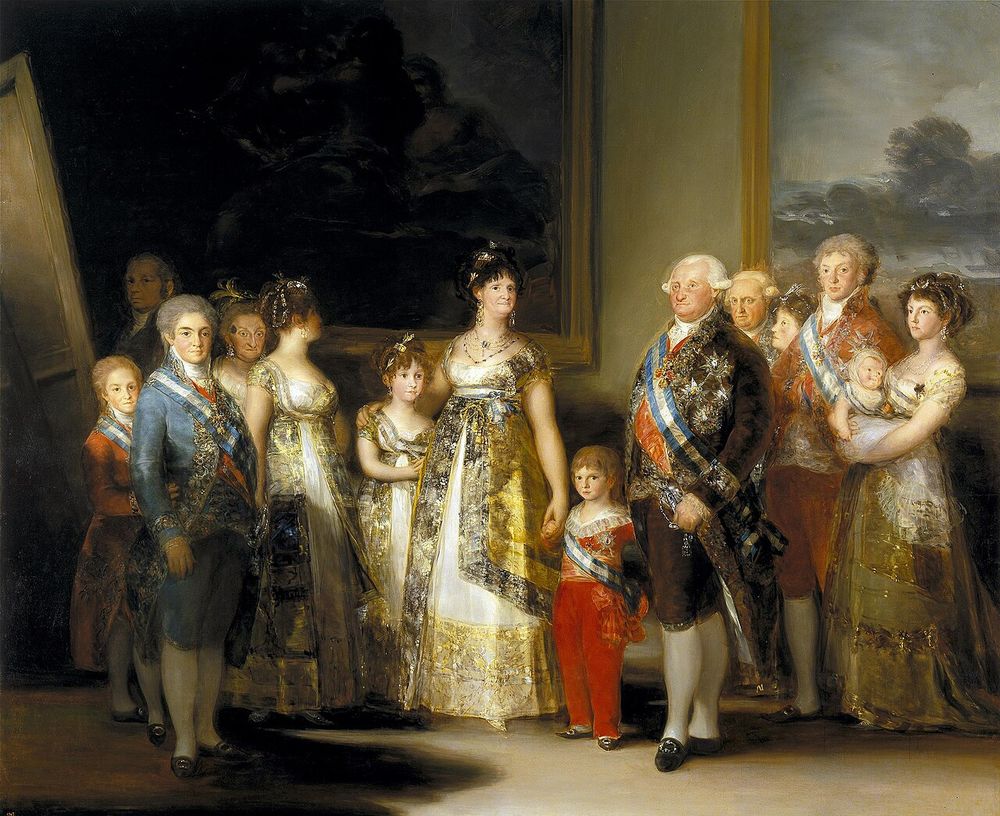
On the same floor, Goya's royal family of 1800 stand in a row in their jewels. He painted every wart and every vacant look, and they were pleased. He put himself in the shadow on the left, at an easel, as Velázquez had done.
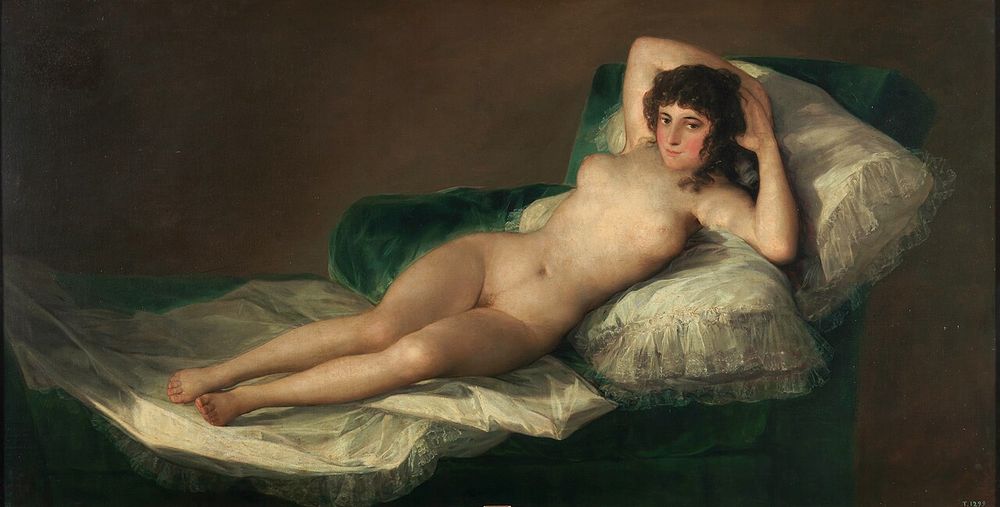
Near it hang two pictures of the same woman on the same couch, once dressed and once naked. In 1815 the Inquisition summoned Goya to explain who had ordered them. His answer is lost.
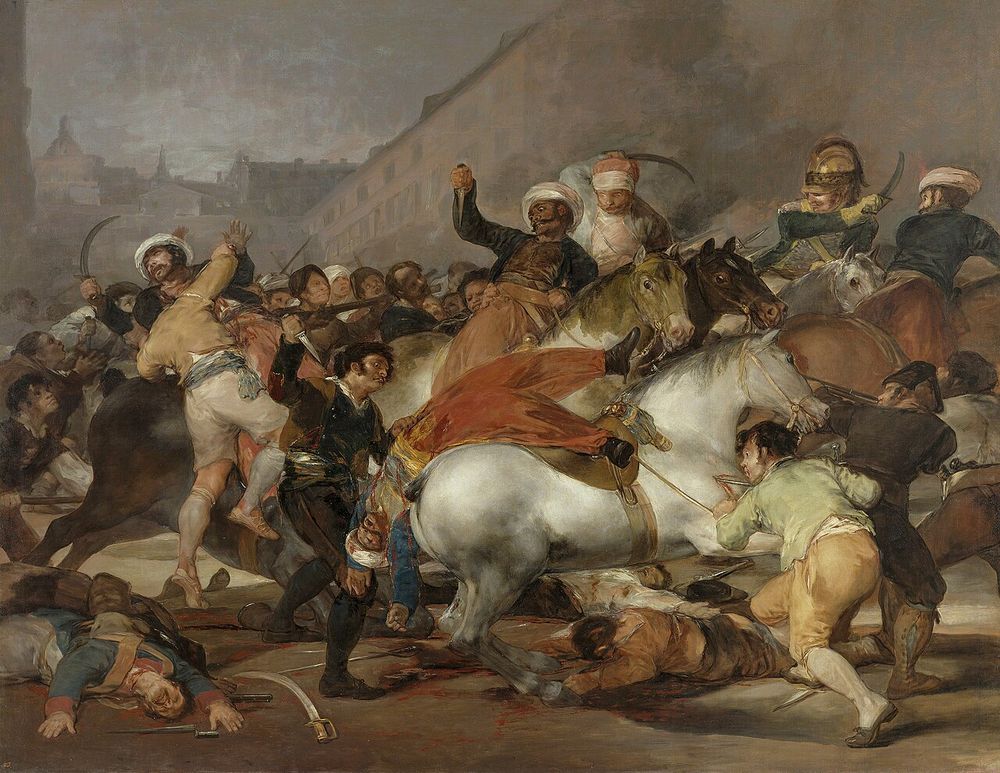
On 2 May 1808 the people of Madrid attacked Napoleon's cavalry with knives in the middle of the city. That night and the next morning the French shot their prisoners.
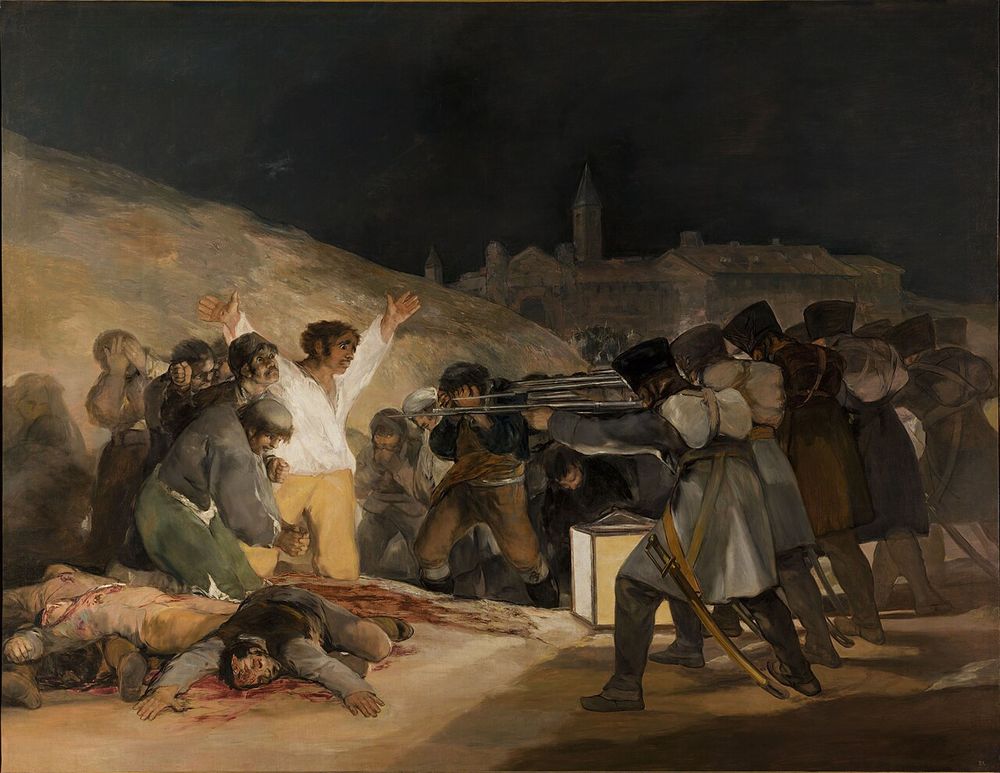
Goya painted both scenes six years later. In the second, the soldiers have no faces. The man about to die has a face, a white shirt, and his arms thrown up like Christ's. A square lantern on the ground gives the only light. Almost every picture of a firing squad made since is a copy of this.
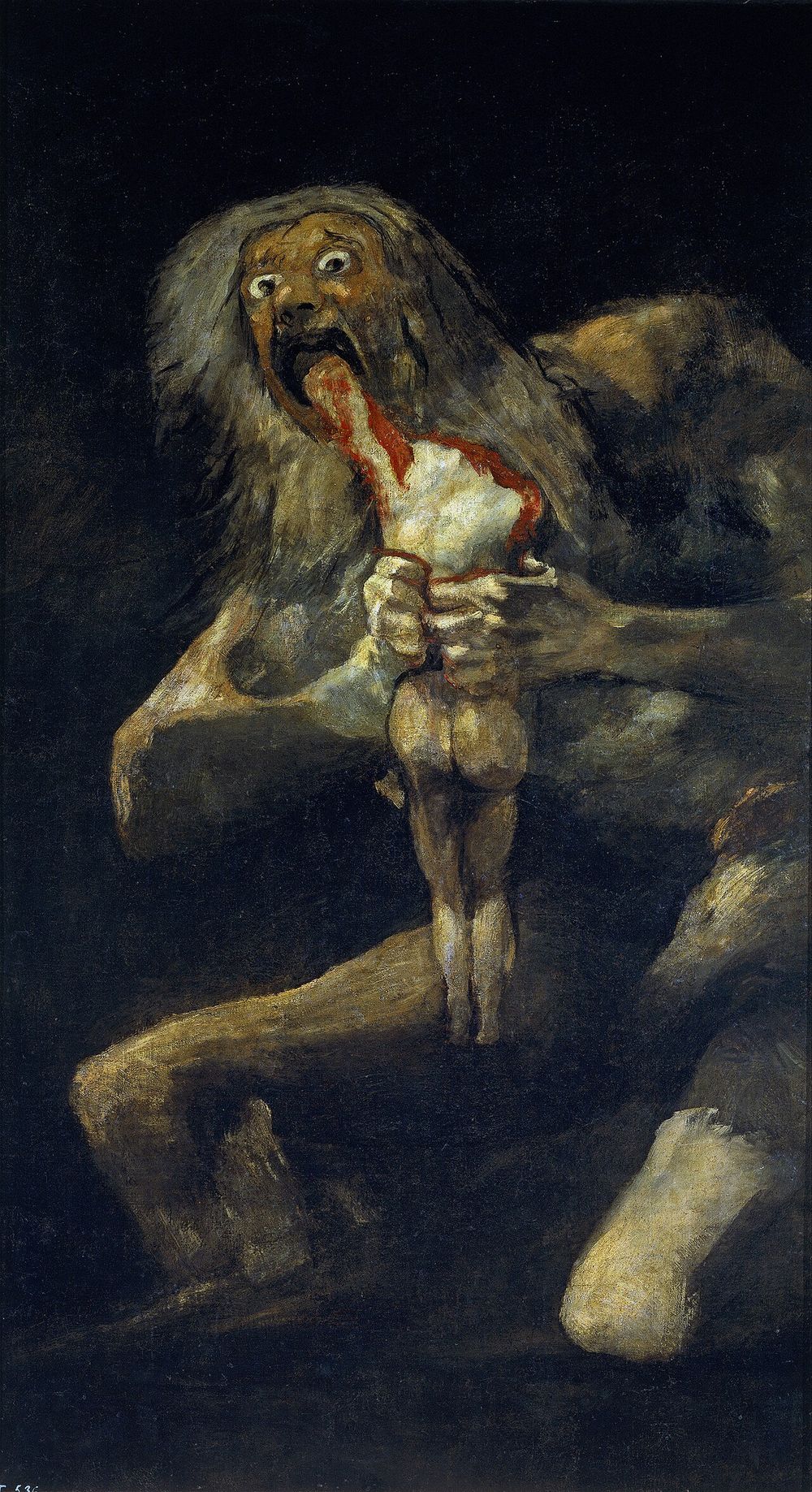
Downstairs is a room of fourteen pictures that Goya painted straight on to the plaster of his own dining room and sitting room when he was old, deaf and alone. He gave them no titles and showed them to nobody. They were cut from the walls almost fifty years after his death.
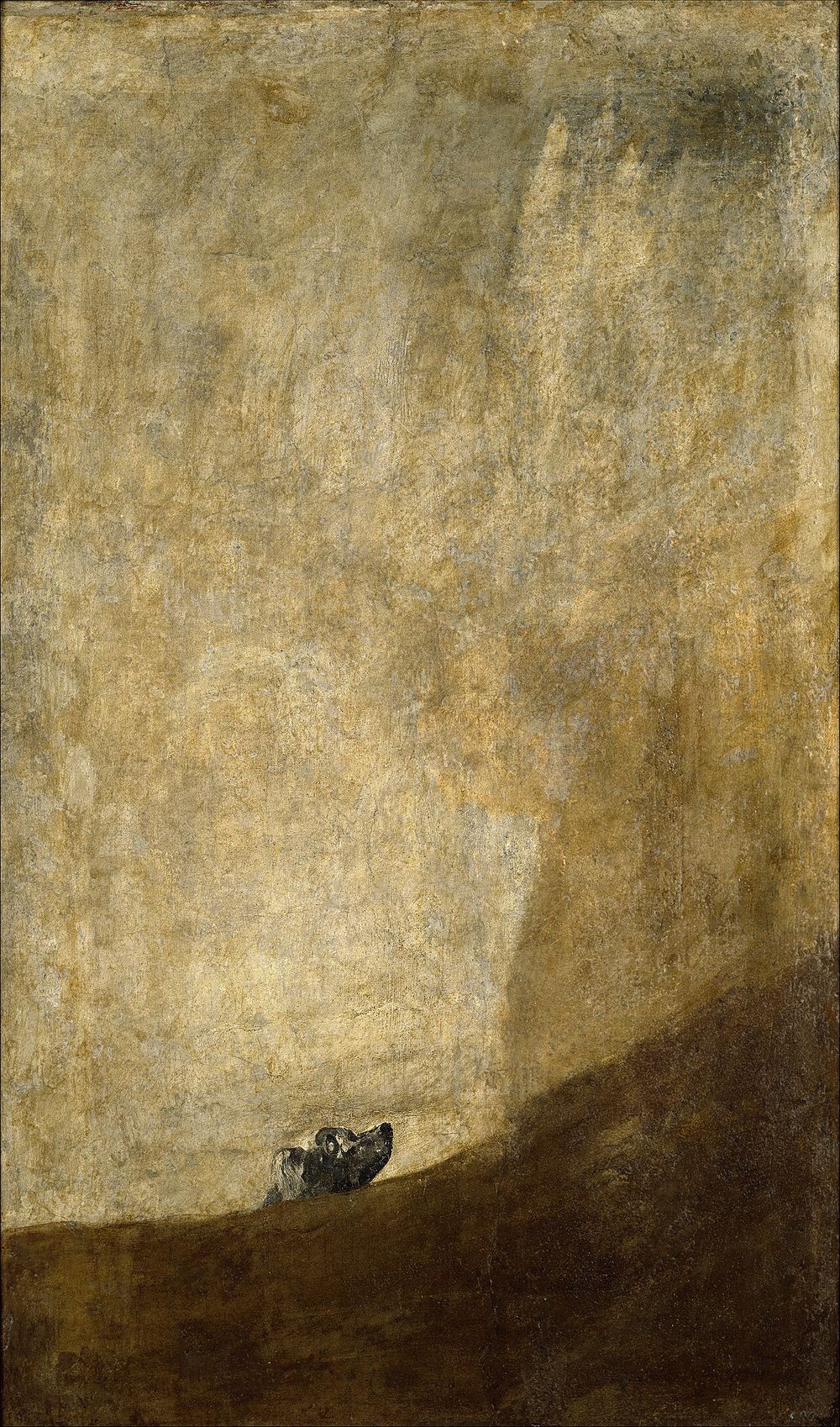
Saturn eating his son hung in the room where Goya ate. The dog is only a head, at the bottom of an empty slope, looking up. Nobody knows at what.
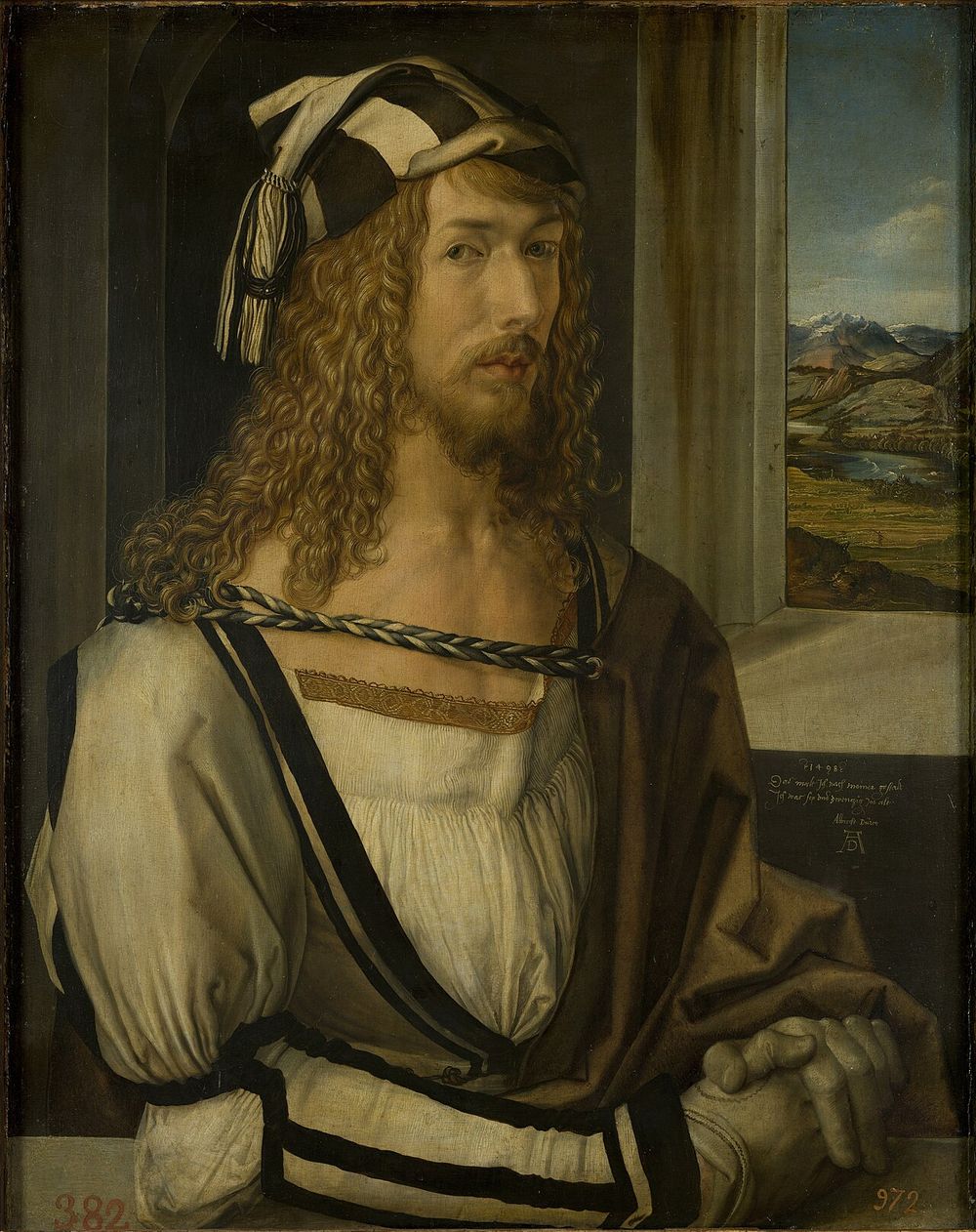
Three more, if you have the legs. Dürer at twenty-six, in 1498, painted himself as a gentleman in gloves: the first time an artist north of the Alps said he was not a craftsman.
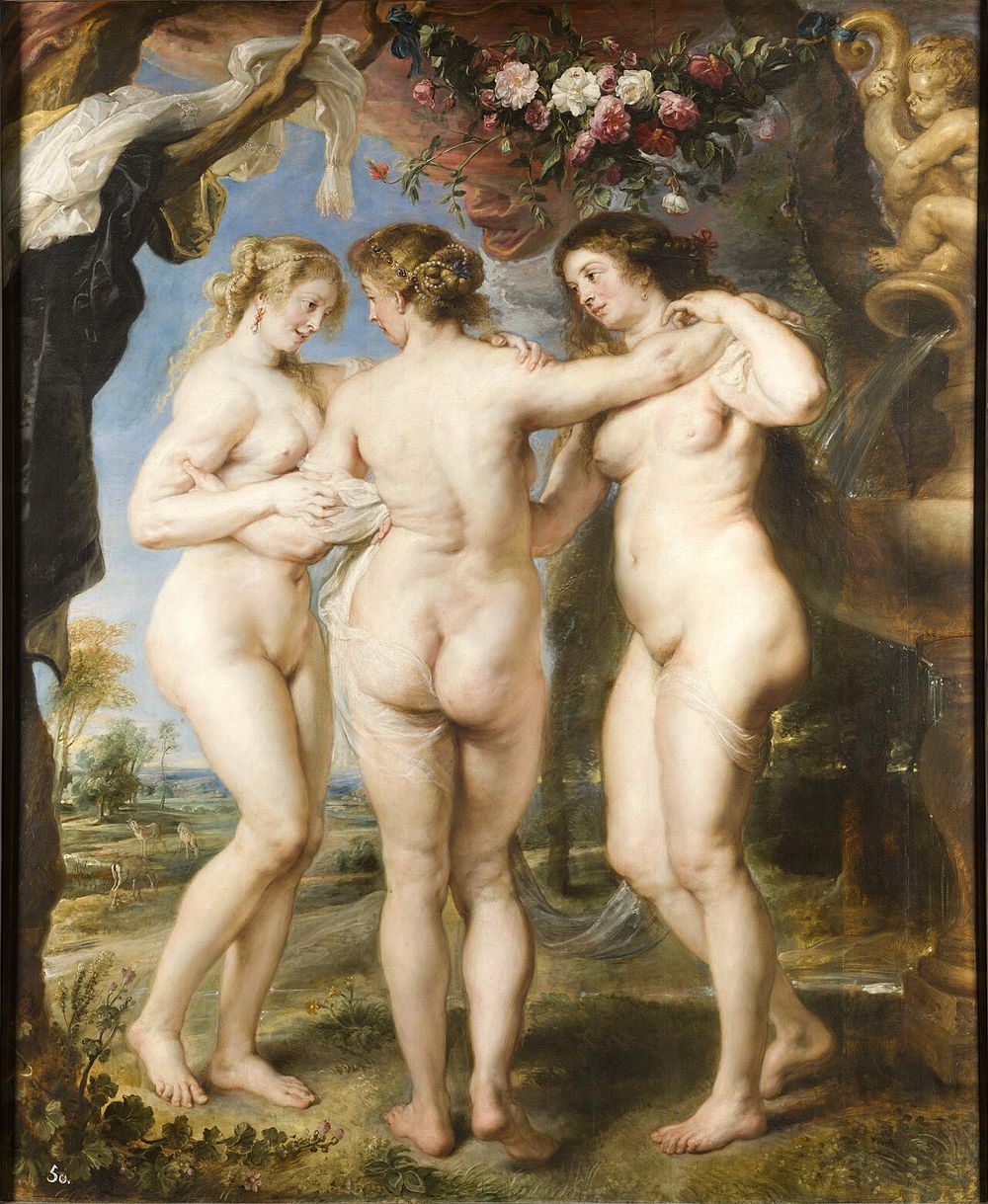
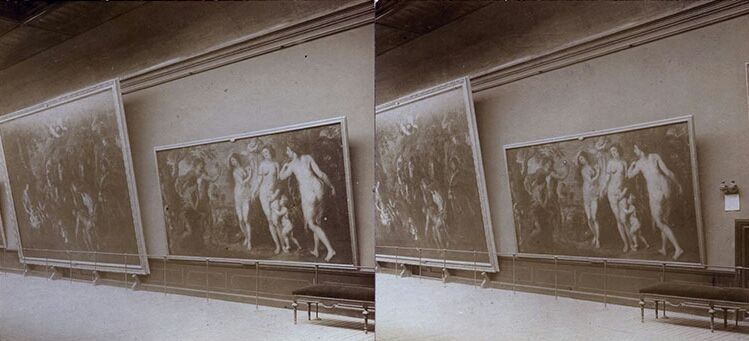
Rubens painted the Three Graces for himself and kept it till he died. The one on the left has the face of his young second wife.
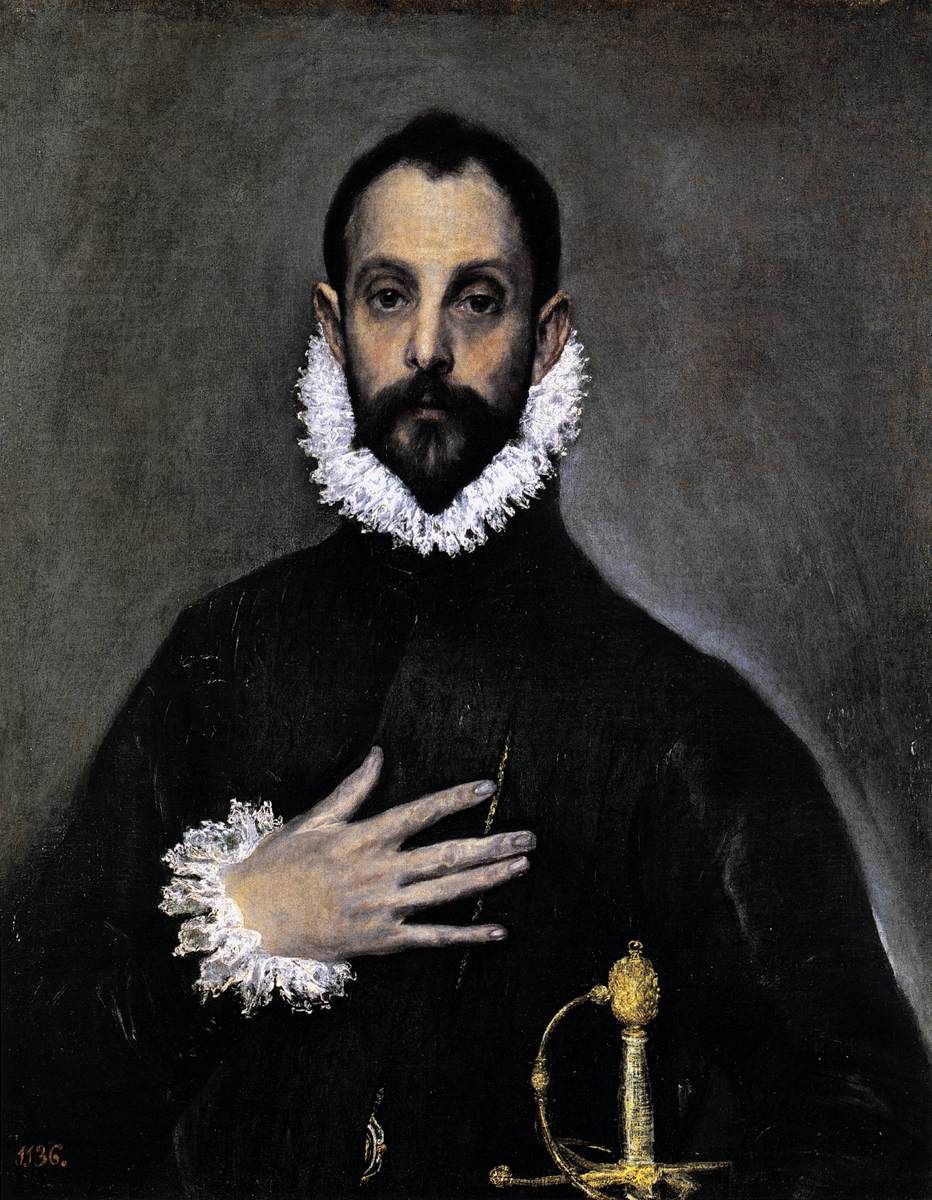
And El Greco's gentleman with his hand on his chest, about 1580: a Greek painter's picture of what a Spaniard thought a Spaniard should be.
| Year | Here | Elsewhere |
|---|---|---|
| 1656 | Velázquez paints Las Meninas in the old palace | In Holland Rembrandt is declared bankrupt |
| 1785 | The building is begun | The first crossing of the English Channel by balloon |
| 1808 | The rising of 2 May; the building becomes a barracks | Beethoven's Fifth Symphony is first played in Vienna |
| 1819 | The museum opens | Singapore is founded as a British trading post |
| 1868 | The queen is overthrown and the collection becomes the nation's | The Meiji era begins in Japan |
| 1936 | Bombs fall; the pictures are sent away | The Olympic Games are held in Berlin |
| 1939 | The pictures come home from Geneva | The Second World War begins in the same month |
| 2019 | The museum is two hundred years old | Notre-Dame in Paris burns |
One line to remember: not a history of art, but what the kings liked.
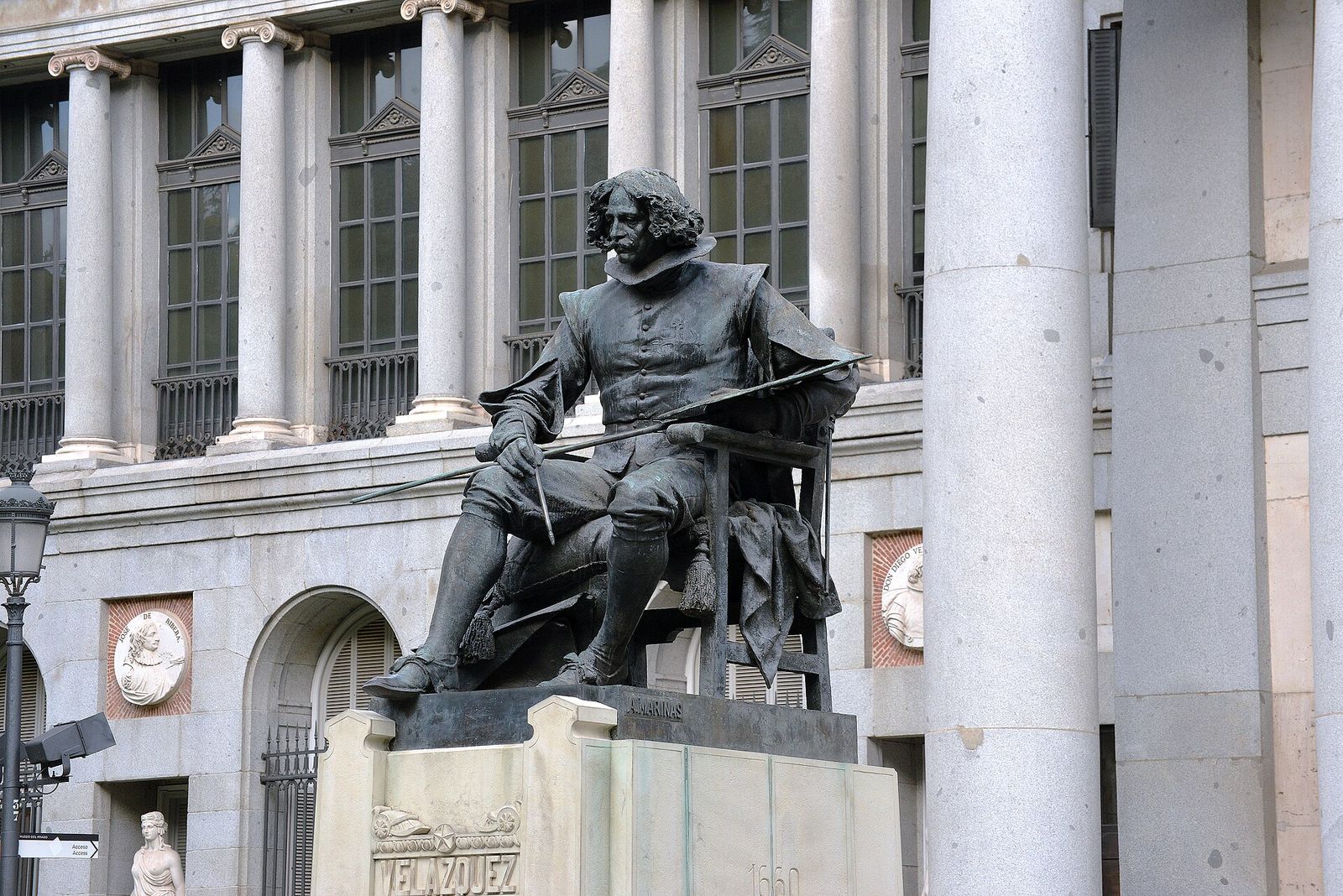
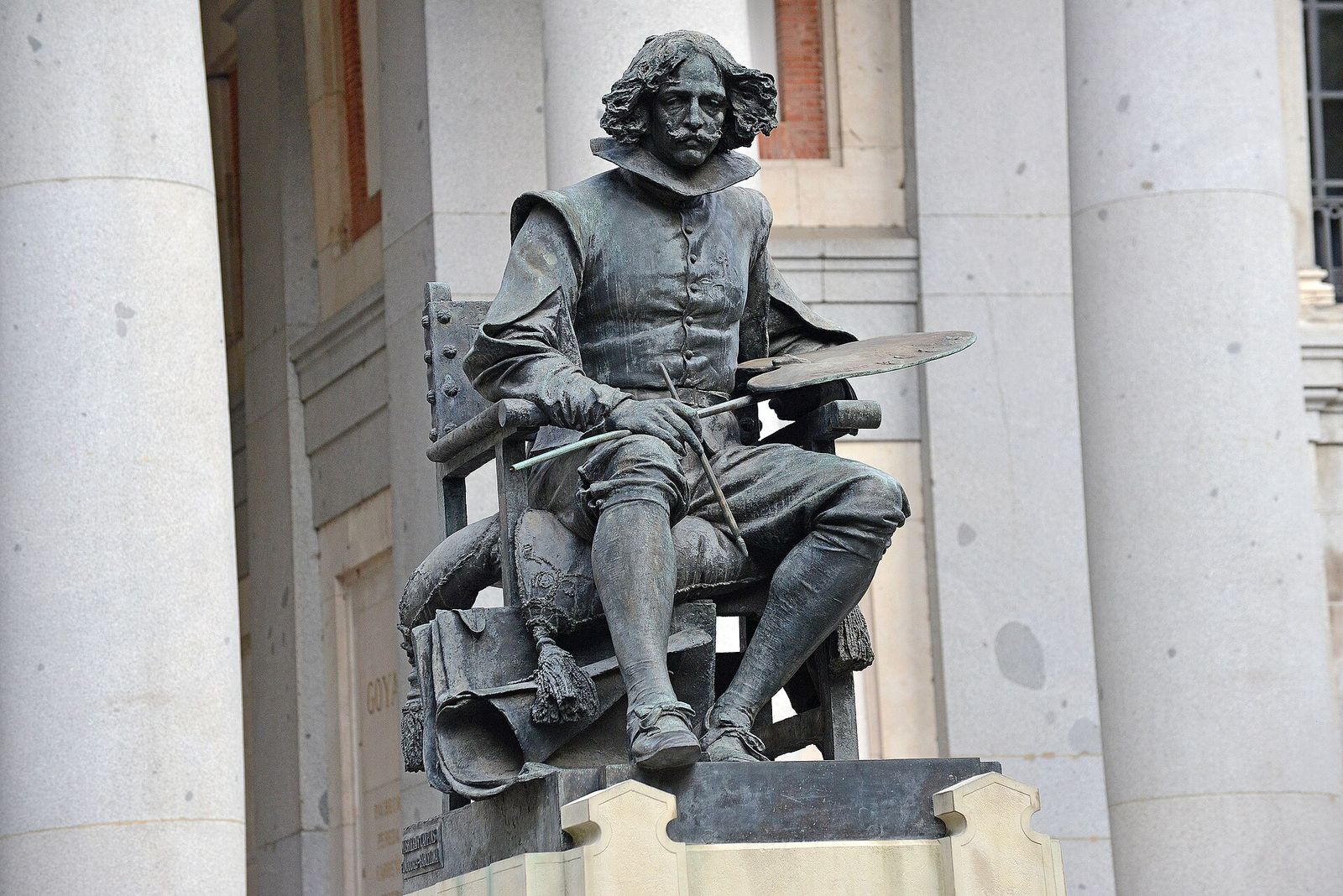
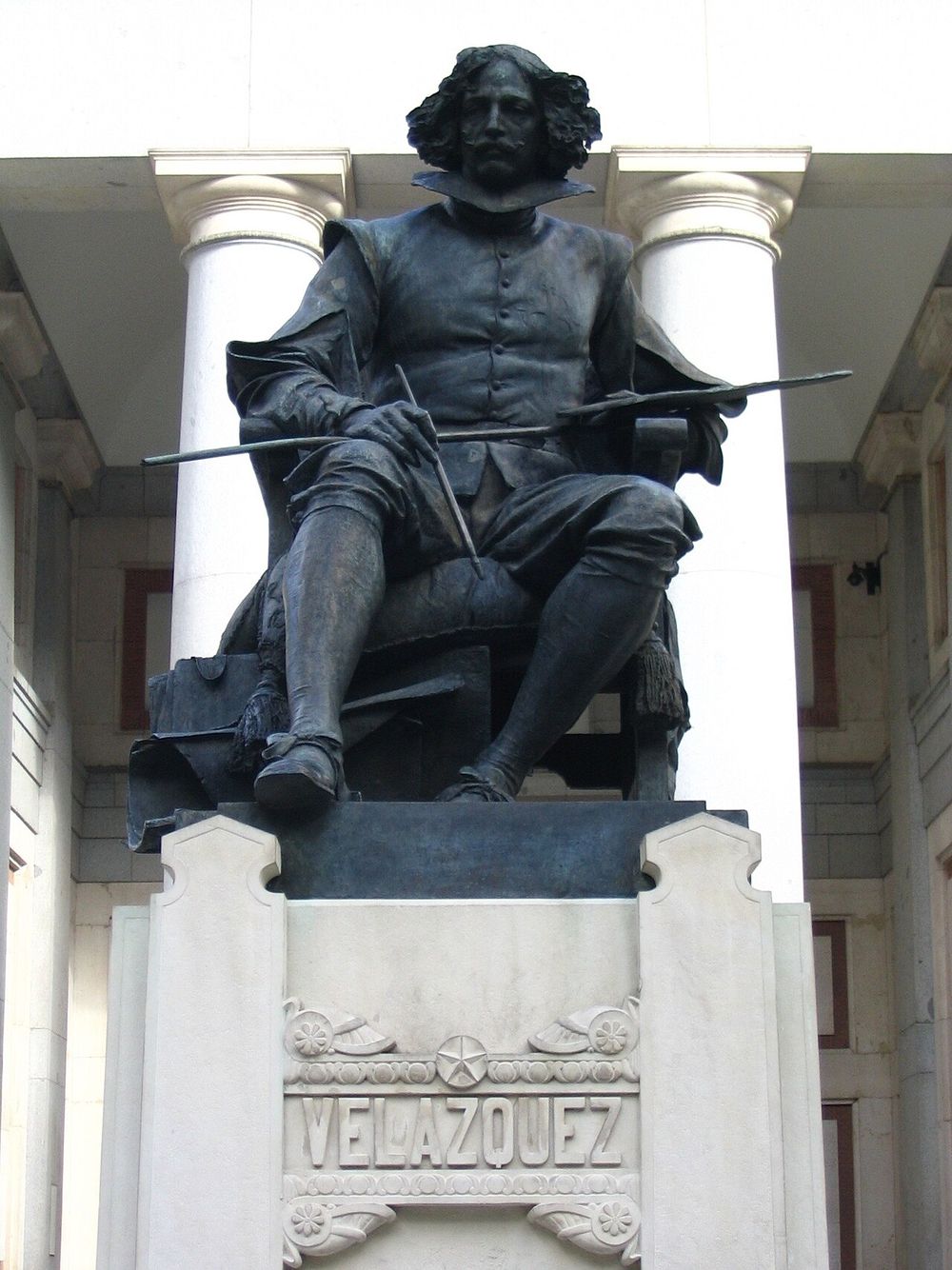
These are stories people tell about this place. They are legends, not history, and each one says where it comes from.
When Velázquez was made a knight, the king himself took a brush and painted the red cross on the painter's chest in Las Meninas.
Source: Antonio Palomino, 1724, who says only that some believe it
On Christmas Eve 1734 the old palace burned, and Las Meninas was saved by being cut from its frame and thrown out of a window.
Source: Told in Madrid; the inventories record only that it was rescued damaged, with a hole in the princess's cheek
Later, people who live here will be able to add the stories they grew up with, and say which of these they have heard.
Last checked 2026-11-12. The museum's own page as quoted by a Madrid guide on 13 September 2026, and Spanish ticket listings of 2026.
Checked 2026-11-12
Stand at the site, sign in, press the button, and collect its stamp. Your browser will ask to use your location. It is sent to us once to confirm that you are at the site; we keep how far you were from it, not the spot where you stood.
Your stamps are saved to your account, so they follow you to any device. Checking from a browser cannot rule out every false location; stricter checks arrive with the app.
Photos here show the place, not people. Each one is credited to the visitor who took it and appears after our team has looked at it. A photo with you in it belongs under “I am here”.