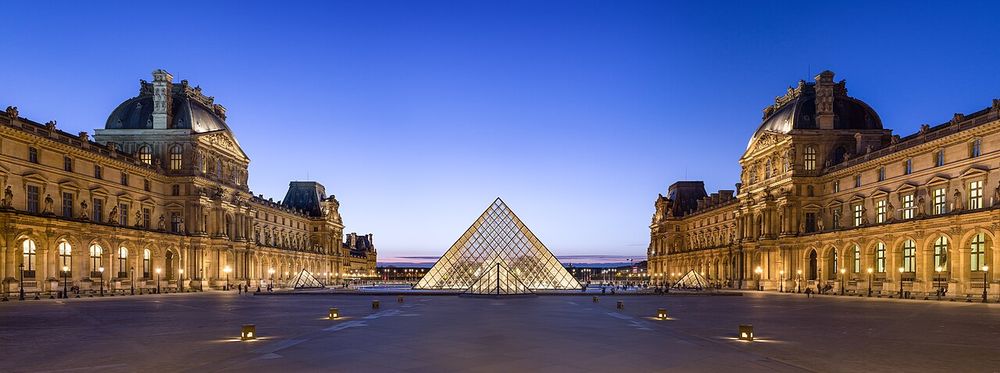
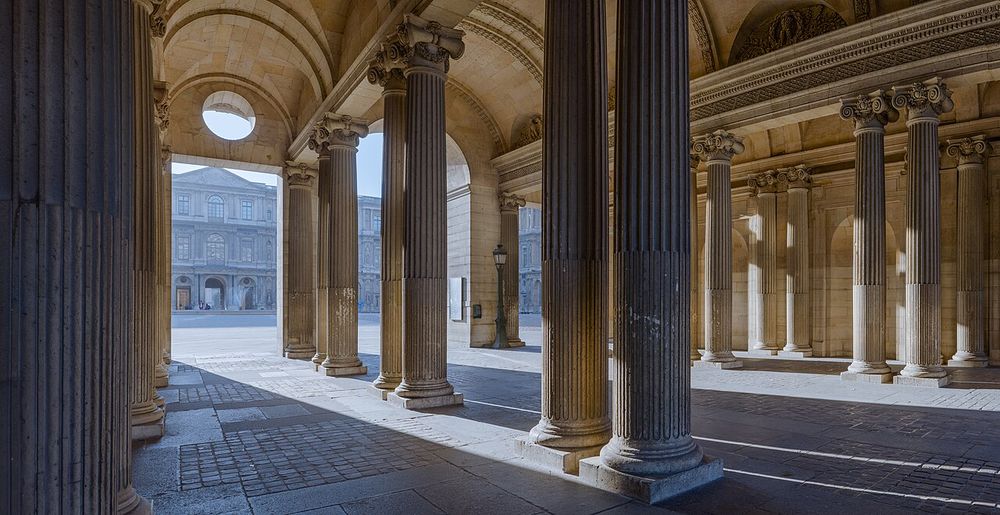
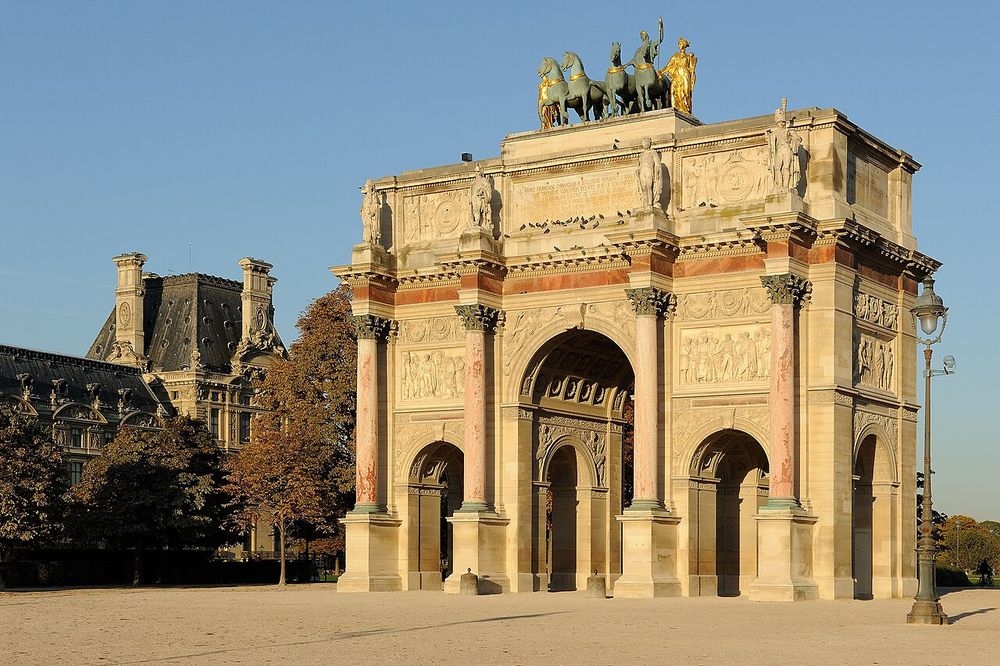
A fortress, then a palace, then, since 1793, a museum: about 35,000 works on show in three wings, and a glass pyramid by a Chinese-born architect at the door.
Photo: Benh LIEU SONG (Flickr), CC BY-SA 3.0, Wikimedia Commons
The story
You are standing in the courtyard of a royal palace. It began in 1190 as a fortress on the edge of Paris. Kings rebuilt it as a palace and then left it for Versailles. In 1793, in the middle of the Revolution, it was opened to the public as a museum.
The glass pyramid in front of you is the newest part. It opened in 1989. Its architect, I. M. Pei, was born in Guangzhou and grew up in Shanghai and Suzhou.
What is here
One ticket opens the whole museum: three wings on four levels. It also lets you into the small Delacroix museum, ten minutes away, on the same day or the next day it is open. The courtyards, the pyramid from outside and the Tuileries Garden are free.
The Cour Napoléon and the pyramidBenh LIEU SONG (Flickr), CC BY-SA 4.0
The building has three wings, and each is named after a man: Denon, the museum's first director; Sully, a king's minister; Richelieu, a cardinal. Under the pyramid a hall leads to all three.
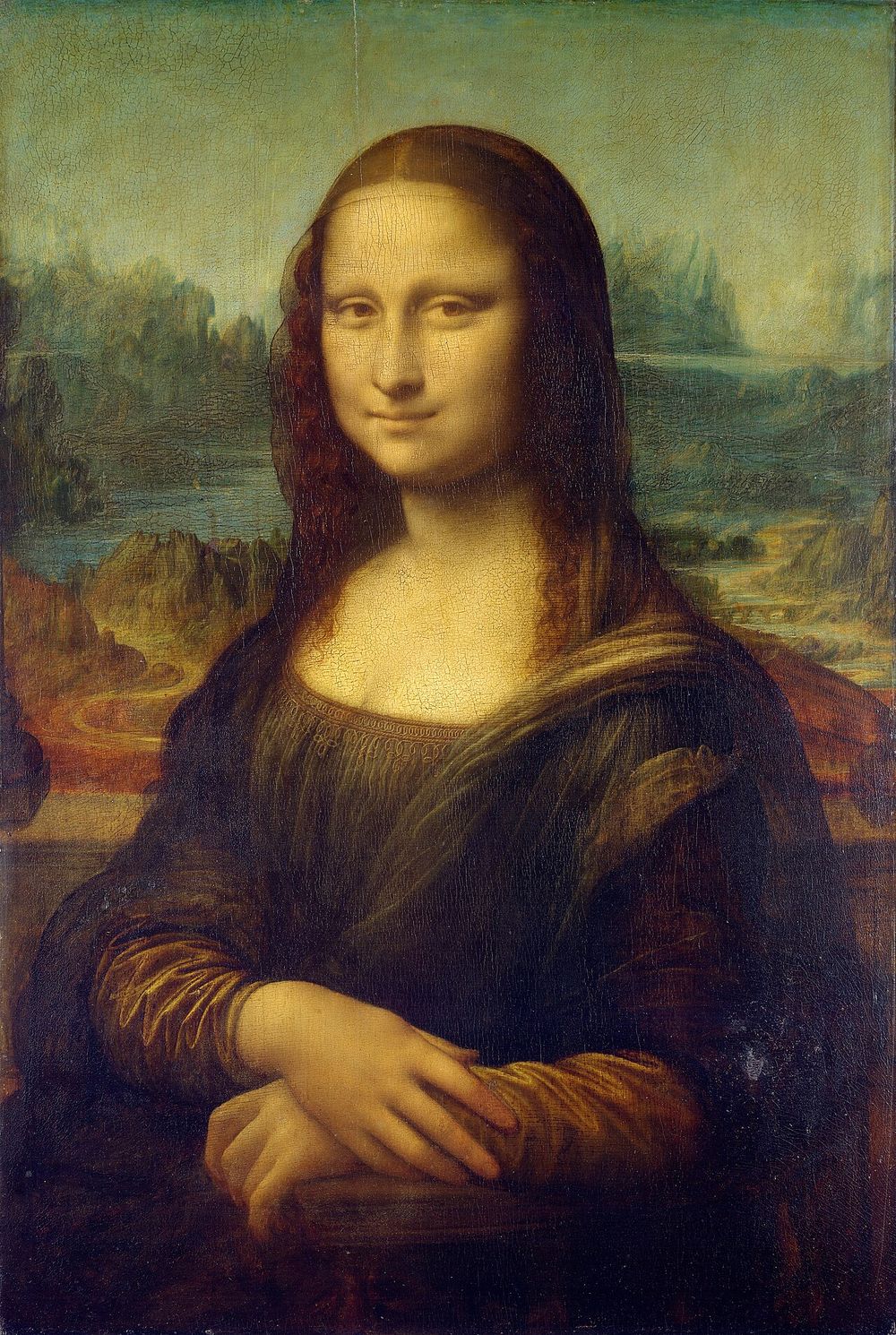
Most visitors come for three works, and Chinese guidebooks call them the three treasures of the Louvre: the Mona Lisa, the Venus de Milo and the Winged Victory of Samothrace. Two are in the Denon wing and one in Sully. You can see all three in ninety minutes.
There is far more. The museum shows about 35,000 objects. If you gave each one thirty seconds, you would need more than three months of opening hours.
Things people often get wrong
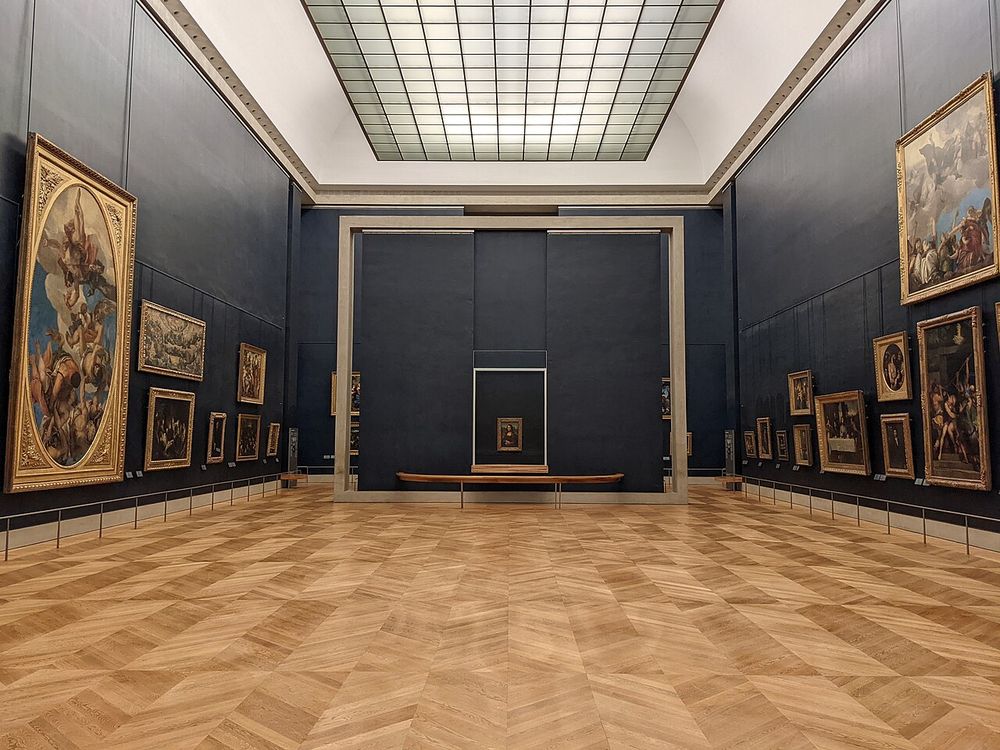
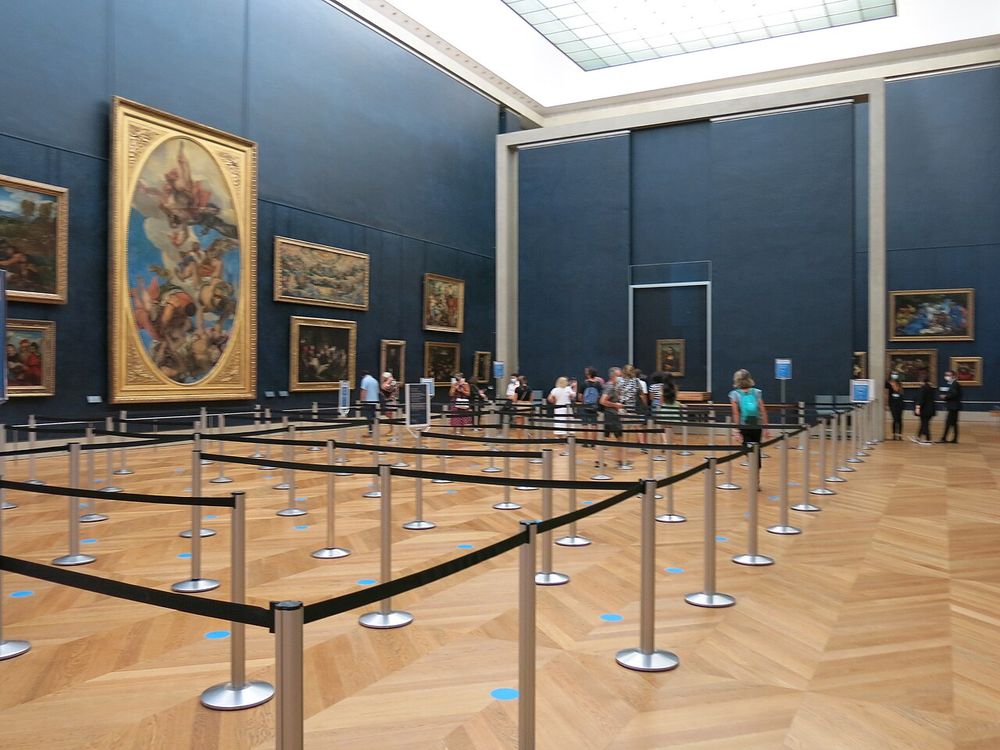
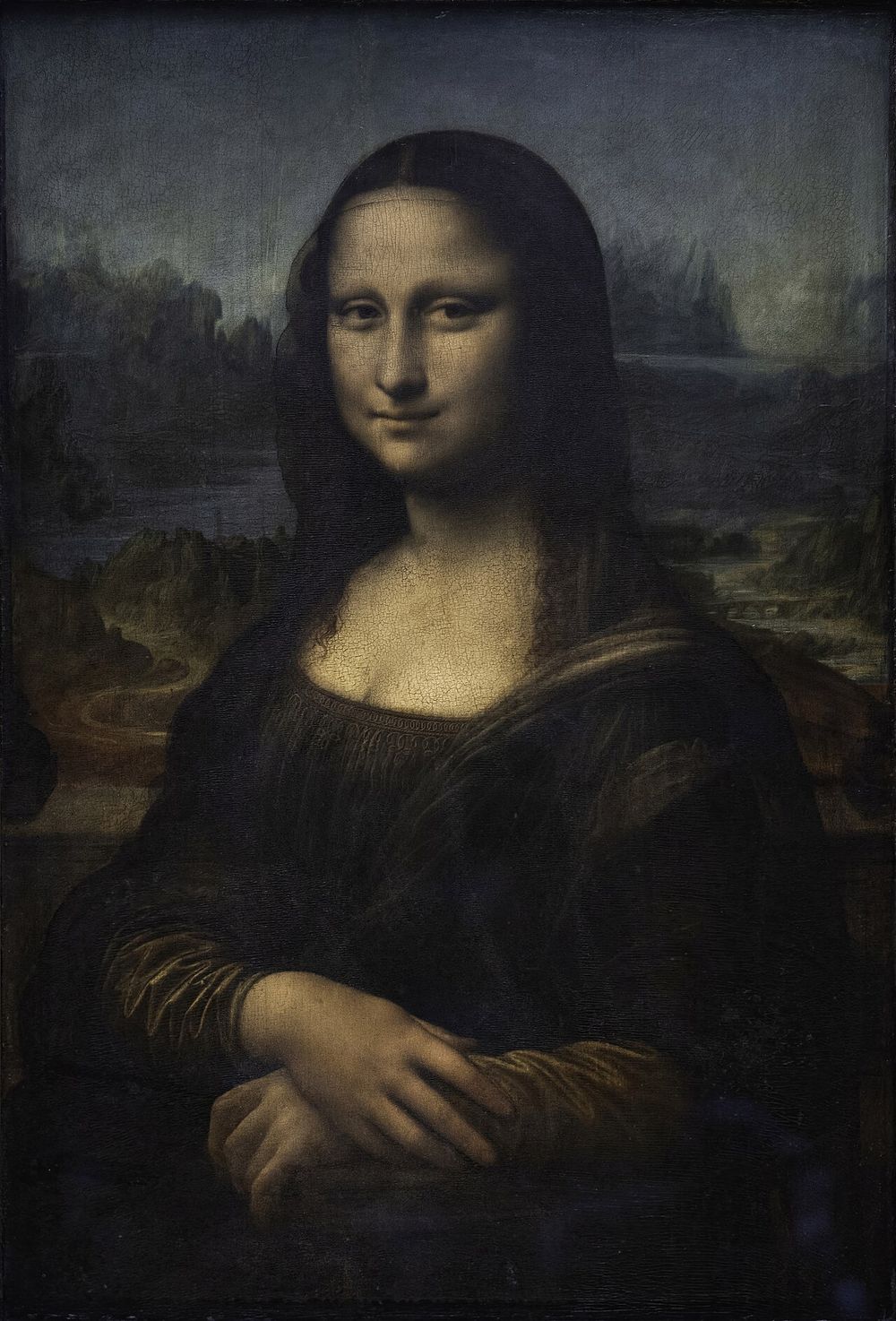
"The Mona Lisa is big." It is 77 centimetres by 53, about the size of a carry-on bag. It is painted on a panel of poplar wood, and it hangs behind glass, some metres back from a barrier.
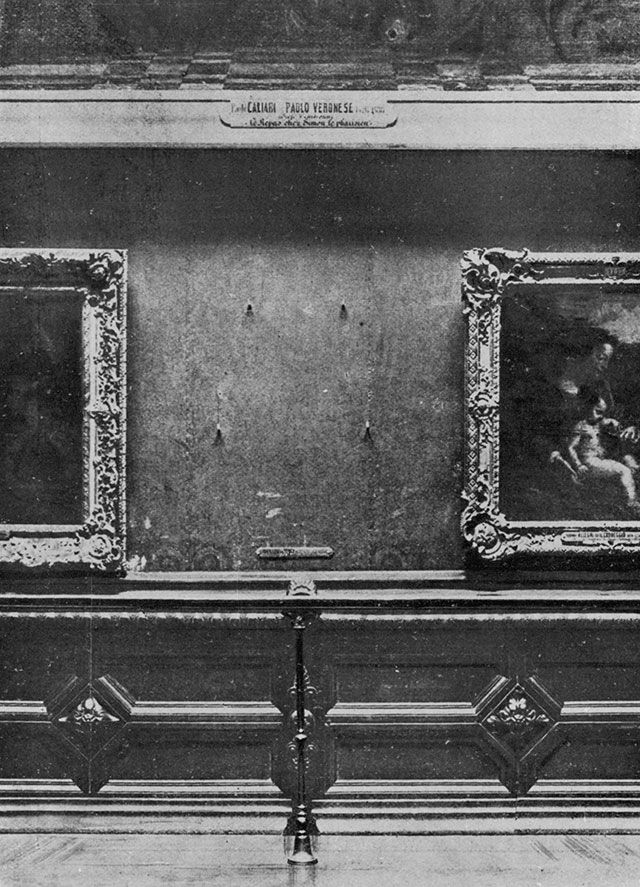
"It was always the most famous painting in the world." Its world fame dates from 1911, when it was stolen and newspapers everywhere printed its picture for two years.
"The pyramid has 666 panes of glass." The museum counts 673: 603 diamonds and 70 triangles.
"The Louvre was built as a museum." It was built as a fort and lived in as a palace. The paintings came because kings collected them.
Some Chinese visitors look here for objects taken from the Old Summer Palace in Beijing in 1860. They are not in the Louvre. France's share went to the Chinese Museum of the Empress Eugénie in the Château de Fontainebleau, south of Paris. Asian art in Paris is at the Musée Guimet.
People who stood here
Napoleon (emperor of the French)On 2 April 1810 he married Marie-Louise of Austria in the Salon Carré, the square room at the end of the Grande Galerie. He walked the length of the gallery in procession, past paintings his armies had taken from half of Europe. You may walk the same floor.
Pablo Picasso (painter)When the Mona Lisa vanished in 1911 the police questioned him. He had nothing to do with it, though he had once bought two small statues that turned out to have been stolen from this museum. He may have stood at the empty space on the wall like everyone else in Paris that month.
I. M. Pei (Chinese-born American architect)Before he accepted the commission he came here several times in secret, walking the courtyard and the galleries to decide whether the job could be done at all. He may have stood where you are, measuring the palace with his eyes.
Go deeper: thirteen stops, from the pyramid to the code of Hammurabi
The stops start outside, go down to the oldest stones, then follow the usual route through the Denon wing and on to Sully and Richelieu. Nobody does all thirteen in one visit. Choose.
1. The pyramid: a new door for an old house
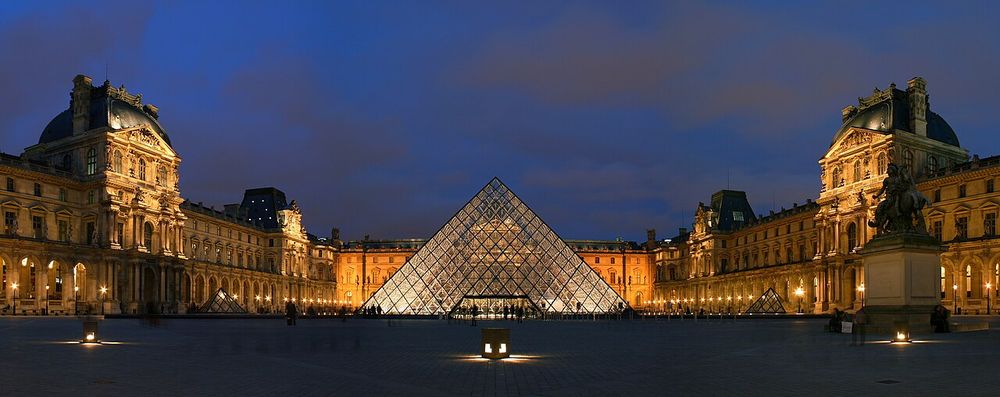
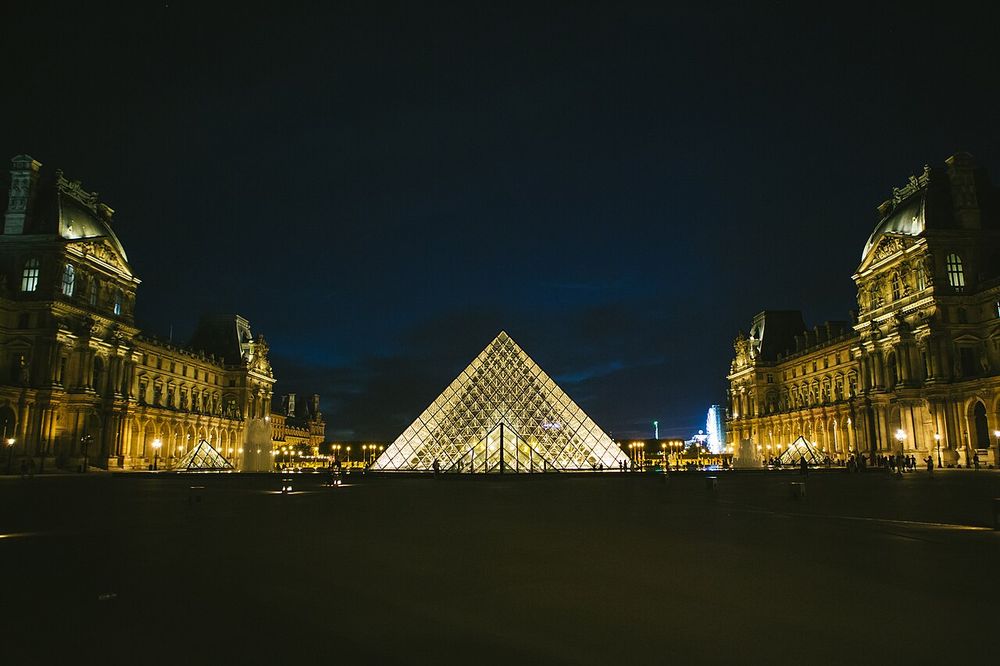
The courtyard at nightBenh LIEU SONG, CC BY 2.5
By 1980 the Louvre had a problem. It had many small doors and no proper entrance, and a government ministry occupied one whole wing. In 1981 President Mitterrand decided to give the entire palace to the museum. In 1983 he chose I. M. Pei, without a competition.
Pei put the entrance underground, in the middle of the courtyard, and lit it through a pyramid of glass 21.6 metres high. Paris was furious. Newspapers called it a scar on the face of the city. It opened in March 1989. Within a few years it was on every postcard.
Pei's family came from Suzhou and owned one of its classical gardens, the Lion Grove. He said later that in a Chinese garden you never see the whole at once; you are led from one view to the next. The hall under the pyramid works the same way.
2. The medieval Louvre: the fortress under the palace
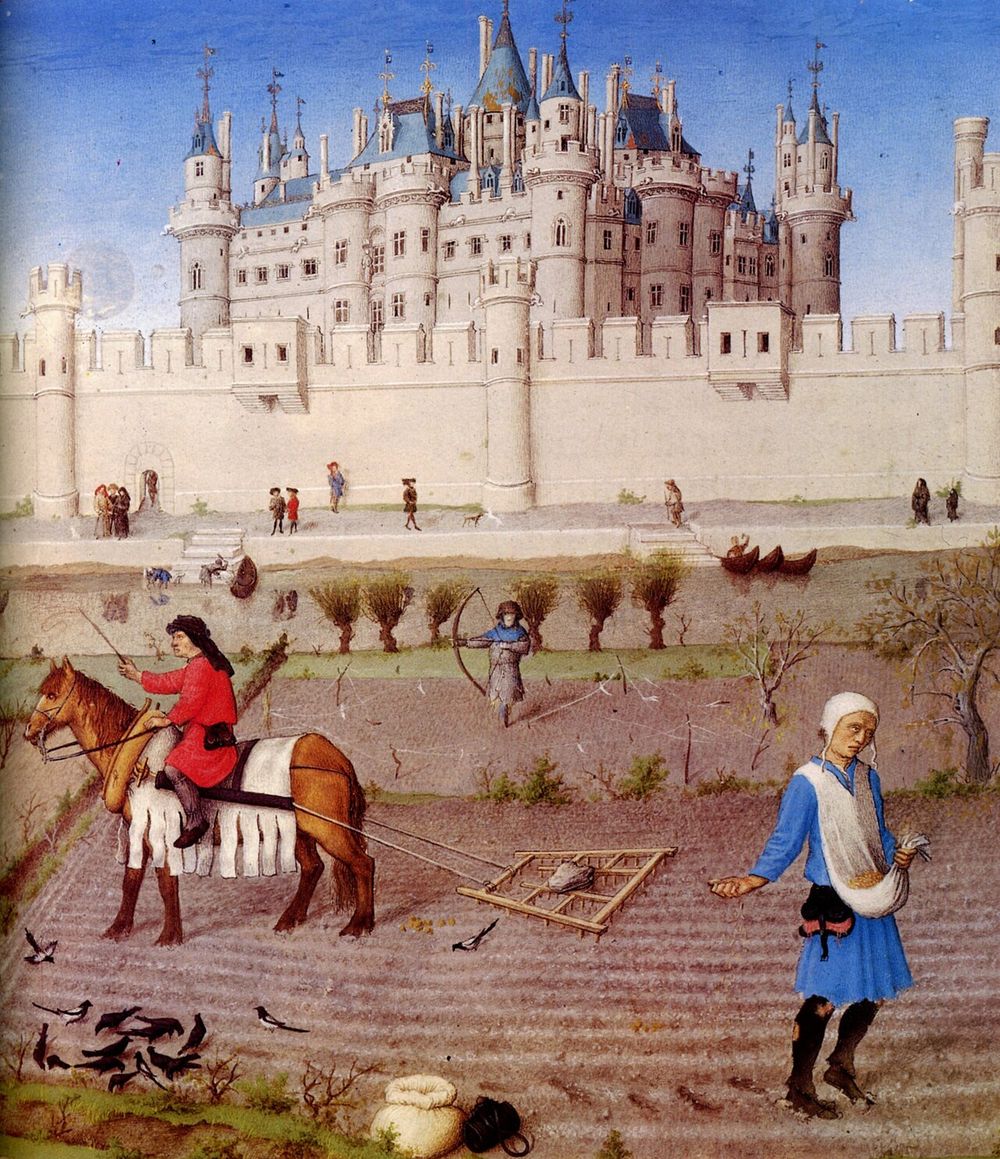
The medieval Louvre in the Très Riches Heures, about 1416Limbourg brothers / Barthélemy d'Eyck, Public domain
Go down in the Sully wing. You walk in what was the moat of the fortress built in 1190 by King Philip Augustus, with the base of its round keep. It was found again when the ground was dug for Pei's project.
The painting of about 1416 shows what stood here then: a castle of pointed towers above peasants sowing a field. In 1528 King Francis I pulled the keep down, and from 1546 he had a palace in the new Italian style begun in its place.
Francis I is also the reason the Mona Lisa is in France. He invited the old Leonardo da Vinci to live near his château at Amboise. Leonardo came in 1516 with the painting in his baggage, and died there in 1519.
3. The Winged Victory: a goddess landing on a ship
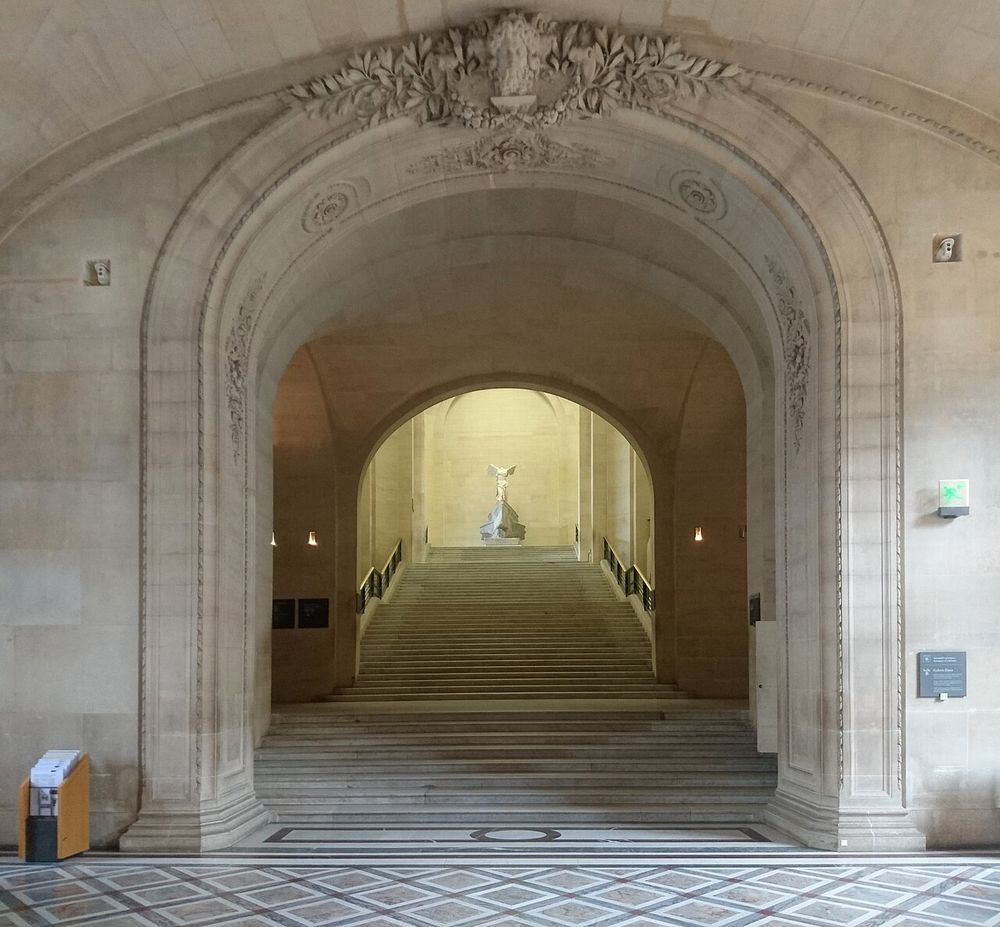
The Winged Victory of Samothrace at the top of the Daru staircaseShonagon, CC0
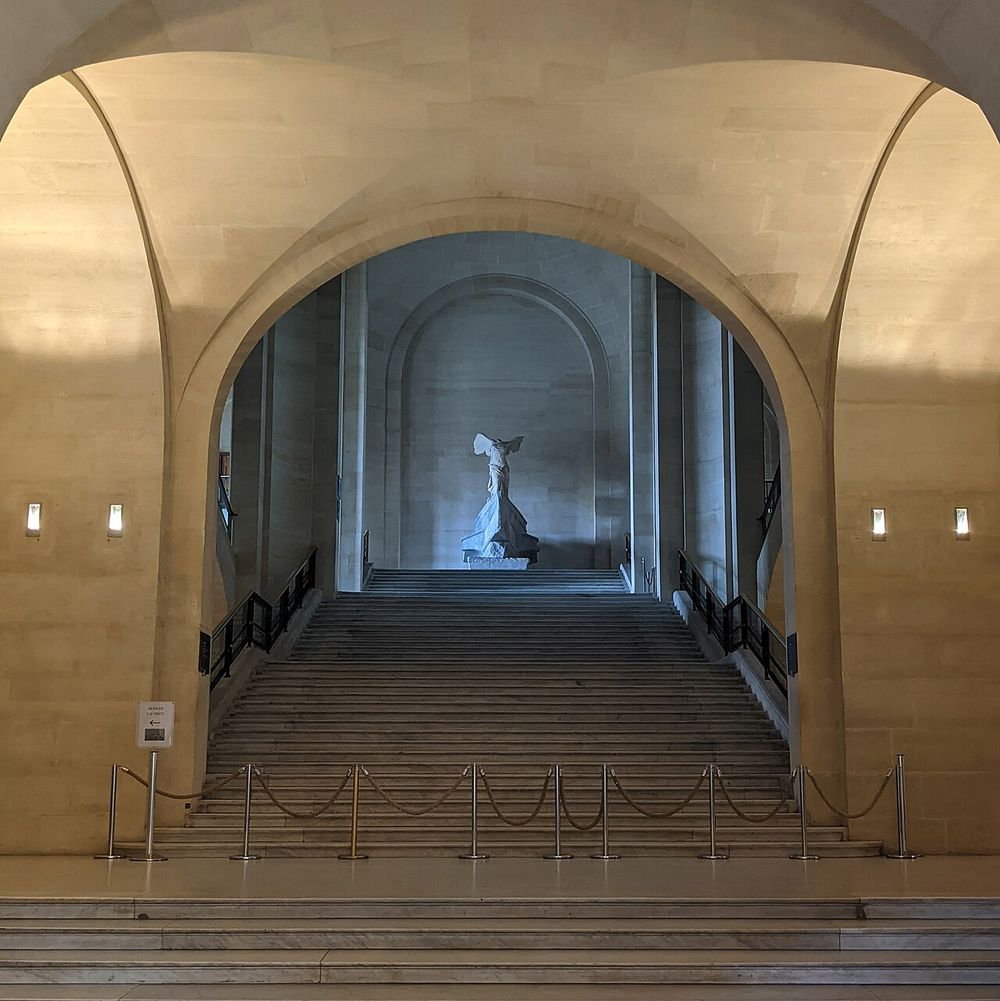
At the top of the Daru staircase. She was found in 1863 on the Greek island of Samothrace, in more than a hundred pieces, and was carved about 190 BC. The grey block under her is the prow of a warship. She has just come down on it, and the wind still pulls at her dress.
The statue is 2.75 metres high, and with the ship 5.57. Her right hand, found in 1950, is in a glass case nearby. The head has never been found.
On 3 September 1939, the day France declared war, she was rolled down these stairs on a wooden ramp and taken to a château in the country. Almost everything movable in the Louvre left Paris that autumn.
4. The Mona Lisa, and the painting on the opposite wall
Leonardo da Vinci, Mona Lisa, about 1503–1519Leonardo da Vinci, Public domain
Room 711, the Salle des États. The sitter is Lisa Gherardini, wife of a Florentine silk merchant, Francesco del Giocondo; hence her other names, La Gioconda and La Joconde. Leonardo began it about 1503 and kept working on it for years. He never handed it over.
Look at the corners of the mouth and eyes. There are no lines. Leonardo laid thin glazes of paint one over another until the edges dissolved. Italians call it sfumato, "smoked". That is why the smile seems to change as your eye moves.
August 1911: the empty space where the Mona Lisa hungUnknown authorUnknown author, Public domain
On 21 August 1911 a workman named Vincenzo Peruggia, who had helped make its glass case, lifted it off the wall and walked out with it under his smock. It lay in a trunk in his room in Paris for more than two years. He was caught in Florence in December 1913, trying to sell it.
Veronese, The Wedding at Cana, 1563: the largest painting in the LouvrePaolo Veronese, Public domain
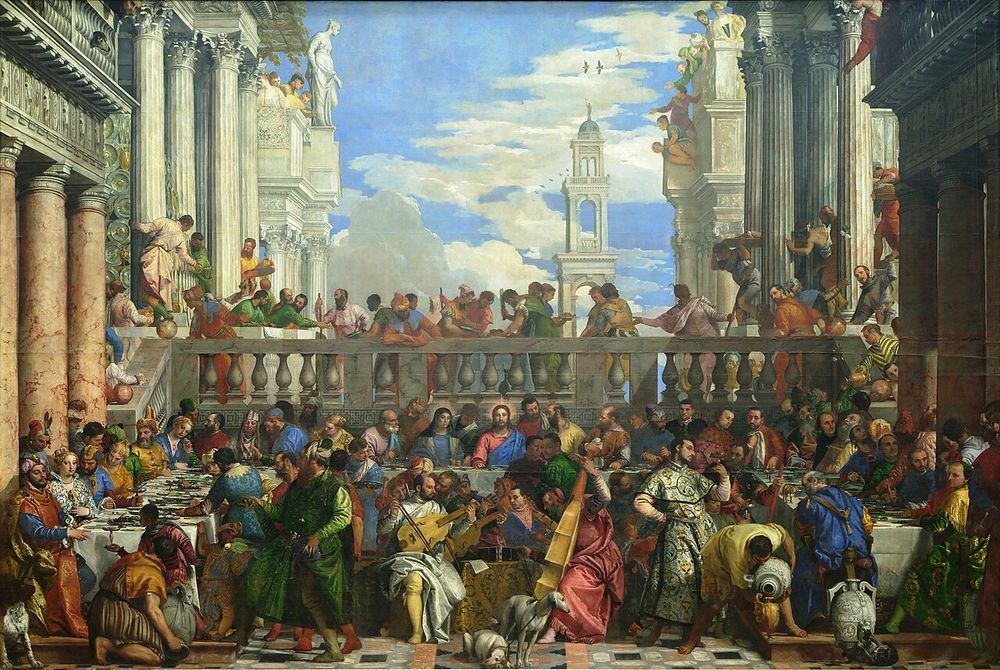
Now turn round. The wall facing the Mona Lisa is filled by the largest painting in the Louvre: The Wedding at Cana by Veronese, 1563, nearly ten metres wide. Napoleon's army took it from a monastery in Venice in 1797 and cut it in two to carry it. Most people in this room never look at it.
5. The Grande Galerie and the big French pictures
Hubert Robert, the Grande Galerie as he hoped it would be, about 1795Hubert Robert, Public domain
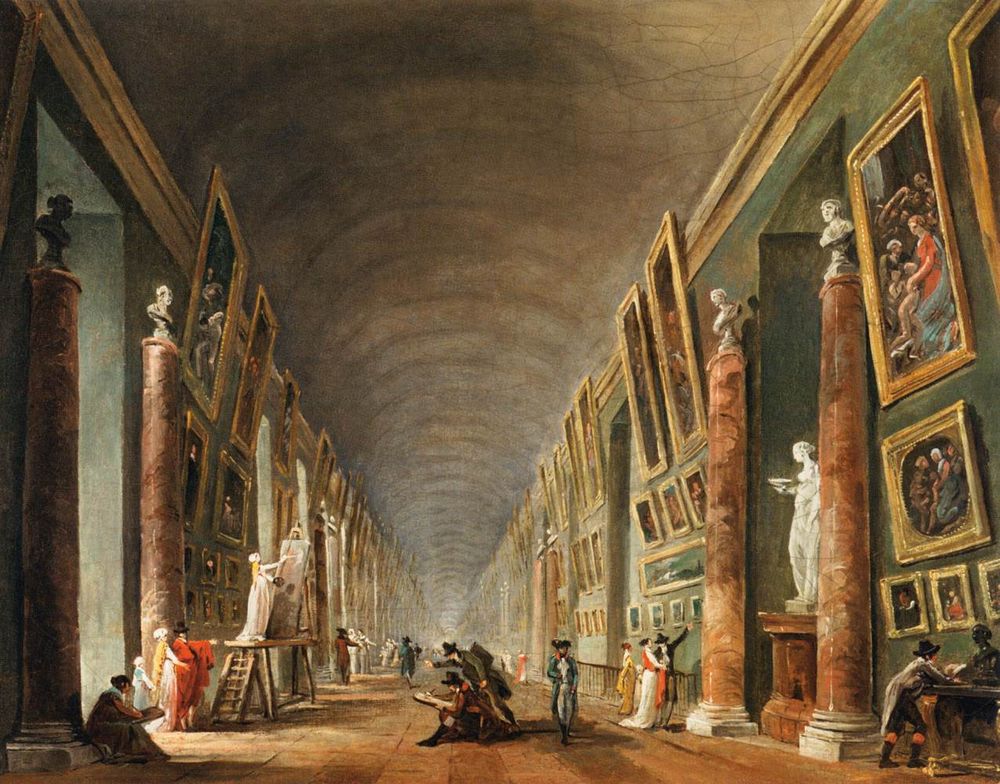
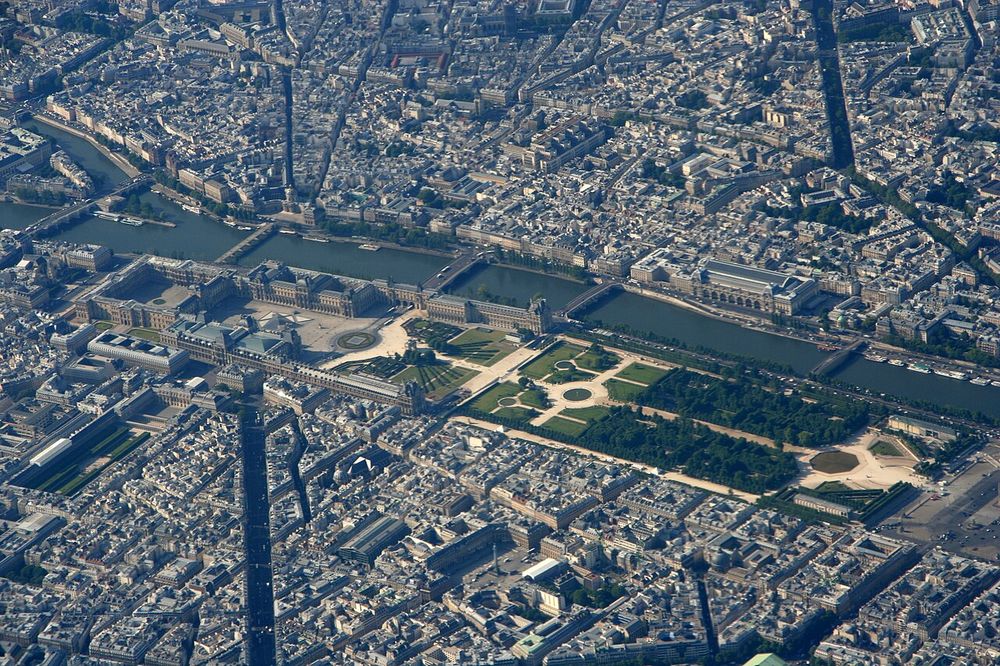
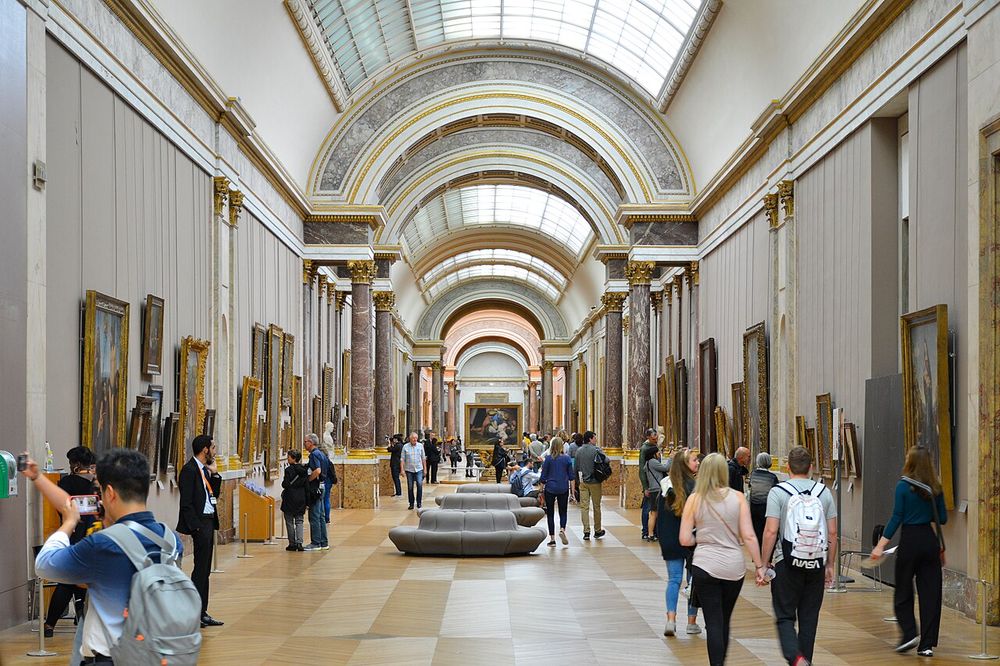
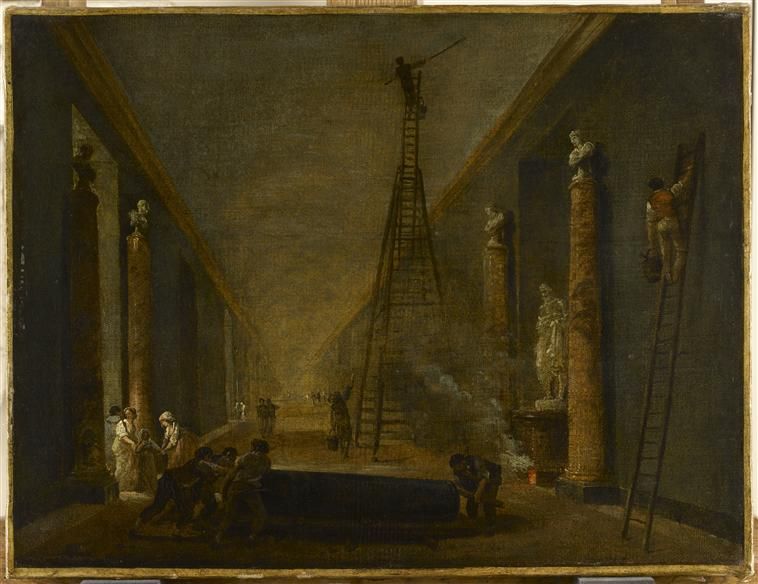
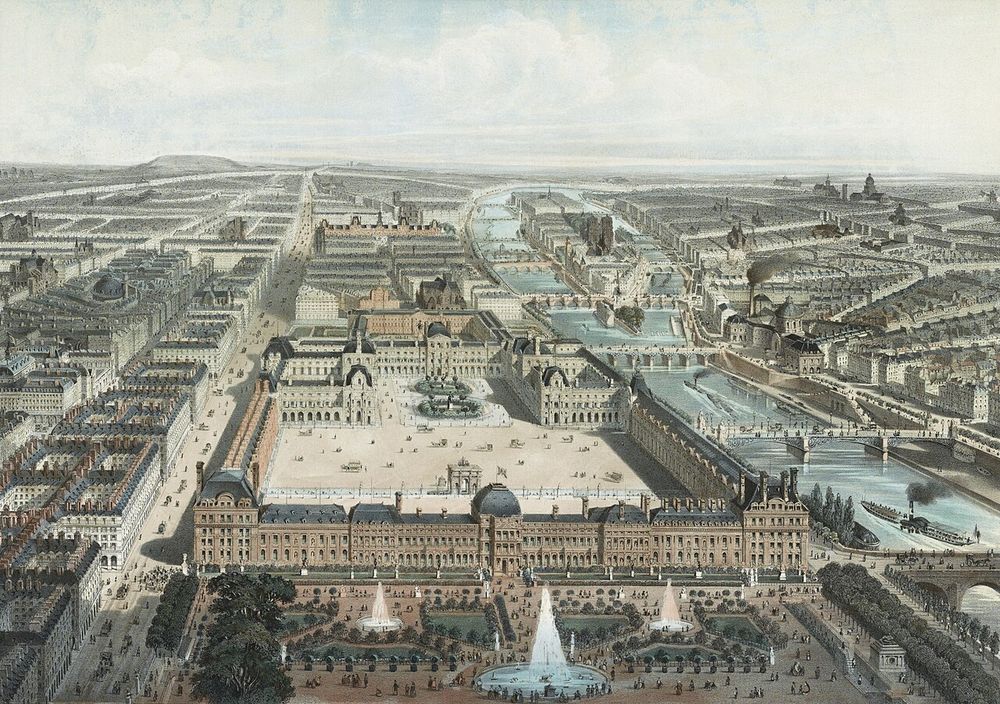
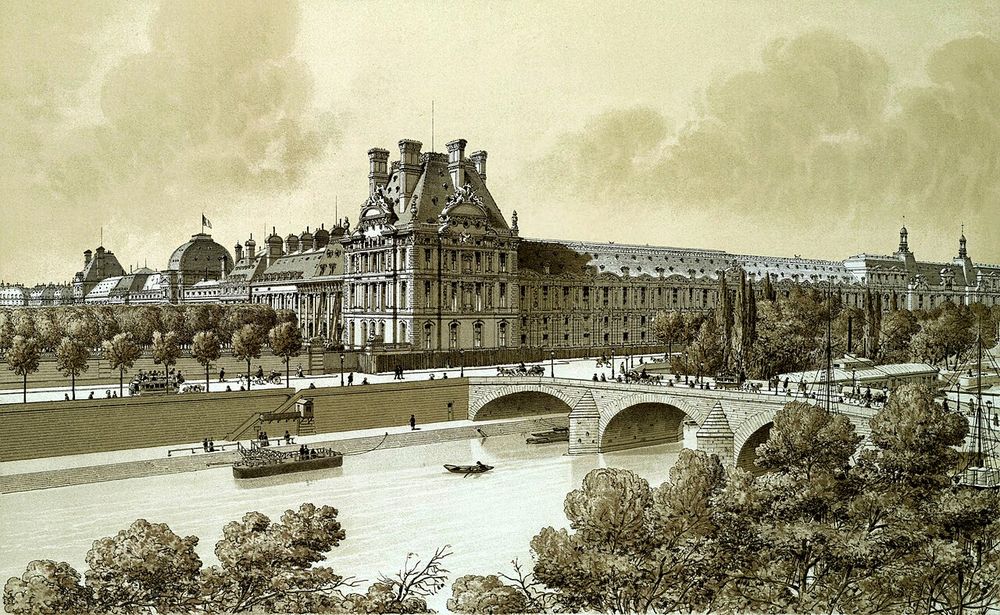
The gallery beside the Salle des États runs for nearly 300 metres along the river. It was built about 1600 to join the Louvre to another palace, the Tuileries, which stood where the garden begins and was burned in 1871. The painter Hubert Robert, who helped set up the museum, painted it in the 1790s as he hoped it would look.
Delacroix, Liberty Leading the People, 1830, after its cleaning in 2024Eugène Delacroix, Public domain
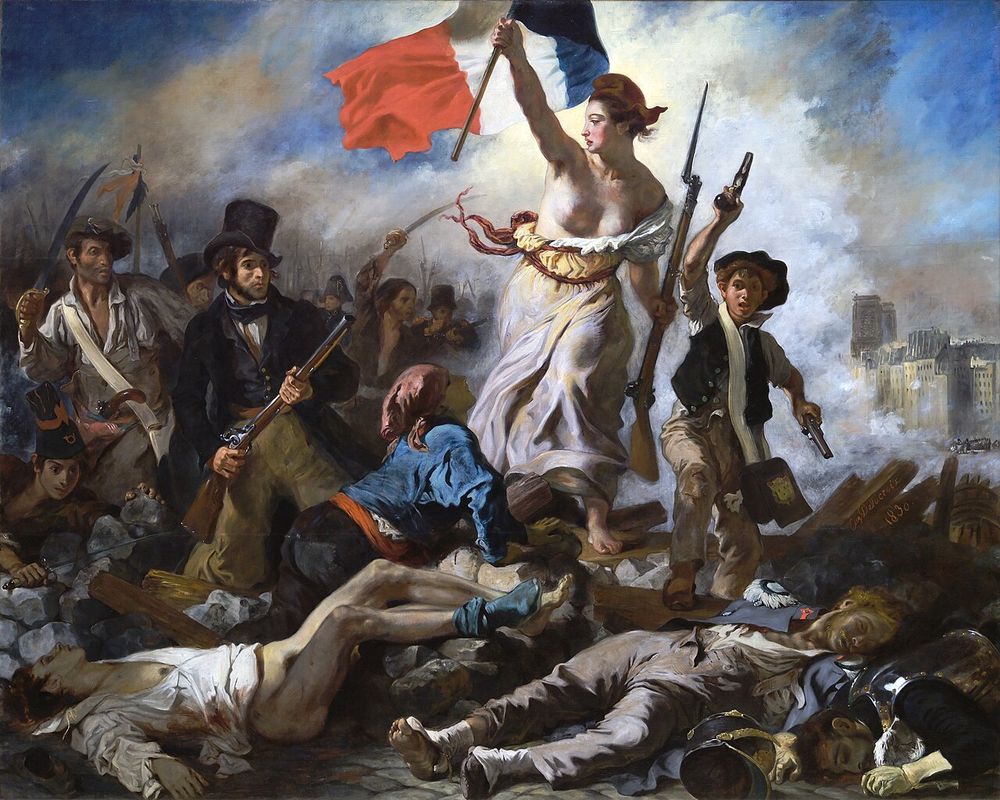
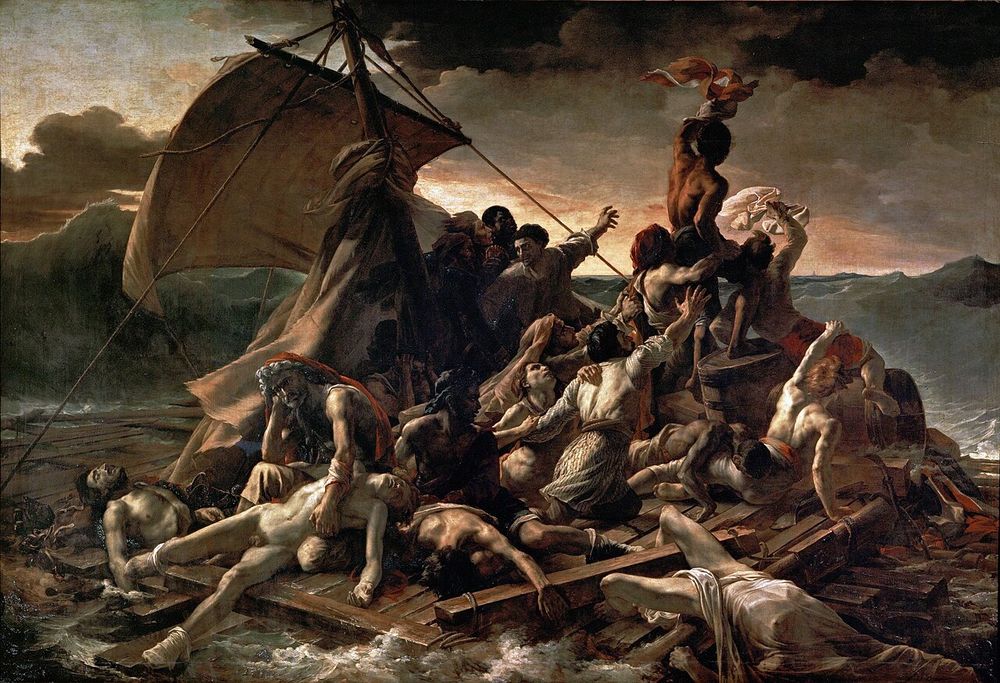
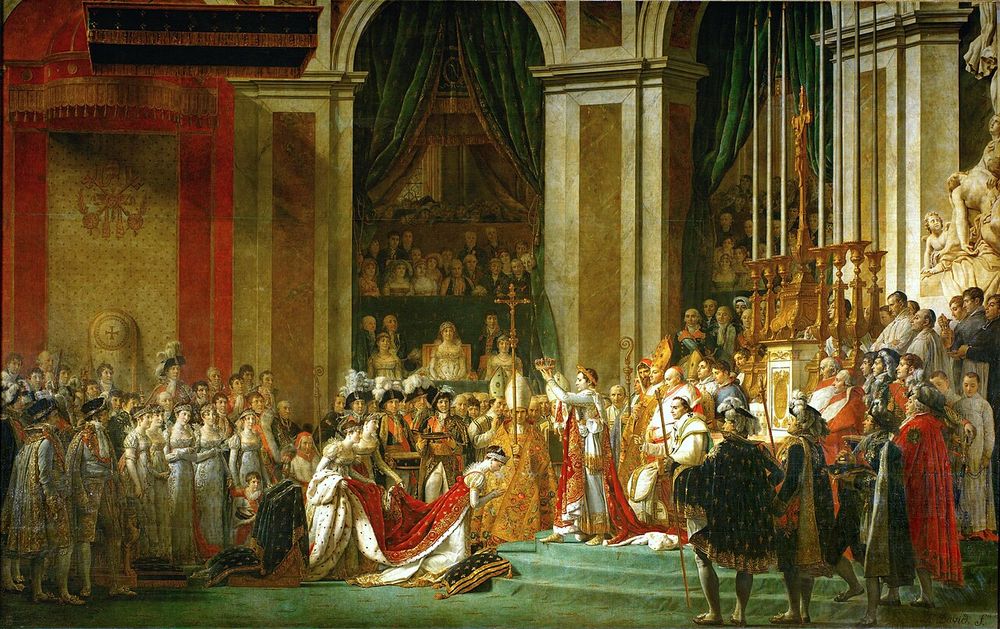
In the red rooms nearby hang three pictures every French schoolchild knows. Delacroix's Liberty Leading the People shows the Paris rising of July 1830. Géricault's Raft of the Medusa shows the survivors of a real shipwreck of 1816: 147 people were put on a raft and 15 were alive when it was found. David's Coronation shows Napoleon, in 1804, crowning his wife; he had already crowned himself.
6. The Venus de Milo
The Venus de MiloUnknown artistUnknown artist, Public domain
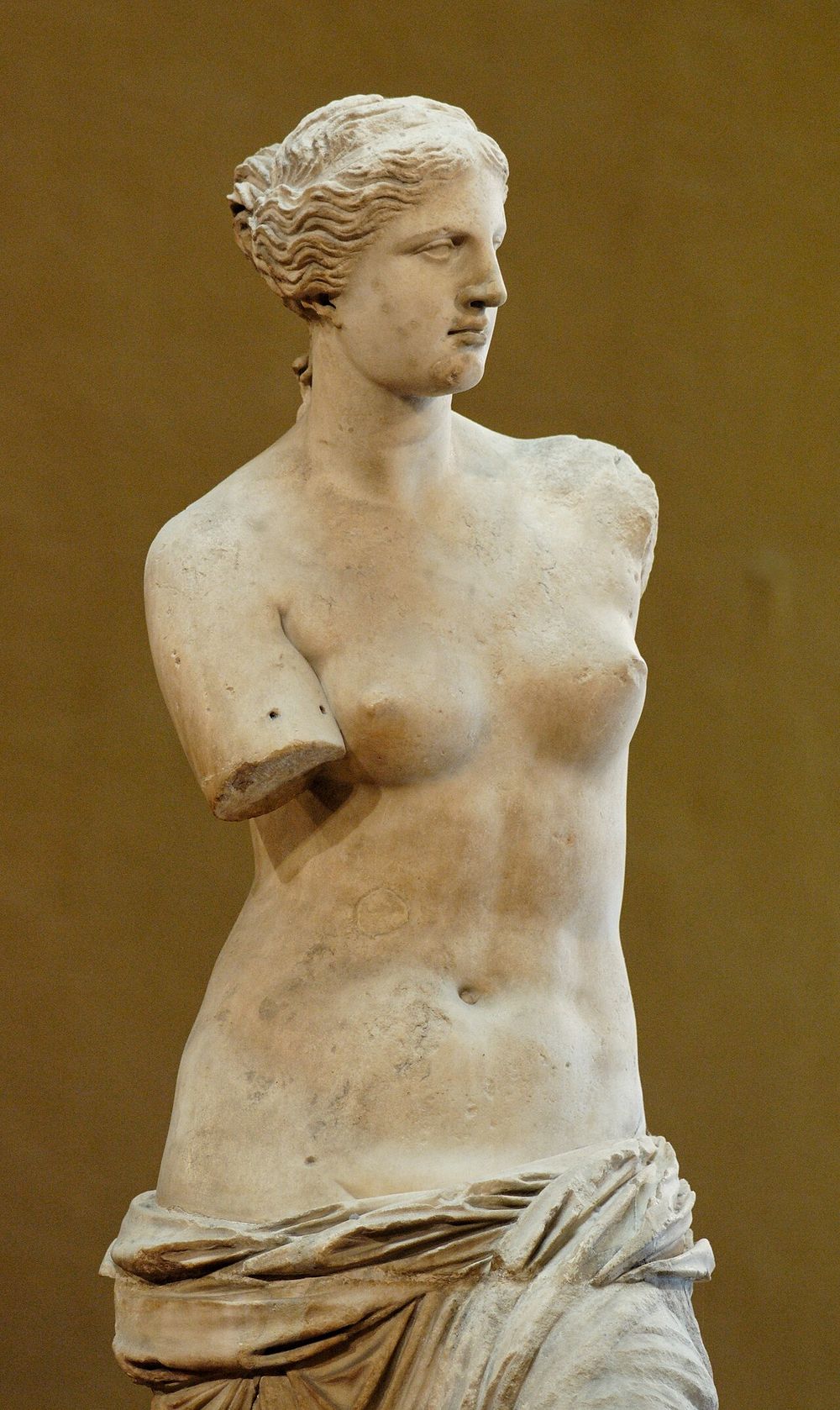
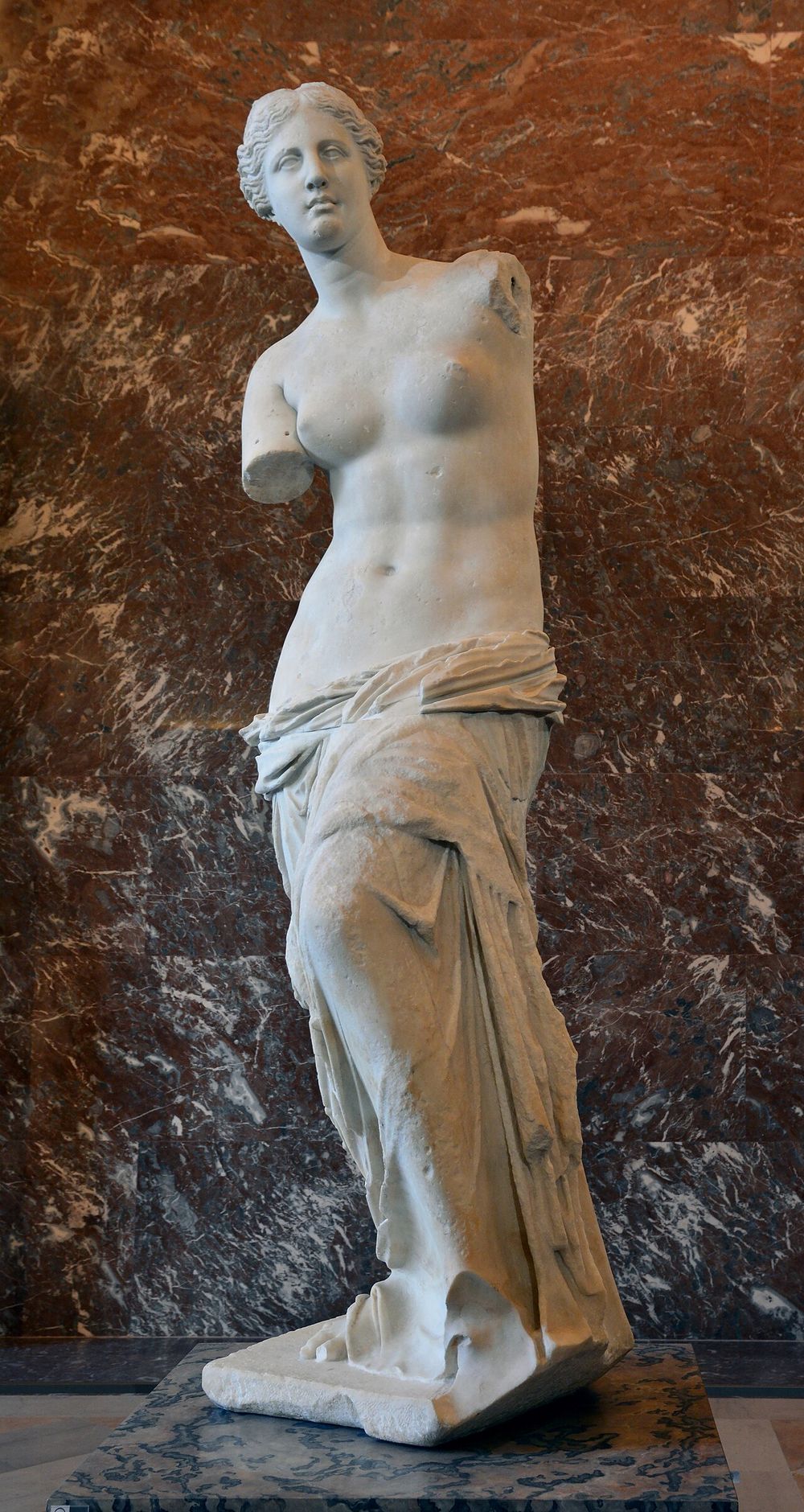
Sully wing, ground floor. A farmer on the Greek island of Milos dug her up in April 1820. A French naval officer saw her, and France bought her. She was carved about 150 to 125 BC, and stands just over two metres high.
She is made of two blocks joined at the hips, hidden by the drapery. The left arm was a separate piece, pegged on. Nobody knows what the arms were doing. Holding an apple, a shield, a mirror, and spinning thread have all been proposed.
The Louvre needed her. In 1815, after Napoleon fell, France had to give back a famous Venus taken from Florence. Five years later this one arrived, and the museum promoted her hard.
7. The Apollo Gallery and the crown jewels
The Apollo GalleryWilfredor, CC0
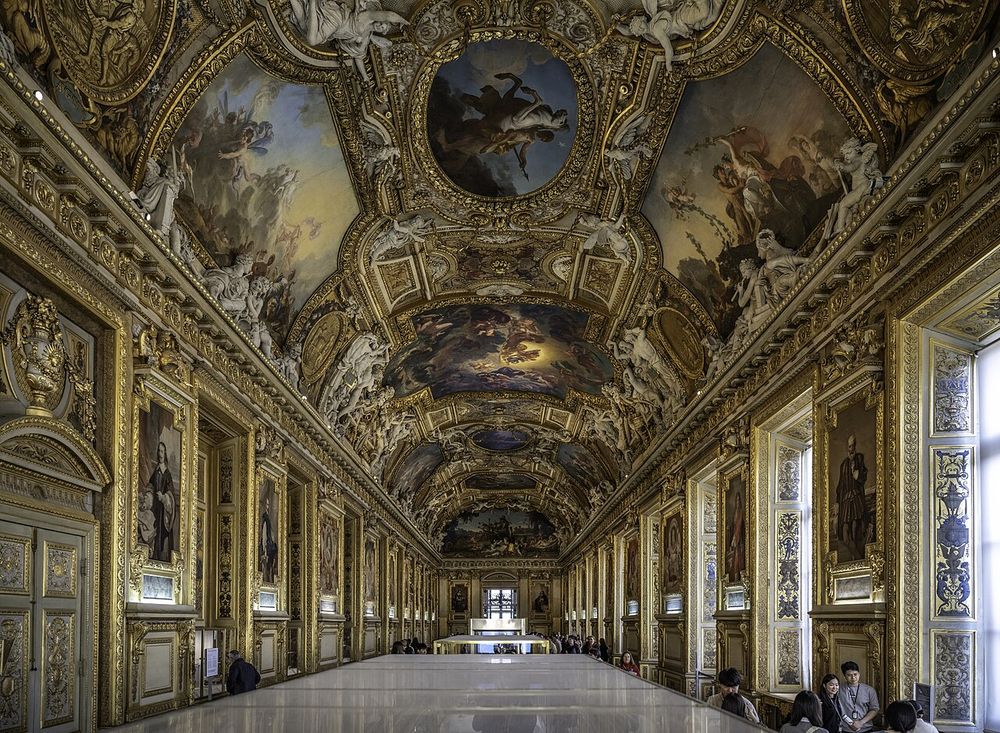
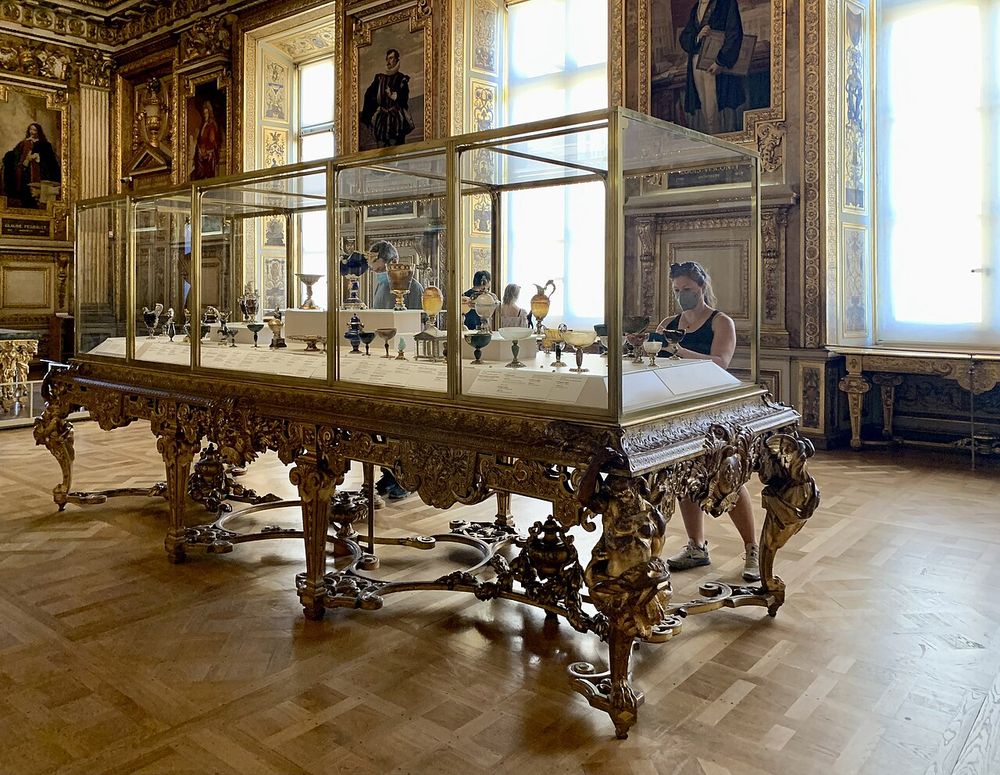
This gilded room was rebuilt after a fire in 1661 for the young Louis XIV, the Sun King, with Apollo, god of the sun, on the ceiling. It was the trial piece for the Hall of Mirrors at Versailles. The centre of the ceiling stayed empty for two centuries, until Delacroix painted it in 1851.
The Regent diamond, 140 caratsTangopaso, Public domain
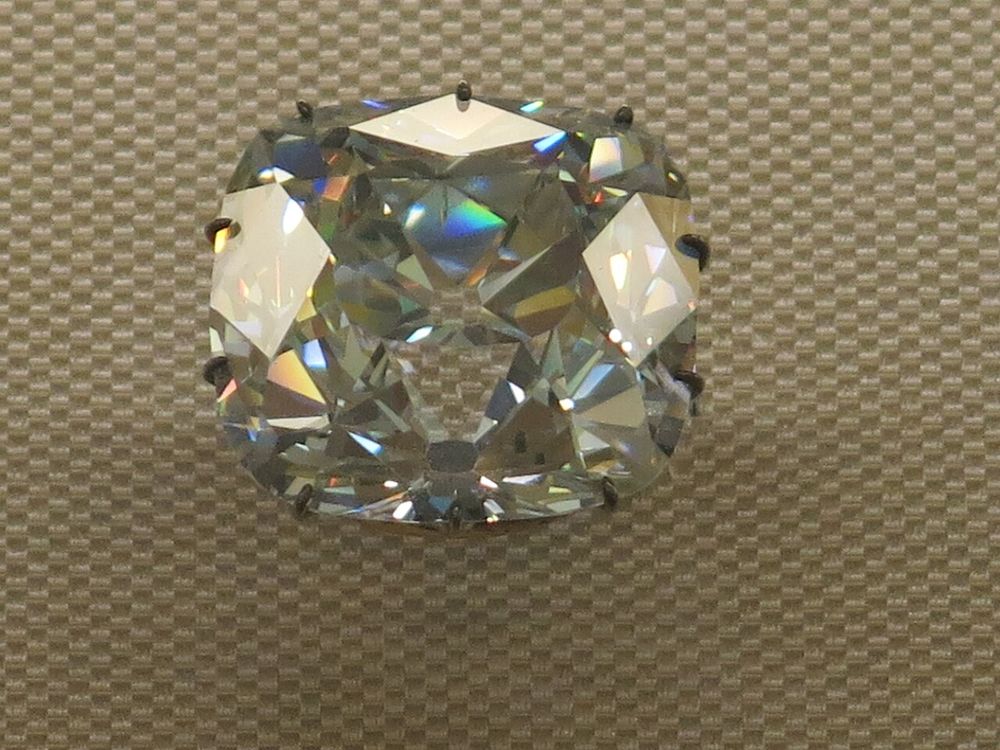
The cases hold what is left of the French crown jewels. The Regent, a diamond of 140 carats found in India about 1698, was worn by Louis XV at his coronation and set in the hilt of Napoleon's sword.
On the morning of 19 October 2025 thieves reached a window of this gallery from a lift mounted on a lorry, cut their way in, and left within minutes with eight pieces of the crown jewels. A crown they dropped outside was recovered, damaged.
8. Richelieu wing: the oldest law you can read
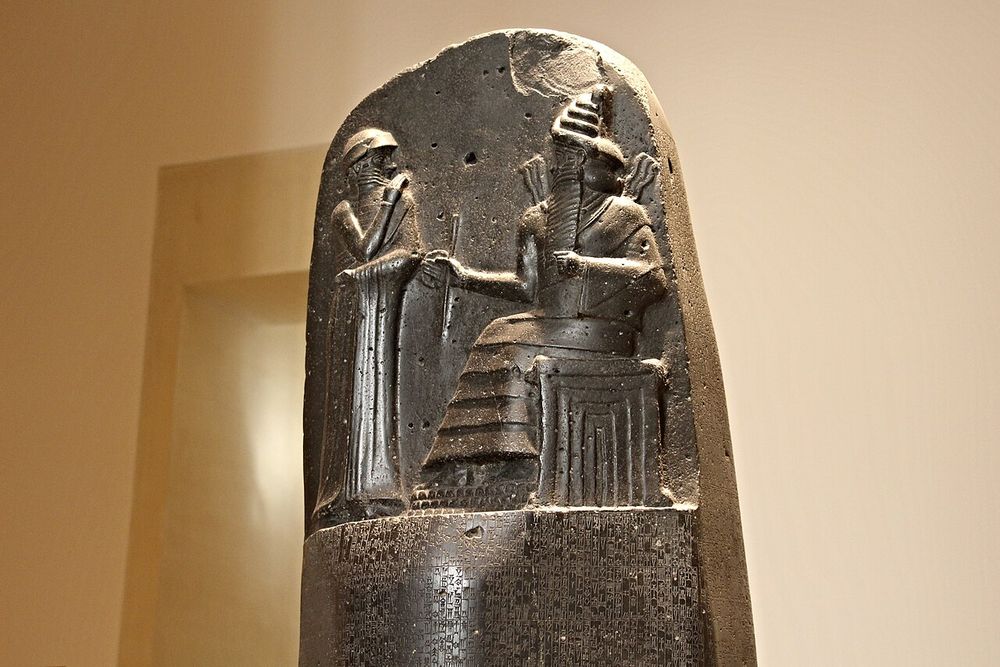
The Code of Hammurabi: the king before the sun godFred Romero from Paris, France, CC BY 2.0
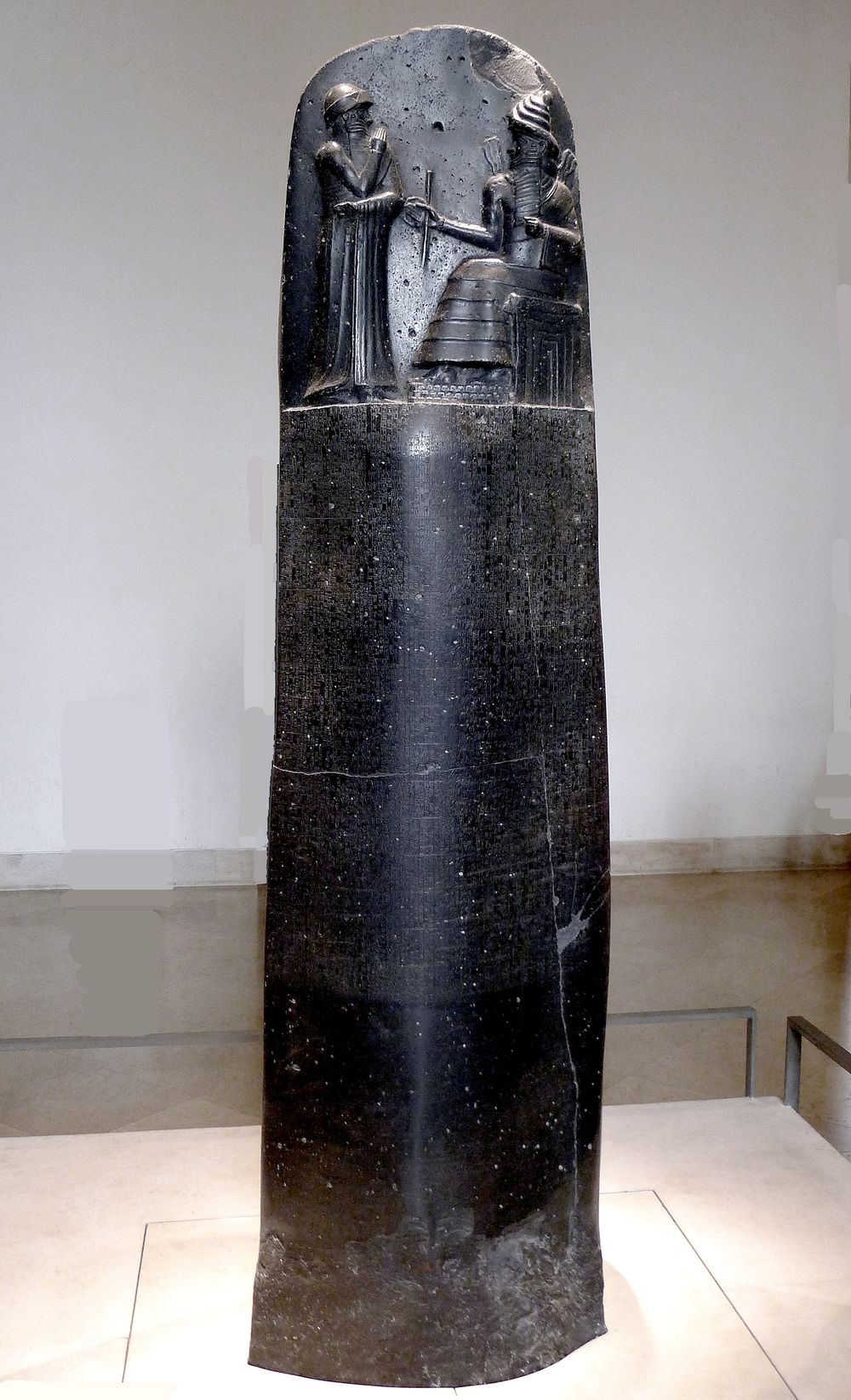
The black stone pillar, 2.25 metres high, carries the laws of Hammurabi, king of Babylon, cut about 1754 BC. There are 282 of them. At the top the king stands before the sun god, who hands him the right to judge.
Law 196 says: if a man puts out the eye of another man, his eye shall be put out. That is the source of "an eye for an eye". Others set a builder's wages and the fine for a bad one whose house falls down.
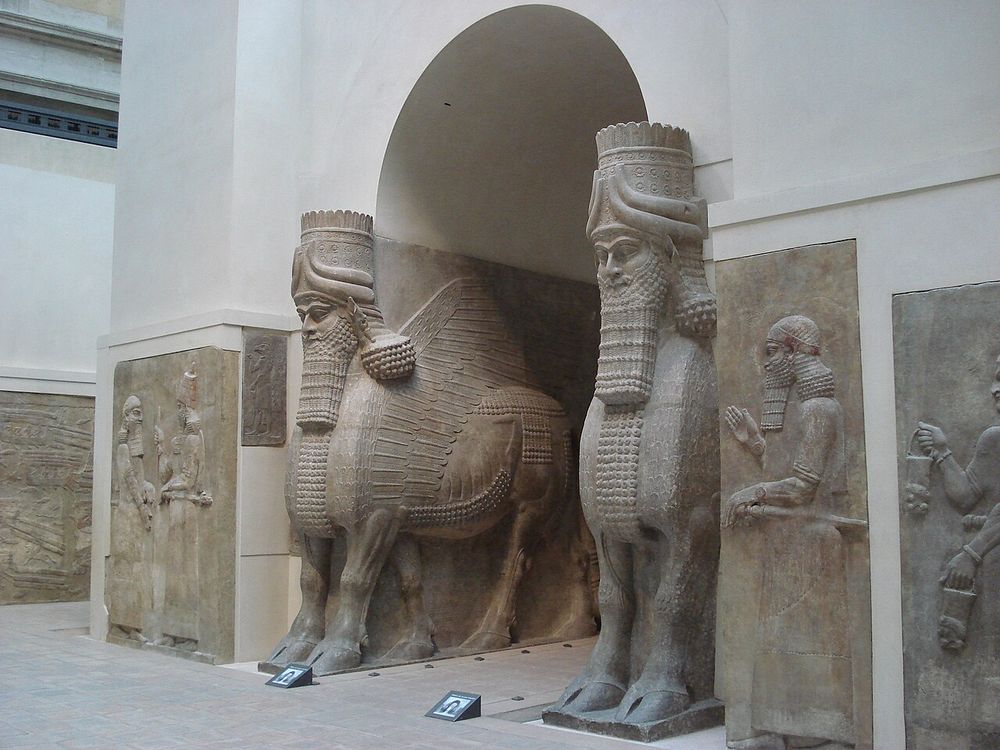
Winged bulls from the palace of Sargon II at KhorsabadVania Teofilo, CC BY-SA 3.0
In the next rooms stand the winged bulls with human heads from the palace of the Assyrian king Sargon II, built about 710 BC at Khorsabad in what is now Iraq. Count the legs. There are five, so that the beast stands still seen from the front and walks seen from the side.
9. Egypt: a scribe who looks back at you
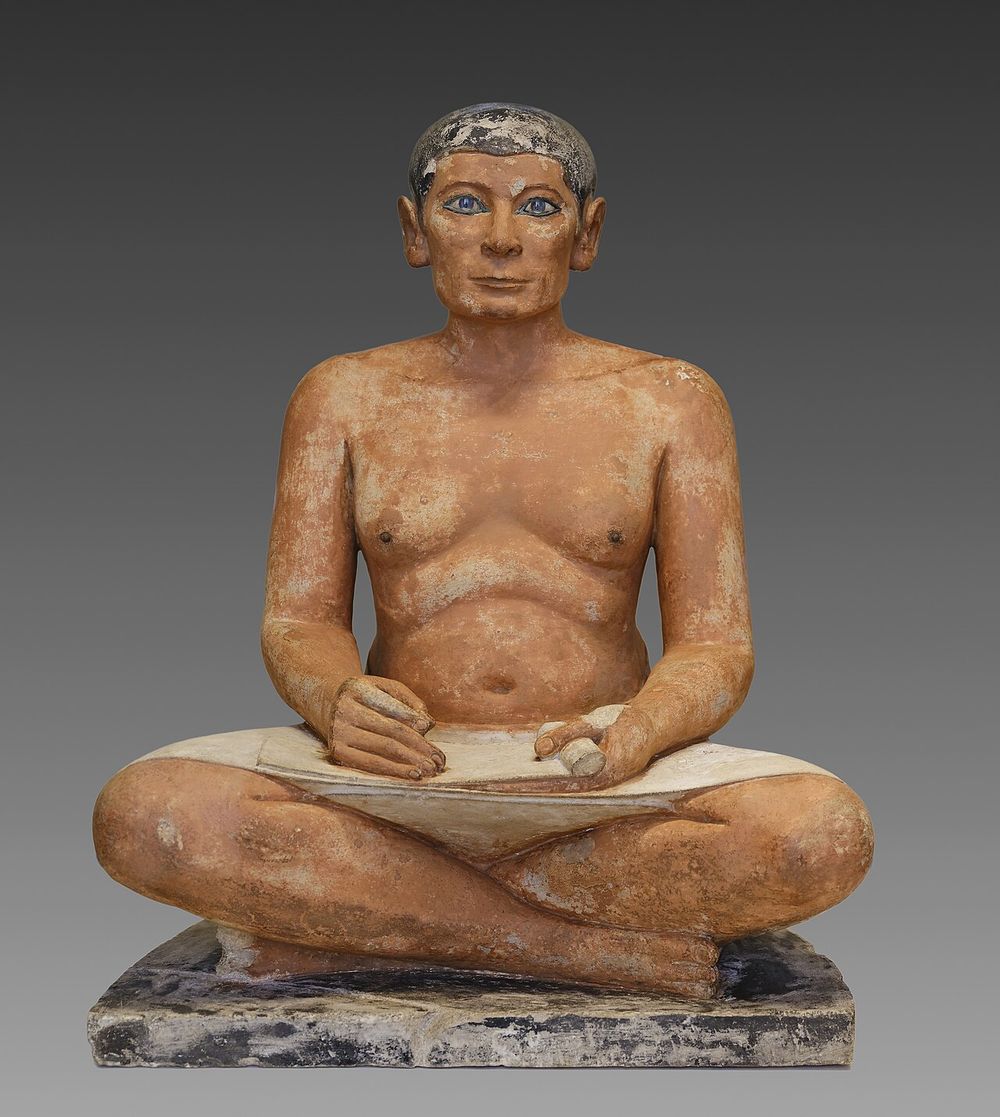
The Seated Scribe, about 2500 BCShonagon, CC0
Sully wing, first floor. The Seated Scribe was made about 2500 BC and found at Saqqara in 1850. He holds a roll of papyrus and waits to write. His eyes are rock crystal set in copper, and they seem to follow you.
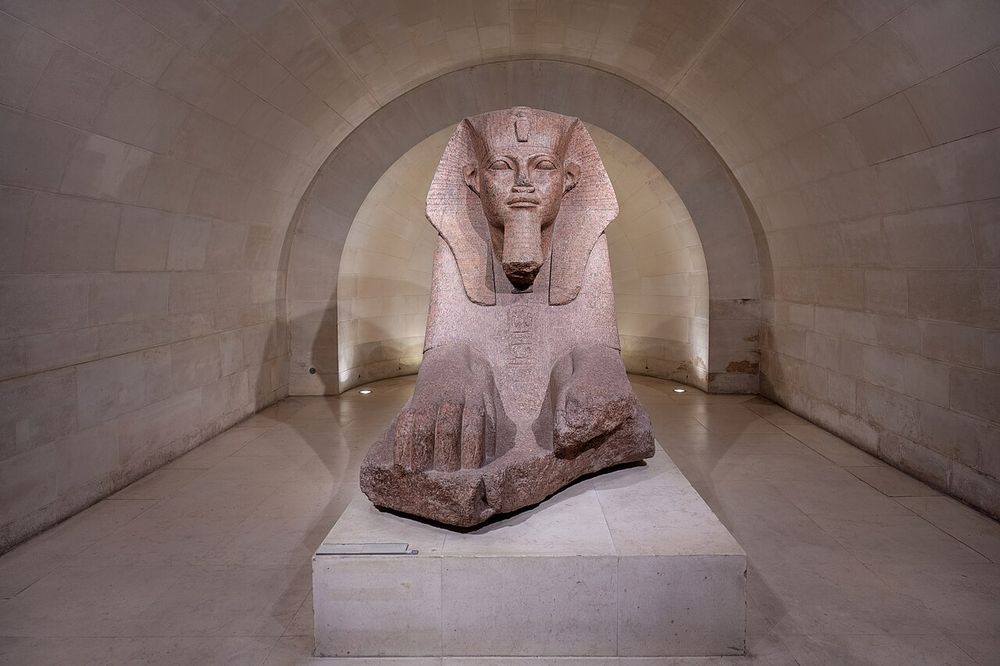
The Great Sphinx of TanisWilfredor, CC0
Downstairs, the Great Sphinx of Tanis guards the entrance to the Egyptian rooms. It is cut from one block of granite nearly five metres long. Several pharaohs carved their names on it, each over the last.
10. Two glass courts and an emperor's drawing rooms
The Cour Marly under its glass roofWilfredor, CC0
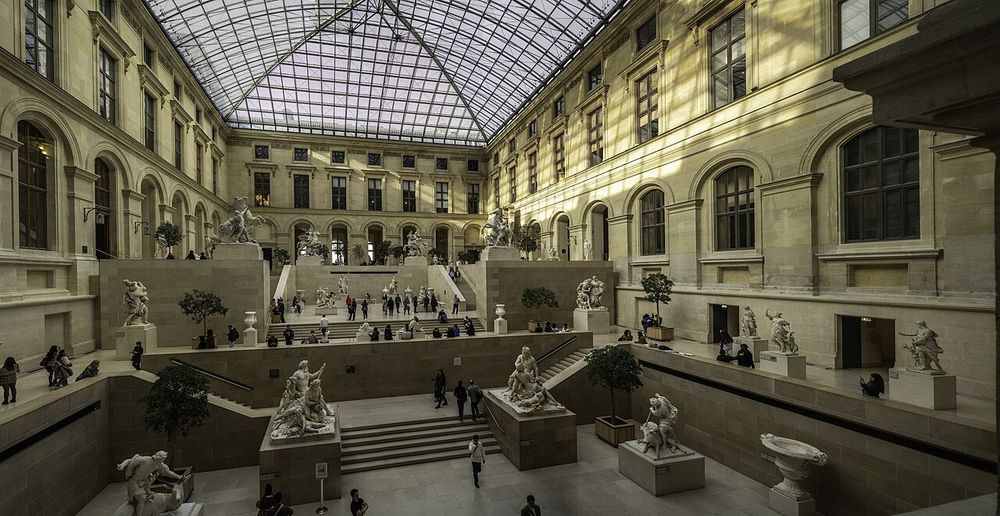
Until 1989 the Richelieu wing was the Ministry of Finance, and its courtyards were car parks. Pei roofed them in glass. Now they hold French garden sculpture, among it the rearing Marly Horses of the 1740s.
The Napoleon III apartments: the great drawing roomFred Romero from Paris, France, CC BY 2.0
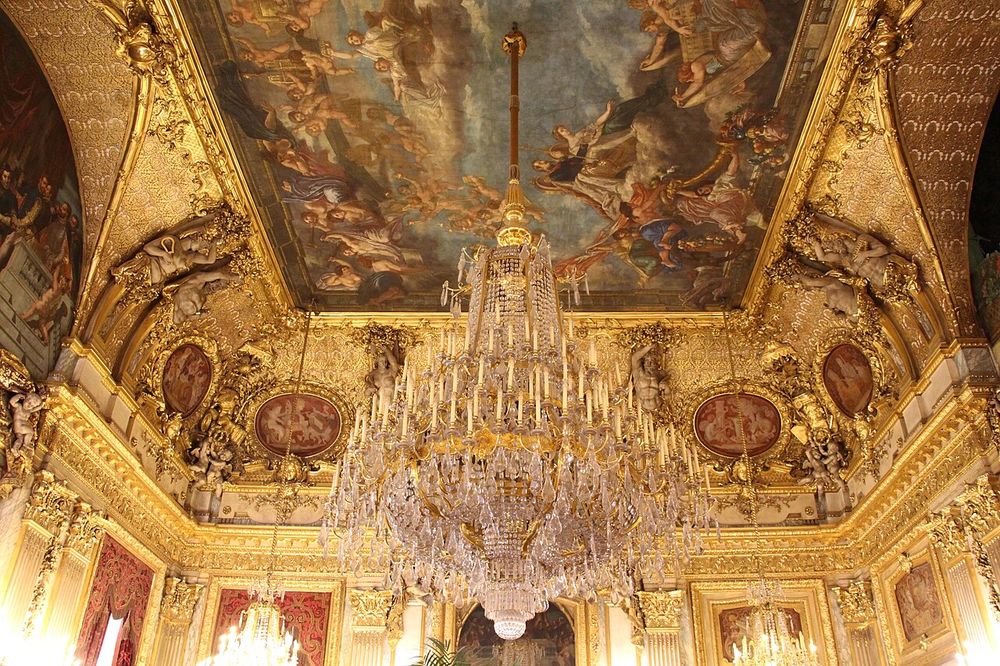
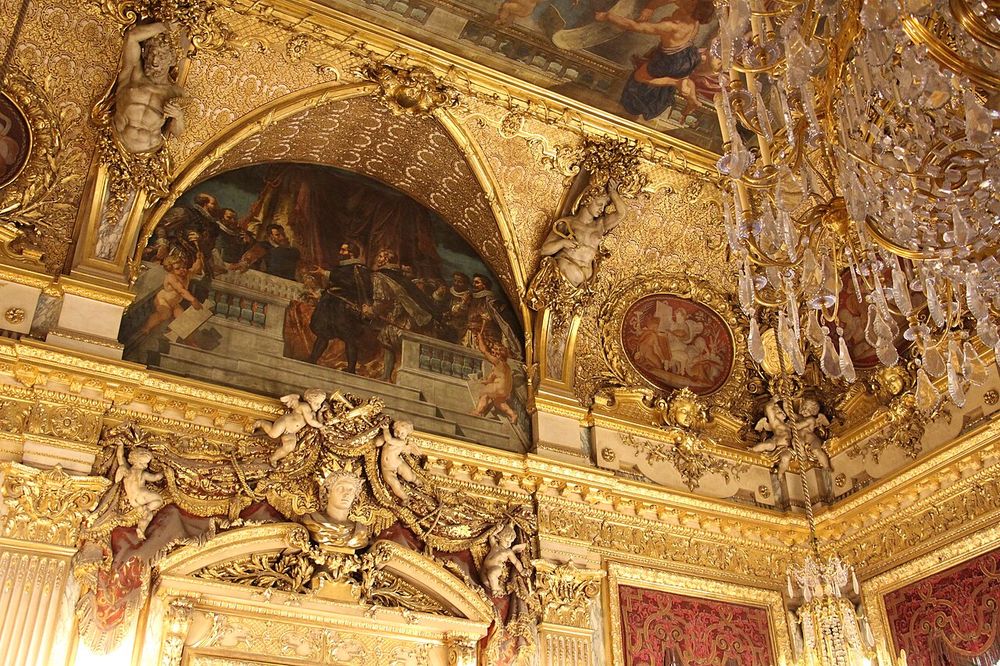
Upstairs are the apartments of Napoleon III, finished in 1861: red velvet, gilding, chandeliers. The emperor did not live in them. They were the reception rooms of his minister of state, and later of the finance minister, who gave them up only when the museum took over the wing.
11. How a palace became a museum
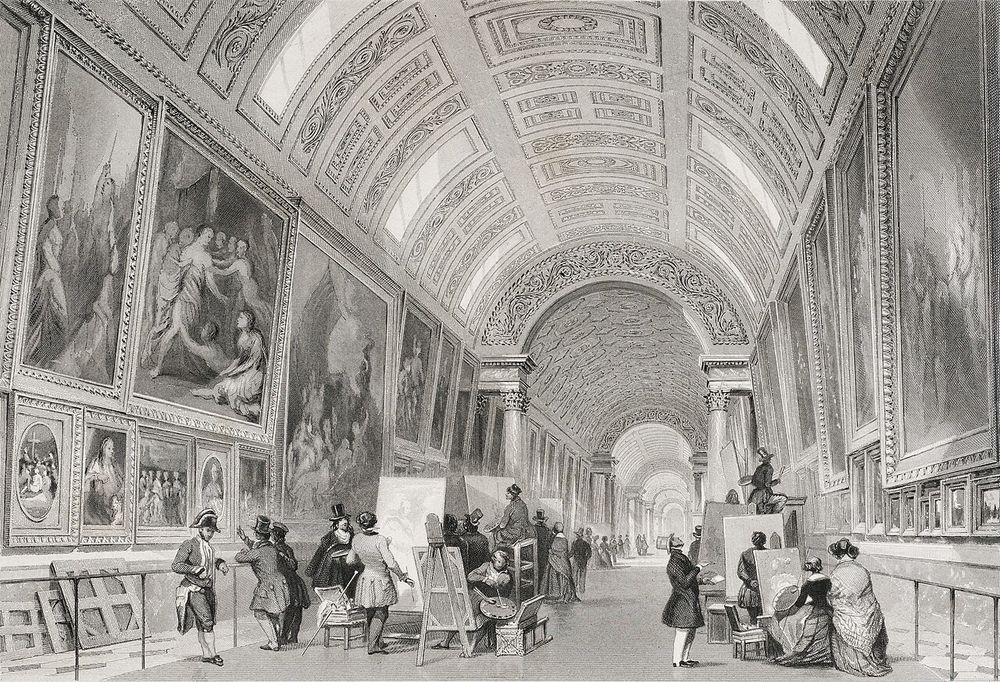
The Grande Galerie about 1844, with copyists at workThomas Allom, Public domain
In 1682 Louis XIV moved his court to Versailles. The Louvre was left to artists, who lived and worked in it, and to the royal academies.
On 10 August 1793, a year to the day after the monarchy fell, the revolutionary government opened the Grande Galerie to the public with 537 paintings, most of them taken from the king and the Church. Entry was free.
Napoleon filled it with art seized across Europe and renamed it after himself. After Waterloo in 1815 more than five thousand works went home. Some, like the Wedding at Cana, stayed.
12. The Louvre and China
The year the museum opened, 1793, a British embassy under Lord Macartney reached the court of the Qianlong Emperor and was sent away with nothing. In Paris a palace was being opened to the people; in Beijing the palace was closed to the world.
When Philip Augustus built his fortress here in 1190, China was divided between the Southern Song (1127–1279) and the Jin. Hangzhou, the Song capital, was then one of the largest cities on earth. Paris had perhaps fifty thousand people.
I. M. Pei left Shanghai for the United States in 1935 and did not see China again for almost forty years. In 2006, aged 89, he finished a museum for Suzhou, next to the gardens of his childhood.
13. On the screen
The Da Vinci Code (2006) opens with a murder in the Grande Galerie. The crew filmed inside the museum at night; the Mona Lisa seen in the film is a copy.
In Jean-Luc Godard's Bande à part (1964) three friends run through the whole museum to beat a record of nine minutes and forty-five seconds. They were filmed doing it for real, with guards chasing them.
In 2018 Beyoncé and Jay-Z filmed the video for "Apeshit" in front of the Mona Lisa, the Winged Victory and the Coronation. That year the museum had 10.2 million visitors, more than any museum had ever had.
The French series Lupin (2021) begins with the theft of a queen's necklace from the Louvre. It was filmed in the museum. Four years later real thieves took real crown jewels from the Apollo Gallery.
Meanwhile in the world
Year
Here
Elsewhere
1190
Philip Augustus builds the fortress
China is divided between the Southern Song and the Jin
1516
Leonardo arrives in France with the Mona Lisa
The Ming Zhengde Emperor rules; the first Portuguese ships have just reached Guangdong
1546
Francis I begins the Renaissance palace
Michelangelo takes over the building of St Peter's in Rome
1682
The court leaves for Versailles
The Kangxi Emperor has just put down the Revolt of the Three Feudatories
1793
The museum opens
Macartney's embassy meets the Qianlong Emperor; Louis XVI is executed
1820
The Venus de Milo is found
—
1863
The Winged Victory is found
—
1871
The Tuileries Palace burns in the Paris Commune
Eleven years after the Old Summer Palace burned in Beijing
1911
The Mona Lisa is stolen
In China the revolution that ends the Qing (1644–1912) dynasty begins
1939
The collections are evacuated
The Palace Museum's treasures, sent south from Beijing in 1933, are in caves and temples in south-west China
1989
The pyramid opens
—
2025
Crown jewels are stolen from the Apollo Gallery
—
One line to remember: a fortress for a king, a palace for a court, a museum for everyone.
Then and now
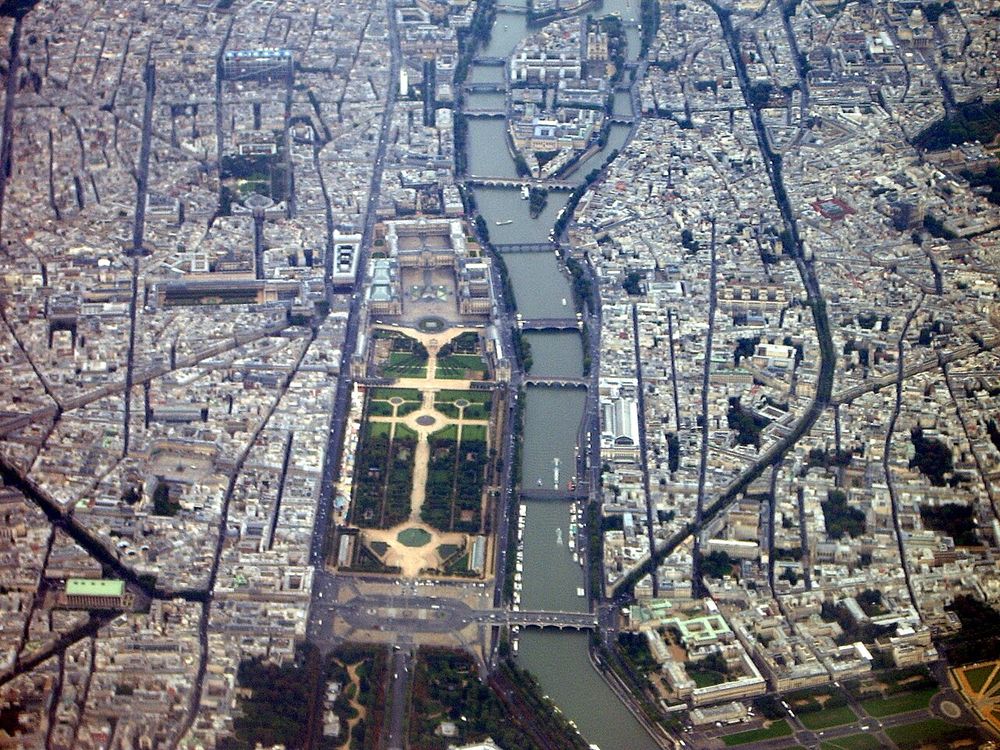
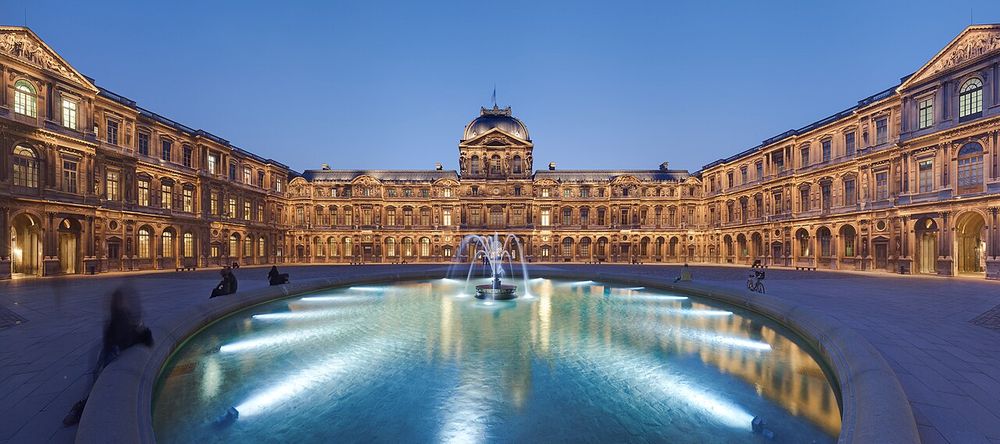
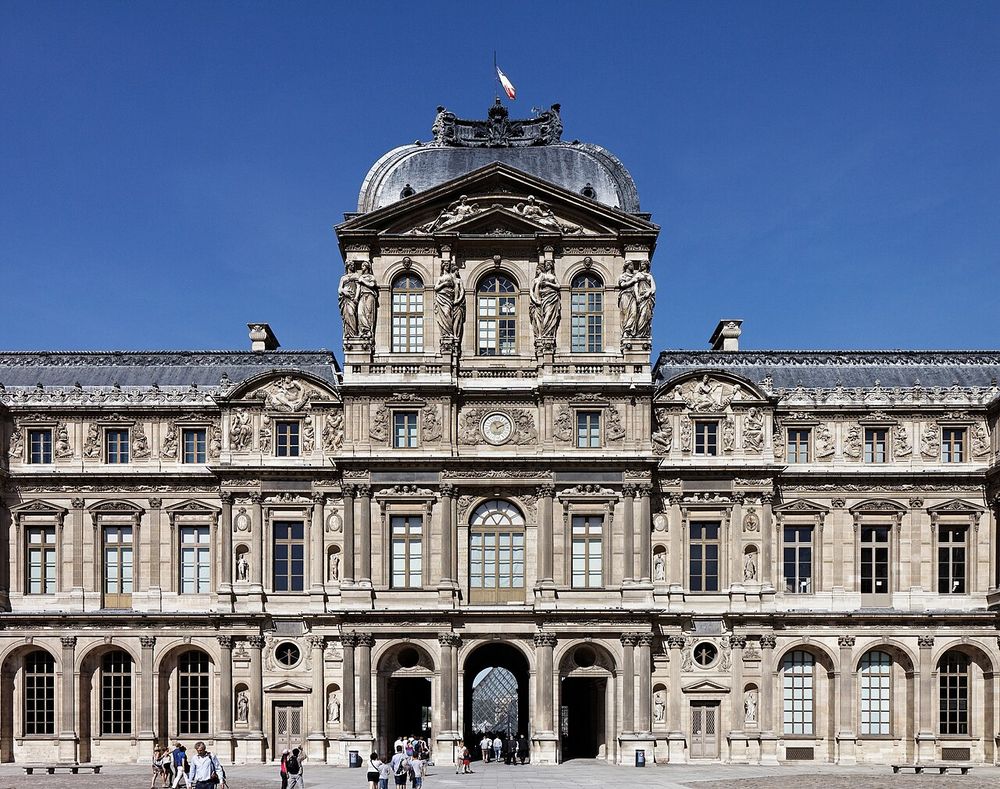
The palace from the air: the Cour Carrée on the right, the pyramid in the middleMatthias Kabel, CC BY-SA 3.0, Wikimedia CommonsFrom the air: the Louvre, the Tuileries Garden and the long axis of ParisEric Salard, CC BY-SA 2.0, Wikimedia CommonsThe Cour Napoléon and the pyramidBenh LIEU SONG (Flickr), CC BY-SA 4.0, Wikimedia CommonsThe courtyard at nightBenh LIEU SONG, CC BY 2.5, Wikimedia CommonsThe pyramid lit from insideShubhagata Sengupta shxb, CC0, Wikimedia CommonsThe Cour Carrée, the oldest courtyard of the palaceBenh LIEU SONG, CC BY-SA 3.0, Wikimedia CommonsThe Clock PavilionThesupermat, CC BY-SA 3.0, Wikimedia CommonsA covered passage through the palaceBenh LIEU SONG, CC BY-SA 4.0, Wikimedia CommonsThe Carrousel arch, built for Napoleon in 1806–1808Tim Adams, CC BY 3.0, Wikimedia CommonsThe Winged Victory of Samothrace at the top of the Daru staircaseShonagon, CC0, Wikimedia CommonsThe Winged Victory from the sideShonagon, CC0, Wikimedia CommonsThe Salle des États: the Mona Lisa on its own wallShonagon, CC0, Wikimedia CommonsThe Mona Lisa room almost empty, September 2021Tangopaso, Public domain, Wikimedia CommonsLeonardo da Vinci, Mona Lisa, about 1503–1519Leonardo da Vinci, Public domain, Wikimedia CommonsThe Mona Lisa as visitors see it, behind glassLeonardo da Vinci / Wilfredor, CC0, Wikimedia CommonsVeronese, The Wedding at Cana, 1563: the largest painting in the LouvrePaolo Veronese, Public domain, Wikimedia CommonsThe Grande GalerieCheng-en Cheng from Taichung City, Taiwan, CC BY-SA 2.0, Wikimedia CommonsA ceiling in the Denon wingWilfredor, CC0, Wikimedia CommonsDelacroix, Liberty Leading the People, 1830, after its cleaning in 2024Eugène Delacroix, Public domain, Wikimedia CommonsGéricault, The Raft of the Medusa, 1818–1819Théodore Géricault, Public domain, Wikimedia CommonsDavid, The Coronation of Napoleon, 1805–1807Jacques-Louis David / Georges Rouget, Public domain, Wikimedia CommonsThe Venus de MiloUnknown artistUnknown artist, Public domain, Wikimedia CommonsThe Venus de Milo from the frontLivioandronico2013, CC BY-SA 4.0, Wikimedia CommonsThe Apollo GalleryWilfredor, CC0, Wikimedia CommonsA display case in the Apollo GalleryNeoclassicism Enthusiast, CC BY-SA 4.0, Wikimedia CommonsThe Regent diamond, 140 caratsTangopaso, Public domain, Wikimedia CommonsMichelangelo's two Slaves林高志, CC BY-SA 4.0, Wikimedia CommonsCanova, Psyche Revived by Cupid's KissJoe deSousa, CC0, Wikimedia CommonsThe Code of Hammurabi: the king before the sun godFred Romero from Paris, France, CC BY 2.0, Wikimedia CommonsThe Code of Hammurabi, the whole steleMbzt, CC BY 3.0, Wikimedia CommonsWinged bulls from the palace of Sargon II at KhorsabadVania Teofilo, CC BY-SA 3.0, Wikimedia CommonsThe Seated Scribe, about 2500 BCShonagon, CC0, Wikimedia CommonsThe Great Sphinx of TanisWilfredor, CC0, Wikimedia CommonsThe Cour Marly under its glass roofWilfredor, CC0, Wikimedia CommonsThe Cour PugetFred Romero from Paris, France, CC BY 2.0, Wikimedia CommonsThe Napoleon III apartments: the great drawing roomFred Romero from Paris, France, CC BY 2.0, Wikimedia CommonsGilding in the Napoleon III apartmentsFred Romero from Paris, France, CC BY 2.0, Wikimedia CommonsVermeer, The Lacemaker, about 1670, one of the smallest famous paintings hereJohannes Vermeer, Public domain, Wikimedia CommonsThe medieval Louvre in the Très Riches Heures, about 1416Limbourg brothers / Barthélemy d'Eyck, Public domain, Wikimedia CommonsHubert Robert, the Grande Galerie as he hoped it would be, about 1795Hubert Robert, Public domain, Wikimedia CommonsHubert Robert, the Grande Galerie being fitted out, about 1798Hubert Robert, Public domain, Wikimedia CommonsThe Grande Galerie about 1844, with copyists at workThomas Allom, Public domain, Wikimedia CommonsThe Louvre and the Tuileries Palace from the garden, 1860Charles Fichot, Public domain, Wikimedia CommonsThe Tuileries Palace in 1869, two years before it burnedTheodor Josef Hubert Hoffbauer, Public domain, Wikimedia CommonsAugust 1911: the empty space where the Mona Lisa hungUnknown authorUnknown author, Public domain, Wikimedia Commons
Local legends
These are stories people tell about this place. They are legends, not history, and each one says where it comes from.
LegendThe Tuileries
A small man dressed in red haunted the Tuileries Palace. He was a butcher murdered on the orders of Queen Catherine de' Medici, and he appeared to the rulers of France before a disaster: to Henry IV before he was stabbed, to Marie-Antoinette before the Revolution, to Napoleon before Waterloo.
Source: A Paris story told since the 1600s and printed many times in the 1800s
LegendThe pyramid
The pyramid was built, at President Mitterrand's wish, with exactly 666 panes of glass, the number of the Beast.
Source: Press stories of the 1980s, repeated in the novel The Da Vinci Code (2003); the museum counts 673
LegendThe Venus de Milo
She still had her arms when she was found. They were broken off on the beach at Milos, in a fight between French sailors and men who wanted to ship her to Constantinople.
Source: Accounts by French officers written years afterwards; most scholars think she was found without arms
Later, people who live here will be able to add the stories they grew up with, and say which of these they have heard.
Not certain, and where accounts conflict
Who is the Mona Lisa?
Lisa Gherardini, on the evidence of the biographer Vasari (1550) and of a note written in 1503 by a Florentine official, found at Heidelberg in 2005. Other names have been proposed and few scholars now accept them.
How did the king of France come to own it?
It was in the royal collection by the 1540s. Whether Francis I bought it from Leonardo's heir, and for how much, is not documented.
Who carved the Venus de Milo?
A block found with her named Alexandros of Antioch. The block was drawn and then lost, and it is debated whether it belonged to her.
When was the Winged Victory made, and for which battle?
About 190 BC is the usual date. Which naval victory she marks is not known.
How old is the Great Sphinx of Tanis?
The names on it run from about 1900 BC onward. Some Egyptologists think the statue itself is older, from about 2600 BC.
Visiting
Tickets and hours
32 euros for visitors from outside the European Economic Area; 22 euros for its citizens and residents. Under 18s are free.
Book a time slot on the museum's site before you come. In busy months the slots sell out days ahead.
Open 09:00 to 18:00, and until 21:00 on Wednesdays and Fridays. Closed on Tuesdays, and on 1 January, 1 May and 25 December.
Free for everyone on the first Friday of the month after 18:00, except in July and August, and on 14 July.
Rooms close without notice when staff are short or on strike, and the museum has opened late or shut early in heatwaves. Look at the museum's site on the morning of your visit.
Last checked 2026-11-11. The museum's own site (louvre.fr), read in 2026.
Booking from abroad
Official page in English The museum sells timed tickets on its own site, in English and French, and takes foreign bank cards: ticket.louvre.fr.
Note Since 14 January 2026 the price depends on where you live: visitors who are neither citizens nor residents of the European Economic Area pay more.
Checked 2026-11-11
Where to start
With a ticket, go in by the pyramid. The entrance from the underground shopping mall, the Carrousel du Louvre, at 99 rue de Rivoli, usually has a shorter queue.
For the three famous works in ninety minutes: Denon wing, up the Daru staircase to the Winged Victory, on to the Mona Lisa, back down and across to Sully for the Venus de Milo.
To see the Mona Lisa with the fewest people, come at 09:00 and go straight there, or come on a Wednesday or Friday evening.
Then choose one more department and stop. The Richelieu wing is the quietest.
Before you go
Metro lines 1 and 7 stop at Palais Royal–Musée du Louvre.
Bags larger than 55 by 35 by 20 centimetres are not allowed in. There are free lockers under the pyramid for smaller ones.
Wear shoes for walking. A visit of three hours covers several kilometres, much of it on stone stairs.
Pickpockets work the crowd in front of the Mona Lisa and the queues outside. Keep your phone and wallet in front of you.
Customs and manners
In France you greet before you ask. Say "Bonjour" to a guard or a ticket seller first, then your question. Without it you may get a cold answer.
Photographs are allowed in the permanent collection, without flash. Selfie sticks and tripods are not.
Do not touch the sculptures, however close they stand. Grease from hands stains marble for good.
At the Mona Lisa, take your picture and move on. People behind you have waited as long as you did.
Eating and drinking are not allowed in the galleries. There are cafés in each wing.
Look for these
In the courtyard, count the pyramids. There are more than one.
In the medieval Louvre, find the marks masons cut into the stones: hearts, crosses, triangles. Each man signed his work to be paid.
At the Winged Victory, find her right hand. It is not on the statue.
At the Mona Lisa, look at the landscape behind her. Is the horizon at the same height on the left and on the right?
In The Wedding at Cana, find the musicians in the middle. The man in white playing the viol is said to be Veronese himself.
At the Venus de Milo, walk round to her back. Where do the two blocks of marble meet?
On a winged bull from Khorsabad, count the legs.
On the Code of Hammurabi, find the place where the writing has been rubbed out. A later king who carried the stone off meant to add his own name.
I am here
Stand at the site, sign in, press the button, and collect its stamp. Your browser will ask to use your location. It is sent to us once to confirm that you are at the site; we keep how far you were from it, not the spot where you stood.
Your stamps are saved to your account, so they follow you to any device. Checking from a browser cannot rule out every false location; stricter checks arrive with the app.
Messages
Share your photos
Photos here show the place, not people. Each one is credited to the visitor who took it and appears after our team has looked at it. A photo with you in it belongs under “I am here”.