LegendThe queen's dream
The statues of the kings were kept off the roof because the queen dreamed that an earthquake shook them down on her head.
Source: Told in Madrid since the 18th century; the architects' papers speak only of the weight
Calle de Bailén, Madrid, Spain
Palacio Real de Madrid · pah-LAH-thyo ray-AHL
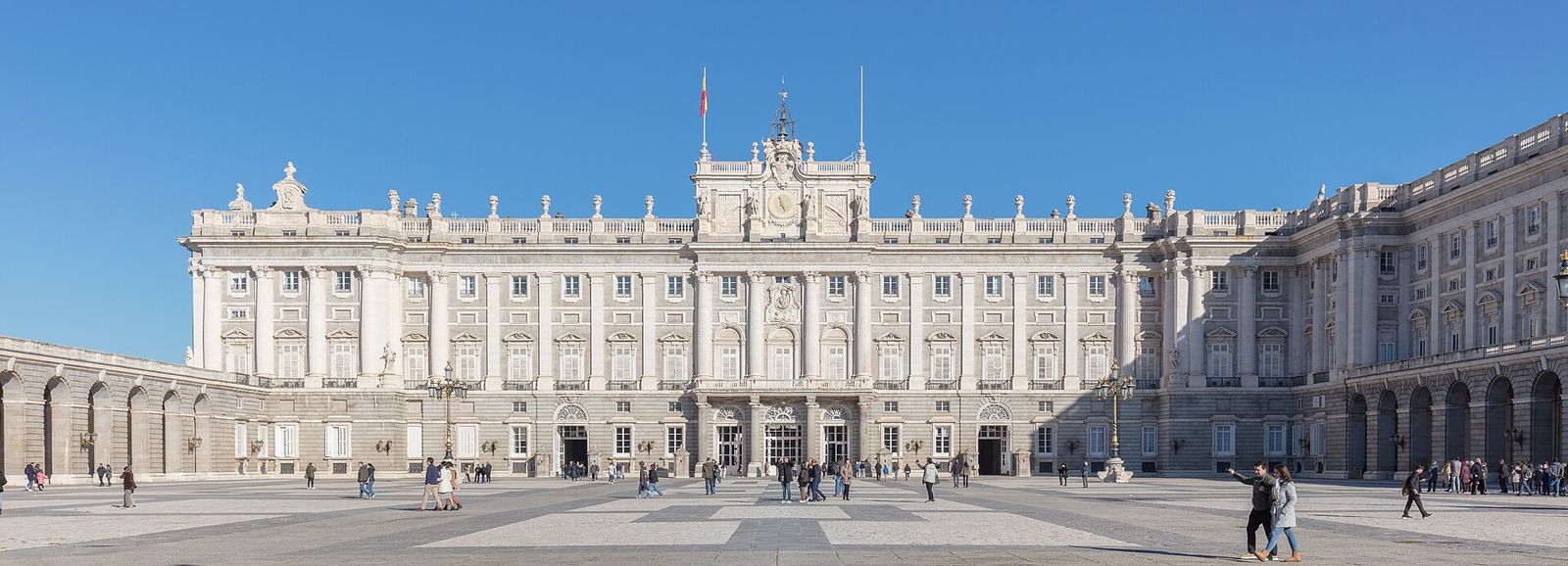
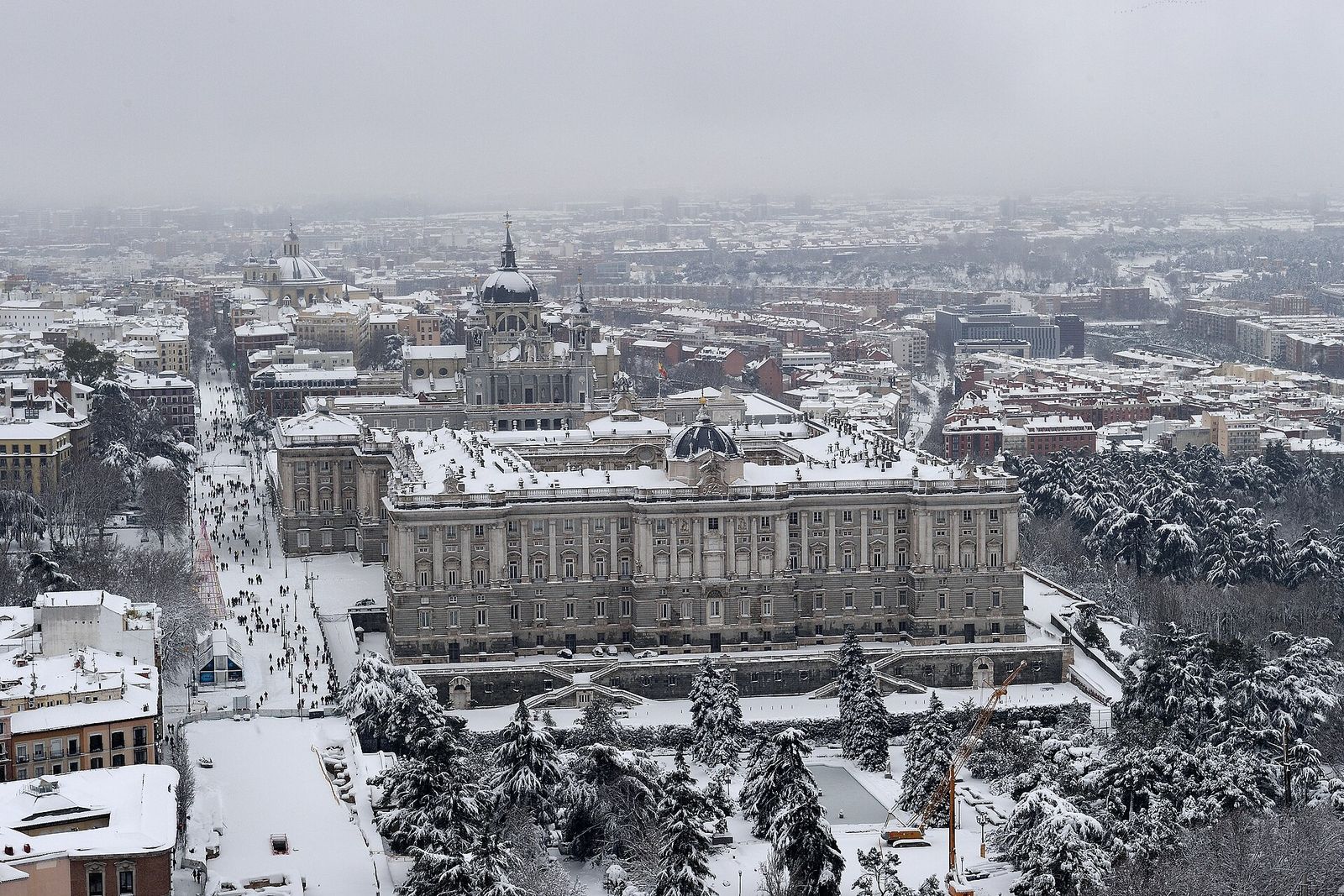
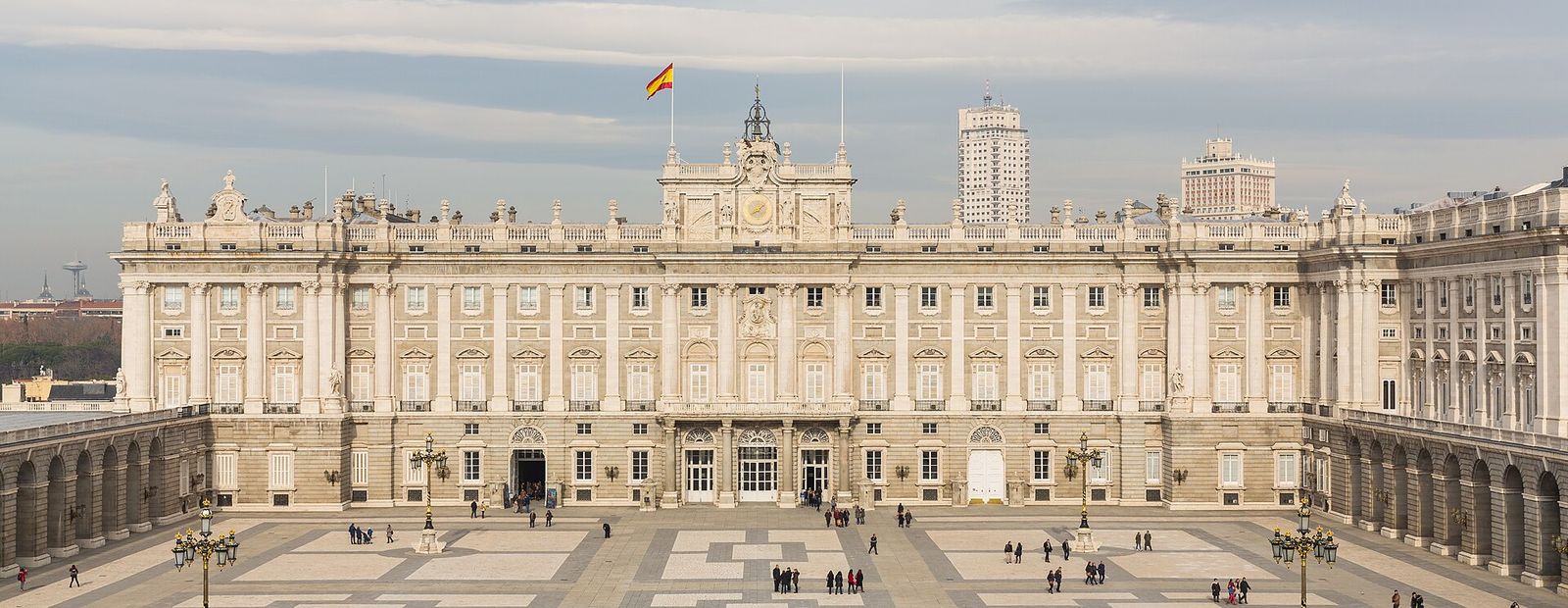
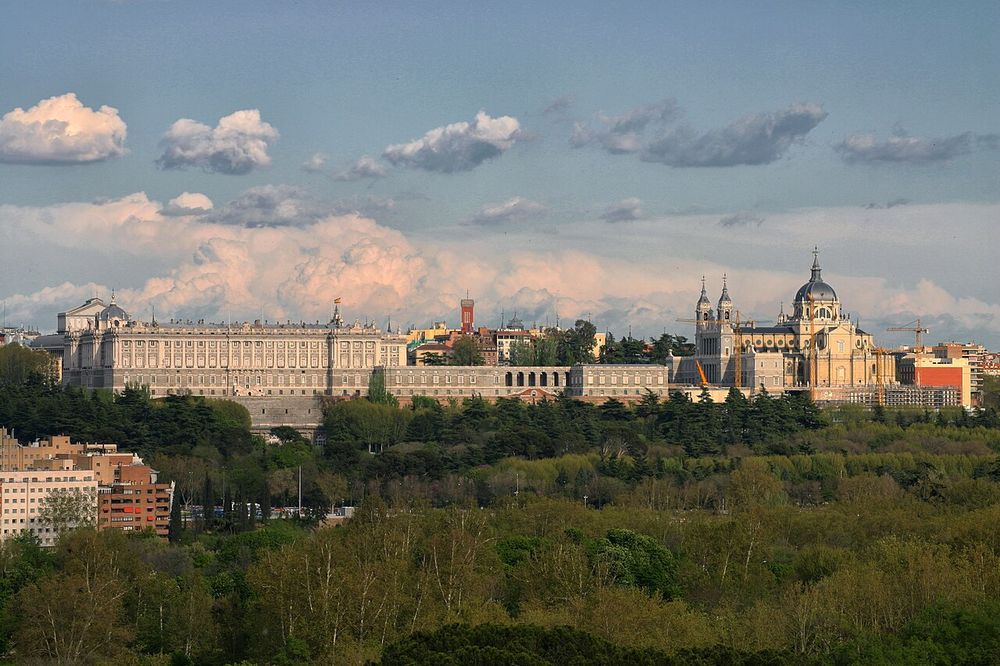
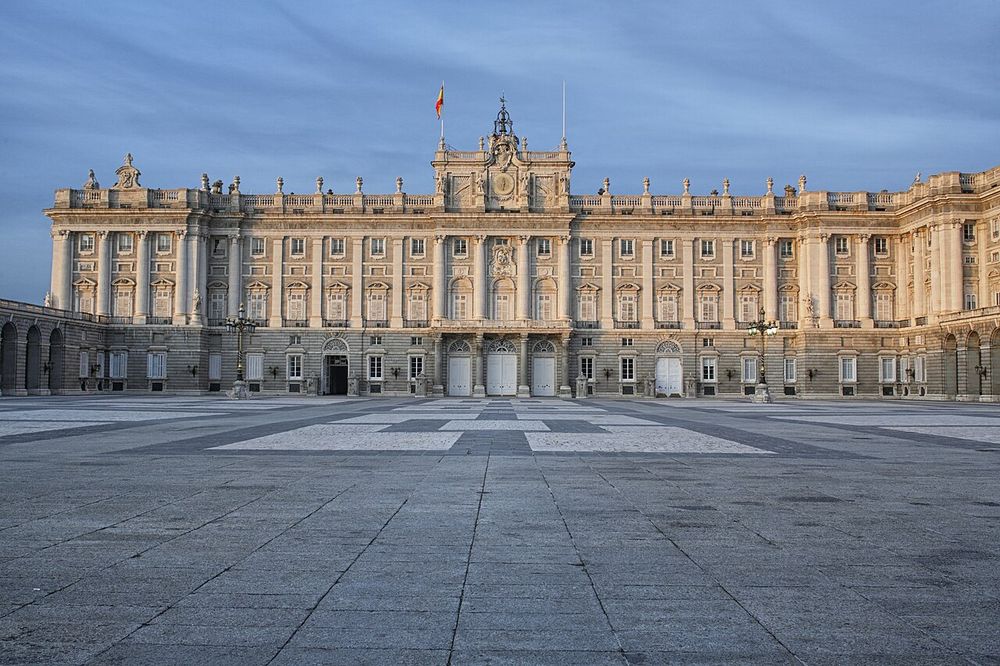
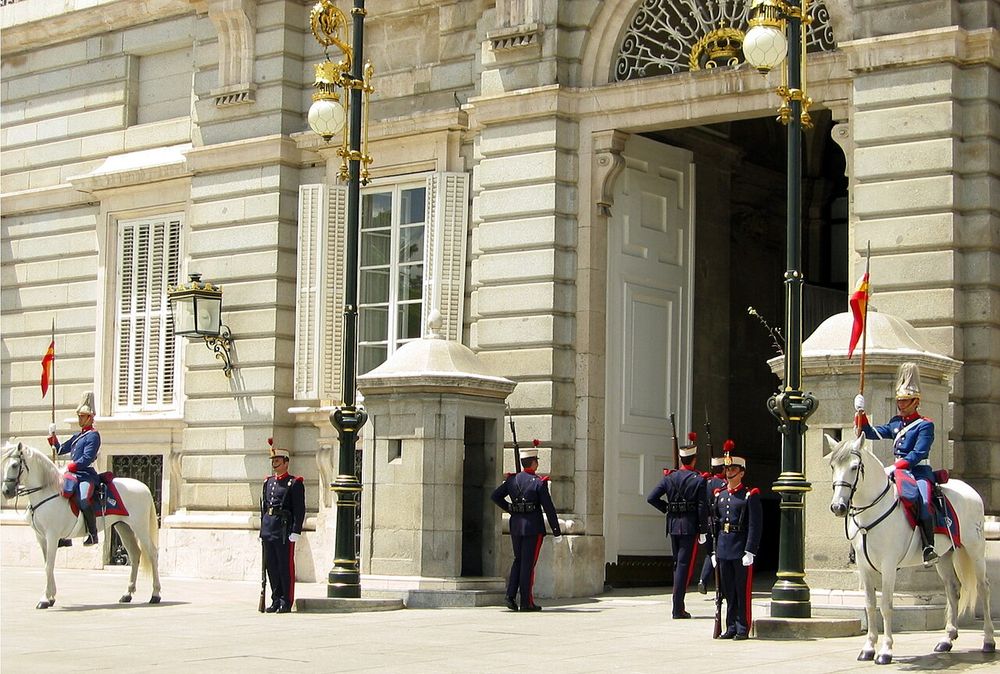
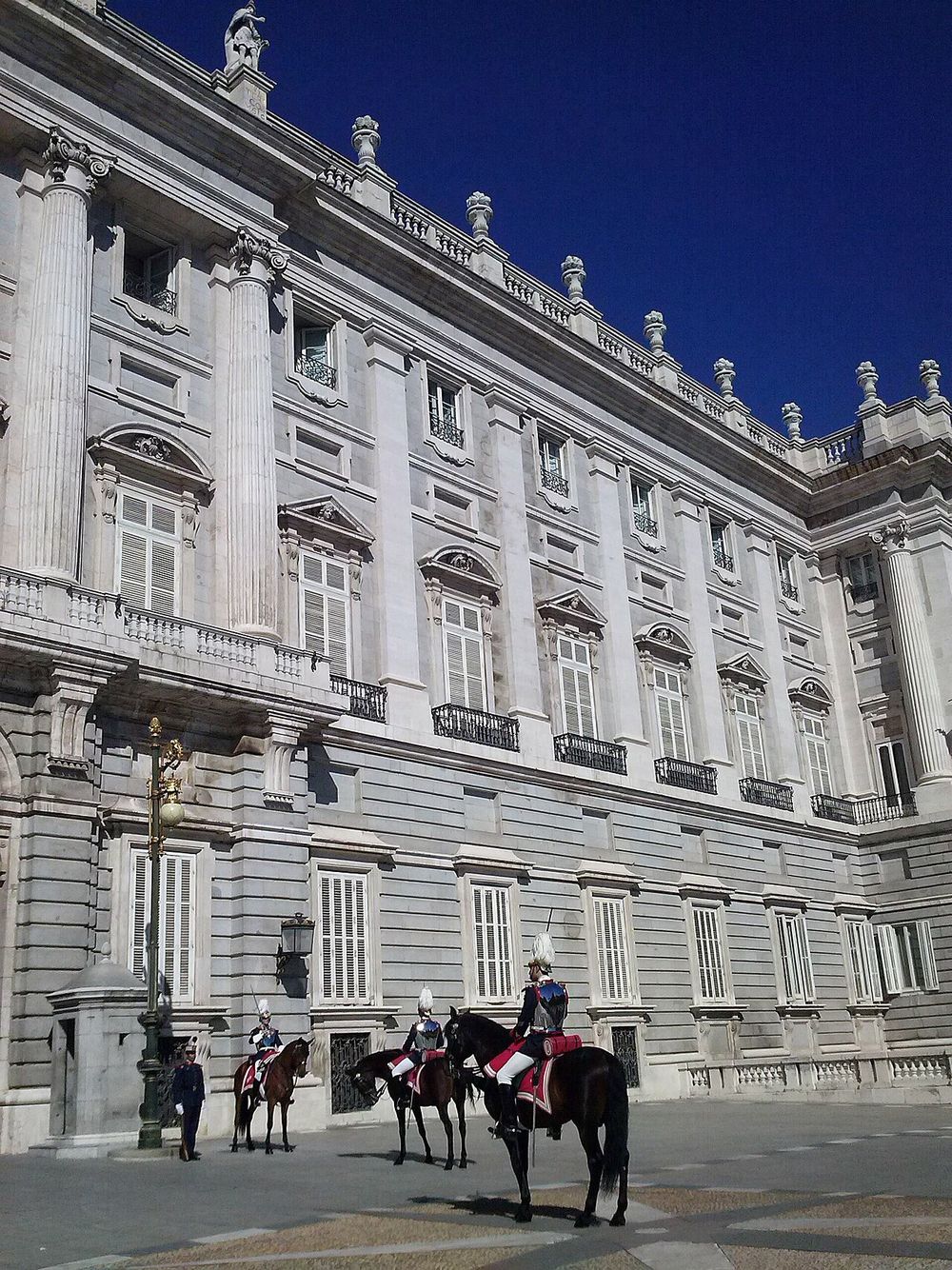
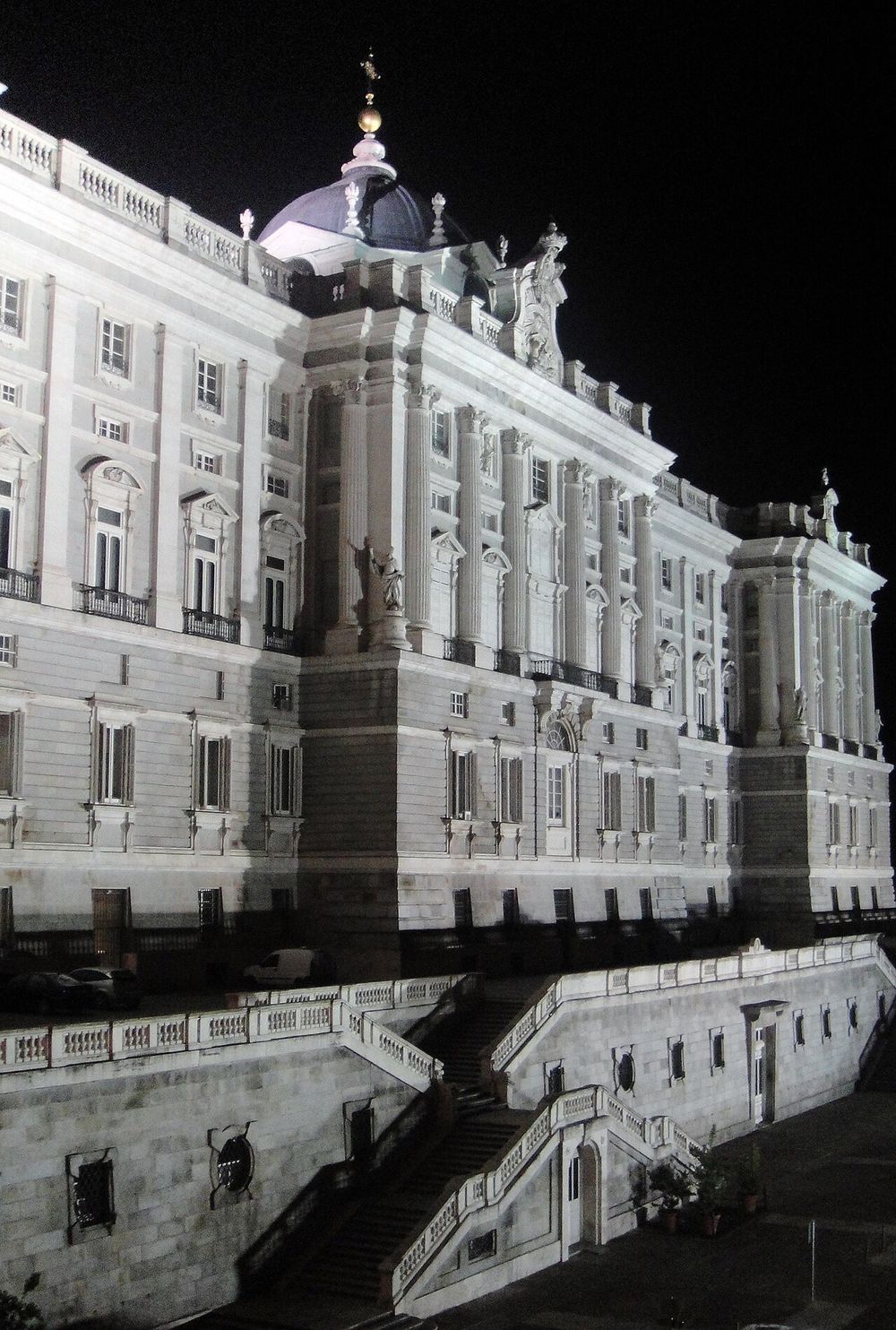
The largest royal palace in western Europe that is still in use: 3,418 rooms. It was built in stone and brick between 1738 and 1764 because the palace before it, full of timber, had burned to the ground. No king has slept here since 1931. The king of Spain uses it to receive ambassadors and to give dinners.
Photo: Diego Delso, CC BY-SA 4.0, Wikimedia Commons
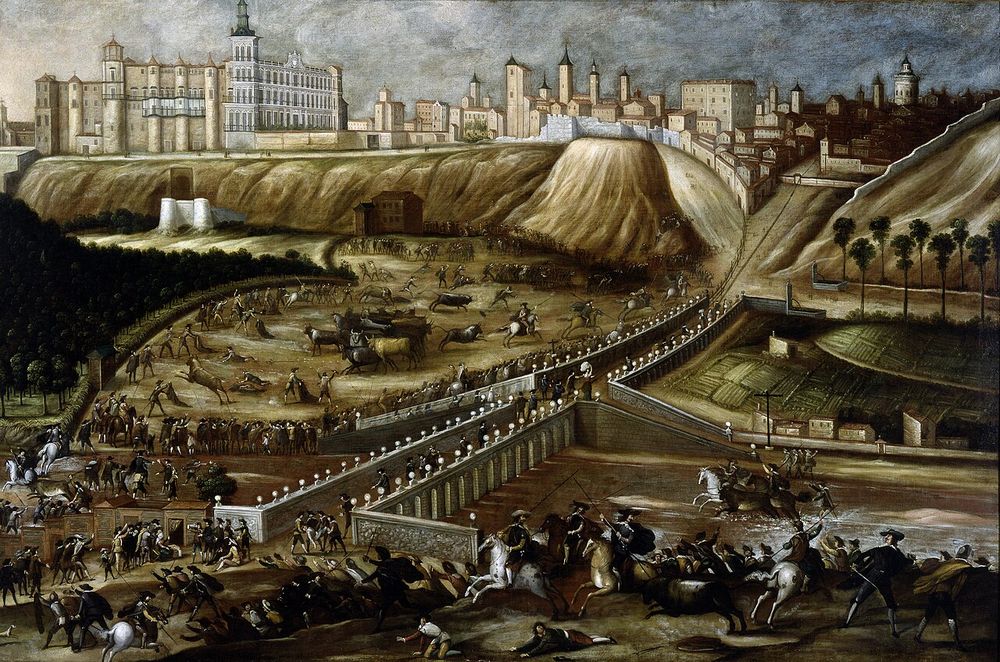
Madrid began here. About 865 the Muslim emir of Córdoba built a fort on this bluff above the river to watch the road from the north. The Christian kings who took it turned the fort into a castle and then a palace. On Christmas Eve 1734 that palace caught fire and burned for four days.
The king then was Philip V, a Frenchman born at Versailles. He ordered a new palace on the same spot with vaults of brick and no wood in its frame, so that it could never burn again. He did not live to see it. In China these are the reigns of Yongzheng and Qianlong of the Qing dynasty (1644–1912).
Close by, with a page of its own: Prado, Changdeokgung.
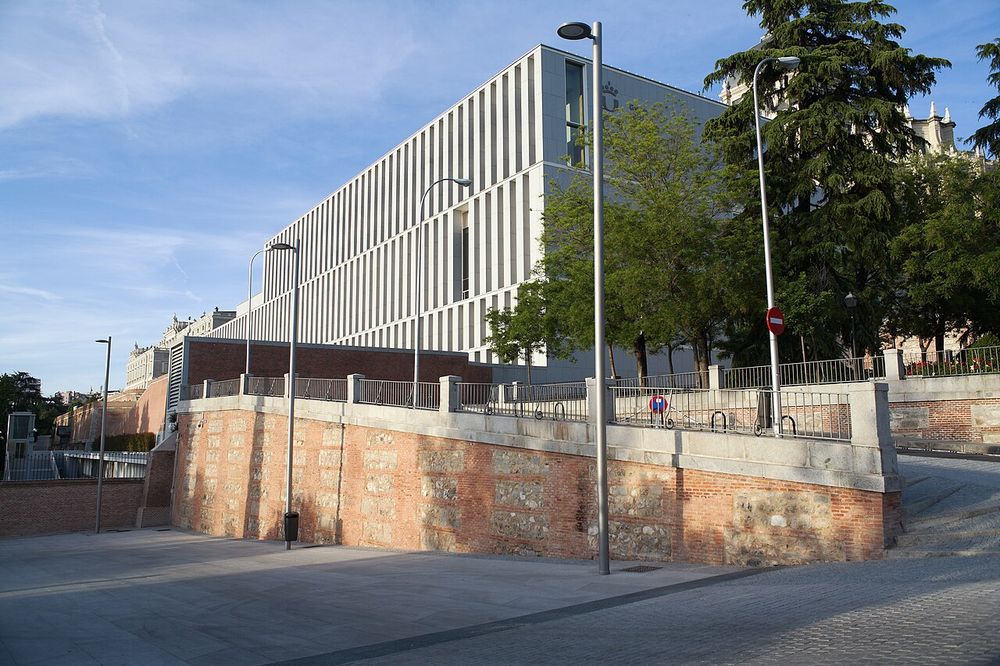
One ticket covers the state rooms, the armoury and the pharmacy. The gardens and squares are free. The new gallery of the royal collections next door is a separate museum with its own ticket.
| Part | Ticket |
|---|---|
| The square of the armoury | Palace ticket |
| The stair and the state rooms | Palace ticket |
| The throne room | Palace ticket |
| The armoury and the pharmacy | Palace ticket |
| The square to the east and the north gardens | Free |
| The park below the palace | Free; its own gate and hours |
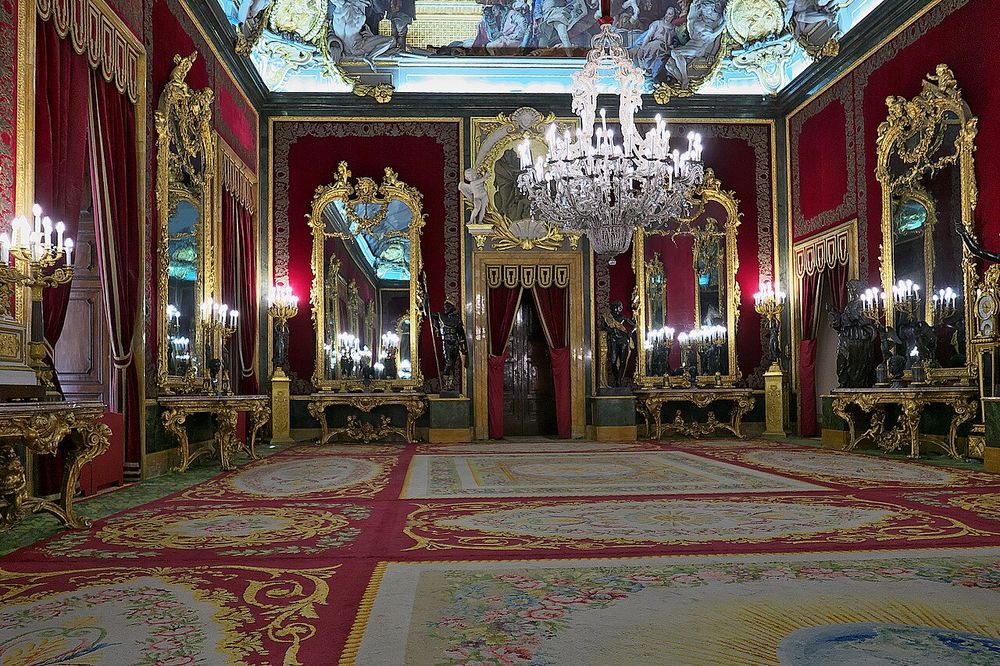
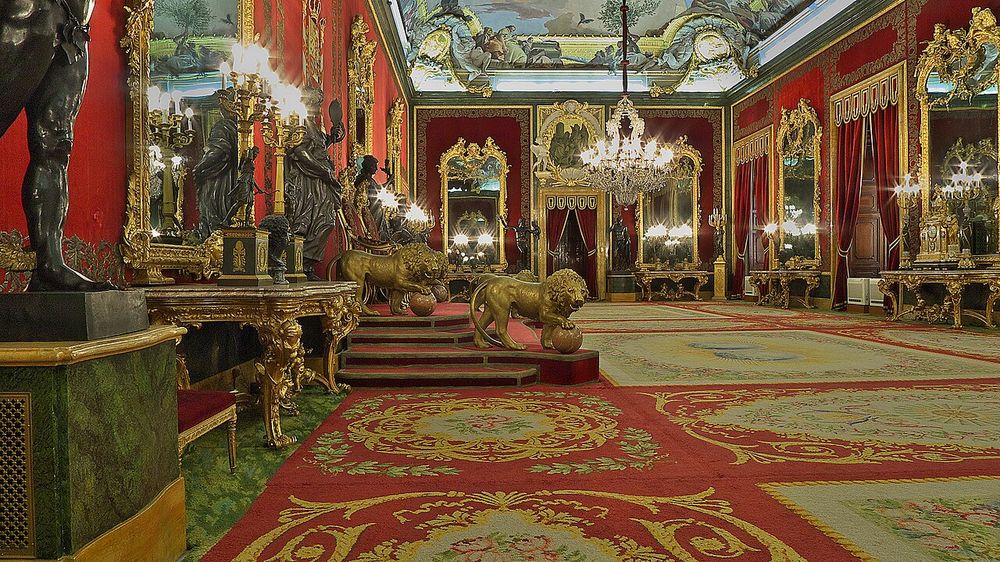
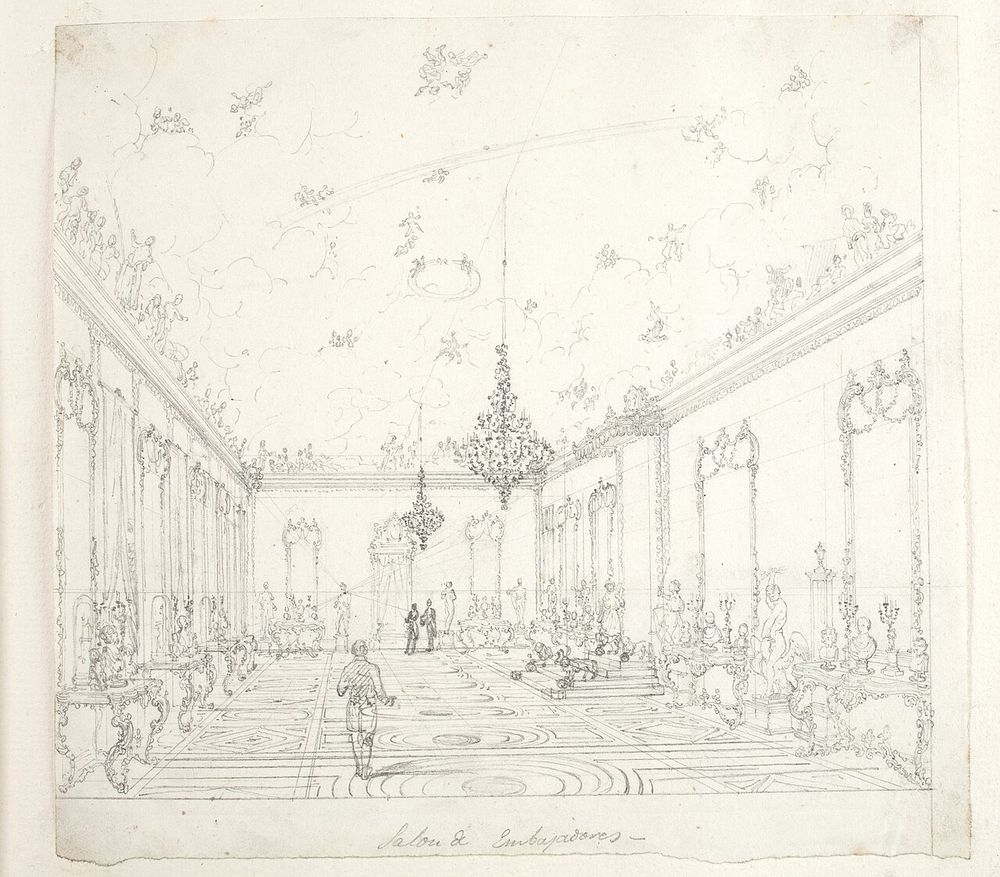
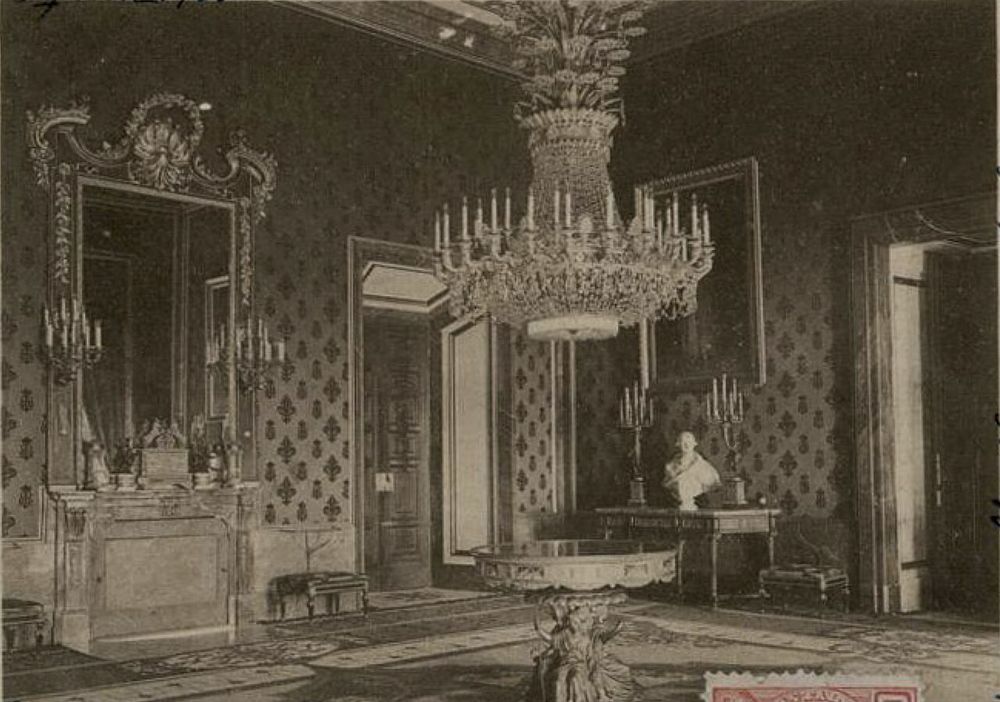
This room has not been changed since 1772. The walls are red velvet worked with silver thread. The mirrors are the largest that could be made at the time. Two thrones stand on a dais under a canopy, and four gilded lions guard the steps.
The lions are a hundred years older than the room. Velázquez ordered them in Rome in 1651 for the old palace, and they came through the fire.
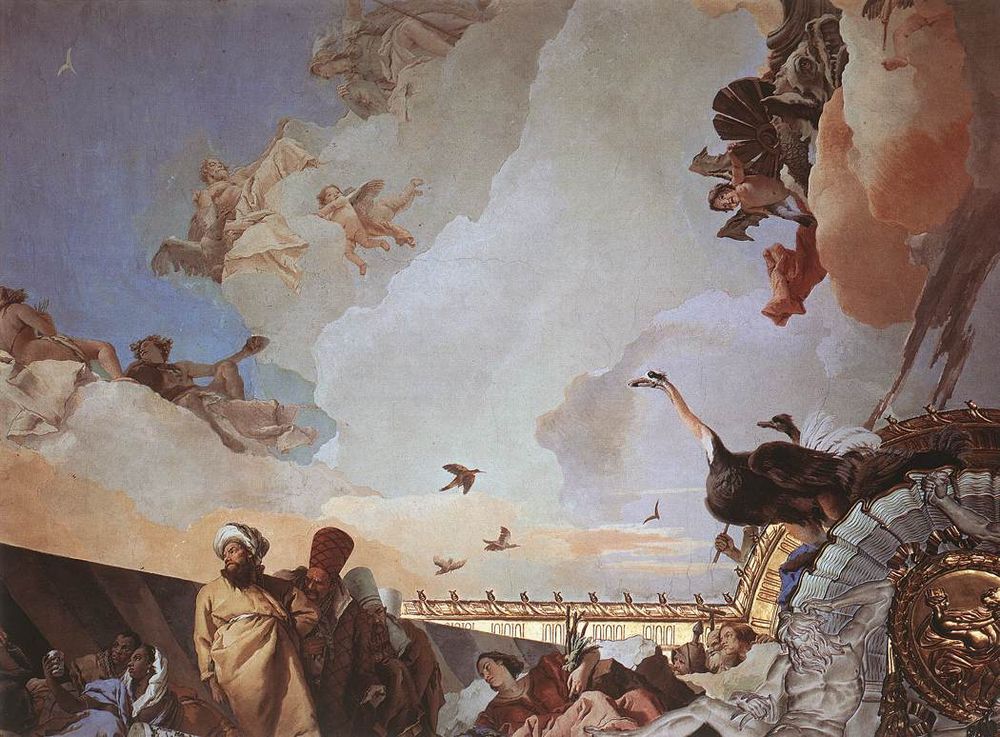
Look up. The ceiling is by the Venetian painter Tiepolo, who was sixty-eight and had crossed Europe to paint it. Round the edge sit figures for every land the king of Spain then ruled, from Andalusia to Peru to the Philippines. Find the figures in feathers, who stand for America.
The king does not sit here. Spanish kings are not crowned, and at receptions they stand in front of the thrones.
"The royal family lives here." They live in a much smaller house in the woods north-west of the city. This is their office for great occasions, and it closes to visitors, sometimes at a day's notice, when it is needed.
"It is free in the late afternoon." It is, from Monday to Thursday, but only for citizens of the European Union and of the Spanish- and Portuguese-speaking countries of America. Other visitors pay at all hours.
"It is the biggest palace in the world." By floor area it is the biggest royal palace in western Europe, about twice Buckingham Palace. The Forbidden City in Beijing has about as much floor, on a site five times as large.
"The king wears the crown at ceremonies." The crown and sceptre lie on a cushion beside him. Nobody wears them.
Stops 1 and 8 are free. Stops 2 to 7 are inside, on one fixed route.
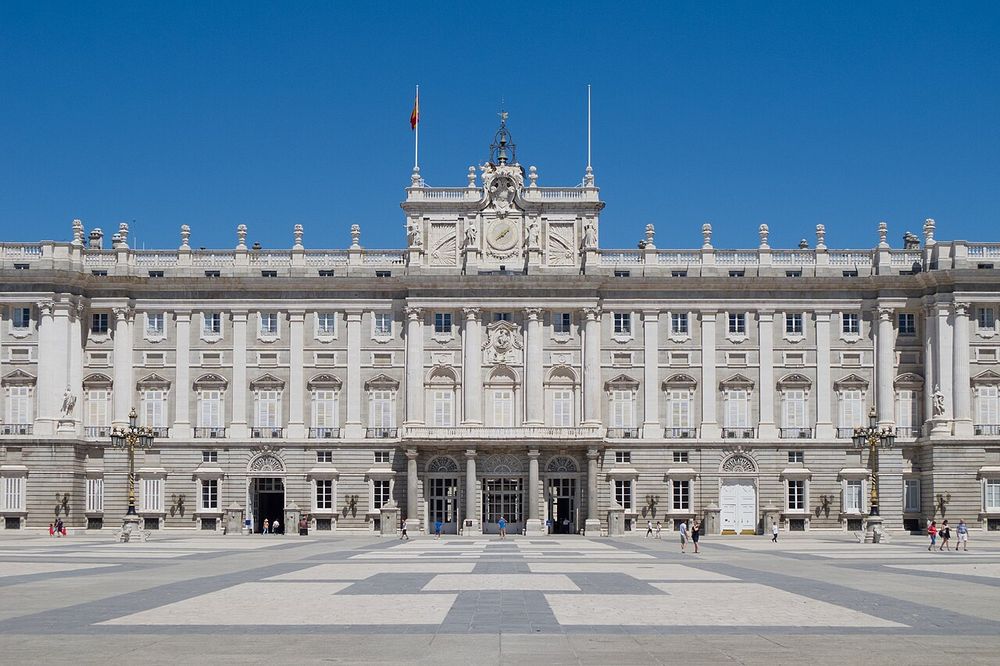
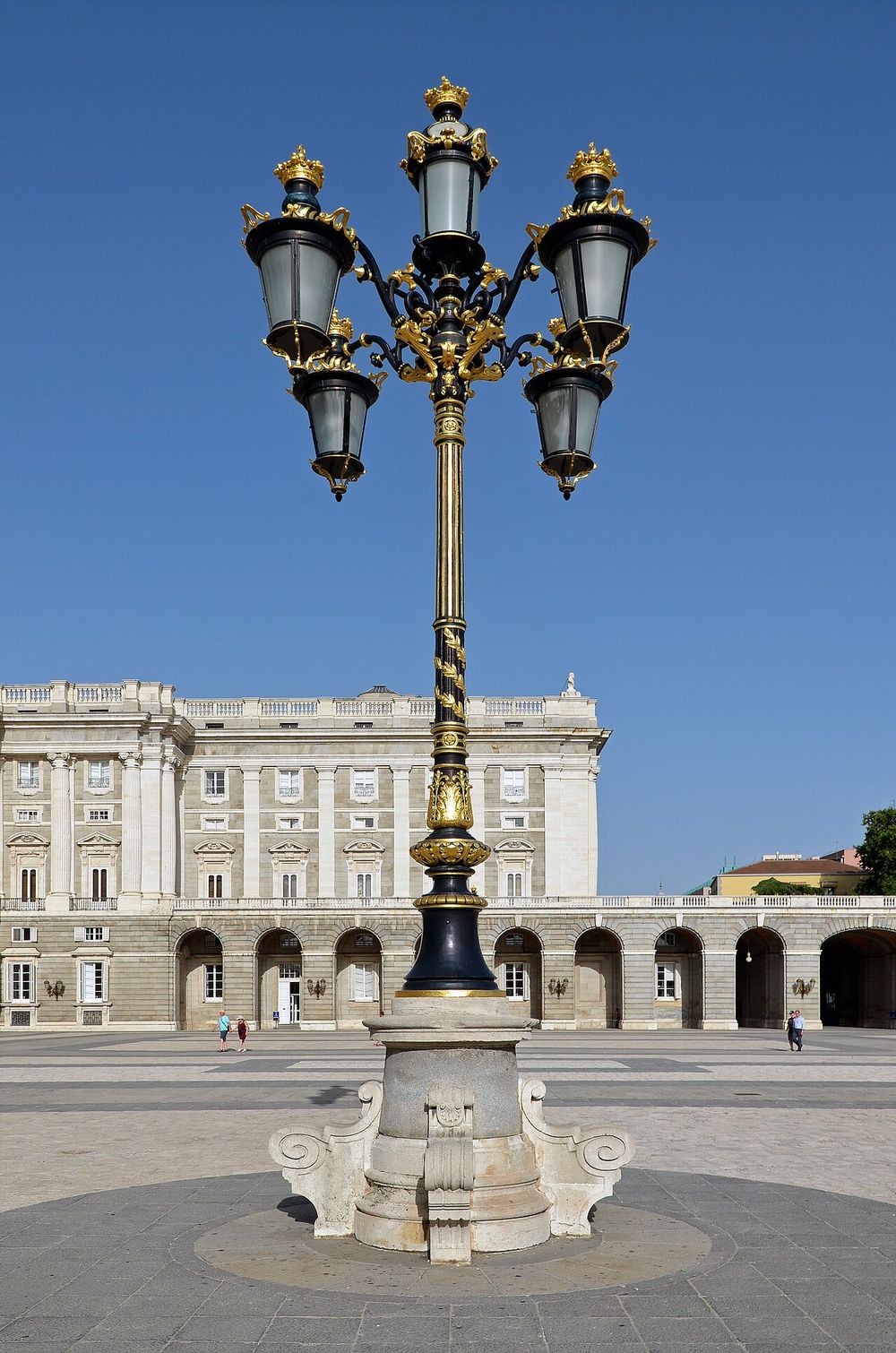
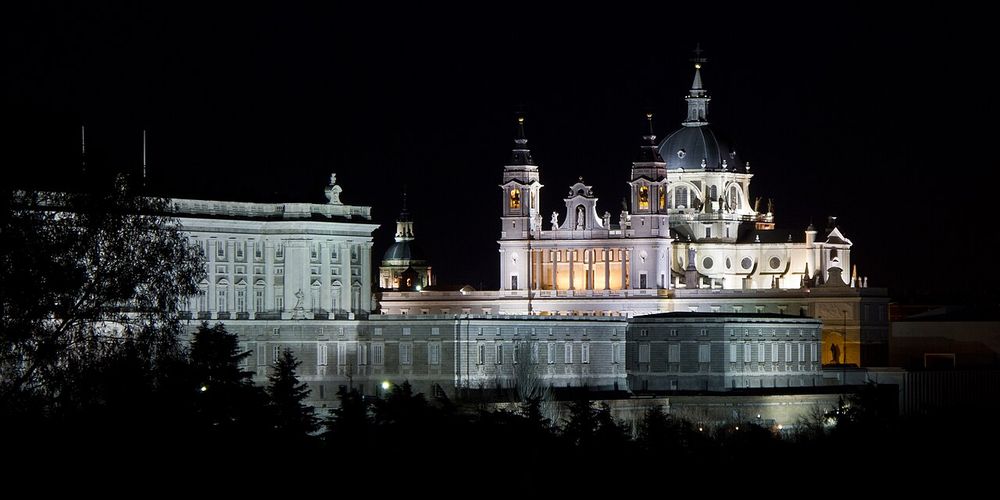
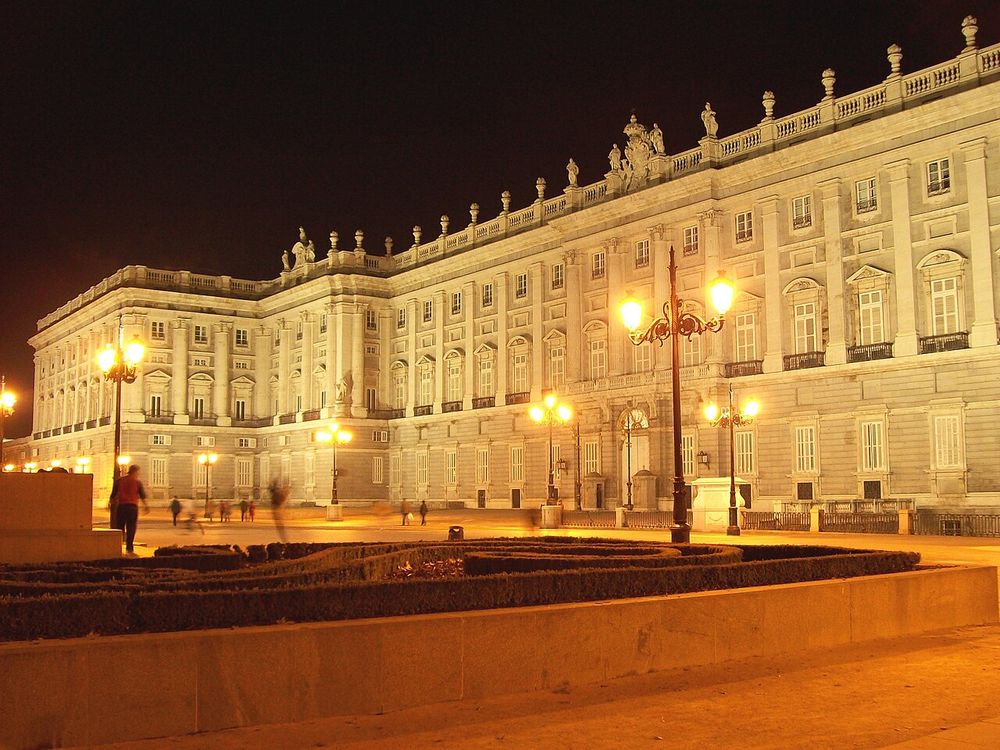
The south front faces a paved square as big as the palace itself, closed by long arcades. Opposite stands the cathedral, begun in 1883 and finished in 1993.
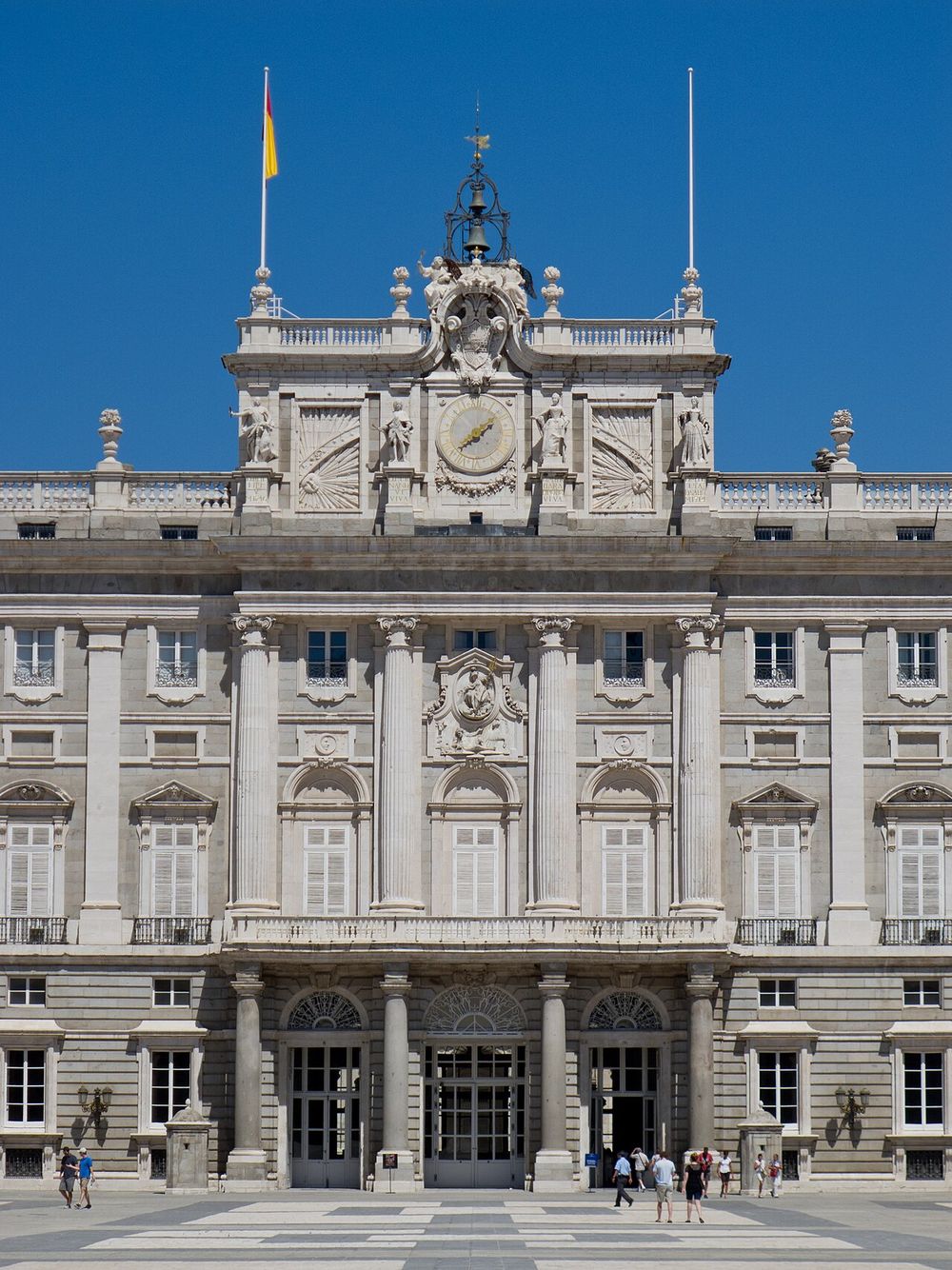
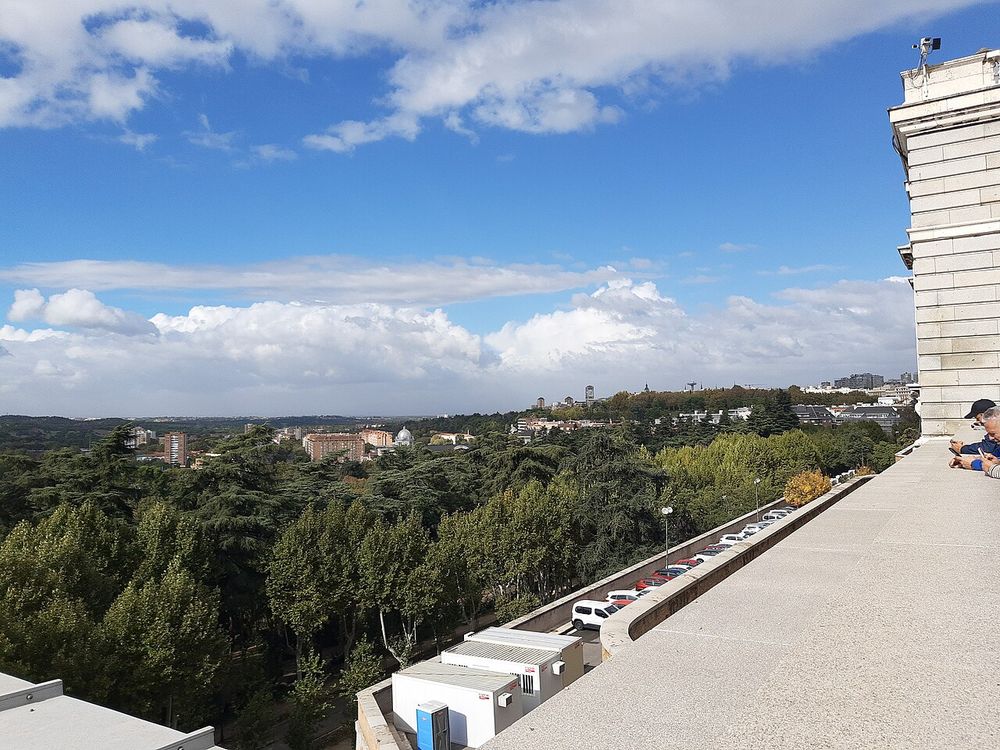
Count the storeys. Then walk to the west edge of the square and look over the wall: the same building drops several more levels down the cliff.
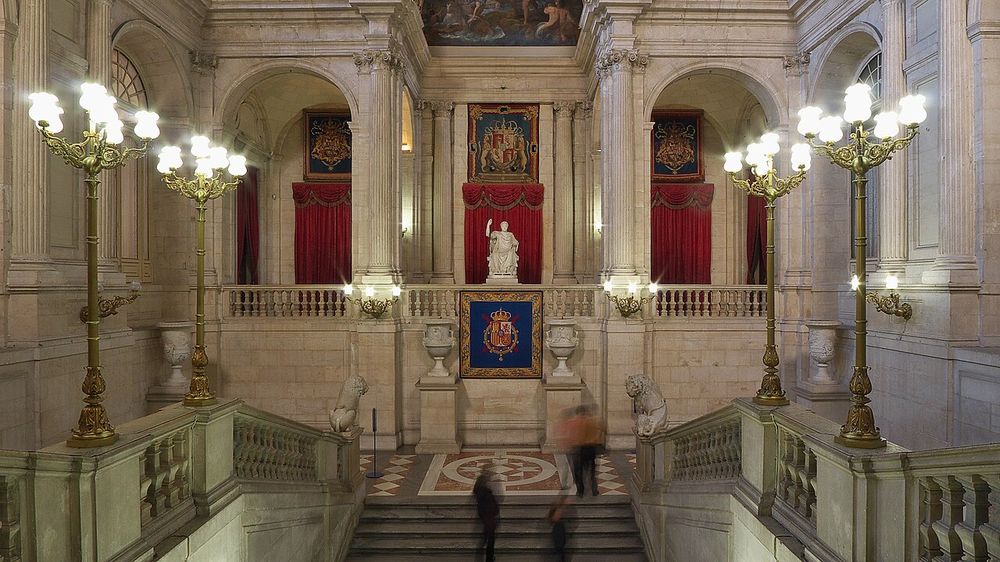
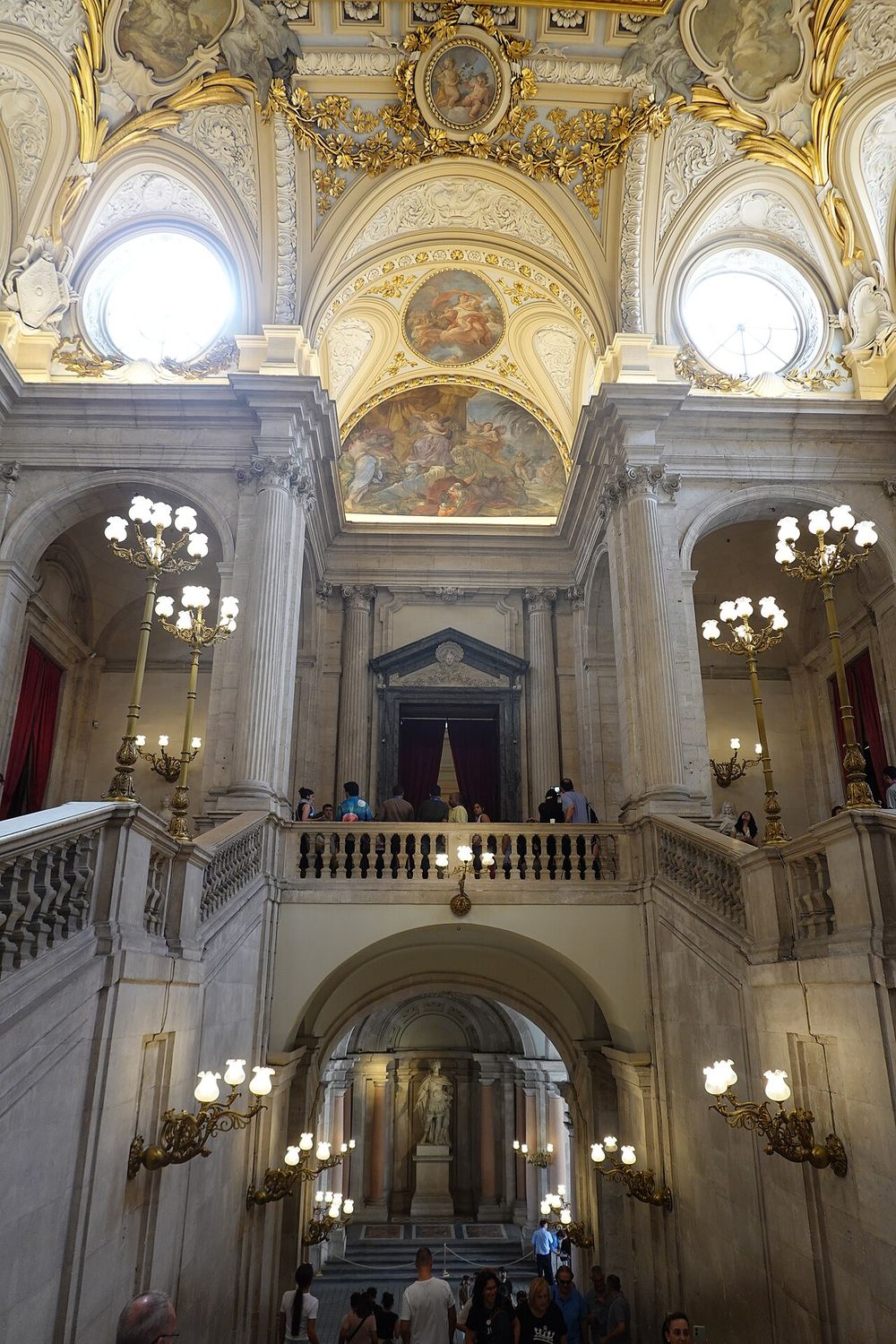
The stair is very wide and very shallow, so that a king could climb it slowly in robes. Each step is one piece of marble five metres long.
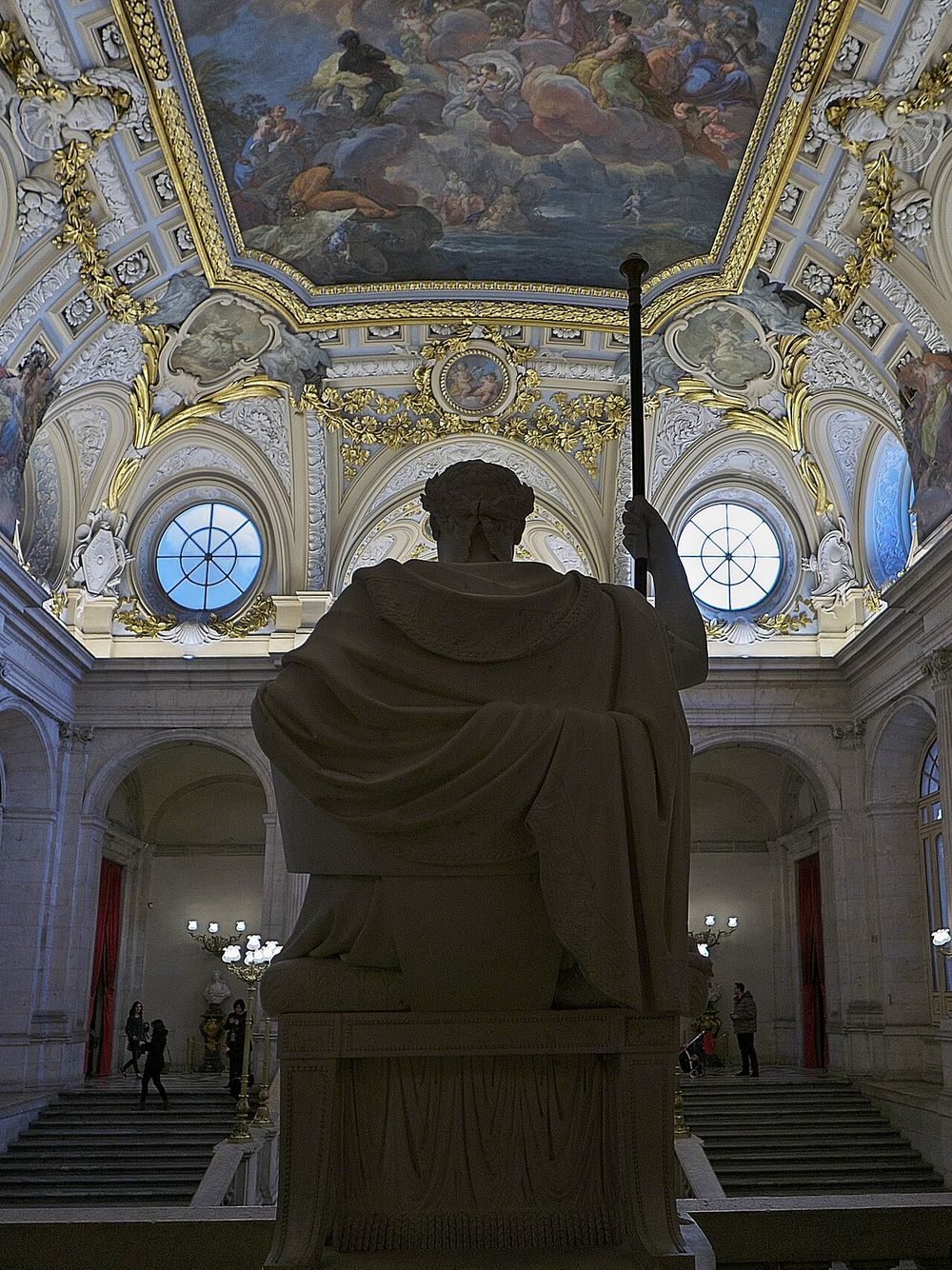
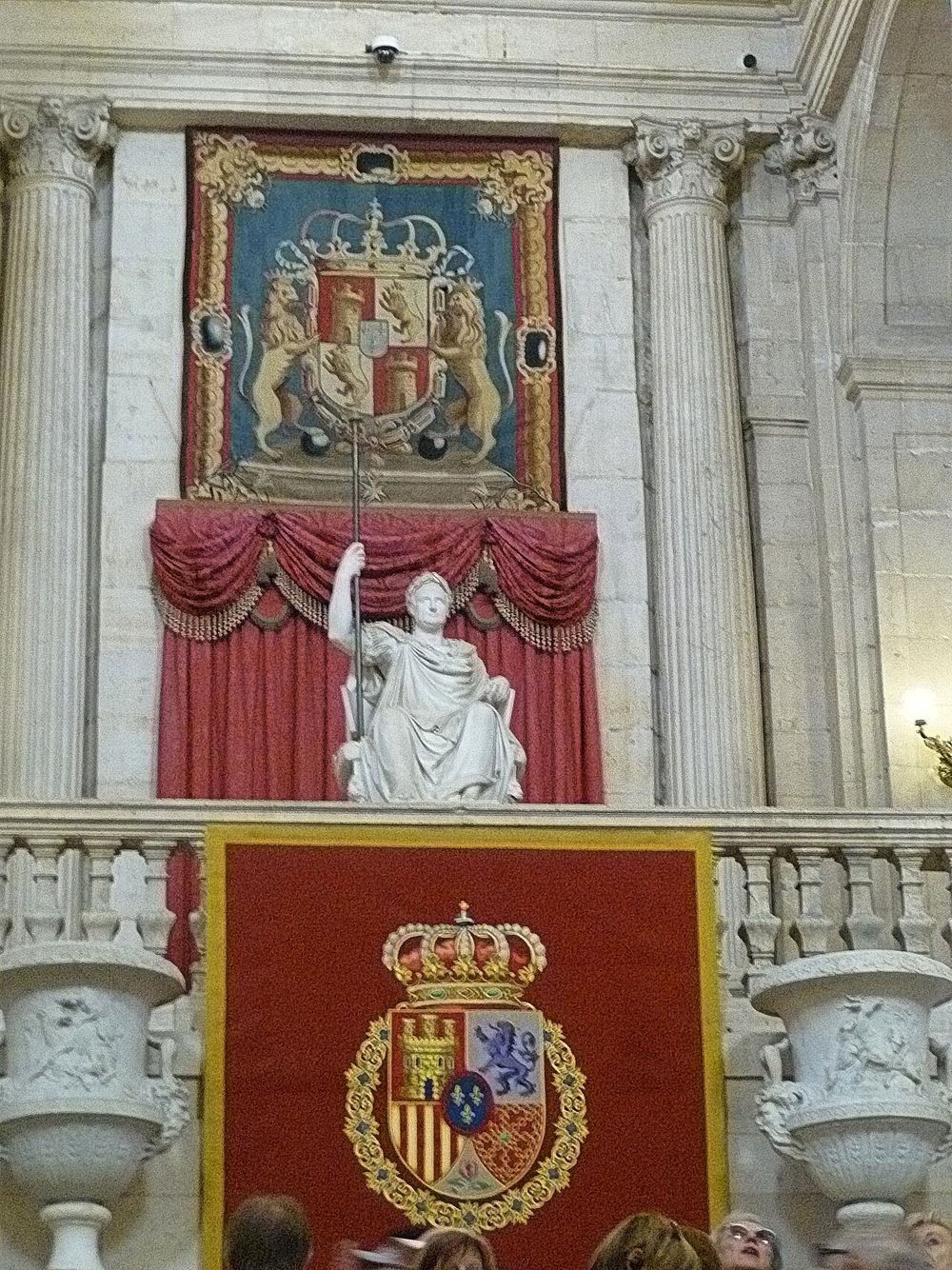
Napoleon stood here in December 1808, on his only visit to Madrid. He is said to have put a hand on one of the stone lions and told his brother: you are better lodged than I am.
—Pepe Botella, baja al despacho. —No puedo ahora, que estoy borracho.
"Joe Bottle, come down to the office." "I can't just now, I'm drunk."
A street rhyme of Madrid, 1808, against Joseph Bonaparte, who in fact drank little; our translation
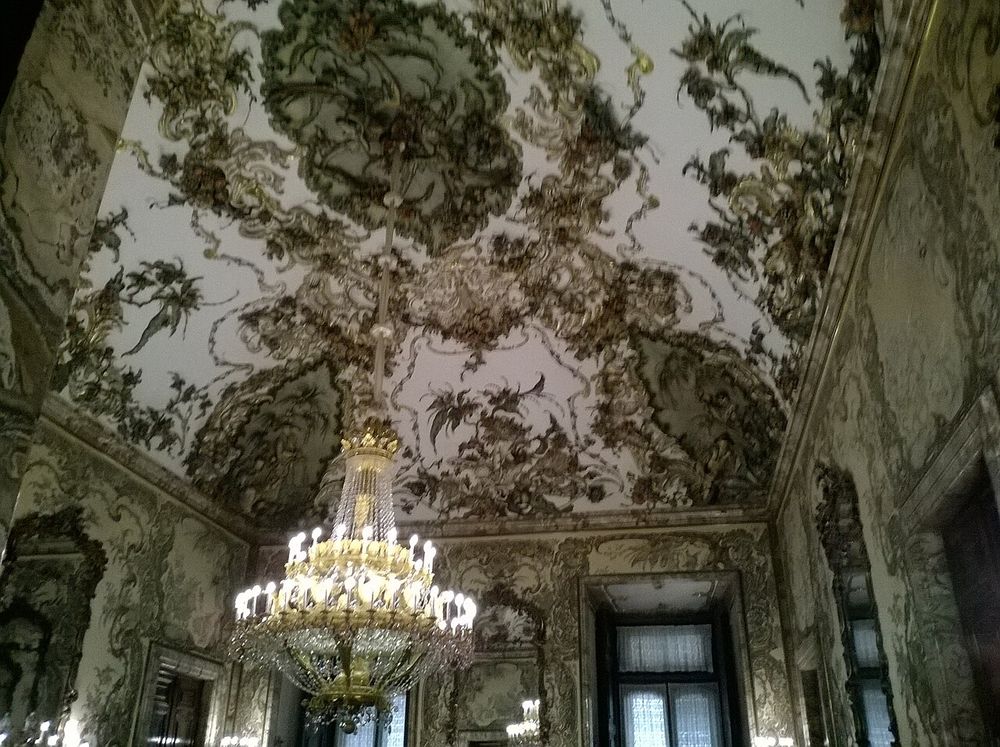
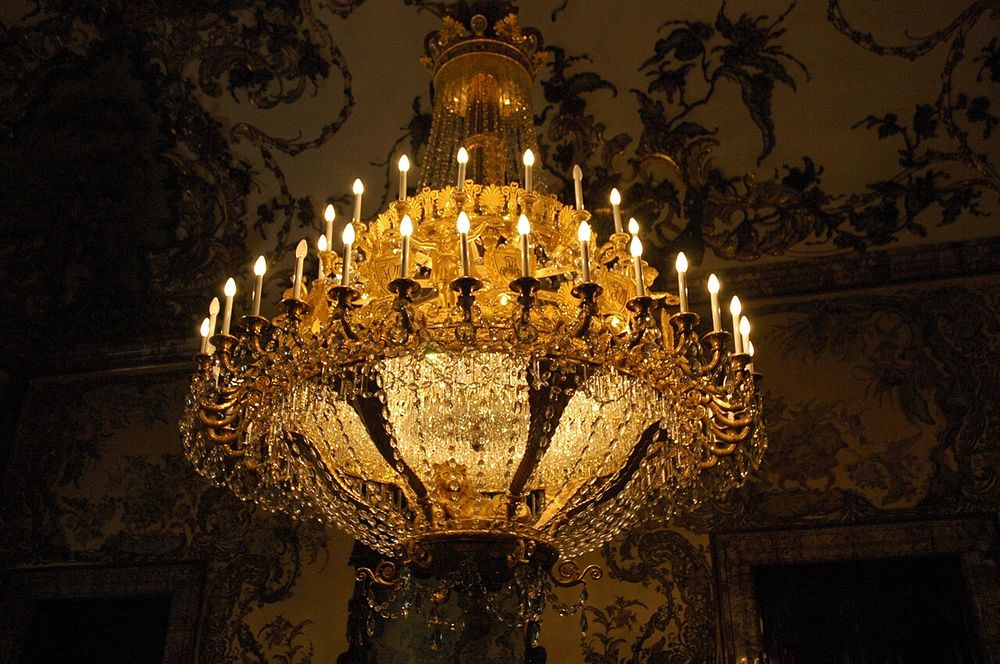
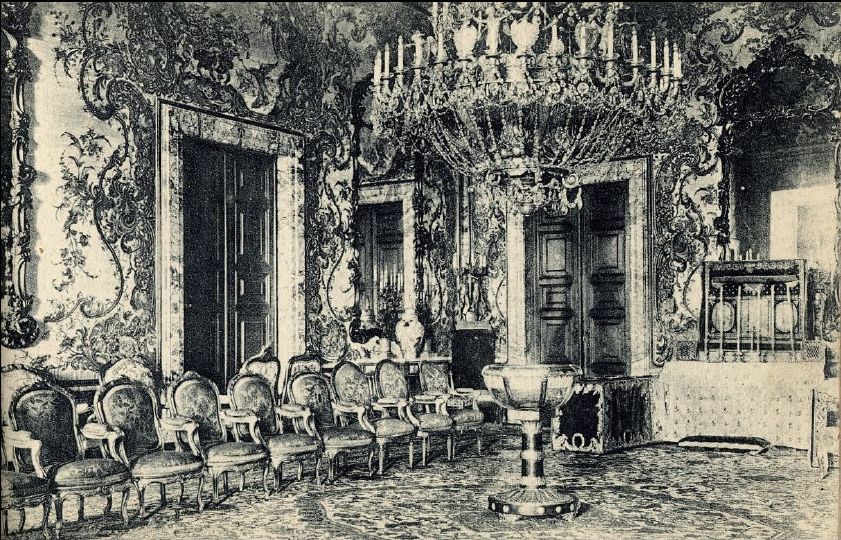
Charles III dressed in this room. An Italian from Naples covered its walls with silk embroidered in silver, its floor with marble and its ceiling with plaster vines, fruit and small figures in what Europe then imagined to be Chinese dress. It took fifty years to finish.
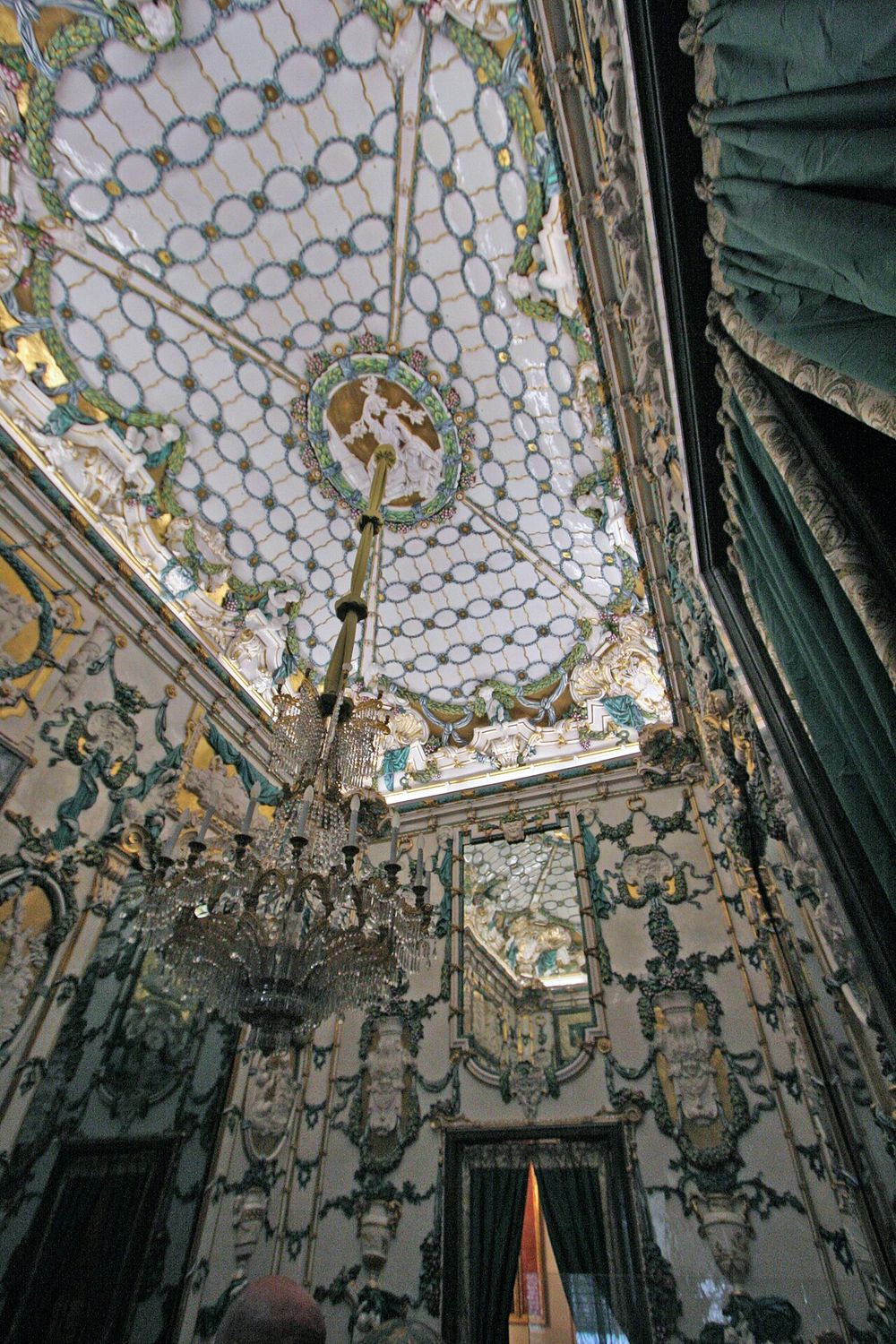
Two doors on is a small room lined from floor to ceiling with porcelain plaques, white and green, screwed to a wooden frame. They were made in the king's own factory in Madrid. The fashion for such rooms began with porcelain shipped from China a century before.
A Chinese visitor will not recognise much. That is the interest of it: this is what China looked like from Madrid in 1765.
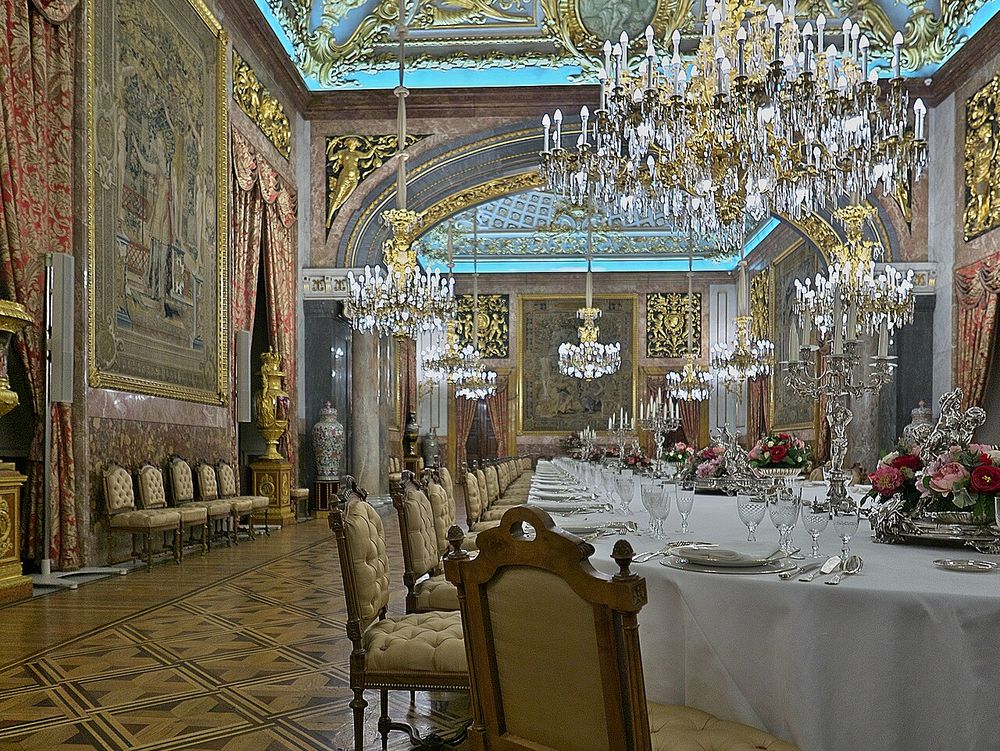
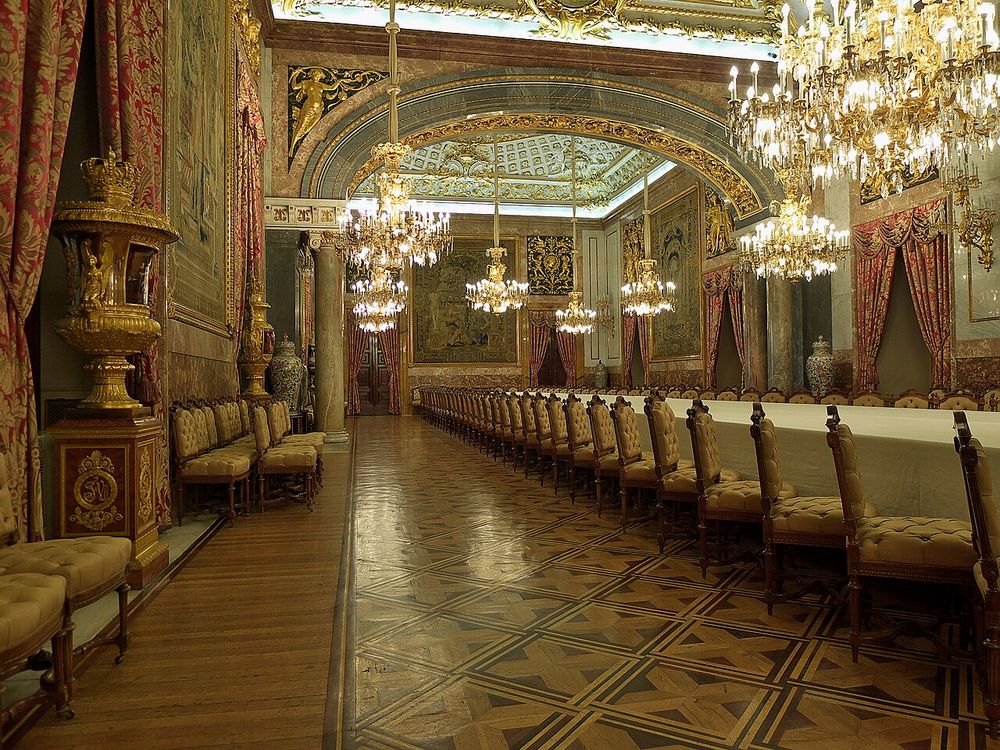
In 1879 a king knocked three rooms of the queen's old apartment into one to make this. The table seats about 140. State dinners for visiting presidents are still held at it, and on those days the palace is closed.
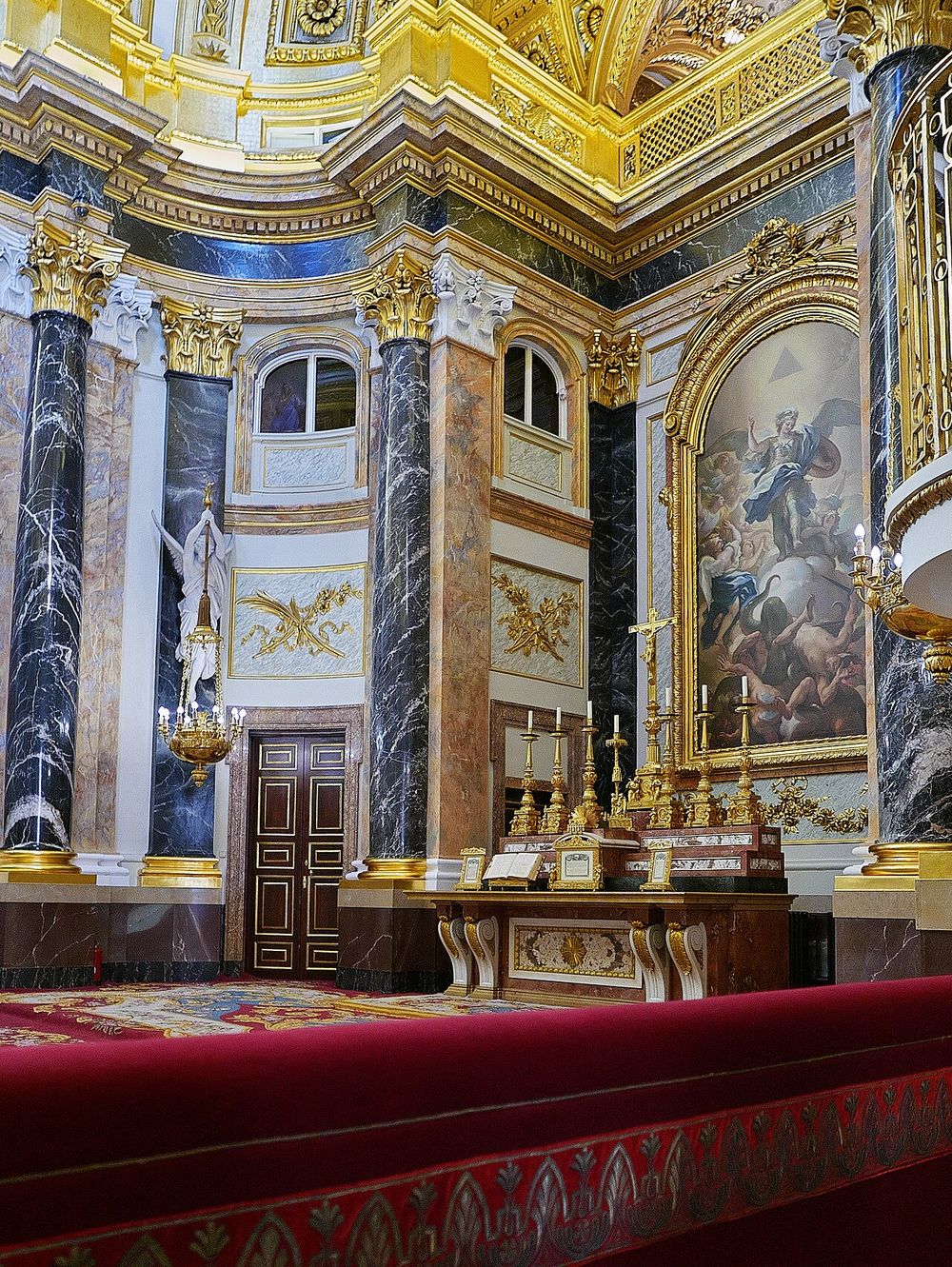
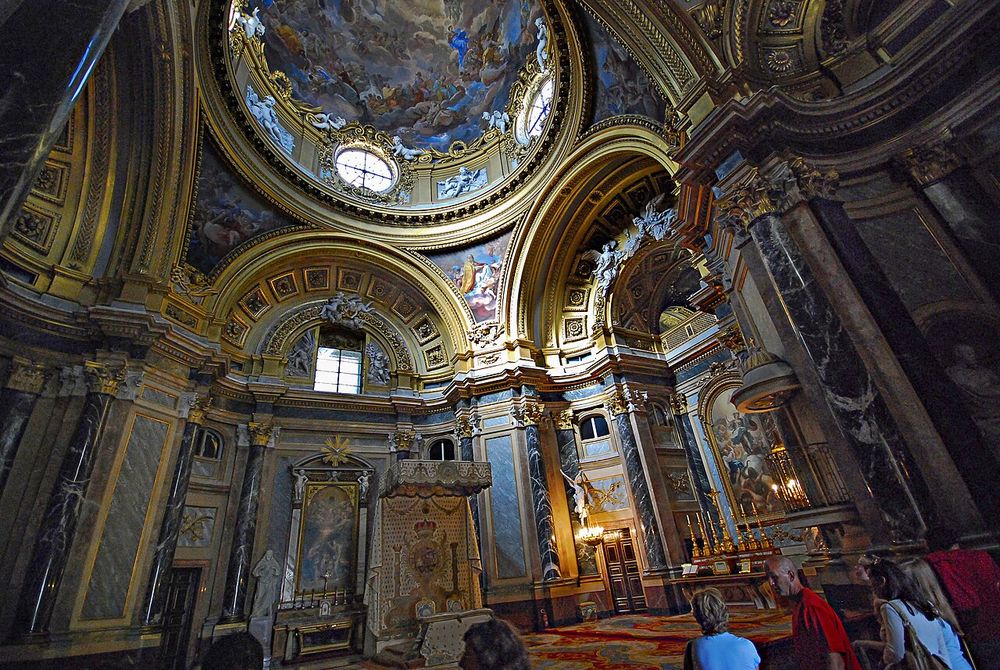
Near the chapel a glass case holds two violins, a viola and a cello by Antonio Stradivari, made as a set and inlaid with ivory. It is the only decorated set he made that has stayed together. A second cello by him stands with them. They are taken out and played at concerts in the palace several times a year.
A small room shows the crown and the sceptre. The crown is silver gilt, with no jewels. Beside them is the table on which the abdication of 2014 was signed, and the speech with which the next king was proclaimed.
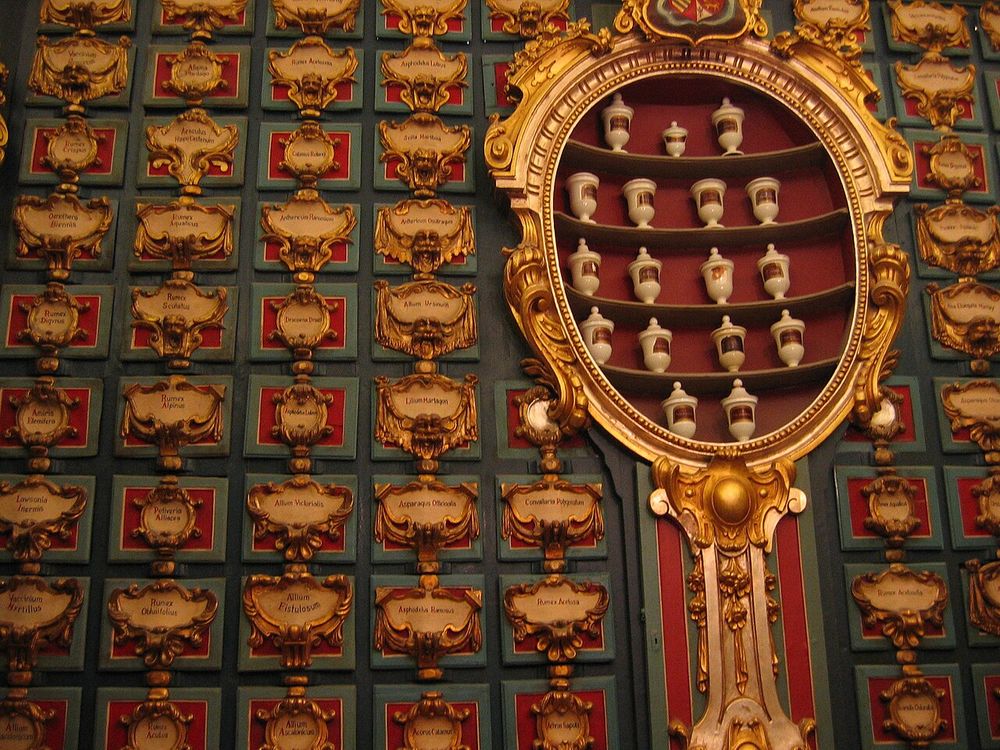
Across the square are two more doors on the same ticket. One is the old royal pharmacy, with its rows of jars. The other is the armoury, which holds the tournament and battle armour of the emperors and kings since the 1400s.
Look for the suit that Charles V wore at the battle of Mühlberg in 1547. It is the one he wears in Titian's portrait in the Prado. Seeing both in one day is the best thing you can do in Madrid.
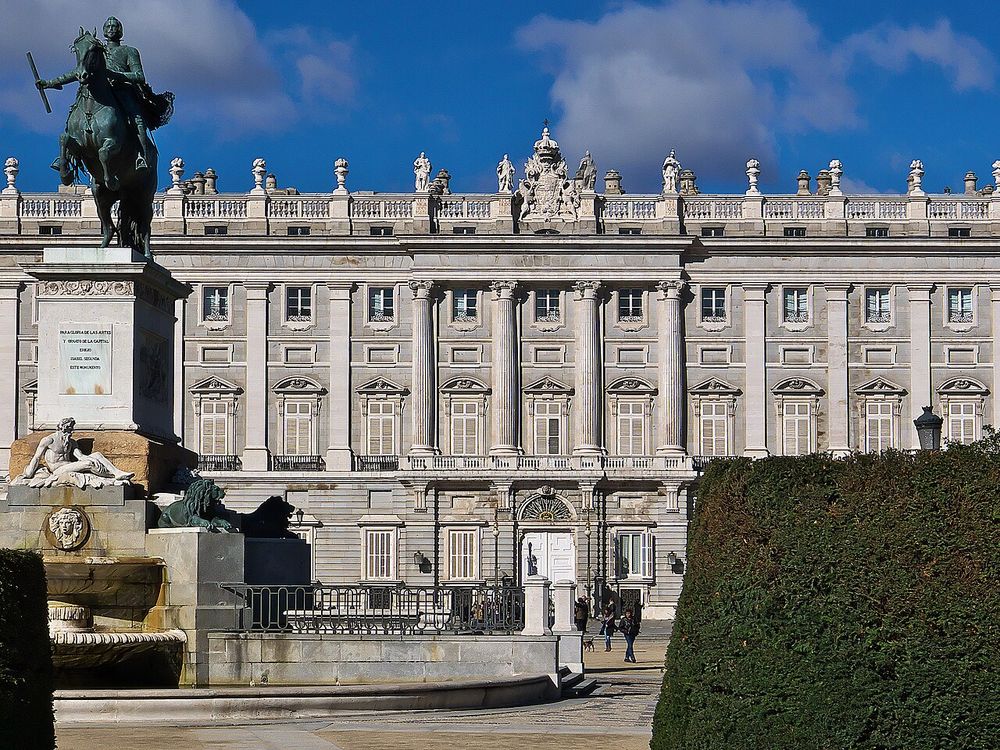
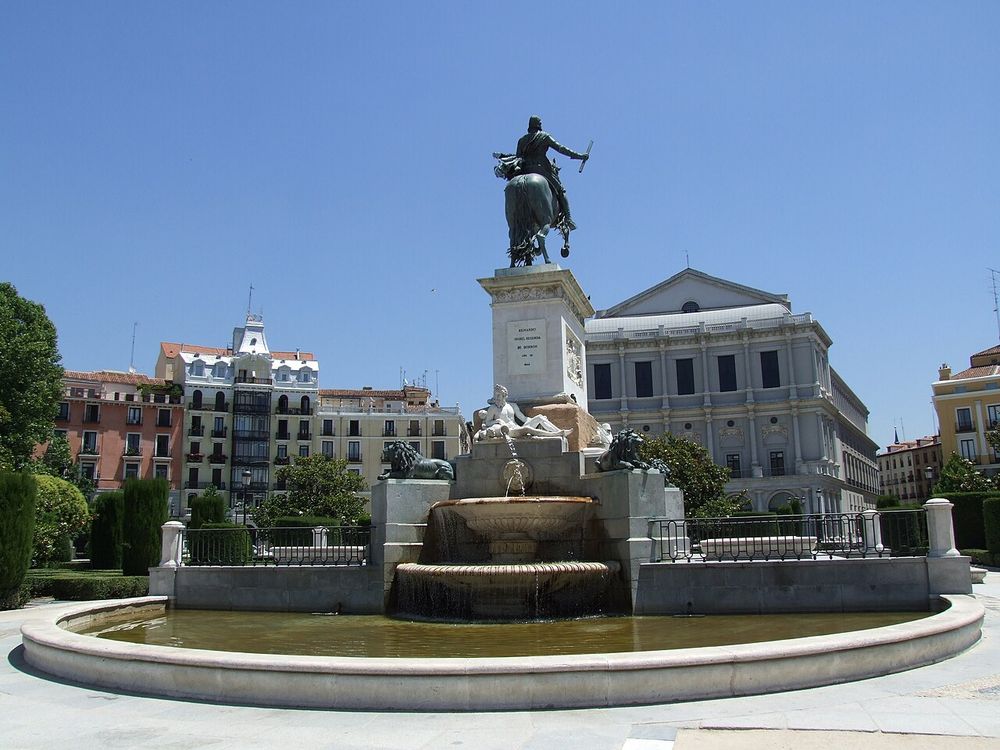
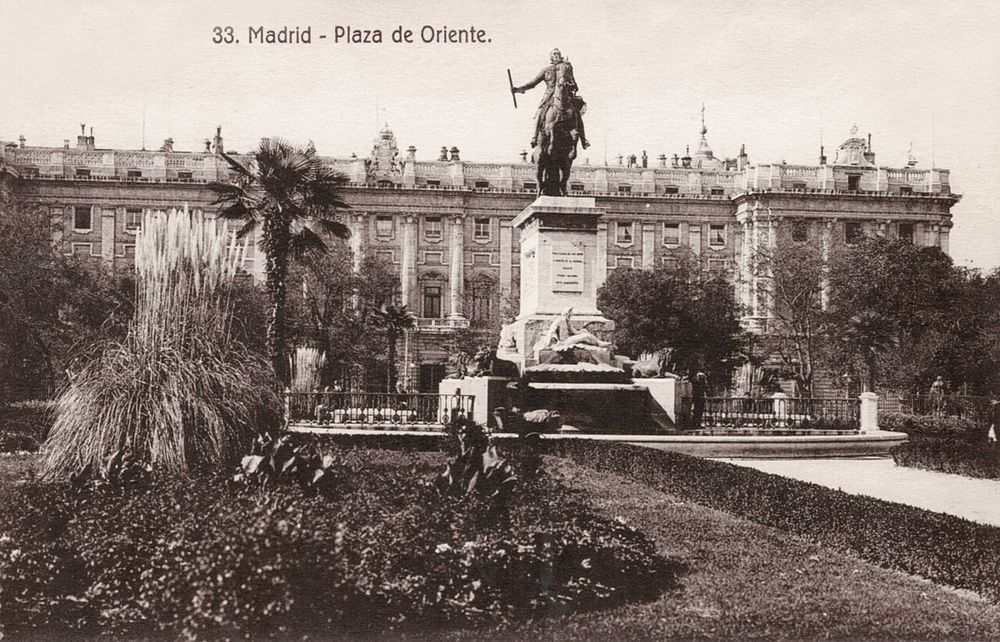
The square on the east side is the one Joseph Bonaparte cleared. In the middle a bronze king rides a horse that rears on its hind legs. It was cast in Florence in 1640 and was the first statue in the world to balance that way. Galileo worked out how: the back half is solid and the front half hollow.
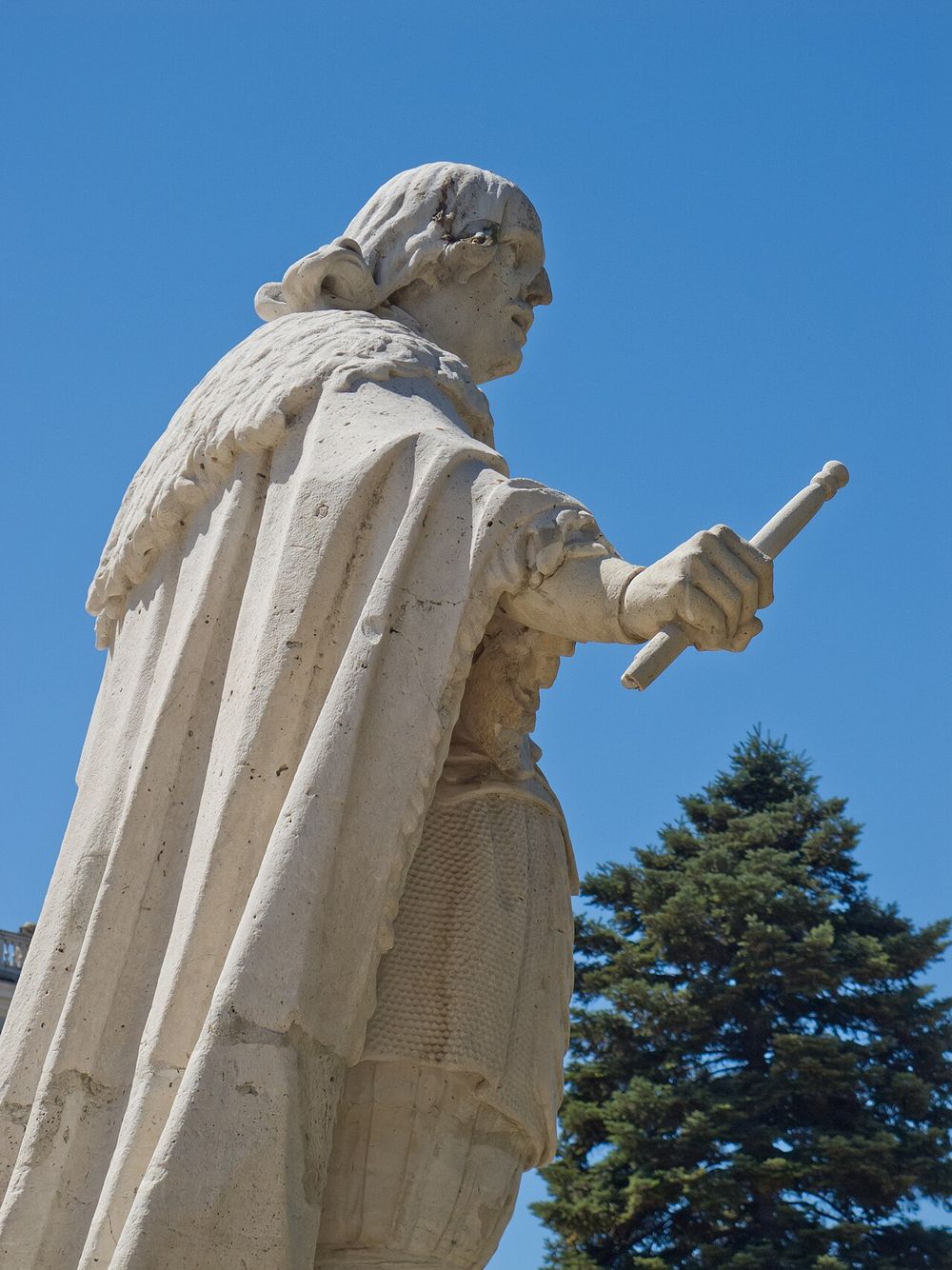
The white stone kings round the square were carved for the roof of the palace and never put up.
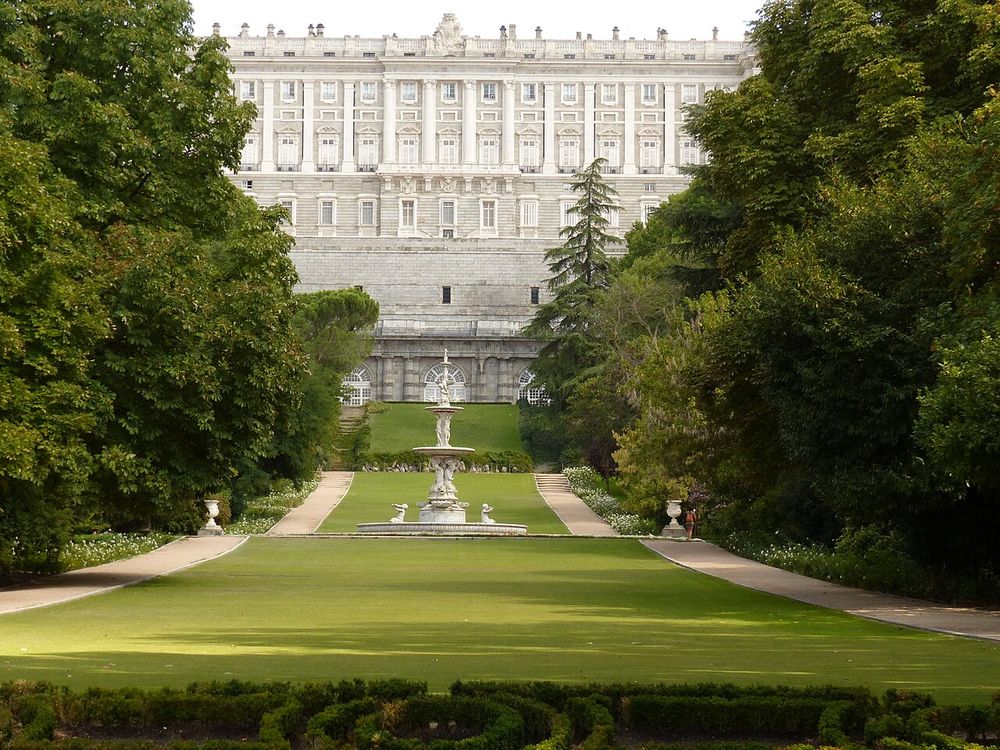
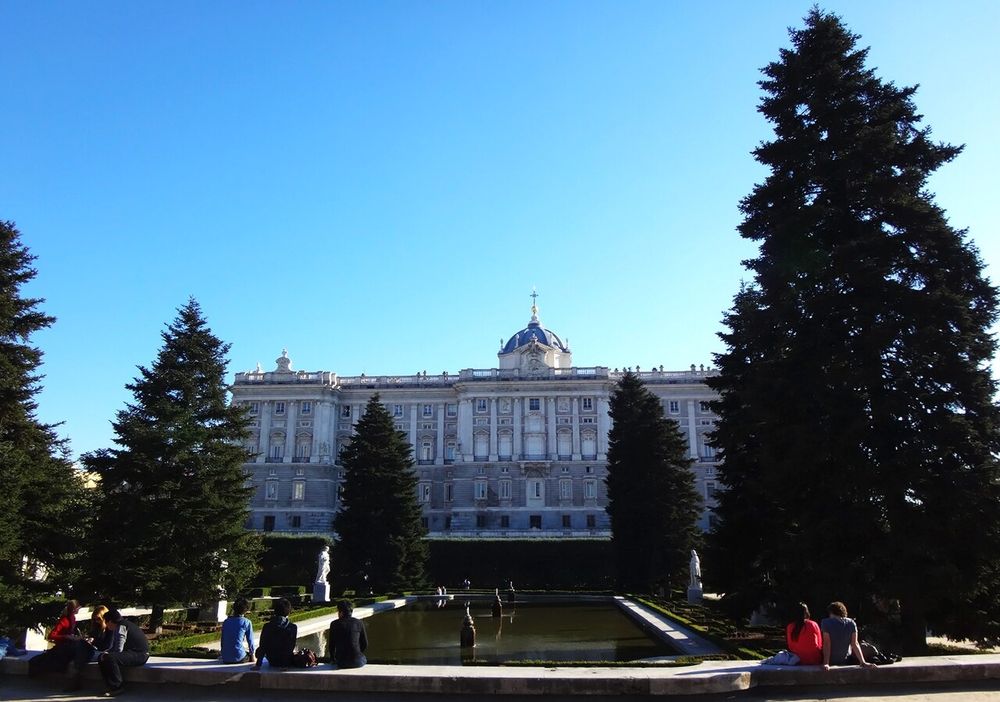
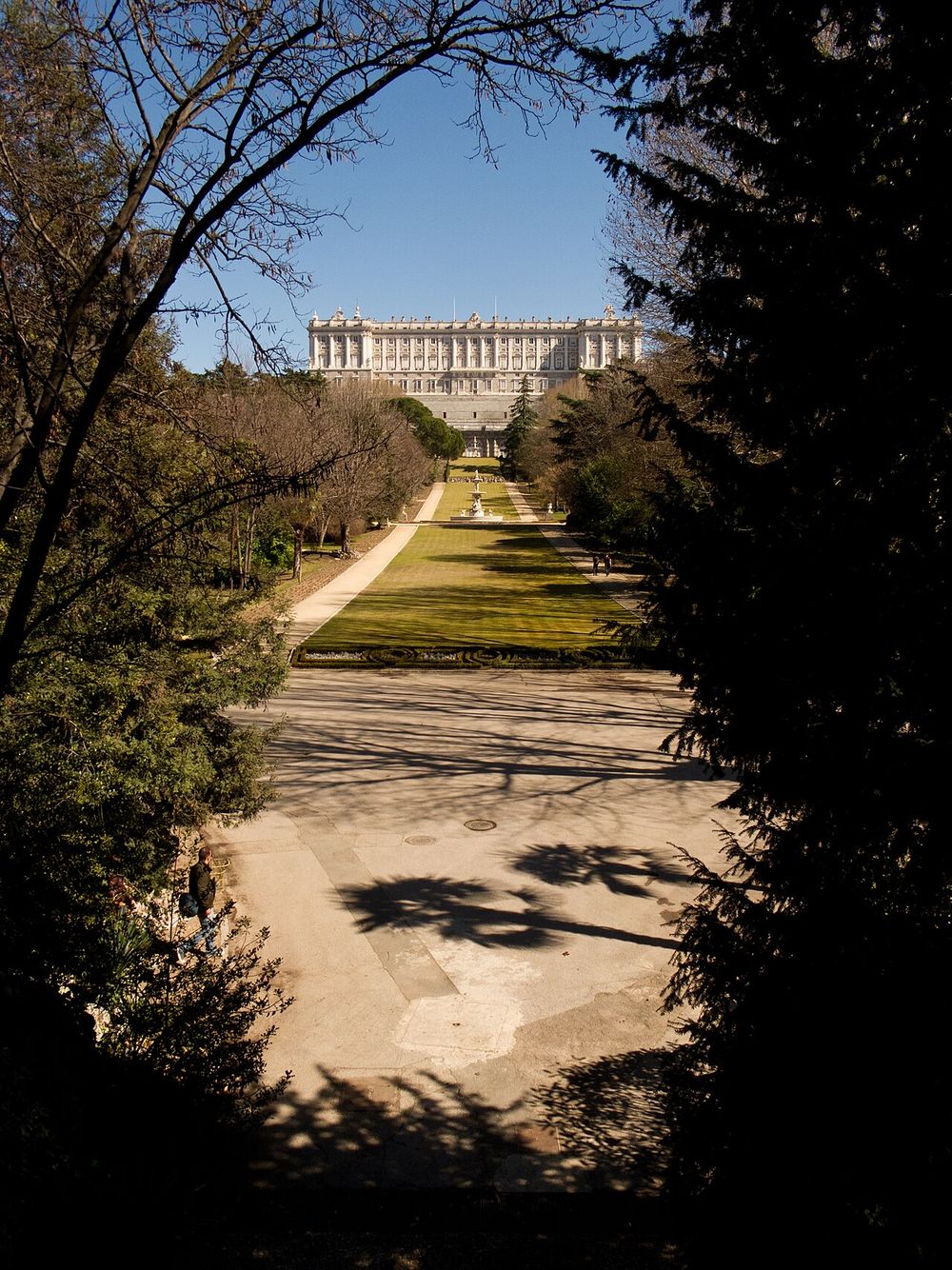
Below the west front, down the cliff, a park climbs back up to the palace in one long lawn. This is the view the kings wanted and never had from the old palace. Its name remembers a Muslim army that camped here in 1109, trying to take the fort back.
The same shot: the postcard view of the palace above its lawn is taken from the round fountain half way down the central path of this park, in the afternoon.
| Year | Here | Elsewhere |
|---|---|---|
| 865 | A Muslim fort is built on the bluff | Viking armies land in England |
| 1561 | Philip II makes Madrid his capital | In England Shakespeare is not yet born |
| 1734 | The old palace burns on Christmas Eve | In Leipzig Bach performs his Christmas Oratorio the same week |
| 1764 | Charles III moves in | Mozart, aged eight, plays for the king of England |
| 1808 | Napoleon's brother is made king | Goethe publishes the first part of Faust |
| 1931 | The king leaves; the Republic begins | The Empire State Building opens in New York |
| 1985 | Spain signs into the European Community here | Gorbachev comes to power in Moscow |
| 2014 | Juan Carlos abdicates here | A space probe lands on a comet for the first time |
One line to remember: built so that it could not burn, and so big that no one wants to live in it.
These are stories people tell about this place. They are legends, not history, and each one says where it comes from.
The statues of the kings were kept off the roof because the queen dreamed that an earthquake shook them down on her head.
Source: Told in Madrid since the 18th century; the architects' papers speak only of the weight
"You are better lodged than I am."
Source: First printed decades later; no witness records it
When the old palace burned, the monks who were asked to ring the alarm thought the bells were for Christmas Mass, and nobody came.
Source: A Madrid tradition; the official account blames locked doors
Later, people who live here will be able to add the stories they grew up with, and say which of these they have heard.
Last checked 2026-11-12. Madrid guides quoting the state body that runs the palace, September 2026.
Checked 2026-11-12
Stand at the site, sign in, press the button, and collect its stamp. Your browser will ask to use your location. It is sent to us once to confirm that you are at the site; we keep how far you were from it, not the spot where you stood.
Your stamps are saved to your account, so they follow you to any device. Checking from a browser cannot rule out every false location; stricter checks arrive with the app.
Photos here show the place, not people. Each one is credited to the visitor who took it and appears after our team has looked at it. A photo with you in it belongs under “I am here”.