LegendThe palace Taejong would not live in
Taejong built this palace because the ghosts of the brothers he had killed walked in the other one.
Source: Popular explanation; the Annals record only that he found the old palace unlucky
Jongno, Seoul, South Korea
창덕궁 · CHAHNG-duk-goong
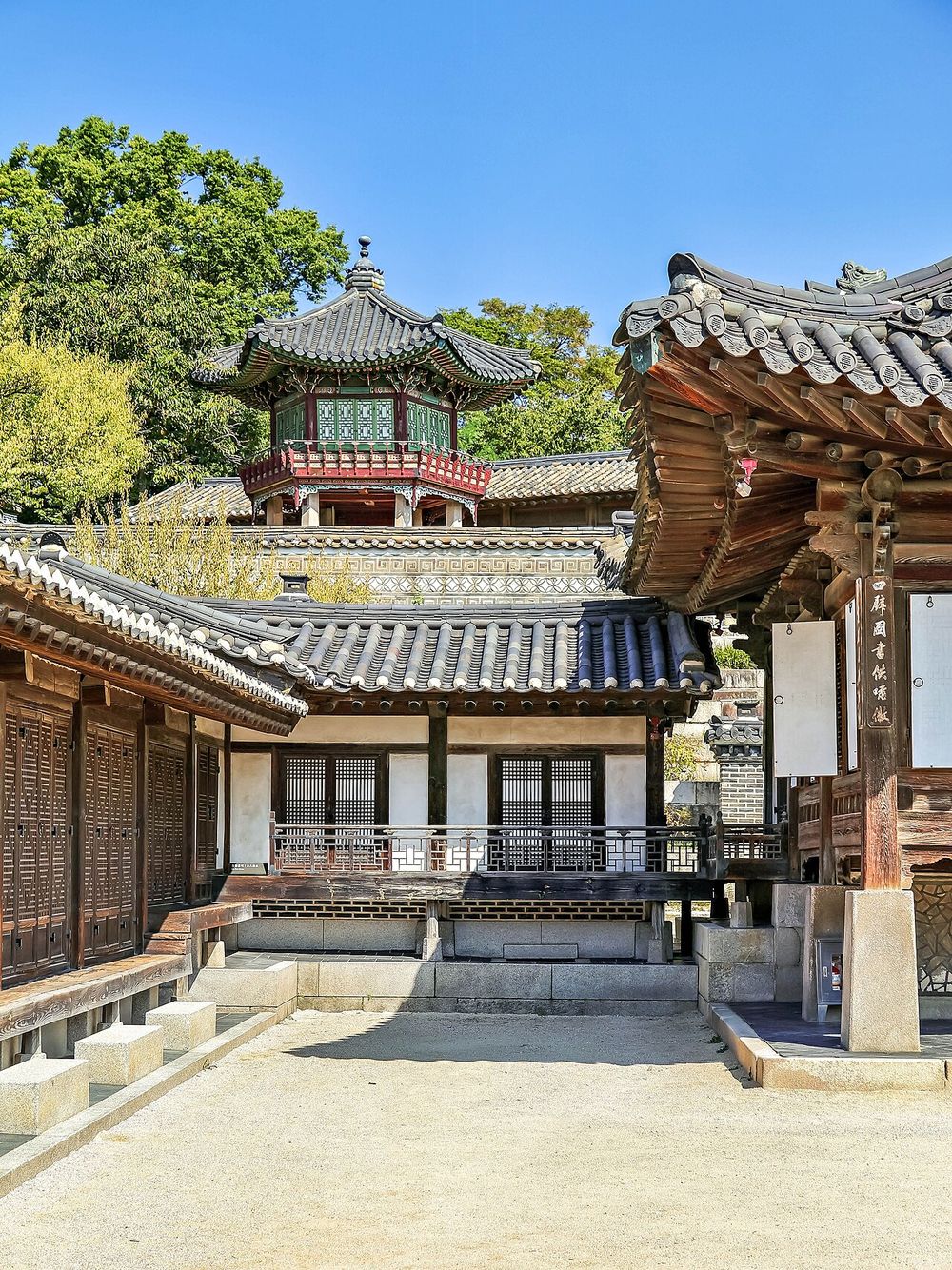
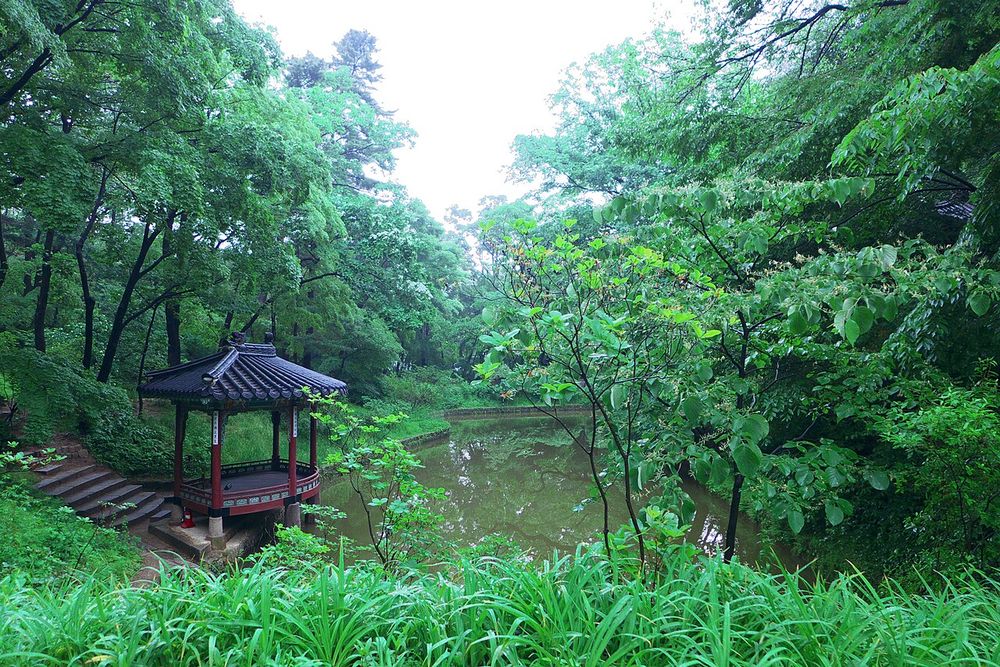
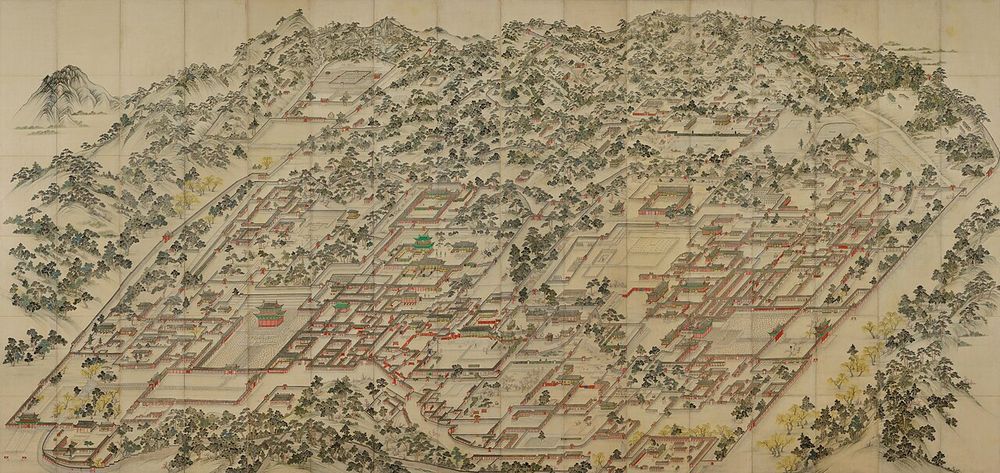
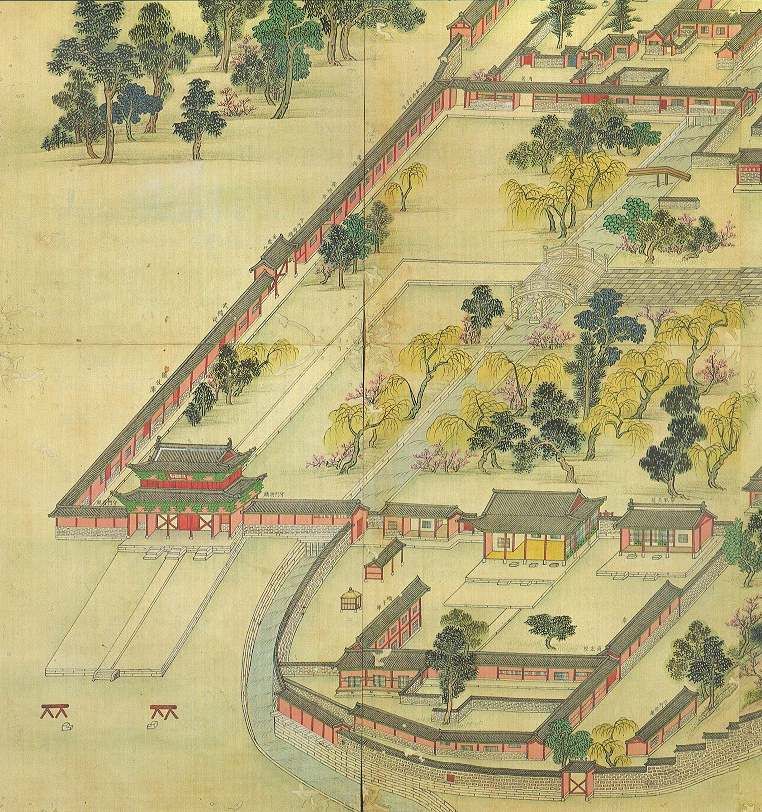
The palace the kings of Korea actually lived in. It was built as the second palace of the Joseon kingdom in 1405, and for 270 years it was the first. Its halls bend with the hill instead of standing in a row, and behind them is a wooded garden of ponds and pavilions that takes up more than half the grounds.
Photo: Tungdangthanh, CC BY-SA 4.0, Wikimedia Commons
Seoul has five royal palaces. The grandest, Gyeongbokgung, stands on flat ground on a straight line, in the Chinese manner. This one, a kilometre to the east, was built five years later at the foot of a wooded hill, and its builders let the hill decide. The gate is at one corner. The path turns right, then left. No two courtyards are square to each other.
Both palaces burned in 1592, when a Japanese army took the city. This one was rebuilt first, in 1610, and the kings stayed. The last of them died here in 1926, and members of his family lived on in one corner until 1989.
Close by, with a page of its own: Gyeongbokgung, Bukchon.
The palace ticket covers the gate, the throne hall, the living quarters and the unpainted house. The garden behind is a separate ticket for a set time, and the number of visitors is limited.
| Part | Ticket |
|---|---|
| The gate and the stone bridge | Palace ticket |
| The throne hall, Injeongjeon | Palace ticket; seen from the doors |
| The hall with blue tiles, Seonjeongjeon | Palace ticket |
| The living quarters, Huijeongdang and Daejojeon | Palace ticket |
| Nakseonjae, the unpainted house | Palace ticket |
| The garden: the square pond and the library | Garden ticket |
| The garden: the lotus pond and Yeongyeongdang | Garden ticket |
| The garden: the pavilions and the stream | Garden ticket |
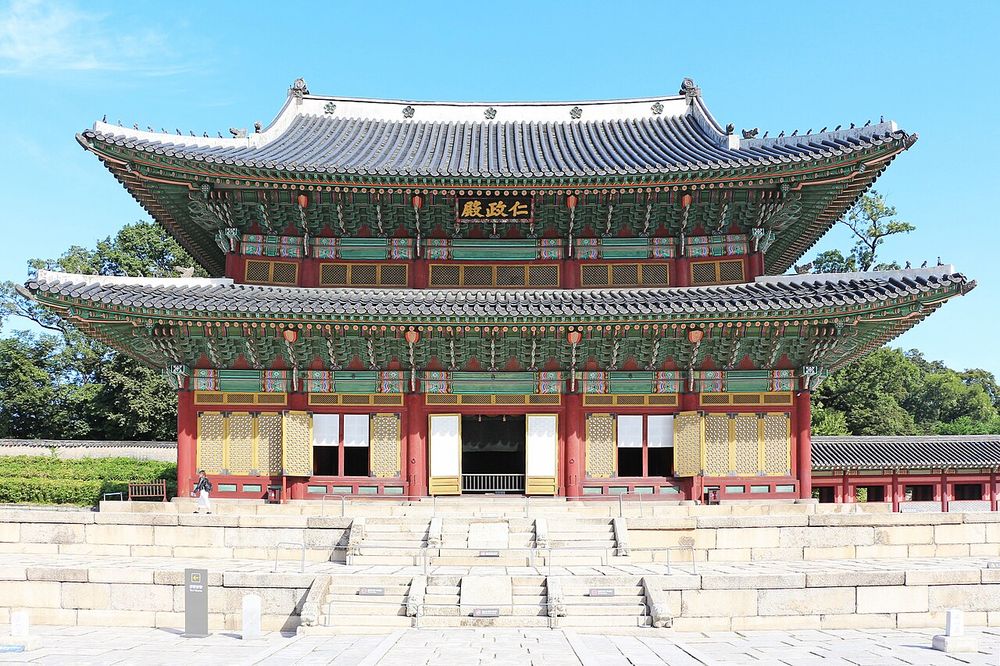
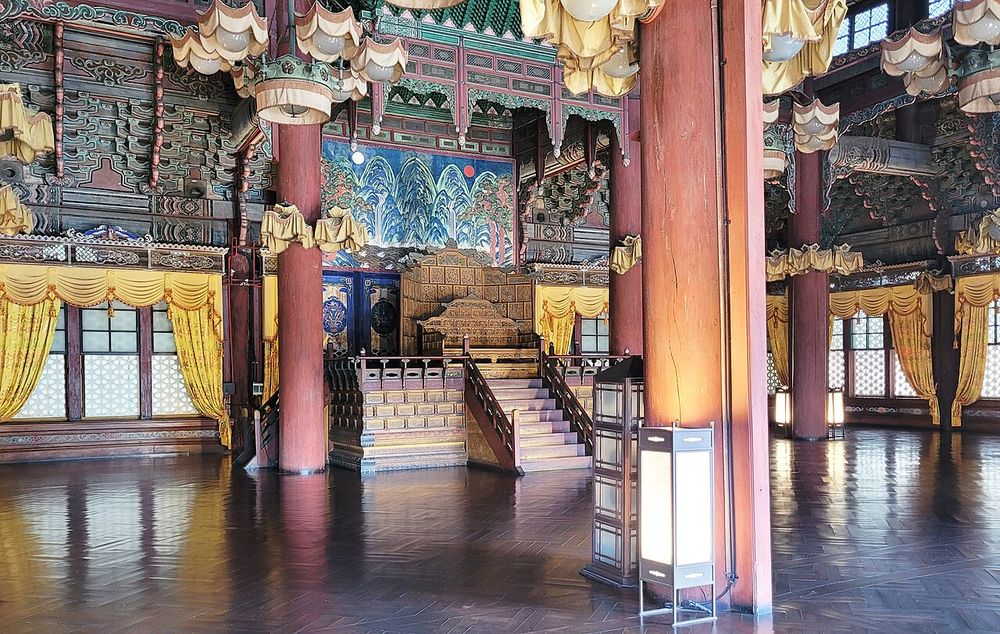
This is Injeongjeon, the hall of state. The king sat here for coronations, for the new year and to receive the envoys of China. The building you see dates from 1804.
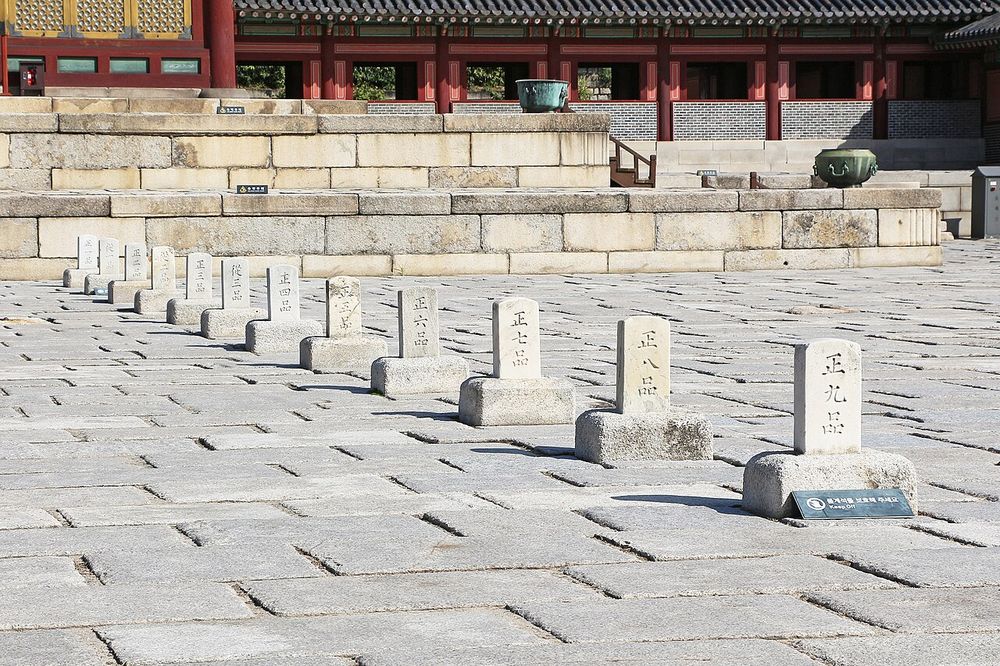
The low stones in two rows across the courtyard are carved with numbers. Each marks where officials of one rank stood: first rank nearest the hall, ninth rank at the back, civil officials on the east, military on the west.
The paving is rough on purpose. Uneven granite does not glare in the sun, and nobody could hurry across it.
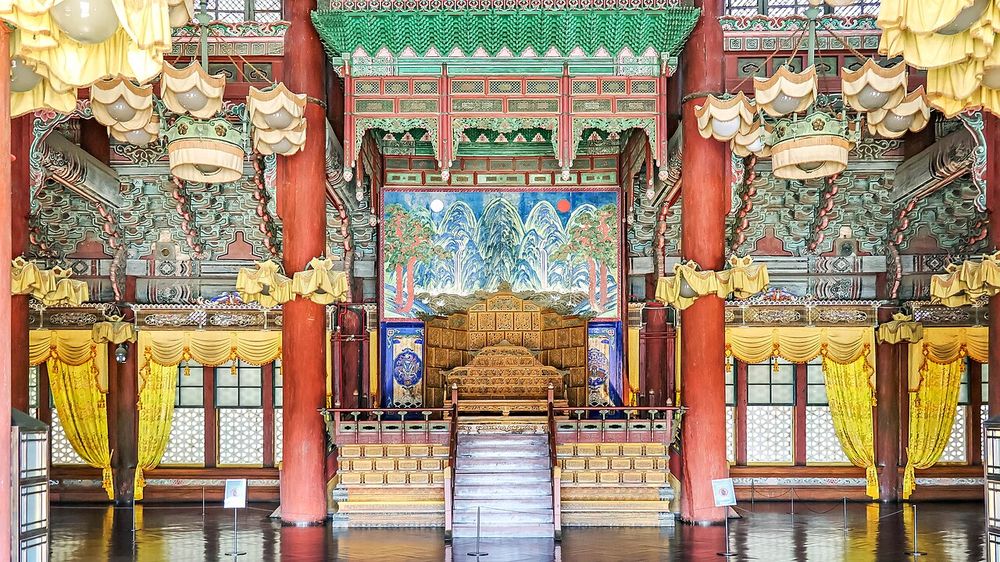
Look in through the doors. Behind the throne is a painted screen of the sun, the moon and five peaks. Only a Korean king sat in front of this picture. Hanging from the ceiling are electric lamps, put in in 1908.
Now look at the roof ridge. Along it are five flowers in bronze. They are plum blossoms, the emblem the royal family took when Korea declared itself an empire in 1897.
"It is called the Secret Garden." The garden behind the palace is properly the Huwon, the "rear garden". The name Biwon, "secret garden", came into use about 1900 and spread under Japanese rule. Koreans now prefer Huwon. Both names are on the signs.
"One ticket covers everything." The garden has its own ticket, for a set time, and the number of people is limited. Many visitors find it sold out when they arrive.
"It is a small copy of the Forbidden City." Chinese visitors often expect an axis and symmetry. The first Korean palace has them. This one was laid out to fit the ground, and Koreans consider that its merit. The scale is smaller because a Korean king ranked, in the order of the time, as a prince under the Chinese emperor: his roofs are not yellow and his dragons have fewer claws.
"The buildings are from 1405." Almost nothing is. The palace burned in 1592, 1623, 1803, 1833 and 1917. The gate is from 1609 and the stone bridge inside it from 1411. Most halls are from the 1600s to the 1800s.
Stops 1 to 5 are in the palace. Stops 6 to 9 are in the garden, which needs its own ticket.
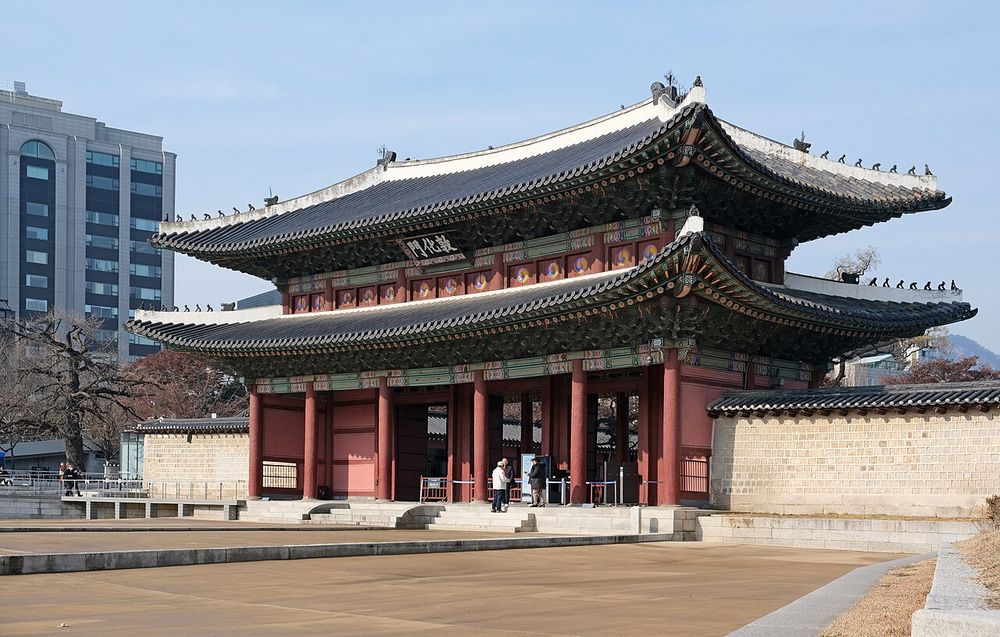
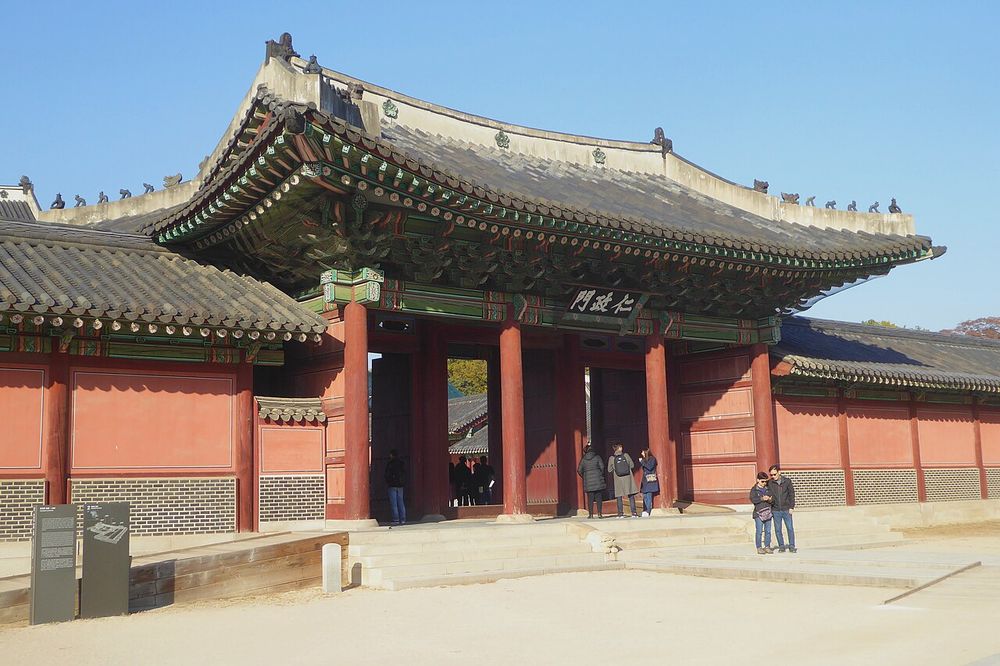
Donhwamun, the gate, was rebuilt in 1609 and is the oldest palace gate in Seoul. A bell and a drum on its upper floor once told the city the hour.
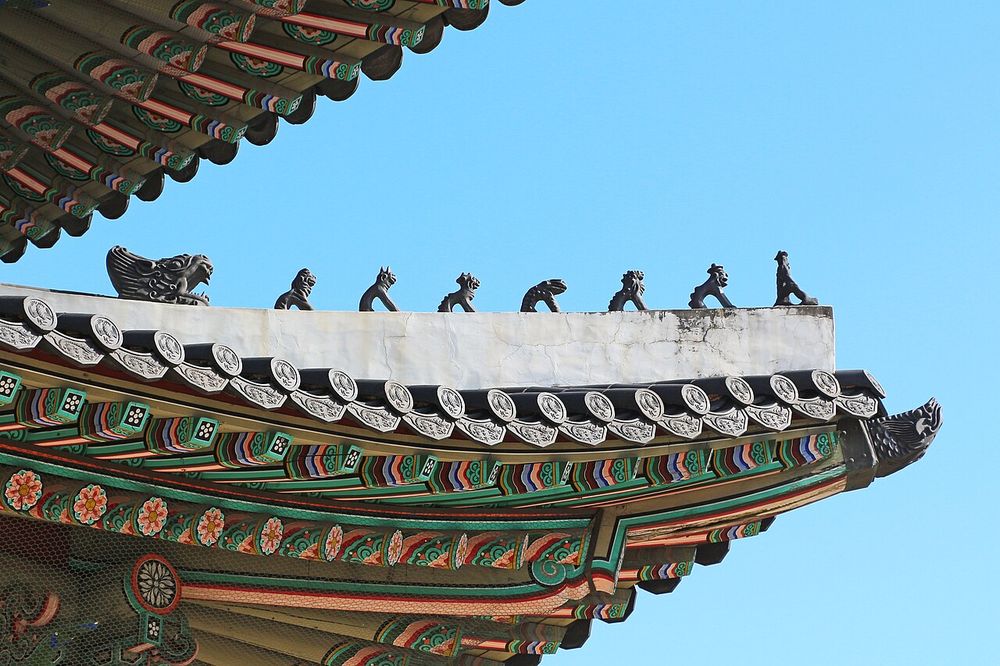
Look up at the corners of its roof. Small clay figures sit there in a row. They are said to be the monk Xuanzang, the Monkey King and their companions from the Chinese story Journey to the West, set there to keep off evil.
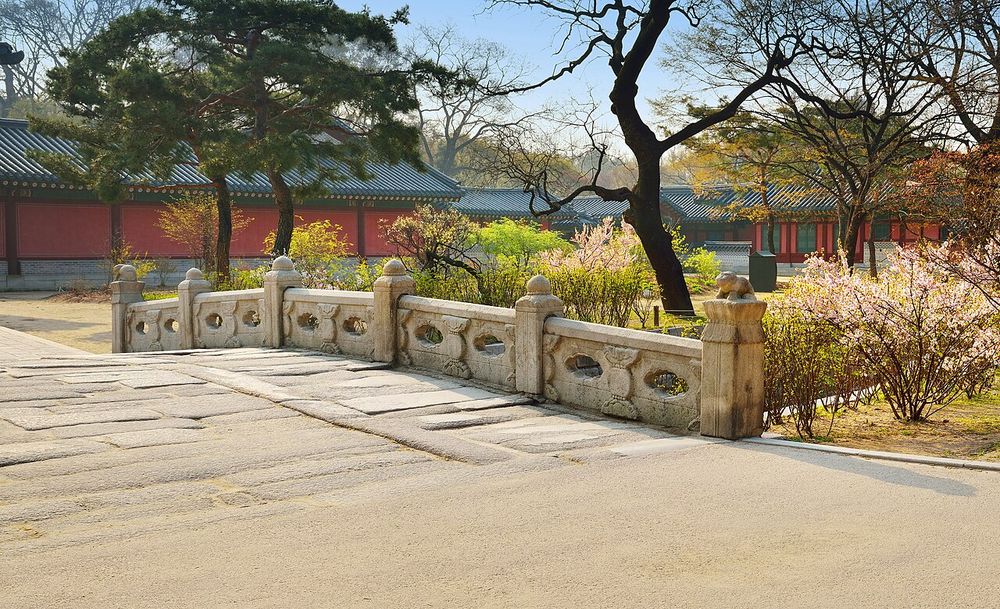
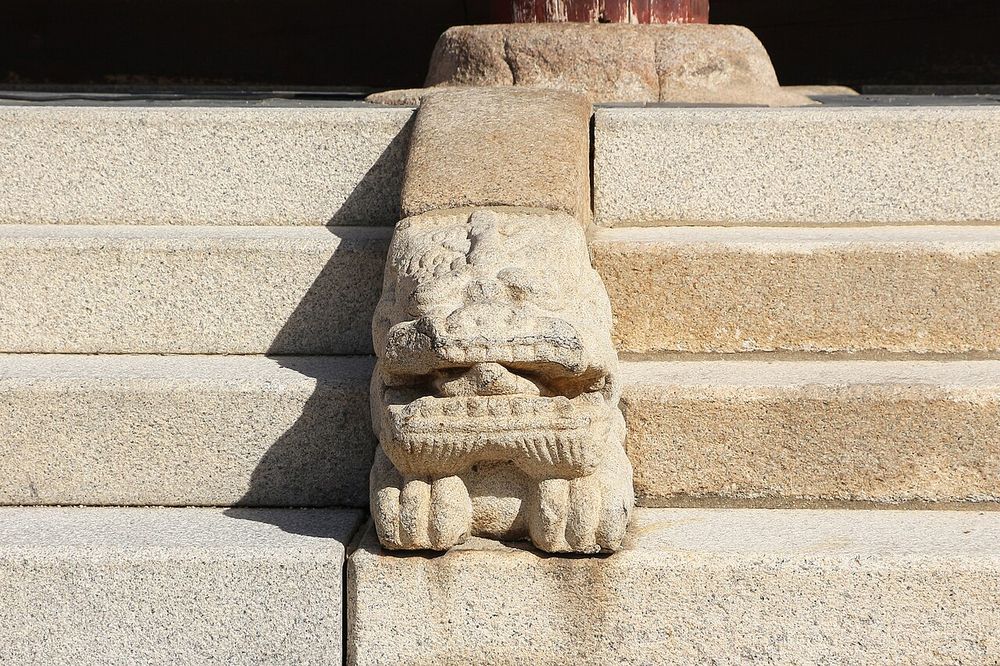
Inside, turn right. You cross a small stone bridge of 1411, the oldest bridge in Seoul. In a Korean palace you always cross water before you reach the king. Look over the side: a stone turtle faces south and another beast faces north, to keep bad things from coming up the stream.
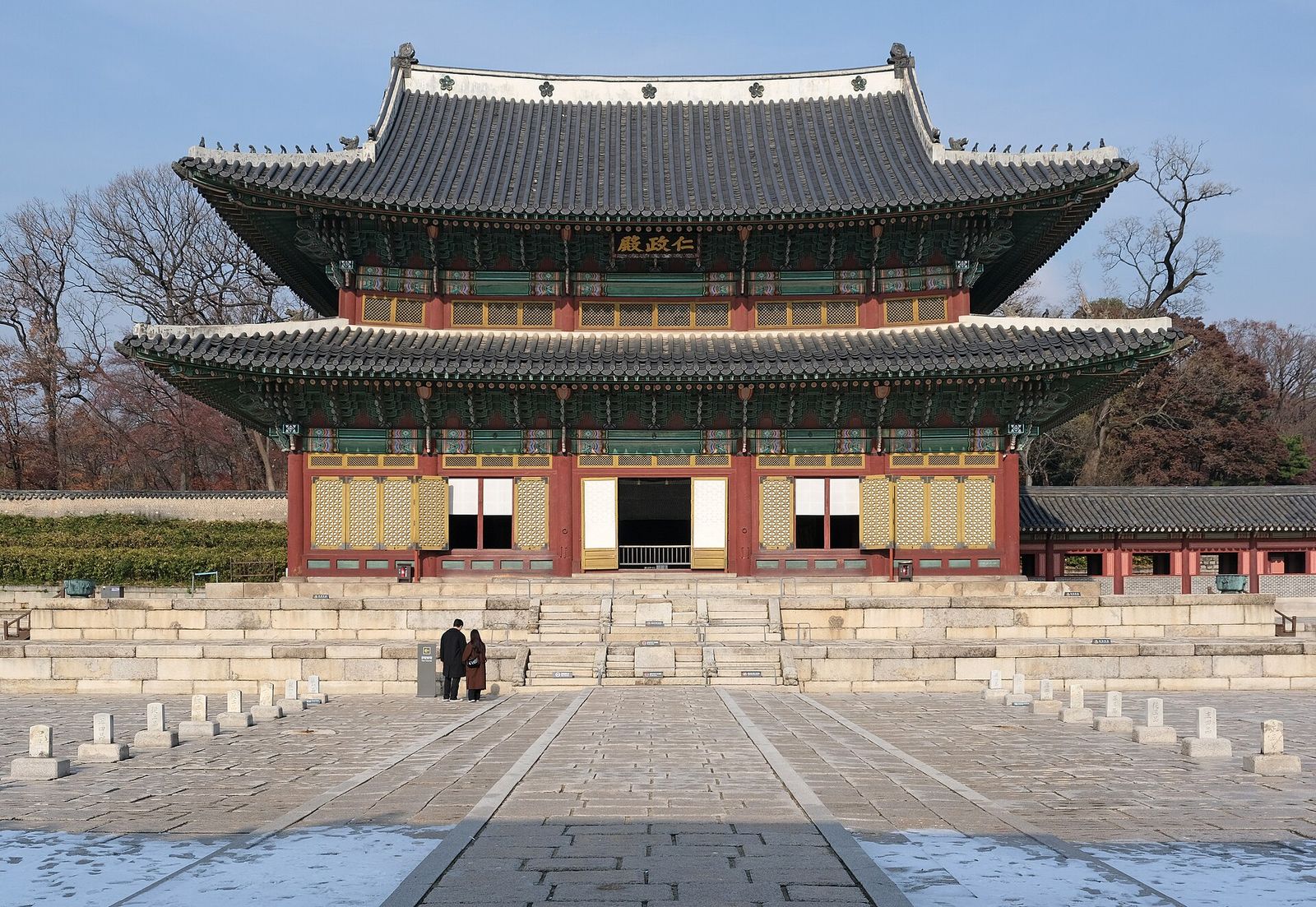
Turn left through two more gates into the great court. From outside the hall seems to have two floors. Inside it is one tall room.
In 1908 the hall was fitted out in Western style: glass in the windows, curtains, electric light, and a wooden floor in place of brick. It is a Korean throne room dressed for the last years of a court that was trying to look modern.
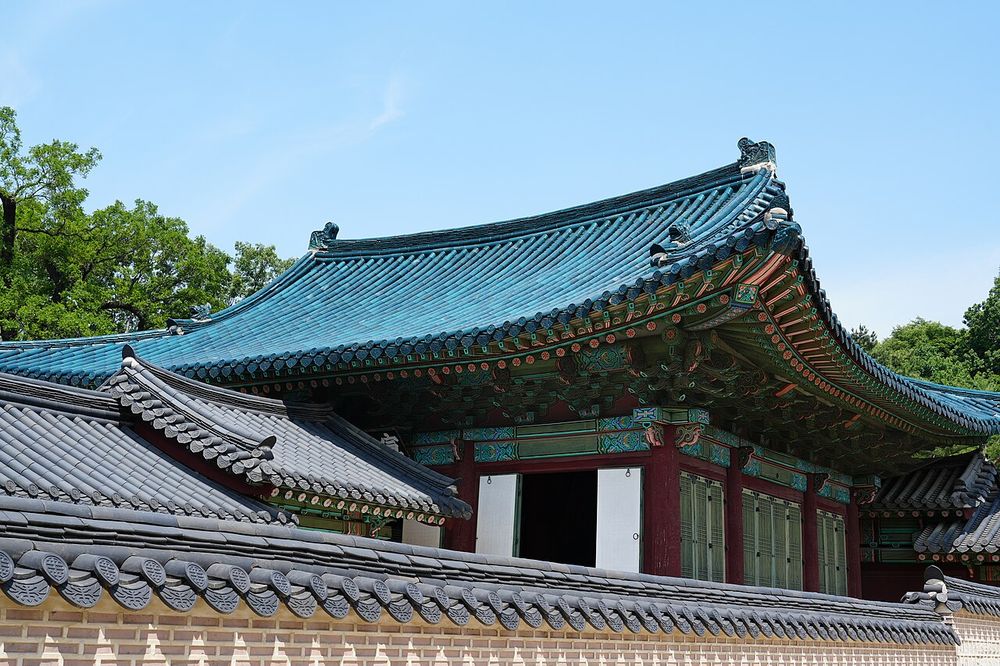
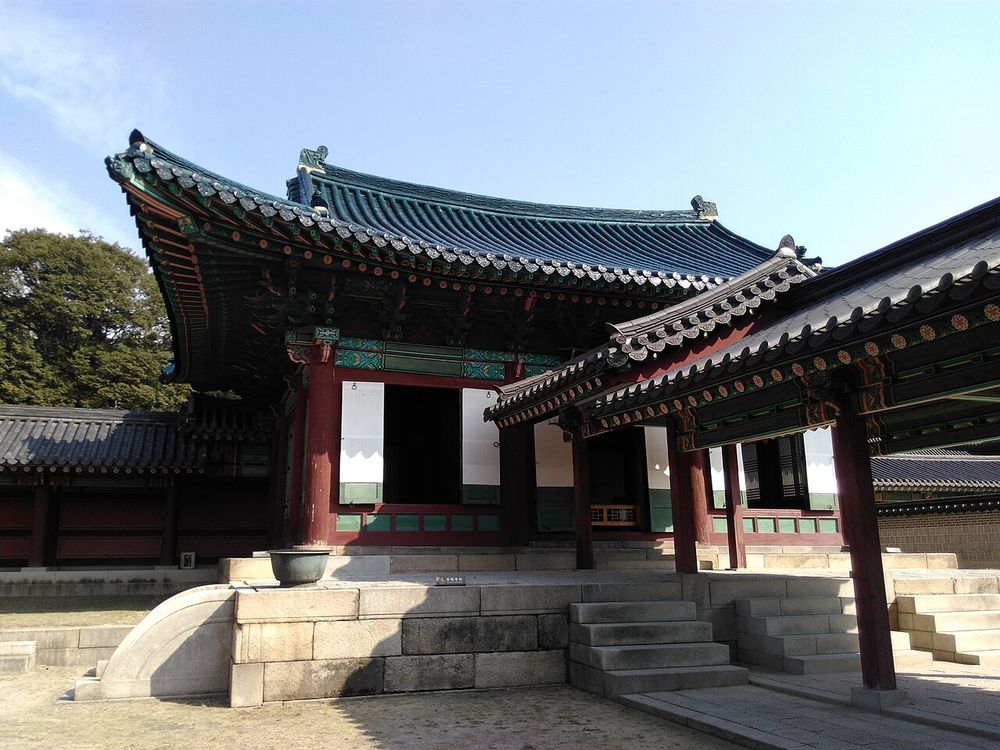
Next door is a smaller hall where the king met his ministers each morning. Its roof tiles are glazed deep blue. Blue tiles were costly, and this is the only palace building in Korea that still has them.
The presidential residence in Seoul known as the Blue House is named for the same kind of tile.
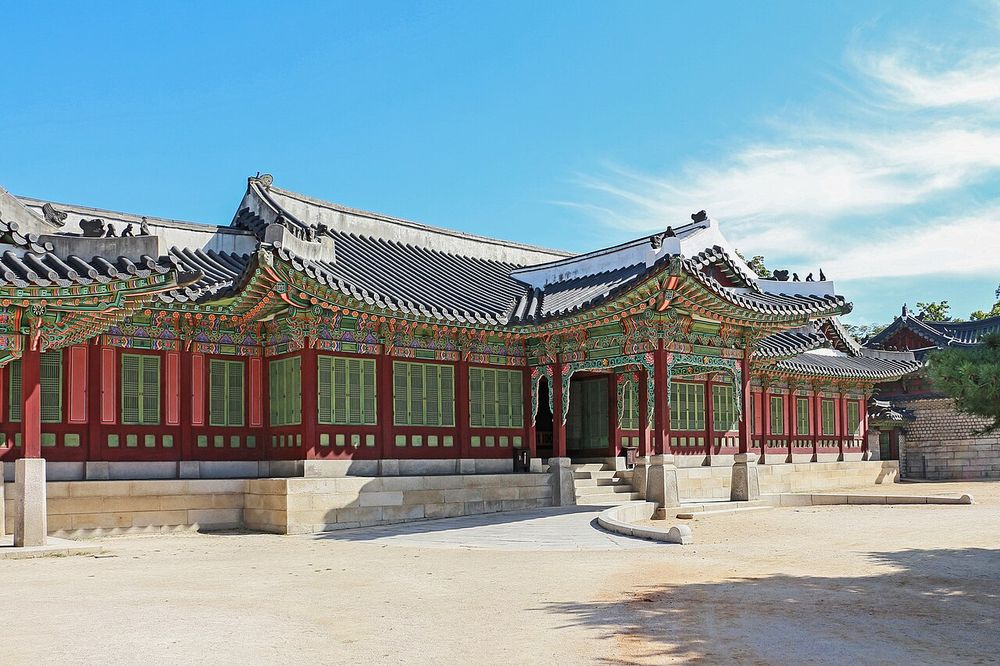
Behind the offices are the living quarters. They burned in 1917. The Japanese administration rebuilt them in 1920 by taking halls from the other palace, Gyeongbokgung, and moving them here.
Look at the front of the first hall. A porch sticks out, wide enough for a motor car to drive under. The last emperor had a Cadillac and a Daimler.
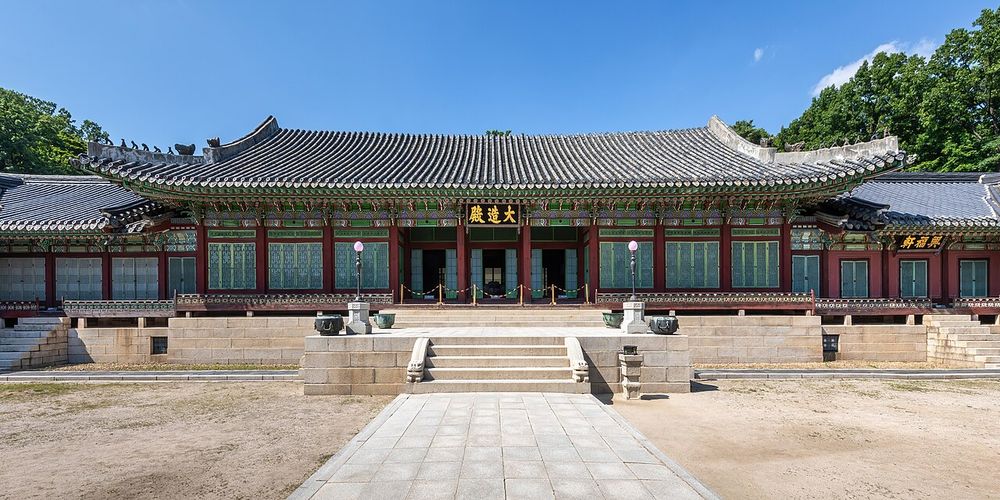
The hall behind was the queen's. Look at its roof. It has no ridge along the top, only a smooth curve of tiles. The usual explanation is that the king, who slept here, was himself the dragon, and a second dragon on the roof would not do.
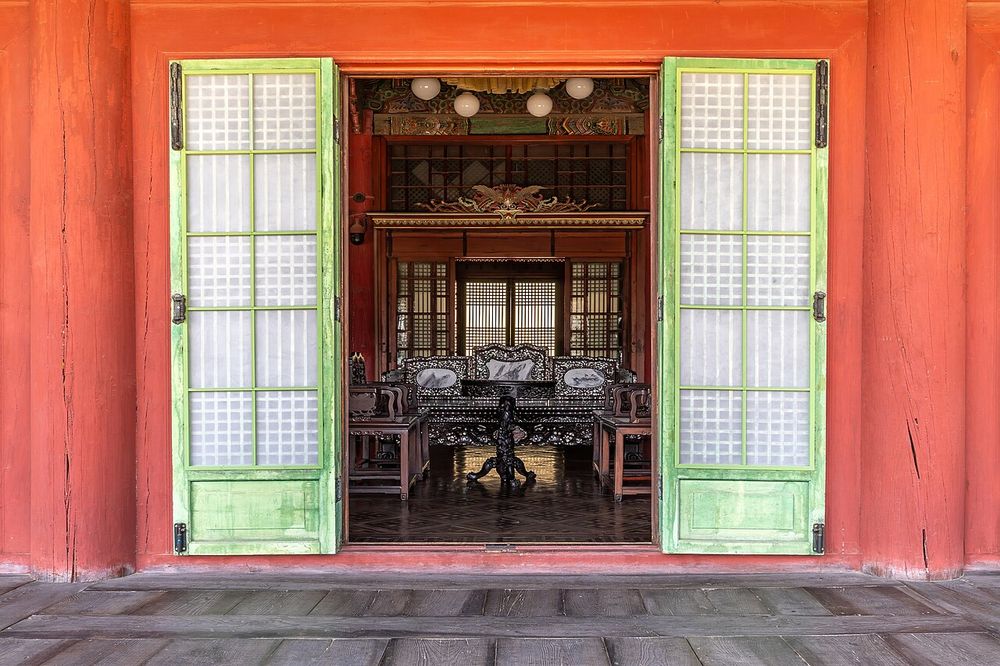
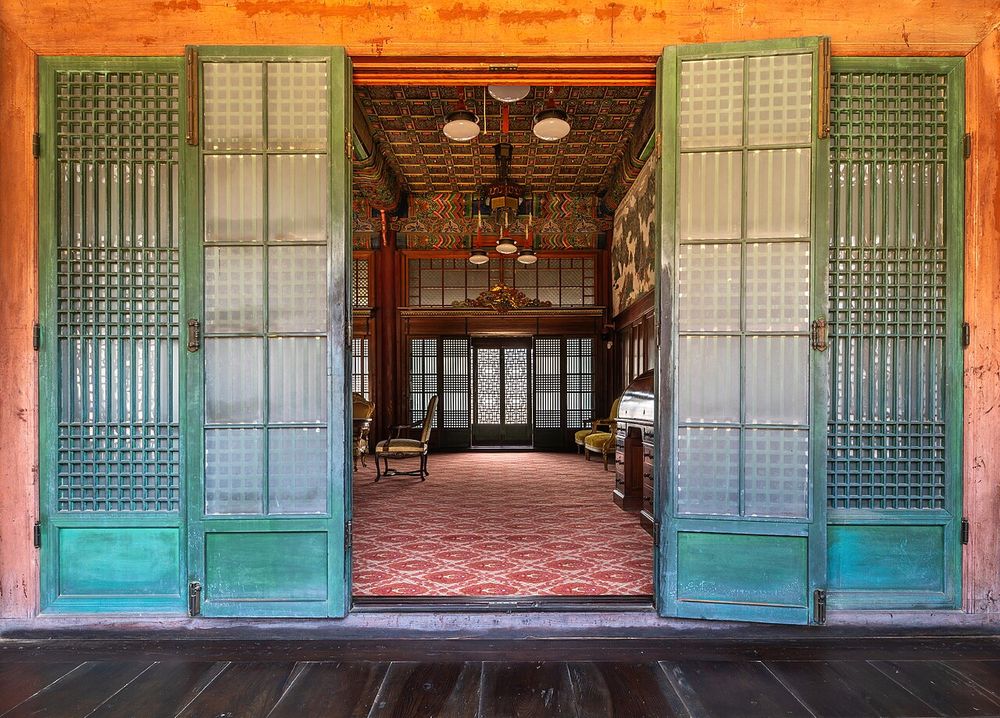
Through the open doors you can see chairs, a bed and wallpaper in the European taste of 1920. In a side room of this hall, on 22 August 1910, the ministers agreed to the treaty that ended Korea's independence.
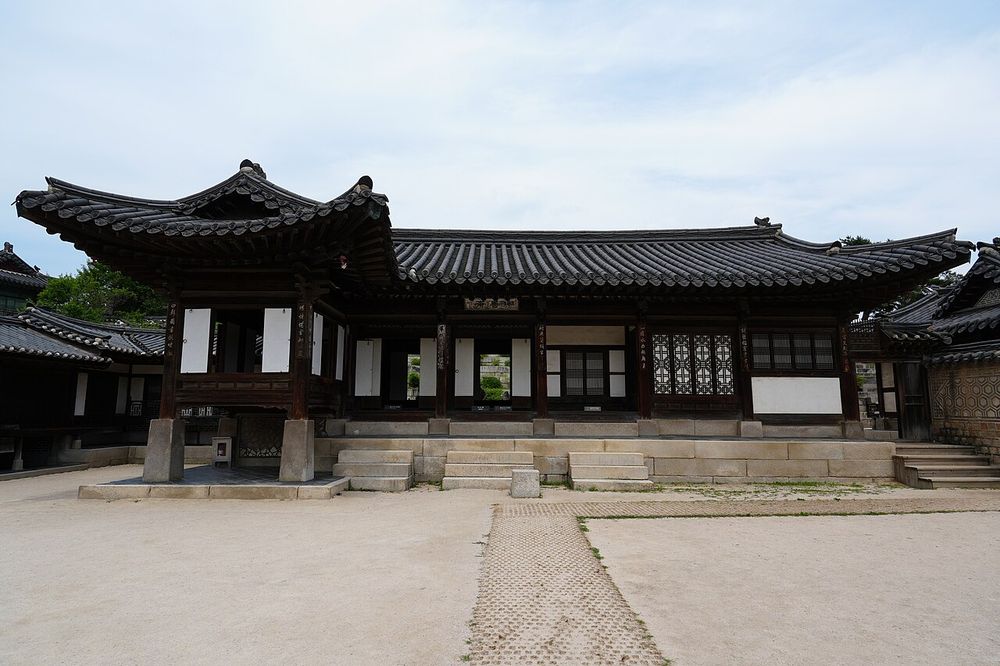
In the south-east corner is a group of houses with no paint at all, only the brown of the wood. A king built it in 1847 as his study, with a house beside it for a wife he loved. It looks like the home of a scholar.
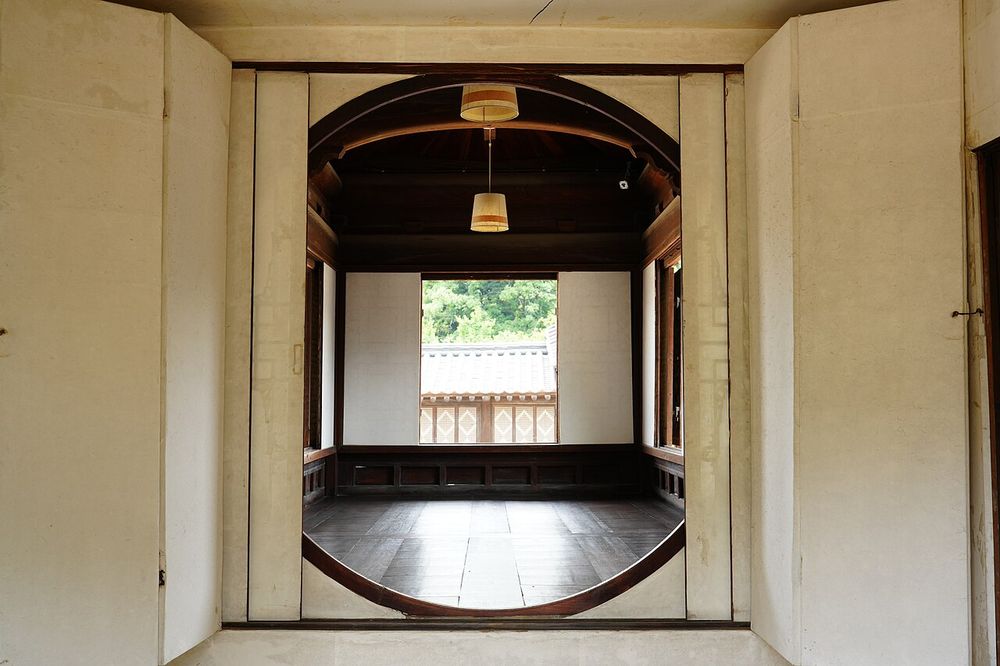
Look closely at the windows and walls. Every lattice is a different pattern: cracked ice, tortoise shell, bats, grapes.
The last of the royal family lived here: the emperor's widow until 1966, and the Japanese-born crown princess and the last princess until 1989.
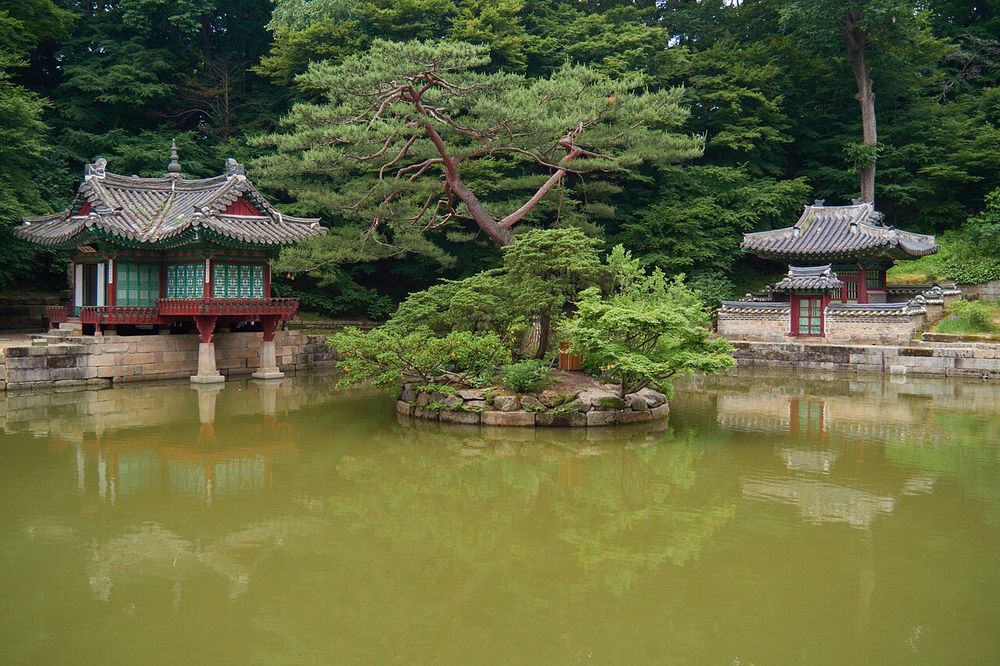
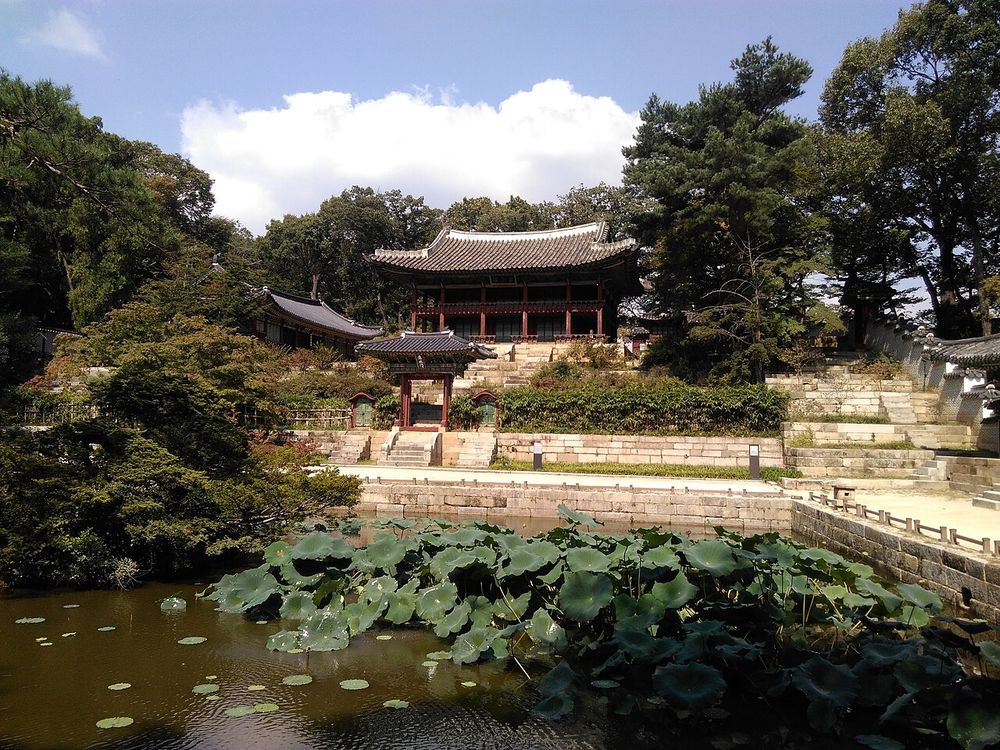
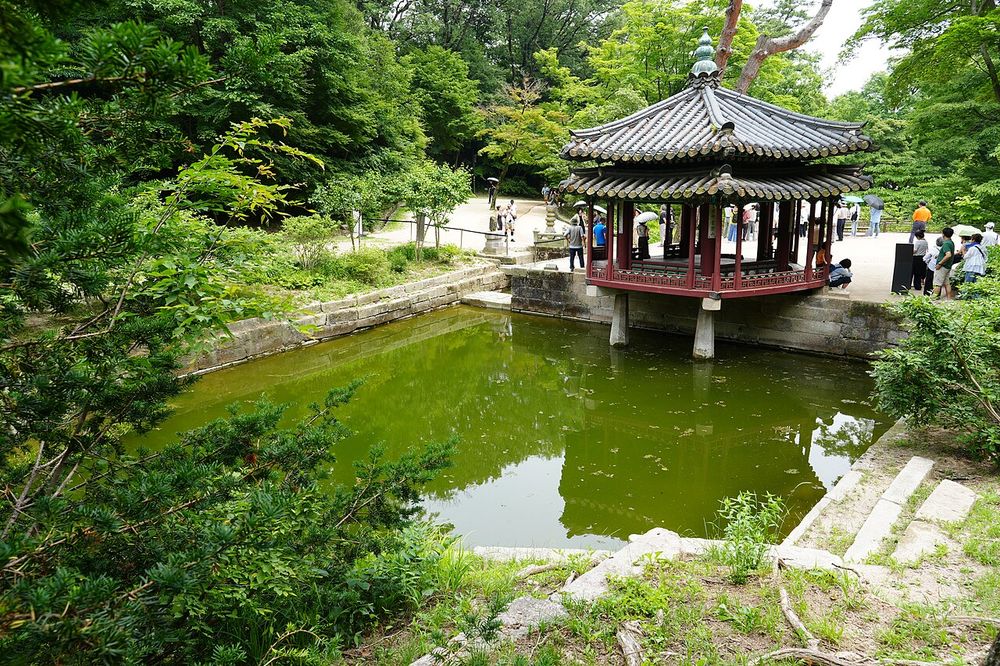
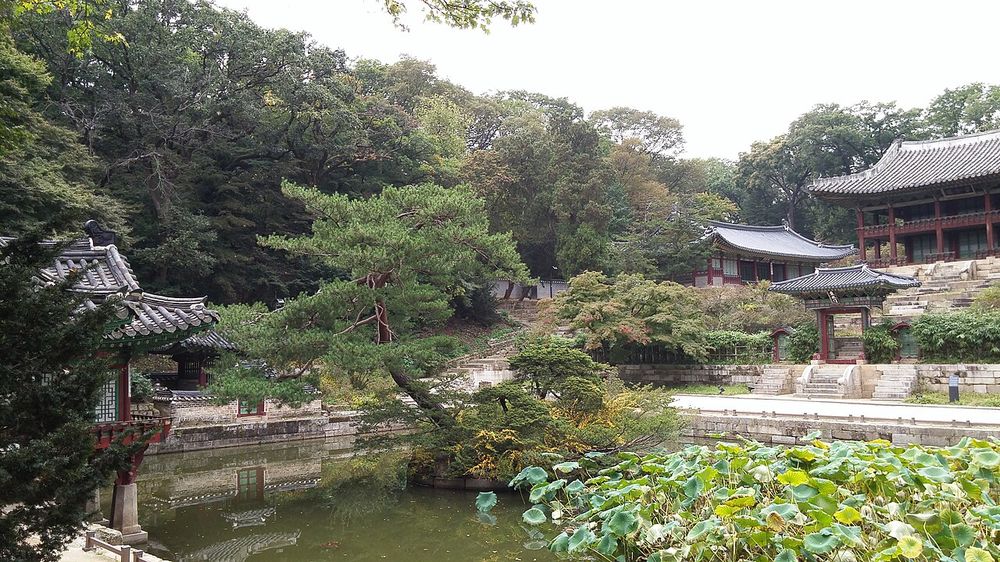
A path over a low hill brings you down to a pond. The pond is square and the island in it is round. In the old picture of the world, heaven is round and earth is square.
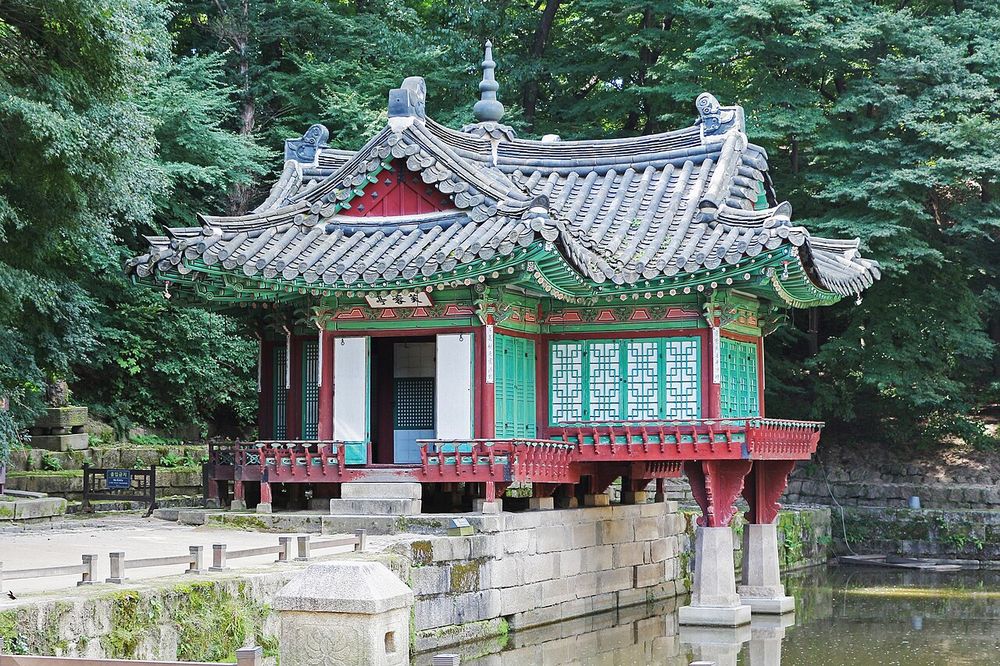
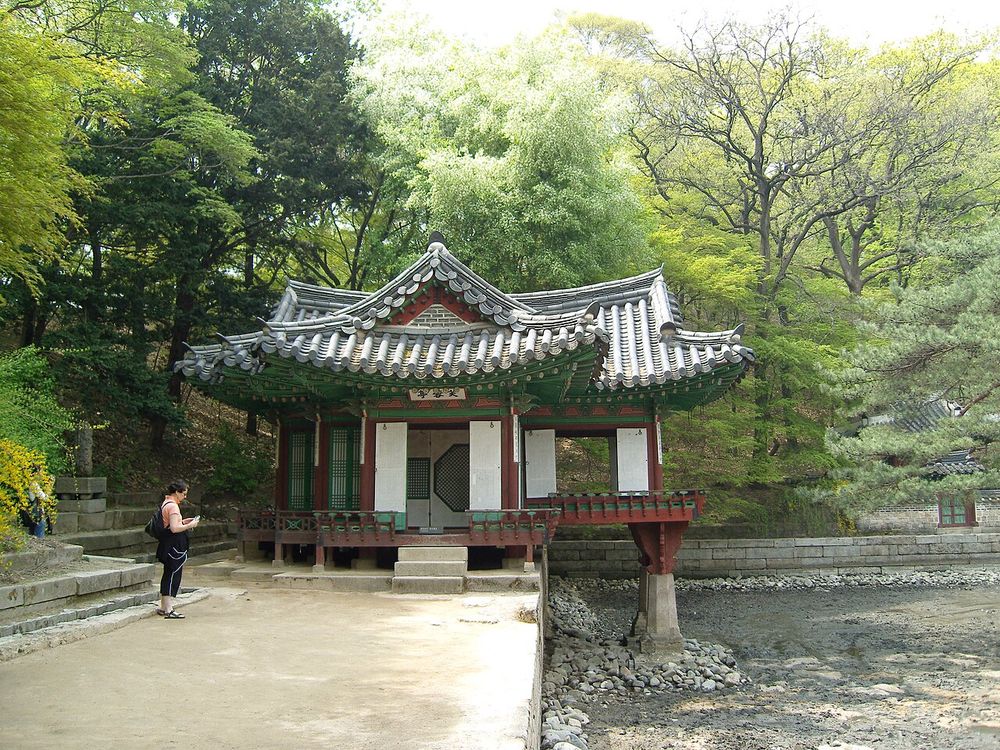
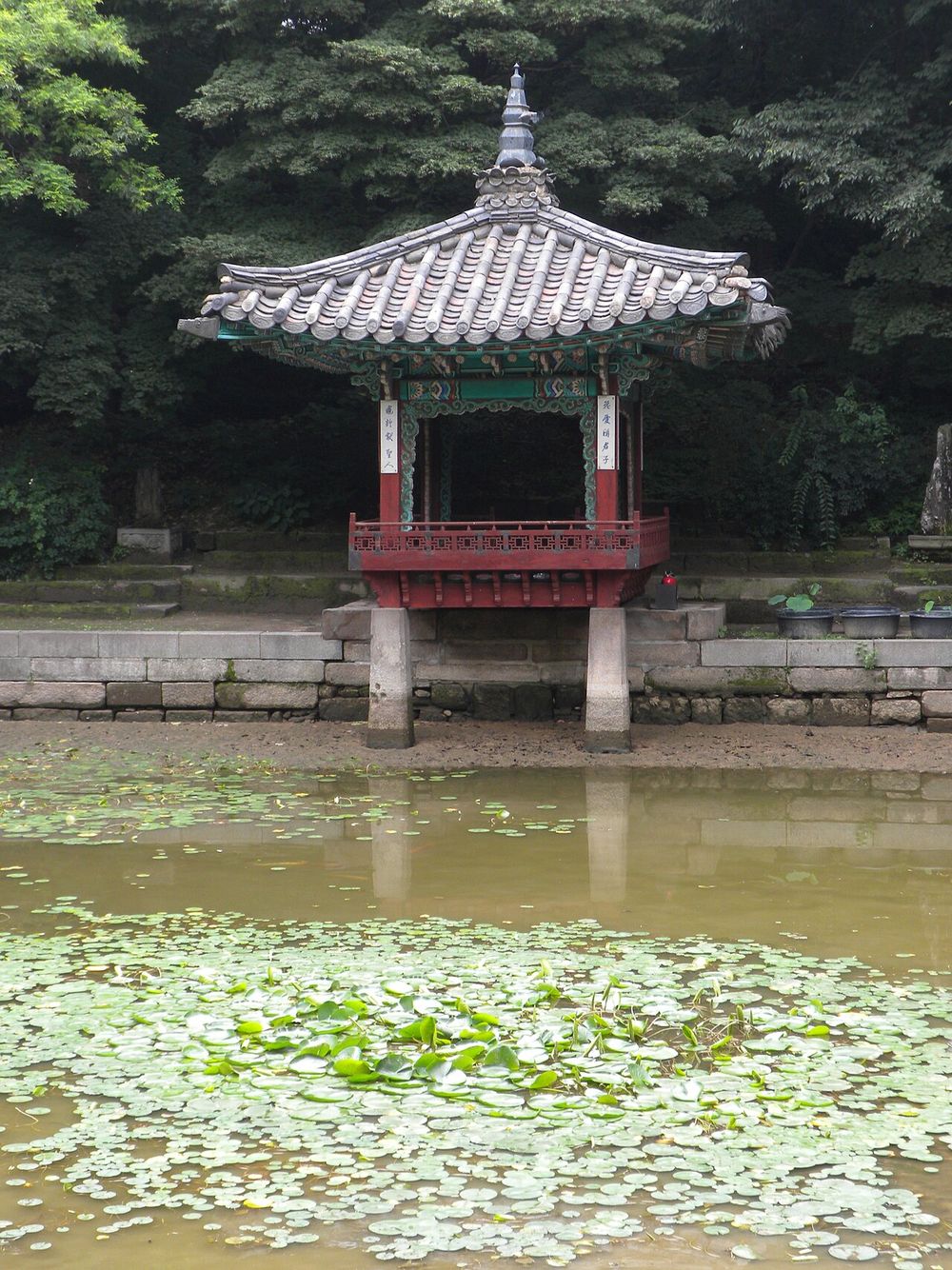
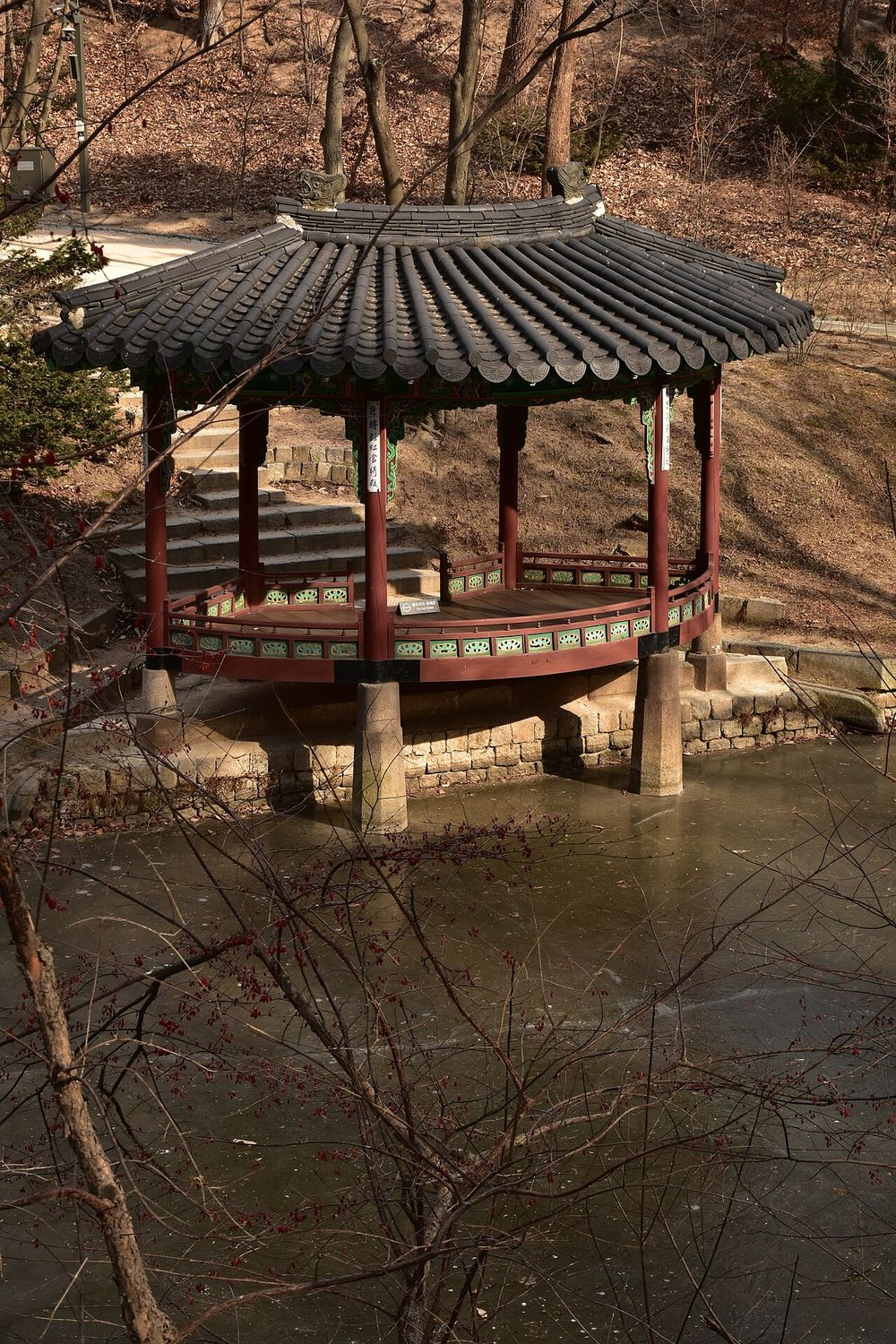
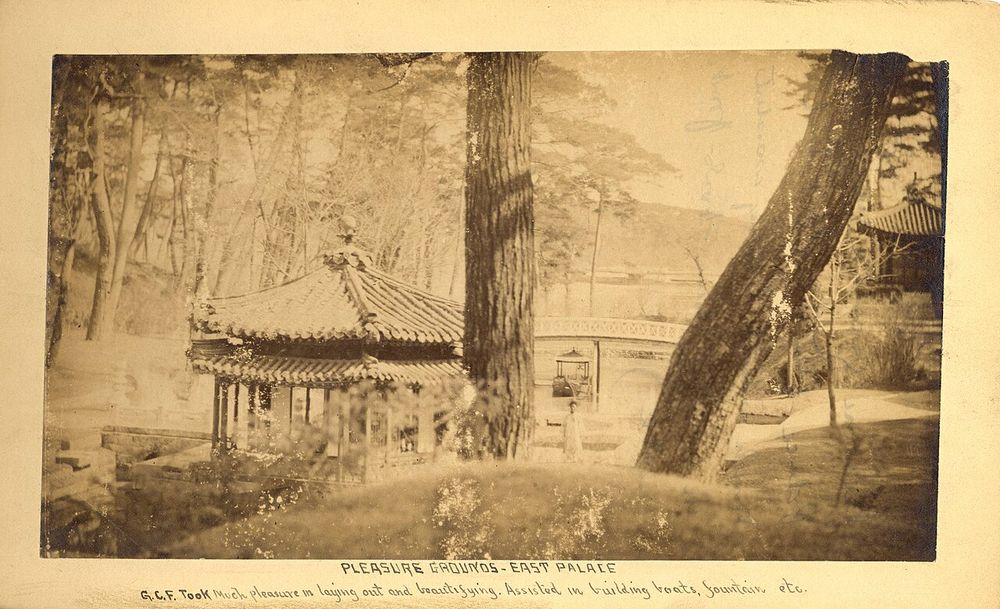
The small pavilion on the south bank stands with two of its stone legs in the water. Its plan is a cross. The king fished from it.
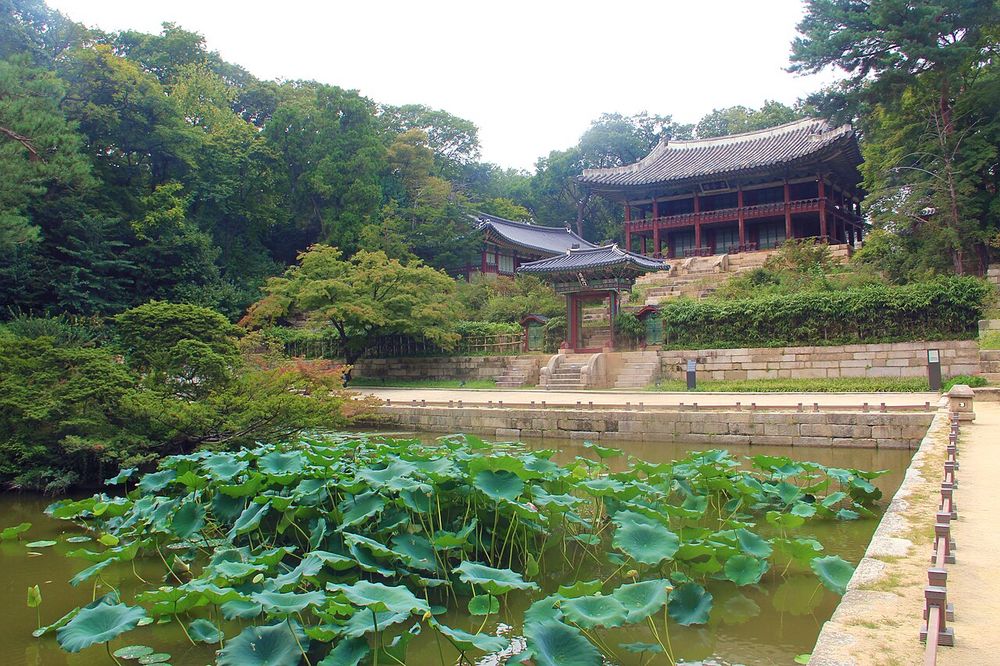
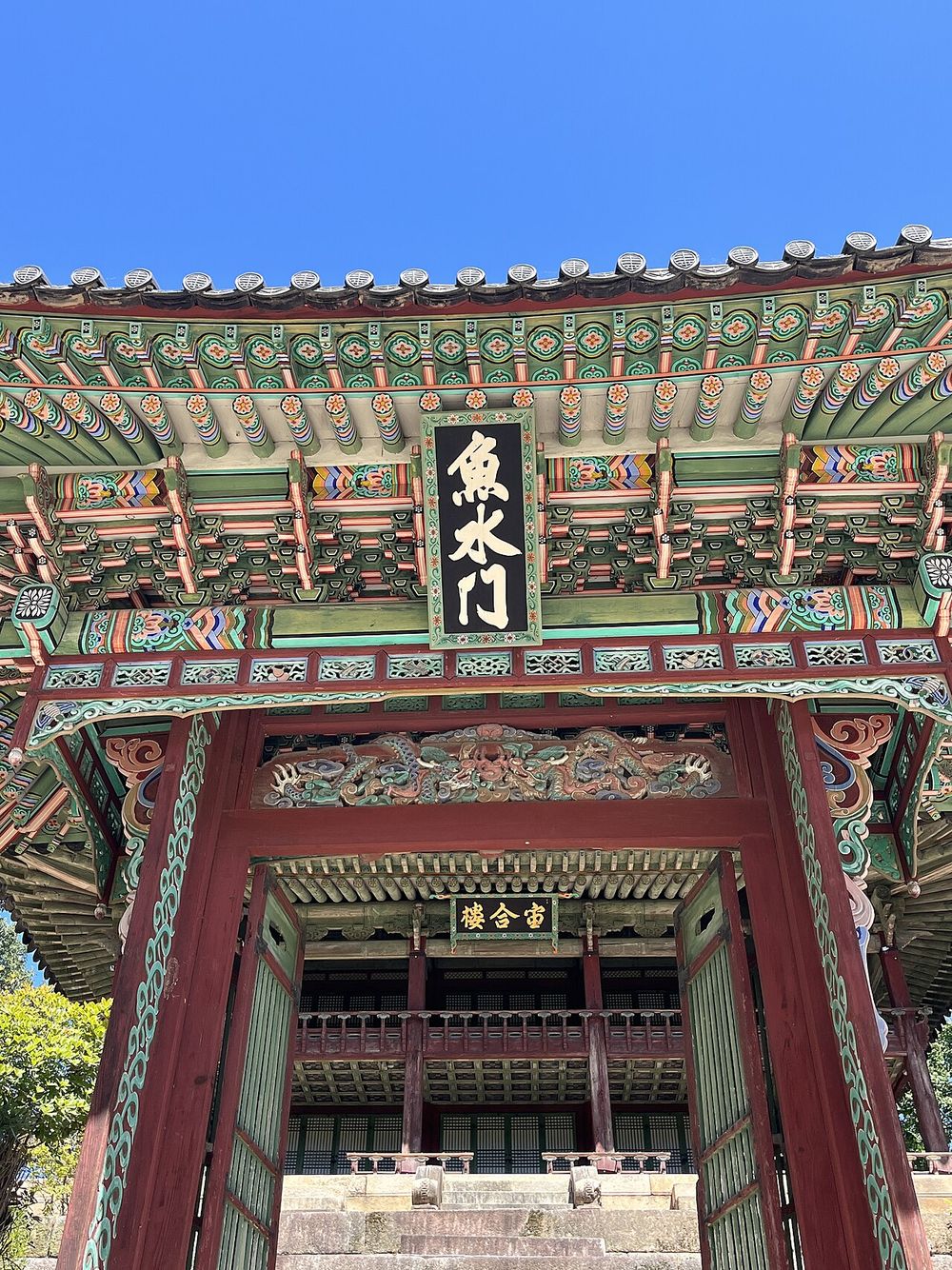
Facing it, up a flight of steps, is a two-storey building. King Jeongjo built it in 1776. The lower floor held the royal library and the upper floor was a reading room. The gate at the foot of the steps is called the Fish and Water Gate: a king and his ministers should be like fish and water. The king used the tall middle door. Officials used the low doors at the sides and had to bow to get through.
On the east side is a long hall with an open court in front. The final examination for the civil service was sometimes held there, with the king watching.
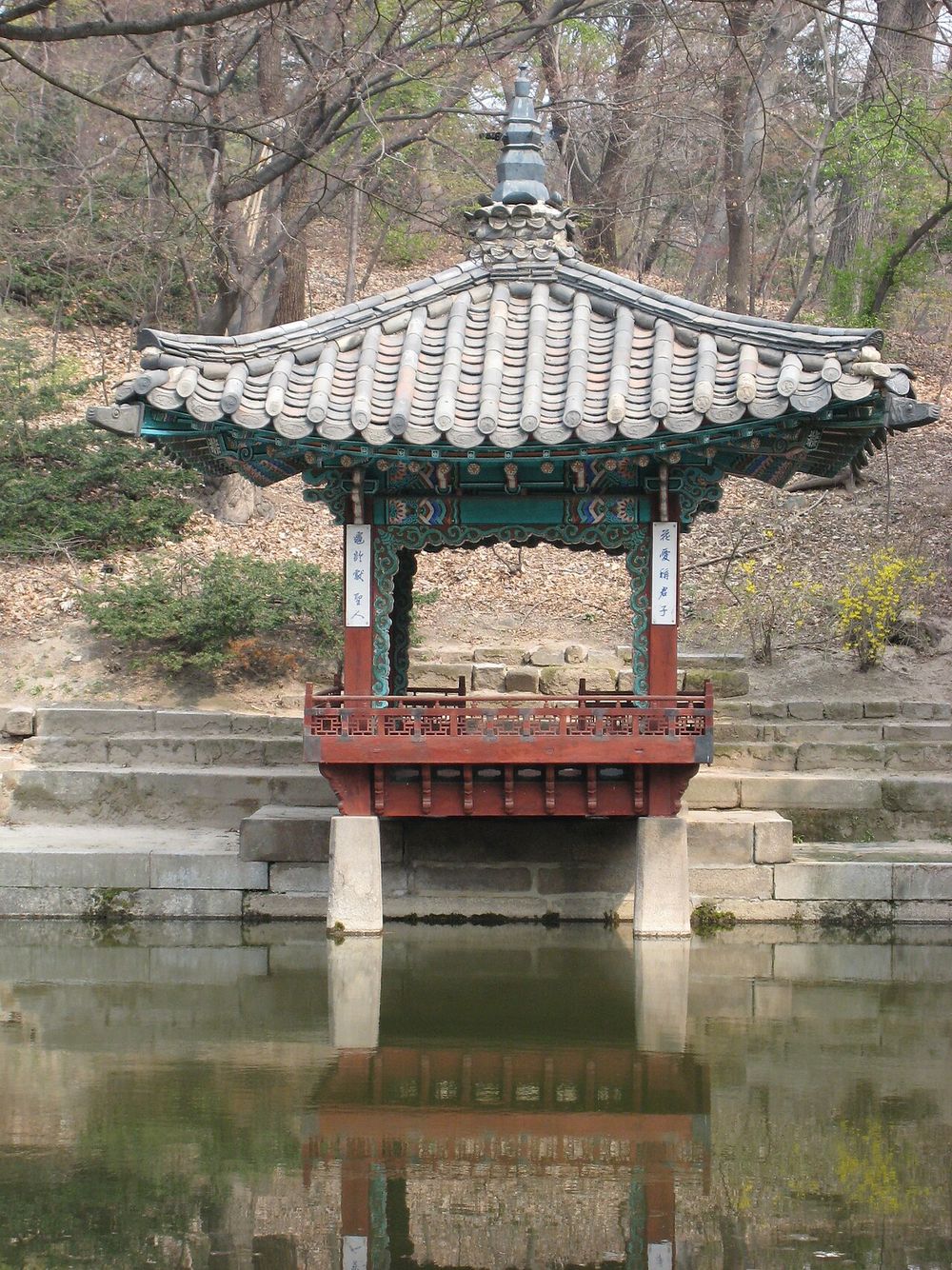
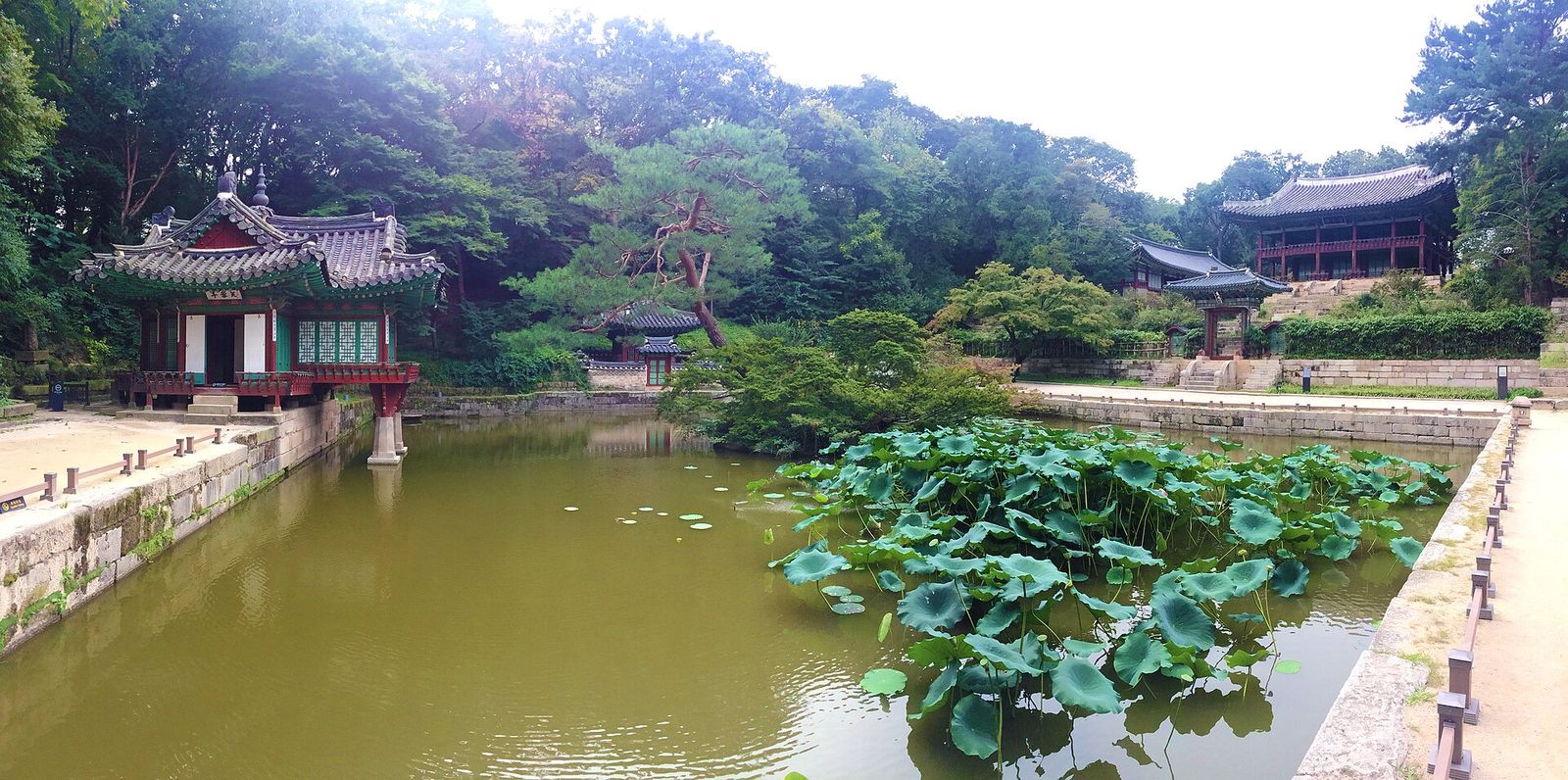
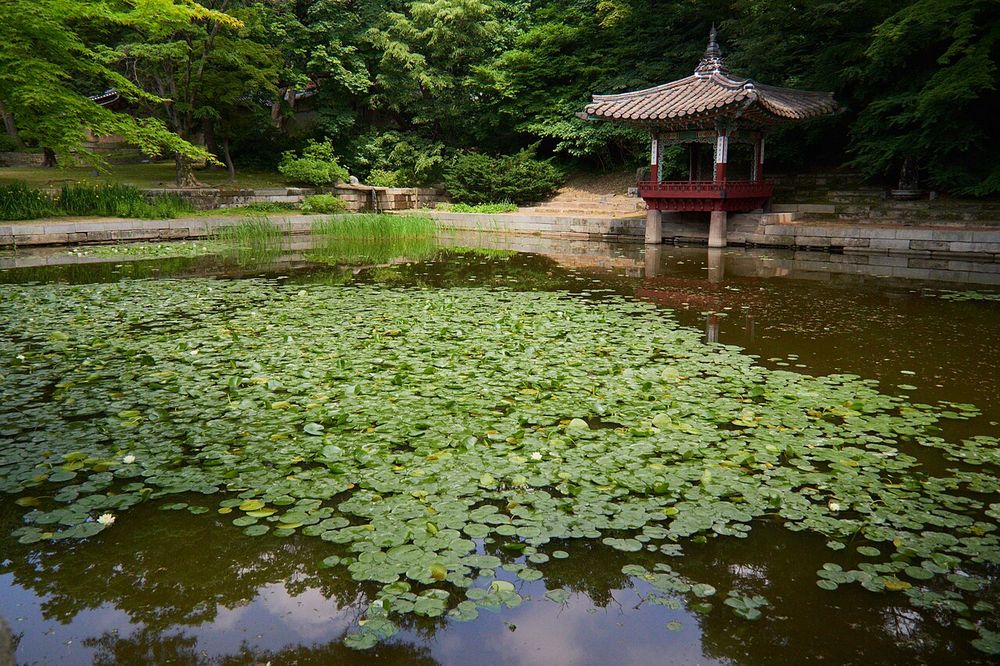
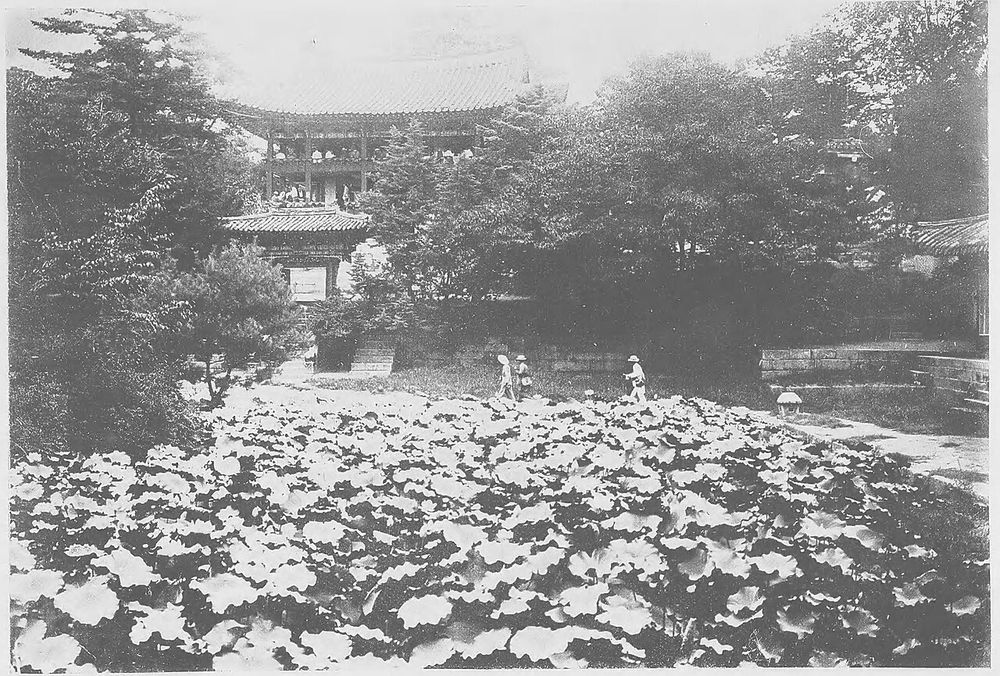
The path passes through a gate cut from a single slab of stone. Its name means "gate of not growing old". Beyond is a second pond with one small pavilion. King Sukjong made it in 1692 and named it for his love of the lotus, which grows clean out of mud.
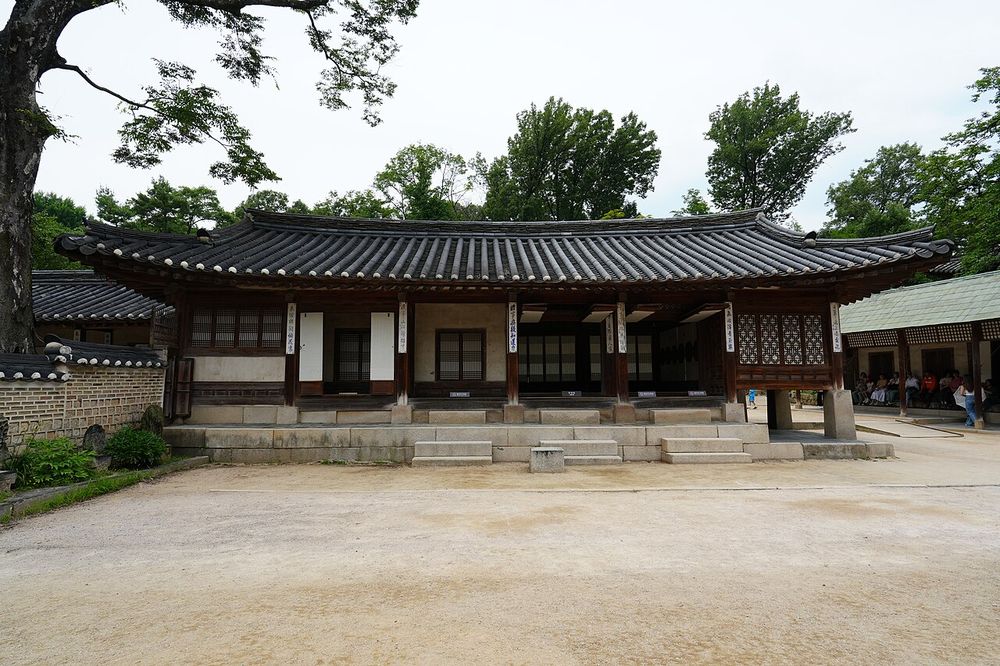
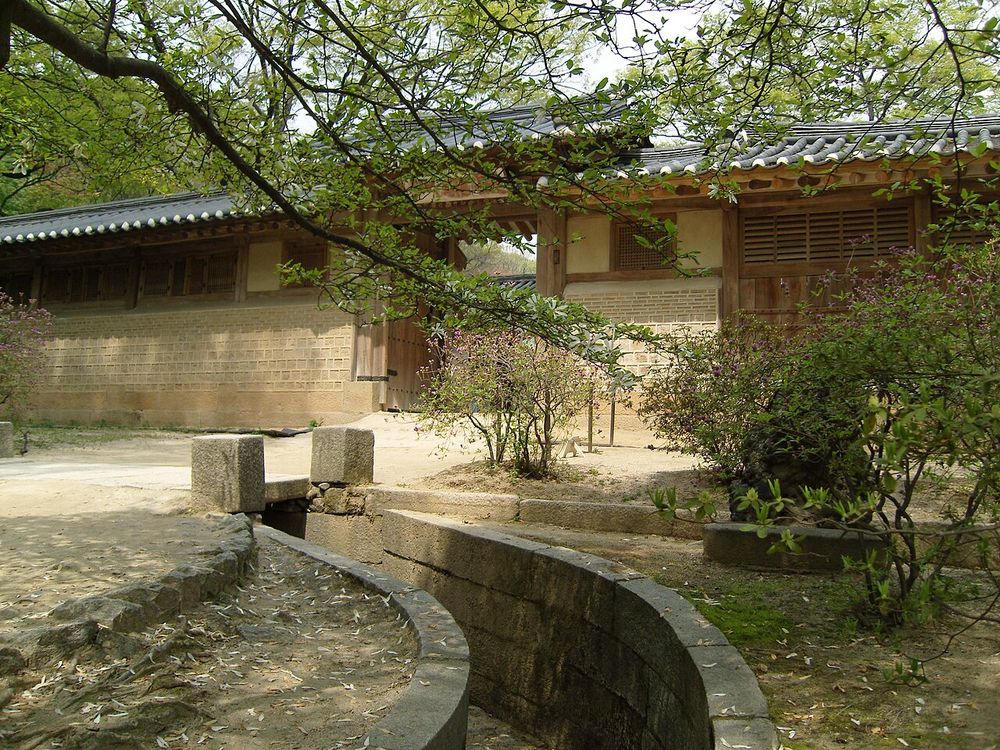
Next to it, behind a wall, is a house of plain wood with men's and women's quarters and a servants' wing, exactly like the home of a rich official. Crown Prince Hyomyeong built it about 1828. The usual account is that he wanted his father to be able, for an afternoon, to live as a subject did.
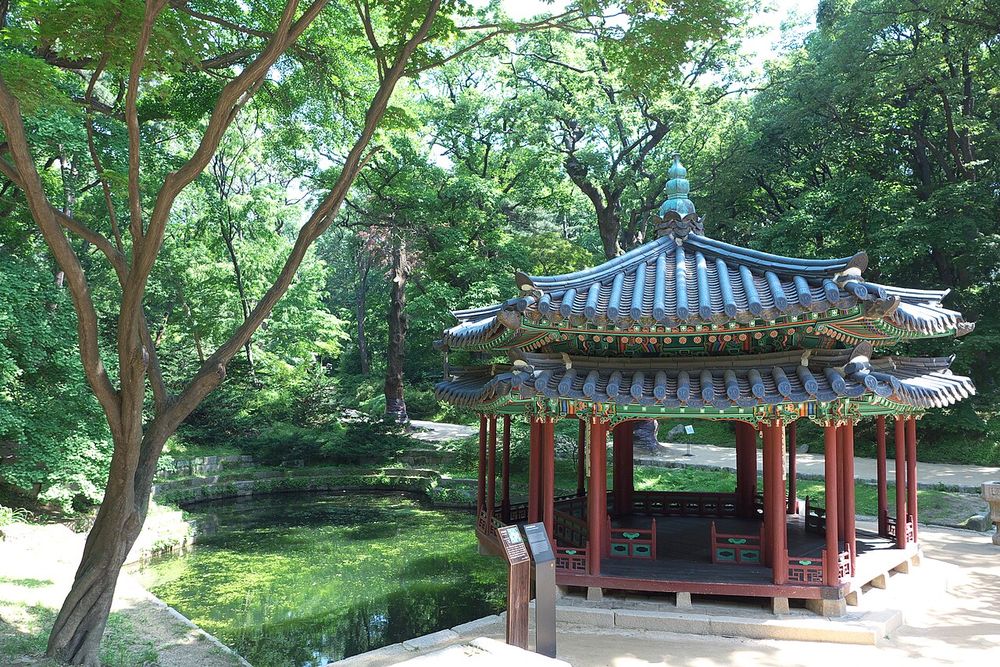
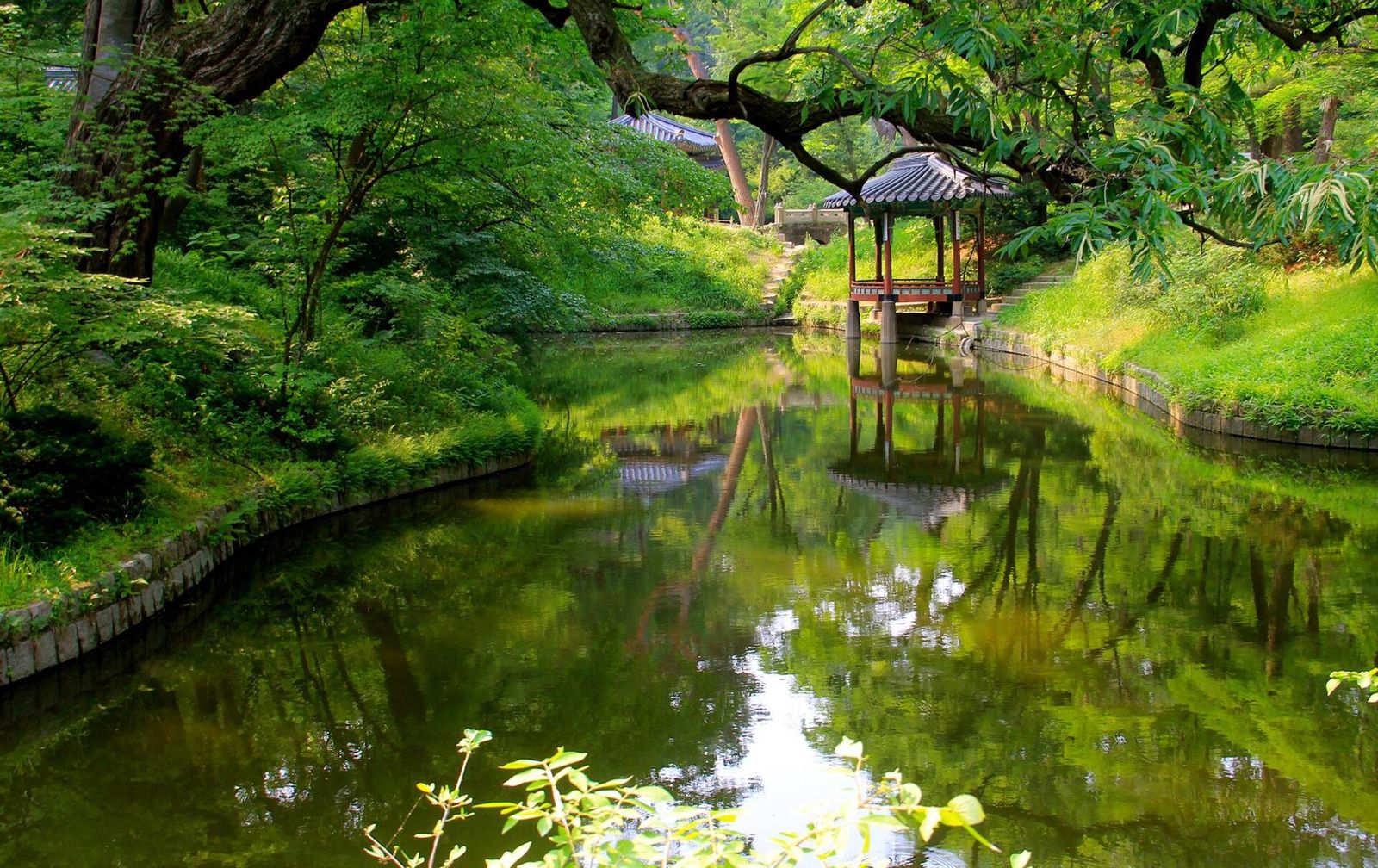
Further in, round a third pond, the pavilions become playful. One has six sides and a double roof. One is shaped like an open fan, which is very rare in Korea.
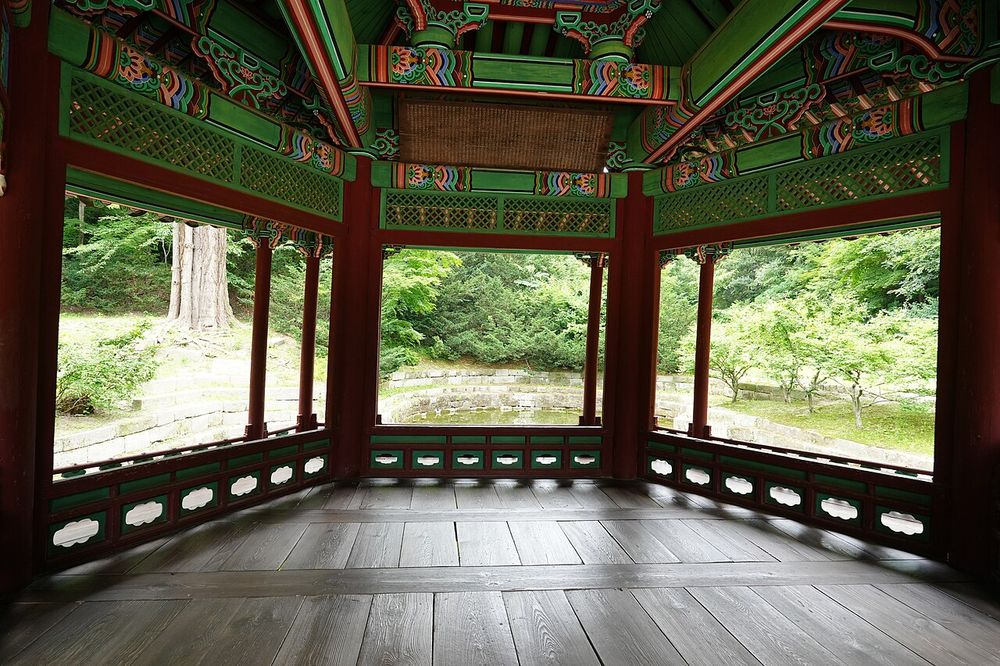
Inside the six-sided pavilion hangs a board written by King Jeongjo in 1798. In it he calls himself "the old man who is master of the bright moon over ten thousand streams". There is one moon, he says, and it shines in every stream. The moon is the king and the streams are his people.
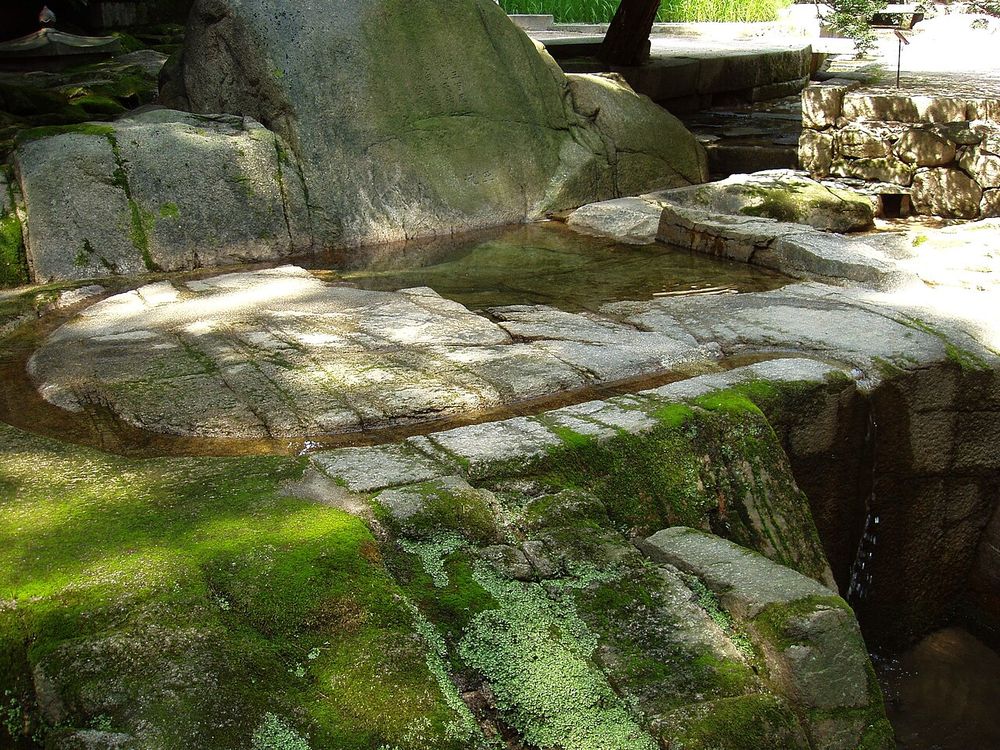
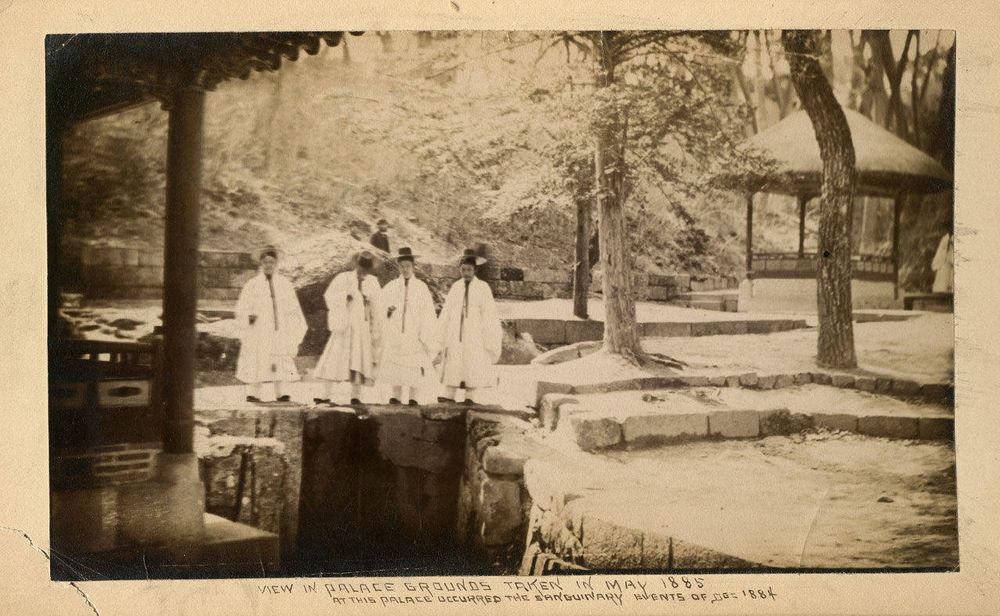
At the far end of the garden a spring comes out of the hill. In 1636 King Injo had a channel cut in a flat rock, in a curve, so that the water runs round it and falls in a tiny cascade. The king and his guests sat along the curve and floated wine cups down to each other. Whoever the cup stopped beside had to make a poem. The game came from China, from a famous party of the year 353.
On the rock are three characters in Injo's hand, meaning "jade-flowing stream", and under them a poem that King Sukjong wrote in 1690.
飛流三百尺, 遙落九天來。 看是白虹起, 飜成萬壑雷。
The flying stream falls three hundred feet; it comes down from the ninth heaven far away. Look, and a white rainbow rises; it turns to thunder in ten thousand valleys.
King Sukjong of Joseon, 1690, carved on the rock at Ongnyucheon; our translation
The waterfall he is praising is about knee high.
Beside the stream is a small pavilion with a roof of straw, the only thatched roof in any Korean palace. In front of it is a patch of rice field. Each year the king planted and cut the rice himself, to know what the year had been like for farmers.
| Year | Here | Elsewhere |
|---|---|---|
| 1405 | The palace is built | In China the admiral Zheng He sails on his first voyage |
| 1592 | A Japanese army takes Seoul and the palaces burn | Shakespeare is beginning to write for the London stage |
| 1610 | The palace is rebuilt and becomes the seat of the kings | Galileo publishes what he has seen through a telescope |
| 1636 | The stream is cut in the rock; that winter a Manchu army forces the king to submit | Harvard College is founded |
| 1776 | Jeongjo builds the library | The American colonies declare independence |
| 1884 | The three-day coup | The powers of Europe meet in Berlin to divide Africa |
| 1910 | Korea is annexed by Japan | Halley's comet returns |
| 1926 | The last emperor dies here | The first television picture is shown in London |
| 1997 | The palace joins the World Heritage list | Hong Kong returns to China |
One line to remember: the first palace obeys a plan, and this one obeys a hill.
These are stories people tell about this place. They are legends, not history, and each one says where it comes from.
Taejong built this palace because the ghosts of the brothers he had killed walked in the other one.
Source: Popular explanation; the Annals record only that he found the old palace unlucky
Whoever walks through the stone gate will not grow old.
Source: Popular belief, from the name
The hall where the king slept has no ridge because the king is a dragon, and one dragon cannot lie under another.
Source: The usual explanation given by guides; no document of the time says so
Later, people who live here will be able to add the stories they grew up with, and say which of these they have heard.
Last checked 2026-11-12. Korean guides of 2026 that quote the notices of the palace office; the price in won is from 2025.
Checked 2026-11-12
Stand at the site, sign in, press the button, and collect its stamp. Your browser will ask to use your location. It is sent to us once to confirm that you are at the site; we keep how far you were from it, not the spot where you stood.
Your stamps are saved to your account, so they follow you to any device. Checking from a browser cannot rule out every false location; stricter checks arrive with the app.
Photos here show the place, not people. Each one is credited to the visitor who took it and appears after our team has looked at it. A photo with you in it belongs under “I am here”.