LegendThe white pine
The white pine grows whiter when the country is at peace and darker when trouble is coming.
Source: A saying repeated in Seoul about several old white pines
Jongno, Seoul, South Korea
북촌한옥마을 · BOOK-chon HAH-nok
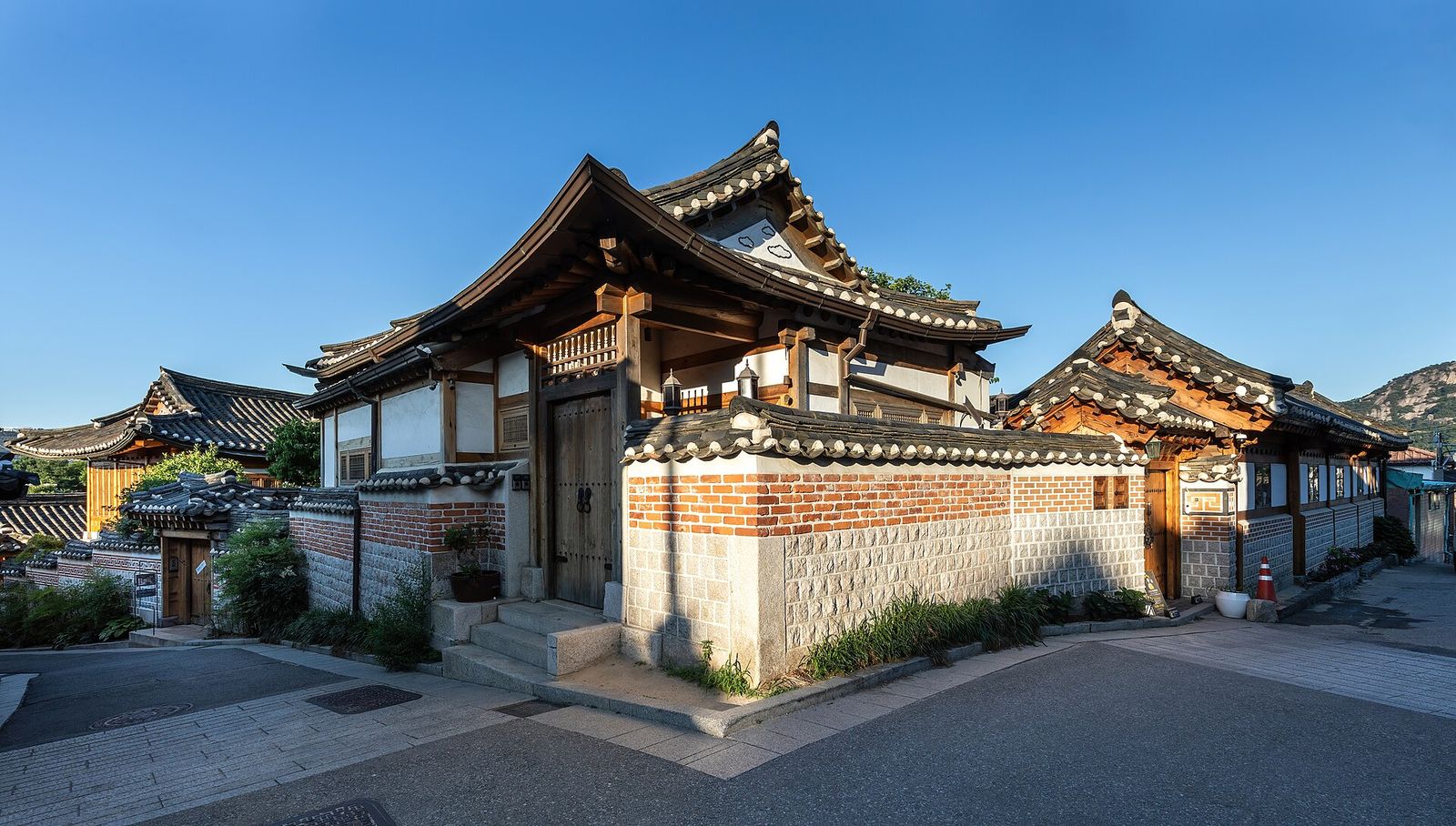
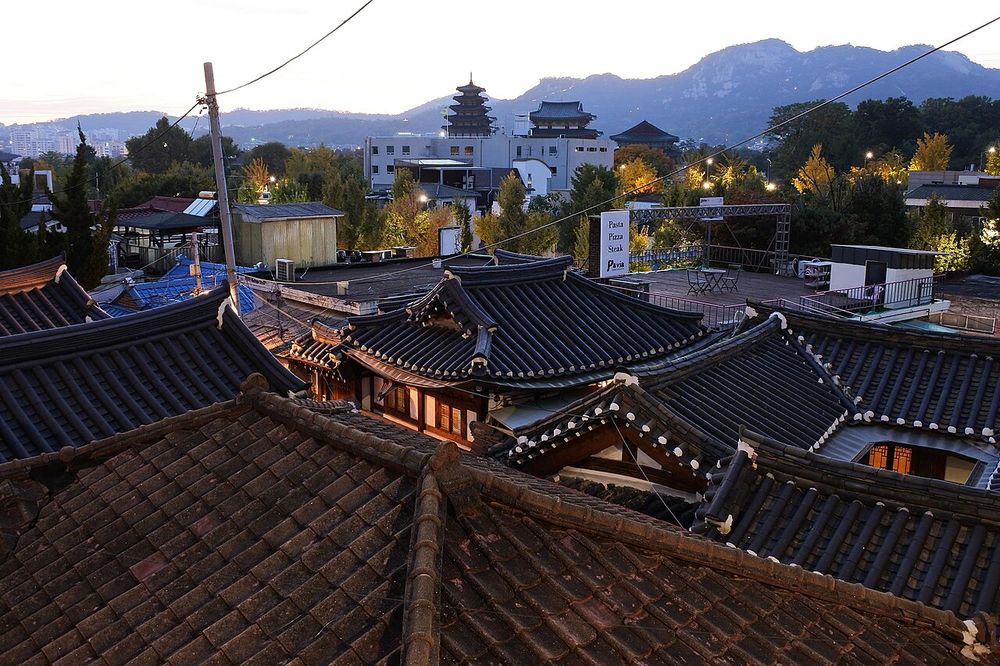
A hillside of tiled roofs between two royal palaces, in the middle of a city of nine million. It looks like a village of the old kingdom. Most of it was built in the 1920s and 1930s by one property developer. People still live in every house, and since 2025 visitors are allowed in its most famous lanes only between ten in the morning and five in the afternoon.
Photo: Stevenliuyi, CC BY-SA 4.0, Wikimedia Commons
Bukchon means "north village". In the old capital the high officials lived here, north of the stream that cut the city in two, close to the palaces where they worked. Poor scholars lived in the south village, under the mountain.
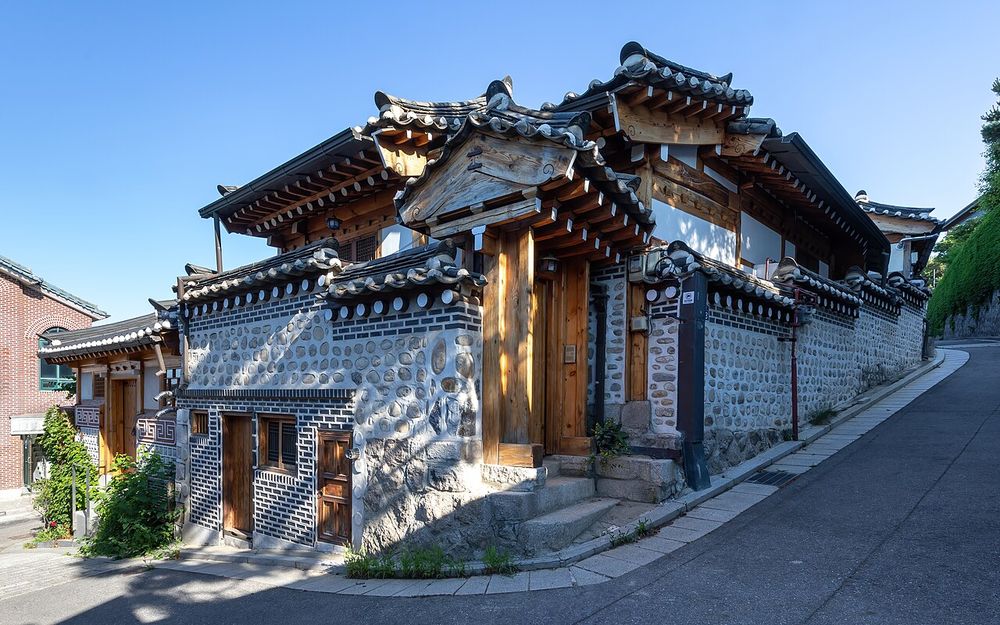
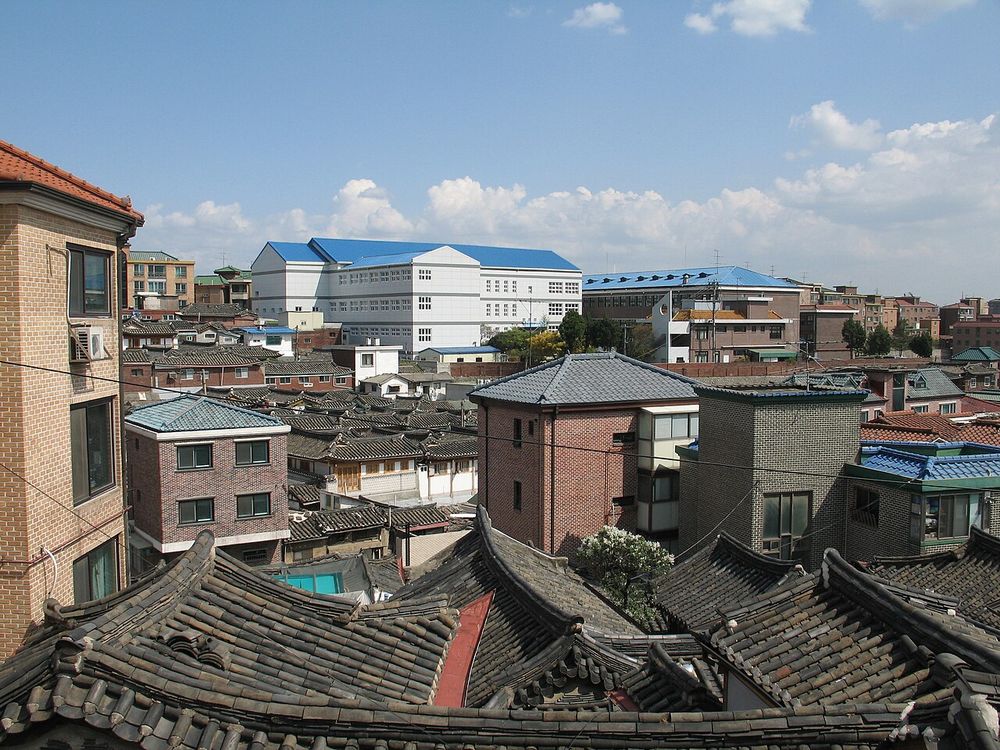
The officials' houses were large, with many courtyards. Almost none of them is left. What you see is what replaced them: small city houses in the Korean style, built close together in rows between about 1920 and 1940. About nine hundred remain, the largest group in Seoul.
Close by, with a page of its own: Changdeokgung, Gyeongbokgung.
There is no ticket and no gate. The lanes are public streets. Three things have their own doors, and all are free.
| Part | Ticket |
|---|---|
| The lanes of Gahoe-dong (Bukchon-ro 11-gil) | Free; visitors 10:00–17:00 only |
| Gyedong-gil | Free; open street |
| Baek In-je House | Free; closed Mondays |
| Bukchon Traditional Culture Center | Free |
| Jeongdok Library and its garden | Free |
| The white pine at the Constitutional Court | Free; ask at the gate |
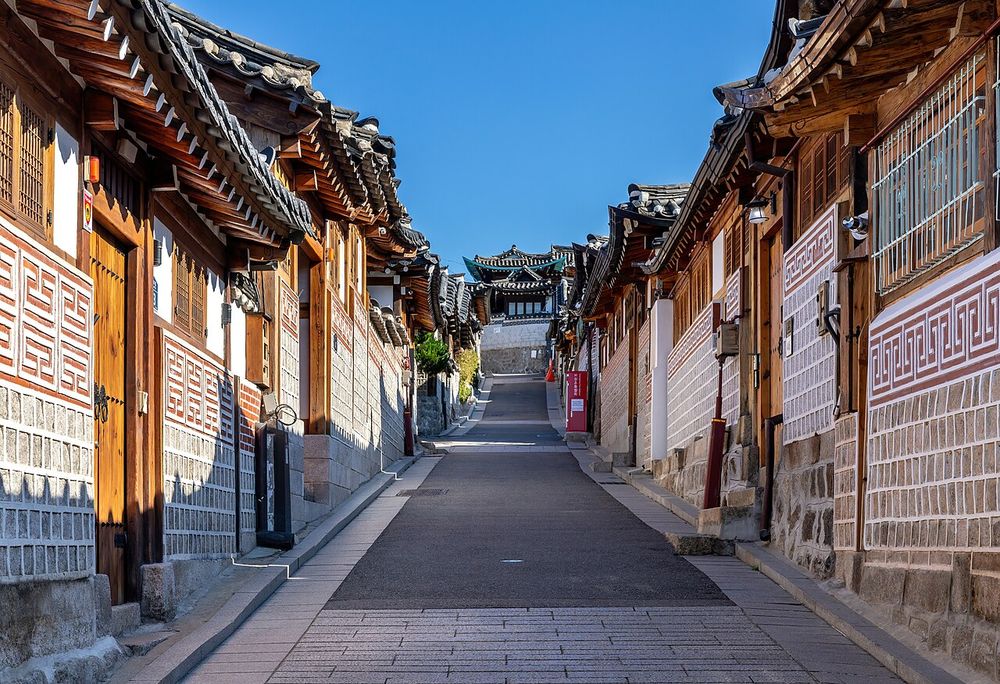
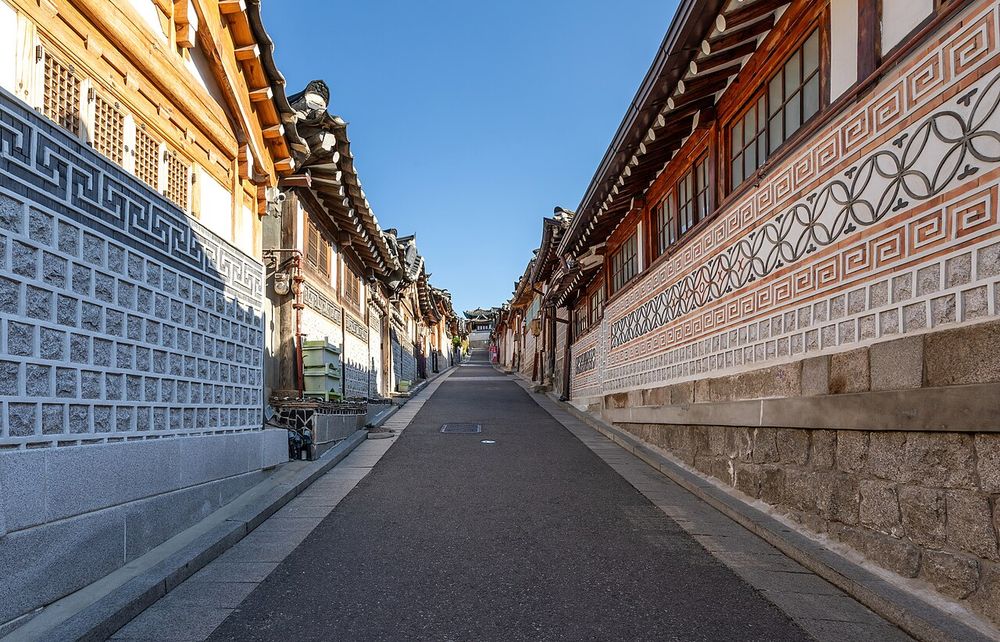
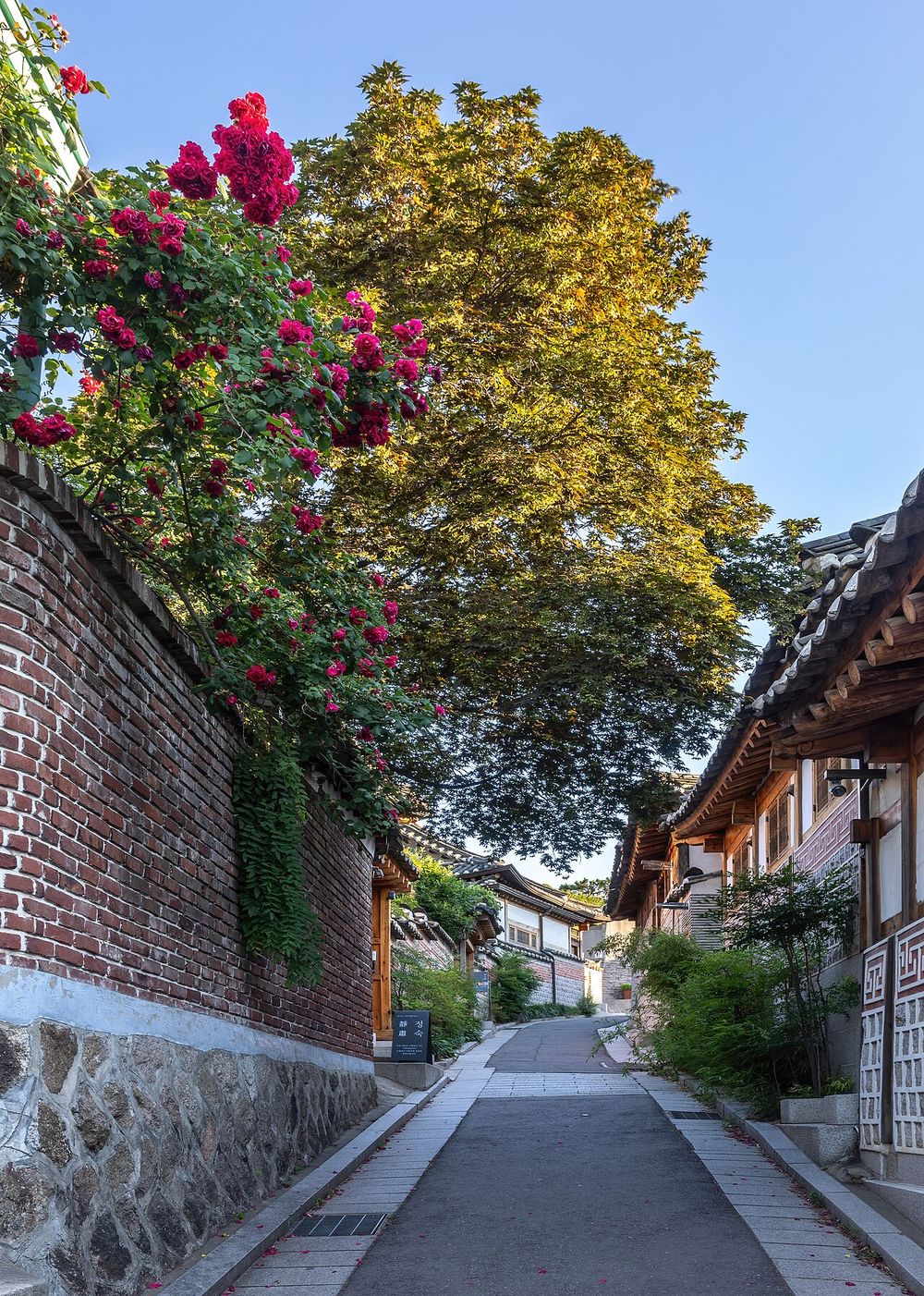
This lane is in Gahoe-dong, and it is the picture of Bukchon that everyone knows. The houses on both sides were built together in 1936.
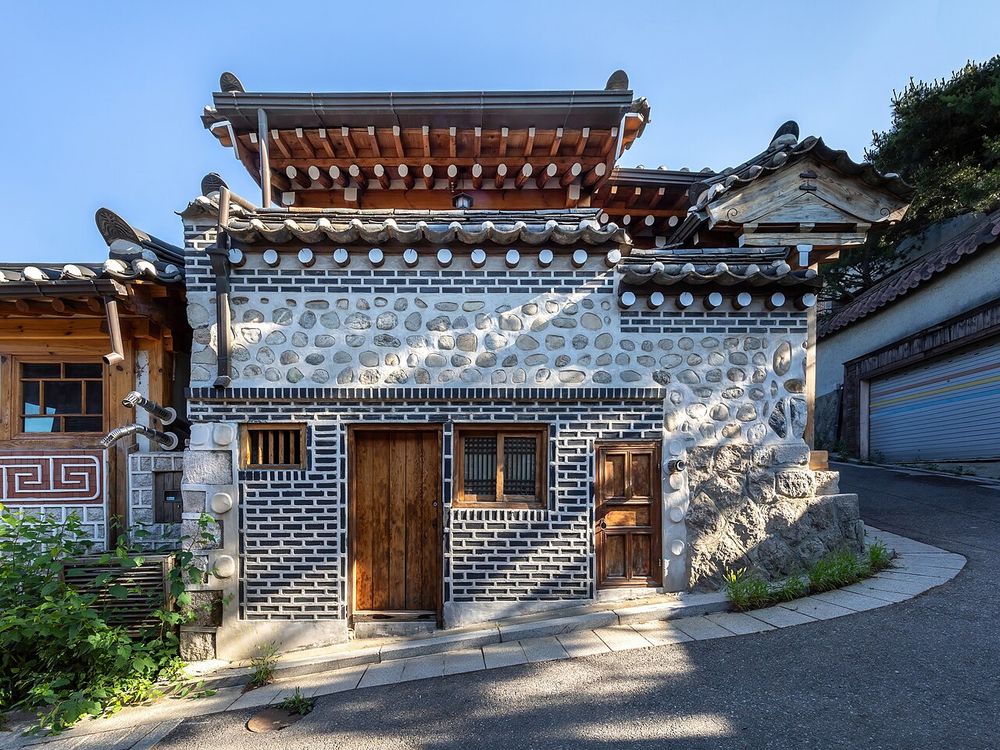
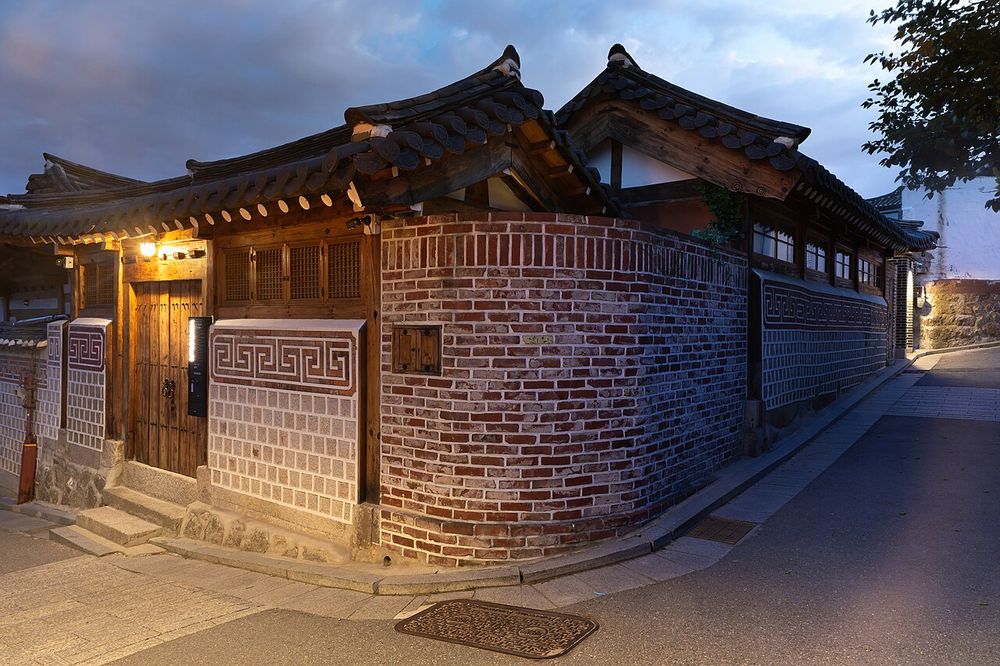
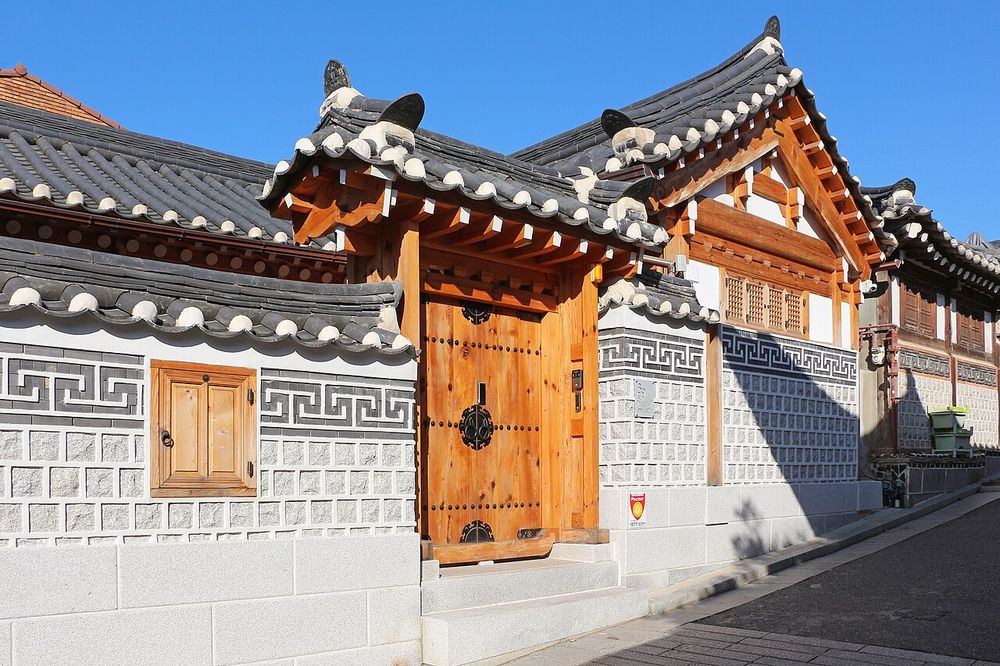
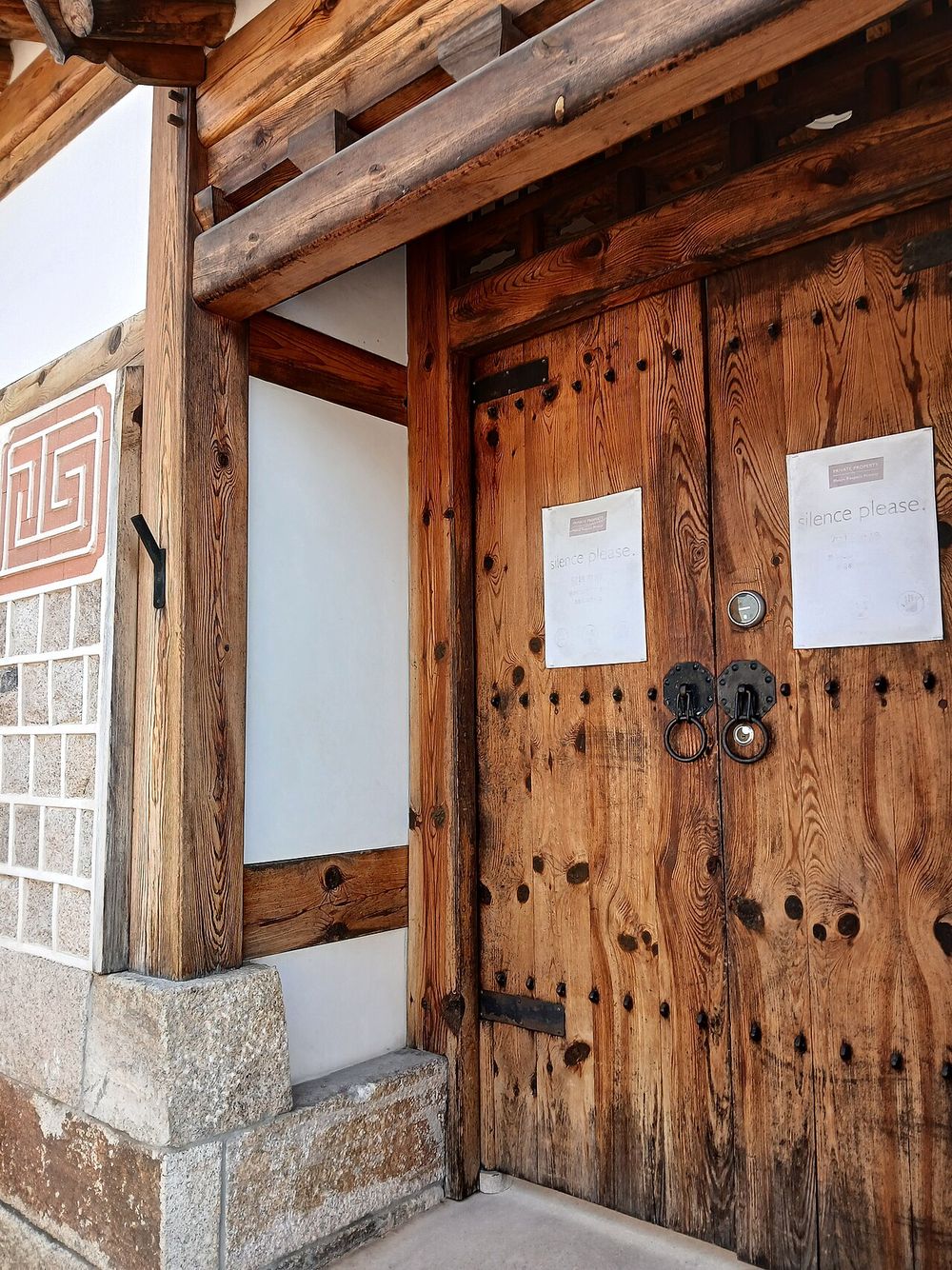
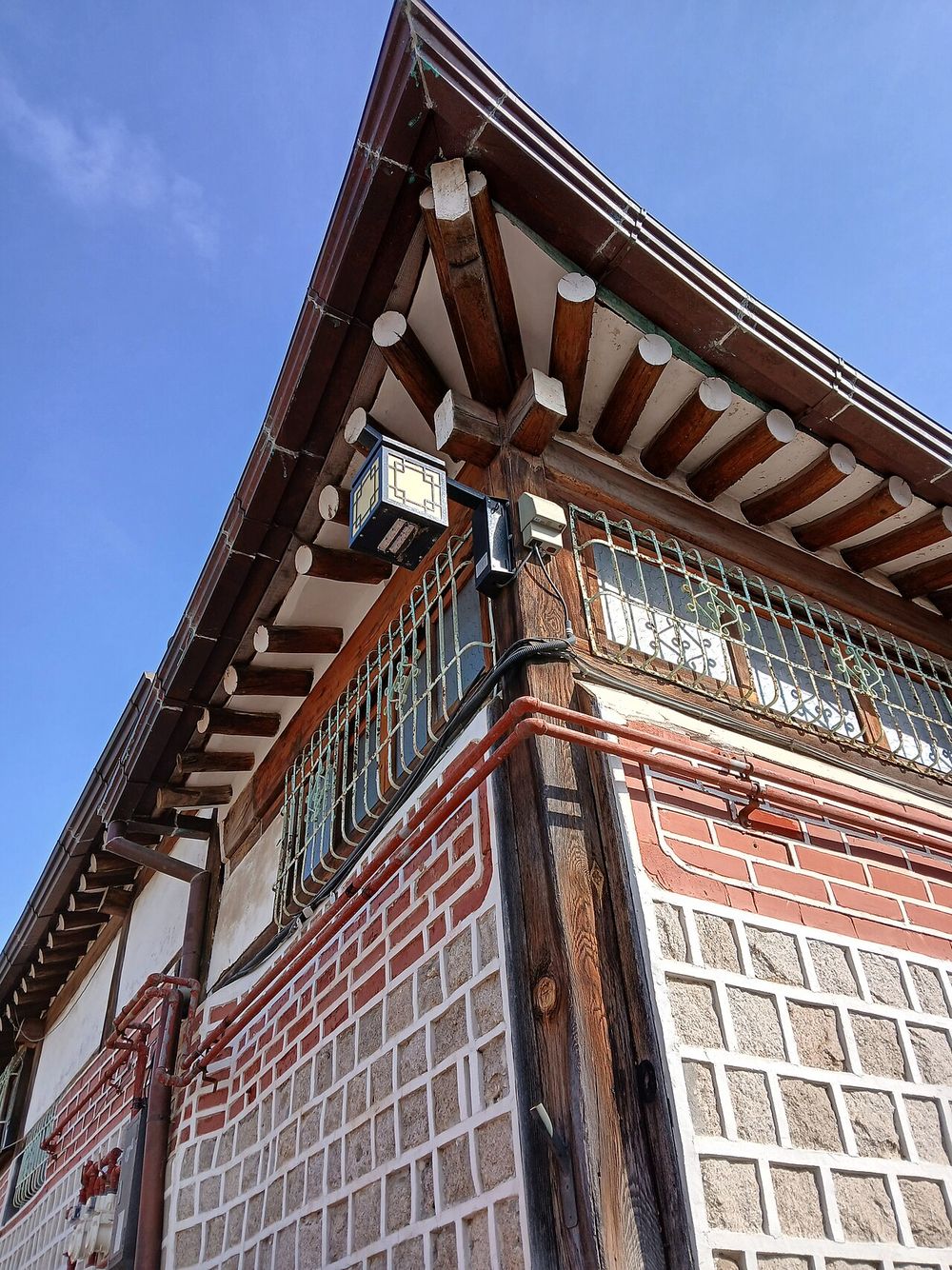
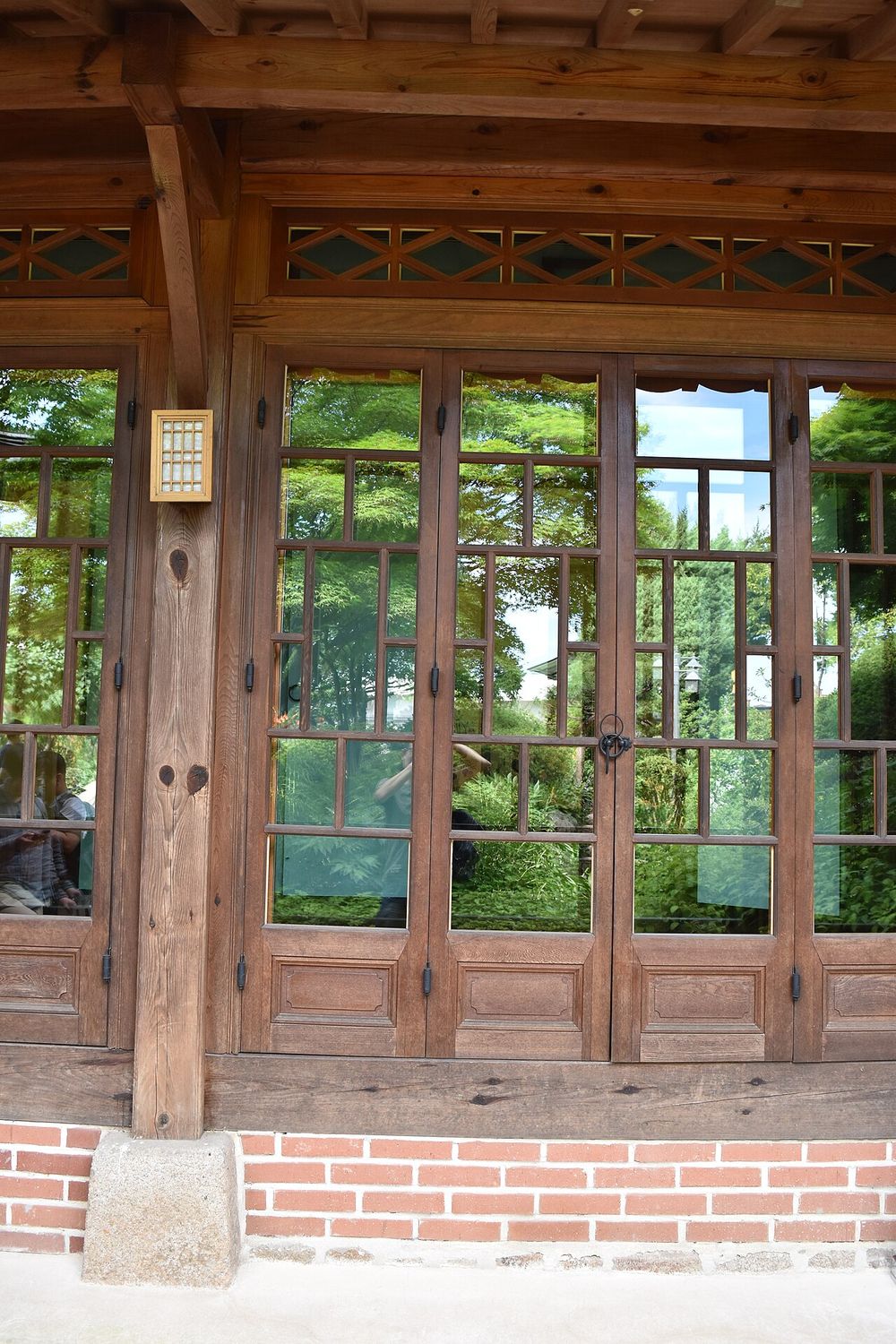
Look at one house. The roof is tile, with the corners lifted. The frame is wood and the walls between are white. That is as old as Korea. Now look at the lower wall: patterned brick and cut stone. Look at the eaves: a tin gutter. Look for glass in the doors. Those were new in the 1930s. This was a modern house in its day.
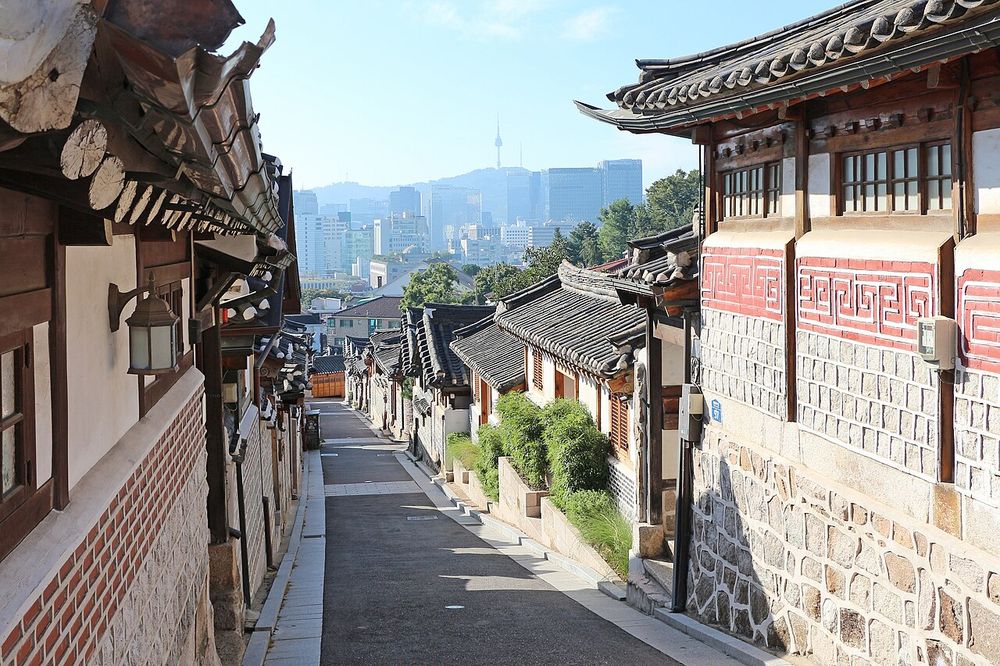
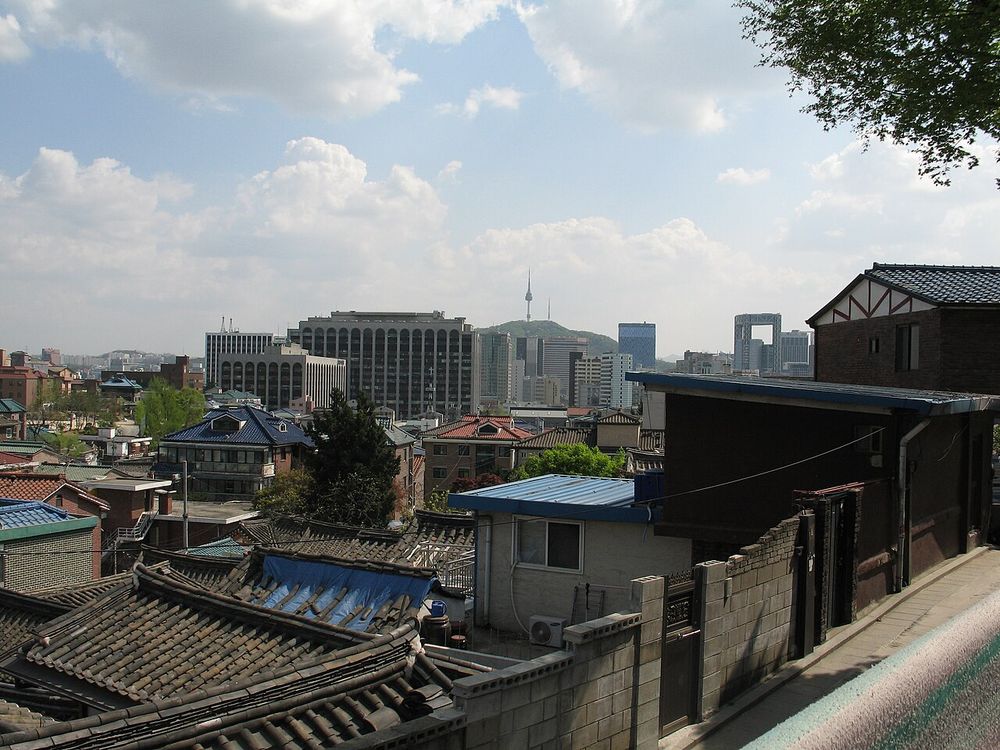
Now look past the roofs. The towers of the modern city stand at the bottom of the lane.
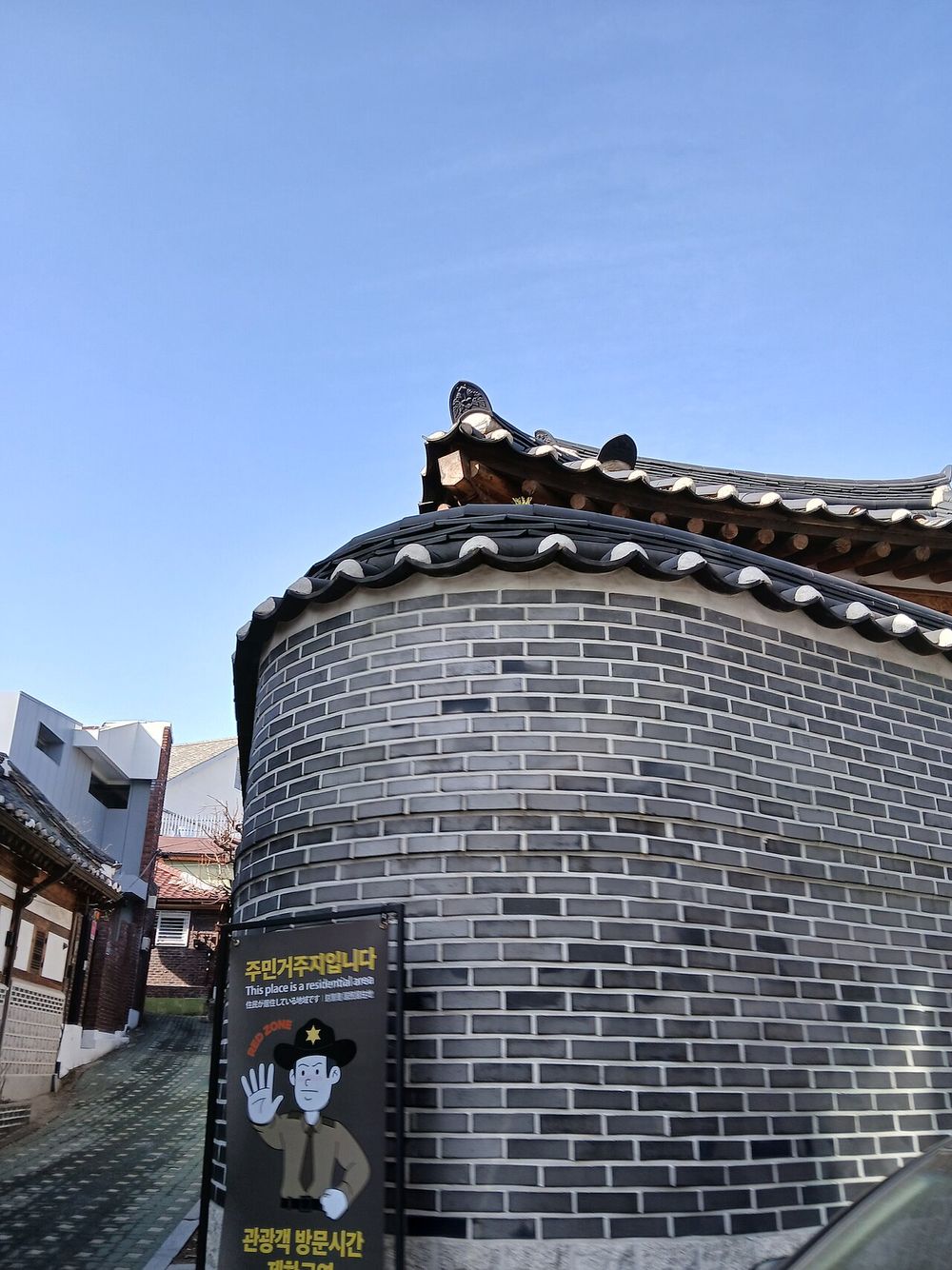
Notice how quiet people are. There are signs asking for silence, and district staff at the corners. Behind each wooden gate a family is having an ordinary day.
"These houses are six hundred years old." The district is. The houses are mostly ninety years old, and many were rebuilt after 2001 with new wood.
"It is a folk village." It is not a museum and there is no gate. It is a neighbourhood of about six thousand people, with schools, a laundry and a church. More than six million visitors a year walk through it.
"You can go any time." Since 1 March 2025, visitors found in the lanes around Bukchon-ro 11-gil before 10:00 or after 17:00 can be fined 100,000 won. Residents, their guests and people staying in a guesthouse there are exempt.
"Hanok means an old house." Hanok only means a house built in the Korean way. The word was coined about a hundred years ago, when Western and Japanese houses appeared and a name was needed for the other kind.
The walk goes from the subway up the east side, across the top and down the west side. It takes about two hours. Stops 4 to 6 are inside or beside the lanes with visiting hours.
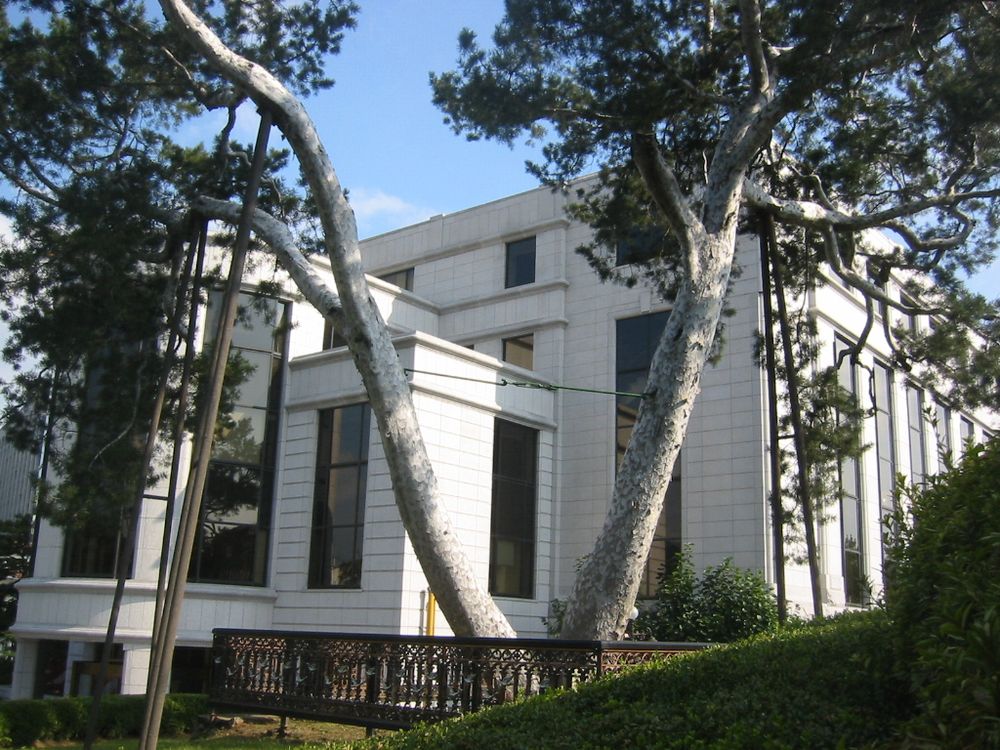
Two minutes from exit 2 of Anguk station is the Constitutional Court. In its grounds stands a pine with a trunk as white as plaster. It is about six hundred years old.
This kind of pine is not Korean. It grows in north China. Envoys who went to Beijing brought seedlings home, and a white pine in the garden showed that the family had held high office.
Three things happened on this plot. The young reformers of 1884 studied here. The first Western hospital opened here in 1885. And in 2017, and again in 2025, the judges in the building behind the tree removed a president from office.
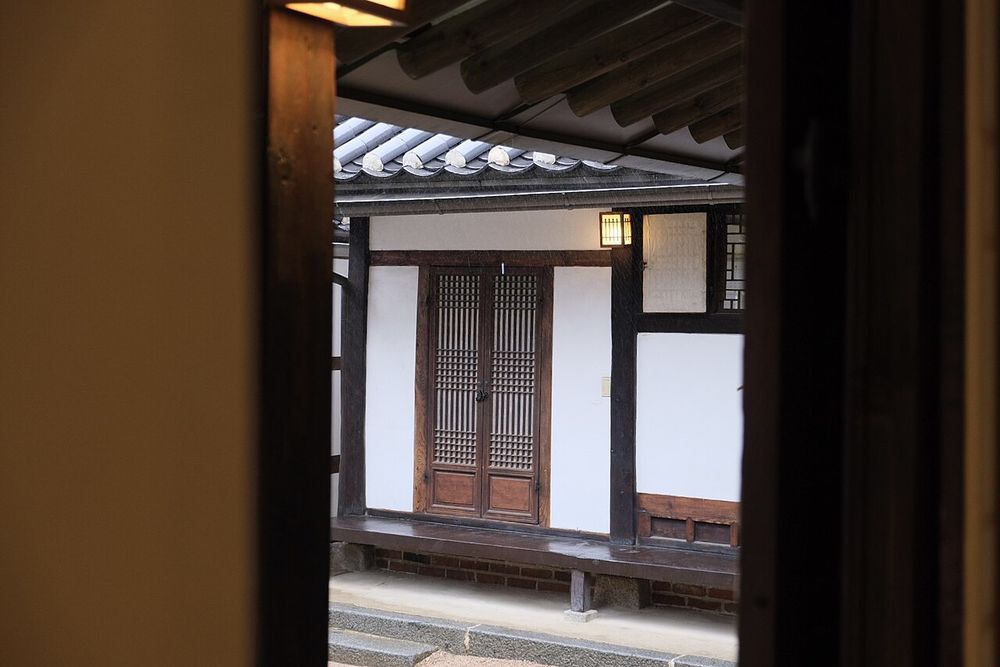
Walk east to Gyedong-gil and go up. At number 37 is a hanok with its gate open. The city runs it as a free information centre. Take the paper map.
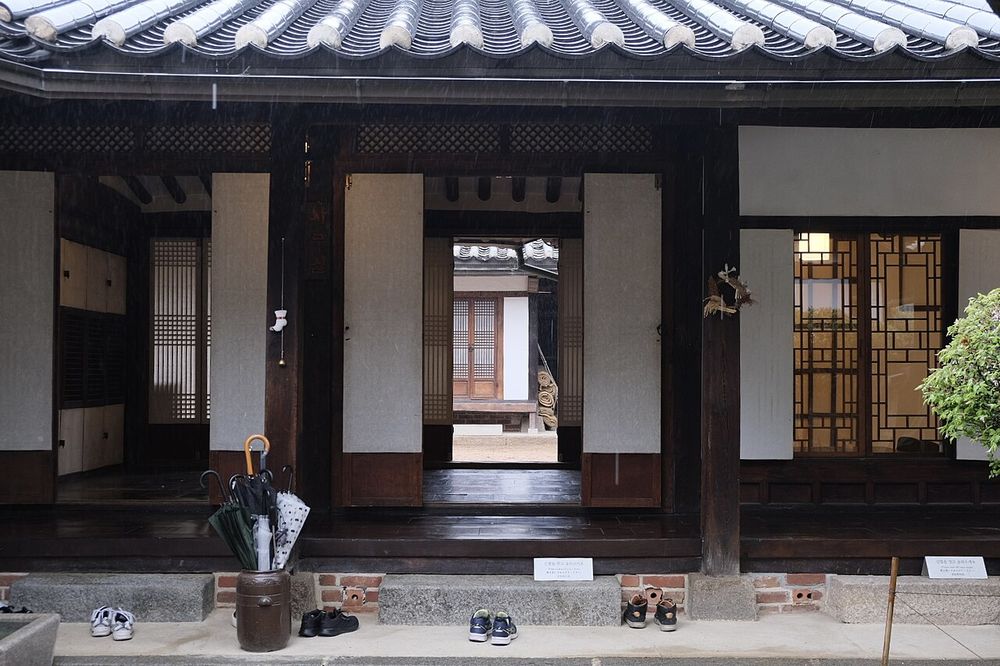
This is the easiest place to see how a hanok works. The rooms stand round a small yard. One room has a floor of oiled paper, warmed from below by the flue of the kitchen fire: that is for winter. The open hall beside it has a floor of boards, raised off the ground so that air passes under: that is for summer. Koreans sit and sleep on the floor, which is why shoes come off at the step.
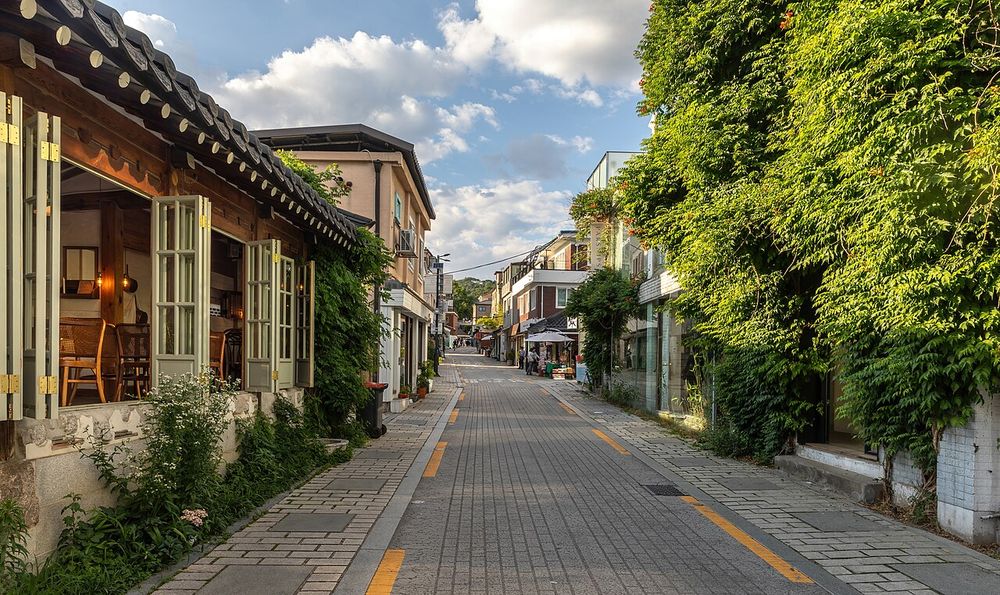
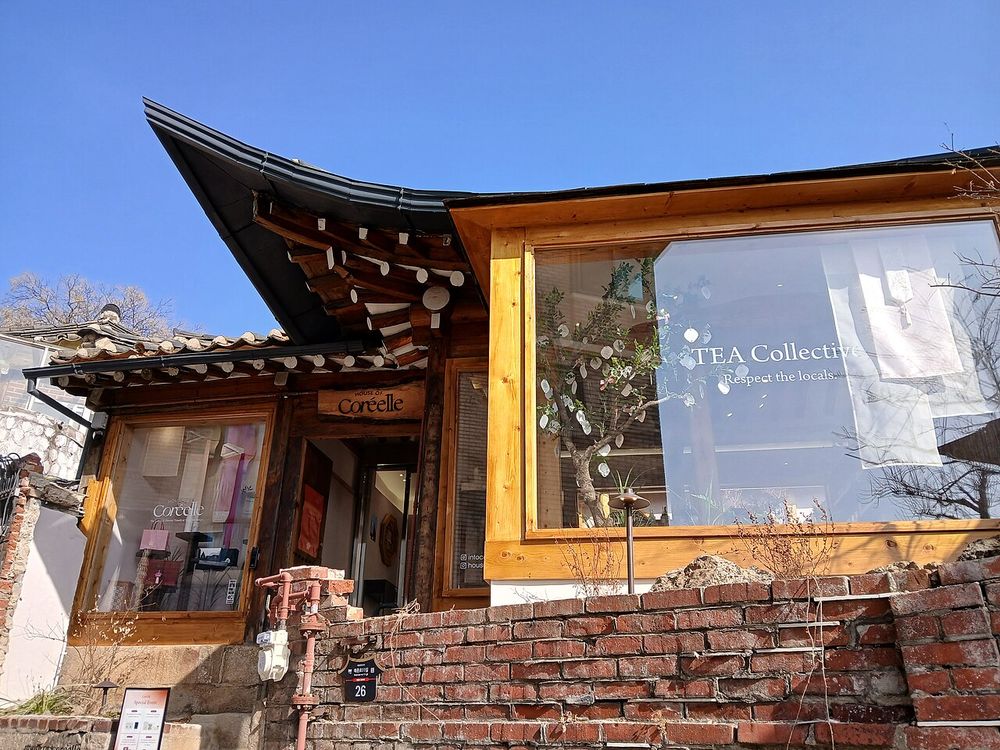
Gyedong-gil is the village high street, with small shops and cafés in old houses. It is an "orange zone", where staff ask groups to keep their voices down.
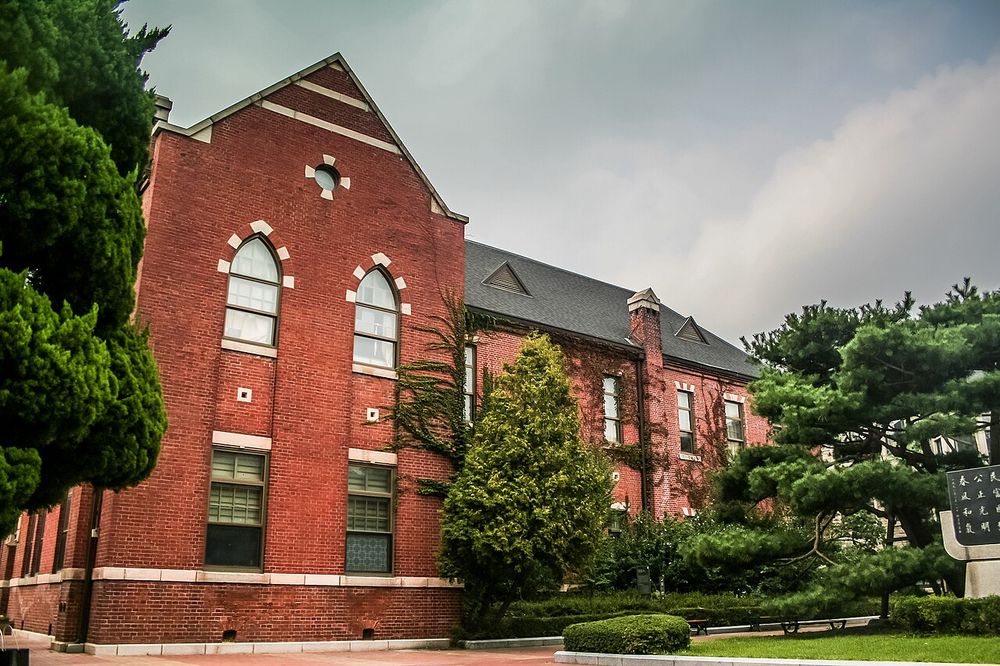
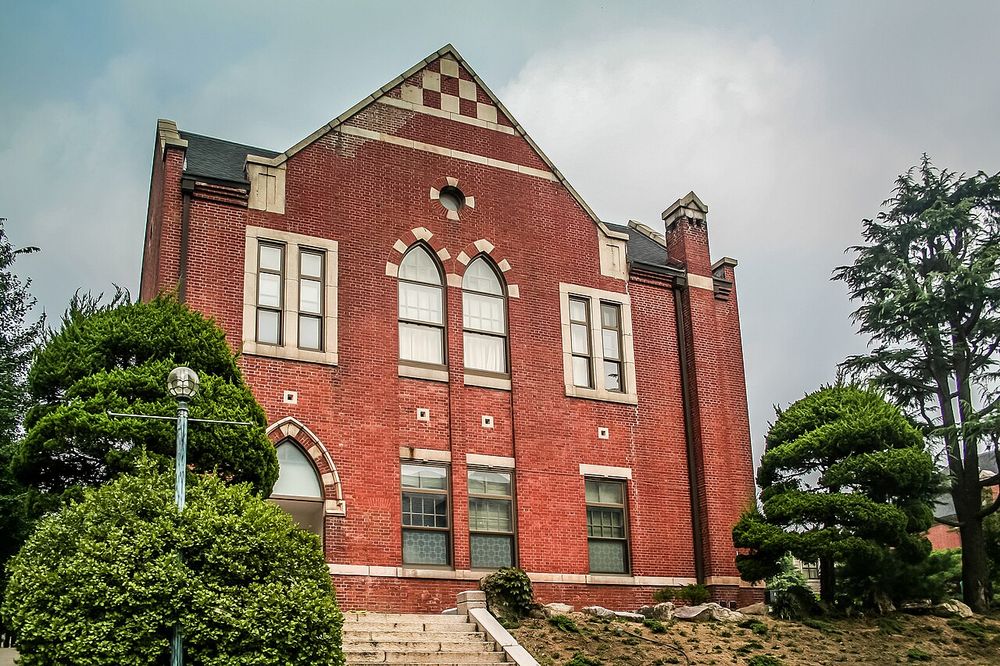
At the top is the gate of Choong Ang High School. Its halls are of red brick and grey stone, built between 1921 and 1937. A small house in the grounds marks the room where the rising of 1 March 1919 was planned.
The school is in use. On school days you see it from the gate.
The same shot: in Winter Sonata the two pupils arrive late at this school and climb over its wall. Stand in the middle of the lane about thirty metres below the gate and point the camera uphill. The series Guardian: The Lonely and Great God (2016) also used the school.
님은 갔습니다. 아아, 사랑하는 나의 님은 갔습니다.
My beloved is gone. Ah, my beloved, whom I love, is gone.
Han Yong-un, the opening of The Silence of My Beloved (님의 침묵), 1926; our translation. He lived at 43 Gye-dong in 1918.
Koreans have argued for a century about who the beloved is: a woman, the Buddha, or the lost country.
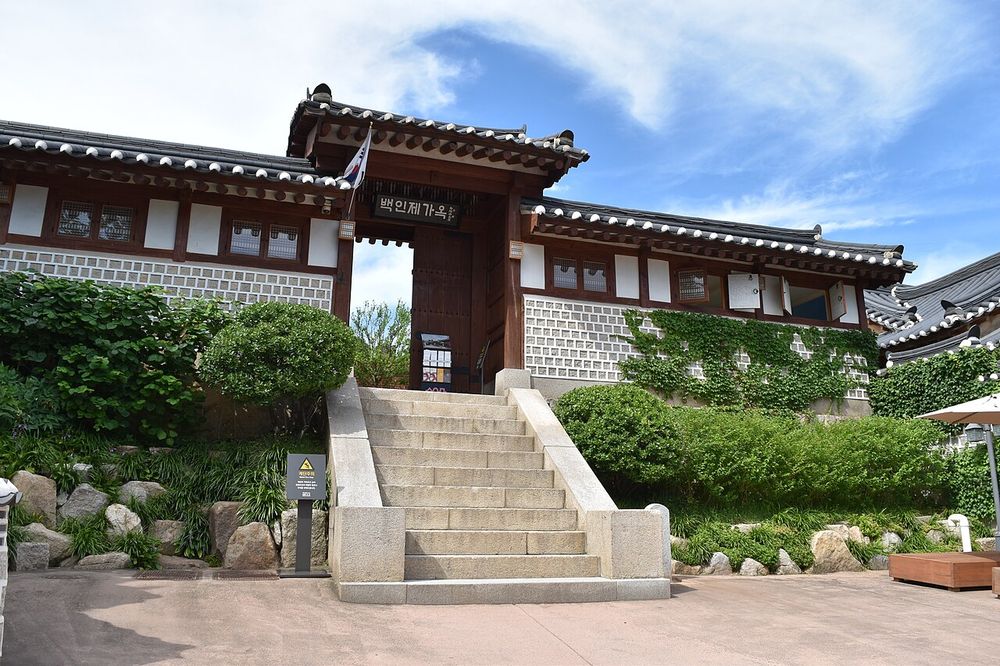
Cross the main road to the west side. At Bukchon-ro 7-gil 16 a tall gate stands at the top of a ramp. This is the Baek In-je House, and it is the one large house in Bukchon you can walk into. It is free.
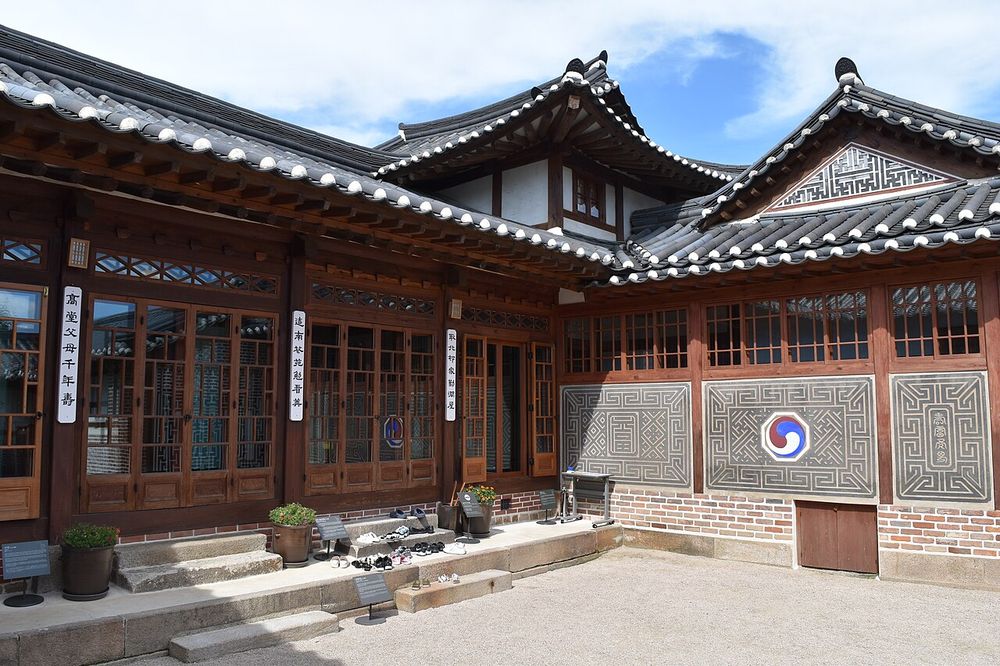
It was built in 1913 by a banker who had done well out of Japanese rule, and he built it to entertain Japanese officials. So it is a Korean house with things no Korean house had. The men's wing and the women's wing are joined by a corridor, where custom kept them apart. Part of it has two floors. There are glass windows, red brick, and rooms with straw mats in the Japanese way.
The film Assassination (2015) used it as the mansion of a rich collaborator.
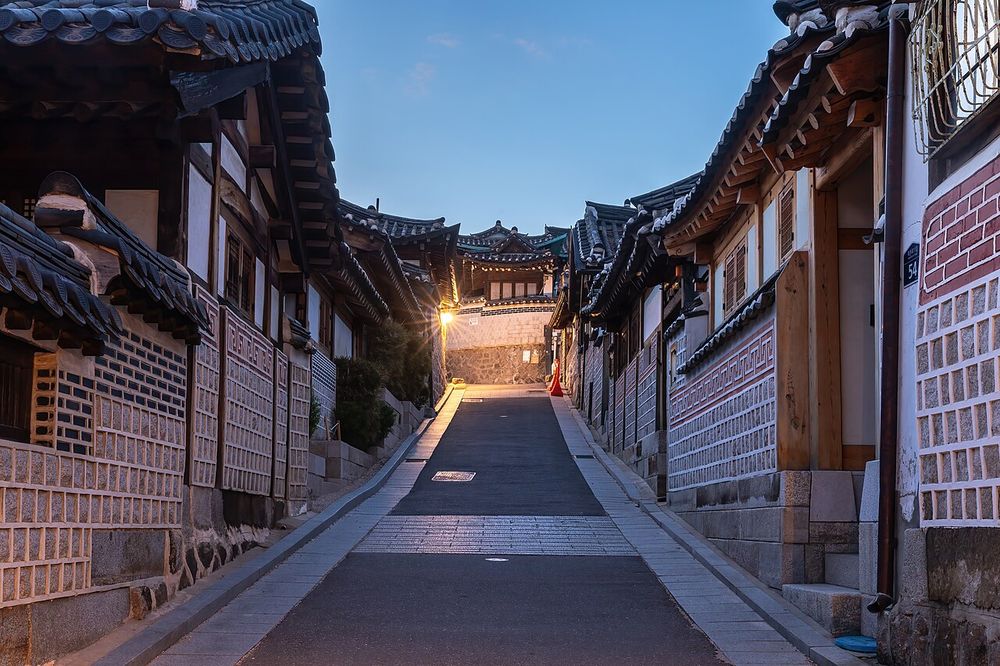
Go north up Bukchon-ro and turn left at 11-gil. From here you are in the "red zone", open to visitors from 10:00 to 17:00.
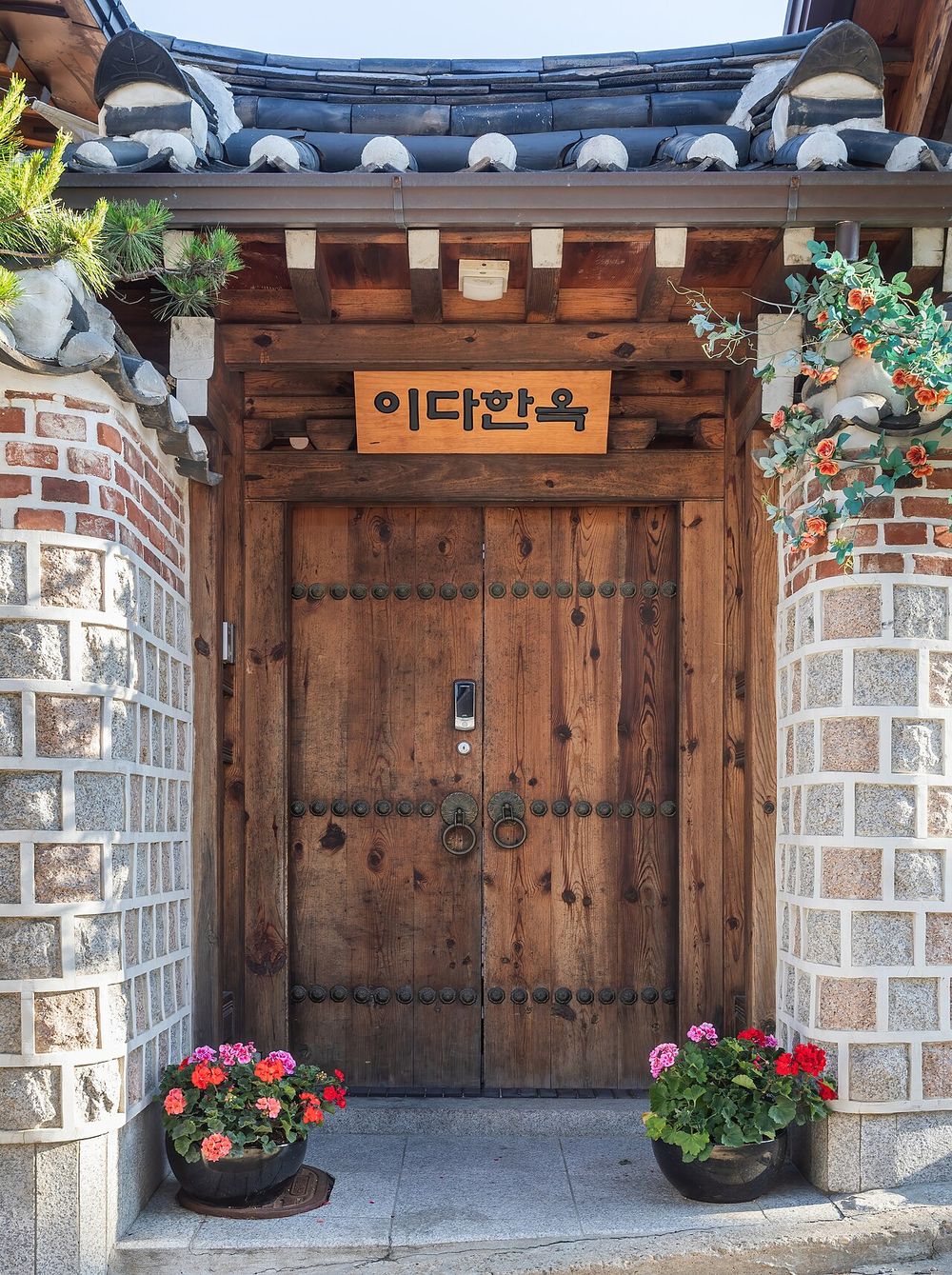
This block, number 31 Gahoe-dong, was one nobleman's estate. Jeong Se-gwon's company divided it in 1936. Count the gates: each is one house, on a lot that is often little more than a hundred square metres.
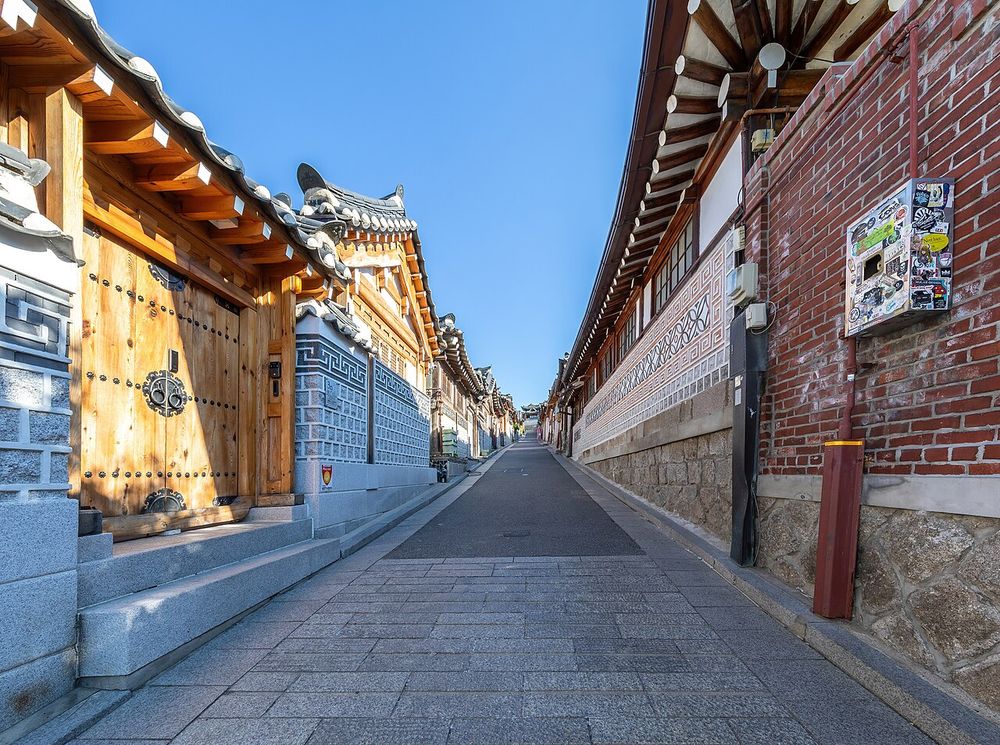
The houses turn their backs to the lane. The windows on this side are small and high. Everything opens inward, onto the yard. That is why the lane feels private even when it is full.
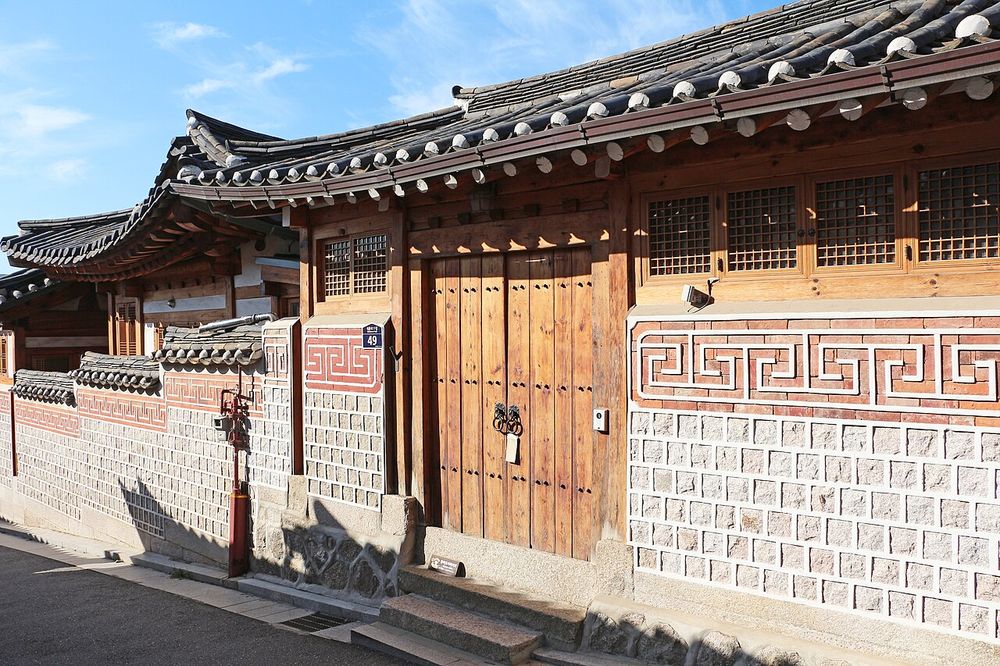
Look at the lower walls. Some have patterns in brick and tile: a turtle shell, a string of squares, the character for long life. These were the builder's way of making plain rows look rich.
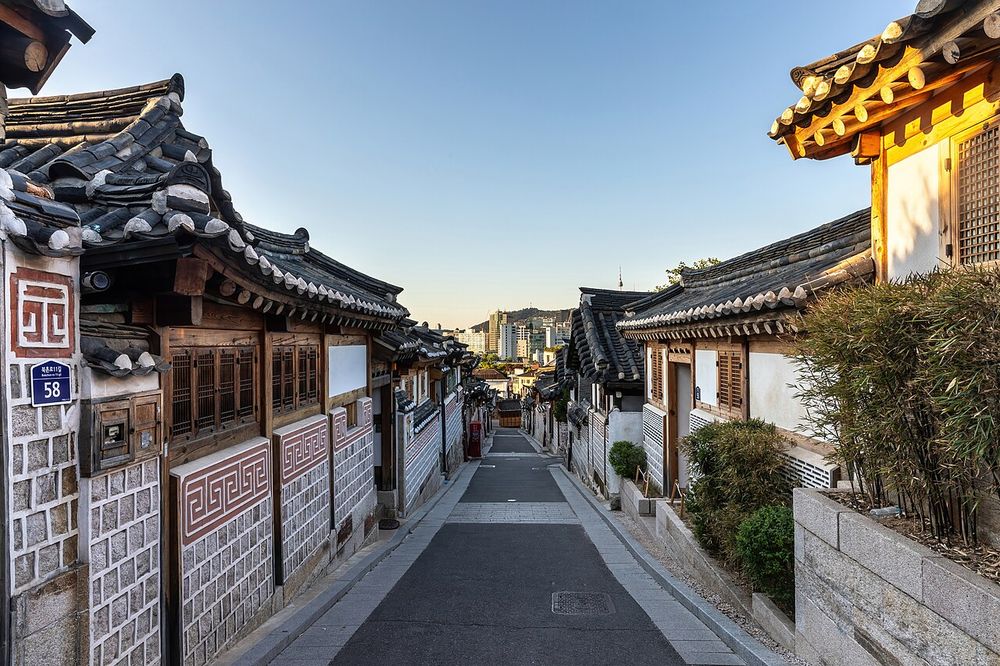
Walk to the top of the lane and turn round. The roofs go down in steps, and over them you see the towers of the centre and the mountain with its mast.
The same shot: almost every poster of Seoul uses this view. Stand at the top of the slope, a few steps back from the last house on the left, and keep the roofs of both sides in the frame with the tower in the gap. The light is best before eleven, when the sun is behind you.
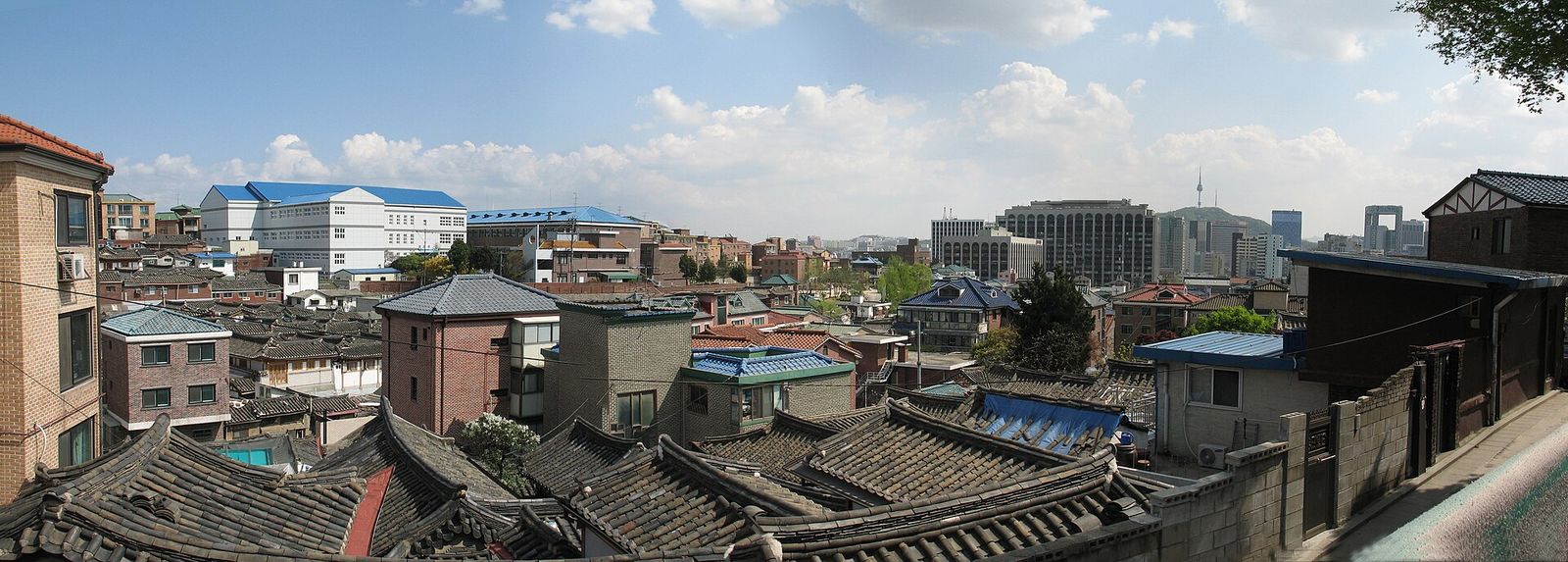
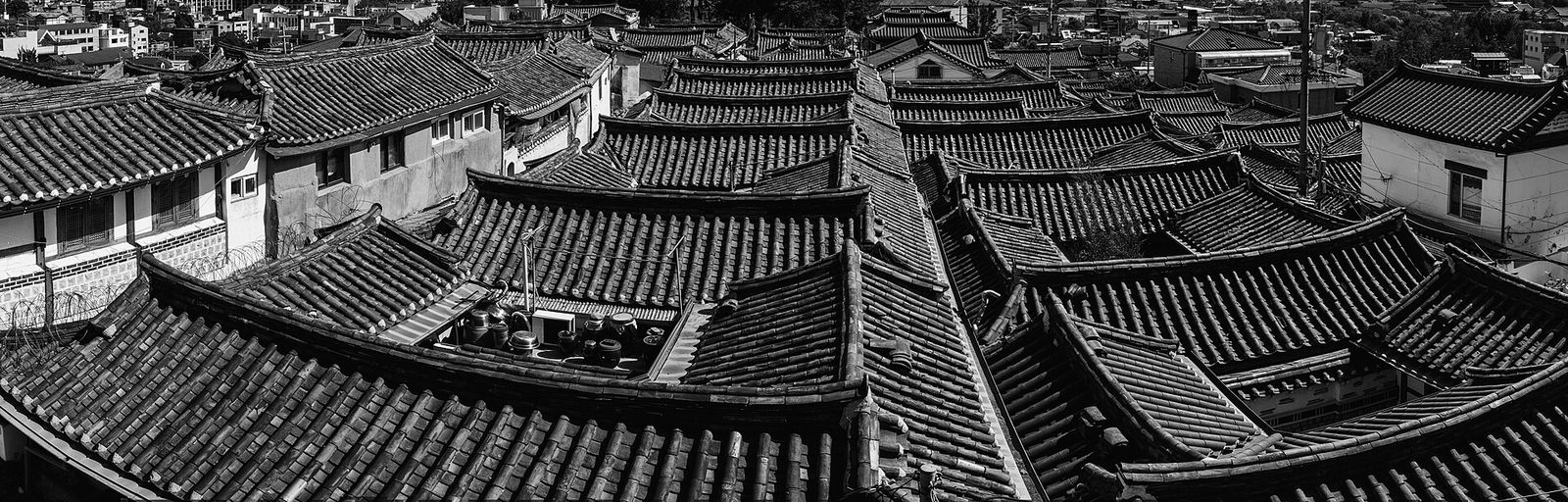
From the lanes just above, the roofs spread out like a grey sea. A Korean roof is not straight anywhere. The ridge sags a little in the middle and the eaves lift at the ends, a line Koreans compare to the sleeve of a dress.
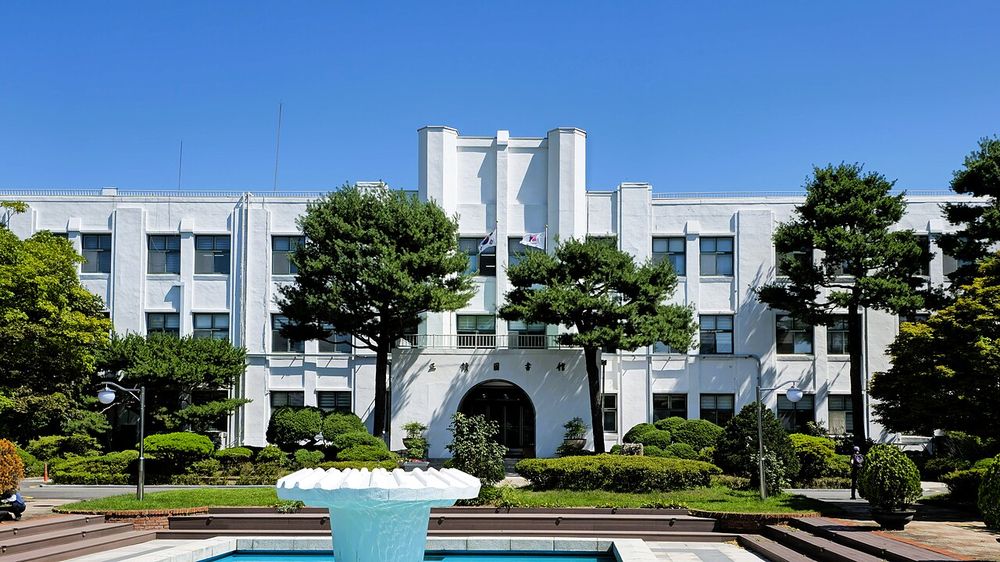
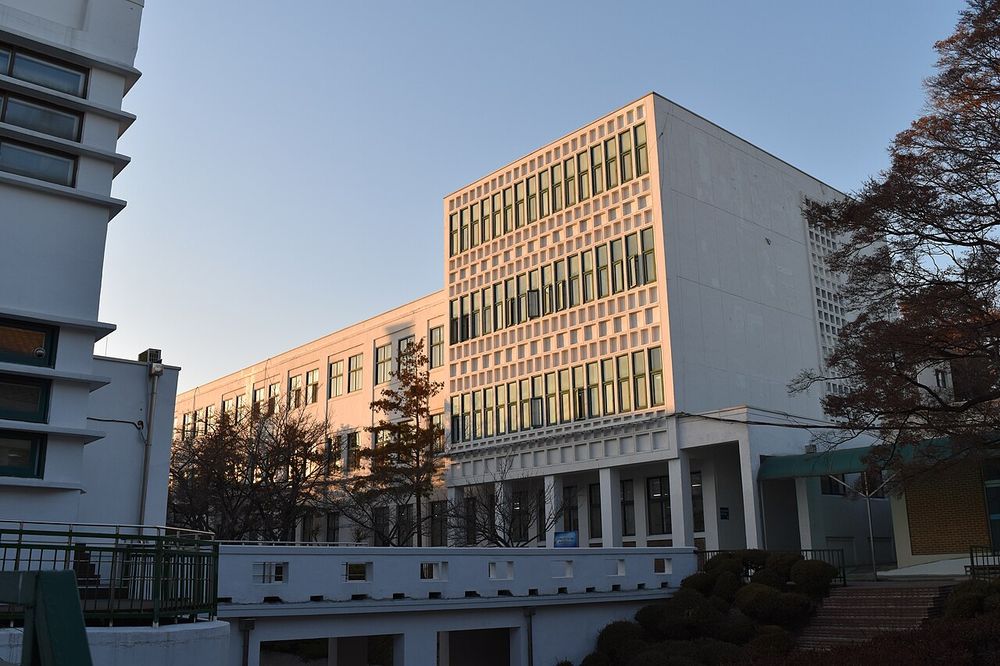
Go down the west side to Jeongdok Library. The white buildings were a school for boys, the most famous in the country, until it moved south of the river in 1976. Now anyone can sit and read.
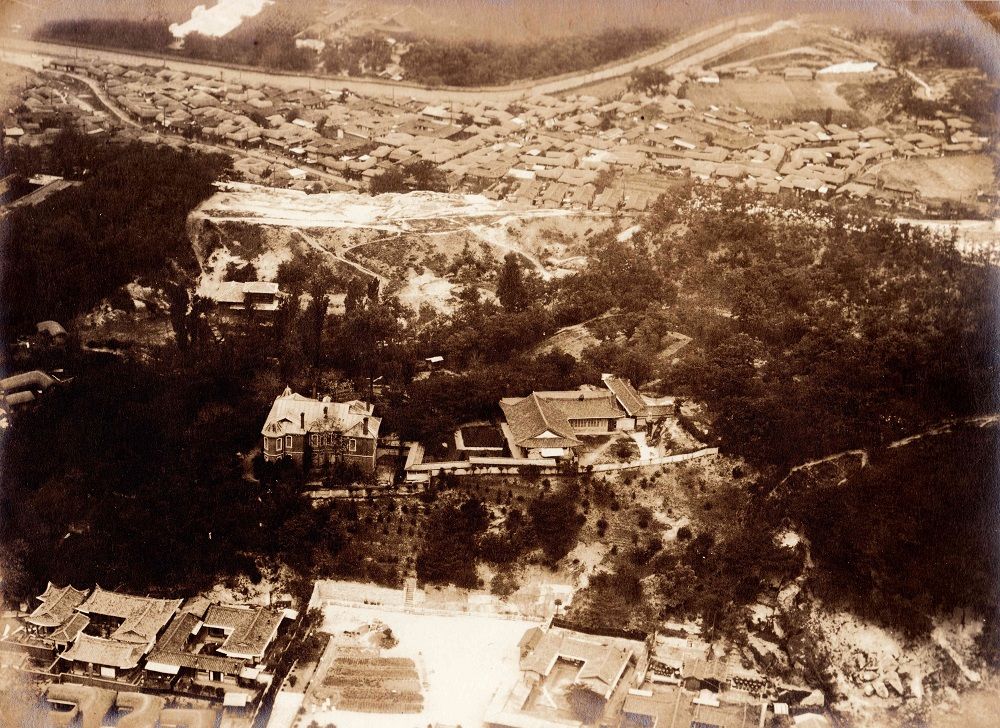
Before the school, this was the home of Kim Ok-gyun, who led the coup of 1884. After it failed his house was taken and pulled down.
The garden in front is where the district comes in April for the cherry blossom.
| Year | Here | Elsewhere |
|---|---|---|
| 1394 | Seoul becomes the capital, and officials build houses north of the stream | In England Chaucer is writing The Canterbury Tales |
| 1884 | Young nobles of Bukchon seize the king; the coup fails in three days | The meridian at Greenwich is chosen as the world's zero |
| 1919 | The rising of 1 March is planned in a school in Gye-dong | The peace conference meets at Versailles |
| 1920 | Jeong Se-gwon founds his building company | The League of Nations meets for the first time |
| 1936 | The lane at 31 Gahoe-dong is built | A Korean, Sohn Kee-chung, wins the marathon at the Berlin Olympics under the Japanese flag |
| 1976 | The great schools move south of the river and families follow | The first Apple computer is sold |
| 2001 | Seoul begins to pay owners to repair hanok and not replace them | China joins the World Trade Organization |
| 2002 | Winter Sonata brings the first foreign visitors | Korea and Japan hold the football World Cup |
| 2025 | Visiting hours and fines begin | Venice charges day visitors an entry fee for a second year |
One line to remember: it looks ancient, it is ninety years old, and somebody is at home.
These are stories people tell about this place. They are legends, not history, and each one says where it comes from.
The white pine grows whiter when the country is at peace and darker when trouble is coming.
Source: A saying repeated in Seoul about several old white pines
Later, people who live here will be able to add the stories they grew up with, and say which of these they have heard.
Last checked 2026-11-12. Notices of Jongno district and Seoul city, 2024 to 2026, and Korean press reports of 2025 and 2026.
Checked 2026-11-12
Stand at the site, sign in, press the button, and collect its stamp. Your browser will ask to use your location. It is sent to us once to confirm that you are at the site; we keep how far you were from it, not the spot where you stood.
Your stamps are saved to your account, so they follow you to any device. Checking from a browser cannot rule out every false location; stricter checks arrive with the app.
Photos here show the place, not people. Each one is credited to the visitor who took it and appears after our team has looked at it. A photo with you in it belongs under “I am here”.