LegendThe champagne bottles
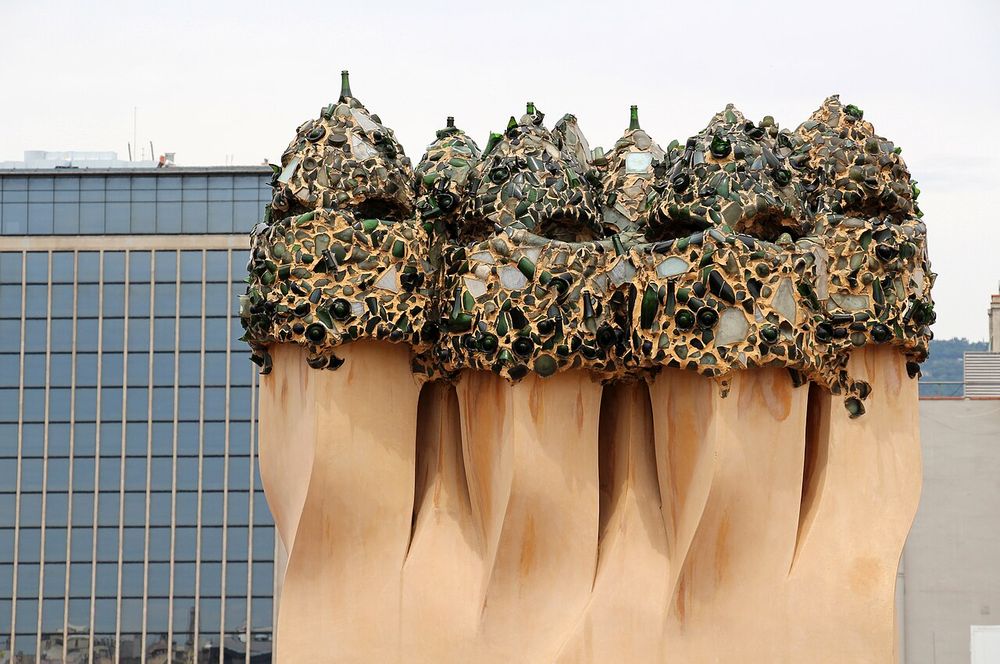
The green glass on one stair-head comes from the bottles drunk at the party when the house was finished.
Source: Told by guides at the house
Passeig de Gràcia 92, Barcelona, Spain
Casa Milà (La Pedrera) · KAH-zah mee-LAH; lah peh-DREH-rah
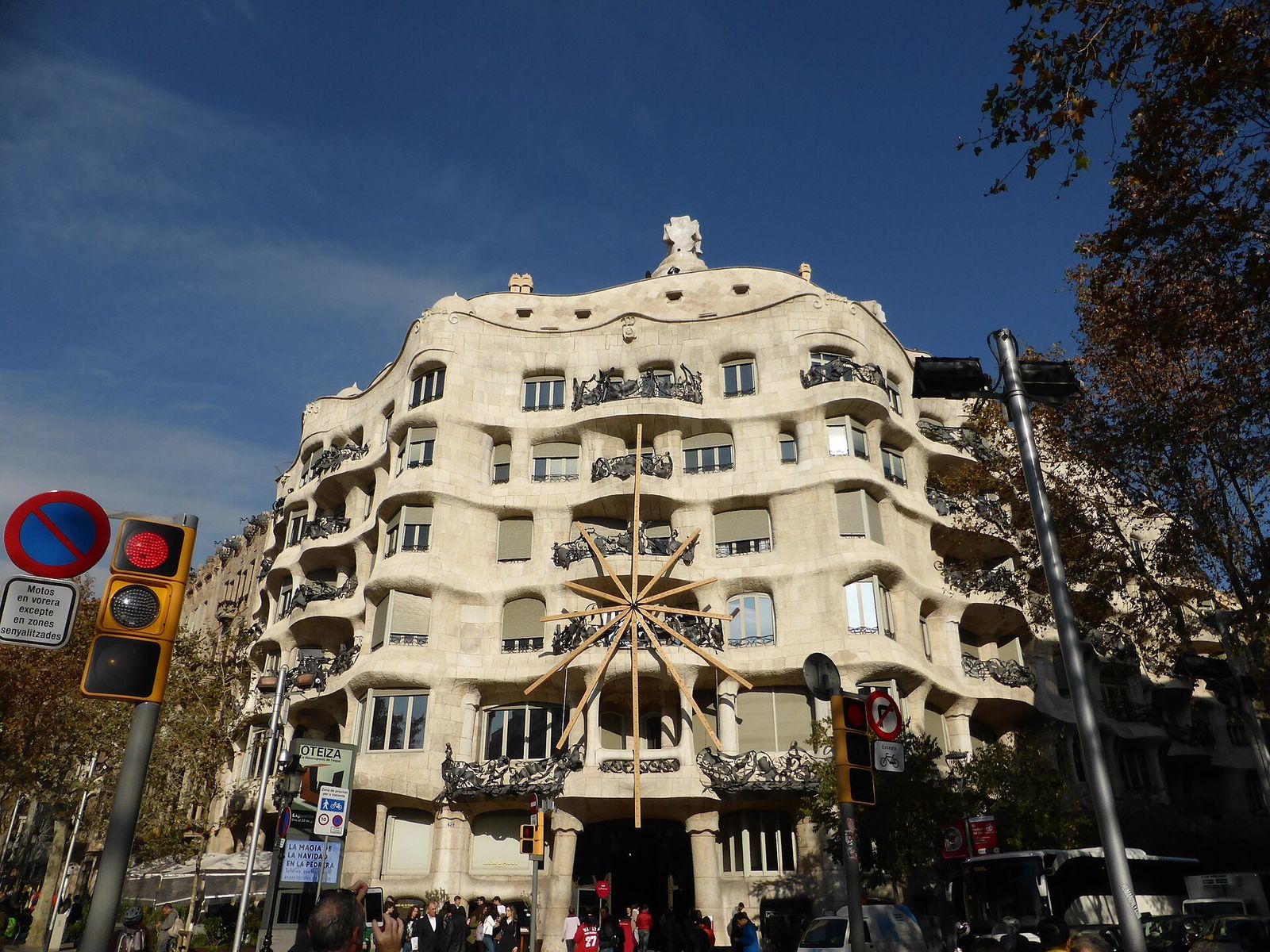
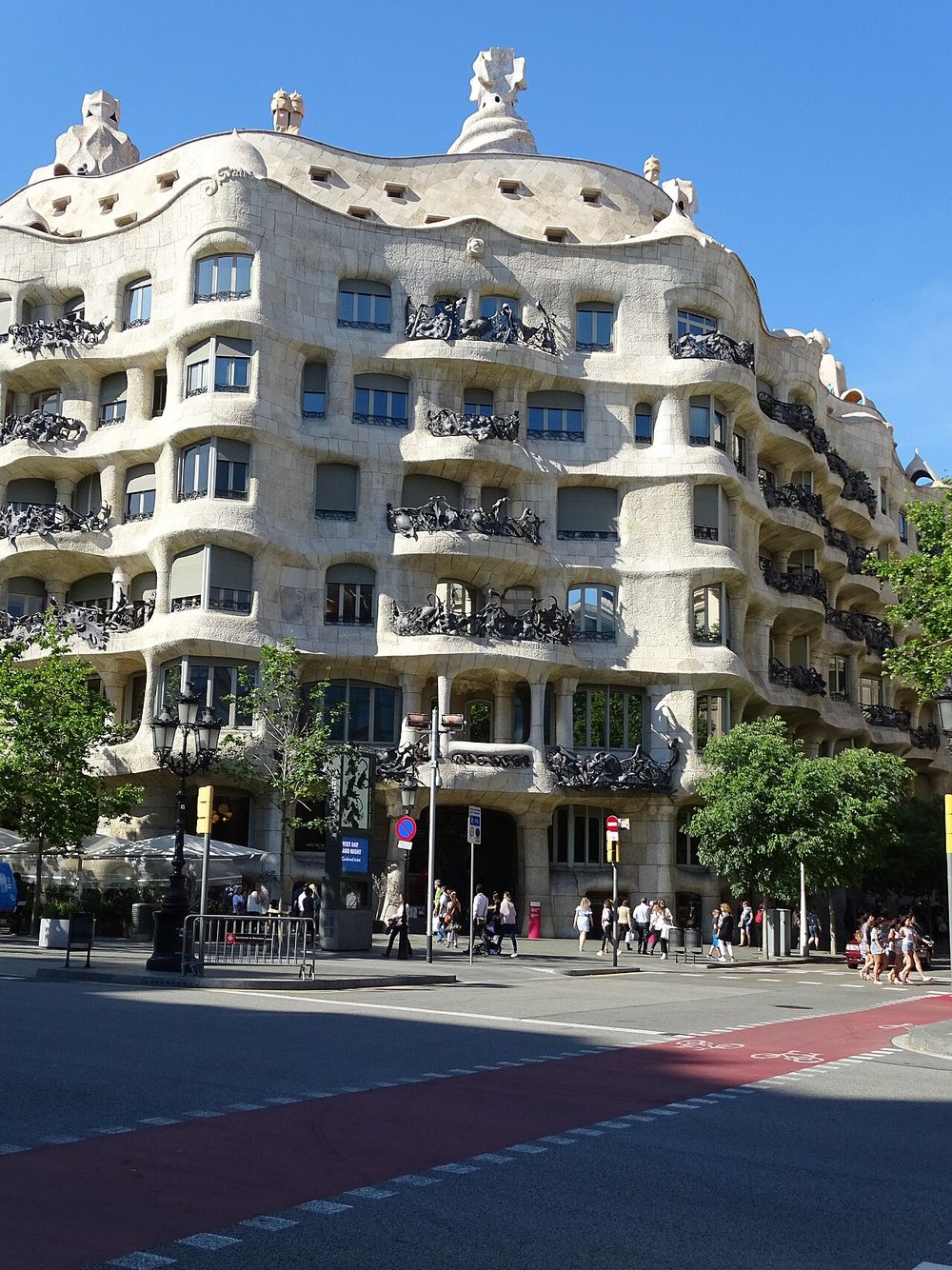
The last house Gaudí built, between 1906 and 1912, before he gave himself to the Sagrada Família. Barcelona laughed at it and called it La Pedrera, the Quarry. It is a block of flats with no straight walls, held up by columns, with a roof where the chimneys stand like soldiers in helmets. People still live in it.
Photo: Ad Meskens, CC BY-SA 4.0, Wikimedia Commons
Pere Milà was a man about town who had just married the richest widow in Barcelona, Roser Segimon. The joke in the cafés was that nobody knew whether he had married the widow of Guardiola or the widow's piggy bank, which in Catalan is the same word. He saw Casa Batlló going up down the avenue and wanted a bigger one.
He got a building of nine levels on a corner plot, with the couple's flat on the main floor and sixteen flats to let above. The work ran from 1906 to 1912. In China these are the last years of the Qing dynasty (1644–1912) and the first of the Republic.
Close by, with a page of its own: Casa Batlló, Park Güell, Sagrada Família.
One day ticket covers the courts, the flat, the loft and the roof. The night visit is a different ticket.
| Part | Ticket |
|---|---|
| The front, from the street | Free |
| The courtyards | Day ticket |
| The furnished flat | Day ticket |
| The loft | Day ticket |
| The roof | Day ticket; closed in rain |
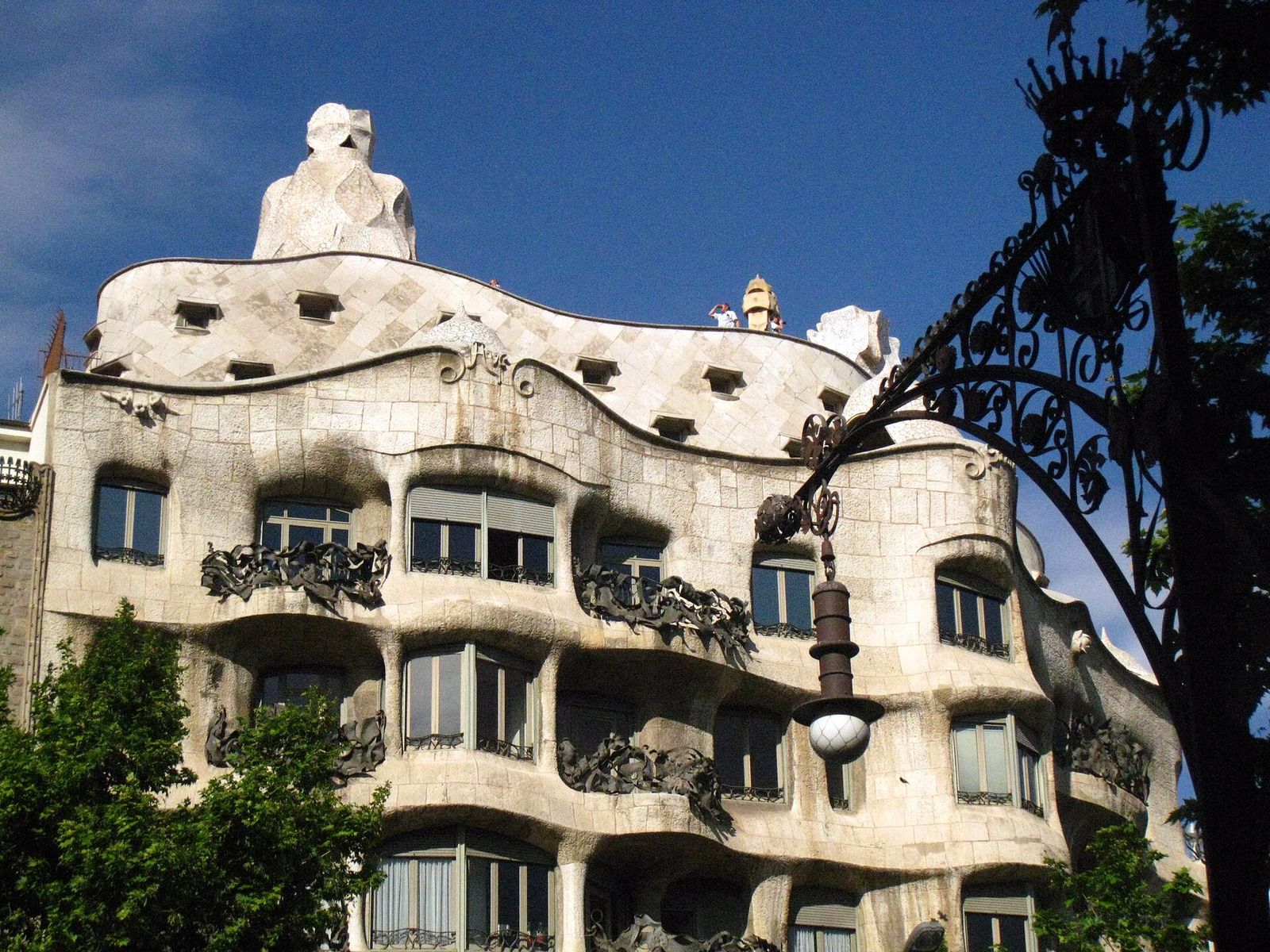
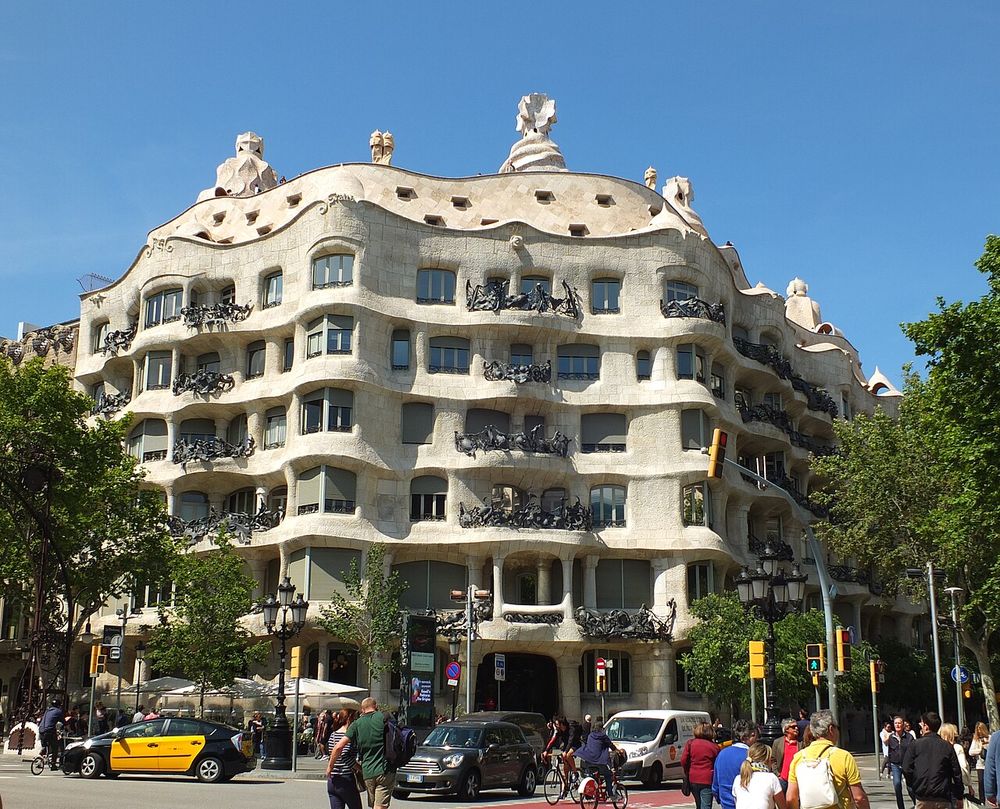
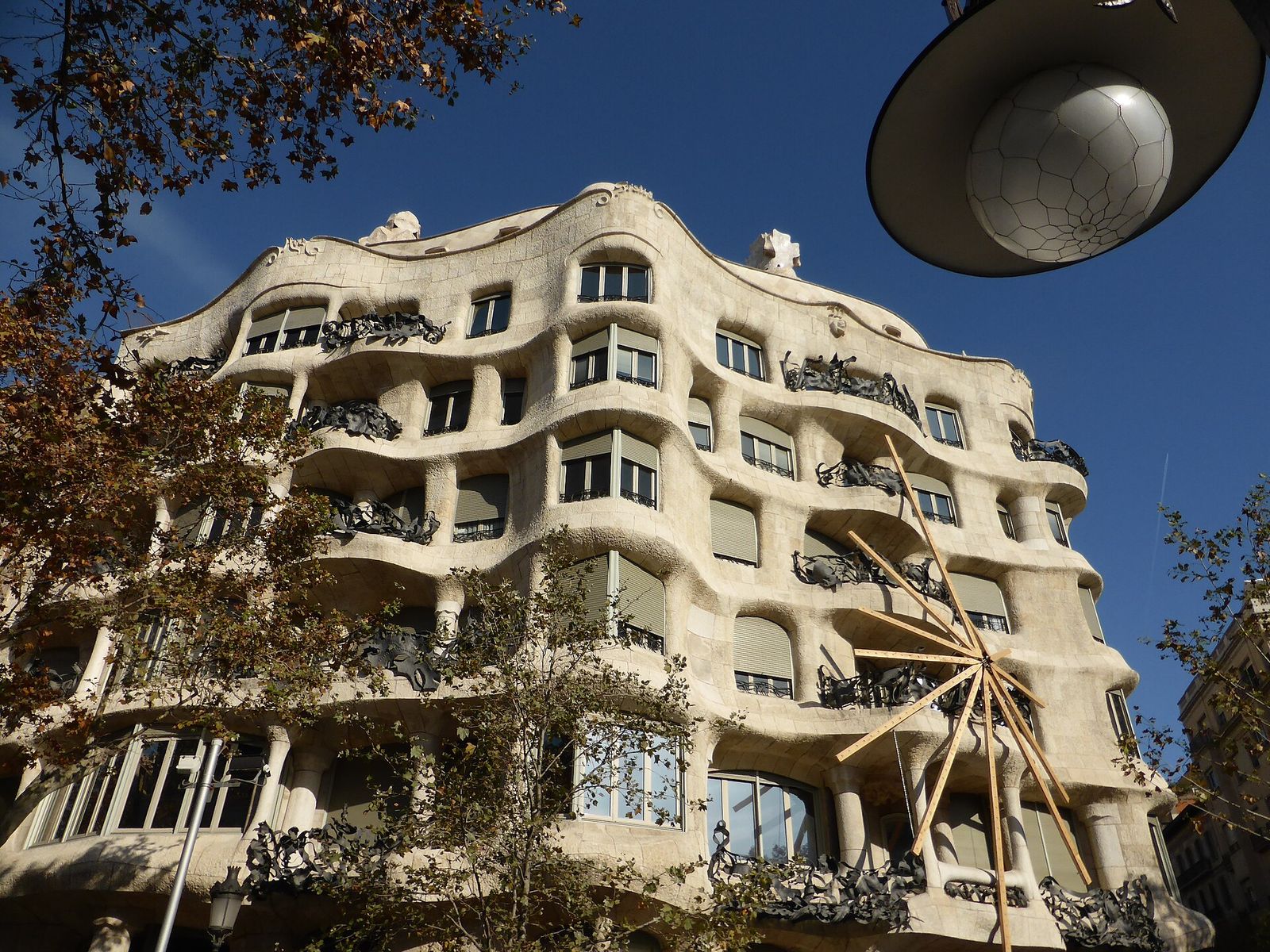
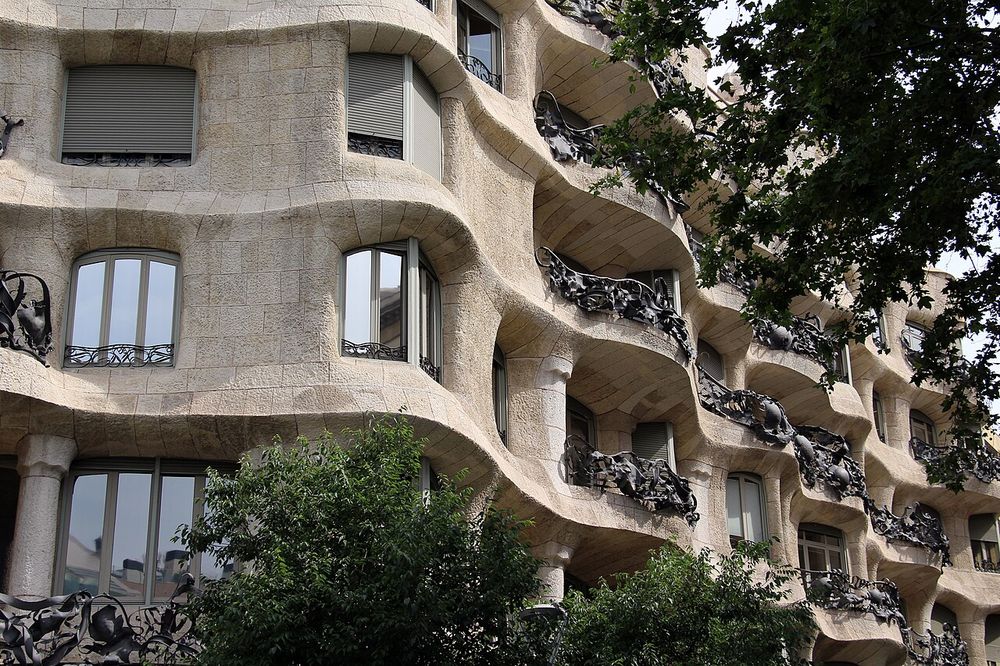
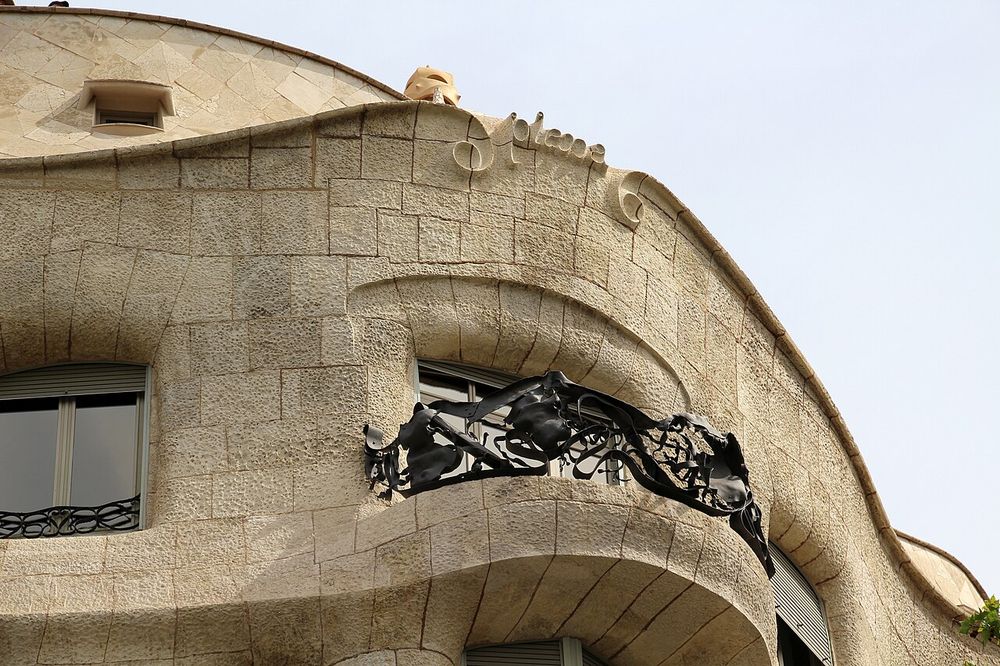
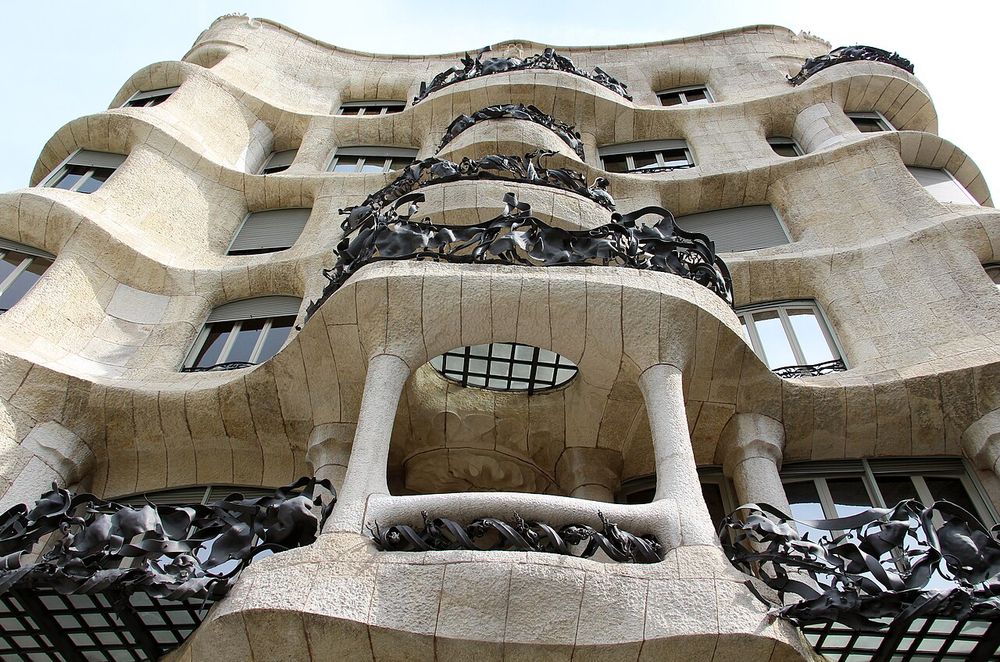
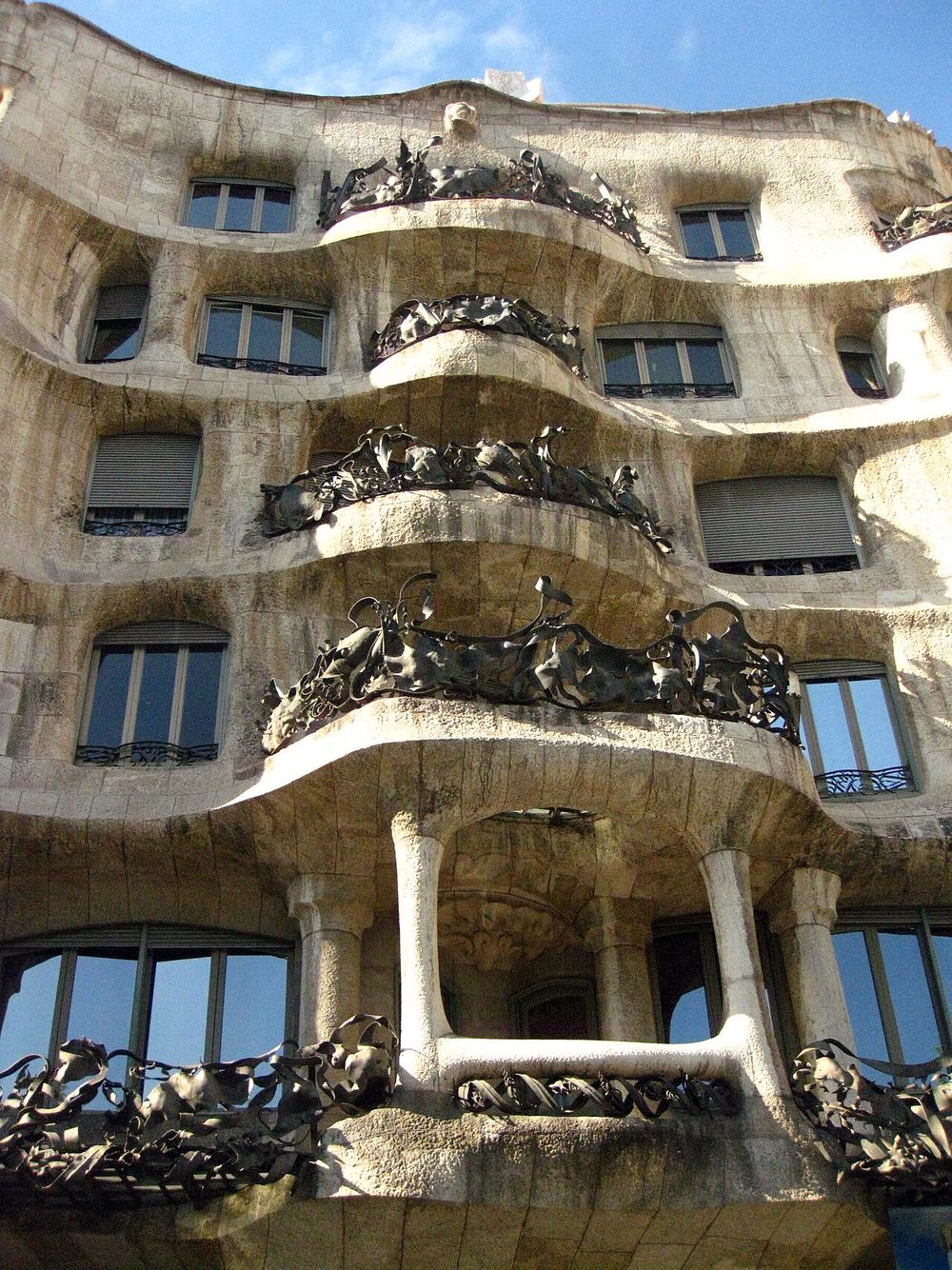
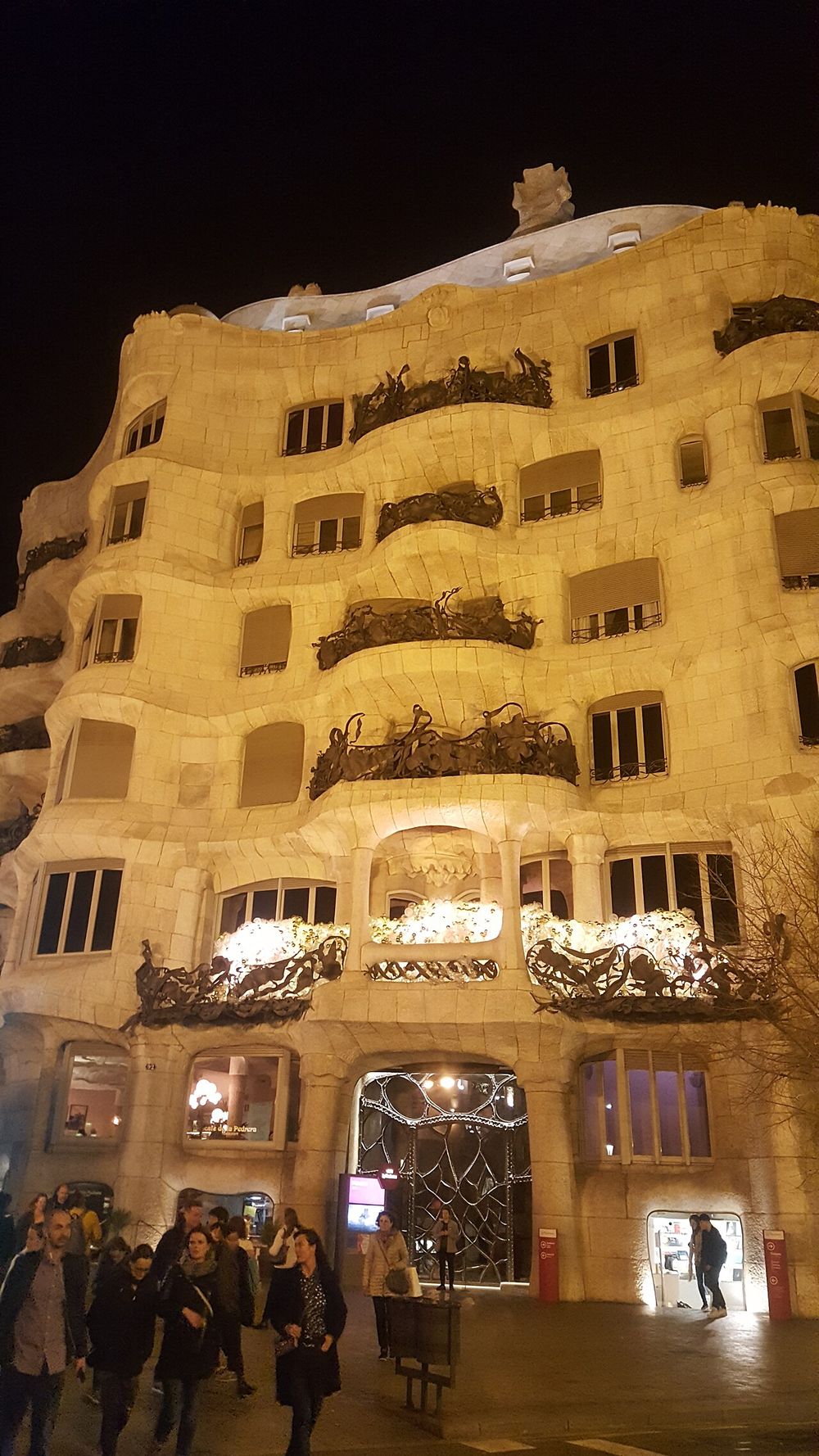
The front is a cliff of pale stone that rolls round the corner without a break. There is no edge where two streets meet.
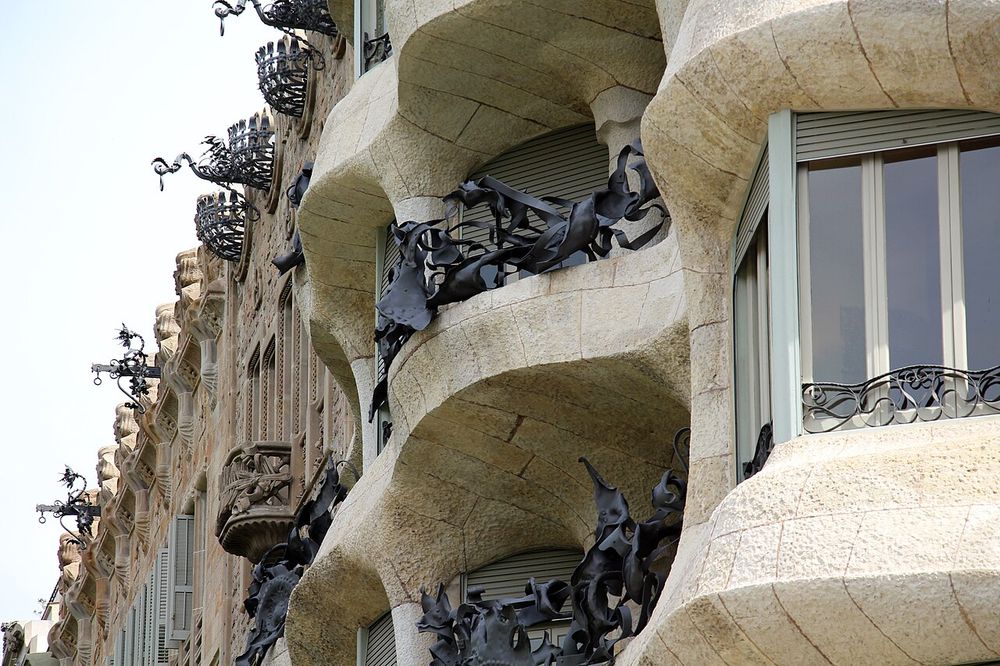
This stone carries nothing. It hangs on iron beams from a frame of columns behind. Because no wall inside holds the building up, every flat could be divided as the tenant liked, and no two floors are the same. Architects did not do this as a rule until the 1920s.
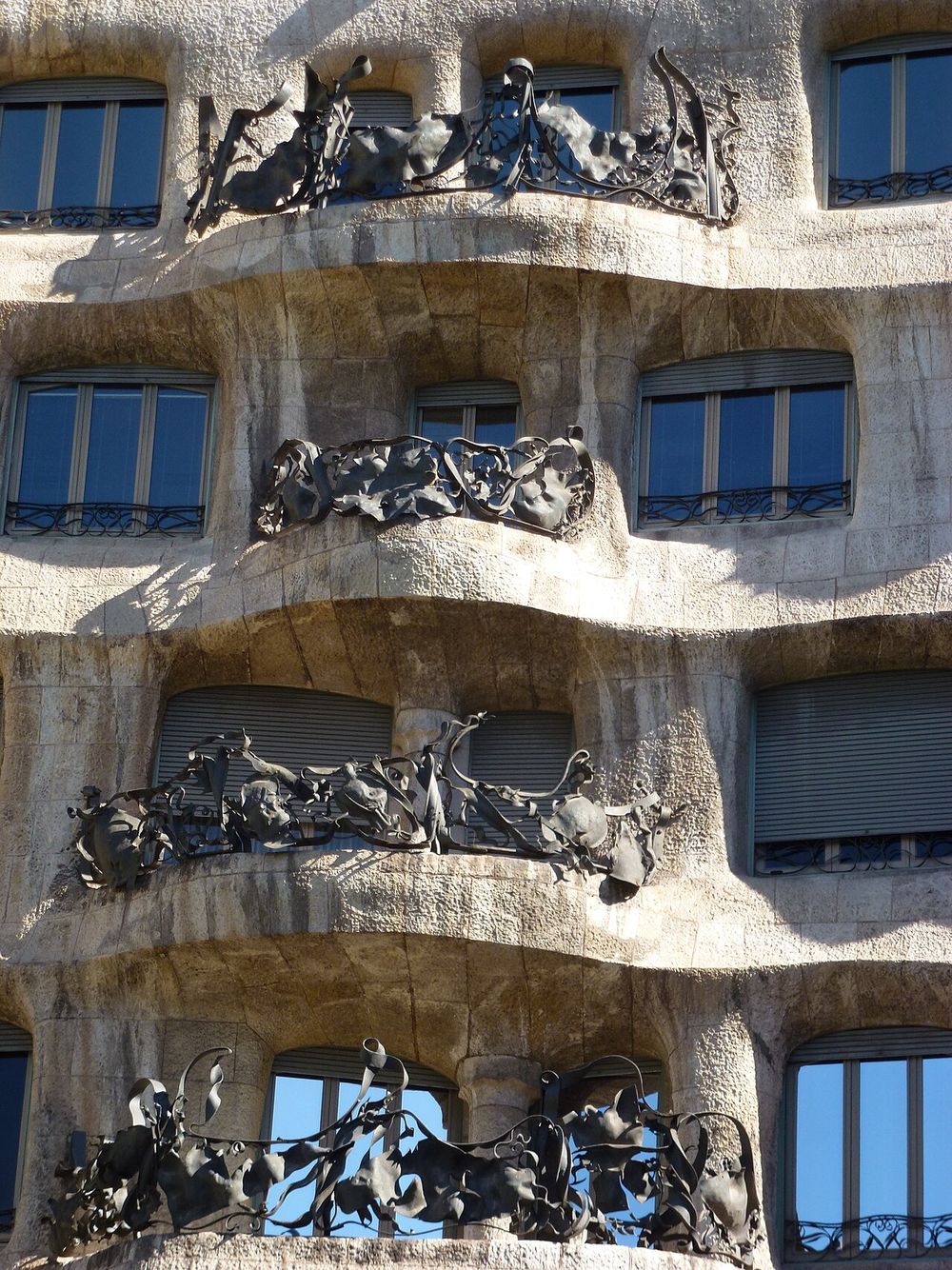
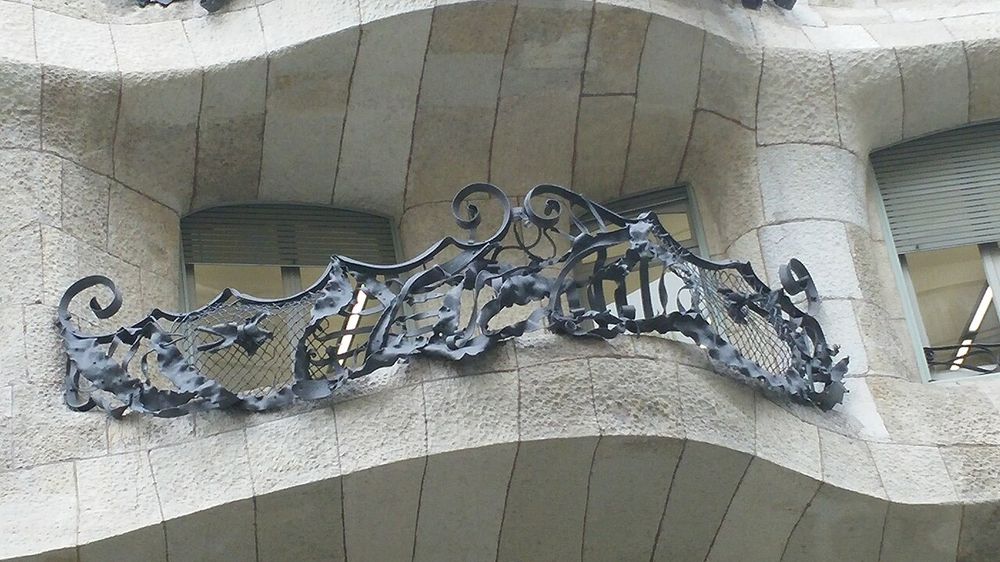
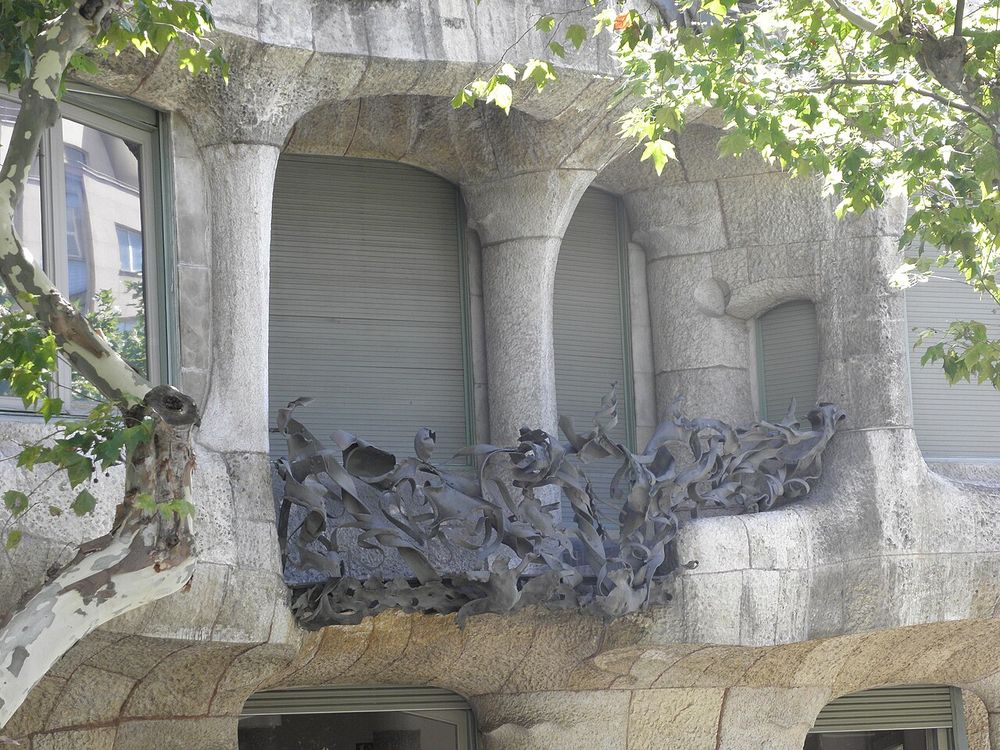
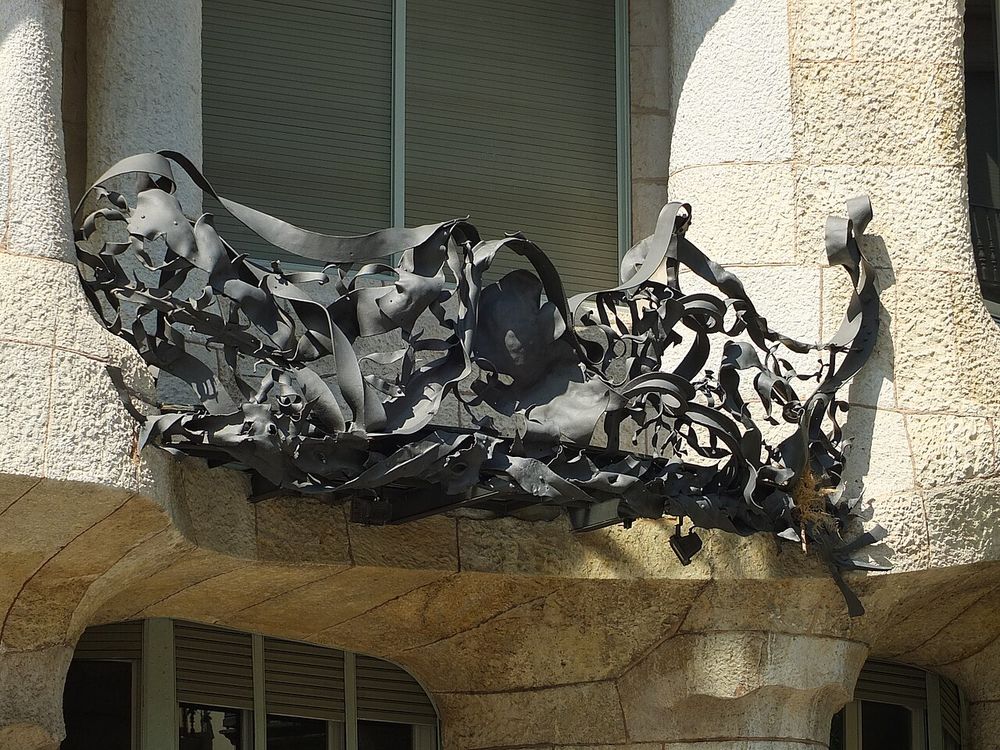
Look at the balconies. The railings are tangles of iron like seaweed thrown up on a rock. They were hammered out of scrap.
Now look at the roof line. Those shapes against the sky are chimneys and stair-heads. Go up and you will find yourself among them.
"La Pedrera is its proper name." It is a nickname and was meant unkindly. Cartoons of 1910 showed it as a garage for airships and as an Easter cake. The owners' name for it was Casa Milà.
"It is a museum." Most of it is offices and exhibition rooms run by a foundation, but a few flats are still let to tenants on old contracts.
"The stone front holds it up." See above: the front is a curtain.
"It was finished as Gaudí wished." It was to carry a group of the Virgin and two angels in bronze, four metres high, at the top of the corner. The owner refused it.
The day ticket covers all seven stops.
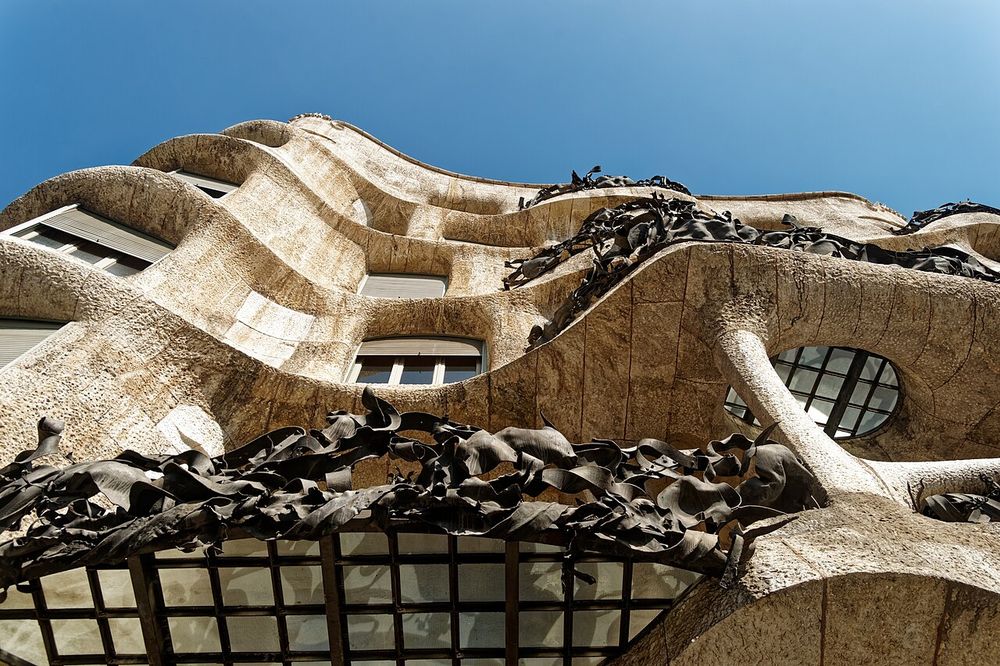
The stone came from two quarries south of the city. The blocks were set in place rough and carved on the wall, with Gaudí directing from the street.
Along the very top, cut into the stone, run the Latin words of the angel's greeting to Mary, with a rose in the middle. Rosa is Roser, the owner's name. The statue was to stand above the rose.
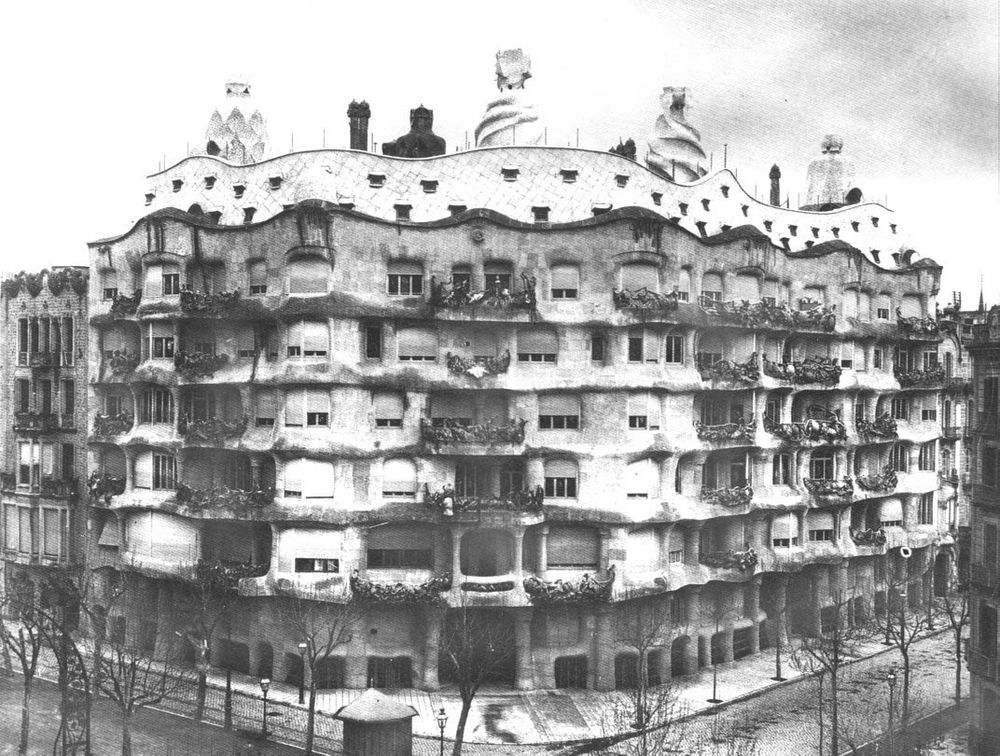
The house broke the building rules. It was taller than allowed, and one column stood on the public pavement. The city fined Milà and threatened to cut the column off. In 1909 a committee ruled that the building was a monument and need not obey.
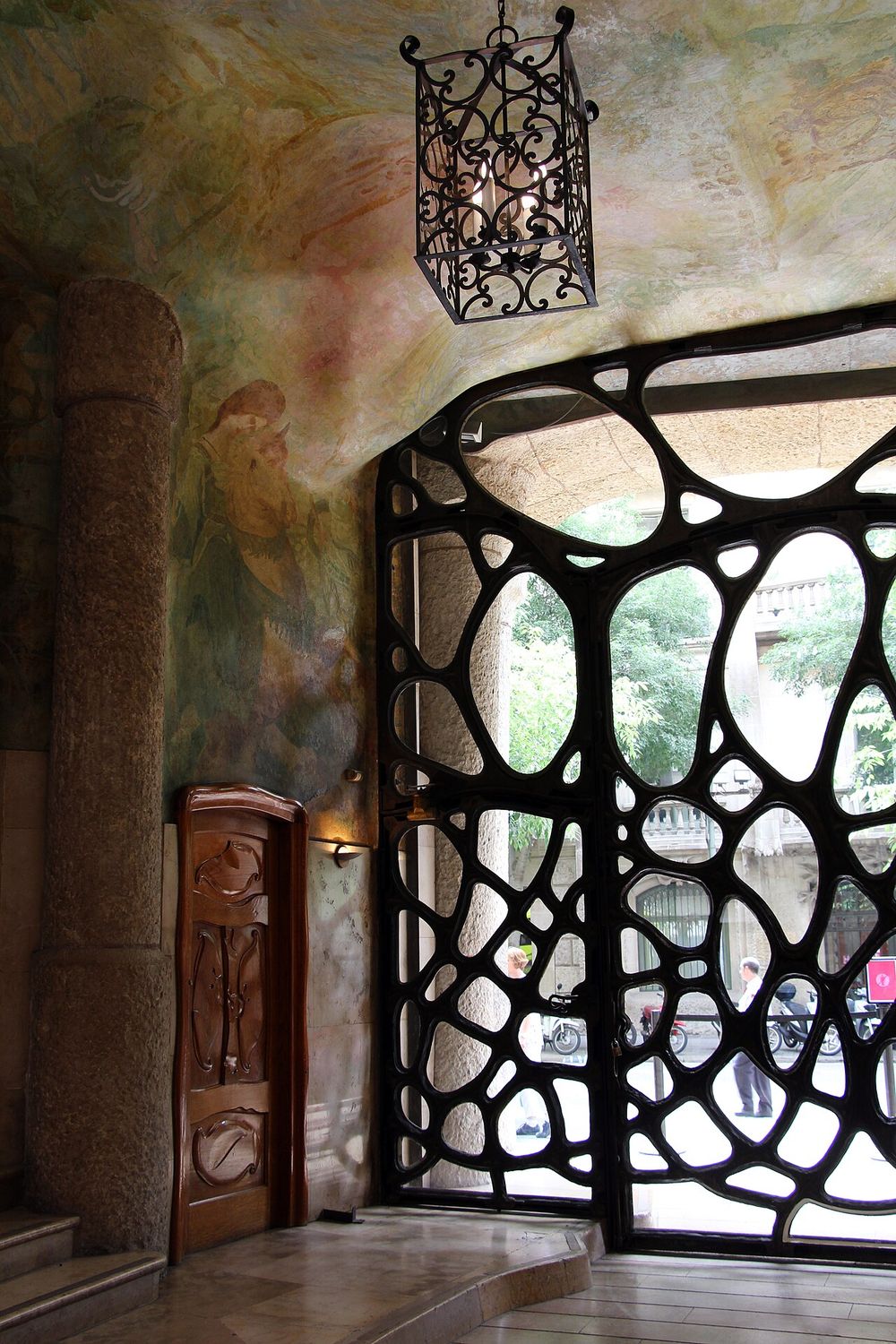
The two doors are webs of iron and glass, with small panes low down, where feet might kick them, and large panes above. Carriages and motor cars drove straight in and down a ramp to a garage in the basement, one of the first in the city.
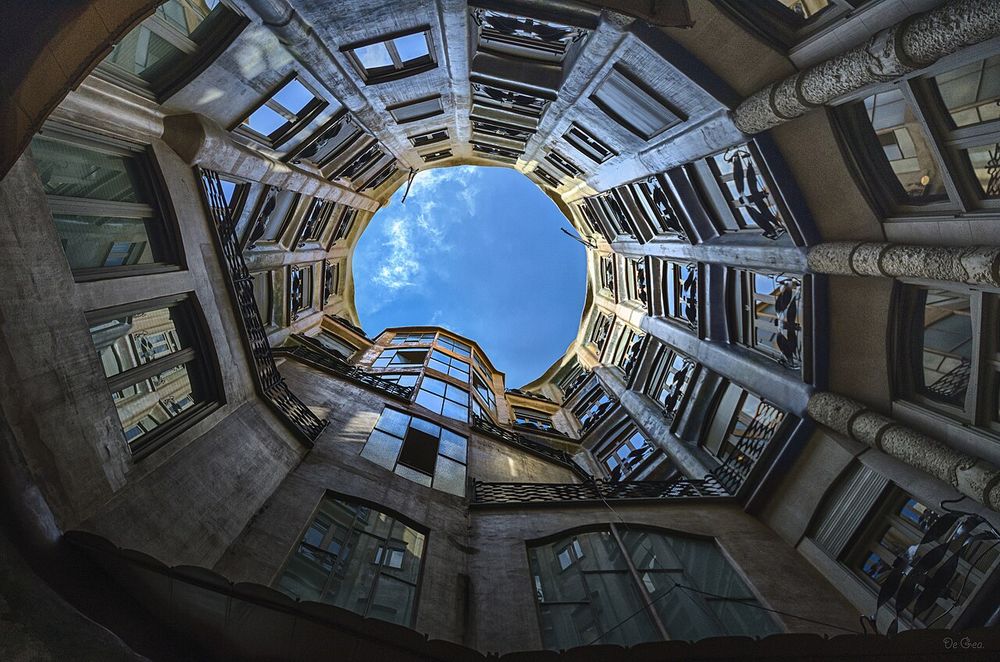
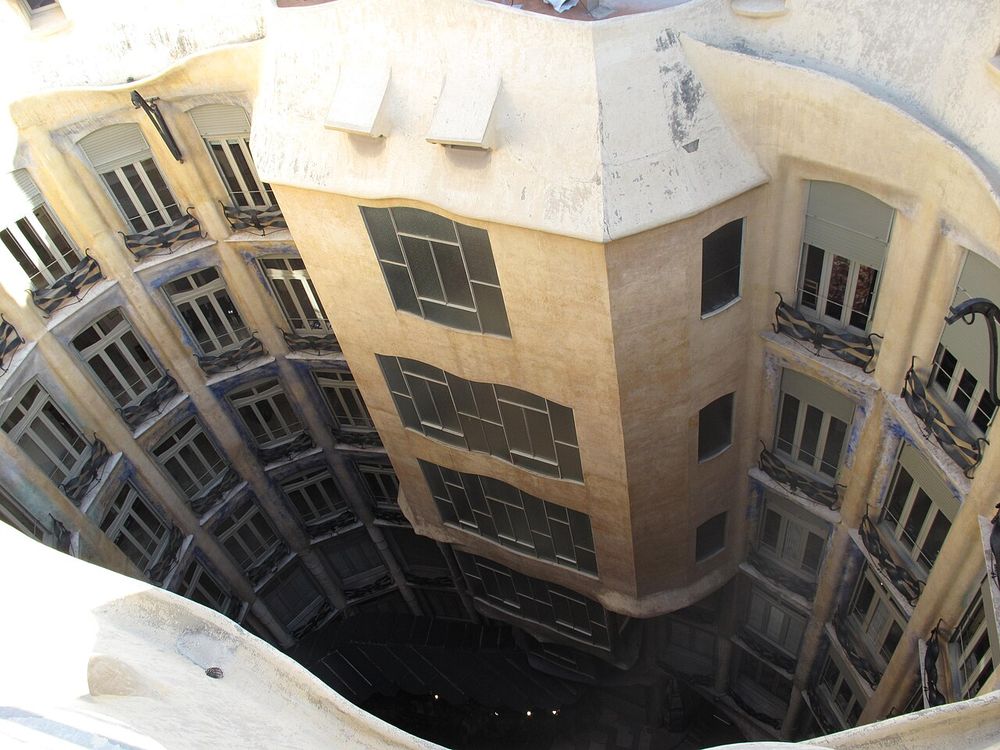
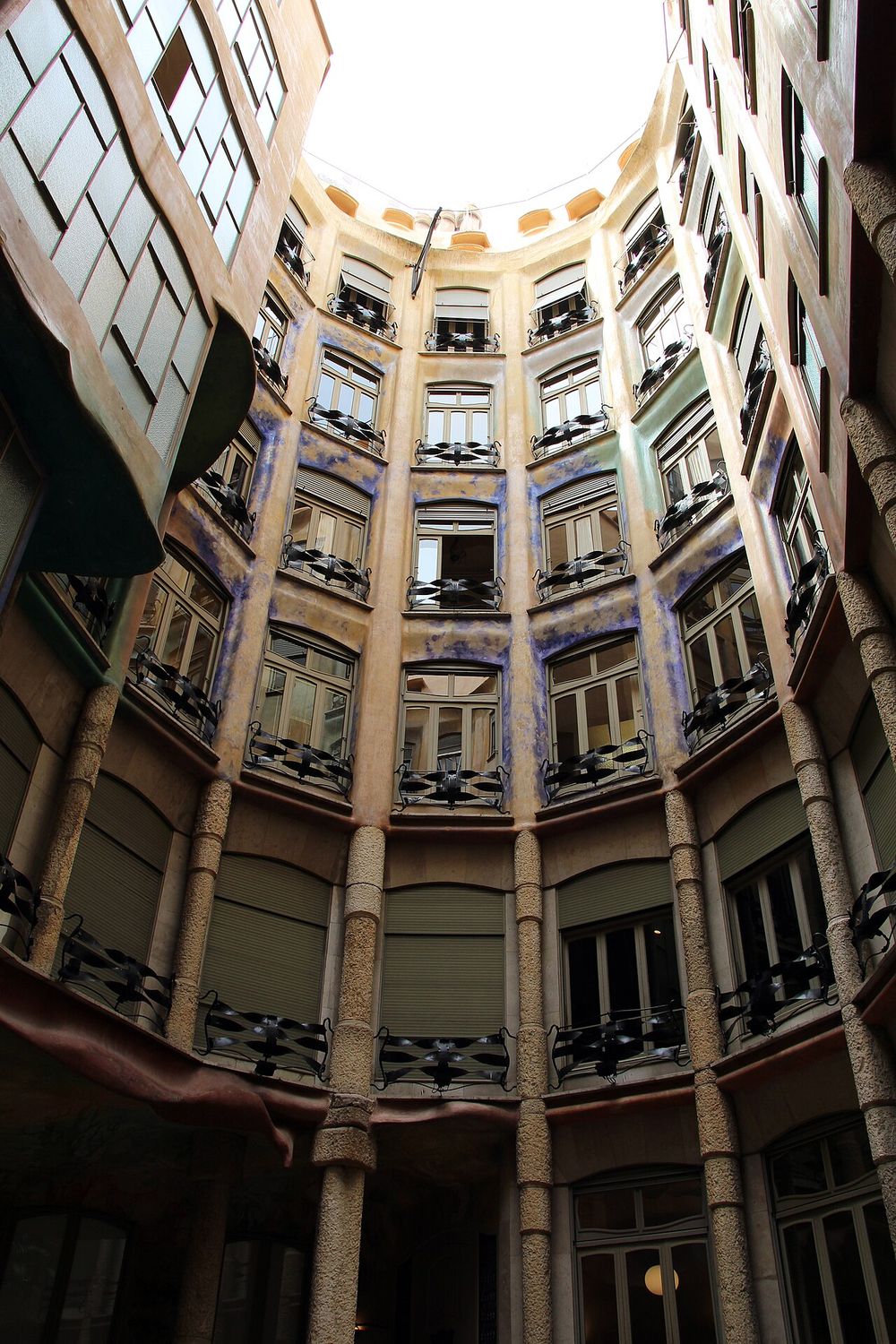
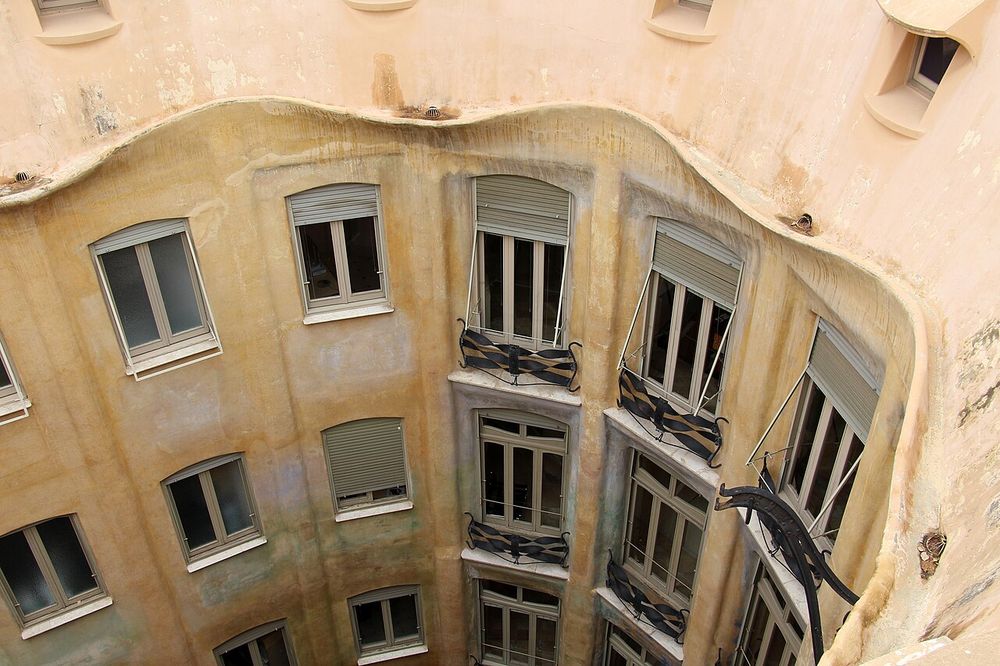
Inside are two open courts, one round and one oval. Every room has a window on the street or on a court. Look up from the bottom: the walls are painted with flowers and the sky is a shape cut out of stone.
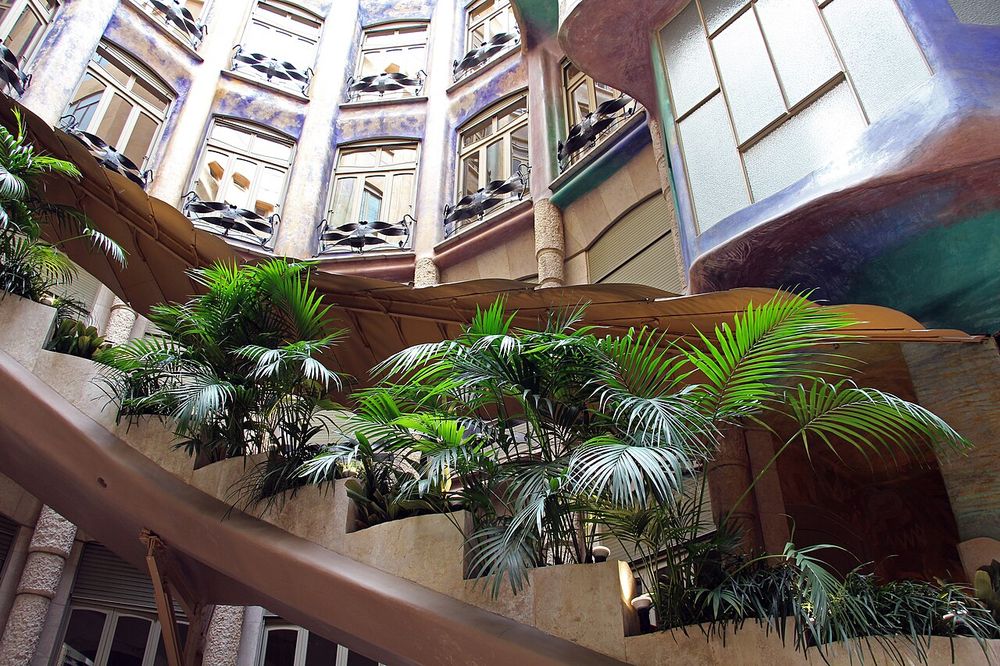
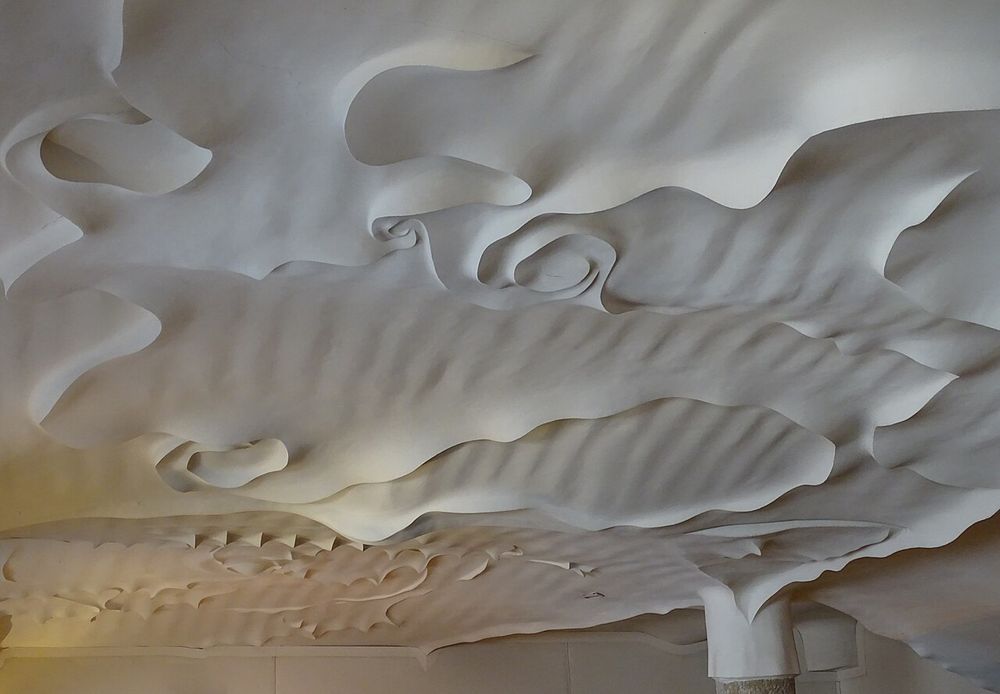
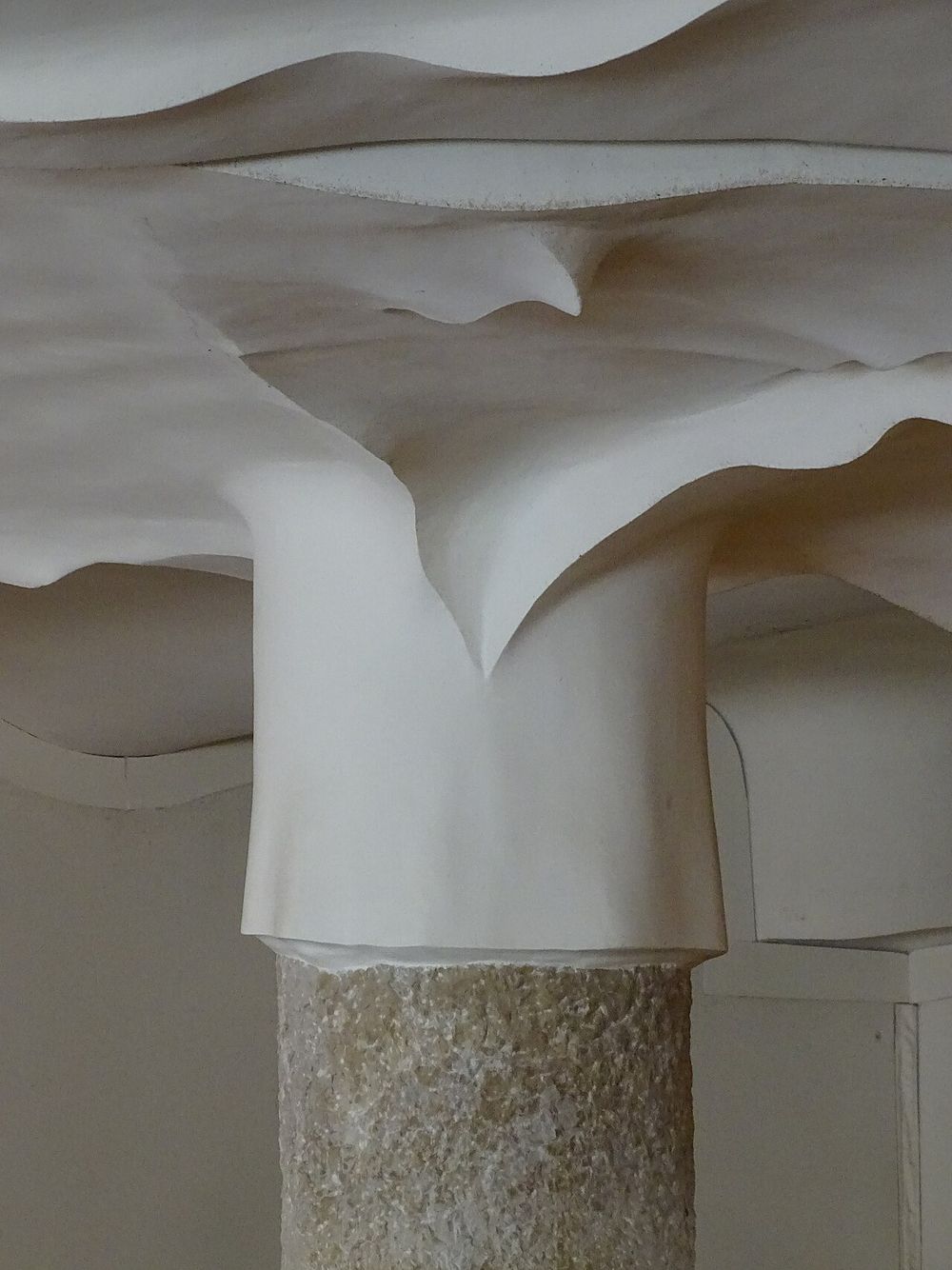
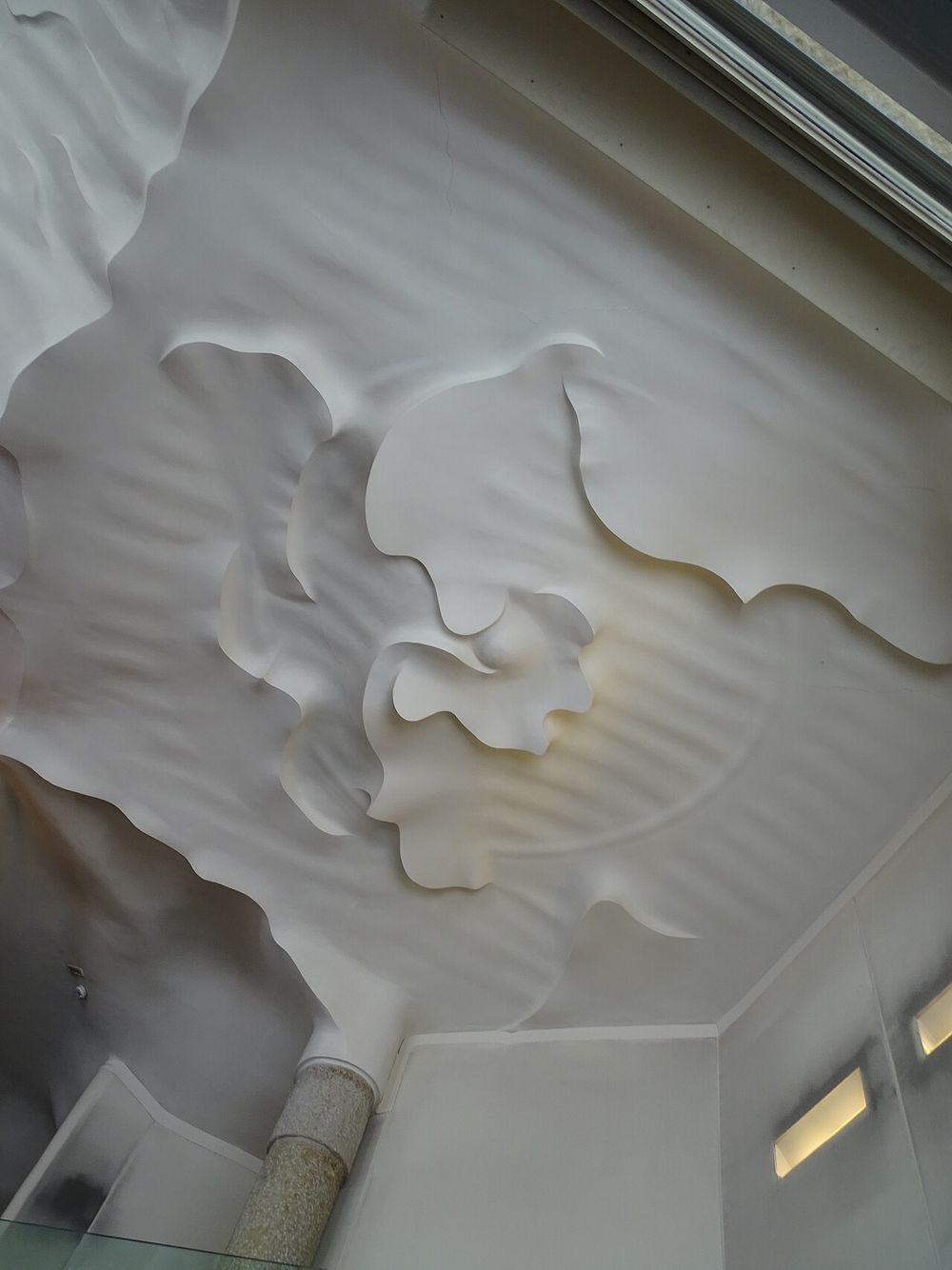
One flat on the fourth floor is furnished as a well-off family had it about 1910: the maid's room, the kitchen with its coal range, the bathroom with a shower. Look at the ceilings. Each is a different swirl of plaster.
Look at the door handles and the peepholes. Gaudí shaped them to the hand and the eye.
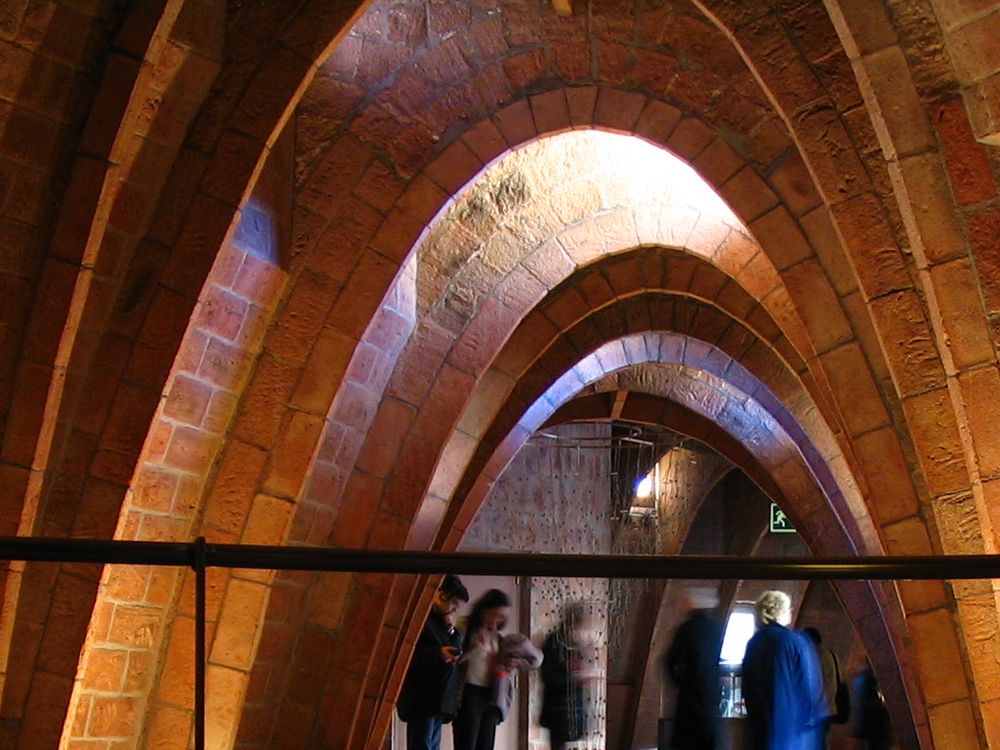
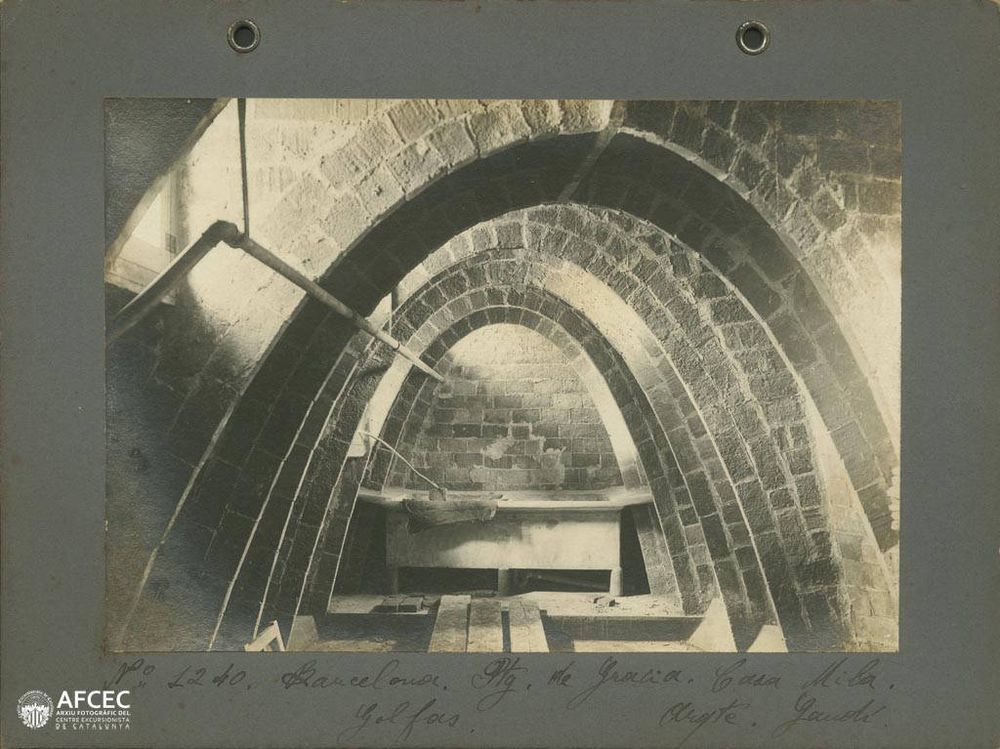
The top floor was the laundry. It is a tunnel of 270 arches of thin brick laid on edge, each a little different in height, so that the roof above them rises and falls. It kept the flats below cool in summer and warm in winter.
It now holds models that show how Gaudí worked out his shapes: with hanging chains, weights and mirrors.
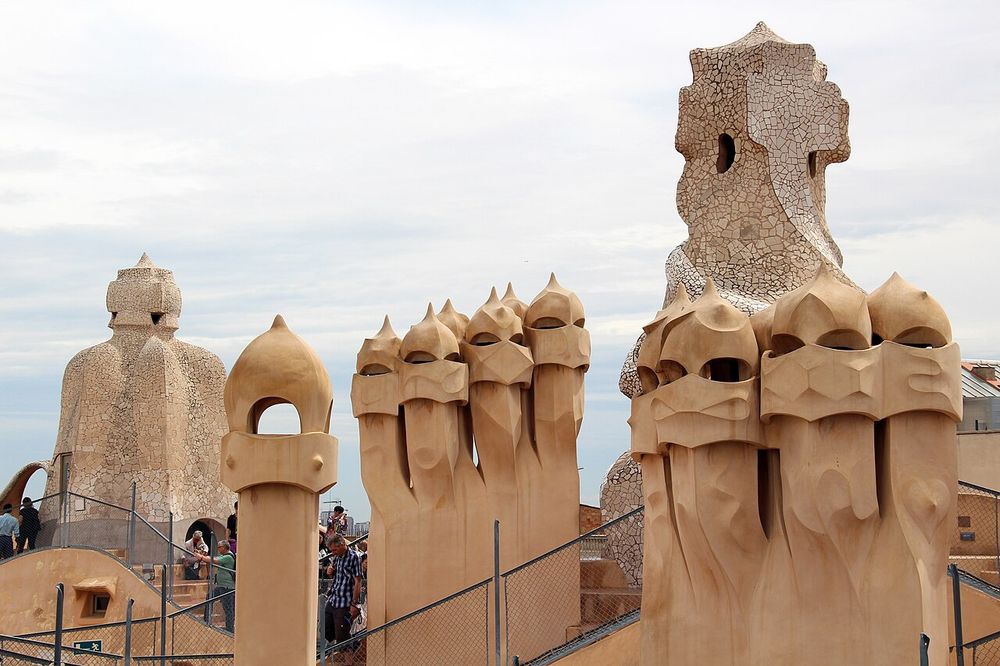
The roof is not flat. It climbs and dips over the arches in steps, round the two wells of the courts.
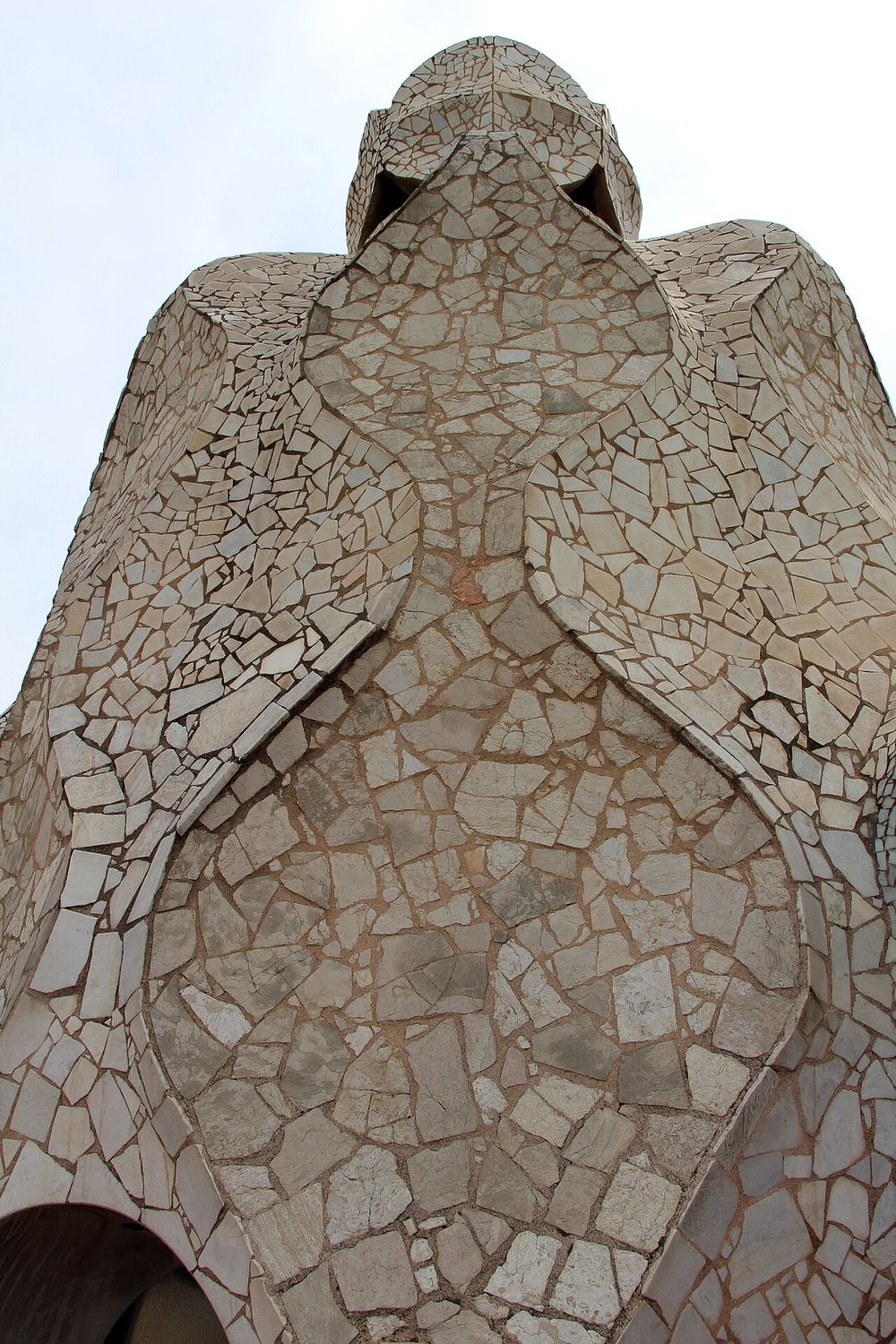
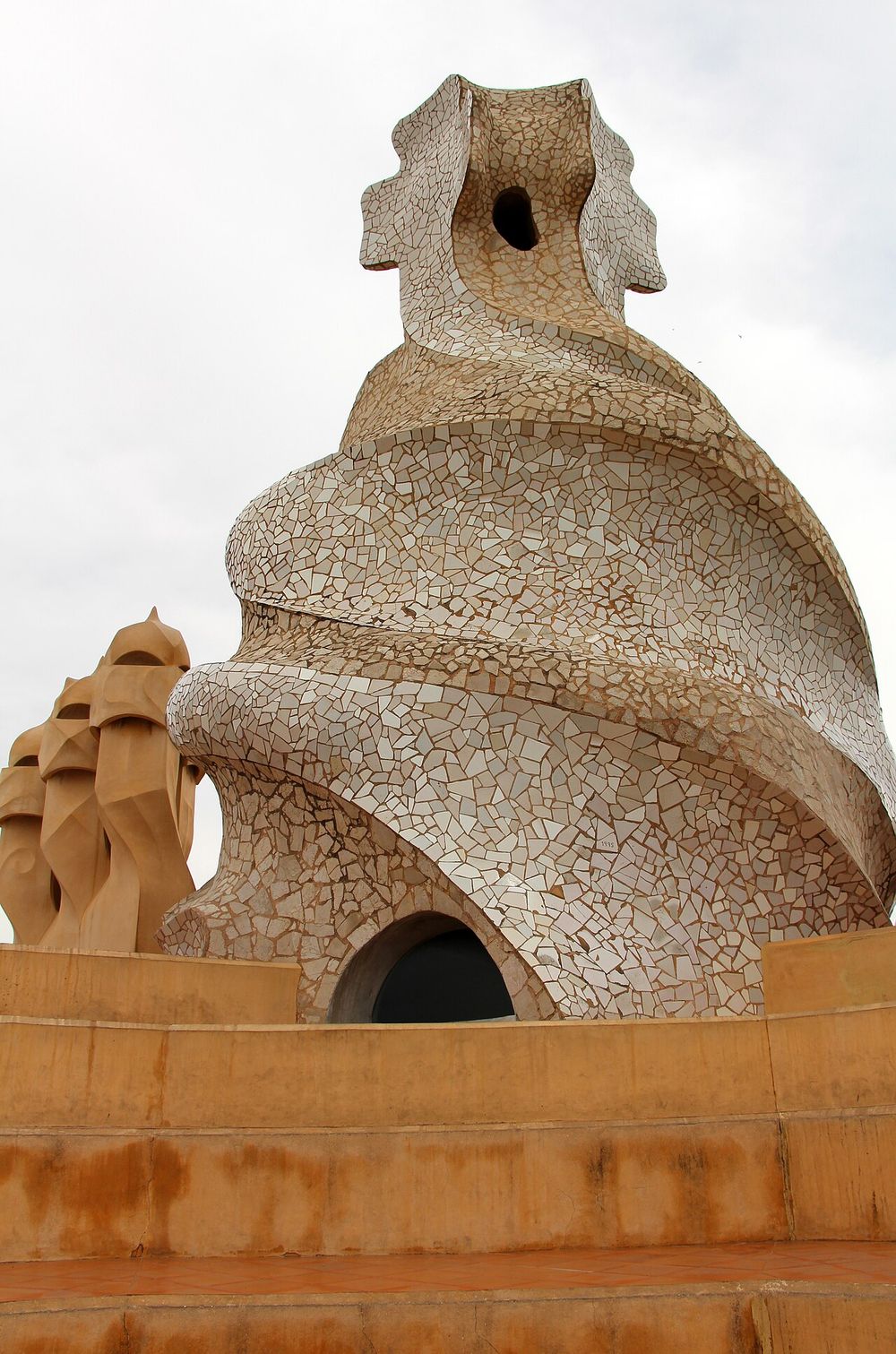
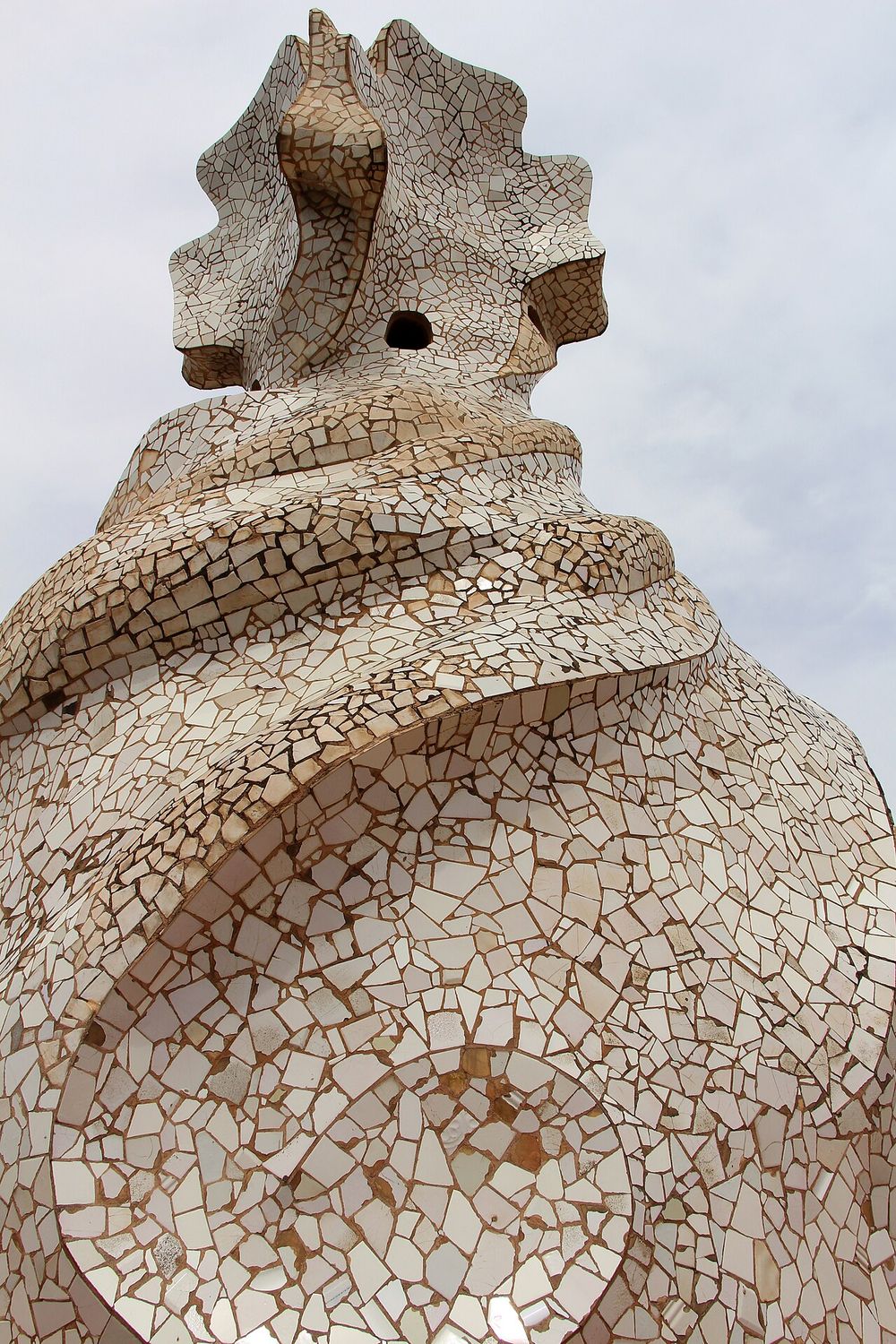
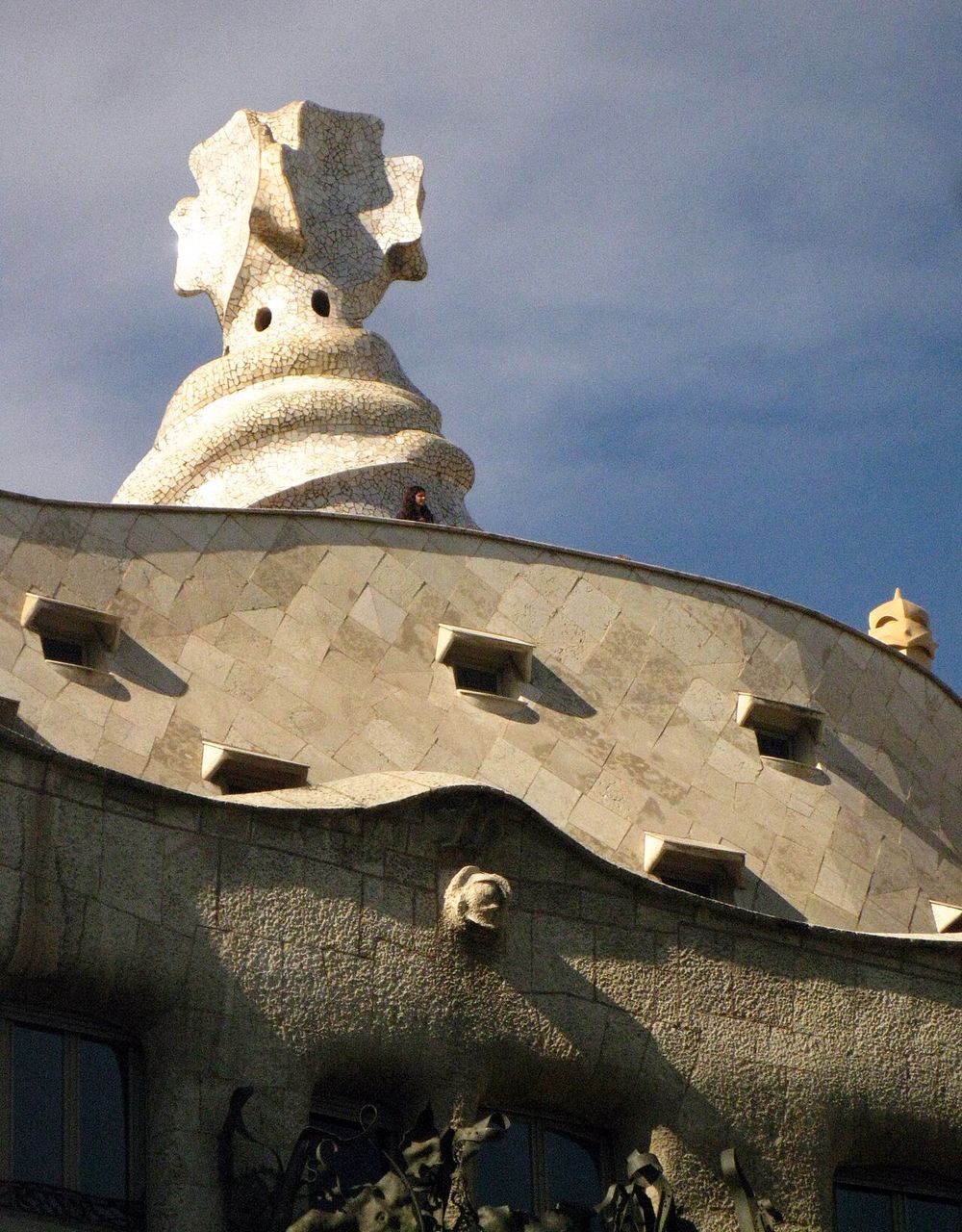
The six big shapes are the heads of the stairs. Four are covered in broken white marble and tile. Look for the one whose top is green: it is faced with the bottoms of champagne bottles.
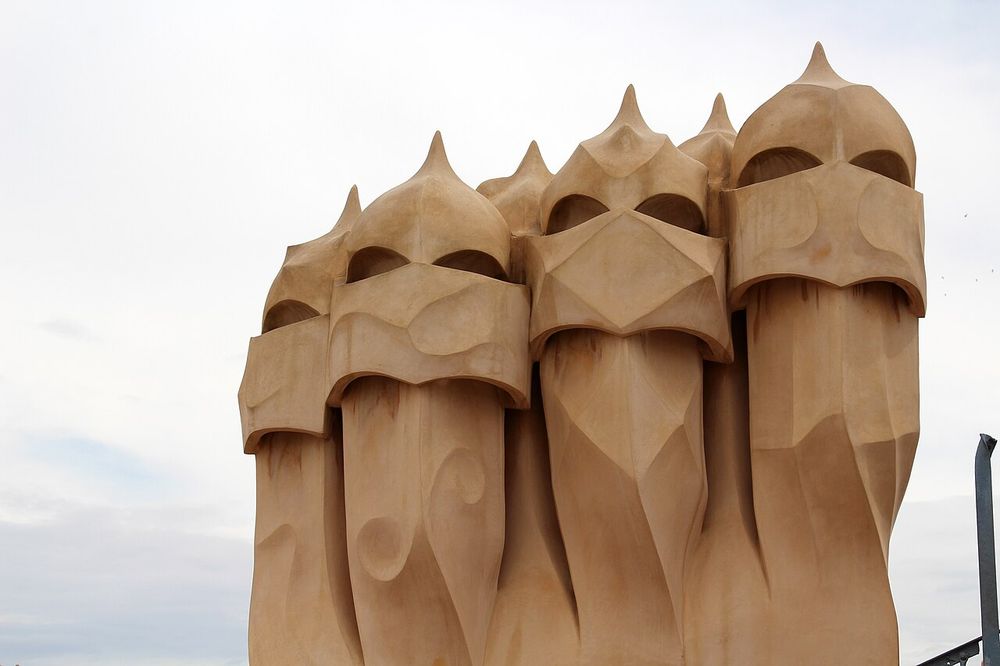
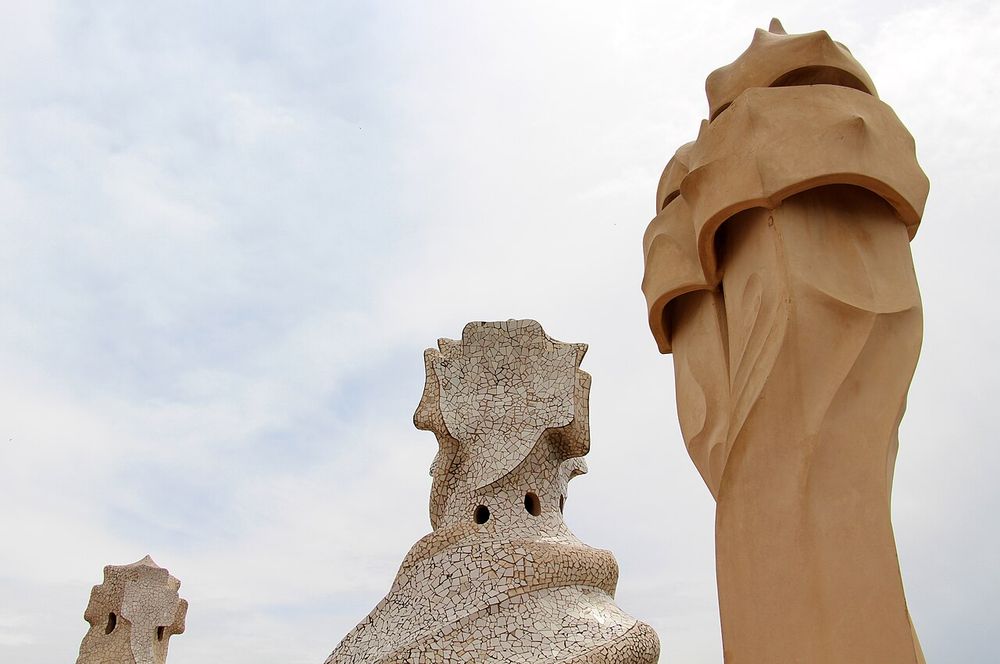
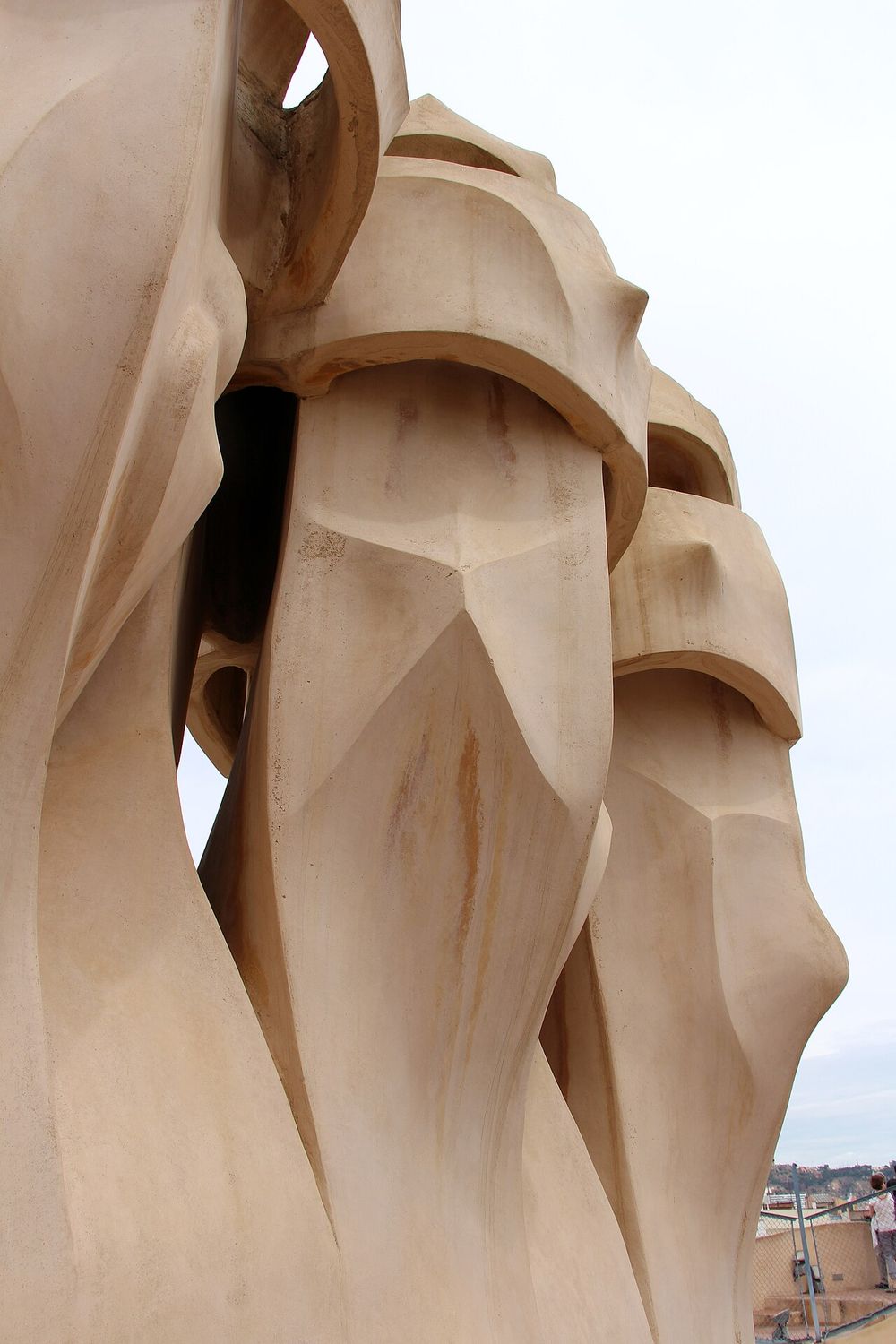
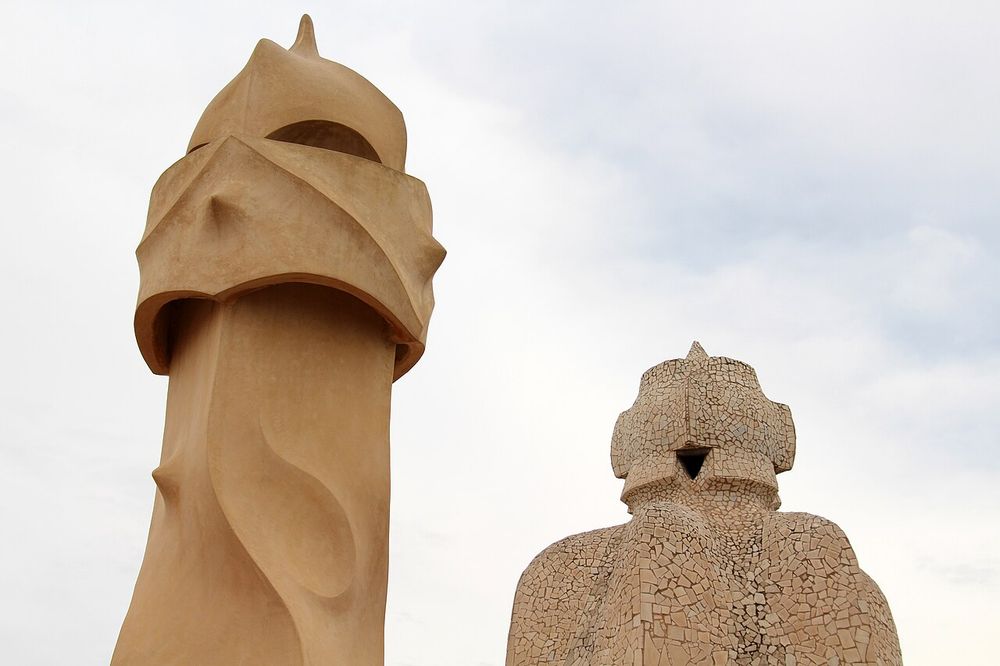
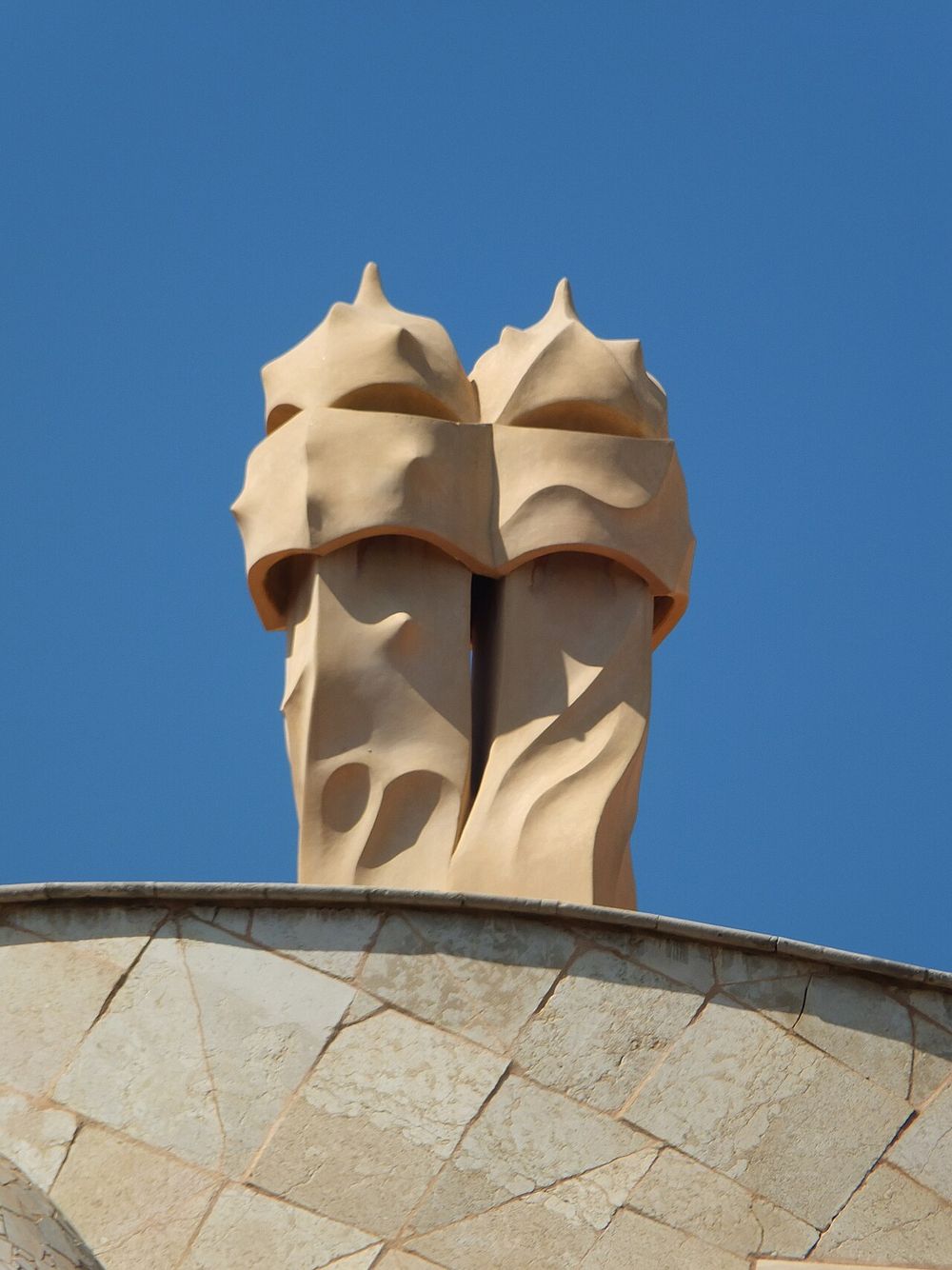
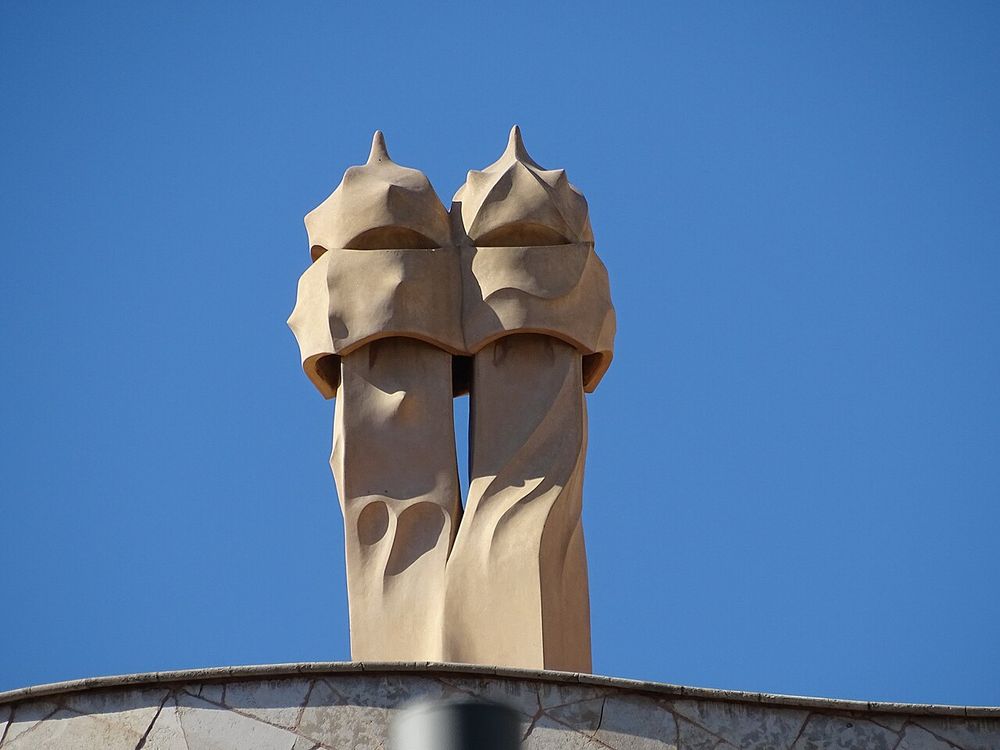
The smaller figures in groups are chimneys, about thirty of them. With their hooded heads and slit eyes they look like sentries. The Catalans call them witch-scarers.
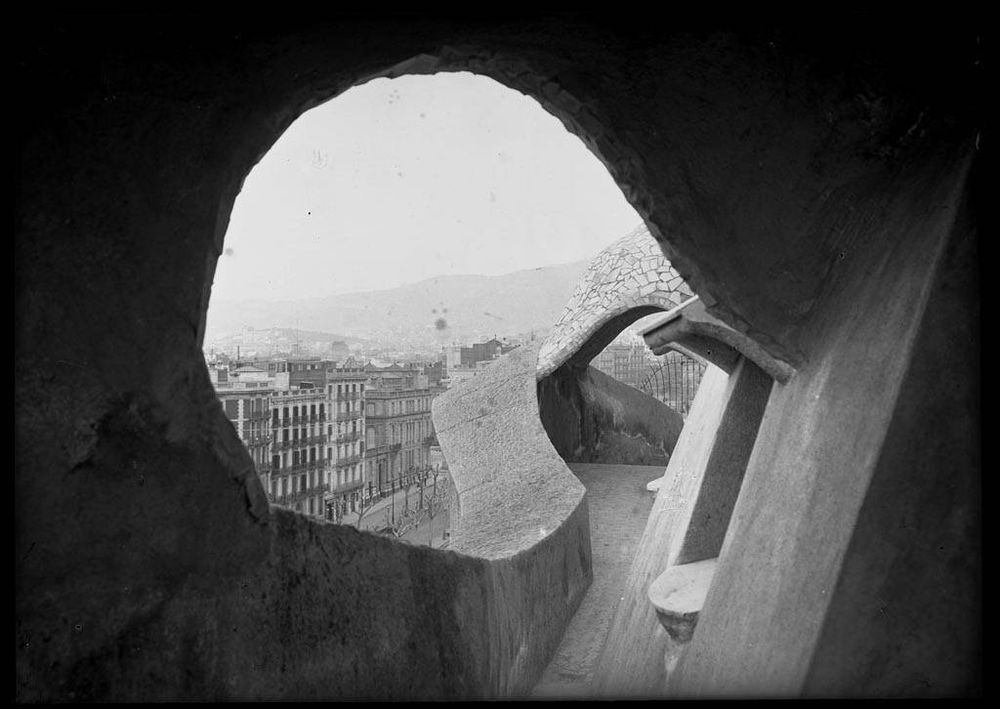
The same shot: one of the stair-heads has an arch cut through it. Stand a few steps back on the side away from the street and the towers of the Sagrada Família sit exactly inside the arch.
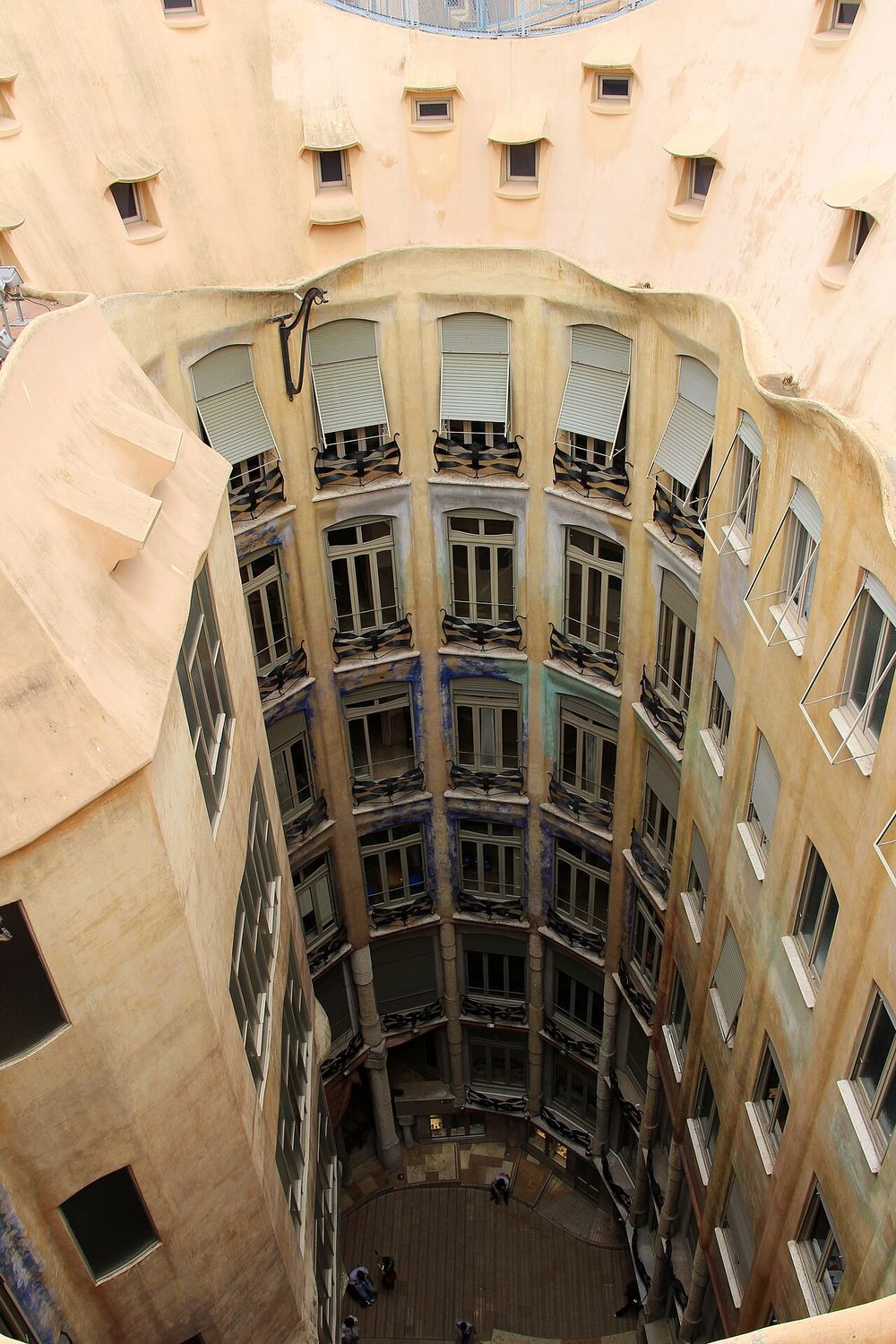
Look down into a court from the roof. You can see how thin the building is: a ribbon of rooms wound round two holes.
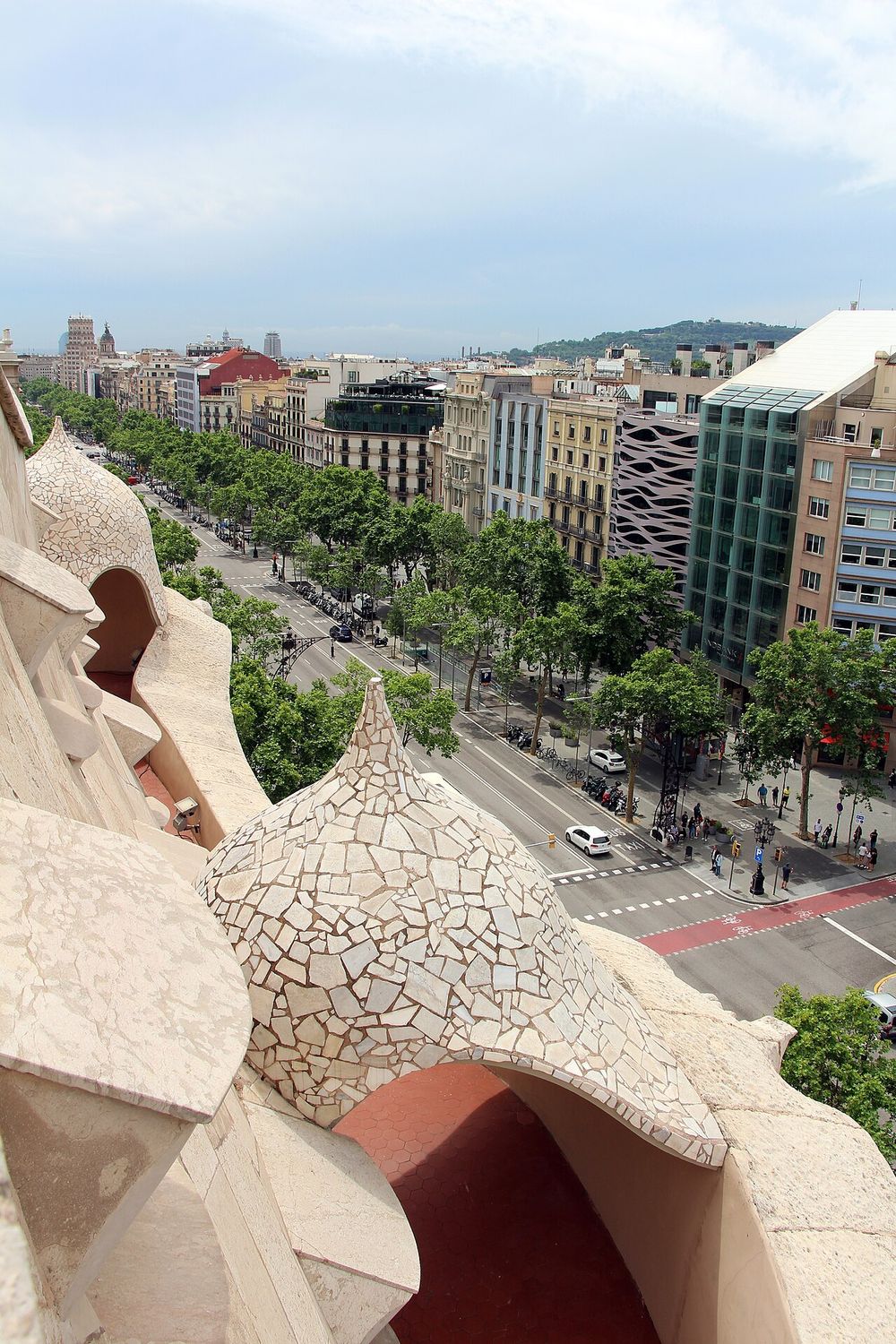
The other way, the avenue runs down towards the old city and the sea.
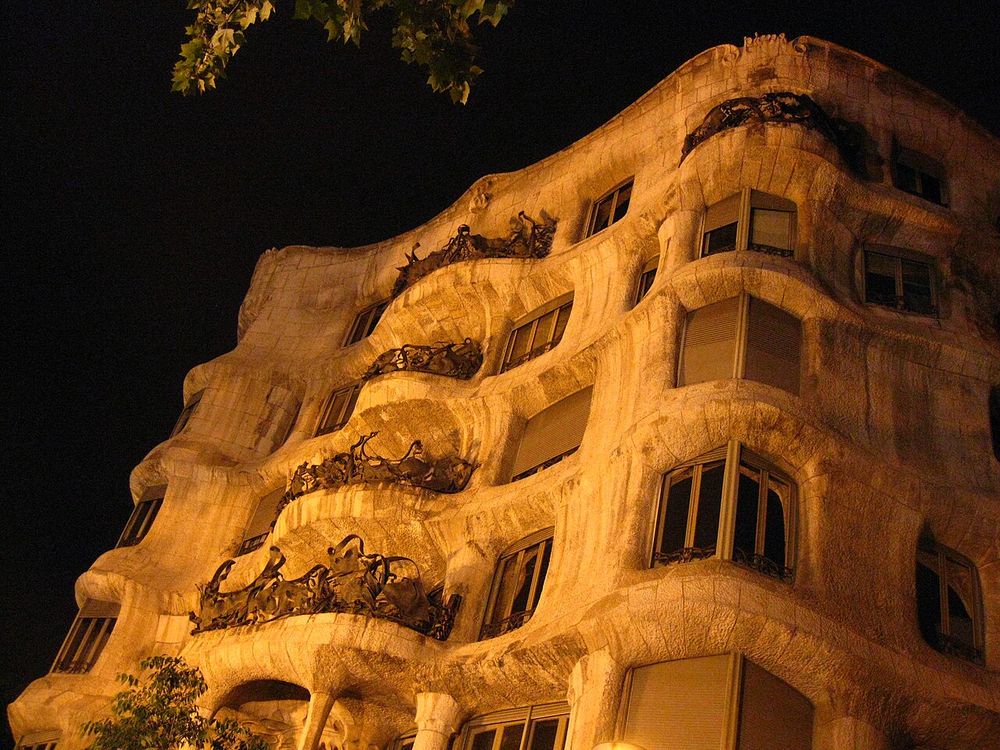
By the 1980s the stone was black with soot, the ground floor held a bingo hall, and the roof was a store for water tanks and aerials. A savings bank bought the building in 1986 and spent ten years cleaning and repairing it. What you see is the colour of 1912.
| Year | Here | Elsewhere |
|---|---|---|
| 1906 | Work begins | An earthquake destroys San Francisco |
| 1909 | Riots in Barcelona; the Virgin is dropped from the plan | Blériot flies across the English Channel |
| 1912 | The house is finished | The Titanic sinks |
| 1936 | Civil war; a left-wing party takes the building over | The Olympic Games are held in Berlin |
| 1984 | It joins the World Heritage list, still black with soot | The first Apple Macintosh is sold |
| 1996 | The restored building opens | A sheep called Dolly is cloned in Scotland |
One line to remember: a house Barcelona laughed at for seventy years, and then washed.
These are stories people tell about this place. They are legends, not history, and each one says where it comes from.
The green glass on one stair-head comes from the bottles drunk at the party when the house was finished.
Source: Told by guides at the house
George Lucas saw the chimneys and took from them the helmets of his soldiers.
Source: Repeated in Barcelona; never confirmed by the film's designers
A tenant complained that with no straight wall she had nowhere to put her piano. Gaudí told her to take up the violin.
Source: Told by Gaudí's biographers; the painter Santiago Rusiñol is also said to have joked that the only pet for such a house was a snake
Later, people who live here will be able to add the stories they grew up with, and say which of these they have heard.
Last checked 2026-11-12. Barcelona guides checked in August 2026 and Spanish ticket guides of 2026 quoting the foundation that runs the house.
Checked 2026-11-12
Stand at the site, sign in, press the button, and collect its stamp. Your browser will ask to use your location. It is sent to us once to confirm that you are at the site; we keep how far you were from it, not the spot where you stood.
Your stamps are saved to your account, so they follow you to any device. Checking from a browser cannot rule out every false location; stricter checks arrive with the app.
Photos here show the place, not people. Each one is credited to the visitor who took it and appears after our team has looked at it. A photo with you in it belongs under “I am here”.