LegendThe naked workman
To get the curve of the bench right, Gaudí made a workman take off his clothes and sit in wet plaster, and copied the print.
Source: Told by guides; no witness of the time records it
Gràcia, Barcelona, Spain
Park Güell · park GWAY (Catalan: park GWELL)
A housing estate for sixty rich families that sold two plots and failed. What was built before the money stopped is the entrance, the stairs, a market hall, a great terrace and the roads. Gaudí made them between 1900 and 1914 out of the hill's own stone and the broken china of Barcelona. The city bought the failure and opened it as a park.
Photo: Joe Mabel, CC BY-SA 4.0, Wikimedia Commons
Eusebi Güell made his fortune in textiles and cement. In 1899 he bought a dry hillside above Barcelona, known as the Bare Mountain, and asked his architect, Antoni Gaudí, to lay it out as a garden suburb on the English model. That is why it is spelt Park, with a k, and not Parc.
The hill was steep, the tram did not reach it, and buyers had to accept pages of rules. By 1914 only two houses stood. Güell died in 1918 and his heirs sold the land to the city. In China these years run from the end of the Qing dynasty (1644–1912) into the first years of the Republic.
Close by, with a page of its own: Sagrada Família, Casa Batlló, Casa Milà.
The ticket is for the monumental zone, which holds stops 1 to 6. Gaudí's house has a separate ticket.
| Part | Ticket |
|---|---|
| The lodges, the stairs and the lizard | Park ticket |
| The hall of columns | Park ticket |
| The terrace and the bench | Park ticket |
| The washerwoman's portico and the viaducts | Park ticket |
| The Gaudí House Museum | Separate ticket |
| The hill of the three crosses | Check on the day: part of the wooded hill |
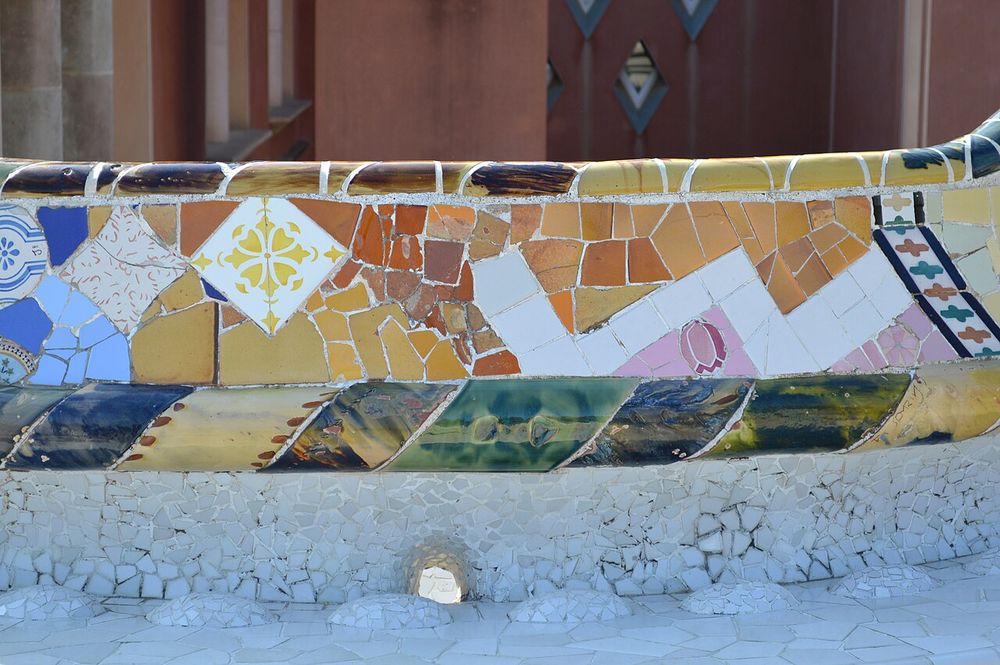
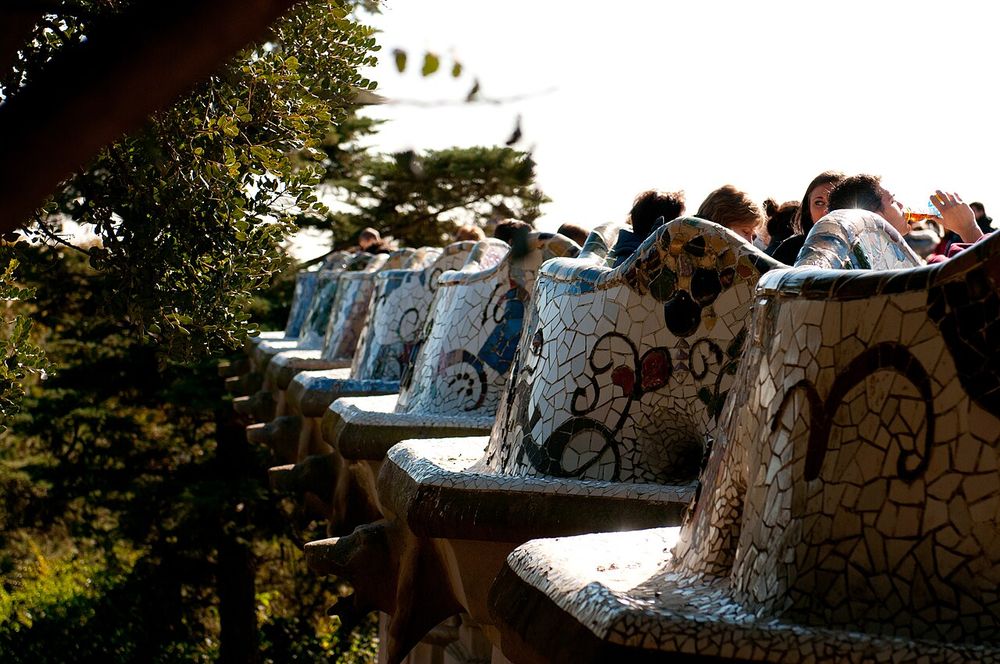
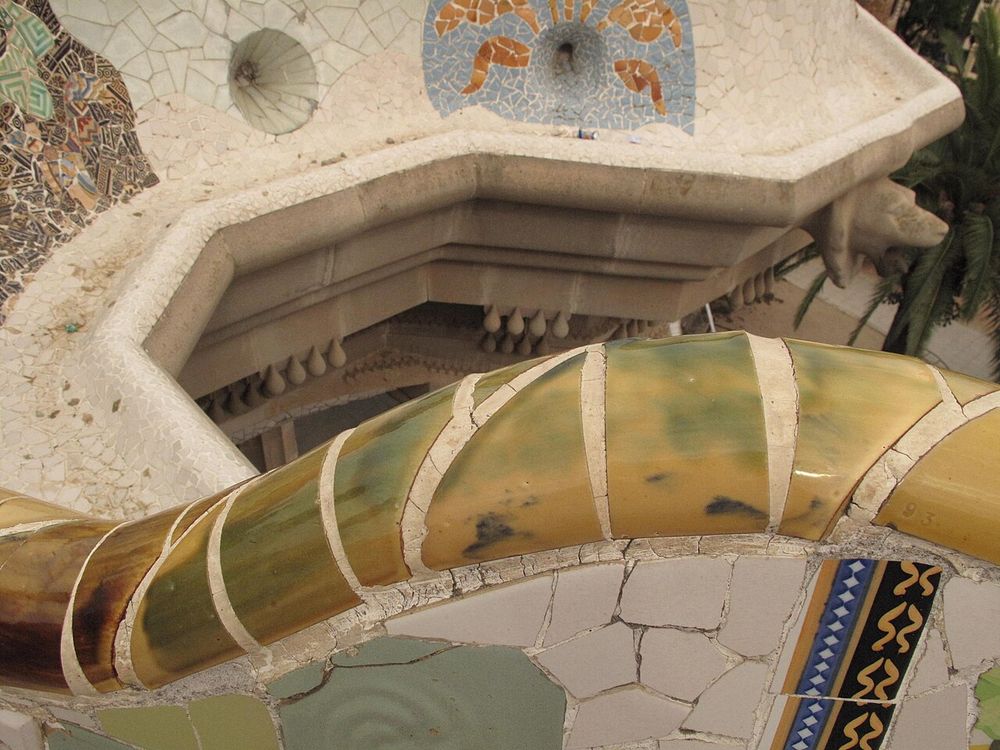
The bench runs round the edge of the terrace like a snake, 110 metres long. Sit down. The back leans, there is a bulge for the small of your back, and holes behind the seat let the rain out so you never sit in a puddle.
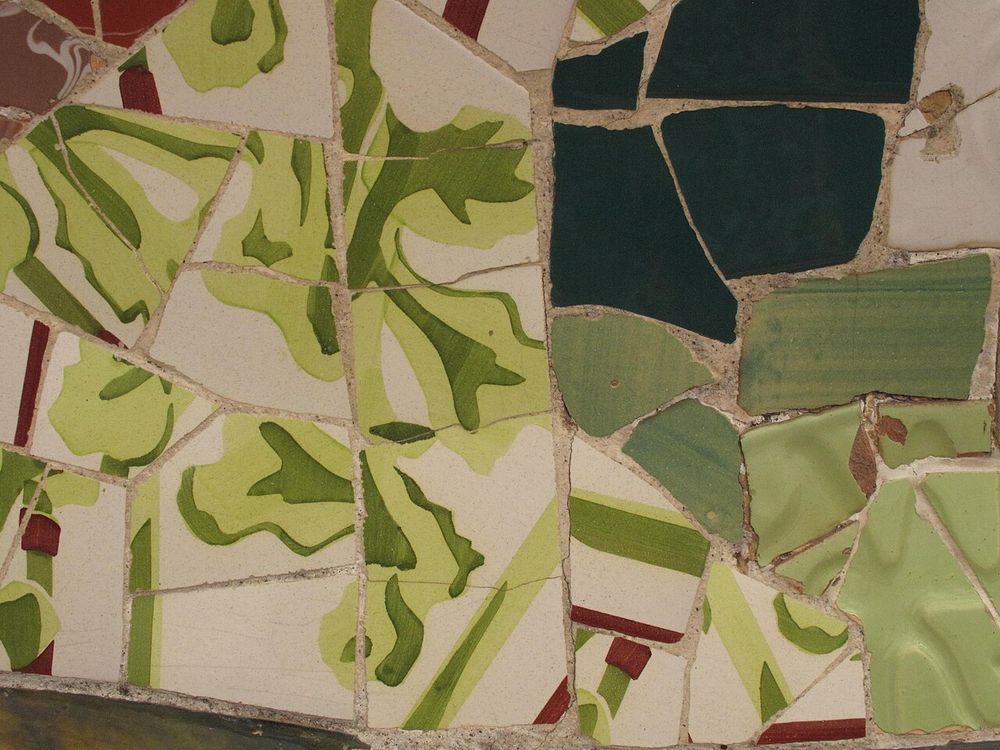
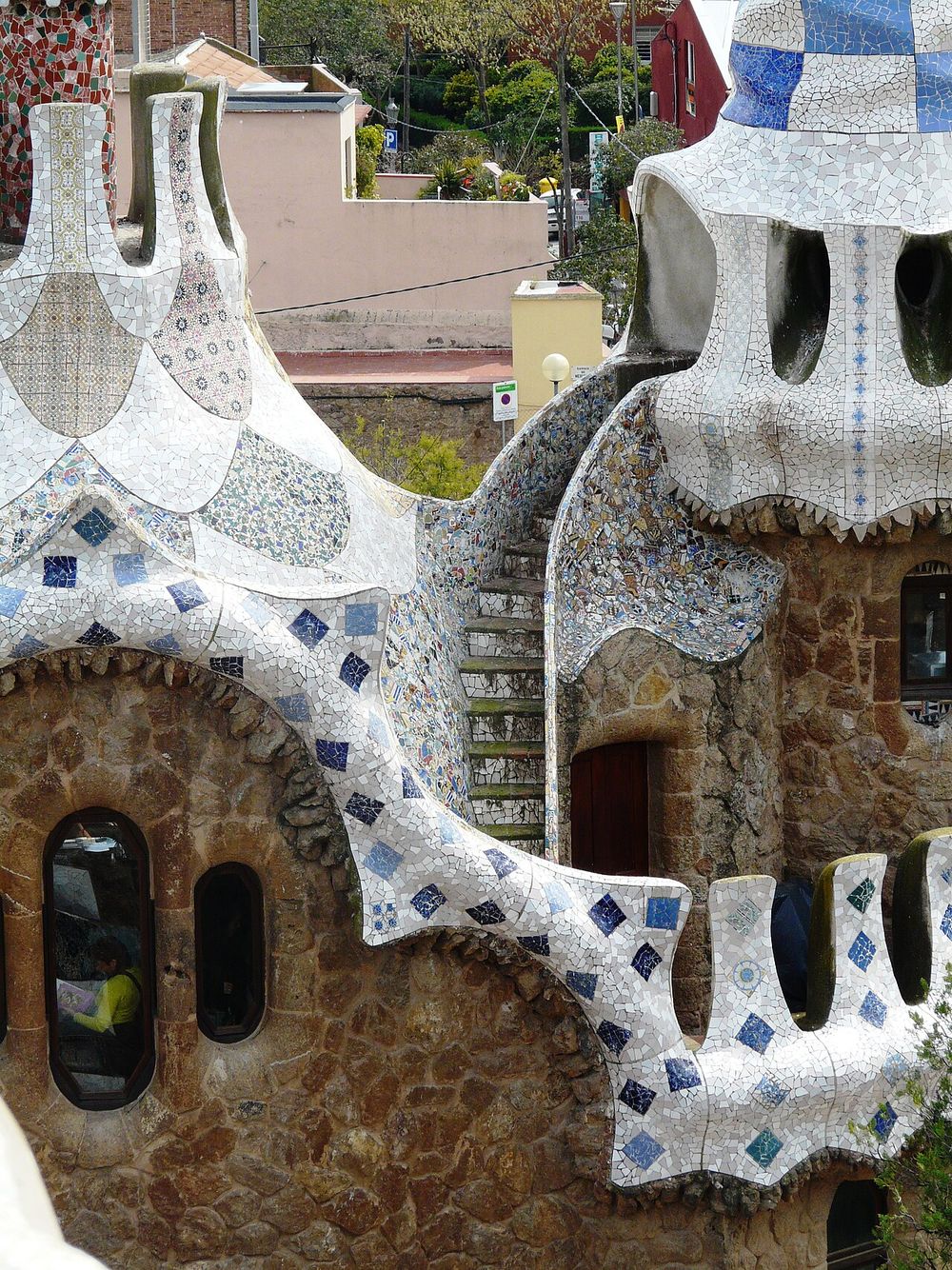
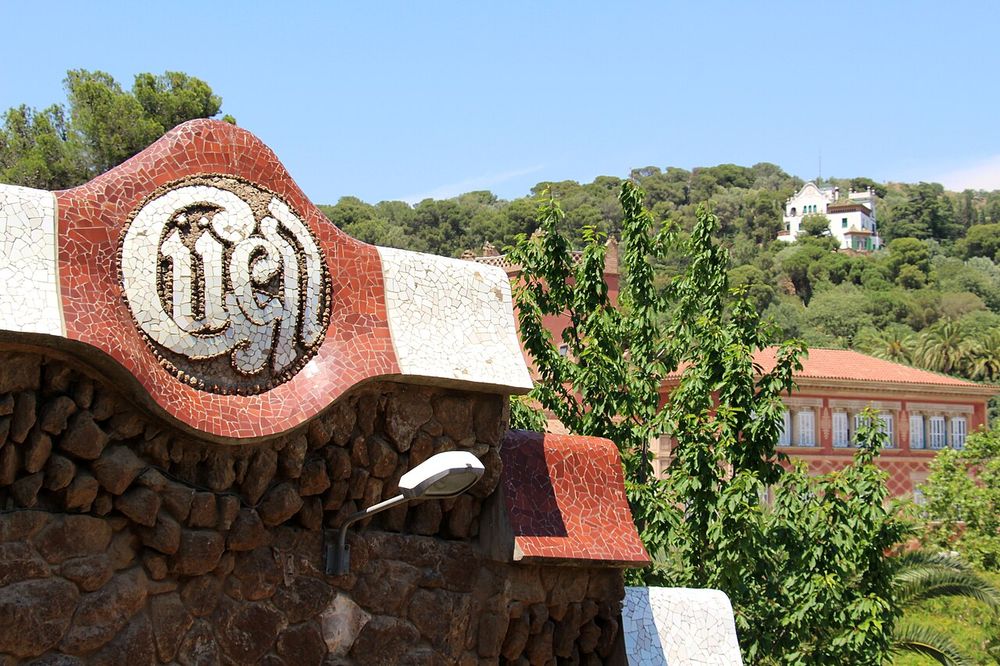
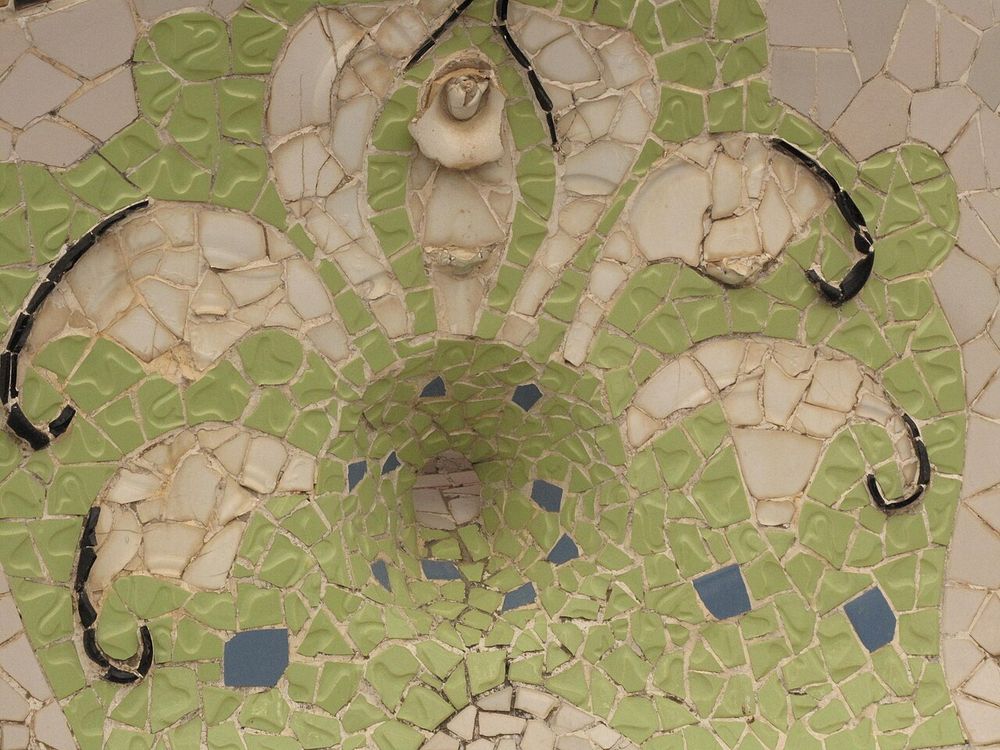
Now look at the surface. It is made of smashed tiles, plates, cups and bottles pressed into mortar. The Catalans call the technique trencadís, "broken". The factories gave the rejects away. Look for a piece of a plate with its flower still on it.
The colours were chosen by Gaudí's young assistant Josep Maria Jujol, who worked without a drawing. Some people call it the first abstract picture in Europe, made twenty years before the painters got there.
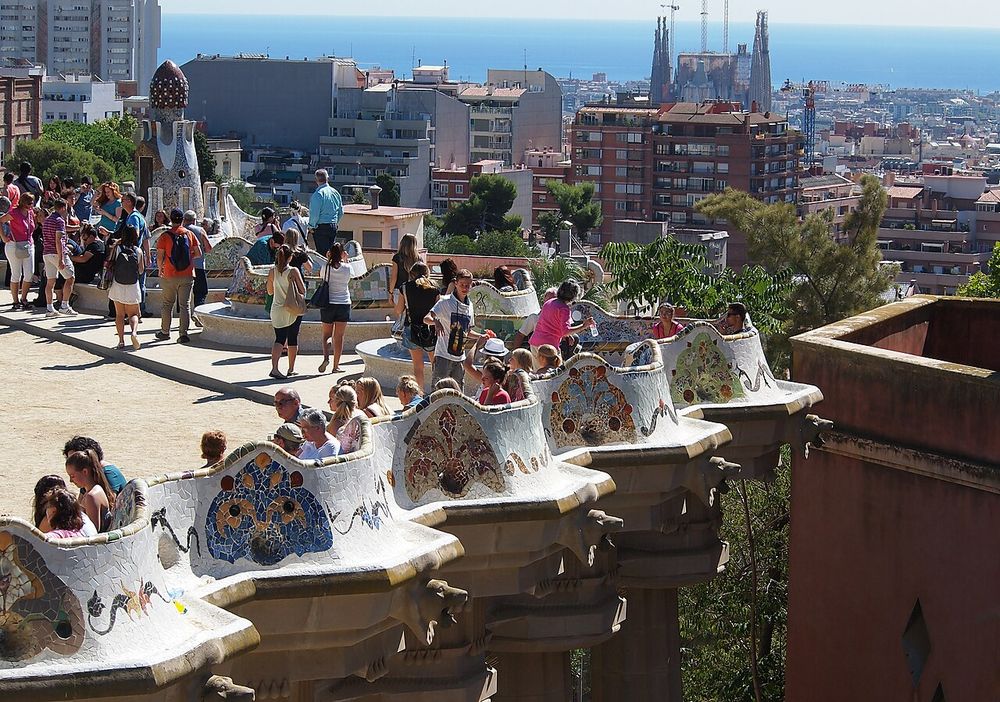
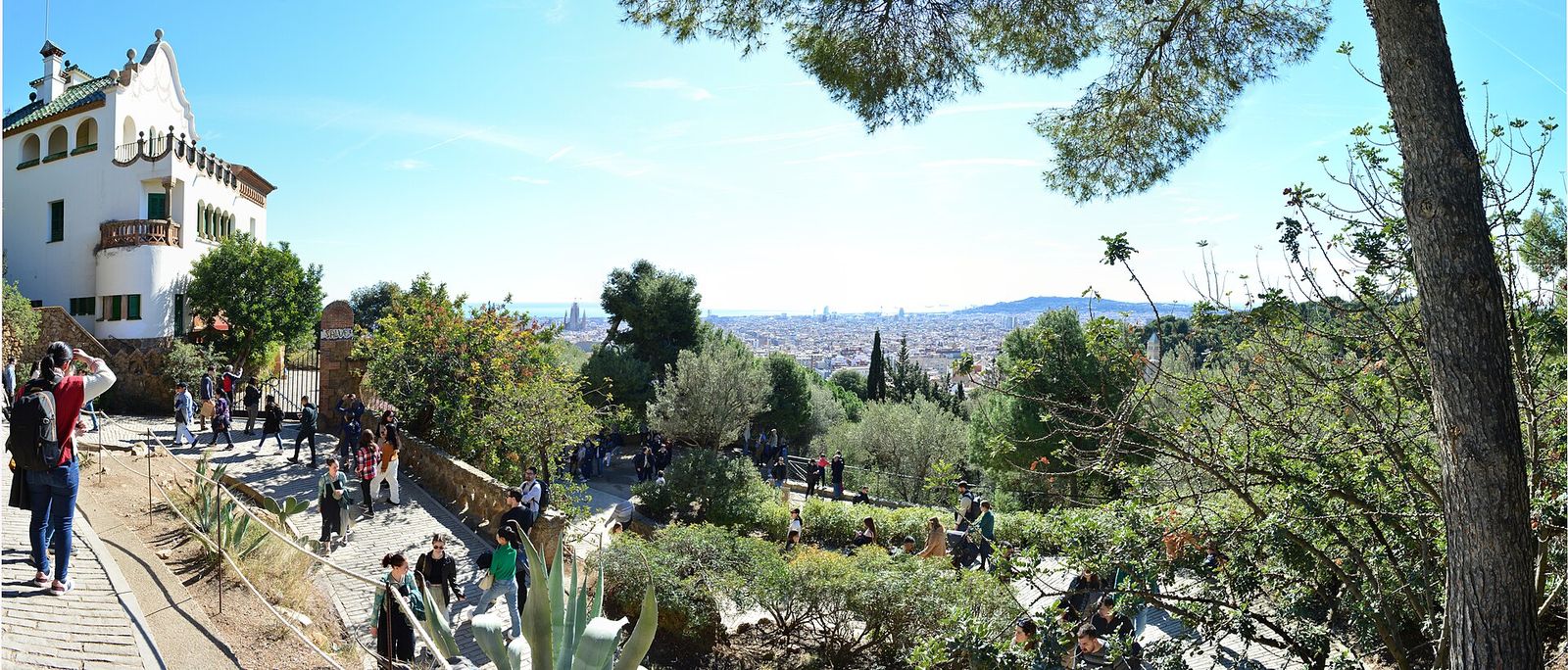
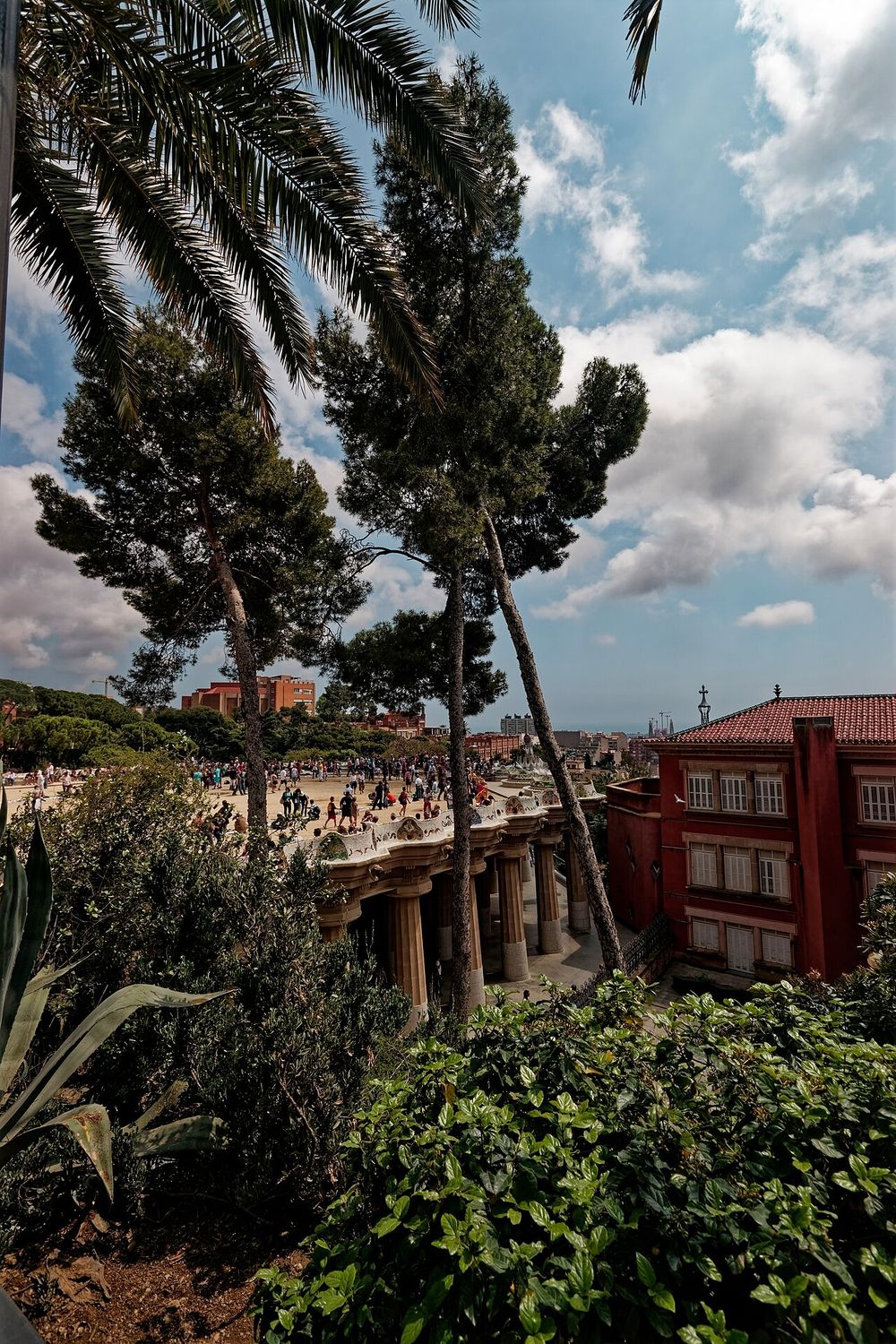
Look out. The whole city is below, with the towers of the Sagrada Família and the sea behind them. This is the view the sixty families were supposed to buy.
"It was designed as a public park." It was a private estate with a wall and a gatekeeper. It became a park in 1926.
"Gaudí made all of it." The bench and the ceiling roundels are Jujol's. The pink house where Gaudí lived for nearly twenty years was designed by another assistant, Francesc Berenguer.
"The whole park costs money." The ticket is for the part with the buildings. Everyone, even a baby, needs a ticket for it, and they are sold for a fixed half-hour.
"The animal on the stairs is a dragon." Everyone calls it the dragon. It has no wings, and its shape is a salamander's. What Gaudí meant by it is not recorded.
Stops 1 to 6 are inside the ticketed zone. Stops 7 and 8 are on the hill above it.
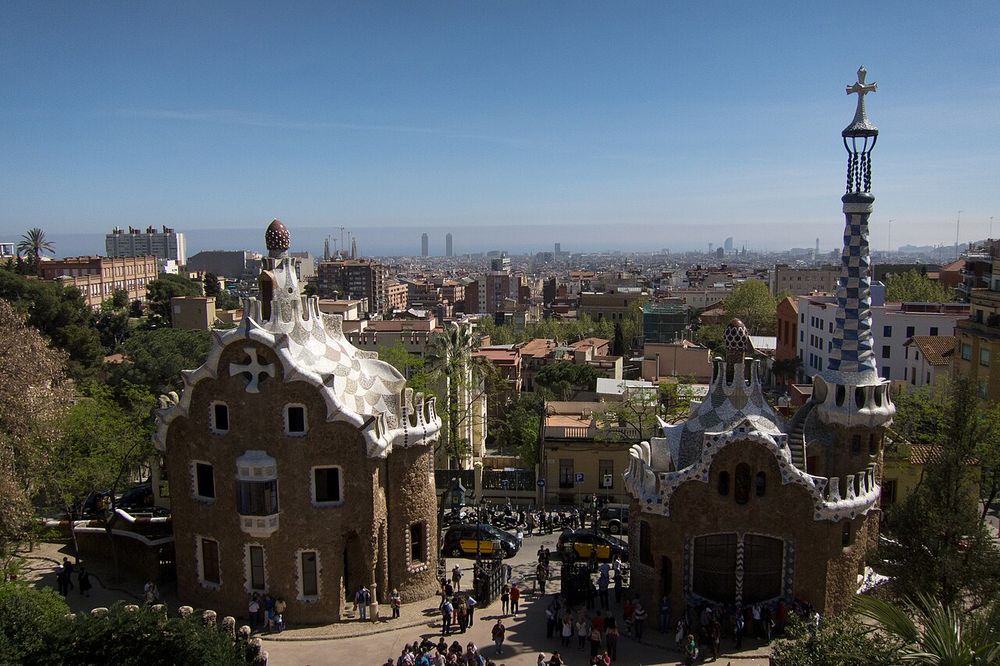
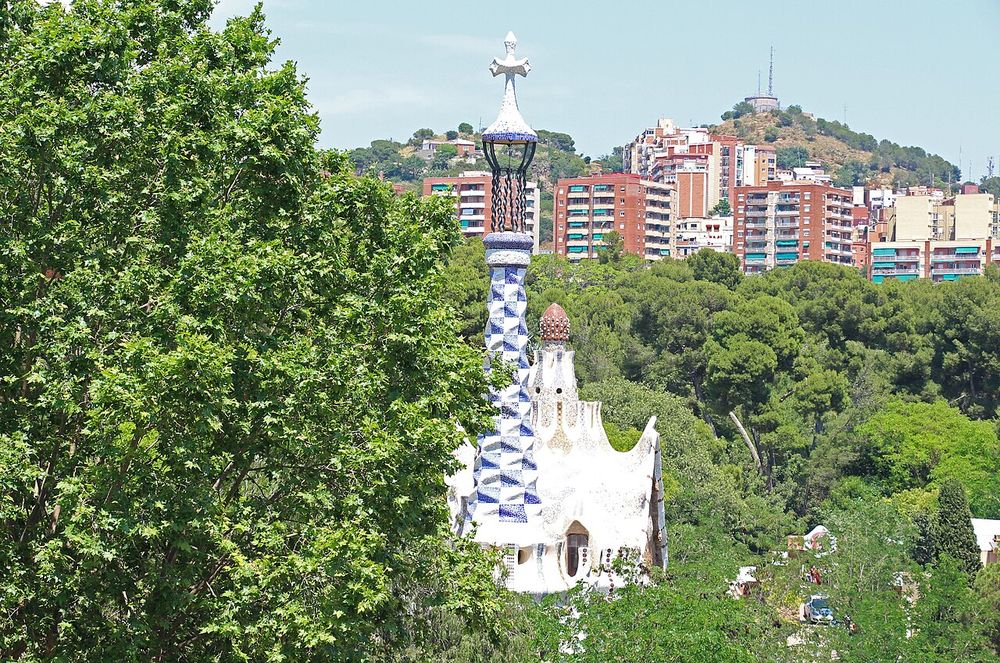
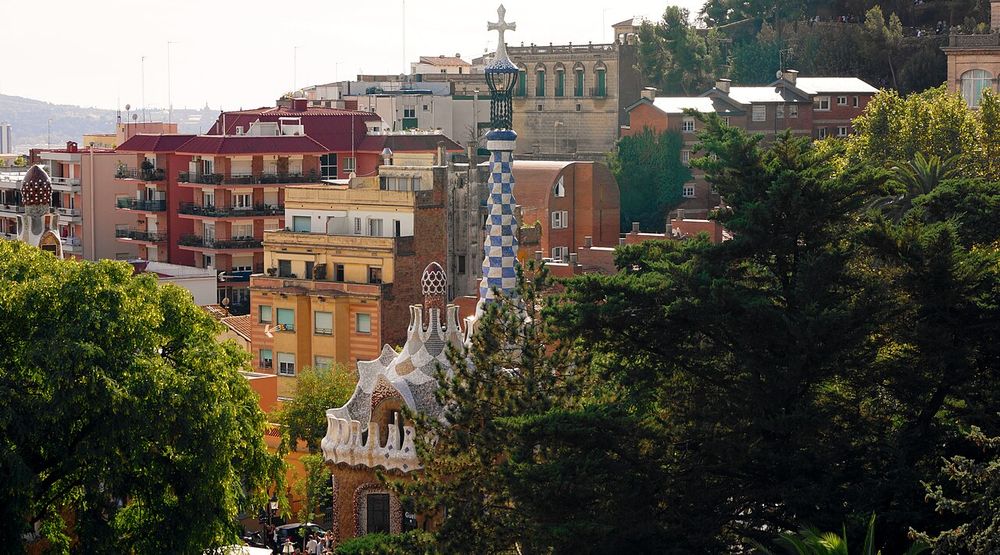
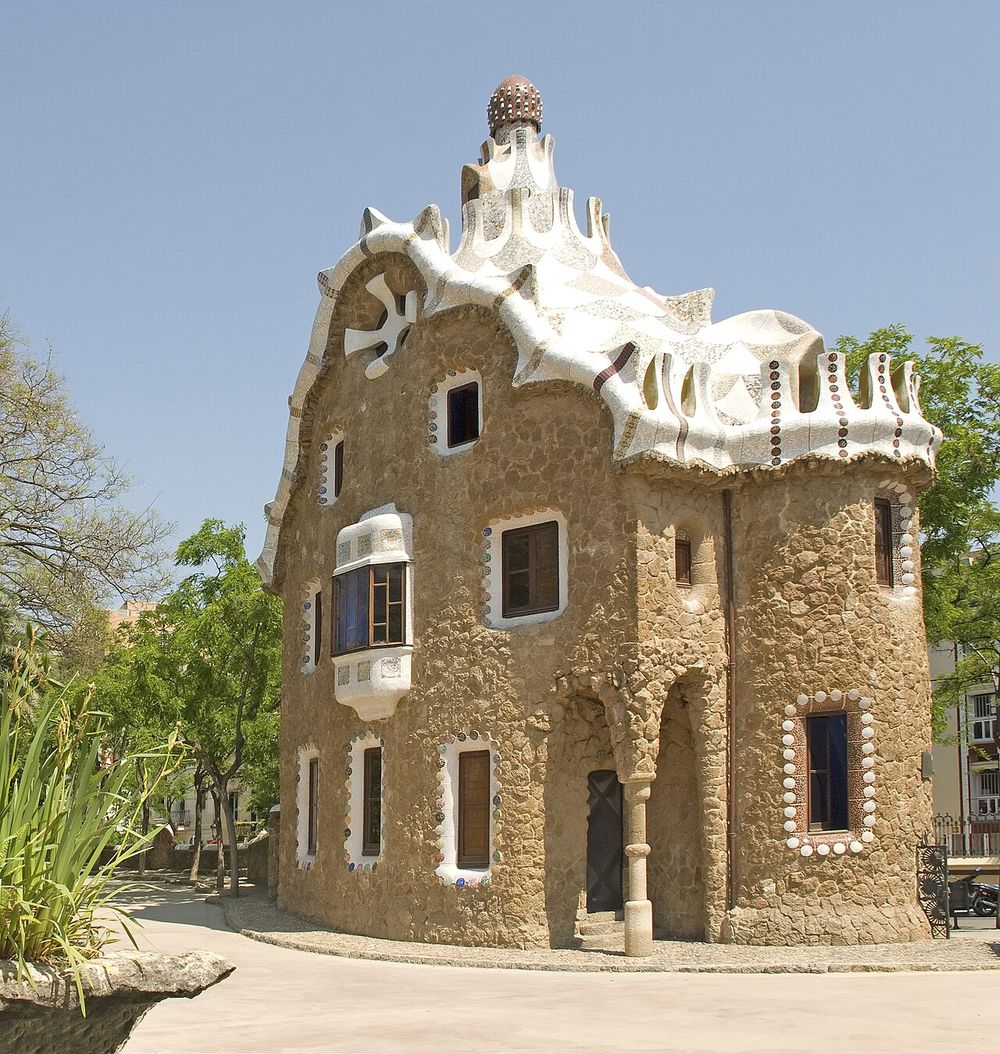
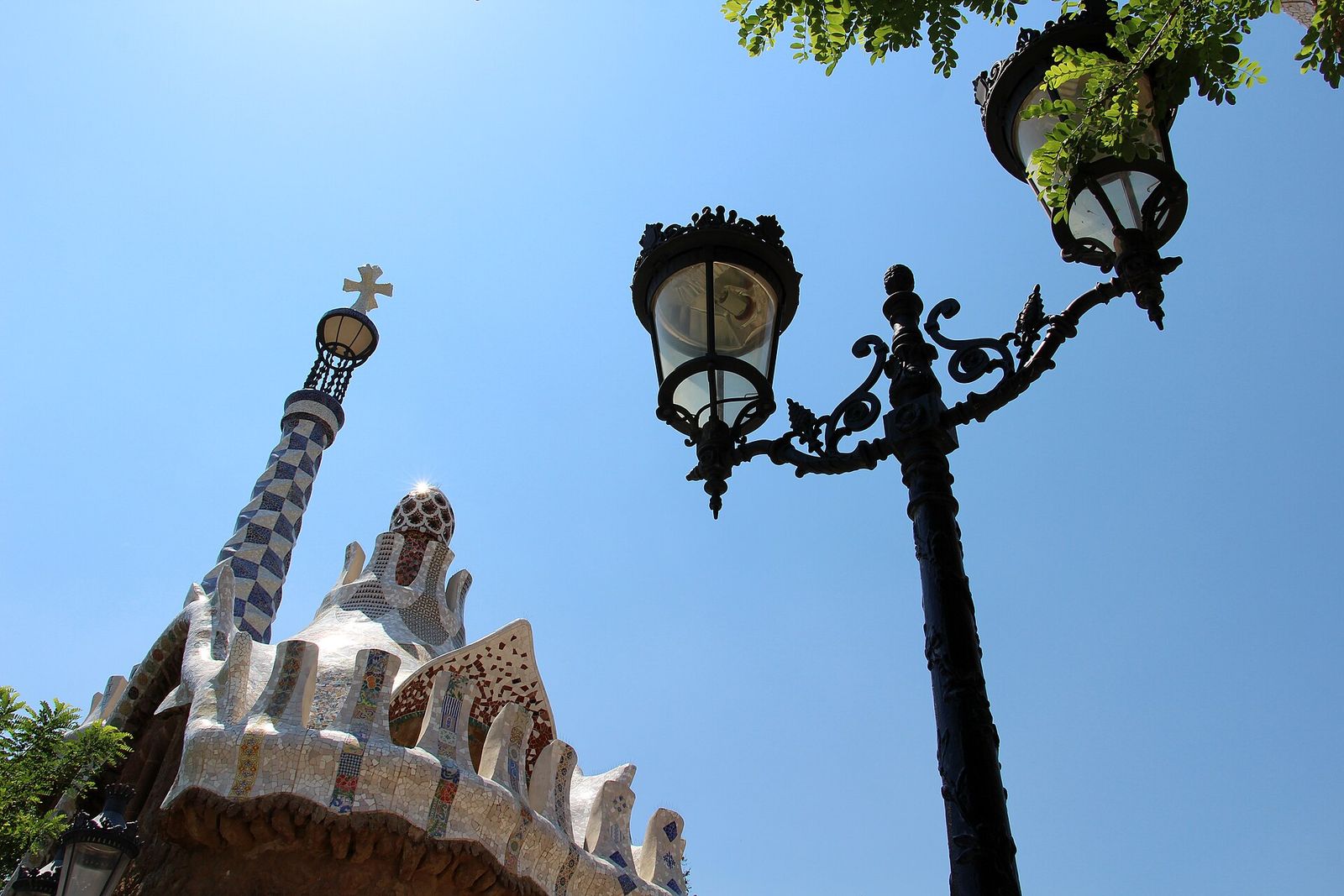
The main gate is on the street below. Two small buildings guard it: the porter's house, and a waiting room for visitors with a tall tower and a cross on top that points four ways. The roofs are skins of broken tile over thin brick vaults.
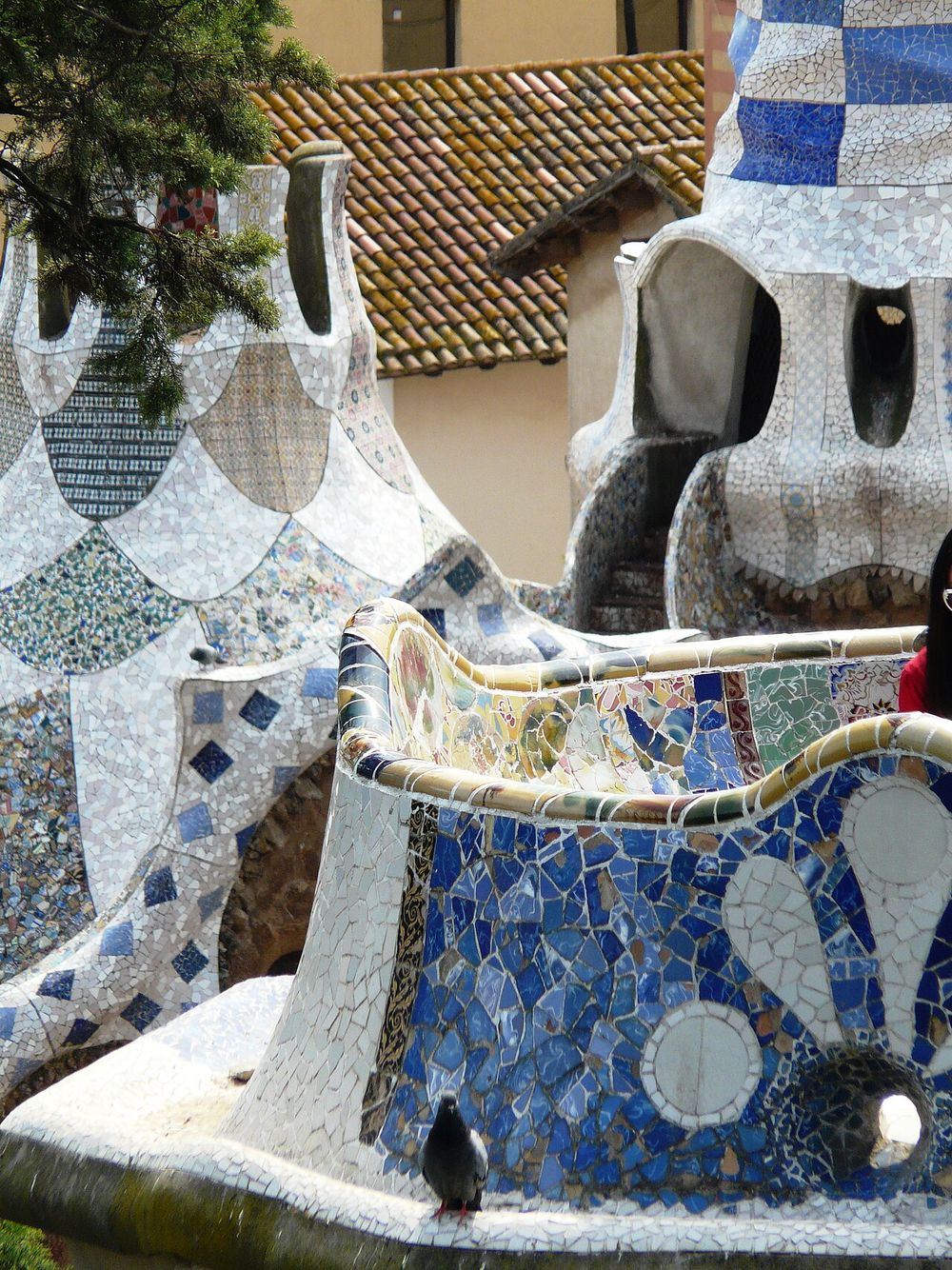
Look at the white caps on the chimneys and at the upside-down coffee cups set into the tower as studs.
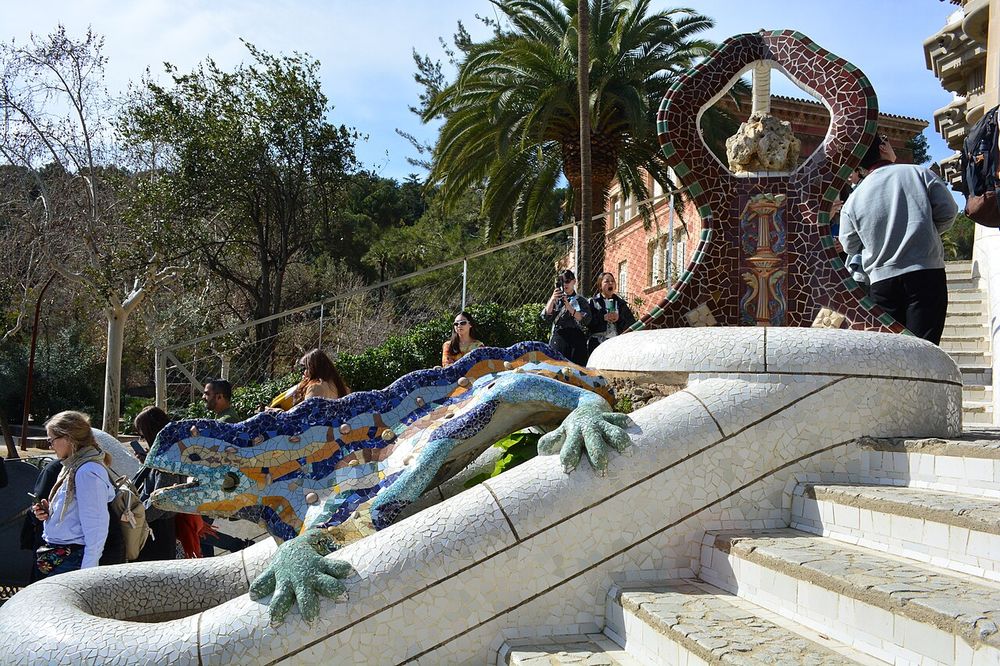
A double stair climbs between two walls. In the middle are three fountains: a circle, the striped shield of Catalonia with a snake's head, and the lizard. Water comes out of its mouth. It is the overflow of a tank that you will see the top of in a moment.
In 2007 a man attacked the lizard with an iron bar and broke off its snout. It was put back together from the pieces. Do not sit on it: guards will whistle.
Dolça Catalunya, pàtria del meu cor, quan de tu s'allunya d'enyorança es mor.
Sweet Catalonia, homeland of my heart, whoever goes far from you dies of longing.
Jacint Verdaguer, "L'emigrant", 1894. Verdaguer was the Güell family's poet and friend; the Catalan shield on these stairs speaks the same language; our translation
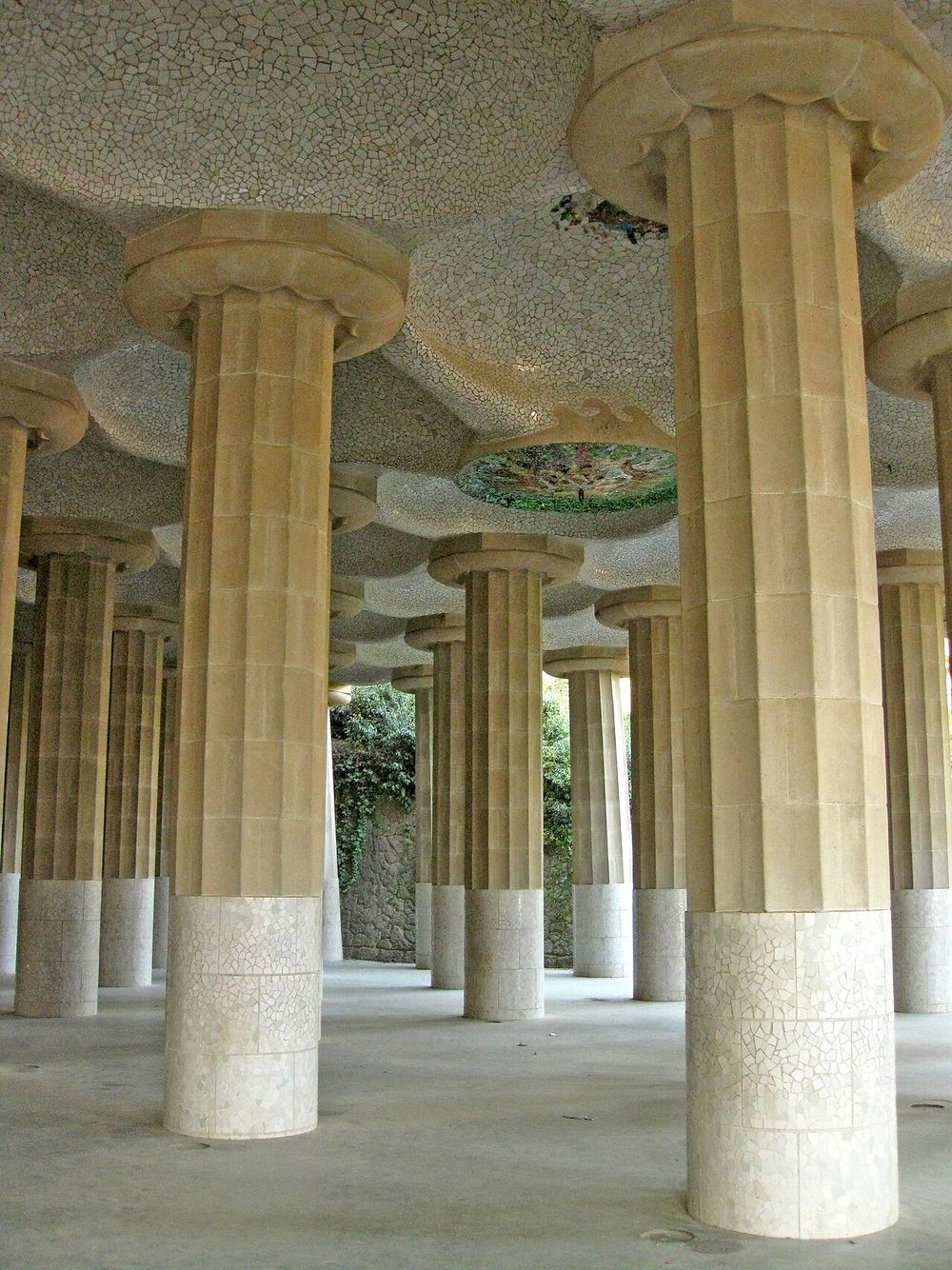
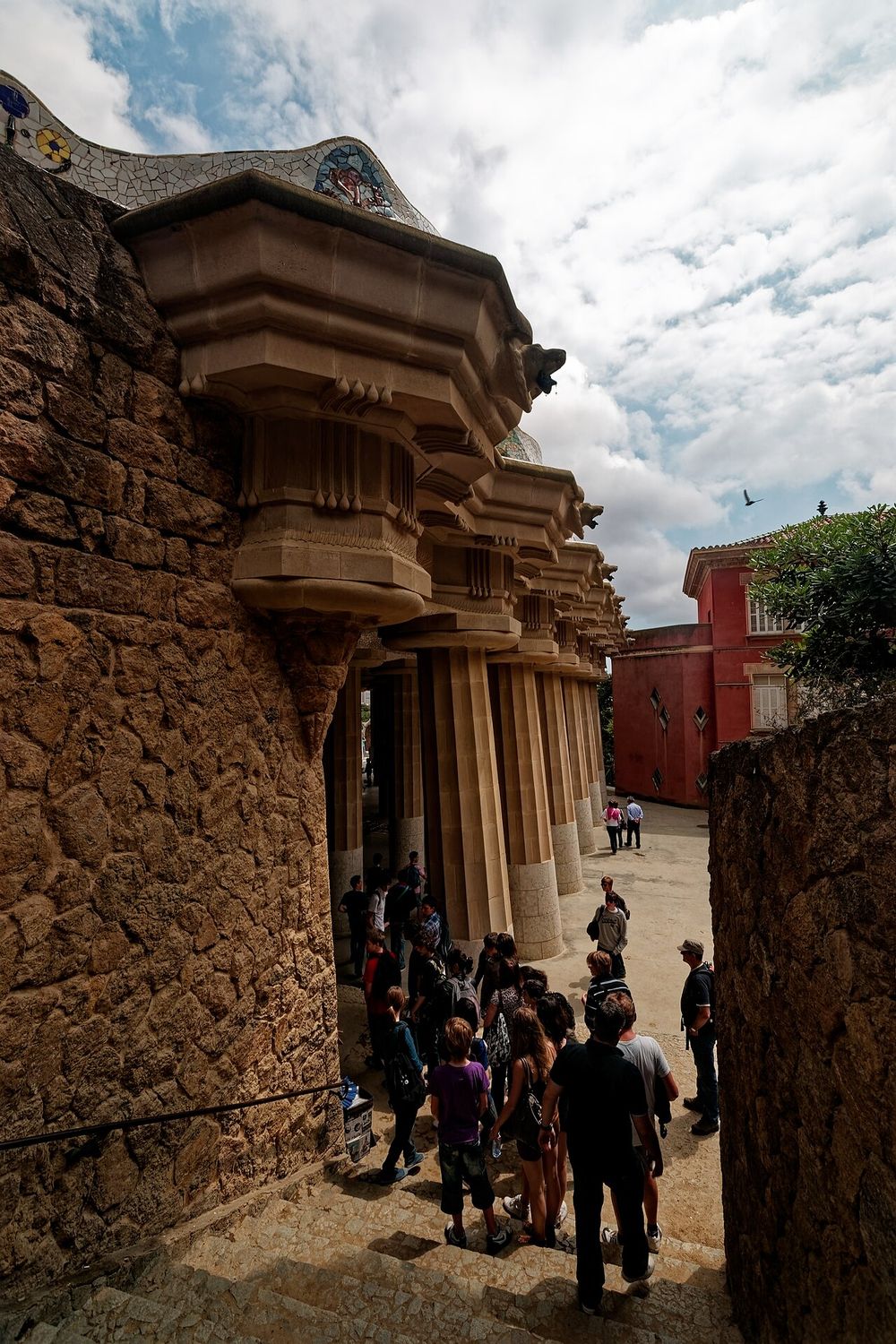
At the top of the stairs is a forest of eighty-six stone columns. It was to be the covered market of the estate. Nobody ever sold a cabbage in it.
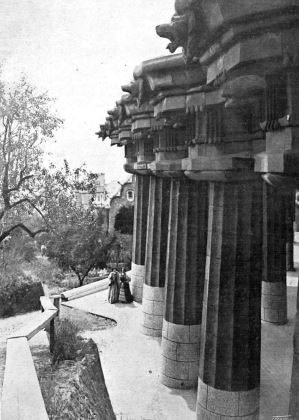
The columns are Greek in style, but the outer ones lean inward, to push back against the weight of the terrace above. Tap one: it is hollow. Rain that falls on the terrace filters through a layer of sand and runs down inside the columns to a tank under your feet that holds over a million litres. The estate was to drink it and water its gardens with it.
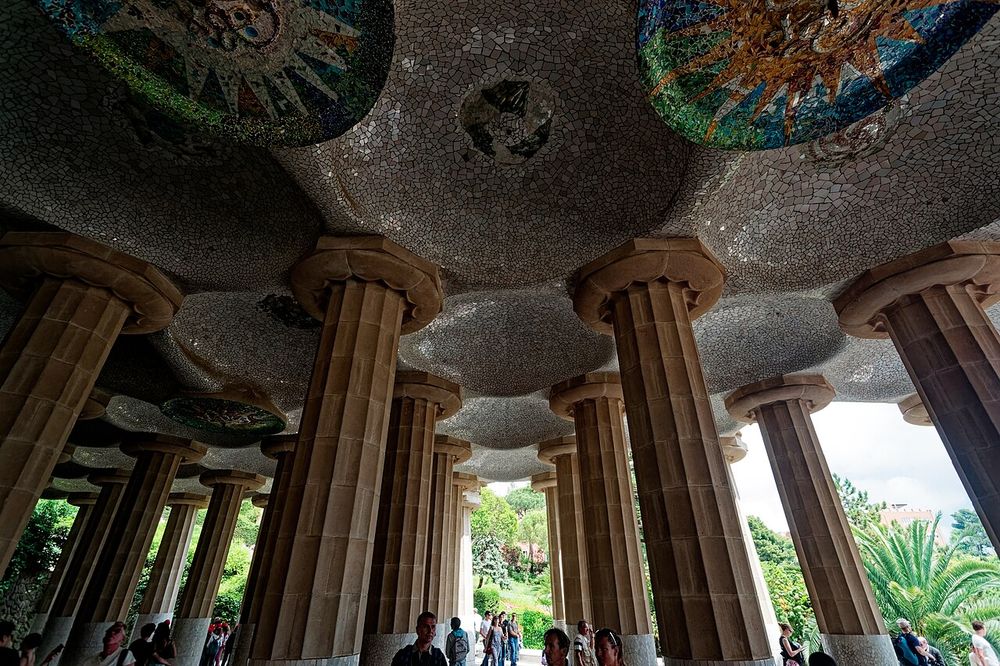
Look up. Where four columns were left out, Jujol filled the gaps with great roundels for the four seasons, and smaller ones for the moon.
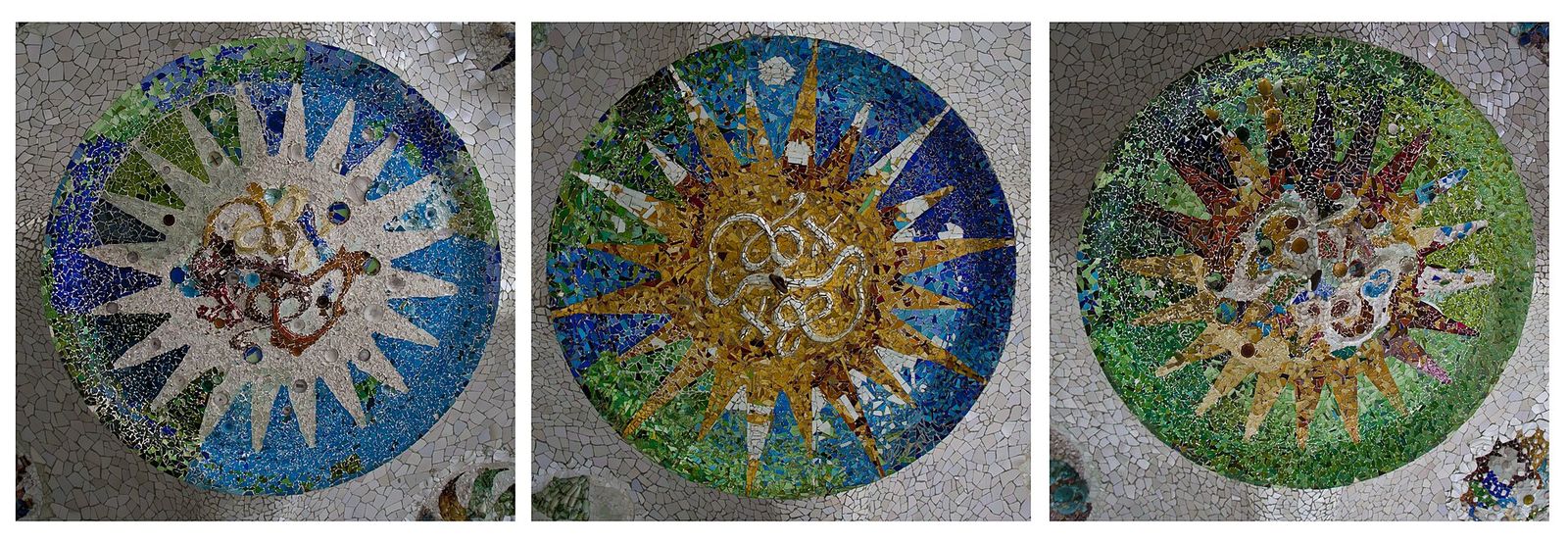
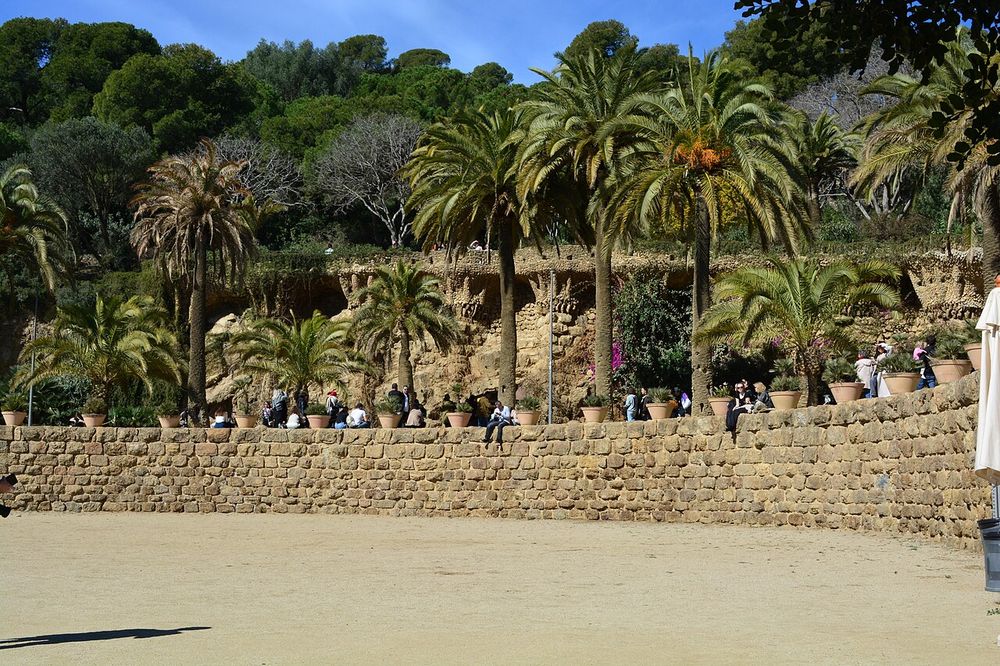
The terrace above was first called the Greek Theatre. It was meant for open-air plays and for the dances and meetings of the Catalan movement, and it was used for those from 1906, years before any house was sold. Half of it rests on the columns and half is cut into the hill.
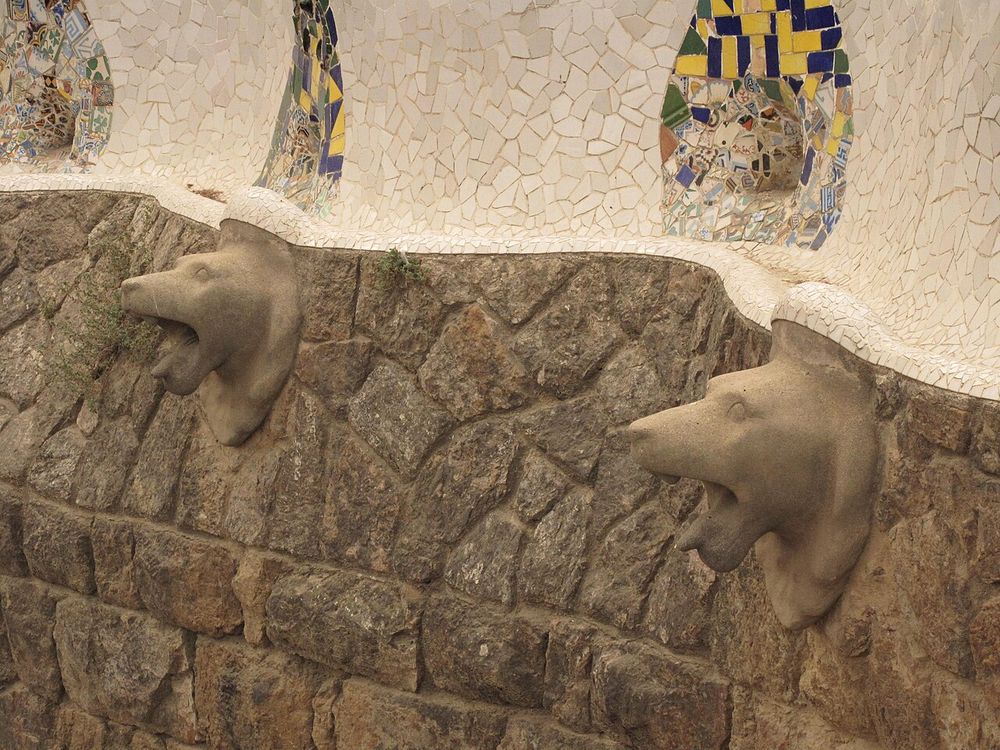
Lean over the outer edge. Under the bench, lion-headed spouts throw the rainwater clear of the wall.
The same shot: the picture of the bench curving away with the two lodges and the sea beyond is taken from one end of the bench, looking along its curves. Stand a few steps back so that three or four curves are in the frame.
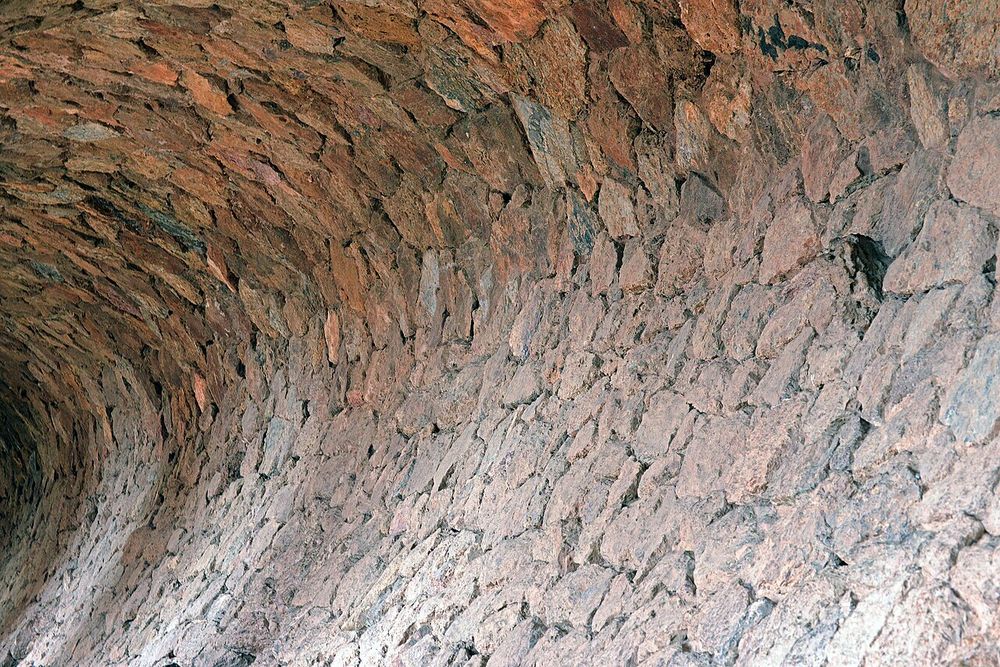
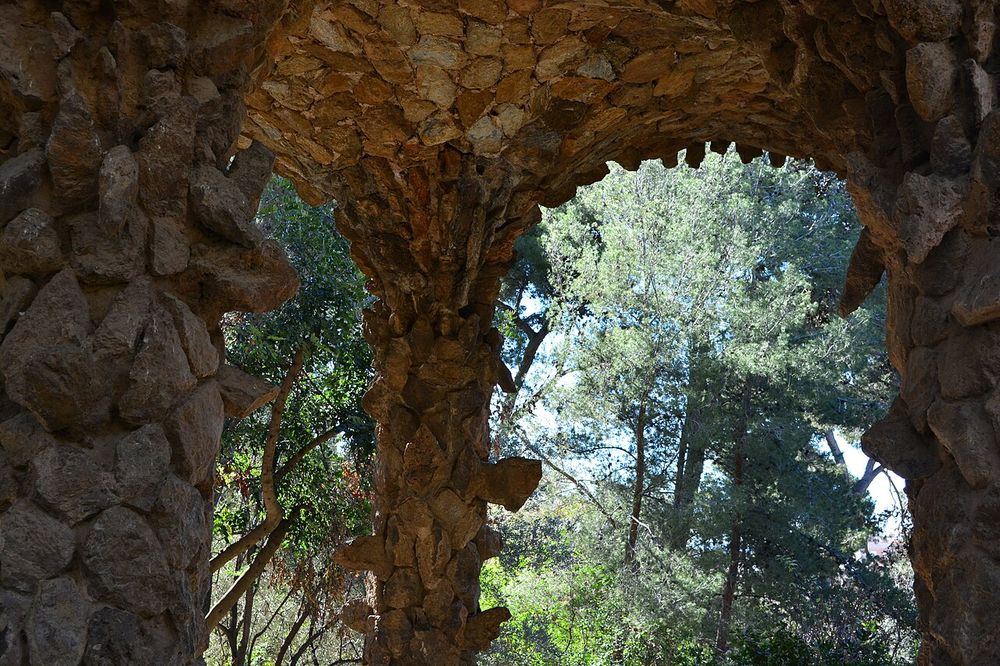
Beside the terrace a path runs under a retaining wall that Gaudí turned into a cloister. The columns lean like the trunks of trees in a wind, and the vault curls over like a breaking wave. All of it is rough stone dug from the hill, laid without cutting.
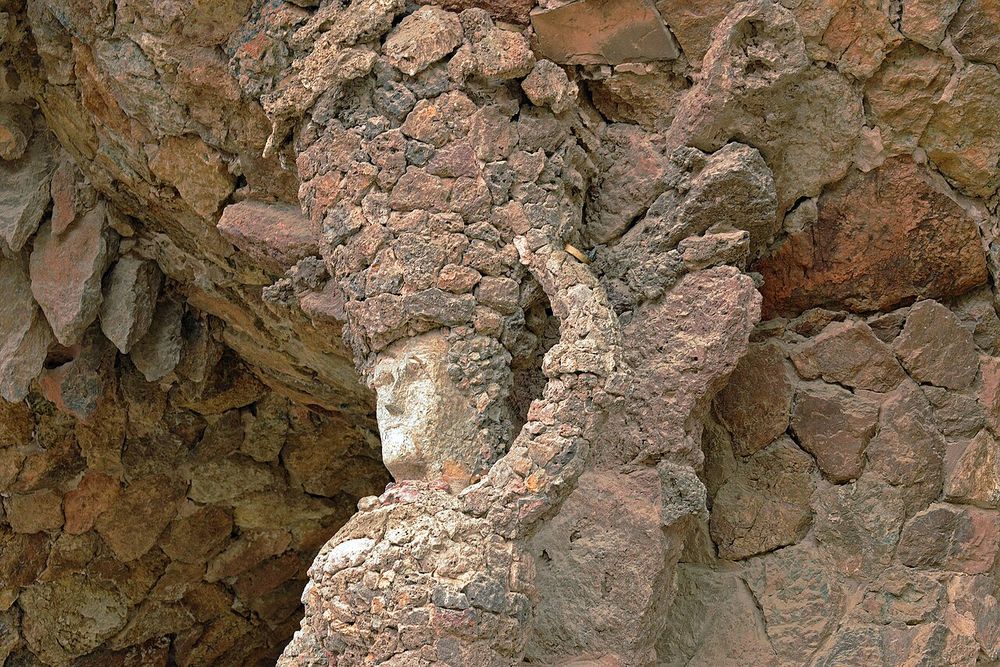
One column is a woman with a basket on her head. She is called the washerwoman.
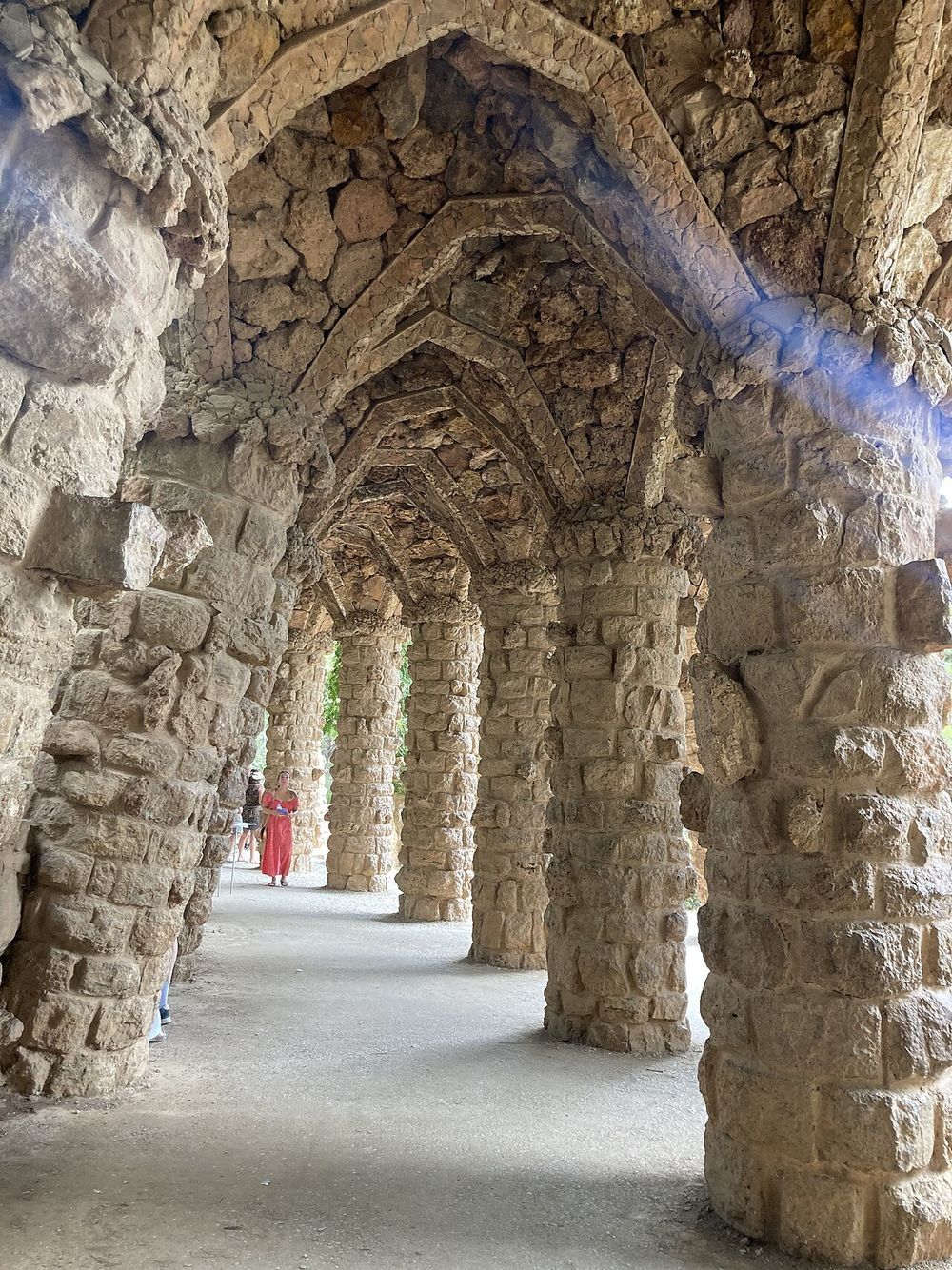
The estate needed roads for carriages on a slope too steep for them. Gaudí did not level the hill. He carried the roads on three viaducts of leaning stone columns, with a footpath in the shade underneath.
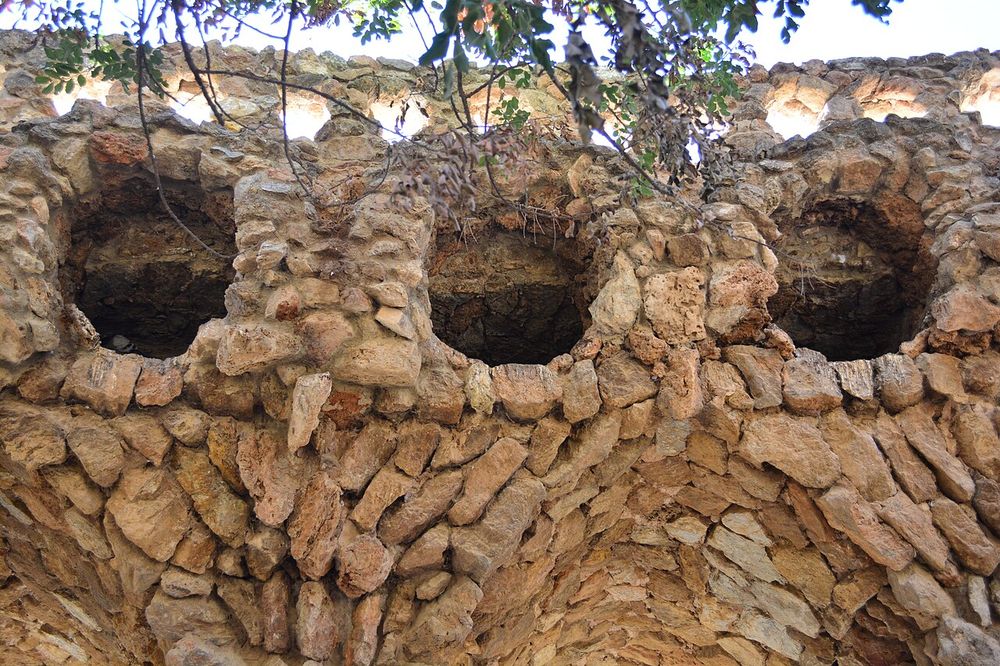
On top, the stone pots are planted with agaves, so the road seems to grow out of the hill.
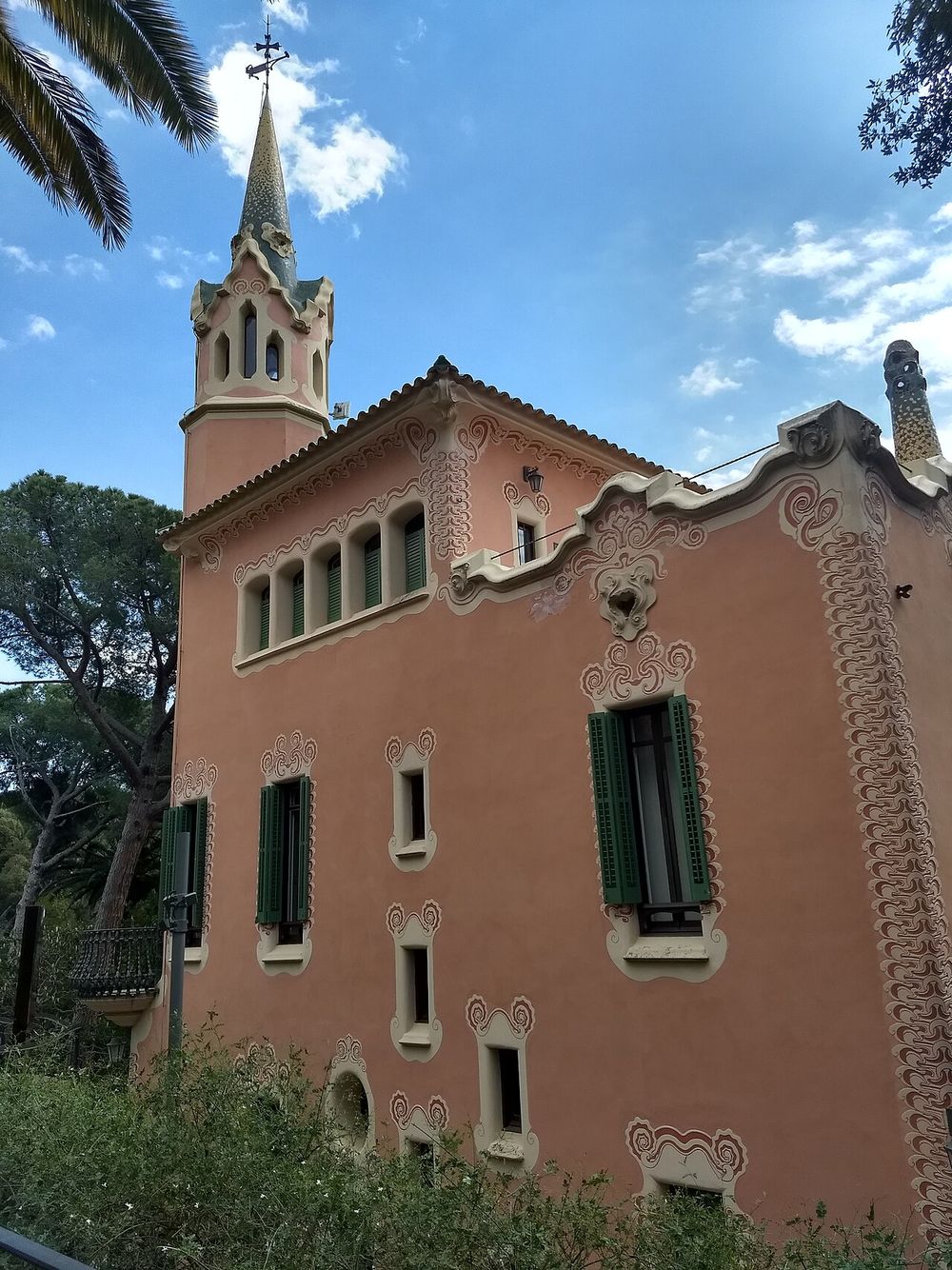
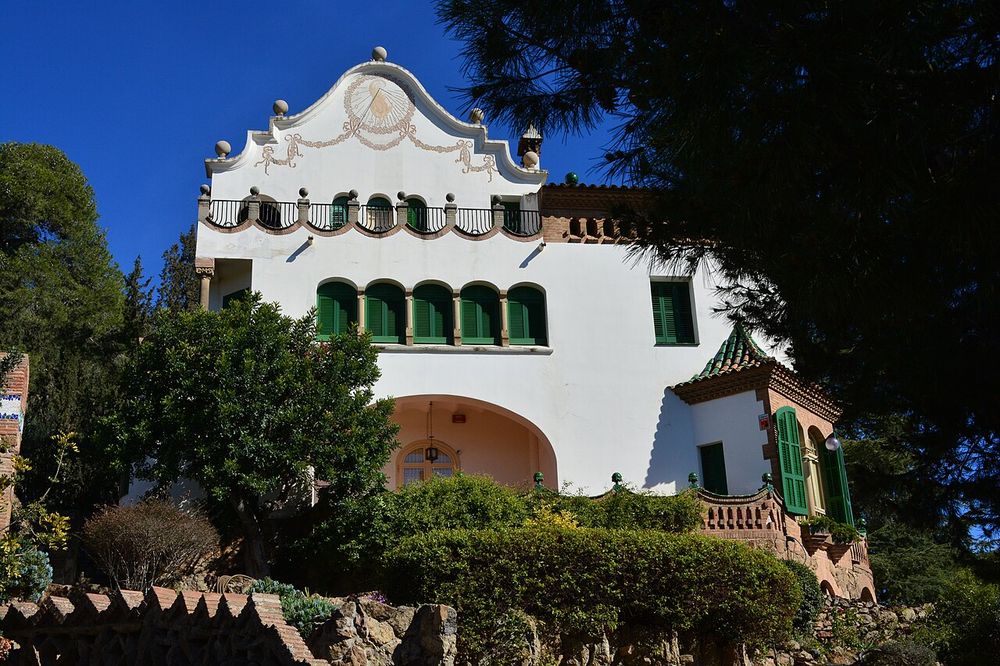
The pink house with the spire was the show house, built in 1904 to tempt buyers. Nobody was tempted, and Gaudí bought it himself. It is a small museum with his bed, his kneeler and furniture he designed. It has its own ticket.
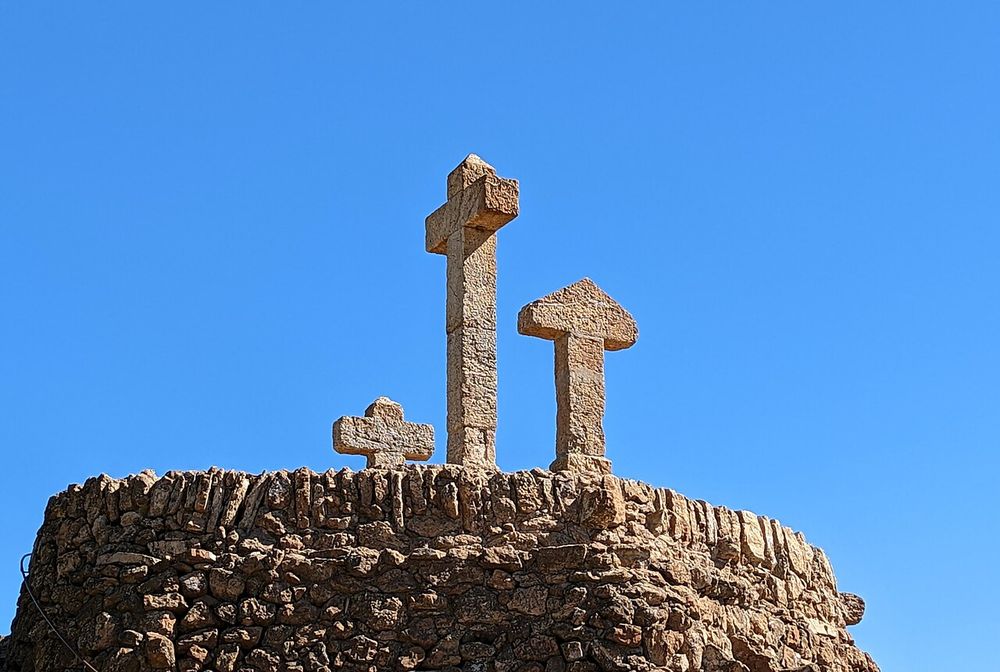
At the highest point Gaudí planned a chapel. When the diggers found caves with ancient remains there, he built a mound of rough stone with three crosses on it, like a prehistoric tomb. From here you see the city on one side and the mountains on the other.
| Year | Here | Elsewhere |
|---|---|---|
| 1900 | Work begins on the estate | The World's Fair is held in Paris |
| 1906 | Gaudí moves into the show house | An earthquake destroys San Francisco |
| 1914 | Work stops with two houses built | The First World War begins |
| 1926 | The park opens to the public; Gaudí is killed by a tram | The first television picture is shown in London |
| 1984 | The park joins the World Heritage list | The first Apple Macintosh is sold |
| 1992 | Barcelona holds the Olympic Games, and the world's cameras find the park | The treaty that creates the European Union is signed |
| 2013 | Tickets and a limit on numbers are brought in | A new pope, Francis, is elected in Rome |
One line to remember: the best-known park in Spain is a building site that was abandoned.
These are stories people tell about this place. They are legends, not history, and each one says where it comes from.
To get the curve of the bench right, Gaudí made a workman take off his clothes and sit in wet plaster, and copied the print.
Source: Told by guides; no witness of the time records it
The two lodges are the gingerbread house and the children's house from the opera Hansel and Gretel, which was sung at the Barcelona opera in 1901.
Source: Proposed by the writer Josep Maria Carandell in the 1990s
Later, people who live here will be able to add the stories they grew up with, and say which of these they have heard.
Last checked 2026-11-12. The park's own pages on prices, hours and residents' access, and Barcelona guides checked in August 2026.
Checked 2026-11-12
Stand at the site, sign in, press the button, and collect its stamp. Your browser will ask to use your location. It is sent to us once to confirm that you are at the site; we keep how far you were from it, not the spot where you stood.
Your stamps are saved to your account, so they follow you to any device. Checking from a browser cannot rule out every false location; stricter checks arrive with the app.
Photos here show the place, not people. Each one is credited to the visitor who took it and appears after our team has looked at it. A photo with you in it belongs under “I am here”.