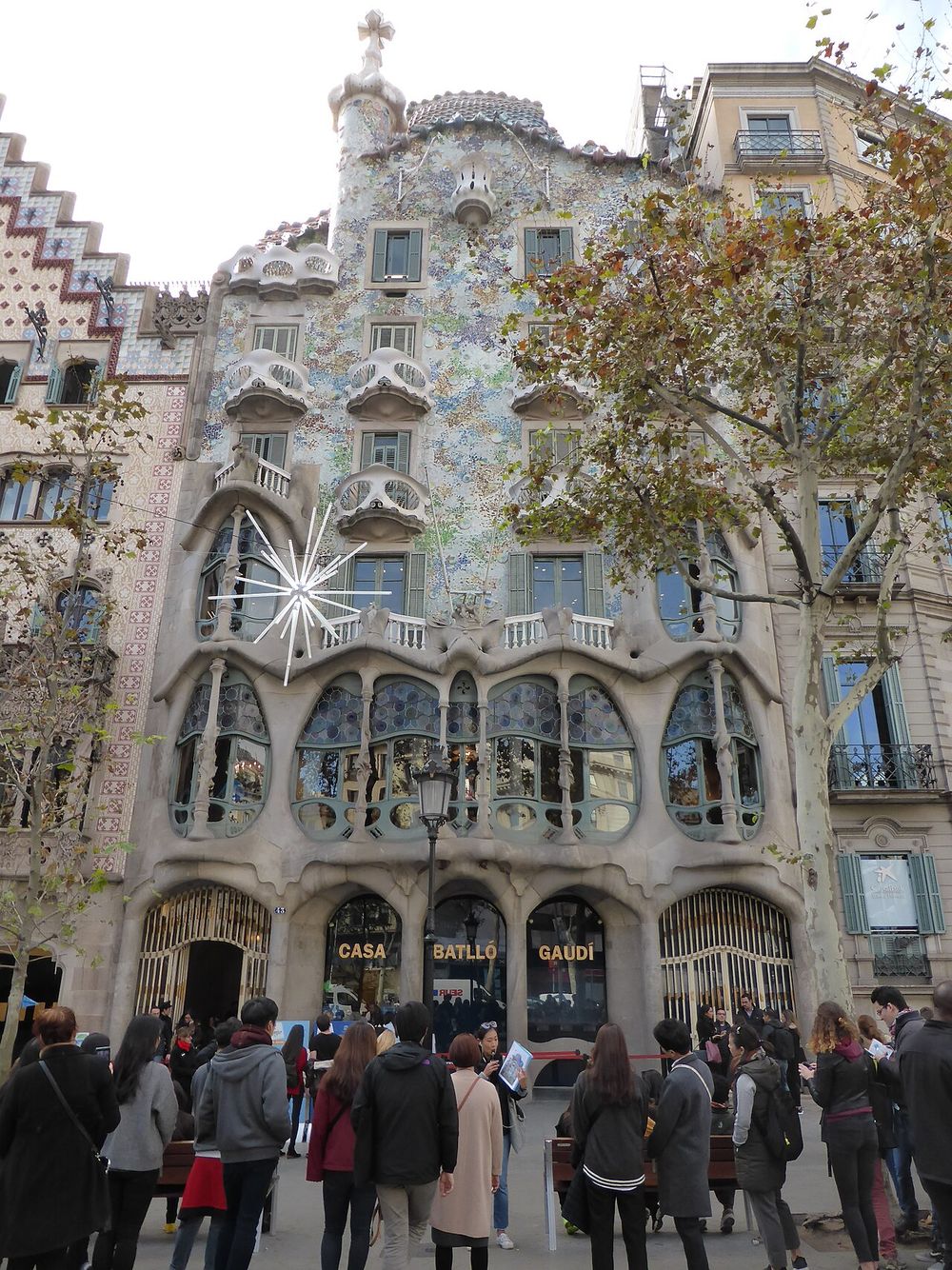
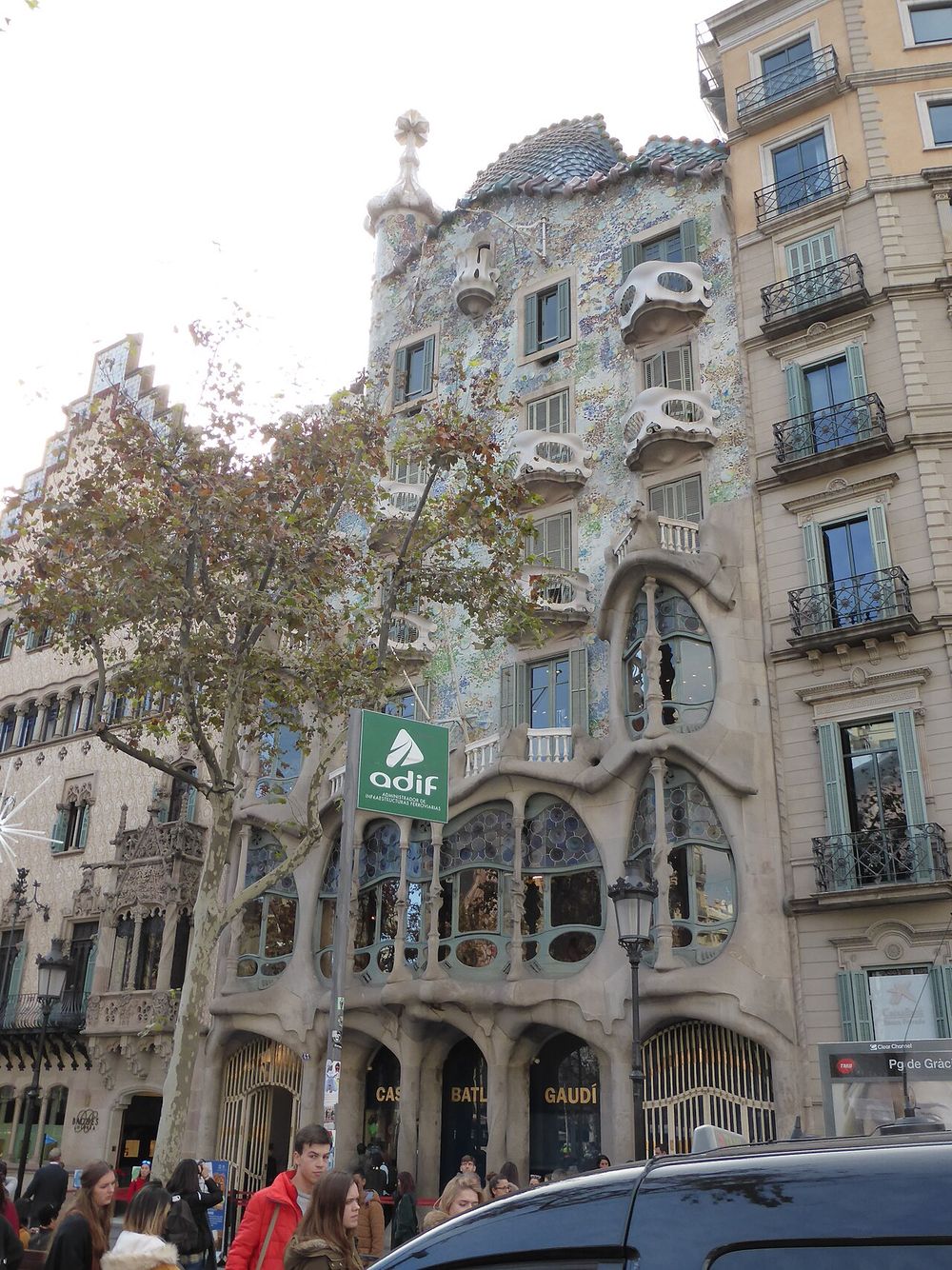
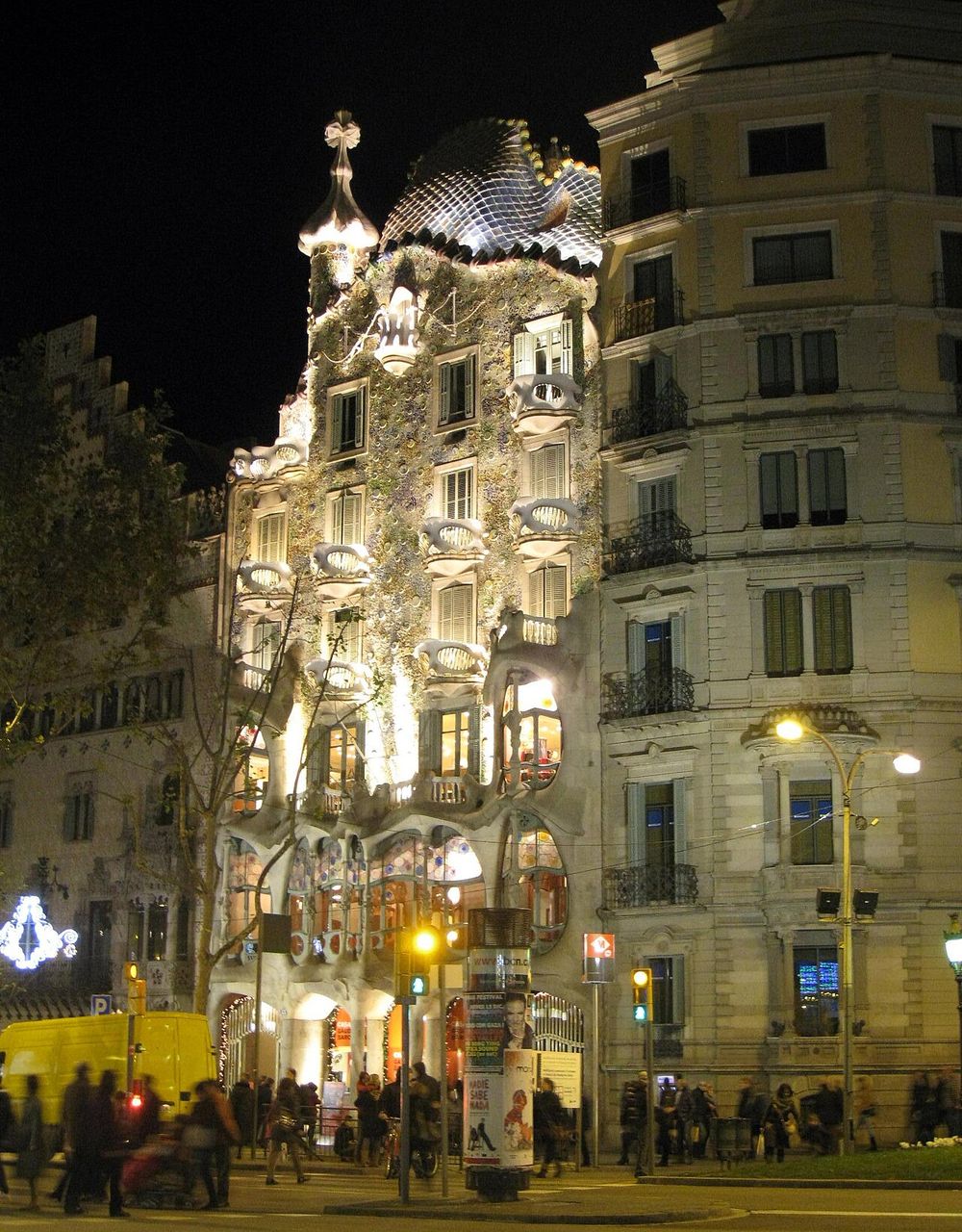
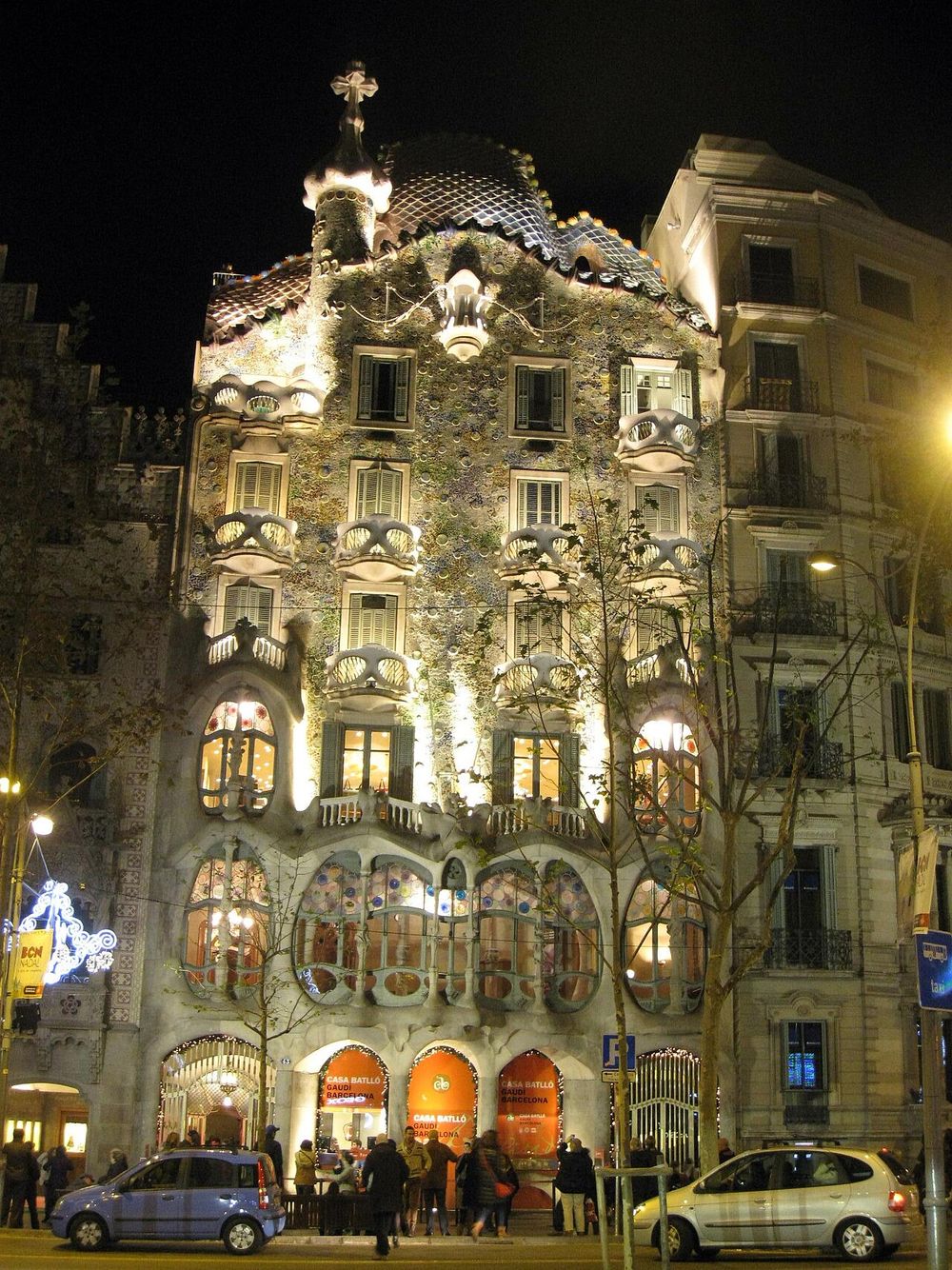
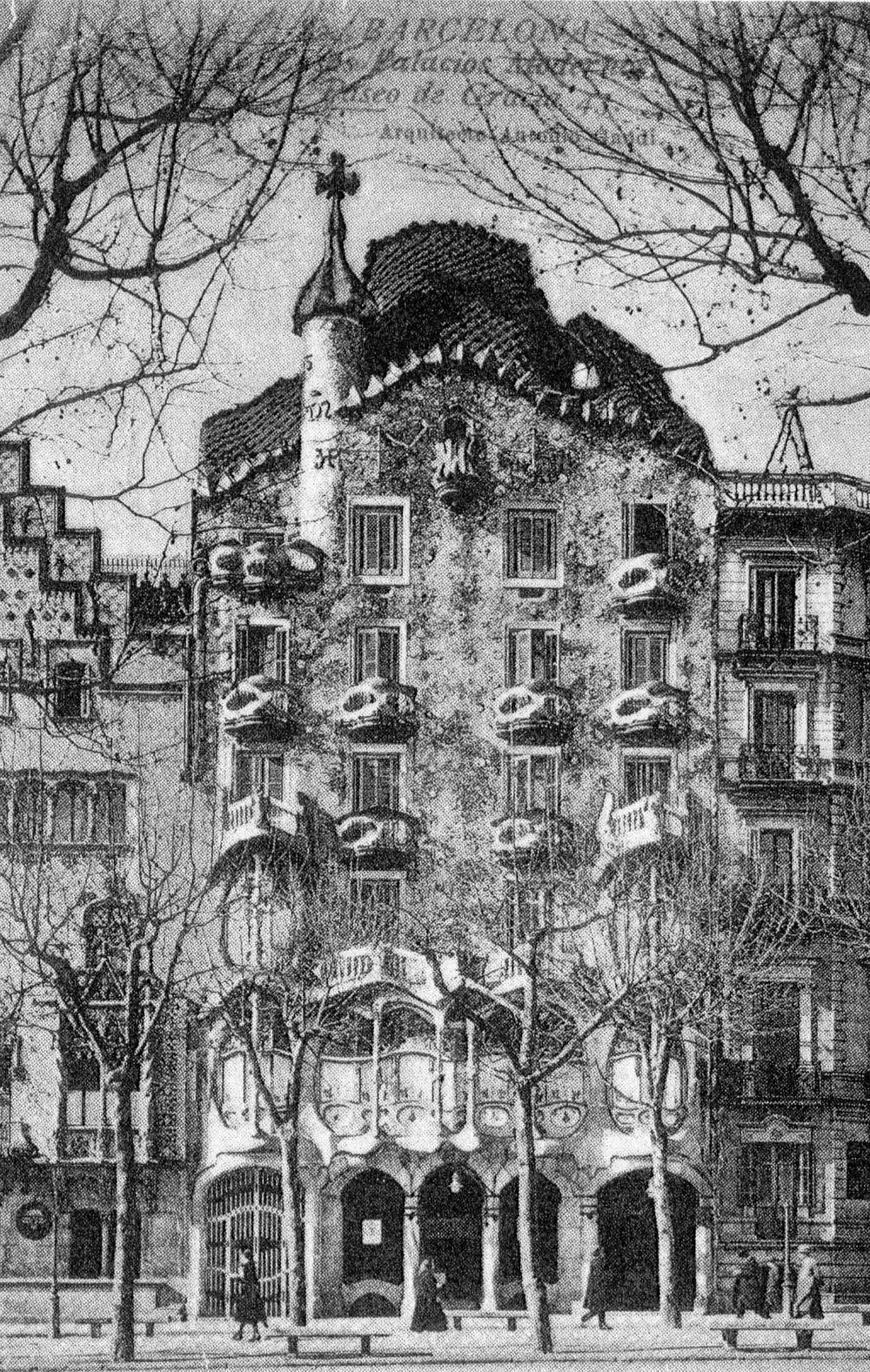
An ordinary apartment house of 1877 that Gaudí was hired to pull down. He kept the walls and changed everything else. Between 1904 and 1906 he gave it a front with no straight line, balconies like masks, columns like bones and a roof like the back of a great scaled animal.
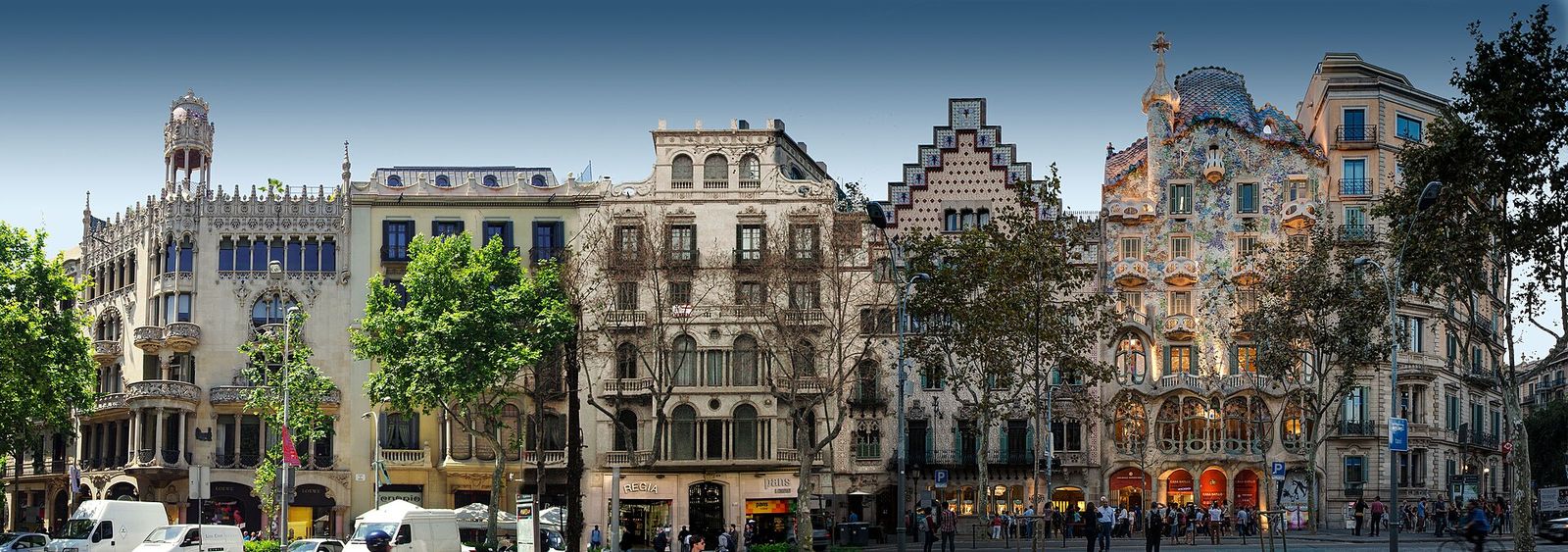
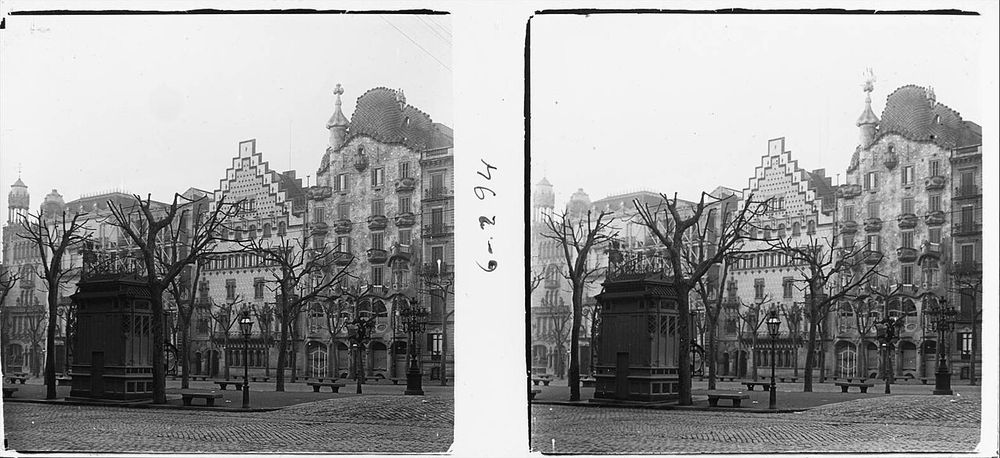
In 1900 the Passeig de Gràcia was where the new rich of Barcelona showed what they had. Each family hired a fashionable architect and tried to outdo the neighbours. Three of the showiest houses stand on one block, by the three best architects of the day, and the block got a nickname: the Block of Discord. In Spanish the word for block also means apple.
The textile maker Josep Batlló bought number 43 in 1903. The stepped gable next door had just gone up, and he wanted something that would beat it. In China this is the reign of Guangxu, near the end of the Qing dynasty (1644–1912).
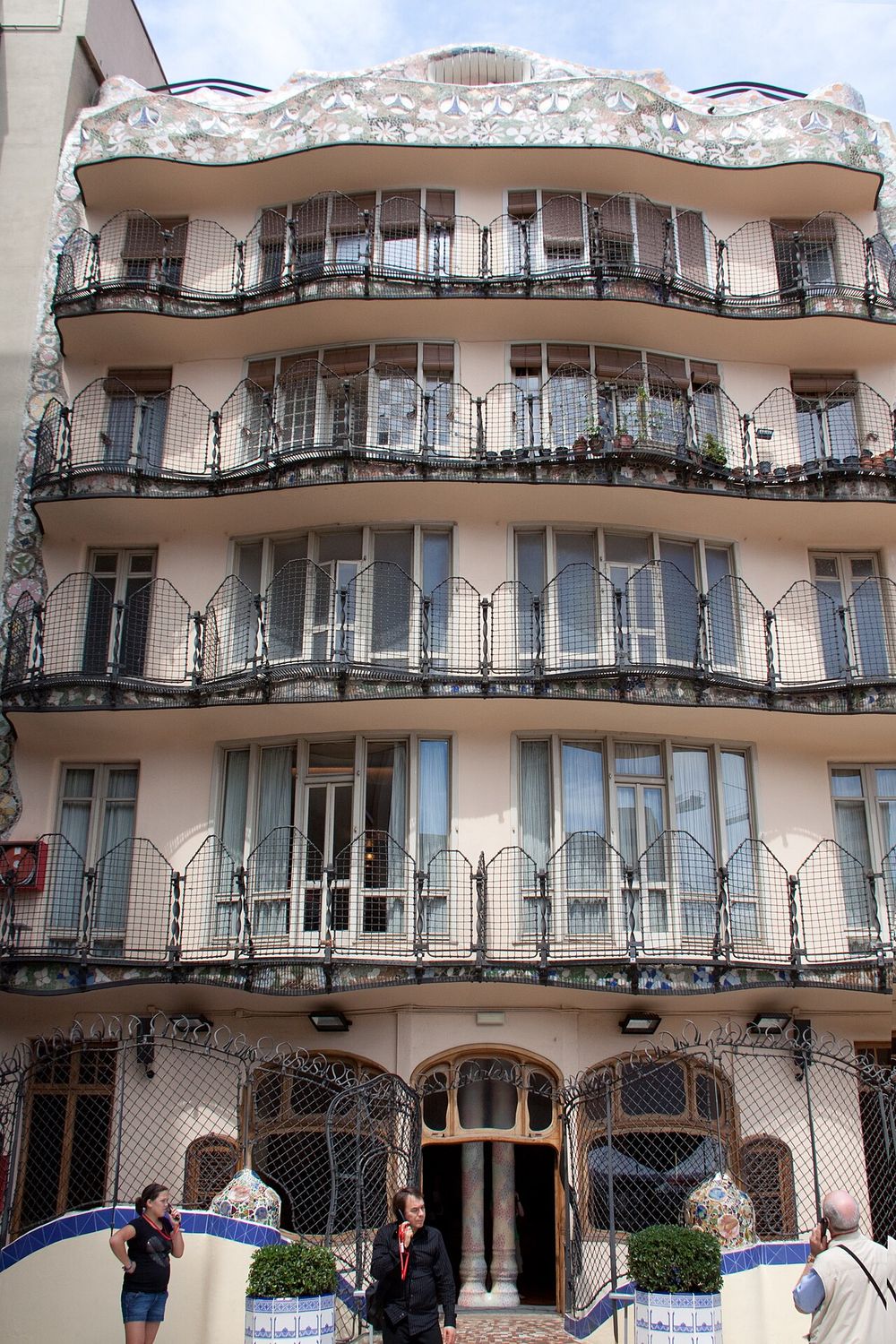
Start at the bottom. The ground floor and the big window above it are framed in pale stone, shaped like bones with joints. Locals called it the House of Bones.
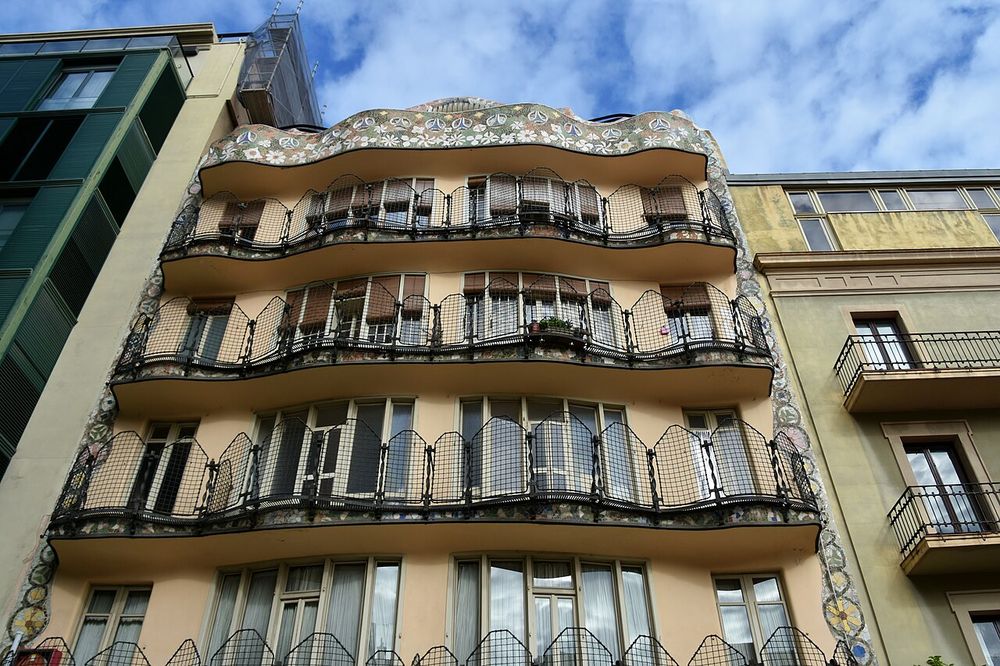
Go up. The balconies are iron, cast in one piece, with two holes like eyes. Some see masks, some see skulls.
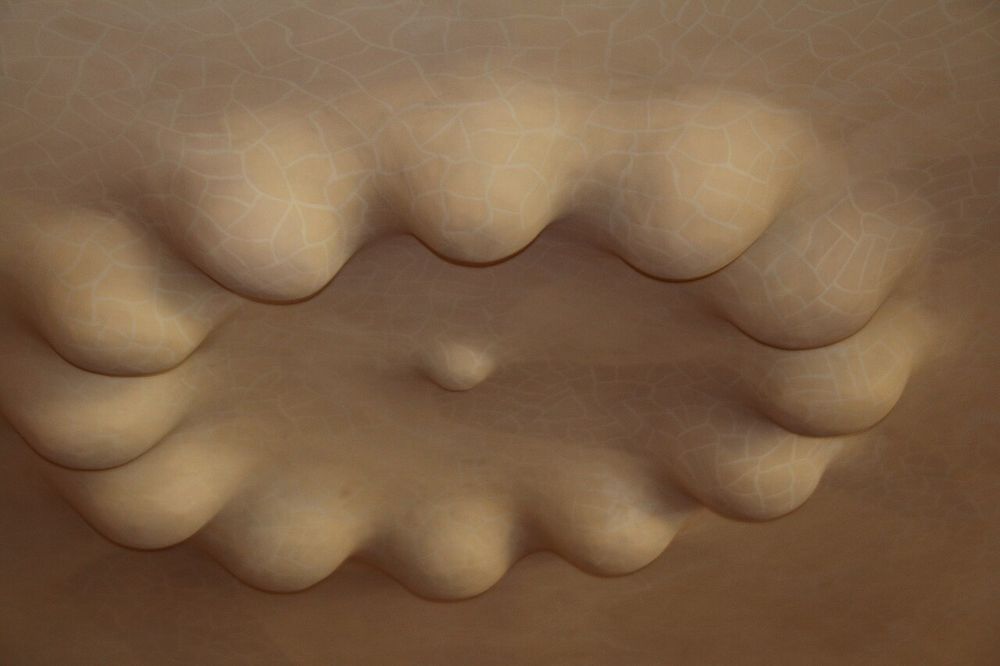
The wall between them ripples. It is covered with bits of coloured glass and about three hundred round ceramic plates, more of them towards the top, so the colour deepens as you look up. Come back at different hours: it changes with the light like water.
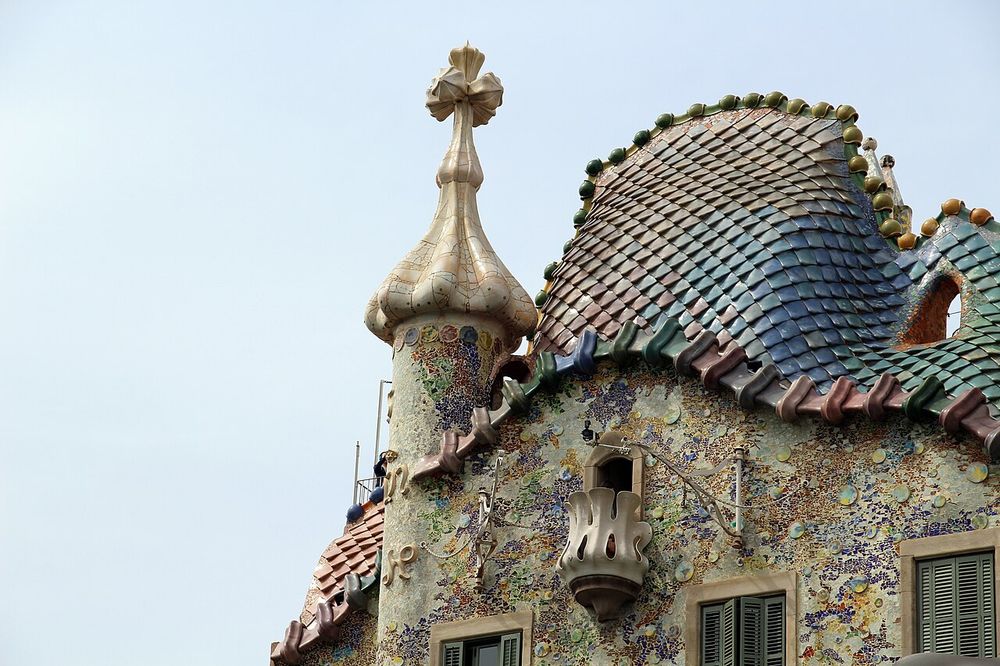
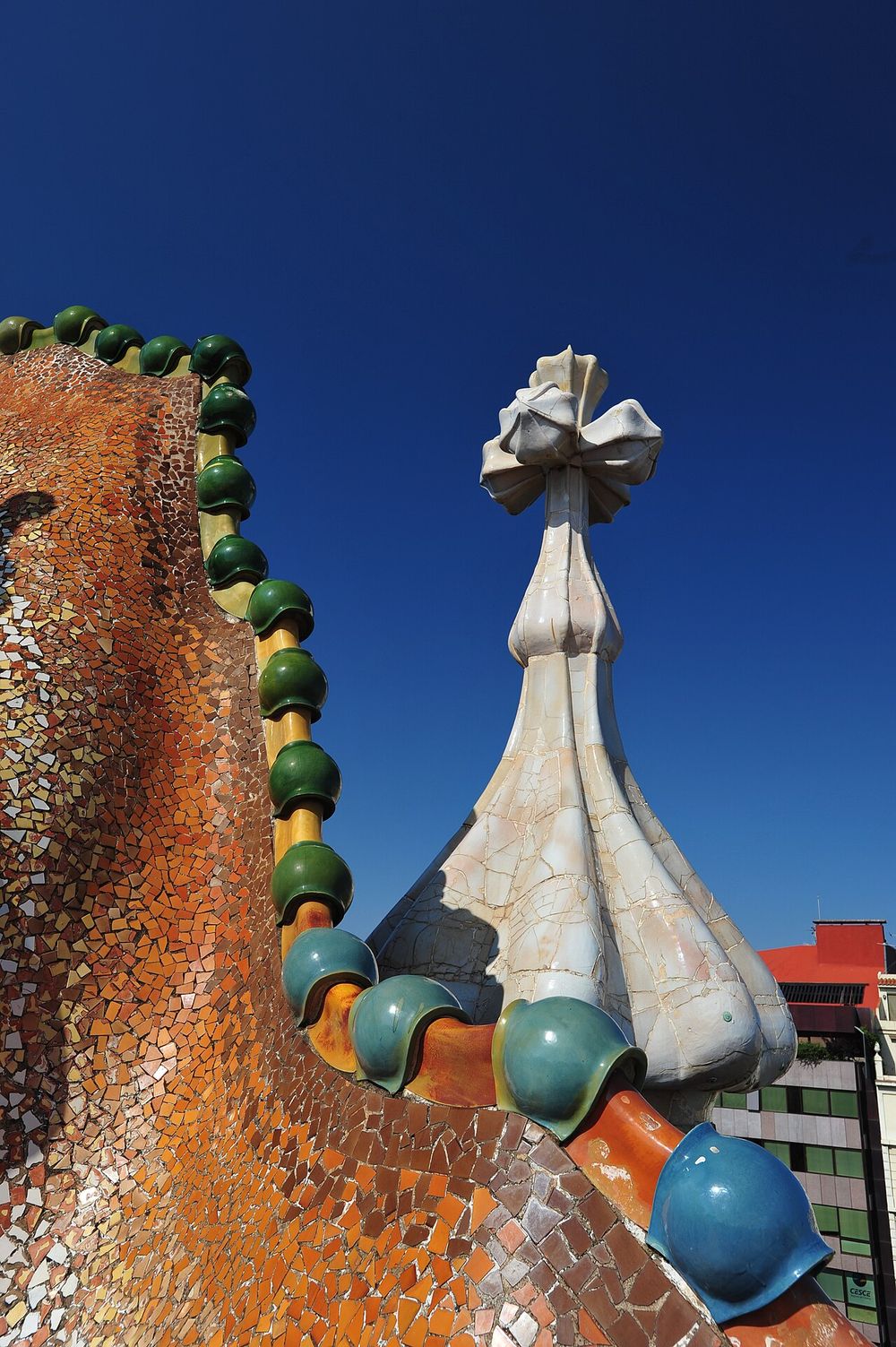
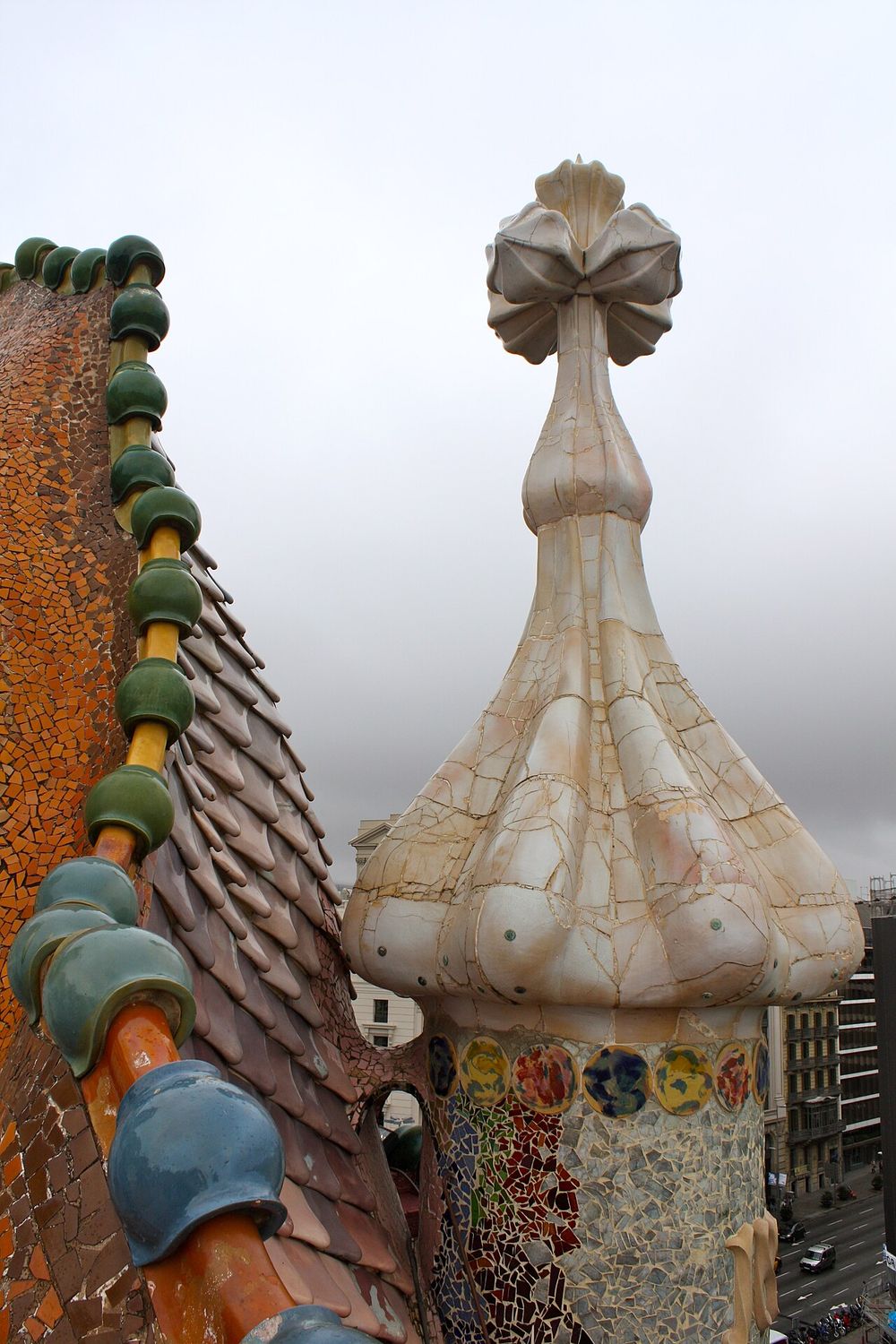
The roof and the tower with its crossFred Romero, CC BY 2.0
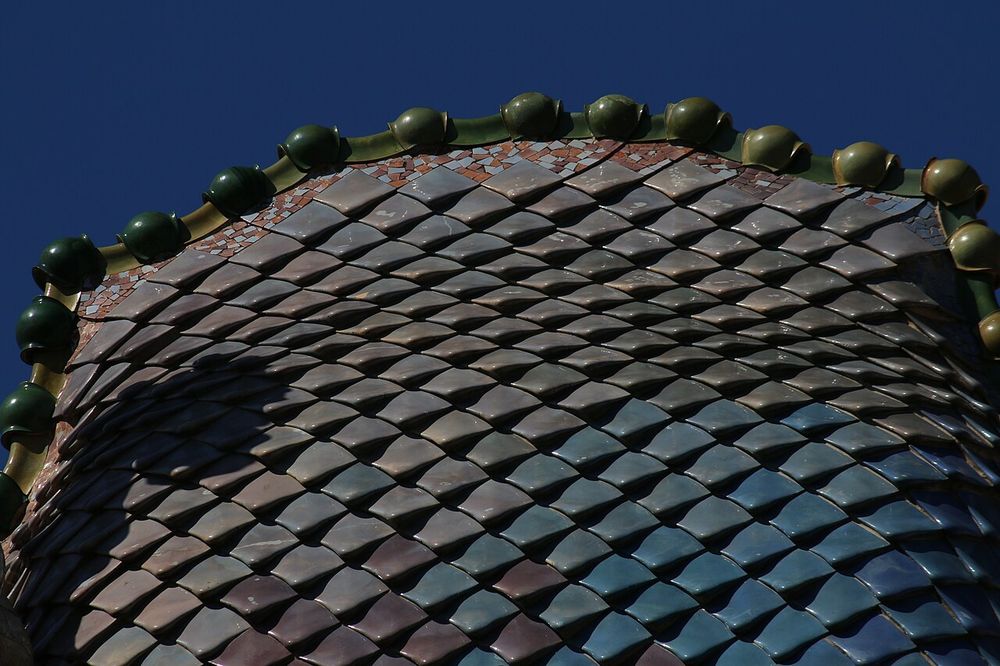
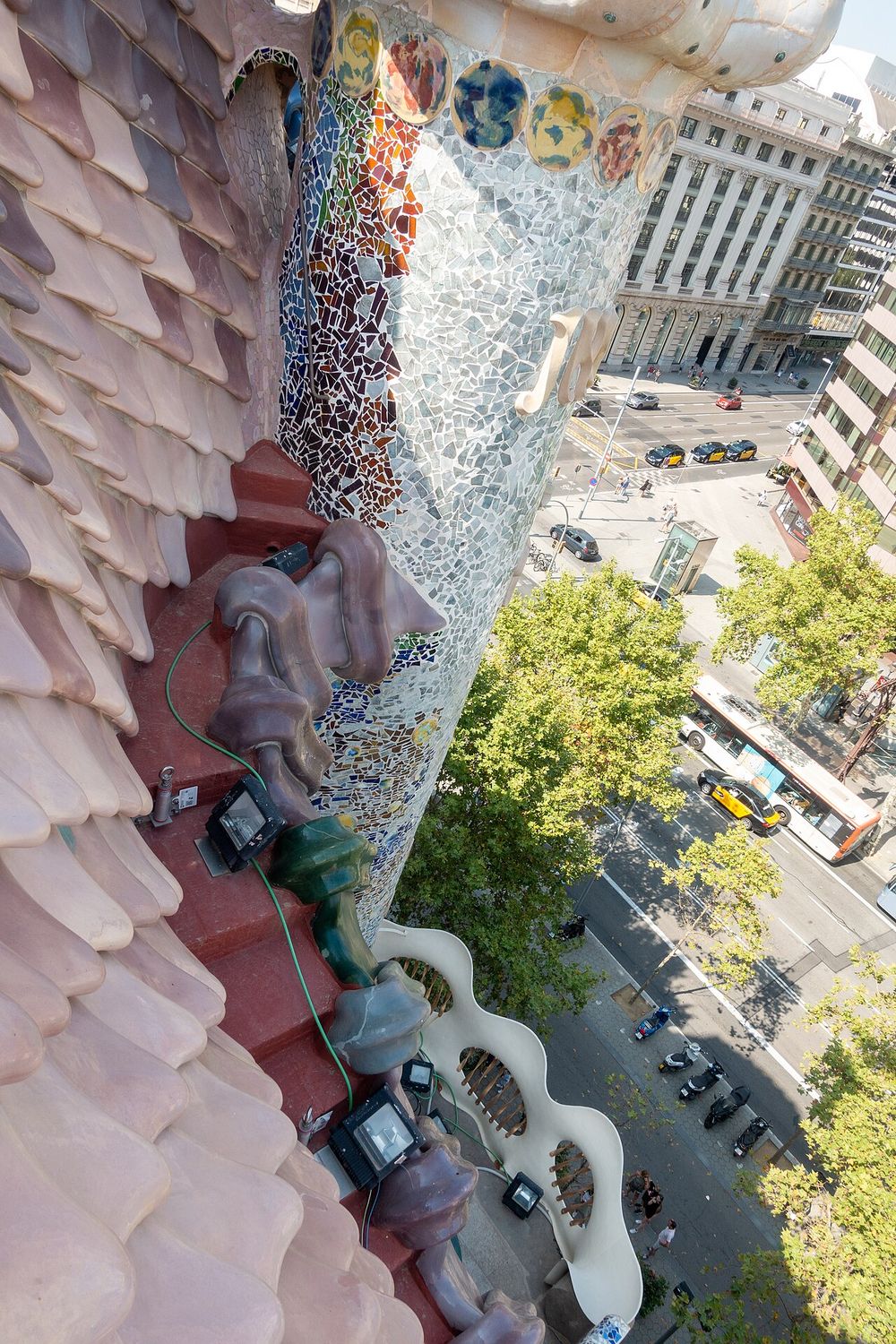
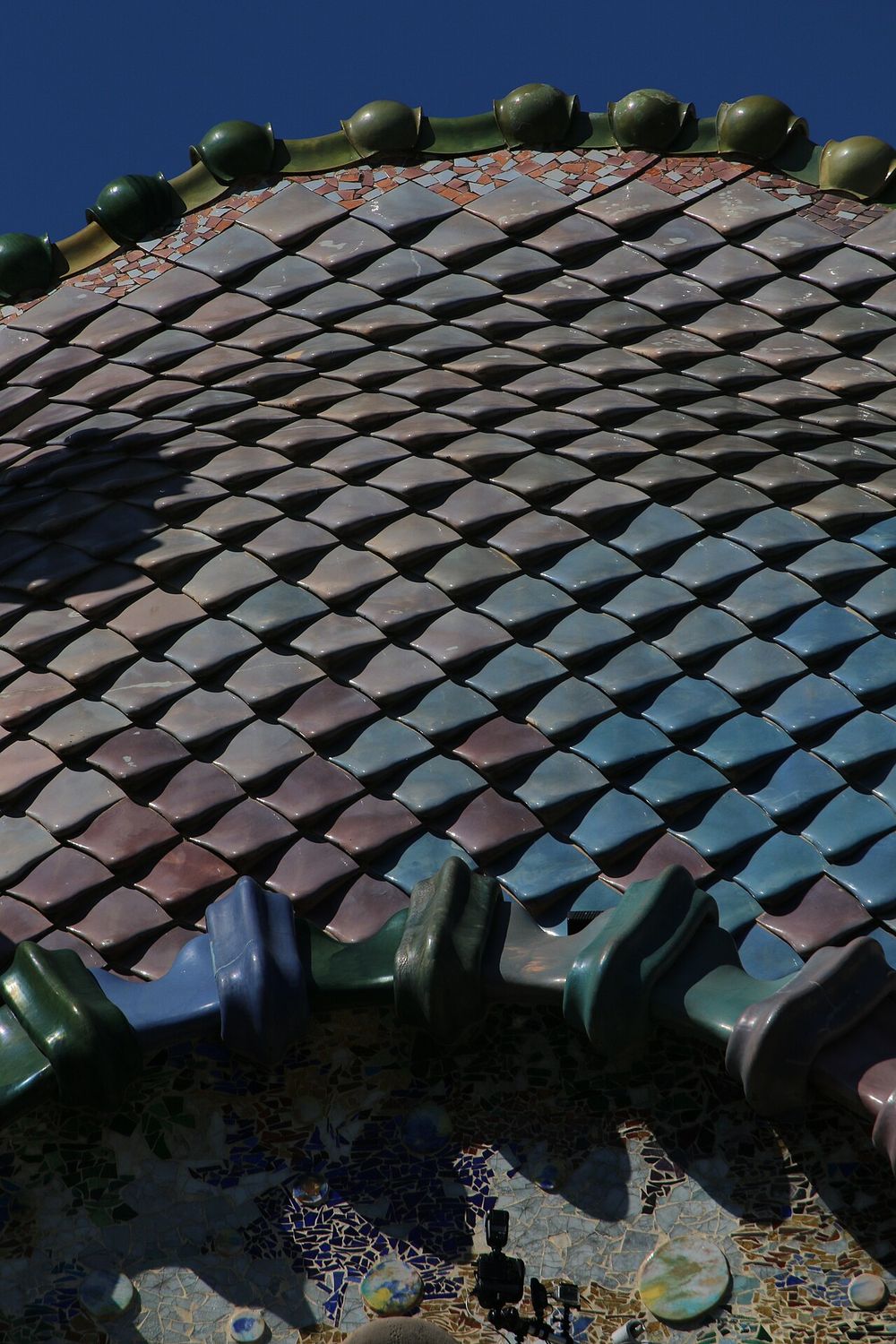
Now the roof. It humps like a spine and is tiled in scales that shade from green to blue to pink. On the left a small tower ends in a cross with four arms. The story everyone tells is that this is the dragon, and the tower is the lance of Saint George, the patron of Catalonia, driven into its back.
Things people often get wrong
"Gaudí built it." He rebuilt it. The house of 1877 is still inside: the same floors, the same party walls. He added a floor, a new front and back, a new stair and a new roof.
"Gaudí said it was Saint George and the dragon." He left no word about what it means. The reading is old and it fits. It is still a reading.
"A ticket shows you the whole house." Since January 2025 the basic ticket has not included the roof. Read what each ticket covers before you pay.
"The colours are paint." Outside, they are glass and glazed ceramic set in lime mortar.
People who stood here
Josep Batlló and Amàlia Godó (textile maker and his wife)He owned mills; she came from the family that owned Barcelona's leading newspaper. They gave Gaudí a free hand, lived on the first floor with five children and let the flats above. Their descendants kept the house until the 1950s.
Antoni Gaudí (Catalan architect, 1852–1926; the builder of the Sagrada Família)He was fifty-two. He made no full drawings. He stood on the pavement opposite and called up to the men on the scaffold where to put each colour.
Josep Maria Jujol (architect, 1879–1949)Gaudí's young assistant is generally credited with the colours of the front.
Josep Puig i Cadafalch (architect and politician, 1867–1956)He built the house next door, with the stepped gable, in 1900 for a chocolate maker. Gaudí set his own roof back on that side and stopped it short, so as not to hide his rival's gable.
Salvador Dalí (Spanish painter, 1904–1989)He wrote that Gaudí had built a house out of the shapes of the sea, a front made of the still water of a lake at dusk.
Enric Bernat (sweet maker, 1923–2003)He made his fortune from a lollipop on a stick, whose wrapper Dalí designed. His family bought the house in the 1990s, restored it and opened it to visitors in 2002. They still own it.
Refik Anadol (Turkish-American artist)In May 2022 he projected a moving picture on to the whole front, made by a computer fed with images of the house and the day's weather. Some fifty thousand people filled the street to watch.
Go deeper: seven stops, from the pavement to the roof
Which stops you can enter depends on the ticket. In 2026 the roof needs the second level of ticket, and the family's private rooms the third.
1. Three houses, one block
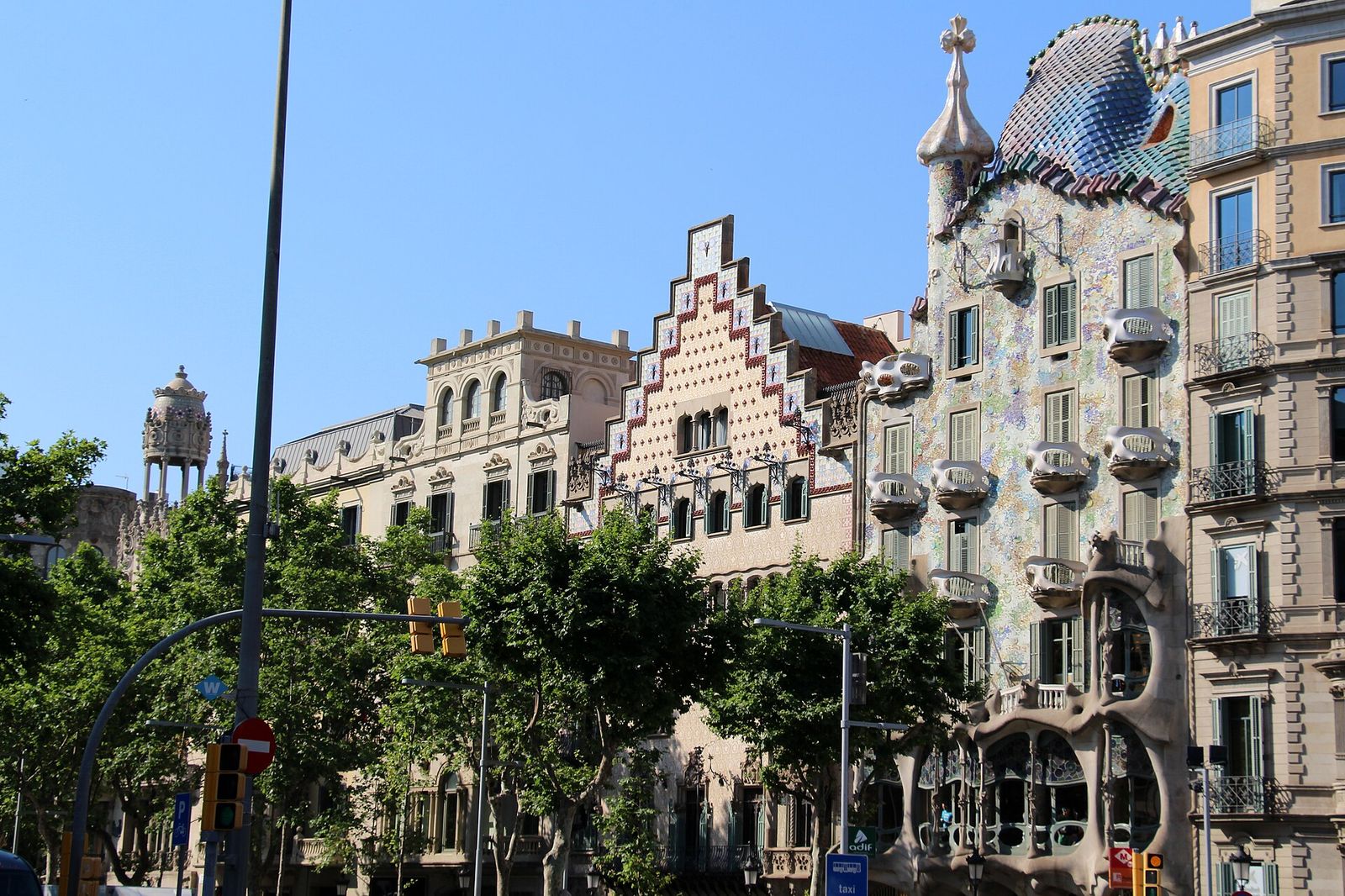
The stepped gable next door and Casa BatllóFred Romero, CC BY 2.0
Stand back far enough to see the neighbours. At the corner is a house crowned with a little temple, by Domènech i Montaner. Next to Gaudí's is the stepped gable of Puig i Cadafalch. All three are from the same six years. None looks like the others, and none looks like anything else in Europe.
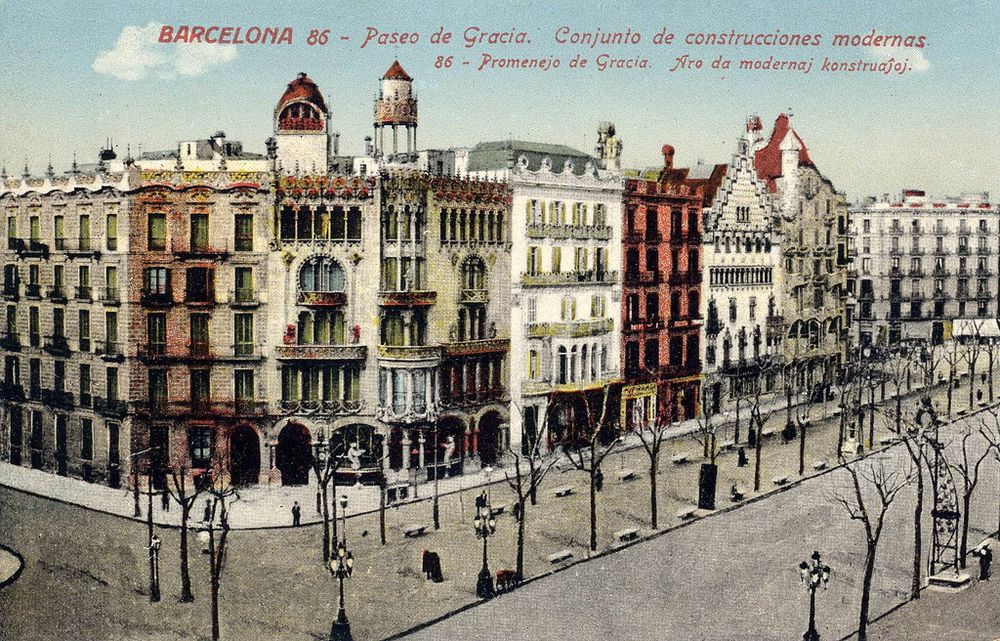
The block on a postcard of about 1910Jorge Venini, Public domain
The same shot: the classic picture of the front is taken from the central strip of the avenue directly opposite, at dusk, when the lights inside come on behind the coloured glass. Use the widest lens you have.
2. The stair
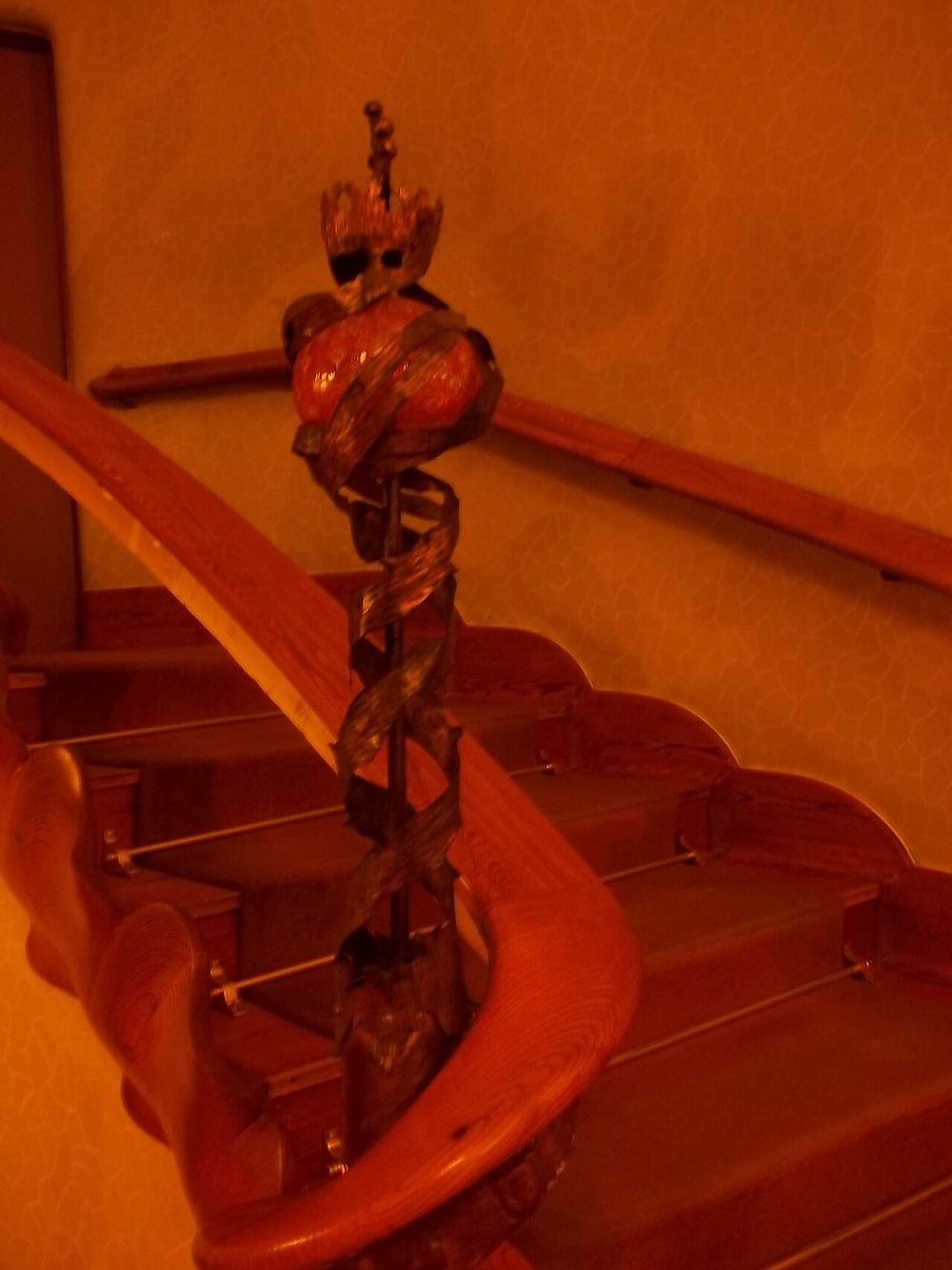
The handrail like a backboneSimon Burchell, CC BY-SA 4.0
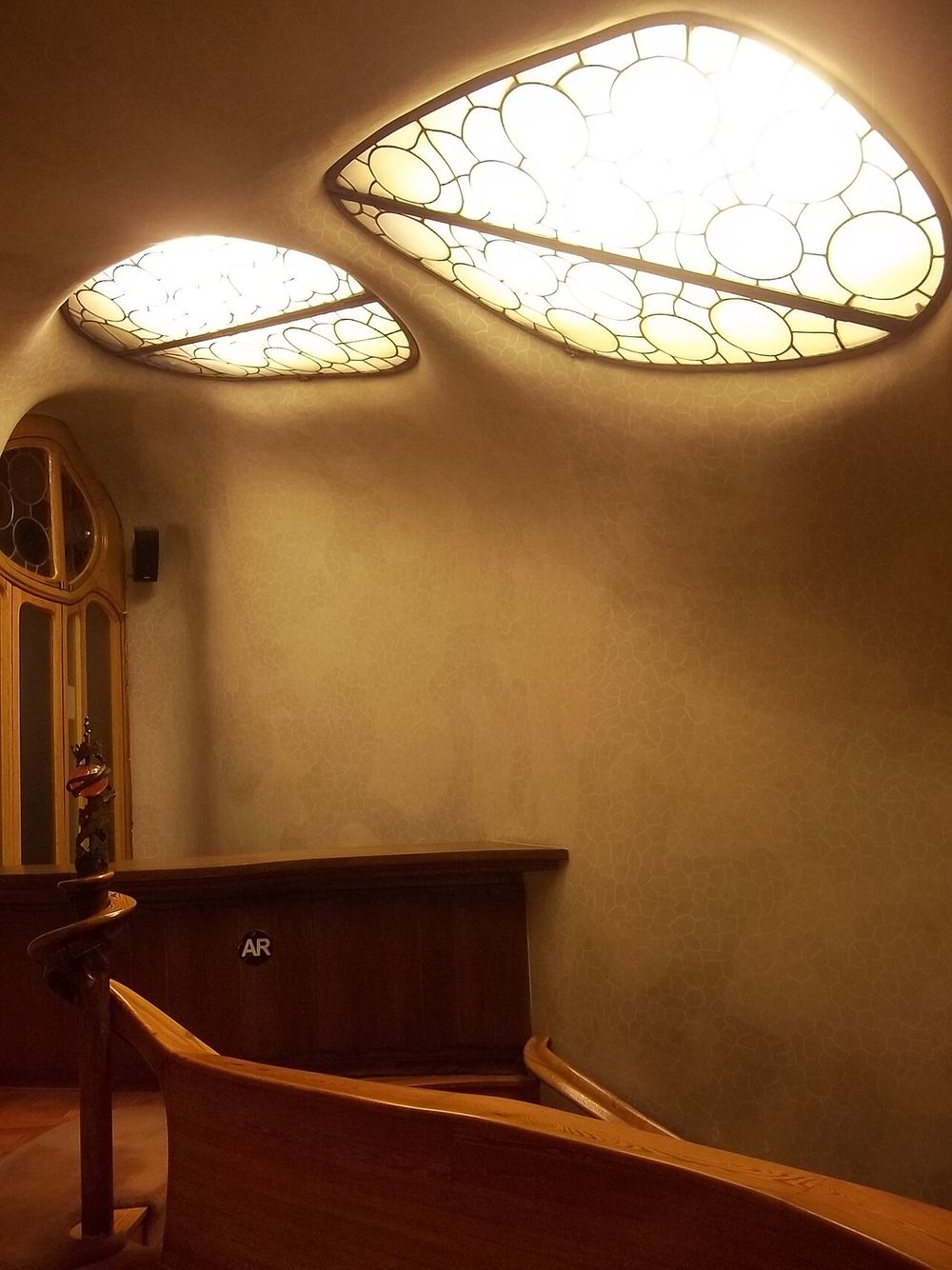
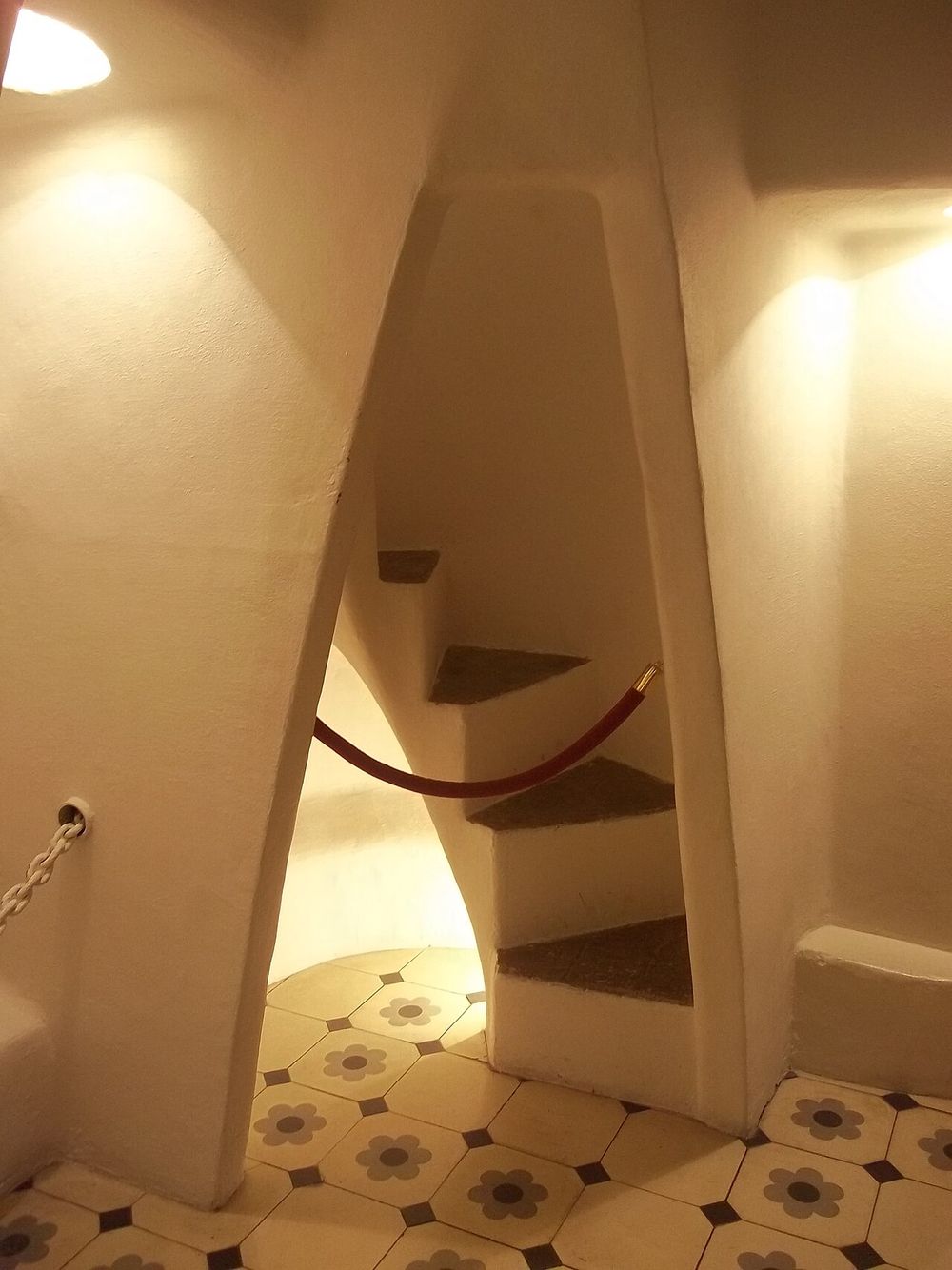
The family's stair rises from a hall with skylights shaped like turtle shells. The handrail is carved oak, and it twists up like the backbone of an animal.
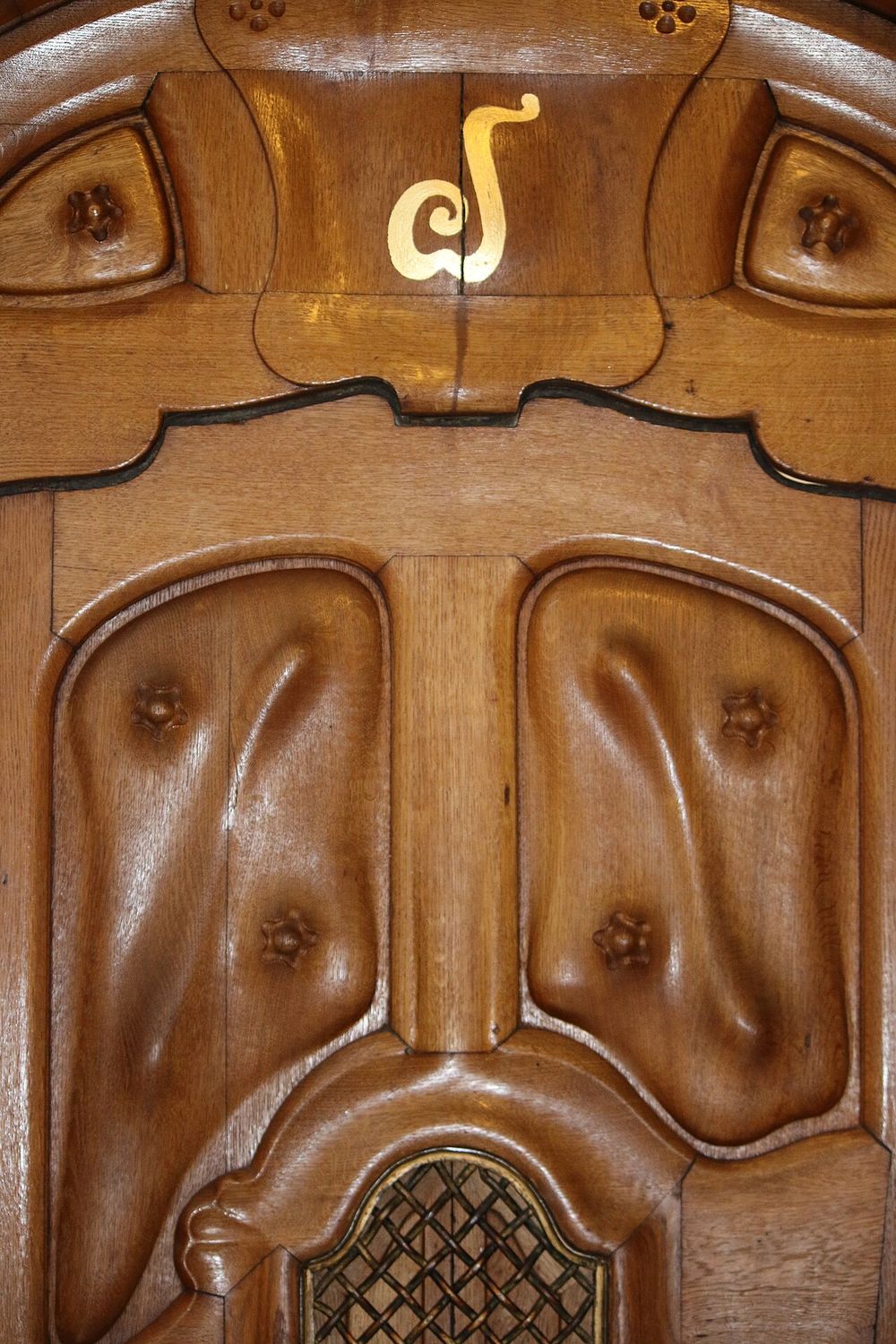
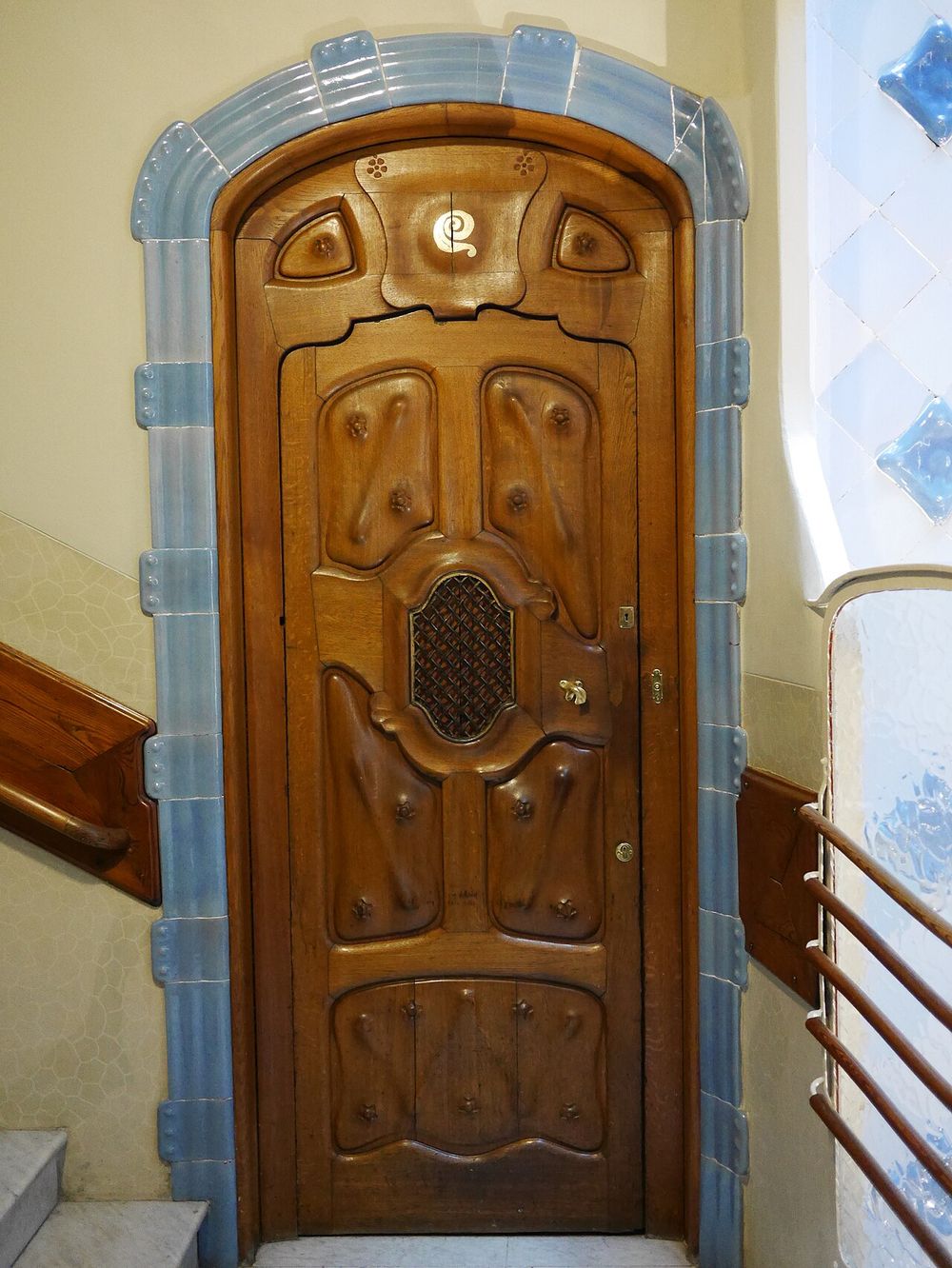
A carved door with a gold letterFrDr, CC BY-SA 4.0
Look at the doors. Each has a letter in gold, not a number, and the handles were shaped by squeezing clay in the hand.
3. The great room
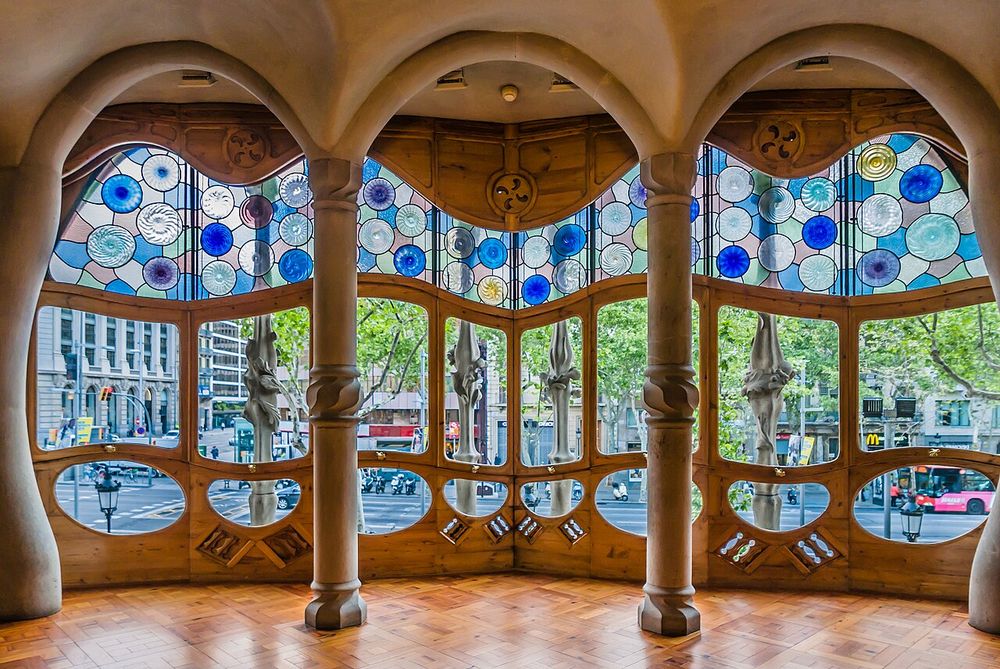
The window of the great room, April 2016Sara Terrones, CC BY-SA 4.0
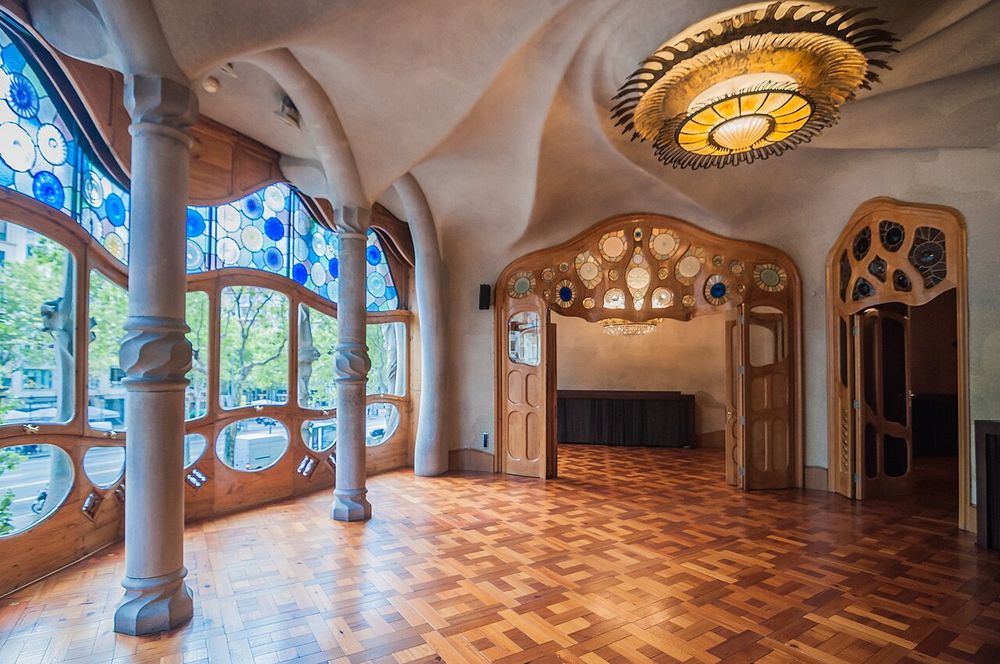
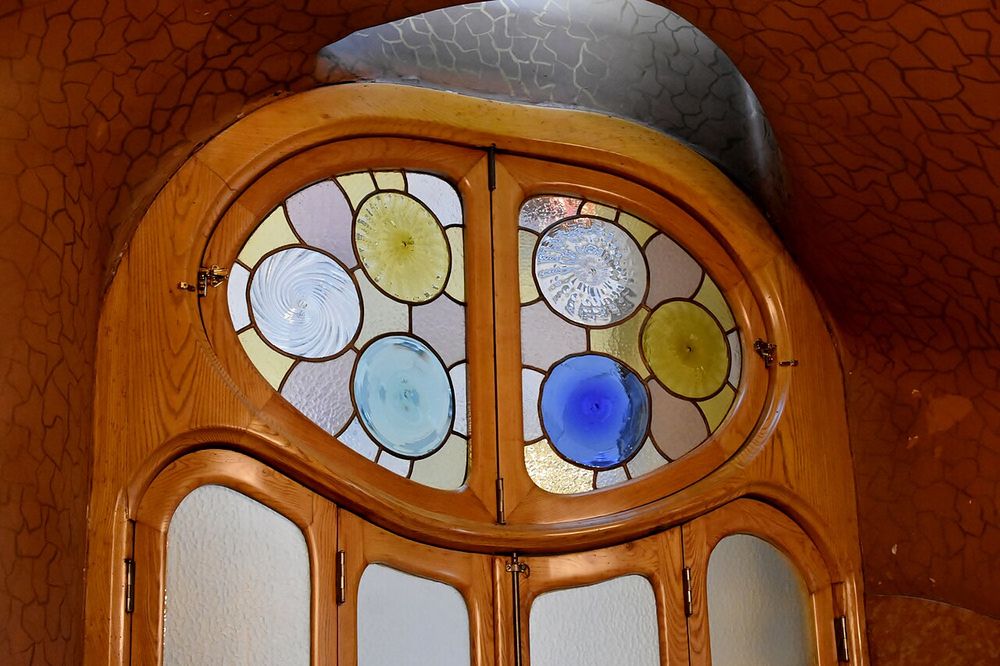
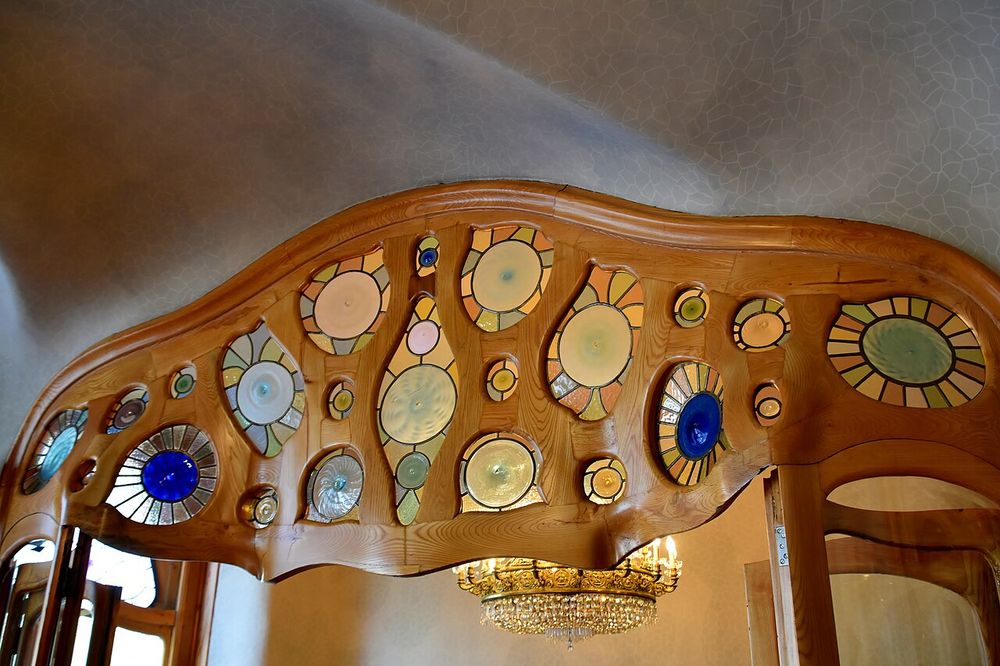
The main room looks down on the avenue through one enormous window. The lower panes slide up with counterweights. The upper ones are discs of coloured glass. From here the family could watch everyone who passed, and be watched.
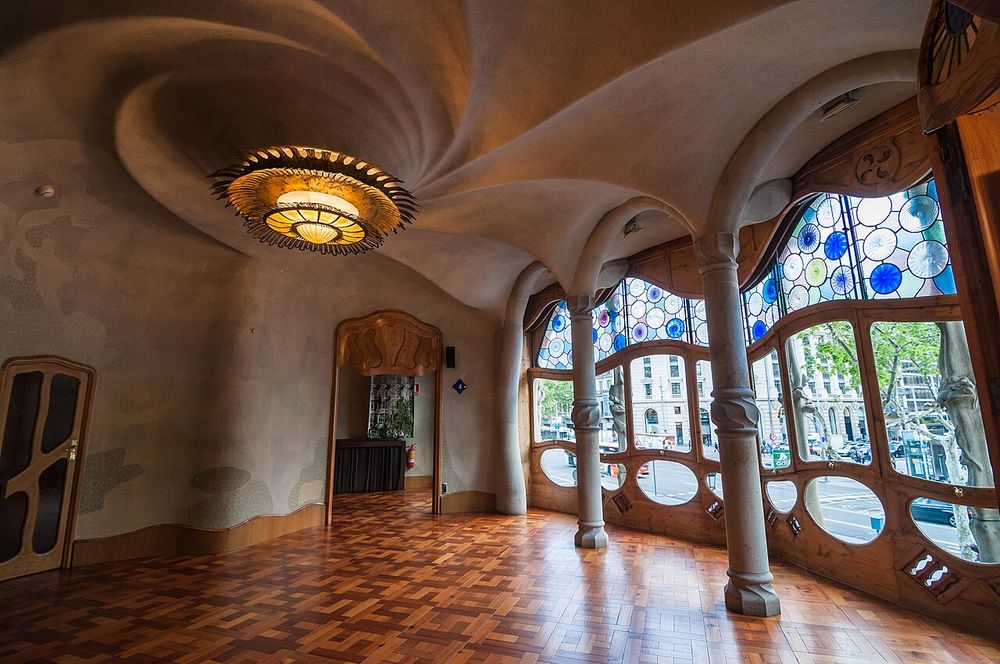
The great room and its spiral ceilingSara Terrones, CC BY-SA 4.0
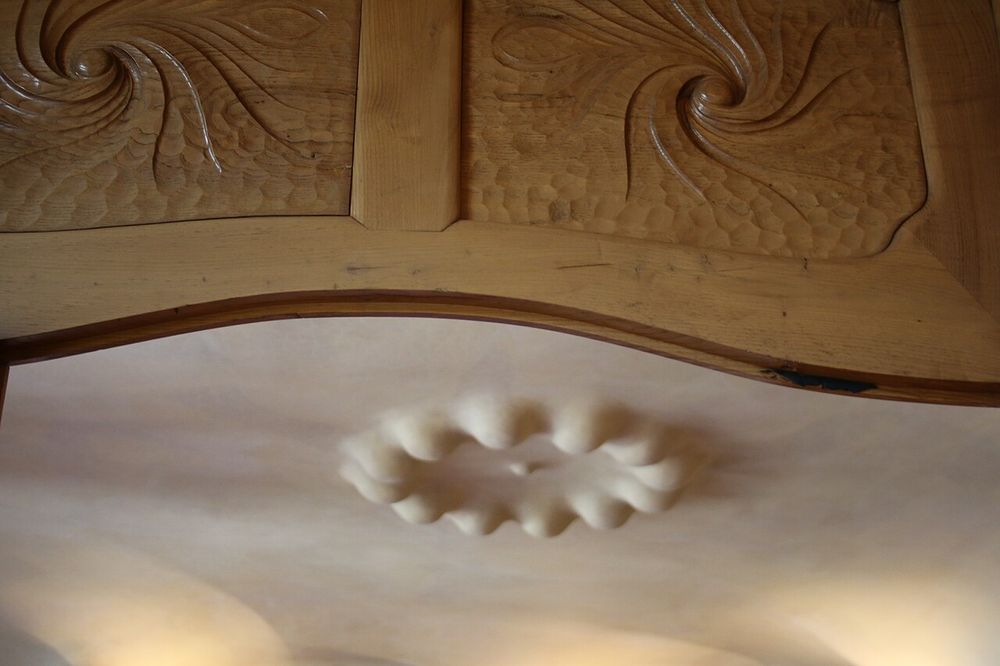
The ceiling turns in a spiral round the lamp, like water going down a drain. There is not one right angle in the room.
Drops on the ceilingFrDr, CC BY-SA 4.0
In the room behind, look for the drops that seem to have splashed on the ceiling.
4. The well of light
The well of light, August 2011Sam Wu, CC BY-SA 3.0
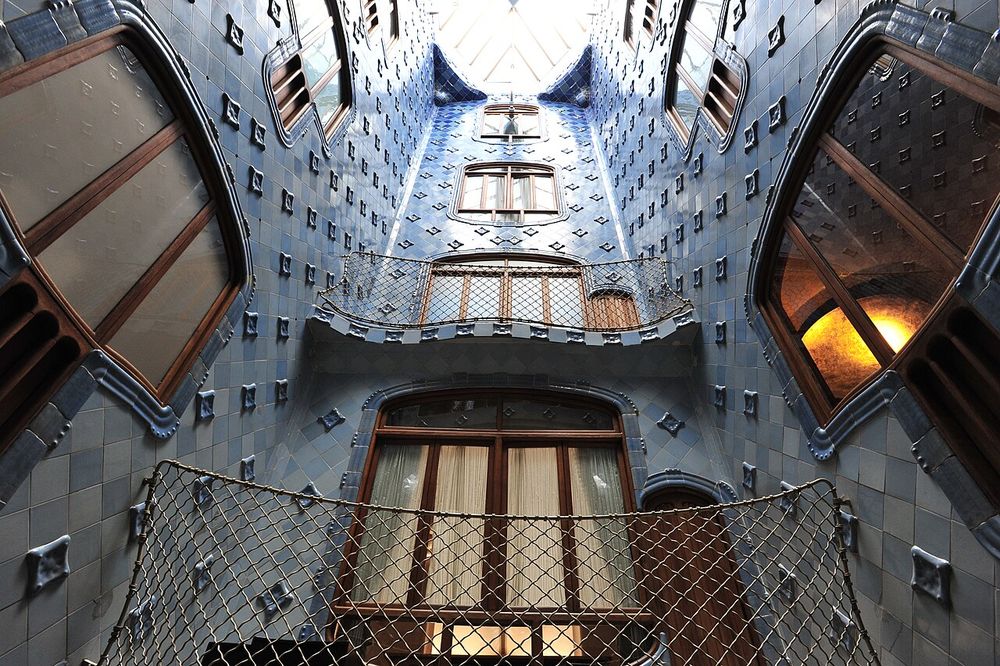
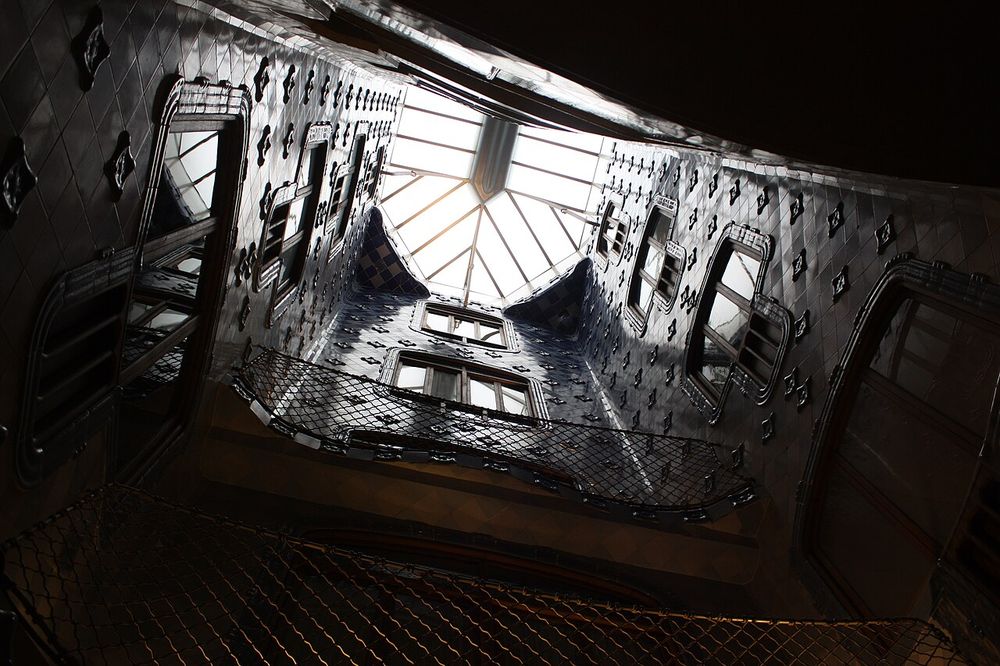
This is the cleverest thing in the house. Old apartment blocks had a dark shaft in the middle. Gaudí widened it, roofed it with glass and tiled it in blue.
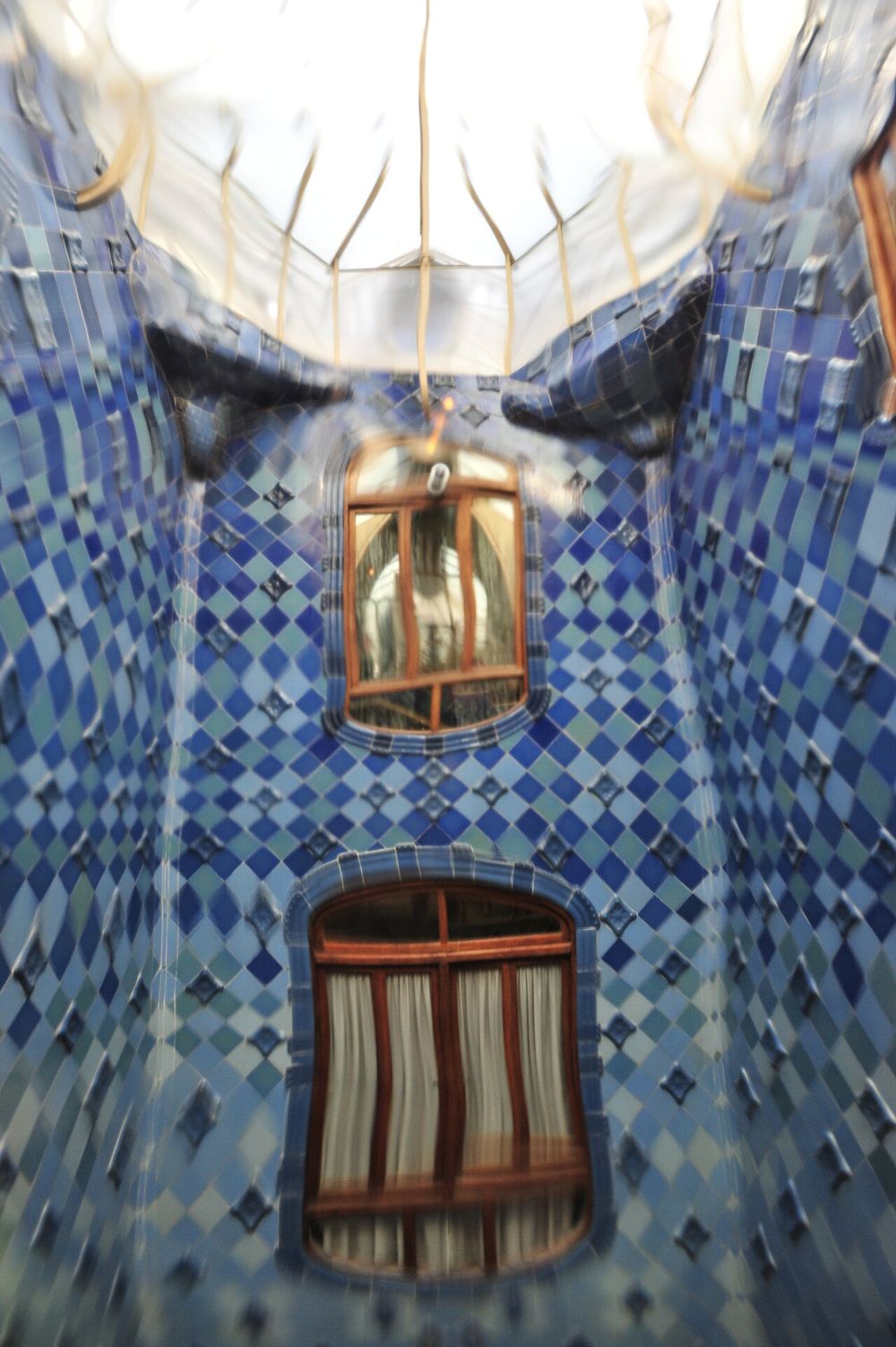
Blue tiles and a window in the wellSam Wu, CC BY-SA 3.0
Look carefully. The tiles are deep blue at the top, where the light is strong, and pale at the bottom, where it is weak. The windows do the opposite: small at the top, large at the bottom. So every floor gets about the same light, and from below the whole shaft looks one even colour.
5. The loft
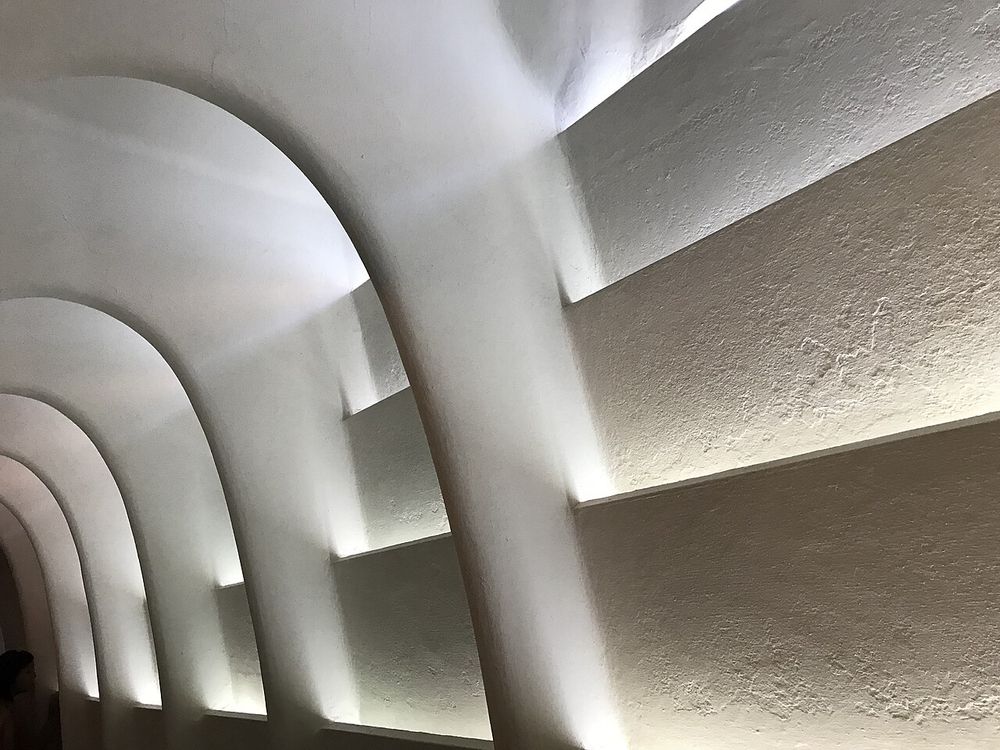
Arches of the loft, 2018Lalviarez, CC BY-SA 4.0
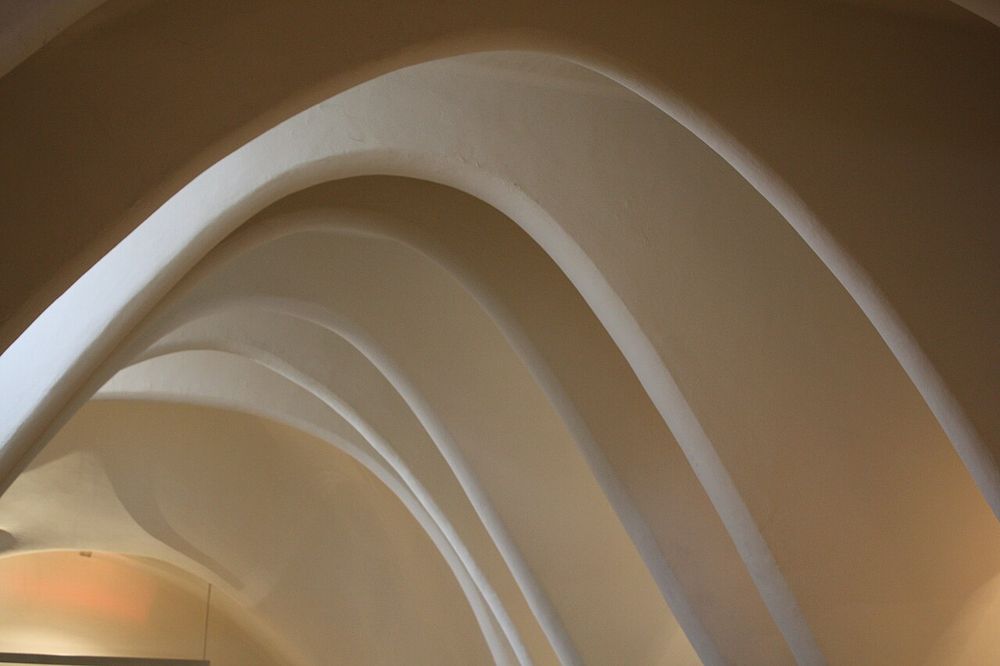
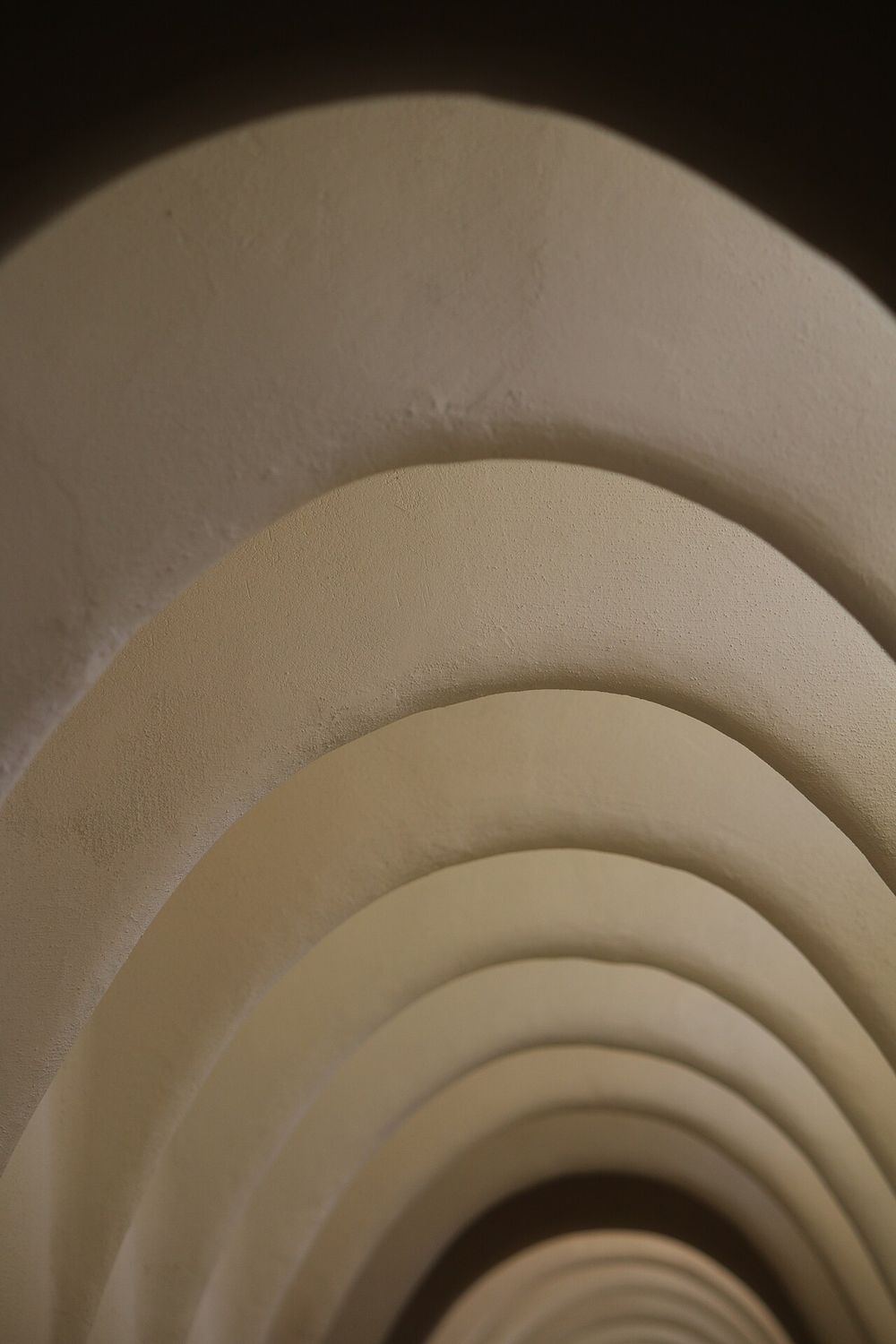
Under the roof was the servants' floor, with the washing rooms. It is a run of sixty white arches, each the curve a hanging chain makes, turned upside down. Walking through it is like walking inside the ribs of a whale.
6. The roof
Scales of the roofFrDr, CC BY-SA 4.0
Up here you can touch the scales. Behind the hump is a room that held the water tanks.
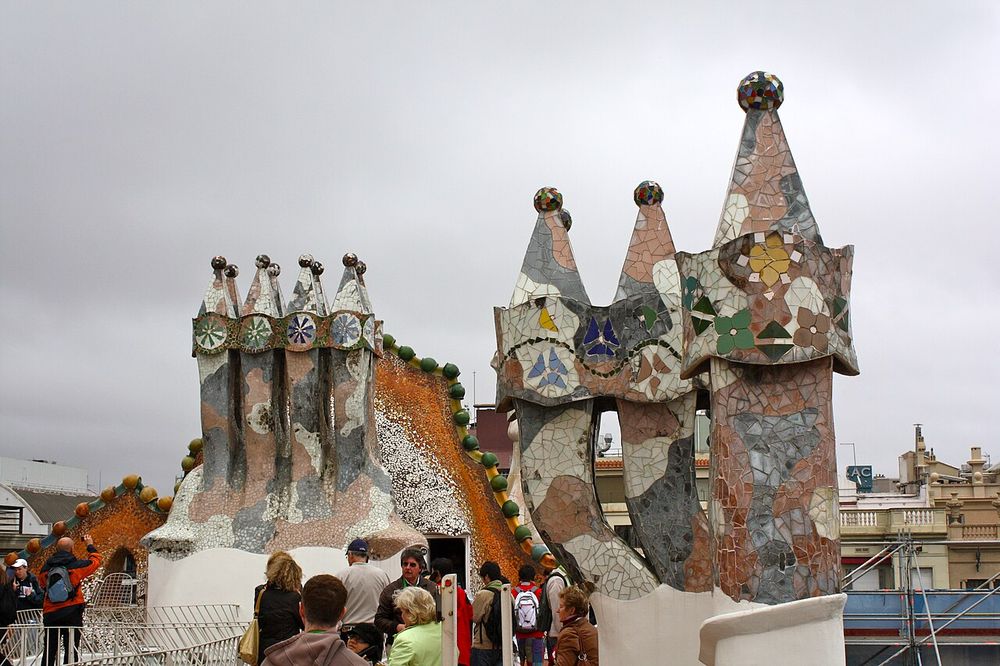
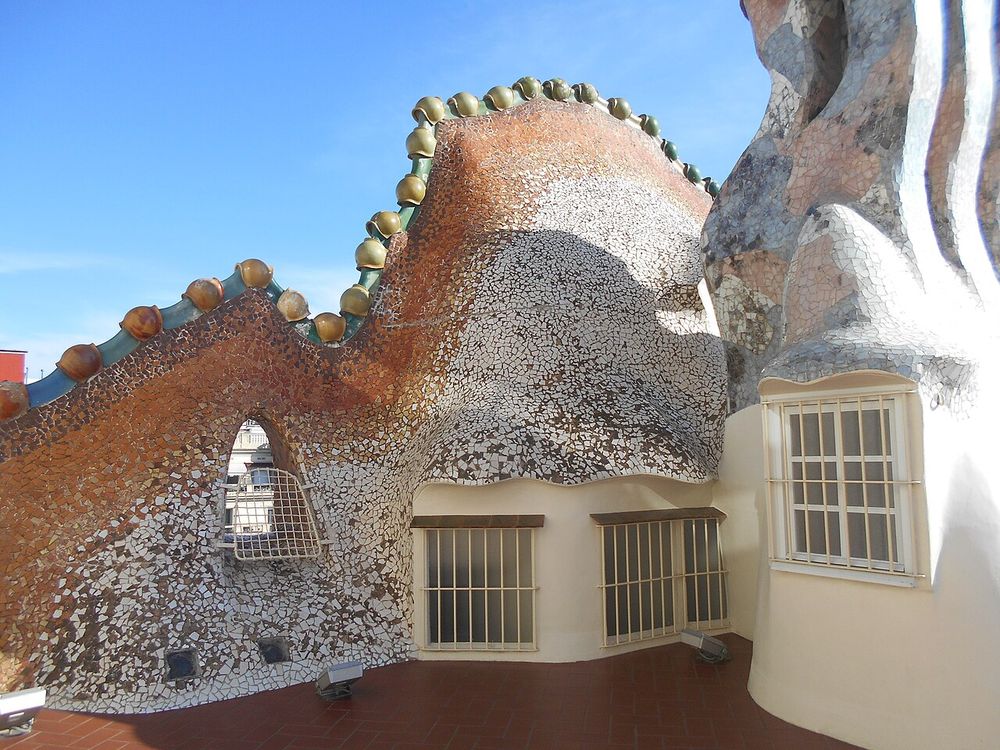
Chimneys and the dragon's backKyle Taylor from London, 84 Countries, CC BY 2.0
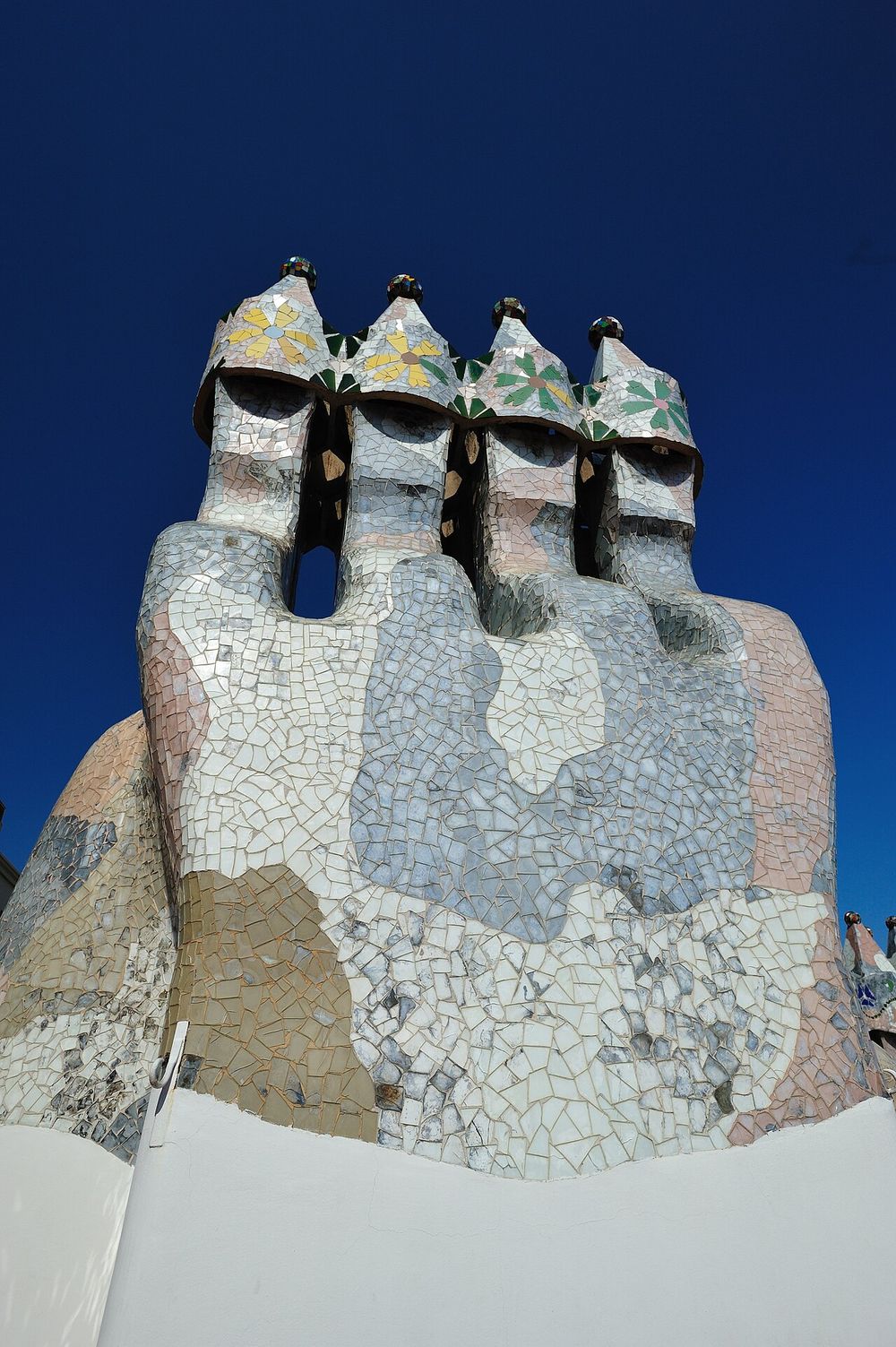
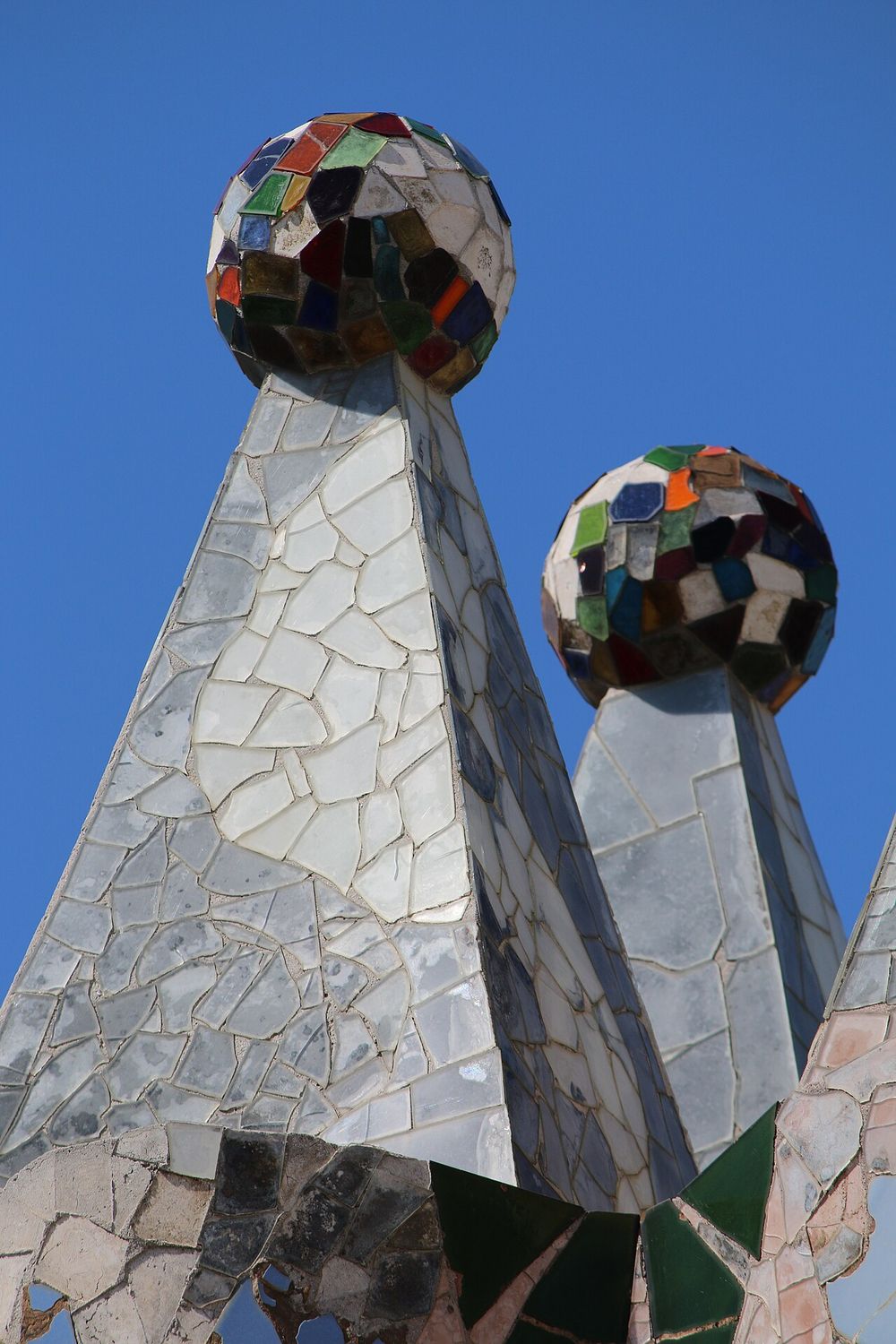
The chimneys stand in four groups, twenty-seven in all, twisted so the wind will not blow the smoke back down, and covered with broken tile.
The towerSam Wu, CC BY-SA 3.0
The tower carries the initials of Jesus, Mary and Joseph in gold.
7. The back
The back of the houseRichard Mortel from Riyadh, Saudi Arabia, CC BY 2.0
The back of the house faces the inside of the block. Its balconies have iron rails like nets, and the top is a crest of broken tile in a pattern of flowers. A restoration finished in 2025 uncovered its first colours, which were darker than anyone remembered.
Meanwhile in the world
Year
Here
Elsewhere
1877
The first house is built on the plot
Edison records sound for the first time
1904
Gaudí begins the rebuilding
Japan and Russia go to war over Manchuria
1906
The house is finished
Finland becomes the first country in Europe where women can vote
1954
The Batlló family sells the house
A runner covers a mile in under four minutes for the first time
2002
The house opens to visitors
Euro notes and coins come into use
2005
It joins the World Heritage list
YouTube is founded
One line to remember: he was asked to knock it down, and he dressed it up.
Outside and inside
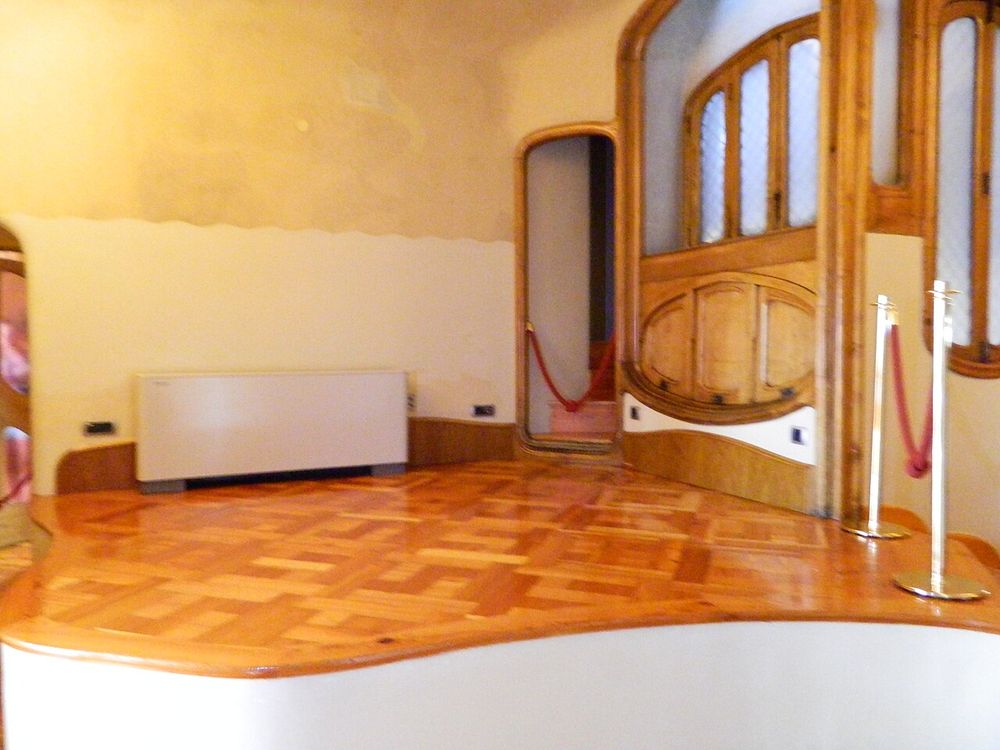
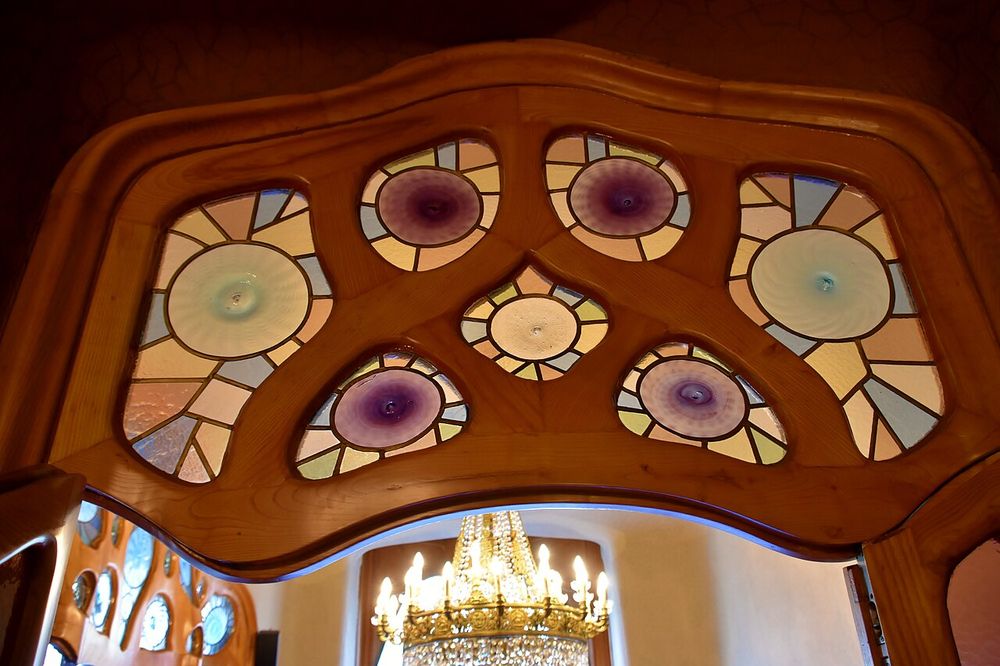
The Block of Discord, September 2013ChristianSchd, Xavier Badia Castellà, Amadalvarez, Balou46, CC BY-SA 3.0, Wikimedia CommonsThe stepped gable next door and Casa BatllóFred Romero, CC BY 2.0, Wikimedia CommonsThe front by day, 2016MartinThoma, CC0, Wikimedia CommonsThe front from the leftMartinThoma, CC0, Wikimedia CommonsThe front lit at night, 2012Enfo, CC BY-SA 3.0, Wikimedia CommonsThe front at nightEnfo, CC BY-SA 3.0, Wikimedia CommonsLooking down the front from the top, 2021Kent Wang from Barcelona, Spain, CC BY-SA 2.0, Wikimedia CommonsA flat door on the stairMichael Desnoyelles, CC BY-SA 4.0, Wikimedia CommonsThe hall and its skylights, March 2014Simon Burchell, CC BY-SA 4.0, Wikimedia CommonsA corner of the stairSimon Burchell, CC BY-SA 4.0, Wikimedia CommonsThe handrail like a backboneSimon Burchell, CC BY-SA 4.0, Wikimedia CommonsA carved door with a gold letterFrDr, CC BY-SA 4.0, Wikimedia CommonsA room on the main floorFreepenguin, CC BY-SA 3.0, Wikimedia CommonsThe window of the great room, April 2016Sara Terrones, CC BY-SA 4.0, Wikimedia CommonsThe great room and its spiral ceilingSara Terrones, CC BY-SA 4.0, Wikimedia CommonsThe great room from the sideSara Terrones, CC BY-SA 4.0, Wikimedia CommonsColoured glass above a doorRichard Mortel from Riyadh, Saudi Arabia, CC BY 2.0, Wikimedia CommonsColoured glass and a lampRichard Mortel from Riyadh, Saudi Arabia, CC BY 2.0, Wikimedia CommonsA screen of wood and glassRichard Mortel from Riyadh, Saudi Arabia, CC BY 2.0, Wikimedia CommonsDrops on the ceilingFrDr, CC BY-SA 4.0, Wikimedia CommonsA ceiling in the back roomFrDr, CC BY-SA 4.0, Wikimedia CommonsThe well of light, August 2011Sam Wu, CC BY-SA 3.0, Wikimedia CommonsBlue tiles and a window in the wellSam Wu, CC BY-SA 3.0, Wikimedia CommonsThe glass roof of the wellKyle Taylor from London, 84 Countries, CC BY 2.0, Wikimedia CommonsArches of the loft, 2018Lalviarez, CC BY-SA 4.0, Wikimedia CommonsThe loftKyle Taylor from London, 84 Countries, CC BY 2.0, Wikimedia CommonsA corridor of archesFrDr, CC BY-SA 4.0, Wikimedia CommonsScales of the roofFrDr, CC BY-SA 4.0, Wikimedia CommonsThe hump of the roofFrDr, CC BY-SA 4.0, Wikimedia CommonsThe roof from behindCanaan, CC BY-SA 4.0, Wikimedia CommonsThe roof and the tower with its crossFred Romero, CC BY 2.0, Wikimedia CommonsThe towerSam Wu, CC BY-SA 3.0, Wikimedia CommonsThe cross with four armsKyle Taylor from London, 84 Countries, CC BY 2.0, Wikimedia CommonsA group of chimneysSam Wu, CC BY-SA 3.0, Wikimedia CommonsChimneys and the dragon's backKyle Taylor from London, 84 Countries, CC BY 2.0, Wikimedia CommonsChimney tops in broken tileFrDr, CC BY-SA 4.0, Wikimedia CommonsThe back of the houseRichard Mortel from Riyadh, Saudi Arabia, CC BY 2.0, Wikimedia CommonsThe back, from the terraceTony Hisgett from Birmingham, UK, CC BY 2.0, Wikimedia CommonsThe block on a postcard of about 1910Jorge Venini, Public domain, Wikimedia CommonsThe house in a stereo photograph of 1916, by Josep SalvanyJosep Salvany i Blanch, Public domain, Wikimedia CommonsThe front soon after it was finishedUnknown authorUnknown author, Public domain, Wikimedia Commons
Local legends
These are stories people tell about this place. They are legends, not history, and each one says where it comes from.
LegendSaint George and the dragon
The roof is the dragon, the tower is the saint's lance, the balconies are the skulls of the dragon's victims and the columns are their bones.
Source: The common reading in Barcelona since at least the 1920s; Gaudí left no statement
LegendThe rose of Saint George
Where the dragon's blood fell, a rose bush grew, and the knight gave a rose to the princess.
Source: The Catalan form of the legend, from the Golden Legend of the 13th century
Later, people who live here will be able to add the stories they grew up with, and say which of these they have heard.
Not certain, and where accounts conflict
Who chose the colours?
Jujol is usually given the credit, on the word of people who worked on the site. No contract or drawing settles how much was his and how much Gaudí's.
Is it the sea or a dragon?
Both readings are old. The glass and the rippling wall suggest water; the roof suggests the beast. Gaudí may have meant both, or neither.
Visiting
Tickets and hours
From about 29 euros in 2026 for the basic ticket, more on busy days. Children under 13 are free with an adult.
The roof has not been in the basic ticket since January 2025.
Open every day of the year, from 9:00 to 22:00. A dearer early ticket lets a few people in at 8:30.
Last checked 2026-11-12. Spanish ticket guides of 2026 quoting the house's own booking page; Barcelona guides checked in August 2026.
Booking from abroad
Official page in English The house sells tickets on its own site, which has an English version and takes foreign bank cards. You choose a day and a time. The price moves with demand, so the same ticket costs more nearer the day.
Ticket window on site The desk at the door sells tickets if any are left, at a higher price than on line.
Note No passport is asked for an ordinary ticket. The audio guide comes in about fifteen languages; check that yours is among them.
Checked 2026-11-12
Where to start
Metro lines 2, 3 and 4 to Passeig de Gràcia. The house is two minutes from the exit.
Look at the front for ten minutes before you go in. It is free, and it is the best part.
The first hour and the last two hours are the least crowded.
Casa Milà is seven minutes' walk up the same avenue.
Before you go
The visit goes up by the stair and the lift and takes about an hour.
The roof is closed in heavy rain.
Customs and manners
On 23 April, the day of Saint George, the front is covered with red roses, and all over the city people give each other a rose and a book. The street is packed.
The queue stands on a public pavement. Leave room for people walking past.
Do not lean on the oak or the glass, or put bags on the window ledges.
Catalan is the first language here. "Gràcies" for thank you is noticed and liked.
Look for these
Find a balcony that looks like a mask.
Find a column that looks like a bone.
Where are the plates thickest on the front: top or bottom?
Find the cross. How many arms has it?
In the well, where is the blue darkest?
Which windows in the well are biggest?
In the great room, find a right angle.
Count the chimneys.
I am here
Stand at the site, sign in, press the button, and collect its stamp. Your browser will ask to use your location. It is sent to us once to confirm that you are at the site; we keep how far you were from it, not the spot where you stood.
Your stamps are saved to your account, so they follow you to any device. Checking from a browser cannot rule out every false location; stricter checks arrive with the app.
Messages
Share your photos
Photos here show the place, not people. Each one is credited to the visitor who took it and appears after our team has looked at it. A photo with you in it belongs under “I am here”.