LegendThe hundred maidens
The Maidens' court is named for the hundred virgins that the Christian kings of the north had to send each year to the Muslim rulers of Córdoba.
Source: A medieval Christian legend with no support in the Arabic sources
Seville, Andalusia, Spain
Real Alcázar de Sevilla · ray-AHL al-KAH-thar
The oldest royal palace in Europe that is still lived in: the king of Spain sleeps upstairs when he comes to Seville. It began as a Muslim governor's fort in 913. Its finest rooms were built in the 1360s by a Christian king who liked the way his Muslim neighbours built, and who had his walls covered with Arabic.
Photo: Benjamin Smith, CC BY-SA 4.0, Wikimedia Commons
Alcázar is Arabic: al-qasr, the castle. Muslim rulers held Seville from 712 to 1248 and built on this spot for three hundred years. Almost nothing of theirs is what you will remember. What you will remember was built after the Christian conquest.
In 1364 King Pedro I of Castile began a new palace here. His friend the Muslim king of Granada, who was building the Alhambra at that moment, sent him craftsmen. Others came from Toledo. The style they made, Islamic in its art and Christian in its patron, is called Mudéjar. In China this is the last years of the Yuan dynasty (1271–1368).
Close by, with a page of its own: Seville Cathedral, Mezquita, Córdoba, Royal Palace, Madrid.
The general ticket covers the ground-floor palaces and the gardens. The upper rooms are a small extra ticket for a set time, with few places.
| Part | Ticket |
|---|---|
| The gate and the first courts | General ticket |
| Pedro's palace: the Maidens' court, the ambassadors' hall, the Dolls' court | General ticket |
| The office for America | General ticket |
| The Gothic palace and the tank | General ticket |
| The gardens | General ticket |
| The upper royal rooms | Extra ticket, timed |
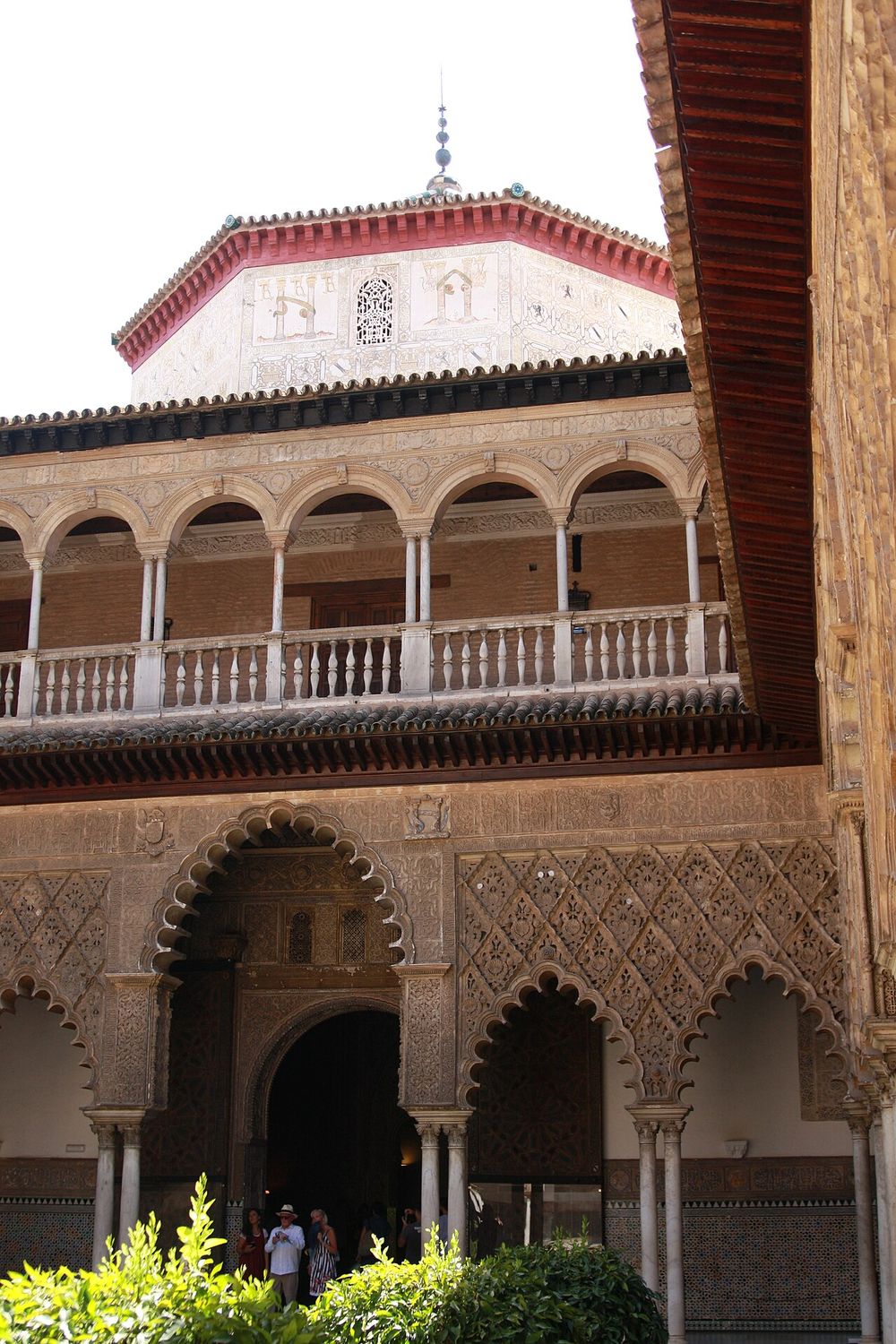
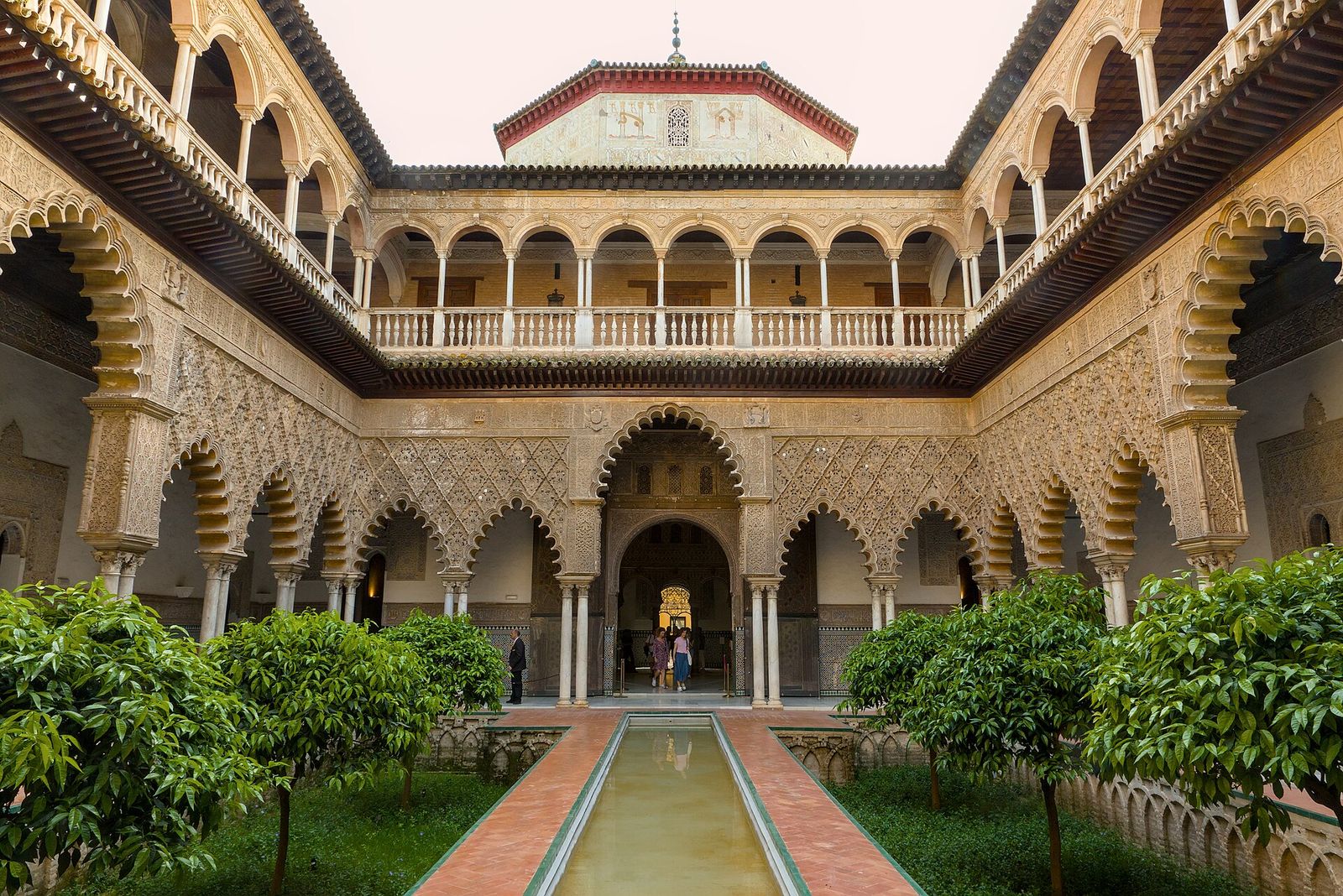
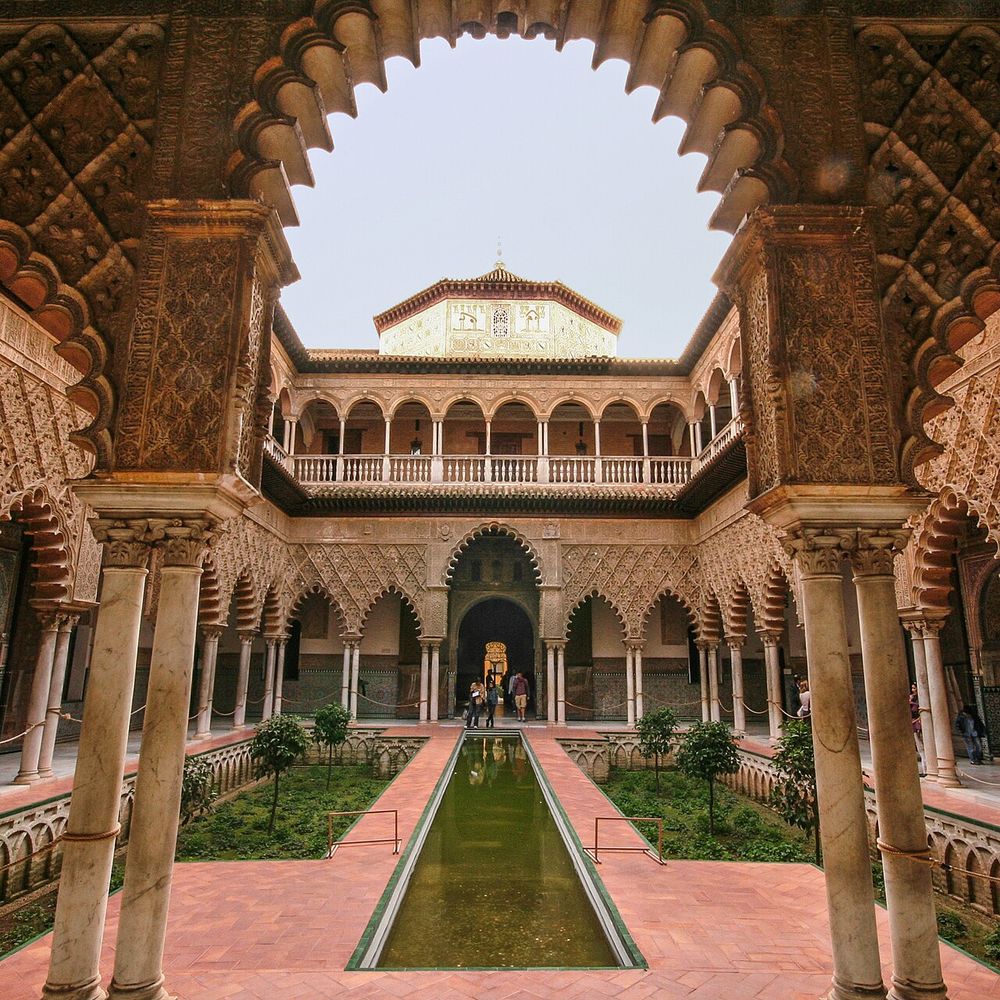
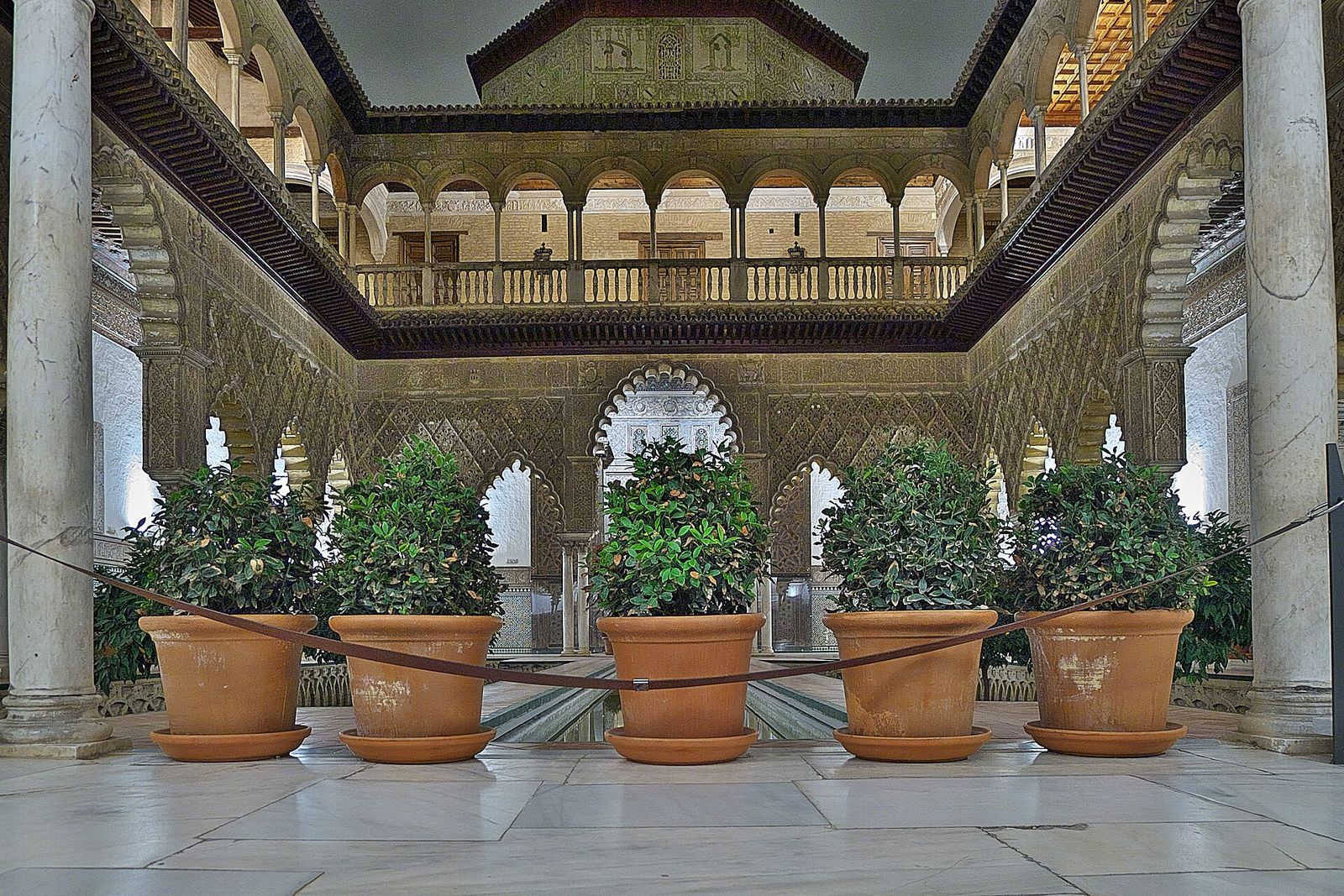
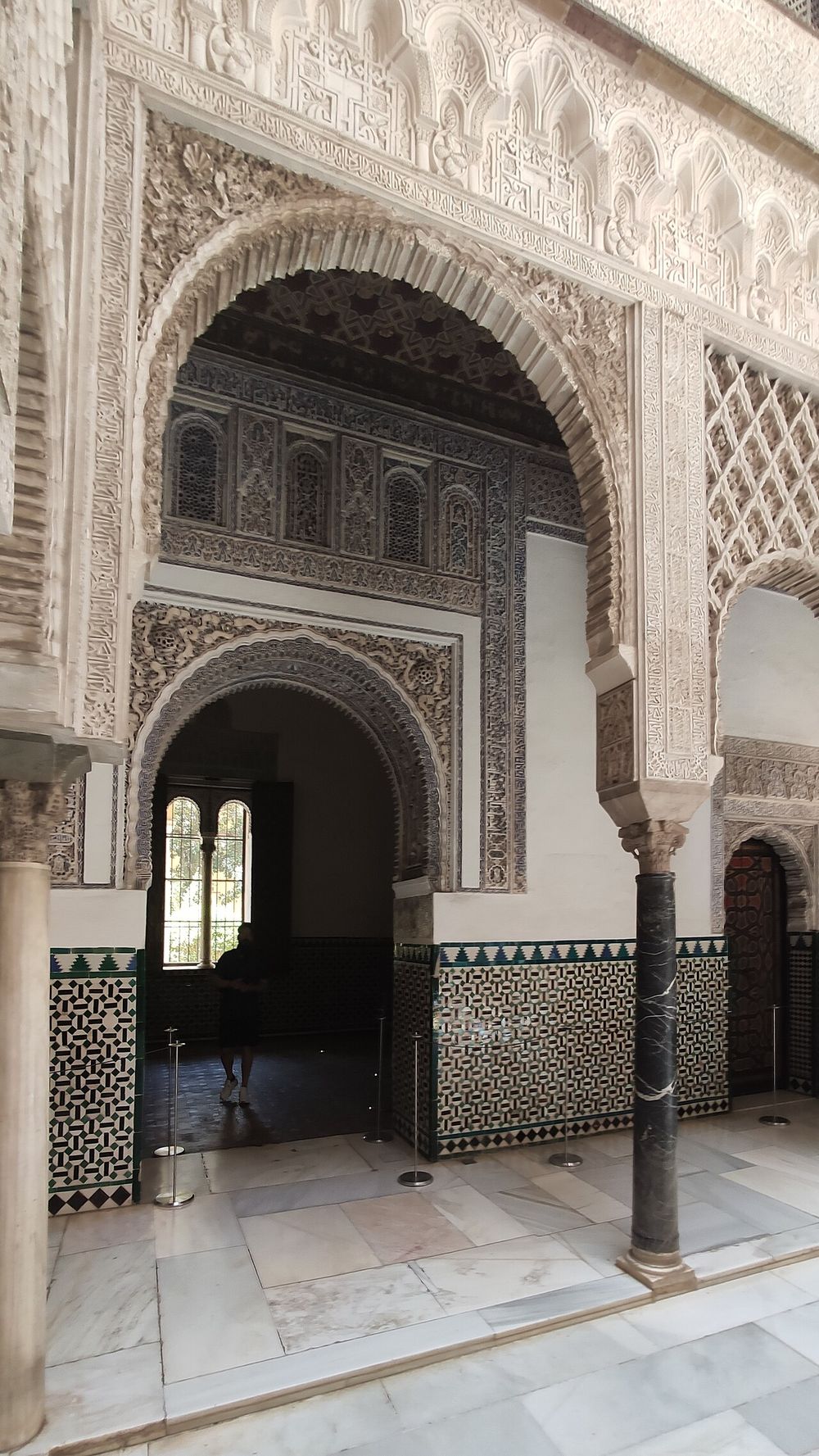
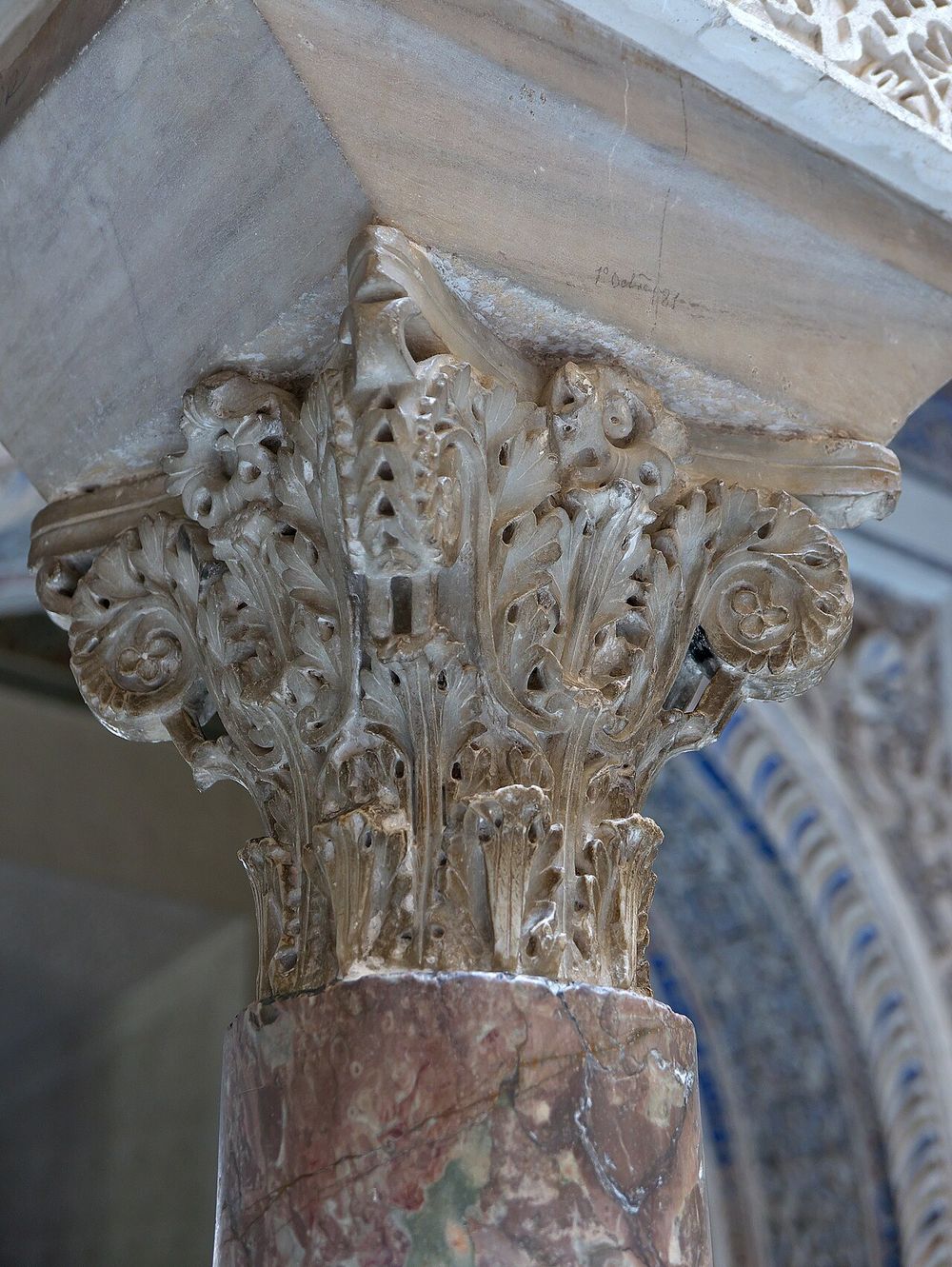
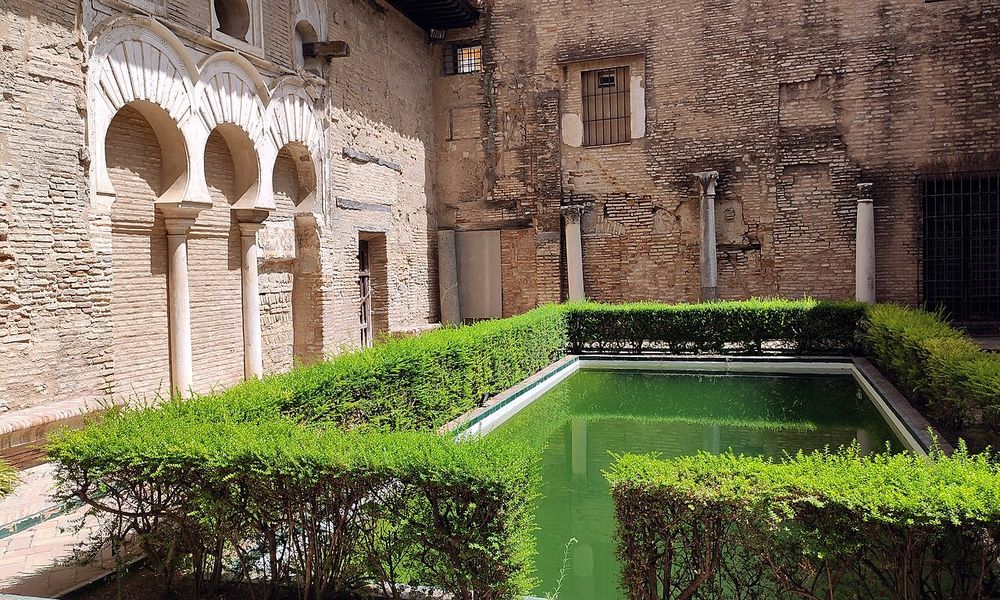
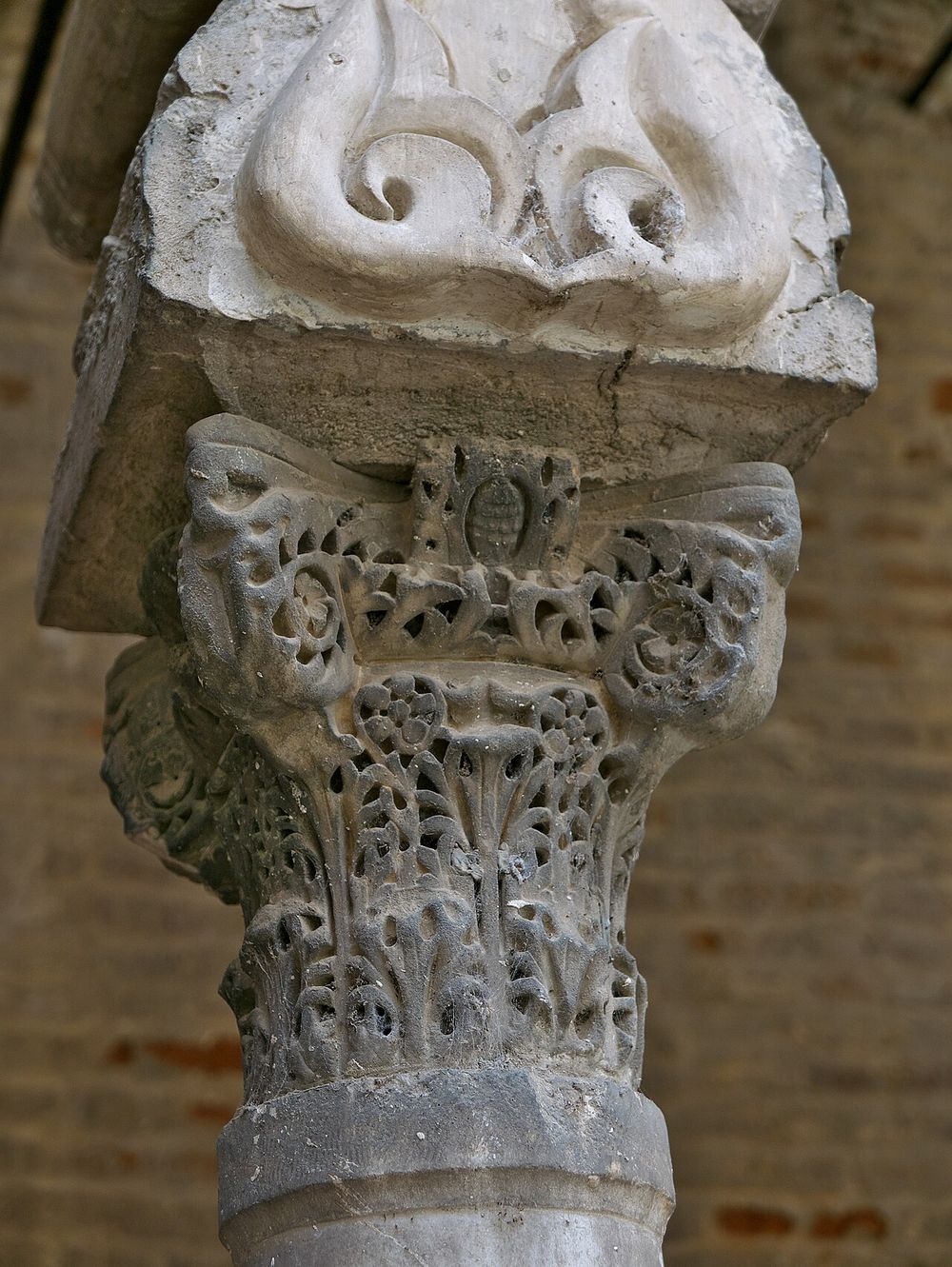
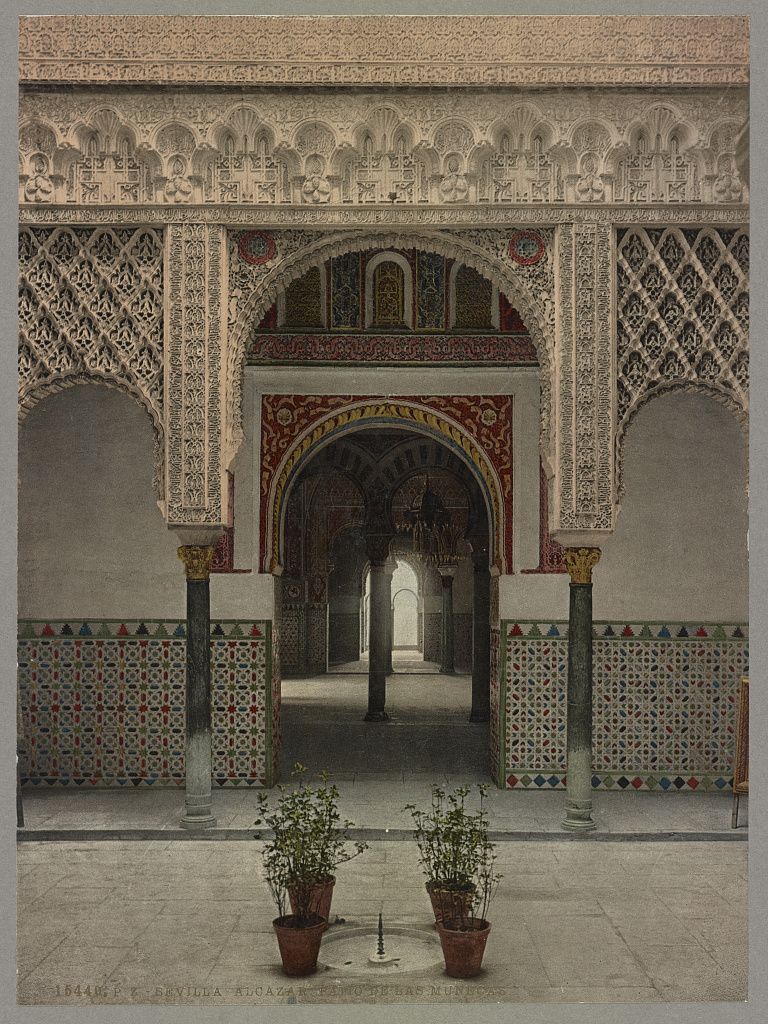
A long pool runs down the middle, with sunken beds of orange trees on each side, a metre below the paths. Round it runs an arcade of lobed arches on thin marble columns.
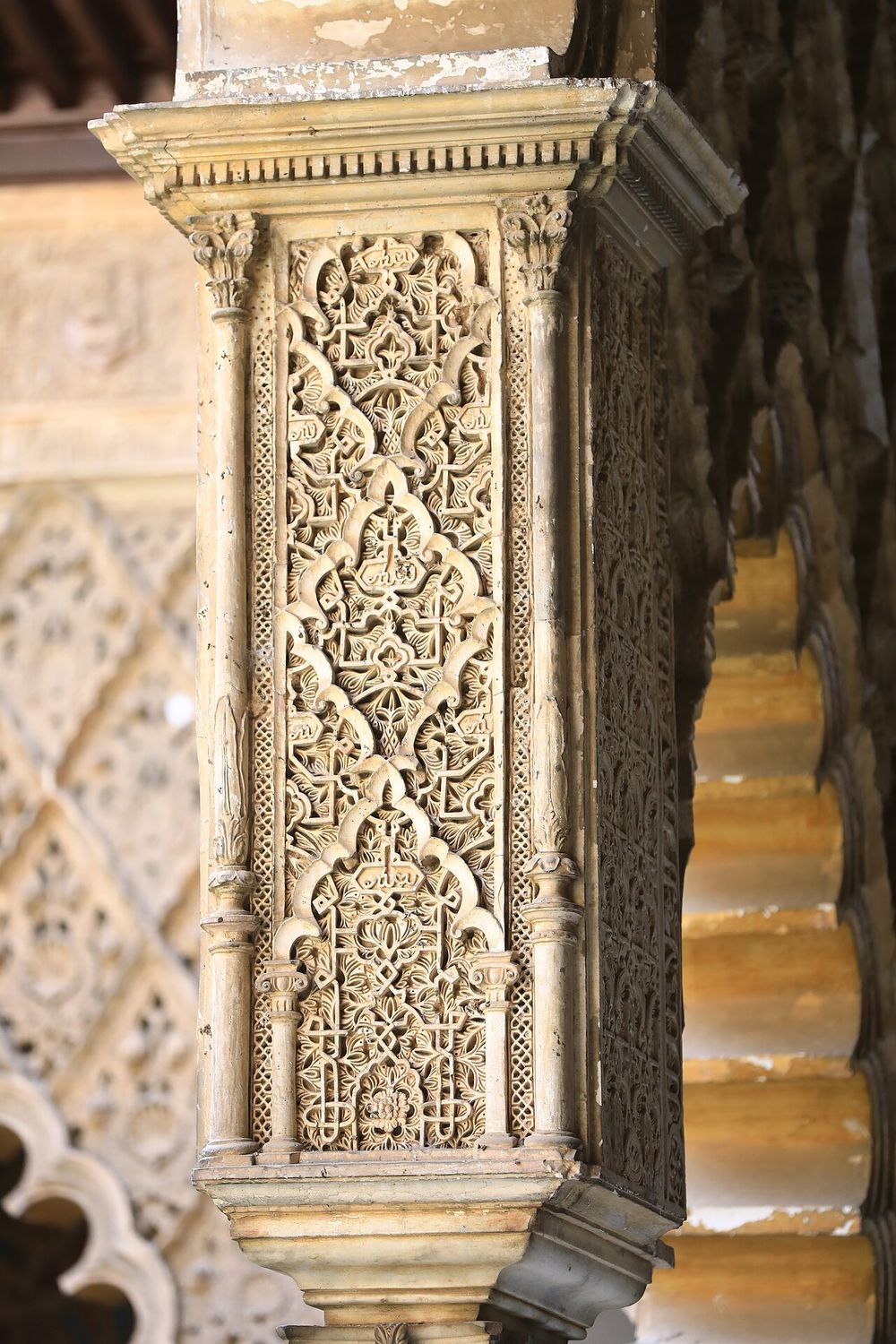
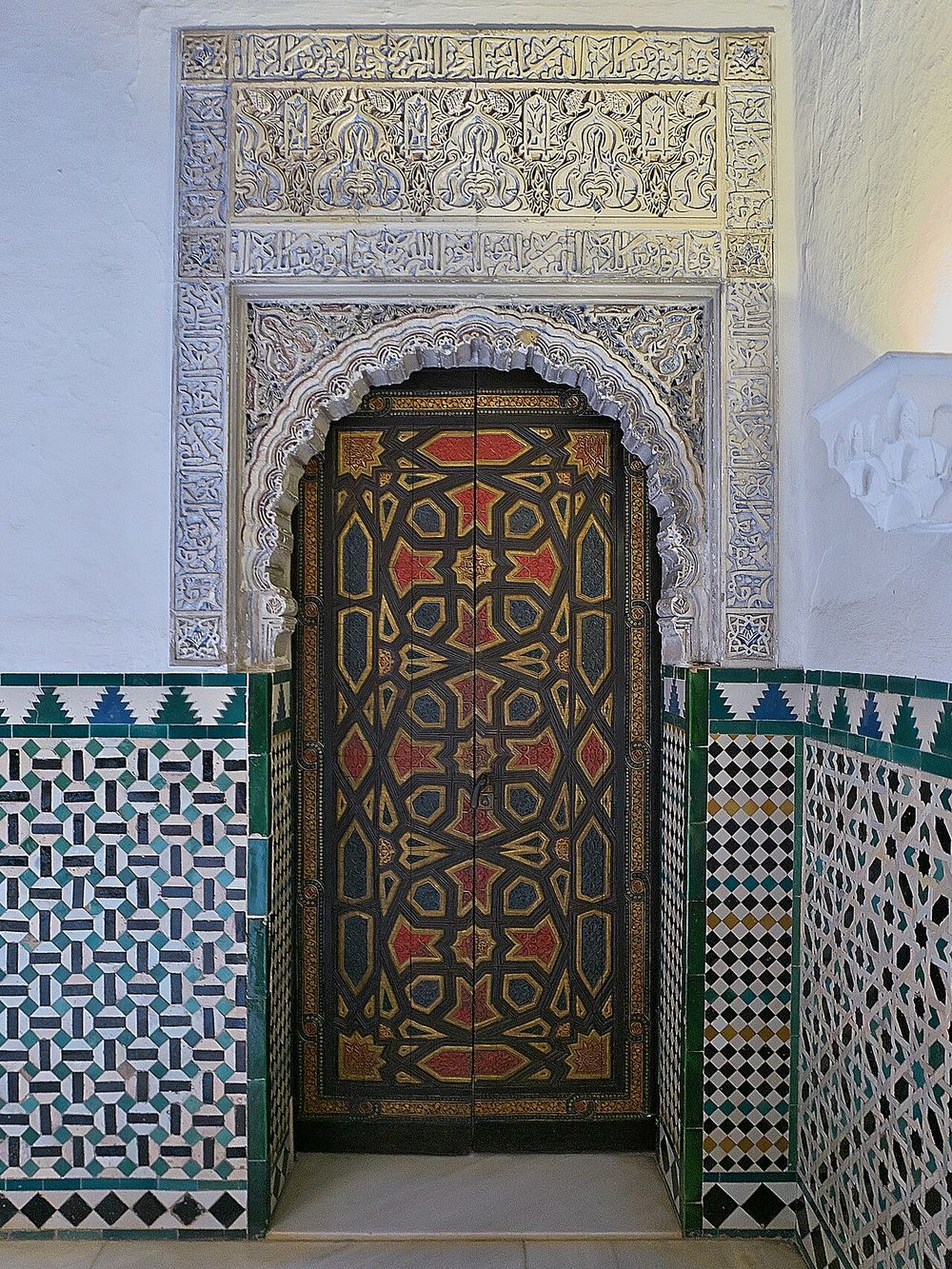
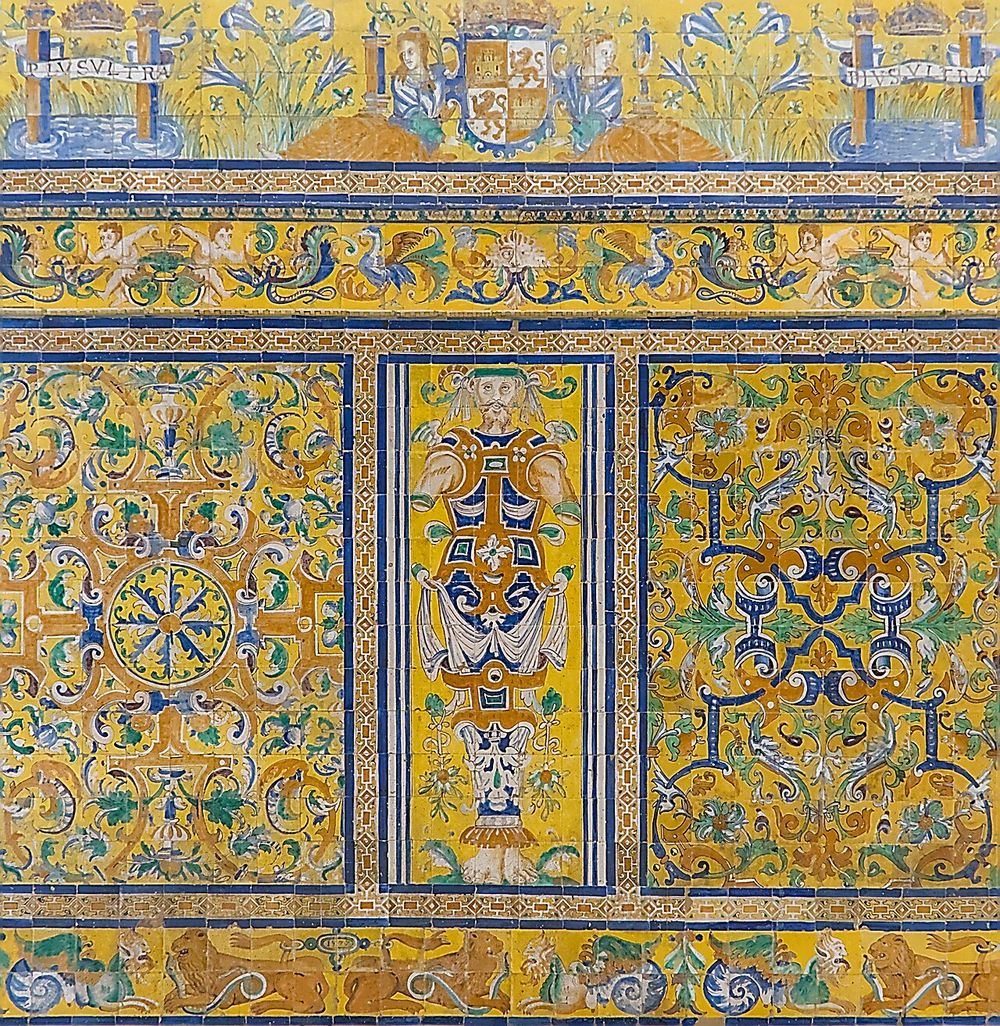
Go close to a wall. The lower part is tile cut into stars and knots. Above it the plaster is carved like lace, and running through the lace is writing. It is Arabic. Some bands say "Glory to our lord the Sultan Don Pedro". Others repeat the motto of the kings of Granada: there is no victor but God.
ولا غالب إلا الله
There is no victor but God.
The motto of the Nasrid kings of Granada, carved again and again on the walls of this Christian king's palace, 1364–1366
Now look up at the second floor. It is plainer, with round arches. It was added in the 1500s, and it is where the king stays today.
The garden in this court is new to us. For four hundred years it lay under a marble floor. Archaeologists found it in 2002 and it was opened up again.
"It is a Moorish palace." The outer walls and one small court are Muslim work. The famous part was built by Christian kings, in a Muslim style they admired.
"It is the same as the Alhambra." The two were built in the same years by some of the same hands. The Alhambra, in Granada, was a Muslim king's. This was a Christian king's.
"You can buy a ticket at the gate." In spring and autumn the day's tickets are usually sold out before you arrive. Tickets carry your name, and your passport is checked at the door.
All eight stops are on the general ticket. The rooms upstairs where the king stays need a second ticket.
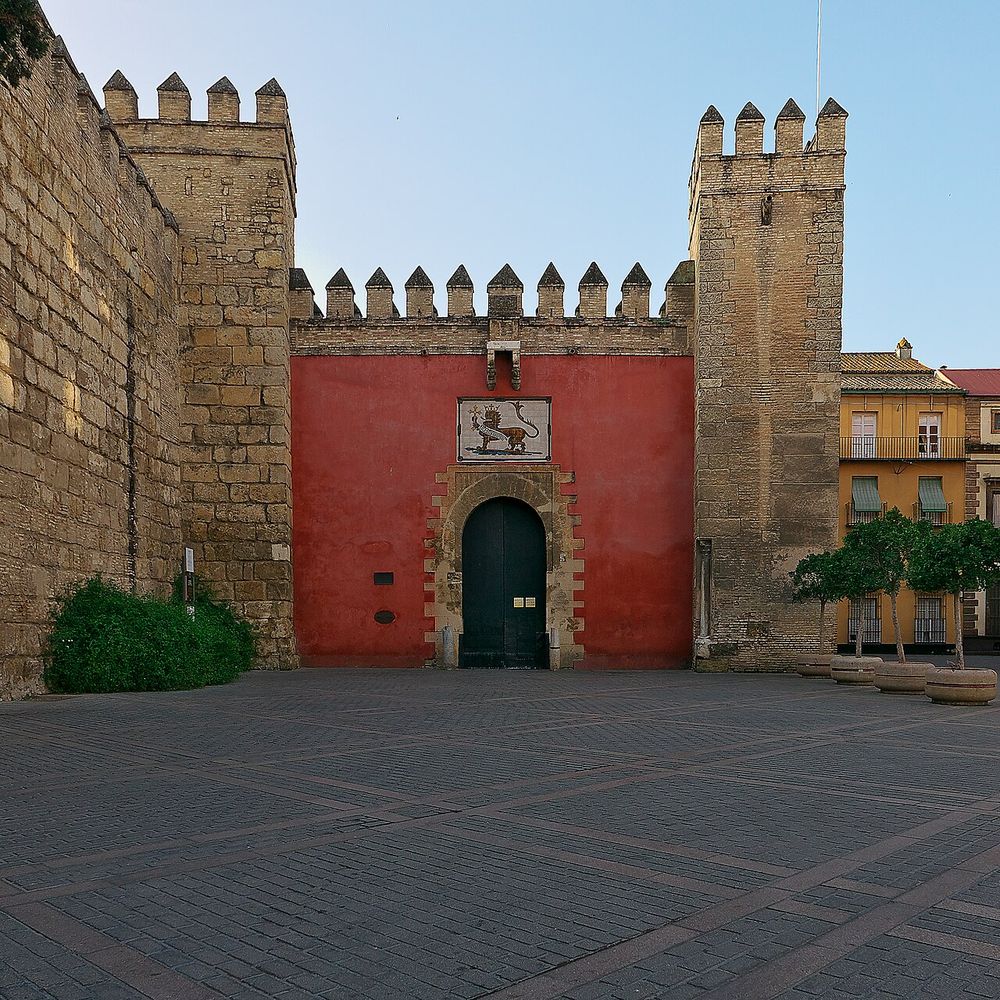
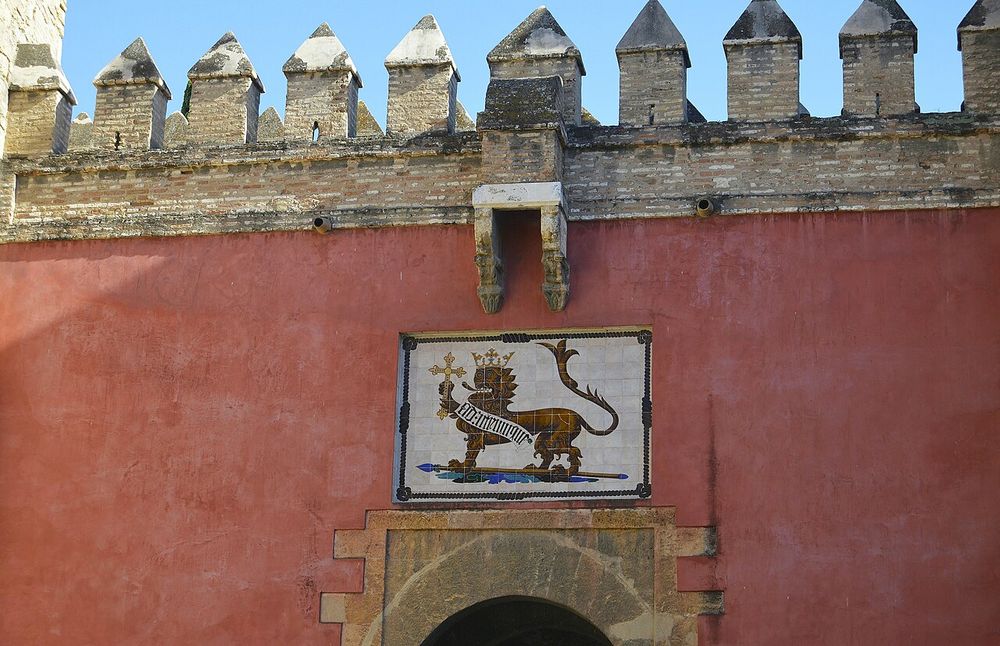
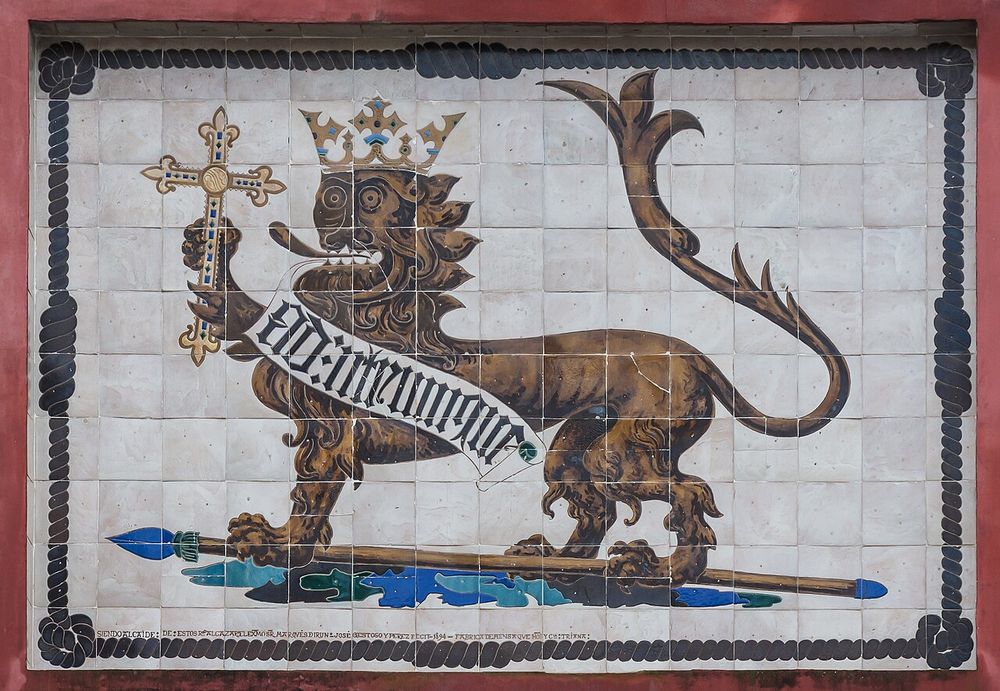
The red wall with square towers is the oldest thing here, from the 900s to the 1100s. Over the gate a lion in tiles holds a cross. It was put up in 1894.
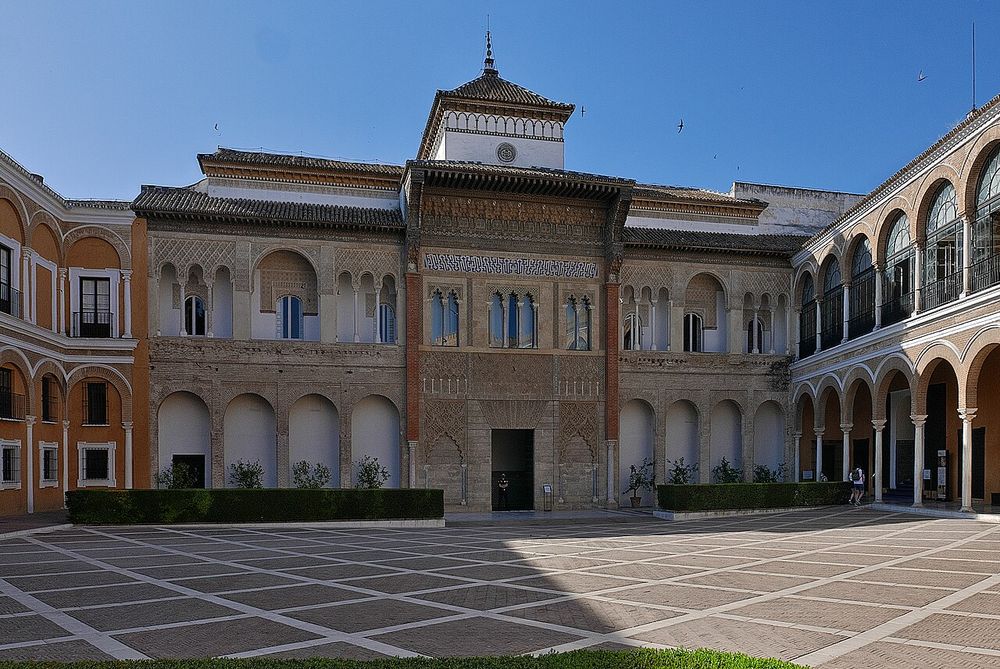
Across the second court is the front of Pedro's palace. Under the deep wooden eaves a band of blue and white tiles carries an Arabic text in square letters. Round it, in Gothic letters, a Spanish text gives the date: 1364. Two languages, one king.
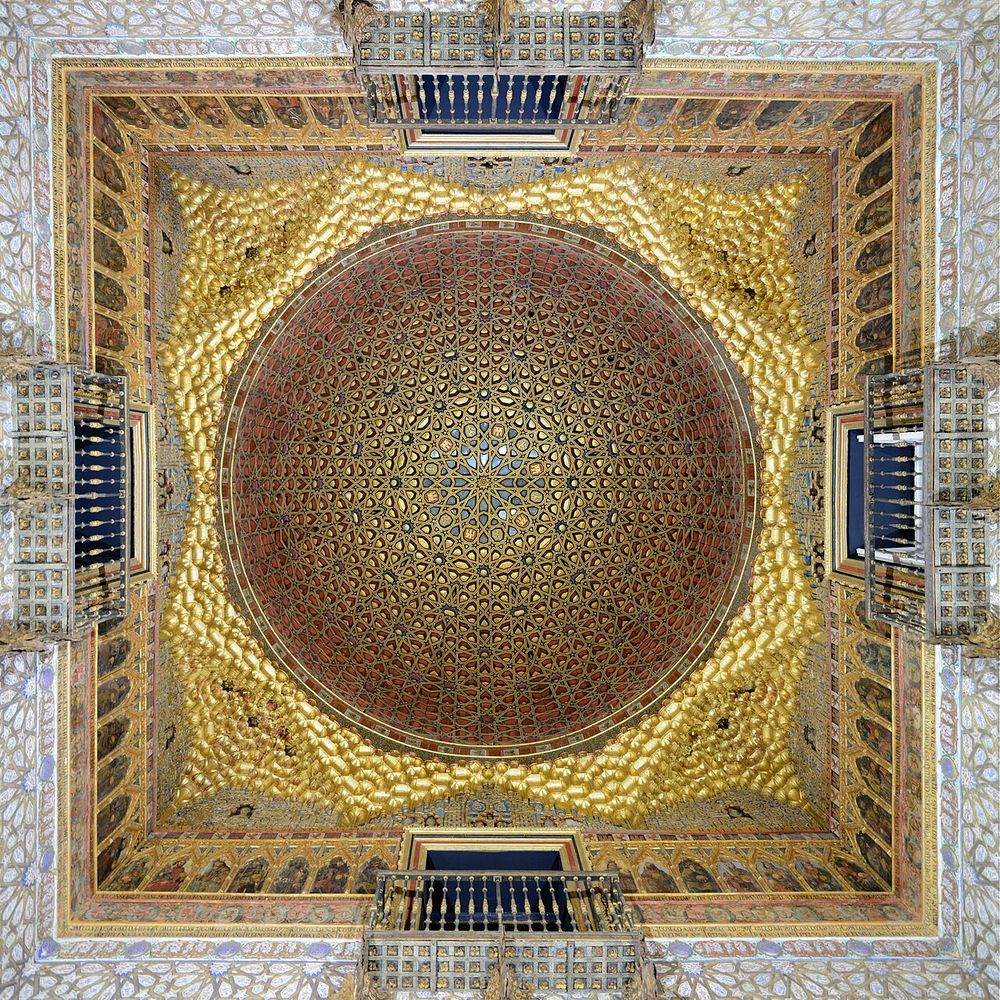
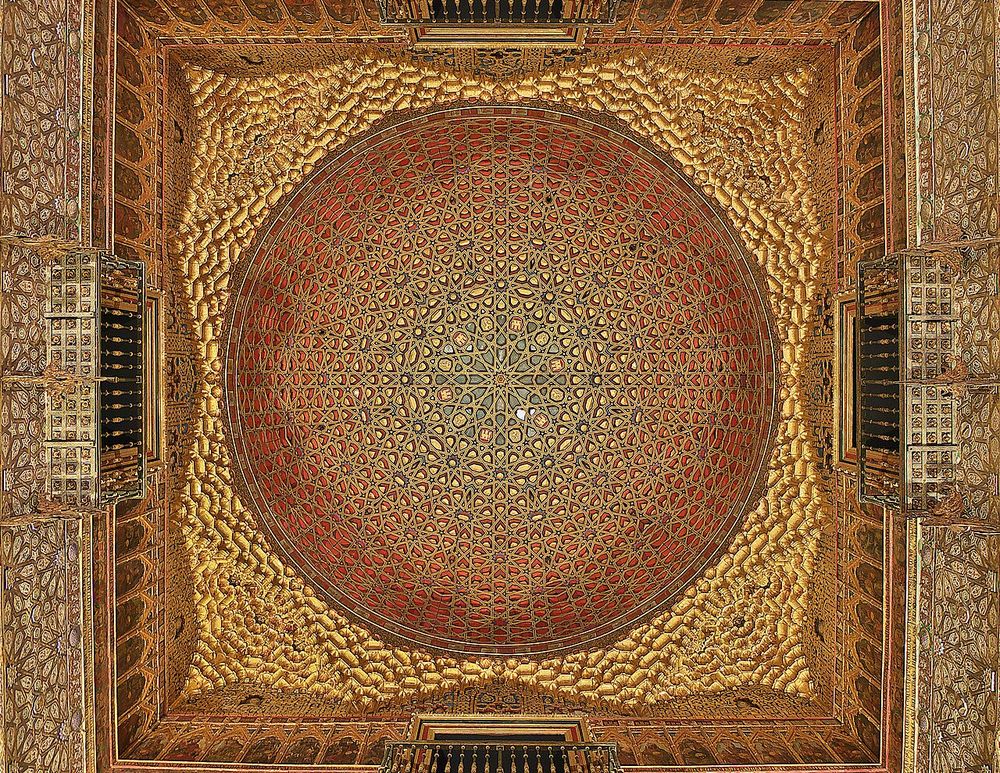
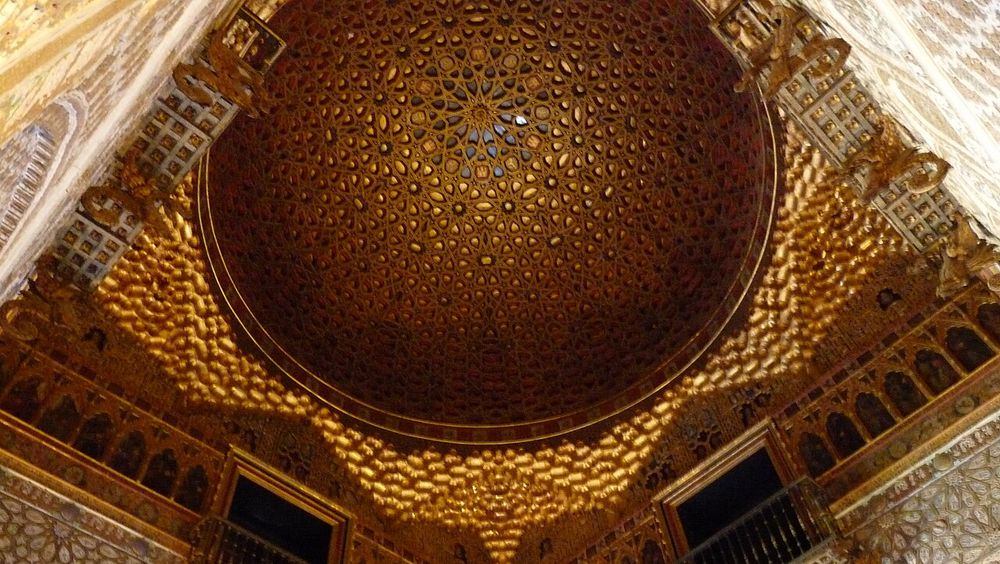
The throne room is a cube with a dome. The dome is of cedar, carved into stars and gilded, and was made in 1427. People call it the half orange. Under it the king sat, and in 1526 an emperor was married.
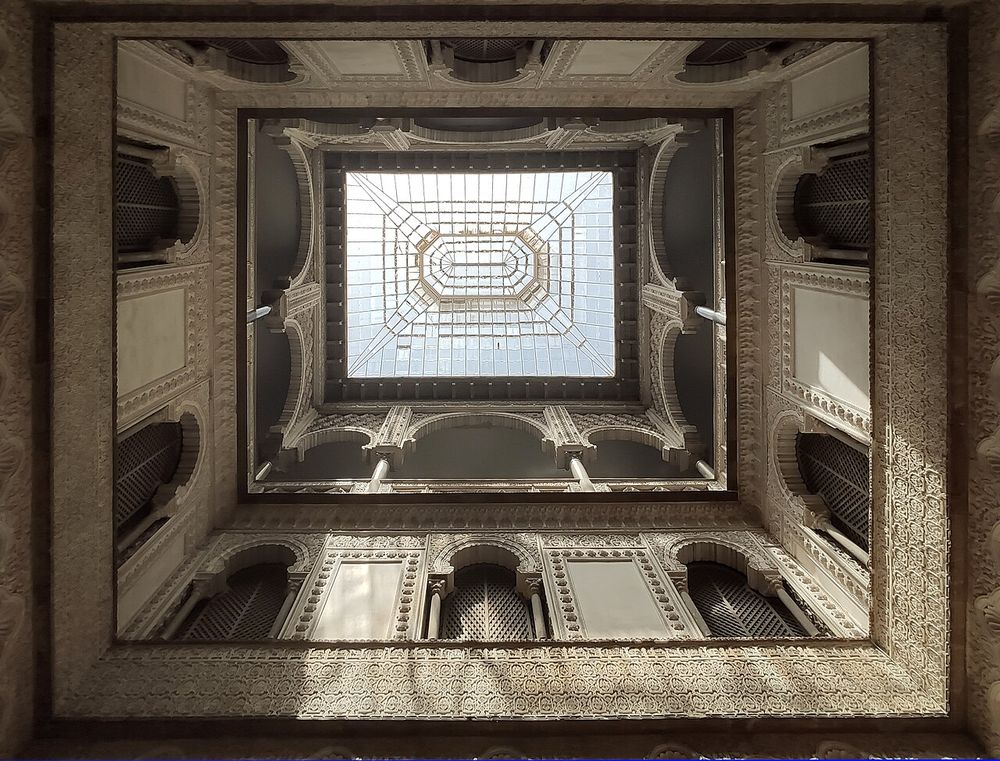
The smallest court was the family's own. It is called the Court of the Dolls. Search the foot of the arches: on one of them a few tiny faces, the size of a thumbnail, are carved there. Finding one is said to bring luck.
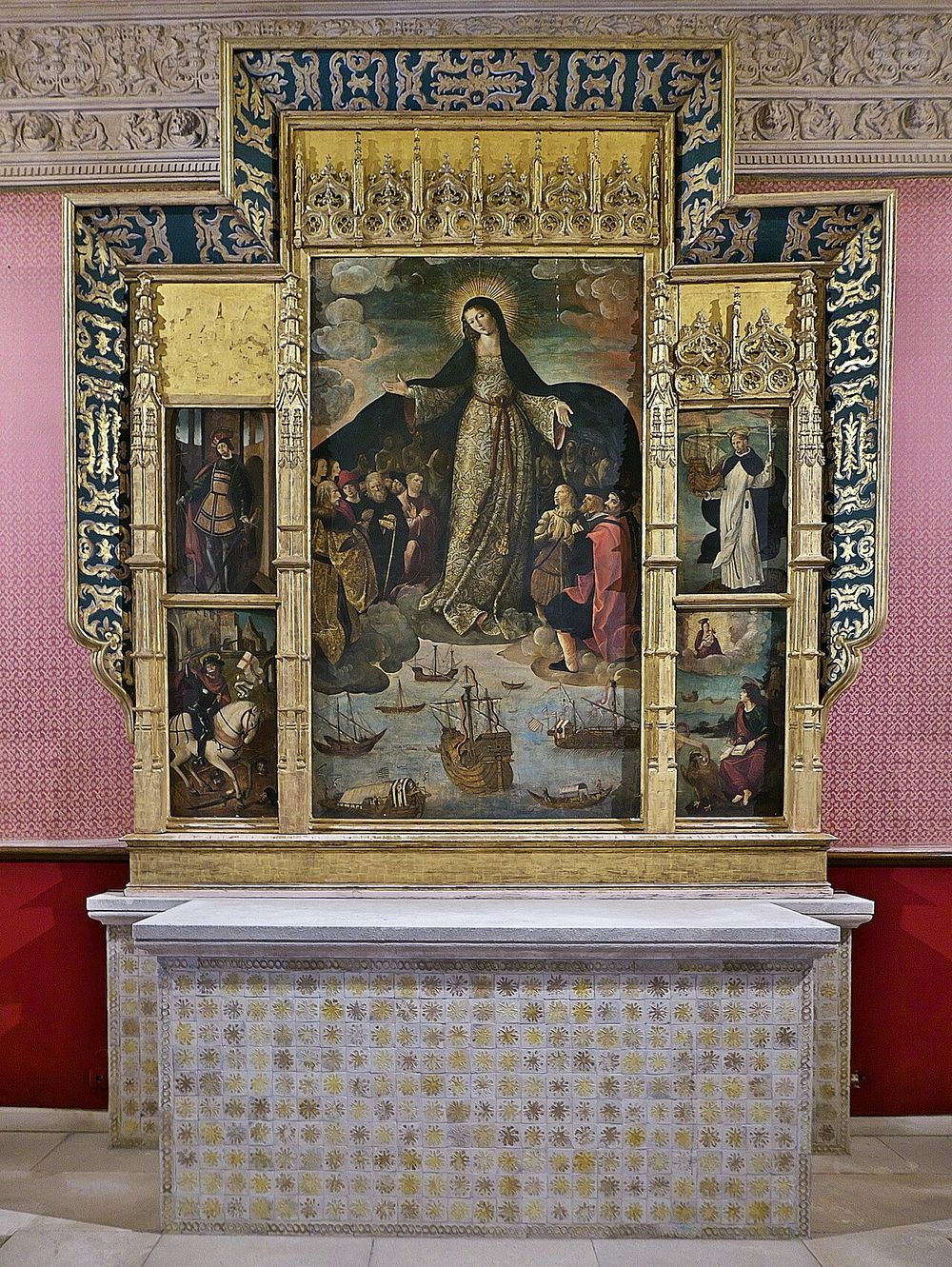
In the wing that held the office for America hangs a painting of about 1535. The Virgin spreads her cloak over ships and over kneeling men: sailors, merchants, and behind them, in shadow, the people of the lands they had reached. It is one of the first pictures made in Europe about the voyages.
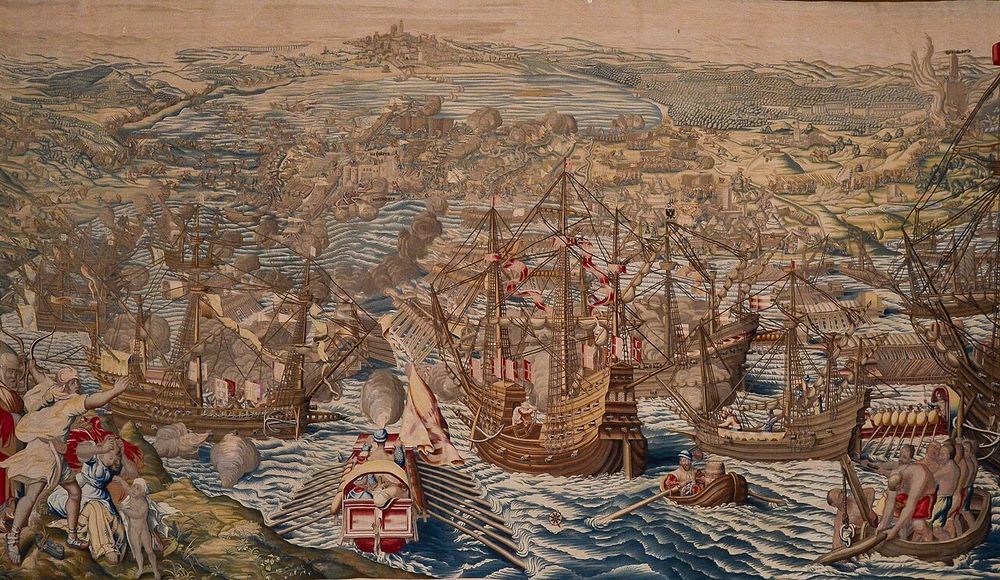
A century before Pedro, another king built in the northern way: pointed vaults, big windows. The long hall is hung with tapestries of the emperor's attack on Tunis in 1535. The map in the first one has south at the top.
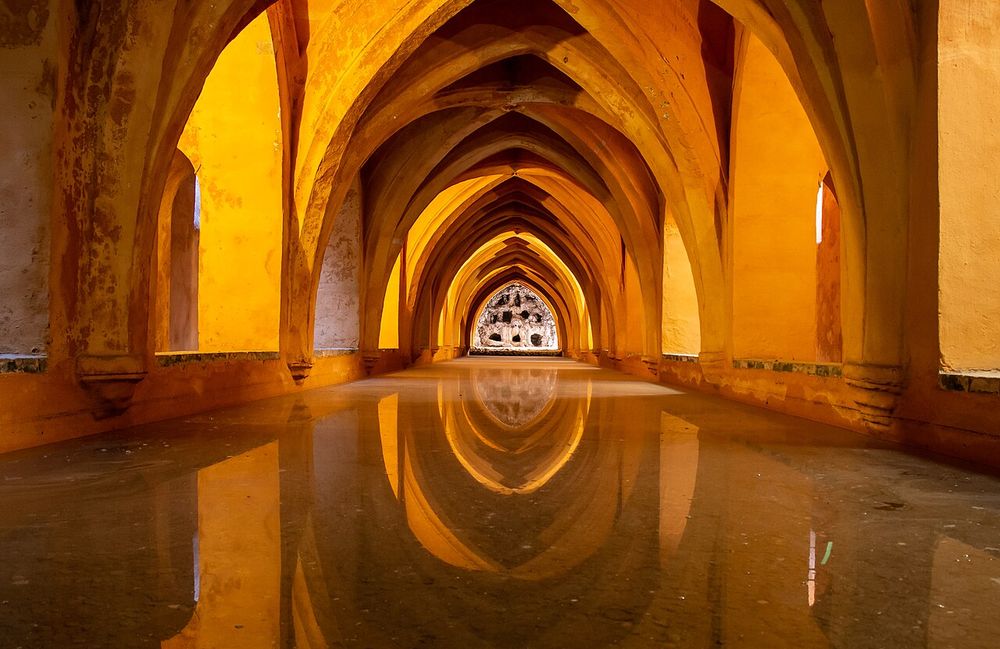
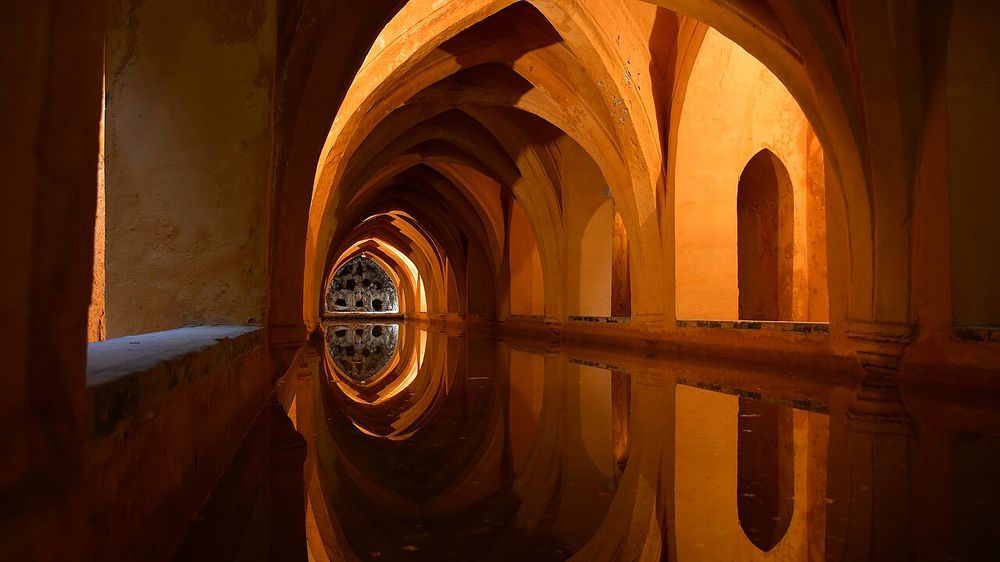
Go down the steps outside. Under the garden court is a long vaulted tank of still water. It caught the rain. It is named the baths of María de Padilla.
The same shot: the picture of the vaults doubled in the water is taken from the railing at the entrance, with the camera held low and level.
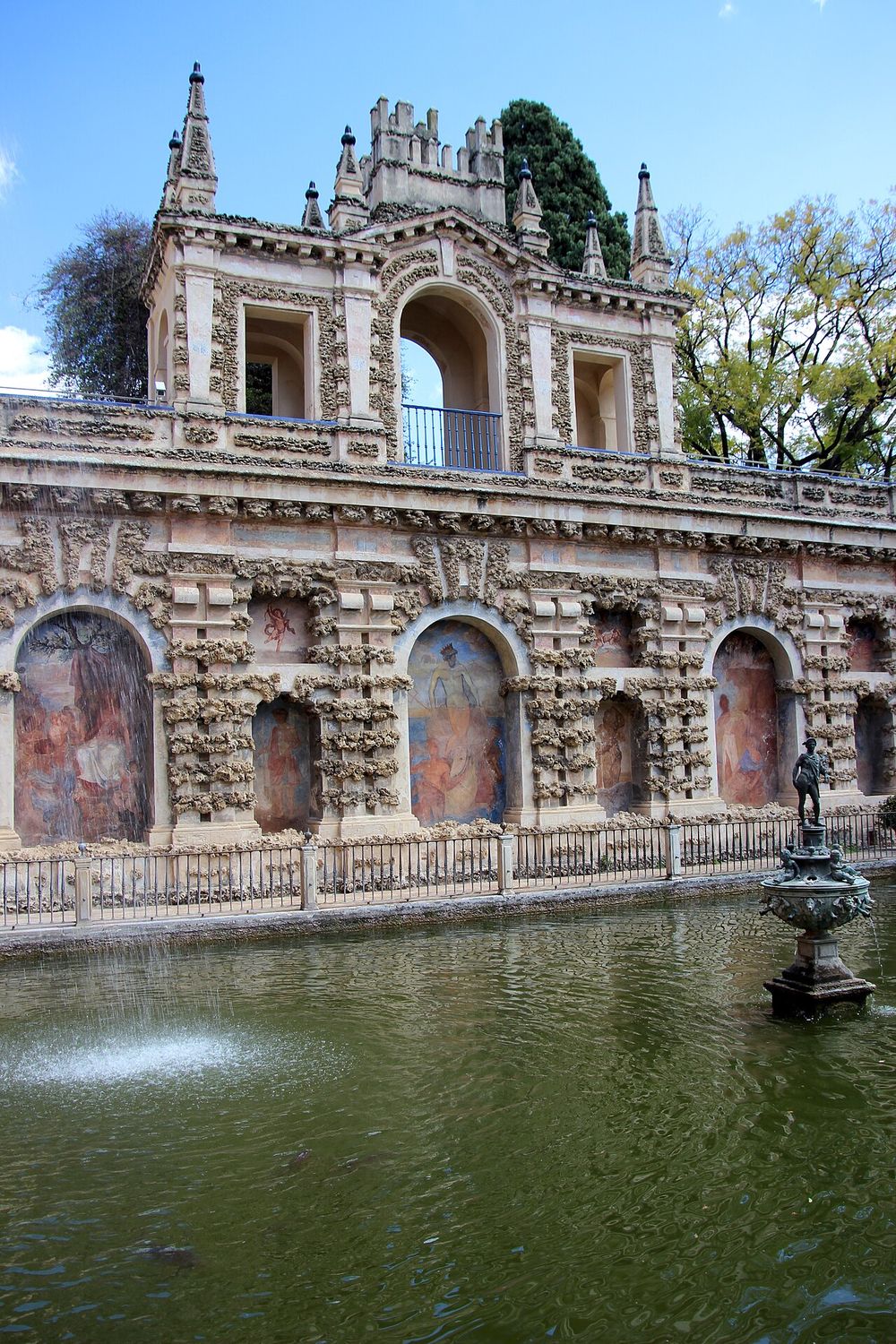
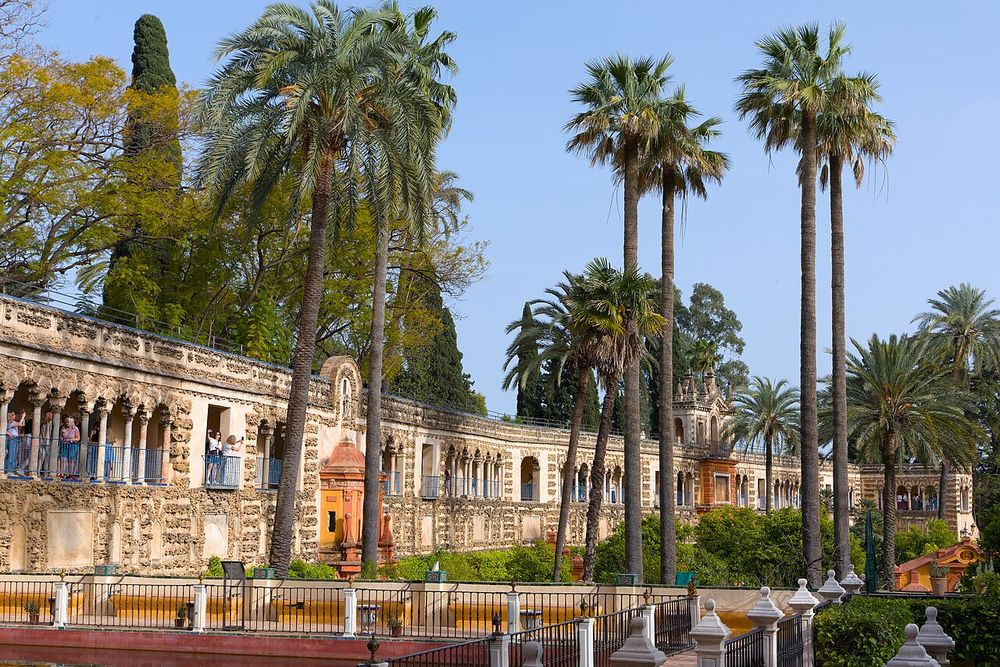
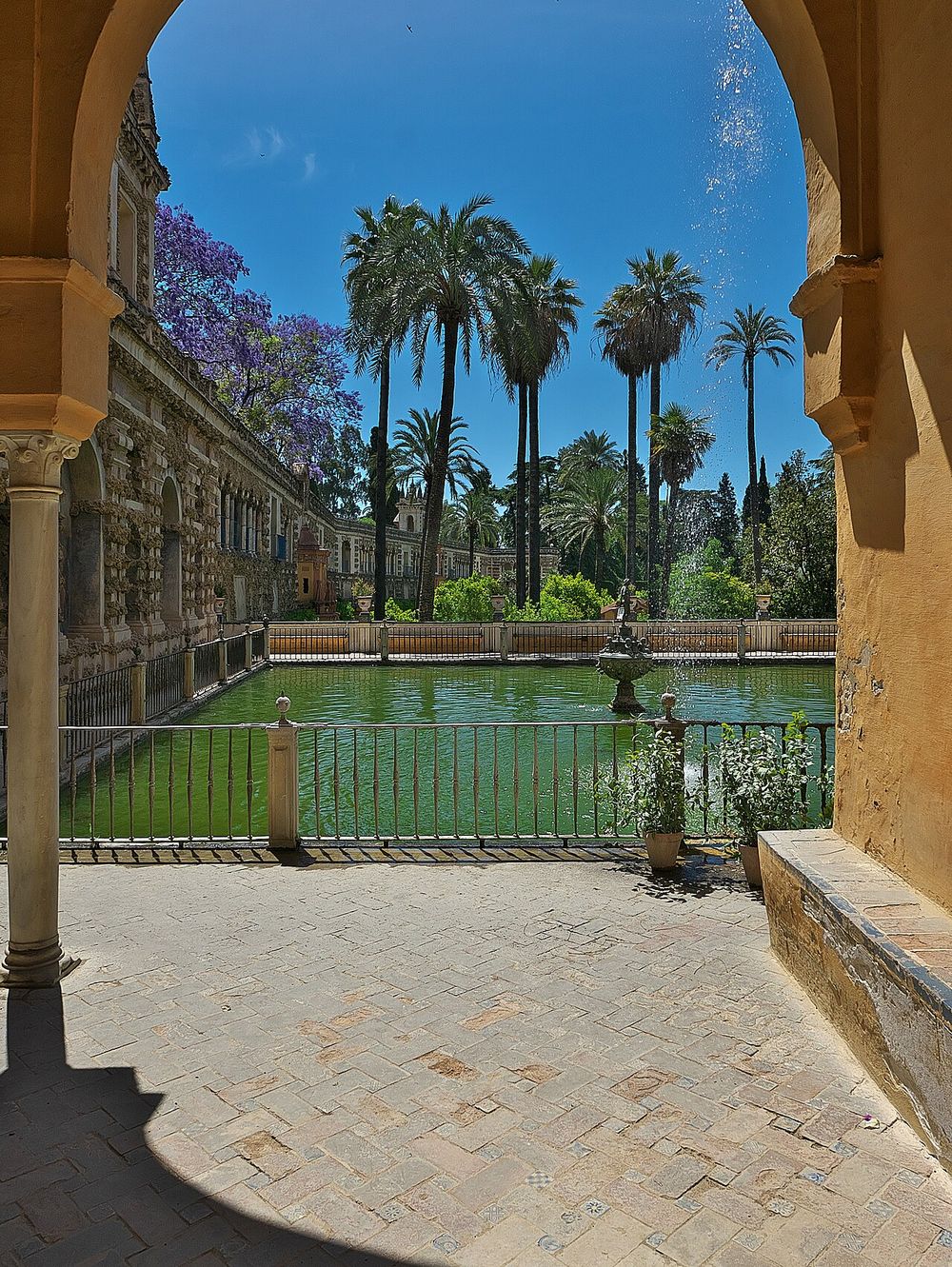
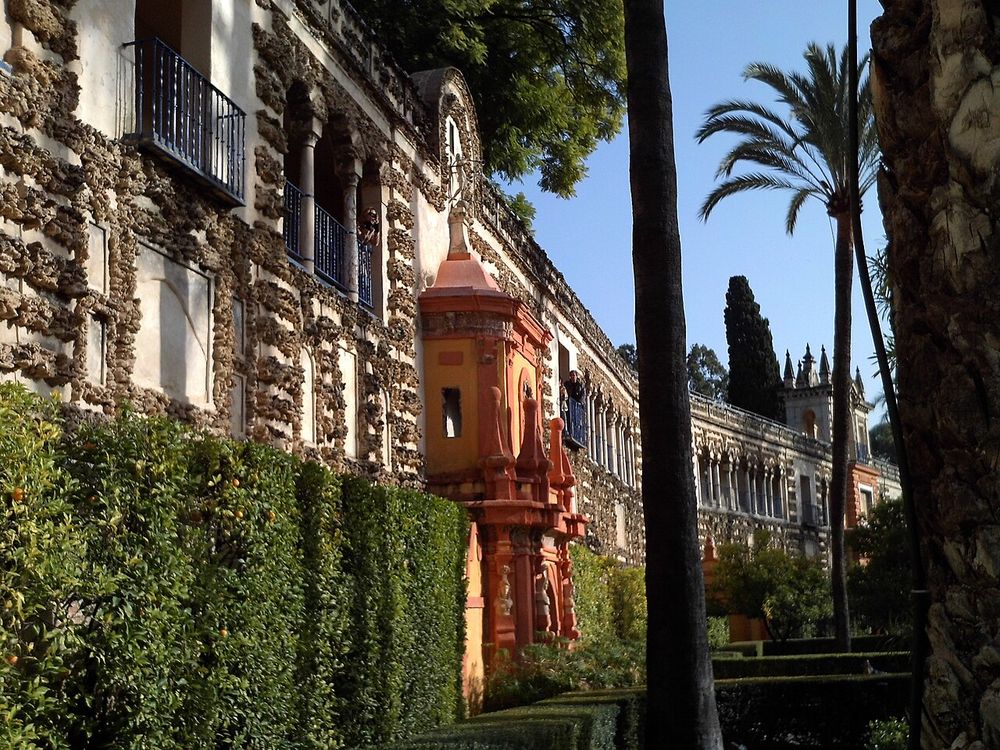
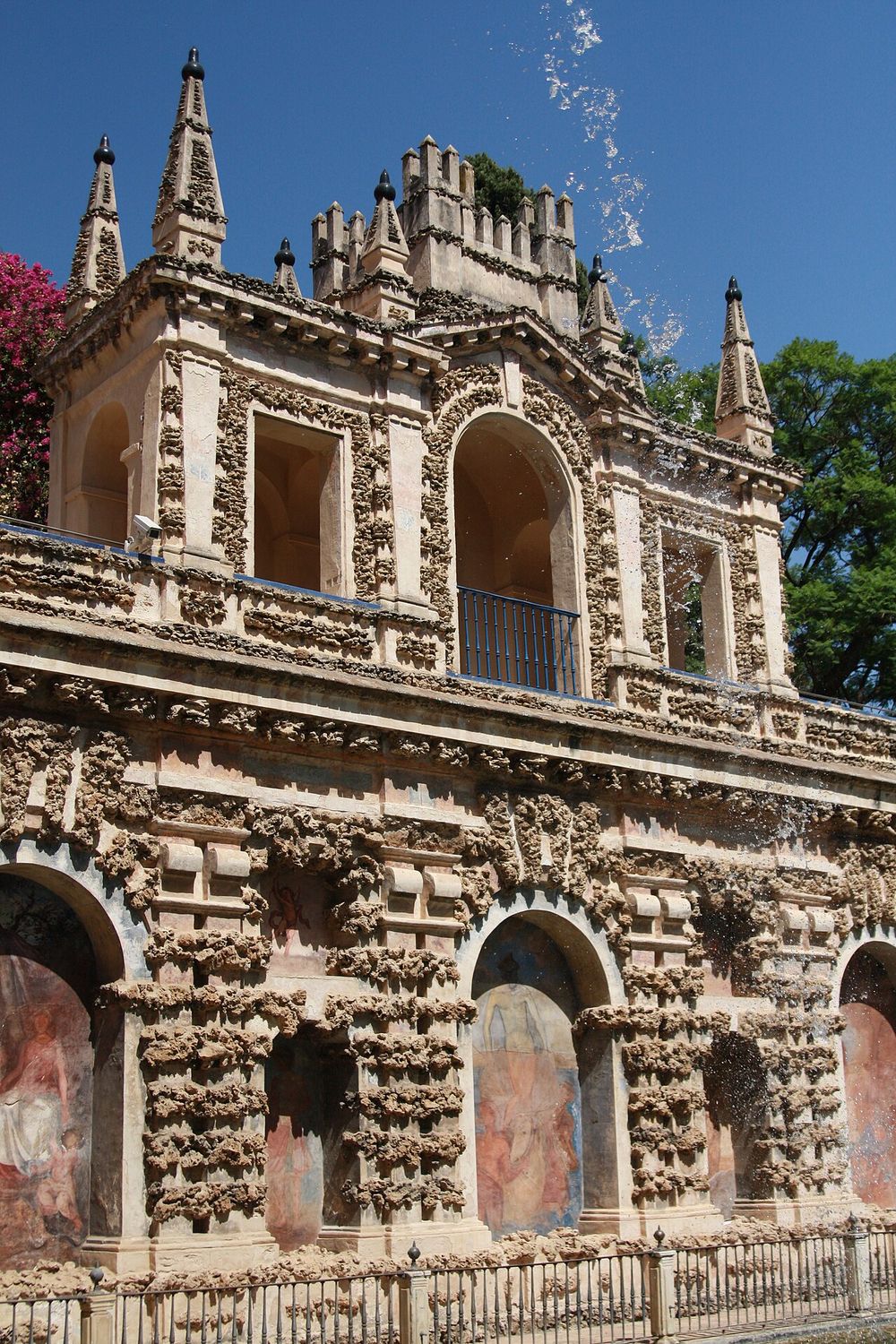
The first garden has a raised pond with a bronze Mercury. Behind it an old defensive wall was turned, about 1612, into a long gallery faced with rough stone to look like a cave. Climb it and walk along the top.
Near the pond a fountain plays a tune each hour. Water pushes air through pipes. It is an organ from the 1600s, and one of very few left in Europe that still work.
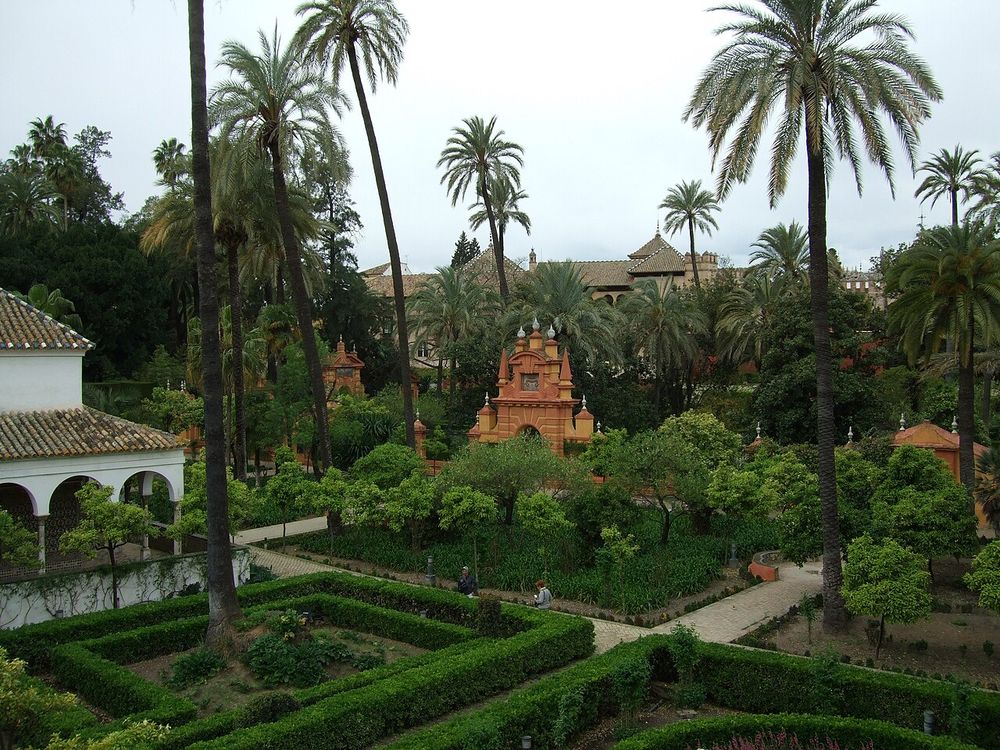
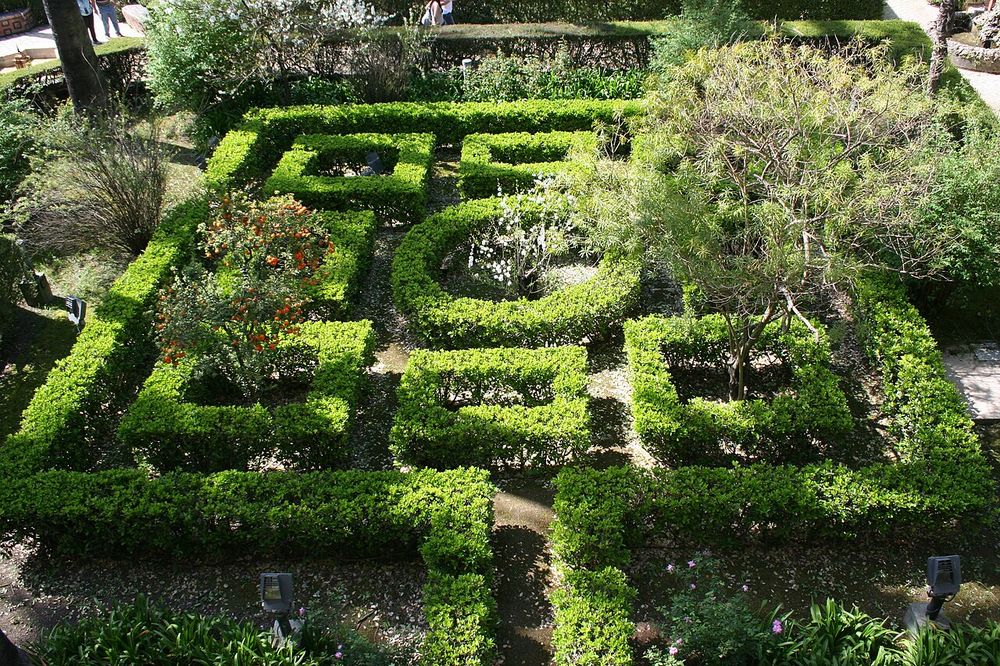
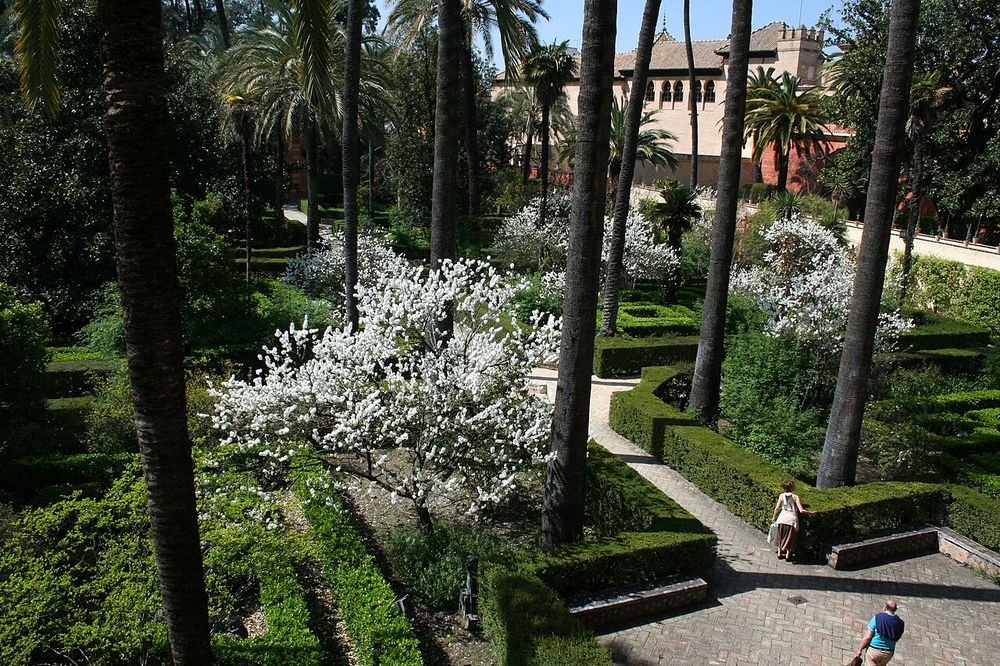
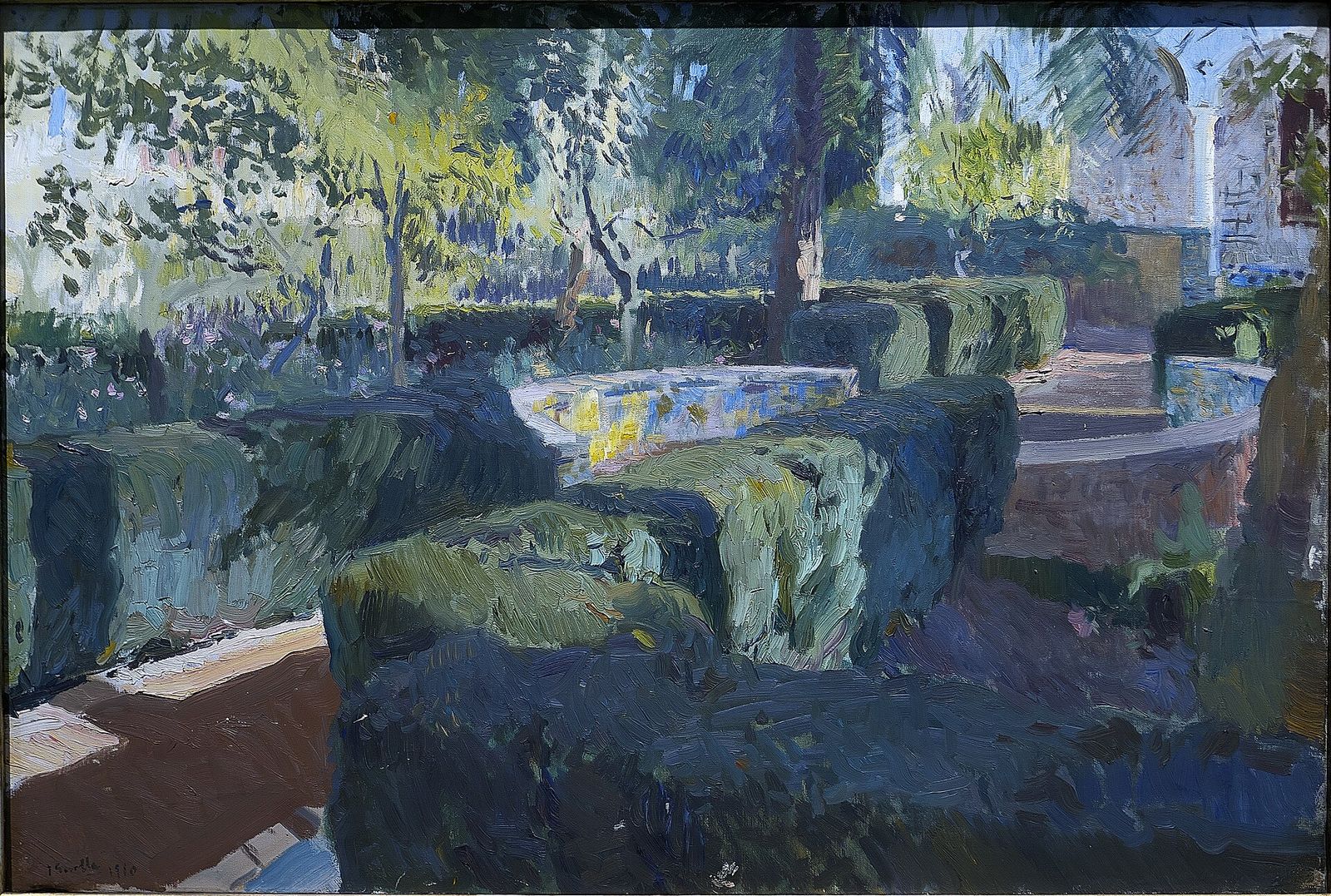
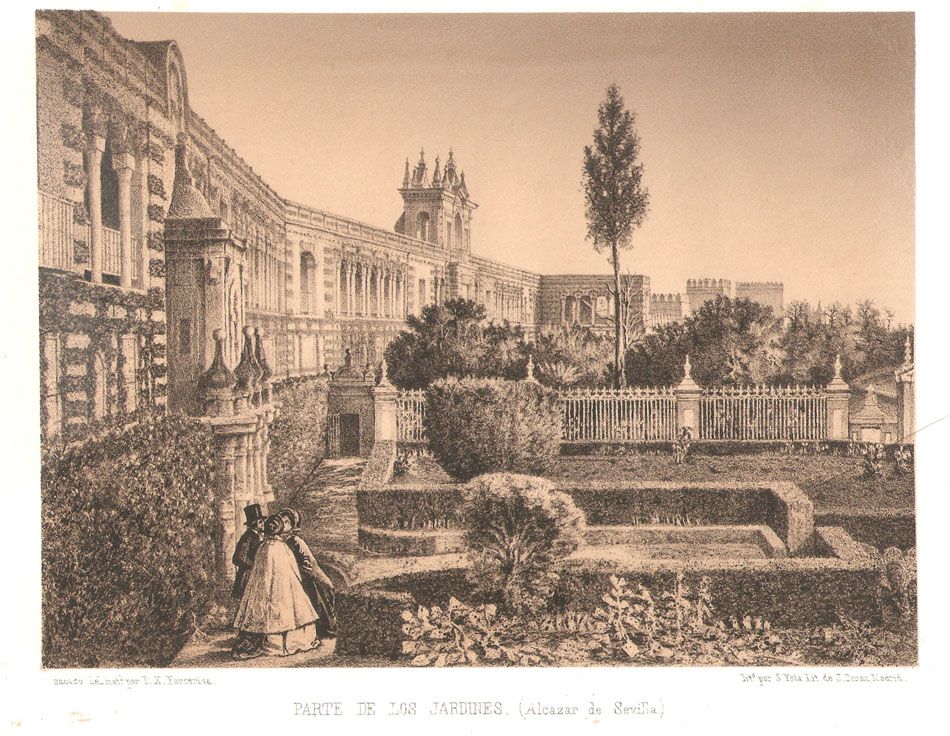
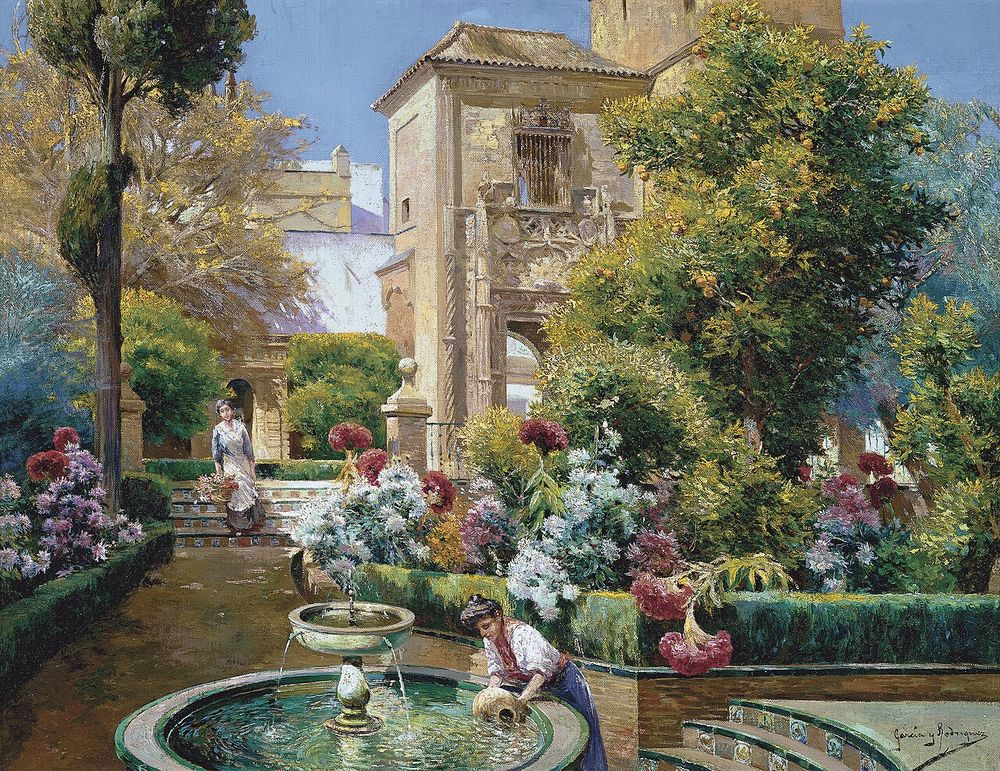
Beyond are seven hectares of hedges, palms, orange trees, tiled benches and peacocks. Each garden was added by a different century, from Muslim orchards to an English park of 1910. The oranges are bitter. They are the kind used for marmalade.
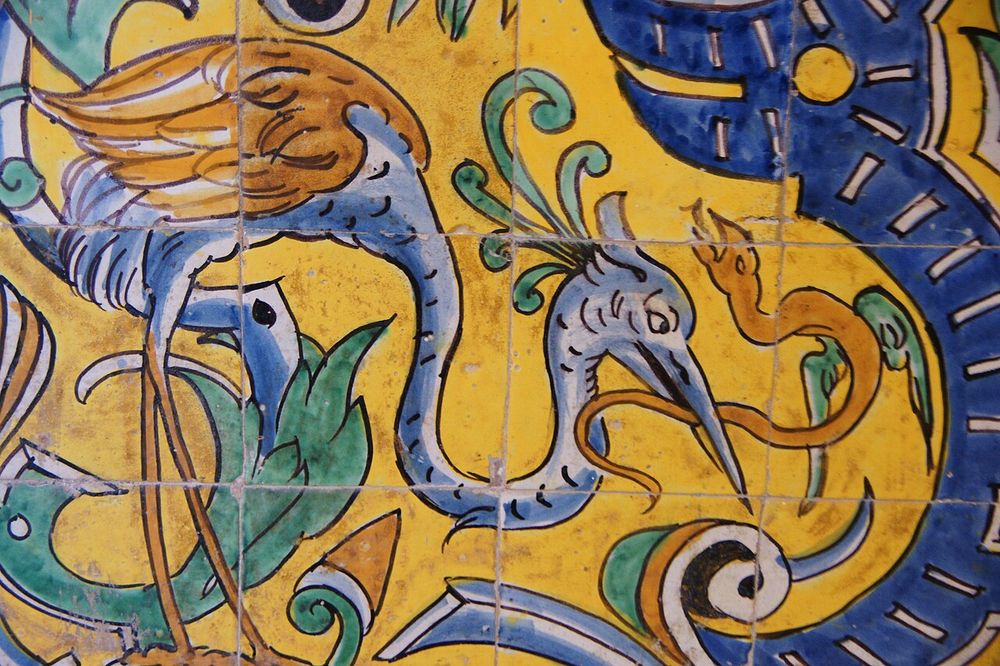
In the small pavilion in the middle, built for the emperor in 1543, look at the tiles: every one is different.
| Year | Here | Elsewhere |
|---|---|---|
| 913 | A fort is built for the governor | The Vikings have just been granted Normandy |
| 1248 | The king of Castile takes Seville | In Cologne the first stone of the cathedral is laid |
| 1364 | Pedro begins his palace | The plague has killed a third of Europe in the last twenty years |
| 1503 | The office for trade with America opens here | Leonardo begins the Mona Lisa |
| 1526 | The emperor is married in the domed hall | Babur founds the Mughal empire in India |
| 1755 | The Lisbon earthquake cracks the palace | Samuel Johnson publishes his English dictionary |
| 1987 | The palace joins the World Heritage list | With it are the cathedral and the archive next door |
One line to remember: Arabic on the walls, a Christian king on the throne.
These are stories people tell about this place. They are legends, not history, and each one says where it comes from.
The Maidens' court is named for the hundred virgins that the Christian kings of the north had to send each year to the Muslim rulers of Córdoba.
Source: A medieval Christian legend with no support in the Arabic sources
When María de Padilla bathed, the gentlemen of the court drank the water to please the king. One refused, saying that having tasted the sauce he might want the partridge.
Source: A Seville tale told since the 16th century
A red stain in the marble floor of one hall is the blood of the king's half-brother, whom Pedro had killed there in 1358.
Source: Told by the palace guides; the murder is recorded, the stain is iron in the stone
Later, people who live here will be able to add the stories they grew up with, and say which of these they have heard.
Last checked 2026-11-12. Spanish ticket listings and Seville guides of 2026 quoting the palace's own figures.
Checked 2026-11-12
Stand at the site, sign in, press the button, and collect its stamp. Your browser will ask to use your location. It is sent to us once to confirm that you are at the site; we keep how far you were from it, not the spot where you stood.
Your stamps are saved to your account, so they follow you to any device. Checking from a browser cannot rule out every false location; stricter checks arrive with the app.
Photos here show the place, not people. Each one is credited to the visitor who took it and appears after our team has looked at it. A photo with you in it belongs under “I am here”.