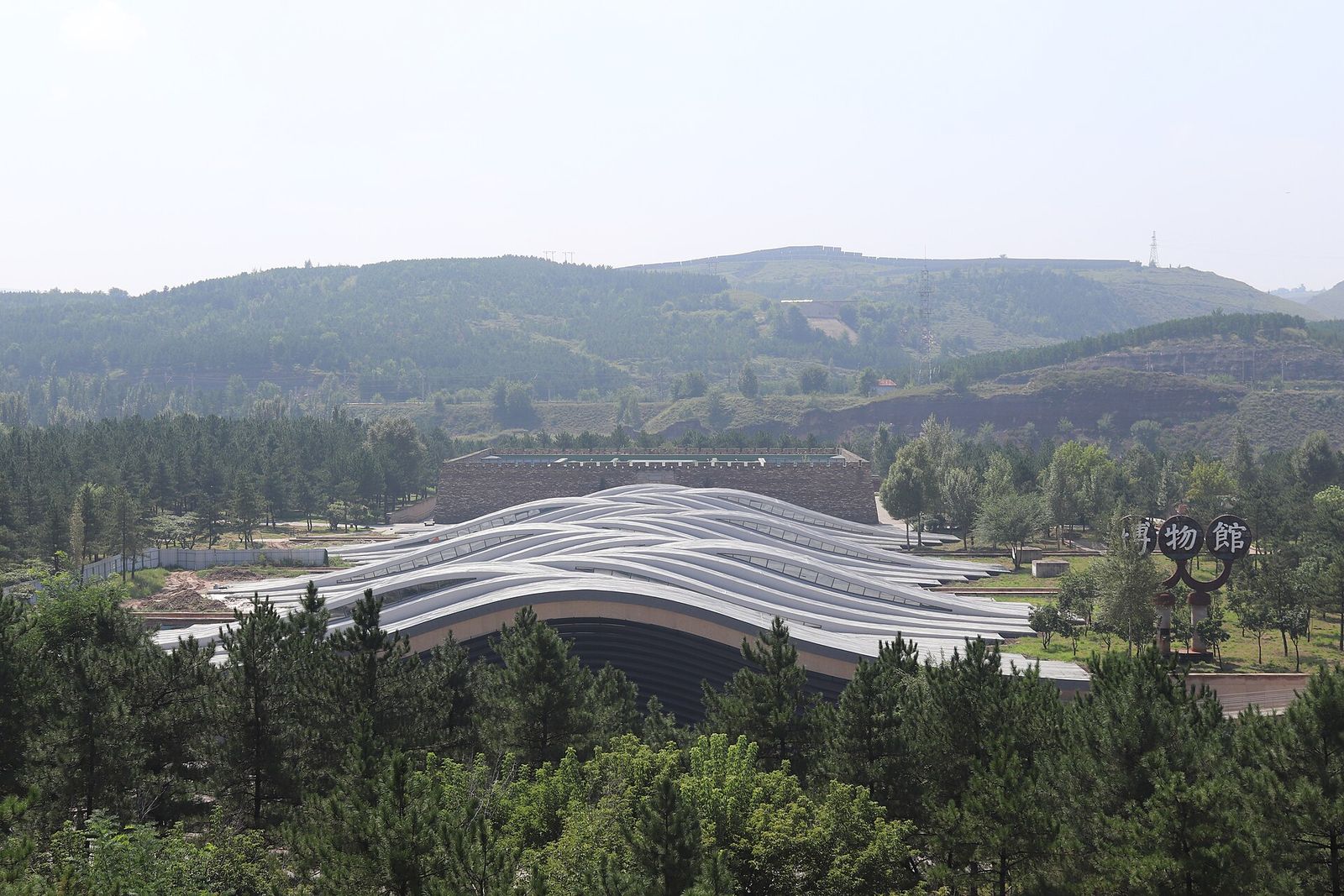
A half-buried museum under a wave-shaped roof, inside the Yungang scenic area. It tells who the Northern Wei were, how their capital at Datong paid for the caves, and shows what archaeologists found in front of the caves and on the cliff above them. Come here before the caves and you will know what you are looking at.
Photo: Liuxingy, CC BY-SA 4.0, Wikimedia Commons
The story
The Yungang caves were cut by the Northern Wei (386–534), a dynasty founded by the Xianbei, horsemen from the northern steppe. From 398 to 494 their capital was Pingcheng, today's Datong, and in those years the city gathered craftsmen, monks and wealth from across northern China and the Silk Road. The caves were its greatest work.
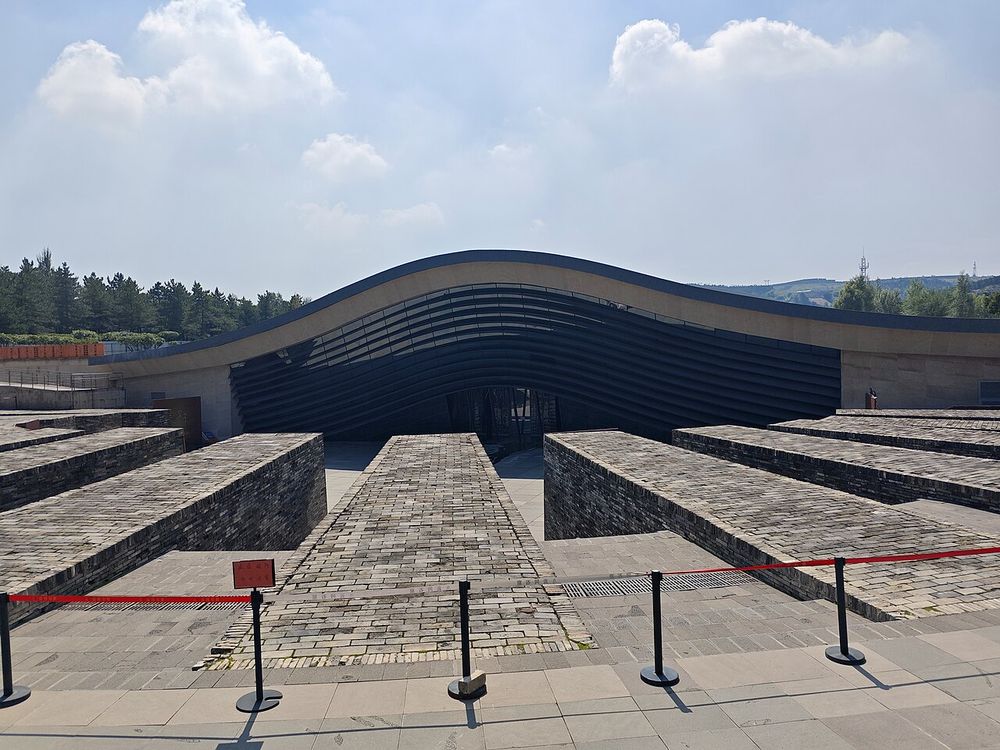
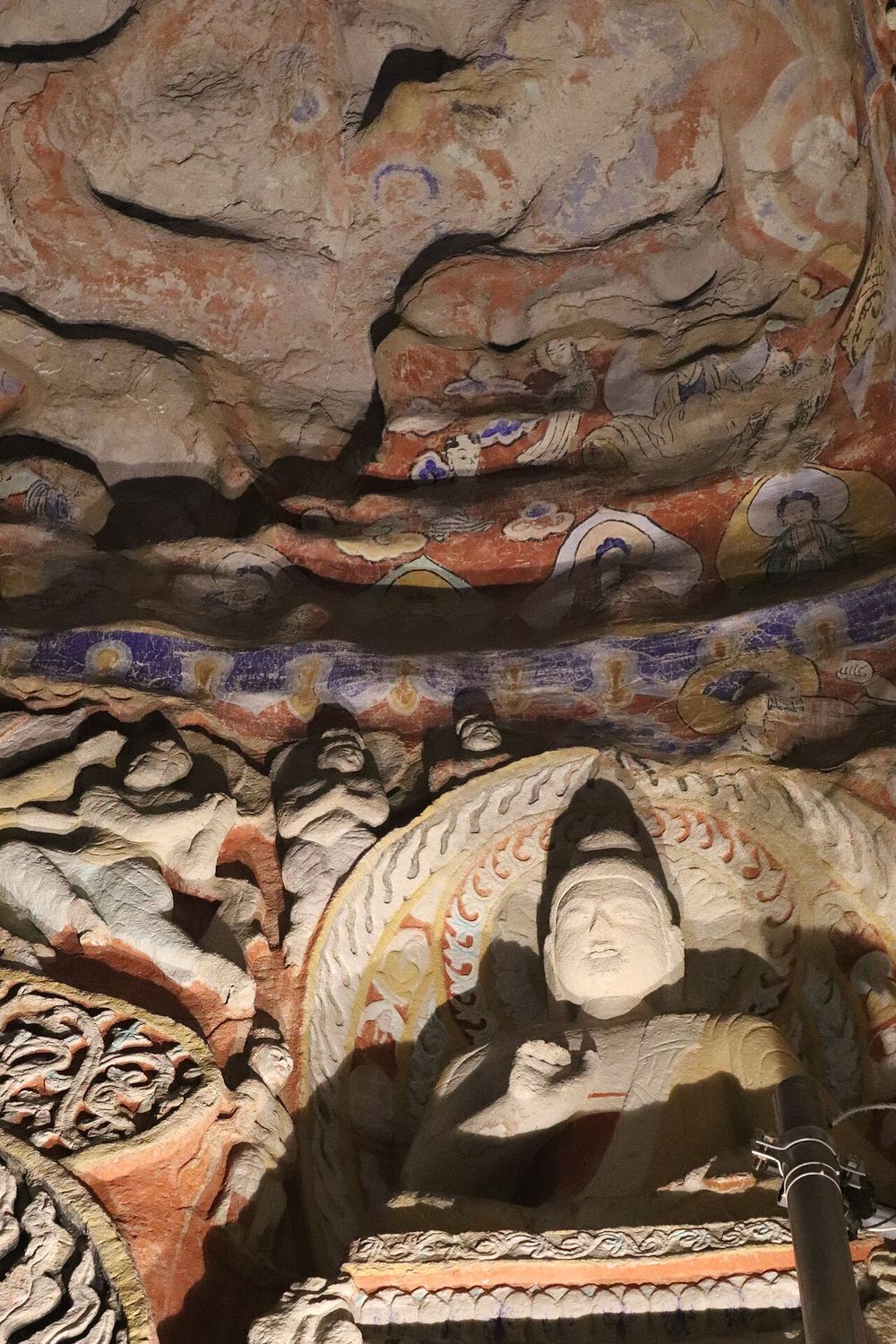
The museum, built around 2011 at the edge of the scenic area, tells that story with objects: carved stones, roof tiles, pottery and Buddha heads found in front of the caves and in the ruins of the temples on top of the cliff. Its long roof rises and falls like the honeysuckle scrolls carved round the cave doors, and much of the building lies below the ground so as not to stand taller than the cliff.
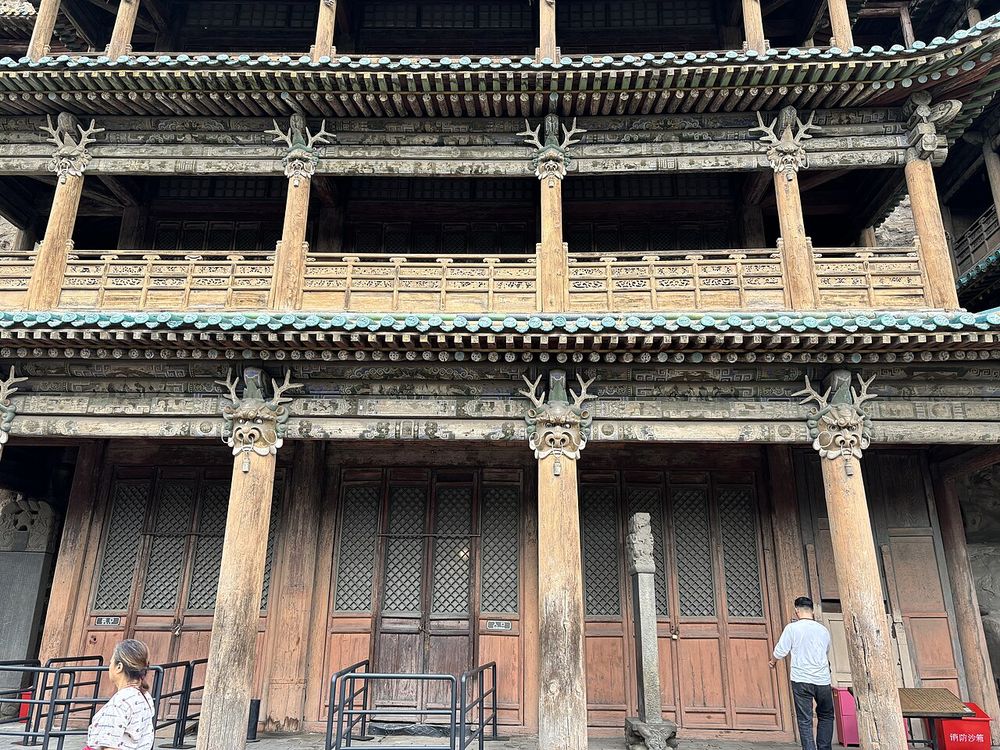
The entrance under the curved roof, 2025Liuxingy, CC BY-SA 4.0
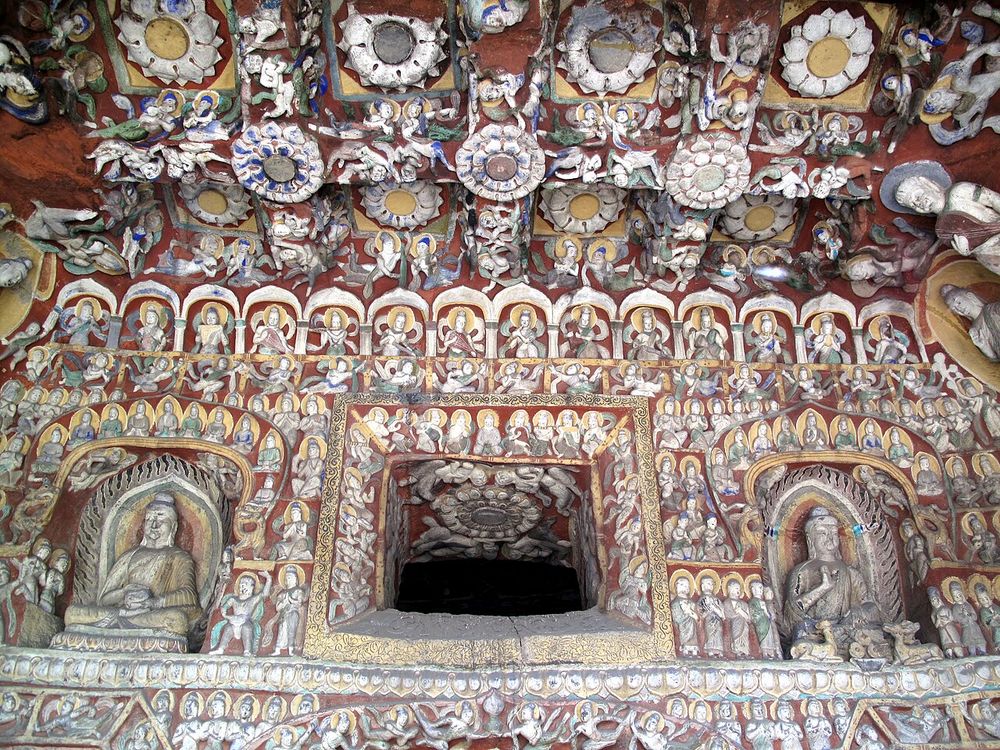
The roof curves over the entrance and runs on in long waves. Look for the same line on the doorframes of Caves 9 and 10: a vine with three-lobed leaves, a pattern that came along the Silk Road and replaced the old Chinese dragons and cloud scrolls as the favourite ornament of the age.
Inside, the rooms go in order: who the Xianbei were, the capital at Pingcheng, the carving of the caves, and the finds of the excavations. An hour here makes the caves read like a book rather than a wall of statues.
Things people often get wrong
"The museum holds the famous statues." The great Buddhas cannot be moved and are all in the caves. The museum holds smaller finds, and copies and models that explain them.
"Everything missing from the caves is here." Many heads were cut off and sold abroad in the 1910s and 1920s and are now in museums in New York, Paris and elsewhere.
Go deeper: five rooms of ideas, from the steppe to the cliff6 stops · about 2 min to read
Give the museum an hour, best before the caves. The five points below follow the rooms.
1. The horsemen from the north
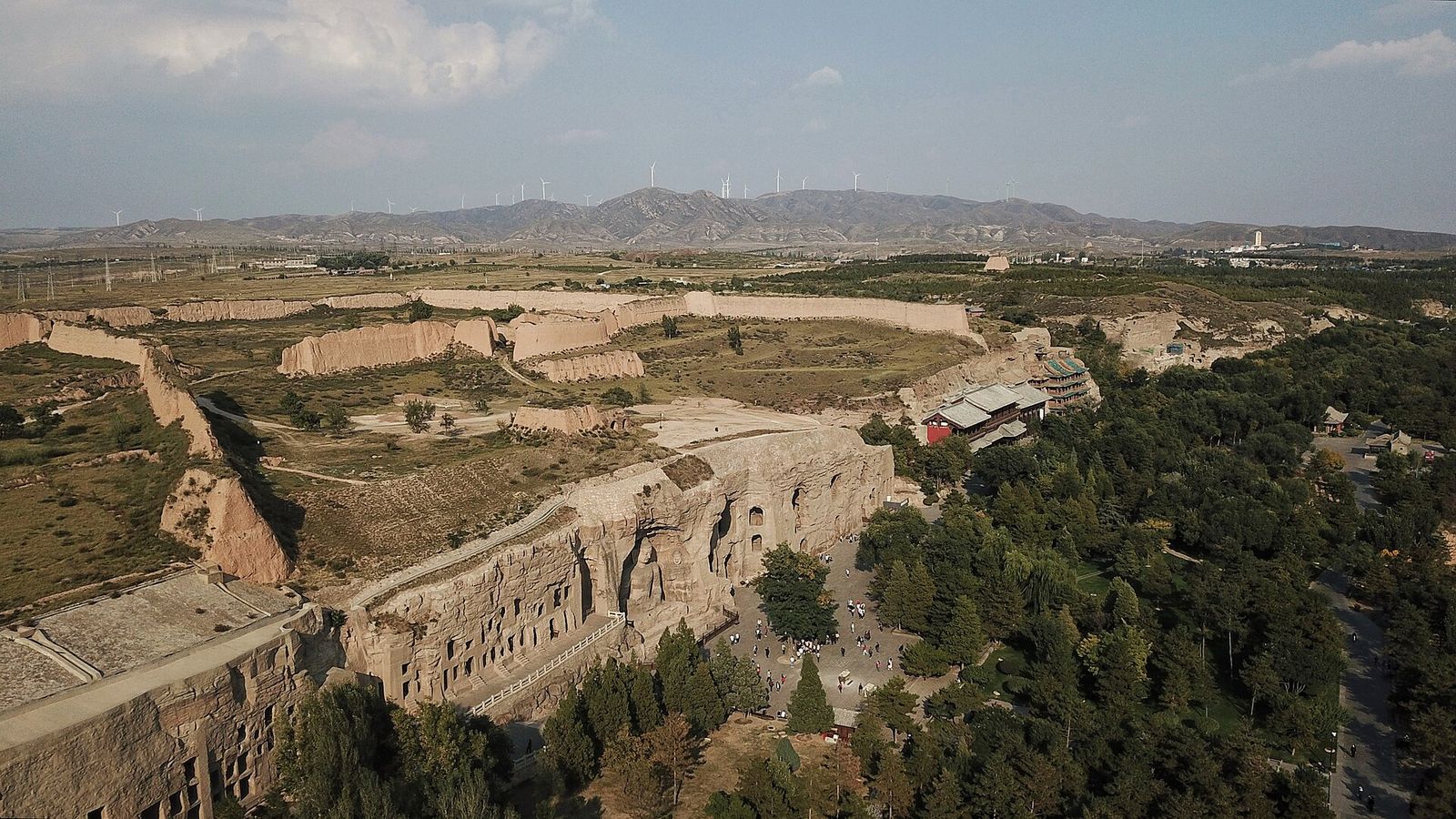
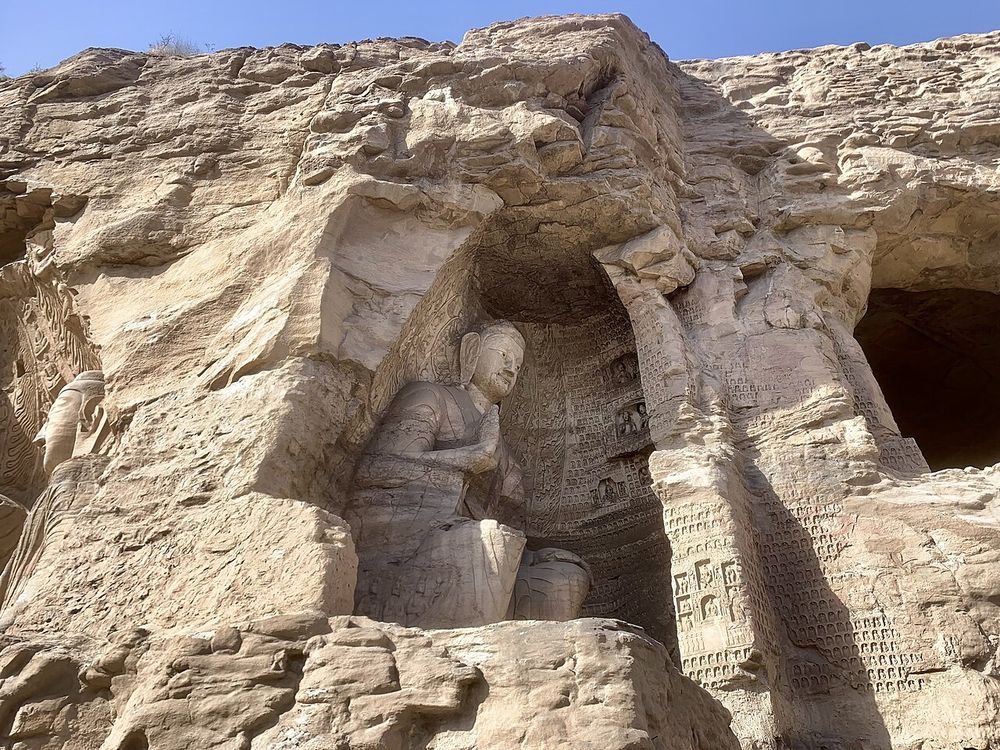
The caves and the hills above them, 2019Charlie fong, CC BY-SA 4.0
The Xianbei came from the forests and grasslands north of the Great Wall. Their Tuoba clan founded the Northern Wei in 386 and in 398 made Pingcheng their capital. The first rooms tell how a riding people became rulers of northern China and took up Chinese ways of government.
2. A capital on the Silk Road
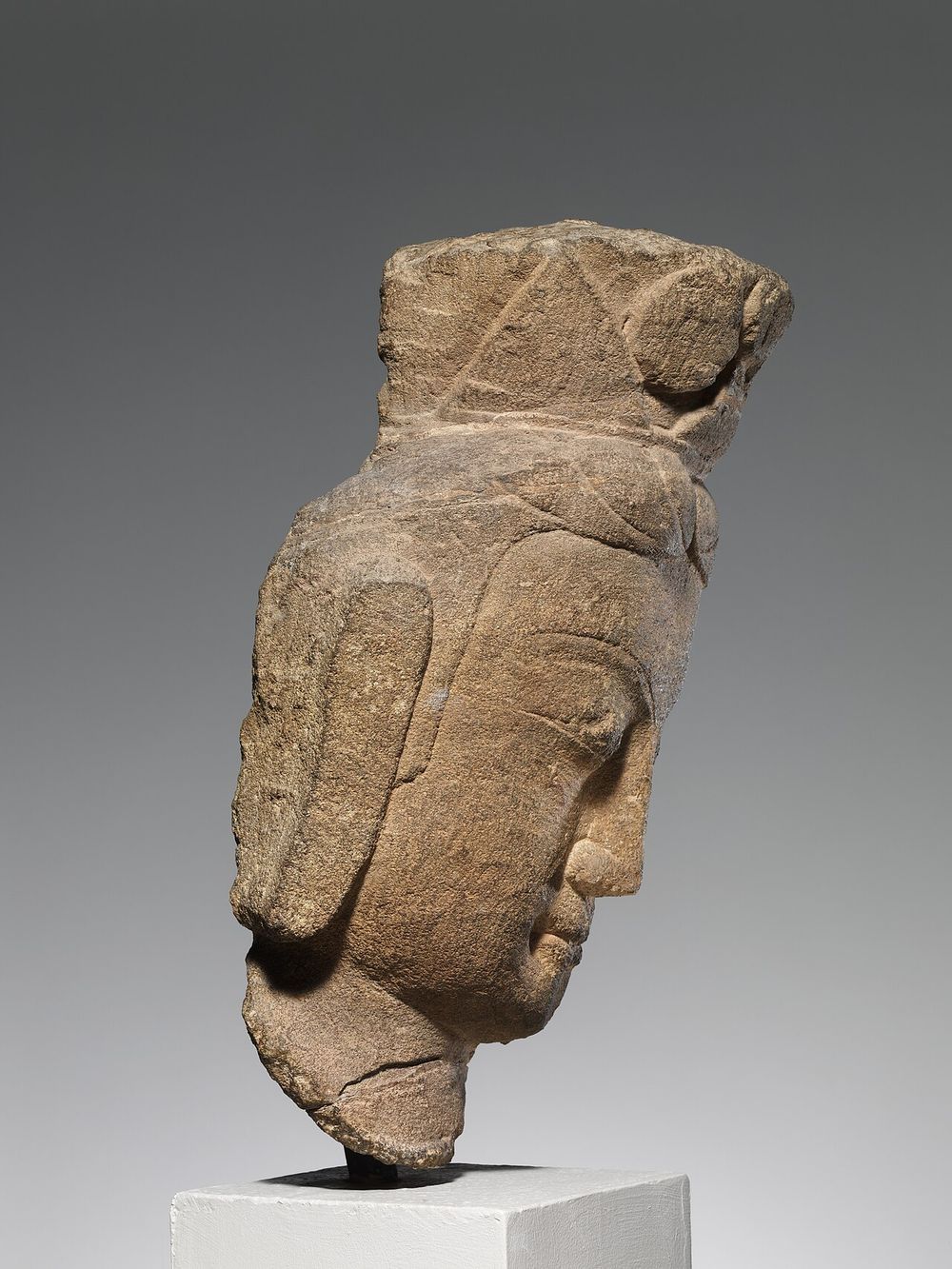
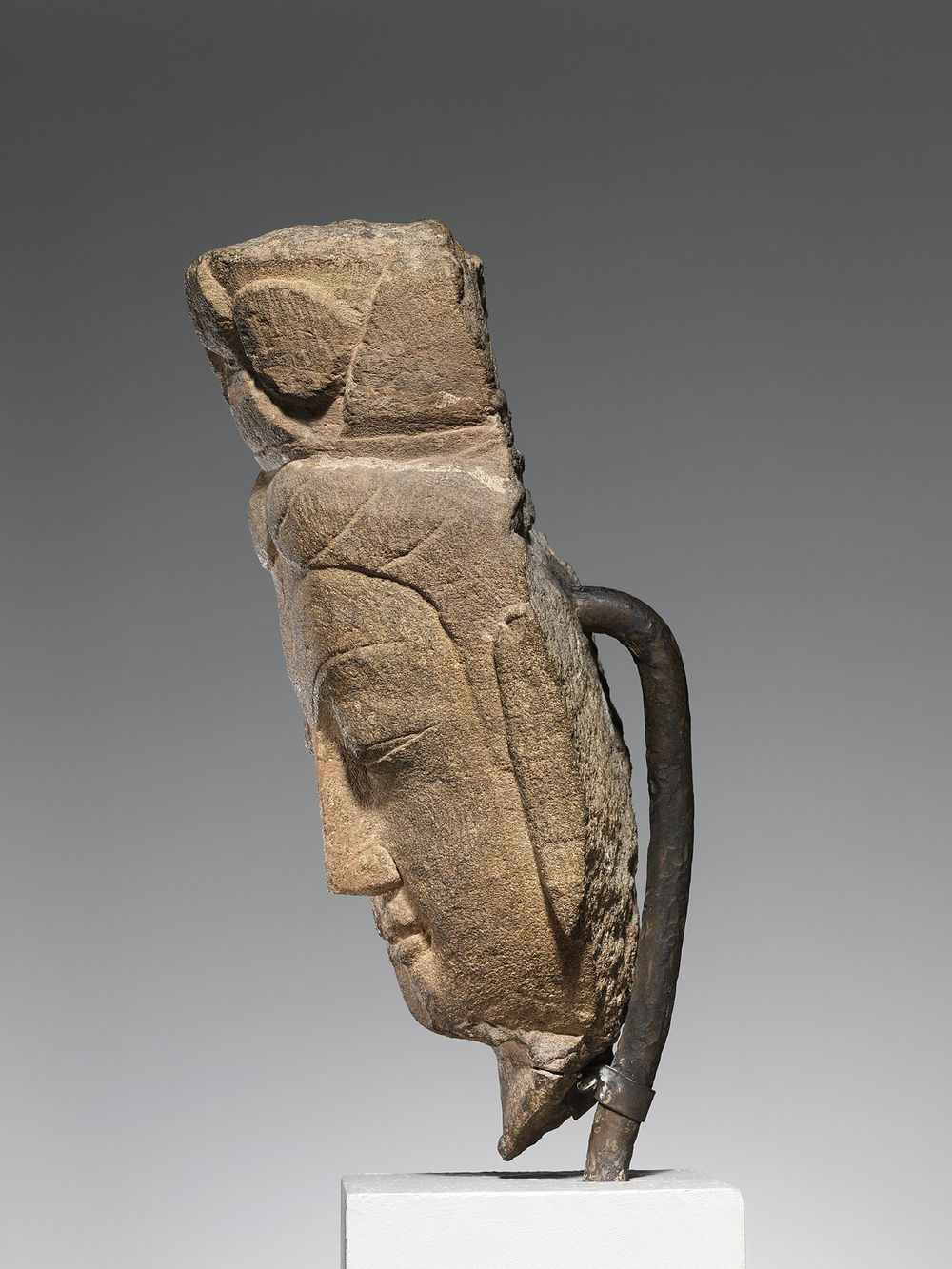
The same head from the sideThe Metropolitan Museum of Art, CC0
For almost a century Pingcheng was the centre of northern China. Glass and silver from Persia and Central Asia have been dug up in Datong; craftsmen and monks were moved here by the thousand from conquered cities. The honeysuckle vine on tiles and bricks shows the new taste: plants in place of beasts.
3. Cutting a mountain
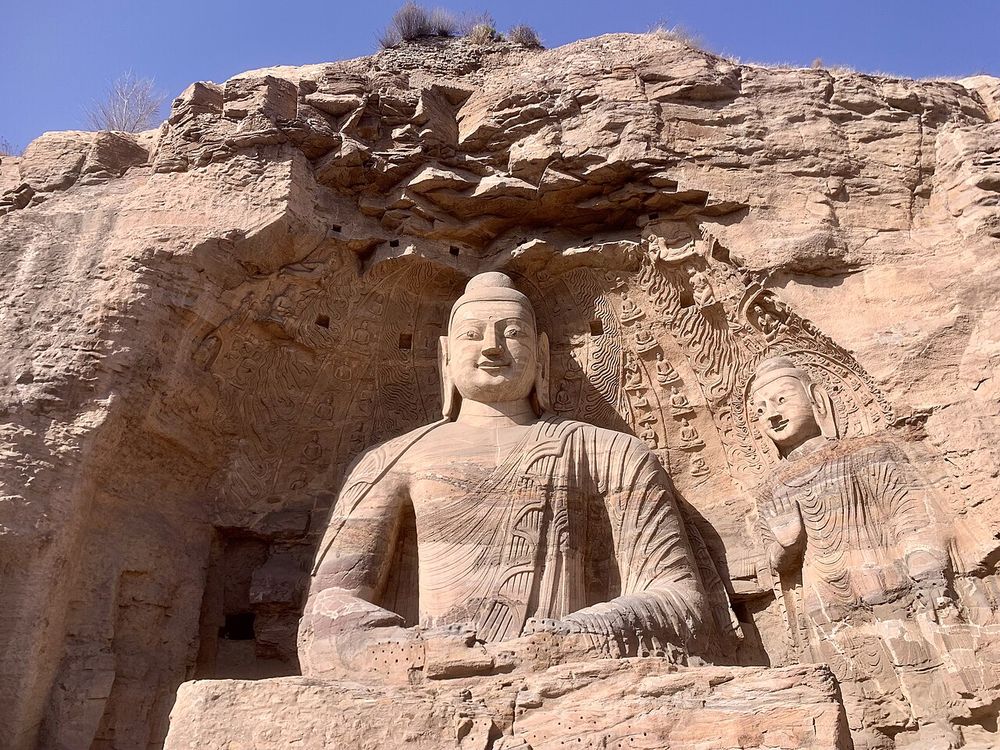
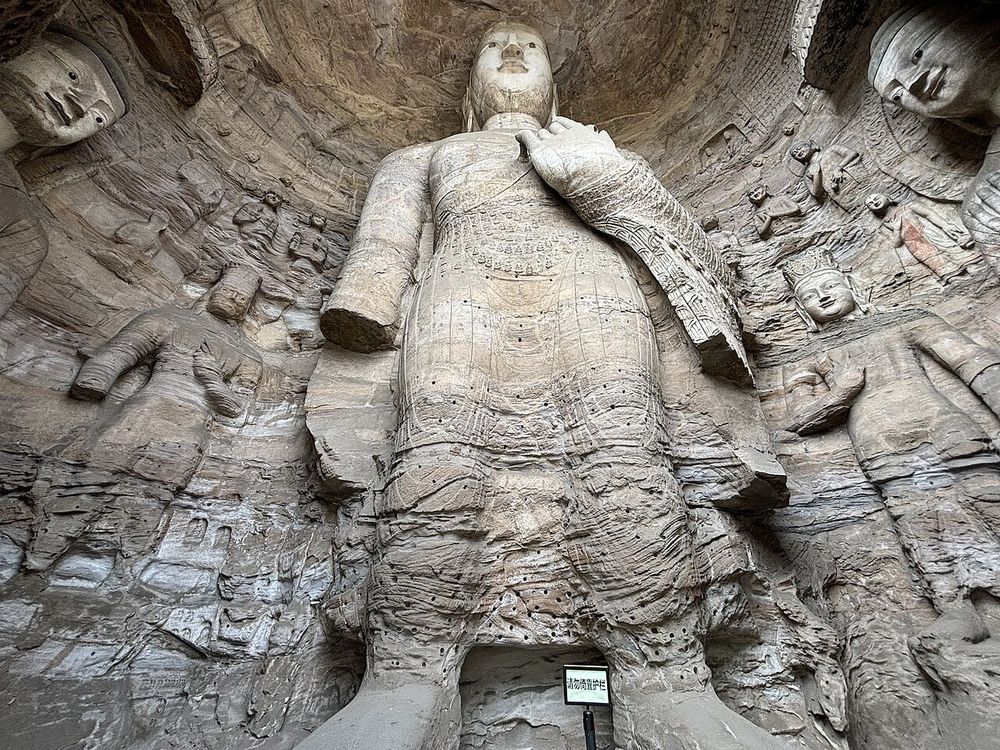
The great Buddha of Cave 20Dudva, CC0
The first five caves were begun about 460 on the proposal of the monk Tanyao. The masons worked from the top down: first the window above the door, then the head of the Buddha, then down to his knees. Keep that in mind when you stand under one.
4. What the ground gave back
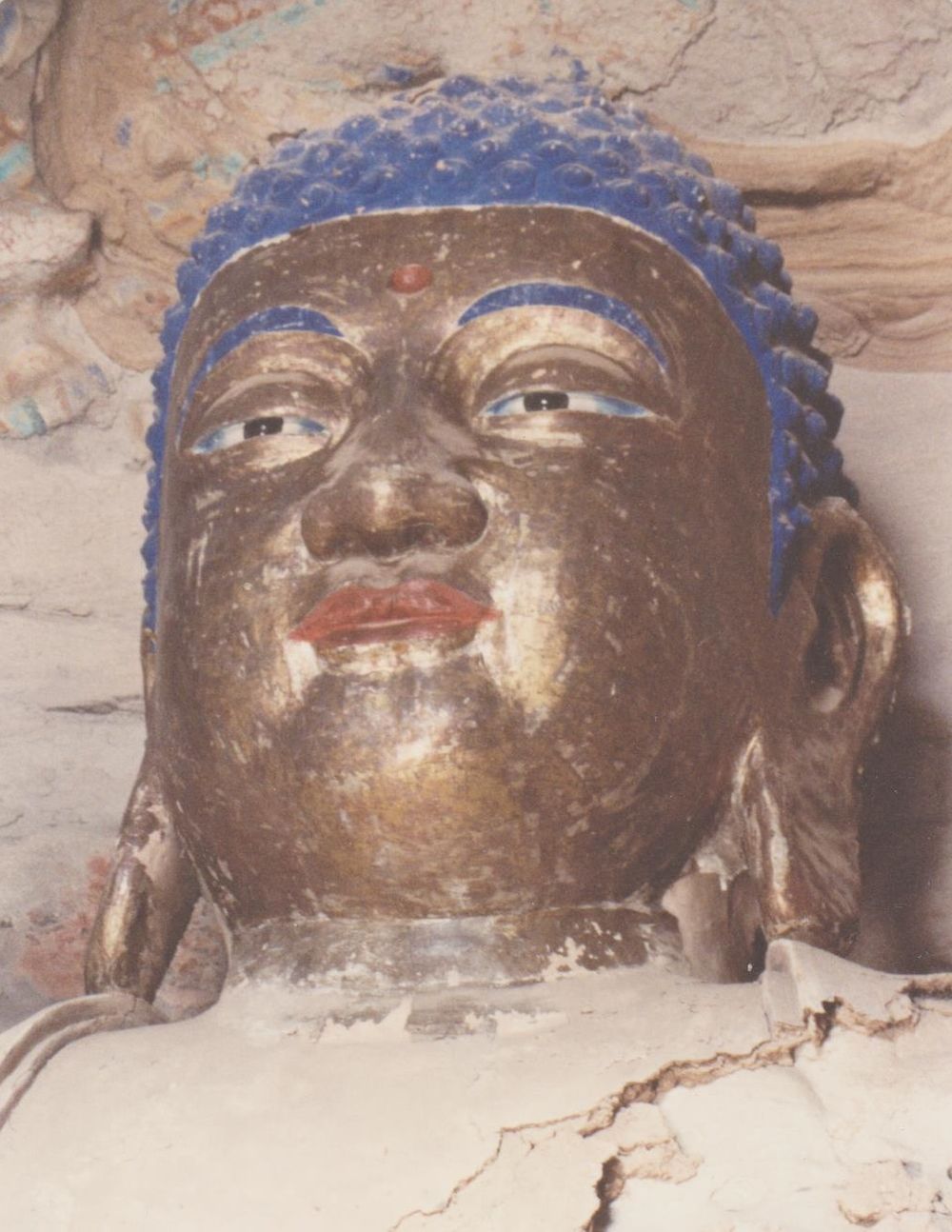
A Buddha's head painted blue and gold, photographed in 1985BabelStone, CC BY-SA 3.0
Excavations in front of the caves since the 1990s and on the clifftop from 2008 to 2011 found Buddha heads, clay figures, roof tiles and the floors of Northern Wei temples. A stone Buddha dug up in 1991 in front of Cave 20 and a disciple's head found in 1993 in the clifftop temple ruins are among the finds that have travelled to exhibitions.
5. The heads that went away
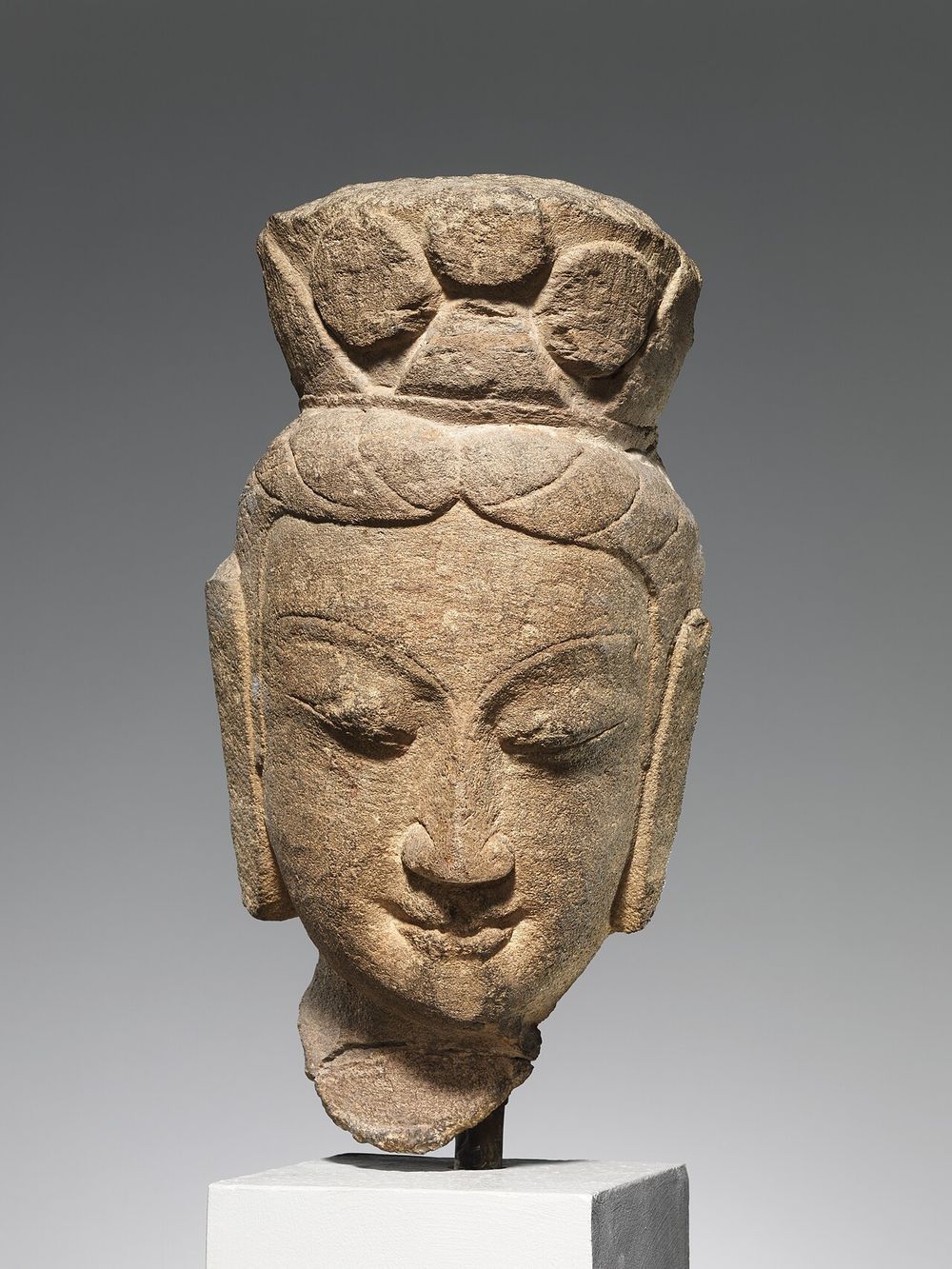
A bodhisattva head from Yungang in the Metropolitan Museum, New YorkThe Metropolitan Museum of Art, CC0
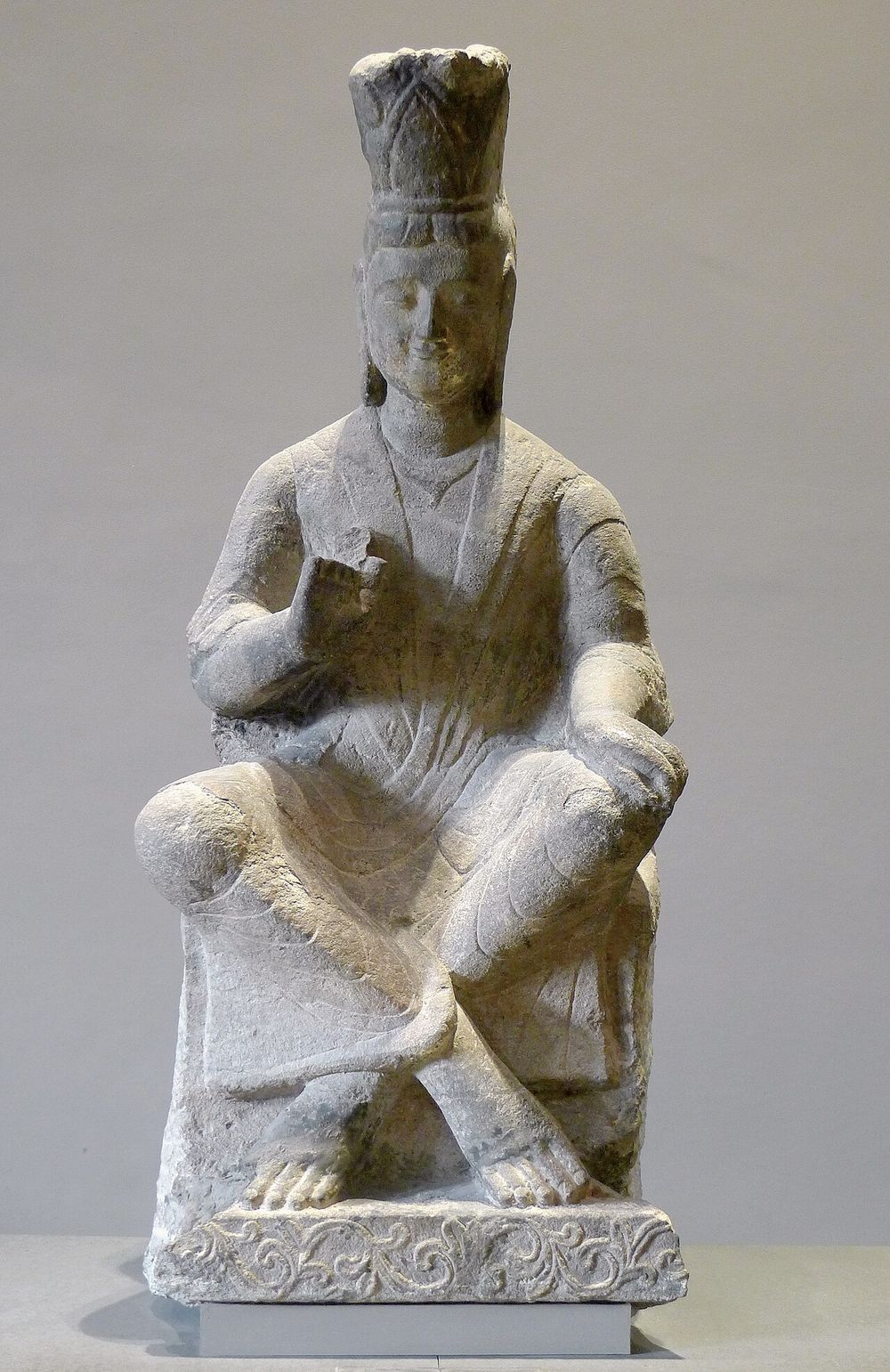
In the 1910s and 1920s heads and figures were cut from the caves and sold. One bodhisattva head from Yungang is in the Metropolitan Museum in New York, another figure in the Musée Cernuschi in Paris. When you reach the caves, look for the clean cuts where heads used to be.
A bodhisattva from Yungang in the Musée Cernuschi, ParisMbzt, CC BY-SA 3.0
The museum and the same years elsewhere
Pingcheng became the capital in 398. Twelve years later, in 410, the Visigoths sacked Rome.
Meanwhile in the world
Year
Here
Elsewhere
398
The Northern Wei make Pingcheng their capital
Christianity is the state religion of the Roman Empire
460
The first five caves are begun
Attila the Hun has been dead seven years
494
The court moves to Luoyang
Clovis rules the Franks
2001
Yungang becomes a World Heritage Site
The euro coins are minted for the next year
One line to remember: the caves are the book; the museum teaches you to read it.
Then and now
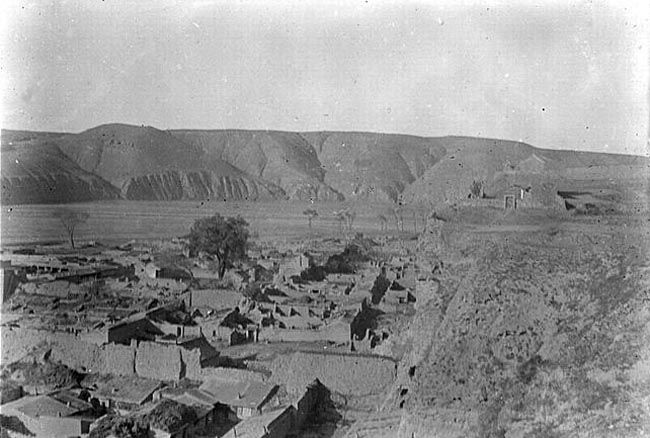
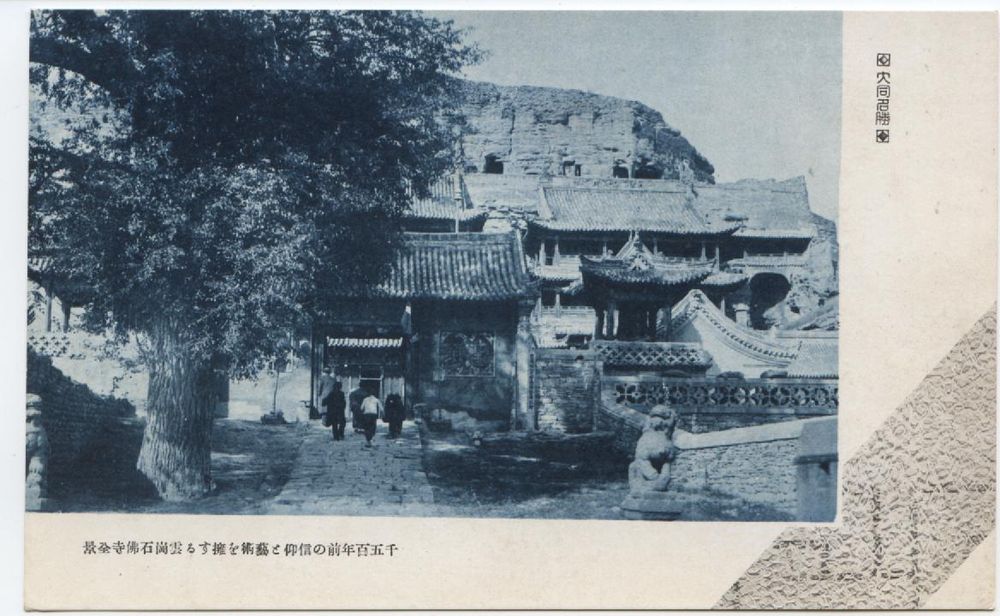
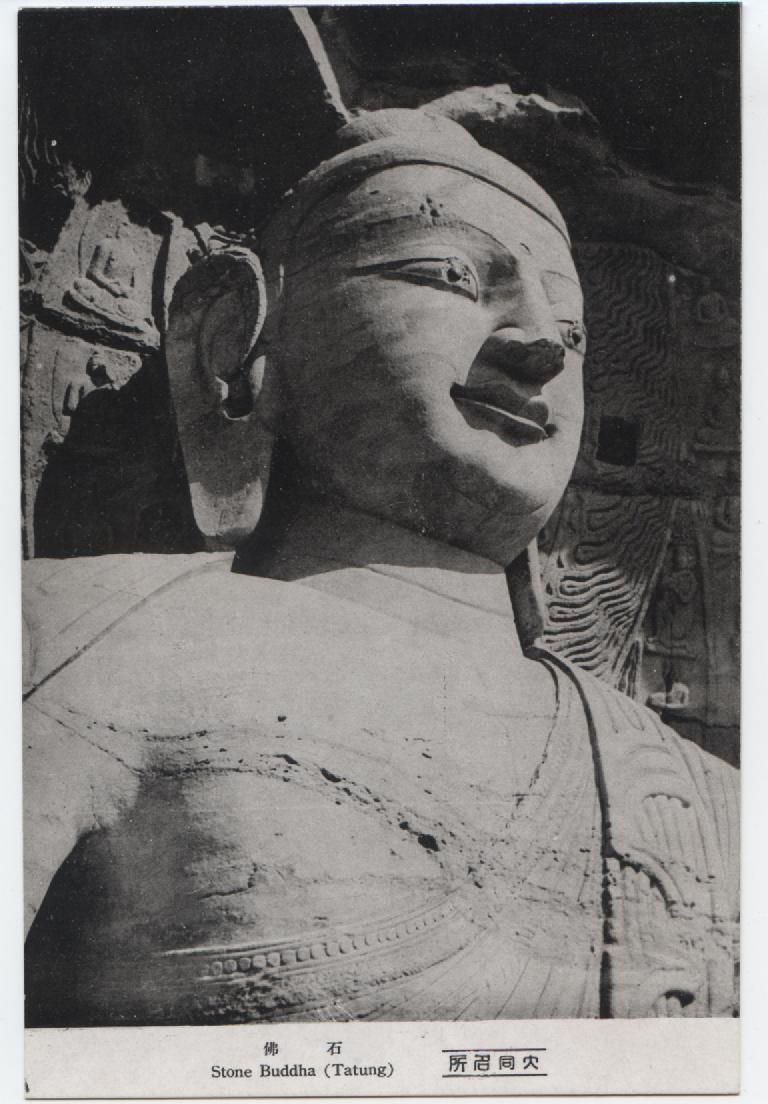
The museum's long wave of a roof among the trees, 2025Liuxingy, CC BY-SA 4.0, Wikimedia CommonsThe entrance under the curved roof, 2025Liuxingy, CC BY-SA 4.0, Wikimedia CommonsA bodhisattva head from Yungang in the Metropolitan Museum, New YorkThe Metropolitan Museum of Art, CC0, Wikimedia CommonsThe same head from the sideThe Metropolitan Museum of Art, CC0, Wikimedia CommonsThe same head, the other sideThe Metropolitan Museum of Art, CC0, Wikimedia CommonsA bodhisattva from Yungang in the Musée Cernuschi, ParisMbzt, CC BY-SA 3.0, Wikimedia CommonsThe caves and the hills above them, 2019Charlie fong, CC BY-SA 4.0, Wikimedia CommonsThe great Buddha of Cave 20Dudva, CC0, Wikimedia CommonsCave 20 in March 2025Dudva, CC0, Wikimedia CommonsThe Buddha of Cave 18Thebrainchamber1, CC BY-SA 4.0, Wikimedia CommonsCave 6Thebrainchamber1, CC BY-SA 4.0, Wikimedia CommonsCarving in Cave 10, 2025Liuxingy, CC BY-SA 4.0, Wikimedia CommonsThe musicians over the door in Cave 12G41rn8, CC BY-SA 4.0, Wikimedia CommonsA Buddha's head painted blue and gold, photographed in 1985BabelStone, CC BY-SA 3.0, Wikimedia CommonsThe caves in 1907Edouard Chavannes, Public domain, Wikimedia CommonsThe caves and their old temple buildings, early 20th centuryAnonymous. The postcard set was published in Keijo(Today Seoul) in 1939., Public domain, Wikimedia CommonsThe great Buddha on an old Japanese postcardJapanese Photographer, Public domain, Wikimedia Commons
Local legends
These are stories people tell about this place. They are legends, not history, and each one says where it comes from.
LegendThe emperor's five Buddhas
The five great Buddhas of the first caves are said to stand for the first five emperors of the Northern Wei, so that worshipping the Buddha meant honouring the throne.
Source: A widely held reading, after the saying of the time that the emperor was the Buddha of today
Later, people who live here will be able to add the stories they grew up with, and say which of these they have heard.
Not certain, and where accounts conflict
When was the museum built?
Chinese guide listings give 2011, with 6,640 square metres of floor; we found no notice from the museum itself to confirm the year.
Is the museum always open?
Some visitors report rooms closed for new exhibitions. Ask at the gate.
Checked 2026-11-12 Yungang Academy, which runs the site and the museum. Tickets are sold through its WeChat account and authorised platforms.
Tickets and hours
The Yungang ticket, 120 yuan from April to October and 100 yuan from November to March, includes the museum.
The museum keeps the hours of the scenic area, roughly from early morning to late afternoon; the last entry to the caves is earlier.
Last checked 2026-11-12. Chinese guide listings for the building (2011, 6,640 square metres) and the Yungang ticket rules of 2025–26 as reported in the press; the museum has no notice of its own online.
Booking without WeChat
International booking platform Authorised platforms such as Trip.com also sell tickets with a passport.
WeChat or Alipay All Yungang tickets are booked online in advance, with a real name and passport number, through the Yungang Grottoes WeChat account.
Ticket window on site Since 15 March 2025 tickets for the same day are not sold, and there is no ticket window at the gate.
Note Book at least a day ahead.
Checked 2026-11-12
Where to start
The scenic area is 16 kilometres west of Datong. Bus 603 runs from the city, or take a taxi of about thirty minutes.
See the museum first, then walk to the caves; it makes the caves far easier to read.
Before you go
Bring your passport itself; it is checked at the gate.
Datong is high and dry; bring water and sun cream in summer and warm clothes in winter.
Customs and manners
Flash photography is usually not allowed near the objects.
Speak quietly; groups with guides fill the rooms in the morning.
Opening hours are given in the local time of the place. Prices are in the local currency. The figure after ≈ is approximate, at exchange rates checked on 9 November 2026, in .
Look for these
Find the honeysuckle vine on a brick or a tile, then find it again round the door of Cave 9 or 10.
Find the year 398 in the rooms, the year Pingcheng became the capital.
From the museum's entrance, look along the roof and count its waves.
I am here
Stand at the site, sign in, press the button, and collect its stamp. Your browser will ask to use your location. It is sent to us once to confirm that you are at the site; we keep how far you were from it, not the spot where you stood.
Your stamps are saved to your account, so they follow you to any device. Checking from a browser cannot rule out every false location; stricter checks arrive with the app.
Messages
Share your photos
Photos here show the place, not people. Each one is credited to the visitor who took it and appears after our team has looked at it. A photo with you in it belongs under “I am here”.