LegendThe temple in front of Cave 3
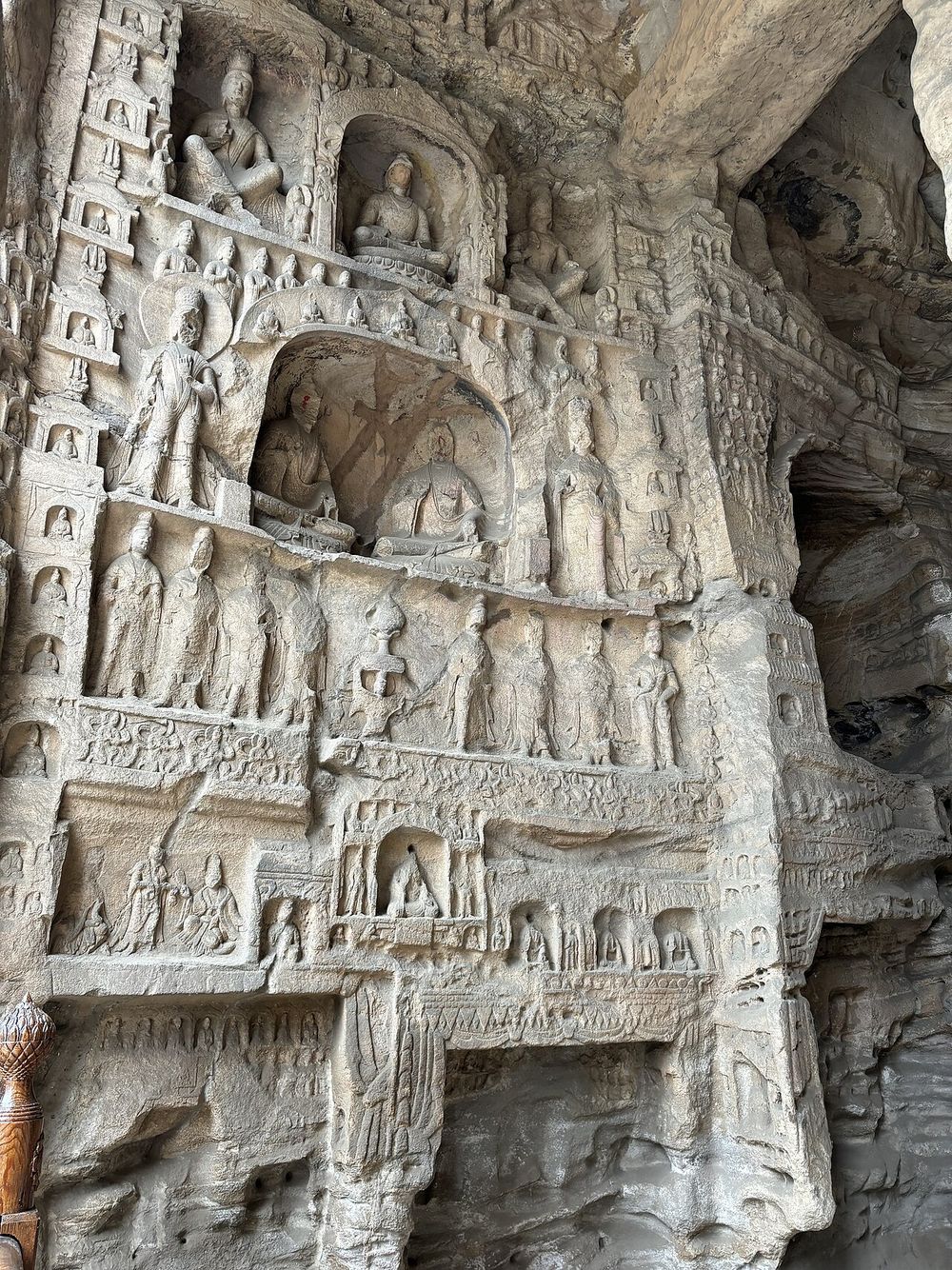
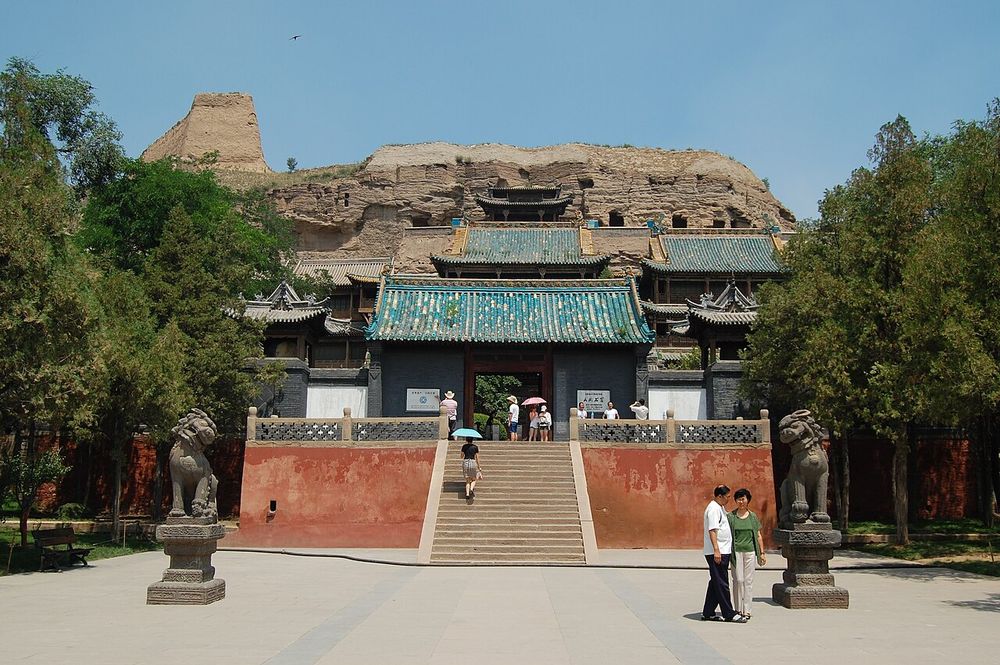
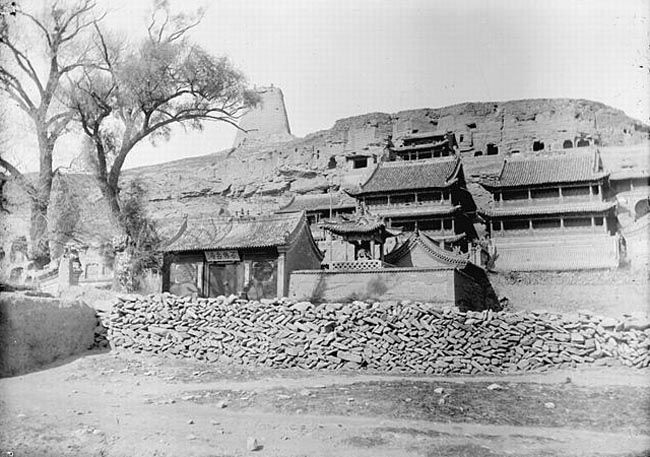
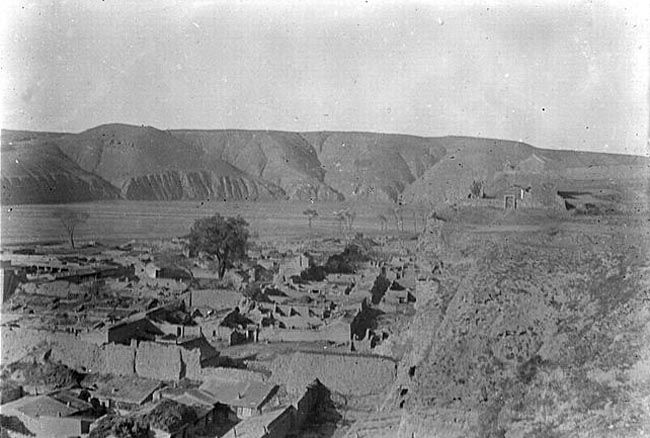
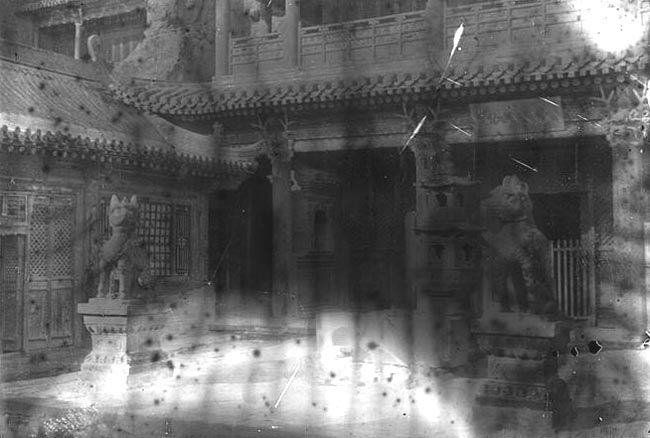
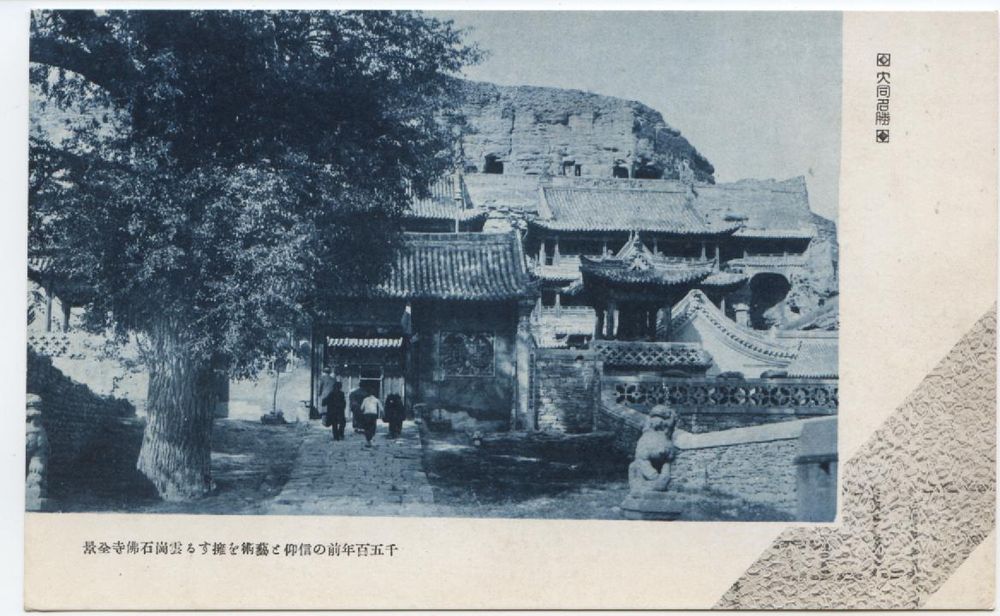
The temple that once stood in front of Cave 3 is said to have been the Lingyan Temple of the Northern Wei. No excavation has confirmed it.
Source: Local folk tale
Datong, Shanxi, China
云冈石窟 · Yúngāng Shíkū
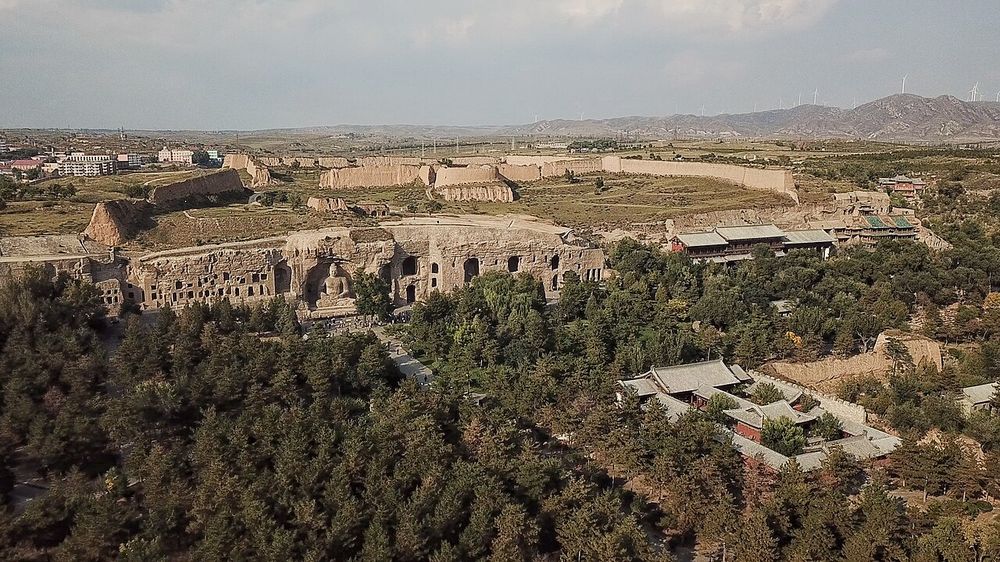
A kilometre of sandstone cliff west of Datong, cut by the Northern Wei dynasty in the fifth century into 252 caves and niches with more than 51,000 Buddhist figures. World Heritage since 2001.
Photo: Charlie fong, CC BY-SA 4.0, Wikimedia Commons
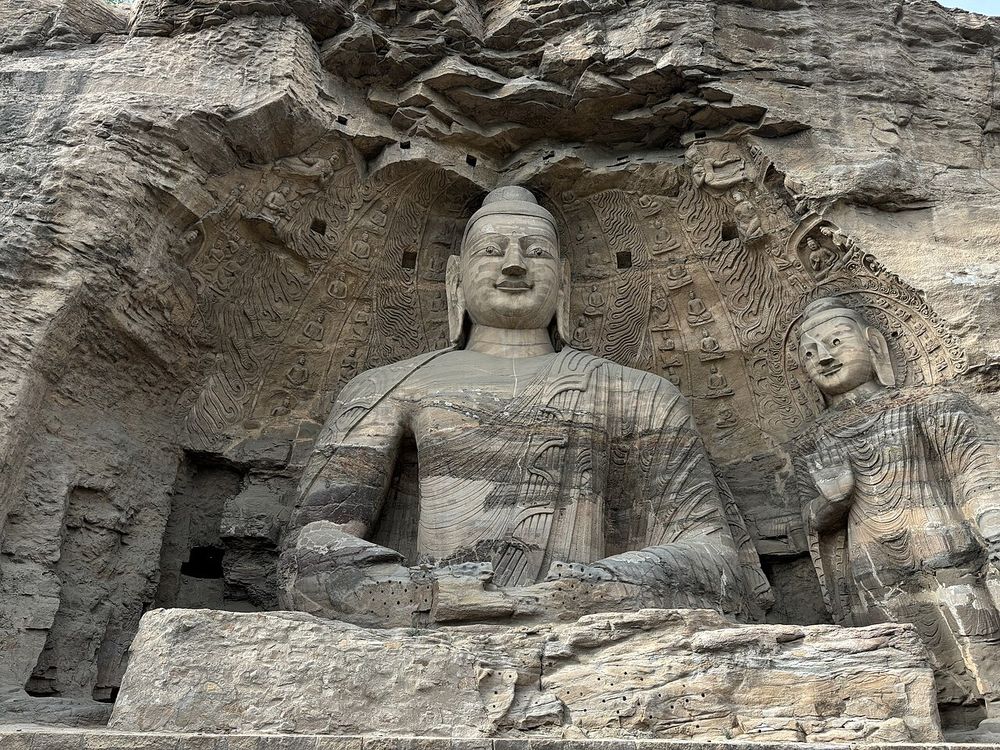
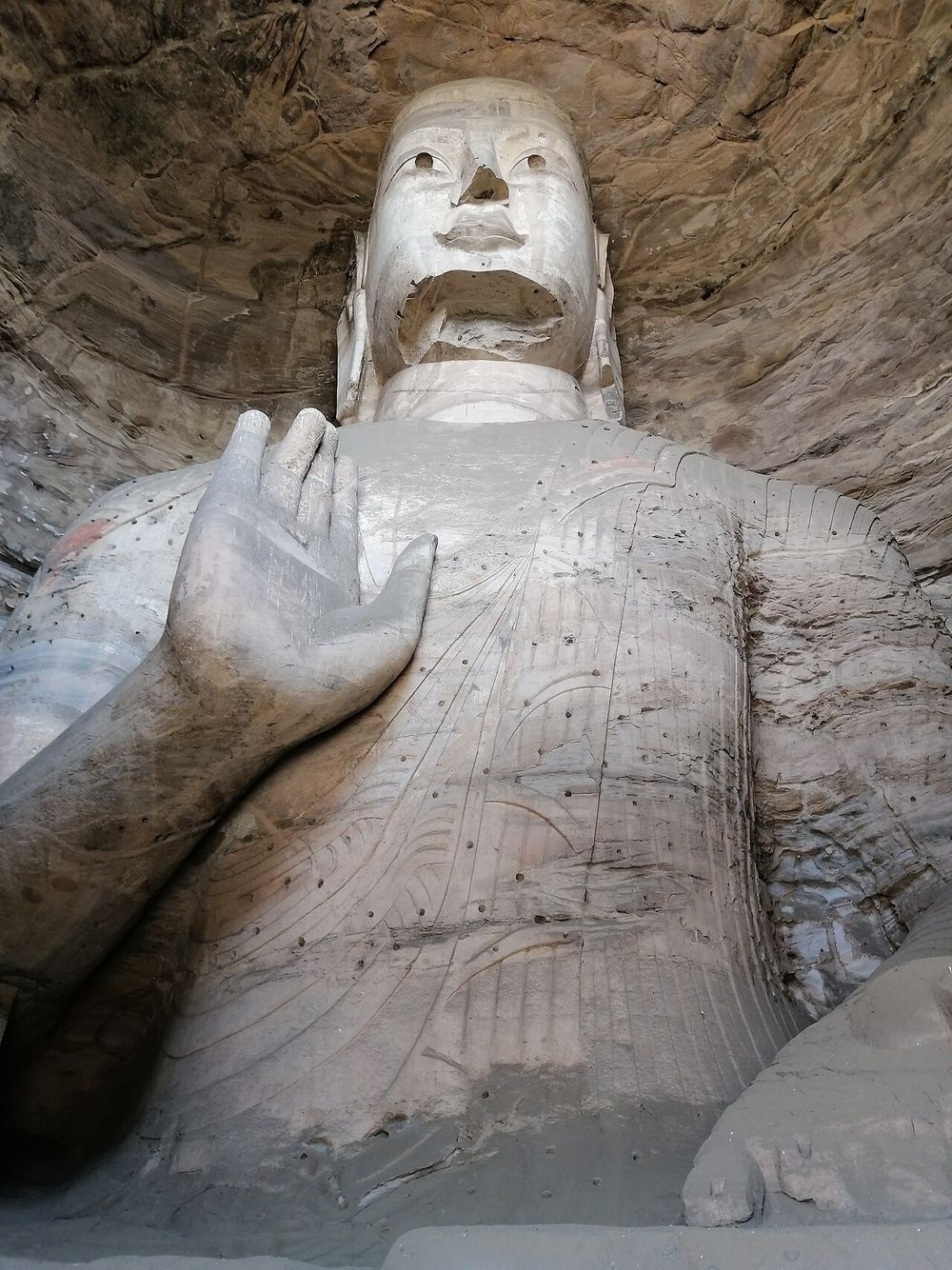
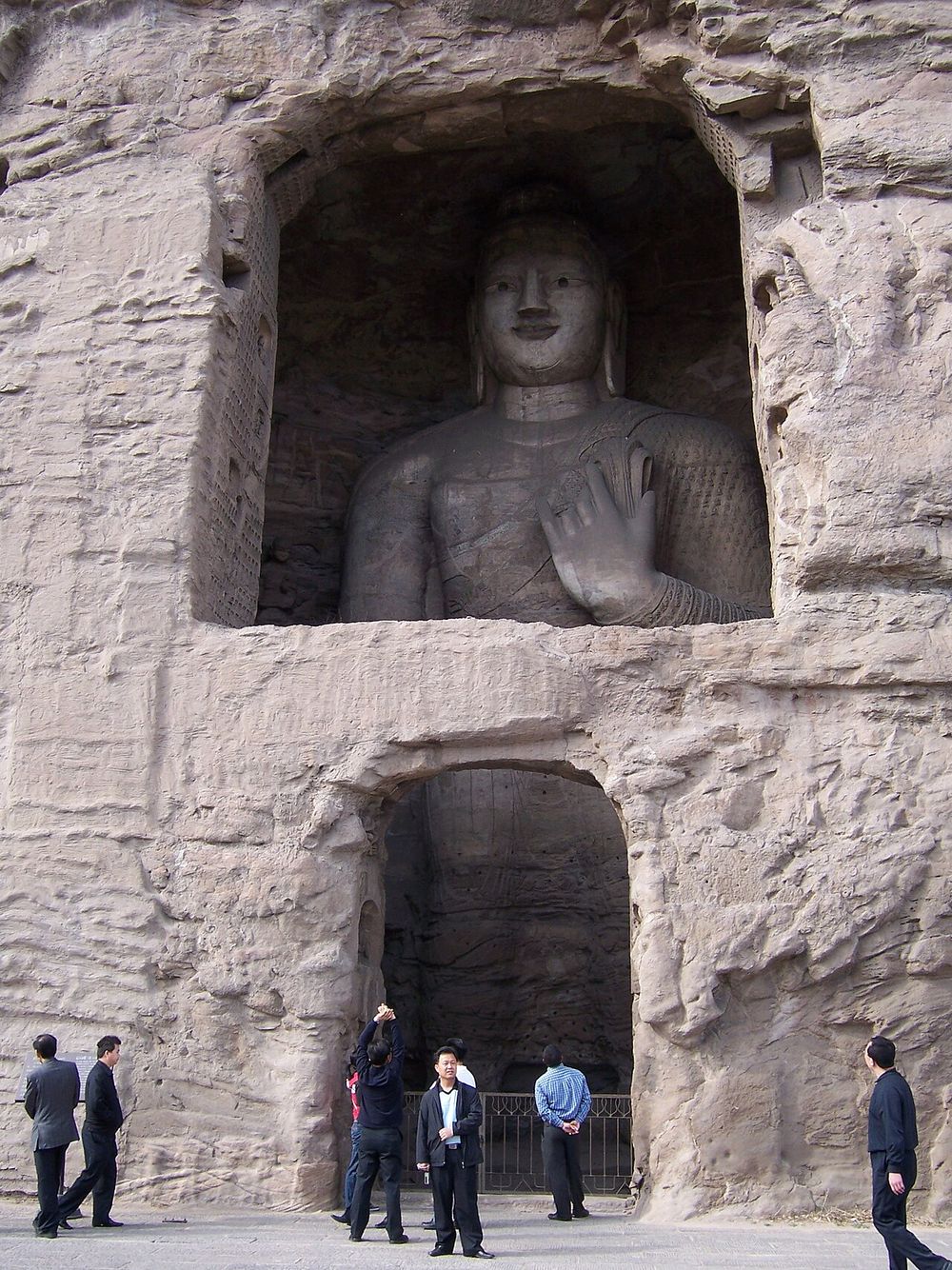
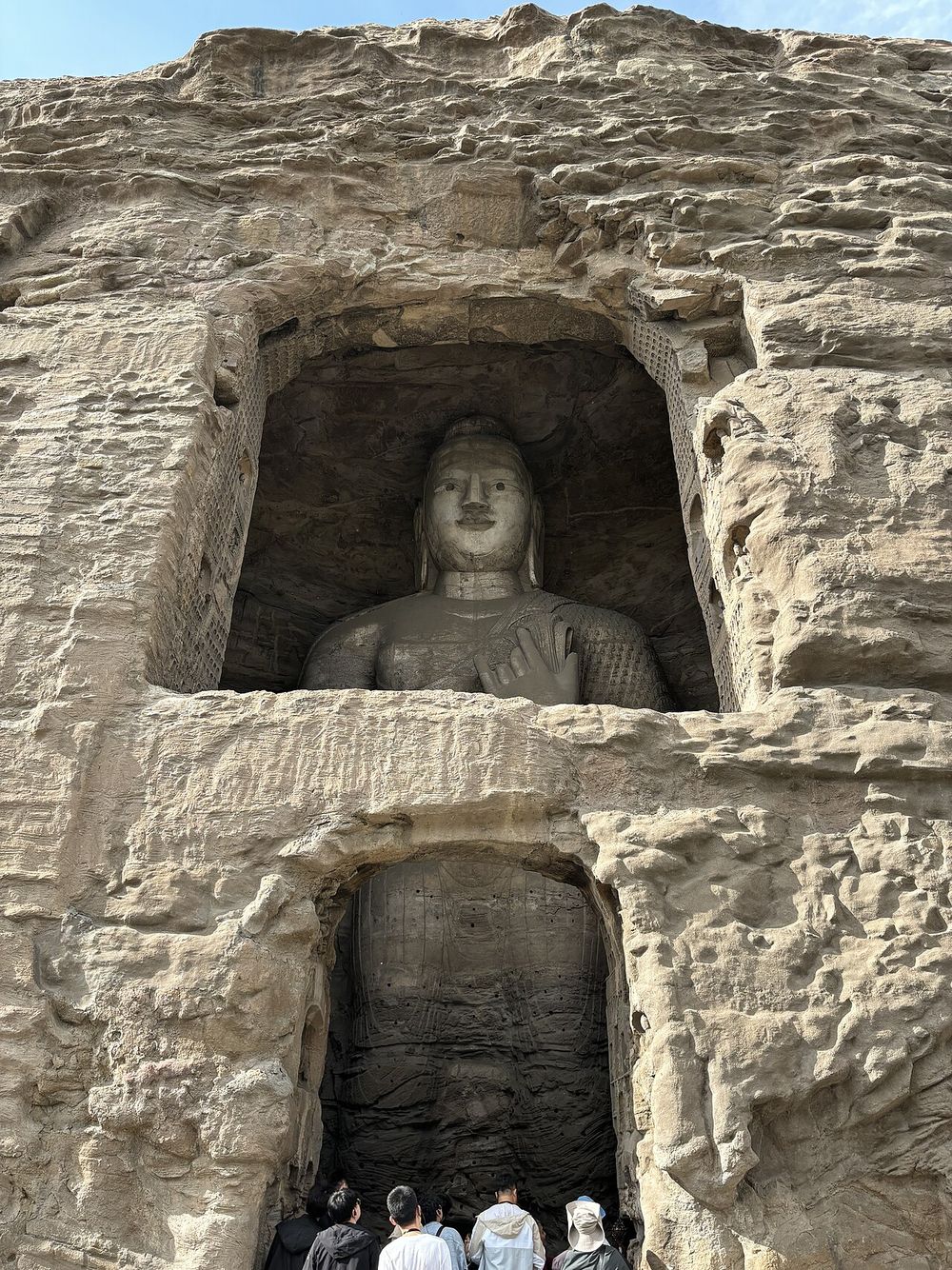
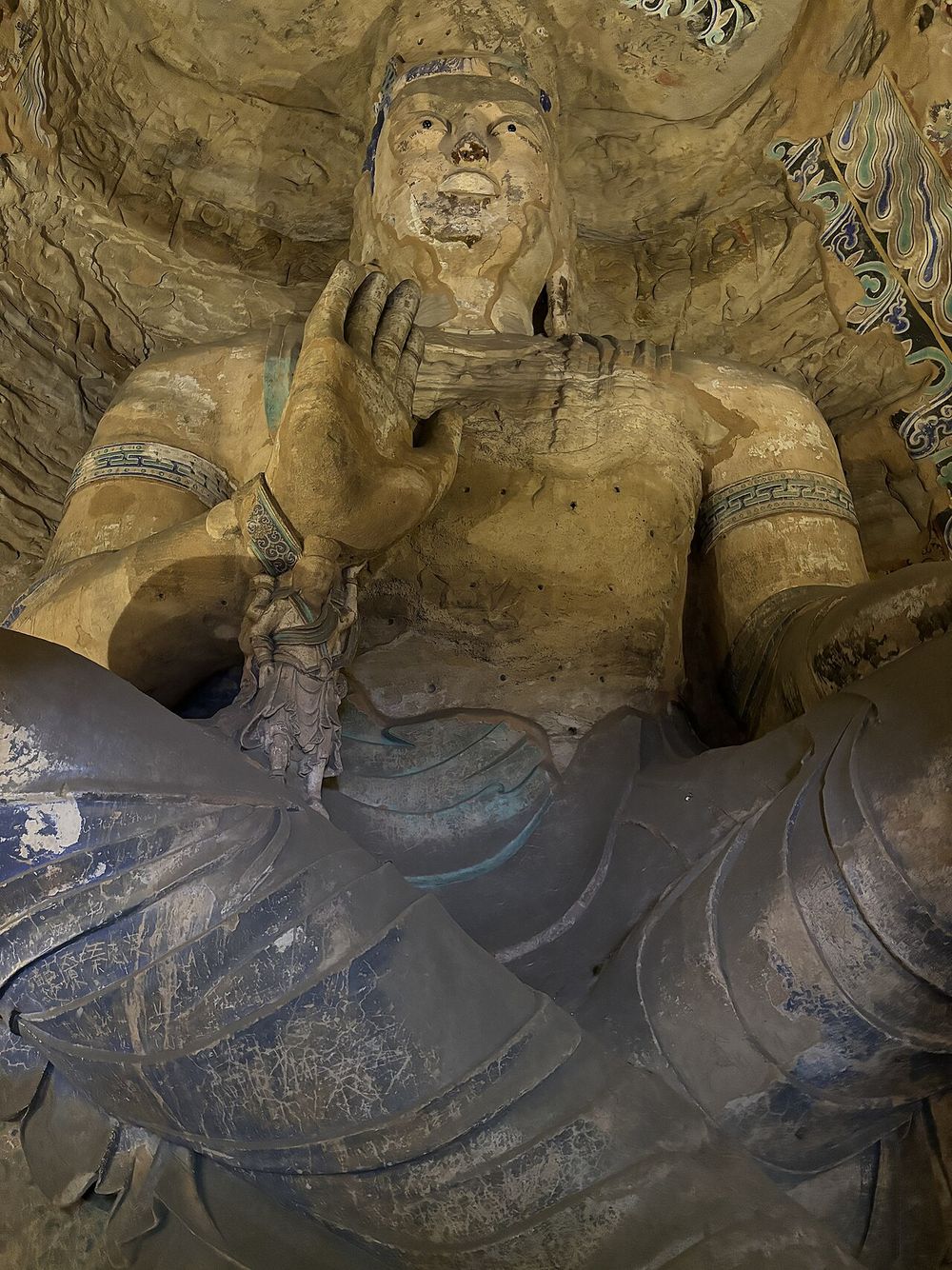
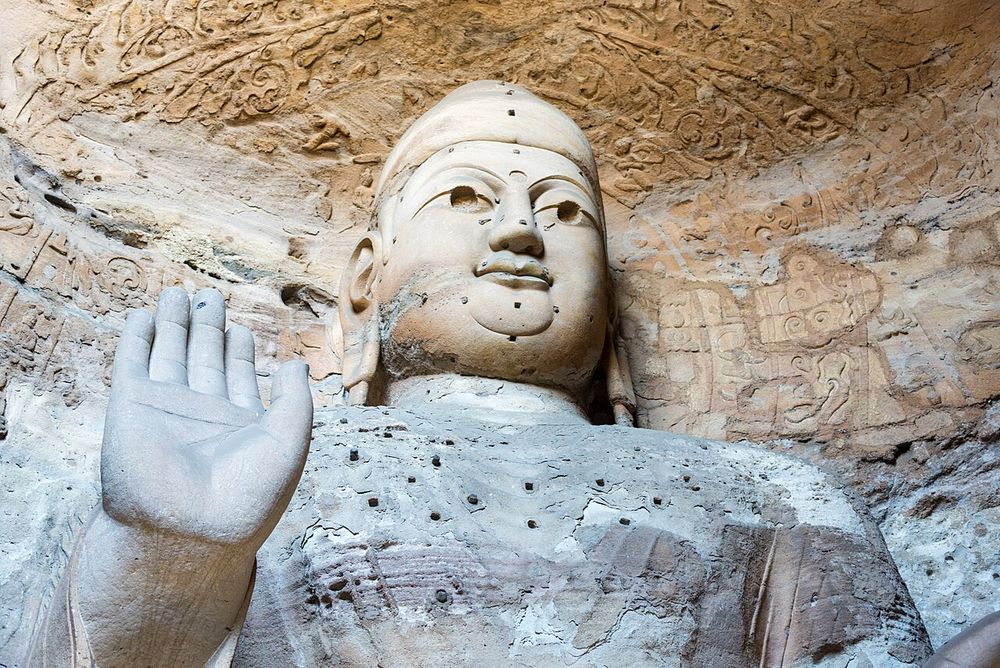
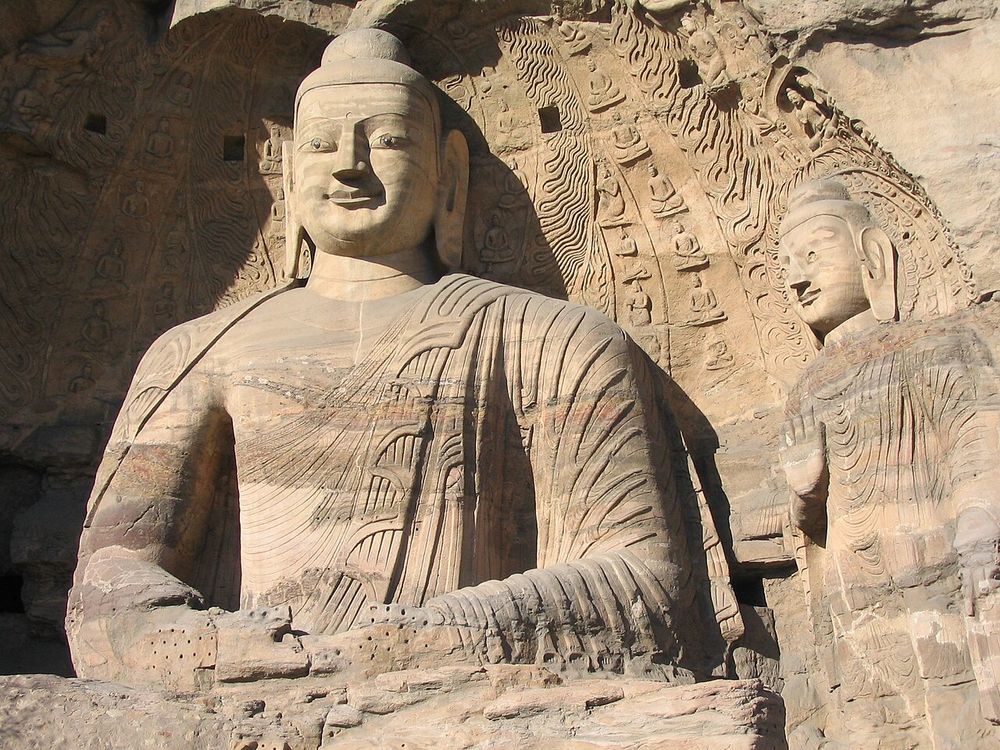
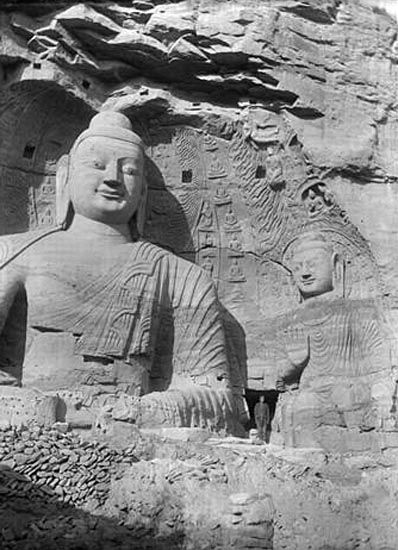
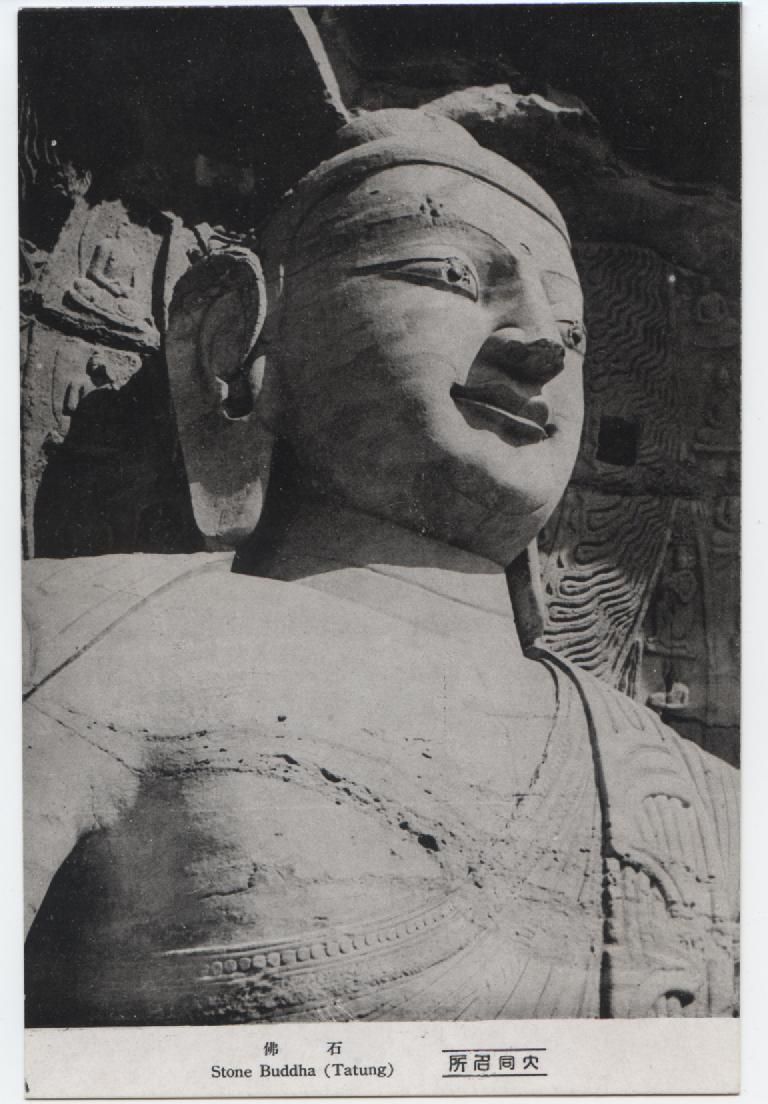
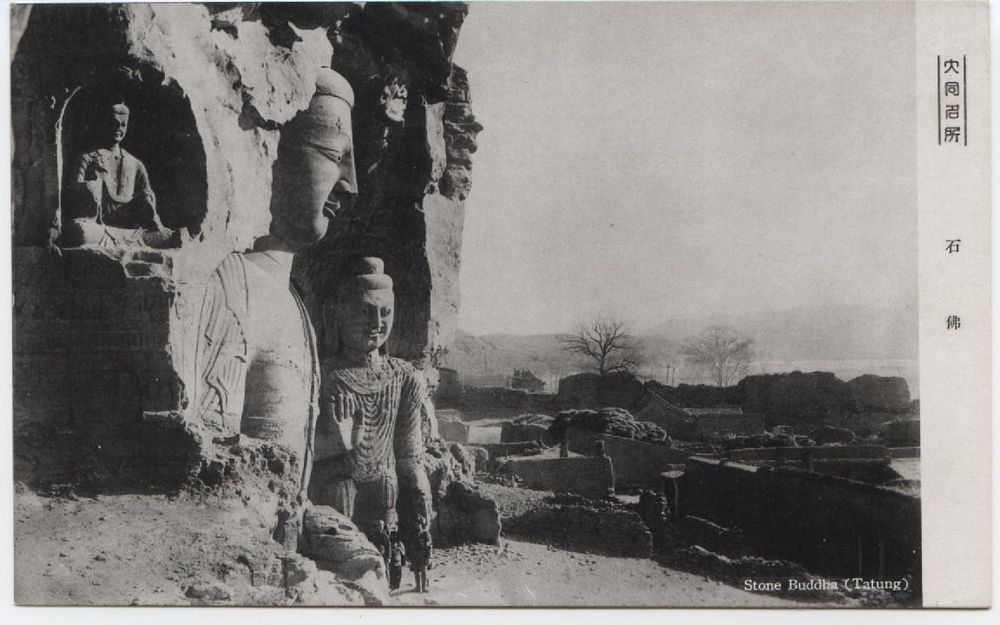
The seated Buddha in front of you is about 13.7 metres high and is the emblem of Yungang. It used to sit inside a cave. The front wall fell in long ago and left it in the open air. It was cut about the year 460, under the Northern Wei dynasty (386–534), and has sat here for more than fifteen hundred years.
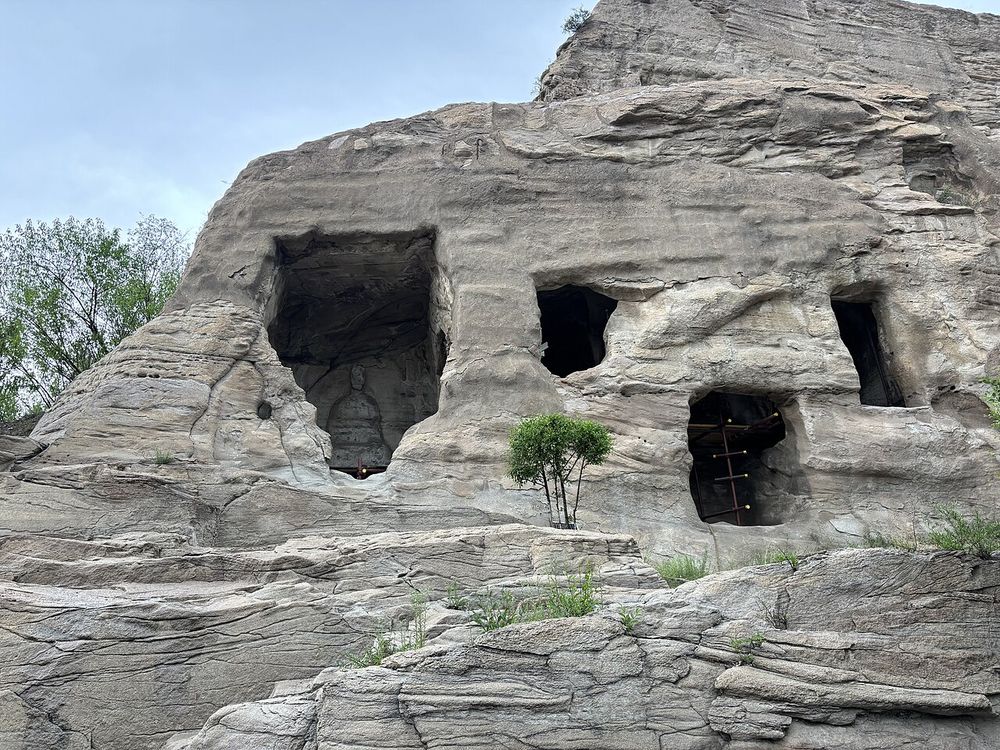
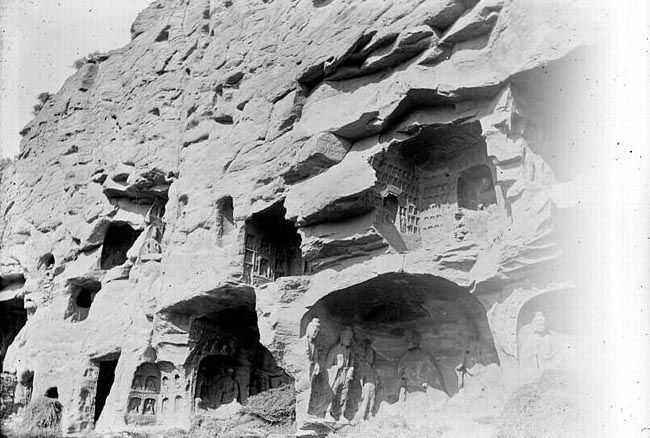
Yungang is one cliff a kilometre long, and the caves are numbered along it from east to west: Caves 1 to 4 in the east, 5 to 13 in the middle, 14 to 45 in the west. One ticket covers them all, with the museum inside the park. What you can enter changes from day to day, because caves are closed in turn for repair.
| Part | Ticket |
|---|---|
| West: Cave 20, the open-air Buddha | Included |
| West: Cave 18, the robe of a thousand Buddhas | Included |
| West: Caves 16, 17 and 19 | Included |
| Middle: Cave 12, the music cave, and the painted caves 9 to 13 | Included |
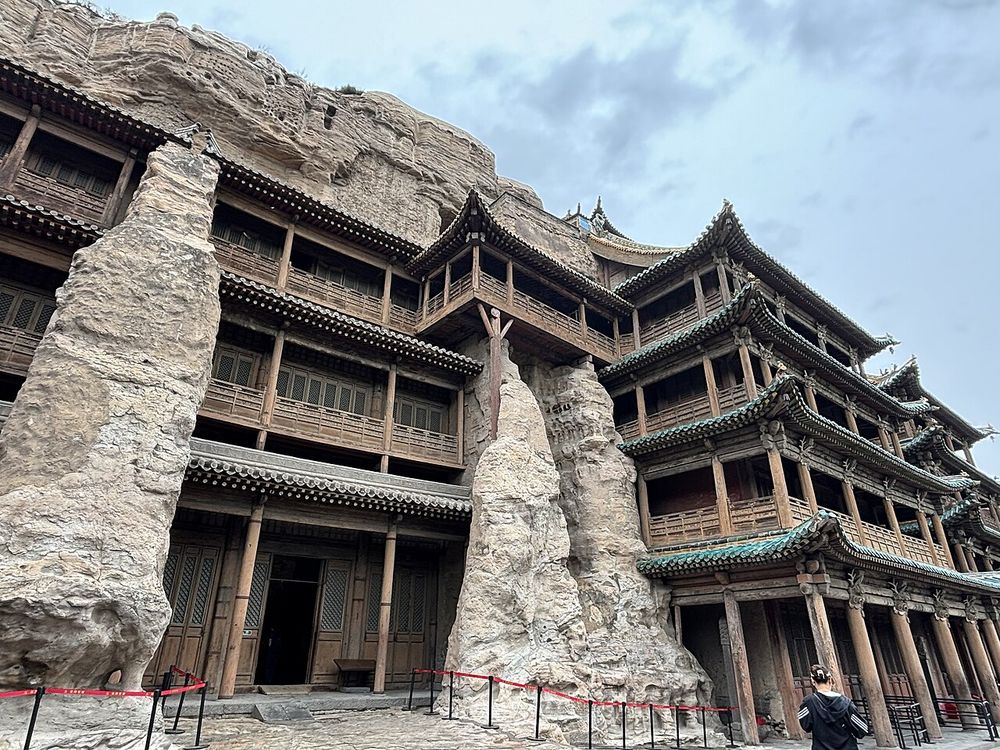
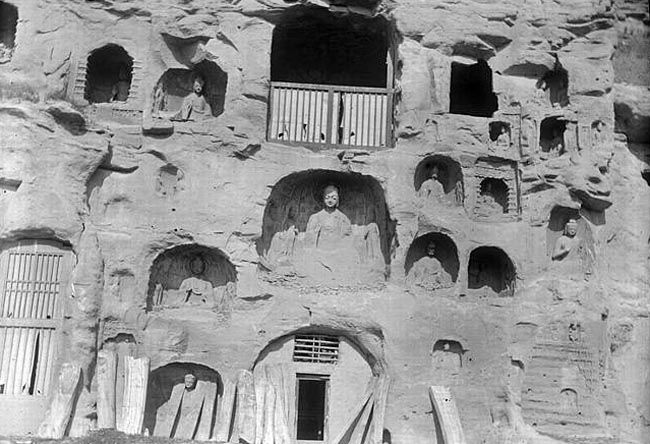
| Middle: Caves 5 and 6 behind their timber fronts | Included |
| East: Cave 3, the largest | Included |
| Far west: the small late caves | Included |
| The Yungang Museum and the galleries in the park | Included |
| Lingyan Temple, the rebuilt temple on the lake near the entrance | Included. A modern rebuilding, on the way in |
| Huayan Temple, Shanhua Temple and the Nine-Dragon Screen in Datong | Not part of Yungang; separate tickets |
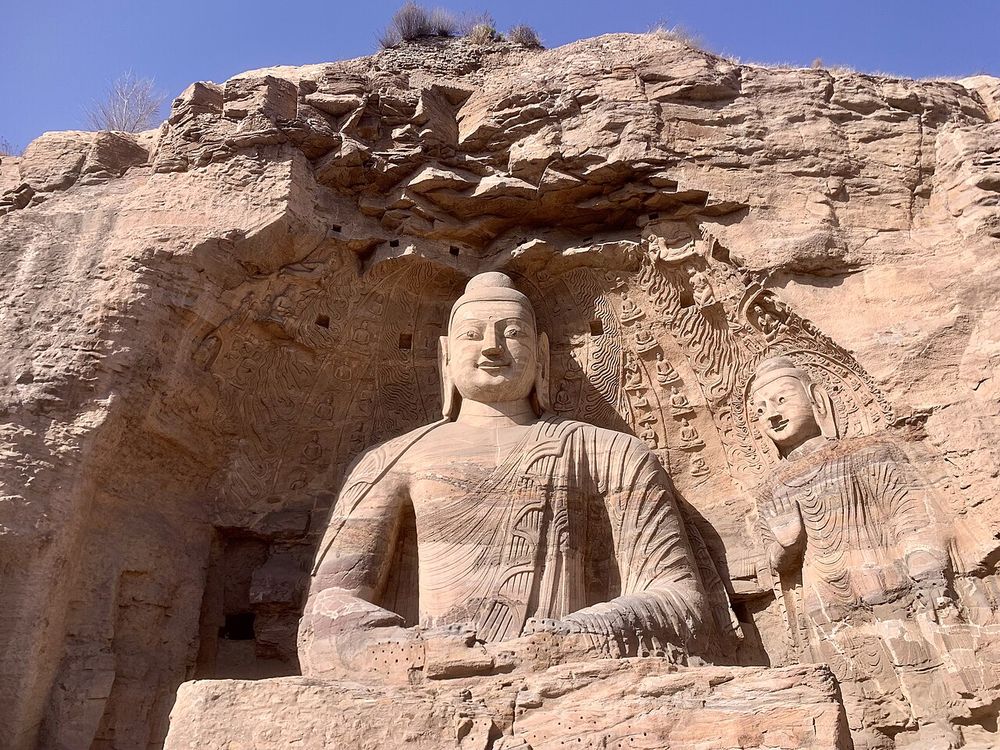
The Northern Wei was founded by the Tuoba, a clan of the Xianbei people from the steppe, and its capital Pingcheng is today's Datong. In 446 the emperor Taiwu ordered Buddhism destroyed: temples were pulled down and monks killed. A few years later the emperor Wencheng restored the faith, and the monk Tanyao proposed carving the Buddha into the mountain itself, where no one could ever destroy it.
The result was Caves 16 to 20, the "five caves of Tanyao". The history of the dynasty says of the figures: the tallest seventy feet, the next sixty. Scholars think the five great Buddhas stand for the first five Northern Wei emperors: the emperor is the Buddha.
The court went on cutting here for more than thirty years, until the capital moved to Luoyang in 494. As you walk you will see the Buddhas change: at first high noses, deep eyes and clinging robes, later loose wide robes and thin faces. You are watching Buddhist art change its clothes in China.
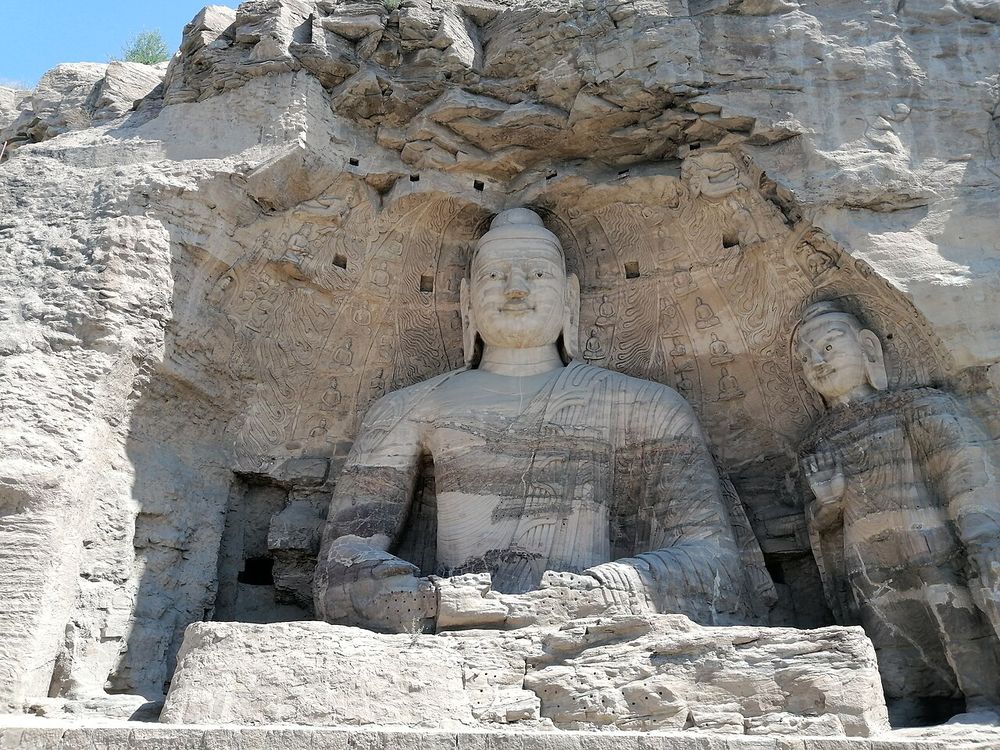
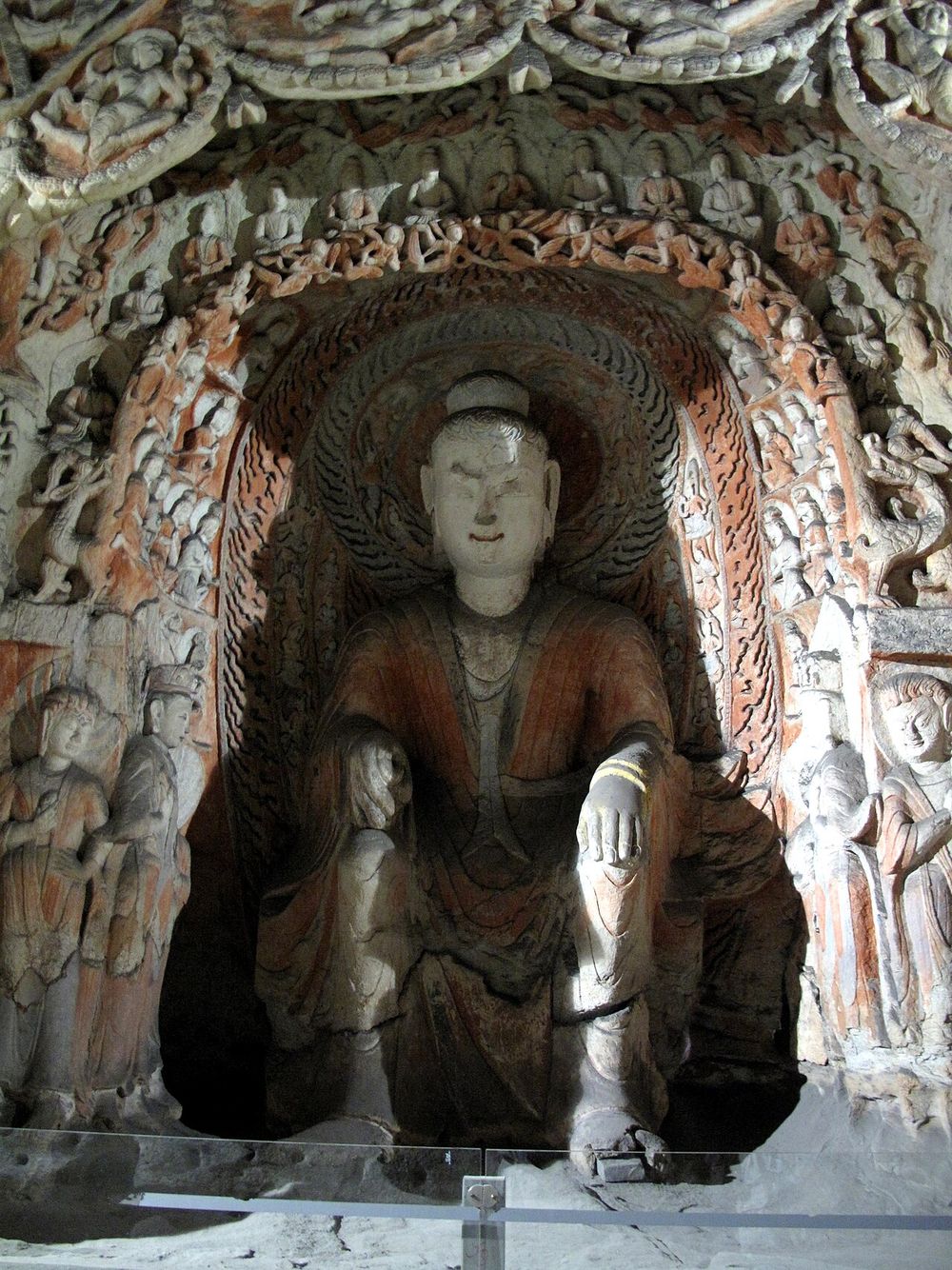
One of the five caves of Tanyao. The Buddha sits cross-legged with his hands folded in his lap, the gesture of meditation.
Look at the face: a high nose, long brows, and a small moustache in two strokes above the lip. This is the shadow of Gandhara, the Buddhist art of what is now Pakistan.
Look at the robe: the right shoulder is bare, and on the left arm the folds end in forked points like a swallow's tail.
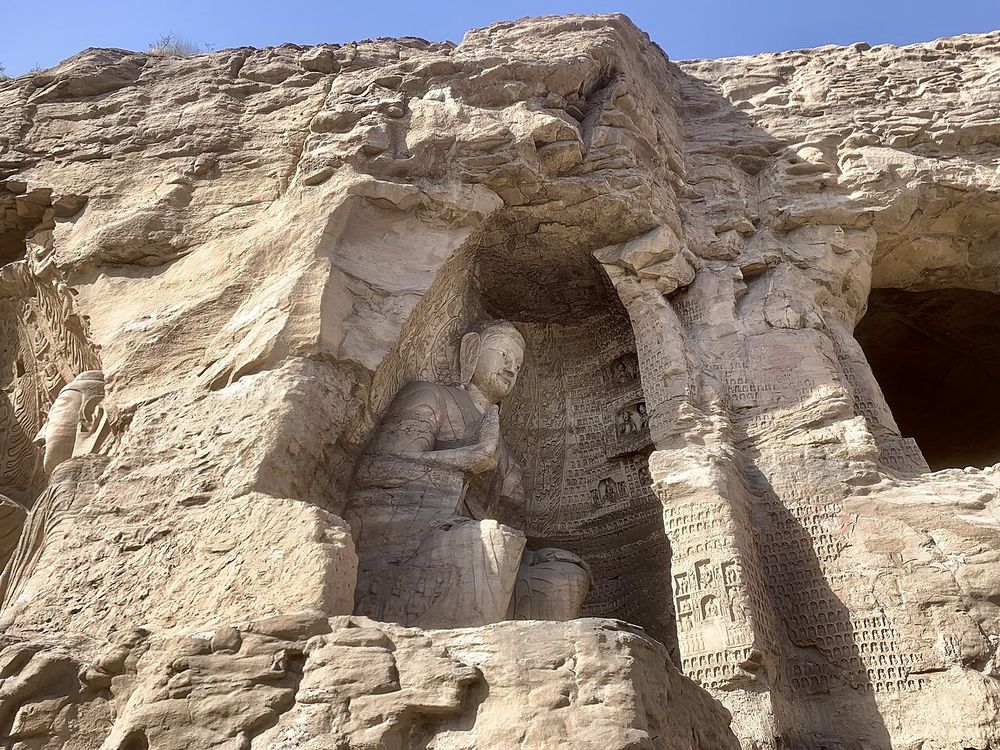
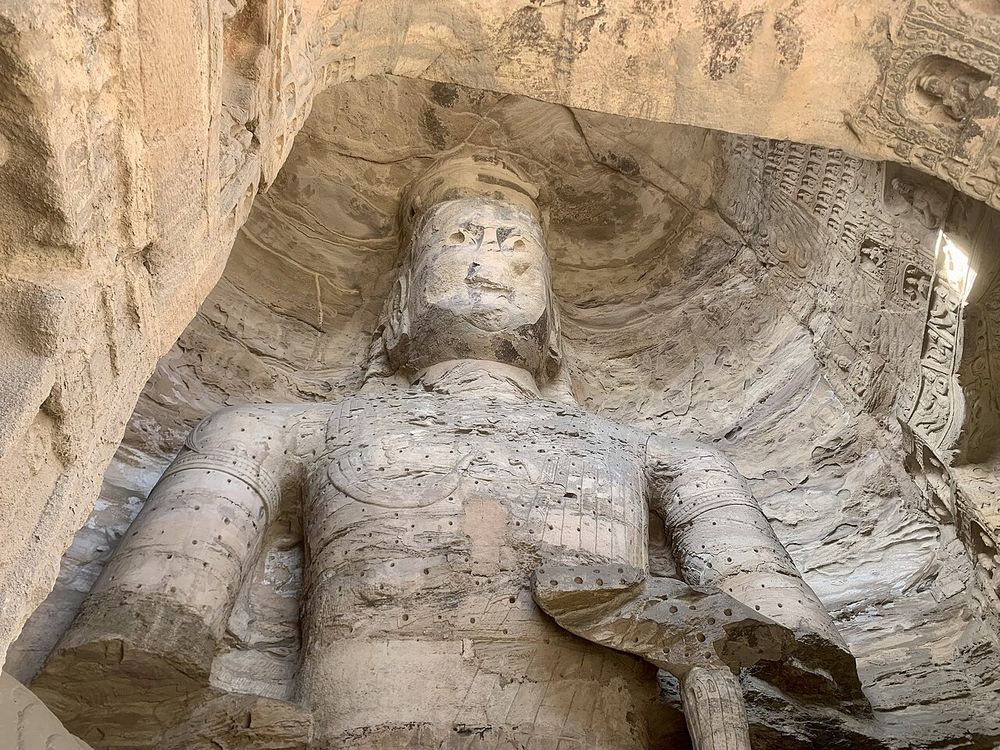
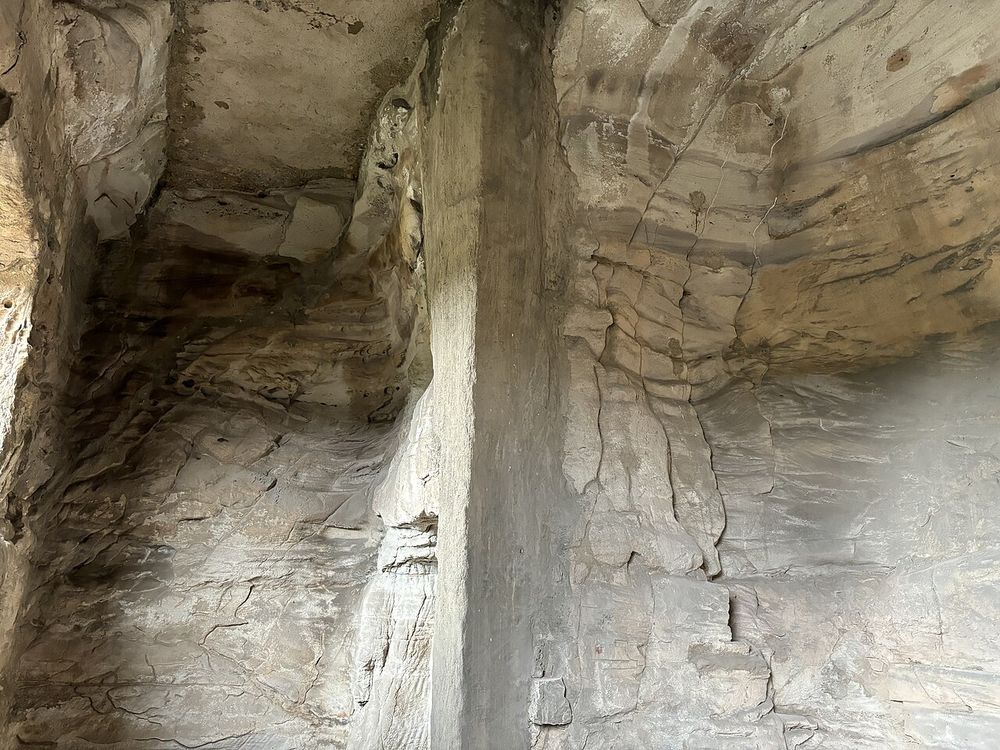
The Buddha once had a standing Buddha on each side, the Buddhas of the three ages. The eastern one survives; of the western one only a little below the knee is left.
In 1992 archaeologists dug up more than 130 pieces of the western Buddha in front of the cave, in a Northern Wei layer. The roof and that figure must have fallen soon after they were cut. Researchers are fitting the pieces together like a puzzle.
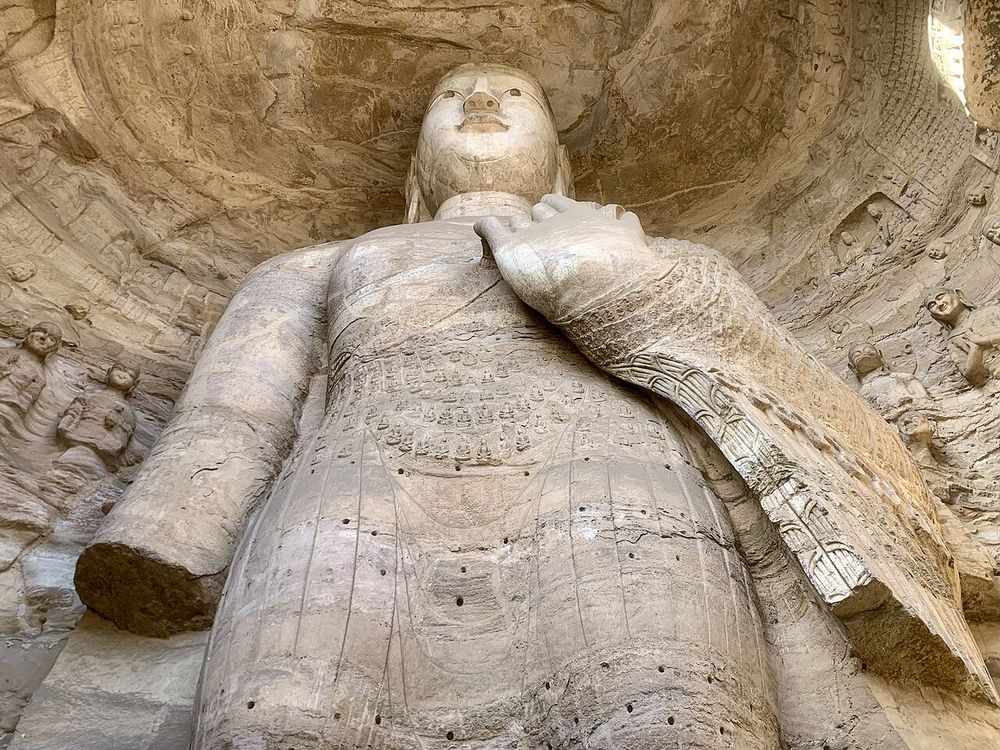
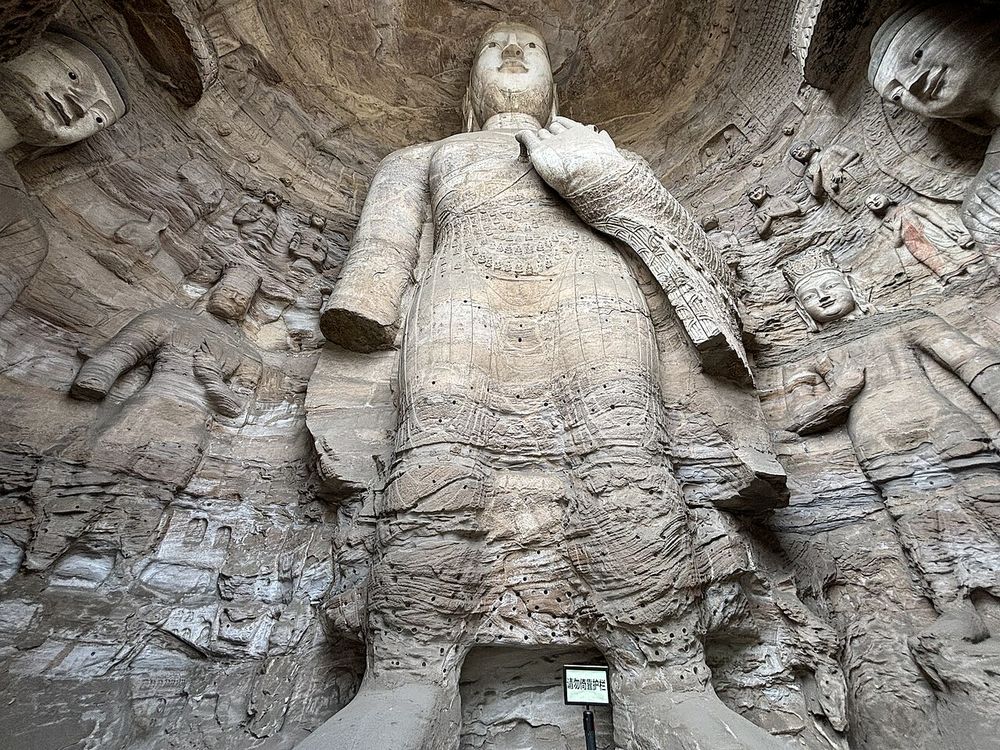
The main figure is a standing Buddha about 15.5 metres high. His robe is covered with tiny Buddhas, the "robe of a thousand Buddhas".
The disciples on the east wall have high noses, deep-set eyes and curling hair: faces from Central Asia.
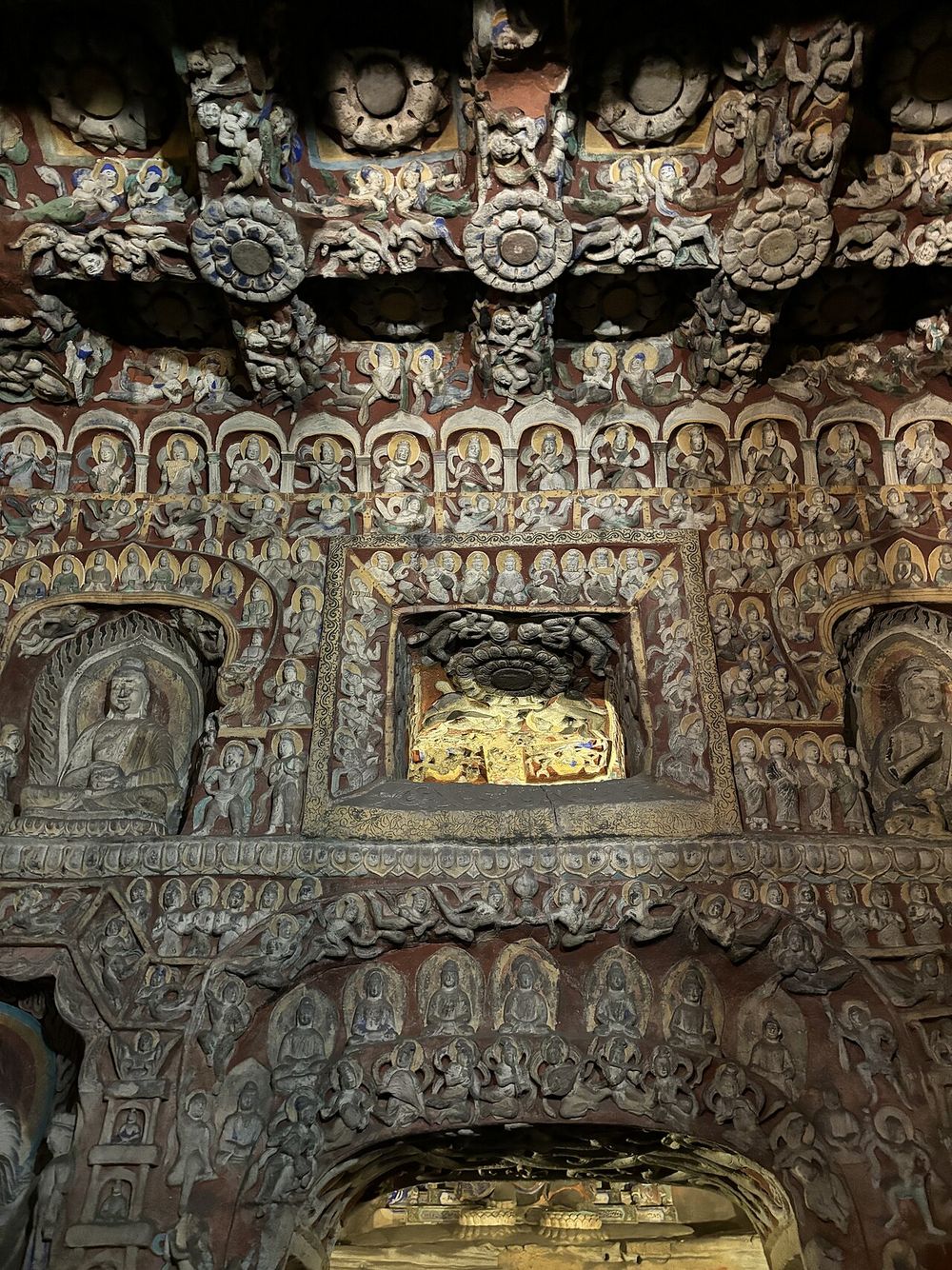
This cave keeps the plan the great caves were made to: a window above and a door below. From the doorway you first see the Buddha's face through the window; only inside, looking up, do you see the whole. Cave 20 was once like this.
Cave 18 has been copied at full size by 3D printing. The copy stands on the campus of Peking University.
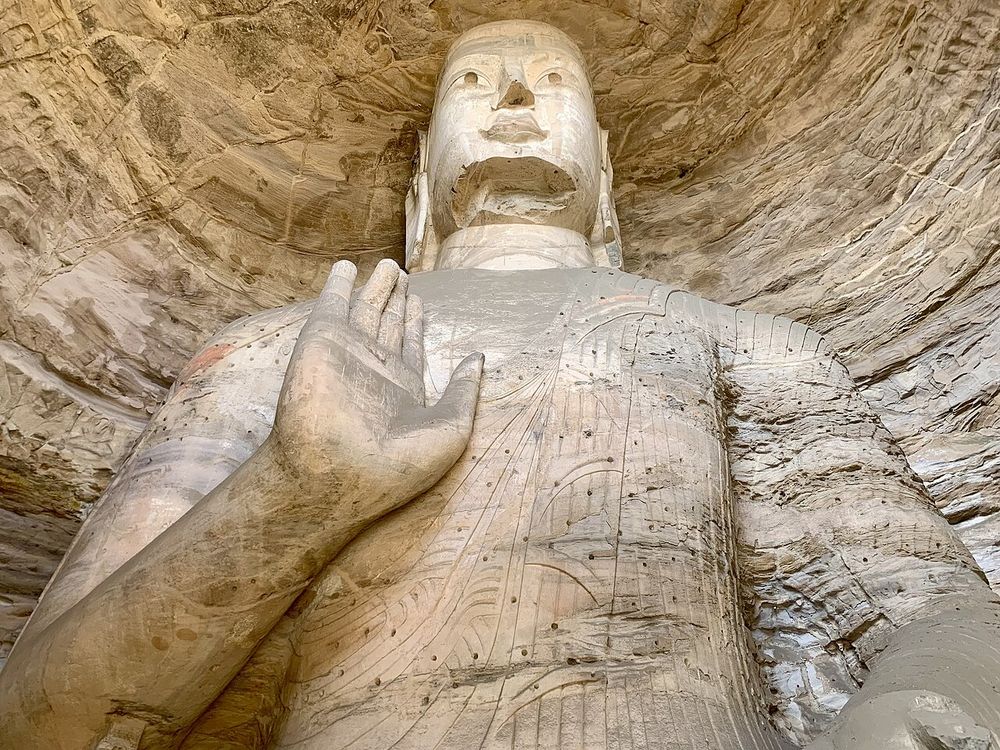
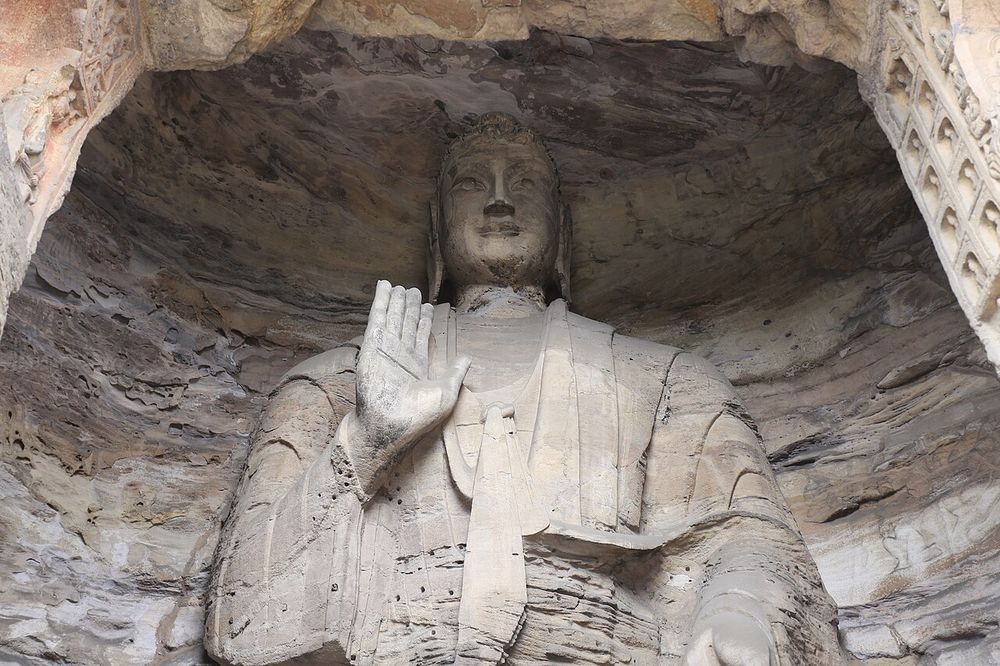
Cave 16 holds a standing Buddha with one hand raised, palm out: fear not. Cave 17 holds Maitreya, the Buddha to come, seated with ankles crossed. Cave 19 holds a seated Buddha with the same raised hand.
All five caves are oval in plan with a domed roof. Some say the shape is that of a nomad's felt tent.
The five figures sit and stand in five different ways. Draw their hands as you go.
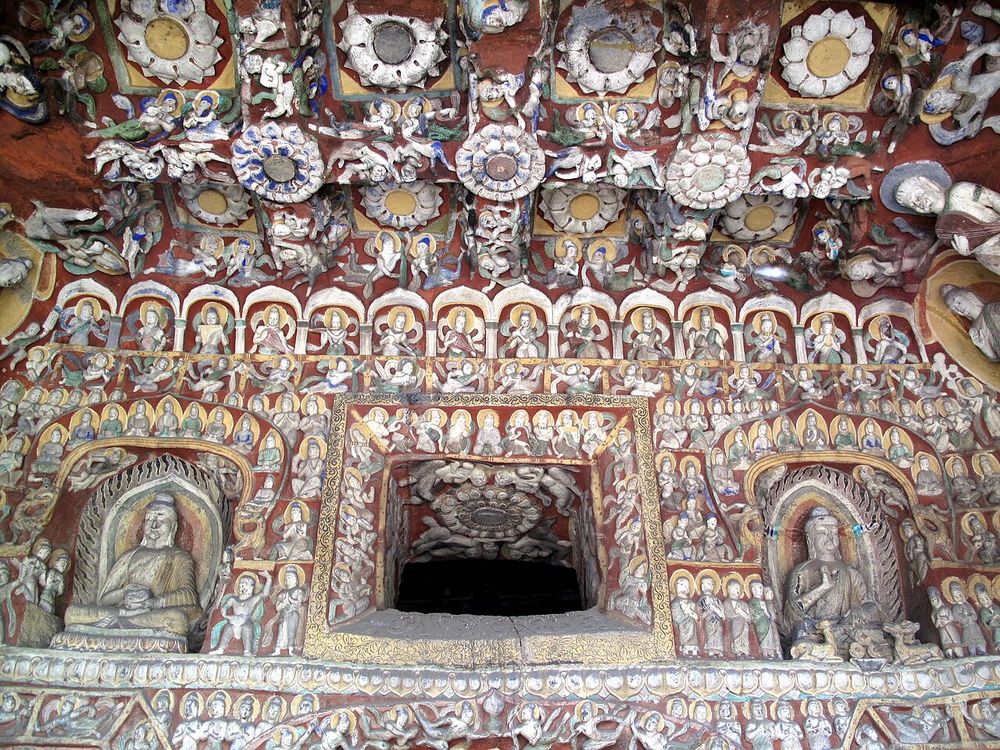
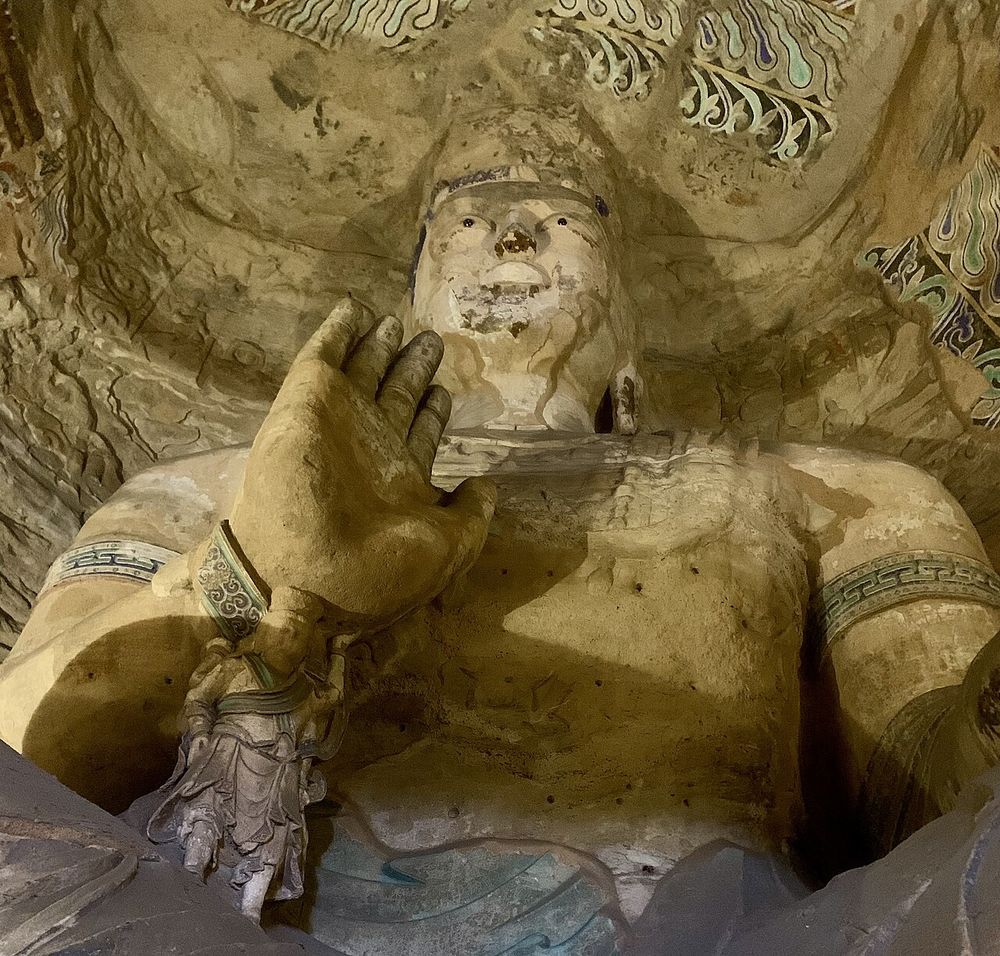
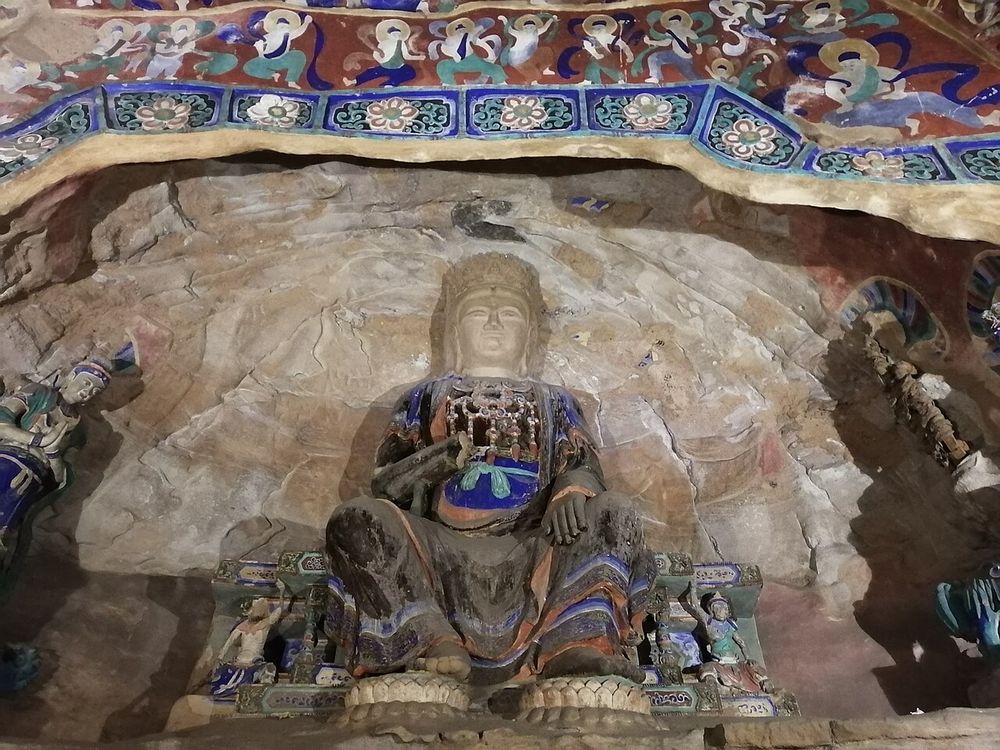
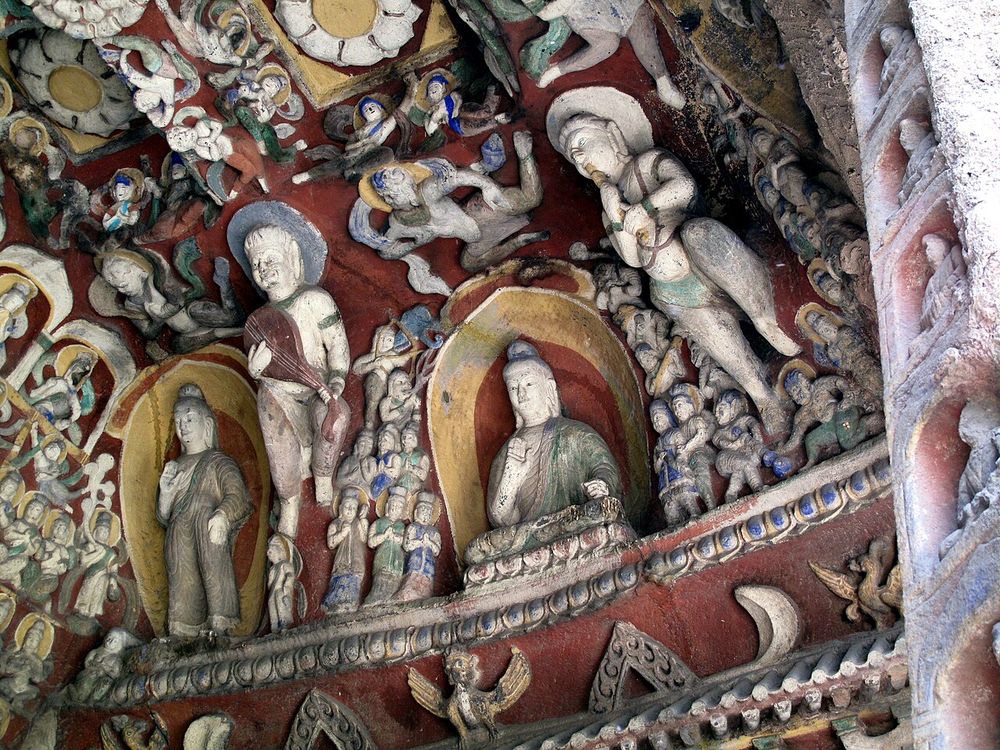
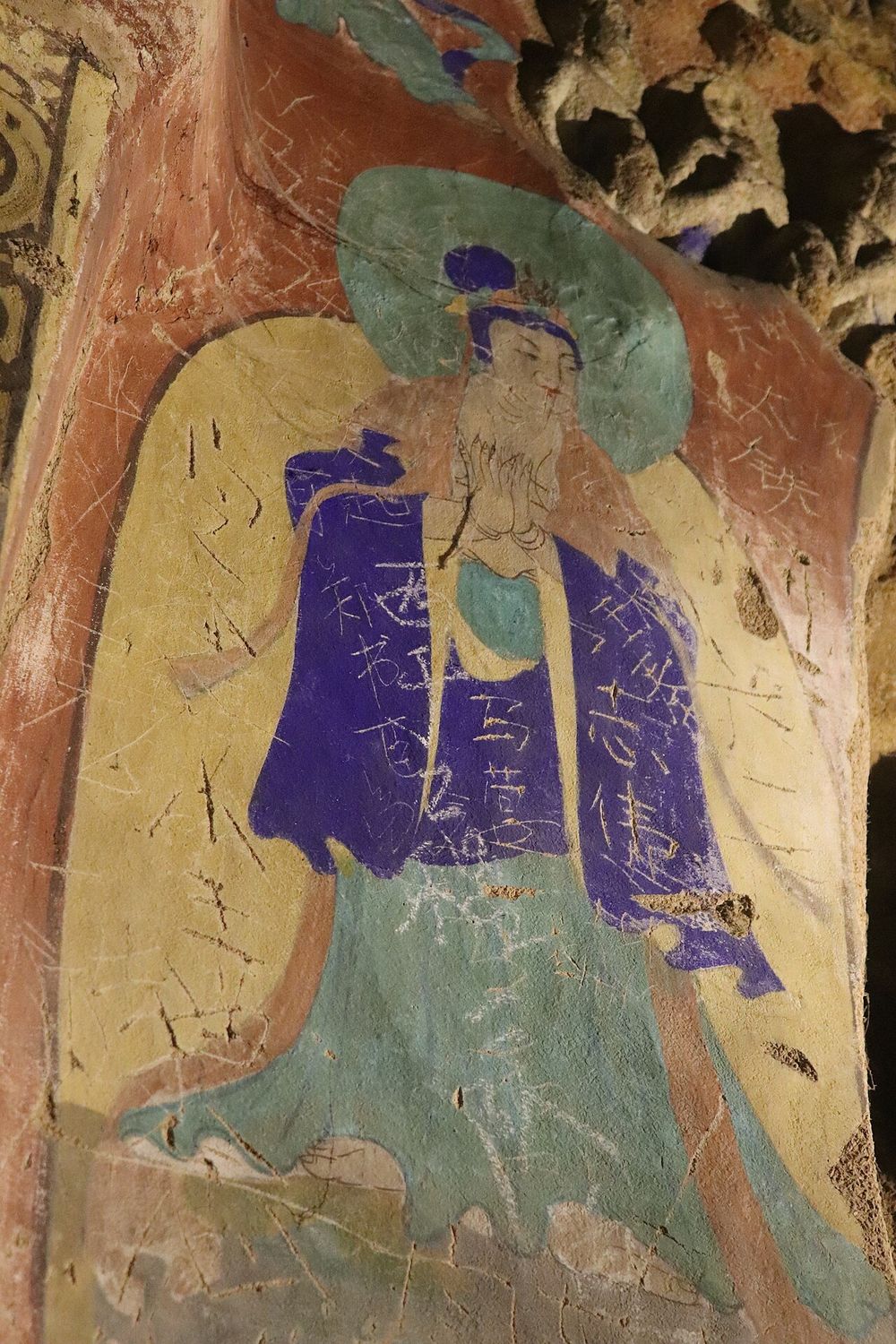
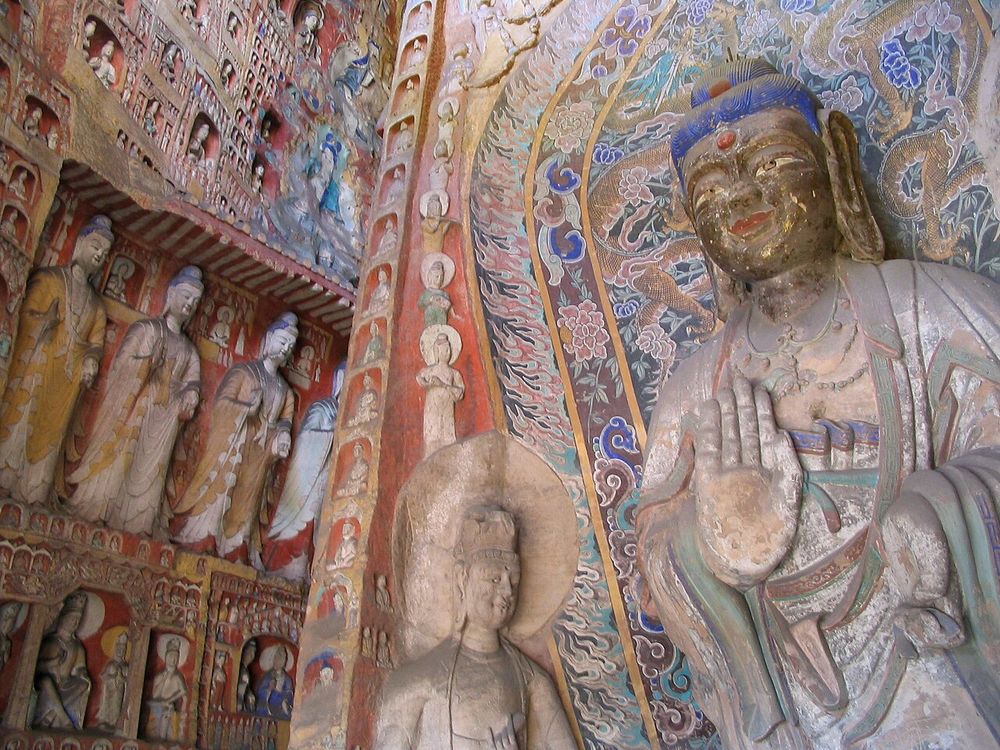
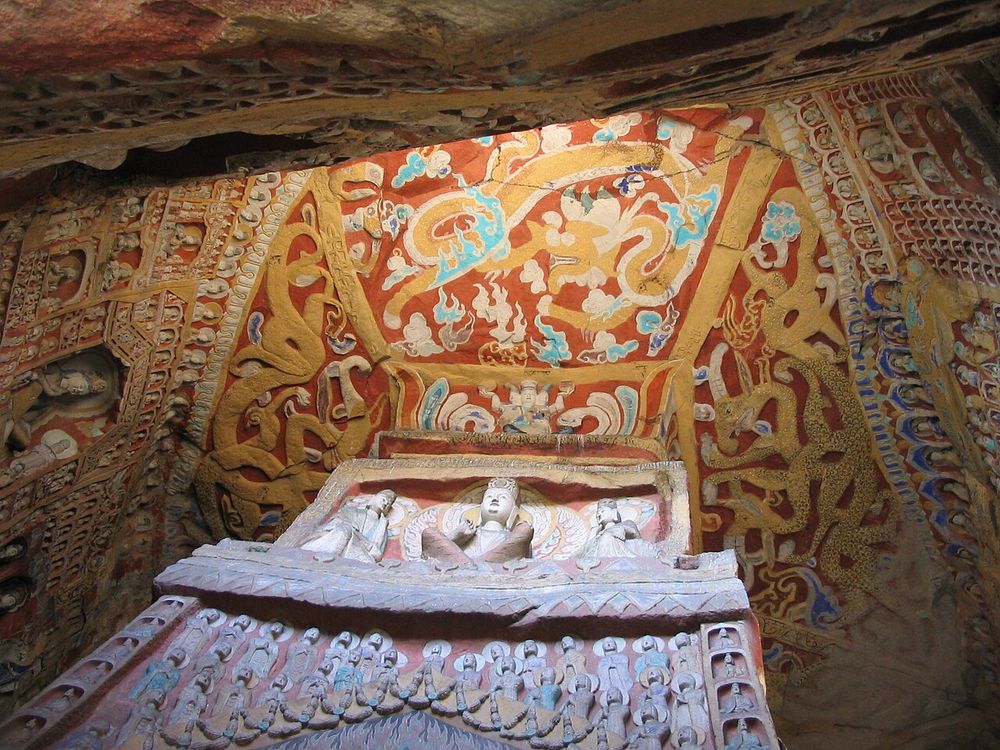
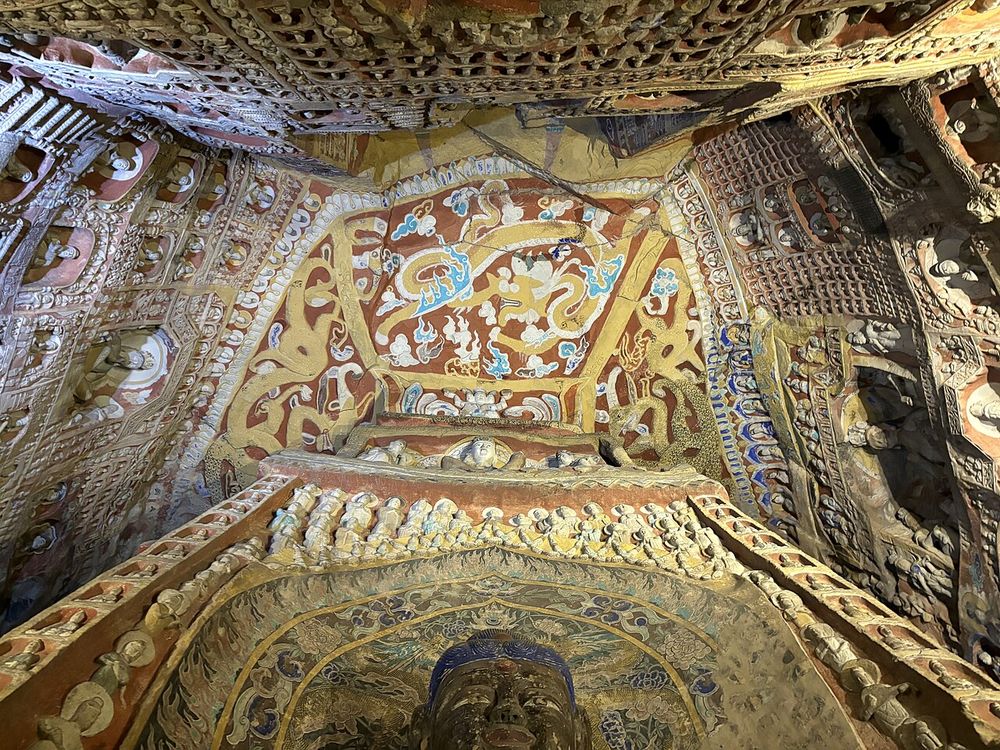
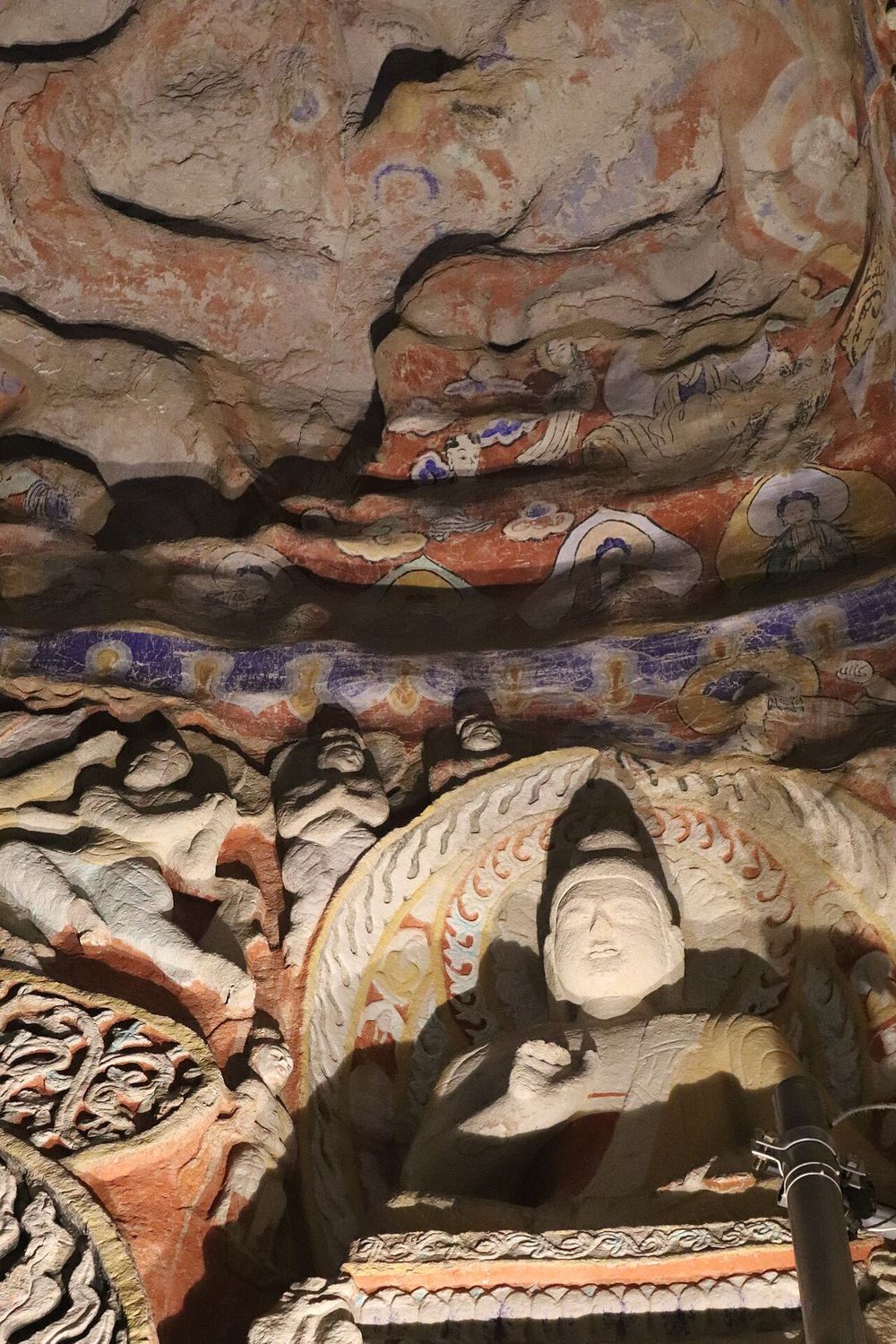
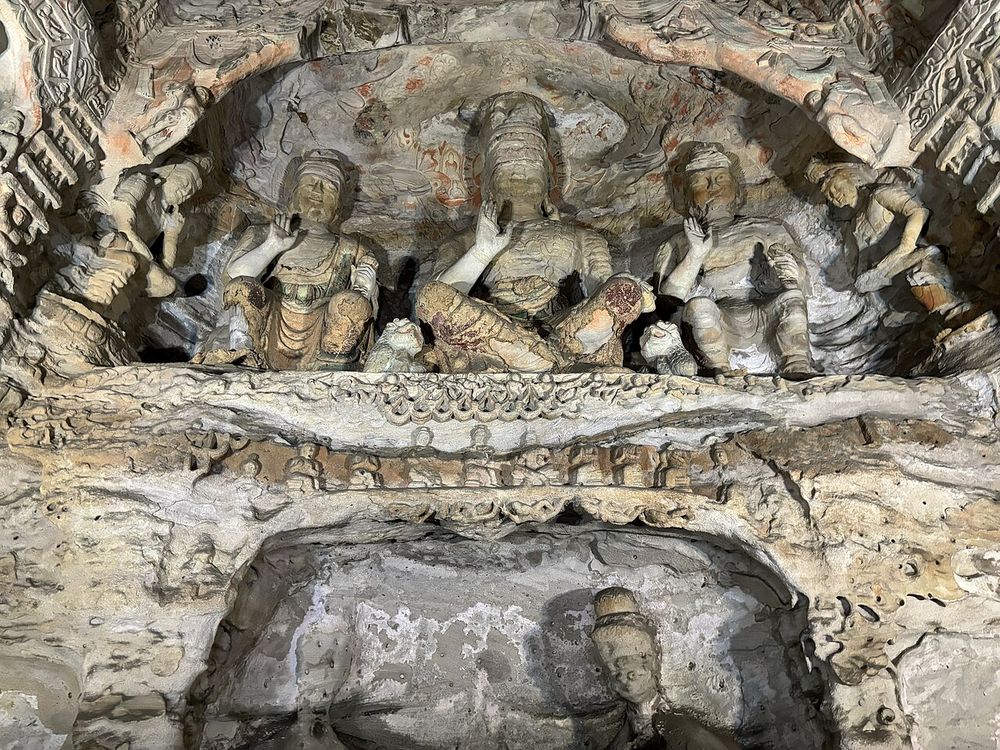
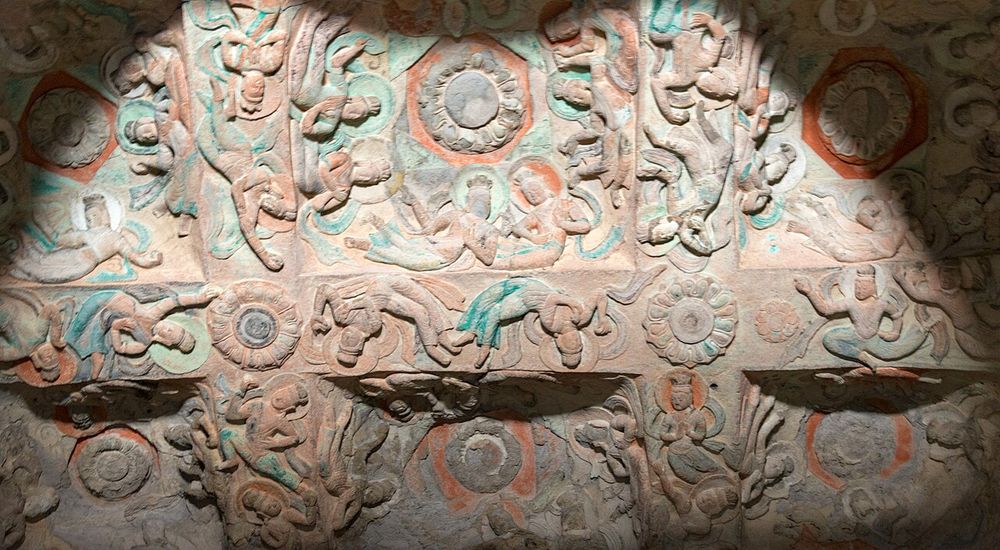
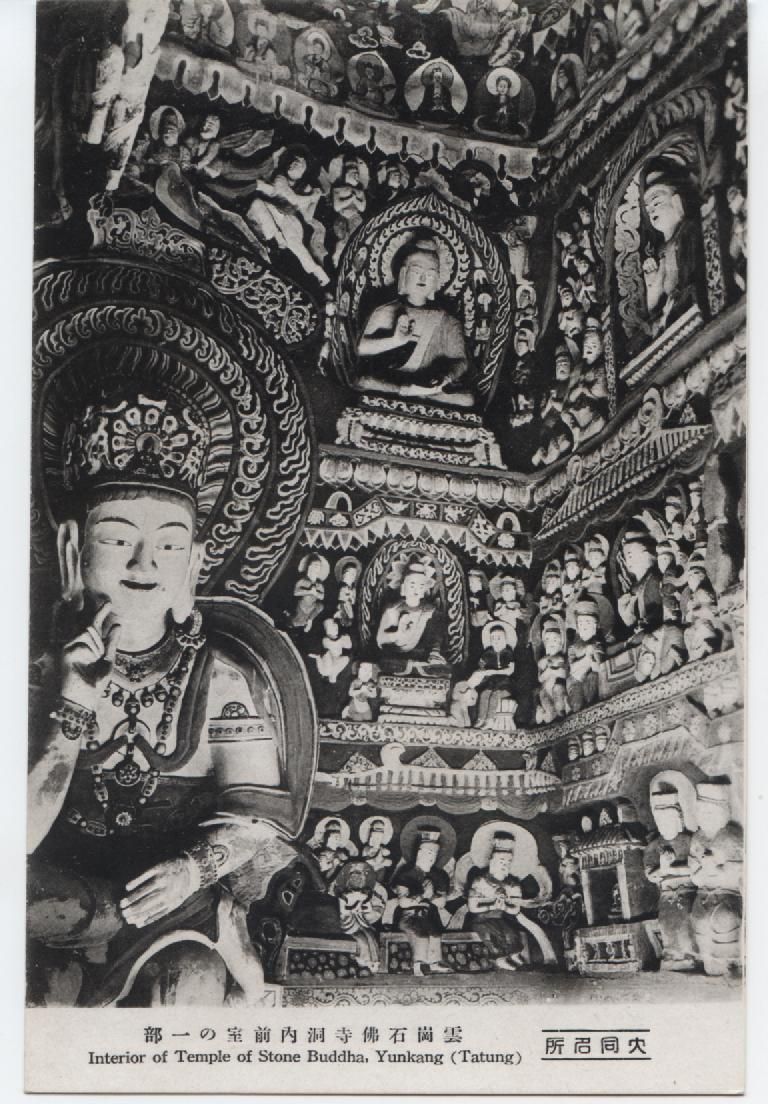
One of the five "painted caves" in the middle of the cliff, where the colour is still bright. Most of this paint was put on under the Liao, the Jin and the Qing (1644–1912); it is not the Northern Wei original.
High in the front chamber is a row of heavenly musicians with their instruments, often called an orchestra fifteen hundred years old. See how many instruments you can name, and which are still played.
A 3D-printed copy of this cave comes apart in 110 blocks and travels. It was first shown at Zhejiang University in 2020 and then in Shanghai.
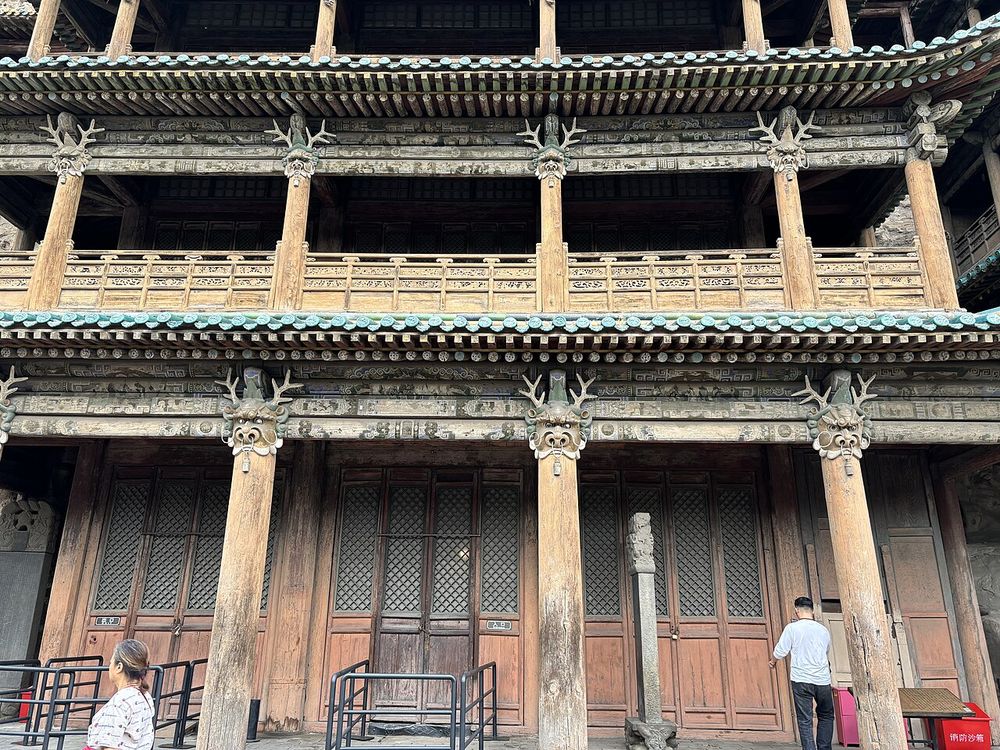
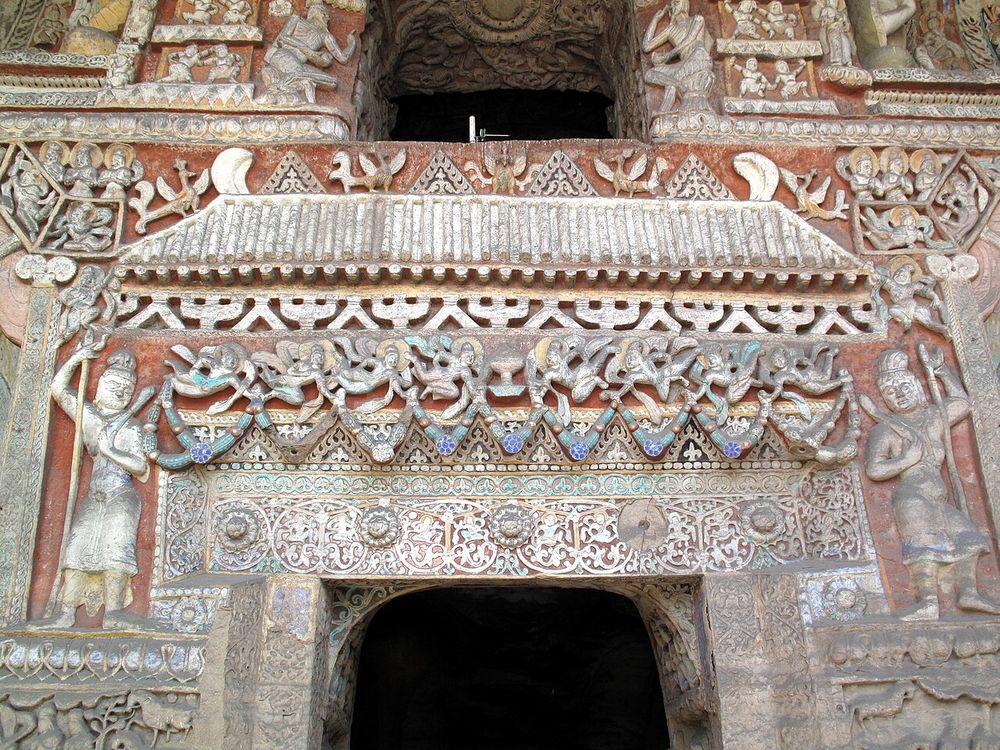
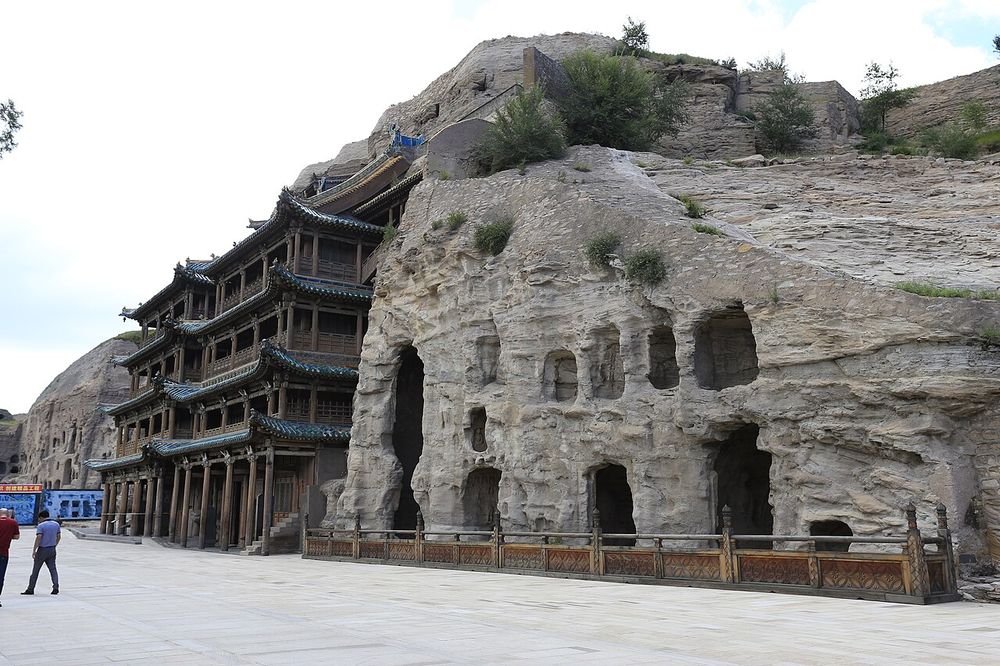
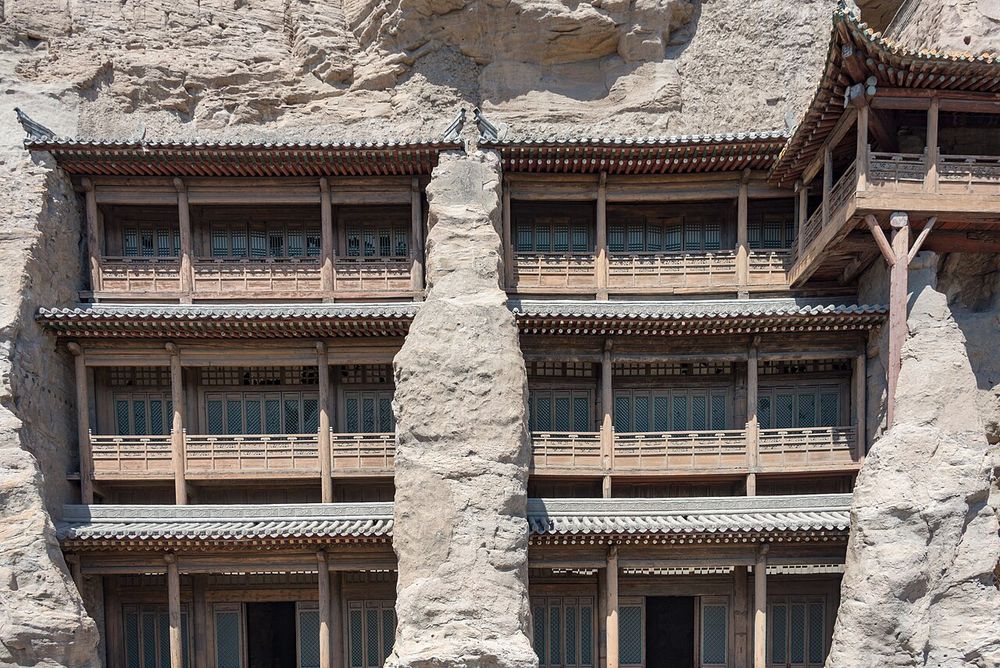
In front of these two caves is a timber building of four storeys added under the Qing.
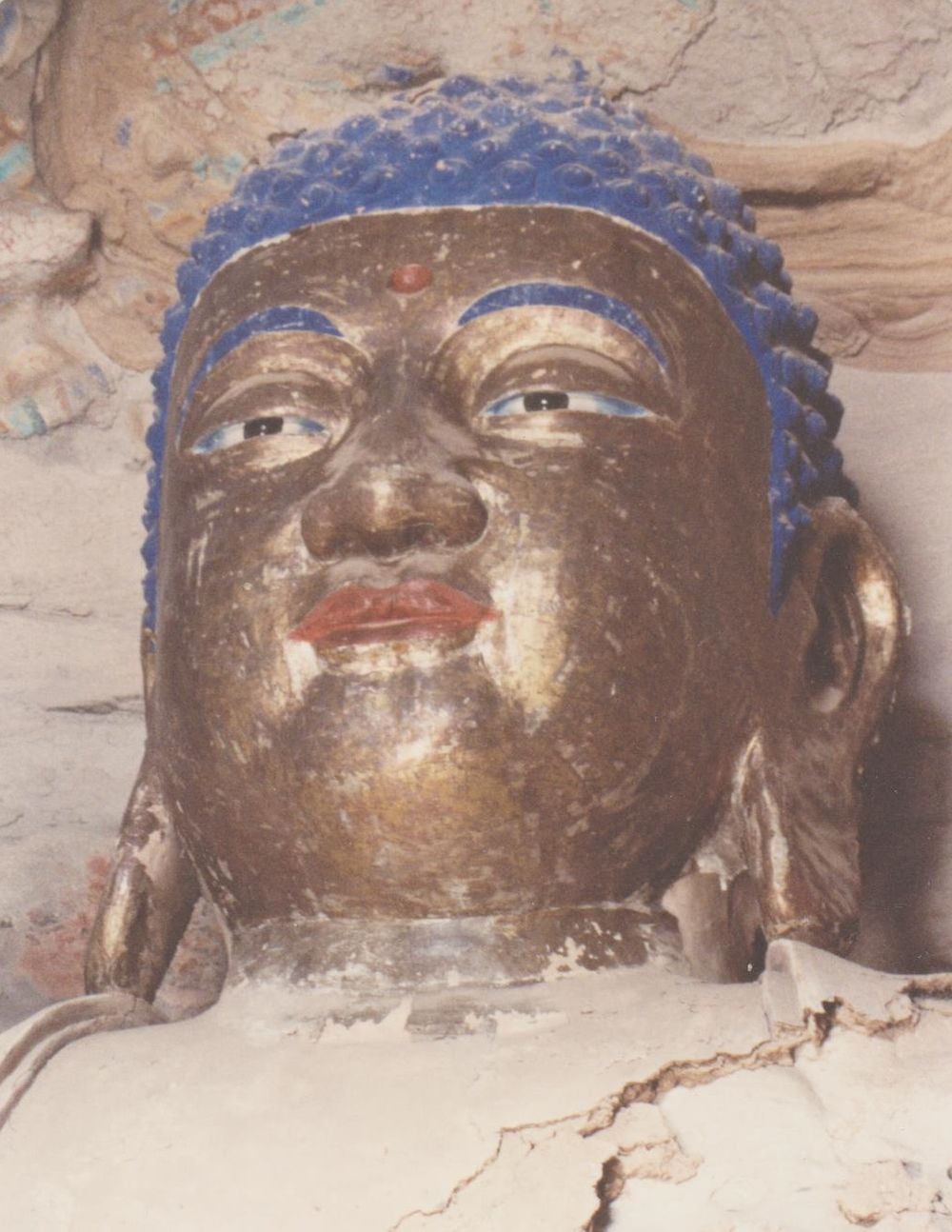
The seated Buddha of Cave 5 is about 17 metres high, the largest at Yungang. The clay and paint on its surface were added in later centuries.
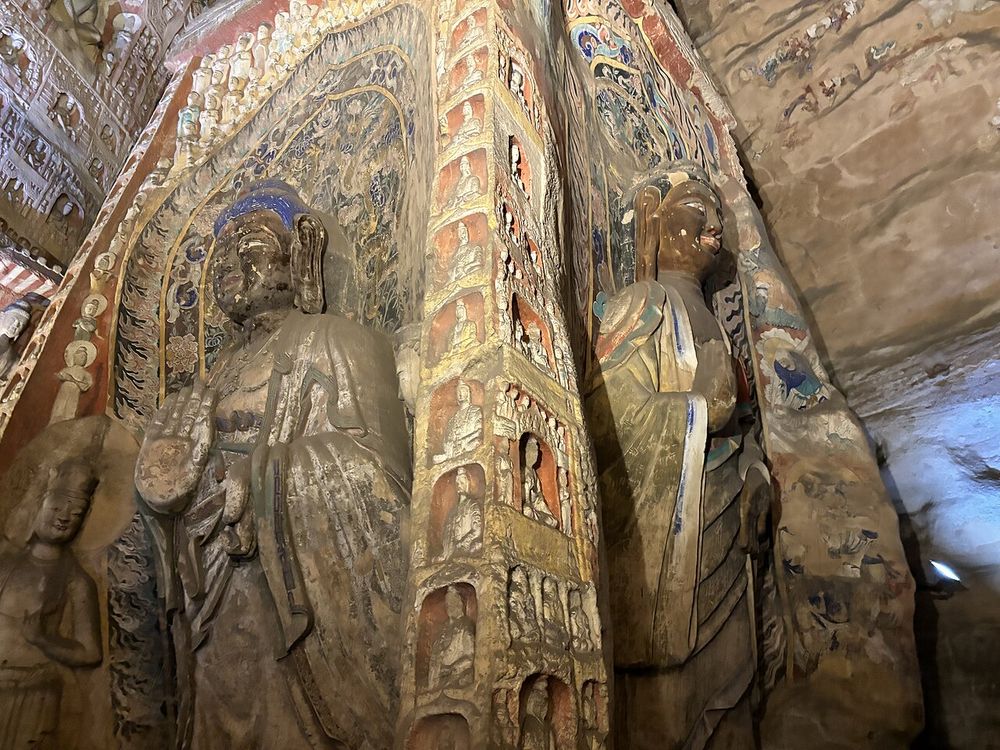
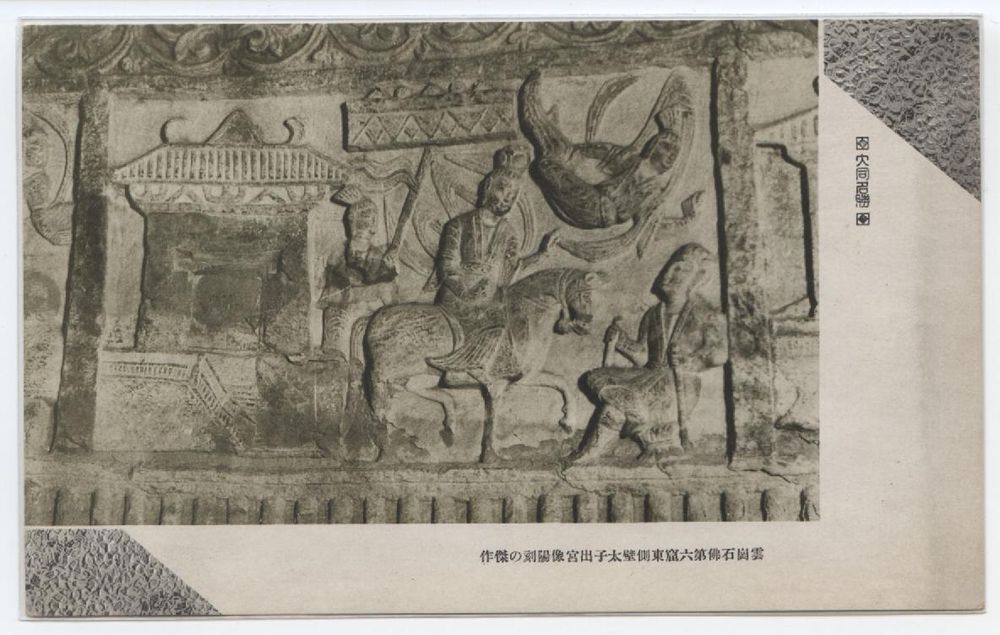
In the middle of Cave 6 stands a square pillar in two storeys, and the pillar and all four walls are carved with the life of the Buddha Shakyamuni. It is often called the finest cave at Yungang.
Walk round the pillar and find, in order, his birth, his leaving the palace and his enlightenment. It is a picture-story book in stone.
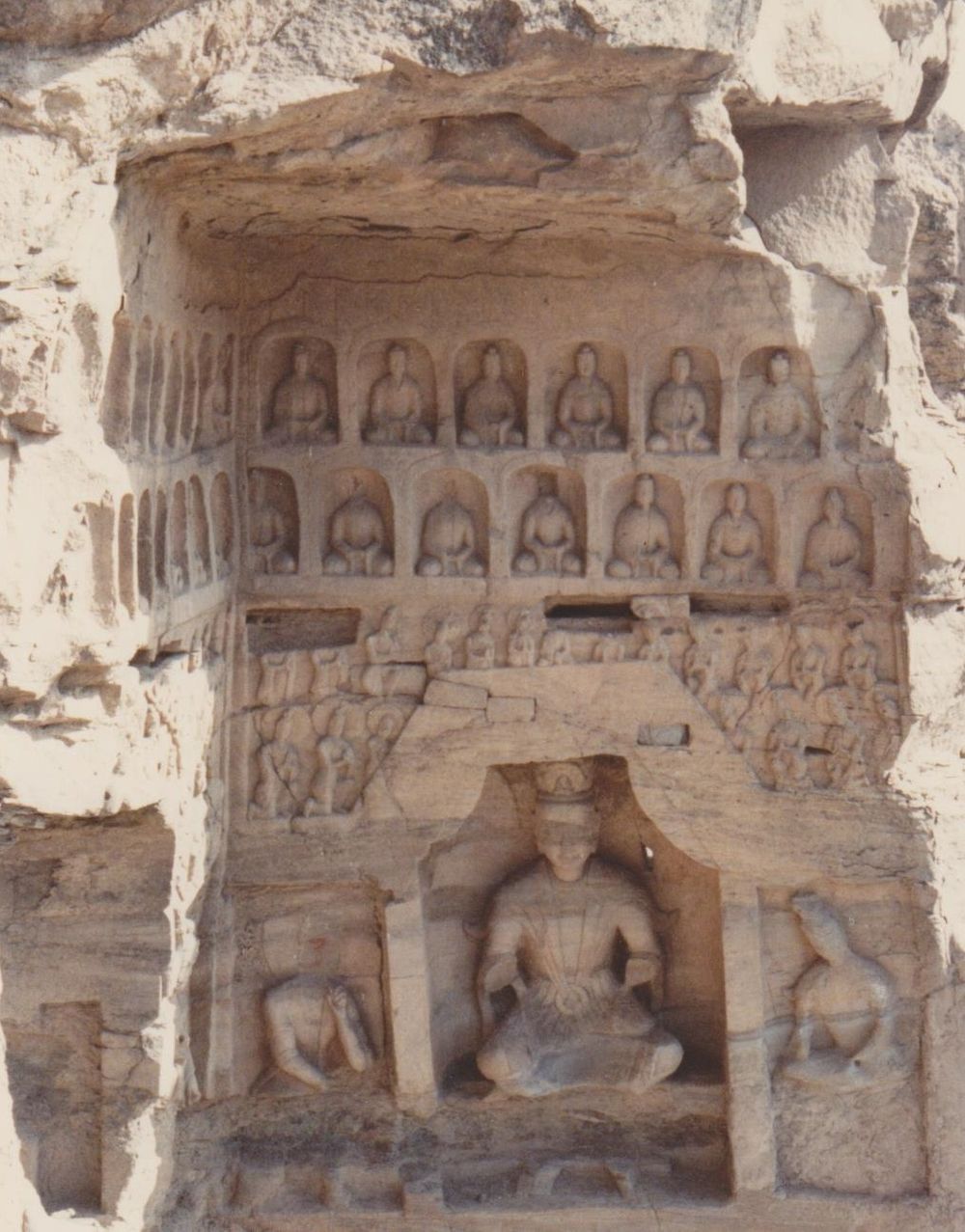
The Buddhas in this group have begun to wear Chinese dress, a loose robe with a wide sash. Compare them with the five caves of Tanyao.
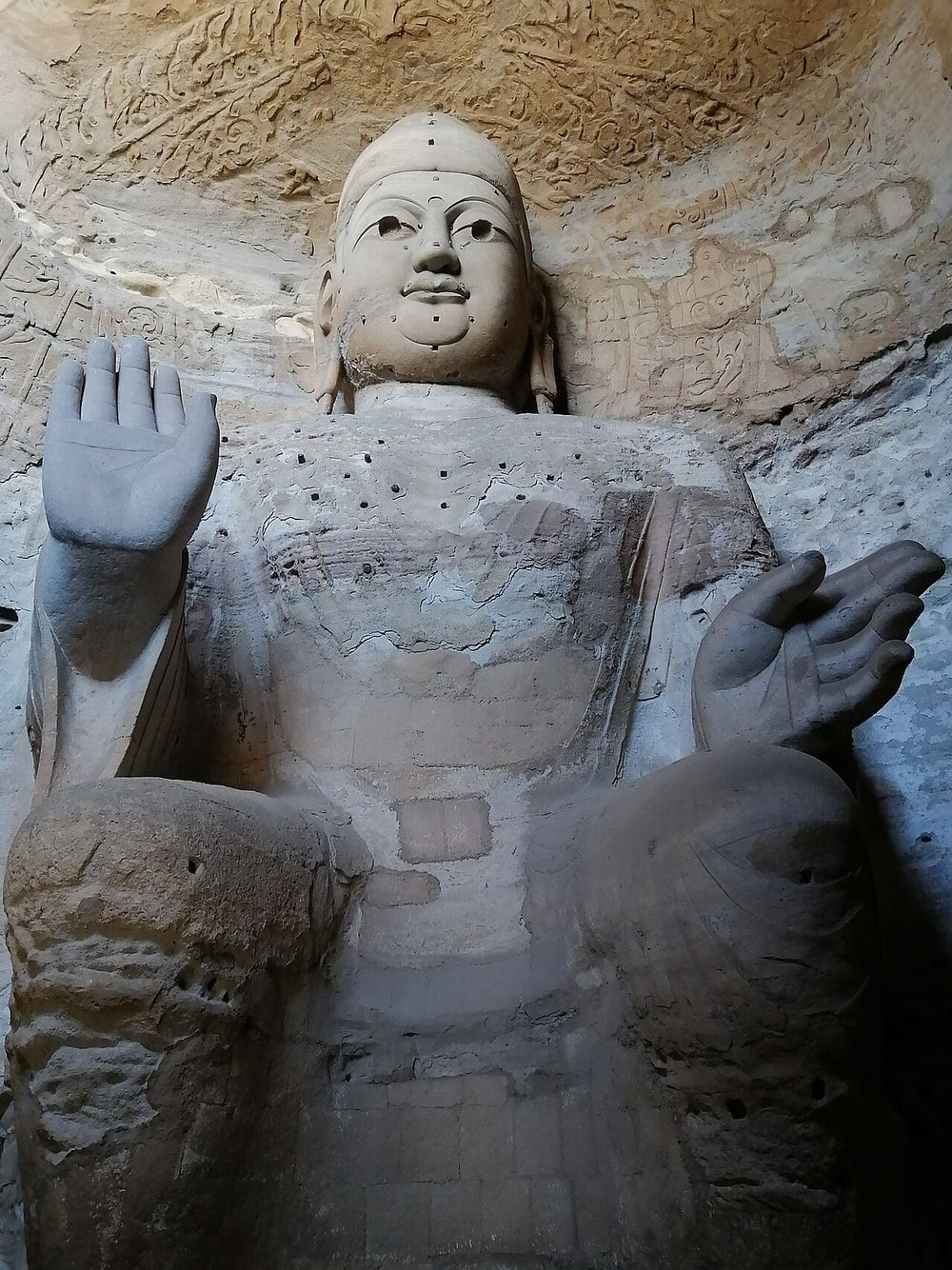
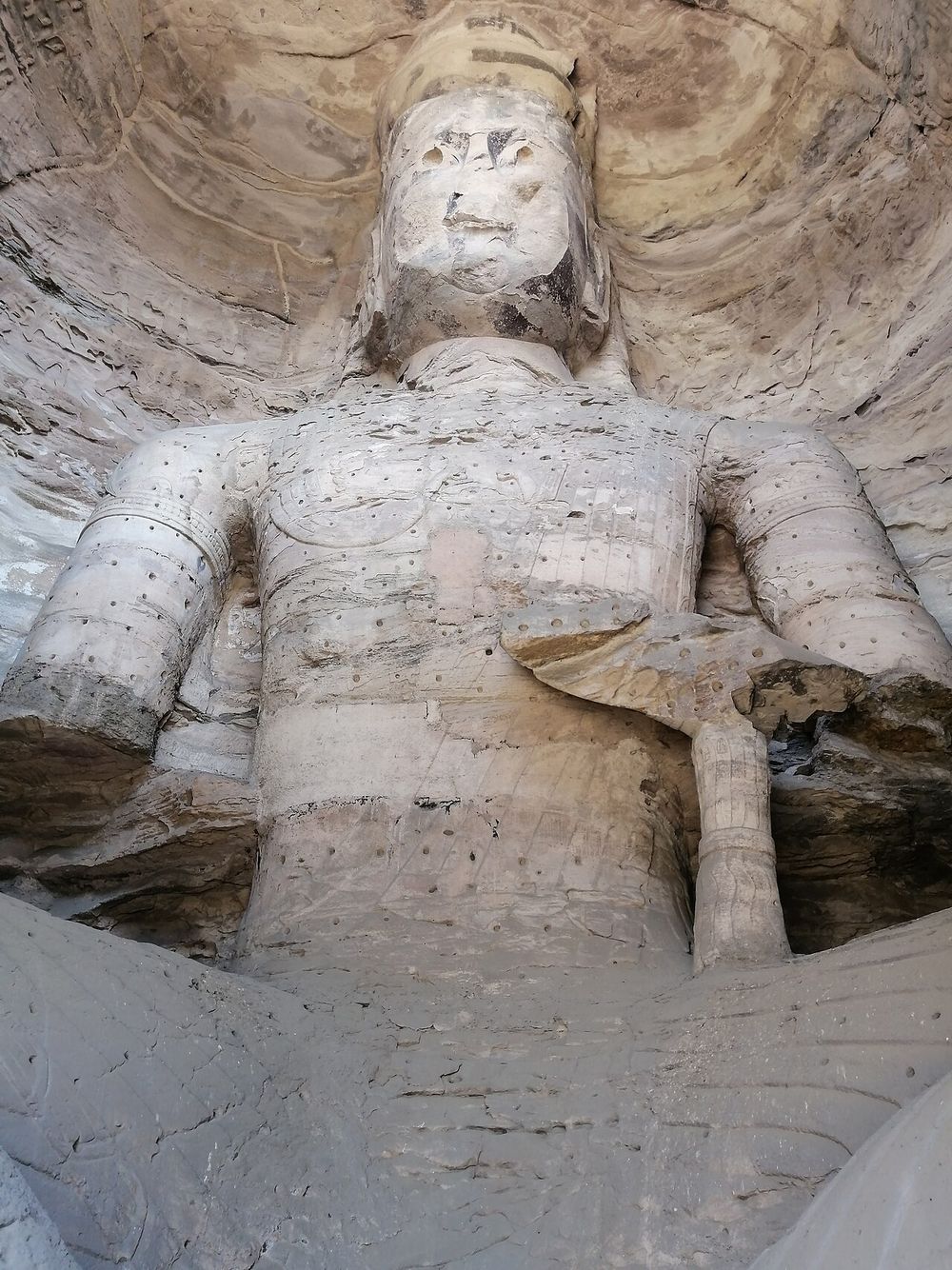
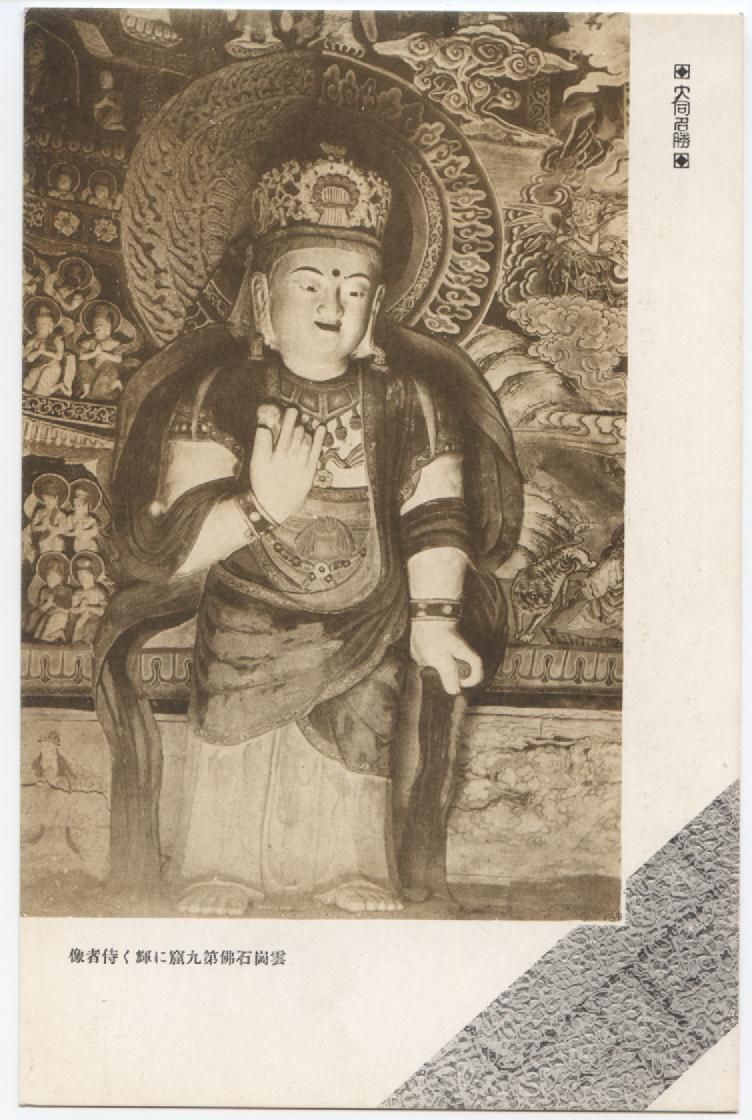
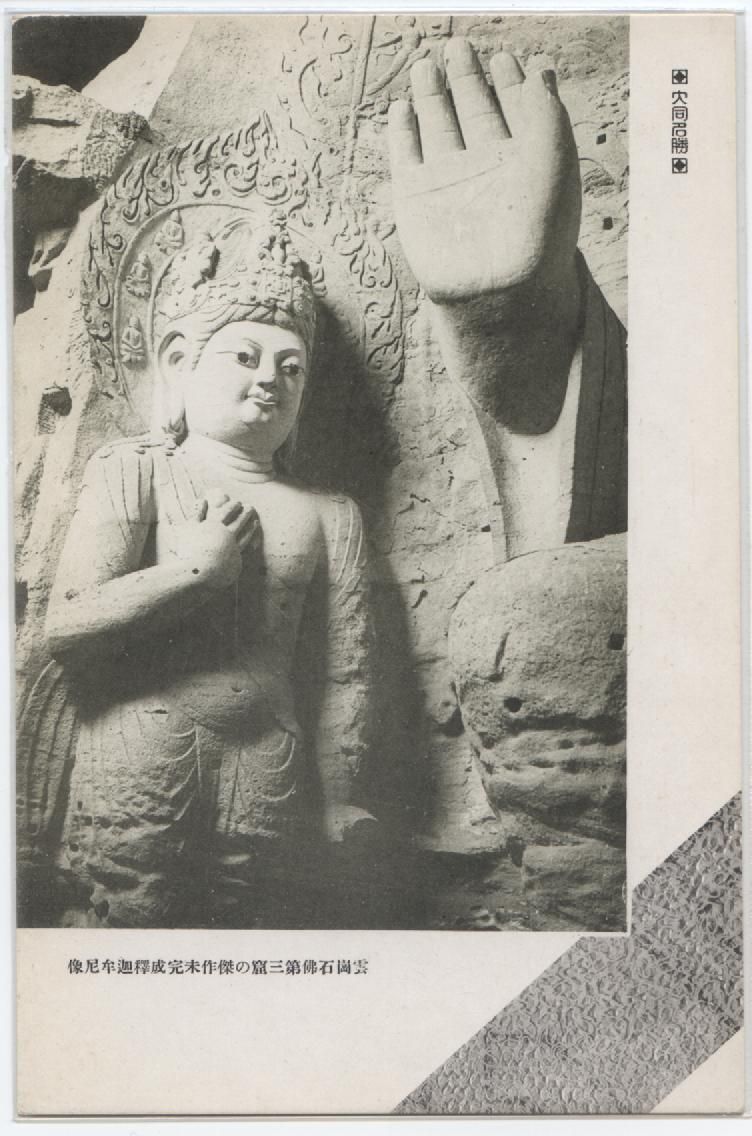
The largest cave at Yungang is more than 40 metres wide. The Buddha and two bodhisattvas inside are not in the Northern Wei manner, and many scholars think they were carved later, perhaps early in the Tang (618–907).
The west rear chamber of Cave 3 was the first cave in the world to be copied at full size by 3D printing. The copy is in Qingdao.
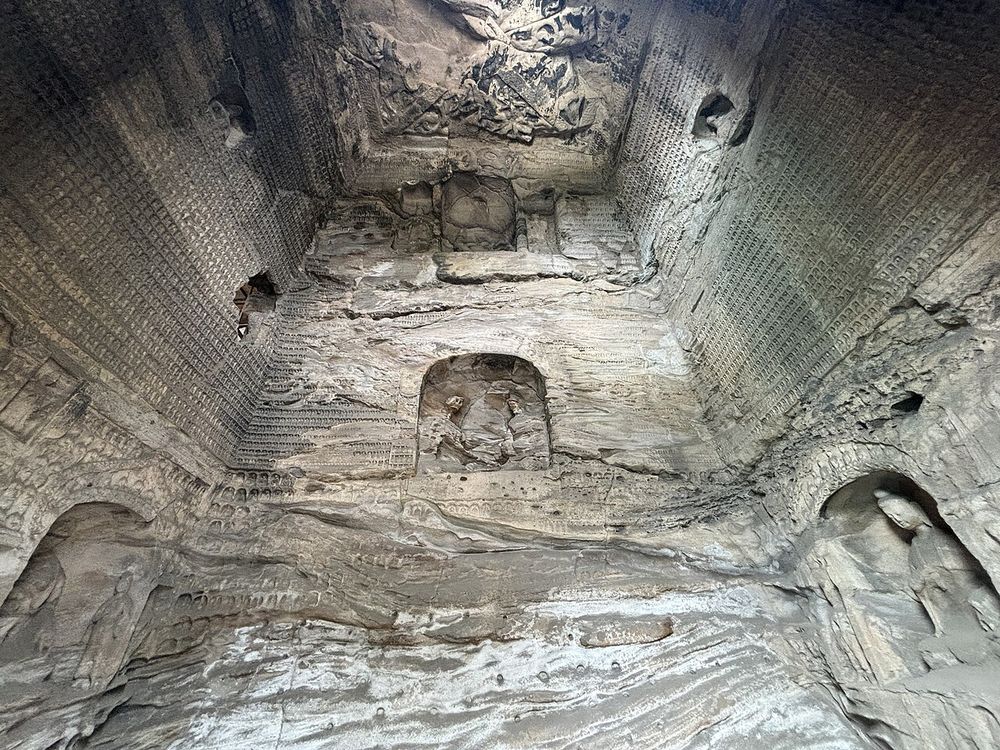
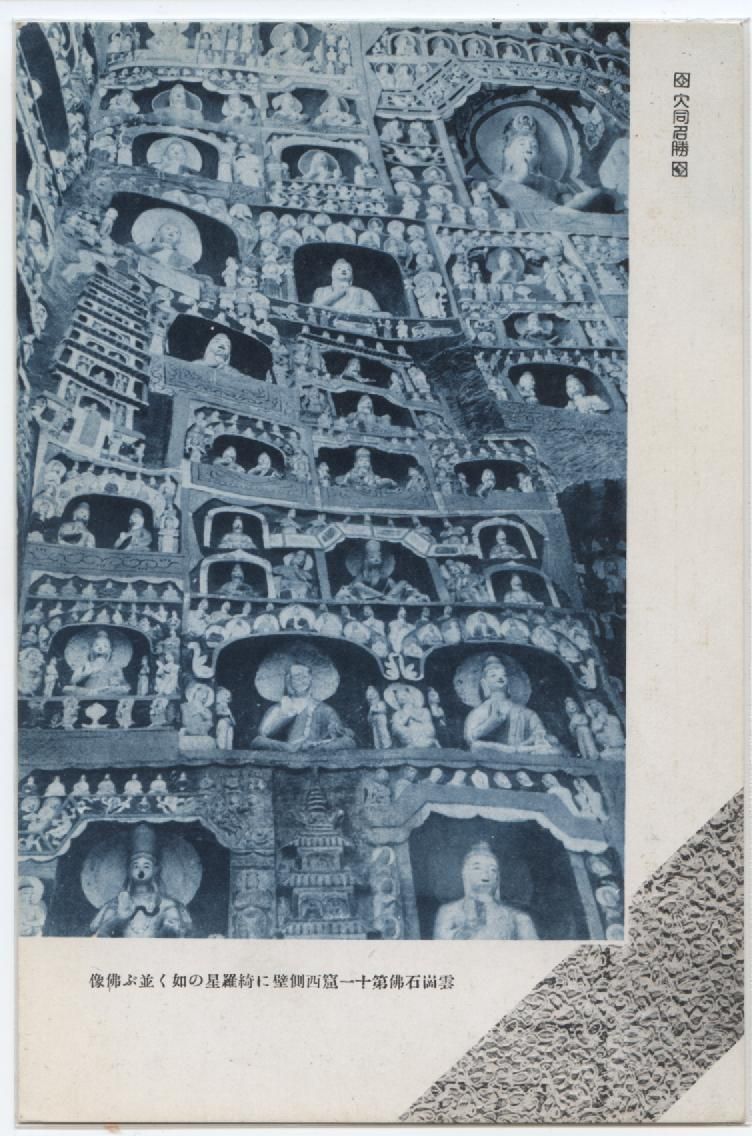
When the capital moved to Luoyang the imperial work stopped. Ordinary donors went on cutting small caves in the western cliff until about 524.
The Buddhas here have thin necks, sloping shoulders and narrow faces: the "fine bones, clear features" of the middle Binyang cave at Longmen. Here Yungang and Longmen join.
On the way back, look in Cave 11. On its east wall is an inscription dated 483, the earliest and longest dedication at Yungang.
The Book of Wei records Tanyao's work: at the Wuzhou pass west of the capital he cut into the rock wall and opened five caves, with one Buddha carved in each, the tallest seventy feet, the next sixty, their carving the wonder of the age. This is the birth certificate of the five caves.
Li Daoyuan, the geographer of the Northern Wei, described the caves beside the Wuzhou river: halls on the hill and pavilions on the water, temple after temple in the haze. Ask yourself whether his "pavilions on the water" are still here.
Early in the twentieth century dealers and villagers cut figures out of the caves for sale. A cross-ankled bodhisattva from Cave 16 is now divided between the Metropolitan Museum in New York and the Musée Cernuschi in Paris. In recent years a collector, Wang Chunjie, has given a bodhisattva's head from Cave 19 and a guardian's head to the Shanxi Museum.
The archaeologist Su Bai of Peking University began his study of China's cave temples here. He died in 2018 and is buried on the small hill east of Cave 1.
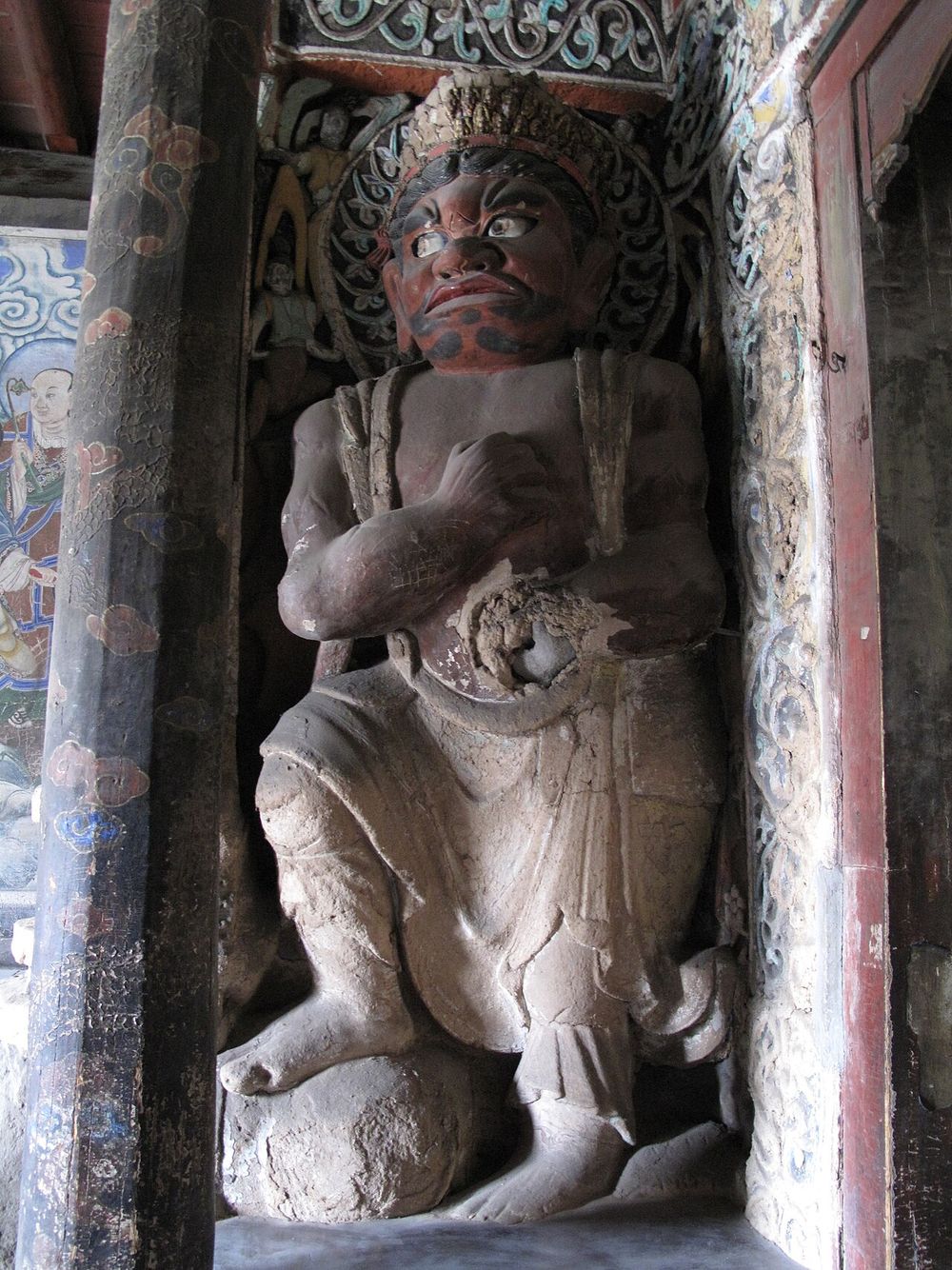
Some figures have holes where the eyes should be. Between the Liao and the Qing, pottery eyeballs were set into some statues; most have fallen out.
Elsewhere: Longmen is the sequel to Yungang. Cave 169 at Bingling Temple in Gansu is about forty years older than the five caves of Tanyao. The Kizil caves in Xinjiang, begun about the third century, are the oldest large group in China; the idea of the cave temple travelled east from there along the Gansu corridor. The cliff Buddhas of Bamiyan in Afghanistan were destroyed in March 2001, the year Yungang was listed.
| Year | Here | Elsewhere |
|---|---|---|
| 398 | The Tuoba ruler makes Pingcheng, today's Datong, his capital | The Roman empire has just been divided into east and west |
| 446 | The emperor Taiwu suppresses Buddhism | Attila the Hun is raiding the eastern Roman empire |
| 452 | The emperor Wencheng restores Buddhism | Attila invades Italy; by tradition, refugees in the lagoon begin Venice |
| 460 | The five caves of Tanyao are begun | Buddhist sculpture under the Guptas in India is at its height |
| 476 | The great caves of the middle period are being cut | The western Roman empire falls |
| 483 | The dated inscription in Cave 11 | – |
| 494 | The capital moves to Luoyang; imperial work ends | The Guyang Cave is begun at Longmen |
| About 524 | The last small caves | Justinian will soon build Hagia Sophia (532–537) |
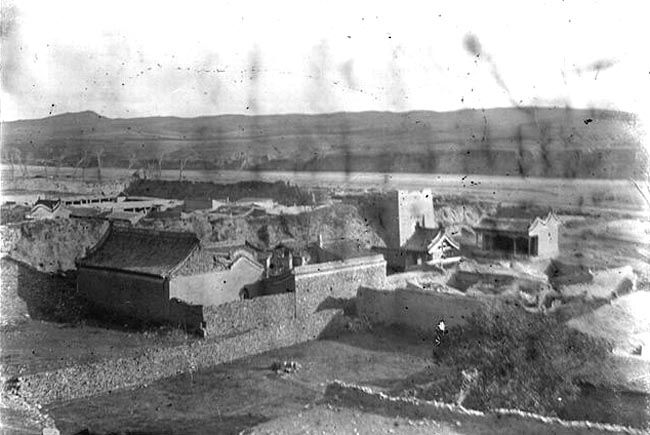
| 1907 | The French scholar Édouard Chavannes photographs the caves | – |
| 1933 | Liang Sicheng, Lin Huiyin and Liu Dunzhen survey Yungang | – |
| 2001 | Listed as World Heritage, China's twenty-eighth site | In March the Buddhas of Bamiyan are blown up |
| 2017–2020 | Caves 3, 18 and 12 are copied by 3D printing | – |
One line to remember: Yungang is the first chapter, Longmen the second.
These are stories people tell about this place. They are legends, not history, and each one says where it comes from.
The temple that once stood in front of Cave 3 is said to have been the Lingyan Temple of the Northern Wei. No excavation has confirmed it.
Source: Local folk tale
Dark stones on one of the great Buddhas are said to mark the moles on the body of the emperor Wencheng, for whom it was carved. We found no record or excavation to confirm it.
Source: Told by guides; we found no written source
Later, people who live here will be able to add the stories they grew up with, and say which of these they have heard.
Last checked 2026-11-11. Travel and news reports, not the site's own notices.
Stand at the site, sign in, press the button, and collect its stamp. Your browser will ask to use your location. It is sent to us once to confirm that you are at the site; we keep how far you were from it, not the spot where you stood.
Your stamps are saved to your account, so they follow you to any device. Checking from a browser cannot rule out every false location; stricter checks arrive with the app.
Photos here show the place, not people. Each one is credited to the visitor who took it and appears after our team has looked at it. A photo with you in it belongs under “I am here”.