LegendThe saint who carried his head
Saint Denis was beheaded on this hill, picked up his head and walked six kilometres north with it, preaching, to the place where he wished to be buried.
Source: Hilduin, abbot of Saint-Denis, 9th century
Montmartre, Paris, France
Basilique du Sacré-Cœur de Montmartre · sah-kray KUR
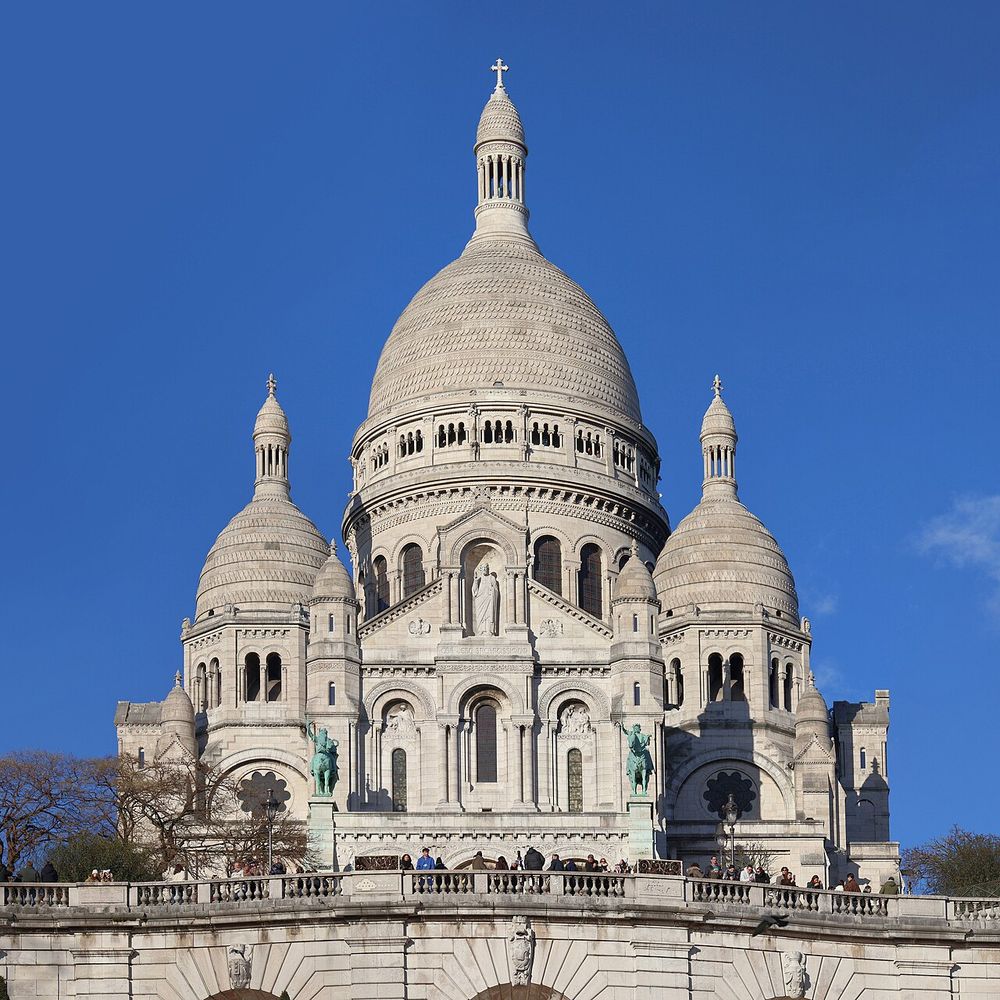
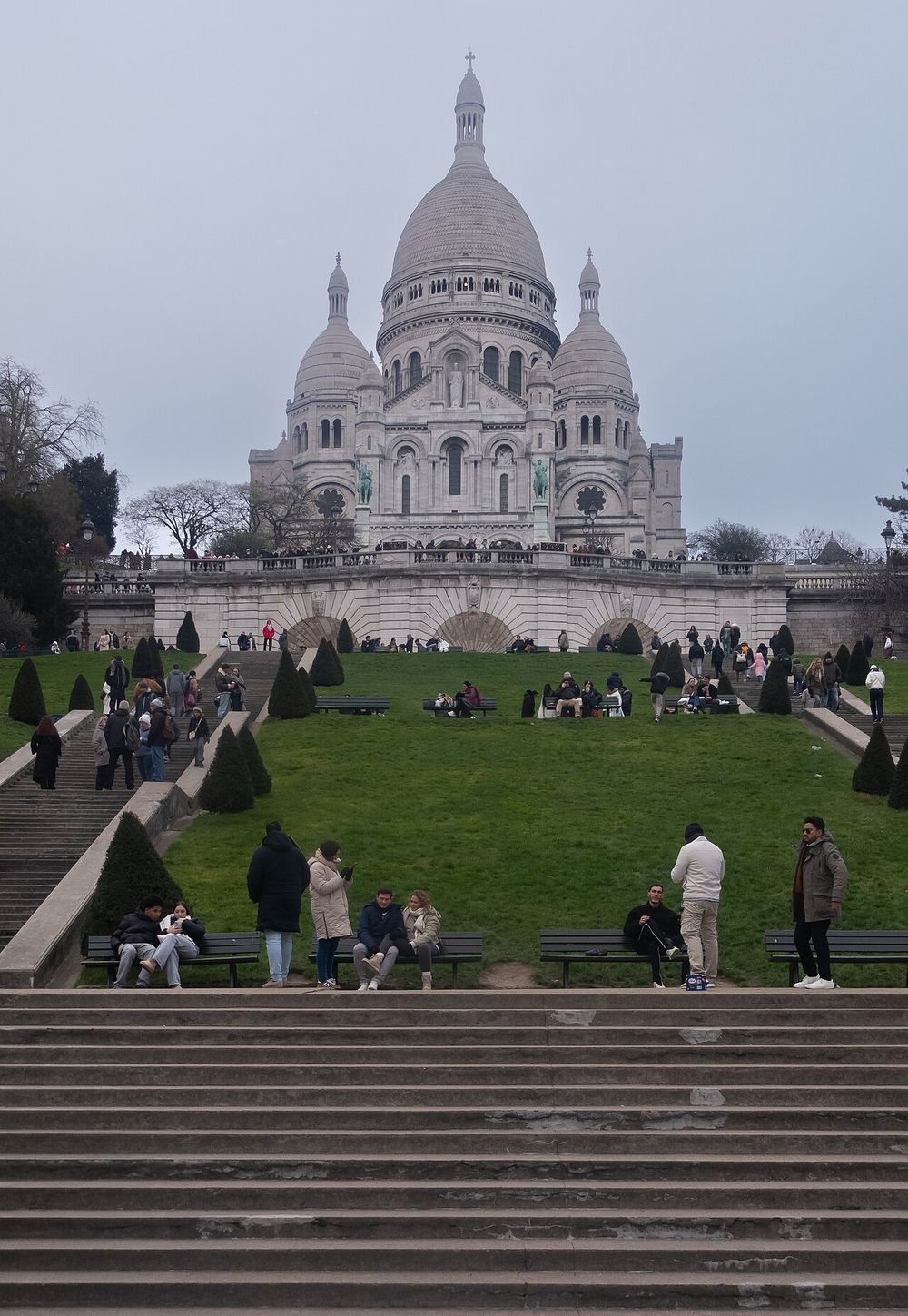
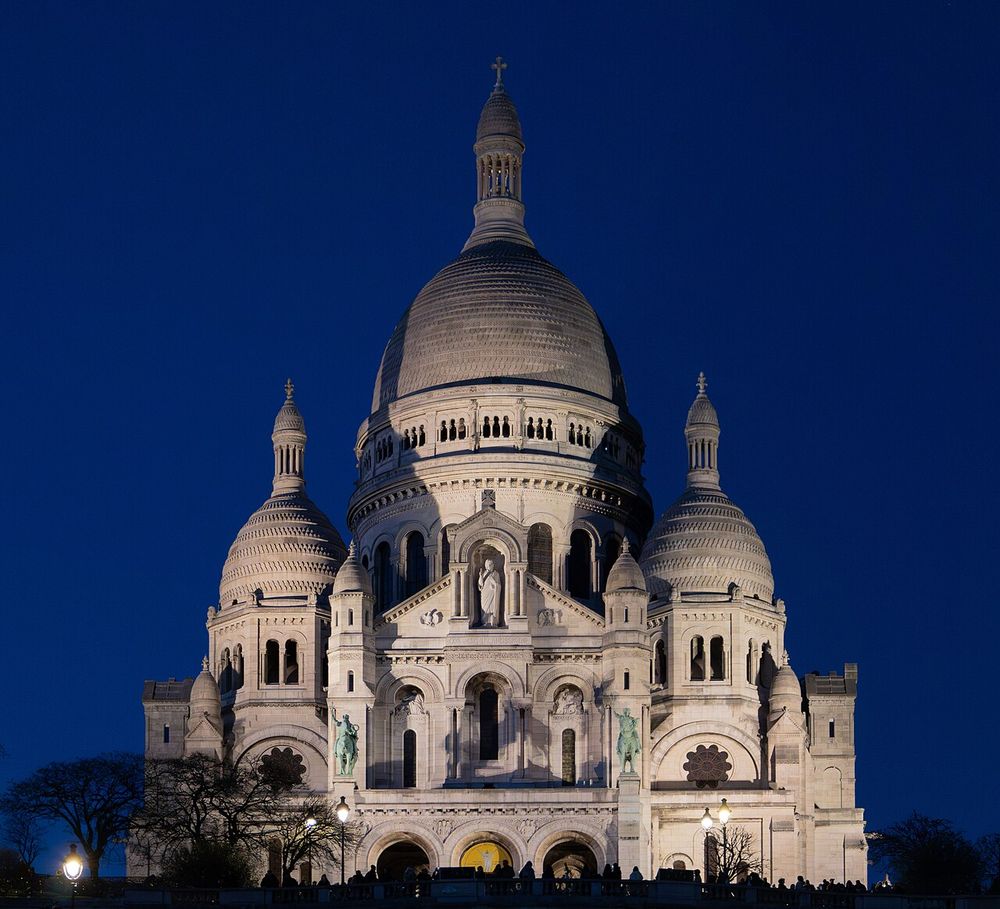
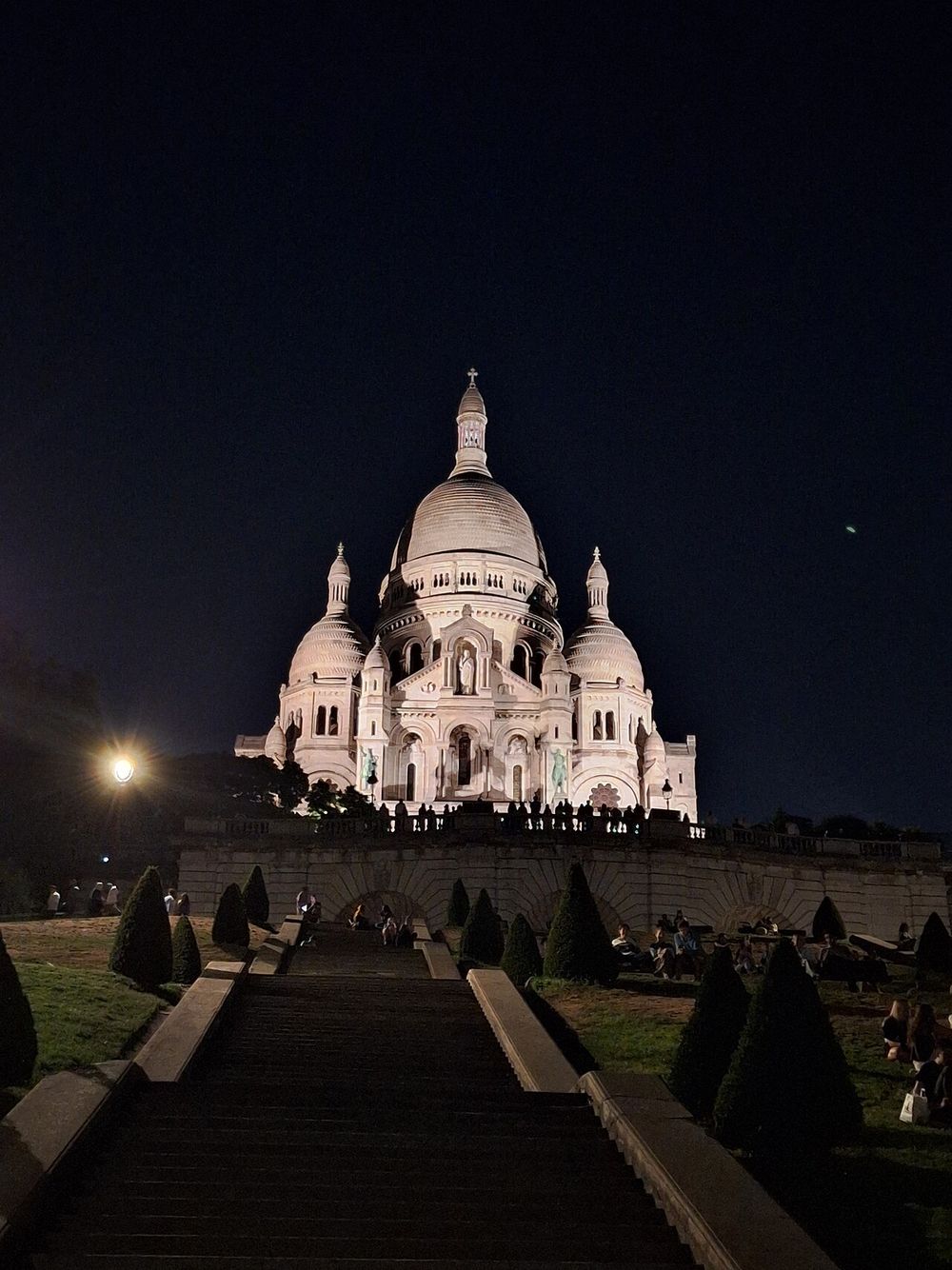
The white church on the highest hill in Paris. It looks old and eastern. It was finished in 1914, paid for by ten million small gifts, and built on the spot where the rising of 1871 began. Half of France meant it as a prayer; the other half took it as an insult, and the quarrel is not quite over.
Photo: Campus France, CC0, Wikimedia Commons
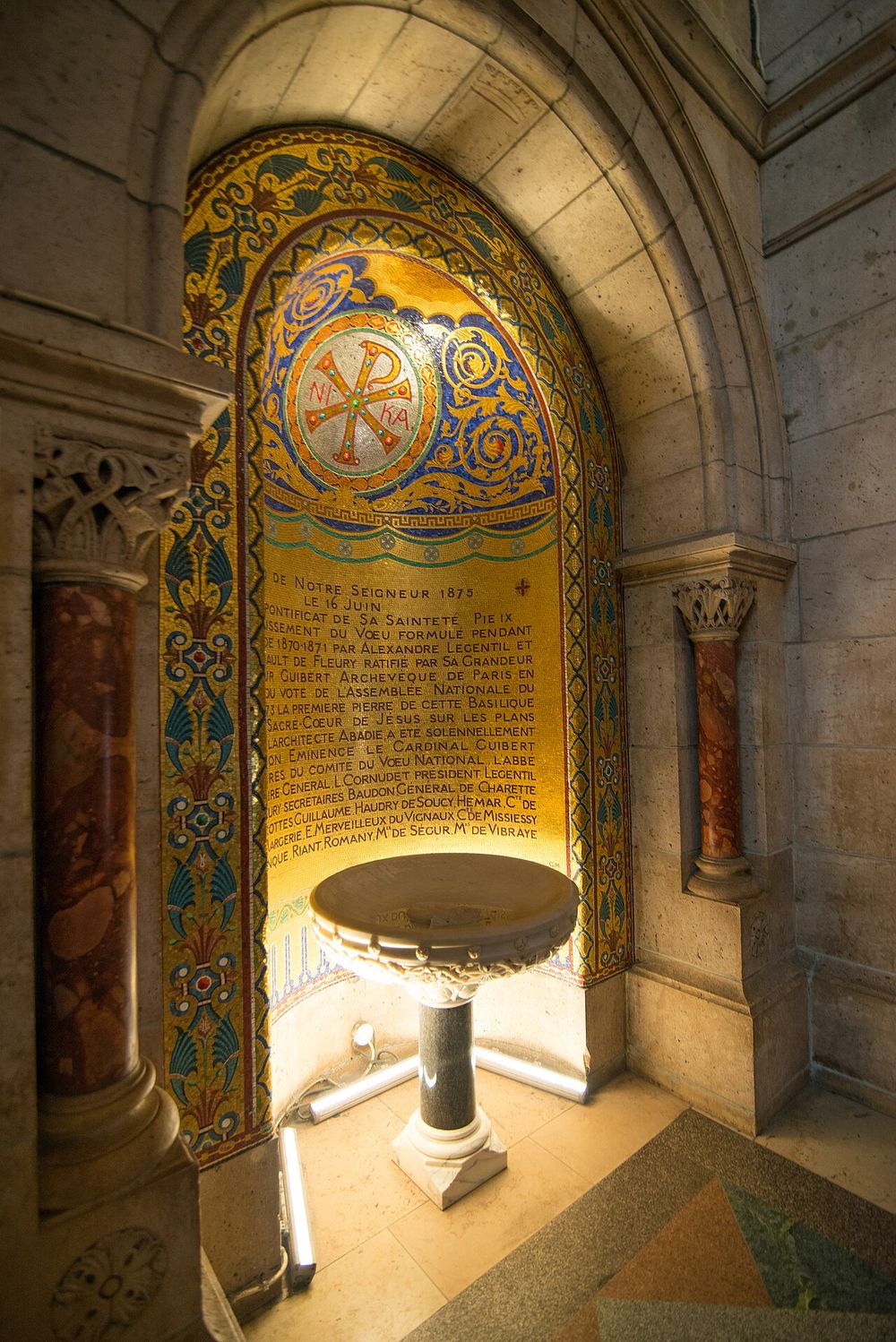
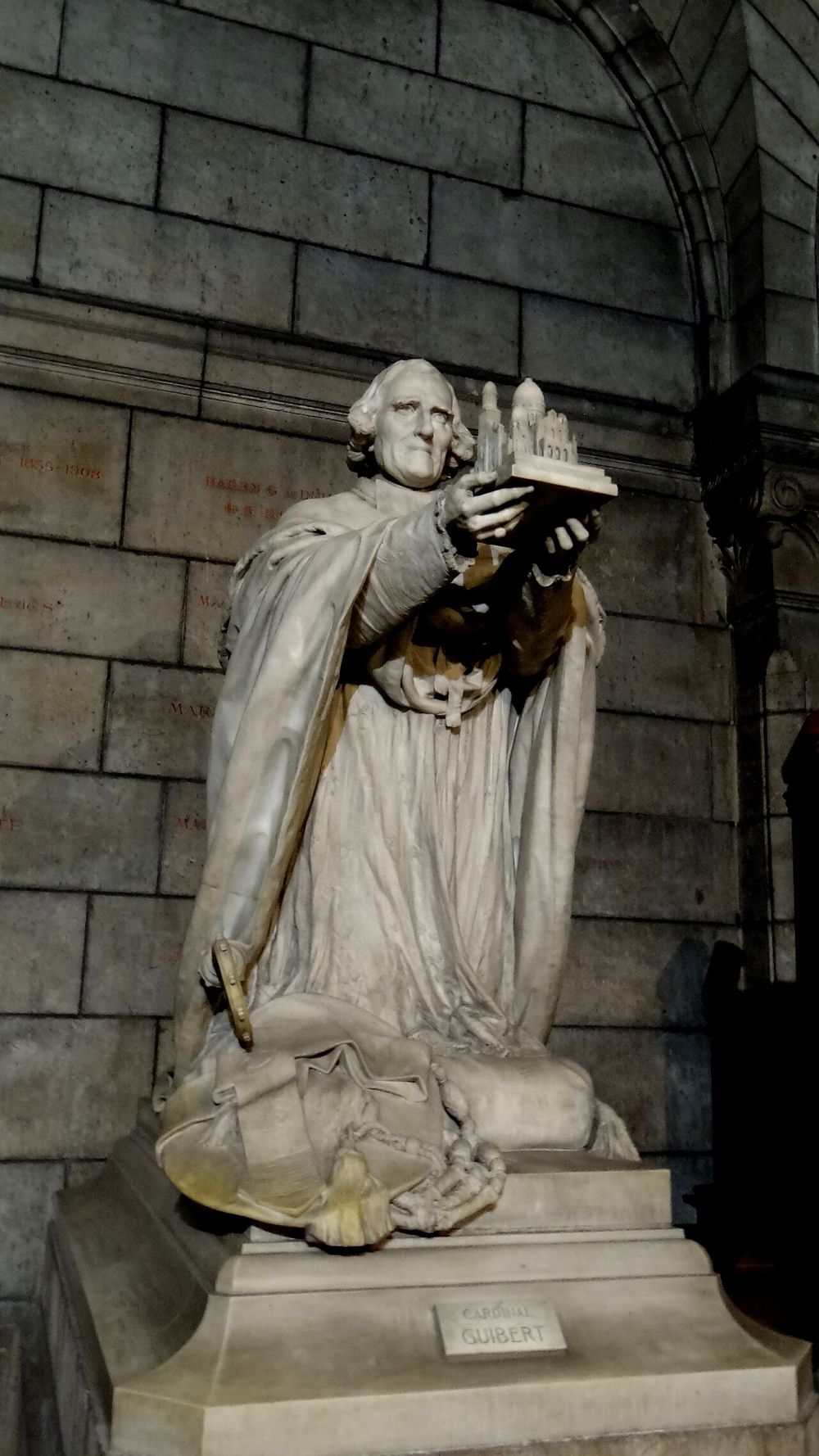
In the winter of 1870 France was losing a war to Prussia and Paris was under siege. Two Paris businessmen made a vow: if France were spared, they would build a church to the Sacred Heart of Jesus, in penance for the sins that, as they saw it, had brought the country down.
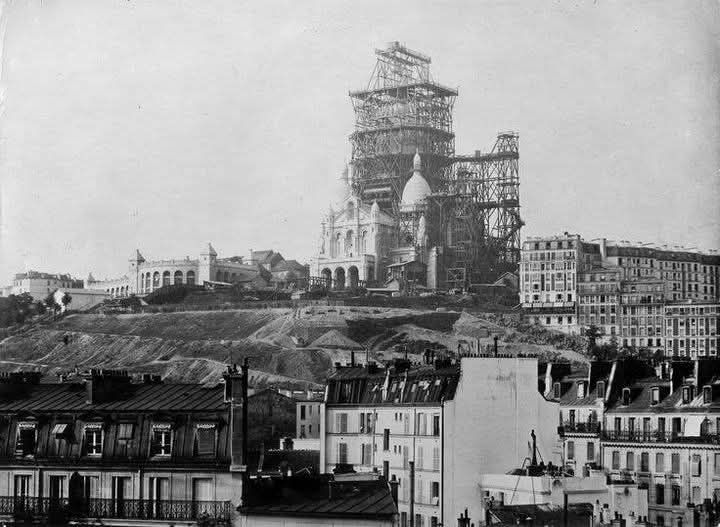
Three months later, on 18 March 1871, the working people of Paris rose against the government on this very hilltop. The rising, the Commune, lasted seventy-two days and ended with thousands shot. When the church was begun here in 1875, nobody could look at it without thinking of that. In China these are the last years of Tongzhi and the first of Guangxu, under the Qing (1644–1912).
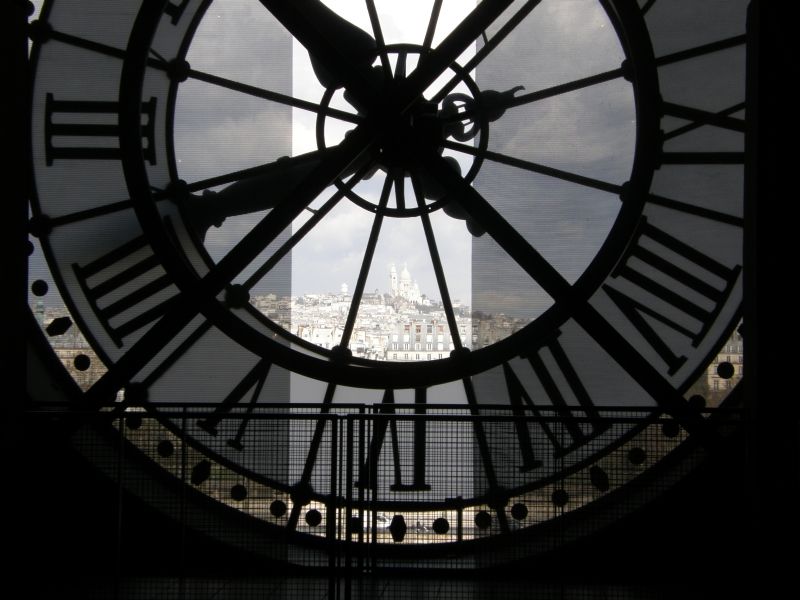
Close by, with a page of its own: Musée d'Orsay, Arc de Triomphe, Notre-Dame de Paris.
The church is free. The dome has its own ticket and its own door outside.
| Part | Ticket |
|---|---|
| The garden, the stairs and the terrace | Free |
| The basilica | Free |
| The dome | Dome ticket |
| The crypt | Often closed; a gift is asked |
| Saint-Pierre de Montmartre | Free |
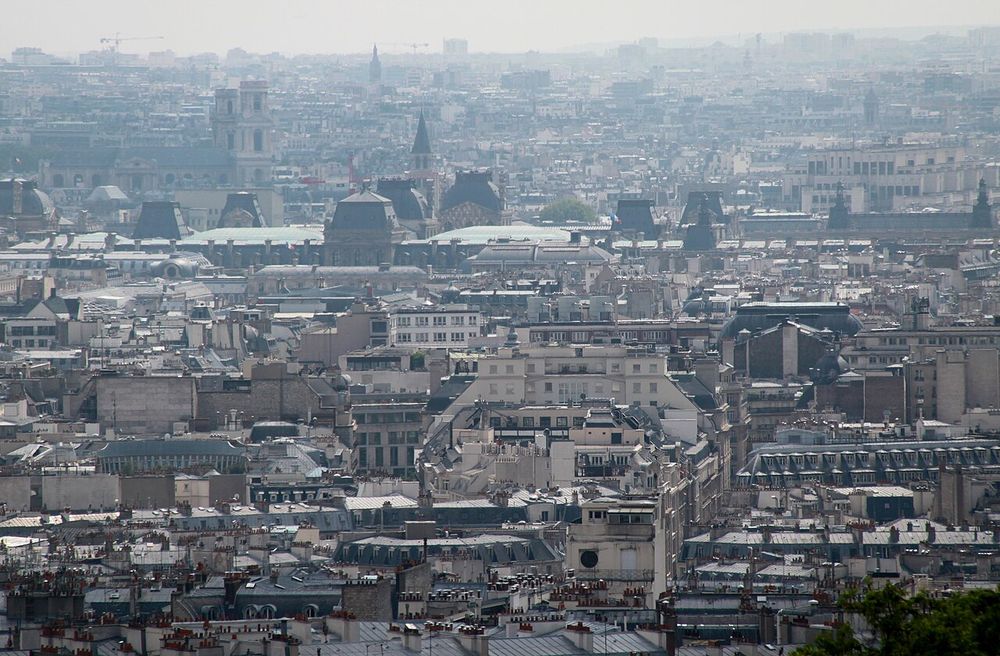
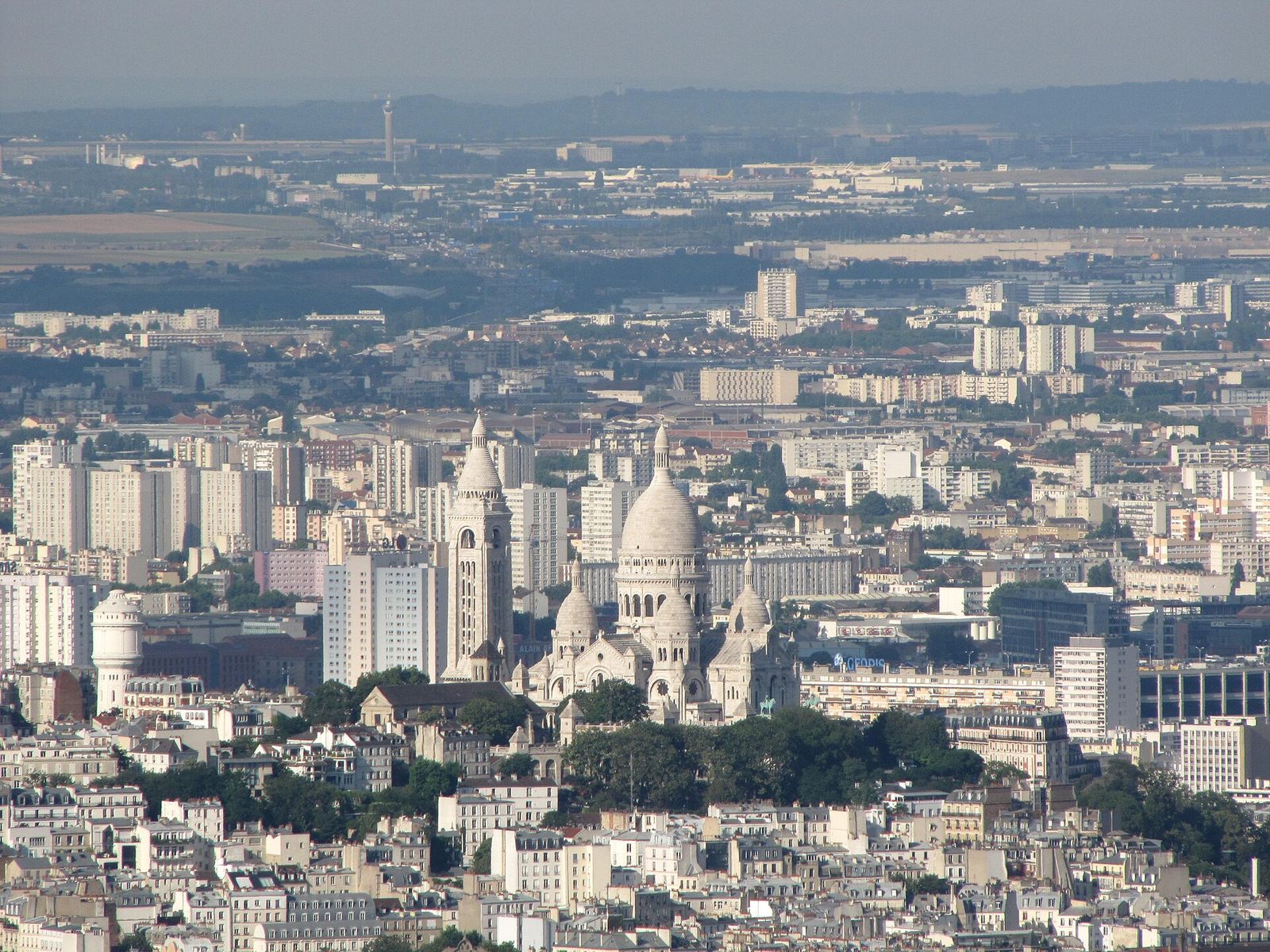
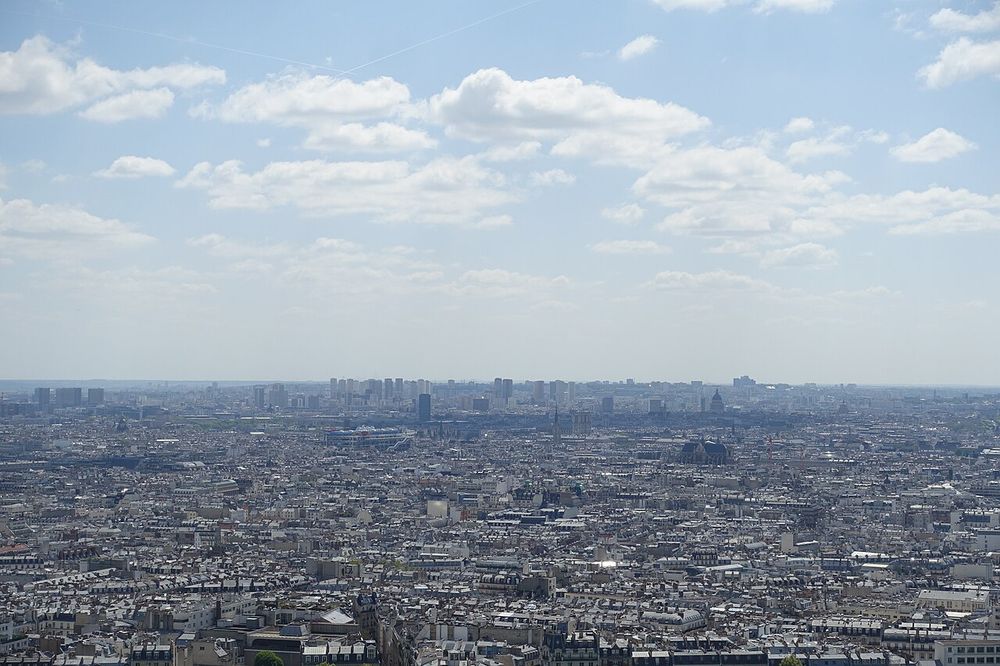
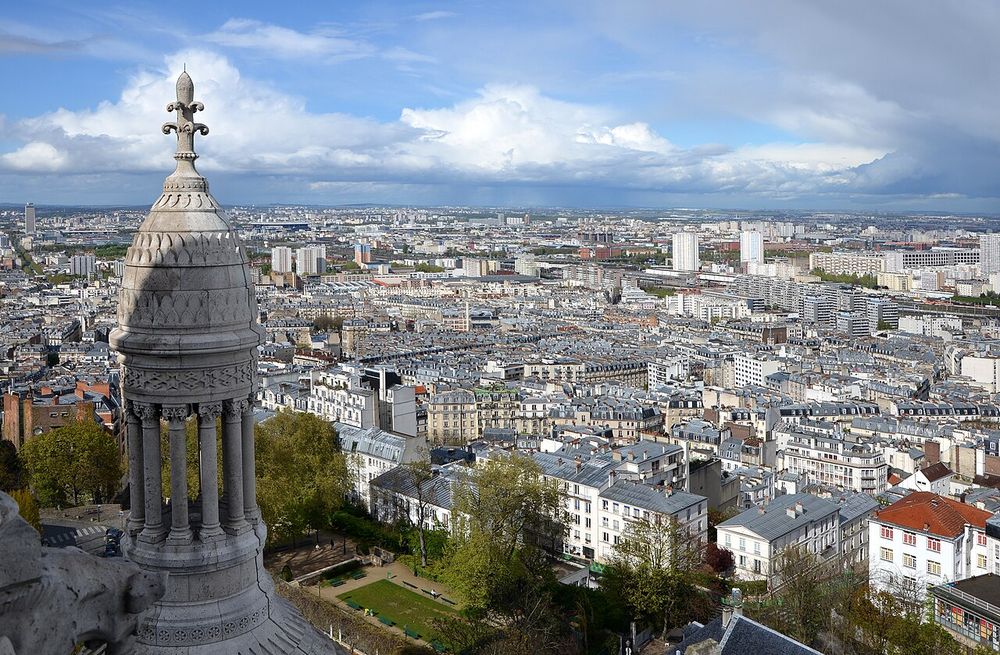
First the view. You are about 130 metres above the sea, on the highest natural point in Paris. The whole city lies south of you. This is free, and it is why most people climb the hill.
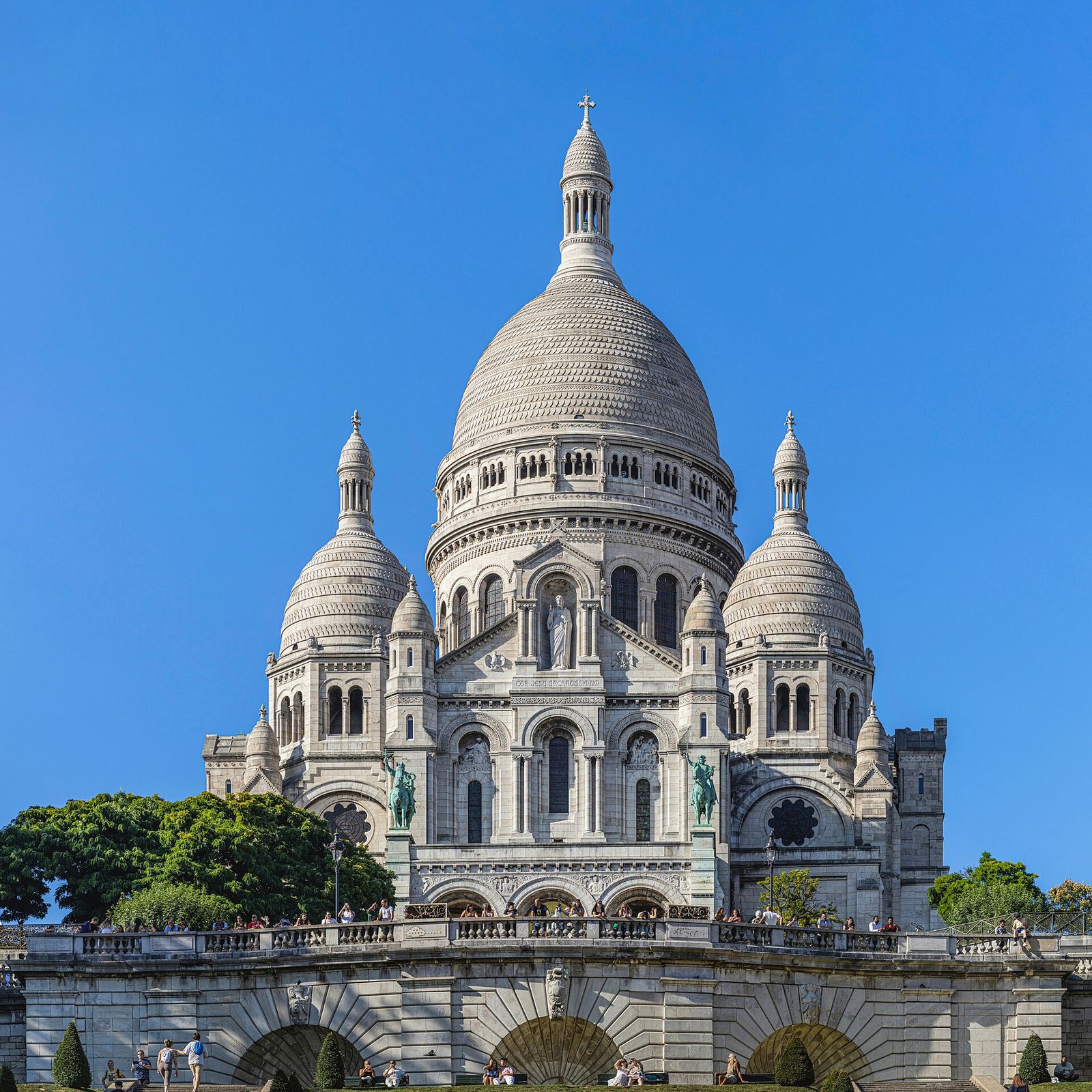
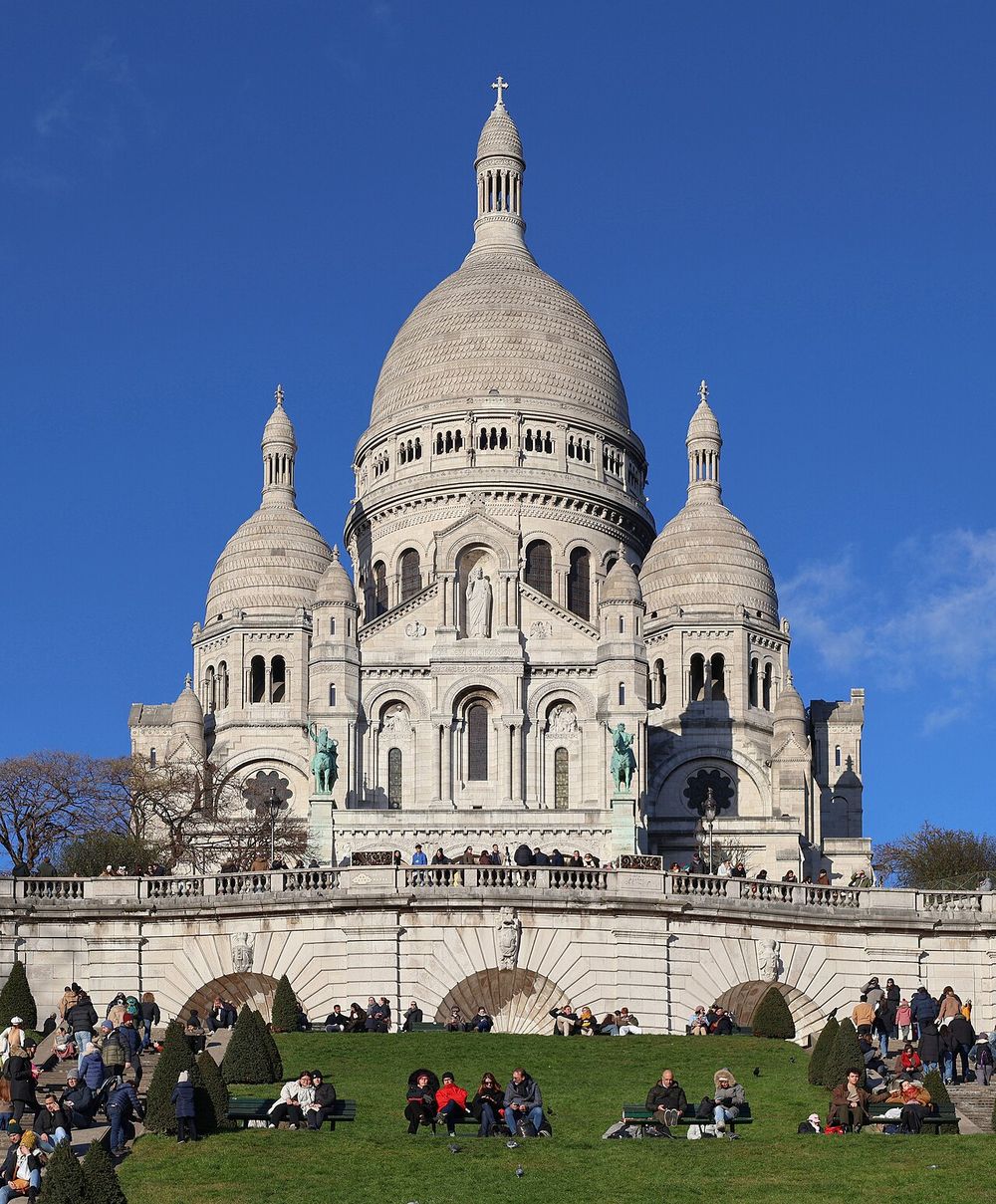
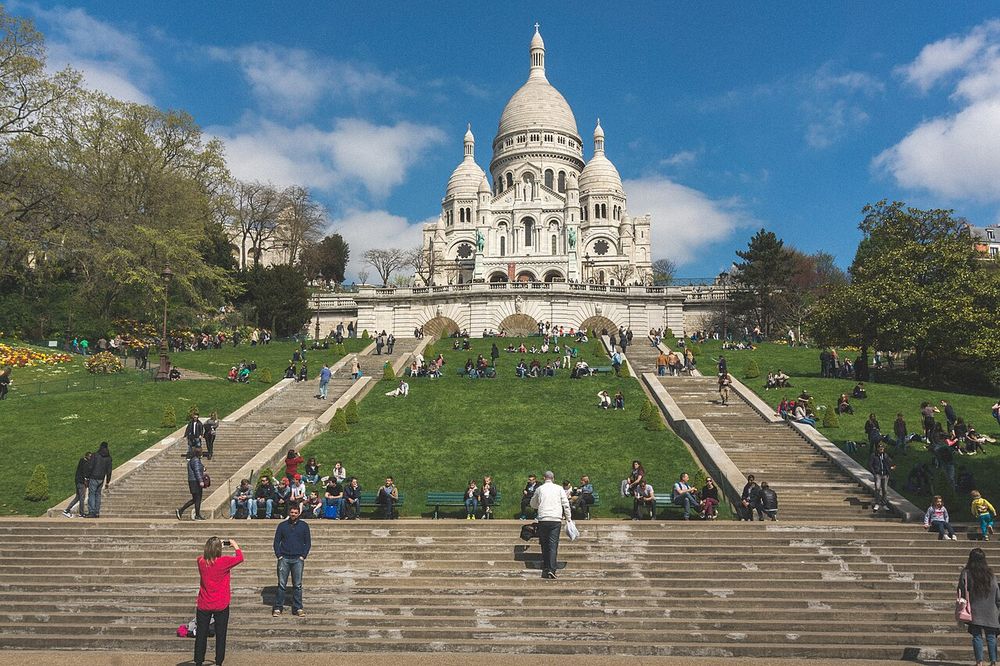
Now turn round. The church is whiter than anything else in Paris, and it stays white. The stone, from quarries south of the city, gives off a chalky film when rain falls on it. Every shower washes and repaints it.
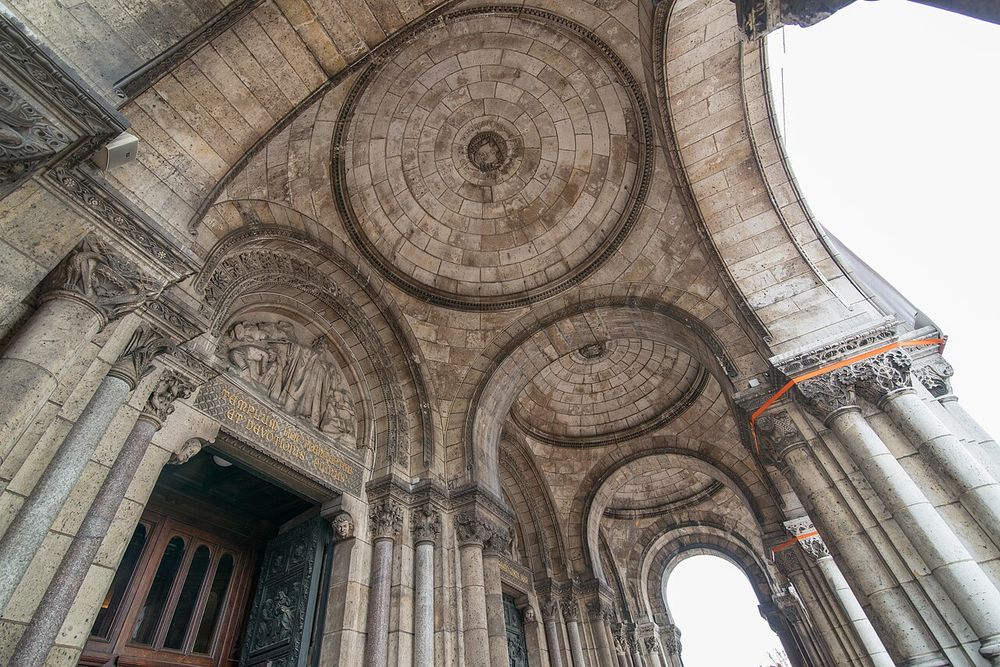
The shapes are not Parisian either: round arches, a tall egg-shaped dome and four small ones. The architect borrowed them from a church of the 1100s in the south-west of France, which had borrowed them from Venice and Constantinople.
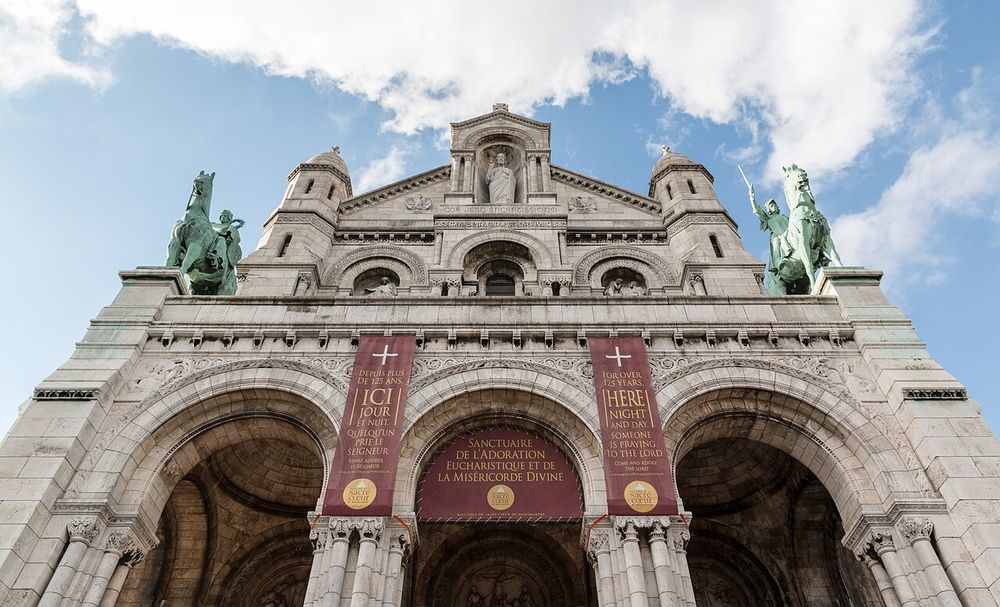
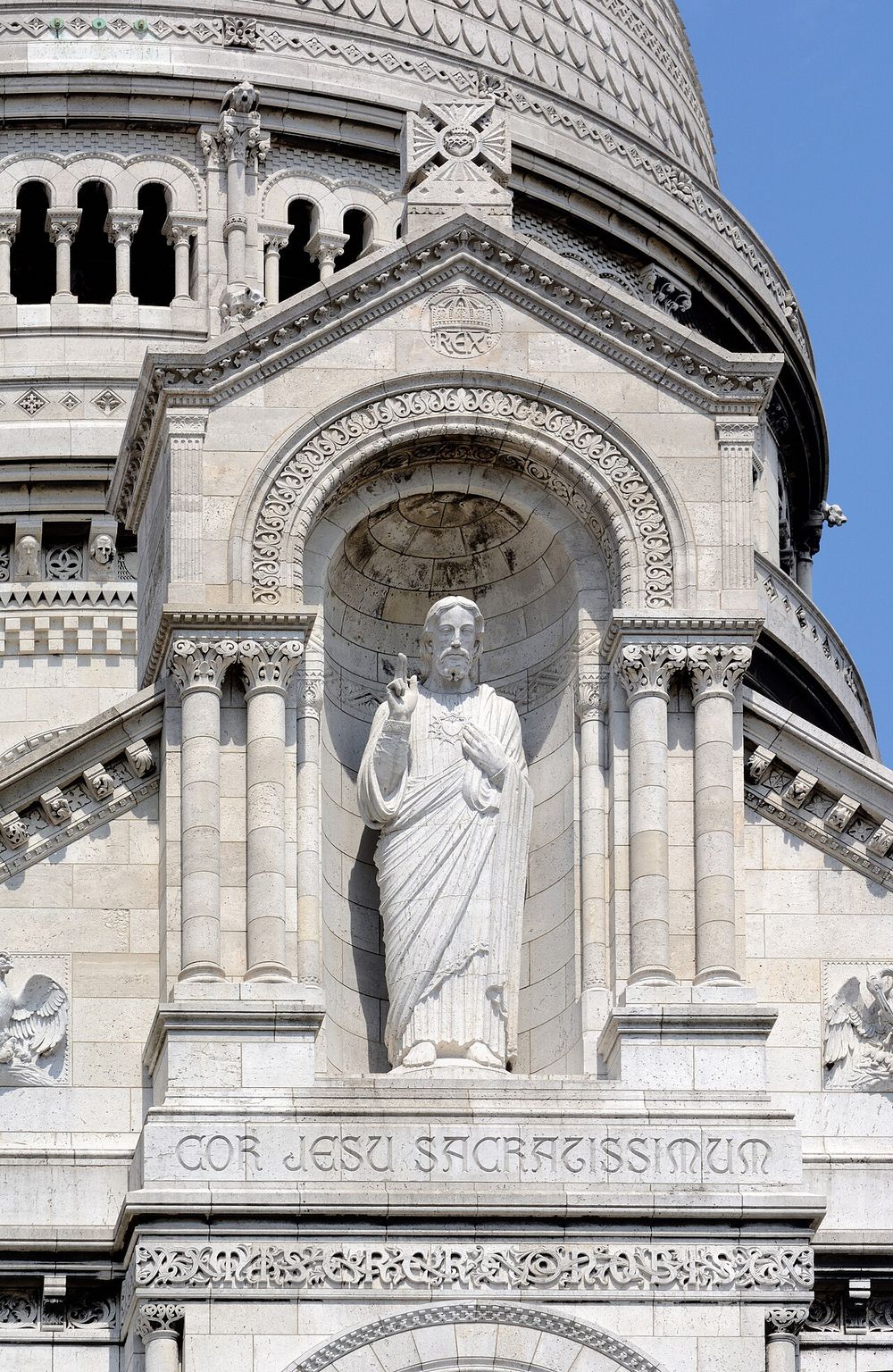
Above the doors ride two horsemen in green bronze: a king of France who was made a saint, and Joan of Arc. Between and above them, in a niche, Christ points to his heart.
"It is medieval." The first stone was laid in 1875 and the church was finished in 1914. It is younger than the Eiffel Tower in its completed form.
"It is the cathedral of Paris." The cathedral is Notre-Dame. This is a basilica, a title the pope gives to a church of special standing.
"The state built it to celebrate crushing the Commune." It was built with private gifts, and the vow was made before the Commune began. But parliament voted in 1873 to let the Church take the land, and the men who spoke for it did say the hill needed cleansing. Both things are true.
"It is painted white." Nothing is painted. See above: the stone does it.
Stops 1 to 5 are free. Stop 6 needs the dome ticket.
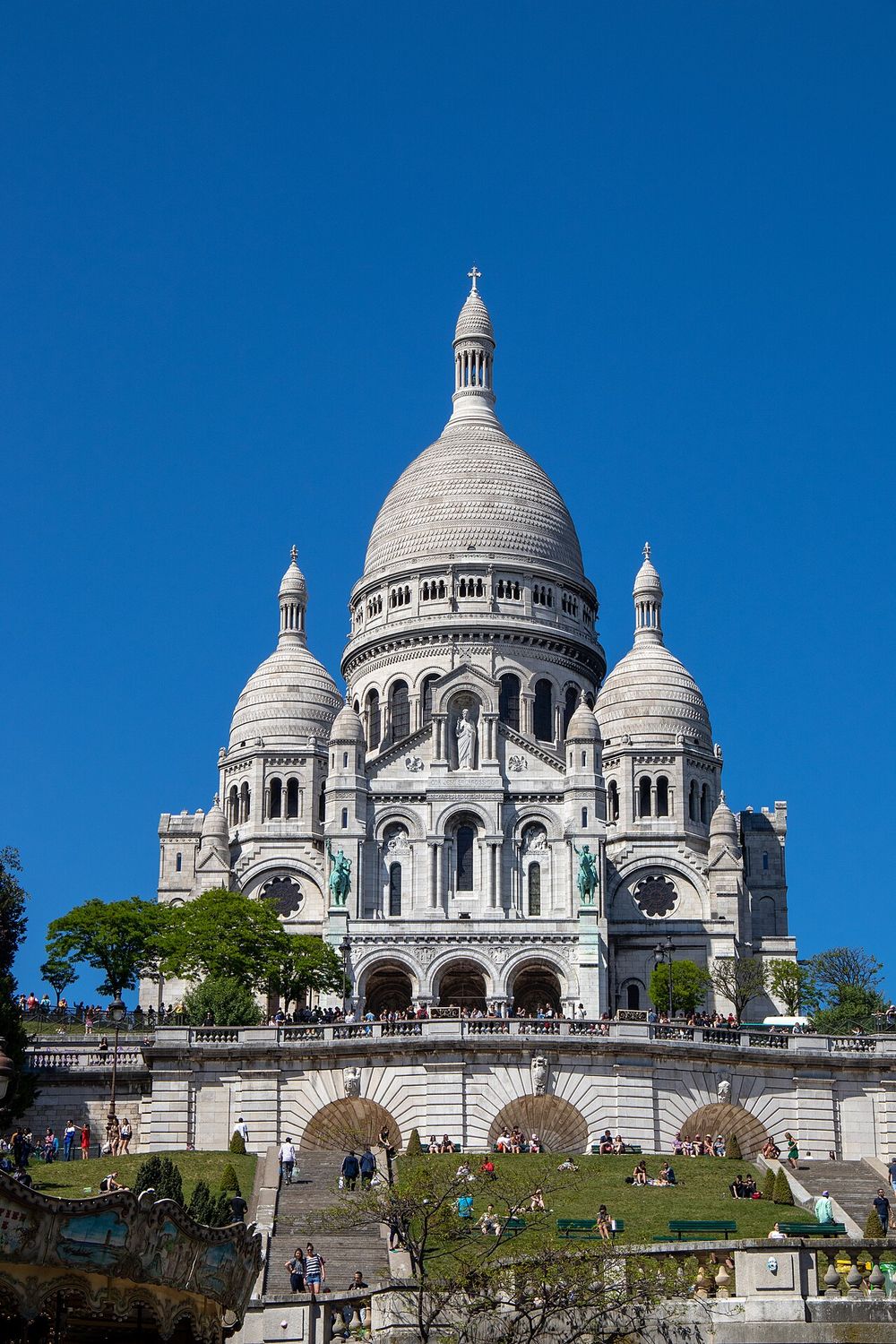
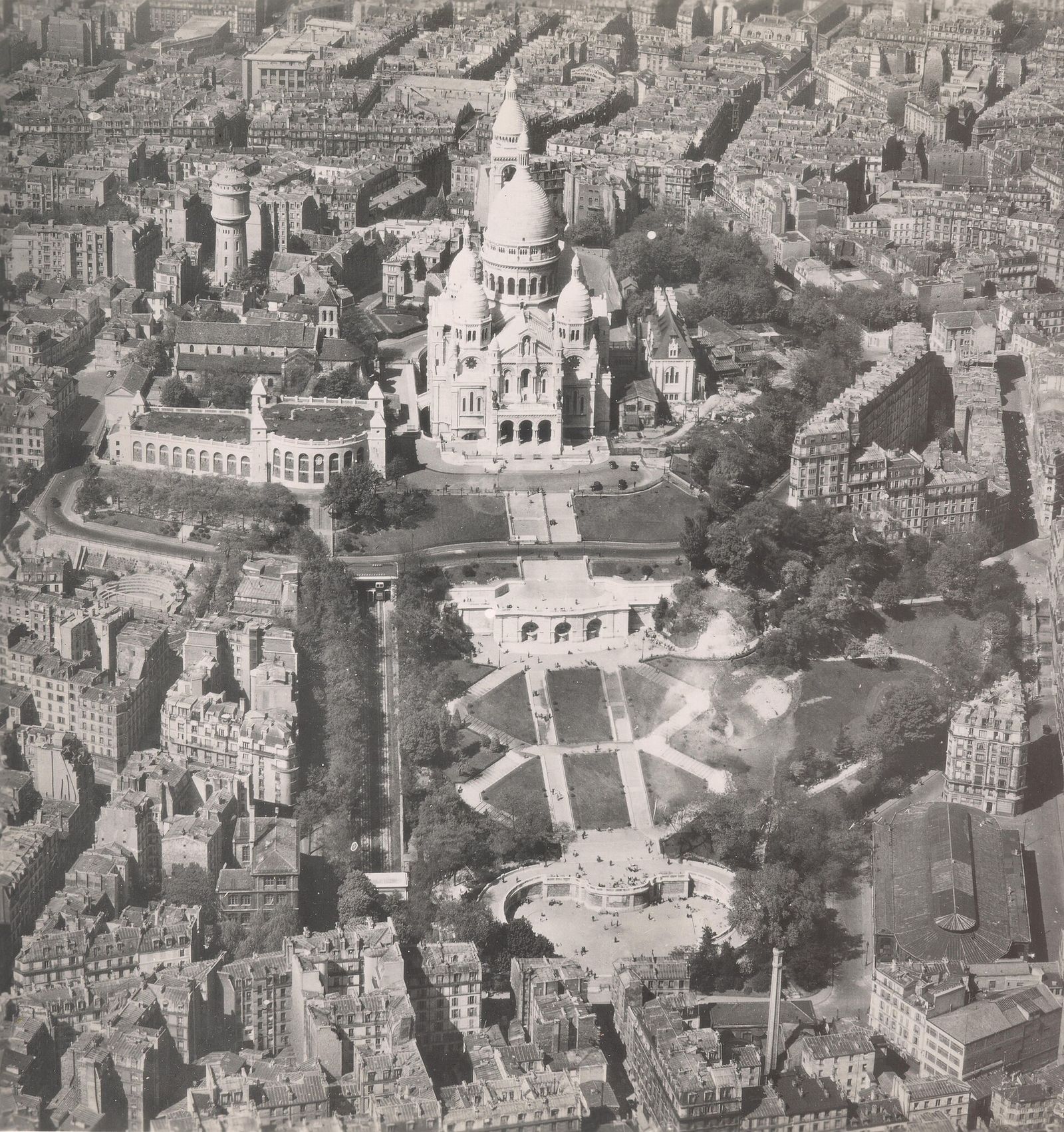
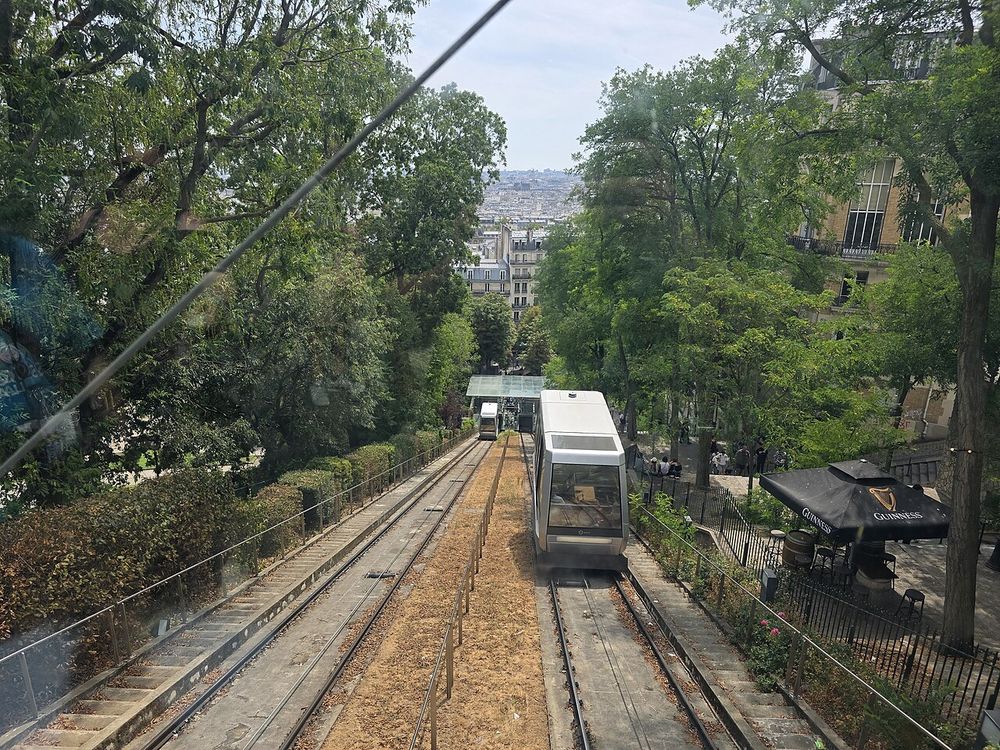
Start at the bottom, by the merry-go-round. The garden climbs the slope in ramps and stairs. On the left the funicular goes up in a minute and a half for one metro ticket; beside it are 222 steps.
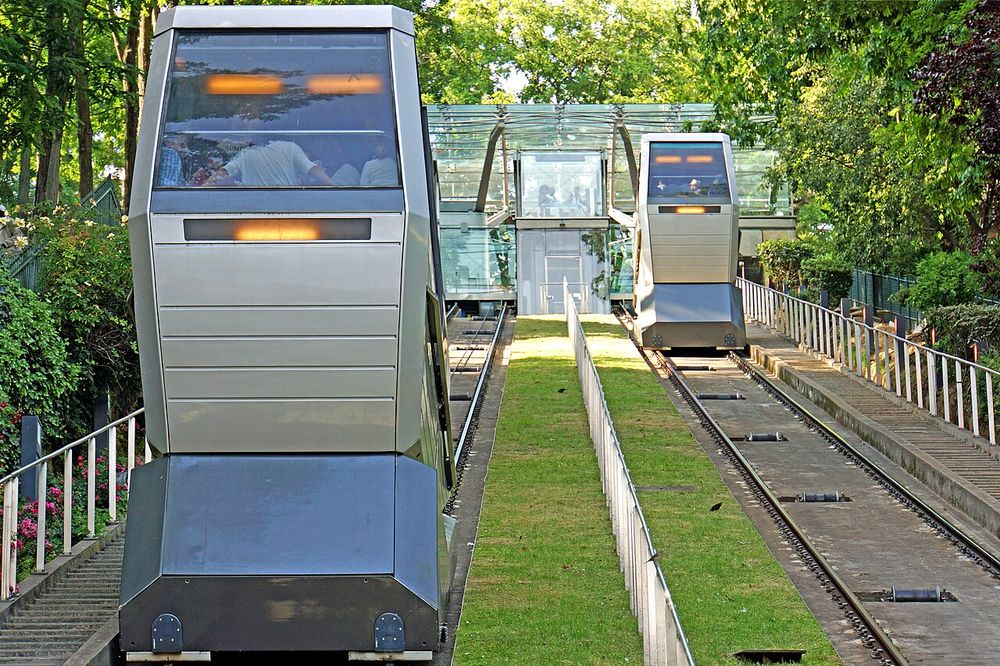
The same shot: the telescope scene in Amélie is on the top terrace of this garden, just under the church, looking down the central stairs to the merry-go-round.
The hill is hollow. For centuries it was mined for gypsum, the stone that makes plaster of Paris. Before a single wall went up, the builders sank eighty-three shafts of masonry thirty-three metres down through the old galleries to solid ground. People said afterwards that the hill did not carry the church: the church held up the hill.
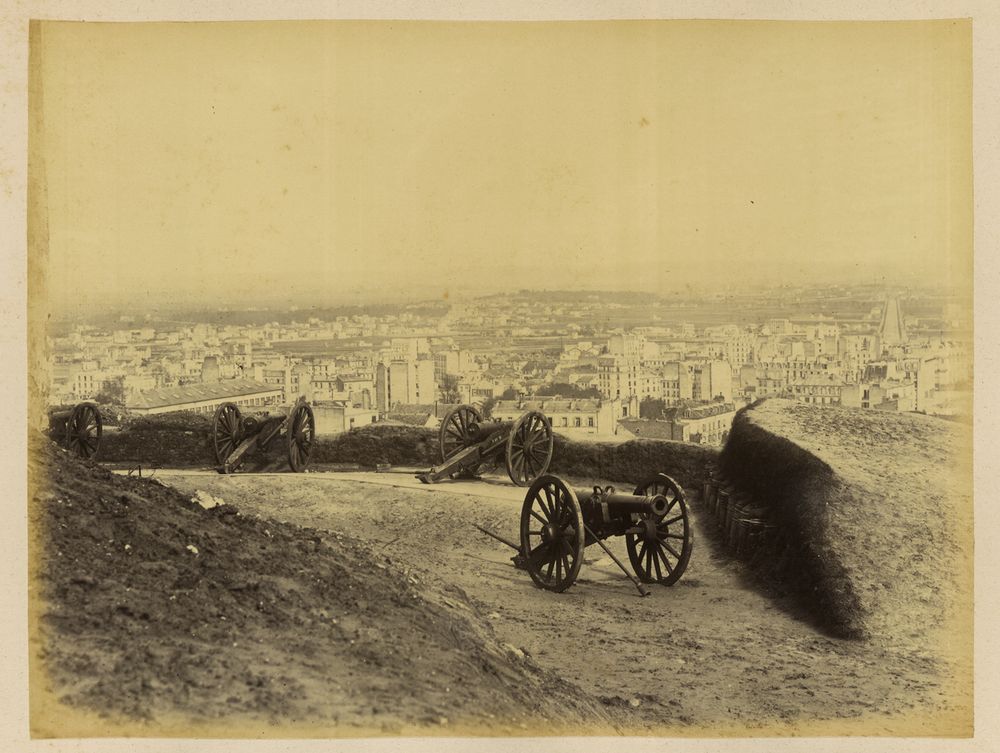
In March 1871 about 170 cannon stood parked on this hilltop. The people of Paris had paid for them by subscription during the siege and considered them theirs. Before dawn on 18 March the government sent soldiers to take them away. The horses to pull them came late. Women of the quarter surrounded the troops and gave them bread and wine. The soldiers turned their rifles butt upward.
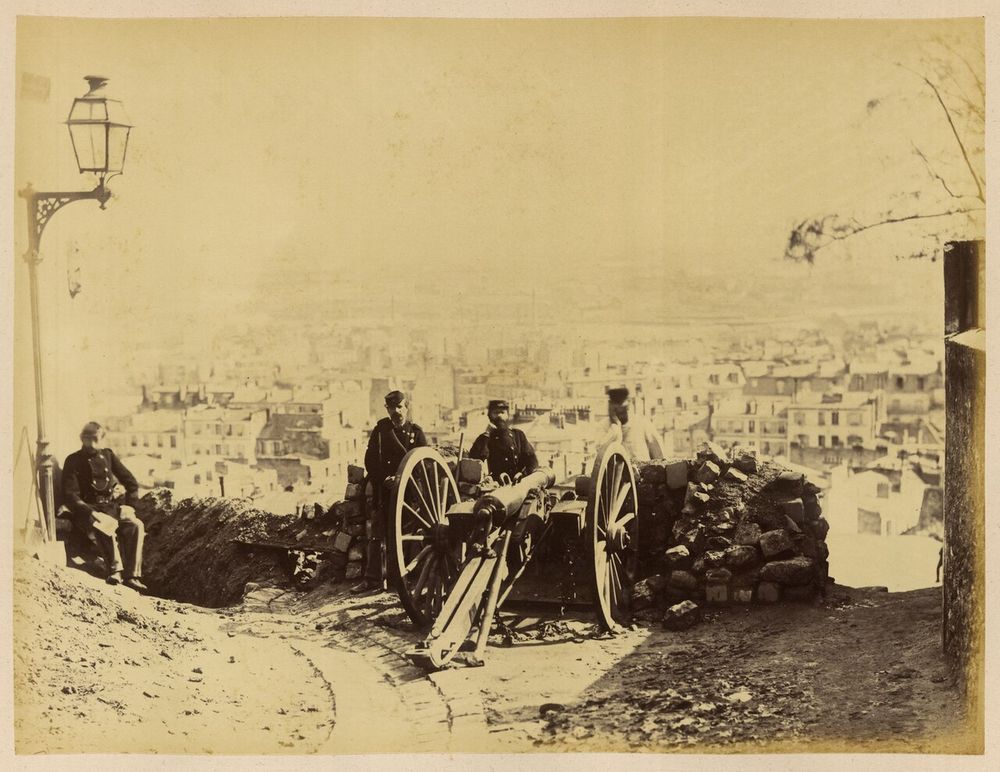
That afternoon two generals were shot against a garden wall in a street just behind where the church now stands. The government fled to Versailles, and Paris governed itself for seventy-two days.
Quand nous chanterons le temps des cerises, Et gai rossignol et merle moqueur Seront tous en fête.
When we come to sing of cherry time, the merry nightingale and the mocking blackbird will all be making holiday.
Jean-Baptiste Clément, "Le Temps des cerises", written in 1866. Clément was mayor of Montmartre during the Commune, and the song became its lament; our translation
The address of the church is 35 rue du Chevalier-de-la-Barre. The name is a jab. The Chevalier de la Barre was a young man of twenty, tortured and beheaded in 1766. Among the charges was that he had not taken off his hat to a religious procession. In 1905 freethinkers put up a statue of him directly in front of the church door, and in 1907 the city council renamed the street.
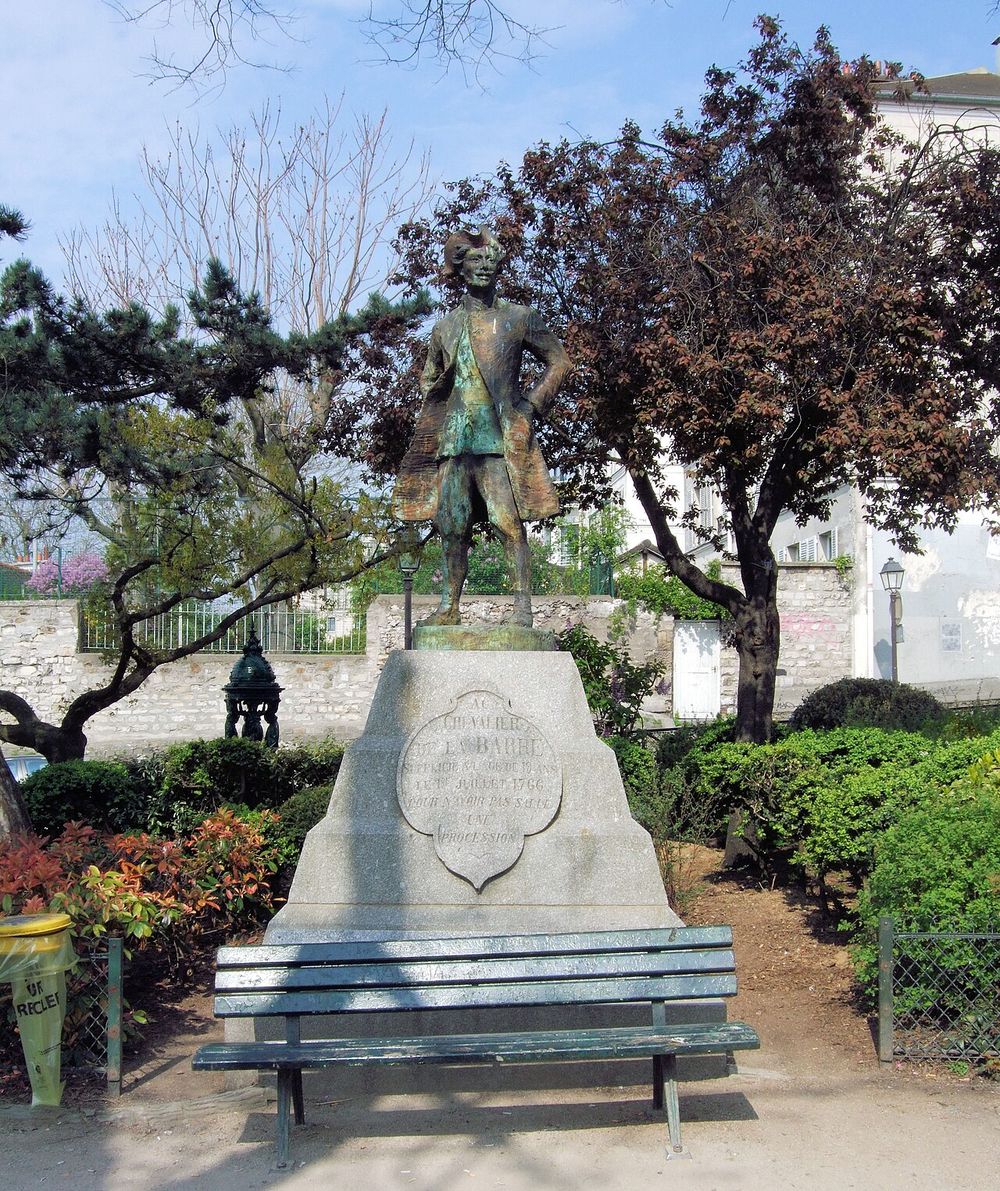
The statue was moved to a small square to the west in 1926, and melted down in the war. The one there now dates from 2001.
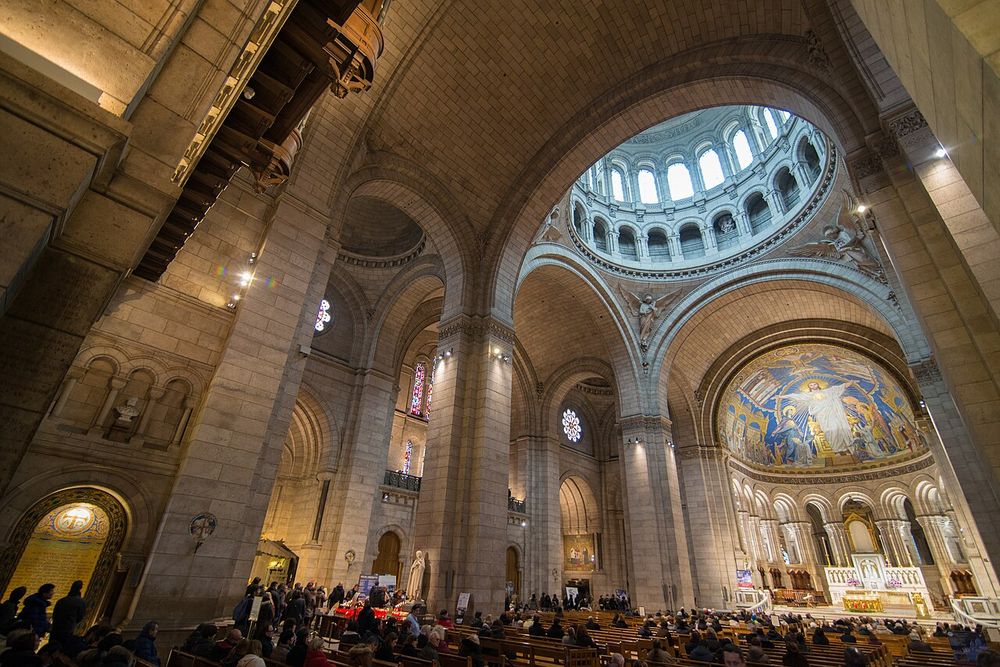
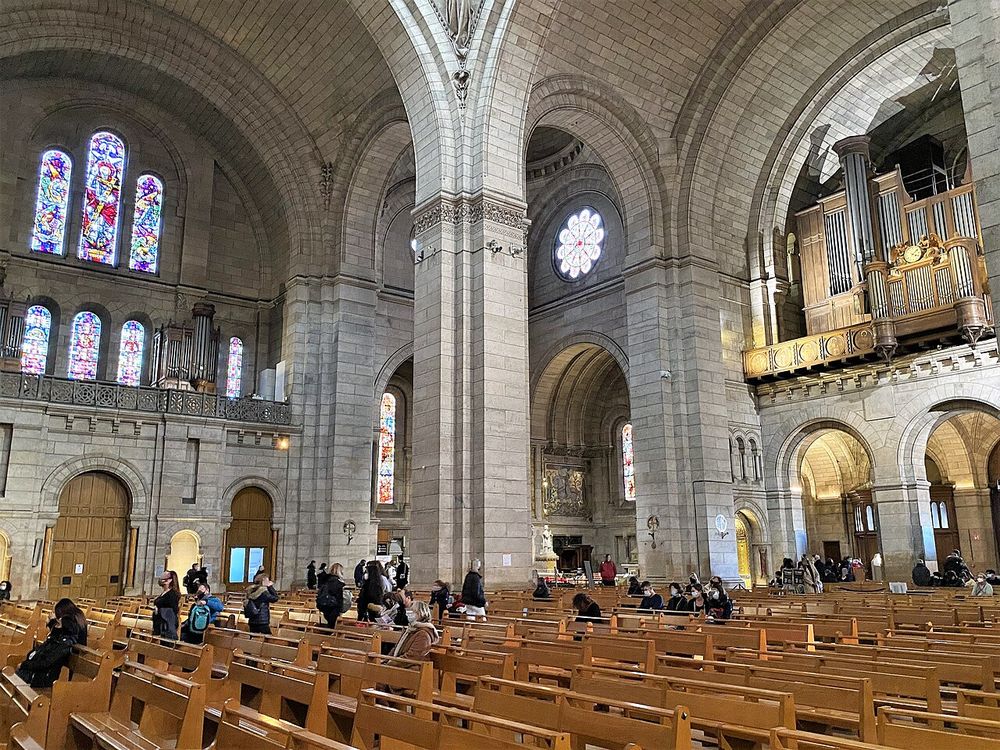
Go in and look up at the vault above the altar. Christ stands with his arms spread and a golden heart on his breast. The mosaic covers 475 square metres and is among the largest in the world. It was finished in 1922.
Read it from the bottom. On his right kneel the saints who protect France, with Joan of Arc in armour. On his left are the pope and the men who built the church, offering a model of it. The words below say, in Latin, that France, penitent and devoted, gives thanks.
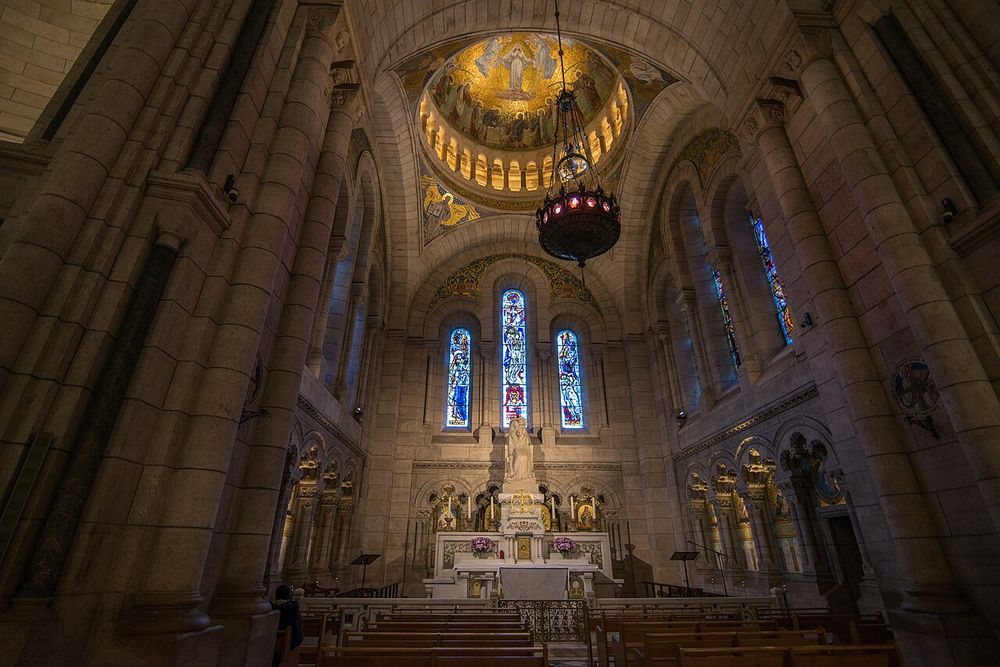
Above the altar a white disc is shown in a gold frame. For Catholics it is the body of Christ. Since 1 August 1885 someone has been praying in front of it at every hour of the day and night. People sign up for an hour, and those who take the small hours sleep in the guesthouse behind the church.
The chain was not broken in two world wars. On the night of 20 April 1944 bombs meant for the railway yards fell round the hill and blew in the windows. The watchers stayed.
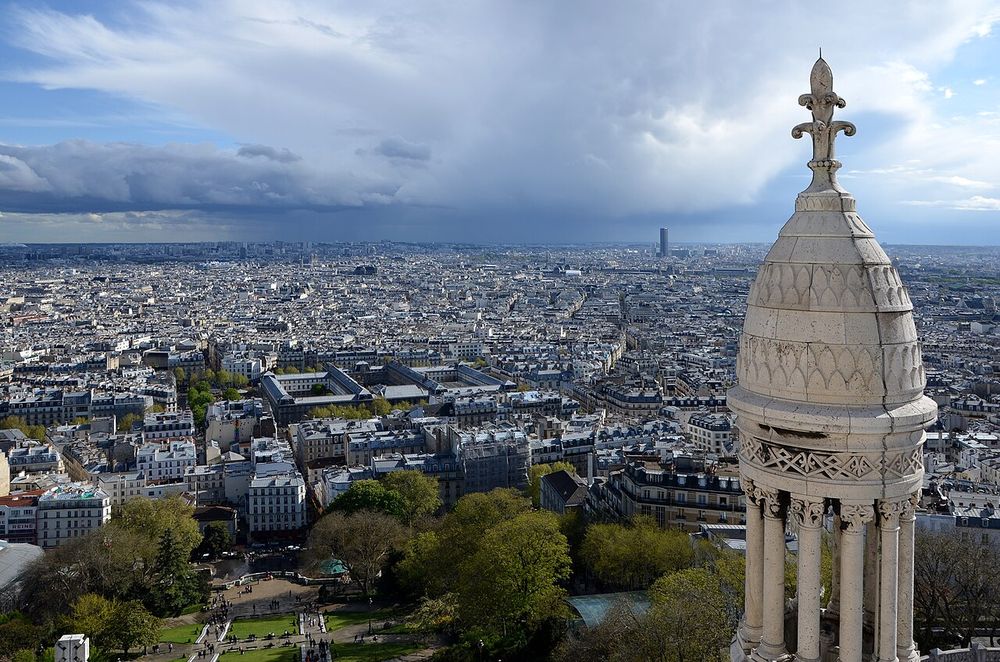
The way up is outside, on the left side of the church. About three hundred steps climb in a narrow spiral, with no lift. You come out in a gallery of columns round the base of the dome.
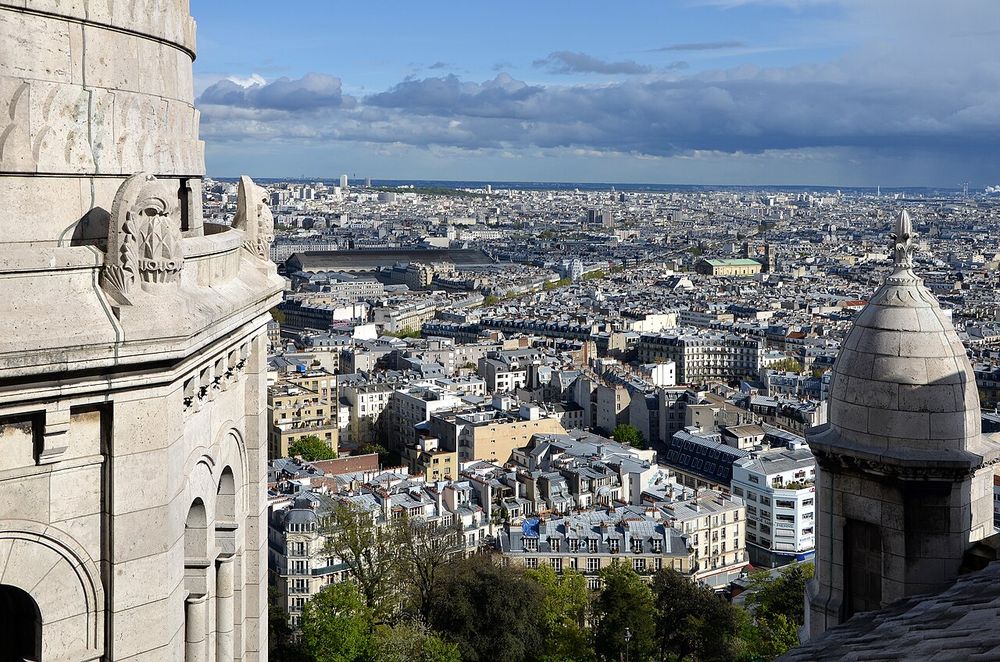
On a clear day you can see for more than thirty kilometres. It is the second highest view in Paris after the top of the Eiffel Tower, and you look across the church's own small domes and turrets to get it.
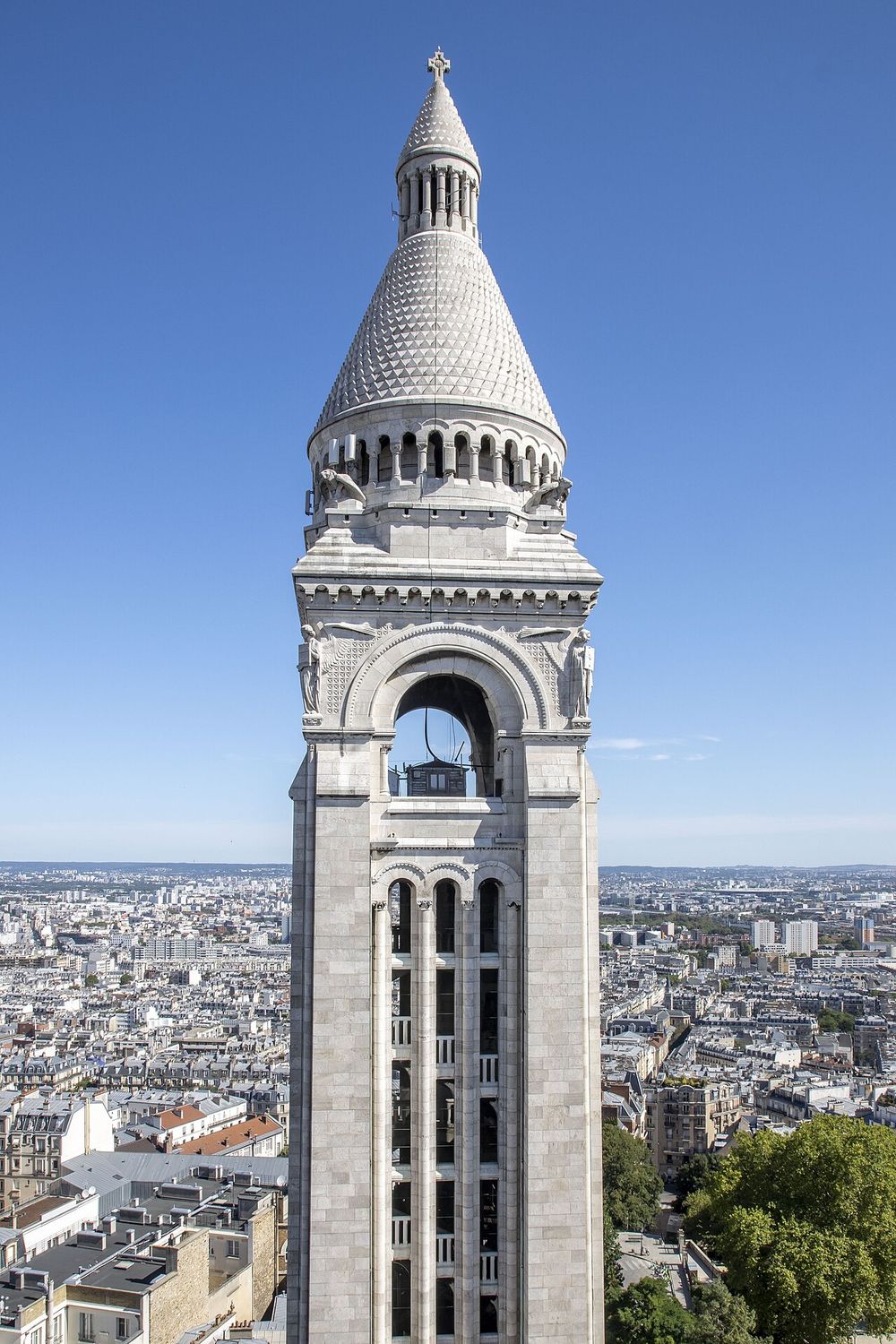
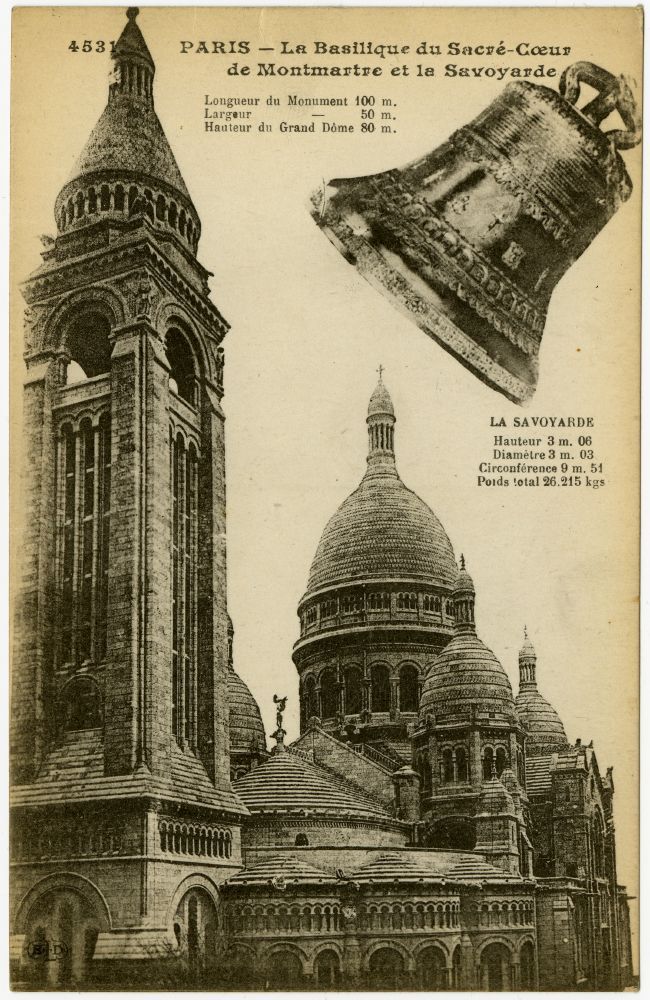
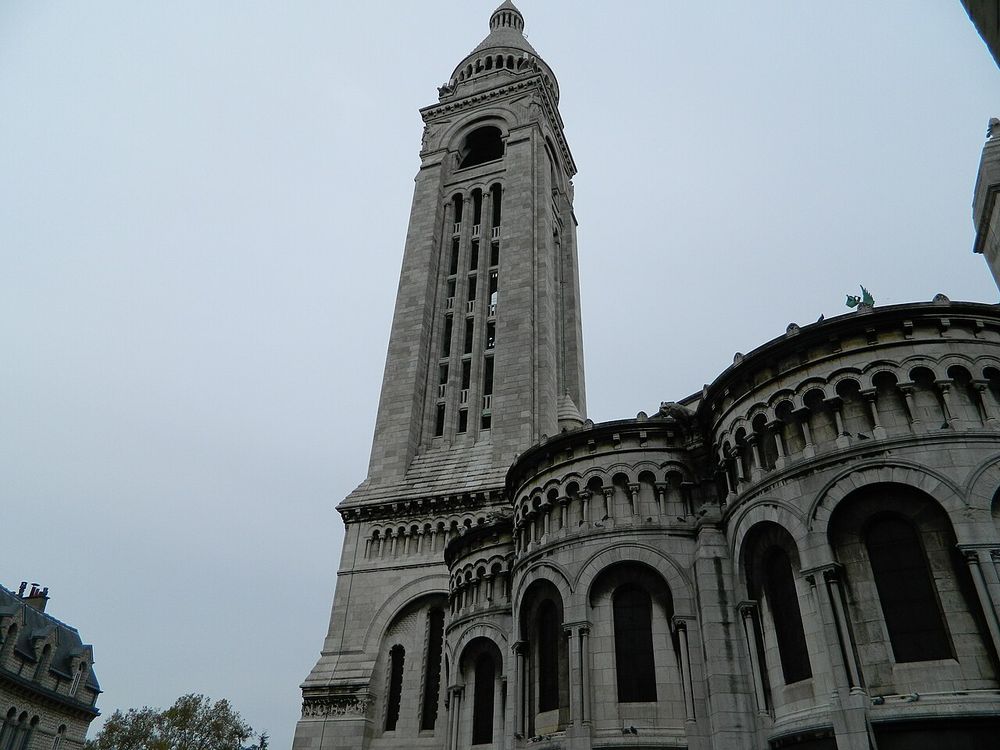
The square tower behind the dome holds the largest bell in France. It weighs nearly nineteen tonnes and was a gift from the people of Savoy, who had become French only in 1860. It took twenty-eight horses to drag it up the hill in 1895. It is rung only on great feast days.
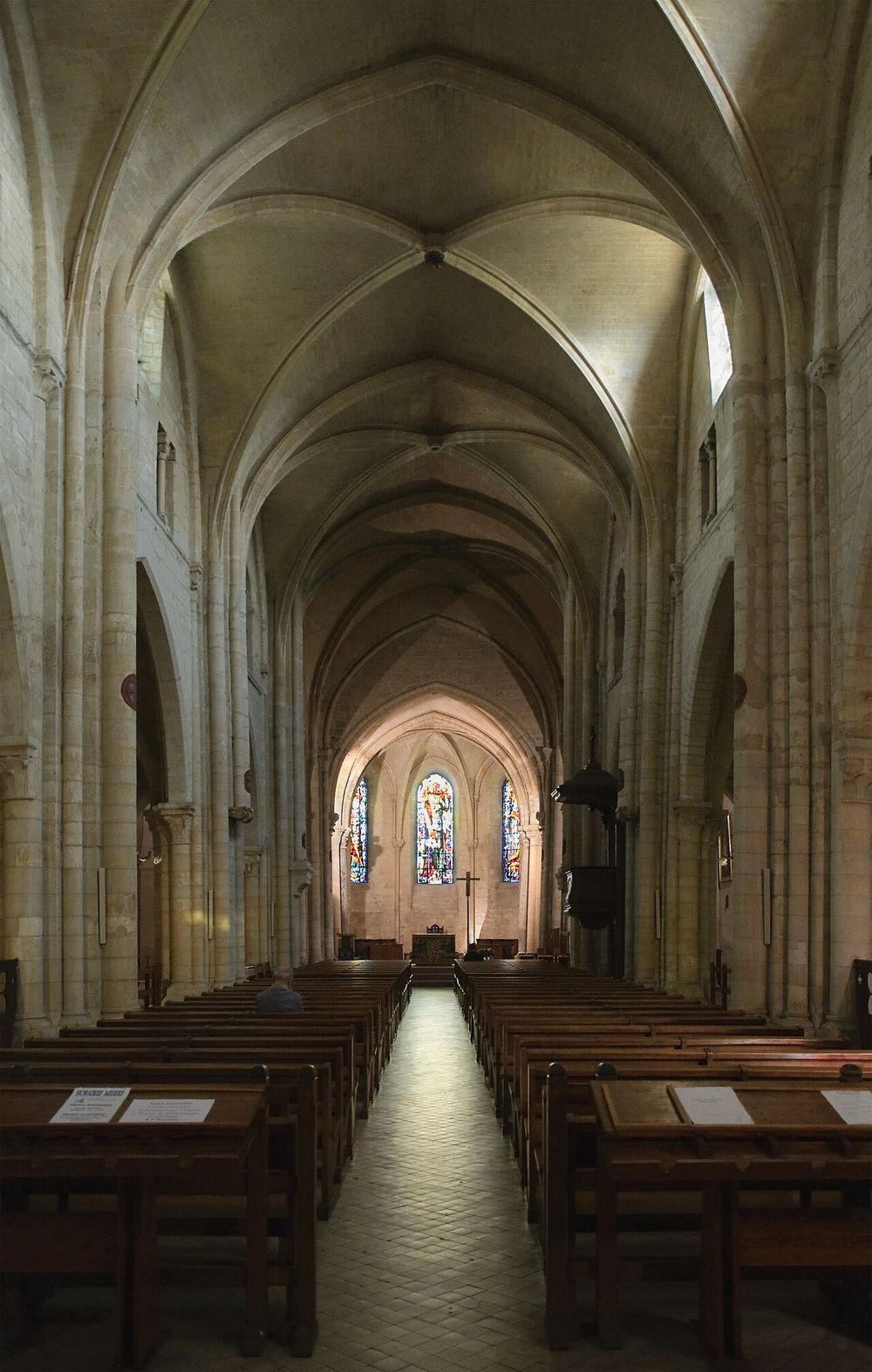
A few steps to the west is a small plain church that nobody queues for. Saint-Pierre de Montmartre was consecrated in 1147 and is one of the oldest in Paris. Four of its columns are Roman, taken from a temple that stood on the hill.
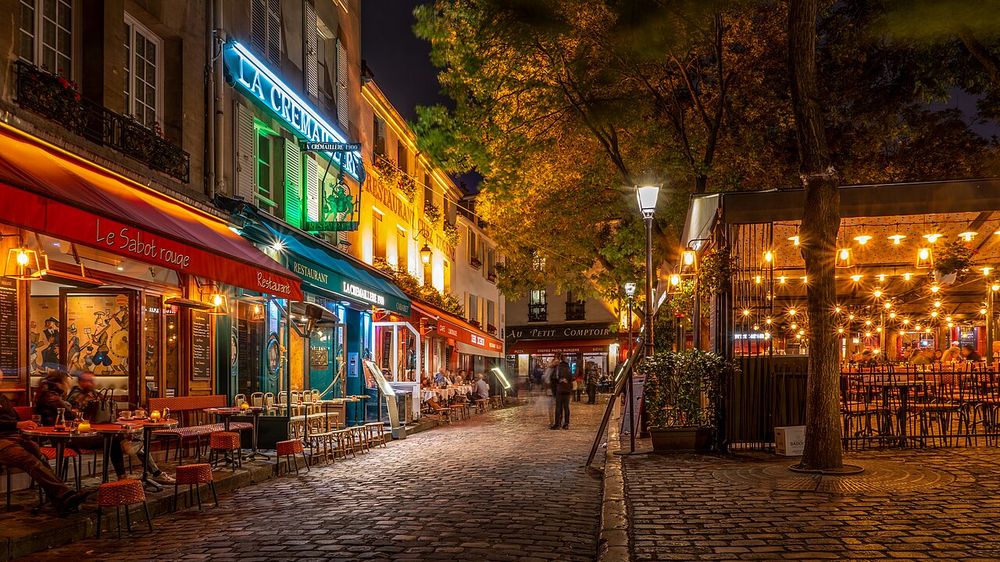
Beyond it is the old village square, where painters work at easels for the tourists. The name Montmartre is usually explained as "mount of the martyr", after Saint Denis, the first bishop of Paris, said to have been beheaded here in about 250.
| Year | Here | Elsewhere |
|---|---|---|
| 1871 | The Commune begins on the hill | The German Empire is proclaimed at Versailles |
| 1875 | The first stone is laid | Bizet's opera Carmen opens in Paris and fails |
| 1885 | The watch before the altar begins | Victor Hugo is buried in Paris |
| 1895 | The great bell is hauled up | The first film is shown to a paying audience in Paris |
| 1914 | The building is finished | The First World War begins |
| 1919 | The church is consecrated | The peace treaty is signed at Versailles |
| 1944 | Bombs fall round the hill | Paris is freed in August |
| 2022 | The church is listed as a historic monument, after a year's delay | The football World Cup is held in Qatar |
One line to remember: a church built to say sorry, on a hill that does not agree what for.
These are stories people tell about this place. They are legends, not history, and each one says where it comes from.
Saint Denis was beheaded on this hill, picked up his head and walked six kilometres north with it, preaching, to the place where he wished to be buried.
Source: Hilduin, abbot of Saint-Denis, 9th century
If the church were taken away, the hill of Montmartre would fall in.
Source: A Paris saying, from the depth of the foundations
Later, people who live here will be able to add the stories they grew up with, and say which of these they have heard.
Last checked 2026-11-12. French listings of 2026 quoting the basilica; Paris press, September 2026.
Checked 2026-11-12
Stand at the site, sign in, press the button, and collect its stamp. Your browser will ask to use your location. It is sent to us once to confirm that you are at the site; we keep how far you were from it, not the spot where you stood.
Your stamps are saved to your account, so they follow you to any device. Checking from a browser cannot rule out every false location; stricter checks arrive with the app.
Photos here show the place, not people. Each one is credited to the visitor who took it and appears after our team has looked at it. A photo with you in it belongs under “I am here”.