Cathédrale Notre-Dame de Paris · noh-truh DAHM duh pah-REE
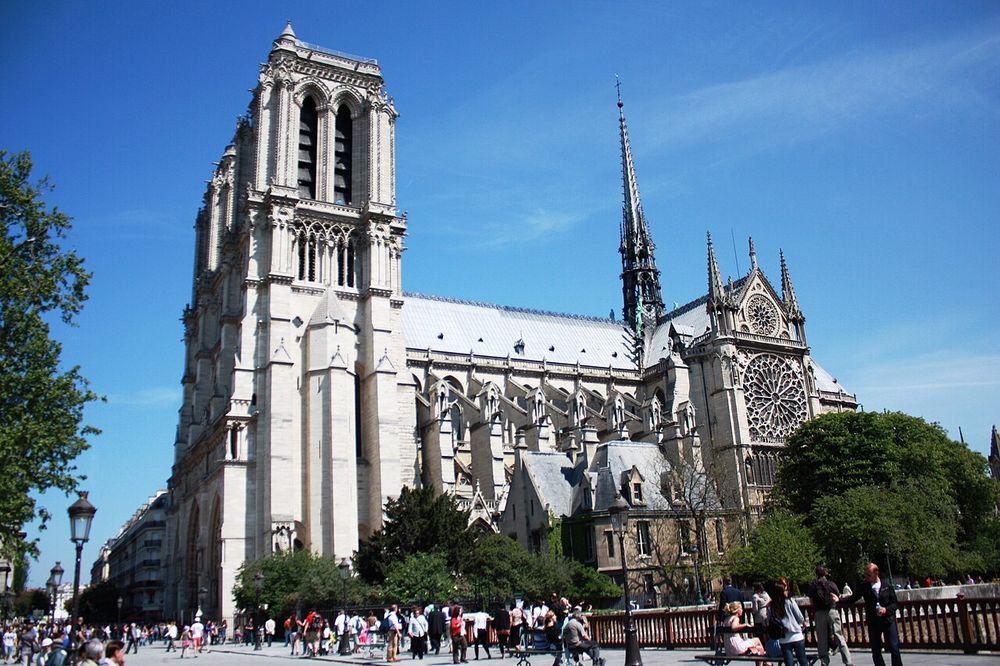
The cathedral of Paris, begun in 1163 on an island in the Seine. In April 2019 its roof and spire burned in front of the world. It reopened in December 2024, rebuilt by hand in oak and stone, and cleaner and brighter inside than anyone living had seen it.
Photo: AlSepPhoenix, CC BY-SA 4.0, Wikimedia Commons
The story
You are standing on the island where Paris began, in front of its cathedral. The first stone was laid in 1163, and the building took about 180 years. It was one of the first great churches in the new style we call Gothic: thin walls, tall windows, and stone ribs that carry the weight.
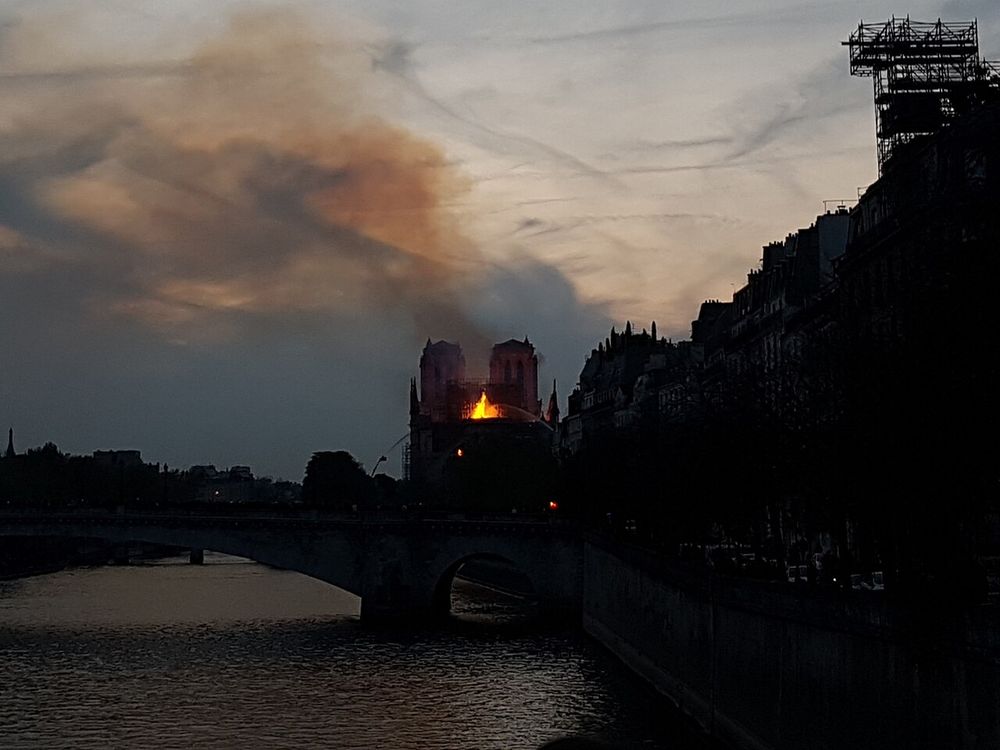
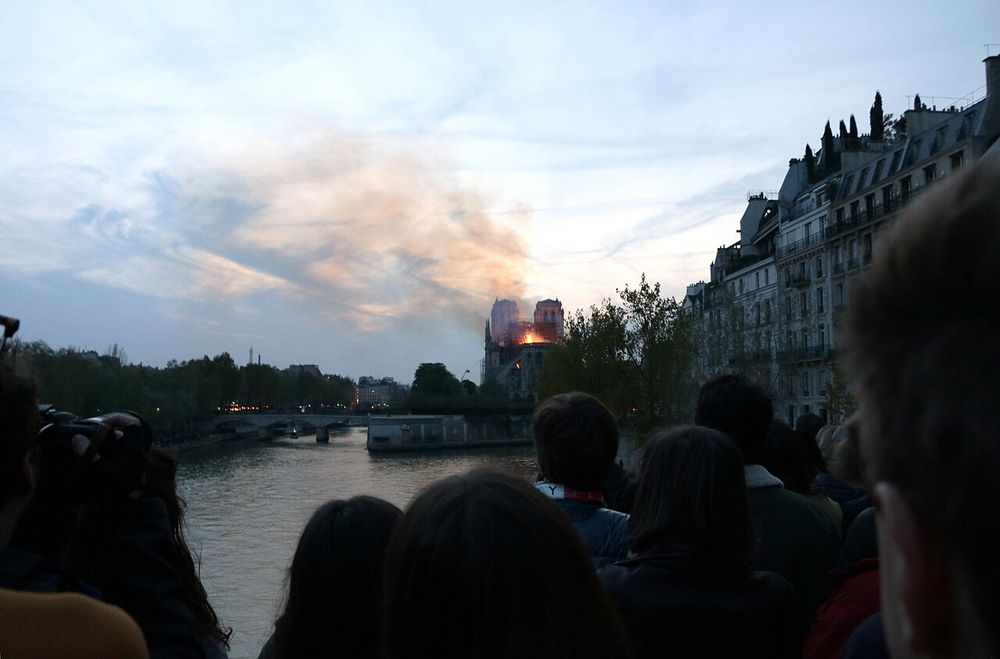
On the evening of 15 April 2019 fire broke out under the roof. The oak frame, eight hundred years old, burned through, and the spire fell. Five years and eight months later the cathedral opened again.
What is here
The cathedral is free. The towers, the treasury and the museum under the square each have their own ticket, and the towers are run by a different body from the church.
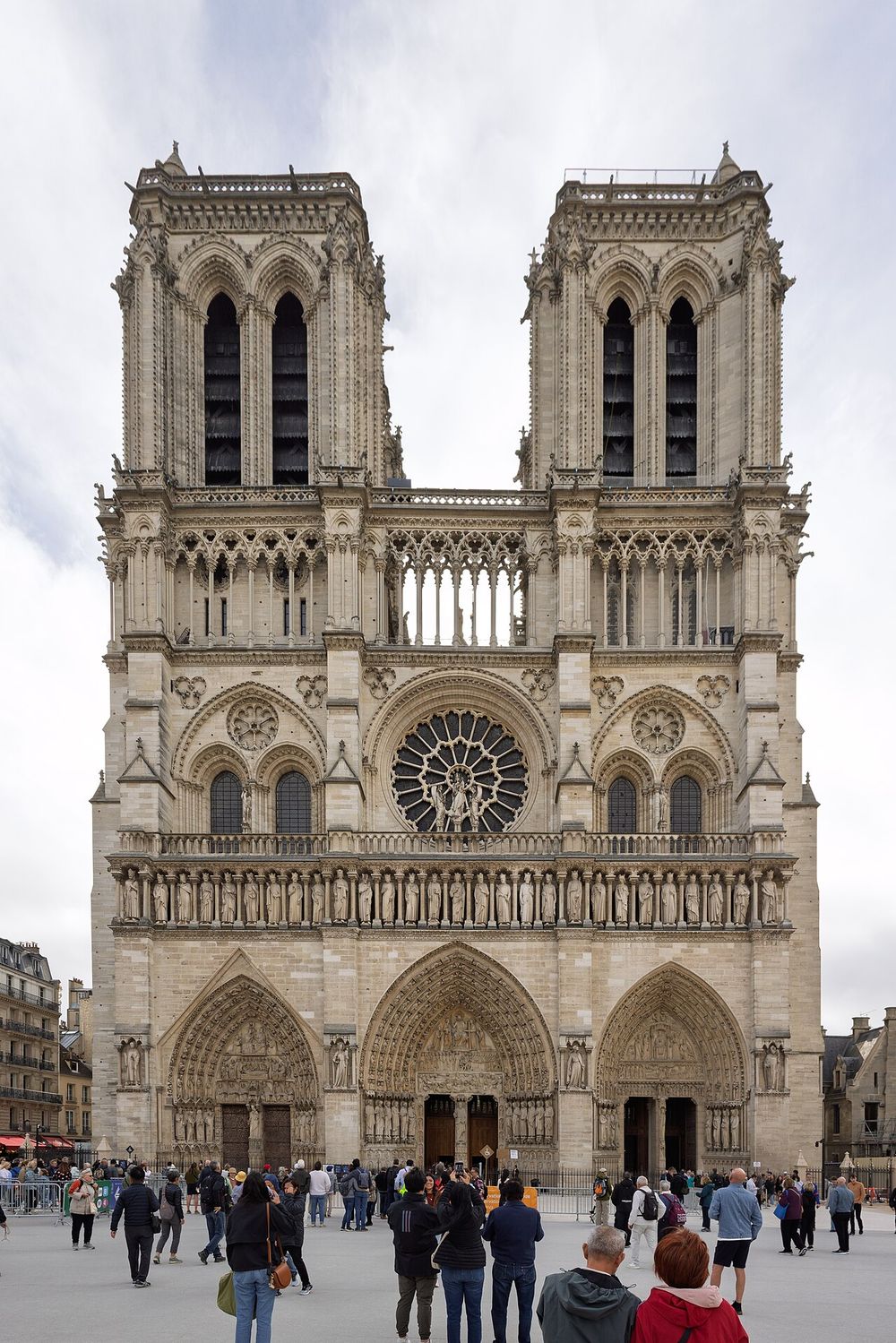
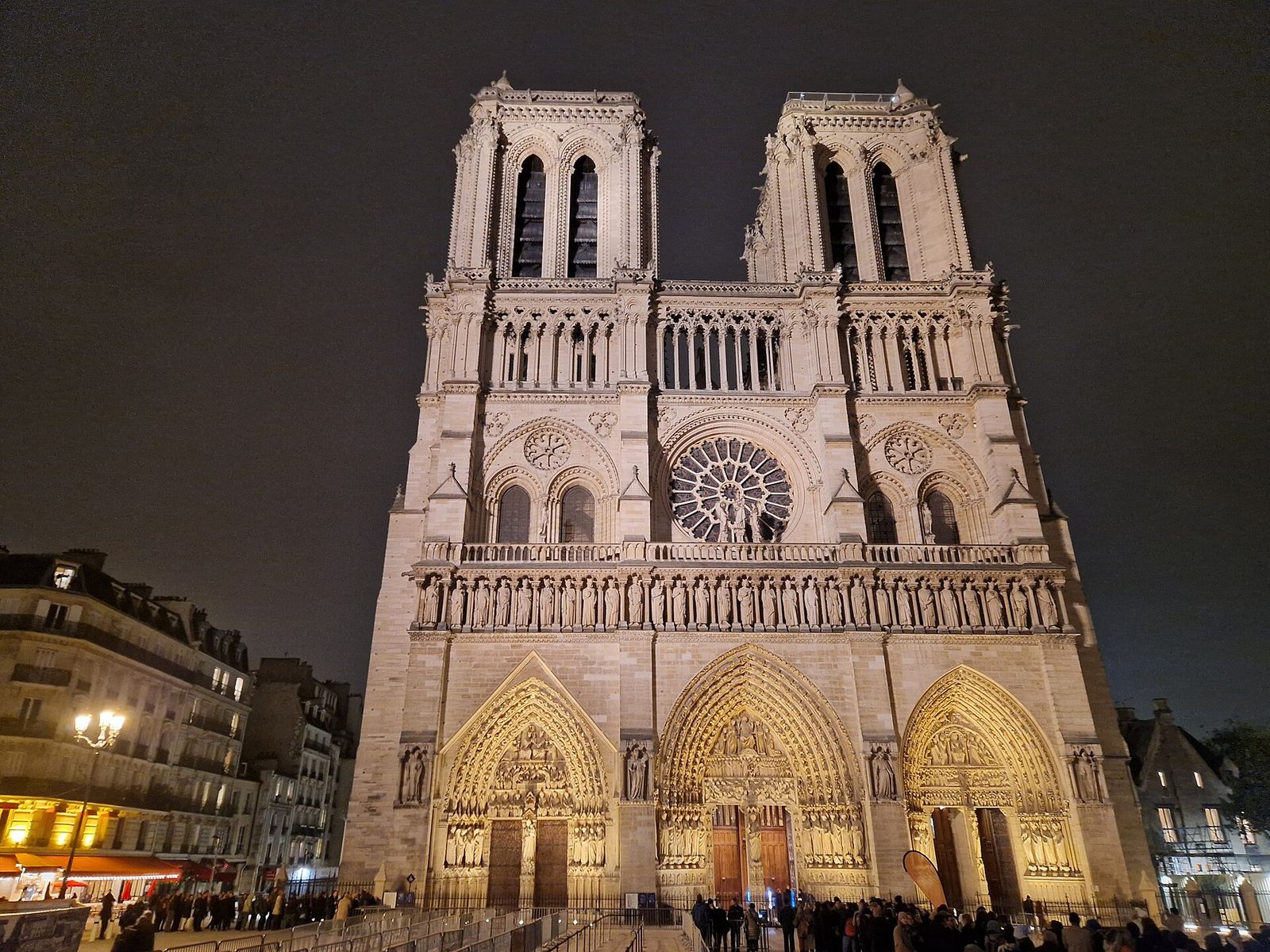
The west front, September 2025The wub, CC BY-SA 4.0
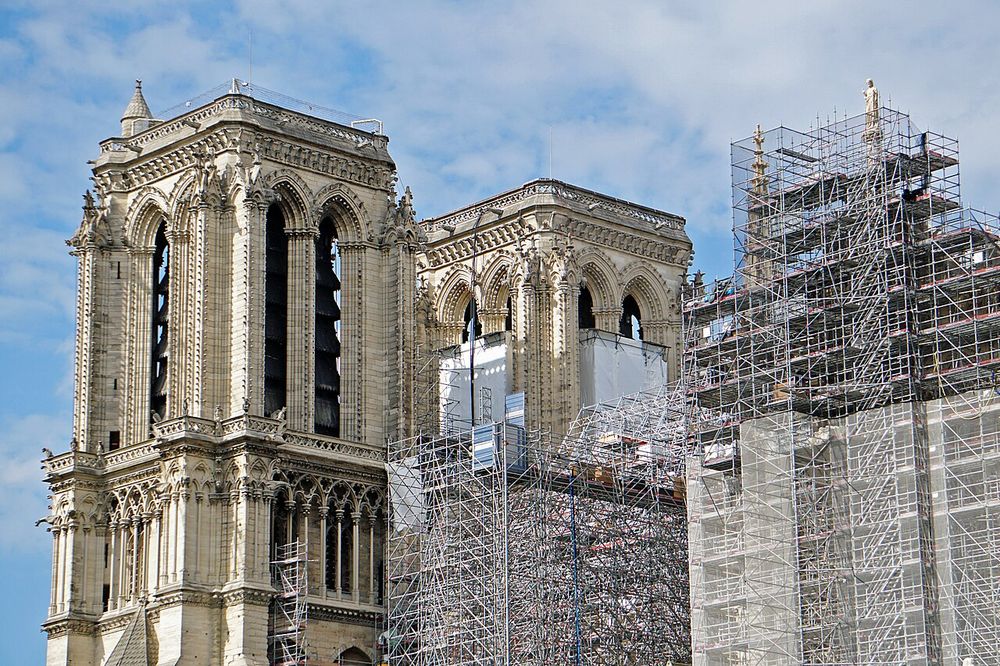
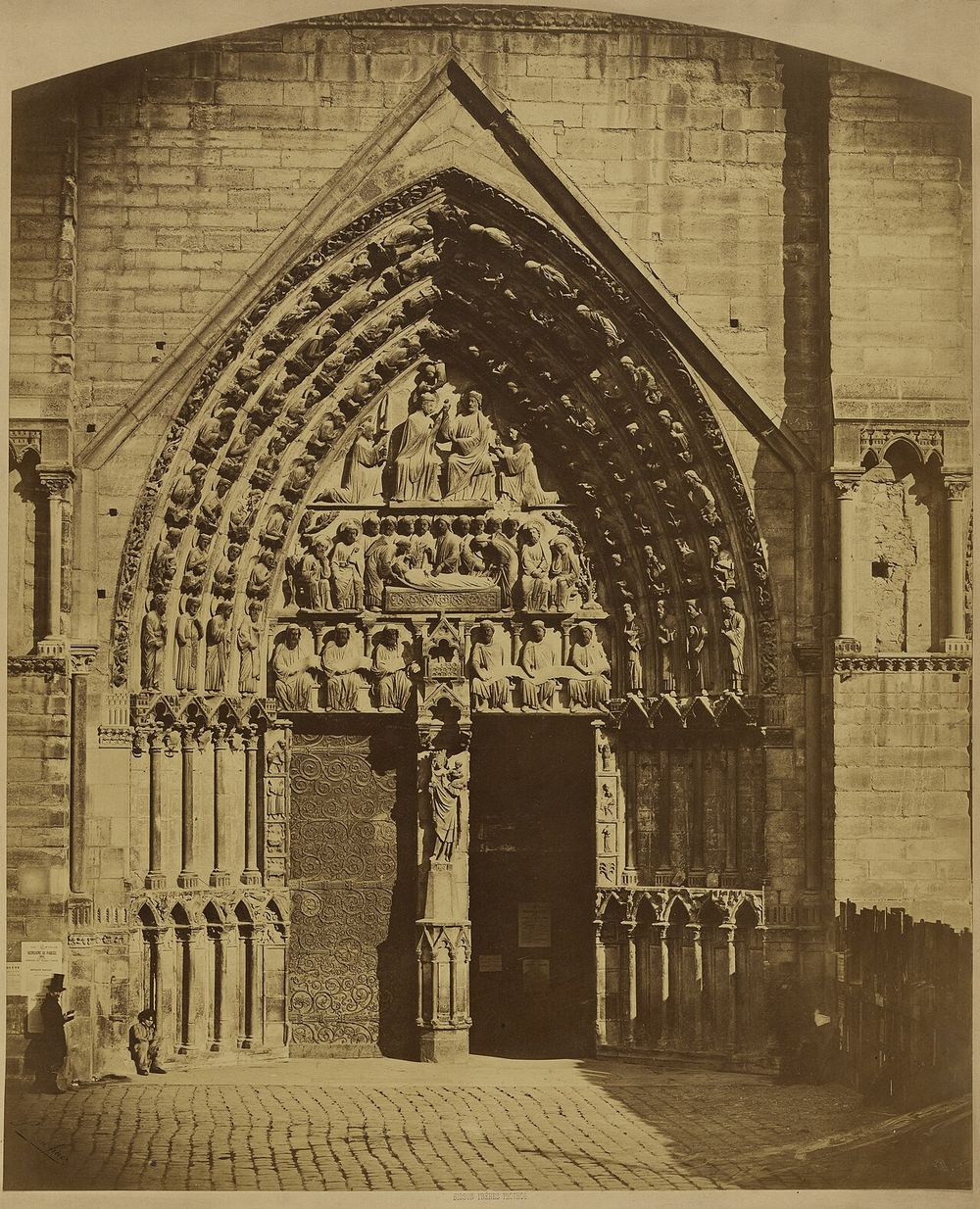
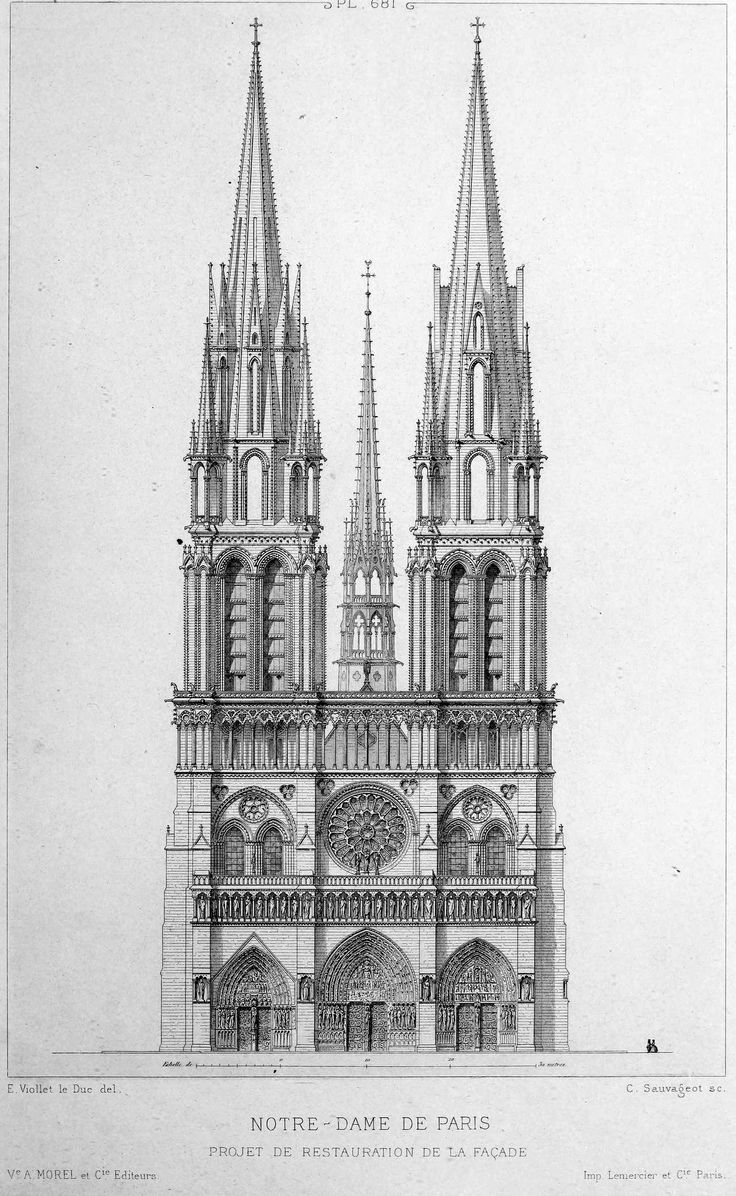
The front is a grid: three doors, a row of twenty-eight kings, a round window, a gallery of thin columns, two square towers. The towers were meant to carry spires and never got them.
Every statue and carving was once painted in bright colours. People who could not read learned the Bible from these doorways.
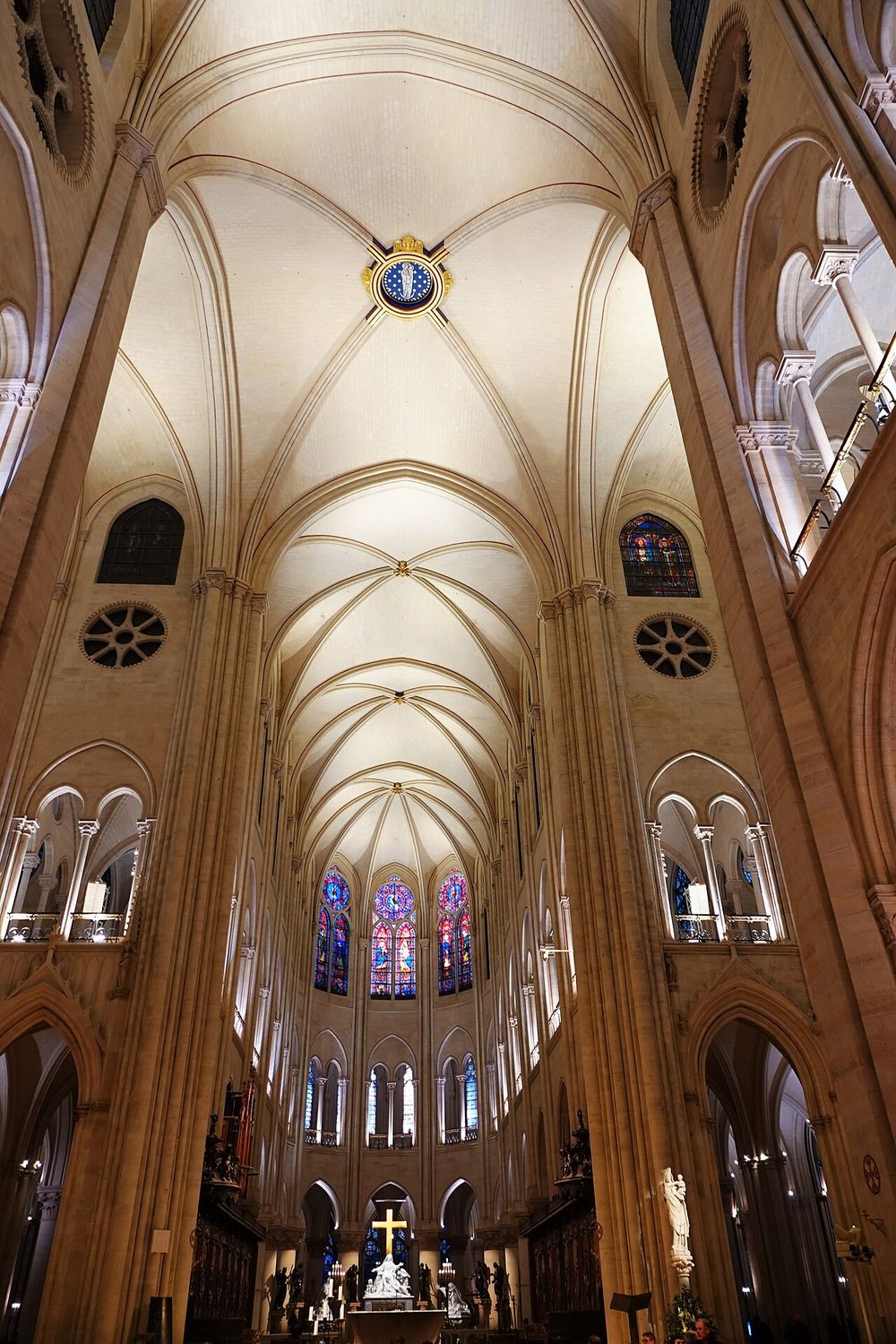
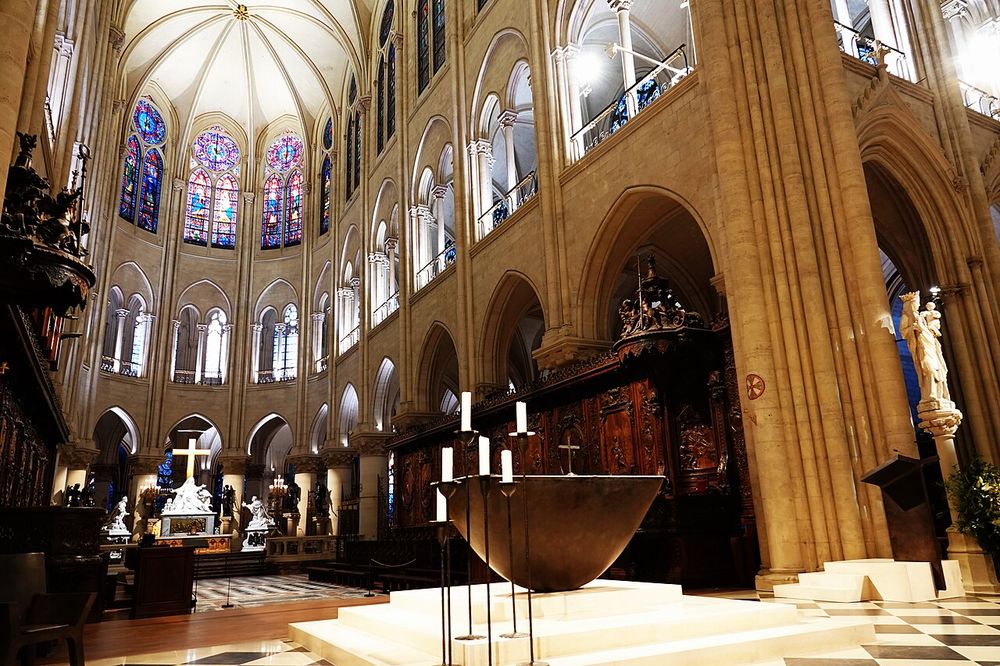
Go in. The stone is pale gold. Before the fire it was grey with eight centuries of candle smoke and dust. The cleaning that followed the fire is the first the whole interior has ever had.
Look up where the nave and the cross-arm meet. That vault fell in when the spire came down. The stones are new. The three great round windows are old, and the fire did not break them.
Things people often get wrong
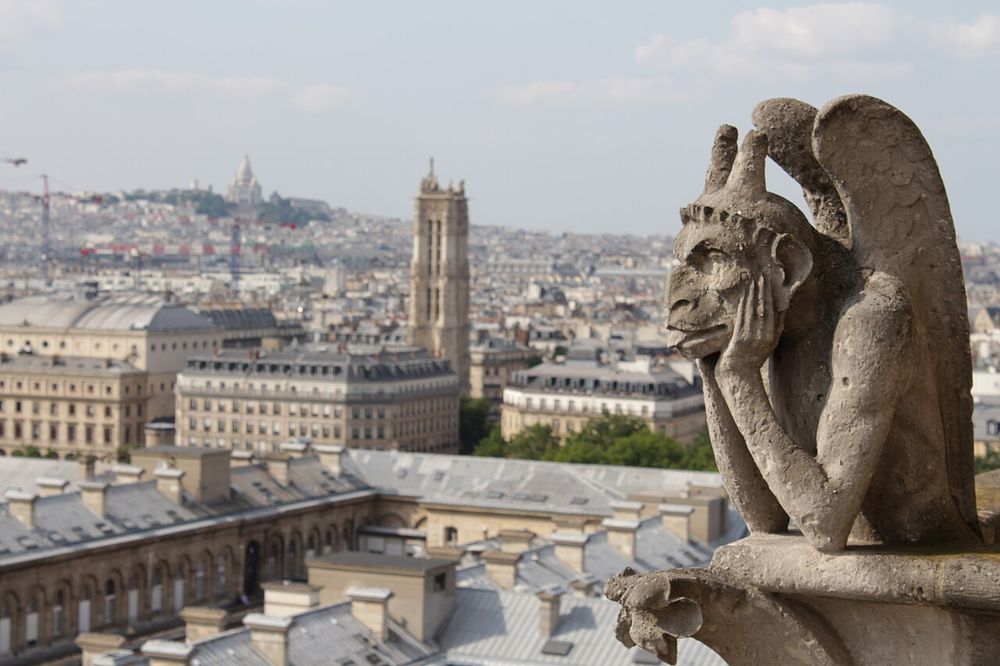
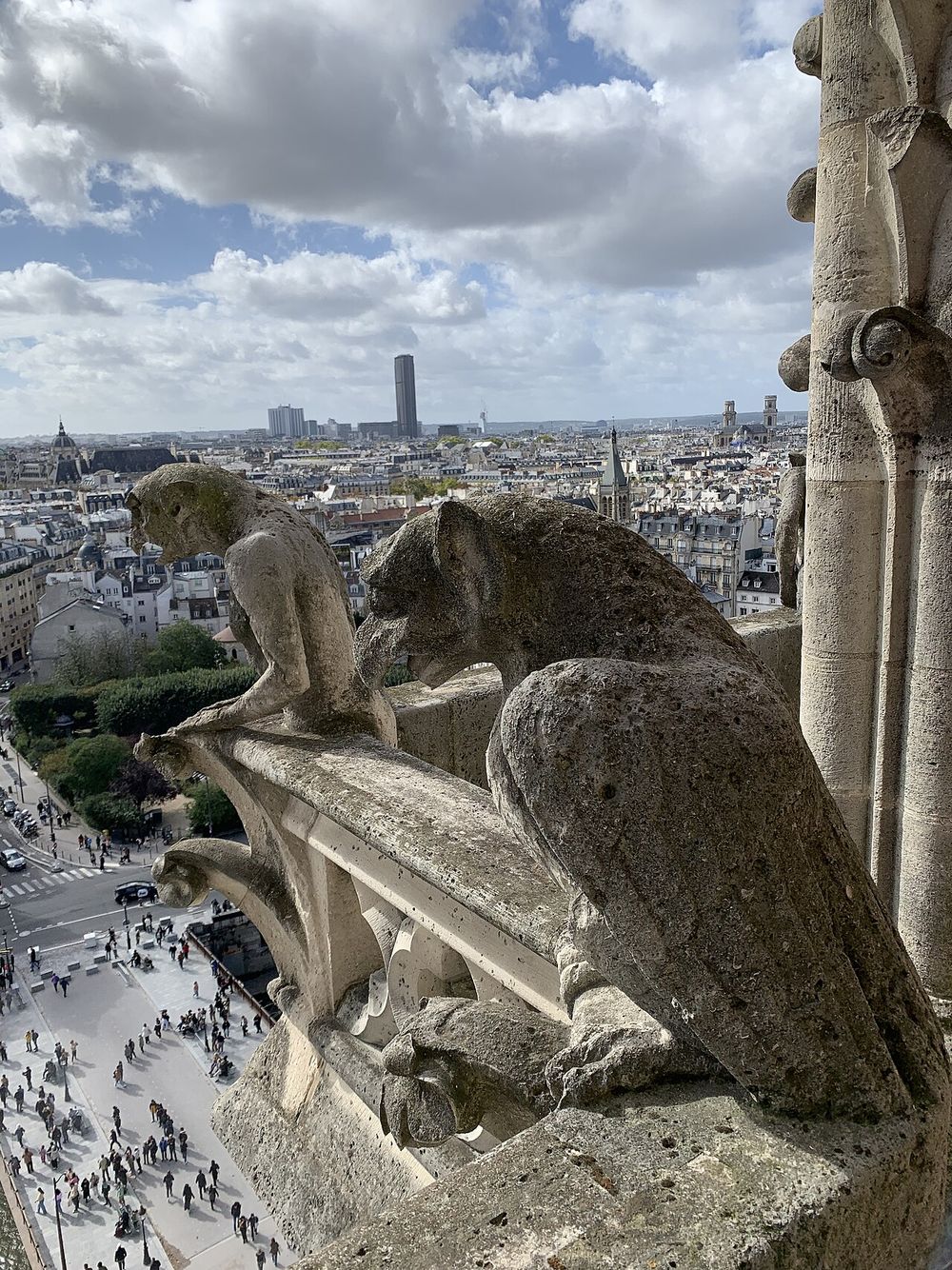
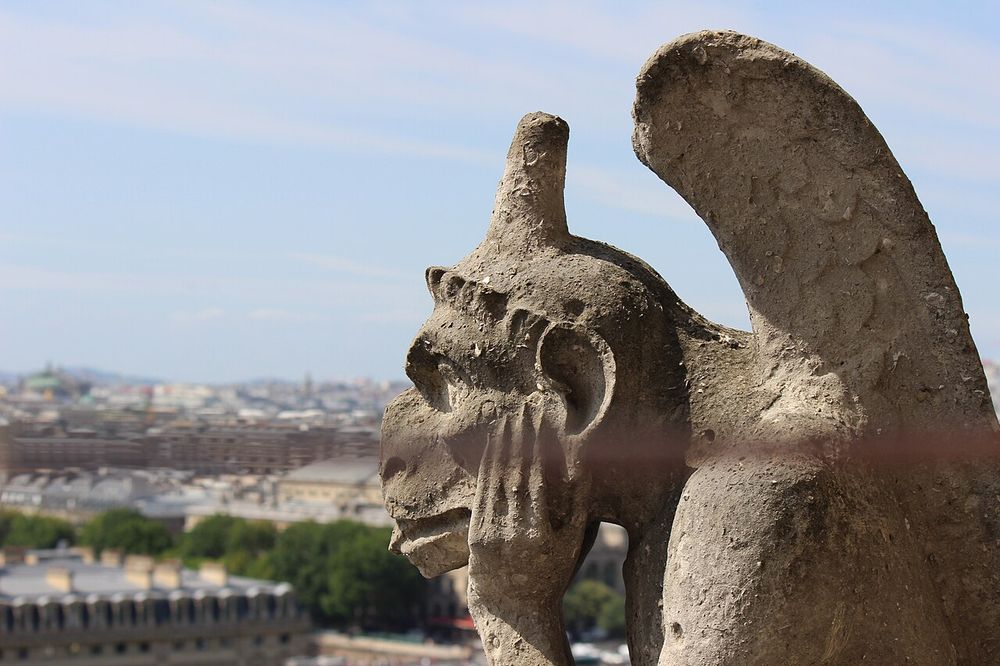
"The gargoyles are medieval." The real gargoyles are the long water spouts, and many are old. The famous monsters that sit on the towers and look down at Paris were invented in the 1850s by the restorer Viollet-le-Duc.
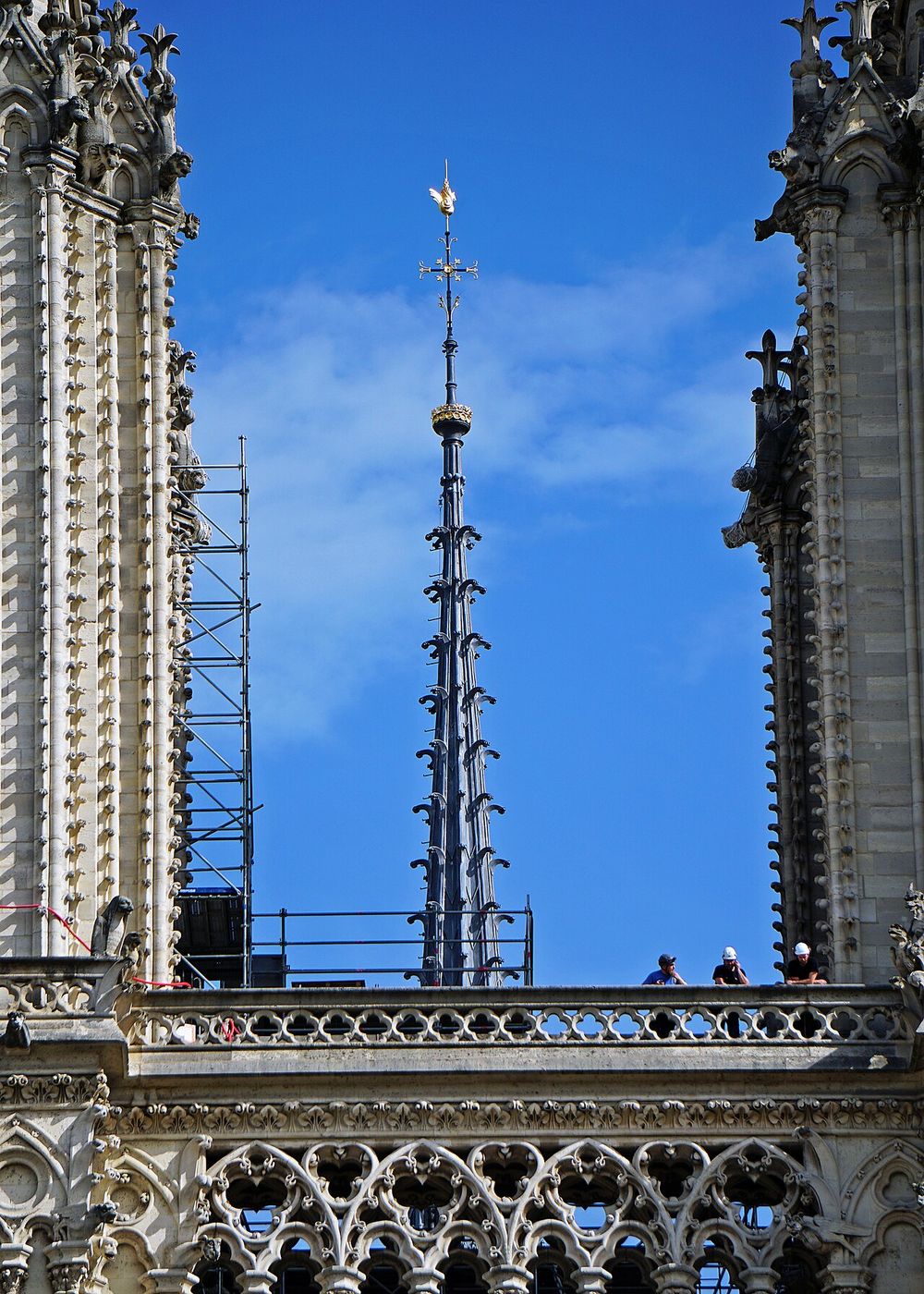
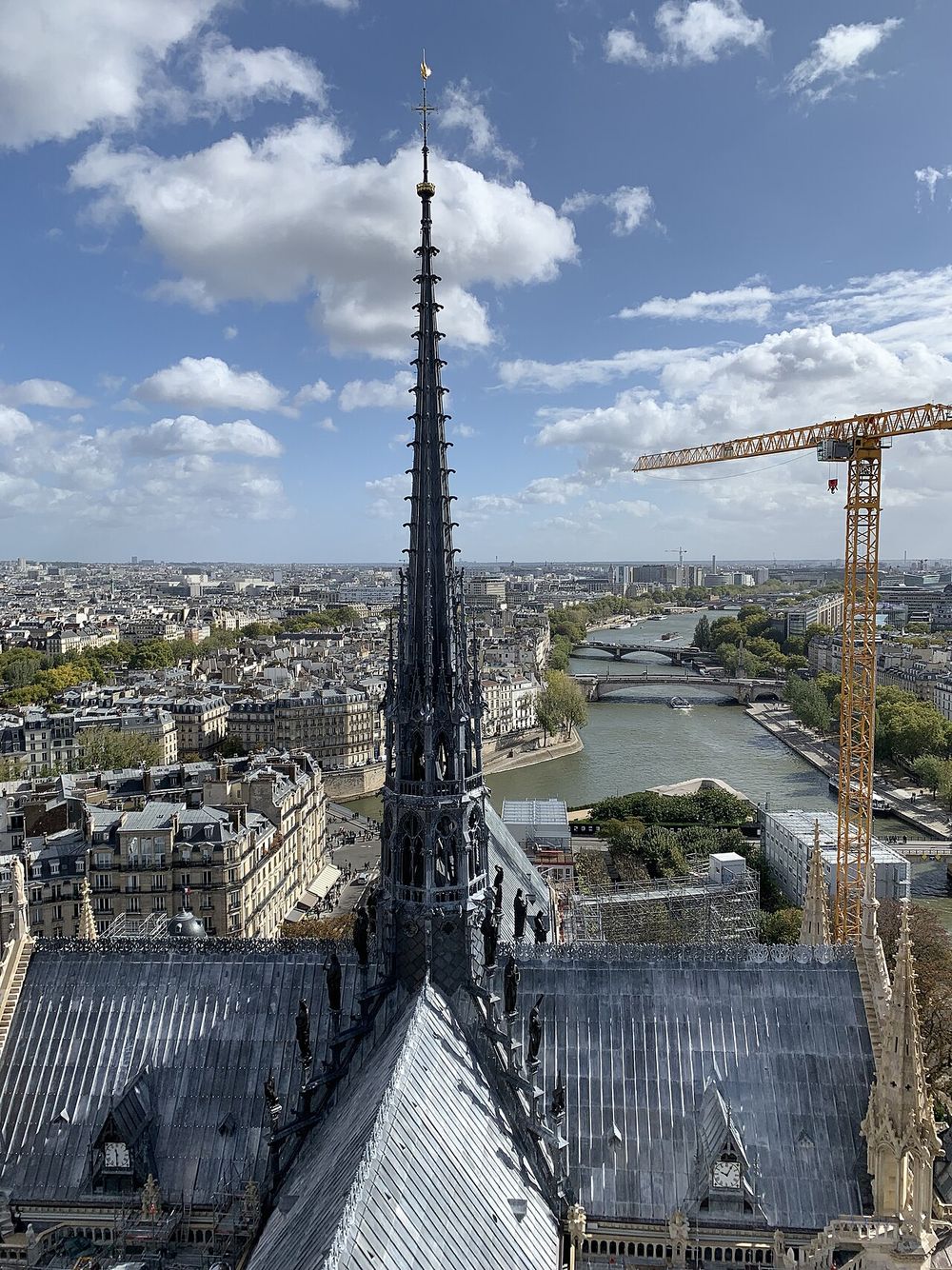
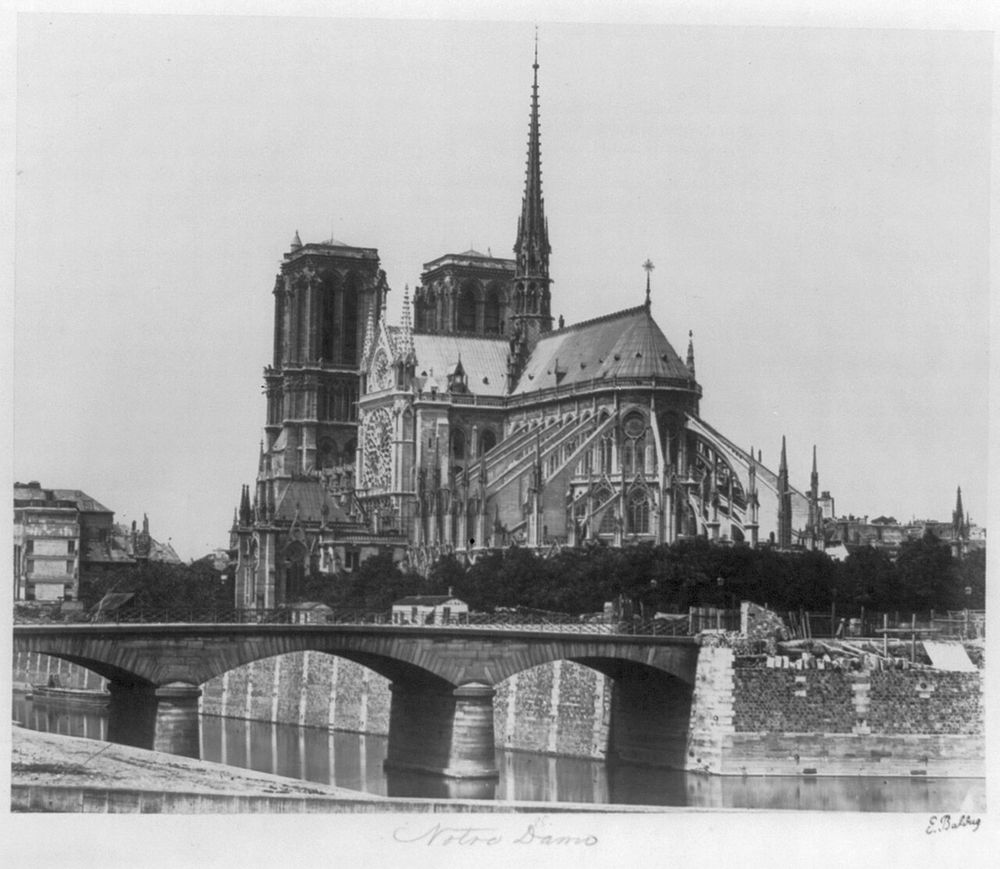
"The spire that burned was medieval." The first spire was taken down in the 1780s because it was unsafe. The one that fell in 2019 was Viollet-le-Duc's, of 1859. The one you see is a copy of his, finished in 2024.
"You have to buy a ticket." The cathedral is free. A free time slot can be booked, and it is not required. Websites that sell entry are selling something that costs nothing.
"Quasimodo lived here." He is a character in a novel of 1831 by Victor Hugo.
People who stood here
Victor Hugo (French novelist and poet, author of Les Misérables)In the 1820s the cathedral was shabby and half-ruined, and there was talk of pulling it down. Hugo climbed its towers again and again, and in 1831 published a novel in which the building is the main character. The book made all France care, and the restoration followed. Chinese readers also know him for a letter of 1861 in which he condemned the British and French armies for burning the Old Summer Palace in Beijing. He may have stood where you stand, counting broken statues.
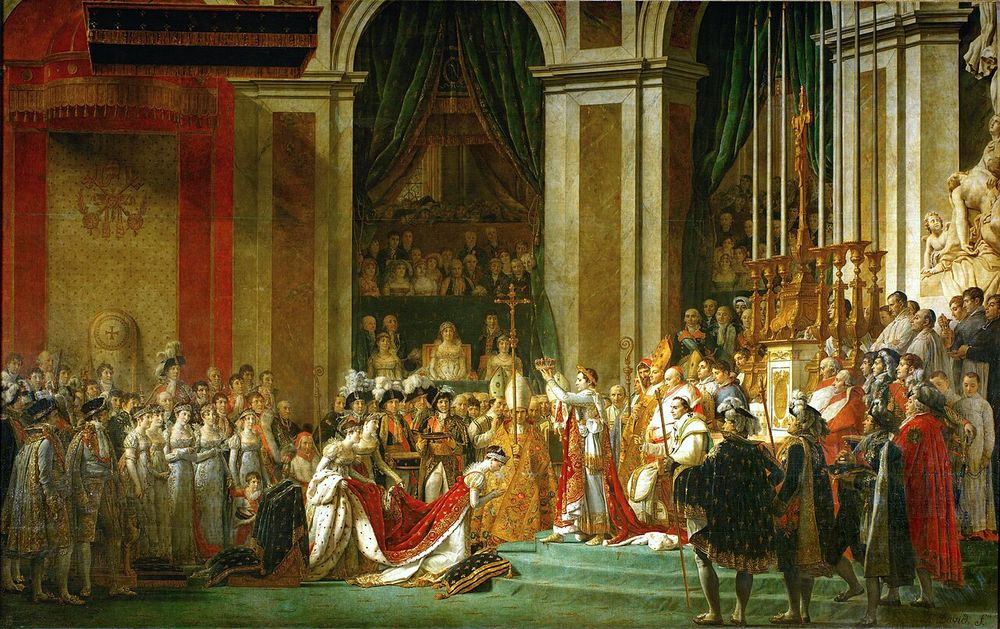
Napoleon Bonaparte (general who made himself emperor of the French)On 2 December 1804 he came here to be crowned. The Pope had travelled from Rome to do it. At the last moment Napoleon took the crown from the altar and put it on his own head, then crowned his wife Josephine. The church had been whitewashed and hung with cloth to hide its condition. He stood at the crossing, where the new altar is now.
Go deeper: eight stops, from the square to the towers
The first three stops are outside. Then you go in, and the last two stops are the fire and the towers.
1. The square and the zero point
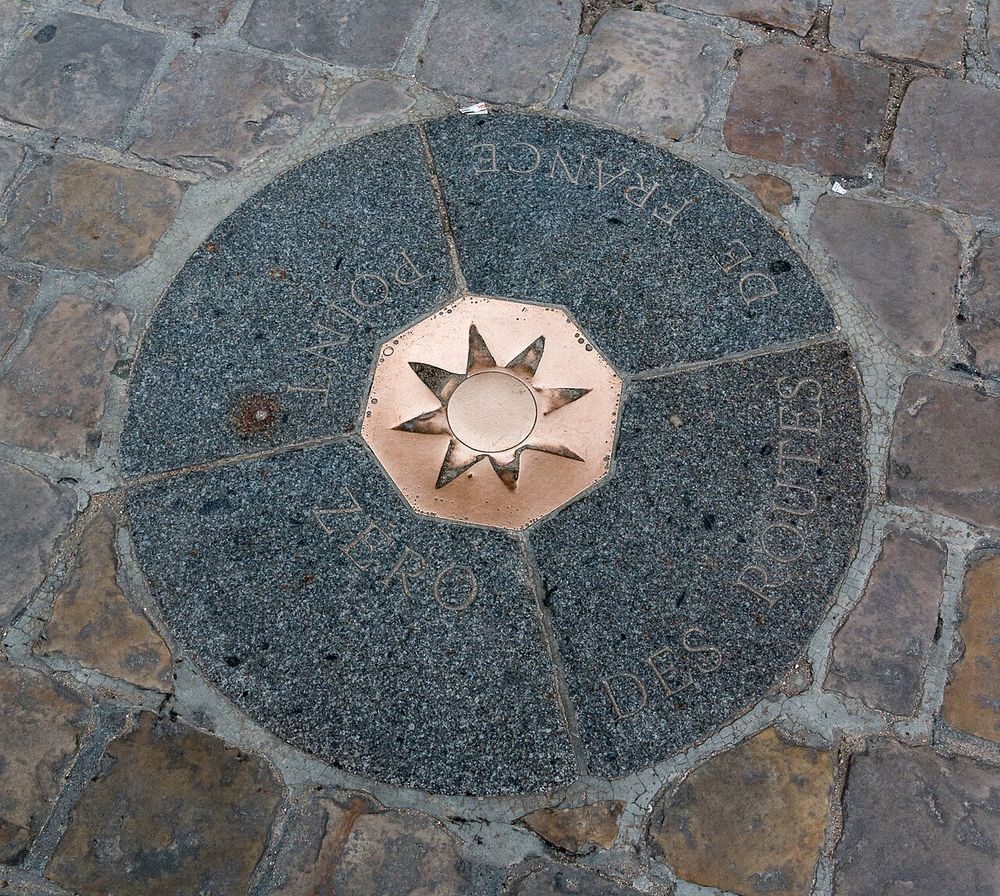
The zero point of the roads of FranceDietmar Rabich, CC BY-SA 4.0
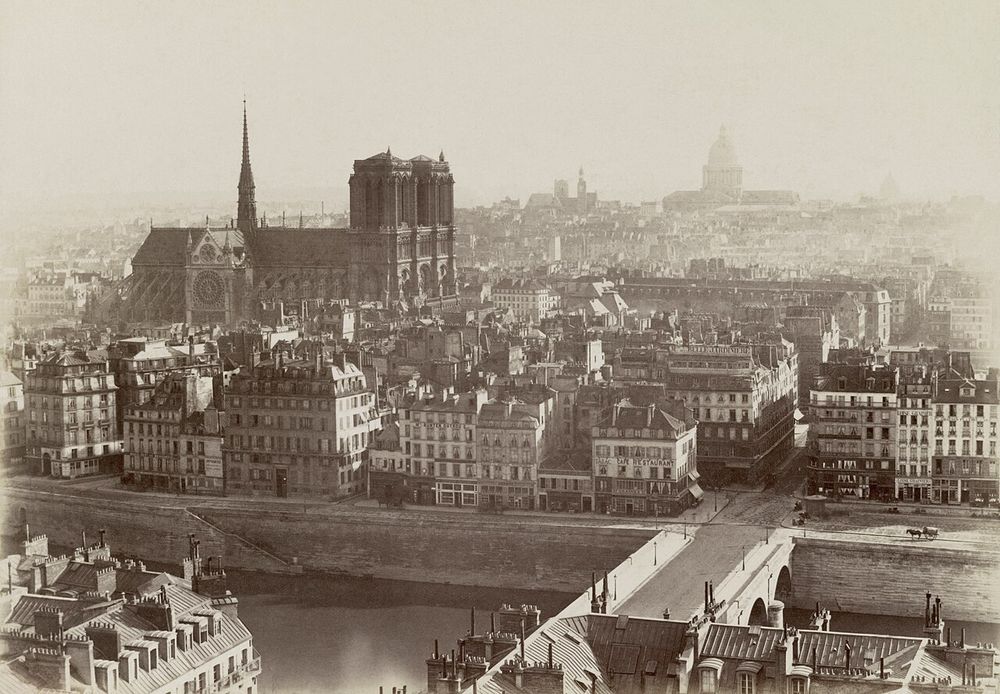
Set in the paving of the square is a small bronze star. Every distance by road in France is measured from it. Paris began on this island as a Celtic and then a Roman town. Under the square is a museum of the Roman and medieval walls found there.
In 1163 Bishop Maurice de Sully, a peasant's son, began to pull down the old cathedral and build a new one a third longer. He did not live to see even the nave finished.
2. The three doors
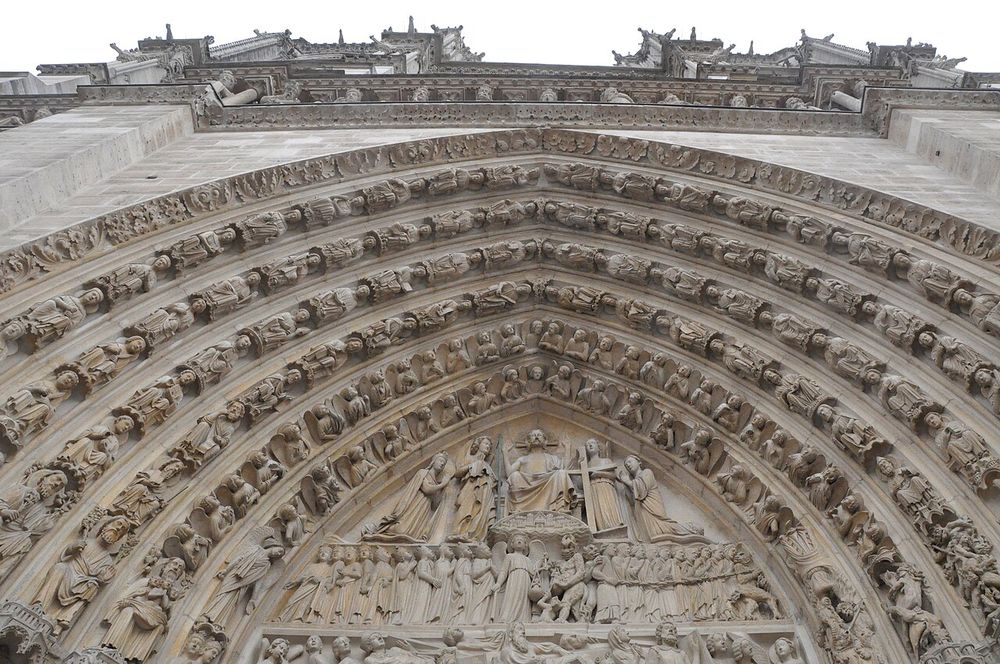
The Last Judgment over the middle doorPhilippe Alès, CC BY-SA 3.0
The middle door shows the Last Judgment. Read it from the bottom up. The dead climb out of their graves. An angel and a devil weigh souls, and the devil is pressing down his side of the scale. Christ sits at the top. The saved go left, to heaven. The damned are led right, in chains.
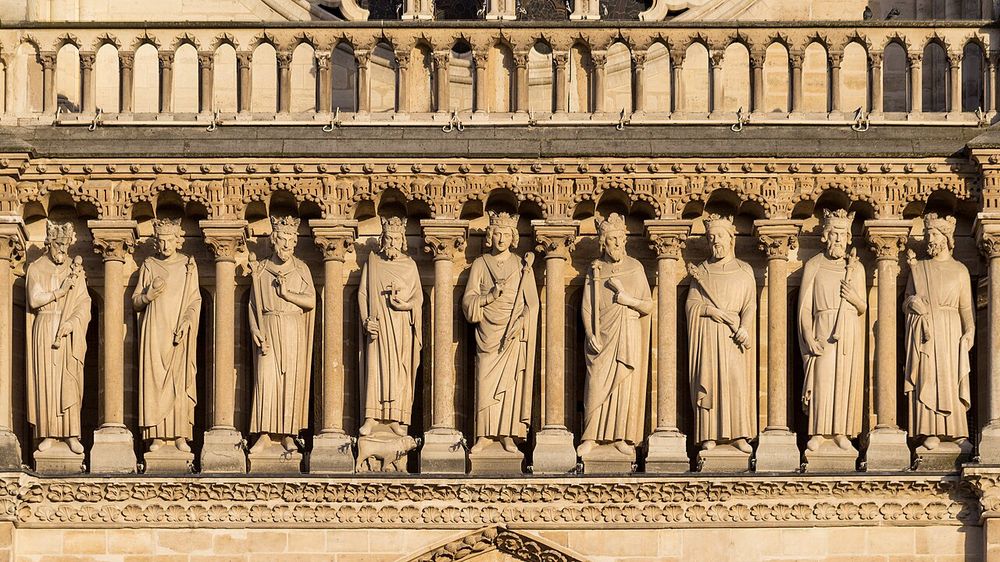
The gallery of kingsBobo Boom, CC BY 2.0
Above the doors stand twenty-eight kings of ancient Judah, ancestors of Mary. In 1793 revolutionaries took them for kings of France and pulled them down. Those you see were carved in the 1840s. In 1977 workmen digging under a bank across the river found twenty-one of the original heads, buried by a royalist who had bought them as building stone.
3. The south side: stone arms
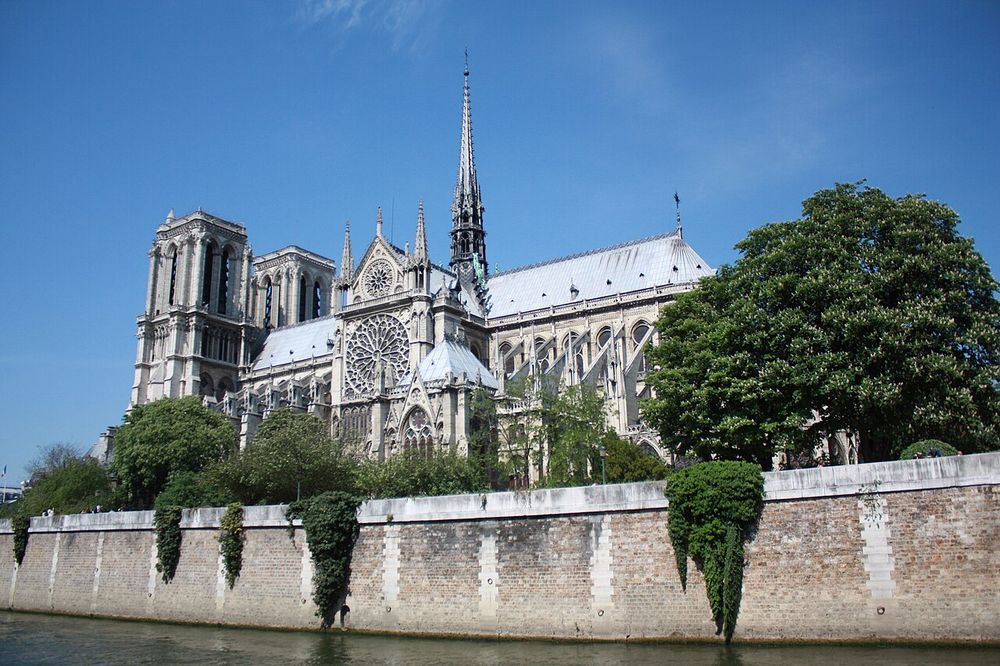
The south side from the river in 2011, with the old spireDANIEL JULIE from Paris, France, CC BY 2.0
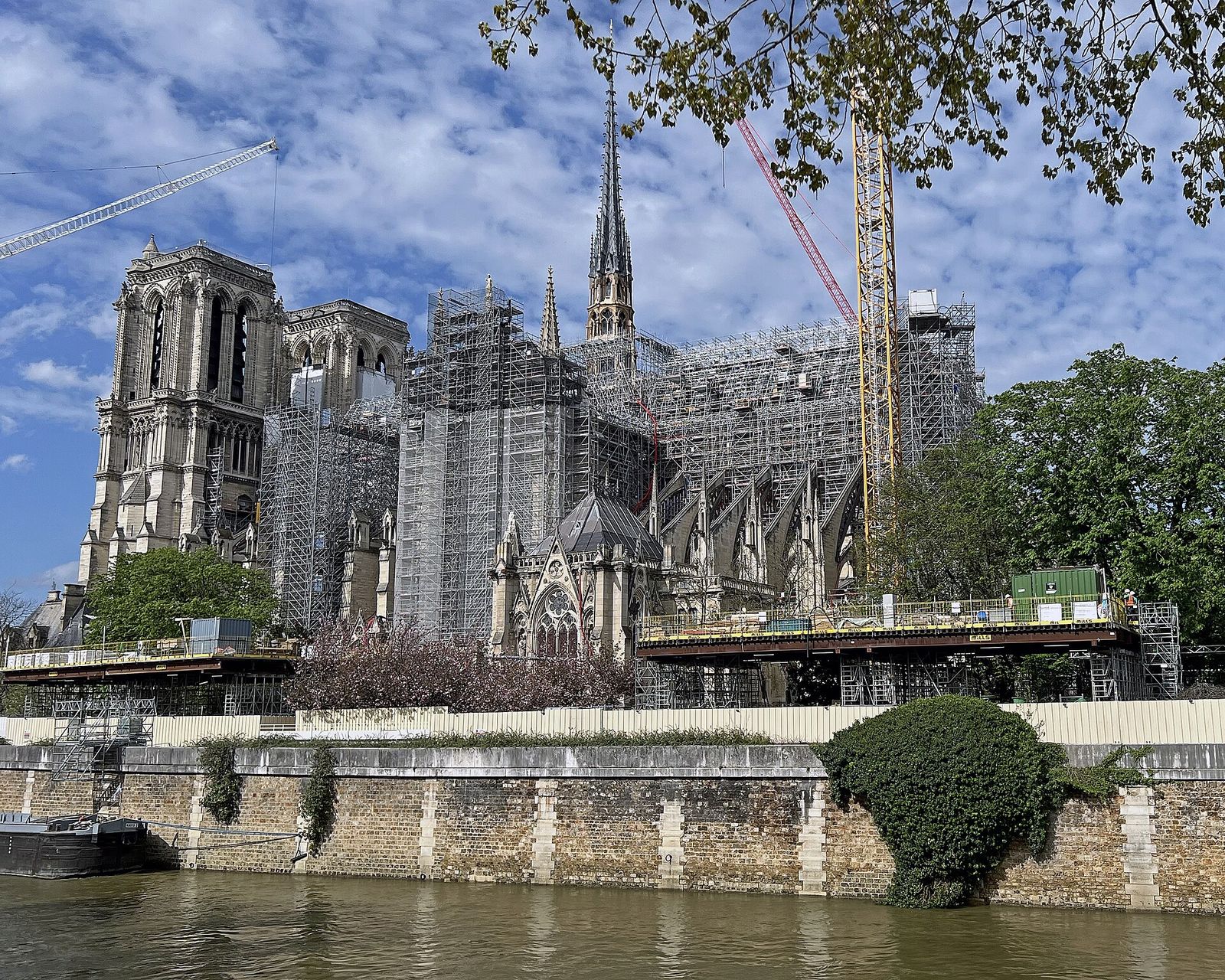
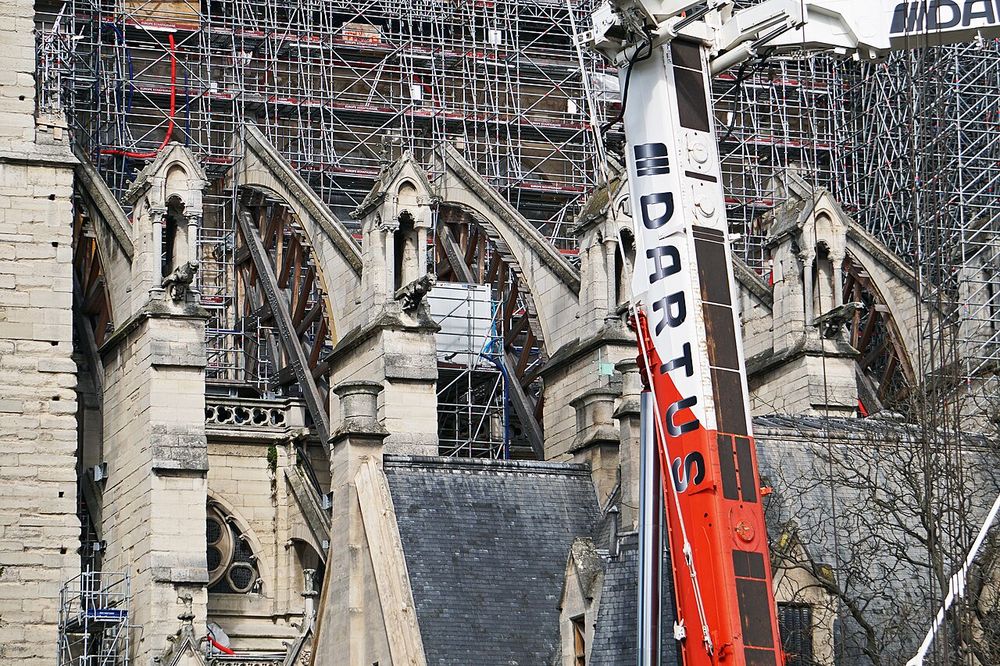
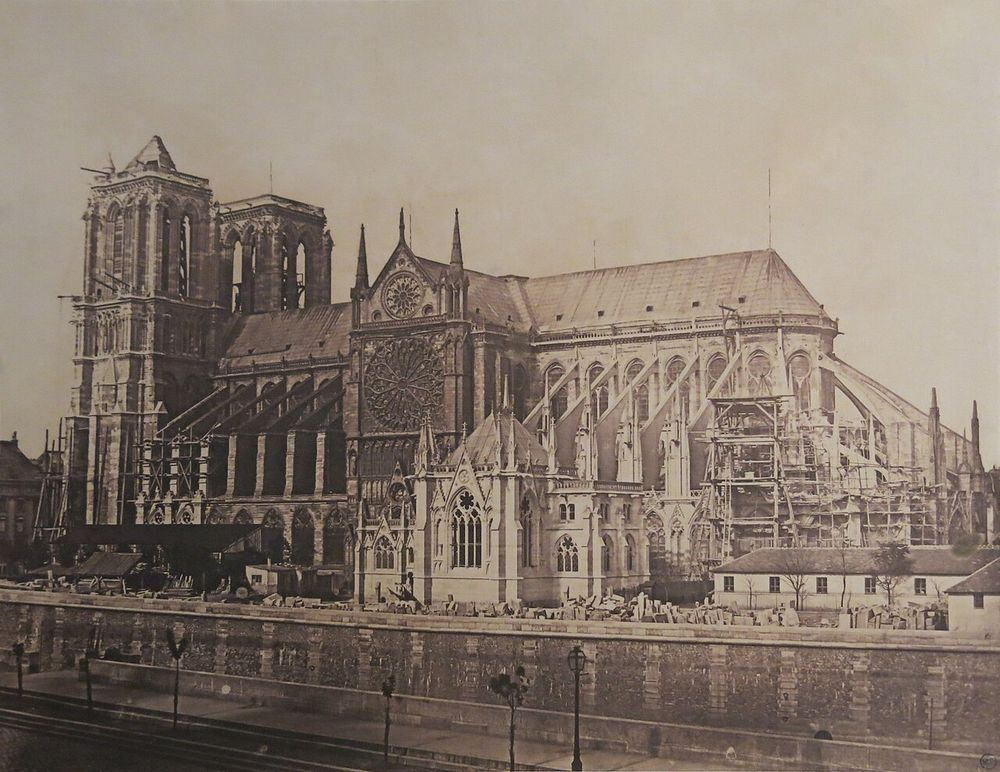
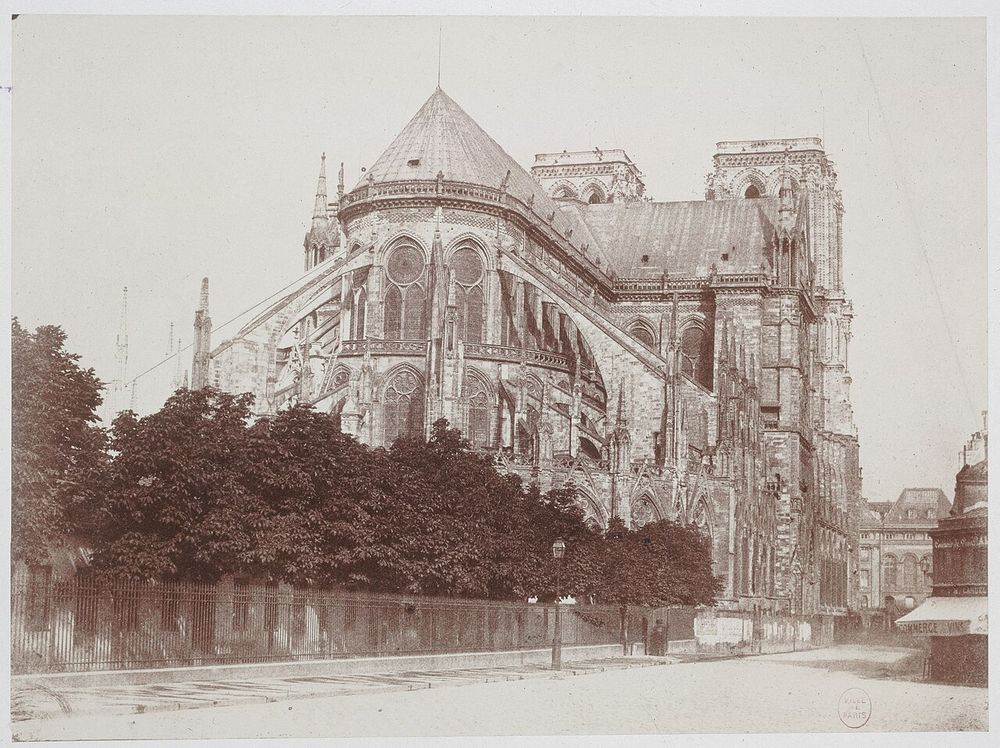
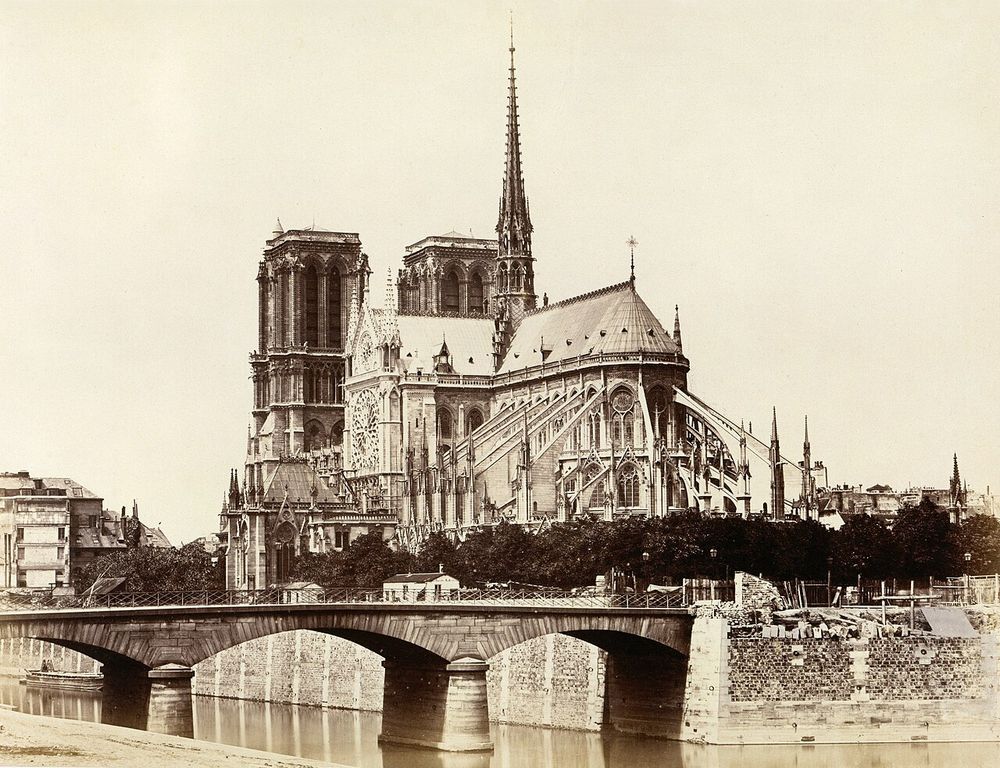
Walk round to the river side. The stone arches that leap from the outer piers to the top of the wall are flying buttresses. They catch the outward push of the vault and carry it to the ground. With them the walls no longer had to be thick, and could be opened into glass.
The builders here were among the first to use them, about 1180.
The new spire, April 2024Mariordo, CC BY-SA 4.0
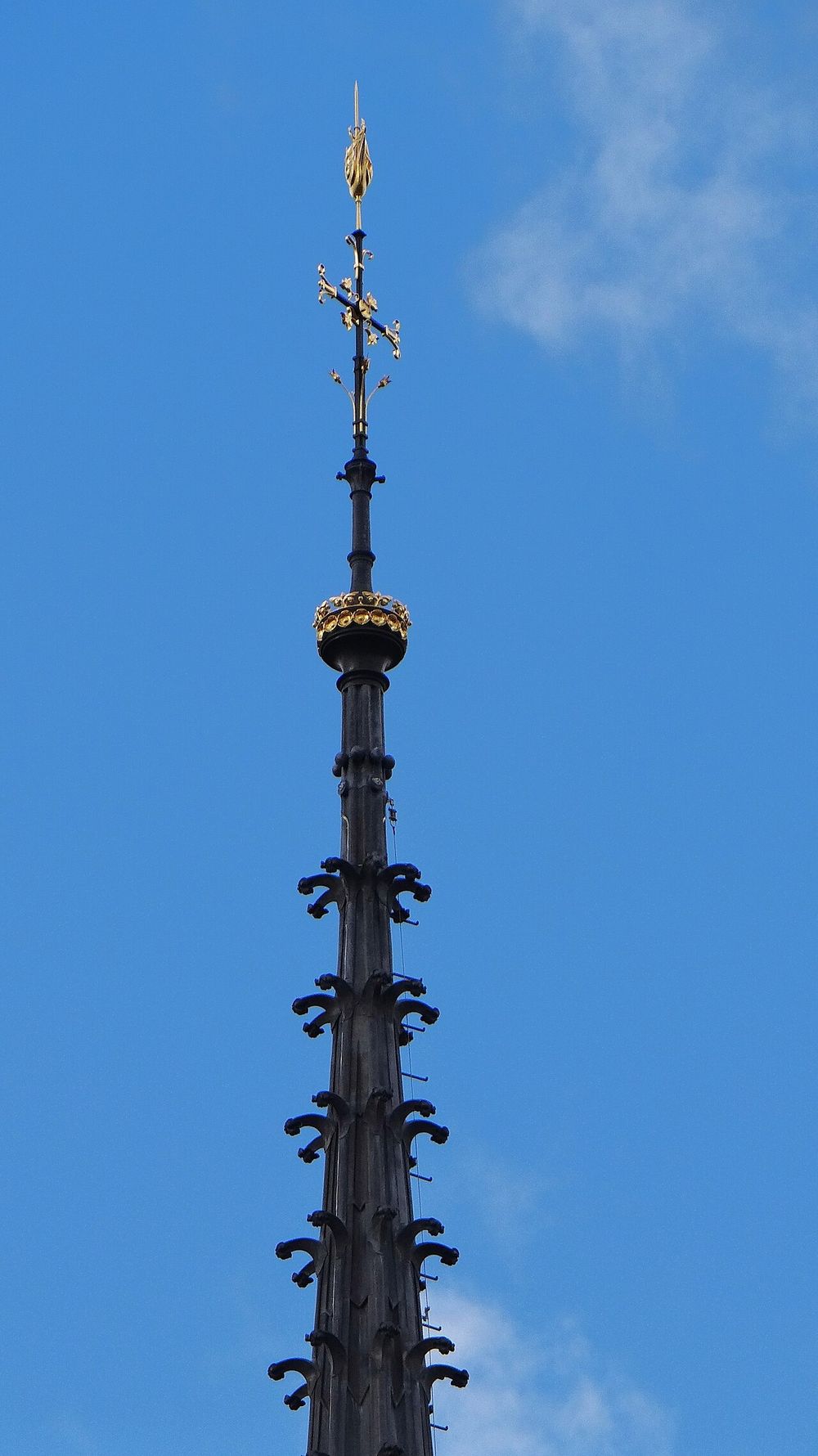
Above the roof rises the new spire, 96 metres from the ground. It is made of a thousand oaks and covered in lead, exactly as it was in 1859. At its tip is a new golden rooster. Inside the rooster are relics saved from the old one, and a roll with the names of the two thousand people who worked on the rebuilding.
4. The nave: what the cleaning showed
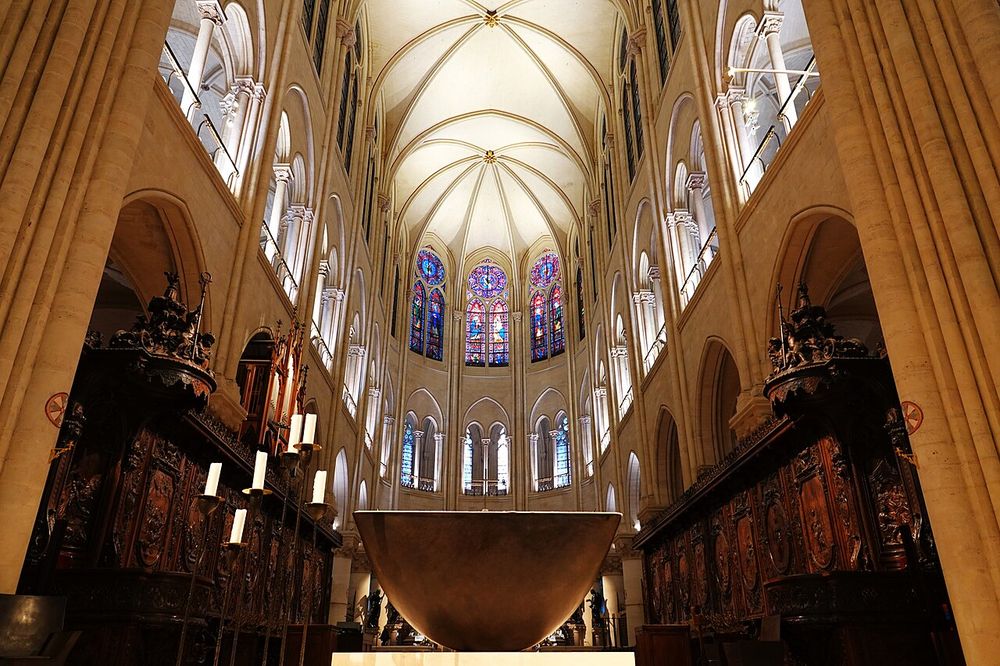
The cleaned vault of the choirIbex73, CC BY 4.0
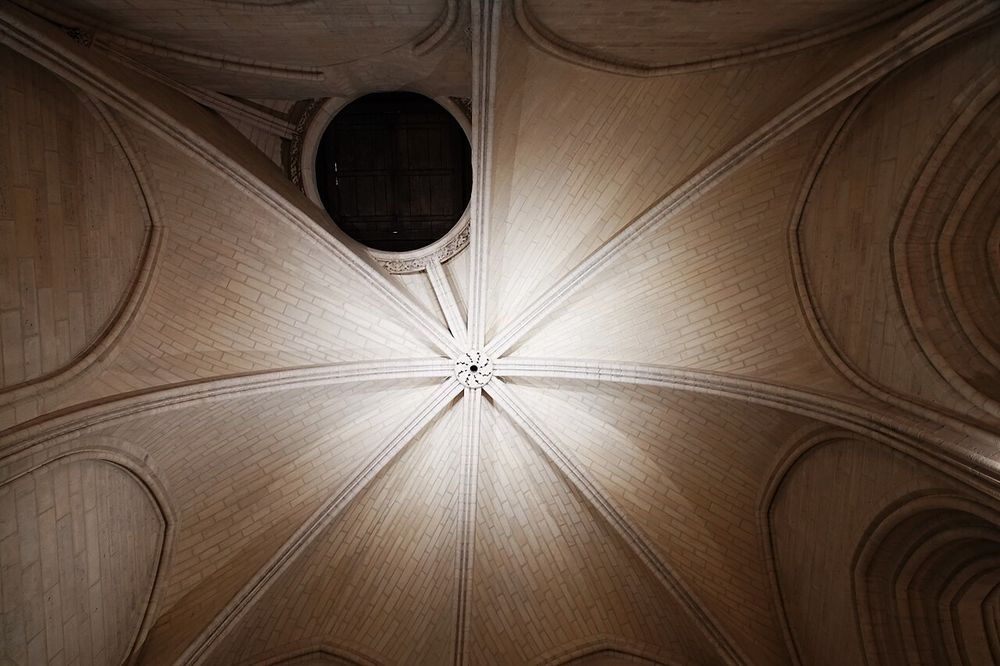
The vault is 33 metres above you. Each bay is carried by two crossing ribs of stone, and the thin web between them is only fifteen centimetres thick. That thin web is what held when the burning roof fell on it.
A boss where the ribs of the vault meetIbex73, CC BY 4.0
After the fire every surface was vacuumed, then coated with a latex film that was peeled off with the dirt in it. The chapels along the sides turned out to be painted in strong reds, blues and golds, done in the 1860s and long hidden under grime.
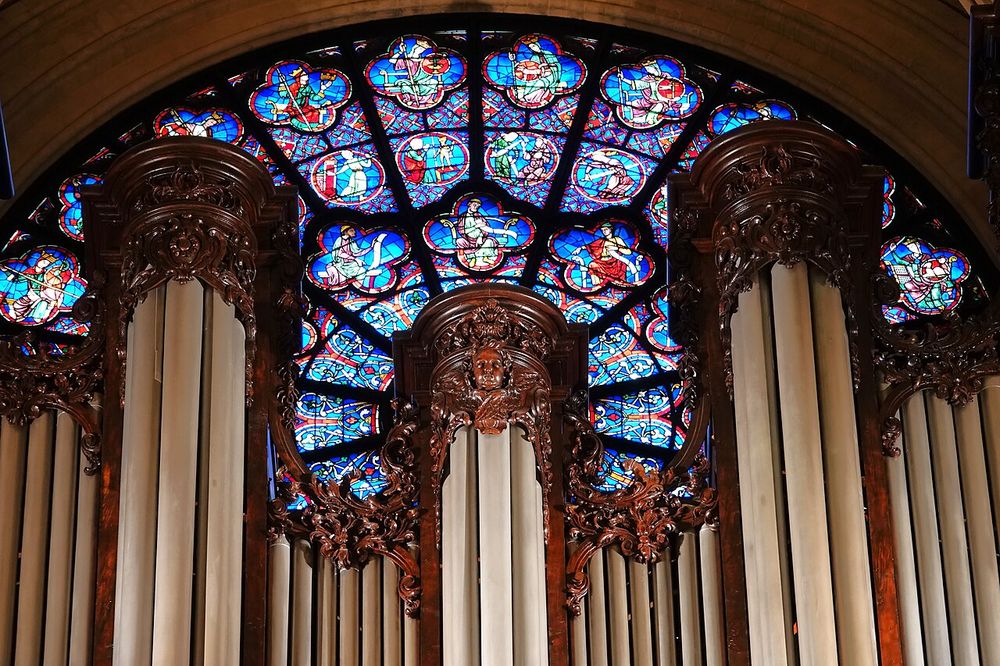
The great organ under the west rose windowIbex73, CC BY 4.0
The great organ has eight thousand pipes. None burned or melted, but all were coated in lead dust. They were taken out, cleaned one by one and tuned again over six months of nights.
5. The rose windows
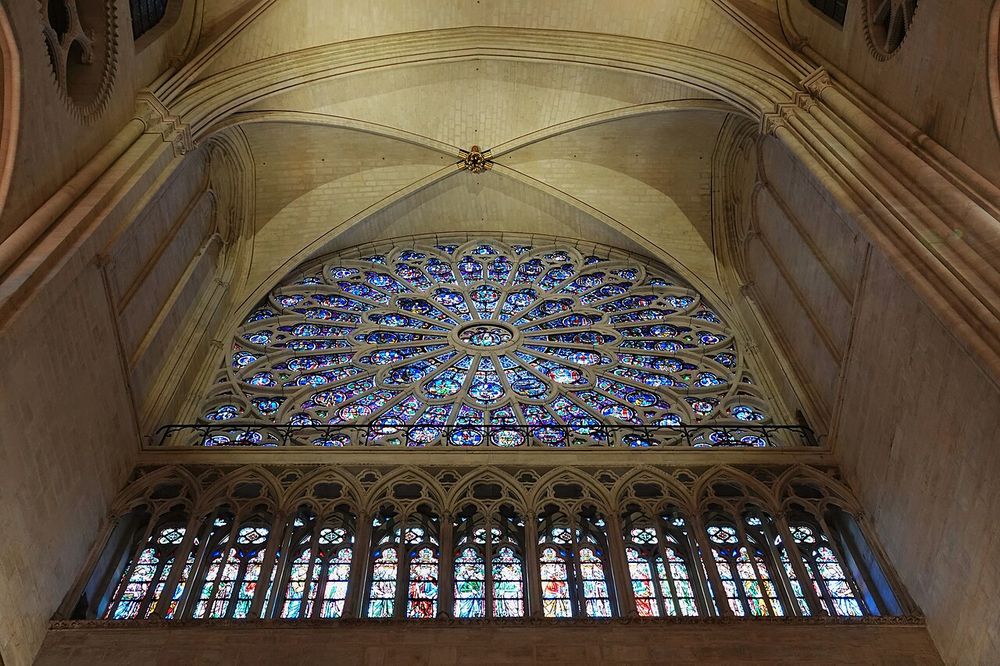
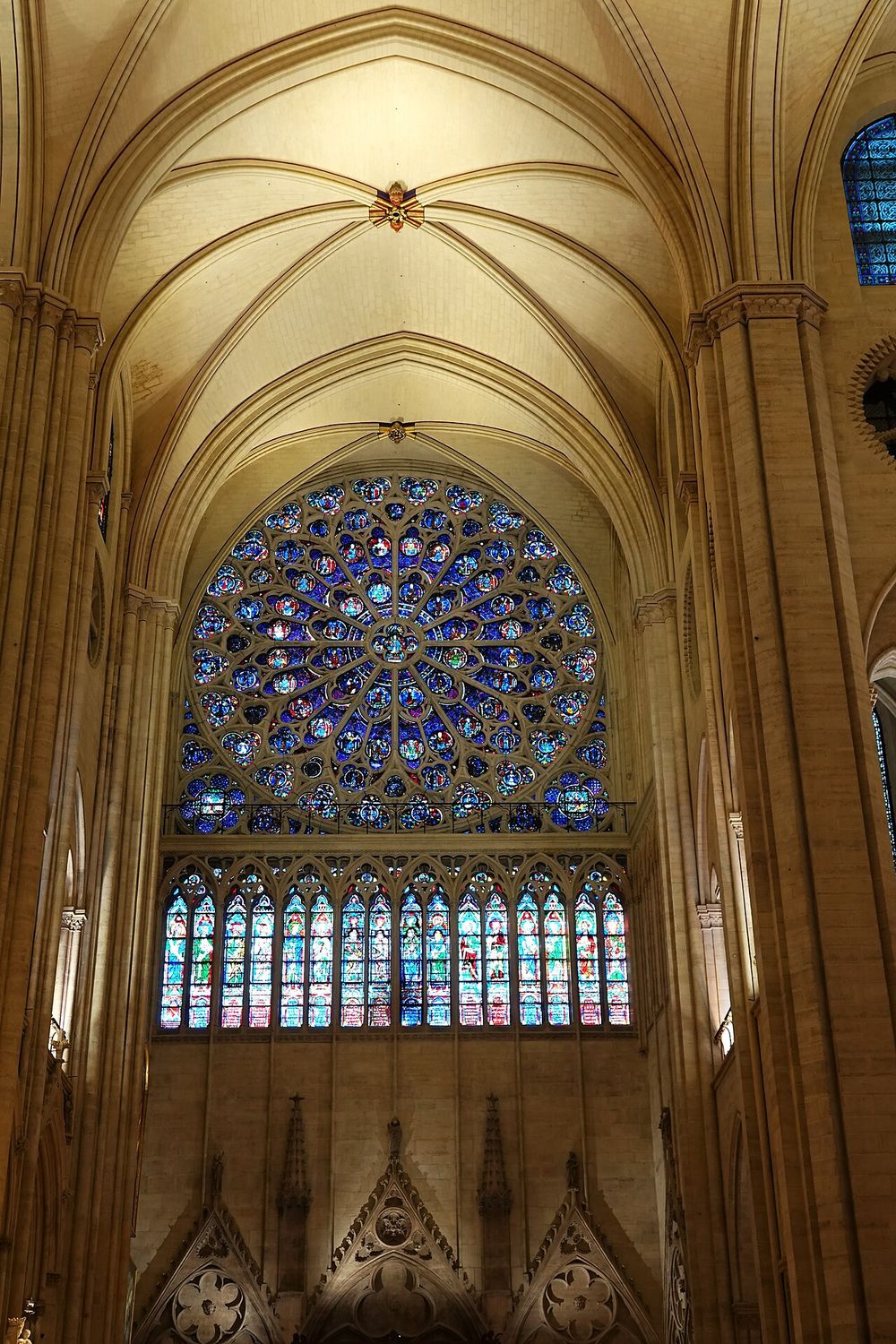
The north rose window, December 2024Ibex73, CC BY 4.0
The two great round windows at the ends of the cross-arm are almost thirteen metres across. The north one, of about 1250, still has most of its first glass. Its colour is a deep blue-violet, and it tells the Old Testament. The south one, given by King Louis IX about 1260, tells the New.
The south rose windowIbex73, CC BY 4.0
On the night of the fire the lead that holds the glass was within a few degrees of melting. The windows were taken apart afterwards, cleaned, and put back.
6. The choir, and a crown of thorns
The painted choir screen of the 1300sUoaei1, CC BY-SA 4.0
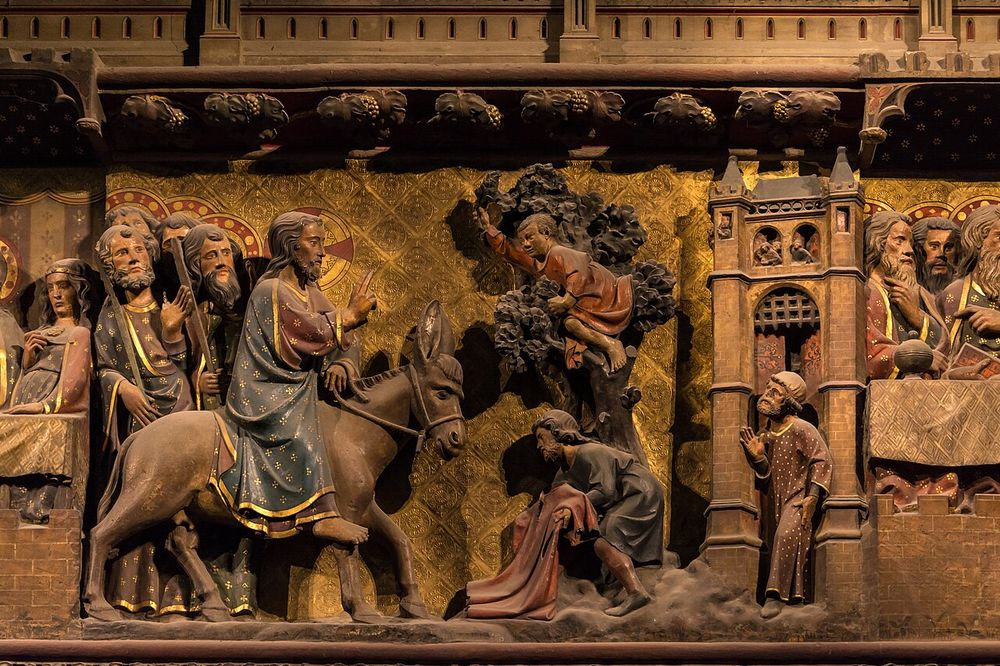
Round the outside of the choir runs a carved and painted screen of the 1300s. It tells the life of Christ in small scenes at eye level, and it is the best place in the church to see what medieval colour looked like.
At the far east end a new shrine holds the cathedral's greatest relic, a circle of rushes said to be the crown of thorns placed on Christ's head. Louis IX bought it in 1239 from the emperor in Constantinople for more than it cost him to build a chapel to keep it in. On the night of the fire a chain of firemen and clergy carried it out.
The marble Pietà and the gold cross, before the fireMyrabella, CC BY-SA 3.0
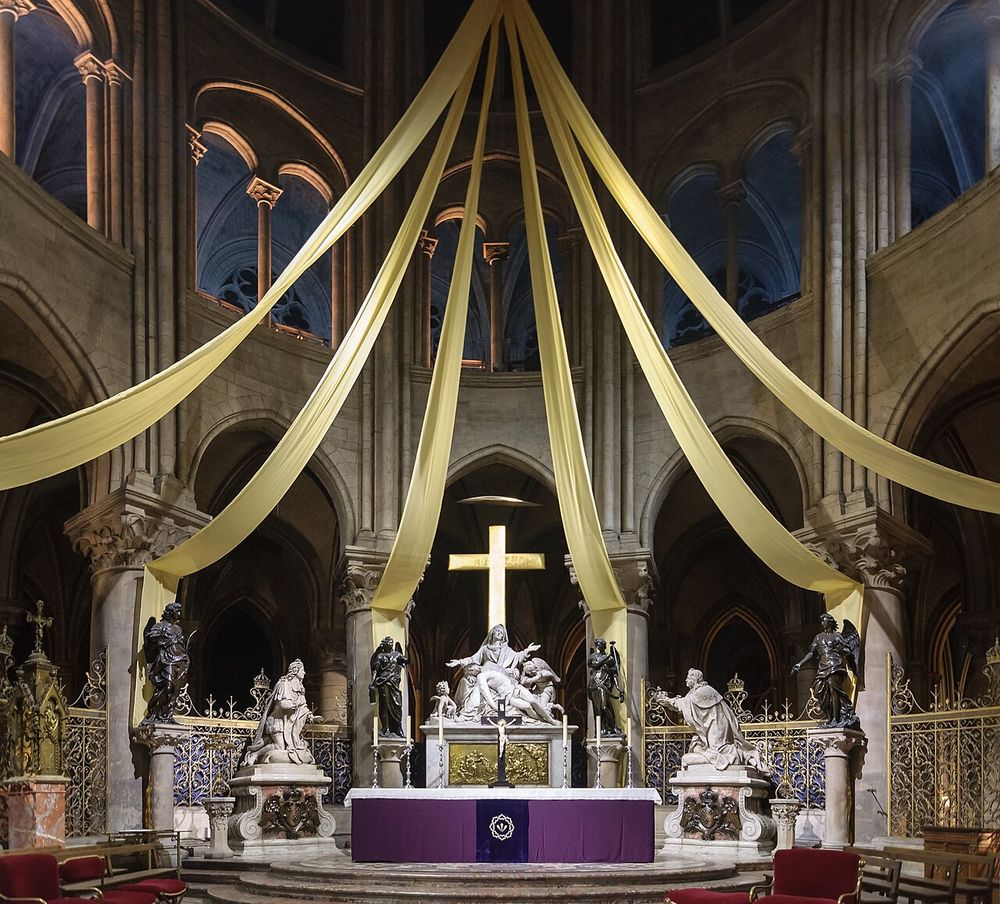
The marble group at the back of the choir, Mary with the dead Christ, was found after the fire standing untouched among the fallen beams, with the gold cross above it still shining.
7. The fire
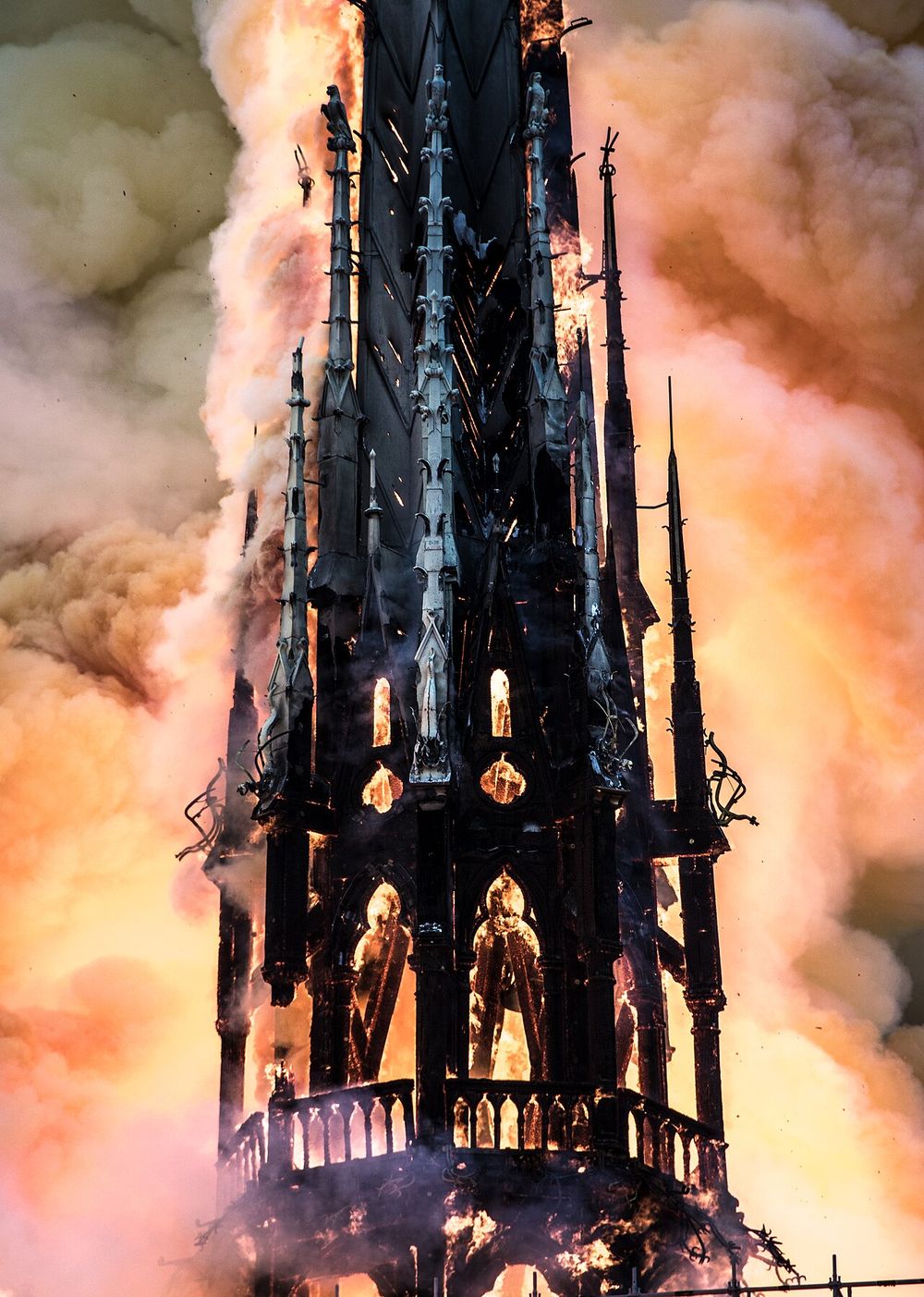
The spire in flamesLEVRIER Guillaume, CC BY-SA 4.0
The alarm rang at 18:18 on 15 April 2019, the Monday before Easter. A guard was sent to the wrong part of the roof and found nothing. By the time the fire was found, the frame of 1,300 oaks, which people called "the forest", was well alight.
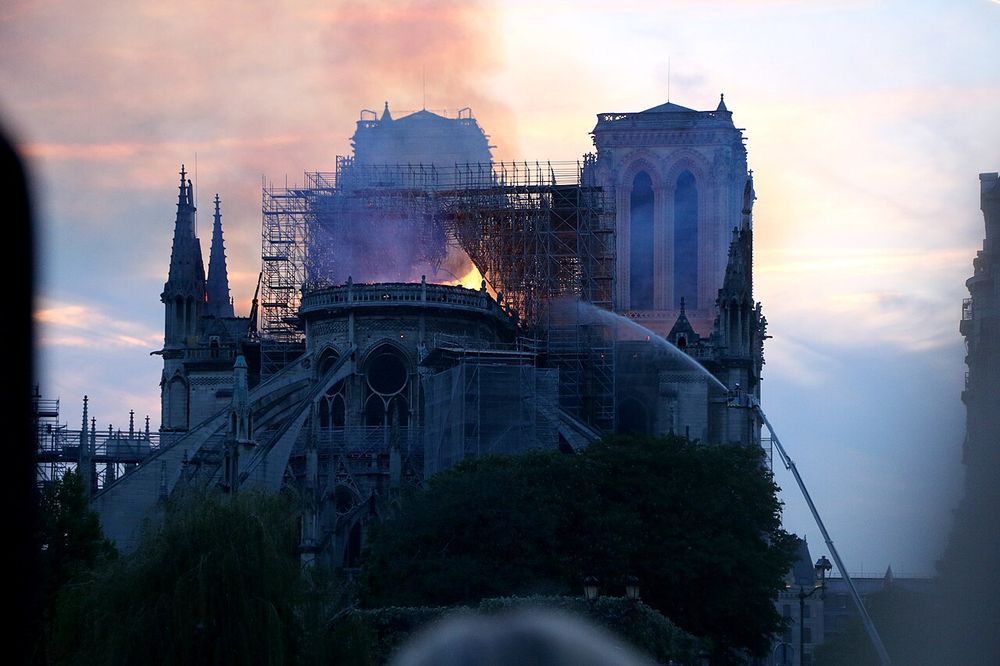
The roof burning at duskCangadoba, CC BY-SA 4.0
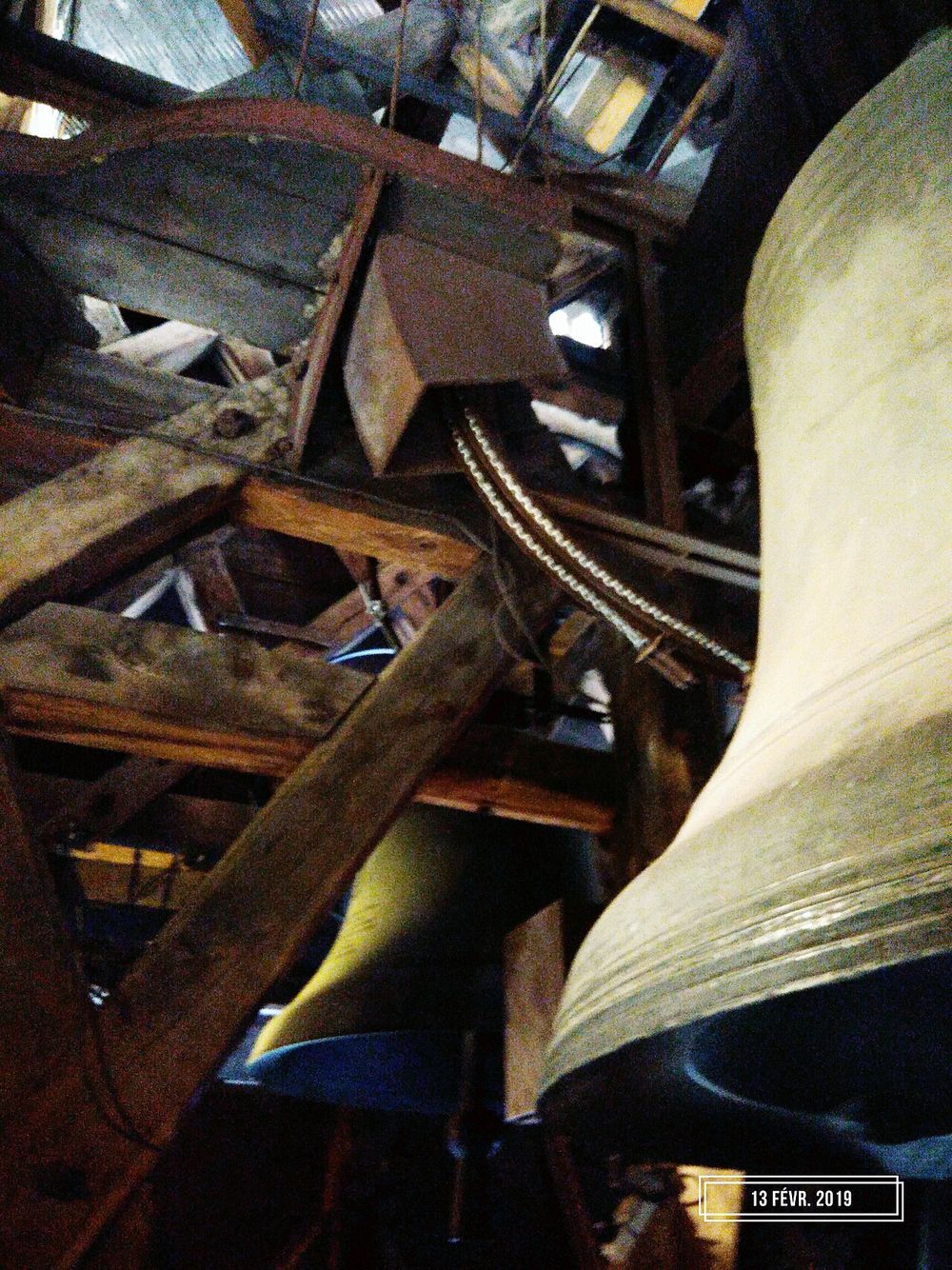
At about 19:50 the spire fell through the vault. For an hour the north tower was burning inside, round the frame that holds the bells. If the bells had fallen, the tower would have gone, and probably the whole front with it. A team of firemen went up the stairs into the tower and put that fire out.
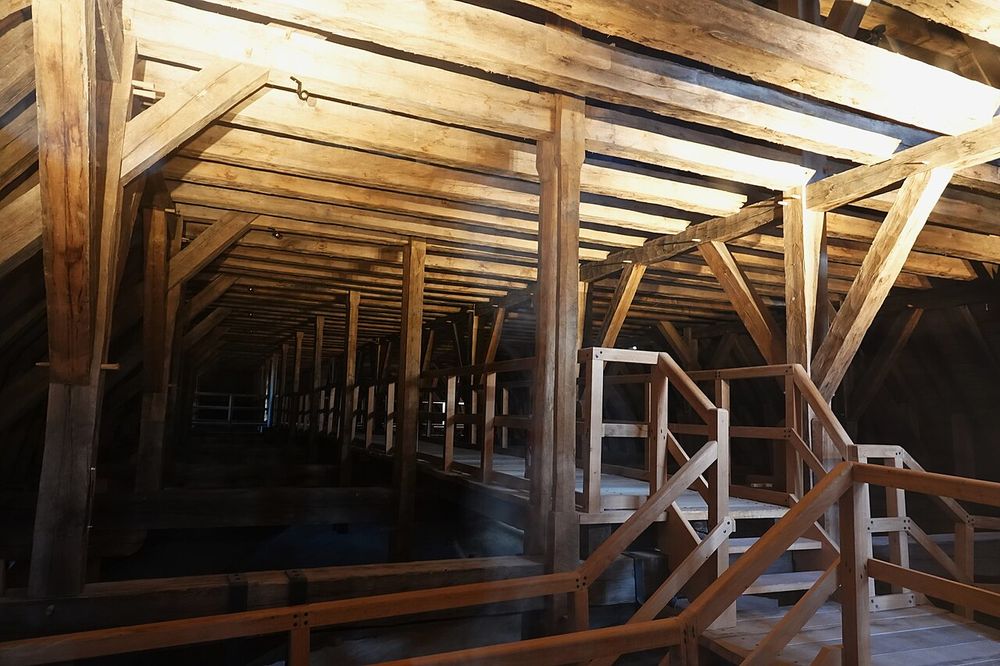
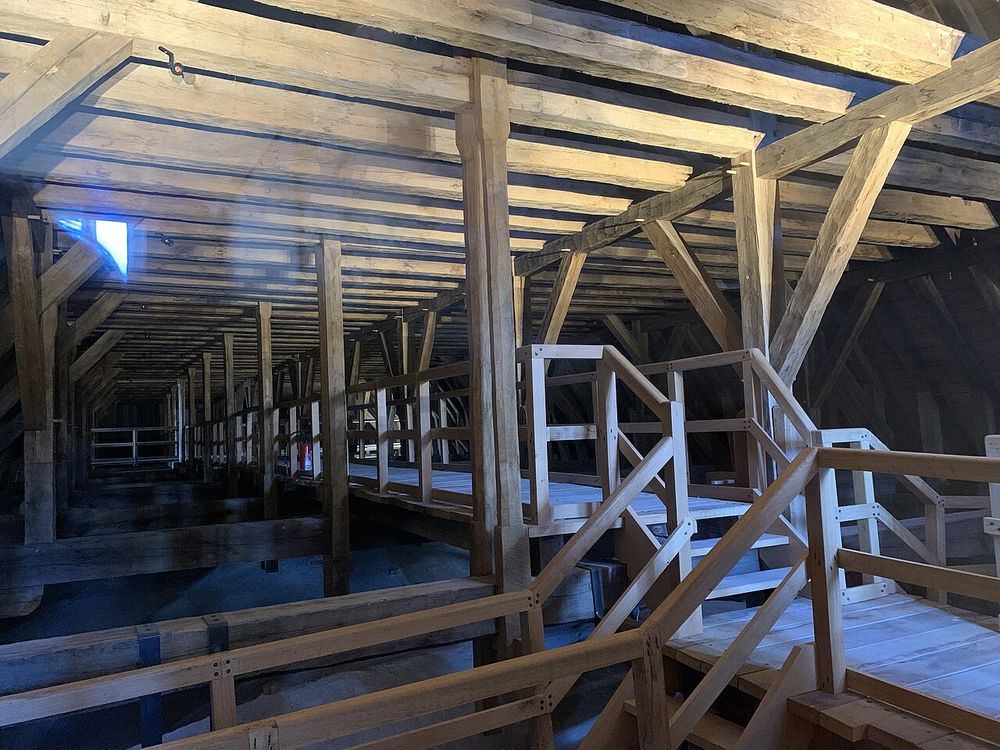
The new oak frame, November 2025Ibex73, CC BY-SA 4.0
Nobody died. The cause has not been established. Investigators think an electrical fault or a cigarette most likely.
Gifts of 846 million euros came from 340,000 people in 150 countries. The new frame was cut from oaks felled across France and squared by hand with axes, as in the thirteenth century. The film Notre-Dame on Fire (2022), by Jean-Jacques Annaud, follows the night hour by hour.
8. The towers, the bells, and the same years in China
A monster of the 1850s looks out over ParisNoemiseh91, CC BY-SA 4.0
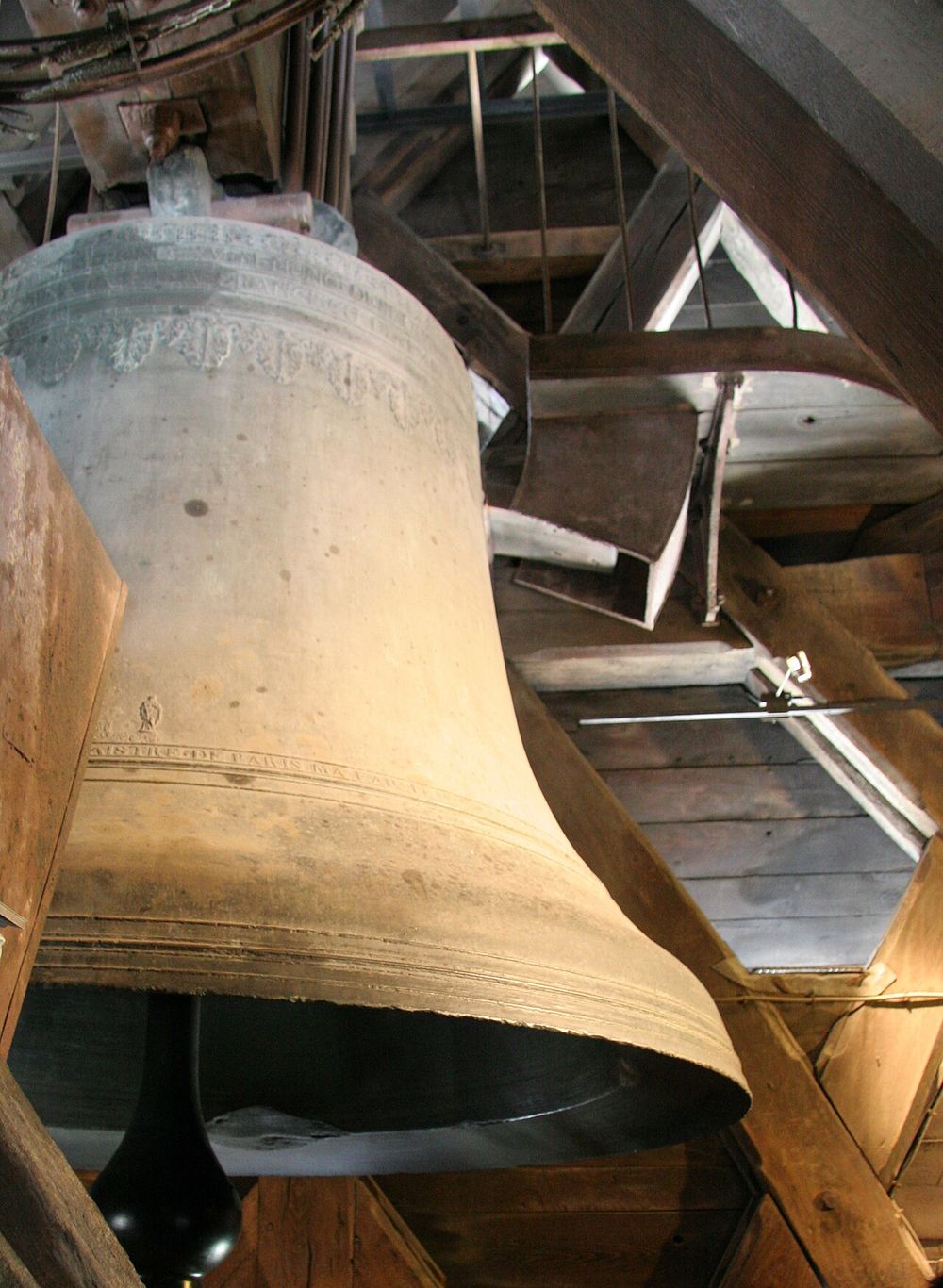
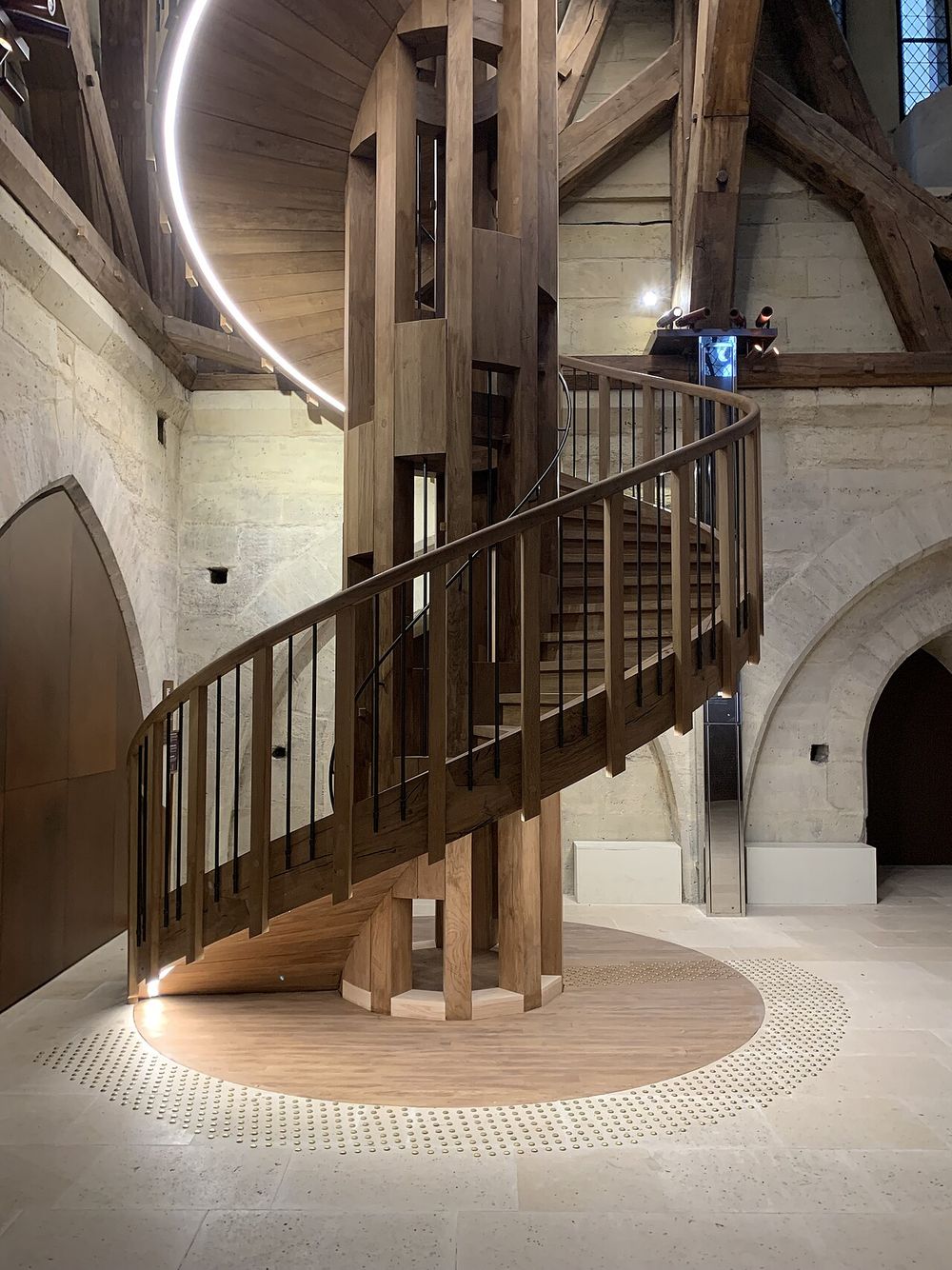
The climb is 424 steps, up the south tower and down the north. It reopened in September 2025 with a new oak stair shaped like a double spiral. You pass the great bell called Emmanuel, cast in 1686, which weighs thirteen tonnes and rings only on great days. Then you come out among Viollet-le-Duc's monsters, sixty-nine metres above the square.
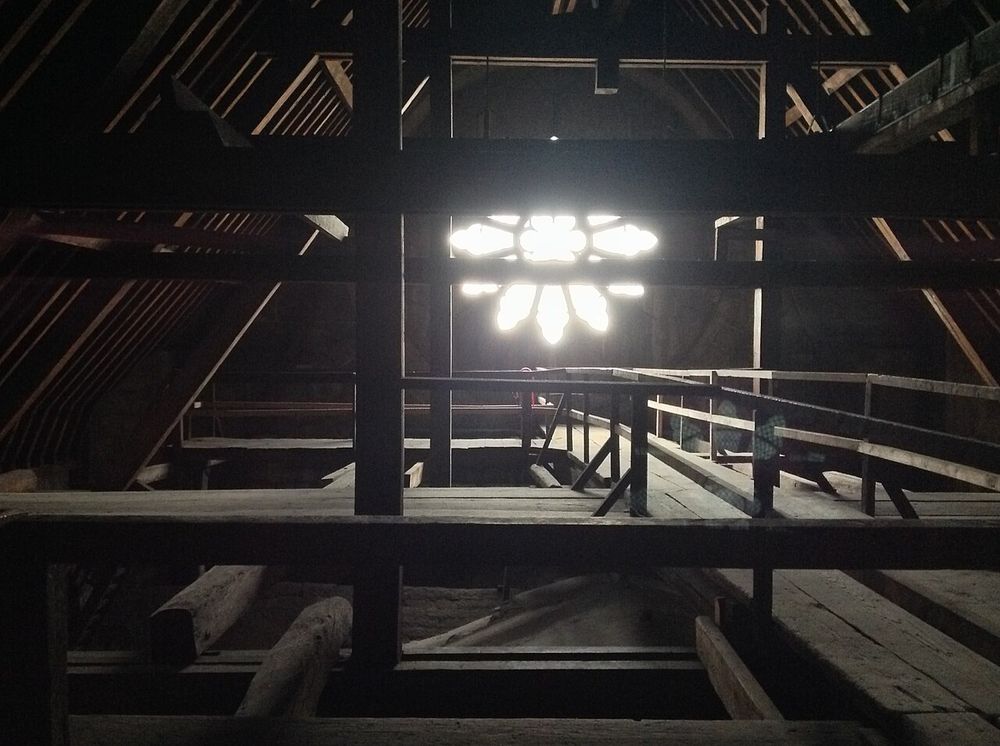
Inside the new roofDragonfruit2, CC BY-SA 4.0
When the first stone was laid in 1163, the Southern Song (1127–1279) ruled from Hangzhou and the philosopher Zhu Xi was a young official. When the cathedral was finished about 1345, the Mongol Yuan dynasty had twenty-three years left.
A roof of timber that burns in an evening is a danger every old Chinese hall shares. In November 2019 China and France agreed to work together on two projects: the rebuilding here, and the conservation of the Terracotta Army in Xi'an.
Meanwhile in the world
Year
Here
Elsewhere
1163
The first stone is laid
The Southern Song; Zhu Xi is thirty-three
about 1250
The towers and the north rose window
The Mongols are conquering China
about 1345
The cathedral is finished
The last decades of the Yuan
1793
The kings are pulled down in the Revolution
The British envoy Macartney meets the Qianlong Emperor
1804
Napoleon crowns himself here
The Jiaqing reign of the Qing
1831
Hugo's novel
The Daoguang reign, nine years before the first Opium War
1844–1864
The restoration under Viollet-le-Duc
The Opium Wars; the Old Summer Palace burns in 1860
2019
The fire
China and France agree to cooperate on the rebuilding
2024
The cathedral reopens on 8 December
Sixty years of diplomatic relations between France and China
One line to remember: 180 years to build, one evening to burn, five years to put back.
Then and now
The west front lit at night, December 2025Gerda Arendt, CC0, Wikimedia CommonsThe west front, September 2025The wub, CC BY-SA 4.0, Wikimedia CommonsThe gallery of kingsBobo Boom, CC BY 2.0, Wikimedia CommonsThe Last Judgment over the middle doorPhilippe Alès, CC BY-SA 3.0, Wikimedia CommonsThe zero point of the roads of FranceDietmar Rabich, CC BY-SA 4.0, Wikimedia CommonsThe south side from the river in 2011, with the old spireDANIEL JULIE from Paris, France, CC BY 2.0, Wikimedia CommonsThe apse and its flying buttresses in 2011DANIEL JULIE from Paris, France, CC BY 2.0, Wikimedia CommonsApril 2024: the new spire above the scaffoldingMariordo, CC BY-SA 4.0, Wikimedia CommonsThe new spire, April 2024Mariordo, CC BY-SA 4.0, Wikimedia CommonsThe new rooster at the tip of the spireIbex73, CC BY 4.0, Wikimedia CommonsFlying buttresses under repair, 2024Mariordo, CC BY-SA 4.0, Wikimedia CommonsThe towers and the building site, 2024Mariordo, CC BY-SA 4.0, Wikimedia CommonsThe south side during the rebuildingMariordo, CC BY-SA 4.0, Wikimedia Commons15 April 2019, 20:56Baidax, CC BY-SA 4.0, Wikimedia CommonsThe fire seen from the river bankCangadoba, CC BY-SA 4.0, Wikimedia CommonsThe spire in flamesLEVRIER Guillaume, CC BY-SA 4.0, Wikimedia CommonsThe roof burning at duskCangadoba, CC BY-SA 4.0, Wikimedia CommonsPeople watching from a bridge on the night of the fireGodefroyParis, CC BY-SA 4.0, Wikimedia CommonsThe old oak frame, "the forest", in 2018Bernard Hasquenoph, CC BY-SA 4.0, Wikimedia CommonsThe new oak frame, November 2025Ibex73, CC BY-SA 4.0, Wikimedia CommonsInside the new roofDragonfruit2, CC BY-SA 4.0, Wikimedia CommonsThe cleaned vault of the choirIbex73, CC BY 4.0, Wikimedia CommonsThe choir after the reopening, December 2024Ibex73, CC BY 4.0, Wikimedia CommonsThe choir stallsIbex73, CC BY 4.0, Wikimedia CommonsA boss where the ribs of the vault meetIbex73, CC BY 4.0, Wikimedia CommonsThe north rose window, December 2024Ibex73, CC BY 4.0, Wikimedia CommonsThe south rose windowIbex73, CC BY 4.0, Wikimedia CommonsThe great organ under the west rose windowIbex73, CC BY 4.0, Wikimedia CommonsThe painted choir screen of the 1300sUoaei1, CC BY-SA 4.0, Wikimedia CommonsThe marble Pietà and the gold cross, before the fireMyrabella, CC BY-SA 3.0, Wikimedia CommonsEmmanuel, the great bell of 1686Author: Tristan Nitot, CC BY-SA 3.0, Wikimedia CommonsThe two great bells in the south towerSamuelPrr14, CC BY-SA 4.0, Wikimedia CommonsThe new double spiral stair in the south tower, October 2025Dragonfruit2, CC BY-SA 4.0, Wikimedia CommonsThe new spire from the south towerDragonfruit2, CC BY-SA 4.0, Wikimedia CommonsA monster of the 1850s looks out over ParisNoemiseh91, CC BY-SA 4.0, Wikimedia CommonsTwo more of Viollet-le-Duc's creaturesDragonfruit2, CC BY-SA 4.0, Wikimedia CommonsA horned monster on the tower galleryChris Winters from Pittsburgh, PA, USA, CC BY-SA 2.0, Wikimedia CommonsJacques-Louis David, The Coronation of Napoleon in Notre-Dame, painted 1805–1807Jacques-Louis David / Georges Rouget, Public domain, Wikimedia Commons1850: the cathedral during the restoration, without a spireHippolyte Bayard, Public domain, Wikimedia CommonsFrom the south-east in 1851Baldus, Edouard, 1813-1889, photographer, Public domain, Wikimedia CommonsA doorway photographed by the Bisson brothers about 1857Bisson Frères, Public domain, Wikimedia CommonsThe apse, photographed by Charles Marville in the 1850sMarville, Charles (Charles-François Bossu, dit) (17–07–1813 - 01–06–1879), photo, CC0, Wikimedia CommonsThe 1860s: the new spire in place, photographed by Édouard BaldusÉdouard Baldus, Public domain, Wikimedia CommonsParis about 1865, with the cathedral on its islandCharles Soulier, Public domain, Wikimedia CommonsViollet-le-Duc's drawing of the spires he wanted on the towers, never builtEugène Viollet-le-Duc (1814-1879), Public domain, Wikimedia Commons
Local legends
These are stories people tell about this place. They are legends, not history, and each one says where it comes from.
LegendThe side doors
A young locksmith named Biscornet was ordered to make the ironwork for the doors. The task was beyond him, and he called on the devil. In the morning he was found senseless beside hinges so fine that no smith could say how they were made. The doors would not open until they were sprinkled with holy water.
Source: A Paris legend recorded in the seventeenth century
LegendThe zero point
Whoever steps on the bronze star in the square will come back to Paris.
Source: Popular belief
LegendThe rooster
The copper rooster from the tip of the old spire fell ninety metres into the fire. It was found the next morning in the rubble, dented and whole, with the relics still inside it. People called it a miracle.
Source: Reported by French newspapers on 16 April 2019; the finding is a fact, the word "miracle" is the press's
LegendThe hunchback
There was a real hunchback at Notre-Dame. An English sculptor who worked on repairs in the 1820s wrote in his memoir of a carver there whom everyone called "the Hunchback", and Hugo knew the workshop.
Source: The memoir of Henry Sibson, found in the Tate archive in 2010; that he inspired Quasimodo is a guess
Later, people who live here will be able to add the stories they grew up with, and say which of these they have heard.
Not certain, and where accounts conflict
What started the fire?
Prosecutors found no sign of a crime. They named a short circuit or a badly put-out cigarette as the likely causes, and could not decide between them.
Should the spire have been rebuilt as it was?
In 2019 the government spoke of a new design for our time. Architects sent in glass spires, gardens and a beam of light. In 2020 the decision went to an exact copy. Some still think a chance was lost.
New windows for old?
The president has asked for modern stained glass in six chapels on the south side, to replace windows of the 1860s that the fire did not harm. Heritage bodies and a large petition oppose it. Guides say the new glass was due at the end of 2026.
Is the lead safe?
The fire spread several hundred tonnes of lead dust over the neighbourhood. The roof and spire were covered in lead again, for the sake of the old look. Some health and environmental groups objected.
Visiting
Tickets and hours
The cathedral is free. Never pay for entry.
Hours given by guides in 2026: Monday to Friday 7:50 to 19:00, Thursday until 22:00; Saturday and Sunday 8:15 to 19:30. Last entry is half an hour before closing.
The towers cost 16 euros, booked online for a set time with the national monuments office, which runs them. They are free for visitors under 18. Guides give 9:00 to 23:00 from April to October and 9:00 to 17:30 in winter.
The treasury costs 12 euros and is paid for inside.
Last checked 2026-11-12. Paris guides of 2026 and the city's tourist office; the cathedral's own English page showed out-of-date text when we opened it.
Booking from abroad
Ticket window on site Without a booking, join the queue in the square. It can take from half an hour to three hours in summer.
Note Entry is free, with or without a booking. The Paris tourist office says a free time slot for up to four people can be booked on the cathedral's own site, notredamedeparis.fr, and guides say the slots open two or three days ahead. When we opened that site's English page it showed text from 2019, so we give no link.
Checked 2026-11-12
Where to start
Metro line 4 to Cité, or the suburban trains B and C to Saint-Michel Notre-Dame.
Look at the three doors first. Then go in by the middle door, walk up the right side, round behind the choir, and back down the left.
Come at opening time, or on Thursday evening.
For the outside, cross the bridge to the south bank and walk east along the river. The view of the buttresses and the spire is from there.
Before you go
Suitcases and large bags are not let in.
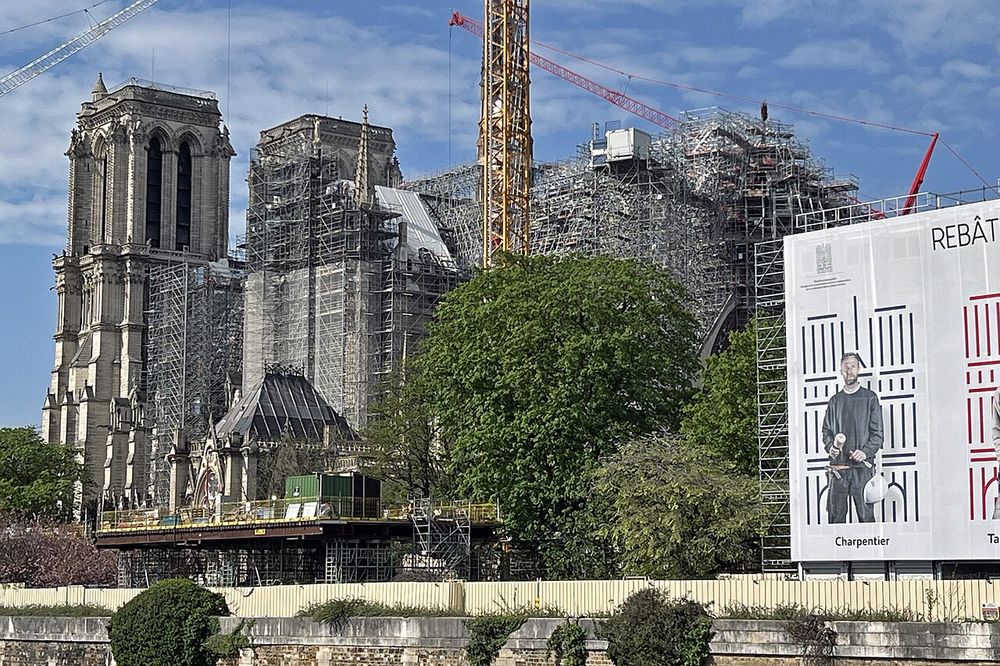
Work goes on outside. Expect scaffolding at the east end for some years, and building in the square.
The tower climb has no lift and is narrow. It is not for small children or for anyone unsteady on stairs.
Pickpockets work the queue and the square.
Customs and manners
This is the working cathedral of Paris, with several services a day. During a service visitors keep to the side aisles and stay quiet.
Dress as you would for someone's formal occasion: shoulders covered, and hats off for men.
Photographs are allowed without flash. Do not photograph people at prayer or at confession.
Say "Bonjour" to the staff at the door before anything else.
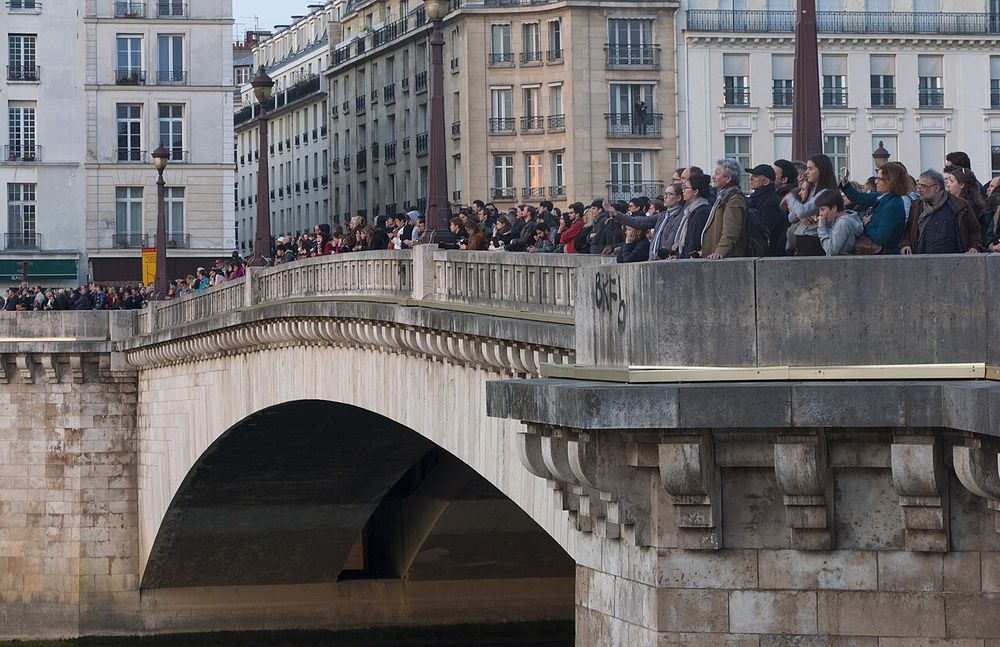
Many Parisians watched the fire in tears. If someone tells you where they were that night, listen.
Look for these
In the square, find the bronze star.
Over the middle door, find the devil cheating at the scales.
Count the kings in the row above the doors.
On the left door, find a saint carrying his own head. Who is he? (Saint Denis, first bishop of Paris.)
Inside, look up at the crossing. Can you tell new stone from old?
Which rose window is bluer, north or south?
On the choir screen, find the three kings bringing gifts.
Outside, find the rooster on the spire. Which way is it facing?
I am here
Stand at the site, sign in, press the button, and collect its stamp. Your browser will ask to use your location. It is sent to us once to confirm that you are at the site; we keep how far you were from it, not the spot where you stood.
Your stamps are saved to your account, so they follow you to any device. Checking from a browser cannot rule out every false location; stricter checks arrive with the app.
Messages
Share your photos
Photos here show the place, not people. Each one is credited to the visitor who took it and appears after our team has looked at it. A photo with you in it belongs under “I am here”.