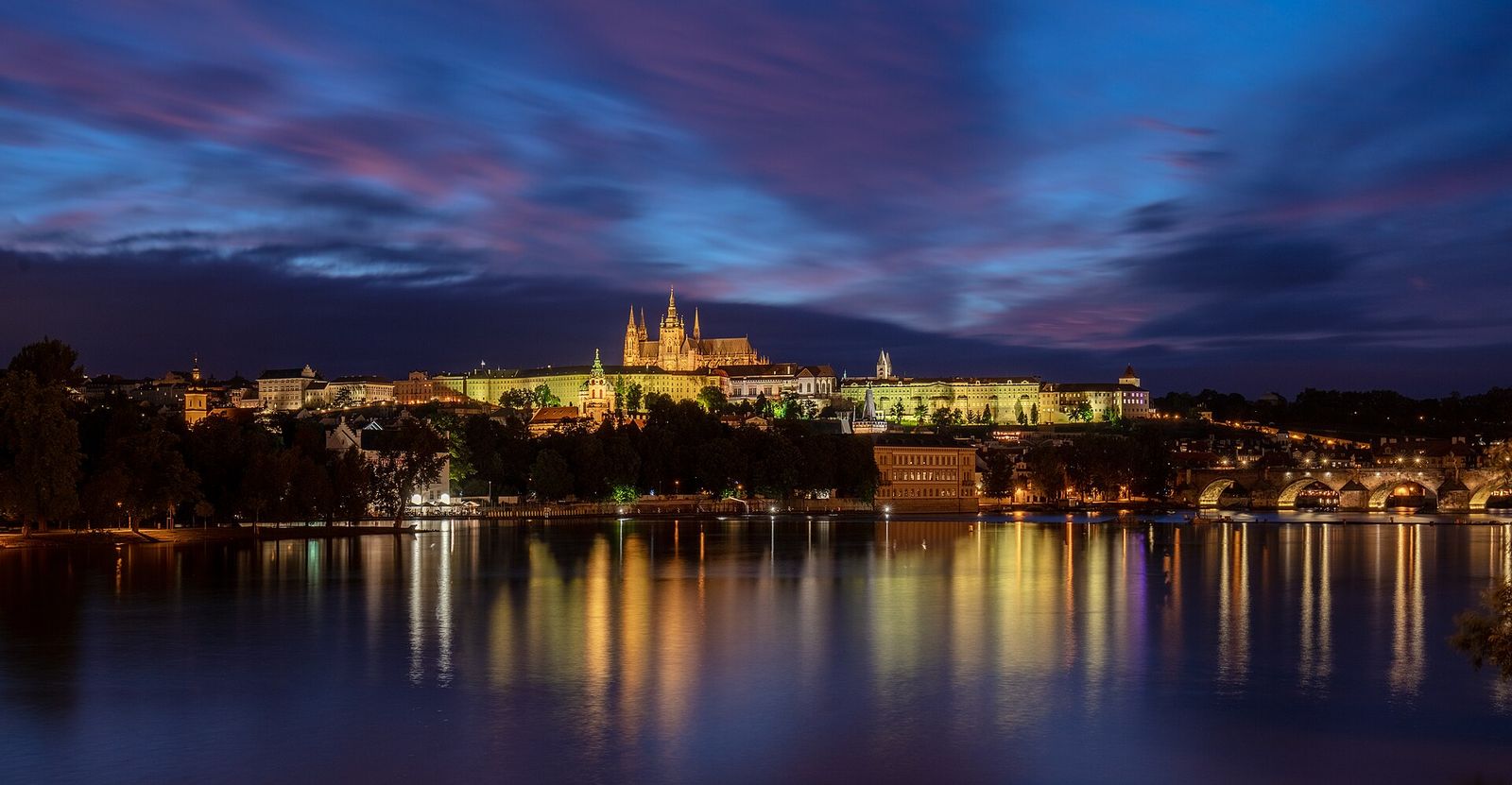
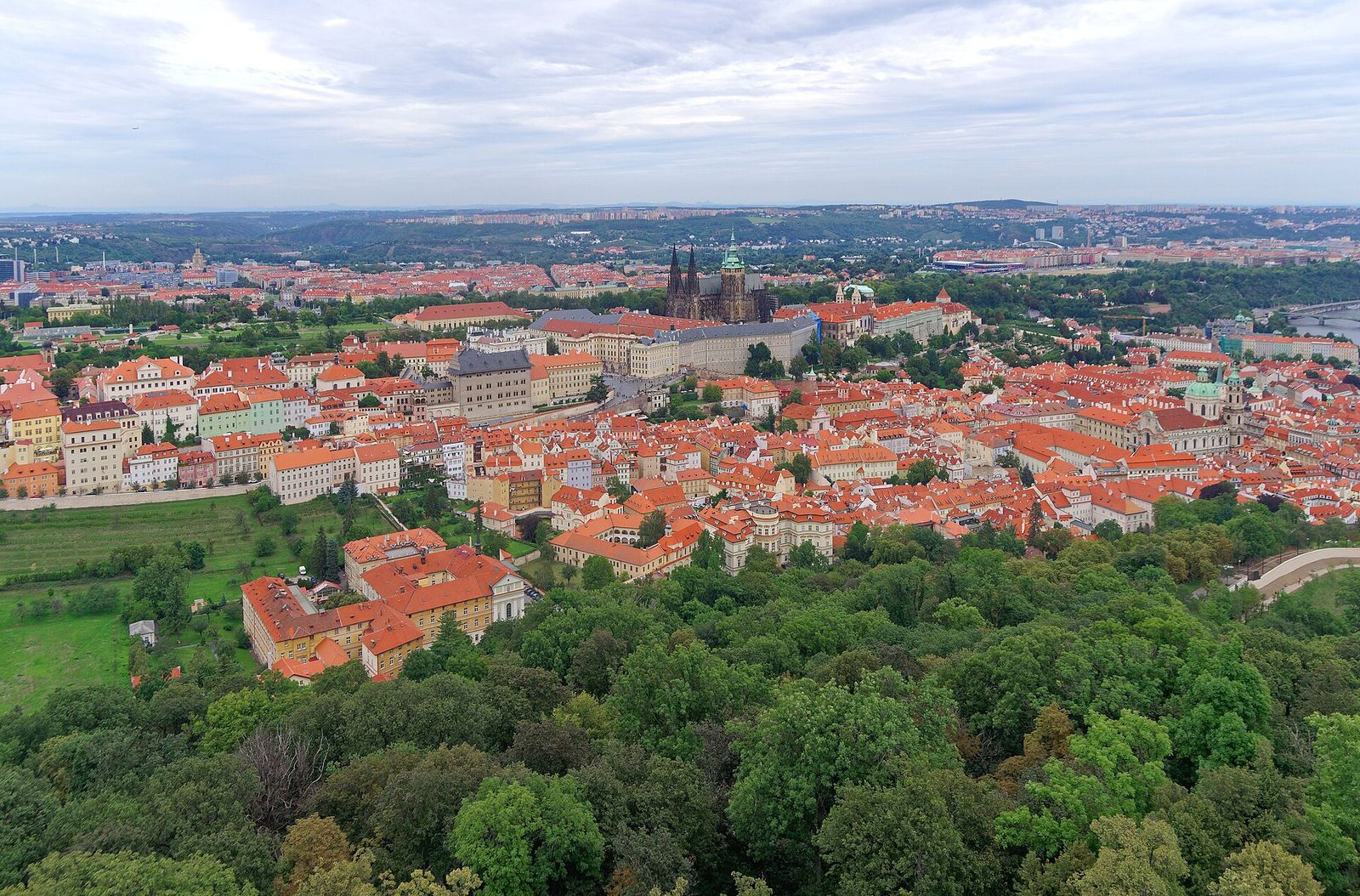
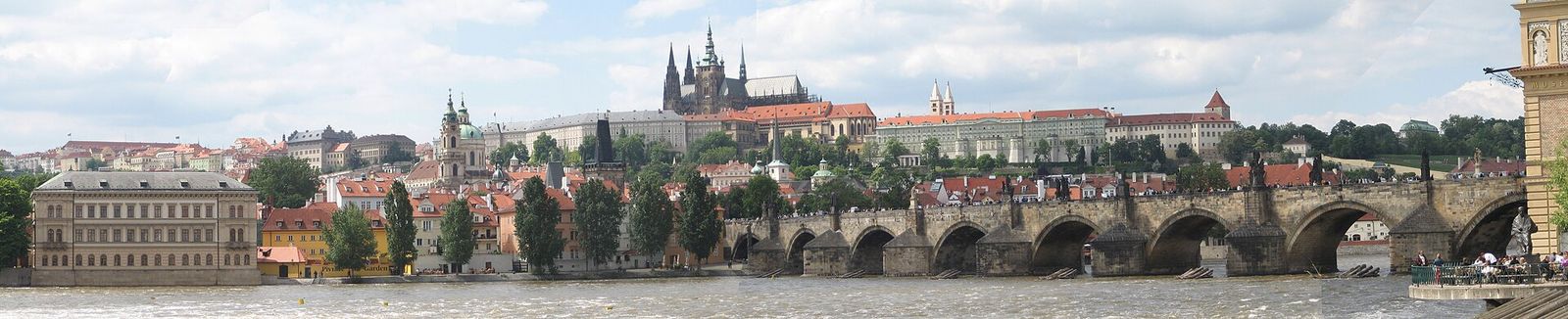
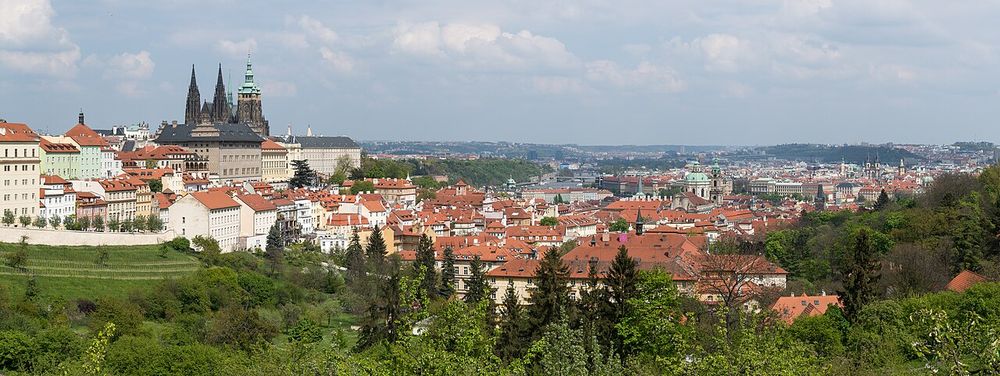
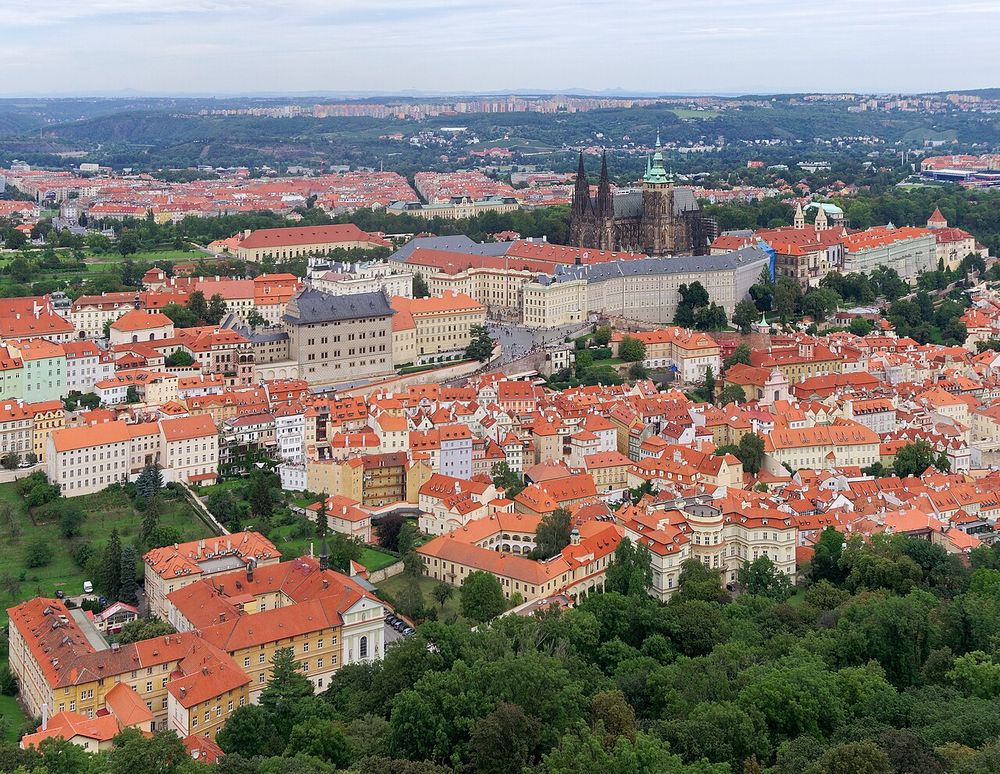
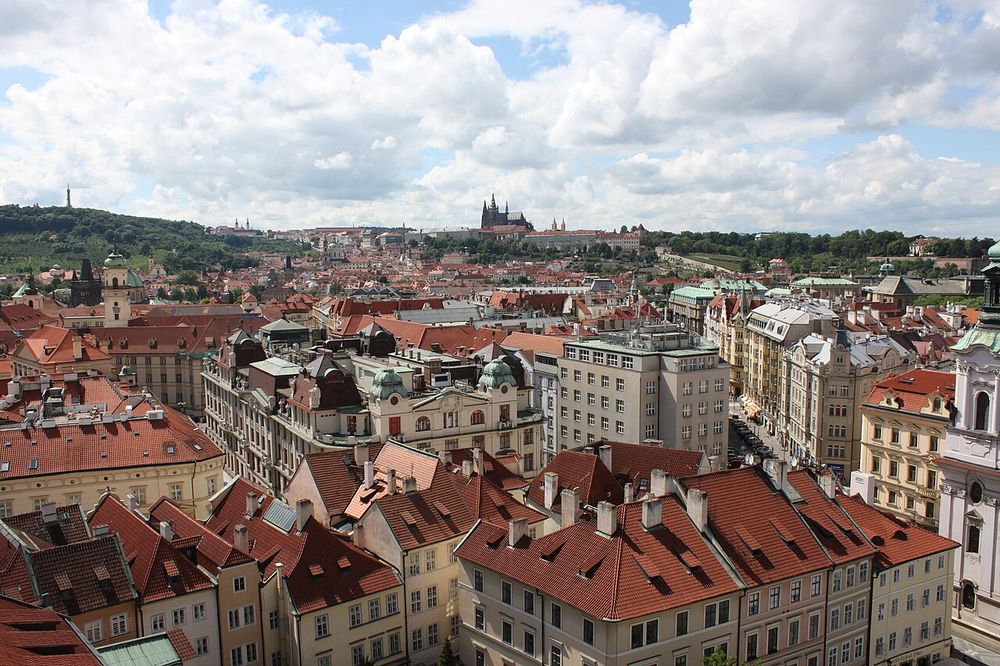
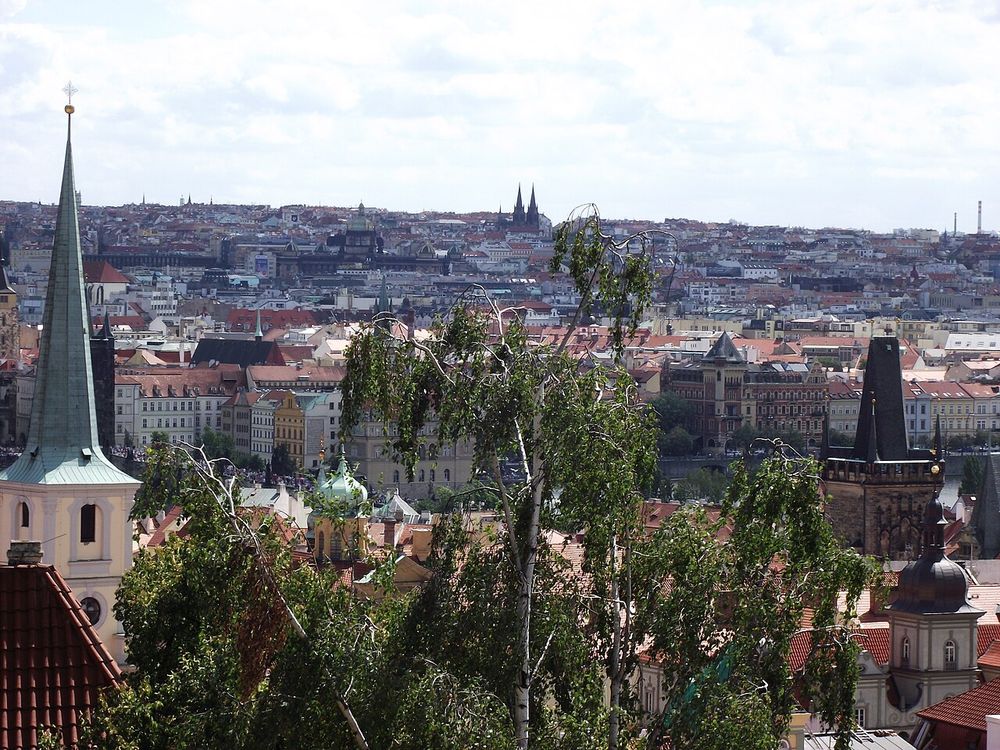
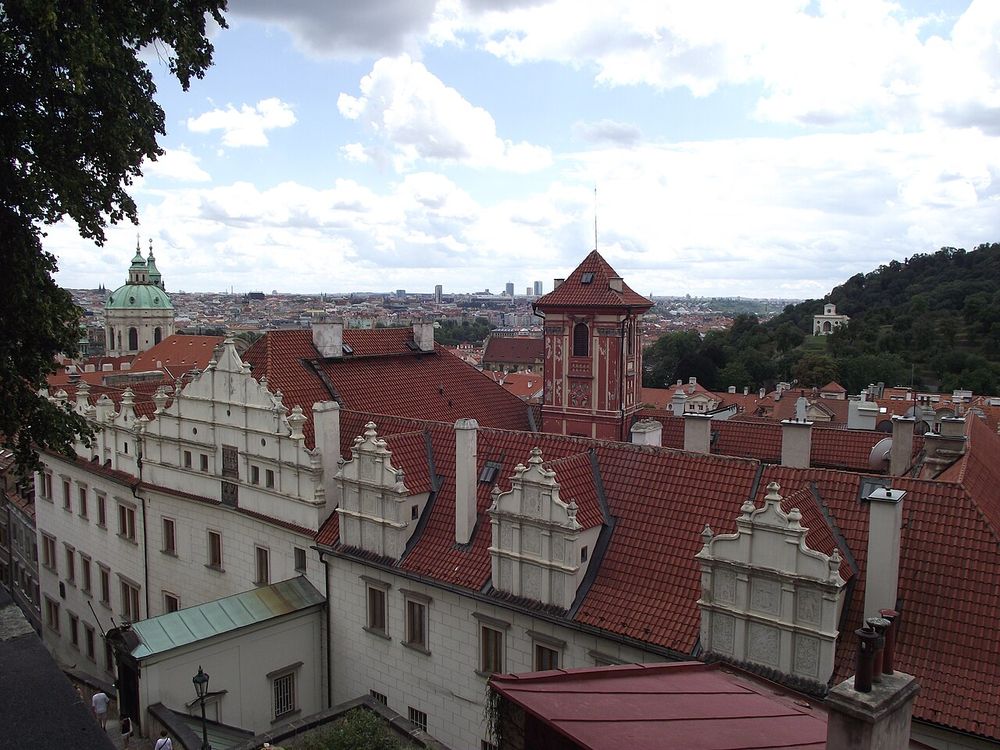
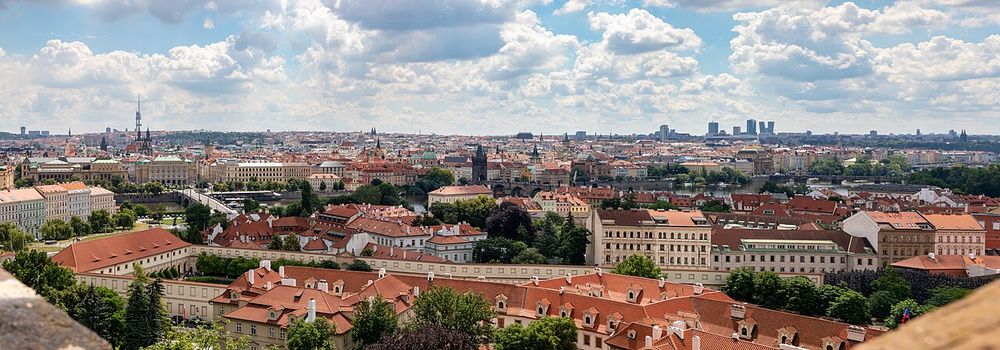
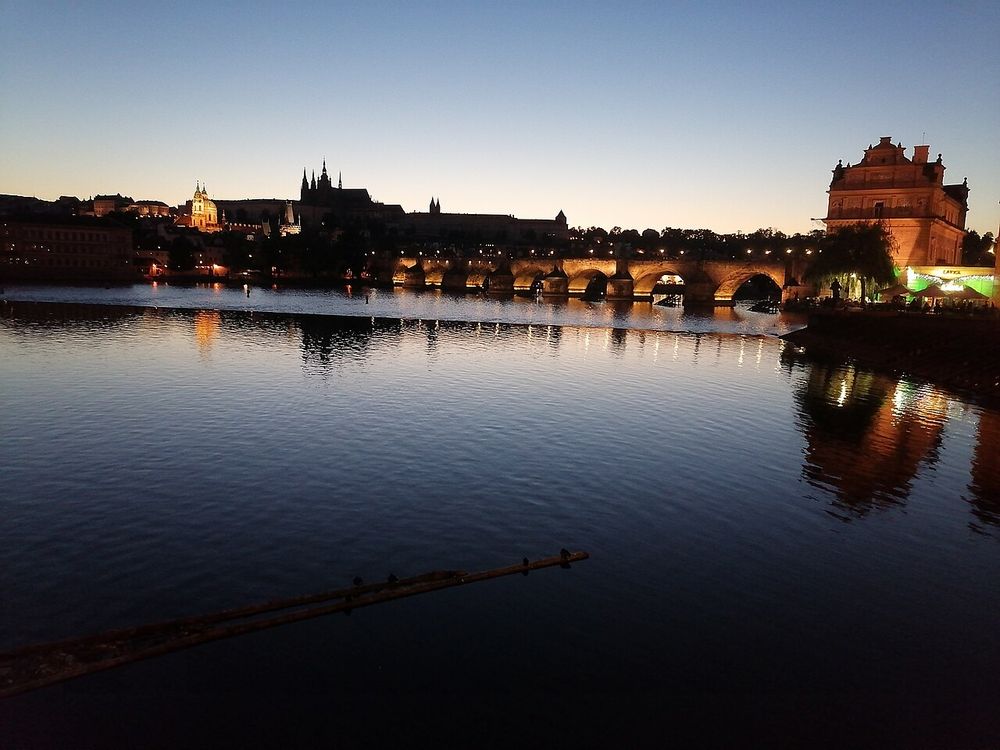
A walled hilltop above the river, 570 metres long, begun about the year 880 and in use ever since. Dukes, kings, emperors and presidents have ruled from it for more than eleven hundred years, and the president of the Czech Republic still does. Inside the walls are a cathedral that took 585 years to finish, a hall where knights rode indoors, a window that started a thirty-year war, and a lane of houses hardly bigger than cupboards.
Photo: Diego Delso, CC BY-SA 4.0, Wikimedia Commons
The story
About 880 a duke of the Přemyslid family built a wooden fort and a small church on this ridge. In China the Tang dynasty (唐, 618–907) was in its last decades, and a rebel army was marching on the capital Chang'an.
Everything since has been built on top of that or beside it. The Czechs call the whole place simply Hrad, the Castle, and when they say "the Castle has decided" they mean the president.
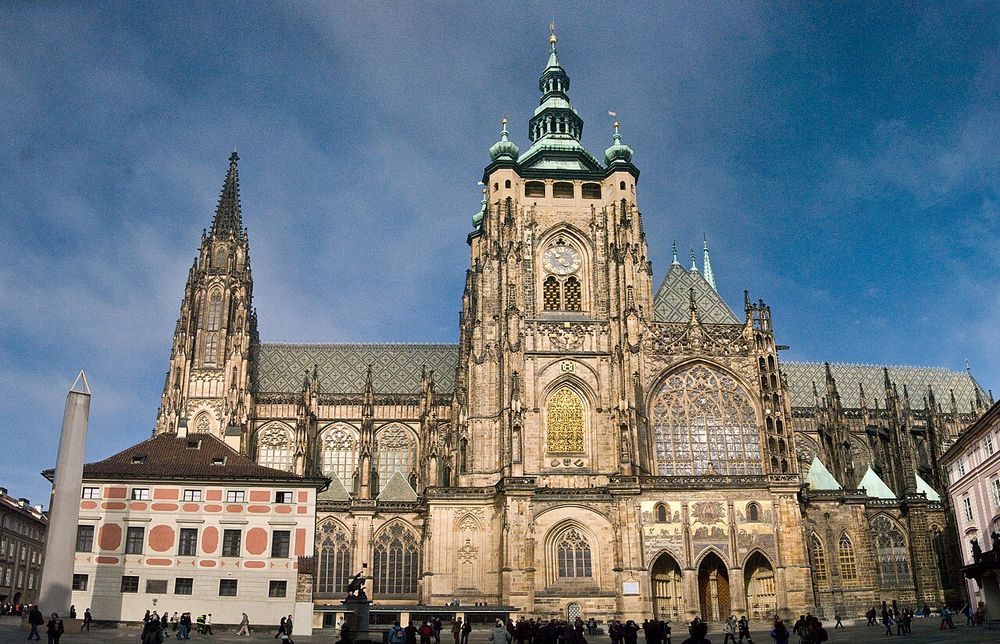
The south side and the great towerMtd at Czech Wikipedia, CC BY-SA 3.0
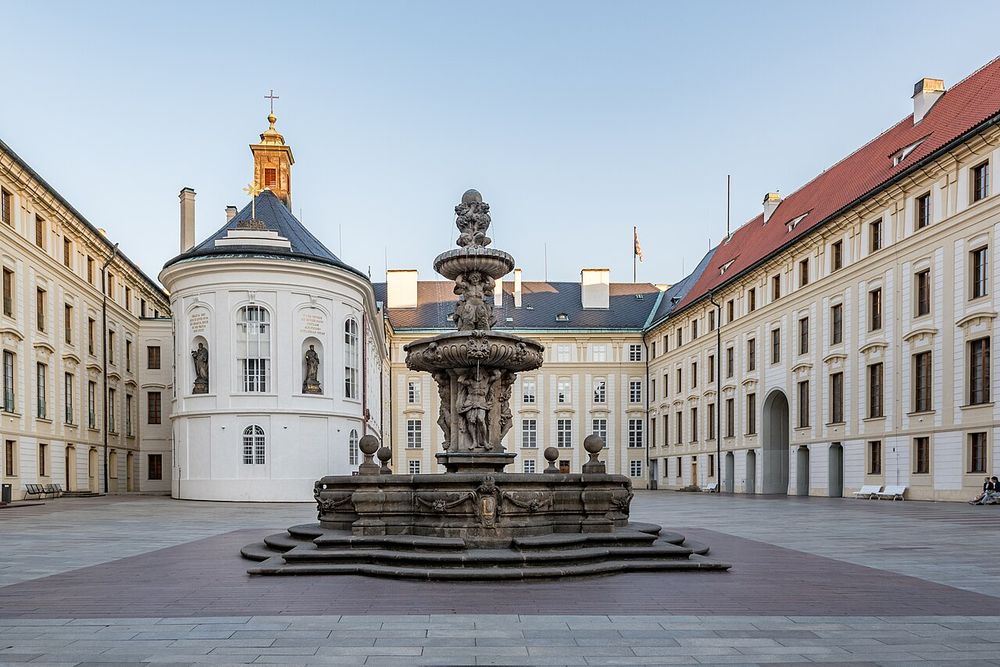
You have come through two plain courtyards that look like government offices, which they are. Then you step through an arch, and a cathedral is standing a few metres from your face, too big for the space, black and gold.
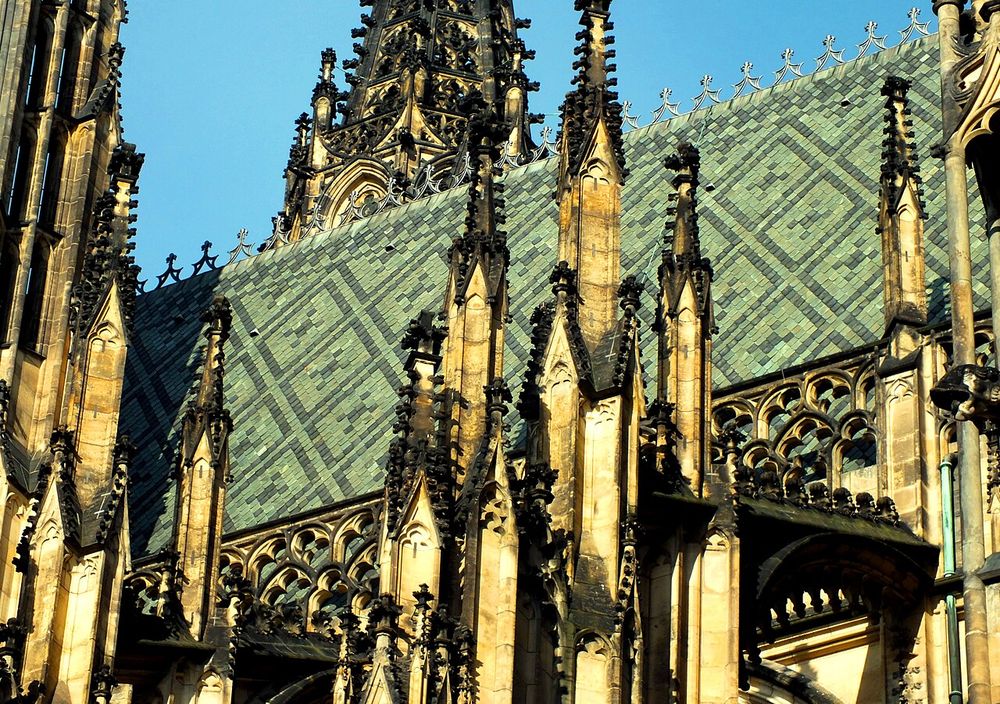
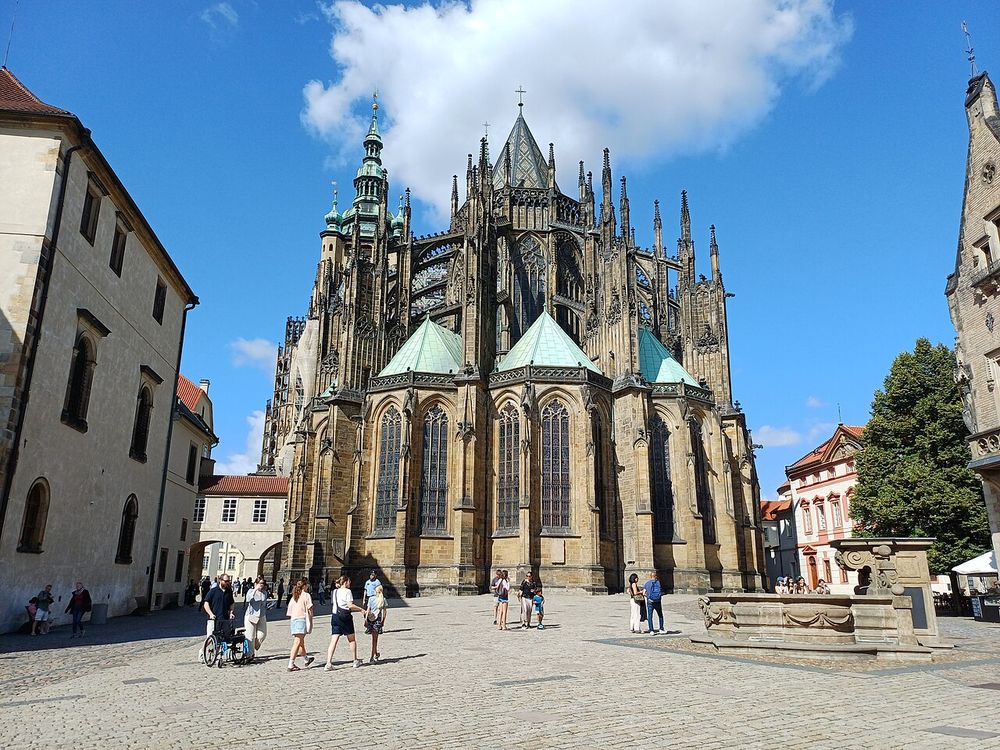
Walk round to the right until the great tower is above you. The lower part is Gothic stone, begun in the fourteenth century. Halfway up the style changes: a Renaissance gallery, then a green Baroque cap. The builders stopped in 1419 when a religious war broke out, and later centuries finished the tower in their own fashion.
The two sharp spires over the main door, which you passed, are from the nineteenth century. The church was begun in 1344 and finished in 1929. In China that runs from the last years of the Yuan dynasty (元, 1271–1368) to the Republic.
Things people often get wrong
"It is a castle." It has no keep and no great hall on a rock. It is a walled town of palaces, churches, offices and gardens. Guinness lists it as the largest ancient castle complex in the world, which depends on what you count as a castle.
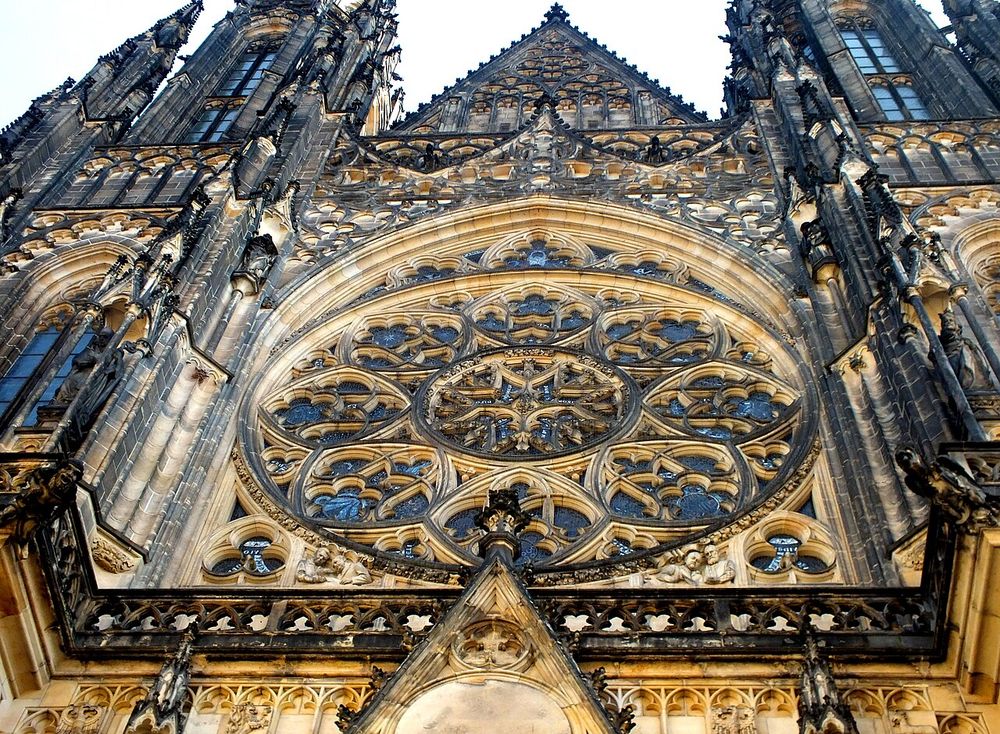
"The cathedral is medieval." The eastern half is. The whole western half, with the nave, the two front spires and the rose window, was built between 1873 and 1929. The join is hard to find, which was the point.
"Alchemists lived in the Golden Lane." Castle guards did, and later goldsmiths, servants and the poor. The emperor's alchemists worked elsewhere in the Castle.
"Kafka's novel The Castle is about this place." The castle in the book stands over a snowbound village and has no name. Kafka did write in a tiny house here for one winter.
People who stood here
Wenceslas (duke of Bohemia, about 907–935)The "good king" of the English Christmas carol was a duke, and was killed by his brother's men at a church door when he was about twenty-eight. He had founded the first church of St Vitus on this spot. He is buried in the cathedral and is the patron saint of the Czechs.
Charles IV (king of Bohemia and Holy Roman Emperor, 1316–1378)Raised in Paris, he came home to a castle so ruined that he had to lodge in the town. He rebuilt it, began the cathedral, founded the first university in central Europe and built the stone bridge below. Czechs voted him the greatest Czech of all time.
Peter Parler (German master builder, about 1330–1399)He took over the cathedral at twenty-three and gave it the net-patterned vault that builders across central Europe copied. High in the choir he placed stone portraits of the royal family, the archbishops and the builders, himself among them.
Rudolf II (Holy Roman Emperor, 1552–1612)He moved his court from Vienna to Prague in 1583 and filled the Castle with painters, clockmakers, astronomers and alchemists. He kept a lion and neglected the empire. His own brother took his crowns from him one by one.
Johannes Kepler (German astronomer, 1571–1630)As Rudolf's court mathematician he worked out, from another man's measurements of Mars, that the planets move in ellipses. He published it in Prague in 1609. His salary was usually in arrears.
Vilém Slavata (Bohemian governor, 1572–1652)On 23 May 1618 angry Protestant nobles threw him out of a window of the palace. He clung to the sill until someone beat his fingers with a dagger hilt. He fell some fifteen metres, lived, and wrote down every detail.
Franz Kafka (Prague writer in German, 1883–1924)From November 1916 he came up the hill every evening after the office to write at number 22 in the Golden Lane, a house his sister had rented. He wrote most of the stories of A Country Doctor there and walked home after midnight.
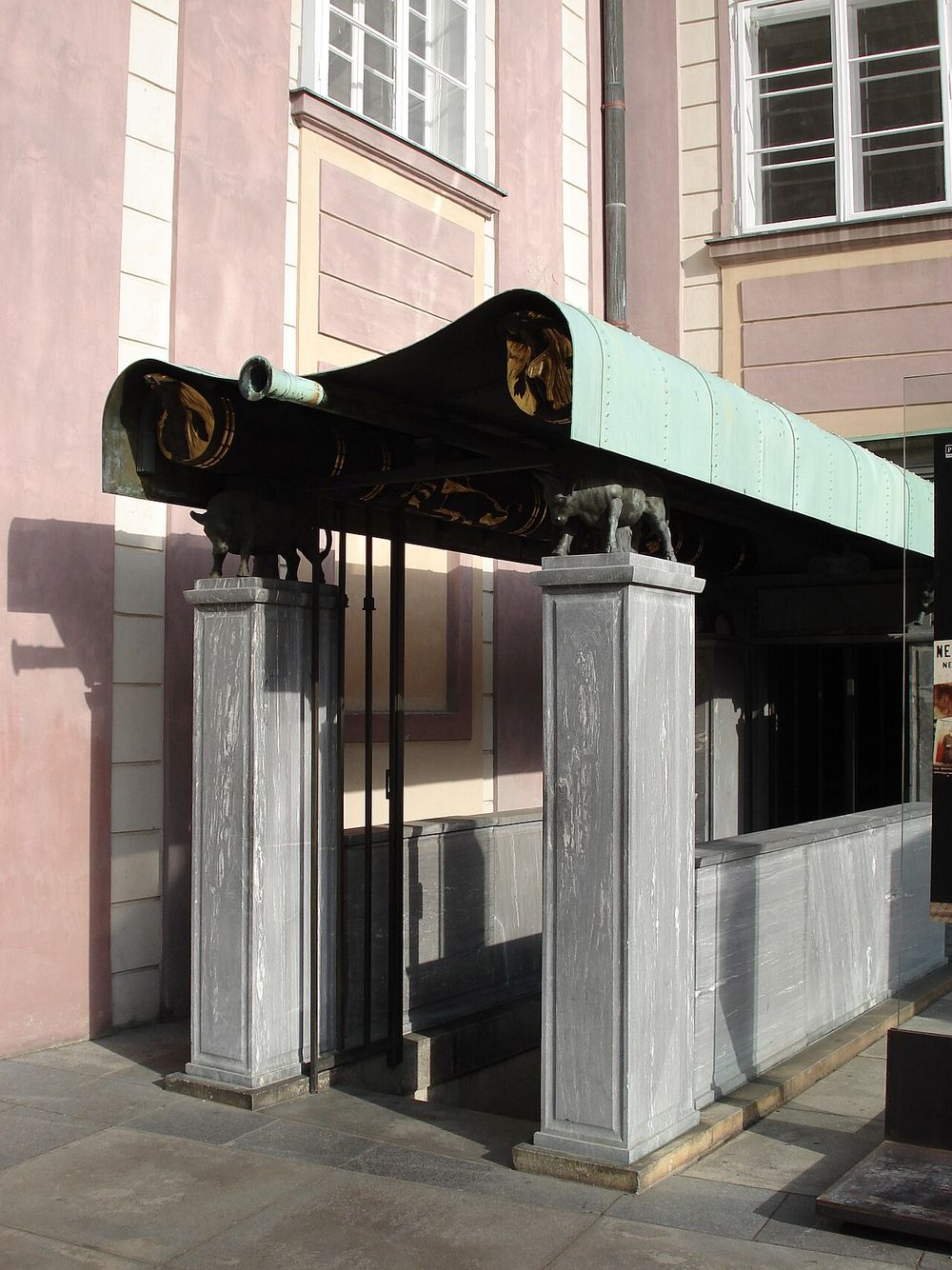
Jože Plečnik (Slovenian architect, 1872–1957)When Czechoslovakia was founded in 1918 its first president asked him to turn a neglected Habsburg palace into the seat of a democracy. He spent fifteen years adding paving, stairs, a granite obelisk and gardens, all quiet and all his own.
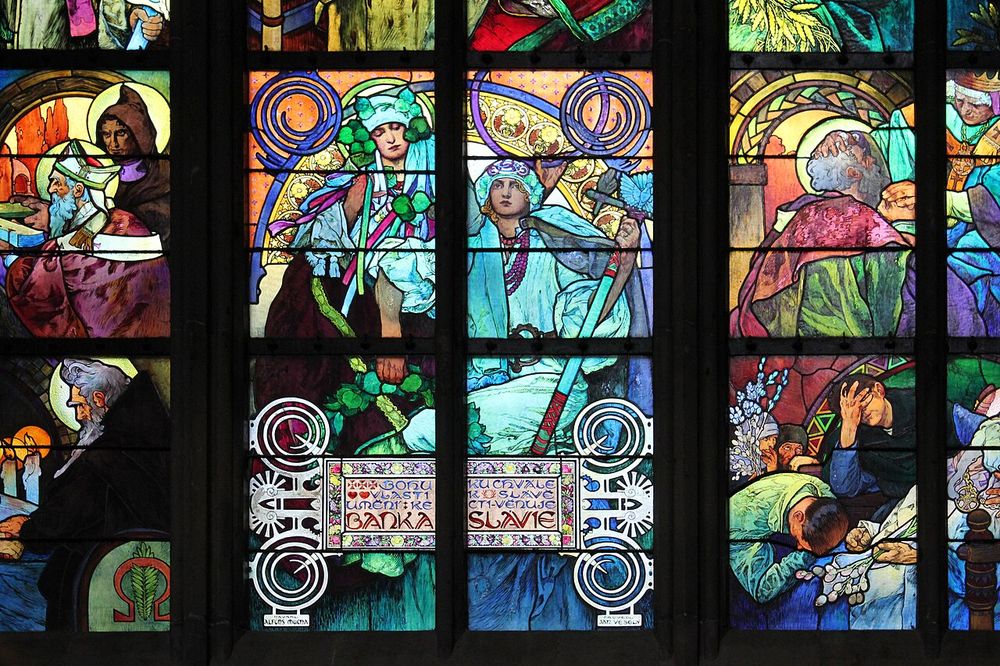
Alfons Mucha (Czech painter, 1860–1939)Famous in Paris for theatre posters, he came home to paint for his own nation. His window in the cathedral, finished in 1931, is painted on the glass, and glows blue at the edges and red-gold at the heart.
Václav Havel (Czech playwright and president, 1936–2011)In January 1989 he was in prison. On 29 December he was elected president in the Vladislav Hall. He found the Castle grey and frightening, had the guards' uniforms redesigned by a film costume designer, and is said to have ridden the long corridors on a scooter.
Go deeper: eight stops, from the main gate down to the Golden Lane
The courtyards and the outside of every building are free. Stops 3, 4, 6, 7 and 8 need the Castle ticket.
1. The gate of giants
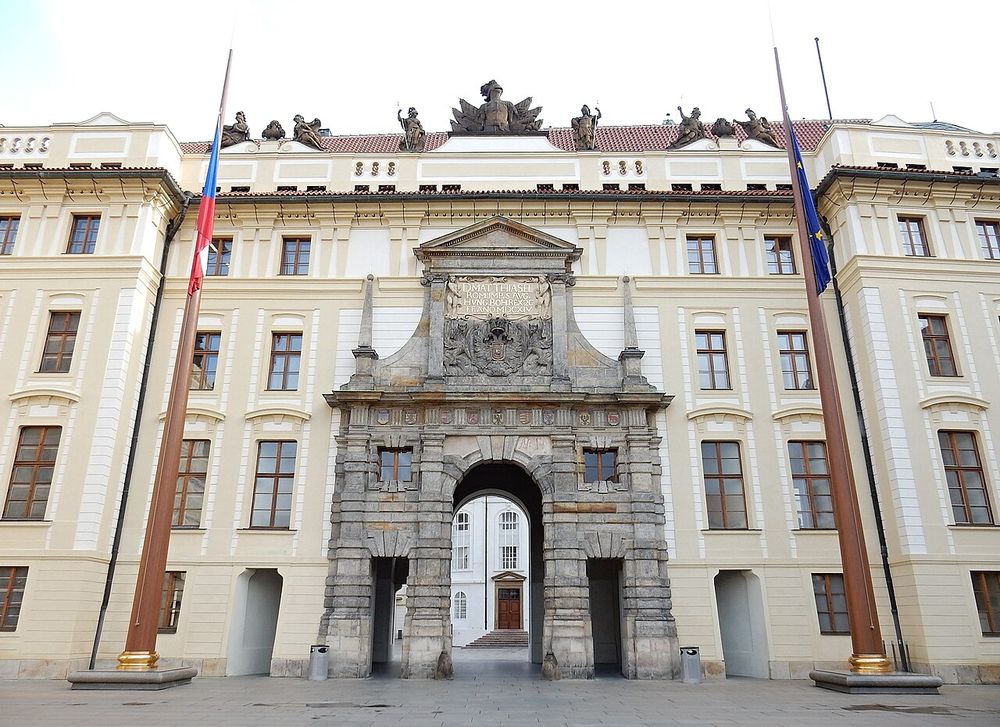
The first courtyard and the Matthias Gate, February 2018Patrik Kunec, CC BY-SA 4.0
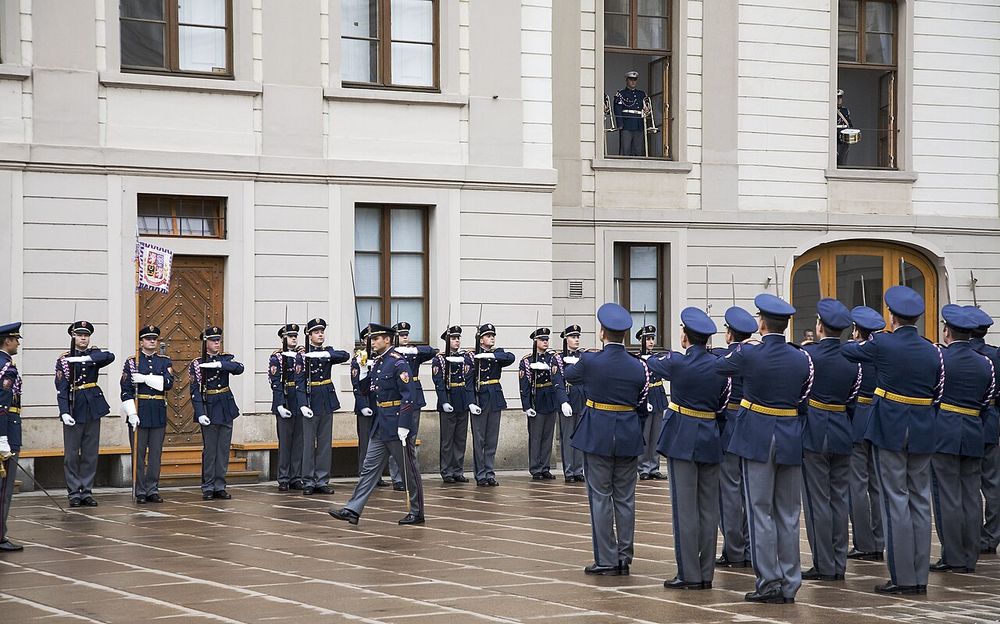
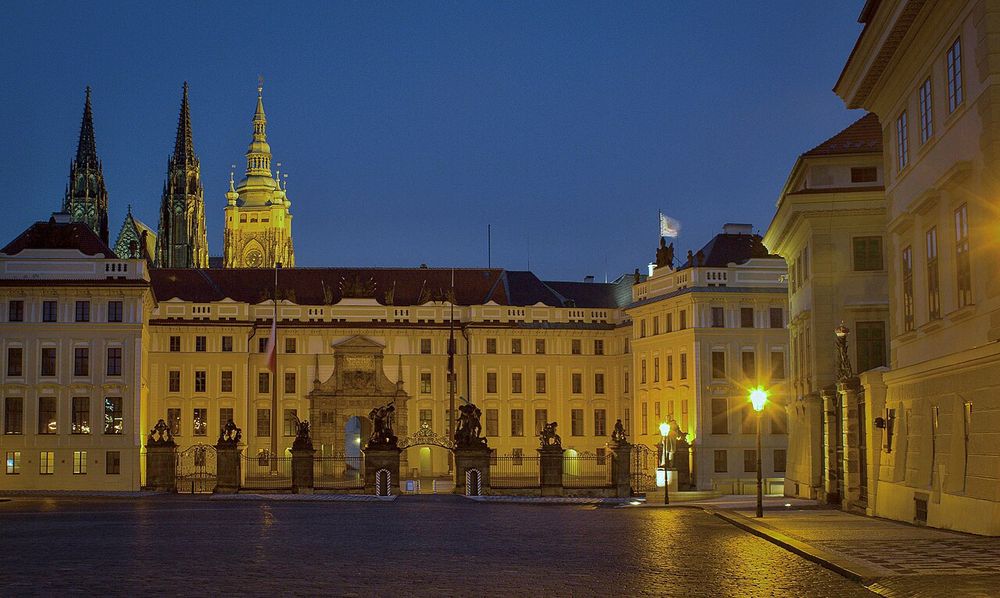
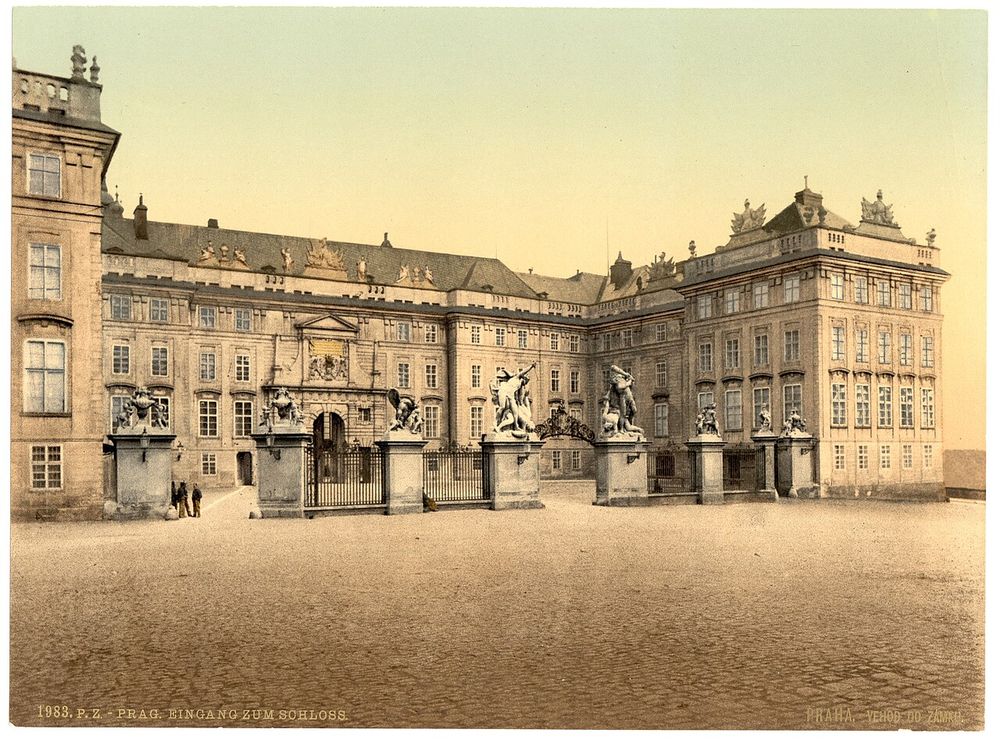
On the square outside, two stone giants on the gateposts are about to finish off their victims, one with a club and one with a dagger. Under them, in a striped box, stands a soldier of the Castle Guard. The guard changes every hour. At noon there is a band at the first-floor windows and a flag.
The changing of the guardJorge Royan, CC BY-SA 3.0
Look at the flagpole over the roof. If the president's flag is flying, with its lion and eagles and the words "Truth prevails", he is in the country.
2. The west front
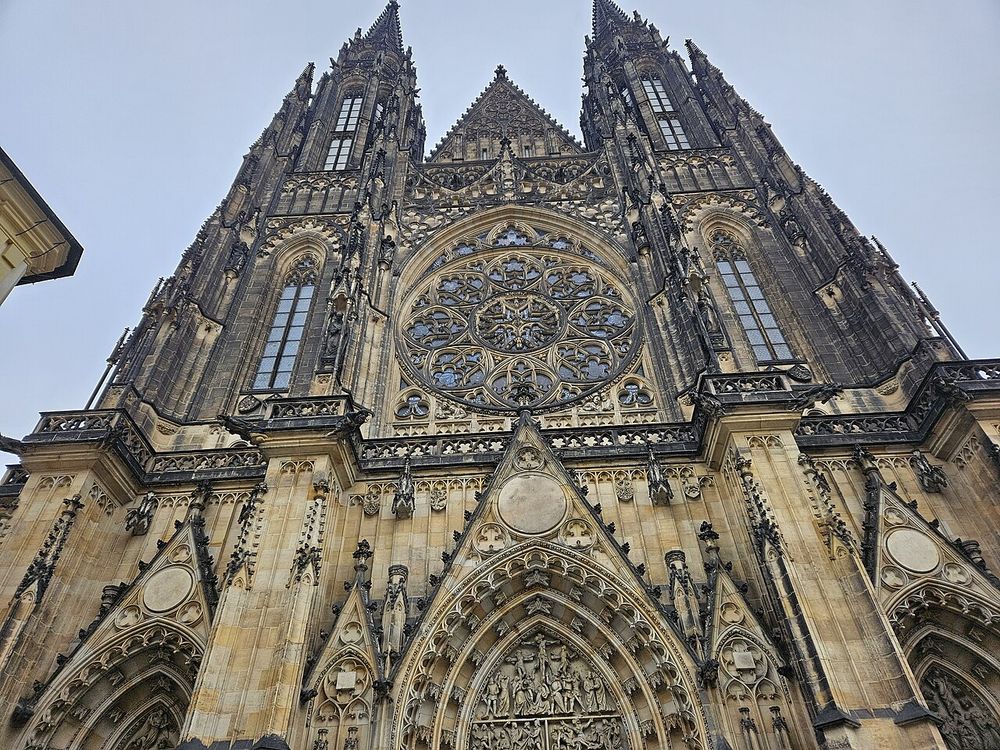
The west front of the cathedral, January 2026Nurken, CC BY-SA 4.0
Through the second courtyard and the arch, and you are at the main door of the cathedral. At the lower corners of the rose window, look for men in twentieth-century suits carved in the stone. They are the architects and sculptors who finished the building.
3. Inside the cathedral
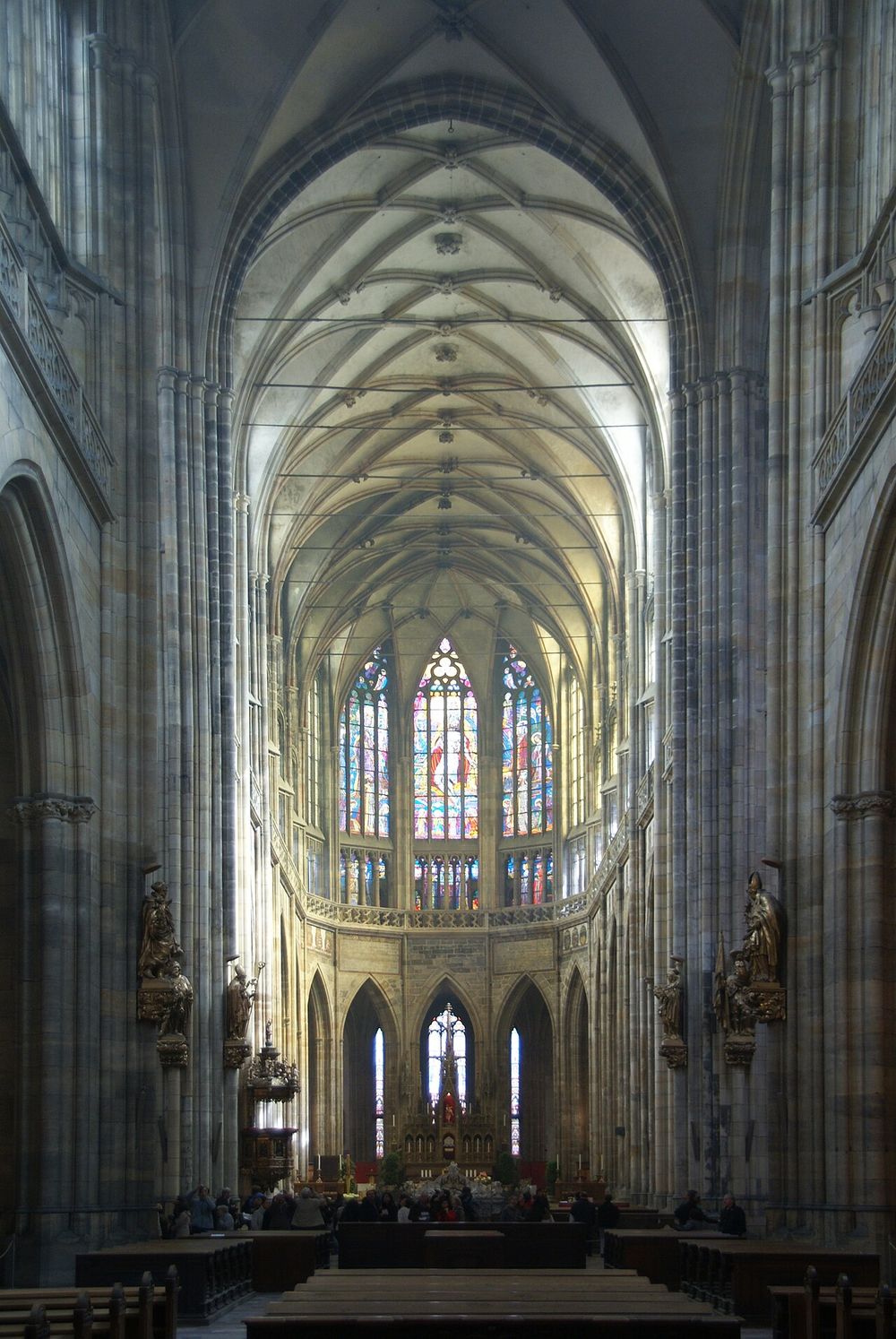
The nave, April 2010Aconcagua (talk), CC BY-SA 3.0
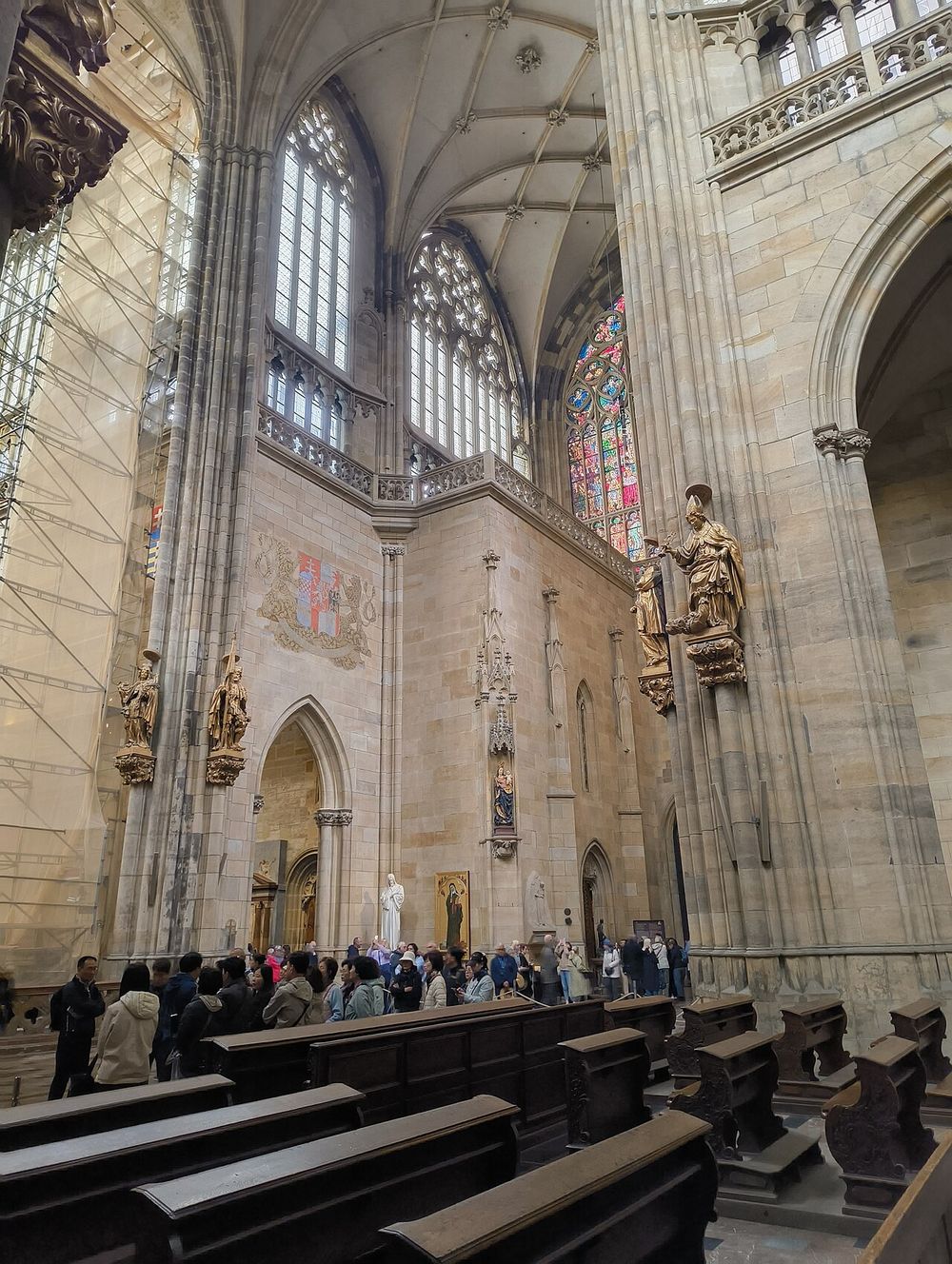
The nave is 124 metres long and 33 high. Walk forward until the vault overhead becomes a net of crossing ribs. You have crossed from 1929 into the 1380s.
Mucha's window, July 2010Perituss, CC0
The third window on the left is Mucha's. At the centre a boy in red kneels beside an old woman: Wenceslas and his grandmother Ludmila, who taught him and was strangled for it. An insurance bank paid for the window, and its name is at the bottom.
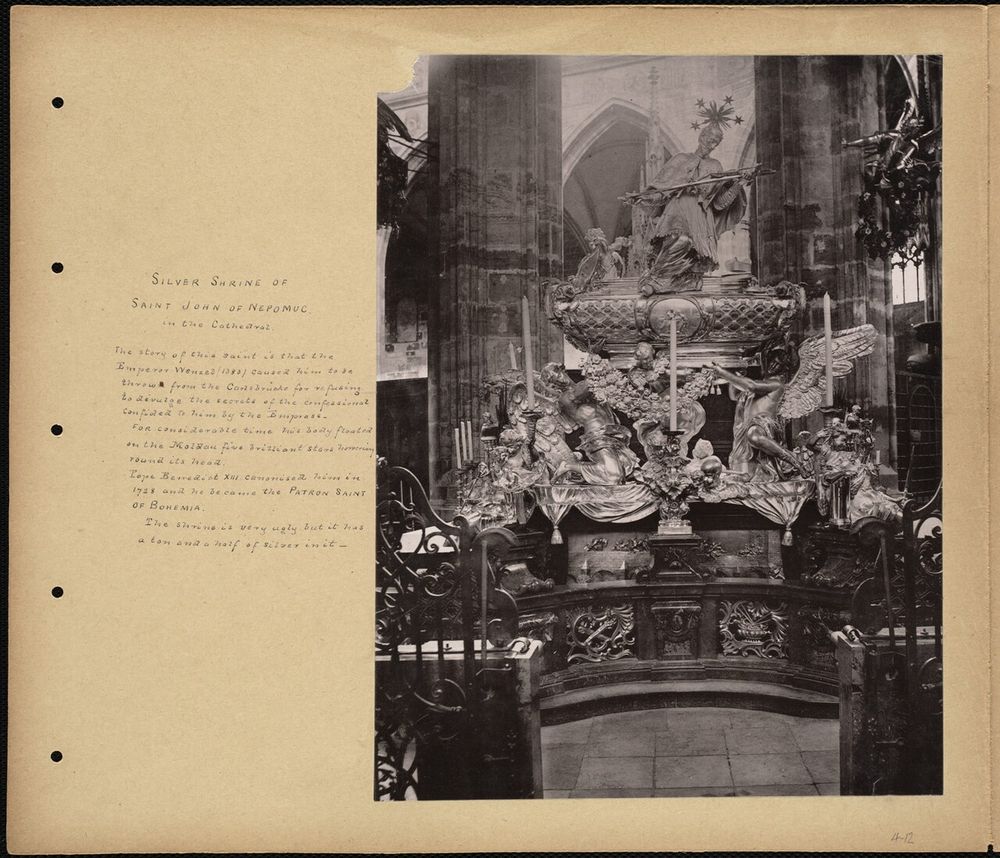
The silver tomb of St John of Nepomuk in an old photographWilliam Vaughn Tupper Flickr uploader BPL, Public domain
In the aisle that runs round the choir is a tomb made of two tonnes of silver, with angels holding back a canopy. It belongs to John of Nepomuk, the priest thrown from the bridge below.
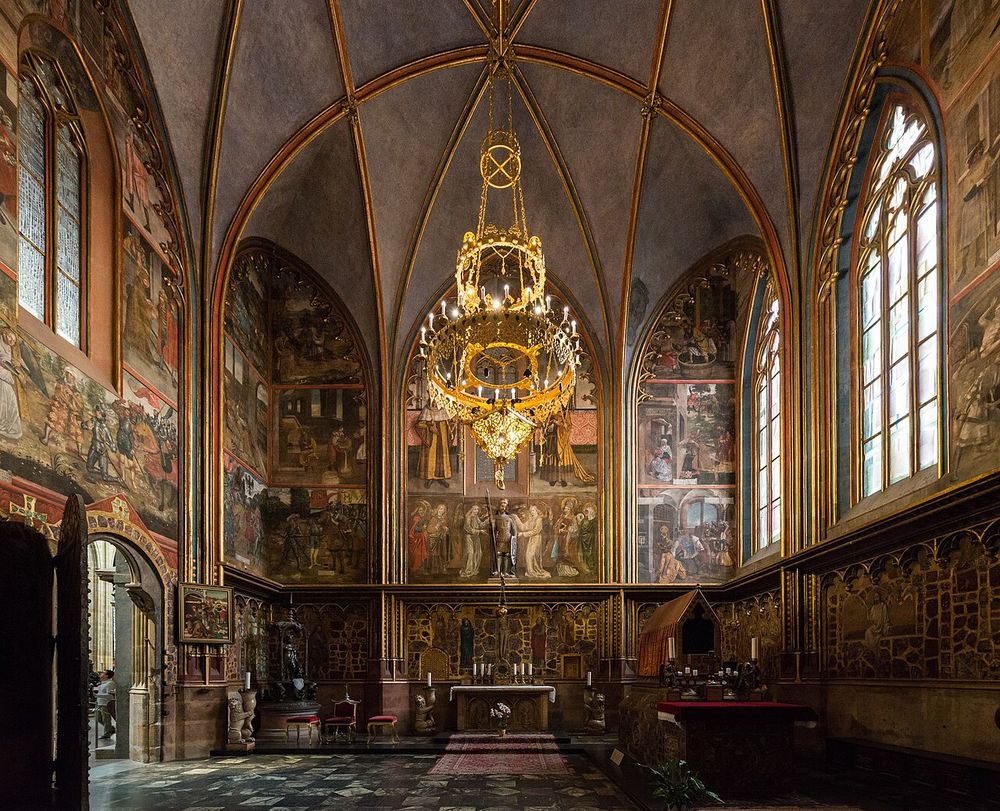
4. The chapel of St Wenceslas
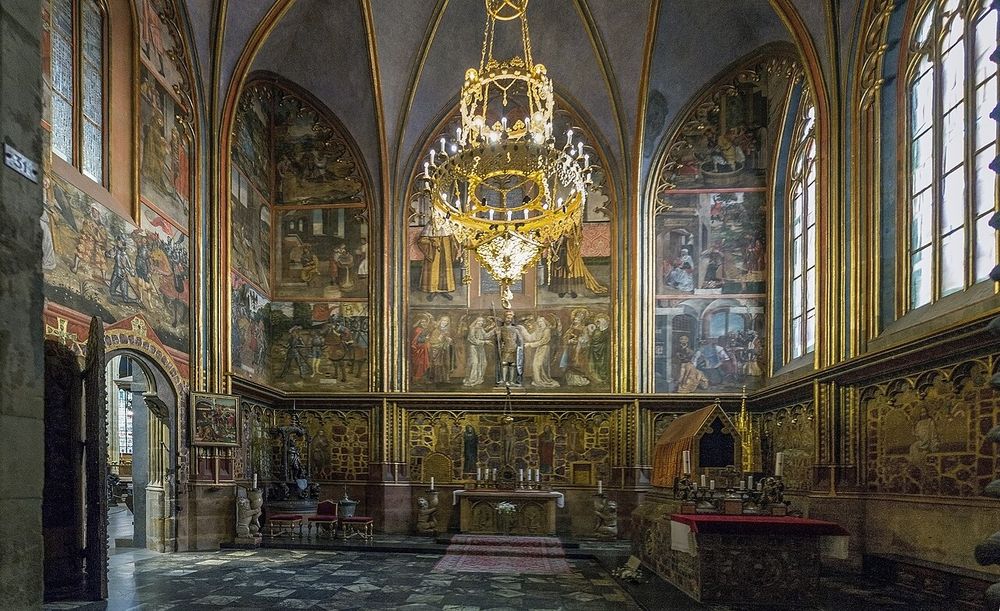
The chapel of St Wenceslas, May 2015Jerzy Strzelecki, CC BY-SA 3.0
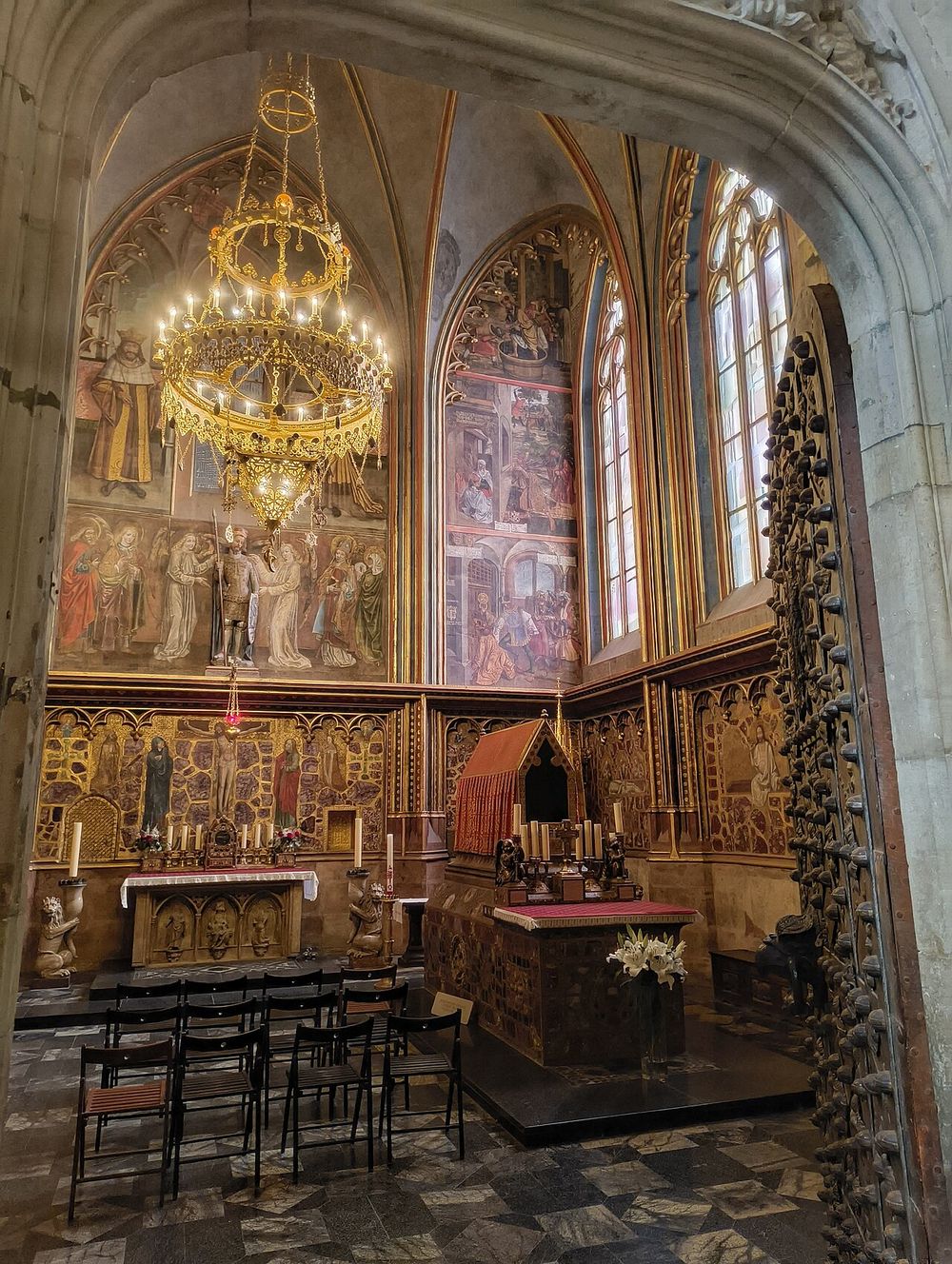
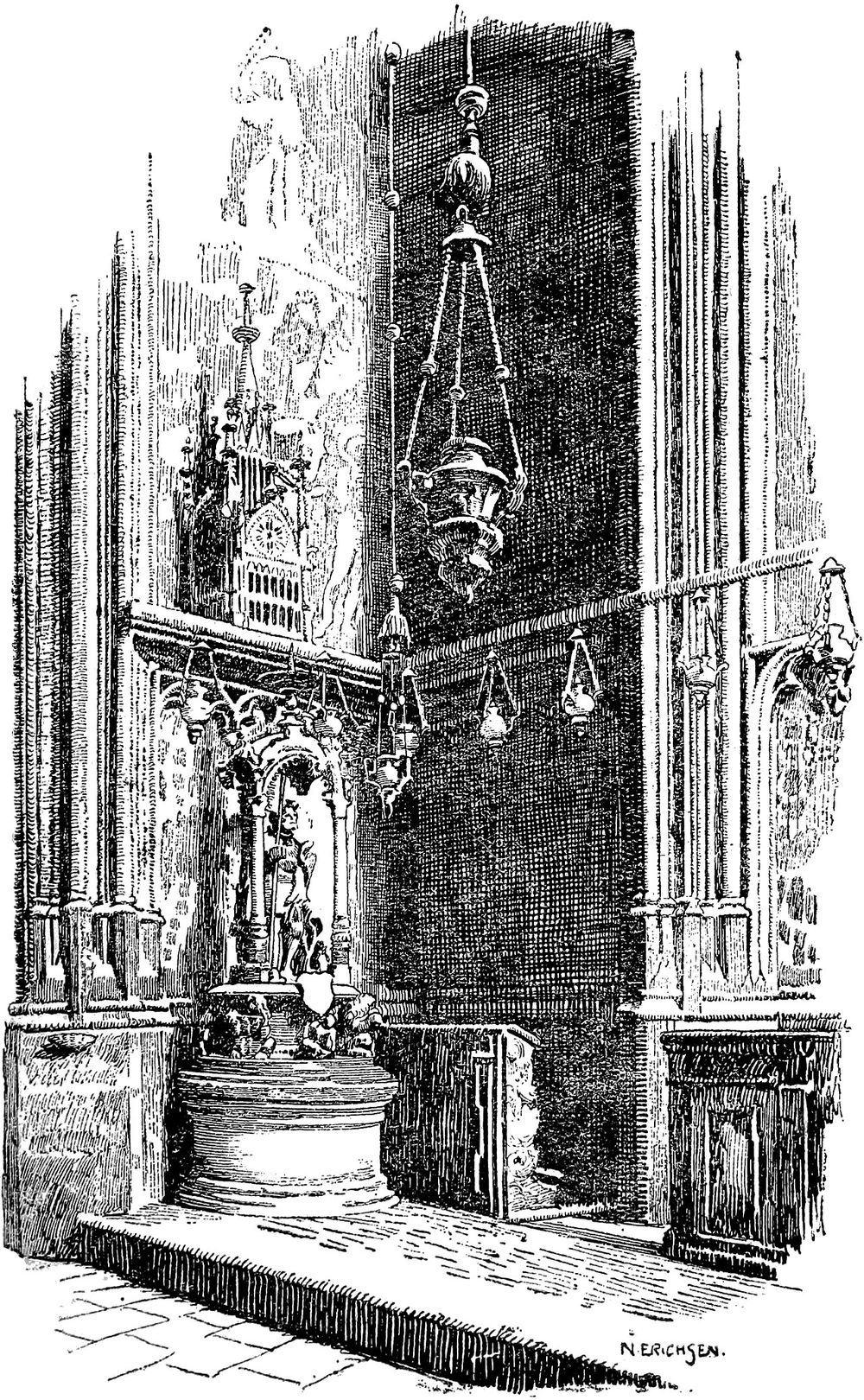
You look in from the doorway. The lower walls are covered with more than thirteen hundred polished stones, purple amethyst and red jasper, set in gilded plaster. The saint's tomb is in the middle.
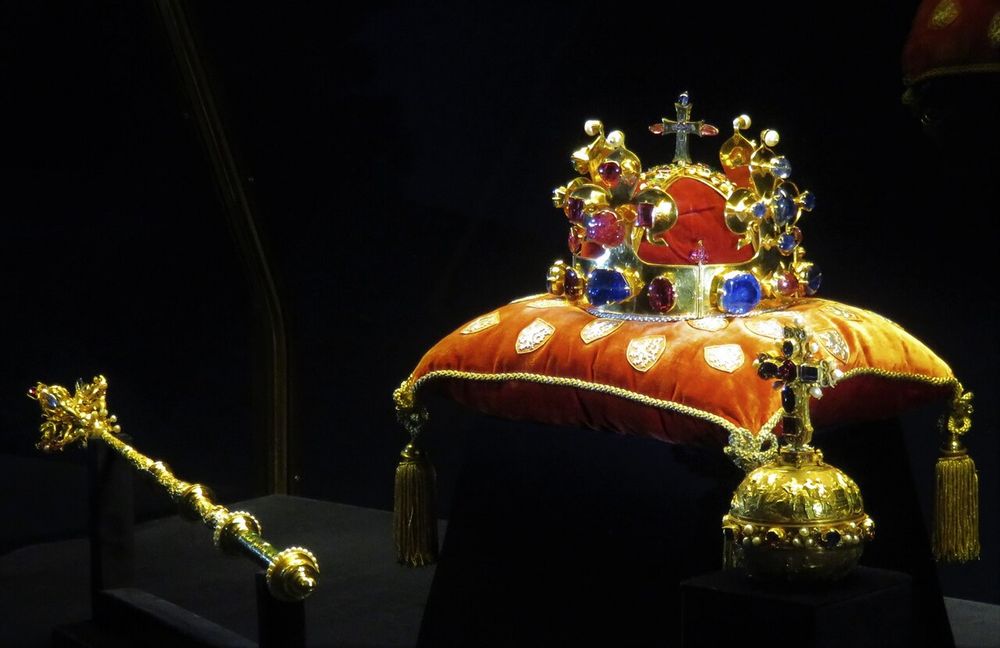
The crown and sceptre on show in May 2016K. Pacovsky, CC BY-SA 4.0
In the corner is a small door with seven locks. Behind it a stair leads to the room where the crown of Bohemia is kept. Seven people hold the seven keys, among them the president, the prime minister and the archbishop, and all seven must come together to open it. The crown is shown to the public only every few years.
5. The Golden Gate
Part of the mosaic over the Golden GateRandal Cooper, CC BY-SA 2.0
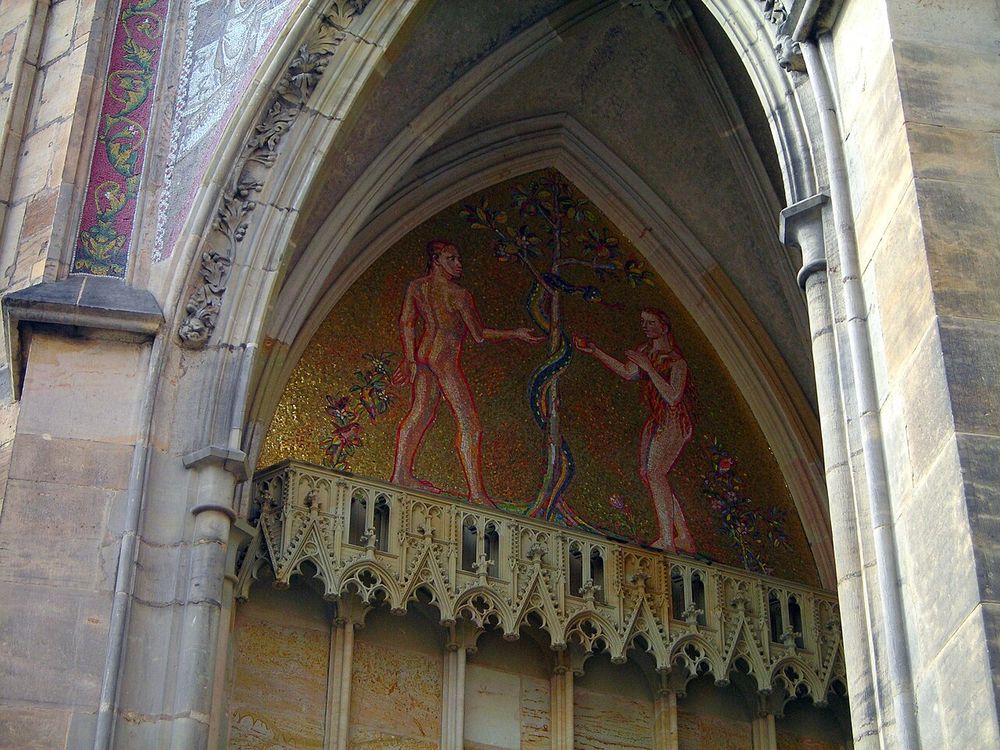
Outside again, on the south side, is the door the kings used. Over its three arches is a mosaic of the Last Judgment made in 1371 from about a million pieces of glass. The dead climb out of their coffins on the left and are driven into fire on the right. The emperor and his wife kneel below the centre.
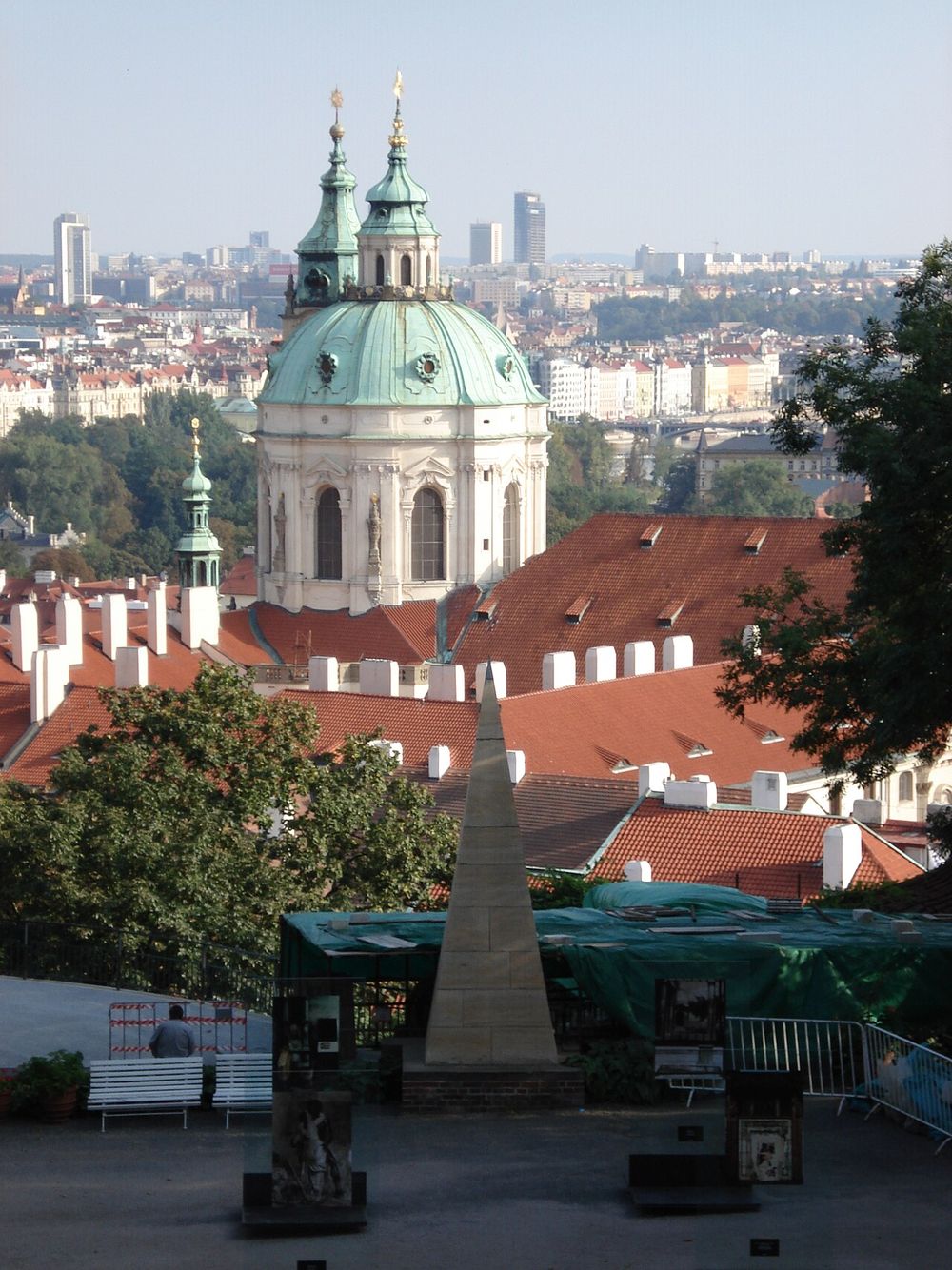
The same shot: stand by the granite obelisk and the whole south front fits, tower and mosaic together.
6. The hall and the window
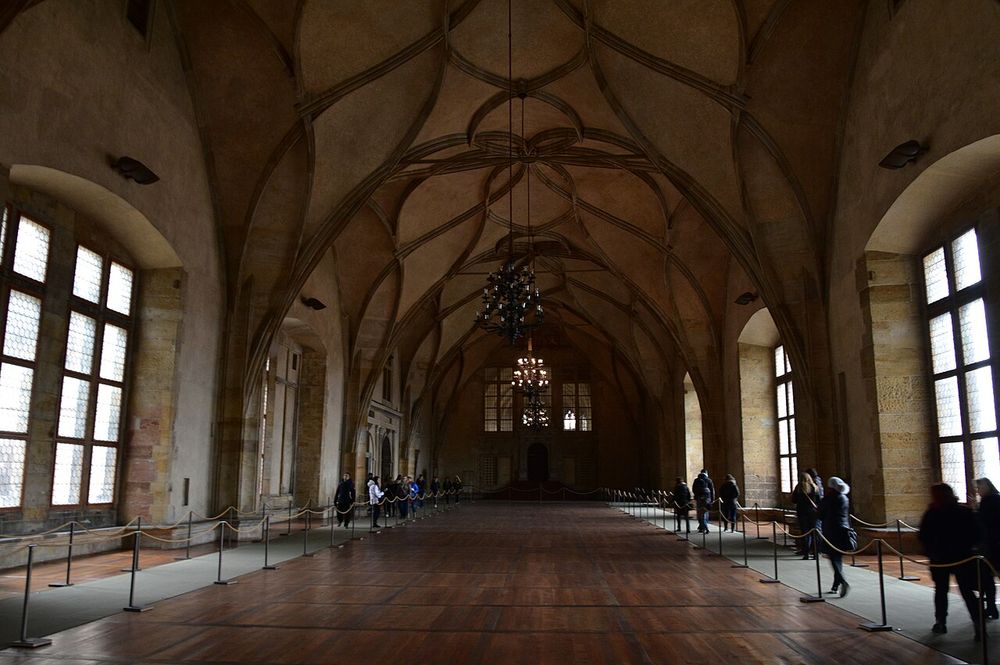
The Vladislav Hall, August 2016DXR, CC BY-SA 4.0
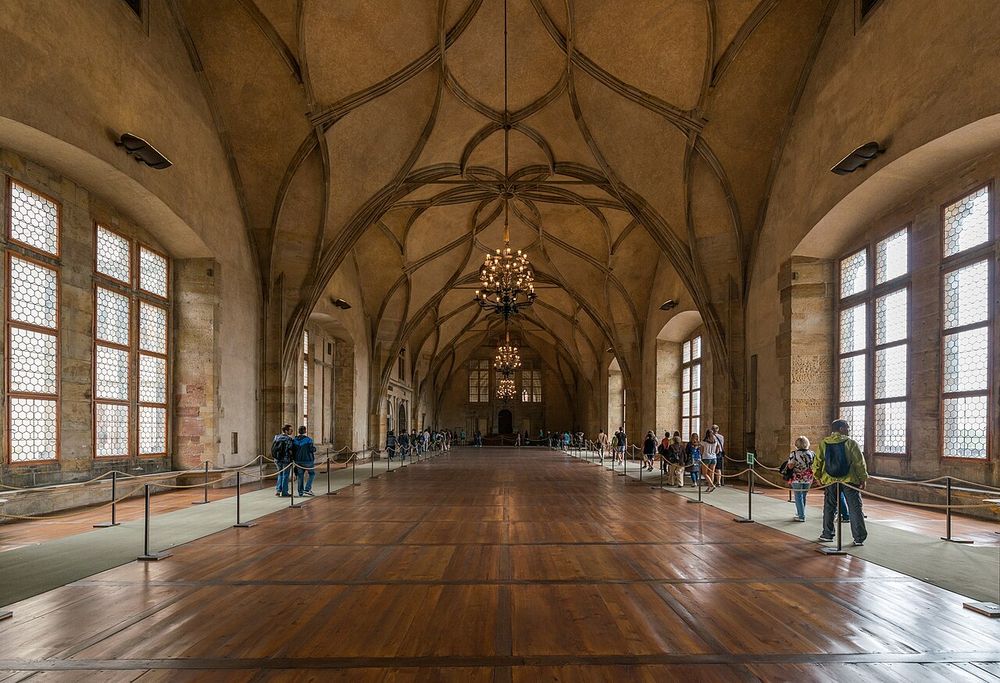
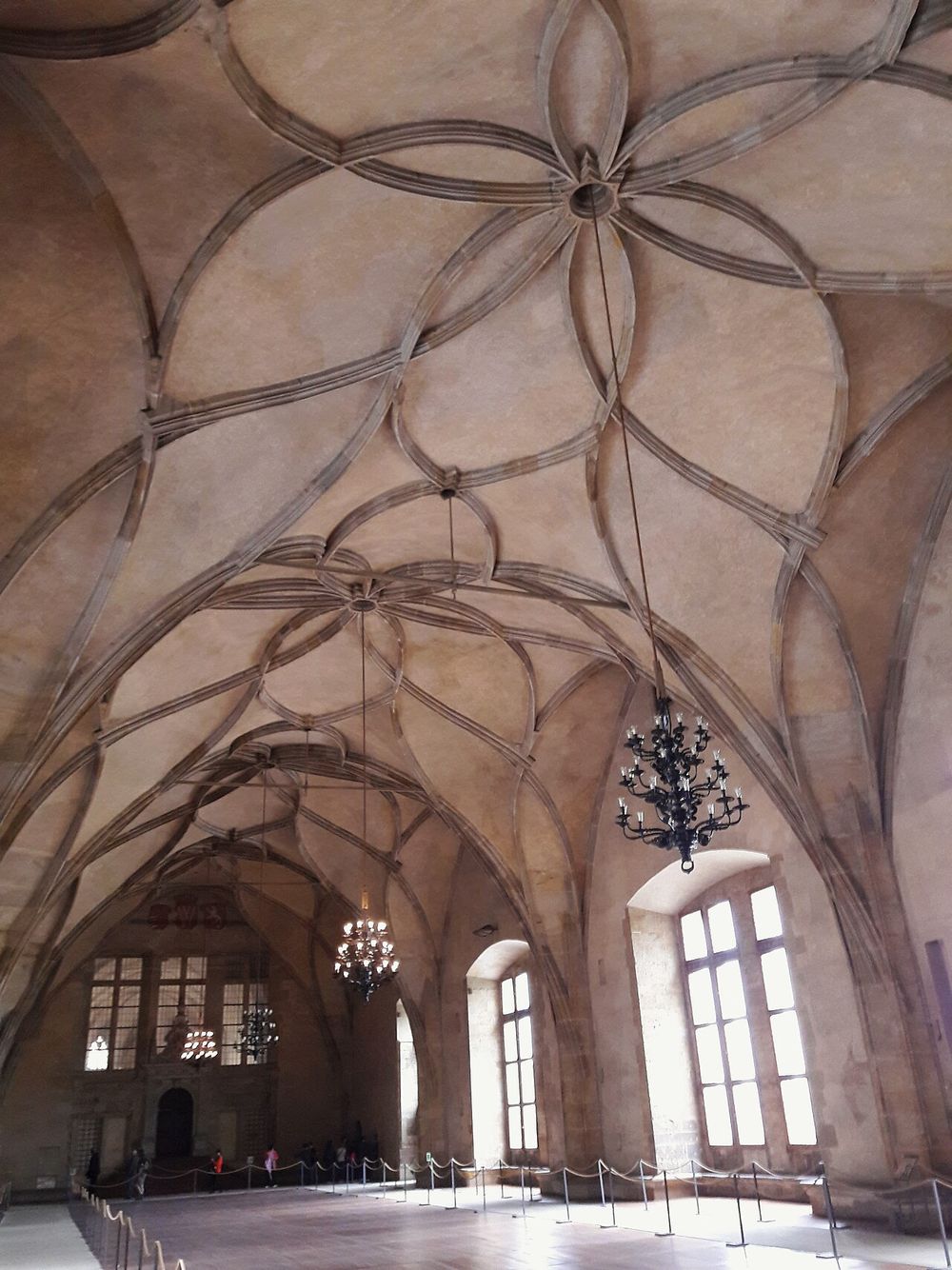
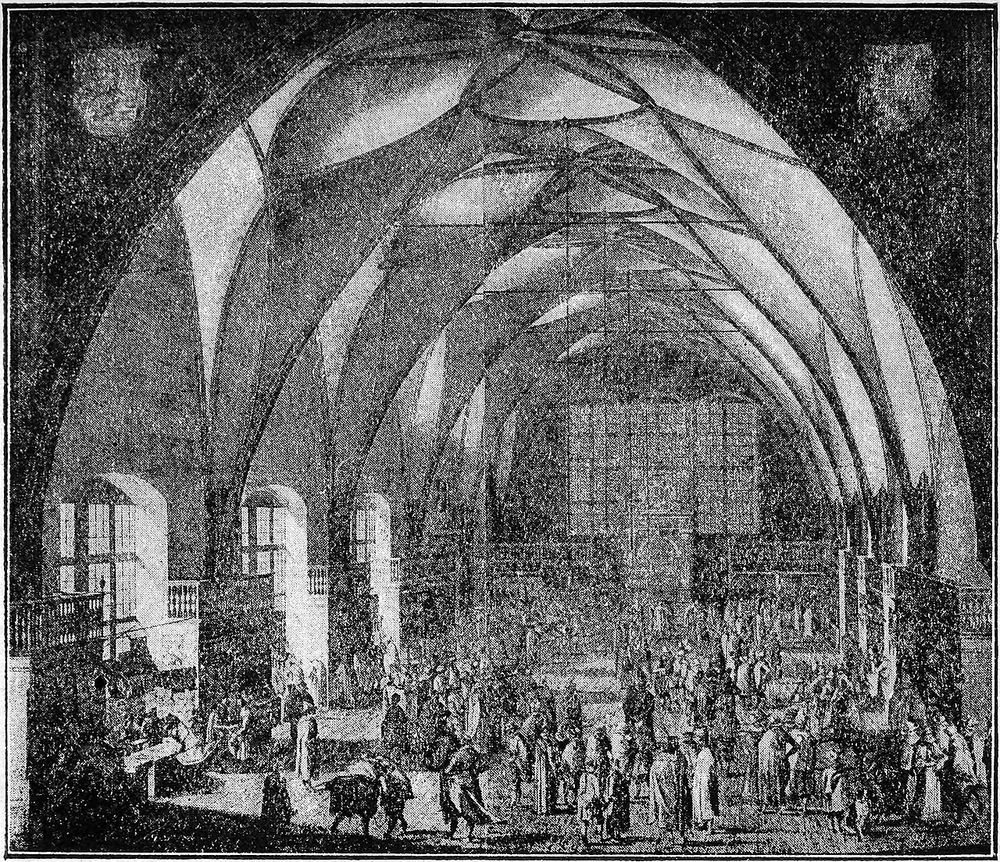
The Old Royal Palace is the low building across the courtyard. Its great hall was finished in 1502: 62 metres long, with no pillar in it, under a stone vault whose ribs loop like flower stems. Knights jousted here on horseback, and came up by a staircase with broad shallow steps made for hooves. Czech presidents are sworn in here.
The window of 1618 from outsideWolfgang Sauber, CC BY-SA 3.0
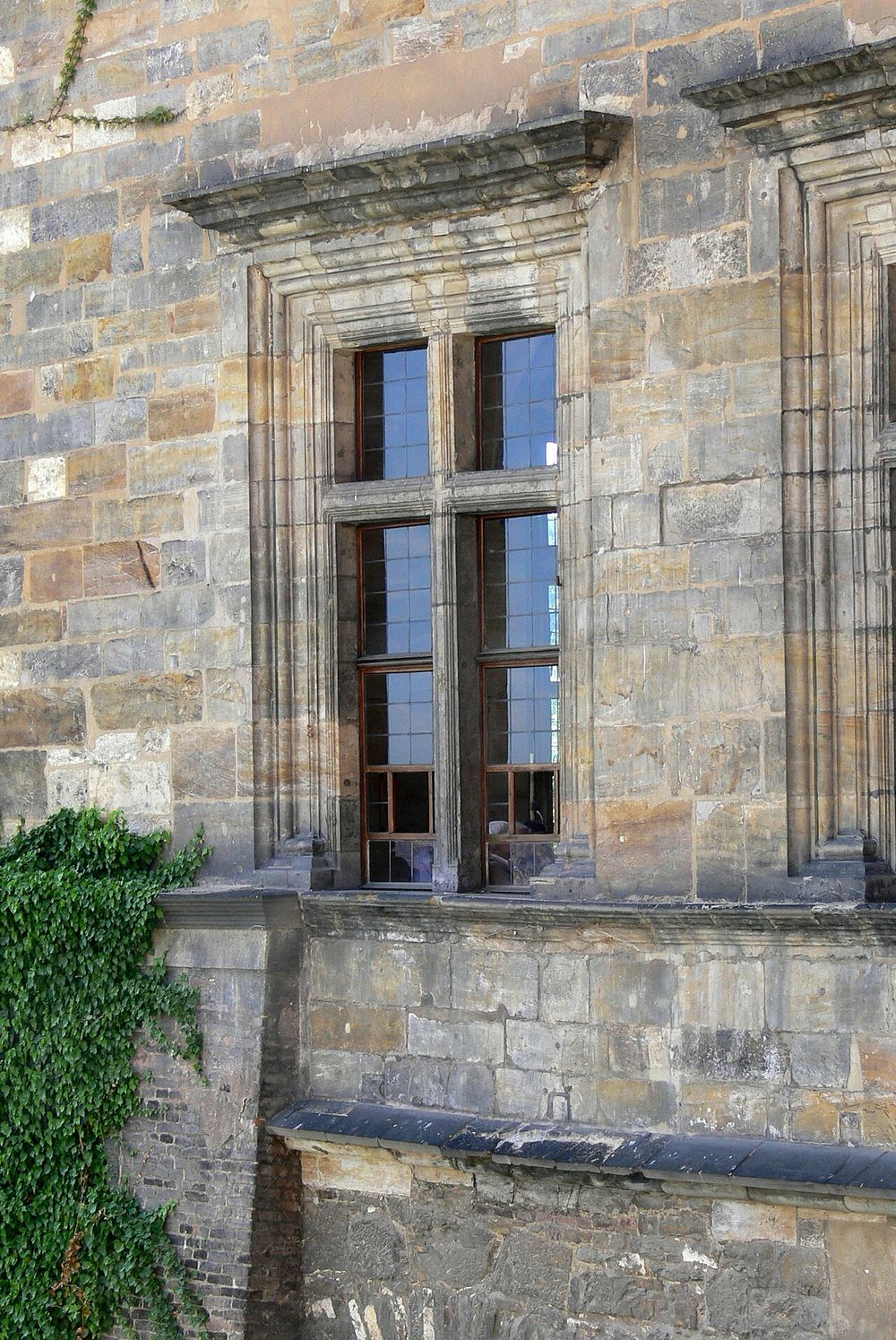
A door in the corner leads to a small room with a tiled stove. On 23 May 1618 Protestant nobles crowded into it, argued with the emperor's Catholic governors, and threw two of them and their secretary out of the window. All three lived. Catholics said the Virgin Mary had caught them. Protestants said they had landed on a dung heap. The war that followed lasted thirty years and killed millions across Europe.
7. St George's
St George's Basilica, May 2025BugWarp, CC BY 4.0
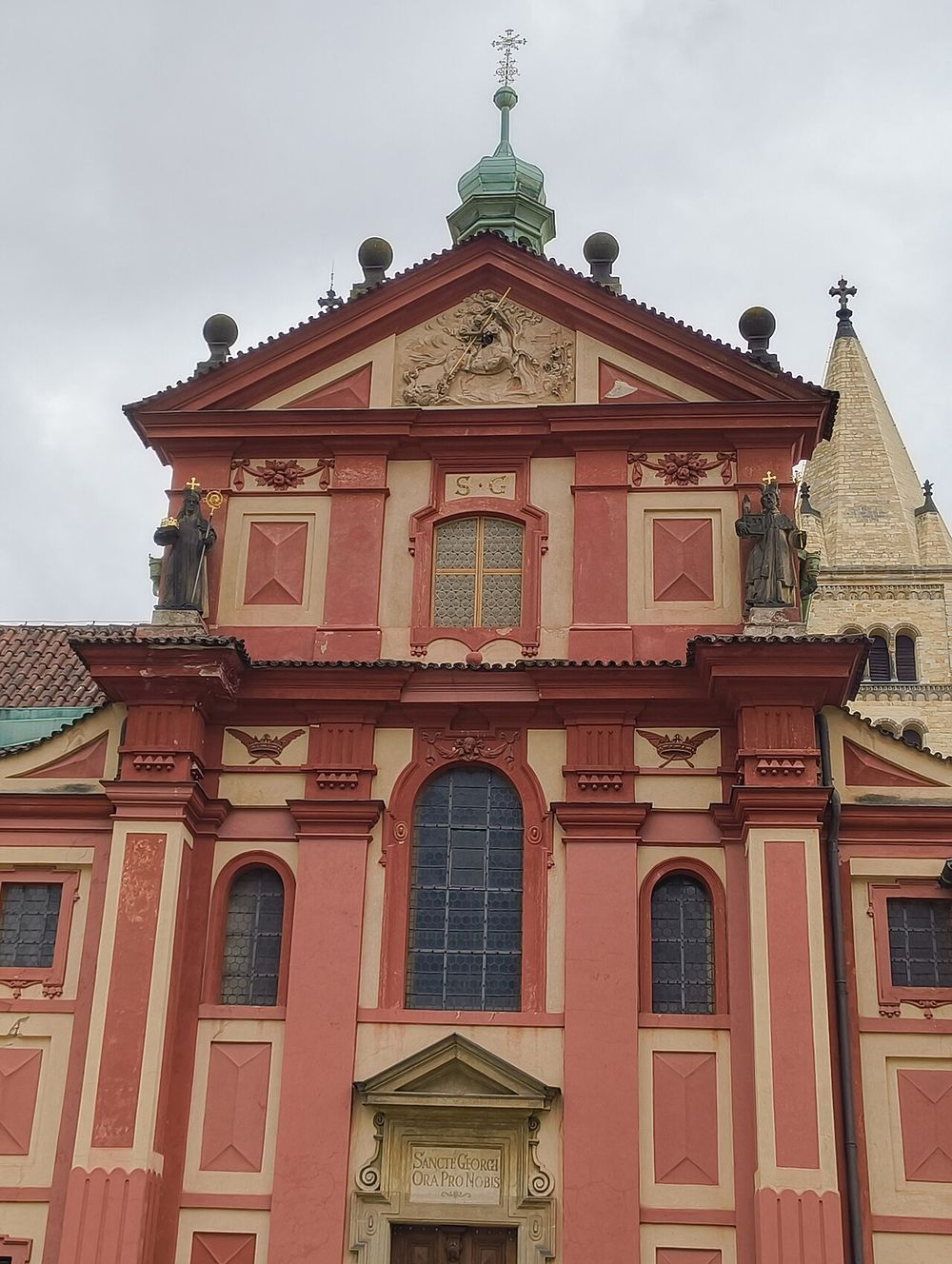
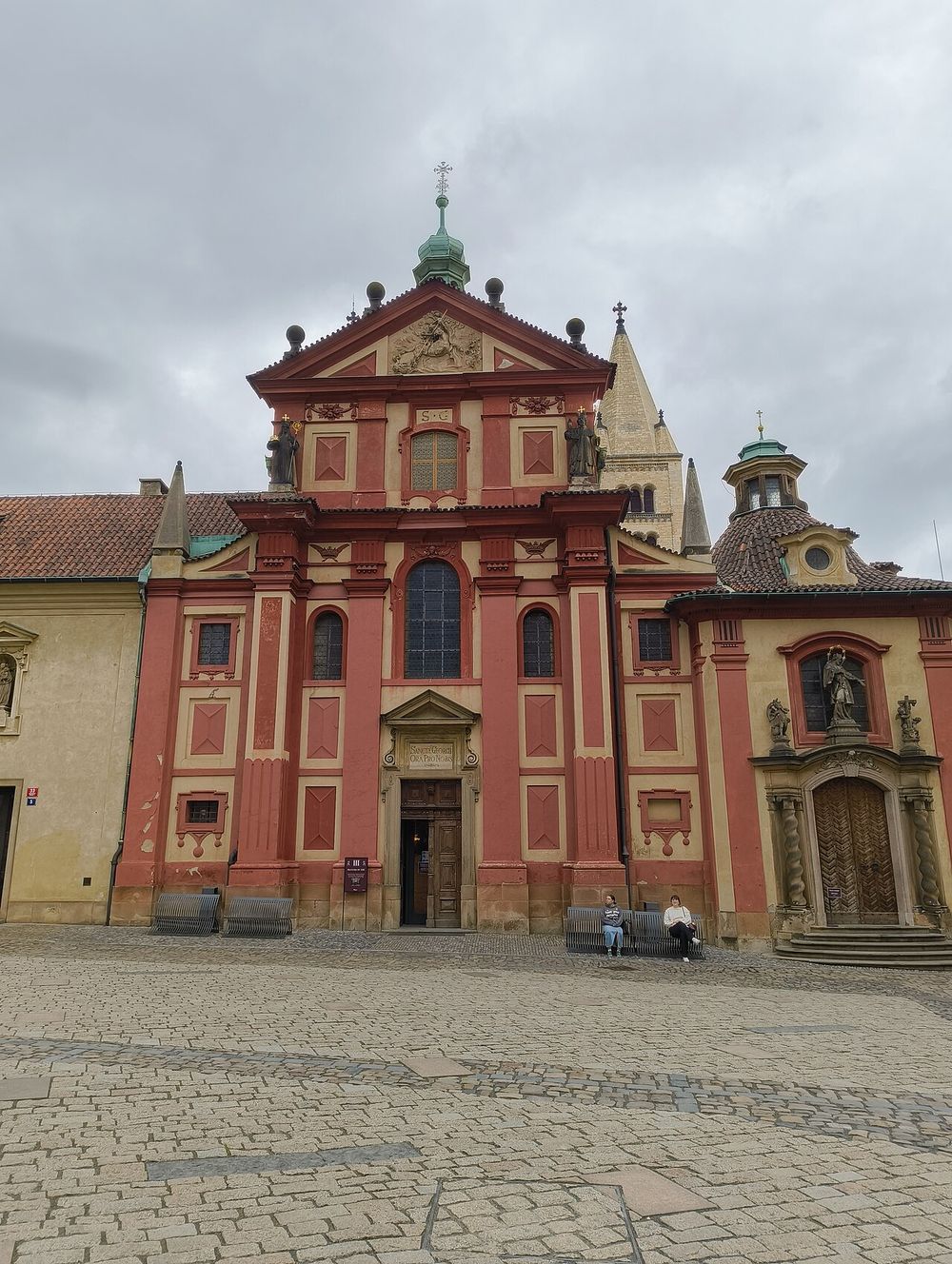
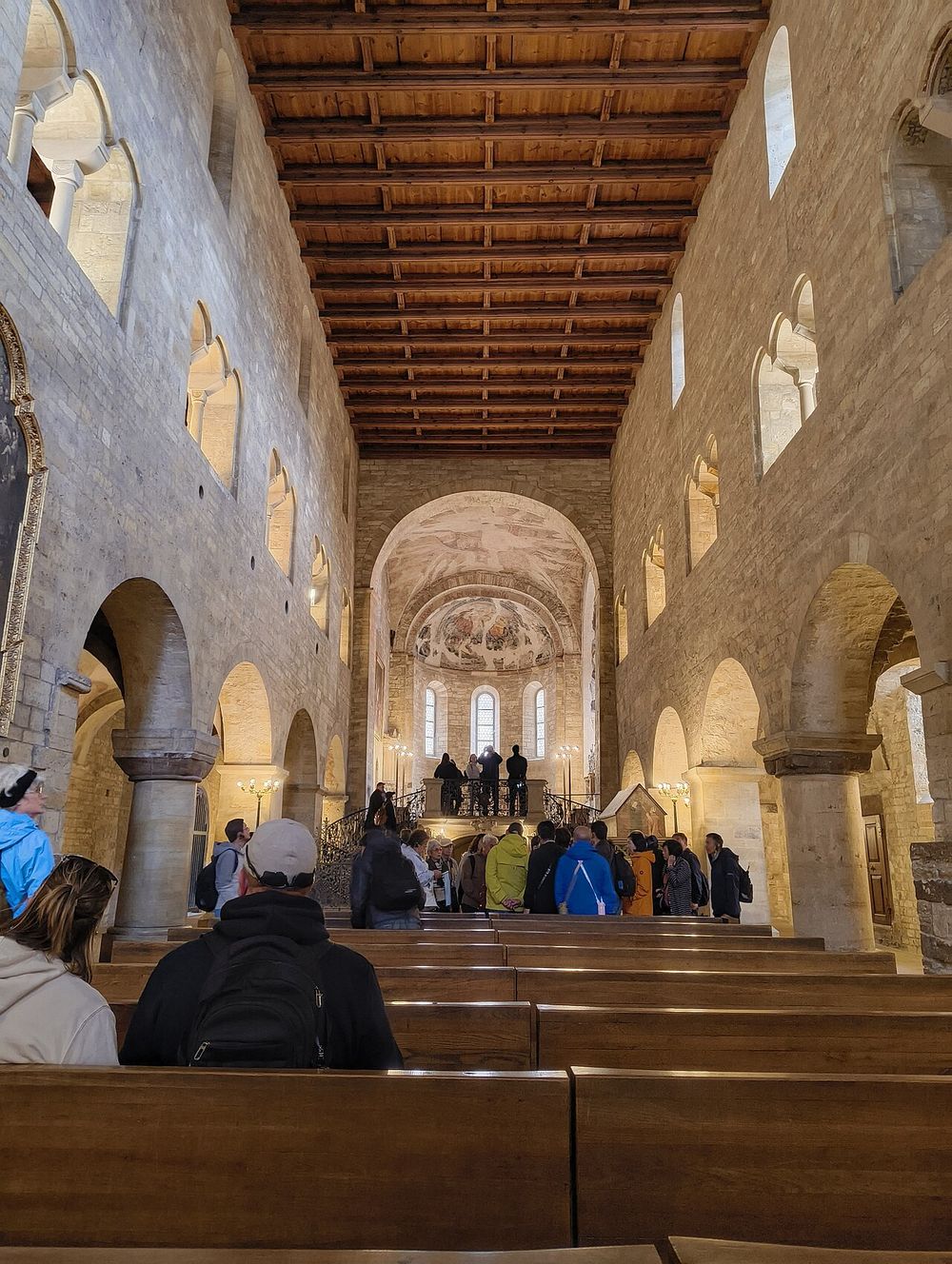
Behind the cathedral a brick-red Baroque front hides the oldest church still standing in the Castle, founded about 920. Inside it is bare pale stone with small round arches, and very quiet. The two white towers have names. The fat one is Adam and the thin one is Eve.
8. The Golden Lane
The Golden Lane, April 2026Skot, CC BY-SA 4.0
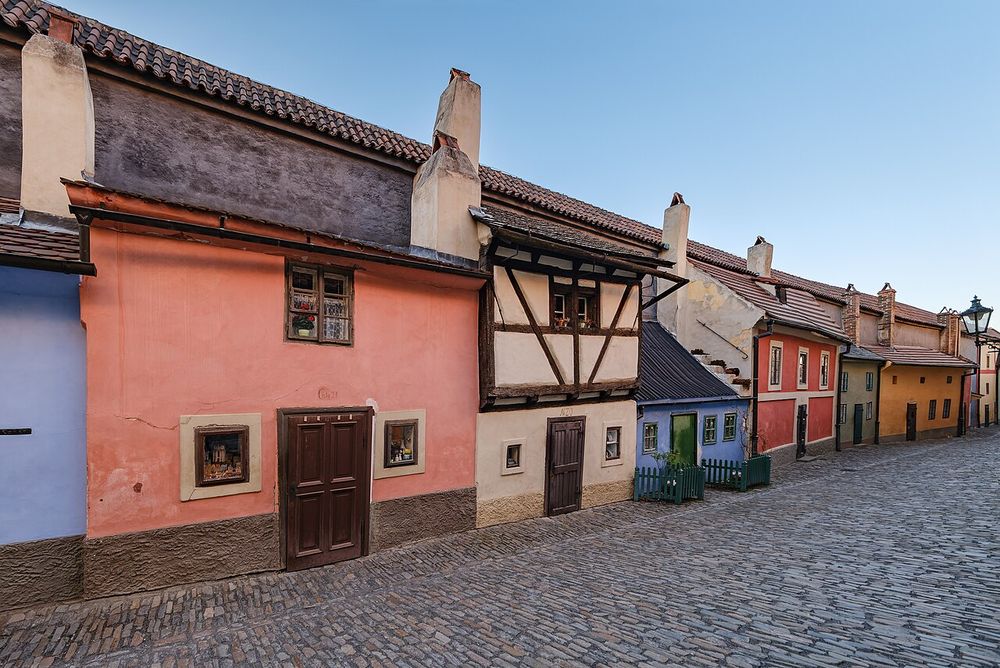
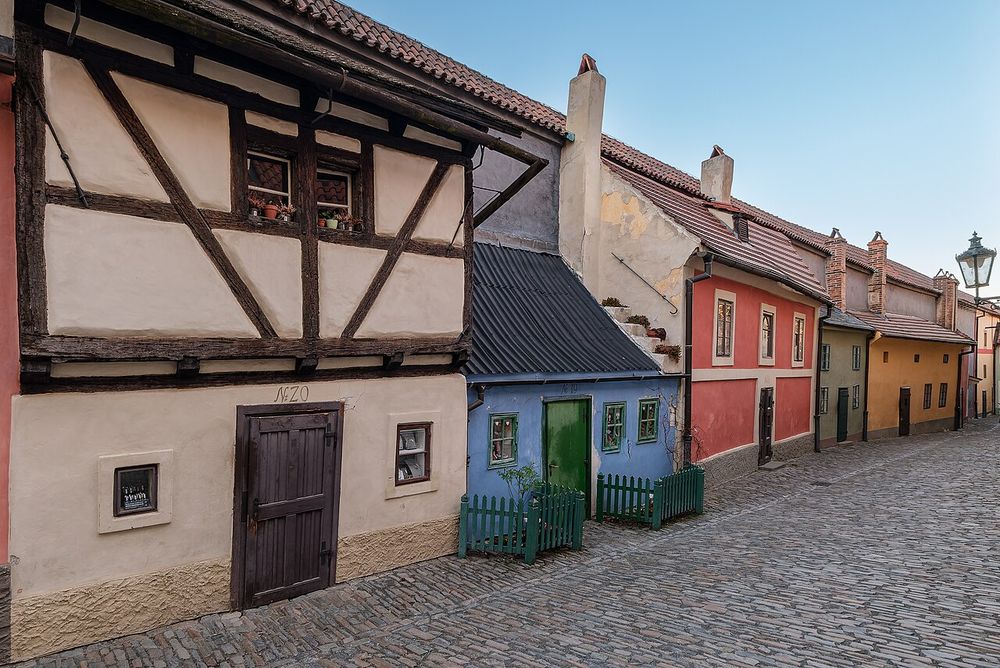
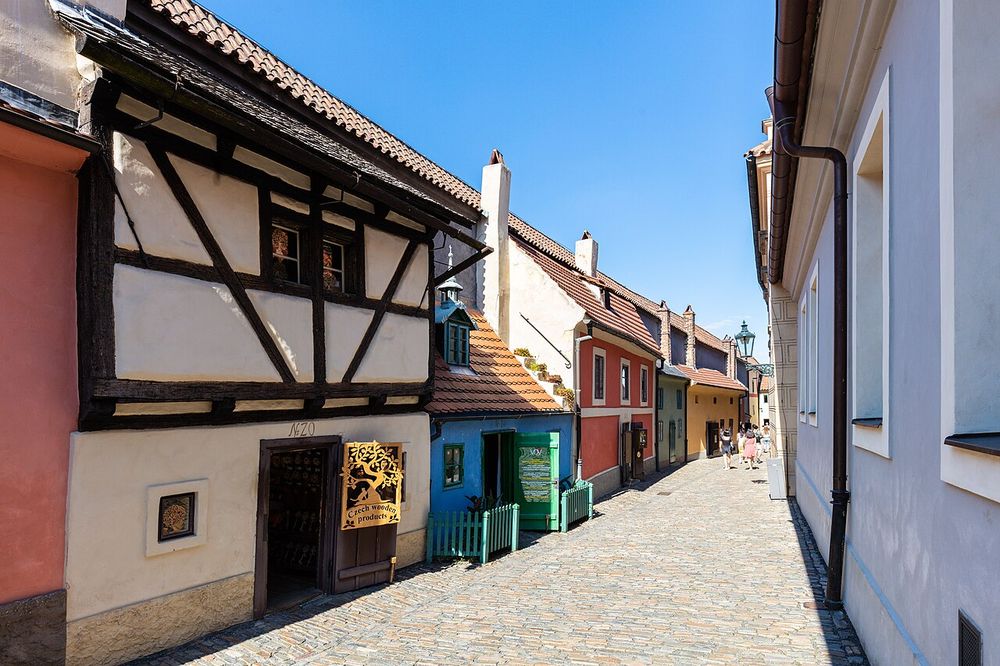
At the bottom of the Castle a row of tiny coloured houses is built into the arches of the outer wall. They were put up from 1597 for the emperor's marksmen and their families. People lived in them until the middle of the twentieth century. Number 22, the blue one, was Kafka's.
The Daliborka tower, March 2026Skot, CC BY-SA 4.0
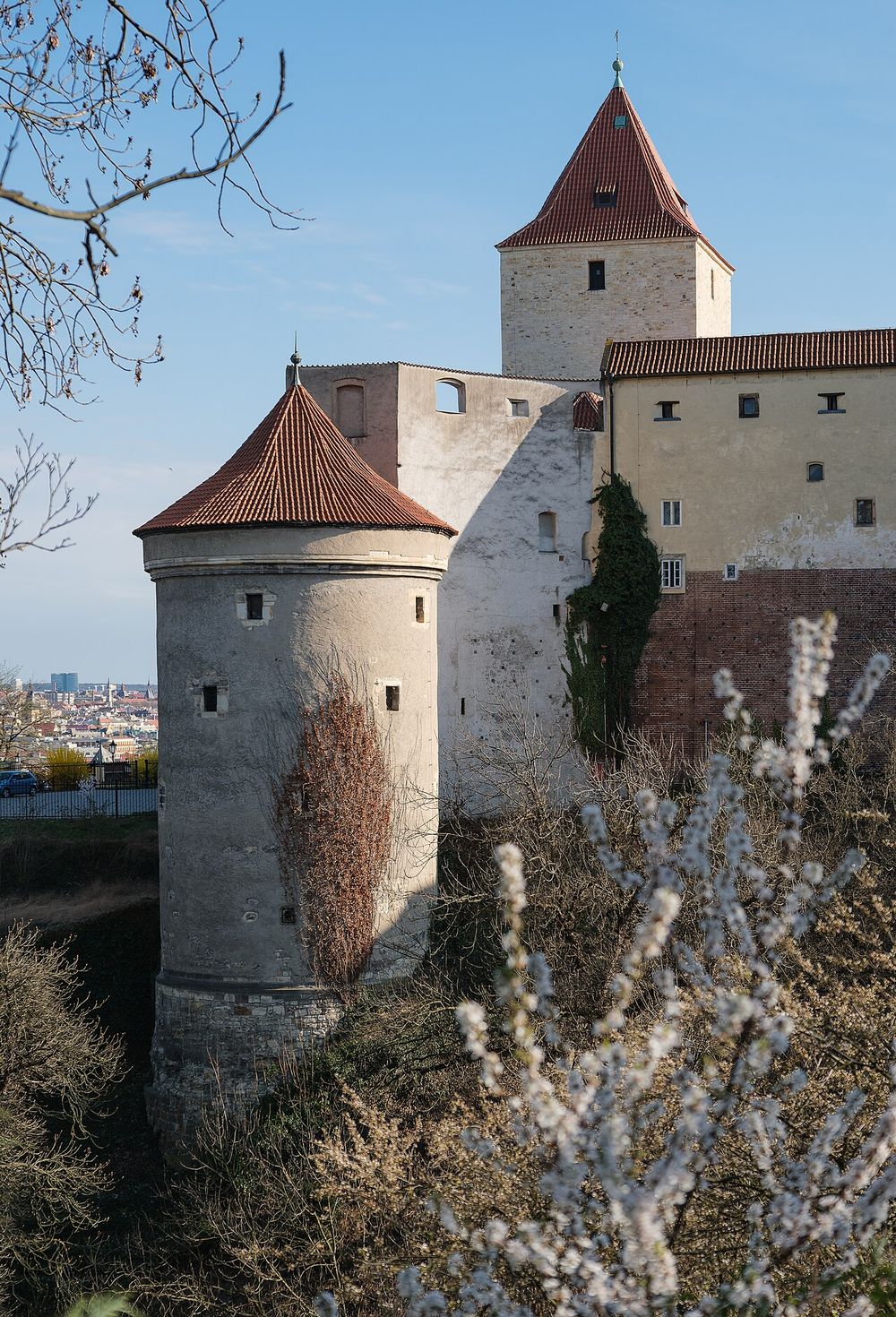
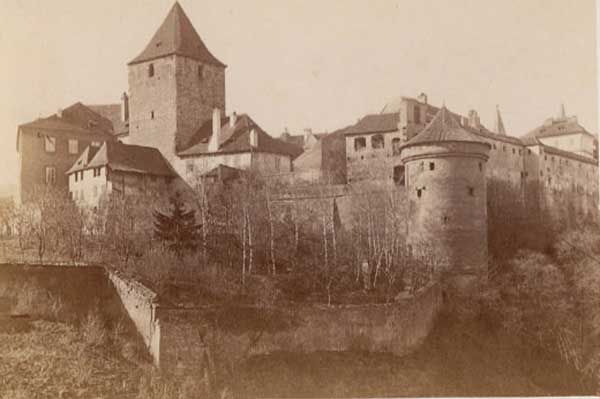
The round tower at the end was a prison. Its first prisoner, in 1498, was a young knight called Dalibor, who had sheltered rebel peasants. The composer Bedřich Smetana made an opera of him in 1868.
Meanwhile in the world
Year
Here
Elsewhere
about 880
The first fort and church
Alfred the Great holds off the Danes in England
1344
Building begins on the cathedral
The Black Death is three years from Europe
1583
Rudolf II moves the imperial court here
The new Gregorian calendar is a year old
1618
Two governors are thrown from the window
The Thirty Years' War begins
1918
The Castle becomes the seat of the president of Czechoslovakia
The First World War ends
1929
The cathedral is finished
The Wall Street crash
1939
Hitler spends a night here in March
The Second World War begins in September
1989
Havel is elected president in the Vladislav Hall
The Berlin Wall opens
One line to remember: every ruler of this country for eleven hundred years has added something, and none has finished it.
Then and now
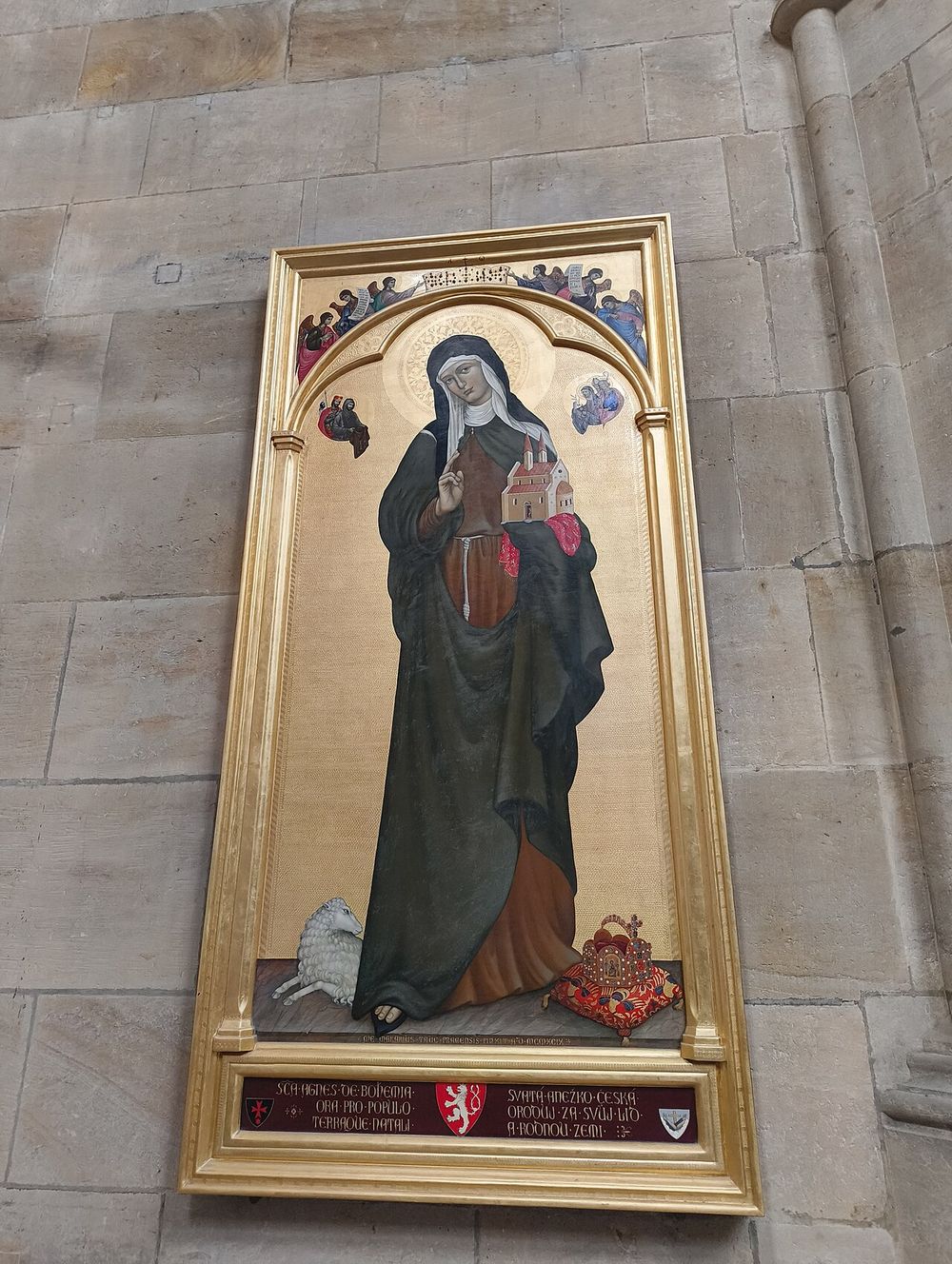
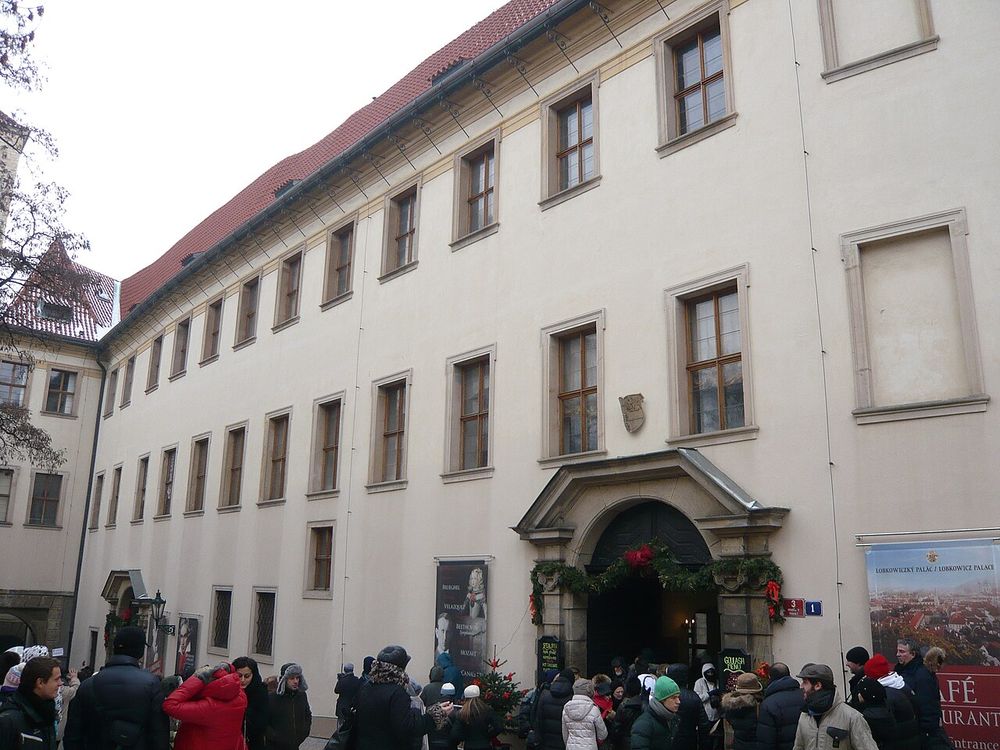
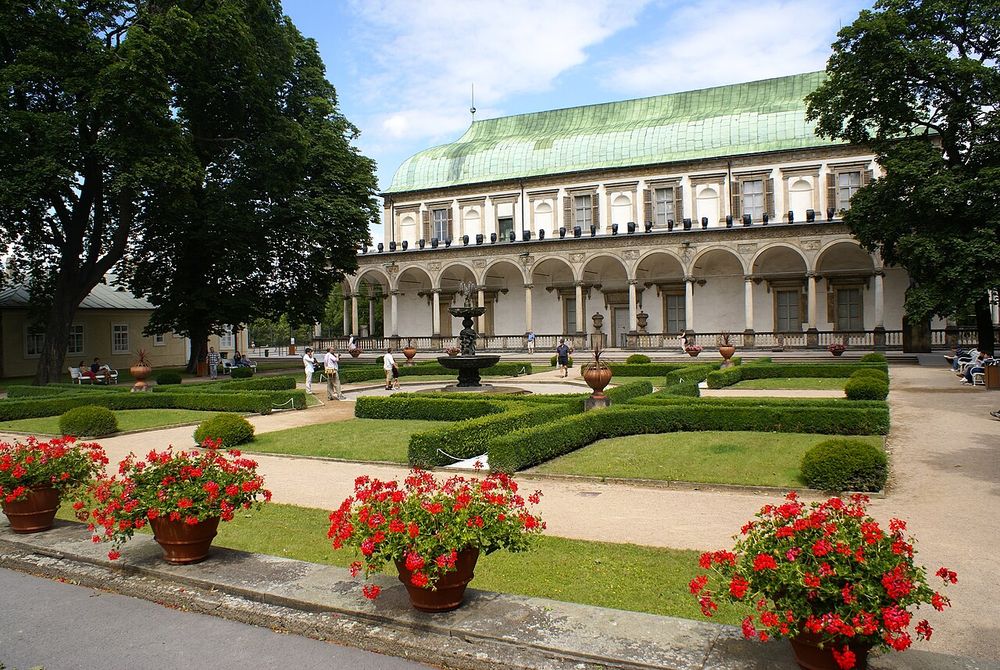
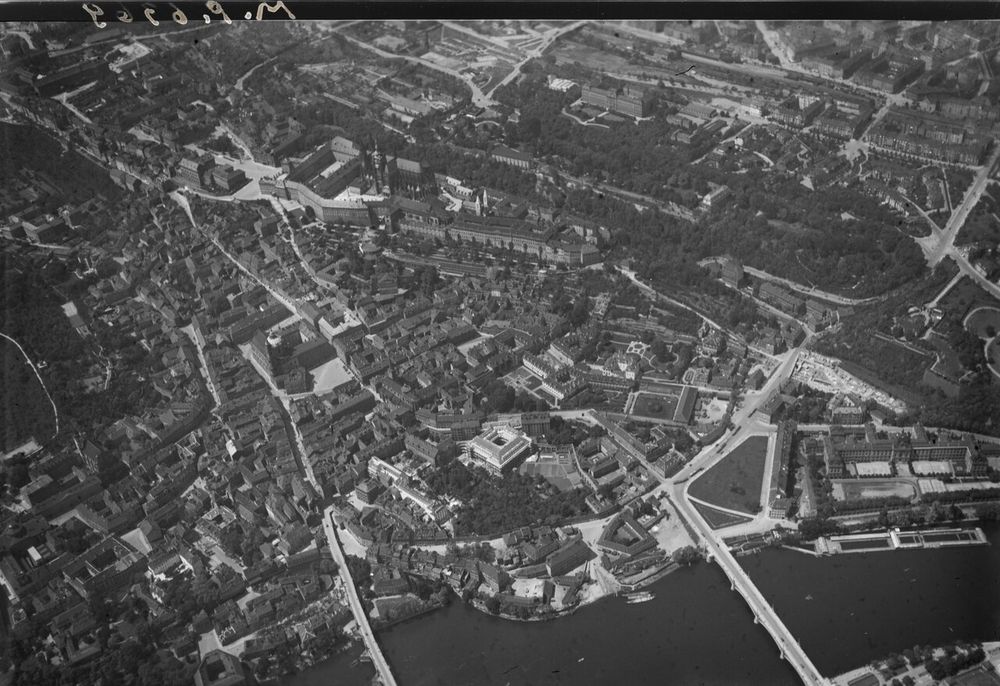
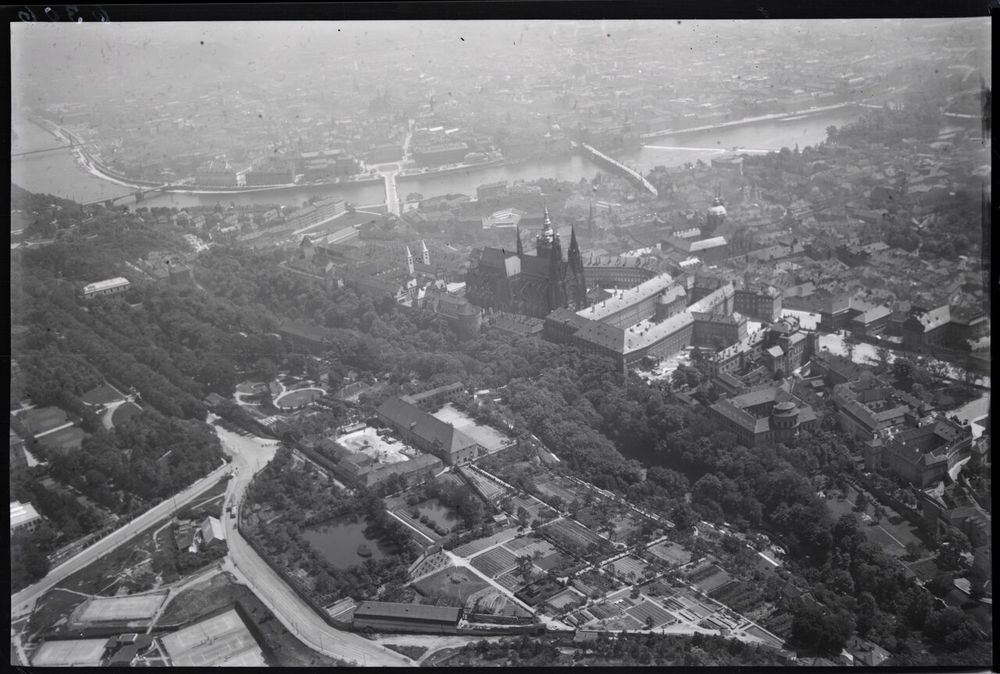
The Castle above the river at dusk, July 2022Diego Delso, CC BY-SA 4.0, Wikimedia CommonsThe Castle from Petřín hill, August 2019Jakub Hałun, CC BY-SA 4.0, Wikimedia CommonsThe Castle and Charles Bridge, June 2006Ludek, CC BY-SA 3.0, Wikimedia CommonsPrague from Petřín, April 2017Uoaei1, CC BY-SA 4.0, Wikimedia CommonsRoofs of the Lesser Town below the CastleJakub Hałun, CC BY-SA 4.0, Wikimedia CommonsThe Castle on the skyline, May 2010HoremWeb, CC BY-SA 4.0, Wikimedia CommonsLooking over the roofs towards the CastleFred Romero from Paris, France, CC BY 2.0, Wikimedia CommonsRoofs and gables below the CastleFred Romero from Paris, France, CC BY 2.0, Wikimedia CommonsThe city seen from the Castle, 2019Dietmar Rabich, CC BY-SA 4.0, Wikimedia CommonsThe river, the bridge and the Castle after sunset, June 2023MichaelOpdenacker, CC BY-SA 4.0, Wikimedia CommonsThe Castle square in the evening, October 2020VitVit, CC BY-SA 4.0, Wikimedia CommonsThe first courtyard and the Matthias Gate, February 2018Patrik Kunec, CC BY-SA 4.0, Wikimedia CommonsThe changing of the guardJorge Royan, CC BY-SA 3.0, Wikimedia CommonsThe second courtyard, August 2017Tilman2007, CC BY-SA 4.0, Wikimedia CommonsThe west front of the cathedral, January 2026Nurken, CC BY-SA 4.0, Wikimedia CommonsThe rose window from outsideSerafita, CC BY-SA 4.0, Wikimedia CommonsRoof tiles and pinnaclesSerafita, CC BY-SA 4.0, Wikimedia CommonsThe south side and the great towerMtd at Czech Wikipedia, CC BY-SA 3.0, Wikimedia CommonsThe east end from St George's Square, July 2026Radosław Botev, CC BY 3.0 pl, Wikimedia CommonsPart of the mosaic over the Golden GateRandal Cooper, CC BY-SA 2.0, Wikimedia CommonsThe nave, April 2010Aconcagua (talk), CC BY-SA 3.0, Wikimedia CommonsThe nave from the side, May 2025BugWarp, CC0, Wikimedia CommonsA side chapelBugWarp, CC0, Wikimedia CommonsA painted panel in the cathedralBugWarp, CC0, Wikimedia CommonsMucha's window, July 2010Perituss, CC0, Wikimedia CommonsThe chapel of St Wenceslas, May 2015Jerzy Strzelecki, CC BY-SA 3.0, Wikimedia CommonsThe chapel walls, set with polished stonesDXR, CC BY-SA 4.0, Wikimedia CommonsThe crown and sceptre on show in May 2016K. Pacovsky, CC BY-SA 4.0, Wikimedia CommonsThe Vladislav Hall, August 2016DXR, CC BY-SA 4.0, Wikimedia CommonsThe vault of the hallArtinpl, CC0, Wikimedia CommonsThe hall, built 1493–1502Richard Mortel from Riyadh, Saudi Arabia, CC BY 2.0, Wikimedia CommonsThe window of 1618 from outsideWolfgang Sauber, CC BY-SA 3.0, Wikimedia CommonsSt George's Basilica, May 2025BugWarp, CC BY 4.0, Wikimedia CommonsSt George's and its squareBugWarp, CC BY 4.0, Wikimedia CommonsInside St George'sBugWarp, CC0, Wikimedia CommonsThe Golden Lane, April 2026Skot, CC BY-SA 4.0, Wikimedia CommonsHouses in the Golden LaneSkot, CC BY-SA 4.0, Wikimedia CommonsThe lane in July 2022Diego Delso, CC BY-SA 4.0, Wikimedia CommonsThe Daliborka tower, March 2026Skot, CC BY-SA 4.0, Wikimedia CommonsThe Lobkowicz Palace inside the wallsErudy, Public domain, Wikimedia CommonsFrom the south gardens towards the Lesser Townuser:Diligent, Public domain, Wikimedia CommonsA canopy by Plečnikuser:Diligent, Public domain, Wikimedia CommonsThe Royal Summer Palace, July 2008Karen Blaha, CC BY-SA 2.0, Wikimedia CommonsThe Summer Palace and the Singing Fountain, July 2013Michael Brezocnik, CC BY-SA 4.0, Wikimedia CommonsA fair in the Vladislav Hall, engraved by Aegidius Sadeler in 1607Aegidius Sadeler, Public domain, Wikimedia CommonsThe Black Tower and the Daliborka, photographed in 1867František Fridrich (21. 5. 1829 – 23. 3. 1892), Public domain, Wikimedia CommonsThe gate about 1900Photochrom Print Collection, Public domain, Wikimedia CommonsThe chapel of St Wenceslas, drawn in 1902Nelly Erichsen, Public domain, Wikimedia CommonsThe silver tomb of St John of Nepomuk in an old photographWilliam Vaughn Tupper Flickr uploader BPL, Public domain, Wikimedia CommonsThe Castle from the air, 1931Walter Mittelholzer, Public domain, Wikimedia CommonsThe cathedral and the river from the air, about 1930Walter Mittelholzer, Public domain, Wikimedia Commons
Local legends
These are stories people tell about this place. They are legends, not history, and each one says where it comes from.
LegendThe curse on the crown
Anyone who puts the crown on his head without the right to it is said to die within a year. The Nazi governor Reinhard Heydrich is said to have tried it on in 1941. He was killed by Czech parachutists in 1942.
Source: An old Bohemian legend. Heydrich was shown the jewels in November 1941; no witness says he put the crown on
LegendThe alchemists' street
The emperor Rudolf is said to have locked his alchemists in the little houses of the Golden Lane until they made gold.
Source: A nineteenth-century story. The name comes from goldsmiths who lived there later
LegendDalibor's violin
The knight in the tower is said to have learned the violin to pass the time, and to have played so sweetly that people gathered below to listen and sent up food on a rope.
Source: Czech folk tradition and Smetana's opera. The violin did not yet exist in 1498; "the fiddle" was prison slang for the rack
Later, people who live here will be able to add the stories they grew up with, and say which of these they have heard.
Not certain, and where accounts conflict
When was it founded?
About 880 is the date archaeologists give for the first church. No document names a year.
What saved the men who fell?
The drop is about fifteen metres. The slope below was steep and covered with rubbish, and they wore heavy cloaks. The dung heap is from Protestant pamphlets and the angels from Catholic ones.
Who designed the cathedral?
A Frenchman, Matthias of Arras, laid it out and died in 1352. Peter Parler changed the design as he built. The western half follows nineteenth-century plans meant to match.
Visiting
Tickets and hours
The grounds are free and open daily from 6:00 to 22:00.
The Castle ticket was CZK 450 in 2026 (reduced CZK 300, family CZK 950). It covers the cathedral, the Old Royal Palace, St George's and the Golden Lane, each once, over two days.
The cathedral's south tower is separate: CZK 200.
Interiors open at 9:00 and close at 17:00 from April to October and at 16:00 from November to March. On Sundays the cathedral opens to visitors at noon, after Mass.
Last checked 2026-11-12. The Prague Castle Administration and the Metropolitan Chapter of St Vitus on their own buildings; tickets and hours as published for 2026.
Booking from abroad
Official page in English hrad.cz
Note Everyone passes a security check at the gates. Allow twenty minutes in summer.
Checked 2026-11-12
Where to start
Tram 22 to Pražský hrad, then five minutes on foot. This way you walk downhill through the Castle and leave by the steps at the bottom.
Be at the cathedral door at 9:00. By 10:30 the queue fills the courtyard.
After the ticket desks close, the Golden Lane usually stays open and free until the grounds shut, though the houses are locked.
Before you go
The cathedral is cold in every season.
The crown jewels are almost never on show. What you see in shops are copies.
Customs and manners
The cathedral is a working church. Men take off their hats. Keep your voice down, and do not use flash.
You may stand beside a guard for a photograph. Do not touch him or his rifle, and do not block the path when the relief marches in.
The president works here. If a courtyard is closed for a state visit, there is nothing to be done but wait.
In the Golden Lane, go into the tiny houses one or two at a time and let people out first.
Czechs do not think of this as a tourist site. It is their White House and their Westminster Abbey in one.
Look for these
On the gateposts, find the giant with the dagger.
Is the president's flag flying?
By the rose window, find a man in a modern suit.
Inside, find where the vault turns into a net.
In Mucha's window, find the boy in red.
At the chapel, count the locks on the small door.
On the south tower, find where the style changes.
In the Golden Lane, find number 22.
I am here
Stand at the site, sign in, press the button, and collect its stamp. Your browser will ask to use your location. It is sent to us once to confirm that you are at the site; we keep how far you were from it, not the spot where you stood.
Your stamps are saved to your account, so they follow you to any device. Checking from a browser cannot rule out every false location; stricter checks arrive with the app.
Messages
Share your photos
Photos here show the place, not people. Each one is credited to the visitor who took it and appears after our team has looked at it. A photo with you in it belongs under “I am here”.