LegendThe spring
The water of the spring cured the seventh Dalai Lama of his illness, and that is why he chose to build here.
Source: Local tradition, repeated in Chinese guidebooks
Lhasa, Tibet, China
罗布林卡 · Luóbù Línkǎ; in Tibetan, NOR-boo LING-ka
The summer park of the Dalai Lamas, two kilometres west of the Potala. For two hundred years the ruler of Tibet moved here each spring, from a cold fortress on a rock to small palaces among willows. The last of them left by a side gate on a March night in 1959.
Photo: This illustration was made by (User:Royonx) and released under the license(s) st, CC0, Wikimedia Commons
Norbulingka means "jewel park". It is a walled wood of 36 hectares with several small palaces in it, each built by a different Dalai Lama. From the 1750s to 1959 this was where the ruler of Tibet spent the warm half of the year.
Come here after the Potala. The Potala was built to impress. This was built to be lived in. The rooms are low, the windows look on to flowers, and in the newest palace there is a radio and a bathtub.
Close by, with a page of its own: Potala Palace, Jokhang Temple.
One ticket lets you into the park and into whichever palaces are open that day. The palaces were built by different Dalai Lamas and stand some minutes' walk apart.
| Part | Ticket |
|---|---|
| The east gate and the main walk | Ticket checked here |
| Kelsang Palace, the first palace, 1755 | Included |
| The opera ground and its pavilion | Included |
| The palace in the lake, 1784 | Included |
| The New Summer Palace, 1956 | Included; no photographs inside |
| Chensel Palace and the western park | Included; often partly closed |
| The zoo | May be charged separately |
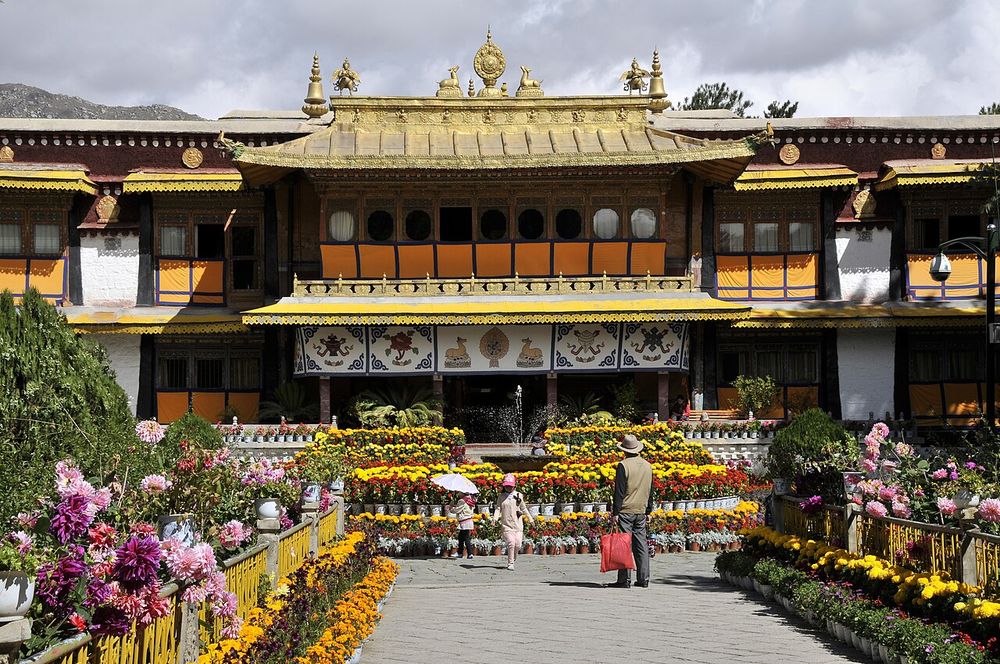
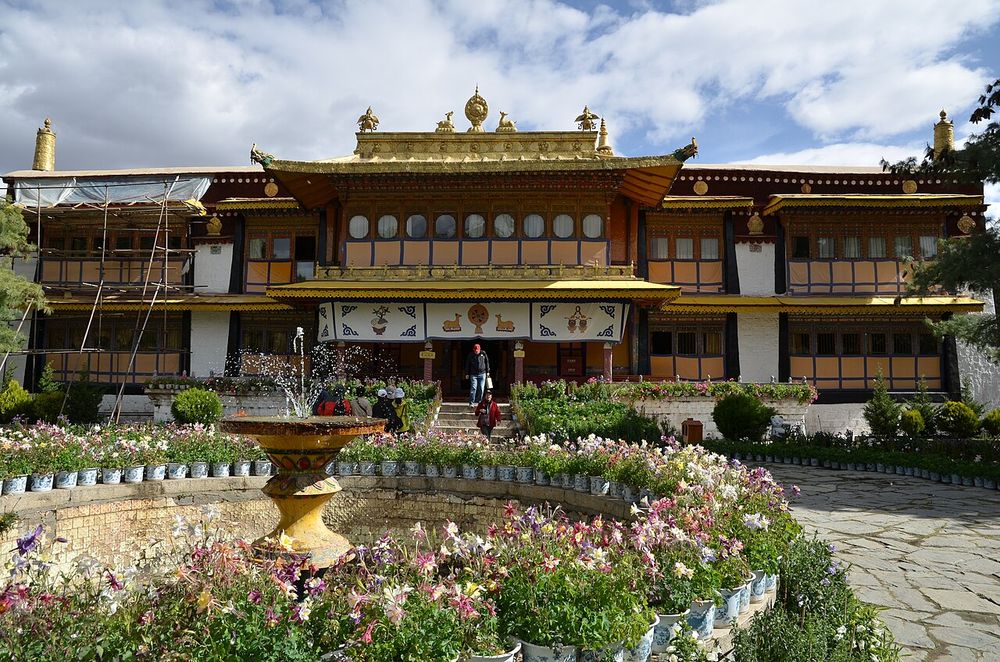
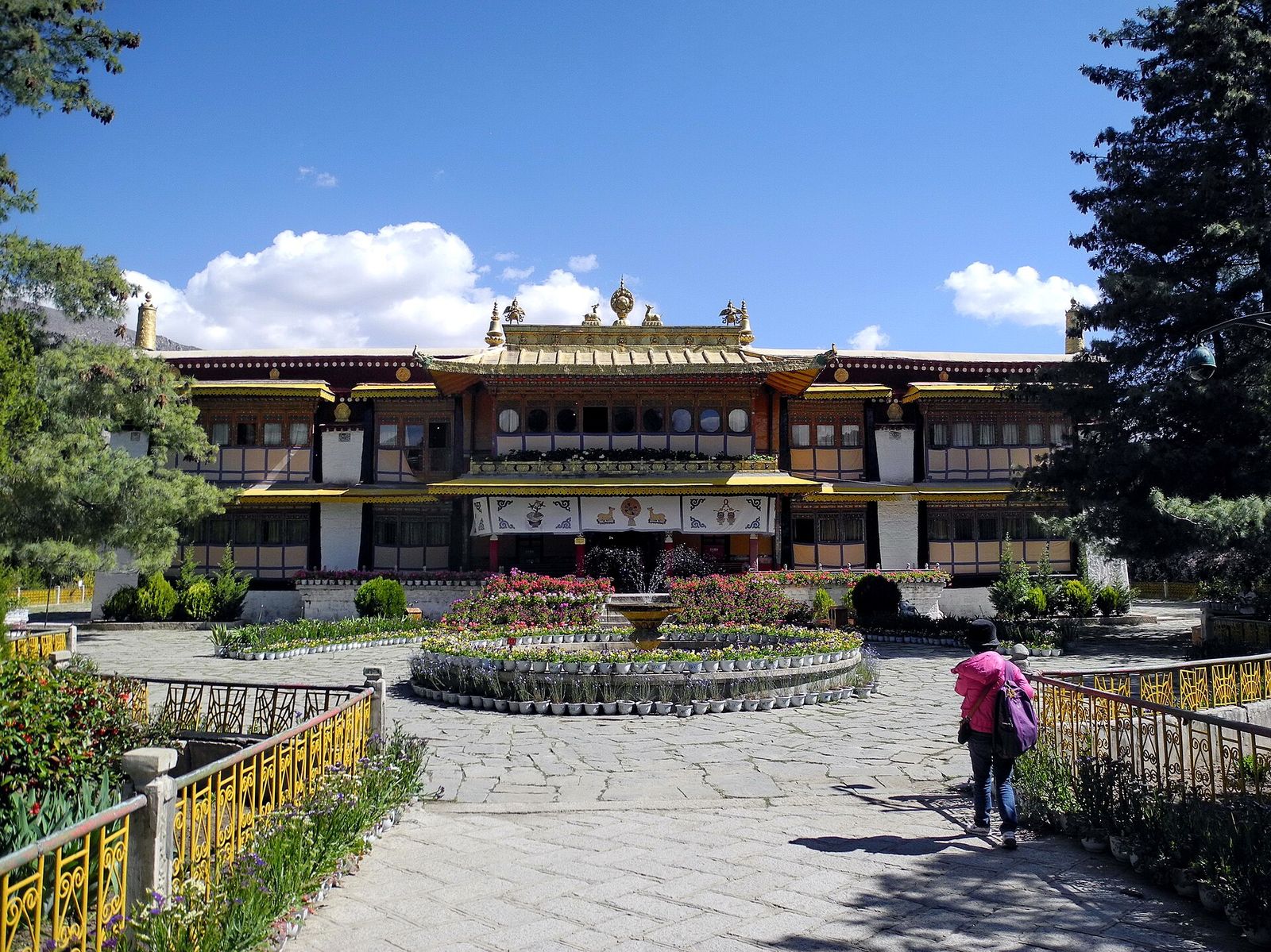
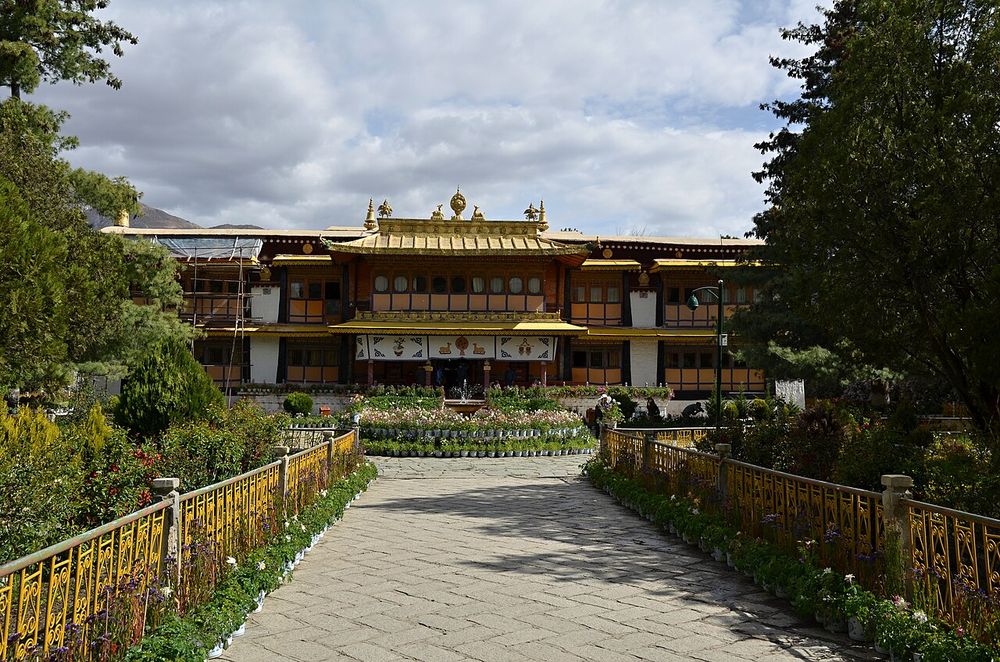
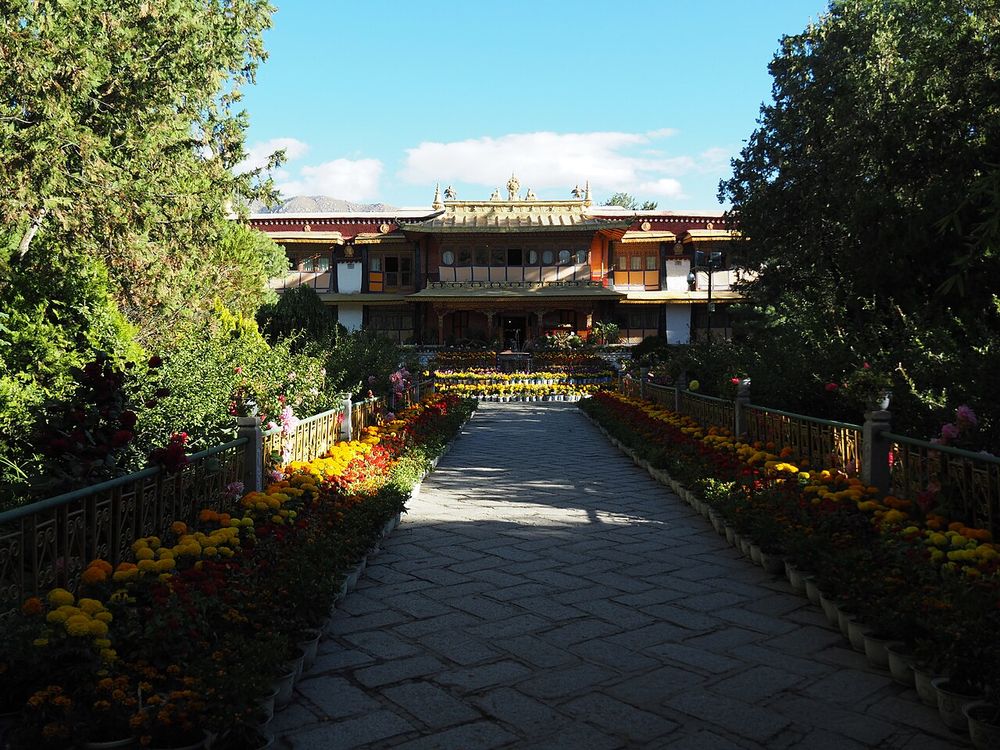
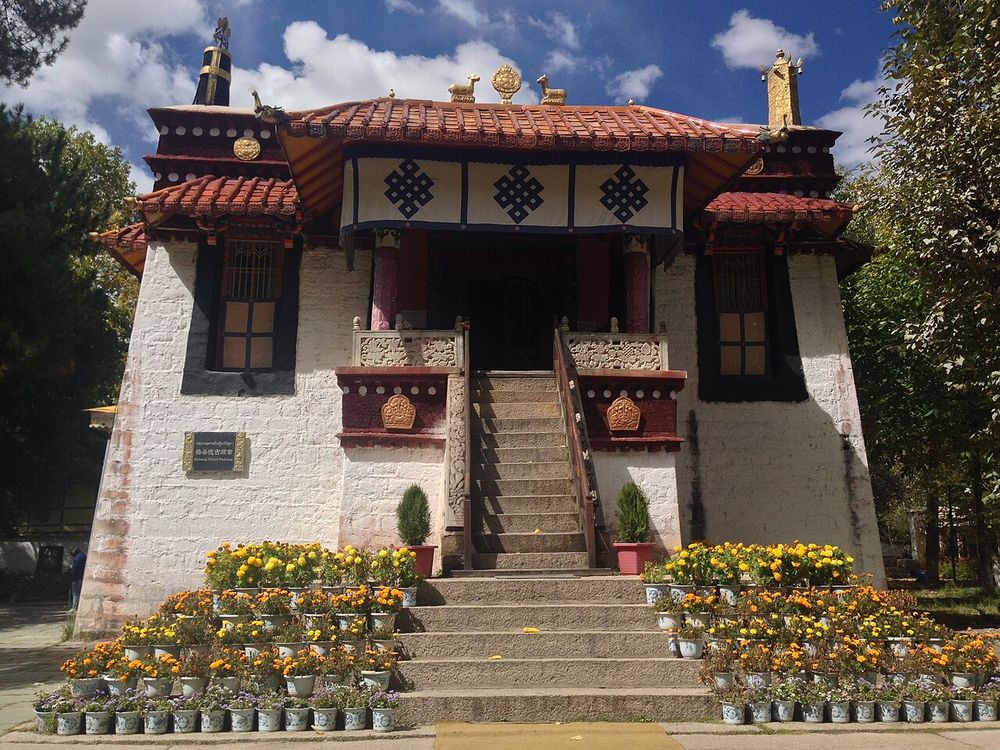
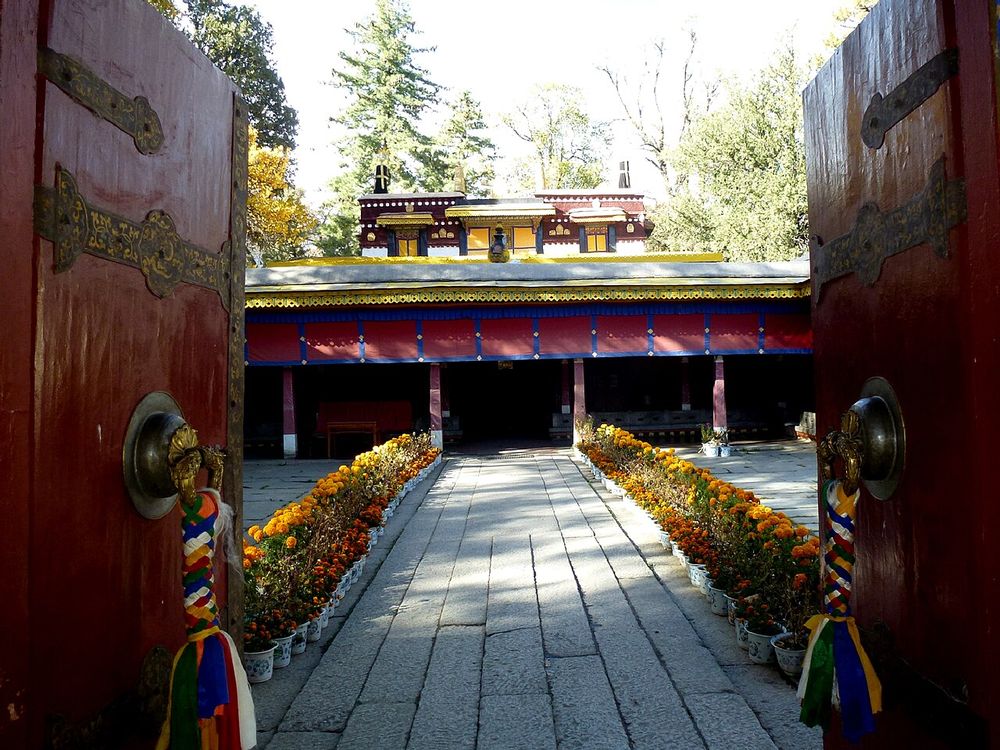
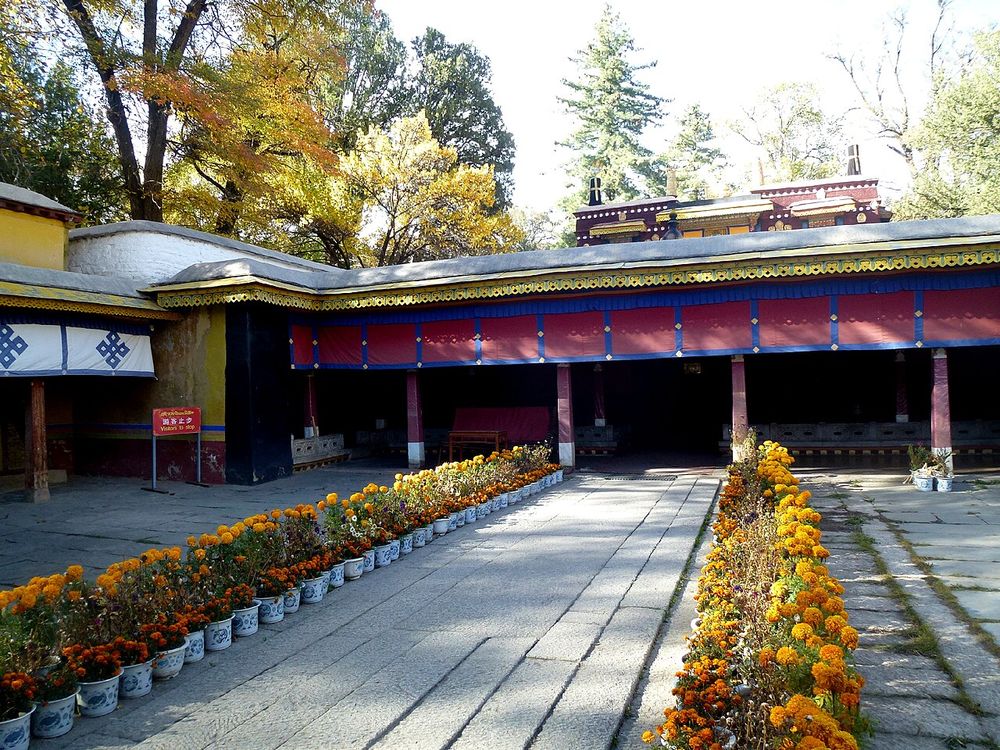
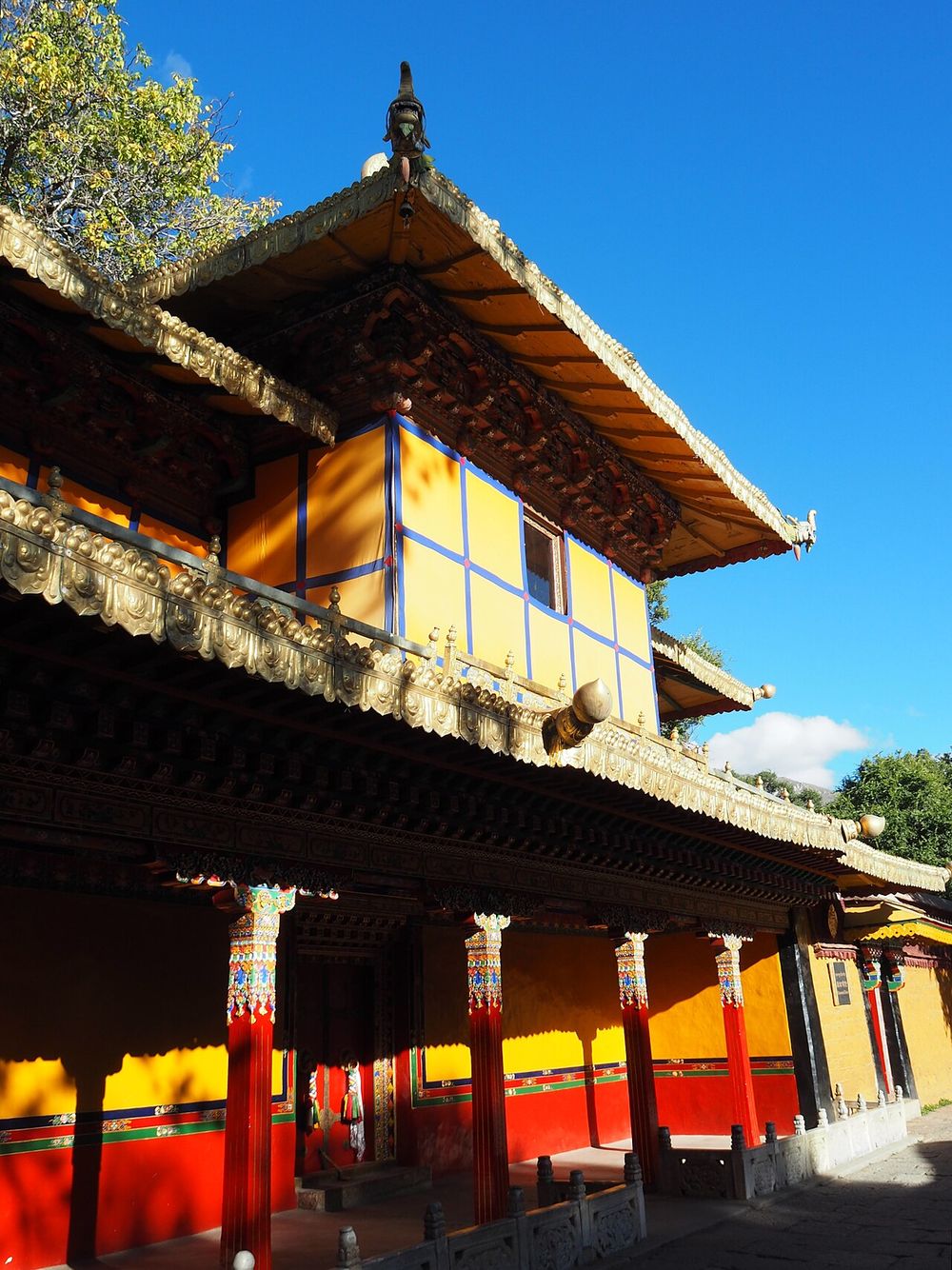
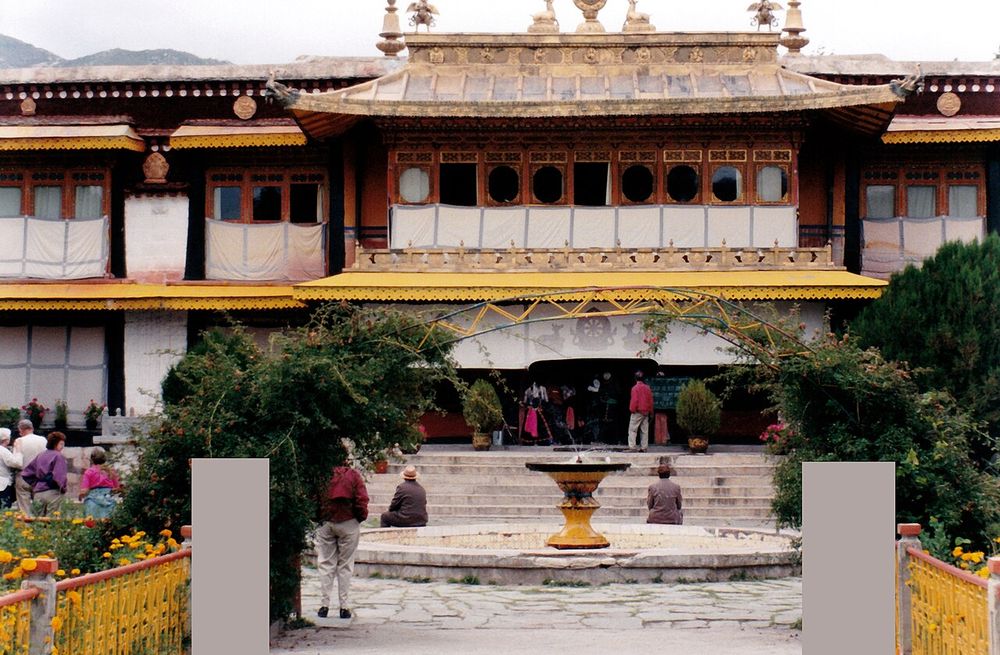
This two-storey house was finished in 1956 for the fourteenth Dalai Lama, who was then twenty-one. Its Tibetan name means "the palace that never changes". He lived in it for three summers.
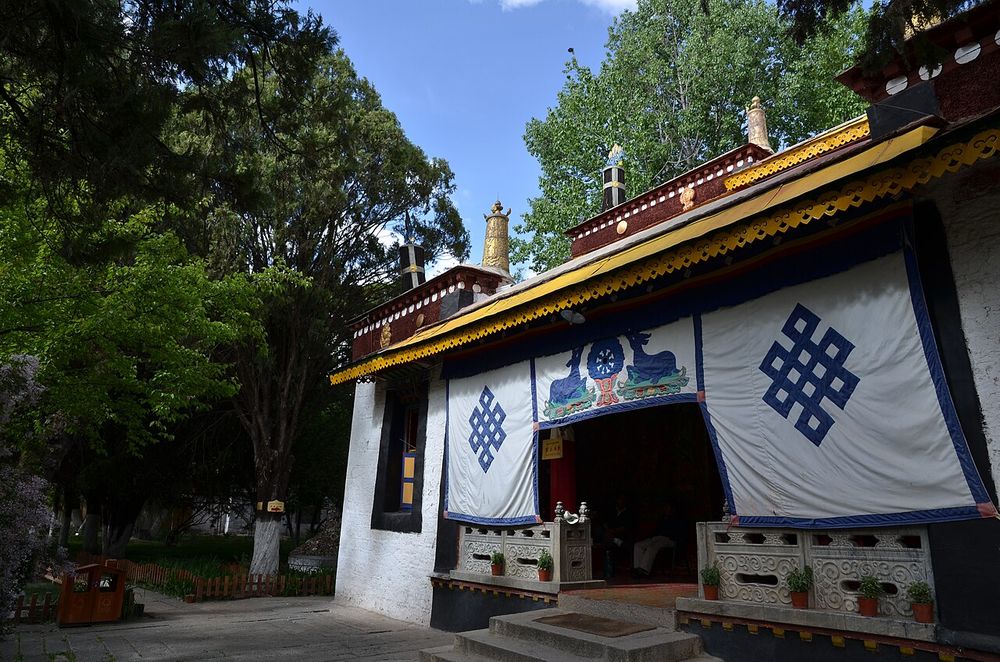
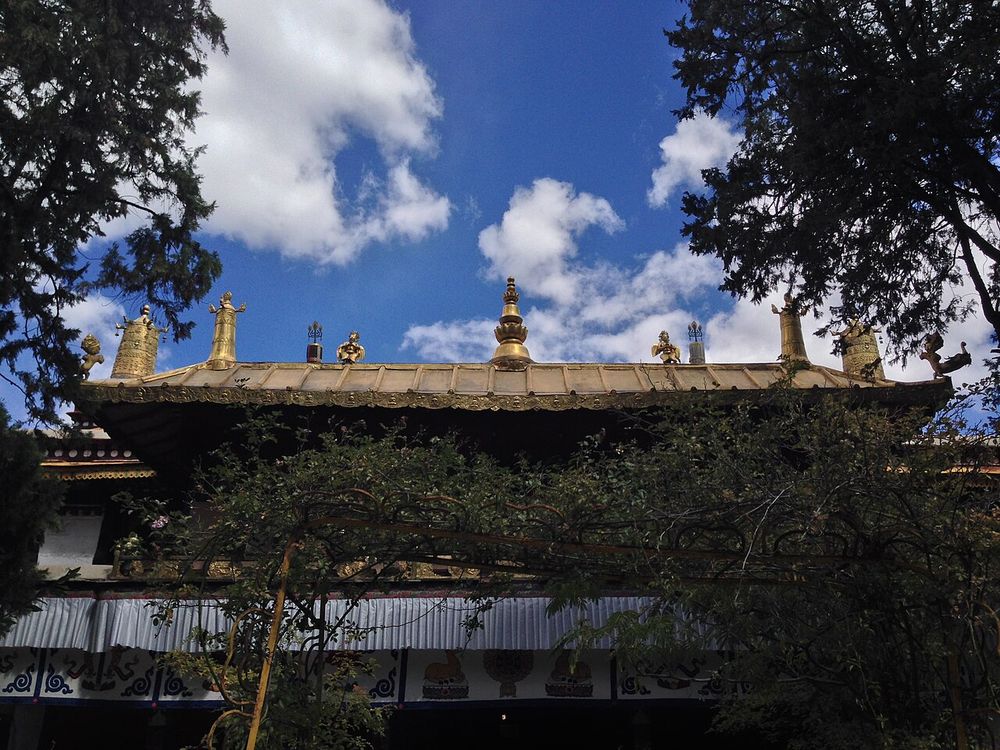
The outside is Tibetan: white walls, a dark band of twigs under the roof, gilded ornaments. Inside, the pillars and painted walls are Tibetan too, and among them stand a radio set, a gramophone and European taps.
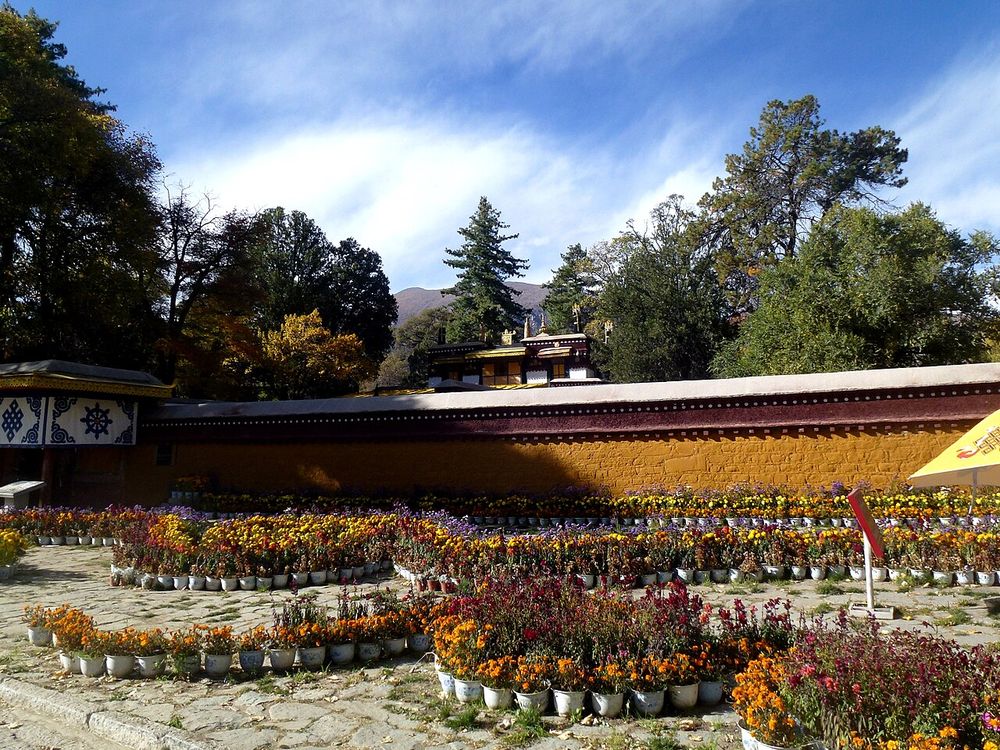
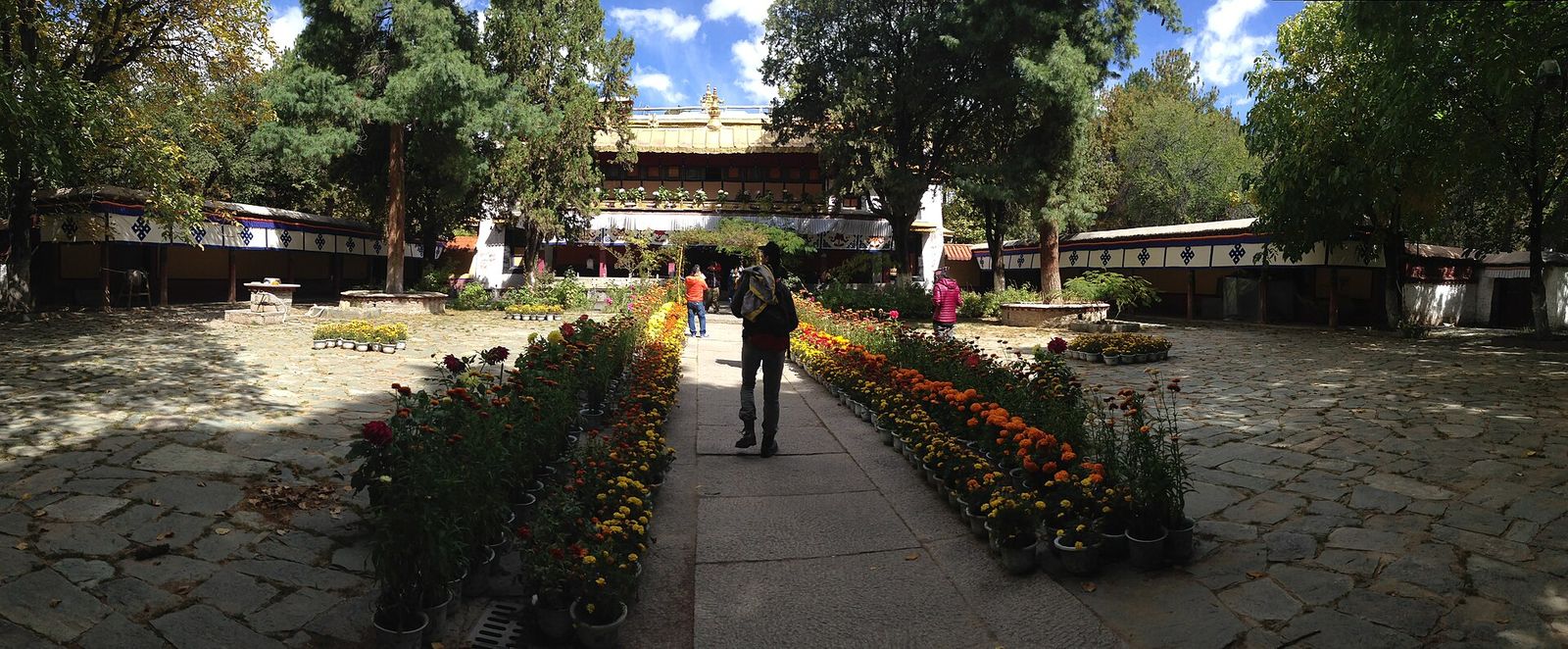
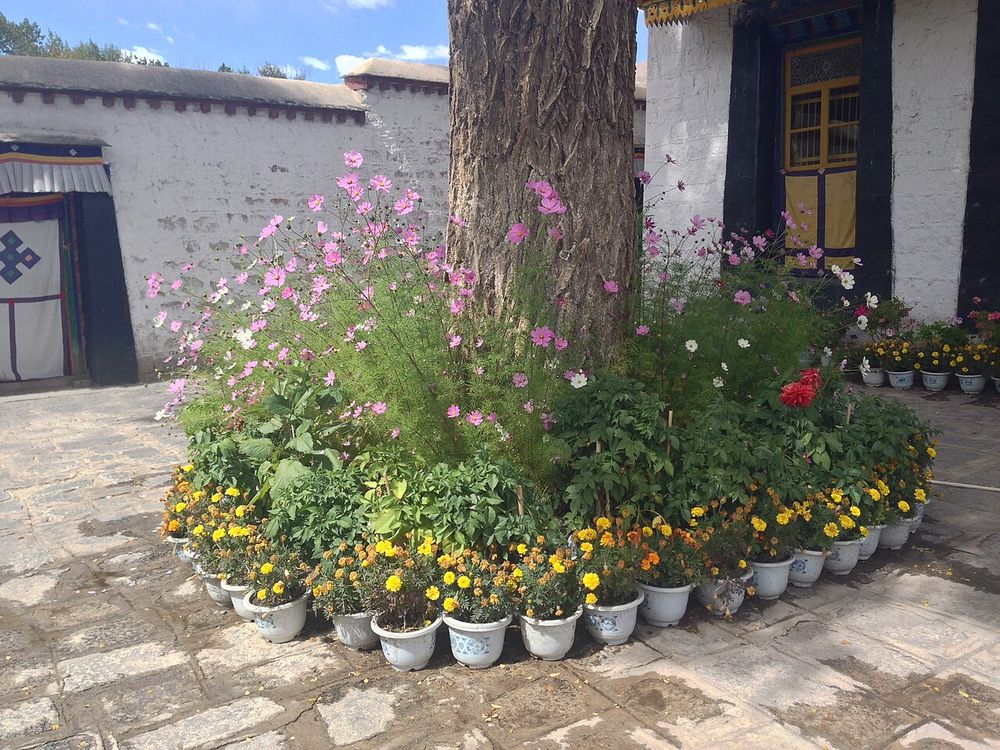
The pots of flowers in front are set out by the gardeners every summer. Lhasa has more sun than almost any city in China, and everything grows.
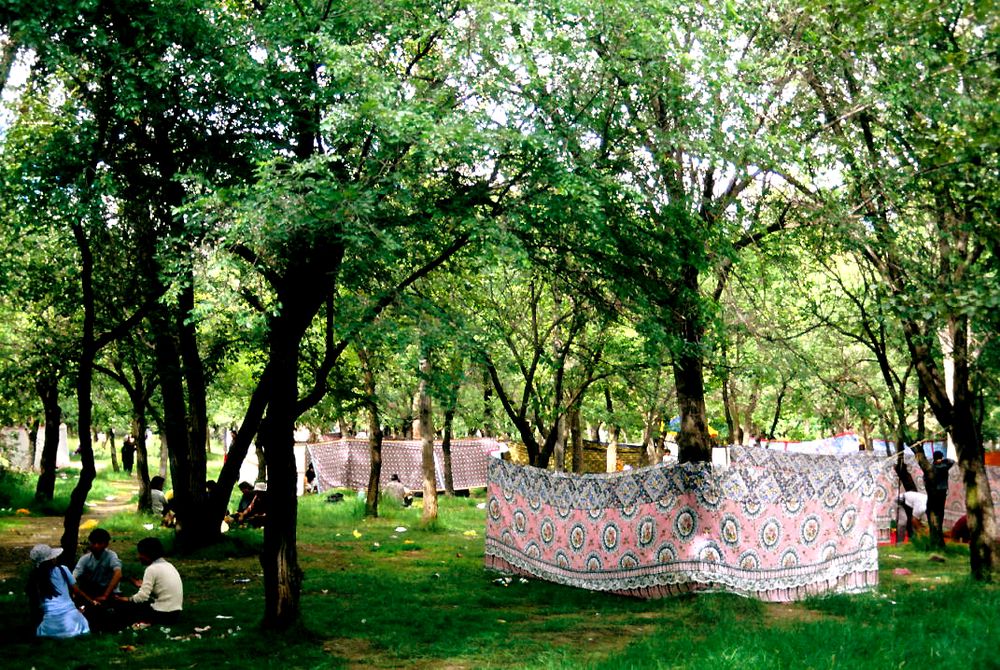
If it is a holiday, look away from the palace and into the trees. Families will be sitting on carpets behind white cloth screens, with flasks of tea. That is the oldest use of this park and the one that has lasted.
"It is one palace." It is a park with four groups of buildings, built between the 1750s and the 1950s. Each Dalai Lama who cared to build added his own.
"It is like the Summer Palace in Beijing." The idea is the same and the scale is not. The largest building here would fit inside one courtyard there.
"The Norbulingka Institute is here." The institute of that name, which teaches Tibetan crafts, is in Dharamsala in India. It was named after this park.
"It was always closed to ordinary people." For most of the year it was. But during the Yogurt Festival each summer the gates were opened and all Lhasa came in to watch opera.
A linka is a park, and "going to the linka" is what Tibetans do in summer. A family or a group of friends takes a tent or a screen of cloth, carpets, food and drink, and spends the whole day under the trees, sometimes several days. People sing, play dice and talk.
If you are invited to sit, sit. You will be given butter tea, which is salty, or sweet milk tea. Your cup will be filled again each time you drink. Leave it full when you have had enough.
Tibetan opera is called ache lhamo. It is performed in the open, in a circle, with a drum and cymbals and no stage set. The actors wear masks or bright robes, and one story can take a whole day. It is on the UNESCO list of living heritage.
The Yogurt Festival, Shoton, falls at the end of the sixth Tibetan month, usually in August. It began as a gift of yogurt to monks coming out of their summer retreat. Today it opens with a giant painting of the Buddha unrolled on a hillside at Drepung Monastery at dawn. Then the opera troupes come here for a week.
The stops run from the east gate westward. The oldest palace comes first and the newest in the middle.
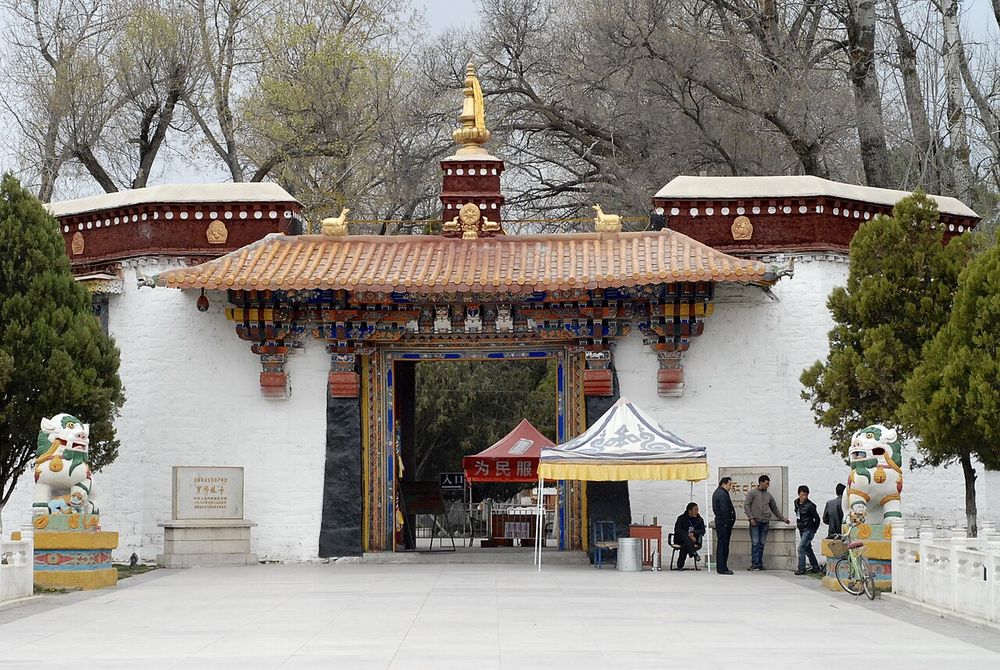
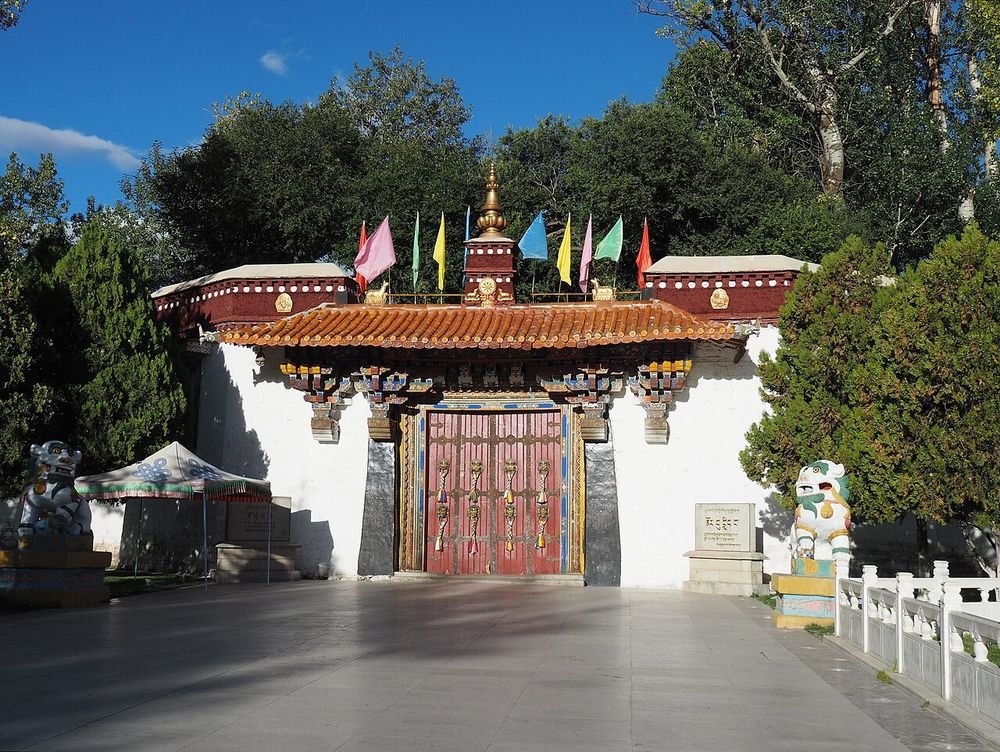
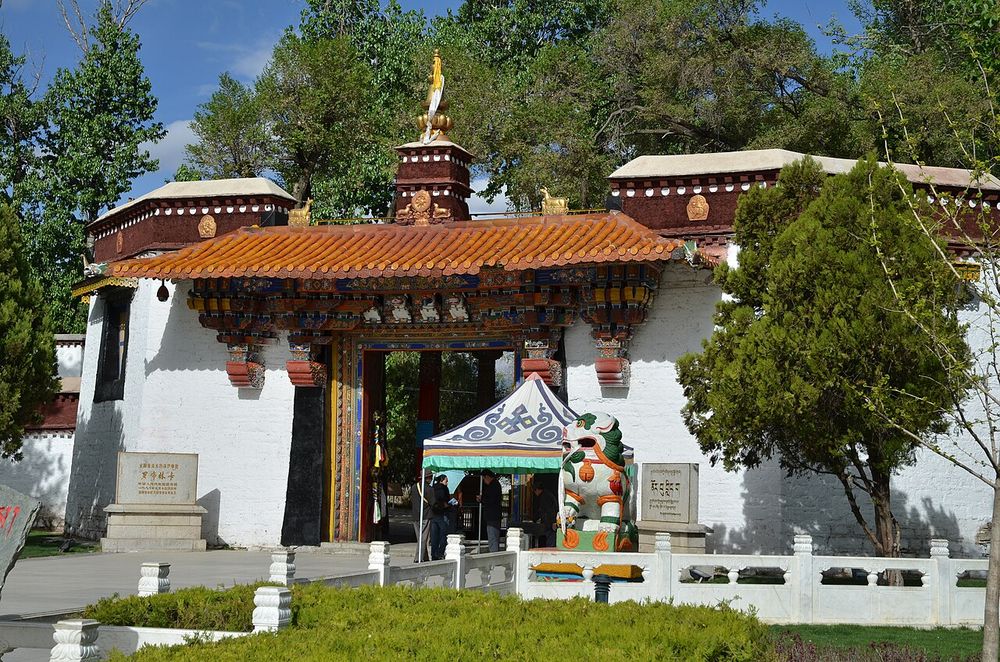
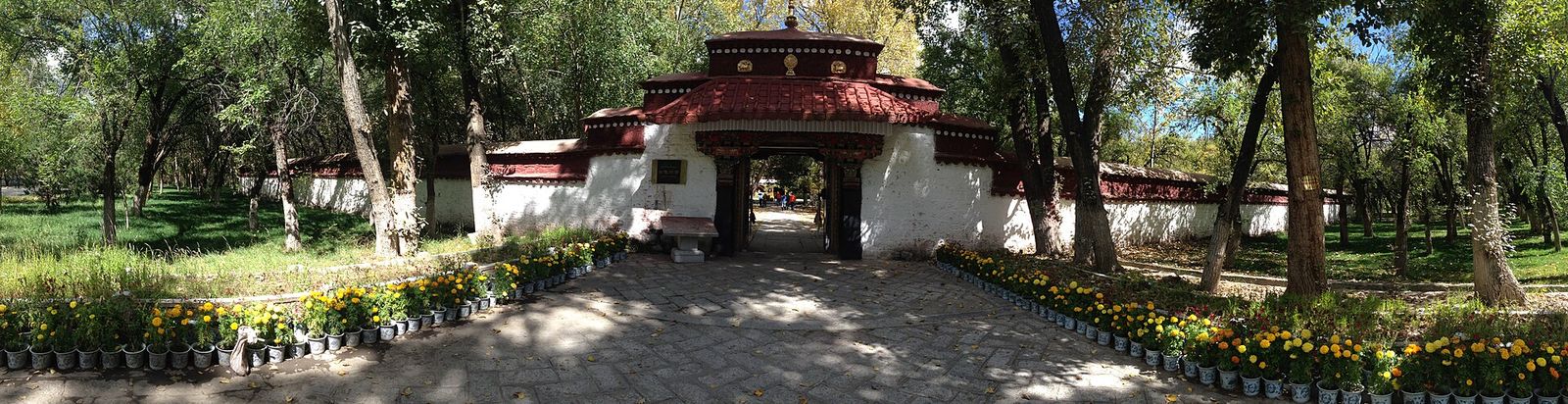
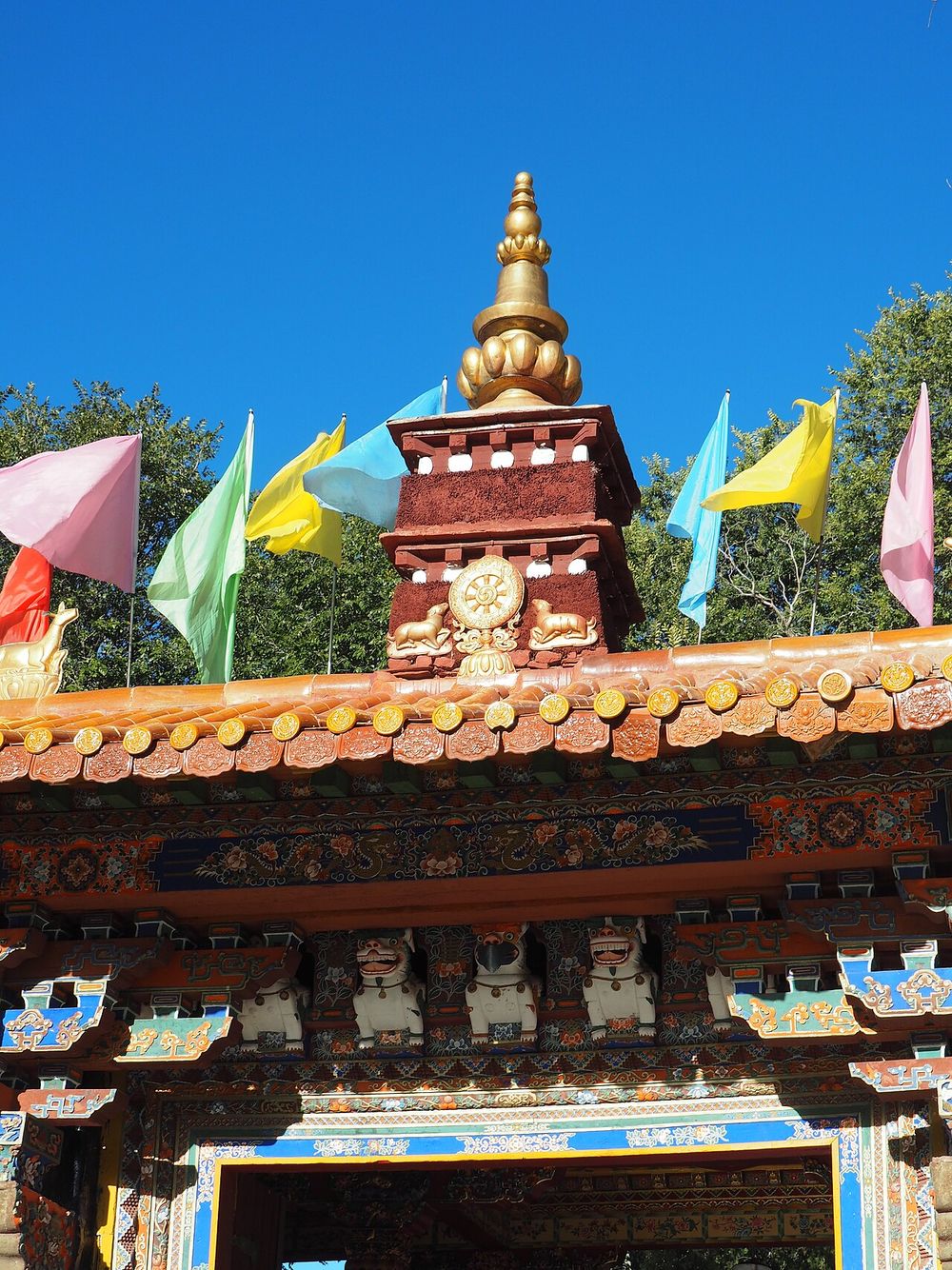
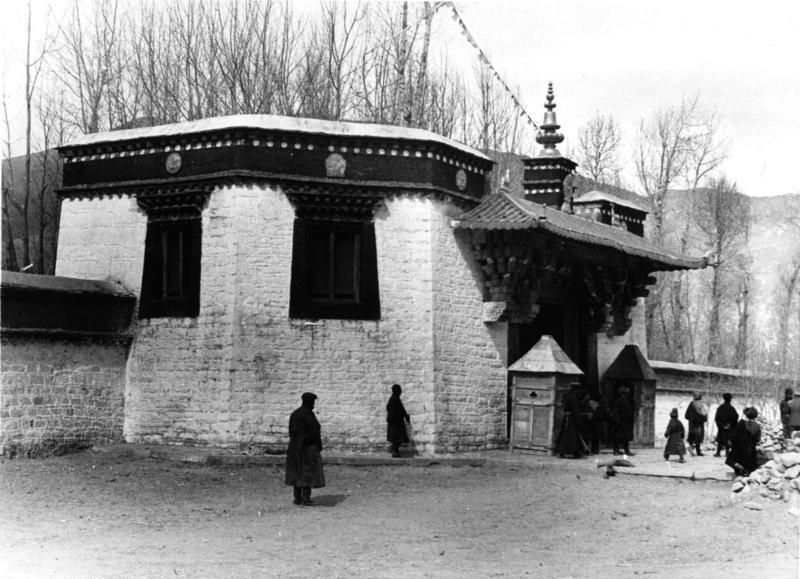
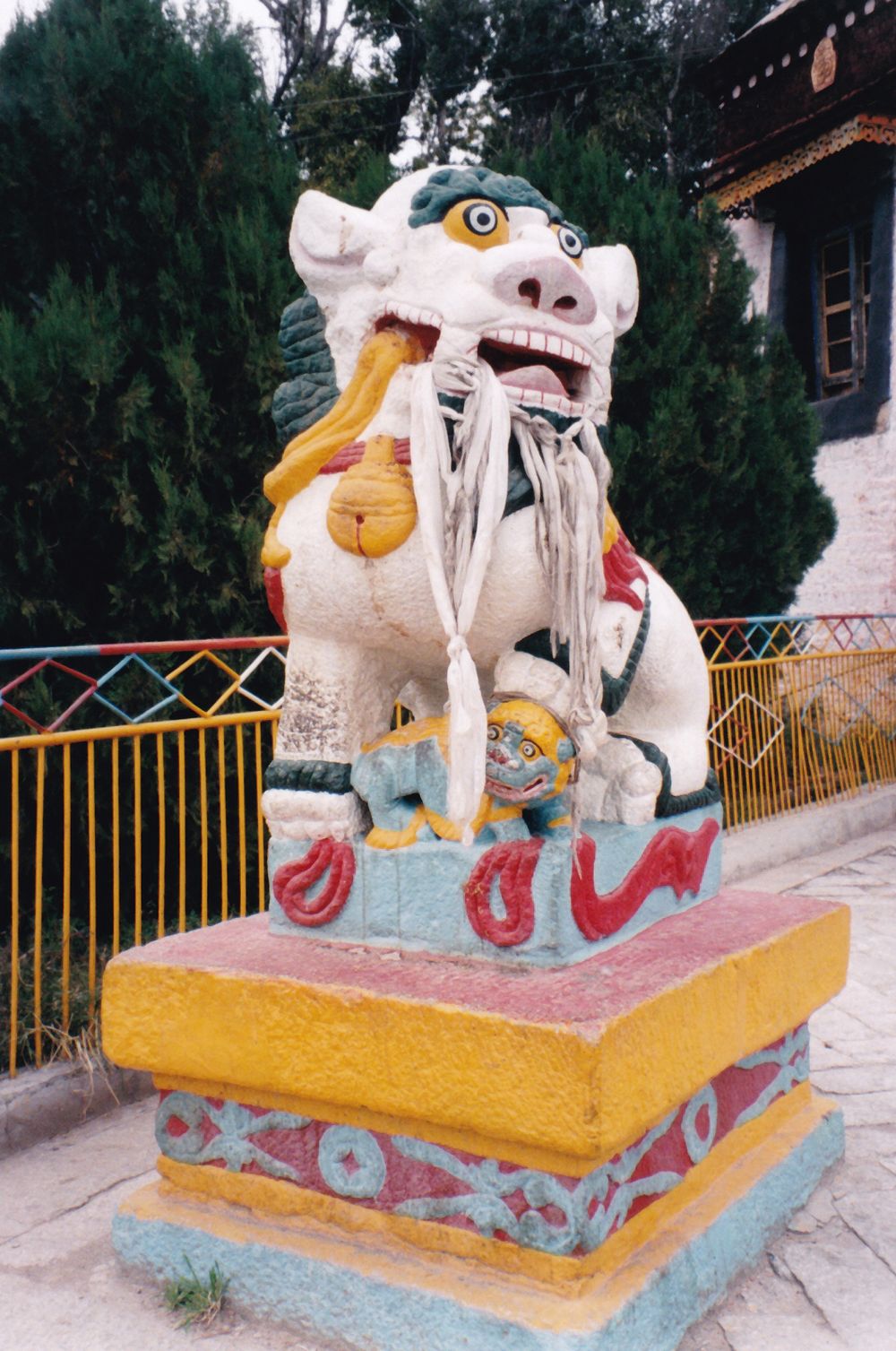
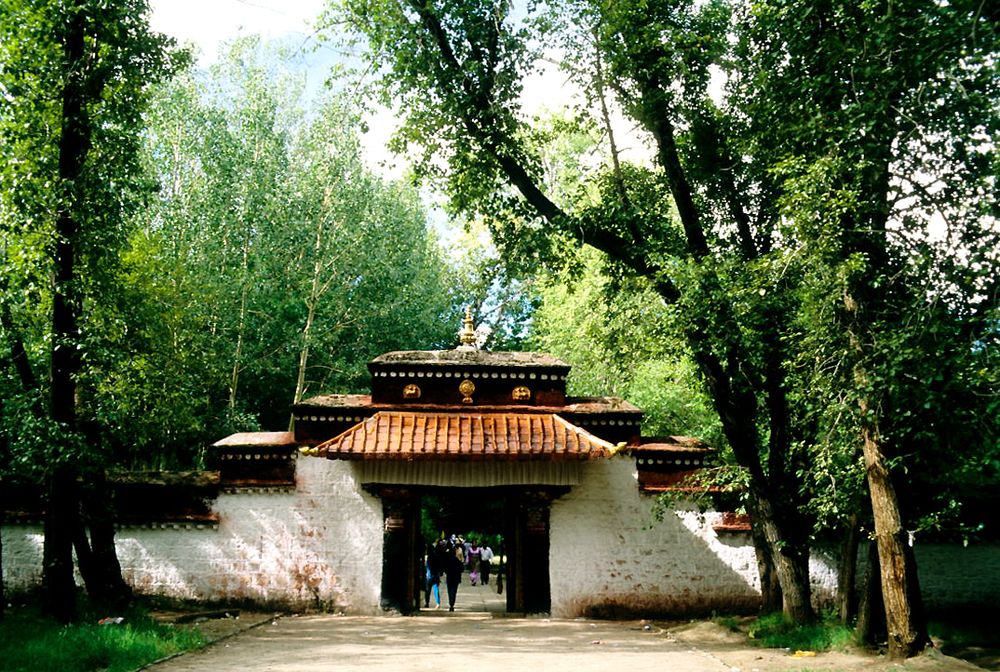
The gate is guarded by two stone lions and painted in the colours of a temple. Behind it there is no palace, only a straight walk between old trees.
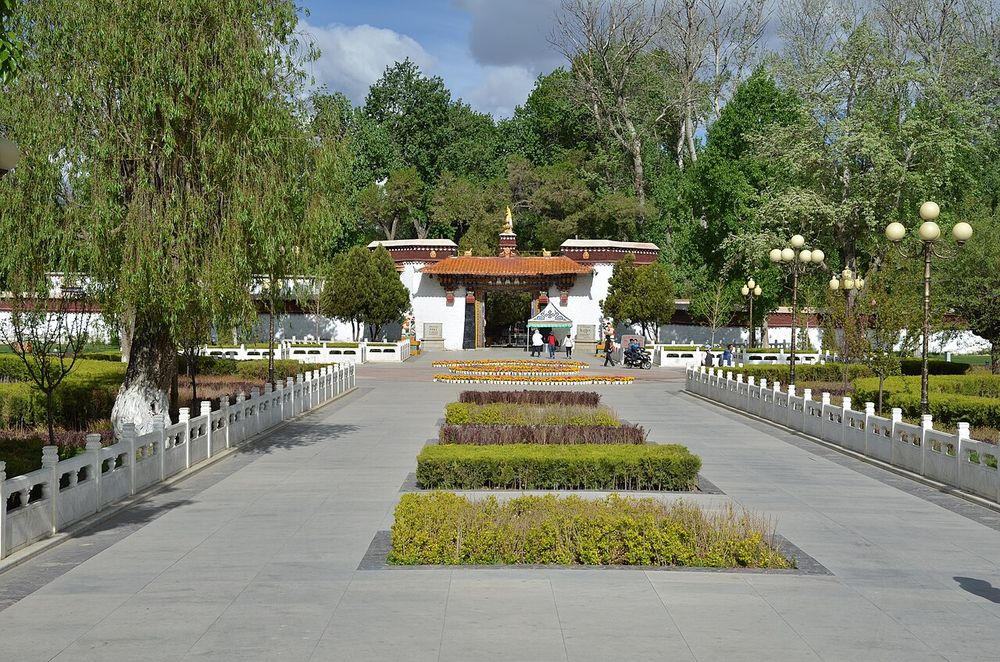
Lhasa is a dry valley at 3,650 metres. Trees do not grow here unless they are watered. Every willow and poplar in the park was planted and has been kept alive by channels from the river. That is why Tibetans call it a jewel.
Until 1959 a second, inner wall, painted yellow, shut off the part where the Dalai Lama lived. Officials came as far as the yellow wall and no further.
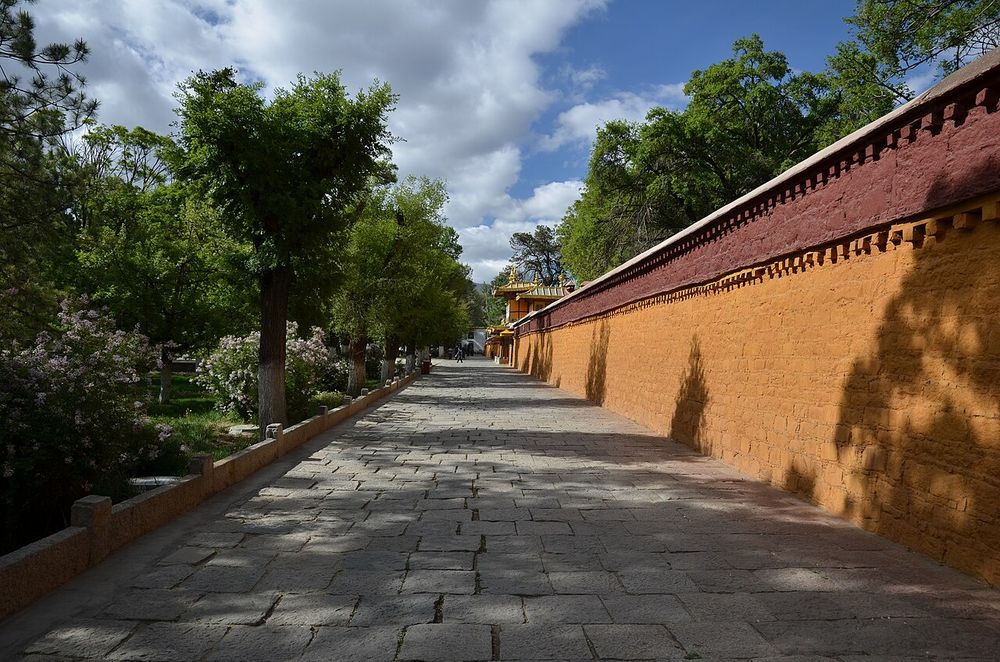
Each spring, on a day fixed by the astrologers, the Dalai Lama came from the Potala in a yellow sedan chair, with the whole government on horseback behind him and the people of Lhasa lining the road. In autumn the procession went back.
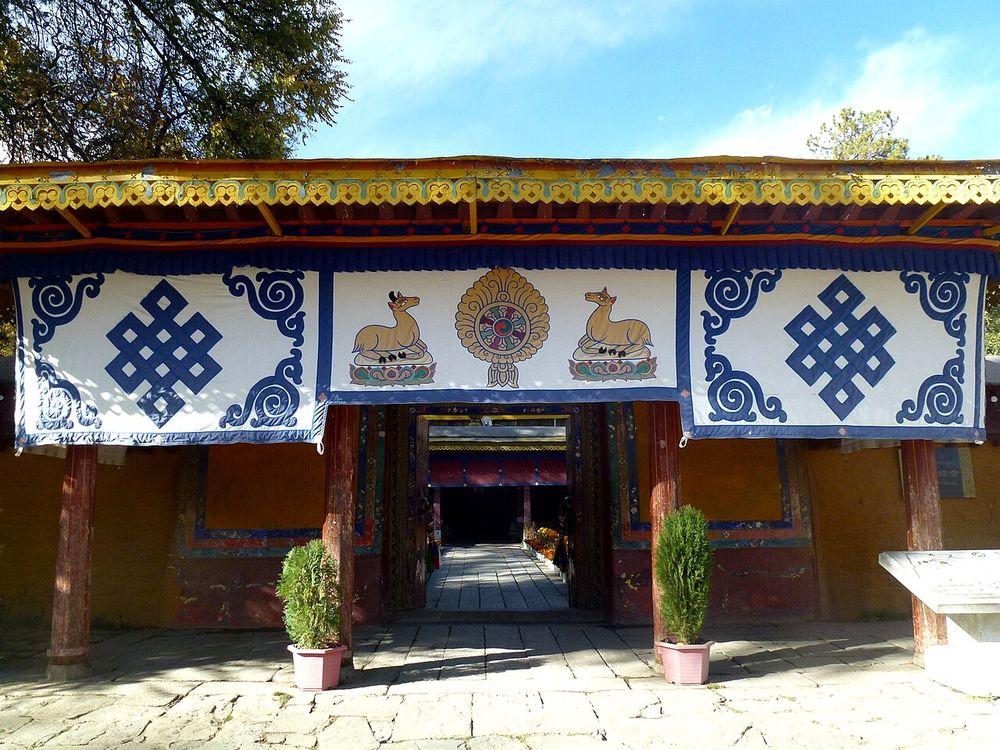
This is where the park began. In the 1740s the ground here was scrub, with a spring that was thought to heal. The seventh Dalai Lama, who was often ill, came in summer to bathe. The Qing emperor's representative in Lhasa had a small pavilion put up for him to rest in.
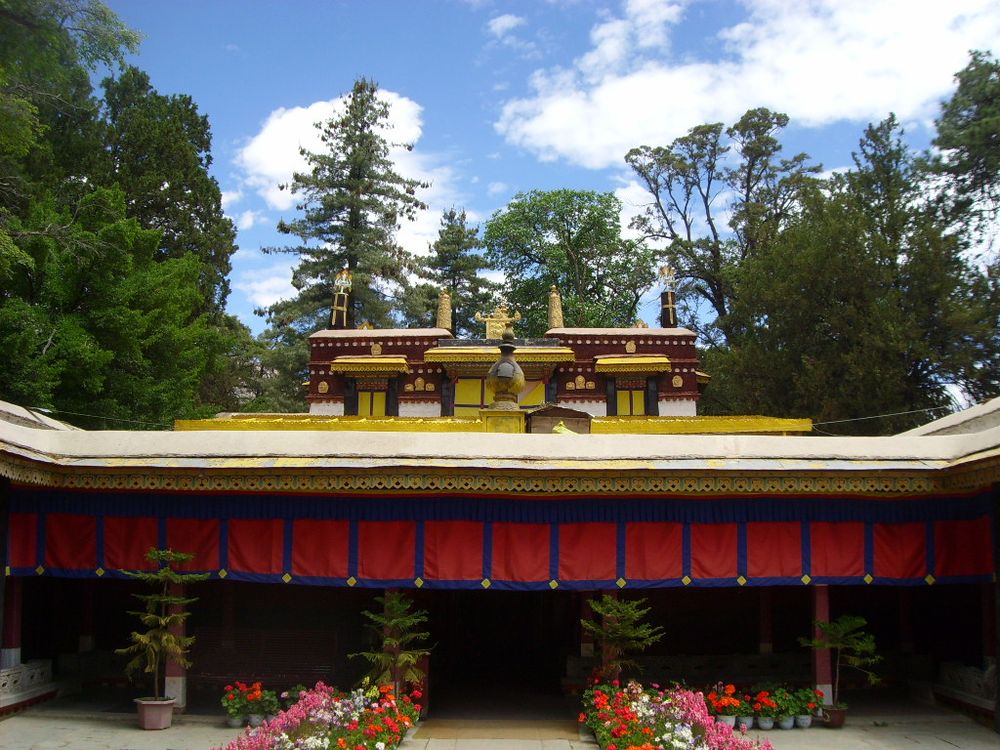
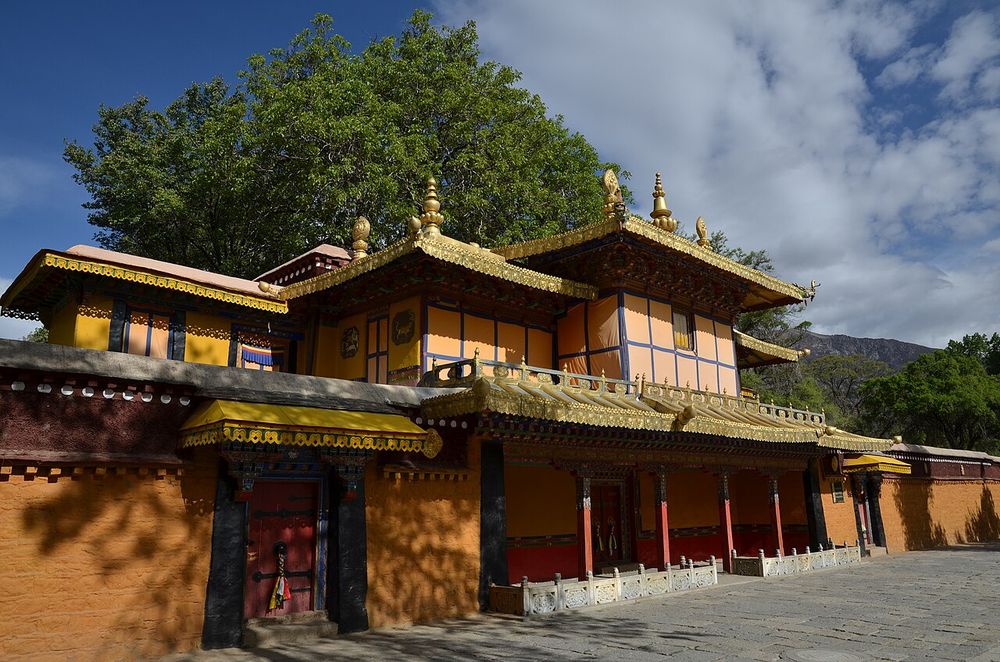
In 1755 he built a proper palace beside it, three floors high, and named it Kelsang after himself. It has a hall with a throne, a library and a chapel. Every later Dalai Lama used it for the first ceremonies of the summer.
The walls of the hall are hung with painted scrolls in sets. Look for the White Tara, who gives long life.
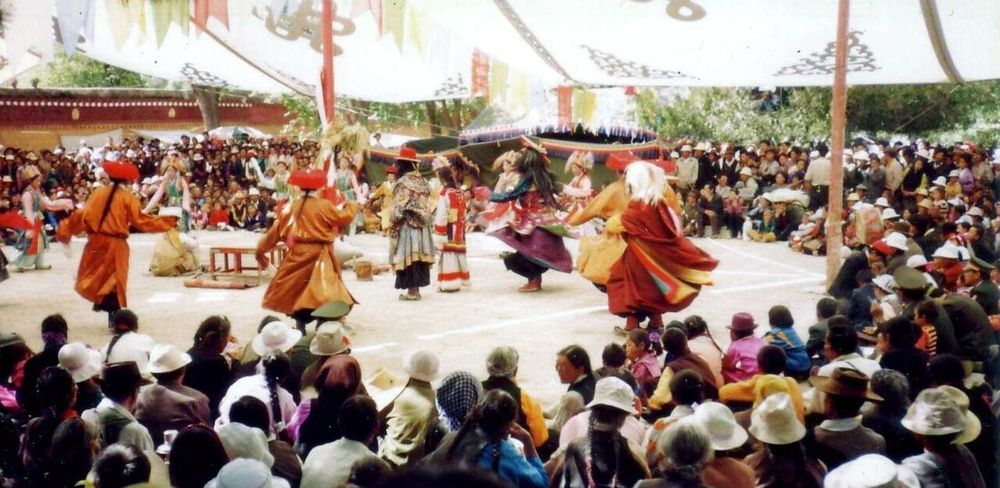
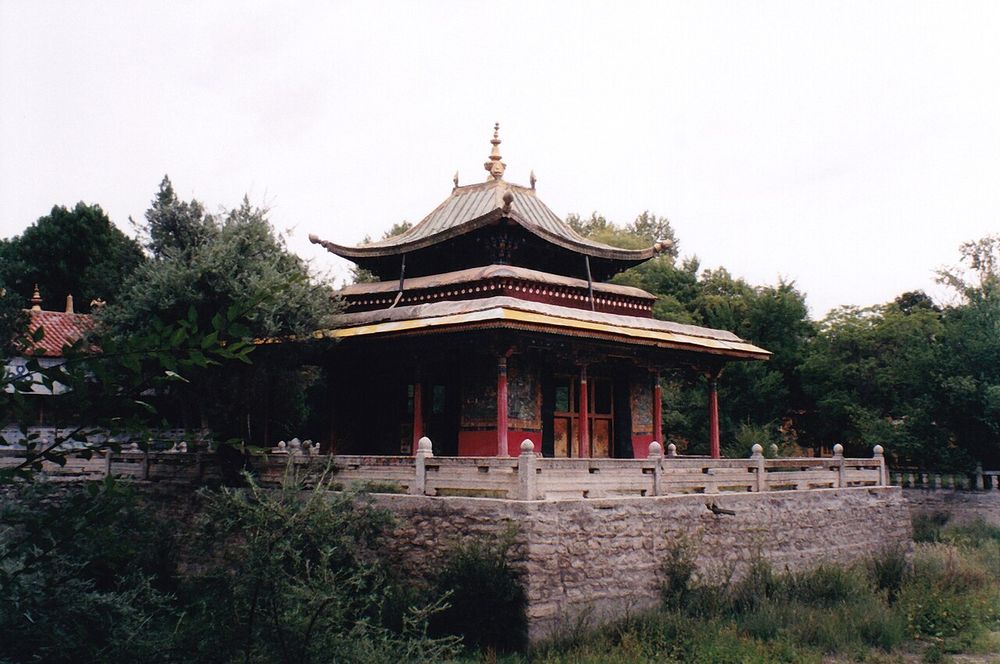
East of the Kelsang Palace is an open space of flagstones with a two-storey pavilion beside it. The Dalai Lama sat at the upper window of the pavilion. The opera was performed on the stones below.
Troupes walked in from every part of Tibet. Each had its own play and had to perform it here, as a kind of tax. For that week the government shut its offices.
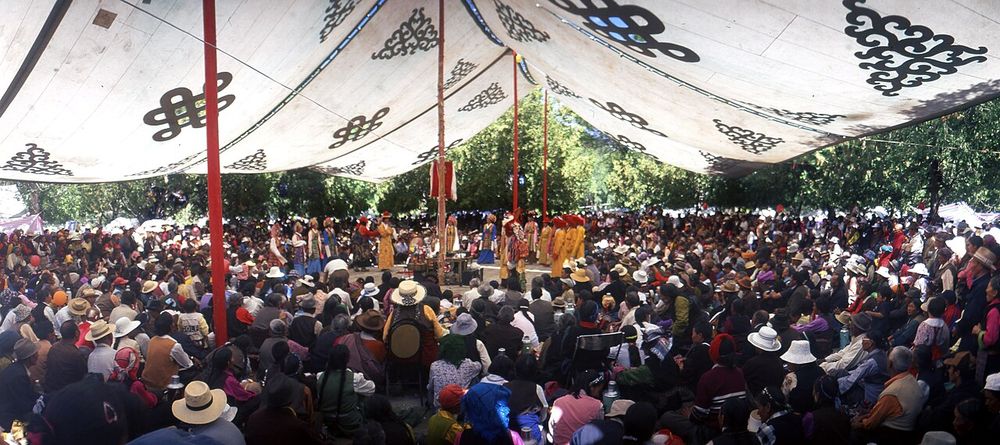
The opera still comes each August. Sit down on the ground with everyone else. Nobody minds if you come and go.
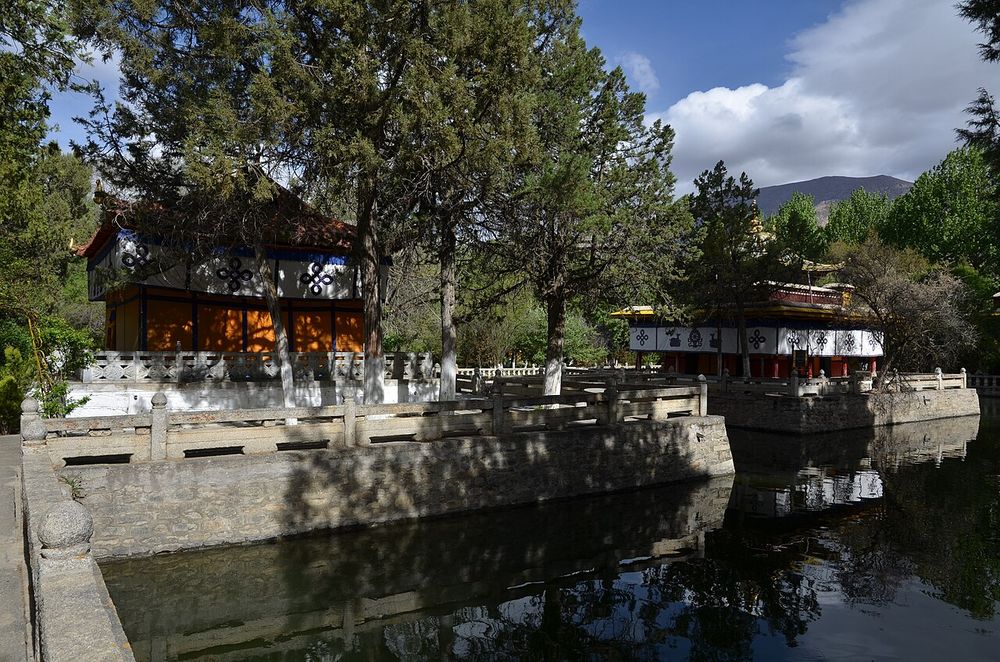
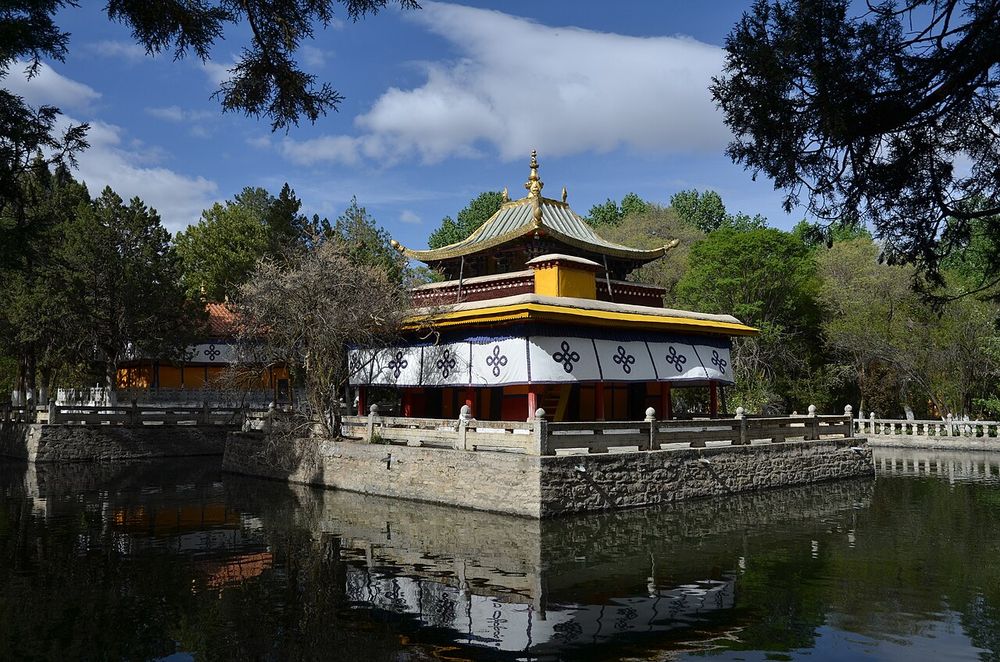
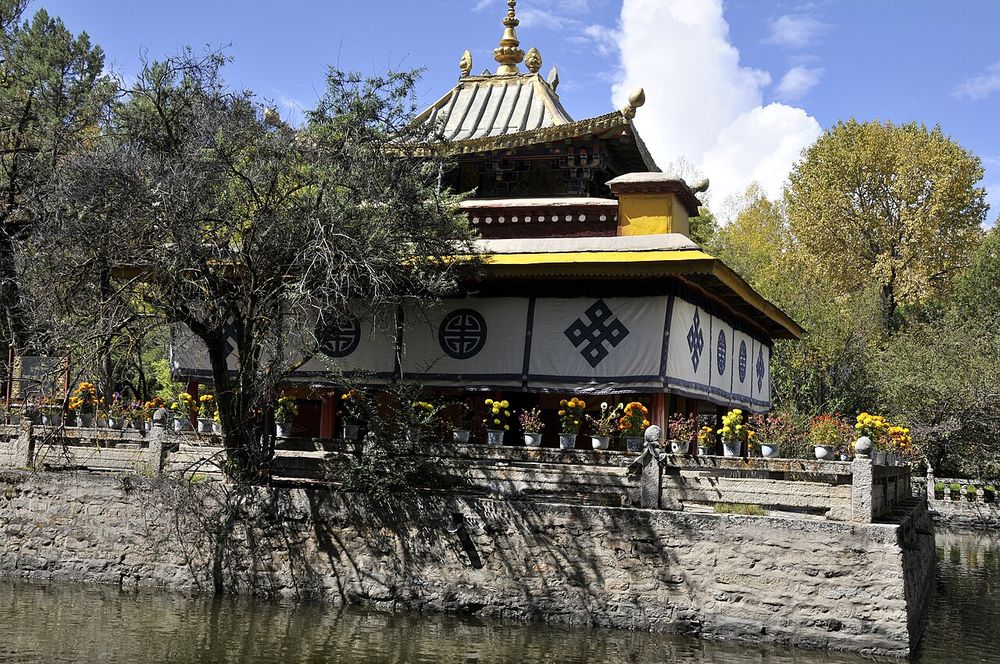
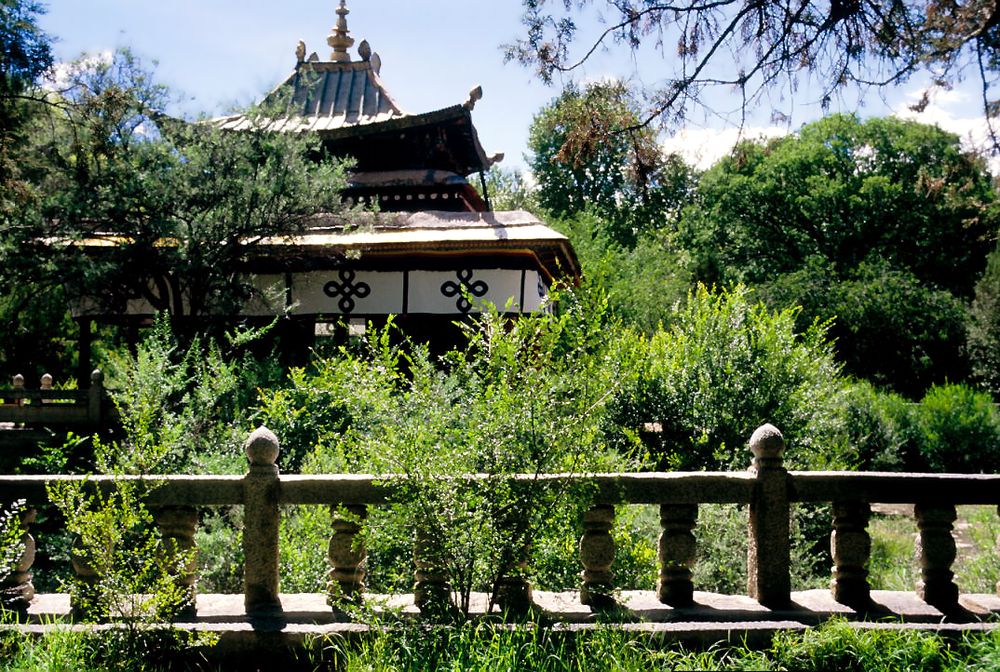
The eighth Dalai Lama had a square pool dug in 1784 and set a pavilion on an island in the middle, reached by a stone bridge. It is the one place in the park that looks Chinese. The roof curves up at the corners, and the railing round the island is carved white stone.
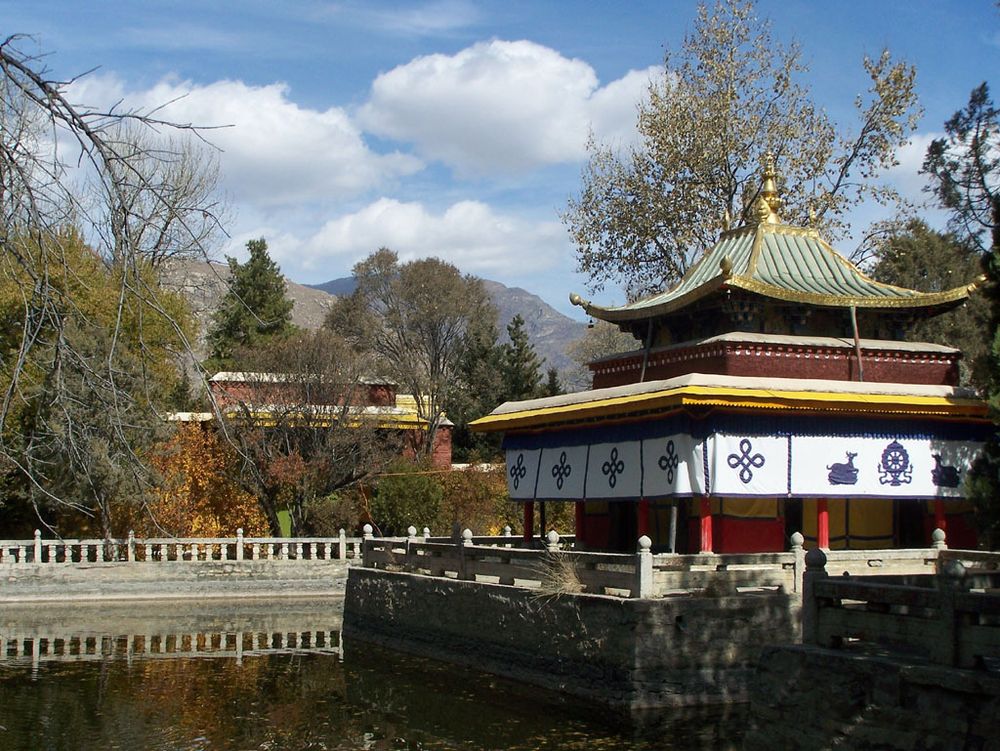
He used it to receive guests and to feed the fish. On a second island stands a small temple to the spirits of the water.
On the west bank is a long low building that was the stable. Its walls are painted with horses.
Go in and up to the small throne room on the upper floor. The north wall is one long painting in 301 scenes. It begins with a monkey and a rock ogress, from whose children Tibetans say they are descended. It goes on through the first king, the building of the Jokhang, the coming of Princess Wencheng, and each Dalai Lama in turn.
It ends in 1954, with the fourteenth Dalai Lama in Beijing meeting Mao Zedong.
Look closely at the faces near the end. They are portraits, with shading, taken from photographs. The painter, Amdo Jampa, was the first to bring this way of seeing into Tibetan wall painting. Older figures on the same wall are drawn in the flat traditional way. The change happens in front of you.
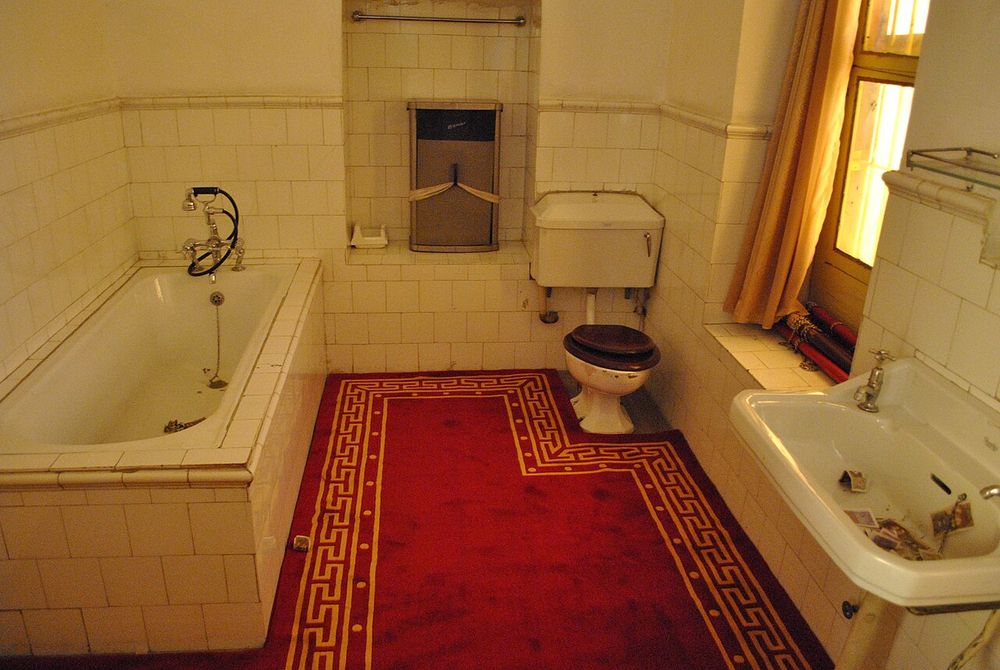
The private rooms are small. There is a room for meditation, a bedroom with a narrow bed, and a bathroom with a tub and washbasin brought over the Himalayas from India.
On a table stands a radio set, and there is a gramophone. As a boy he took watches and a film projector apart to see how they worked, and put them together again.
In March 1959 a crowd of many thousands gathered round the walls of the park. On the night of the 17th the Dalai Lama, then twenty-three, changed into a soldier's coat, went out by a gate on the south side, crossed the river and rode for India. He has not been back.
Three days later there was fighting in Lhasa and the park was hit by shellfire. The buildings were repaired afterwards. The rooms have been kept as they were.
Two films of 1997 show these rooms, and both built them elsewhere. In Seven Years in Tibet, Brad Pitt as Harrer builds the boy his cinema: that was filmed in Argentina. Martin Scorsese's Kundun ends with the night of the escape, filmed in Morocco.
The frame nearly every visitor takes home is the front of this palace across the flower pots. Stand on the path at the far side of the round flower bed, with the door in the middle.
The thirteenth Dalai Lama built in the west of the park in the 1920s. His main house there is called Chensel Palace, three floors with a wide flight of steps. He received Charles Bell here, and here he kept the motor cars that had been carried over the passes in pieces.
Nearby is the small house where he died in 1933, after a short illness. He left a written warning to his people that hard times were coming.
The southern part of the park is a small zoo. It goes back to the animals that were sent to the Dalai Lamas as gifts.
| Year | Here | Elsewhere |
|---|---|---|
| 1755 | The first palace is built | An earthquake destroys Lisbon; Mozart is born the next year |
| 1784 | The palace in the lake | The United States has just won its independence |
| 1904 | The thirteenth Dalai Lama leaves for Mongolia as a British army nears Lhasa | Russia and Japan are at war |
| 1920s | Chensel Palace is built | The tomb of Tutankhamun is opened in Egypt in 1922 |
| 1933 | The thirteenth Dalai Lama dies here | Hitler takes power in Germany |
| 1954–1956 | The New Summer Palace is built | Disneyland opens in California in 1955 |
| 1959 | The fourteenth Dalai Lama leaves for India | Fidel Castro's rebels take Havana |
| 2001 | The park joins the World Heritage list with the Potala | The first article of Wikipedia is written |
One line to remember: the Potala is where the Dalai Lamas ruled, and this is where they lived.
These are stories people tell about this place. They are legends, not history, and each one says where it comes from.
The water of the spring cured the seventh Dalai Lama of his illness, and that is why he chose to build here.
Source: Local tradition, repeated in Chinese guidebooks
Long ago monks stayed indoors all summer so as not to tread on insects. When they came out, the people of Lhasa met them with bowls of yogurt, and the feast became the festival.
Source: The usual account of the origin of Shoton
The first opera troupe was seven sisters, trained by the bridge-builder Thangtong Gyalpo in the 1400s to raise money for his iron chain bridges. His white-bearded image is still set up before every performance.
Source: Tibetan opera tradition
Later, people who live here will be able to add the stories they grew up with, and say which of these they have heard.
Last checked 2026-11-12. Tibet travel guides of 2026; we found no official page for the park.
Checked 2026-11-12
Stand at the site, sign in, press the button, and collect its stamp. Your browser will ask to use your location. It is sent to us once to confirm that you are at the site; we keep how far you were from it, not the spot where you stood.
Your stamps are saved to your account, so they follow you to any device. Checking from a browser cannot rule out every false location; stricter checks arrive with the app.
Photos here show the place, not people. Each one is credited to the visitor who took it and appears after our team has looked at it. A photo with you in it belongs under “I am here”.