LegendThe Sixth Dalai Lama
Tsangyang Gyatso, the Sixth Dalai Lama and Tibet's best-loved poet, is said to have slipped out of the palace at night to the town below.
Source: Local folk tale
Lhasa, Tibet, China
布达拉宫 · Bùdálā Gōng
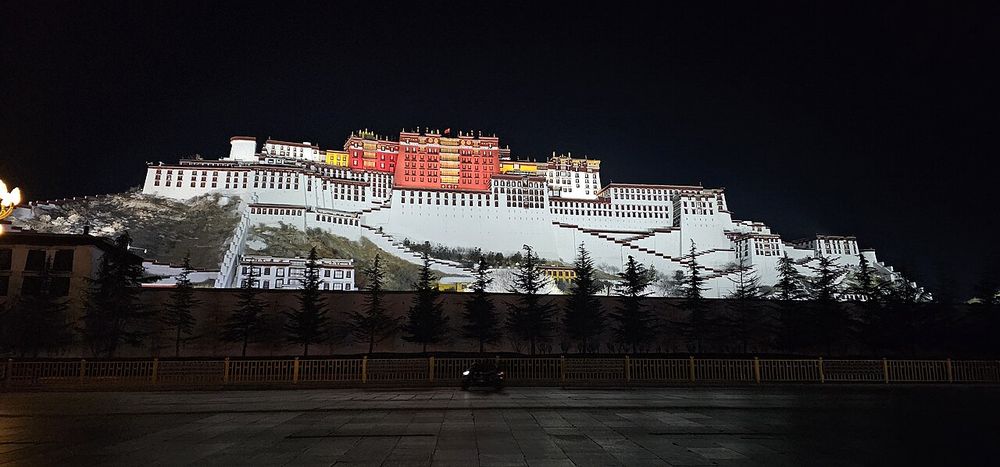
A palace that seems to grow out of its hill, 117 metres high at about 3,700 metres above the sea. Begun in the 7th century, rebuilt from 1645. World Heritage since 1994.
Photo: Rene Heise, CC BY-SA 4.0, Wikimedia Commons
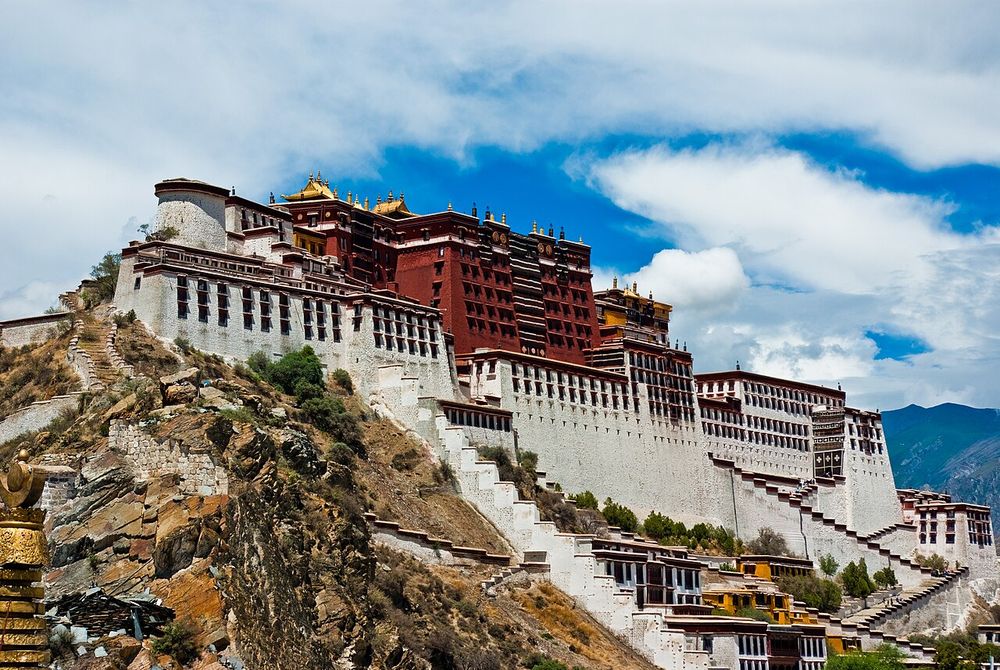
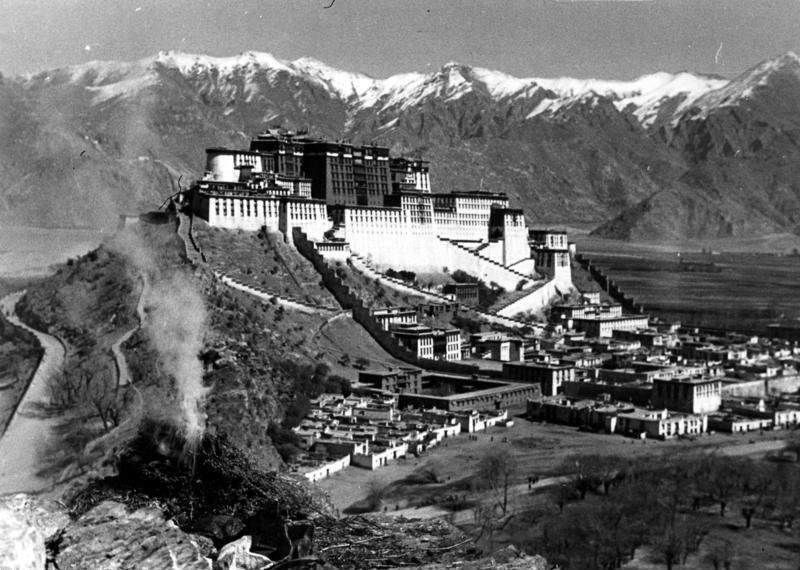
The building in front of you rises 117 metres and shows thirteen storeys on the outside. It is the highest and largest palace-fortress in the world. The name comes from Sanskrit: Potalaka, the mountain where the bodhisattva of compassion is said to live.
The white part is the White Palace, where people lived and governed. The dark red part in the middle is the Red Palace, which holds chapels and tombs. Turn over a 50-yuan note and you are looking at the same view.
The palace on the hill is the heart of the visit, and its ticket covers what is inside the walls. But the World Heritage site has three parts in three places in Lhasa: the Potala, the Jokhang temple in the old town, and the summer palace of Norbulingka. Each has its own ticket.
| Part | Ticket |
|---|---|
| Zhol, the walled village at the foot of the hill | Reported as free to walk in |
| The White Palace | Palace ticket |
| The Red Palace and the Great West Hall | Palace ticket, route 1 |
| The tomb halls of the Dalai Lamas | Palace ticket, route 1 |
| The Dharma King's Cave, the oldest rooms | Palace ticket, route 1 |
| The square and the view from Chakpori hill | No palace ticket needed |
| The Jokhang temple and the Barkhor | Own ticket, 85 yuan in 2026. The street is free |
| Norbulingka, the summer palace | Own ticket |
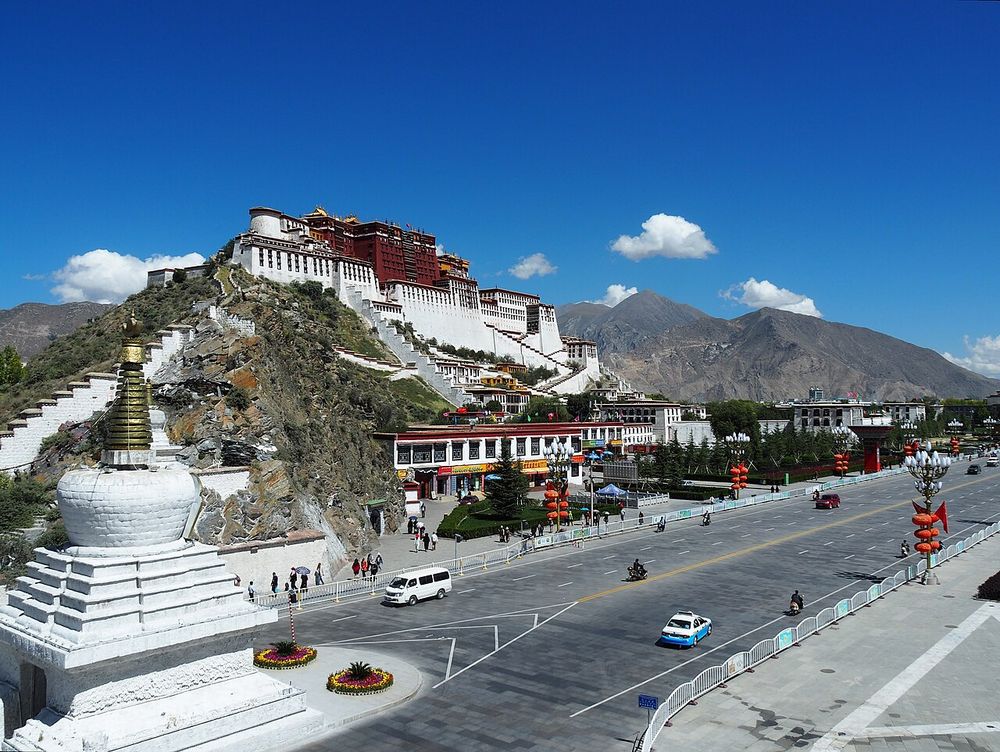
The palace was built twice. In the 7th century Songtsen Gampo, king of the Tubo kingdom, moved his capital to Lhasa and built on this hill. When the kingdom fell apart most of that palace was destroyed. What you see was begun in 1645 by the Fifth Dalai Lama.
The White Palace came first, and the Fifth Dalai Lama and his government moved in during 1649. The Red Palace was built after his death by his regent Sangye Gyatso and finished in 1694, to hold his tomb.
The site covers more than 360,000 square metres and the buildings more than 130,000, with 1,267 rooms: halls, chapels, tomb halls and monks' quarters.
Everything is stone, timber and earth. The walls are thick at the bottom and thin at the top and lean inward, which keeps the building steady in earthquakes and warm in winter. Look up along a corner and you can see the slope.
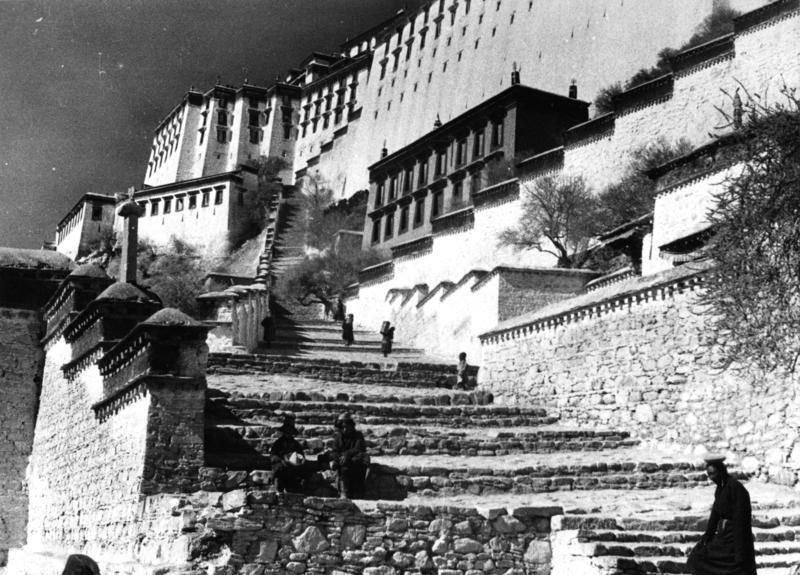
Lhasa stands at about 3,700 metres. There is no lift, and the way in is a long zigzag of steps. Walk slowly.
Lhasa is the heart of the Tibetan world. Tibetans call themselves Böpa and speak Tibetan, and most follow Tibetan Buddhism. For them this is first a holy place and only then a sight. The people walking round the palace with prayer wheels are not a show. They are on a kora, a walk of devotion, and they do it every day.
A few things differ from the rest of China. Holy places are passed on your right, so people walk round them clockwise. Greeting scarves of white silk, called khata, are given as a blessing. The staple is tsampa, roasted barley flour, with butter tea.
This hill has been a seat of kings and lamas for thirteen centuries. Imagine a few of them beside you.
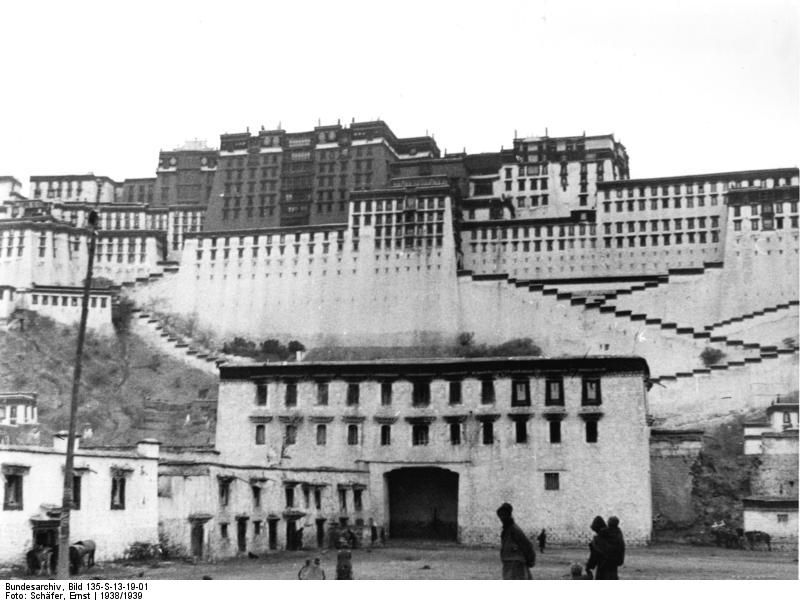
At the foot of the south face a wall encloses a group of buildings called Zhol, which means "below". It held a printing house, a prison, workshops and officials' houses: everything that kept the palace running.
The climb begins here, up a zigzag of broad steps. This is the hardest part of the visit. Stop when you need to.
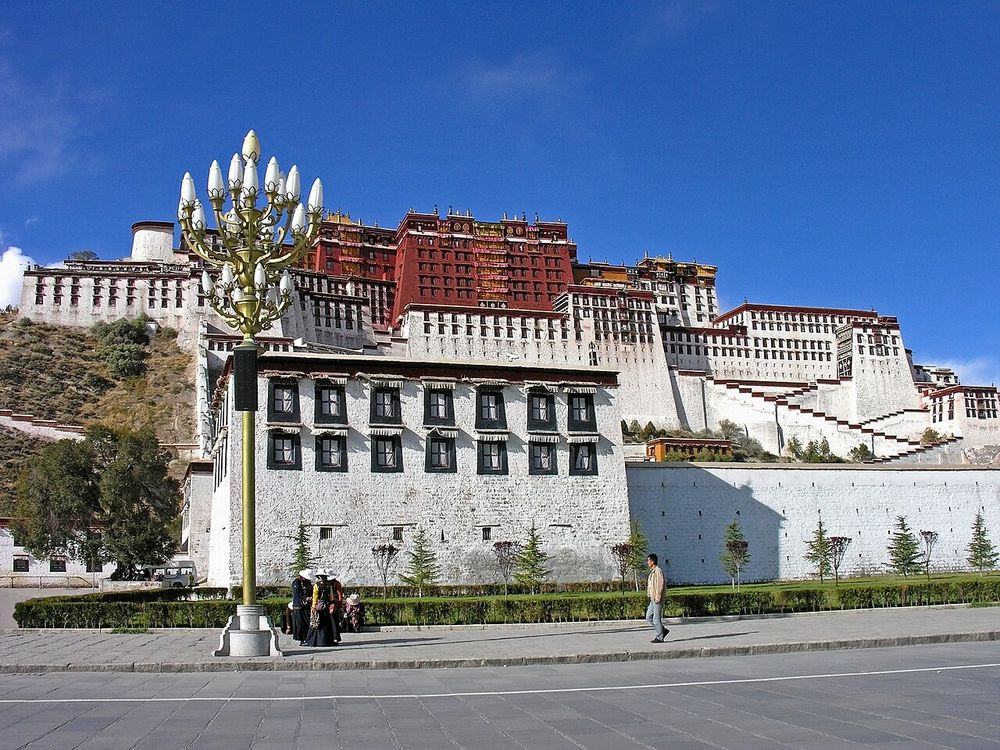
The White Palace is the eastern part, seven storeys high. It was both a home for the Dalai Lamas and the seat of their government, with a school for monk officials.
The East Great Hall is its largest room. Enthronements and the ceremony of taking up power were held here. At the very top are the Sunlight Halls, east and west, the private rooms, enlarged in the time of the Thirteenth Dalai Lama.
Why sleep at the top? The sun in Lhasa is strong and the winters are bitter, and the highest rooms get the longest light. The Potala was the winter palace.
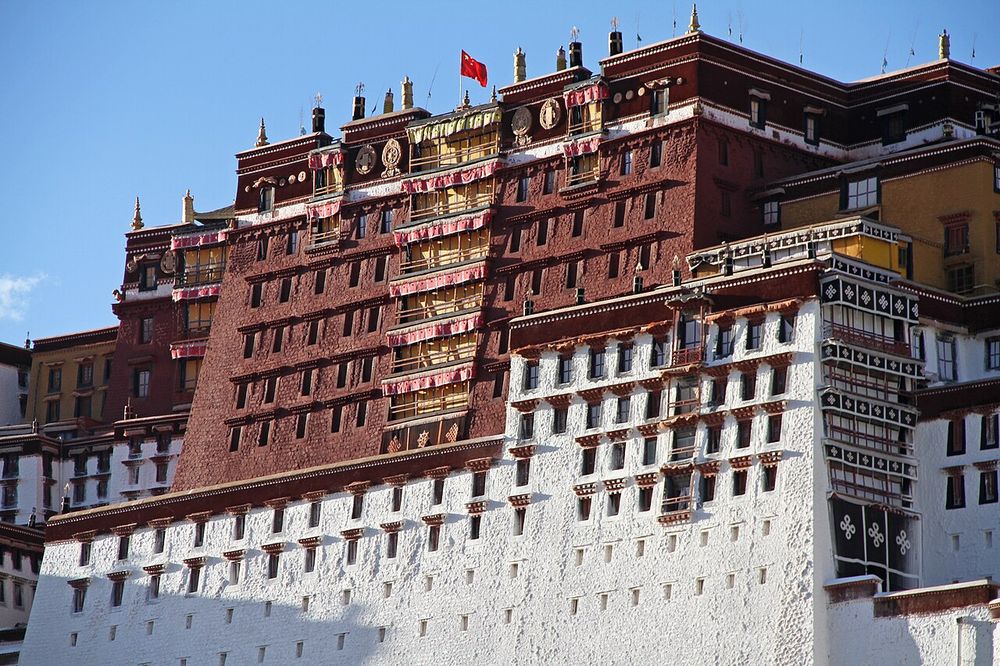
The Great West Hall is the largest room in the Red Palace: about 725 square metres, held up by 44 pillars. It is the hall of offering in front of the Fifth Dalai Lama's tomb.
Its murals tell his life. One famous scene, on the east wall outside the entrance, shows his journey of 1652–1653 to Beijing to meet the Shunzhi emperor of the Qing (1644–1912). One wall painting records a meeting between Lhasa and Beijing.
Above the throne hangs a board with four characters written by the Qianlong emperor.
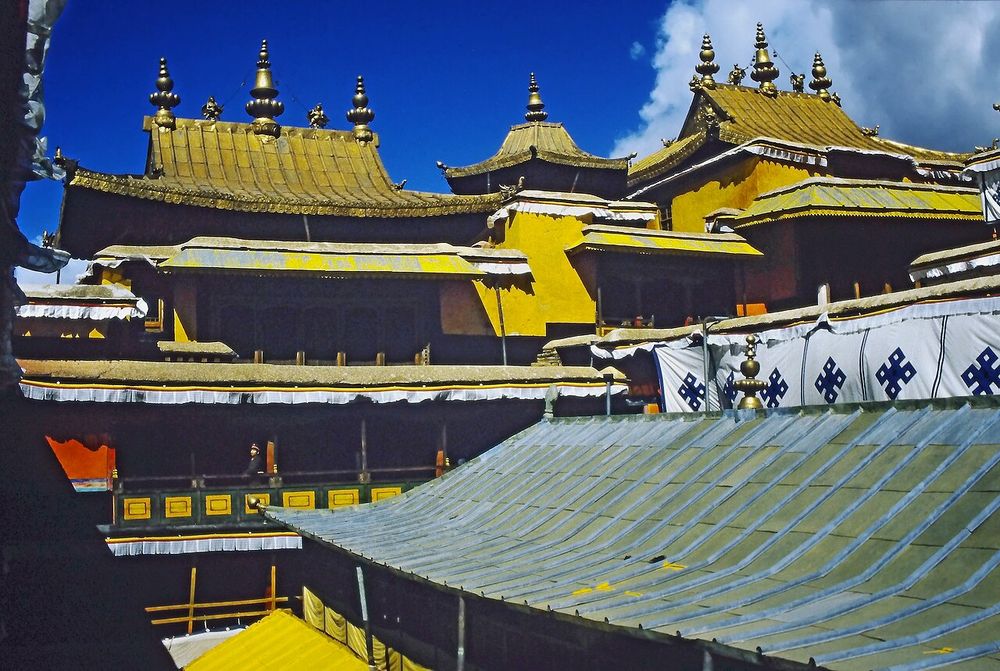
The Red Palace holds the stupa-tombs of the Fifth, Seventh, Eighth, Ninth and Thirteenth Dalai Lamas among others. The gilded roofs you see from outside stand over these halls. The Sixth, Tsangyang Gyatso, has no tomb here.
The tomb of the Fifth is the largest and richest, sheathed in gold and set with gems. How tall it is and how much gold went into it differ widely from source to source, so we give no figure.
For children: a stupa-tomb is a tower that holds the body of a great lama. Like a pyramid in Egypt, it is both a grave and a monument.
In the north-west corner of the Red Palace are two small rooms generally held to keep remains of Songtsen Gampo's palace. The cave has statues of the king, Princess Wencheng and his Nepalese queen Bhrikuti.
They are low and dark, the opposite of everything else in the building. Many visitors walk straight past.
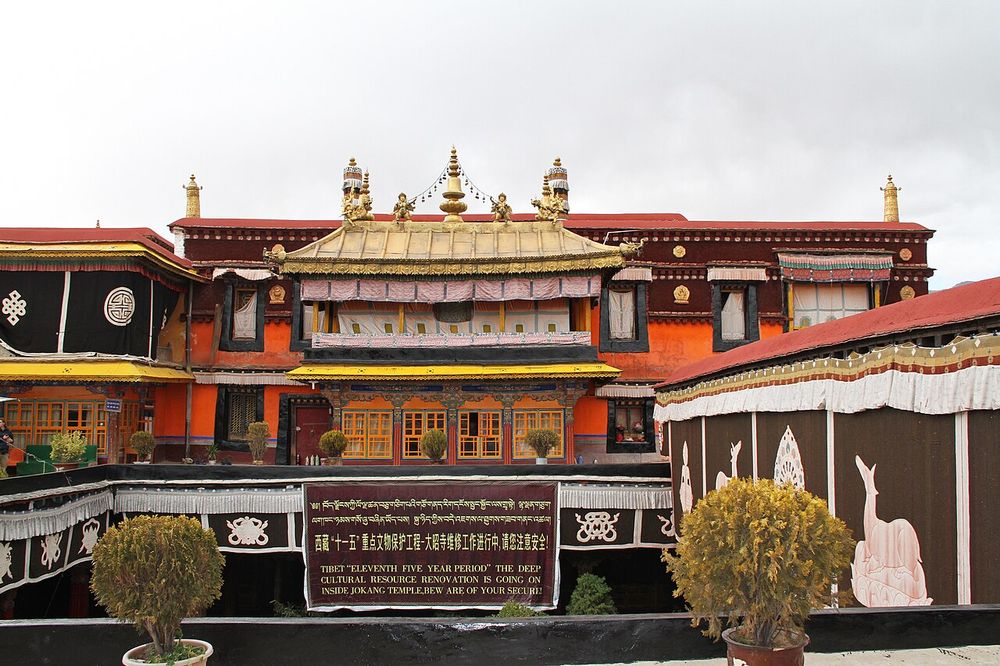
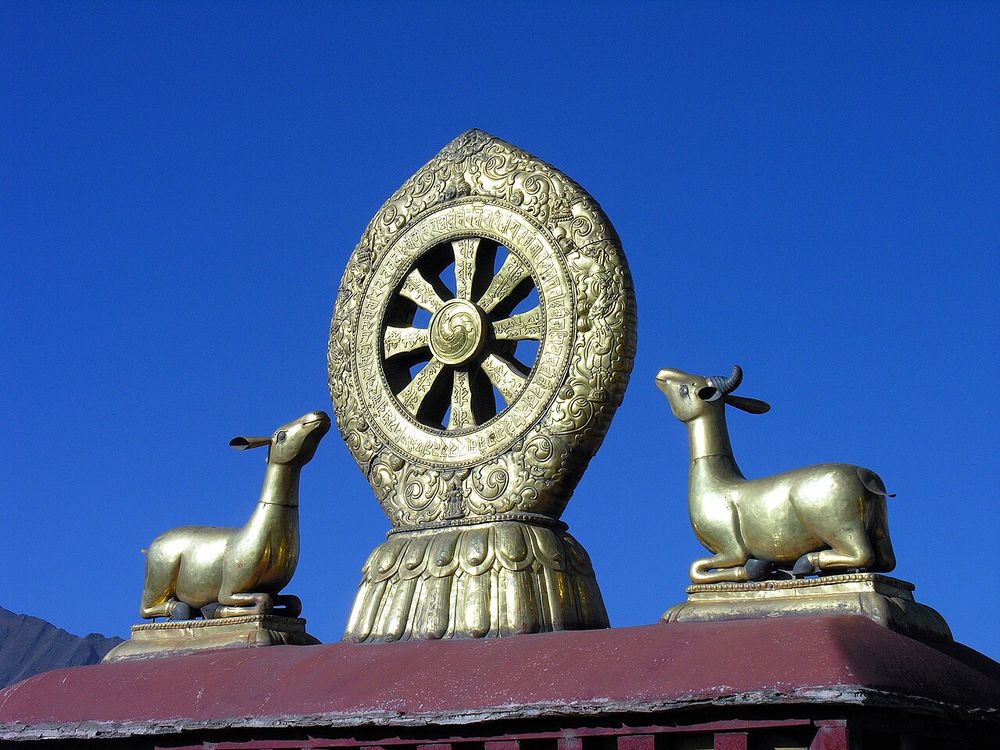
The Jokhang stands in the middle of the old town and dates from the 7th century. Its chief image is a statue of the Buddha at the age of twelve. The street round the temple, the Barkhor, is a pilgrim circuit.
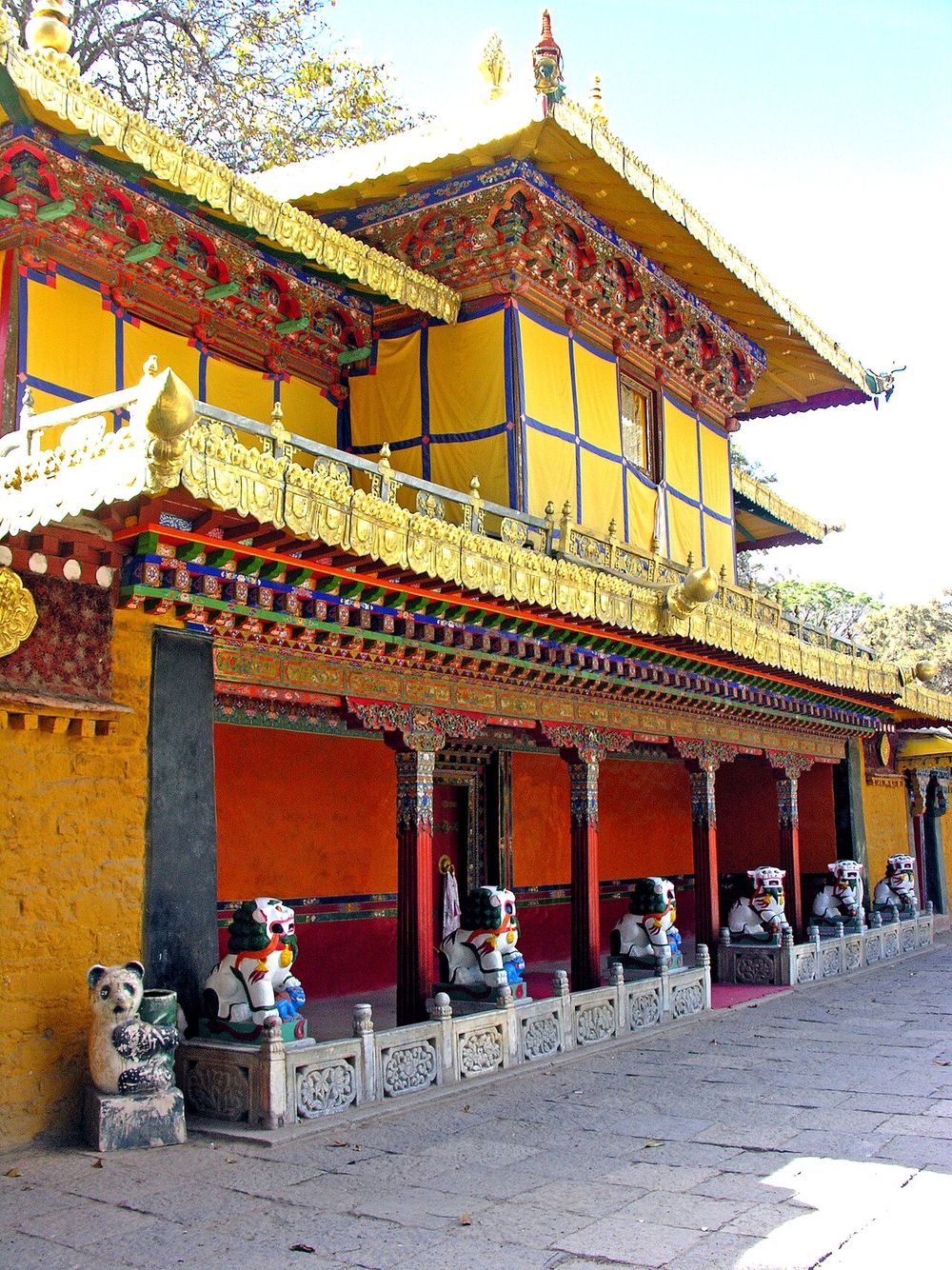
Norbulingka, begun under the Seventh Dalai Lama, was the summer palace and its park. The Potala for winter, Norbulingka for summer. During the Shoton festival Tibetan opera is performed there.
All three are one World Heritage site: the Potala was listed in 1994, the Jokhang added in 2000 and Norbulingka in 2001.
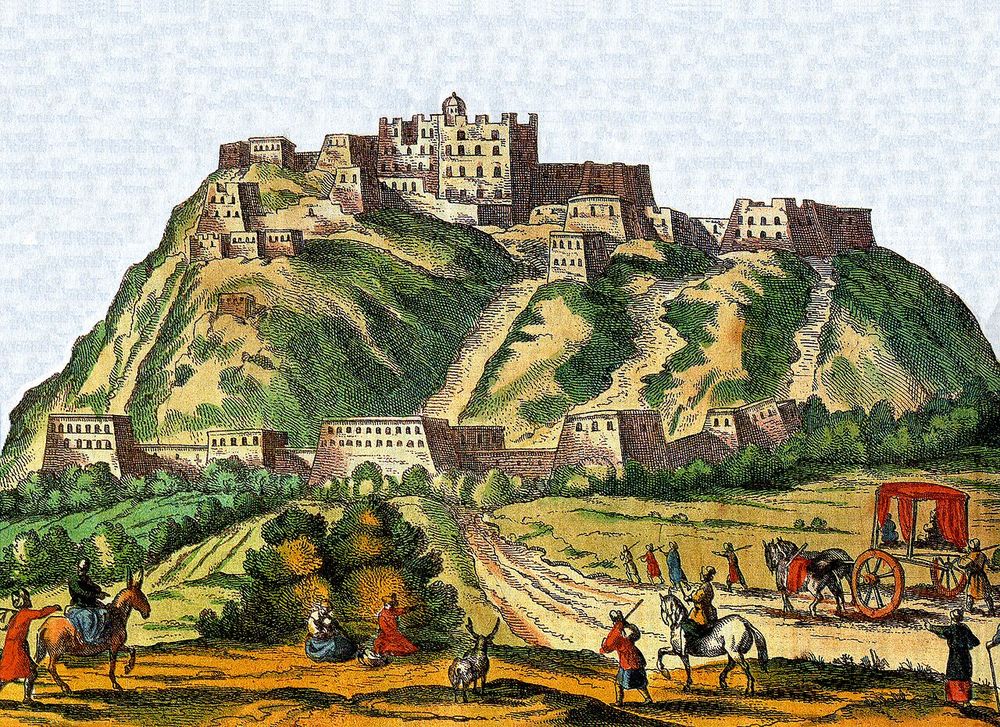
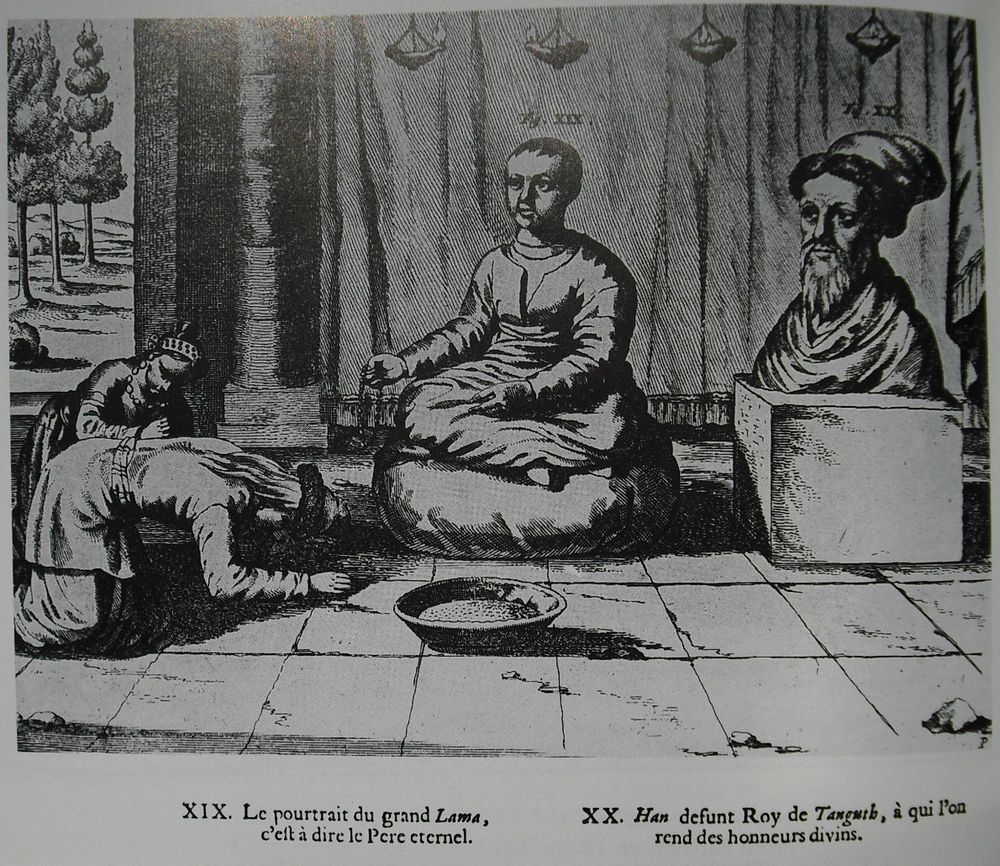
The Austrian Jesuit Johann Grueber passed through Lhasa in 1661 and made a sketch. It was engraved for Athanasius Kircher's book China Illustrata in 1667. The Red Palace had not been started, so the picture shows the palace half built.
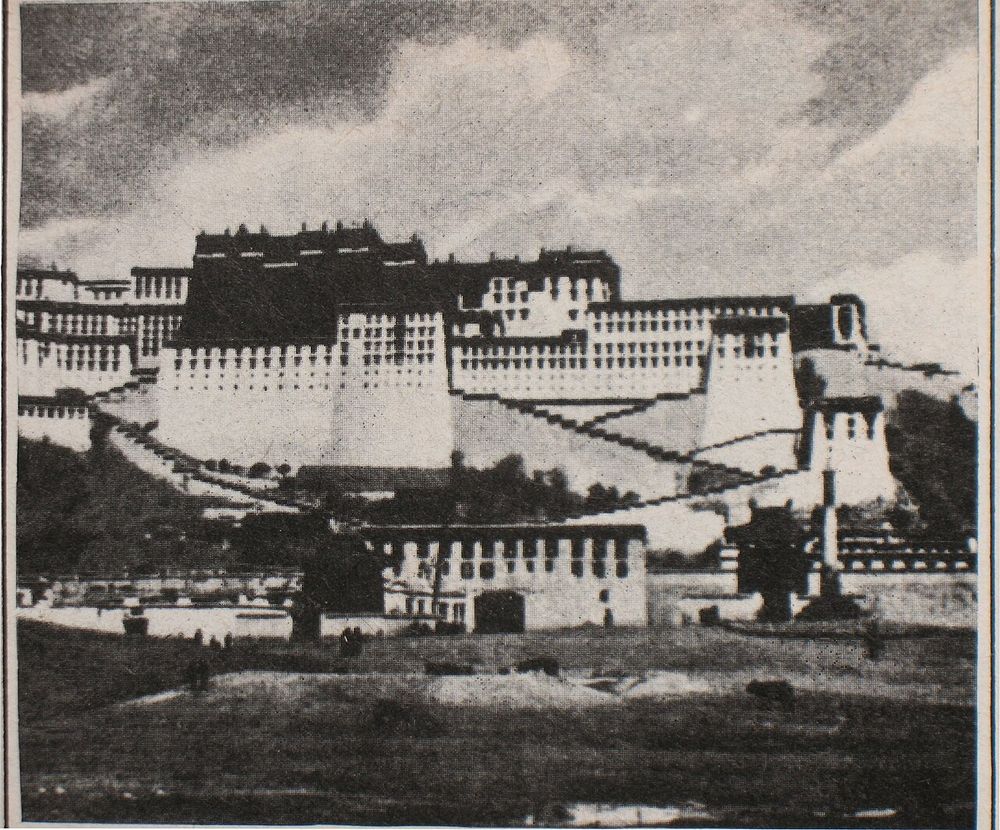
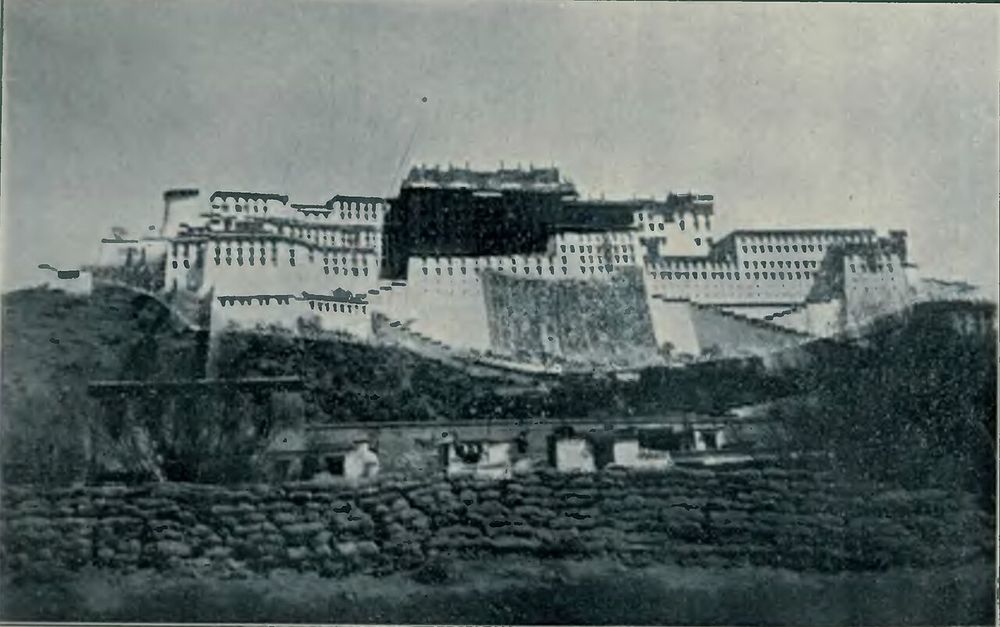
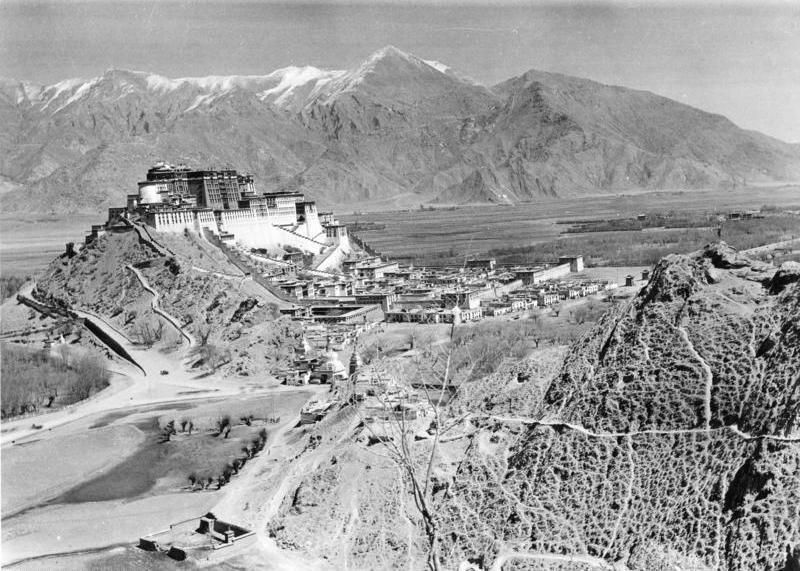
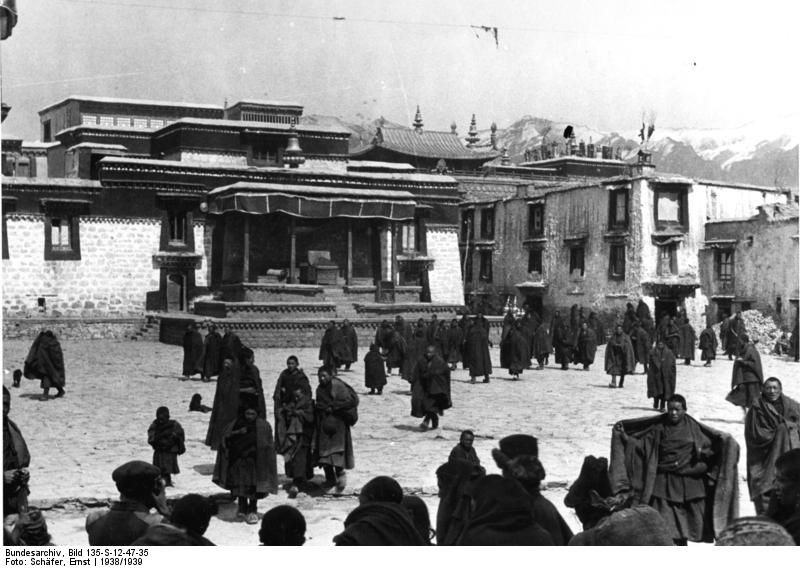
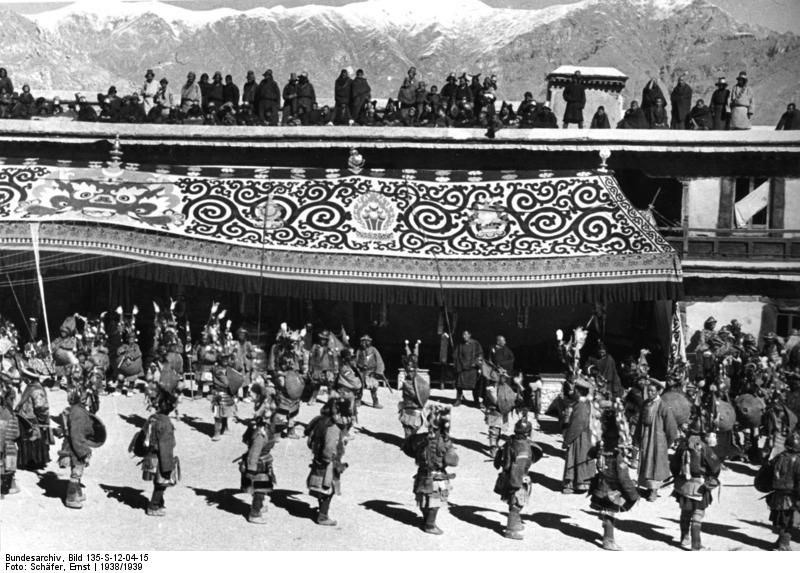
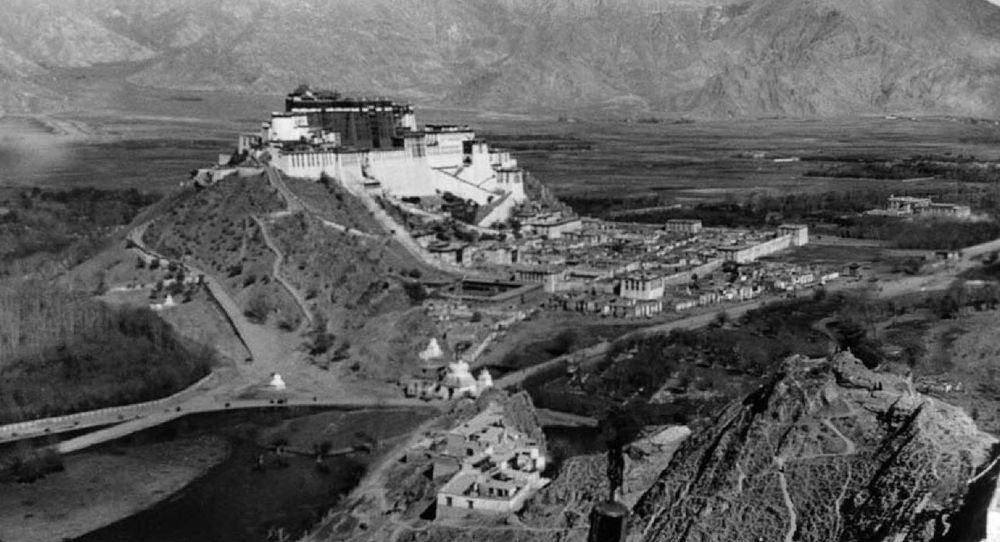
Among the earliest photographs are those taken in 1900–1901 by two travellers from Russia, the Buryat scholar Gombojab Tsybikov and the Kalmyk Ovshe Norzunov. You can see some of them, and photographs from the 1930s and 1940s, in the pictures on this page.
At Chengde, north of Beijing, the Qianlong emperor built a temple modelled on the Potala. People call it the Little Potala.
The story of Princess Wencheng is told on both sides. It is one of the eight classic Tibetan operas.
Paths of the Soul (2015), directed by Zhang Yang with villagers playing themselves, follows a group of Tibetans who prostrate themselves along the road for more than a thousand kilometres to Lhasa and on to Mount Kailash.
The song Sky Road is about the Qinghai–Tibet railway, opened in 2006. Many visitors now arrive in Lhasa on that line.
The fifth series of the renminbi carries the Potala on the back of the 50-yuan note.
| Year | Here | Elsewhere |
|---|---|---|
| 641 | Princess Wencheng arrives; Songtsen Gampo builds on the Red Hill | The Tang (618–907) emperor Taizong reigns; the monk Xuanzang is studying in India |
| 1645 | The Fifth Dalai Lama begins the rebuilding | The Qing have held Beijing for one year; Europe's Thirty Years' War is nearly over (1648) |
| 1652–1653 | The Fifth Dalai Lama travels to Beijing | The Taj Mahal in India is largely complete |
| 1694 | The Red Palace is finished | Louis XIV has held court at Versailles since 1682 |
| 1757 | The tomb of the Seventh Dalai Lama is built | The East India Company wins the battle of Plassey |
| 1994 | Listed as World Heritage | The same year: Chengde, Qufu and the Wudang Mountains |
One line to remember: when the Red Palace was finished, the king of France had been living at Versailles for twelve years.
These are stories people tell about this place. They are legends, not history, and each one says where it comes from.
Tsangyang Gyatso, the Sixth Dalai Lama and Tibet's best-loved poet, is said to have slipped out of the palace at night to the town below.
Source: Local folk tale
The statue of the Buddha at the age of twelve in the Jokhang is said to have been brought to Tibet by the Tang princess Wencheng in the 7th century.
The princess is also said to have read the land and found that Tibet lay like a demoness on her back, and that a temple built on a lake would hold her down. The lake was filled with earth carried by white goats, and the temple's early name, Rasa, means “goat earth”.
Source: Tibetan tradition
Later, people who live here will be able to add the stories they grew up with, and say which of these they have heard.
Last checked 2026-11-11. Travel and news reports, not the site's own notices.
Stand at the site, sign in, press the button, and collect its stamp. Your browser will ask to use your location. It is sent to us once to confirm that you are at the site; we keep how far you were from it, not the spot where you stood.
Your stamps are saved to your account, so they follow you to any device. Checking from a browser cannot rule out every false location; stricter checks arrive with the app.
Photos here show the place, not people. Each one is credited to the visitor who took it and appears after our team has looked at it. A photo with you in it belongs under “I am here”.