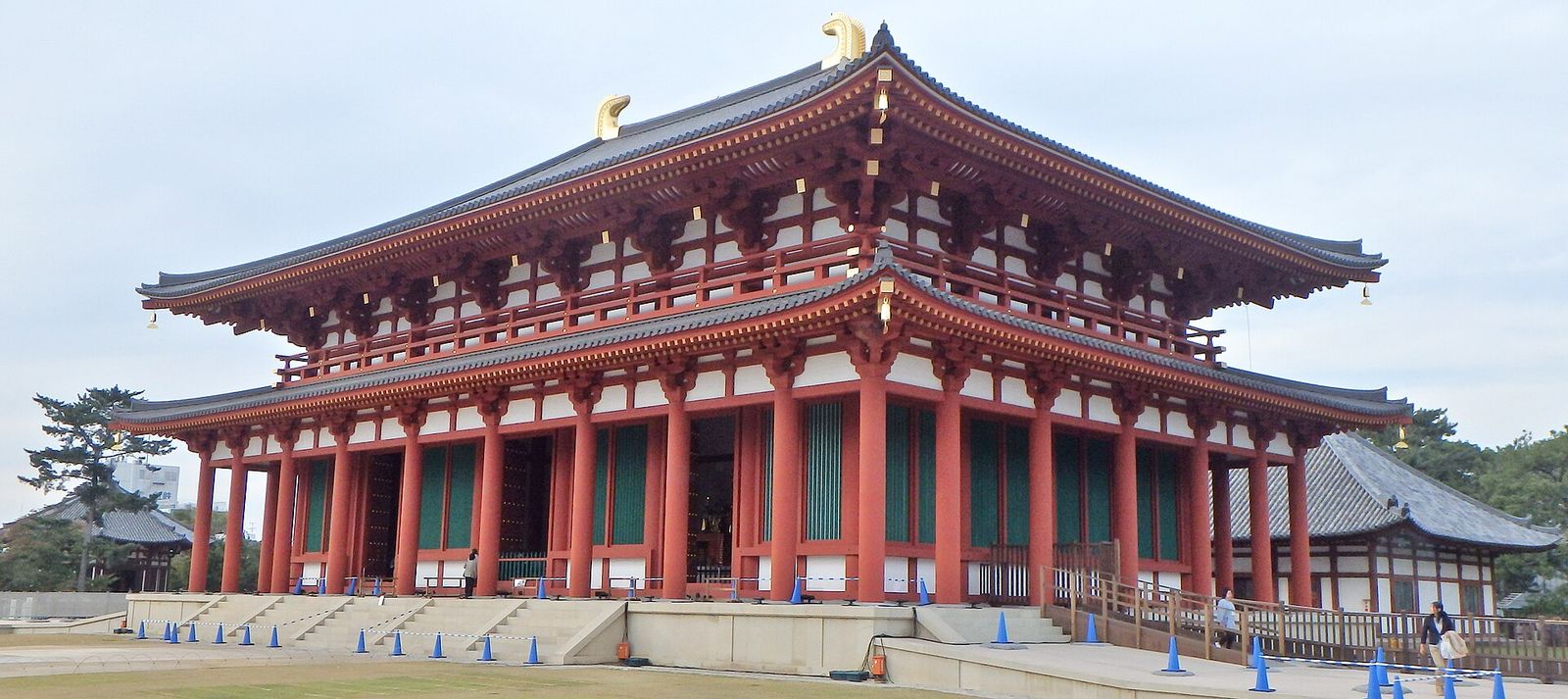
A five-storey pagoda fifty metres high, a boy-faced god with six arms, and a great hall rebuilt in 2018 after three hundred years. This was the family temple of the Fujiwara and once ruled the whole province. Today you walk straight in off the street, because in 1868 it lost its walls and nearly everything else.
Photo: Zairon, CC BY 4.0, Wikimedia Commons
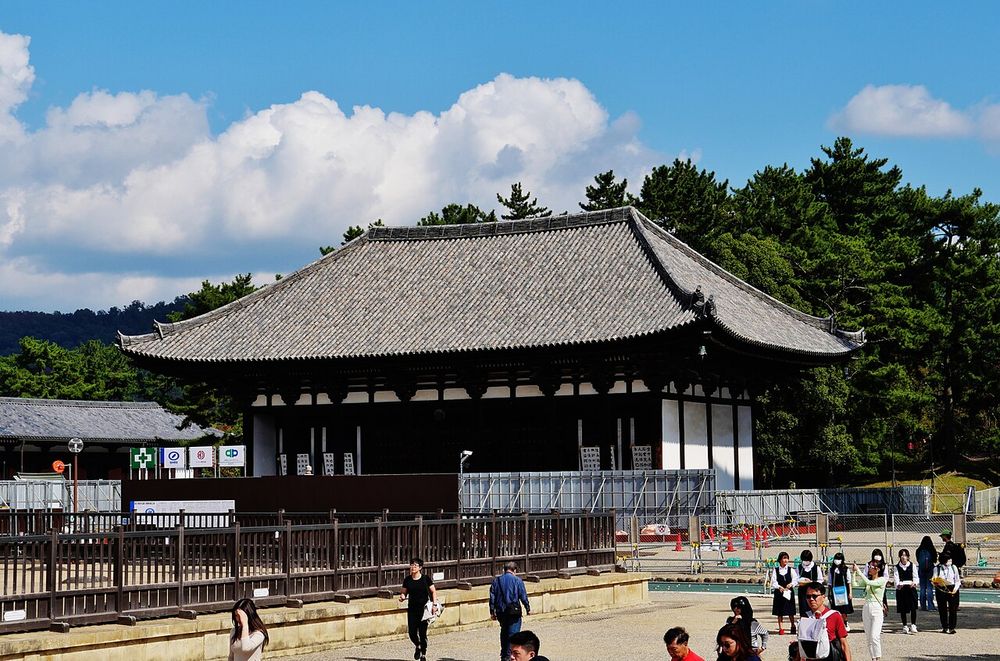
The story
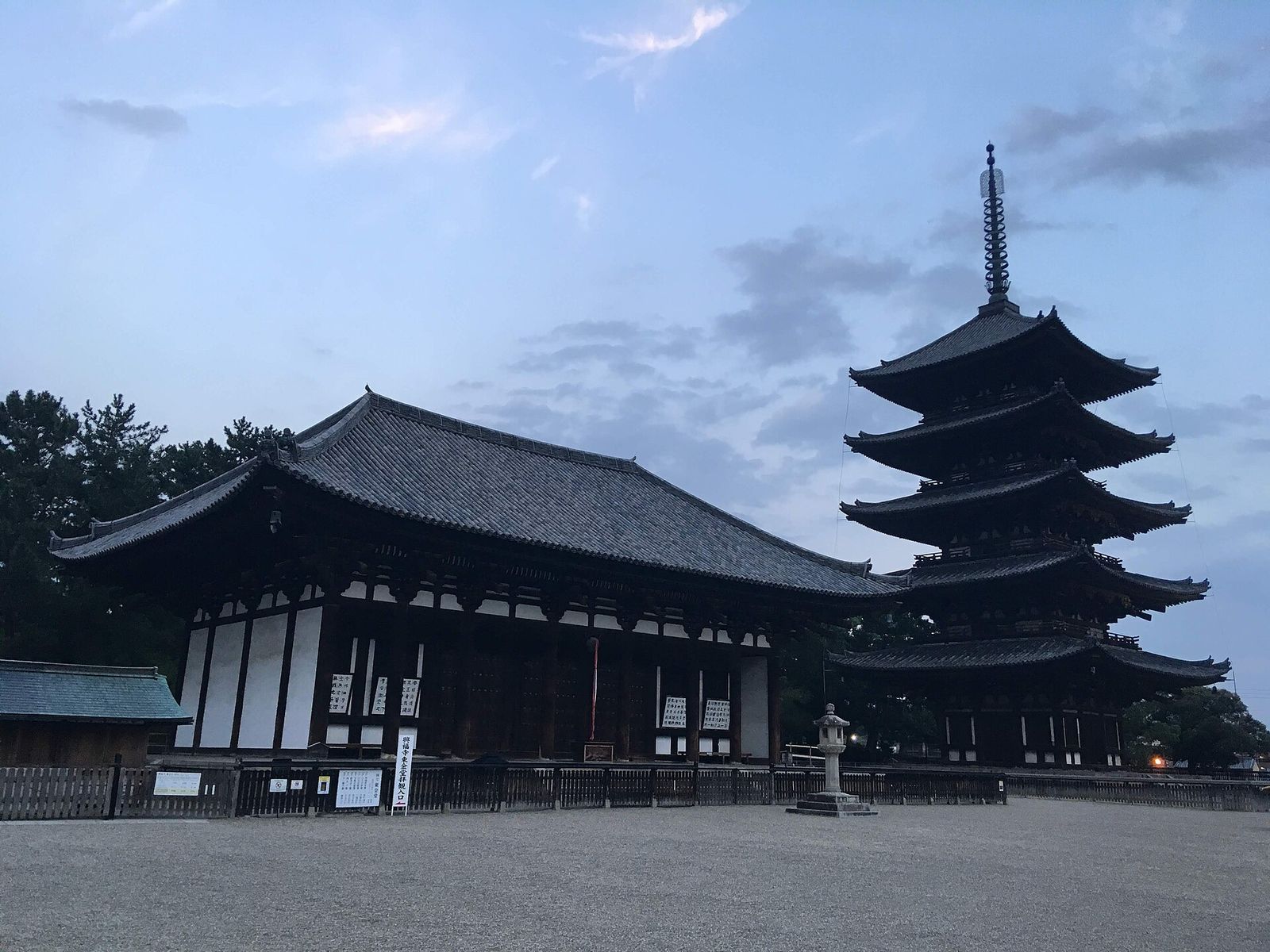
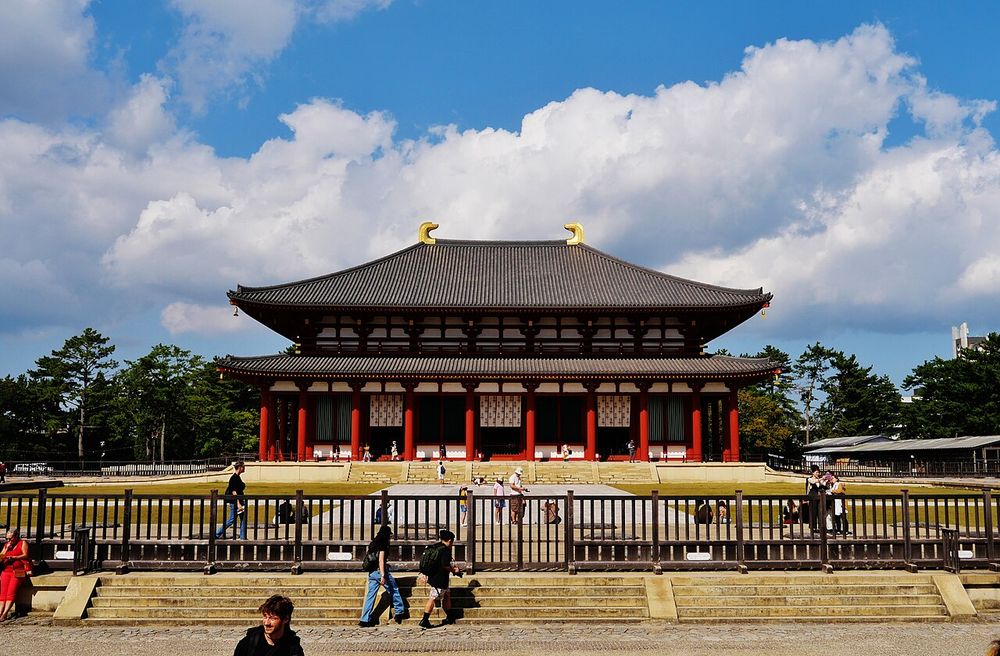
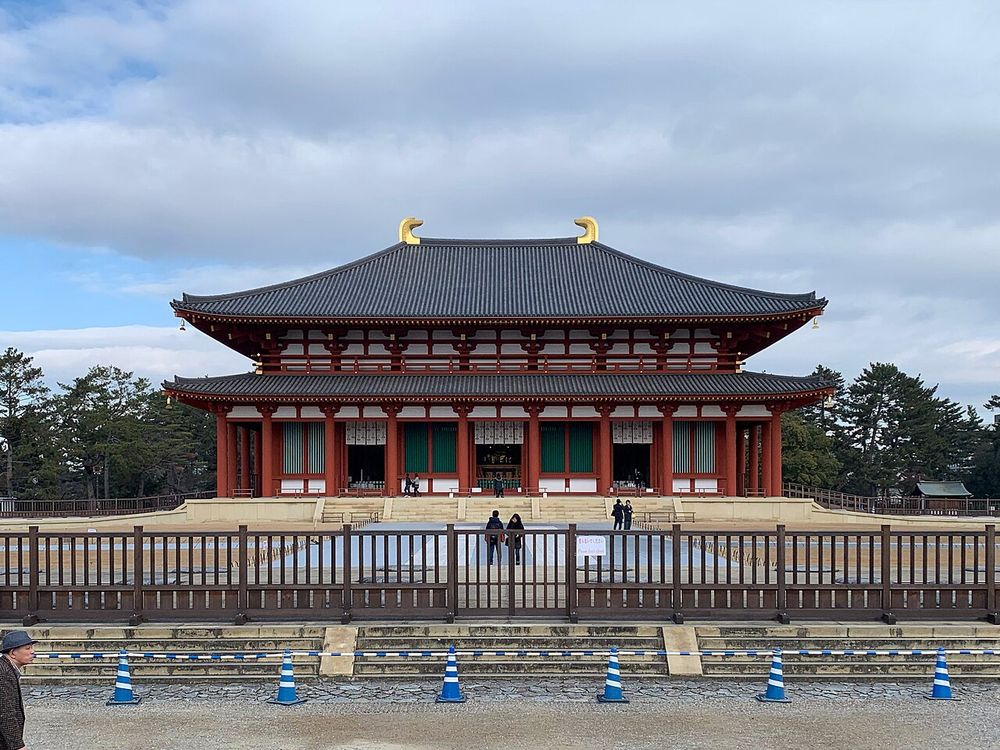
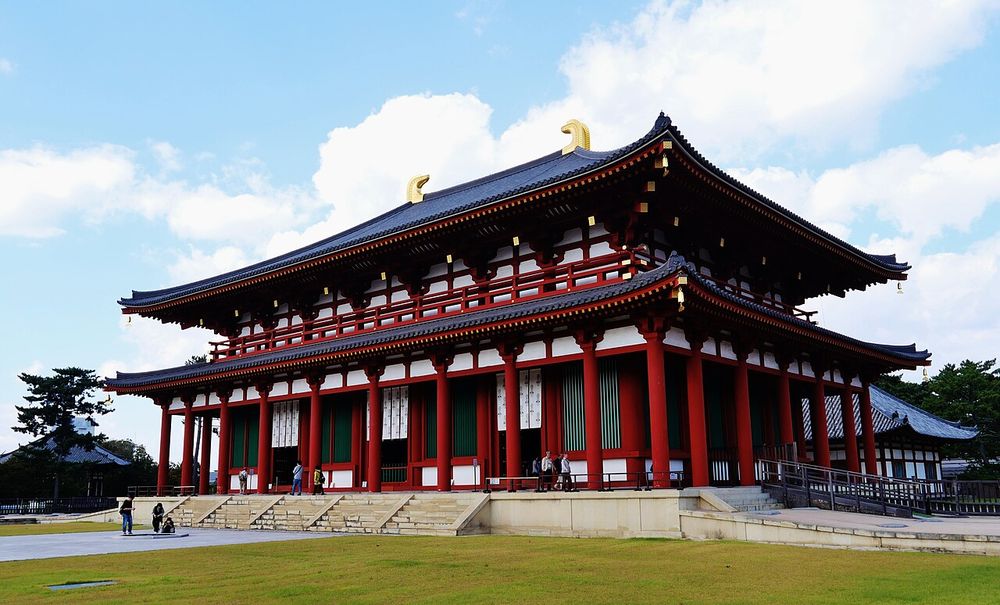
You are on open grass in the middle of a city, with deer. On one side stands a dark wooden hall and, beside it, a pagoda of five roofs. On the other is a much larger hall, bright red and white, that looks new, and is.
The temple came to this spot in 710, when Nara became the capital. In China it was the last years before the reign of Emperor Xuanzong of Tang (618–907). The pagoda you see was put up about 1426, six years after the Forbidden City was finished in Beijing.
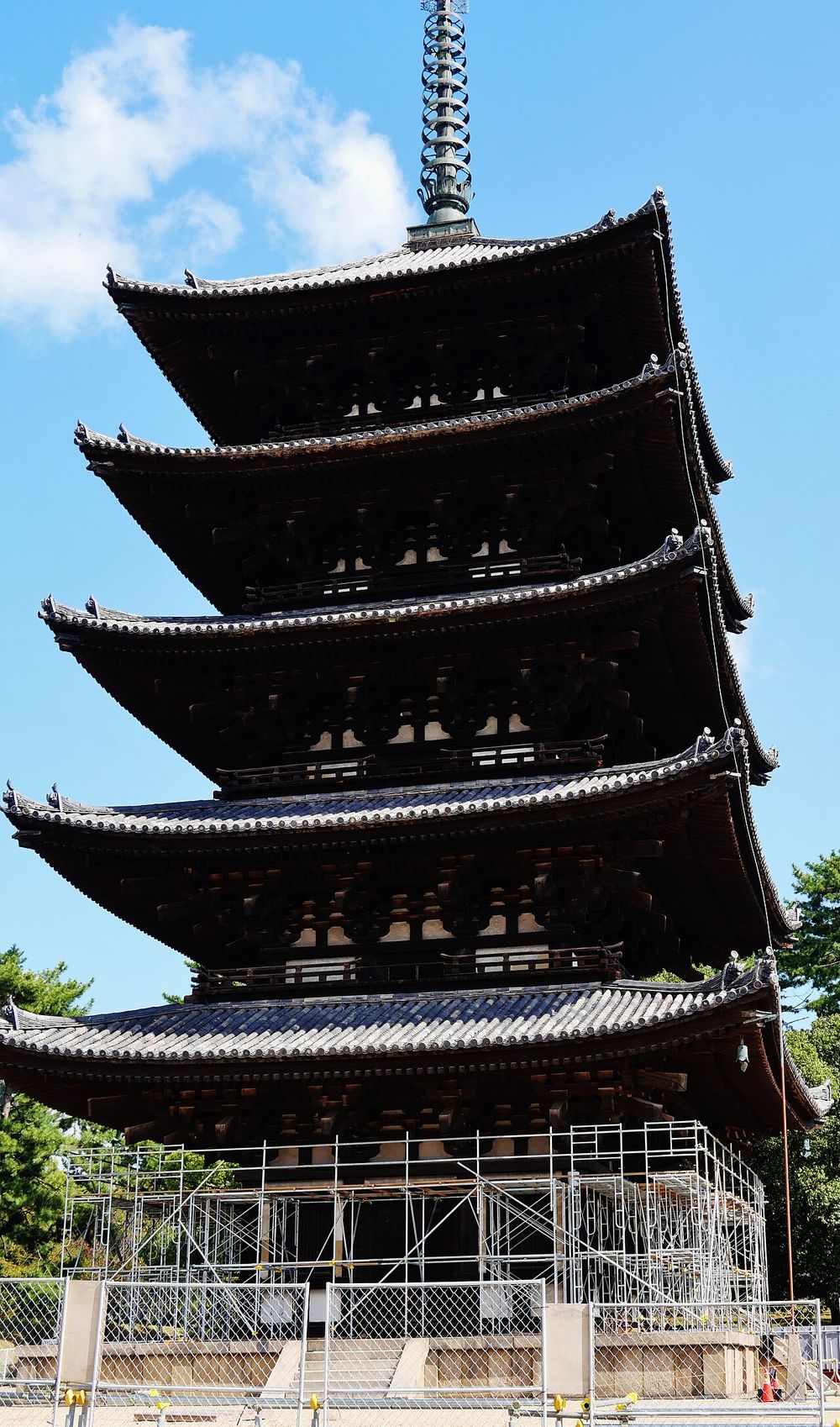
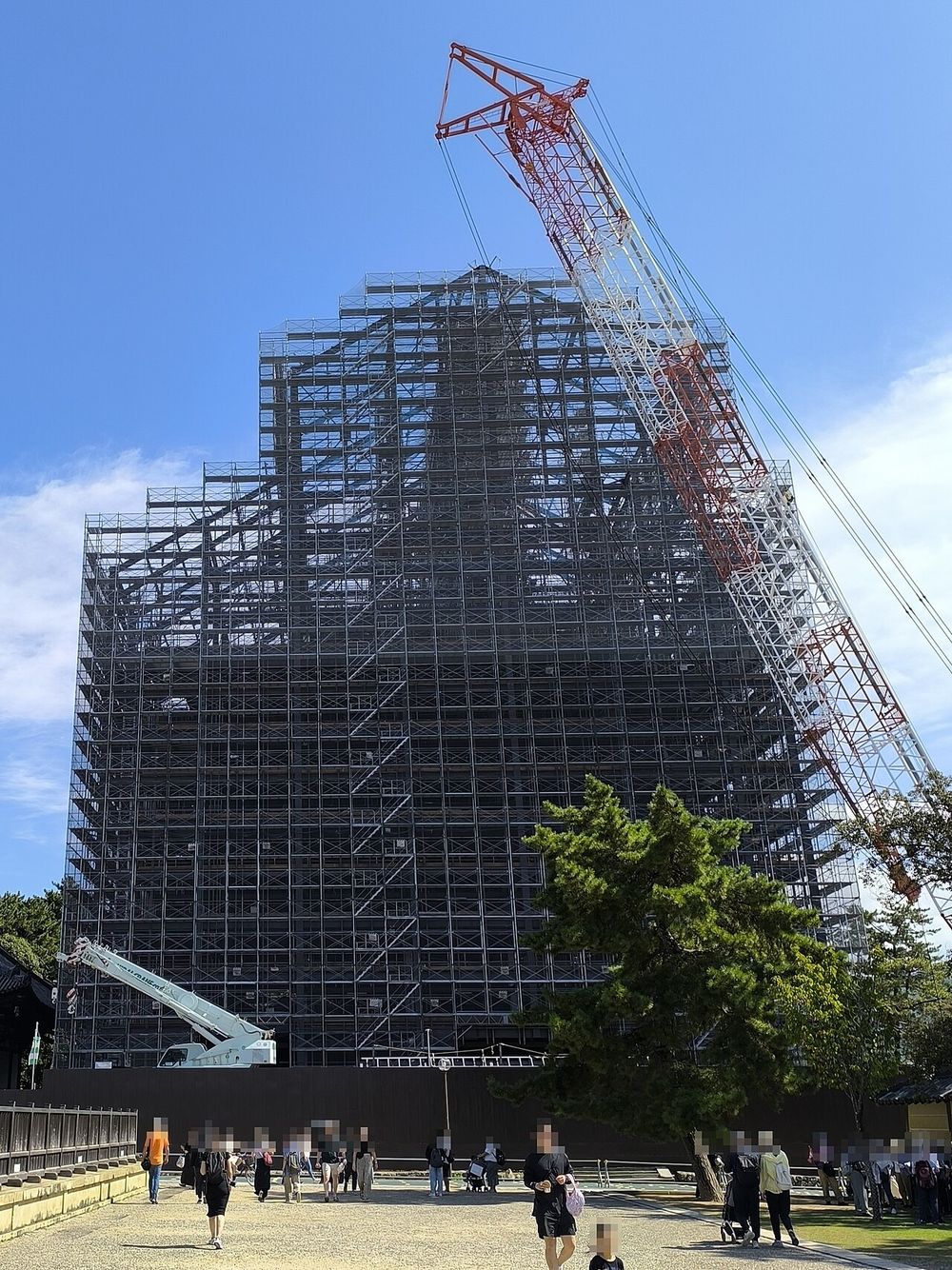
The grounds are free and never close. Three buildings charge: the Central Golden Hall, the Eastern Golden Hall and the museum. The other halls are seen from outside and open on a few days a year. The five-storey pagoda is covered for repair.
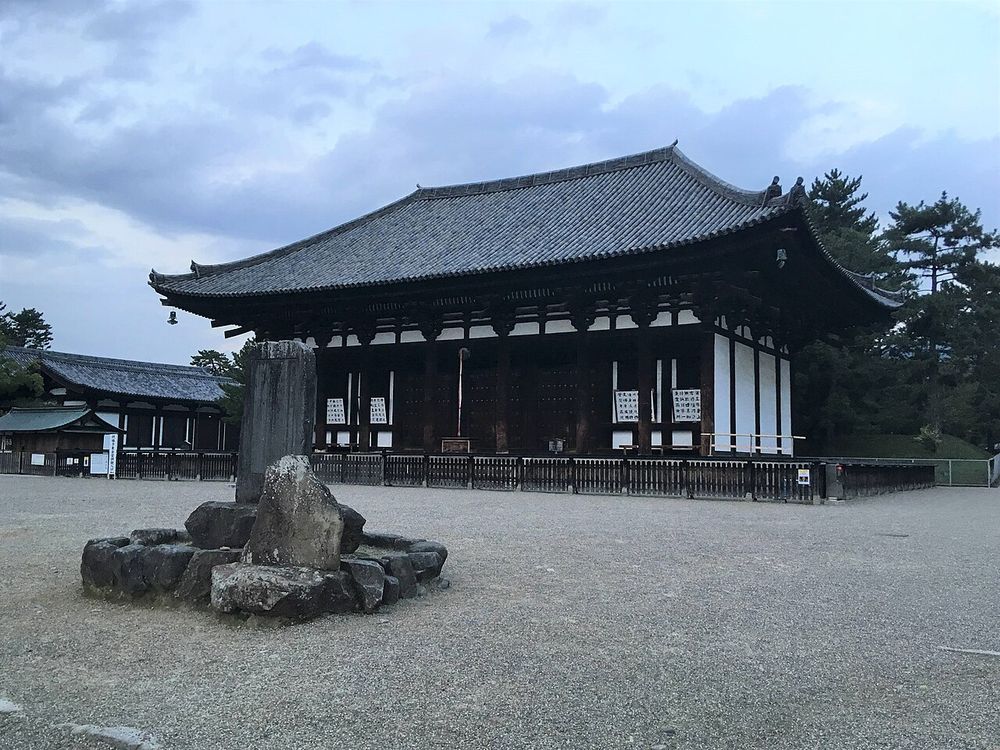
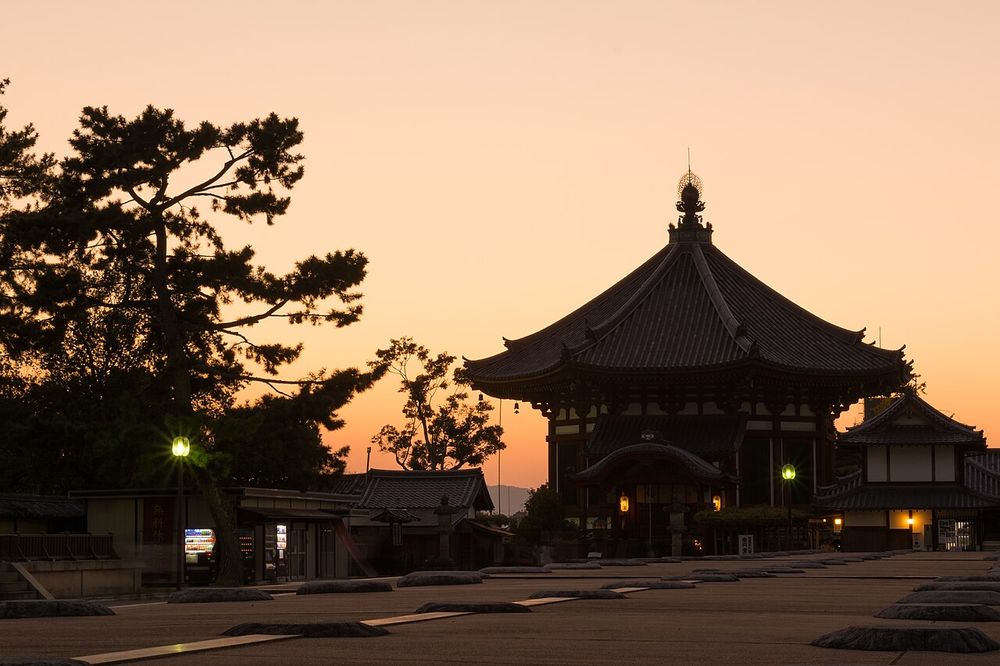
The Eastern Golden Hall and the pagoda at duskChristophe95, CC BY-SA 4.0
Kōfuku-ji was the private temple of the Fujiwara, the family that governed Japan through its emperors for three hundred years. As they rose, it grew to more than a hundred and fifty buildings. In the Middle Ages its monks kept an army and ran the province.
It burned again and again: in a civil war in 1180, and in a fire in 1717 that took the western half. Each time the Fujiwara, or the townspeople, rebuilt part of it.
Then in 1868 the new government turned against Buddhism. The monks were made priests of the shrine up the hill, the walls came down, and the grounds became a public park. That is why there is no gate and no ticket for the grounds.
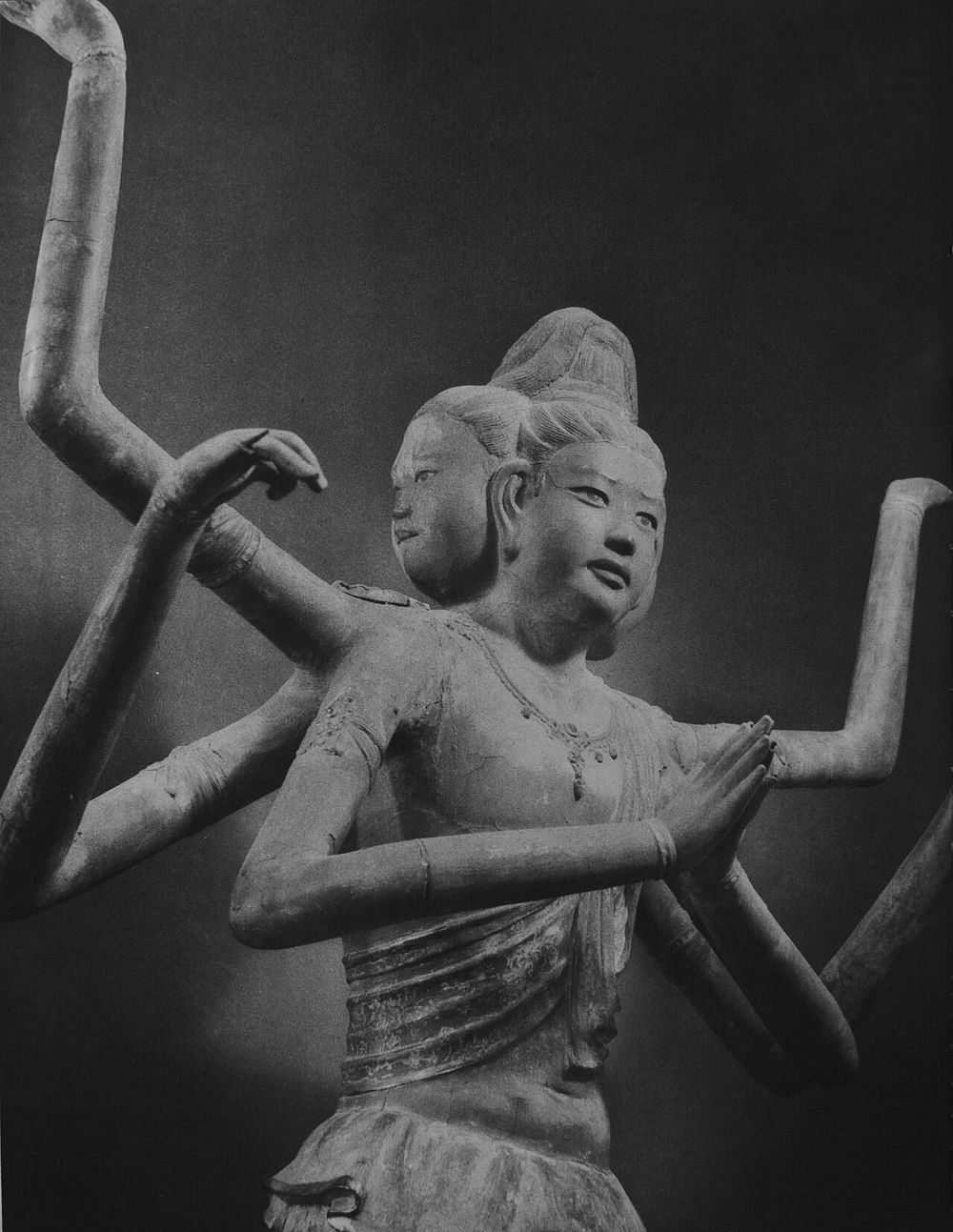
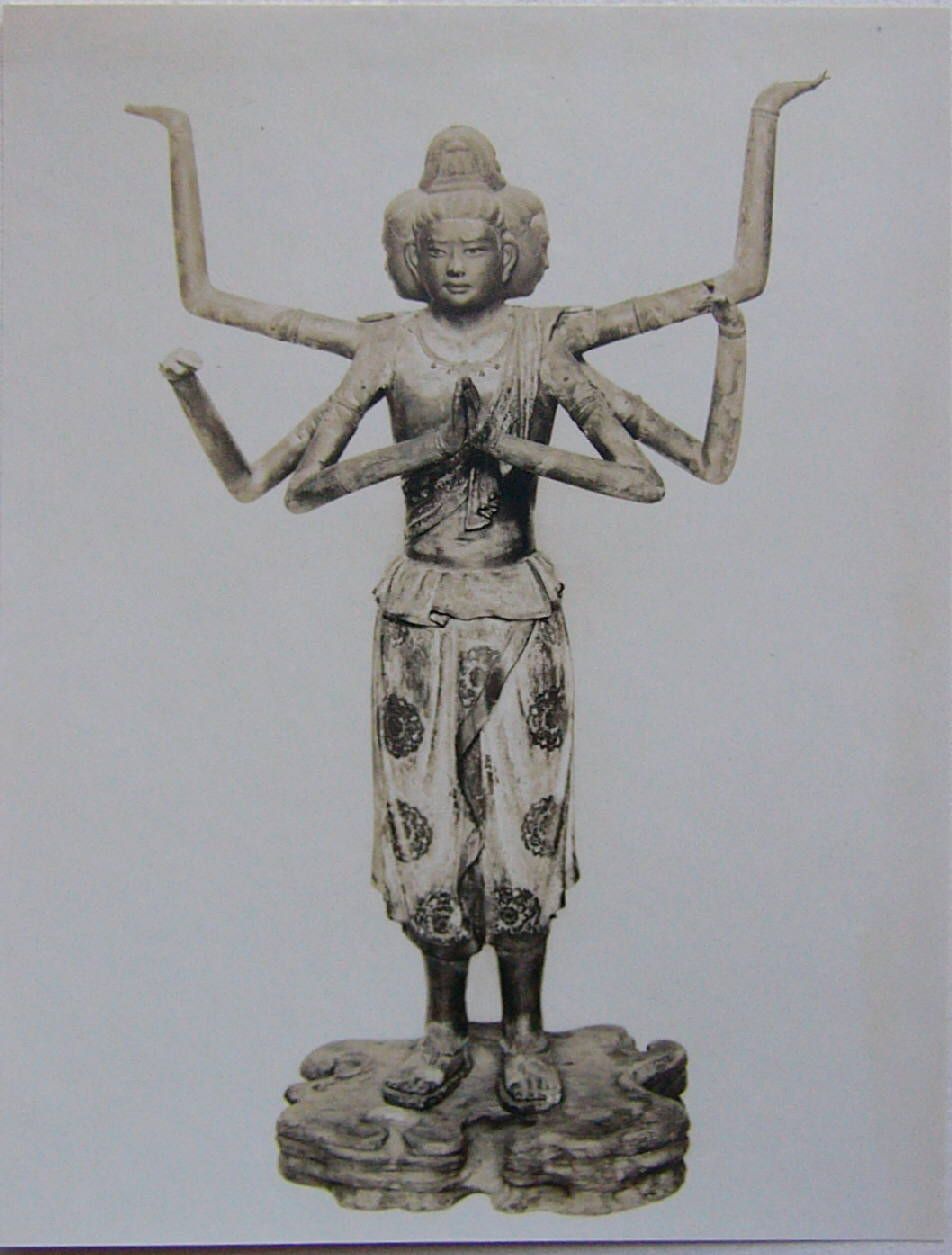
Before you leave, go into the museum for one statue: Ashura, made in 734, with three young faces and six thin arms.
Things people often get wrong
"The pagoda is the oldest thing here." The small three-storey pagoda down the slope and the North Octagonal Hall are both two hundred years older.
"The big red hall is restored." It is new. It was built between 2010 and 2018 on the old foundations, to the old measurements, in place of a hall that burned in 1717.
"It is part of the park." The park was laid out on the temple's land in 1880. The temple was allowed to reopen the next year, without its walls.
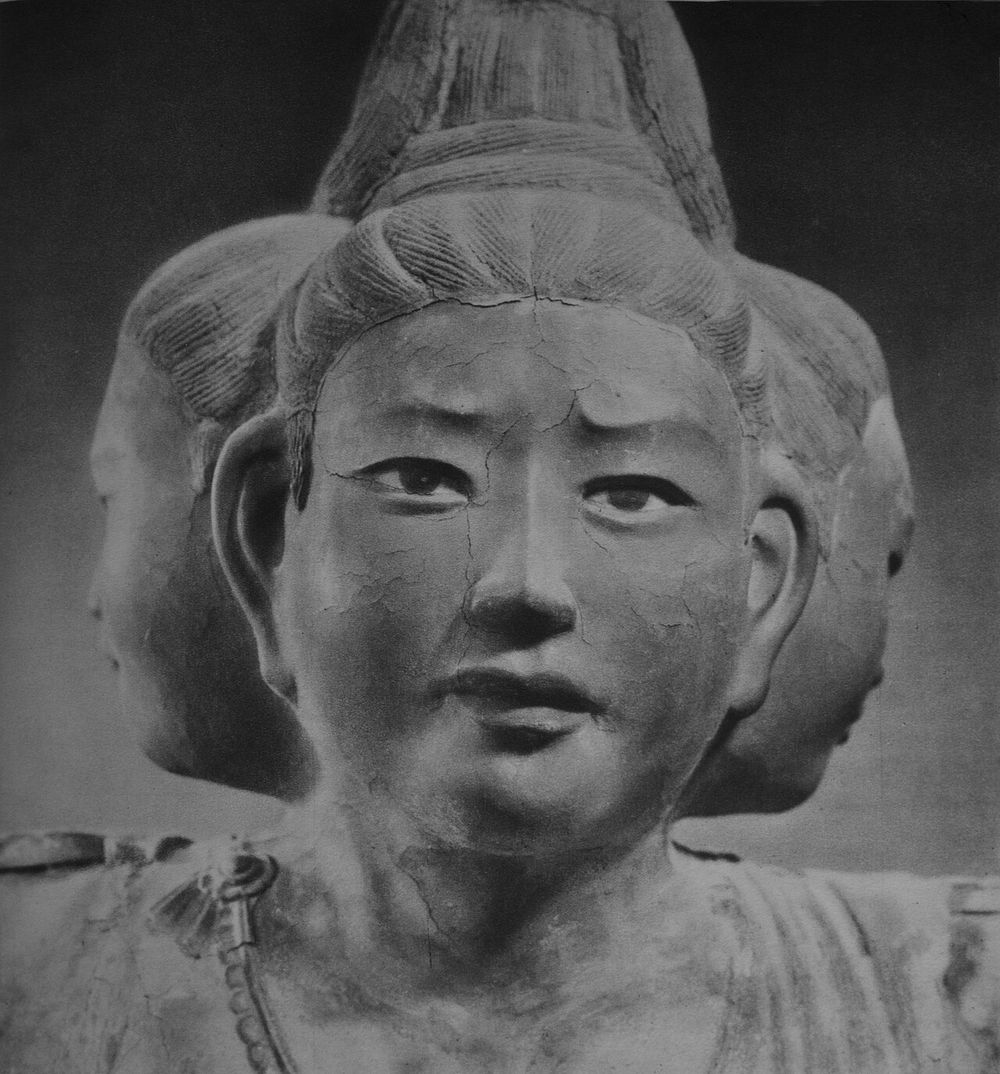
"Ashura is a fierce god." In India he was a demon who fought the gods. Here he is a guardian who has given up fighting, and the sculptor gave him the face of a troubled boy.
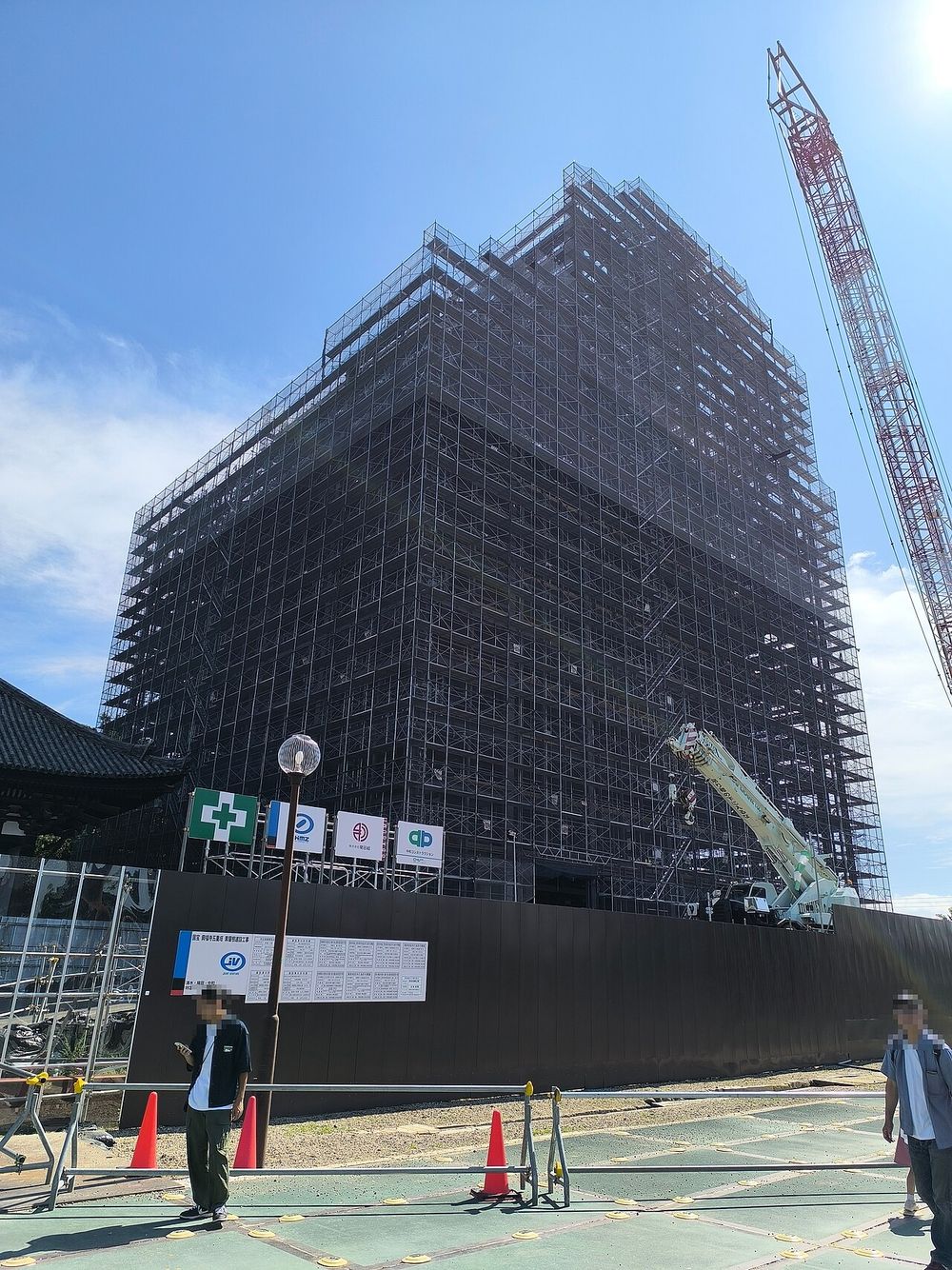
"You can go inside the pagoda." You cannot, and until the early 2030s you can hardly see it: it is wrapped in scaffolding for its first full repair in 120 years.
People who stood here
Kūkai (the monk who founded Shingon Buddhism; also called Kōbō Daishi)He came back from Chang'an in 806 with the teachings he had studied there. Temple tradition says that when the Fujiwara built the South Octagonal Hall in 813, he performed the rite that blessed the ground. If so, he stood where the pilgrims now queue with their stamp books.
Go deeper: eight stops, from the pond to the lost walls
The stops begin at the pond below the temple and climb the steps, as visitors did for a thousand years.
1. The pond and the fifty-two steps
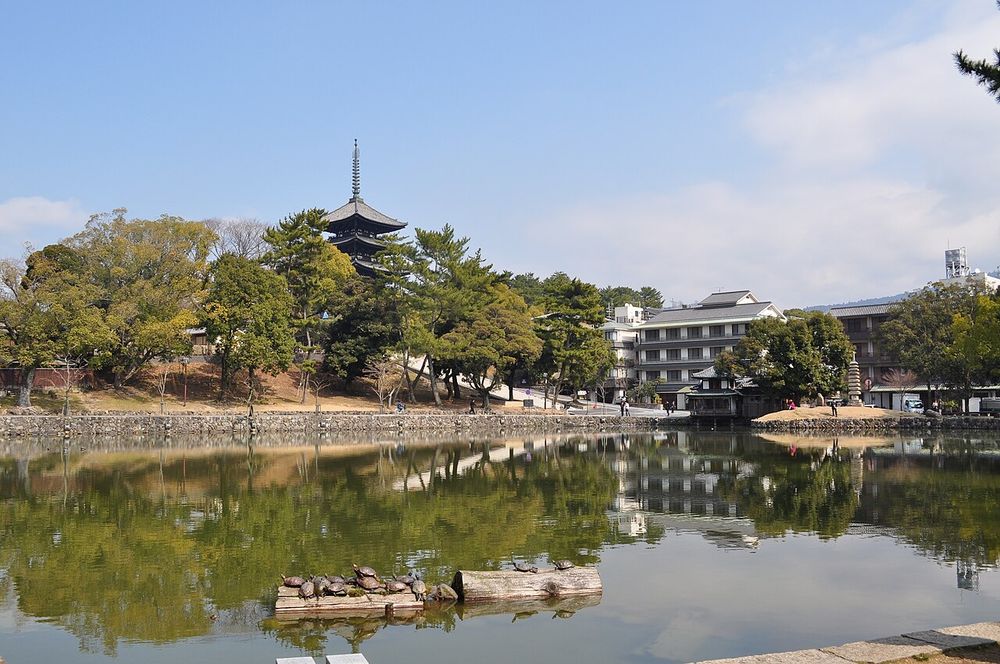
Sarusawa Pond, with the pagoda above the treesAi Amo, CC BY 2.0
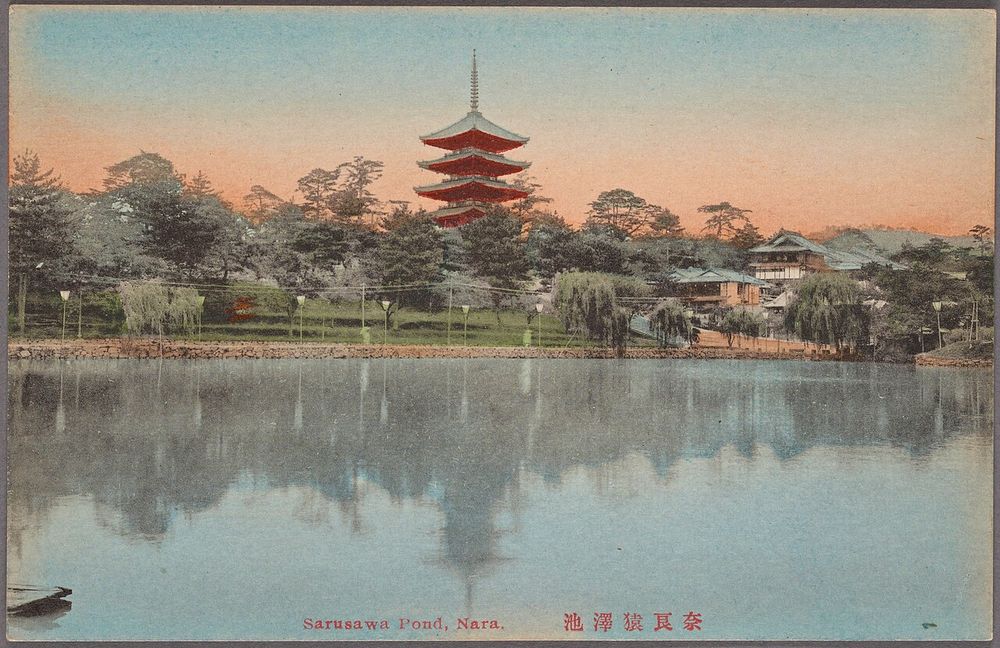
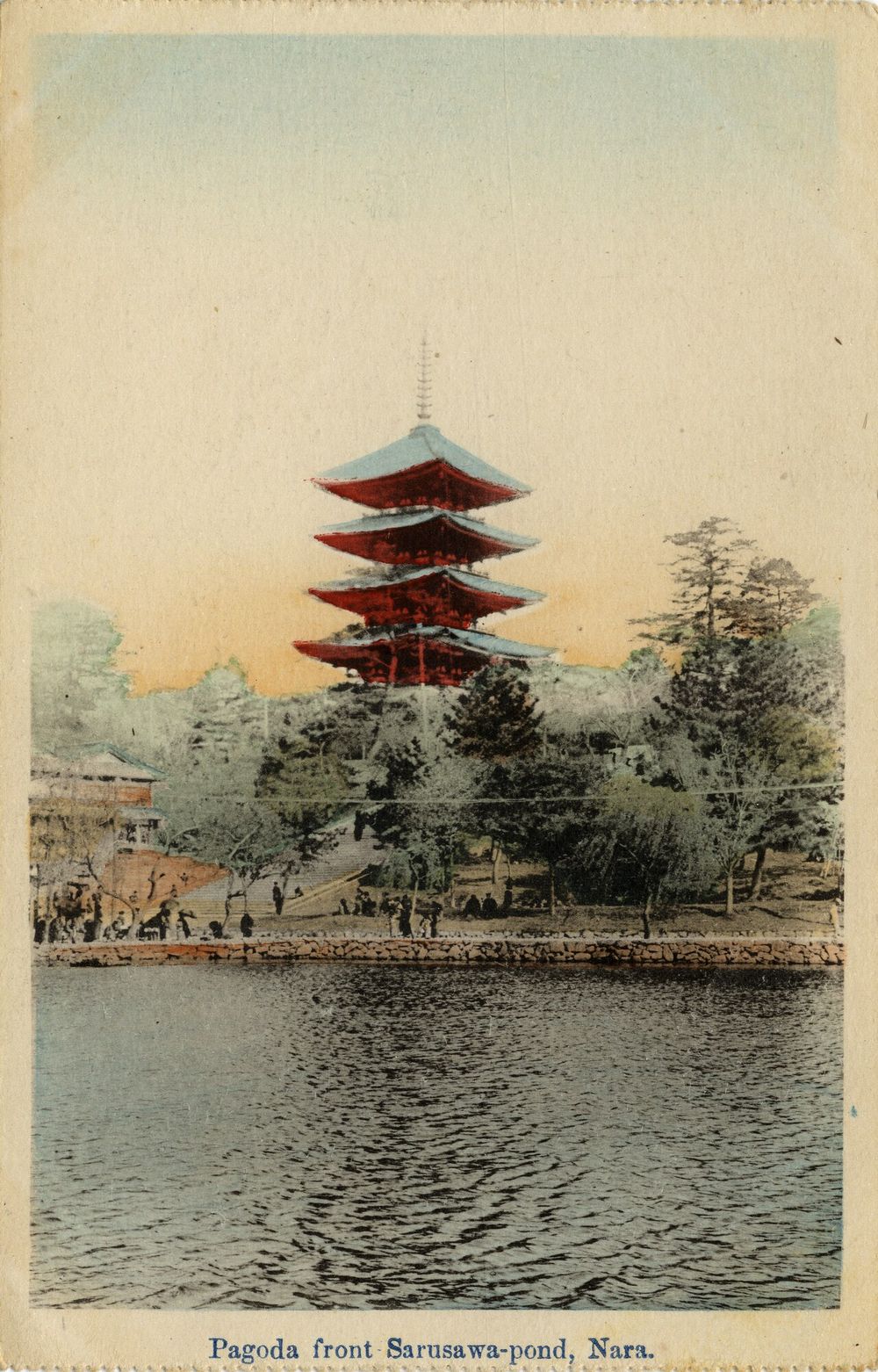
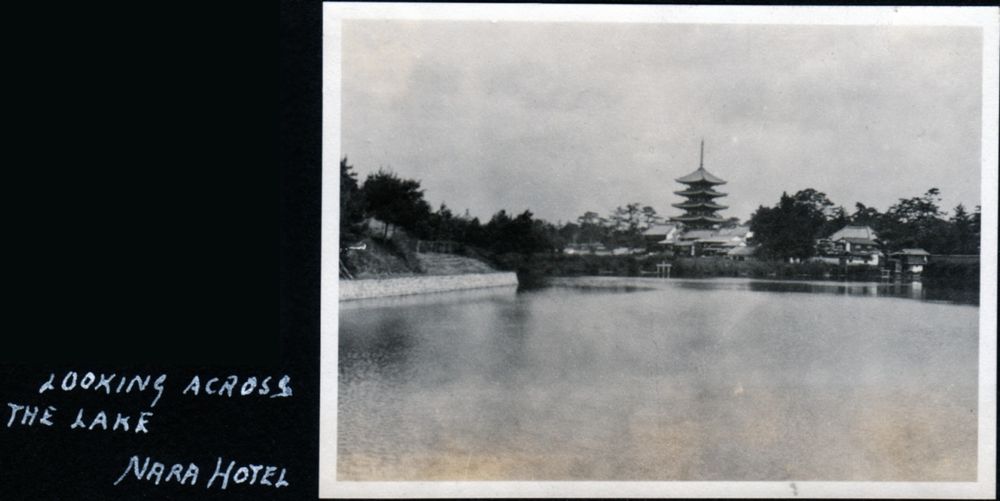
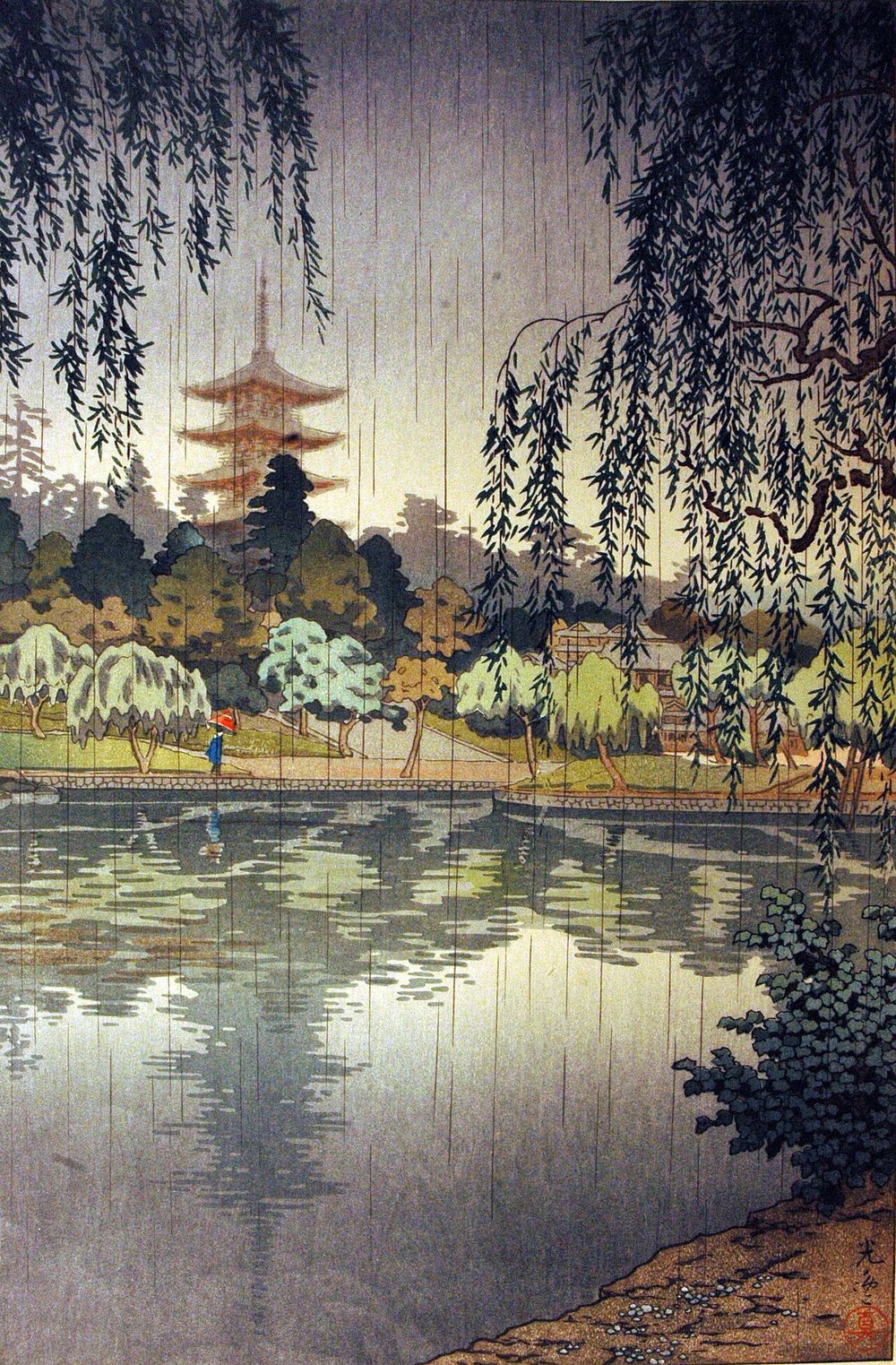
Sarusawa Pond was dug in 749 as the temple's pond for releasing fish, an act of mercy that earns merit. It is 360 metres round. The view across it to the pagoda above the willows has been the picture of Nara on prints and postcards for three centuries.
A deer at the edge of the pond, with the pagoda behindUnknown authorUnknown author, Public domain
Turtles sun themselves on the stones. On the north-west bank a tiny shrine stands with its back to the water; its story is in the legends below.
Fifty-two stone steps lead up from the pond to the temple. The number is said to stand for the fifty-two stages a follower passes on the way to becoming a Buddha.
2. The five-storey pagoda
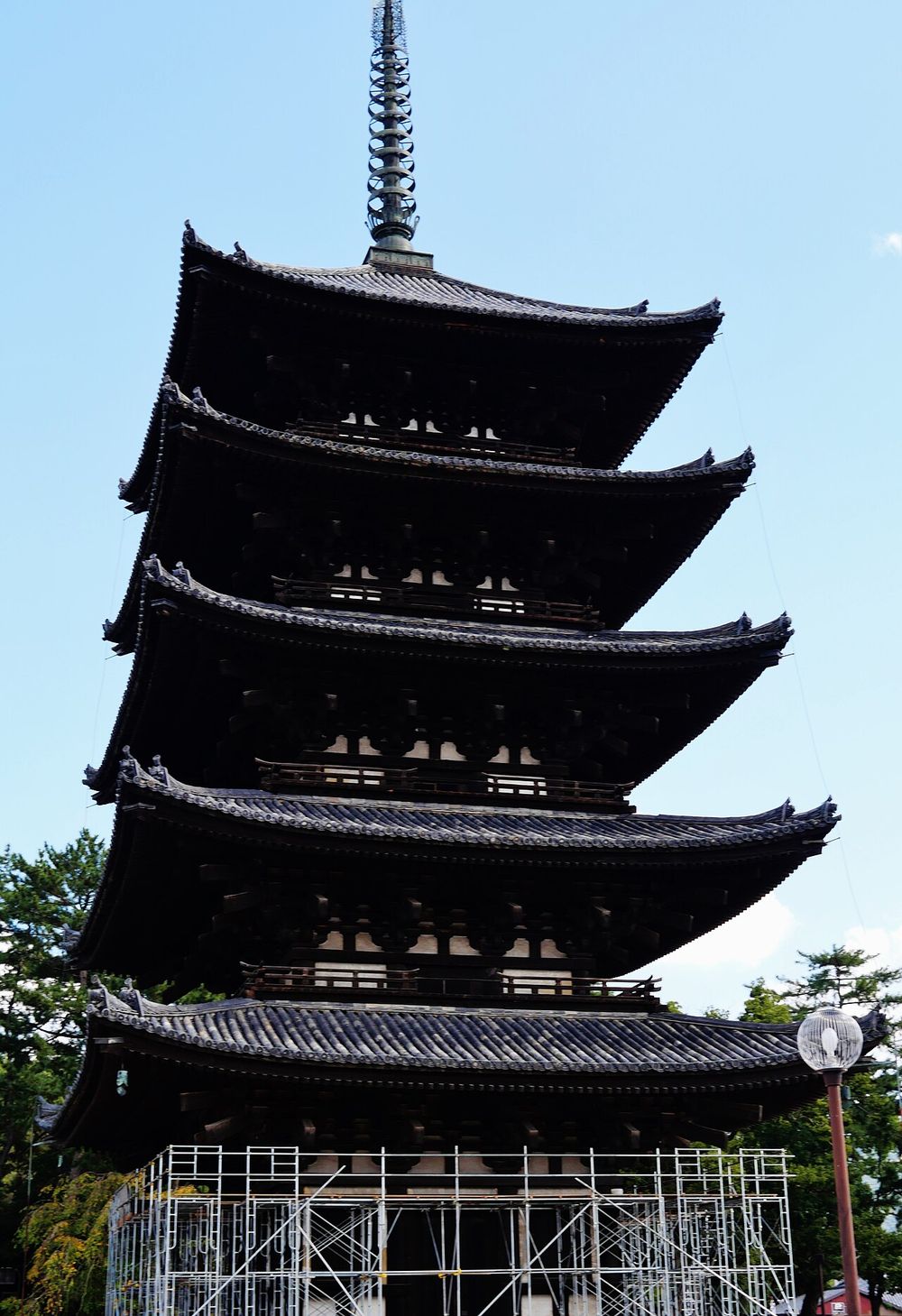
The five-storey pagoda before the repairZairon, CC BY 4.0
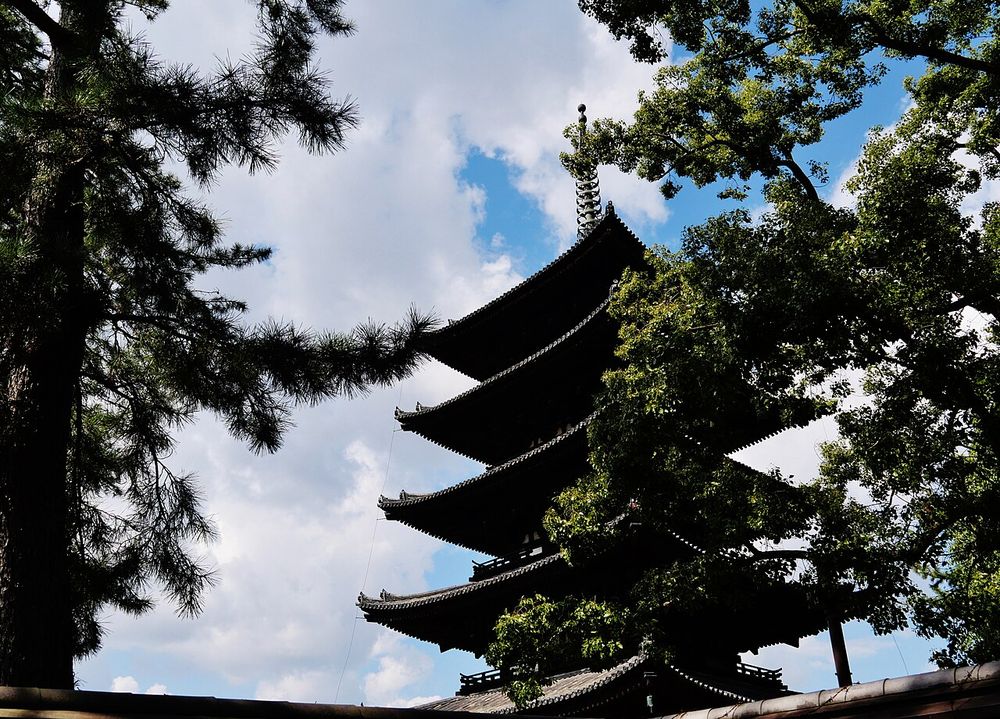
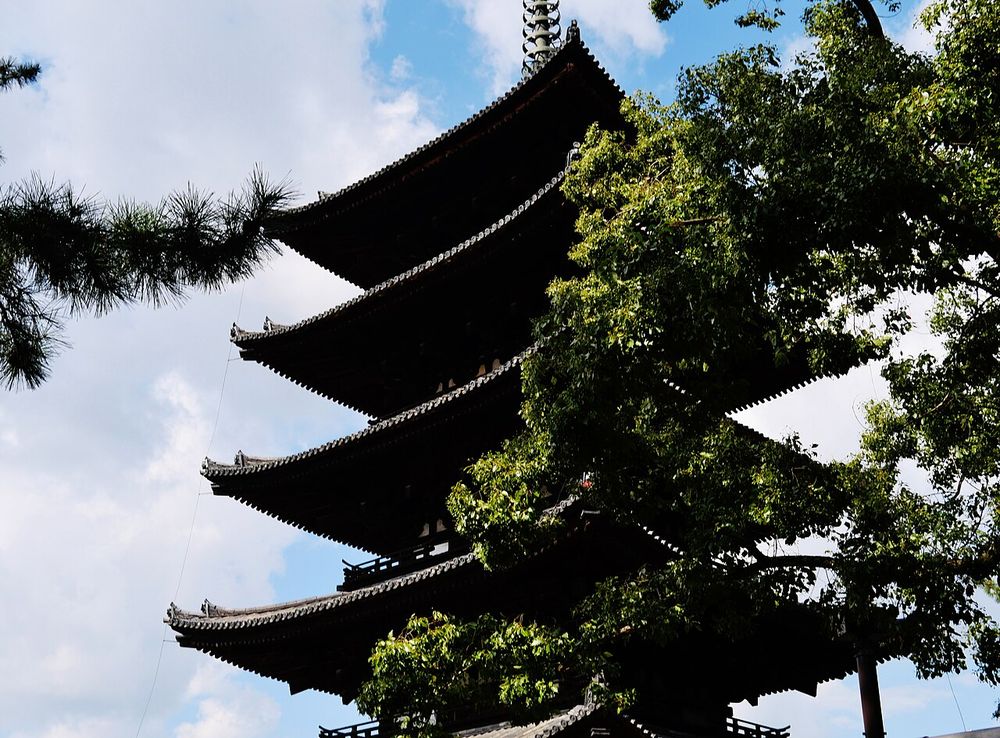
The first pagoda here was raised in 730 by Empress Kōmyō, a Fujiwara daughter. It burned five times. This one dates from about 1426 and is 50 metres high, the second tallest old wooden pagoda in Japan.
A pagoda is a grave marker: it stands over a relic of the Buddha. Nobody climbs it. The upper floors have no real rooms, and a single pillar runs up the middle from the ground to the spire.
The pagoda inside its scaffolding, October 2024Keeezawa, CC0
In 2024 a steel shed began to rise round it. The roof tiles, the plaster and parts of the frame are being taken down and repaired, for the first time since 1901.
3. The Eastern Golden Hall
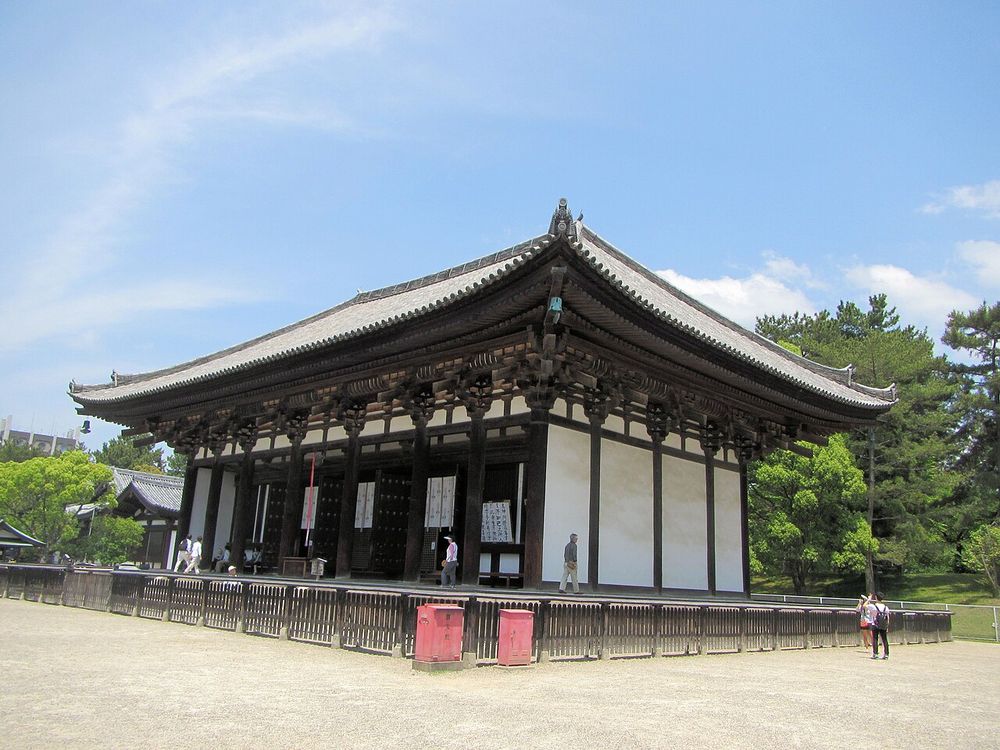
The Eastern Golden HallZairon, CC BY 4.0
Emperor Shōmu founded this hall in 726 to pray for the recovery of his aunt, the retired empress. It is 1,300 years old this year as an institution; the building in front of you is the sixth, finished in 1415.
Inside sits the Buddha of healing in bronze, with the bodhisattvas of the sun and the moon. Around them stand twelve armoured generals, each with the animal of one of the twelve years on his head.
In 1937, workmen repairing the altar found a bronze head a metre high hidden under it. It was the head of a Buddha cast in 685 for another temple. The monks of Kōfuku-ji had carried that statue off by force in 1187 to replace one they had lost; a later fire melted the body. The head is now in the museum.
4. The Central Golden Hall
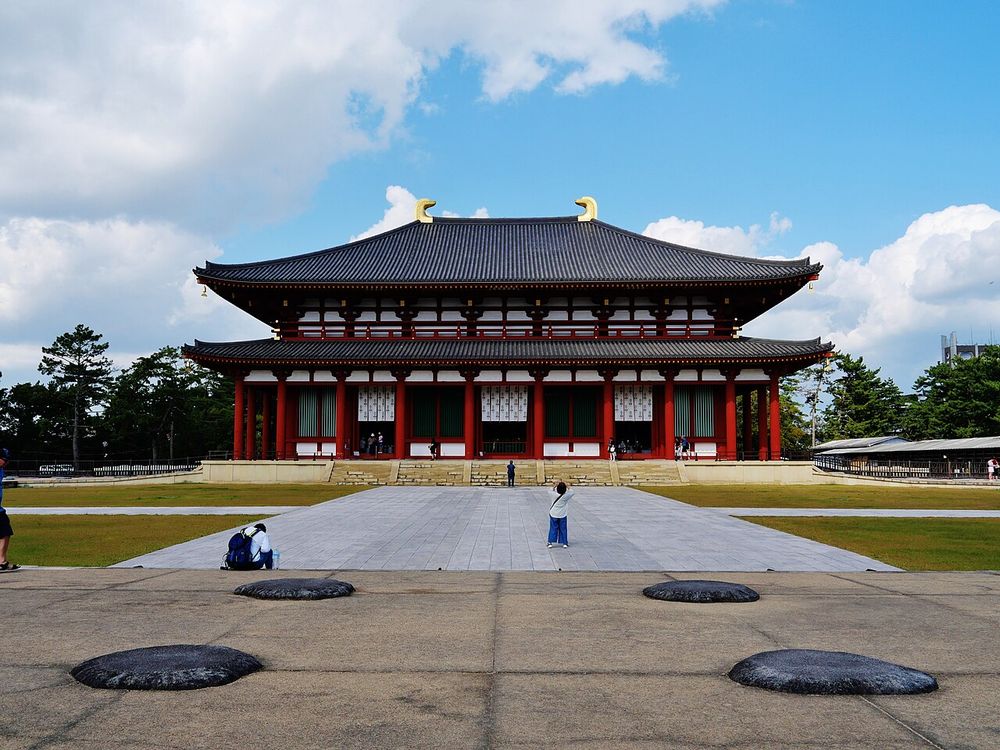
The Central Golden Hall from the frontSaigen Jiro, CC0
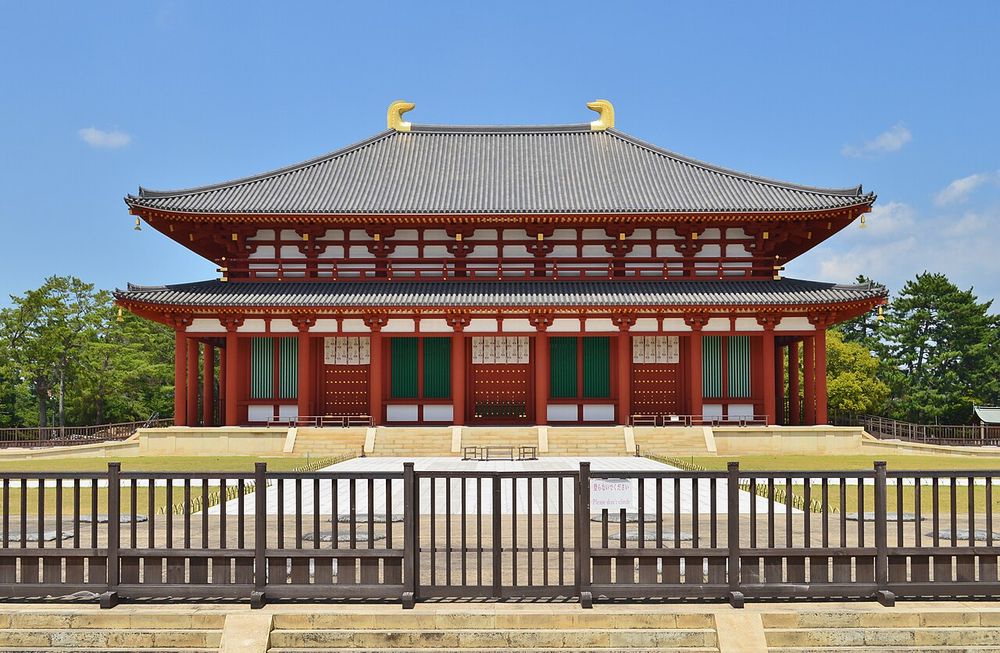
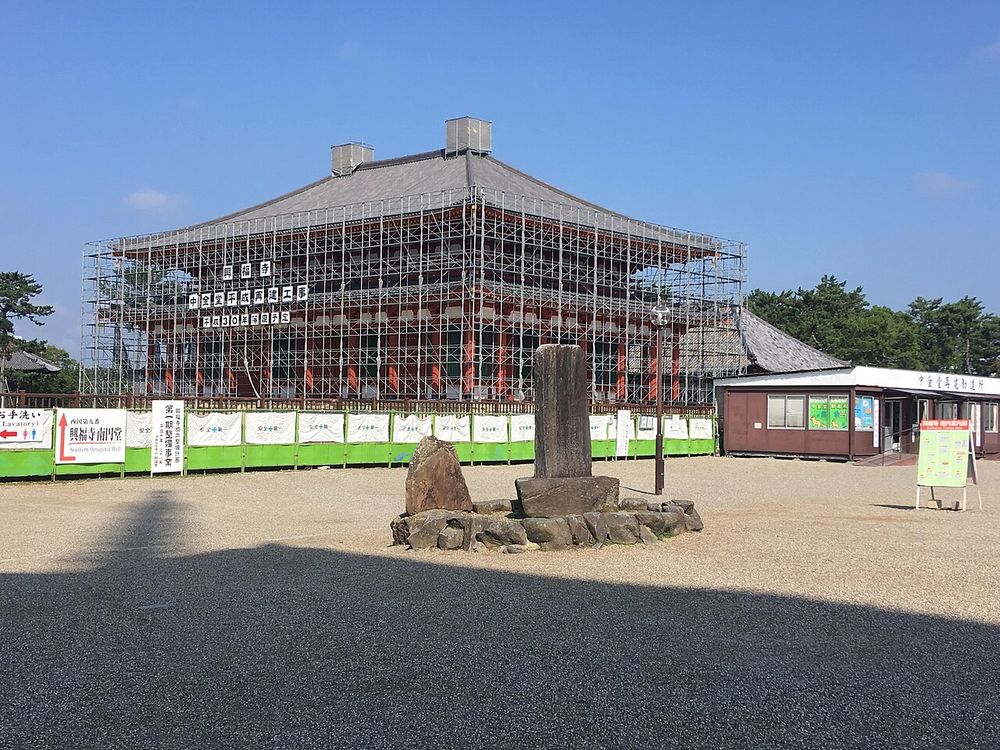
This was the heart of the temple, and it burned seven times. After the fire of 1717 there was no money to rebuild it, and a small makeshift hall stood here for two centuries.
The new hall opened in October 2018. It is 37 metres wide and 21 high, and stands on the foundation stones of 710. Japan no longer has trees big enough for its sixty-six pillars. They are African hardwood from Cameroon, and the beams are Canadian cypress.
Look at the two gilded ornaments on the ridge. They are fish tails, a charm against fire.
5. The museum and Ashura
Ashura, in a photograph of the mid twentieth century今泉篤男 et al., Public domain
The museum stands where the monks' dining hall stood, and holds what was saved from the burnt halls. Photography is not allowed inside.
The front face of Ashura今泉篤男 et al., Public domain
Ashura is 153 centimetres tall and weighs about fifteen kilograms. He is hollow: layers of hemp cloth soaked in lacquer were built up over a clay core, and the clay was then dug out. That is why he could be carried out of every fire.
Empress Kōmyō had him made in 734, one of a set of eight guardians, in memory of her mother. Look at the three faces in turn. The left one bites its lip; the right one holds something back; the front one has decided.
Near him are two small demons of 1215 carrying lanterns, one on his shoulder and one on his head, glad for once to be useful.
6. The South Octagonal Hall
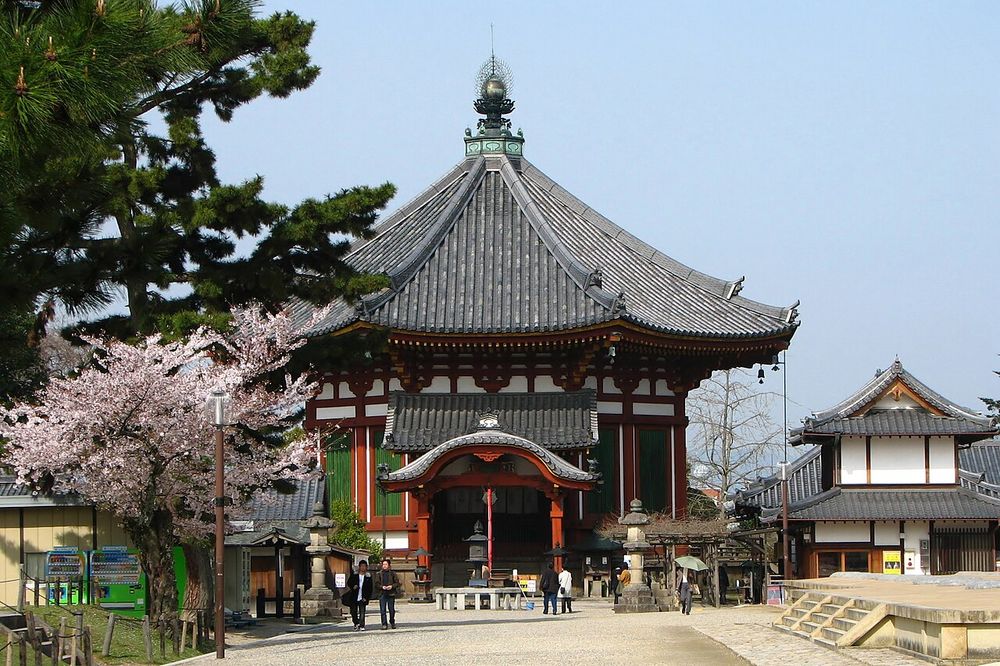
The South Octagonal Hall in springBernard Gagnon, CC BY-SA 3.0
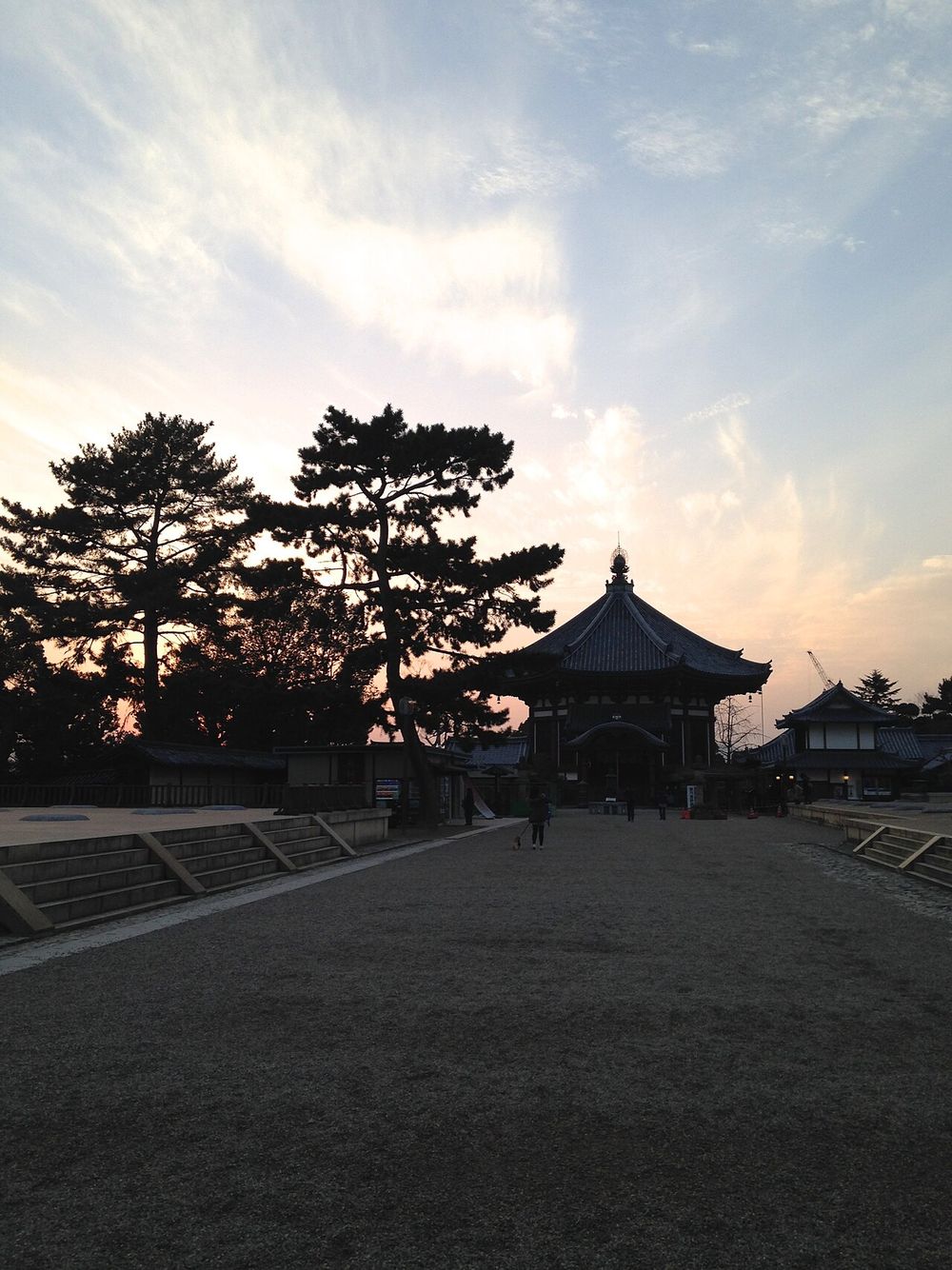
This eight-sided hall is the busiest place in the temple and has nothing to do with tourists. It is the ninth stop on a pilgrimage of thirty-three temples of Kannon, the bodhisattva of mercy, that people have walked since the Middle Ages.
Pilgrims light incense, ring the gong and have their books stamped and inscribed at the office beside it. The hall itself was founded in 813 and last rebuilt in 1789. Its doors open on one day a year, 17 October.
7. The North Octagonal Hall and the small pagoda
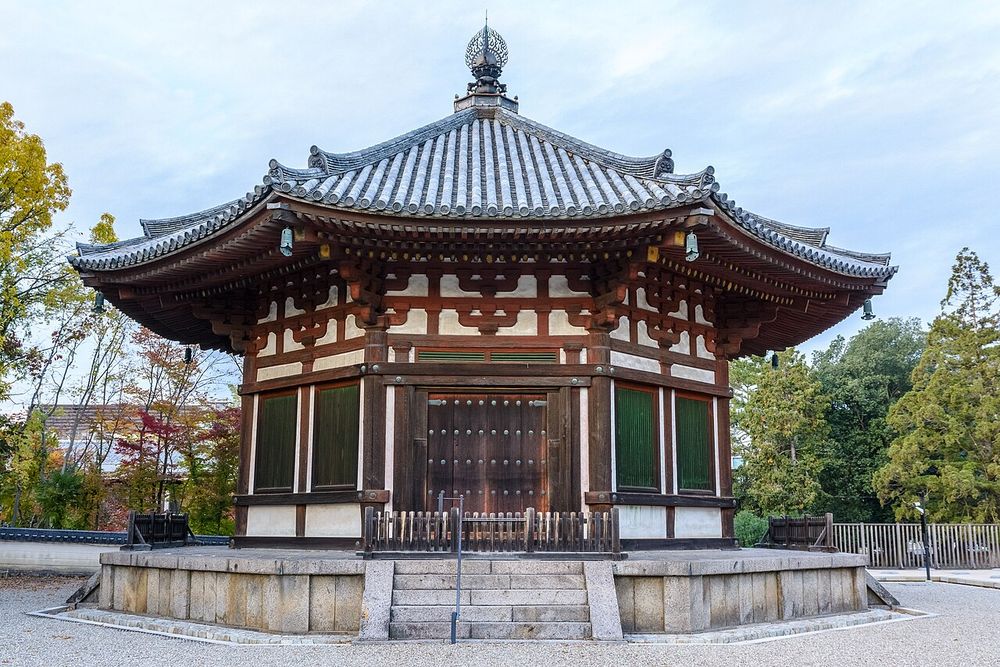
The North Octagonal Hall in autumnMemColorLab, CC BY-SA 4.0
The North Octagonal Hall was built in 721, a year after the death of the man who brought the temple to Nara, and rebuilt about 1210. It is called the most beautiful eight-sided hall in Japan. Inside, when it is open, are a Buddha and two Indian monks carved by Unkei, the greatest sculptor of his age; the monks look like men you might meet.
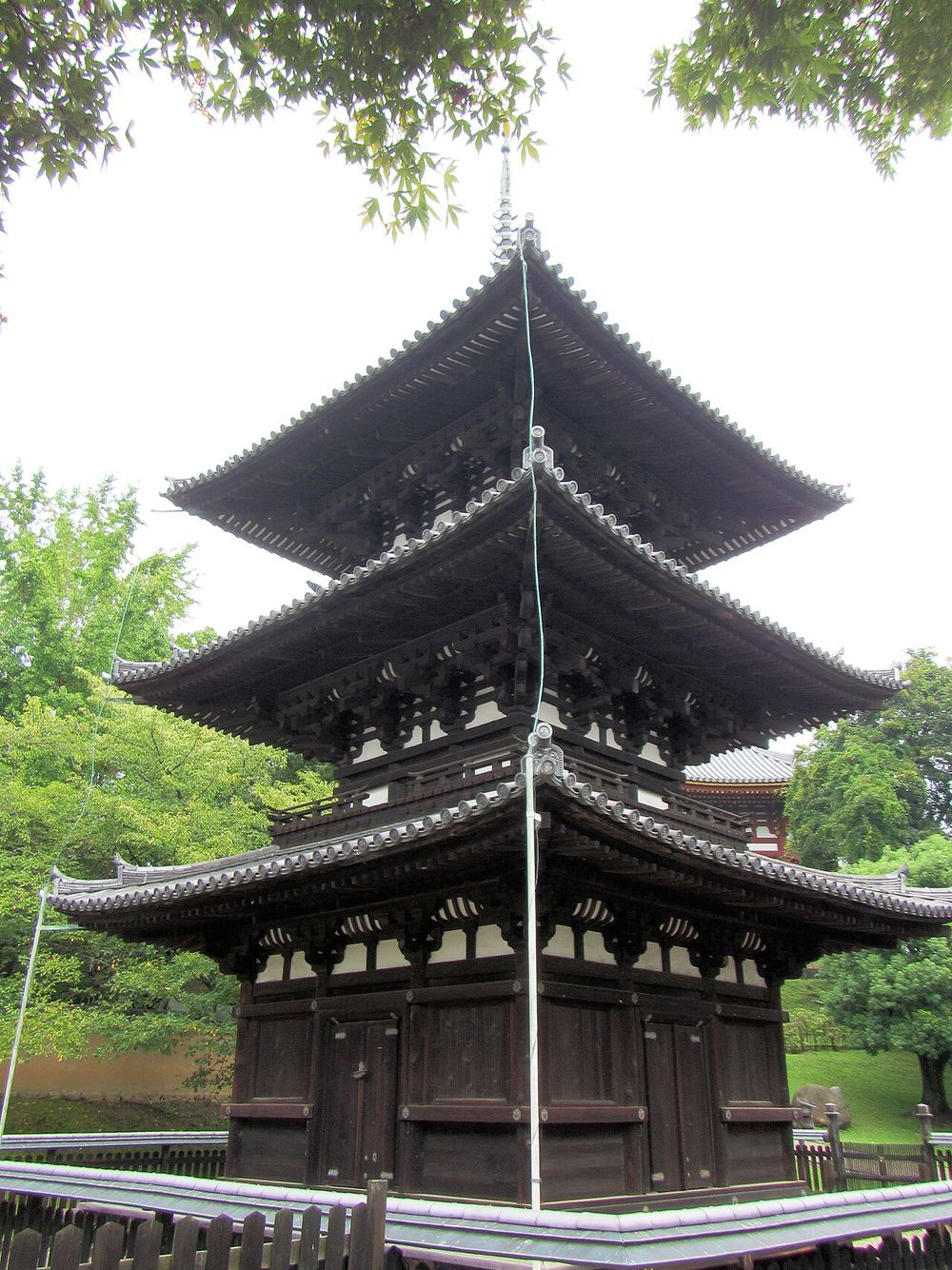
The three-storey pagodaNekosuki, CC BY-SA 4.0
Down the slope to the south-west, missed by almost everyone, is a three-storey pagoda nineteen metres high, rebuilt soon after the fire of 1180. With the North Octagonal Hall it is the oldest building the temple has.
8. A temple without walls
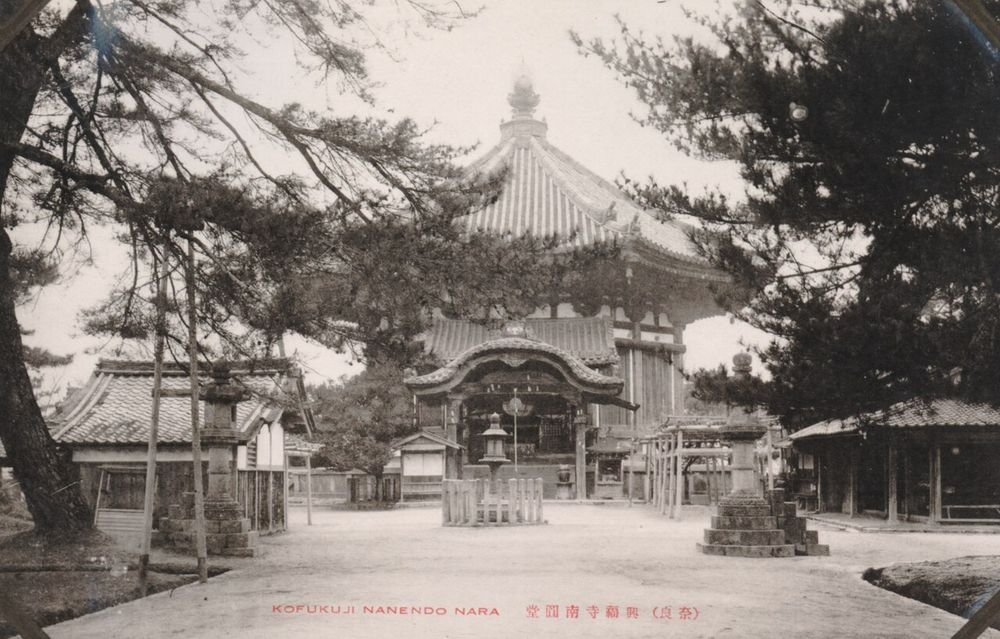
The South Octagonal Hall about a century agoAnonymousUnknown author, CC BY 4.0
In 1868 the government ordered gods and Buddhas to be separated. Kōfuku-ji and the Kasuga shrine had been one body for a thousand years. Every monk here left the priesthood in a single day and became a priest of the shrine.
The empty halls were used as offices and a school. Statues were burned for the gold leaf or sold abroad. The earthen walls and gates were pulled down, and in 1880 the land was made part of Nara Park.
The poet Masaoka Shiki came through in the autumn of 1895, fourteen years after the temple was allowed to reopen:
秋風や
囲ひもなしに
興福寺
The autumn wind:
with no wall round it,
Kōfuku-ji
Masaoka Shiki, 1895
The walls have never been rebuilt. In the grass west of the Central Golden Hall you can still find the foundation stones of halls that were not rebuilt either.
Meanwhile in the world
Year
Here
Elsewhere
669
The temple is founded near Kyoto by the wife of the first Fujiwara
Tang China: the monk Xuanzang, whose teaching this temple follows, died five years ago
710
It moves to the new capital, Nara
Chang'an, the model for Nara, is the largest city in the world
734
Ashura is made
Li Bai is thirty-three; in England the historian Bede is finishing his life's work
1180
Burned in the war between the Taira and the Minamoto
Southern Song (1127–1279) China; in Paris, Notre-Dame has been building for seventeen years
about 1426
The present pagoda is finished
The Forbidden City is six years old; in Florence, Brunelleschi is raising his dome
1717
Fire destroys the western half
The Kangxi emperor reigns in China; Handel's Water Music is played on the Thames
1868
The monks are sent away and the walls come down
The Meiji Restoration; in China, the Tongzhi reign
2018
The Central Golden Hall is rebuilt after 301 years
The year before the fire at Notre-Dame in Paris
Then and now
The Central Golden Hall of 2018アラツク, CC BY-SA 4.0, Wikimedia CommonsThe Eastern Golden Hall and the pagoda at duskChristophe95, CC BY-SA 4.0, Wikimedia CommonsThe five-storey pagoda before the repairZairon, CC BY 4.0, Wikimedia CommonsThe pagoda's eaves against the skyZairon, CC BY 4.0, Wikimedia CommonsThe pagoda through the pinesZairon, CC BY 4.0, Wikimedia CommonsThe pagoda from the southZairon, CC BY 4.0, Wikimedia CommonsThe pagoda inside its scaffolding, October 2024Keeezawa, CC0, Wikimedia CommonsThe repair shed going up, with its craneKeeezawa, CC0, Wikimedia CommonsThe Eastern Golden HallZairon, CC BY 4.0, Wikimedia CommonsThe Eastern Golden Hall from the cornerNekosuki, CC BY-SA 4.0, Wikimedia CommonsThe Eastern Golden Hall and a foundation stoneChristophe95, CC BY-SA 4.0, Wikimedia CommonsThe Central Golden Hall from the frontSaigen Jiro, CC0, Wikimedia CommonsThe Central Golden Hall across the stone courtZairon, CC BY 4.0, Wikimedia CommonsThe Central Golden Hall under cloudsZairon, CC BY 4.0, Wikimedia CommonsThe Central Golden Hall in January 2020Chainwit., CC BY-SA 4.0, Wikimedia CommonsThe Central Golden Hall from the south-westZairon, CC BY 4.0, Wikimedia CommonsThe hall still under scaffolding, September 2018Christophe95, CC BY-SA 4.0, Wikimedia CommonsThe South Octagonal Hall at sunsetDegueulasse, CC BY 3.0, Wikimedia CommonsThe South Octagonal Hall in springBernard Gagnon, CC BY-SA 3.0, Wikimedia CommonsEvening sky over the South Octagonal Hallそらみみ, CC BY-SA 3.0, Wikimedia CommonsThe mandarin orange tree beside the South Octagonal HallDegueulasse, CC BY-SA 3.0, Wikimedia CommonsThe North Octagonal Hall in autumnMemColorLab, CC BY-SA 4.0, Wikimedia CommonsThe three-storey pagodaNekosuki, CC BY-SA 4.0, Wikimedia CommonsUnder the eaves of the three-storey pagodaNekosuki, CC BY-SA 4.0, Wikimedia CommonsThe National Treasure MuseumKENPEI, CC BY-SA 3.0, Wikimedia CommonsSarusawa Pond, with the pagoda above the treesAi Amo, CC BY 2.0, Wikimedia CommonsAshura, in a photograph of the mid twentieth century今泉篤男 et al., Public domain, Wikimedia CommonsAshura, full figure, in an early photographOGAWA SEIYOU, Public domain, Wikimedia CommonsThe front face of Ashura今泉篤男 et al., Public domain, Wikimedia CommonsThe Kannon of the South Octagonal Hall, carved in 1189, in an old photographMinamoto Hoshu, Public domain, Wikimedia CommonsOne of the four guardian kings of the North Octagonal Hall, photographed about 1910Imperial Japanese Commission to the Panama-Pacific International Exposition, Public domain, Wikimedia CommonsSarusawa Pond and the pagoda on a postcard of about 1900Scan by NYPL, Public domain, Wikimedia CommonsThe pagoda above the pond, hand-coloured postcardAnonymousUnknown author, CC BY 4.0, Wikimedia CommonsA deer at the edge of the pond, with the pagoda behindUnknown authorUnknown author, Public domain, Wikimedia CommonsThe pagoda across a pond, photographed from the Nara Hotel in June 1915A.Davey from Portland, Oregon, EE UU, CC BY 2.0, Wikimedia CommonsThe South Octagonal Hall about a century agoAnonymousUnknown author, CC BY 4.0, Wikimedia CommonsRain at Kōfuku-ji, woodblock print by Tsuchiya Kōitsu, 1937Tsuchiya Kōitsu, Public domain, Wikimedia Commons
Video
Films from official channels, played from YouTube. Nothing is loaded until you press play.
The historic monuments of ancient NaraUNESCO · made with NHK; 3 min · checked 2026-11-12
Local legends
These are stories people tell about this place. They are legends, not history, and each one says where it comes from.
LegendThe girl in the pond
A serving girl at the palace fell in love with the emperor. He sent for her once and never again. She drowned herself in Sarusawa Pond. A shrine was built for her on the bank; she could not bear to look at the water, and in one night turned the shrine round so that its back is to the pond.
Source: Yamato Monogatari (tenth century); the turning of the shrine is local tradition
LegendThe dragon of the third of March
A monk with a long nose, tired of being teased, set up a sign by the pond: "On the third day of the third month a dragon will rise from this water." Crowds came from every province. The monk, watching them, began to believe it himself.
Source: Uji Shūi Monogatari (thirteenth century); retold by Akutagawa Ryūnosuke in "Dragon", 1919
LegendThe seven wonders of the pond
The water of Sarusawa Pond is never clear and never muddy; none flows in and none flows out; no frogs breed in it and no weeds grow; and its fish are seven parts to three of water.
Source: A saying of Nara townspeople, recorded since the Edo period
Later, people who live here will be able to add the stories they grew up with, and say which of these they have heard.
Not certain, and where accounts conflict
Was the pagoda really sold for scrap?
Nara people tell it this way: about 1870 it was sold for 25 yen, or 250, to a man who meant to burn it and collect the metal, and it was saved only because the neighbours feared the fire would spread. No bill of sale survives, and historians treat the price as hearsay. That the temple was abandoned and its buildings put up for disposal is certain.
Whose face is Ashura's?
Nobody knows. It has been suggested that the sculptor was thinking of the empress's son, who died as a baby, grown to the age he never reached. There is no record.
When will the pagoda be uncovered?
The repair was announced as lasting into the early 2030s. Schedules of this kind have slipped before. Check the temple's notices before you plan a trip round it.
Did Kūkai bless the ground of the South Octagonal Hall?
It is the temple's tradition and fits the date, 813, when he was in favour at court. No document of the time records it.
Visiting
Tickets and hours
The grounds are free and open at all hours.
The Central Golden Hall costs 500 yen, the Eastern Golden Hall 500 yen and the museum 900 yen. Schoolchildren pay less.
All three are open from 9:00 to 17:00 every day of the year, with last entry at 16:45.
Until 30 November 2026 the rear room of the Eastern Golden Hall is open for the hall's 1,300th year; the ticket for the hall is 1,000 yen in that period, and a ticket for all the paying places is 2,000 yen. In ordinary months a ticket for the three is reported at 1,600 yen.
The temple says there are no toilets inside the buildings; use the public ones at the edge of the grounds.
Last checked 2026-11-12. The temple's own site (kohfukuji.com), admission page and today's notice, opened in November 2026.
Booking from abroad
Official page in English No booking is needed. Buy tickets at the door of each building, in cash. The temple's own page of hours and fees is in Japanese: kohfukuji.com.
Ticket window on site Each of the three paying buildings has its own ticket desk, open from 9:00, last entry 16:45. Combined tickets stop selling at 16:00.
Note The temple states that payment is in cash only.
Checked 2026-11-12
Where to start
The temple is five minutes on foot from Kintetsu-Nara station and twenty from JR Nara.
Start at Sarusawa Pond and climb the fifty-two steps. Go to the museum first, then the Eastern Golden Hall next to it, then cross the grass to the Central Golden Hall and the two octagonal halls.
If you have time for only one ticket, make it the museum.
Be at the museum door at 9:00. By 10:30 the school parties have arrived and Ashura is behind three rows of heads.
Before you go
No photographs inside the museum or the halls. Outside, anything goes.
The pagoda is behind scaffolding. For a photograph of a pagoda, the three-storey one down the slope is uncovered.
The pond is best at dusk, when the lamps along the bank come on.
Customs and manners
This is a temple, so you do not clap. Put your hands together and bow.
At the South Octagonal Hall, let the pilgrims go first at the incense burner and the stamp office. They may have walked a long way.
Take your hat off inside the halls and speak quietly.
Do not feed the deer anything but the crackers sold for them.
Opening hours are given in the local time of the place. Prices are in the local currency. The figure after ≈ is approximate, at exchange rates checked on 9 November 2026, in .
Look for these
Count the roofs of the two pagodas. Which has more, and which is older?
On the ridge of the Central Golden Hall, find the two golden fish tails.
In the museum, look at Ashura's three faces one after another. Are they the same age?
Find the two demons carrying lanterns. Which one carries his on his head?
In the Eastern Golden Hall, find the general with a rabbit on his head.
By the pond, find the little shrine that has turned its back on the water.
In the grass, find a round foundation stone with nothing standing on it.
Count the steps up from the pond. Do you get fifty-two?
I am here
Stand at the site, sign in, press the button, and collect its stamp. Your browser will ask to use your location. It is sent to us once to confirm that you are at the site; we keep how far you were from it, not the spot where you stood.
Your stamps are saved to your account, so they follow you to any device. Checking from a browser cannot rule out every false location; stricter checks arrive with the app.
Messages
Share your photos
Photos here show the place, not people. Each one is credited to the visitor who took it and appears after our team has looked at it. A photo with you in it belongs under “I am here”.