LegendDragons wrapped in silk
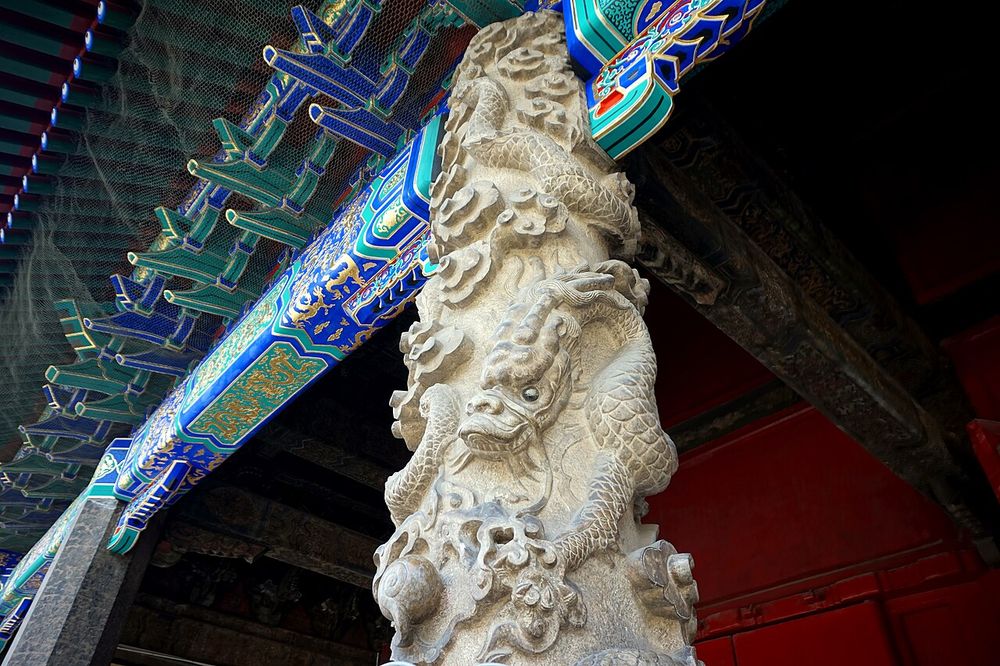
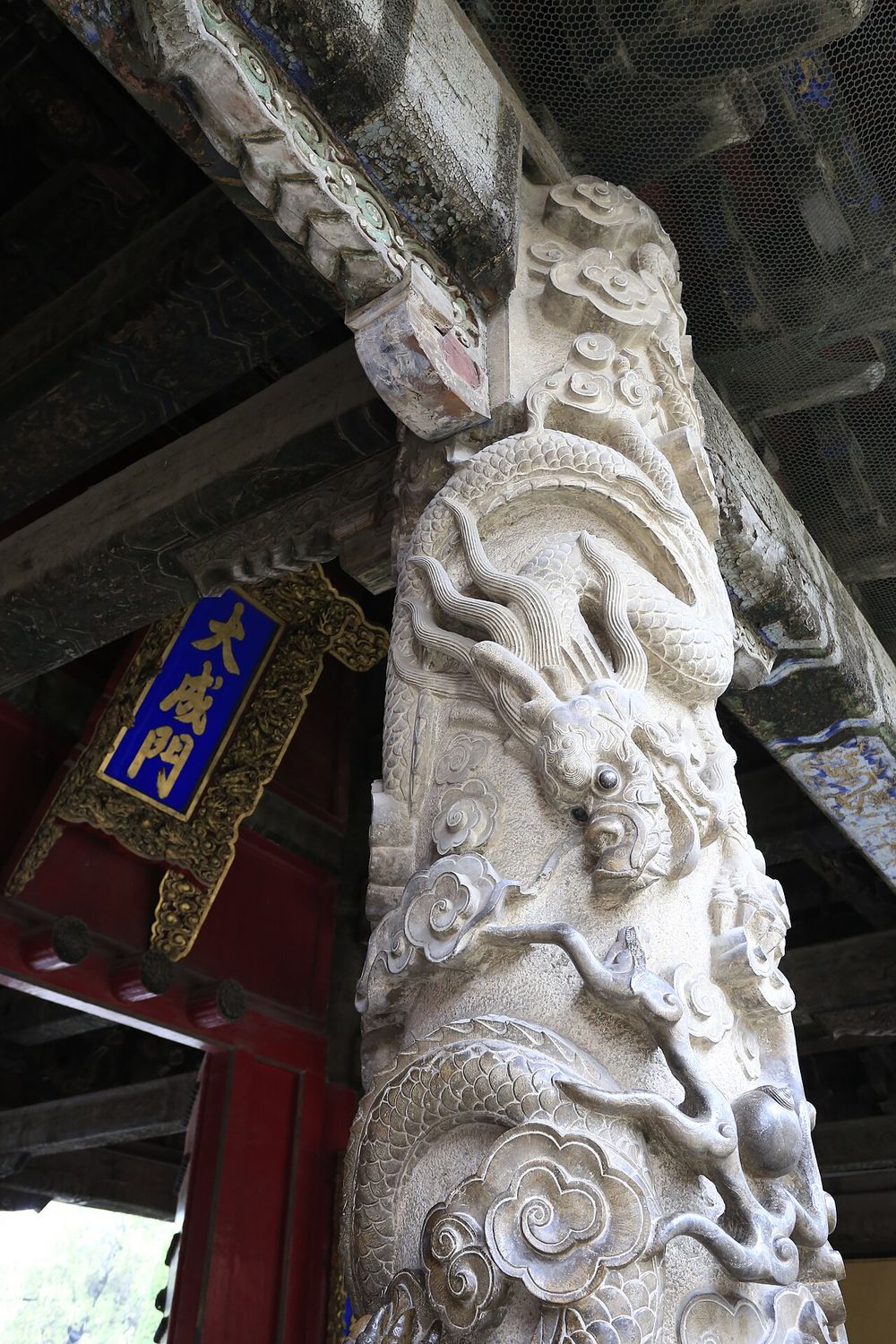
Before an emperor's visit the dragon columns of the main hall were covered with yellow silk, so that he would not see carvings finer than those of his own palace.
Source: Told by guides at the temple
Qufu, Shandong, China
曲阜孔庙 · Qūfù Kǒng Miào
A year after Confucius died in 479 BC, his house in Qufu was made into a shrine. Over two and a half thousand years, emperor after emperor enlarged it, until it became a walled precinct over a kilometre long with nine courtyards, more than a hundred buildings and a forest of steles: after the Forbidden City, the largest group of old buildings in China.
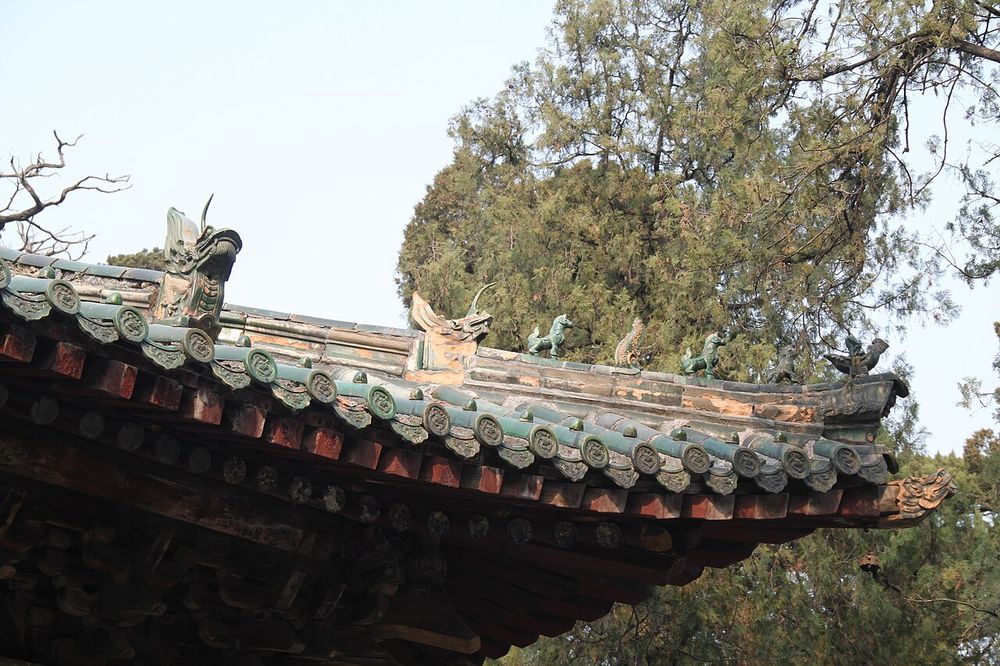
Photo: Windmemories, CC BY-SA 4.0, Wikimedia Commons
Confucius was born in 551 BC in the state of Lu, whose capital was Qufu, and spent most of his life here teaching. In 478 BC, the year after his death, Duke Ai of Lu turned three rooms of his house into a temple and kept his clothes, carriage and books there. In 195 BC the first Han emperor came to offer a sacrifice, and from then on almost every dynasty honoured him here and added to the buildings.
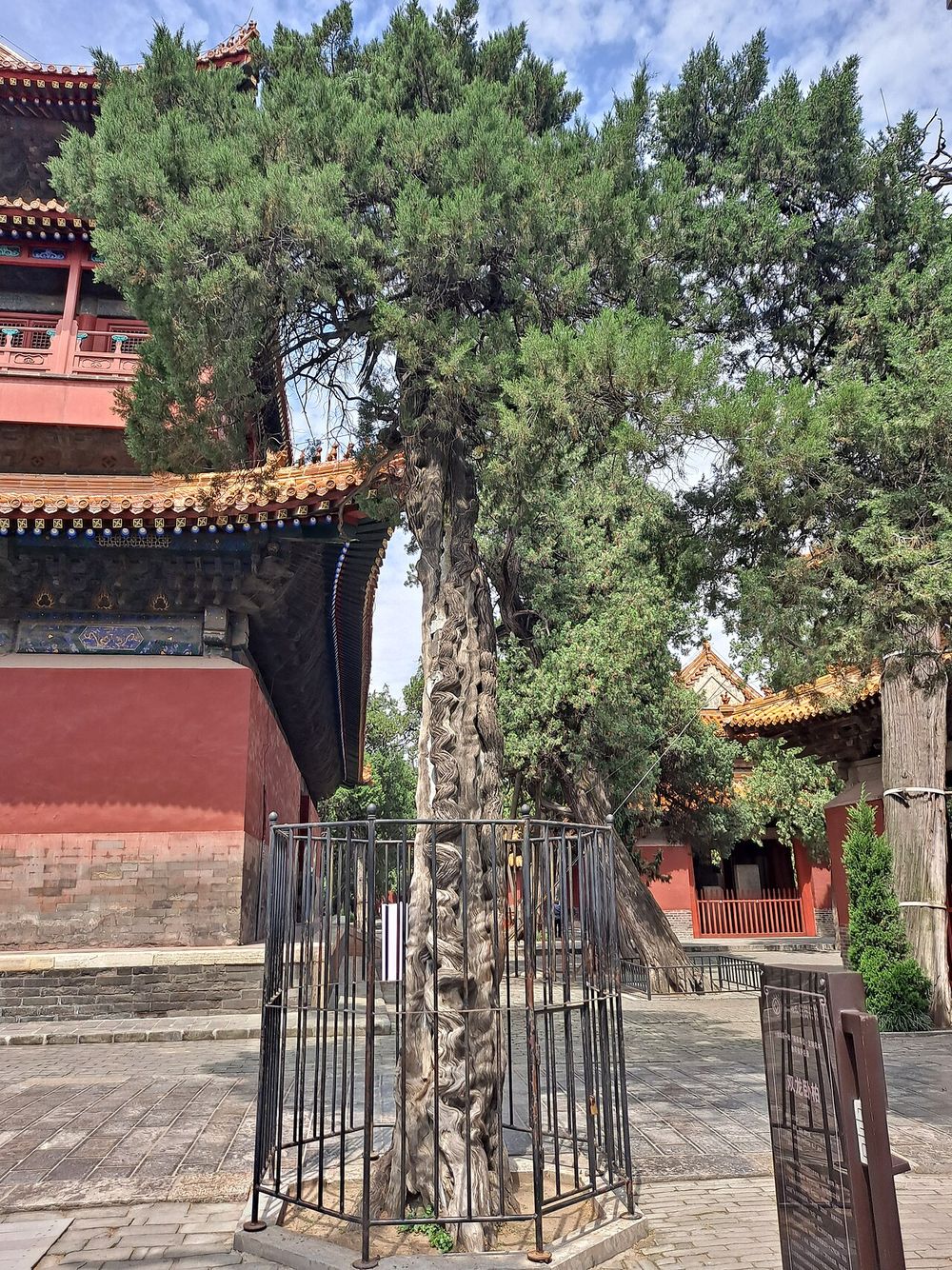
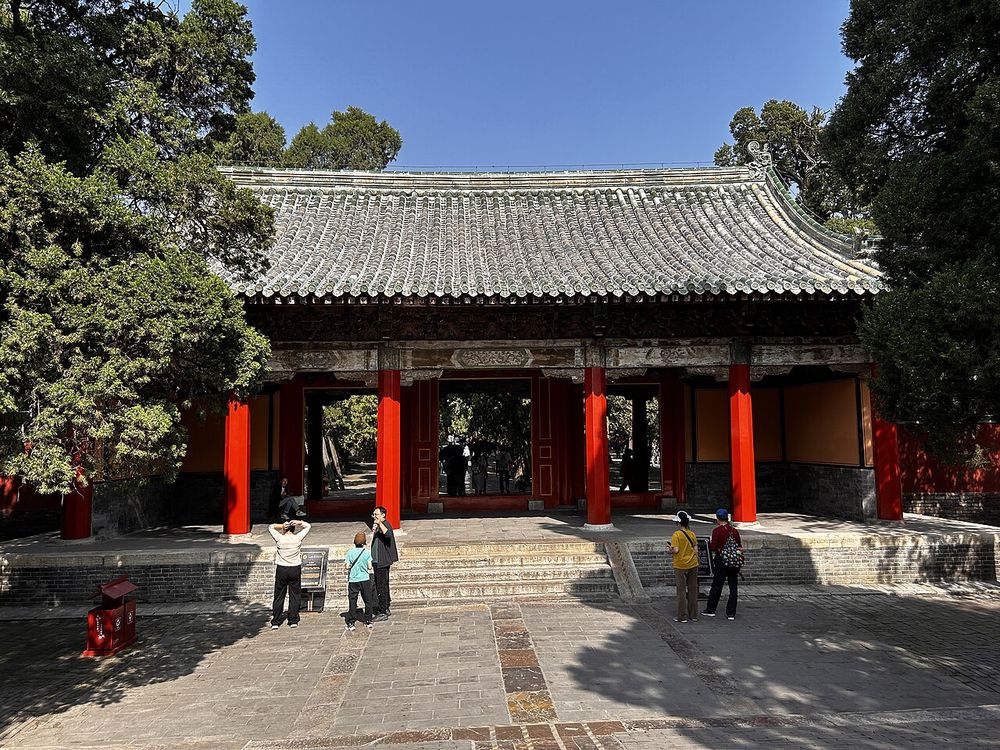
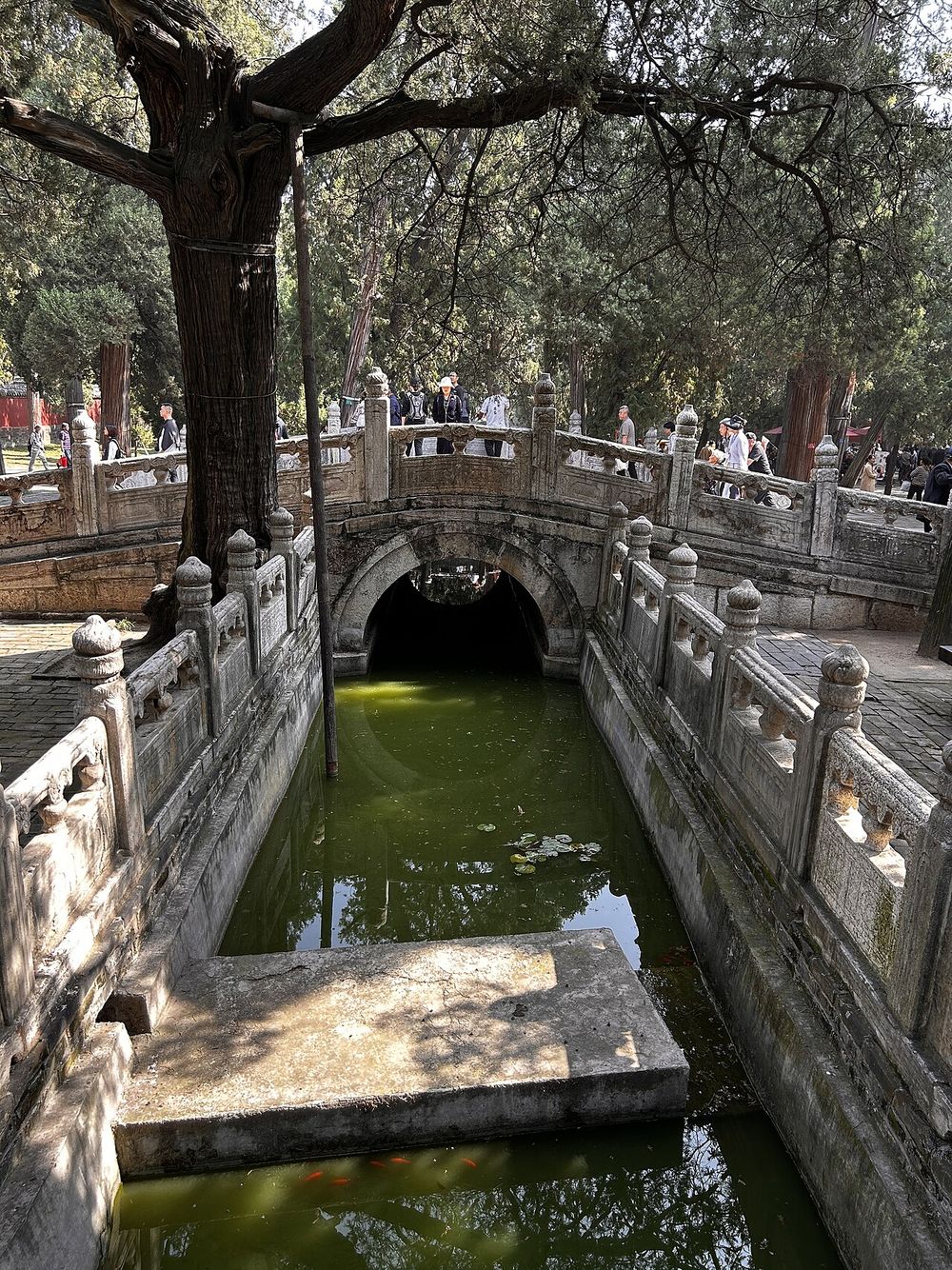
What stands now is mainly the work of the Ming (1368–1644) and Qing (1644–1912): nine courtyards along one axis, from the gate in the city wall to the Hall of Great Achievement, with ancient cypresses, imperial stele pavilions and the library hall of the Song (960–1279). Together with the Kong family mansion next door and the family cemetery north of the town, it became a World Heritage Site in 1994.
Part of Qufu: Temple, Mansion and Cemetery of Confucius. Also there: Kong Family Mansion, Cemetery of Confucius.
The temple has its own ticket of 80 yuan, or is part of the 140-yuan combined ticket for the three Kong sites.
| Part | Ticket |
|---|---|
| Temple of Confucius | 80 yuan, or in the 140-yuan combined ticket |
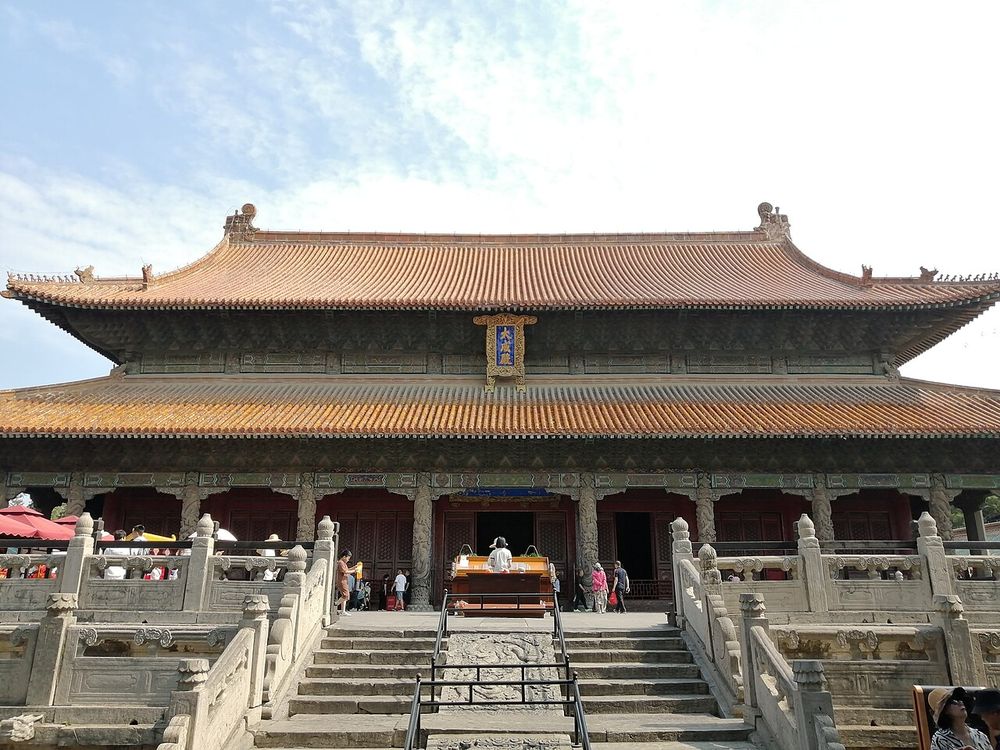
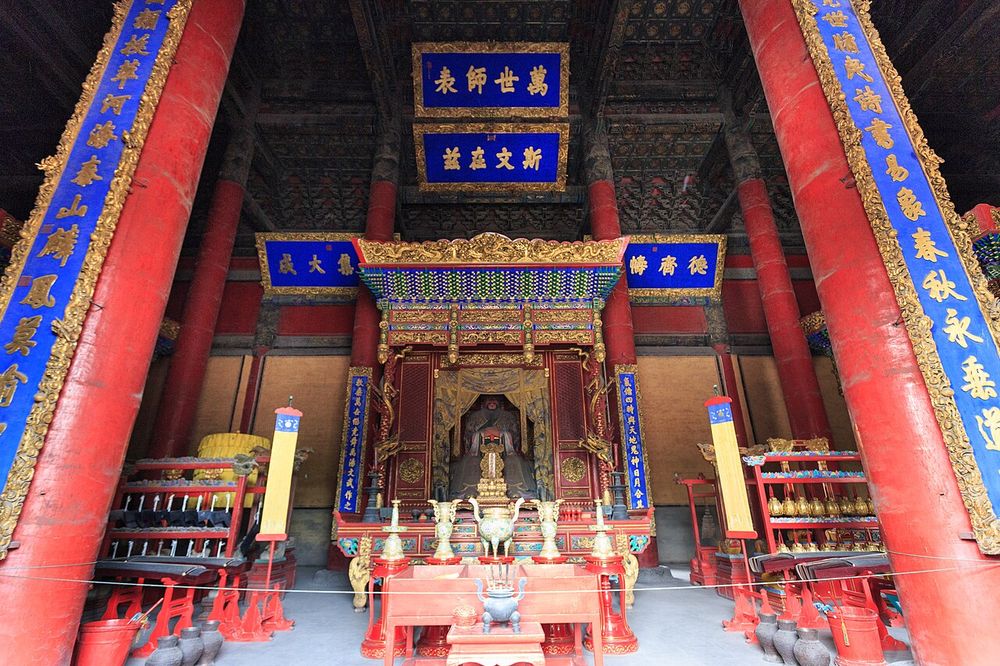
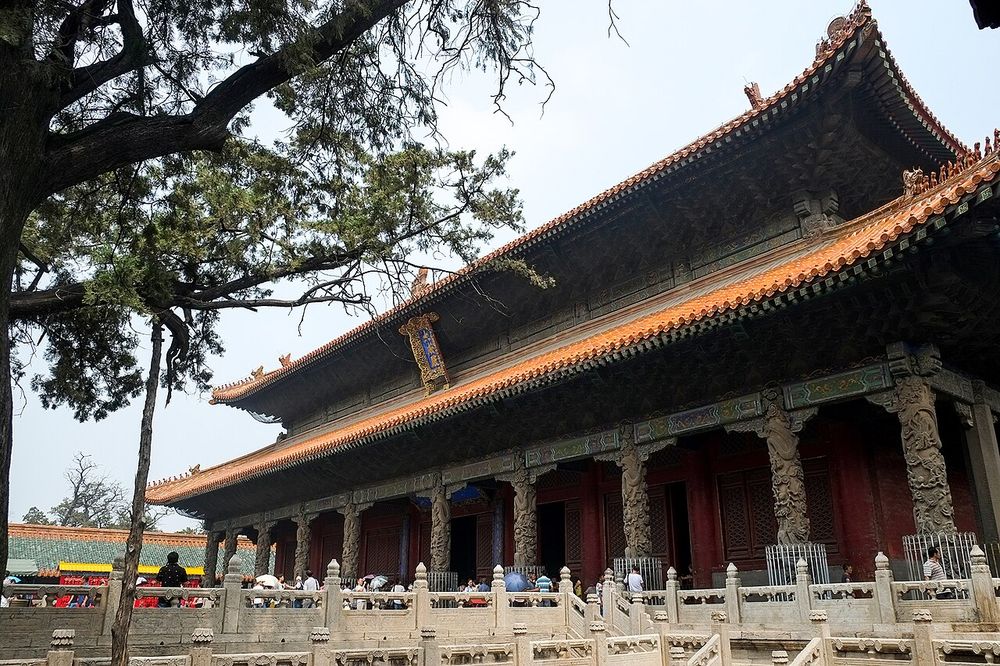
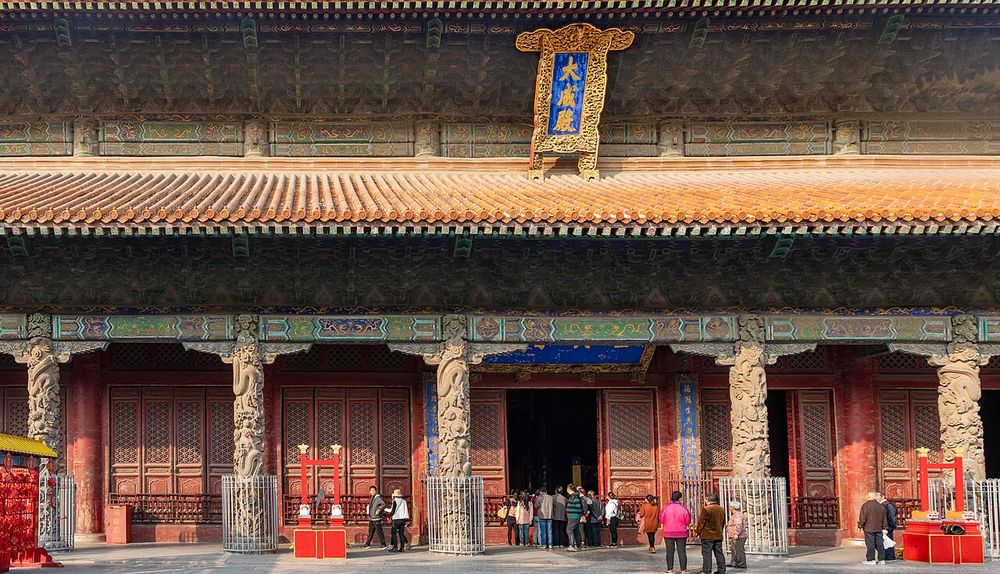
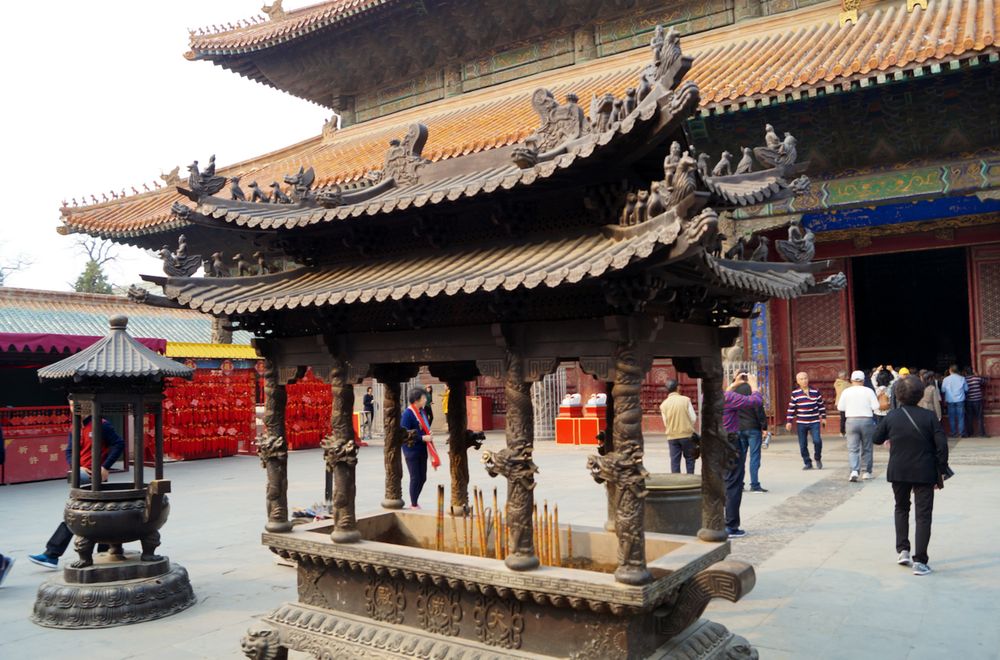
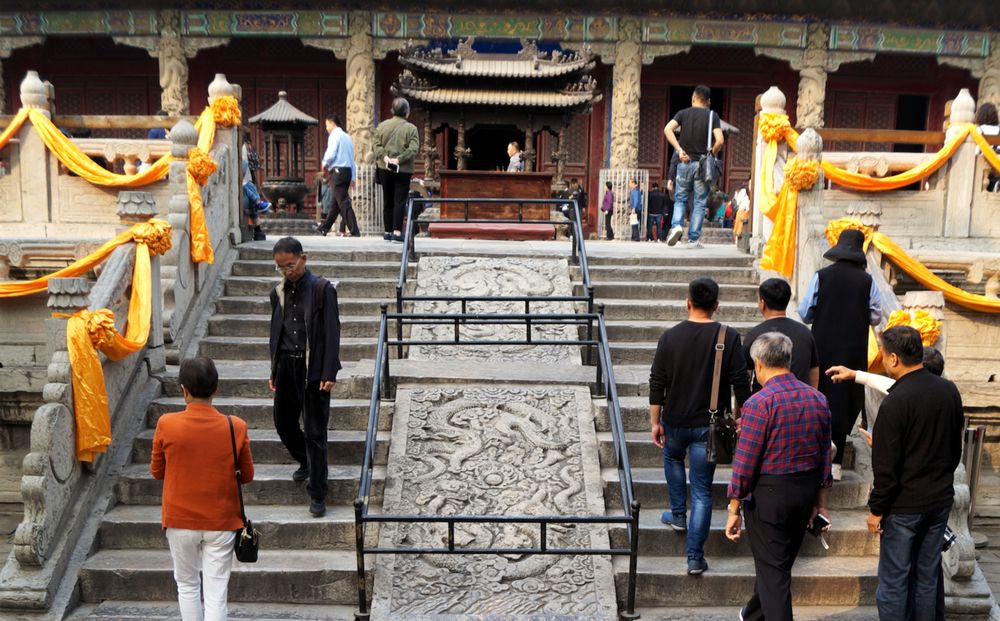
The main hall, rebuilt in 1724 after a lightning fire, is one of the three great halls of old China, with the Hall of Supreme Harmony in Beijing and the Tiankuang Hall at Mount Tai. Its roof is yellow-tiled, a colour kept for emperors, because Confucius was honoured as a king.
Look at the ten stone columns across its front: each is carved from a single block with two dragons coiling round a pearl in the clouds. When emperors came, the story goes, the columns were wrapped in yellow silk so that their dragons would not outshine the palace's.
"Confucius is buried here." His tomb is in the family cemetery, Kong Lin, about two kilometres north.
"It is a religious temple with a priesthood." It is a temple of state and family ritual: sacrifices were led by officials and by Confucius's descendants. They are still held each autumn on his birthday.
We searched Chinese sources first for this list, then English ones.
Walk the axis from south to north; allow two hours. The temple and the mansion share a wall, so most visitors go on to the mansion next.
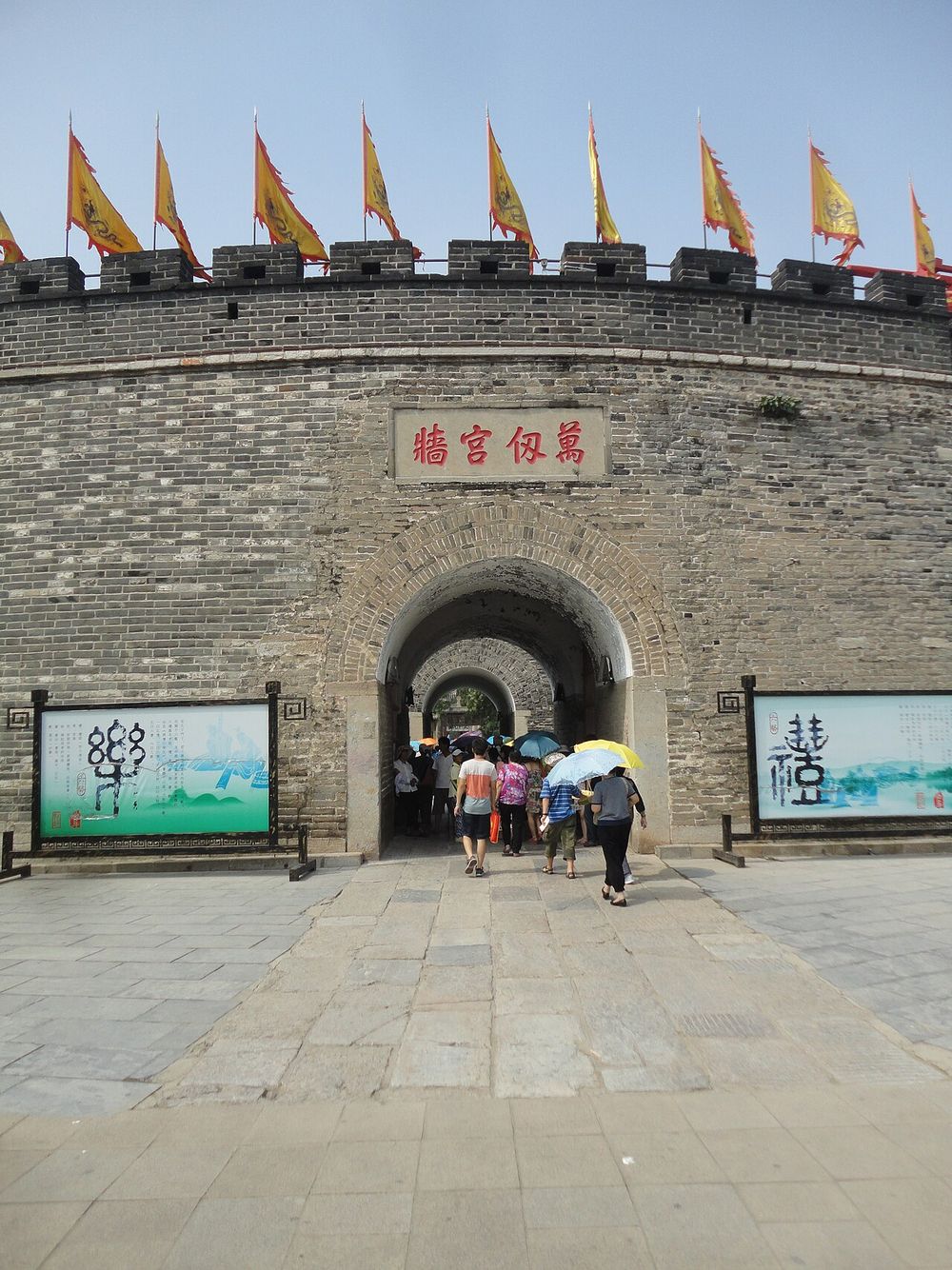
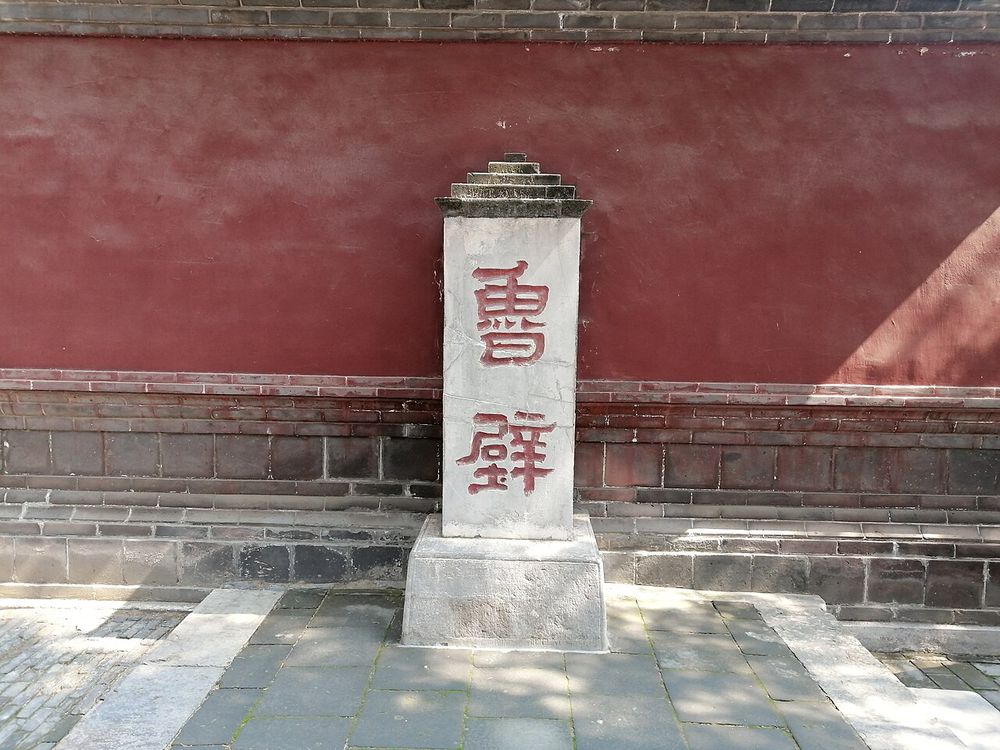
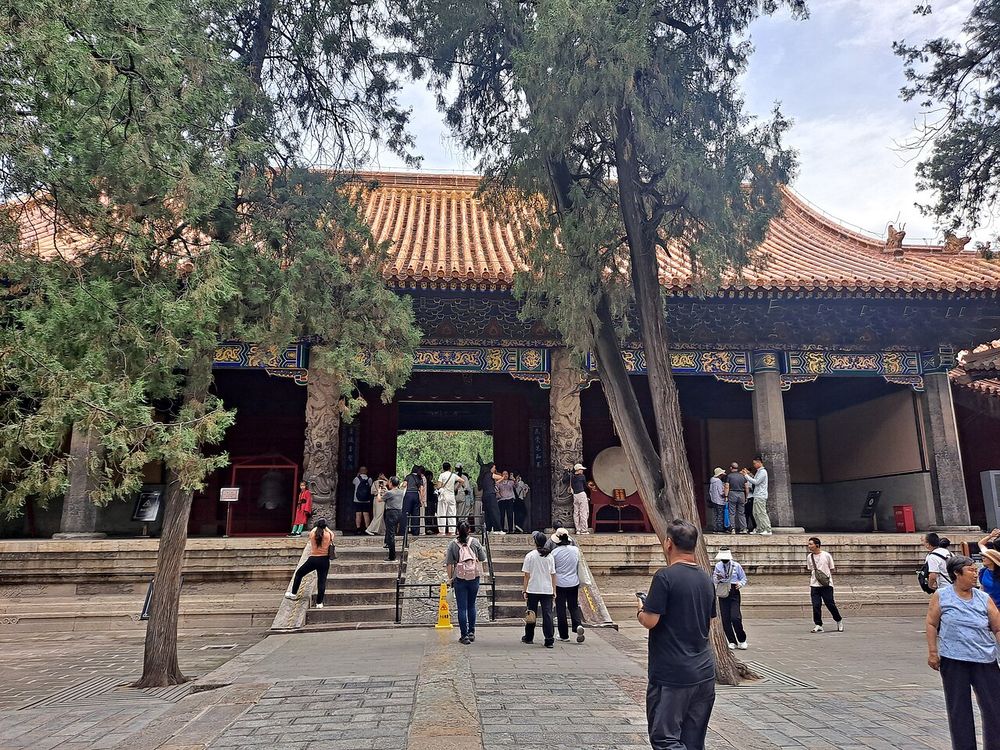
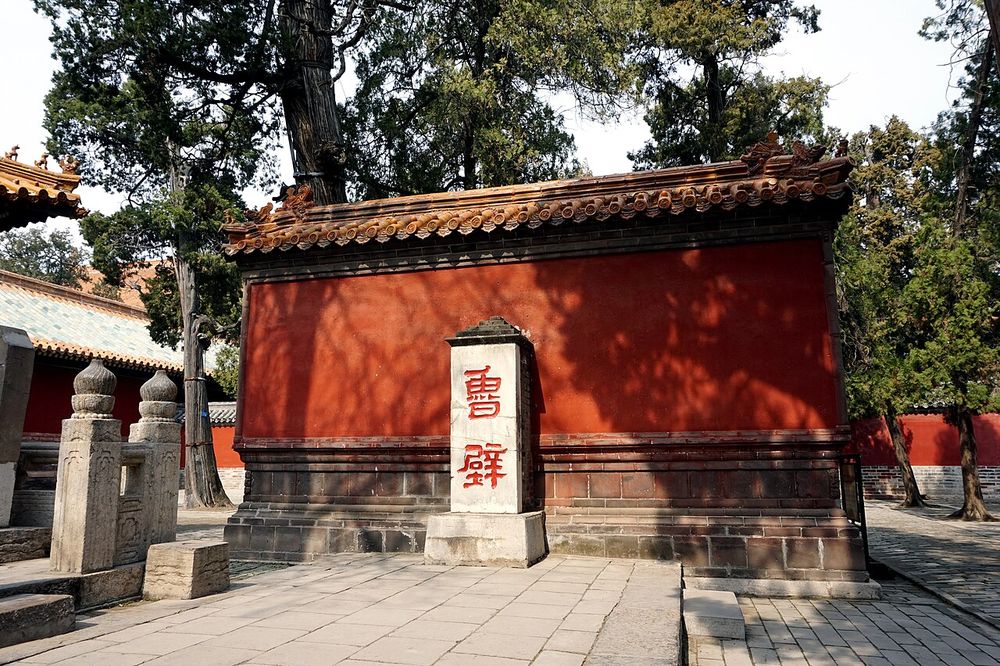
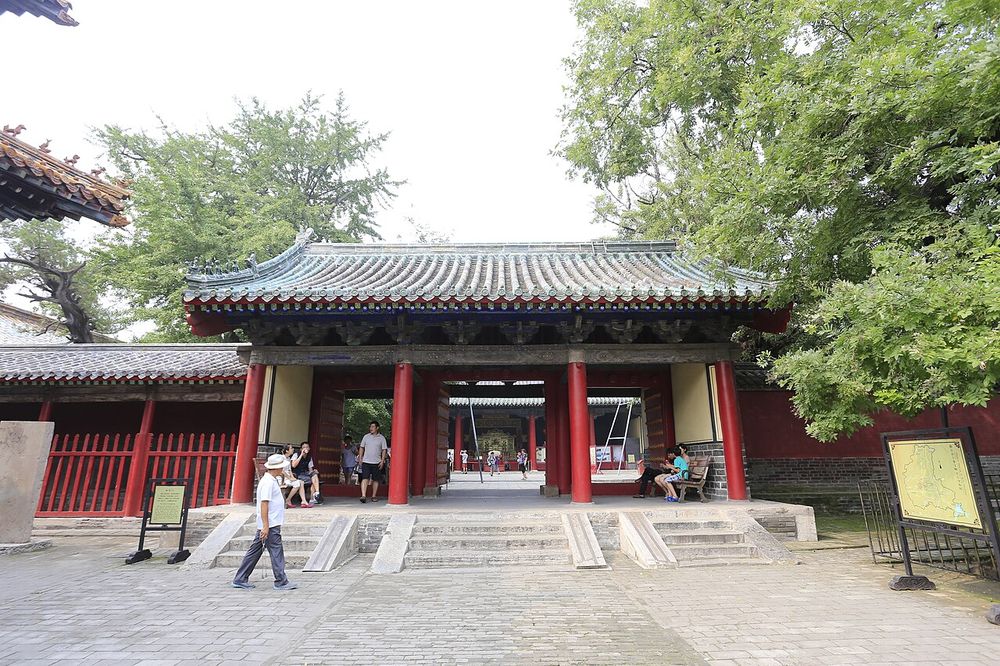
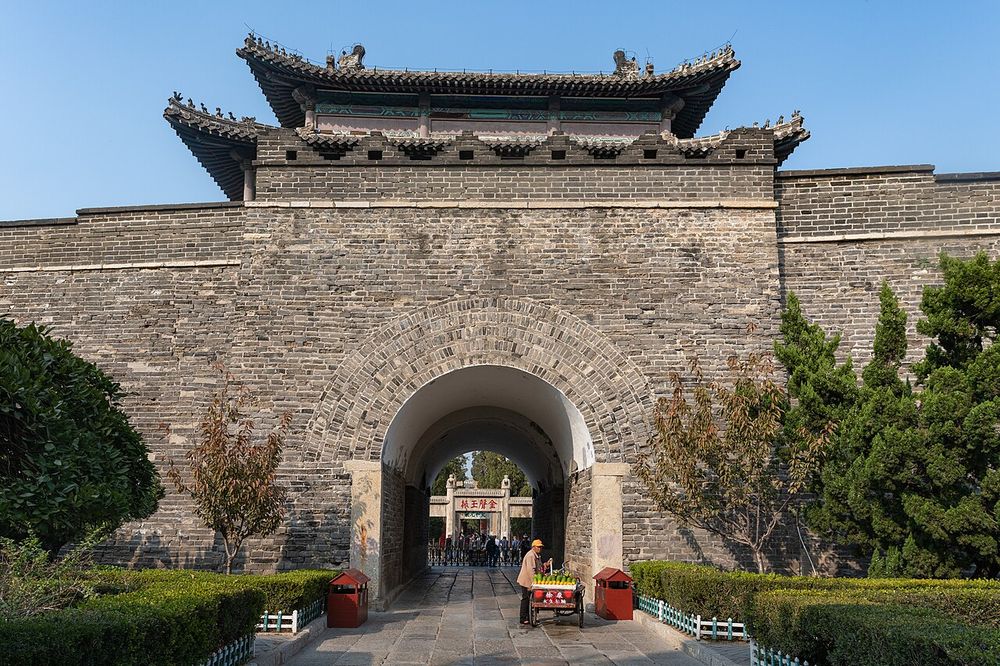
The temple begins at a gate in Qufu's Ming city wall, inscribed "a palace wall ten thousand feet high", after a disciple's words that his master's learning was a wall too high to see over. Each morning at 8:00 an opening ceremony is held here.
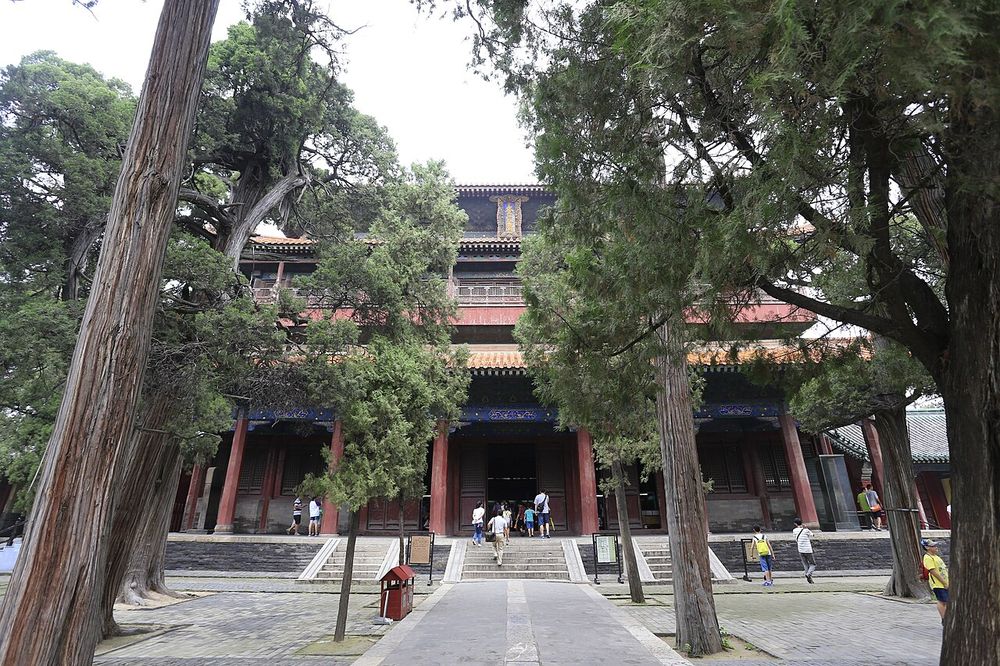
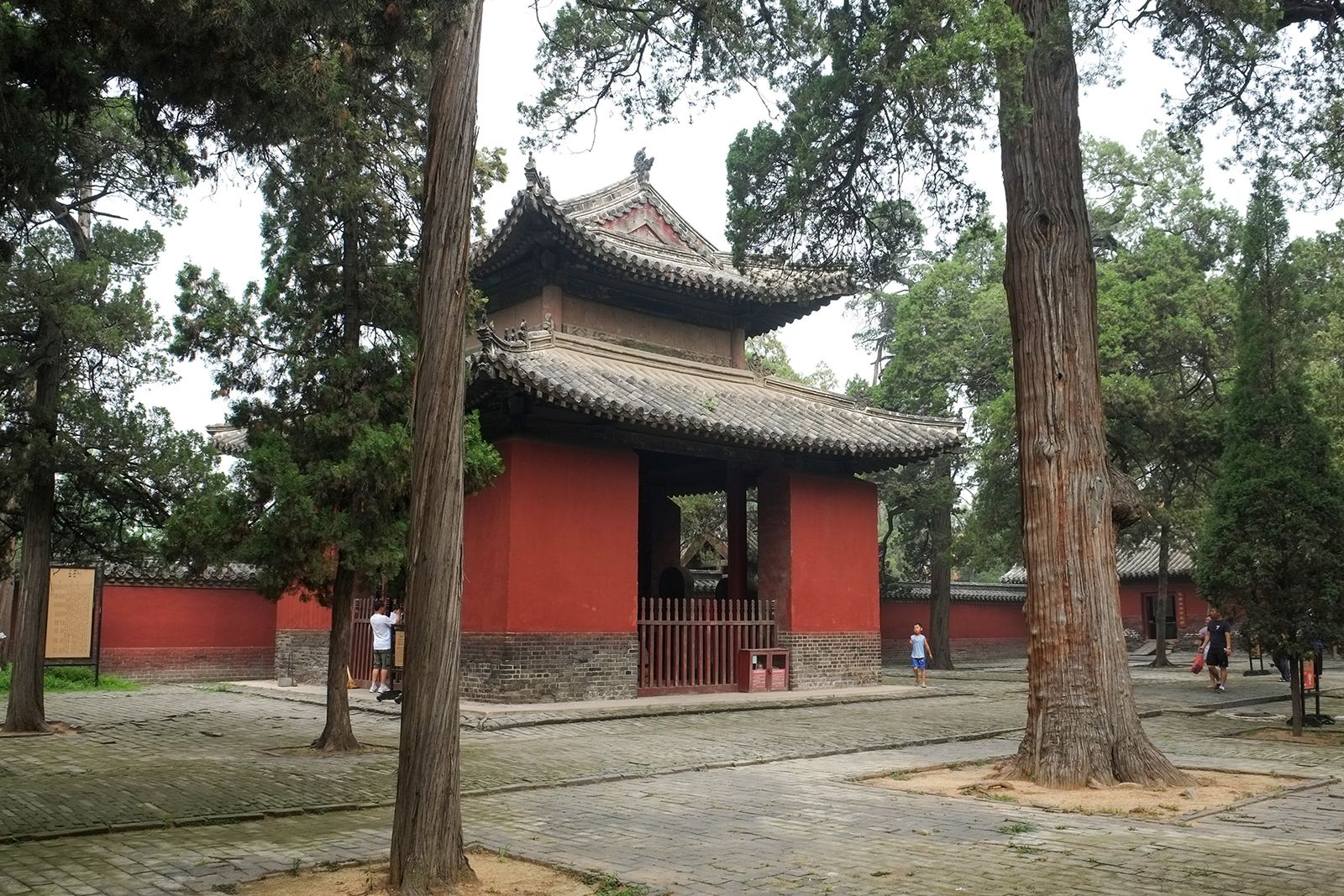
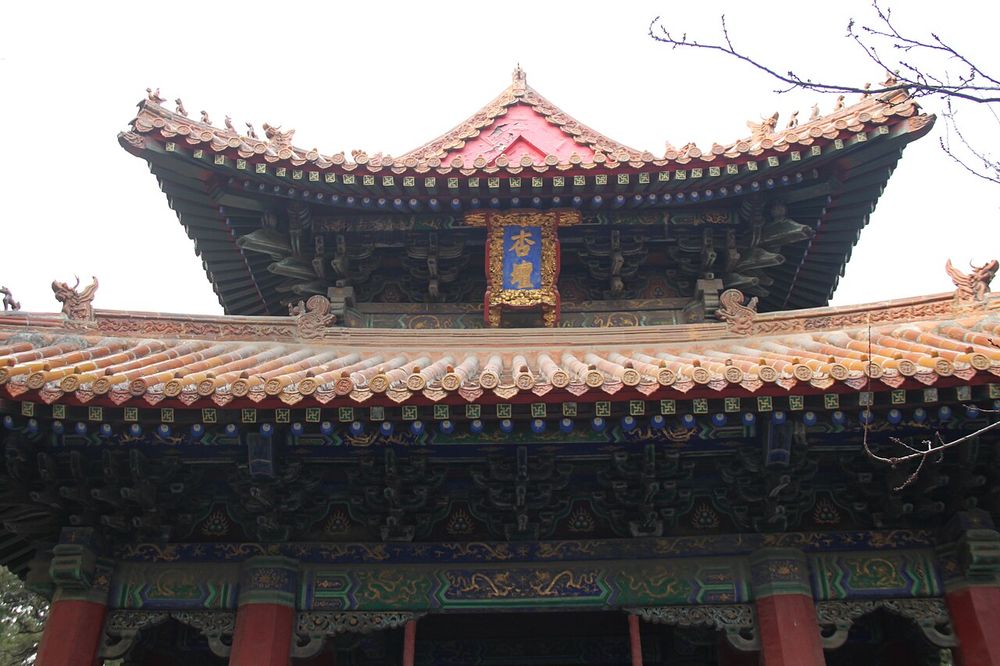
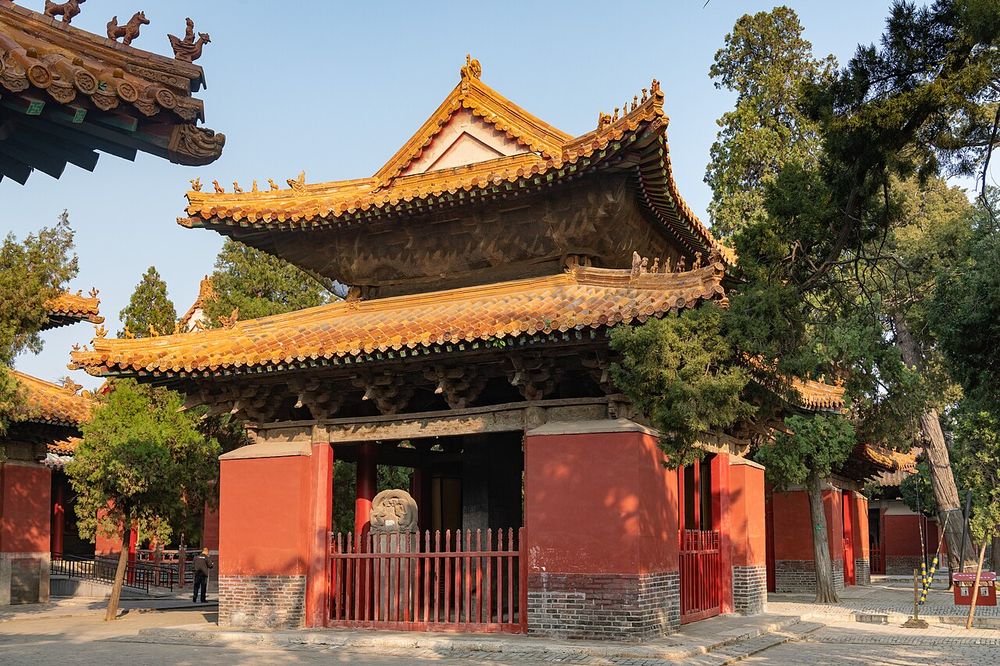
The temple's library, first built in 1018 and rebuilt in 1191, a tall wooden hall that held the books the emperors gave. It is said to have stood through the great earthquake of 1668 when buildings all round fell.
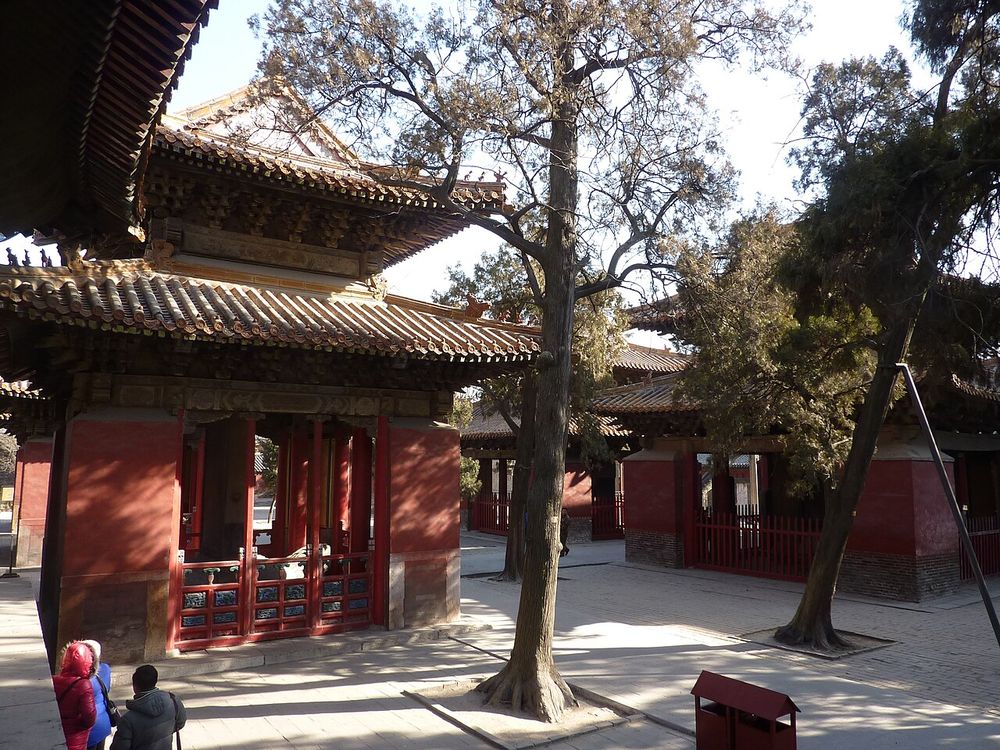
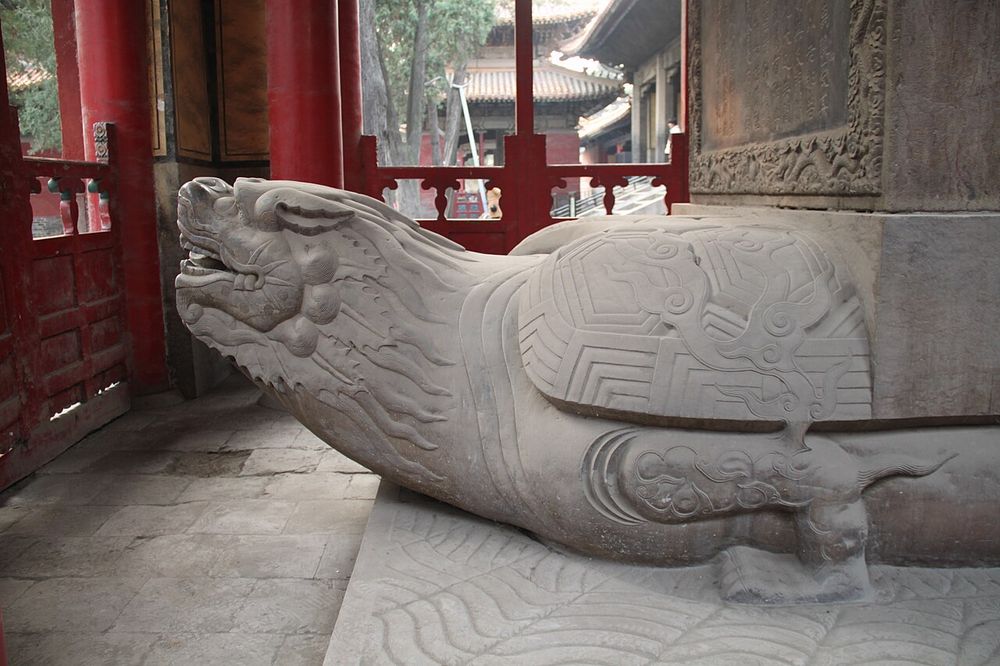
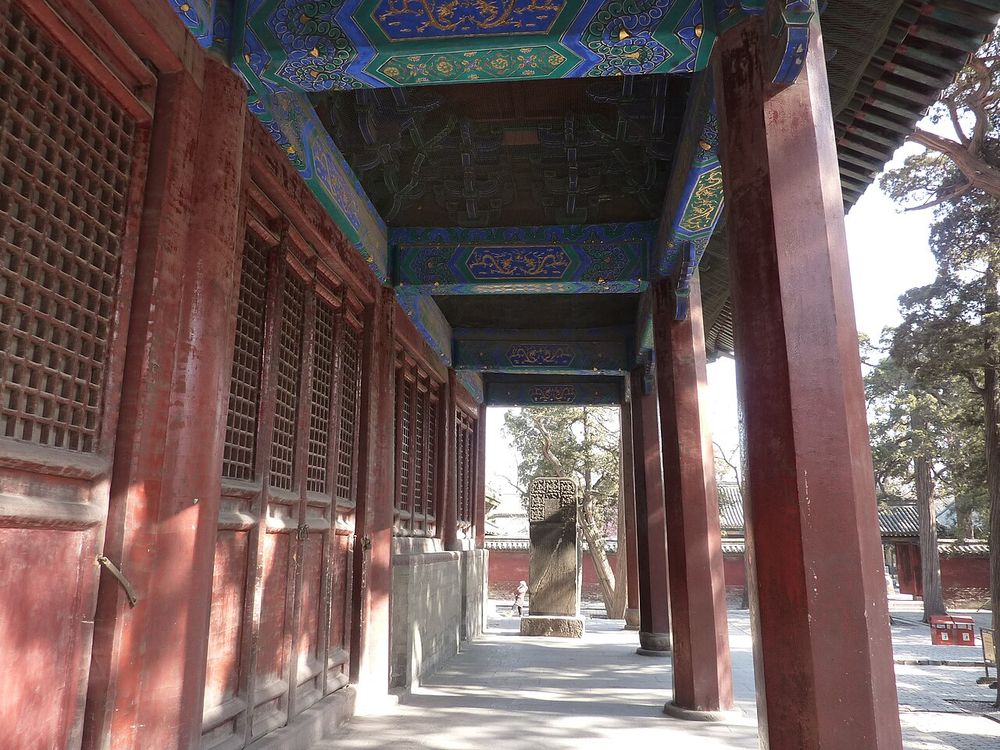
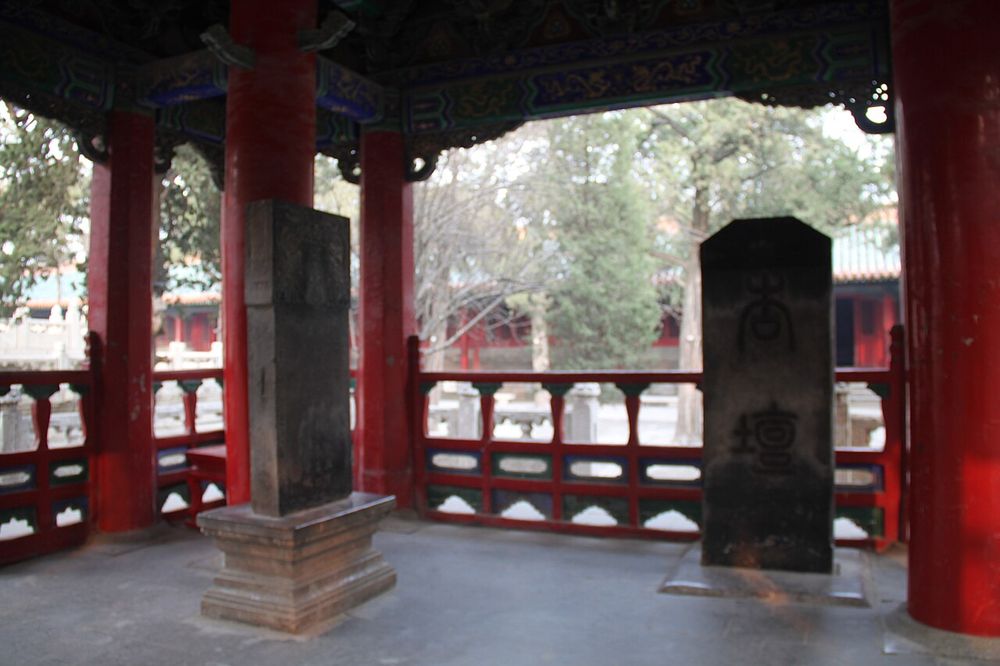
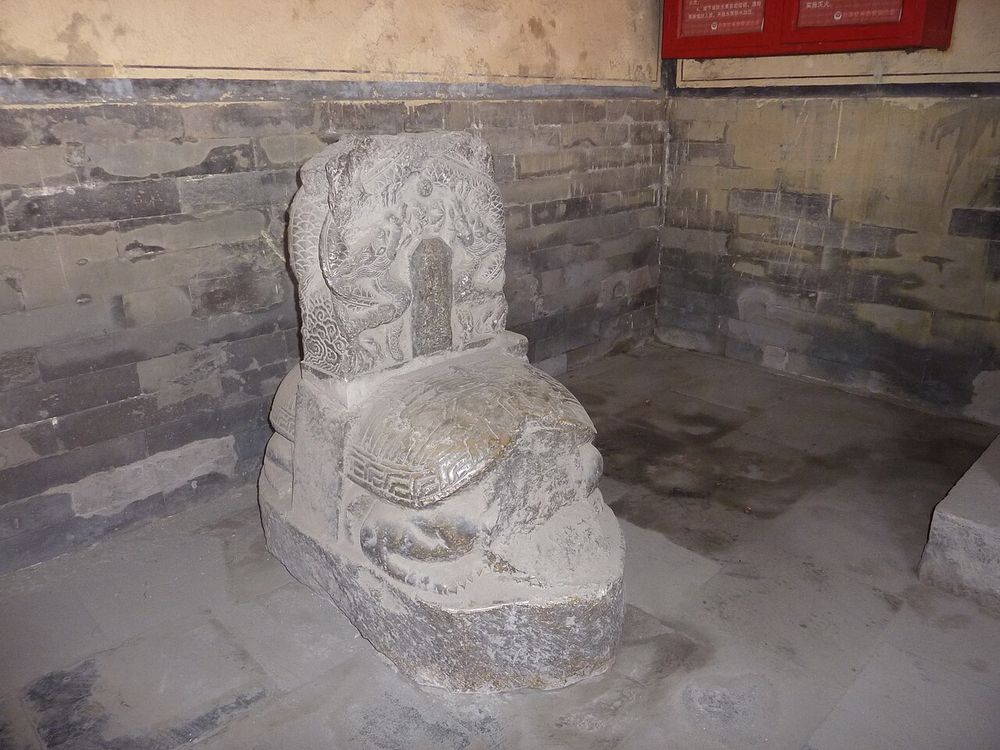
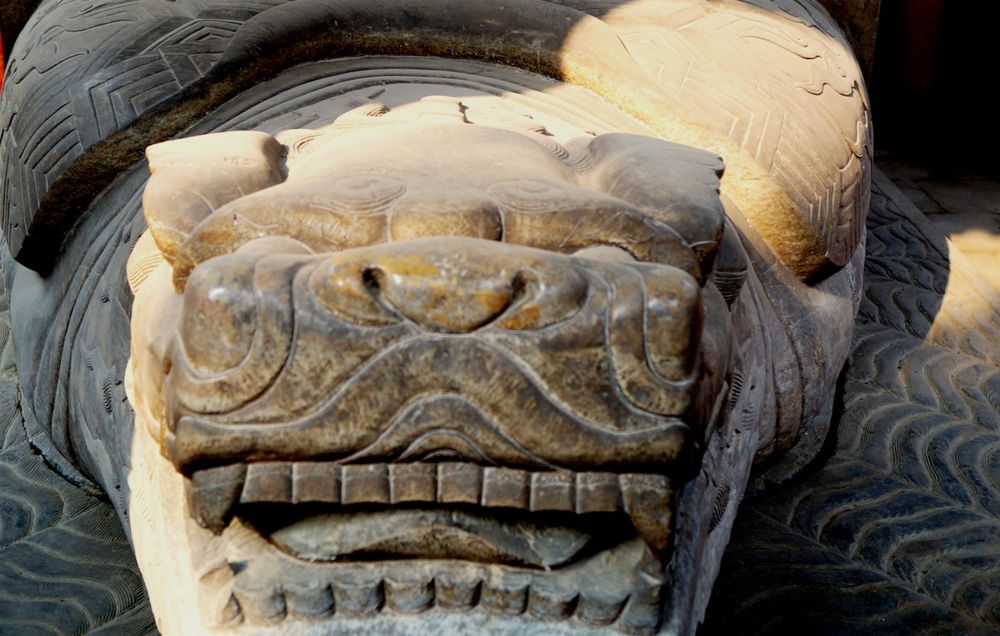
Thirteen pavilions shelter over fifty steles given by emperors from the Tang (618–907) to the Qing, many resting on the backs of stone tortoises called bixi.
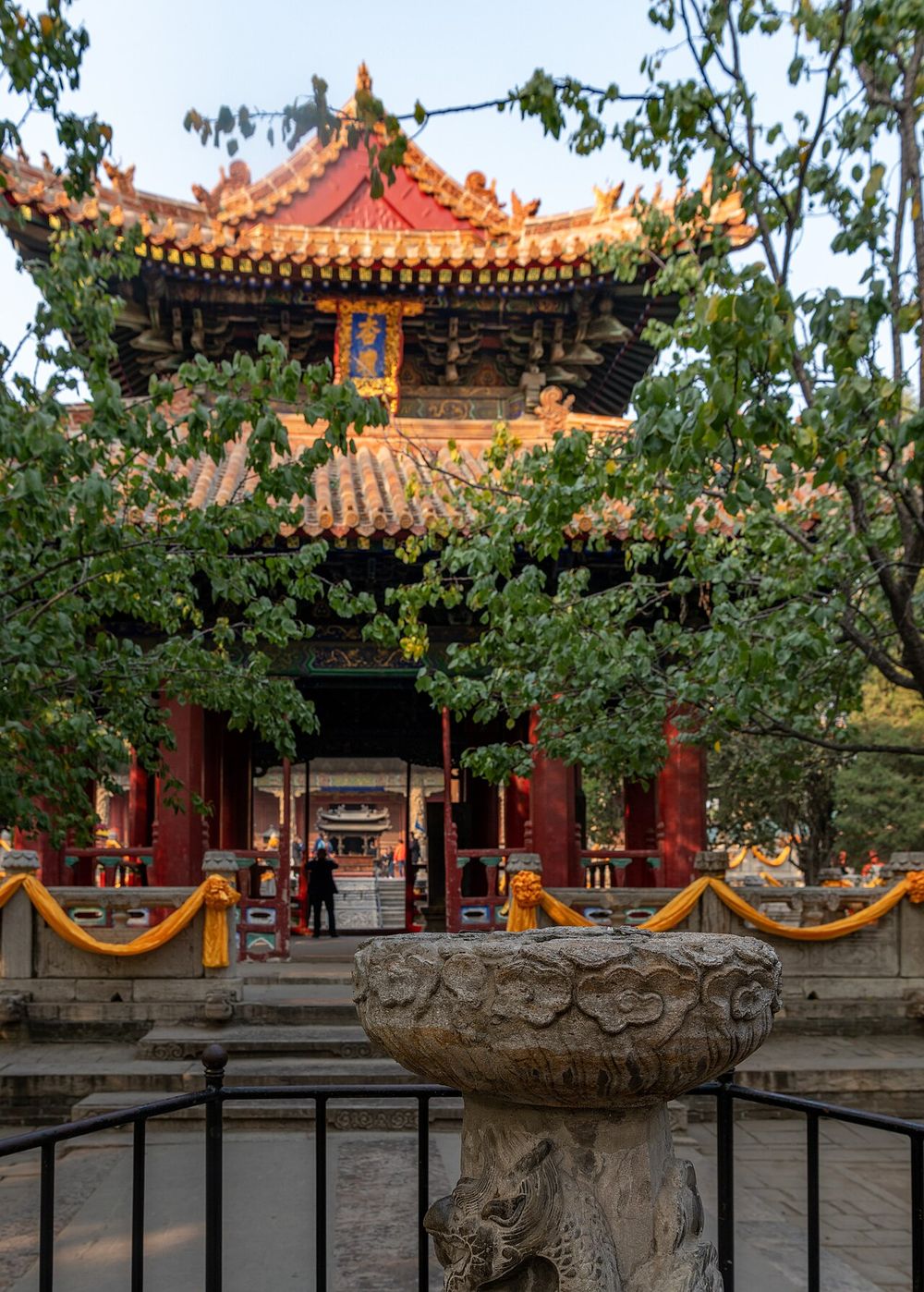
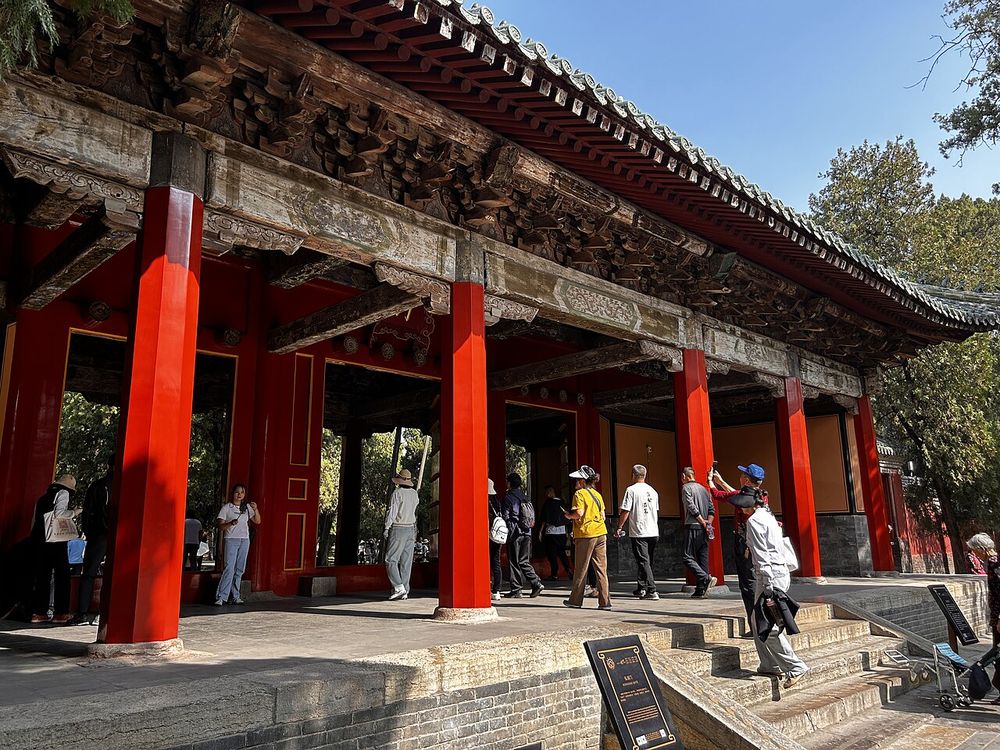
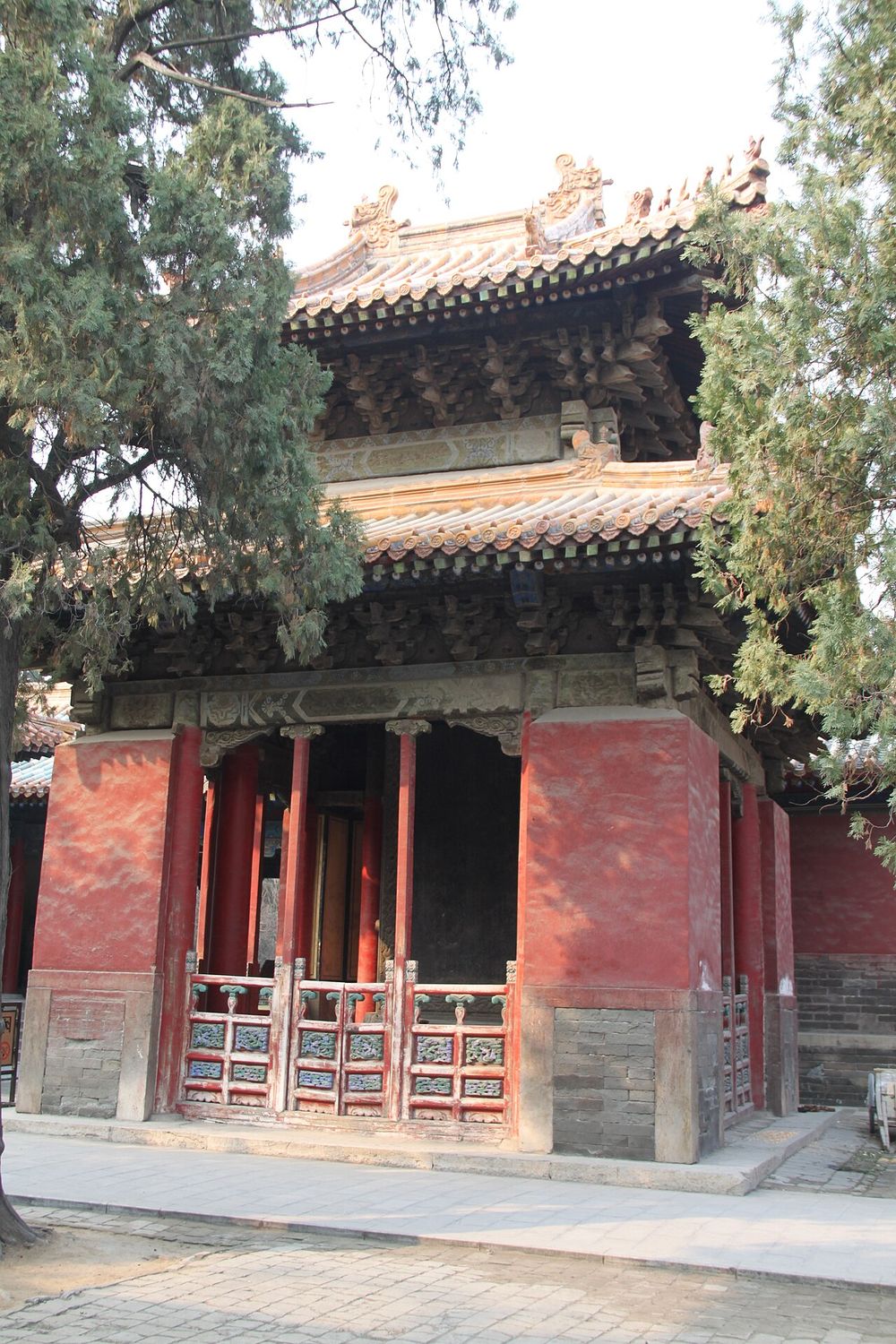
A small pavilion in front of the main hall, planted round with apricot trees, marks where Confucius is said to have taught; the stele inside carries a poem by the Qianlong Emperor.
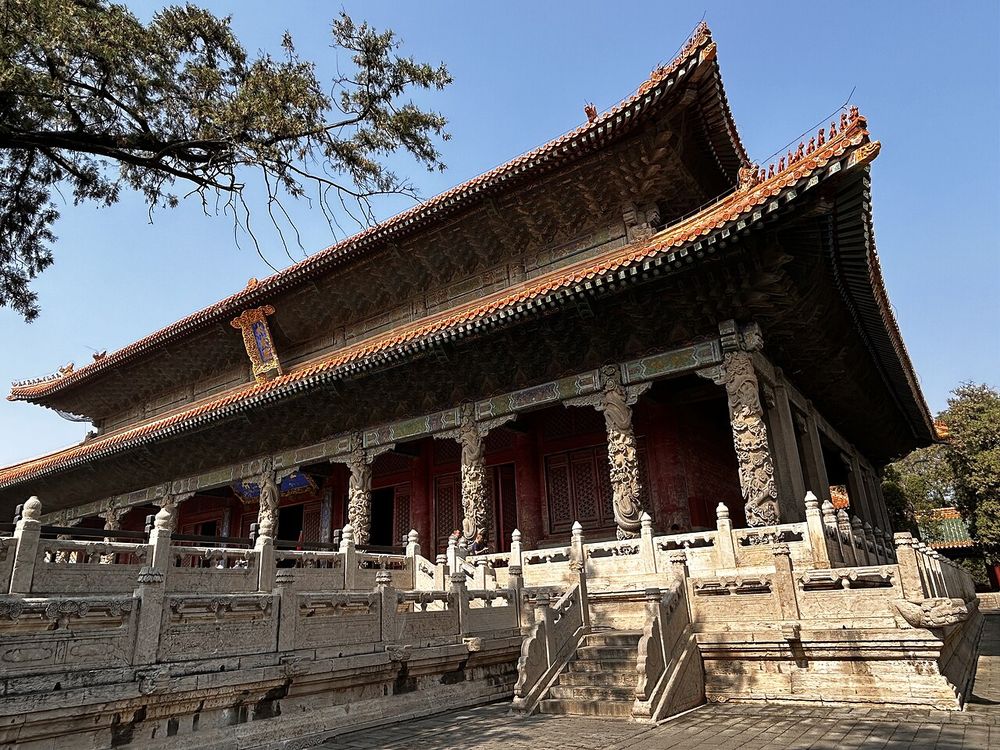
Inside, a seated statue of Confucius is flanked by his greatest disciples and followers, among them Mencius. Above hang plaques written by Qing emperors.
Behind the main halls, a wall marks where the Kong family is said to have hidden classic books when the First Emperor of Qin burned them in 213 BC. Found again in the Han, they became the "old text" classics.
The year the temple was founded, 478 BC, Athens was forming the Delian League after the Persian Wars; the Parthenon was still thirty years in the future.
| Year | Here | Elsewhere |
|---|---|---|
| 478 BC | Duke Ai of Lu turns Confucius's house into a temple | Athens forms the Delian League |
| 195 BC | The first Han emperor sacrifices to Confucius here | Rome defeats Sparta's tyrant Nabis the same year |
| 1018 | The Kuiwen Pavilion is first built | Canute the Great rules England |
| 1724 | The Hall of Great Achievement is rebuilt after a fire | Peter the Great founds the Russian Academy of Sciences |
| 1994 | The three Kong sites become a World Heritage Site | The Channel Tunnel opens |
One line to remember: a teacher's house that emperors turned into a temple almost as large as their own palace.
These are stories people tell about this place. They are legends, not history, and each one says where it comes from.
Before an emperor's visit the dragon columns of the main hall were covered with yellow silk, so that he would not see carvings finer than those of his own palace.
Source: Told by guides at the temple
Later, people who live here will be able to add the stories they grew up with, and say which of these they have heard.
Last checked 2026-11-12. Prices, hours and booking from 2025–2026 guides (Maigoo, Sohu, Dahe Piao, Ctrip).
Checked 2026-11-12
Opening hours are given in the local time of the place. Prices are in the local currency. The figure after ≈ is approximate, at exchange rates checked on 9 November 2026, in .
Stand at the site, sign in, press the button, and collect its stamp. Your browser will ask to use your location. It is sent to us once to confirm that you are at the site; we keep how far you were from it, not the spot where you stood.
Your stamps are saved to your account, so they follow you to any device. Checking from a browser cannot rule out every false location; stricter checks arrive with the app.
Photos here show the place, not people. Each one is credited to the visitor who took it and appears after our team has looked at it. A photo with you in it belongs under “I am here”.