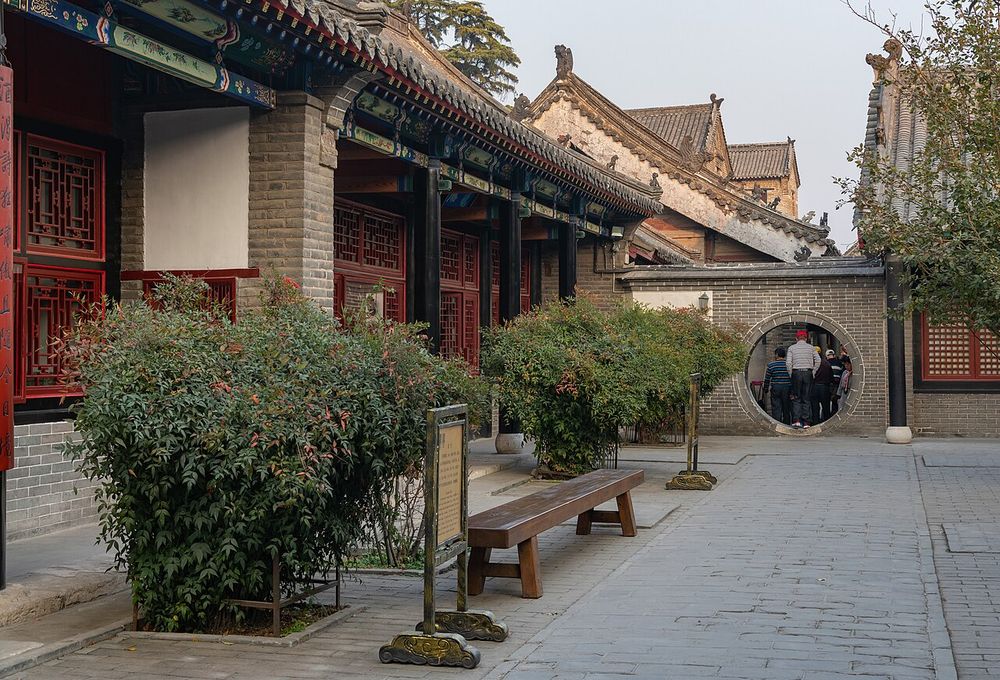
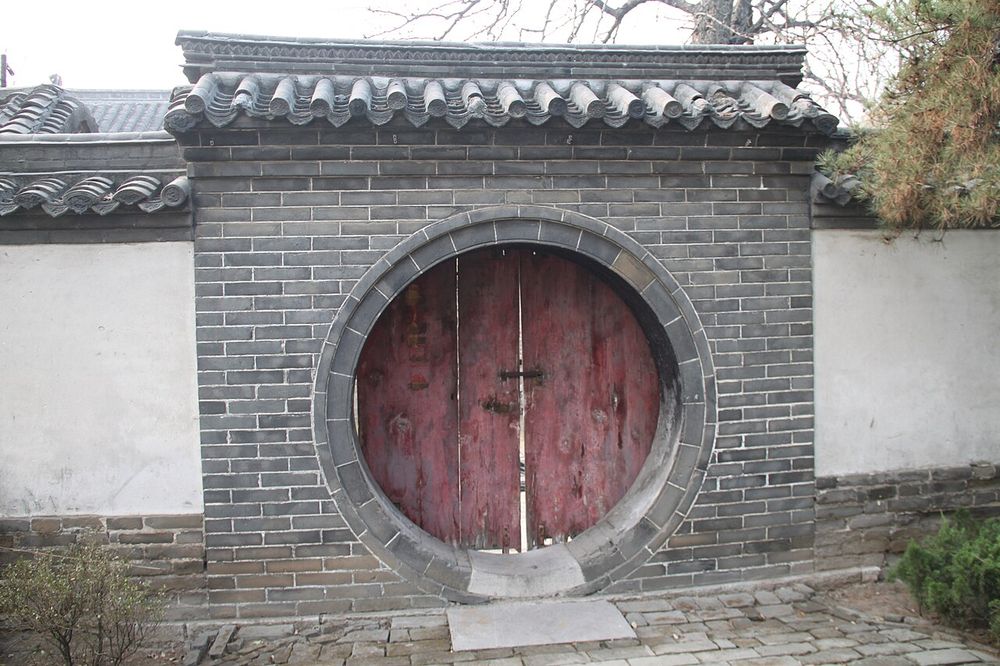
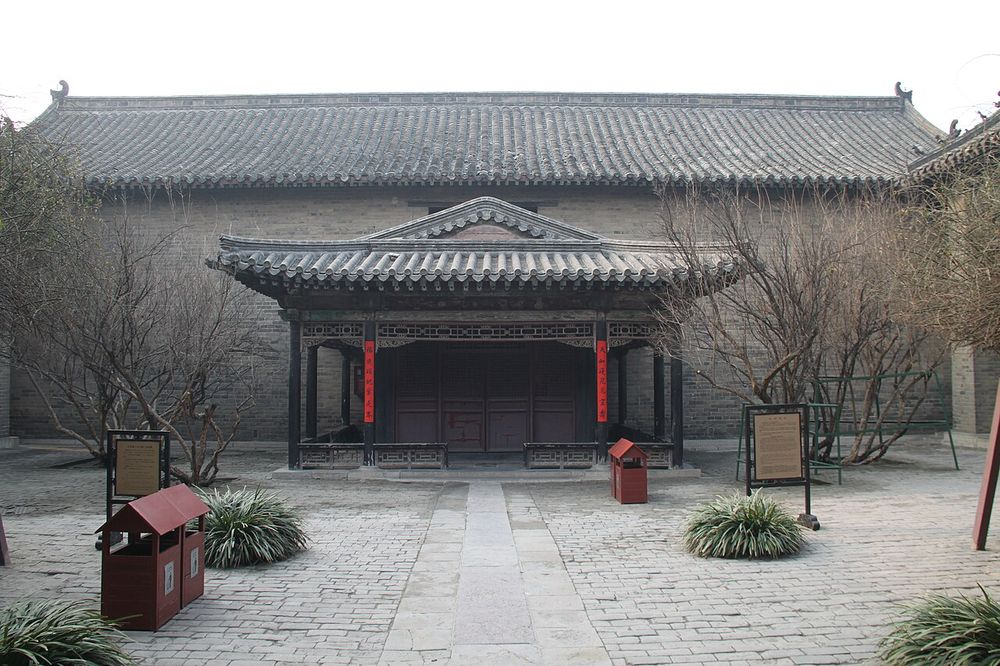
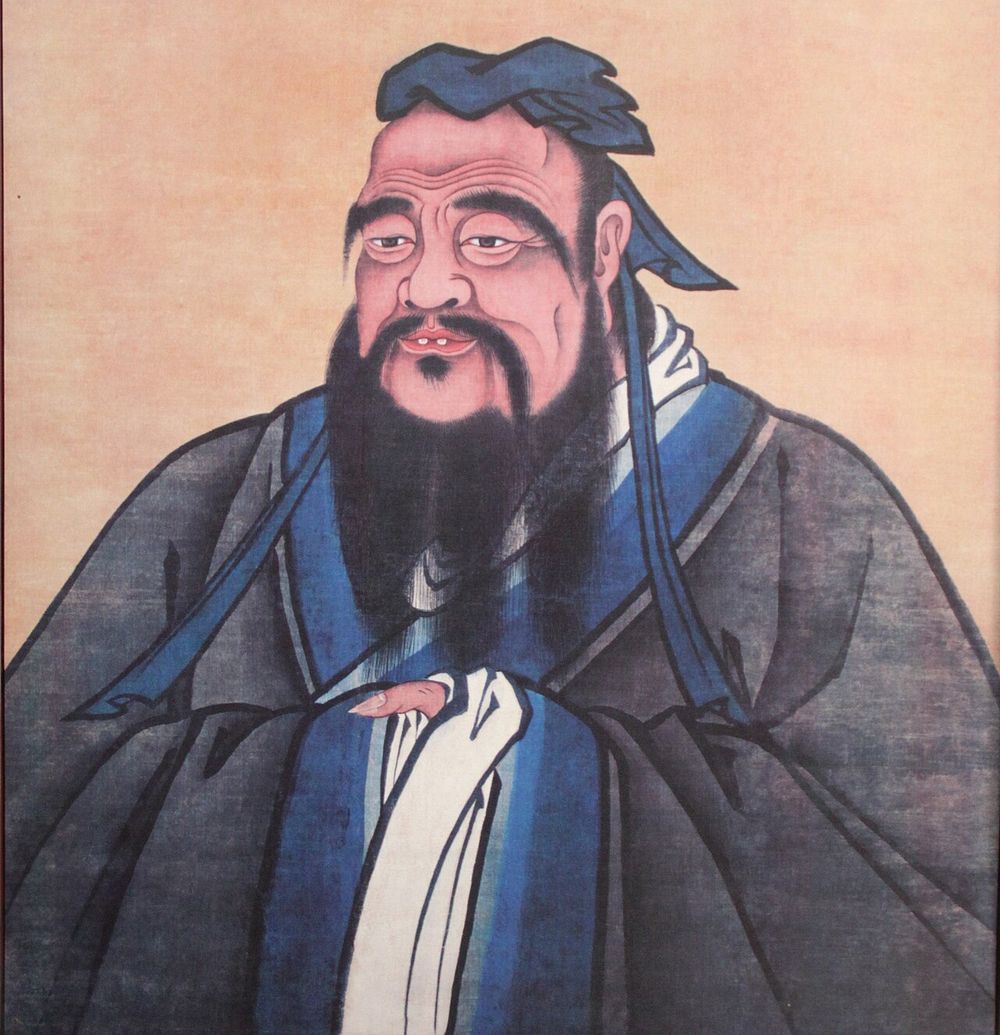
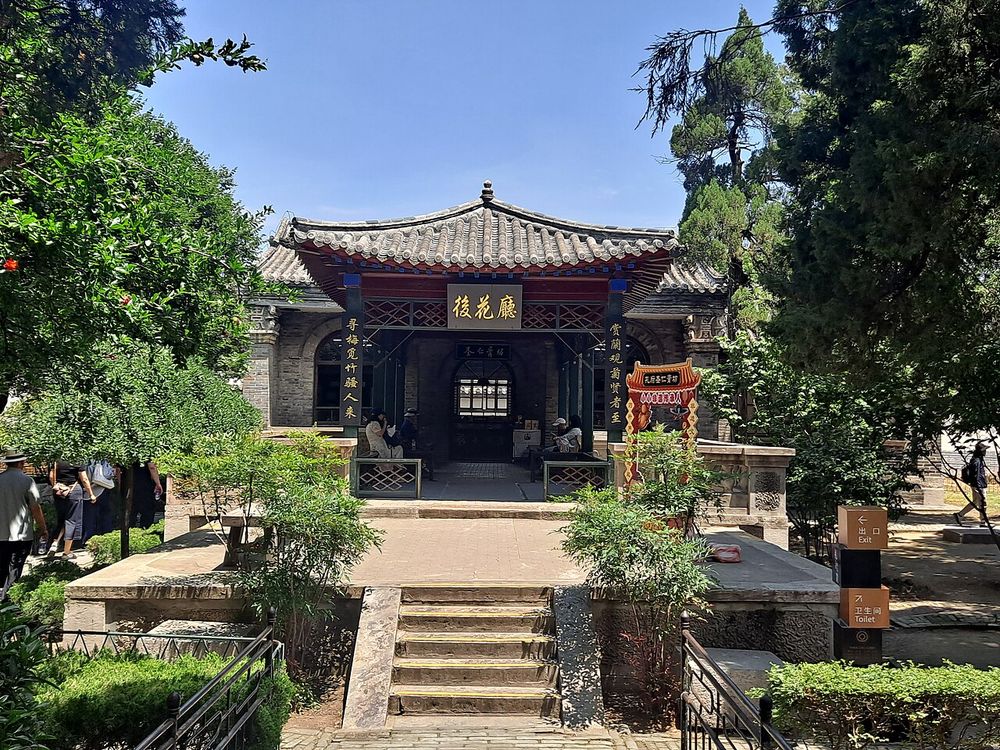
For nearly nine hundred years the eldest male descendant of Confucius held the title Duke Yansheng, "Overflowing Sage", and lived here, next to his ancestor's temple. The mansion was both a government office and a family home: offices and courtrooms at the front, a household of hundreds behind, and a garden at the back.
Photo: Gary Todd from Xinzheng, China, CC0, Wikimedia Commons
The story
The descendants of Confucius were honoured by every dynasty, and in 1055 the Song (960–1279) emperor gave the head of the family the title Duke Yansheng. It passed from father to son until 1935, when the government replaced it with the office of Sacrificial Official to Confucius. The family kept the mansion, its lands and its archives, one of the largest private archives in China, with records from the 16th century to the 20th.
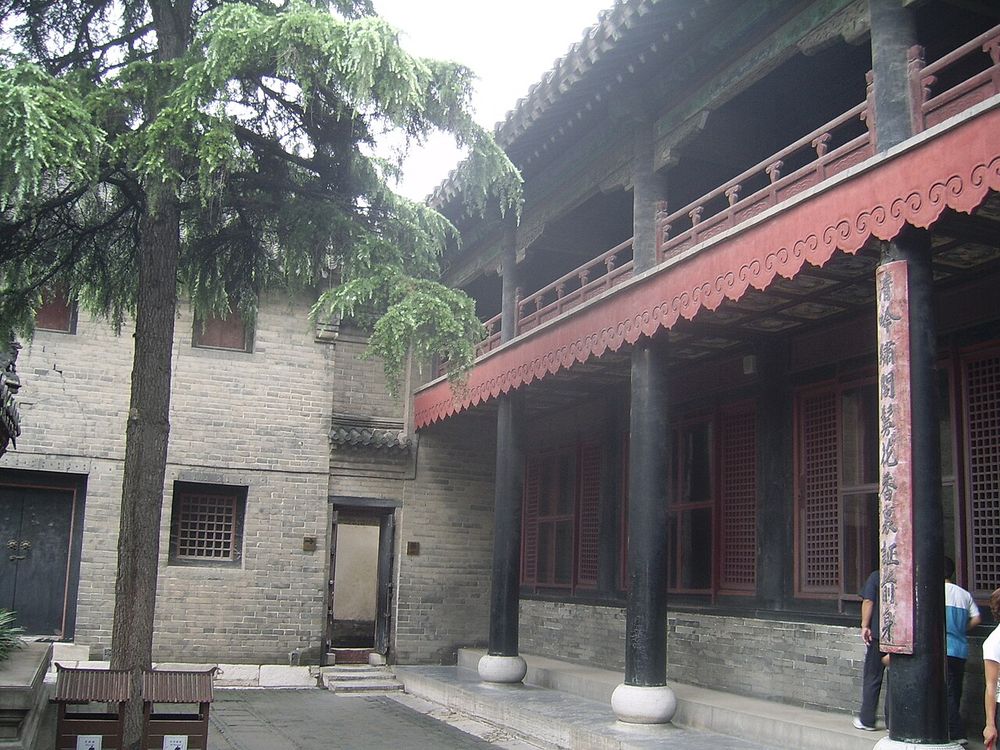
The present buildings are mostly Ming and Qing (1644–1912), begun after 1377 and enlarged in 1503: over four hundred rooms in nine courtyards. The last duke, Kong Decheng, left for Taiwan in 1949. The mansion is now a museum, kept as the family left it.
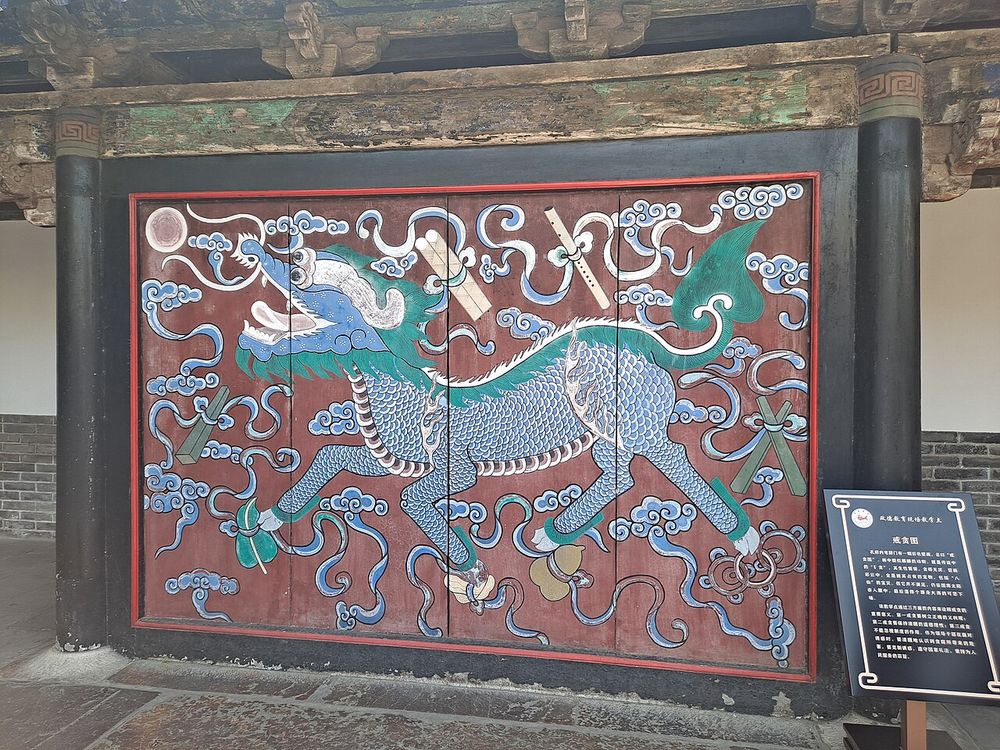
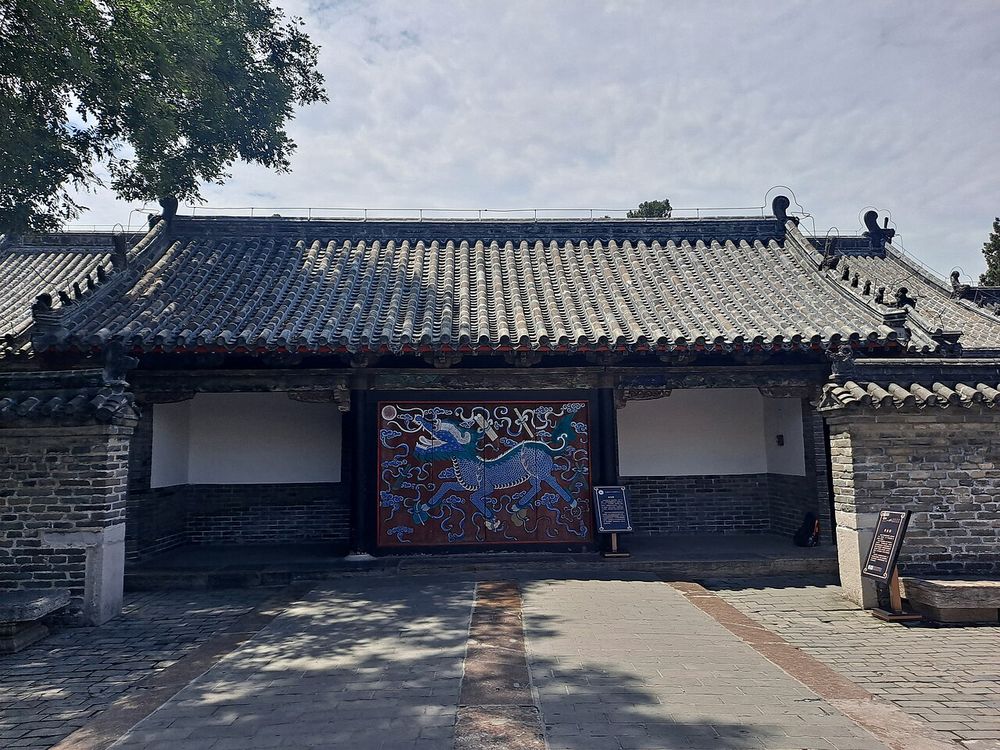
The painting of the greedy tan on the wall, 2026호고호, CC0
Between the offices and the private house stands the inner gate, beyond which no outsider could pass. On the wall facing it is painted a strange beast, the tan, so greedy it tried to swallow the sun and drowned in the sea. Each duke saw it as he left home for official business: a warning against greed.
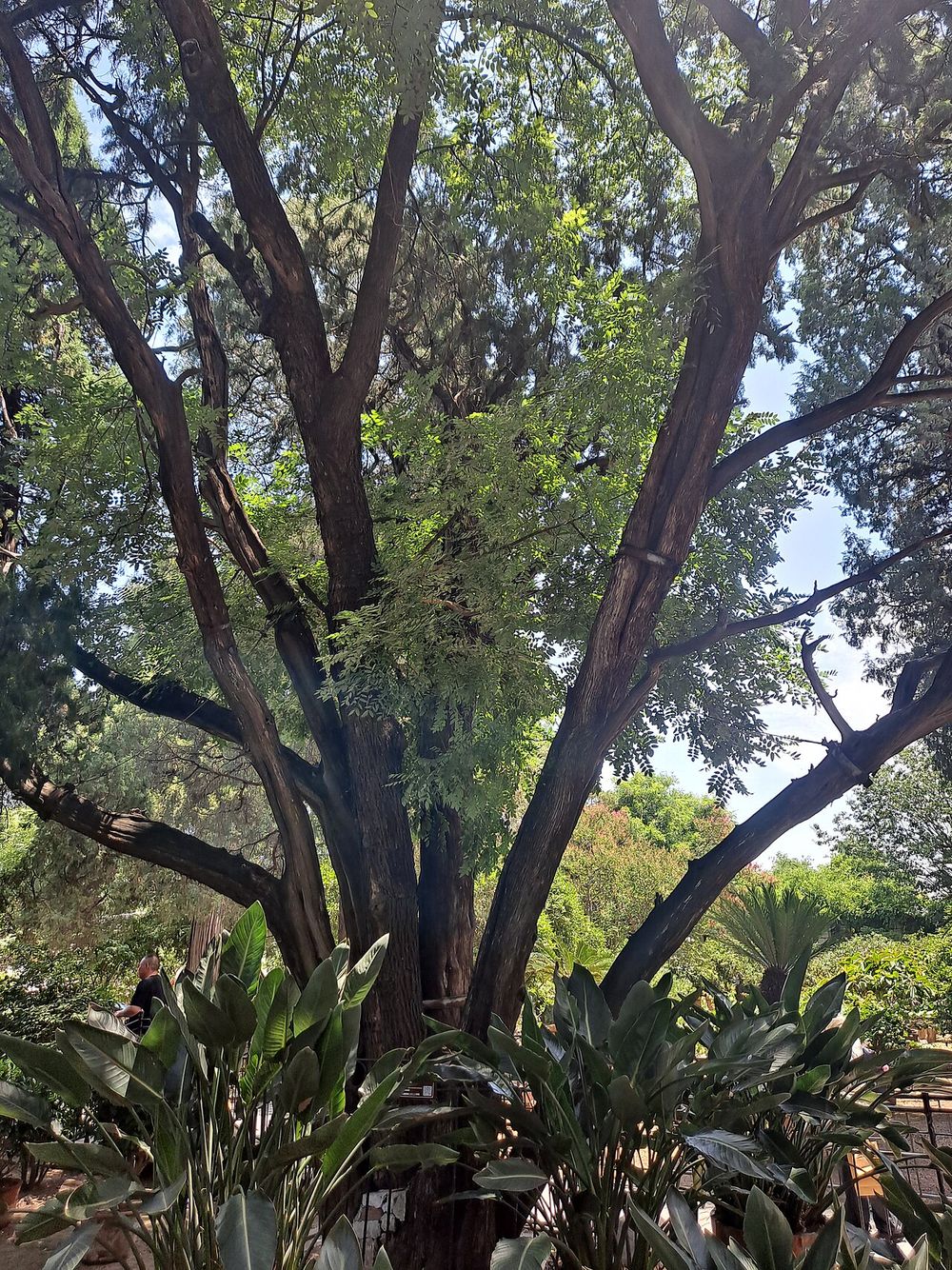
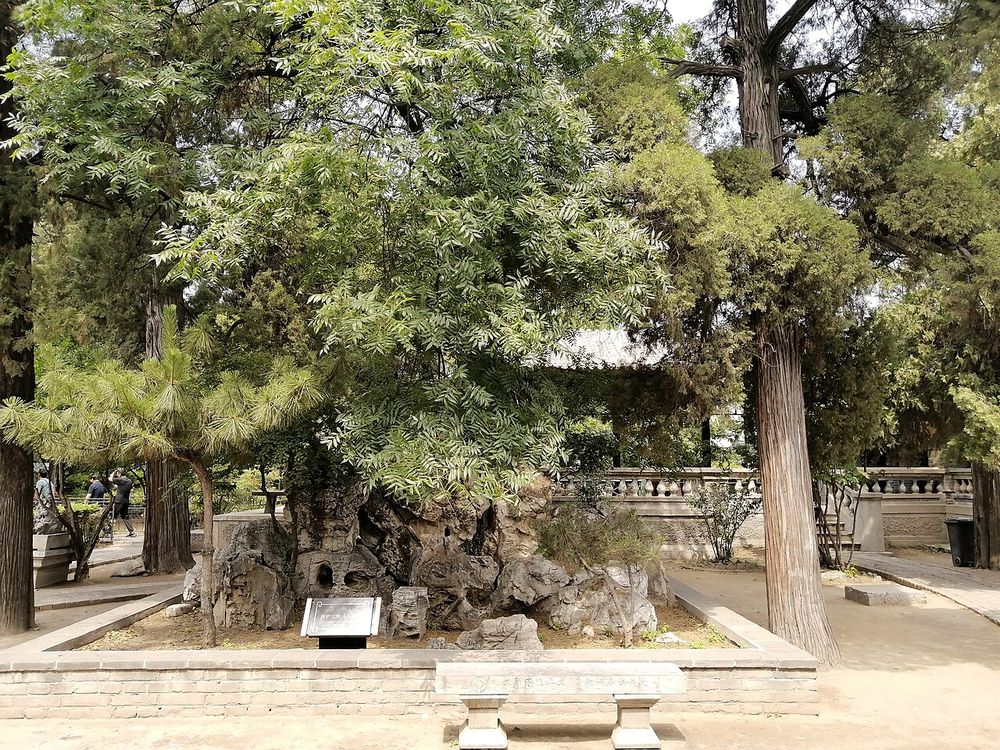
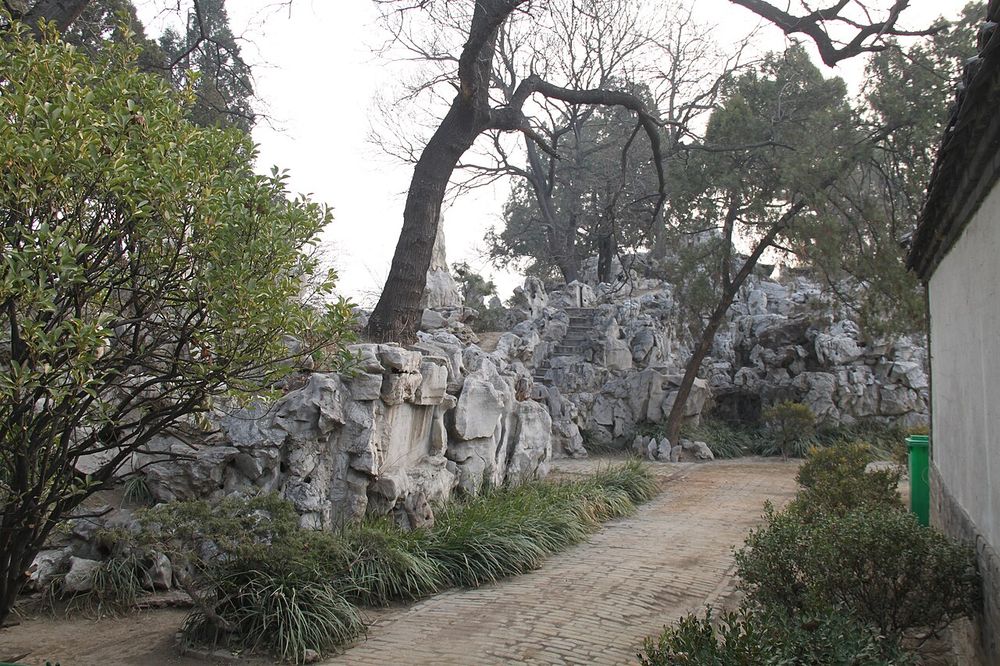
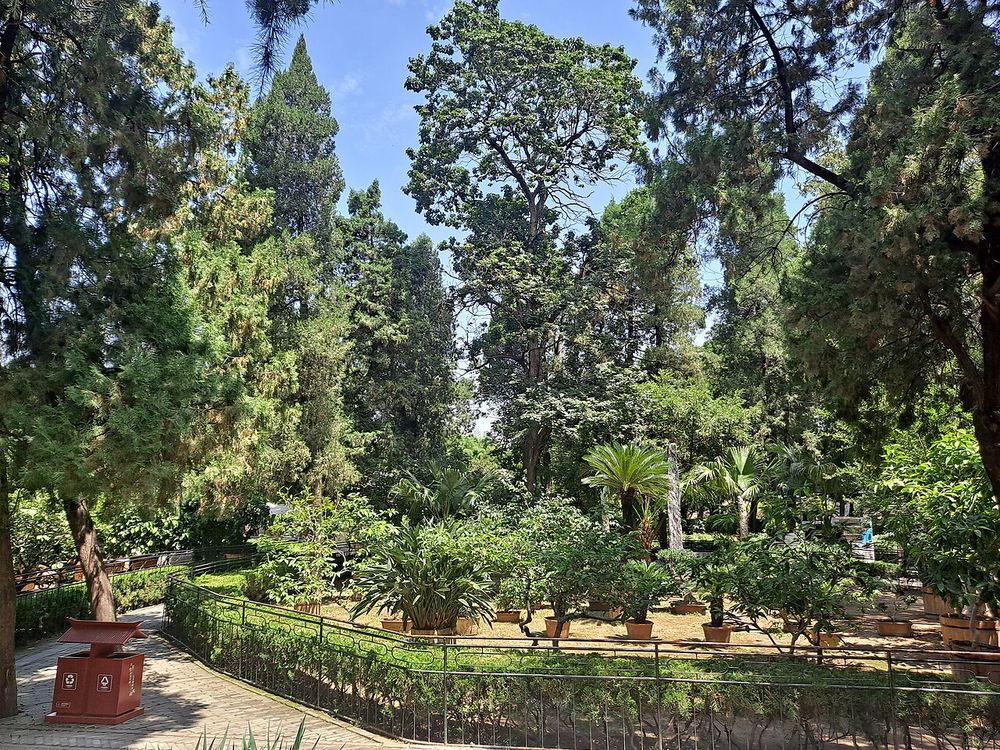
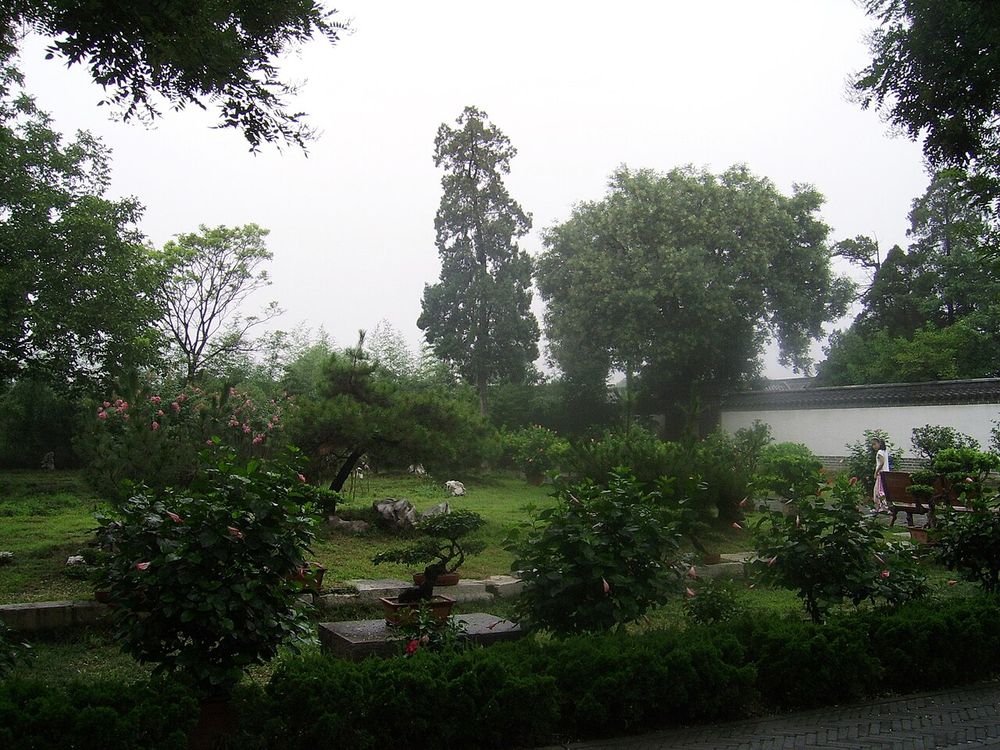
Beyond the gate are the rooms where the family lived, with furniture, clothes and gifts from emperors still in place, and at the back a garden with rockeries and an old tree in which five cypresses grow round a pagoda tree.
Five cypresses round a pagoda tree, 2026호고호, CC0
Things people often get wrong
"The family were emperors." They were nobles with a title and great estates, but they served the court, and the duke kneeled to the emperor like any official.
"The line ended in 1949." The family continues; the 79th-generation heir lives in Taiwan and holds the office of Sacrificial Official.
People who stood here
We searched Chinese sources first for this list, then English ones.
Kong Lingyi (76th Duke Yansheng, 1872–1919)He held the title in the last years of the Qing and the first of the Republic, and died a few months before his son was born.
Kong Decheng (77th and last Duke Yansheng, 1920–2008)Born a duke, he grew up here, became the first Sacrificial Official in 1935, and later taught at National Taiwan University.
Kong Demao (writer, born 1917)His elder sister, who wrote a memoir of growing up in the inner rooms of the mansion.
The Qianlong Emperor (1711–1799)On his eight visits to Qufu he was received by the dukes; gifts he gave the family are shown in the mansion.
Go deeper: through the mansion from the gate to the garden, five stops6 stops · about 1 min to read
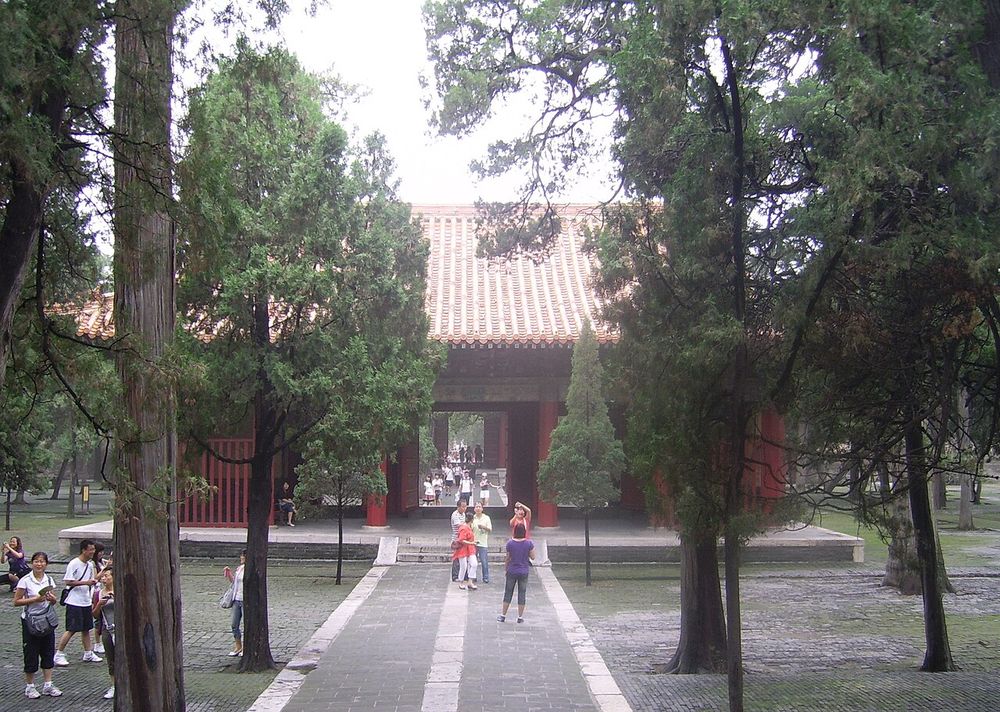
The mansion is entered from the east side of the temple; follow the axis from the front gate to the garden.
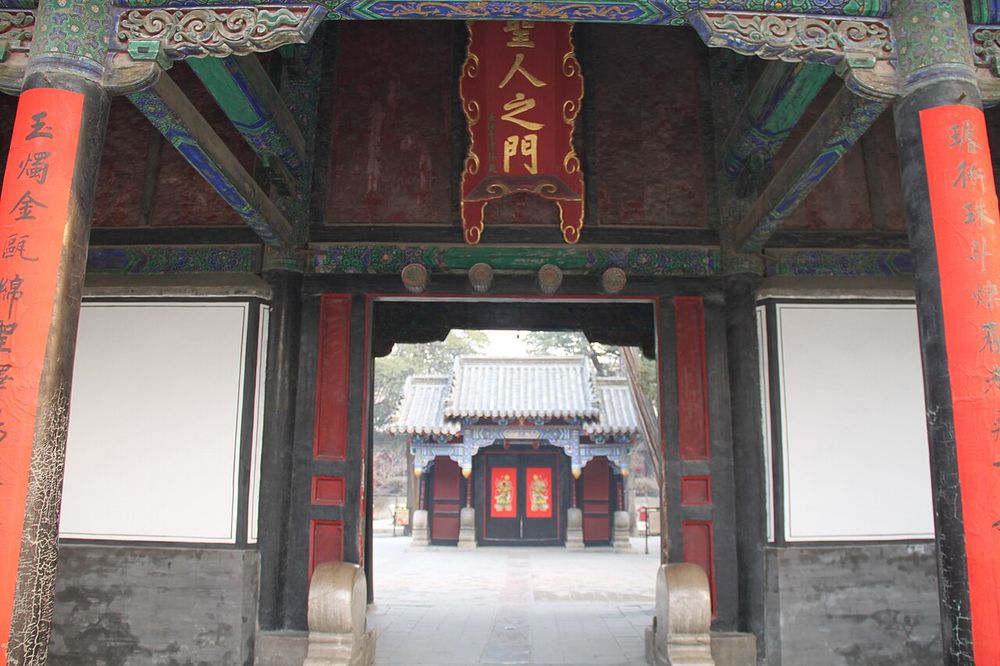
1. The gate of the sage's descendants
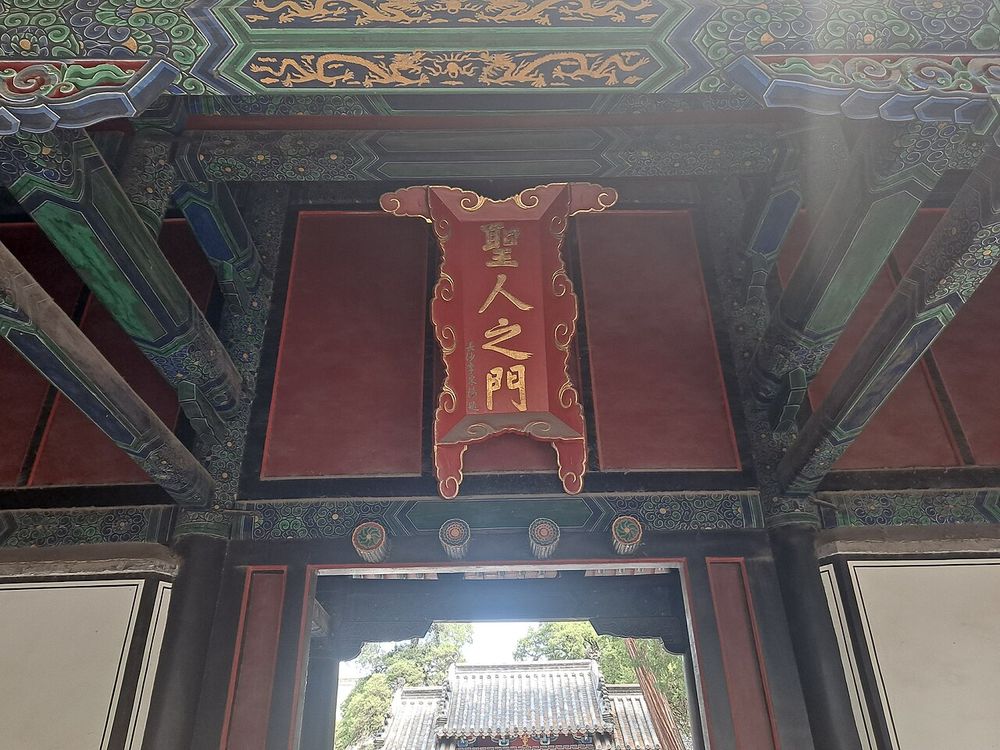
A gate with a plaque, 2026호고호, CC0
The main gate, with a plaque reading "Sage's Mansion". The family's motto, written on the couplet beside it, wishes the house equal to the state in lasting peace and wealth.
2. The Great Hall
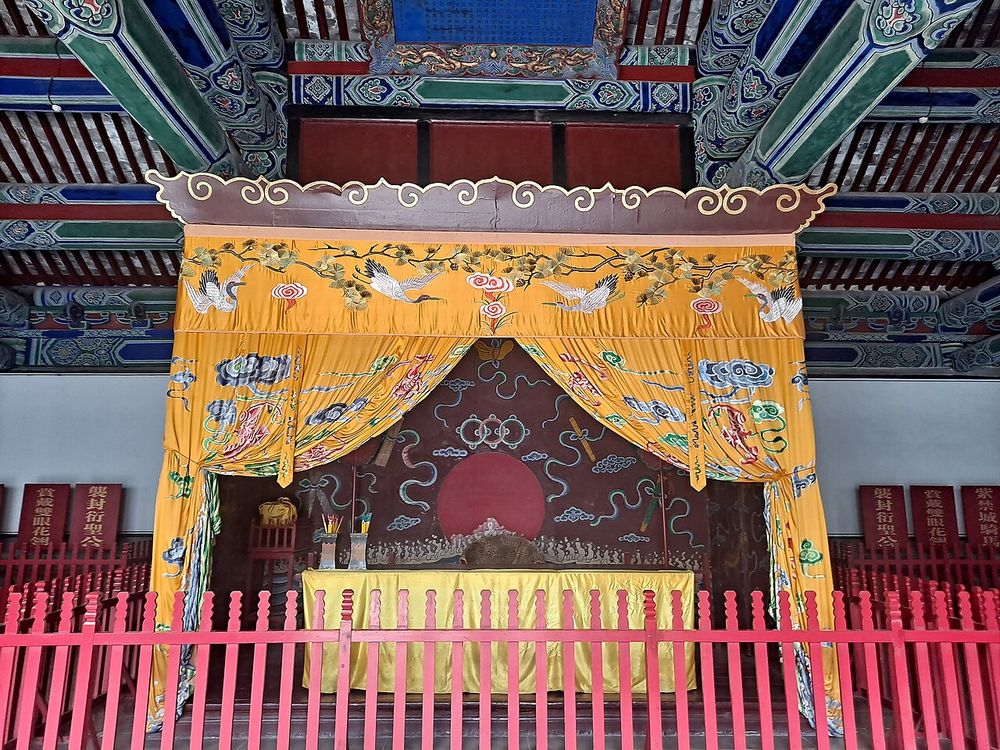
The duke's seat in the Great Hall, 2026호고호, CC0
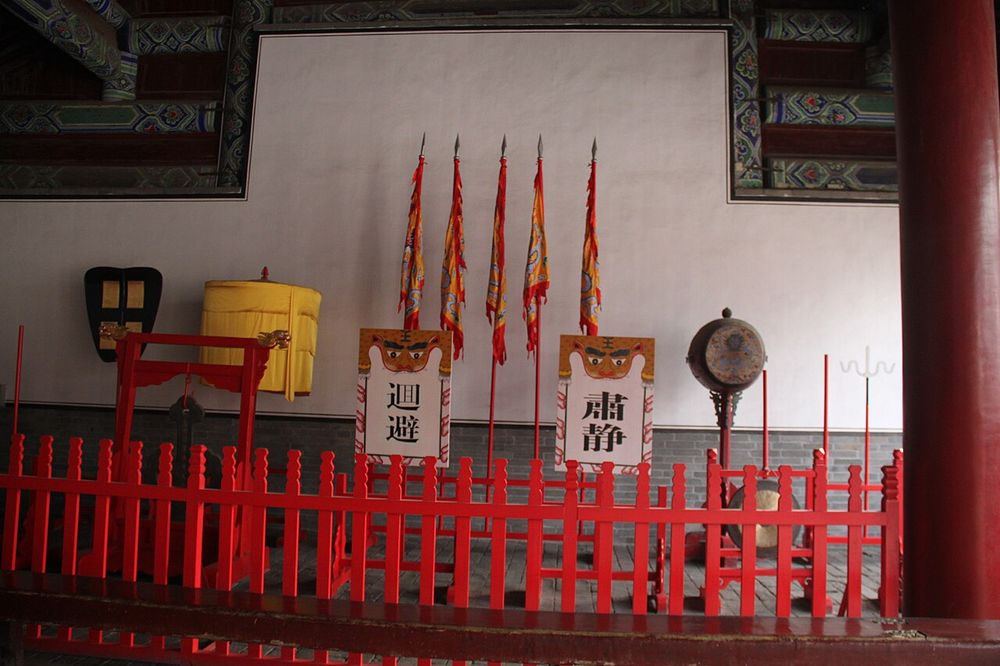
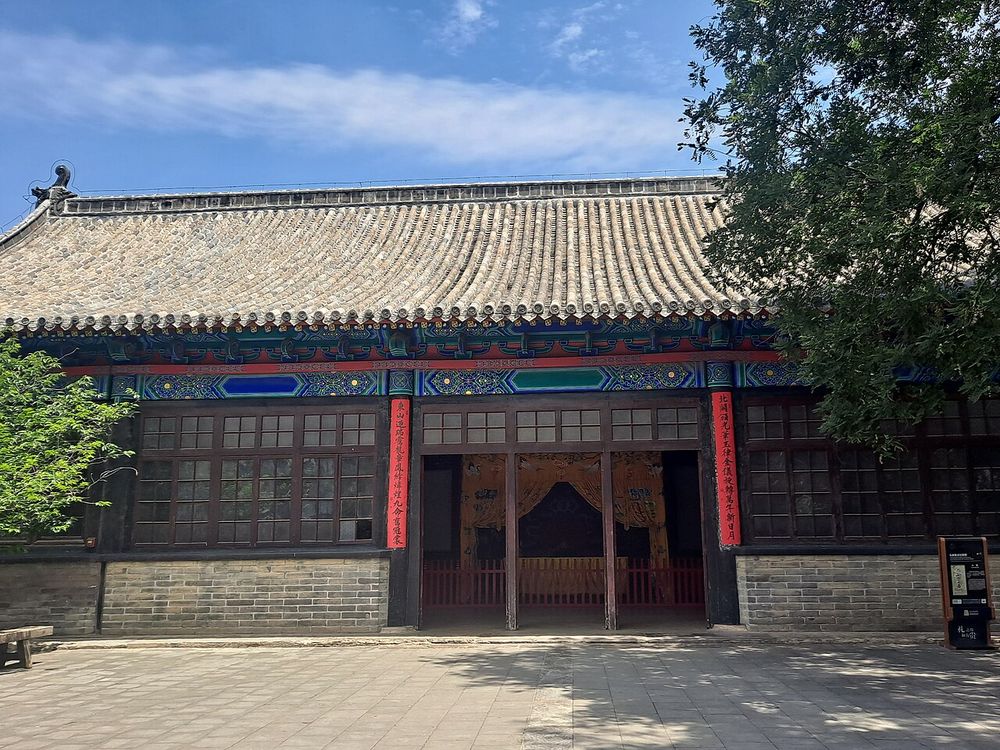
Where the duke sat to receive edicts and judge cases, with the red-lacquered tables and the ceremonial weapons and banners carried before him on journeys.
Ceremonial weapons and banners, 2014Gary Todd from Xinzheng, China, CC0
3. The inner gate and the painting of the tan
The inner gate, 2026호고호, CC0
The line between office and home. The painted beast warning against greed faces the gate.
4. The family rooms
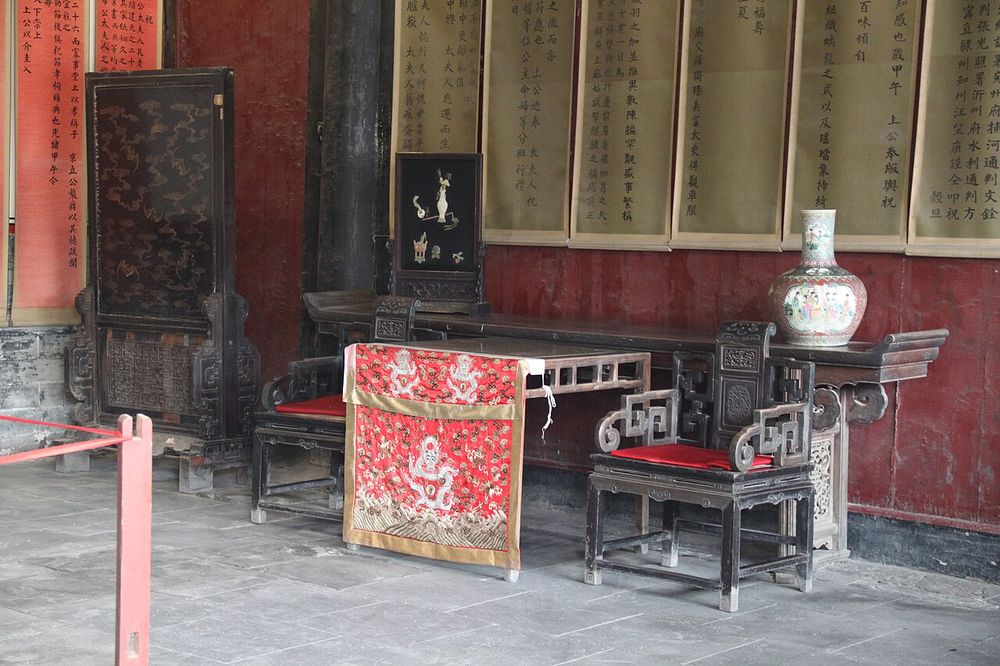
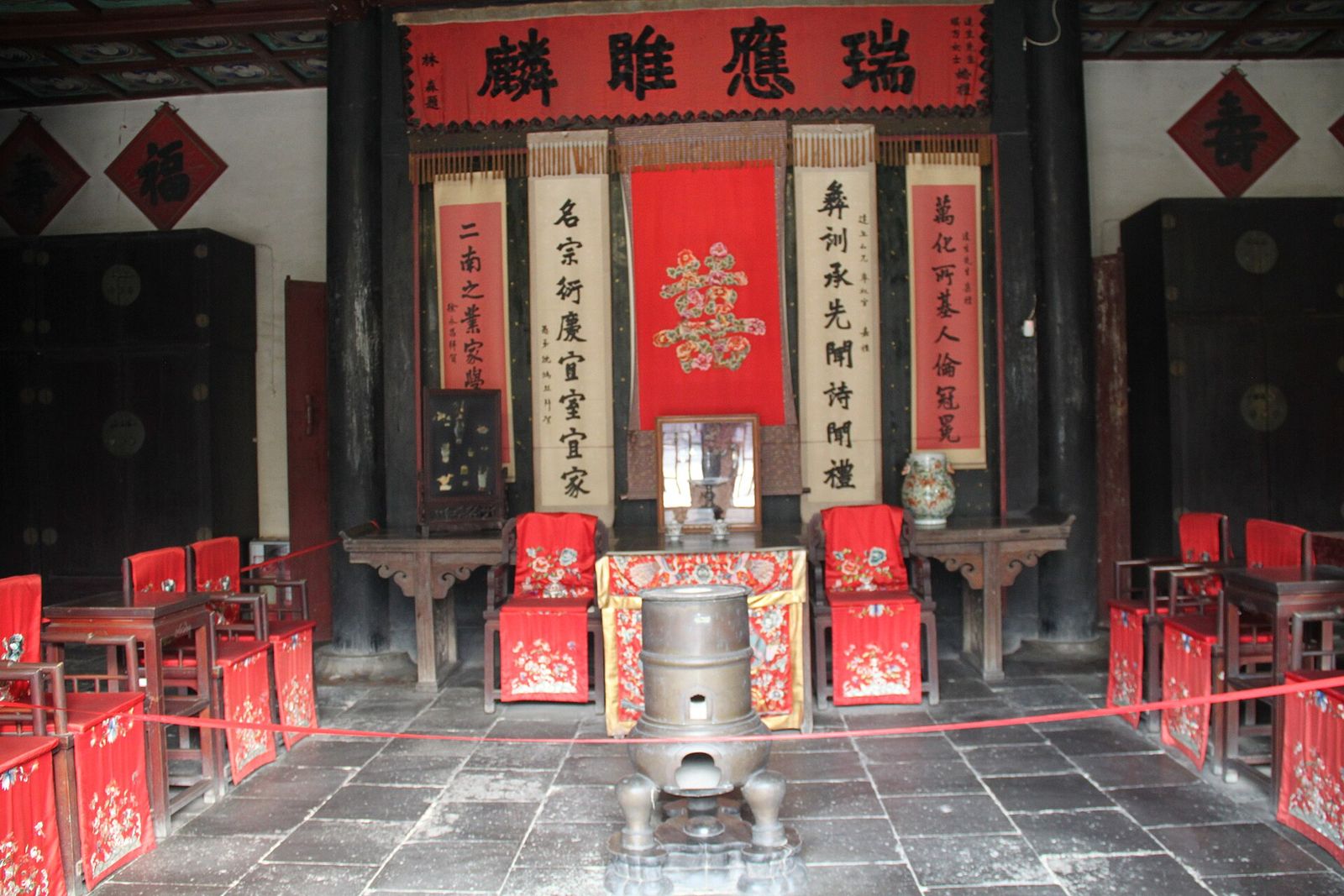
Furniture in a reception room, 2014Gary Todd from Xinzheng, China, CC0
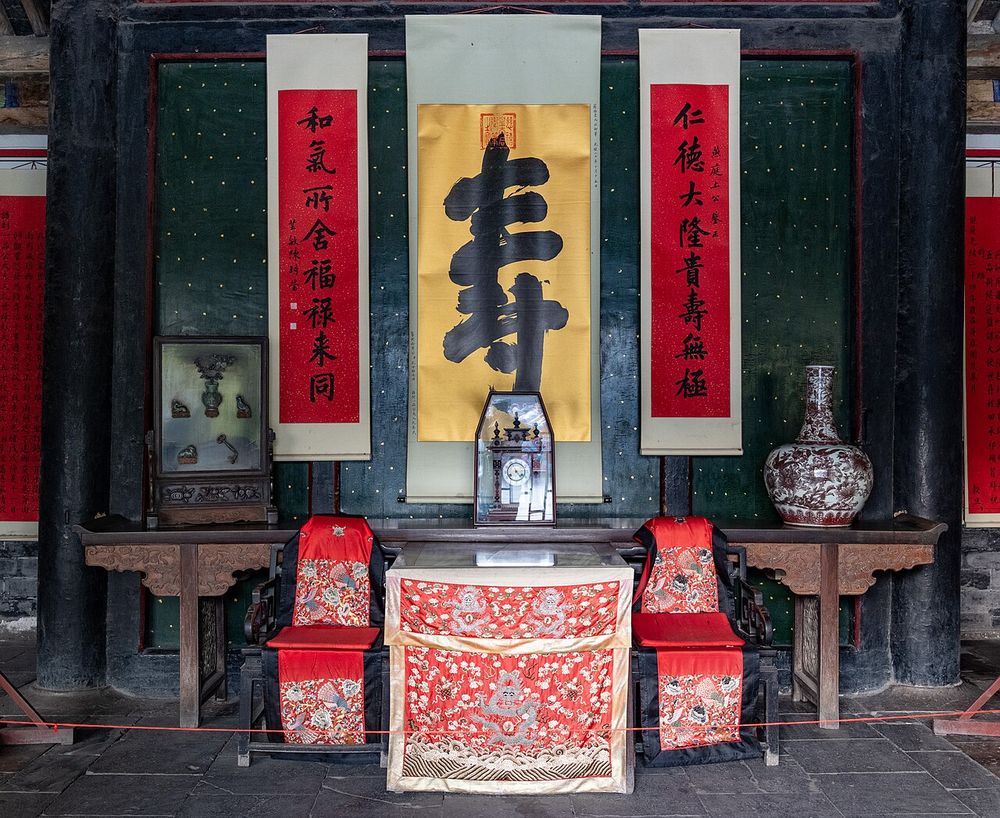
The front hall where the family held birthdays and weddings, and the rooms behind where the ladies of the house lived.
5. The garden
The rear garden, 2023Yumeto, CC BY-SA 4.0
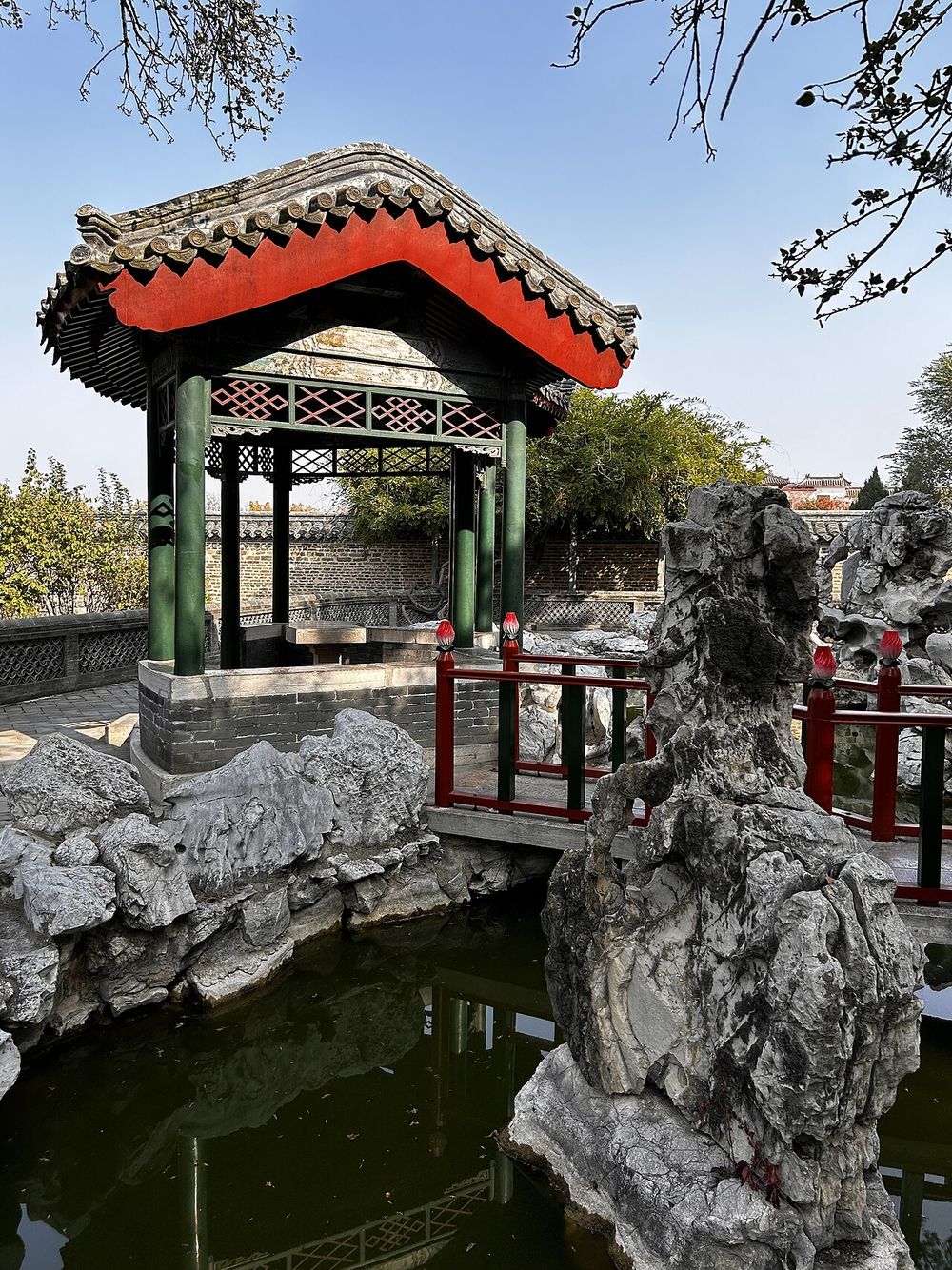
Rockeries, ponds and old trees, first laid out in 1503 and redone in the Qing.
The mansion and the same years elsewhere
In 1055, when the title Duke Yansheng was created, the Seljuk Turks entered Baghdad.
Meanwhile in the world
Year
Here
Elsewhere
1055
The Song emperor creates the title Duke Yansheng
The Seljuk Turks enter Baghdad
1503
The mansion is enlarged
Leonardo da Vinci begins the Mona Lisa
1920
Kong Decheng is born a duke, months after his father's death
The League of Nations holds its first meeting
1935
The title is replaced by the office of Sacrificial Official
Persia asks the world to call it Iran
One line to remember: the house of one family, honoured for being Confucius's heirs, from the Song dynasty to the Republic.
Halls, rooms and garden
A hall of the inner houseGary Todd from Xinzheng, China, CC0, Wikimedia CommonsA gate with a plaque, 2026호고호, CC0, Wikimedia CommonsThe Great Hall, 2026호고호, CC0, Wikimedia CommonsThe duke's seat in the Great Hall, 2026호고호, CC0, Wikimedia CommonsCeremonial weapons and banners, 2014Gary Todd from Xinzheng, China, CC0, Wikimedia CommonsA side building, 2023Yumeto, CC BY-SA 4.0, Wikimedia CommonsA hall with the character for long life, 2018xiquinhosilva, CC BY 2.0, Wikimedia CommonsA courtyard, 2018xiquinhosilva, CC BY 2.0, Wikimedia CommonsA moon gate, 2014Gary Todd from Xinzheng, China, CC0, Wikimedia CommonsLooking through a hall door, 2014Gary Todd from Xinzheng, China, CC0, Wikimedia CommonsFurniture in a reception room, 2014Gary Todd from Xinzheng, China, CC0, Wikimedia CommonsRockery in the garden, 2014Gary Todd from Xinzheng, China, CC0, Wikimedia CommonsA courtyard of the mansion, 2014Gary Todd from Xinzheng, China, CC0, Wikimedia CommonsA painted portrait of Confucius kept in the mansionUnknown authorUnknown author, Public domain, Wikimedia CommonsThe painting of the greedy tan on the wall, 2026호고호, CC0, Wikimedia CommonsThe inner gate, 2026호고호, CC0, Wikimedia CommonsThe rear garden, 2023Yumeto, CC BY-SA 4.0, Wikimedia CommonsThe garden in spring, 2026호고호, CC0, Wikimedia CommonsA pond in the garden, 2026호고호, CC0, Wikimedia CommonsFive cypresses round a pagoda tree, 2026호고호, CC0, Wikimedia CommonsThe garden, 2009Radosław Botev, CC BY 3.0 pl, Wikimedia CommonsA pavilion on a rockery, 2023Scott Edmunds, CC BY 2.0, Wikimedia CommonsA covered walk, 2009Radosław Botev, CC BY 3.0 pl, Wikimedia CommonsA path under trees, 2009Radosław Botev, CC BY 3.0 pl, Wikimedia CommonsA bronze ritual vesselKyle Magnuson from Los Angeles, United States, CC BY 2.0, Wikimedia CommonsA carved stone reliefKyle Magnuson from Los Angeles, United States, CC BY 2.0, Wikimedia Commons
Local legends
These are stories people tell about this place. They are legends, not history, and each one says where it comes from.
LegendThe emperor's daughter
The Qianlong Emperor is said to have married a daughter to the 72nd duke; because a princess could not marry a Han Chinese, she was first adopted by a minister's family. A dowry of hers is shown in the mansion.
Source: A family story told in Qufu; historians doubt it
Later, people who live here will be able to add the stories they grew up with, and say which of these they have heard.
Not certain, and where accounts conflict
Was the princess real?
The 72nd duke's wife was a daughter of the minister Yu Minzhong; the story that she was really the emperor's daughter is not supported by court records.
Visiting
Tickets and hours
60 yuan; open about 8:30 to 17:00, last entry 16:30.
Over-60s and children under 6 enter free with ID.
Last checked 2026-11-12. Prices, hours and booking from 2025–2026 guides (Maigoo, Sohu, Dahe Piao, Ctrip).
Booking without WeChat
Official page in English Book on the "曲阜三孔景区" official WeChat account; tickets are limited on holidays.
International booking platform Ctrip (Trip.com) sells the single ticket and the combined ticket.
Note Foreign visitors book with a passport number.
Checked 2026-11-12
Where to start
See the temple first, then the mansion next door; leave by the back gate for the cemetery, 1.5 km north.
Try a dish of Kong family cuisine in town; it grew from the banquets of the mansion.
Before you go
The rooms are small and crowded at midday; come early or late.
Photography is allowed in the courtyards; some rooms ask for no flash.
Customs and manners
Stay behind the ropes; the furniture is original.
Speak quietly: this was a family's home.
Opening hours are given in the local time of the place. Prices are in the local currency. The figure after ≈ is approximate, at exchange rates checked on 9 November 2026, in .
Look for these
At the inner gate, find the greedy beast with the sun before its mouth.
In the garden, find the five cypresses holding a pagoda tree.
In the Great Hall, find the duke's seal case on the table.
I am here
Stand at the site, sign in, press the button, and collect its stamp. Your browser will ask to use your location. It is sent to us once to confirm that you are at the site; we keep how far you were from it, not the spot where you stood.
Your stamps are saved to your account, so they follow you to any device. Checking from a browser cannot rule out every false location; stricter checks arrive with the app.
Messages
Share your photos
Photos here show the place, not people. Each one is credited to the visitor who took it and appears after our team has looked at it. A photo with you in it belongs under “I am here”.