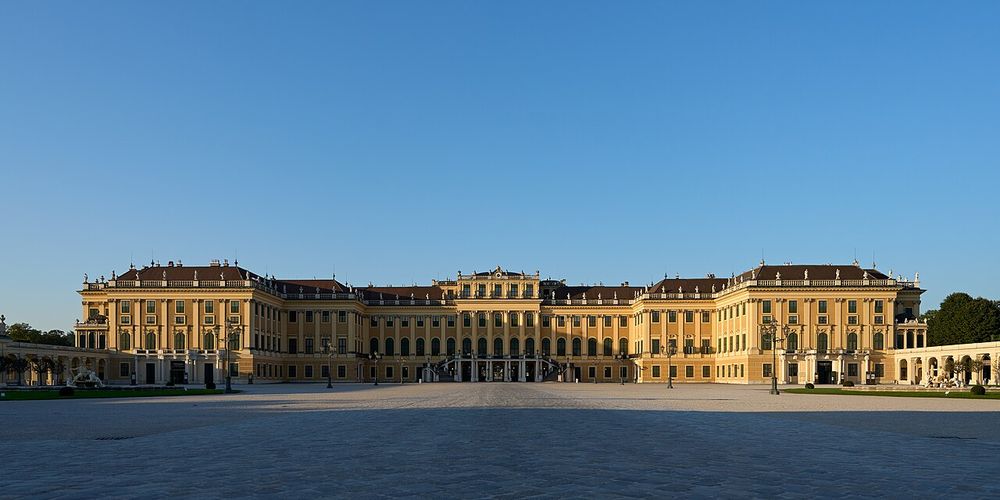
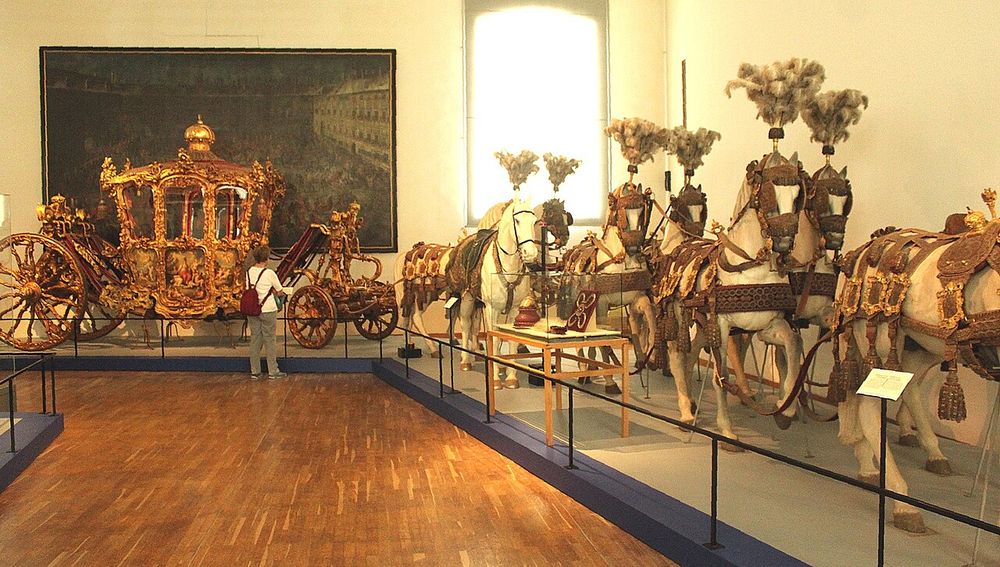
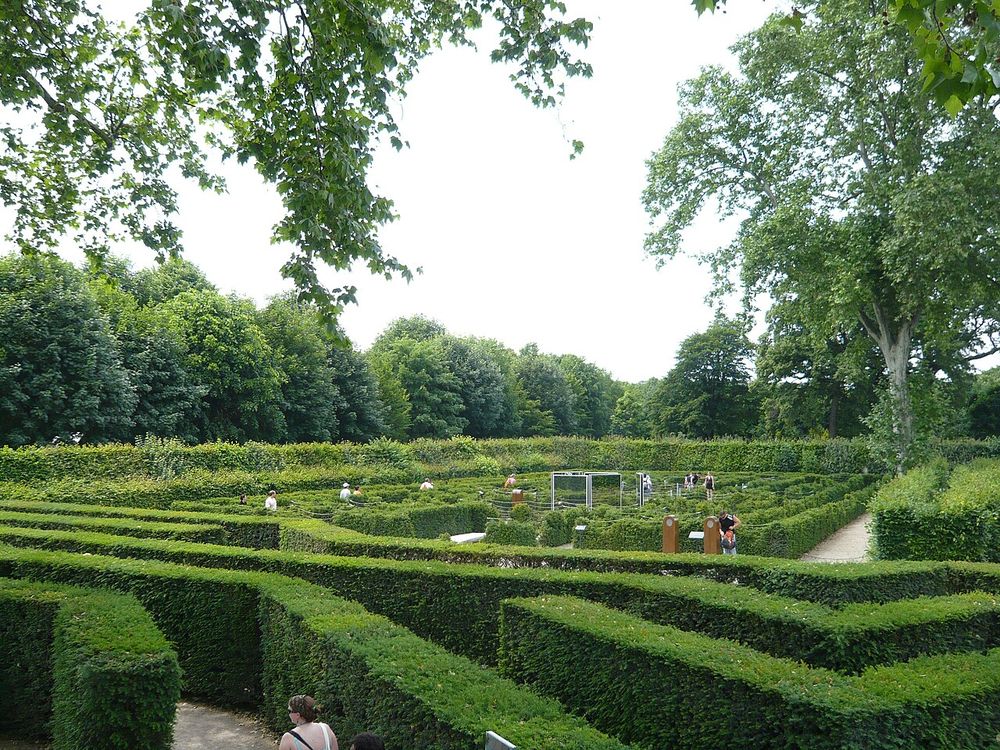
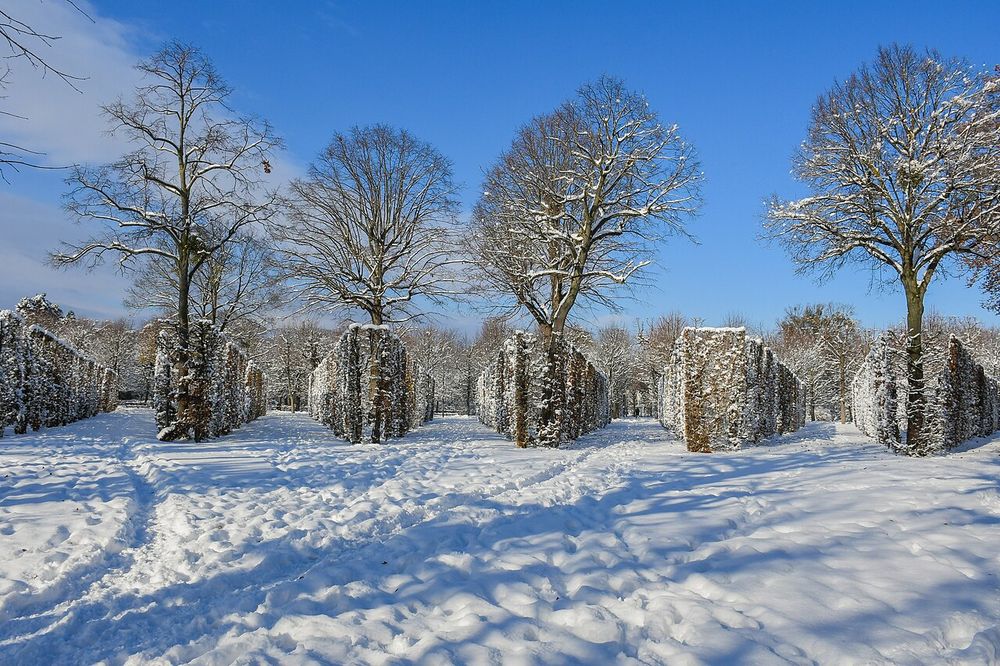
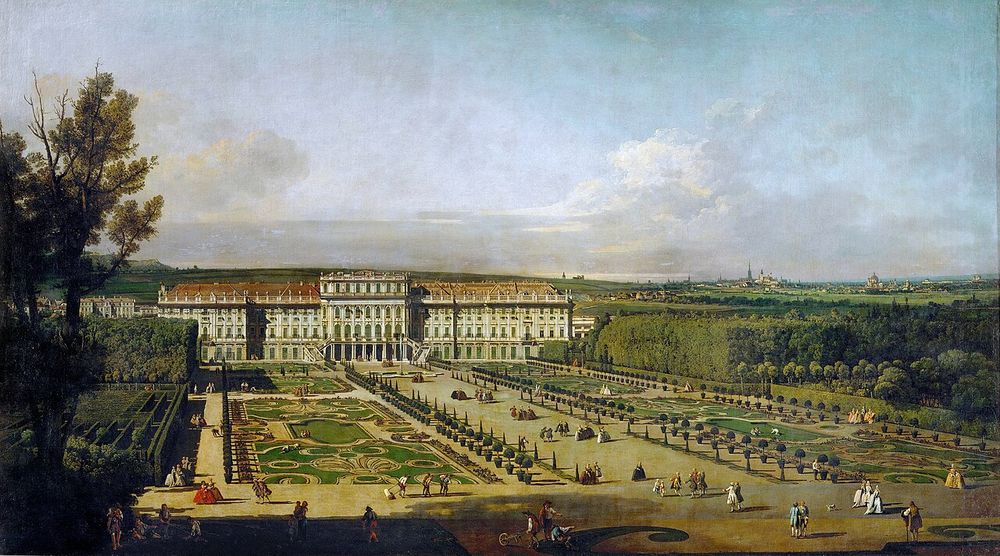
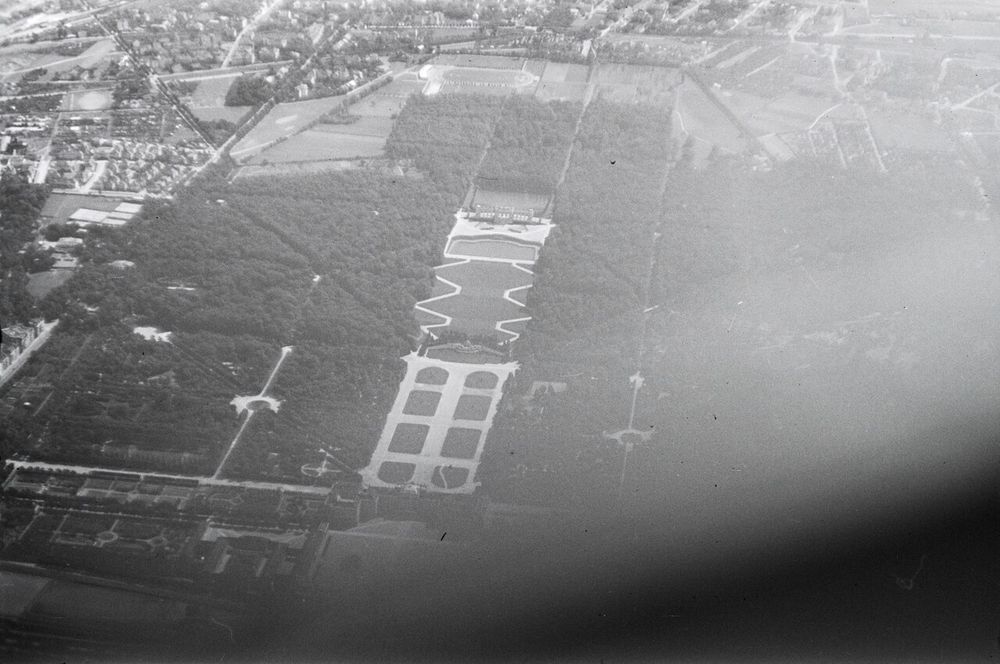
The summer palace of the Habsburgs: 1,441 rooms, a garden a kilometre long and the oldest zoo in the world. A six-year-old Mozart played here. Napoleon slept here, and his son died here. The emperor Franz Joseph was born in one room and died in another, eighty-six years later. In a small blue room with Chinese wallpaper, the empire ended with a signature.
Photo: Thomas Wolf, www.foto-tw.de, CC BY-SA 3.0 de, Wikimedia Commons
The story
The name means "beautiful spring". The Habsburgs, who ruled Austria and much of central Europe for more than six hundred years, had a hunting lodge here outside Vienna. Turkish soldiers burned it during the siege of 1683.
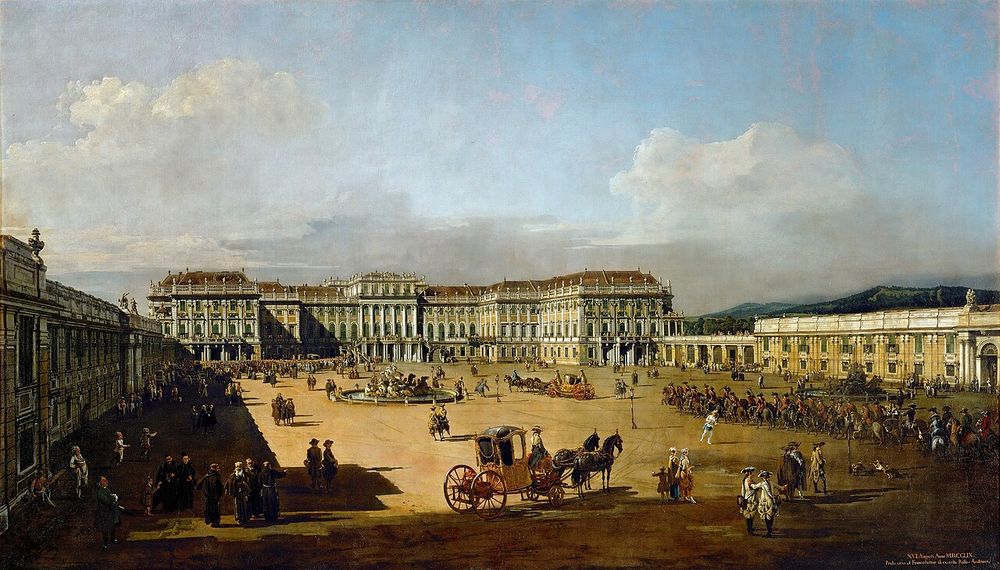
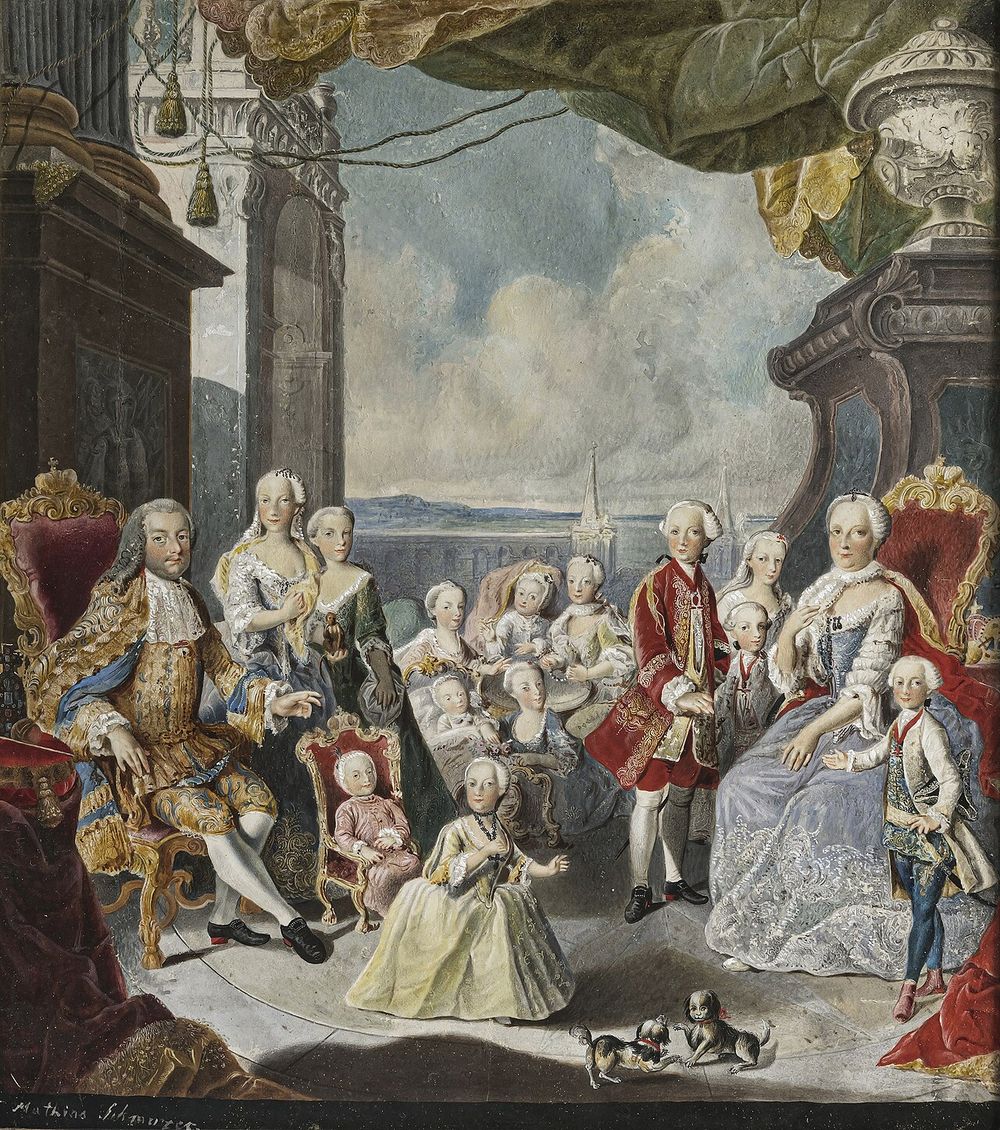
What you see was begun in 1696 and made into a family home from 1743 by Maria Theresa, the only woman ever to rule the Habsburg lands. In China that is the eighth year of the Qianlong emperor (乾隆, reigned 1736–1795). She had sixteen children and needed the space.
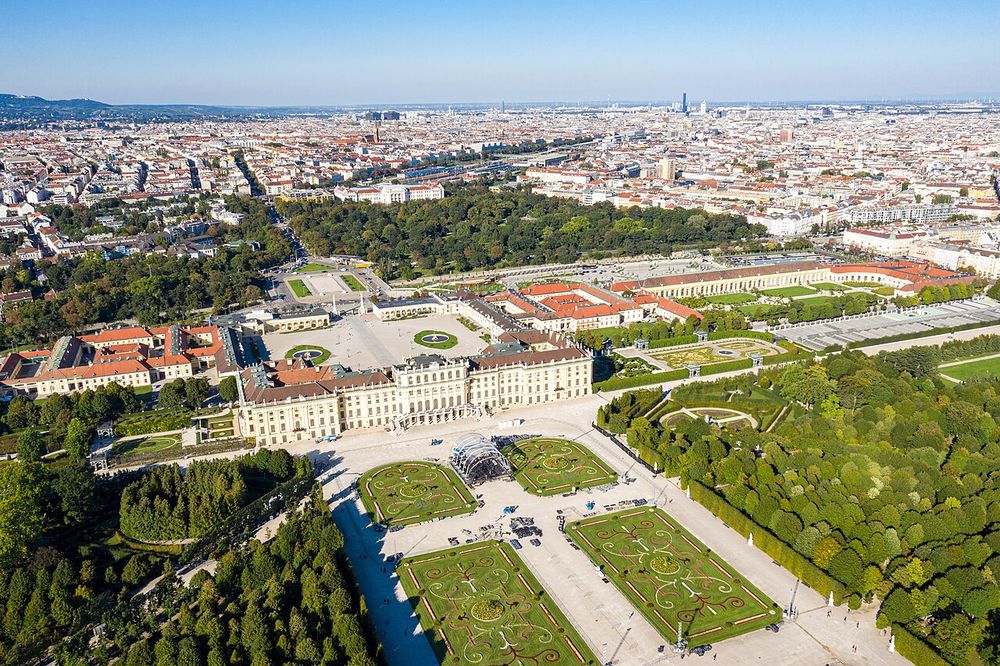
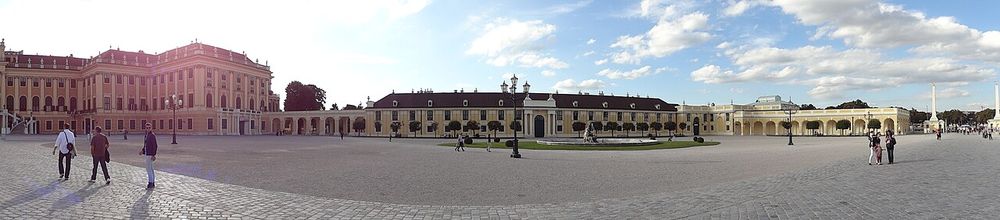
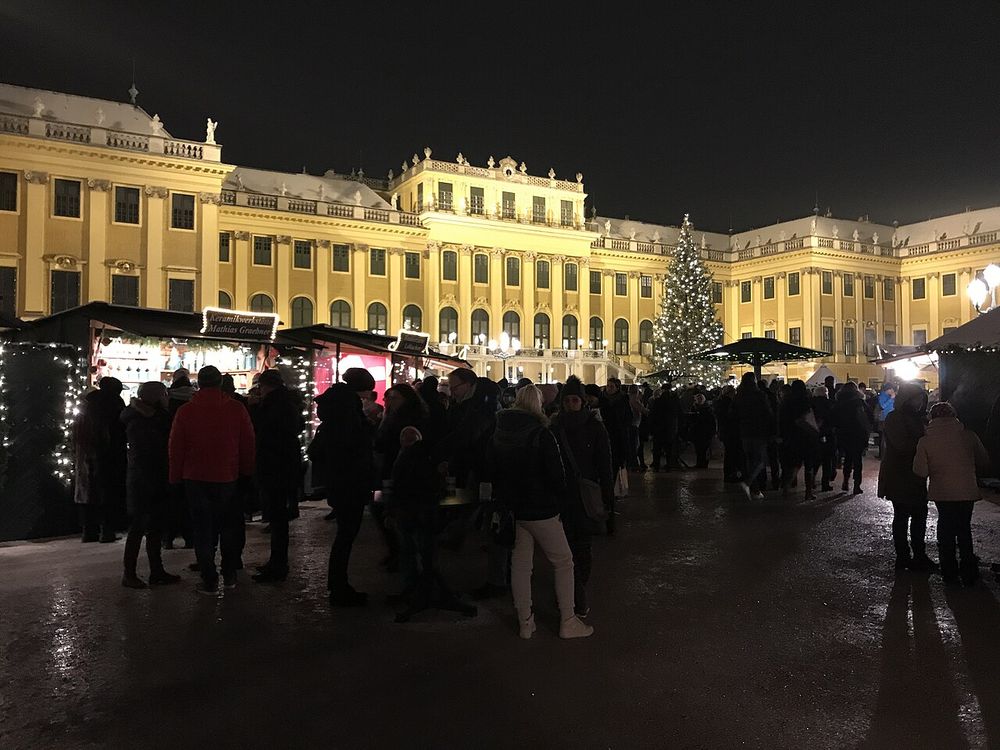
The forecourt at dusk, September 2023Conny Duck, CC BY-SA 4.0
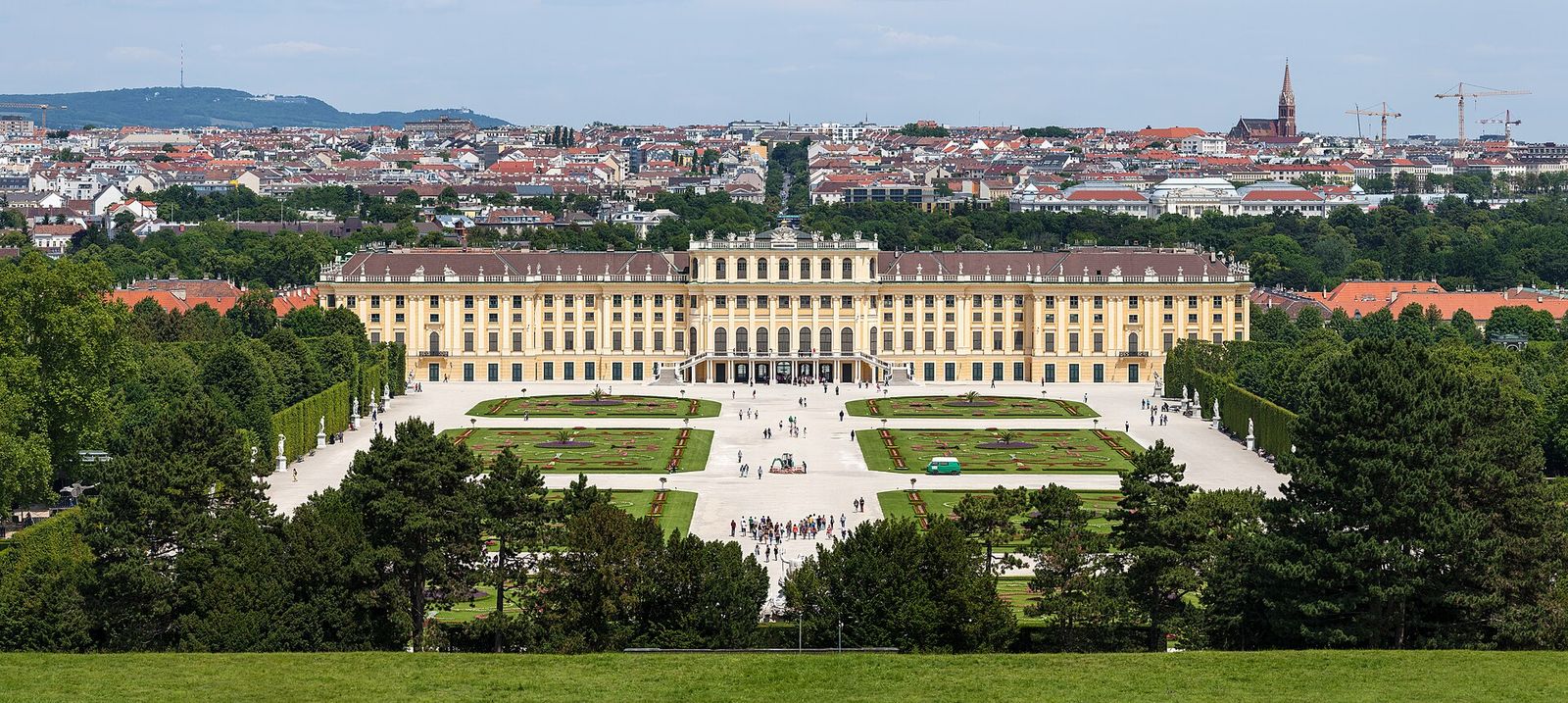
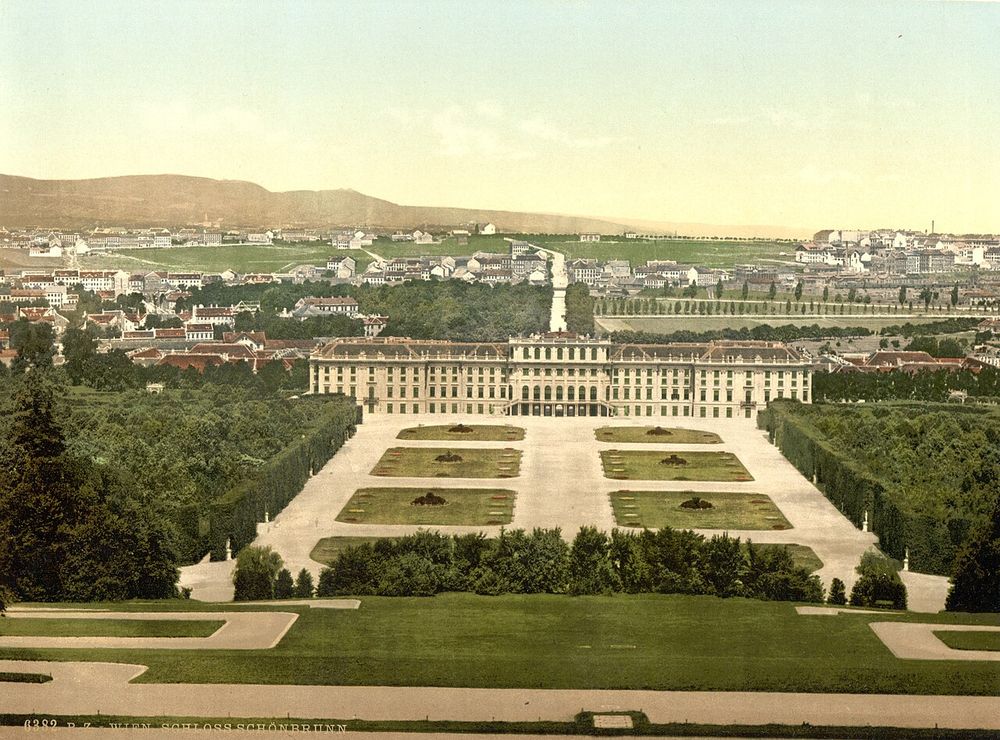
Count the windows if you can. The front is about 175 metres long. Behind it are 1,441 rooms. About forty are open to visitors. The rest are offices and flats, and people really do rent them.
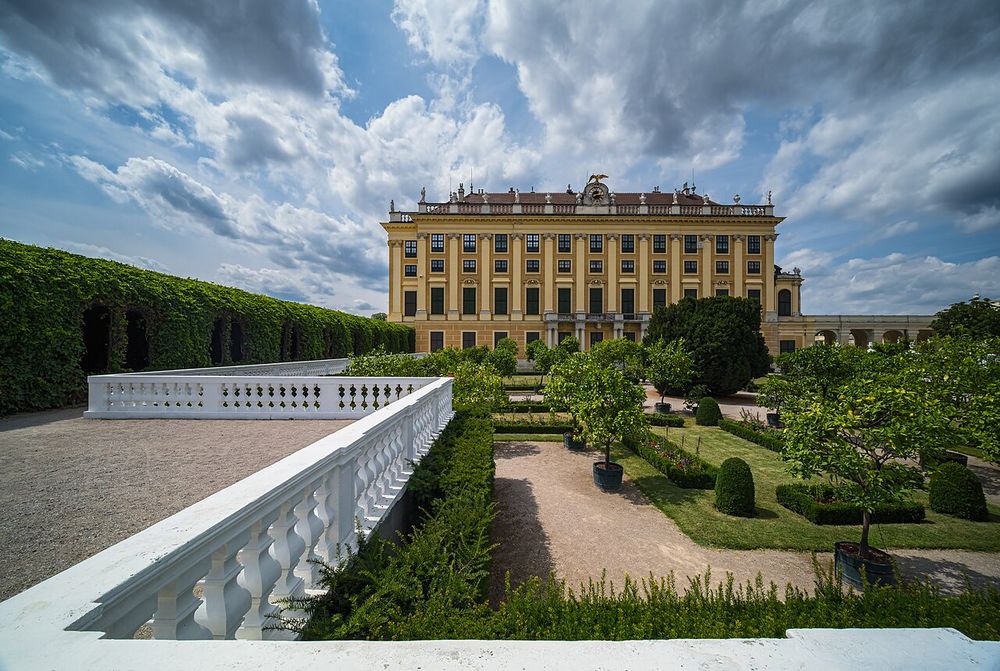
The colour has its own name, Schönbrunn yellow, and was copied on stations, barracks and town halls from Trieste to Lviv. It was the colour of the empire.
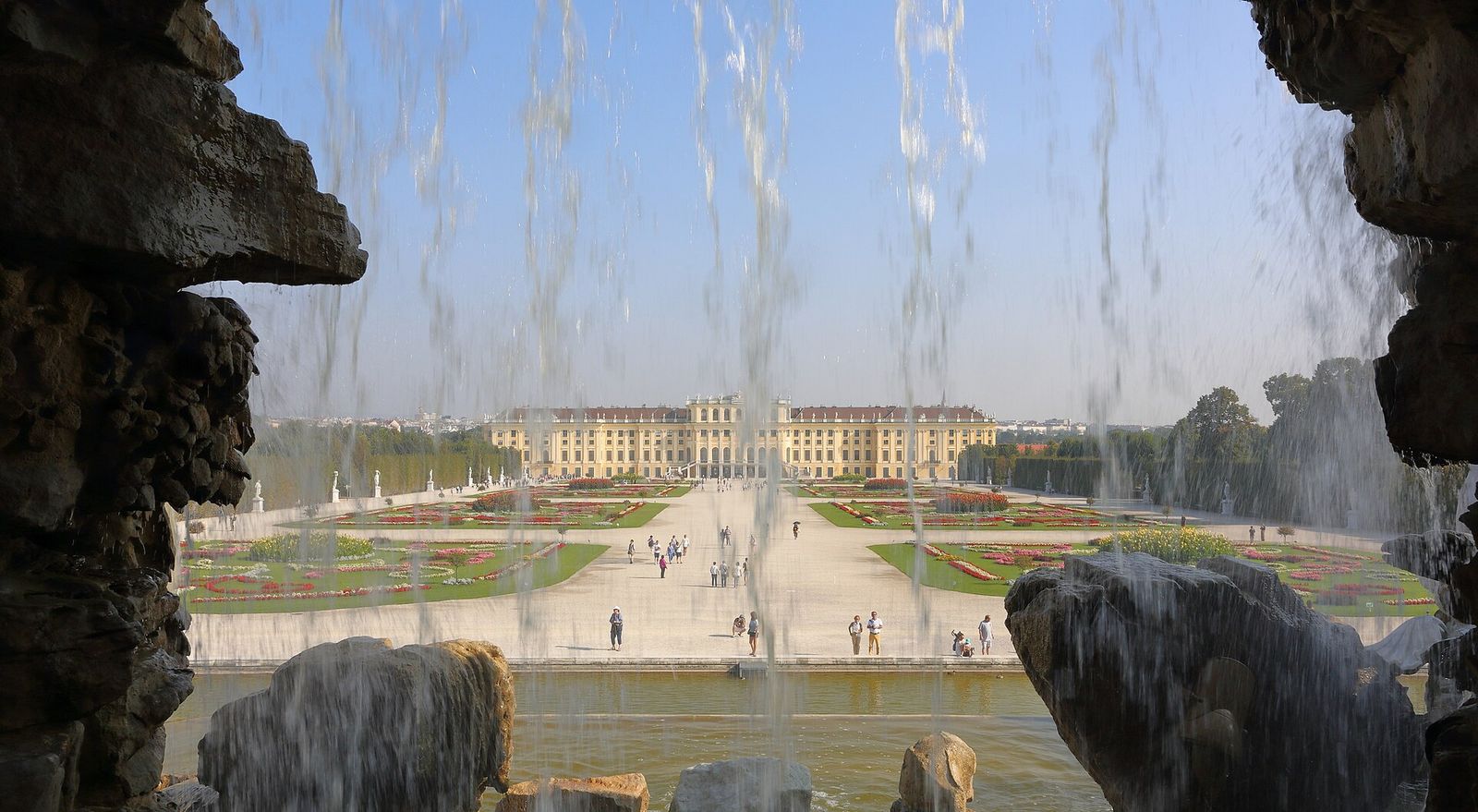
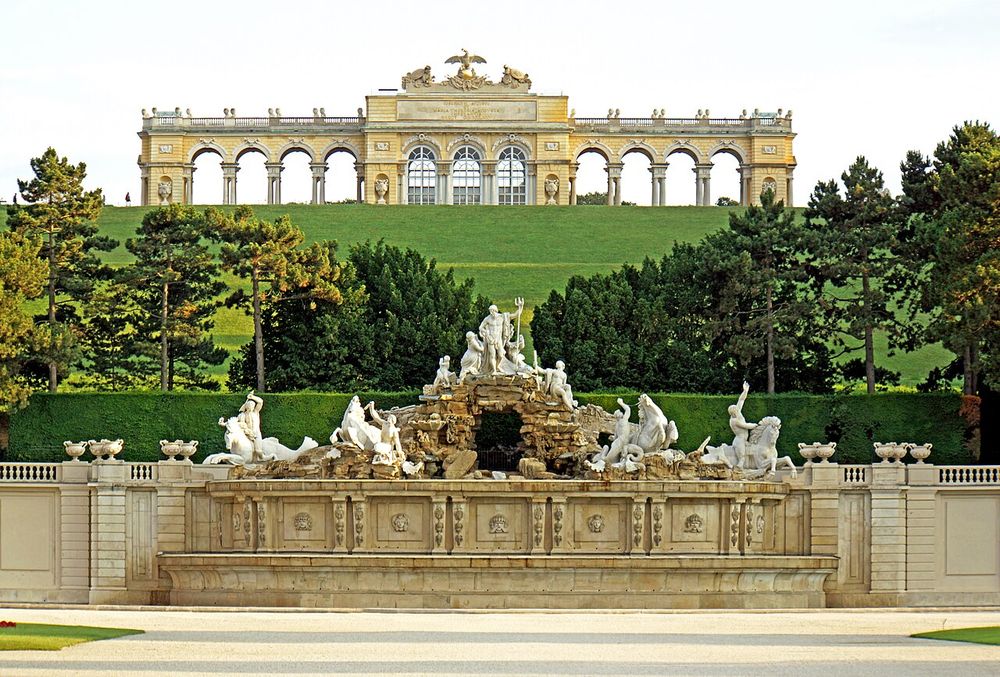
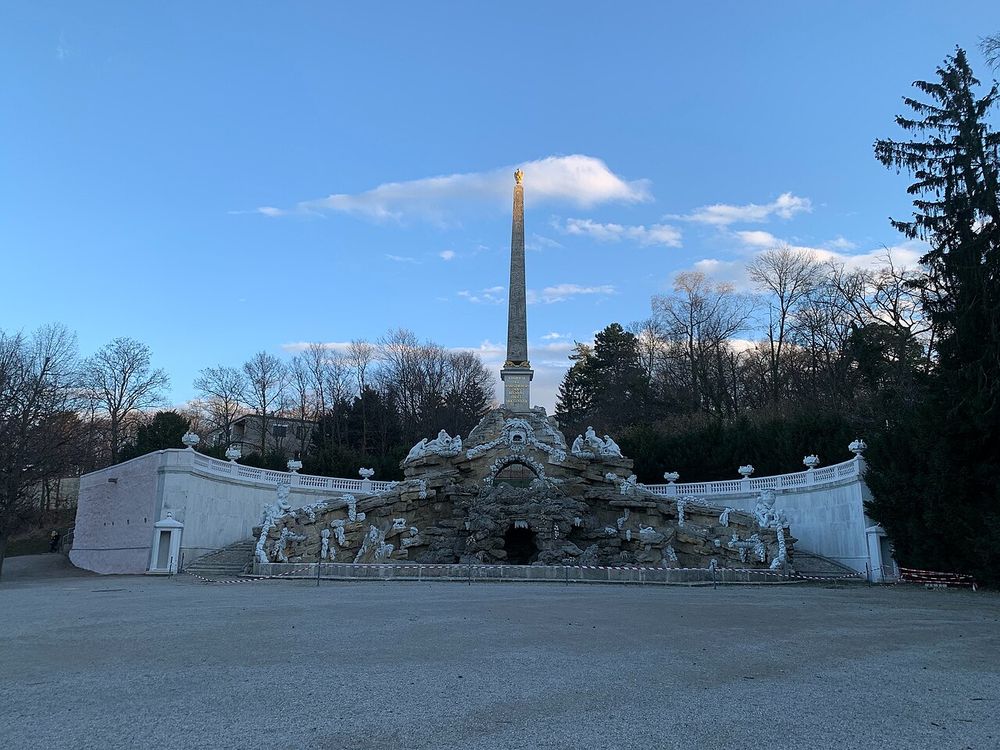
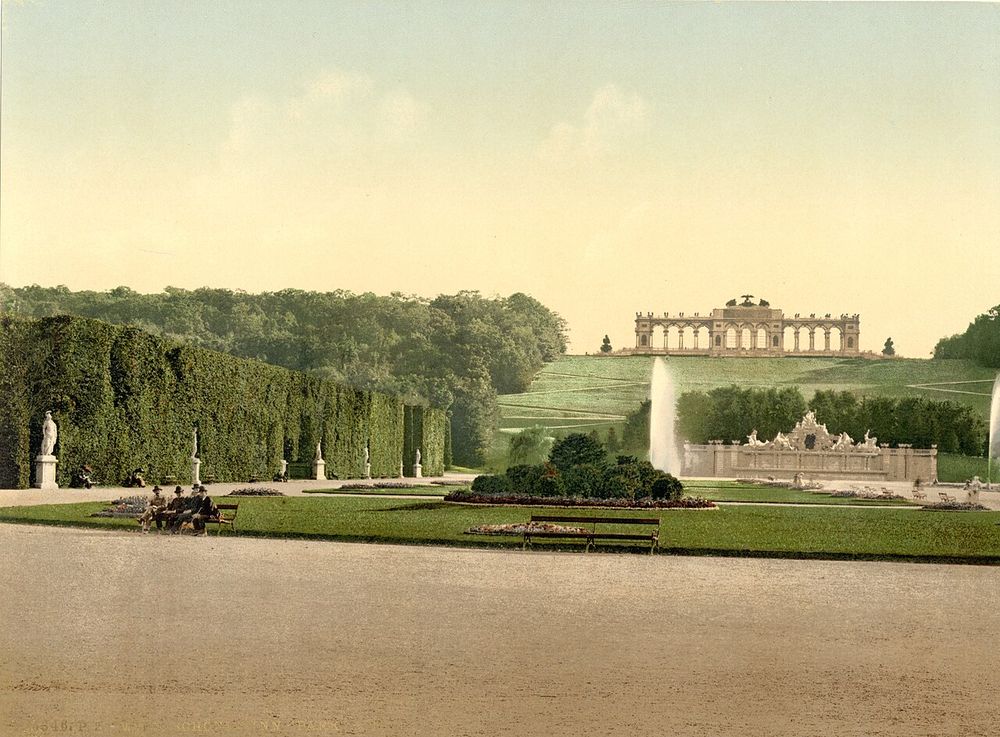
Walk through the middle arch and the palace turns out to be the gate to something larger. A flat garden runs away from you to a fountain, and above the fountain a hill, and on the hill a row of arches against the sky.
Things people often get wrong
"It has always been yellow." Research on the old plaster suggests that in Maria Theresa's day the walls were paler, with touches of pink and grey. The yellow seems to date from the early nineteenth century.
"This is where the emperors lived." Only in summer. The court's home was the Hofburg in the middle of Vienna. Franz Joseph, in old age, was the first to live here all year.
"The garden needs a ticket." The park has been open to the public since 1779 and is still free.
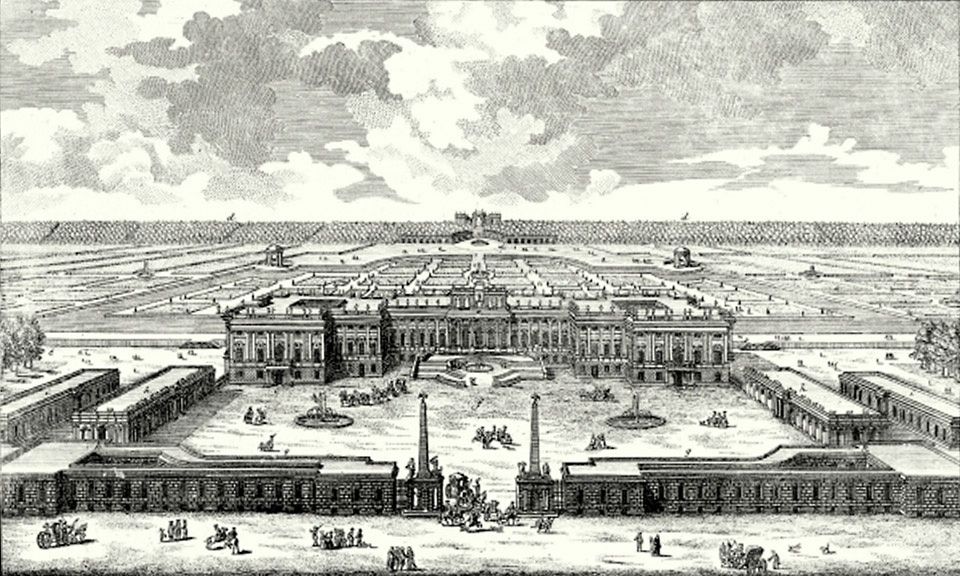
"It is Austria's Versailles." The first design, never built, was meant to outdo Versailles, with the palace on top of the hill. What was built is smaller, and the family lived in it far more plainly than the French court.
People who stood here
Maria Theresa (ruler of the Habsburg lands, 1717–1780)She inherited at twenty-three, fought off half of Europe to keep her lands, and ruled for forty years, spending her summers here. After her husband died in 1765 she wore black for the rest of her life and turned his study into a memorial lined with Chinese lacquer.
Wolfgang Amadeus Mozart (Austrian composer, 1756–1791)On 13 October 1762, aged six, he played the harpsichord for the empress. His father wrote home that Wolferl jumped into her lap, put his arms round her neck and kissed her soundly.
Marie Antoinette (queen of France, 1755–1793)Born Maria Antonia, the fifteenth child, she grew up in these rooms and gardens. At fourteen she was sent to France to marry the heir to the throne. She never saw Schönbrunn again.
Napoleon Bonaparte (emperor of the French, 1769–1821)He took Vienna twice, in 1805 and 1809, and both times made this palace his headquarters. In October 1809 a German student of seventeen came to a parade in the forecourt with a kitchen knife to kill him. Months later Napoleon married the Austrian emperor's daughter.
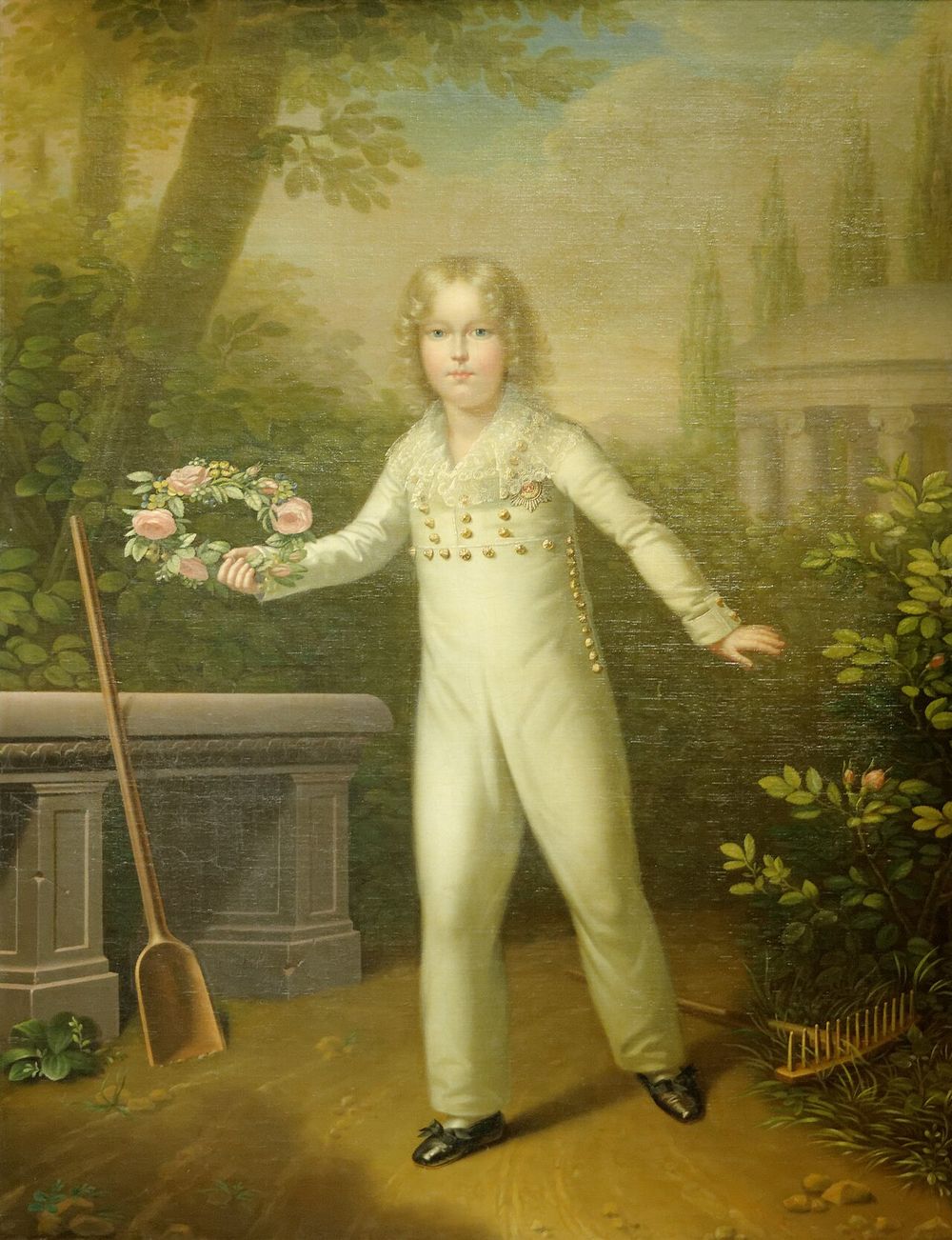
Napoleon II, Duke of Reichstadt (1811–1832)Napoleon's only legitimate son was brought to Vienna at three and raised as an Austrian prince. He never saw his father again. He died of tuberculosis at twenty-one in the room his father had slept in.
Franz Joseph I (emperor of Austria, 1830–1916)He reigned for sixty-eight years. He got up before four, washed in cold water, and was at his desk by five. He slept on an iron soldier's bed, and died in it on 21 November 1916, in the middle of a world war.
Elisabeth, "Sisi" (empress of Austria, 1837–1898)She married the emperor at sixteen and spent much of her life getting away from his court. Her rooms here have a staircase she had built so that she could reach the garden without being seen.
Charles I (last emperor of Austria, 1887–1922)On 11 November 1918, the day the guns stopped in the west, he signed a paper in the Blue Chinese Salon giving up any part in the government. He never used the word abdicate. The republic was declared the next day.
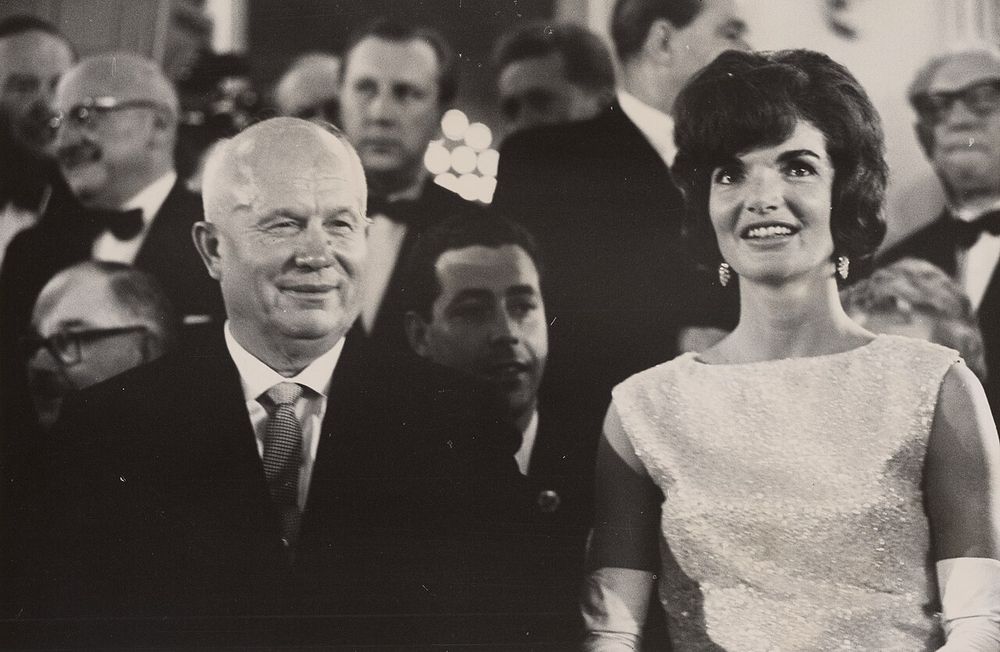
John F. Kennedy and Nikita Khrushchev (leaders of the United States and the Soviet Union)They met in Vienna on 3 and 4 June 1961. The talks went badly. On the first evening Austria gave them a dinner in the Great Gallery. Ten weeks later the Berlin Wall went up.
Romy Schneider (Austrian-born actress, 1938–1982)She played the young empress in the three Sissi films (1955–57), partly shot here. They made the palace famous across Europe and Asia, and made her so tired of the role that she refused a fourth.
Go deeper: eight stops, through the rooms and up the hill
Stops 1 to 5 are inside and need a ticket. Stops 6 to 8 are in the park, which is free.
1. The emperor's rooms
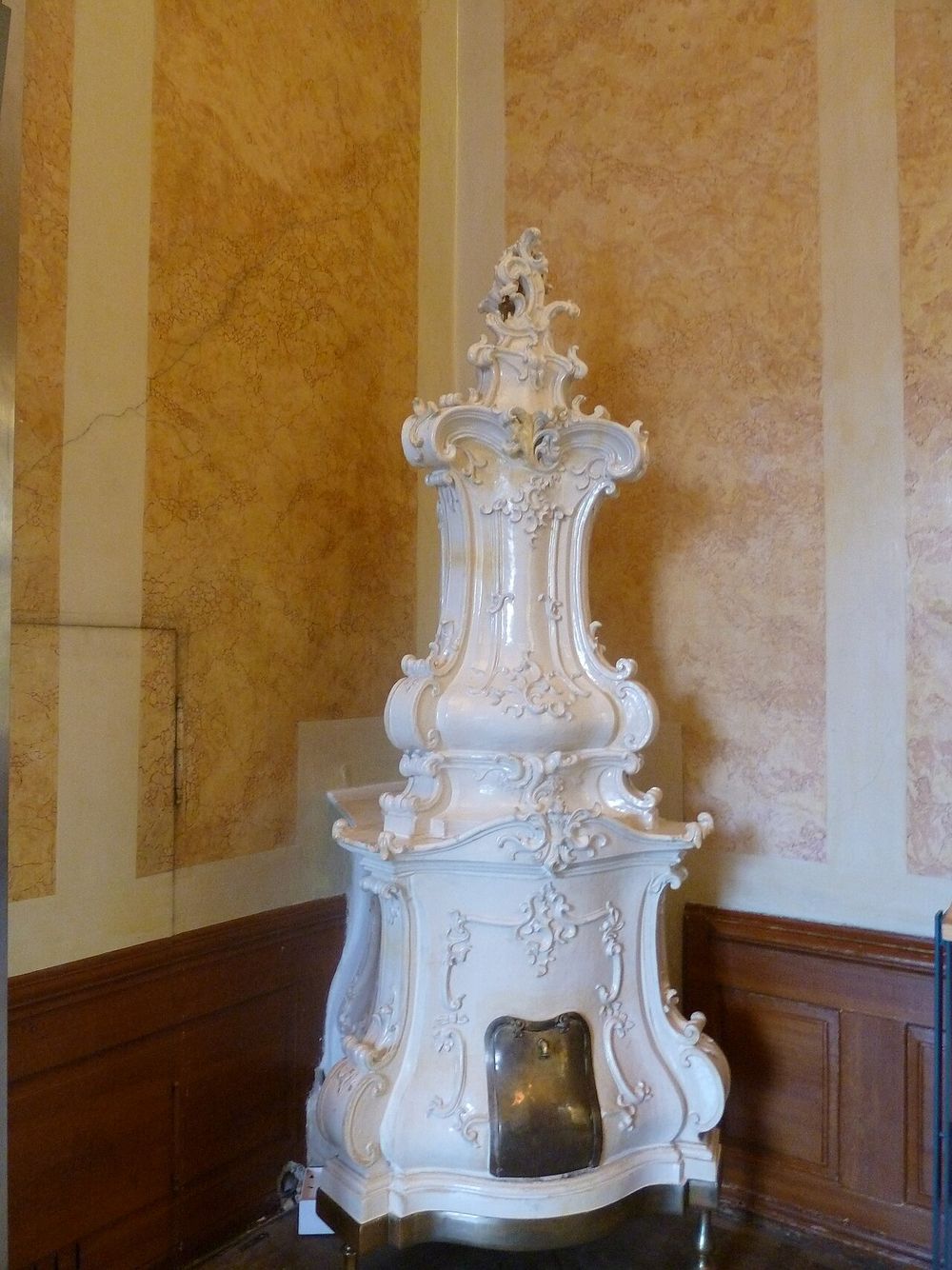
A stove with no door: it was fed from behind the wallDeror_avi, CC BY-SA 3.0
The visit begins with Franz Joseph. His study has a desk, family photographs and little else. His bedroom has the iron bed. Beside it stood a washstand, and, a late concession, a water closet installed in 1899.
Look at the tall white stoves in the corners. None has a door. They were fed from passages behind the walls, so that no servant carrying wood ever crossed a room.
2. The Mirror Room
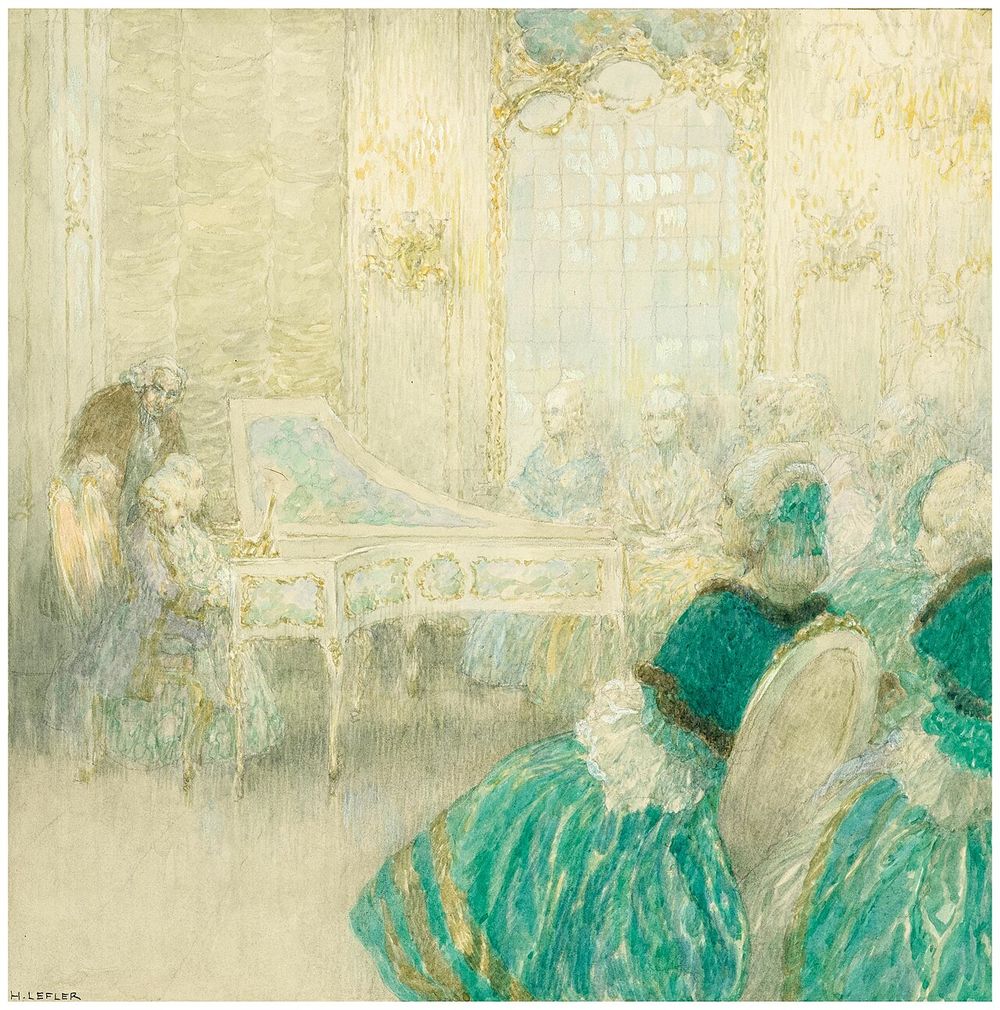
The child Mozart at Schönbrunn, imagined by Heinrich Lefler before 1919Heinrich Lefler, Public domain
White and gold, with tall mirrors that double the candles. By tradition this is the room where the Mozart children played in 1762: Wolfgang, six, and his sister Nannerl, eleven. The empress gave each of them a set of court clothes that her own children had outgrown.
3. The Great Gallery
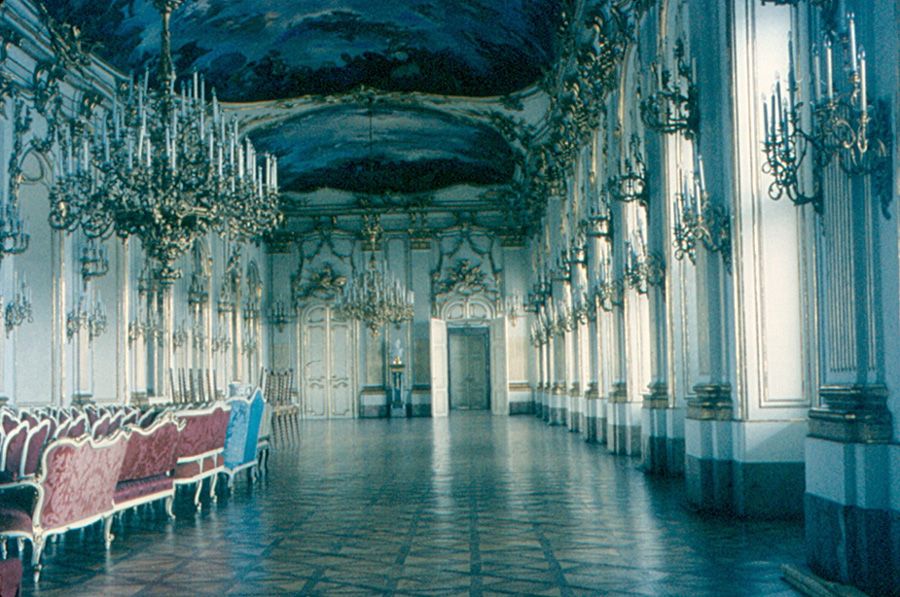
The Great Gallery in February 1961Roger Wollstadt, CC BY-SA 2.0
Forty metres long, ten wide, with windows on one side and mirrors facing them. The court danced here. The ceiling shows the Habsburg lands bringing their riches to Maria Theresa and her husband.
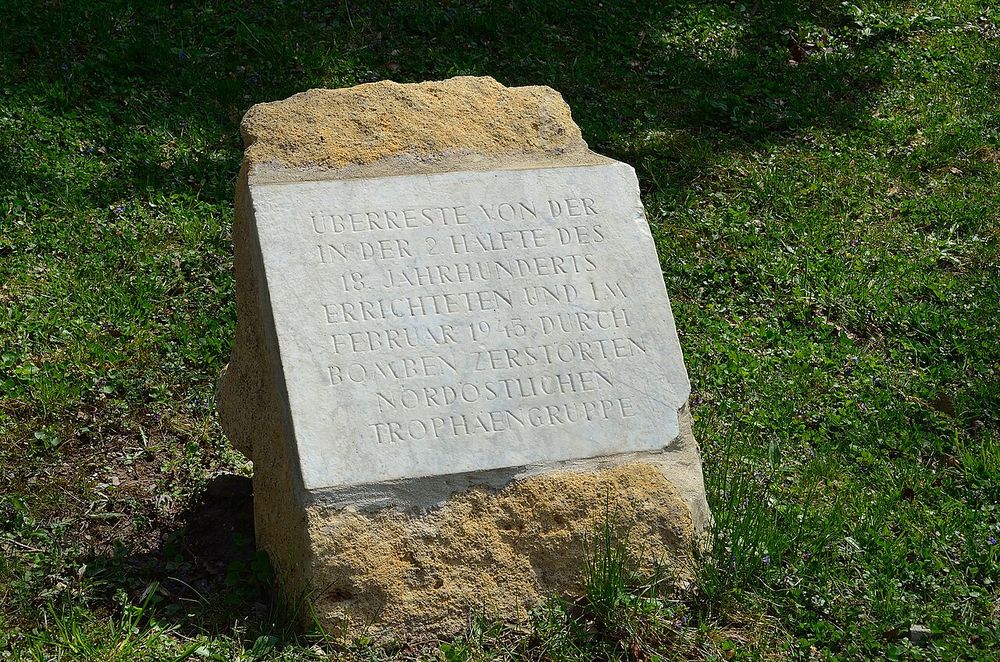
Look at the painting at the eastern end. It is a copy. In February 1945 a bomb came through the roof at that spot.
4. The Chinese rooms
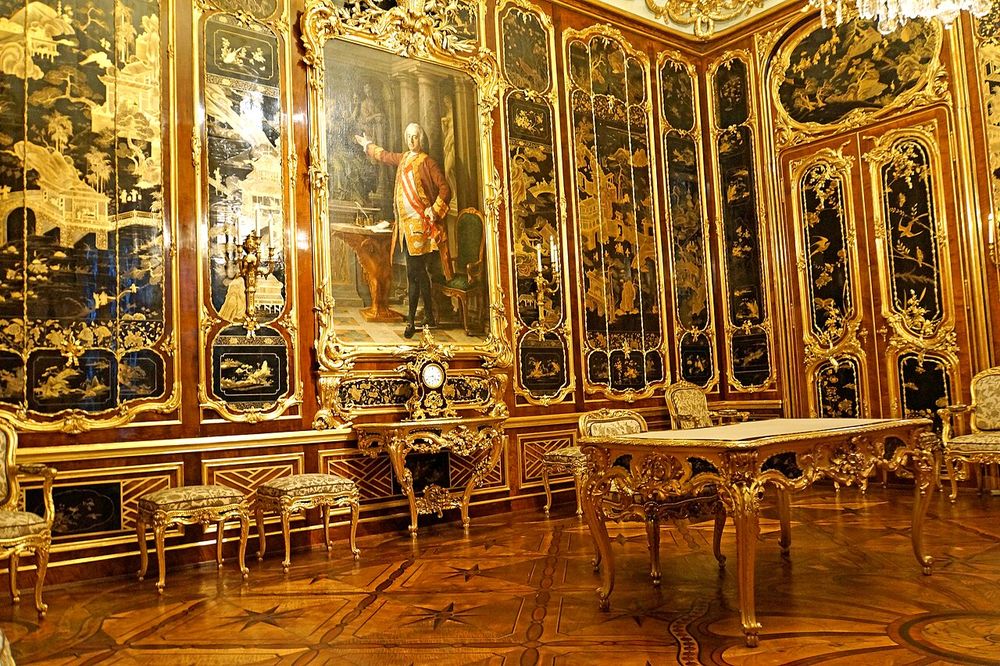
The Vieux-Laque Room, June 2015Dennis G. Jarvis, CC BY-SA 2.0
A Chinese visitor will find things from home. Off the gallery are two small cabinets, one round and one oval, lined with lacquer panels and blue-and-white porcelain on gilded brackets. Maria Theresa held her most private meetings in the round one.
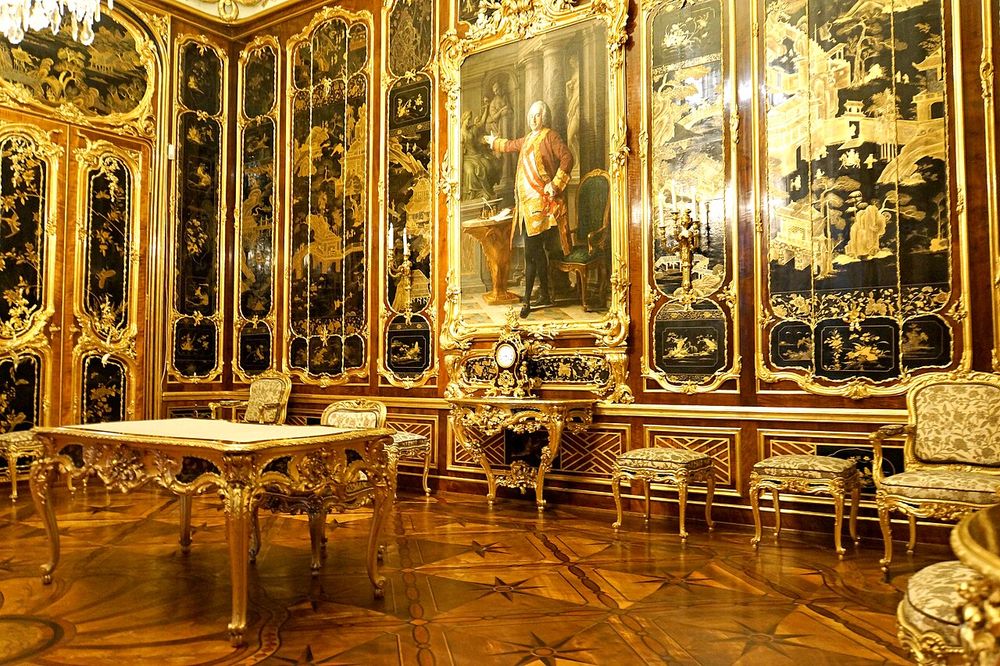
Further on is the Vieux-Laque Room, her memorial to her husband. Black lacquer panels from Beijing, painted in gold with landscapes, birds and flowers, were cut up and set into walnut walls. She paid a fortune for them. In eighteenth-century Europe nothing was more fashionable than China, and almost nobody had been there.
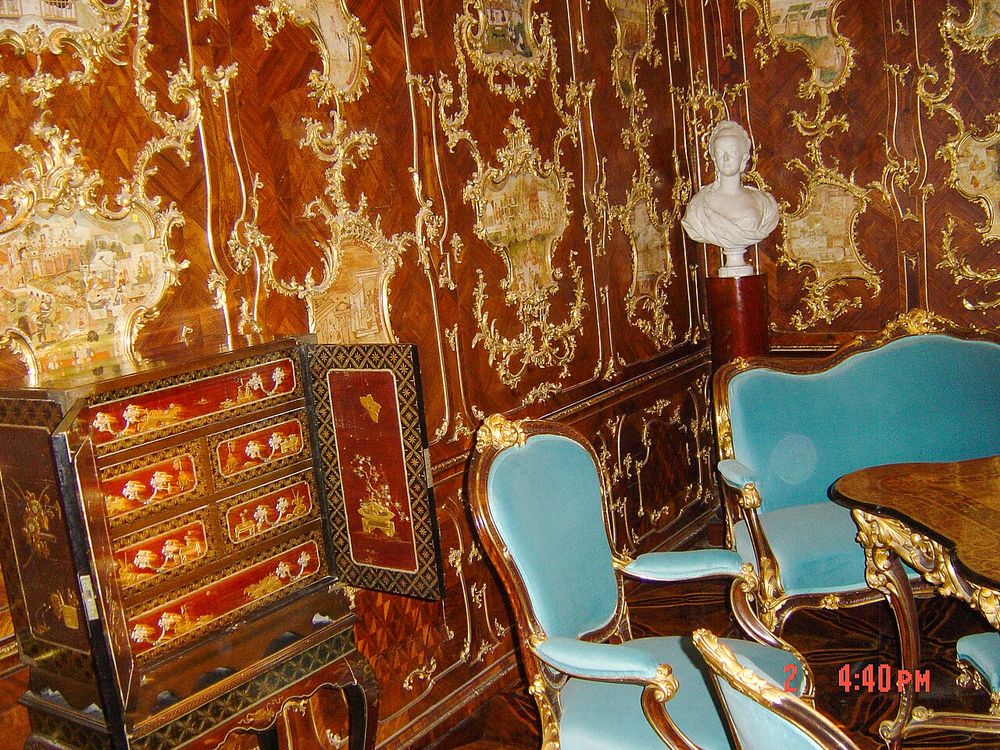
Dark panelling set with gilt framesSzilas, CC BY-SA 4.0
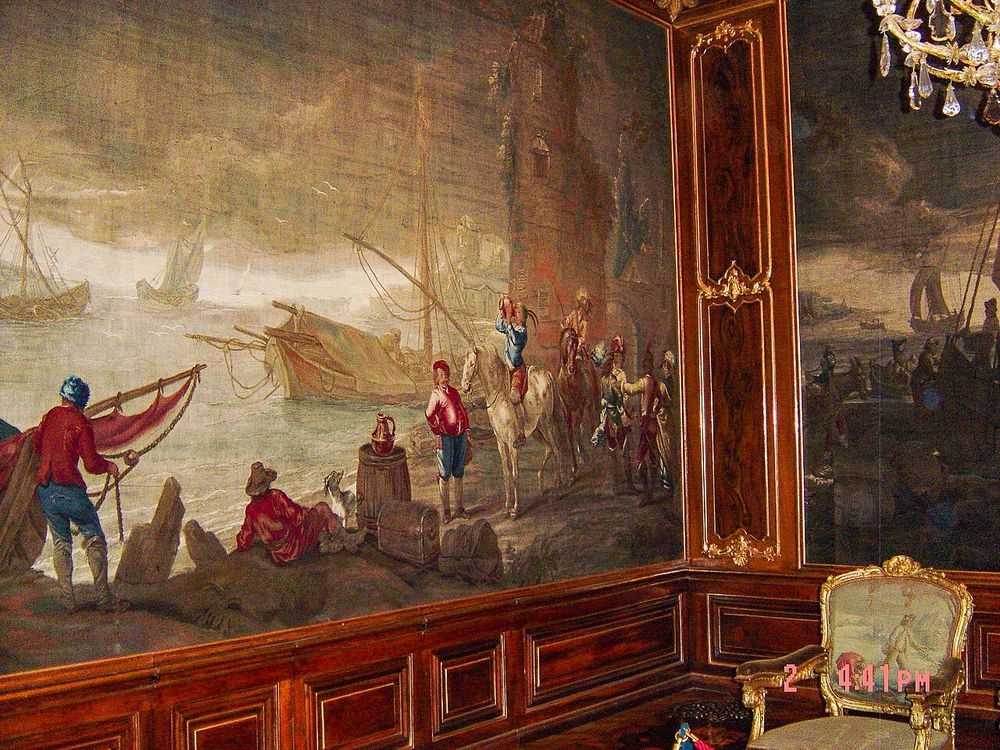
The room called the Millions Room is panelled in a rare tropical wood. Set into it are sixty frames, and in each frame a collage of Indian and Persian miniatures, cut apart and rearranged by members of the family.
5. Two small rooms
Napoleon's son as a gardener, painted about 1815Carl von Sales (1797-1870), CC BY-SA 3.0
The Napoleon Room was Maria Theresa's bedroom. Napoleon probably slept in it in 1805 and 1809. His son died in it in 1832. The boy's pet, a crested lark, is still there, stuffed, under glass.
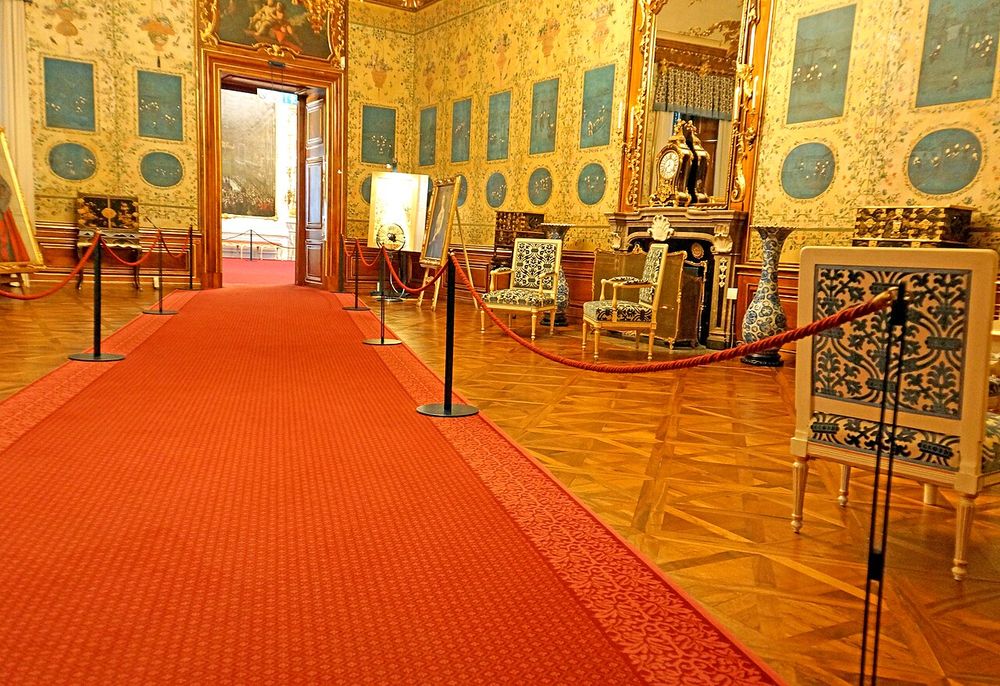
The Blue Chinese SalonDennis G. Jarvis, CC BY-SA 2.0
The Blue Chinese Salon has hand-painted paper wall-hangings made in China in the eighteenth century: scenes of people growing rice, raising silkworms and making porcelain. In this room, on 11 November 1918, the last emperor signed.
6. The garden and the fountain
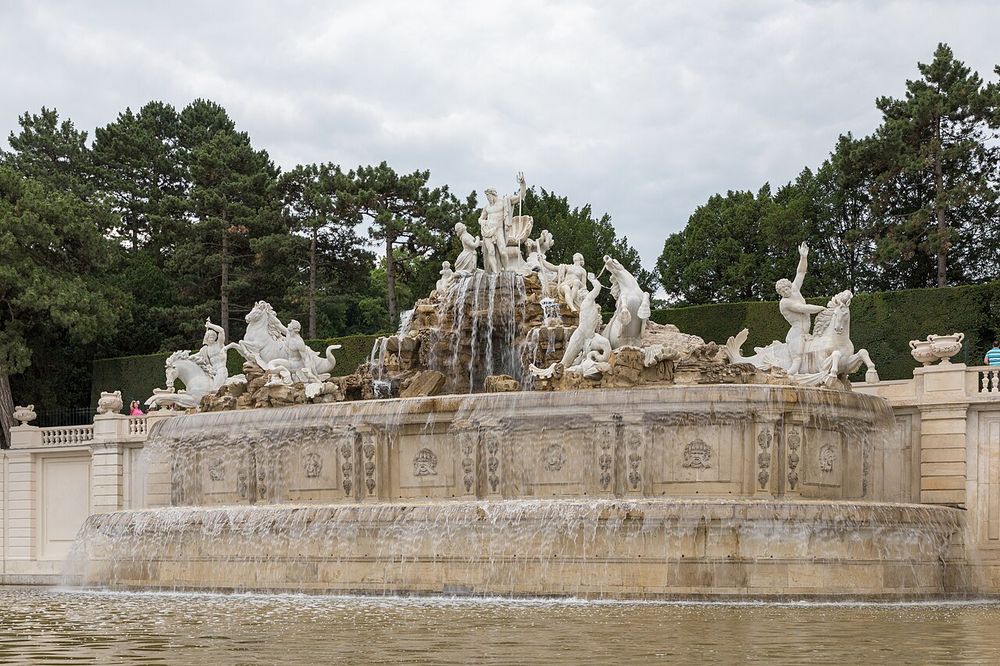
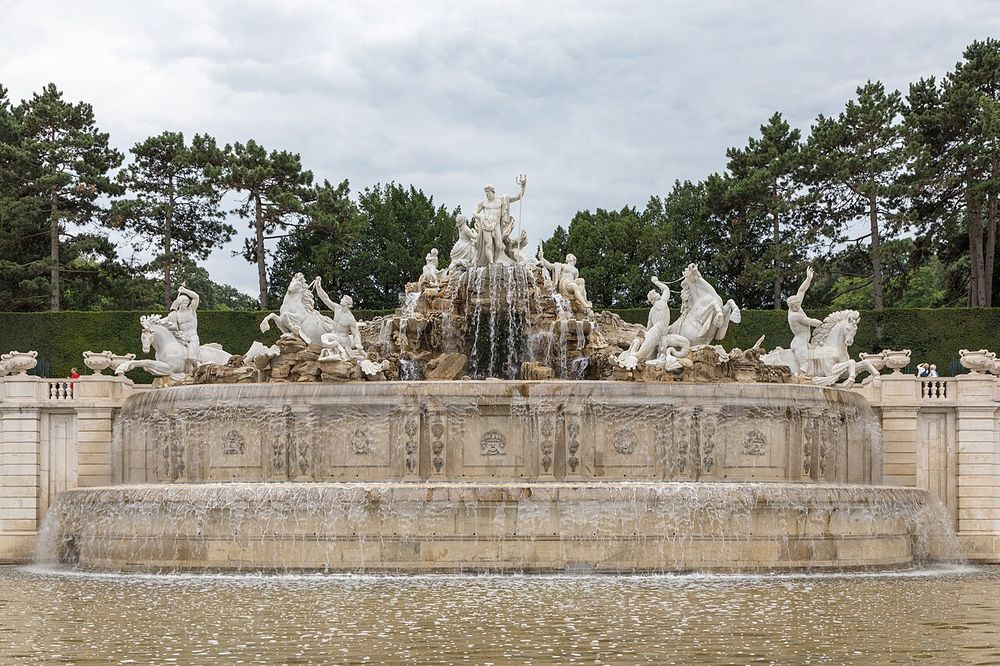
The Neptune Fountain, 2018Dietmar Rabich, CC BY-SA 4.0
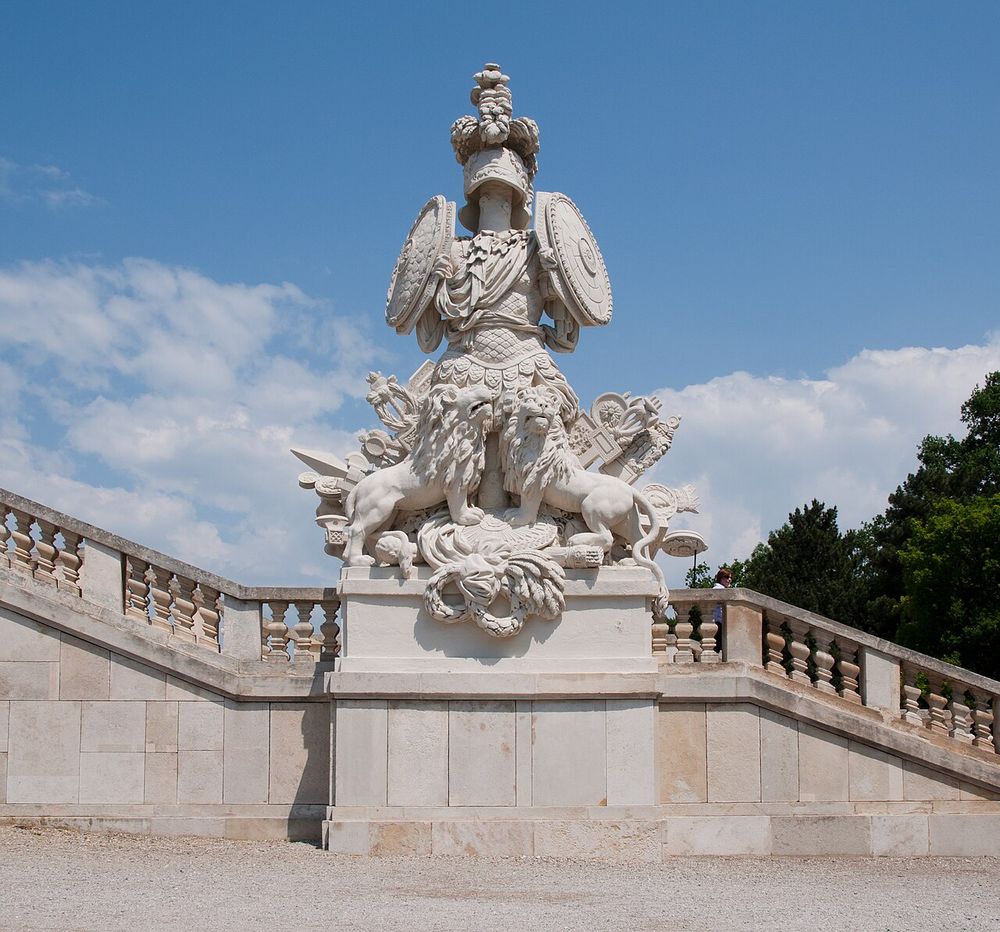
The flat garden behind the palace is called the Great Parterre. The flowerbeds are laid out like embroidery, to be read from the windows above. Thirty-two statues of gods and heroes stand along the hedges.
At the far end the sea-god Neptune stands over a rock with his trident, among horses with fish tails. The fountain was finished in 1780, just before Maria Theresa died.
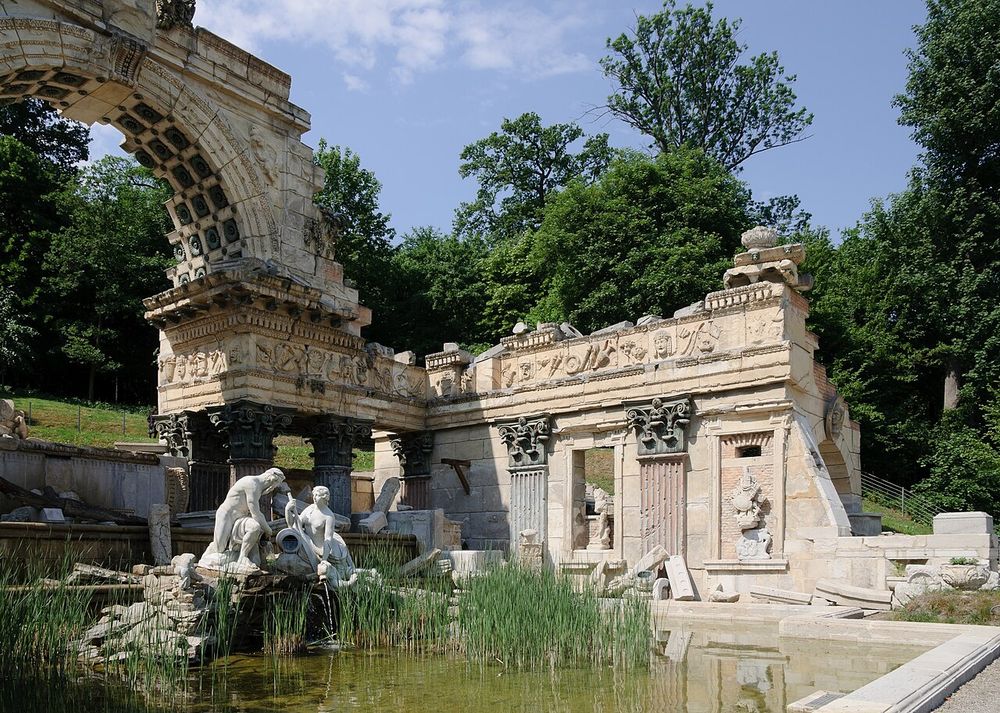
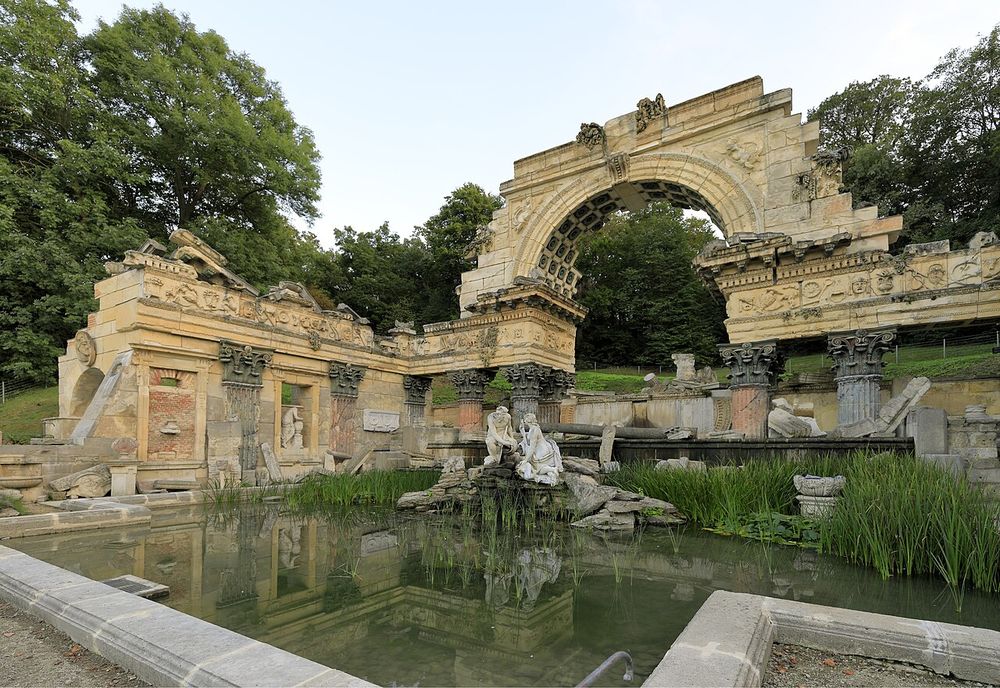
The Roman Ruin, built as a ruin in 1778MrPanyGoff, CC BY-SA 3.0
To the left of the fountain, in the trees, is a ruin: broken columns, a fallen arch, a pool. It was built as a ruin, in 1778. A ruin in a garden told visitors that even Rome fell, and that the family which owned the garden had outlasted it.
7. The Gloriette
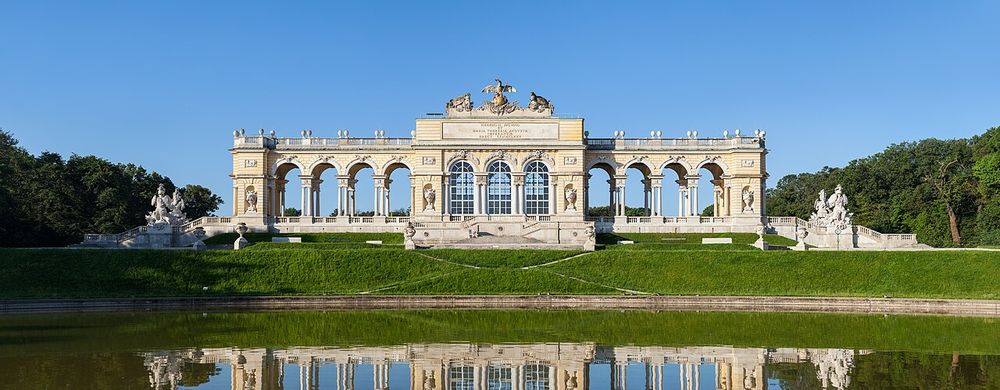
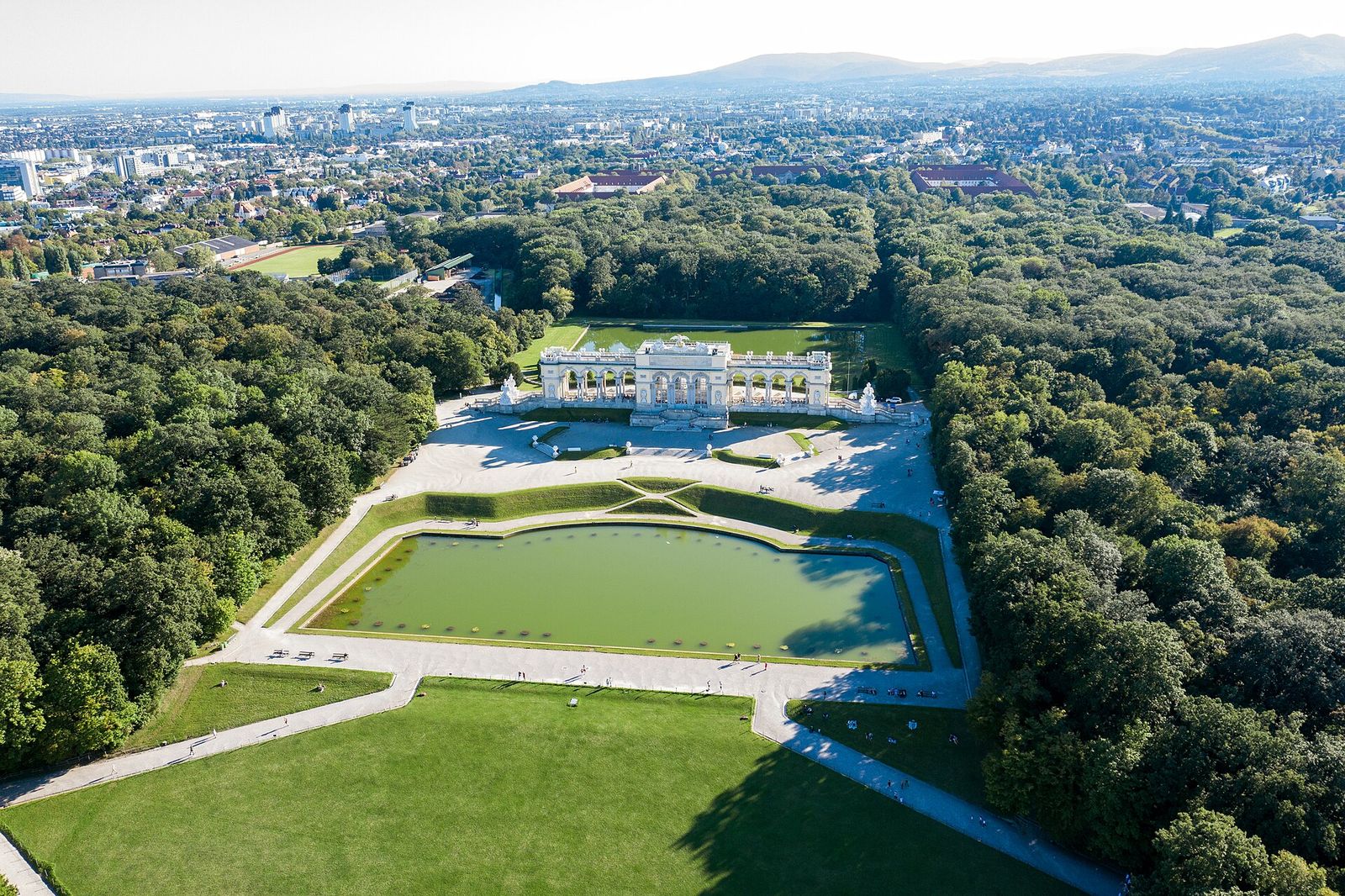
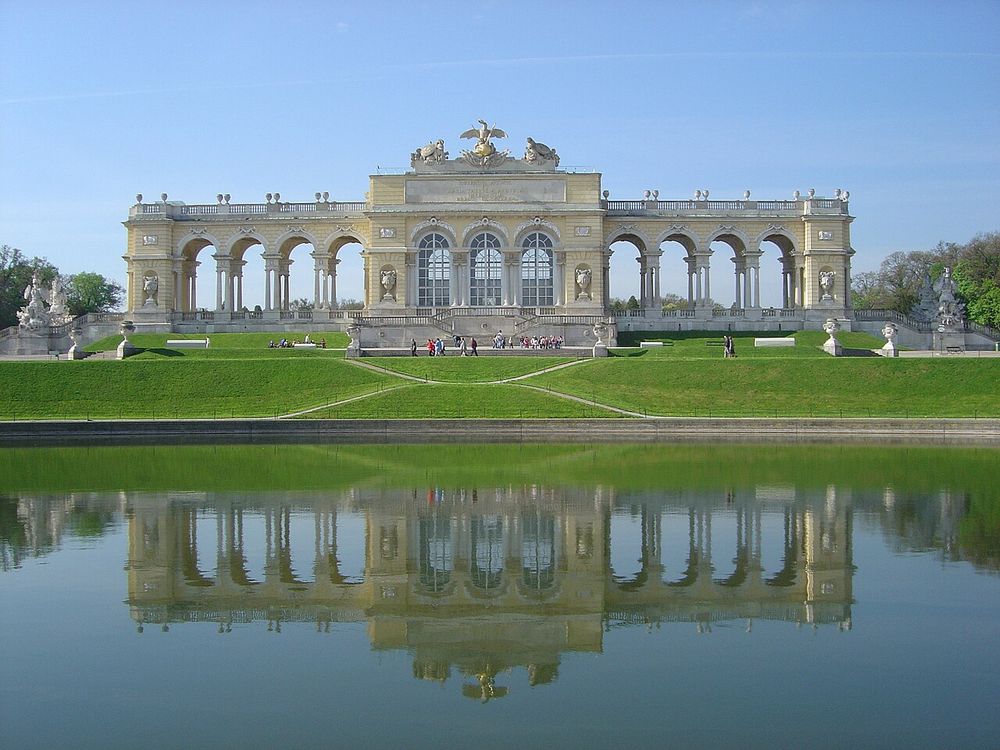
The Gloriette and its reflection, June 2014Thomas Wolf, www.foto-tw.de, CC BY-SA 3.0 de
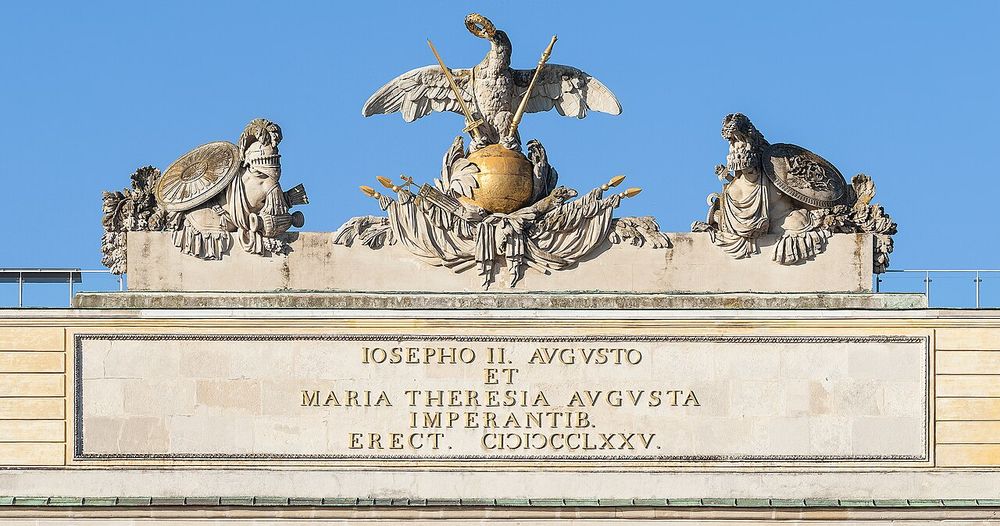
Climb the zigzag path. It takes fifteen minutes. The arcade on top was built in 1775 as a monument to what the empress called a just war, the one that kept her lands together. The Latin letters name her and her son Joseph. Part of the stone came from an older, abandoned palace.
Franz Joseph took breakfast in the glazed middle section. It is a café now. Turn round. This is the view the first architect wanted for the palace itself: the yellow front below, and all Vienna behind it.
The same shot: stand at the edge of the pond in front of the Gloriette on a still morning and the whole arcade is doubled in the water.
8. The zoo and the glass house
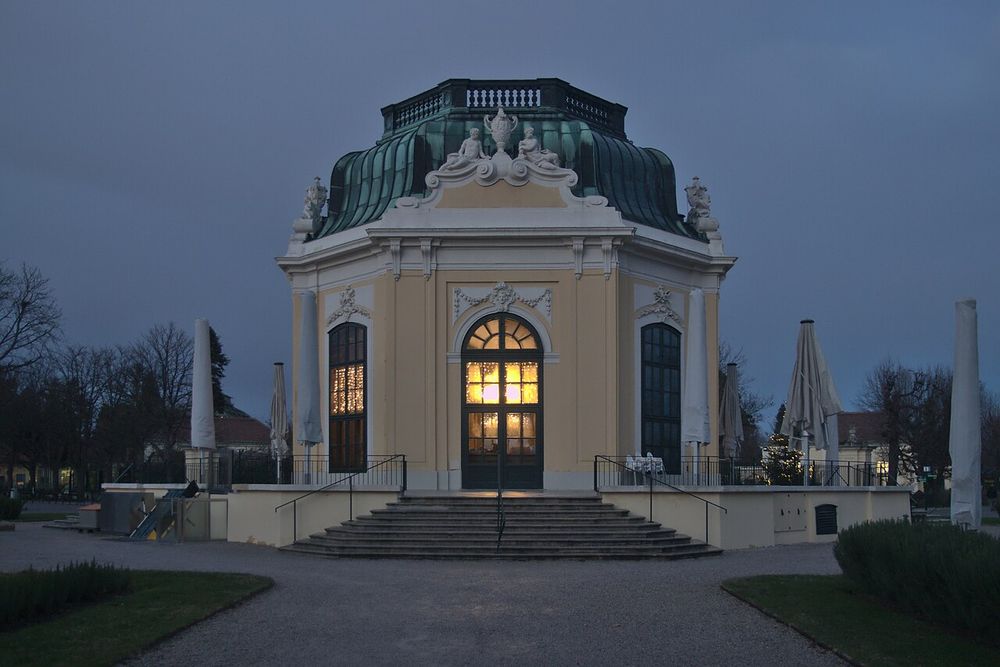
The imperial breakfast pavilion in the zoo, December 2018Paul Korecky, CC BY-SA 2.0
In 1752 Maria Theresa's husband, who liked science more than ruling, laid out thirteen animal enclosures like slices of a cake round a small pavilion, where the family ate breakfast and watched. The pavilion is still there. This is the oldest zoo in the world that has never closed.
Giant pandas have lived here, on loan from China, since 2003. A cub born in 2007 was the first in Europe conceived without help from the keepers.
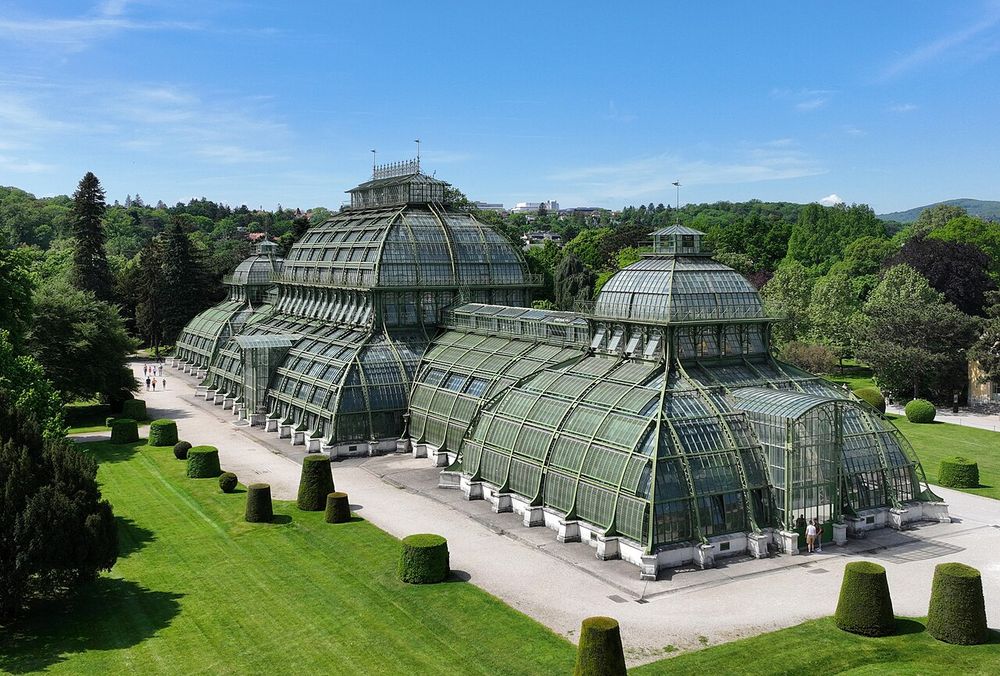
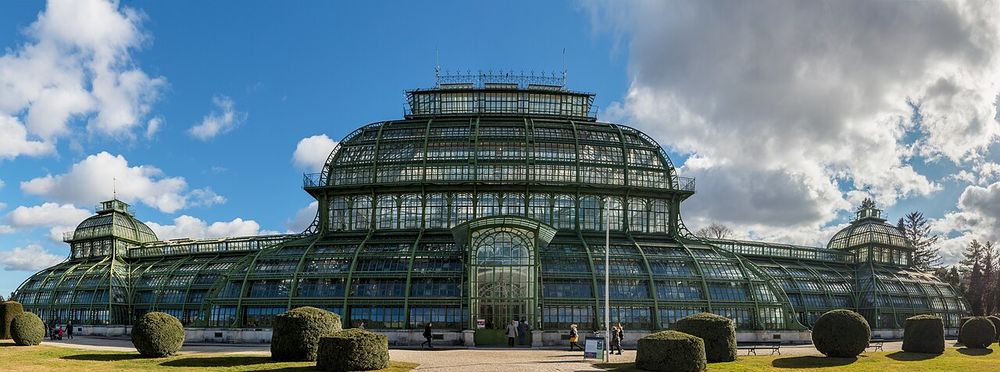
The Palm House, May 2022C.Stadler/Bwag, CC BY-SA 4.0
Near by, the Palm House of 1882 is 111 metres of iron and glass in three domes, each kept at a different climate.
Meanwhile in the world
Year
Here
Elsewhere
1696
Building begins on the present palace
Peter the Great becomes sole ruler of Russia
1743
Maria Theresa begins to rebuild it as a family home
Handel's Messiah is first heard in London
1762
Mozart, aged six, plays for the empress
Catherine the Great seizes the Russian throne
1775
The Gloriette is built
The American War of Independence begins
1809
Napoleon dictates a peace treaty here
Abraham Lincoln and Charles Darwin are born
1830
Franz Joseph is born in the palace
The first passenger railway opens in England
1918
The last emperor signs away his part in government
The First World War ends
1961
Kennedy and Khrushchev dine in the Great Gallery
The Berlin Wall is built ten weeks later
1996
Listed as World Heritage
Dolly the sheep is born
2003
Giant pandas arrive at the zoo
The human genome is read in full
One line to remember: a summer house for a family of sixteen children, where an empire was born, danced, grew old and signed itself away.
These are stories people tell about this place. They are legends, not history, and each one says where it comes from.
LegendThe beautiful spring
The emperor Matthias is said to have found a spring while hunting here in 1612 and cried out, "What a beautiful spring!"
Source: Court tradition. The name is first recorded in 1642. The spring-house is in the park, east of the parterre
LegendMozart's proposal
The six-year-old Mozart is said to have slipped on the polished floor. The little archduchess Maria Antonia helped him up, and he told her: "You are kind. I will marry you."
Source: Told by early biographers of Mozart. His father's letters, which describe the visit closely, do not mention it
LegendThe table that came through the floor
In the round Chinese cabinet a table laid with food is said to have risen through the floor, so that the empress and her ministers could talk with no servant in the room.
Source: Palace tradition; no mechanism survives
Later, people who live here will be able to add the stories they grew up with, and say which of these they have heard.
Not certain, and where accounts conflict
Which room did Mozart play in?
The Mirror Room is the one always shown. The letters do not name the room, and some historians think a neighbouring one more likely.
Did Napoleon sleep in the Napoleon Room?
Probably. He certainly lived in the palace in 1805 and 1809, and this was the best bedroom. No document says which bed he used.
How much did the Millions Room cost?
The name comes from a story that the panelling cost a million florins. No account survives.
Visiting
Tickets and hours
In 2026 the palace renamed its tickets. The Palace Ticket, about forty rooms in 75 minutes, was €42 on the official site in November 2026. The State Apartments ticket is shorter and cheaper. The Classic Pass, €49, adds the garden attractions.
The palace opens daily at 8:30 and closes at 17:00 in winter and 17:30 the rest of the year.
The park opens at 6:30 and is free.
Last checked 2026-11-12. The palace's own published history and room guide; ticket names, prices and hours from its official site in November 2026.
Booking from abroad
Official page in English imperialtickets.com
Note If the day is sold out, the park, the Gloriette and the zoo need no booking.
Checked 2026-11-12
Where to start
Underground line U4 to Schönbrunn, then five minutes on foot to the main gate.
Take the earliest time you can for the rooms. Then walk the garden and climb to the Gloriette. Allow half a day, or a whole one with the zoo.
Before you go
The rooms are not heated much in winter and not cooled in summer.
Men in wigs and frock coats near the gate are selling concert tickets. They are not palace staff.
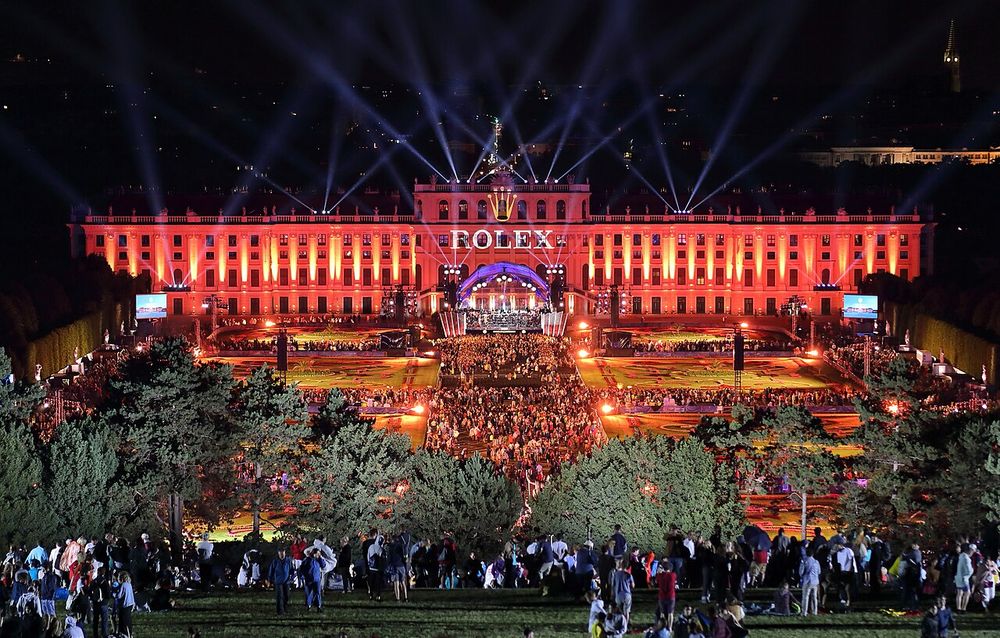
Each year in early summer the Vienna Philharmonic plays a free open-air concert in the garden. The park is closed off that day from the afternoon.
Customs and manners
Keep to the paths. The lawns and flowerbeds of the parterre are not for walking or picnics.
Bicycles, scooters and dogs are not allowed in the park.
Check the signs about photography before you raise a camera indoors. The rule has changed more than once. Flash and tripods are never allowed.
Do not touch the walls, the lacquer or the silk. Bags go in the cloakroom.
Viennese joggers use the park at dawn. They have the right of way, or think they do.
Look for these
Find a stove with no door.
Find the iron bed.
In the Great Gallery, find the ceiling painting that is a copy.
Find a piece of blue-and-white porcelain on a gilded bracket.
On the Chinese wallpaper, find someone at work. What are they making?
Find the stuffed lark.
In the garden, find a ruin that was built as a ruin.
On the Gloriette, find the eagle and the year.
I am here
Stand at the site, sign in, press the button, and collect its stamp. Your browser will ask to use your location. It is sent to us once to confirm that you are at the site; we keep how far you were from it, not the spot where you stood.
Your stamps are saved to your account, so they follow you to any device. Checking from a browser cannot rule out every false location; stricter checks arrive with the app.
Messages
Share your photos
Photos here show the place, not people. Each one is credited to the visitor who took it and appears after our team has looked at it. A photo with you in it belongs under “I am here”.