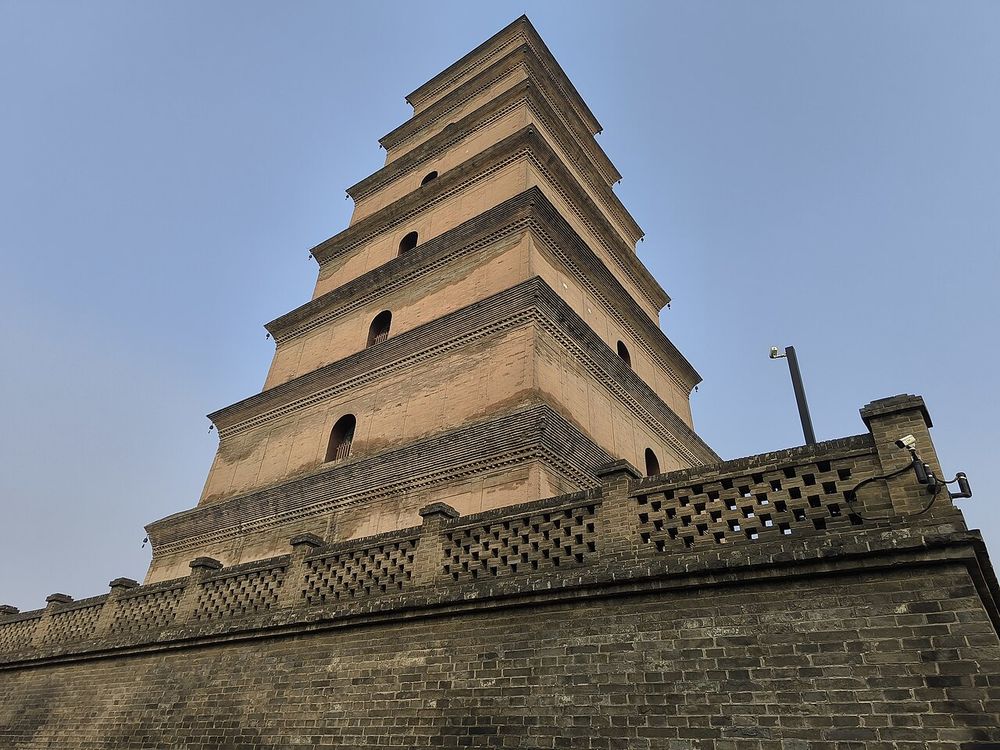
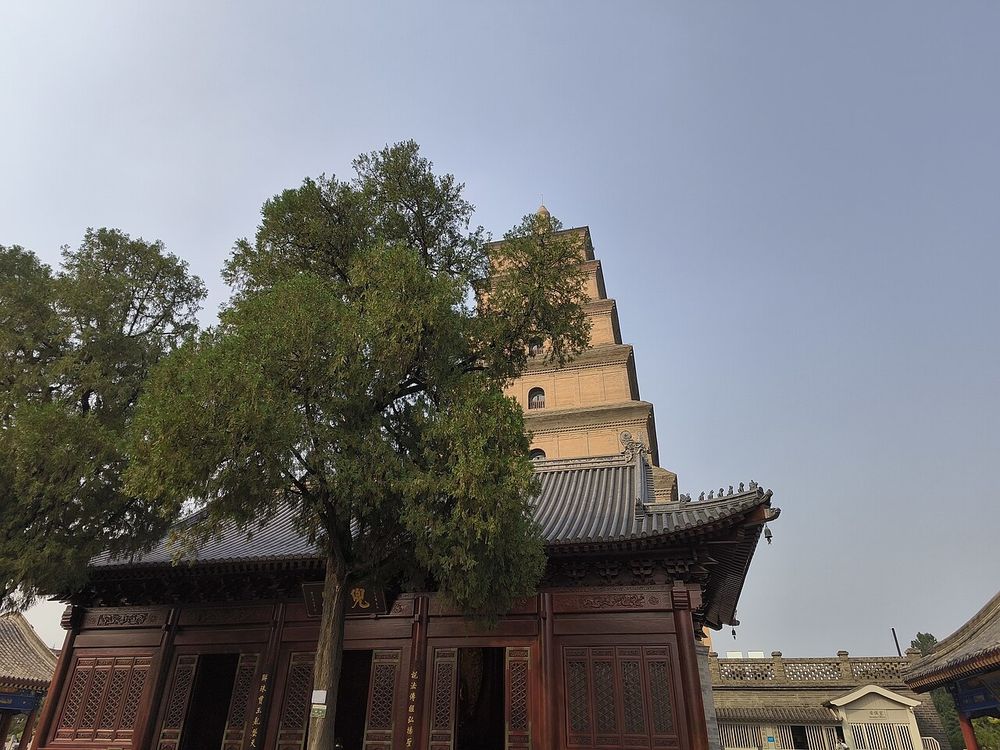
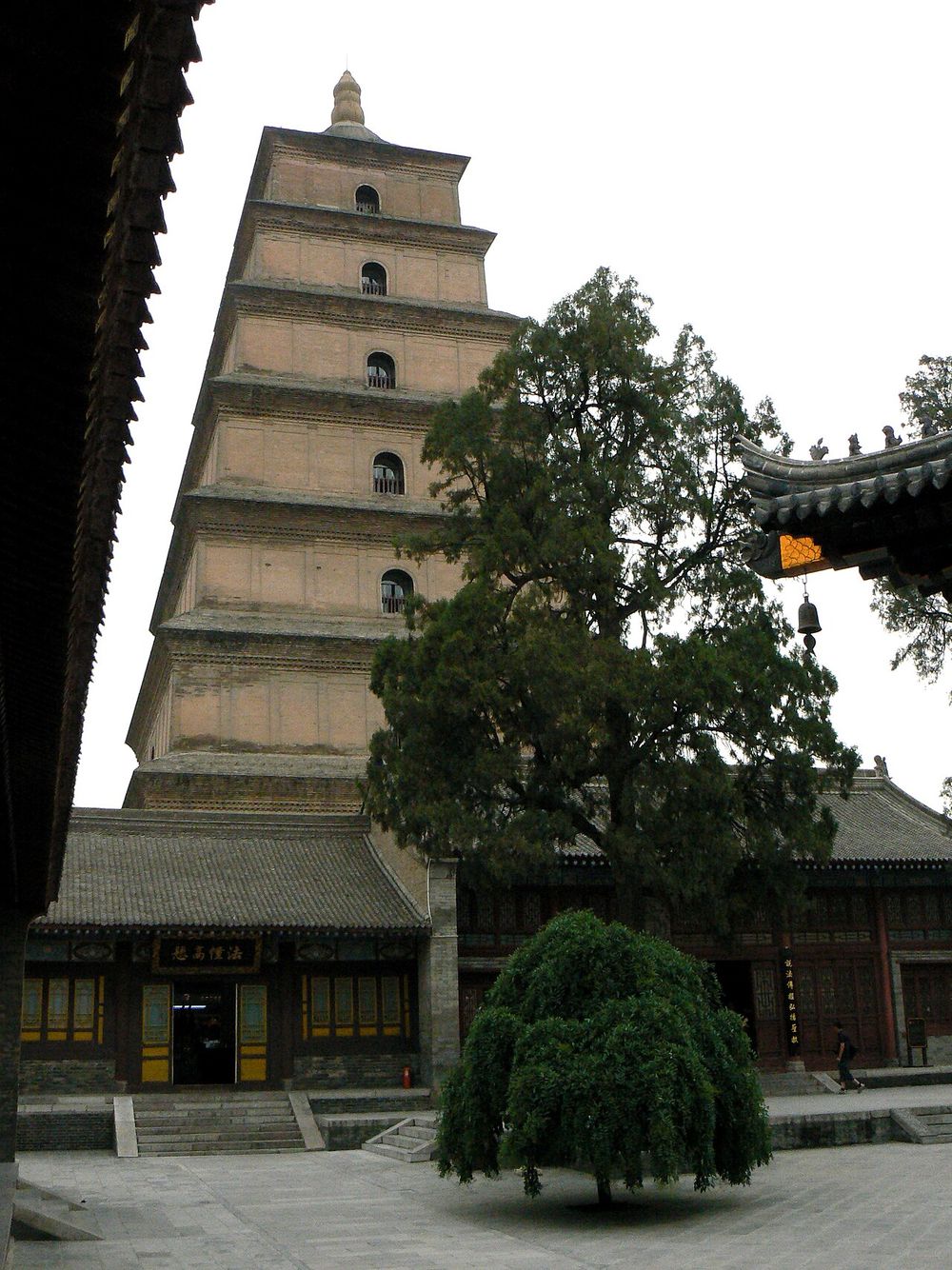
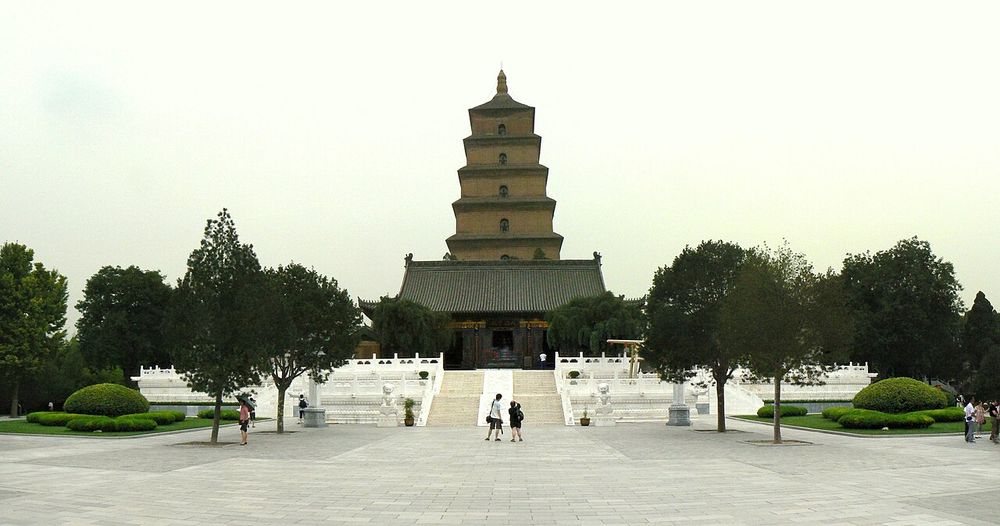
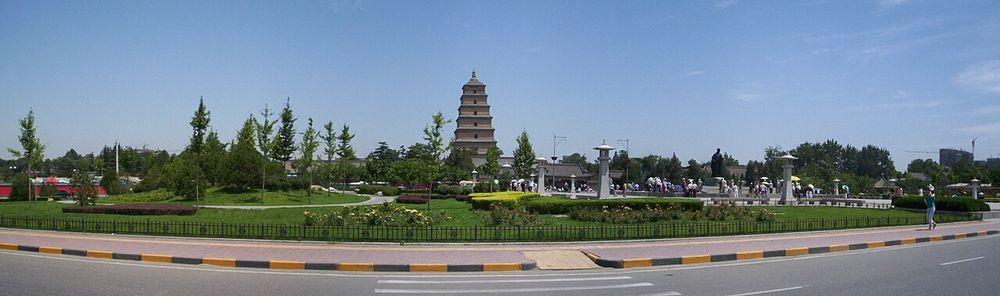
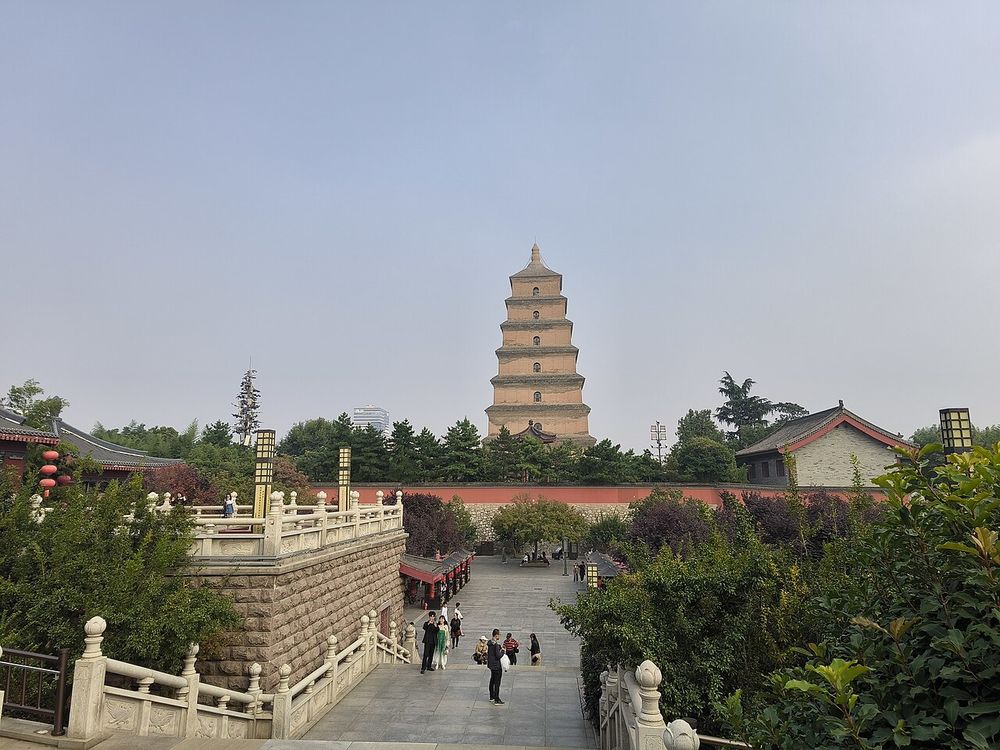
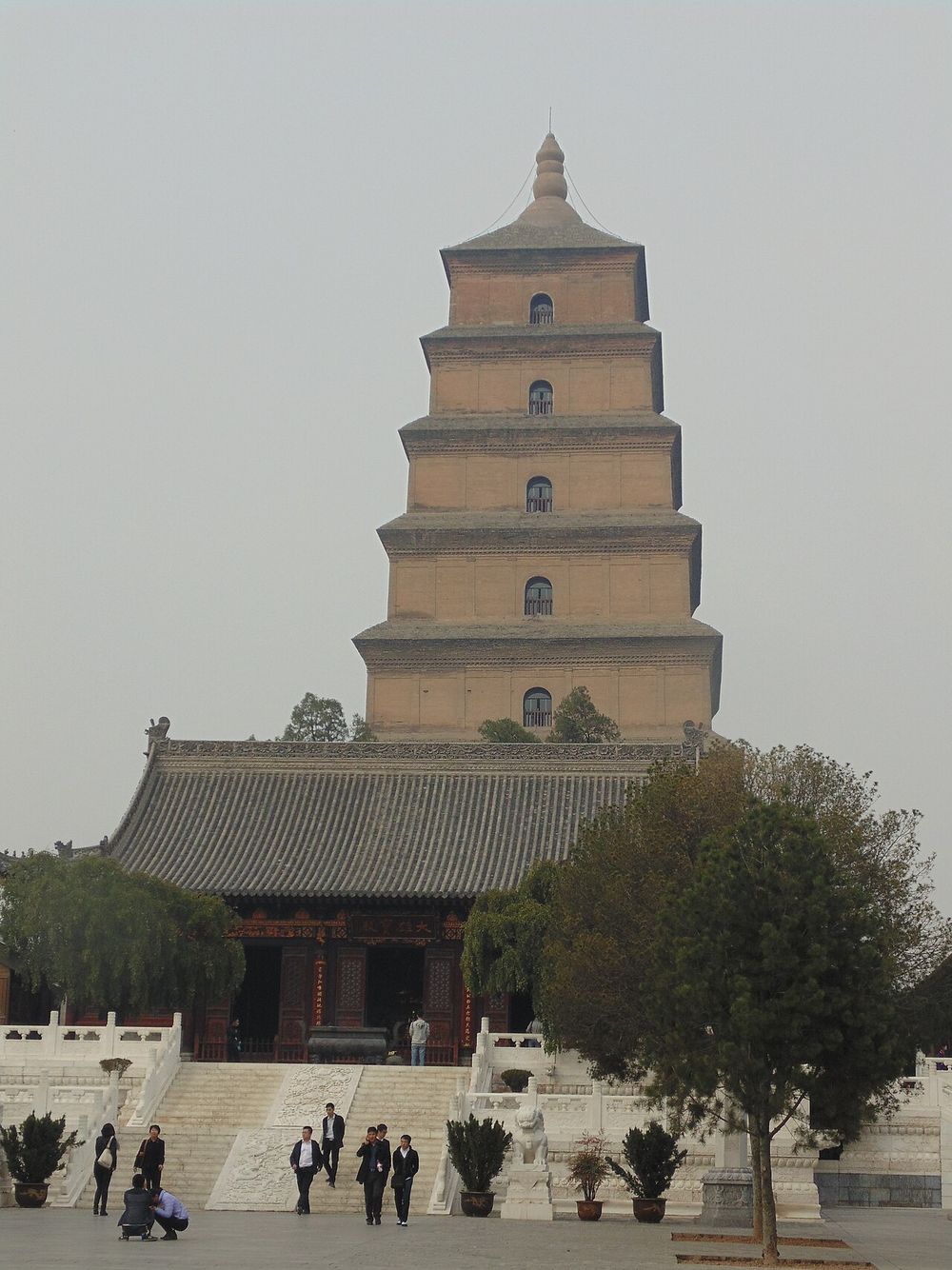
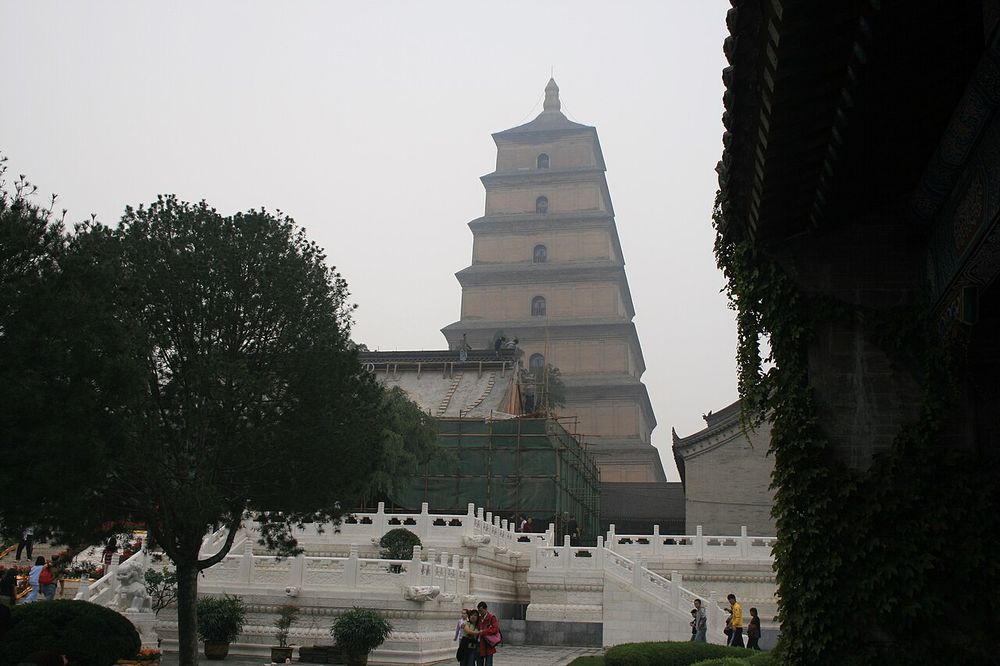
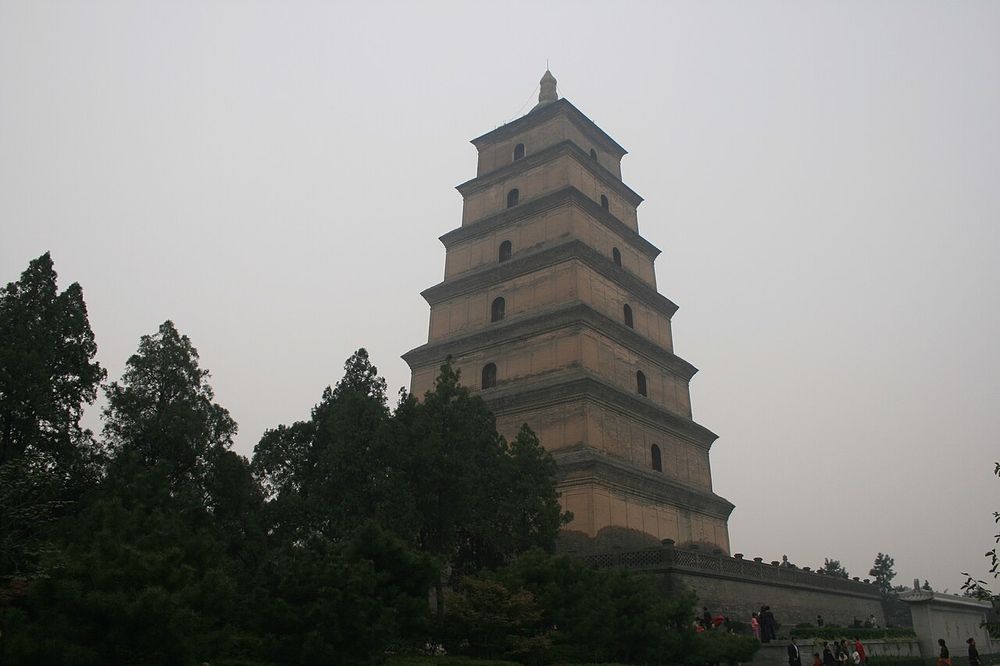
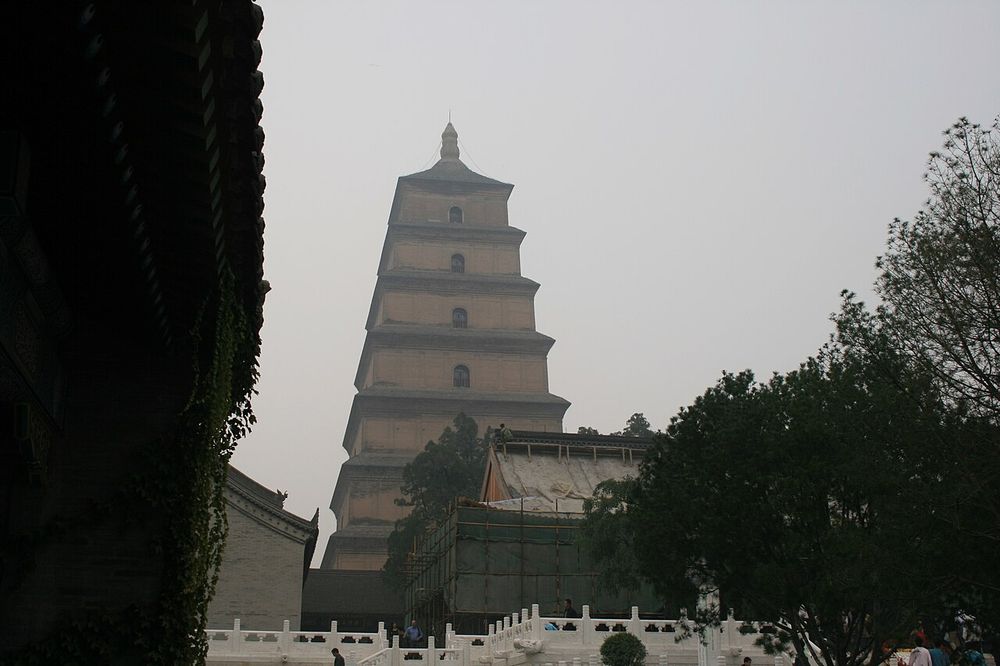
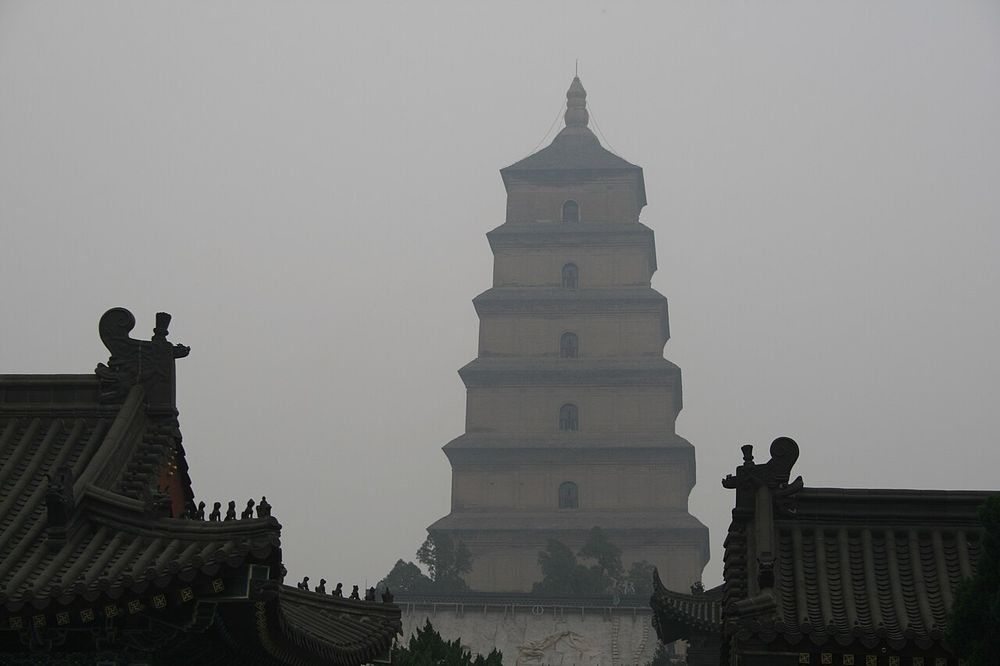
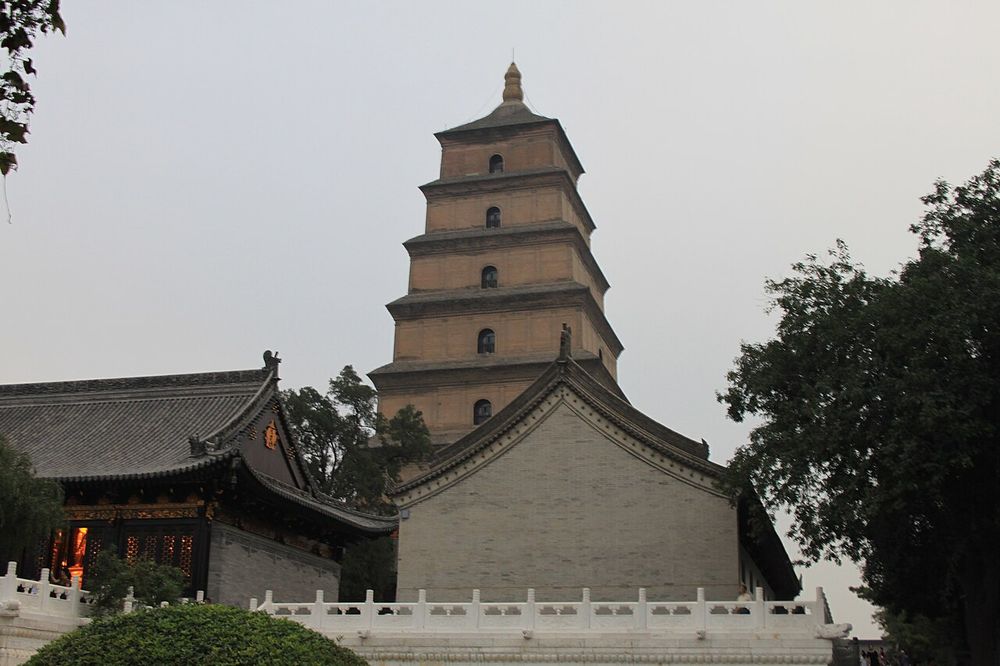
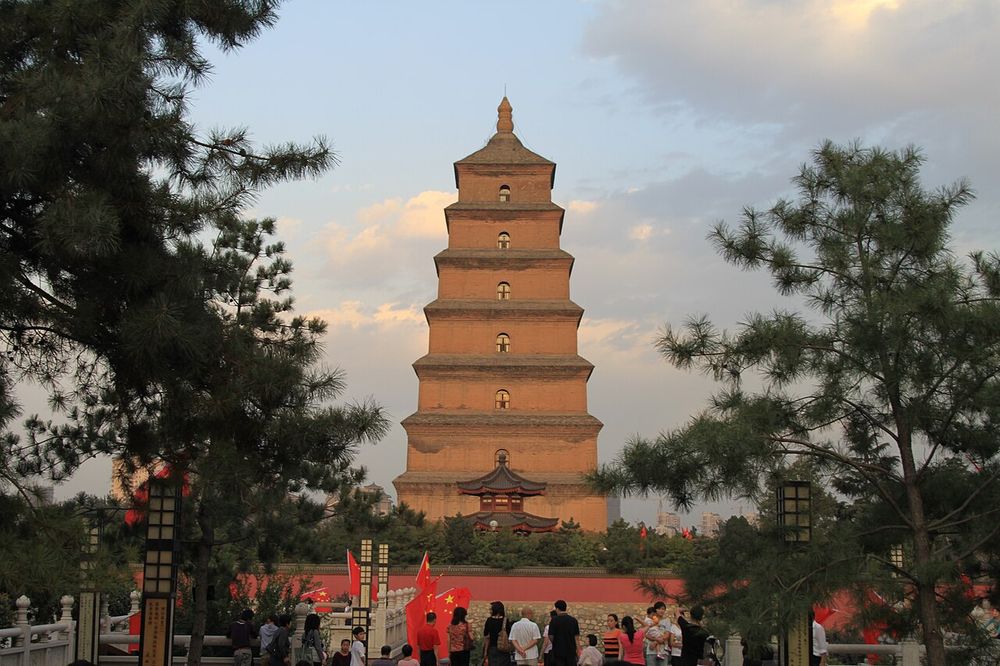
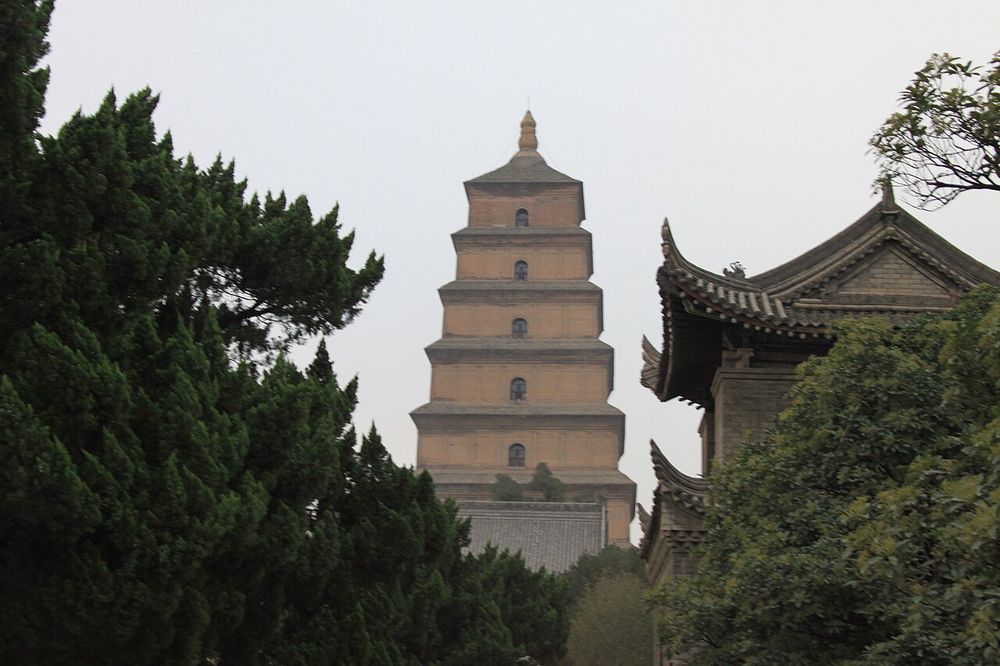
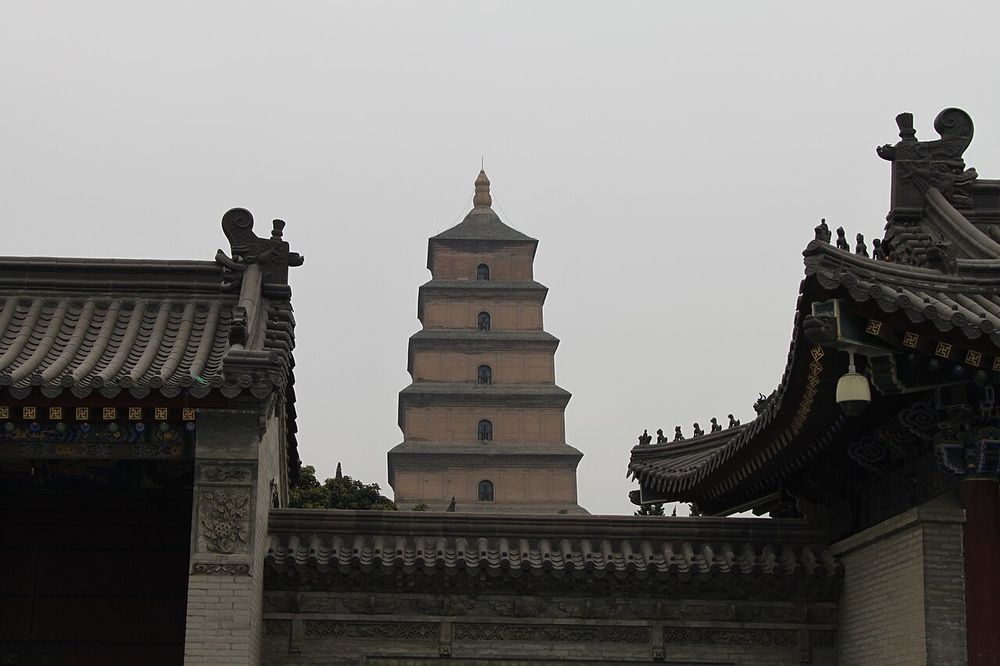
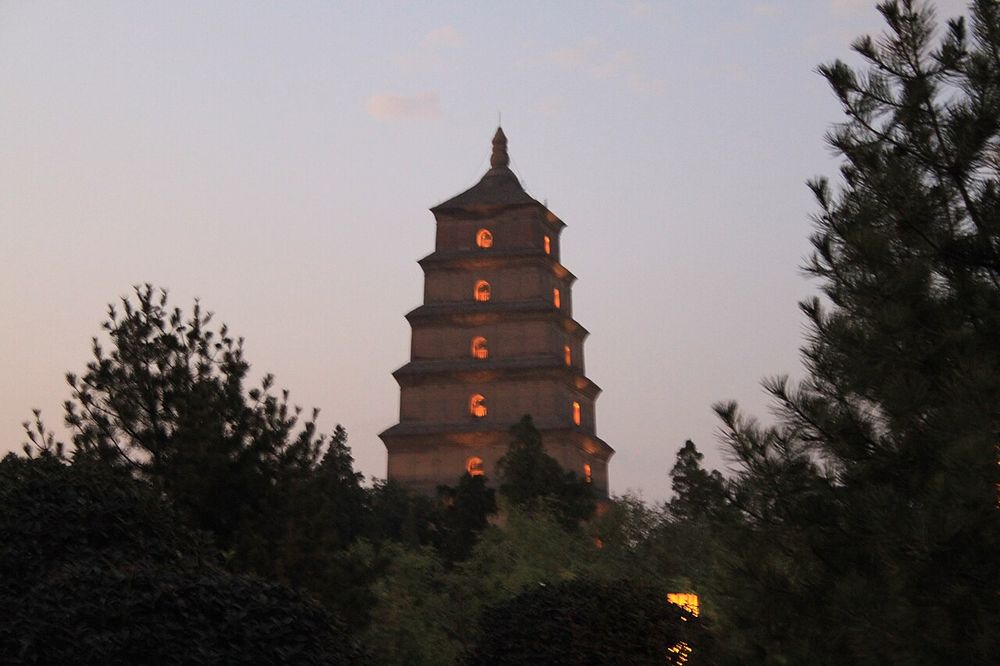
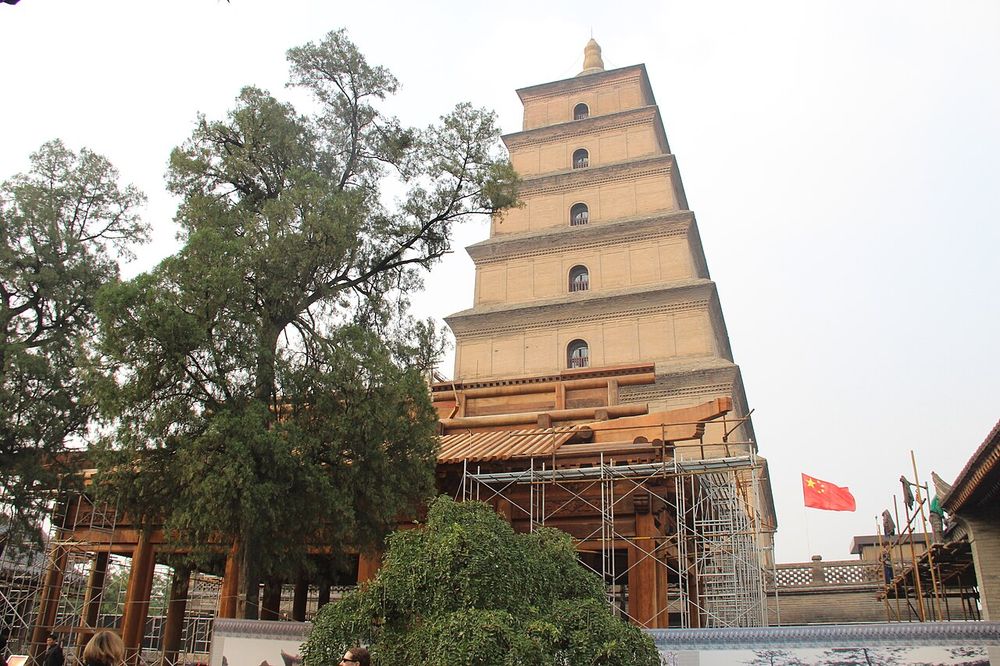
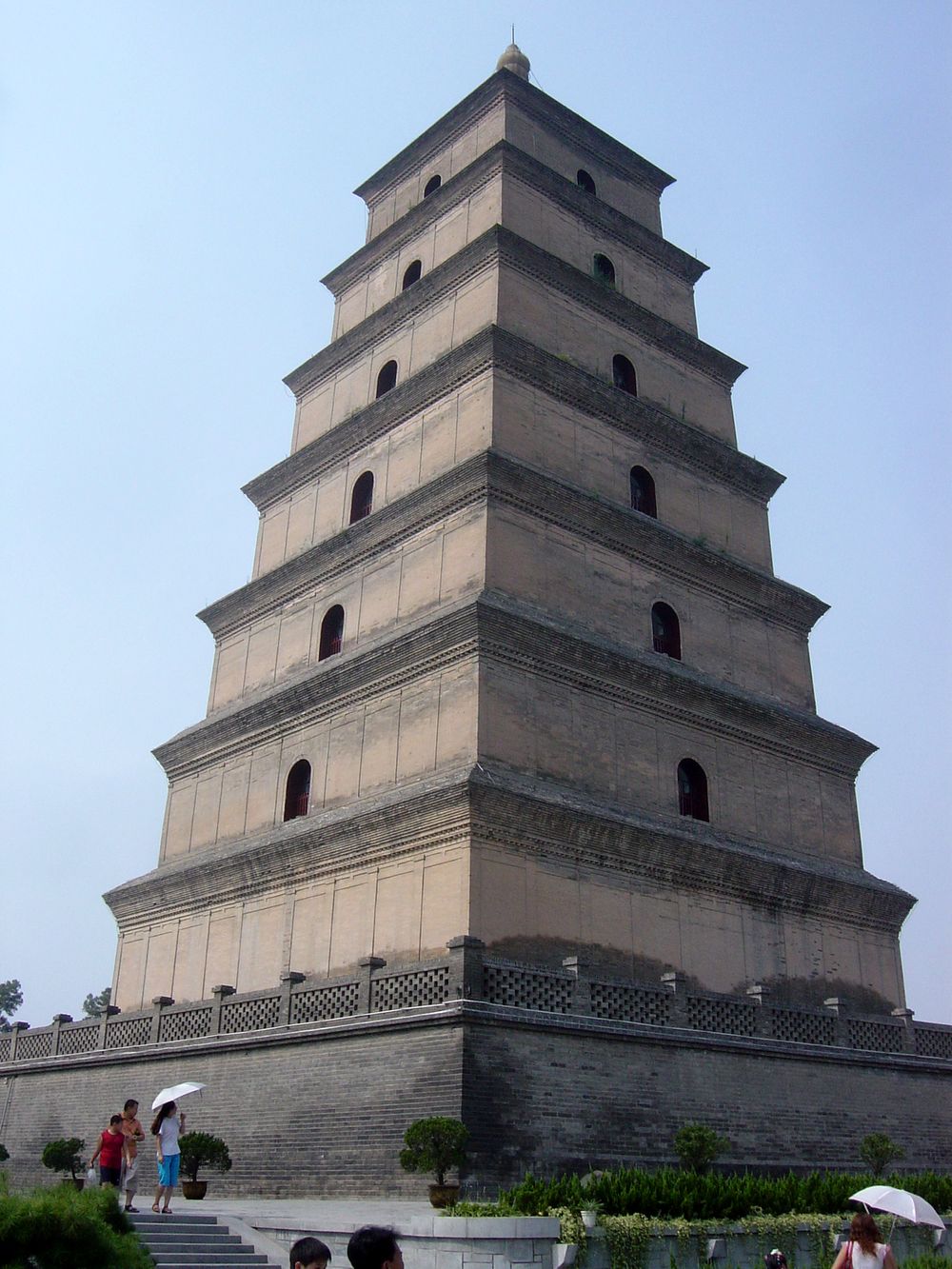
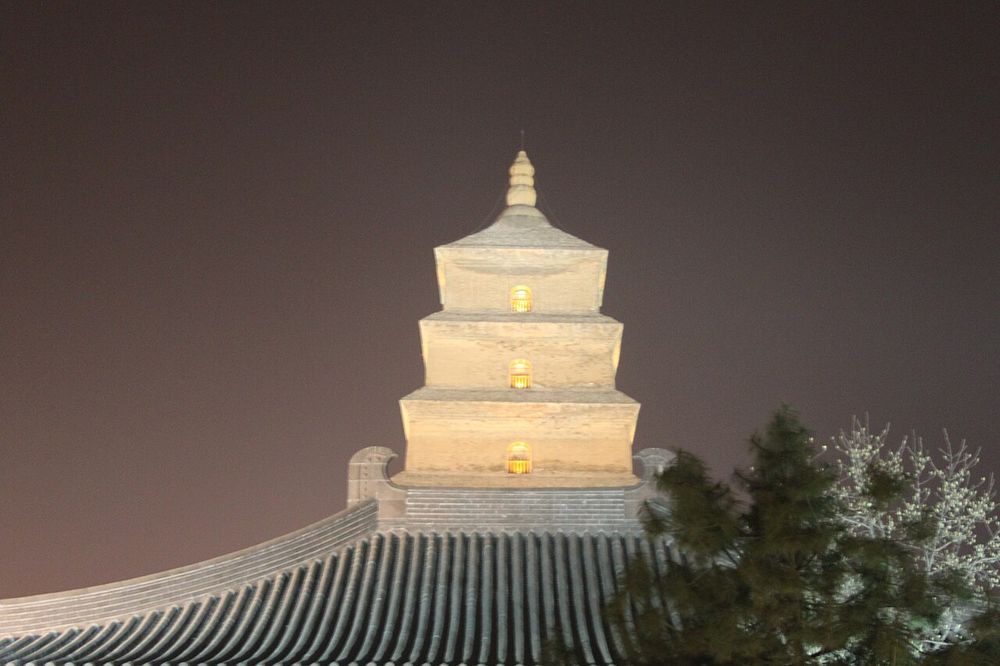
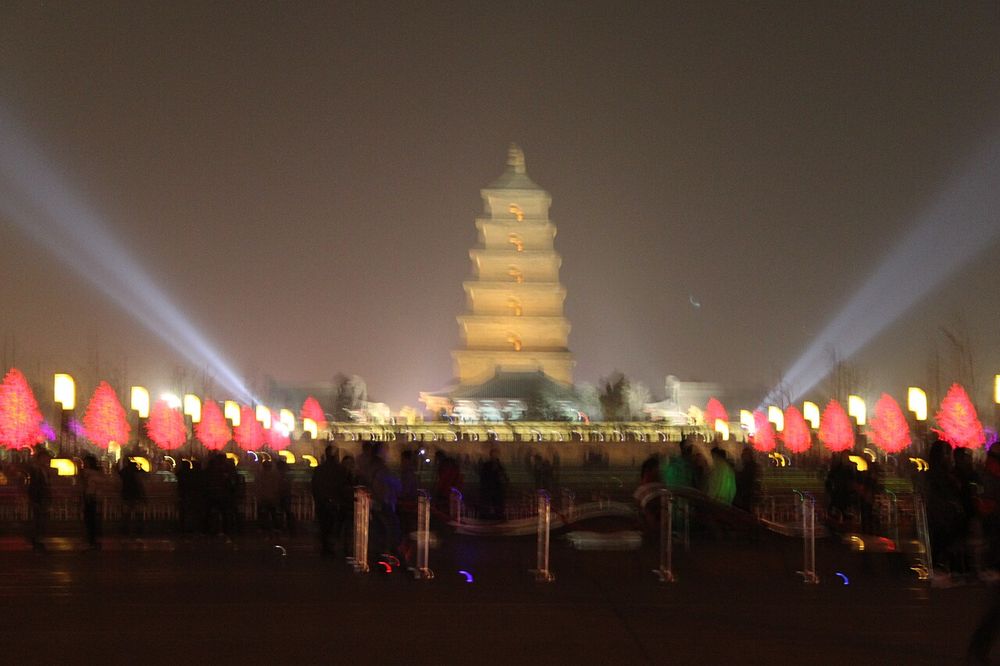
The square brick tower that the monk Xuanzang, the real pilgrim behind "Journey to the West", built in 652 to keep the scriptures he had carried home from India. It stands in the Temple of Great Maternal Grace, where he translated them, and for three centuries the new graduates of the Tang wrote their names below it.
Photo: Will Clayton from Blackburn, UK, CC BY 2.0, Wikimedia Commons
The story
In 629 a young monk named Xuanzang slipped out of Chang'an against the emperor's ban and walked west to India, to find the Buddhist texts that Chinese monks could only guess at. He came back sixteen years later, in 645, with 657 texts, relics and statues, and was received by Emperor Taizong. In the new Temple of Great Maternal Grace, founded in 648 by the crown prince in memory of his mother, Xuanzang spent eleven years translating.
In 652 he asked to build a tower to keep the texts safe from fire, and carried bricks for it himself. The first tower, in Indian style, soon decayed; it was rebuilt in brick under the Empress Wu Zetian in 701–704, and encased again under the Ming (1368–1644). What stands today is seven storeys and about 64.5 metres high, the largest square brick pagoda of the Tang left in the world. Xuanzang's journey later became the novel "Journey to the West", with its monkey king, and that is how most of the world knows him.
The base and its terrace, October 2023源義信, CC BY-SA 4.0
Look into the two niches on either side of the south door. Each holds a stone tablet of 653 carved in the hand of Chu Suiliang, the greatest calligrapher of his day. One is the emperor Taizong's preface praising Xuanzang's translations; the other is the record written by his son, the emperor Gaozong. They were set here when the pagoda was new.
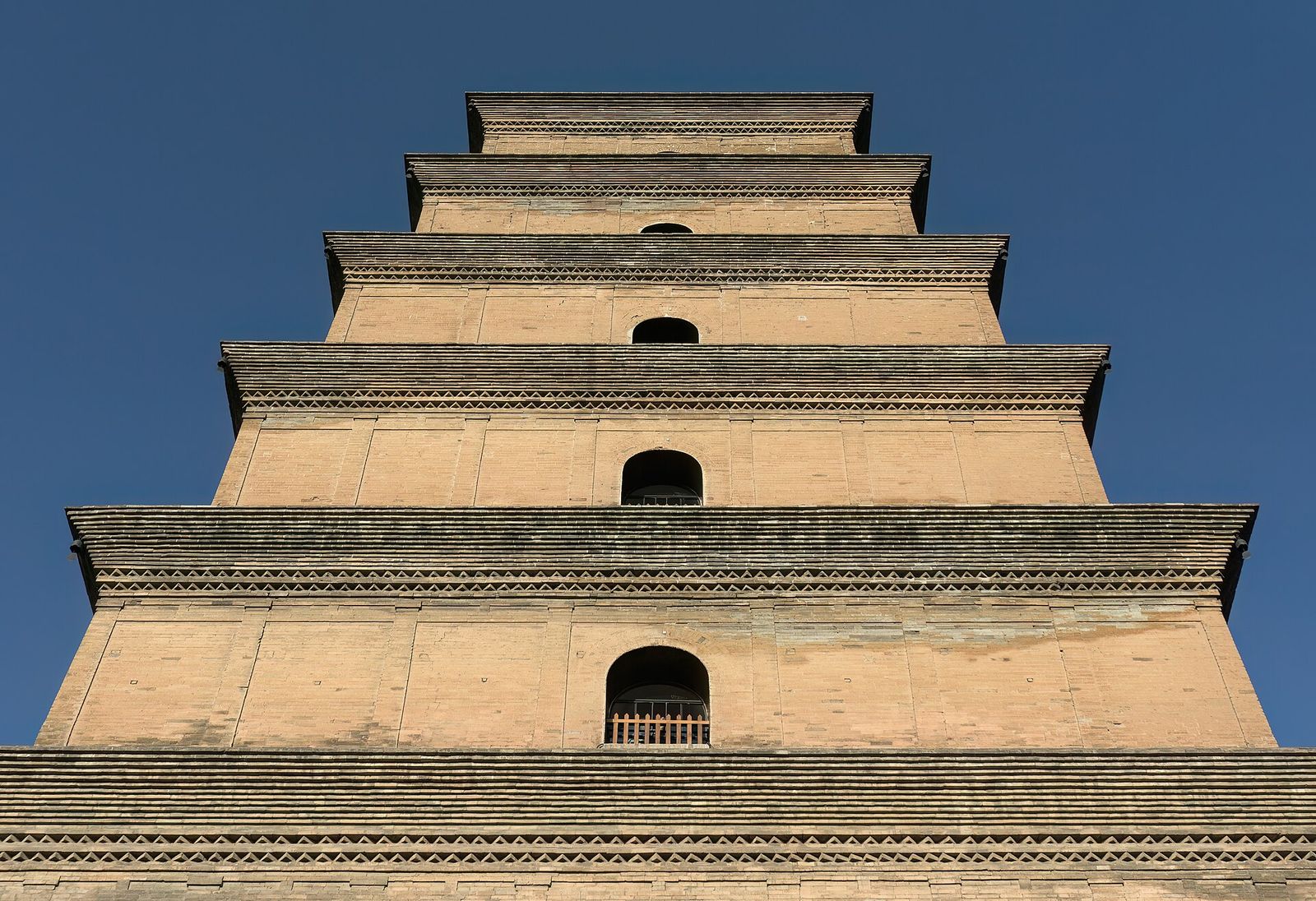
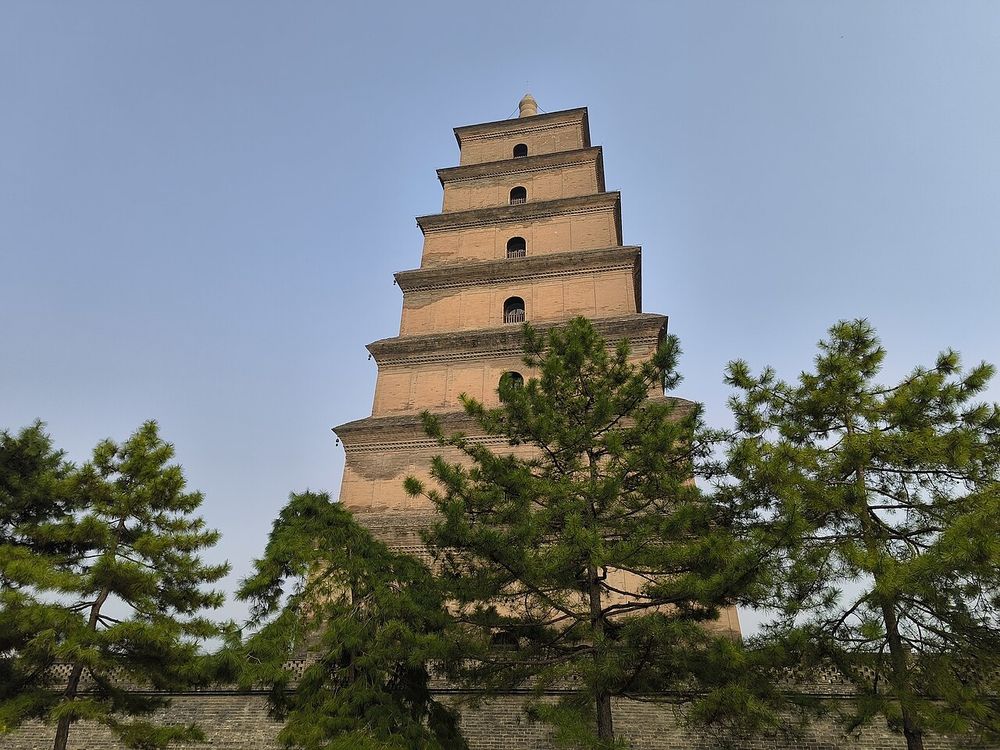
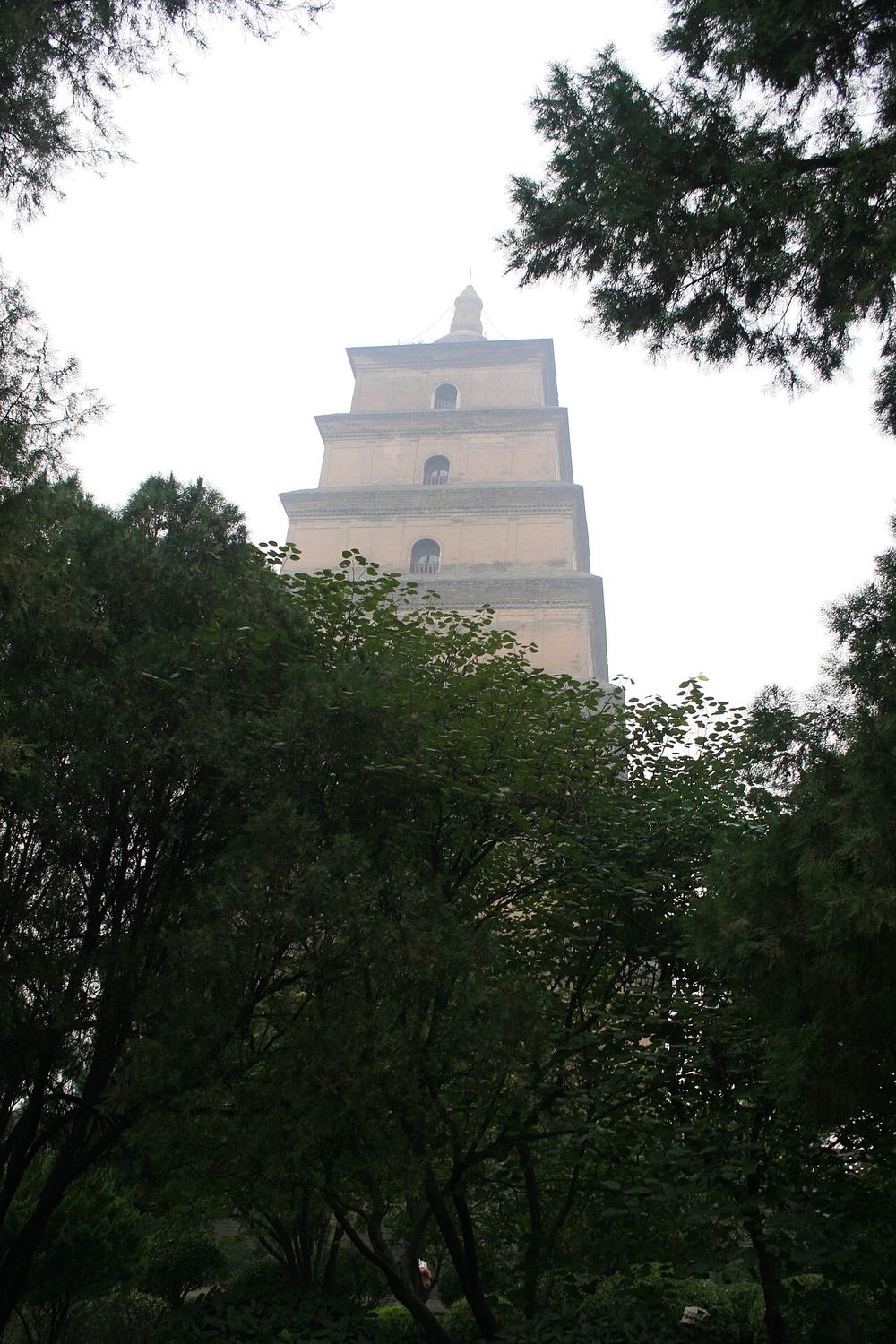
Then step back and look up. Each storey is a little smaller than the one below, and the walls are marked with flat pilasters, as if a wooden building had been translated into brick.
Things people often get wrong
"The Tang pagoda you see is untouched." Its brick skin was added under the Ming dynasty (1368–1644), which is why it looks plainer than a Tang building. The Tang core is inside.
"Xuanzang is a character from a novel." He is a real person; the novel, written about nine hundred years later, added the monkey, the pig and the demons.
People who stood here
We searched Chinese sources first for this list, then English and Indian ones.
Xuanzang (monk and traveller, about 602–664)He designed the pagoda, carried bricks for it, and translated in the temple for eleven years. Indian, Japanese and Korean readers know him as Genjō, Hyeonjang or Huen Tsang, and his account of India is still used by archaeologists there.
Du Fu (poet, 712–770)In the autumn of 752 he climbed the pagoda with four other poets and wrote: "The high spire straddles the blue sky; the fierce wind never rests."
Cen Shen (poet, about 715–770)On the same climb he wrote: "The pagoda's thrust is like a fountain welling up, alone and high, piercing the palaces of heaven."
Gao Shi (poet, about 704–765)He was one of the five who climbed in 752, and wrote his own poem from the top.
Bai Juyi (poet, 772–846)He passed the highest examination in 800 and, as was the custom, wrote his name at the pagoda. He boasted: "Where names are written beneath the Ci'en pagoda, of seventeen men I am the youngest."
2 more people
Narendra Modi (Indian prime minister, born 1950)On 14 May 2015 he visited the temple and pagoda with Xi Jinping; he came, he wrote, to the city "closely related to Xuanzang", who had visited his home town of Vadnagar.
Xi Jinping (Chinese president, born 1953)He brought Modi here in his home province, and the two leaders talked at the foot of the pagoda.
Go deeper: six stops from the south square to the top7 stops · about 2 min to read
Allow two hours for the temple and the climb, and come back at night for the fountains. The stops go from south to north.
1. Xuanzang on the south square
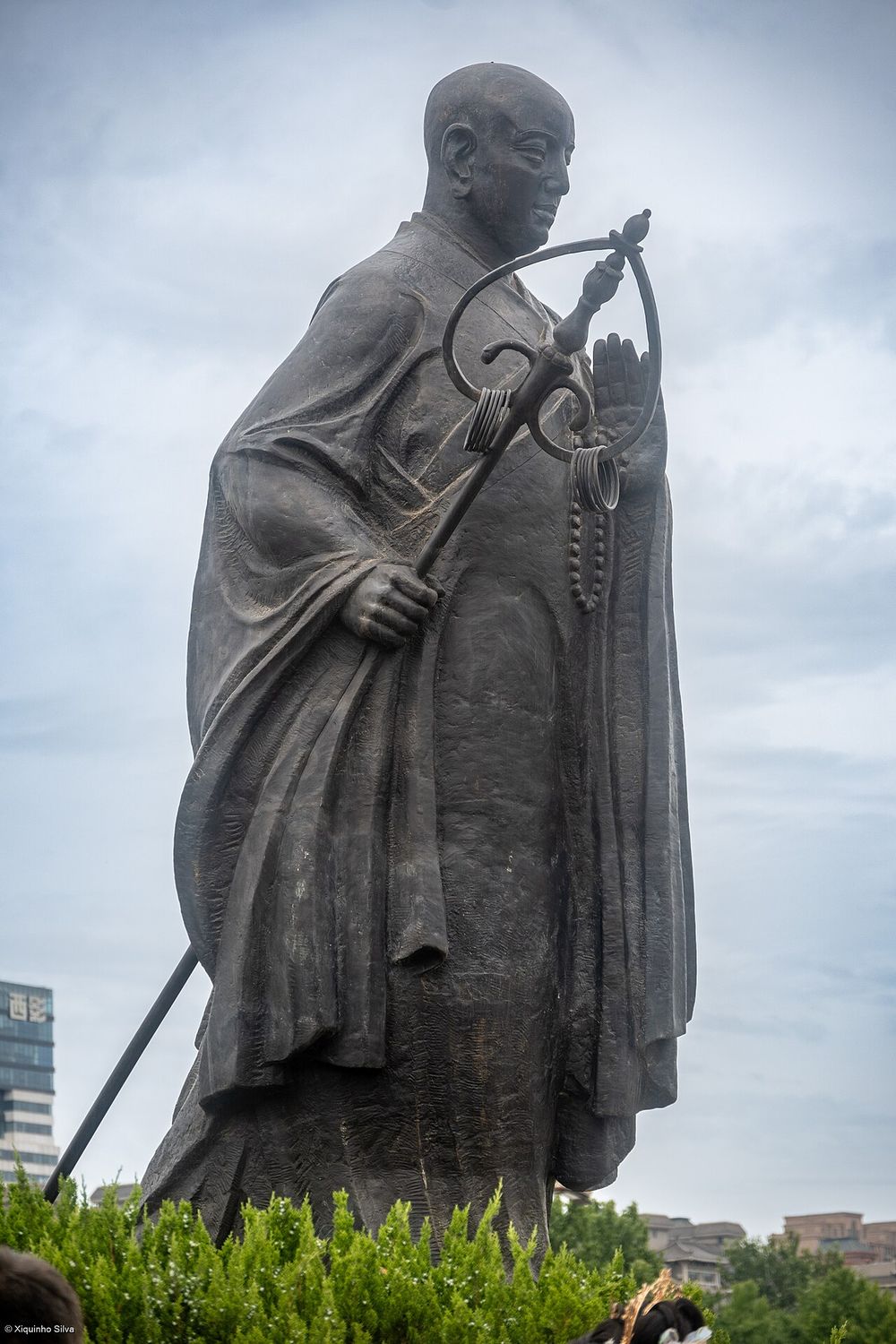
The statue of Xuanzang on the South Square, June 2024xiquinhosilva, CC BY 2.0
A bronze Xuanzang strides out in front of the temple gate, staff in hand, robes blown back. Behind him, the pagoda he built.
2. The Temple of Great Maternal Grace
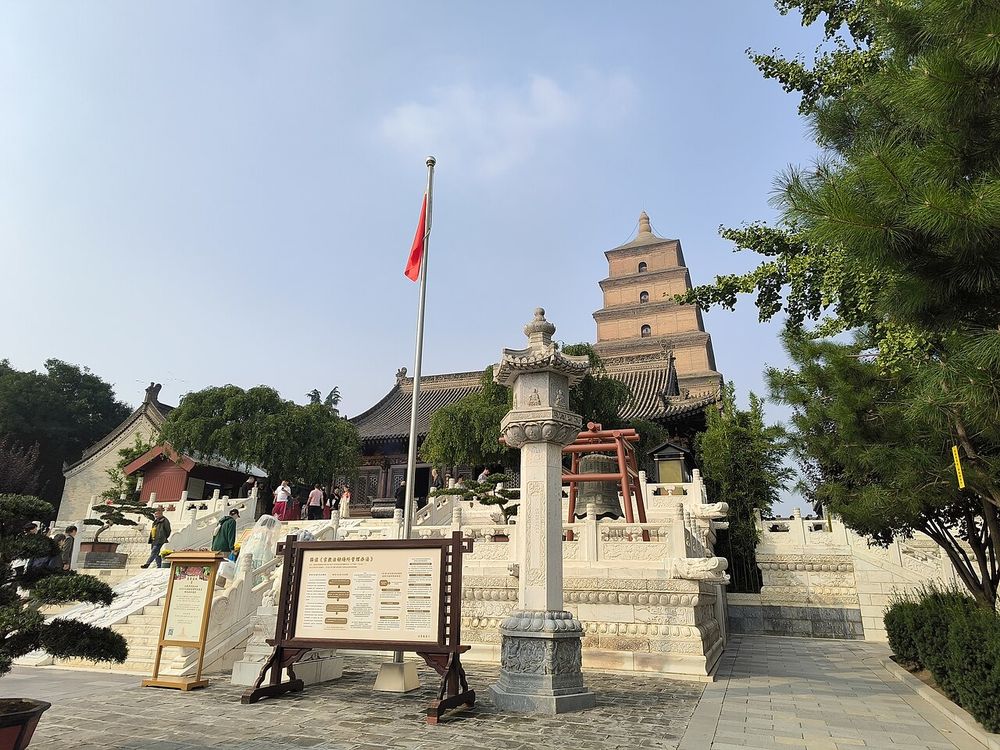
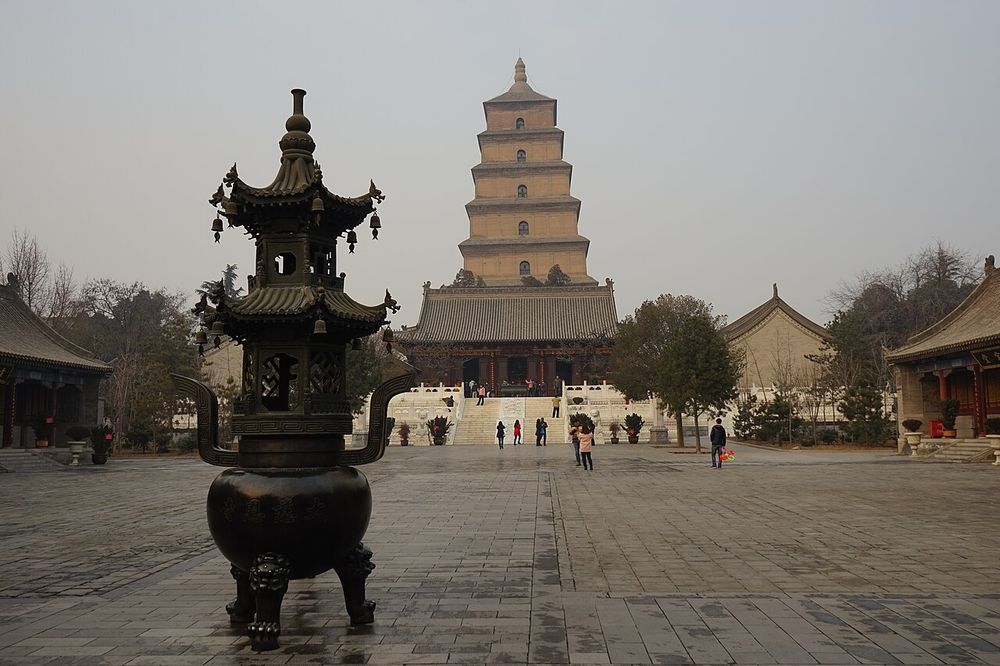
The temple's axis and the pagoda, October 2023源義信, CC BY-SA 4.0
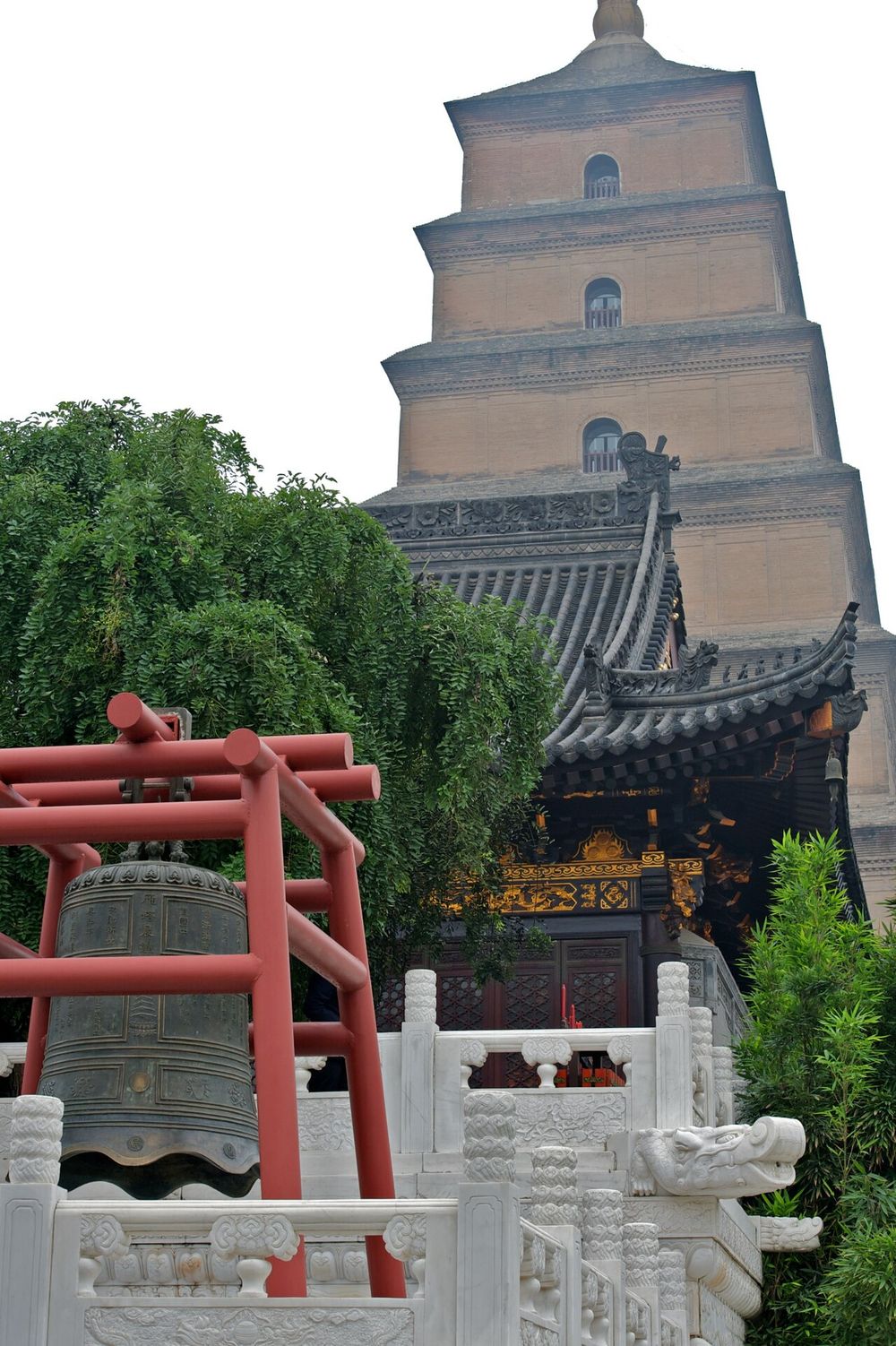
The Tang temple had nearly two thousand rooms. What you walk through is a Ming rebuilding on a part of it, with halls mostly of the Qing (1644–1912). The bell tower on the east holds a Ming iron bell. The temple is still a working monastery, the home of the Consciousness-Only school that Xuanzang founded.
The bell tower and the pagoda, 2011kevinmcgill from Den Bosch, Netherlands, CC BY-SA 2.0
3. The steles and the lintels
The pagoda behind a temple hall, October 2023源義信, CC BY-SA 4.0
Besides the two tablets by Chu Suiliang at the south door, look at the stone lintels over the four doors. They are engraved with fine lines: Buddhas, and on the west lintel a whole Buddhist hall of the Tang (618–907), with its brackets and roof. With almost no Tang timber buildings left, drawings like this one have helped architectural historians know what Tang halls looked like.
4. Climbing the pagoda
The upper storeys against the sky, May 2018Alexey Komarov, CC BY-SA 4.0
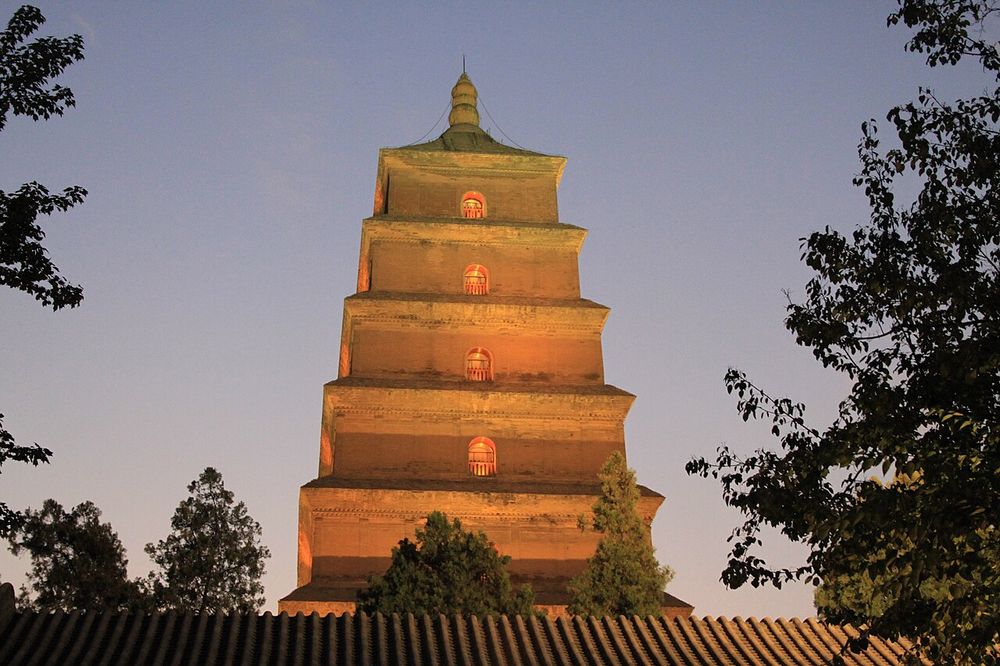
A wooden stair winds up inside the brick shell. From the arched windows of the top storey you look north along the axis of Tang Chang'an toward the city wall, and south down the long avenue of the Great Tang All Day Mall.
5. Writing your name below the pagoda
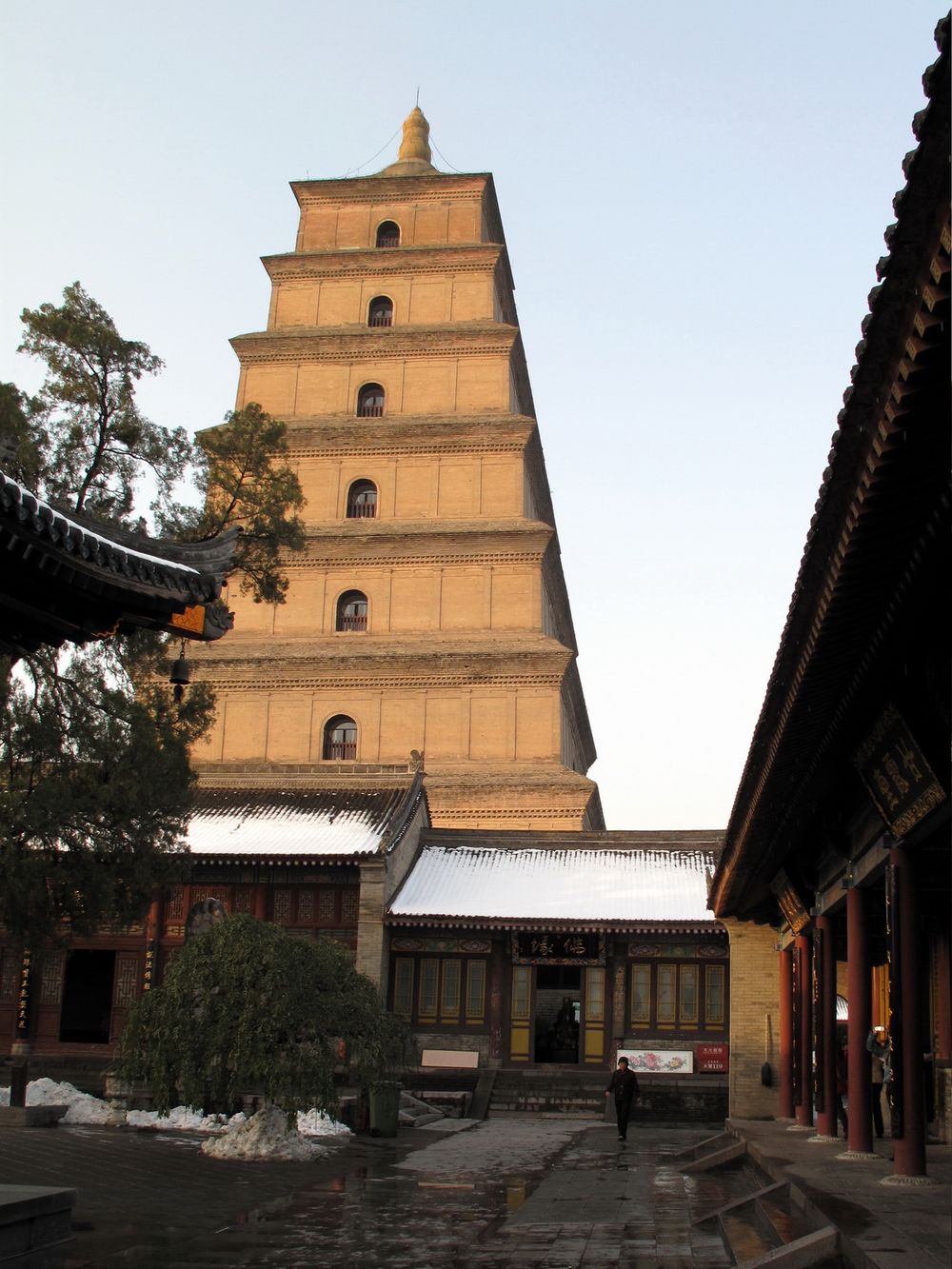
A courtyard of the temple, 2009Will Clayton from Blackburn, UK, CC BY 2.0
From the eighth century, men who passed the highest examination came here in a group to write their names on the pagoda, a custom called "writing names at the Wild Goose Pagoda". It became a way of saying "to succeed". Bai Juyi was proud to be the youngest of his year.
6. The North Square and the fountains
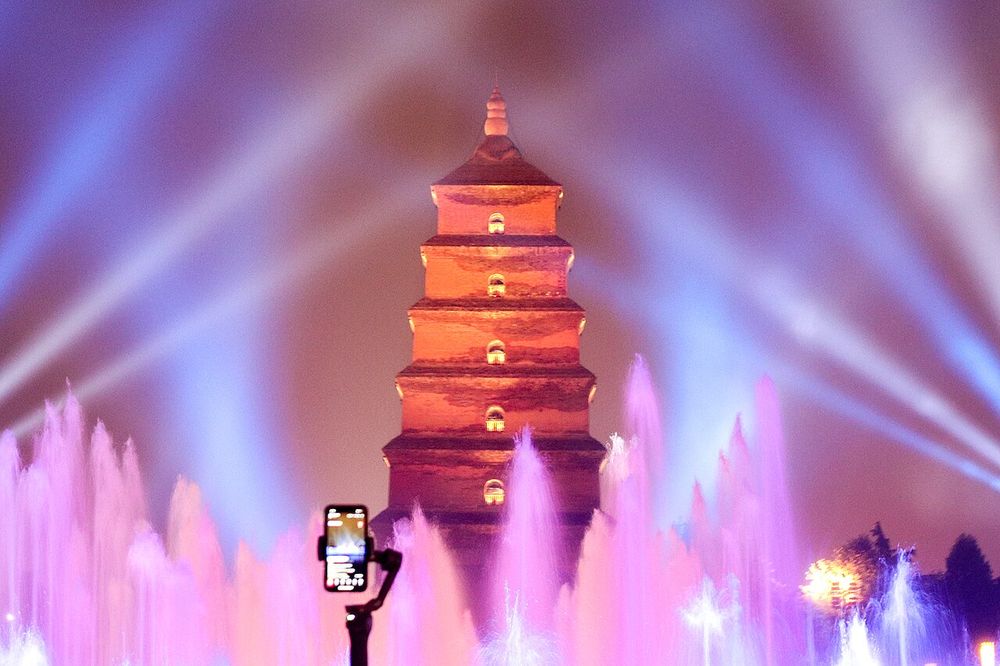
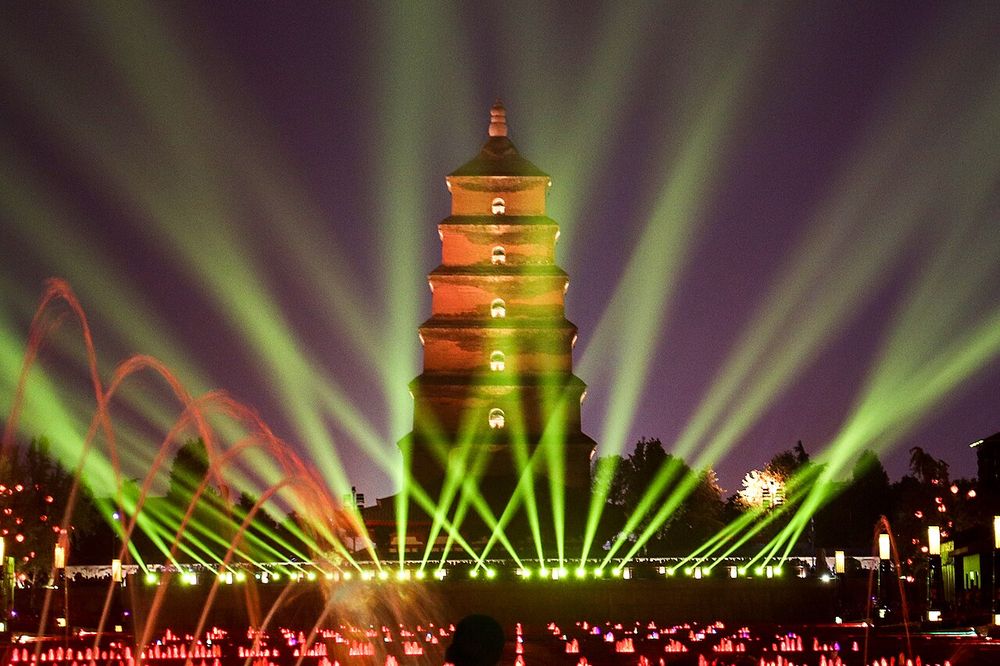
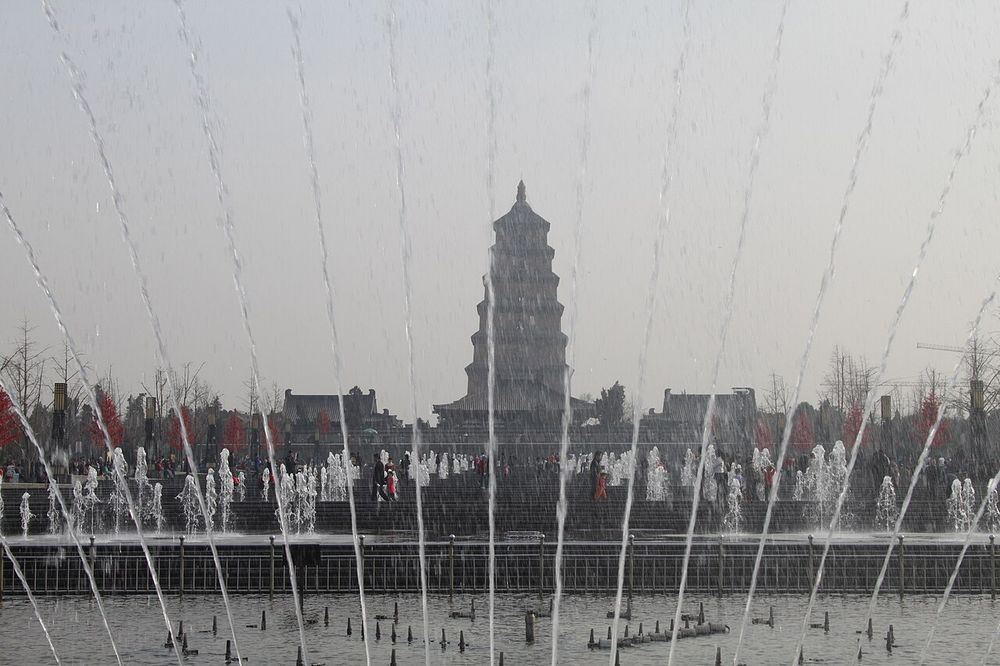
The fountain show at night, September 2023Windmemories, CC BY-SA 4.0
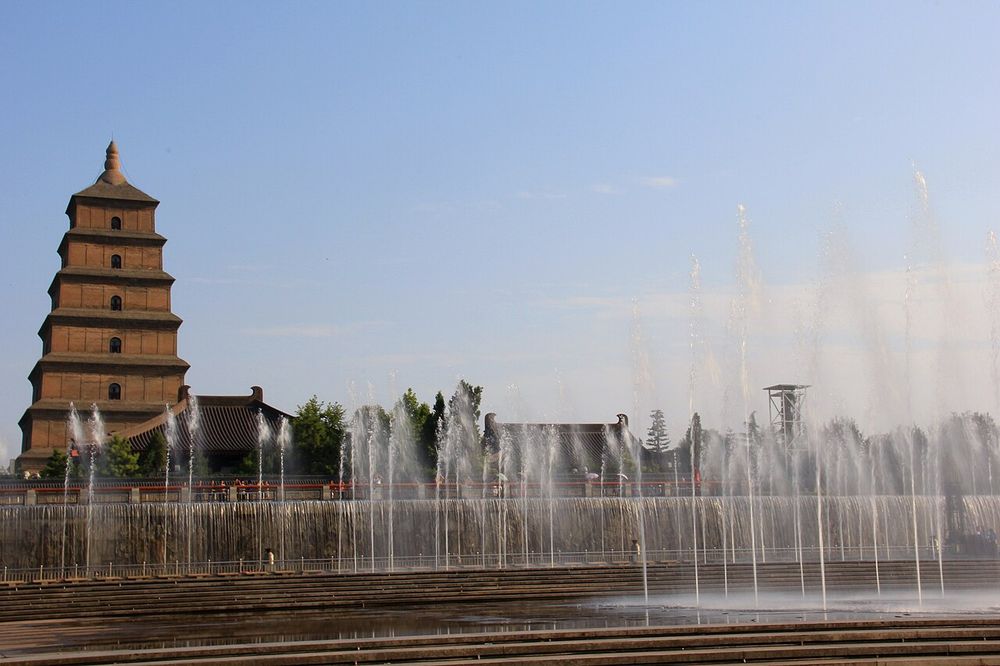
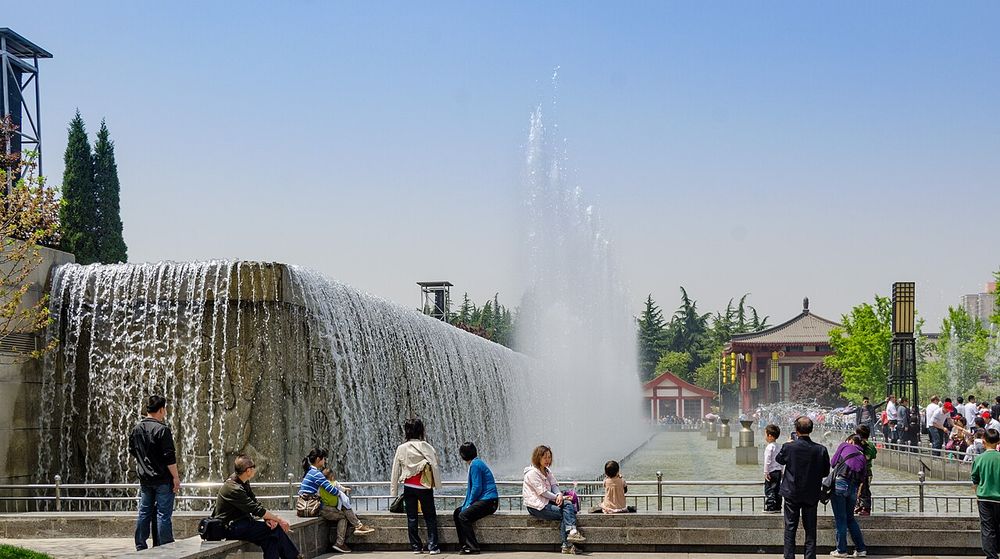
North of the temple a long square of pools and terraces holds one of the largest musical fountains in Asia, with short shows several times a day and at night. Go at dusk, then walk south of the temple into the lit-up streets of the Great Tang All Day Mall.
Light beams over the fountains, September 2023Windmemories, CC BY-SA 4.0
The pagoda and the same years elsewhere
Xuanzang came home in 645. In the same year in Japan, the Taika reforms began, which would remake the Japanese state on the Tang model.
Meanwhile in the world
Year
Here
Elsewhere
629
Xuanzang sets out for India
Heraclius brings the True Cross back to Jerusalem (630)
645
Xuanzang returns to Chang'an
The Taika reforms begin in Japan
652
The pagoda is built
The Arab conquest reaches the edge of Central Asia
752
Du Fu, Cen Shen and Gao Shi climb the pagoda
Todaiji's Great Buddha in Nara is consecrated
2014
The pagoda becomes part of a World Heritage Site on the Silk Roads
The Rosetta probe reaches its comet
One line to remember: the tower of the man who walked to India and came back.
Then and now
The pagoda across the square, 2009Will Clayton from Blackburn, UK, CC BY 2.0, Wikimedia CommonsThe pagoda across its gardens, 2005Unknown, CC BY-SA 2.5, Wikimedia CommonsThe upper storeys against the sky, May 2018Alexey Komarov, CC BY-SA 4.0, Wikimedia CommonsThe pagoda among pines, October 2023源義信, CC BY-SA 4.0, Wikimedia CommonsThe base and its terrace, October 2023源義信, CC BY-SA 4.0, Wikimedia CommonsThe pagoda behind a temple hall, October 2023源義信, CC BY-SA 4.0, Wikimedia CommonsThe pagoda from the temple court, October 2023源義信, CC BY-SA 4.0, Wikimedia CommonsThe temple's axis and the pagoda, October 2023源義信, CC BY-SA 4.0, Wikimedia CommonsThe statue of Xuanzang on the South Square, June 2024xiquinhosilva, CC BY 2.0, Wikimedia CommonsThe pagoda behind the main hall, 2014O.Mustafin, CC0, Wikimedia CommonsThe bell tower and the pagoda, 2011kevinmcgill from Den Bosch, Netherlands, CC BY-SA 2.0, Wikimedia CommonsA courtyard of the temple, 2009Will Clayton from Blackburn, UK, CC BY 2.0, Wikimedia CommonsThe pagoda over the trees, 2007Gary Todd from Xinzheng, China, CC0, Wikimedia CommonsA grey day in the temple, 2007Gary Todd from Xinzheng, China, CC0, Wikimedia CommonsThe pagoda from the west court, 2007Gary Todd from Xinzheng, China, CC0, Wikimedia CommonsTemple roofs and the pagoda, 2007Gary Todd from Xinzheng, China, CC0, Wikimedia CommonsThe pagoda in the haze, 2007Gary Todd from Xinzheng, China, CC0, Wikimedia CommonsHalls and the pagoda, 2009Gary Todd from Xinzheng, China, CC0, Wikimedia CommonsEvening light on the pagoda, 2009Gary Todd from Xinzheng, China, CC0, Wikimedia CommonsThe pagoda behind a hall's eaves, 2009Gary Todd from Xinzheng, China, CC0, Wikimedia CommonsBetween two roofs, 2009Gary Todd from Xinzheng, China, CC0, Wikimedia CommonsDusk, 2009Gary Todd from Xinzheng, China, CC0, Wikimedia CommonsThe fountains of the North Square, 2011Gary Todd from Xinzheng, China, CC0, Wikimedia CommonsThe pagoda in autumn, 2011Gary Todd from Xinzheng, China, CC0, Wikimedia CommonsThe temple in winter, January 2015Jan Bockaert, CC BY-SA 2.0, Wikimedia CommonsLate autumn, November 2009颐园新居, CC BY-SA 3.0, Wikimedia CommonsA winter day, February 2005The original uploader was Bobak at English Wikipedia., CC BY 2.5, Wikimedia CommonsThe fountain square, 2013Zhu yihan, CC BY-SA 3.0, Wikimedia CommonsWater cascades on the North Square, 2012xiquinhosilva, CC BY 2.0, Wikimedia CommonsThe pagoda lit at night, 2009Gary Todd from Xinzheng, China, CC0, Wikimedia CommonsThe pagoda over the temple wall at night, 2011Gary Todd from Xinzheng, China, CC0, Wikimedia CommonsA night show on the North Square, 2011Gary Todd from Xinzheng, China, CC0, Wikimedia CommonsLight beams over the fountains, September 2023Windmemories, CC BY-SA 4.0, Wikimedia CommonsThe fountain show at night, September 2023Windmemories, CC BY-SA 4.0, Wikimedia Commons
Local legends
These are stories people tell about this place. They are legends, not history, and each one says where it comes from.
LegendWhy "wild goose"?
Xuanzang told of a monastery in India where monks, short of food, saw a flock of wild geese pass, and one fell dead at their feet. Taking it as a lesson, they buried it and built a stupa over it, the "goose stupa". Xi'an's pagoda took the name.
Source: Xuanzang, Record of the Western Regions, book 9
Later, people who live here will be able to add the stories they grew up with, and say which of these they have heard.
Not certain, and where accounts conflict
How many storeys did the Tang pagoda have?
The first tower of 652 is said to have had five storeys. The rebuilding of 701–704 is given as seven or ten storeys in different sources; seven have stood since at least the Ming.
Does it lean?
Surveys in the late 20th century found the pagoda leaning about a metre to the northwest, blamed on falling groundwater. Water use was controlled, and later surveys report it stable or slightly righting itself.
Visiting
Tickets and hours
Temple ticket about 30 yuan (guides of 2024–26 quote slightly different prices); climbing the pagoda another 25 to 30 yuan. Visitors aged 65 and over pay half for the temple.
March to mid-October 8:30 to 18:00, last entry 17:00; mid-October to February 8:00 to 17:40, last entry 16:40.
The fountain on the North Square plays for about ten minutes at noon, at 16:00, 19:00 and 21:00; times change with the season.
Last checked 2026-11-12. Opening hours and fountain times from 2026 visitor guides; ticket prices differ between guides of 2024–2026, so the range is given; the temple's own mini-program could not be opened from abroad.
Booking without WeChat
Official page in English Tickets are sold on the temple's WeChat mini-program, 大慈恩寺, with a name and passport number; we could not open it from abroad.
International booking platform International sites such as Trip.com sell the temple ticket with a passport.
Ticket window on site The climbing ticket is sold at a counter at the foot of the pagoda inside the temple.
Note Book the temple a day ahead in summer and on holidays.
Checked 2026-11-12
Where to start
Metro Line 3 or 4 to Dayanta station, then five minutes' walk to the North Square.
Go into the temple in the afternoon, climb the pagoda, then see the evening fountain and the lit streets to the south.
Before you go
The stair inside is steep and narrow and there is no lift.
The fountain square is very crowded in the evening; keep valuables close.
Customs and manners
This is a working Buddhist temple. Dress modestly, speak quietly in the halls, and do not photograph monks at prayer up close.
Walk round a pagoda or a hall clockwise, keeping it on your right.
Opening hours are given in the local time of the place. Prices are in the local currency. The figure after ≈ is approximate, at exchange rates checked on 9 November 2026, in .
Look for these
At the south door, find the two tablets in Chu Suiliang's hand.
On the west lintel, find the engraved Tang hall with its brackets.
From the top, find the city wall to the north.
Find Xuanzang's statue and see which way he is walking.
I am here
Stand at the site, sign in, press the button, and collect its stamp. Your browser will ask to use your location. It is sent to us once to confirm that you are at the site; we keep how far you were from it, not the spot where you stood.
Your stamps are saved to your account, so they follow you to any device. Checking from a browser cannot rule out every false location; stricter checks arrive with the app.
Messages
Share your photos
Photos here show the place, not people. Each one is credited to the visitor who took it and appears after our team has looked at it. A photo with you in it belongs under “I am here”.