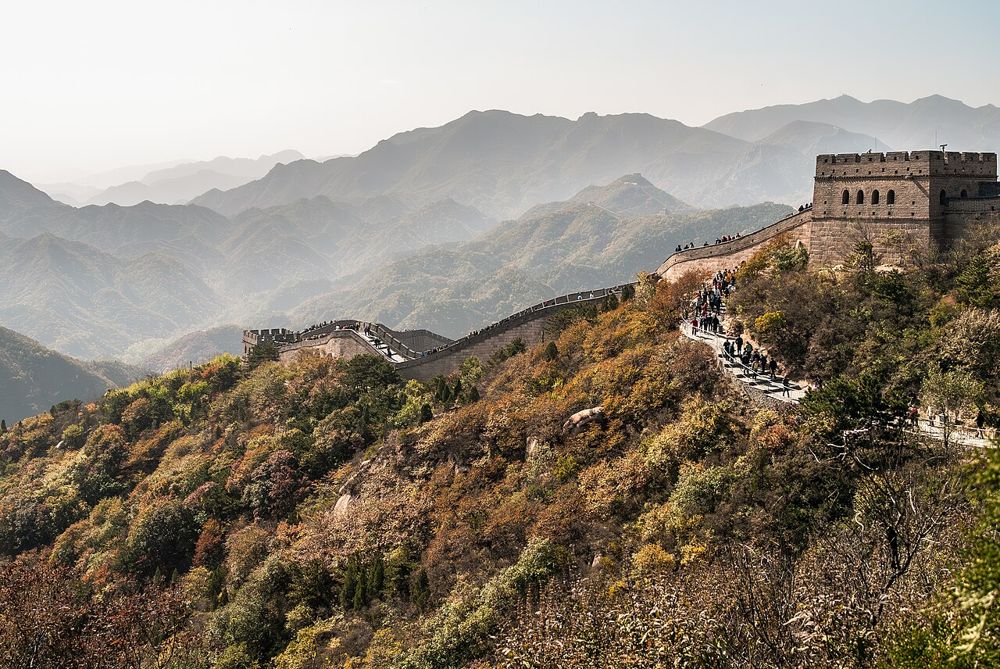
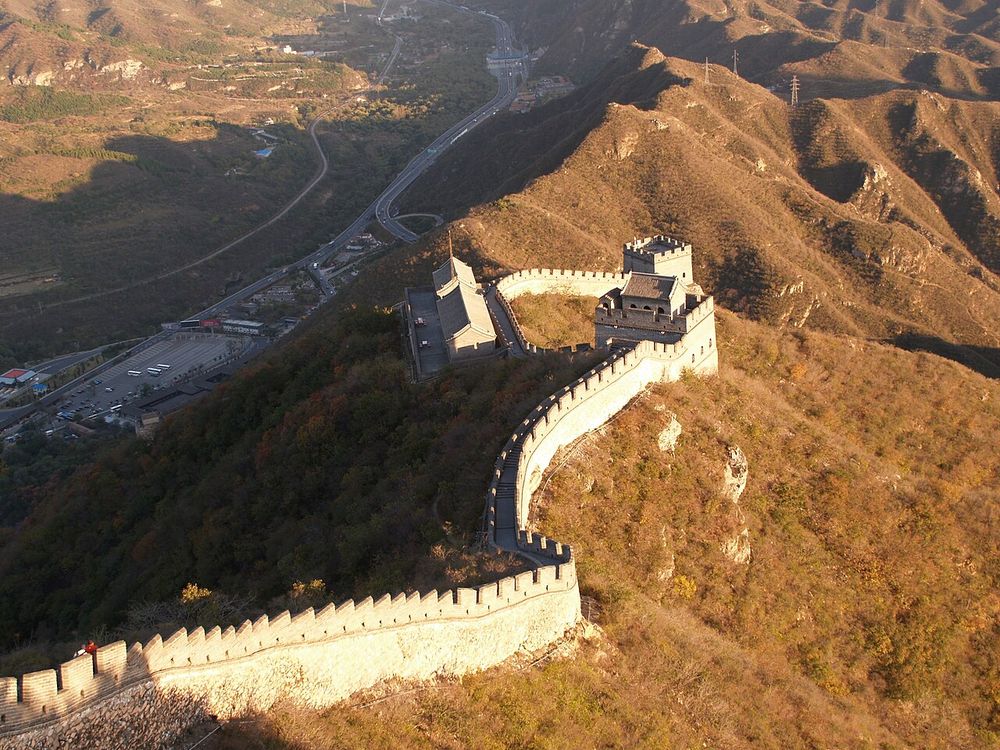
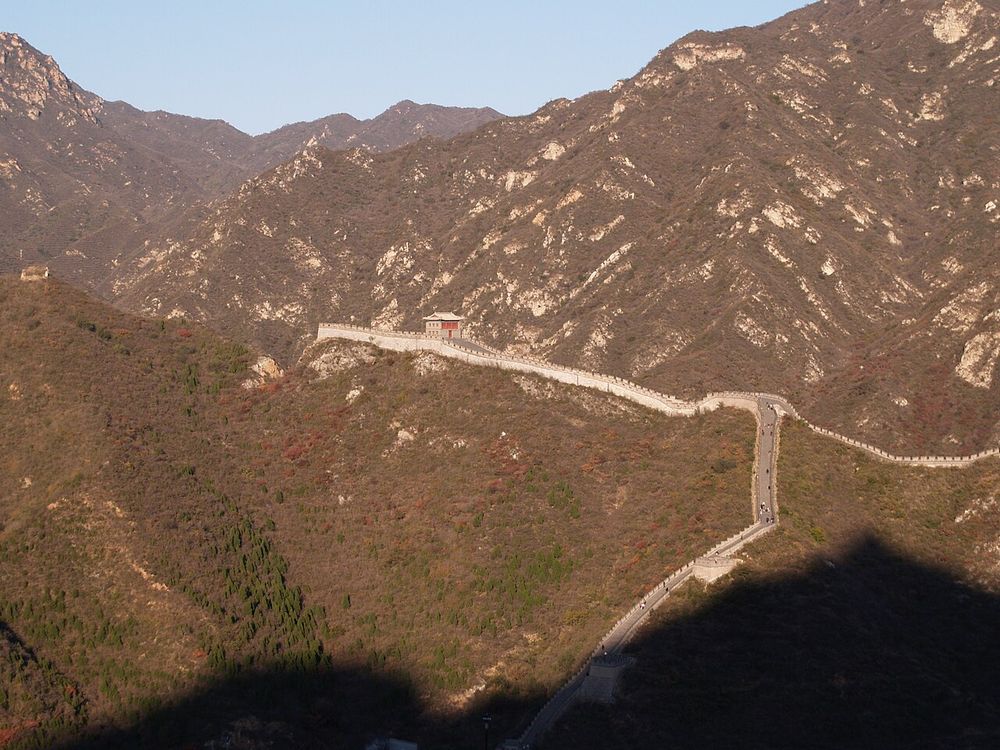
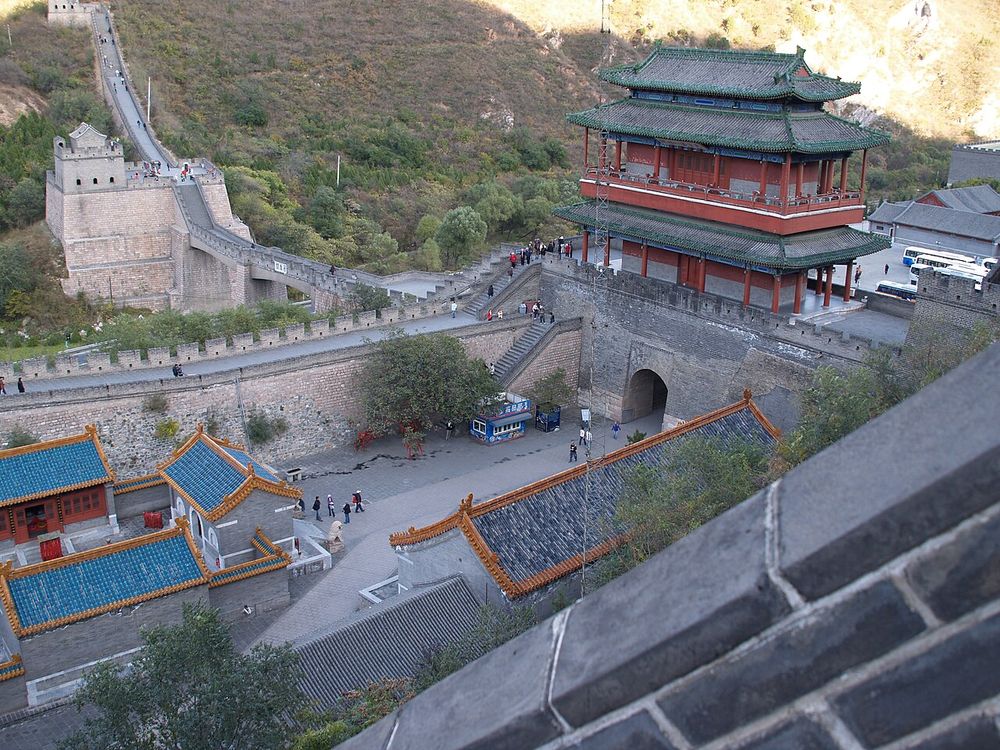
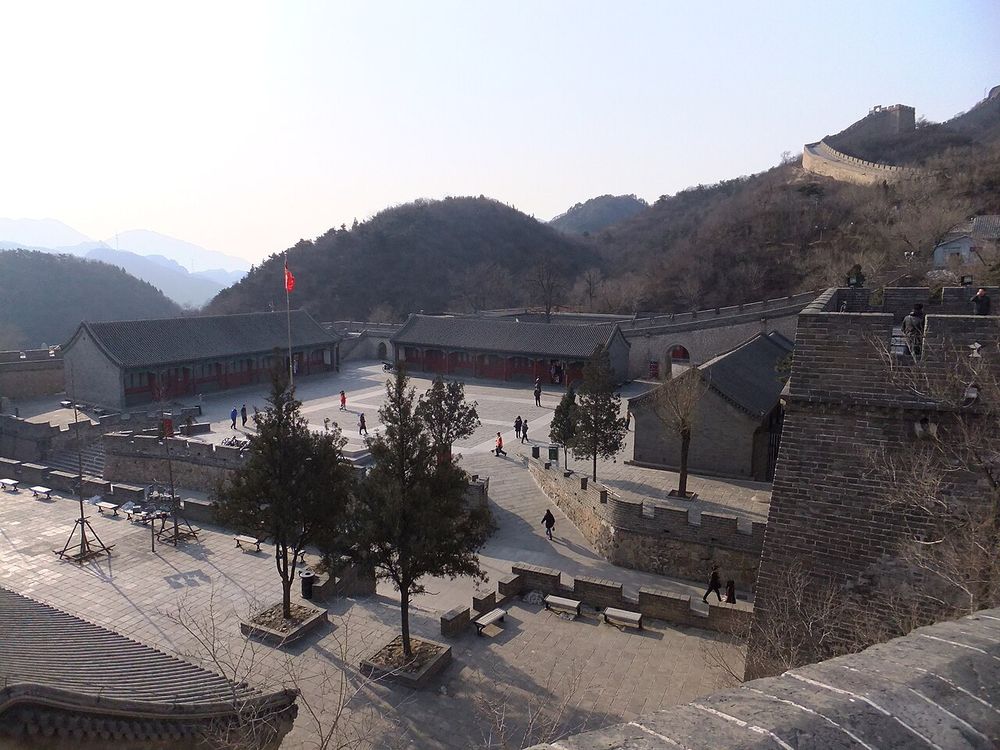
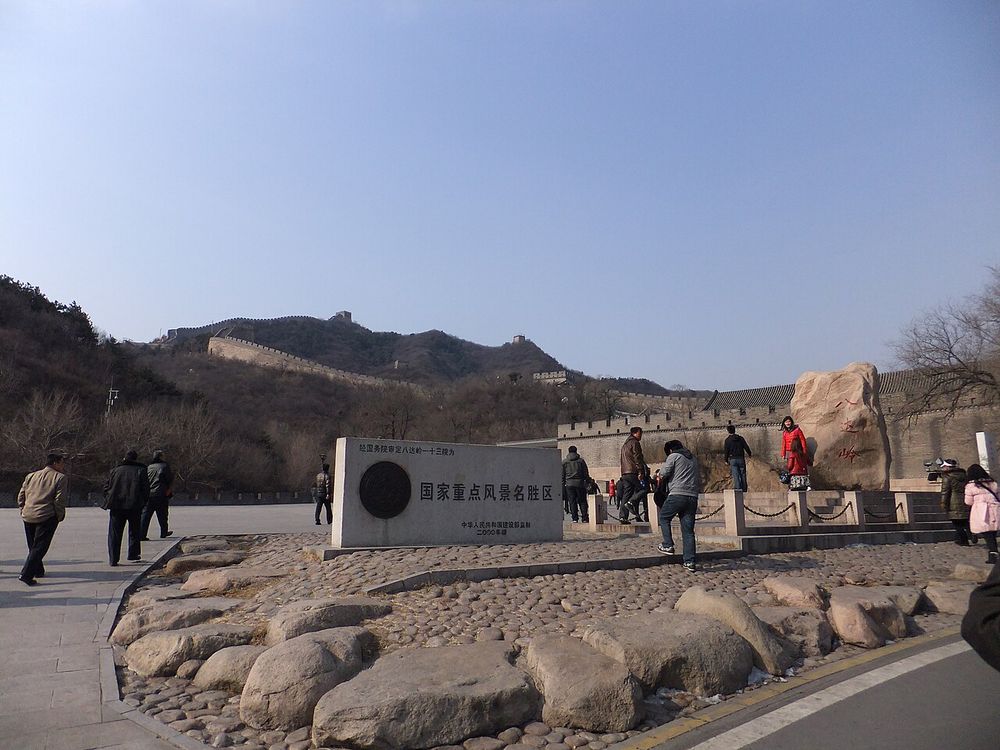
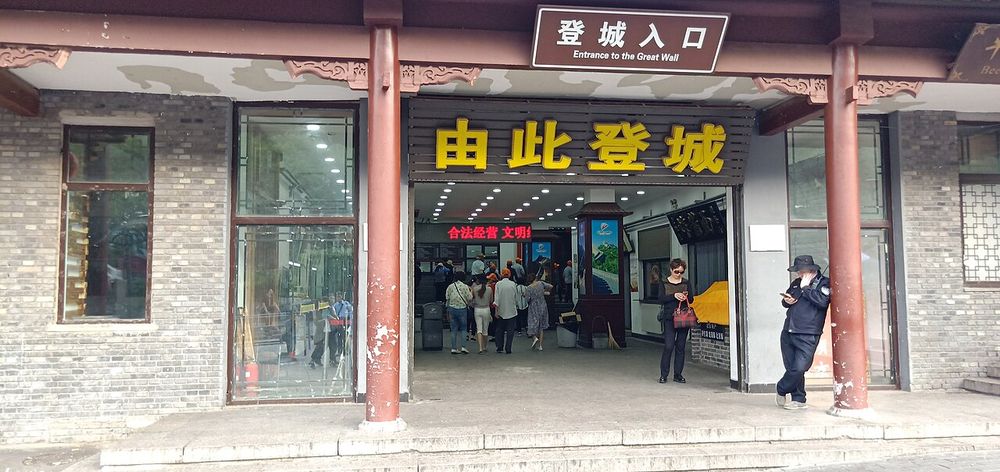
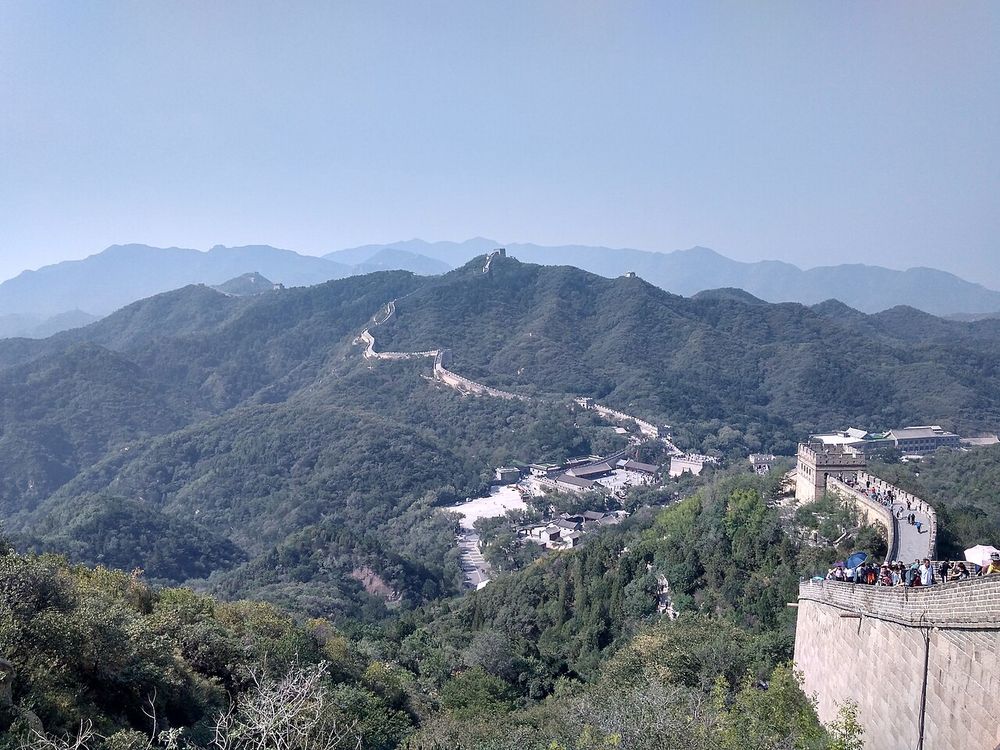
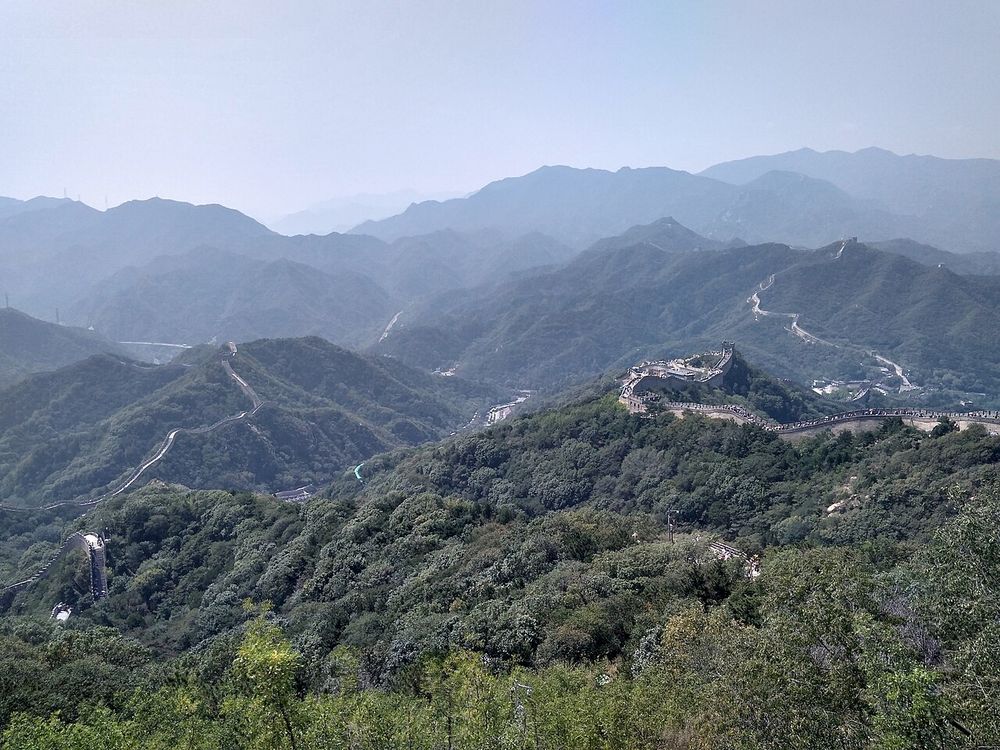
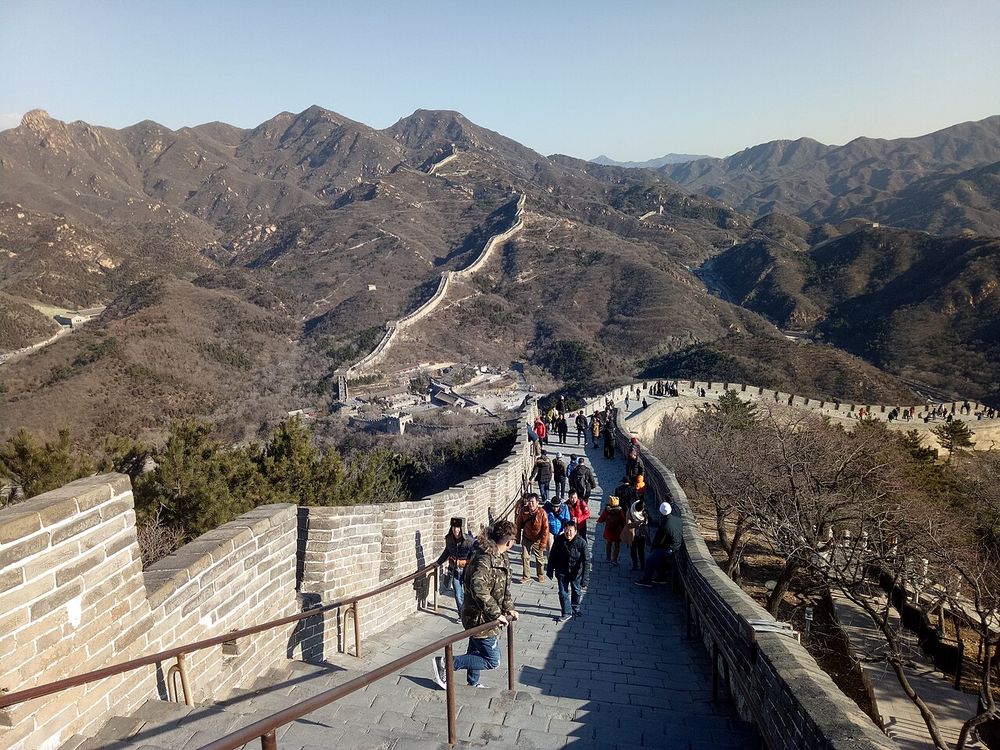
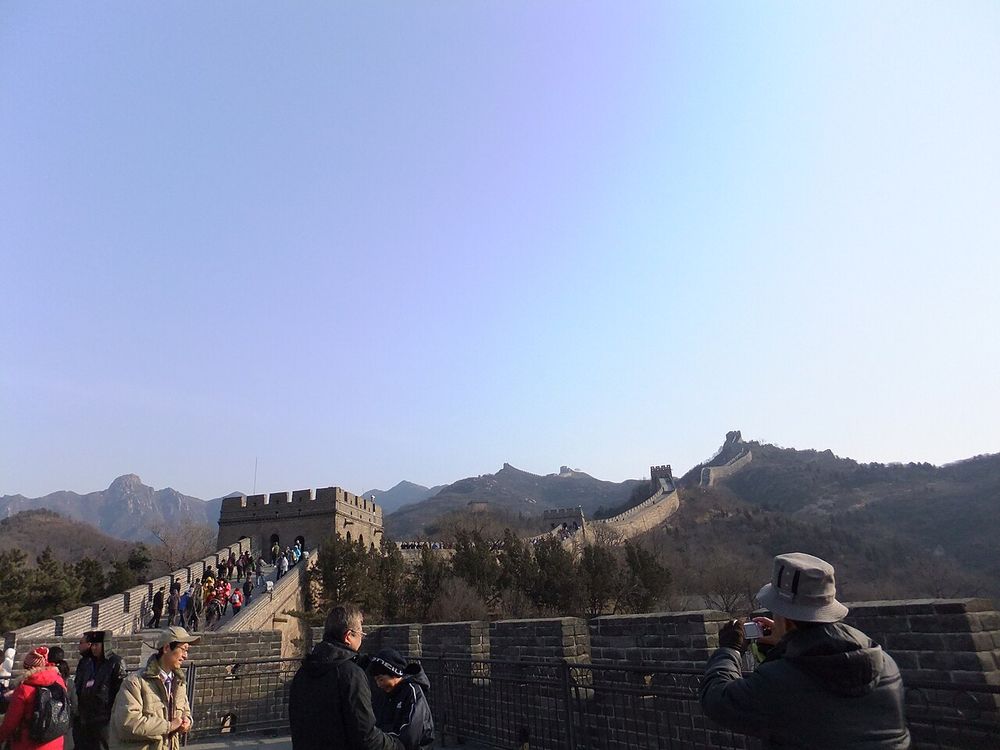
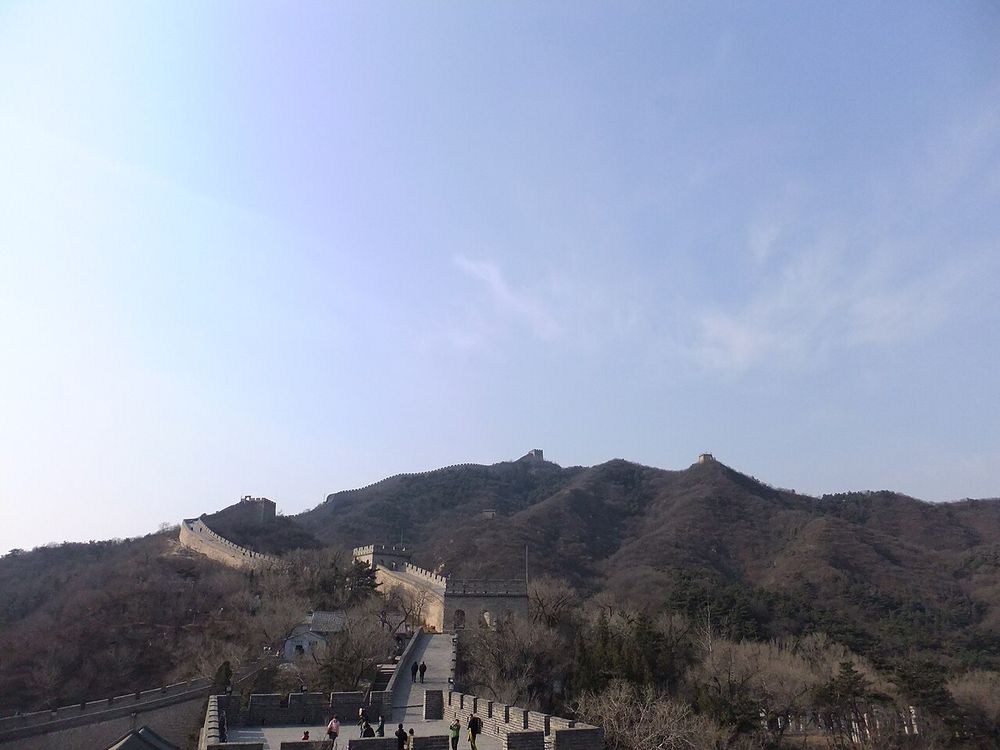
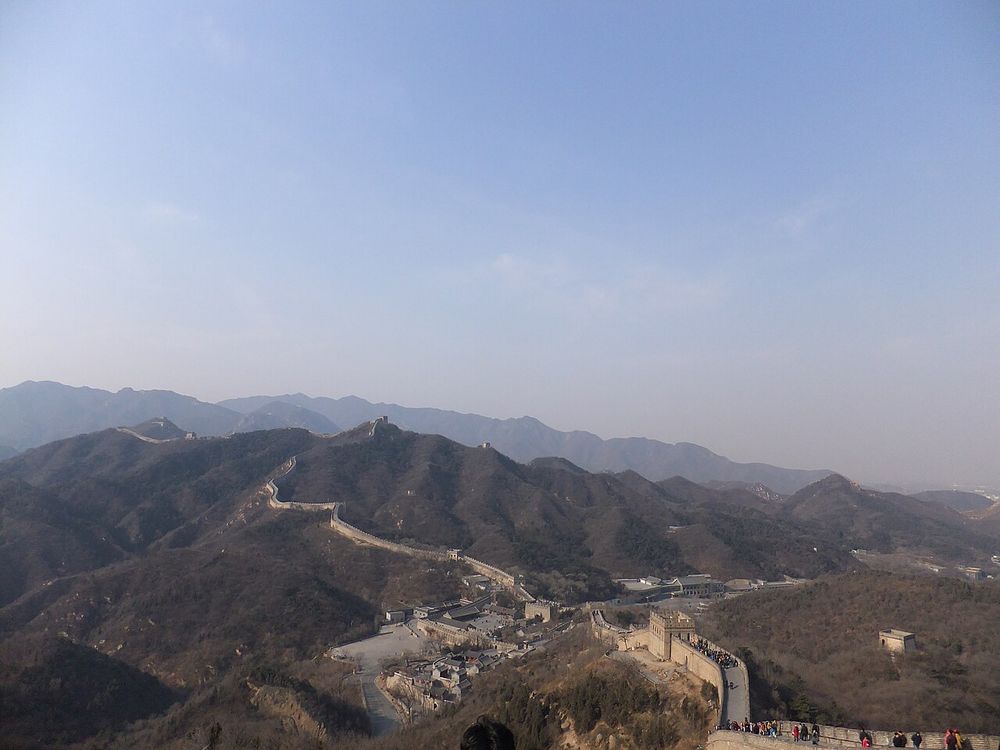
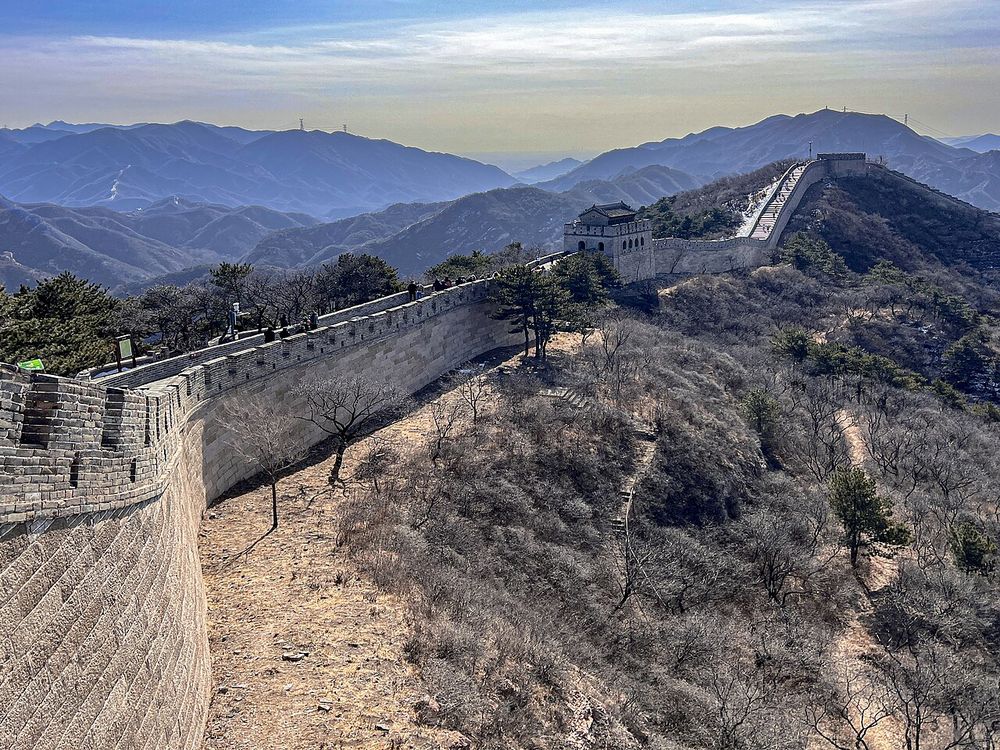
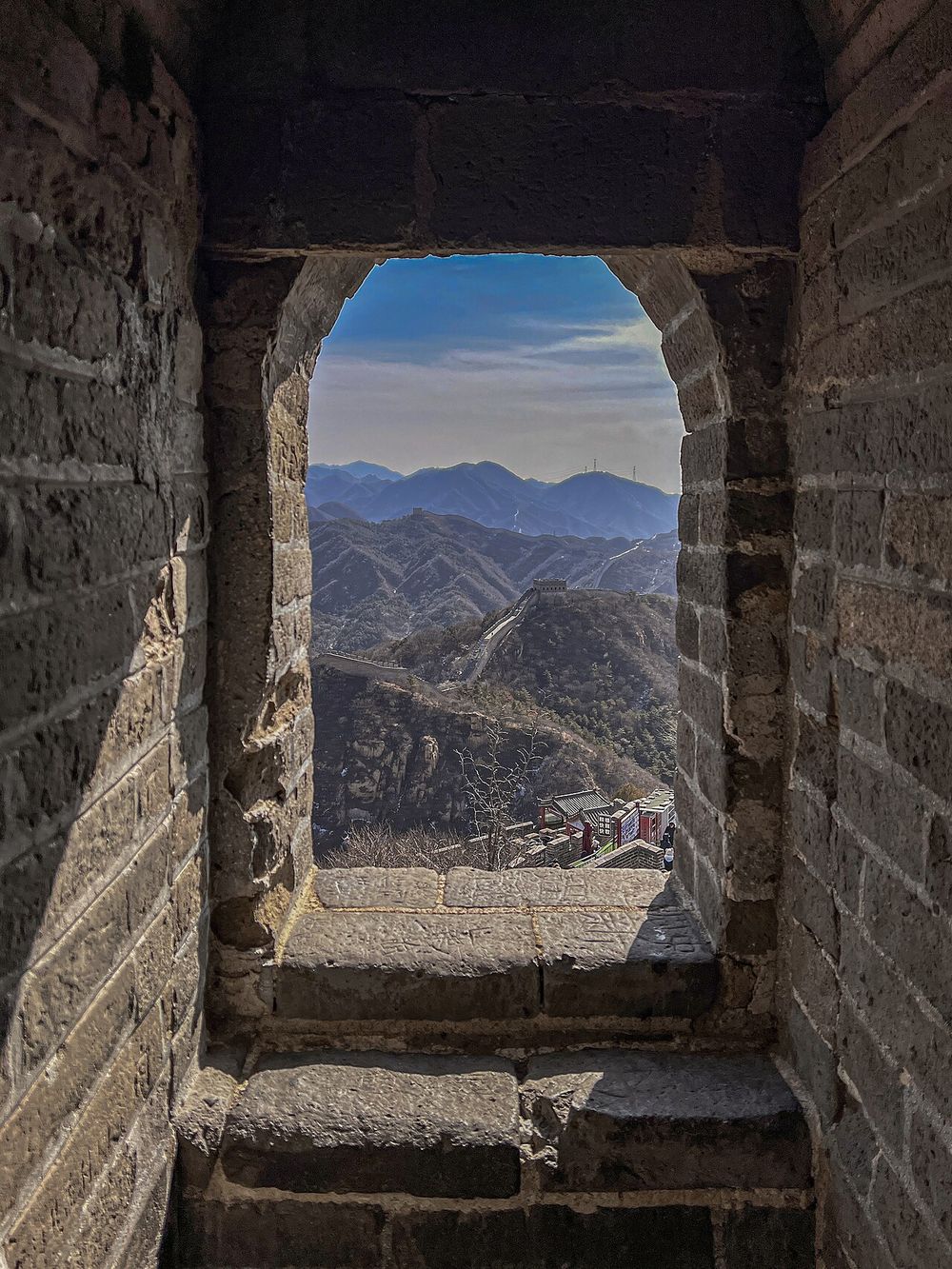
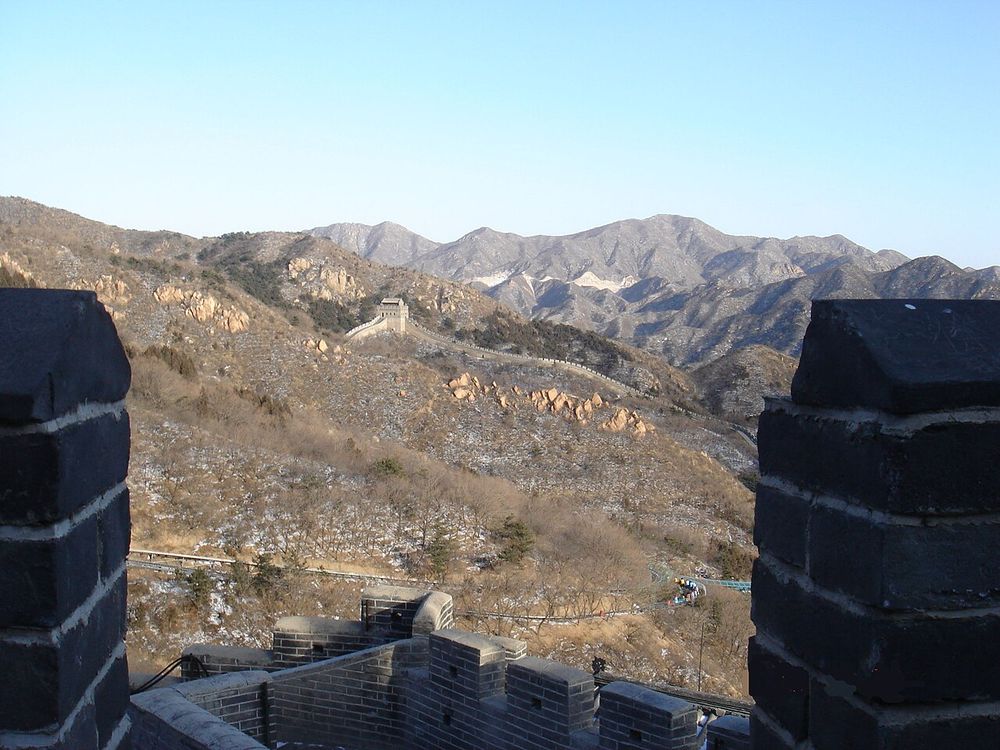
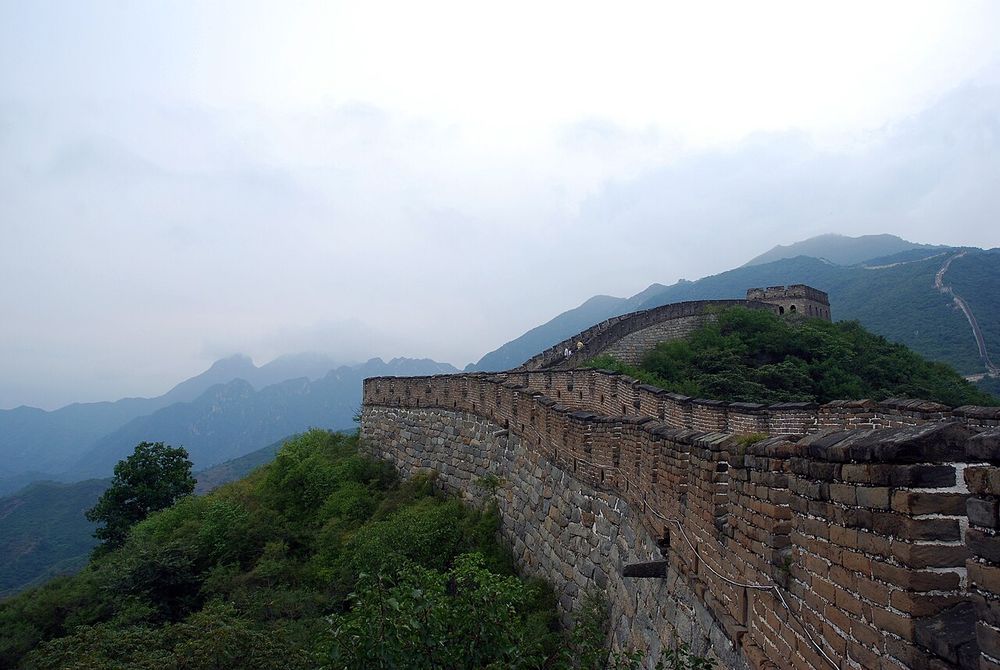
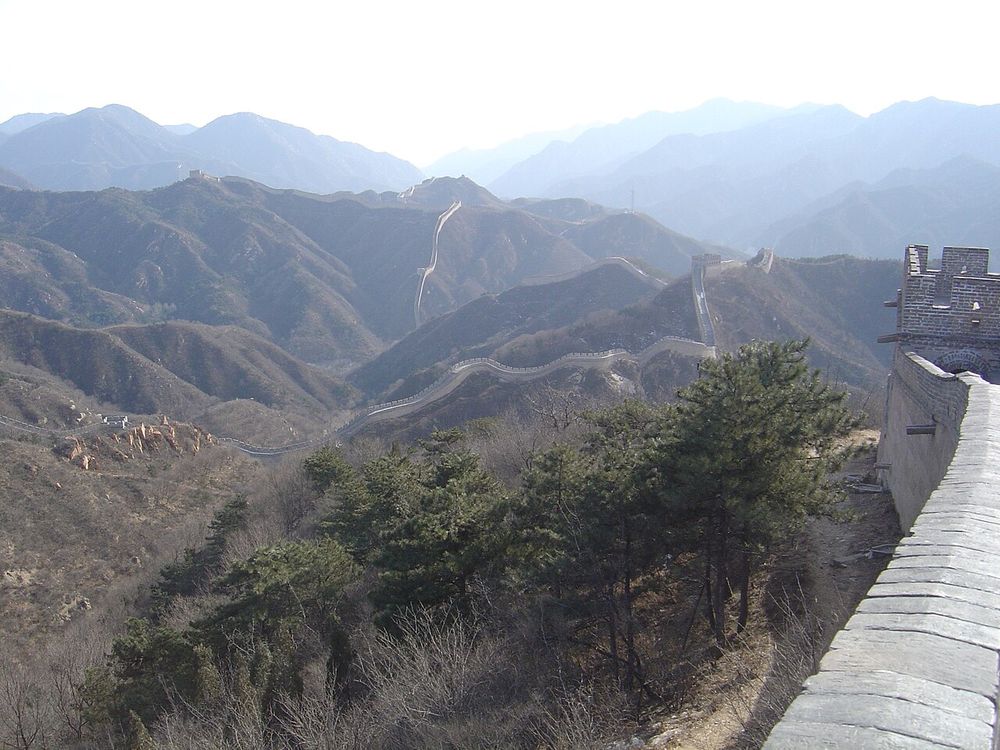
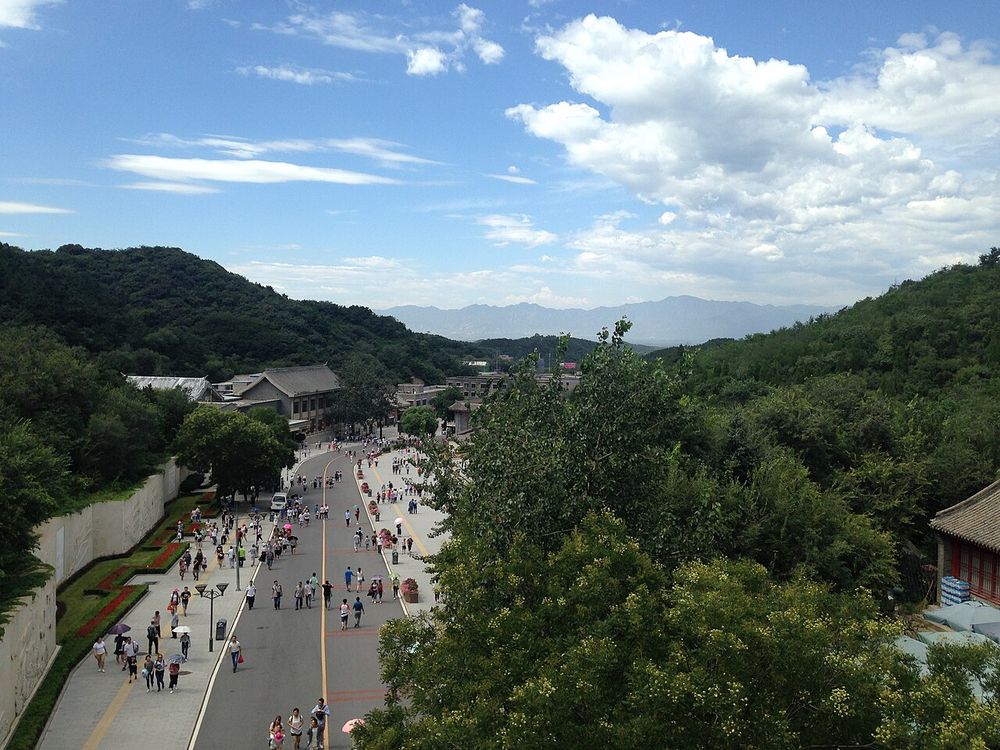
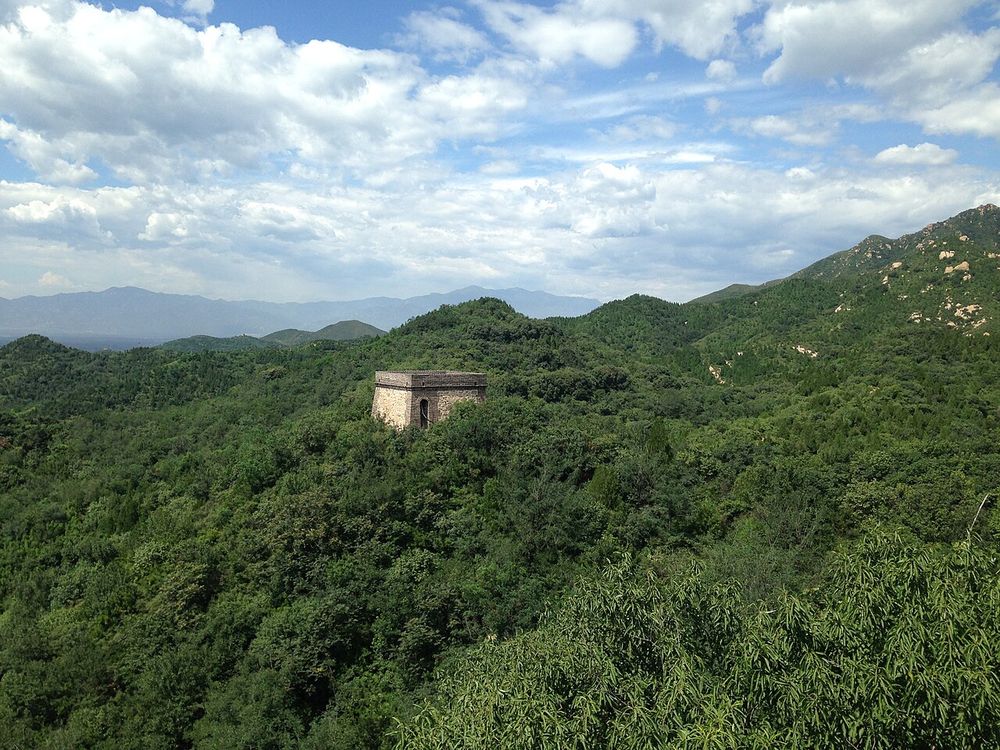
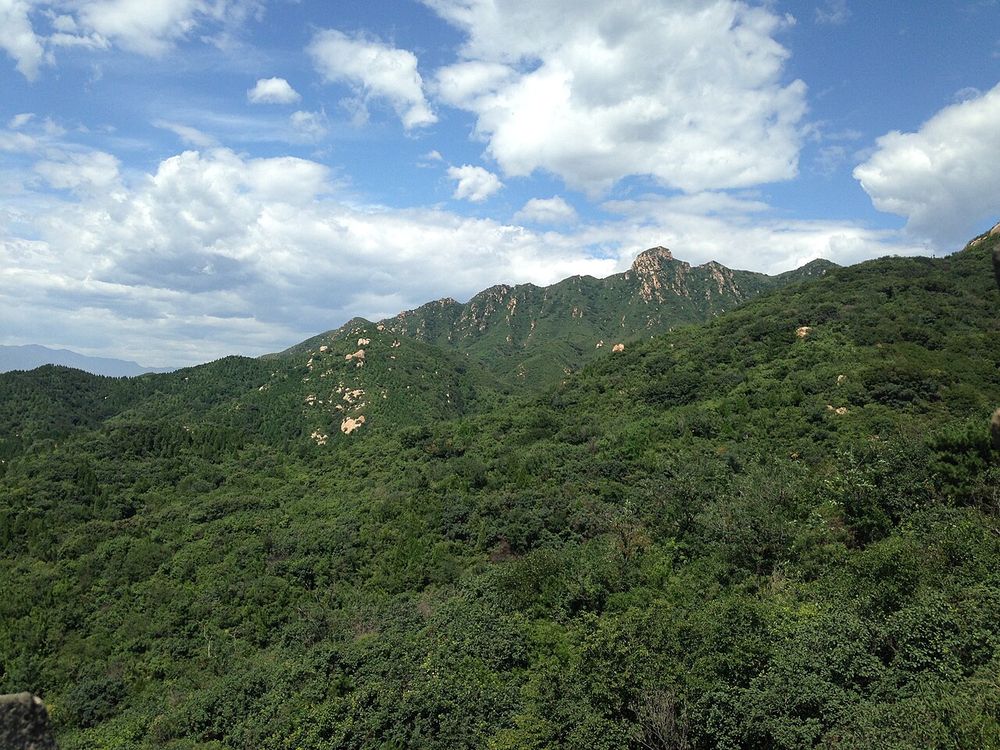
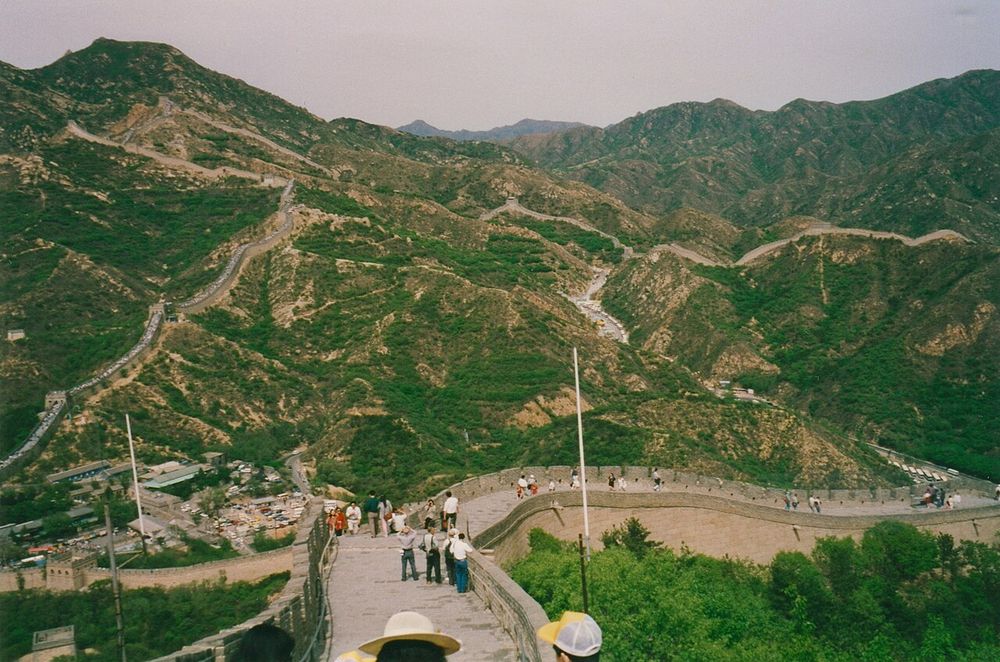
The pass that guarded the road from the steppe to Beijing, and the first stretch of the wall opened to visitors, in 1958. It is the busiest section of all.
Photo: Taty2007, CC BY-SA 3.0, Wikimedia Commons
The story
Badaling is not the pass itself. It is the outpost in front of the pass. Juyong Pass lies 20 km down the valley, and people in the past said its strength lay not in its own walls but here. The fortress under your feet was built in 1505, one year after Michelangelo finished his David.
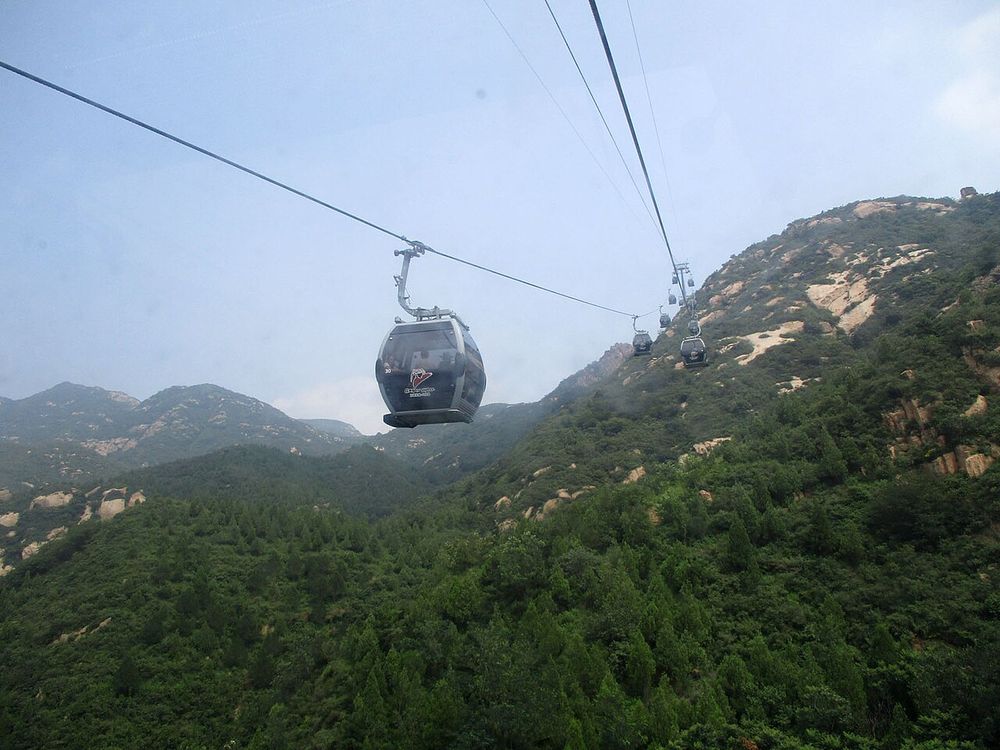
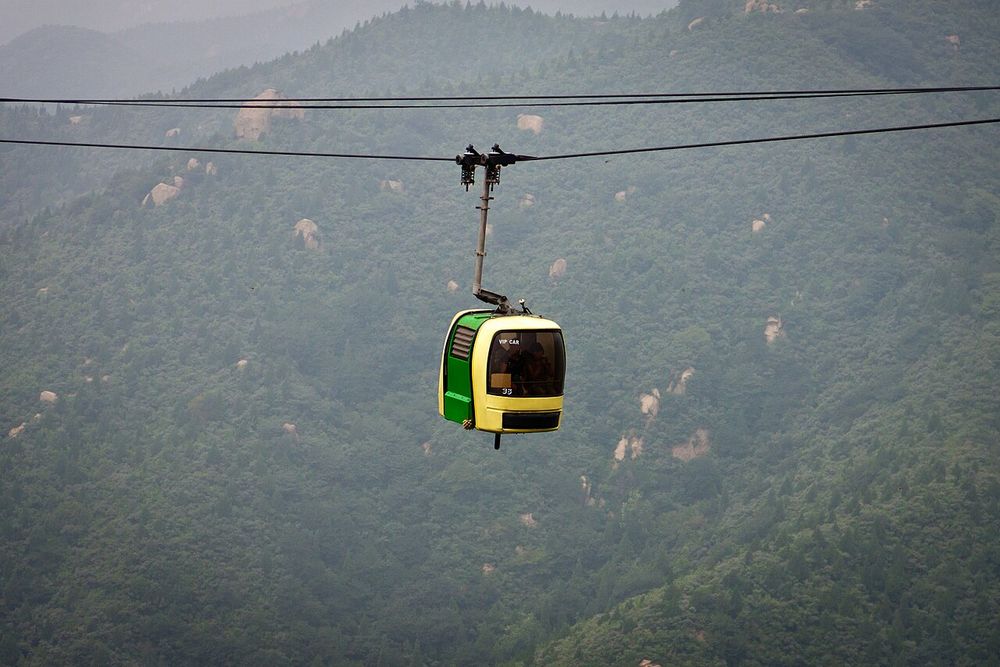
Badaling is a fortress across a pass, with the wall climbing the ridges on both sides of it. One ticket covers the fortress and the wall. The cable car and the pulley car are extra.
At the foot of the wall; check on the day whether it is open
If you have one minute
Badaling, from North Tower 8
The wall at BadalingReinhold Möller, CC BY-SA 4.0
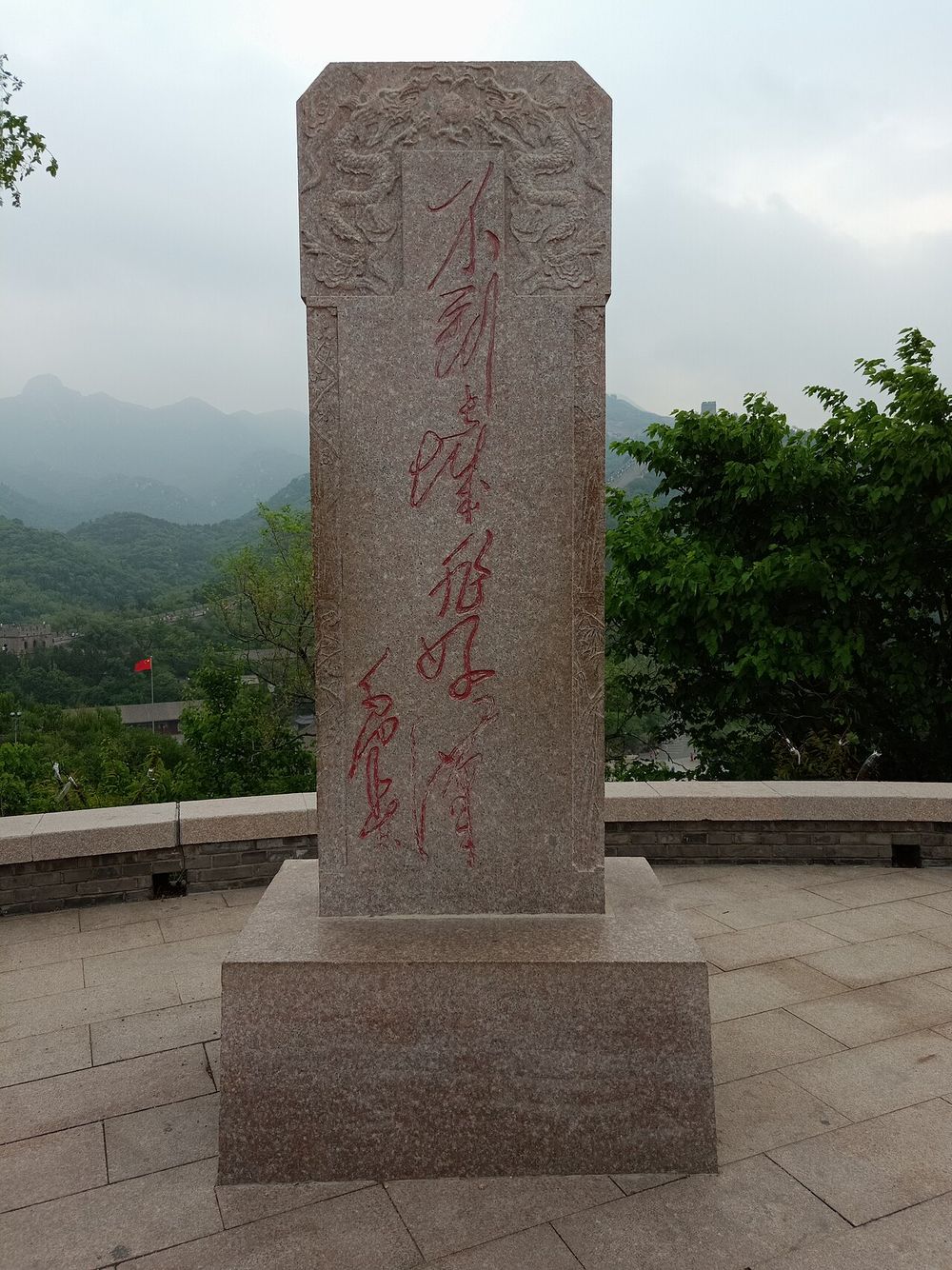
This is the highest tower at Badaling, more than 1,500 m from the fortress. When people say “he who has not climbed the Great Wall is not a true man”, this is the tower they mean you to reach.
Look south: the road in the valley is the Guangou, the main corridor from the northern grasslands into the Beijing plain. Badaling plugs its northern mouth.
Look north: beyond the hills is the Yanqing basin, and farther north-west Zhangjiakou and Datong. Mongol cavalry came from that direction in Ming (1368–1644) times.
In 1213 Genghis Khan's army went around the front and took the Juyong defences from behind. In 1644 Li Zicheng's rebels came this way into Beijing. A wall cannot hold up a dynasty that is already falling.
People who stood here
Genghis Khan's army, 1213They did not storm the front. They went around and took the Juyong defences from behind.
Li Zicheng, rebel who toppled the Ming, 1644The rebel leader came through this line on his way to Beijing. The Ming dynasty ended weeks later.
Jawaharlal Nehru, India's first prime minister, 1954India's prime minister was the first foreign leader to climb Badaling.
Richard Nixon, 24 February 1972The US president climbed Badaling during the visit that reopened relations between the two countries.
Queen Elizabeth II, 14 October 1986She walked the wall at Badaling. Margaret Thatcher had come in 1977, and Barack Obama came in 2009.
Go deeper: four stops at Badaling
1. The east gate and the Capital-Gazing Stone
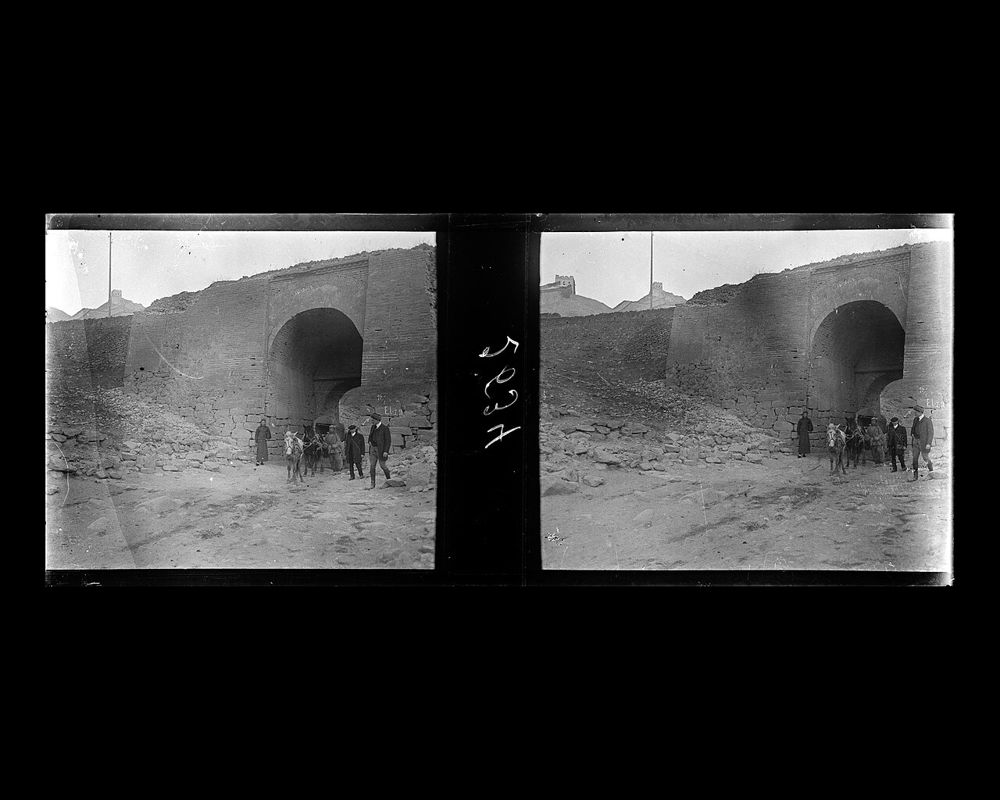
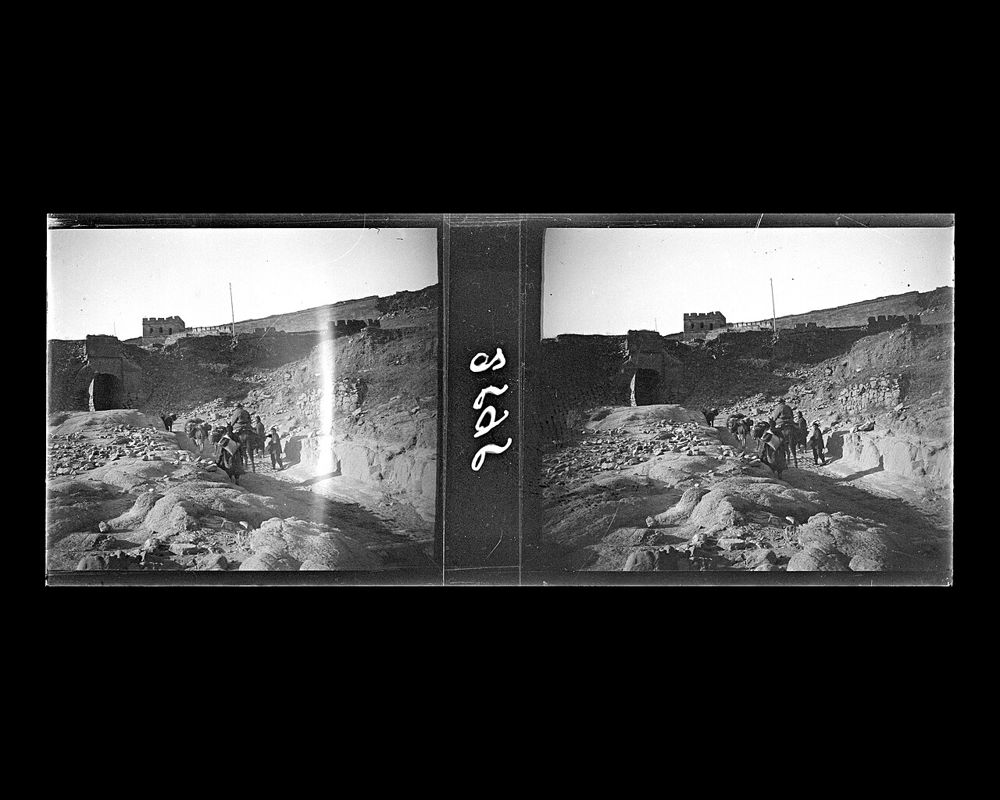
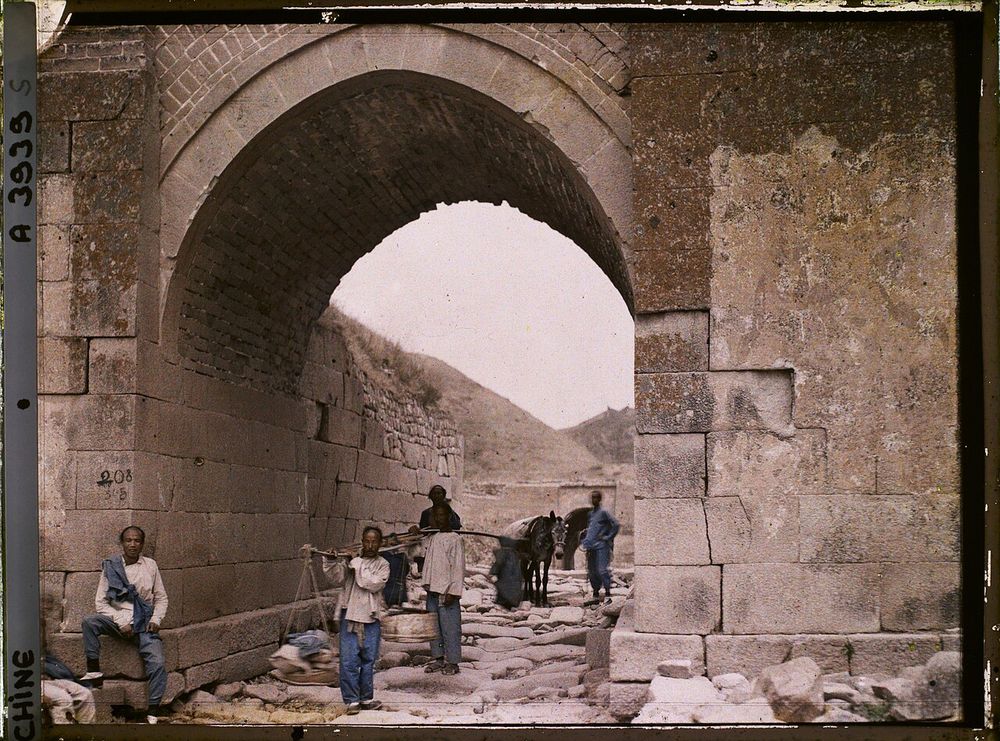
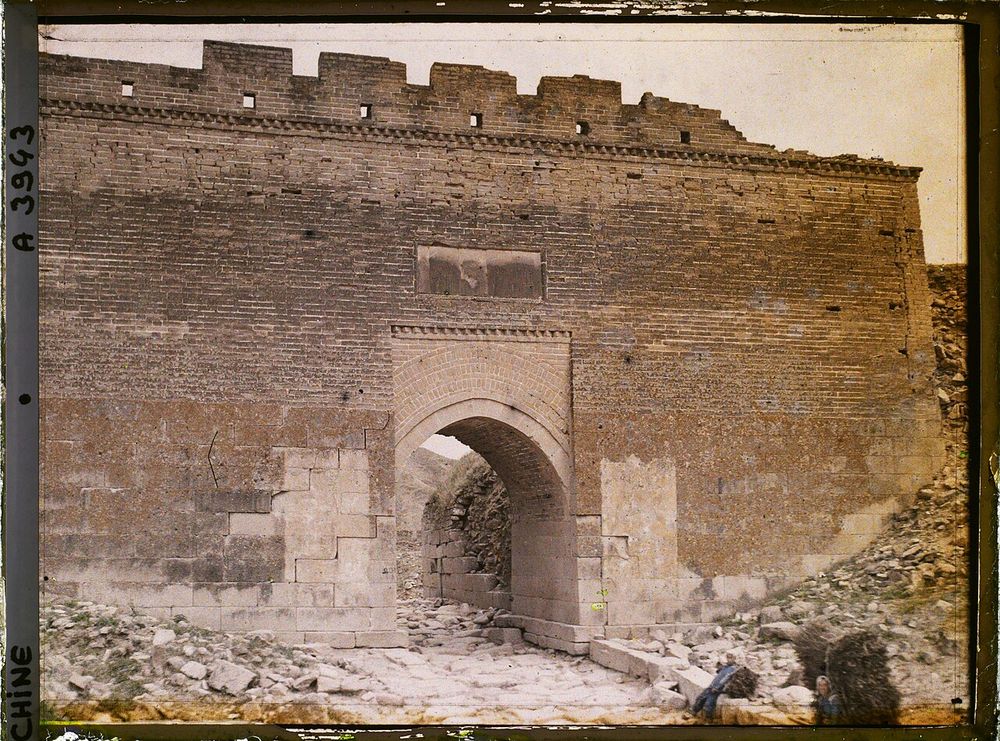
The east gate of Badaling fortress from inside, early 20th century (stereo glass plate)Albert Dutertre, CC BY-SA 4.0
The fortress is a trapezoid, narrow in the east and wide in the west. It was built in 1505 and repaired under the Jiajing and Wanli emperors.
Over the east gate are four characters cut in 1539: Juyong Wai Zhen, “the outer garrison of Juyong”. One tablet states what Badaling was: the forward post at the northern mouth of the Juyong defences.
Beside the road outside the east gate is a granite boulder carved “Capital-Gazing Stone”.
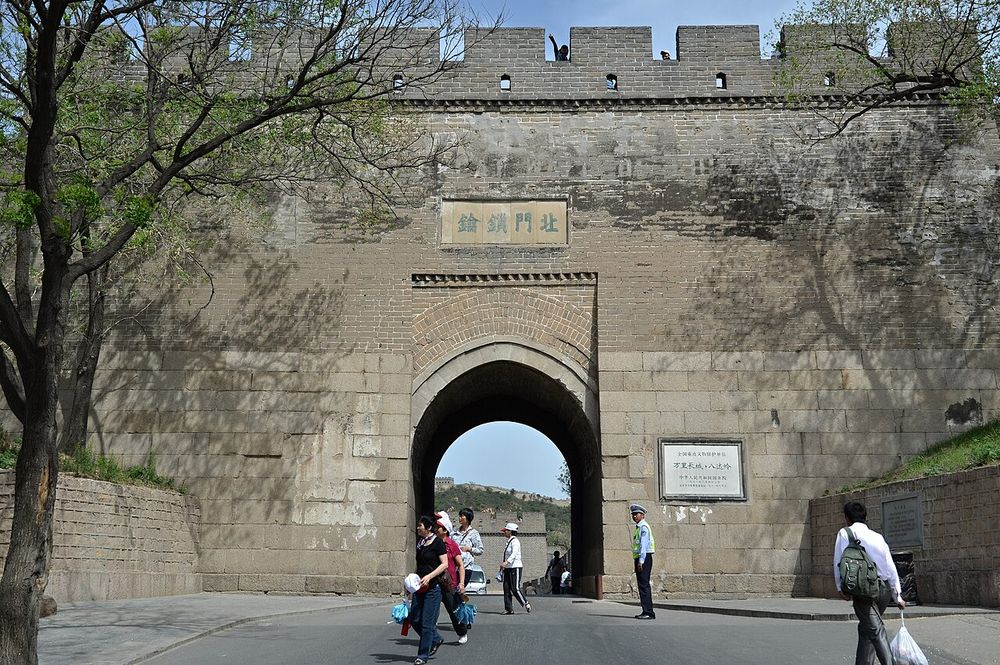
2. The west gate: lock and key of the north
The tablet is 2.26 m long and 0.91 m high. It was set up in 1582 by Wu Dui, governor-general of Ji and Liao.
The phrase means “lock and key of the northern gate”. It goes back to the Song (960–1279) statesman Kou Zhun, who called himself the lock and key of the realm's northern door. Wu Dui borrowed it for Badaling: lock this, and the capital's north gate is locked.
3. How to read a stretch of wall
Battlements and loopholes: the high wall on the outer, northern side has gaps for shooting, and below each gap a small hole for firing downward. The low wall on the inner side is there to stop soldiers falling off.
Drains: every so often a stone spout sticks out from the top of the wall and throws rainwater clear. Standing water is the wall's worst enemy; this is one reason it has stood five hundred years.
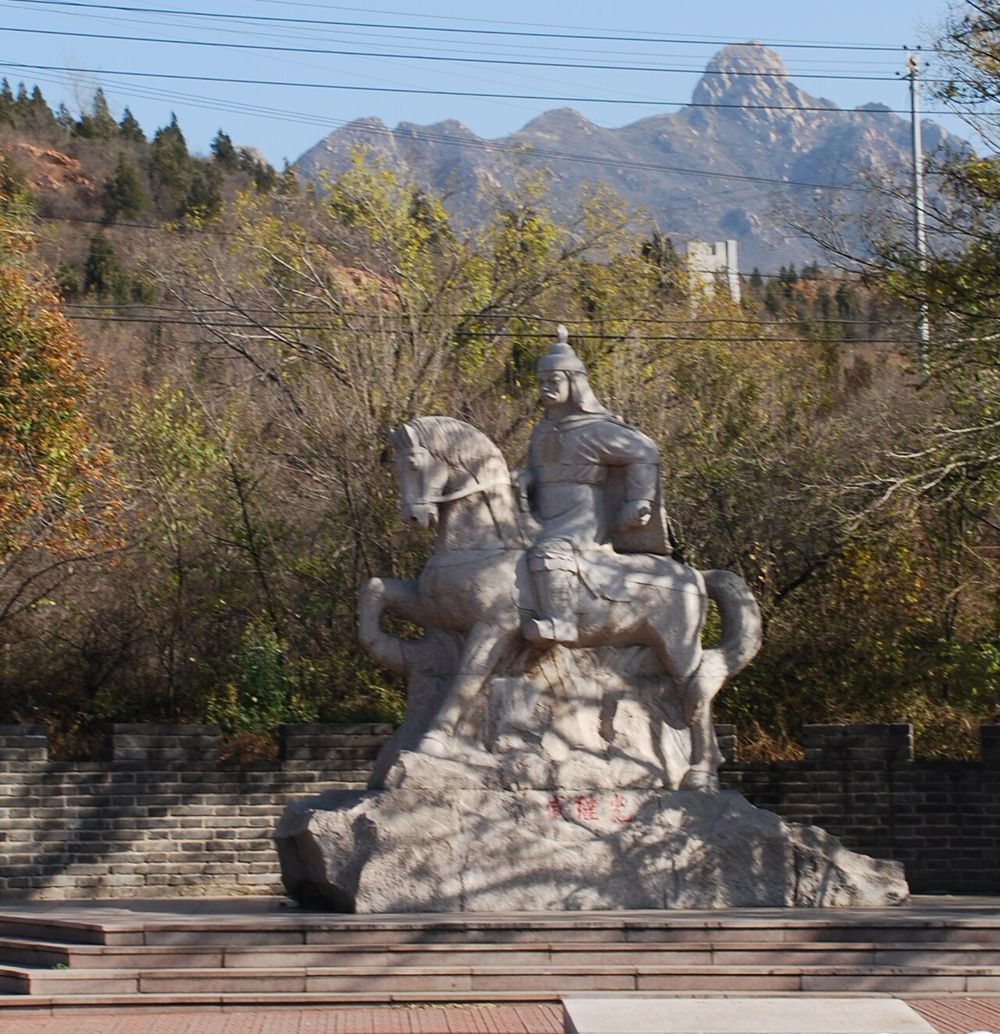
Towers: 12 stand north of the fortress and 7 to the south. The hollow kind, where soldiers could live and store weapons, was built in great numbers from the 1560s, a design closely tied to the general Qi Jiguang.
Bricks: around Beijing some bricks carry a stamped year and the name of the unit that fired them. It was a system of accountability. You can see examples in the Great Wall Museum at Badaling.
4. The people who keep it standing
In 2018 Badaling received more than 9.9 million visitors, up to 80,000 on a single holiday. Since 1 June 2019 tickets have been sold by name with a cap of 65,000 a day, the first such limit on any Great Wall site.
In Shixia village, below the western extension, a villager named Mei Jingtian has spent decades carrying fallen bricks back to the wall, one at a time.
Meanwhile in the world
Year
Here
Elsewhere
1505
Badaling fortress built
Michelangelo finished David in 1504. The foundation stone of St Peter's in Rome is laid in 1506.
1539
East gate tablet carved
Spanish conquistadors have just brought down the Inca empire.
1582
West gate tablet set up
The Pope introduces the Gregorian calendar. Matteo Ricci arrives in Macau.
1644
Li Zicheng enters Beijing; the Ming falls
The English Civil War is under way.
Then and now
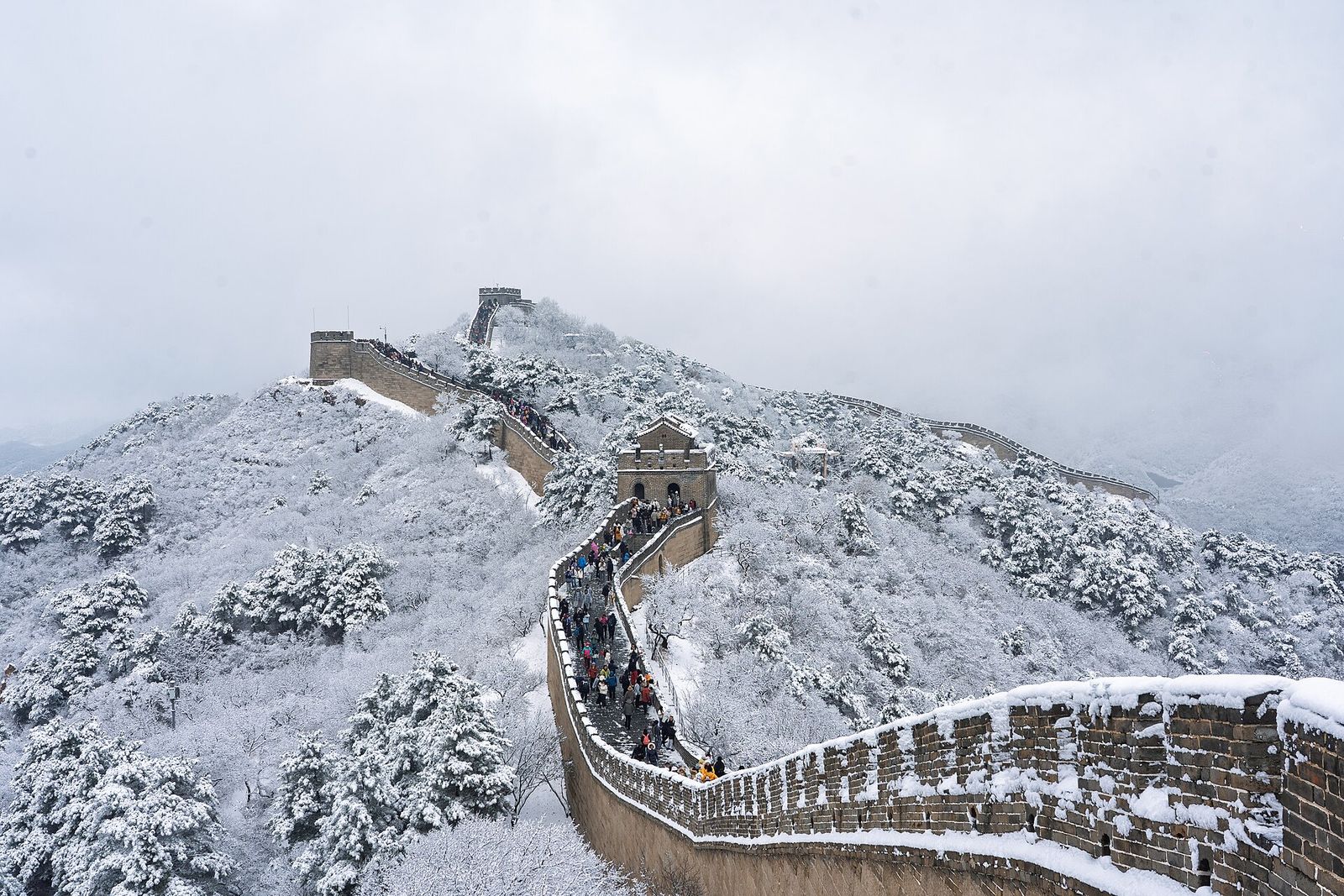
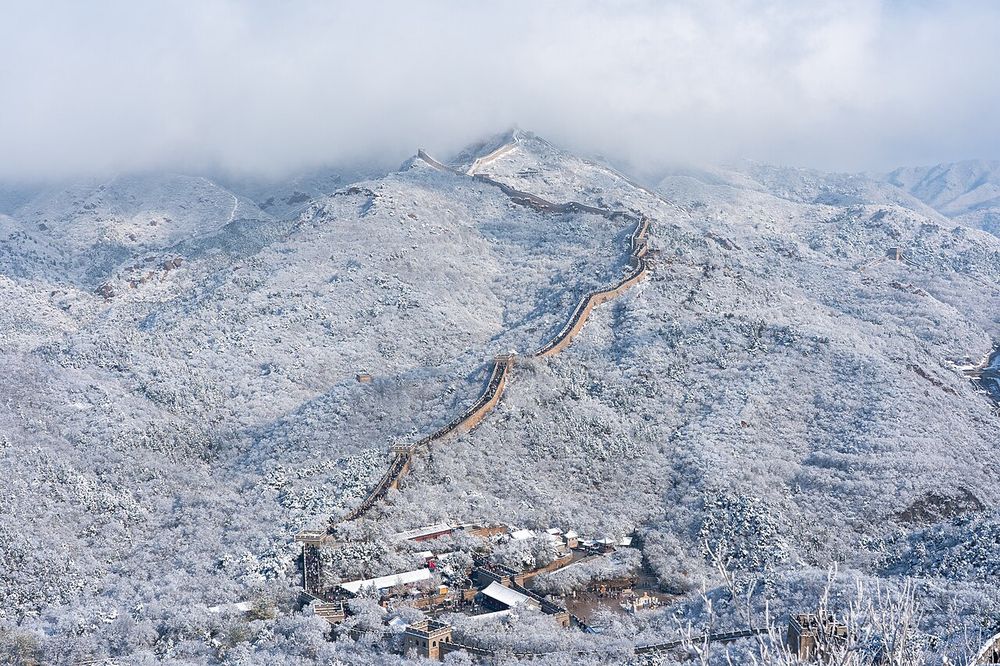
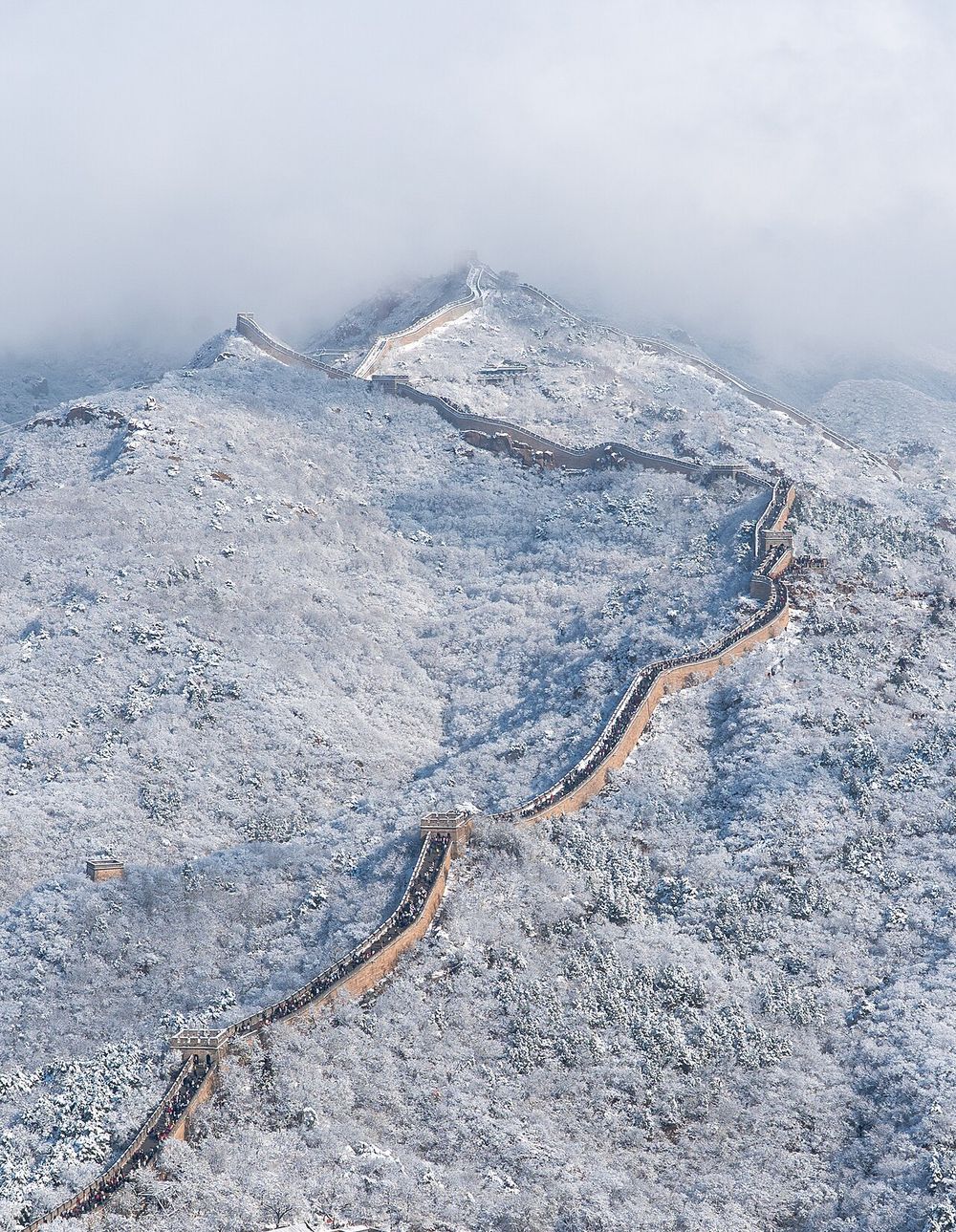
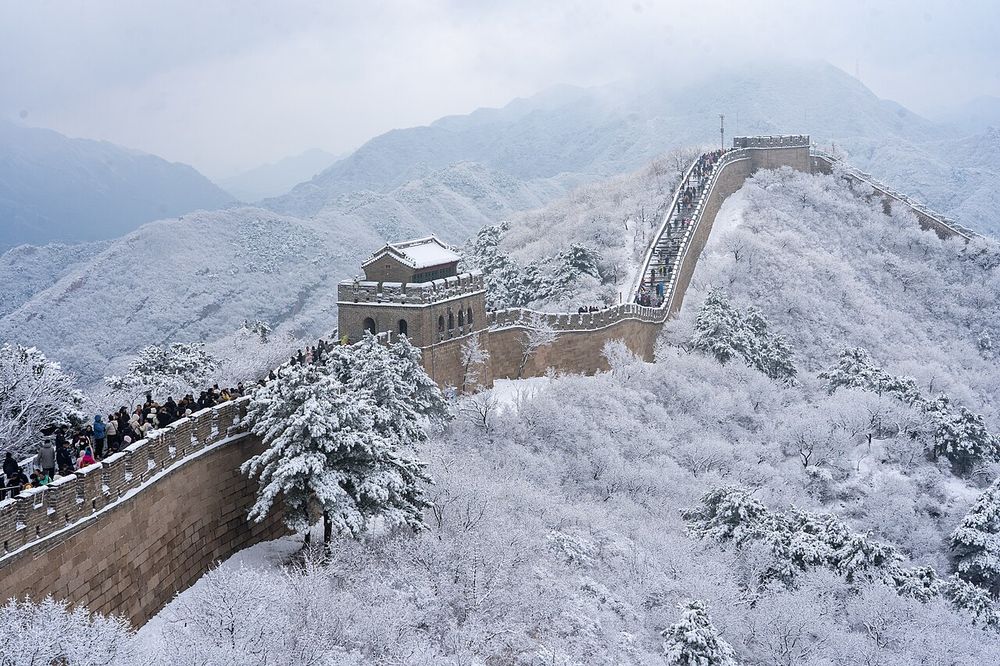
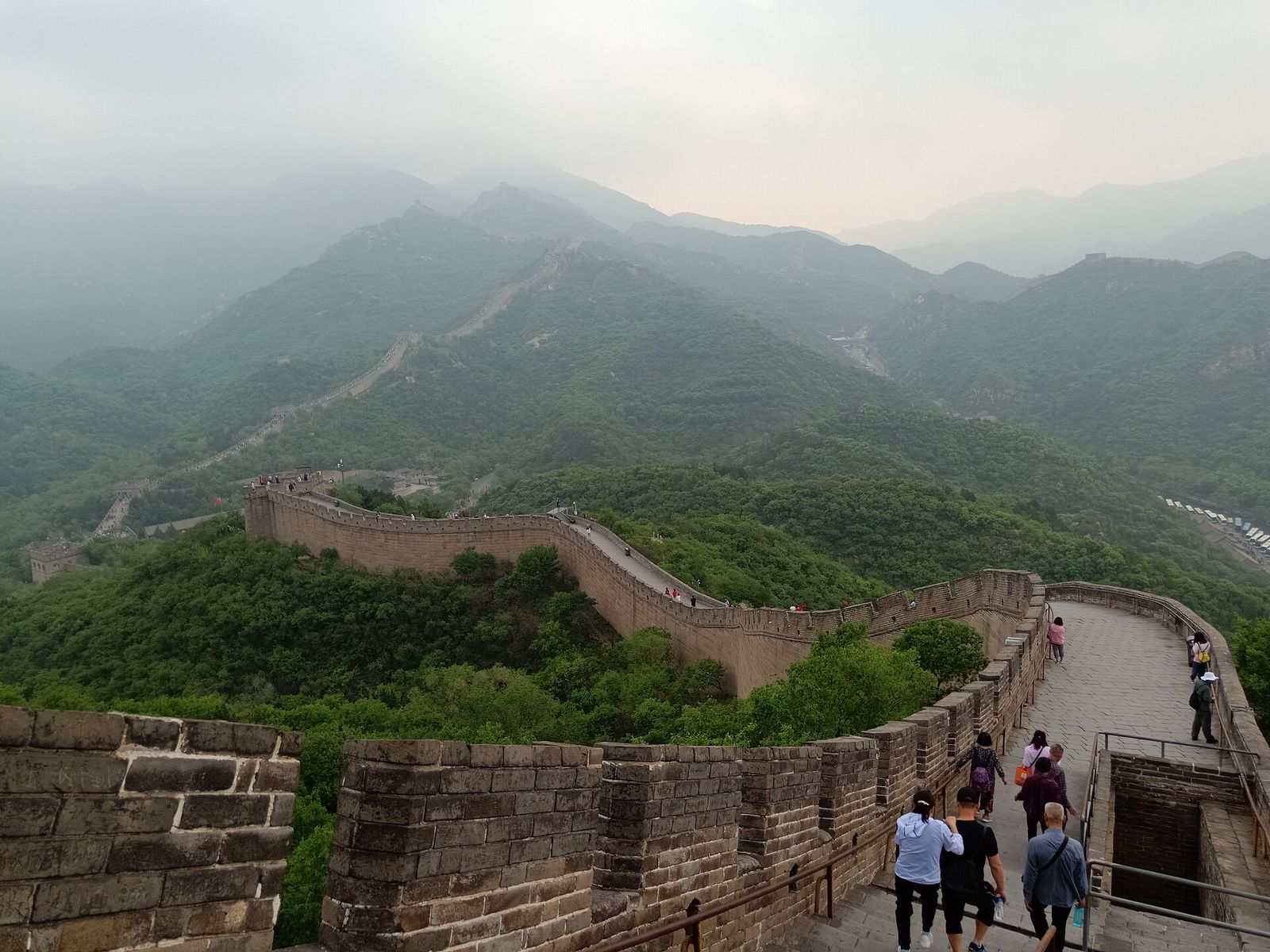
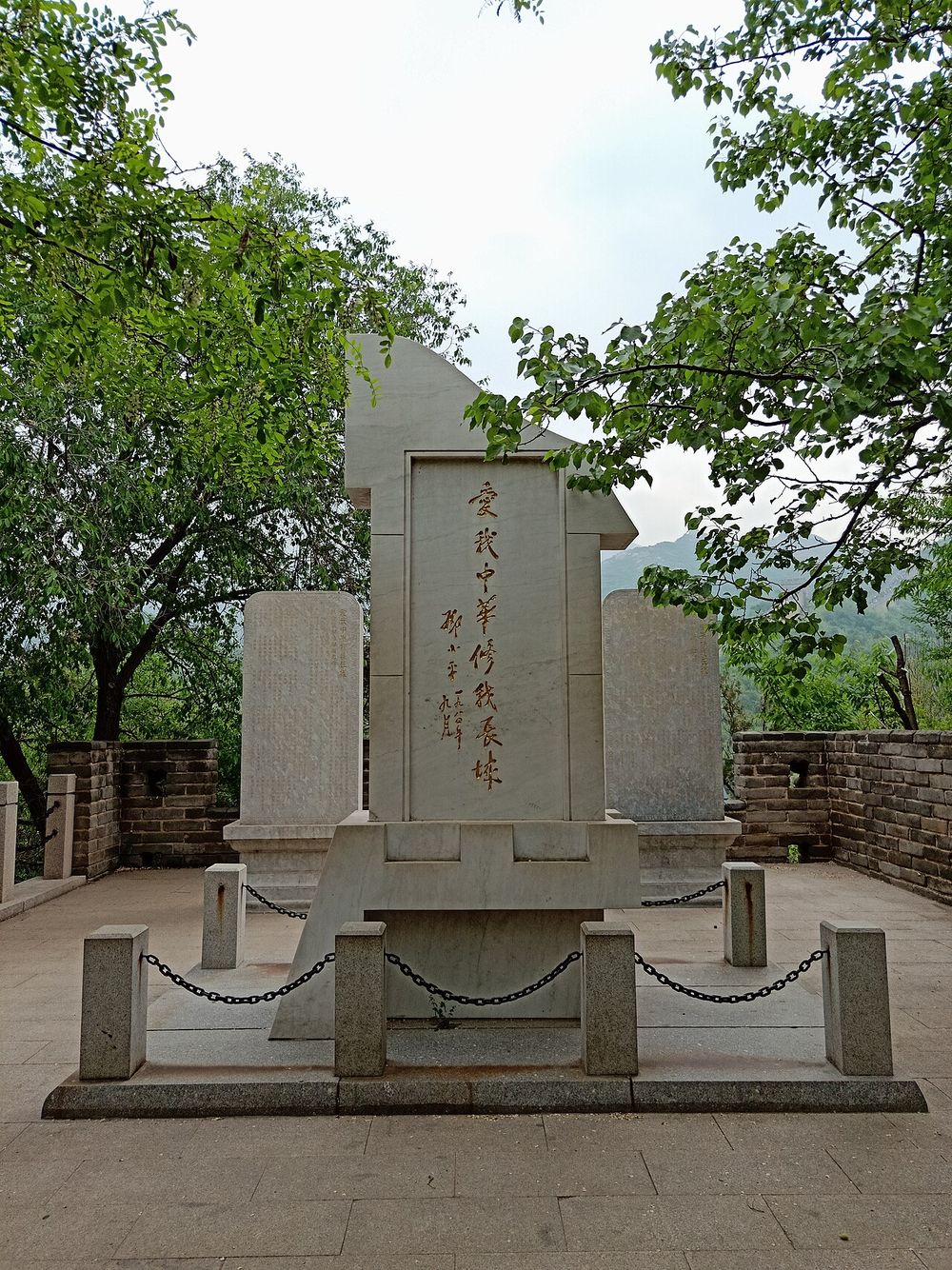
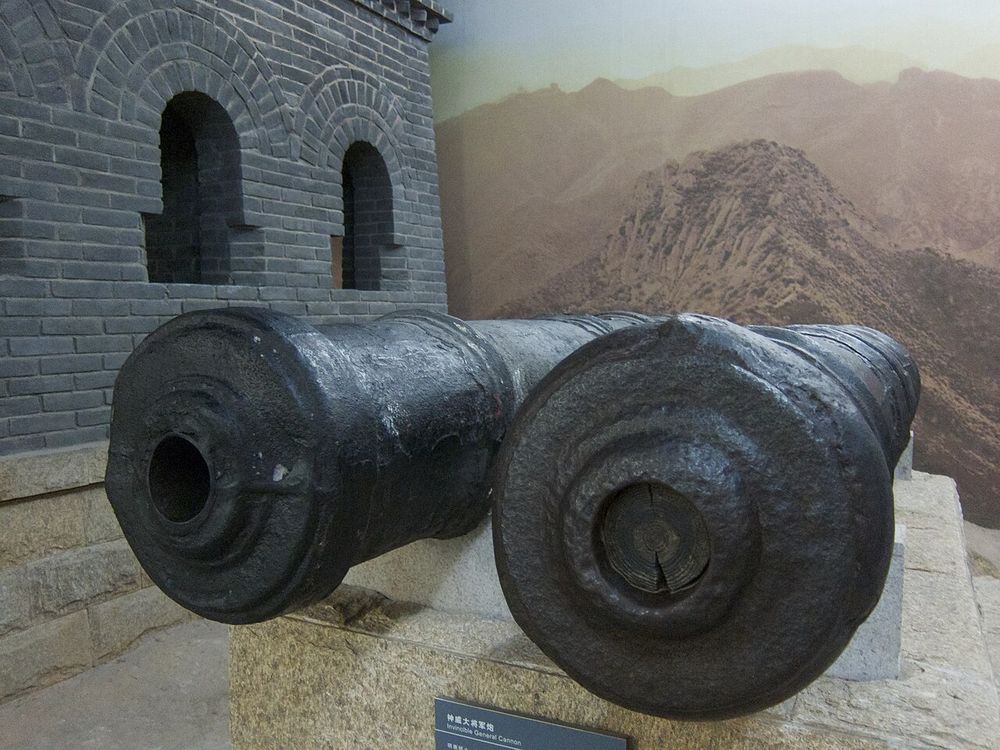
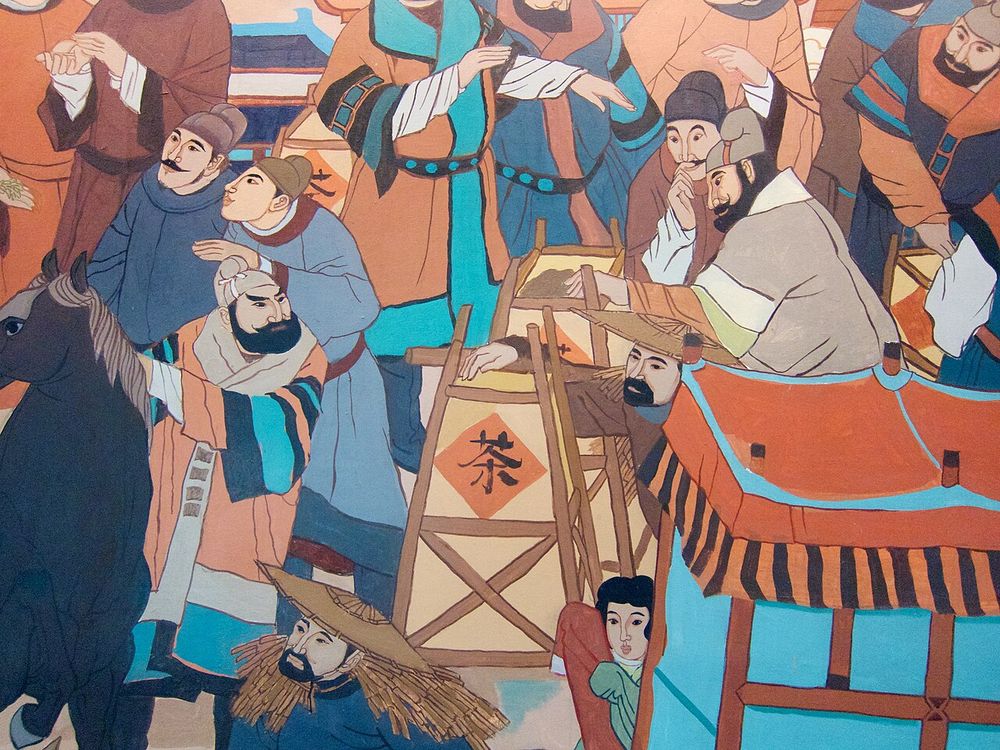
The wall at BadalingReinhold Möller, CC BY-SA 4.0, Wikimedia CommonsThe south side in snow, November 2026Steven Sun, CC BY-SA 4.0, Wikimedia CommonsThe north side in snow: the wall runs along the crestSteven Sun, CC BY-SA 4.0, Wikimedia CommonsSnow on the north sideSteven Sun, CC BY-SA 4.0, Wikimedia CommonsA tower on the south side in snowSteven Sun, CC BY-SA 4.0, Wikimedia CommonsThe wall climbing away from the fortressPQ77wd, CC BY-SA 4.0, Wikimedia CommonsTowers and wall in late-afternoon lightDave Proffer, CC BY 2.0, Wikimedia CommonsThe wall crossing bare winter ridgesDave Proffer, CC BY 2.0, Wikimedia CommonsThe fortress seen from the wall: gate tower and courtyardDave Proffer, CC BY 2.0, Wikimedia CommonsThe west gate of the fortressPavel Špindler, CC BY 3.0, Wikimedia CommonsThe fortress and the square below itTaisyo, CC BY 3.0, Wikimedia CommonsThe square at the foot of the wallTaisyo, CC BY 3.0, Wikimedia CommonsThe way up: "climb the wall from here"PQ77wd, CC BY-SA 4.0, Wikimedia CommonsLooking down on the pass from the north side, 2019Sprt98, CC BY-SA 3.0, Wikimedia CommonsThe pass and the wall on the far ridgeSprt98, CC BY-SA 3.0, Wikimedia CommonsA steep stretch on a busy day, 2017Foxy1219, CC BY-SA 4.0, Wikimedia CommonsOn the wall, looking along the battlementsTaisyo, CC BY 3.0, Wikimedia CommonsRidges north of the wallTaisyo, CC BY 3.0, Wikimedia CommonsThe wall winding over the hillsTaisyo, CC BY 3.0, Wikimedia CommonsThe edge of the wall and the mountains beyondMarek Śliwecki, CC BY-SA 4.0, Wikimedia CommonsThe view through an opening in a towerMarek Śliwecki, CC BY-SA 4.0, Wikimedia CommonsBattlementsWikationer, Public domain, Wikimedia CommonsA stretch of wall in mistallen watkin from London, UK, CC BY-SA 2.0, Wikimedia CommonsLooking west from the wallA J Butler, CC BY 3.0, Wikimedia CommonsThe road on the west side of the passそらみみ, CC BY-SA 4.0, Wikimedia CommonsA peak beside the wallRadosław Botev, CC BY 3.0 pl, Wikimedia CommonsA lone tower in summer greenそらみみ, CC BY-SA 4.0, Wikimedia CommonsSummer view from the wallそらみみ, CC BY-SA 4.0, Wikimedia CommonsThe cable carMätes II., CC BY-SA 4.0, Wikimedia CommonsA cable car cabin over the valleyNikolaj Potanin from Russia, CC BY-SA 2.0, Wikimedia CommonsThe stone with Mao Zedong's line: he who has not reached the Great Wall is no true manPQ77wd, CC BY-SA 4.0, Wikimedia CommonsThe monument of the 1984 campaign "Love our China, restore our Great Wall"PQ77wd, CC BY-SA 4.0, Wikimedia CommonsCannon in the Great Wall MuseumBriYYZ from Toronto, Canada, CC BY-SA 2.0, Wikimedia CommonsA mural in the Great Wall MuseumBriYYZ from Toronto, Canada, CC BY-SA 2.0, Wikimedia CommonsA statue of the Ming general Qi JiguangGao Jing, Public domain, Wikimedia CommonsThe wall in 1995Arian Zwegers from Brussels, Belgium, CC BY 2.0, Wikimedia CommonsThe east gate of Badaling fortress from inside, early 20th century (stereo glass plate)Albert Dutertre, CC BY-SA 4.0, Wikimedia CommonsA donkey caravan arriving at the east gate, early 20th century (stereo glass plate)Albert Dutertre, CC BY-SA 4.0, Wikimedia CommonsThe gate in 1912, in an early colour photograph by Stéphane PassetPasset Stéphane, CC0, Wikimedia CommonsThe gate and the wall beside it, 1912Passet Stéphane, CC0, Wikimedia Commons
Local legends
These are stories people tell about this place. They are legends, not history, and each one says where it comes from.
LegendThe Capital-Gazing Stone at Badaling
In 1900, fleeing west from the Eight-Nation Alliance, the Empress Dowager Cixi is said to have stood on this stone outside the east gate of Badaling to look back at Beijing. No archive shows that she stopped here.
Source: Local folk tale
Later, people who live here will be able to add the stories they grew up with, and say which of these they have heard.
Visiting
Tickets and hours
About 60 km north-west of central Beijing. The high-speed train to Badaling Great Wall station is the quickest way; book it on the 12306 railway site with your passport details.
Tickets are sold by name and the daily number is capped. Sources disagree on whether you can still buy at the gate on the day, so book ahead, especially for weekends and holidays. Bring the same passport you booked with.
In peak season, 1 April to 31 October, ticket checks are reported to run from 06:30 to 16:30.
Recent reports list the entrance at 40 yuan from April to October and 35 yuan from November to March. Check the price when you book.
Last checked 2026-11-11. Travel and news reports, not the site's own notices.
Where to start
Badaling: enter through the fortress, read the east gate tablet, then walk north. North Tower 8 is the high point and the usual goal.
The north side is steeper and has the famous view. The south side is quieter. If the north is packed, turn south.
Before you go
Avoid Chinese public holidays, above all the first week of October and of May.
Wear shoes with grip. Steps are uneven, some knee-high, and slippery when wet or icy. There is almost no shade.
Do not scratch the bricks. Some marks were stamped when the brick was fired; most scratches are from visitors, and it is against the law.
Hours, prices and booking rules change. Check each section's official channel before you travel.
Customs and manners
Do not scratch or write on the bricks. It is against the law, and visitors have been fined and detained for it.
The wall was a military line where many soldiers and labourers died. Chinese visitors treat it with some gravity as well as pride.
People may ask to take a photo with you, most often visitors from outside the big cities. It is friendly curiosity. Agree with a smile or decline with a wave; either is fine.
Tipping is not expected in China, at sites or in restaurants.
Look for these
What is written over each of the two gates of Badaling fortress? Which tablet is older? (East gate, 1539; west gate, 1582.)
Find the Capital-Gazing Stone. Why is its story told as legend and not as history?
Which side are the battlements on? At Badaling, mostly the outer, northern side. Then look again at Mutianyu.
Find a drain spout. Where does the water go when it rains?
I am here
Stand at the site, sign in, press the button, and collect its stamp. Your browser will ask to use your location. It is sent to us once to confirm that you are at the site; we keep how far you were from it, not the spot where you stood.
Your stamps are saved to your account, so they follow you to any device. Checking from a browser cannot rule out every false location; stricter checks arrive with the app.
Messages
Share your photos
Photos here show the place, not people. Each one is credited to the visitor who took it and appears after our team has looked at it. A photo with you in it belongs under “I am here”.