LegendThe Caryatids
When Elgin's men carried off the sixth maiden, the five who were left were heard at night, crying for their sister.
Source: A story told in Athens since the early nineteenth century and recorded by travellers
Athens, Greece
Μουσείο Ακρόπολης · moo-SEE-o ah-KRO-po-lees
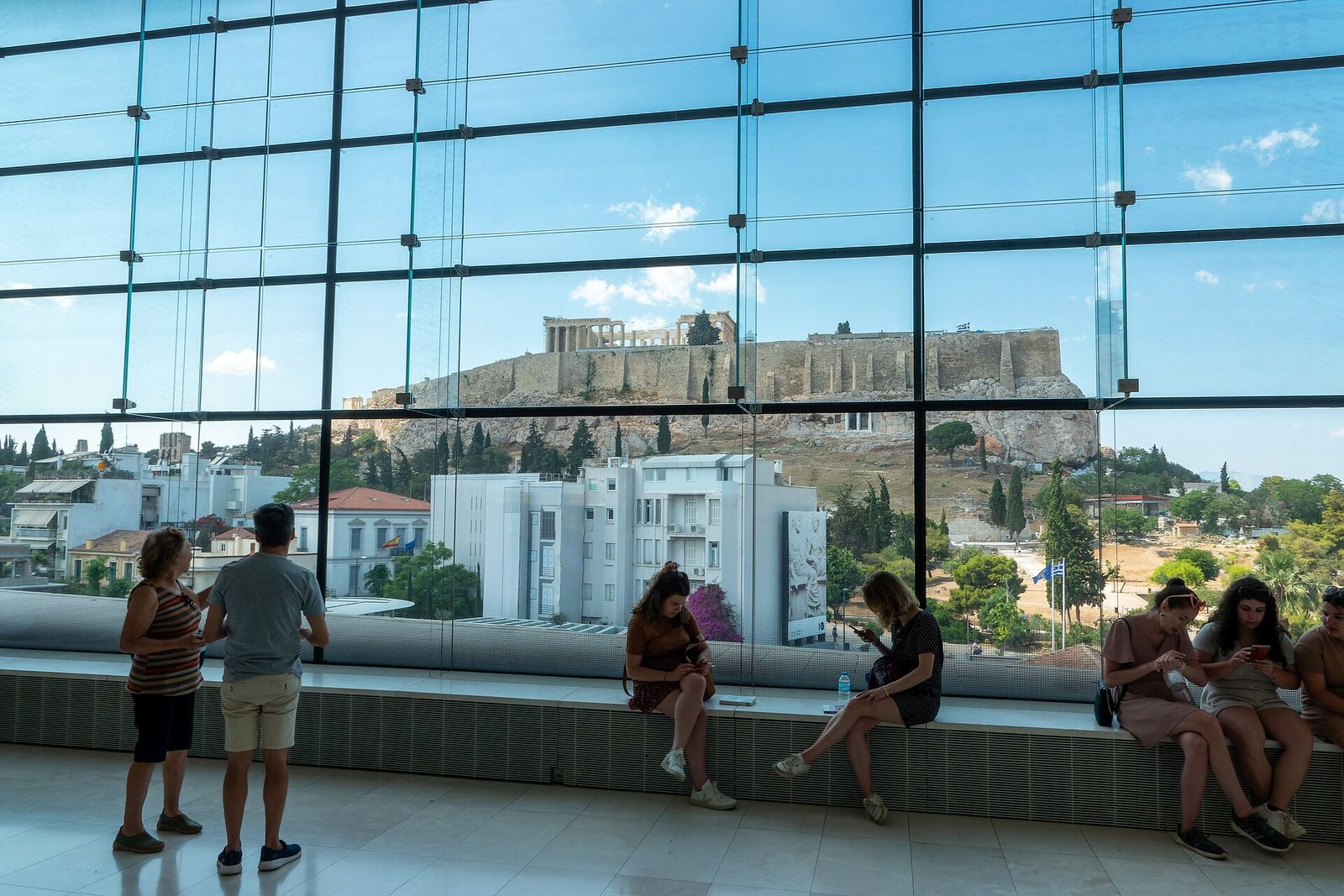
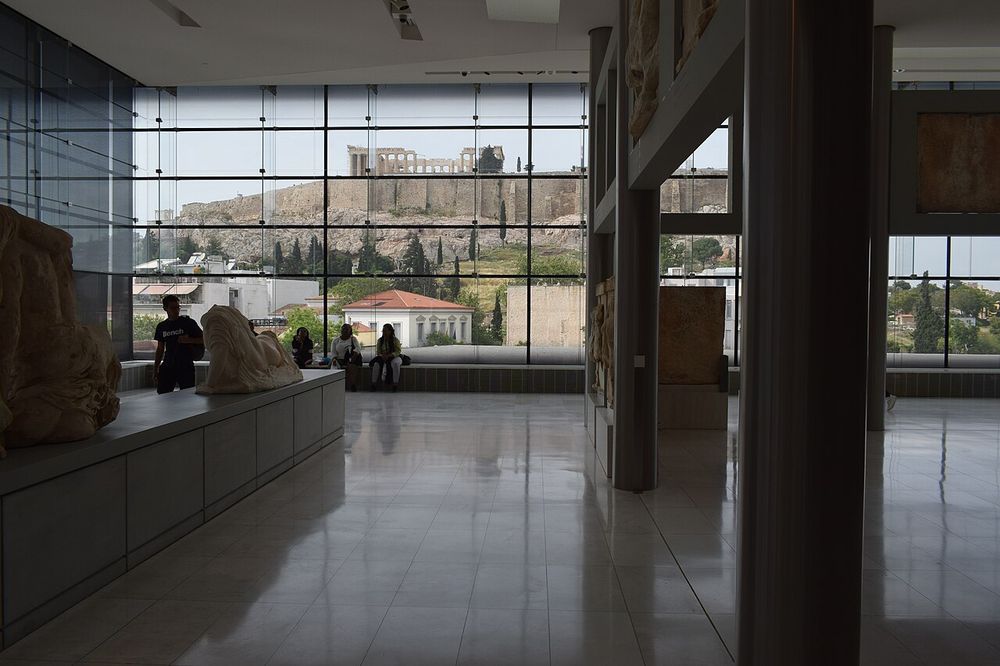
Everything carved for the rock above is kept here, at its foot. The top floor is a glass room the size of the Parthenon, facing the Parthenon, with gaps left for the pieces that are in London.
Photo: George E. Koronaios, CC BY-SA 4.0, Wikimedia Commons
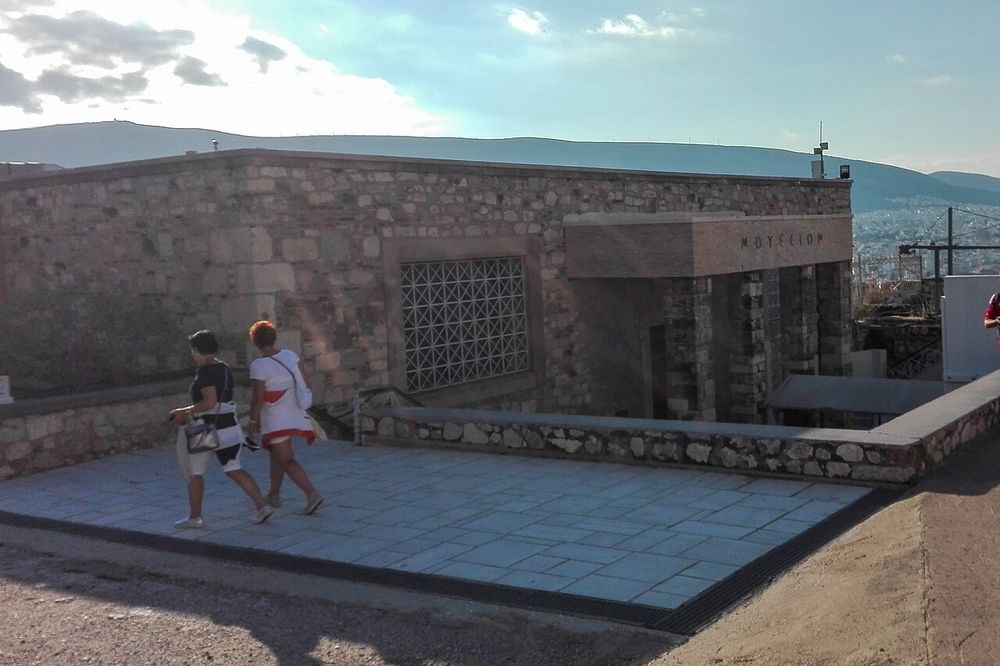
The temples on the Acropolis are shells. Their sculpture was taken down long ago, some by collectors and some, later, to save it from the air of Athens. This museum, three hundred metres from the rock, is where it went.
It opened in 2009. It was built to show the sculptures in the light they were made for, and to answer an old objection: that Greece had nowhere fit to keep the pieces now in the British Museum.
Close by, with a page of its own: Acropolis of Athens.
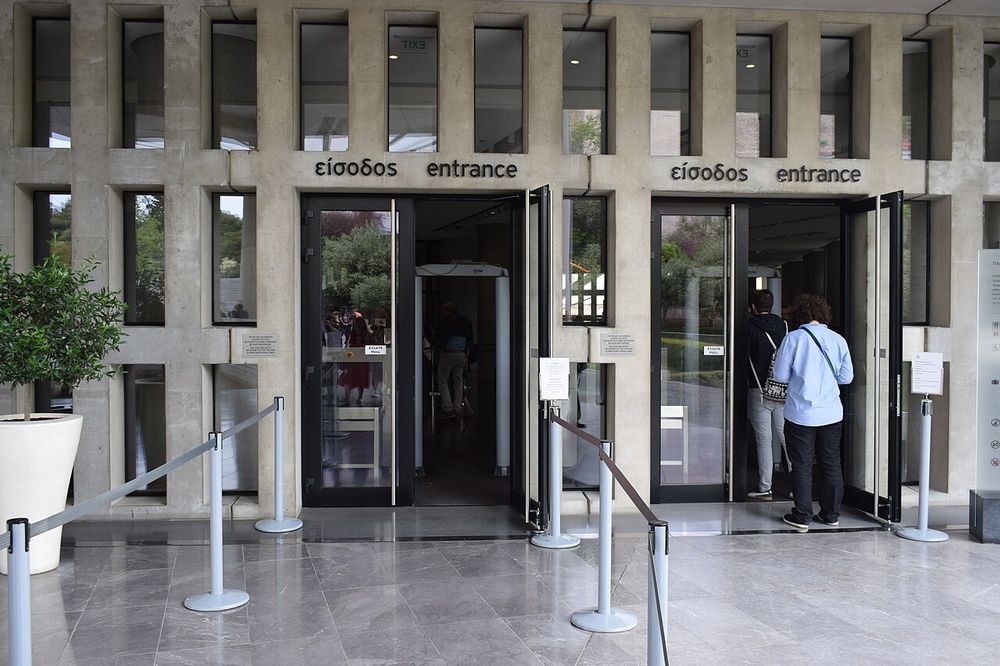
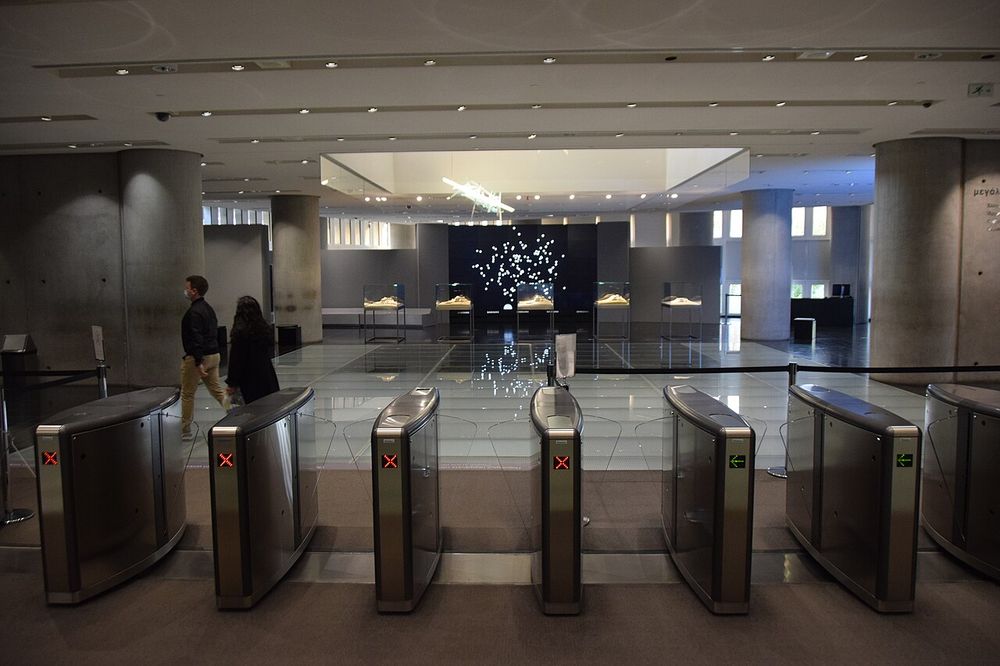
One museum ticket covers everything in the building, including the dig underneath. The Acropolis itself, three hundred metres away, is a separate place with a separate ticket.
| Part | Ticket |
|---|---|
| The excavation under the building | Included |
| Ground floor: the glass ramp | Included |
| First floor: the early temples and the maidens | Included; photographs may be restricted |
| First floor: the Caryatids | Included |
| Second floor: restaurant and terrace | Open to ticket holders; ask at the desk about a pass for the restaurant alone |
| Third floor: the Parthenon Gallery | Included |
| The Acropolis and the Parthenon | Separate site, separate ticket; it has its own page |
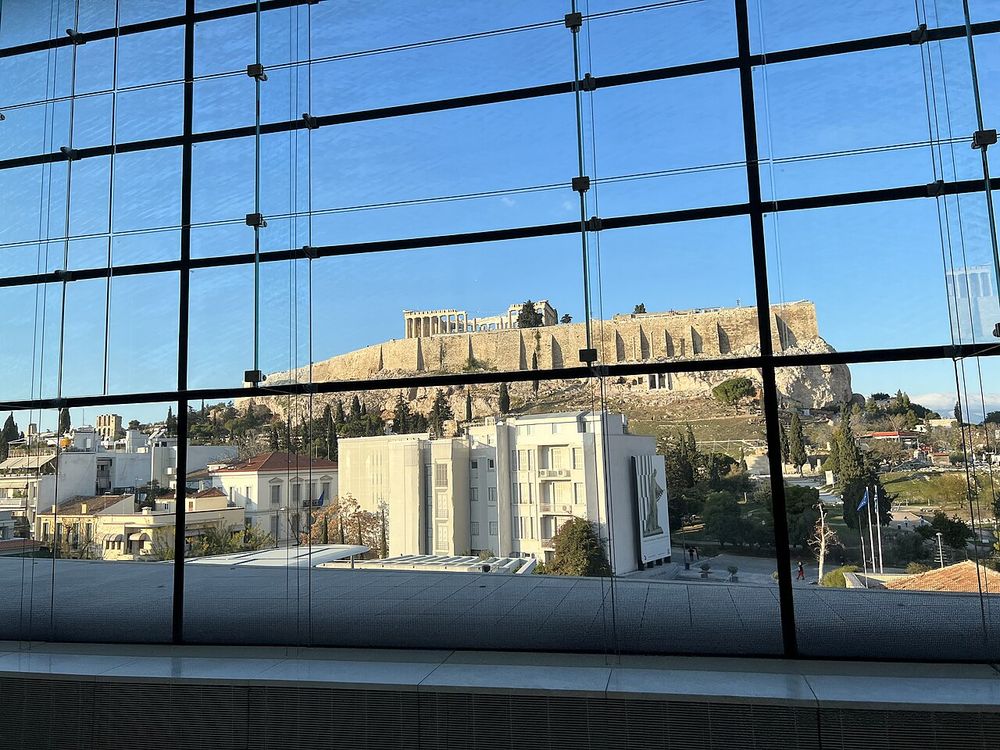
This room is exactly as long and as wide as the inner building of the Parthenon, and it is turned to face the same way. Look out through the glass and you see the temple itself on the hill.
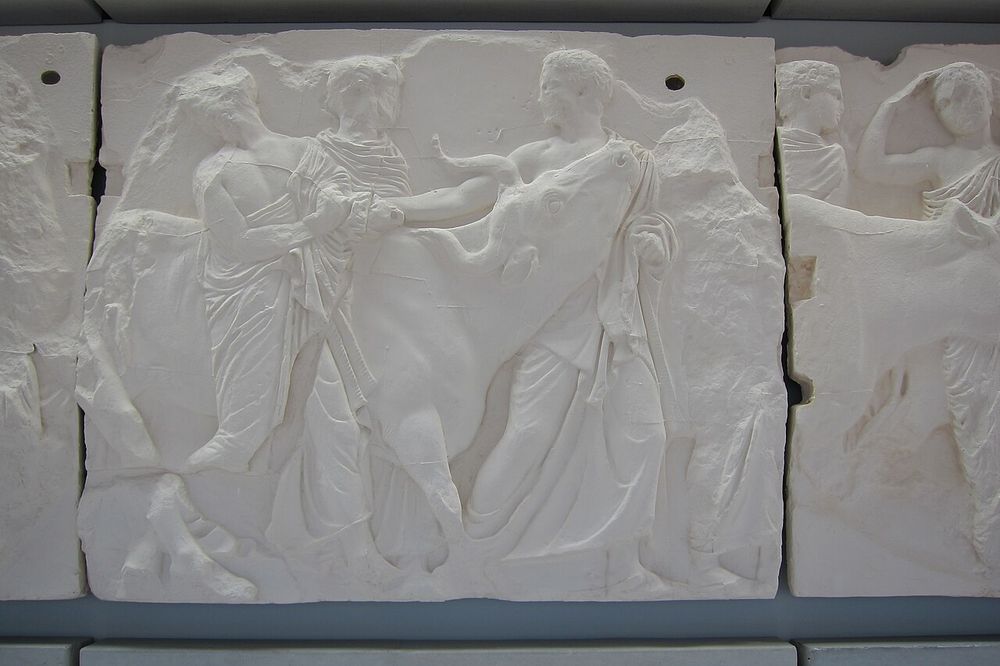
Round the core of the room runs the frieze, a band of carving 160 metres long that shows a procession for the goddess Athena. The honey-coloured blocks are the originals that stayed in Athens. The white ones are plaster copies. Their originals are in London.
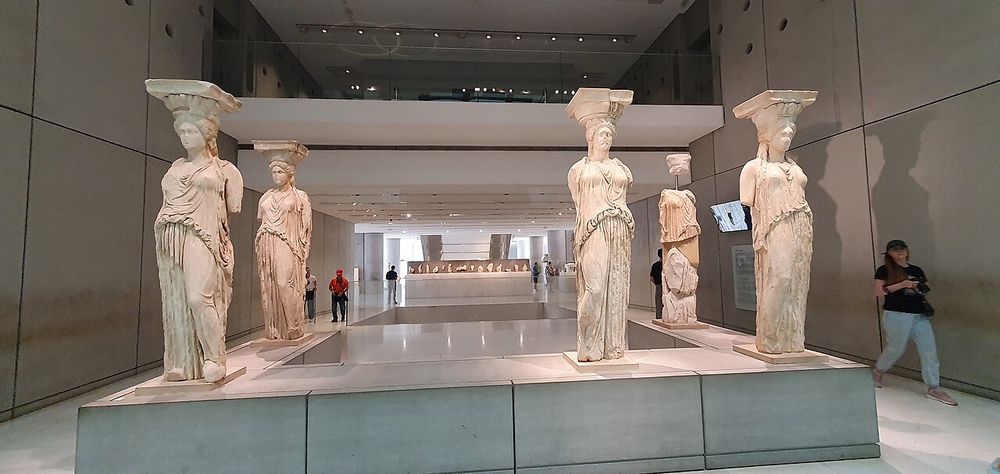
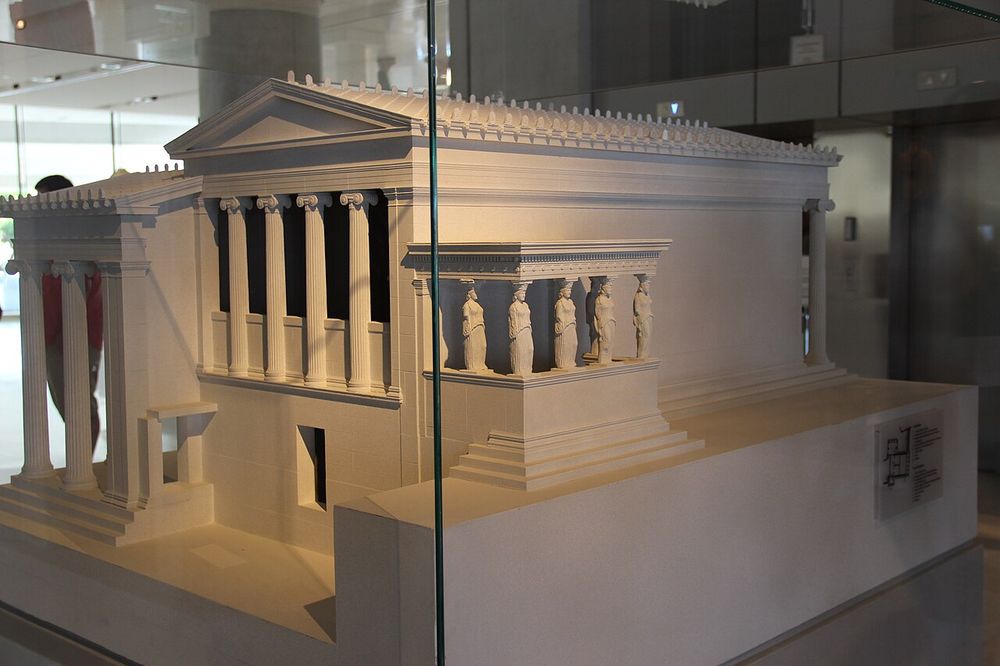
One floor down stand five of the six maidens who held up the porch of the Erechtheion. A place is kept empty for the sixth.
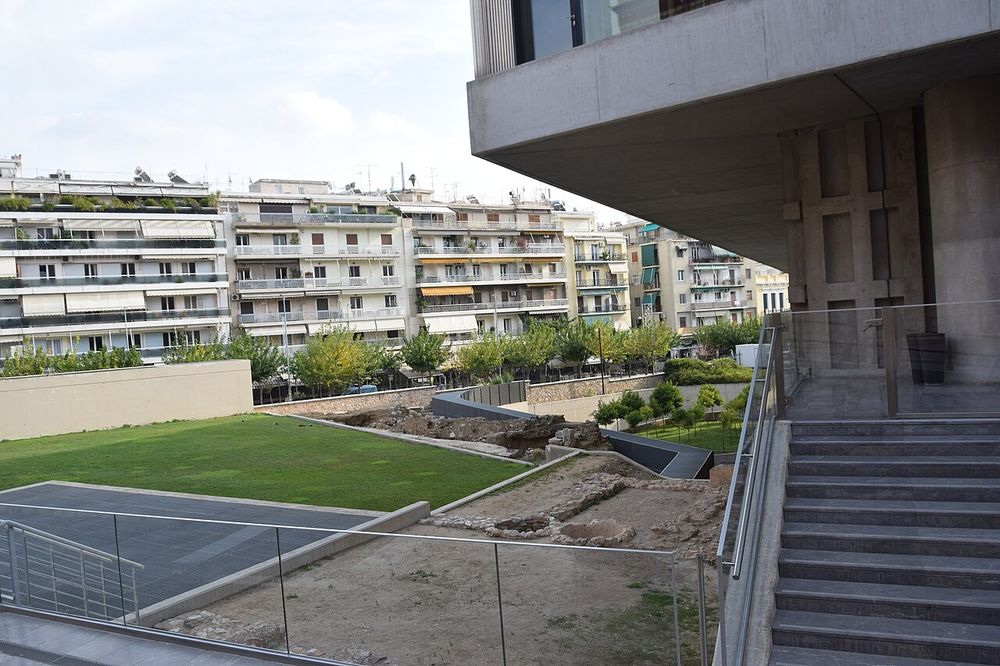
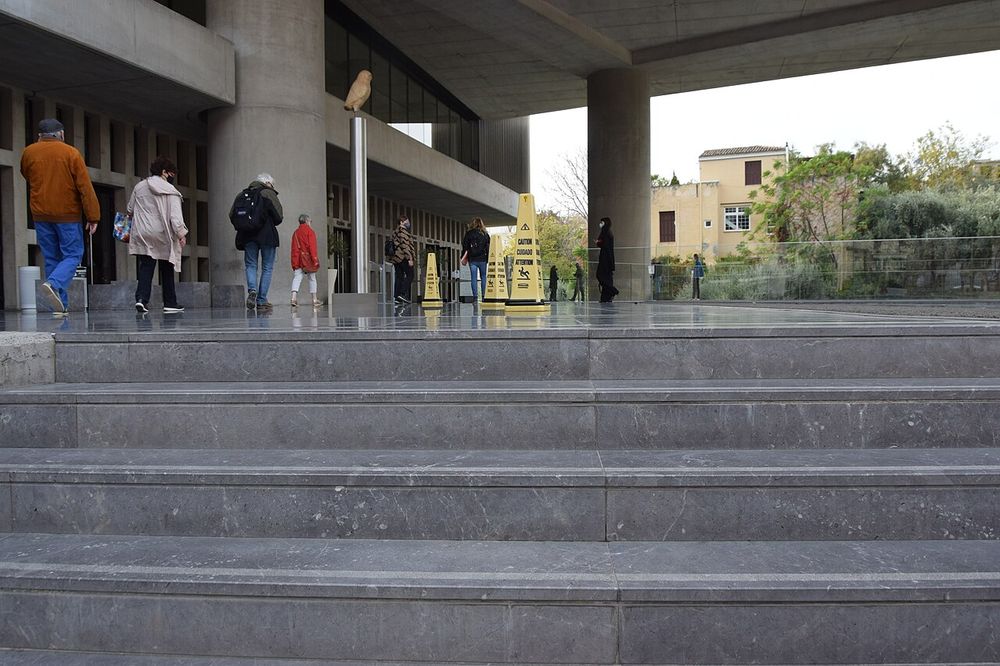
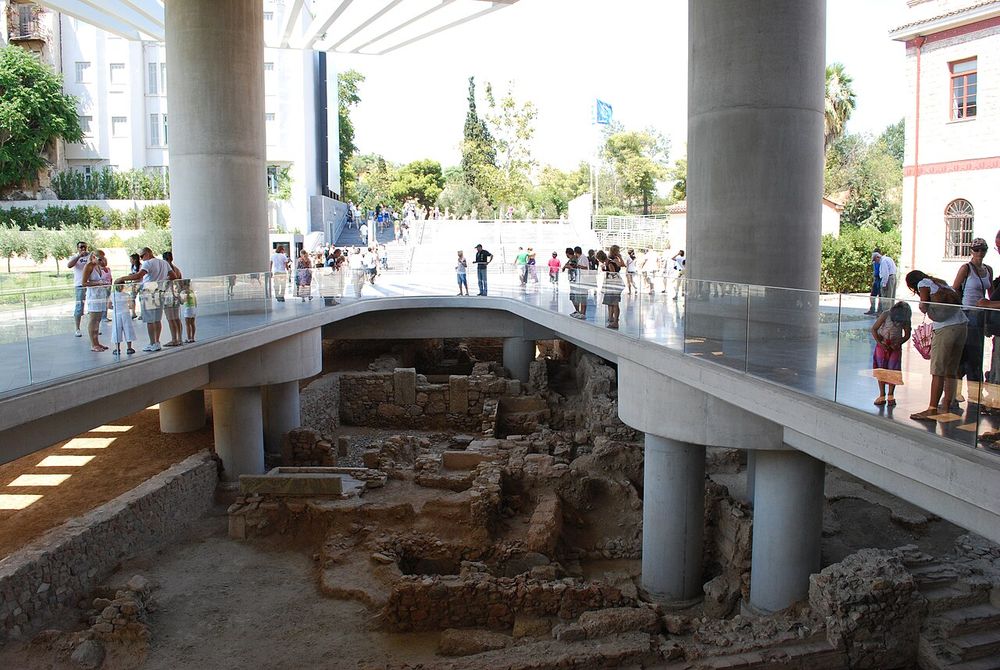
Before you go in at all, look down. The building stands on pillars over the streets and houses of an ancient neighbourhood of Athens.
"The Acropolis ticket gets you in." It does not. The museum is a separate body with its own ticket, and there is no official ticket for both.
"The statues on the hill are the real ones." The maidens on the Erechtheion are casts, and so are the carved panels left on the Parthenon. The originals are here or abroad.
"Greek statues were white." They were painted. On several statues here you can still see red, blue and green.
"Lord Elgin took everything." He took about half of what was left of the Parthenon's sculpture, between 1801 and 1805. Most of the rest is in this building.
The museum is arranged like the climb up the hill: slopes first, then the early temples, then the Parthenon at the top.
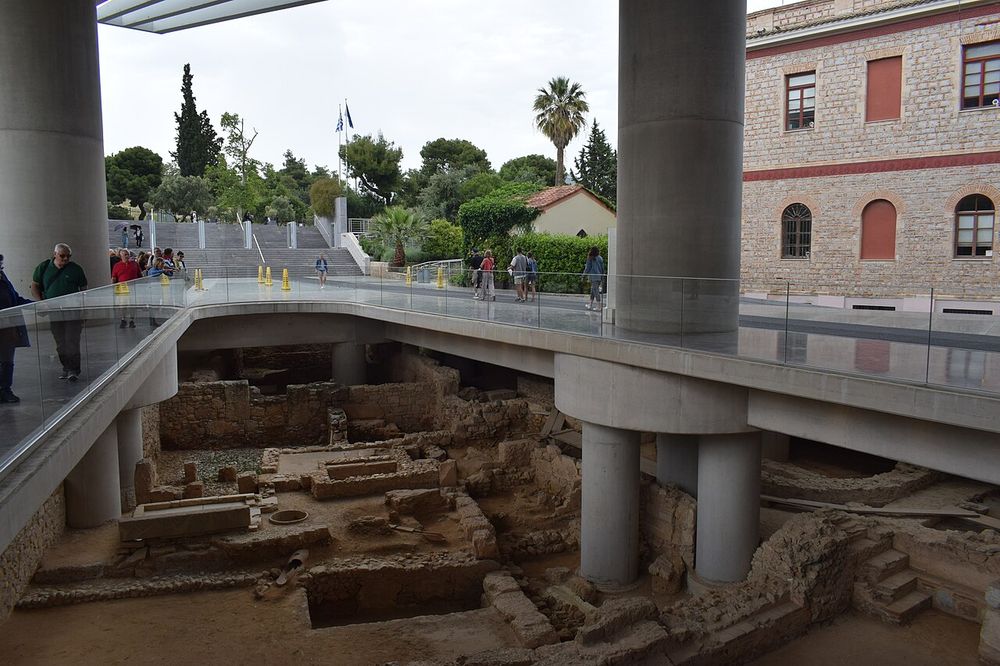
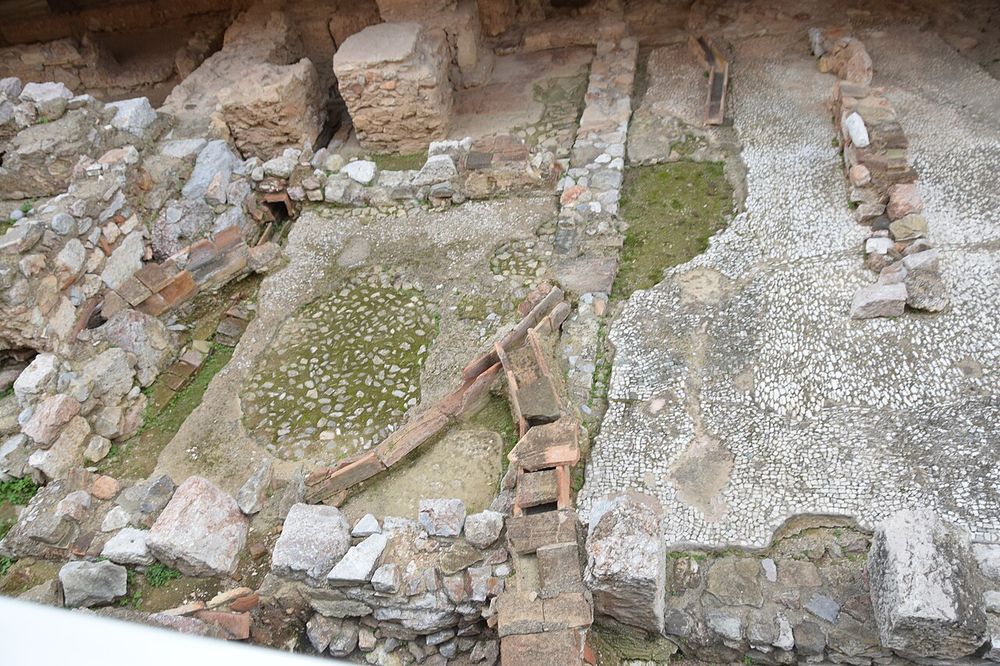
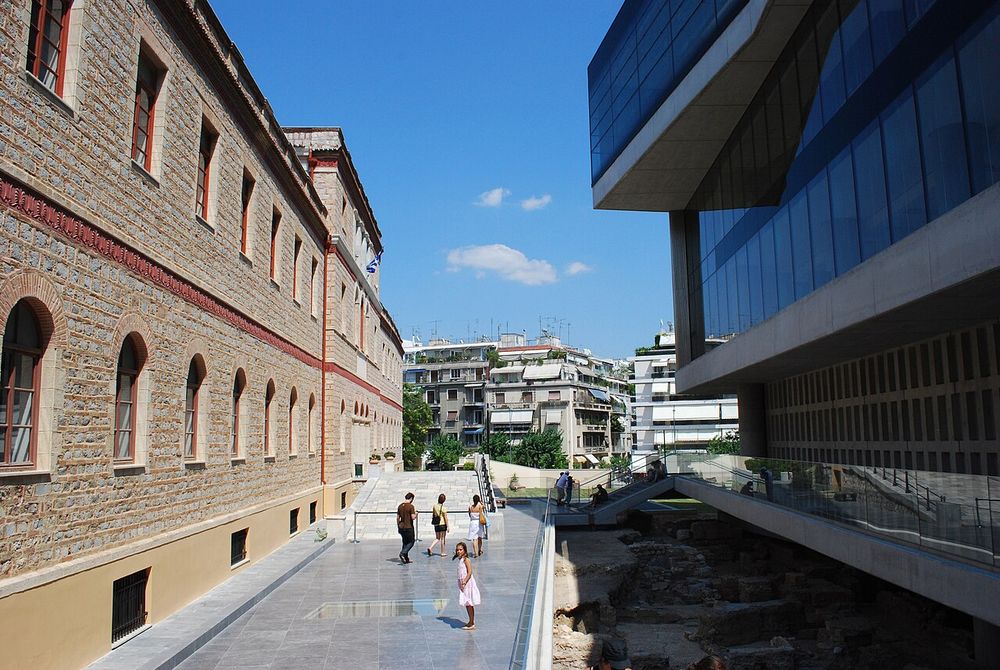
When the ground was cleared for the museum, the diggers found an Athenian neighbourhood that had been lived in for more than a thousand years, from classical times to the Middle Ages. There were houses, workshops, baths and drains.
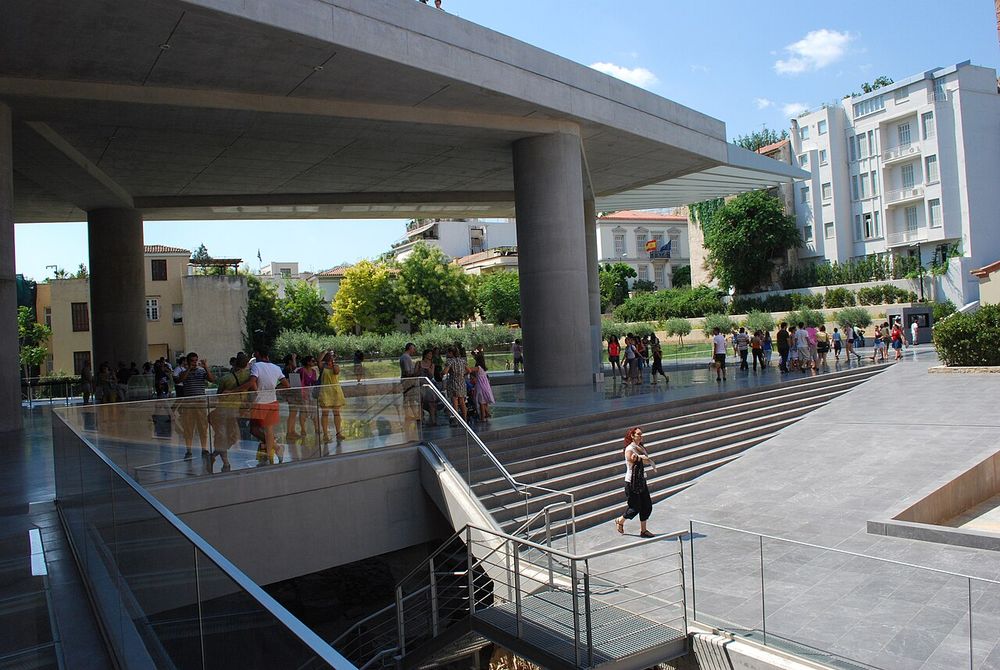
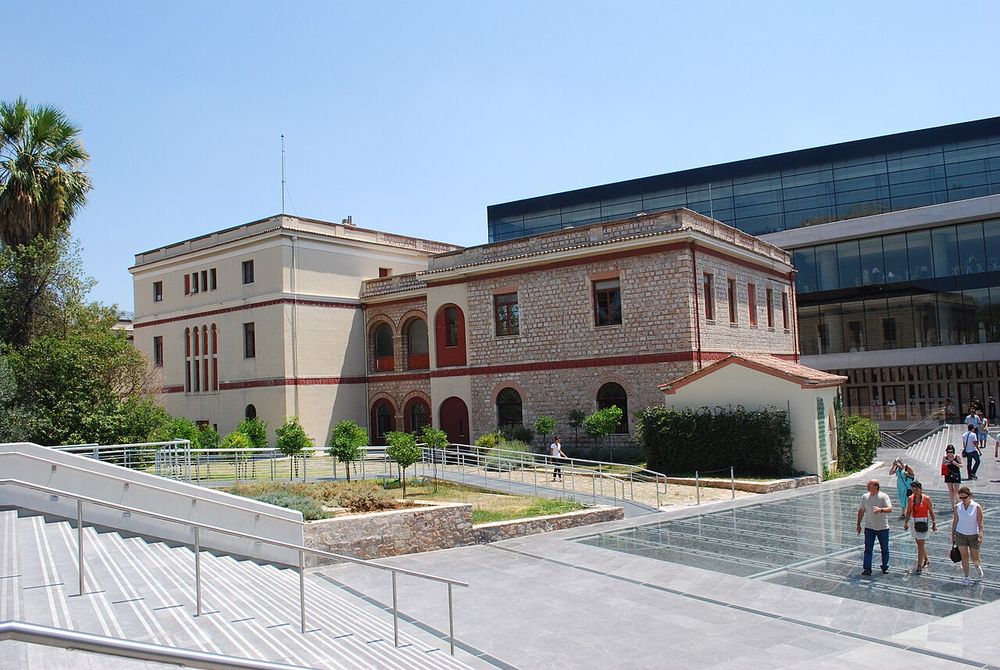
The architects, Bernard Tschumi and Michael Photiadis, lifted the building on about a hundred concrete columns, each placed where it would do least harm. You walk in over glass and see the dig below. Since 2019 you can also walk down into it.
The first gallery is a wide ramp that rises like the path up the rock. In the cases are offerings from the small sanctuaries on the slopes, and pots from ordinary houses.
Look for the wedding vases. Brides of Athens dedicated them to a nymph at a shrine just below the rock.
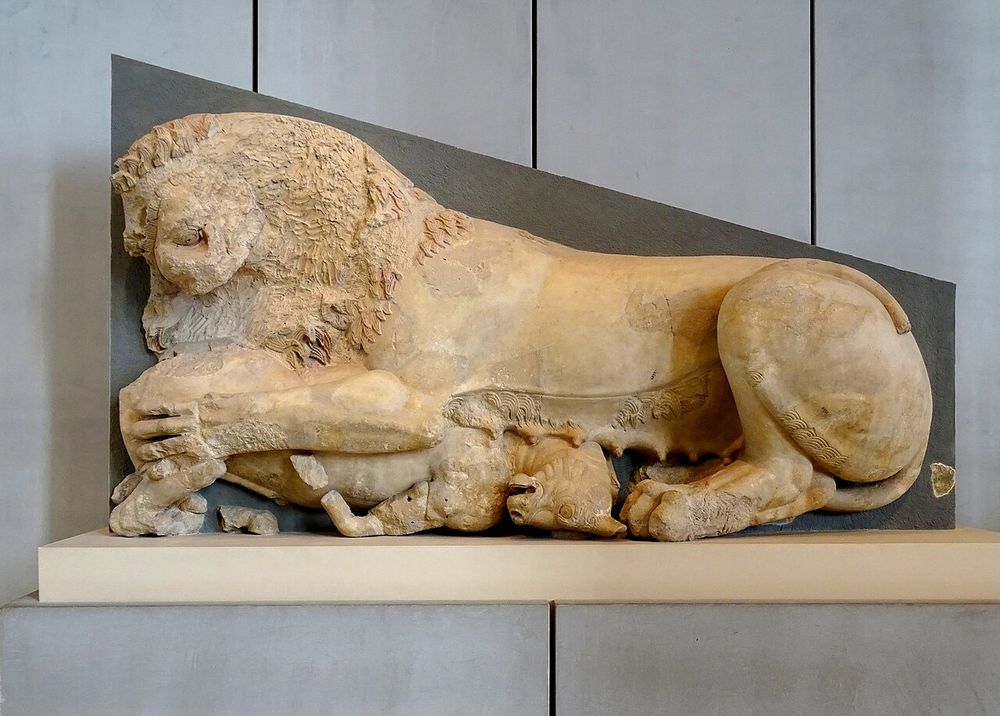
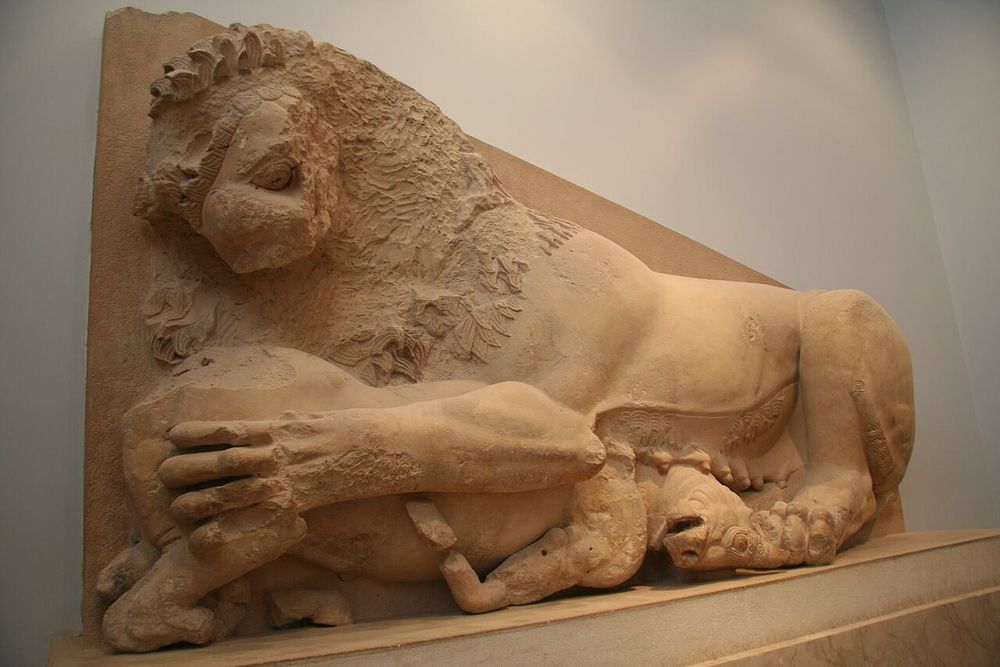
At the top of the ramp you meet a lioness tearing a calf. It filled the gable of a temple built on the rock about 570 BC, more than a century before the Parthenon. It is carved in soft limestone and was brightly painted.
Near it is a creature with three human bodies and one snake's tail, each body holding a different thing. Traces of blue on the beards gave it its nickname, Bluebeard.
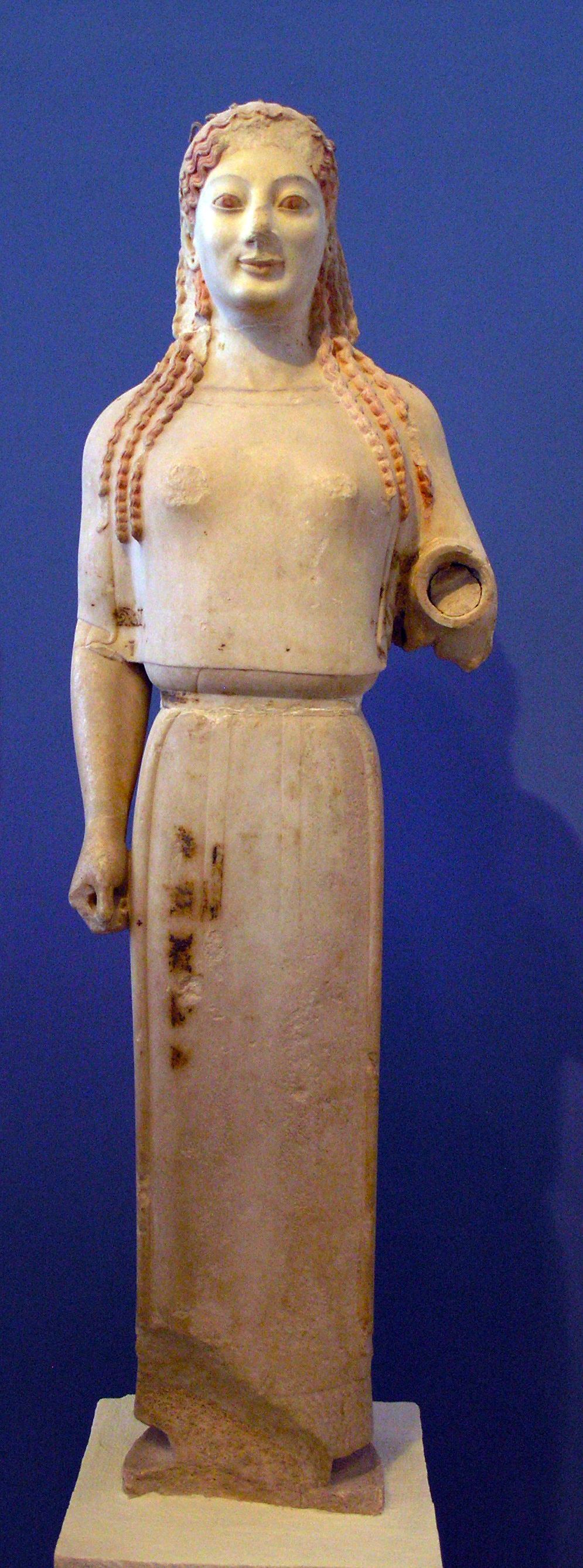
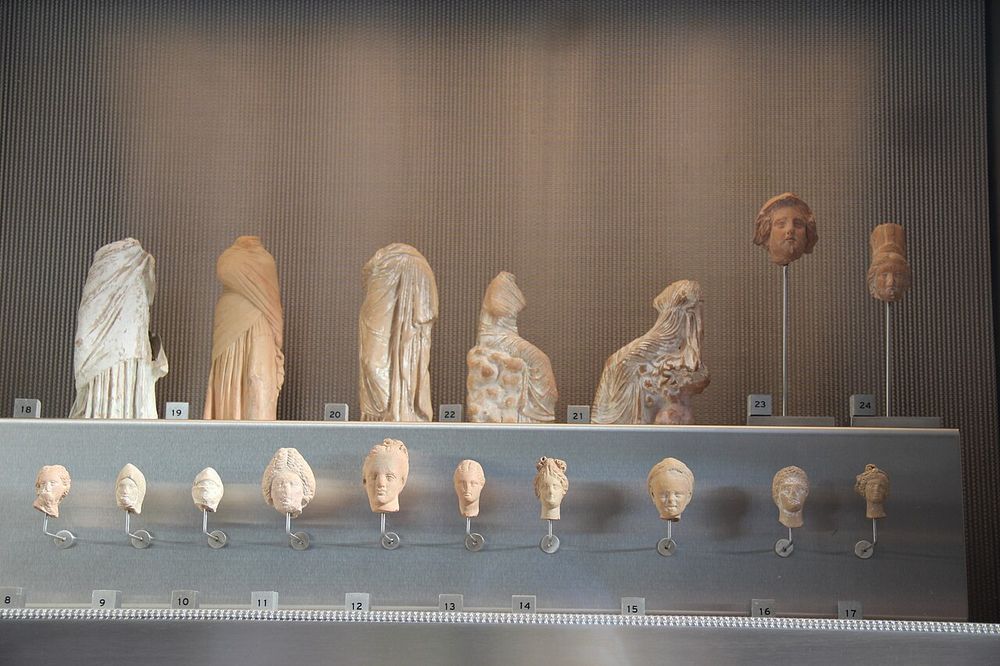
The hall of columns is filled with statues of young women, each a gift to Athena from a rich family. They stood in the open on the rock. They smile slightly, and each held out an offering in one hand.
In 480 BC a Persian army took Athens and smashed and burned everything on the Acropolis. When the Athenians came home they did not throw the broken statues away. They buried them on the rock, as holy things.
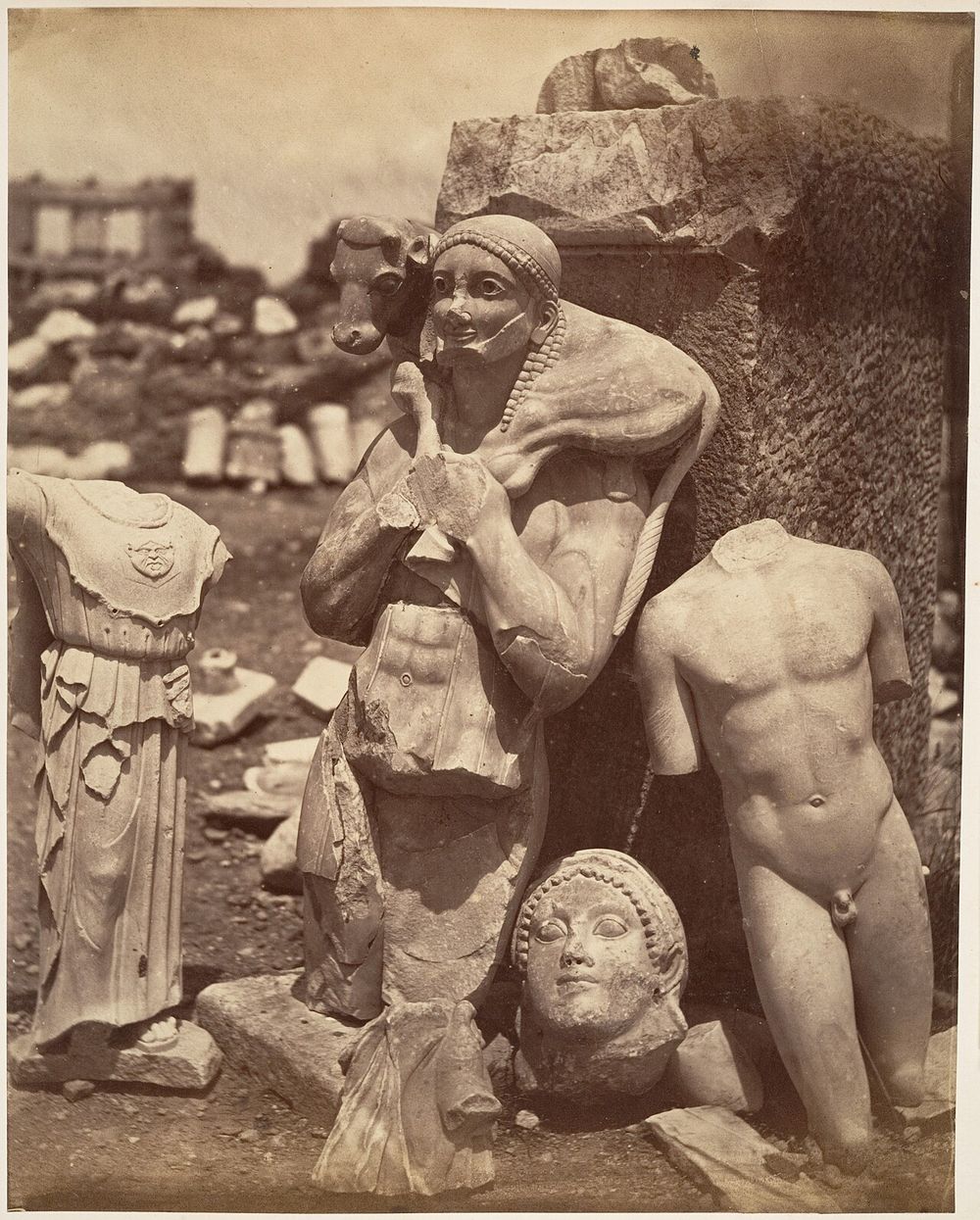
They lay in the ground for more than 2,300 years. Diggers found them in the 1860s and 1880s, with the paint still fresh in places. The earth had saved the colour.
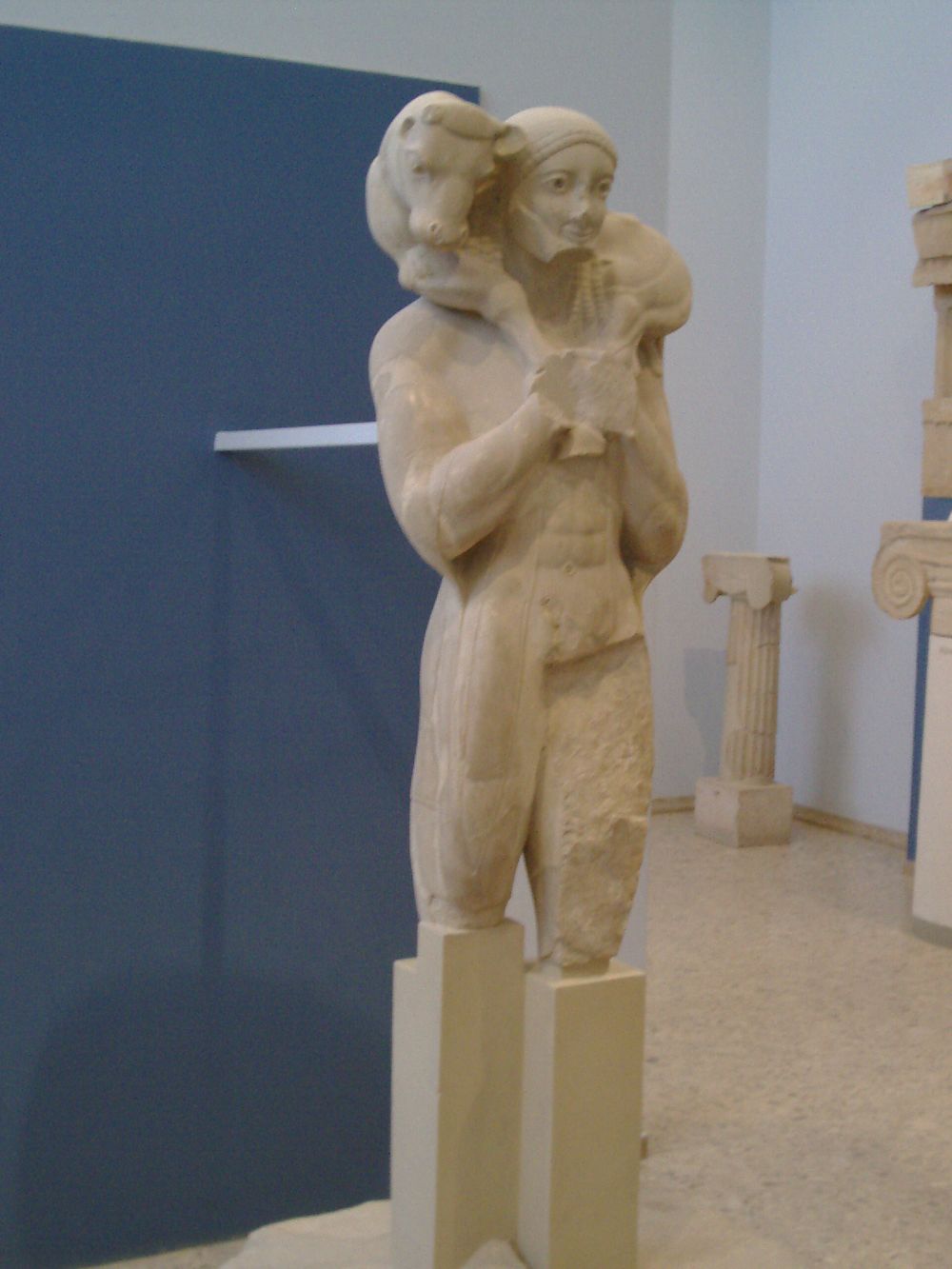
The man carrying a calf on his shoulders is one of the oldest, about 570 BC. His name, Rhombos, is cut on the base.
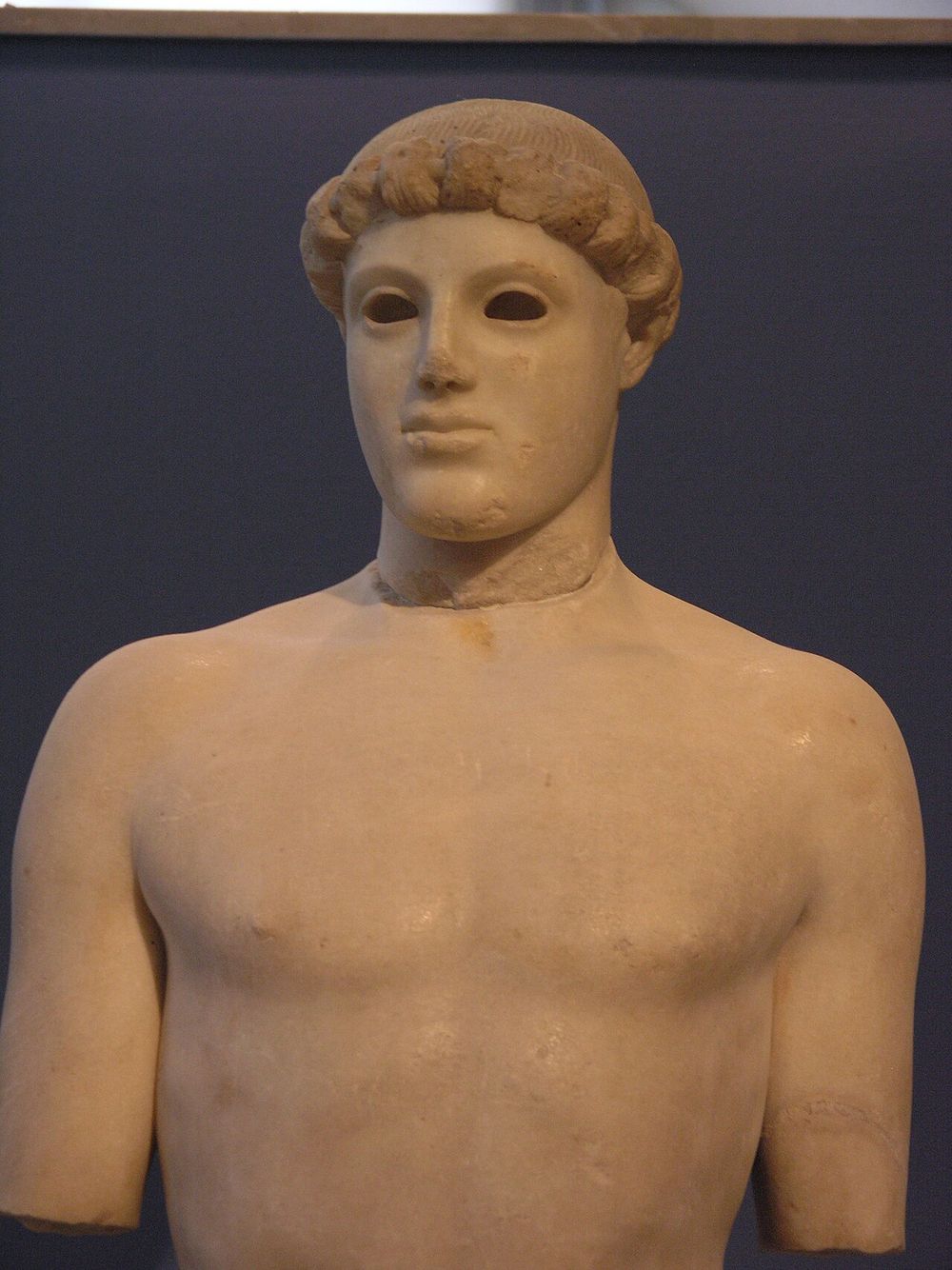
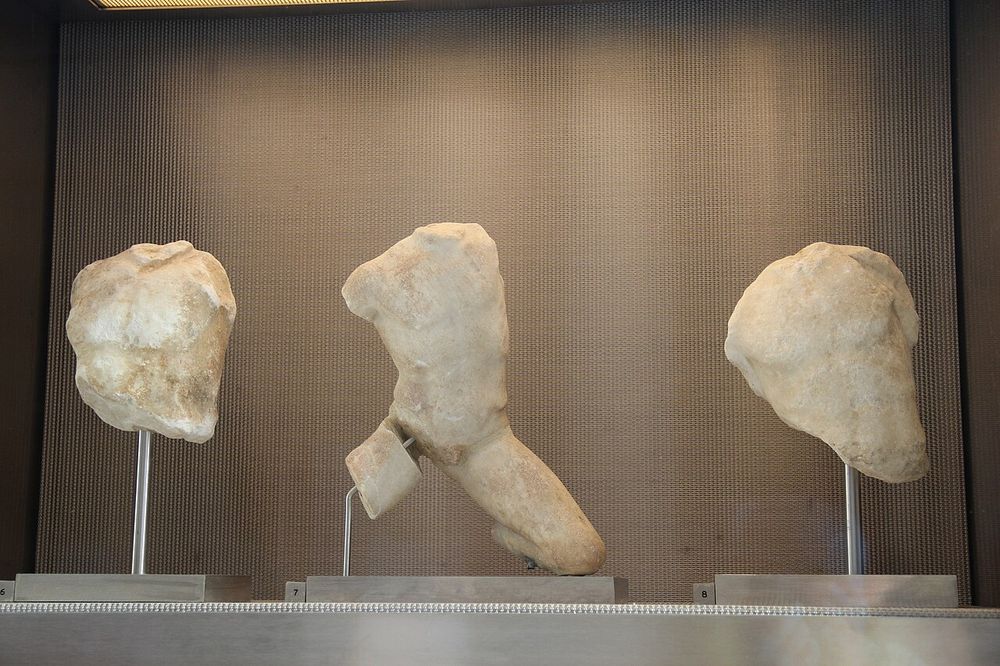
This small figure, made about 480 BC, changed sculpture. Older statues stand square, with the weight on both feet. This boy rests on his left leg. His right knee bends, his hips tilt, and his head turns a little.
It is the first statue we know that stands the way a living person stands. Every relaxed figure in Western art after it, down to Michelangelo's David, uses the same pose.
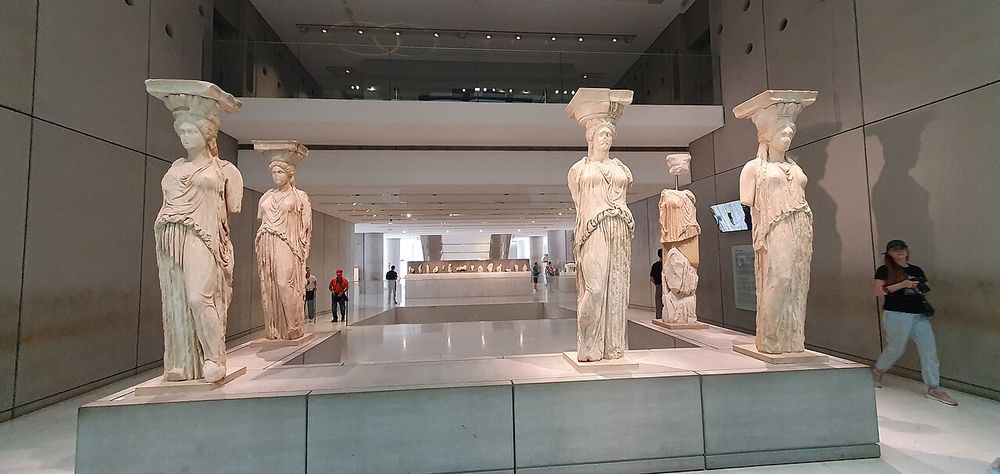
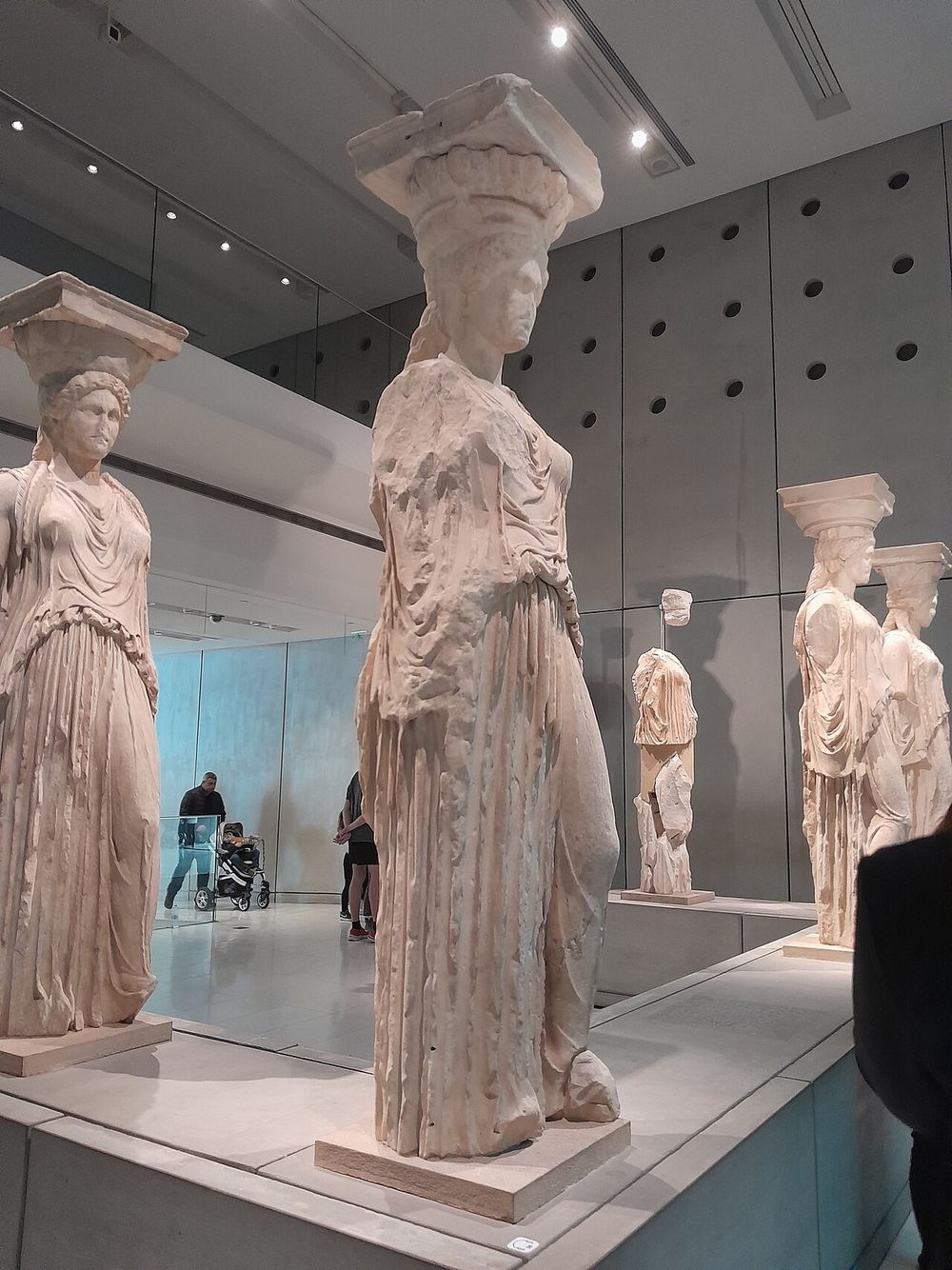
These five held up the south porch of the Erechtheion for 2,400 years. They were brought indoors in 1979 because acid rain was eating them. Walk round behind. Their thick plaits of hair are carved in full and are there to strengthen the neck, the thinnest part of the support.
The sixth was taken by Elgin's men in 1803 and is in the British Museum. Between 2011 and 2014 the five were cleaned here, in front of visitors, with lasers.
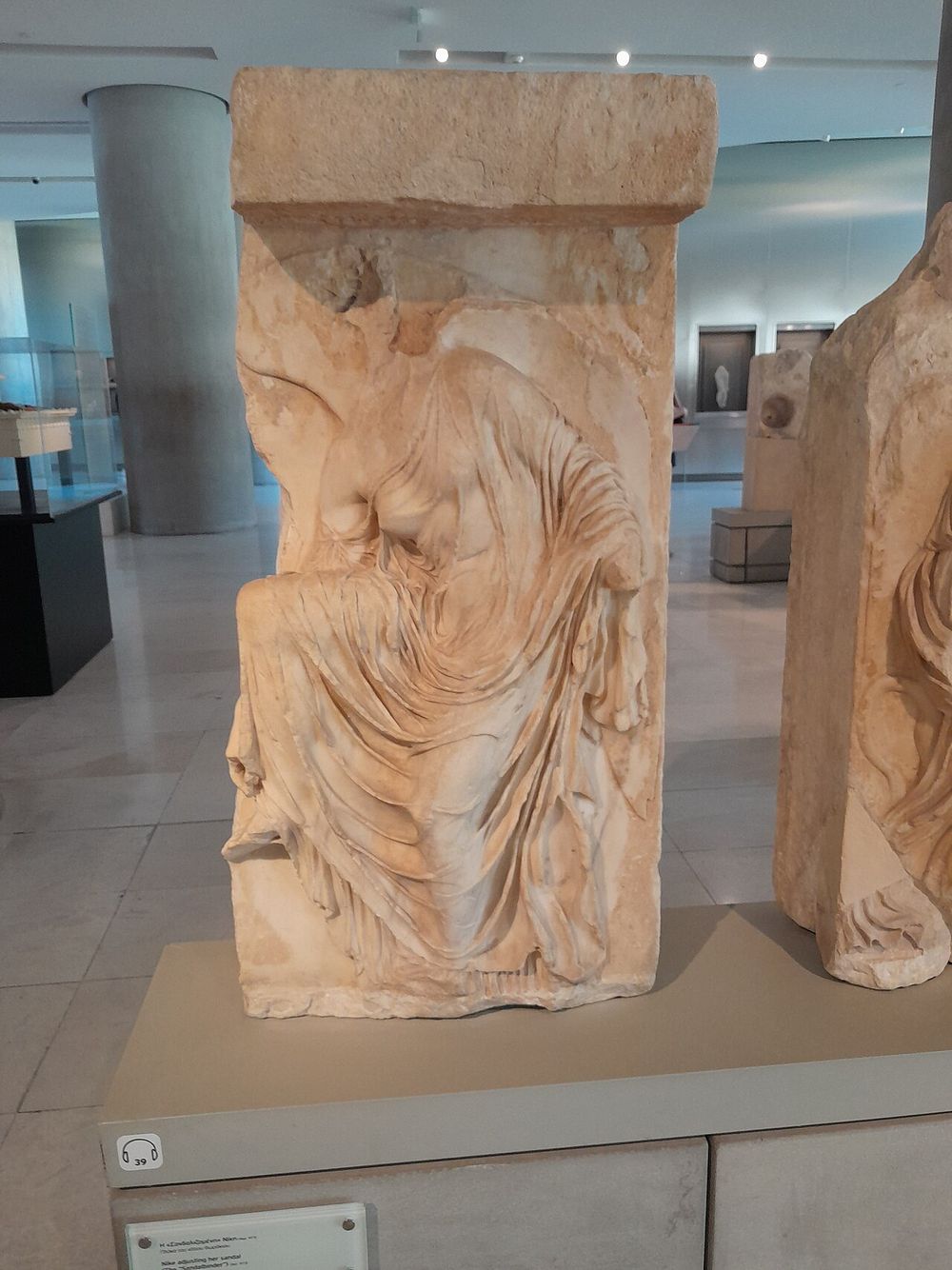
This relief comes from the low wall round the small temple of Athena Nike, about 410 BC. The goddess of victory stoops to fix her sandal. The thin cloth clings to her body as if wet. Sculptors call this the wet style, and Roman and later artists copied it for centuries.
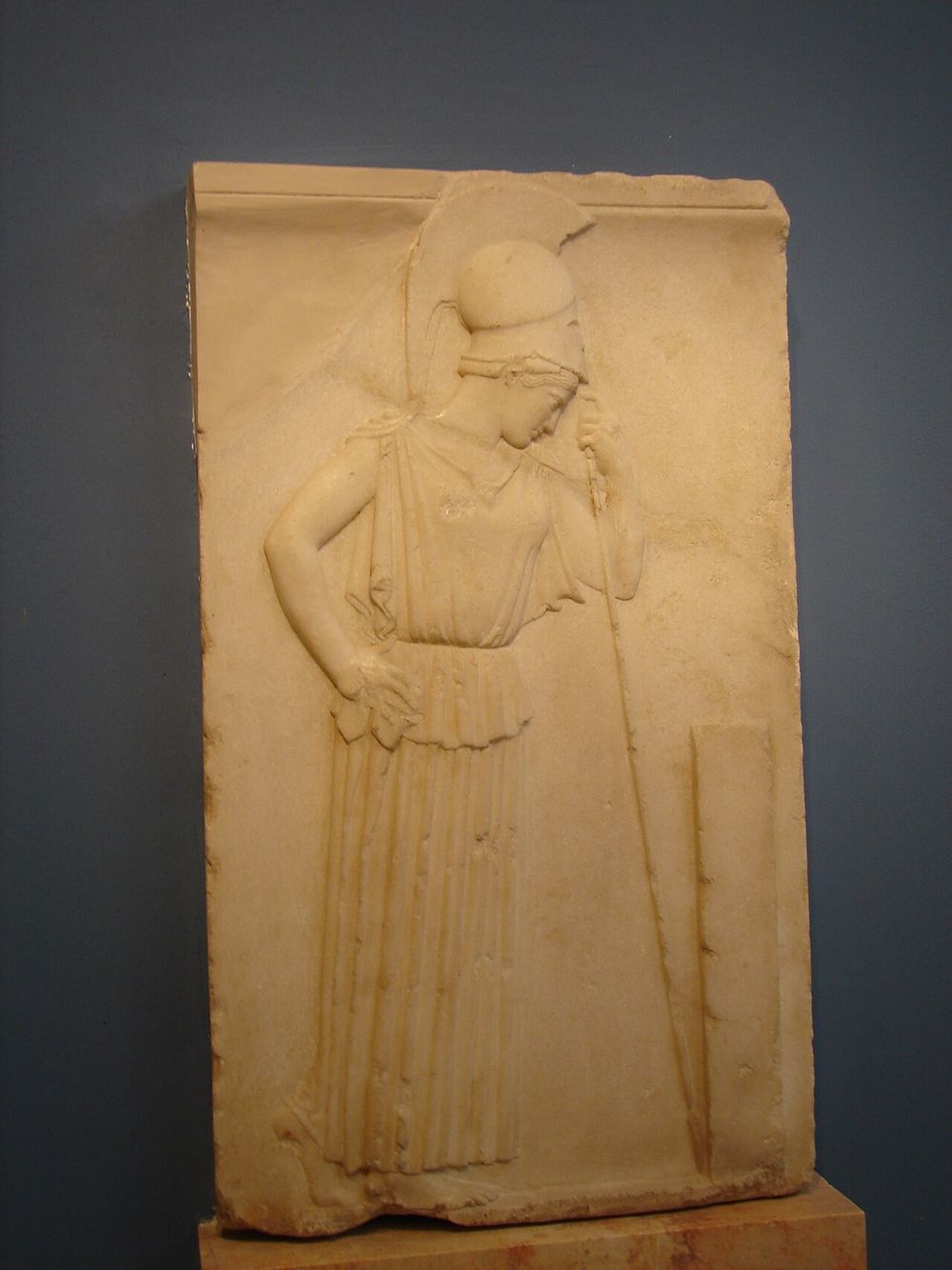
Nearby is a small relief of Athena leaning on her spear with her head bowed. Nobody knows what she is looking at. It is called the Mourning Athena.
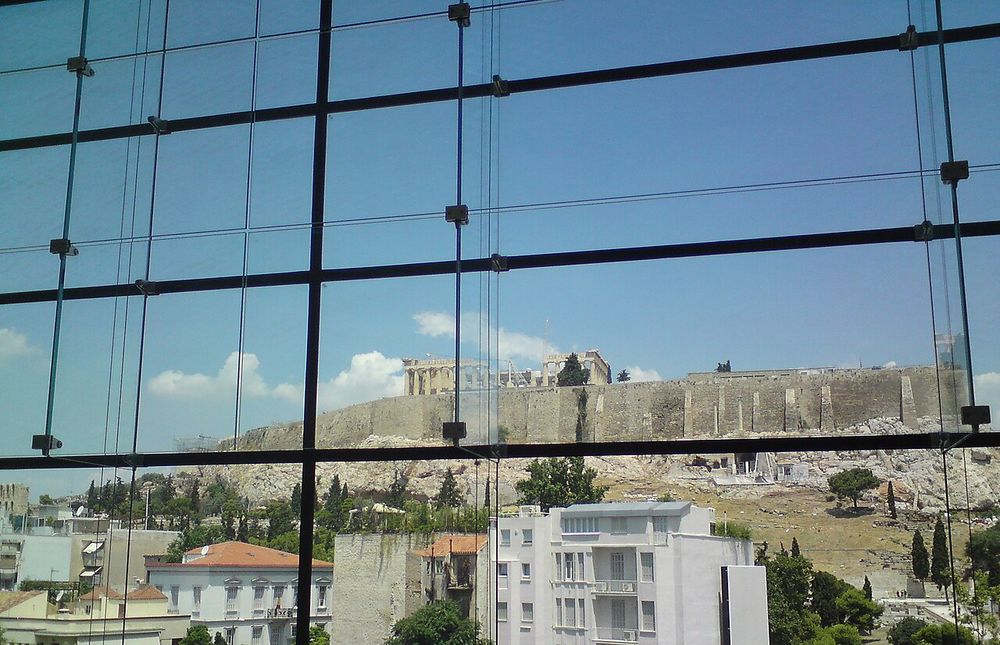
The glass box on the roof is twisted 23 degrees from the floors below so that it lines up with the temple. The sculptures hang in the order and on the sides where they were on the building, and in daylight from the same direction.
There were three kinds of sculpture. In the gables stood huge figures telling the birth of Athena and her contest with the sea god for the city. Under the roof outside ran 92 square panels of fights: gods against giants, Greeks against Amazons and centaurs. Inside the colonnade ran the frieze.
Walk the frieze from the south-west corner, as the procession does. Horsemen gather speed, chariots follow, then men with jars and animals for sacrifice, and at the east end the gods sit waiting.
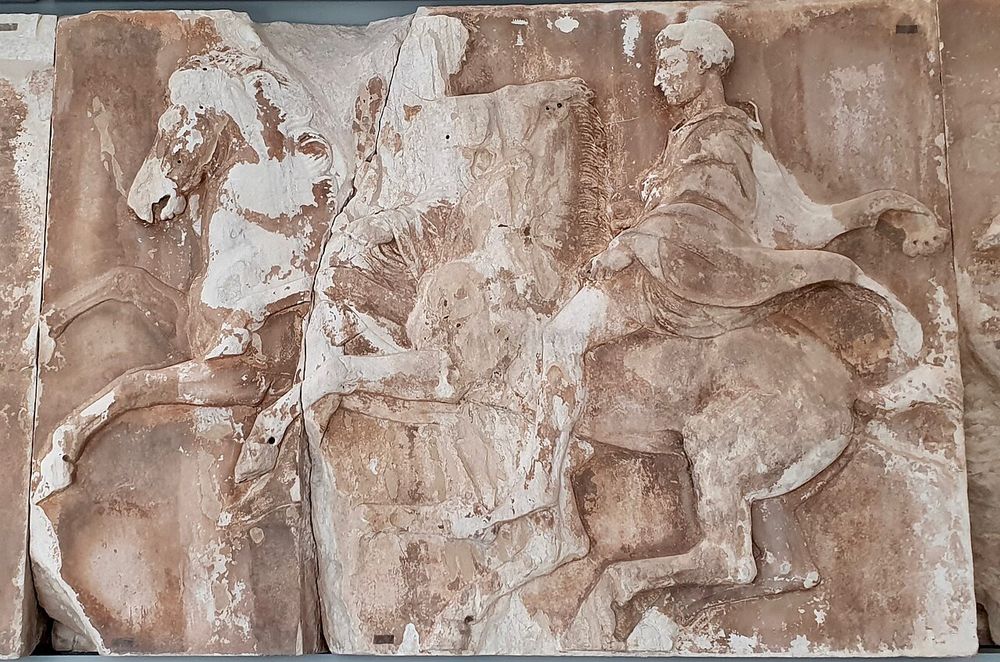
Of the frieze that survives, about 50 metres are here and about 80 metres are in the British Museum. Some figures are split, with a head in one city and a body in the other.
Elgin was British ambassador to the Ottoman Empire, which then ruled Greece. He said he had the sultan's leave. Greece says a foreign ruler could not give away what was not his. The British Museum says it acquired the sculptures legally and shows them to the world for free.
Other holders have given pieces back. A fragment came from Palermo in 2022, and three from the Vatican in 2023. Talks between Athens and the British Museum have been reported since 2022. When we checked, no agreement had been announced.
Chinese visitors know this kind of argument from the bronze animal heads taken from the Old Summer Palace in Beijing in 1860. Several have come home since 2000, by purchase or gift.
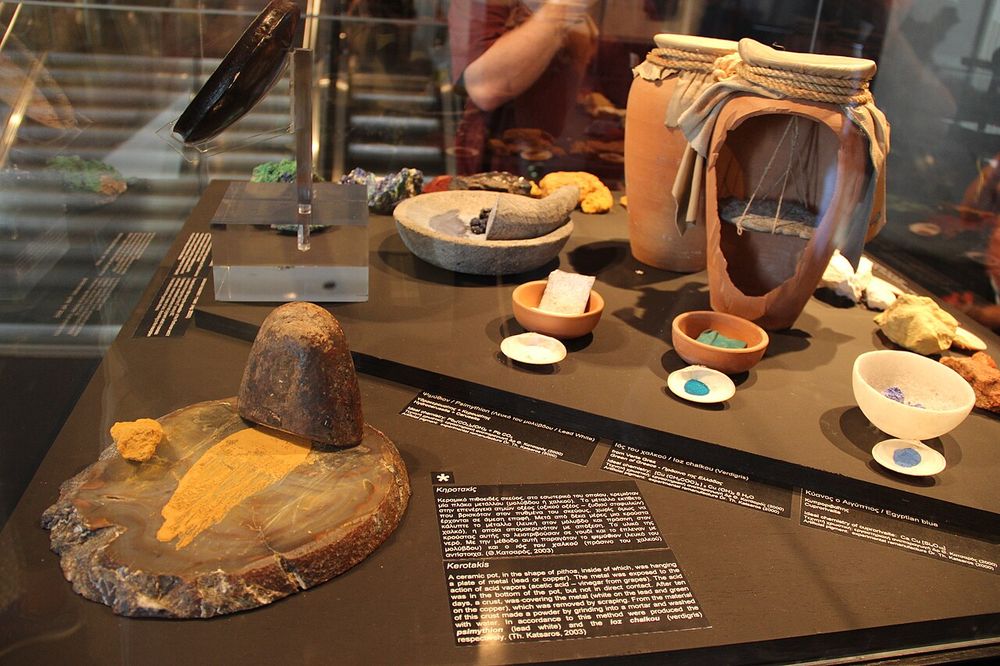
One case shows the minerals that made the colours: red and yellow earths, green malachite, blue made from copper and sand. Greeks thought an unpainted statue unfinished.
The same is true of the Terracotta Army near Xi'an, made about 210 BC. Its soldiers were painted in bright colours that faded within minutes of meeting the air.
When the Persians burned the Acropolis in 480 BC, Confucius had one year left to live. When the Parthenon was finished in 432 BC, China was entering the age of the Warring States (475–221 BC).
| Year | Here | Elsewhere |
|---|---|---|
| about 570 BC | The lioness gable and the Calf-Bearer | The Spring and Autumn period; Confucius is born in 551 BC |
| 480 BC | The Persians sack the Acropolis; the statues are buried | Confucius dies the next year, in 479 BC |
| 447–432 BC | The Parthenon and its sculpture | The Warring States period is beginning |
| 1801–1805 | Elgin removes about half the sculpture | The Jiaqing reign of the Qing |
| 1874 | The first museum opens on the rock | The last year of the Tongzhi Emperor |
| 1885–1890 | The buried statues are dug up | The Guangxu reign; the Sino-French war ends in 1885 |
| 1979 | The Caryatids are taken indoors | China begins reform and opening |
| 2009 | The new museum opens | The year after the Beijing Olympics |
One line to remember: the temples are on the hill, their sculpture is here, and about half of the Parthenon's is in London.
These are stories people tell about this place. They are legends, not history, and each one says where it comes from.
When Elgin's men carried off the sixth maiden, the five who were left were heard at night, crying for their sister.
Source: A story told in Athens since the early nineteenth century and recorded by travellers
Athena and the sea god Poseidon both wanted the city. Poseidon struck the rock with his trident and a salt spring rose. Athena made an olive tree grow. The people chose the olive, and the city took her name. The west gable of the Parthenon showed the scene.
Source: Greek myth, told by Apollodorus and others
Byron wrote that Athena cursed Elgin and his line for what he took. People pointed out afterwards that Elgin lost his fortune, his health and his wife.
Source: Lord Byron, The Curse of Minerva (written 1811)
Later, people who live here will be able to add the stories they grew up with, and say which of these they have heard.
Last checked 2026-11-12. The museum's own site, opened in November 2026, for hours on holidays and free days; prices and weekly hours from guides of 2026.
Checked 2026-11-12
Stand at the site, sign in, press the button, and collect its stamp. Your browser will ask to use your location. It is sent to us once to confirm that you are at the site; we keep how far you were from it, not the spot where you stood.
Your stamps are saved to your account, so they follow you to any device. Checking from a browser cannot rule out every false location; stricter checks arrive with the app.
Photos here show the place, not people. Each one is credited to the visitor who took it and appears after our team has looked at it. A photo with you in it belongs under “I am here”.