LegendThe vow of Dizang
Visitors pray for the dead in the Dizang Hall. Dizang, the scriptures say, vowed not to become a Buddha until hell was empty.
Source: Buddhist scripture, the Sutra of Dizang's Original Vows
Pingyao, Shanxi, China
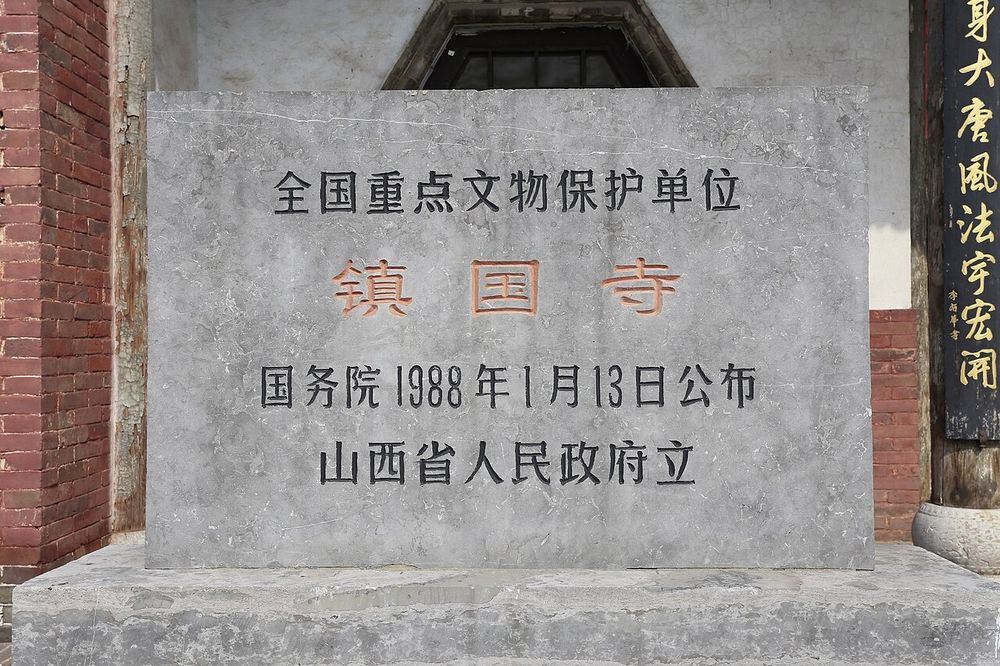
镇国寺 · Zhènguó Sì
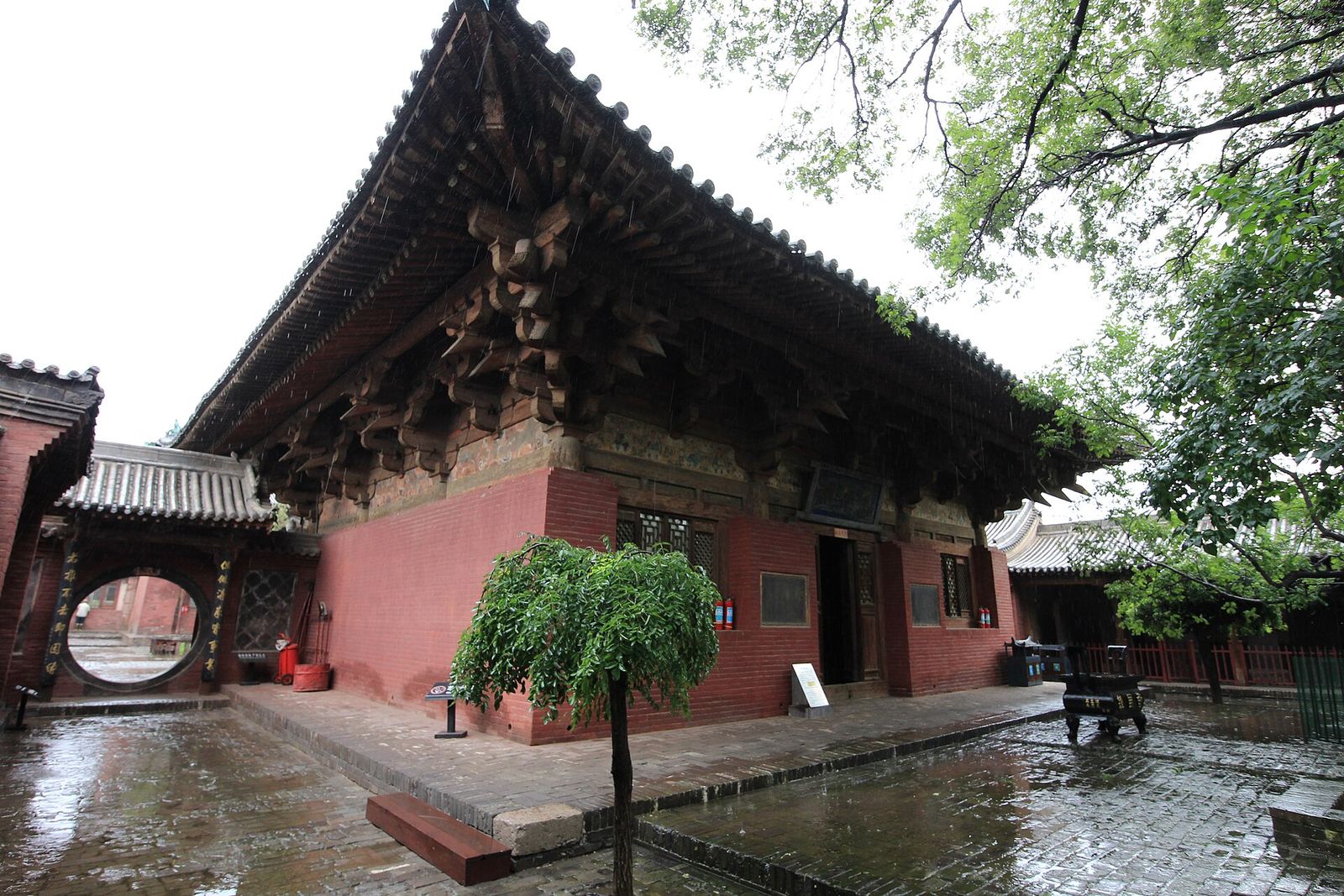
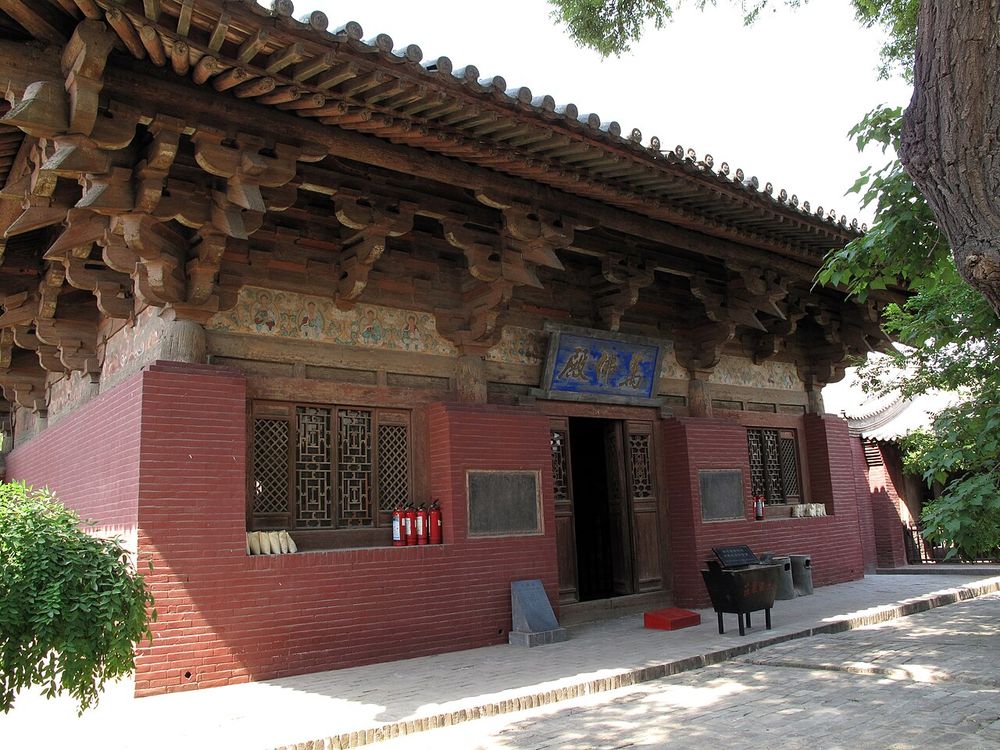
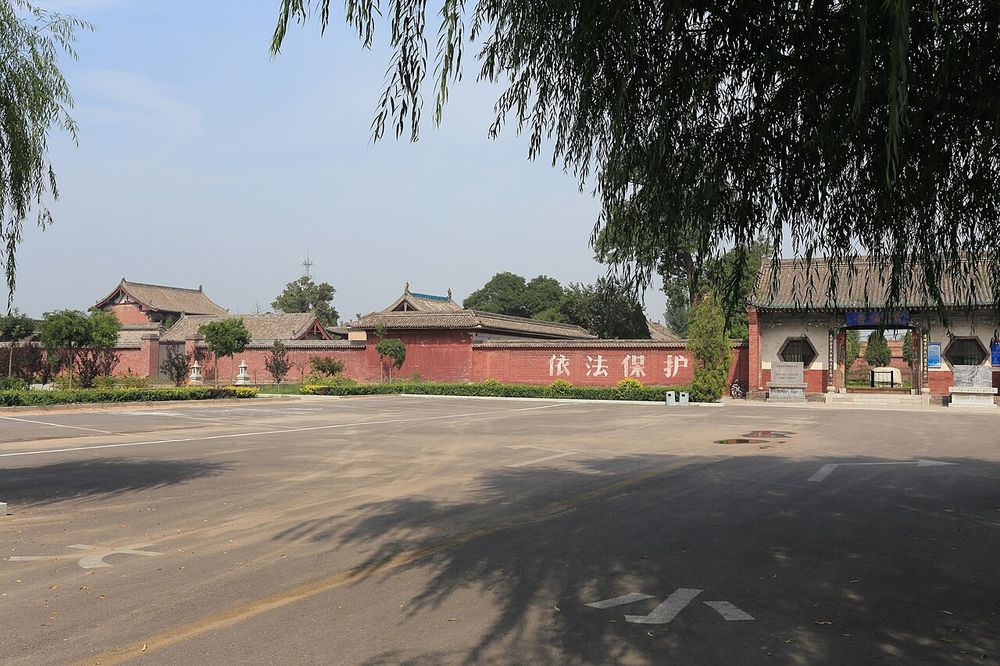
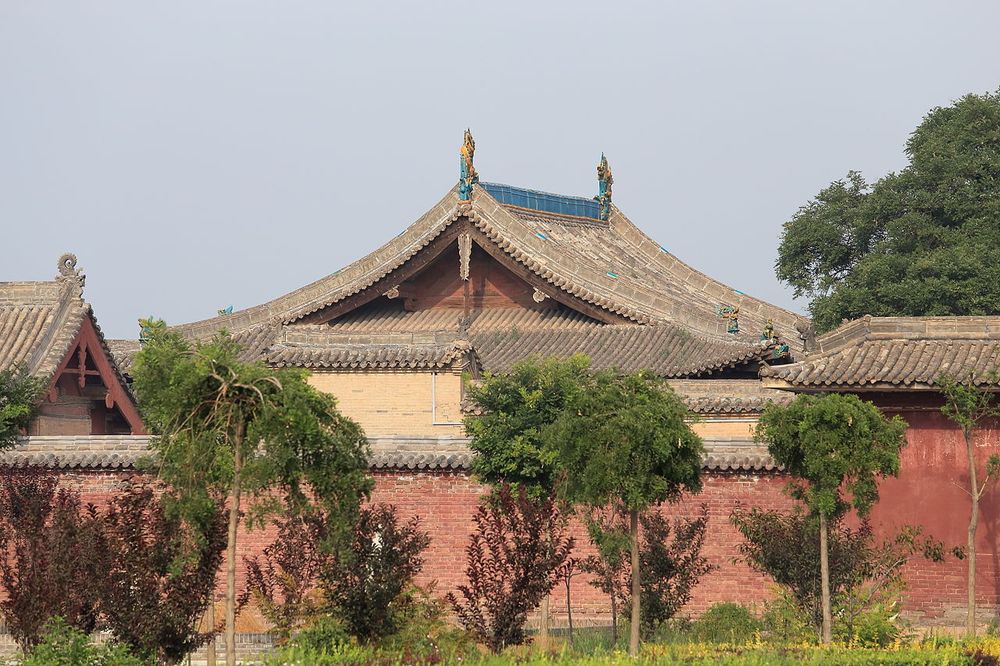
A village temple north-east of Pingyao whose main hall was built in 963, in the Five Dynasties, more than a thousand years ago. It is one of only a handful of timber buildings of that age left in China, with brackets under its eaves about three-quarters as tall as its columns and painted clay figures of the same century inside.
Photo: Xin, CC BY-SA 4.0, Wikimedia Commons
In 963, the seventh year of Tianhui under the Northern Han (951–979), one of the small states of the Five Dynasties (907–960) period, a hall was built at a temple called Jingcheng in Haodong village. The year is written on a beam inside, and the county records and a stele of 1819 agree. In the Jiajing years of the Ming (1368–1644) the temple was renamed Zhenguo, "guarding the country".
That hall, the Hall of Ten Thousand Buddhas, still stands. Only a few timber buildings from before the Song (960–1279) dynasty survive in all of China, and most of them are in Shanxi. Its painted clay figures, made when the hall was built, are among the rare Buddhist sculptures of the tenth century left in the country.
One ticket covers both courtyards.
| Part | Ticket |
|---|---|
| Front court: Hall of Heavenly Kings and Hall of Ten Thousand Buddhas | Main ticket |
| Back court: Hall of the Three Buddhas, Guanyin and Dizang halls | Main ticket |
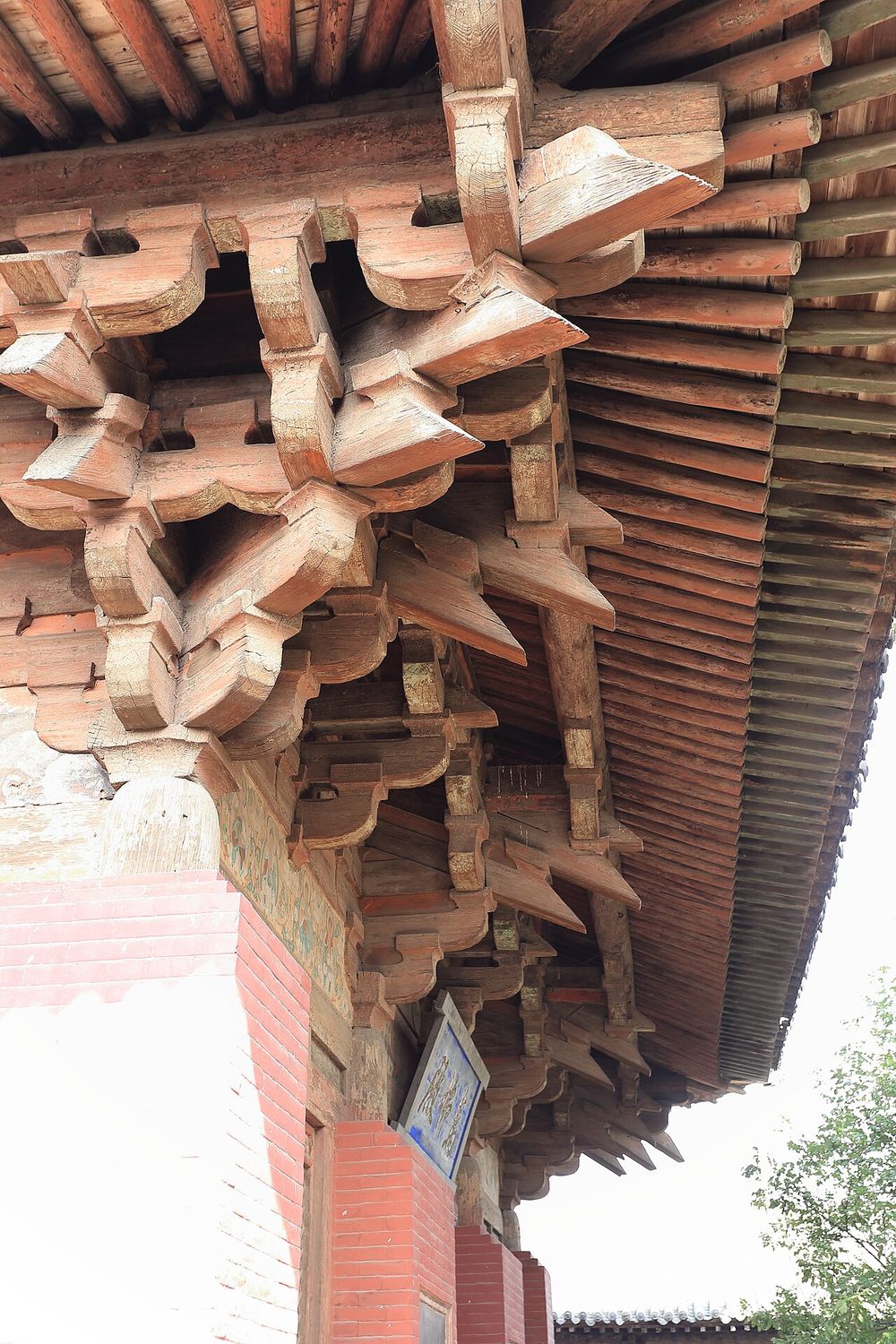
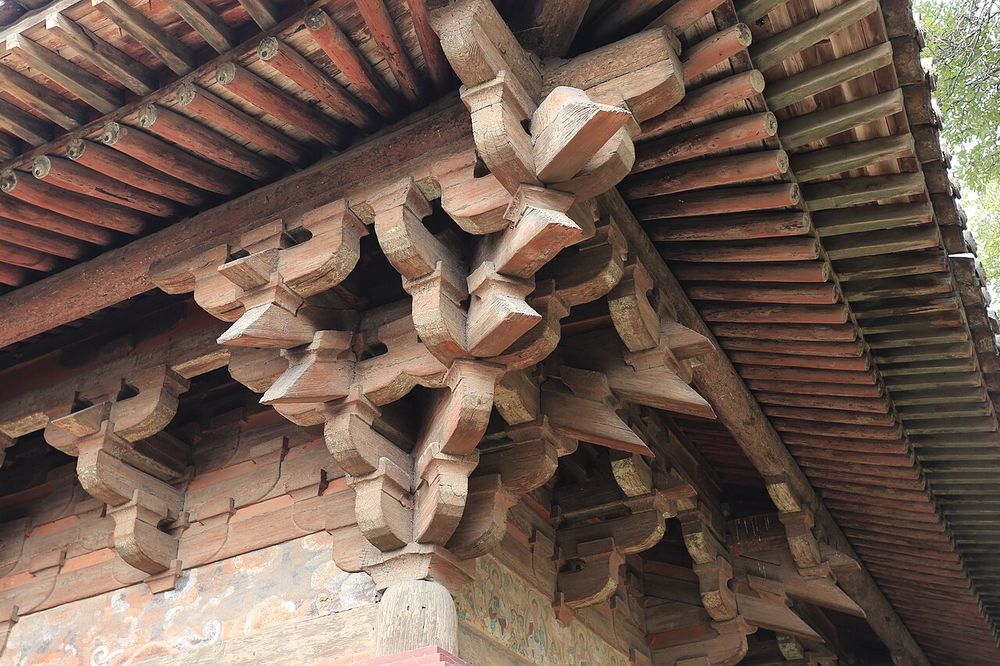
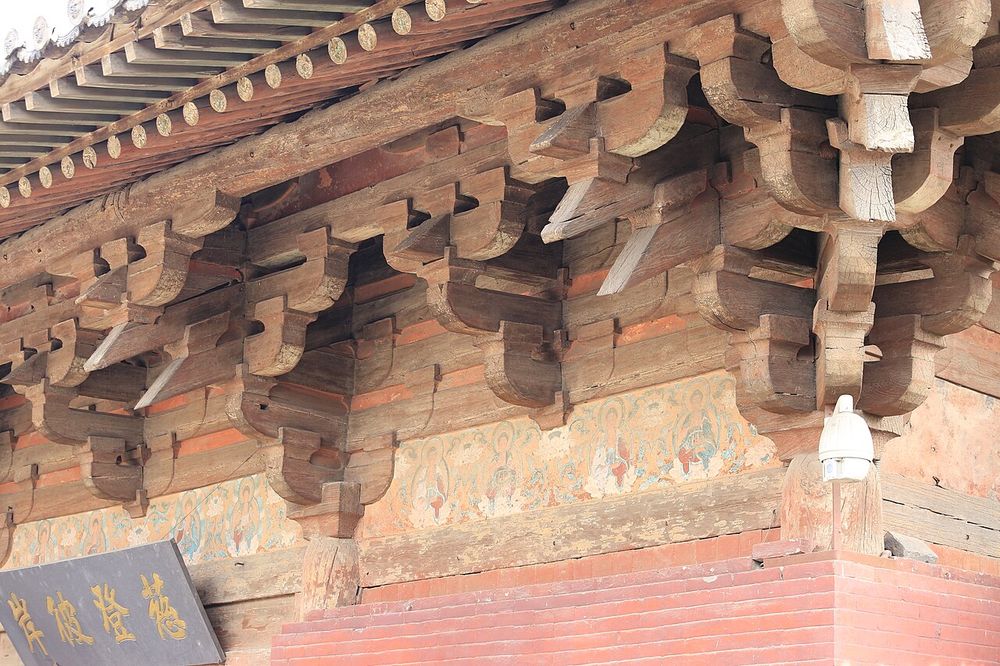
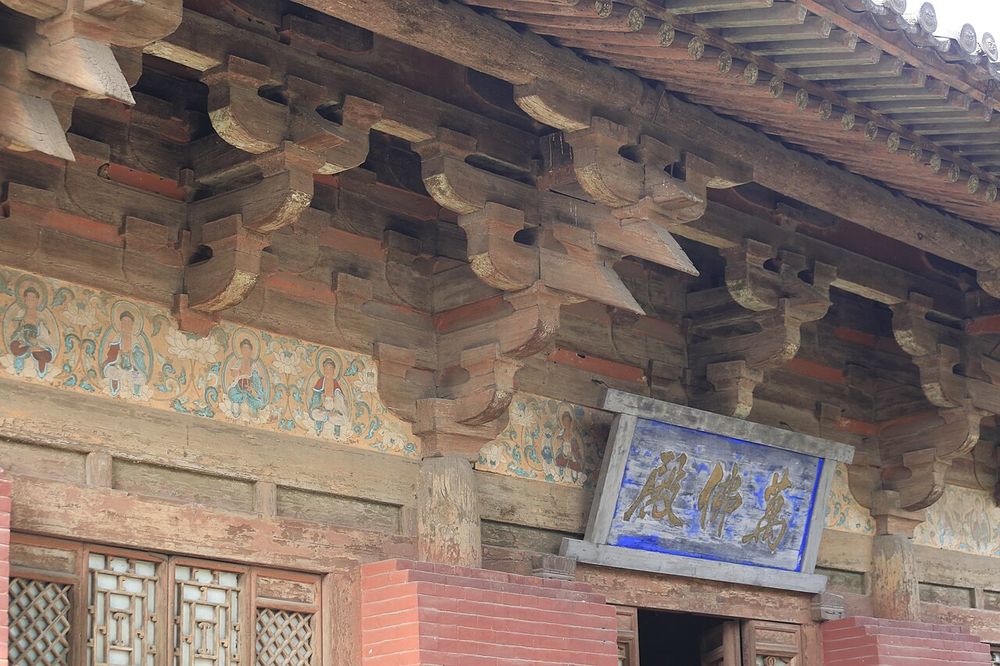
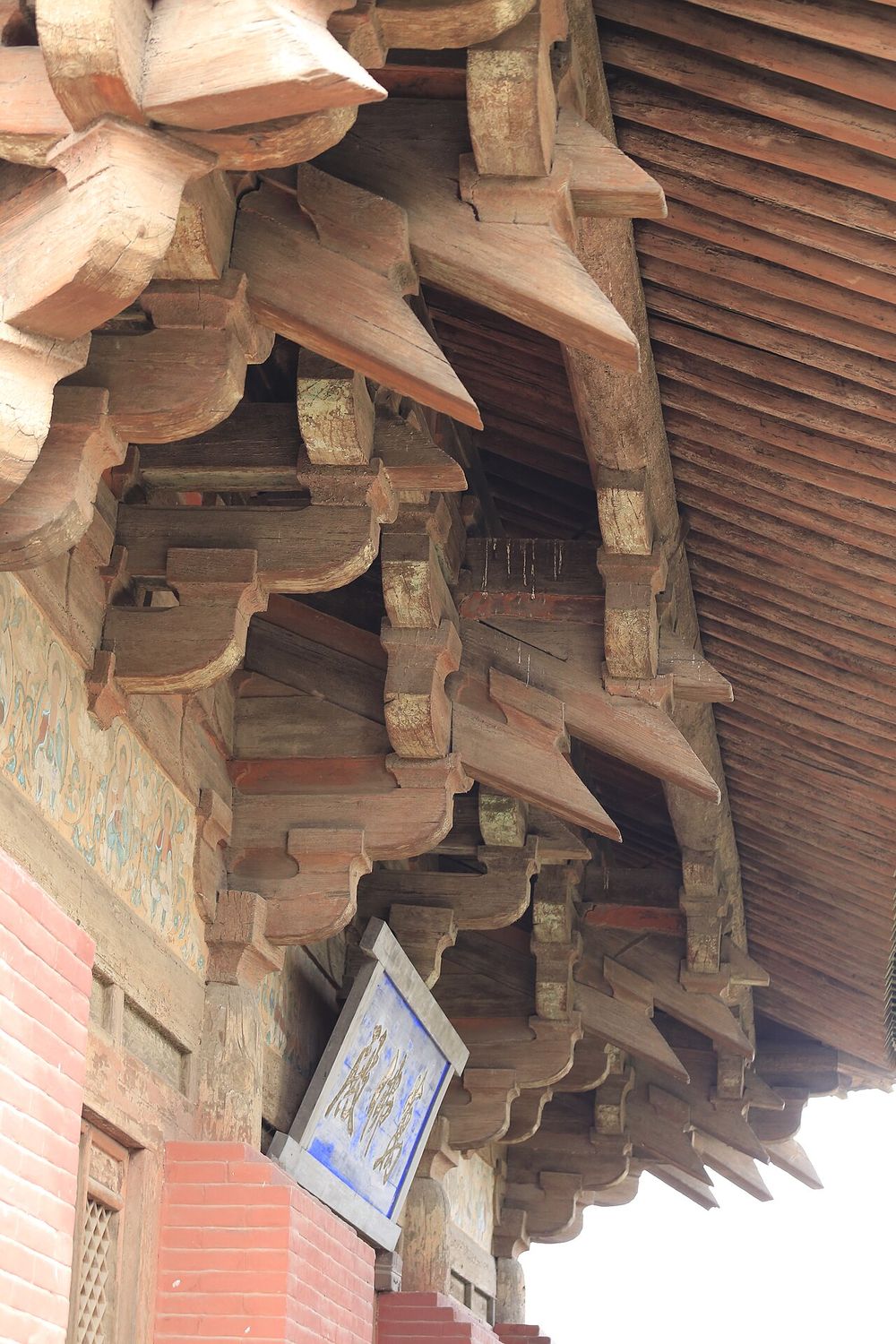
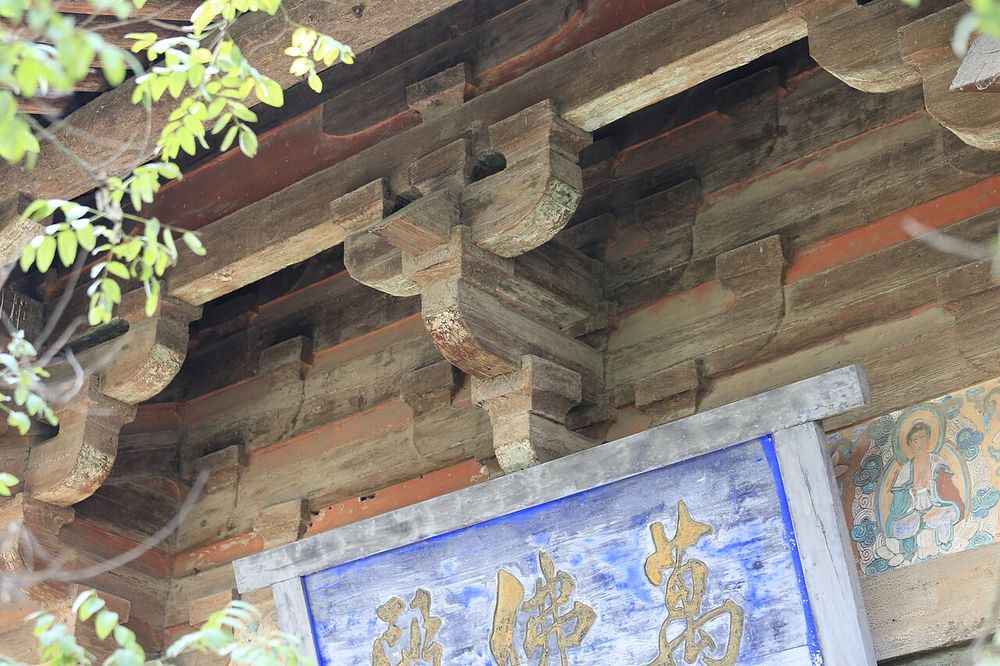
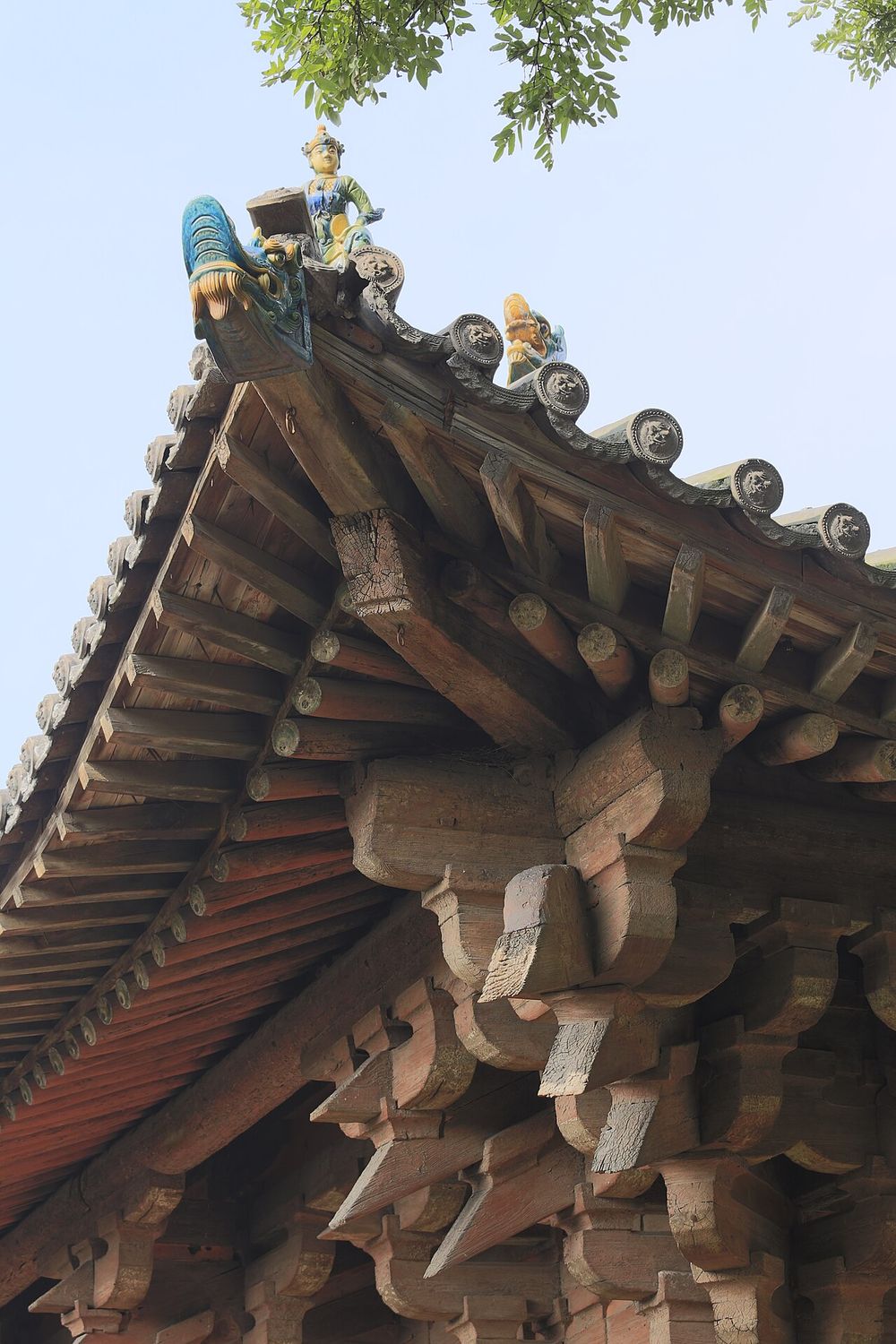
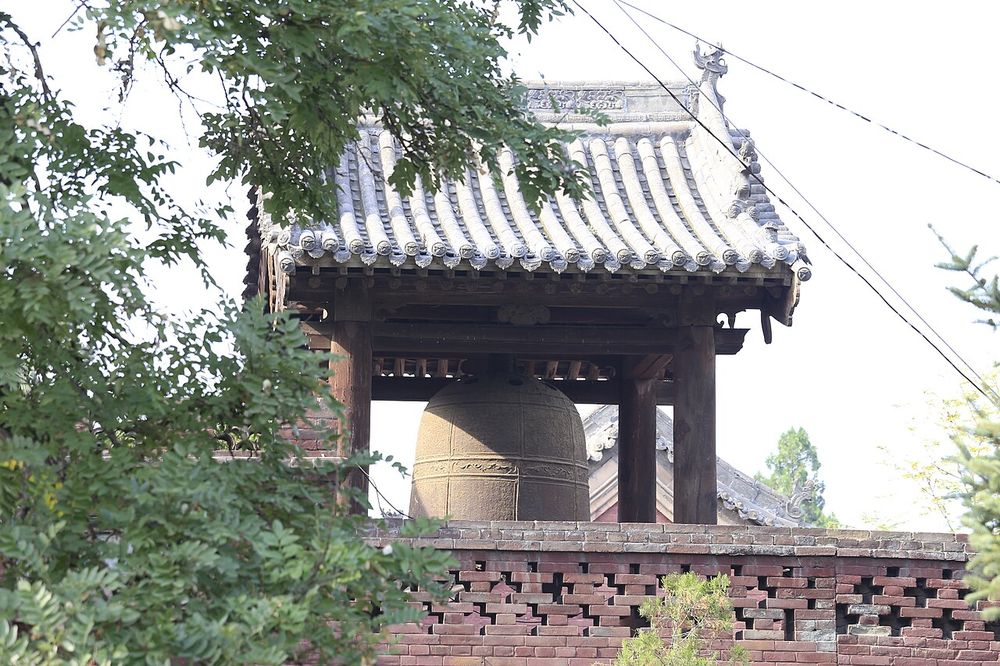
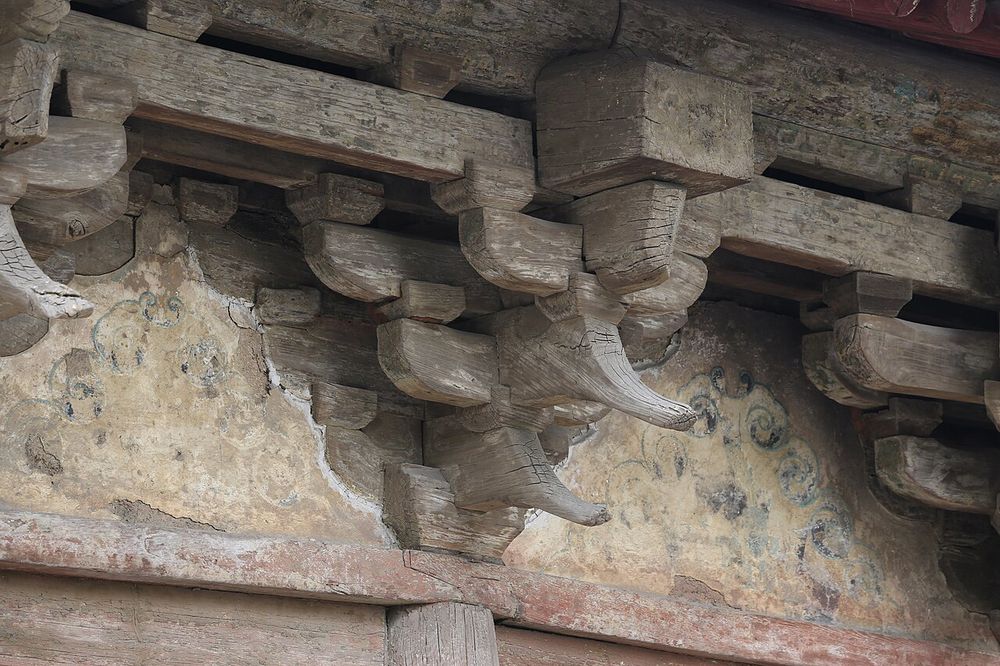
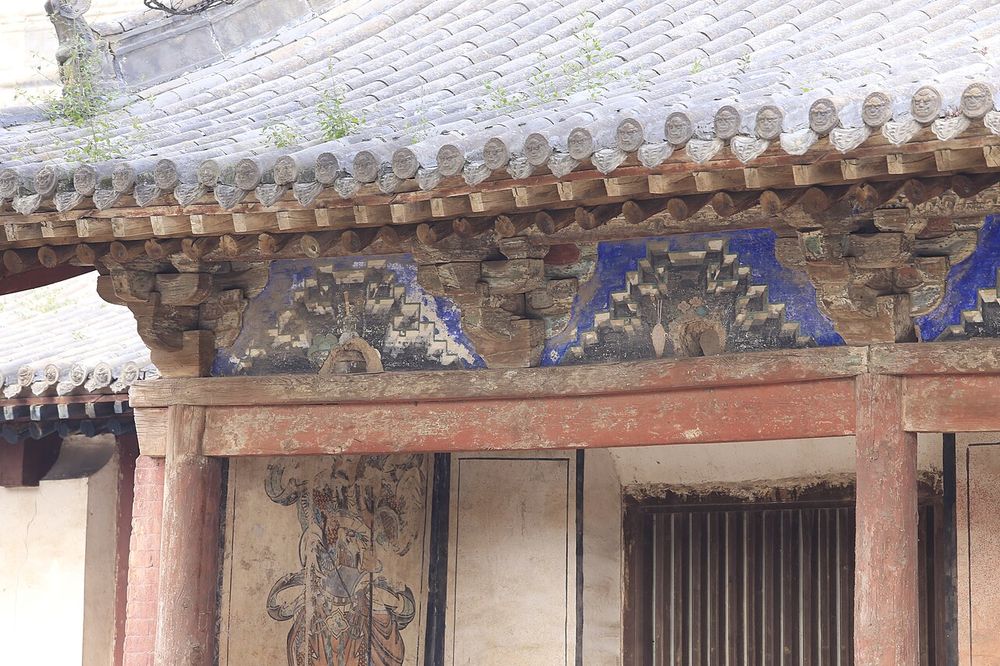
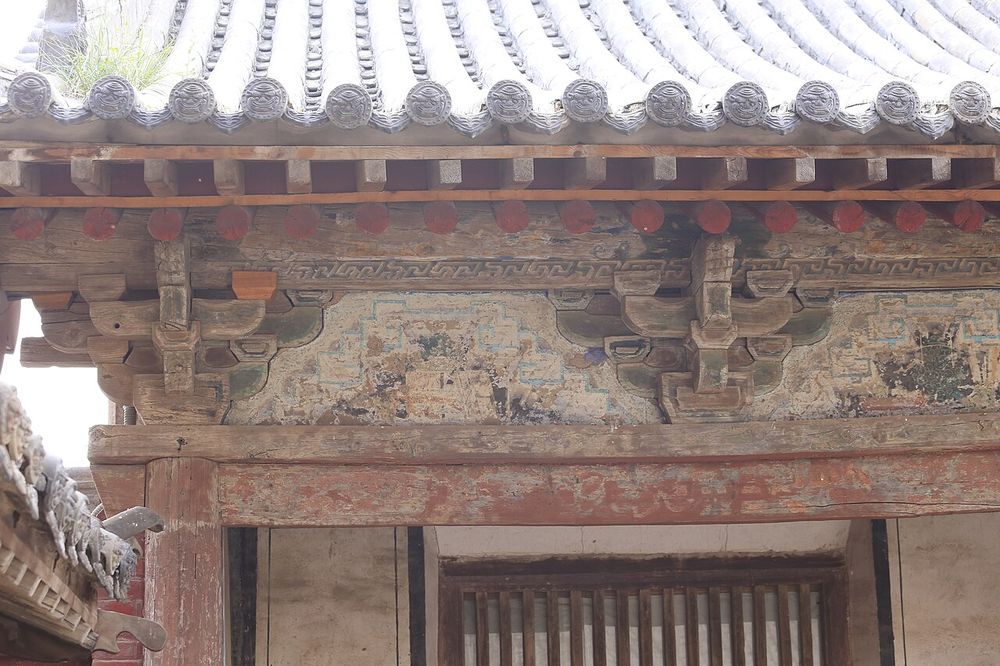
Look up. The brackets that carry the roof are enormous for so small a hall: from the top of the column to the eaves they reach about seven tenths of the column's height. Builders of the Tang (618–907) and Five Dynasties used them to throw the roof far out over the walls.
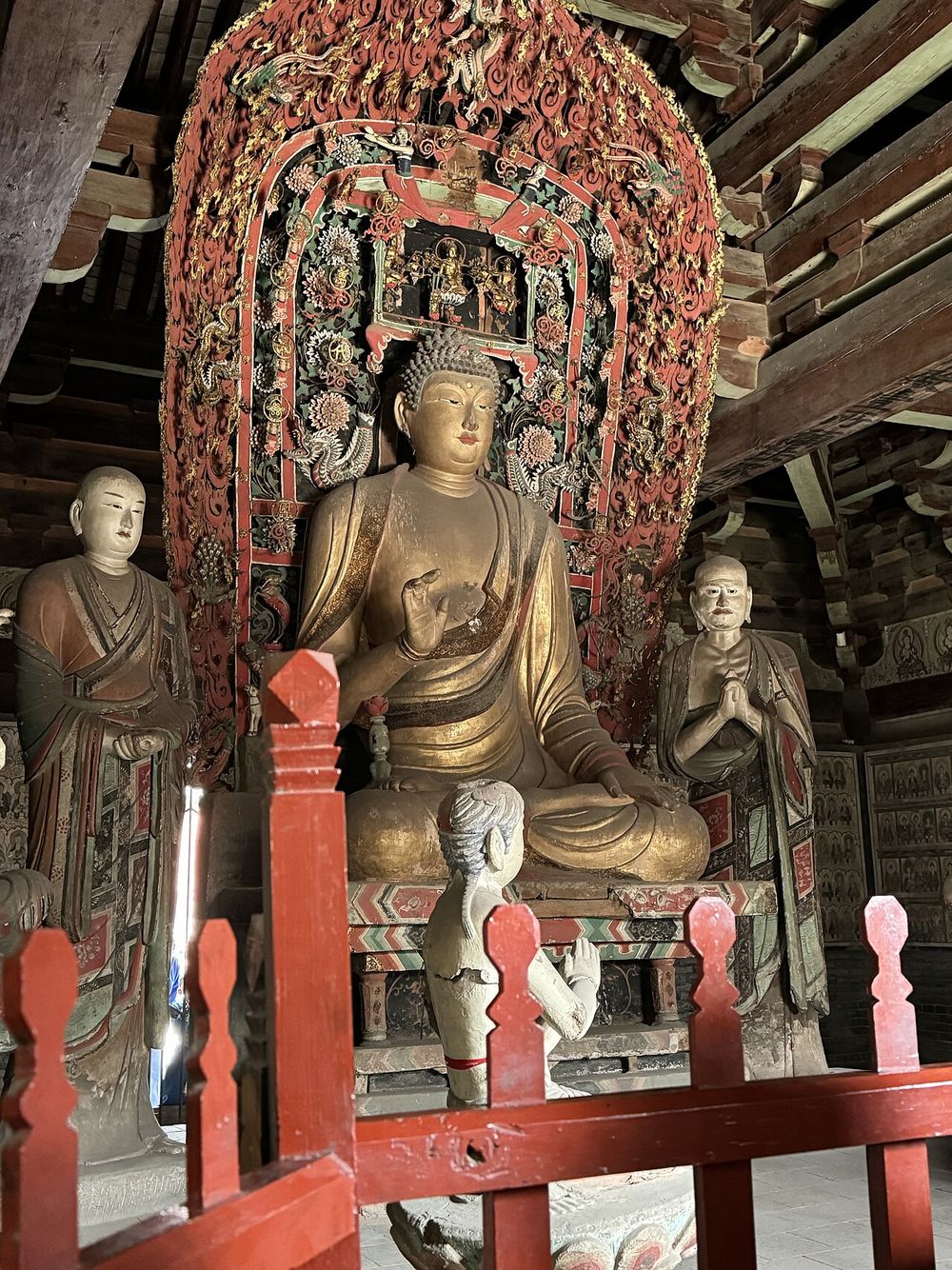
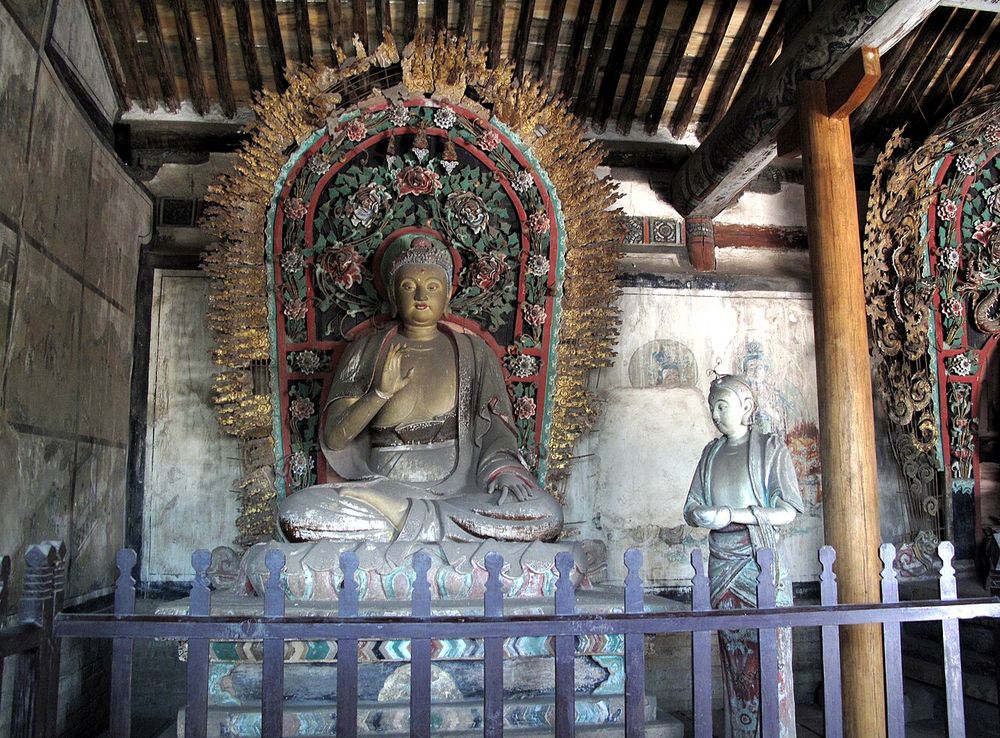
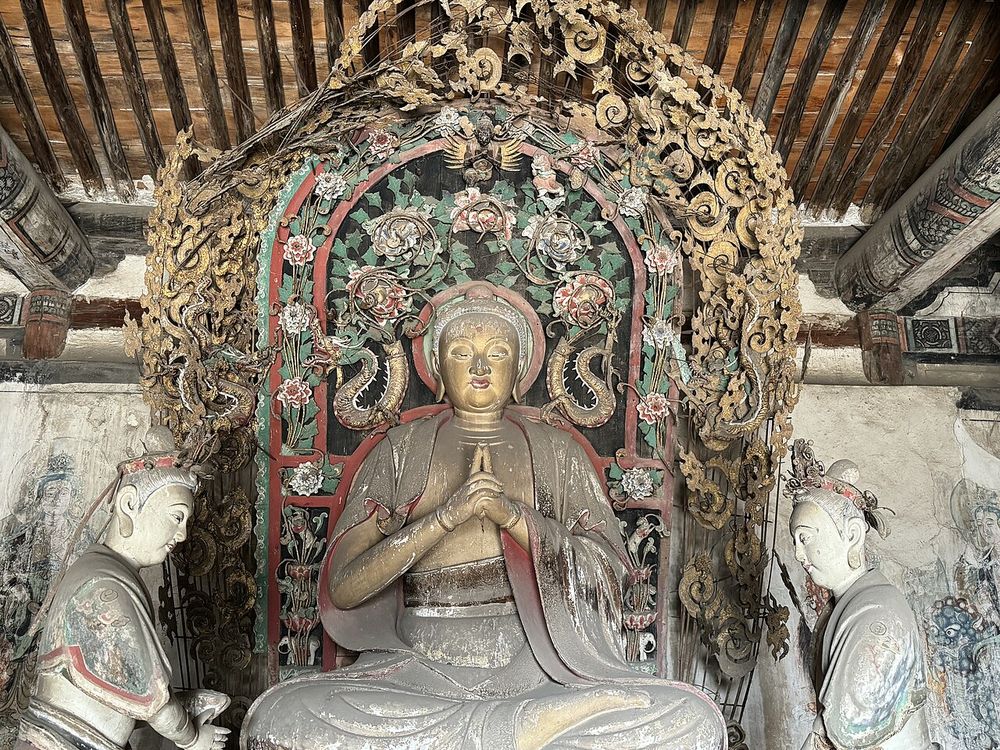
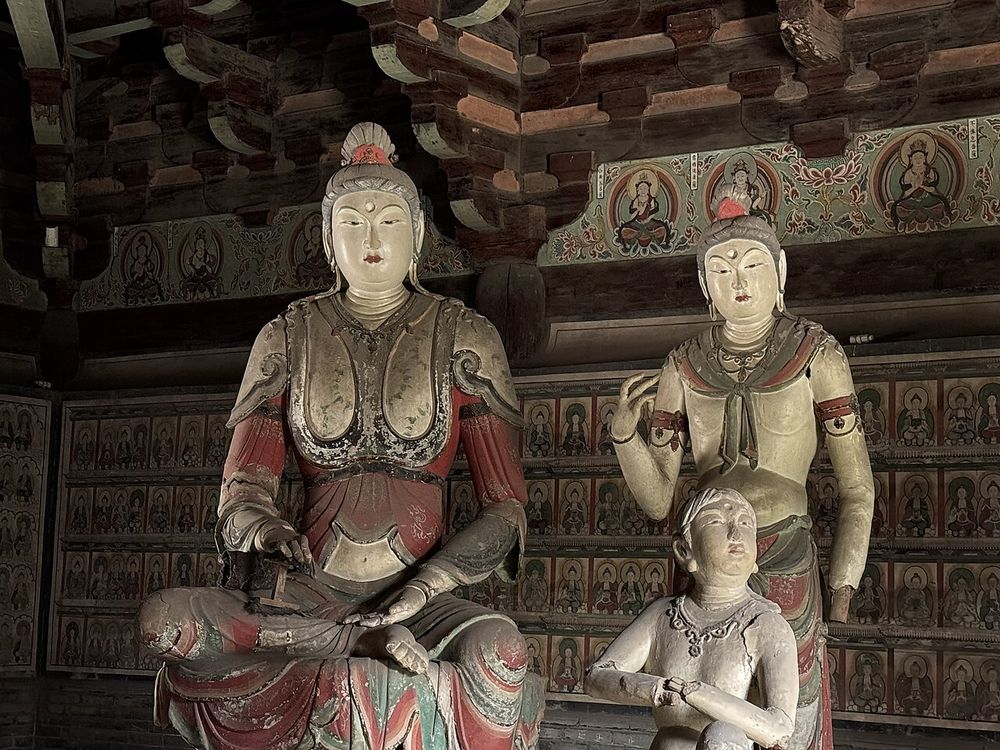
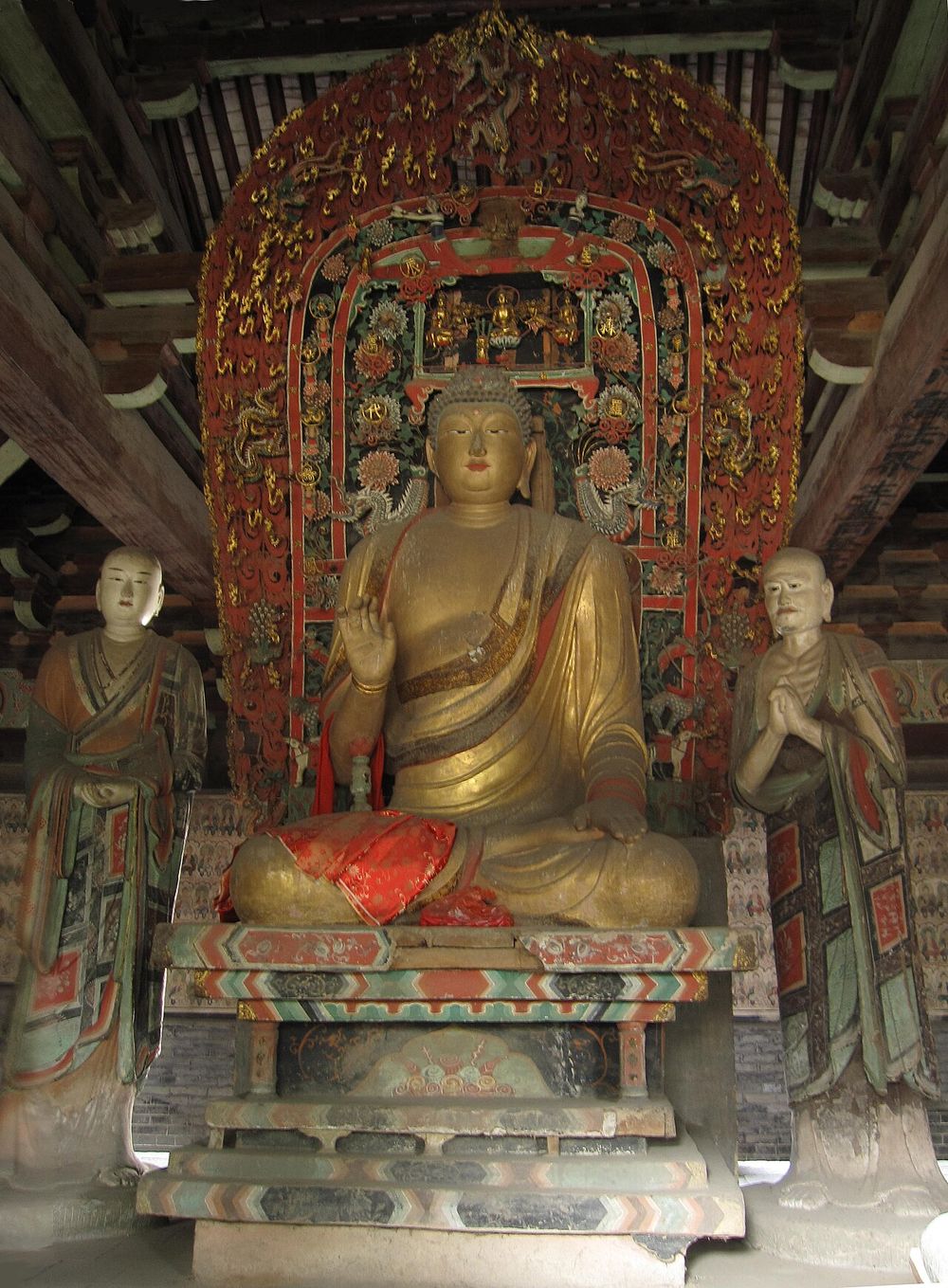
Step inside. On a low platform sits the Buddha with two disciples, two bodhisattvas, two heavenly kings and two boy attendants, all of clay, painted in the tenth century and touched up later. Their faces are full and calm in the way of the late Tang.
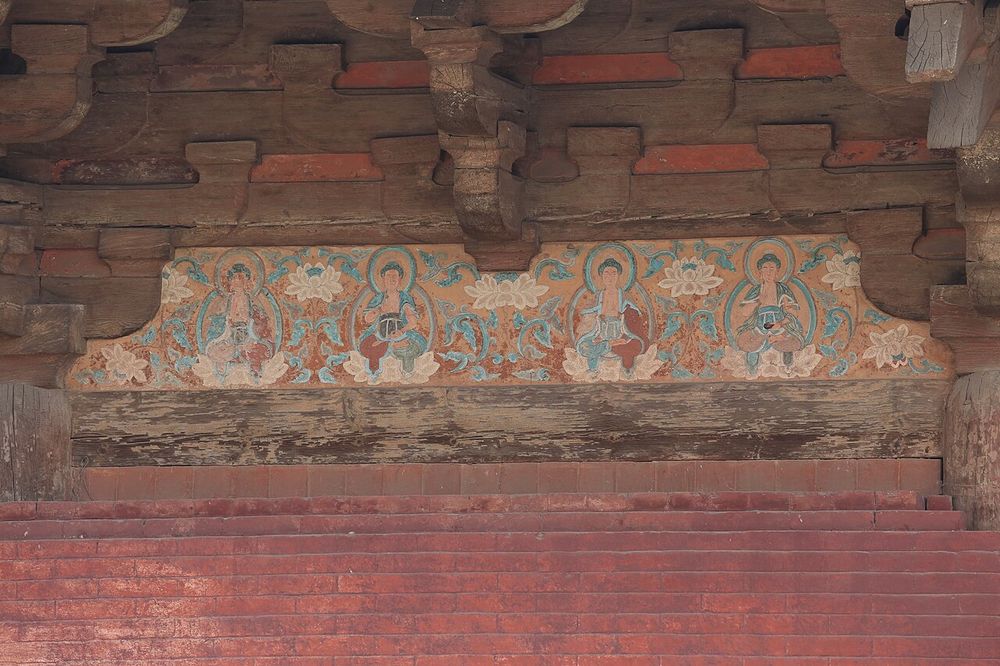
"Ten Thousand Buddhas means ten thousand statues." The name comes from the many small Buddhas painted on the walls.
"It is just another old temple." Its main hall is older than any building in Pingyao town, and older than almost every timber building in the world.
We searched Chinese sources first for this list, then English ones.
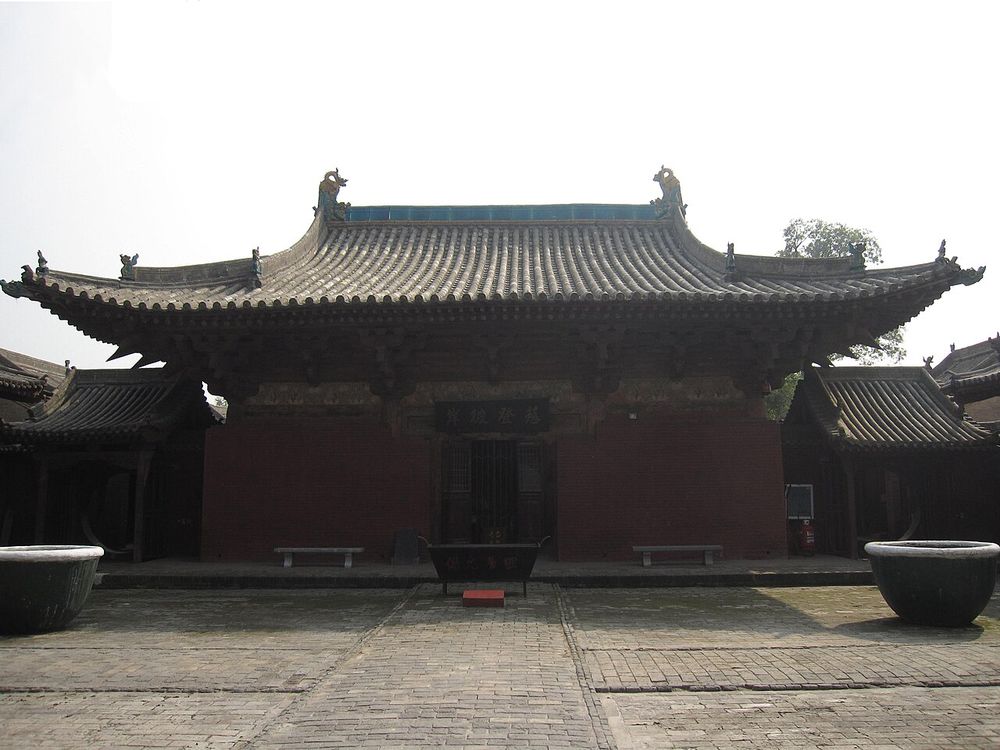
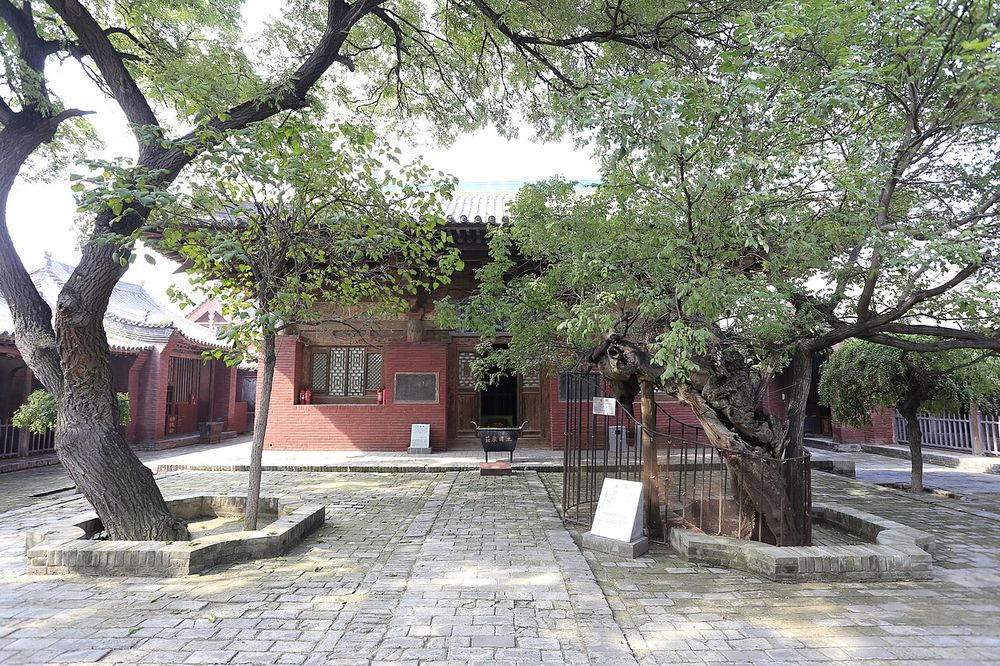
The temple has two courtyards. The Hall of Ten Thousand Buddhas is in the first, the Hall of the Three Buddhas in the second. One hour.
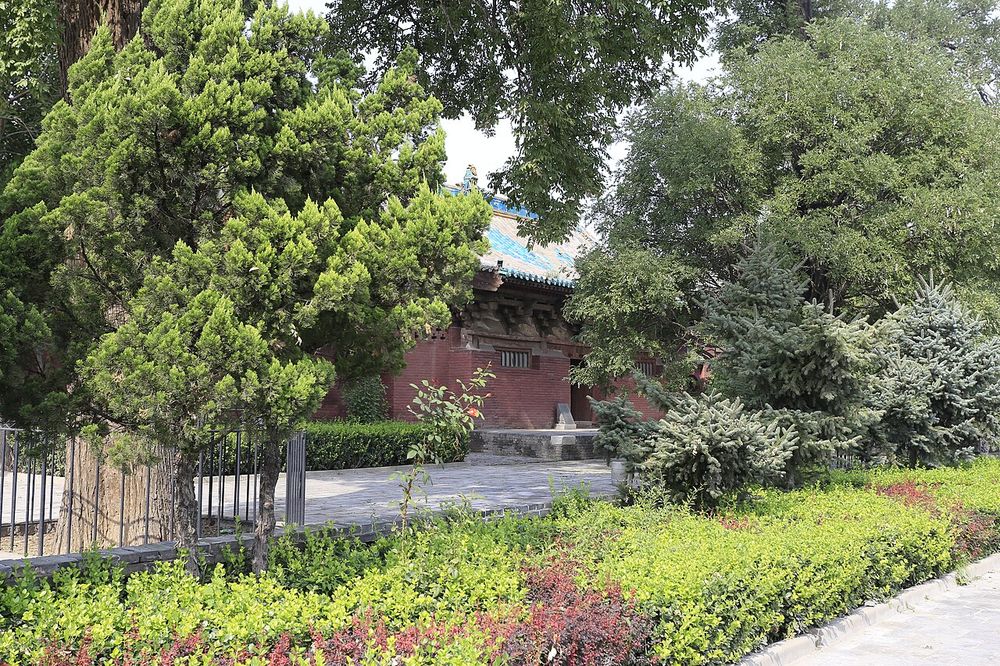
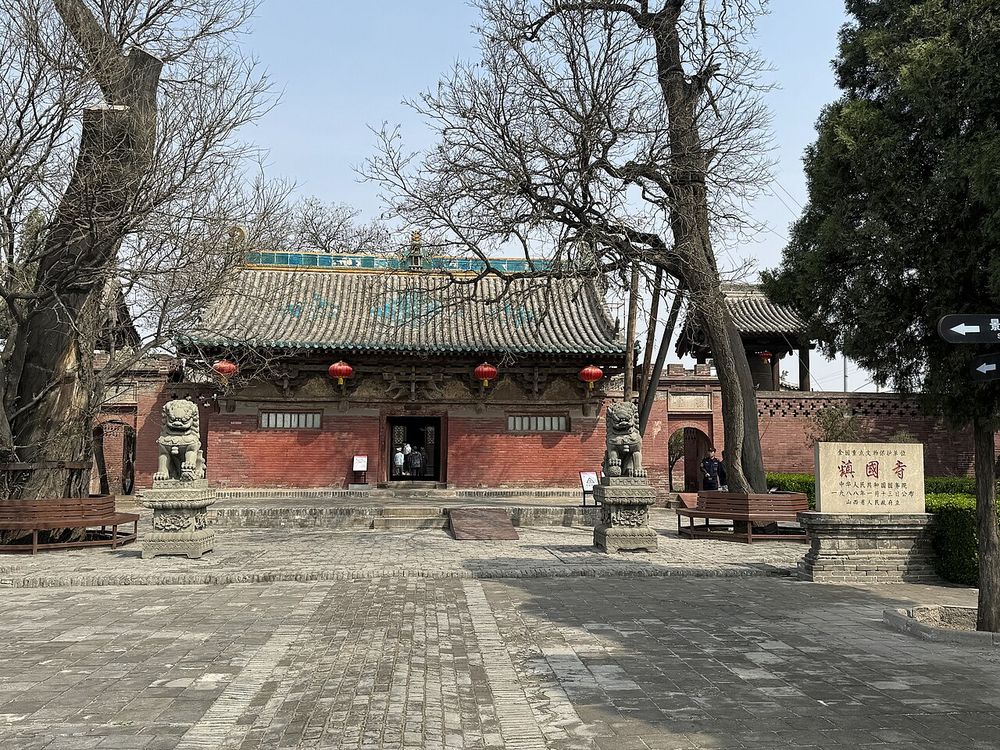
The gate hall, with its guardian kings, is Ming. Its small, neat brackets are a good comparison for what comes next.
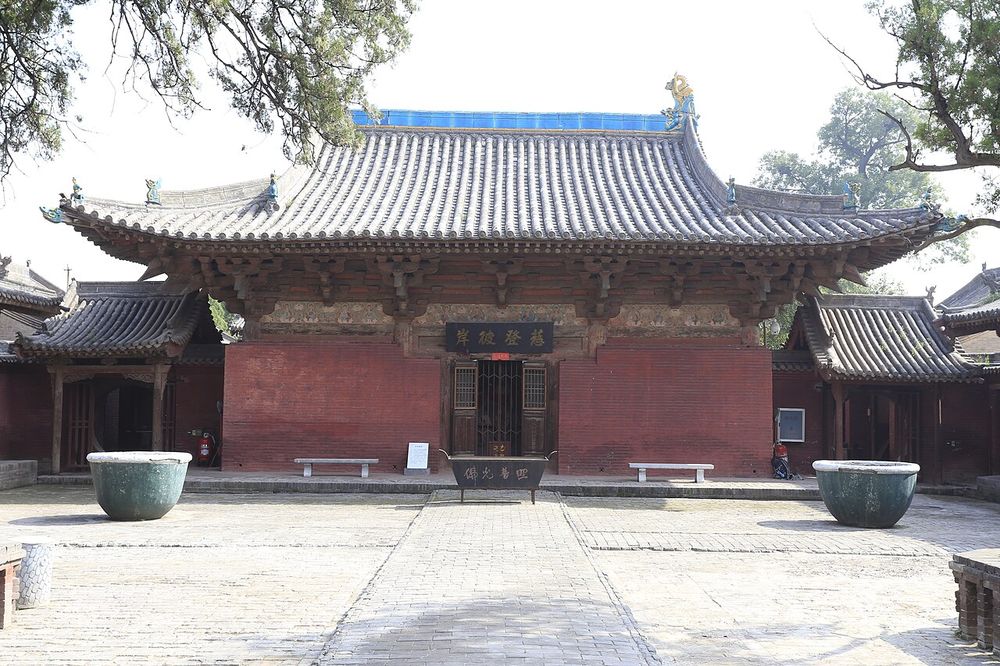
Three bays square, with a roof of hip and gable. Walk round it and compare the brackets with those of the gate hall. Count the tiers of arms under one bracket set.
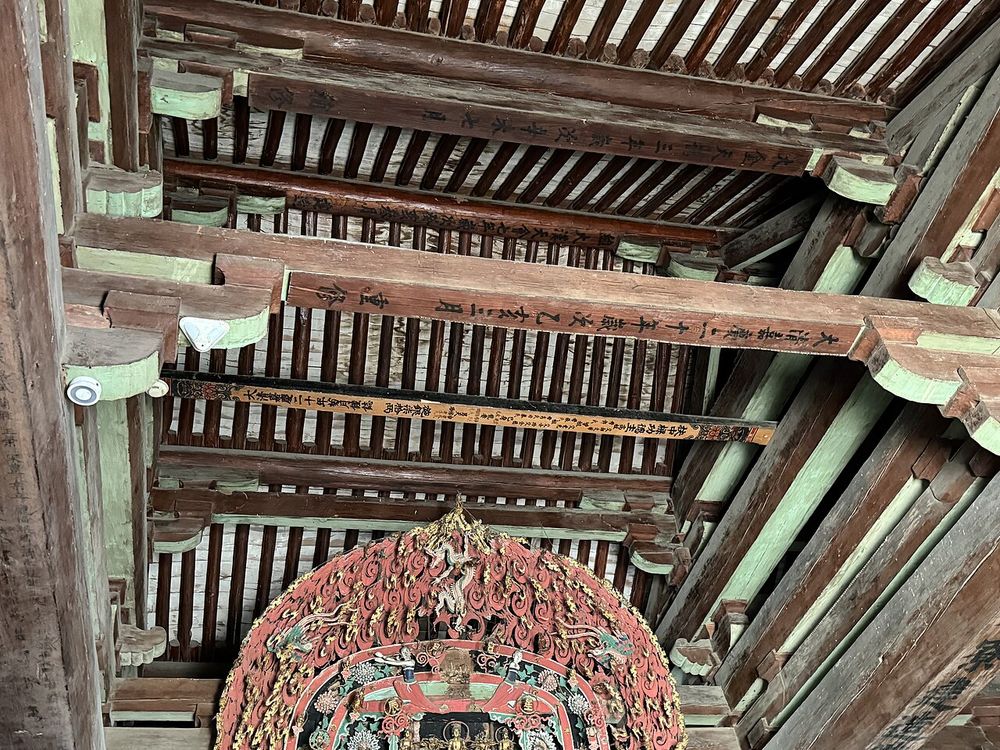
Inside, the beams of 963 are open to view; there is no ceiling.
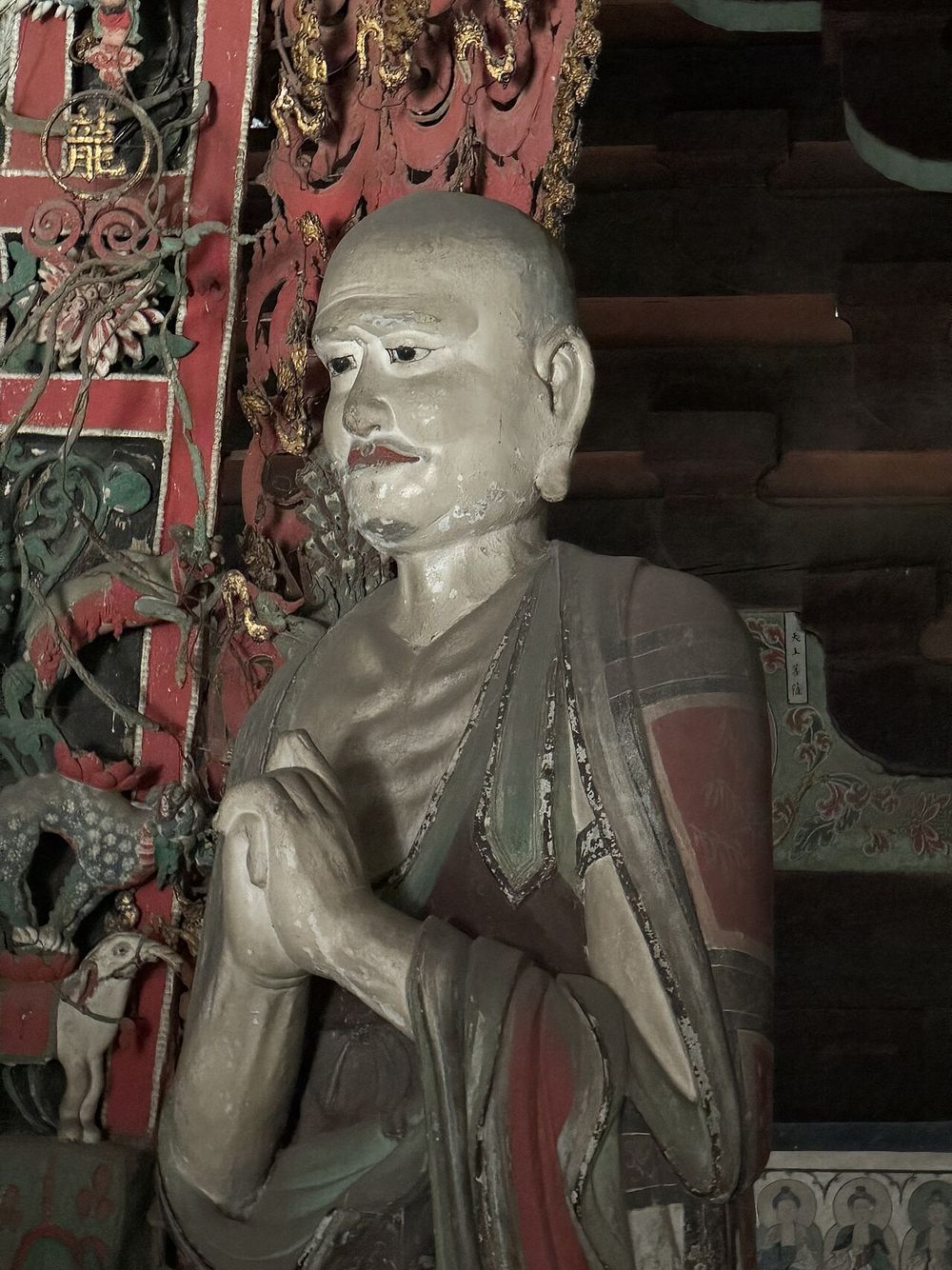
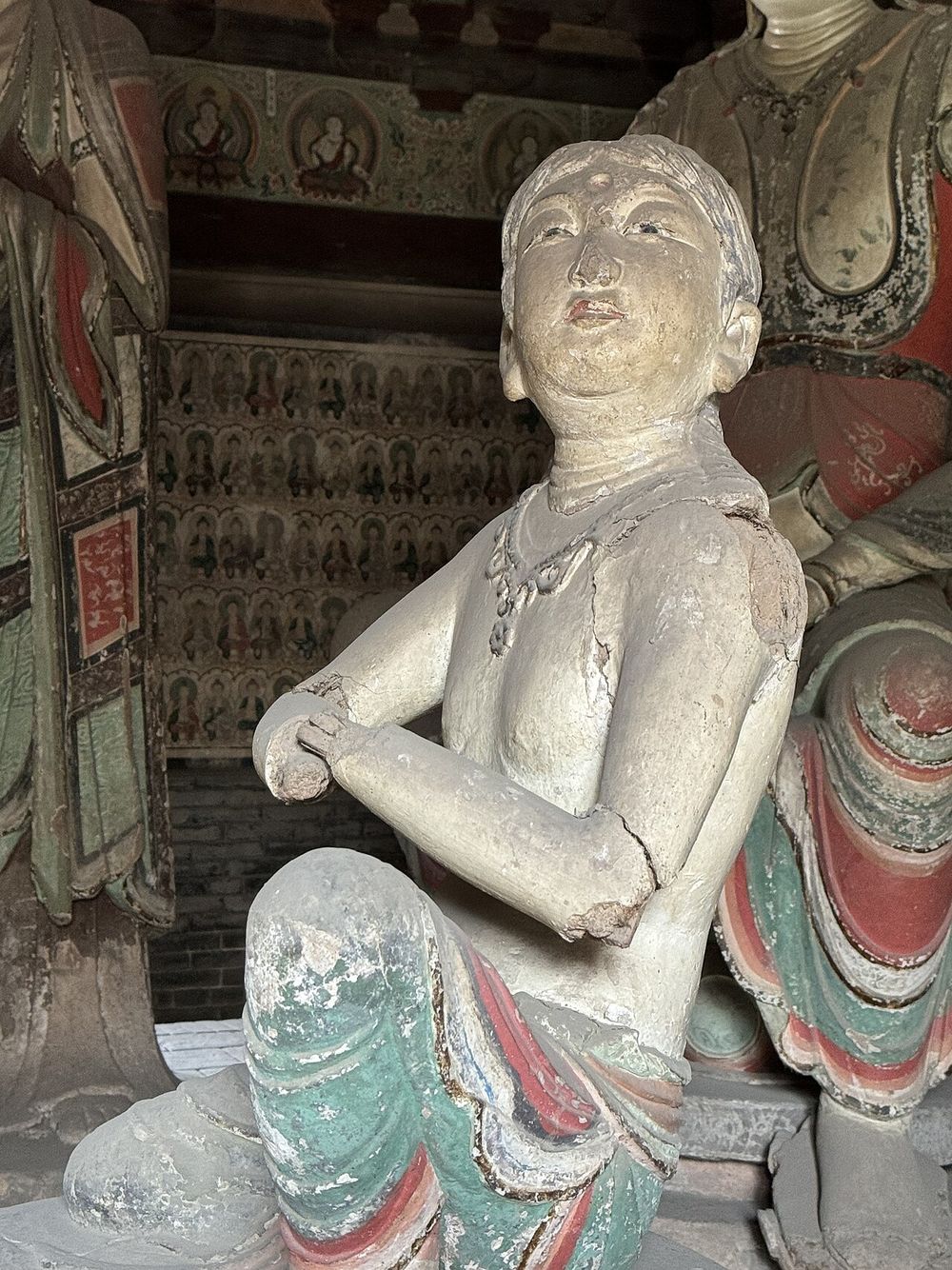
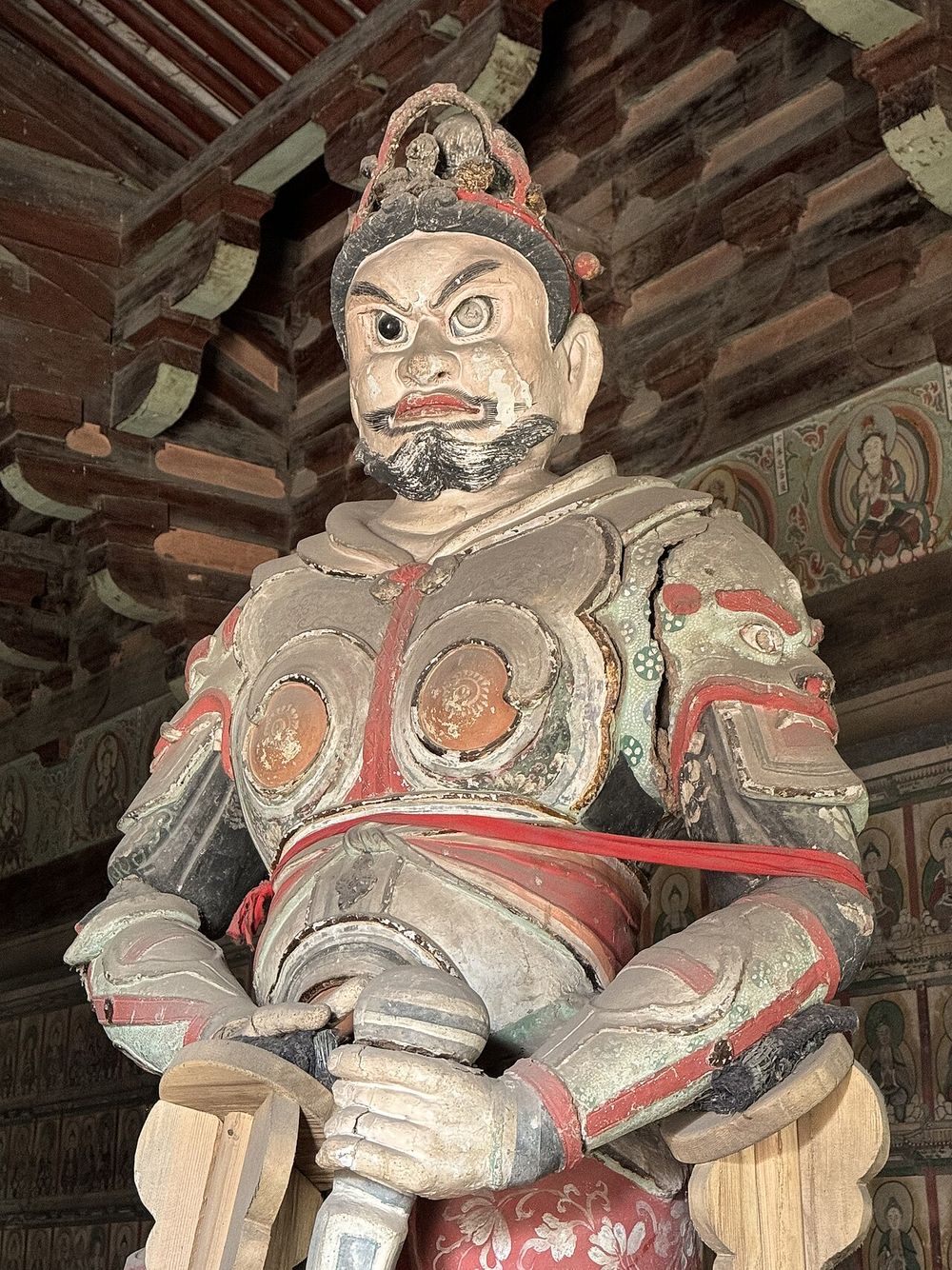
The old disciple Kasyapa, his face lined, stands at the Buddha's side. A boy attendant, half-naked, sits with one knee up. A heavenly king glares in armour. Look at the drapery, how it falls.
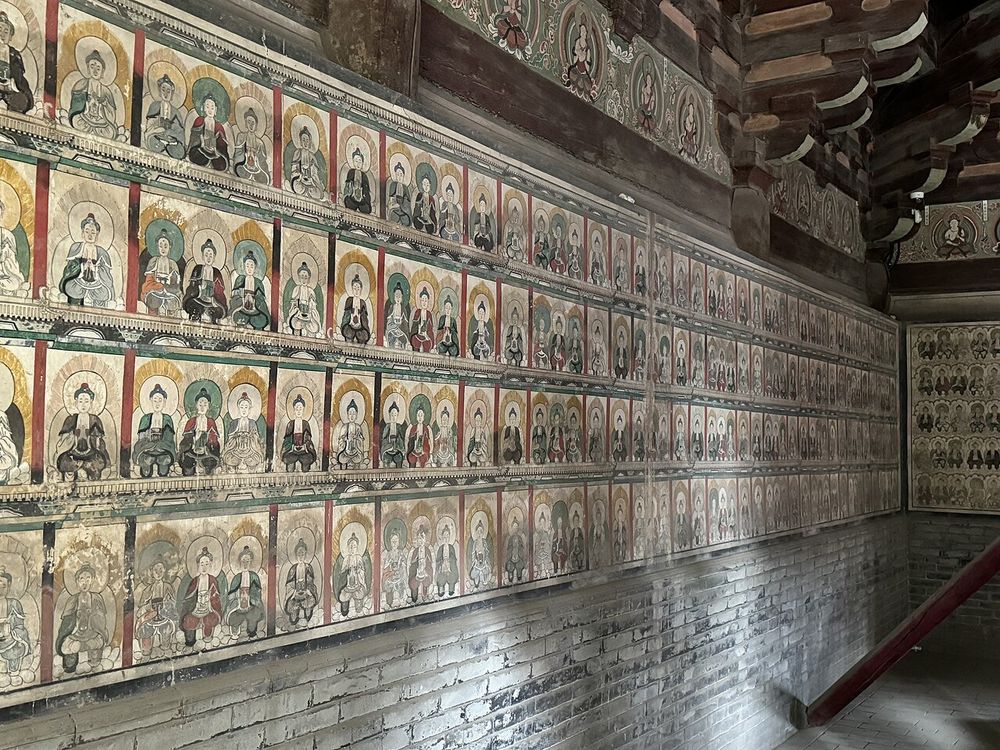
On the side walls, rows and rows of small painted Buddhas give the hall its name.
In the back court a Ming two-storey hall holds three Buddhas, the three bodies of the Buddha. Its Qing murals tell the Buddha's life. On either side are the halls of Guanyin and of Dizang, who rescues souls from hell.
The hall was built in 963, the year Otto I deposed a pope in Rome and three years after the Song dynasty was founded. Sixteen years later the Song conquered the Northern Han and reunited China.
| Year | Here | Elsewhere |
|---|---|---|
| 963 | The Hall of Ten Thousand Buddhas is built | Otto I deposes Pope John XII |
| 979 | The Song conquer the Northern Han | Æthelred the Unready is crowned in England |
| 1819 | A stele records the date of the hall | Singapore is founded by Raffles |
| 1997 | World Heritage with the Ancient City of Pingyao | Hong Kong returns to China |
One line to remember: a hall of 963, with brackets you can measure yourself against.
These are stories people tell about this place. They are legends, not history, and each one says where it comes from.
Visitors pray for the dead in the Dizang Hall. Dizang, the scriptures say, vowed not to become a Buddha until hell was empty.
Source: Buddhist scripture, the Sutra of Dizang's Original Vows
Later, people who live here will be able to add the stories they grew up with, and say which of these they have heard.
Last checked 2026-11-12. Pingyao visitor information as given on our Pingyao page (25 yuan); travel reports of 2026.
Checked 2026-11-12
Opening hours are given in the local time of the place. Prices are in the local currency. The figure after ≈ is approximate, at exchange rates checked on 9 November 2026, in .
Stand at the site, sign in, press the button, and collect its stamp. Your browser will ask to use your location. It is sent to us once to confirm that you are at the site; we keep how far you were from it, not the spot where you stood.
Your stamps are saved to your account, so they follow you to any device. Checking from a browser cannot rule out every false location; stricter checks arrive with the app.
Photos here show the place, not people. Each one is credited to the visitor who took it and appears after our team has looked at it. A photo with you in it belongs under “I am here”.