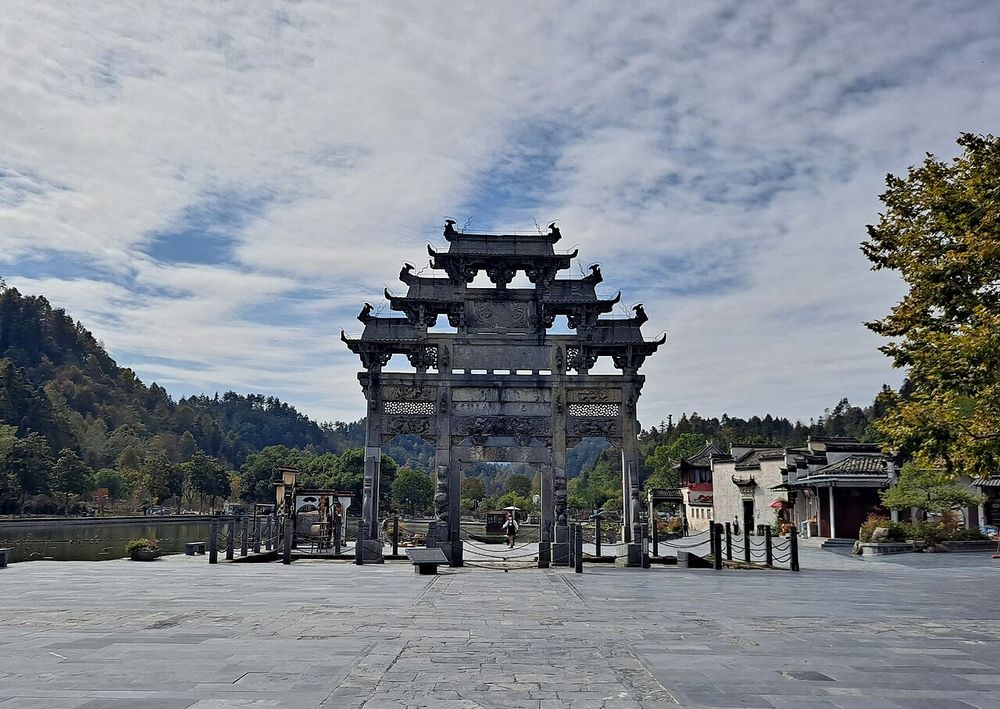
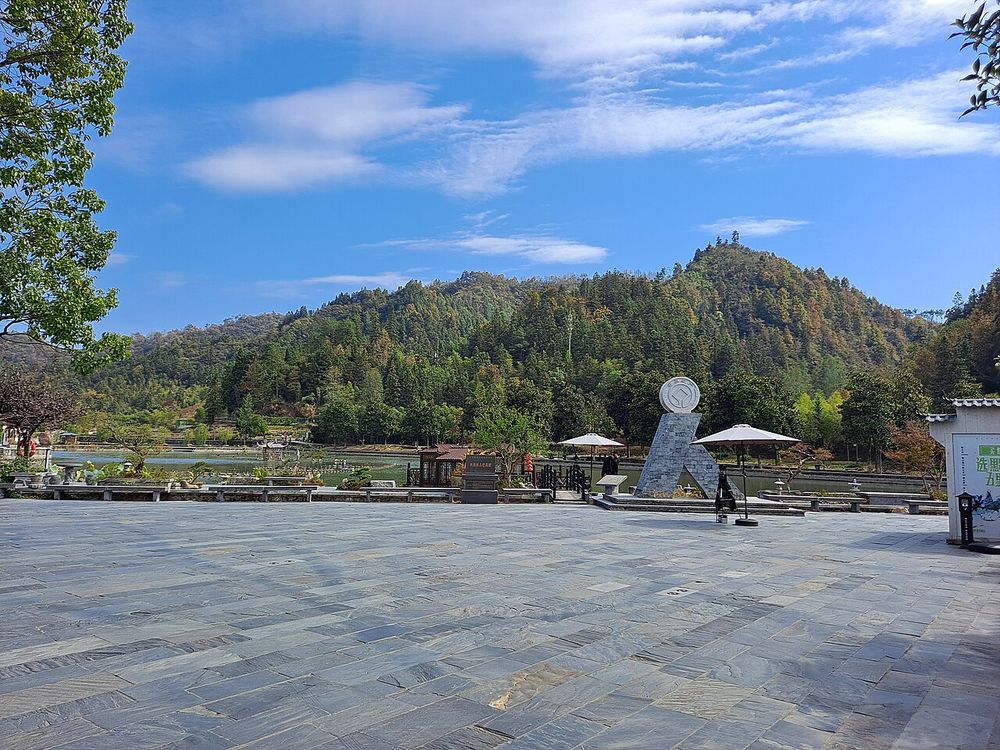
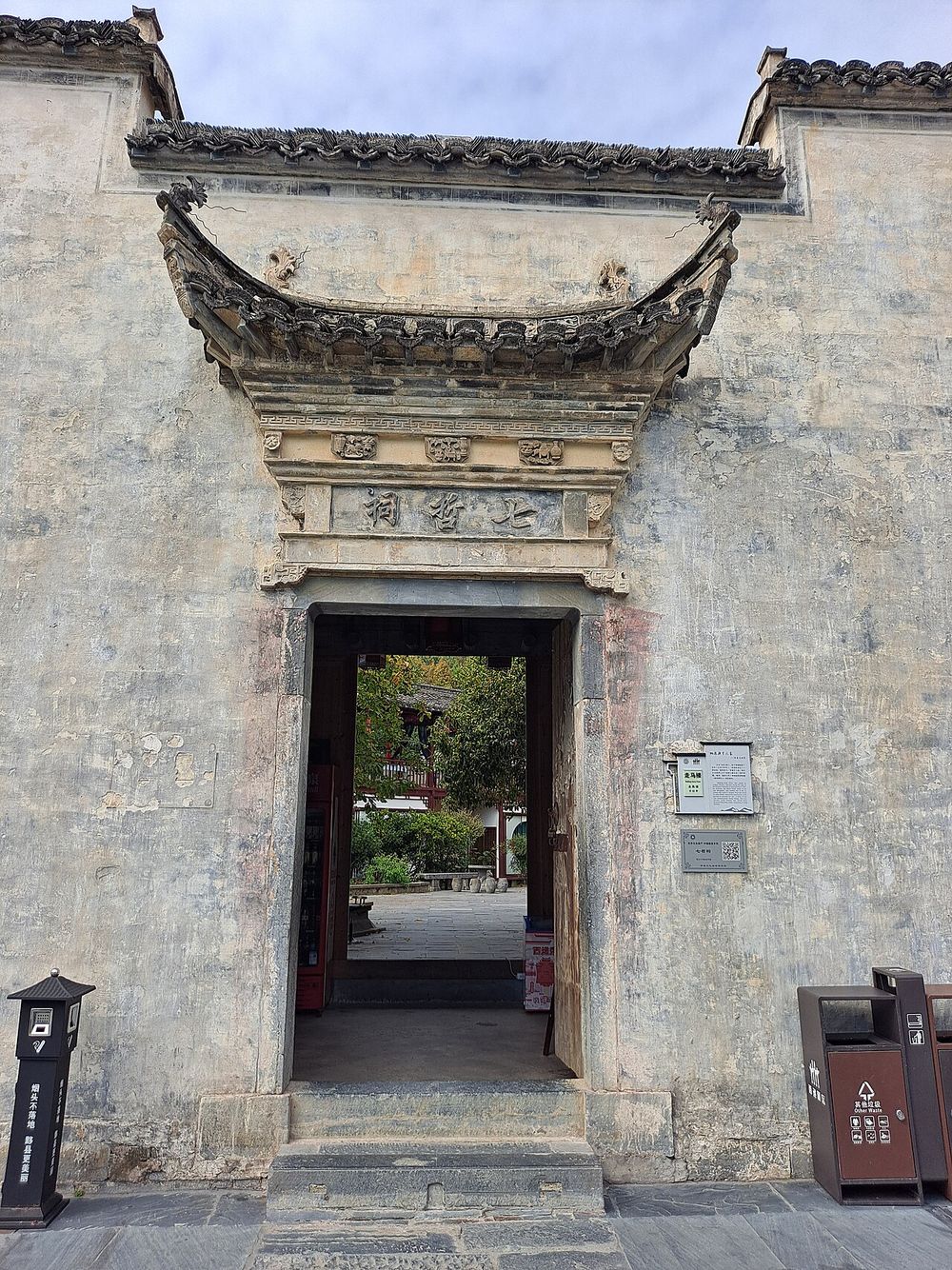
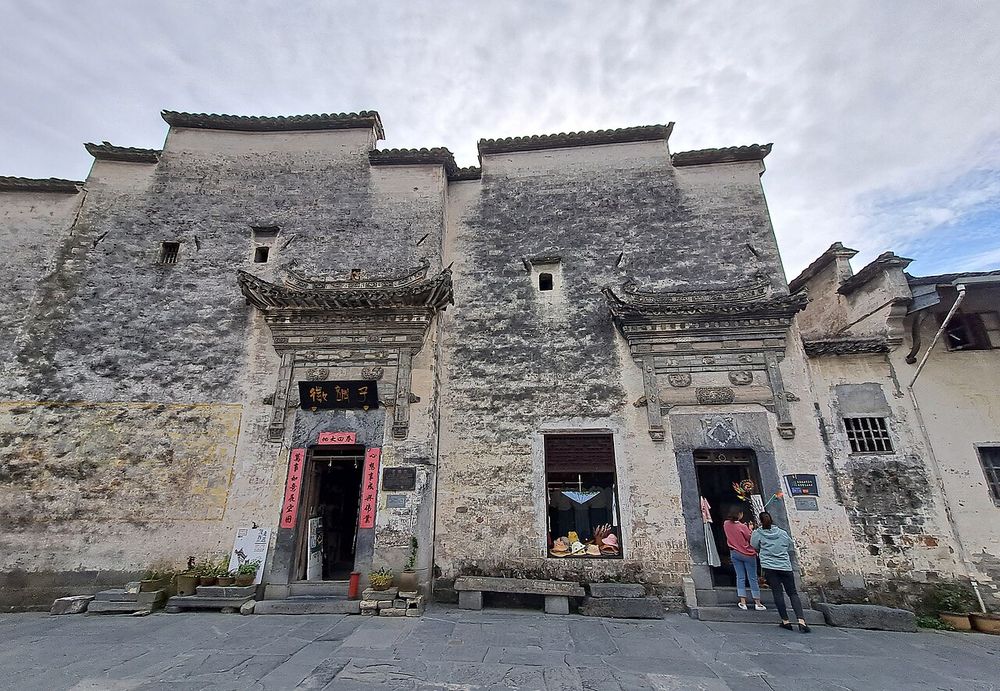
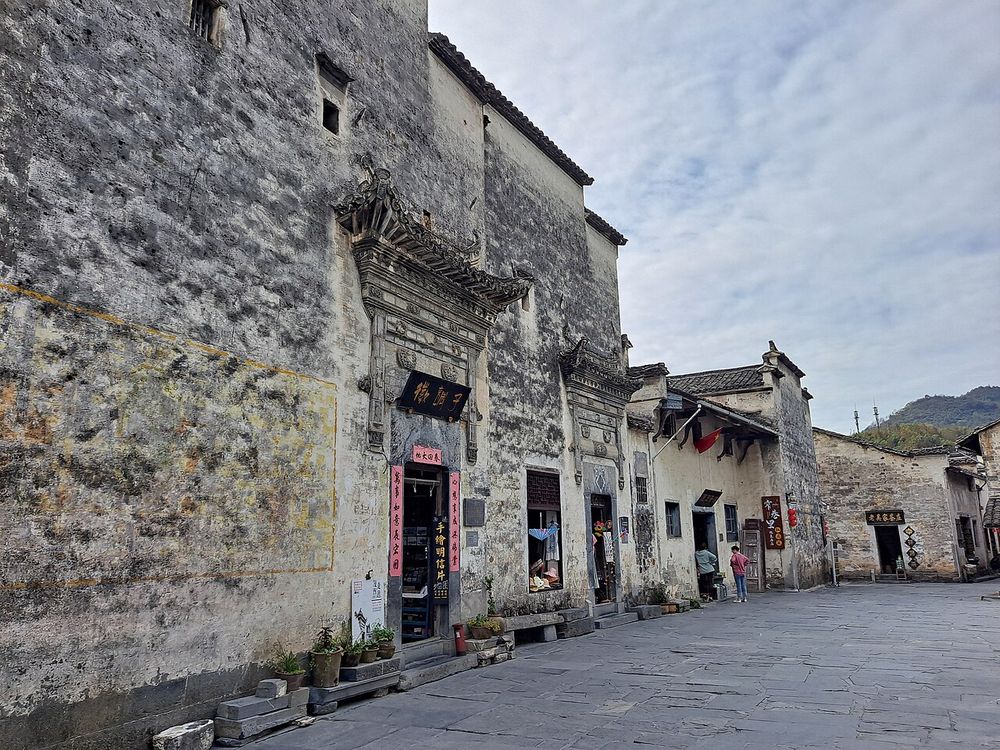
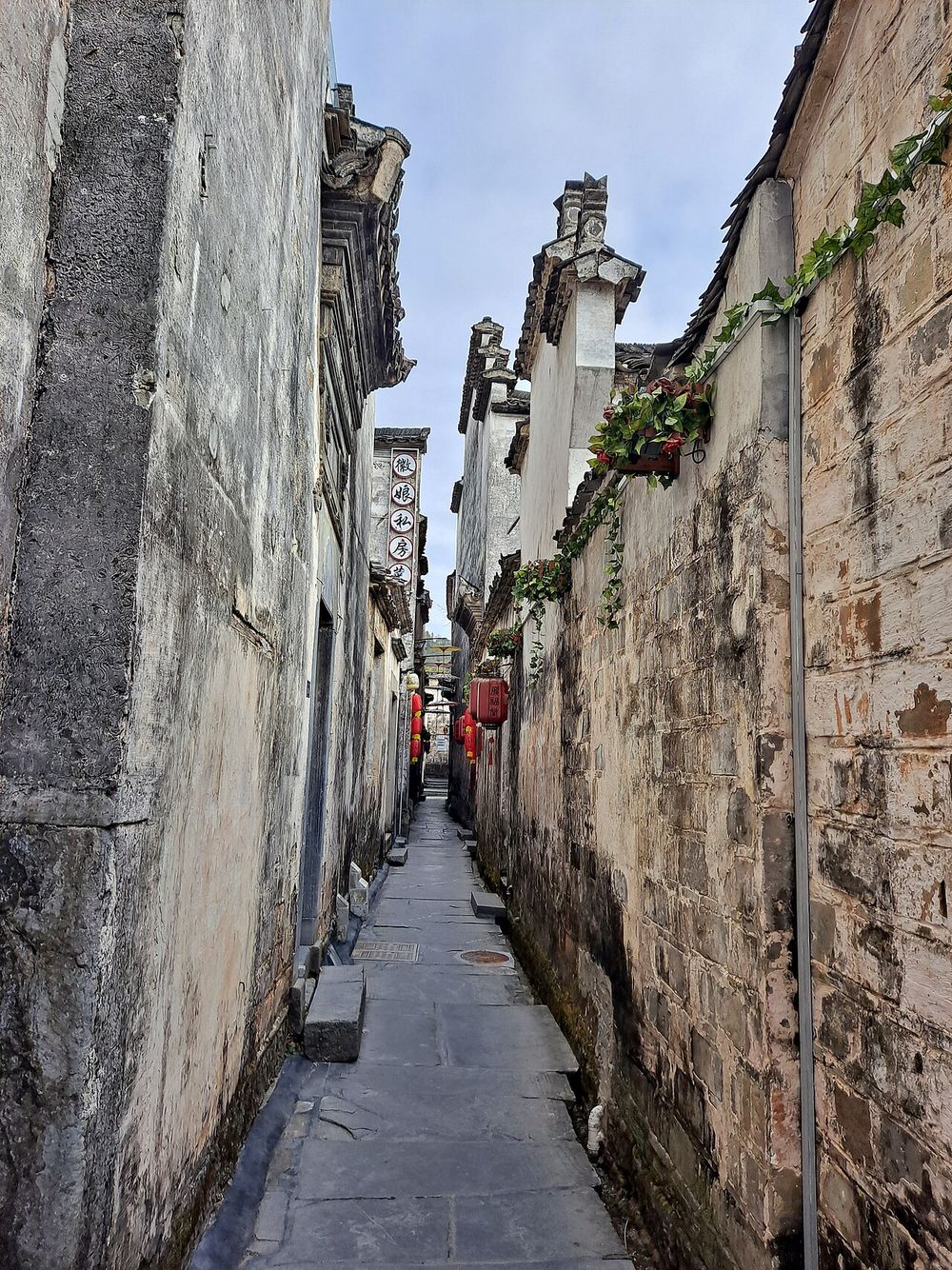
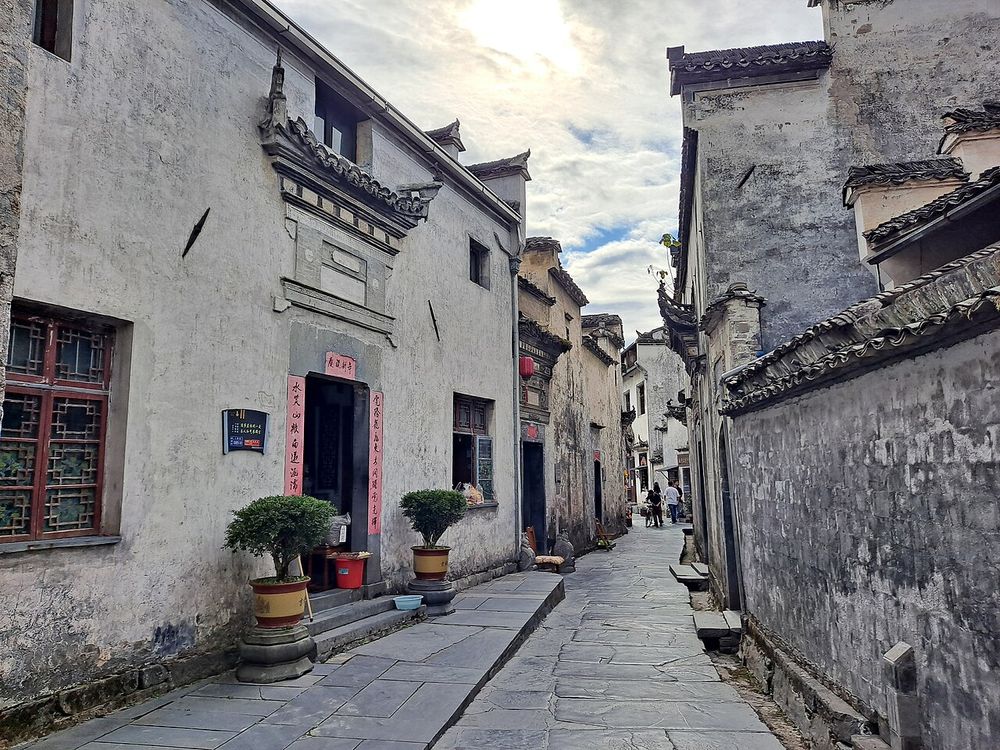
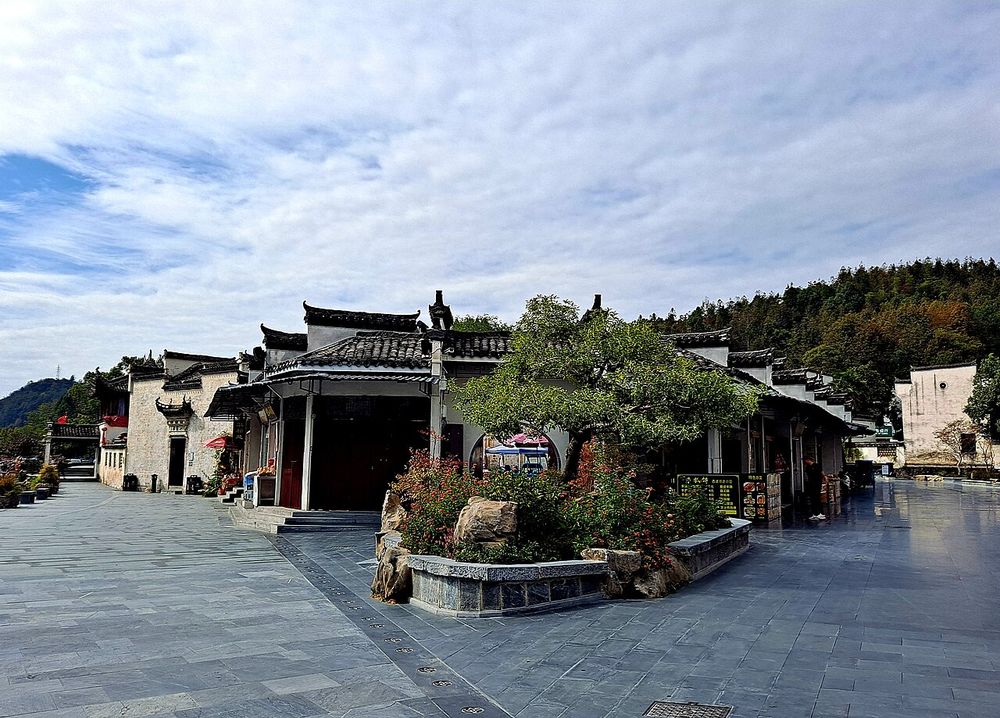
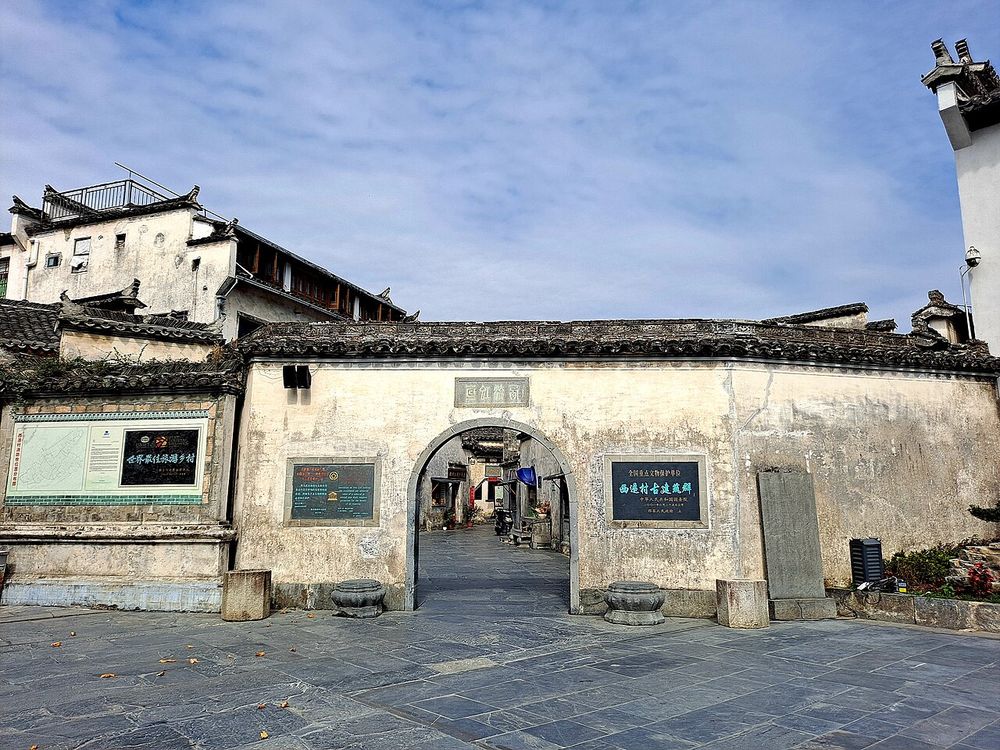
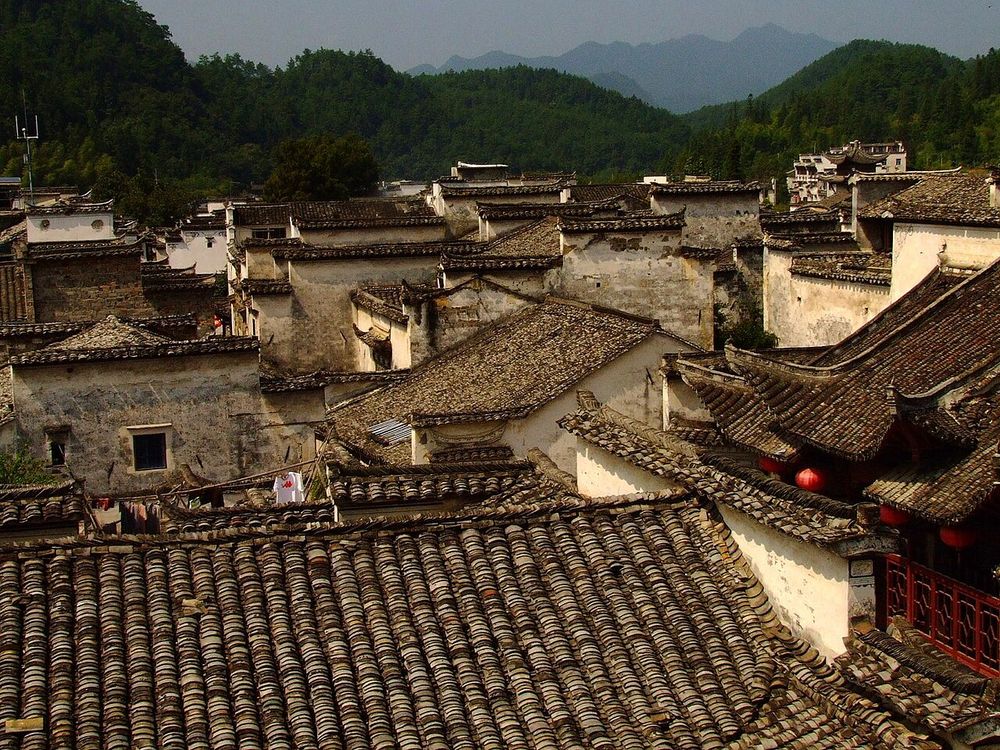
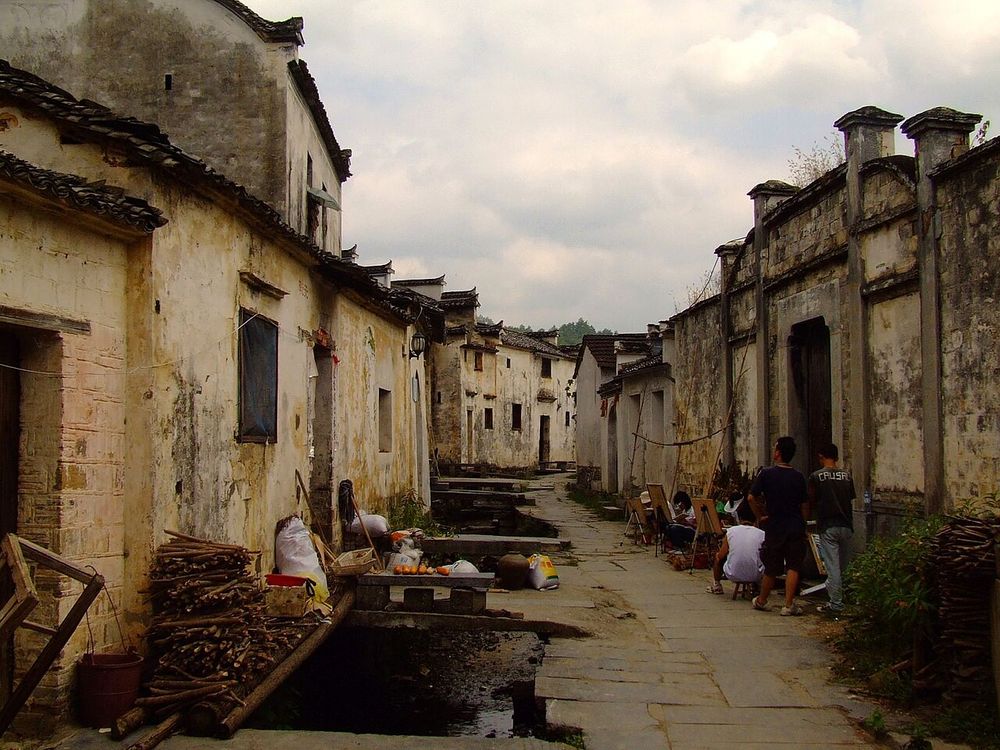
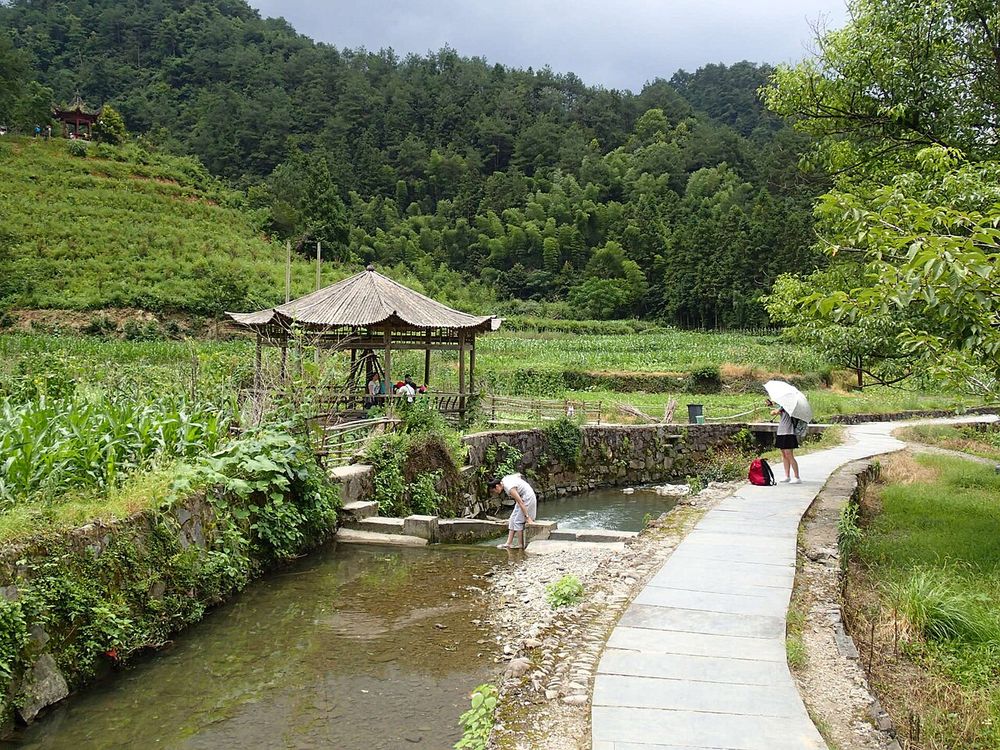
A village of the Hu clan in the hills of southern Anhui, where more than a hundred Ming and Qing houses stand along narrow stone lanes and streams. It grew rich on the trade of its merchants, who built a stone archway at the entrance, ancestral halls in the centre and, at home, carved halls hung with couplets about study and good conduct.
Photo: Zhangzhugang, CC BY-SA 4.0, Wikimedia Commons
The story
The Hu of Xidi trace their line to a son of the last Tang emperor, said to have been smuggled out as a baby and raised under the name Hu; the family settled here in the 11th century. The village took its name from the streams that flow west through it, and from an old post station.
Its great age came in the Qing (1644–1912), when Xidi men traded salt and ran pawnshops across the lower Yangzi. Over a hundred houses of that time survive, many lived in today. With Hongcun, twenty minutes away, it became a World Heritage Site in 2000.
What is here
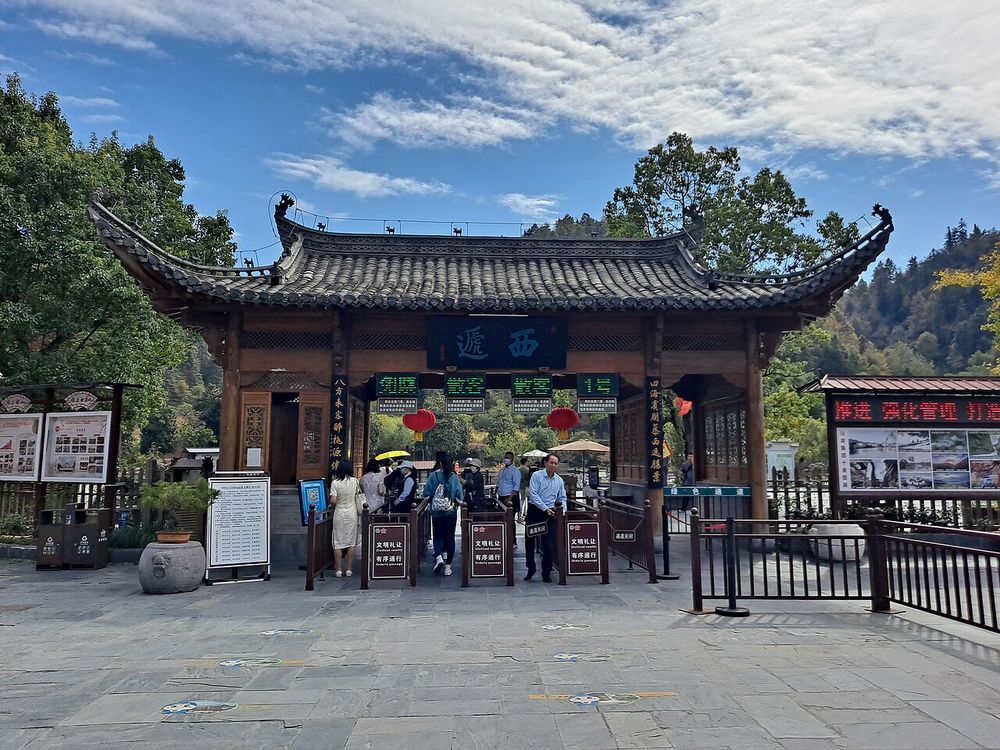
One ticket covers the village and its open houses.
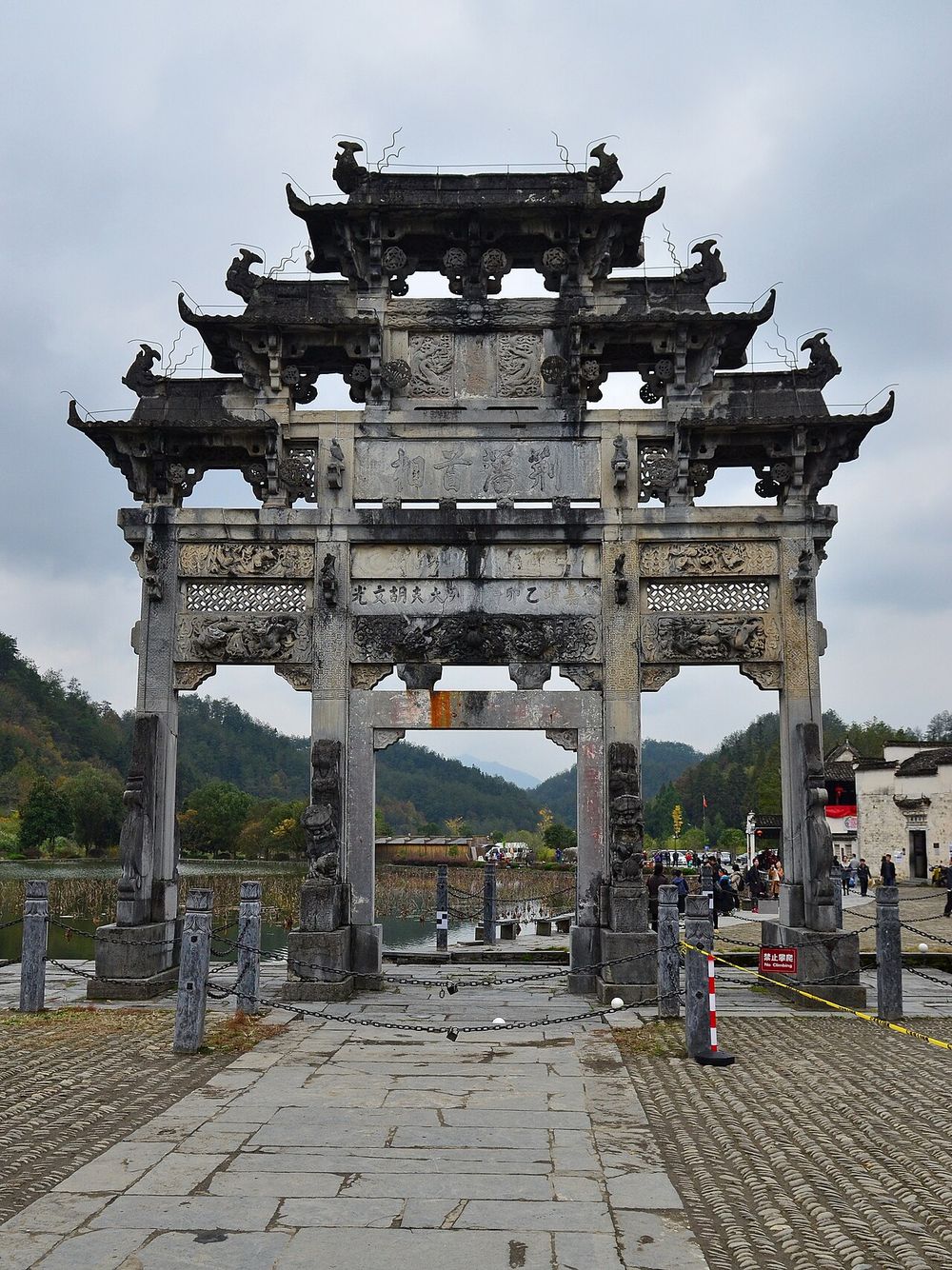
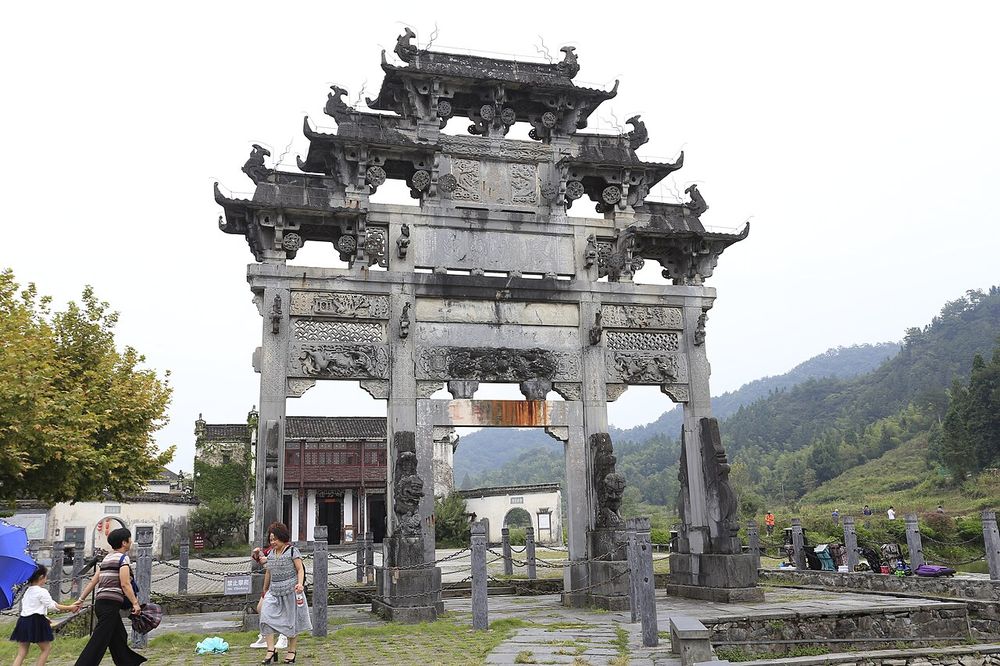
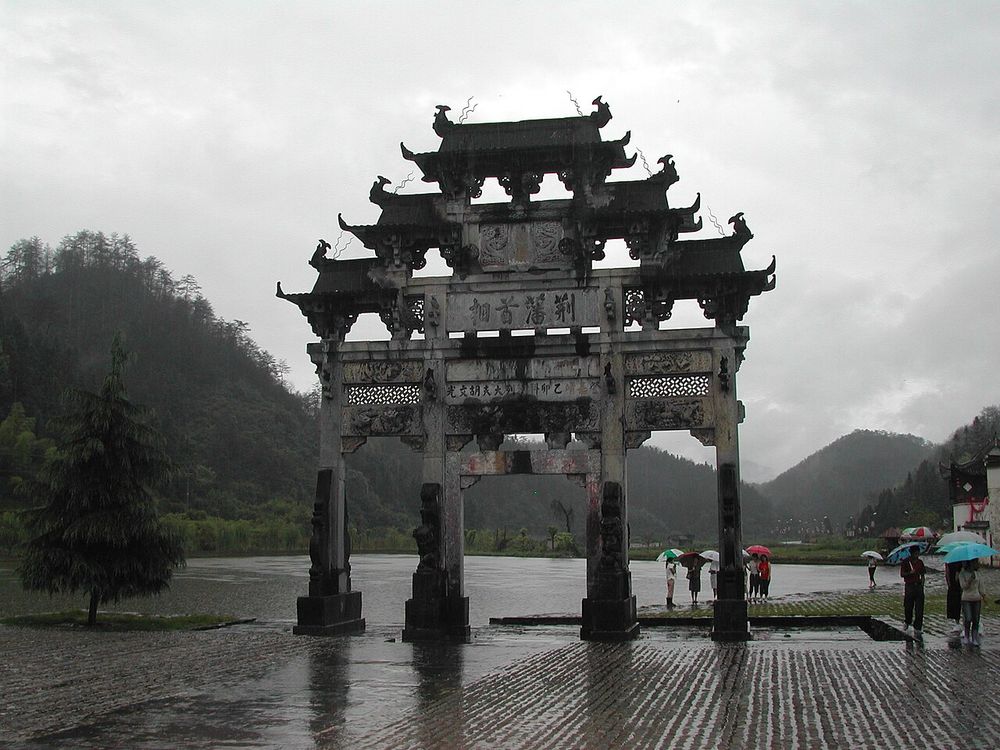
At the entrance stands a stone archway of 1578, three bays wide and over twelve metres high, put up by imperial permission to honour Hu Wenguang, a local man who served as a prefectural governor. Look up at the carvings: lions, cranes, deer and the Eight Immortals, cut in grey stone.
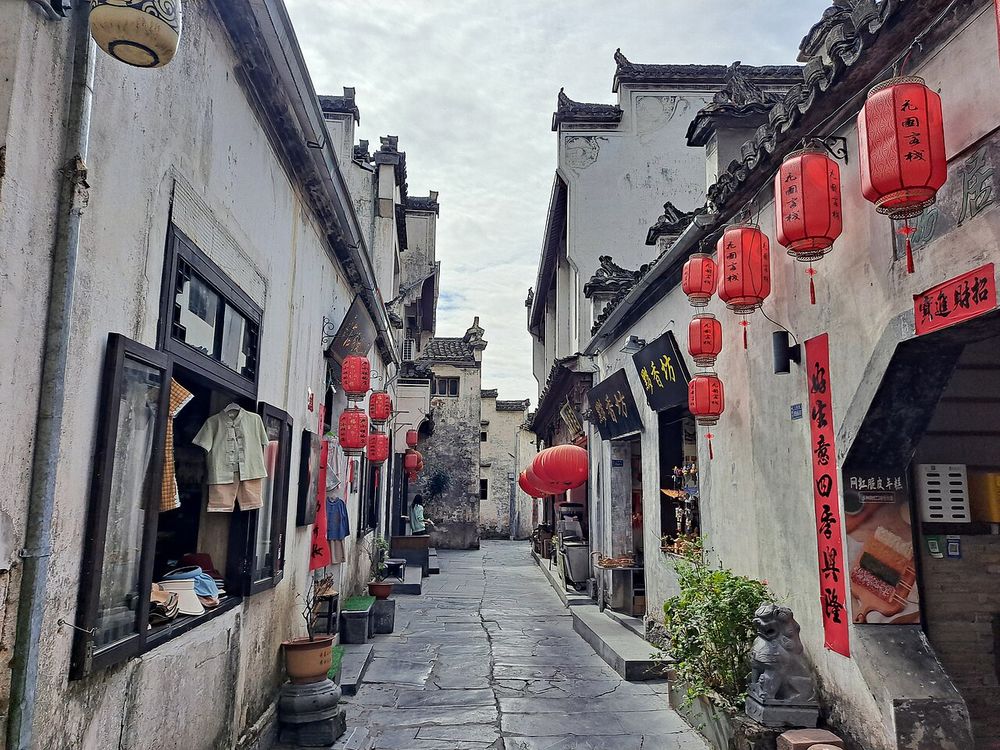
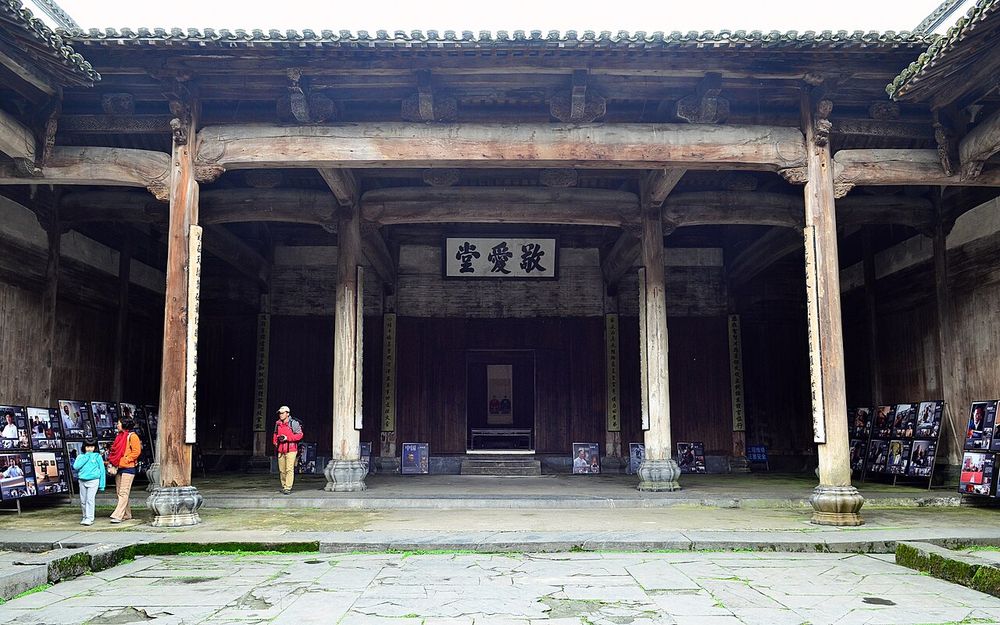
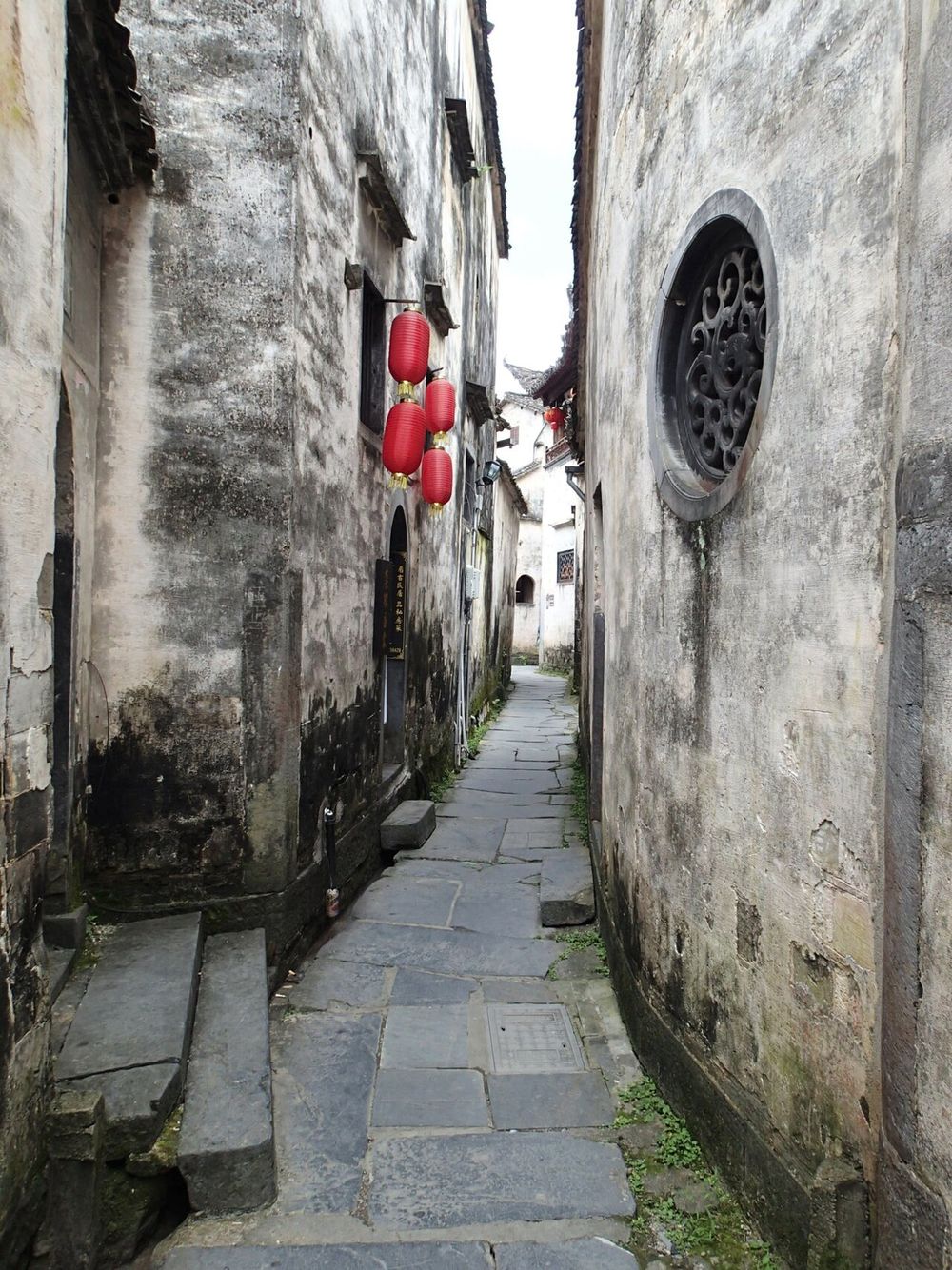
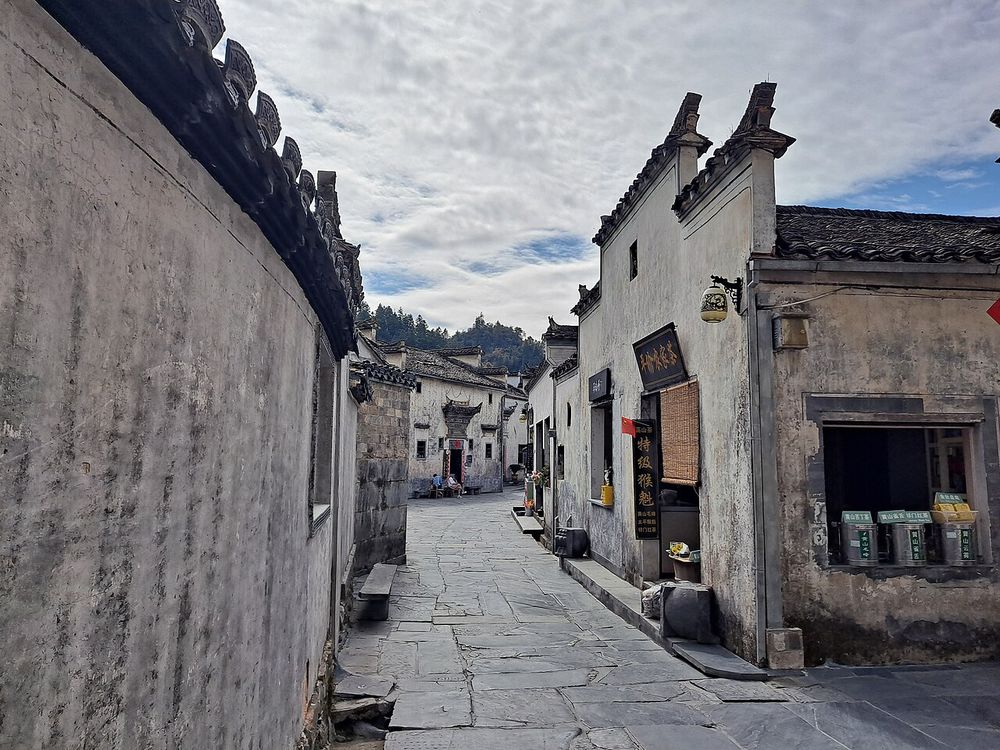
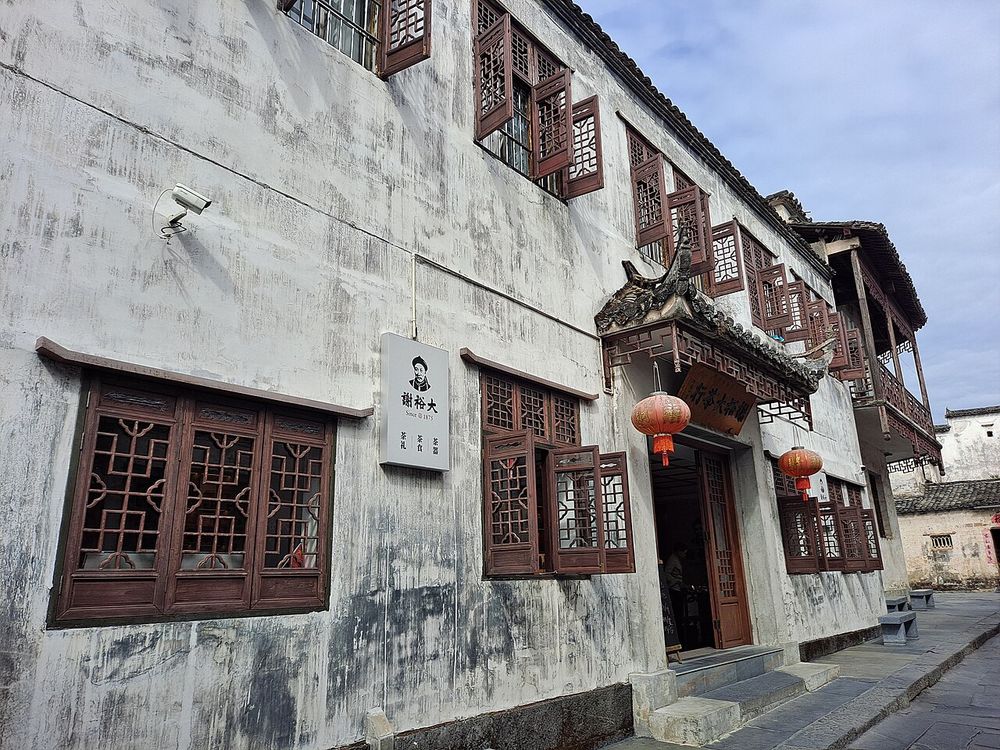
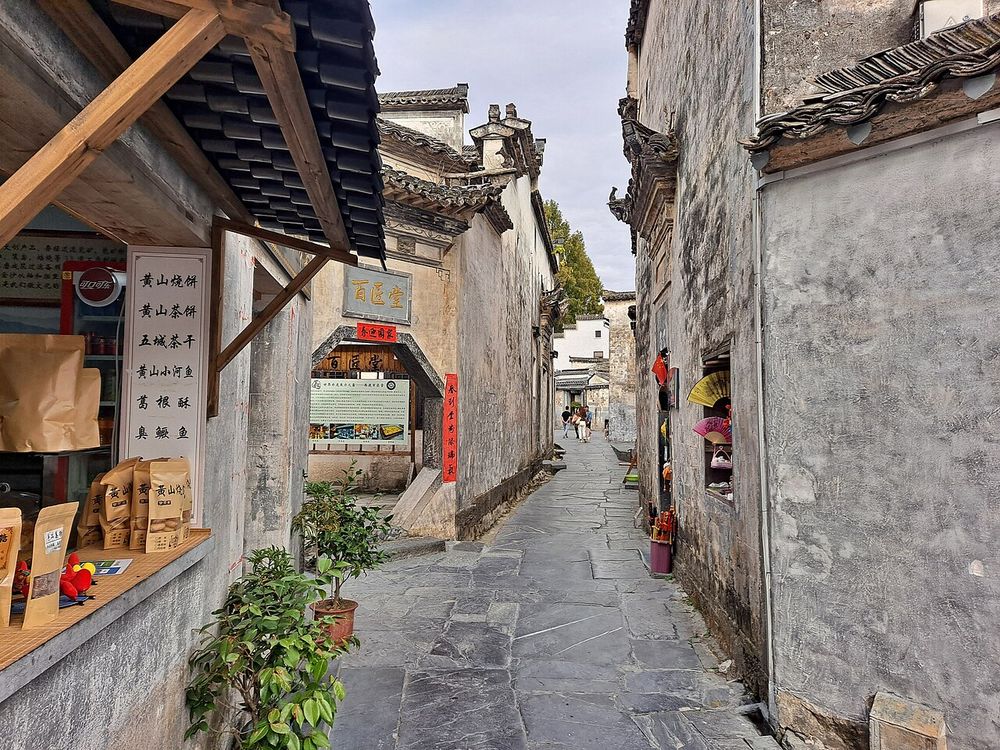
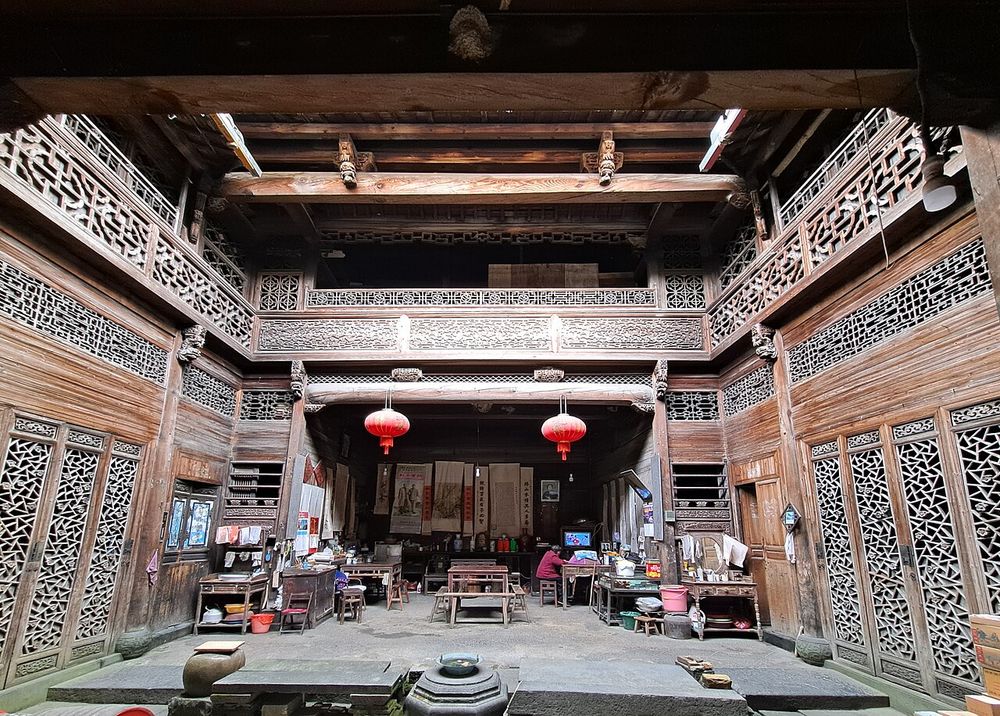
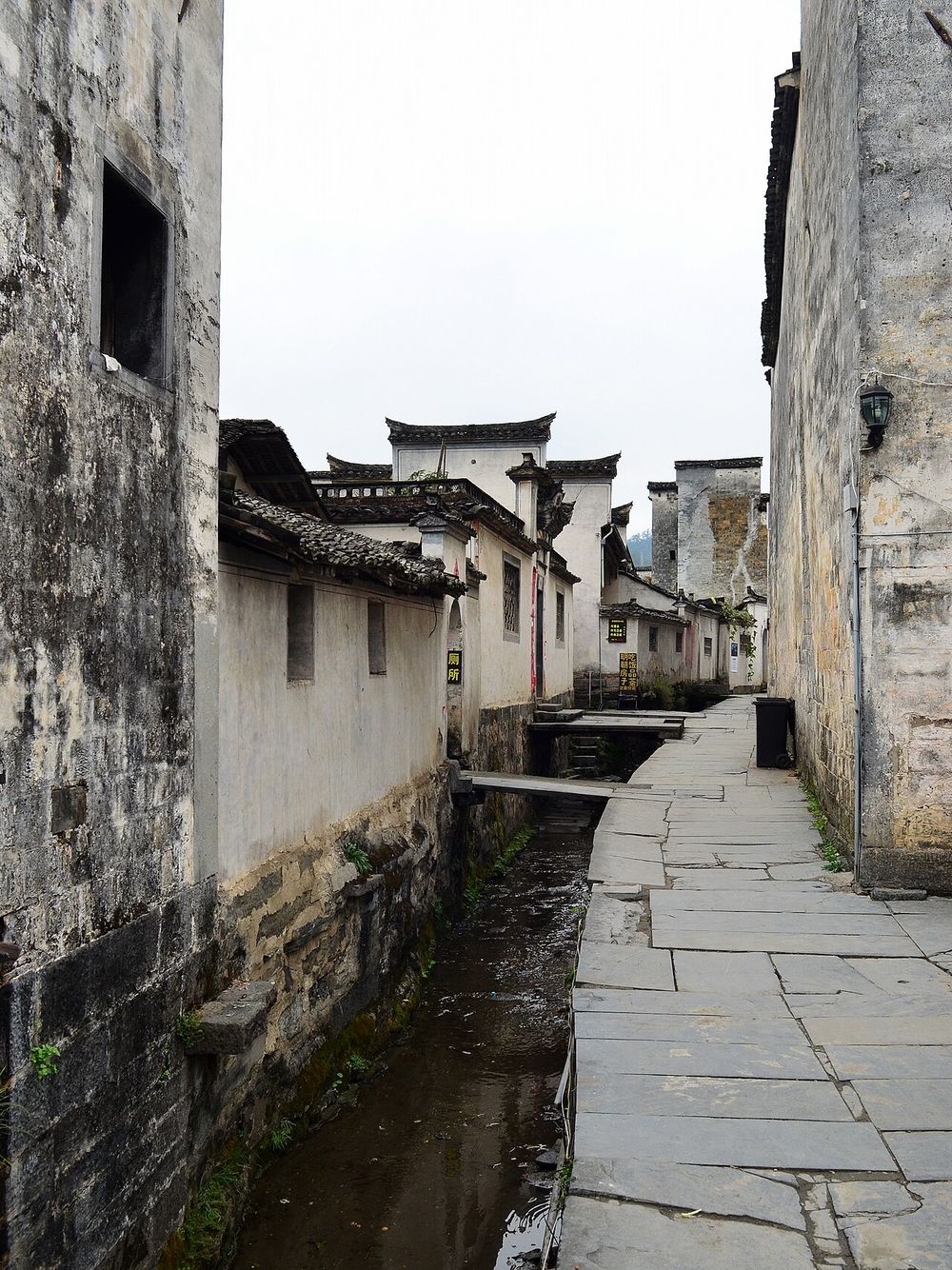
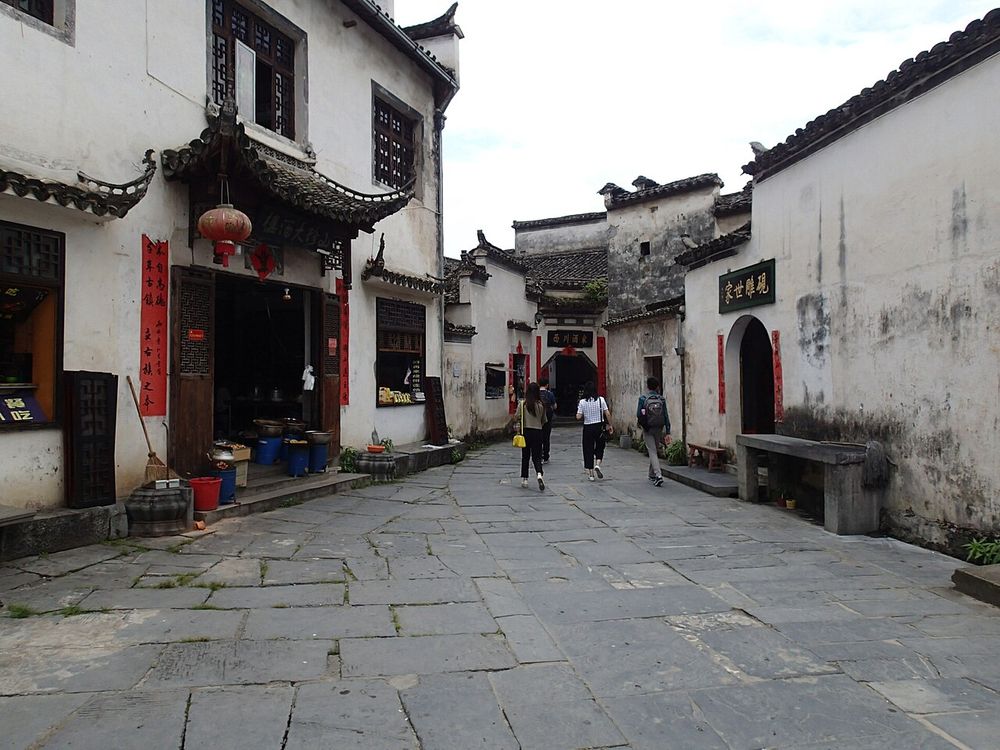
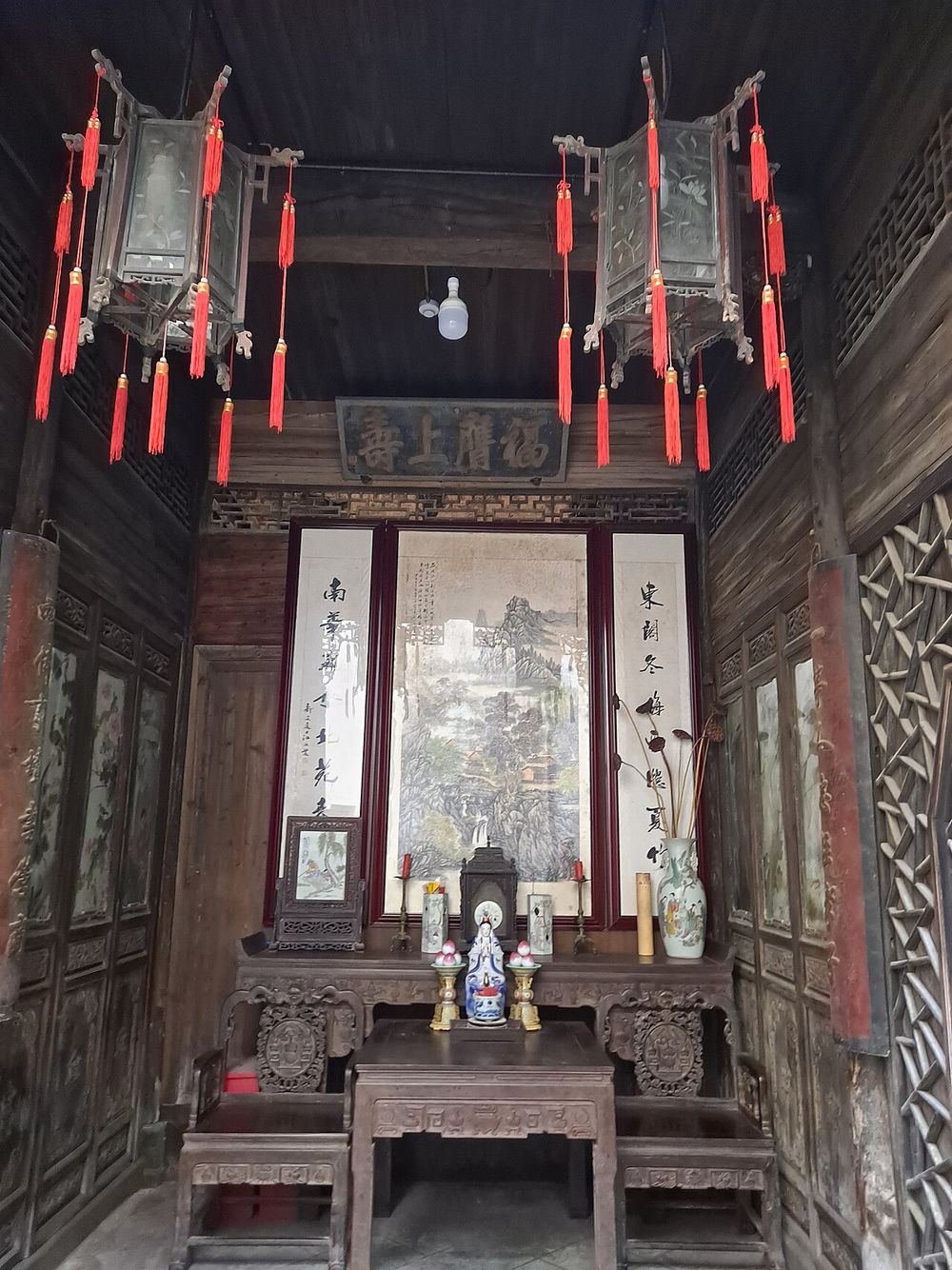
Then walk into the lanes. High white walls with small windows hide the houses; inside, light falls into a narrow courtyard, and the halls are hung with couplets: "Study is good, trade is good, doing good is best of all; building a fortune is hard, keeping it is harder, and knowing that is not hard at all."
A lane with red lanterns, 2022EditQ, CC BY-SA 4.0
Things people often get wrong
"Xidi and Hongcun are the same." They are two villages of different clans, with different plans: Hongcun is built round water, Xidi round lanes and halls.
"The archways praise widows." Many Huizhou archways do, but this one honours an official's career.
People who stood here
We searched Chinese sources first for this list, then English ones.
Hu Wenguang (official, 16th century)A village son who rose to govern a prefecture; the archway of 1578 at the entrance honours him.
Hu Guansan (merchant, 18th–19th century)Said to have been the richest man in Huizhou, he owned dozens of pawnshops and built several of the village's finest houses.
Go deeper: from the archway through the lanes, five stops6 stops · about 1 min to read
The village is a maze of lanes; allow two hours, and pick up a map at the gate.
1. The Hu Wenguang archway
The archway from the front, 2014颐园新居, CC BY-SA 4.0
The only archway left of the thirteen that once stood here, the others destroyed in the 20th century.
2. The Jing'ai Hall
The Jing'ai Hall, 2022EditQ, CC BY-SA 4.0
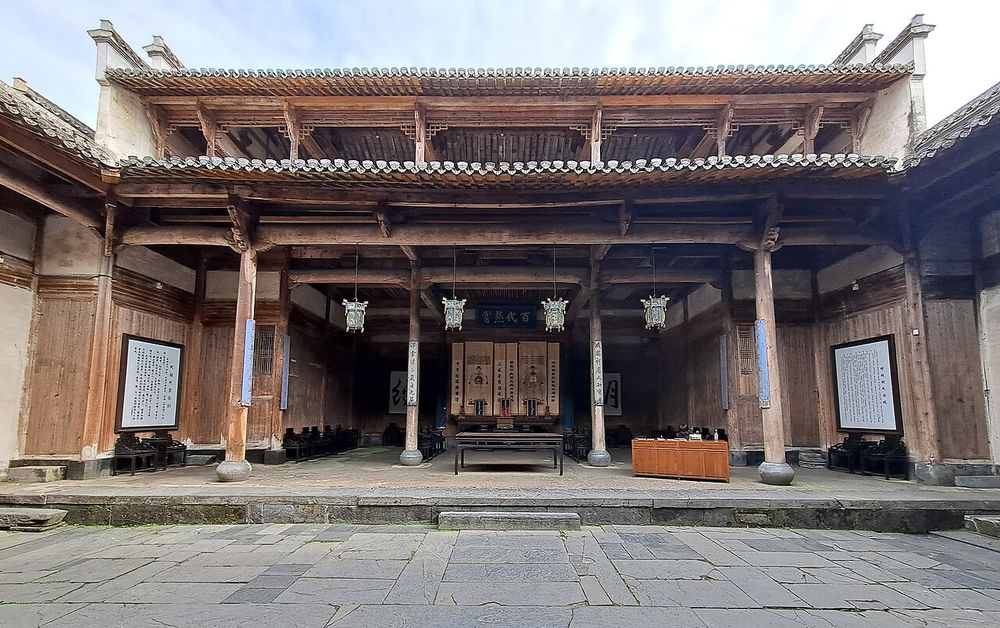
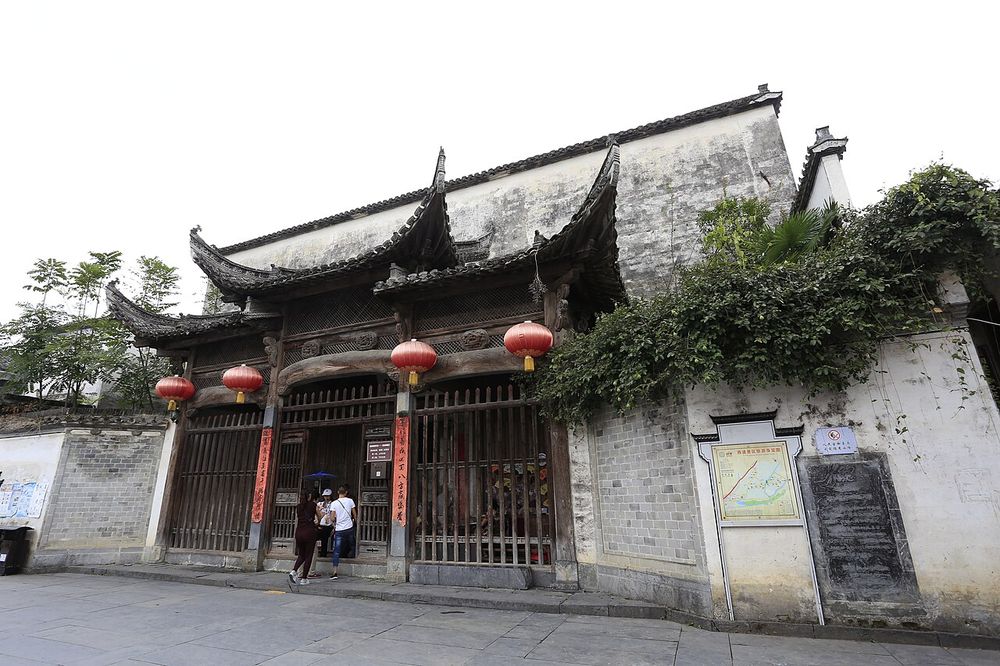
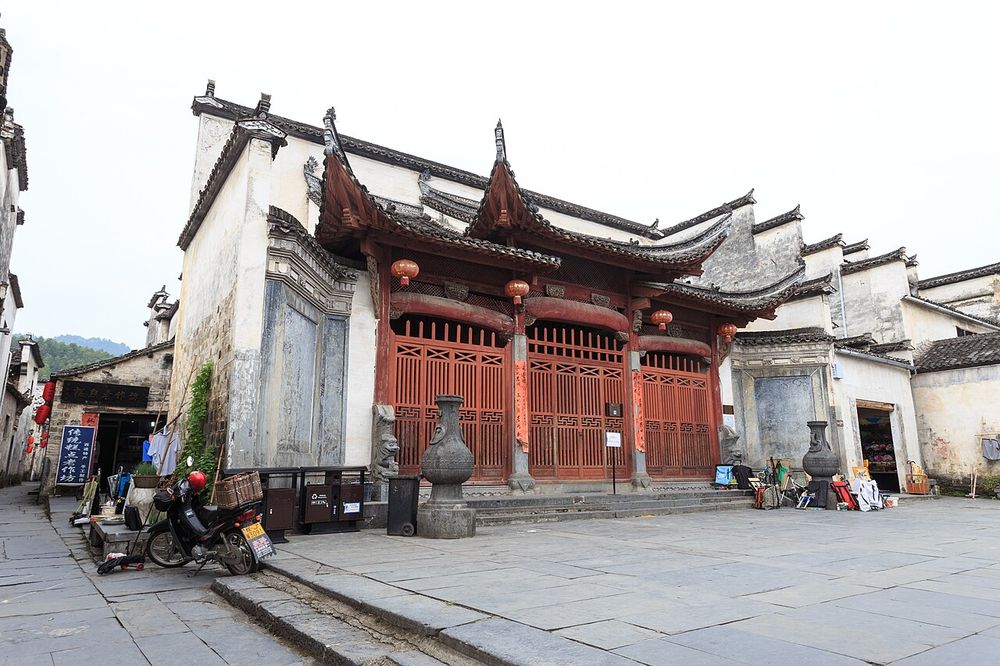
The clan's great ancestral hall, where the Hu met for rites and to settle disputes.
Inside the Jing'ai Hall, 2014颐园新居, CC BY-SA 4.0
3. The Zhuimu Hall
The Zhuimu Hall, 2022EditQ, CC BY-SA 4.0
A hall built in memory of the family's imperial ancestor, the Tang prince.
4. The houses and lanes
Plants by a doorway, 2022EditQ, CC BY-SA 4.0
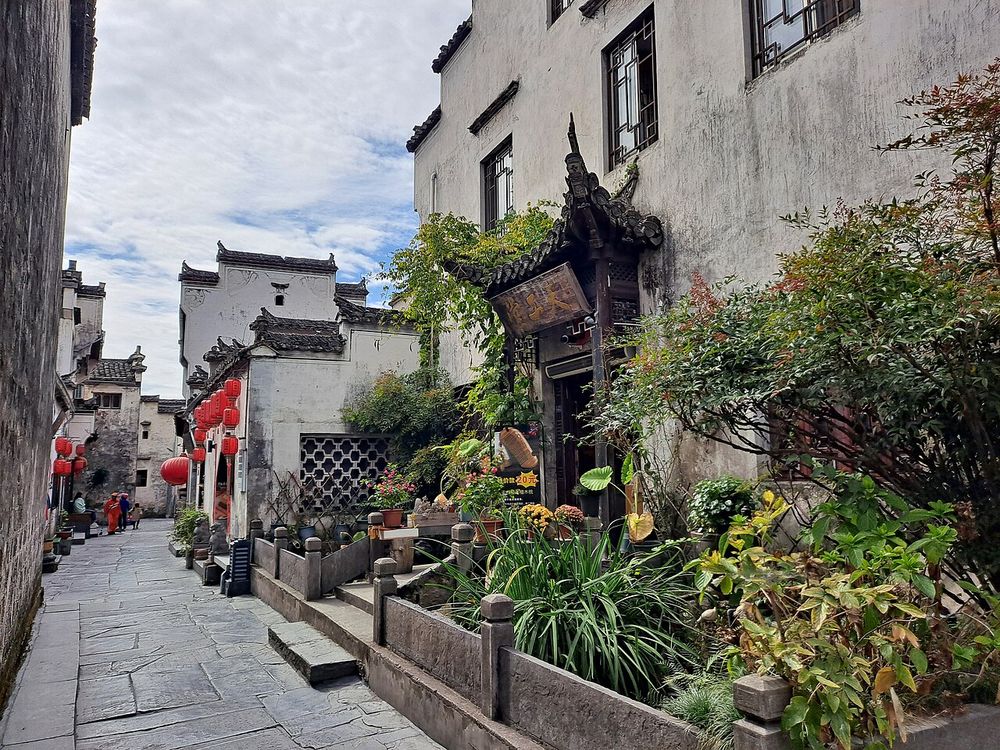
Look for the house with a small upstairs pavilion and a doorway carved "a home in the peach-blossom land", and for horse-head gables stepping along the roofs.
A lane with a round windowRaki_Man, CC BY 3.0
5. The East Garden
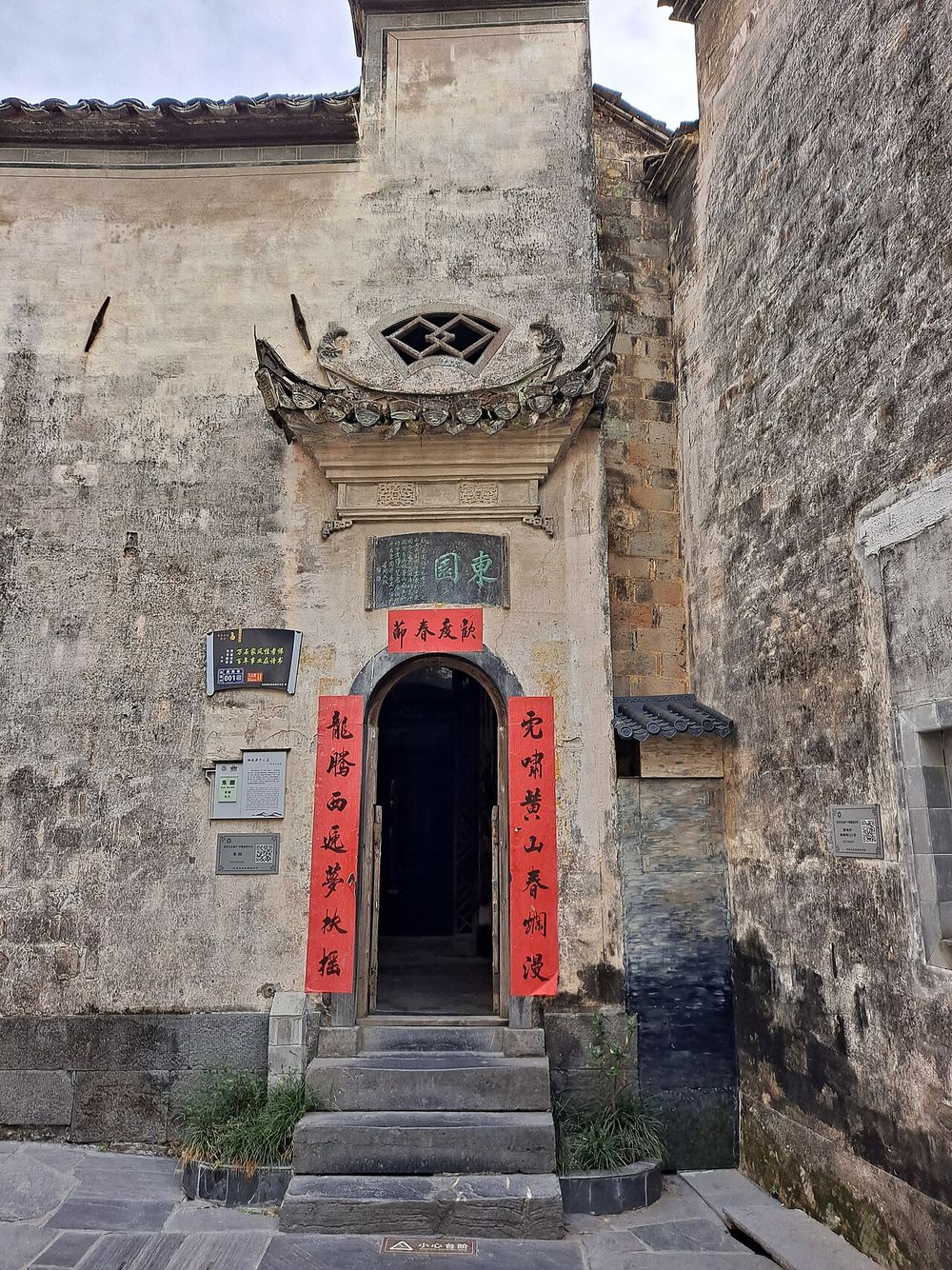
The doorway of the East Garden, 2022EditQ, CC BY-SA 4.0
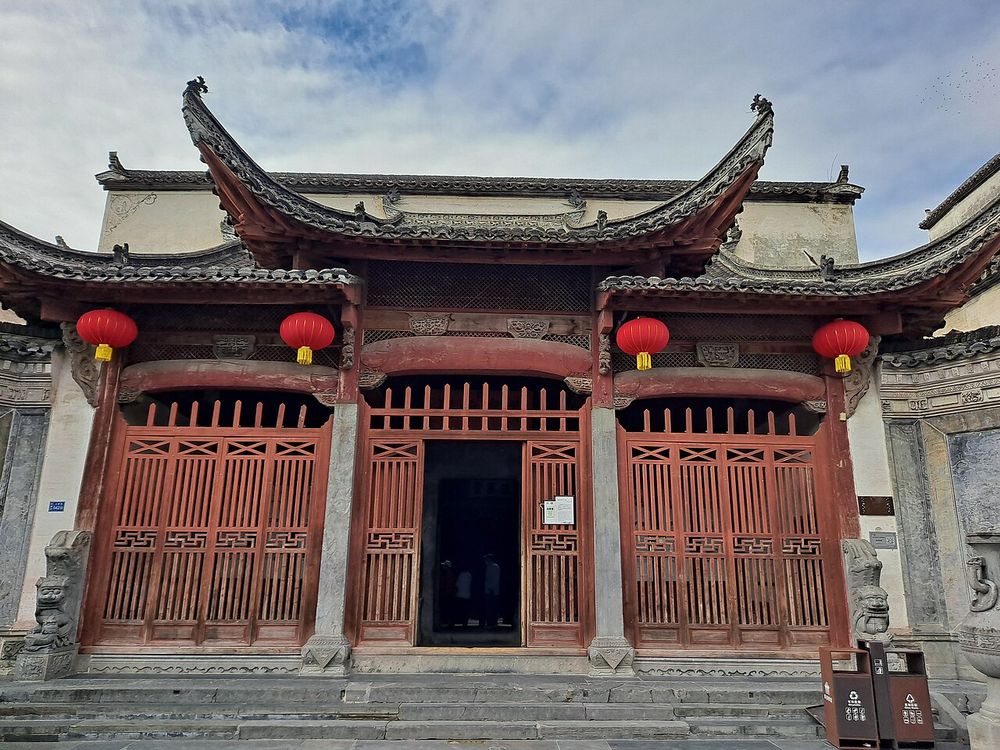
A small garden house with a fine carved doorway, one of the private gardens of the village's merchants.
The village and the same years elsewhere
The archway was raised in 1578; that summer King Sebastian of Portugal died in battle in Morocco, at Alcácer Quibir.
Meanwhile in the world
Year
Here
Elsewhere
1047
The Hu family settles at Xidi
William of Normandy wins the battle of Val-ès-Dunes
1578
The Hu Wenguang archway is raised
King Sebastian of Portugal dies at Alcácer Quibir
2000
Listed as a World Heritage Site with Hongcun
Tate Modern opens in London
One line to remember: a merchant clan's village, with a stone archway at the gate and wise words on every wall.
Archway, halls and lanes
Panorama of Xidi, 2016Zhangzhugang, CC BY-SA 4.0, Wikimedia CommonsThe Hu Wenguang archway, 2022EditQ, CC BY-SA 4.0, Wikimedia CommonsThe archway from the front, 2014颐园新居, CC BY-SA 4.0, Wikimedia CommonsThe archway and the square, 2016Zhangzhugang, CC BY-SA 4.0, Wikimedia CommonsThe archway in the rainFrancesco Bandarin, CC BY-SA 3.0 igo, Wikimedia CommonsThe village gate, 2022EditQ, CC BY-SA 4.0, Wikimedia CommonsThe square before the village, 2022EditQ, CC BY-SA 4.0, Wikimedia CommonsA carved stone doorway, 2022EditQ, CC BY-SA 4.0, Wikimedia CommonsA lane between high walls, 2022EditQ, CC BY-SA 4.0, Wikimedia CommonsLattice windows on a house front, 2022EditQ, CC BY-SA 4.0, Wikimedia CommonsA lane with red lanterns, 2022EditQ, CC BY-SA 4.0, Wikimedia CommonsPlants by a doorway, 2022EditQ, CC BY-SA 4.0, Wikimedia CommonsWeathered walls, 2022EditQ, CC BY-SA 4.0, Wikimedia CommonsA tall house front, 2022EditQ, CC BY-SA 4.0, Wikimedia CommonsA narrow lane, 2022EditQ, CC BY-SA 4.0, Wikimedia CommonsA crossroads of lanes, 2022EditQ, CC BY-SA 4.0, Wikimedia CommonsShops in a lane, 2022EditQ, CC BY-SA 4.0, Wikimedia CommonsA small square with a potted tree, 2022EditQ, CC BY-SA 4.0, Wikimedia CommonsA gate with a round door, 2022EditQ, CC BY-SA 4.0, Wikimedia CommonsInside a carved hall, 2022EditQ, CC BY-SA 4.0, Wikimedia CommonsA lane beside a stream, 2014颐园新居, CC BY-SA 4.0, Wikimedia CommonsRoofs of the village, 2009Anna Frodesiak, Public domain, Wikimedia CommonsA lane in the afternoon, 2009Anna Frodesiak, Public domain, Wikimedia CommonsA street of white housesRaki_Man, CC BY 3.0, Wikimedia CommonsA lane with a round windowRaki_Man, CC BY 3.0, Wikimedia CommonsFields outside the villageRaki_Man, CC BY 3.0, Wikimedia CommonsThe Jing'ai Hall, 2022EditQ, CC BY-SA 4.0, Wikimedia CommonsThe front of an ancestral hall, 2016Zhangzhugang, CC BY-SA 4.0, Wikimedia CommonsInside the Jing'ai Hall, 2014颐园新居, CC BY-SA 4.0, Wikimedia CommonsThe Zhuimu Hall, 2022EditQ, CC BY-SA 4.0, Wikimedia CommonsThe Zhuimu Hall from the lane, 2016Zhangzhugang, CC BY-SA 4.0, Wikimedia CommonsA room in the East Garden, 2022EditQ, CC BY-SA 4.0, Wikimedia CommonsThe doorway of the East Garden, 2022EditQ, CC BY-SA 4.0, Wikimedia Commons
Local legends
These are stories people tell about this place. They are legends, not history, and each one says where it comes from.
LegendThe prince who became a Hu
When the Tang fell, a baby son of Emperor Zhaozong was carried out of the palace by a loyal man named Hu, who raised him as his own; the Hu of Xidi descend from him, and call themselves the "Ming-jing Hu".
Source: From the Hu family genealogy
Later, people who live here will be able to add the stories they grew up with, and say which of these they have heard.
Not certain, and where accounts conflict
Is the imperial descent true?
The story is recorded in the clan genealogy, compiled centuries later; historians treat it as family tradition.
Visiting
Tickets and hours
104 yuan; the open houses keep daytime hours.
The village is lit at night and lived in at all hours.
Last checked 2026-11-12. Ticket price from Ctrip (2026); we did not find official 2026 opening hours, so none are given.
Booking without WeChat
Official page in English Tickets are sold at the village gate and online.
International booking platform Ctrip (Trip.com) sells tickets for Xidi.
Note Foreign visitors buy with a passport.
Checked 2026-11-12
Where to start
Start at the archway, then the Jing'ai Hall, then lose yourself in the lanes.
Climb the hill behind the village for the view over its roofs.
Before you go
Xidi is twenty minutes by road from Hongcun and about an hour from Huangshan North station.
The lanes are uneven stone; wear good shoes.
Customs and manners
Many houses are homes: knock before entering, and pay if a family asks a small fee to see their hall.
Speak quietly in the ancestral halls.
Opening hours are given in the local time of the place. Prices are in the local currency. The figure after ≈ is approximate, at exchange rates checked on 9 November 2026, in .
Look for these
On the archway, find the lions climbing the pillars.
In a hall, find the clock between a vase and a mirror: "zhong", "ping" and "jing" sound like "all your life peace and quiet".
On the roofs, count the steps of a horse-head gable.
I am here
Stand at the site, sign in, press the button, and collect its stamp. Your browser will ask to use your location. It is sent to us once to confirm that you are at the site; we keep how far you were from it, not the spot where you stood.
Your stamps are saved to your account, so they follow you to any device. Checking from a browser cannot rule out every false location; stricter checks arrive with the app.
Messages
Share your photos
Photos here show the place, not people. Each one is credited to the visitor who took it and appears after our team has looked at it. A photo with you in it belongs under “I am here”.