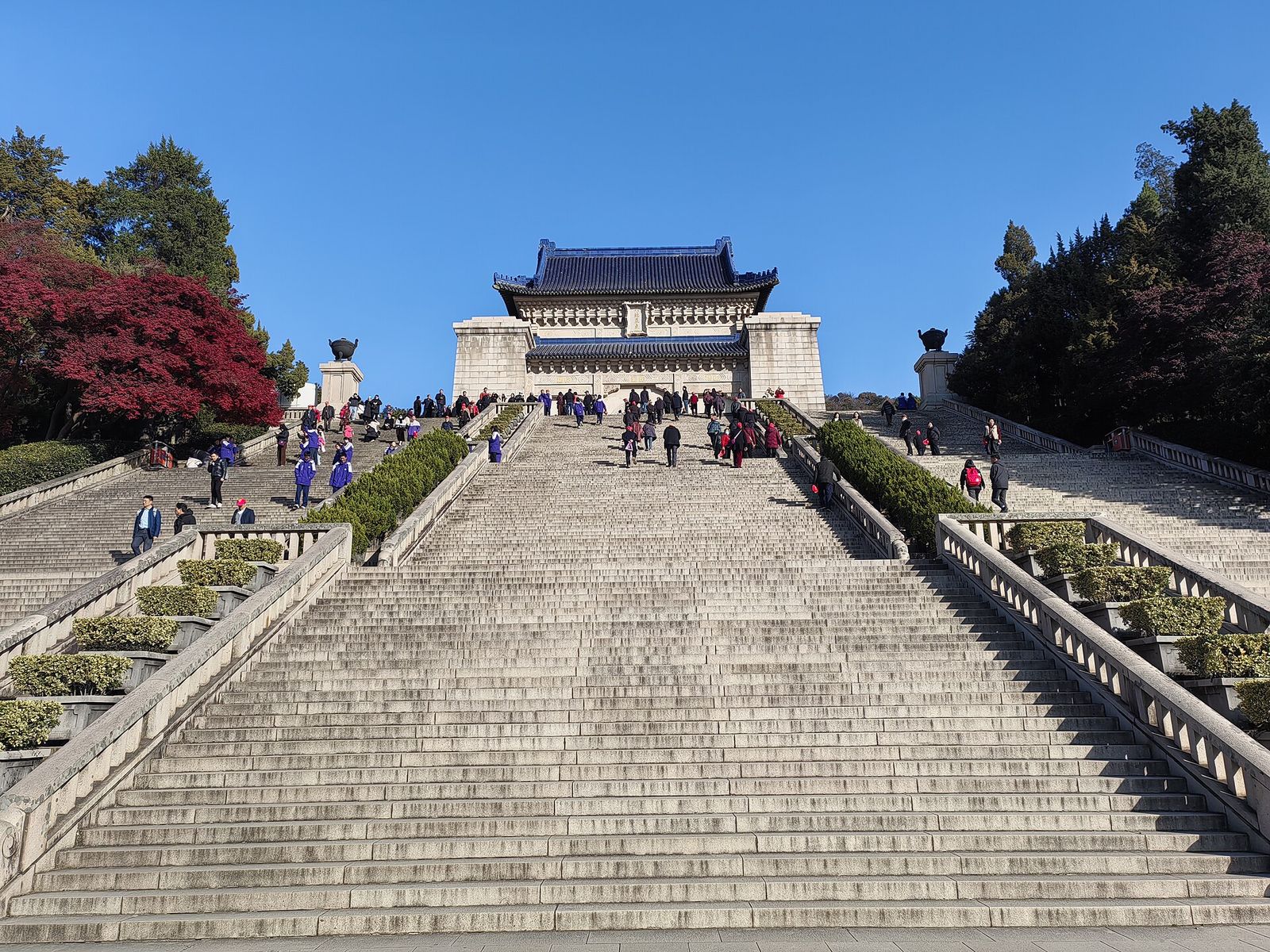
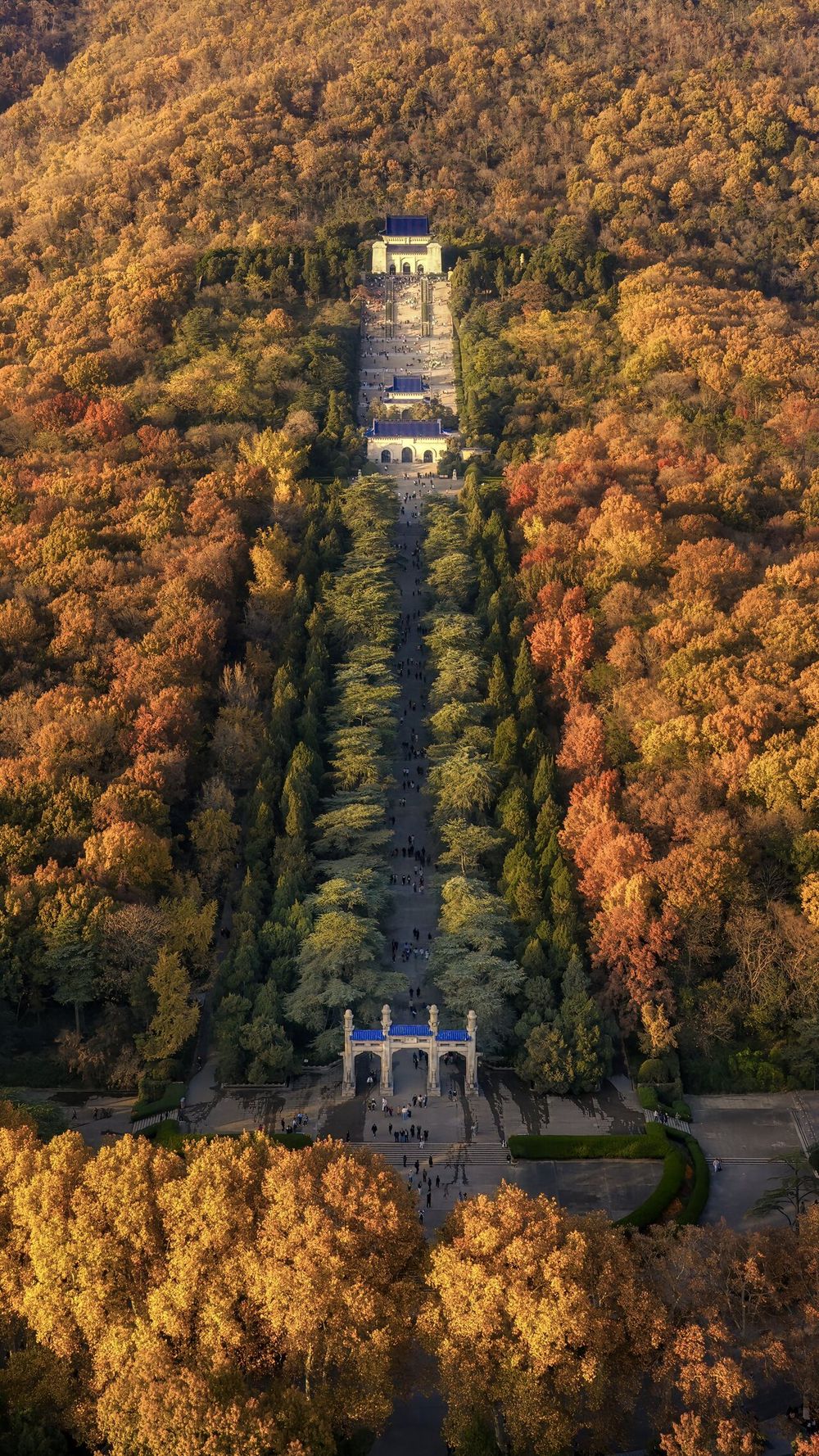
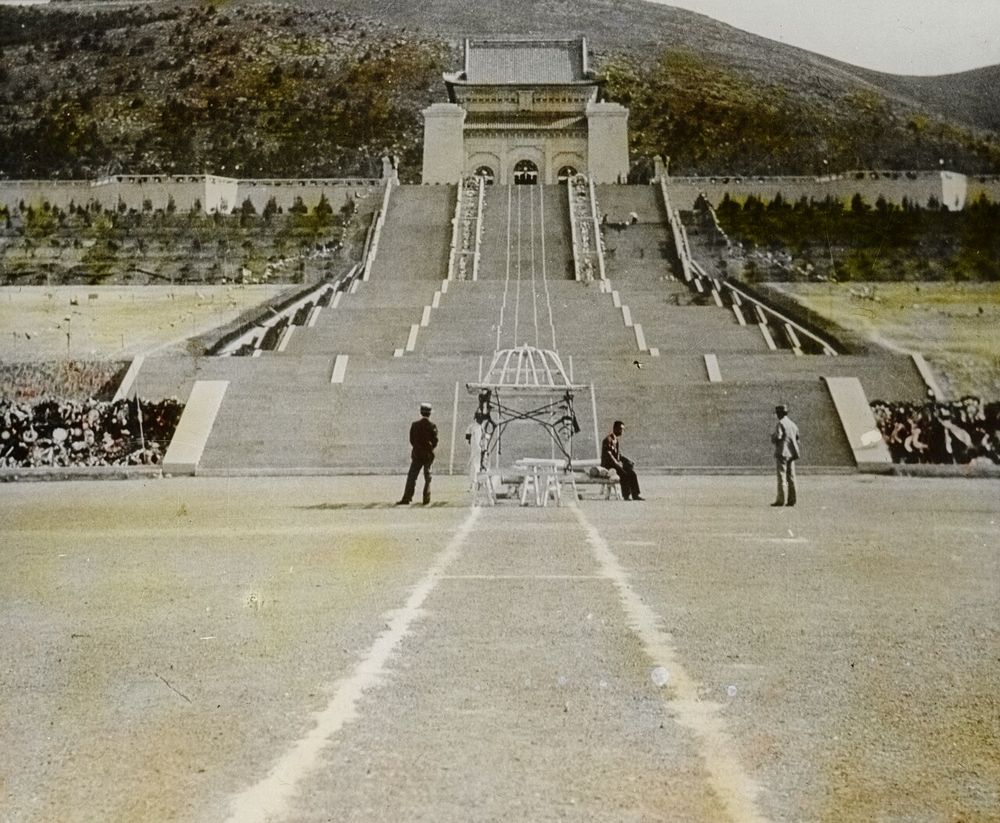
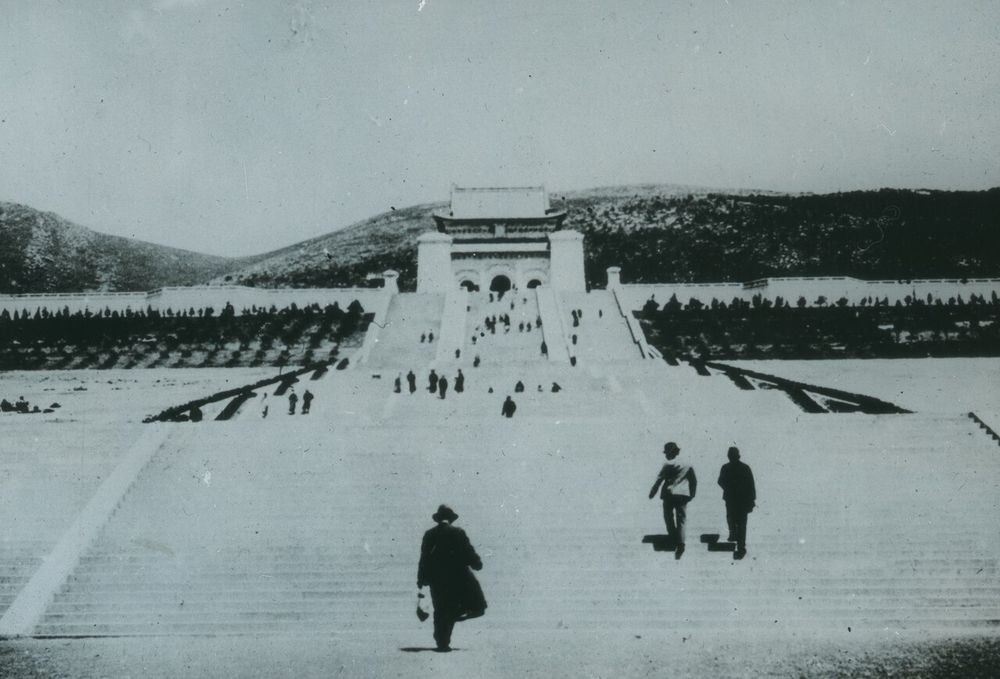
On the slope of Purple Mountain east of Nanjing, a white stairway of 392 steps climbs through the pines to the tomb of Sun Yat-sen, who led the revolution that ended two thousand years of imperial rule. Designed by a young architect in 1925 and finished in 1929, it mixes Chinese forms with modern materials, and is honoured on both sides of the Taiwan Strait.
Photo: Yumeto, CC BY-SA 4.0, Wikimedia Commons
The story
Sun Yat-sen, a doctor from Guangdong, spent years abroad raising money for revolution against the Qing (1644–1912). After the uprising of 1911 he was proclaimed provisional president of the new Republic of China in Nanjing in January 1912. He died in Beijing on 12 March 1925, asking to be buried on Purple Mountain, where he had once gone hunting.
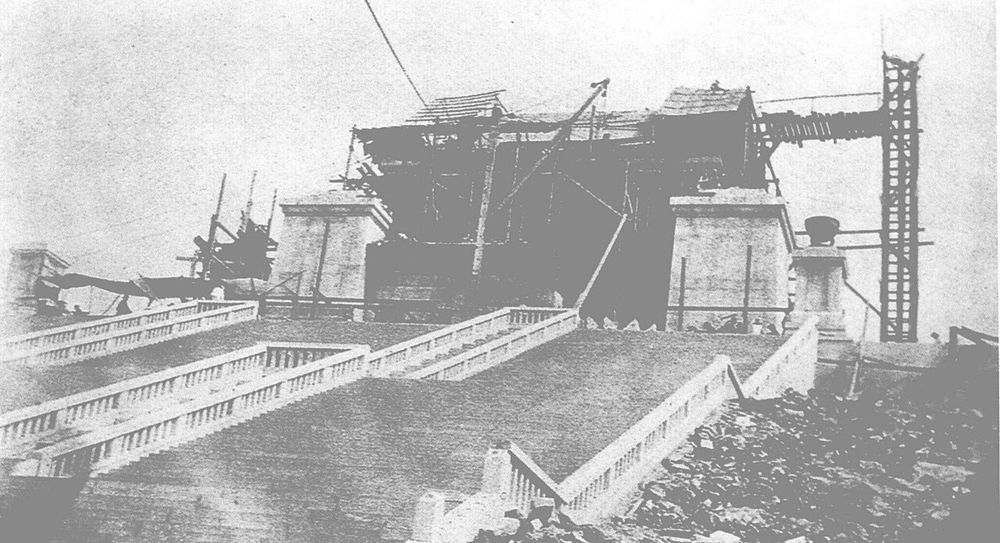
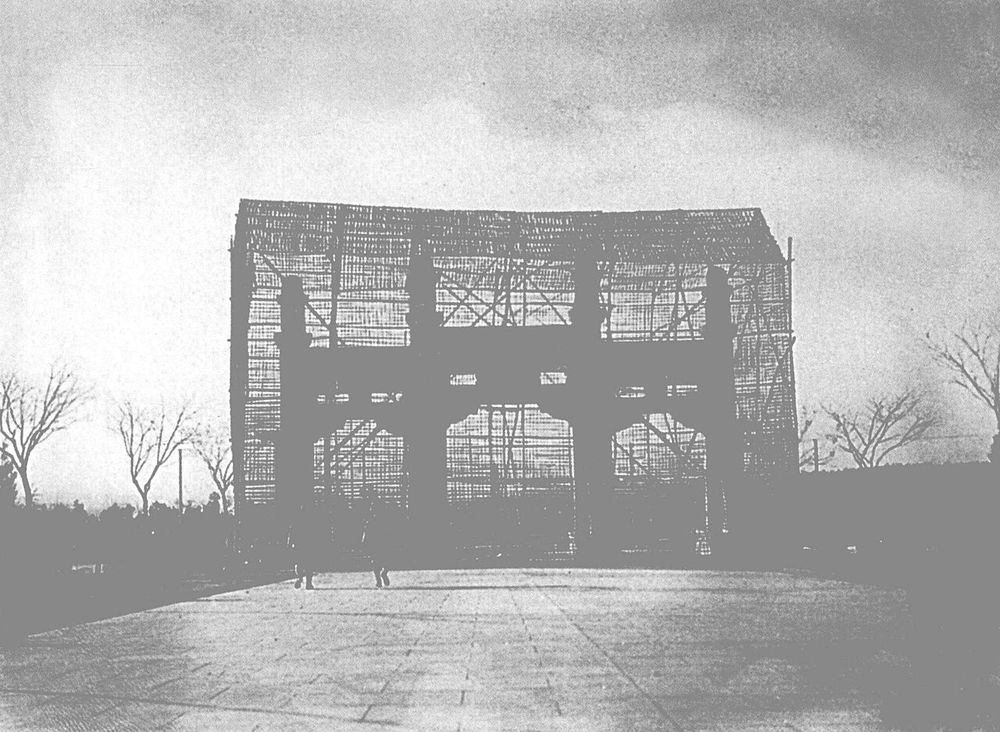
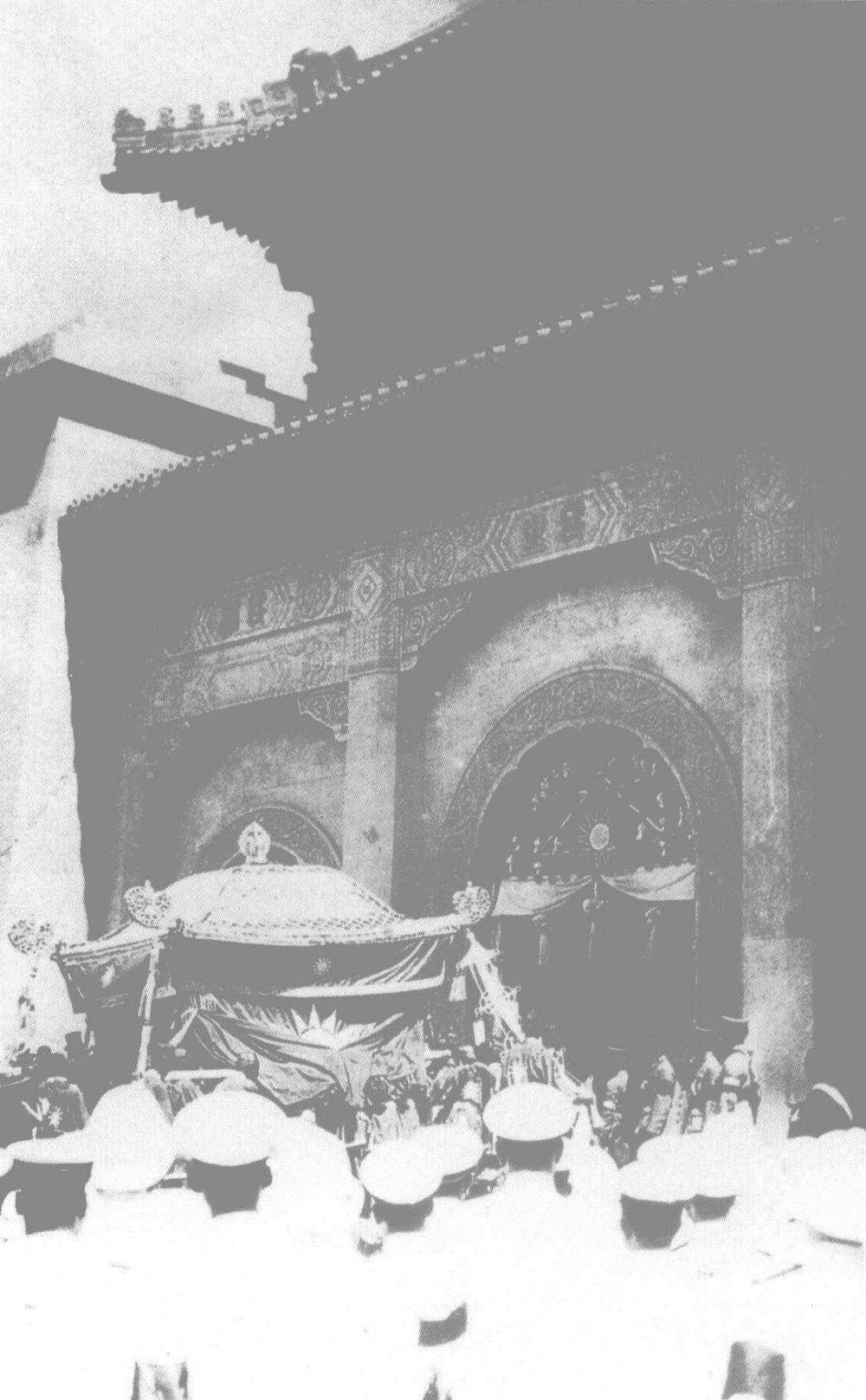
A design competition was won by the 31-year-old architect Lü Yanzhi, whose plan, seen from above, has the shape of a bell, a call to wake the nation. The tomb was built from 1926 to 1929, and on 1 June 1929 Sun's coffin was brought from Beijing and laid here in a state funeral.
What is here
The mausoleum itself is free but must be booked; other sights of Purple Mountain charge separately or on a combined ticket.
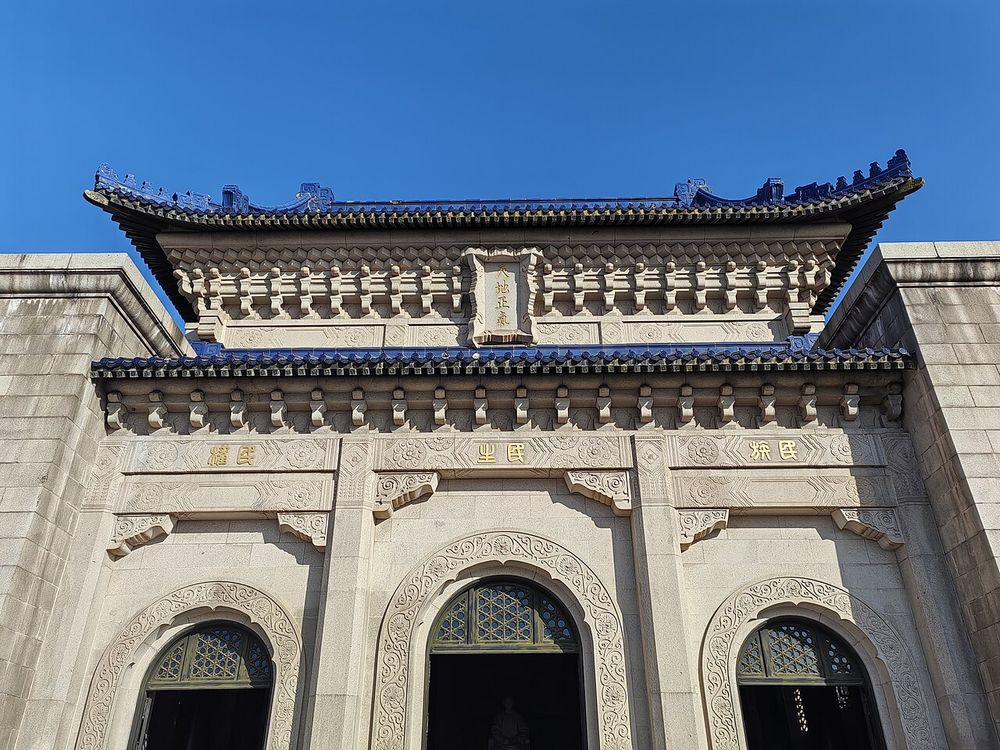
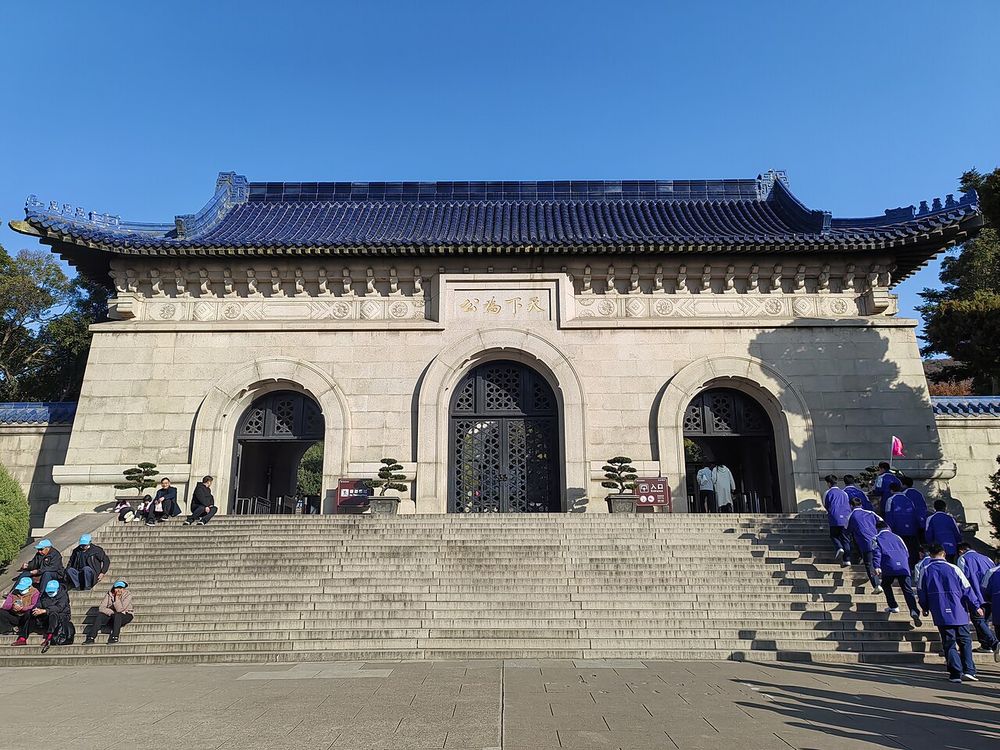
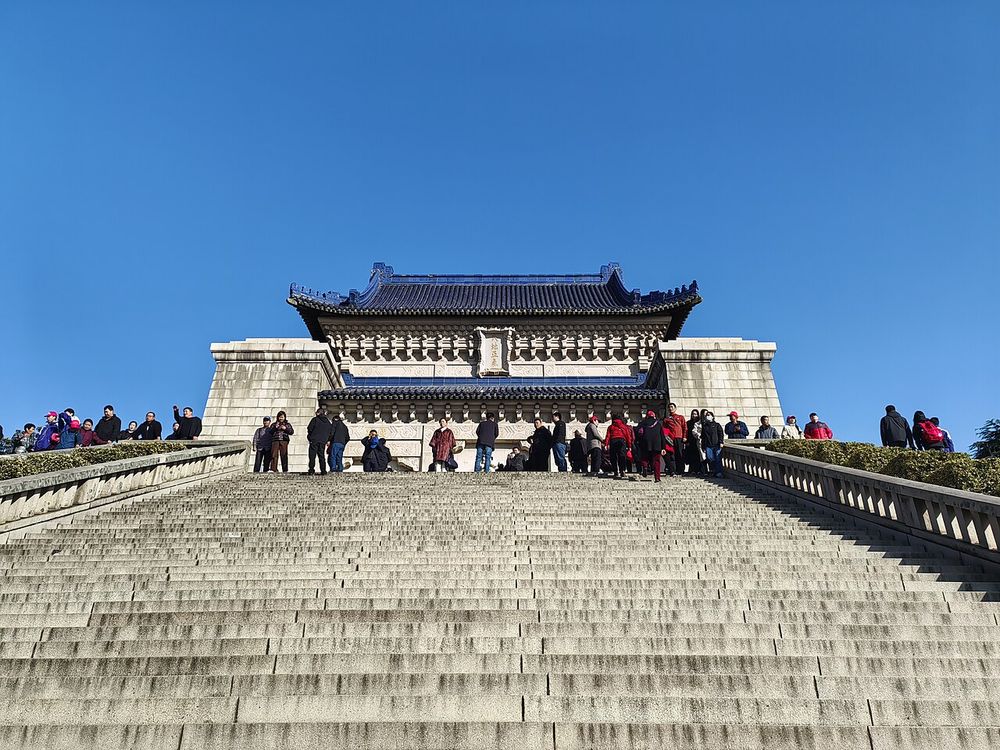
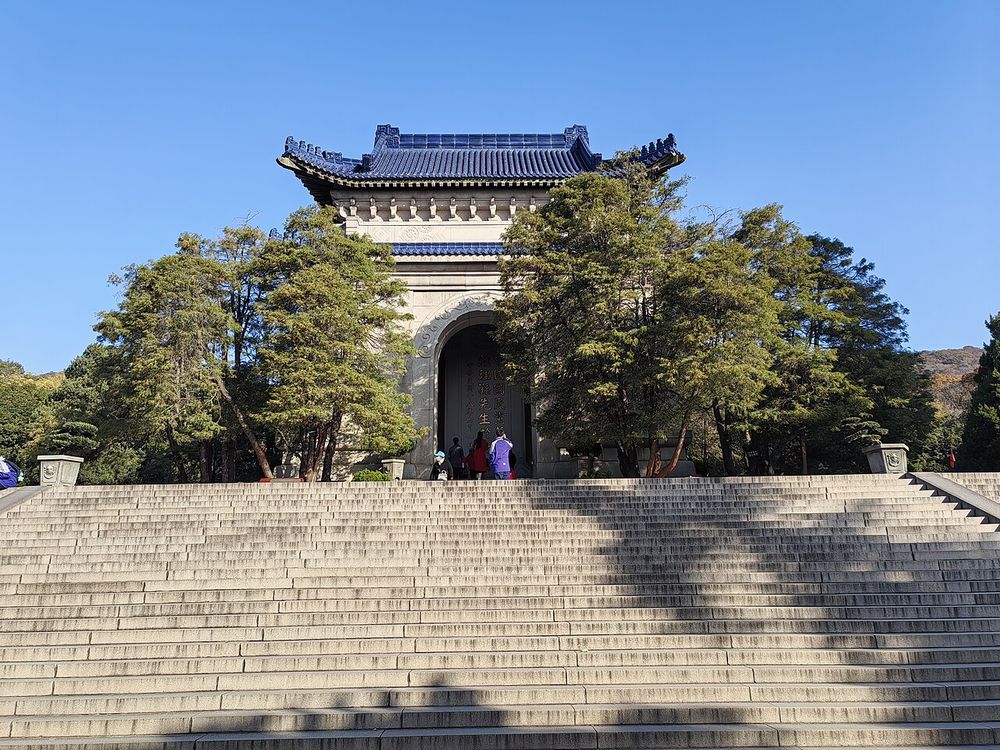
The front of the sacrificial hall, 2023Yumeto, CC BY-SA 4.0
Climb the broad white stairs to the sacrificial hall, roofed in blue tiles. Over its three doors are carved the four characters of Sun's ideal, "All under heaven belongs to the people", and inside sits his marble statue, made in Paris by Paul Landowski. Behind it, in a round chamber, lies his recumbent figure over the grave.
Then turn round. From the top, the steps are hidden by their landings and you see only flat platforms descending to the forest, and Nanjing beyond.
Looking up the 392 steps, 2024Chainwit., CC BY 4.0
Things people often get wrong
"You can visit the tomb chamber." The crypt has been closed to visitors; the public area ends at the sacrificial hall.
"It is a Ming (1368–1644) tomb." It is a 20th-century work in reinforced concrete and granite, built in Chinese style; the Ming founder's tomb is a kilometre to the west.
People who stood here
We searched Chinese sources first for this list, then English and French ones.
Sun Yat-sen (revolutionary, 1866–1925)He chose Purple Mountain for his grave and was buried here in 1929.
Lü Yanzhi (architect, 1894–1929)The Cornell-trained architect who designed the mausoleum; he died of cancer at 35, a few months before it was finished.
Song Qingling (stateswoman, 1893–1981)Sun's widow came from Moscow for the state funeral of 1929 and walked behind the coffin up the steps.
Paul Landowski (sculptor, 1875–1961)The French sculptor who made the seated statue in the hall; he also made the Christ the Redeemer in Rio de Janeiro.
Lien Chan (politician, born 1936)In 2005, as chairman of the Kuomintang, he paid his respects here, the first visit by a party chairman since 1949.
Go deeper: from the Bo'ai Arch to the Music Stage, five stops6 stops · about 1 min to read
The walk from the arch to the hall is about 700 metres and 392 steps; it takes an hour up and down.
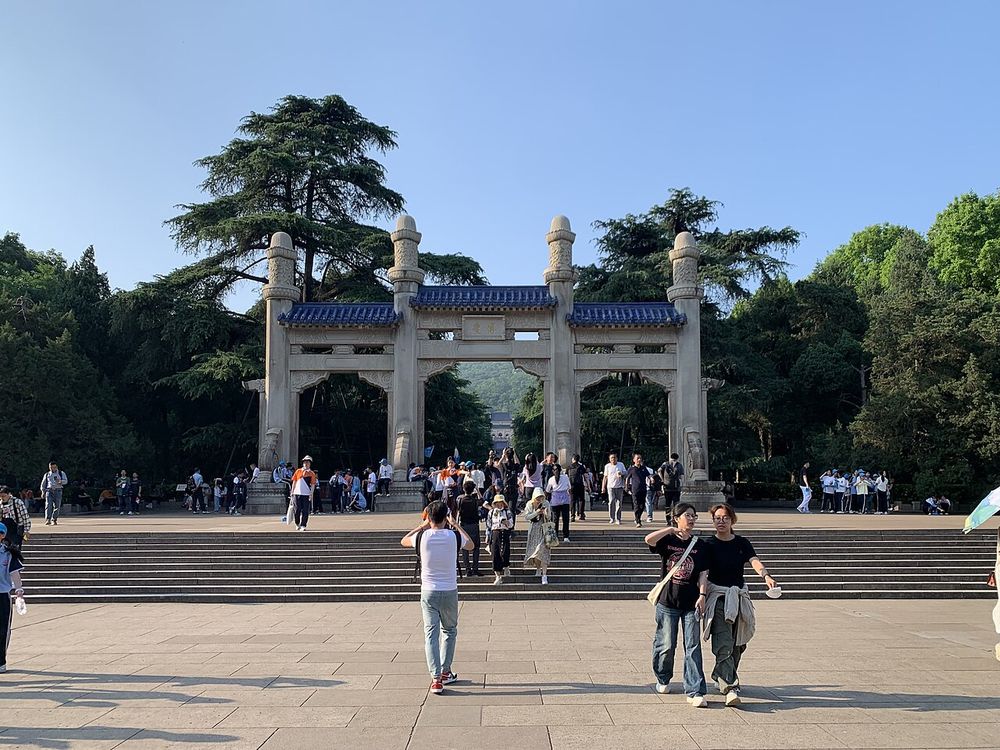
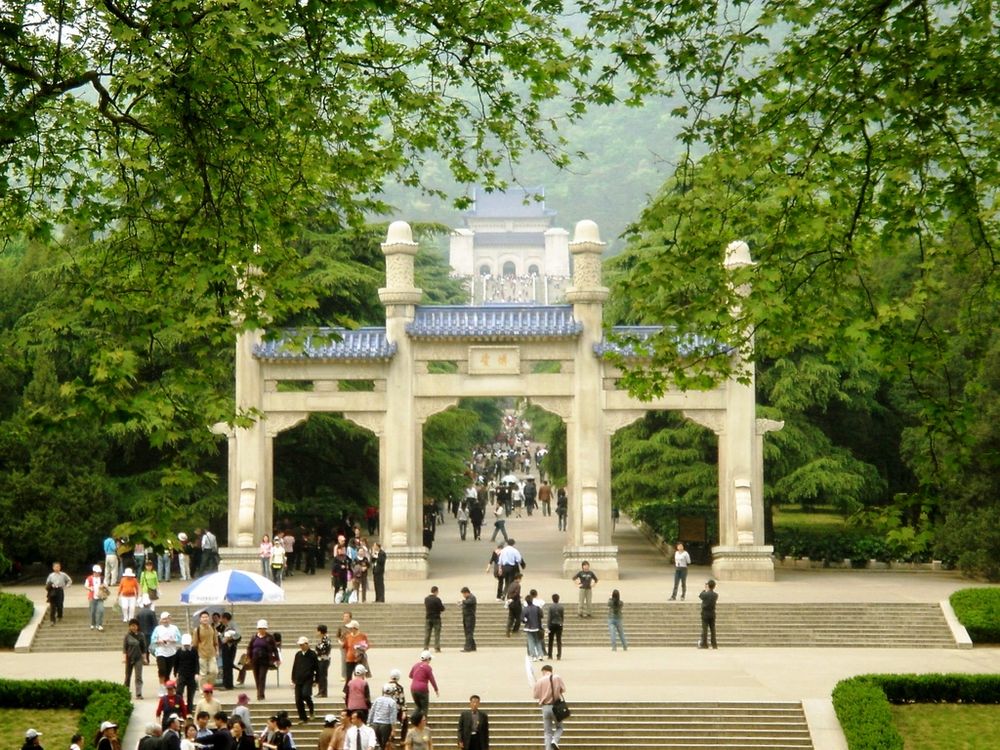
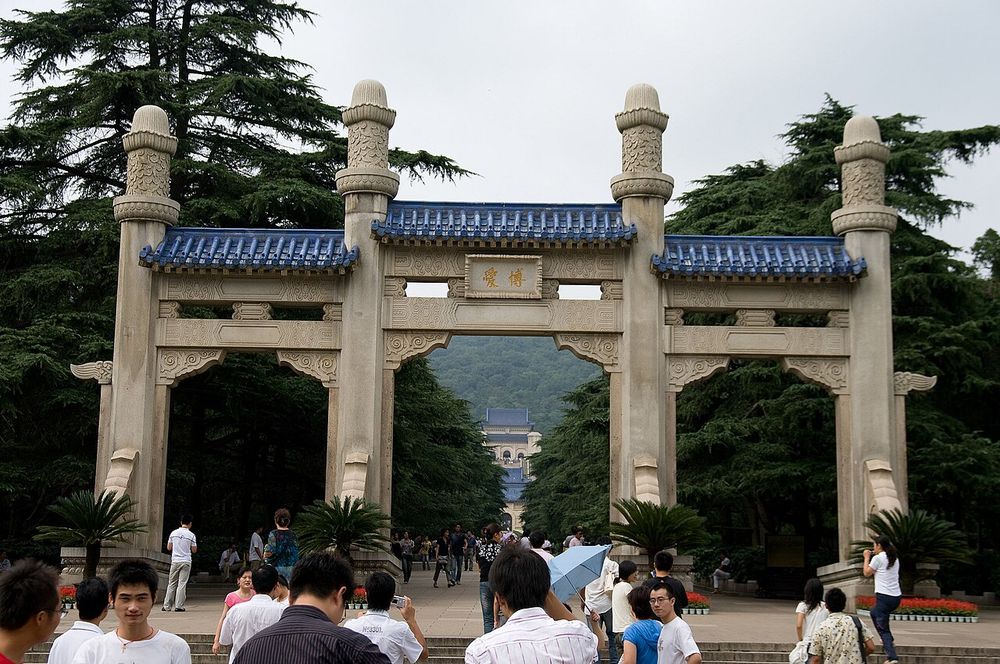
1. The Bo'ai Arch
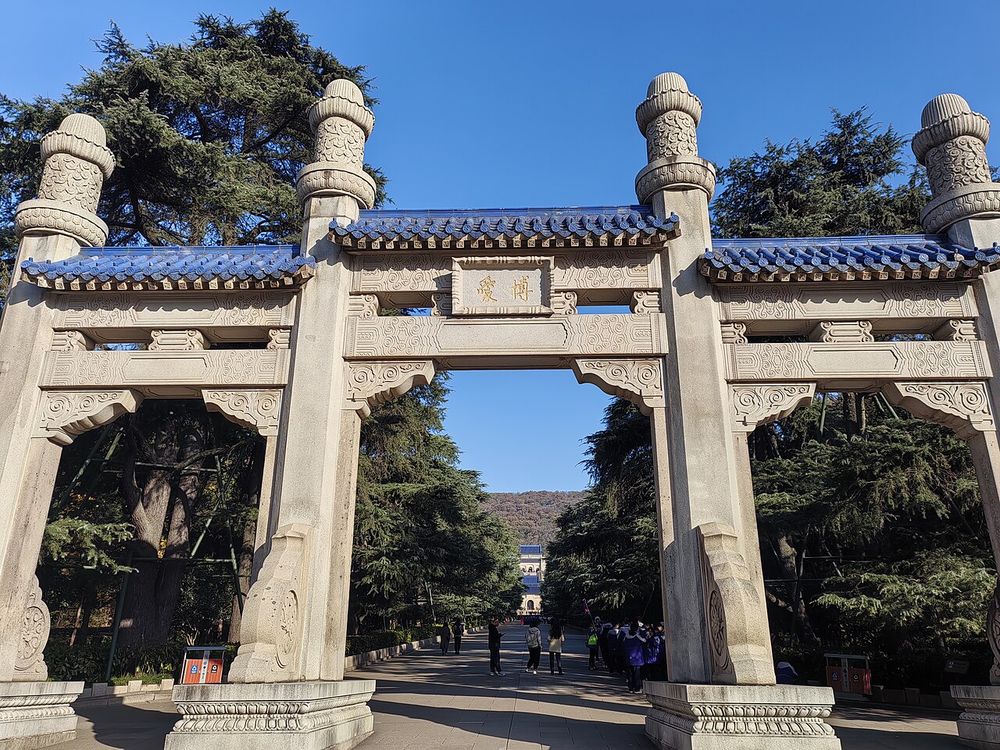
The Bo'ai Arch close up, 2023Yumeto, CC BY-SA 4.0
A granite archway carved with Sun's motto "Universal love", at the start of the avenue.
2. The avenue and the gate
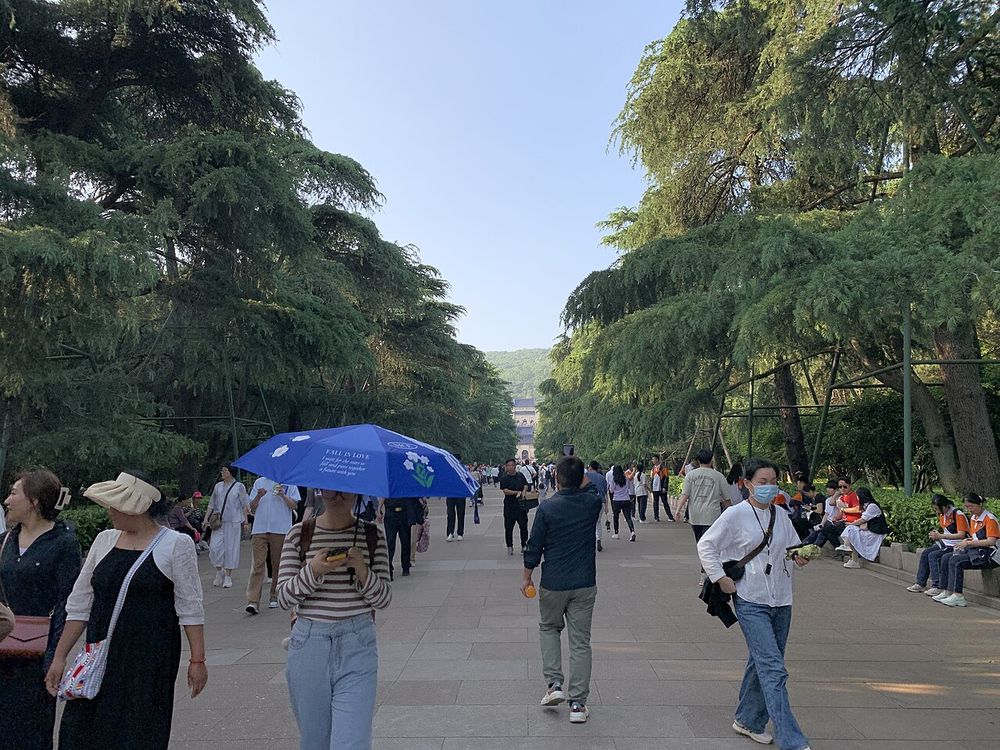
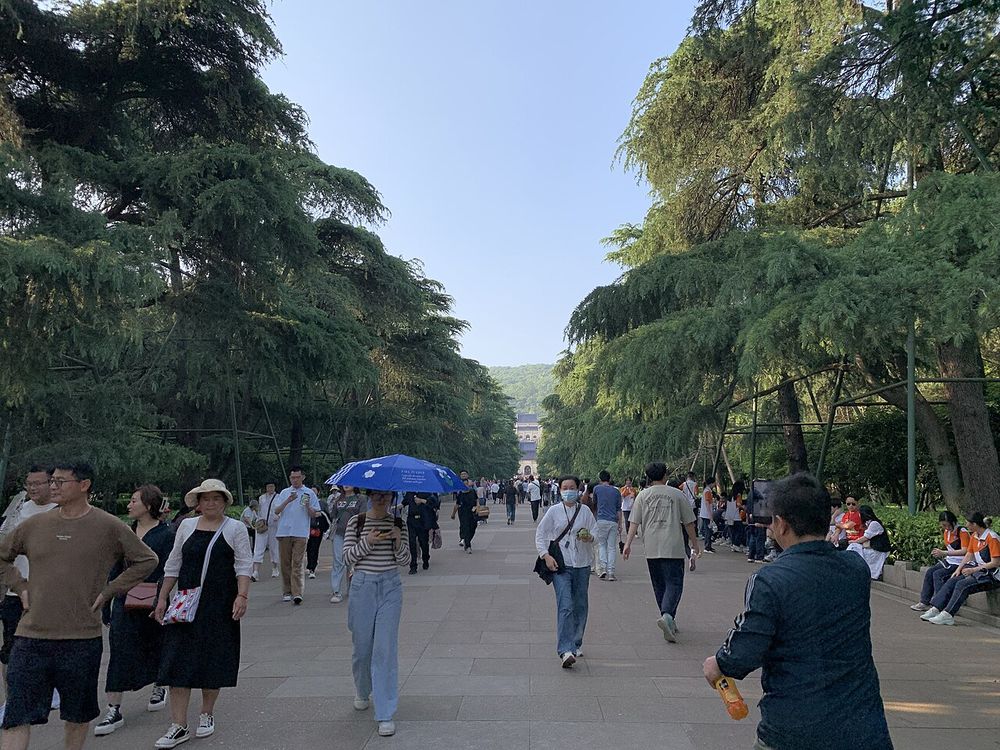
Crowds on the avenue, 2024Chainwit., CC BY 4.0
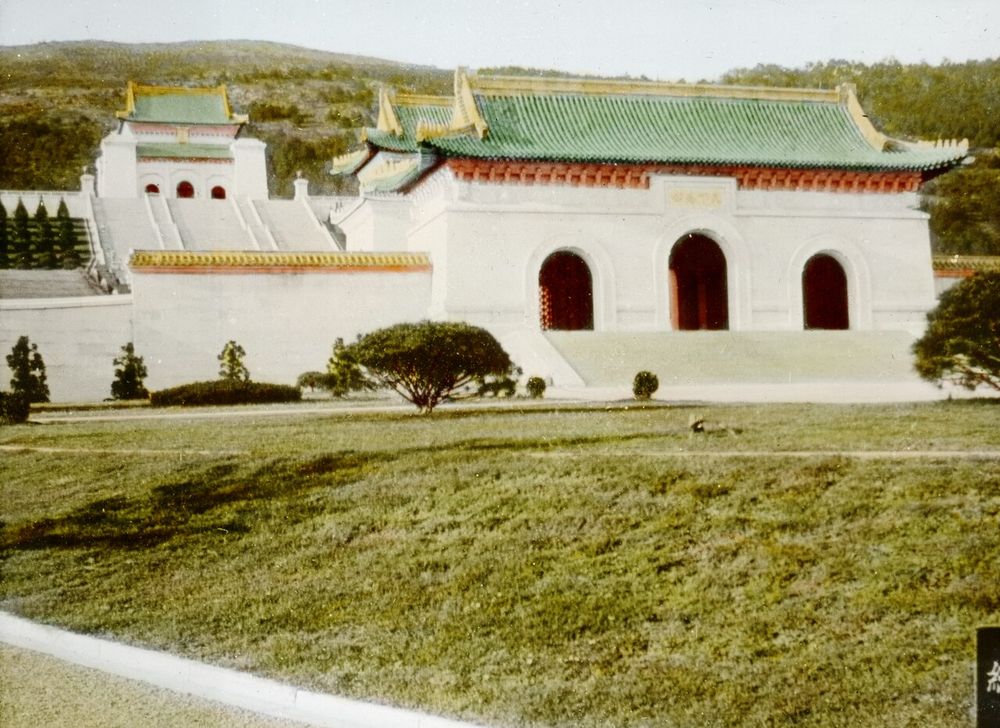
A tree-lined avenue to the triple-arched gate, inscribed "All under heaven belongs to the people".
The mausoleum gate, 2023Yumeto, CC BY-SA 4.0
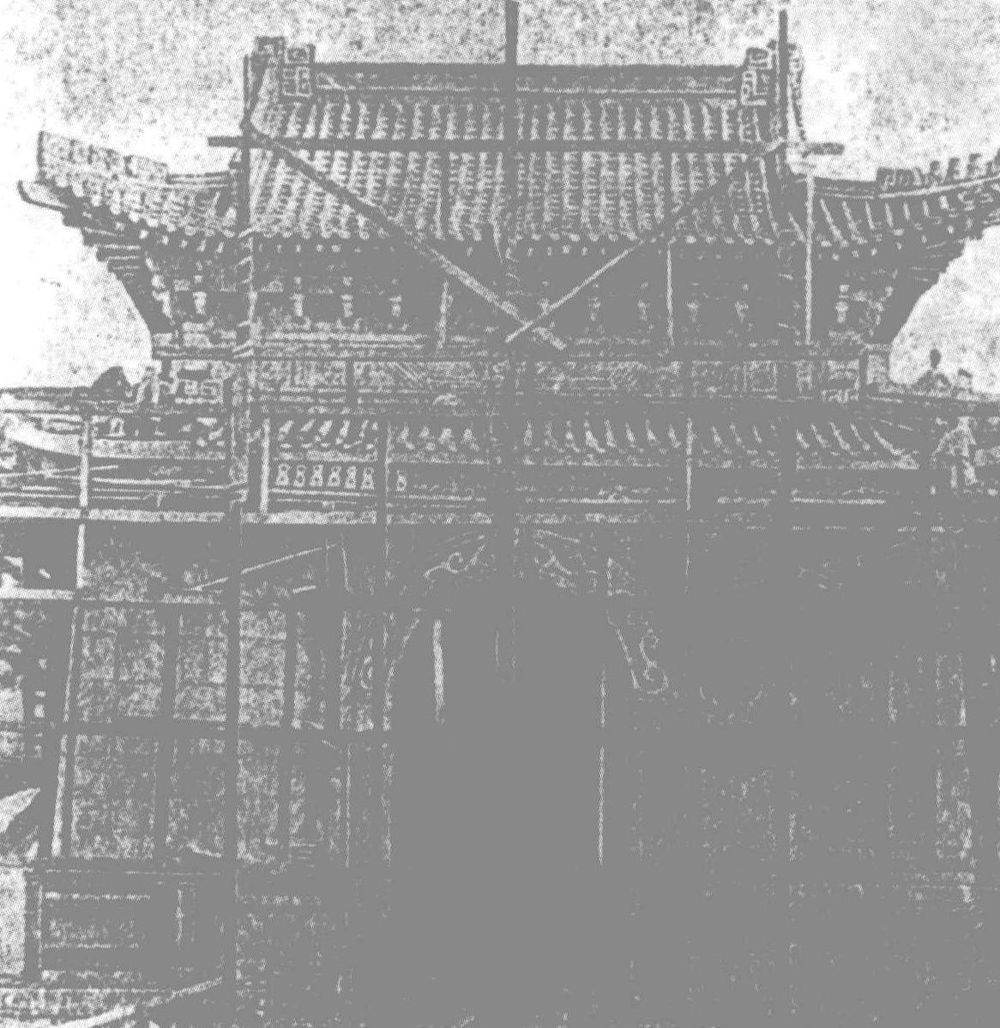
3. The stele pavilion
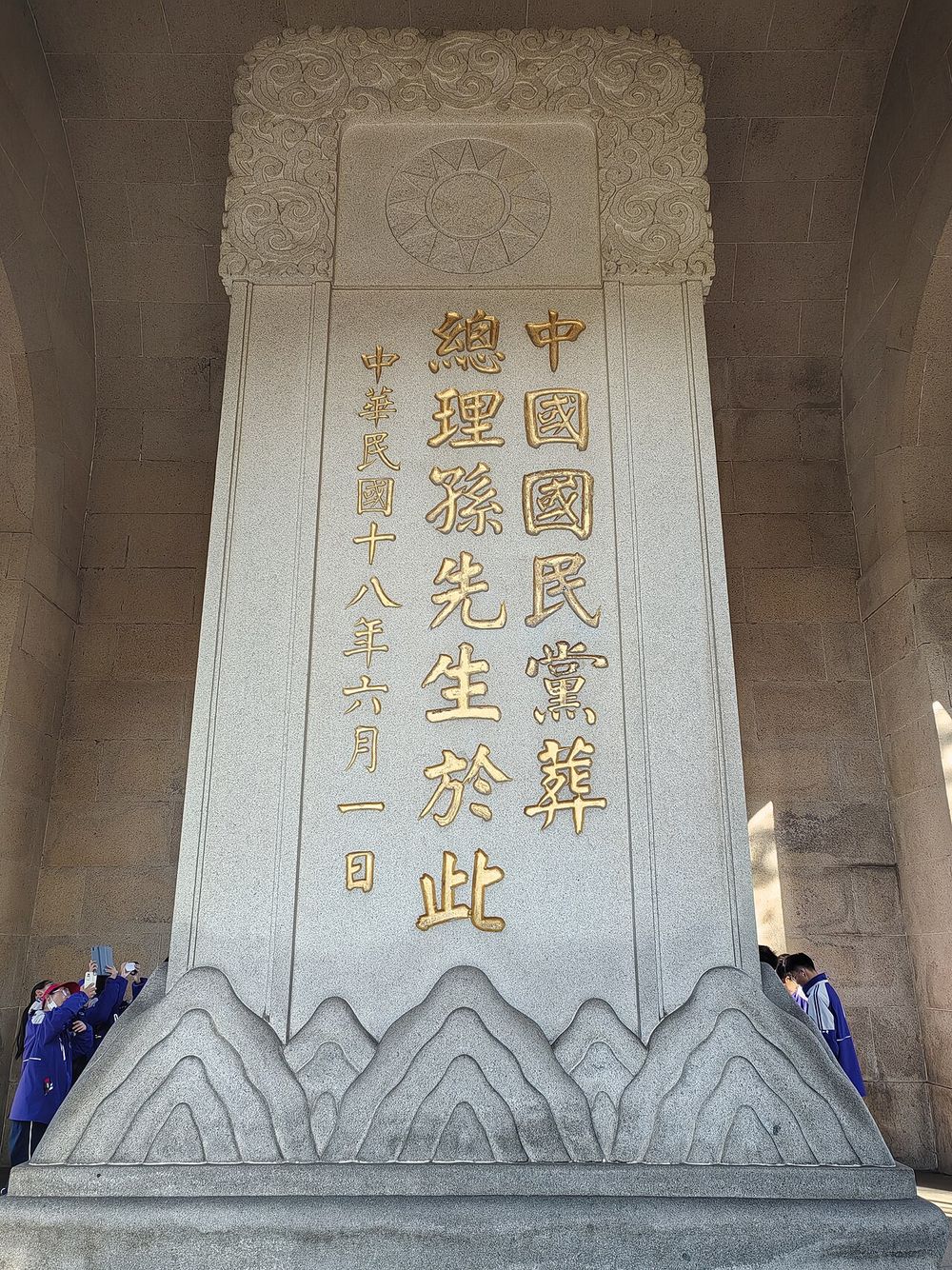
The great stele in its pavilion, 2023Yumeto, CC BY-SA 4.0
A great stone tablet inscribed: "The Kuomintang of China buries the Premier, Mr Sun, here", dated 1 June 1929.
4. The sacrificial hall
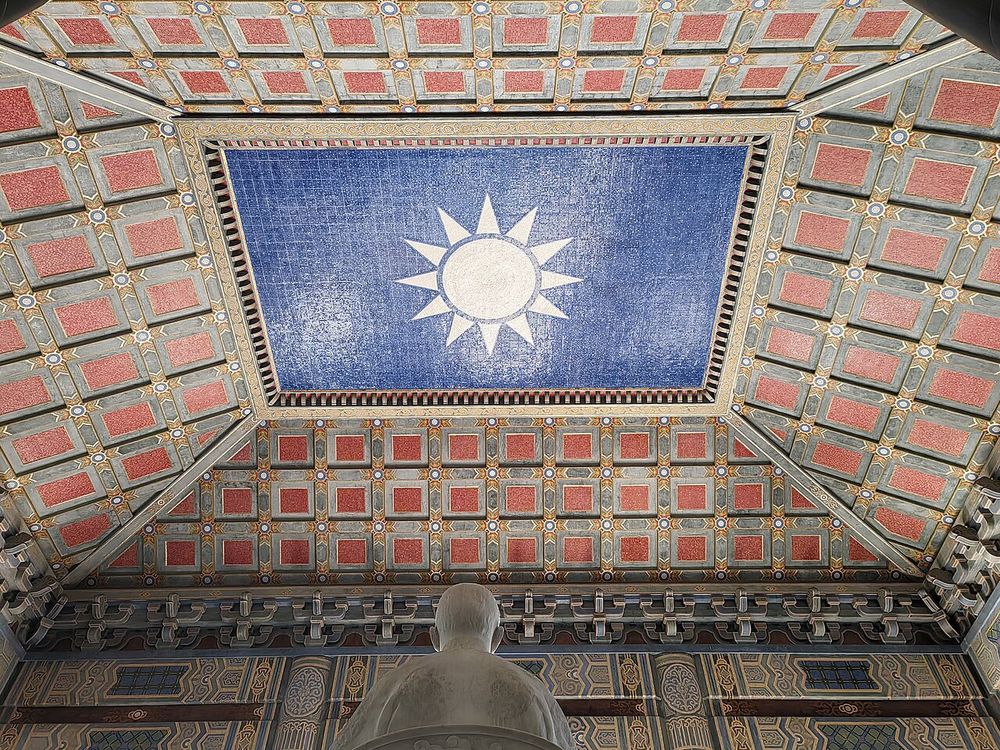
The ceiling of the hall, 2023Yumeto, CC BY-SA 4.0
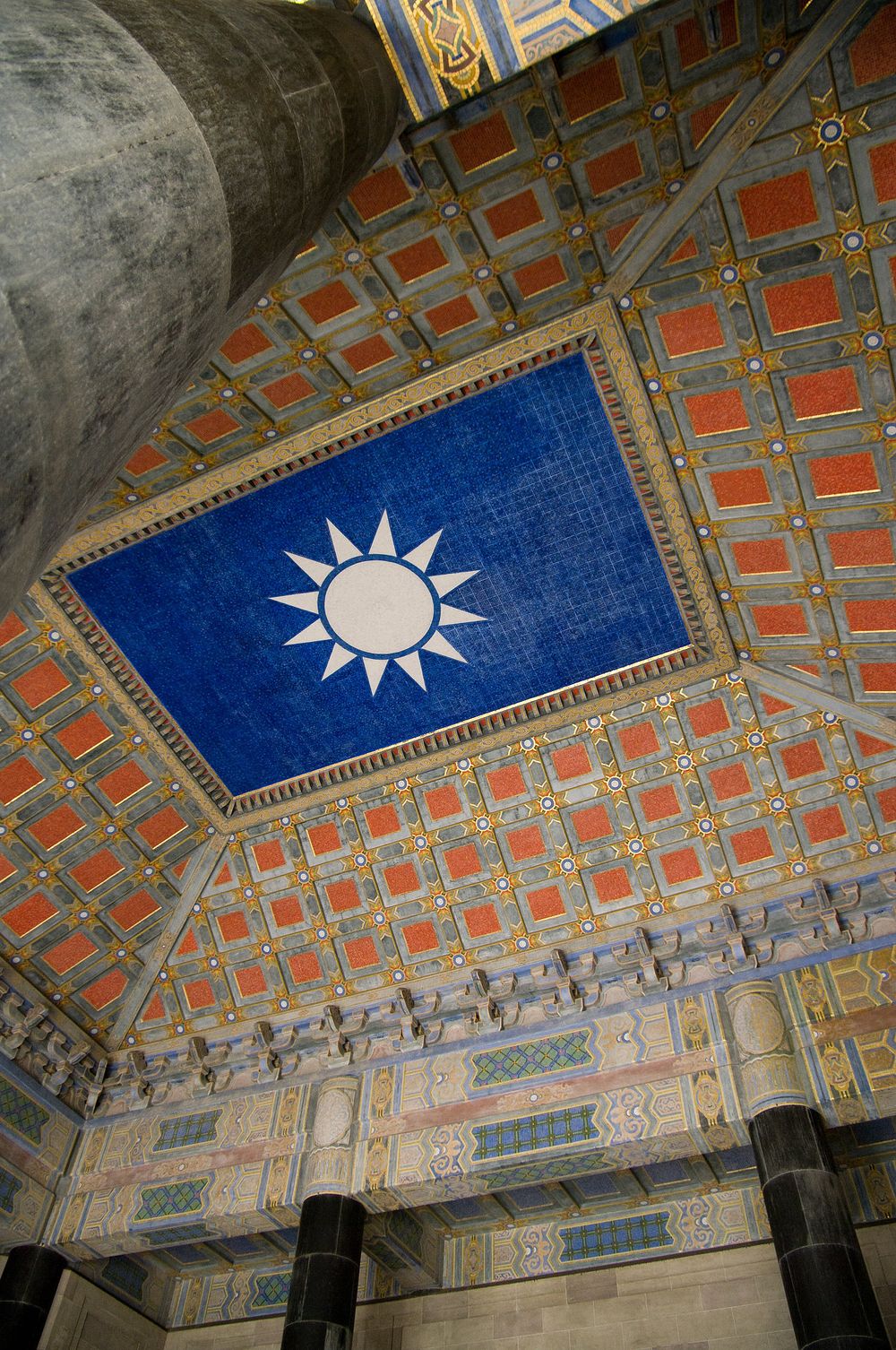
Under a coffered ceiling, Landowski's statue and, carved on the walls, Sun's "Fundamentals of National Reconstruction".
The coffered ceiling, 2008Kinden Kuo from Taipei, Taiwan, CC BY-SA 2.0
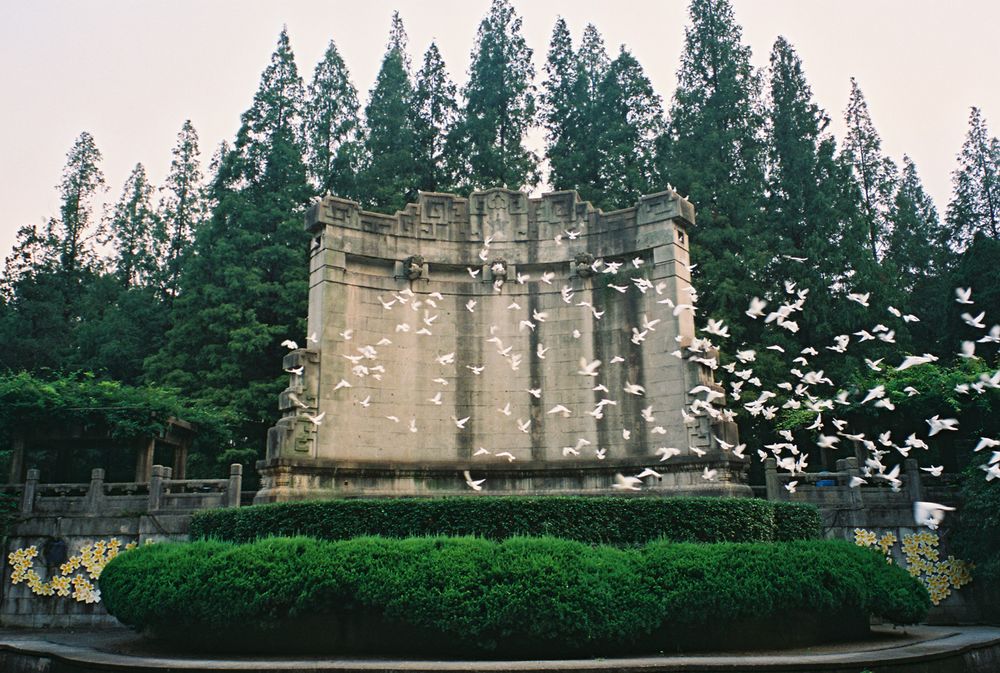
5. The Music Stage
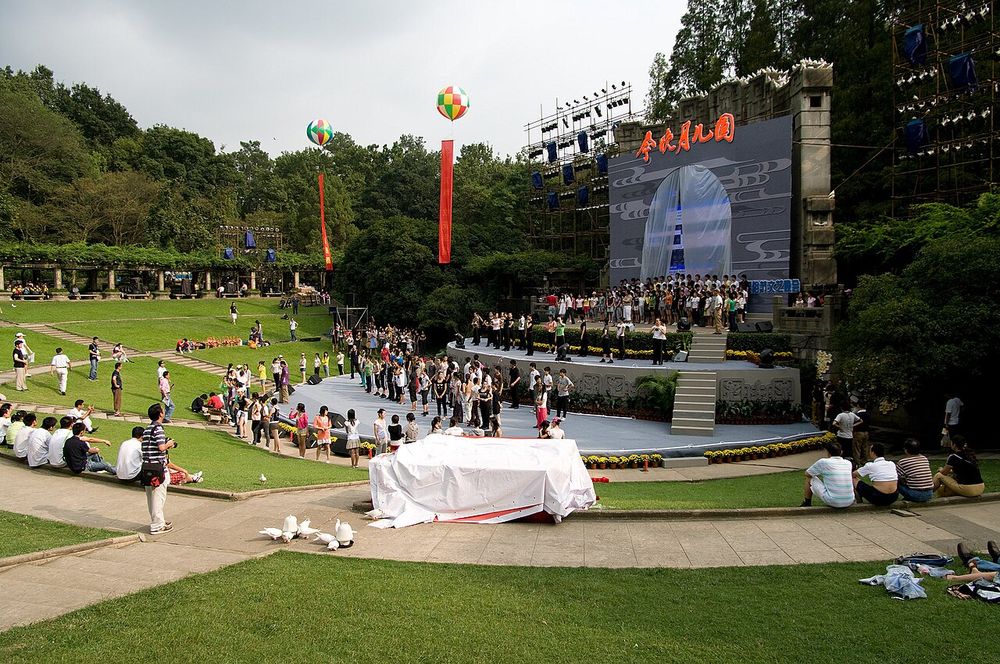
An event at the Music StageKinden Kuo from Taipei, Taiwan, CC BY-SA 2.0
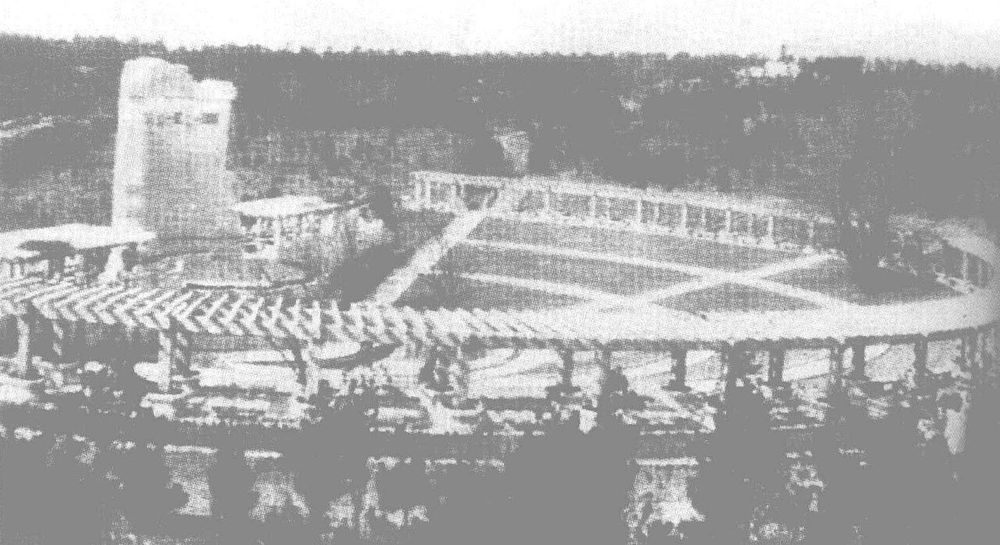
An open-air amphitheatre of 1932 in front of a curved screen wall, built for ceremonies and concerts; pigeons gather on its lawn.
The tomb and the same years elsewhere
Sun Yat-sen was buried here in June 1929; in October the Wall Street Crash began the Great Depression.
Meanwhile in the world
Year
Here
Elsewhere
1866
Sun Yat-sen is born in Guangdong
The first lasting transatlantic telegraph cable is completed
1925
Sun dies in Beijing; Lü Yanzhi wins the design competition
F. Scott Fitzgerald publishes "The Great Gatsby"
1929
The state funeral on Purple Mountain
The Wall Street Crash begins the Great Depression
One line to remember: a bell-shaped tomb on Purple Mountain for the man who ended the empire.
The stairway, the hall and old photographs
The stairway to the sacrificial hall, 2023Yumeto, CC BY-SA 4.0, Wikimedia CommonsThe front of the sacrificial hall, 2023Yumeto, CC BY-SA 4.0, Wikimedia CommonsVisitors on the upper steps, 2023Yumeto, CC BY-SA 4.0, Wikimedia CommonsThe stairway in autumn, from aboveJackeylove333, CC BY 4.0, Wikimedia CommonsThe mausoleum gate, 2023Yumeto, CC BY-SA 4.0, Wikimedia CommonsSteps up to the gate, 2023Yumeto, CC BY-SA 4.0, Wikimedia CommonsLooking up the 392 steps, 2024Chainwit., CC BY 4.0, Wikimedia CommonsCrowds on the avenue, 2024Chainwit., CC BY 4.0, Wikimedia CommonsA boulder at the entrance, 2024Chainwit., CC BY 4.0, Wikimedia CommonsThe boulder among autumn trees, 2023Yumeto, CC BY-SA 4.0, Wikimedia CommonsThe square before the arch, 2024Chainwit., CC BY 4.0, Wikimedia CommonsThe Bo'ai Arch, 2024Chainwit., CC BY 4.0, Wikimedia CommonsThe Bo'ai Arch close up, 2023Yumeto, CC BY-SA 4.0, Wikimedia CommonsThe arch and the hall beyond, 2006wang leon from Nanjing, China, CC BY 2.0, Wikimedia CommonsThe arch in green, 2008Kinden Kuo, CC BY-SA 2.0, Wikimedia CommonsThe great stele in its pavilion, 2023Yumeto, CC BY-SA 4.0, Wikimedia CommonsThe ceiling of the hall, 2023Yumeto, CC BY-SA 4.0, Wikimedia CommonsThe coffered ceiling, 2008Kinden Kuo from Taipei, Taiwan, CC BY-SA 2.0, Wikimedia CommonsAn event at the Music StageKinden Kuo from Taipei, Taiwan, CC BY-SA 2.0, Wikimedia CommonsThe screen wall of the Music Stage, 2008Jay Hsu, CC BY-SA 2.0, Wikimedia CommonsThe hall under construction, late 1920sUnknown authorUnknown author, Public domain, Wikimedia CommonsThe arch under construction, 1930sUnknown authorUnknown author, Public domain, Wikimedia CommonsMourners at the state funeral, 1 June 1929Unknown authorUnknown author, Public domain, Wikimedia CommonsThe stele pavilion under scaffolding, 1930sUnknown authorUnknown author, Public domain, Wikimedia CommonsThe Music Stage, 1930sUnknown authorUnknown author, Public domain, Wikimedia CommonsA bronze tripod on its stone platform, 1930sUnknown authorUnknown author, Public domain, Wikimedia CommonsThe mausoleum offices, 1930sUnknown authorUnknown author, Public domain, Wikimedia CommonsThe gate, a tinted photograph of the 20th centuryUnknown authorUnknown author, CC0, Wikimedia CommonsThe stairway and hall, tinted photographUnknown authorUnknown author, CC0, Wikimedia CommonsThe mausoleum in snow, 20th centuryUnknown authorUnknown author, CC0, Wikimedia Commons
Local legends
These are stories people tell about this place. They are legends, not history, and each one says where it comes from.
LegendThe bell
People say the plan of the tomb seen from the air is a bell, so that Sun Yat-sen's call to wake the nation rings on. Lü Yanzhi's design was praised for this shape, though he may not have meant it.
Source: Said since the competition jury of 1925
Later, people who live here will be able to add the stories they grew up with, and say which of these they have heard.
Not certain, and where accounts conflict
Is Sun's body in the crypt?
His body was embalmed in Beijing and buried here in 1929 in a sealed vault below the recumbent statue; there is no evidence it was ever moved, though rumours have circulated.
Visiting
Tickets and hours
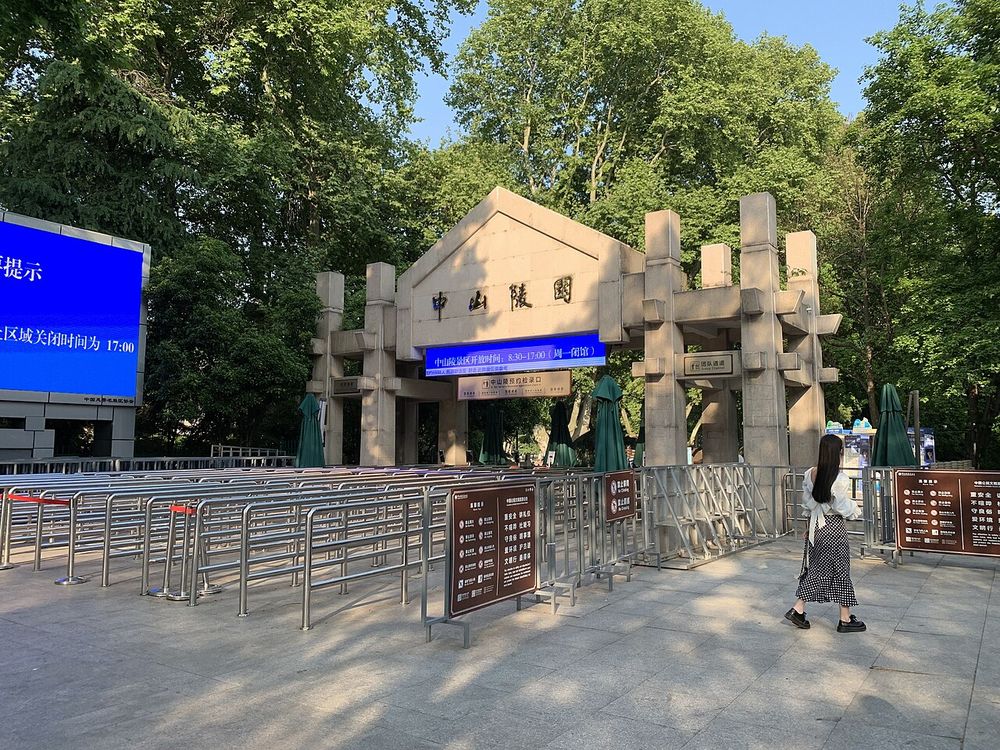
Free; open 8:30 to 17:00, closed on Mondays except public holidays.
The other sights of Purple Mountain have a 100-yuan combined ticket.
Last checked 2026-11-12. Free entry with booking, hours and Monday closing from 2026 guides and the Zhongshan Scenic Area's notice of August 2026 (Yangtse Evening Post).
Booking without WeChat
Official page in English Entry is free but must be booked with your real name, on the Zhongshan Scenic Area's official WeChat mini-program or on Meituan, Ctrip or Douyin; book up to seven days ahead in summer.
Note Foreign visitors book with a passport number. Bring the passport to the gate.
Checked 2026-11-12
Where to start
Take Metro line 2 to Xiamafang or Muxuyuan, then the sightseeing bus to the arch.
Go early on a weekday; on holidays the steps are packed.
Before you go
Nanjing summers are very hot; take water and shade.
Combine with the Ming Xiaoling, a short walk to the west.
Customs and manners
Remove hats and keep quiet in the sacrificial hall; photography inside is not allowed.
Do not sit or lie on the steps of the hall.
Opening hours are given in the local time of the place.
Look for these
Over the hall's doors, find the four characters "All under heaven belongs to the people".
From the top, look down: where have the steps gone?
In the hall, find the national emblem in the ceiling.
I am here
Stand at the site, sign in, press the button, and collect its stamp. Your browser will ask to use your location. It is sent to us once to confirm that you are at the site; we keep how far you were from it, not the spot where you stood.
Your stamps are saved to your account, so they follow you to any device. Checking from a browser cannot rule out every false location; stricter checks arrive with the app.
Messages
Share your photos
Photos here show the place, not people. Each one is credited to the visitor who took it and appears after our team has looked at it. A photo with you in it belongs under “I am here”.