The story
It is called a palace, but it is a garden: about 290 hectares, three-quarters of them water. The lake is Kunming Lake and the hill is Longevity Hill, and both were shaped by hand.
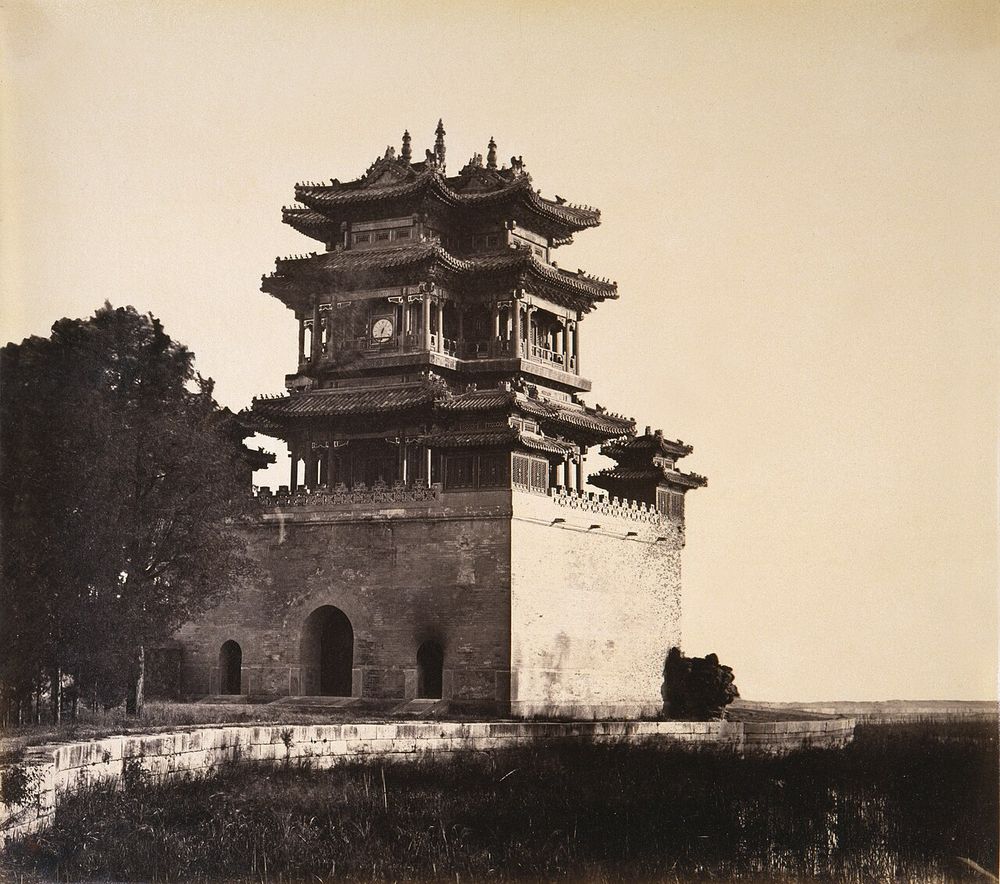
The Qianlong emperor began it in 1750 as a sixtieth-birthday present for his mother, and took as his model West Lake in Hangzhou, a thousand kilometres to the south. British and French troops burned it in 1860. The Empress Dowager Cixi rebuilt it and in 1888 gave it the name it has now, Yiheyuan, the Garden of Nurtured Harmony. The eight-sided tower on the hill is the Tower of Buddhist Incense.
What is here
The gate ticket covers the lake, the hill, the Long Corridor and most of the halls. Four enclosed gardens inside the grounds are extra: the combined ticket includes all four. Boats across the lake are paid separately.
| Part | Ticket |
|---|---|
| The East Palace Gate and the Hall of Benevolence and Longevity | Gate ticket |
| The Garden of Virtue and Harmony, with the Grand Theatre | Combined ticket |
| The Hall of Jade Ripples | Gate ticket |
| The Long Corridor | Gate ticket |
| The Tower of Buddhist Incense | Combined ticket |
| The Marble Boat | Gate ticket |
| The Seventeen-Arch Bridge and the Bronze Ox | Gate ticket |
| The Wenchang Gallery | Combined ticket |
| Suzhou Street, behind the hill | Combined ticket |
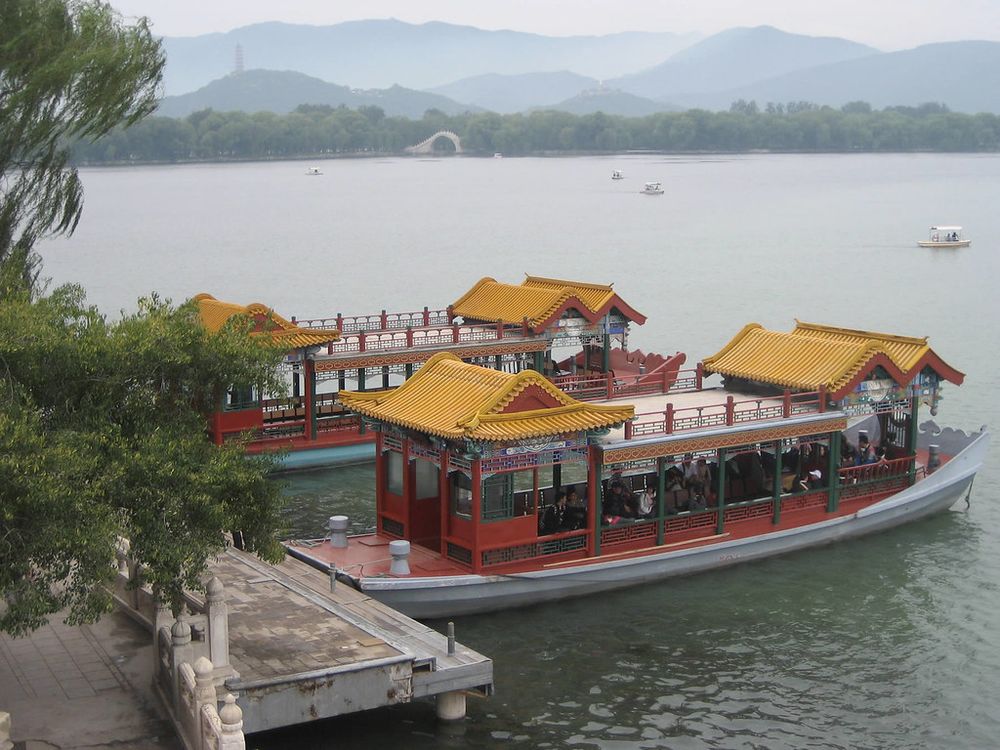
| Boats on Kunming Lake | Paid separately |
If you have one minute
Standing on the east shore, looking at the hill
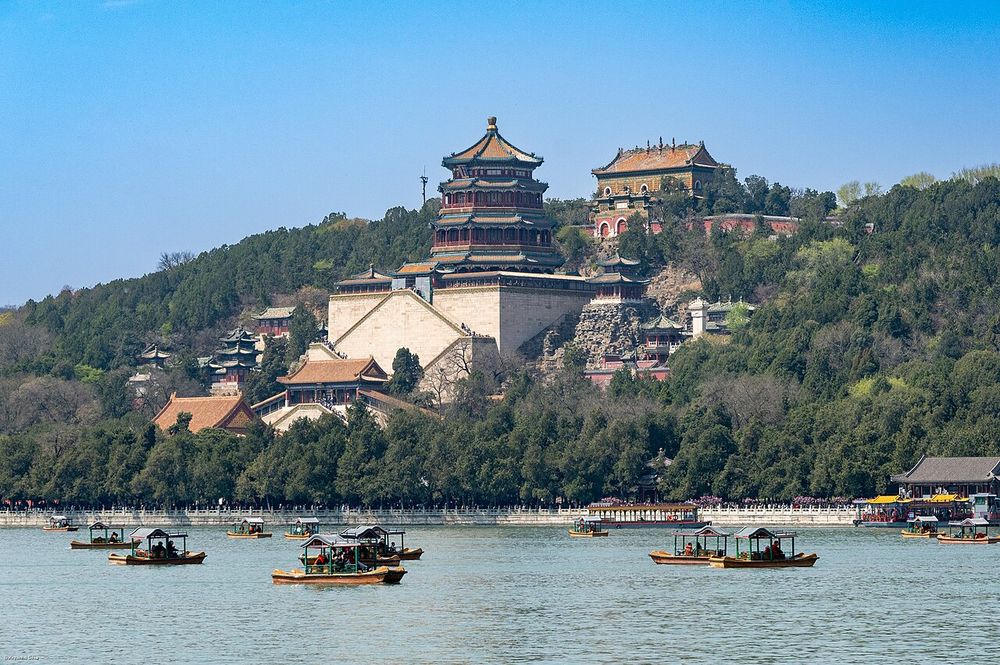
Follow one line up the hill: an archway at the water's edge, a gate, a hall, another hall, the tower, and on the summit a temple faced in glazed tile. Everything on the slope is arranged along that axis, each building higher than the last.
Now look left along the water. The long causeway with six bridges is the West Dike, copied from the Su Causeway on West Lake. The three islands in the lake stand for the three islands of the immortals that old stories placed in the eastern sea.
This garden has been wrecked twice. It was burned in 1860 and looted again in 1900 by the foreign armies that occupied Beijing, and repaired in 1903. Most of the timber you see is from the 1880s or later, on Qianlong's plan.
People who stood here
For a century and a half this was a private garden for one family. Then, within a few decades, it became a seat of government, a looted ruin, and a public park.
- The Qianlong emperor, Qing ruler, reigned 1735–1796He ruled China for sixty years, in the time of George Washington and Catherine the Great, and wrote poem after poem about this garden. Several are cut into stones along the east shore, in his own handwriting. He may well have stood where you are and composed one.
- Empress Dowager Cixi, ruled from behind a curtain 1861–1908For nearly half a century the real ruler of China was a woman who had entered the palace as a junior concubine. She rebuilt this garden and lived in it longer than any other Qing ruler. Imagine her walking the Long Corridor on a wet afternoon, kept dry by the roof she had ordered.
- The Guangxu emperor, reigned 1875–1908Cixi's nephew tried in 1898 to reform the empire in a hundred days. She took power back and held him prisoner for the last ten years of his life. When the court came here he was kept in the Hall of Jade Ripples, a few steps from the lake he was not free to walk beside.
- Tan Xinpei, the first great star of Peking opera, 1890sThe most famous actor of his day, and later the lead in the first film ever made in China, in 1905. He sang for Cixi on the three-storey stage in the Garden of Virtue and Harmony.
- Wang Guowei, scholar, 2 June 1927One of the great Chinese scholars of the twentieth century, a professor at Tsinghua University nearby. He drowned himself in Kunming Lake, leaving a note of sixteen characters. Why he did so is still argued over.
- Gerald Ford, US president, December 1975On his five-day visit to China he was brought here as well as to the Great Wall and the Temple of Heaven.
Go deeper: seven stops from the east gate to the island
1. The East Palace Gate and the Hall of Benevolence and Longevity: a court in a garden
The first hall inside the main gate is not for pleasure. Here Cixi and Guangxu received ministers and did the business of state. Emperors and empresses lived in their gardens for months at a time, so the government came with them.
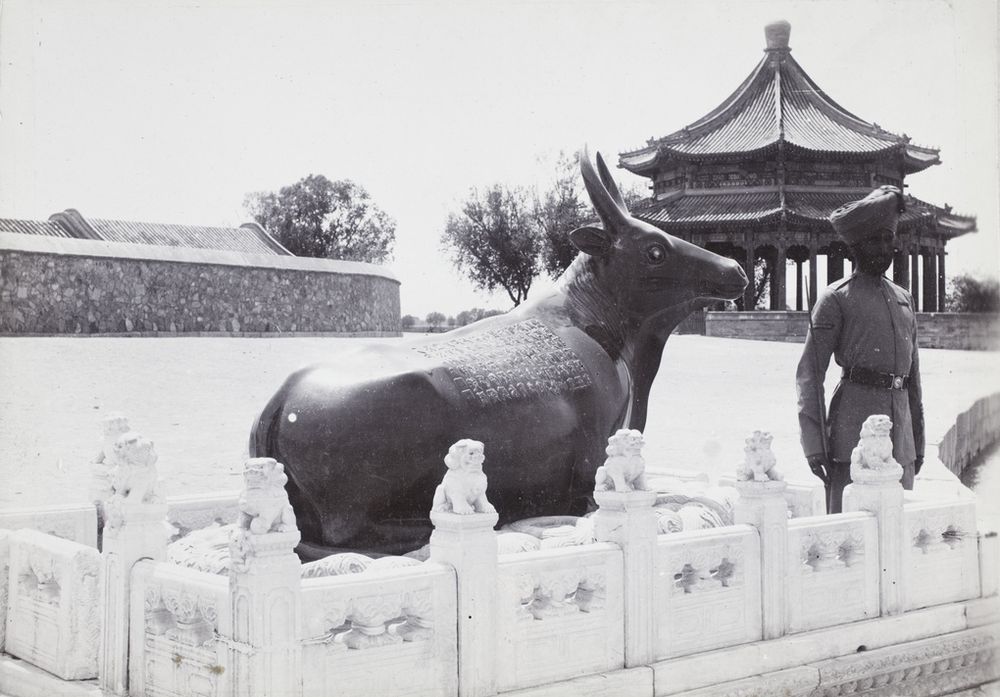
Look at the bronze animal in the courtyard, with a dragon's head, a deer's antlers, hooves and a lion's tail. It is a qilin, a creature of good omen.
2. The Grand Theatre in the Garden of Virtue and Harmony
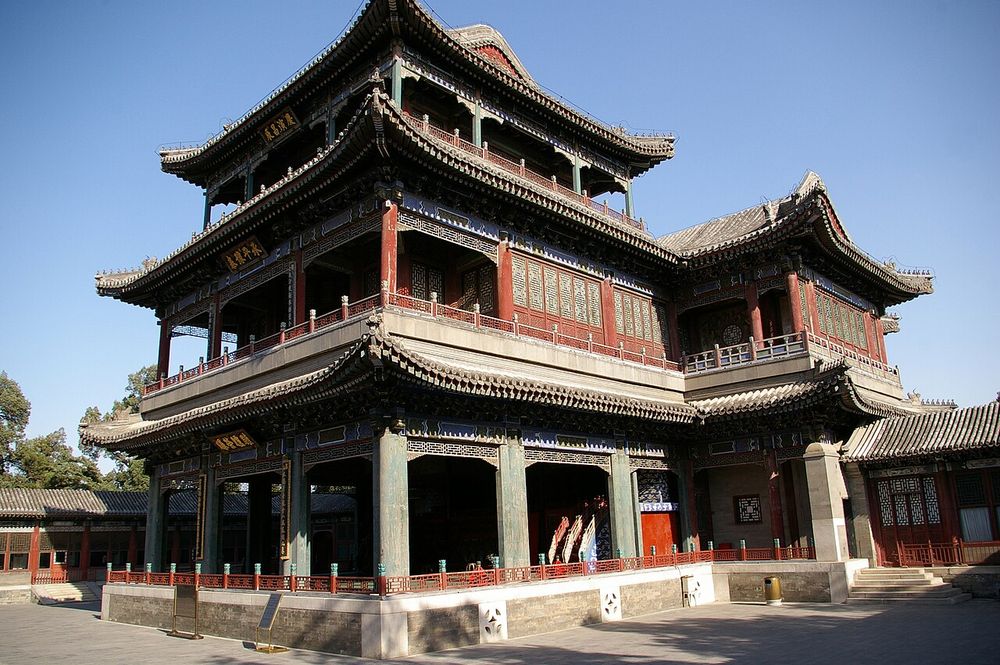
Building began in 1891 and took four years. At 21 metres it is the largest old theatre left in China.
The three stages are connected. Openings in the ceilings and a winch on the middle floor let actors rise as immortals or drop from the sky, and a well and pool under the bottom stage supplied water effects. Cixi watched from the hall opposite. Peking opera took its mature form in these years, with the court as its richest patron.
3. The Hall of Jade Ripples: an emperor's confinement
This lakeside courtyard was Guangxu's residence in the garden. After the failure of his reforms in 1898 he was held under guard, most of the time on an island in the palace lakes in central Beijing, and here when the court moved to the garden.
4. The Long Corridor: the longest painted gallery in the world
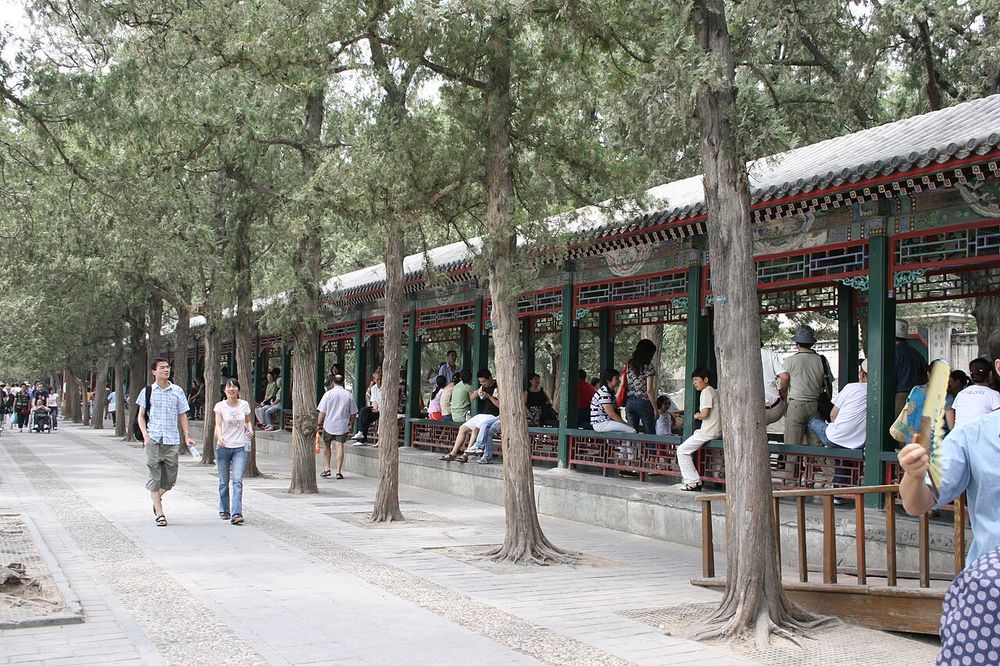
A covered walk runs along the foot of the hill for 728 metres, in 273 bays, so that the empress dowager could walk beside the lake in rain or snow. Guinness World Records listed it in 1992 as the longest painted corridor in the world.
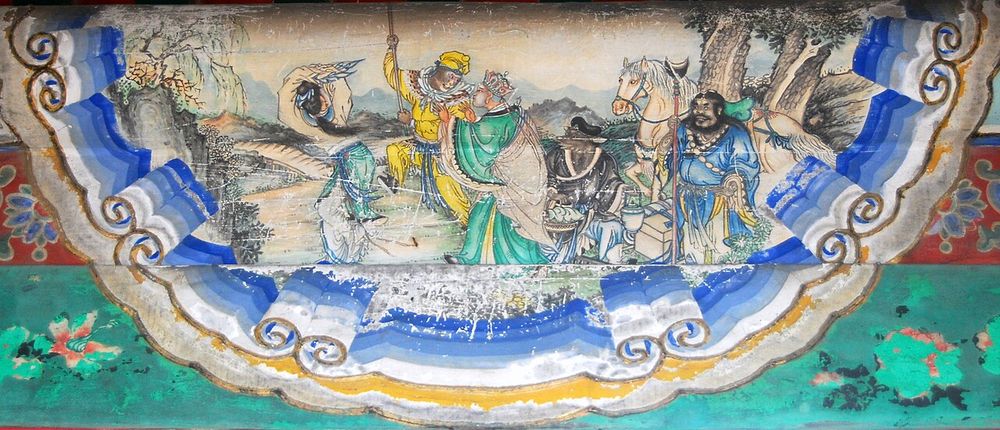
Look up. Every beam carries a painting, more than 14,000 in all: landscapes, birds and flowers, and scenes from stories every Chinese child knows, such as Journey to the West and Romance of the Three Kingdoms.
Four eight-sided pavilions break the walk, two on each side of the centre. They stand for spring, summer, autumn and winter.
5. The Tower of Buddhist Incense: the centre of everything
The tower stands on a stone terrace halfway up the hill, eight-sided, with three storeys and four tiers of eaves. The whole garden is composed around it, which is why you can see it from the lake, the corridor and the island.
Climb to its terrace for the view on this page's cover: the lake below, the island and its bridge, and on a clear day the towers of Beijing.
6. The Marble Boat: a ship that will never sail
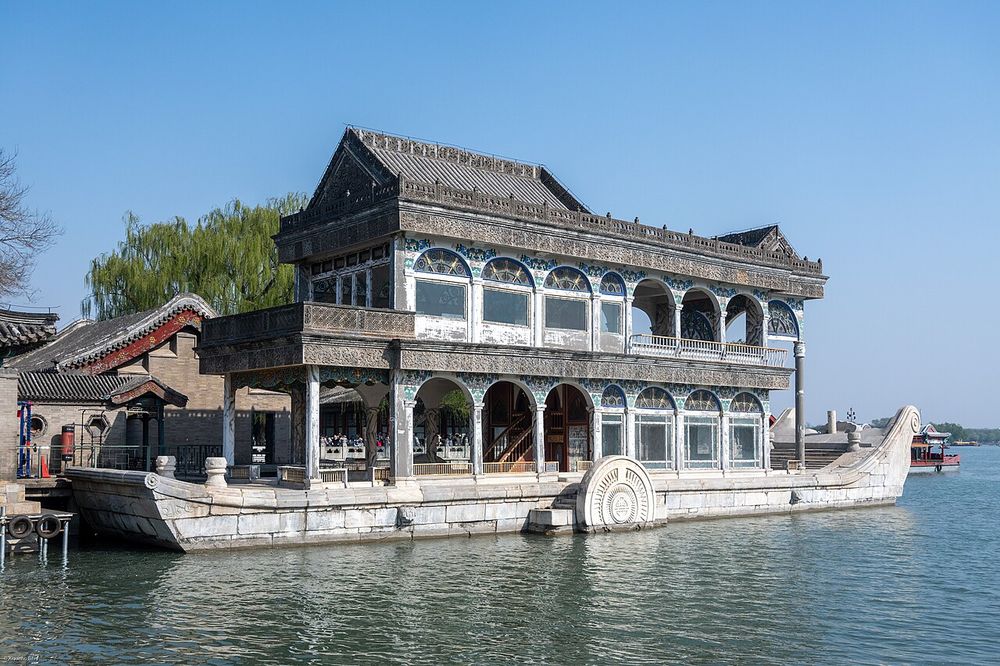
At the west end of the corridor a stone hull 36 metres long lies against the shore. Its proper name is the Boat of Purity and Ease. The base began as a Ming platform for releasing fish, and Qianlong turned it into a boat.
The wooden cabin burned in 1860. When Cixi rebuilt it she chose a Western style, with paddle wheels on the sides like a steamer. It is the only building in the garden in a foreign style.
When it rains, water from the roof runs down inside four hollow pillars and pours into the lake from four dragon heads on the hull.
7. The Seventeen-Arch Bridge and the Bronze Ox
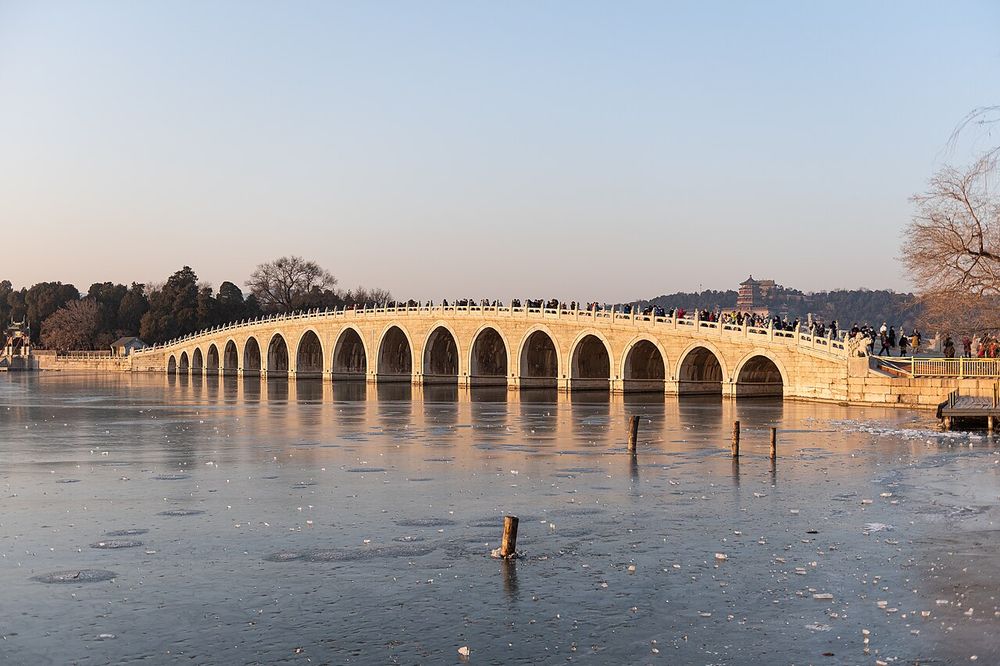
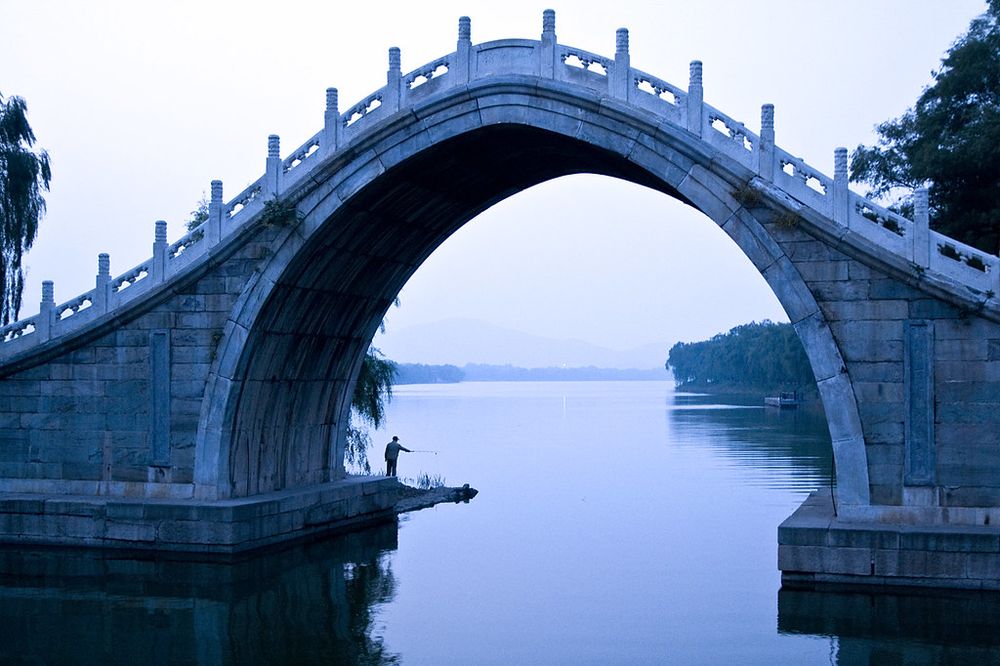
The bridge joins the east shore to South Lake Island. It is 150 metres long and 8 metres wide, the longest bridge in any Chinese imperial garden. The middle arch is the tallest, with eight on each side growing smaller. On the railings sit more than 500 stone lions, no two alike.
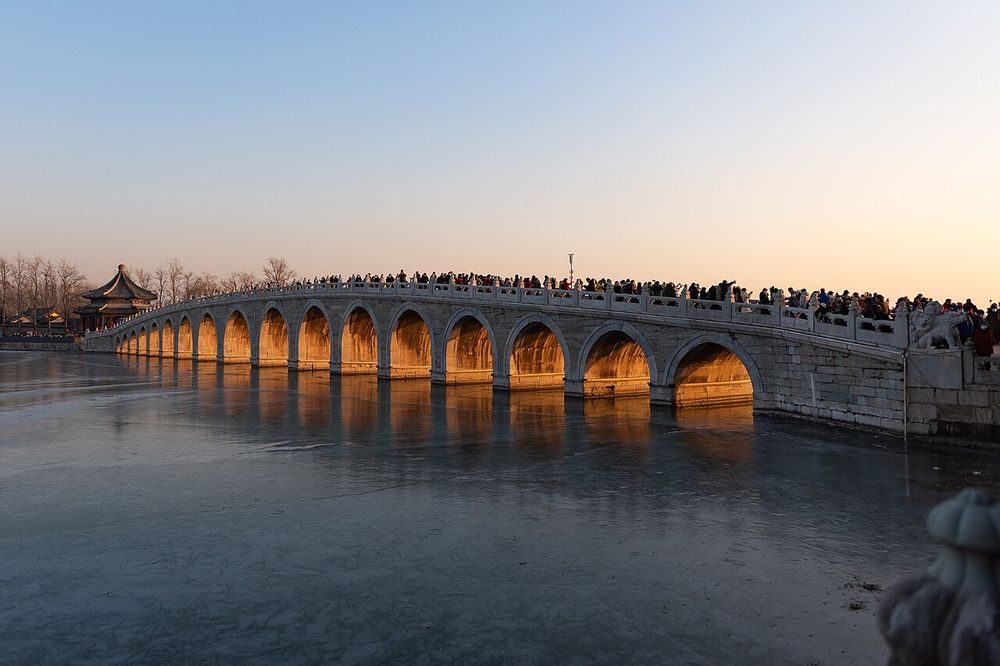
The bridge runs a little off east–west. Around the winter solstice the sun sets low in the south-west and its light enters the arches almost level with the water, so that all seventeen glow gold from inside. It lasts for part of the afternoon on a few days of the year, and photographers come for it by the thousand.
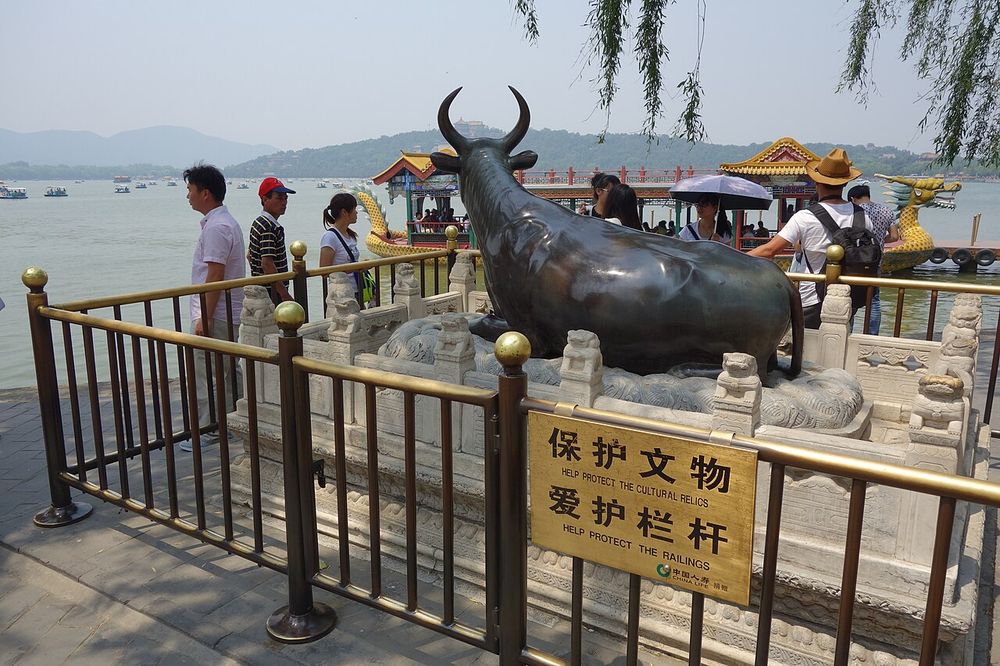
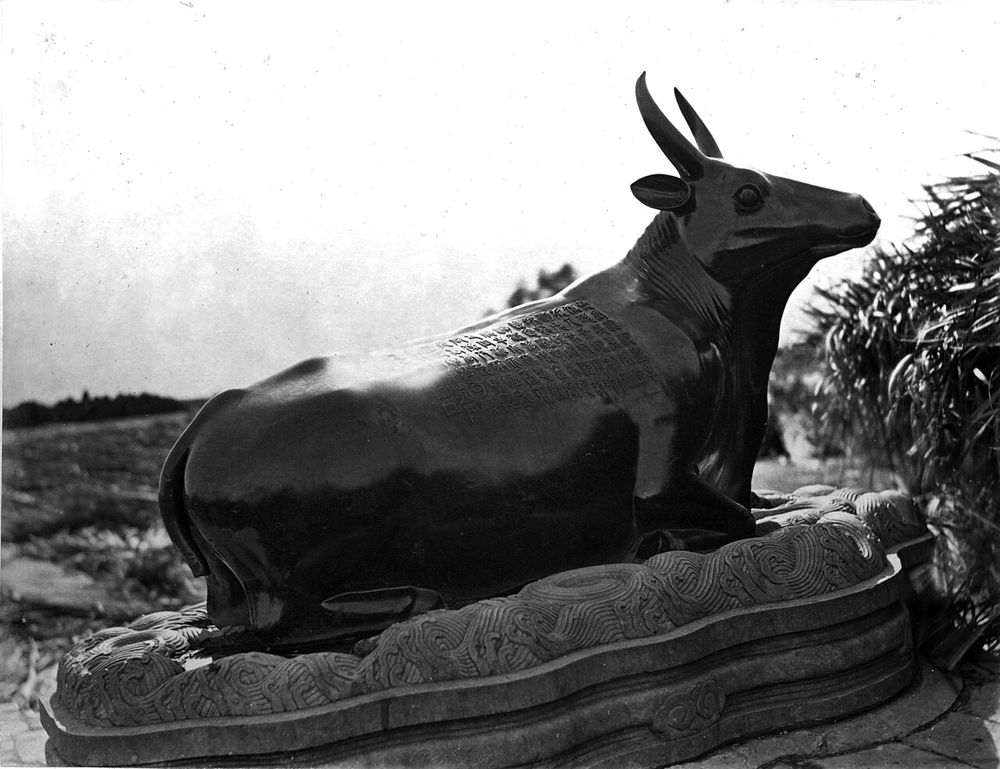
By the east end of the bridge lies a life-size bronze ox, cast for Qianlong to guard the lake against flood. On its back are eighty characters in ancient seal script, written by the emperor.
A little south of the ox, by the Xiuyi Bridge where boats from the city entered the lake, stands a stone carved with poems Qianlong wrote on arriving by water in the summer of 1764. This is the last of four:
绣漪桥过即昆明, 万顷空明意与俱。 已到清凉无暑处, 不妨胜处憩斯须。
Past Xiuyi Bridge, and here is Kunming Lake: ten thousand acres of clear light, and my mind goes with them. I have come to a cool place where summer has no heat. Why not rest a while where the view is best?
The Qianlong emperor, 1764, carved on the stone north of Xiuyi Bridge. English rendering by Timeless Places.
The same story elsewhere
Next door is Yuanmingyuan, the Old Summer Palace, burned in the same days of October 1860. It was never rebuilt and is kept as a ruin. Seeing both in one day shows two answers to the same loss.
West Lake in Hangzhou is the original. If you have been there, look for what was copied: the dike with six bridges, the island, the pagoda on the far hill.
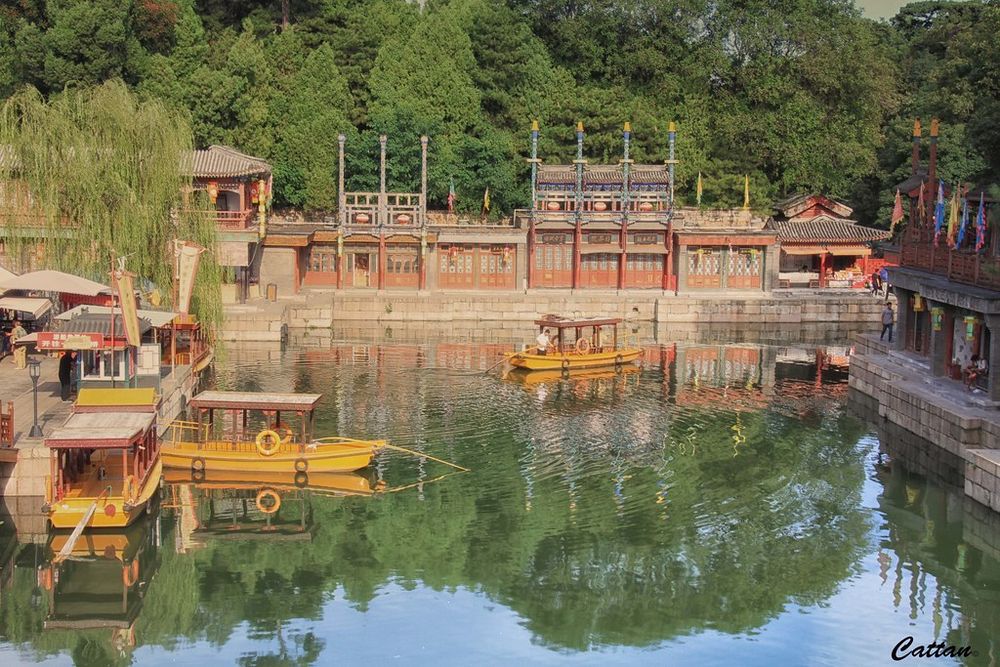
Behind the hill, on the back lake, is Suzhou Street, a row of shops along a canal in the style of the southern water towns. Eunuchs played the shopkeepers, and the emperor and his family played at shopping.
The year to remember
In 1888, the year the garden got its new name, China's modern Beiyang Fleet was formally established. Six years later Japan destroyed it. Whether money meant for the navy went into this garden, and how much, has been argued ever since; see the notes on doubt below.