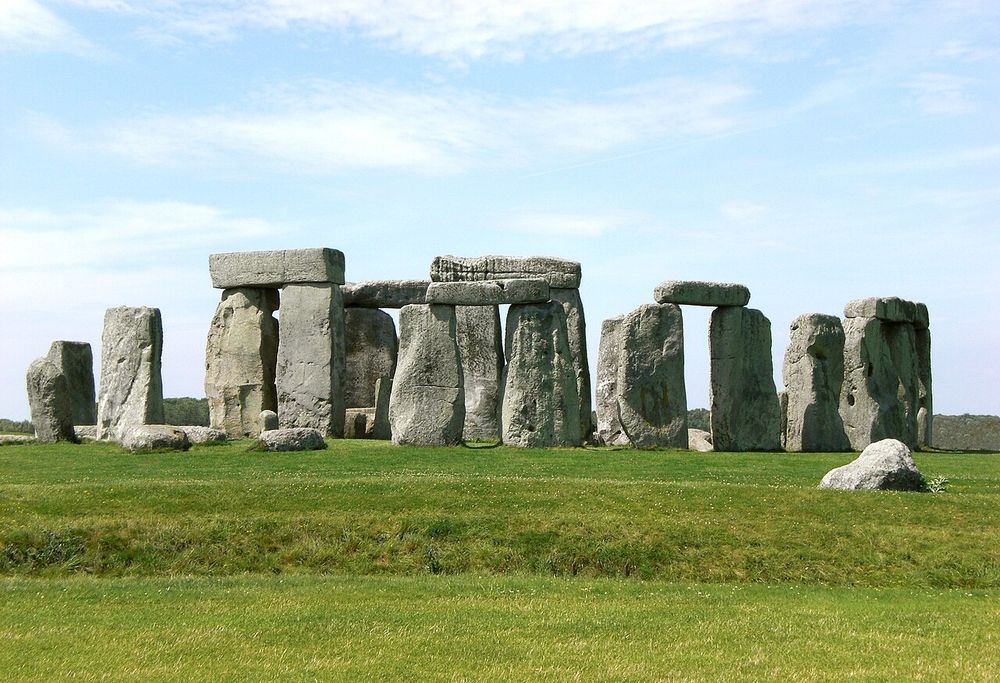
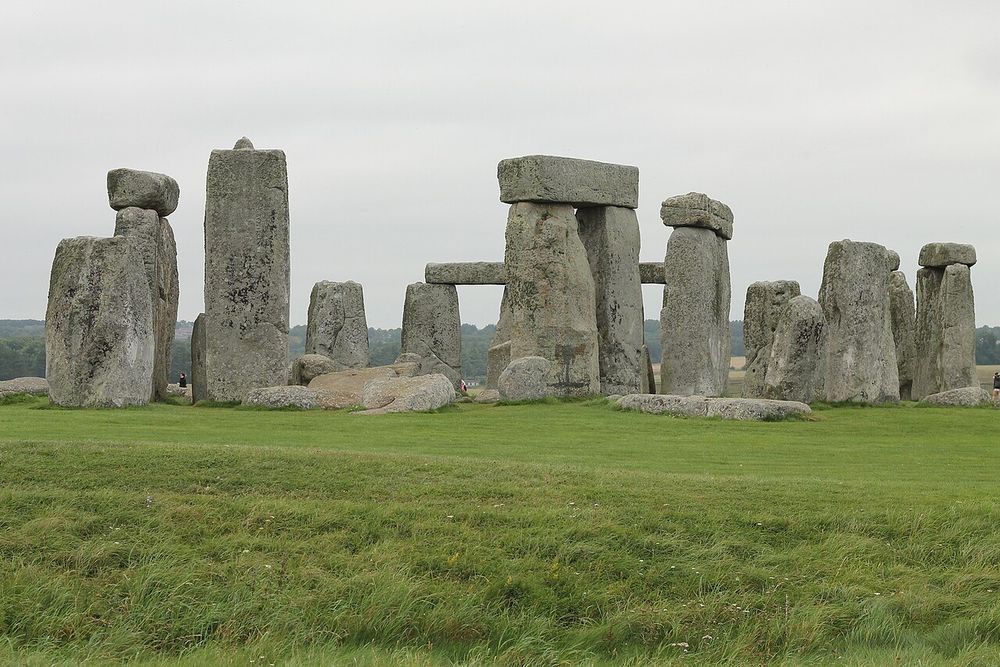
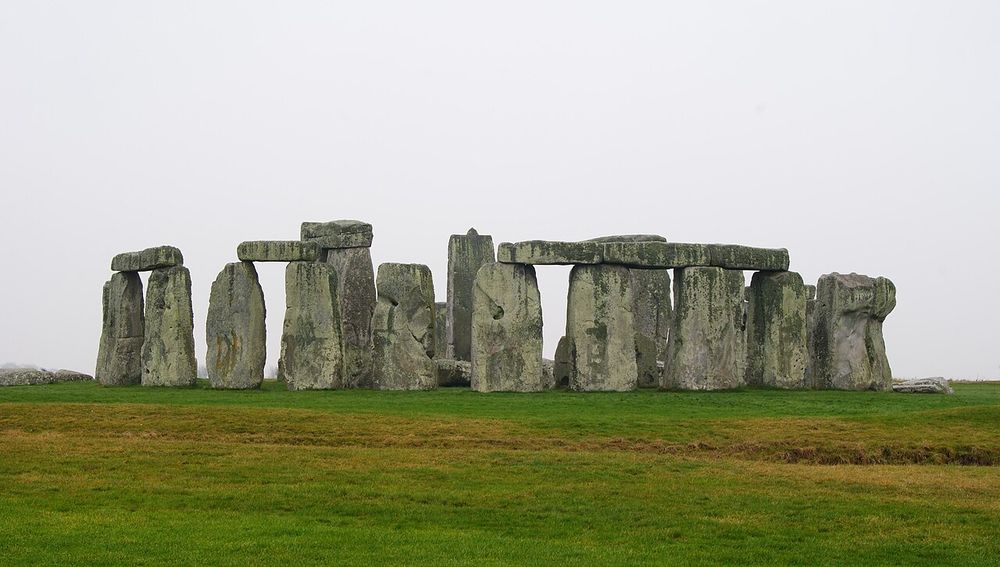
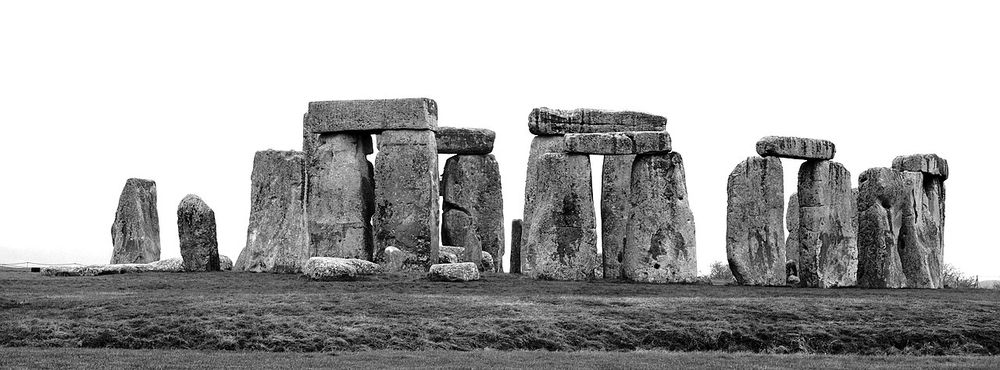
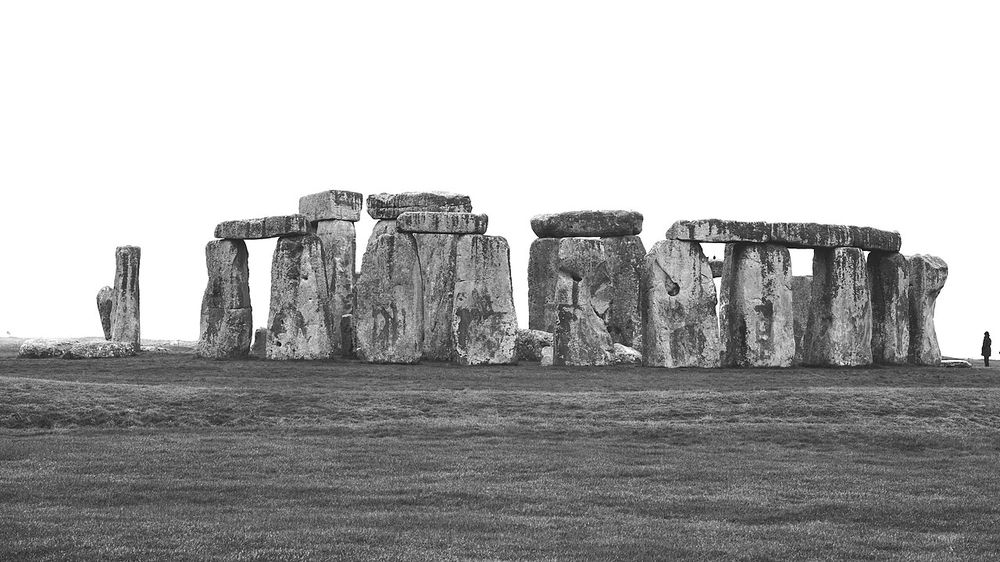
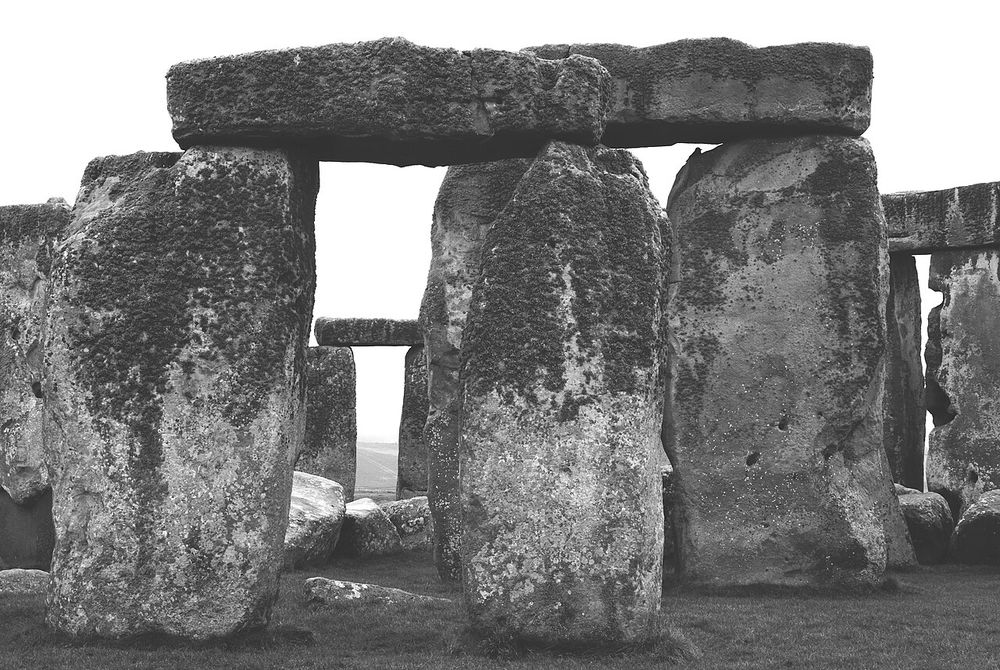
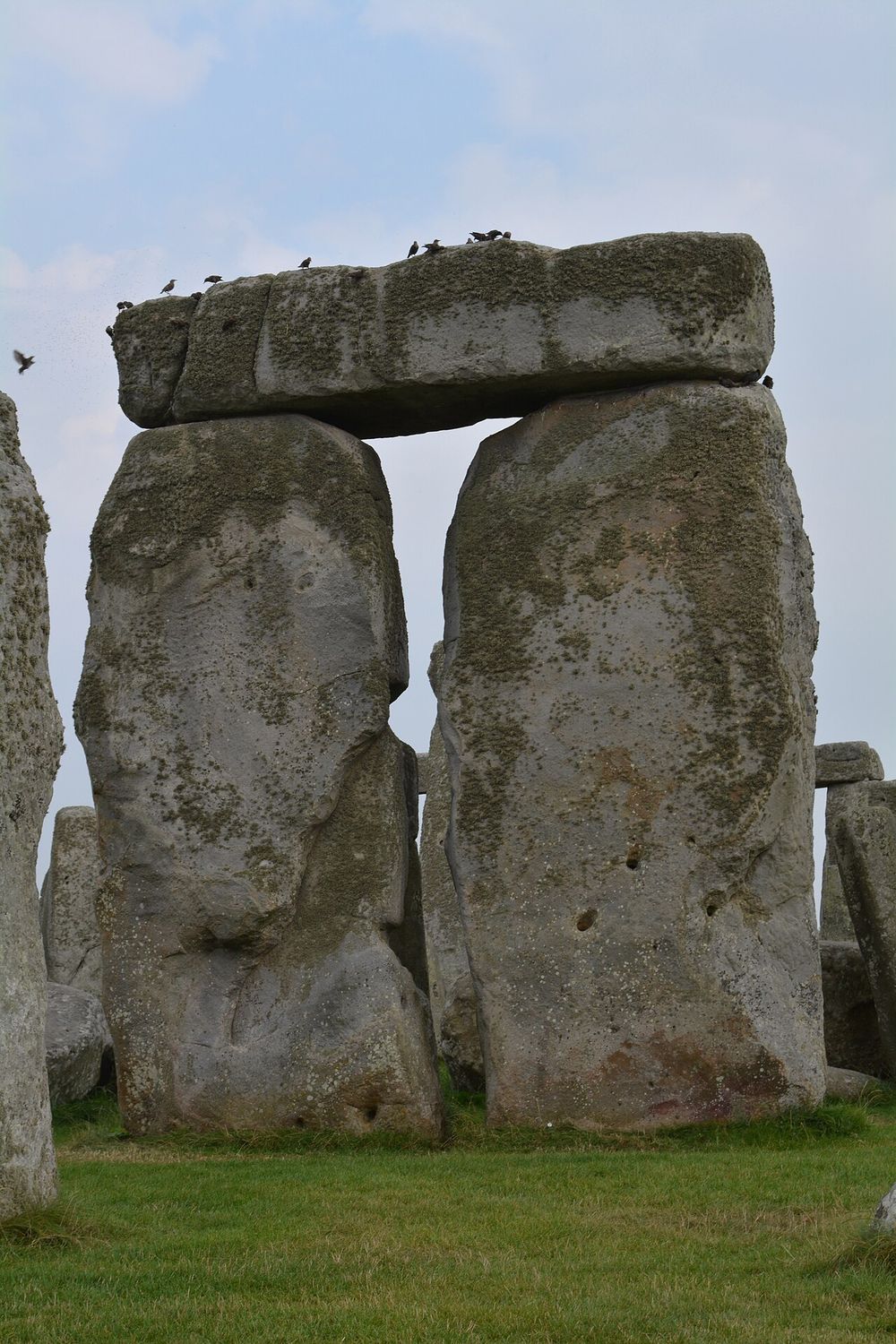
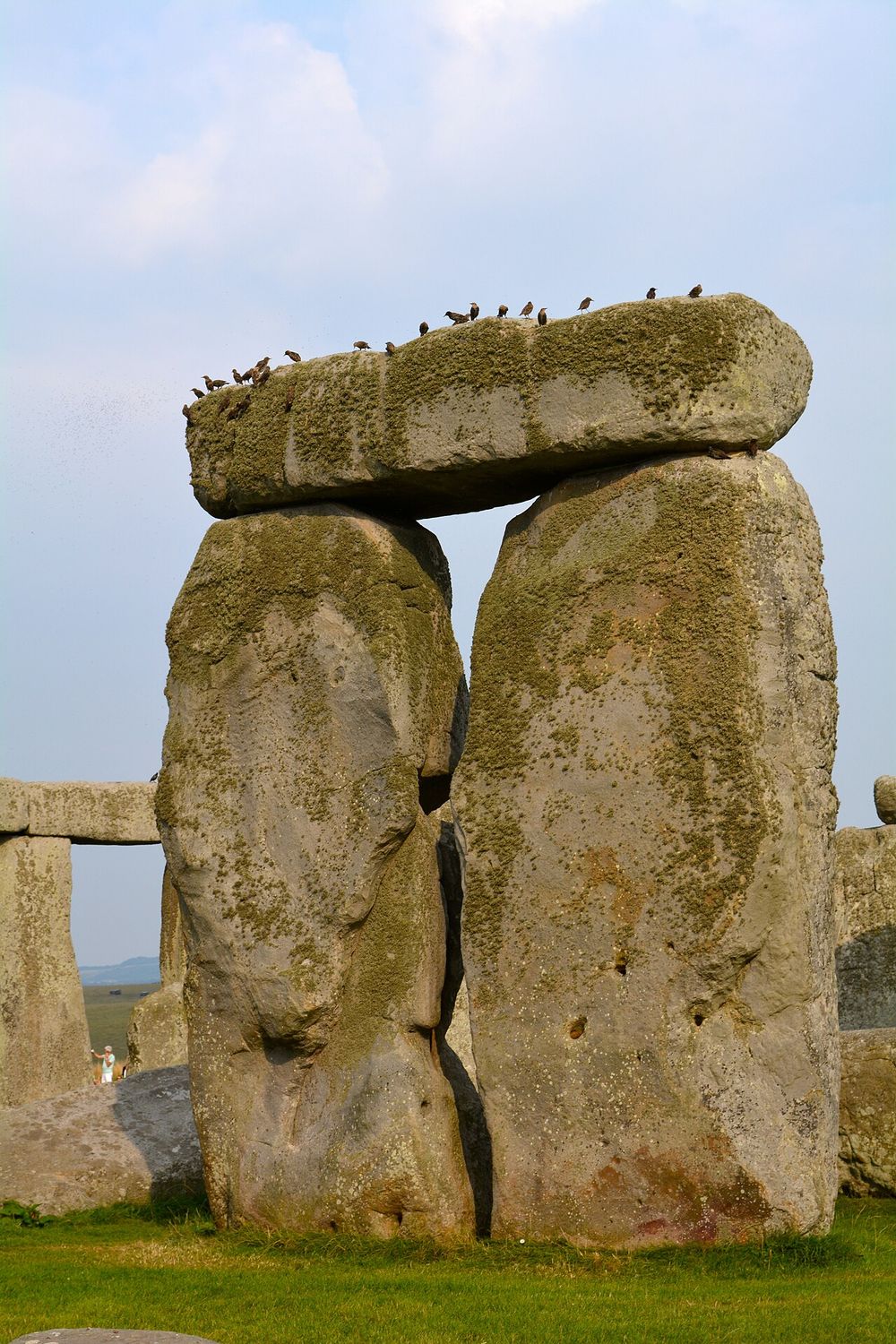
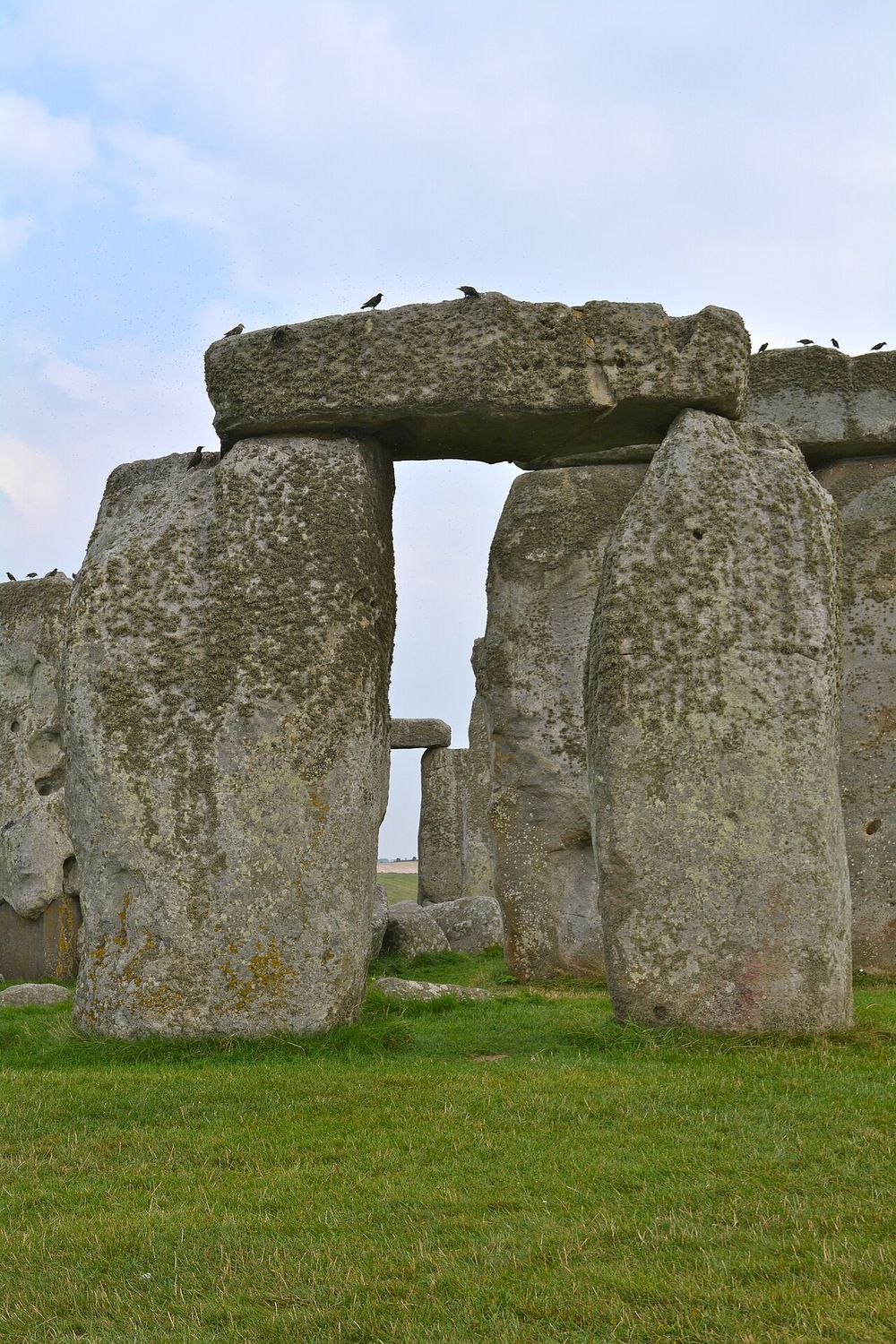
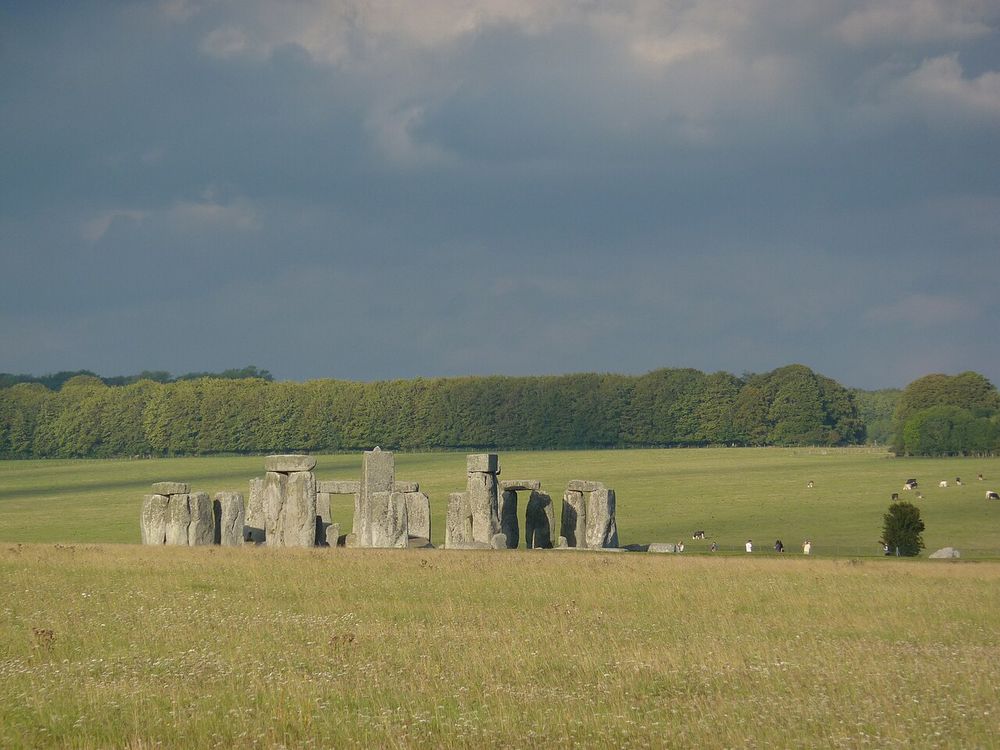
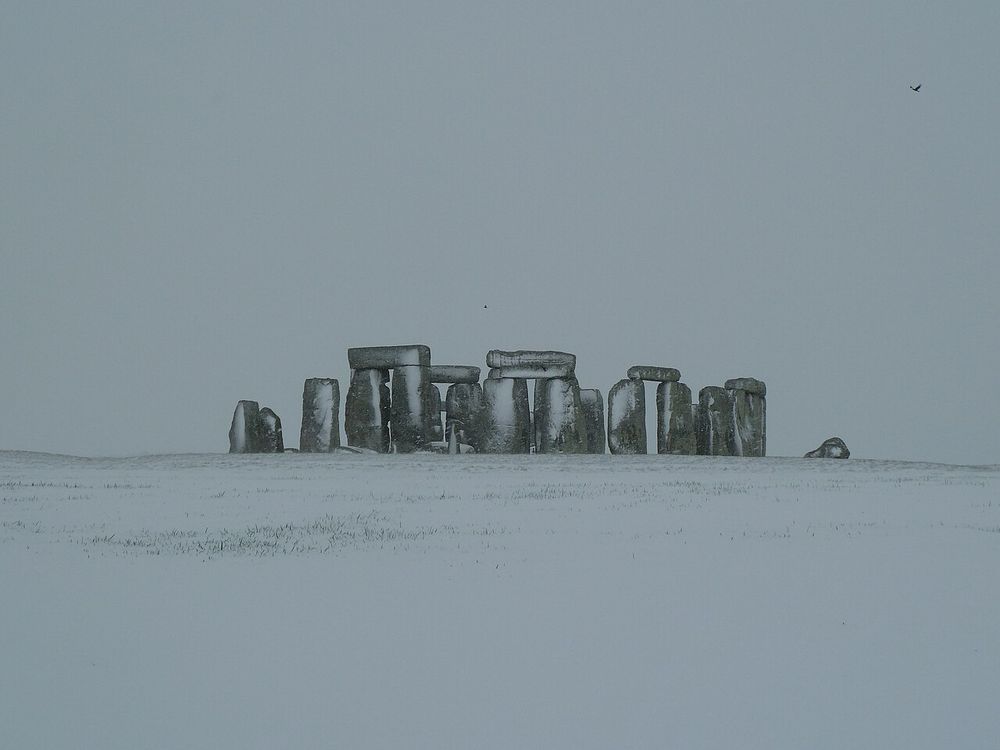
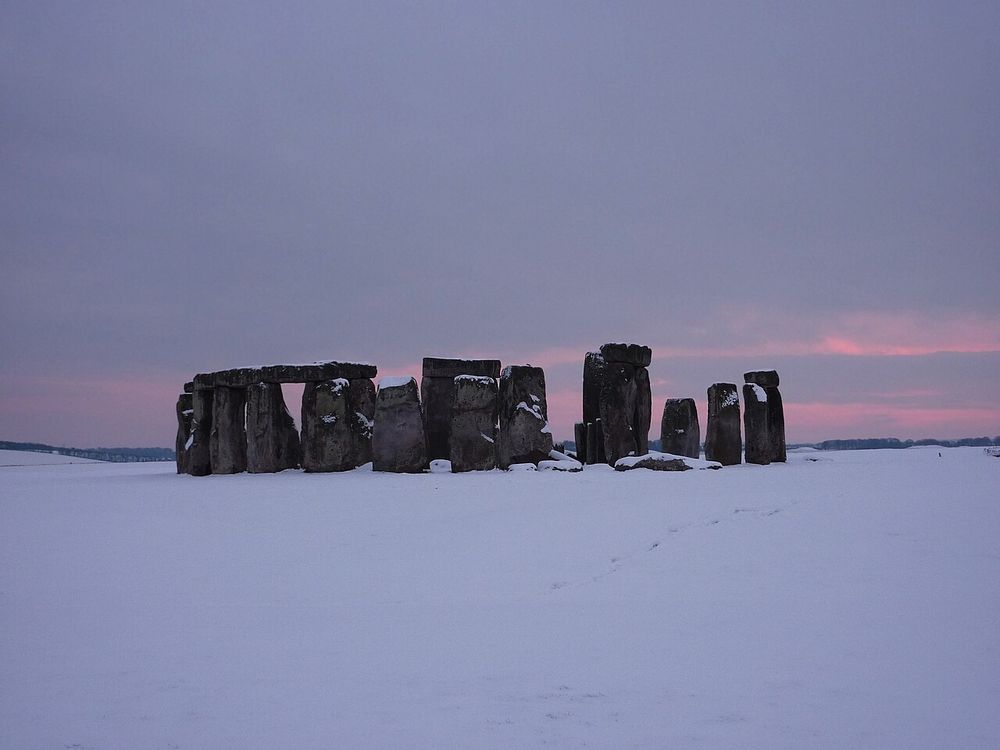
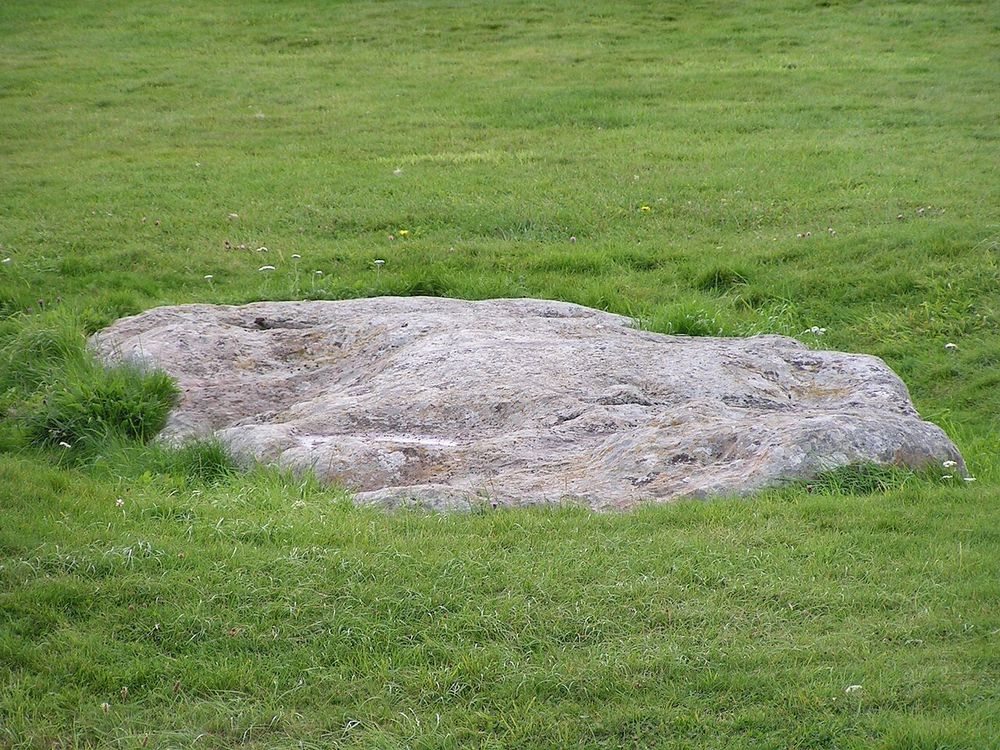
A ring of shaped stones on an open chalk plain, set up about 4,500 years ago by farmers who had no metal and no wheels. The big stones weigh as much as four elephants each and came twenty-five kilometres. The small ones came from Wales, 240 kilometres away. The whole thing is lined up on the sunrise of the longest day and the sunset of the shortest.
Photo: Perituss, CC0, Wikimedia Commons
The story
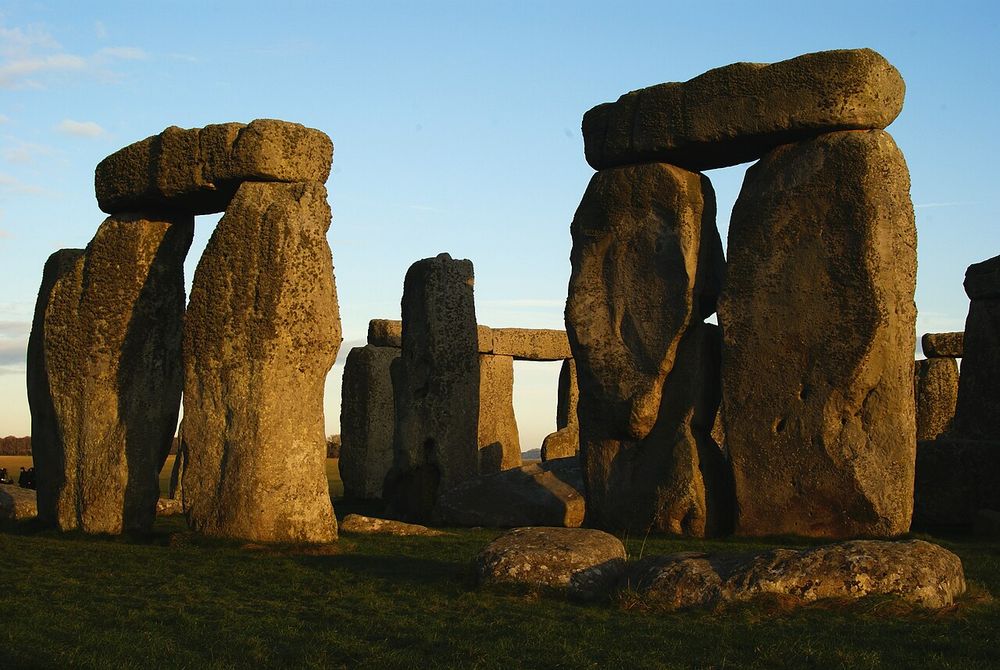
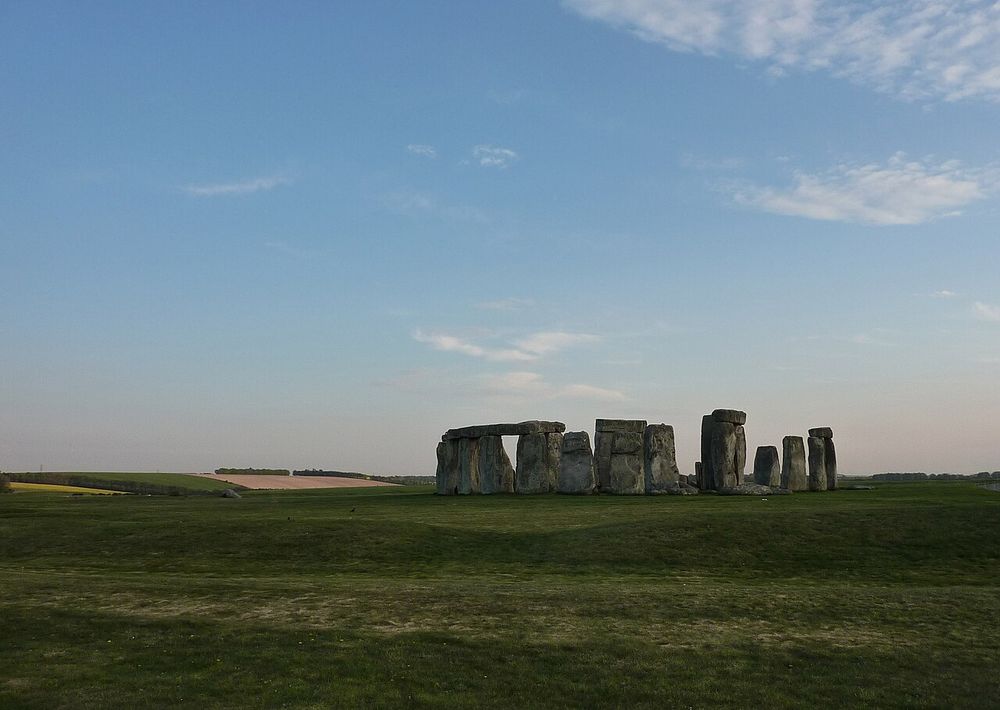
You are on a wide, bare, rolling plain of grass, with a big sky and almost no trees. Ahead, on a low rise, is a cluster of grey stones, smaller than you expected and oddly neat. As you come nearer they grow. The tallest are as high as a two-storey house. Some stand in pairs with a third stone laid flat across the top.
The big stones were raised about 2500 BC. In Egypt, in the same lifetime, the Great Pyramid was being built. In China, on the lower Yangtze, the people of Liangzhu were ruling a walled city and carving jade.
What is here
One ticket covers the exhibition, the huts, the shuttle bus and the walk round the stones.
Separate booking with English Heritage; price not checked
If you have one minute
On the path
The circle from the pathOperarius, CC BY 3.0
It began five hundred years before the stones, about 3000 BC, as a round ditch and bank a hundred metres across, dug with picks made of deer antler. People buried the burnt bones of their dead inside it. It is one of the largest burial grounds of its time in Britain.
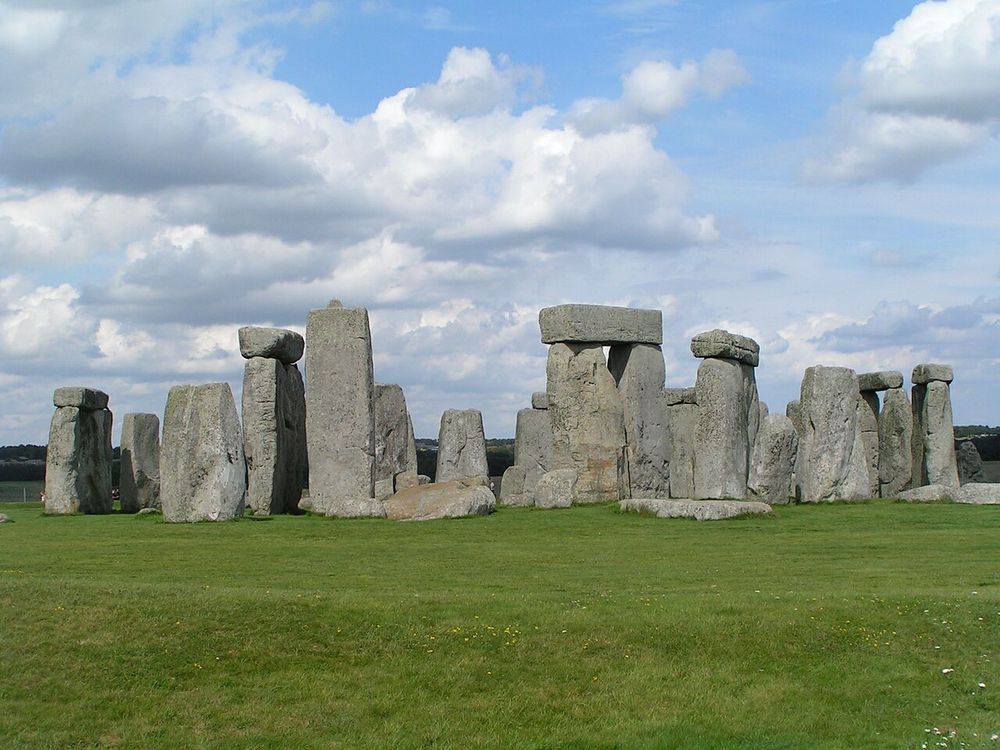
About 2500 BC the stones were brought. There are two kinds. The large grey ones are a hard sandstone called sarsen, from hills to the north. The small dark ones, called bluestones, are from the mountains of west Wales. They were moved and rearranged several times over the next thousand years.
Nobody wrote anything down. What it was for is argued from what was dug up: a place for the dead, a place to mark the turn of the year, and a place where people from the whole island gathered.
Things people often get wrong
"The Druids built it." The Druids were priests of about two thousand years later. Two scholars of the 1600s and 1700s linked them to the stones, and the idea has never gone away.
"It is as its builders left it." About half the stones are gone. Many of those standing were straightened or put back up between 1901 and 1964, and are set in concrete.
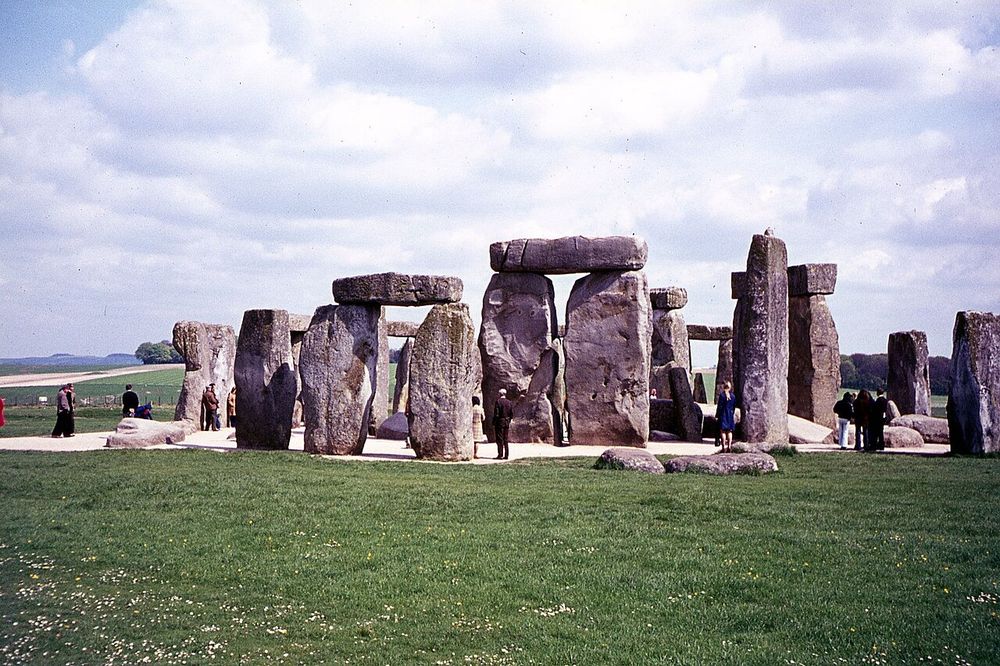
"You can walk among the stones." Not since 1978. You walk round them on a path, a few metres away at the nearest point.
"It was built for the midsummer sunrise." The same line points the other way at the midwinter sunset. The pig bones from the builders' feasts show that they gathered in winter.
People who stood here
Charles Darwin (English naturalist, author of On the Origin of Species)In June 1877, aged sixty-eight, he came with his family and had a hole dug beside a fallen stone. He wanted to measure how far earthworms had buried it. The answer went into his last book, which is about worms.
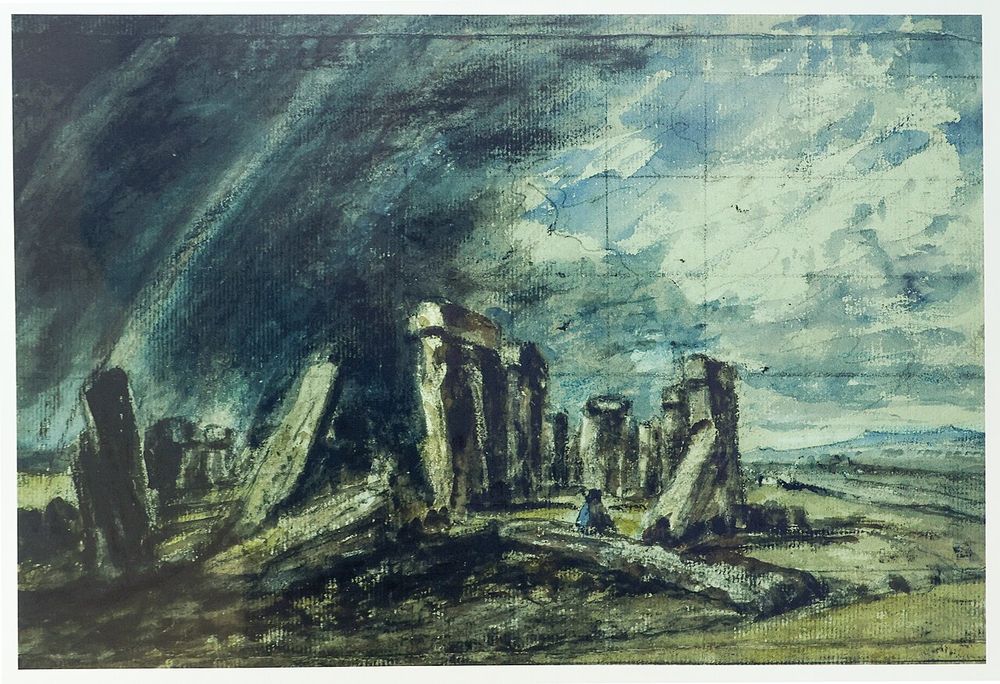
John Constable (English painter)He came once, in July 1820, and made a pencil sketch. Fifteen years later, a widower, he worked it up into a watercolour with a double rainbow over the stones. He may have sat on the grass very near where the path now runs.
Thomas Hardy (English novelist, author of Tess of the d'Urbervilles)He lived a day's ride away and knew the stones well. In his novel of 1891 the hunted heroine reaches them in the dark, lies down to sleep on a fallen slab, and is arrested there as the sun comes up.
Go deeper: eight stops, from the huts to the fallen stones
The visit starts two kilometres from the stones, at the visitor centre, and ends with a slow circle round them. Allow two to three hours.
1. The huts
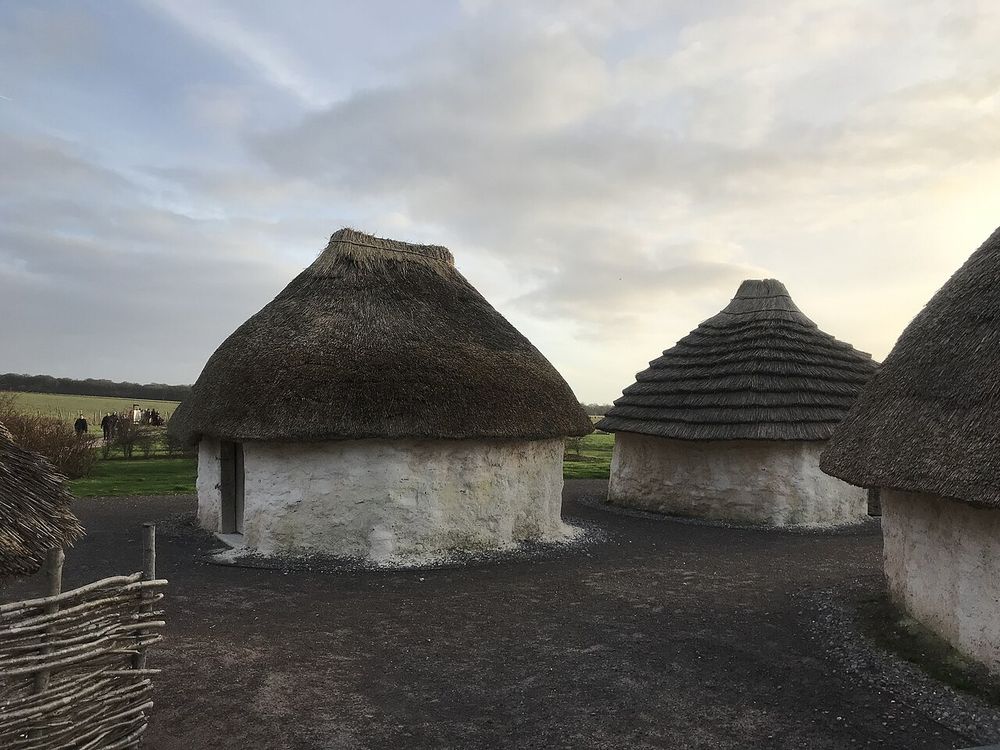
Copies of the builders' housesMoonraker, CC BY-SA 3.0
Behind the visitor centre are five round houses with chalk walls and thatched roofs. They are copies of houses dug up three kilometres away, at a settlement where the builders are thought to have lived. Each has one room, a hearth in the middle and a bed-box against the wall.
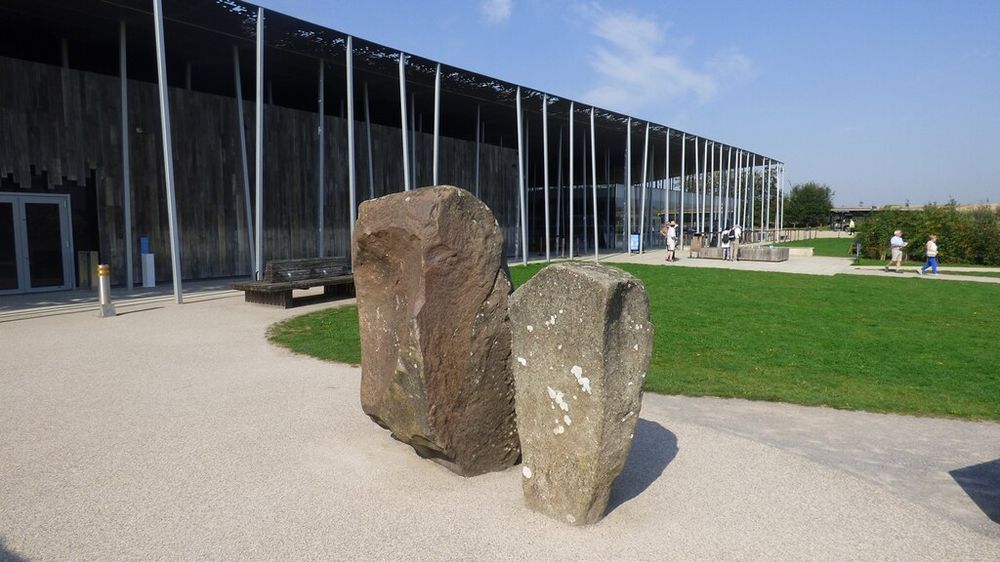
A bluestone and a sarsen at the visitor centreSandy Gerrard, CC BY-SA 2.0
Near the door stand a bluestone and a sarsen, so that you can see the two kinds side by side. Further on, a full-sized copy of a big stone lies on a wooden sledge. In 2016 students in London found that ten people could pull a one-tonne stone on such a sledge at more than a kilometre and a half an hour.
2. The plain
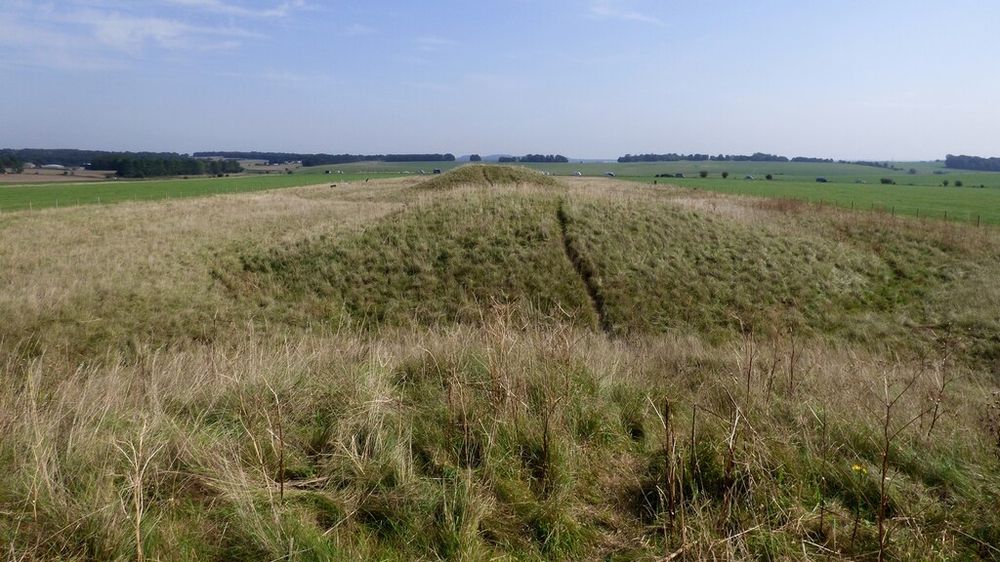
Burial mounds on the skylineSandy Gerrard, CC BY-SA 2.0
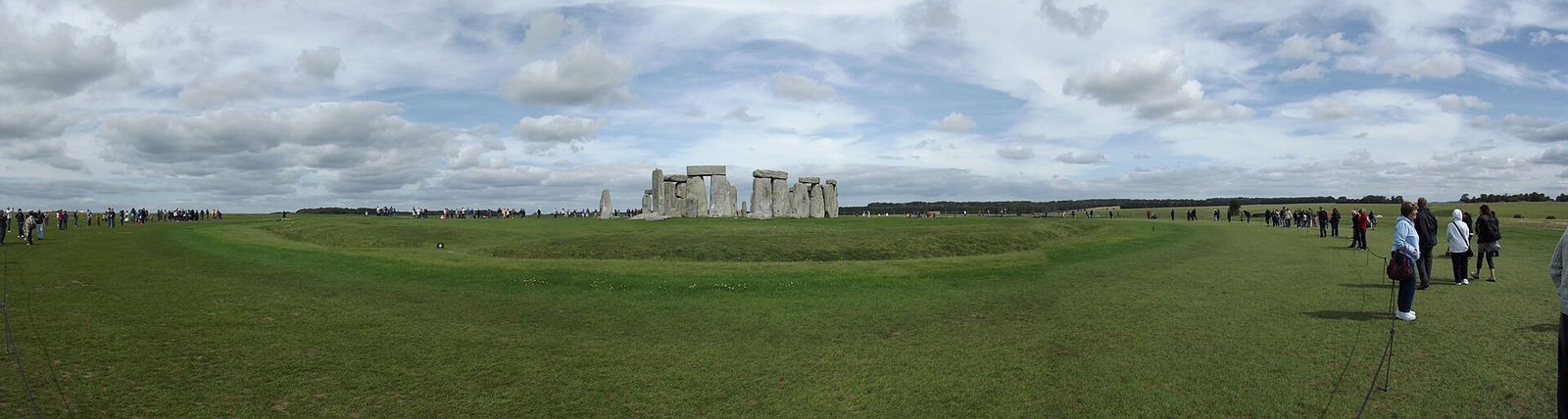
A shuttle bus runs to the stones, but if you can, walk. The low round mounds on the skyline are graves of chiefs buried a few centuries after the stones went up, with gold and bronze beside them. More than three hundred lie within a few kilometres. Many were placed on ridges in view of the stones.
Nothing here is natural forest cleared for the monument. The plain was already open grassland when the first ditch was dug.
3. The ditch
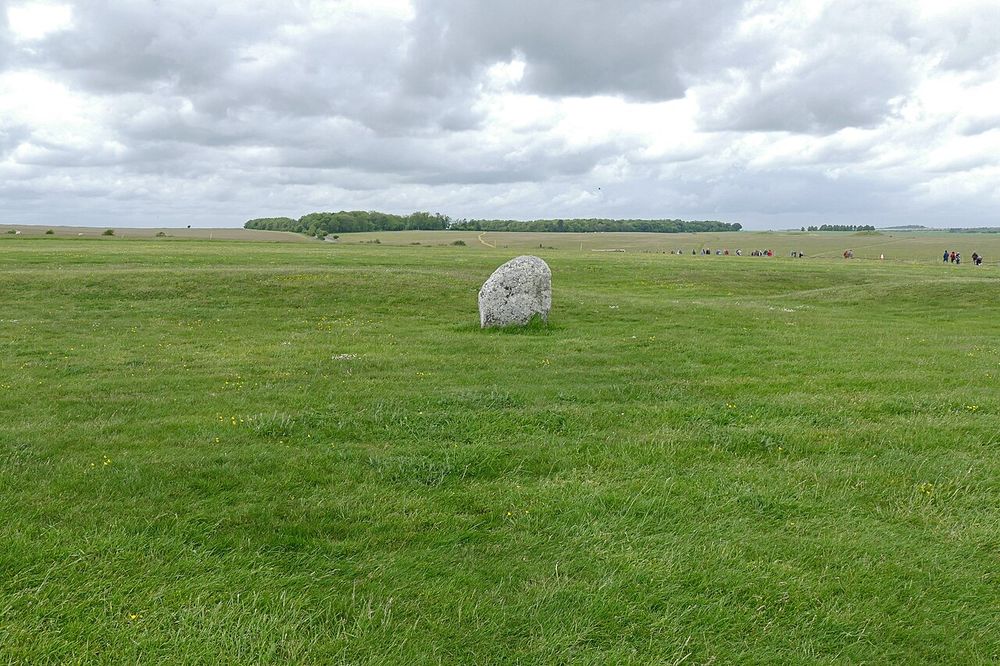
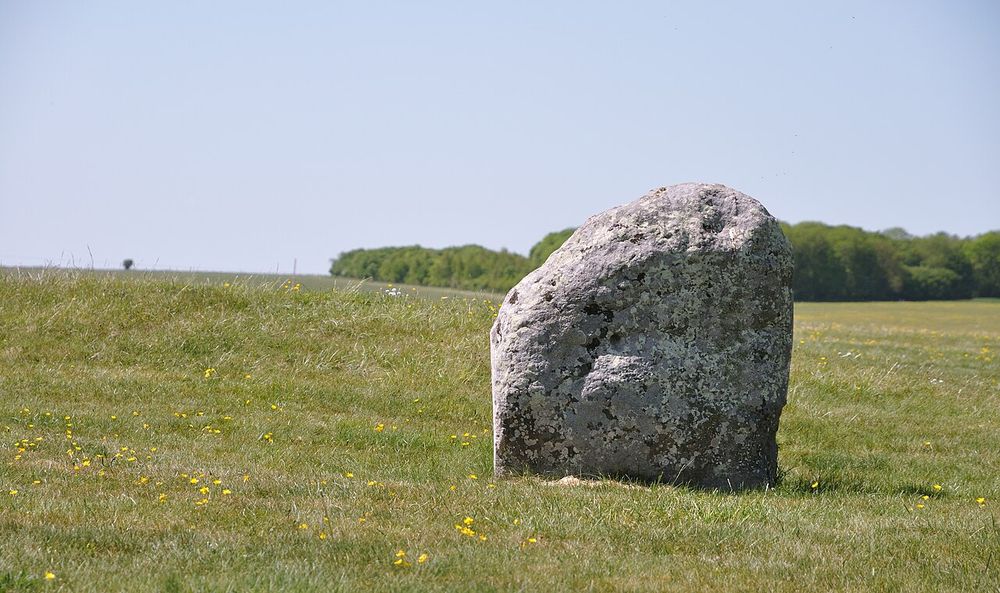
A small outlying stone inside the ditchAlan Hunt, CC BY-SA 2.0
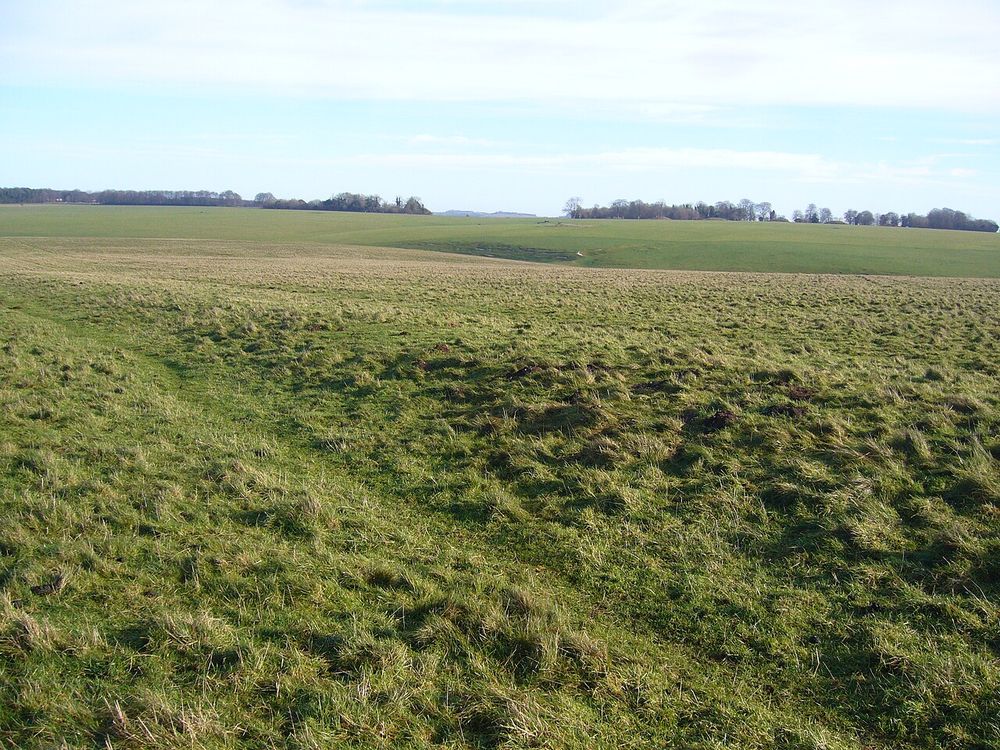
Before you reach the stones you cross a shallow dip and a low ridge in the grass. This is the first Stonehenge, the ring of about 3000 BC. Just inside it, white discs in the turf mark a circle of fifty-six pits. Many held burnt human bone.
The bones belonged to men, women and children. Tests on their teeth published in 2018 show that several had spent their last years in west Wales, where the small stones come from.
4. The heel stone
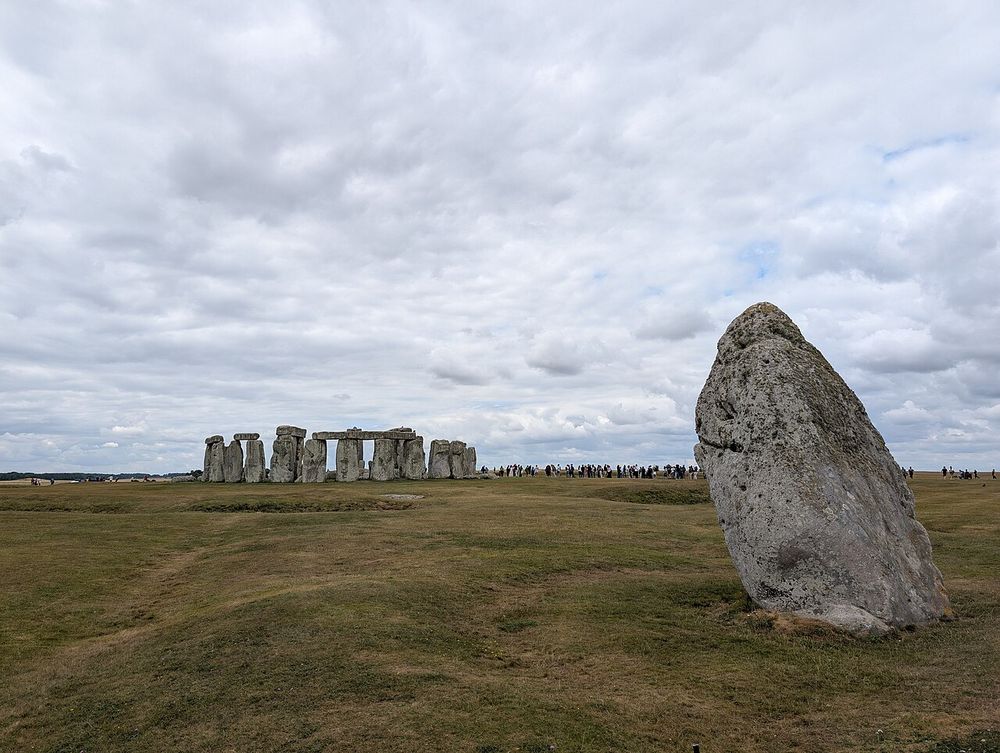
The heel stone with the circle behindAndy Li, CC0
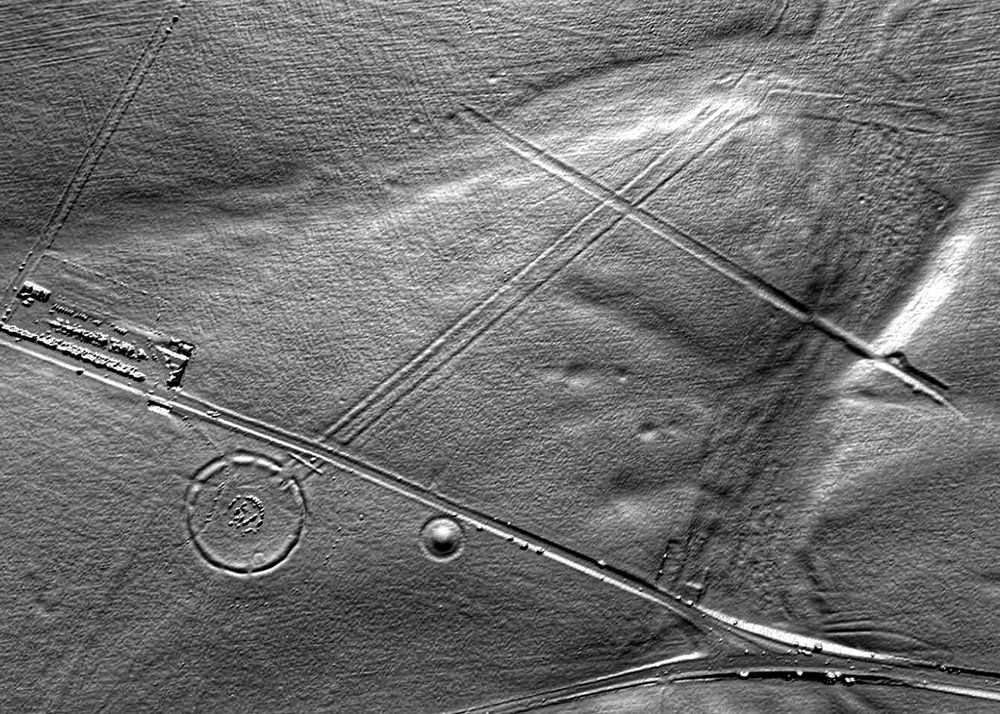
Outside the ring, beside the path, a rough unshaped boulder leans towards the circle. It weighs about thirty tonnes. From here two faint parallel banks run away downhill across the field. They are the sides of a processional road that goes three kilometres to the river.
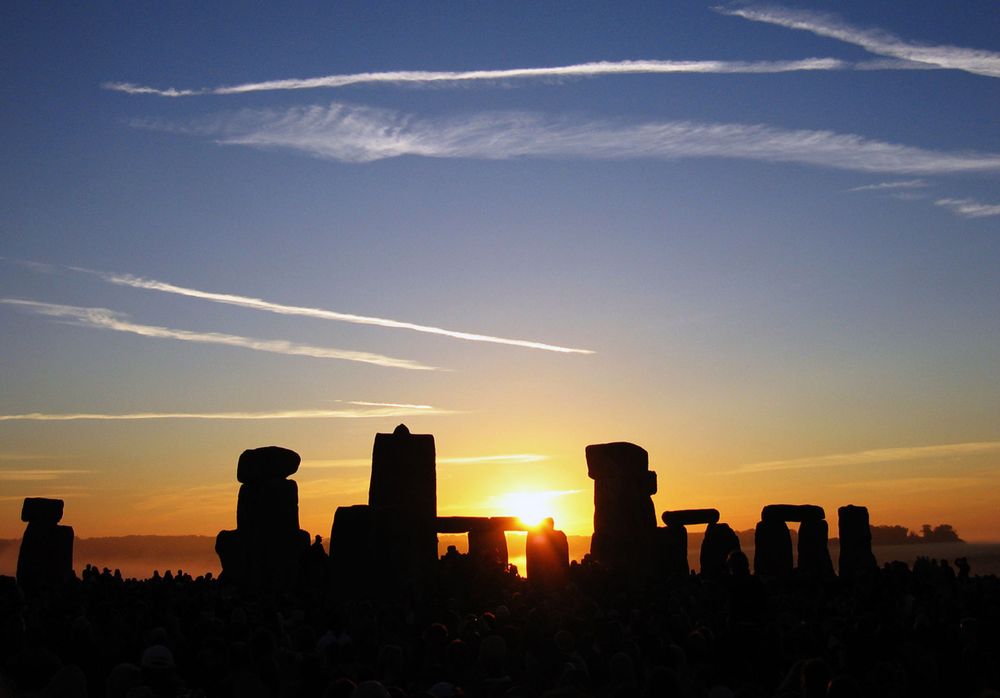
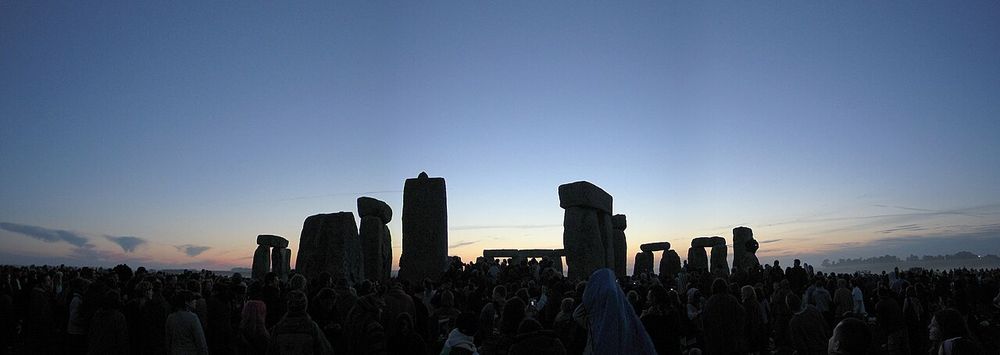
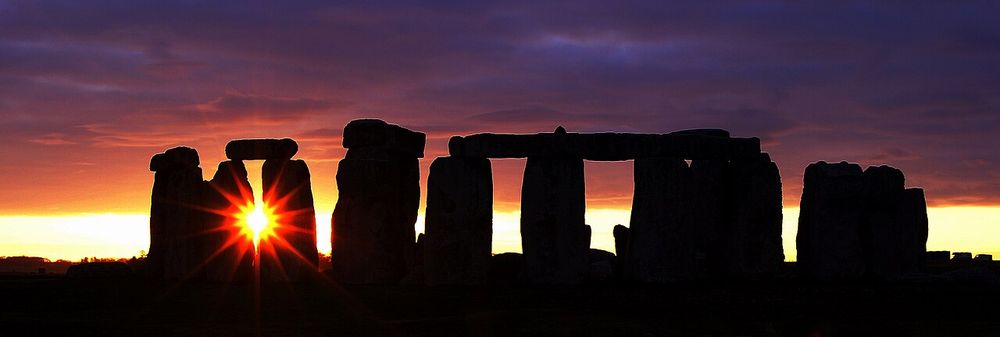
Stand with the boulder behind you and look through the stones. You are on the line. On the longest day the sun comes up behind you, just beside the boulder. On the shortest day it goes down in front of you, where the tallest pair of uprights once stood.
5. The ring
Caps still in place on the outer ringTobyEditor, CC BY 4.0
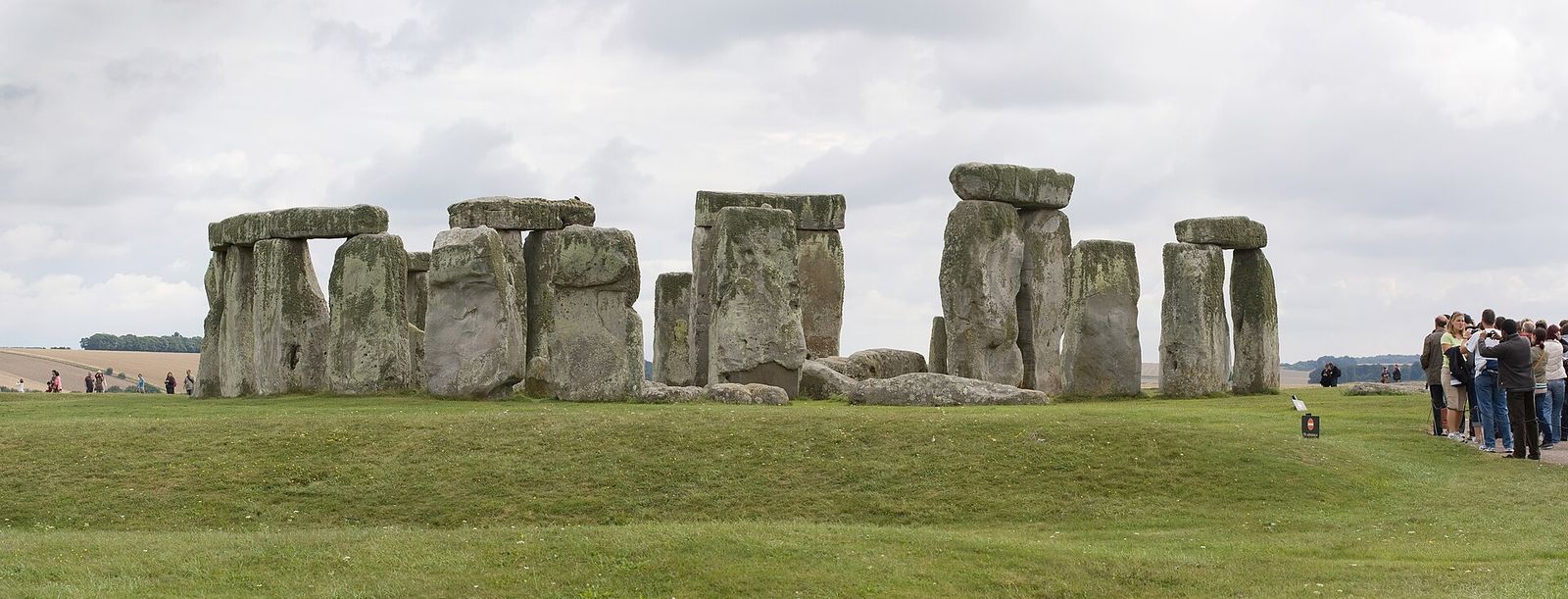
The outer circle had thirty uprights, each about four metres high and twenty-five tonnes, with thirty flat stones across the top making an unbroken ring. Seventeen uprights stand today.
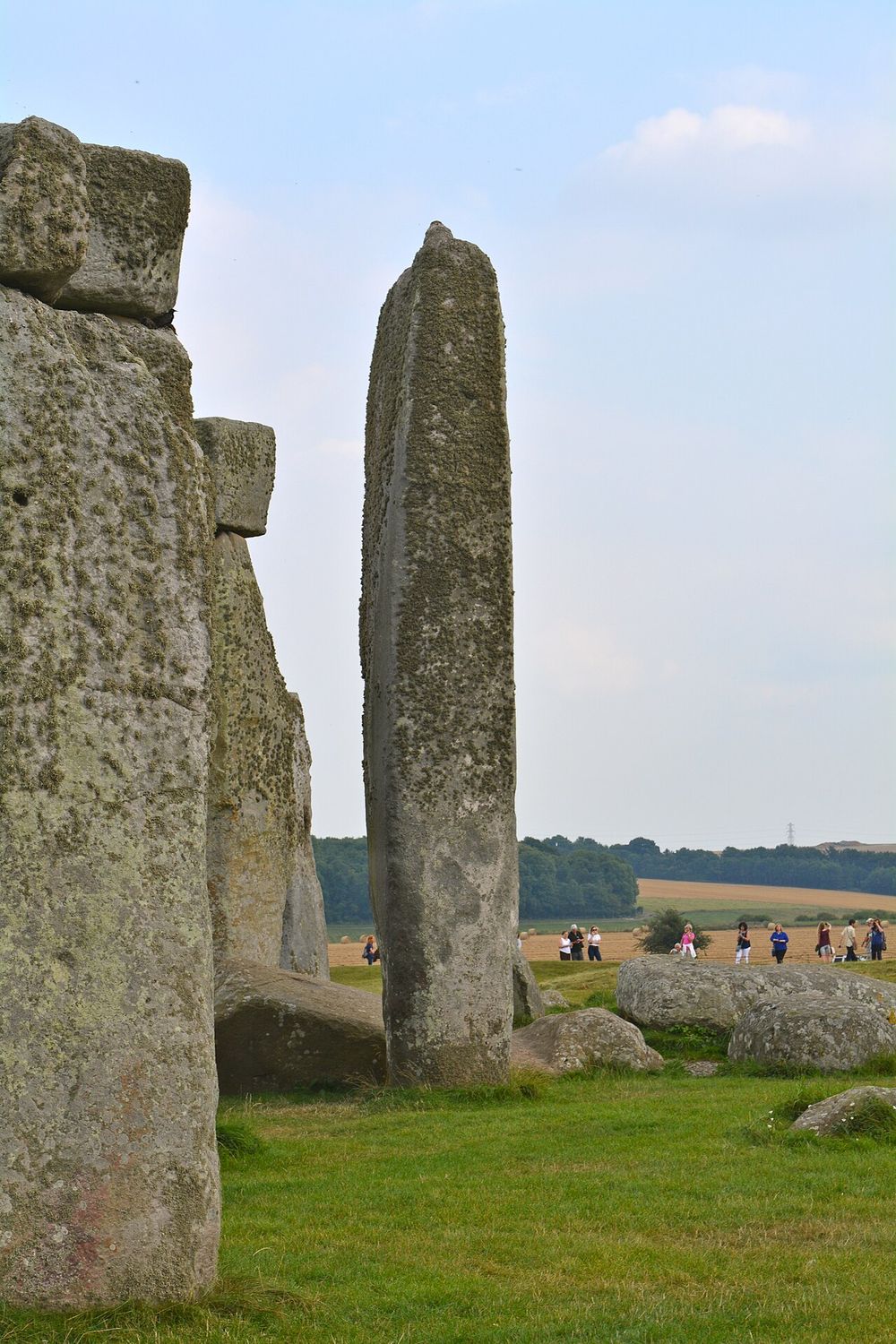
The tallest stone, with the knob on its topTobyEditor, CC BY 4.0
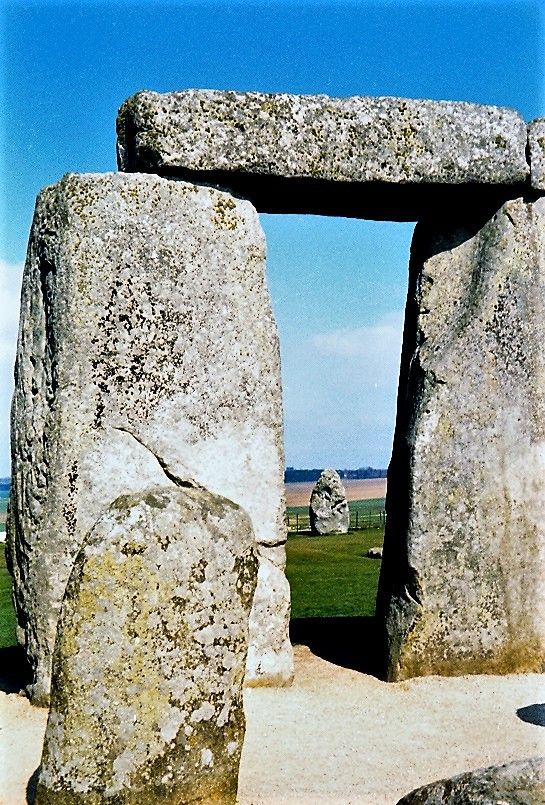
Look at the top of an upright that has lost its cap. There is a knob of stone, as on a child's building brick. The cap had a hollow to fit it. The caps were also cut with a tongue at one end and a groove at the other, to lock into each other. These are a carpenter's joints, made in stone with stone hammers.
The ground slopes, but the ring of caps was level to within a hand's width all the way round. Each cap is also slightly curved, to follow the circle.
6. The great pairs
The great doorways in evening lightPeter Trimming, CC BY-SA 2.0
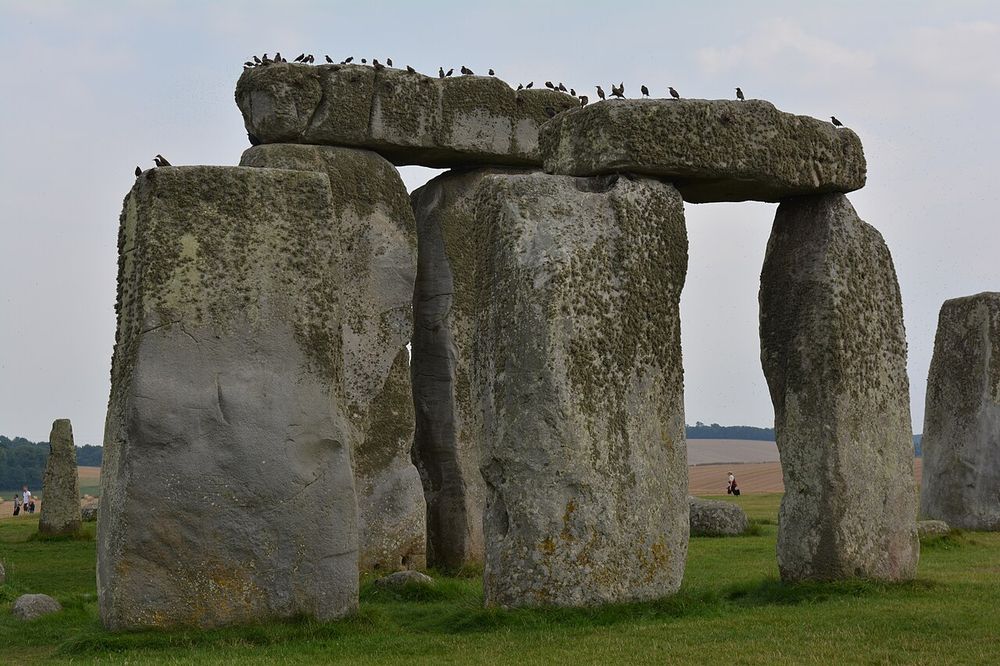
Inside the ring stood five giant doorways, each of two uprights and a cap, arranged in a horseshoe open towards the heel stone. Three are complete. They rise in height towards the back.
The tallest stone on the site is one upright of the biggest doorway. It stands nearly seven metres above the grass, with more than two metres in the ground. Its partner fell and broke long ago. The knob on its top is the easiest to see.
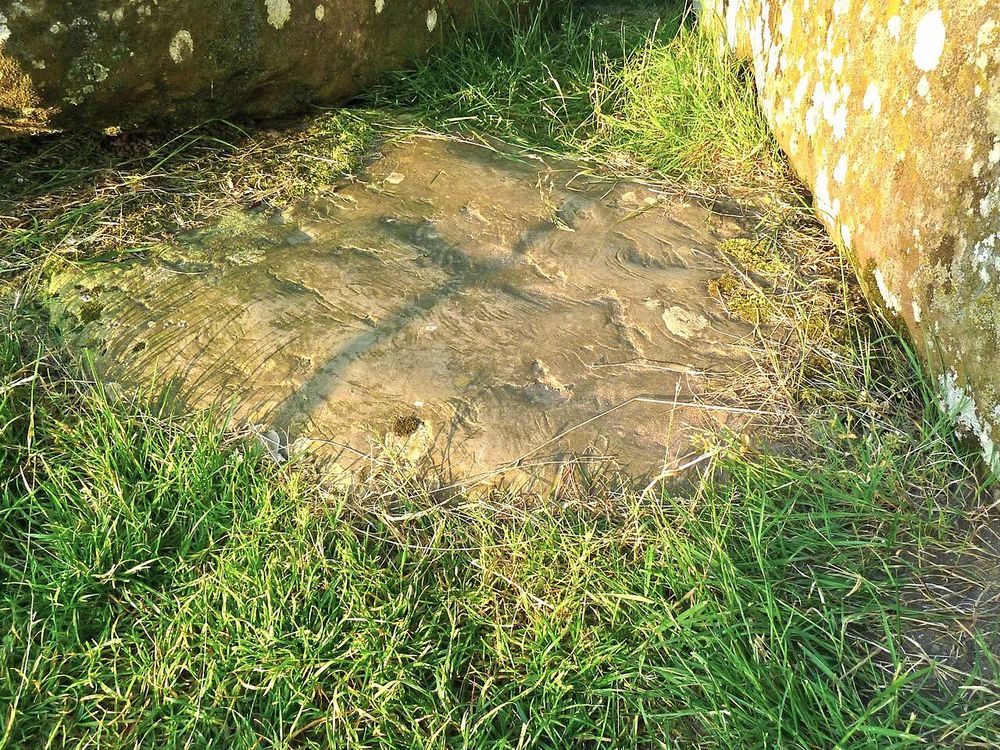
On one upright, low down, Bronze Age visitors carved the outlines of axe-heads and a dagger. A laser scan in 2011 found more than a hundred. You cannot see them from the path.
7. The small stones
The stones from the southTobyEditor, CC BY 4.0
Between and inside the big stones are smaller ones, shoulder-high, dark and of several shapes. These are the bluestones. Geologists have matched them to particular crags in the hills of west Wales. Each weighs two to five tonnes, and about eighty were brought.
Lying flat in the centre, under a fallen giant, is a single slab of greenish sandstone of six tonnes. In 2024 its minerals were traced to the far north-east of Scotland, about 750 kilometres away. No one knows how it came.
8. The fallen and the mended
The whole group under a summer skyStefan Kühn, CC BY-SA 3.0
Over the centuries stones have fallen, and some have been taken away for building. One great doorway fell in 1797. An upright and its cap came down in a storm on the last day of 1900.
After that the engineers came. Between 1901 and 1964 leaning stones were pulled upright, fallen ones were lifted back, and most were bedded in concrete. The doorway that fell in 1797 was put up again in 1958.
In 1915 the whole monument was sold at an auction in Salisbury, as one lot among fields and farms. A local man, Cecil Chubb, bought it for 6,600 pounds. Three years later he gave it to the nation.
Meanwhile in the world
Year
Here
Elsewhere
about 3000 BC
The ditch is dug; the dead are buried in it
The Liangzhu people build dams and a walled city near today's Hangzhou
about 2500 BC
The stones are set up
The Great Pyramid is built in Egypt; the Longshan cultures in northern China
about 1500 BC
The last changes are made
The early Shang dynasty in China (about 1600–1046 BC) casts bronze vessels
about 1130
The name is first written down
The first years of the Southern Song (1127–1279)
1620
A king has the centre dug to see what is there
The Wanli emperor of the Ming dies after forty-eight years on the throne
1797
A great doorway falls
The Qianlong emperor has abdicated but still rules; Napoleon is fighting in Italy
1915
Sold at auction for 6,600 pounds
The fourth year of the Republic of China; the First World War
1986
Made a World Heritage Site
A year before China's first six sites, among them the Great Wall, are listed
Then and now
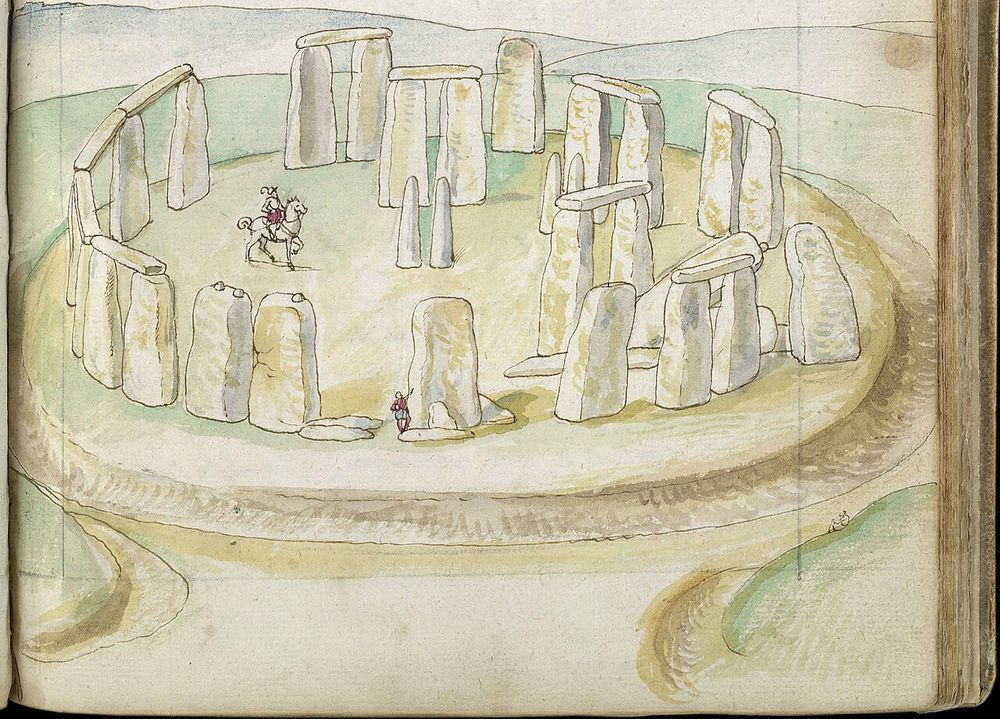
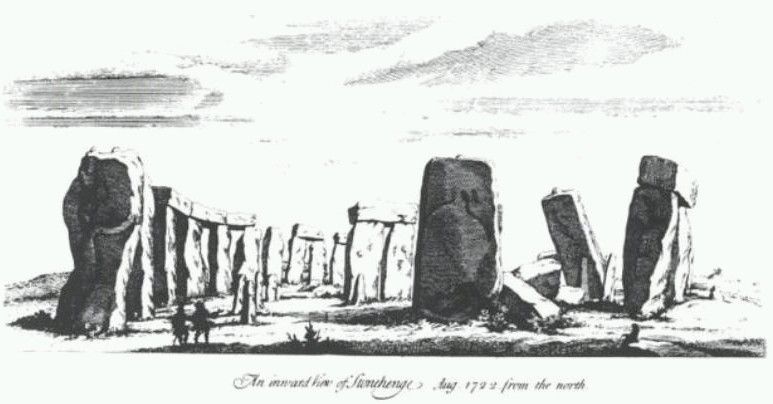
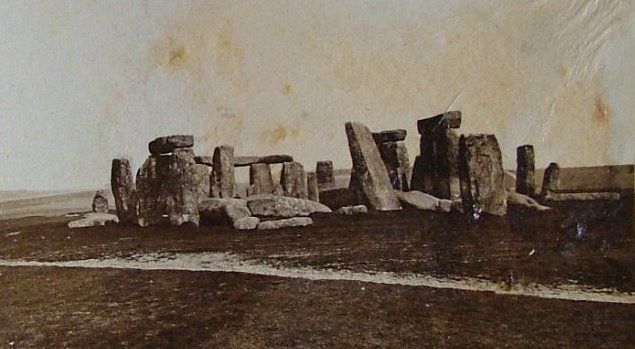
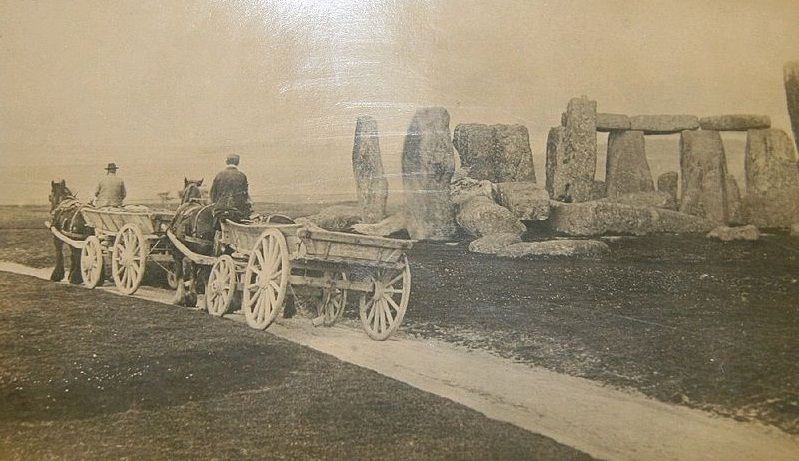
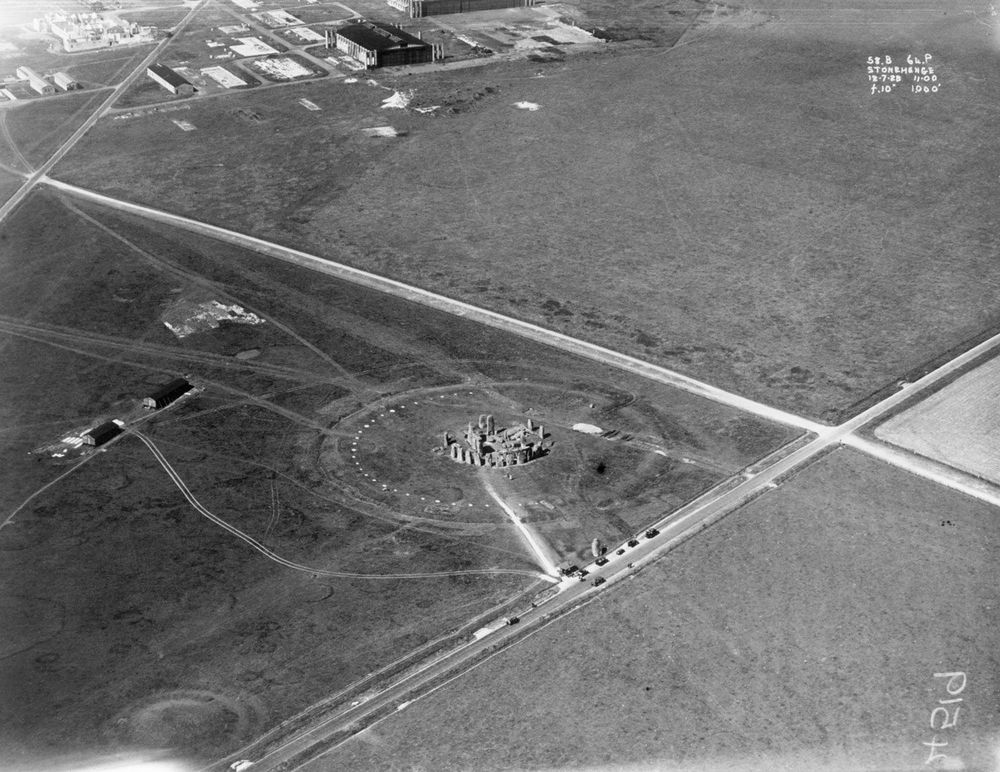
The stones from the northJulie Anne Workman, CC BY-SA 3.0, Wikimedia CommonsThe plain, with the stones small in the middleDerek Jensen, CC BY 2.0, Wikimedia CommonsThe circle from the pathOperarius, CC BY 3.0, Wikimedia CommonsThe stones from the southTobyEditor, CC BY 4.0, Wikimedia CommonsBig stones and small ones togetherRedNovember82, CC BY-SA 3.0, Wikimedia CommonsThe whole group under a summer skyStefan Kühn, CC BY-SA 3.0, Wikimedia CommonsThe ring on a grey dayPeter Trimming, CC BY-SA 2.0, Wikimedia CommonsThe stones in black and whitePeter Trimming, CC BY-SA 2.0, Wikimedia CommonsThe stones on the bare plainPeter Trimming, CC BY-SA 2.0, Wikimedia CommonsUprights and caps close upPeter Trimming, CC BY-SA 2.0, Wikimedia CommonsCaps still in place on the outer ringTobyEditor, CC BY 4.0, Wikimedia CommonsOne of the great doorwaysTobyEditor, CC BY 4.0, Wikimedia CommonsBirds on a doorwayTobyEditor, CC BY 4.0, Wikimedia CommonsA doorway seen from the sideTobyEditor, CC BY 4.0, Wikimedia CommonsThe tallest stone, with the knob on its topTobyEditor, CC BY 4.0, Wikimedia CommonsThe great doorways in evening lightPeter Trimming, CC BY-SA 2.0, Wikimedia CommonsLong shadows soon after sunriseCbuske46, CC BY-SA 4.0, Wikimedia CommonsSunrise on the longest day, 2005Unknown, CC BY-SA 2.0, Wikimedia CommonsThe stones before dawnUnknown, CC BY-SA 2.0, Wikimedia CommonsThe sun going down through the stones in DecemberPeter Trimming from Croydon, England, CC BY 2.0, Wikimedia CommonsThe circle in clear evening lightAdrian Farwell, CC BY 3.0, Wikimedia CommonsThe stones seen from a track to the southAdrian Farwell, CC BY 3.0, Wikimedia CommonsIn snow, January 2013Simon Banton, CC BY-SA 4.0, Wikimedia CommonsSnow at duskAdrian Farwell, CC BY 3.0, Wikimedia CommonsThe heel stoneDeFacto, CC BY-SA 4.0, Wikimedia CommonsThe heel stone with the circle behindAndy Li, CC0, Wikimedia CommonsA small outlying stone inside the ditchAlan Hunt, CC BY-SA 2.0, Wikimedia CommonsOne of the outlying stonesDietrich Krieger, CC BY-SA 3.0, Wikimedia CommonsA fallen stone by the entrance, stained red by rainStefan Kühn, CC BY-SA 3.0, Wikimedia CommonsThe slab from Scotland, lying under a fallen uprightThe Stones of Stonehenge, CC BY 4.0, Wikimedia CommonsThe banks of the processional roadAshley Columbus, CC BY-SA 3.0, Wikimedia CommonsBurial mounds on the skylineSandy Gerrard, CC BY-SA 2.0, Wikimedia CommonsThe circle and the processional road in a laser survey from the airDr John Wells, CC BY 4.0, Wikimedia CommonsCopies of the builders' housesMoonraker, CC BY-SA 3.0, Wikimedia CommonsA bluestone and a sarsen at the visitor centreSandy Gerrard, CC BY-SA 2.0, Wikimedia CommonsPosts marking a timber circle three kilometres awayEthan Doyle White, CC BY-SA 4.0, Wikimedia CommonsThe oldest known drawing made on the spot, about 1574Lucas de Heere, Public domain, Wikimedia CommonsAn engraving of 1740William Stukeley, Public domain, Wikimedia CommonsConstable's watercolour, 1835John Constable, Public domain, Wikimedia CommonsA photograph of July 1877, before any stone was straightenedEdwin J. Acott, Public domain, Wikimedia CommonsFarm carts on the road beside the stones, about 1885unsigned, Public domain, Wikimedia CommonsFrom the air in 1928, with an airfield beside itRoyal Air Force, Public domain, Wikimedia CommonsA doorway in 1971, when visitors still walked among the stonesnorman griffin, CC BY-SA 2.0, Wikimedia CommonsVisitors inside the circle in 1975Colin Park, CC BY-SA 2.0, Wikimedia Commons
Video
Films from official channels, played from YouTube. Nothing is loaded until you press play.
Stonehenge, Avebury and associated sitesUNESCO · made with NHK; 3 min · checked 2026-11-12
Local legends
These are stories people tell about this place. They are legends, not history, and each one says where it comes from.
LegendMerlin and the giants' dance
Long ago giants carried the stones from Africa to Ireland and set them in a ring on a mountain, because water poured over them could heal the sick. A British king wanted a monument for his nobles murdered at a peace meeting. The wizard Merlin went to Ireland with fifteen thousand men. They could not move one stone. Merlin laughed, took them down by his art, shipped them over the sea and set them up on this plain exactly as they had stood.
Source: Geoffrey of Monmouth, History of the Kings of Britain, about 1136
LegendThe Devil and the friar
The Devil bought the stones from an old woman in Ireland, wrapped them up and flew them to the plain in a night. He boasted that no one would ever know how they came. A friar hiding in the ditch called out that he knew. The Devil threw a stone at him and hit him on the heel. The dent is still in the stone that stands alone by the road.
Source: Wiltshire folk tale, recorded in the seventeenth century; told to explain the name of the heel stone
LegendThe stones that cannot be counted
No one can count the stones twice and reach the same number. A baker once laid a loaf on each stone to be sure, and still came out wrong.
Source: Told of Stonehenge since the sixteenth century, and of many other stone circles in Britain
Later, people who live here will be able to add the stories they grew up with, and say which of these they have heard.
Not certain, and where accounts conflict
How were the small stones brought from Wales?
Most archaeologists now think they were dragged overland on sledges by teams of people. An older idea, that glaciers carried them most of the way, has few supporters. An attempt in 2000 to take one stone by land and sea with Stone Age methods ended with the stone at the bottom of the sea.
Did it first stand in Wales?
In 2021 one team argued that the small stones had first been a circle in the Welsh hills and were taken down and moved here. Other archaeologists who looked at the same site say the evidence is too thin.
What became of the builders?
A study of ancient DNA published in 2018 found that within a few centuries of the stones going up, newcomers from the Continent had replaced most of the earlier population of Britain. The people who finished Stonehenge were mostly not descended from those who began it.
Will the road be moved?
A main road runs within sight and sound of the stones. A plan to put it in a tunnel was approved and then cancelled by the government in 2024.
Visiting
Tickets and hours
For a day in mid-November 2026 the official page showed: adult 24.65 pounds booked ahead or 29 pounds on the day; child of 5 to 17, 12.32 pounds or 14.50 pounds.
These are the prices without the optional gift to the charity, which adds about a tenth. Prices change with the date and the time of day.
That week it was open from 9:30 to 17:00. Last admission is two hours before closing.
Parking costs 4 pounds.
Last checked 2026-11-12. English Heritage's own pages for Stonehenge (english-heritage.org.uk), read on 12 November 2026 for prices, hours and transport.
Booking from abroad
Official page in English English Heritage sells tickets on its own site, in English, and takes foreign cards: english-heritage.org.uk, Stonehenge prices and opening times. Booking online up to midnight the day before is cheaper than paying on the day.
Ticket window on site The official page says you can still buy a ticket when you arrive, at full price.
Note The site also sells an Overseas Visitor Pass for nine or sixteen days at all its places; we did not check its price. The nearest railway station is Salisbury, nineteen kilometres away, and the official page names a hop-on tour bus from the station run by Salisbury Reds.
Checked 2026-11-12
Where to start
From London, take a train to Salisbury and the tour bus from the station.
At the visitor centre, see the exhibition first. It is small and makes the stones easier to read.
Walk out across the fields and take the shuttle back.
Go round the circle the long way, and stop longest at the heel stone.
Before you go
There is no shelter at the stones. The plain is windy, and wet for much of the year. Bring a coat.
Early morning and the last hour have the best light and the fewest coaches.
At dawn on the longest and the shortest day English Heritage opens the circle itself, and the usual hours change. Check the official page.
Customs and manners
Stay on the path and behind the rope. Touching the stones is not allowed.
Do not fly a drone.
For some visitors this is a place of worship. Give them room.
Opening hours are given in the local time of the place. Prices are in the local currency. The figure after ≈ is approximate, at exchange rates checked on 9 November 2026, in .
Look for these
How many flat stones are still up on top of the outer ring?
Find an upright with a knob on its top.
Find the tallest stone. Is its partner standing?
Can you tell the small dark stones from the big grey ones?
At the heel stone, which way does it lean?
Find the two low banks running away across the field.
On the skyline, how many round mounds can you count?
Look at the foot of a mended stone. Can you see where the turf hides the concrete?
I am here
Stand at the site, sign in, press the button, and collect its stamp. Your browser will ask to use your location. It is sent to us once to confirm that you are at the site; we keep how far you were from it, not the spot where you stood.
Your stamps are saved to your account, so they follow you to any device. Checking from a browser cannot rule out every false location; stricter checks arrive with the app.
Messages
Share your photos
Photos here show the place, not people. Each one is credited to the visitor who took it and appears after our team has looked at it. A photo with you in it belongs under “I am here”.