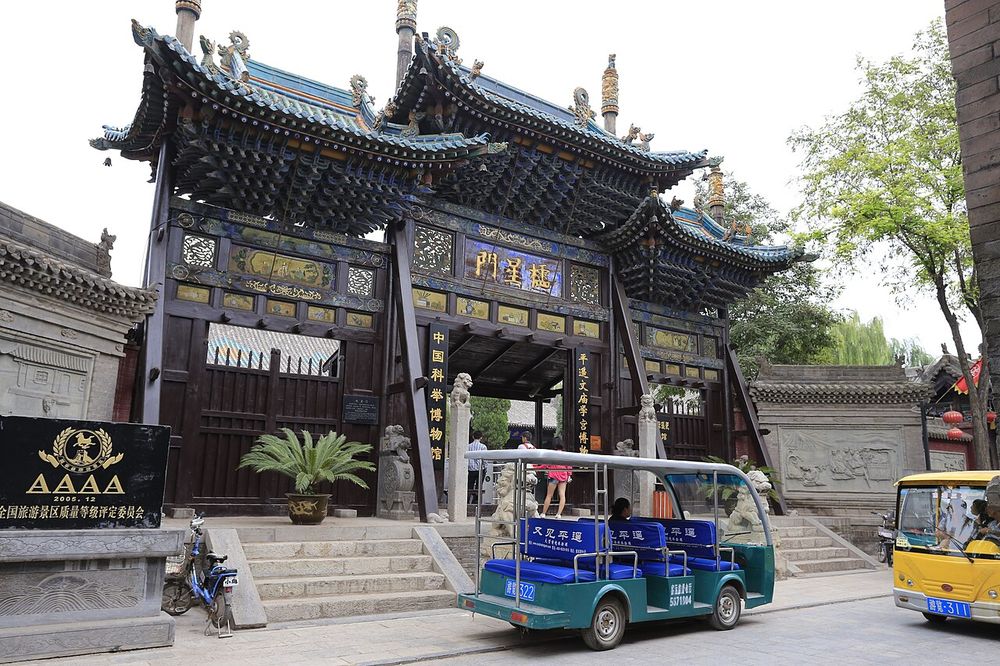
The best-preserved old county town in China: a brick wall six kilometres round, and inside it the street where Chinese banking began. World Heritage since 1997.
Photo: Chensiyuan, CC BY-SA 4.0, Wikimedia Commons
The story
You are standing inside the best-preserved old county town in China. The brick wall around you was built in 1370 and runs for a little over six kilometres. Two hundred years ago a shop on West Street became China's first bank of its kind, and silver from every province could be sent and collected here on a sheet of paper.
What is here
The World Heritage site is one town and two temples: everything inside the wall, Shuanglin Temple six kilometres to the south-west and Zhenguo Temple twelve kilometres to the north-east. Walking the streets is free. One combined ticket opens the wall and the museums in town; the two temples outside sell their own.
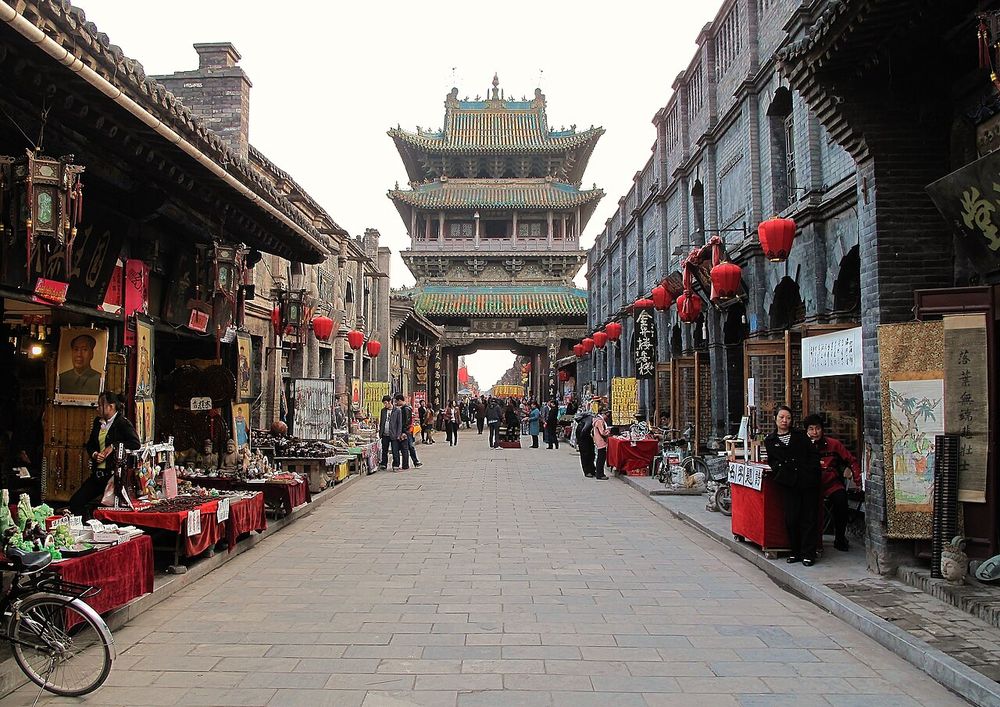
South Street and the Market TowerFrancisco Anzola, CC BY 2.0
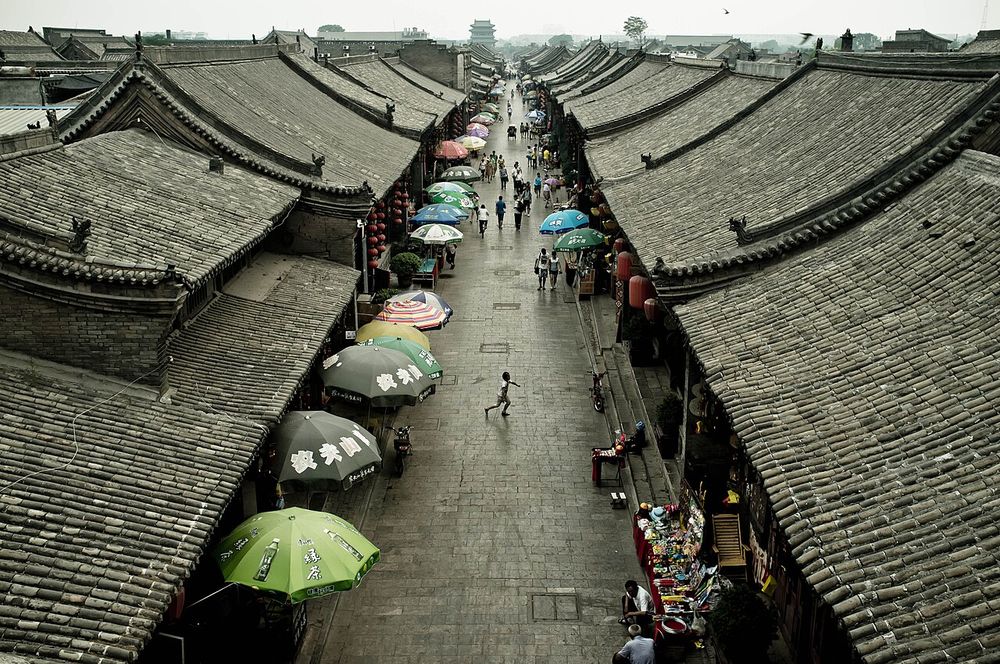
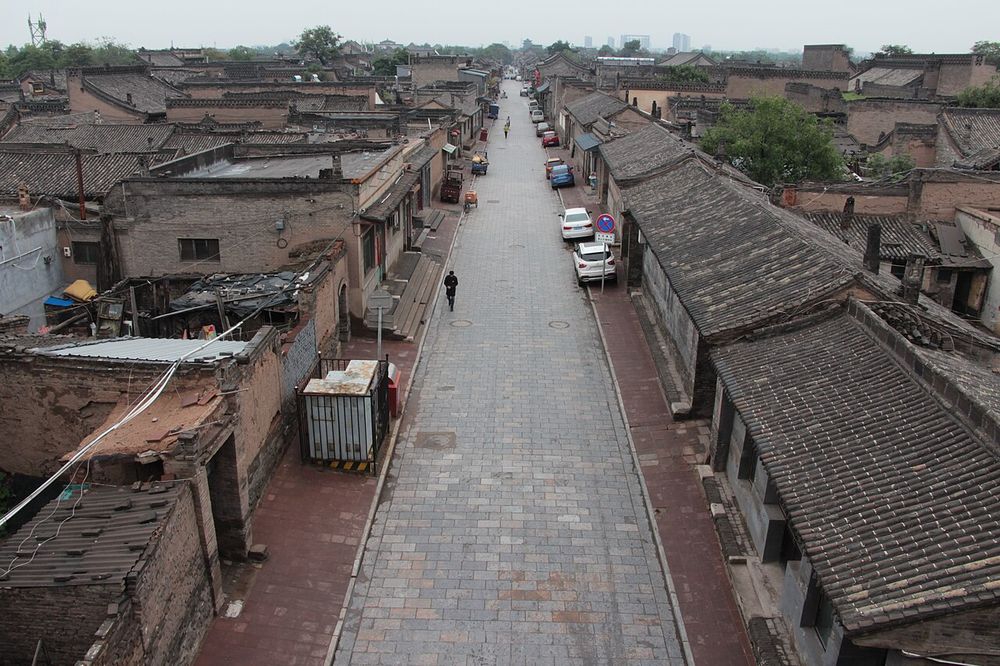
There was a town here in the Western Zhou, some 2,700 years ago by the traditional account. What you see is Ming and Qing (1644–1912): a square of brick wall, six gates, and a grid of streets inside.
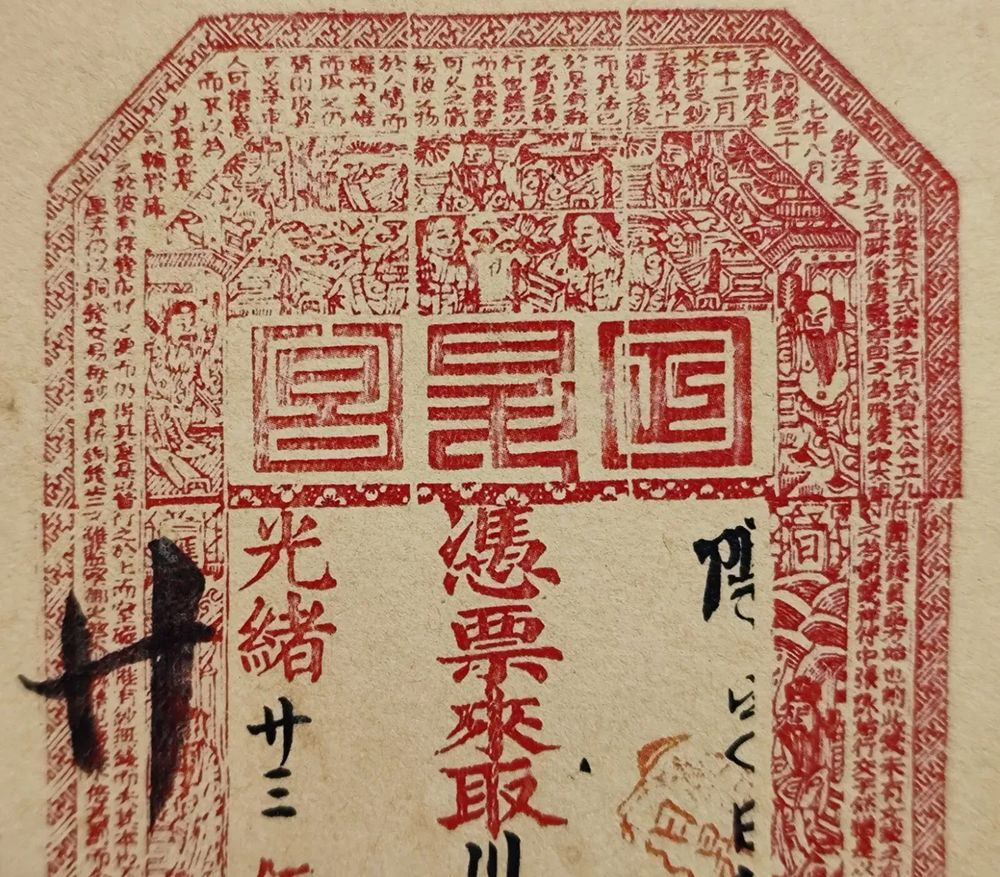
In 1823 Lei Lütai, manager of a dye shop called Xiyucheng, turned the shop into Rishengchang, a firm that did nothing but move and lend money. Other Shanxi merchants copied him. Their branches spread across China, and West Street was called the first financial street of the Qing empire.
Then the banks failed and Pingyao grew poor. There was no money to pull the old town down, so it stayed. In the 1980s Ruan Yisan of Tongji University in Shanghai argued for keeping the old town whole and building the new one outside the wall. That is why there was something to list in 1997.
Go deeper: one town and two temples, eight stops
1. The city wall and the south gate: a tortoise of brick and earth
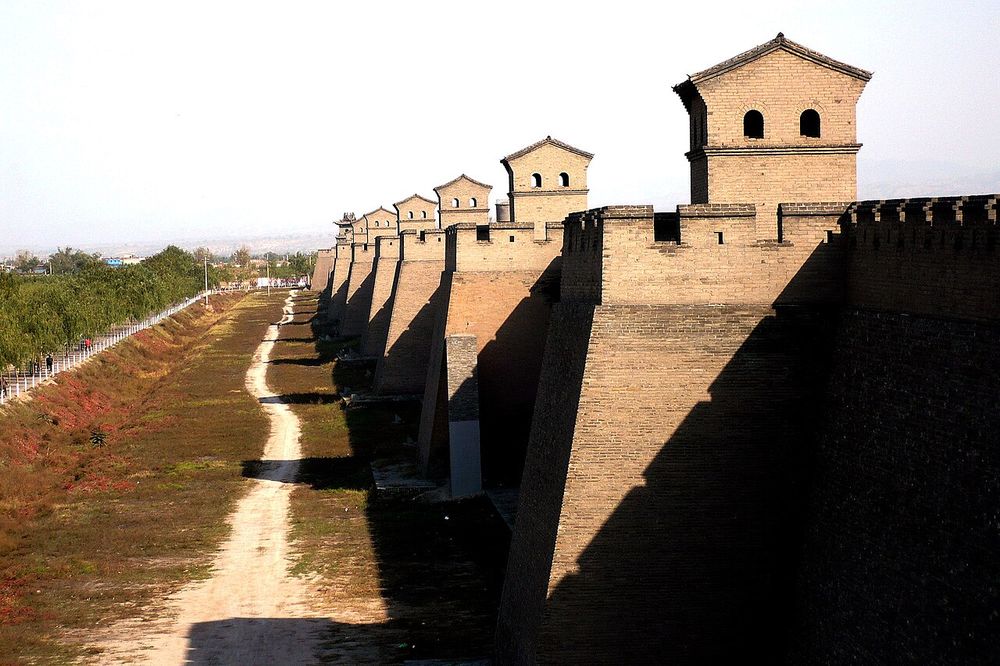
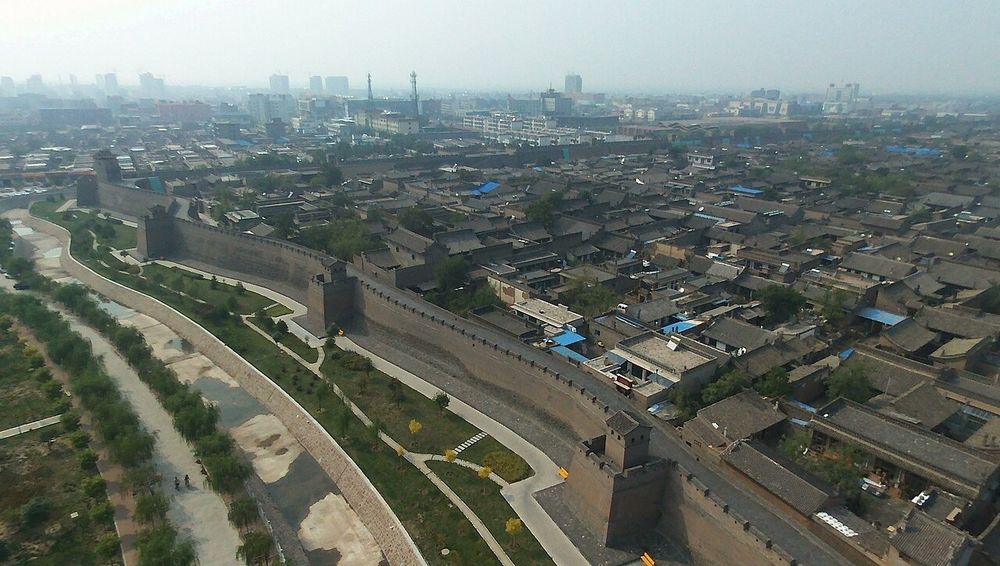
The city wall with its towersGisling, CC BY 3.0
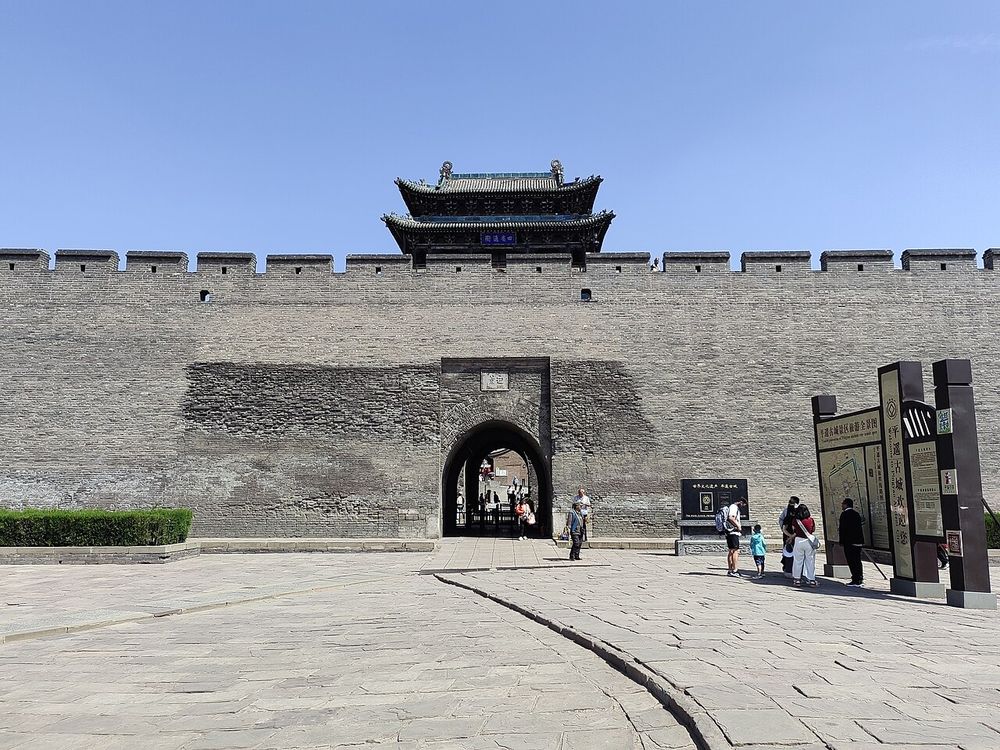
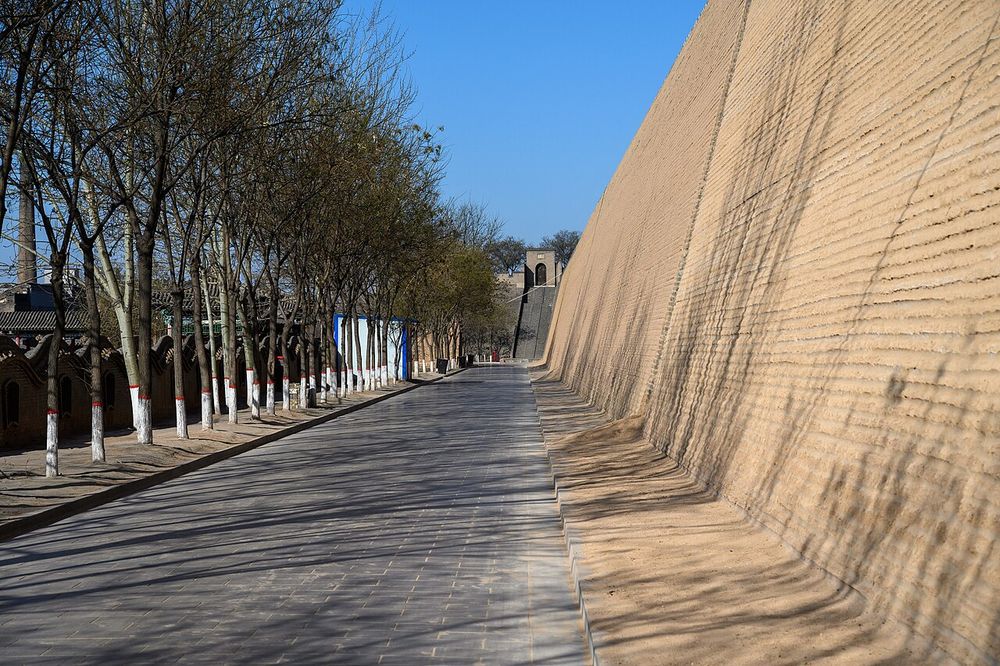
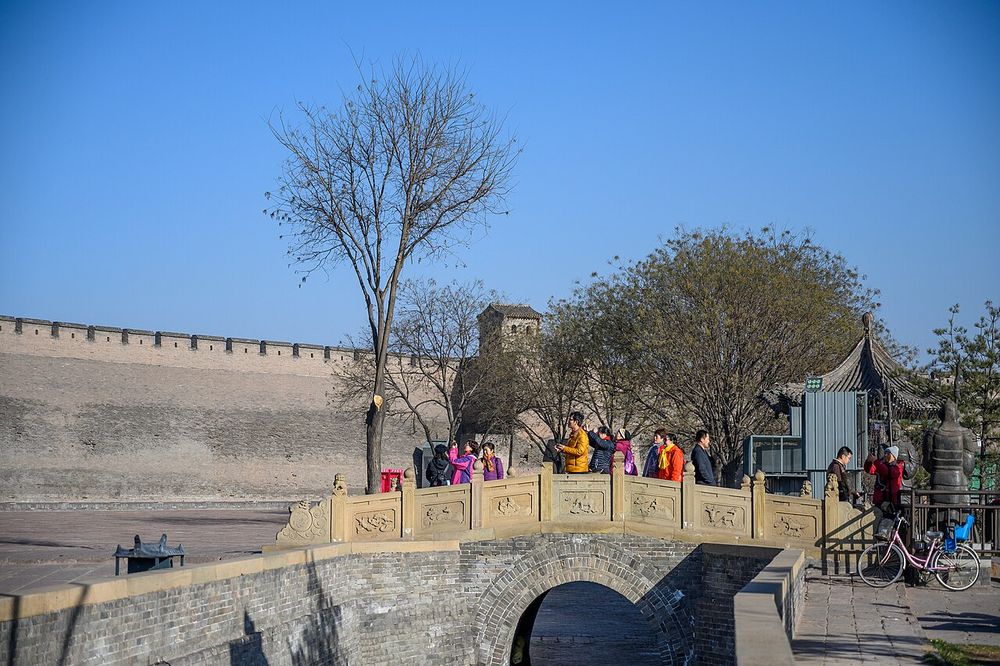
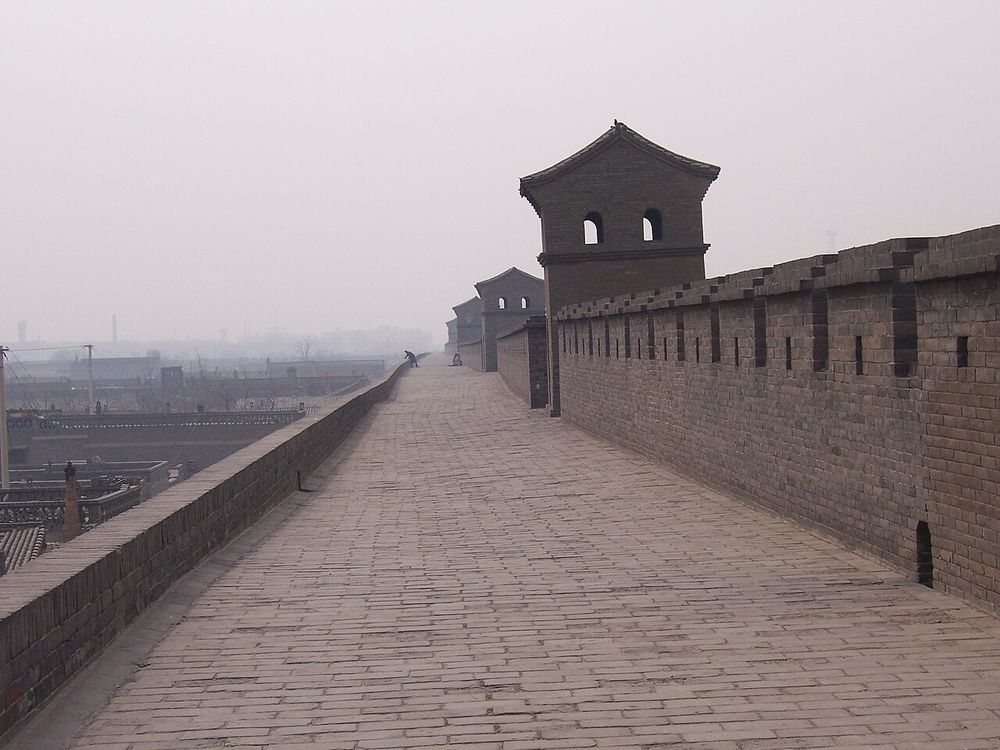
The wall is about 6,163 metres long and about 12 metres high. Inside it is rammed earth; the brick is a skin. In 1370, the third year of the first Ming emperor, an older earth wall was given this brick face.
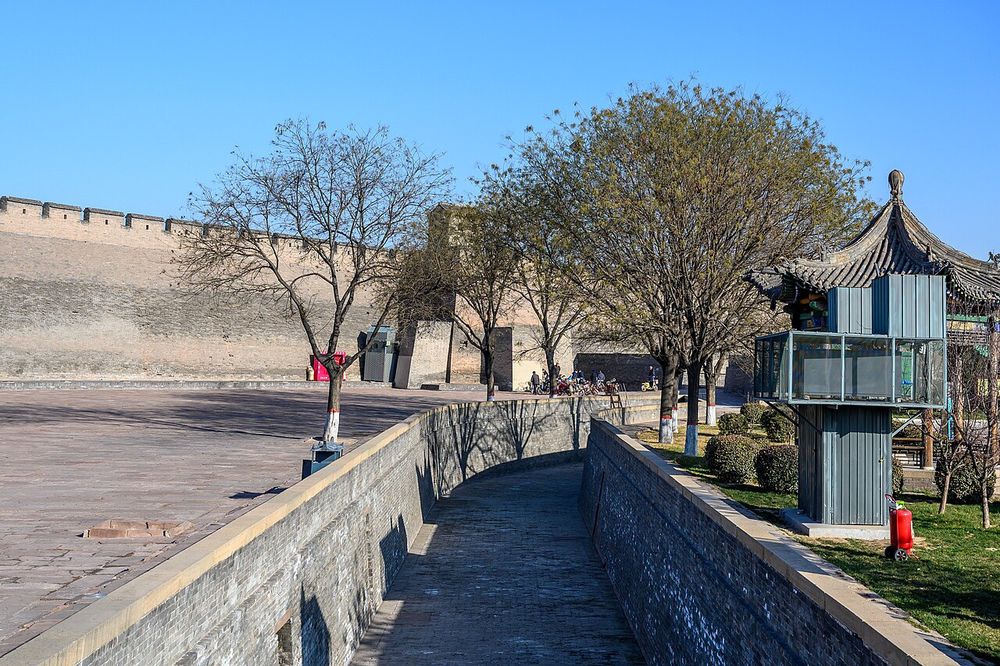
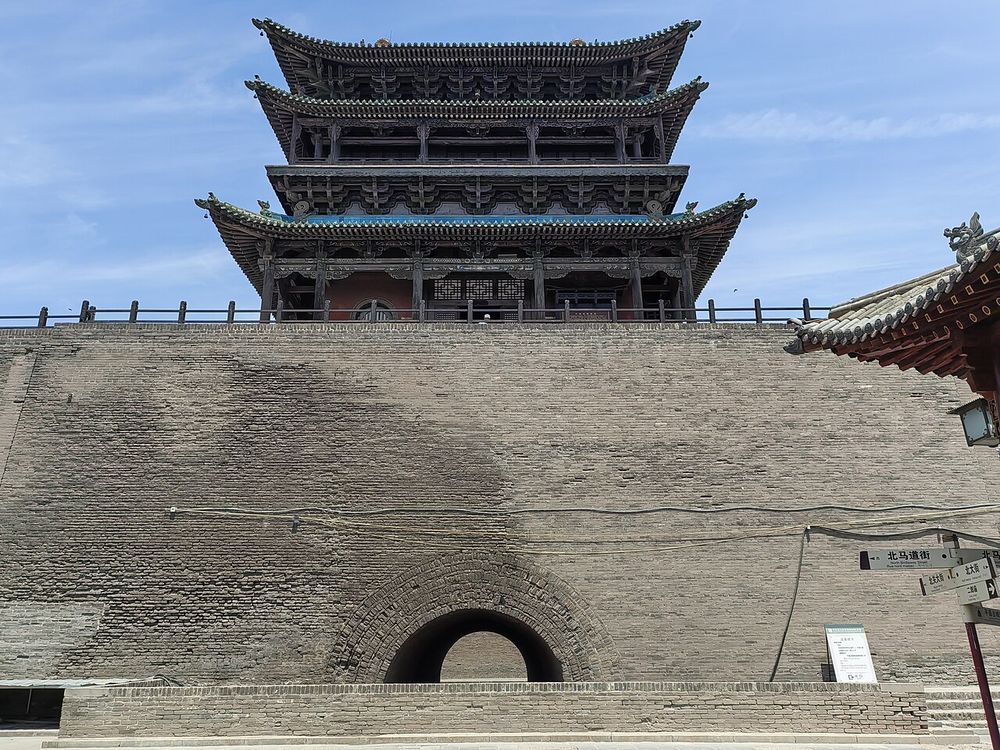
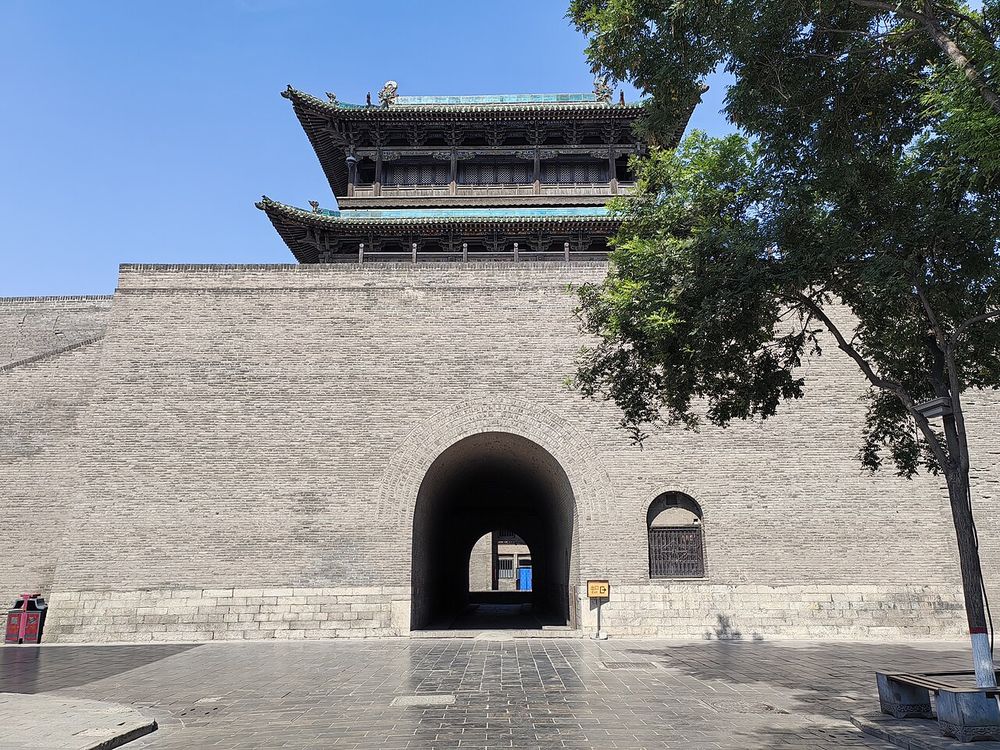
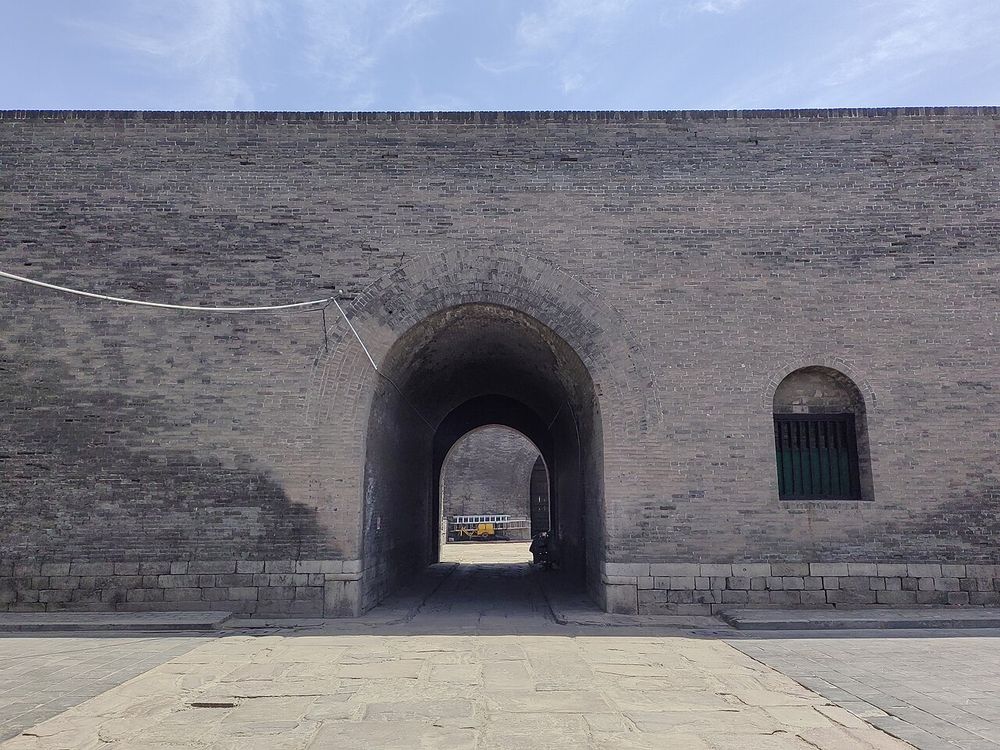
There are six gates, one each on the north and south and two each on the east and west. Every gate has a barbican, a walled yard in front of it. At the north gate the outer and inner doors are set at a right angle, so nobody could charge straight through.
Walls fall too. On 17 October 2004 a stretch of 17.3 metres collapsed at the south barbican. In October 2021 days of heavy rain damaged 61 places; repairs finished in November 2022, with loess and quicklime rammed in at seven parts to three. Look for a seam between new brick and old.
2. South Street and the Market Tower: the spine of the town
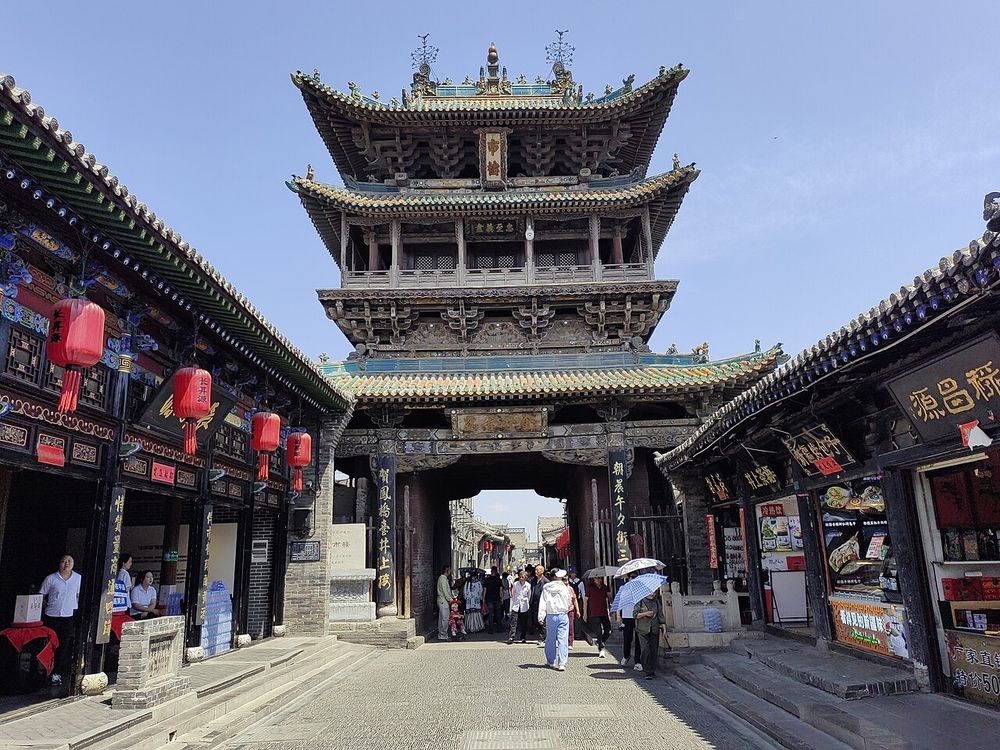
The Market Tower over South StreetYumeto, CC BY-SA 4.0
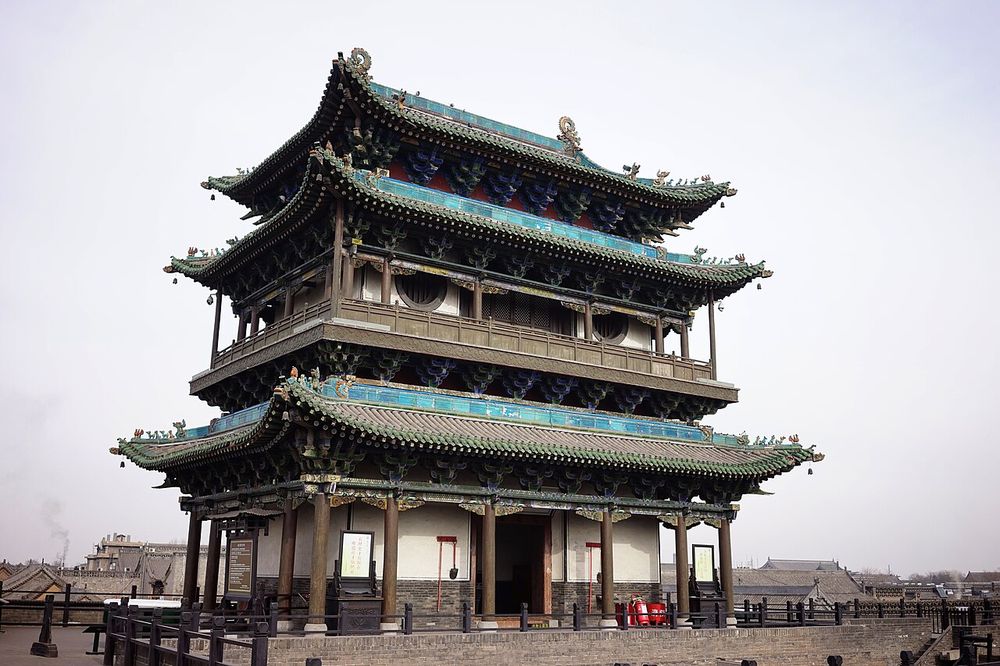
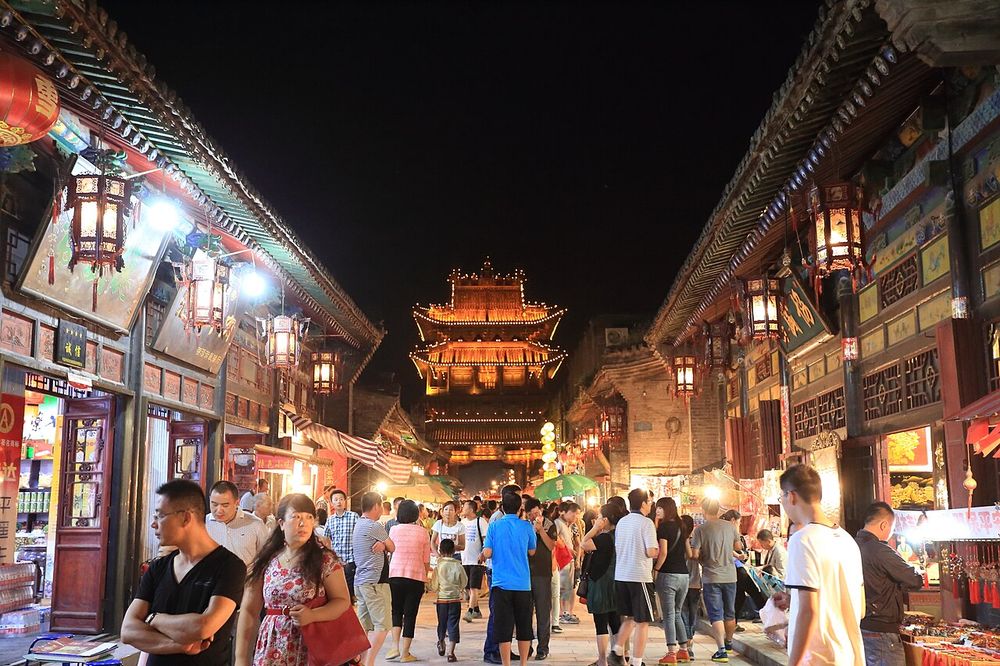
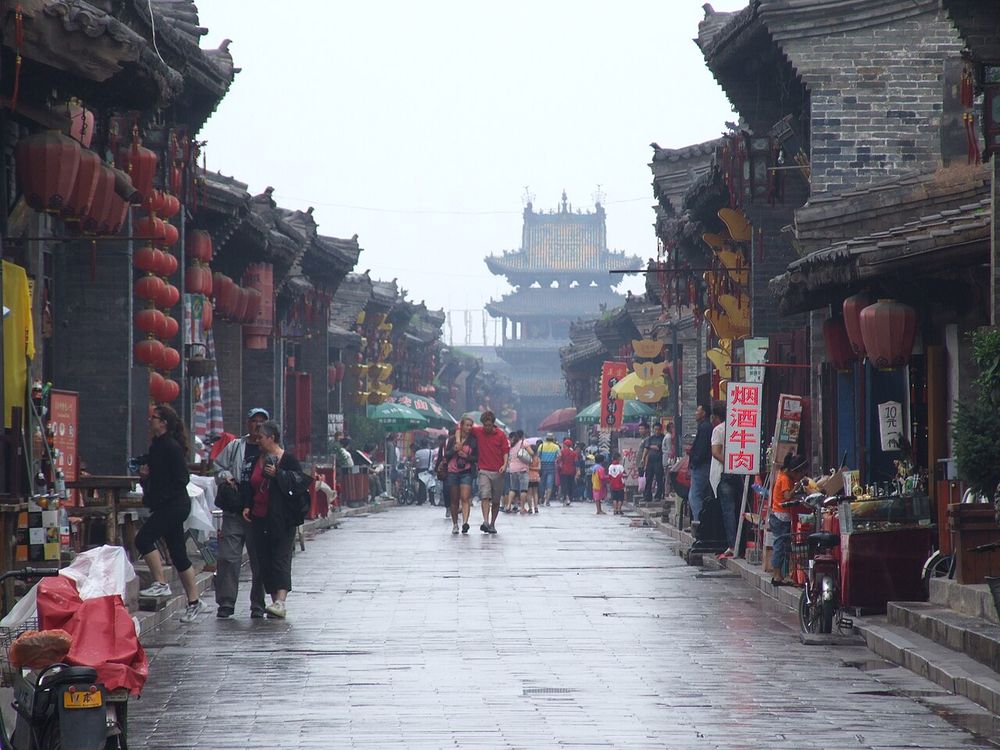
The Market Tower stands astride South Street, the only tower of its kind in the town. It was rebuilt in 1688 and is about 18.5 metres high.
Look at the roof. On the south and north slopes, yellow and blue glazed tiles spell two characters, 囍 (double happiness) and 寿 (long life). Inside, the gable walls carry Qing paintings of stories from the Three Kingdoms (220–280).
3. Rishengchang: the first draft bank in China
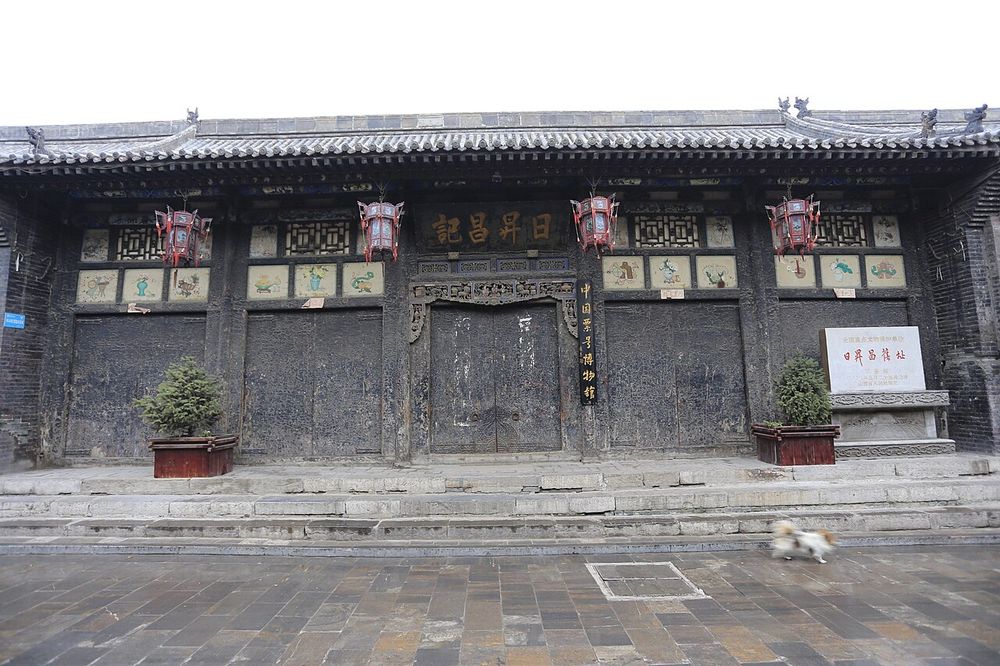
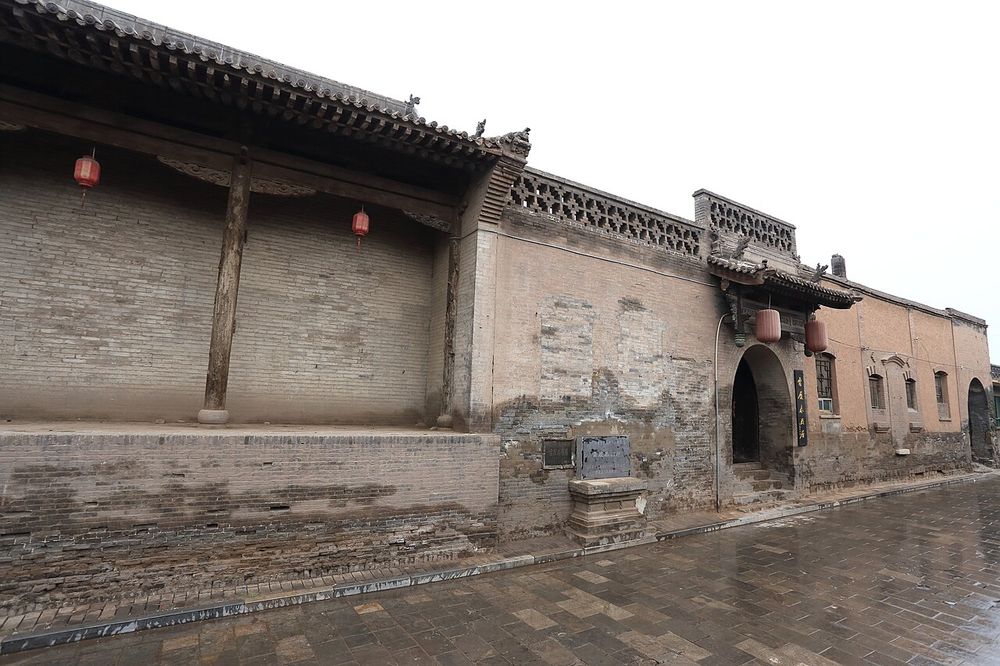
The street front of RishengchangZhangzhugang, CC BY-SA 3.0
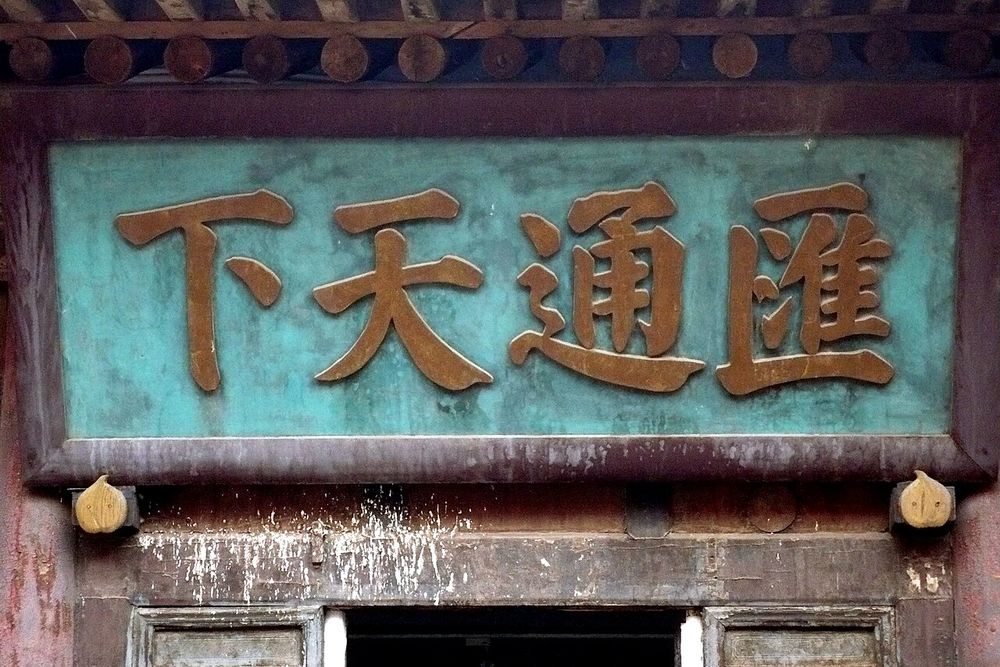
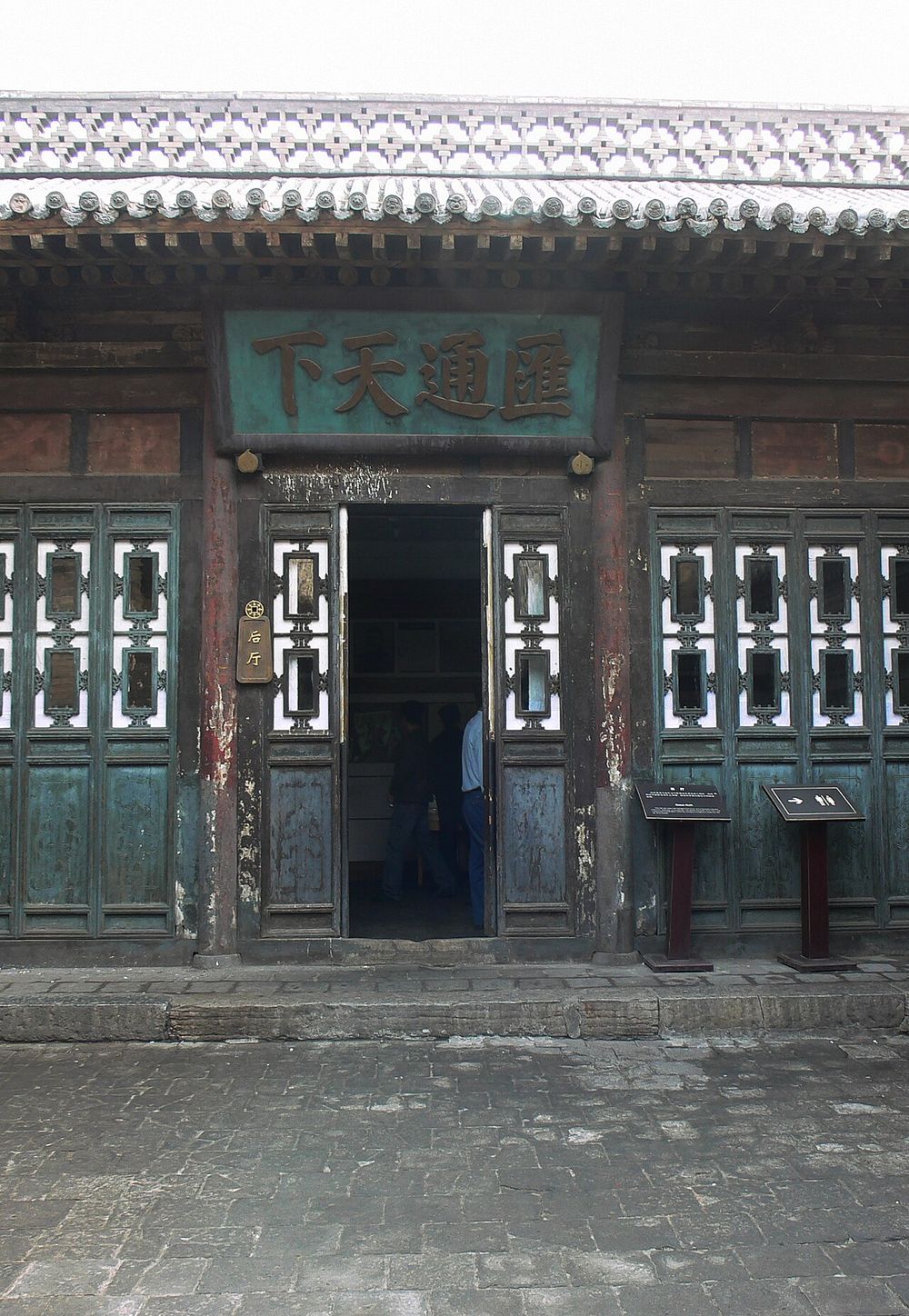
It is on West Street, and its door faces north, the opposite of an ordinary house. In 1823 the owner Li Daquan put up the money and the manager Lei Lütai ran it.
Why was a bank needed? The dye shop bought its pigments in Sichuan, and loads of silver had to travel with armed escorts, which was costly and dangerous. A draft let the paper travel and the silver stay where it was.
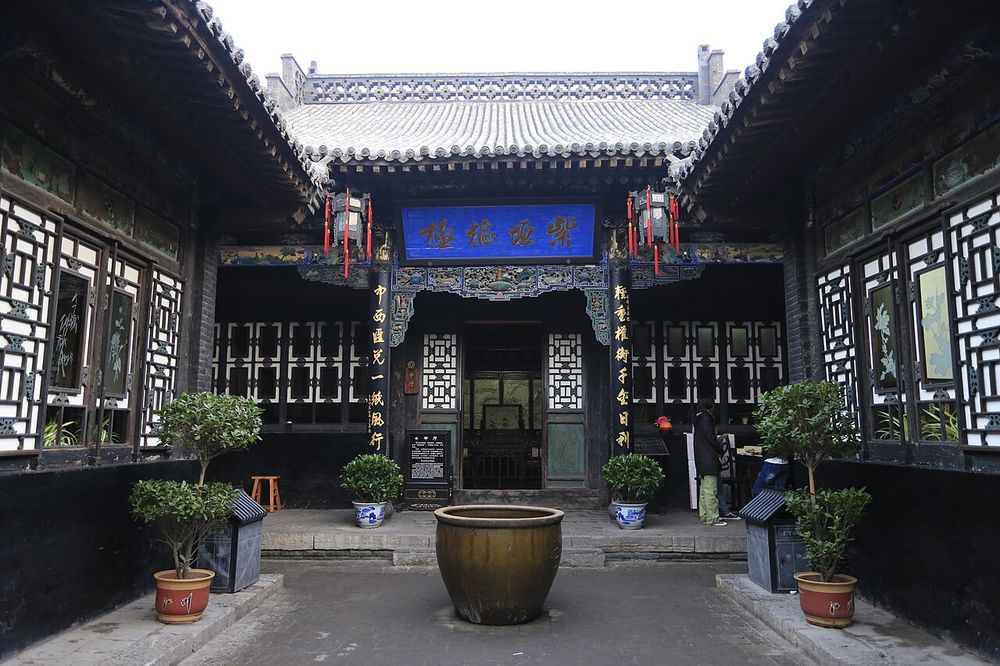
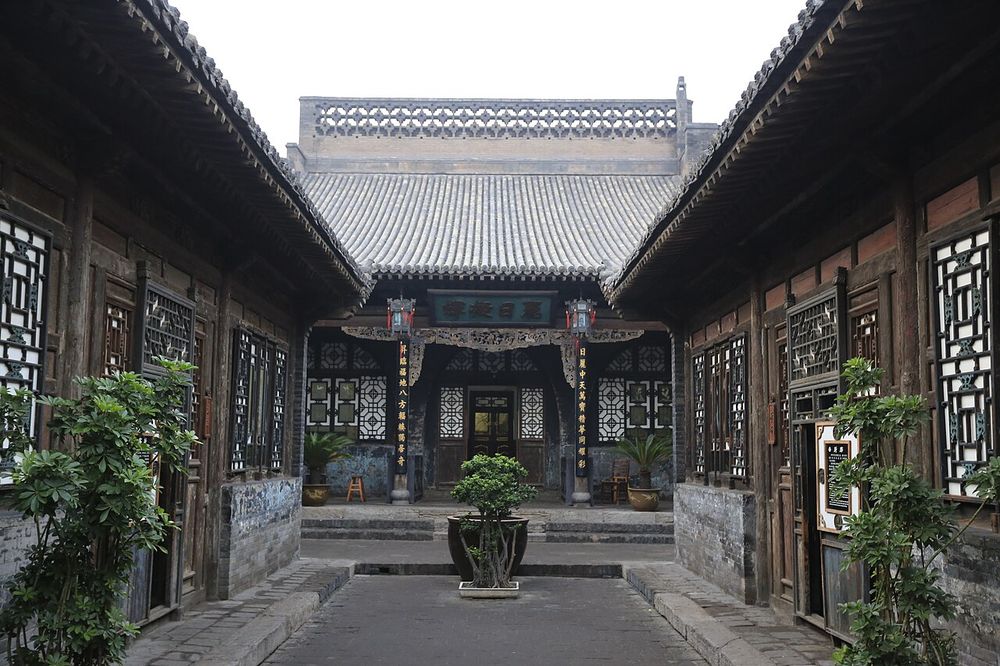
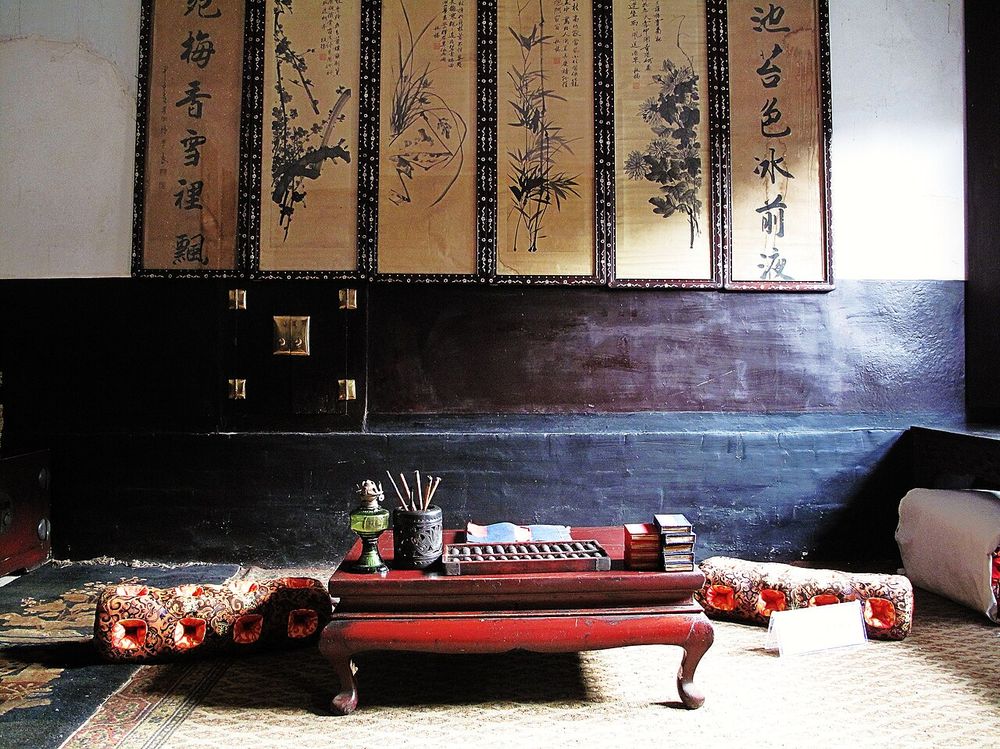
There are three courtyards: counters and accounts in front, remittances in the middle, living quarters behind. Wire netting hung with bells was stretched over the yards against thieves.
Rishengchang closed in 1914.
A few doors away the Xietongqing bank shows its underground vault.
4. The county office: local government in the old empire
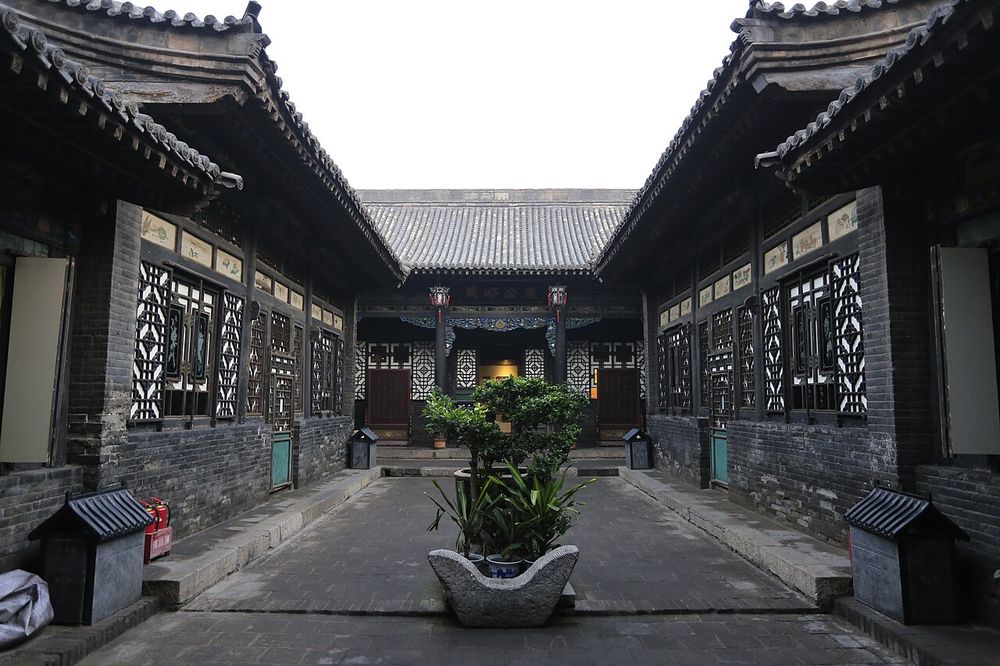
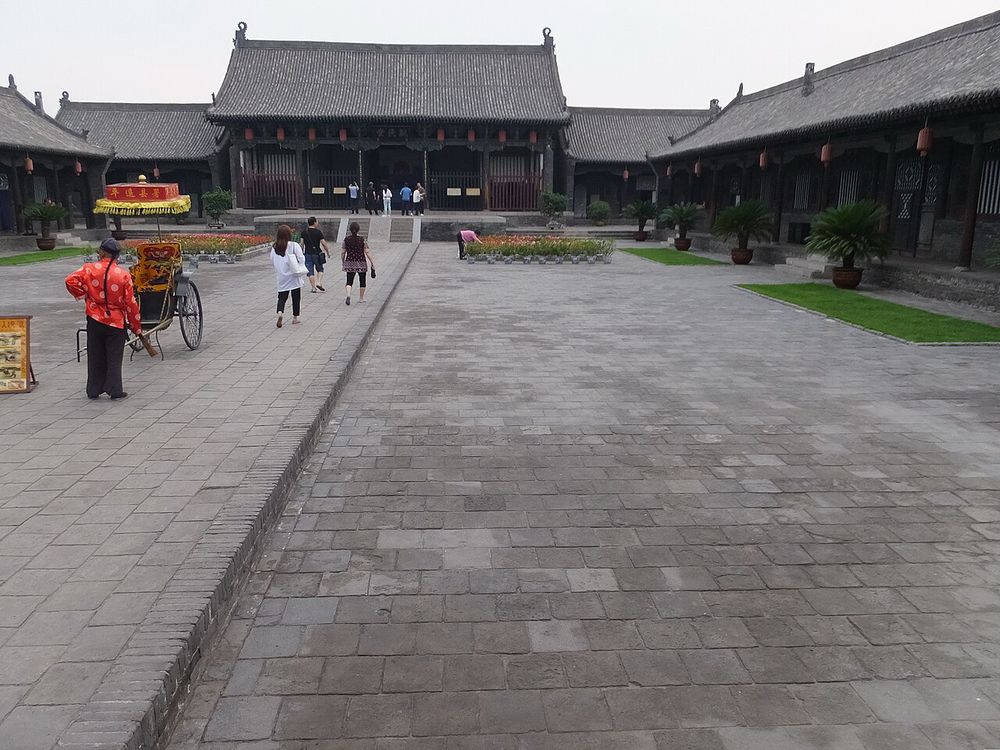
A courtyard in the county officeFrancisco Anzola, CC BY 2.0
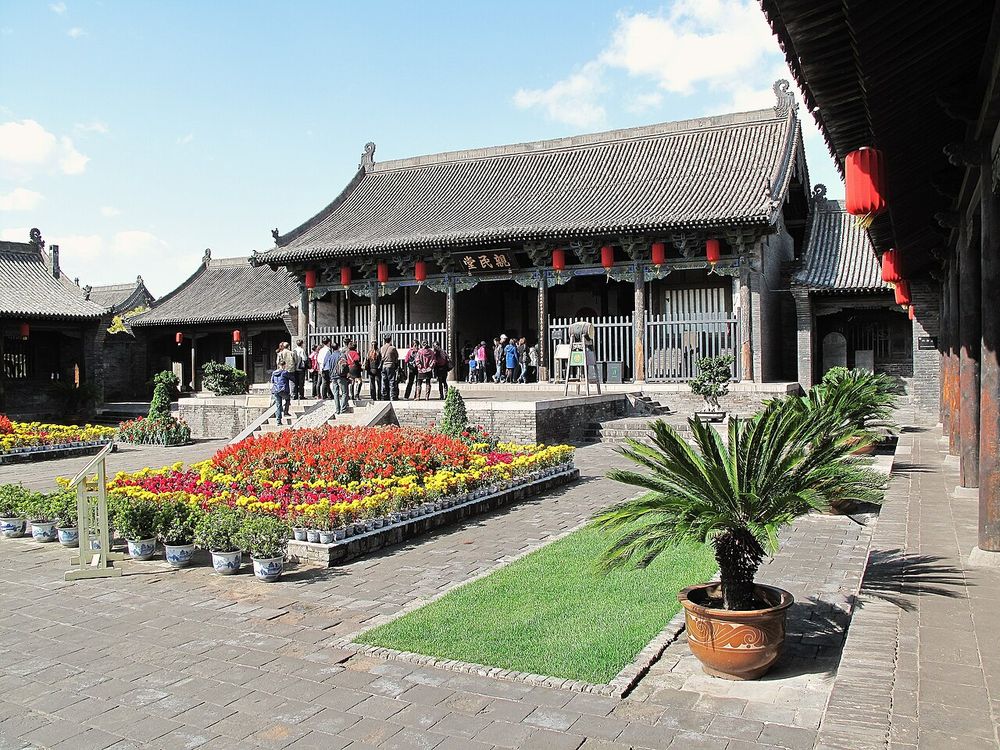
This is the compound from which a Ming (1368–1644) or Qing magistrate governed the county. It is often called one of the largest and most complete to survive in China.
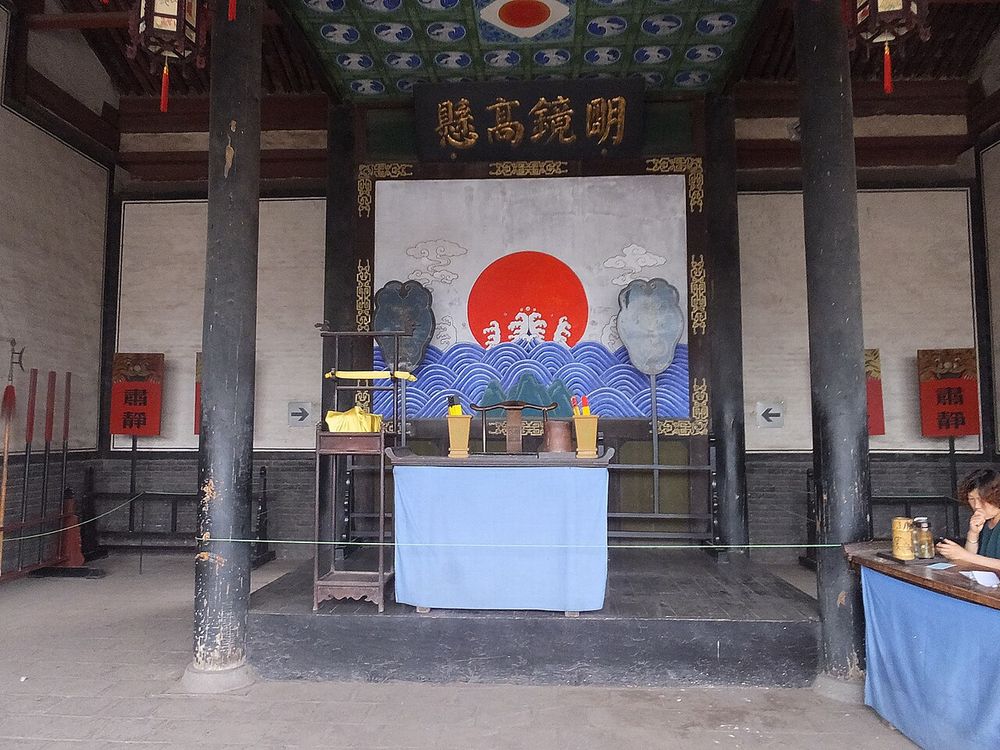
Walk the central axis: main gate, ceremonial gate, great hall, second hall, private quarters. Work and trials were in front, and the magistrate's family lived behind.
In the great hall, find the wooden block the magistrate banged on the table and the tube of bamboo slips beside it. What were the slips for?
5. The Confucian Temple: the oldest hall in town
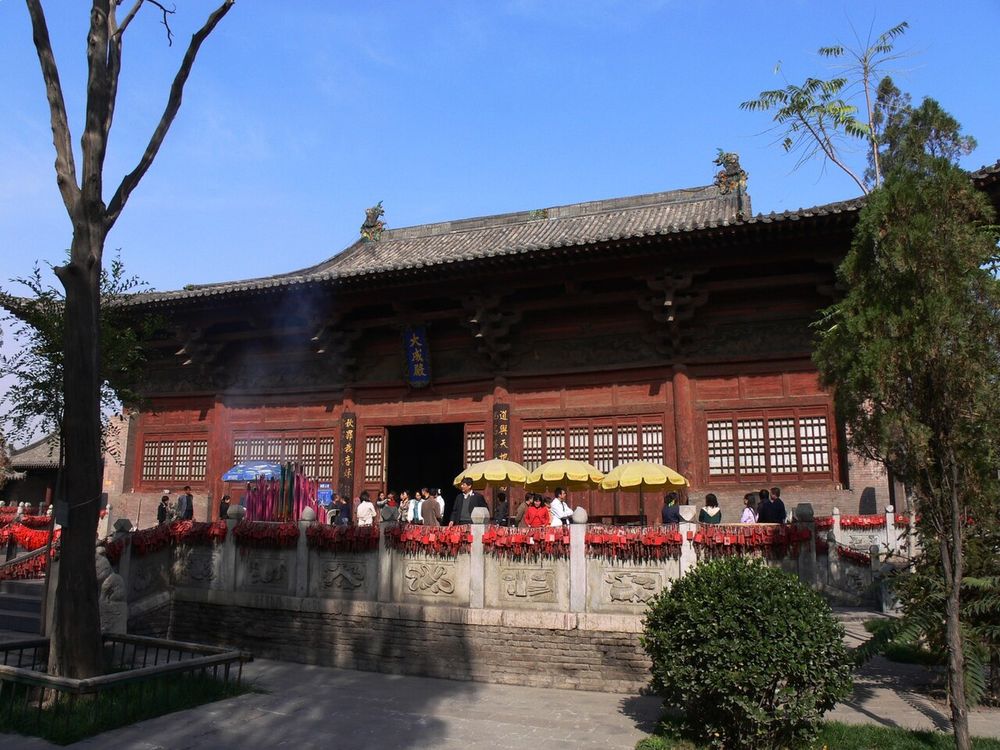
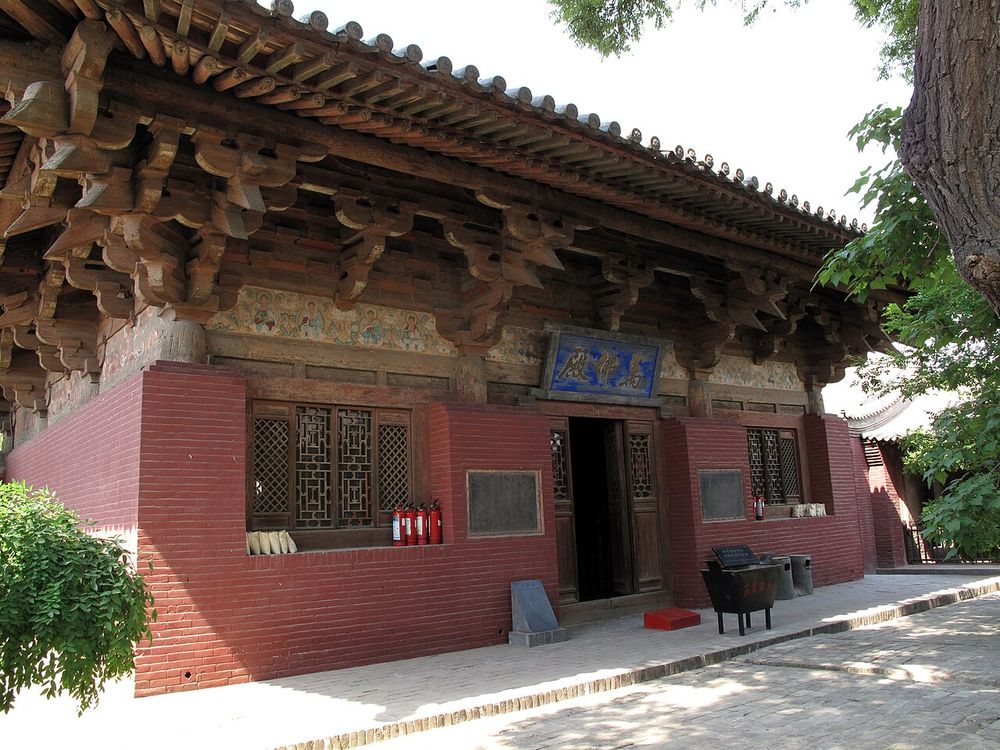
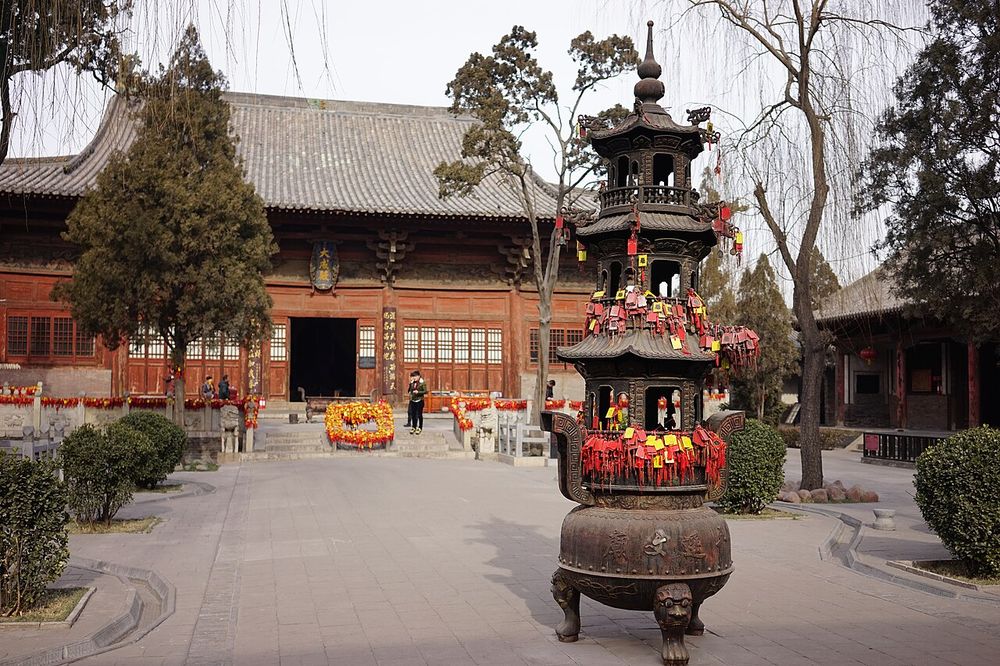
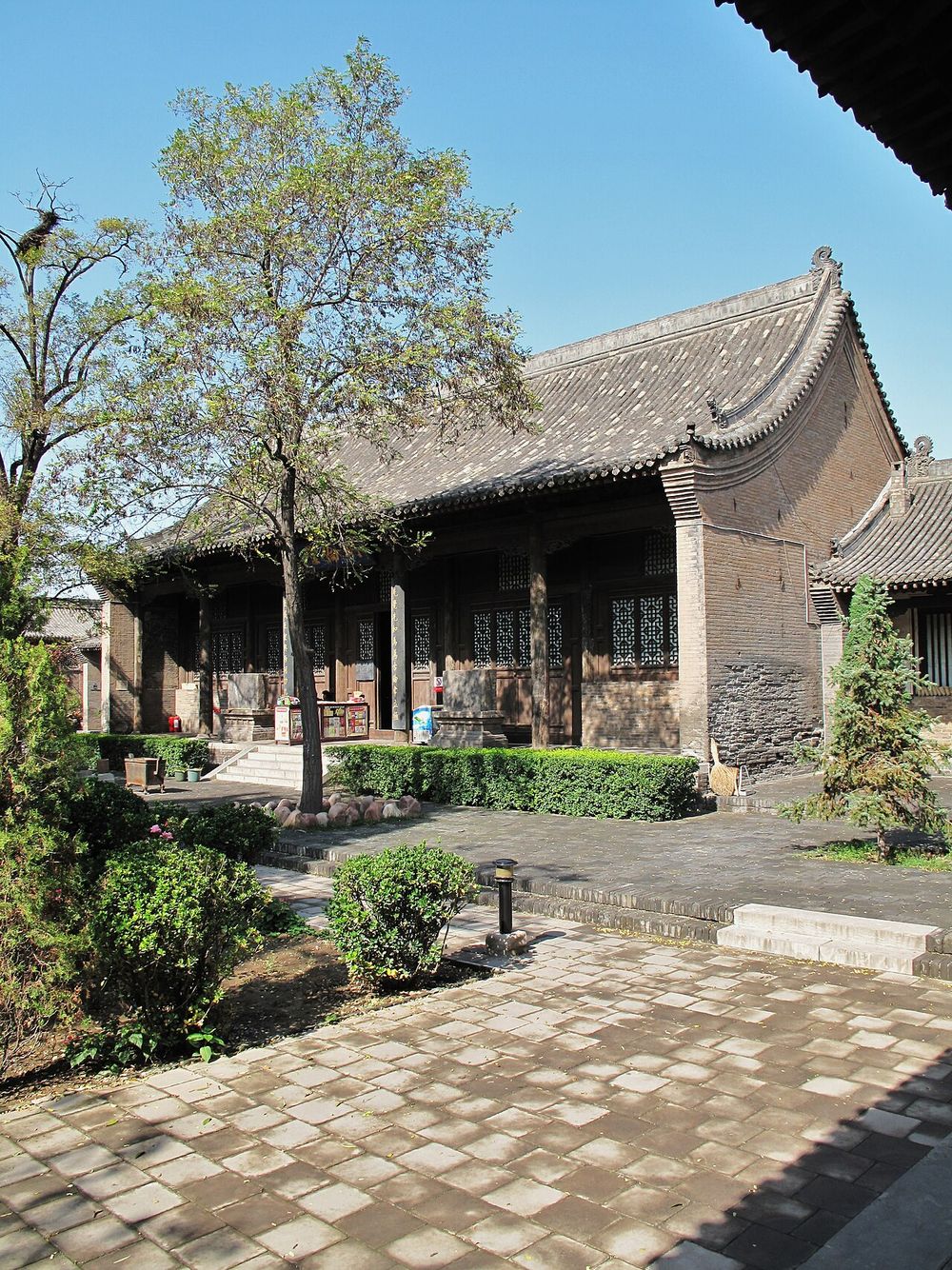
The main hall of the Confucian Temple, rebuilt in 1163Gisling, CC BY 3.0
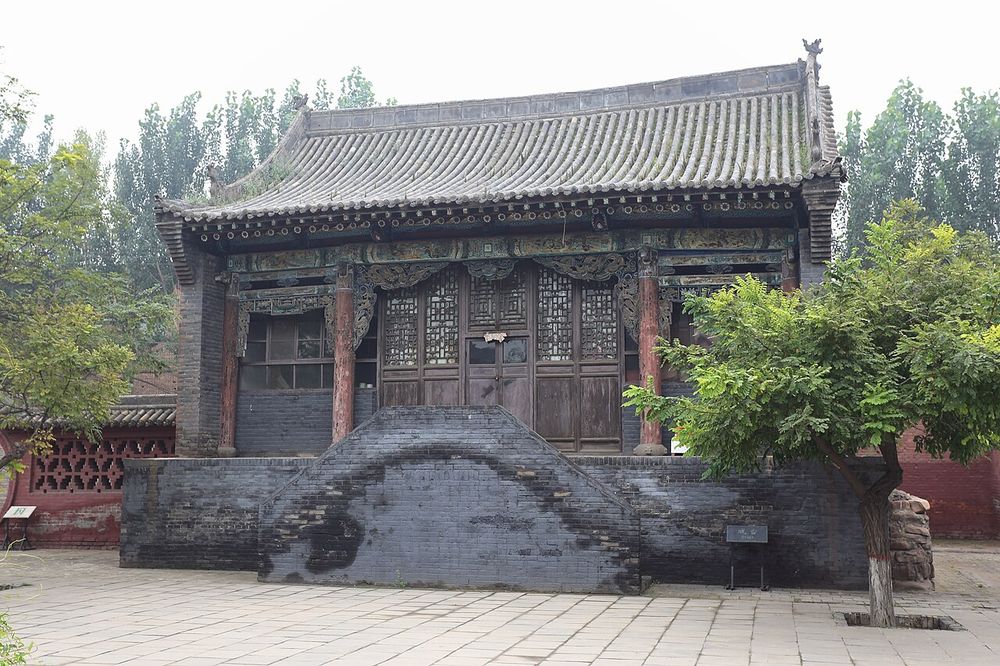
The temple is in the south-east corner. Its main hall was rebuilt in 1163 under the Jin dynasty, and is often called the oldest main hall of any Confucian temple in China. It is two hundred years older than the brick of the wall.
The tower in the south-east corner honours Kuixing, the god of examinations. This is the part of town that speaks of study and the road to office.
6. The City God Temple and the old courtyards: ordinary Pingyao
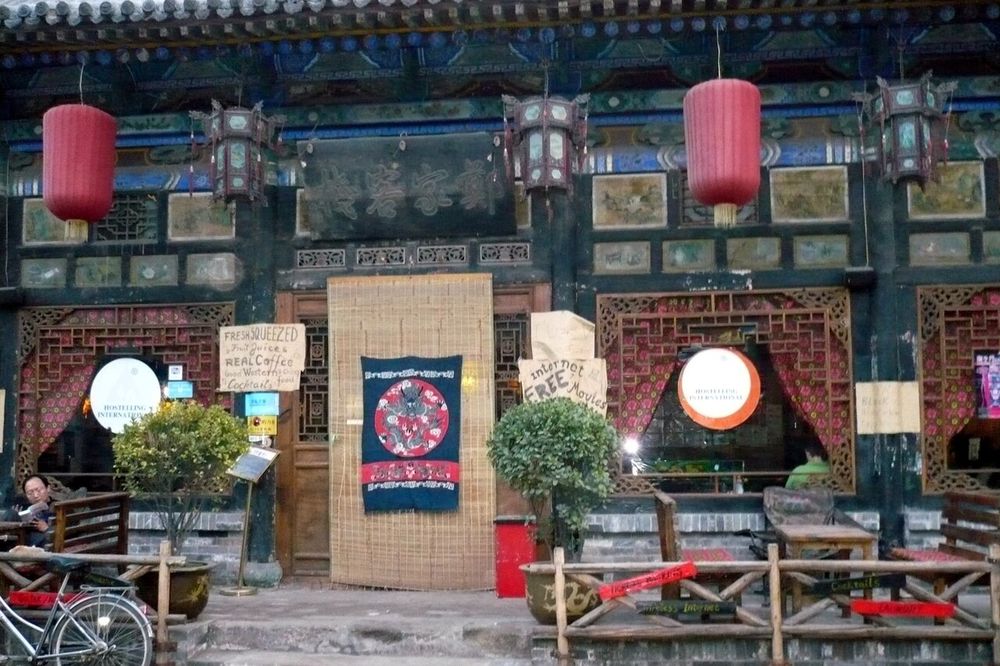
A courtyard house that is now an innGisling, CC BY 3.0
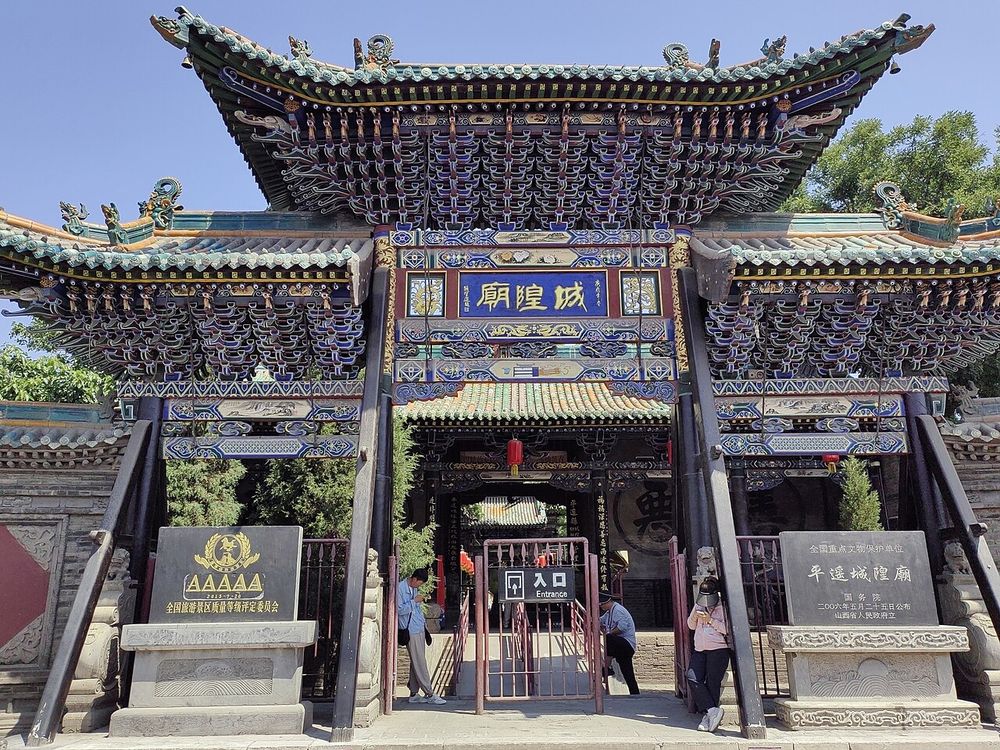
Three temples stand together: to the City God, the Kitchen God and the God of Wealth.
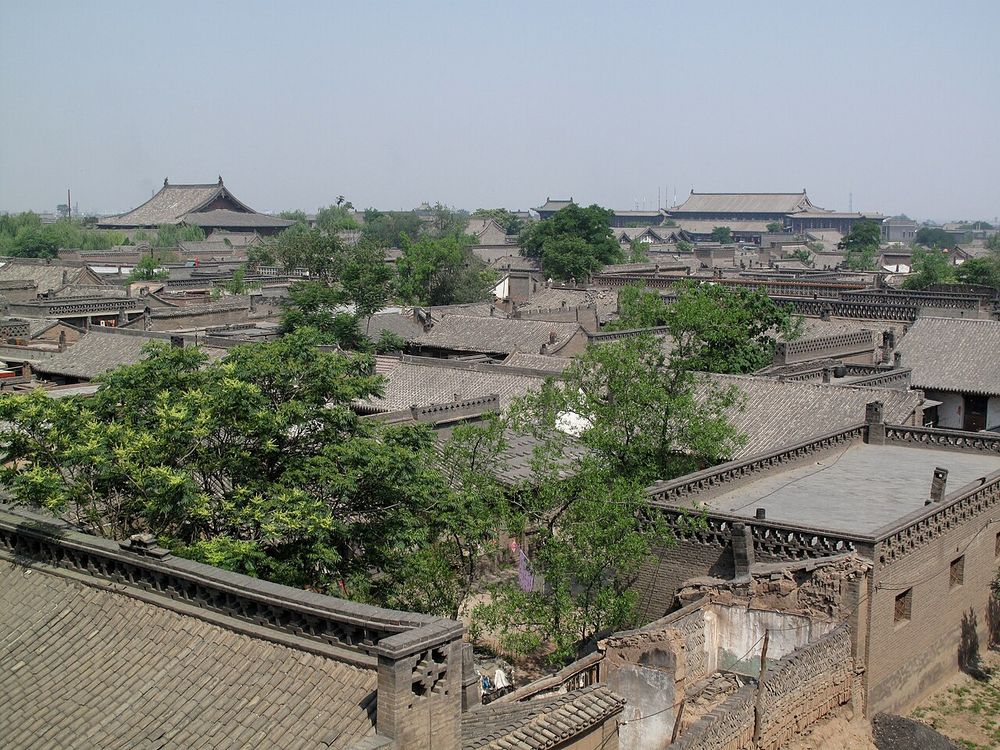
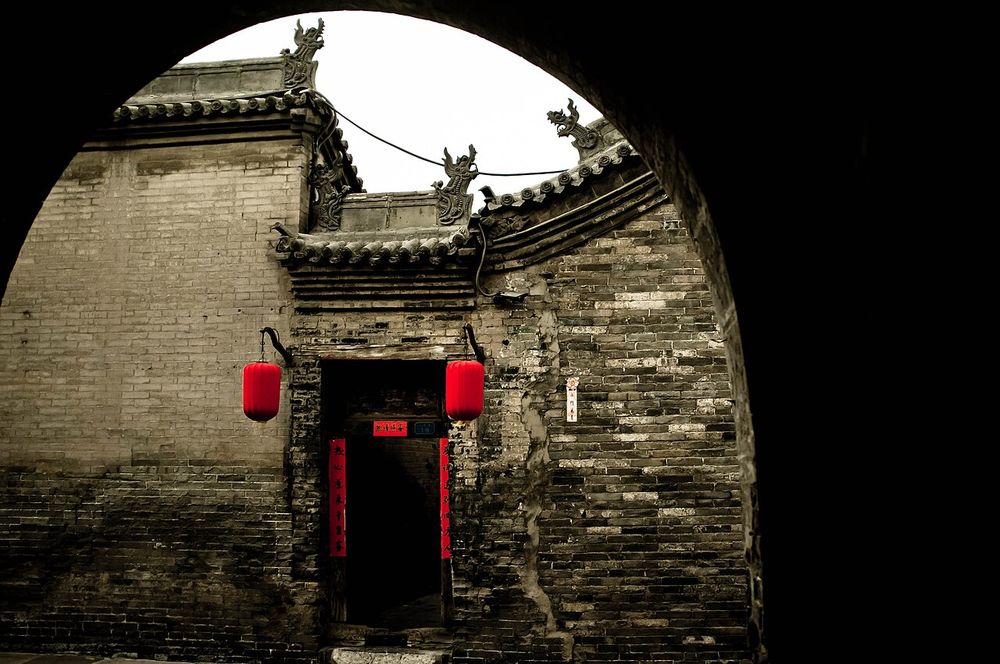
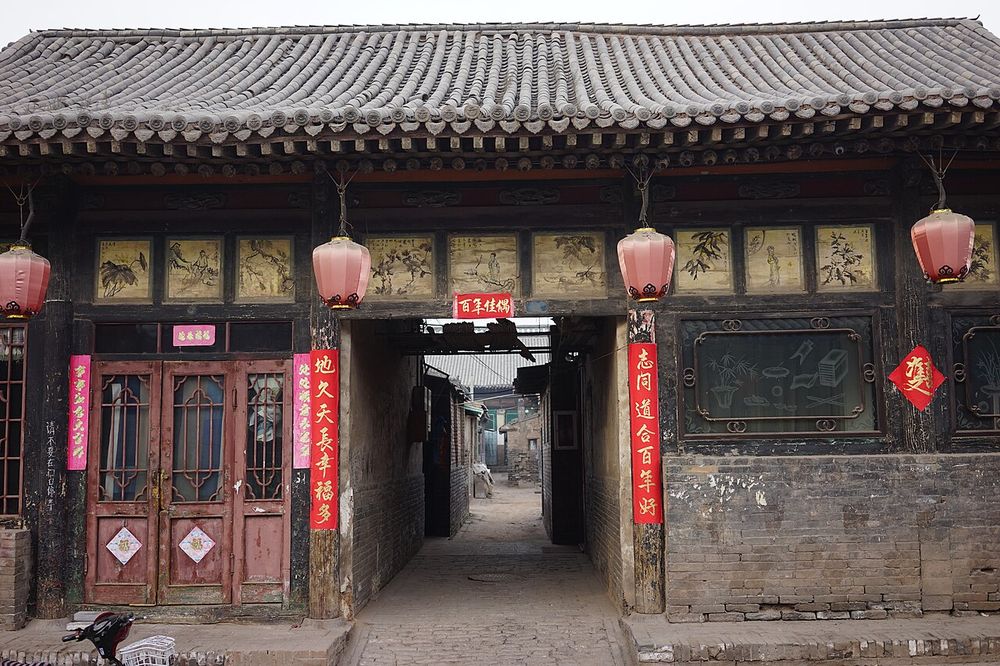
Pingyao houses are courtyards of grey brick and grey tile, and many are now inns. Most roofs have a single slope that tips into the yard. Shanxi people explain it with a saying: good water should not run to a stranger's field.
7. Shuanglin Temple: two thousand painted figures
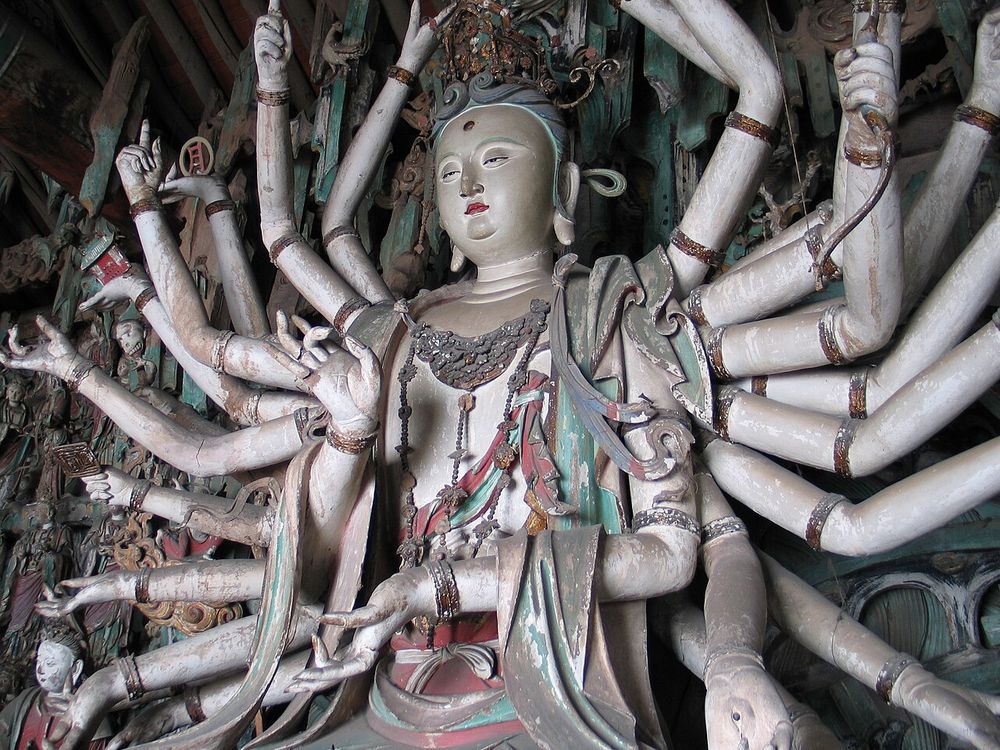
Guanyin with a thousand arms, painted clay, Shuanglin TempleShakti, CC BY-SA 1.0
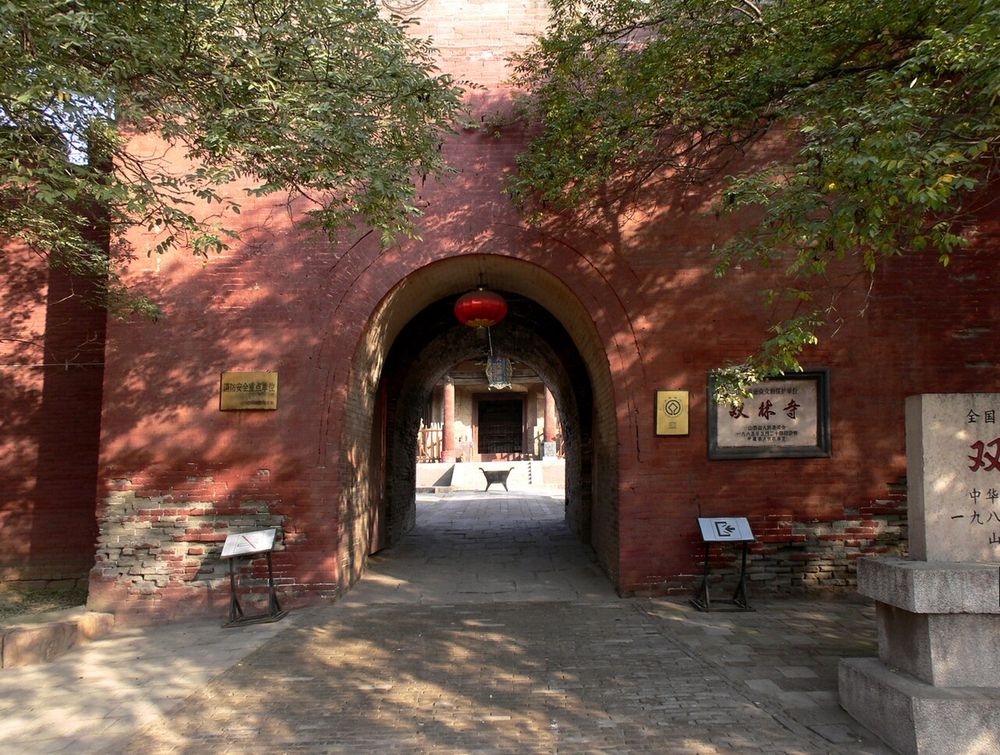
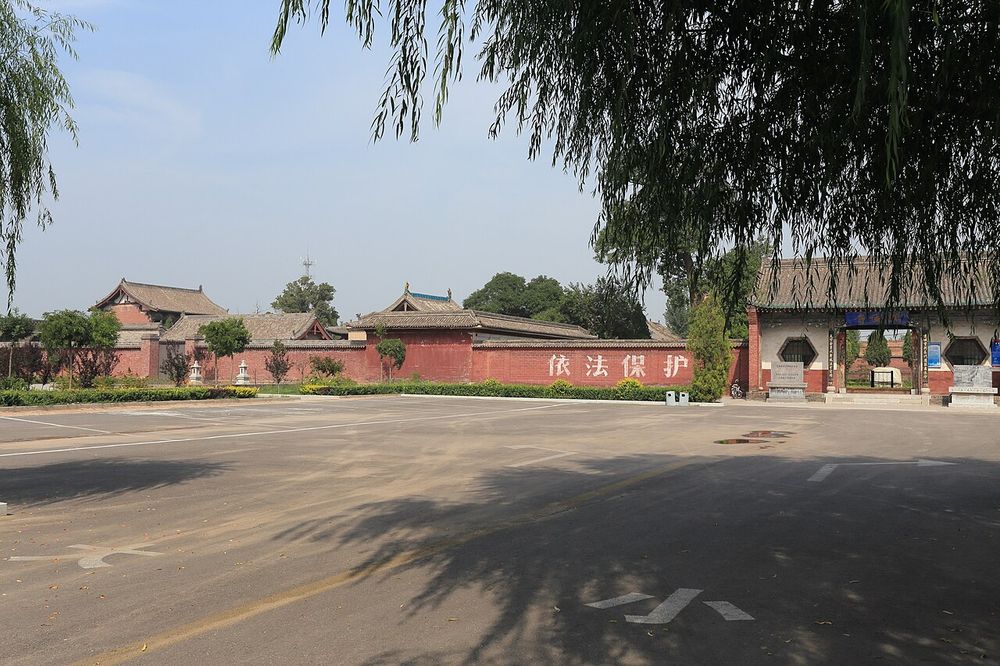
The temple is at Qiaotou village, about six kilometres south-west of the town. A brick-faced earth wall surrounds it, like a small Pingyao.
A Song stele in the temple says it was "repaired in the second year of Wuping", which is 571 under the Northern Qi (550–577), so it was founded earlier still. It was first called Zhongdu Temple and took its present name about the Song dynasty (960–1279).
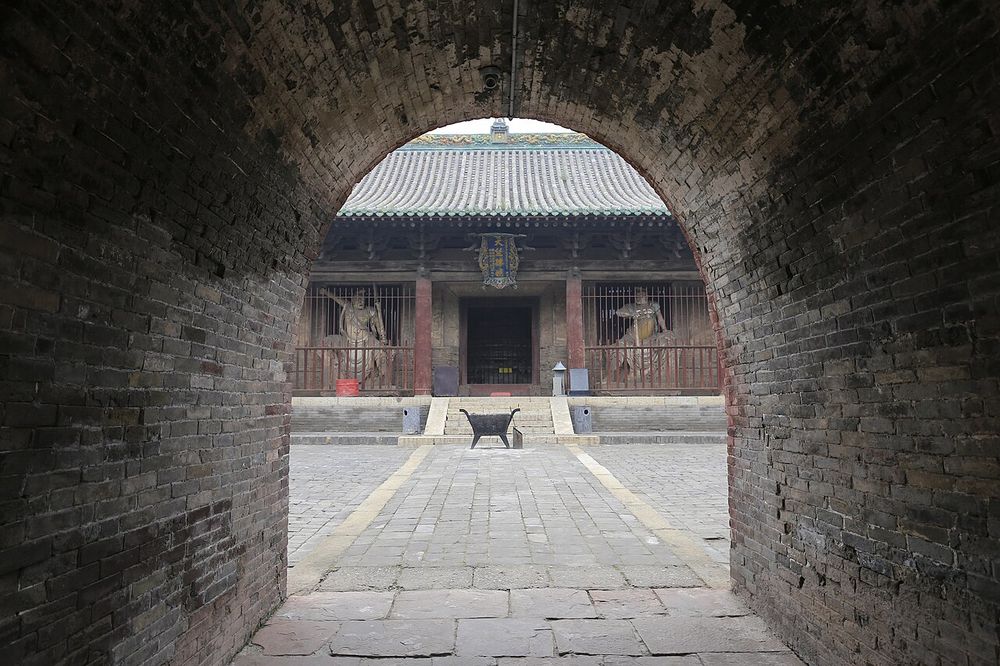
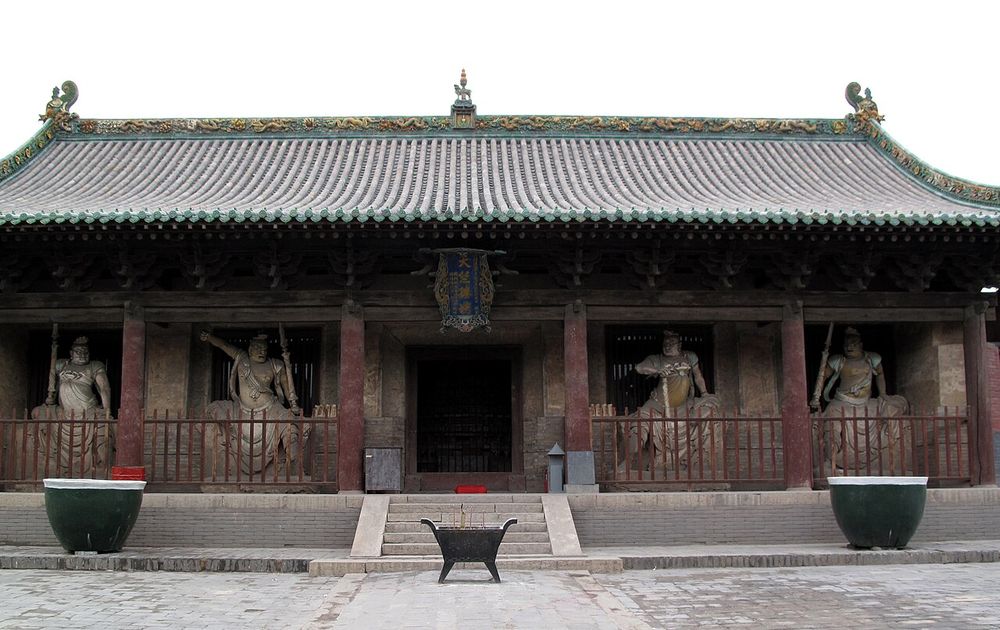
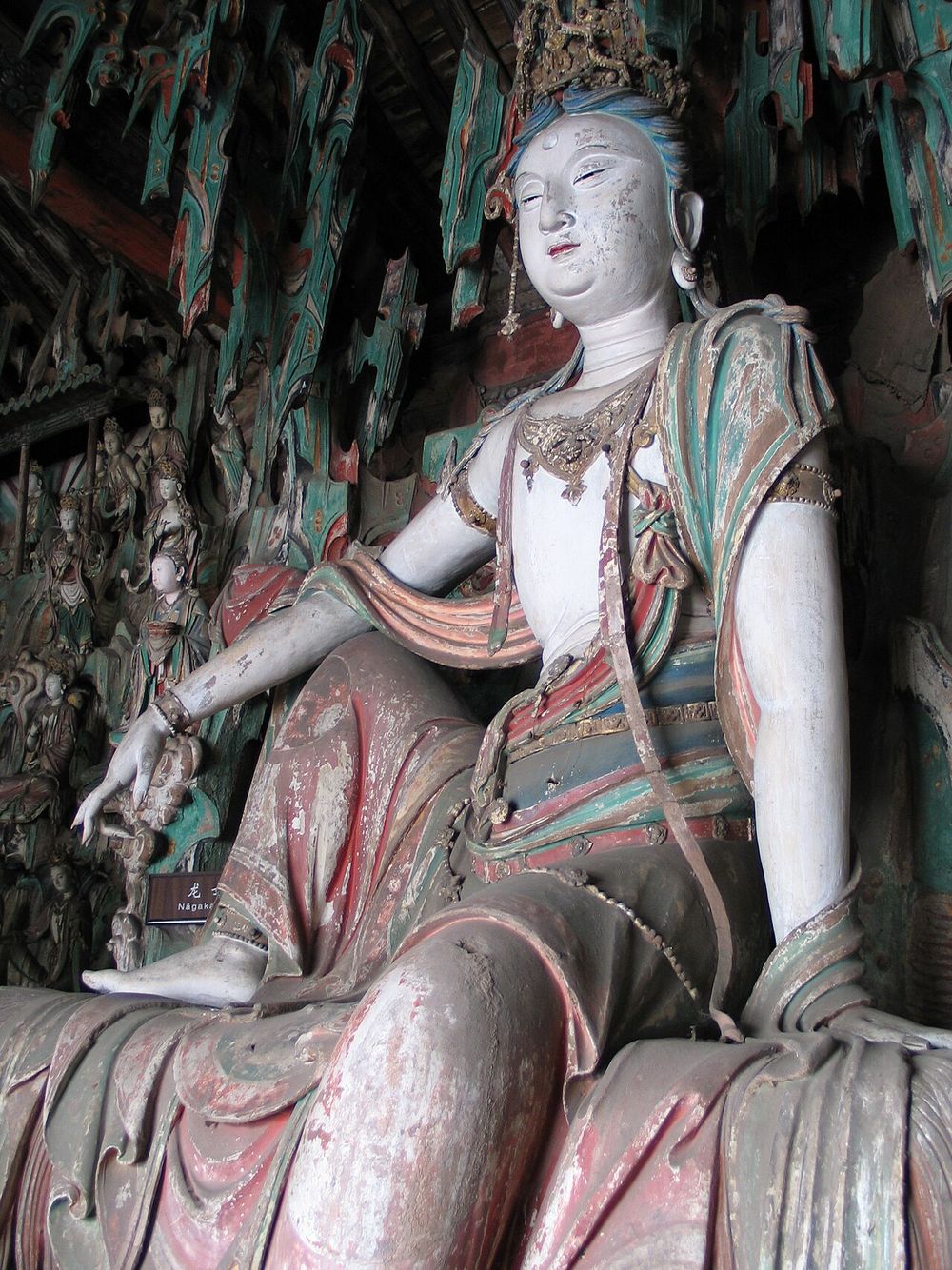
Ten halls hold about 2,056 painted clay figures, from 30 centimetres to over 3 metres. The best known are the guardian Weituo in the Hall of a Thousand Buddhas and the "mute arhat" in the Arhat Hall.
In the Hall of the Heavenly Kings, find the four kings with a lute, a sword, a snake and an umbrella. Together they stand for good weather for the crops.
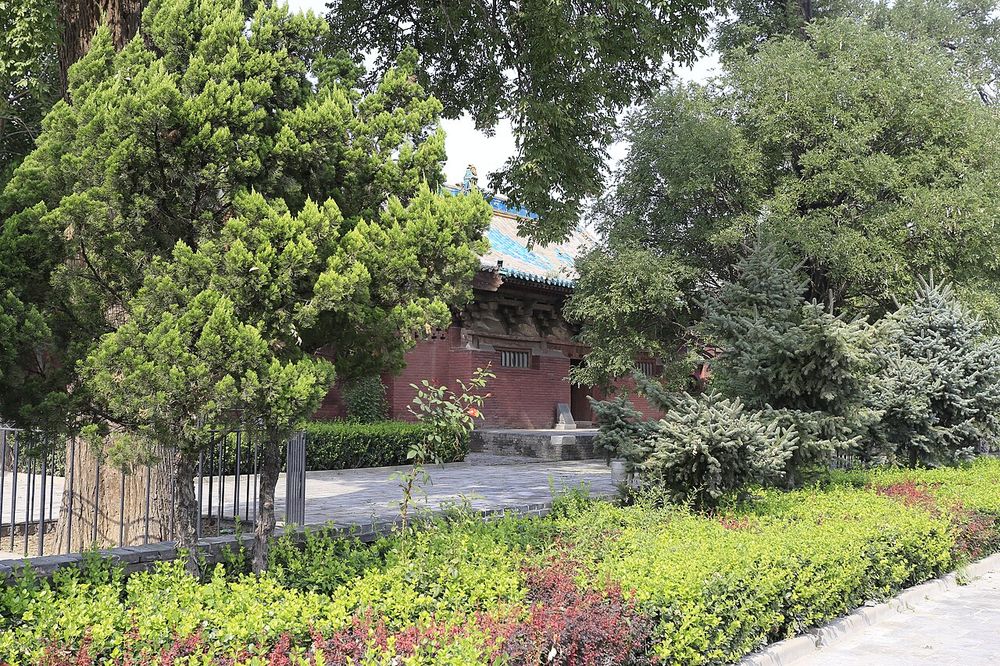
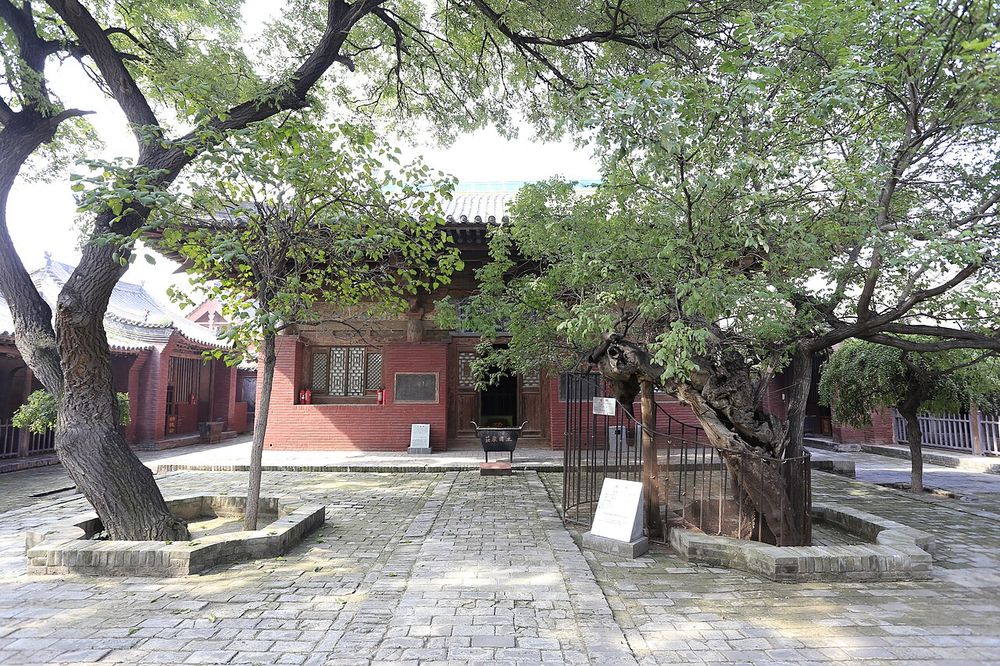
8. Zhenguo Temple: a timber hall more than a thousand years old
The Hall of Ten Thousand Buddhas, built in 963G41rn8, CC BY-SA 4.0
The temple is at Haodong village, ten to twelve kilometres north-east of the town.
The Hall of Ten Thousand Buddhas was built in 963, under the Northern Han of the Five Dynasties (907–960). The year is written on a beam inside, and the county records and a stele of 1819 agree.
Only seven timber buildings of the Five Dynasties survive in China. Six are in Shanxi, and this is one of them.
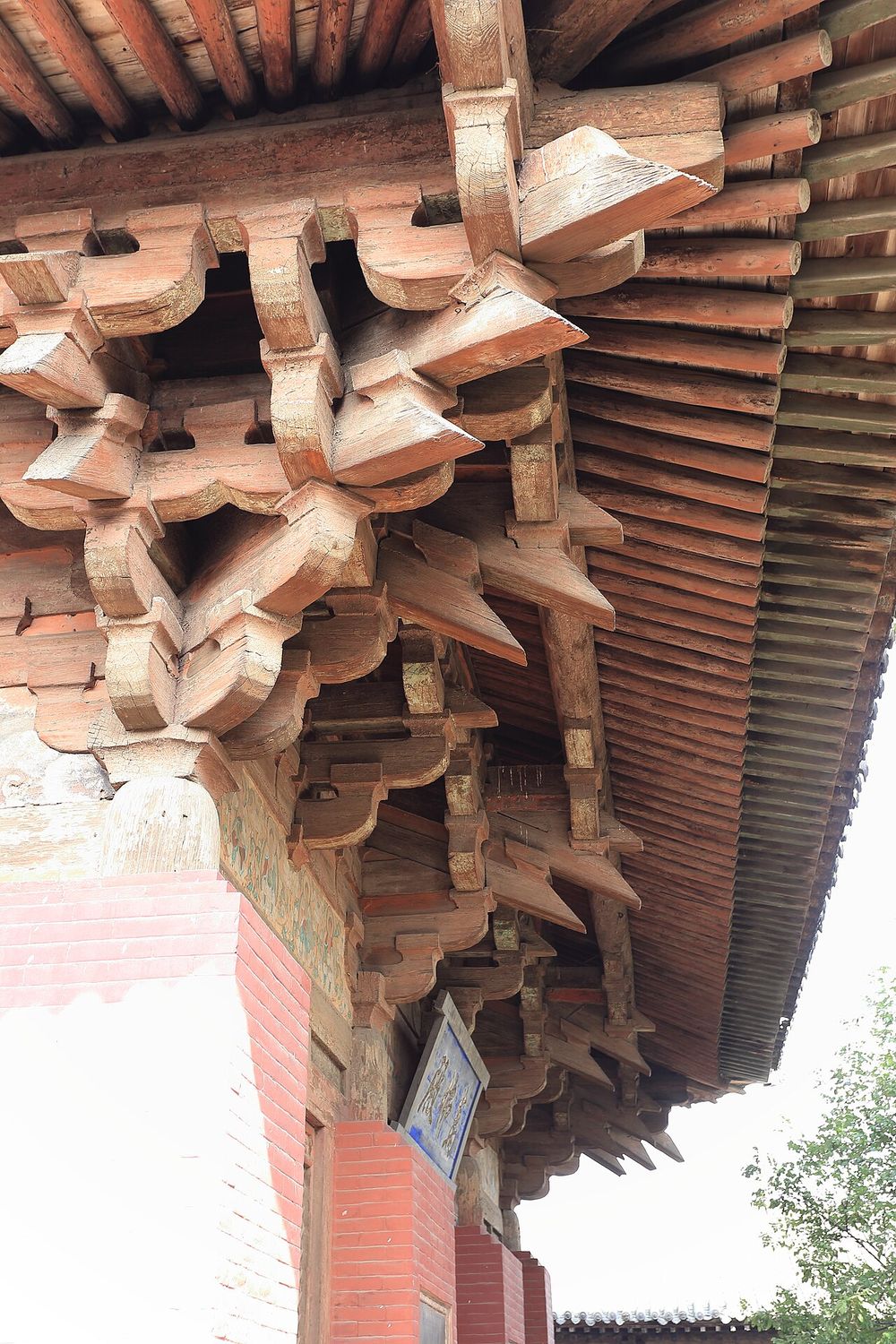
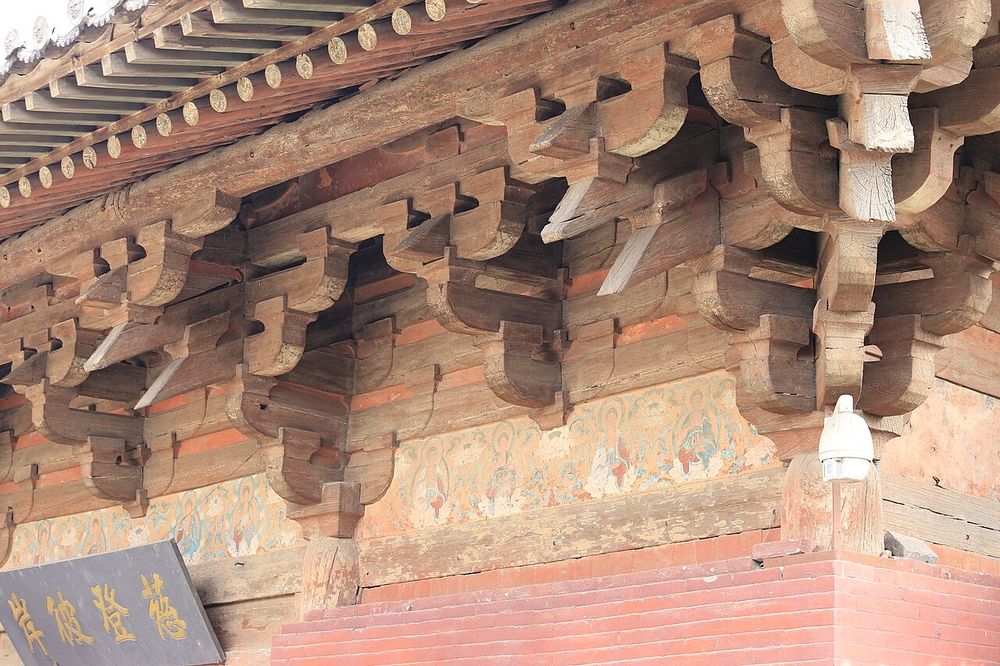
Look up at the brackets under the eaves. They are enormous for so small a hall. The painted figures inside are among the few Buddhist sculptures of the tenth century left in China.
Why Pingyao survived
Two answers are given, and both are true. The town was too poor to rebuild. And in 1982 the county asked Tongji University for a plan, approved in 1985, that kept the old town and put new building outside the wall. In the same years towns all over China were pulling their old quarters down.
In 1997 about 50,000 people visited. In 2019 the figure was about 17.65 million.
Books, films and festivals
A Qing compilation says of the Shanxi banks: their methods are most exact, their people most honest, their credit the best known. Li Hongling, a Pingyao bank manager, wrote the story of their rise and fall himself. The German geologist Ferdinand von Richthofen, who travelled in China in the 1860s and coined the term "Silk Road", praised the Shanxi people's gift for trade and finance.
The Pingyao International Photography Festival began in 2001. The Pingyao International Film Festival was founded in 2017 by the director Jia Zhangke, who comes from nearby Fenyang; it is held each October in a disused diesel-engine factory inside the wall. The show Seeing Pingyao Again has played since 2013 in a theatre outside the west gate; the audience walks through it with the actors.
The film Empire of Silver (2009) tells of two generations of a Shanxi banking family; the bank in it is invented. Do not confuse Pingyao with the Qiao Family Compound in Qi county, where Raise the Red Lantern was filmed.
Something to try: make a draft. You pay ten taels of silver in Pingyao and collect it in Beijing. How do you stop someone forging the paper? The banks used secret codes, hidden marks and special paper.
Meanwhile in the world
Year
Here
Elsewhere
963
The Hall of Ten Thousand Buddhas is built at Zhenguo Temple
The Song dynasty is three years old; in Rome Otto I deposes a pope
1163
The main hall of the Confucian Temple is rebuilt
By tradition, the first stone of Notre-Dame in Paris is laid
1370
The wall is faced with brick
The Ming dynasty is two years old; England and France are fighting the Hundred Years' War
1688
The Market Tower is rebuilt
The Glorious Revolution in England
1823
Rishengchang opens
The United States announces the Monroe Doctrine; the Bank of England is 129 years old
1914
Rishengchang closes
The First World War begins
1980s
Tongji University's conservation plan, approved in 1985
Towns across China are demolishing their old quarters
1997
Listed as World Heritage in December
The same session lists Lijiang and the gardens of Suzhou
2019
About 17.65 million visitors
More than three hundred times the figure for 1997
One line to remember: a wall that kept a town, and a sheet of paper that moved silver.
Then and now
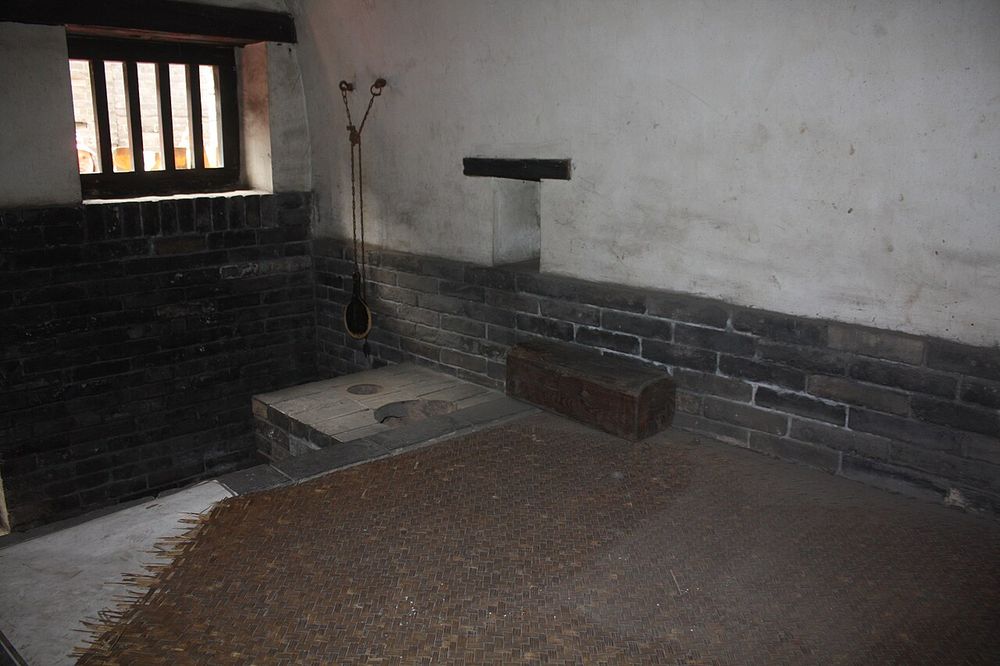
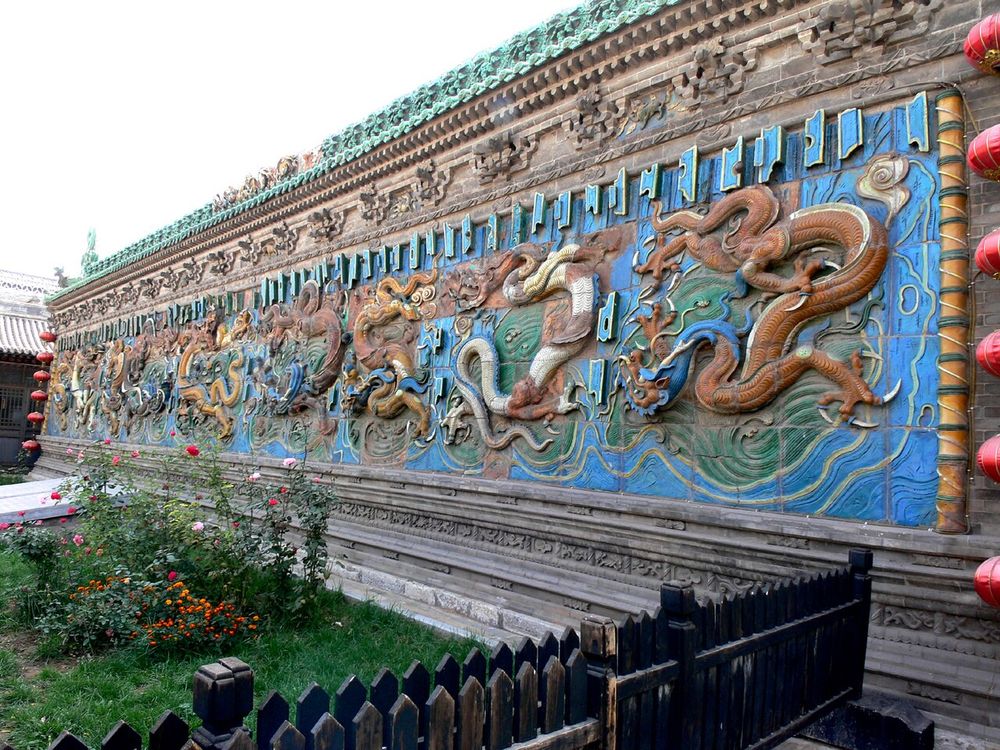
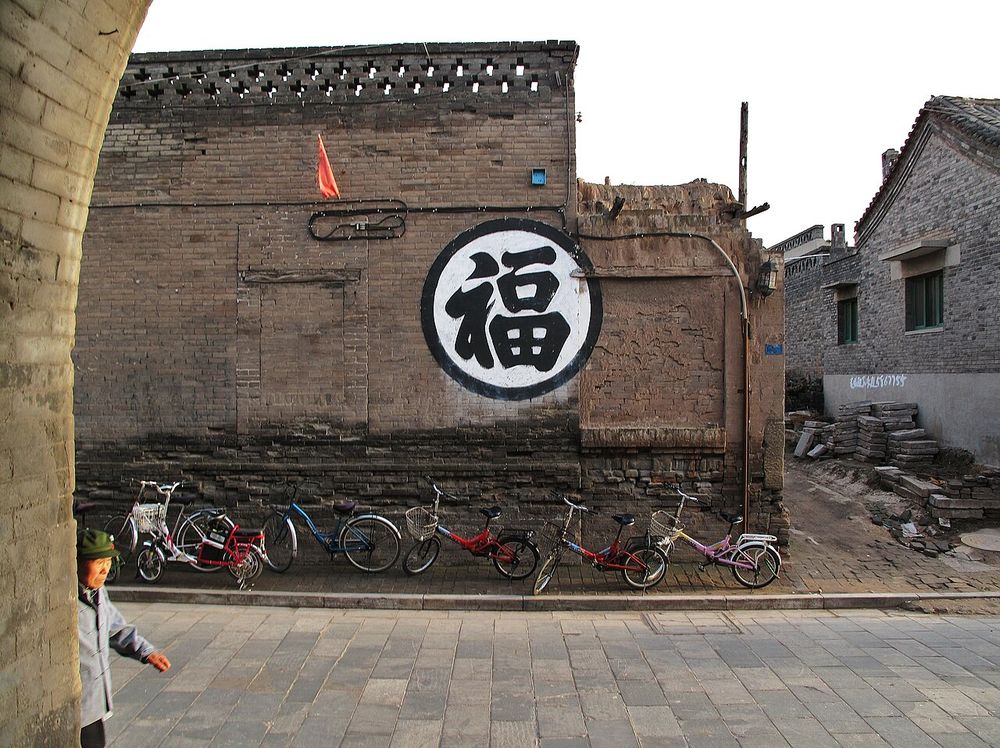
The town and its wall from the air, 2015w0zny, CC BY-SA 3.0, Wikimedia CommonsThe city wall with its towersGisling, CC BY 3.0, Wikimedia CommonsThe Market Tower over South StreetYumeto, CC BY-SA 4.0, Wikimedia CommonsThe street front of RishengchangZhangzhugang, CC BY-SA 3.0, Wikimedia CommonsThe south gate, Yingxun GateYumeto, CC BY-SA 4.0, Wikimedia CommonsSouth Street from the Market Towerseverin.stalder, CC BY-SA 3.0, Wikimedia CommonsA street seen from the wallThomasMomas, CC BY-SA 4.0, Wikimedia CommonsA gate tower on the wallJan Bockaert, CC BY-SA 2.0, Wikimedia CommonsAt the foot of the wallxiquinhosilva, CC BY 2.0, Wikimedia CommonsThe wall and a bridge over the moatxiquinhosilva, CC BY 2.0, Wikimedia CommonsOutside the wall, 2019xiquinhosilva, CC BY 2.0, Wikimedia CommonsThe north gate, Gongji GateYumeto, CC BY-SA 4.0, Wikimedia CommonsThe lower west gate, Fengyi GateYumeto, CC BY-SA 4.0, Wikimedia CommonsThe upper east gate, Qinhan GateYumeto, CC BY-SA 4.0, Wikimedia CommonsWalking the top of the wall, 2006McKay Savage, CC BY 2.0, Wikimedia CommonsRoofs from the wallG41rn8, CC BY-SA 4.0, Wikimedia CommonsSouth Street and the Market TowerFrancisco Anzola, CC BY 2.0, Wikimedia CommonsThe Market Tower at night, from the northZhangzhugang, CC BY-SA 3.0, Wikimedia CommonsThe street on a wet dayNicor, CC BY-SA 3.0, Wikimedia CommonsThe board at Rishengchang: "Remittances reach everywhere under heaven" (read from right to left)Gisling, CC BY-SA 3.0, Wikimedia CommonsThe rear hall of Rishengchang, with the board over its doorGisling, CC BY-SA 3.0, Wikimedia CommonsA courtyard of RishengchangZhangzhugang, CC BY-SA 3.0, Wikimedia CommonsThe middle courtyard, where remittances were handledZhangzhugang, CC BY-SA 3.0, Wikimedia CommonsThe inner courtyardZhangzhugang, CC BY-SA 3.0, Wikimedia CommonsAn accountant's room in a bankFrancisco Anzola, CC BY 2.0, Wikimedia CommonsThe former home of Lei Lütai, founder of RishengchangZhangzhugang, CC BY-SA 3.0, Wikimedia CommonsThe great hall of the county officelienyuan lee, CC BY 3.0, Wikimedia CommonsA courtyard in the county officeFrancisco Anzola, CC BY 2.0, Wikimedia CommonsA cell in the county jailAlex Ostrovski, CC BY-SA 4.0, Wikimedia CommonsAlong the axis of the county officelienyuan lee, CC BY 3.0, Wikimedia CommonsIn the Confucian TempleJan Bockaert, CC BY-SA 2.0, Wikimedia CommonsThe main hall of the Confucian Temple, rebuilt in 1163Gisling, CC BY 3.0, Wikimedia CommonsThe nine-dragon screen wallGisling, CC BY 3.0, Wikimedia CommonsThe archway in front of the Confucian TempleZhangzhugang, CC BY-SA 3.0, Wikimedia CommonsA building of the old examination schoolFrancisco Anzola, CC BY 2.0, Wikimedia CommonsThe gate of the City God TempleYumeto, CC BY-SA 4.0, Wikimedia CommonsA back door in an old laneSeverin.stalder, CC BY-SA 3.0, Wikimedia CommonsA courtyard house that is now an innGisling, CC BY 3.0, Wikimedia CommonsA house front and the mouth of a laneJan Bockaert, CC BY-SA 2.0, Wikimedia CommonsBicycles under a wall with the character 福, good fortuneFrancisco Anzola, CC BY 2.0, Wikimedia CommonsThe gate of Shuanglin TempleGisling, CC BY 3.0, Wikimedia CommonsThe opera stage at Shuanglin TempleZhangzhugang, CC BY-SA 3.0, Wikimedia CommonsThrough the gate toward the Hall of the Heavenly KingsZhangzhugang, CC BY-SA 3.0, Wikimedia CommonsThe Hall of the Heavenly Kings at Shuanglin TempleG41rn8, CC BY-SA 4.0, Wikimedia CommonsGuanyin with a thousand arms, painted clay, Shuanglin TempleShakti, CC BY-SA 1.0, Wikimedia CommonsA seated bodhisattva, painted clay, Shuanglin TempleShakti, CC BY-SA 3.0, Wikimedia CommonsOutside Zhenguo TempleZhangzhugang, CC BY-SA 3.0, Wikimedia CommonsThe Hall of the Heavenly Kings at Zhenguo TempleZhangzhugang, CC BY-SA 3.0, Wikimedia CommonsThe Hall of Ten Thousand Buddhas, built in 963G41rn8, CC BY-SA 4.0, Wikimedia CommonsThe Hall of Ten Thousand Buddhas among the treesZhangzhugang, CC BY-SA 3.0, Wikimedia CommonsThe great brackets under the eaves of the hallZhangzhugang, CC BY-SA 3.0, Wikimedia CommonsThe back eaves of the hallZhangzhugang, CC BY-SA 3.0, Wikimedia CommonsA Rishengchang note for 250 taels of silver, 1907The Rishengchangji (日昇昌記) Bank., Public domain, Wikimedia Commons
Local legends
These are stories people tell about this place. They are legends, not history, and each one says where it comes from.
LegendThe shape of the town
The town is said to be a tortoise, the animal of long life. The south gate is the head, and the two wells outside it are the eyes. The north gate is the tail. The four gates on the east and west are the feet.
Source: Local folk tale
LegendThe city wall
The wall is said to have about 3,000 battlements and 72 watchtowers, for the 3,000 pupils and 72 sages of Confucius. We found nothing about this in the records of the wall's building.
Source: Told by guides; we found no written source
LegendThe Market Tower
A well beside the tower is said to have given water the colour of gold, so the tower is also called the Golden Well Tower.
Source: Local folk tale
LegendThe board at Rishengchang
The board over the door, “Remittances reach everywhere under heaven”, is said to be in the hand of the Daoguang emperor. Scholars doubt it: one writer compared the characters with the emperor's known writing and found them different.
Source: Told by guides; we found no written source
Later, people who live here will be able to add the stories they grew up with, and say which of these they have heard.
Not certain, and where accounts conflict
The year Rishengchang was founded
1823 in most accounts; 1822 or 1824 in some. One view is that the shop changed over gradually in the early 1820s and had no single opening day. We use 1823.
Did the emperor write the board?
Guides say so. One writer compared the characters with the emperor's known hand and found them different. We treat it as legend.
How old is the town?
The traditional account says it was founded in the Western Zhou, 2,700 or 2,800 years ago. UNESCO says "founded in the 14th century", meaning the town as it now stands. Both are given here.
The length of the wall
About 6,163 metres in most sources; "about 6 km" or 6.4 km in others.
3,000 battlements and 72 towers
Common with guides. We found nothing about it in the records of the wall's building. Legend.
The date of the Shuanglin figures
Yuan to Ming in one account; Song to Qing in another; "made in the Ming rebuilding" in a third. We give only the number and the famous pieces.
How many figures
2,056 in a 2011 newspaper report; "more than 2,000" elsewhere.
How far is Zhenguo Temple?
About 12 km (UNESCO); about 10 km (other sources).
Why the wall fell in 2004
The provincial heritage office blamed natural causes: poor ramming in a late Qing repair, standing water and salt in the brick. Reporters noted digging outside the south gate at the time. We state only that it fell.
"Largest" and "oldest"
That the county office is the largest and the temple hall the oldest of their kind is local and press usage. We found no national survey to confirm it, so we write "often called".
Visiting
Tickets and hours
The streets inside the wall are open at all hours and free to walk. A combined ticket, listed at 125 yuan in 2026, is needed to climb the wall and to enter the museums and temples in town, among them Rishengchang, the county office, the Confucian Temple and the City God Temple.
The combined ticket is usually said to cover about twenty sights and to be valid for three days, with one entry to each. Check both points when you buy.
Shuanglin Temple and Zhenguo Temple are outside the town and sell their own tickets, listed at 35 and 25 yuan.
The show Seeing Pingyao Again has its own ticket, listed from 238 yuan.
Last checked 2026-11-11. Travel and news reports, not the site's own notices.
Where to start
One day in town: up the wall at the south gate, north along South Street to the Market Tower, west to Rishengchang, then the county office, and across to the Confucian Temple and the City God Temple in the south-east.
Give the two temples half a day each, travel included. Shuanglin is the closer and the one to choose if you have time for only one.
Cars are kept out of the old town. From the railway stations you walk in from a gate or take an electric cart.
Before you go
Stay a night inside the wall if you can. After the day-trippers leave, the lanes are quiet and the lanterns are lit.
Winters are cold and dry, well below freezing at night. Many courtyard inns heat the brick bed, the kang, from underneath.
Bring your passport; the ticket is tied to it.
Customs and manners
In temples do not touch the painted figures, and use no flash. The colour at Shuanglin is centuries old and unprotected.
Many old courtyards are private homes. A gate standing open is not an invitation; ask first.
Shanxi food is built on noodles and aged vinegar. There is a vinegar pot on most tables, and people add it freely.
Tipping is not expected in China.
Look for these
On the wall, count battlements for ten minutes, work out the total for the whole circuit, and compare it with "three thousand".
Find the bend in the north gate. Through how many degrees do you turn between the inner and outer doors?
Find 囍 and 寿 on the roof of the Market Tower. One is on the south side and one on the north.
At Rishengchang, look up for the wire netting and its bells.
In the great hall of the county office, find the tube of slips.
At Shuanglin Temple, find Weituo. Which way does his body twist, and where are his eyes looking?
At Zhenguo Temple, how tall is one set of brackets under the eaves? Compare it with your own height.
Find a roof with a single slope. Where does the rain run?
I am here
Stand at the site, sign in, press the button, and collect its stamp. Your browser will ask to use your location. It is sent to us once to confirm that you are at the site; we keep how far you were from it, not the spot where you stood.
Your stamps are saved to your account, so they follow you to any device. Checking from a browser cannot rule out every false location; stricter checks arrive with the app.
Messages
Share your photos
Photos here show the place, not people. Each one is credited to the visitor who took it and appears after our team has looked at it. A photo with you in it belongs under “I am here”.