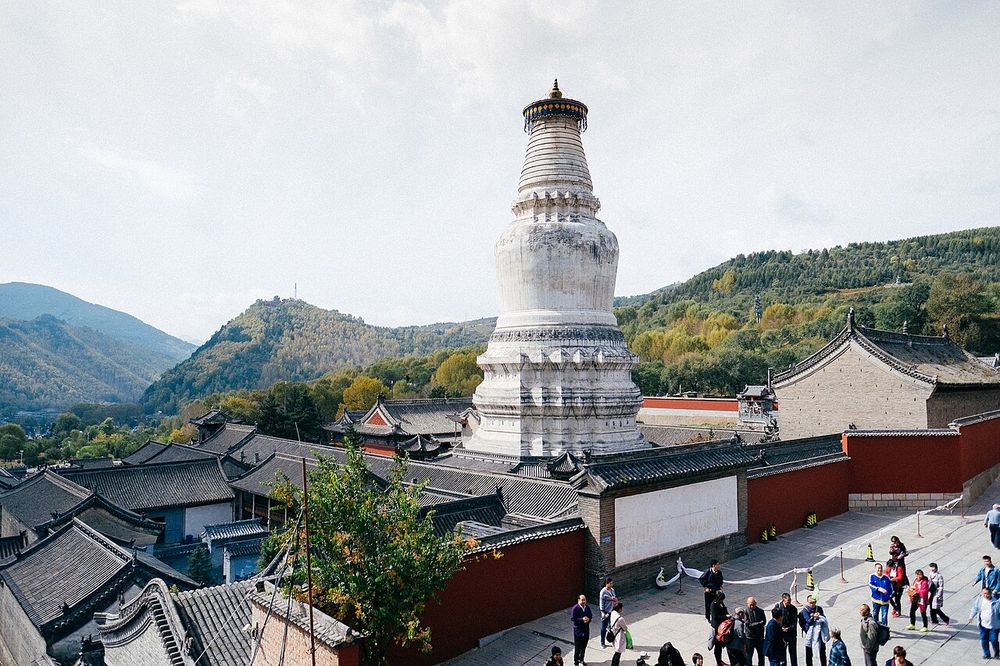
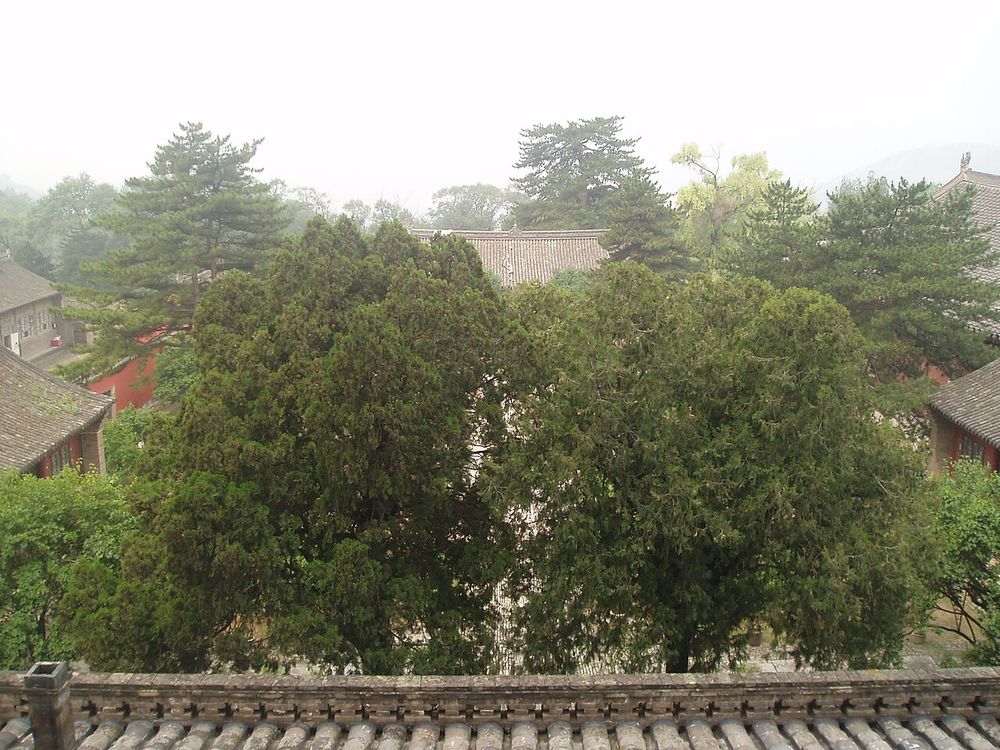
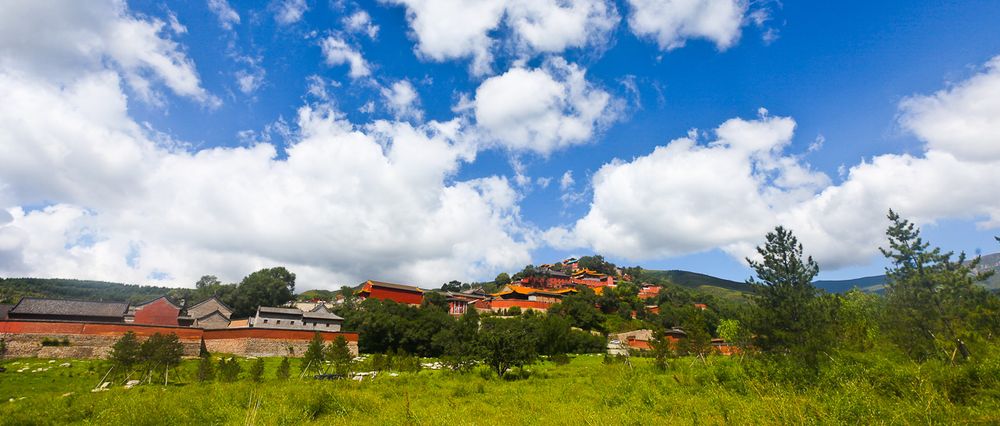
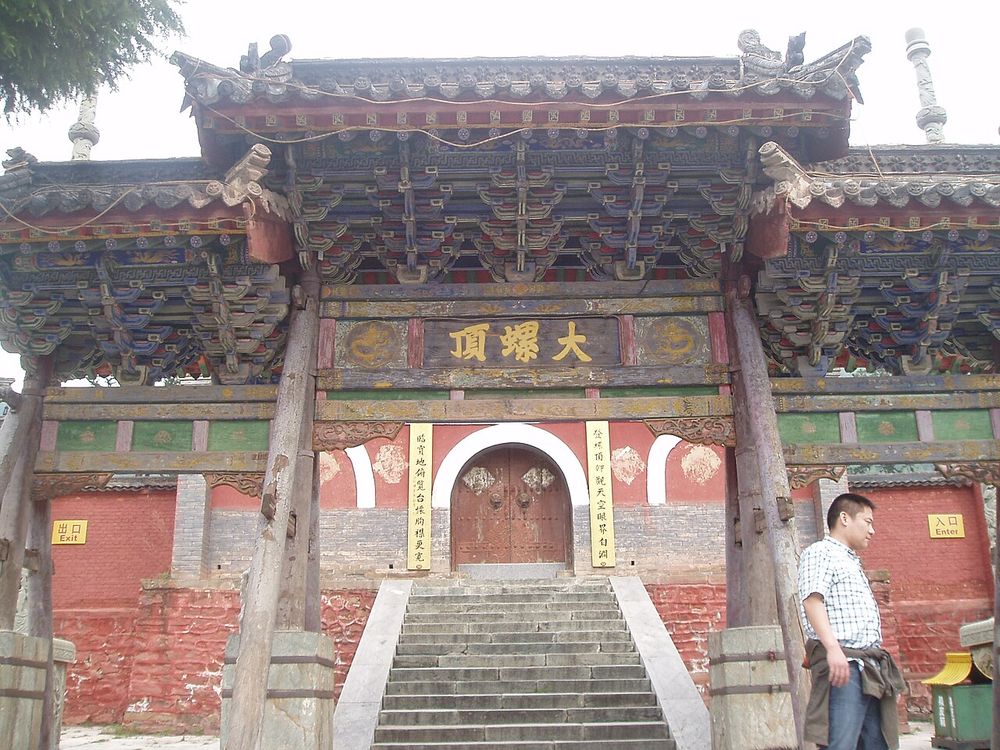
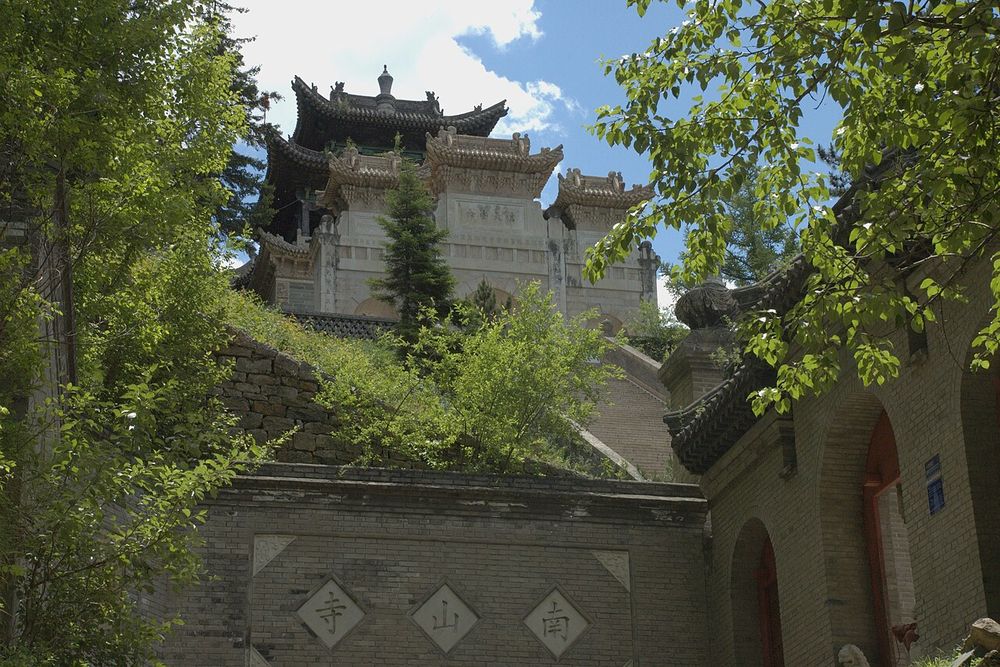
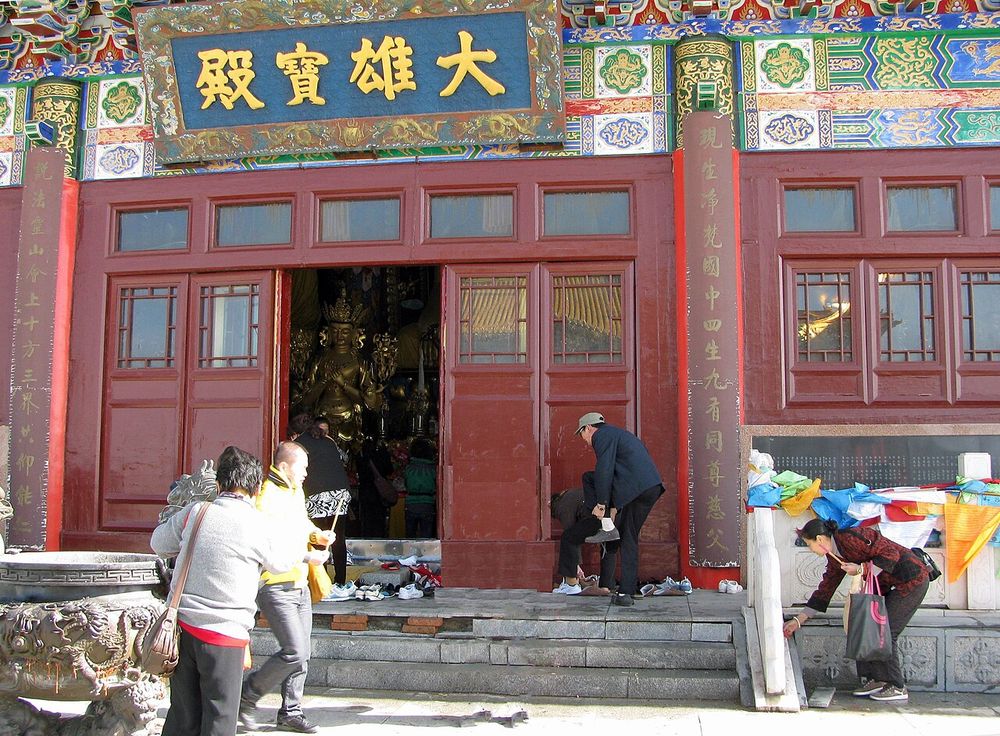
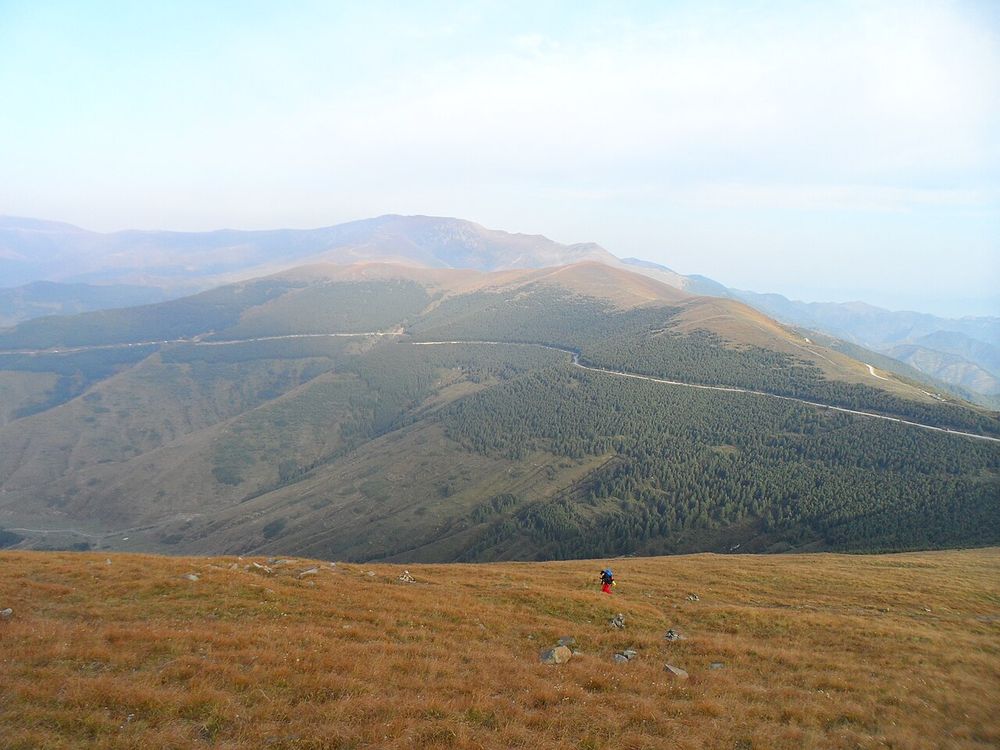
Five flat-topped peaks, the "five terraces", ring a high valley in northern Shanxi where more than fifty Buddhist temples crowd round a white Tibetan stupa. The mountain of Manjushri, bodhisattva of wisdom, it has drawn pilgrims from China, Tibet, Mongolia, Korea and Japan for fifteen hundred years, and its outlying valleys keep two of the oldest wooden buildings in China.
Photo: Popolon, CC BY-SA 4.0, Wikimedia Commons
The story
Wutai rises to over 3,000 metres, the roof of northern China, cold enough to be called Qingliang, "clear and cool". Buddhist sutras placed Manjushri on a "clear and cool mountain" in the north-east, and by the 5th century Chinese Buddhists had identified it with Wutai. The first temple, Xiantong, is traditionally dated to the 1st century.
Under the Tang (618–907) the mountain became an international centre: Japanese and Korean monks walked here, Tibetan and Mongol Buddhism later made it their own, and Qing (1644–1912) emperors came again and again. In 1937 two architects found a Tang hall still standing in a valley to the west. In 2009 Wutai was listed as a World Heritage Site, a cultural landscape of temples and peaks.
What is here
One ticket admits you to the scenic area; some temples ask a small fee of their own, and Foguang Temple charges separately.
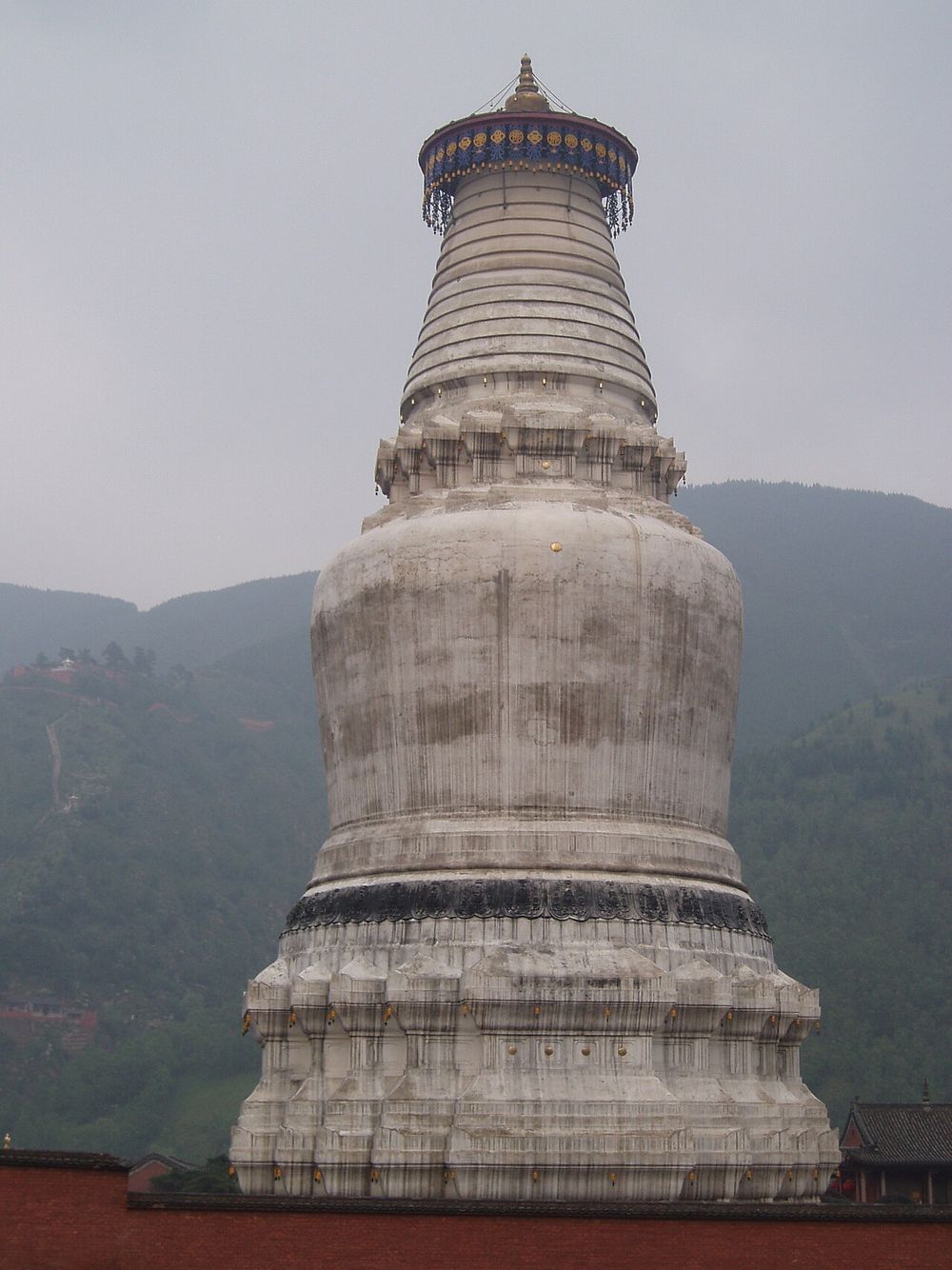
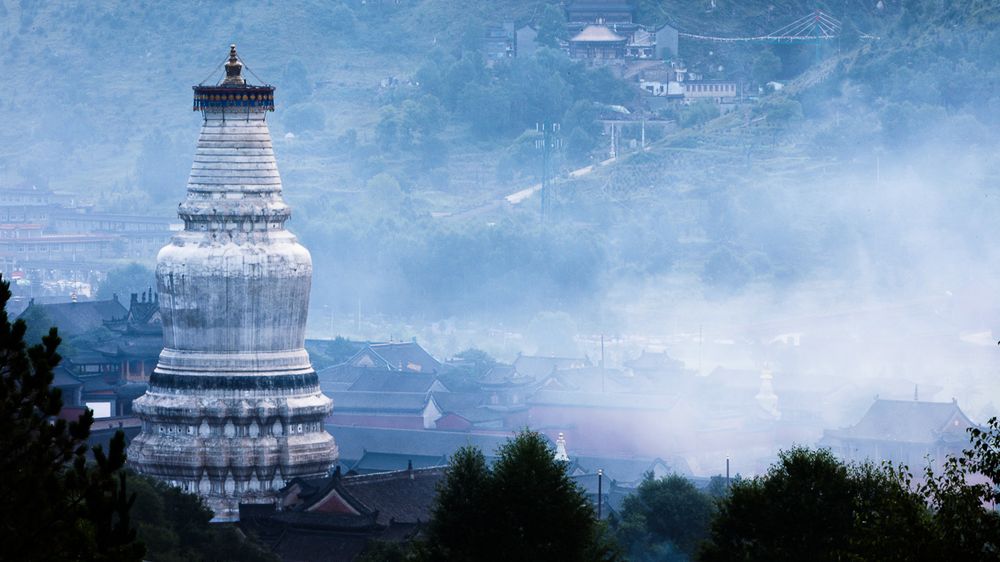
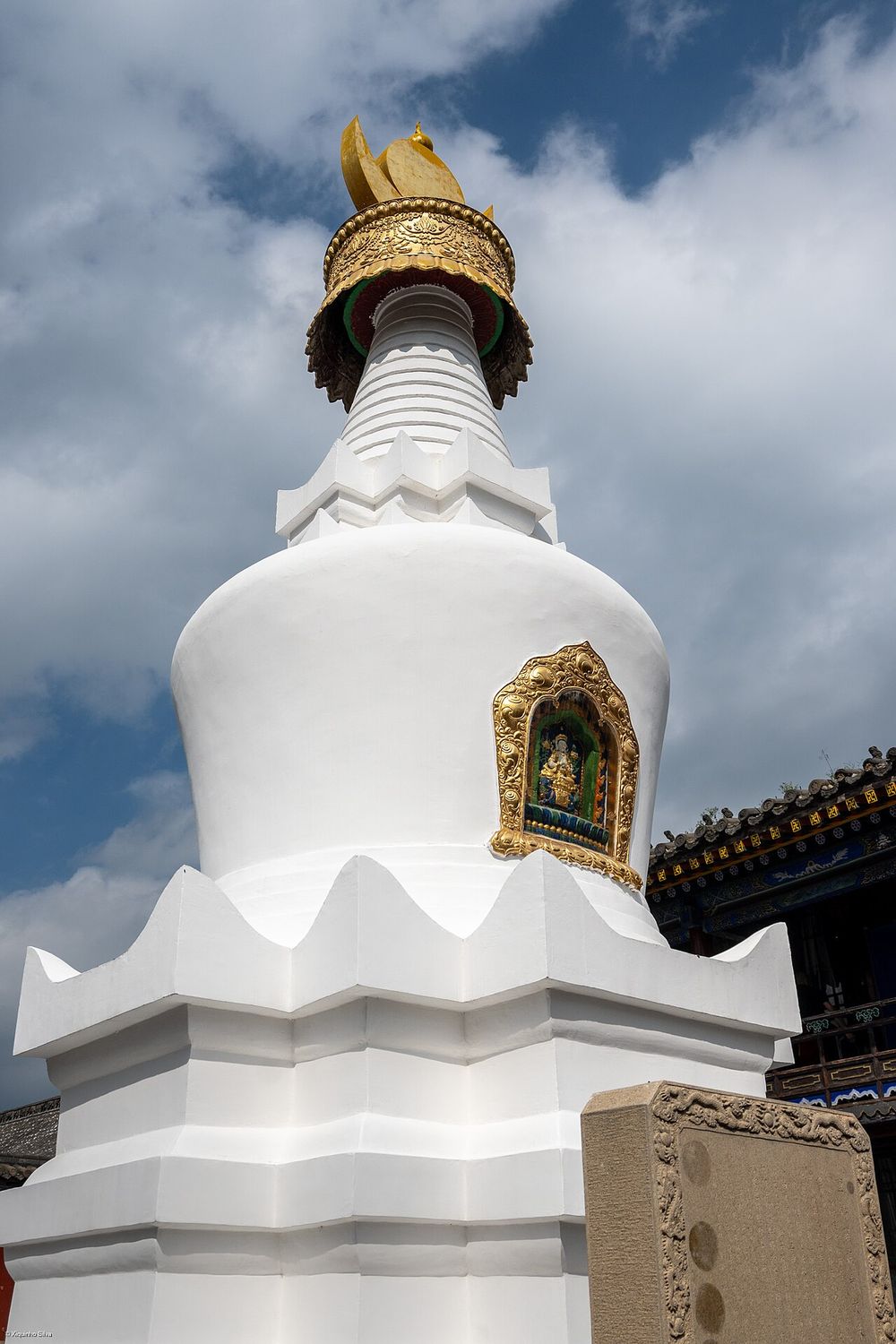
The Great White Pagoda over Taihuaimarroyo12, CC BY 2.0
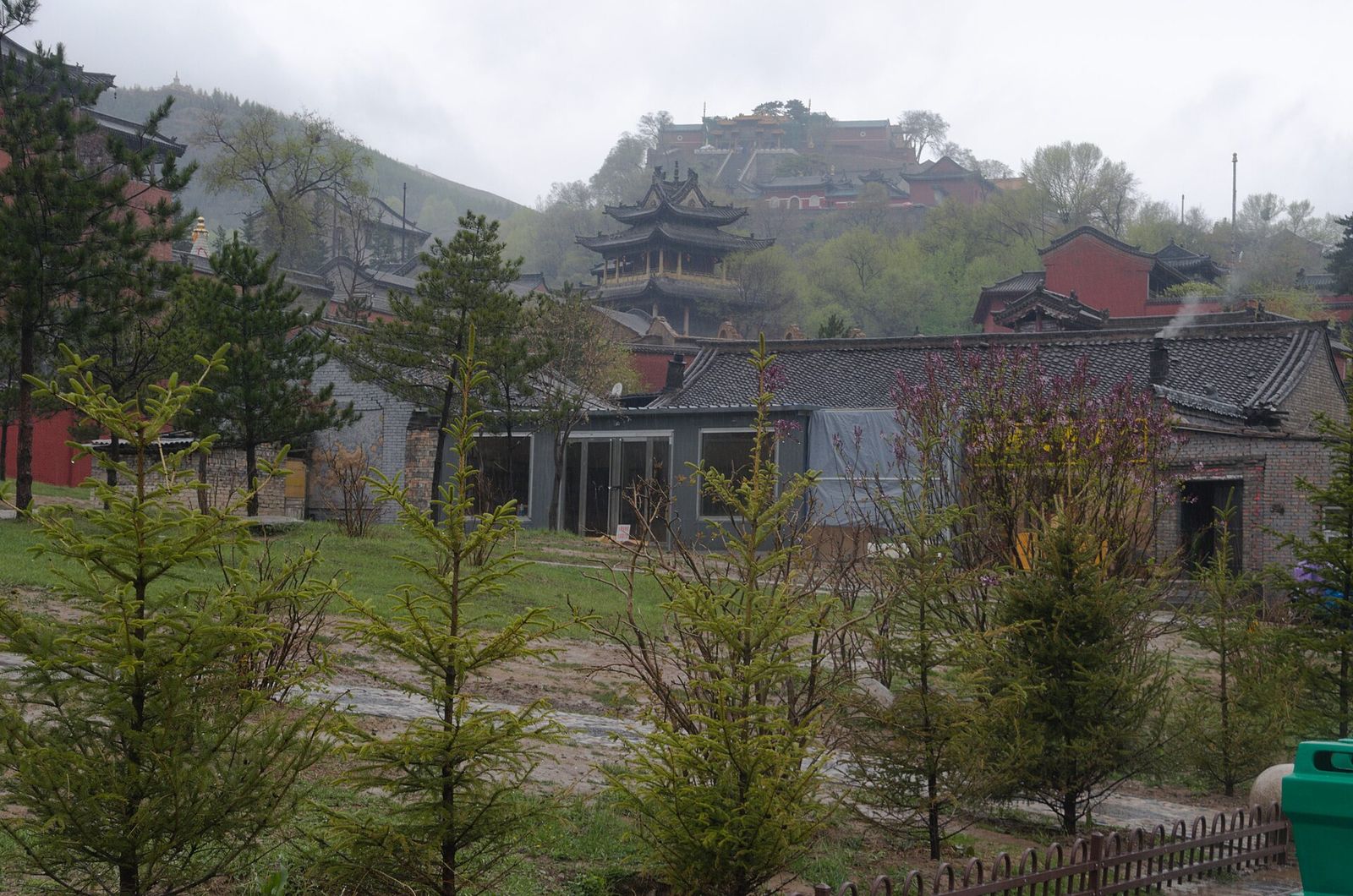
In the middle of Taihuai, the village in the valley, rises a white stupa 56 metres tall, designed in 1302 by the Nepalese master Araniko, with bells hanging from its rim. Pilgrims walk round it clockwise turning prayer wheels. Around it, roof after roof: Chinese temples with grey tiles, Tibetan ones with yellow tiles, and above, on the hill of Pusading, the temple where the Qing emperors stayed.
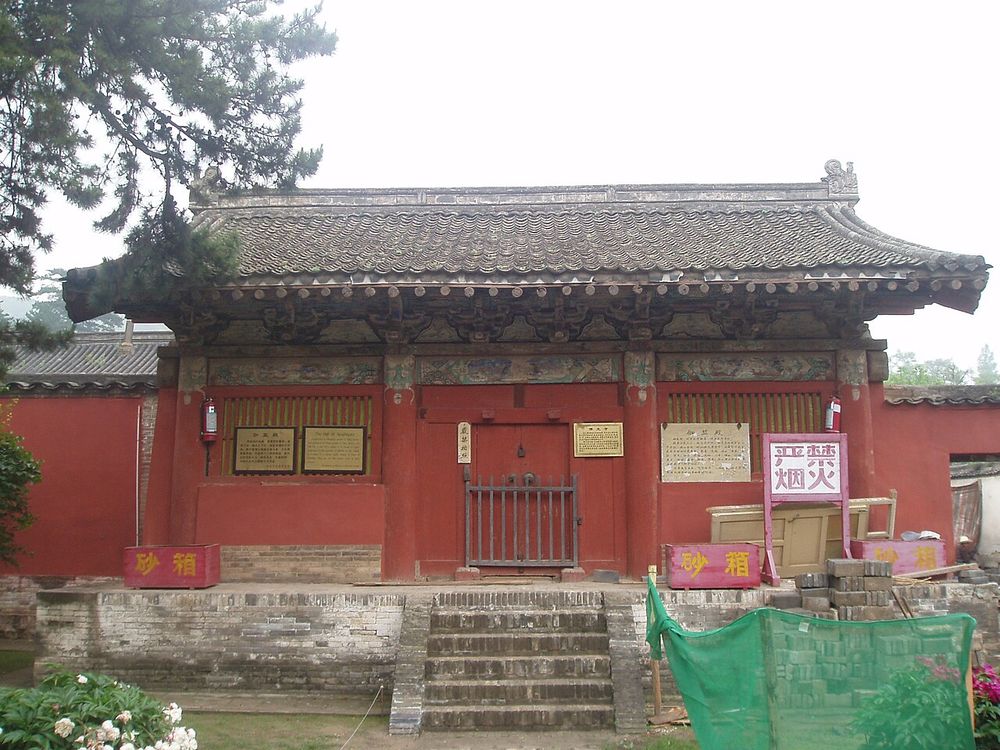
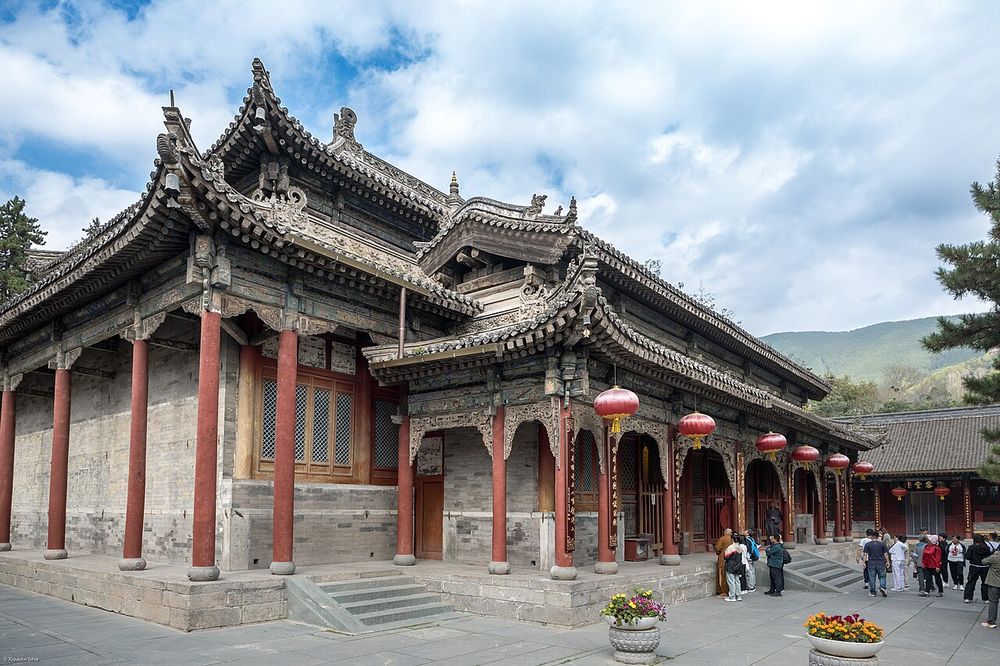
Then, if you have a car, drive an hour west to the Foguang Temple, whose East Hall was built in 857: a Tang building with its original statues and paintings, rediscovered by Liang Sicheng and Lin Huiyin.
The East Hall of Foguang Temple, 2008Angus Cepka, CC BY-SA 3.0
Things people often get wrong
"You climb five peaks." The terraces are far apart; walking all five, the "great pilgrimage", takes two days. Most visitors stay in the valley and climb only Dailuoding, where the five Manjushris are gathered.
"It is Tibetan Buddhist." Both Chinese and Tibetan Buddhism are practised here, side by side.
People who stood here
We searched Chinese sources first for this list, then English and Japanese ones.
Ennin (monk, 794–864)The Japanese monk walked to Wutai in 840 and described its temples and monks in his diary of travels in Tang China.
The Kangxi Emperor (1654–1722)He made five pilgrimages to Wutai and stayed at Pusading, where his inscriptions remain.
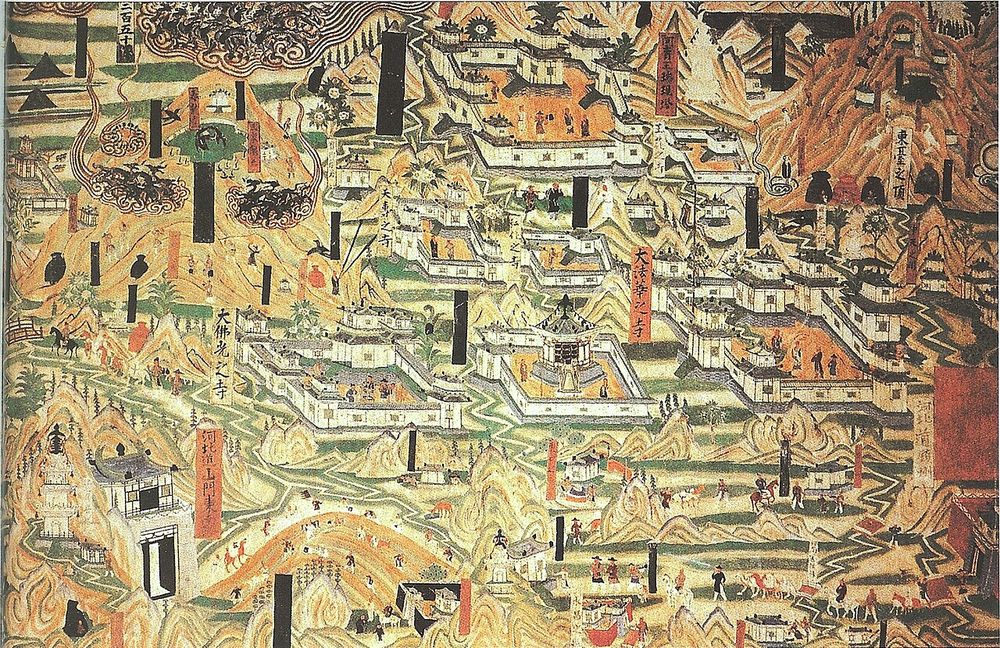
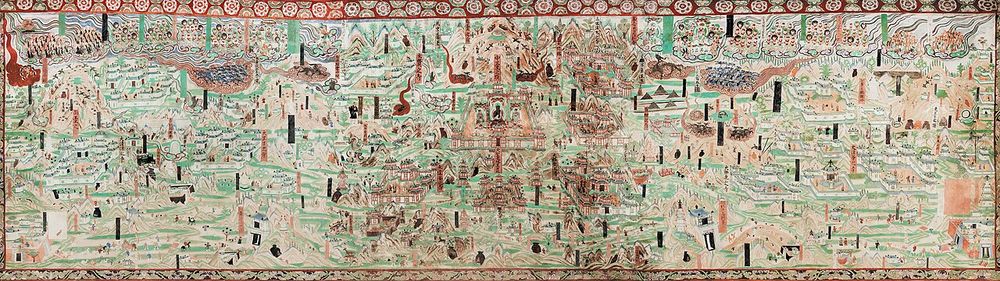
Liang Sicheng (architectural historian, 1901–1972)In 1937, guided by a 10th-century map of Wutai painted in the Mogao Caves, he found the Tang East Hall of Foguang Temple.
Lin Huiyin (architect and poet, 1904–1955)She climbed into the roof of the Foguang hall and read the ink inscription on a beam that dated it to 857.
The 13th Dalai Lama (1876–1933)He stayed at Wutai in 1908 on his way to Beijing.
Carl Gustaf Mannerheim (explorer and statesman, 1867–1951)On his ride across Asia, the future Finnish marshal met the 13th Dalai Lama at Wutai in 1908.
Go deeper: from Taihuai's temples to the Tang hall of Foguang, six stops7 stops · about 1 min to read
Taihuai's temples are close together; allow a day. Foguang Temple is about an hour's drive to the south-west.
1. Tayuan Temple and the Great White Pagoda
The Great White Pagoda, 2008Angus Cepka, CC BY-SA 3.0
The stupa of 1302 and the temple around it, the symbol of the mountain.
2. Xiantong Temple
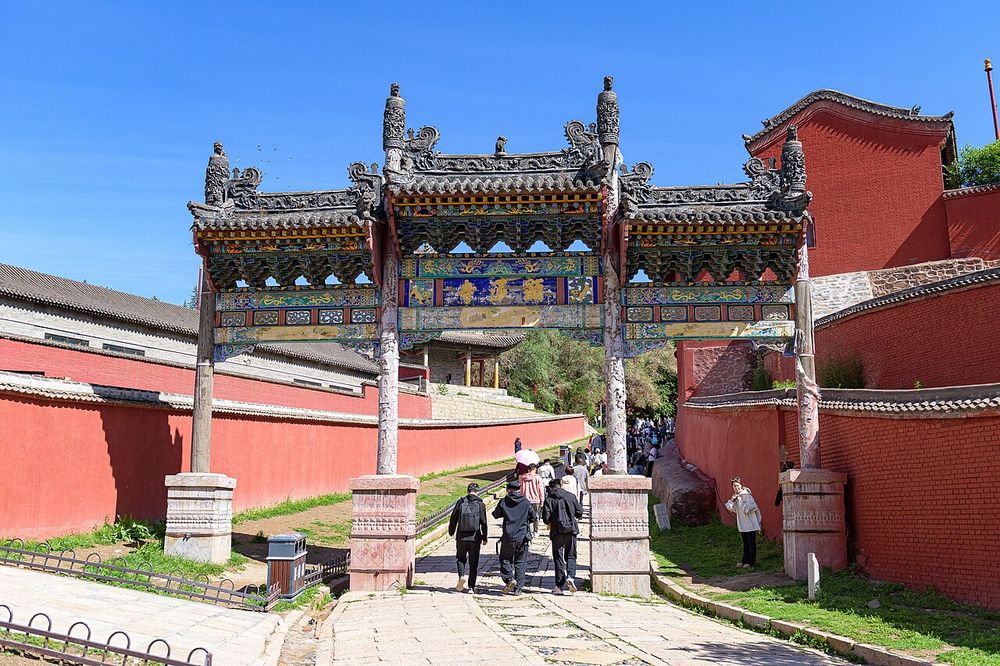
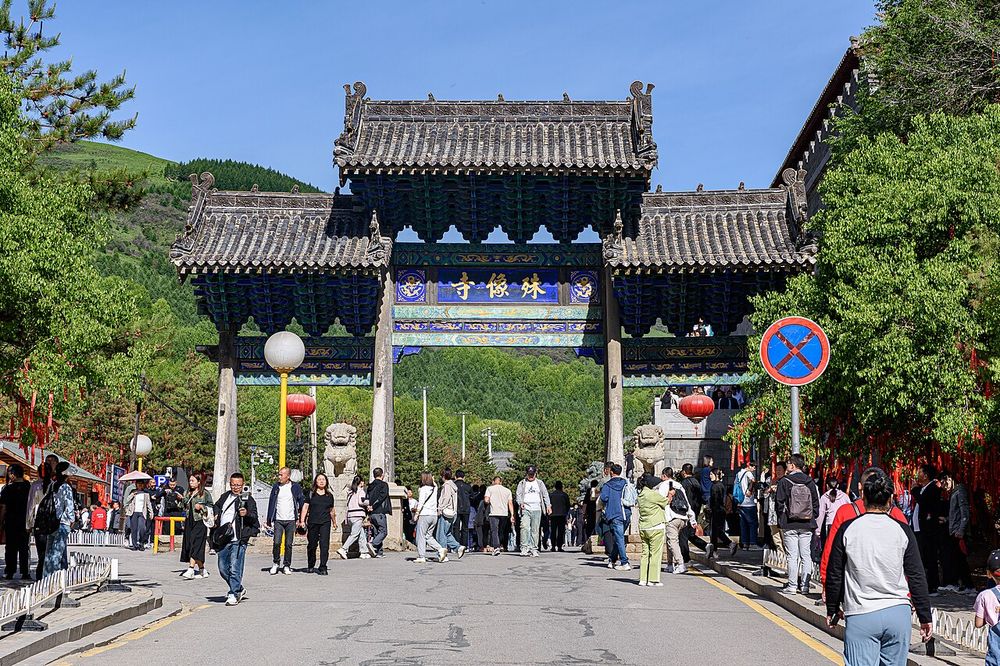
The archway of Xiantong Temple, 2024N509FZ, CC BY-SA 4.0
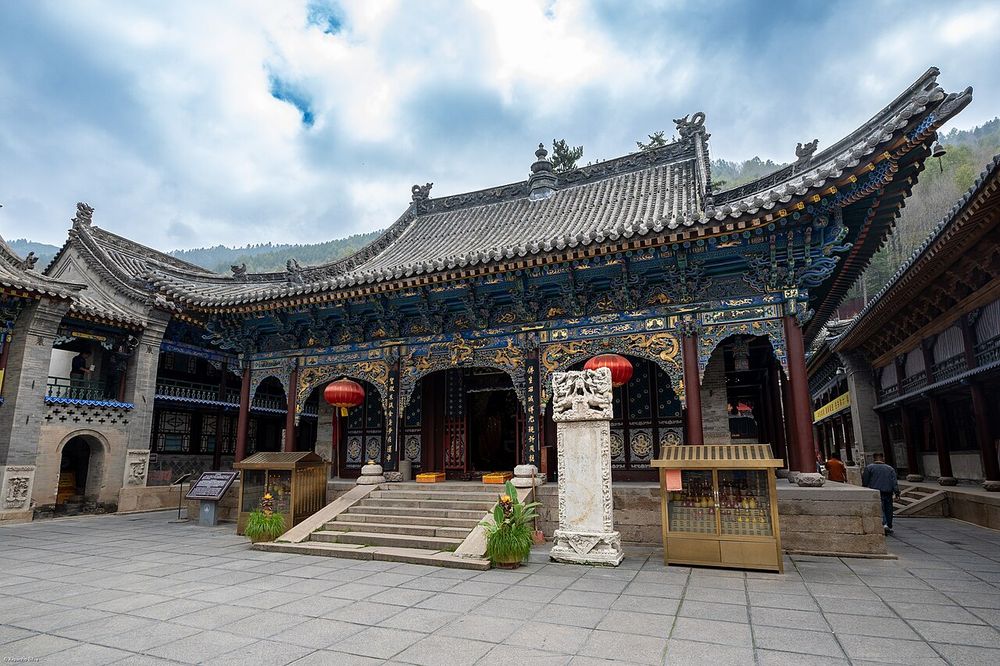
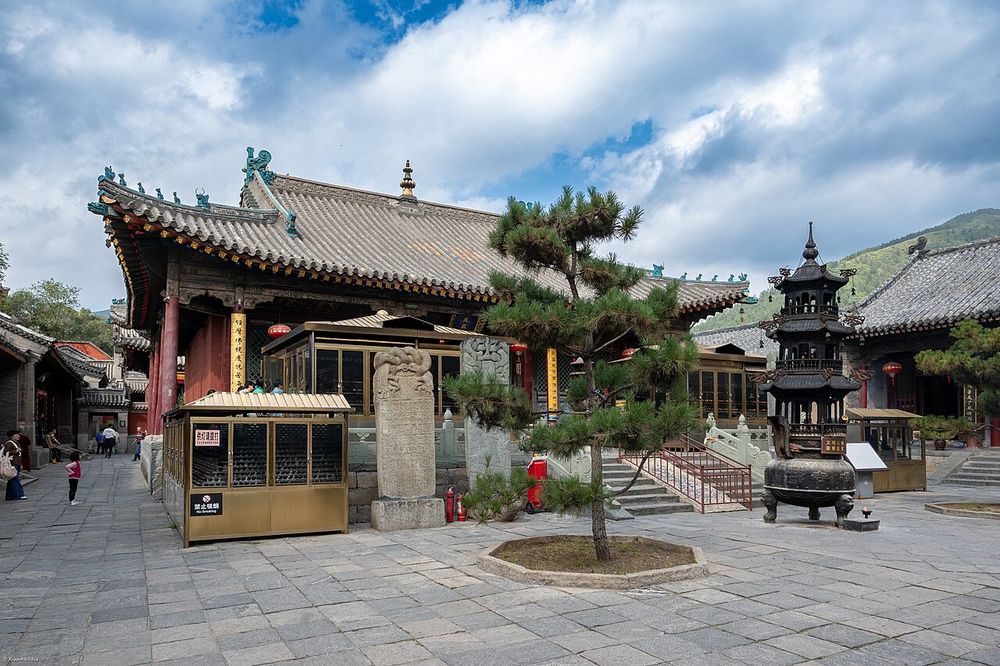
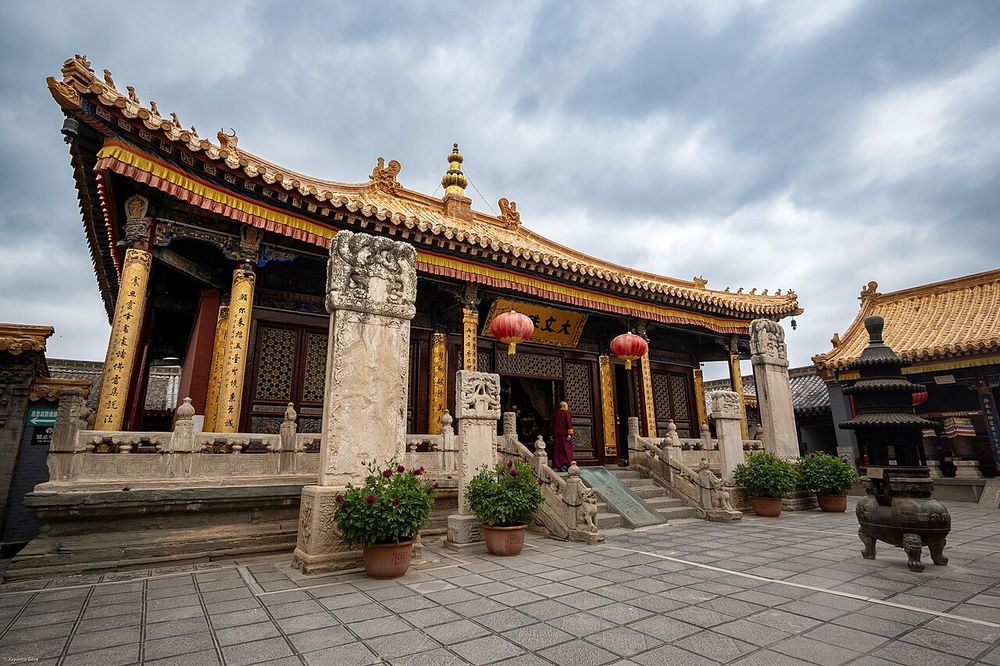
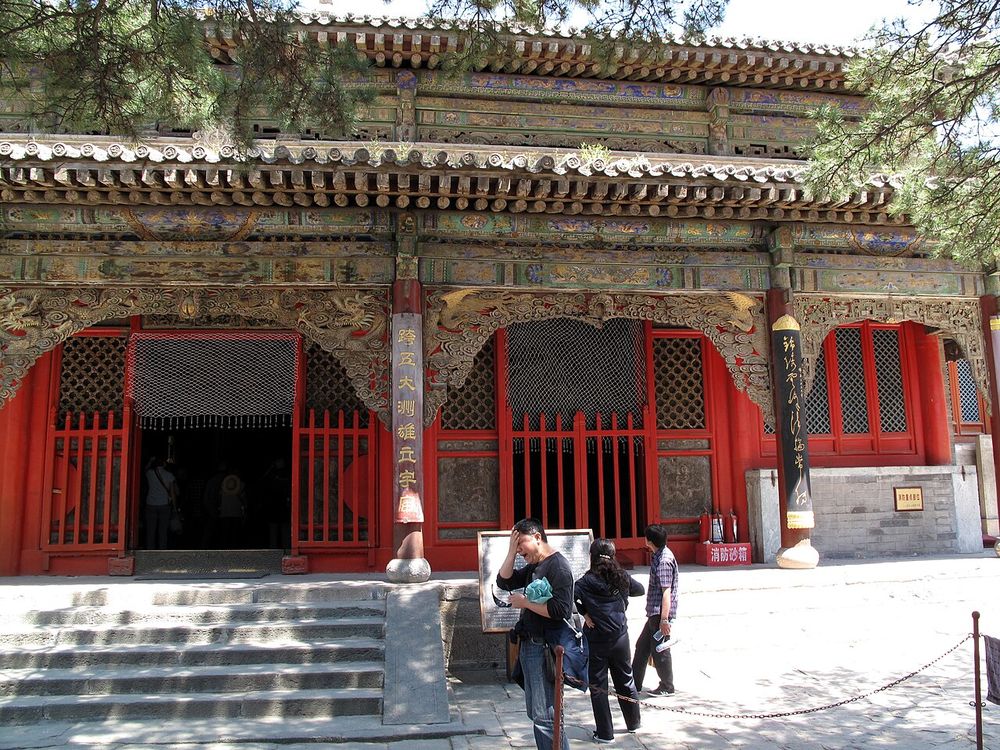
The oldest and largest temple, with a brick hall built without beams and a small hall cast entirely of bronze in 1609, its walls covered with ten thousand little Buddhas.
A hall of Xiantong Temple, 2025Yumeto, CC BY-SA 4.0
3. Pusading
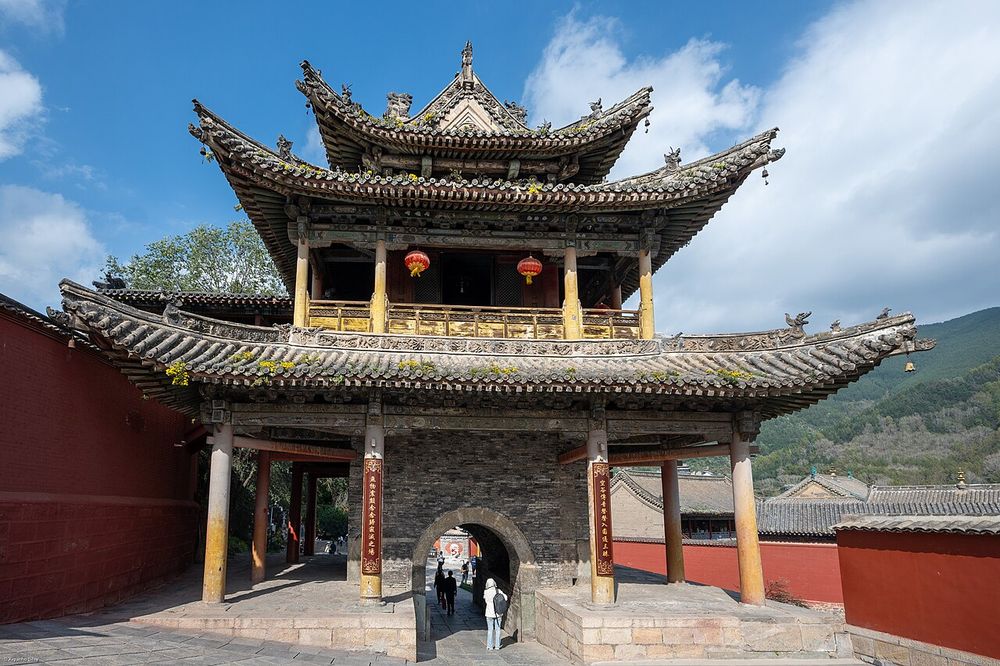
A gate tower, 2024xiquinhosilva, CC BY 2.0
Up 108 steps, the yellow-tiled temple of the Tibetan Buddhist lamas, where Kangxi and Qianlong stayed.
4. Shuxiang Temple
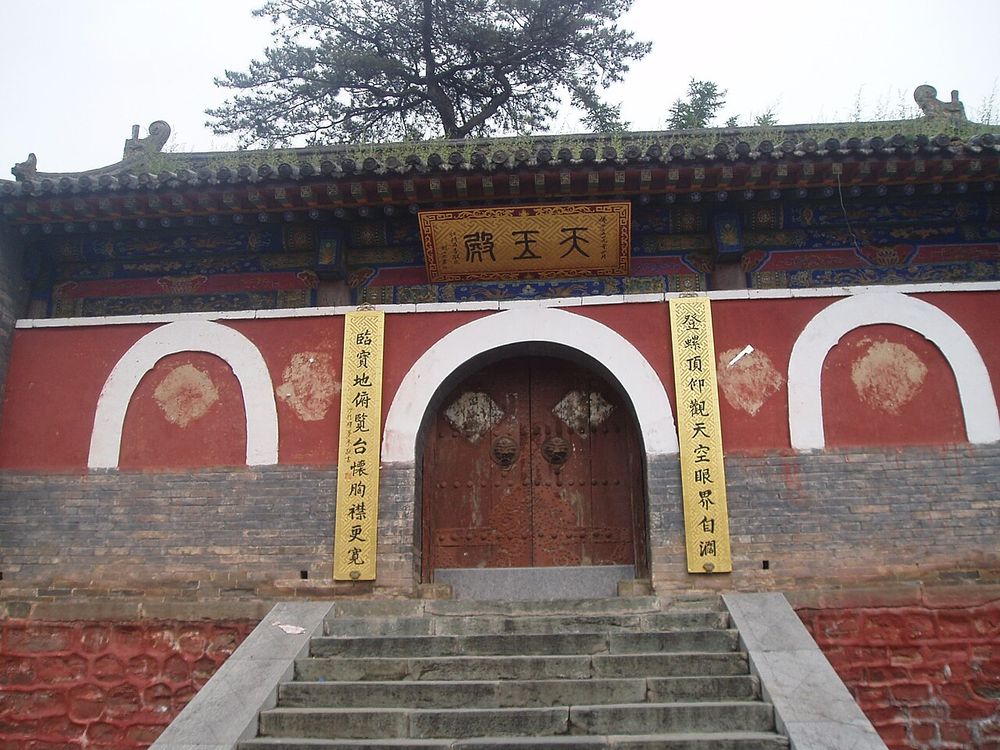
The Hall of Heavenly Kings at Shuxiang Temple, 2024N509FZ, CC BY-SA 4.0
The temple of Manjushri's image, with a great statue of the bodhisattva riding a lion.
5. Dailuoding
The gate of Dailuoding, 2008Angus Cepka, CC BY-SA 3.0
A temple on the hill east of the valley, reached by 1,080 steps or a chairlift, which gathers the five Manjushris of the five terraces so that pilgrims need not climb all five.
6. Foguang Temple
Foguang Temple among trees, 2008Angus Cepka, CC BY-SA 3.0
The East Hall of 857, one of the oldest wooden buildings in China, with Tang statues, murals and calligraphy on its beams.
Monasteries of Mount Wutai in the mural of Mogao Cave 61, 10th centuryChinese artist(s) from the 10th century, Public domain
The mountain and the same years elsewhere
In 840, when Ennin reached Wutai, the Frankish emperor Louis the Pious died and his sons began to divide his empire.
Meanwhile in the world
Year
Here
Elsewhere
840
The Japanese monk Ennin reaches Wutai
Louis the Pious dies and the Frankish empire is divided
857
The East Hall of Foguang Temple is built
Vikings sack Paris for the second time
1302
Araniko designs the Great White Pagoda
Flemish townsmen defeat French knights at Courtrai
1937
Liang Sicheng and Lin Huiyin find the Tang hall at Foguang
The Golden Gate Bridge opens
2009
Listed as a World Heritage Site
Usain Bolt runs 100 metres in 9.58 seconds
One line to remember: the mountain of wisdom, where fifty temples crowd round a white stupa and a Tang hall waited a thousand years to be found.
Temples, terraces and old maps
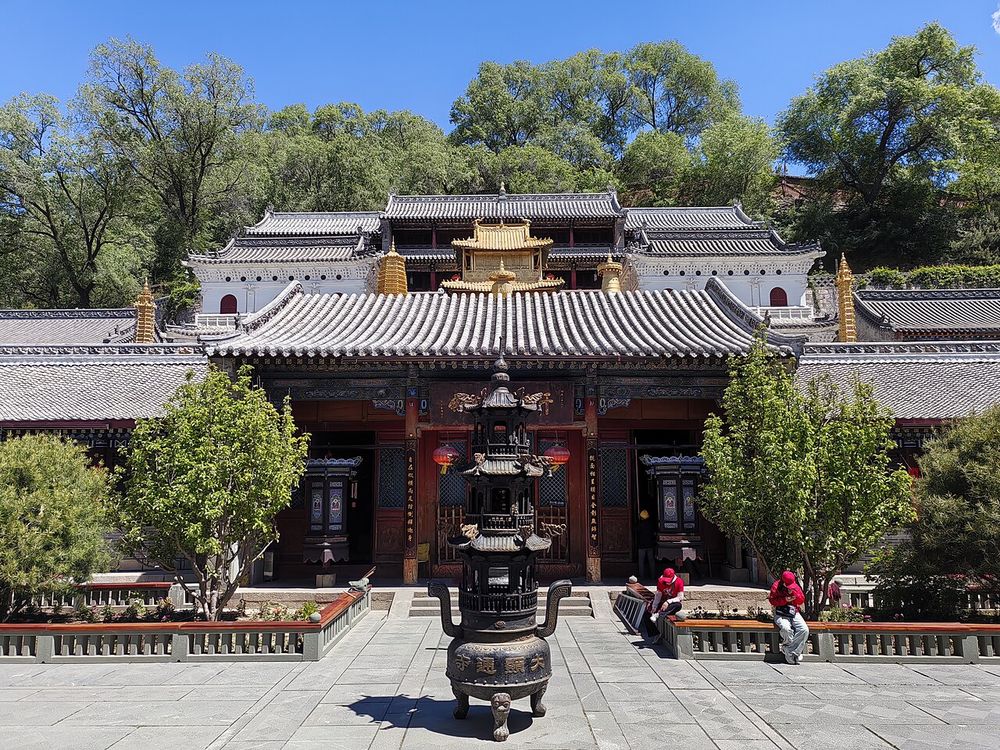
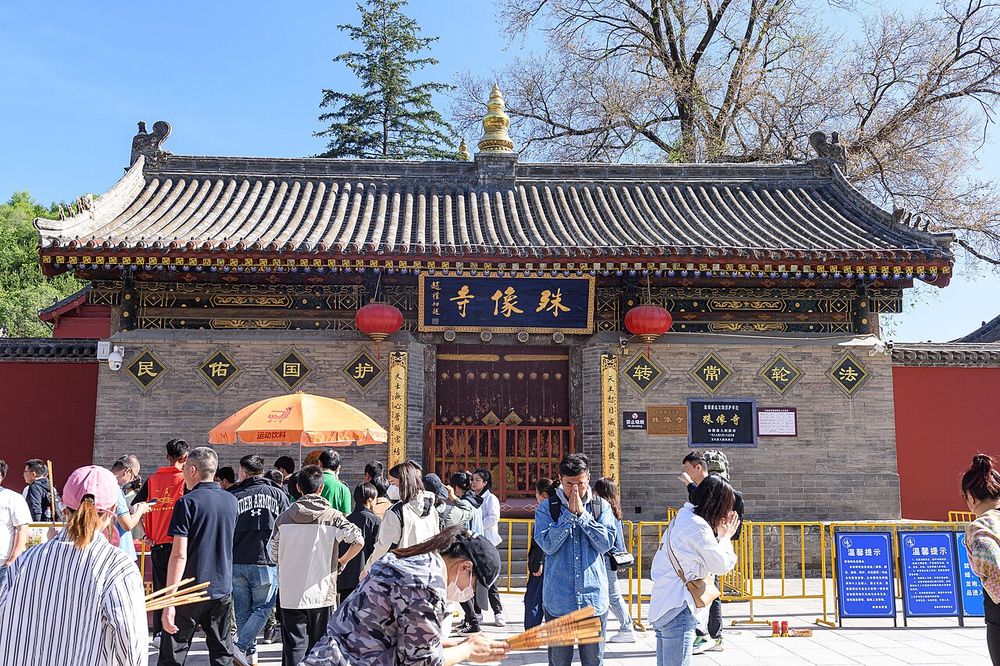
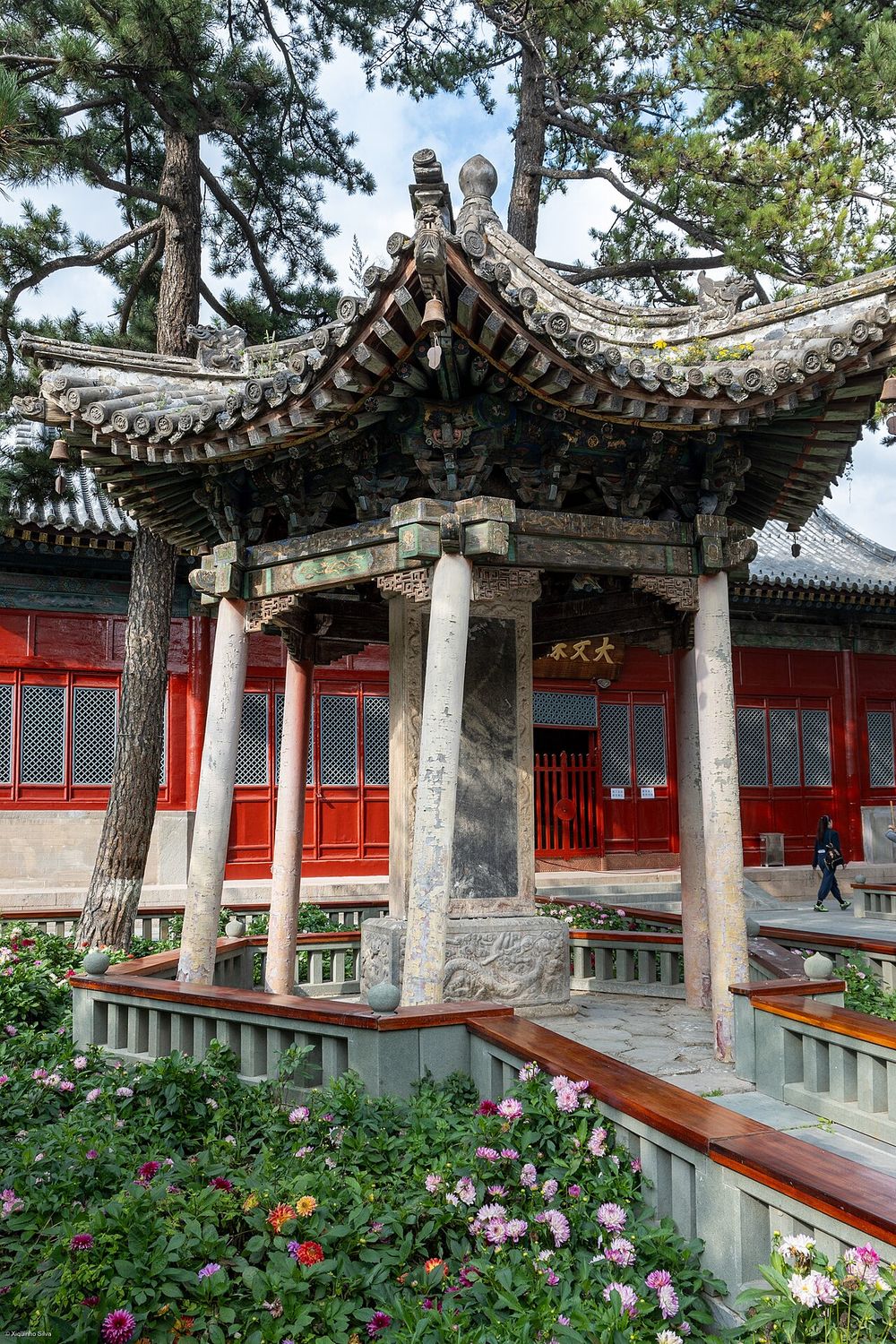
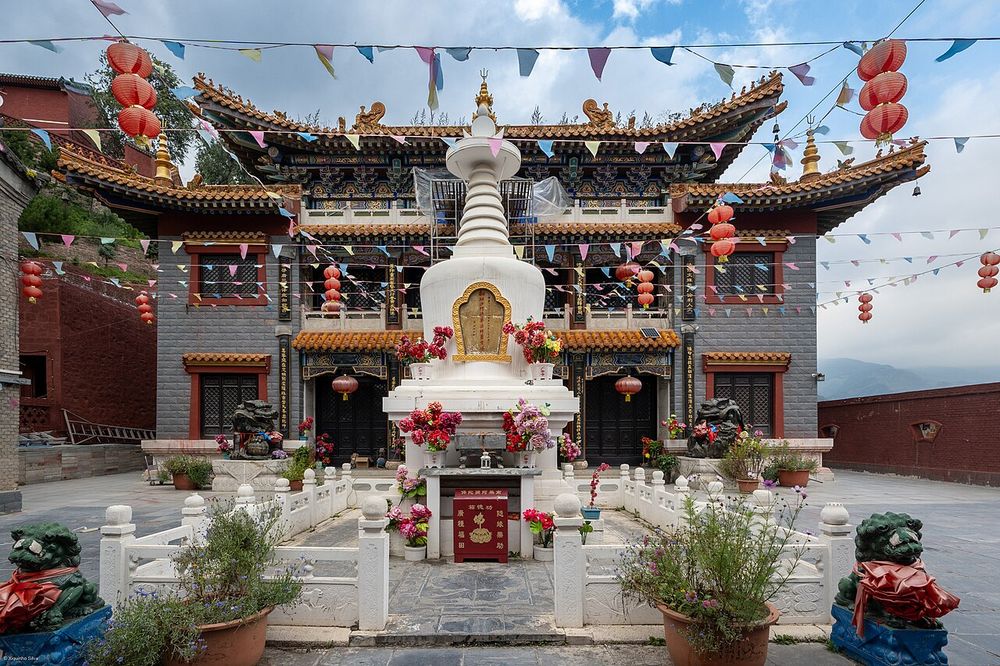
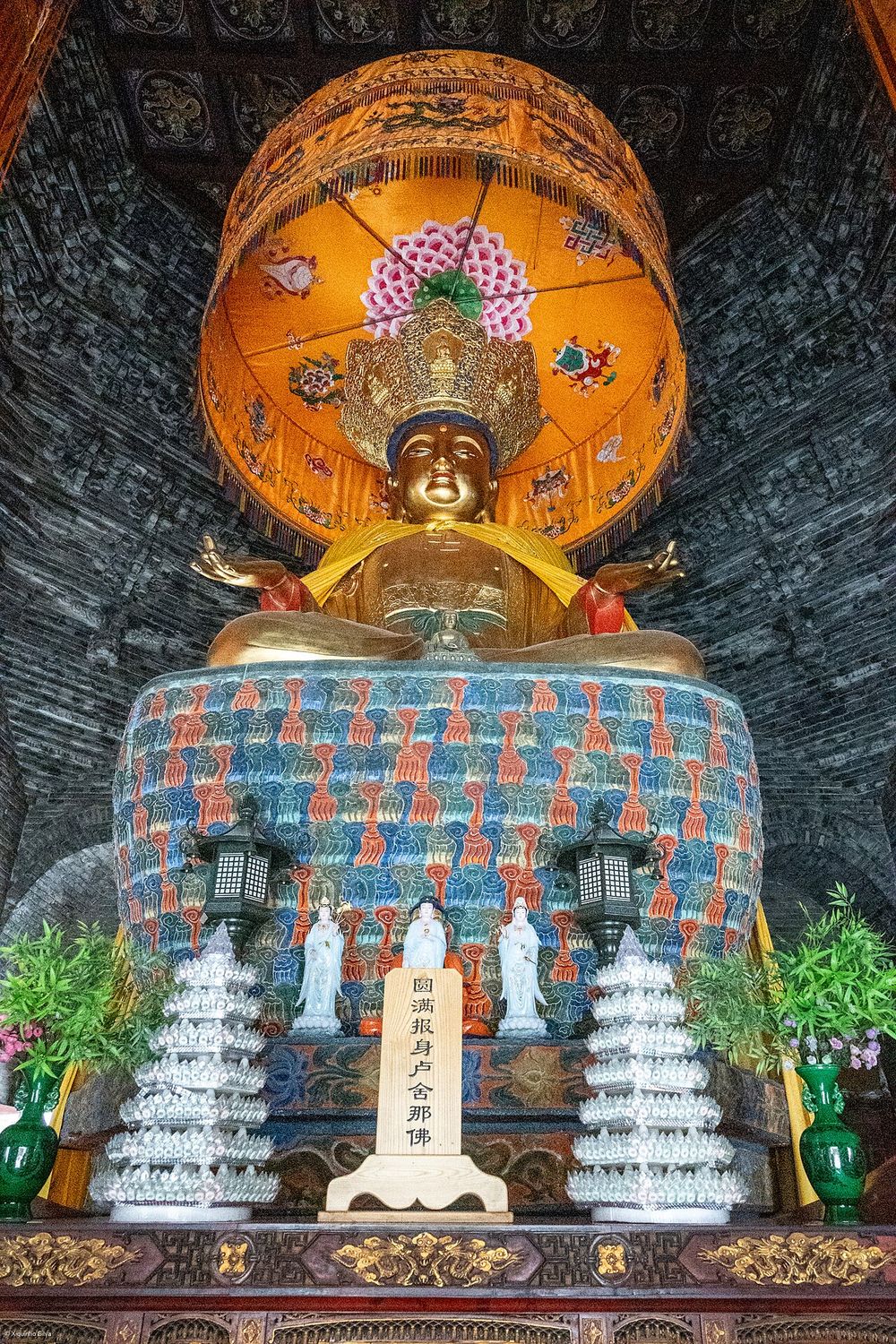
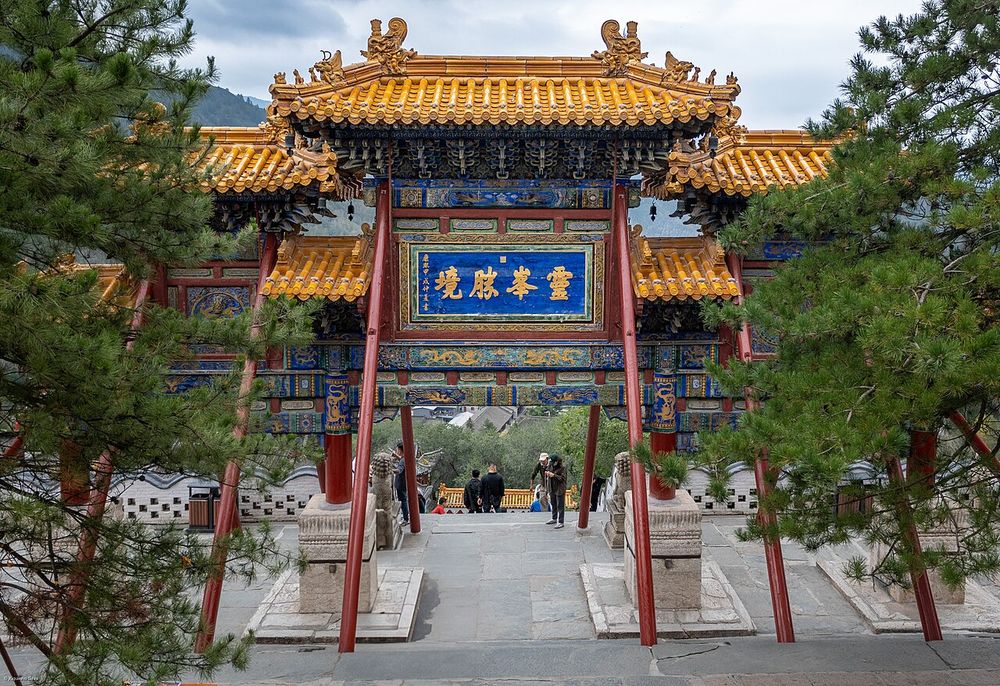
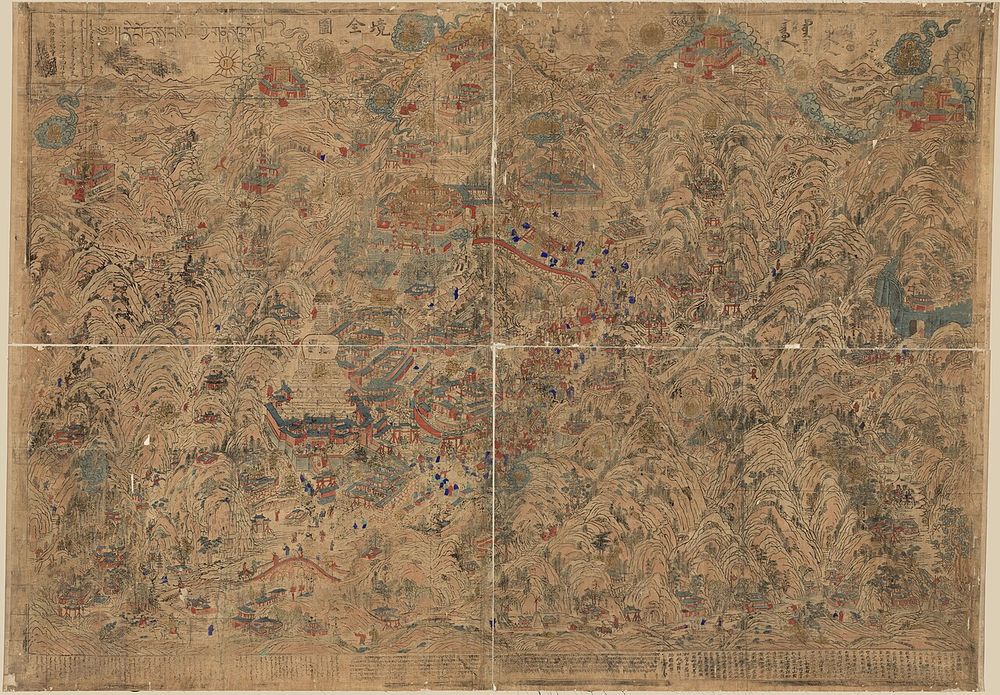
Temples on the slopes, 2015Popolon, CC BY-SA 4.0, Wikimedia CommonsThe Great White Pagoda over Taihuaimarroyo12, CC BY 2.0, Wikimedia CommonsThe Great White Pagoda, 2008Angus Cepka, CC BY-SA 3.0, Wikimedia CommonsThe pagoda in the mist, 2010Tim Wang, CC BY-SA 2.0, Wikimedia CommonsA white stupa, 2024xiquinhosilva, CC BY 2.0, Wikimedia CommonsA temple courtyard, 2024xiquinhosilva, CC BY 2.0, Wikimedia CommonsA courtyard with incense burners, 2024xiquinhosilva, CC BY 2.0, Wikimedia CommonsA temple hall, 2024xiquinhosilva, CC BY 2.0, Wikimedia CommonsA pavilion among pines, 2024xiquinhosilva, CC BY 2.0, Wikimedia CommonsA temple with a stupa in front, 2024xiquinhosilva, CC BY 2.0, Wikimedia CommonsA prayer wheel before an altar, 2024xiquinhosilva, CC BY 2.0, Wikimedia CommonsA gate tower, 2024xiquinhosilva, CC BY 2.0, Wikimedia CommonsA painted archway, 2024xiquinhosilva, CC BY 2.0, Wikimedia CommonsA hall with carved eaves, 2024xiquinhosilva, CC BY 2.0, Wikimedia CommonsA hall of Xiantong Temple, 2025Yumeto, CC BY-SA 4.0, Wikimedia CommonsThe archway of Xiantong Temple, 2024N509FZ, CC BY-SA 4.0, Wikimedia CommonsA hall front, 2009G41rn8, CC BY-SA 4.0, Wikimedia CommonsTemples across the valley, 2010Tim Wang, CC BY-SA 2.0, Wikimedia CommonsThe Hall of Heavenly Kings at Shuxiang Temple, 2024N509FZ, CC BY-SA 4.0, Wikimedia CommonsThe archway of Shuxiang Temple, 2024N509FZ, CC BY-SA 4.0, Wikimedia CommonsThe gate of Dailuoding, 2008Angus Cepka, CC BY-SA 3.0, Wikimedia CommonsA hall at Dailuoding, 2008Angus Cepka, CC BY-SA 3.0, Wikimedia CommonsNanshan Temple on its hillside, 2018Brookqi, CC BY-SA 4.0, Wikimedia CommonsThe temple on the Central Terrace, 2019Hanbud, CC BY-SA 4.0, Wikimedia CommonsLooking out from the East Terrace, 2017螺钉, CC BY-SA 4.0, Wikimedia CommonsCattle on a mountain slopelienyuan lee, CC BY 3.0, Wikimedia CommonsThe visitor centrelienyuan lee, CC BY 3.0, Wikimedia CommonsBurning incense sticks, 2006David Wilmot, CC BY-SA 2.0, Wikimedia CommonsLattice windows and a lantern, 2017marroyo12, CC BY 2.0, Wikimedia CommonsThe East Hall of Foguang Temple, 2008Angus Cepka, CC BY-SA 3.0, Wikimedia CommonsFoguang Temple among trees, 2008Angus Cepka, CC BY-SA 3.0, Wikimedia CommonsMonasteries of Mount Wutai in the mural of Mogao Cave 61, 10th centuryChinese artist(s) from the 10th century, Public domain, Wikimedia CommonsThe whole Wutai map from Mogao Cave 61Unknown authorUnknown author, Public domain, Wikimedia CommonsPrinted panorama of Mount Wutai, 1846Gelonglongzhu, Public domain, Wikimedia Commons
Local legends
These are stories people tell about this place. They are legends, not history, and each one says where it comes from.
LegendManjushri the beggar
Wutai is full of stories of pilgrims who met a poor old man or a woman with a child, refused them, and later learned that it had been Manjushri himself in disguise.
Source: Told in the Tang "Records of Qingliang" and by monks today
Later, people who live here will be able to add the stories they grew up with, and say which of these they have heard.
Not certain, and where accounts conflict
Did the Shunzhi Emperor become a monk here?
A famous story says the first Qing emperor of China did not die in 1661 but secretly became a monk at Wutai, and that his son Kangxi went there to visit him. Historians reject it; court records describe his death of smallpox.
Visiting
Tickets and hours
135 yuan to enter the scenic area; temples open roughly 8:00 to 17:00 and some charge a few yuan.
The great pilgrimage to all five terraces is done by special bus, booked in Taihuai.
Last checked 2026-11-12. Entry ticket and booking from 2025–2026 visitor guides (Ctrip, Qunar); some temple fees are from a 2023 guide and may have changed.
Booking without WeChat
Official page in English Book the entry ticket and, if you drive, a vehicle slot on the scenic area's official WeChat account ("慧游圣地"); car slots for the next day open at midnight.
International booking platform Ctrip (Trip.com) sells the entry ticket.
Note Foreign visitors book with a passport number. Over-60s and children under 6 enter free but still book.
Checked 2026-11-12
Where to start
Start at the Great White Pagoda, walk to Xiantong and Pusading, then climb Dailuoding in the afternoon.
Give a separate half-day to Foguang and Nanchan temples, the Tang buildings.
Before you go
Wutai is cold: even in summer nights are near 10 °C, and the terraces can see snow in June. Bring warm clothes.
Buses run from Taiyuan (about four hours) and from Wutaishan airport and station.
Customs and manners
Walk round stupas and prayer wheels clockwise; do not touch monks or step on the thresholds.
Dress modestly in temples and ask before photographing inside halls.
Opening hours are given in the local time of the place. Prices are in the local currency. The figure after ≈ is approximate, at exchange rates checked on 9 November 2026, in .
Look for these
At the Great White Pagoda, count the bells round its rim, if you can.
In Xiantong Temple, find the hall cast in bronze.
At Foguang, look up for the ink writing on the beams.
I am here
Stand at the site, sign in, press the button, and collect its stamp. Your browser will ask to use your location. It is sent to us once to confirm that you are at the site; we keep how far you were from it, not the spot where you stood.
Your stamps are saved to your account, so they follow you to any device. Checking from a browser cannot rule out every false location; stricter checks arrive with the app.
Messages
Share your photos
Photos here show the place, not people. Each one is credited to the visitor who took it and appears after our team has looked at it. A photo with you in it belongs under “I am here”.