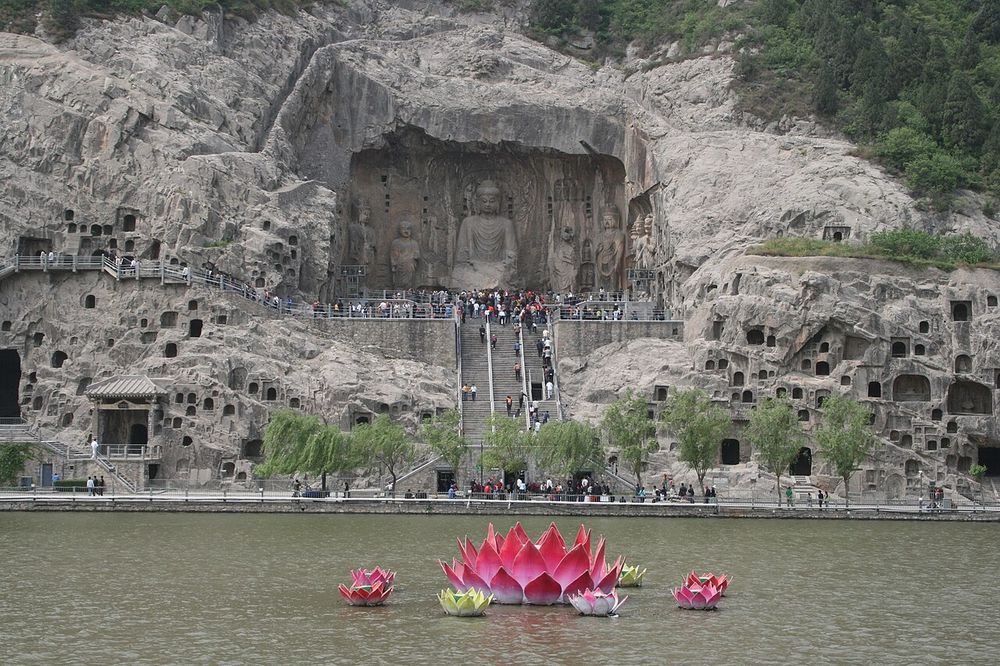
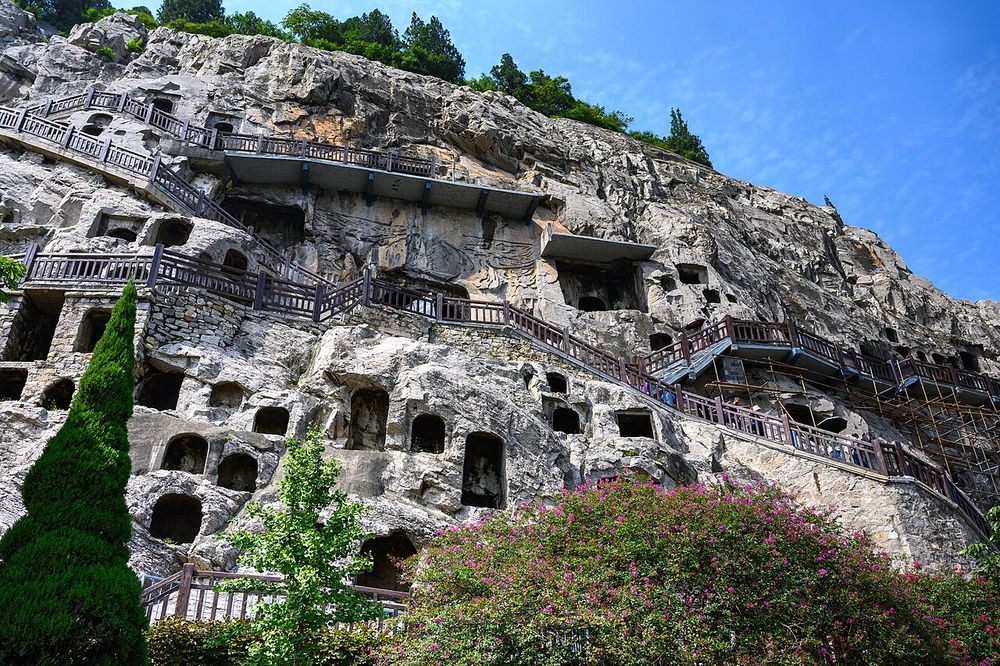
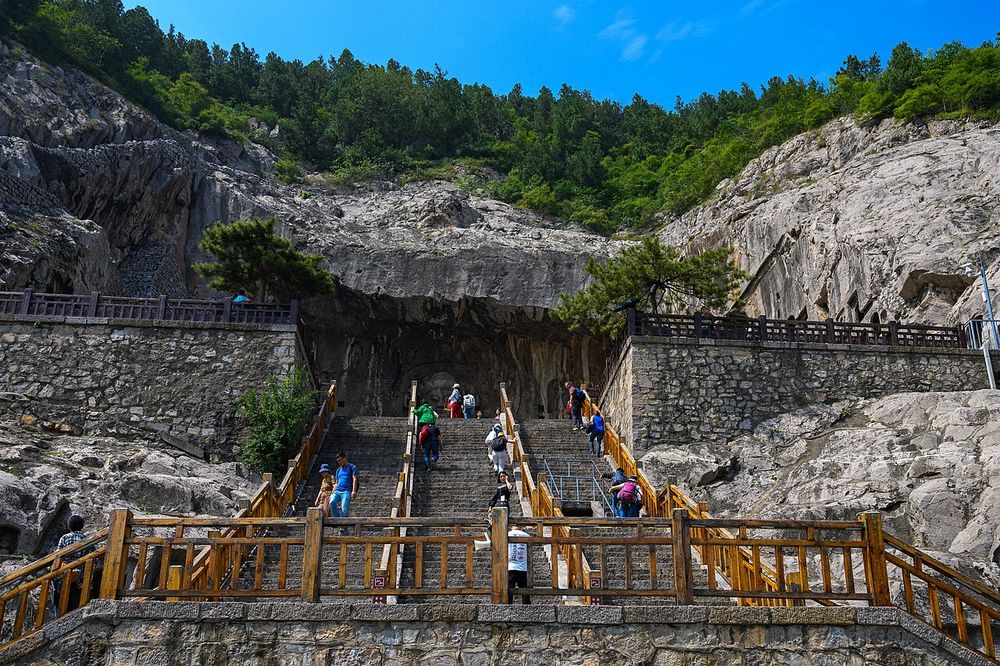
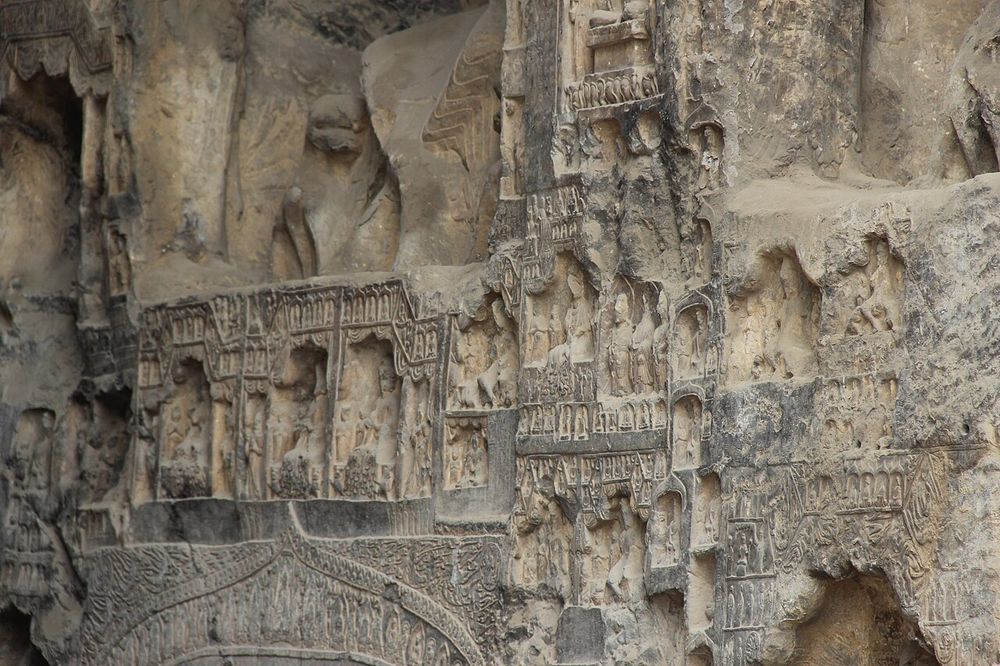
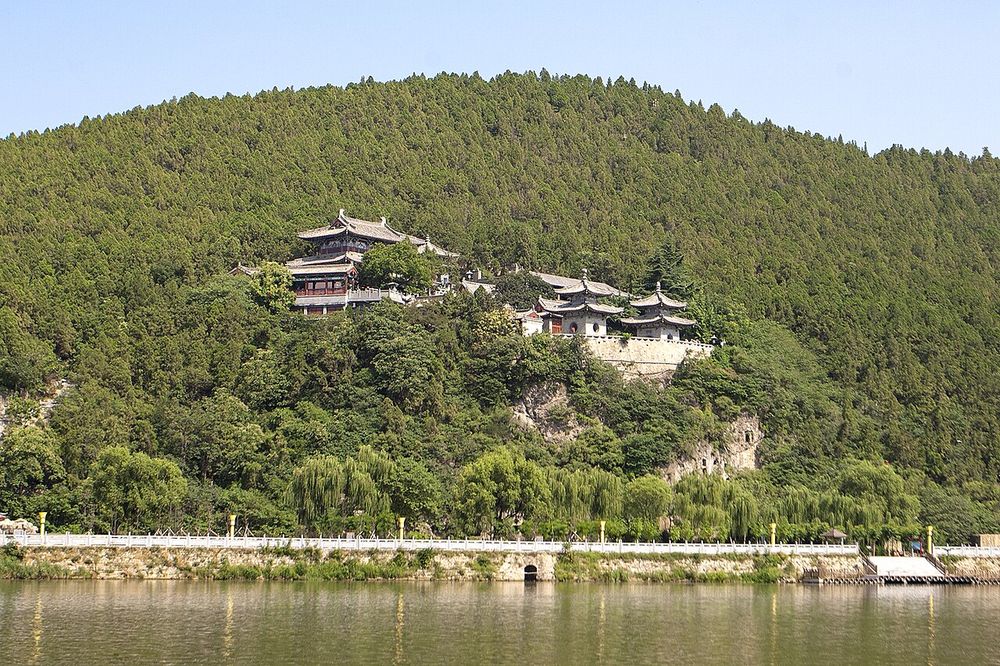
A kilometre of limestone cliff on both banks of the Yi River, cut into 2,345 caves and niches with more than 100,000 Buddhist figures, the work of the Northern Wei and Tang dynasties. World Heritage since 2000.
Photo: xiquinhosilva, CC BY 2.0, Wikimedia Commons
The story
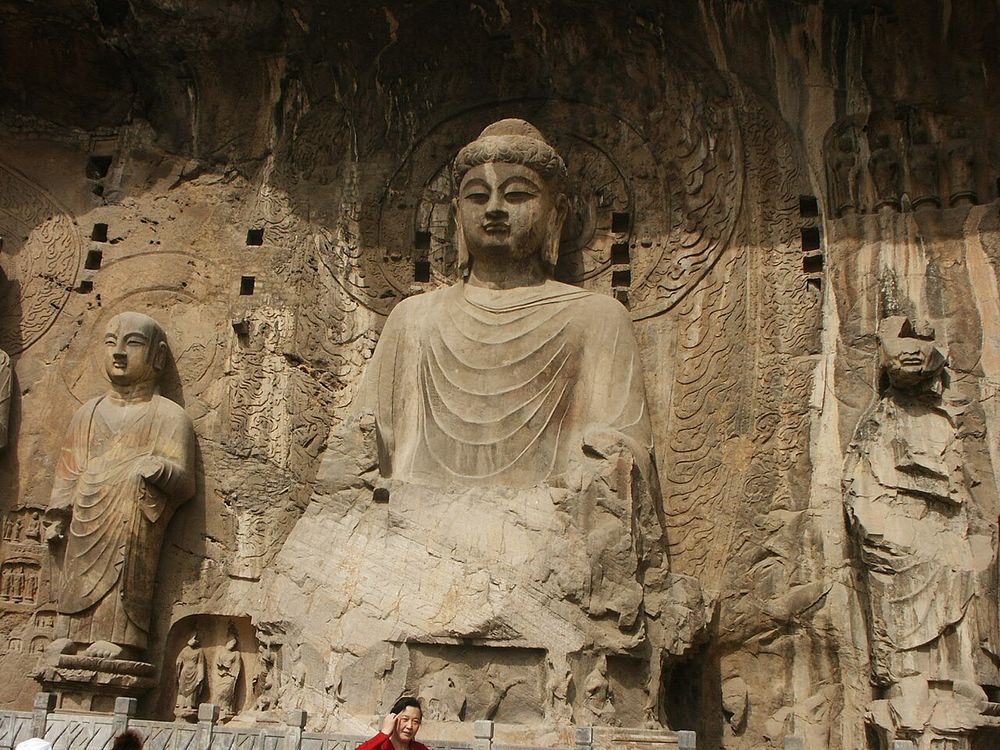
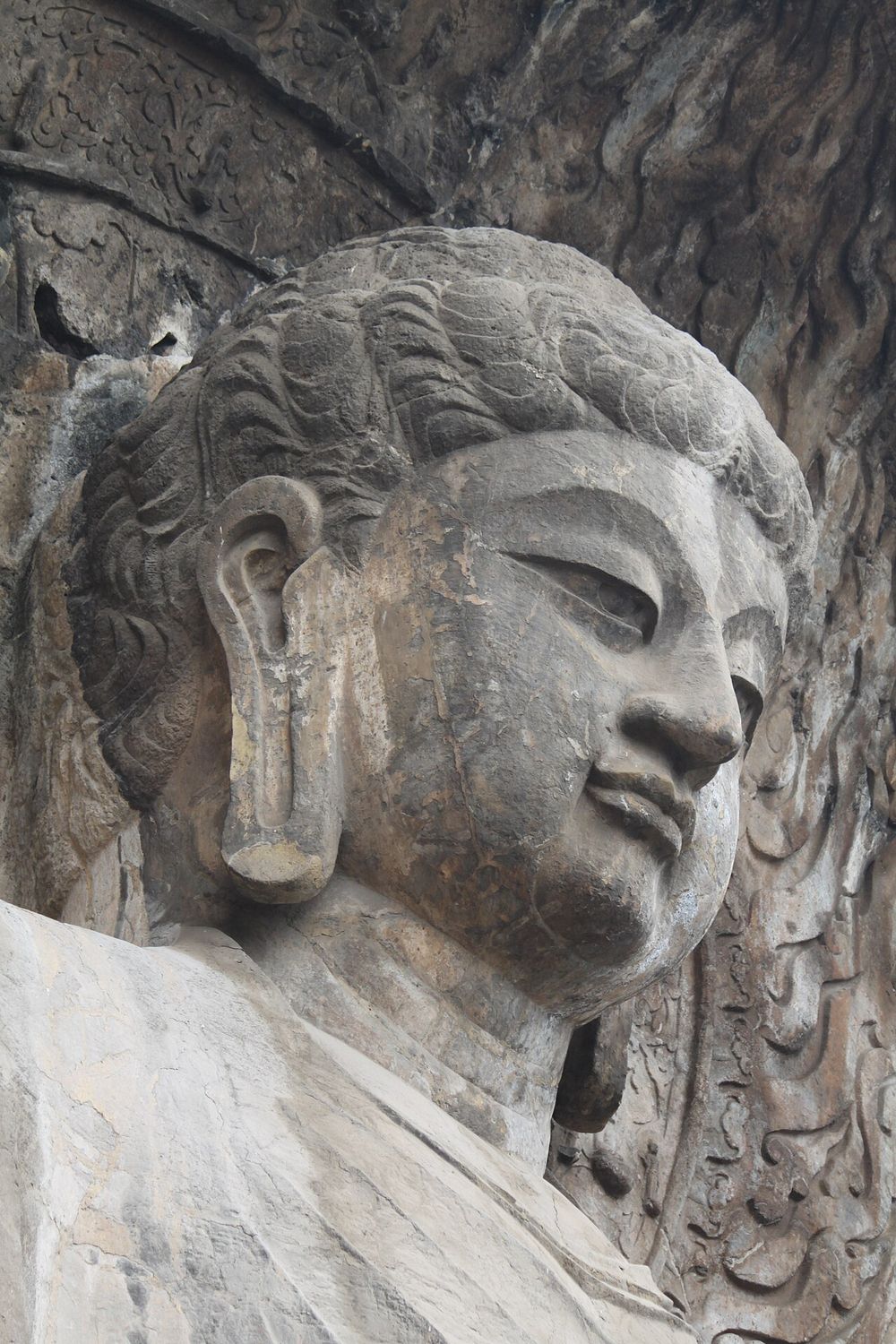
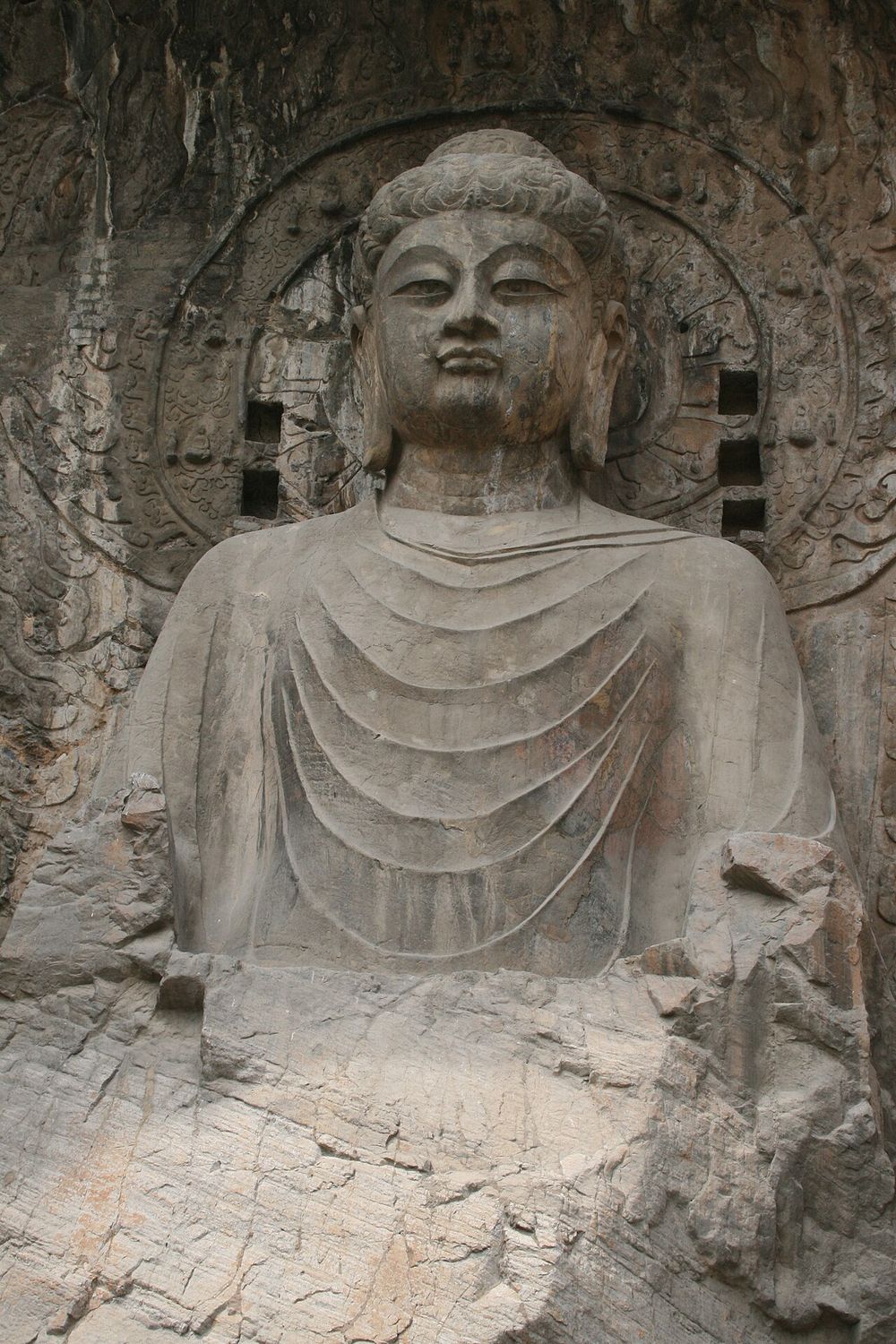
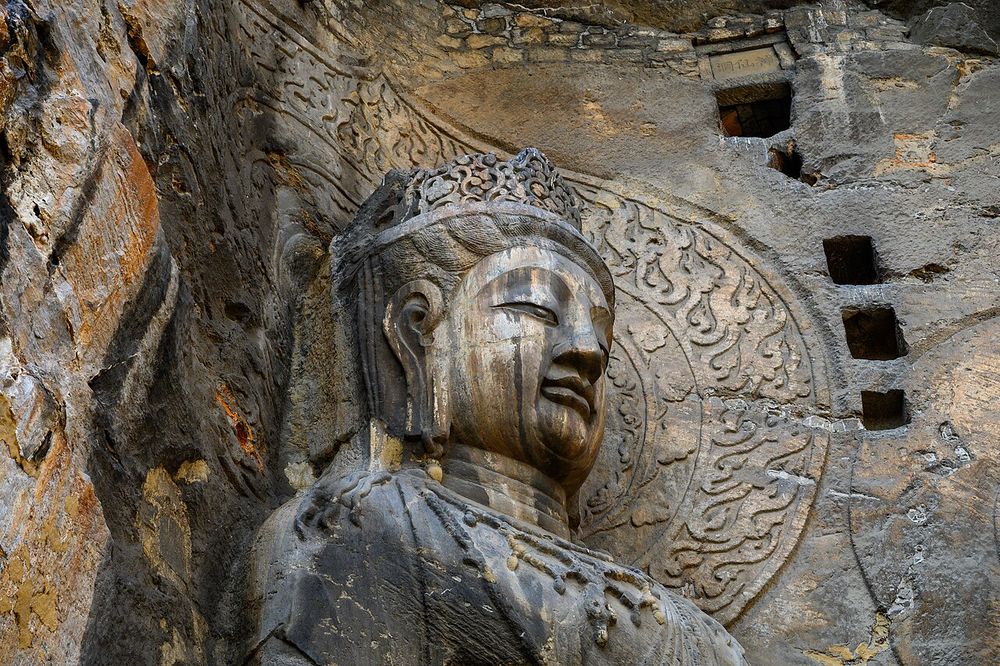
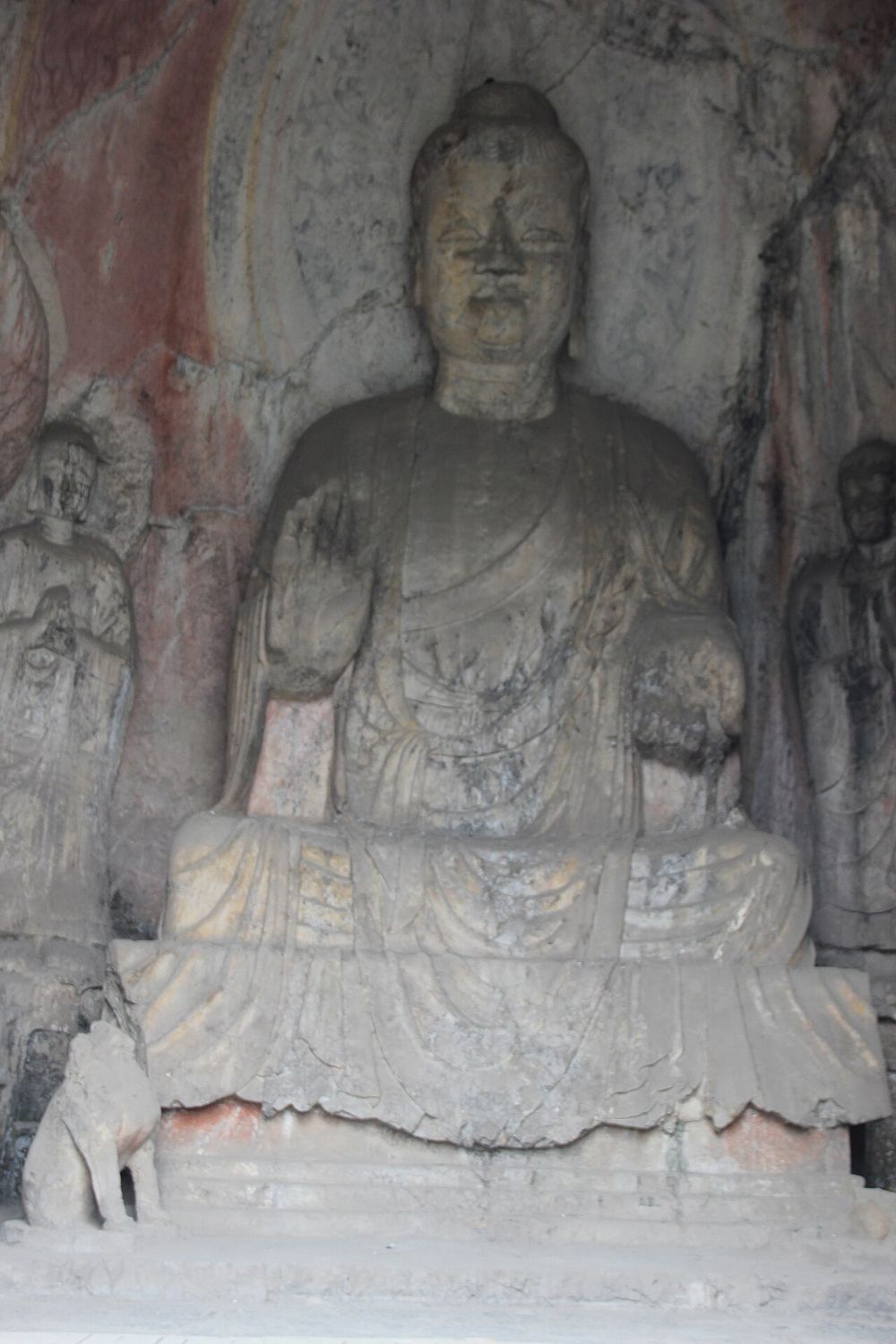
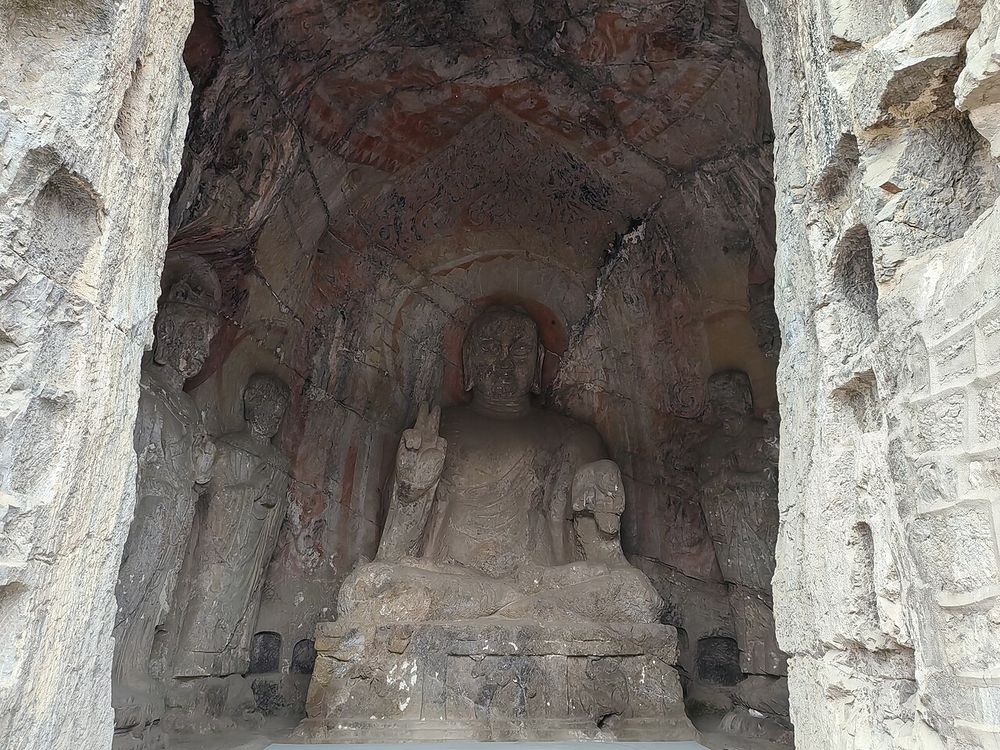
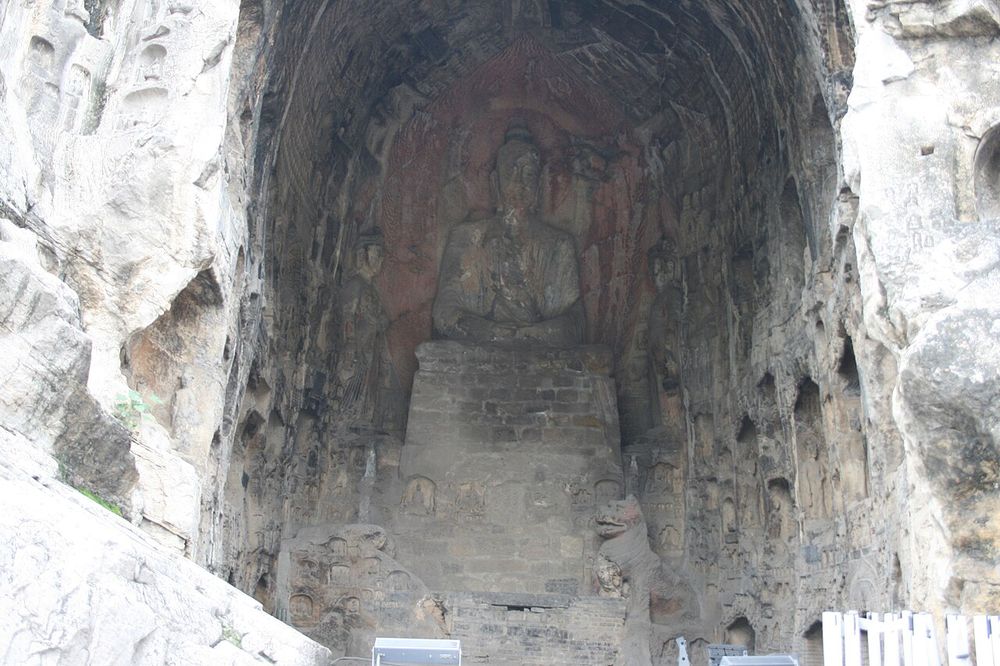
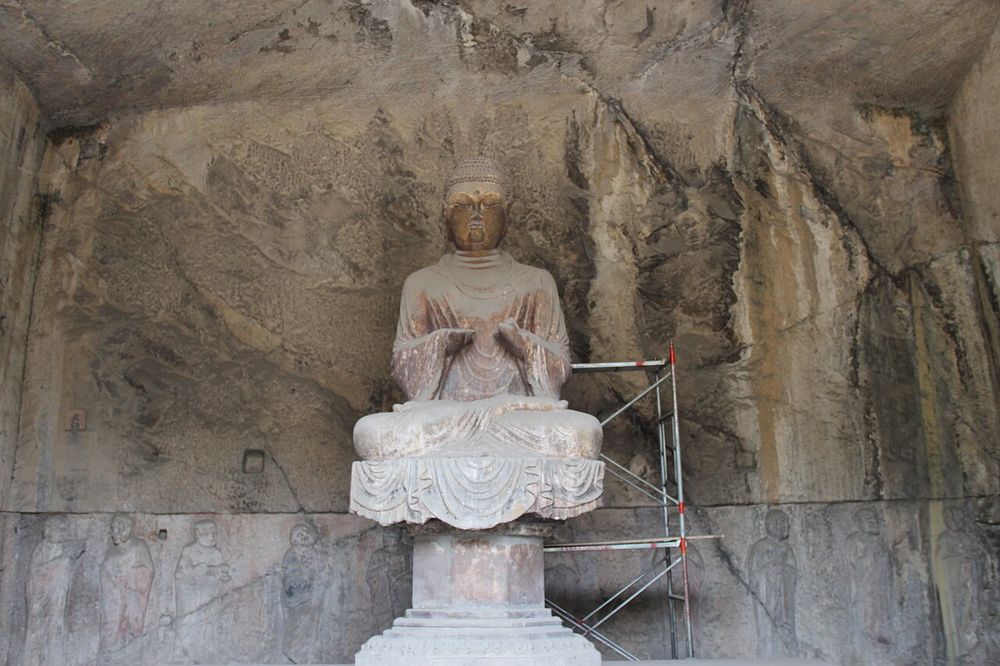
The great Buddha in front of you is 17.14 metres high, and the head alone is 4 metres. It was cut in the reign of the Tang (618–907) emperor Gaozong. His empress, Wu Zetian, gave twenty thousand strings of cash from her "powder and rouge money" toward it, and it was finished in 675. For more than thirteen hundred years it has looked out over the Yi River with the same faint smile.
What is here
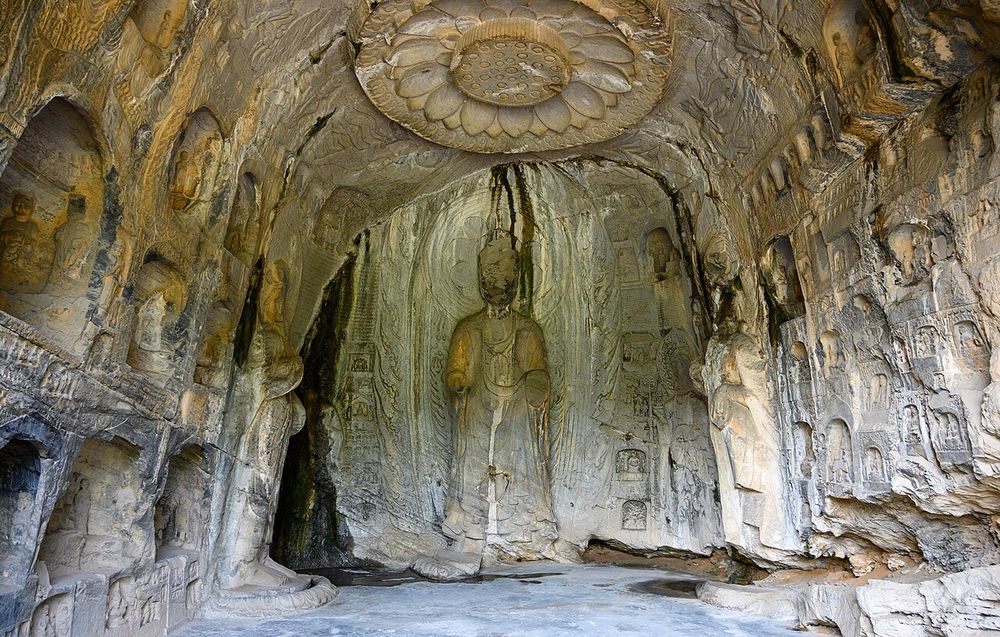
Longmen is four places on two banks of one river. On the west bank is the West Hill, where almost all the famous caves are, the great Buddha among them. A low bridge leads to the east bank, with the caves of the East Hill, Xiangshan Temple and the Bai Garden, where the poet Bai Juyi is buried. One day ticket covers all four.
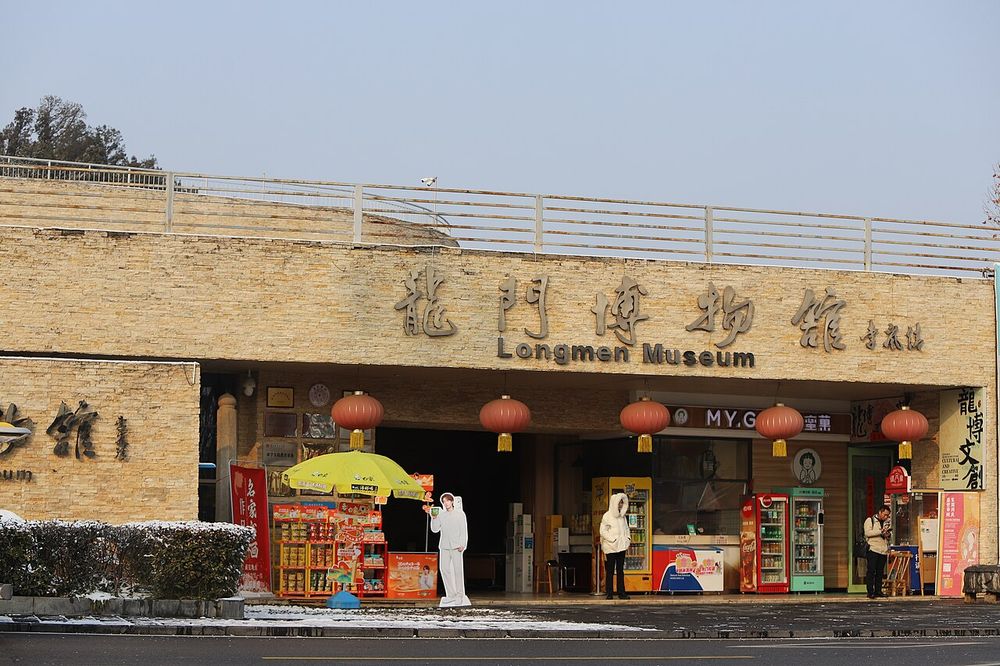
The Longmen Museum and the Luoyang Museum, in the city
Not part of the site; separate visits
If you have one minute
In front of the great Buddha of Fengxian Temple
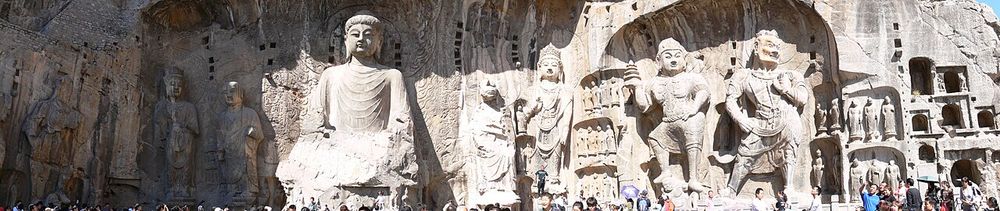
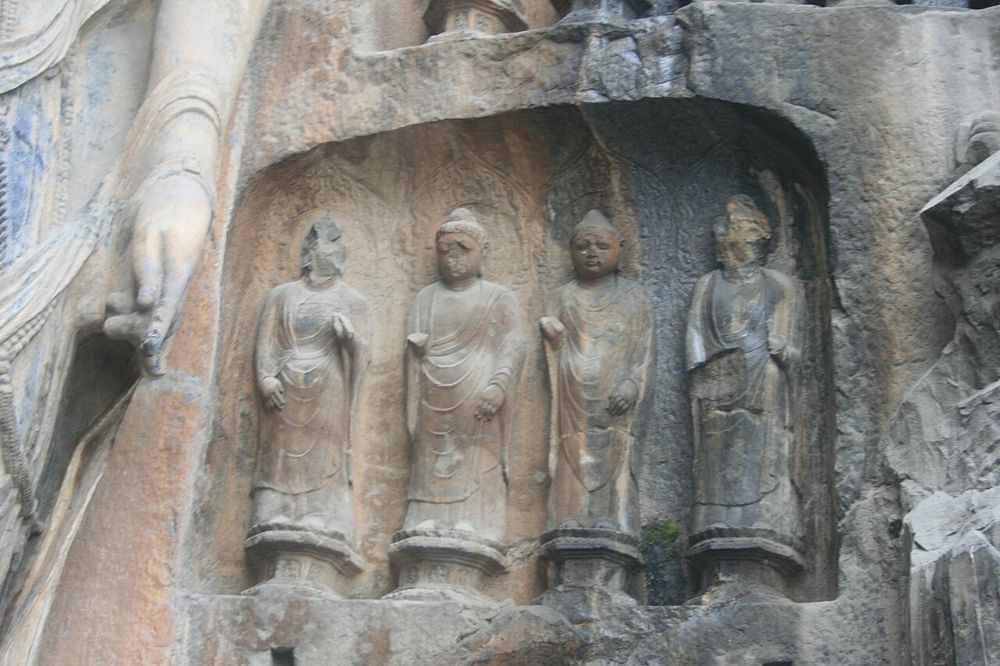
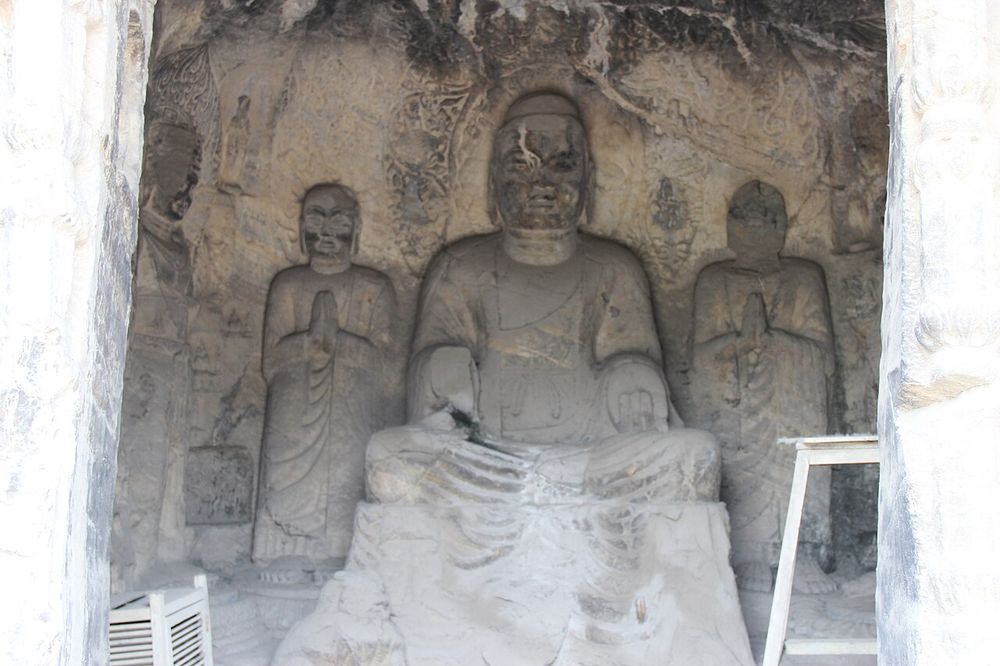
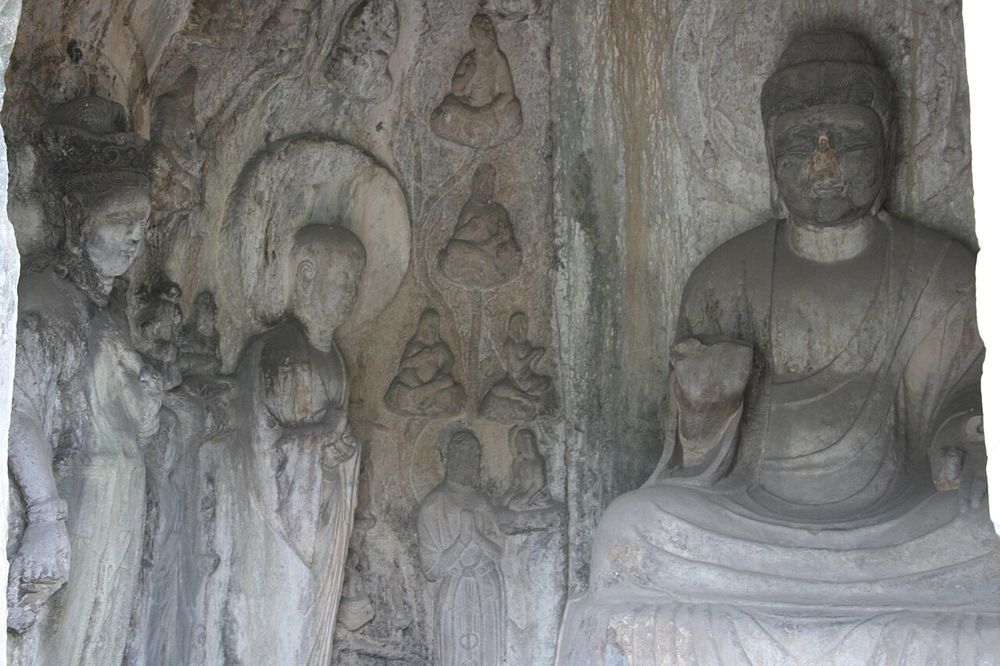
The great Vairocana with disciples and bodhisattvasGary Todd, CC0
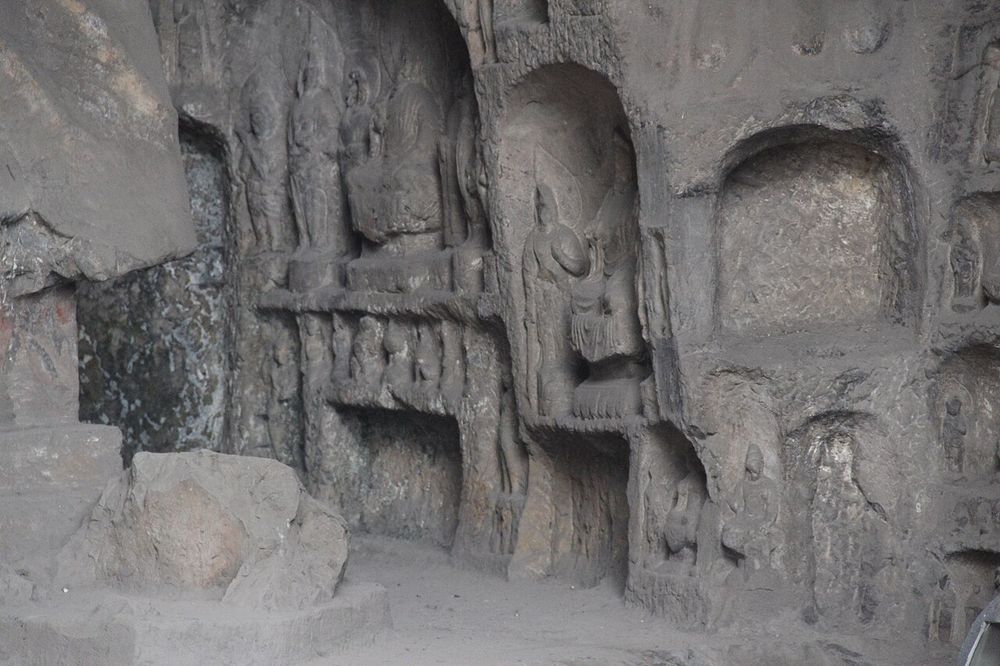
In 493 the Northern Wei (386–534) emperor Xiaowen moved his capital from Pingcheng, today's Datong, to Luoyang, and the habit of cutting cave temples came with him. The carving went on into the Tang dynasty. It left 2,345 caves and niches and more than 100,000 figures along one kilometre of cliff on both banks of the river.
You can tell the dynasty from the face. A Northern Wei Buddha has a thin face, a long neck and robes in close folds; the old phrase is "fine bones, clear features". A Tang Buddha has a round face and broad shoulders, like the one in front of you.
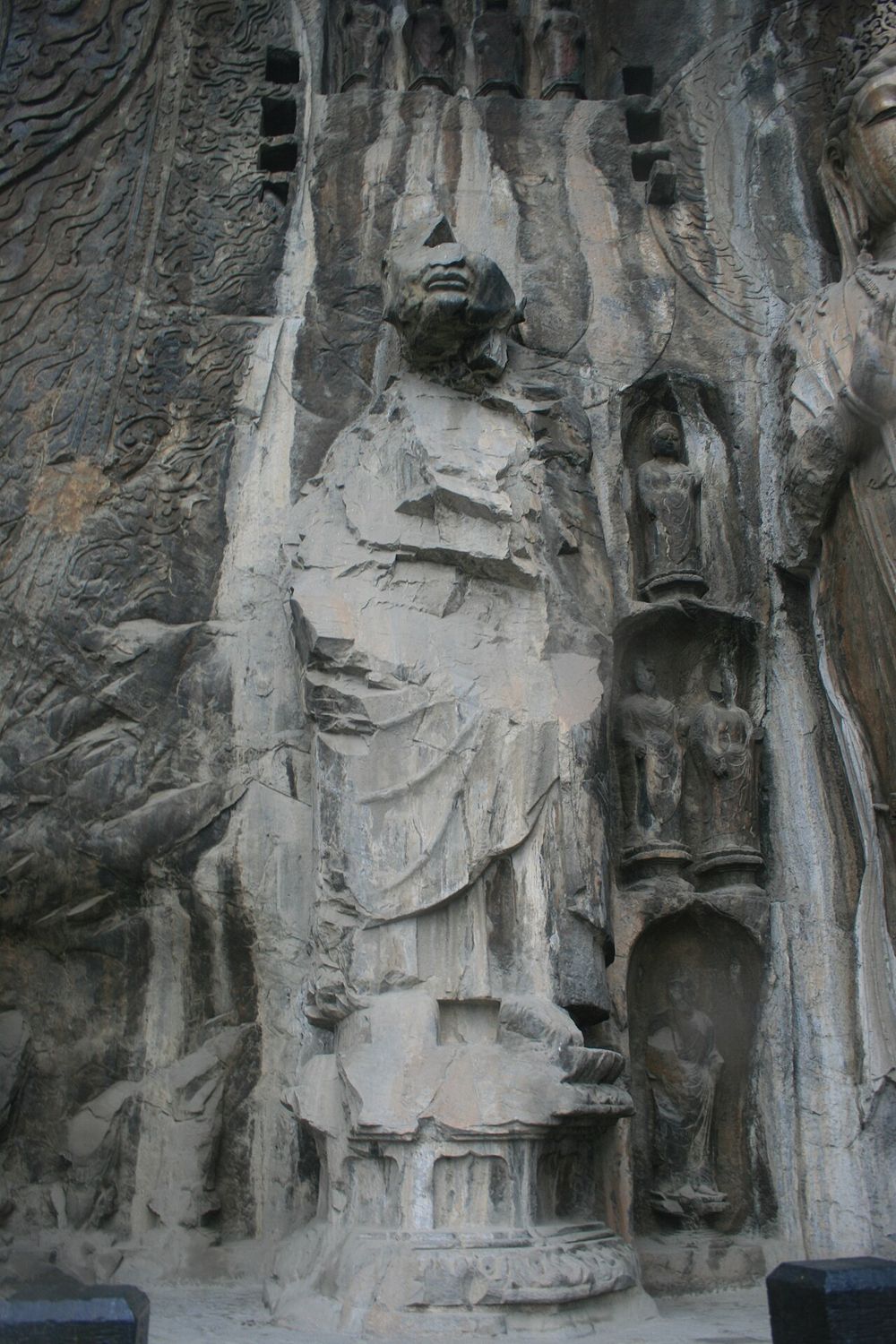
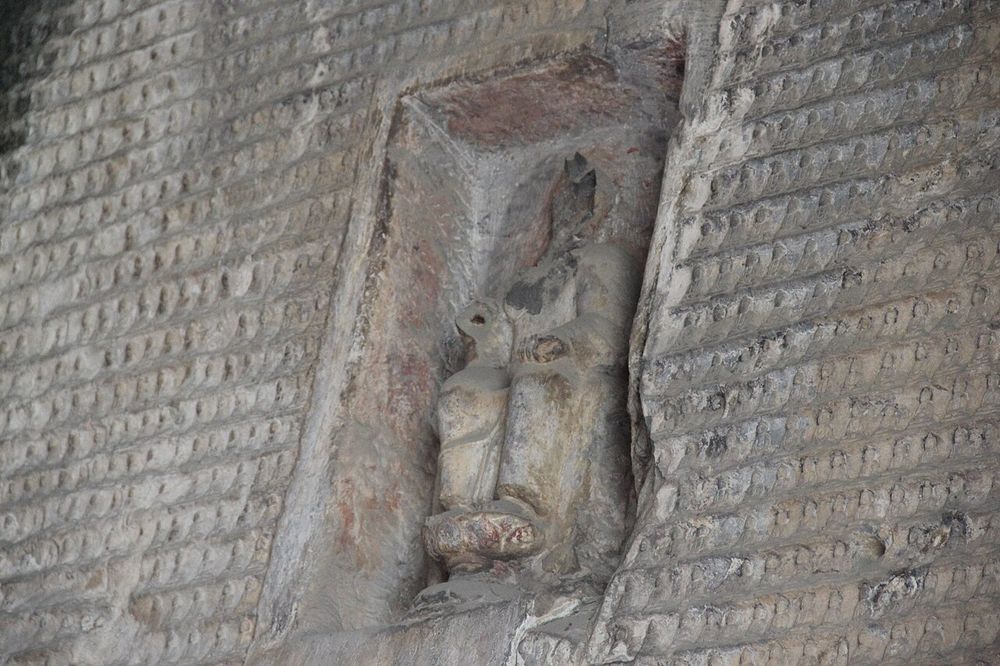
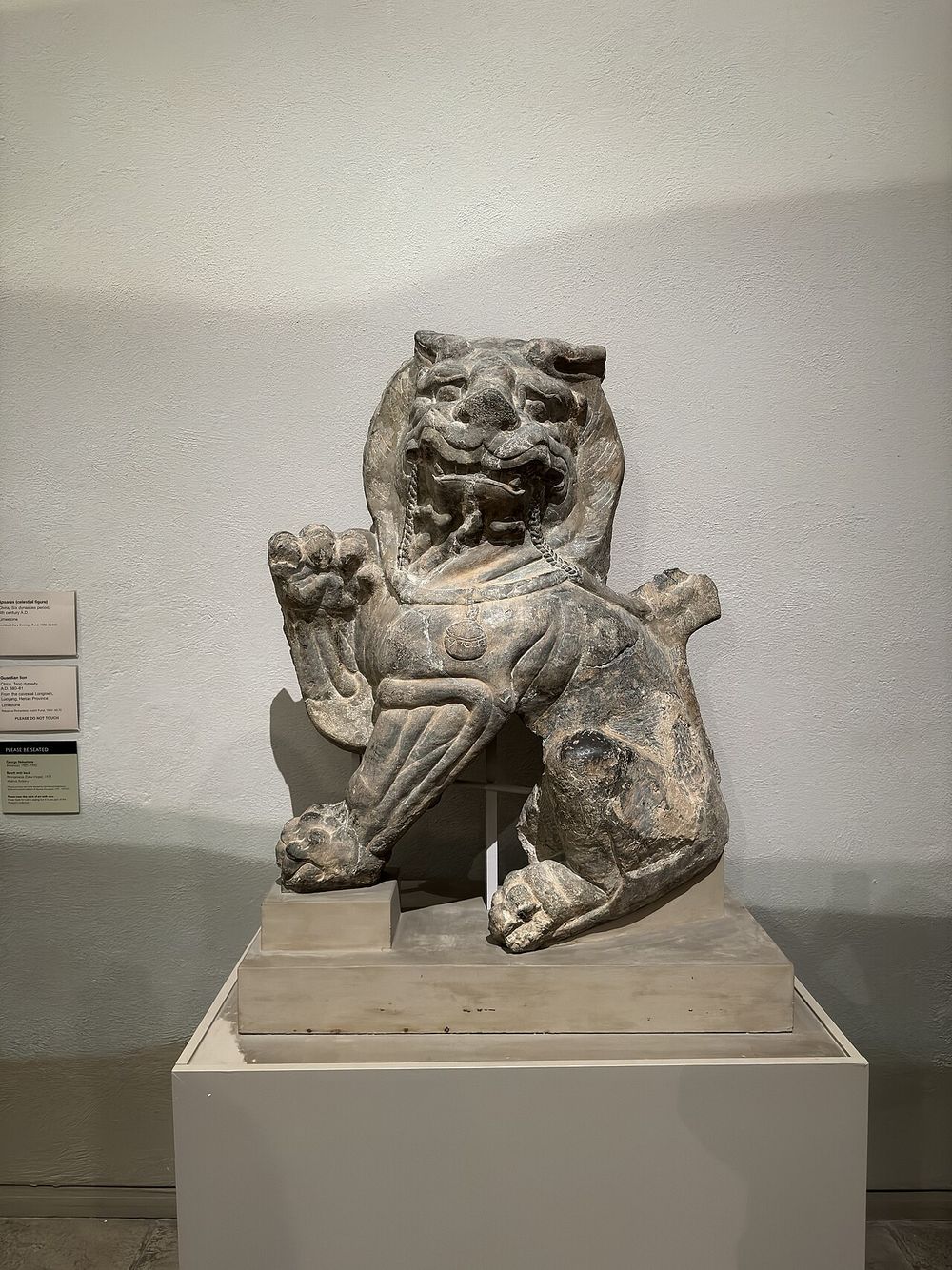
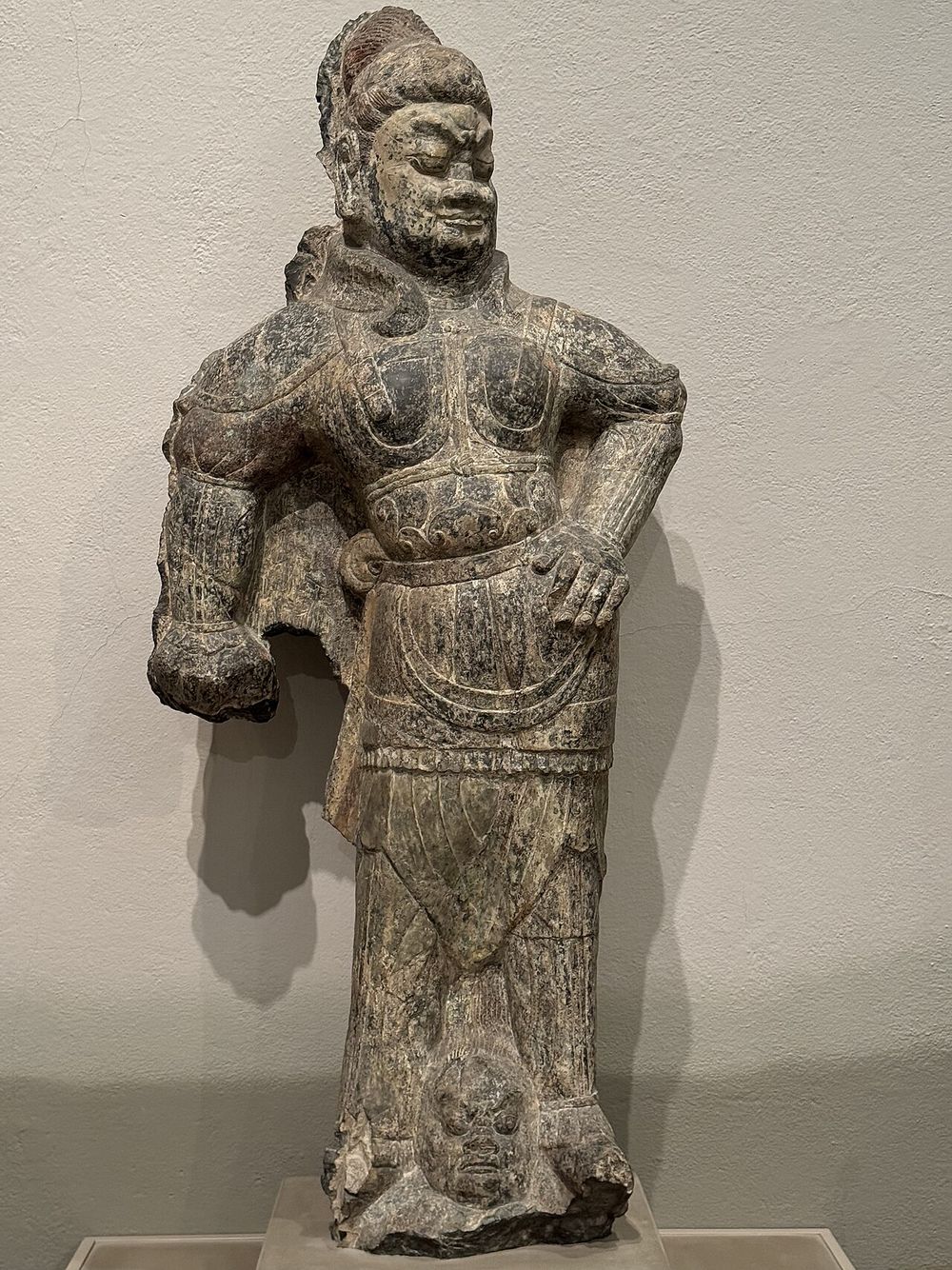
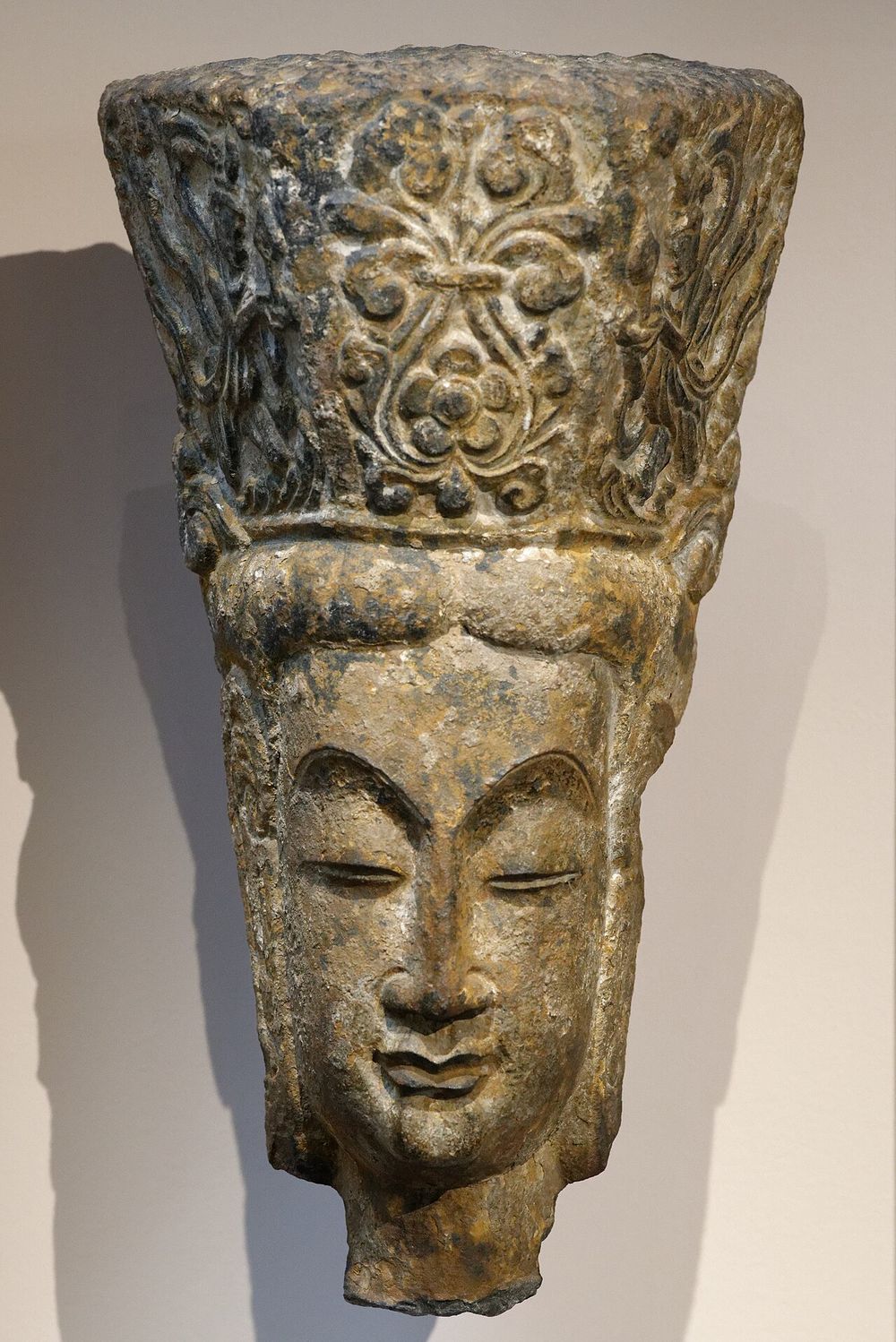
Many of the small figures have no heads. Most were not worn away. In the first half of the twentieth century they were cut out and sold abroad.
People who stood here
Wu Zetian, the only woman to rule China as emperor in her own name, 672As empress she paid toward this Buddha, and the inscription under it records her gift. Whether she came to see it is not written down, but her court was at Luoyang, twelve kilometres away, and it is easy to picture her standing here looking up.
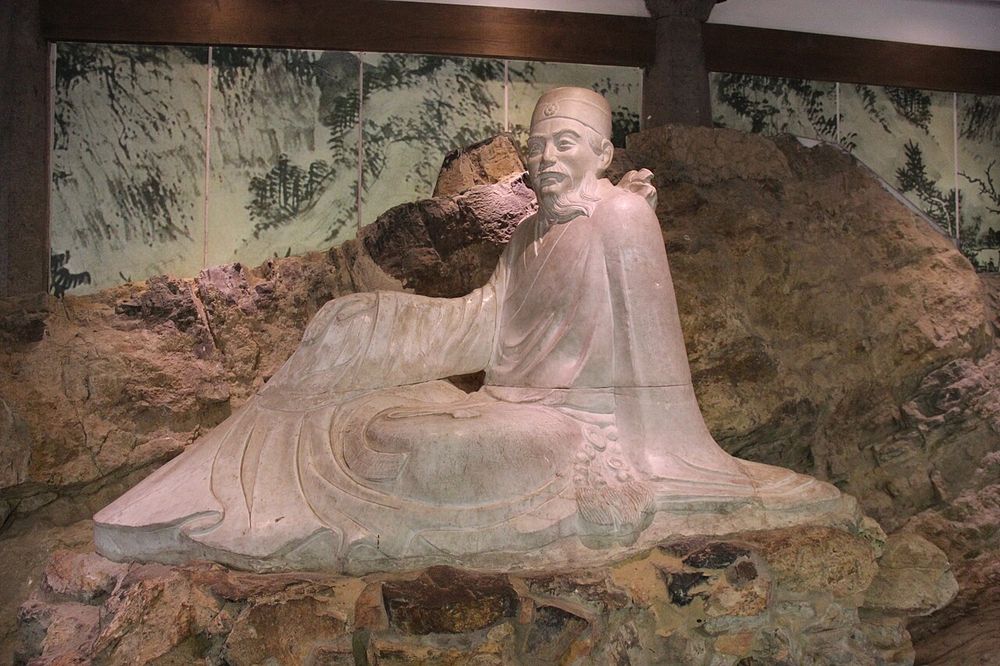
Bai Juyi, one of the best-loved poets of the Tang dynasty, 832–846He spent his last years in Luoyang and called himself the Lay Buddhist of Fragrant Hill. He paid to repair Xiangshan Temple on the hill across the river, came here often, and asked to be buried on it. His tomb is in the Bai Garden on the East Hill.
Go deeper: eight stops, south along the West Hill and back along the East Hill
1. Qianxi Temple: the Tang opening
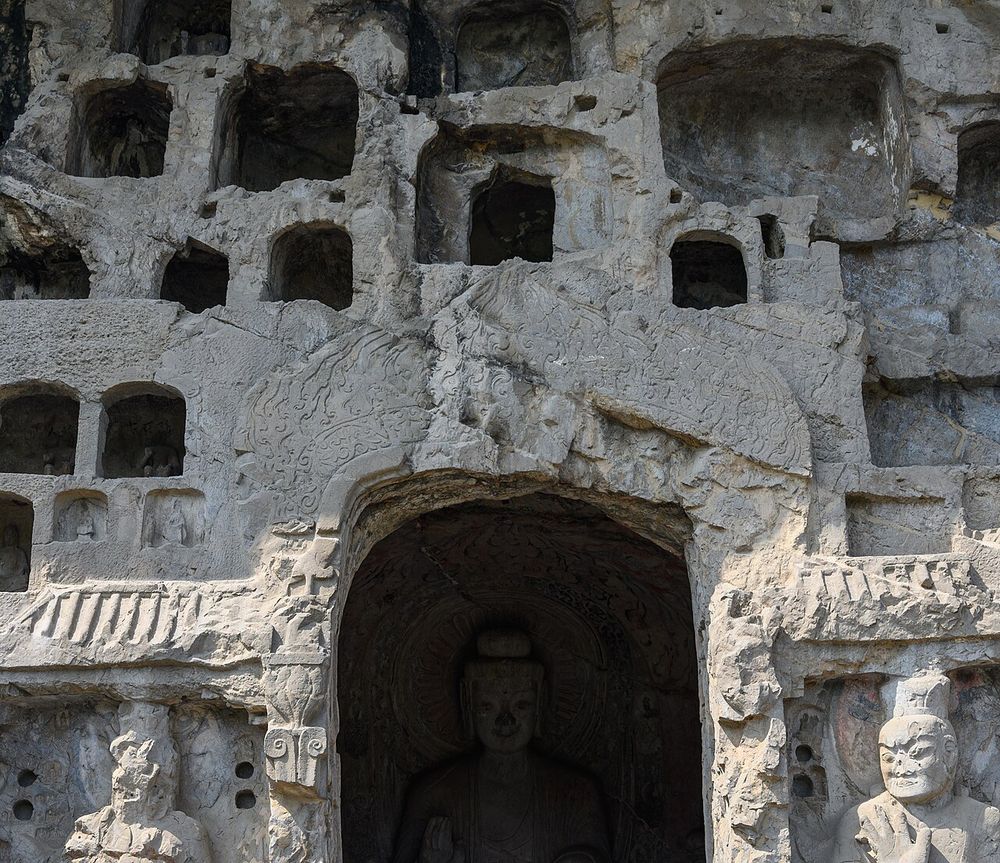
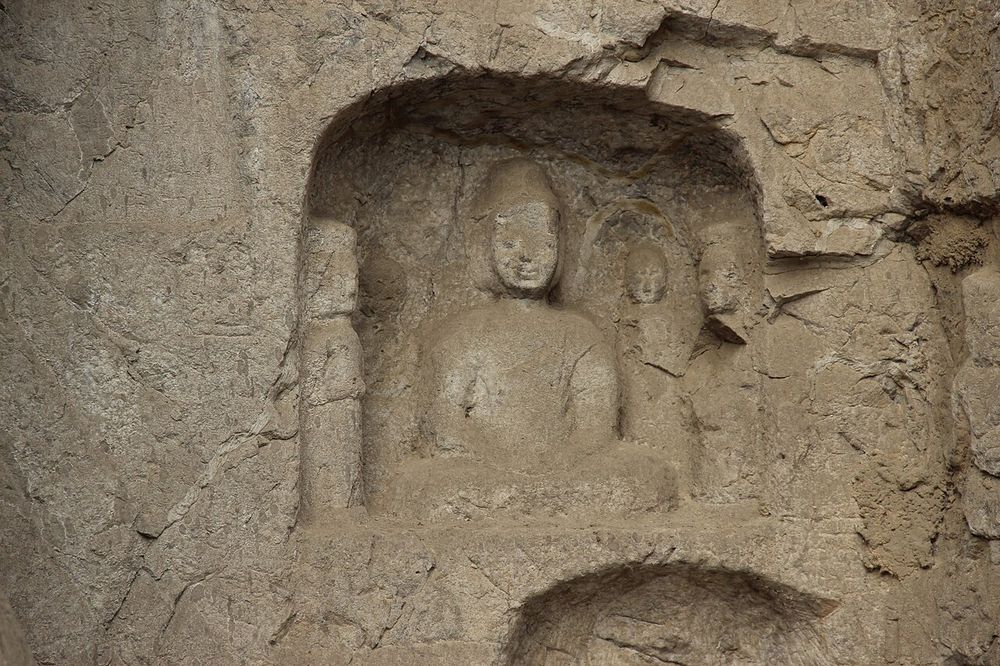
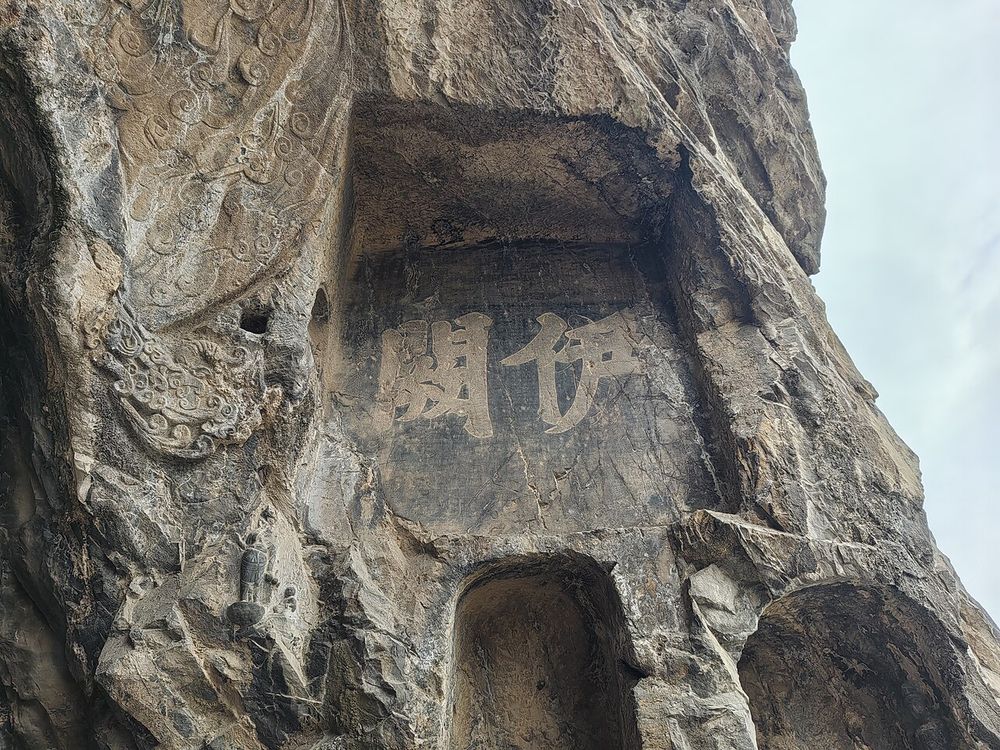
A cave mouth and the small niches around itxiquinhosilva, CC BY 2.0
This is the first large cave at the north end of the West Hill, cut in the early Tang, about 650 to 683.
Fix the Tang look in your mind here: a round face, broad shoulders, robes that follow the body. The next stop is the comparison.
2. The three Binyang caves: an emperor's caves for his parents
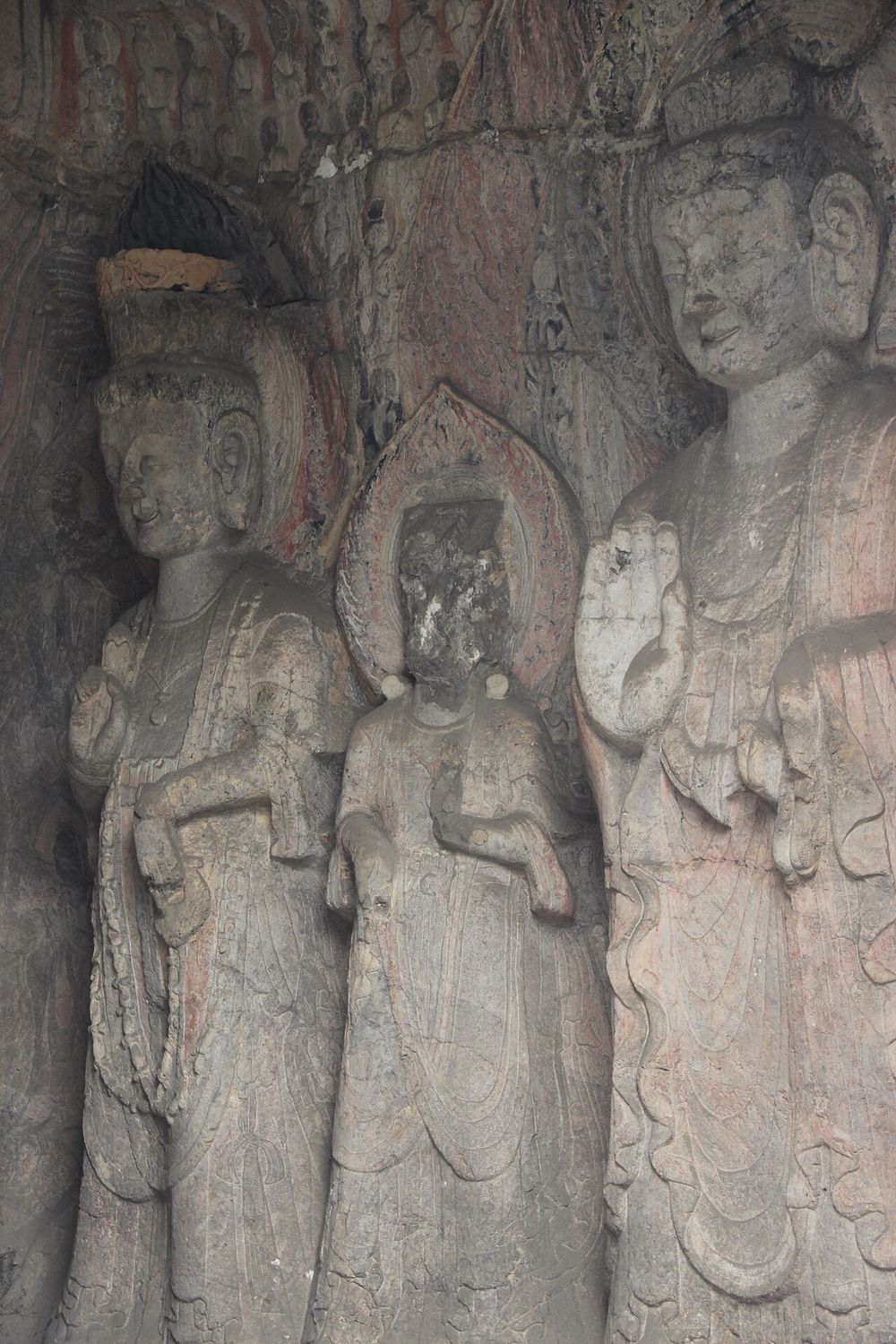
Northern Wei figures in the middle Binyang caveGary Todd, CC0
The Northern Wei emperor Xuanwu ordered one cave for his father Xiaowen, one for his mother Empress Wenzhao and one for himself. The middle cave took twenty-four years, from 500 to 523.
Binyang means "greeting the rising sun". It is the only imperial cave at Longmen whose cutting is described in the official histories.
The figures in the middle cave are Northern Wei: fine bones, clear features. The south and north caves were finished only under the Sui (581–618) and Tang, and the style has changed.
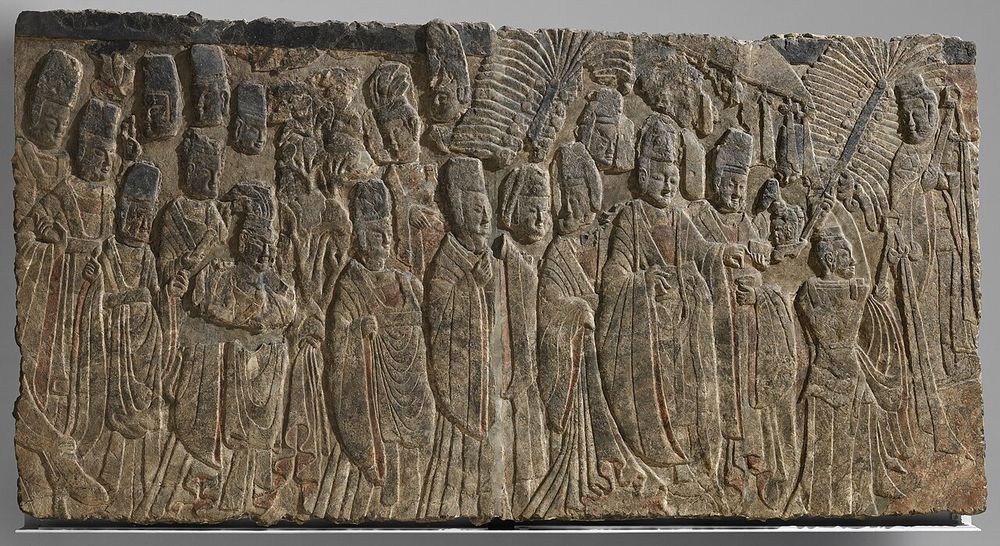
The front wall of the middle cave once carried two reliefs, the emperor and the empress each coming with their court to honour the Buddha. In the 1930s they were cut from the wall in pieces and taken out of China. The emperor's procession is now in the Metropolitan Museum of Art in New York and the empress's in the Nelson-Atkins Museum of Art in Kansas City. Stand in front of the bare wall.
3. The Cave of Ten Thousand Buddhas: fifteen thousand small figures
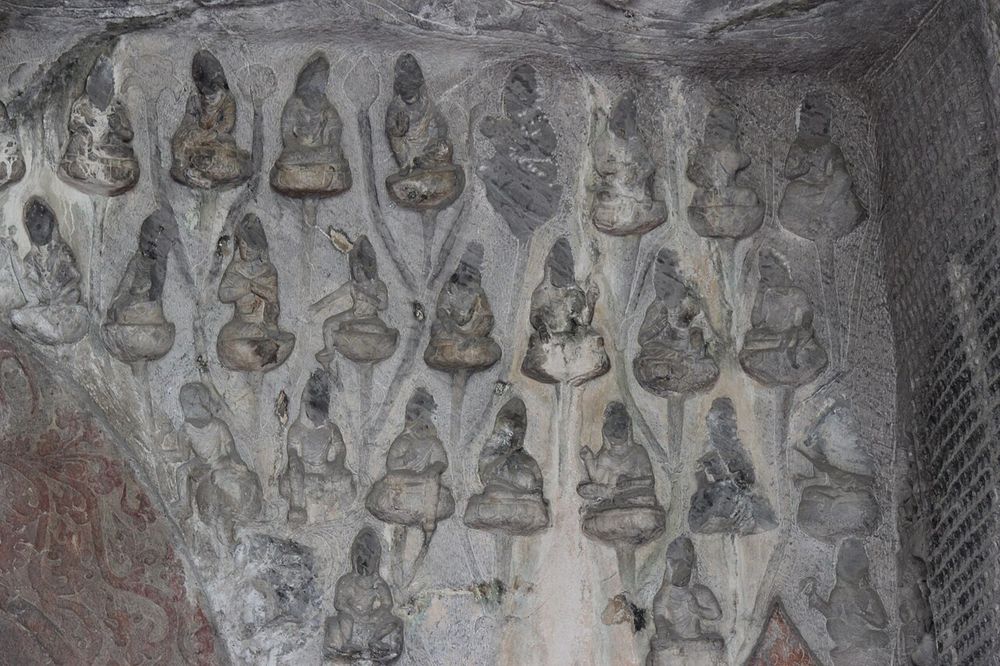
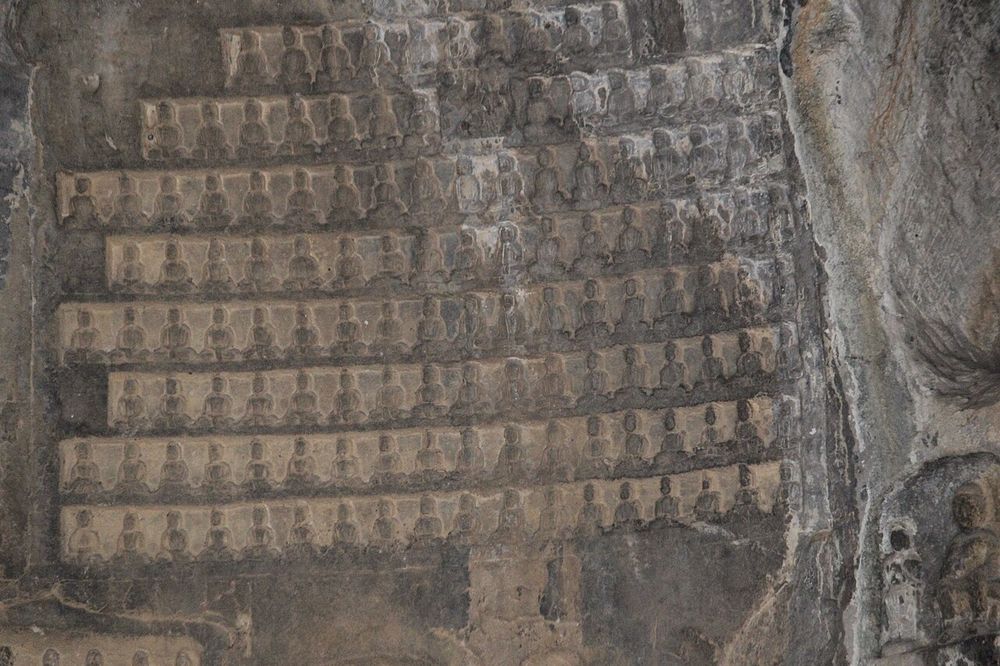
Row on row of small seated BuddhasGary Todd, CC0
An inscription says the work was directed by Yao Shenbiao, who held the palace office of "great supervisor", and the nun Zhiyun, and finished in 680 for the emperor Gaozong, Empress Wu and the princes.
The north and south walls are covered with small seated Buddhas, "fifteen thousand" by the inscription. The smallest are a few centimetres high.
Choose a small patch of wall, count the figures, and estimate the whole.
4. The Lotus Cave: look at the ceiling
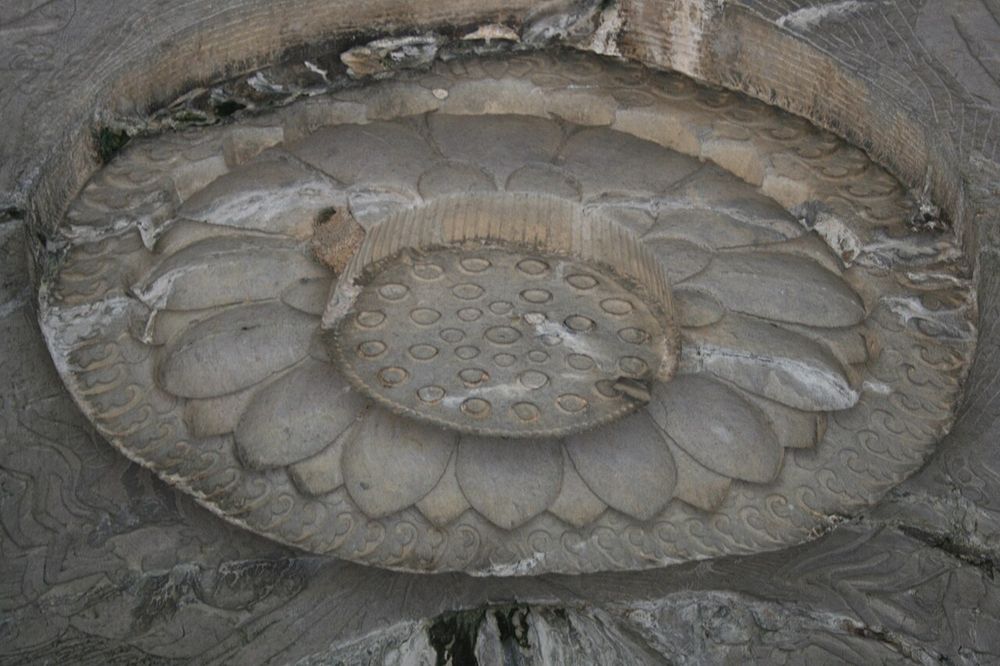
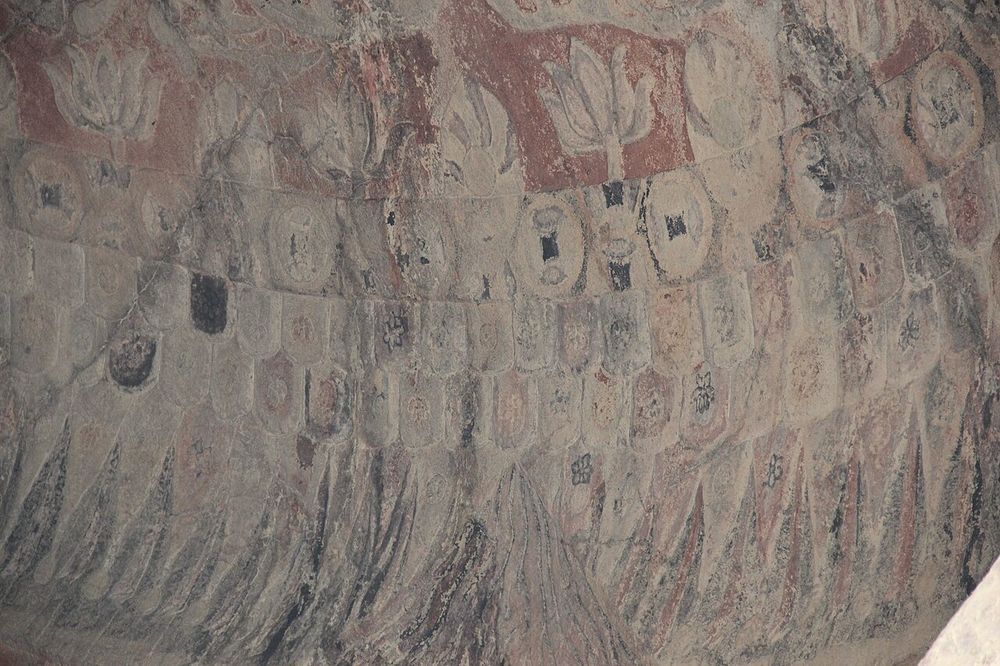
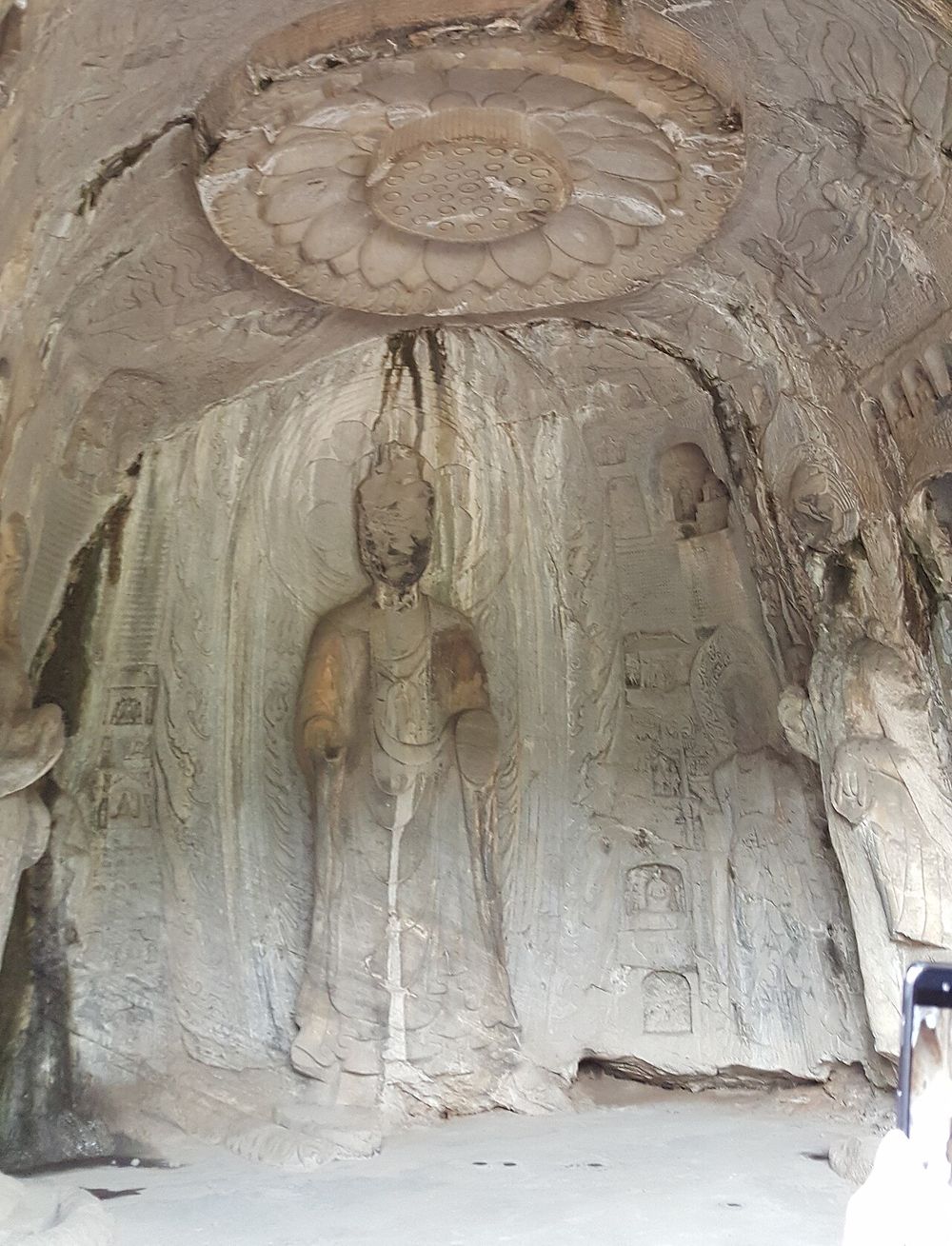
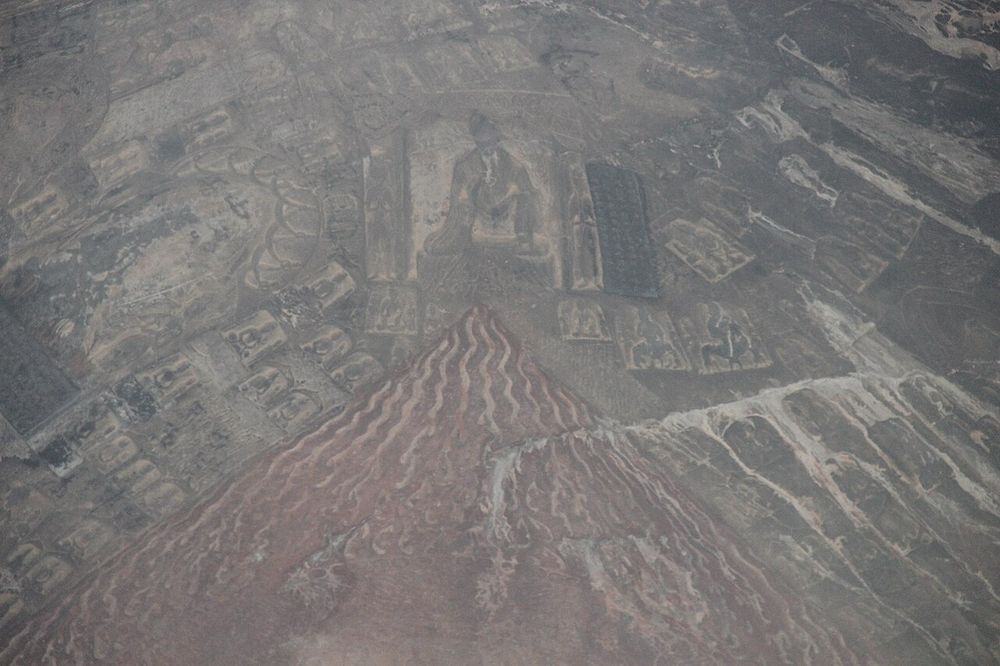
The lotus on the ceiling of the Lotus CaveGary Todd, CC0
A Northern Wei cave. In the middle of the ceiling is one great lotus in high relief, which gives the cave its name.
Flying figures circle the lotus. Compare the ceilings of the middle Binyang cave and of Kanjing Temple on the East Hill and see how three lotuses differ.
5. Fengxian Temple: the great Vairocana
The head of the great Buddha, four metres highGary Todd, CC0
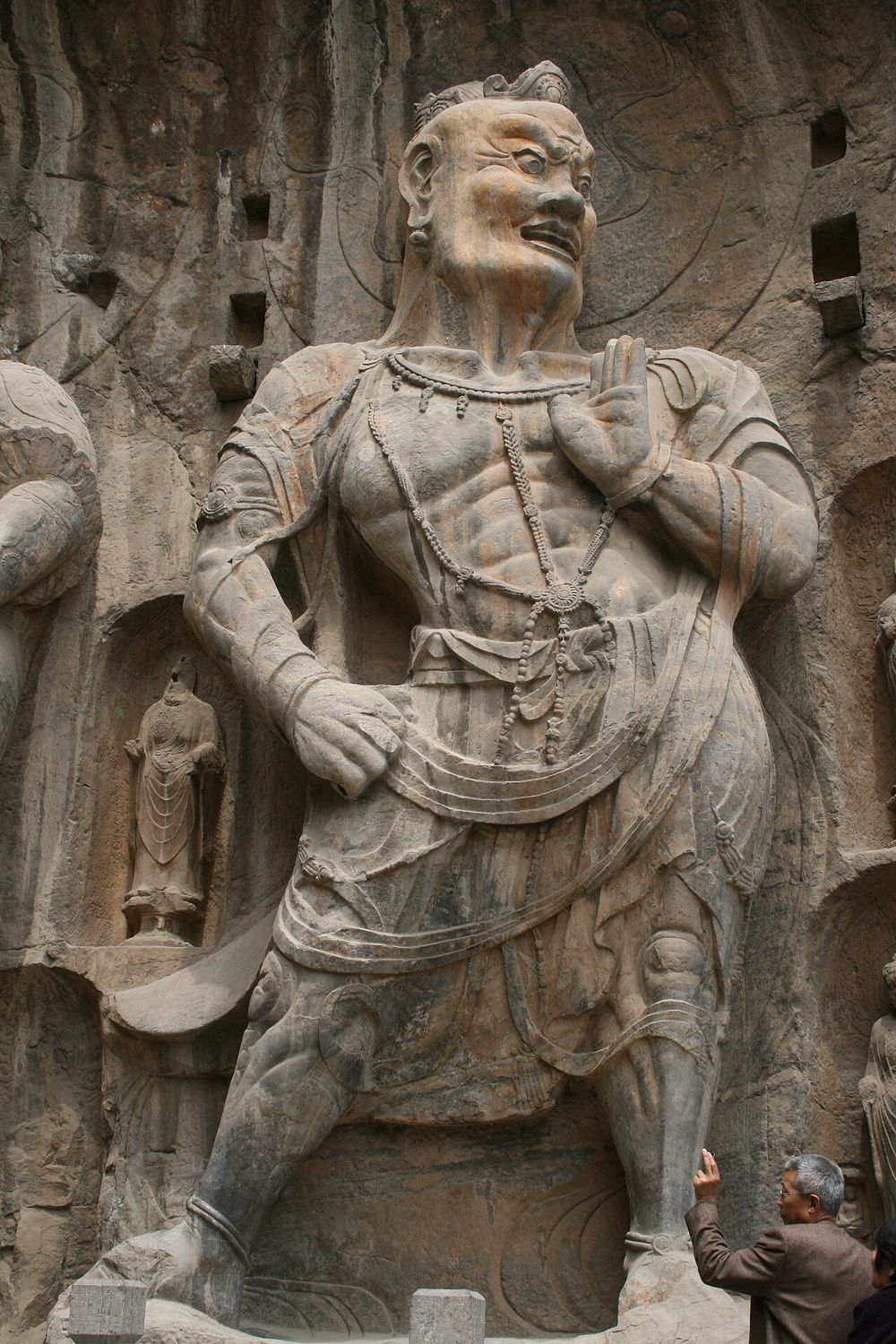
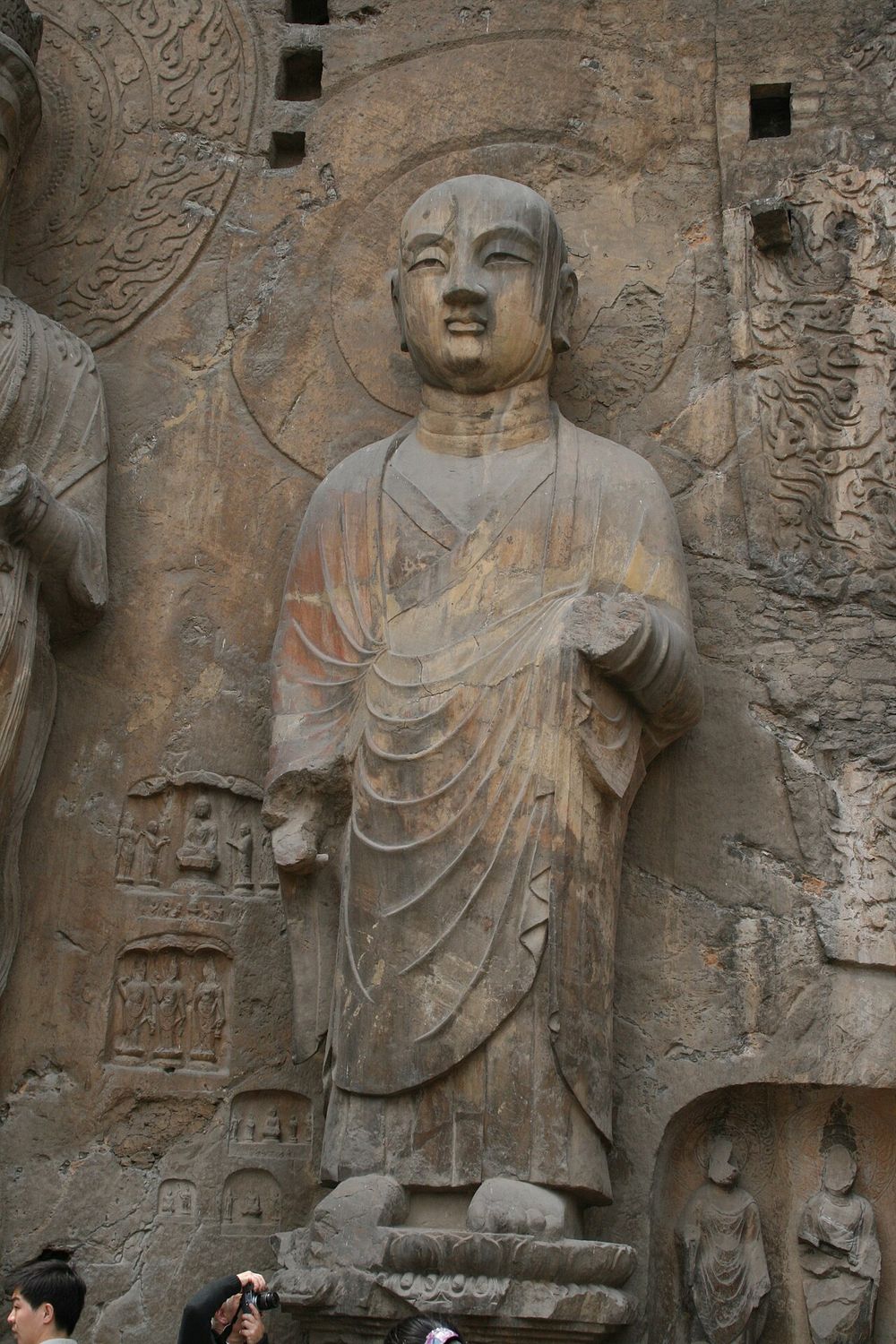
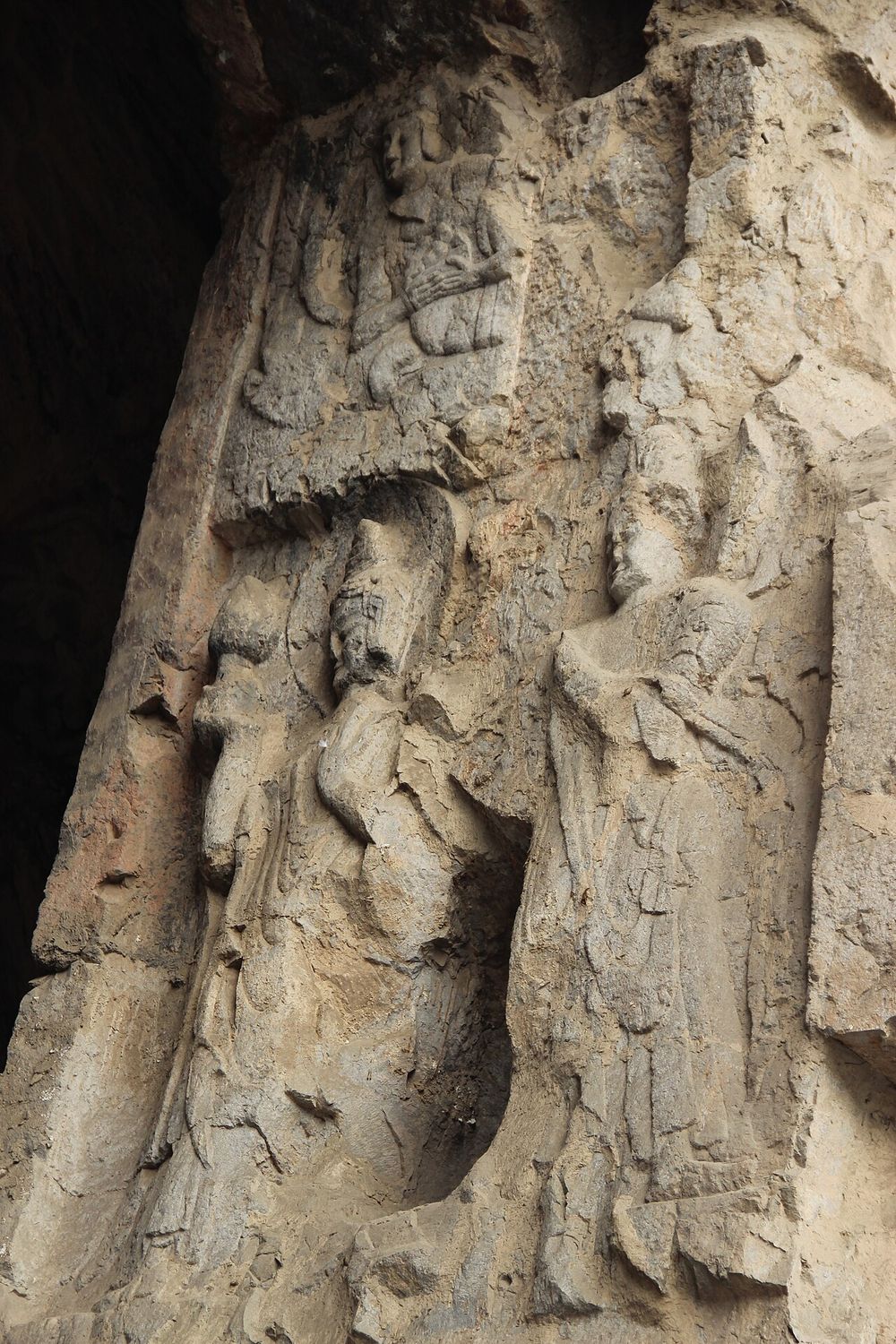
This is the largest niche at Longmen, open to the sky. There are nine great figures: the Buddha Vairocana in the middle, and on each side a disciple, Kasyapa the old and Ananda the young, then a bodhisattva, a heavenly king and a guardian.
Under the Buddha is an inscription added in 722. It records that in 672 Empress Wu gave twenty thousand strings of cash, and that the work was finished in 675. It calls the Buddha's face rare in its beauty and without equal.
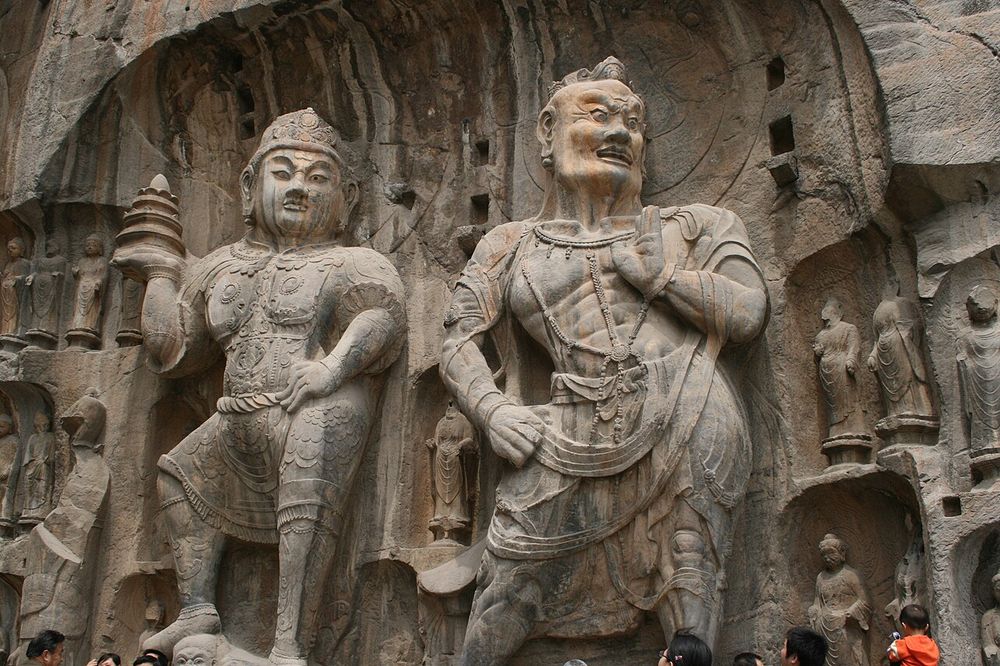
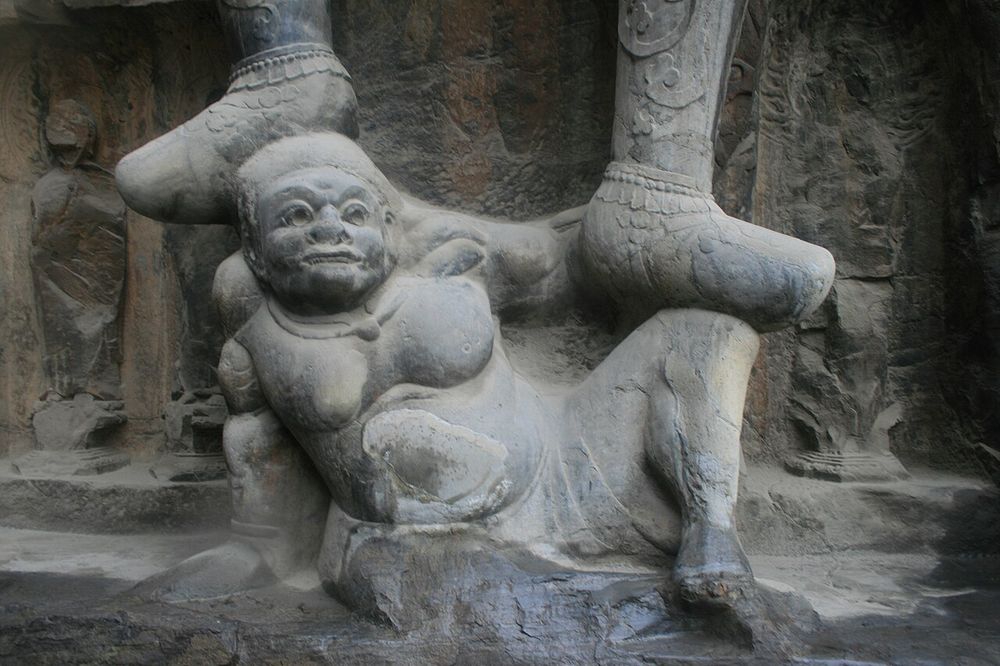
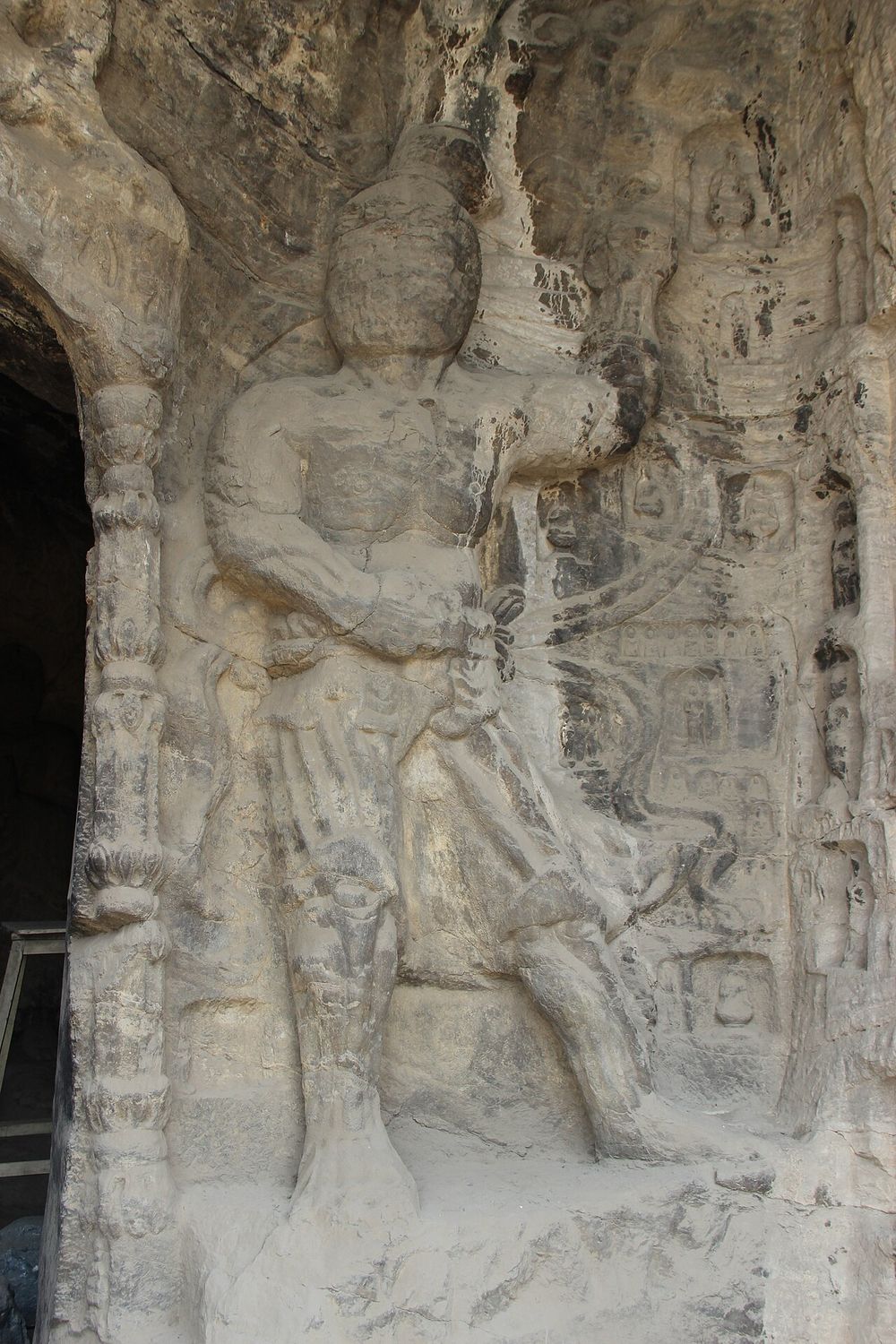
Look at the heavenly king and the guardian on the right: bulging muscle, a demon under the king's foot, all force.
There was a large rescue repair in the 1970s. Fifty years later, in 2022, 228 days were spent sealing leaks and fixing loose rock.
6. The Prescription Cave and the Guyang Cave: writing in stone
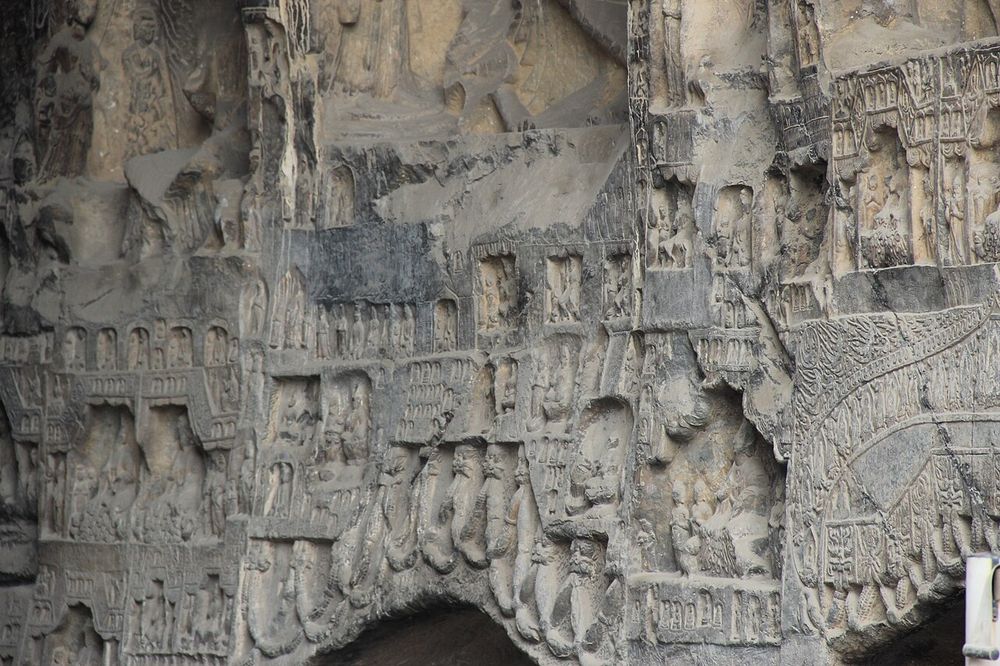
Niches and inscriptions crowd the wall of the Guyang CaveGary Todd, CC0
On both sides of the door of the Prescription Cave old medical recipes are cut into the rock: a book of medicine carved on a hill.
The Guyang Cave is the oldest at Longmen, begun about the time the capital moved. It holds more than 800 inscriptions.
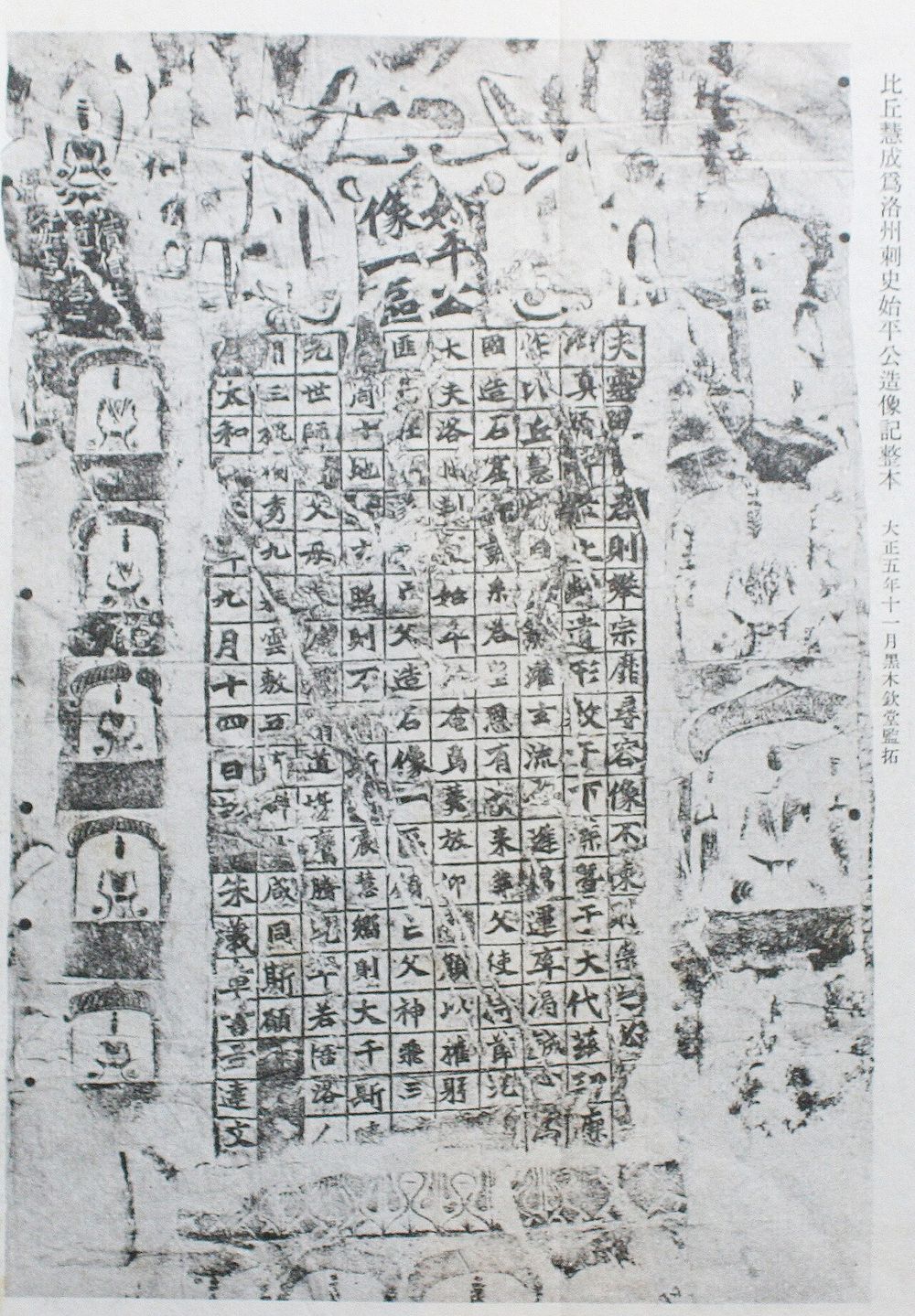
Calligraphers speak of the "Twenty Pieces of Longmen", the twenty finest Northern Wei dedications. Nineteen of them are in this cave. The strokes are square and sharp-cornered, a style called Wei stele script.
Trace one character in the air with your finger and compare it with your own handwriting.
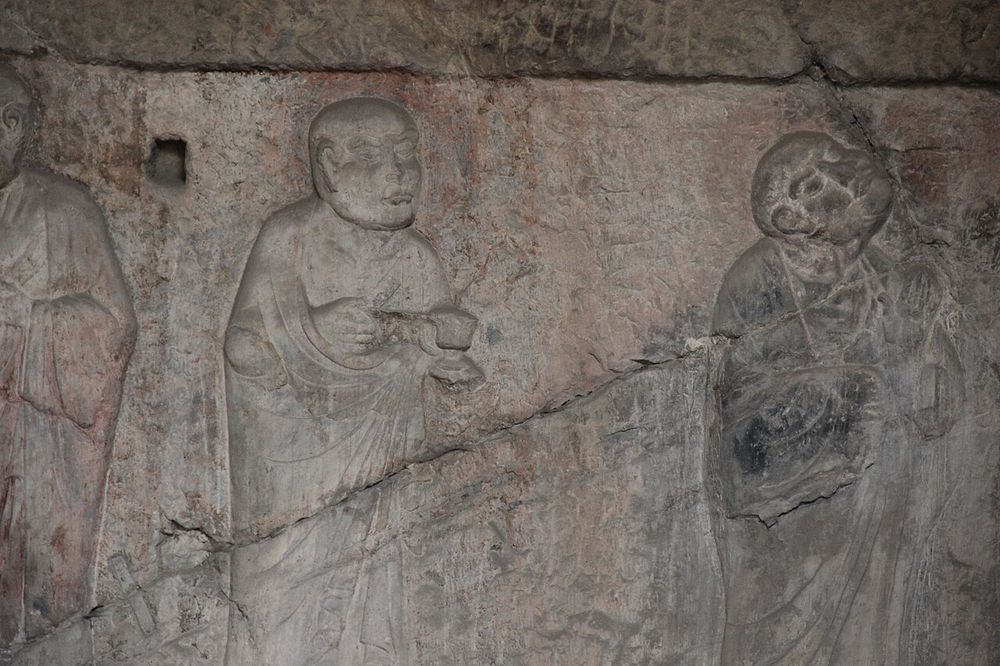
7. Kanjing Temple on the East Hill: twenty-nine arhats
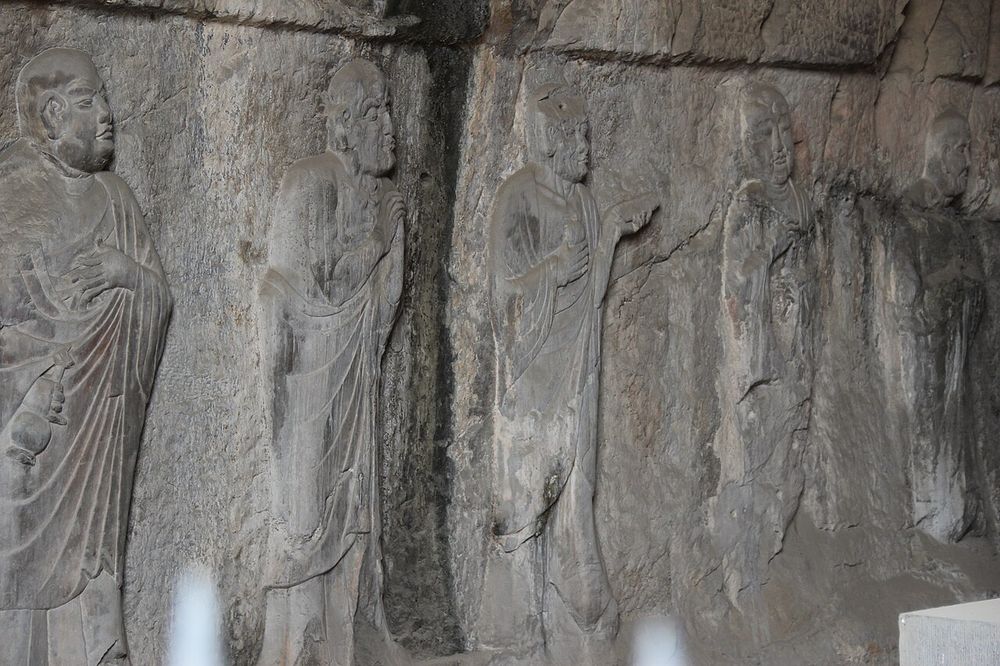
Arhats walking along the wall of Kanjing TempleGary Todd, CC0
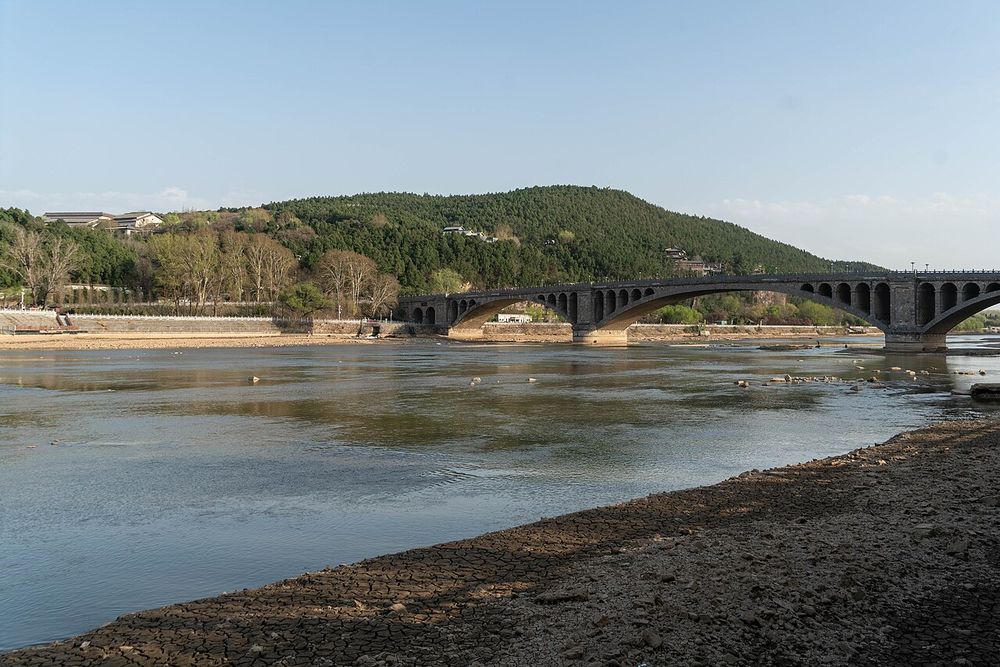
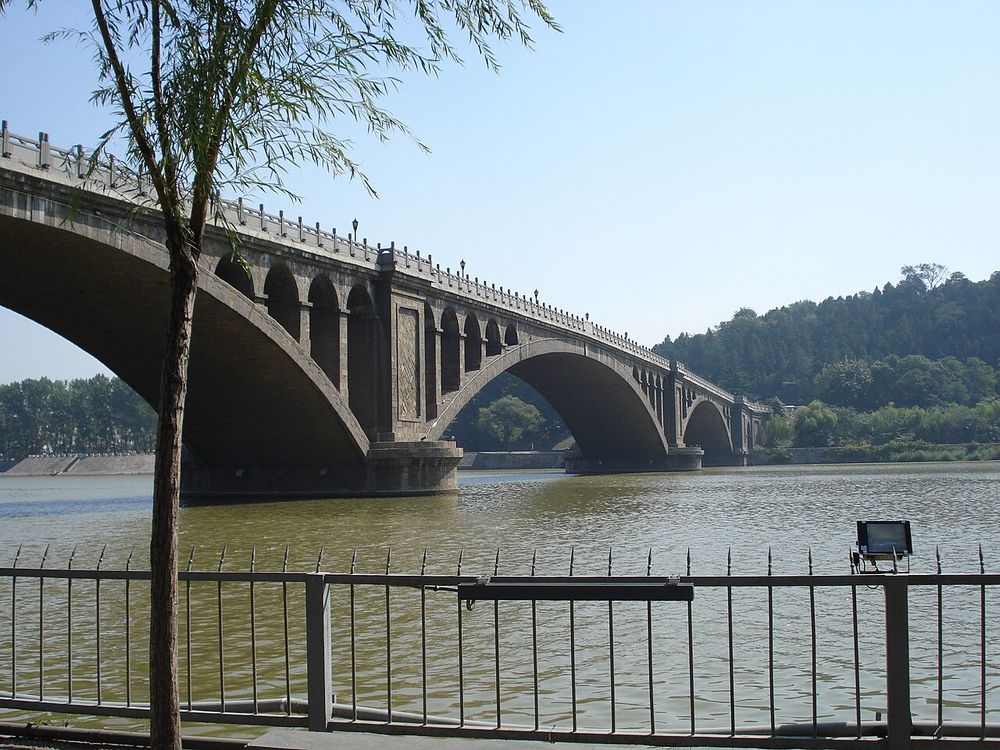
Cross the low bridge to the East Hill. Kanjing Temple, the "temple of scripture reading", is the largest cave on this side, cut in the Tang.
Round the foot of the walls walk twenty-nine arhats, the patriarchs of Chan Buddhism, each about life size and each with a different face.
From the East Hill, looking west, you have the best view of the whole West Hill and of the great Buddha.
8. Xiangshan Temple and the Bai Garden: Bai Juyi's last years
The tomb of Bai JuyiGary Todd, CC0
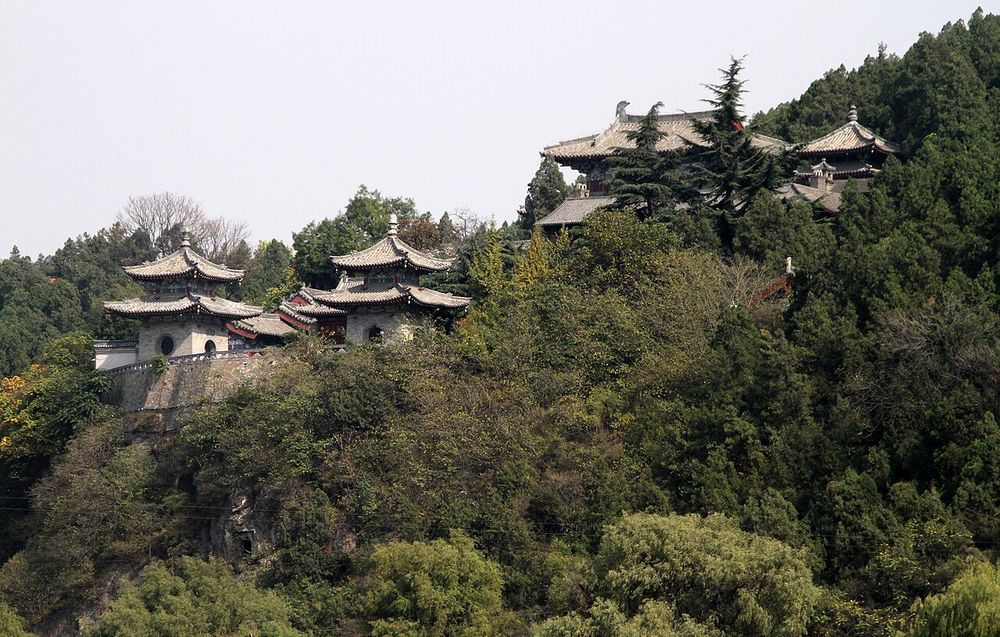
Xiangshan Temple was first built in 516. What stands now was rebuilt under the Qing (1644–1912) and enlarged in 2002. Beside it is a small villa of 1936 that belonged to Chiang Kai-shek.
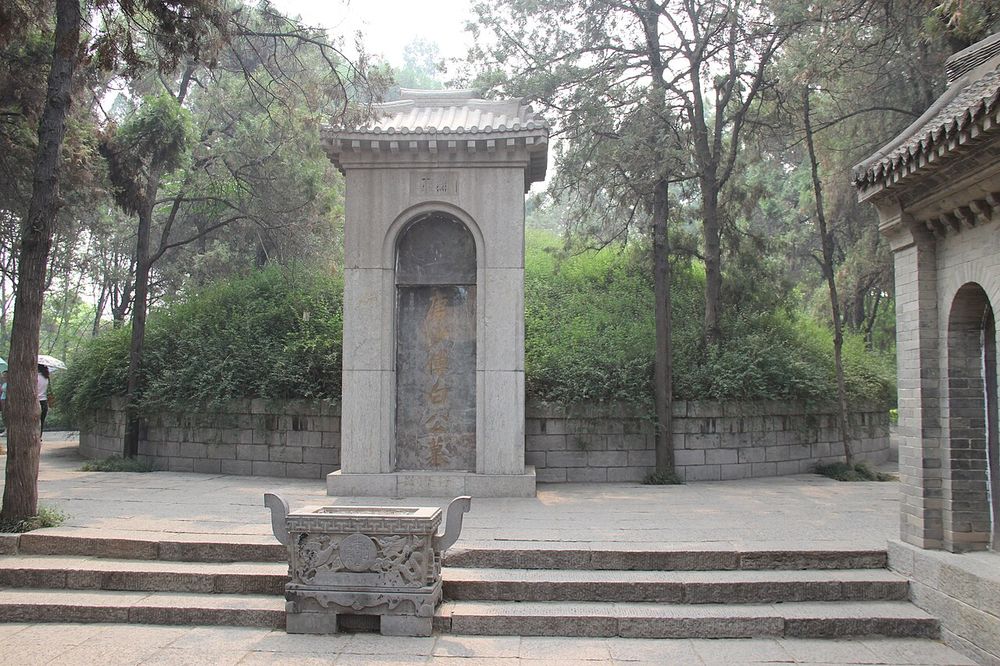
Bai Juyi lived his last years in Luoyang, called himself the Lay Buddhist of Fragrant Hill and paid for repairs to the temple. His tomb is in the Bai Garden.
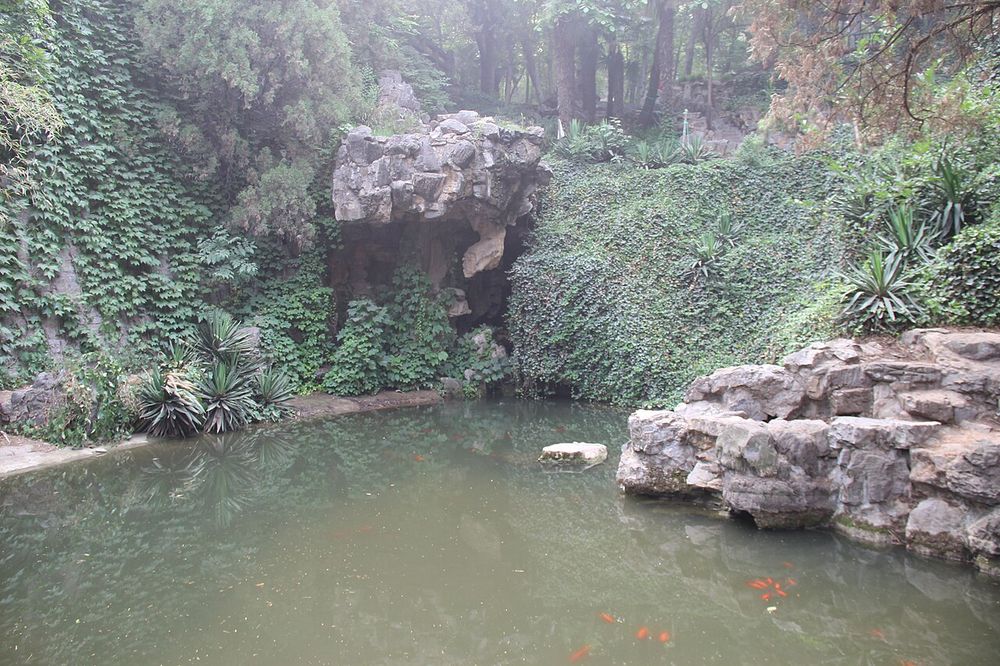
In the Bai Garden, find a poem of his that you know by heart.
Scattered, and brought together again
The emperor's procession from the middle Binyang cave, about 522–523, now in the Metropolitan Museum of Art, New YorkUnknown, CC0
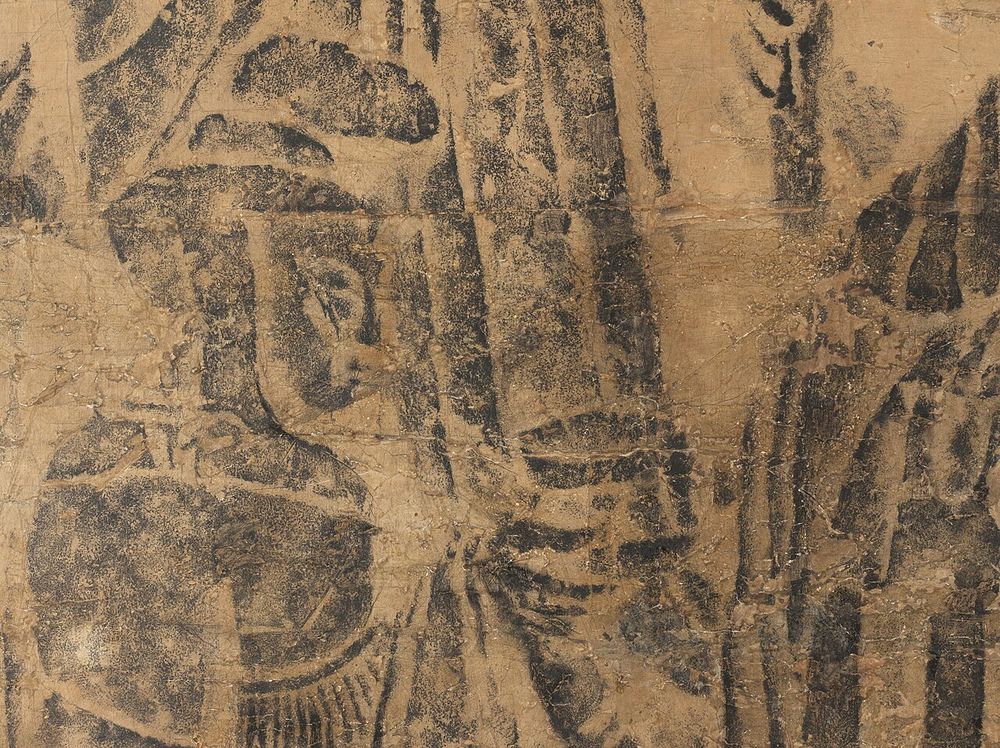
Pieces of Longmen are in museums in the United States, Europe and Japan. Photographs and rubbings made by Western scholars in the early twentieth century, before the worst of the cutting, are now the evidence used to put things back together on a screen. In 2023 the Luoyang Museum showed heads and bodies digitally rejoined.
Before you come, look at a picture of the emperor's procession on the museum's website. Then, at the middle Binyang cave, stand before the empty wall and imagine it there.
Longmen elsewhere
The Yungang Grottoes at Datong are the Northern Wei's imperial caves from before the move. See Yungang first and then Longmen, and you watch the Buddha change from broad and heavy to fine-boned. The Mogao Caves at Dunhuang are painted and modelled in clay; Longmen is cut in limestone.
The great bronze Buddha of Todaiji at Nara in Japan, consecrated in 752, is also Vairocana, made under Tang influence. The cliff Buddhas of Bamiyan in Afghanistan were blown up in 2001, which says something about why protection matters.
In 2021 Henan Television opened a festival programme with a dance called The Guardians of Longmen, dancers as guardians and flying figures inside a digital Longmen. Watch it, then find the two guardians at Fengxian Temple.
Meanwhile in the world
Year
Here
Elsewhere
293 BC
The battle of Yique: the Qin (221–206 BC) general Bai Qi defeats Han and Wei in this gap
The successors of Alexander the Great are fighting over his empire
493–494
The Northern Wei capital moves to Luoyang; the Guyang Cave is begun
Theodoric the Ostrogoth takes Italy; the western Roman empire fell 17 years ago
500–523
Twenty-four years cutting the middle Binyang cave
Imperial carving has moved here from Yungang
672–675
The great Vairocana of Fengxian Temple
Silla unites the Korean peninsula; the Arabs first besiege Constantinople
680
The Cave of Ten Thousand Buddhas is finished
The Third Council of Constantinople meets
752
–
The great Vairocana of Todaiji at Nara is consecrated
832–846
Bai Juyi repairs Xiangshan Temple and is buried on the East Hill
Charlemagne's empire is divided in three (843)
1930s
The emperor and empress reliefs are cut out and taken abroad
The Great Depression; the art market stays busy
2000
Listed as World Heritage in November
The same session lists Dujiangyan, the villages of southern Anhui and the Ming (1368–1644) and Qing imperial tombs
2022
Fengxian Temple is repaired again after fifty years
–
One line to remember: thin face, Northern Wei; round face, Tang.
Then and now
Fengxian Temple seen across the Yi RiverGary Todd, CC0, Wikimedia CommonsThe great Vairocana with disciples and bodhisattvasGary Todd, CC0, Wikimedia CommonsThe head of the great Buddha, four metres highGary Todd, CC0, Wikimedia CommonsNiches crowd the cliff of the West Hillxiquinhosilva, CC BY 2.0, Wikimedia CommonsNorthern Wei figures in the middle Binyang caveGary Todd, CC0, Wikimedia CommonsRow on row of small seated BuddhasGary Todd, CC0, Wikimedia CommonsThe steps up to Fengxian Templexiquinhosilva, CC BY 2.0, Wikimedia CommonsThe whole Fengxian niche in one viewWikiLaurent, CC BY-SA 3.0, Wikimedia CommonsVairocana, 17.14 metres highGary Todd, CC0, Wikimedia CommonsThe heavenly king and the guardian at Fengxian TempleGary Todd, CC0, Wikimedia CommonsThe guardian: all muscleGary Todd, CC0, Wikimedia CommonsThe demon under the heavenly king's footGary Todd, CC0, Wikimedia CommonsAnanda, the young discipleGary Todd, CC0, Wikimedia CommonsKasyapa, the old disciple, badly damagedGary Todd, CC0, Wikimedia CommonsSmall standing bodhisattvas beside the great nicheGary Todd, CC0, Wikimedia CommonsA Buddha's head and halo on the West Hillxiquinhosilva, CC BY 2.0, Wikimedia CommonsA cave mouth and the small niches around itxiquinhosilva, CC BY 2.0, Wikimedia CommonsA large open cave on the West Hillxiquinhosilva, CC BY 2.0, Wikimedia CommonsOutside the middle Binyang caveGary Todd, CC0, Wikimedia CommonsA niche in the middle Binyang caveGary Todd, CC0, Wikimedia CommonsTraces of colour on the ceiling of the middle Binyang caveGary Todd, CC0, Wikimedia CommonsThe main Buddha of the south Binyang cave, finished in the Tang: a rounder faceGary Todd, CC0, Wikimedia CommonsNiches on the wall of the south Binyang caveGary Todd, CC0, Wikimedia CommonsThe north Binyang cave, 2025Yumeto, CC BY-SA 4.0, Wikimedia CommonsA wall of tiny BuddhasGary Todd, CC0, Wikimedia CommonsThe lotus on the ceiling of the Lotus CaveGary Todd, CC0, Wikimedia CommonsInside the Lotus CaveRc4230, CC BY-SA 4.0, Wikimedia CommonsThe Lotus Cave from outside, 2025Yumeto, CC BY-SA 4.0, Wikimedia CommonsThe Buddha and attendants in the Prescription CaveGary Todd, CC0, Wikimedia CommonsA guardian at the door of the Prescription CaveGary Todd, CC0, Wikimedia CommonsInside the Guyang Cave, the oldest at LongmenGary Todd, CC0, Wikimedia CommonsNiches and inscriptions crowd the wall of the Guyang CaveGary Todd, CC0, Wikimedia CommonsCarving in the Guyang CaveGary Todd, CC0, Wikimedia CommonsThe ceiling of the Guyang CaveGary Todd, CC0, Wikimedia CommonsRows of small niches in the Old Dragon CaveGary Todd, CC0, Wikimedia CommonsA seated Buddha in Jingshan Temple caveGary Todd, CC0, Wikimedia CommonsAt Kanjing Temple on the East HillGary Todd, CC0, Wikimedia CommonsArhats walking along the wall of Kanjing TempleGary Todd, CC0, Wikimedia CommonsTwo of the twenty-nine arhatsGary Todd, CC0, Wikimedia CommonsThe Yi River and Longmen Bridge, 2024Strider9527, CC BY-SA 4.0, Wikimedia CommonsA bridge over the Yi River, 2007user:Kwz, CC BY-SA 3.0, Wikimedia CommonsXiangshan Temple on the East HillGerd Eichmann, CC BY-SA 4.0, Wikimedia CommonsXiangshan Temple from across the riverWindmemories, CC BY-SA 4.0, Wikimedia CommonsA pool in the Bai GardenGary Todd, CC0, Wikimedia CommonsThe tomb of Bai JuyiGary Todd, CC0, Wikimedia CommonsA statue of Bai Juyi in the Bai GardenGary Todd, CC0, Wikimedia CommonsThe Longmen Museum in Luoyang, 2026Baomi, CC BY-SA 4.0, Wikimedia CommonsThe emperor's procession from the middle Binyang cave, about 522–523, now in the Metropolitan Museum of Art, New YorkUnknown, CC0, Wikimedia CommonsA Tang lion from the Cave of Ten Thousand Buddhas, now in the Museum of Fine Arts, BostonPatrick20242023, CC BY-SA 4.0, Wikimedia CommonsA Tang guardian from Longmen, now in BostonPatrick20242023, CC BY-SA 4.0, Wikimedia CommonsThe head of a bodhisattva from Longmen, now in the Musée Guimet, ParisMarie-Lan Nguyen, Public domain, Wikimedia CommonsAn old rubbing of the Duke of Shiping's dedication in the Guyang Cave, one of the "Twenty Pieces of Longmen"KUROKI KINDO (1866-1923), Public domain, Wikimedia CommonsAn old rubbing of a relief from the Binyang caves, Musée Cernuschi, Parisanonymous, Public domain, Wikimedia Commons
Local legends
These are stories people tell about this place. They are legends, not history, and each one says where it comes from.
LegendThe face of the great Buddha
The face of the great Vairocana is said to be the face of Empress Wu Zetian, who paid toward it. The inscription under the Buddha records her gift and says nothing of a model, and scholars repeat the story only as hearsay.
Source: Widely repeated; no early record
Later, people who live here will be able to add the stories they grew up with, and say which of these they have heard.
Not certain, and where accounts conflict
Is the Buddha's face Wu Zetian's?
Many popular accounts state it as fact. Scholars say only "it is said". The inscription records her gift and nothing about a model. Legend.
When work began on the great Buddha
672 is the year of the empress's gift. Cutting may have begun earlier in Gaozong's reign. We say: gift in 672, finished in 675.
How many figures
More than 100,000 (UNESCO); more than 110,000 in some Chinese sources.
Who directed the Cave of Ten Thousand Buddhas
One guidebook says two women. The inscription names "great supervisor Yao Shenbiao" and the nun Zhiyun; the first is a palace office, and scholars read Yao's sex differently. We give the office and do not judge.
How the reliefs left China
Chinese reports name the buyers and a Beijing dealer and describe a contract. The museums speak of purchase. We say that they were cut out and taken abroad.
The Buddha's ear
1.9 metres is the usual figure; "nearly two metres" elsewhere.
Night visits
Reports for 2026 agree that a night visit needs its own ticket and covers only the West Hill and Xiangshan Temple. They disagree on the price (90 or 120 yuan) and on which days.
Visiting
Tickets and hours
One day ticket, 90 yuan, covers the four parts of the site: the West Hill caves, the East Hill caves, Xiangshan Temple and the Bai Garden.
Day opening is reported as 8:00 to 18:00, with last entry at 17:30.
Everyone must book ahead by real name for a time slot, up to seven days before, through the site's official WeChat accounts 龙门石窟官微 or 龙门石窟. Bring the passport you booked with.
The evening opening is a separate ticket and covers only the West Hill and Xiangshan Temple; the East Hill and the Bai Garden are closed at night. In 2026 it was announced for 30 March to 31 August, entry 18:00 to 20:00, grounds cleared at 21:00. Reports differ on the price.
An electric shuttle from the service areas to the gate is optional and reported at 10 yuan each way; the walk takes twenty minutes or so.
Last checked 2026-11-11. Travel and news reports, not the site's own notices.
Where to start
Most visitors enter at the north gate, walk south along the West Hill to the low bridge, cross, and come back north along the East Hill. Allow three to four hours.
The West Hill faces east. Morning light falls on the caves; in the afternoon they are in shadow and the East Hill gives the best view across.
Most caves are railed off. A small pair of binoculars shows a great deal more.
Before you go
There is little shade on the West Hill walkway and many steps up to Fengxian Temple. In summer go at opening time or in the evening.
In late April, the peony festival, and in public holidays the slots sell out days ahead.
Longmen is twelve kilometres south of Luoyang. Luoyang Longmen high-speed railway station is the nearest station.
Customs and manners
This is still a place of worship for some visitors. Do not climb on railings or touch the carving; oil from hands darkens the stone.
Photographs are allowed outdoors. Do not use flash in the caves.
At Xiangshan Temple and the tomb of Bai Juyi, keep your voice down.
Tipping is not expected in China.
Look for these
Tell the dynasty by the face. Photograph one Buddha's face in the middle Binyang cave and one at Fengxian Temple and put them side by side.
Count the headless. Choose one wall and count the figures with heads and without.
Find the smallest Buddha in the Cave of Ten Thousand Buddhas.
Find the flying figures on the ceiling of the Lotus Cave. Which way are they flying?
Find the guardian's muscles at Fengxian Temple. What is round his neck?
Measure the great Buddha's ear. It is usually said to be 1.9 metres long. How tall are you?
Find an inscription in the Guyang Cave and see whether you can read a character or two.
At Kanjing Temple, find an arhat who is smiling.
I am here
Stand at the site, sign in, press the button, and collect its stamp. Your browser will ask to use your location. It is sent to us once to confirm that you are at the site; we keep how far you were from it, not the spot where you stood.
Your stamps are saved to your account, so they follow you to any device. Checking from a browser cannot rule out every false location; stricter checks arrive with the app.
Messages
Share your photos
Photos here show the place, not people. Each one is credited to the visitor who took it and appears after our team has looked at it. A photo with you in it belongs under “I am here”.