LegendThe cave in Macao
Macao has long said that Camões wrote part of The Lusiads in a rock grotto there, now in the Camões Garden.
Source: Macao tradition since the eighteenth century; there is no document of his stay
Lisbon, Portugal
Mosteiro dos Jerónimos · moosh-TAY-roo doosh zheh-RON-ee-moosh
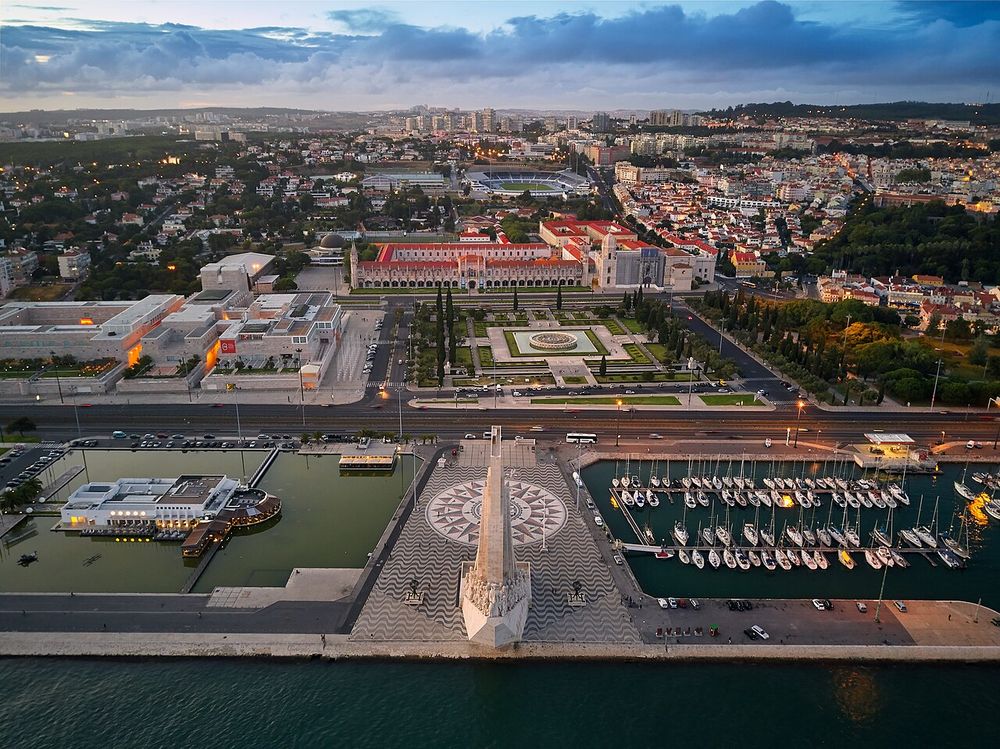
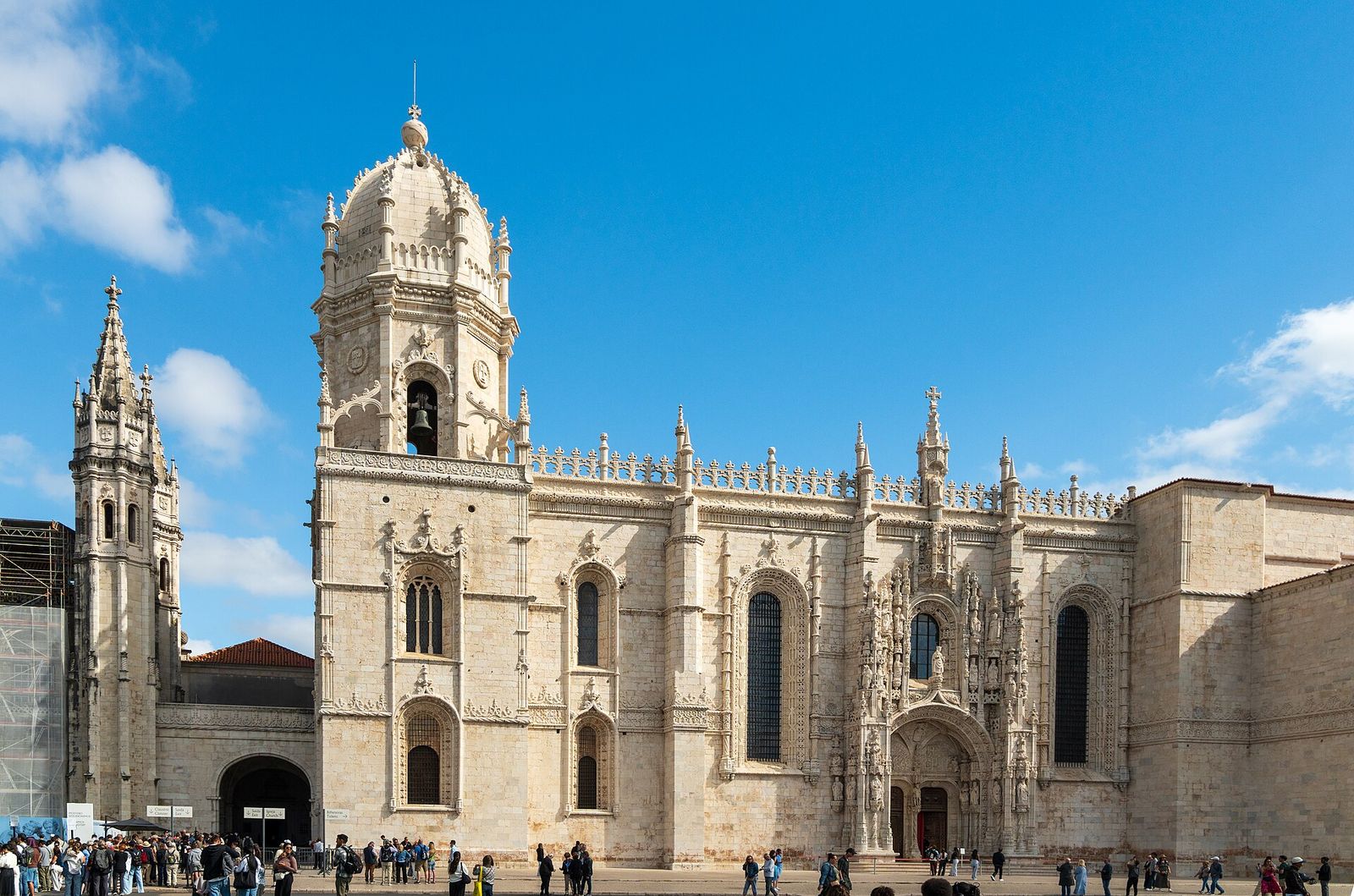
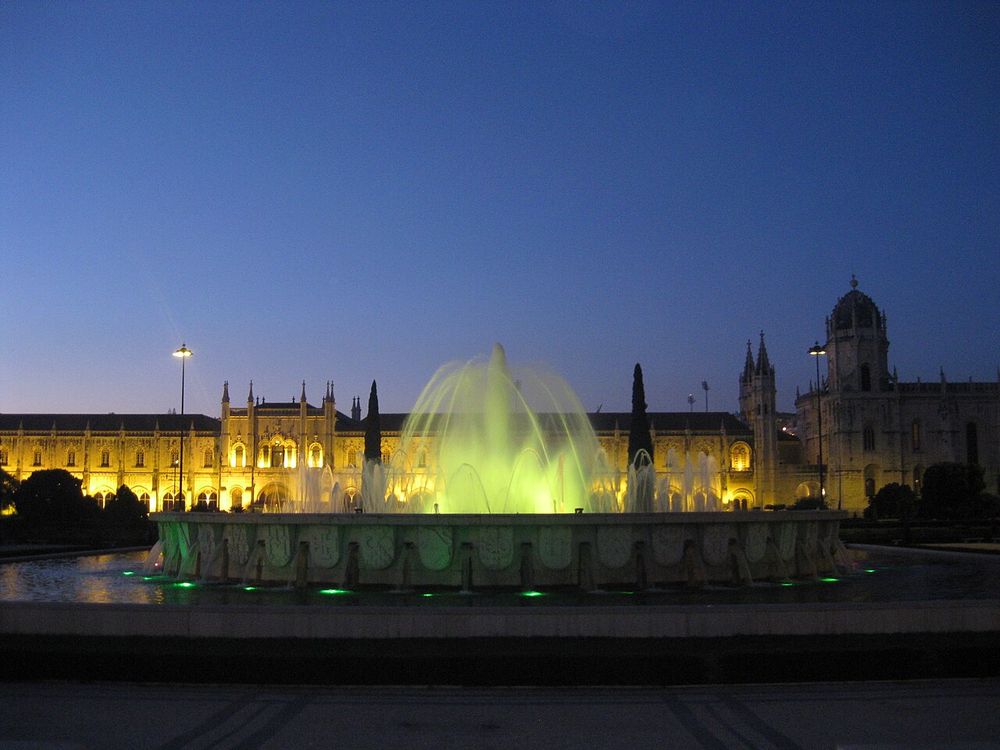
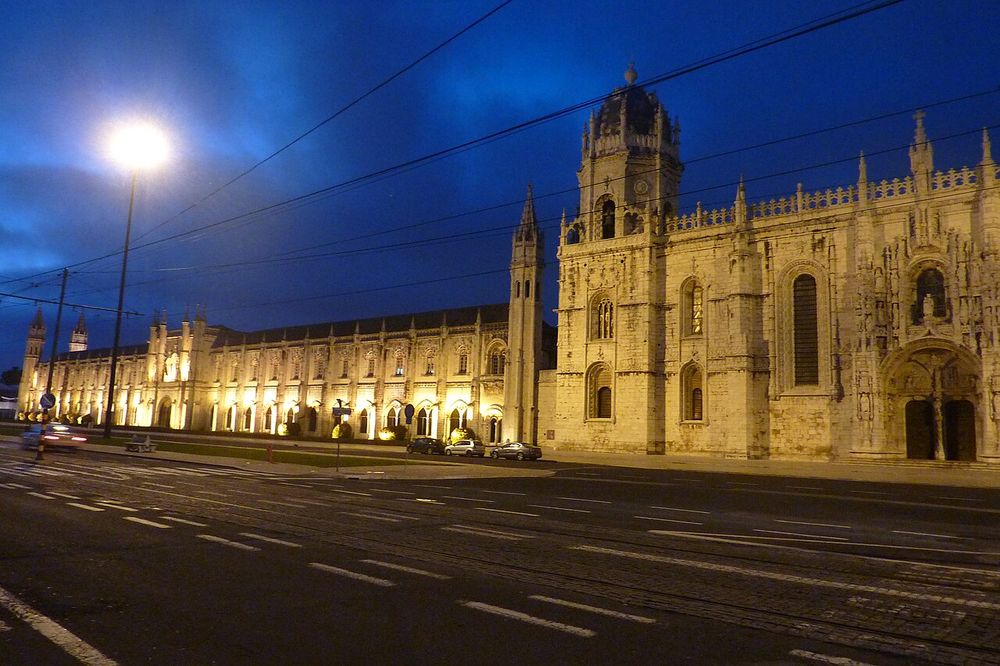
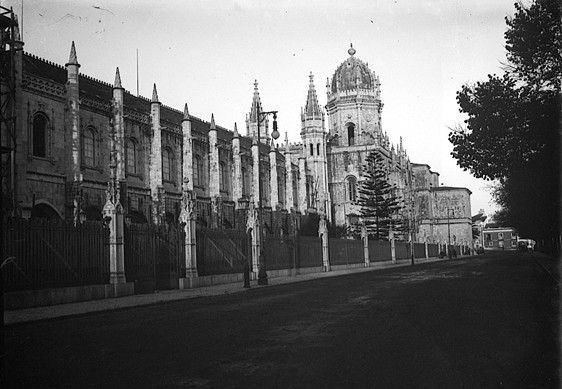
A monastery three hundred metres long, built from 1501 with a tax on pepper. It stands where Vasco da Gama prayed the night before he sailed for India, and he lies in it now, across the nave from the poet who wrote his voyage into an epic.
Photo: Deensel, CC BY 2.0, Wikimedia Commons
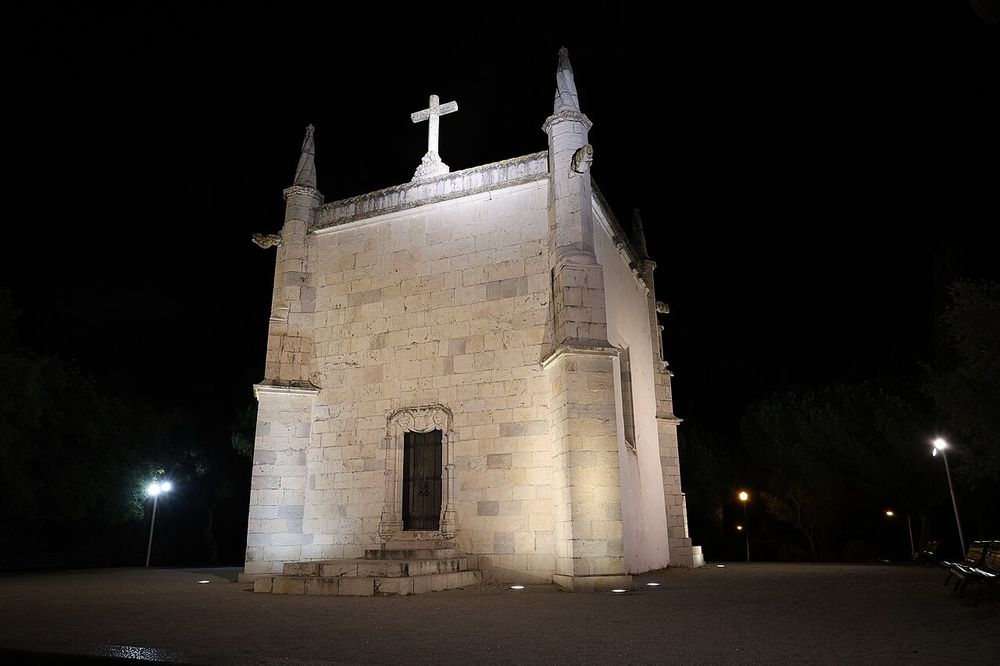
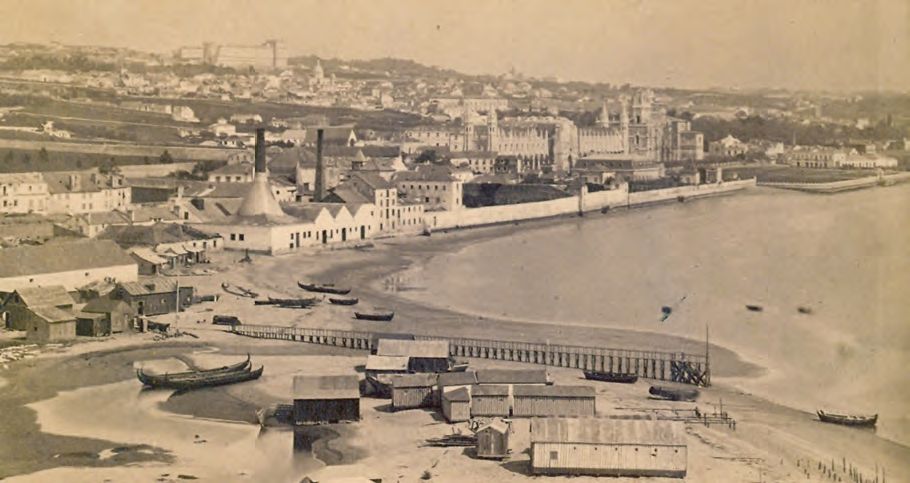
On the night of 7 July 1497 Vasco da Gama and his crews prayed in a small chapel on this shore. The next day they sailed, and they reached India in May 1498. King Manuel I had the chapel replaced by a vast monastery, and gave it to monks of the Order of Saint Jerome, who were to pray for the king's soul and for the sailors.
It was paid for by a twentieth part of the profits of the spice trade, people called it the pepper tax. Work began in 1501 and went on for about a century. The 1755 earthquake that flattened most of Lisbon left it standing.
The church is free. One timed ticket covers the cloister, the refectory, the chapter house and the upper choir. The archaeology and navy museums in the west wing have their own tickets. The Belém Tower, a fifteen-minute walk away, has its own ticket too.
| Part | Ticket |
|---|---|
| The church of Santa Maria de Belém | Free |
| The tombs of Vasco da Gama and Camões | Free, in the church |
| The cloister | Ticket |
| The refectory and chapter house | Included with the cloister |
| National Archaeology Museum and Navy Museum (west wing) | Separate museums and tickets |
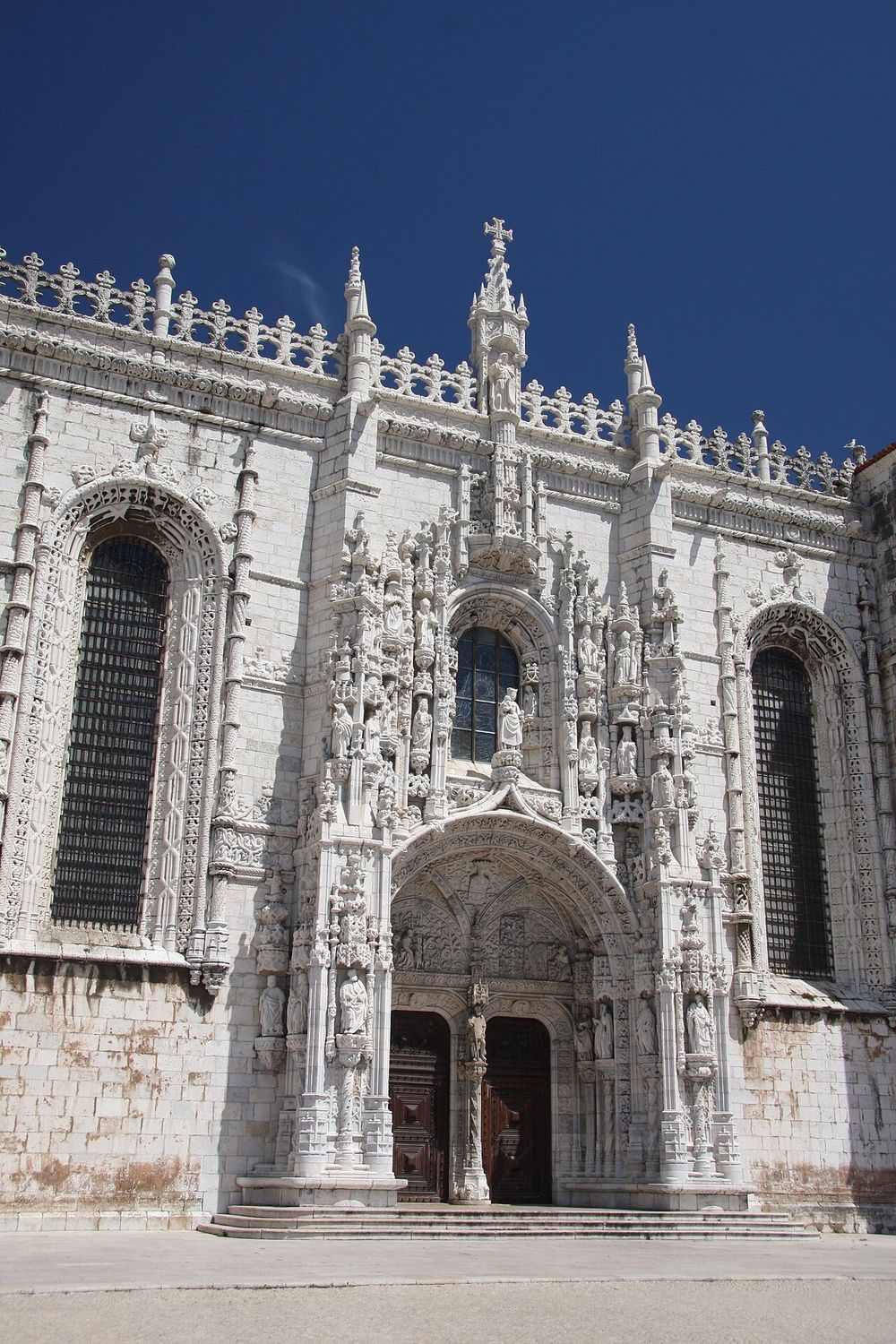
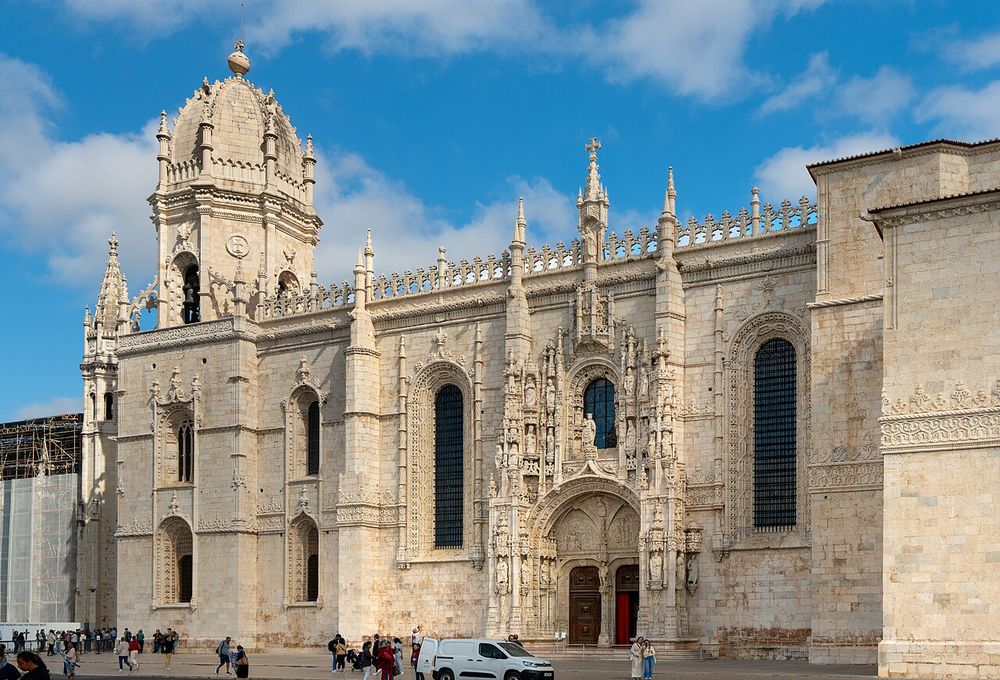
The south door, facing the river, is thirty-two metres high and crowded with saints, prophets and canopies of stone. On the pillar between its two doors stands Prince Henry the Navigator in armour. He had died forty years before the first stone was laid.
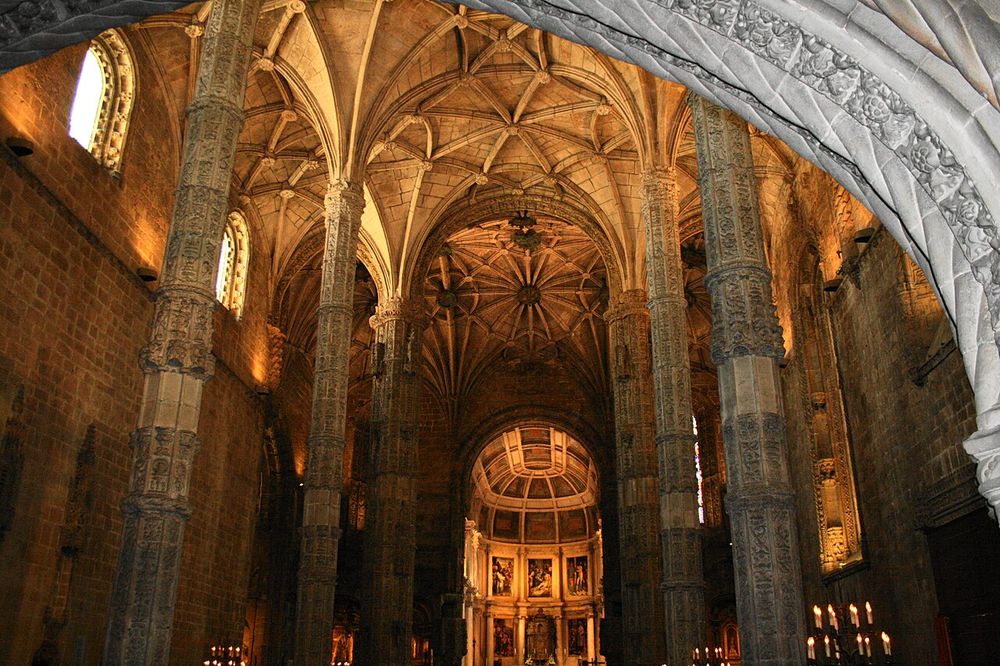
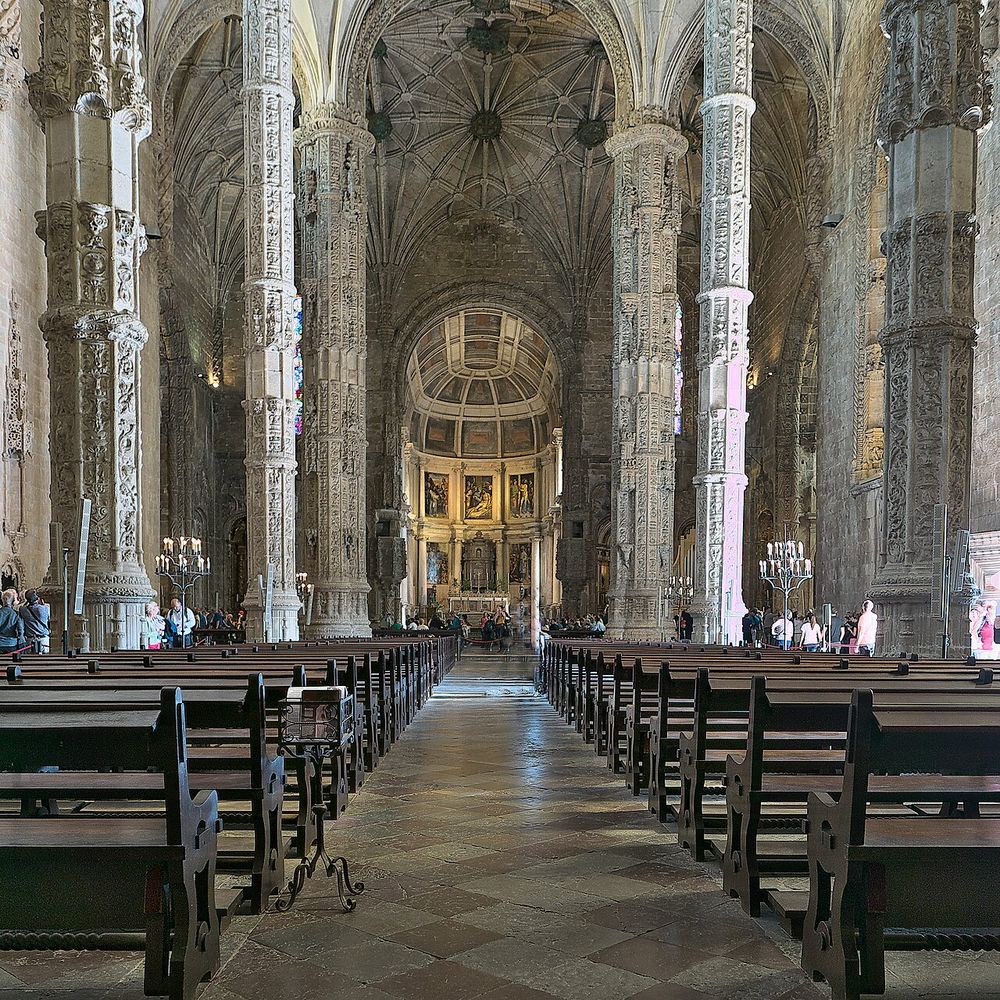
Go into the church, which is free. Six columns as thin as palm trees hold up a stone vault that seems to float. They are carved all over with leaves, ropes and tiny faces.
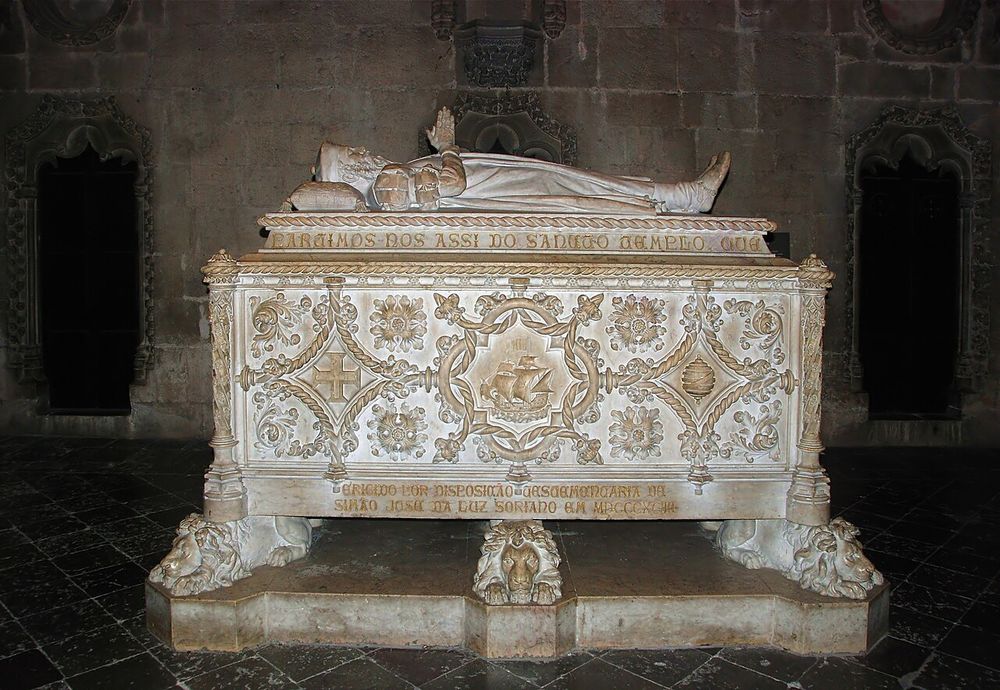
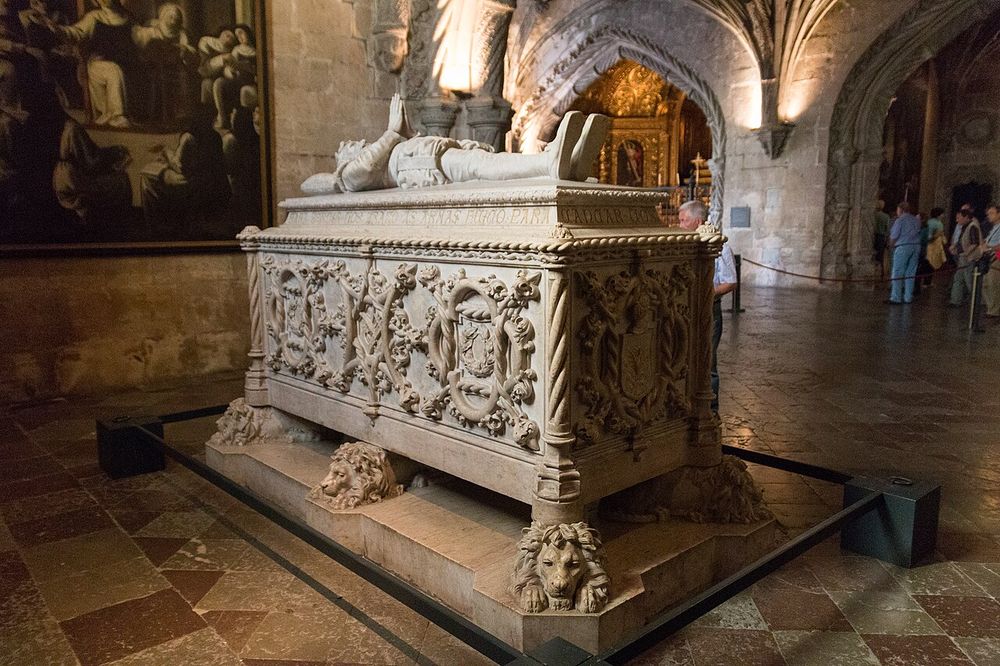
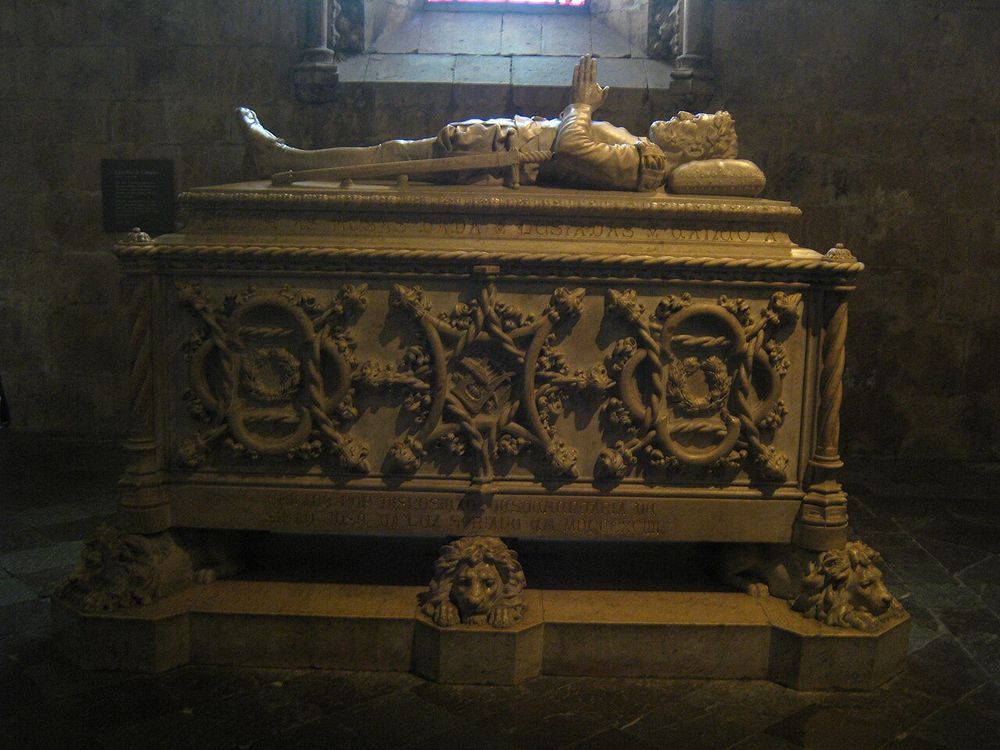
Just inside, on the left, lies Vasco da Gama. On the right, facing him, lies the poet Luís de Camões, who sang his voyage in the epic The Lusiads.
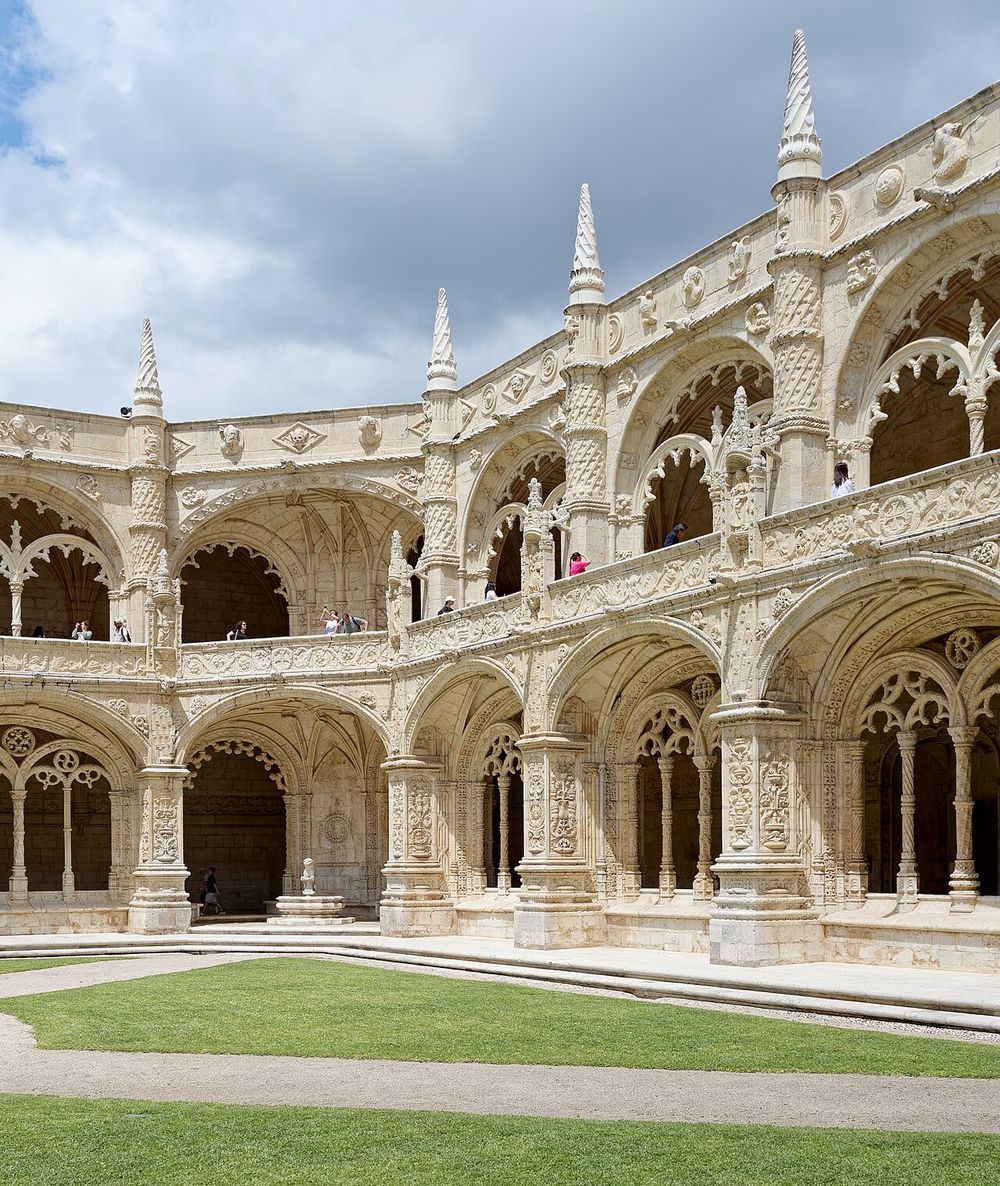
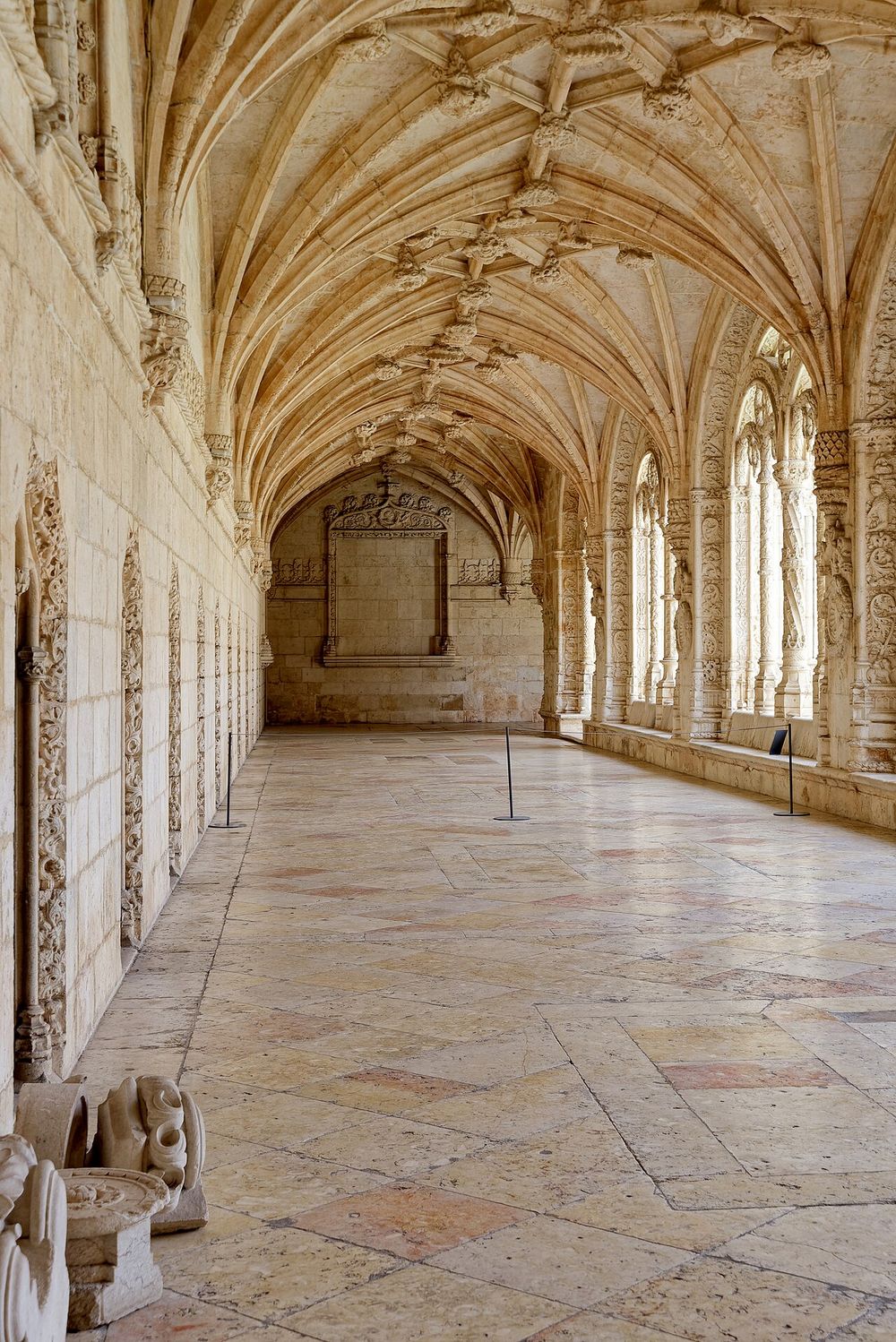
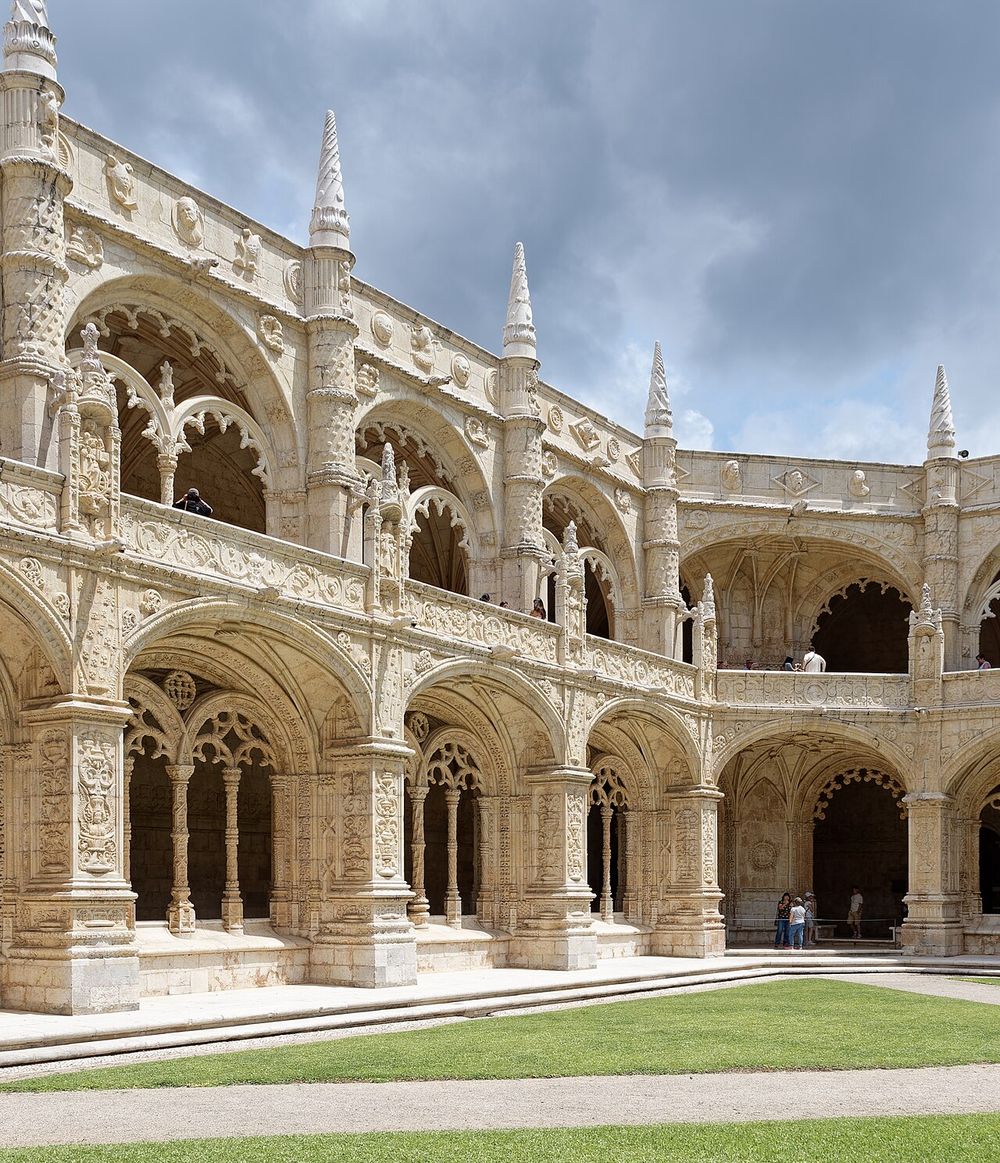
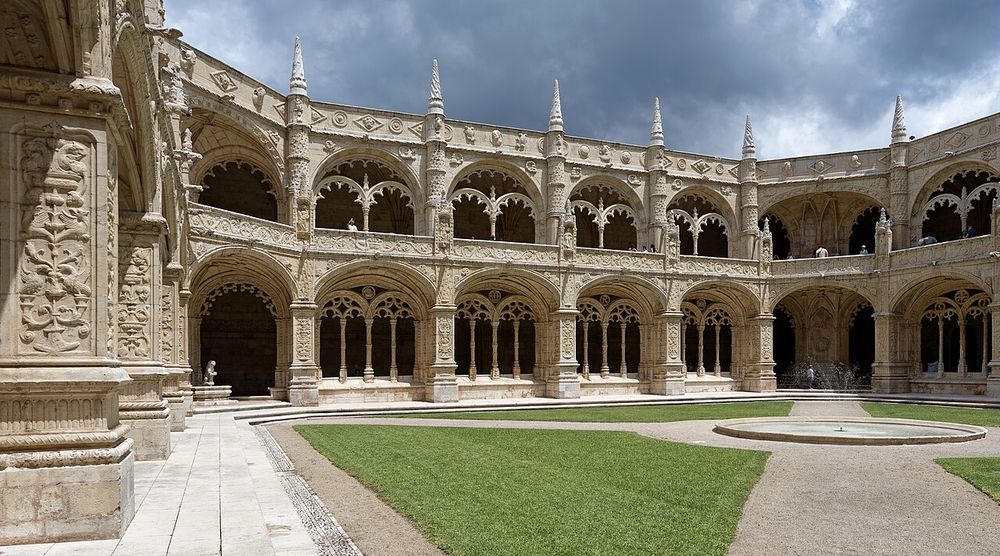
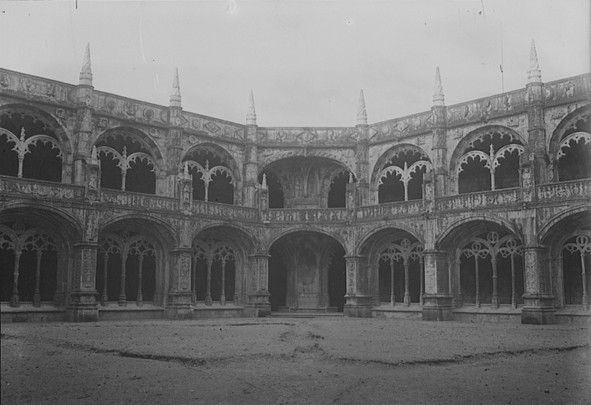
Then buy a ticket for the cloister, two storeys of arches carved like lace. It is the most beautiful cloister in Portugal, and many think in Europe.
"Jerónimos is a person." It is the Portuguese name of the Hieronymites, the monks of Saint Jerome who lived here until the religious orders were closed in 1833–34.
"You need a ticket for everything." The church is free. Only the cloister and the rooms around it need a ticket.
"The custard tarts were invented in the bakery." The monks made them, and sold them after the monastery closed. The bakery next door opened in 1837 with their recipe.
"Camões is surely in his tomb." His body was lost in a common grave after the plague of 1580. The bones brought here in 1880 may not be his.
We searched Portuguese and English sources for this list.
Start outside, then the church, then the cloister. Allow an hour and a half.
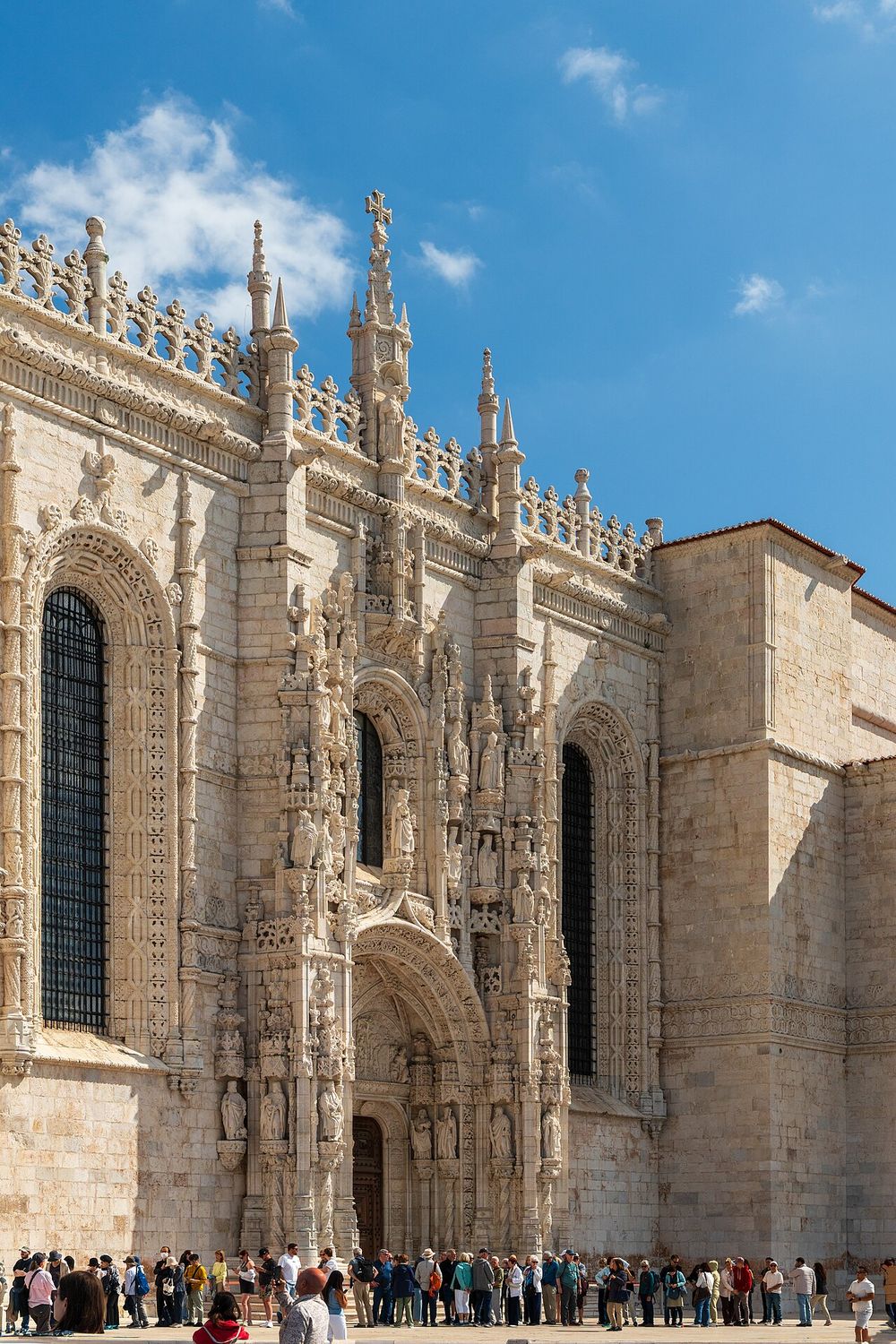
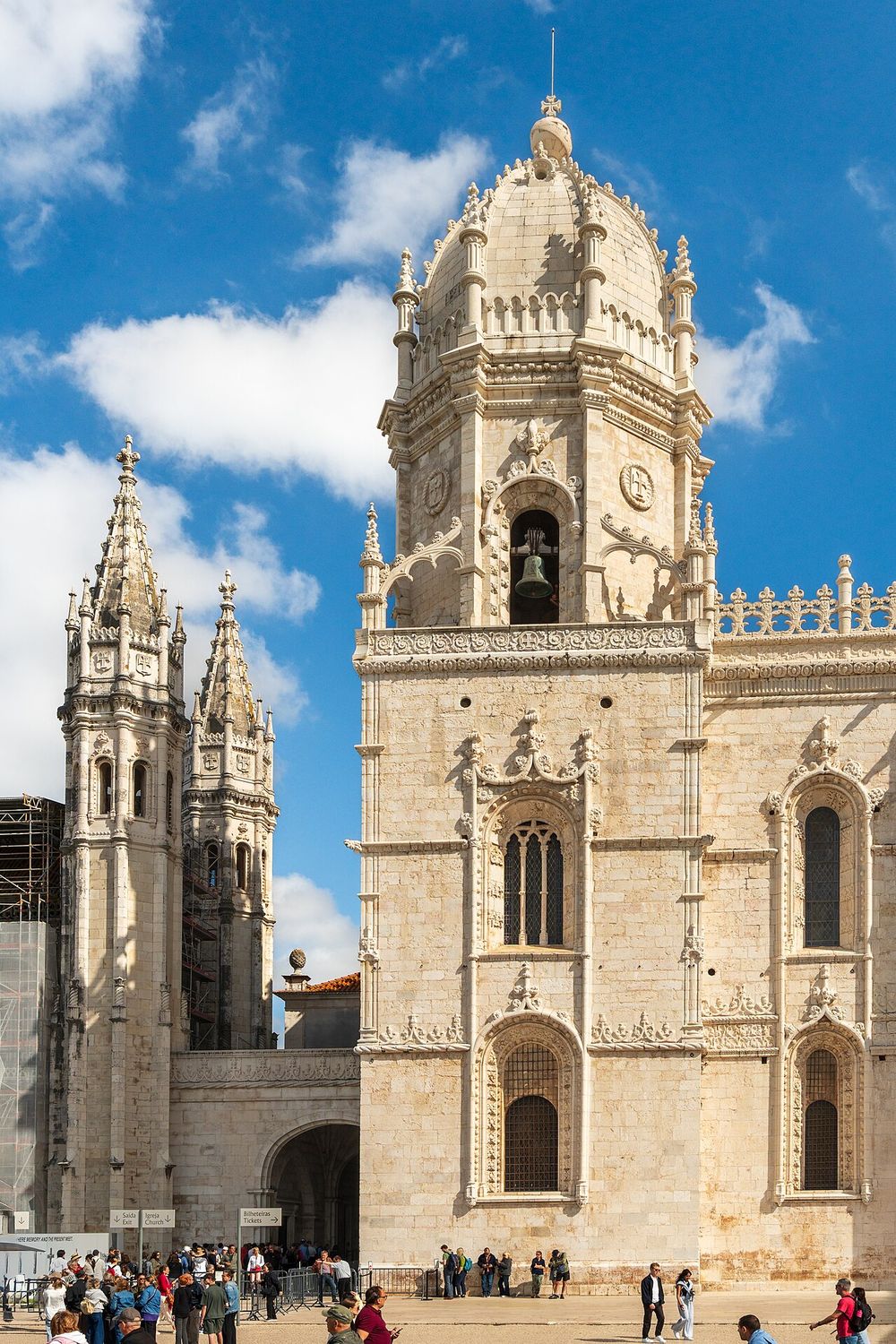
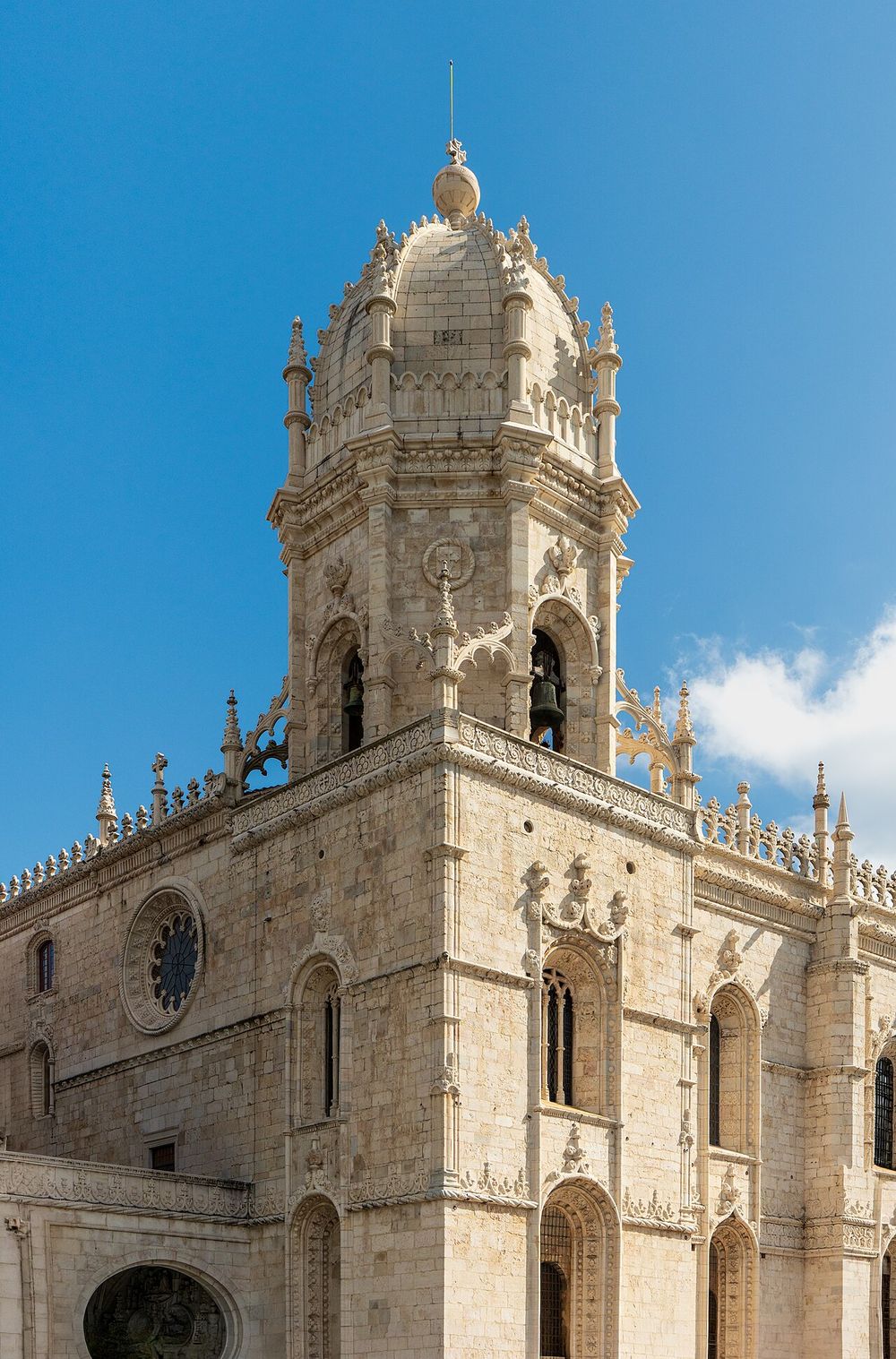
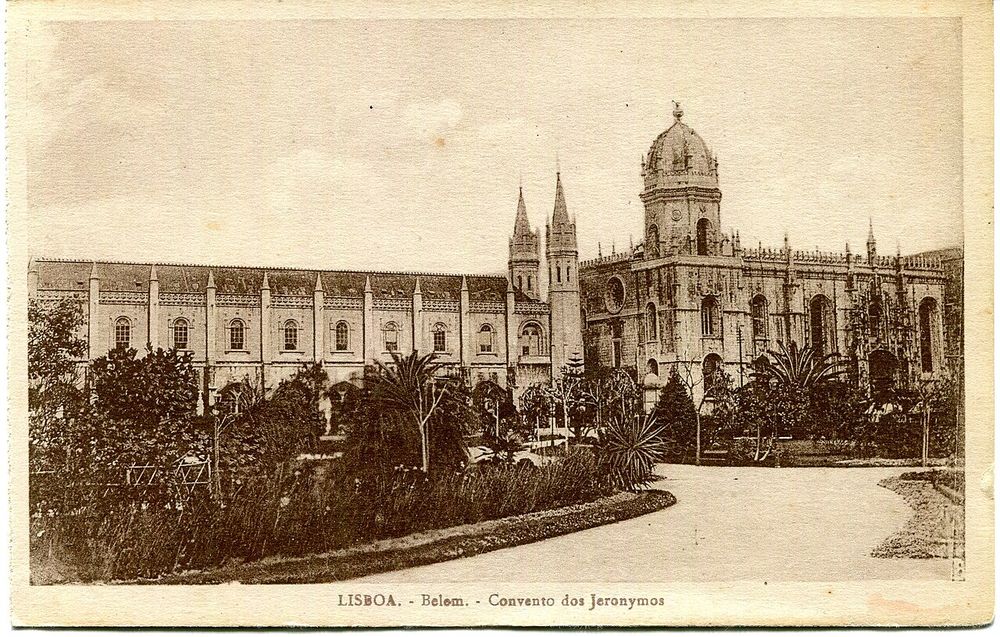
The front runs three hundred metres along the road. Only the church and the cloister wing are of the sixteenth century. The long western wing with the tower was rebuilt in the nineteenth century and holds the national museums of archaeology and the navy.
The south door is by João de Castilho, the architect who took over in 1517. Look for the scenes from the life of Saint Jerome over the doors, with his lion.
The real main door is on the west side, under a porch. The French sculptor Nicolau Chanterène carved King Manuel kneeling on the left and Queen Maria on the right, each with a patron saint behind.
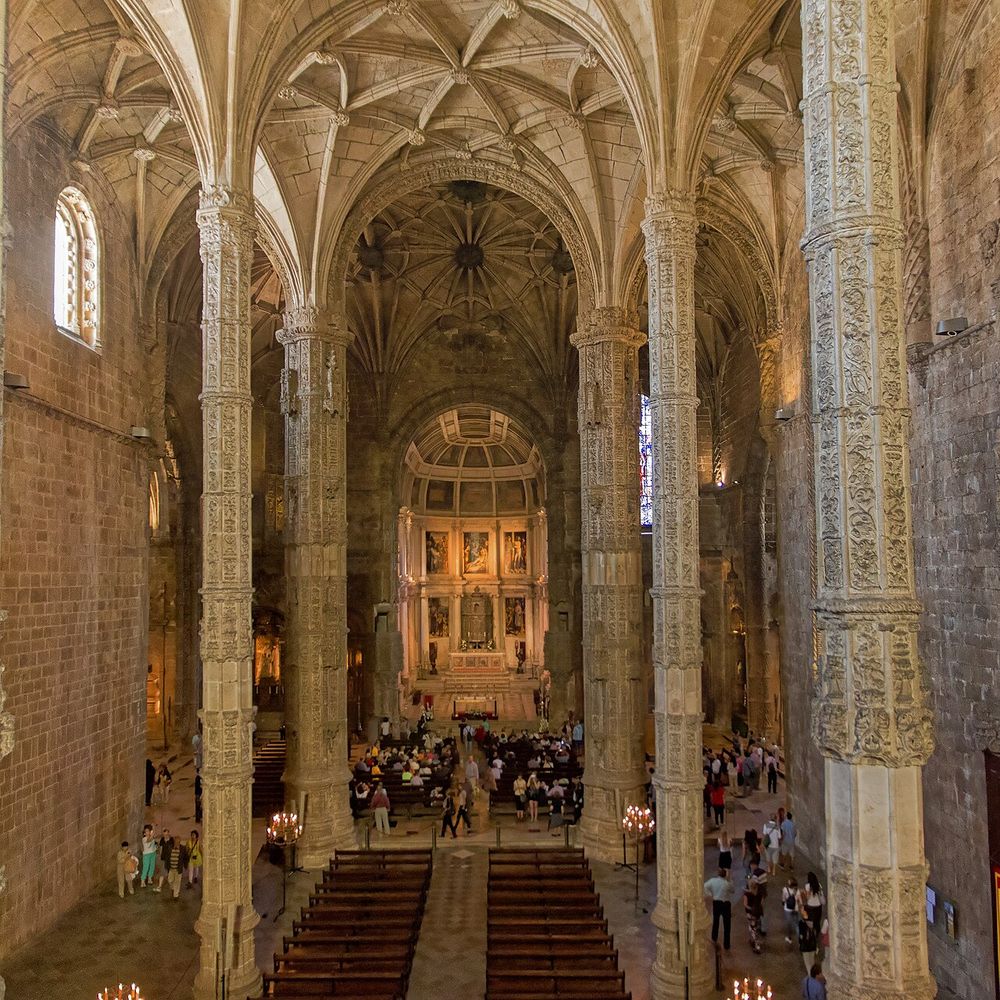
The nave and aisles are all the same height, so the church is one great room, a hall church. The vault spans almost twenty metres without a single column in the crossing. That may be why it survived the earthquake.
At the far end, in the chancel, four royal tombs rest on the backs of marble elephants. Elephants were exotic gifts that Portugal's ships brought home.
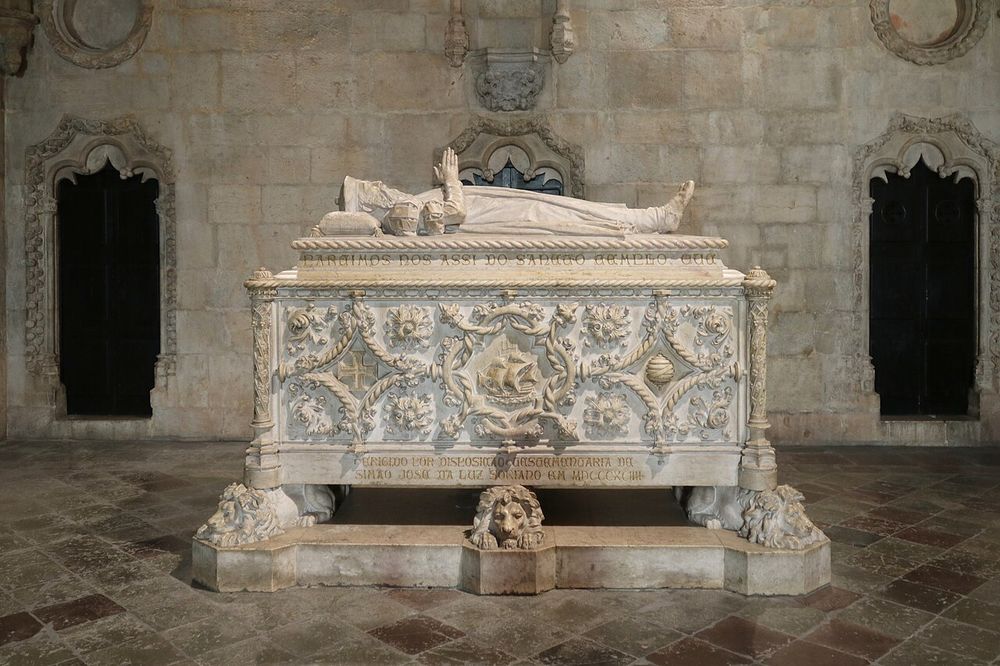
The tombs of Vasco da Gama and Camões were carved in the 1890s in the old style. Da Gama's is marked with a ship and an armillary sphere. Camões' has a lyre and books.
As armas e os barões assinalados, Que da ocidental praia lusitana, Por mares nunca de antes navegados, Passaram ainda além da Taprobana
Arms, and the heroes of renown who from the western shore of Lusitania, by seas that no one had sailed before, went on beyond Ceylon
Luís de Camões, The Lusiads (1572), canto I, stanza 1; our translation
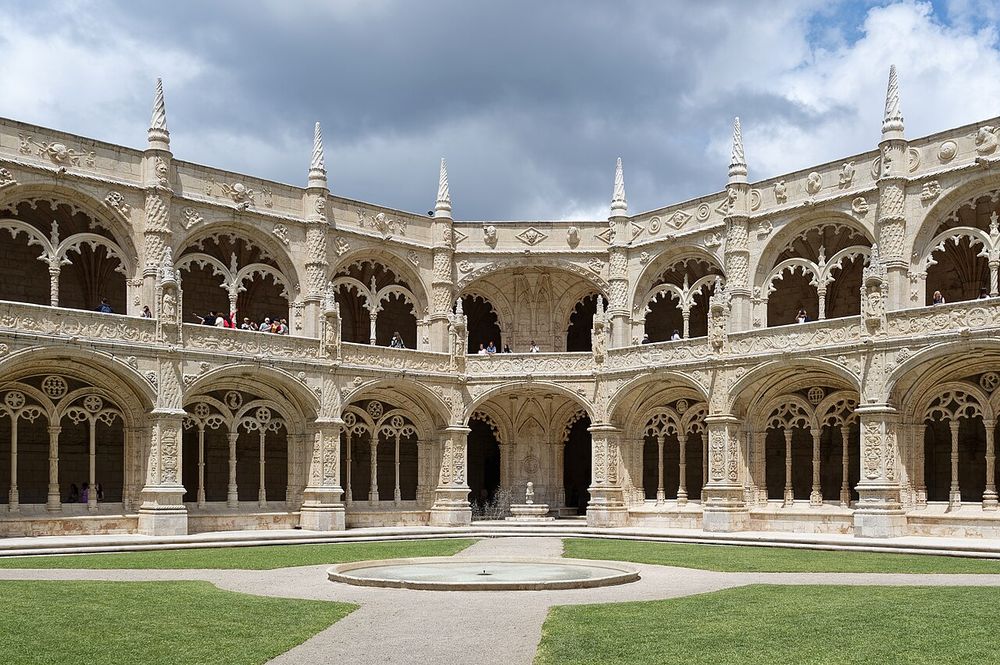
The cloister is square, but its corners are cut off at an angle, so you never turn a sharp corner. The lower walk is by Boitaca, the upper by Castilho. Every arch is carved with ropes, coral, leaves, armillary spheres and the cross of the Order of Christ, things a sailor would know.
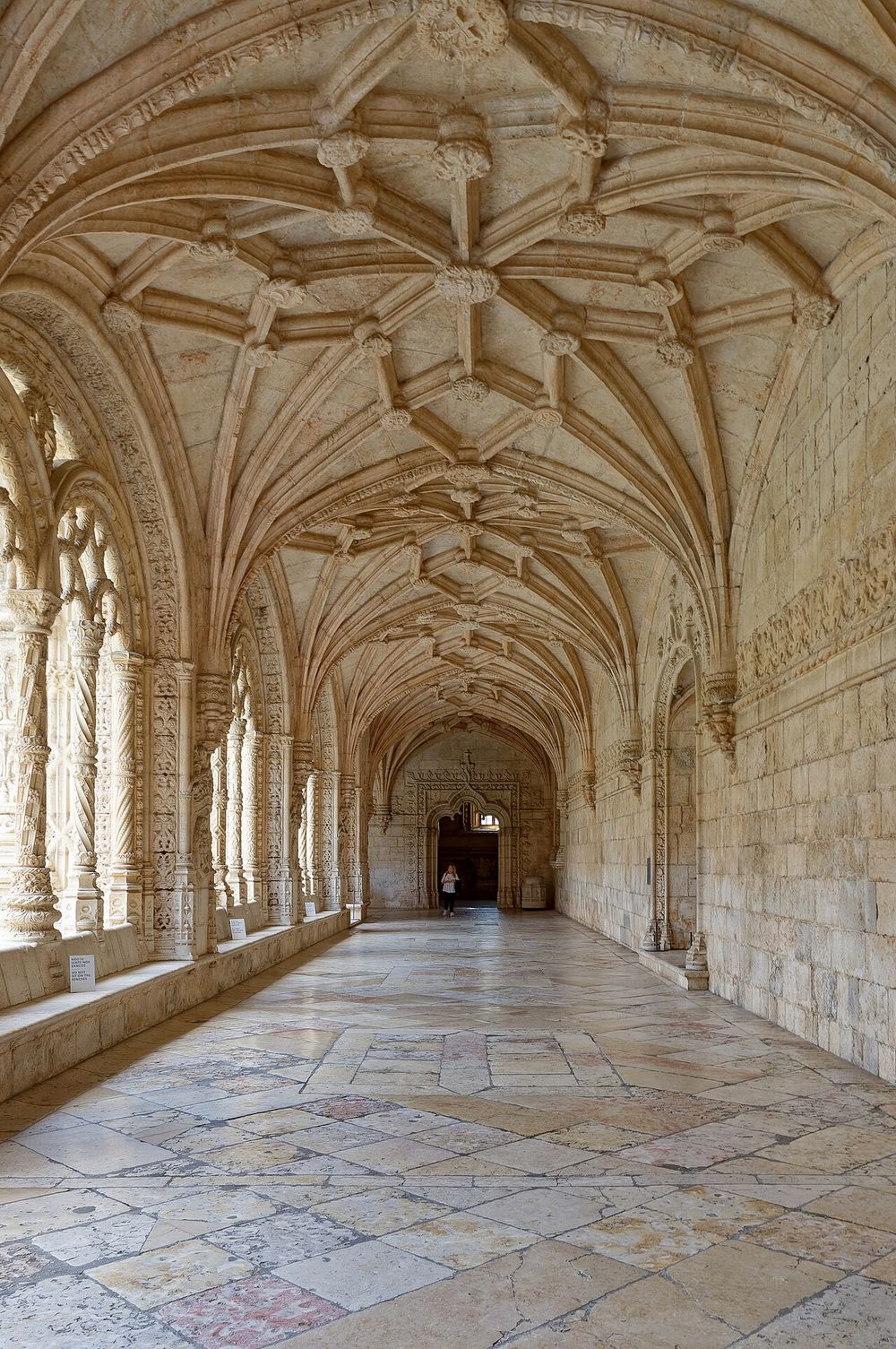
On the north walk lies Fernando Pessoa, moved here in 1985. He wrote of the sea that made and broke Portugal.
Ó mar salgado, quanto do teu sal São lágrimas de Portugal!
O salt sea, how much of your salt is tears of Portugal!
Fernando Pessoa, "Portuguese Sea", Mensagem (1934); our translation
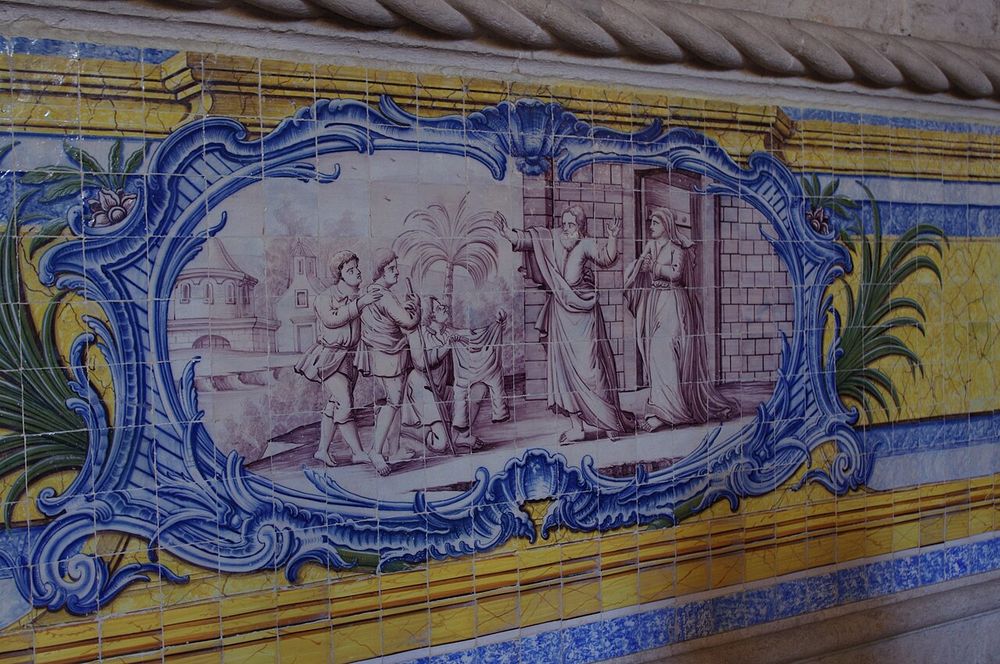
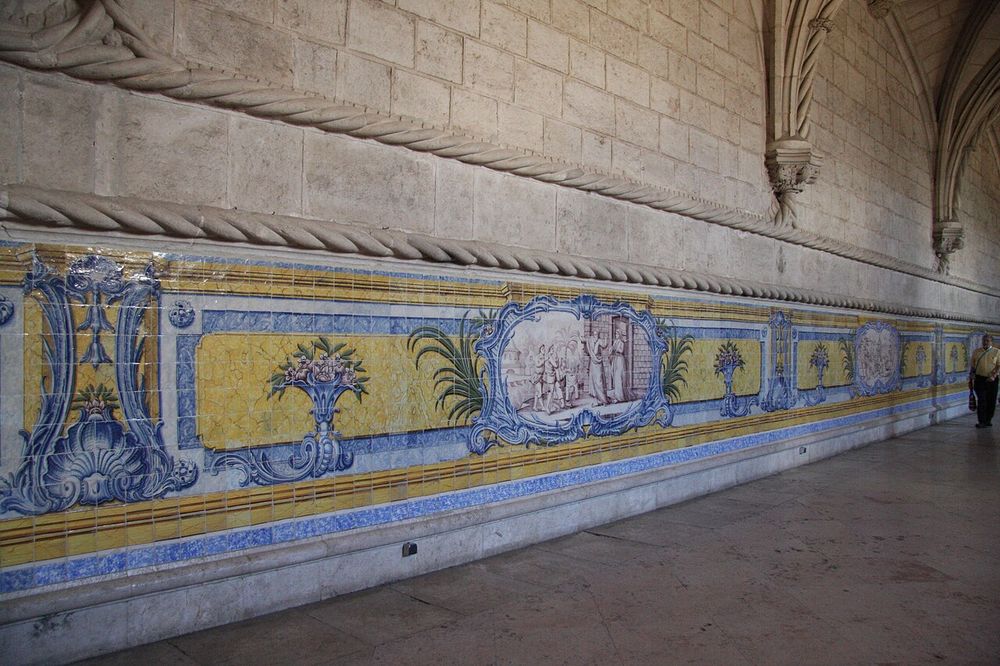
The monks ate in silence in the long refectory. Its walls are lined with blue and yellow tiles of the eighteenth century showing scenes from the Bible, among them the feeding of the five thousand. The Portuguese love of blue on white owed much to Chinese porcelain.
The chapter house, where the monks met, holds the tomb of the historian Alexandre Herculano.
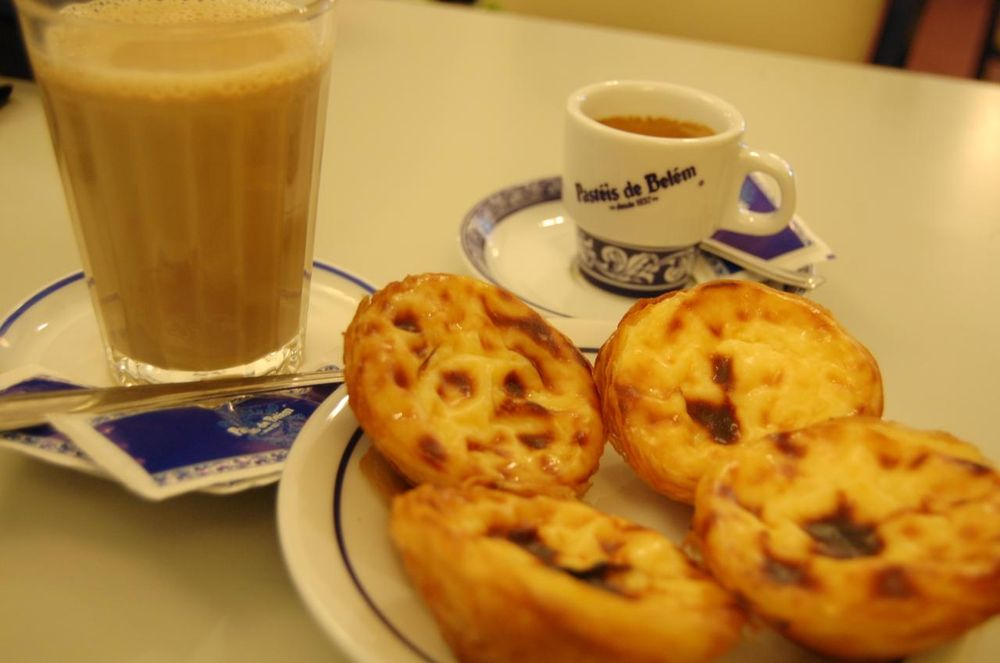
When the monasteries closed in 1834, the monks are said to have sold their custard tarts to survive. In 1837 a sugar refiner opened a shop a few doors east with their recipe. It is still there, Pastéis de Belém, and the recipe is still secret. An English baker brought the tart to Macao in 1989, and from there it spread across China as the Portuguese egg tart.
The first stone was laid in 1501, in the reign of the Ming (1368–1644) emperor Hongzhi (1488–1505). In 1513 a Portuguese ship reached the Pearl River delta. The pepper that paid for this cloister came round the Cape, and Chinese silk and porcelain soon followed it.
| Year | Here | Elsewhere |
|---|---|---|
| 1497 | Da Gama prays here and sails for India | John Cabot reaches North America |
| 1501 | The first stone is laid | Michelangelo begins his David |
| 1517 | João de Castilho takes over the work | Luther's ninety-five theses |
| 1572 | The Lusiads is published | The massacre of Saint Bartholomew in Paris |
| 1755 | The great earthquake spares the monastery | Voltaire writes his poem on the disaster |
| 1834 | The monks leave | Britain ends slavery in its colonies |
| 1837 | The custard tart shop opens | Victoria becomes queen |
| 1985 | Portugal signs its entry into Europe here; Pessoa is moved here | Gorbachev comes to power |
One line to remember: built with pepper, saved from the earthquake, and famous for its tarts.
These are stories people tell about this place. They are legends, not history, and each one says where it comes from.
Macao has long said that Camões wrote part of The Lusiads in a rock grotto there, now in the Camões Garden.
Source: Macao tradition since the eighteenth century; there is no document of his stay
Saint Jerome is said to have pulled a thorn from a lion's paw, and the lion served him ever after. Look for it beside him over the south door.
Source: Medieval Golden Legend
Later, people who live here will be able to add the stories they grew up with, and say which of these they have heard.
Last checked 2026-11-12. The page of Museus e Monumentos de Portugal and Portuguese press on the price table, 2026.
Checked 2026-11-12
Opening hours are given in the local time of the place. Prices are in the local currency. The figure after ≈ is approximate, at exchange rates checked on 9 November 2026, in .
Stand at the site, sign in, press the button, and collect its stamp. Your browser will ask to use your location. It is sent to us once to confirm that you are at the site; we keep how far you were from it, not the spot where you stood.
Your stamps are saved to your account, so they follow you to any device. Checking from a browser cannot rule out every false location; stricter checks arrive with the app.
Photos here show the place, not people. Each one is credited to the visitor who took it and appears after our team has looked at it. A photo with you in it belongs under “I am here”.