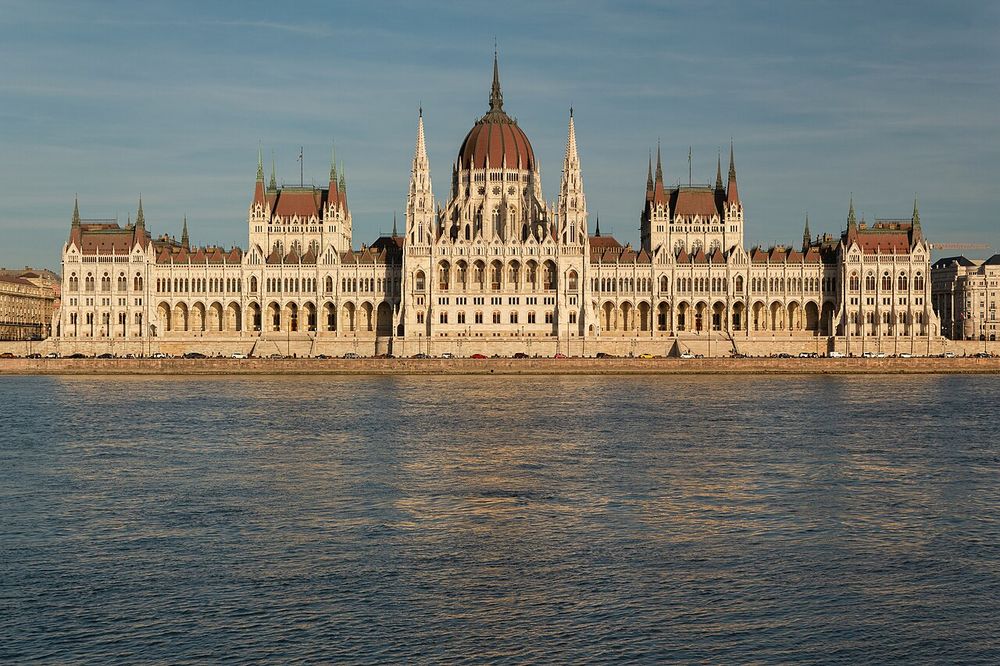
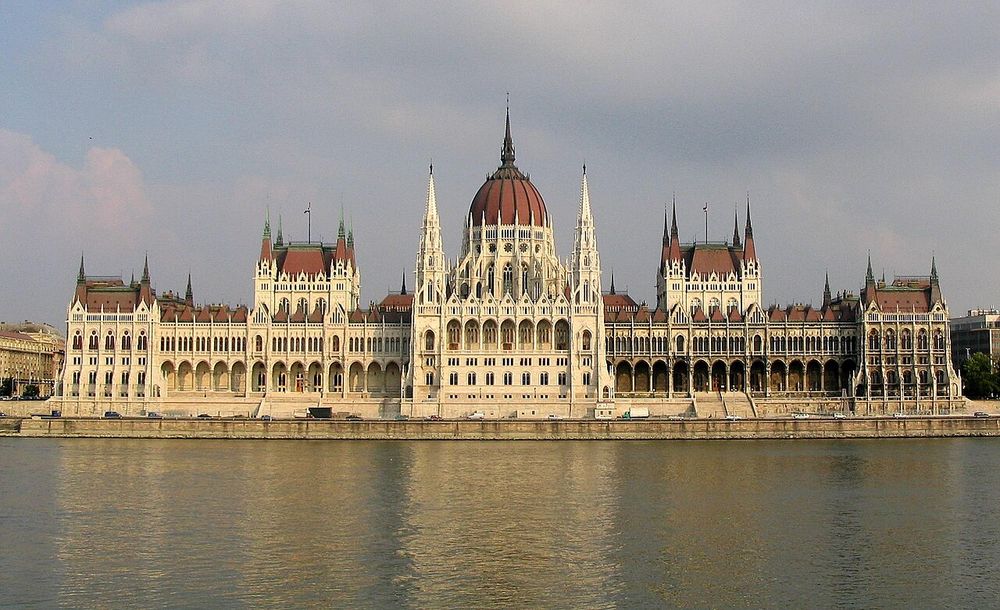
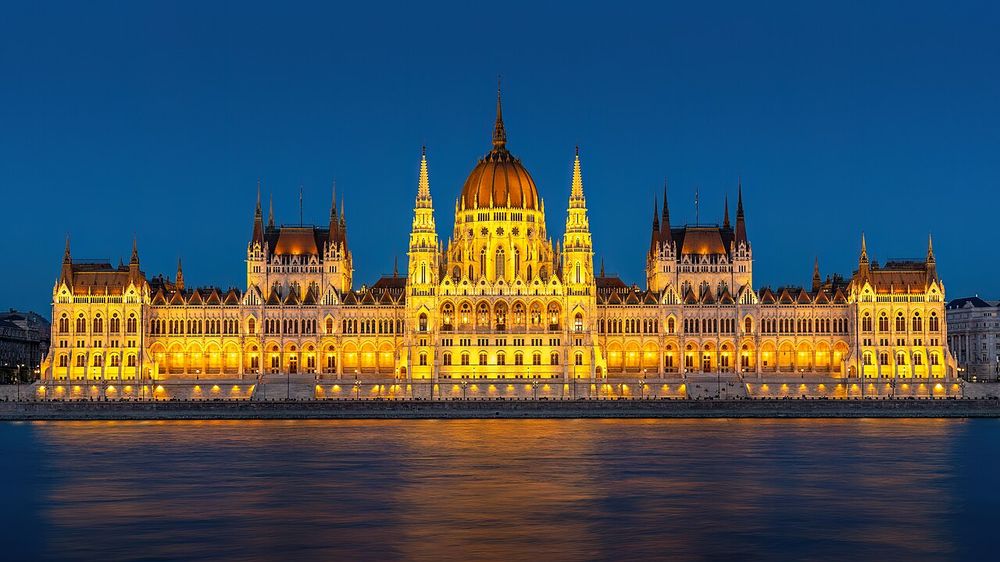
One of the largest parliament buildings in the world, 268 metres of Gothic spires along the Danube, finished in 1904 for a country then twice its present size. Under its dome lies the crown of Saint Stephen, which spent the Cold War in an American vault.
Photo: Godot13, CC BY-SA 4.0, Wikimedia Commons
The story
In 1882 Hungary held a competition for a new parliament on the Pest bank. Imre Steindl won with a Gothic design inspired by the Houses of Parliament in London, crowned with a Renaissance dome. Building began in 1885. It was opened for the thousandth year of Hungary in 1896 and finished in 1904.
Its numbers are a kind of poem. The dome is 96 metres high, and so is St Stephen's Basilica across town: the Magyars arrived in 896, and no building in the city may be taller. Inside are 691 rooms, about 20 kilometres of stairs, and some forty kilograms of gold leaf.
Steindl went blind before it was done and died in 1902, weeks before the first sitting.
What is here
Inside is seen only on a guided tour with a time and language, which covers the stair, the Dome Hall with the crown, a lobby and a chamber. The square, the river front and the Shoes on the Danube Bank are free and open at all hours.
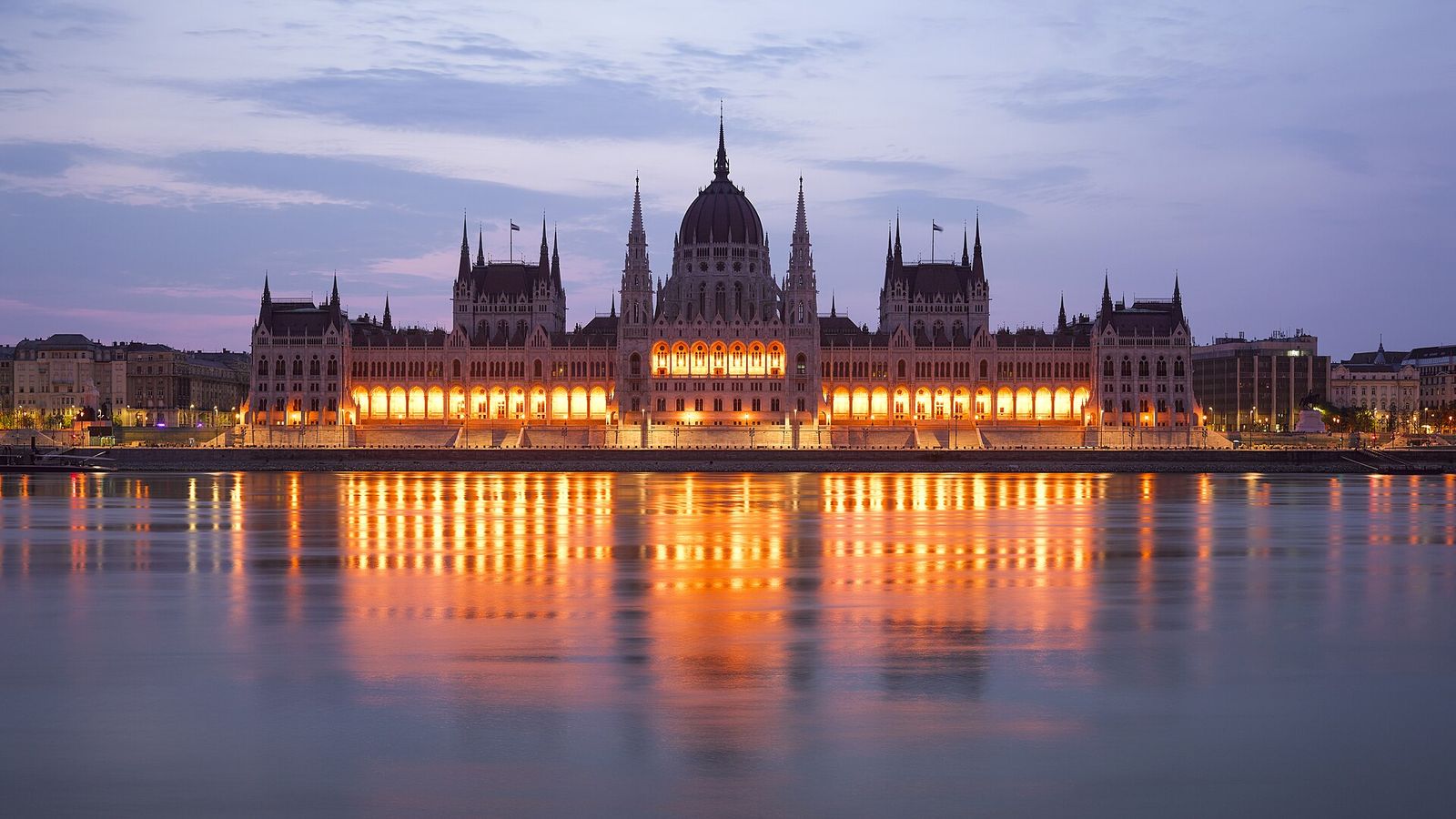
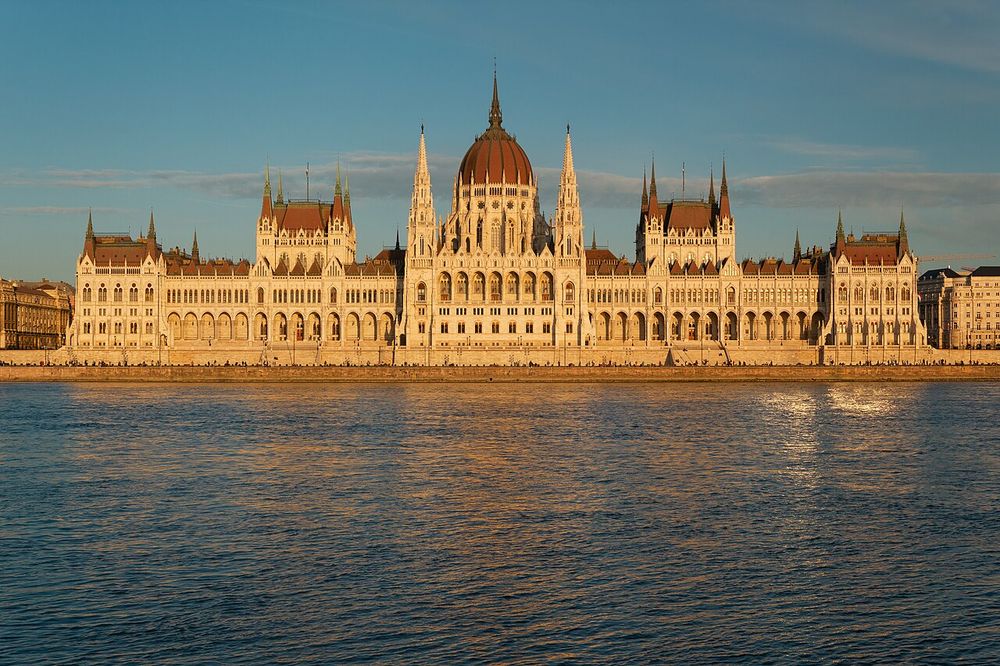
The river front in evening light, 2023Lynx1211, CC BY-SA 4.0
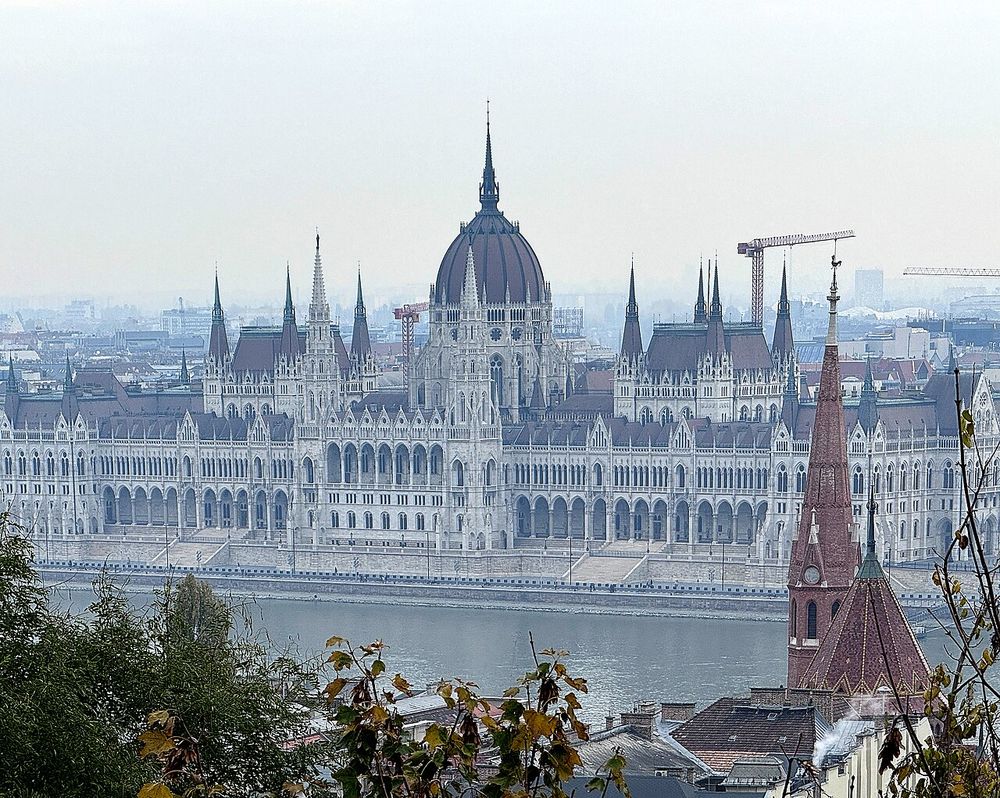
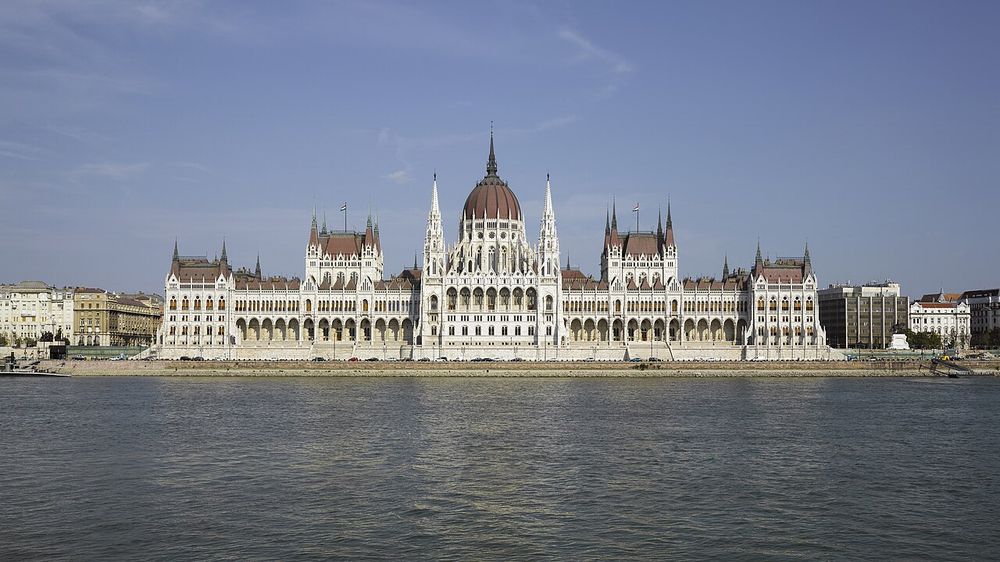
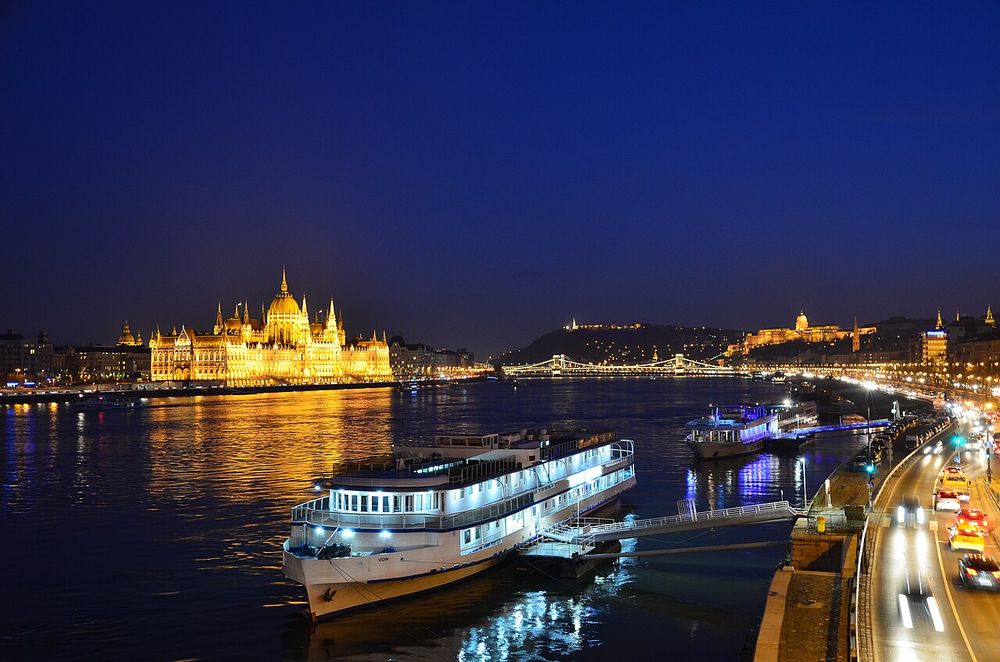
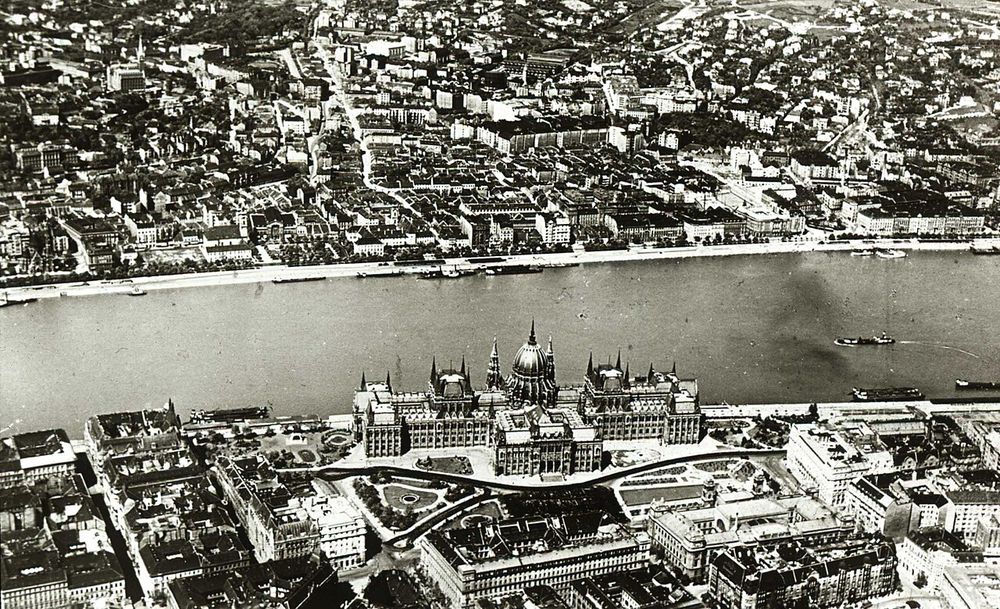
The best view of the Parliament is from the other side, from Batthyány tér or the Fisherman's Bastion. Count the spires along the roof. Look at the dome in the middle, and the two wings, one for each house of the old parliament.
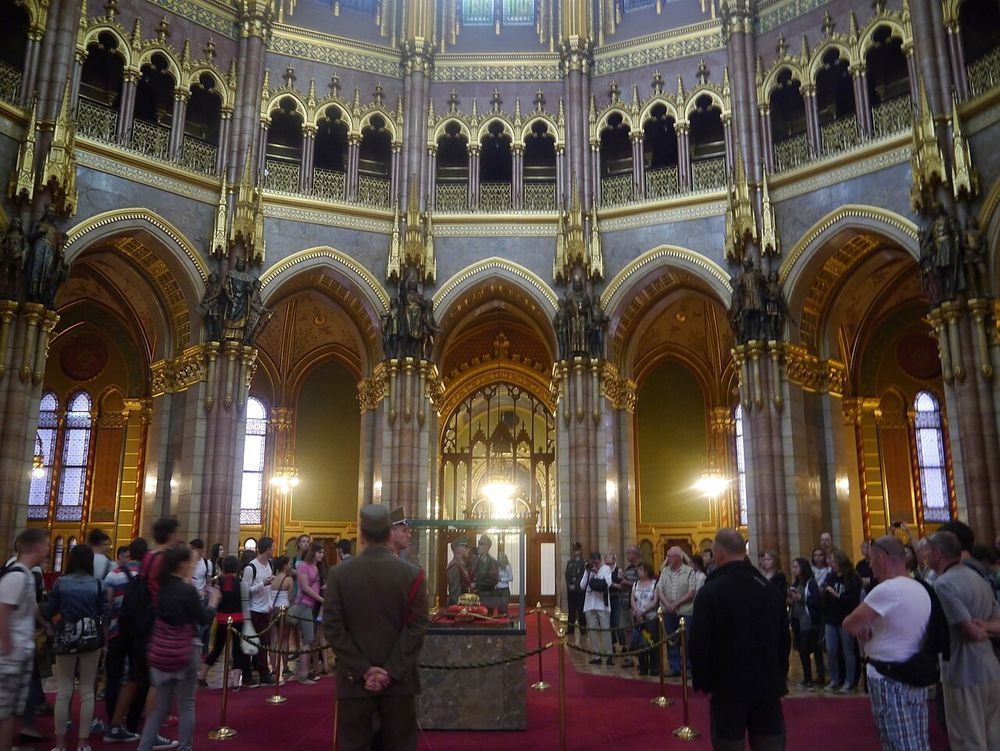
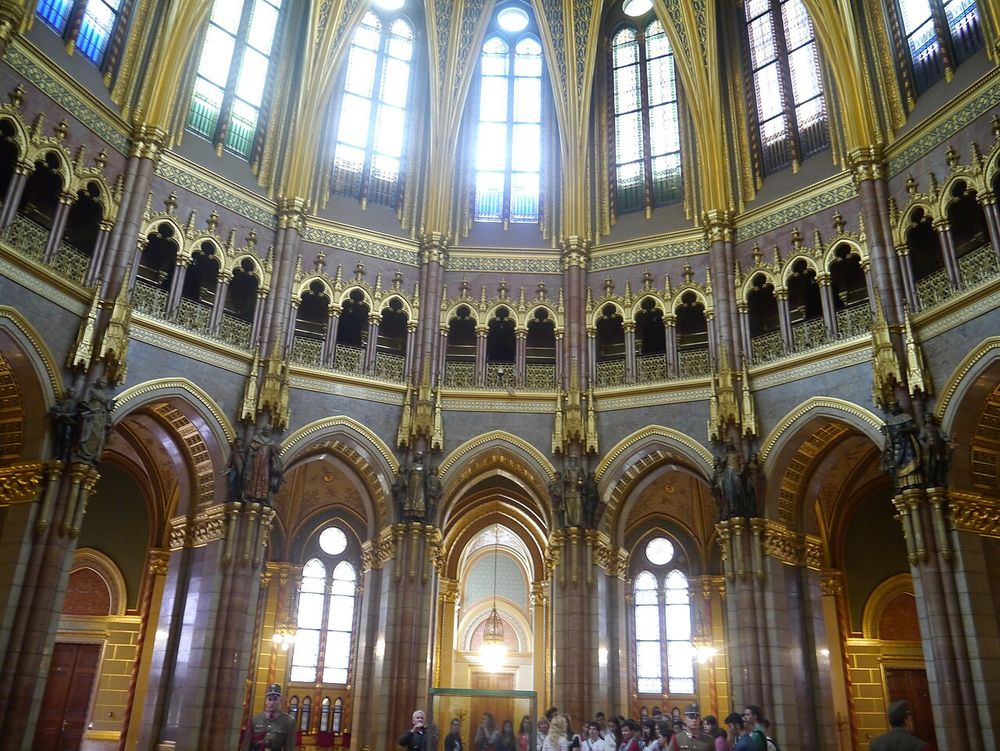
The Dome HallZairon, CC BY-SA 3.0
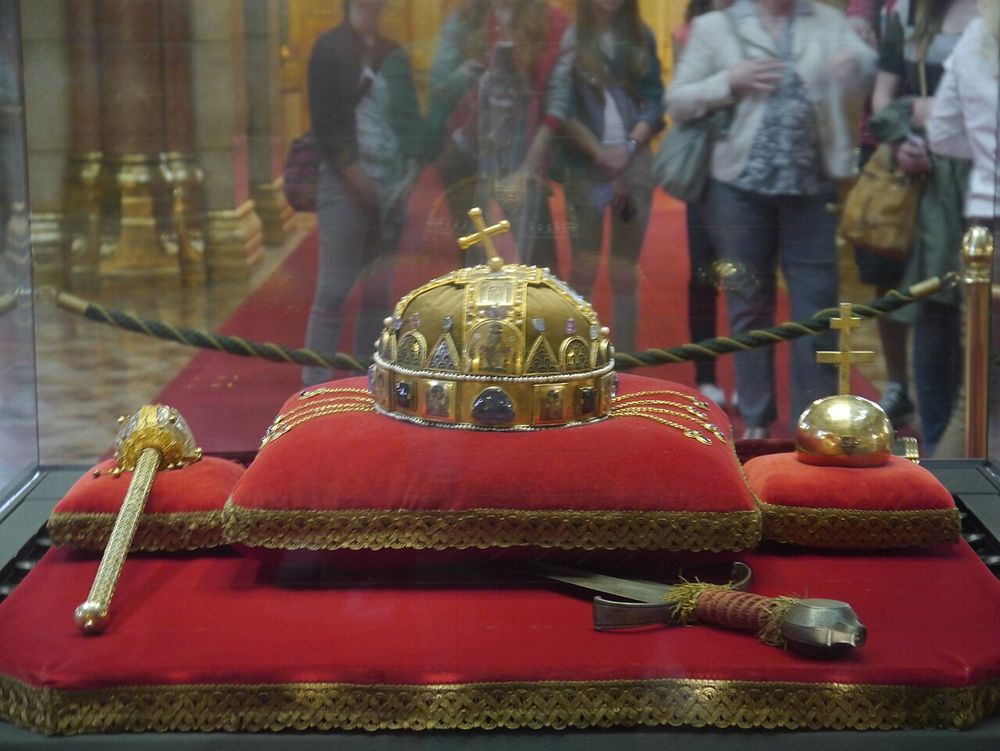
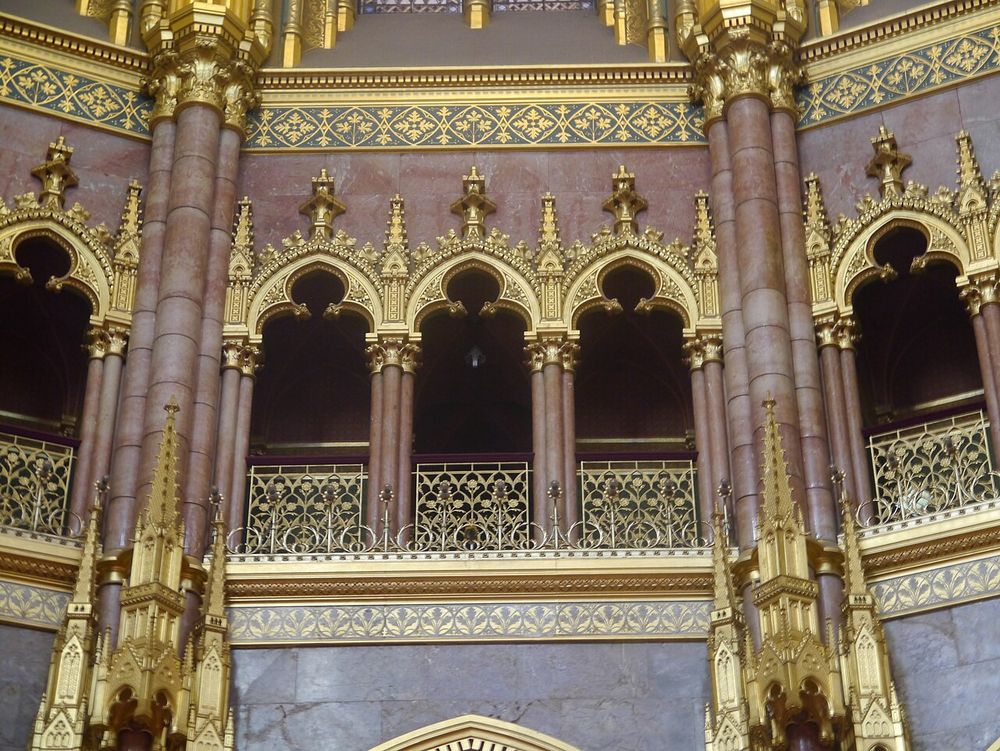
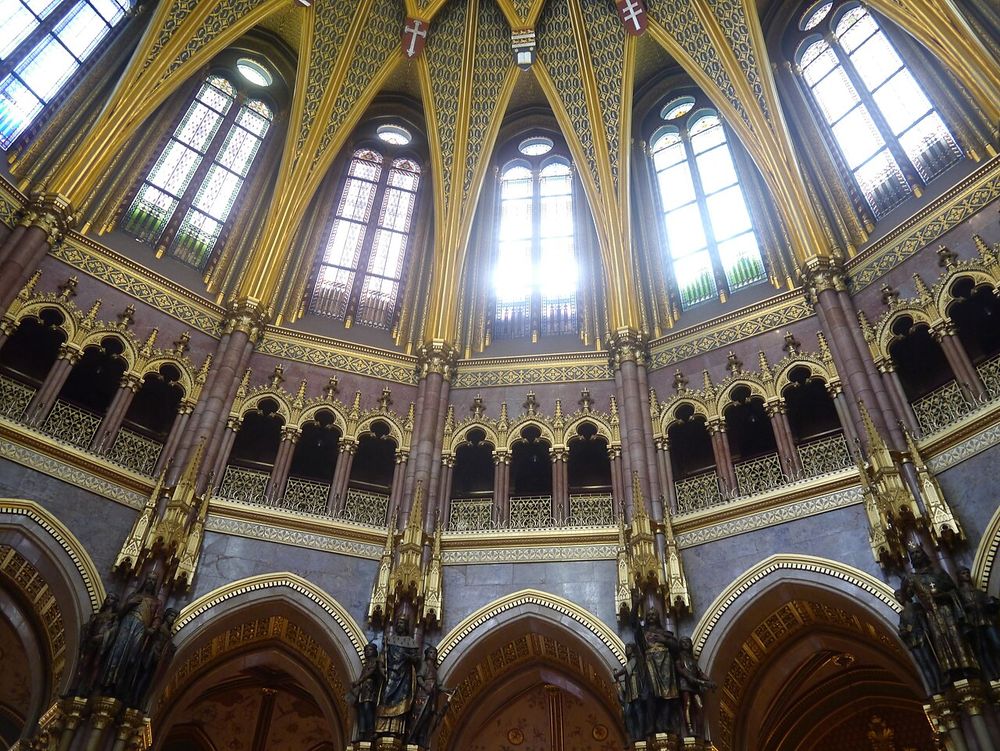
Inside, the tour leads up the great stair to the Dome Hall, sixteen-sided, with statues of Hungarian rulers on the pillars. In the centre, under guard, lie the Holy Crown, the sceptre, the orb and the sword.
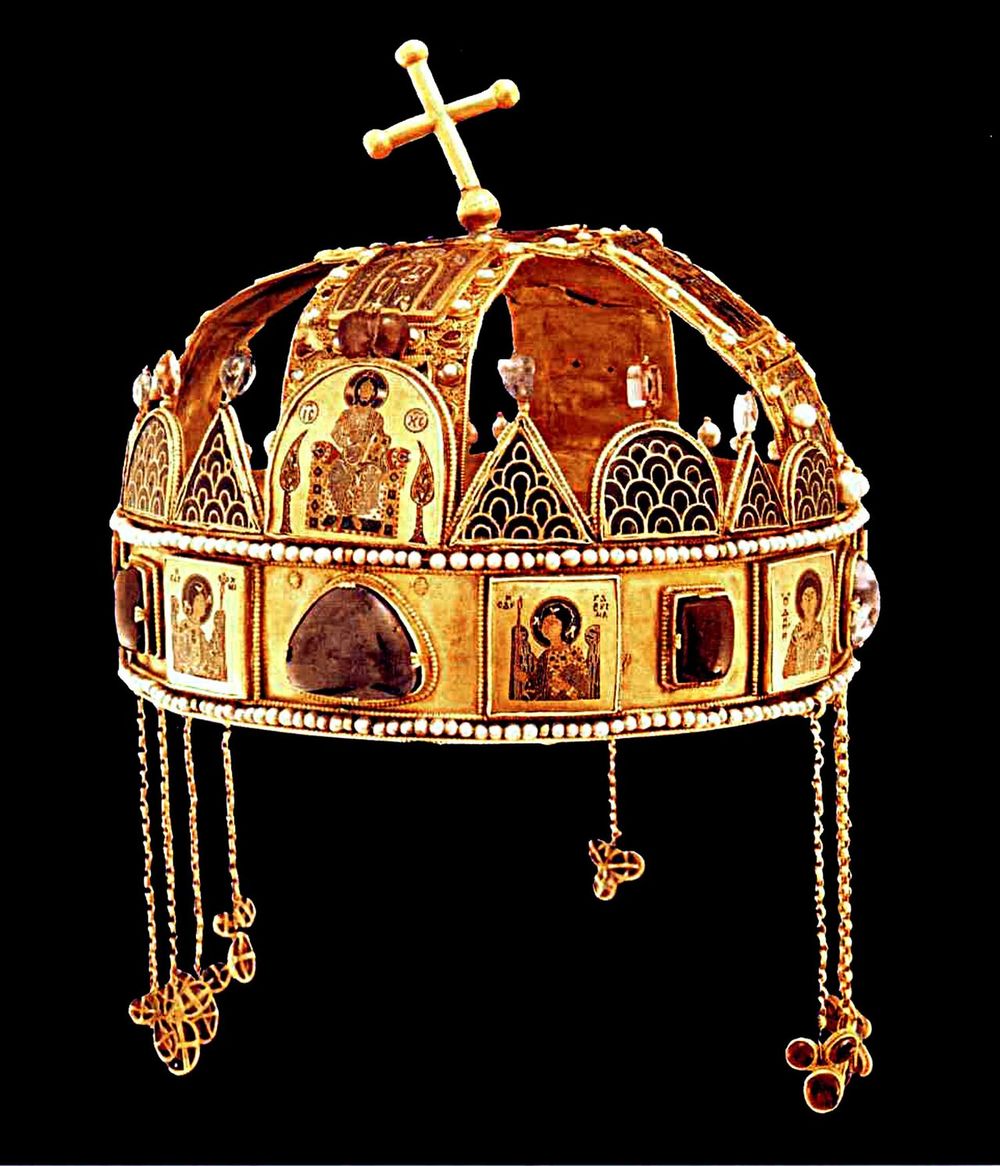
The Holy Crown of Hungary, from the fronthu:Szerkesztő:Tolfavi (a kép szerzője; feltöltő a magyar nyelvű Wikipédiában), Public domain
The crown's cross is bent. No one knows exactly when or how it happened. It has been on every coin and passport of Hungary since.
Things people often get wrong
"You can walk in." Only guided tours enter, booked for a time and a language.
"It is the biggest building in Hungary." It is the largest, and the tallest with the basilica, but it was built for a much bigger kingdom. After 1920 Hungary lost two-thirds of its land.
"The crown is old as Saint Stephen." Stephen was crowned in 1000. The crown that bears his name was made later, probably in the late 1100s, from Byzantine and Latin parts.
People who stood here
We searched Hungarian and English sources for this list.
Imre Steindl (Hungarian architect, 1839–1902)He spent twenty years on the building and lost his sight. His statue stands by the south entrance.
Lajos Kossuth (leader of the 1848 revolution)The square in front bears his name, and his statue stands on it. He died in exile in Turin in 1894 and never saw the building. In the United States he is remembered as a hero of liberty.
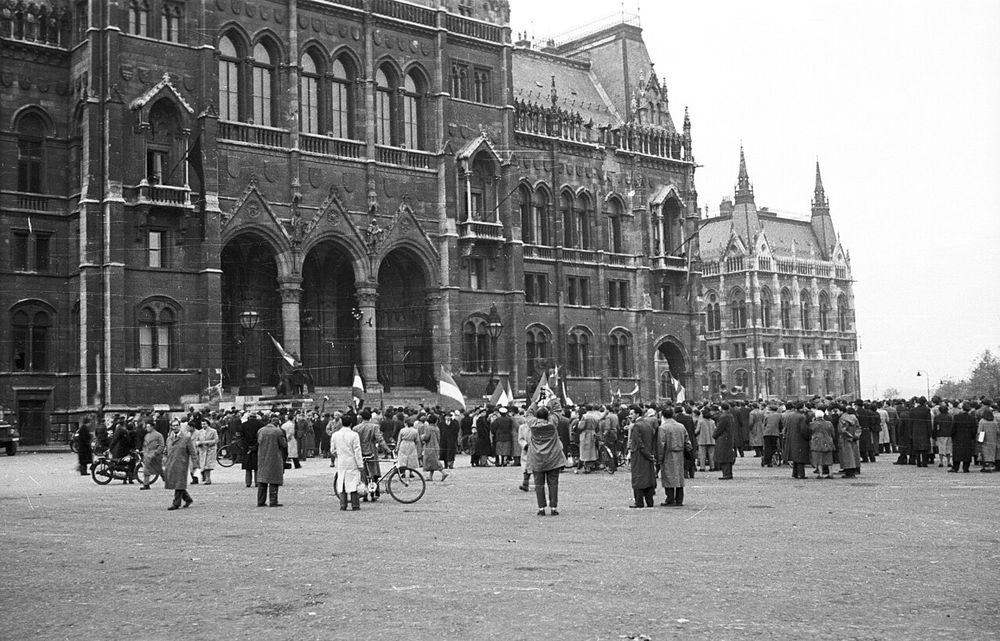
Imre Nagy (prime minister of Hungary in 1953–55 and 1956)On the evening of 23 October 1956 he spoke to the crowd on the square from a window of this building. Two days later, on 25 October, Soviet and Hungarian forces fired on the people in the square. He was executed in 1958 and reburied with honours in 1989.
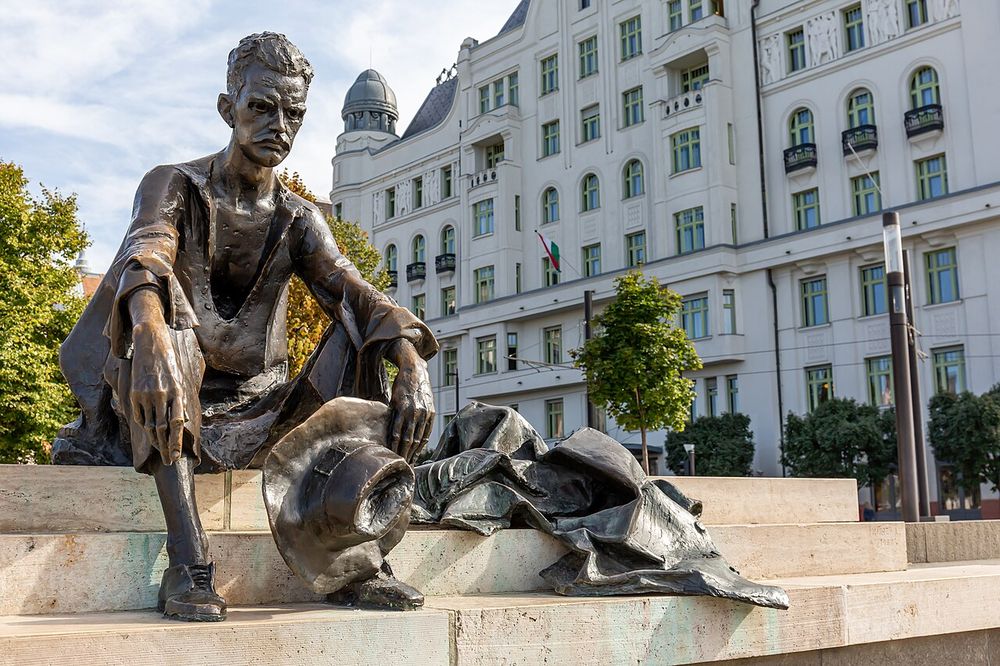
Attila József (Hungarian poet, 1905–1937)His poem By the Danube begins with him sitting on the lowest stone of the quay. A bronze of him sitting so stood on the river steps beside the Parliament from 1980 until 2019, when it was moved to the Pest end of Margaret Bridge.
Jimmy Carter (president of the United States)The crown was handed to the Americans in 1945 to keep it from the Soviets, and kept at Fort Knox. In January 1978 Carter returned it to Hungary. It came to this hall on 1 January 2000.
Go deeper: seven stops, from the river front to the shoes on the bank
The tour takes about 45 minutes, plus security. You see the stairs, the Dome Hall, a lobby and one of the old chambers. The rest you see from outside.
1. The river front
The Parliament from the Fisherman's BastionDguendel, CC BY 4.0
The building is symmetrical. The two halves were meant for the House of Representatives and the House of Magnates, the old upper house of nobles and bishops. Today Hungary has one house, and the southern chamber is used.
The Parliament from the Buda bank, 2005Dirk Beyer, CC BY-SA 3.0
On the walls stand statues of Hungarian kings, princes and generals.
2. Kossuth Square
Kossuth Square and the Parliament, an old photographFOTO:Fortepan — ID 24360: Adományozó/Donor: Nagy Gyula. archive copy at the Wayb, CC BY-SA 3.0
You enter from the land side, on Kossuth Square. Soldiers guard the main door and change every hour.
Under the square is a memorial to the dead of 25 October 1956. Bullet holes in the ministry across the square are marked with small metal balls.
3. The great stair
The great stairZairon, CC BY-SA 3.0
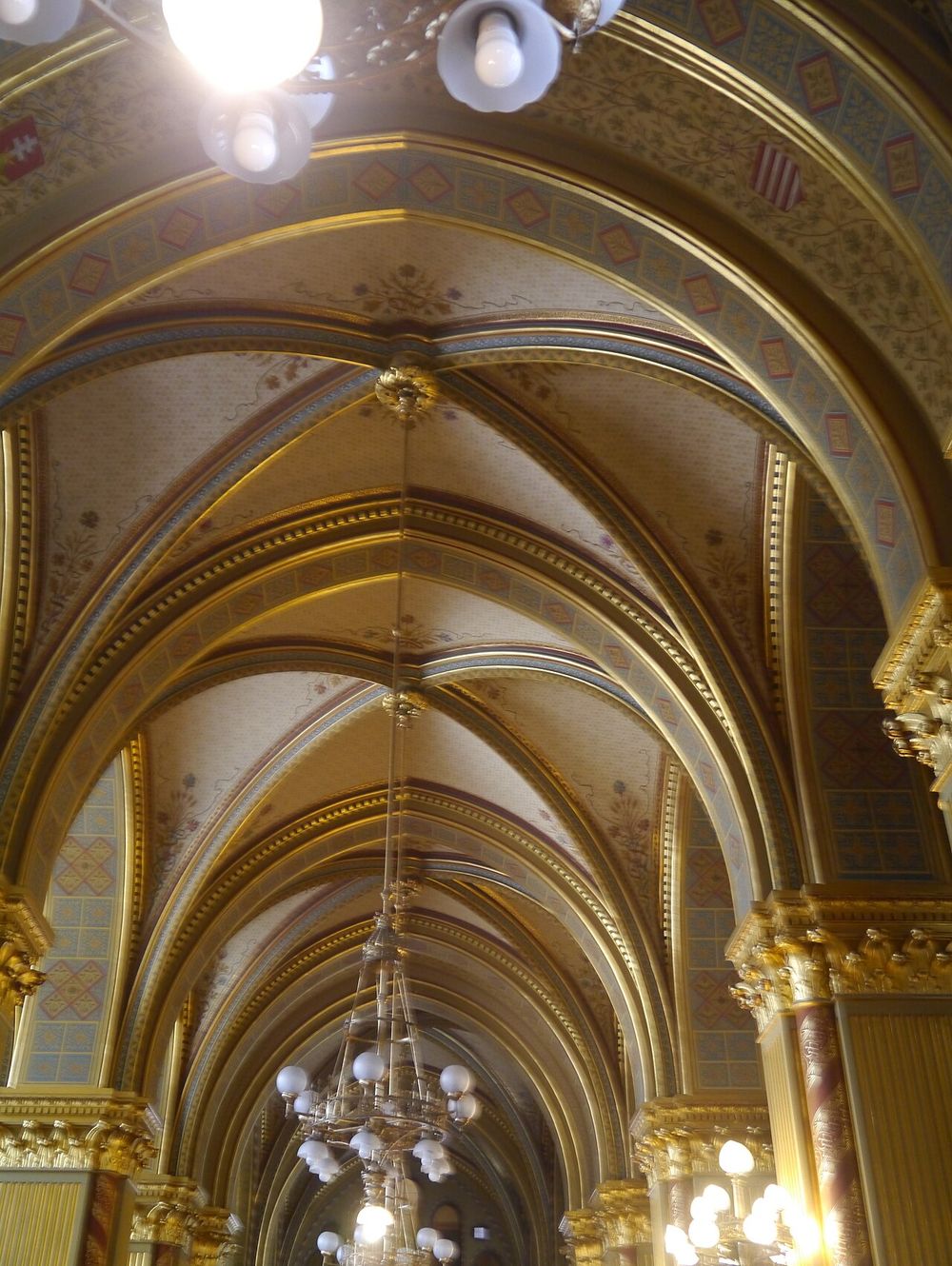
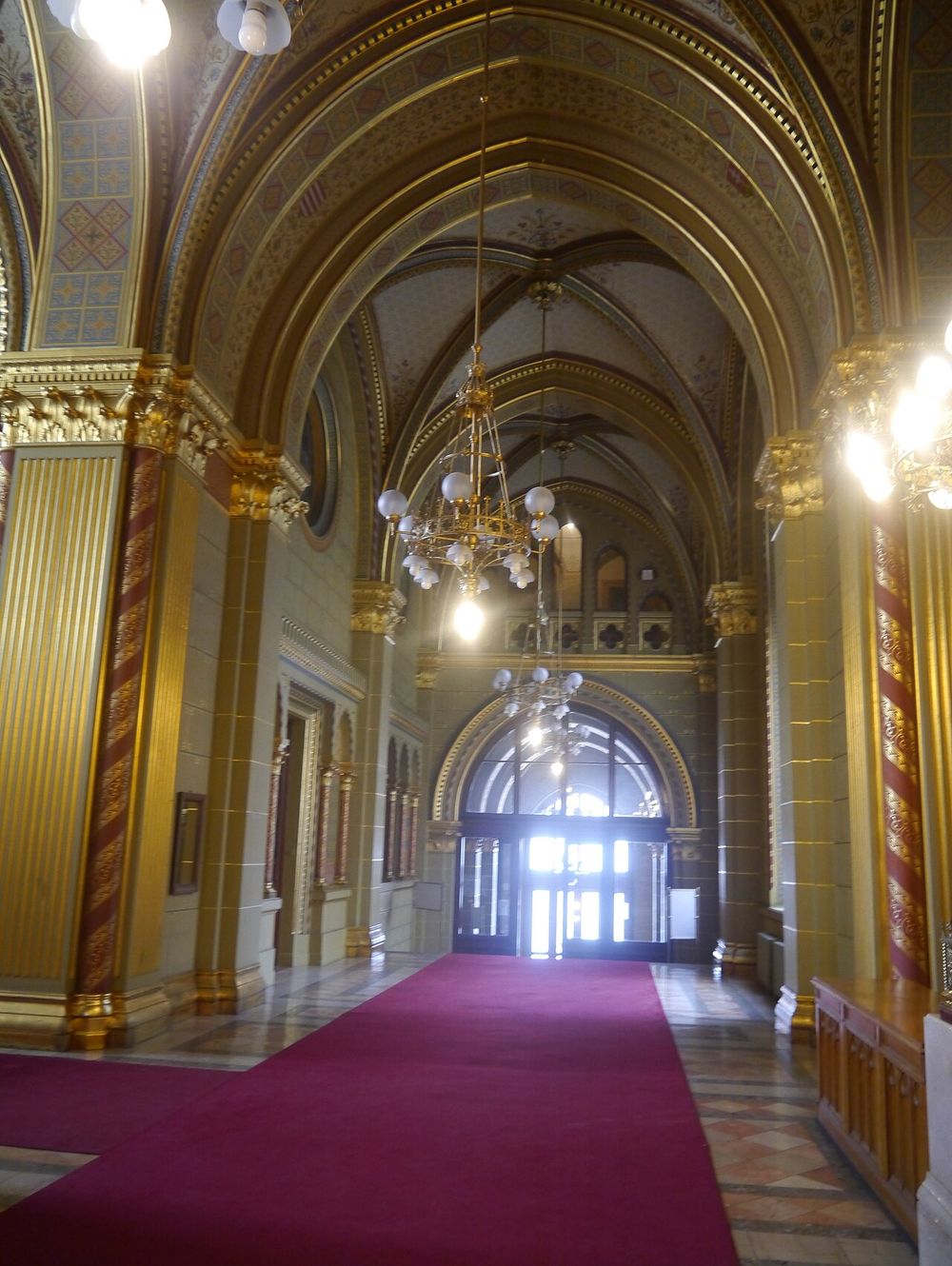
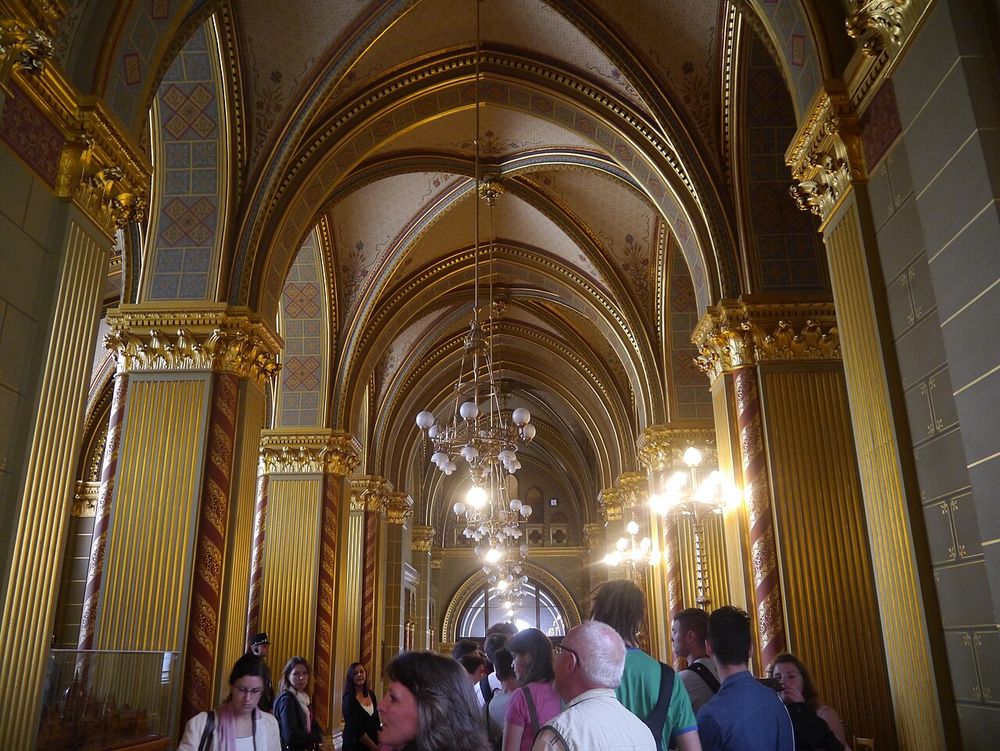
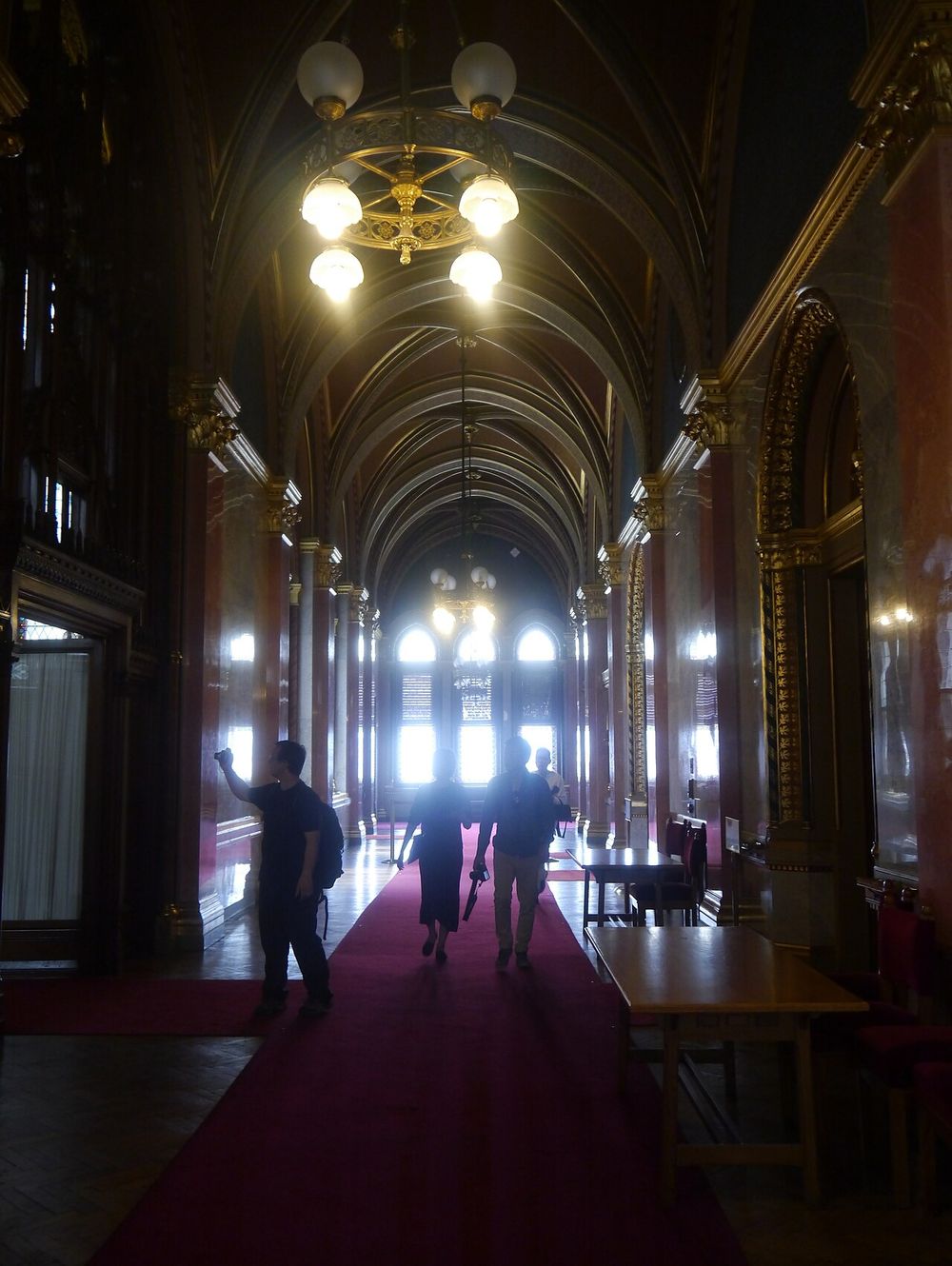
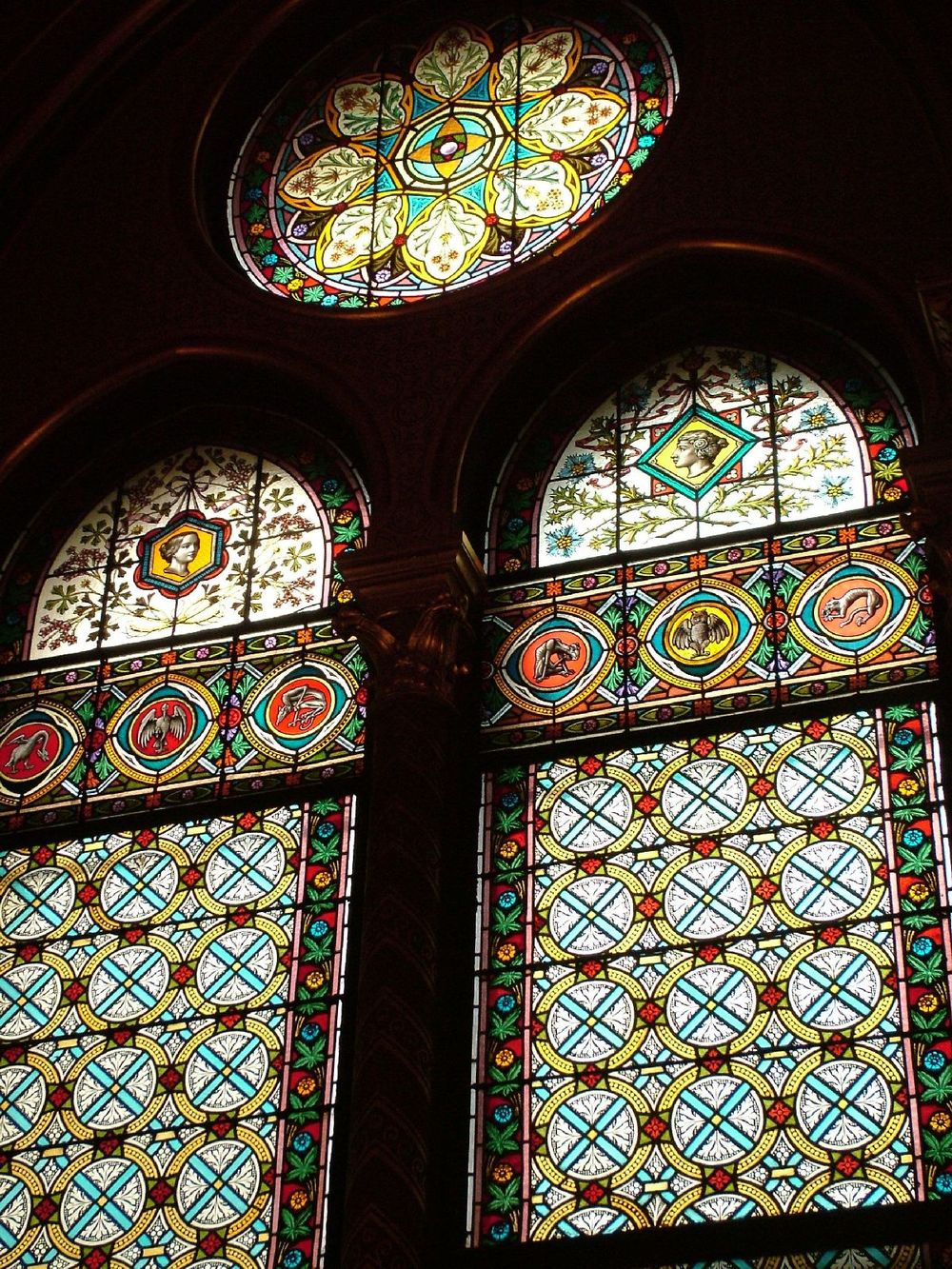
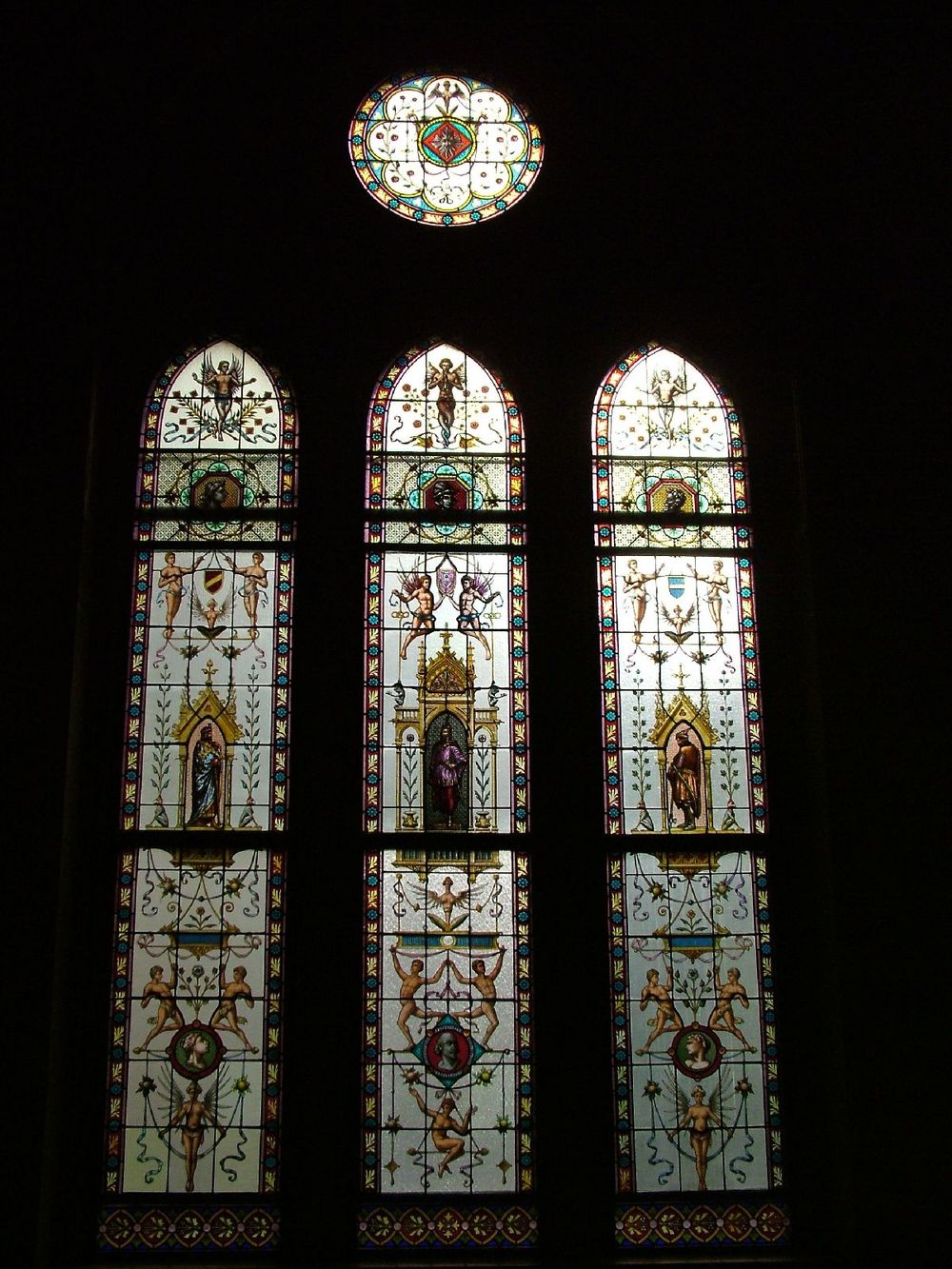
The ceremonial stair rises under painted vaults by Károly Lotz, gilded ribs and stained glass by Miksa Róth. It is lined with red carpet and leads straight to the dome.
The vault over the stairZairon, CC BY-SA 3.0
4. The Dome Hall and the crown
Looking up into the domeZairon, CC BY-SA 3.0
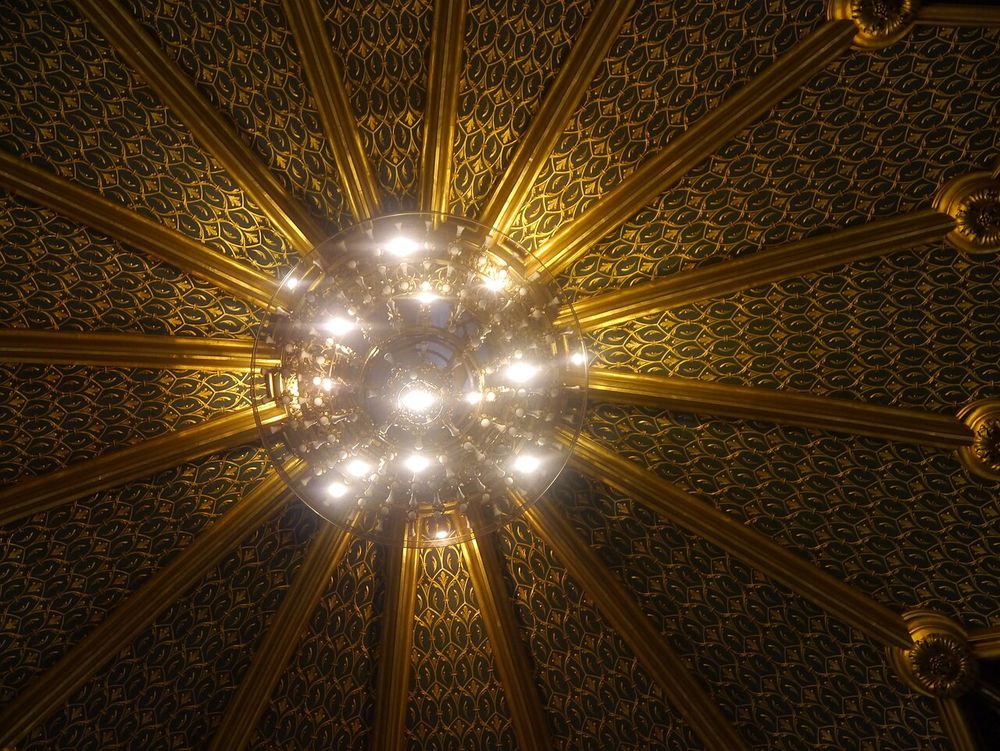
The hall is used for state ceremonies. Look up into the dome: it is lit through stained glass, and its ribs meet at a star.
The crown, sceptre, orb and sword, 2013Zairon, CC BY-SA 3.0
The crown, the sceptre, the orb and the sword lie in a glass case, guarded by two soldiers with drawn swords. Photographs of the crown are not allowed.
The crown has been stolen, buried and carried abroad many times. In 1440 a lady-in-waiting took it from Visegrád castle to crown a baby king. In 1849 it was buried in a field at the end of the revolution. In 1945 it went west, to the Americans.
5. The lobby and the cigar holders
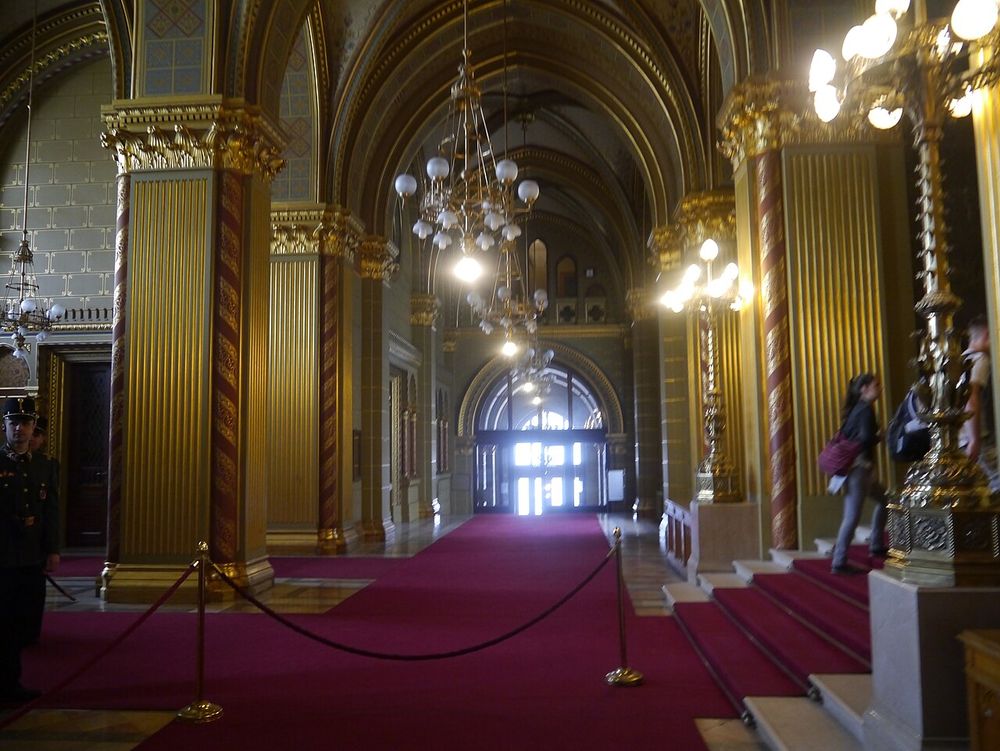
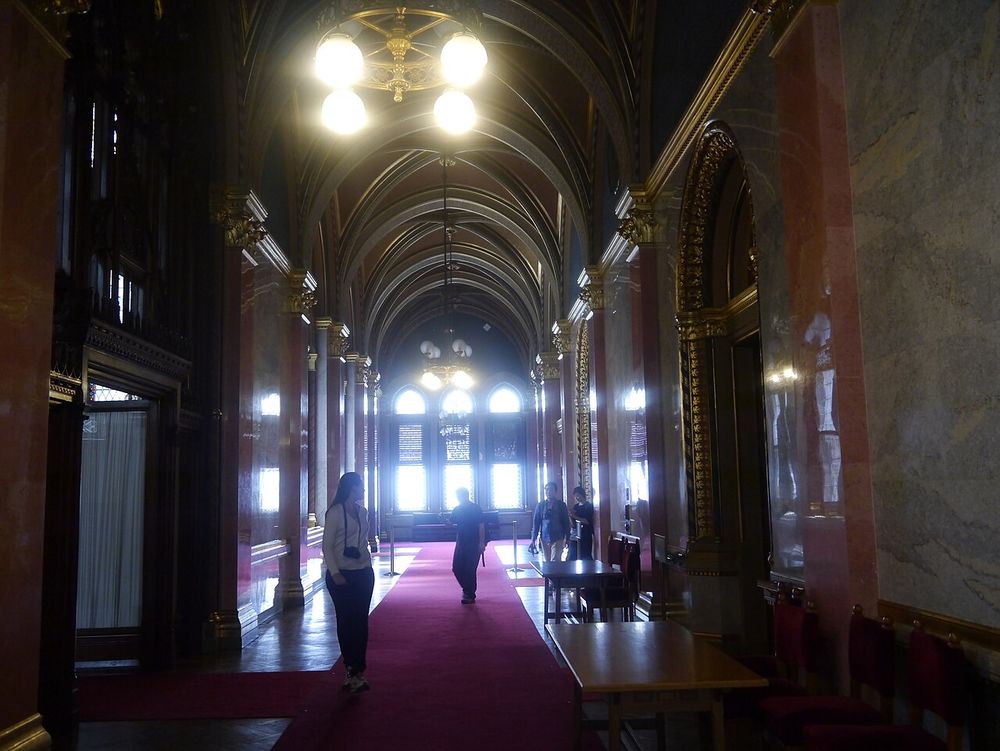
The lobbyZairon, CC BY-SA 3.0
Along the window sills of the lobby outside the old upper chamber are numbered brass holders. Members put down their cigars here before going in to speak; smoking was not allowed in the chamber. Guides tell a story about them, which is in the legends.
6. The chamber
Statues of rulers in the Dome HallZairon, CC BY-SA 3.0
The old upper chamber, a horseshoe of seats under a gilded ceiling, is shown when the house is not sitting. Members still debate in the southern chamber. Sittings are public, and visitors can watch from the gallery.
7. The shoes on the bank, and the same years in China
The Shoes on the Danube Bank, 2012Nikodem Nijaki, CC BY-SA 3.0
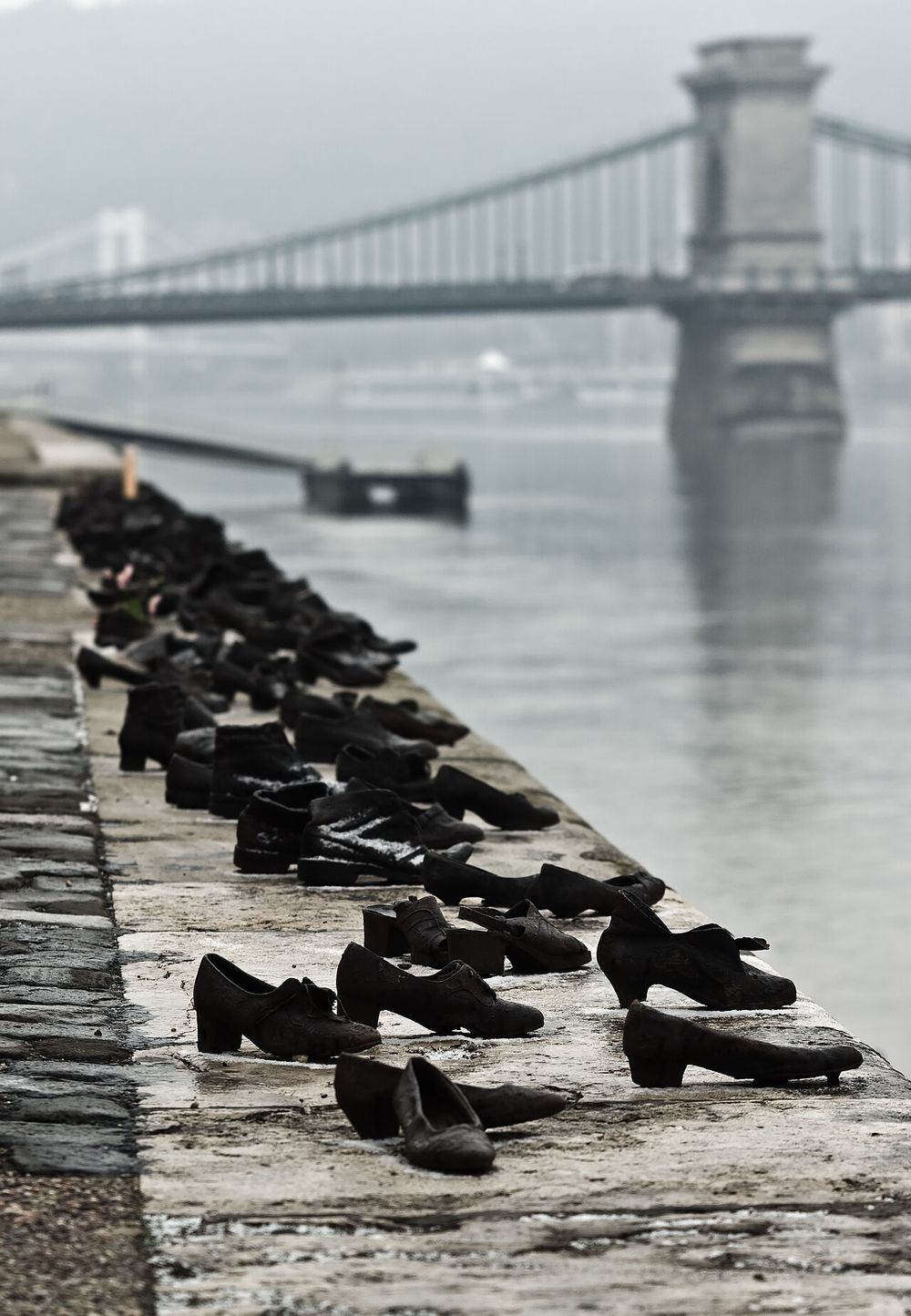
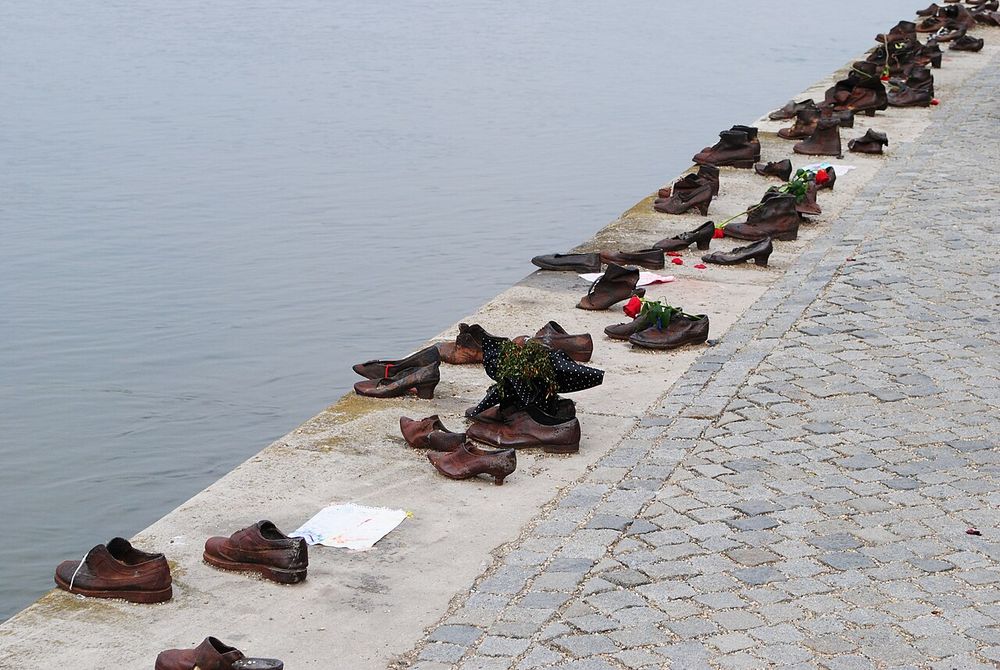
Walk three hundred metres south along the river. Sixty pairs of iron shoes stand at the edge of the bank. In the winter of 1944–45 men of the Arrow Cross militia shot Jews here, after making them take off their shoes, and let the river carry them away. The memorial was made by Can Togay and Gyula Pauer in 2005.
The shoes along the bank, 2022Marek Mróz, CC BY-SA 4.0
A rakodópart alsó kövén ültem,
néztem, hogy úszik el a dinnyehéj.
I sat on the lowest stone of the quay
and watched a melon rind float away.
Attila József, By the Danube (1936); our translation
Building began in 1885, the year China ended its war with France. When the house was finished in 1904, Russia and Japan were fighting over north-east China. In 1956, the year of the Hungarian uprising, China was holding its Eighth Party Congress.
In May 2019 a small sightseeing boat carrying Korean visitors sank in the river near Margaret Bridge after a cruise ship struck it at night. Twenty-seven people died, one is still missing. A memorial stands on the Pest bank by the bridge, and Korean visitors leave flowers there.
Meanwhile in the world
Year
Here
Elsewhere
1885
Building begins
The first motor car
1896
Opened for the thousandth year
The first modern Olympic Games
1904
Finished
The Russo-Japanese War
1920
Treaty of Trianon: Hungary loses two-thirds of its land
The League of Nations
1956
The uprising; shooting on the square
The Suez crisis
1978
The crown comes back from America
The first test-tube baby
2000
The crown is moved here
The new millennium
One line to remember: 96 metres for 896, a crown with a bent cross, and sixty pairs of shoes on the bank.
Then and now
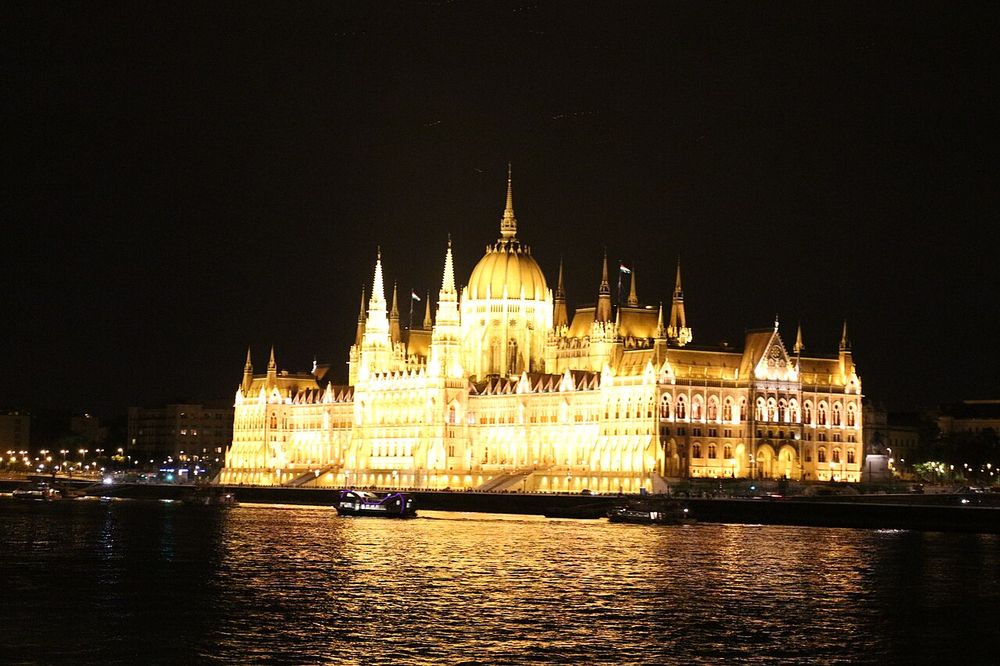
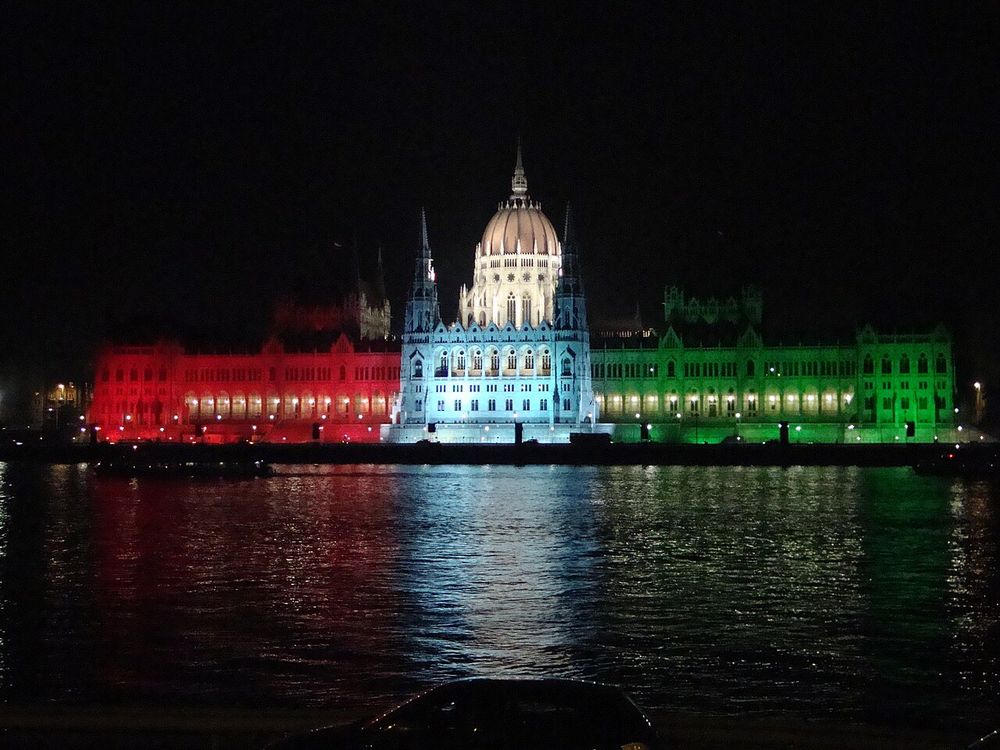
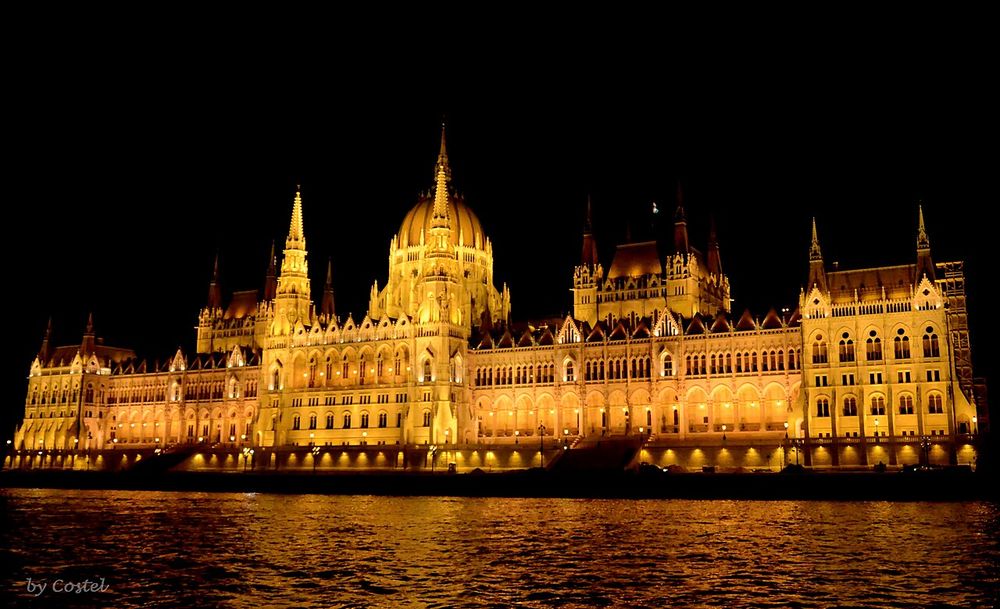
The river front at dusk, 2015Godot13, CC BY-SA 4.0, Wikimedia CommonsThe river front by day, 2015Godot13, CC BY-SA 4.0, Wikimedia CommonsThe Parliament lit at night, 2023Pierre Blaché, CC0, Wikimedia CommonsThe Danube and the Parliament at nightFlorian Fèvre, CC BY-SA 4.0, Wikimedia CommonsThe river front in evening light, 2023Lynx1211, CC BY-SA 4.0, Wikimedia CommonsThe river front, March 2023Lynx1211, CC BY-SA 4.0, Wikimedia CommonsThe Parliament from the Buda bank, 2005Dirk Beyer, CC BY-SA 3.0, Wikimedia CommonsThe Parliament from the Fisherman's BastionDguendel, CC BY 4.0, Wikimedia CommonsThe Parliament at night, 2015Suicasmo, CC BY-SA 4.0, Wikimedia CommonsLit in the national coloursMichael LoCascio, CC BY-SA 3.0, Wikimedia CommonsThe Parliament by night from the riverCostel Slincu from Iasi, Romania, CC BY 2.0, Wikimedia CommonsThe entrance hallZairon, CC BY-SA 3.0, Wikimedia CommonsThe great stairZairon, CC BY-SA 3.0, Wikimedia CommonsThe stair hallZairon, CC BY-SA 3.0, Wikimedia CommonsThe vault over the stairZairon, CC BY-SA 3.0, Wikimedia CommonsThe lobbyZairon, CC BY-SA 3.0, Wikimedia CommonsA corridorZairon, CC BY-SA 3.0, Wikimedia CommonsThe Dome HallZairon, CC BY-SA 3.0, Wikimedia CommonsStatues of rulers in the Dome HallZairon, CC BY-SA 3.0, Wikimedia CommonsThe gallery of the Dome HallZairon, CC BY-SA 3.0, Wikimedia CommonsLooking up into the domeZairon, CC BY-SA 3.0, Wikimedia CommonsWindows high in the domeZairon, CC BY-SA 3.0, Wikimedia CommonsThe crown, sceptre, orb and sword, 2013Zairon, CC BY-SA 3.0, Wikimedia CommonsThe Holy Crown of Hungary, from the fronthu:Szerkesztő:Tolfavi (a kép szerzője; feltöltő a magyar nyelvű Wikipédiában), Public domain, Wikimedia CommonsThe Shoes on the Danube Bank, 2012Nikodem Nijaki, CC BY-SA 3.0, Wikimedia CommonsThe shoes along the bank, 2022Marek Mróz, CC BY-SA 4.0, Wikimedia CommonsAttila József on the steps, 2021Balon Greyjoy, CC0, Wikimedia CommonsStained glass inside the Parliamentgranada_turnier, CC BY 2.0, Wikimedia CommonsA stained-glass window of the stair hallgranada_turnier, CC BY 2.0, Wikimedia CommonsThe Parliament from the air, an old photographAuteur Inconnu, Public domain, Wikimedia CommonsKossuth Square and the Parliament, an old photographFOTO:Fortepan — ID 24360: Adományozó/Donor: Nagy Gyula. archive copy at the Wayb, CC BY-SA 3.0, Wikimedia Commons
Local legends
These are stories people tell about this place. They are legends, not history, and each one says where it comes from.
LegendThe bent cross
Some say the cross on the crown was bent in 1638 when the chest was shut on it carelessly; others that it happened when it was hidden in 1849, or when a lady-in-waiting stole it in 1440.
Source: Hungarian tradition; no record settles it
LegendThe cigars
Hungarians say that when a speech was dull, members came out to a cigar still burning, and when it was brilliant, to cold ash. That is why "a speech worth a Havana" means a good one.
Source: Told by the Parliament's guides
Later, people who live here will be able to add the stories they grew up with, and say which of these they have heard.
Not certain, and where accounts conflict
When was the crown made?
The lower band has Greek enamels of the Byzantine emperor Michael VII (1071–1078). The upper arches are Latin work. When and where the two were joined is debated, with dates from the late 1100s to the 1200s.
How big is it really?
Sources give 268 by 123 metres and 691 rooms. Some count up to 691 rooms and 29 staircases; others give different numbers for stairs and courtyards.
From January 2026, adults from outside the European Economic Area pay 14,000 forints, citizens of the area 7,000. Students aged 6 to 24 pay half. Under 6 free.
Tours run most days, more often in summer. On days of state events the building closes.
Tours are given in several languages. Choose yours when booking.
Last checked 2026-11-12. The Parliament's visitor pages and Budapest guides of 2026.
Booking from abroad
Official page in English Tickets are sold on Jegymester, the Parliament's official ticket site, in Hungarian and English. You choose a date, a time and a tour language, and pay by card. A booking fee is added.
Ticket window on site The visitor centre on the north side of Kossuth Square sells remaining tickets on the day, but popular times sell out.
Note The cheaper price is only for citizens of the European Economic Area. Bring your passport: it is checked at the door.
Checked 2026-11-12
Where to start
Metro line 2 to Kossuth Lajos tér, or tram 2 along the river. The visitor centre is below ground on the north side of the square.
Arrive twenty minutes early for the security check.
After the tour, walk south along the river to the Shoes, then look back at the building.
Before you go
Large bags are not allowed. There is airport-style security.
Photographs are allowed in most rooms, but not of the crown.
The best photographs of the outside are from the Buda bank, at Batthyány tér, at dusk.
Customs and manners
This is a working parliament. Follow your guide and do not stray.
The Shoes on the Danube Bank are a Holocaust memorial. Do not pose for fun or stand in the shoes. People leave candles and stones; do not move them.
The events of 1956 are a source of national pride and pain. Hungarians call it a revolution.
Opening hours are given in the local time of the place.
Look for these
From the Buda bank, count the spires on the roof.
On the crown, find the bent cross.
In the lobby, find the numbered cigar holders.
On the ministry across Kossuth Square, find the metal balls in the bullet holes.
At the Shoes, find a child's shoe.
I am here
Stand at the site, sign in, press the button, and collect its stamp. Your browser will ask to use your location. It is sent to us once to confirm that you are at the site; we keep how far you were from it, not the spot where you stood.
Your stamps are saved to your account, so they follow you to any device. Checking from a browser cannot rule out every false location; stricter checks arrive with the app.
Messages
Share your photos
Photos here show the place, not people. Each one is credited to the visitor who took it and appears after our team has looked at it. A photo with you in it belongs under “I am here”.