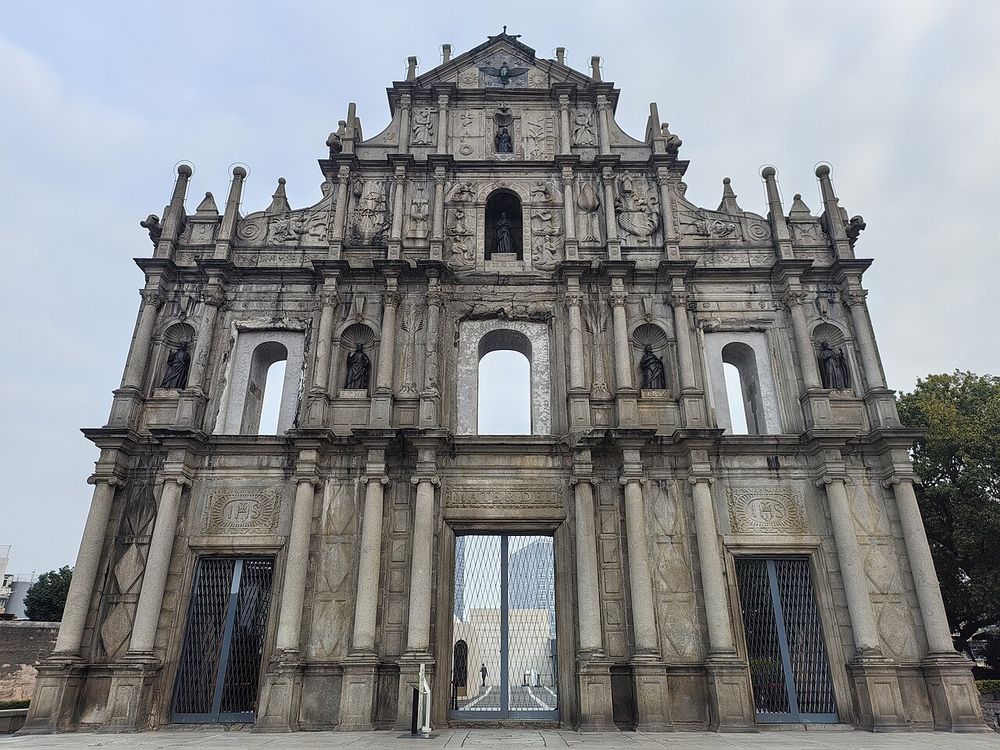
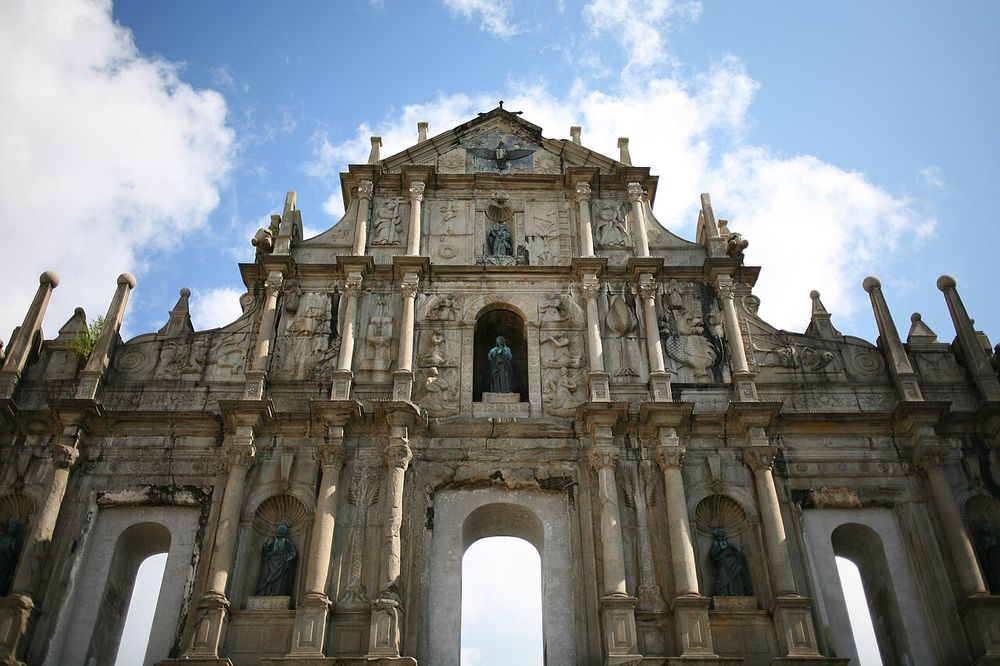
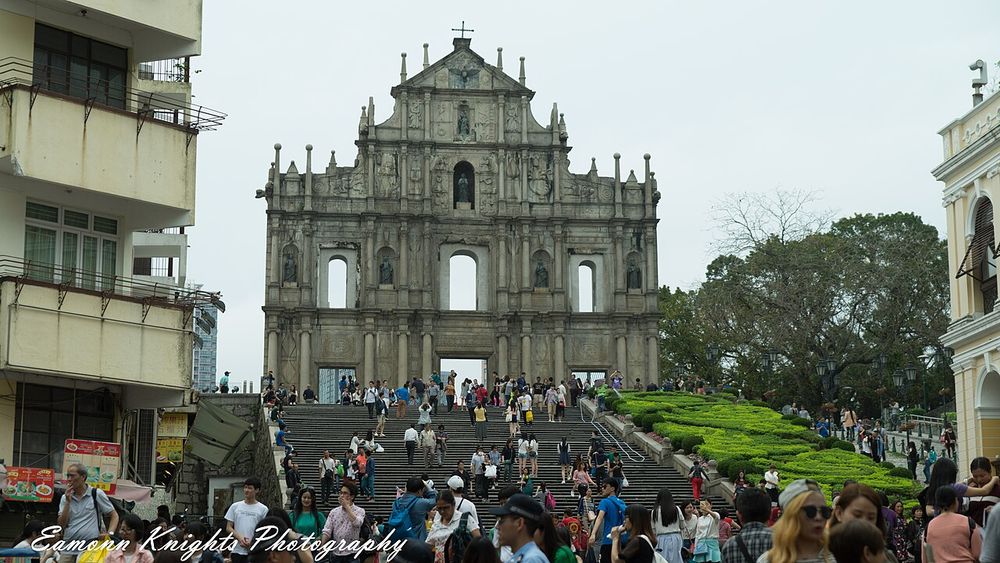
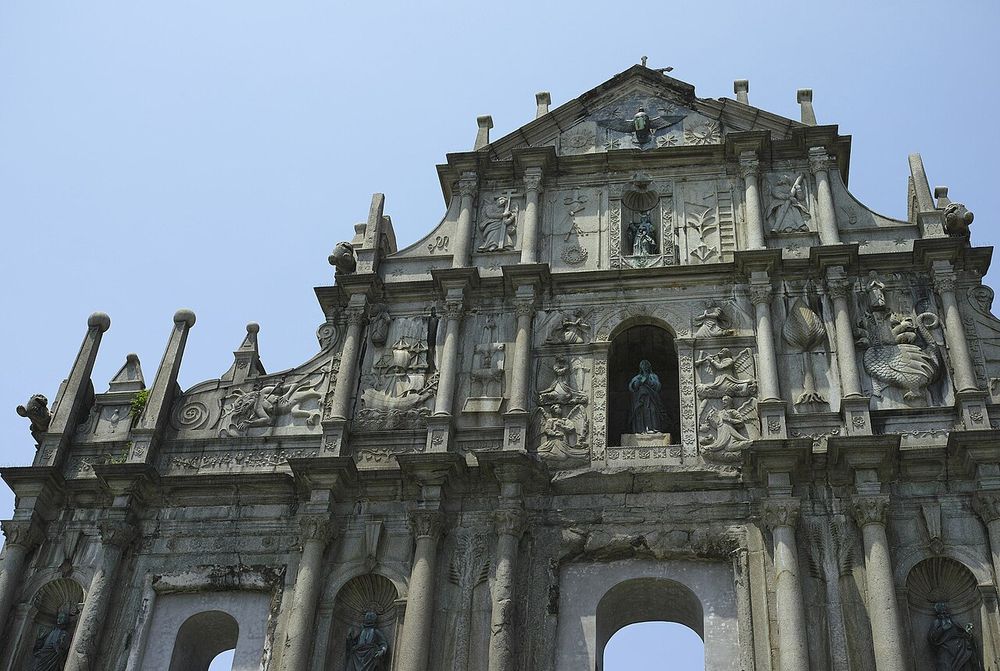
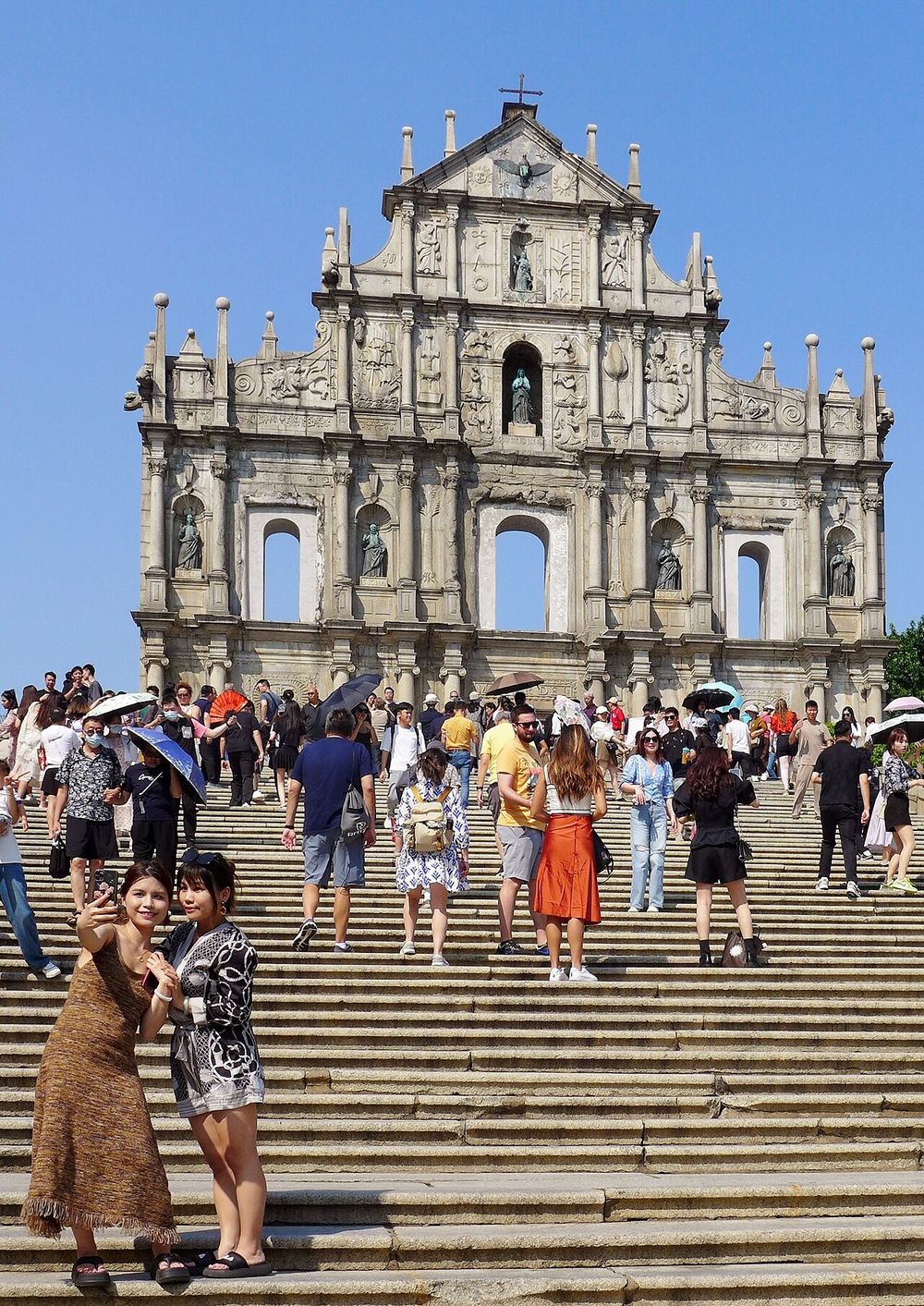
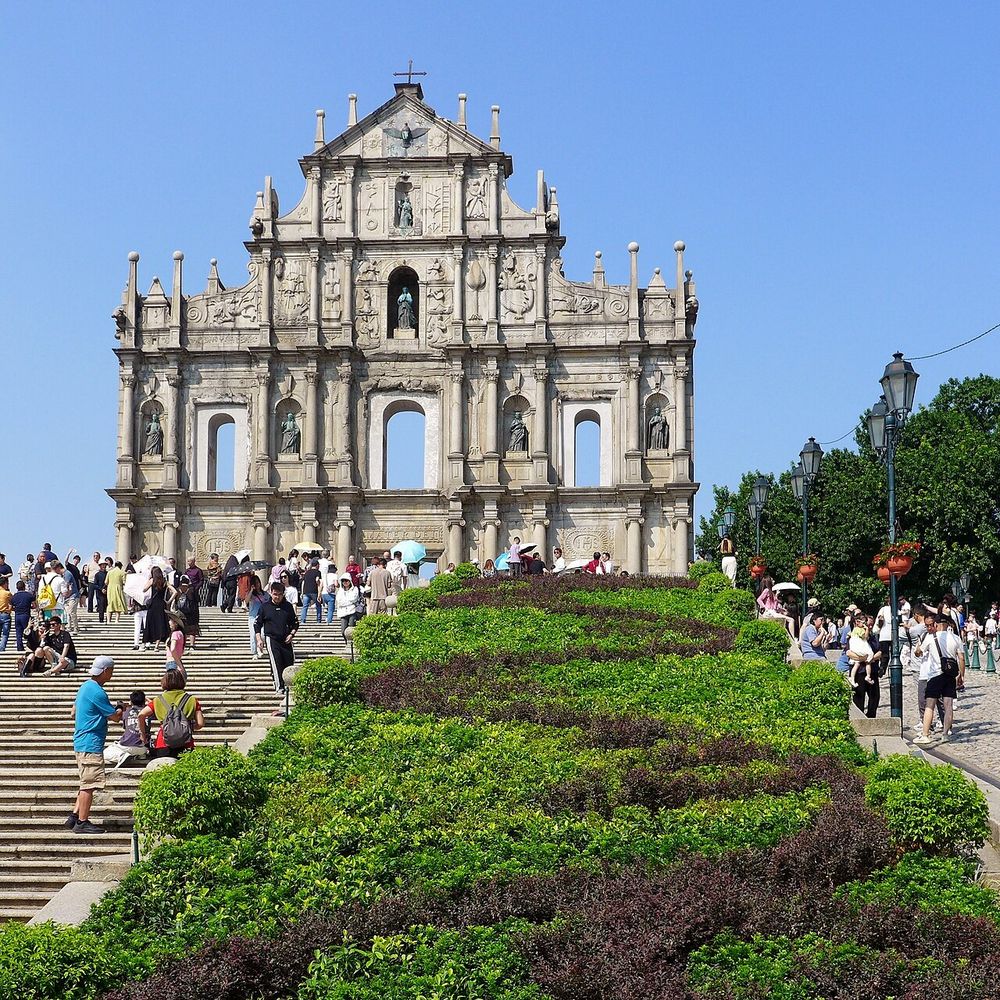
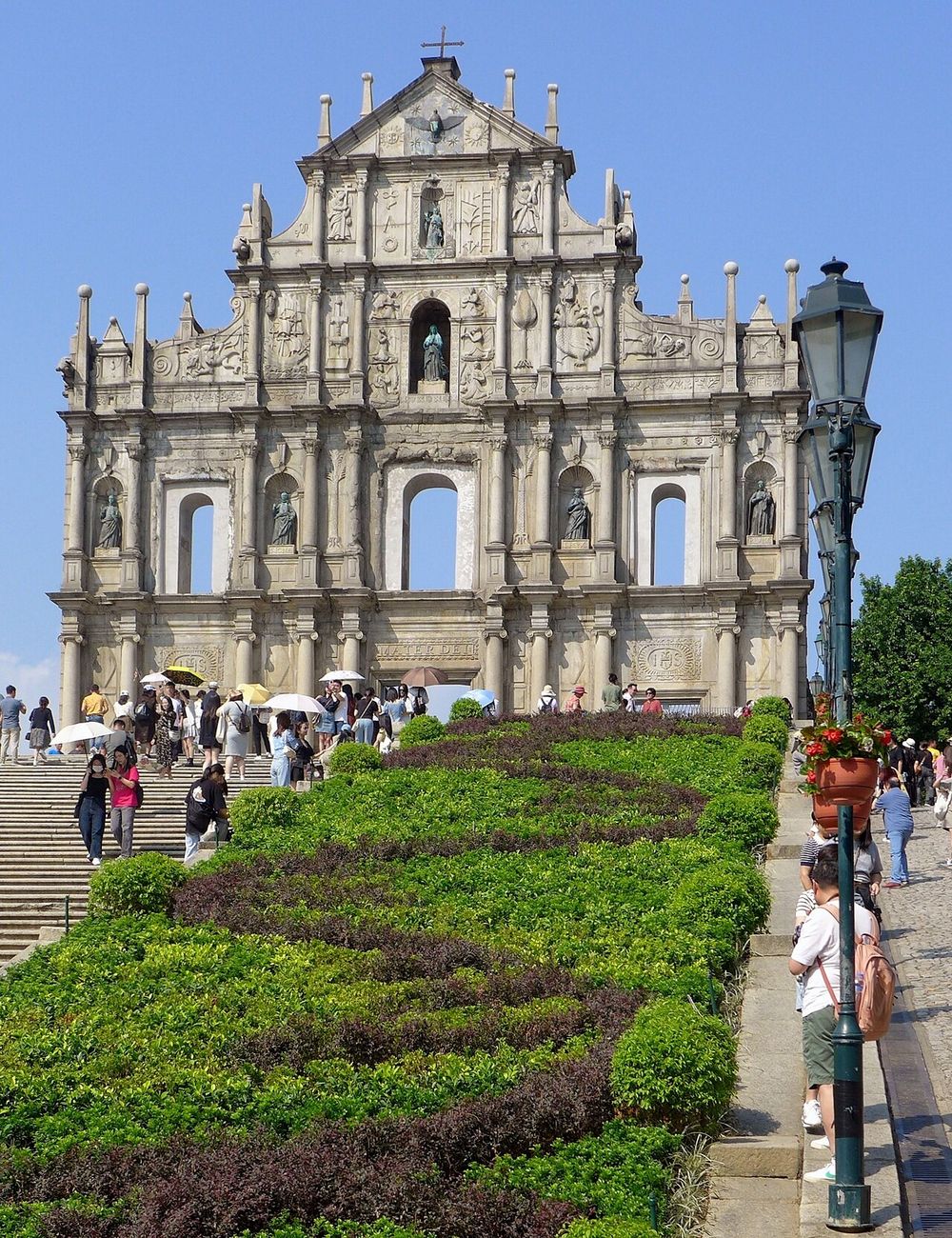
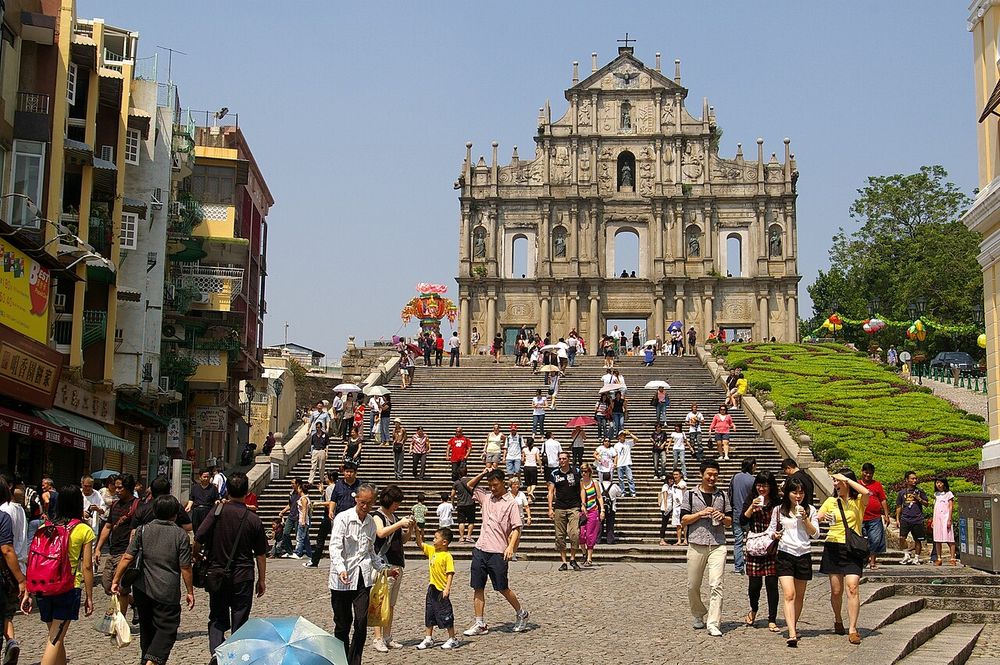
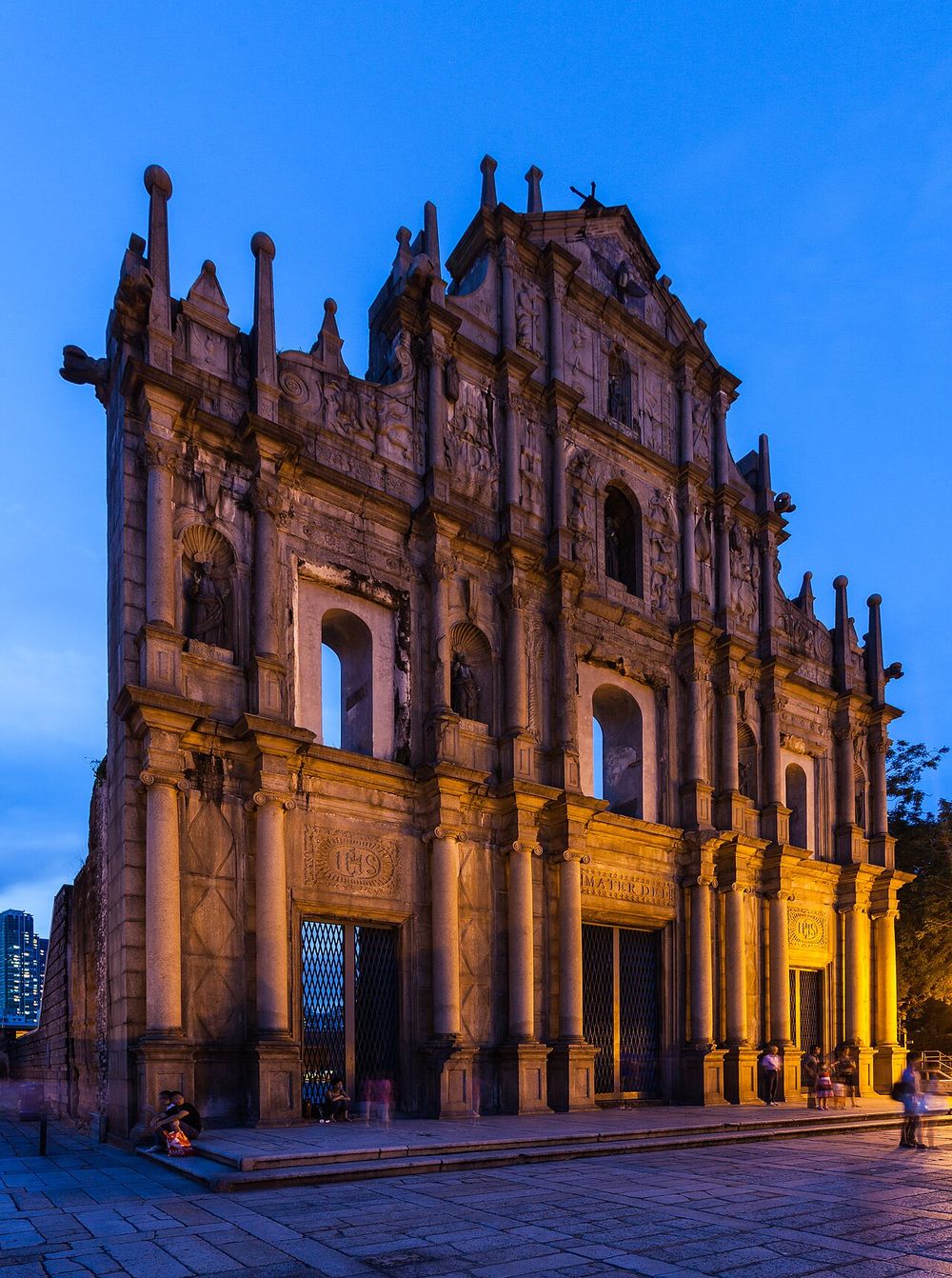
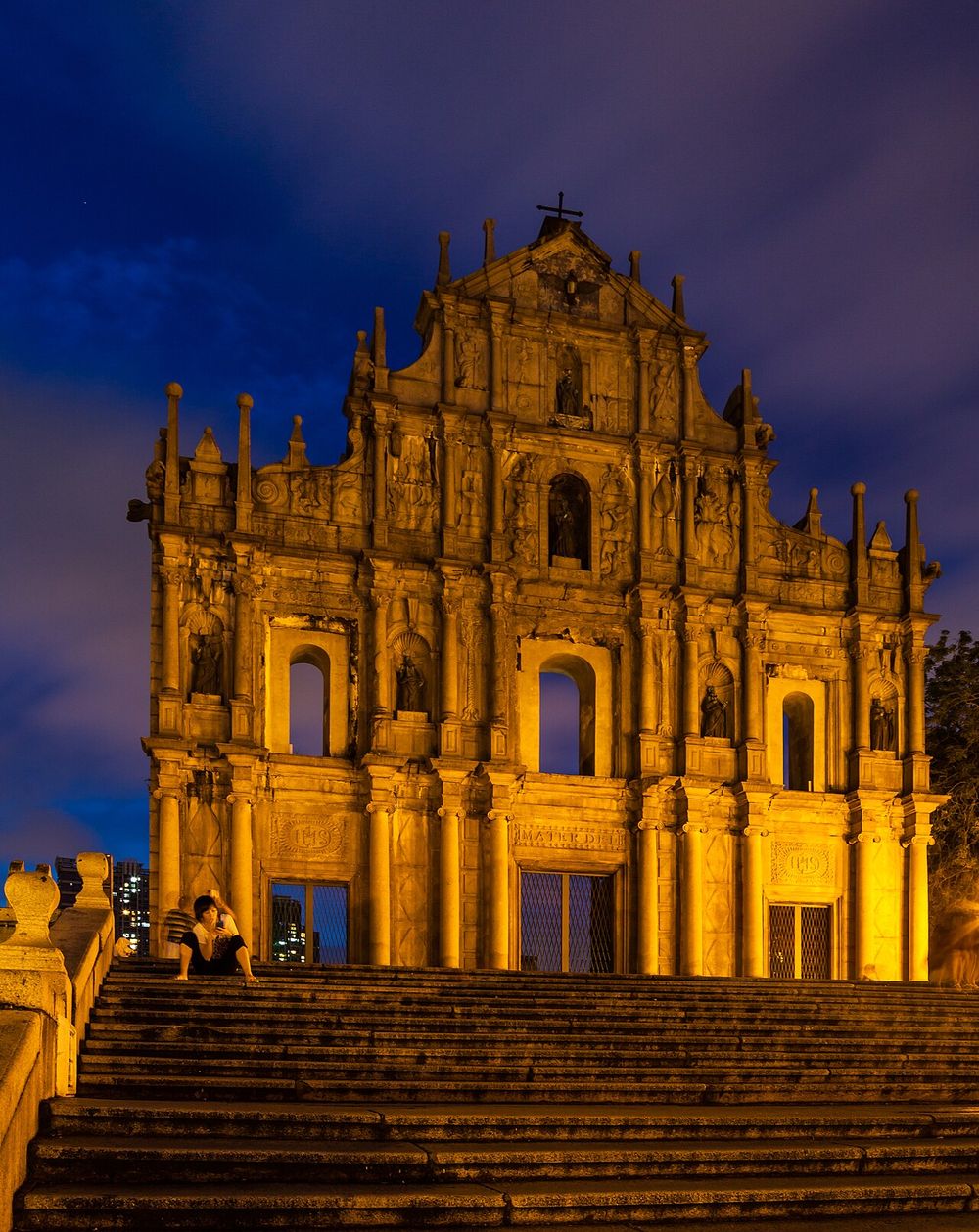
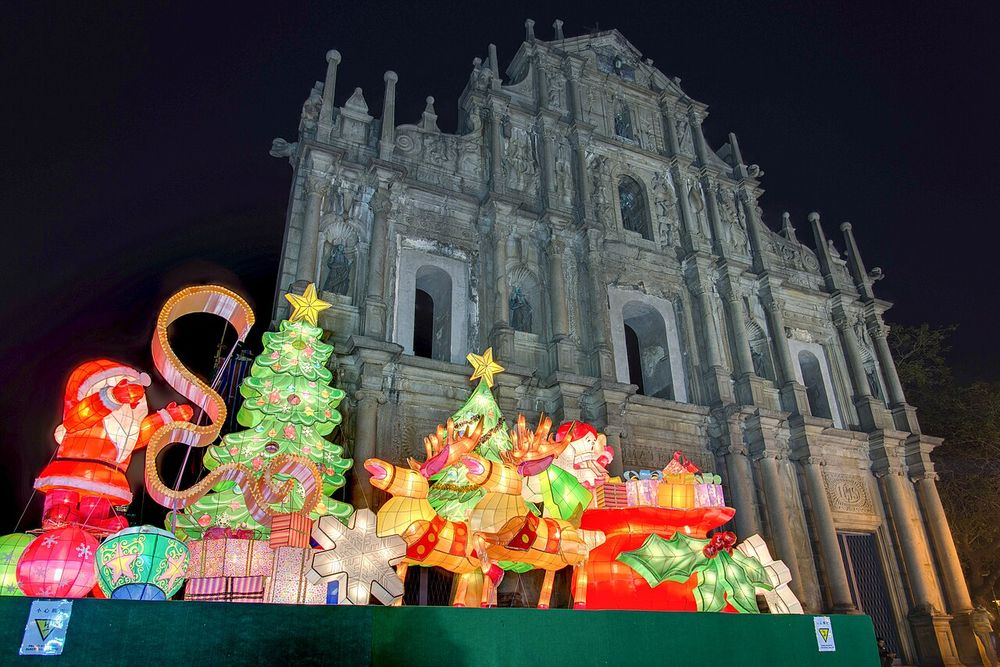
For four hundred years Macau was where China and Europe met: a Portuguese trading post on a Chinese coast, with churches and temples, forts and merchants' mansions a few streets apart. Its symbol is a church that is only a front: the stone facade of St Paul's, which survived the fire of 1835 and now stands alone at the top of a flight of steps.
Photo: fun in photo's, CC BY 2.0, Wikimedia Commons
The story
Portuguese ships reached the Pearl River in the 1510s, and in the 1550s Ming officials let them settle on this small peninsula. Macau became the hinge of a trade between China, Japan, India and Europe, and the door through which Jesuit missionaries entered China. Matteo Ricci landed here in 1582 to learn Chinese before going inland. For three centuries Portuguese and Chinese lived side by side, under two sets of laws.
The city that remains is small enough to walk in a day: twenty-two buildings and eight squares listed together as a World Heritage Site in 2005, from the Chinese temple where the city got its name to the oldest Western-style lighthouse on the China coast. Macau returned to China in 1999 as a special administrative region, and Portuguese is still an official language: the street signs are in both.
What is here
The Historic Centre is a walking route, not a gated site: squares, churches and temples are free; only the Macao Museum on Monte Fort charges a small fee.
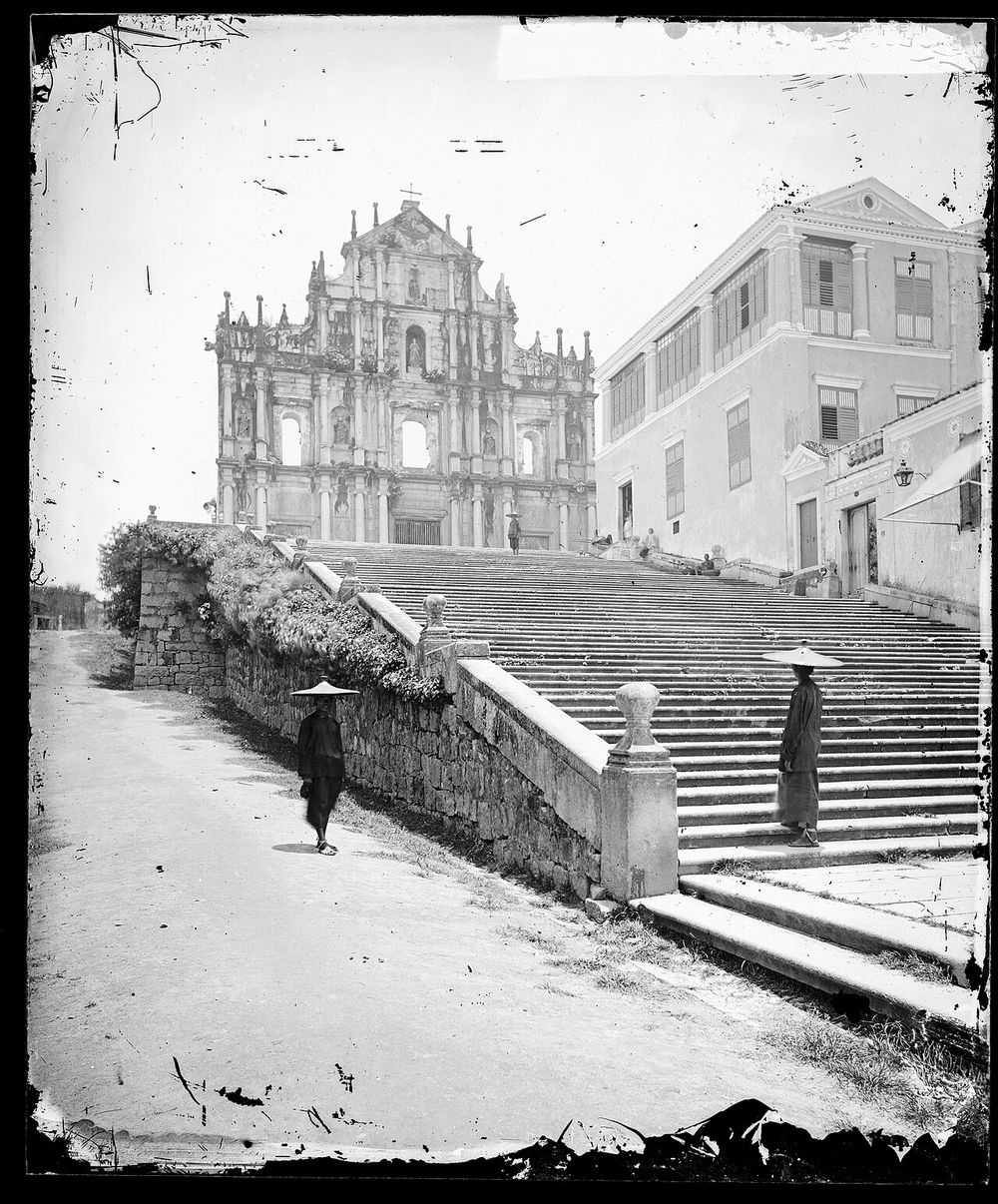
The facade was the front of the Church of the Mother of God, built by the Jesuits between 1602 and 1640, partly by Japanese Christians who had fled persecution. Look at its carving: the Virgin, saints and Jesuits, but also a Chinese lion, chrysanthemums, a Portuguese ship, and a dragon-like hydra trampled by the Virgin, with inscriptions in Chinese characters.
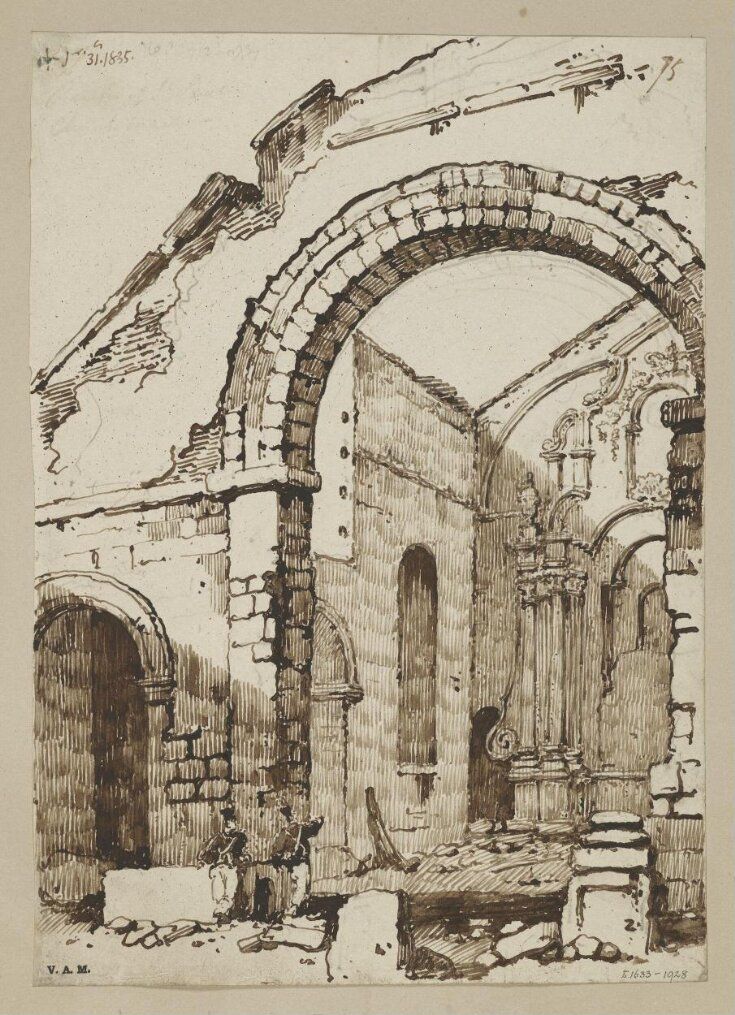
In January 1835 a fire destroyed the church and its college, the first Western-style university in East Asia. Only this wall and the steps survived. Walk up and through the doorways: behind is open sky and, below it, a small museum and a crypt with the bones of martyrs.
Things people often get wrong
"It is a cathedral." It was a Jesuit church; Macau's cathedral is a different building a few streets away.
"Macau is only casinos." The casinos are mostly on the reclaimed land and on Cotai; the old city is a different world, and almost all of it is free to visit.
People who stood here
We searched Chinese sources first for this list, then Portuguese and English ones.
Matteo Ricci (Jesuit, 1552–1610)He arrived in Macau in 1582 and began learning Chinese here; later, in Beijing, he became the best-known European in China.
Tang Xianzu (playwright, 1550–1616)The author of "The Peony Pavilion" passed through Macau in 1591 and wrote poems on the foreign merchants he saw.
Lin Zexu (official, 1785–1850)In September 1839, during his campaign against opium, he inspected Macau; a museum on the site where he was received tells the story.
Robert Morrison (missionary, 1782–1834)The first Protestant missionary in China translated the Bible and wrote the first Chinese–English dictionary; he is buried in the Protestant Cemetery here.
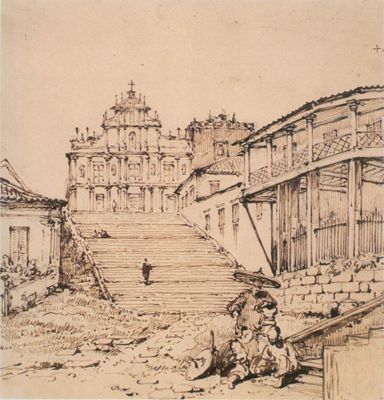
George Chinnery (painter, 1774–1852)He lived in Macau for 27 years, drew the ruins of St Paul's days after the fire of 1835, and is buried in the same cemetery.
Zheng Guanying (reformer, 1842–1922)In his family's mansion, the Mandarin's House, he wrote "Words of Warning in Times of Prosperity", a book read by the young Mao Zedong and Sun Yat-sen.
Go deeper: six stops from A-Ma Temple to St Paul's7 stops · about 1 min to read
A walking day from south to north, following the tourist office's heritage route; everything is within a few kilometres.
1. A-Ma Temple
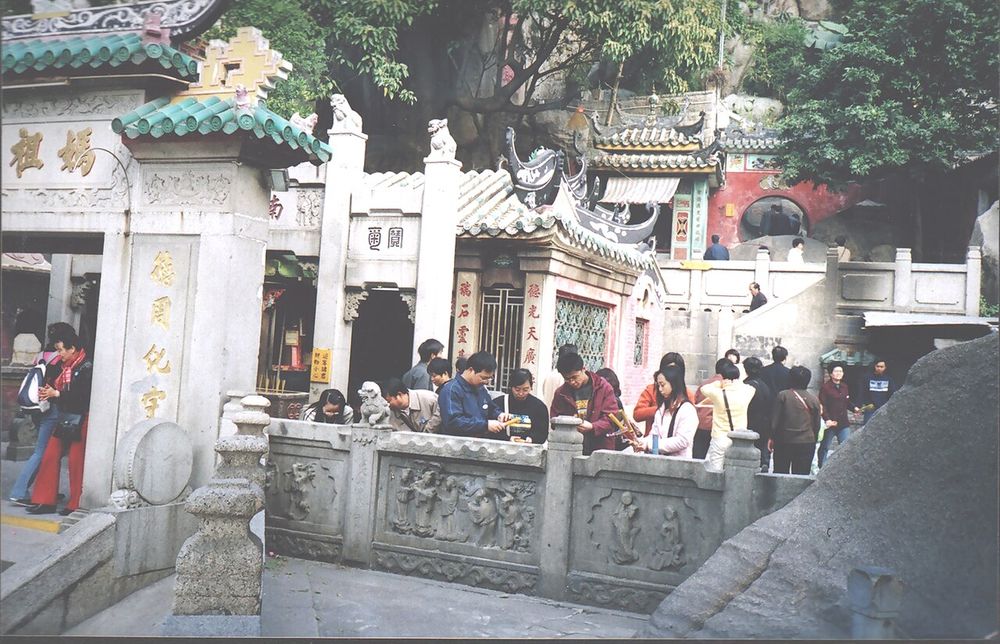
A-Ma Temple, August 2025Yumeto, CC BY-SA 4.0
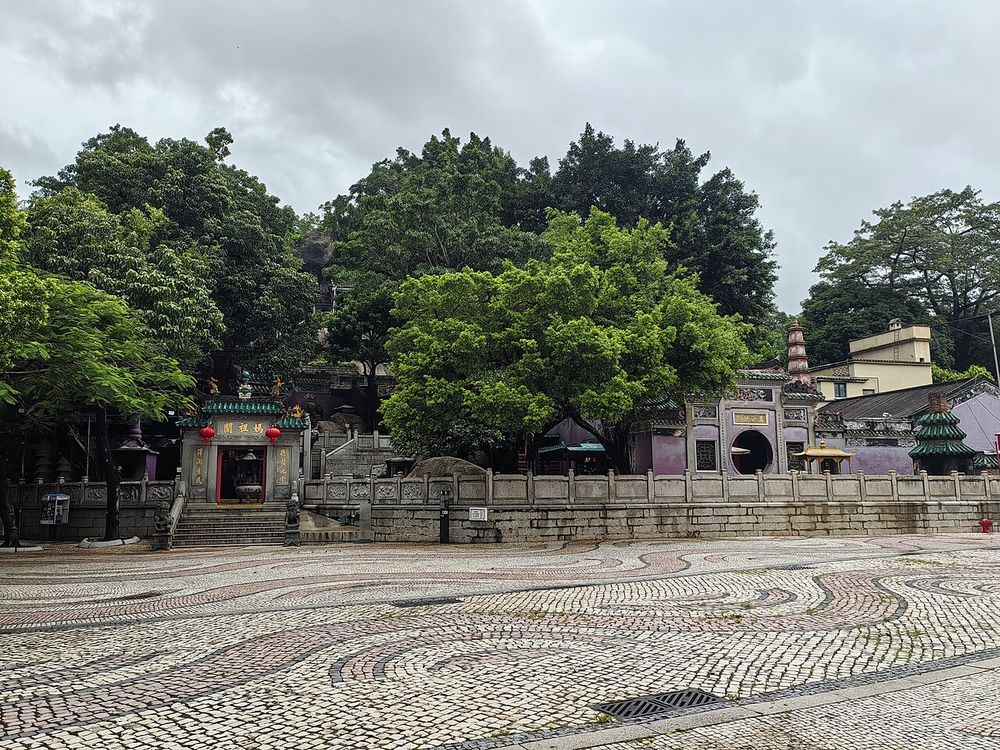
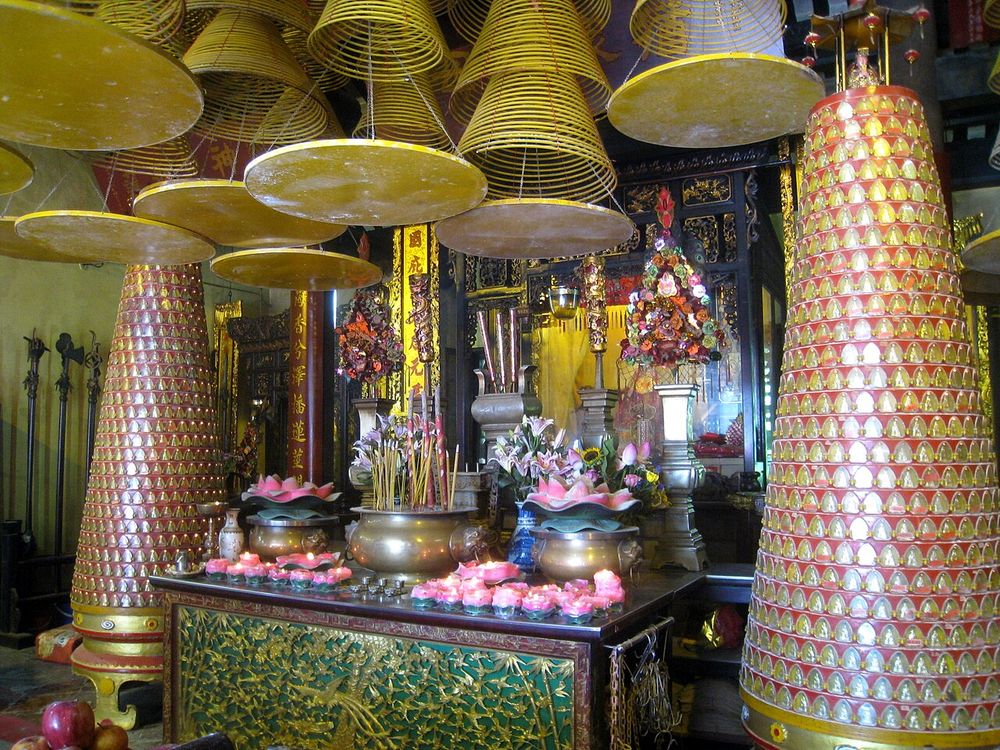
The oldest temple in Macau, built against the hillside at the harbour mouth, honours Mazu, goddess of seafarers. When the Portuguese asked what this place was called, the story goes, they heard "Ma-Gao", the bay of A-Ma, and so the city became Macau.
Incense coils inside A-Ma Temple, 2009WiNG, CC BY-SA 3.0
2. The Mandarin's House
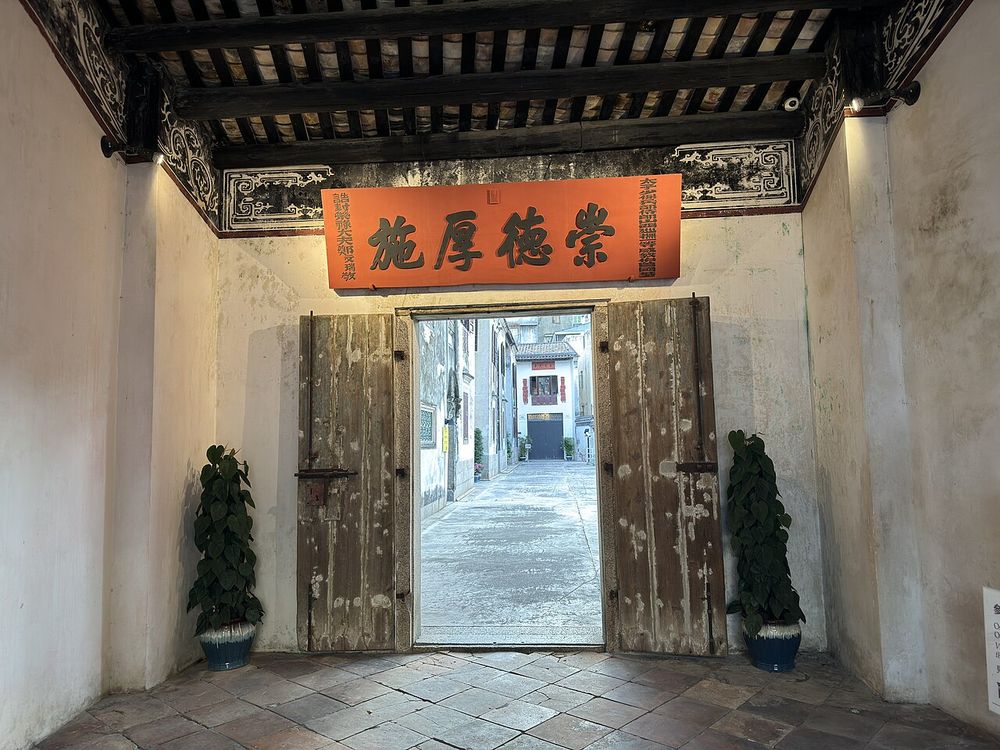
A hall of the Mandarin's House, 2026Yumeto, CC BY-SA 4.0
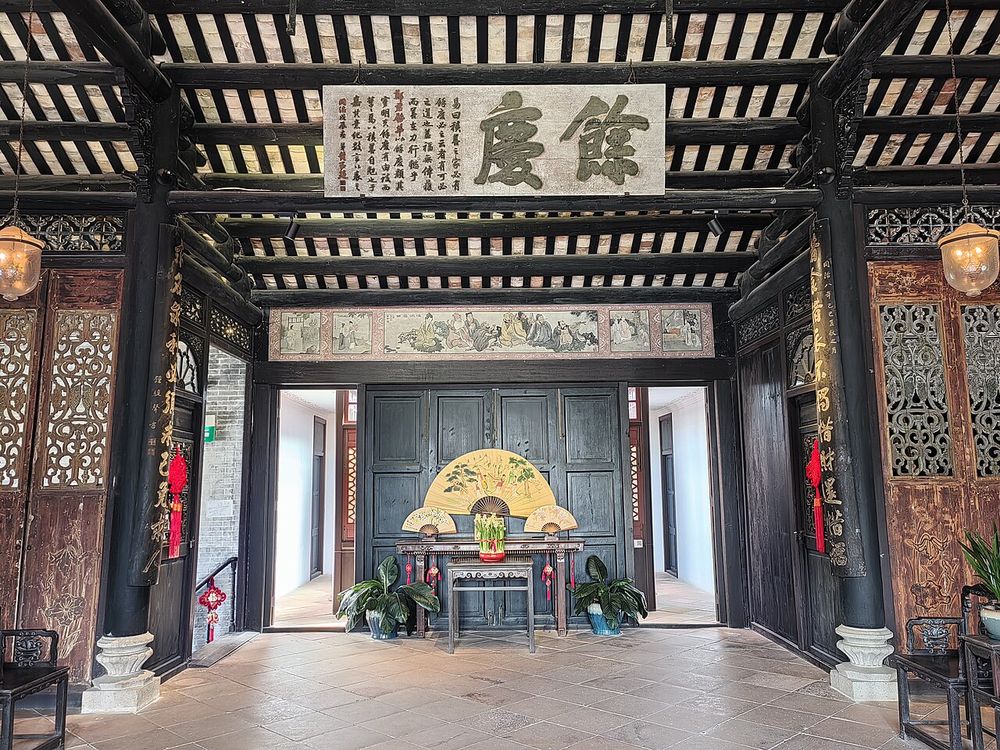
A Chinese mansion of over sixty rooms round courtyards, with some Western touches in its windows and ceilings. It belonged to the family of Zheng Guanying.
3. Senado Square
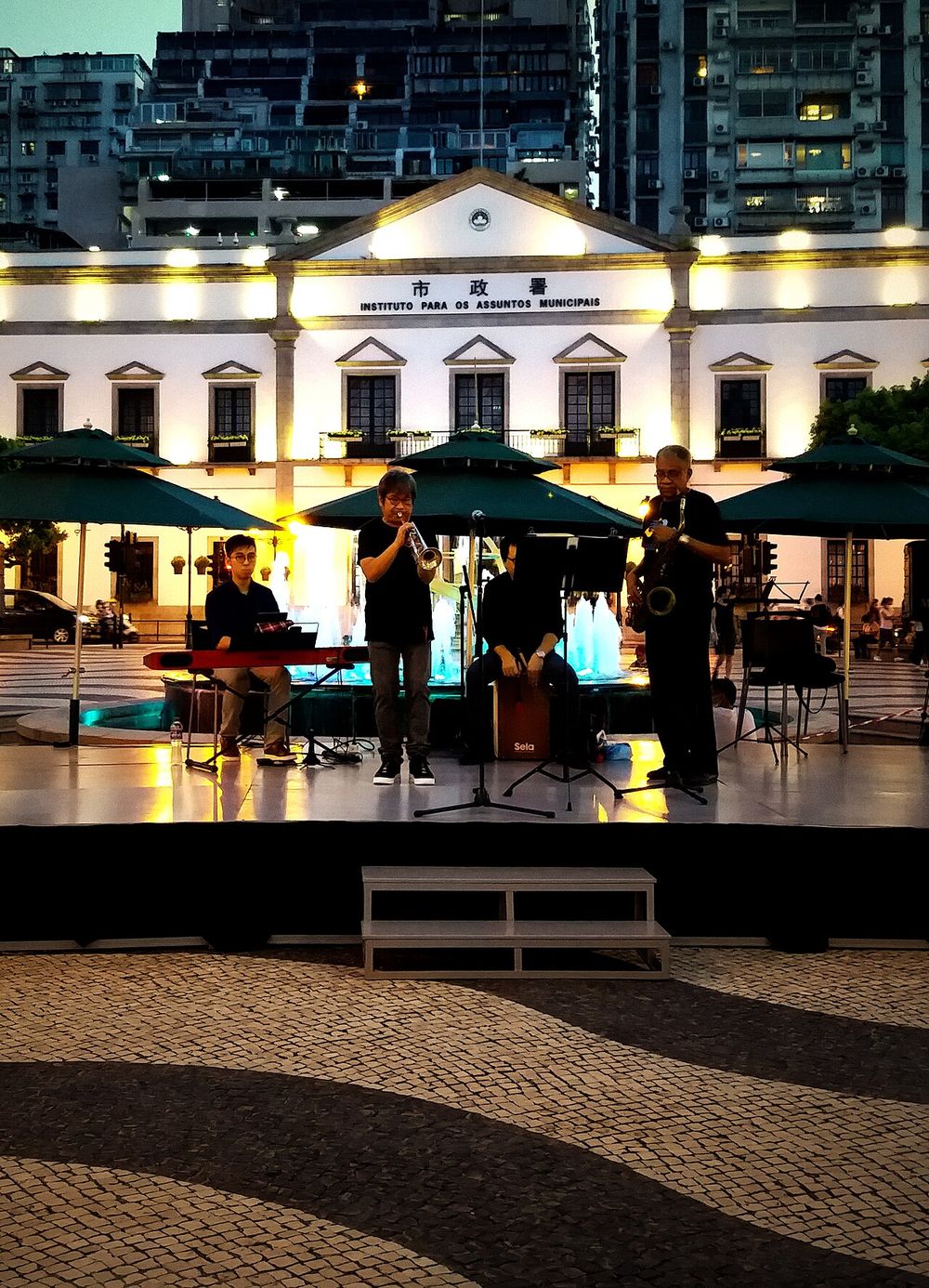
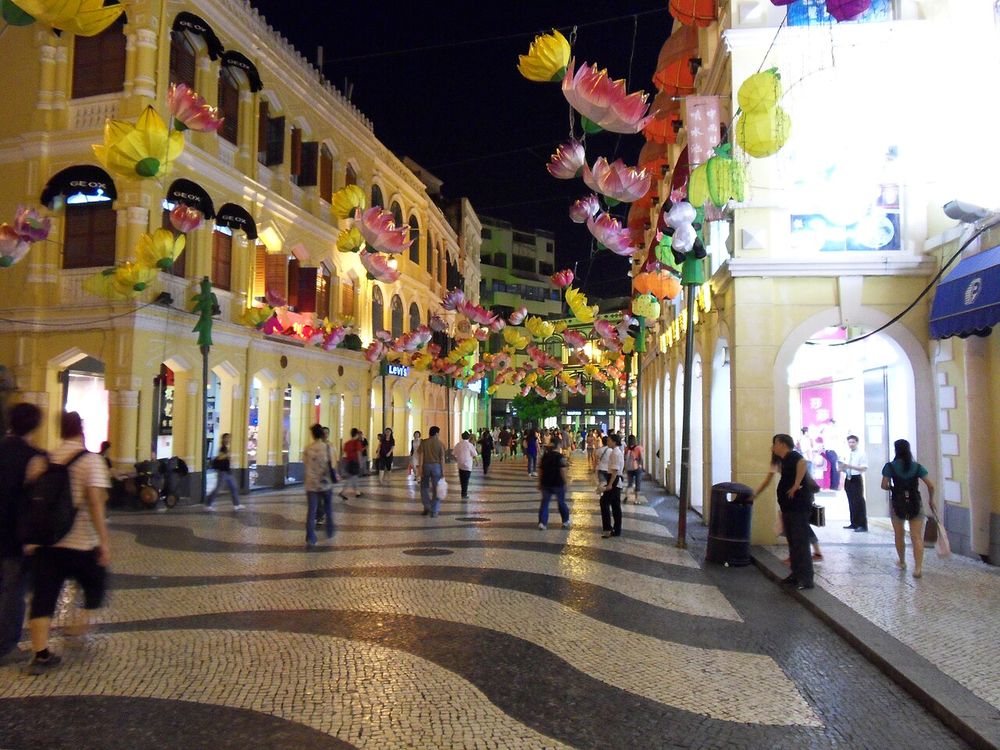
Senado Square in the evening, 2020Pauloleong2002, CC BY-SA 4.0
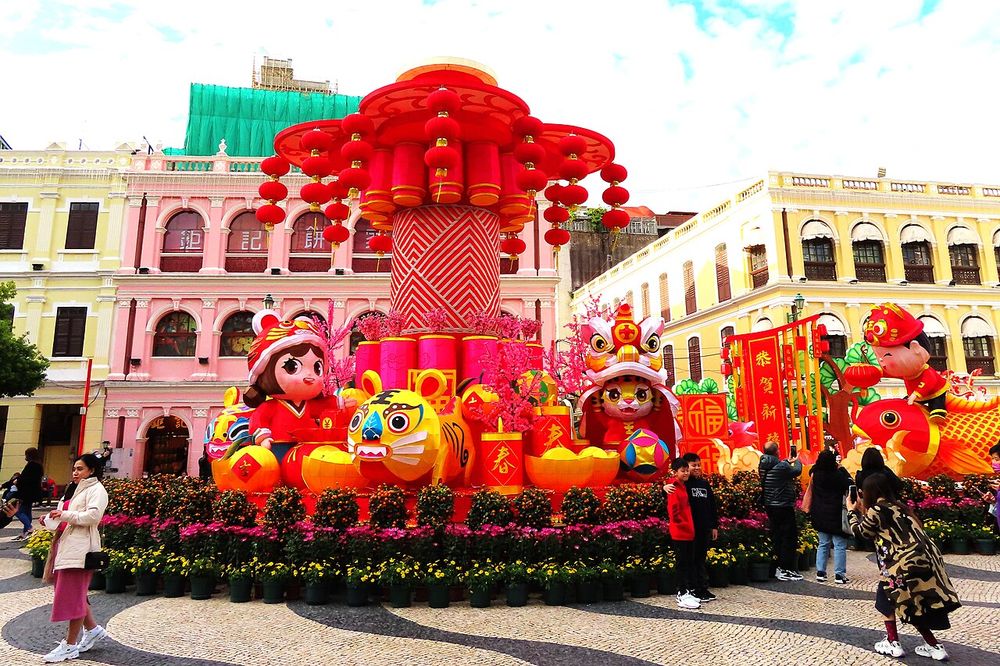
The heart of the old city, paved in black and white Portuguese wave mosaic, with the Leal Senado building and the Holy House of Mercy, a charity founded in 1569. At New Year and Christmas it is decorated for both.
Chinese New Year decorations in Senado SquarePauloleong2002, CC BY-SA 4.0
4. The Ruins of St Paul's
The carved upper tiersPaolobon140, CC BY-SA 4.0
Climb the 68 steps. Behind the facade, look into the crypt and the Museum of Sacred Art, with paintings of the Japanese martyrs of Nagasaki. Next to it is the small Na Tcha Temple, Chinese and Catholic side by side.
The ruined interior after the fire, drawn by Chinnery, January 1835George Chinnery, Public domain
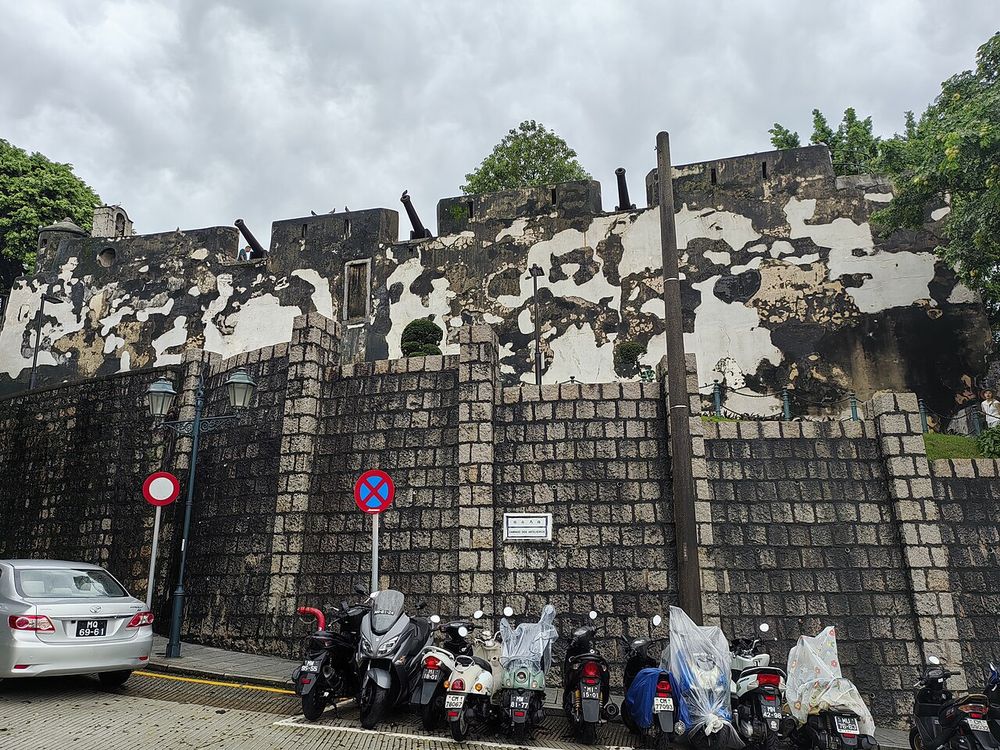
5. Monte Fort
The walls of Monte Fort, 2025Yumeto, CC BY-SA 4.0
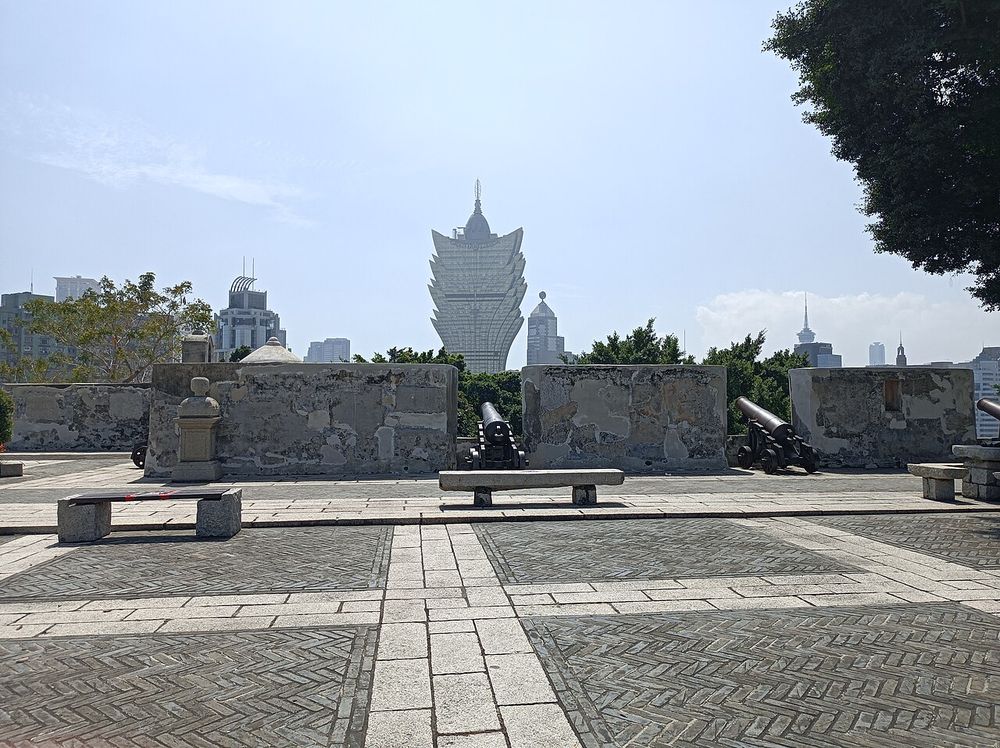
The Jesuits' fortress above the church, finished in 1626. In 1622 its cannon helped beat off a Dutch attack, the only battle Macau ever fought for its life. The Macao Museum inside tells the city's story.
Cannons on Monte Fort, 2022K.Y.K.Z.K., CC BY-SA 4.0
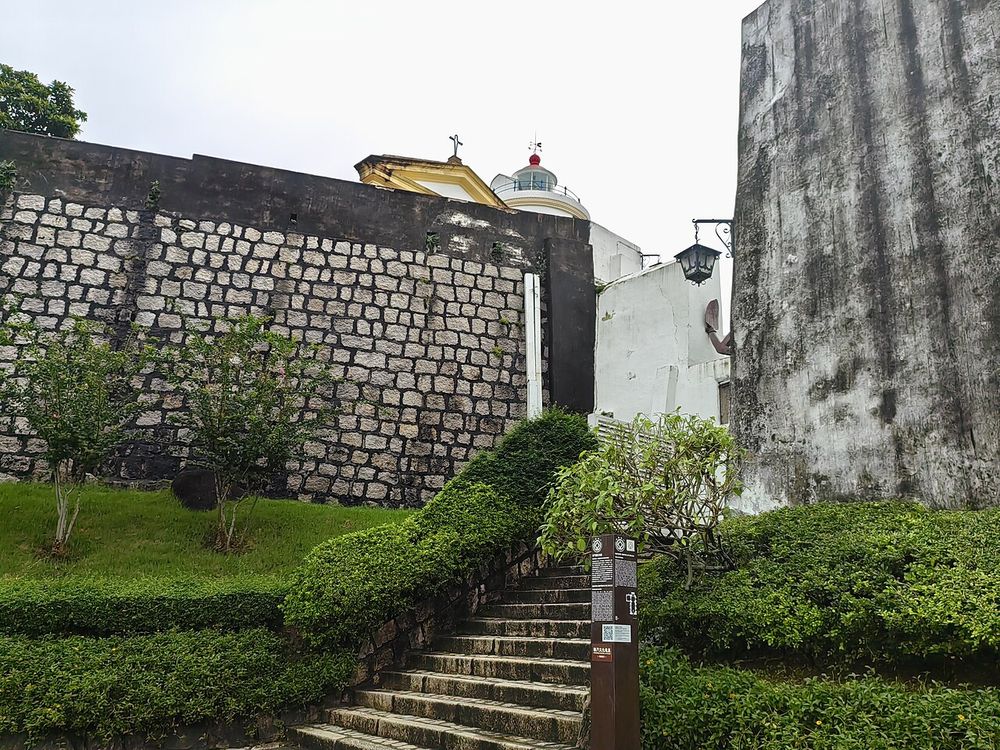
6. Guia Fortress and lighthouse
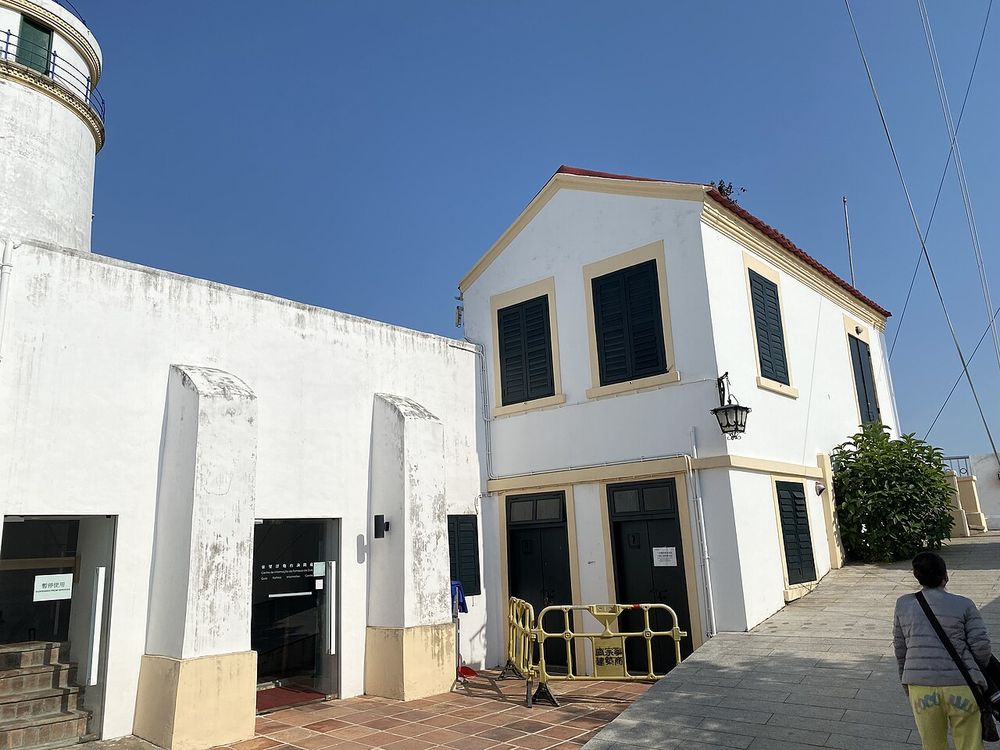
The walls of Guia Fortress, 2025Yumeto, CC BY-SA 4.0
On the highest hill, a small fort with a chapel and the lighthouse of 1865, the first Western-style lighthouse on the coast of China. Typhoon signals are still raised on its mast.
The city and the same years elsewhere
The Jesuits began their church in 1602; in the same year the Dutch East India Company was founded, the company whose ships would attack Macau twenty years later.
Meanwhile in the world
Year
Here
Elsewhere
1557
The Portuguese settle in Macau
Philip II of Spain declares bankruptcy
1602
The Jesuits begin the Church of the Mother of God
The Dutch East India Company is founded
1622
The Dutch attack Macau and are beaten off
The Thirty Years' War rages in Germany
1835
Fire destroys St Paul's
Charles Darwin reaches the Galápagos
1999
Macau returns to China
The euro is launched
One line to remember: a church that is only a front, in a city where East and West shared a street.
Then and now
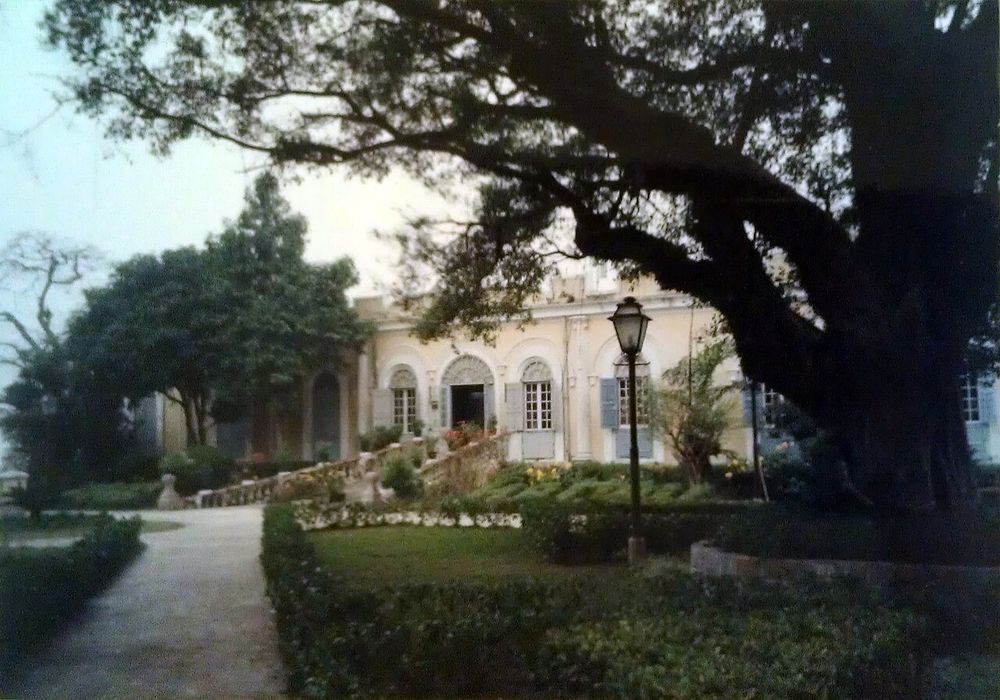
The facade at the top of its steps, 2016fun in photo's, CC BY 2.0, Wikimedia CommonsThe facade, February 2026Yumeto, CC BY-SA 4.0, Wikimedia CommonsThe carved upper tiersPaolobon140, CC BY-SA 4.0, Wikimedia CommonsCarving on the facadeDavid Wong, CC BY 3.0, Wikimedia CommonsThe facade above the steps, 2023Bahnfrend, CC BY-SA 4.0, Wikimedia CommonsThe garden beside the steps, 2023Bahnfrend, CC BY-SA 4.0, Wikimedia CommonsThe steps and the facade, 2023Bahnfrend, CC BY-SA 4.0, Wikimedia CommonsThe facade from the street below, 2009Jakub Hałun, CC BY-SA 4.0, Wikimedia CommonsThe facade lit at dusk, 2013Diego Delso, CC BY-SA 3.0, Wikimedia CommonsThe facade at night, 2013Diego Delso, CC BY-SA 3.0, Wikimedia CommonsNew Year lanterns before the facade, 2015kewl, CC BY 2.0, Wikimedia CommonsSenado Square in the evening, 2020Pauloleong2002, CC BY-SA 4.0, Wikimedia CommonsChinese New Year decorations in Senado SquarePauloleong2002, CC BY-SA 4.0, Wikimedia CommonsA street of the old city, 2010Clément Bucco-Lechat, CC BY-SA 3.0, Wikimedia CommonsA-Ma Temple, August 2025Yumeto, CC BY-SA 4.0, Wikimedia CommonsThe gateway of A-Ma TempleRudolph.A.furtado, Public domain, Wikimedia CommonsIncense coils inside A-Ma Temple, 2009WiNG, CC BY-SA 3.0, Wikimedia CommonsA hall of the Mandarin's House, 2026Yumeto, CC BY-SA 4.0, Wikimedia CommonsA gateway in the Mandarin's House, 2024LN9267, CC BY-SA 4.0, Wikimedia CommonsThe walls of Monte Fort, 2025Yumeto, CC BY-SA 4.0, Wikimedia CommonsCannons on Monte Fort, 2022K.Y.K.Z.K., CC BY-SA 4.0, Wikimedia CommonsA shrine in a stone wall, 2013Diego Delso, CC BY-SA 3.0, Wikimedia CommonsGardens on Monte Fort, 1995Holly Cheng, CC BY-SA 3.0, Wikimedia CommonsThe walls of Guia Fortress, 2025Yumeto, CC BY-SA 4.0, Wikimedia CommonsThe chapel and lighthouse of Guia, 2023LN9267, CC BY-SA 4.0, Wikimedia CommonsThe facade and steps, photographed by John Thomson, 1870Unknown, CC BY 4.0, Wikimedia CommonsSt Paul's before the fire, drawn by George Chinnery, October 1834George Chinnery, Public domain, Wikimedia CommonsThe ruined interior after the fire, drawn by Chinnery, January 1835George Chinnery, Public domain, Wikimedia Commons
Local legends
These are stories people tell about this place. They are legends, not history, and each one says where it comes from.
LegendMa-Gao, the name of a city
Portuguese sailors landing by the temple asked the name of the place and were told "Ma-Gao", the A-Ma pavilion; they wrote it down as Macau.
Source: The usual account of the name, told by the Macao government and guides
Later, people who live here will be able to add the stories they grew up with, and say which of these they have heard.
Not certain, and where accounts conflict
When exactly did the Portuguese settle?
Dates from 1553 to 1557 are given; the arrangement began as permission to dry goods on shore and was never a formal cession under the Ming (1368–1644) or early Qing (1644–1912).
Did Camões write here?
A garden grotto in Macau is named after the poet Luís de Camões, said to have written part of "The Lusiads" there. Whether he was ever in Macau is disputed.
Visiting
Tickets and hours
The facade of St Paul's is open at all hours. The Museum of Sacred Art and Crypt opens 9:00 to 18:00 and closes at 14:00 on Tuesdays; free.
The Macao Museum on Monte Fort costs MOP 15, open 10:00 to 18:00, closed Mondays. The Mandarin's House is free, 10:00 to 18:00, closed Wednesdays.
Last checked 2026-11-12. Opening hours from the Macao government portal (gov.mo, 2026) and 2026 visitor guides; nearly all sites are free.
Booking without WeChat
Official page in English No booking is needed; the sites are open to walk in.
International booking platform Macao Government Tourism Office publishes a free heritage walking map in Chinese, Portuguese and English.
Ticket window on site The Macao Museum sells tickets at its door; pay with cash or a card.
Note Macau uses its own currency, the pataca, but Hong Kong dollars are widely accepted.
Checked 2026-11-12
Where to start
Start at A-Ma Temple in the south and walk north through Lilau Square and Senado Square to St Paul's.
Go to St Paul's early in the morning or after dark; at midday the steps are packed.
Before you go
You need a passport and, for most nationalities, no visa for a short stay; check the rules for your country.
The old city is hilly, with slippery mosaic paving in rain; wear good shoes.
Customs and manners
Churches and A-Ma Temple are places of worship: dress modestly and keep quiet during services.
Do not sit or stand on the altars and incense burners for photographs.
Opening hours are given in the local time of the place.
Look for these
On the facade of St Paul's, find the Portuguese ship and the Chinese characters.
In Senado Square, follow the black waves in the paving.
At Guia, find the mast where the typhoon signals hang.
I am here
Stand at the site, sign in, press the button, and collect its stamp. Your browser will ask to use your location. It is sent to us once to confirm that you are at the site; we keep how far you were from it, not the spot where you stood.
Your stamps are saved to your account, so they follow you to any device. Checking from a browser cannot rule out every false location; stricter checks arrive with the app.
Messages
Share your photos
Photos here show the place, not people. Each one is credited to the visitor who took it and appears after our team has looked at it. A photo with you in it belongs under “I am here”.