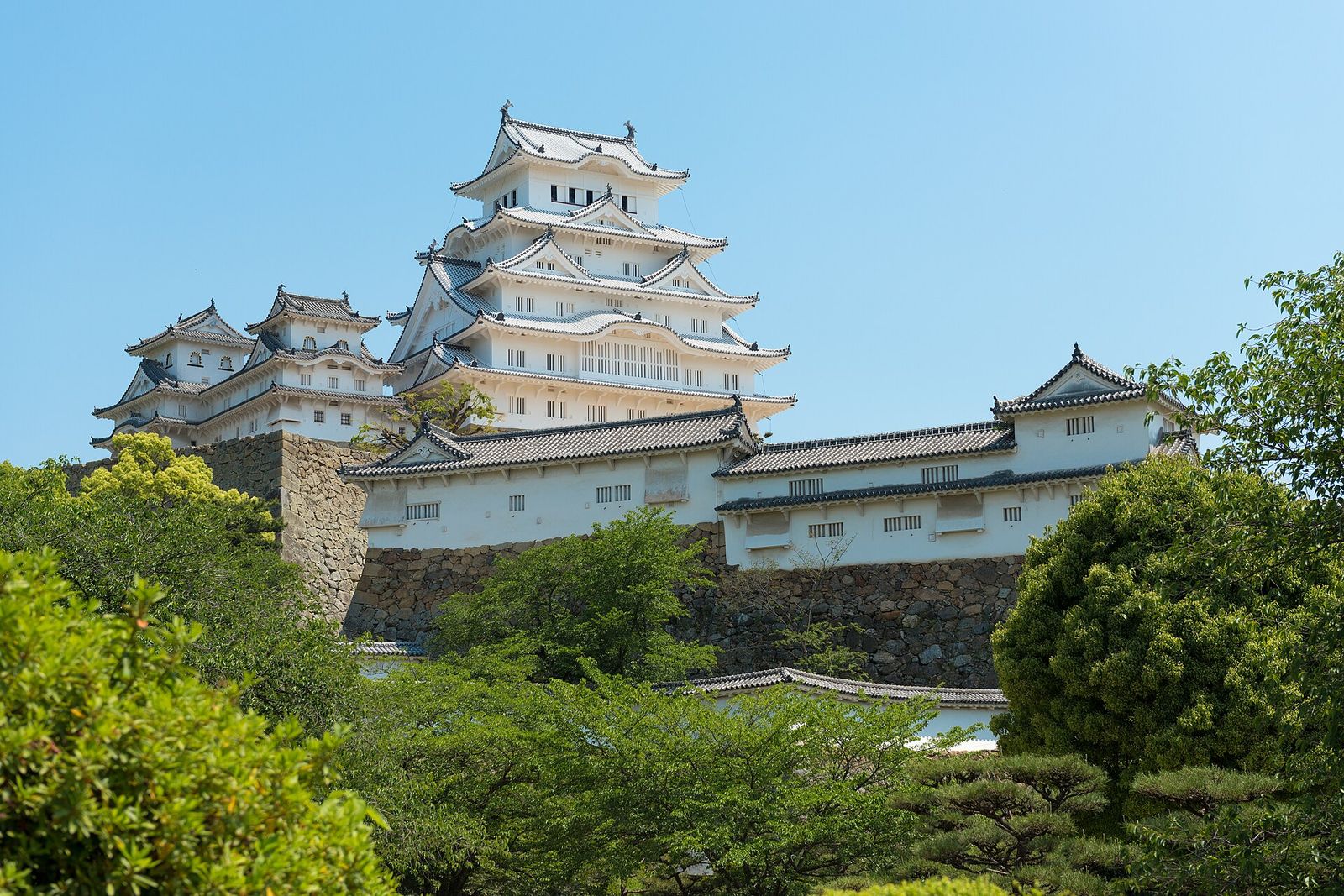
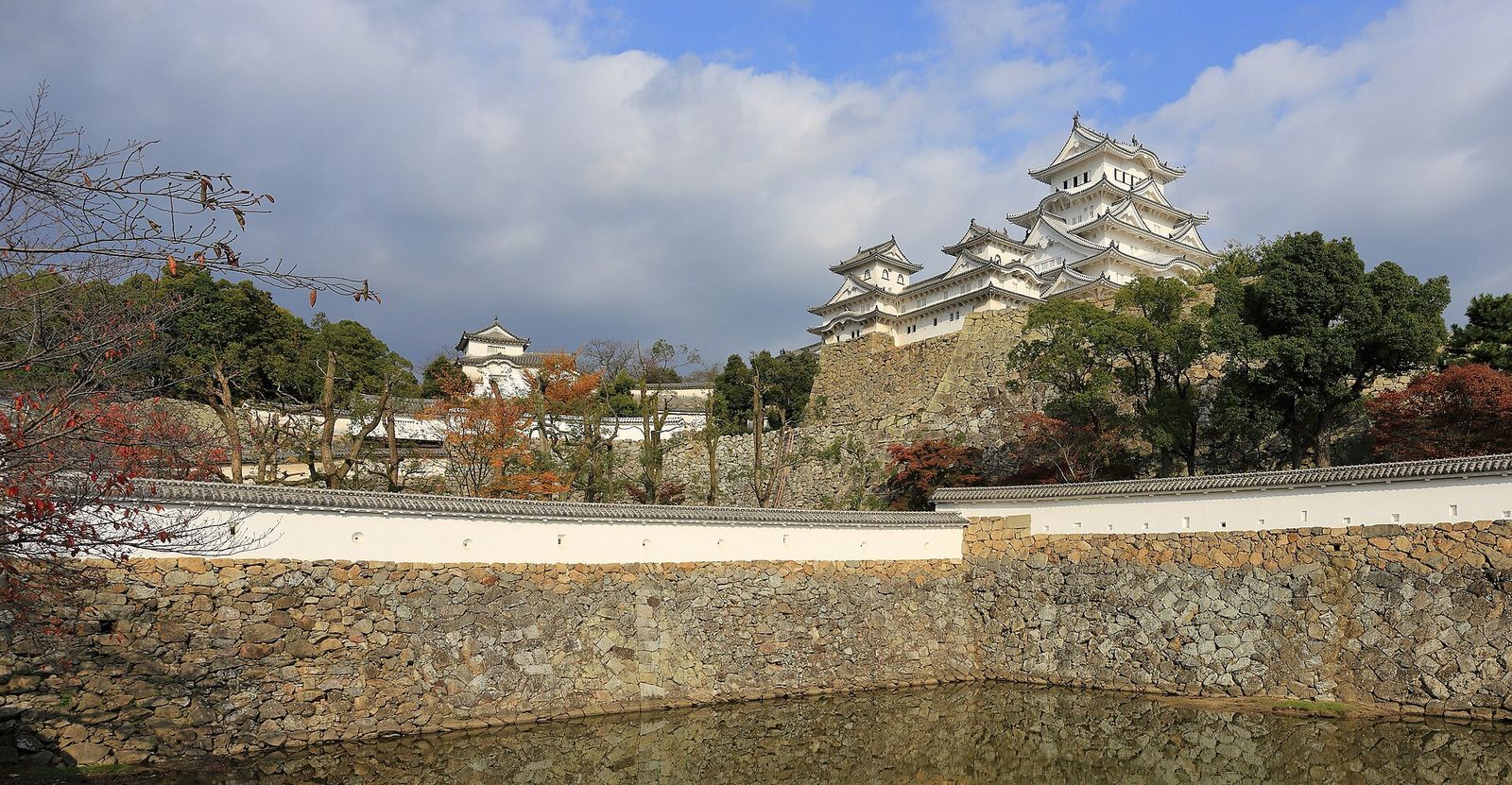
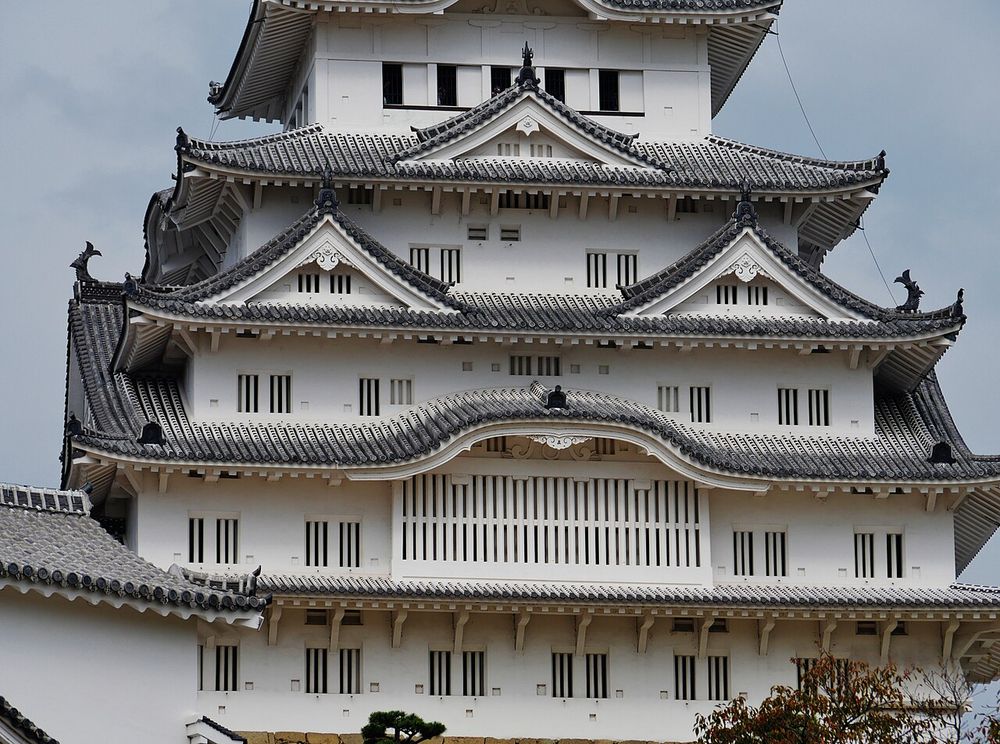
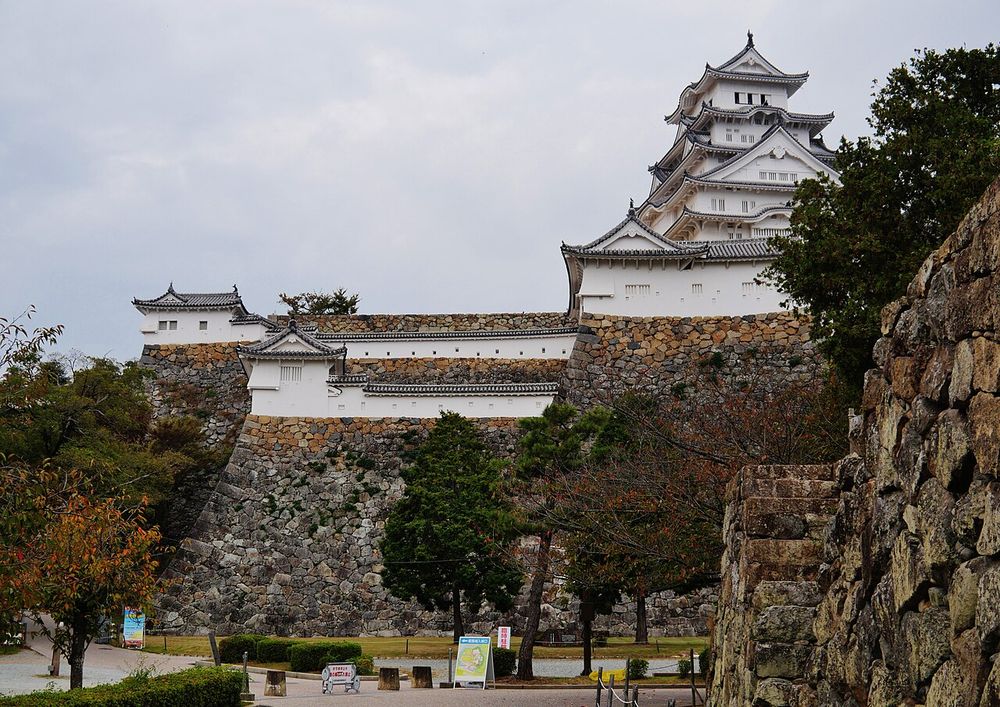
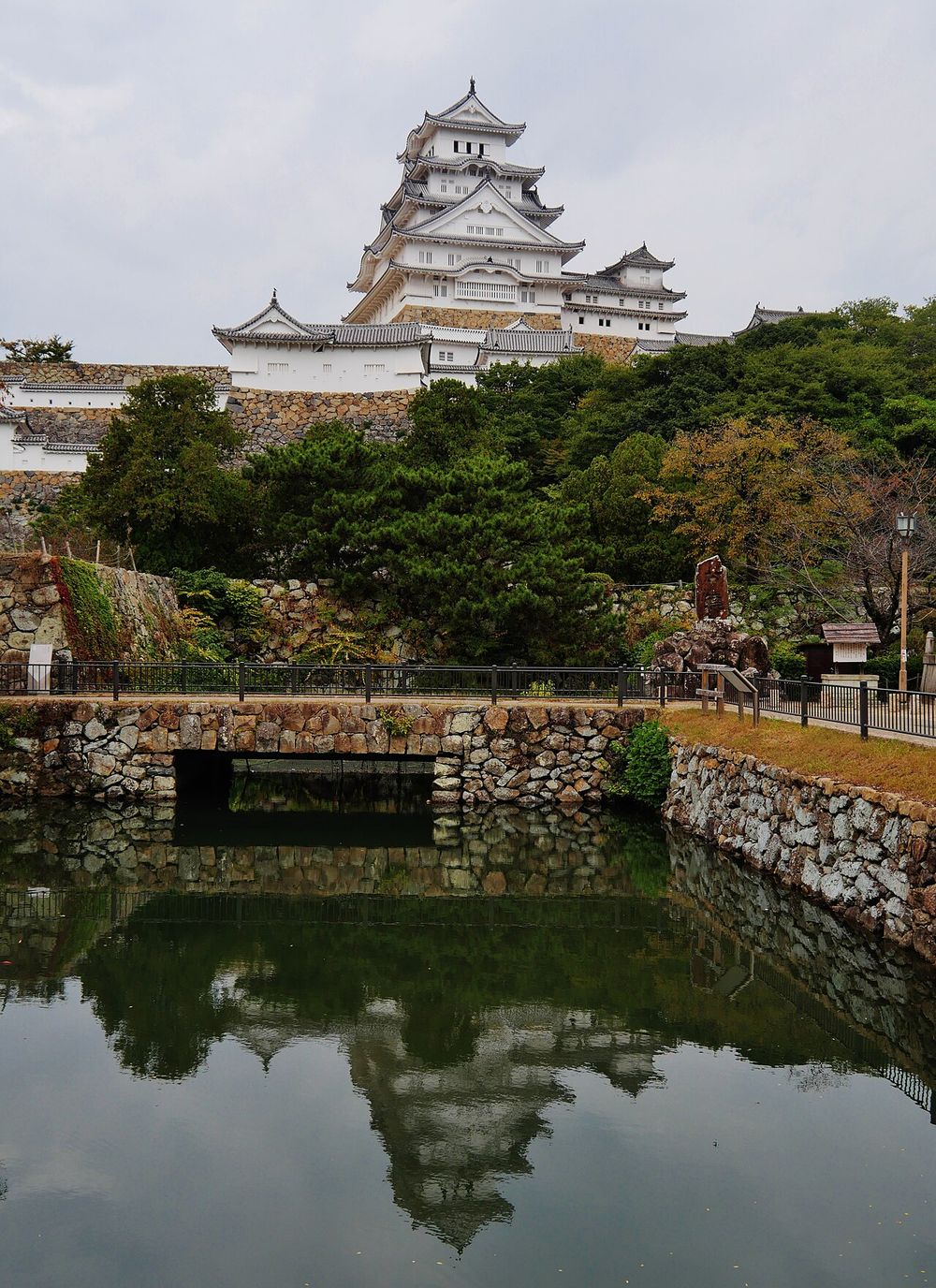
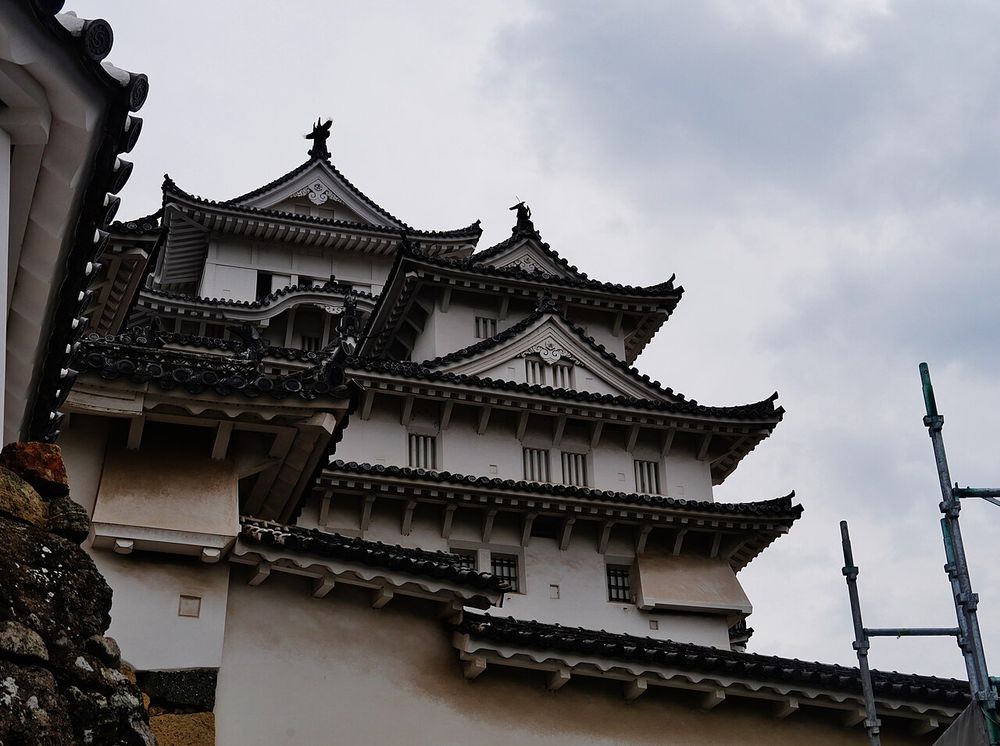
The largest castle in Japan that is still the real thing: the timber tower finished in 1609, with its gates, walls and moats around it. Most Japanese castles you see are concrete copies. This one was never attacked, never burned and never bombed, and it is white from top to bottom.
Photo: Seattleite7, CC BY-SA 4.0, Wikimedia Commons
The story
Himeji Castle stands on a low hill in the middle of a plain, where the road along the Inland Sea meets the roads from the north. Whoever held it controlled the way between Osaka and western Japan. That is why the Tokugawa shoguns gave it to a trusted son-in-law in 1600 and let him build on this scale.
The tower you see was finished in 1609. It is the largest of the twelve castle towers in Japan that survive from the age of the samurai. Round it stand some eighty other towers, gates and walls of the same period.
What is here
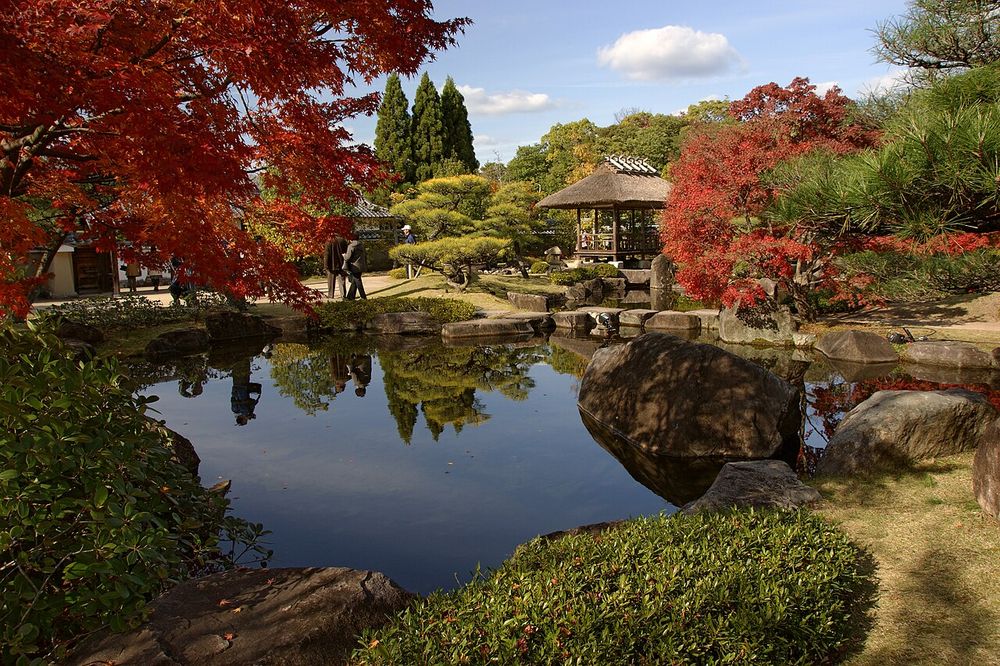
The square inside the main gate is free. One ticket covers everything beyond the ticket office: the gates, the tower and the west bailey. The garden next door, Kokoen, has its own ticket or a joint one.
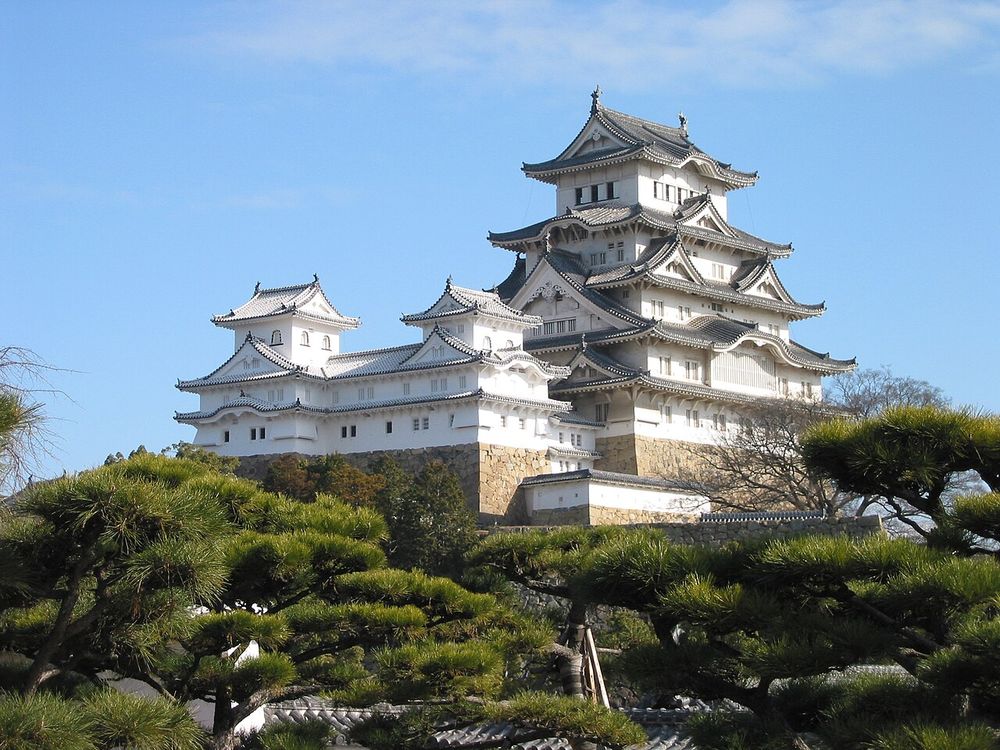
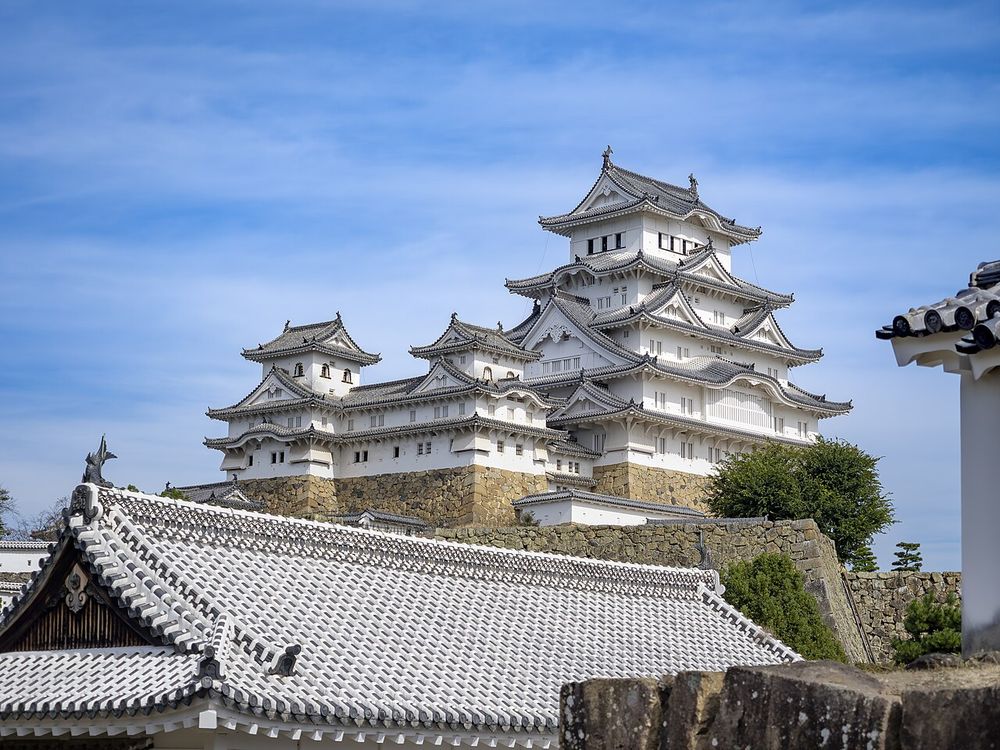
The view from the square: five roofs, six floorsby ja:User:Reggaeman, Public domain
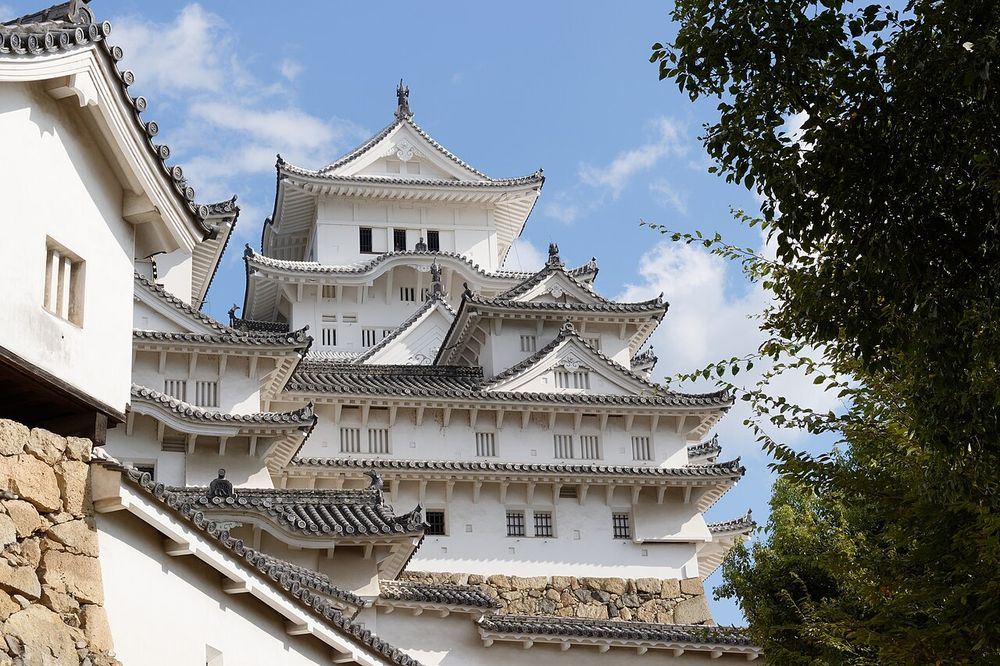
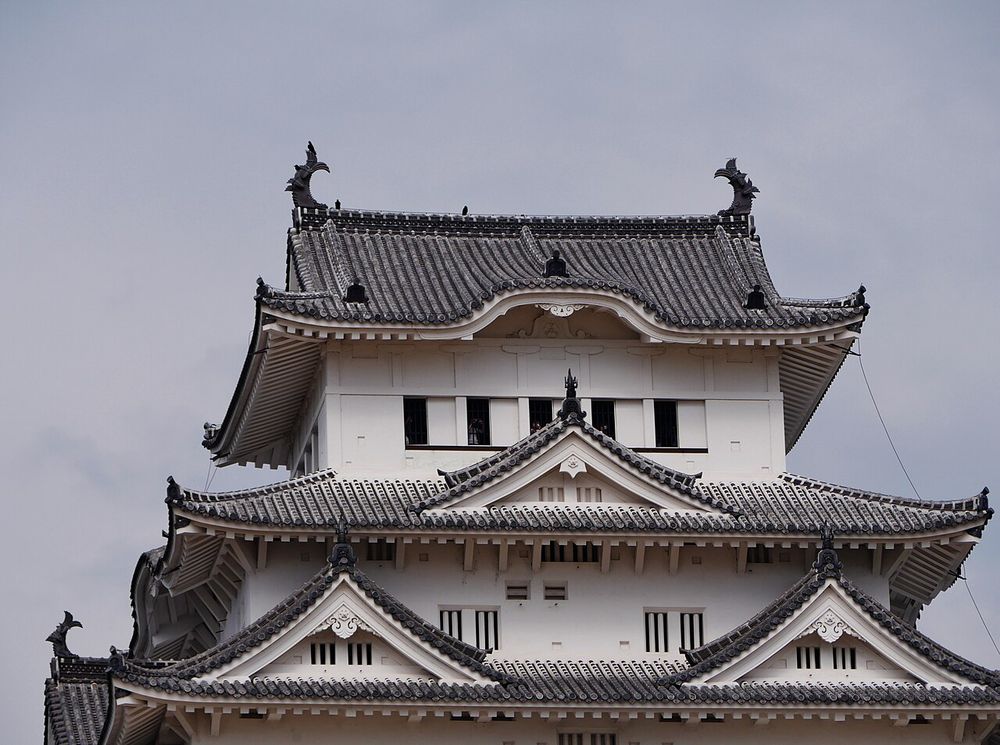
Count the roofs on the big tower. You will find five. Inside there are six floors and a cellar. Castle builders hid a floor so that an enemy could not tell where the defenders stood.
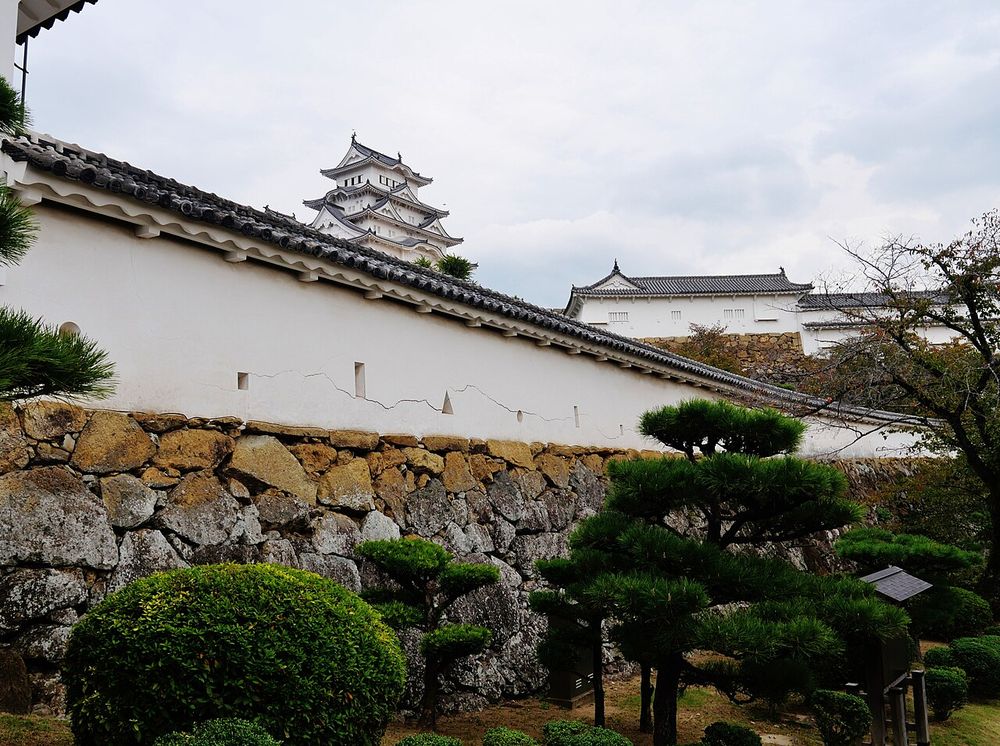
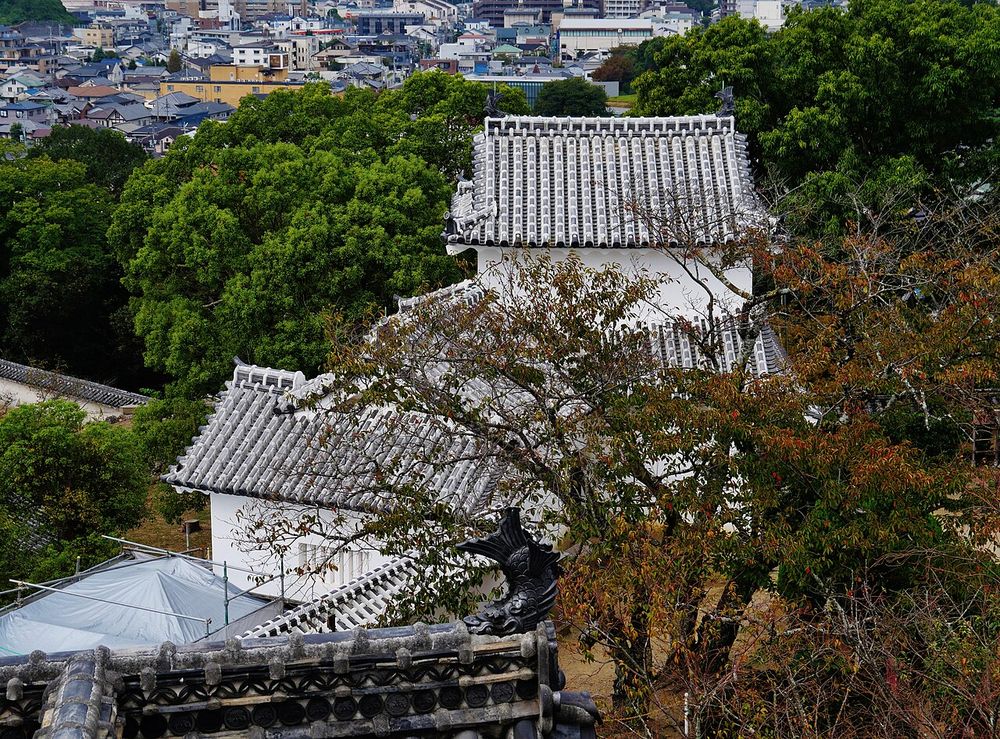
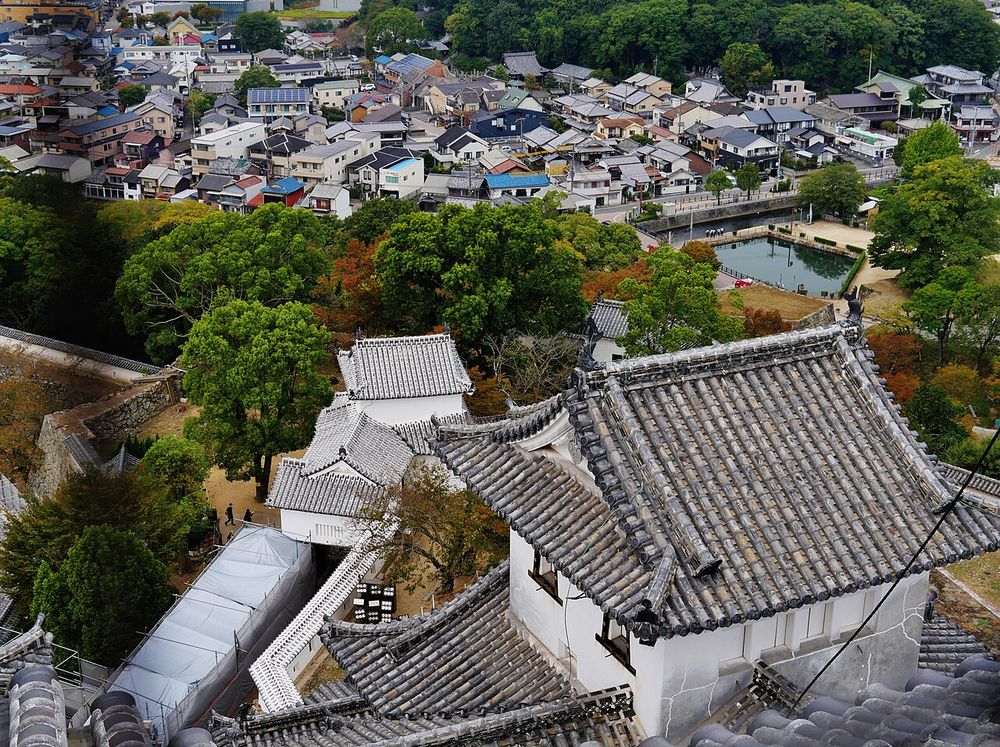
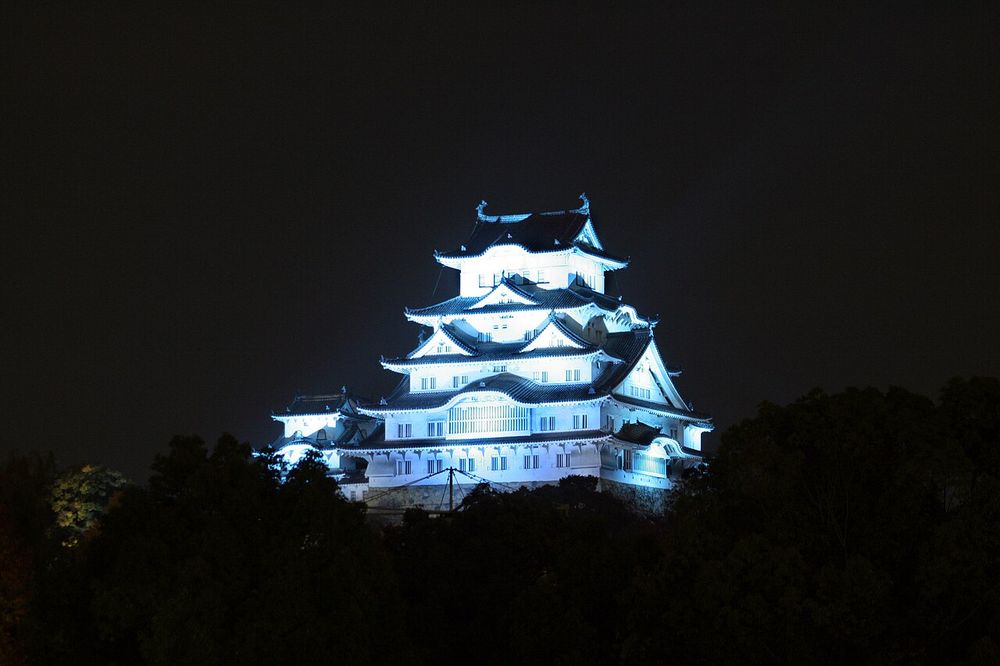
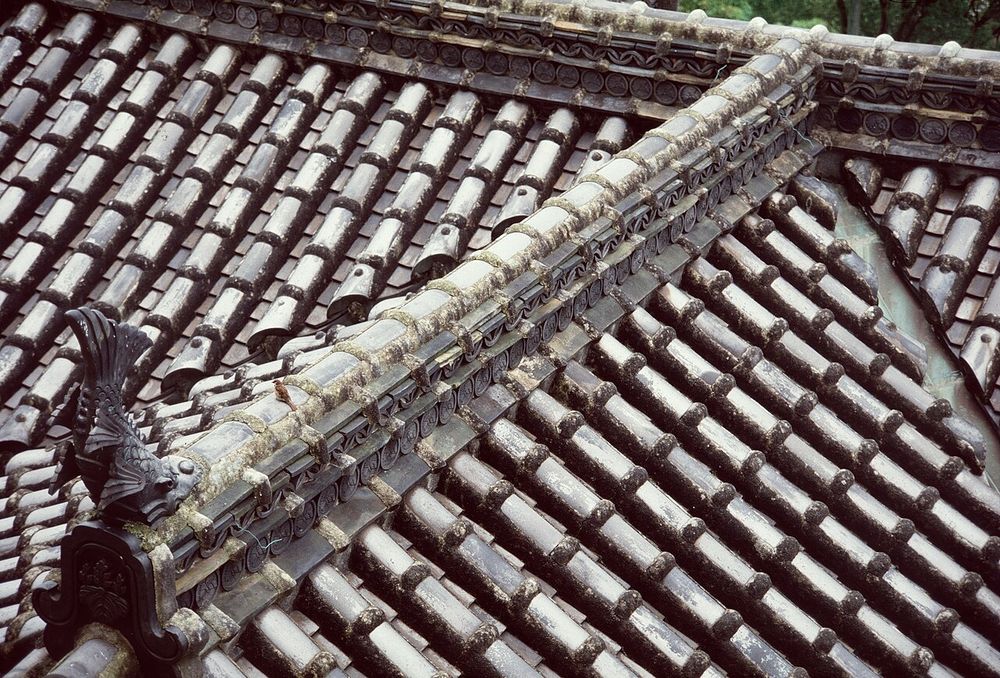
The walls are white because they are coated in plaster made of lime, shell ash and hemp. The plaster is three centimetres thick and will not burn. Even the joints between the grey roof tiles are sealed with it, which is why the roofs look white from a distance too.
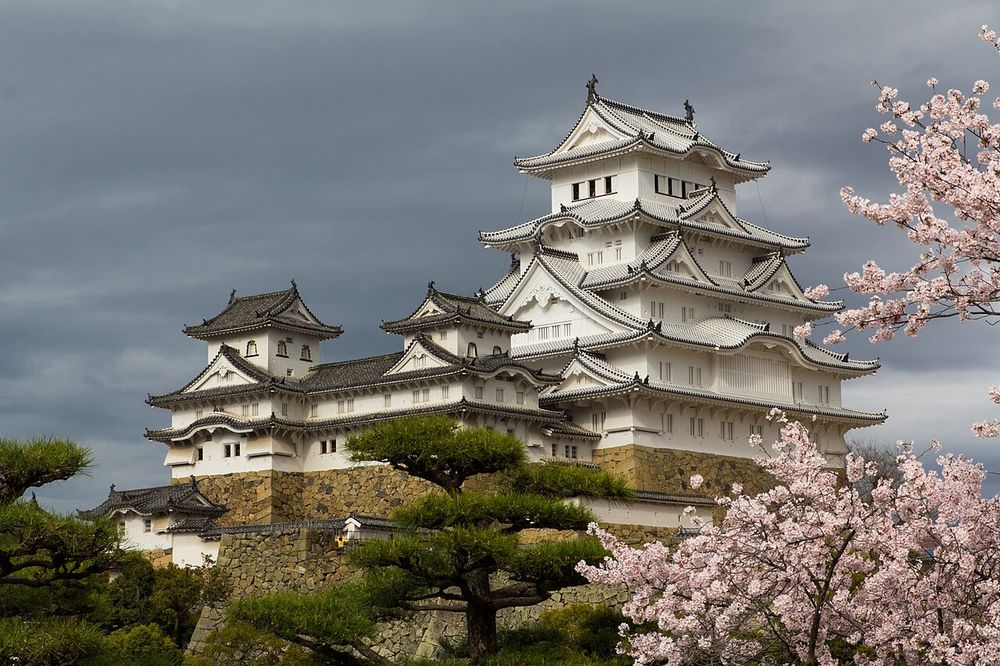
It is not one tower. Three small towers stand at the corners, joined to the big one by two-storey corridors, making a closed square. If one fell, the others could still fight.
A stone base curved like a fanZairon, CC BY 4.0
Look at the stone base under the white walls. It curves outward towards the bottom like an open fan. The curve spreads the weight and is very hard to climb.
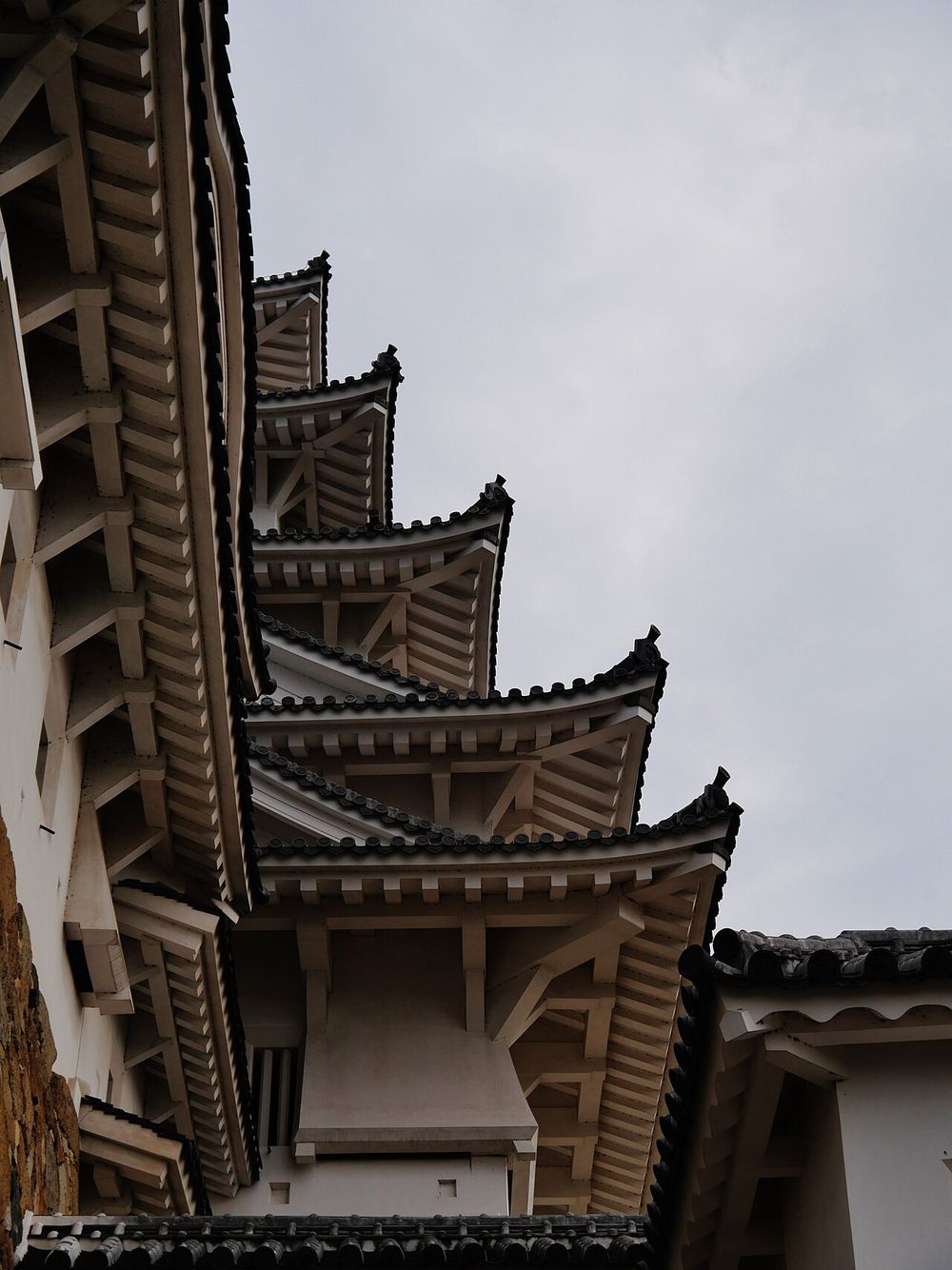
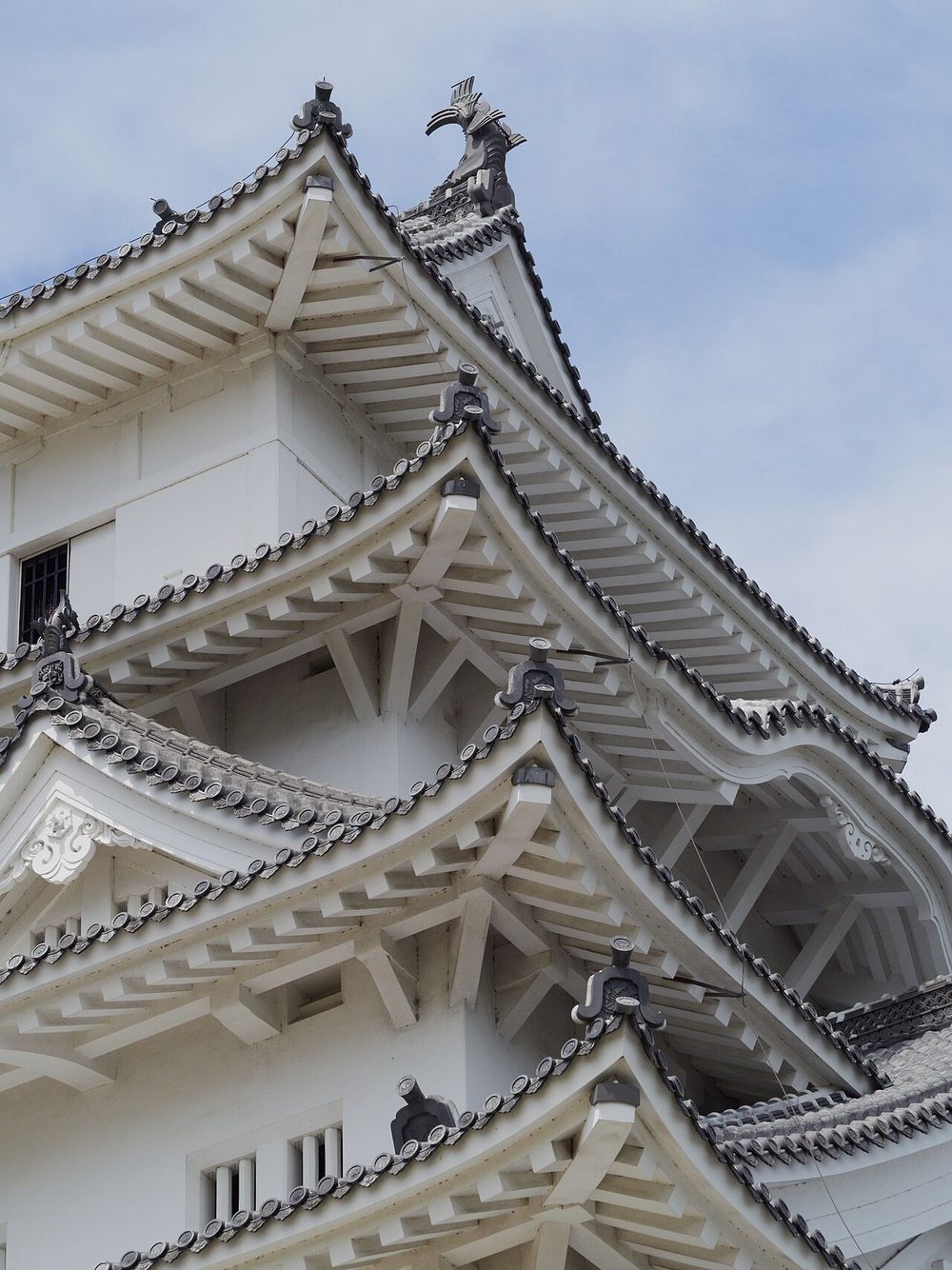
The Japanese call it the White Heron Castle. From here you can see why: the layered roofs look like a bird opening its wings.
Things people often get wrong
"It was rebuilt, like Osaka Castle." Osaka's tower is concrete, from 1931. This one is the timber of 1609, taken apart and put back together in a repair of 1956 to 1964.
"Great battles were fought here." Not one. It was built for a war that never came.
"The lord lived in the tower." He lived in a low palace at the foot of the hill, which is gone. The tower was a storehouse and a last refuge, and for most of its life it stood empty.
"The white is paint." It is plaster, and it has to be renewed. After the repair that ended in 2015 the castle looked so white that people joked it was "too white". Mould has since greyed it again.
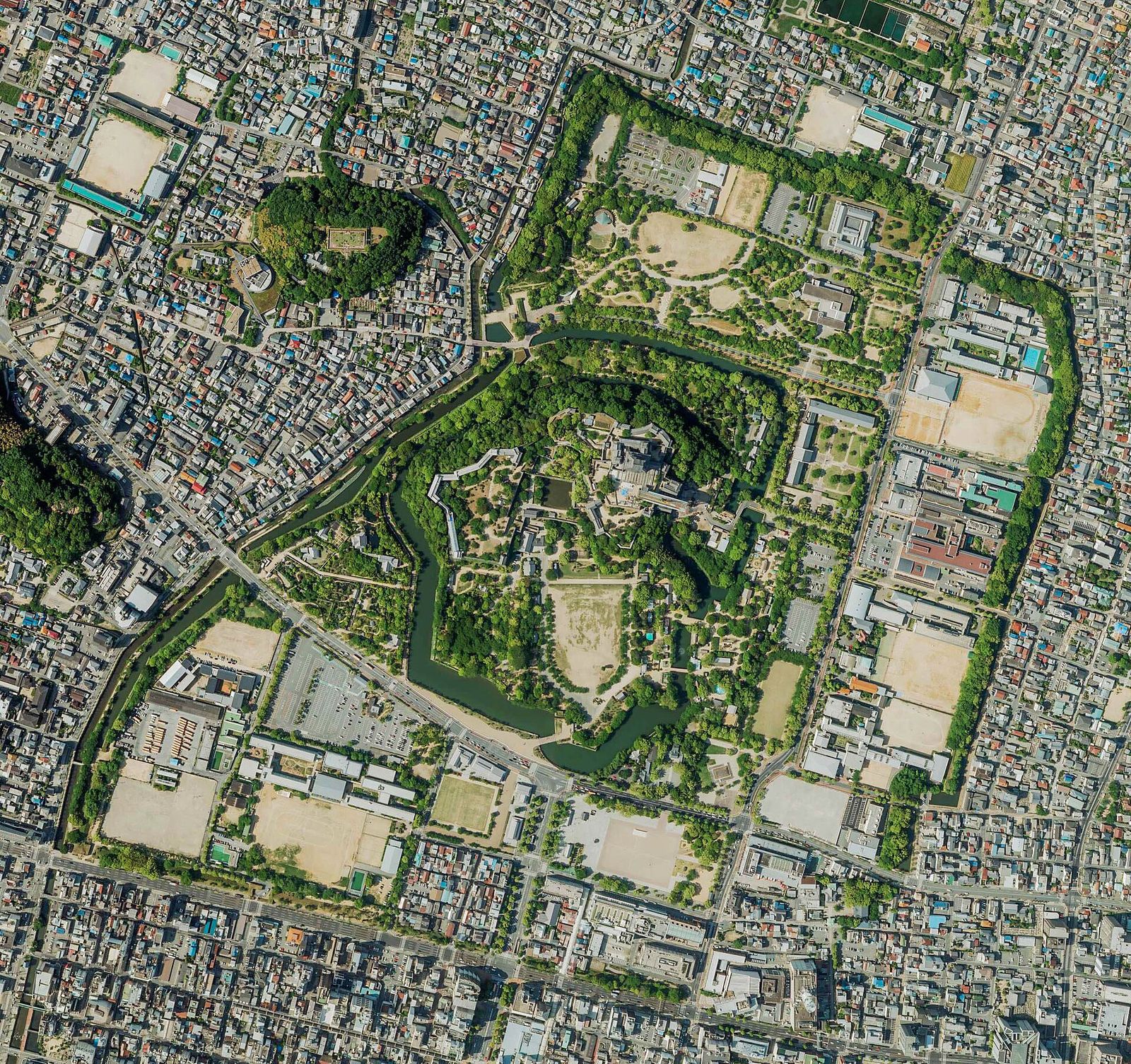
"A castle like this is a Chinese city wall with a palace inside." Chinese visitors often expect one great wall round a town. A Japanese castle is a spiral of small walled yards climbing a hill, each a trap for whoever gets into it.
People who stood here
Kuroda Kanbei (the great strategist of Japan's civil wars, 1546–1604)He was born in the small fort that stood on this hill and grew up here. In 1580 he handed it over to the man he had decided to serve, Hideyoshi, and told him this was the place from which to take the west.
Toyotomi Hideyoshi (the peasant's son who united Japan, 1537–1598)He built the first tower here in 1581, three storeys high. In June 1582, when news came that his master had been murdered in Kyoto, he turned his army round and marched 200 kilometres towards Kyoto in ten days, resting his men in this castle on the way, and went on to win the country.
Ikeda Terumasa (lord of Himeji, son-in-law of the first Tokugawa shogun, 1565–1613)He pulled down Hideyoshi's tower and in eight years, from 1601 to 1609, built everything you see on the hill. Later estimates speak of twenty-four million days of labour.
Princess Sen (granddaughter of the first Tokugawa shogun, 1597–1666)At seven she was married to the heir of the rival house. At nineteen she was carried out of his burning castle at Osaka as her grandfather's army destroyed it. She married again and came to Himeji in 1617, and the west bailey was built for her with her dowry. Within ten years her husband and son were dead and she left. Japanese television has told her story many times.
Miyamoto Musashi (Japan's most famous swordsman, died 1645)He lived in this region about 1617 to 1620 and taught the lord's men. His adopted son served Princess Sen's husband. In Yoshikawa Eiji's novel Musashi he is shut in a room of the tower for three years with nothing but books. That part is fiction.
Nakamura Shigeto (army colonel, 1840–1884)In 1878, when old castles were being pulled down all over Japan as useless, he wrote to his superiors asking that Himeji and Nagoya be kept. Money for repairs followed. A stone to him stands inside the first gate.
Kurosawa Akira (film director)He filmed here twice: for Kagemusha in 1980 and for Ran in 1985, his version of King Lear.
Sean Connery (Scottish actor, the first James Bond)In 1966 he was here for You Only Live Twice. The castle plays a secret school for ninja.
Go deeper: nine stops, from the outer gate to the top floor and the west bailey
The route is the one every visitor walks: in at the main gate, up through the gates to the tower, down, and out by the west bailey.
1. The main gate and the square
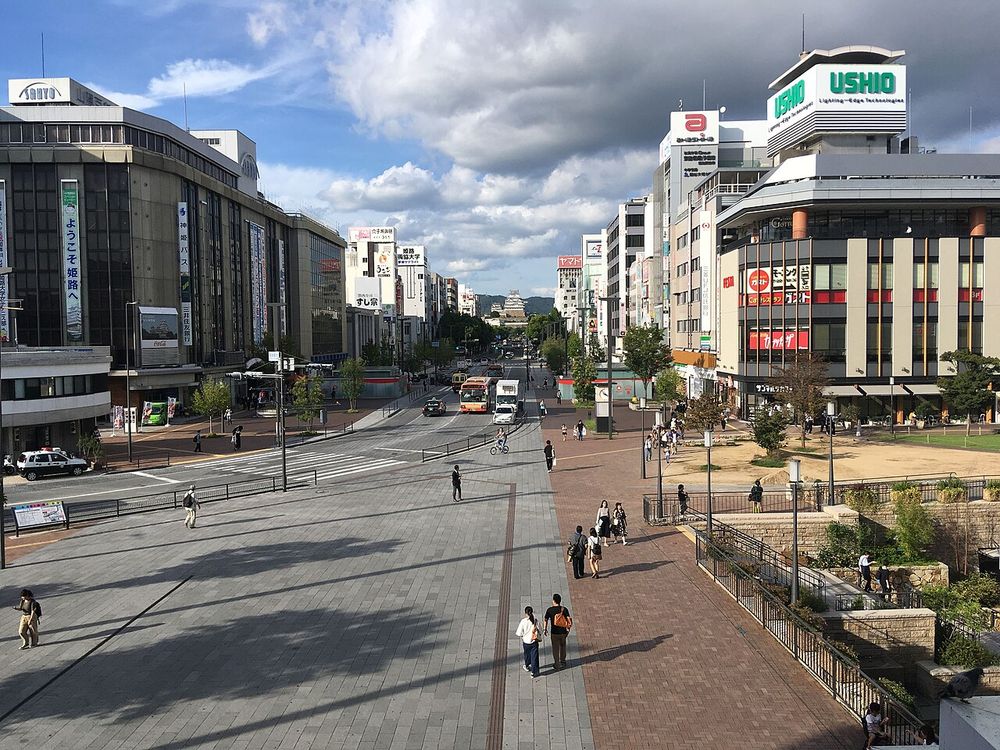
The avenue from the station, with the castle at its endChristophe95, CC BY-SA 4.0
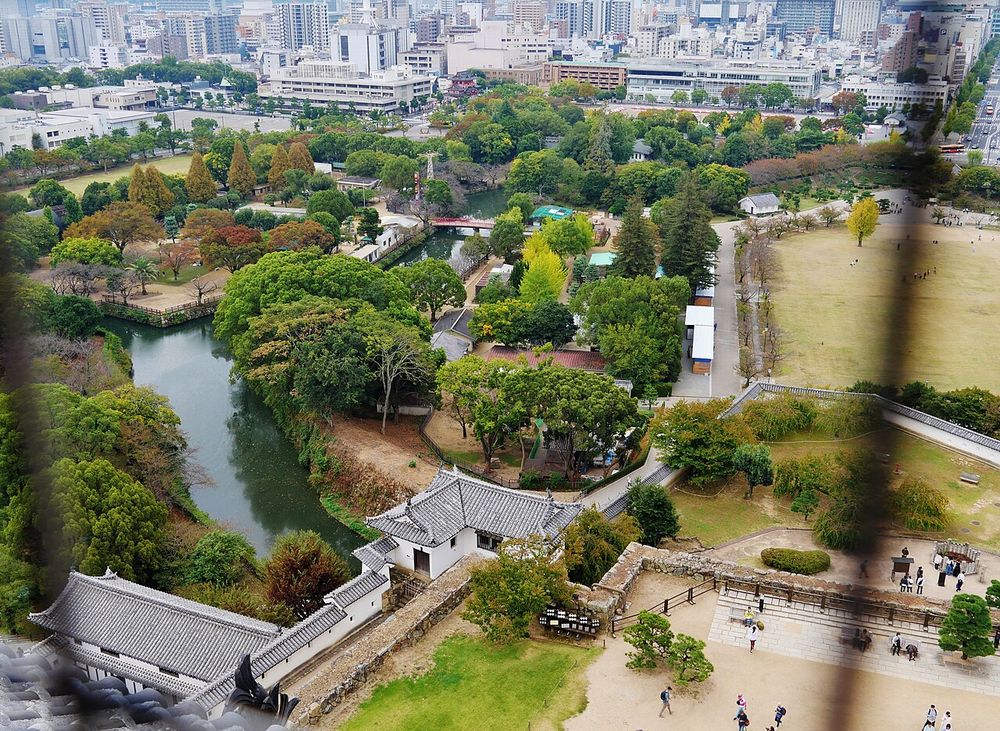
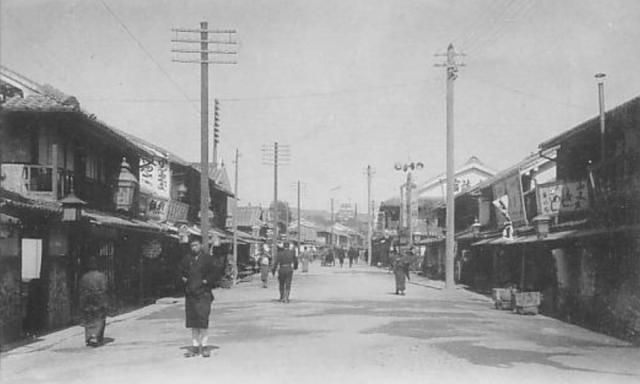
From the railway station the castle stands at the end of a straight avenue, one kilometre away. In 1609 the outermost moat ran where the station is now. The whole of the town centre was inside the castle.
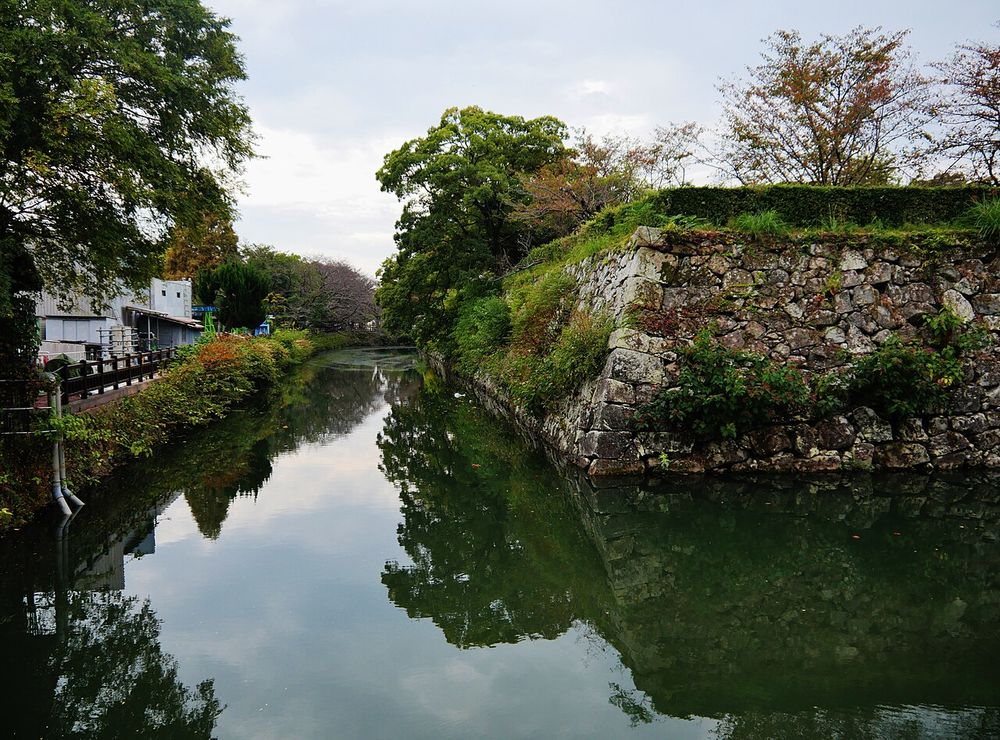
The inner moatZairon, CC BY 4.0
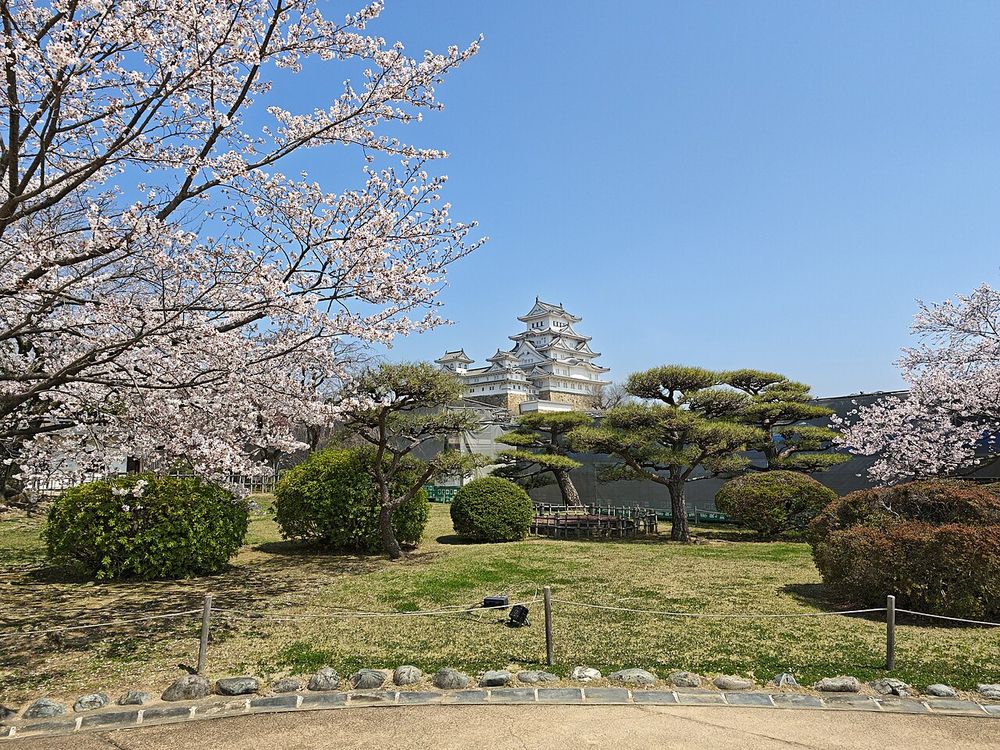
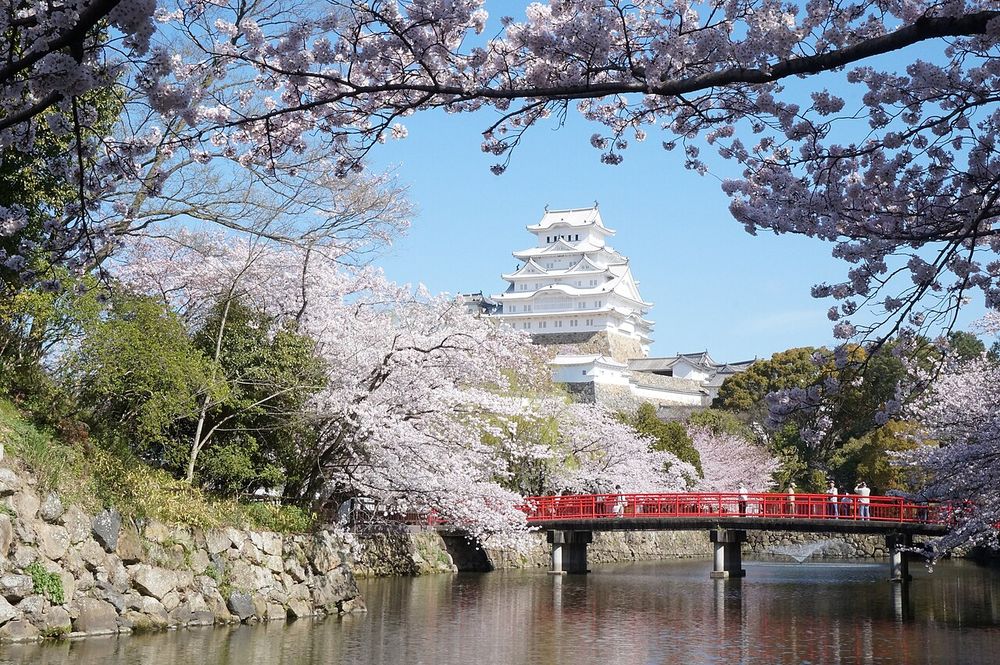
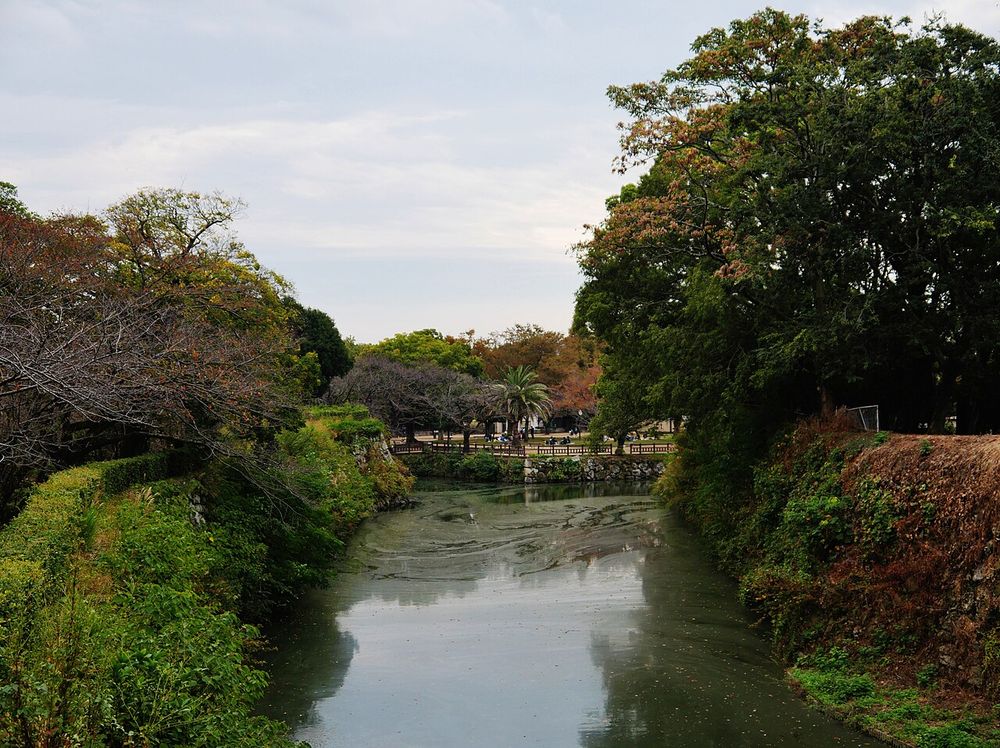
Cross the inner moat by the wooden bridge. The gate is a modern one. The square beyond was the lord's palace. It is free, and it is where people of Himeji picnic under the cherry trees in April.
2. The Hishi gate: the maze begins
The Hishi gate, the first gate of the mazeZairon, CC BY 4.0
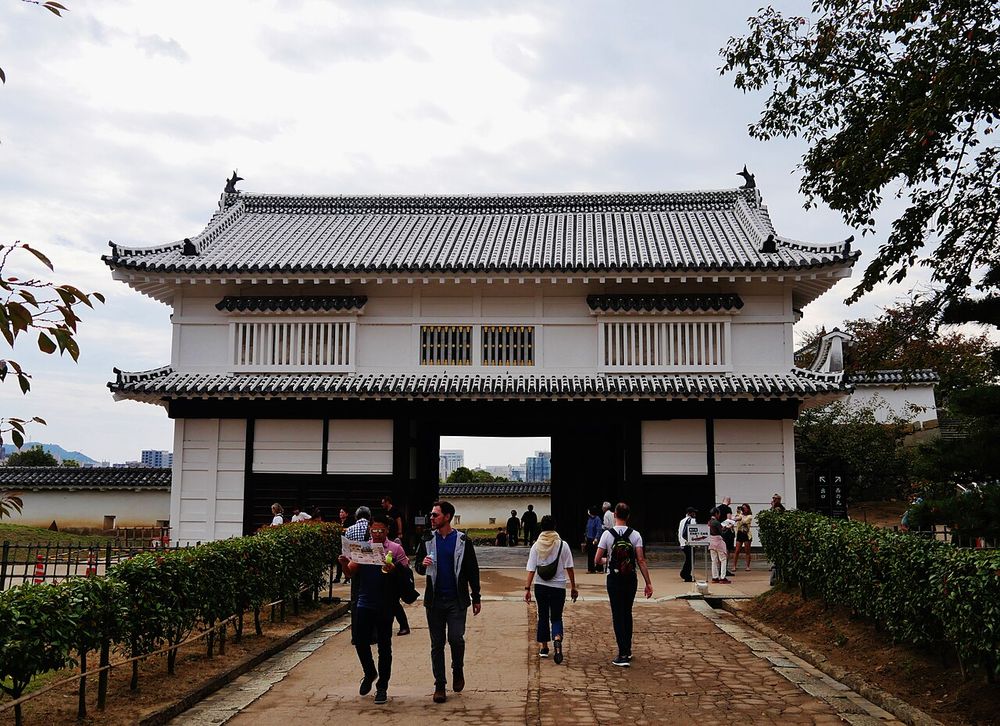
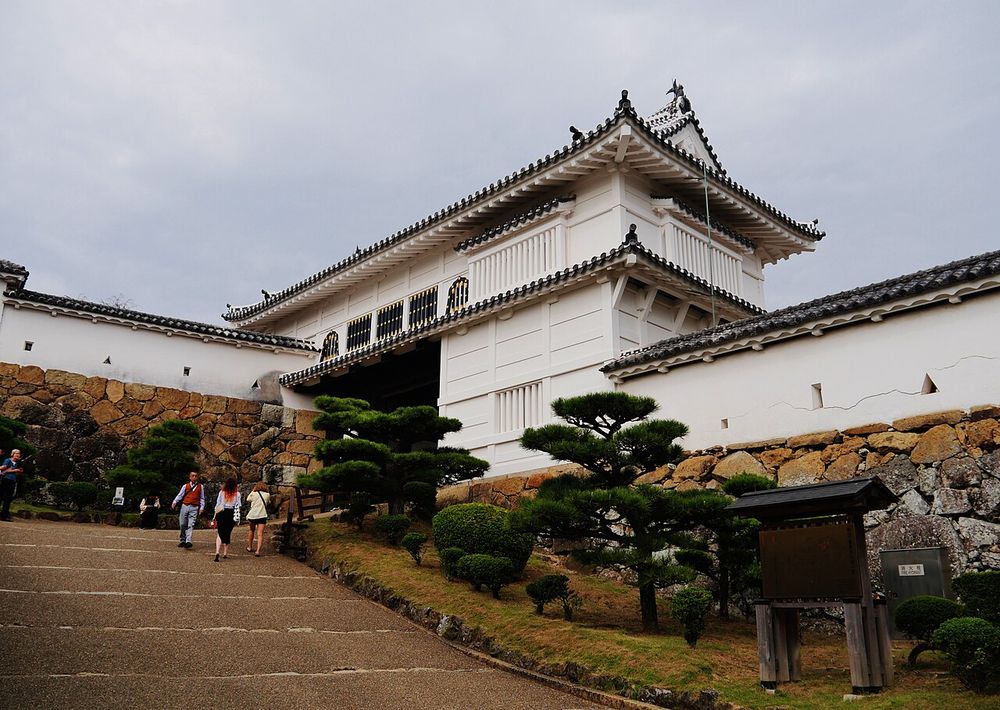
Past the ticket office is the first real gate, with gold fittings on its black windows. From here the tower is 130 metres away in a straight line. The path to it is 325 metres long.
The gates beyond are named after the first letters of the old Japanese alphabet: I, Ro, Ha, Ni, Ho. The path turns back on itself, climbs, narrows, and at one point leads you away from the tower and downhill, so that an attacker would think he had gone wrong.
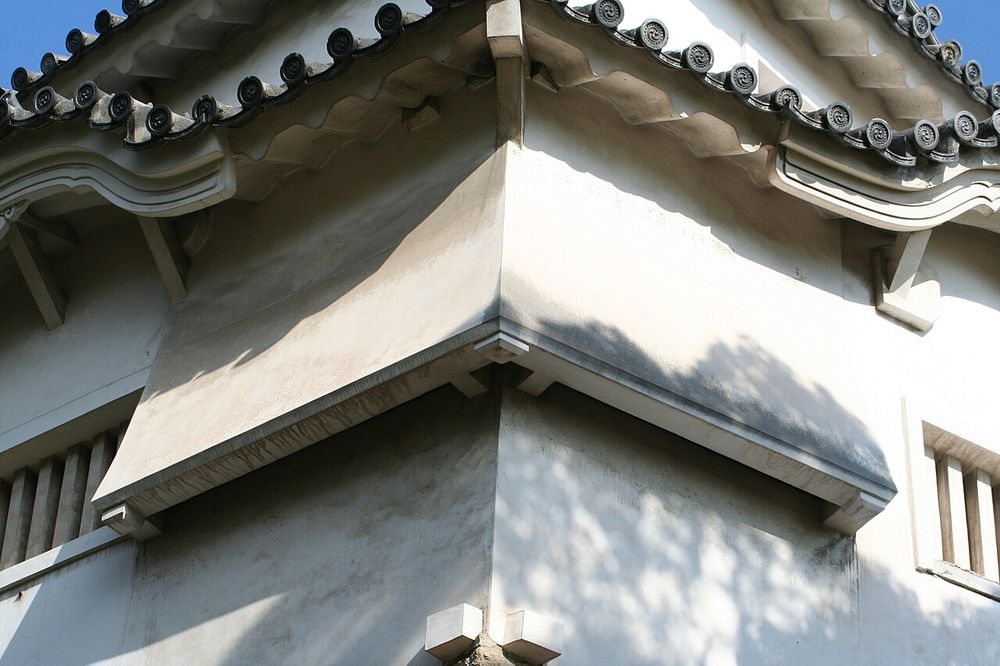
A stone-drop box at the corner of a turretCorpse Reviver, CC BY 3.0
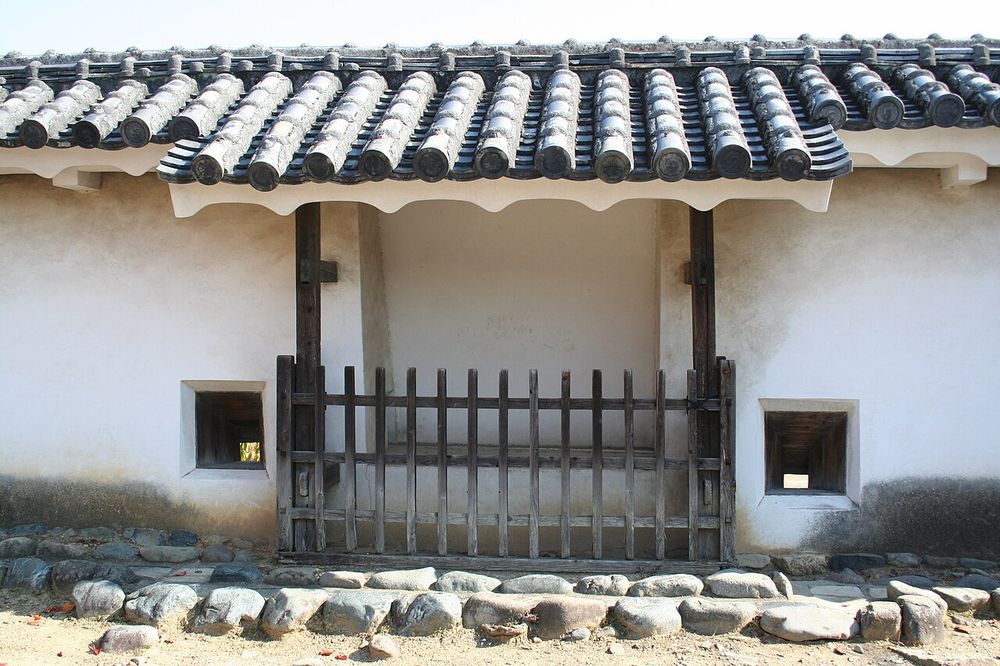
As you walk, look at the white walls beside you. They are pierced with holes: circles, triangles and squares for guns, tall slots for bows. About a thousand remain. The boxes that jut out over the base of the walls have trapdoors in the floor, for dropping stones.
3. Stones from tombs and kitchens
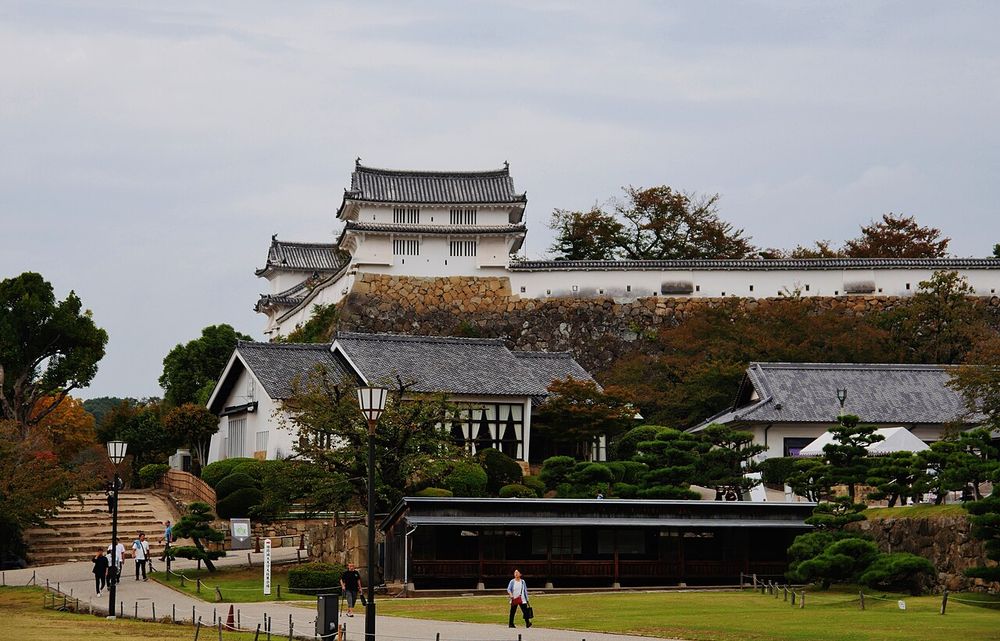
Walls of the inner yards, with the towers aboveZairon, CC BY 4.0
The plain round Himeji has little good stone. To finish the walls quickly the builders took what they could find. Look in the walls near the upper gates for long hollowed blocks: they are stone coffins from ancient burial mounds. There are also bases of garden lanterns and gravestones.
One small round stone is held in place by a wire net. It is half of a hand mill.
4. The well of the plate-counting ghost
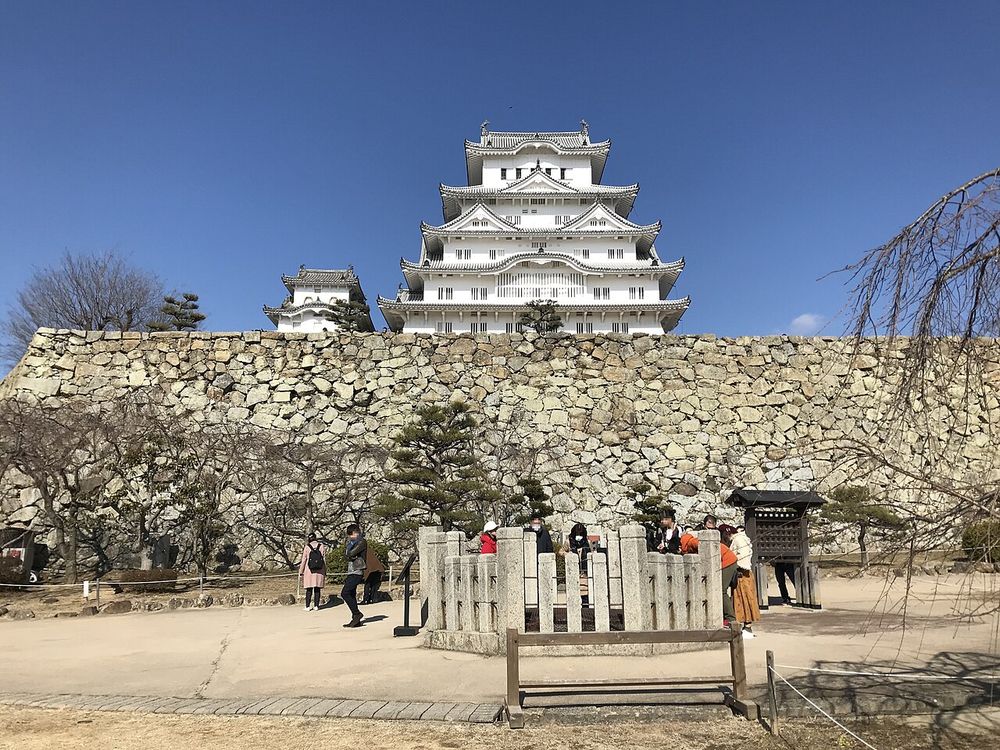
Okiku's Well, with the tower behindそらみみ, CC BY-SA 4.0
In the yard below the tower is a wide stone well with a fence round it. It is called Okiku's Well. Every Japanese knows the ghost story that goes with it. You will find it under Local legends.
The real use of the well was plain. A castle under siege needs water, and this one had thirty-three wells inside its walls.
5. Inside the tower: two tree trunks
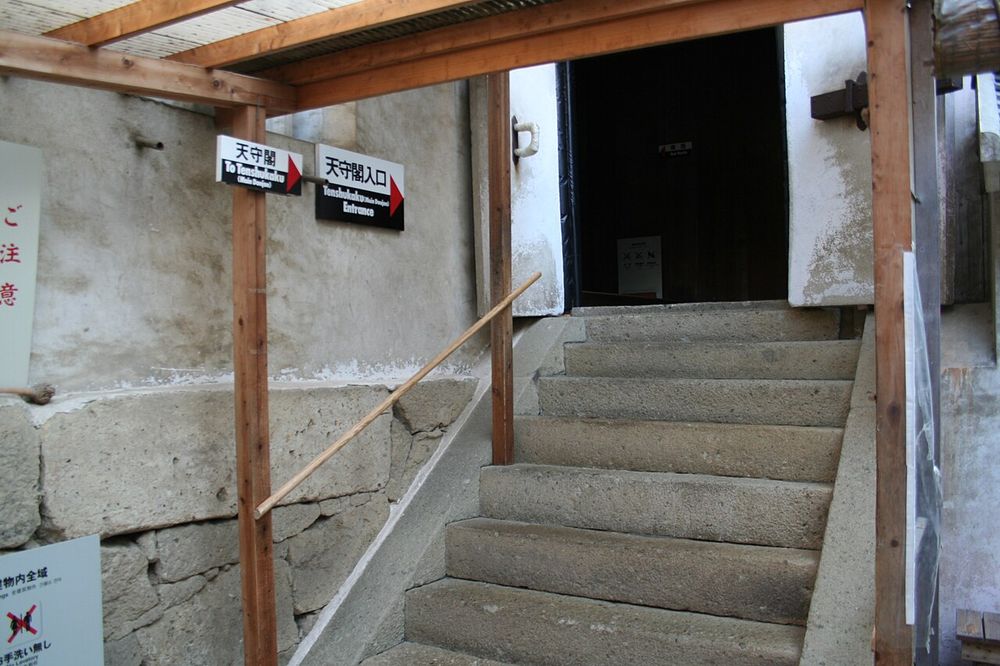
The first stair into the towerCorpse Reviver, CC BY 3.0
Take off your shoes and carry them. The stairs are as steep as ladders, on purpose.
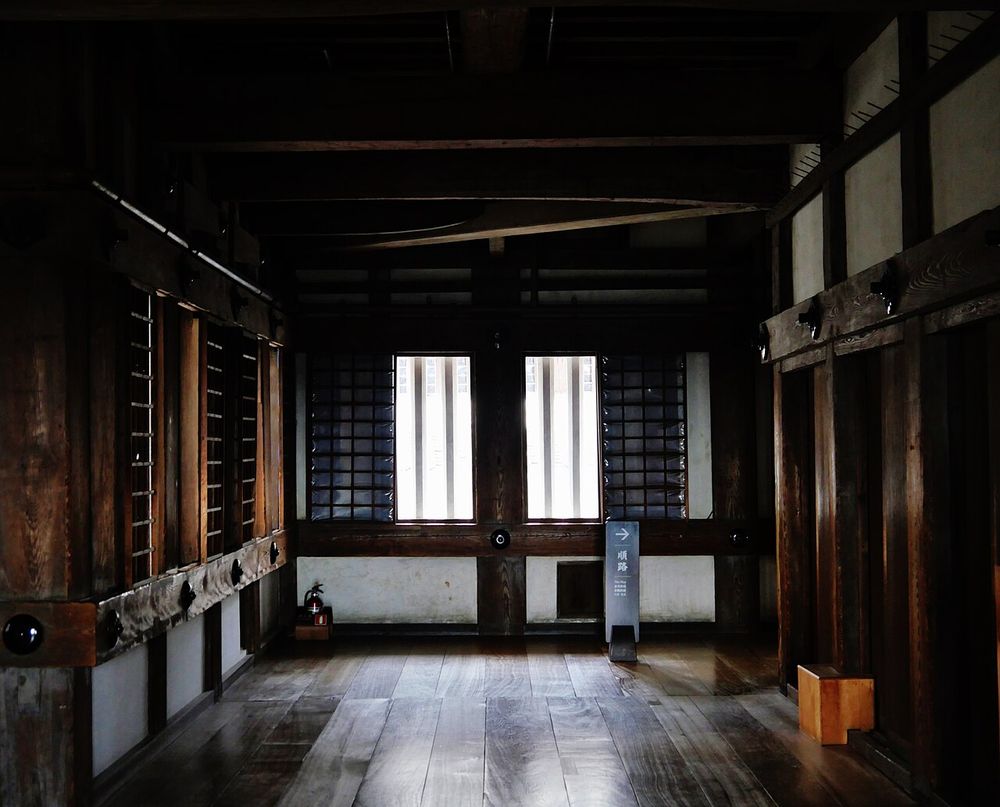
A bare floor of the tower, with racks for weapons along the wallZairon, CC BY 4.0
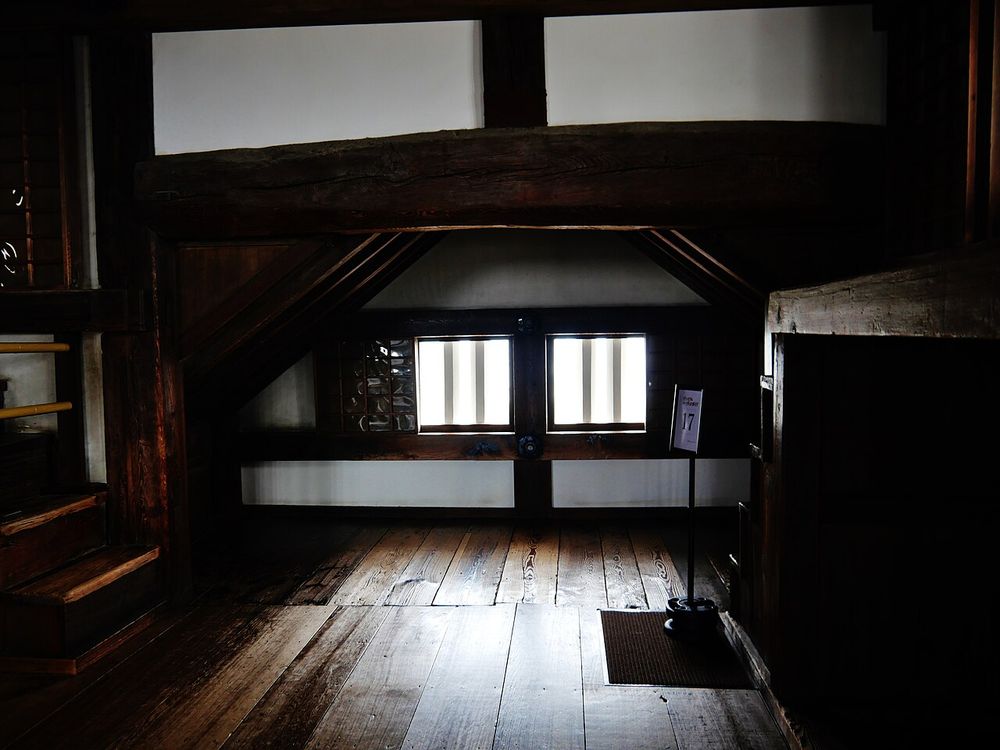
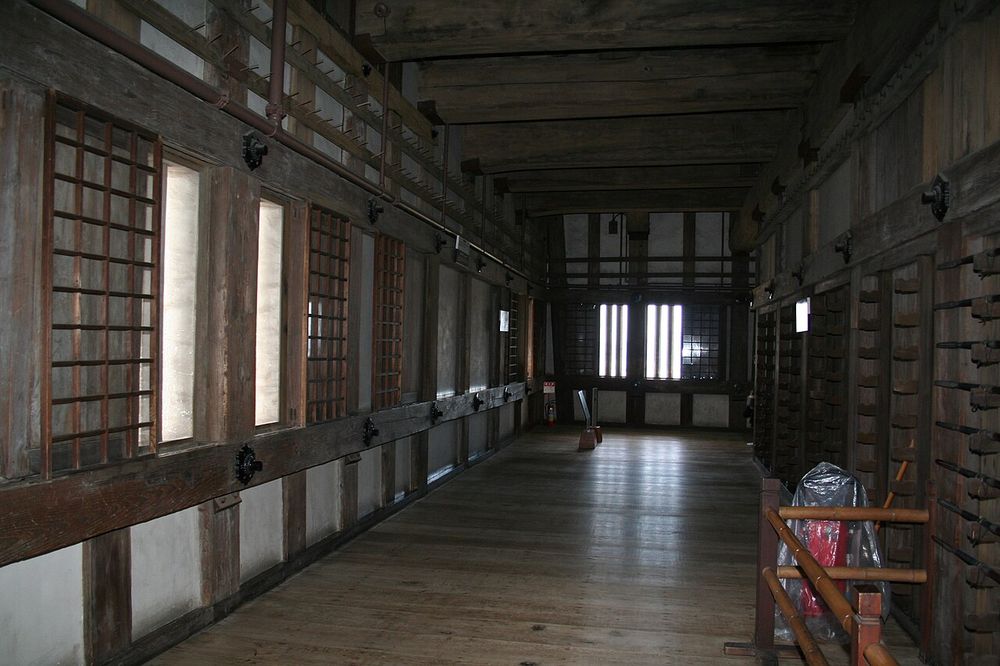
The rooms are bare. Along the walls run racks for spears and matchlock guns. There are hidden rooms for men to wait in ambush, and openings in the floor to shoot down the stairs.
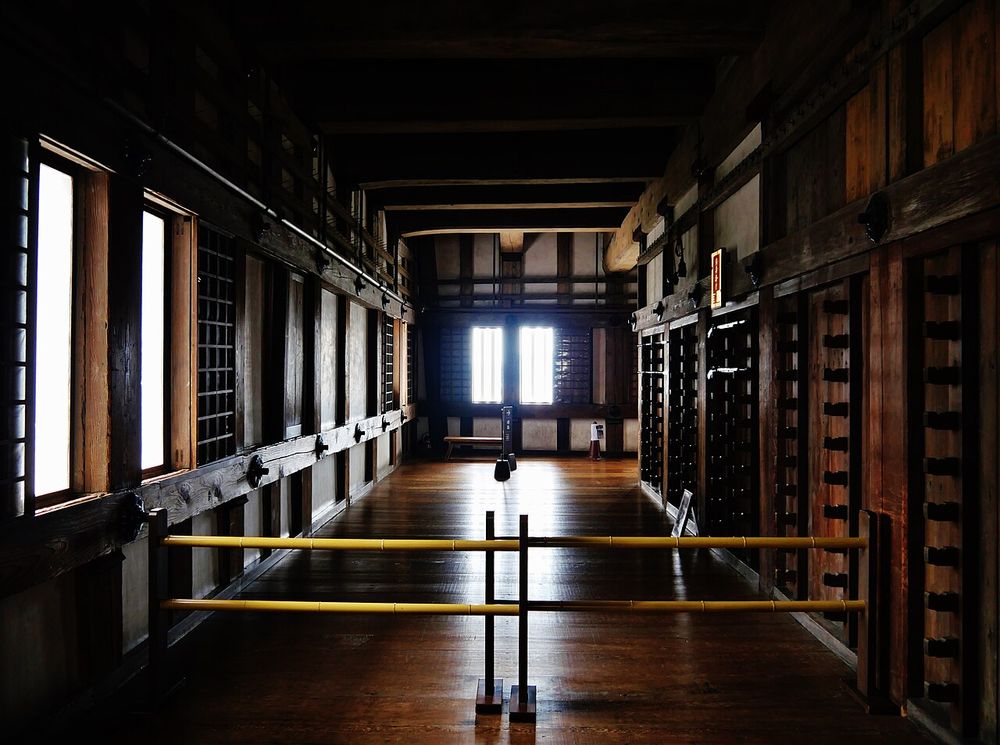
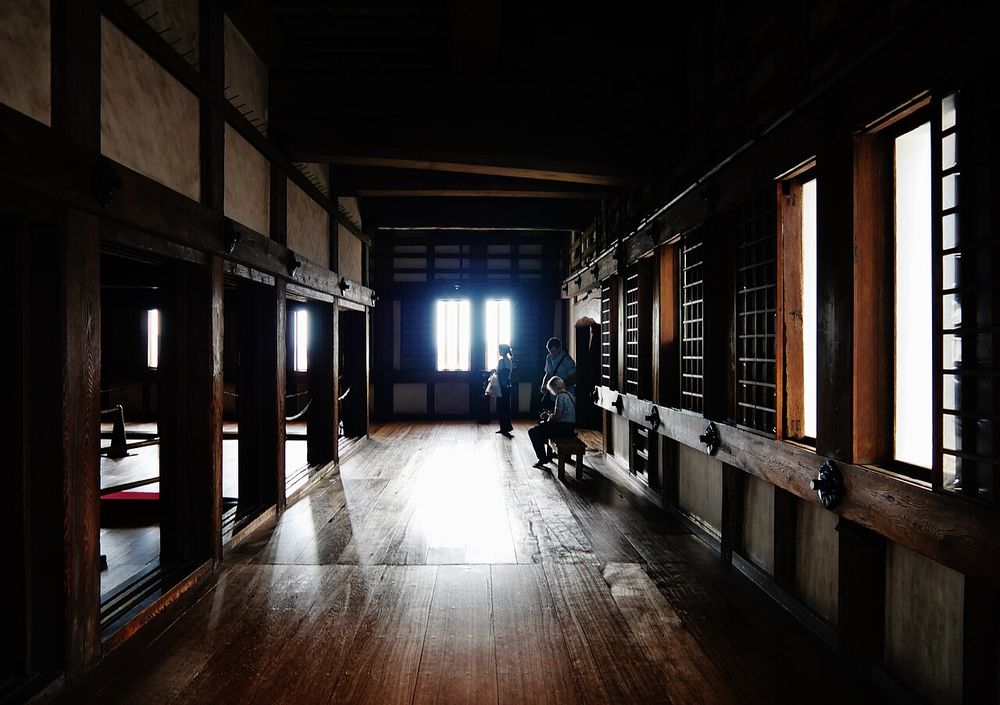
A corridor inside the towerZairon, CC BY 4.0
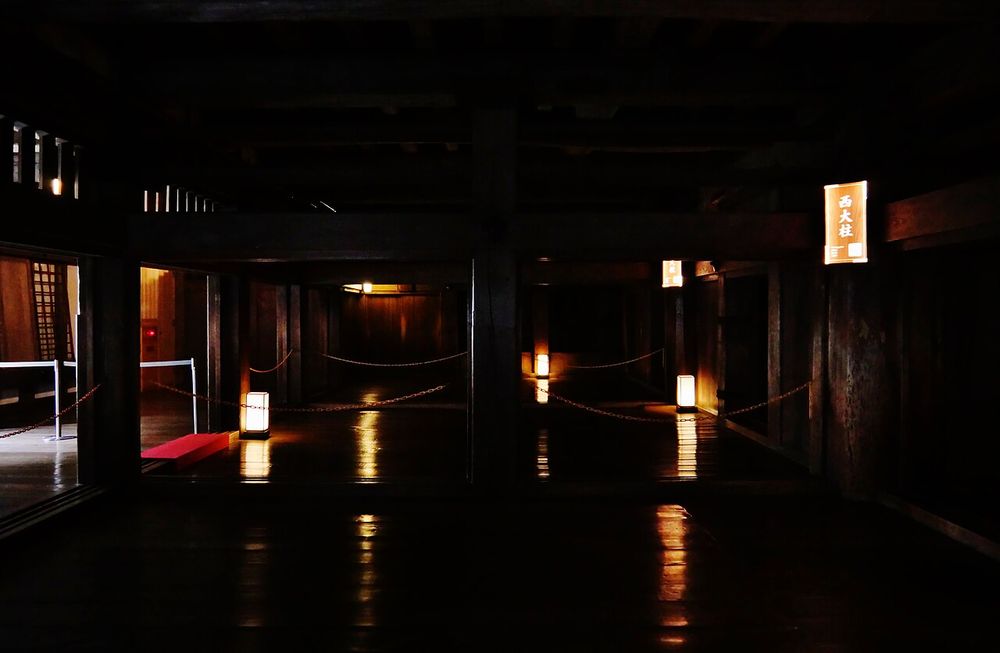
On each floor, find two huge round pillars, one to the east and one to the west of the middle. They are not separate pillars on each floor. Each is one trunk, 24.6 metres long and nearly a metre thick at the foot, rising from the cellar to the underside of the top floor. The whole tower, some 5,700 tonnes, hangs on these two.
The east pillar is the silver fir put in about 1608. The west pillar had rotted inside. In 1959 it was replaced with two cypress trunks joined end to end. The first tree chosen for it broke in two as it was brought down the mountain.
6. The top floor
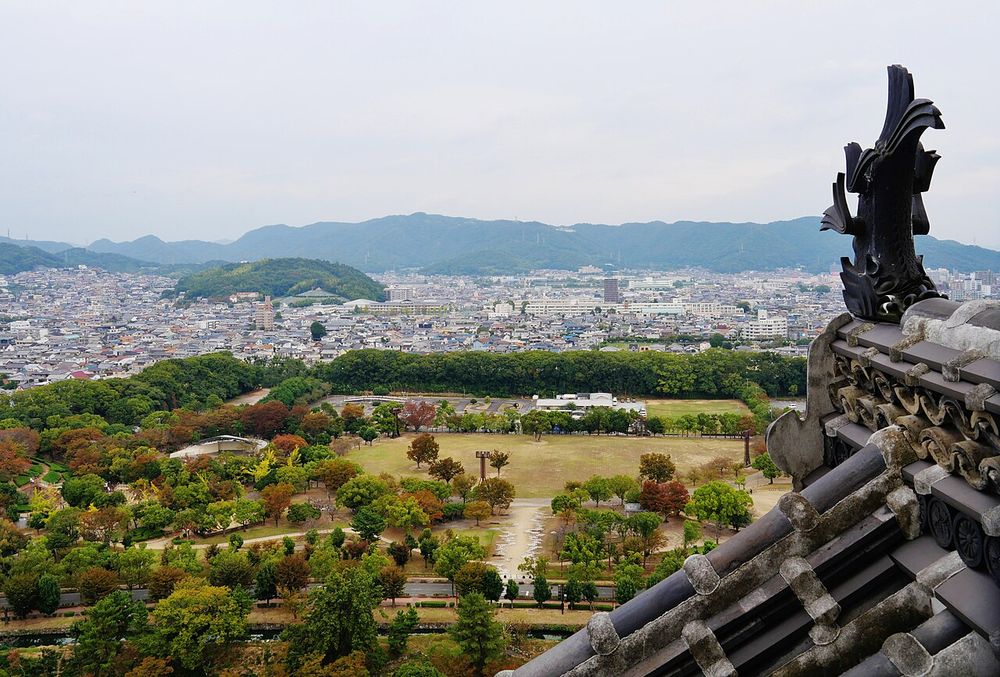
From the top floor: a tiger-headed fish on the ridgeZairon, CC BY 4.0
The top room has windows on all four sides and a small shrine in the middle. The god in it was here before the castle. It was moved off the hill by the builders and brought back after a run of bad luck.
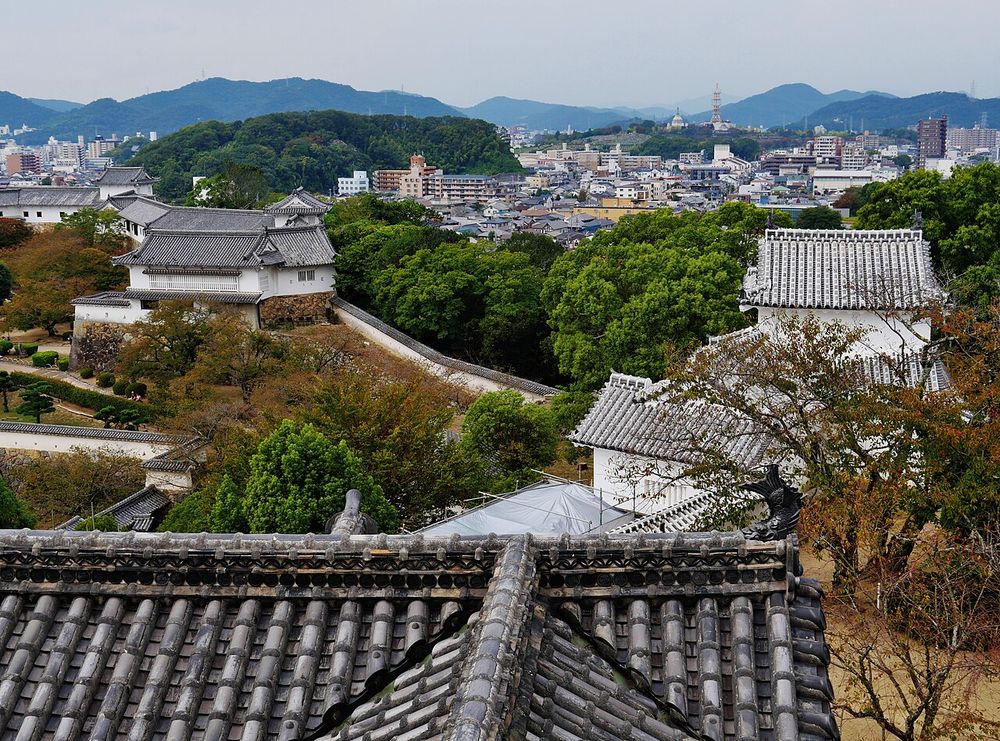
Look south. The avenue runs straight to the station. Look at the roof just outside the window. On each end of the ridge sits a fish with a tiger's head, its tail in the air. It is a charm against fire. The fish is said to spout water.
On 3 July 1945 American bombers burned most of Himeji. In the morning the castle stood untouched above the ashes. A fire bomb had fallen through the roof into this room and had not gone off.
7. The west bailey: a princess's corridor
The west bailey and its corridor from the towerZairon, CC BY 4.0
On the way out, turn into the west bailey. A wooden corridor 240 metres long runs along the top of its wall, with rooms opening off it. The women who served Princess Sen lived in these rooms. At the far end is the tower where she rested when she came each morning to pray.
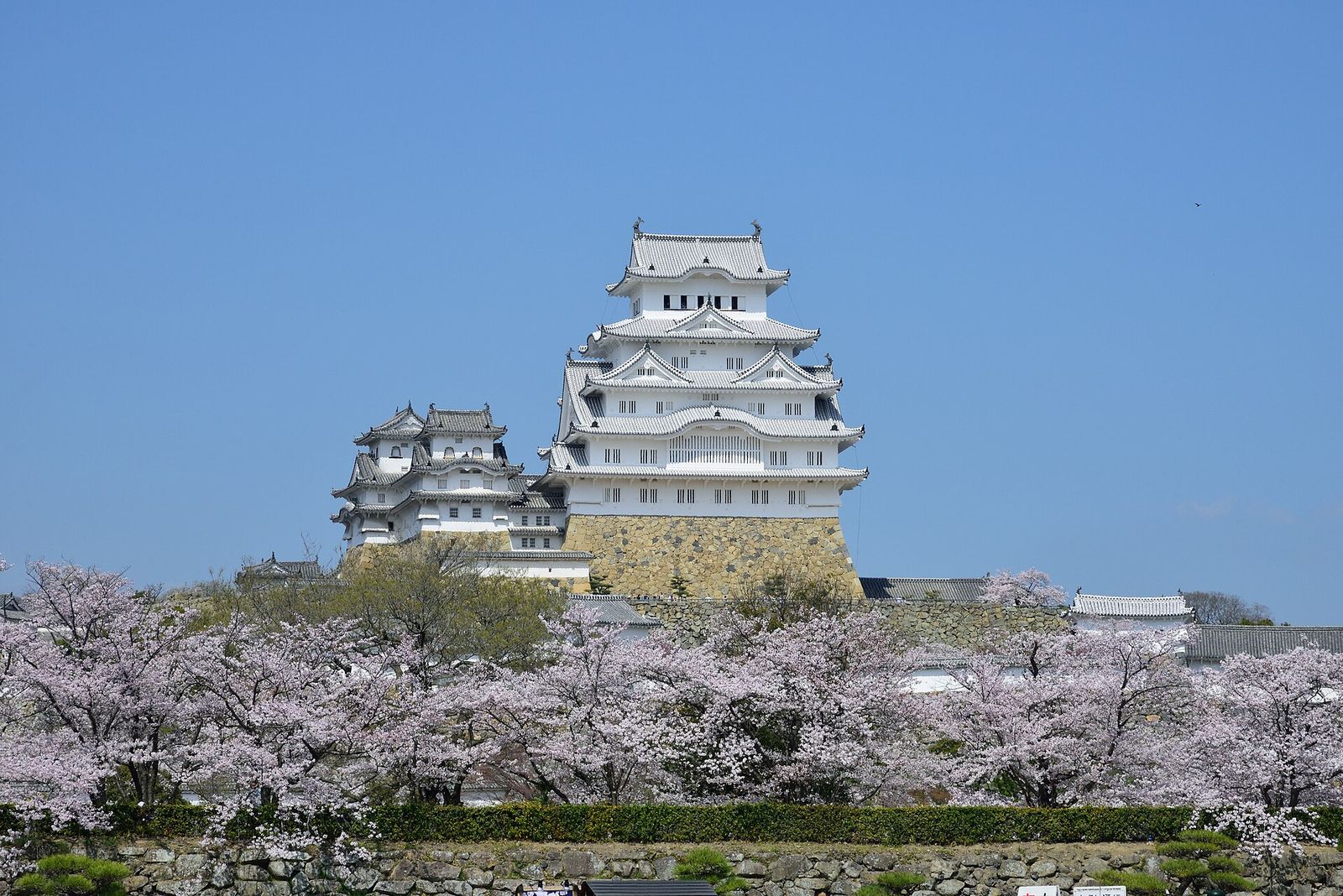
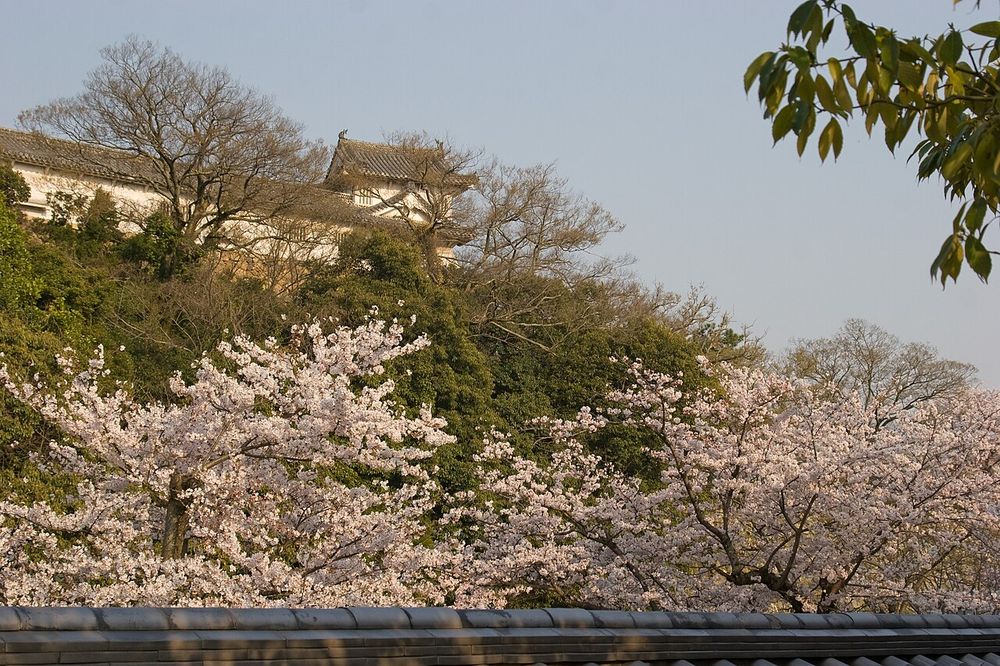
The garden of the west bailey gives the view on most postcards: the tower and its three companions, all in one frame. In early April there are cherry trees in front.
8. How it was nearly lost
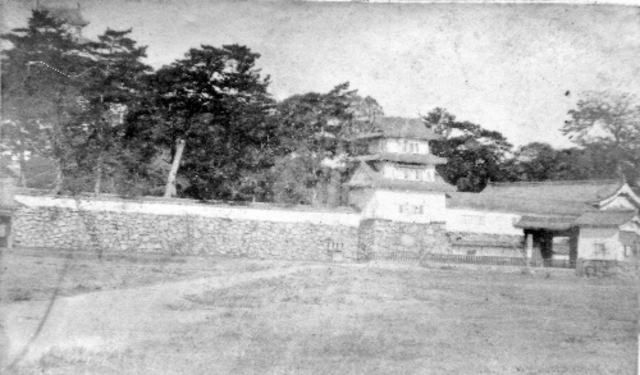
The castle about 1870unknown 不明, Public domain
When the samurai lost power in 1868, castles became the property of the army, which had no use for them. In the early 1870s this one was put up for auction. A man of Himeji bought it for 23 yen and 50 sen, meaning to pull it down and sell the tiles. He found that pulling it down would cost more than the tiles were worth, and let it stand.
By the 1950s the tower was leaning. From 1956 to 1964 every timber was numbered, taken down, mended and put back on a new concrete base hidden under the stone. From 2009 to 2015 the roof was relaid and the plaster renewed.
In March 2026 the city raised the ticket for visitors from outside Himeji to two and a half times what its own citizens pay. It was the first such price in Japan and was argued over across the country.
9. On the screen and in the toy box
The towers over the roofs of the gates, October 2024Yasuo Hamashima, CC BY-SA 4.0
Japanese television has used this castle for decades whenever it needed the shogun's palace in old Tokyo, which no longer exists. In the long-running series Abarenbo Shogun the hero rides a white horse along a beach, and the castle shown as his home is this one.
In Kurosawa's Ran, the castles the old lord gives to his sons, and is then shut out of, were filmed here and at Kumamoto.
In the James Bond film You Only Live Twice (1967), men in grey practise sword fighting and throw steel stars on the open ground under the tower. To match the shot, stand in the square inside the main gate and frame the tower above the white wall.
The castle is a "wonder" that players can build in the computer game Civilization, and a Lego set of 2,125 pieces sold since 2023.
A play of 1917 by Izumi Kyoka, The Castle Tower, is set in the top room. A beautiful spirit who lives there falls in love with a young falconer who climbs up. It is still performed in kabuki.
Meanwhile in the world
Year
Here
Elsewhere
1346
A first fort is built on the hill, by tradition
English archers defeat the French at Crécy
1581
Hideyoshi builds a three-storey tower
Francis Drake has just sailed round the world
1609
The present tower is finished
Galileo turns a telescope on the moon
1618
The west bailey is built for Princess Sen
The Thirty Years' War begins in Europe
1870s
The castle is sold for scrap, and not pulled down
Germany is united in 1871
1945
The town burns; the castle is spared
The Second World War ends
1964
The great repair ends
The first bullet train runs, and stops at Himeji from 1972
1993
Japan's first World Heritage sites: Himeji and the temple of Horyu-ji
The European Union comes into being
2015
The castle reopens, whiter than anyone remembers
The Paris climate agreement is signed
One line to remember: the strongest castle in Japan was never tested, and that is why it is still here.
Then and now
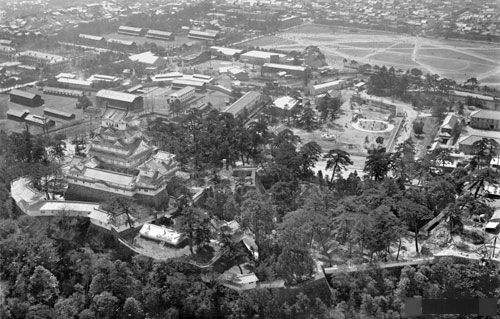
The castle above the cherry trees, 2 April 2015Seattleite7, CC BY-SA 4.0, Wikimedia CommonsThe towers in May 2015, just after the repairNikos Kitsakis, CC BY-SA 4.0, Wikimedia CommonsThe castle on its hill above the walls and the moat, November 2016Martin Falbisoner, CC BY-SA 4.0, Wikimedia CommonsFrom the air in 2010: the spiral of moats and yards(Institute of Land Geography) 国土地理院, Attribution, Wikimedia CommonsThe main tower and a small tower joined by a corridorGilles Desjardins, CC BY-SA 4.0, Wikimedia CommonsThe towers over the roofs of the gates, October 2024Yasuo Hamashima, CC BY-SA 4.0, Wikimedia CommonsThe view from the square: five roofs, six floorsby ja:User:Reggaeman, Public domain, Wikimedia CommonsCherry blossom on 3 April 2026Loggieloggie, CC0, Wikimedia CommonsThe towers and cherry trees, April 2016Oren Rozen, CC BY-SA 4.0, Wikimedia CommonsThe castle across the moat, with a red bridgeSeattleite7, CC BY-SA 4.0, Wikimedia CommonsThe south face of the main towerZairon, CC BY 4.0, Wikimedia CommonsGables of many shapes on one wallZairon, CC BY 4.0, Wikimedia CommonsThe east side above its stone wallsZairon, CC BY 4.0, Wikimedia CommonsThe tower reflected in the moatZairon, CC BY 4.0, Wikimedia CommonsA small tower on the west sideZairon, CC BY 4.0, Wikimedia CommonsRoof upon roofZairon, CC BY 4.0, Wikimedia CommonsWhite plaster in the joints of the tileslumoplank, CC0, Wikimedia CommonsThe Hishi gate from the sideZairon, CC BY 4.0, Wikimedia CommonsThe Hishi gate, the first gate of the mazeZairon, CC BY 4.0, Wikimedia CommonsOne of the inner gatesZairon, CC BY 4.0, Wikimedia CommonsWalls of the inner yards, with the towers aboveZairon, CC BY 4.0, Wikimedia CommonsA stone base curved like a fanZairon, CC BY 4.0, Wikimedia CommonsOpenings for dropping stones, in the west baileyCorpse Reviver, CC BY 3.0, Wikimedia CommonsA stone-drop box at the corner of a turretCorpse Reviver, CC BY 3.0, Wikimedia CommonsA board inside a gate recording a repairCorpse Reviver, CC BY 3.0, Wikimedia CommonsOkiku's Well, with the tower behindそらみみ, CC BY-SA 4.0, Wikimedia CommonsThe first stair into the towerCorpse Reviver, CC BY 3.0, Wikimedia CommonsInside the towerZairon, CC BY 4.0, Wikimedia CommonsA bare floor of the tower, with racks for weapons along the wallZairon, CC BY 4.0, Wikimedia CommonsA corridor inside the towerZairon, CC BY 4.0, Wikimedia CommonsLight through the barred windowsZairon, CC BY 4.0, Wikimedia CommonsBeams and posts of 1609Zairon, CC BY 4.0, Wikimedia CommonsA floor of the main tower, 2009Corpse Reviver, CC BY 3.0, Wikimedia CommonsFrom the top floor: a tiger-headed fish on the ridgeZairon, CC BY 4.0, Wikimedia CommonsThe town from the top floorZairon, CC BY 4.0, Wikimedia CommonsOver the roofs to the hillsZairon, CC BY 4.0, Wikimedia CommonsThe west bailey and its corridor from the towerZairon, CC BY 4.0, Wikimedia CommonsThe square and the moat from aboveZairon, CC BY 4.0, Wikimedia CommonsThe inner moatZairon, CC BY 4.0, Wikimedia CommonsThe moat and its stone banksZairon, CC BY 4.0, Wikimedia CommonsThe avenue from the station, with the castle at its endChristophe95, CC BY-SA 4.0, Wikimedia CommonsThe castle lit blue, November 2008Corpse Reviver, Public domain, Wikimedia CommonsKokoen garden in November663highland, CC BY 2.5, Wikimedia CommonsCherry trees and the castle wallsKimonBerlin, CC BY-SA 2.0, Wikimedia CommonsThe castle about 1870unknown 不明, Public domain, Wikimedia CommonsThe avenue to the castle in the 1910s or 1920sunknown 不明, Public domain, Wikimedia CommonsFrom the air in 1936毎日新聞社, Public domain, Wikimedia CommonsRoof tiles and plaster, 1987Marie-Sophie Mejan, CC BY 4.0, Wikimedia Commons
Local legends
These are stories people tell about this place. They are legends, not history, and each one says where it comes from.
LegendOkiku's Well
Okiku was a maid in the castle. She overheard a plot against her lord and warned him. The plotter took one of ten precious plates in her care, accused her of losing it, had her killed and threw her body down this well. At night her voice rose from it, counting: one plate, two plates, up to nine, and then a scream.
Source: The kabuki and puppet play Banshu Sarayashiki, first staged in 1741; the story is older and is also told of a well in Tokyo
LegendThe top floor
A spirit named Osakabe, in the form of a noblewoman in twelve robes, lives at the top of the tower. She showed herself to the lord once a year and told him the castle's fortune. The swordsman Musashi is said to have climbed up alone to face her.
Source: Edo-period collections of strange tales, such as Shokoku Hyaku Monogatari (1677)
LegendThe millstone in the wall
When Hideyoshi was short of stone for his walls, a poor old woman who sold rice cakes gave him her hand mill, the only thing of value she had. Hearing of it, people brought stones from all over the province.
Source: Castle tradition; the wall where the stone sits was built after Hideyoshi's time
LegendThe master carpenter
The master carpenter Sakurai Genbei looked at his finished tower and thought it leaned to the south-east. He climbed to the top with a chisel in his mouth and threw himself off.
Source: Castle tradition; the tower did lean, because the ground under it had sunk
Later, people who live here will be able to add the stories they grew up with, and say which of these they have heard.
Not certain, and where accounts conflict
Was it really sold for 23 yen 50 sen?
The story is told by the buyer's family and repeated by the city. No auction record has been found, and historians of the castle differ on whether the sale covered the tower or only some outbuildings.
Who built the first fort, and when?
Tradition names the Akamatsu family in 1333 or 1346. Some historians think nothing that could be called a castle stood here before the Kuroda family in the mid-1500s.
Did the film crews damage the castle?
It is often said that steel stars thrown during the Bond filming in 1966 chipped the walls and that the city then refused film crews for years. We found the claim in many guidebooks and in no report of the time.
Is the price fair?
The city says the castle costs more to keep than it earns and that visitors should pay their share. Critics say a line drawn at the city boundary charges a visitor from the next town the same as one from abroad. Japan's tourism agency was drawing up national guidance in 2026.
Visiting
Tickets and hours
From 1 March 2026: 2,500 yen for visitors aged 18 and over. Under 18 free. People who live in Himeji pay 1,000 yen.
A joint ticket with Kokoen garden is 2,600 yen. A pass for a year is 5,000 yen.
Open 9:00 to 17:00, last entry 16:00. In summer it stays open an hour later. Closed on 29 and 30 December.
On the busiest days, in cherry season and the May holidays, the number let into the tower is limited and timed slips are handed out at the gate. Come at opening time.
Last checked 2026-11-12. The castle's fee notice of 28 February 2026, as reported by Japanese newspapers and listings.
Booking from abroad
Official page in English Since March 2026 the castle sells digital tickets for a set date and time through its own website. Tickets are also sold at the gate. No document is asked for at the full price. Under-18s of any country are free.
Note The lower price is for people who live in Himeji and can show it.
Checked 2026-11-12
Where to start
Himeji is on the bullet train line: 30 minutes from Osaka, 45 from Kyoto, an hour from Hiroshima.
From the north exit of the station, walk straight up the avenue for fifteen minutes. A loop bus does it in five.
The route inside is one way: gates, tower, west bailey. Allow two hours.
For photographs, the west bailey in the morning and the square in the afternoon have the sun behind you.
Before you go
You take off your shoes at the tower and carry them. A shoulder bag for them is handed out. Wear socks, and shoes that come off easily.
There are six flights of very steep stairs with low beams, and no lift. It is not possible with a pushchair and hard with bad knees. The view from the square and the west bailey needs no stairs.
The tower is unheated and open to the wind. In winter the wooden floors are very cold underfoot.
Large bags and tripods are not allowed in the tower. There are lockers at the station and near the gate.
Customs and manners
Do not touch the plaster walls or lean on them. The white comes off on your clothes and your hand leaves a mark.
On the stairs, hold the rail and keep moving. Do not stop to photograph.
The shrine on the top floor is a working one. People clap and bow. Wait your turn at the windows.
No eating, drinking or smoking inside the paid area, and no drones anywhere.
Under the cherry trees in the square, Japanese groups mark their place with a blue sheet from early morning. Do not walk across the sheets.
Look for these
From the square, count the roofs. Then count the floors inside.
In the walls, find a circle, a triangle and a square. What were they for?
Find a gate you have to stoop to go through.
In a stone wall, find a block that was once a coffin.
Find the stone held by a wire net.
Inside the tower, put your arms round one of the two great pillars. How many people would it take?
On the roof ridge, find a fish with its tail in the air.
On the roof tiles, find a butterfly. It is the crest of the family that built the castle.
I am here
Stand at the site, sign in, press the button, and collect its stamp. Your browser will ask to use your location. It is sent to us once to confirm that you are at the site; we keep how far you were from it, not the spot where you stood.
Your stamps are saved to your account, so they follow you to any device. Checking from a browser cannot rule out every false location; stricter checks arrive with the app.
Messages
Share your photos
Photos here show the place, not people. Each one is credited to the visitor who took it and appears after our team has looked at it. A photo with you in it belongs under “I am here”.