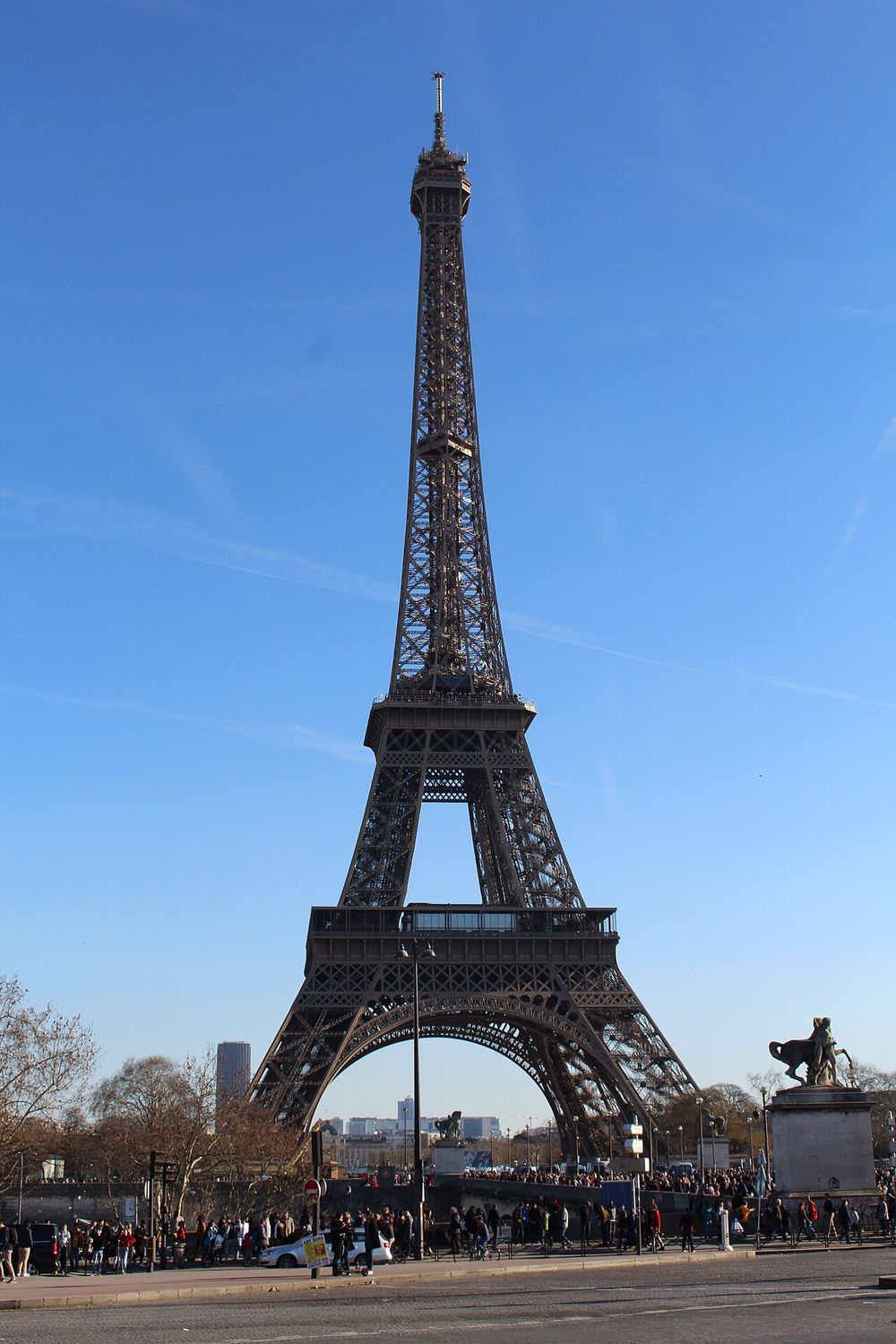
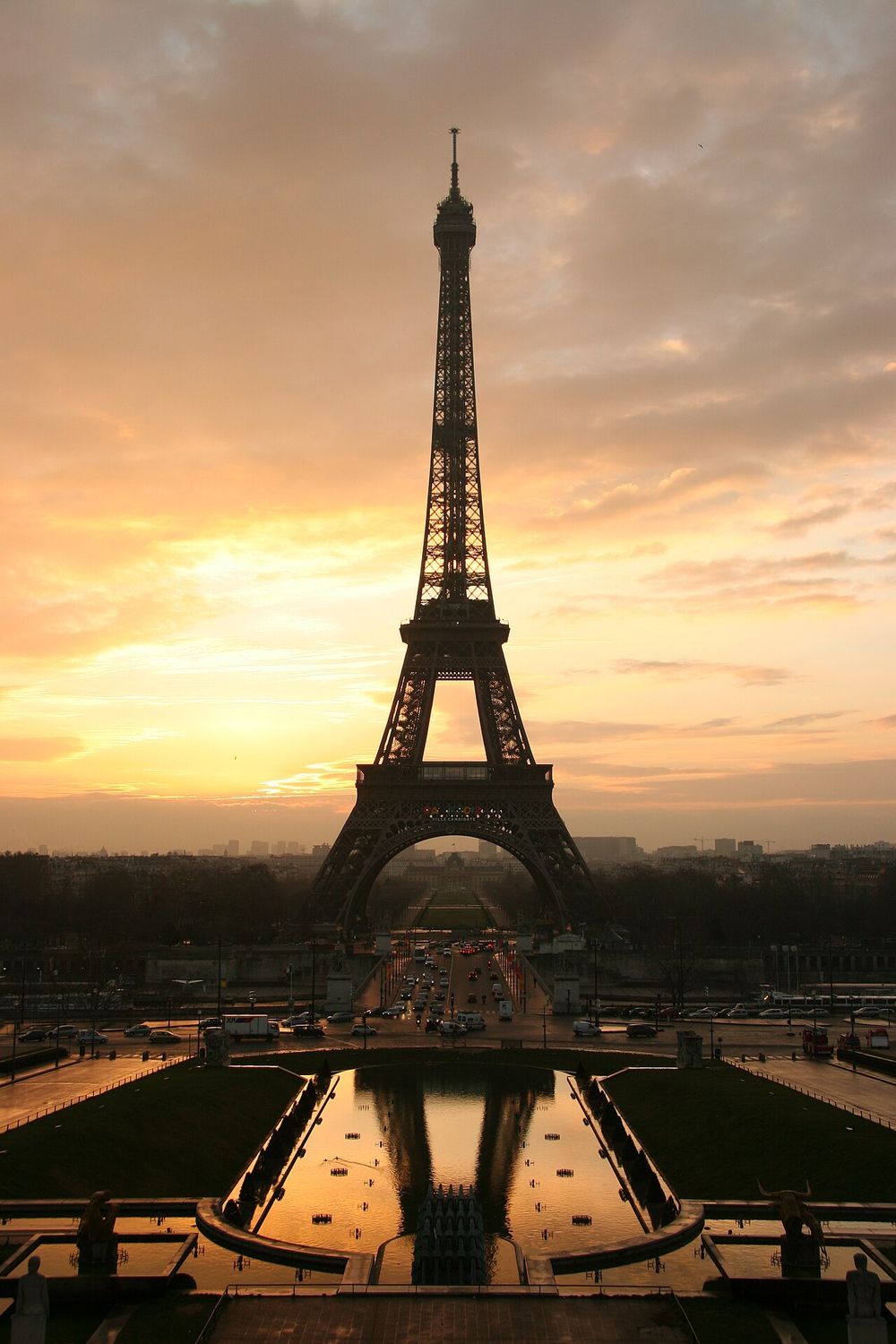
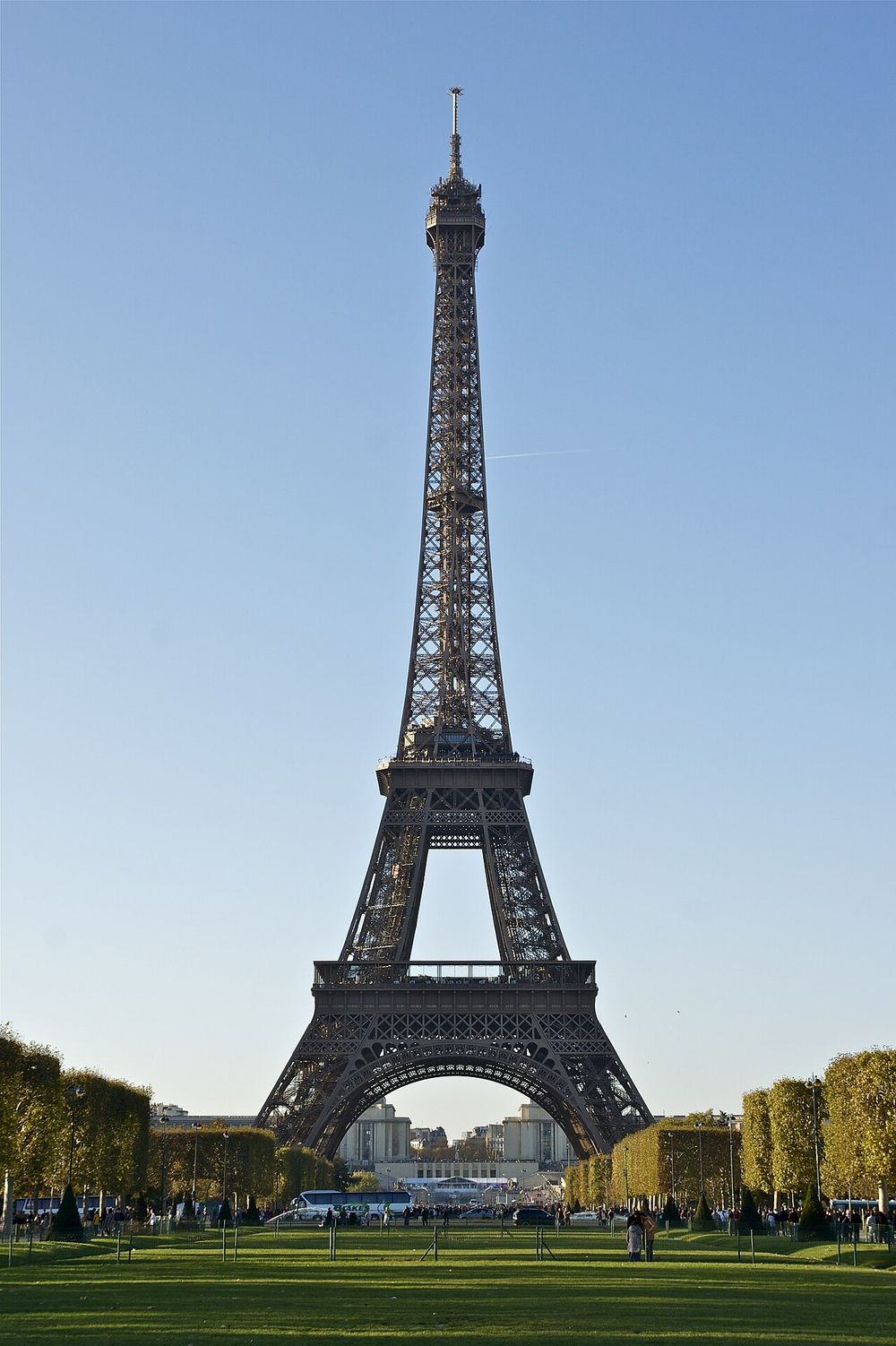
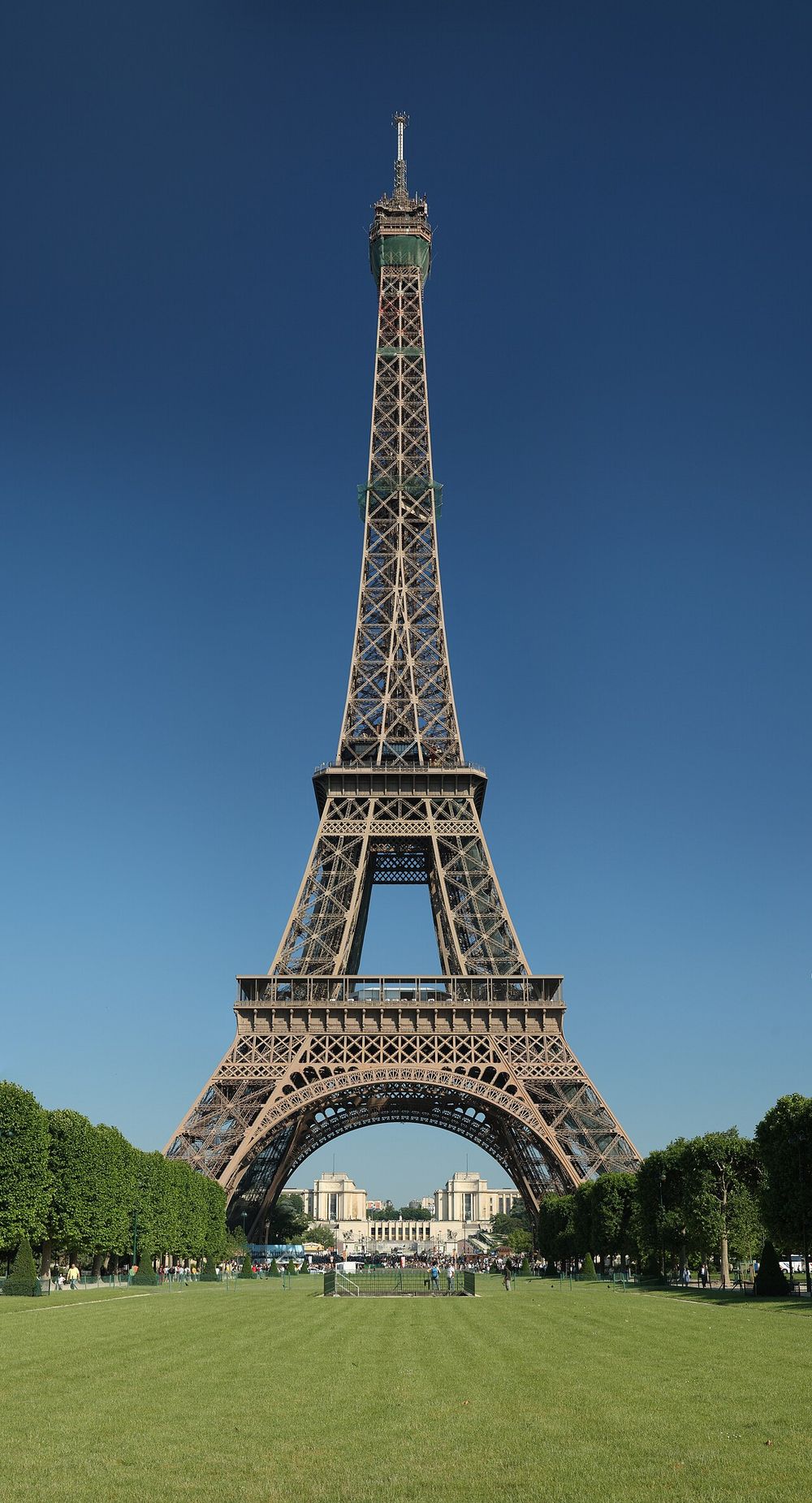
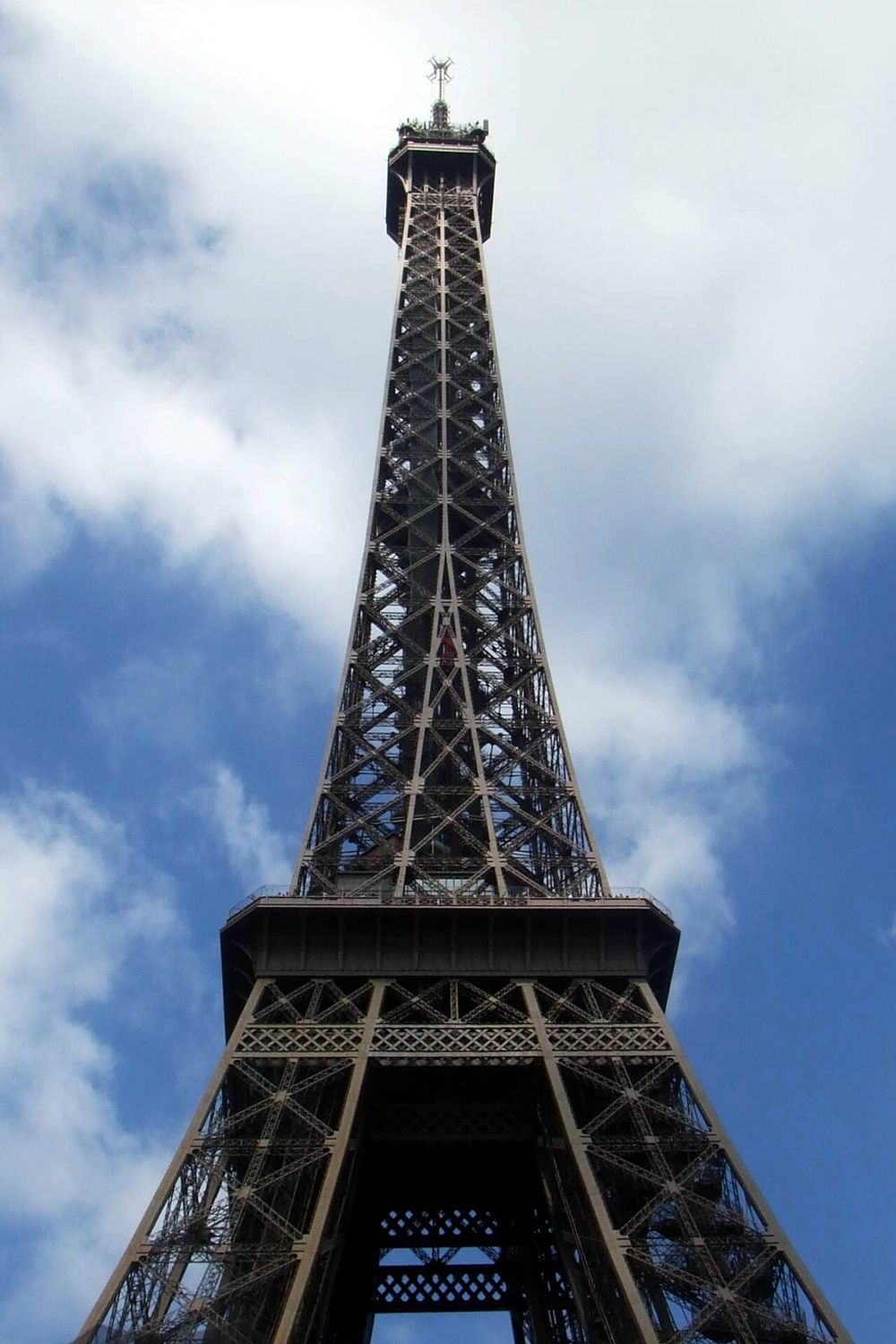
Built in two years for the world's fair of 1889, and meant to stand for twenty. Writers and painters begged the city to stop it. It was saved because it made a good radio mast.
Photo: Henrique Ferreira from Rio de Janeiro, Brasil, CC BY 2.0, Wikimedia Commons
The story
You are looking at a tower made of iron, held together by two and a half million rivets. It went up in two years, two months and five days, and opened in the spring of 1889. At 300 metres it was almost twice as high as anything people had built before.
It was a gateway to a fair, with a permit for twenty years. It is still here, and more than three hundred million people have gone up it.
What is here
The square under the tower and its gardens are free, after a security check. Tickets are sold by height: to the second floor or to the top, by lift or by the stairs. The first floor is included in every ticket.
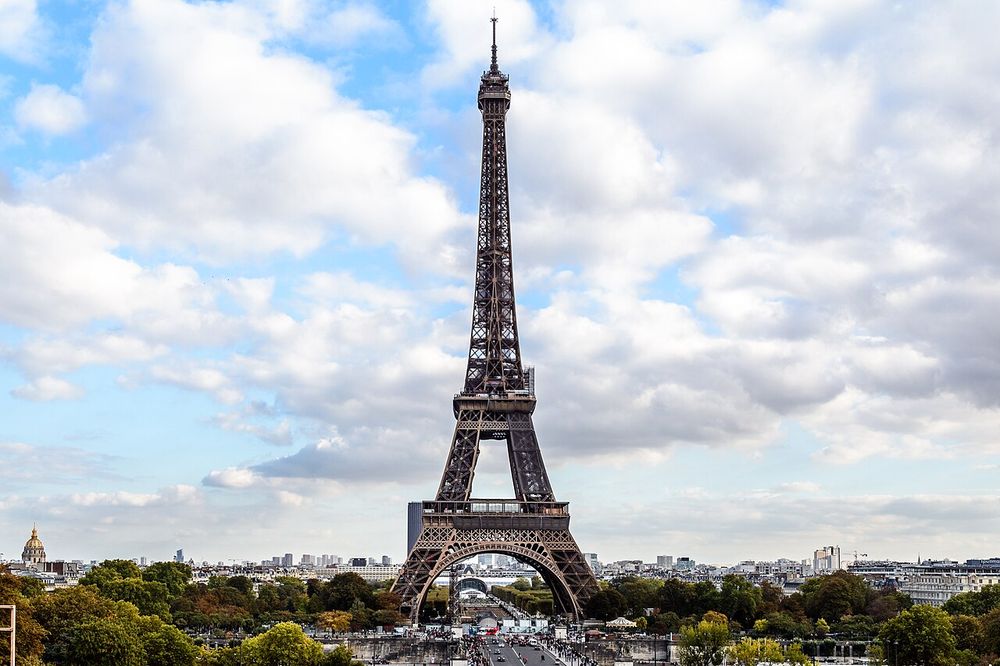
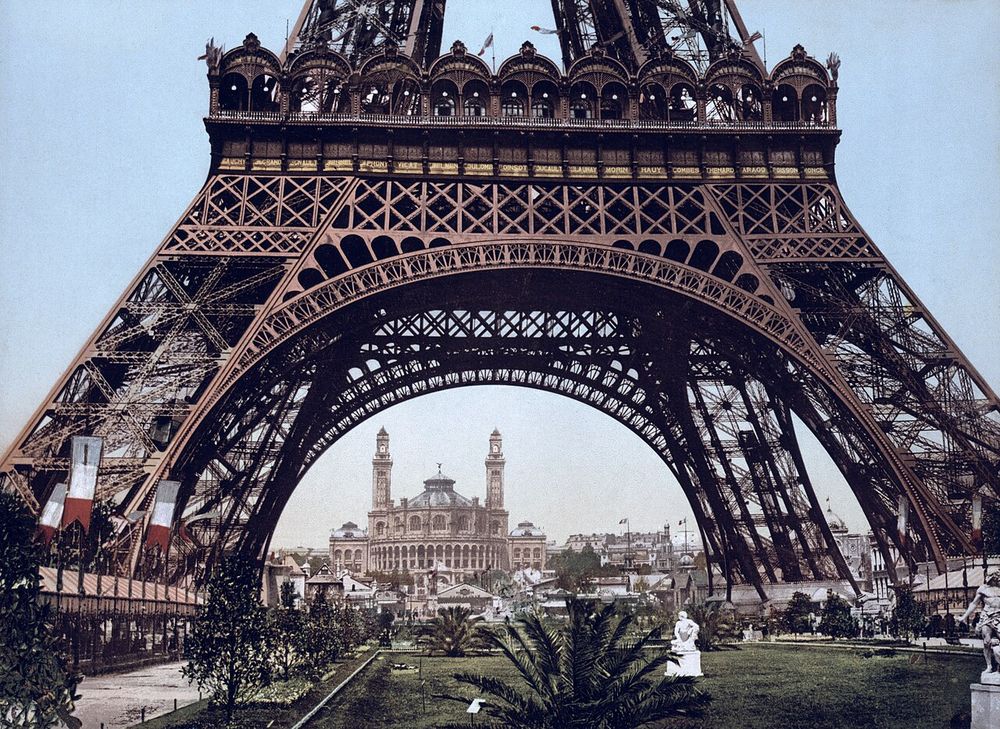
From the gardens of the Trocadérodconvertini, CC BY-SA 2.0
France wanted something astonishing for the world's fair of 1889, a hundred years after its Revolution. The winning idea was a tower 300 metres high, made of iron. It came from the firm of the bridge-builder Gustave Eiffel.
Many people hated it before it was built. Some of the best-known writers and artists in France signed a public letter calling it useless and monstrous.
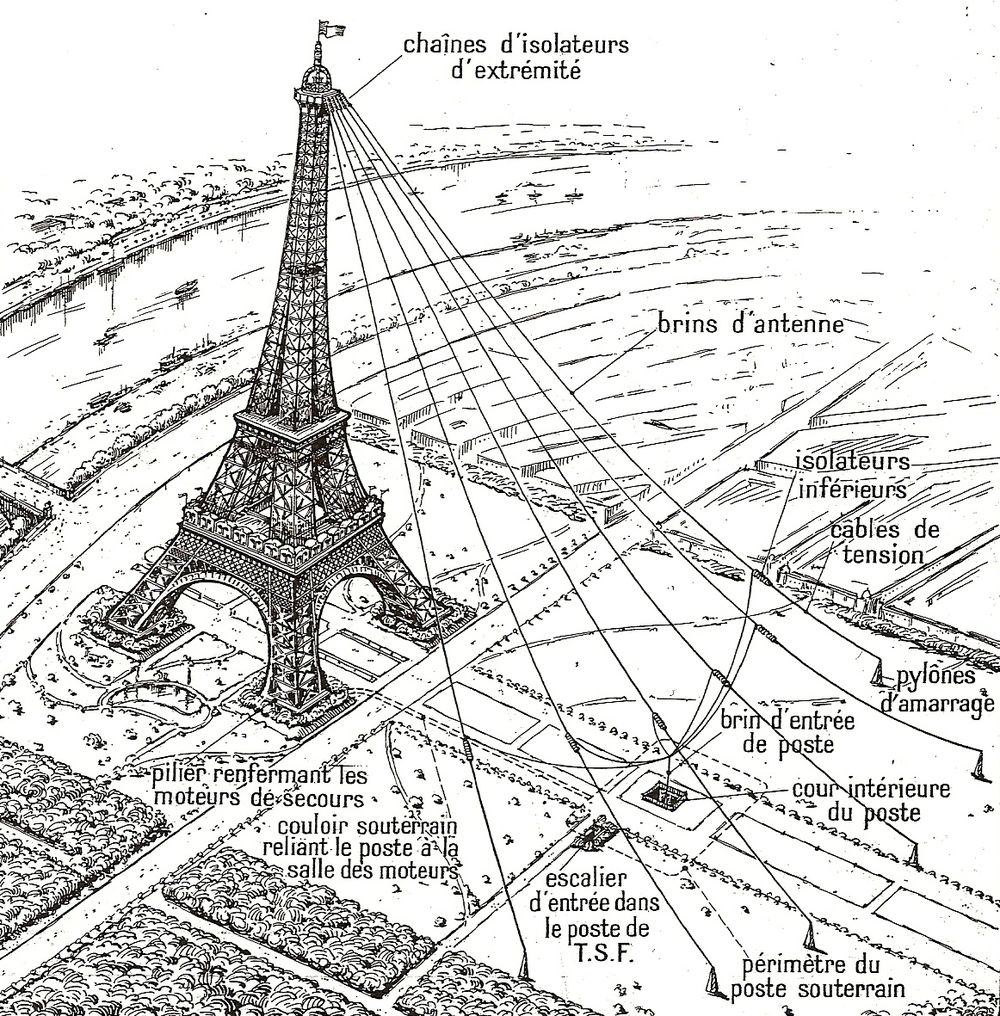
The permit ran out in 1909. Eiffel had seen that coming and had spent years finding uses for the tower: weather readings, wind experiments, and then wireless telegraphy. The army needed the mast, so the tower stayed.
Today it is 330 metres high with its aerials, and it is painted by hand about every seven years.
Things people often get wrong
"Gustave Eiffel designed it." The first drawing was made in 1884 by two engineers in his firm, Maurice Koechlin and Émile Nouguier. An architect, Stephen Sauvestre, added the great arches at the base. Eiffel bought their rights, fought for the project, paid for most of it and put his name on it.
"It is made of steel." It is wrought iron, the kind then called puddled iron. The ironwork weighs about 7,300 tonnes.
"You may not photograph it at night." You may, for yourself. The lighting is treated as a protected work, so selling or publishing pictures of the lit tower needs the operator's leave. That is why this page shows it by day.
"The arches hold it up." They do not. Sauvestre added them to make the tower look steadier and to serve as a gate to the fair.
People who stood here
Guy de Maupassant (French writer of short stories)He signed the protest of 1887, and later wrote that he left Paris, and France too, because the tower bored him so much. He may have stood here scowling at the "tall, skinny pyramid of iron ladders" that he could not get out of his sight.
Thomas Edison (American inventor of the phonograph and the light bulb)In September 1889 he went up to the small apartment Eiffel kept at the very top, and gave him a phonograph. He wrote in the guest book in praise of "the brave builder" of the tower. He may have stood at the rail up there, looking down on a city still lit mostly by gas.
Go deeper: ten stops, from the ground to the top
The first stop is across the river and the next three are on the ground. Then come the three floors, and three stops about the tower's history.
1. From the Trocadéro: a gate for a fair
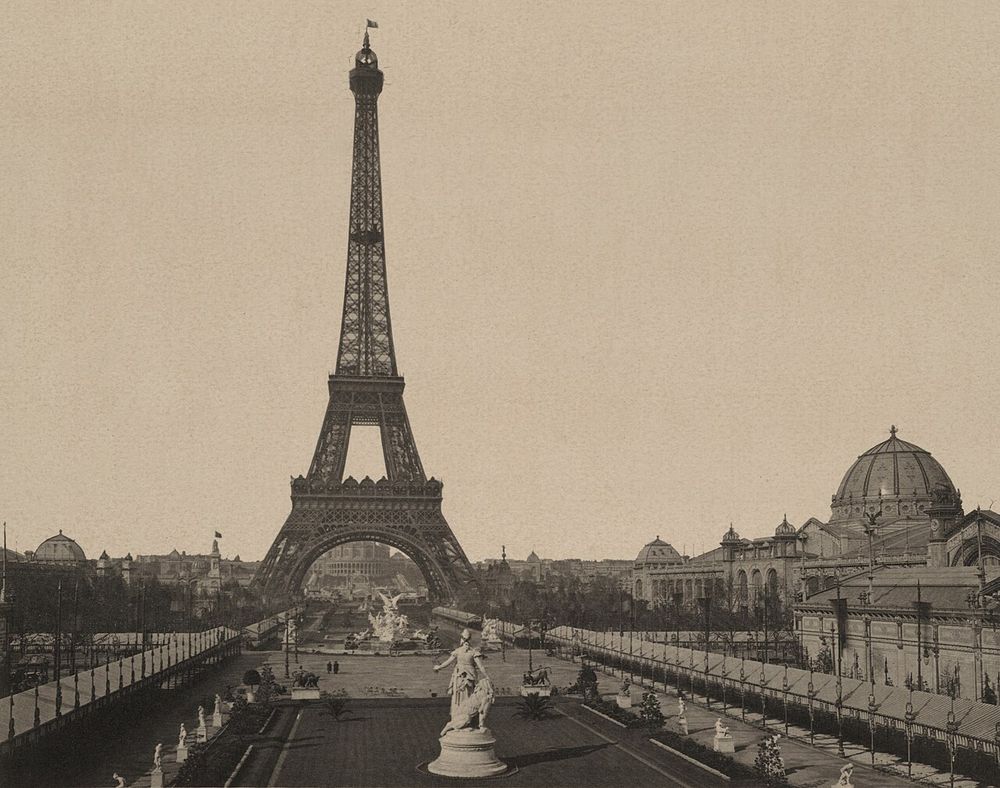
1889: the tower and the fair from the TrocadéroUnknown, Public domain
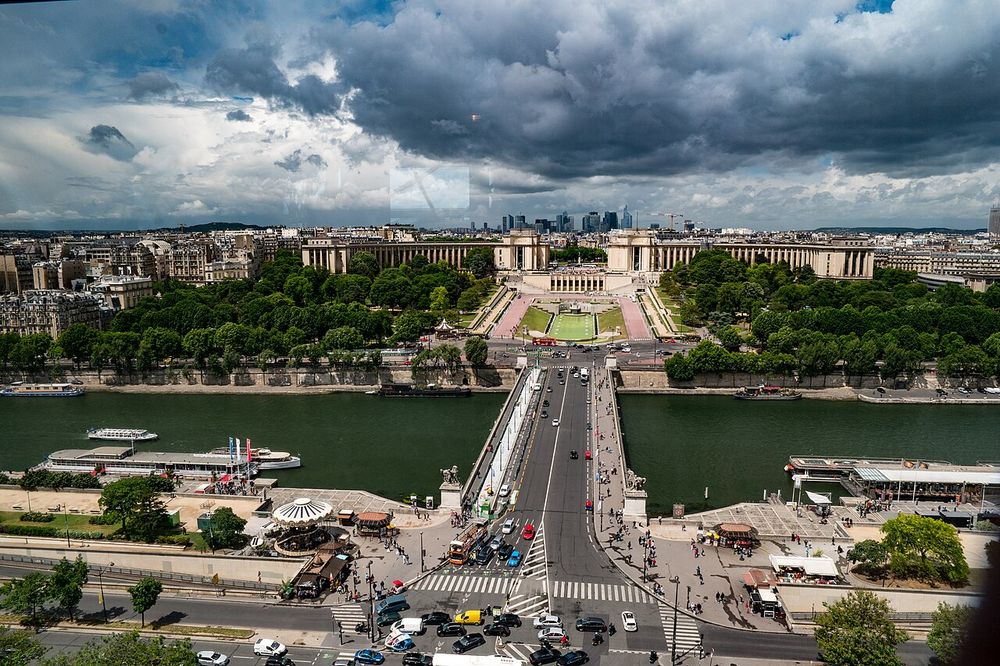
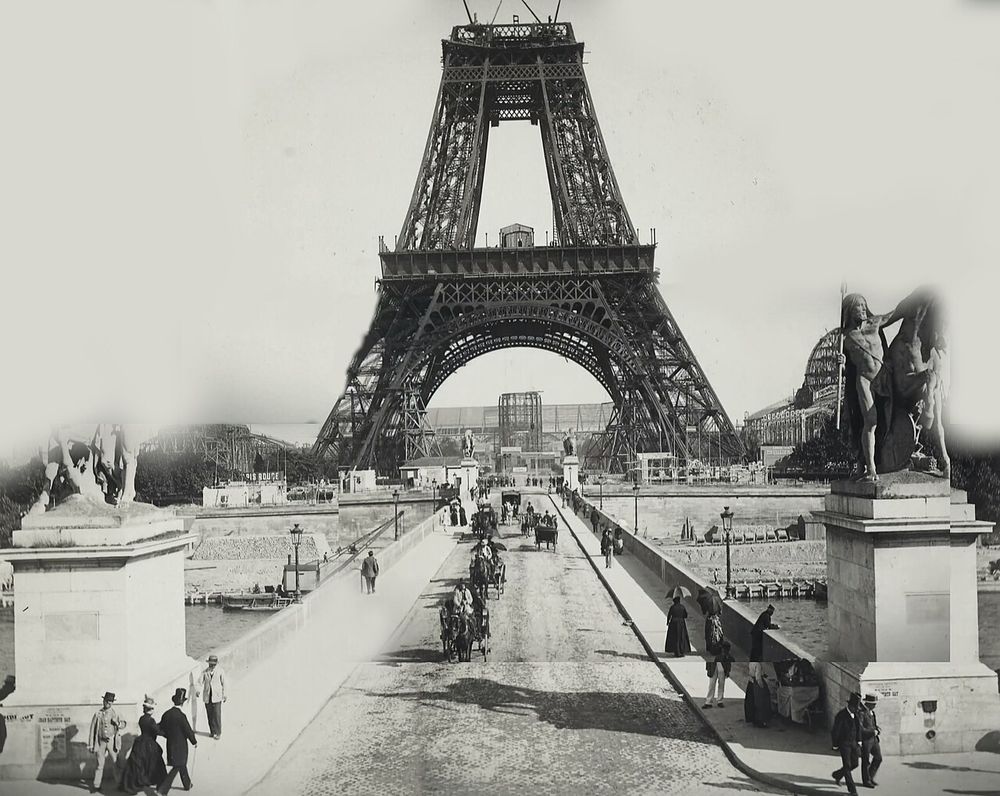
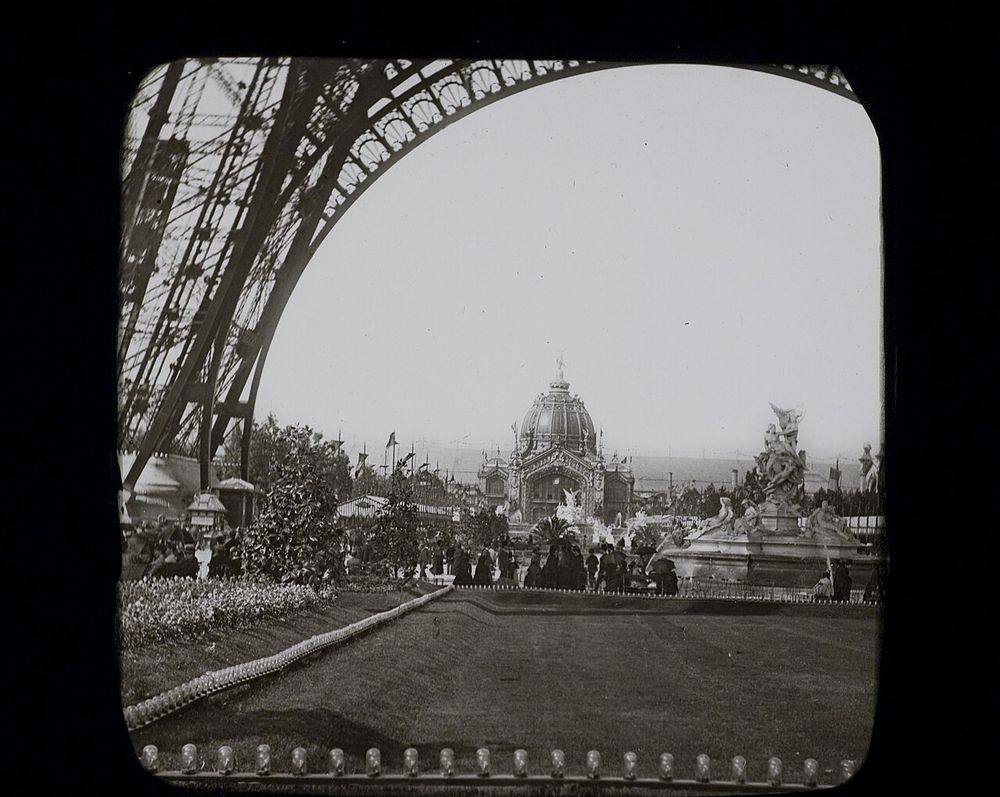
The best view of the whole tower is from the terrace of the Trocadéro, across the Seine. In 1889 visitors came down this slope, crossed the bridge and walked in under the arch.
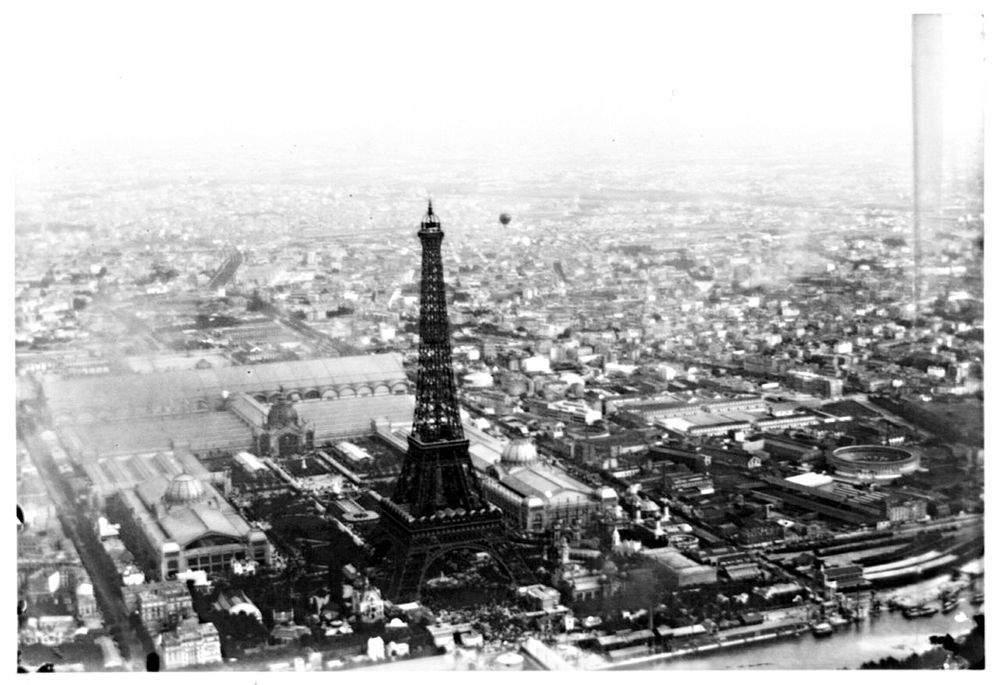
The fair filled the Champ de Mars, the long lawn behind the tower, with halls of iron and glass. Thirty-two million visits were counted. Almost all of it was pulled down afterwards. The tower was the entrance, and the entrance is what is left.
Work on the foundations began on 28 January 1887. On 31 March 1889 Eiffel climbed the 1,710 steps and raised the French flag at the top.
2. Under the tower: four feet
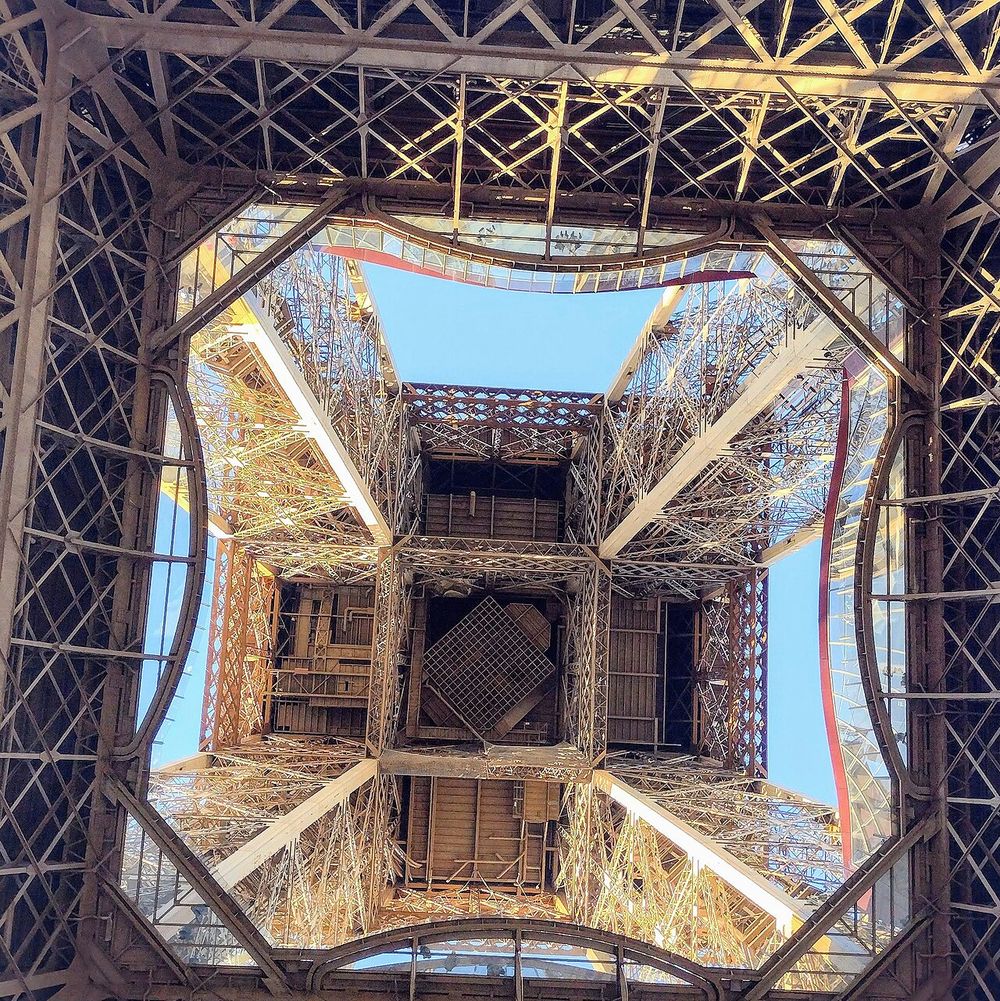
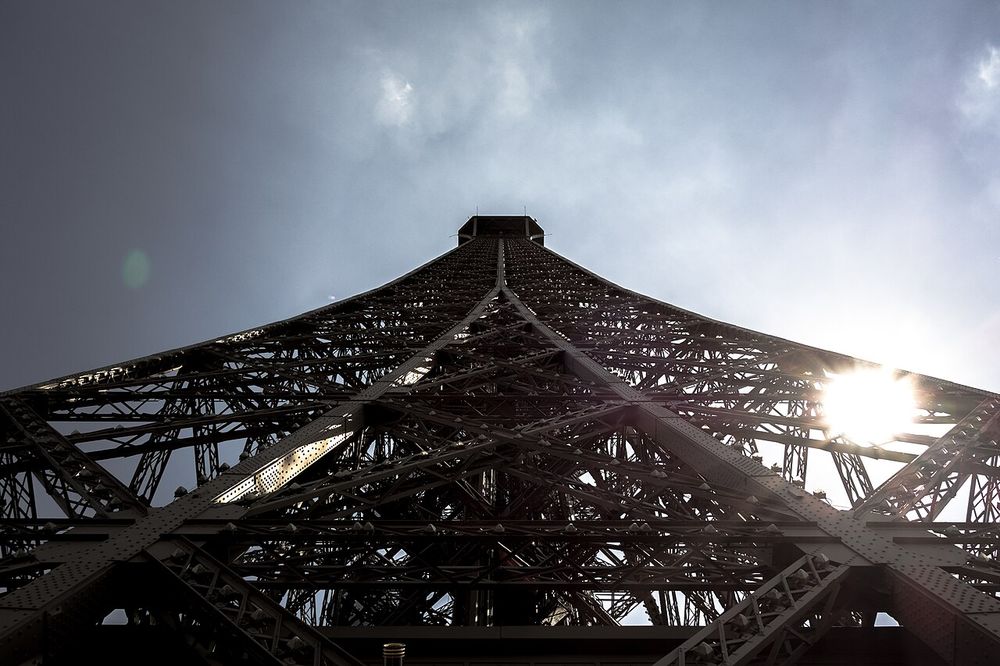
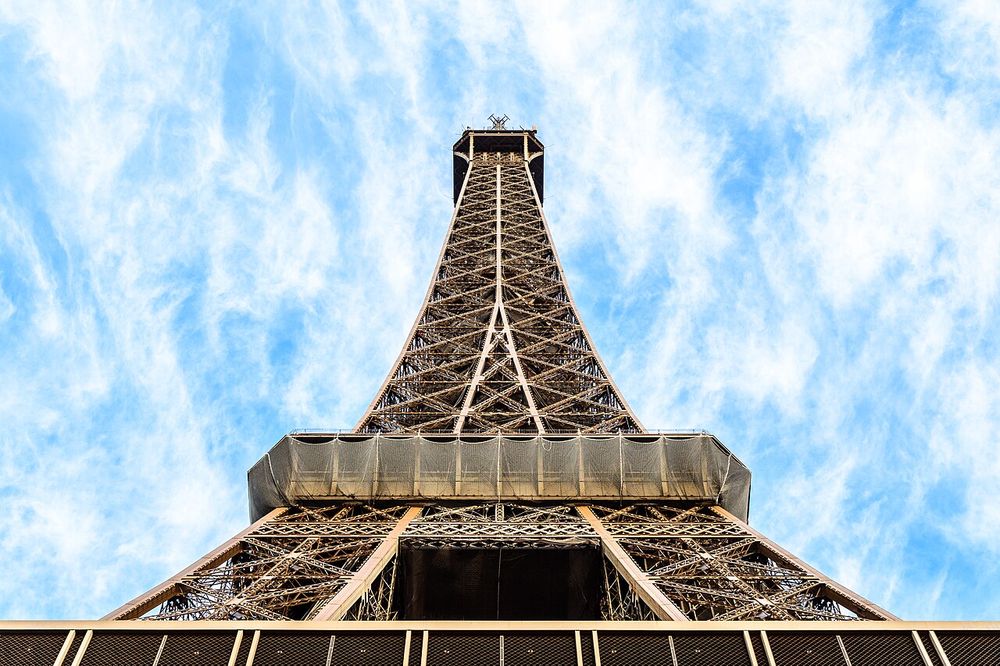
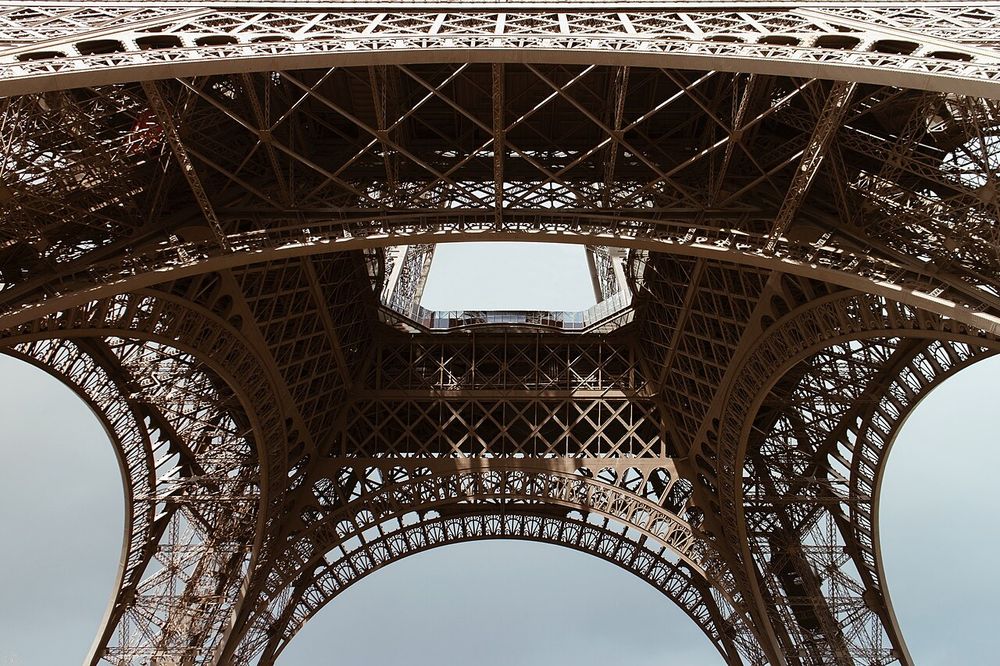
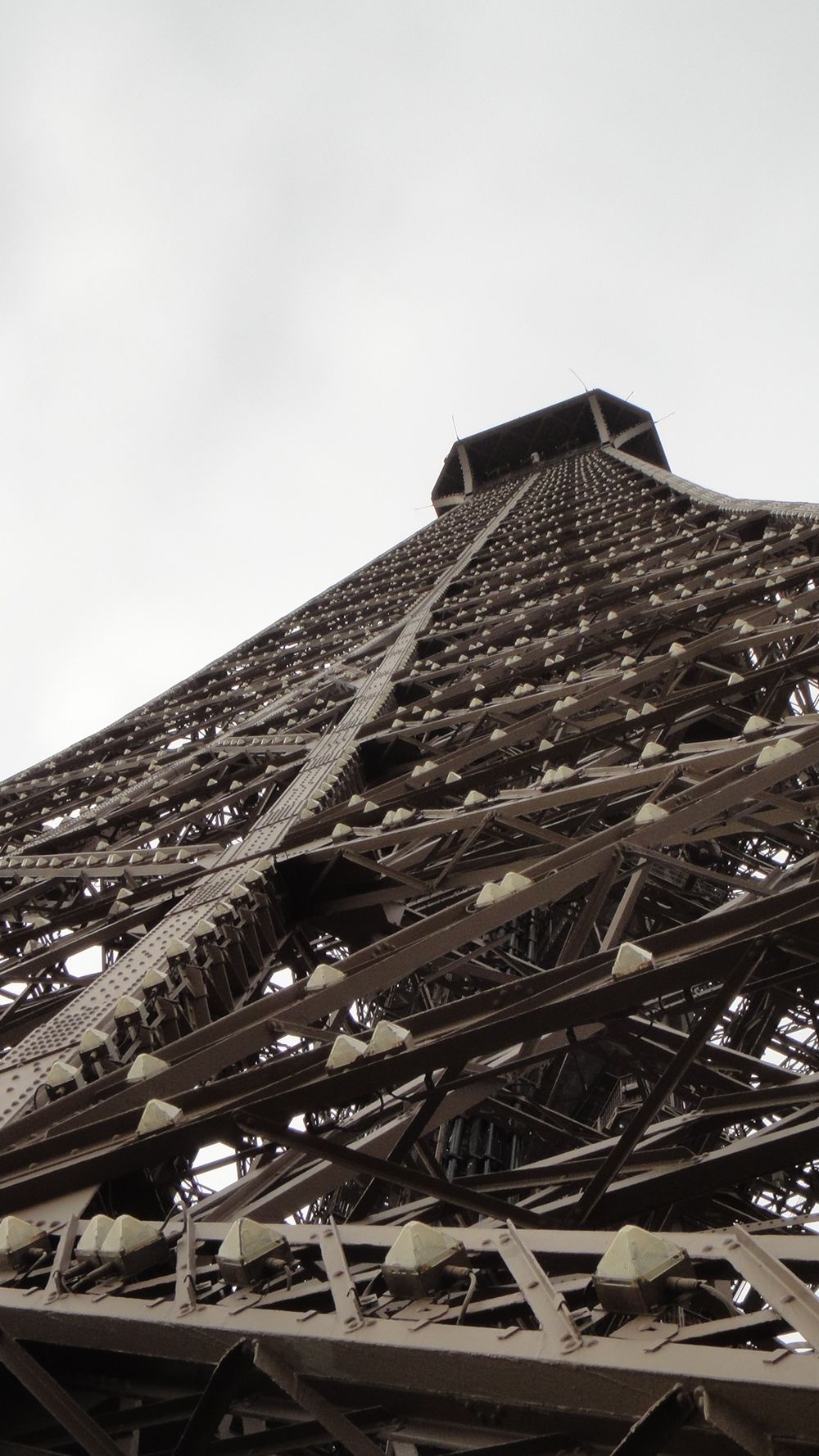
Directly under the tower, looking upRedenimCrafts, CC BY 4.0
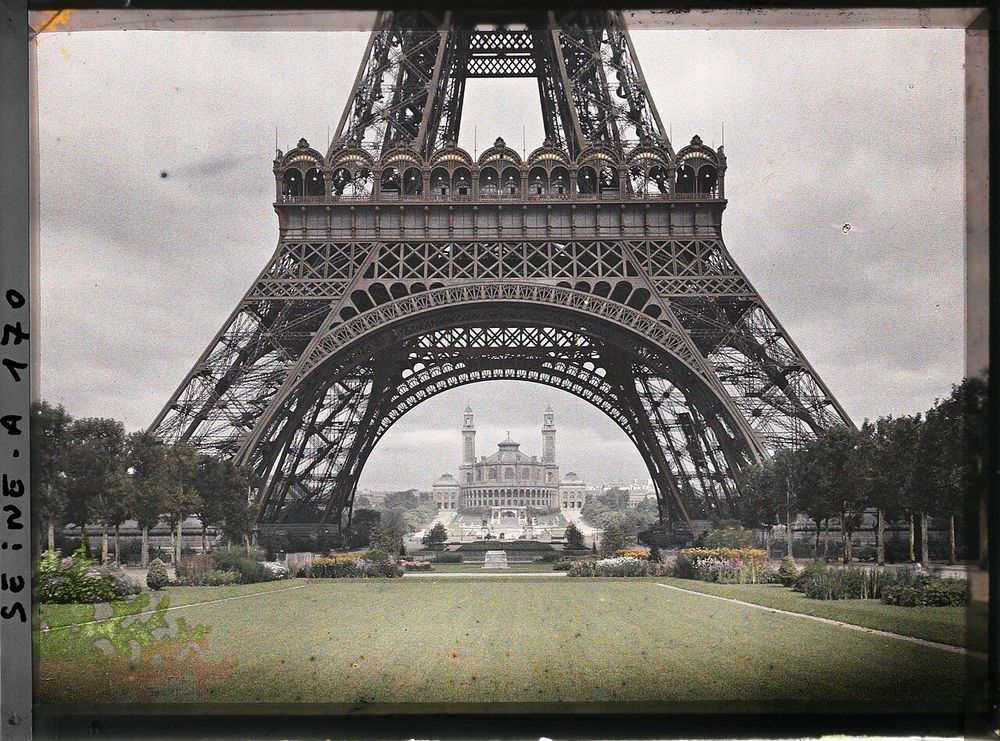
Stand in the middle and look straight up. The tower rests on four legs, one at each corner of a square 125 metres on a side. The legs lean inwards and meet at the first floor.
The curve of the legs was calculated. It follows the line along which the wind pushes, so that the iron is squeezed and never bent. Even in a storm the top moves only a few centimetres.
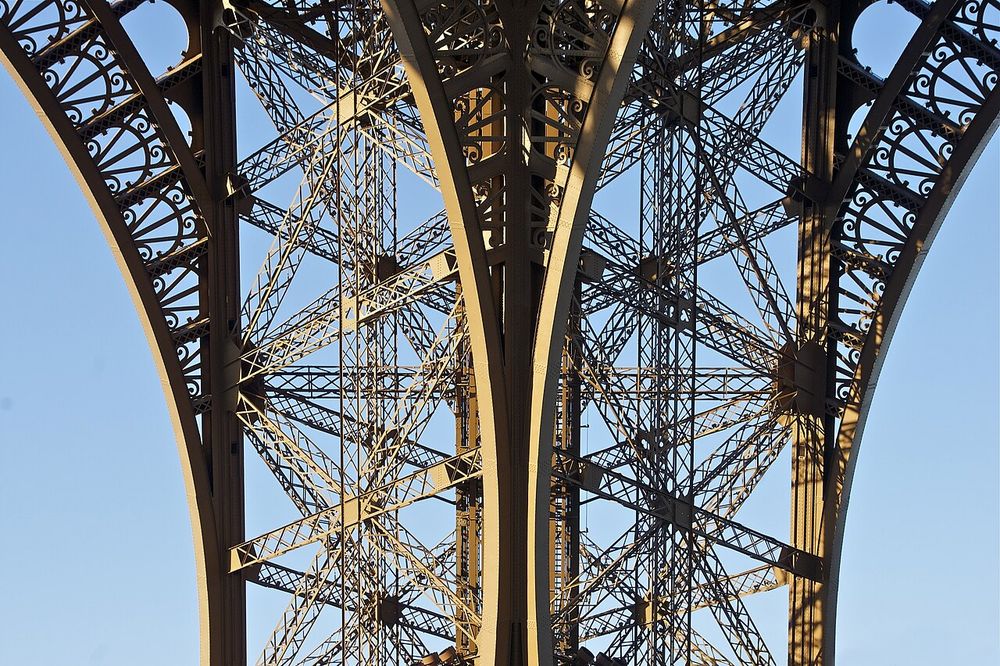
The lattice of one legJebulon, CC0
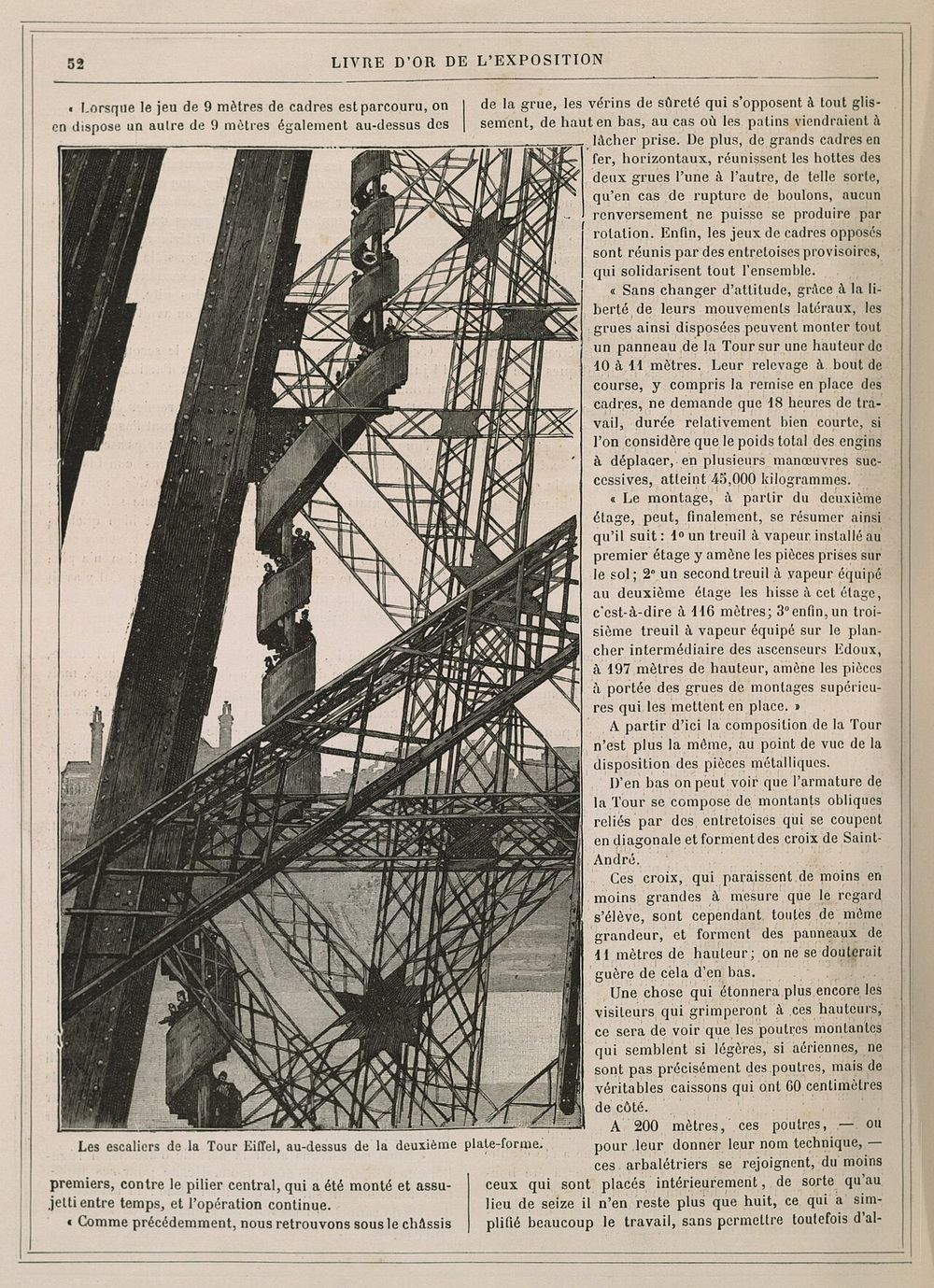
Every piece was drawn in advance, to a tenth of a millimetre, and made at Eiffel's works outside Paris. There are 18,038 pieces. On site, teams of four men put in the rivets red-hot.
About three hundred men worked on the site. One died, and that was on a Sunday, when he had brought his fiancée to see the tower. For the 1880s that was a remarkable record.
3. The frieze: seventy-two names
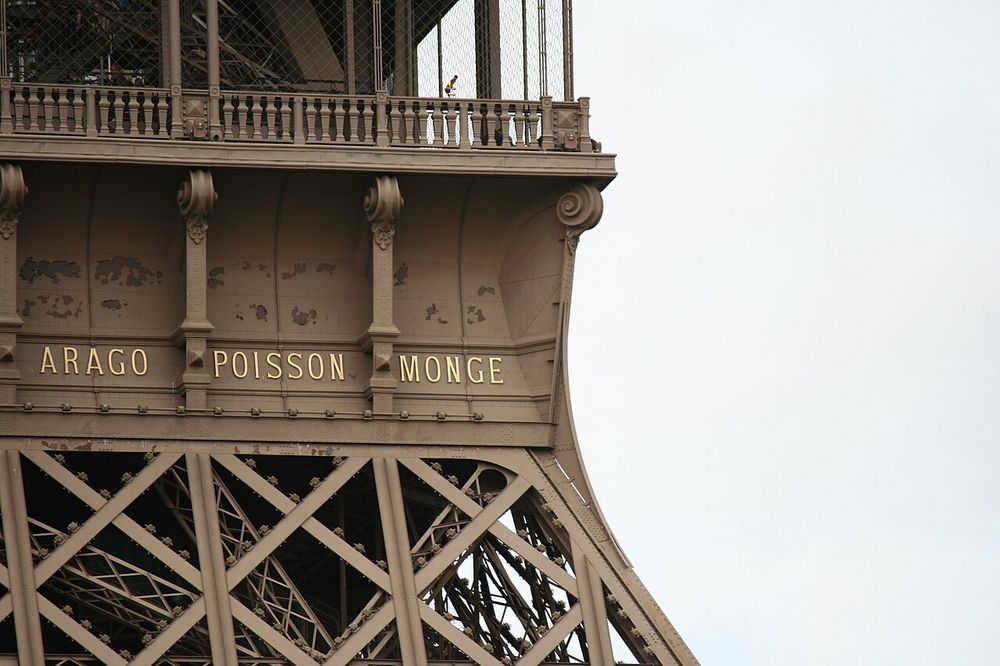
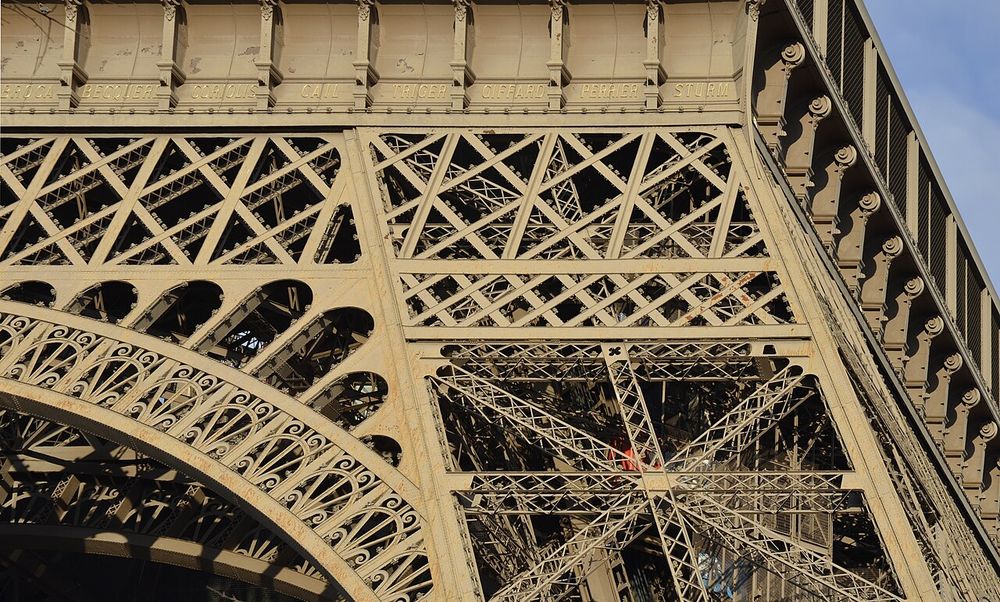
Arago, Poisson and Monge on the friezeVictor R. Ruiz from Arinaga, Canary Islands, Spain, CC BY-SA 2.0
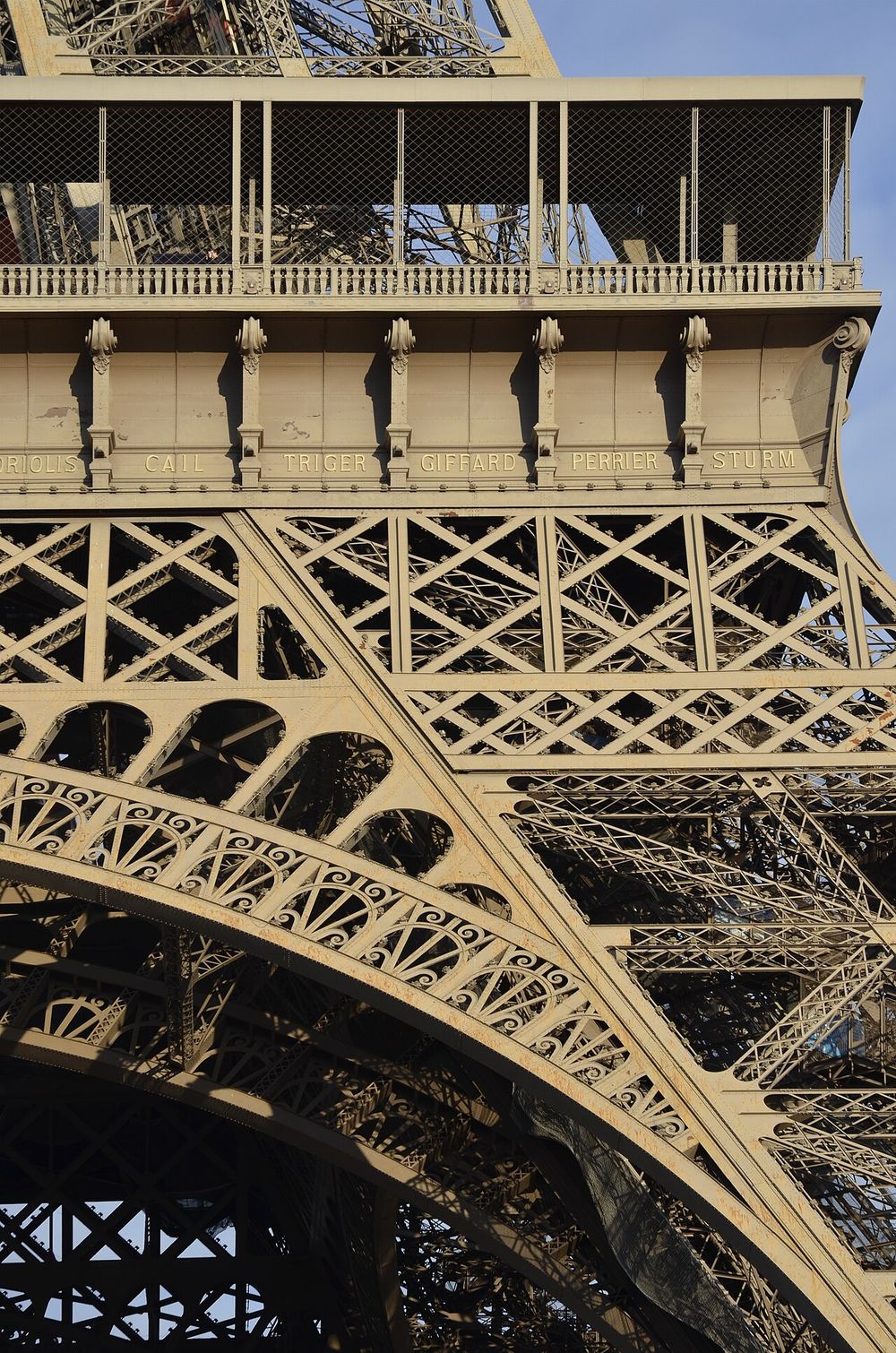
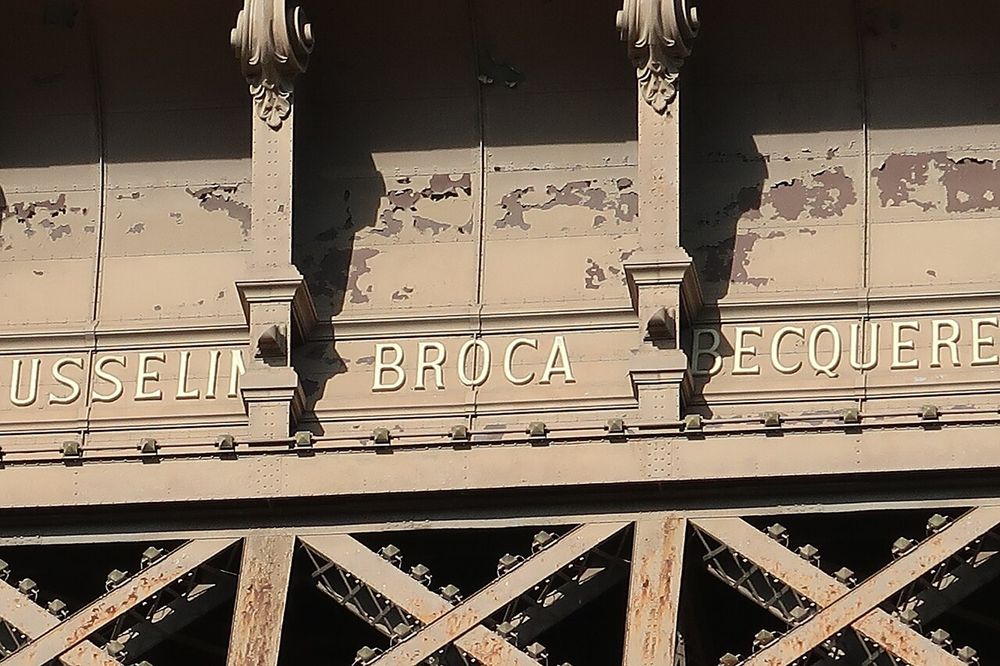
Look just under the first floor. Eiffel had the names of 72 French scientists and engineers set there in gold letters, eighteen on each side. He meant them as an answer to the artists who said the tower stood for nothing.
Among them are Lavoisier, Ampère, Foucault and Daguerre, who gave the world practical photography.
All 72 are men. In 2025 the city of Paris announced a plan to add the names of women scientists.
4. Lifts and stairs: how to get up a slope
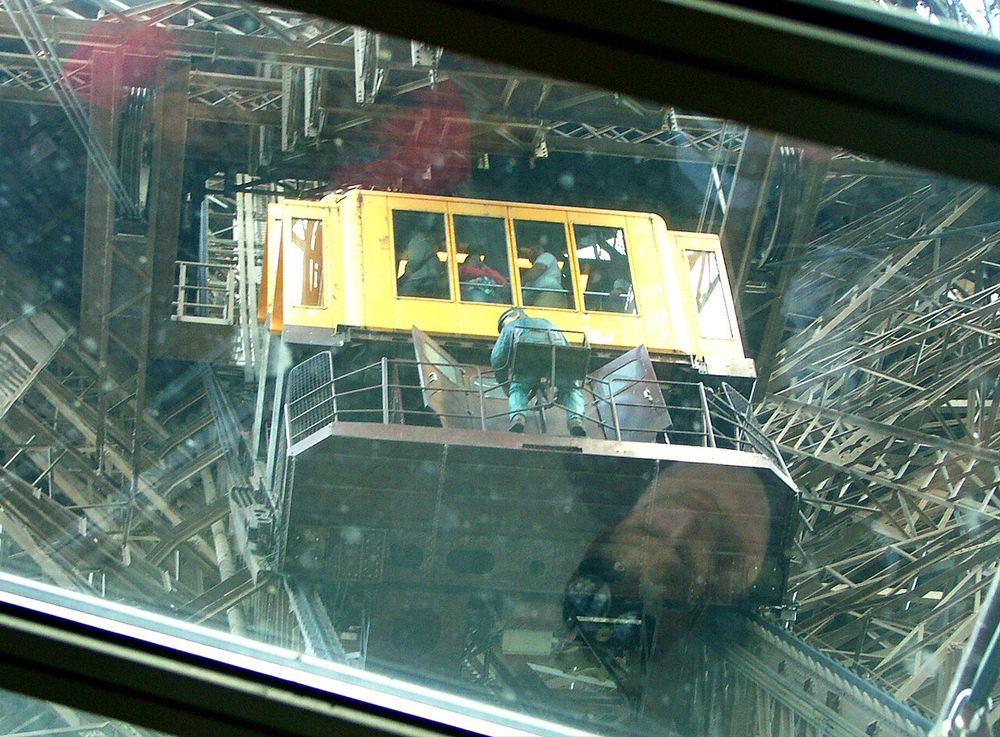
The yellow lift machinery, seen through glassMith, CC BY-SA 3.0
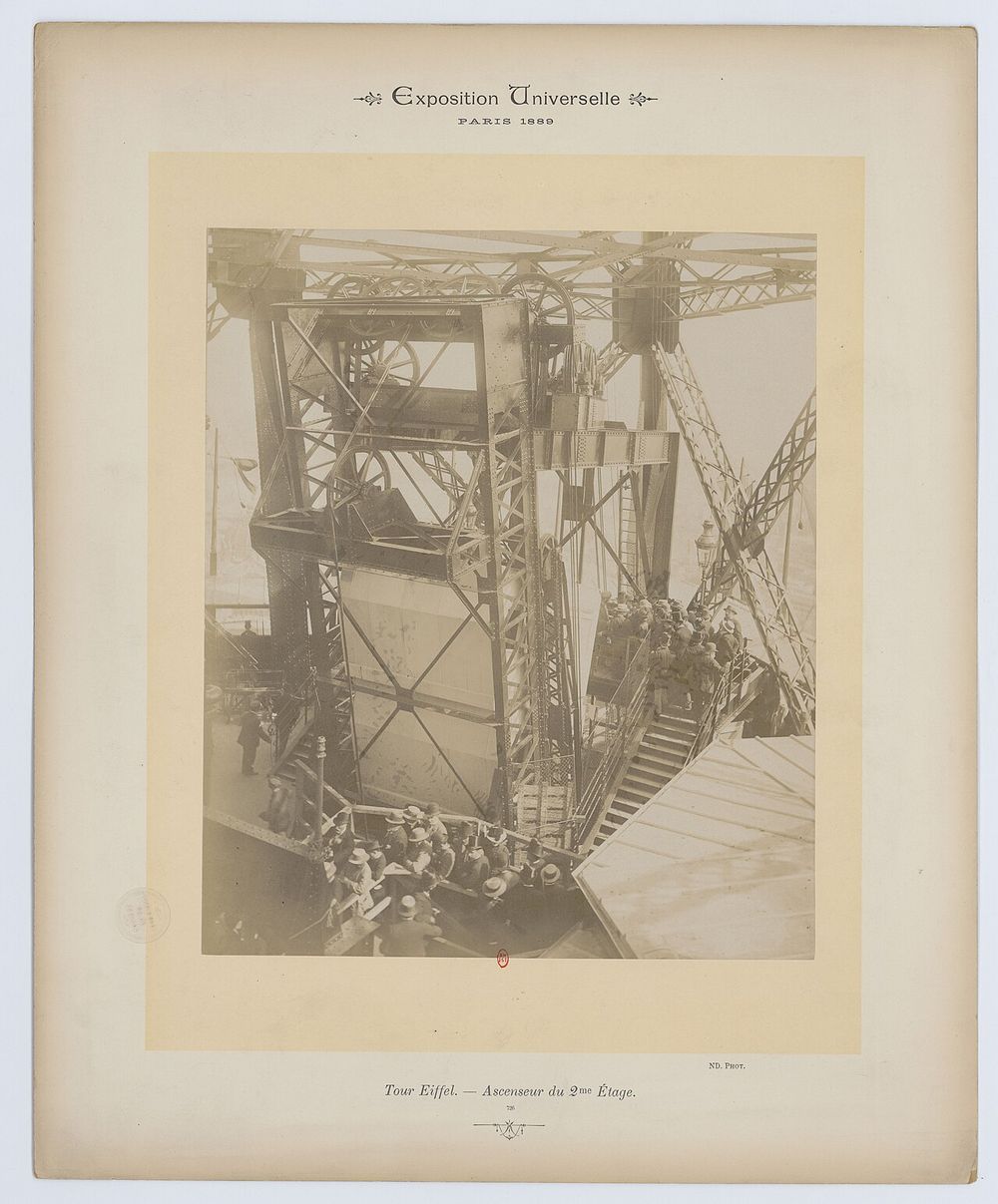
A lift that climbs a curved, leaning leg had never been built. In 1889 it took three companies, one of them Otis of New York, to solve the problem.
Two of the lifts that run today, in the east and west legs, still use the water-powered machinery put in for the next fair, in 1899. Look for the big yellow carriages under the legs.
The lift to the second floor, 1889Neurdein frères (Photographes). Photographe, Public domain
The stairs are in the south leg. It is 674 steps to the second floor. From there to the top there is only the lift.
5. The first floor: 57 metres
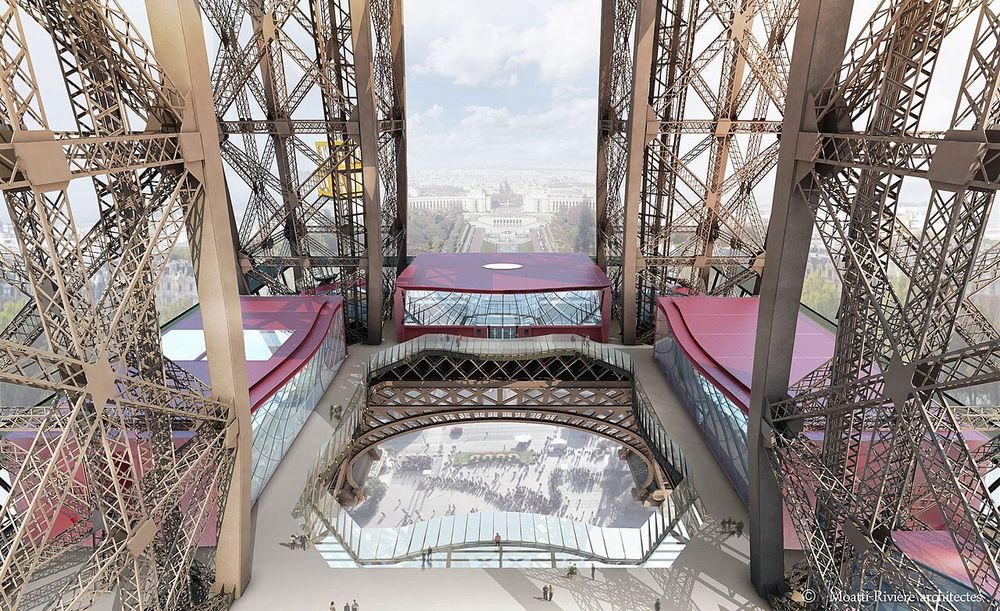
The first floor, with its glass floorIfoxxxx, CC0
This is the widest platform and the one people skip. A section of the floor is glass. You can stand on it and look down between your feet at the people in the square.
From the edge you see the tower's own ironwork closer than anywhere else. A piece of the original spiral stair that once led to Eiffel's rooms at the top stands here.
6. The second floor: the view to keep
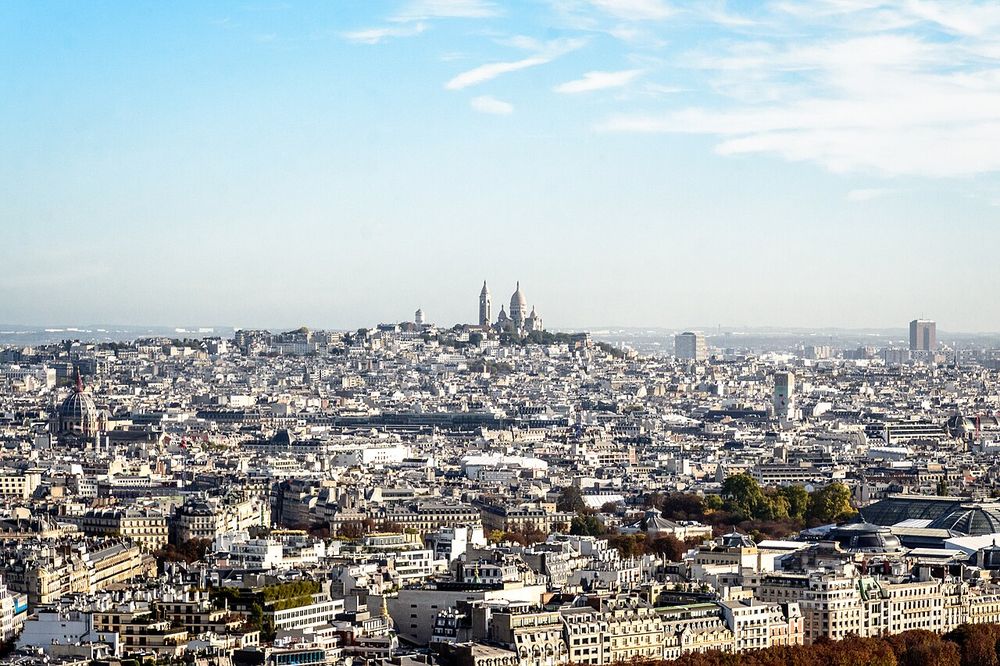
Paris from the second floor, with Montmartre on the horizonDomenico Convertini from Zurich, Schweiz, CC BY-SA 2.0
At 115 metres you are high enough to see all of Paris and low enough to pick things out. Find the white dome of Sacré-Cœur on its hill to the north, the gold dome of the Invalides, the Louvre along the river, and the two towers of Notre-Dame.
Many Parisians will tell you this floor is better than the top.
The upper shaft from the second floorbryan vallazza, CC BY-SA 4.0
Look up from here. The four legs have become one shaft.
7. The top: 276 metres and a private room
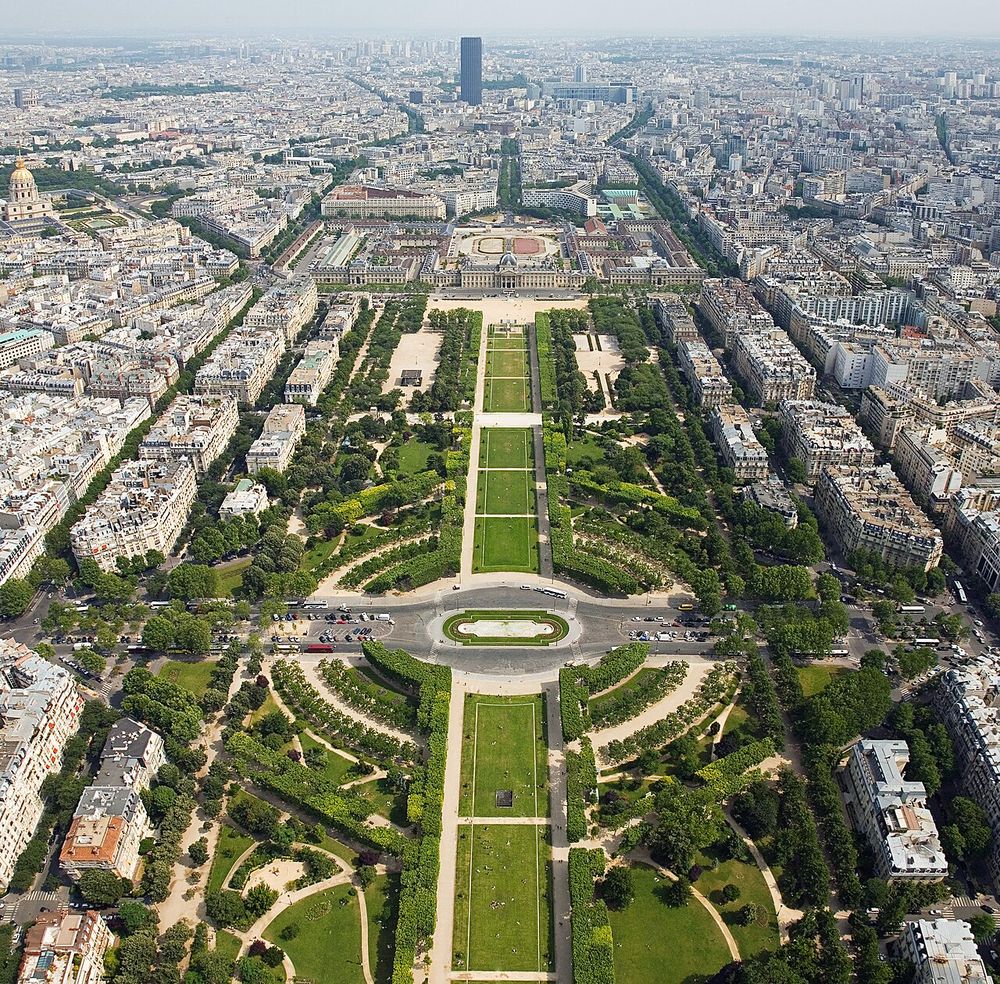
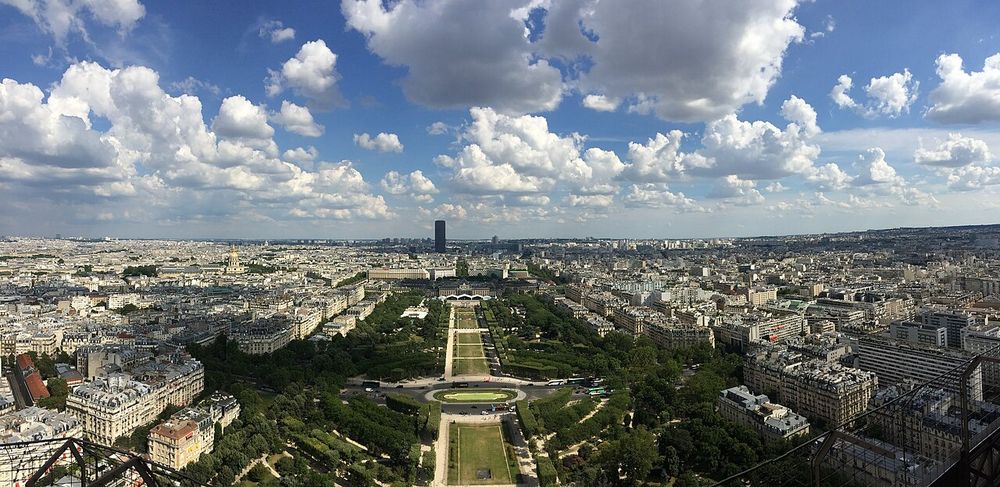
The Champ de Mars from the topDiliff, edited by Fir0002, CC BY 2.5
The top platform is small. On a clear day you can see about sixty kilometres. The city below turns into a map.
Eiffel kept a small apartment up here for himself, with wallpaper, a piano and a laboratory. He received guests in it, among them Edison. You can look into it through a window. Wax figures show Eiffel, his daughter Claire and Edison.
The tower grows and shrinks. On a hot day the iron expands, and the top stands as much as 15 centimetres higher. It also leans a little away from the sun.
8. The protest, and the twenty years
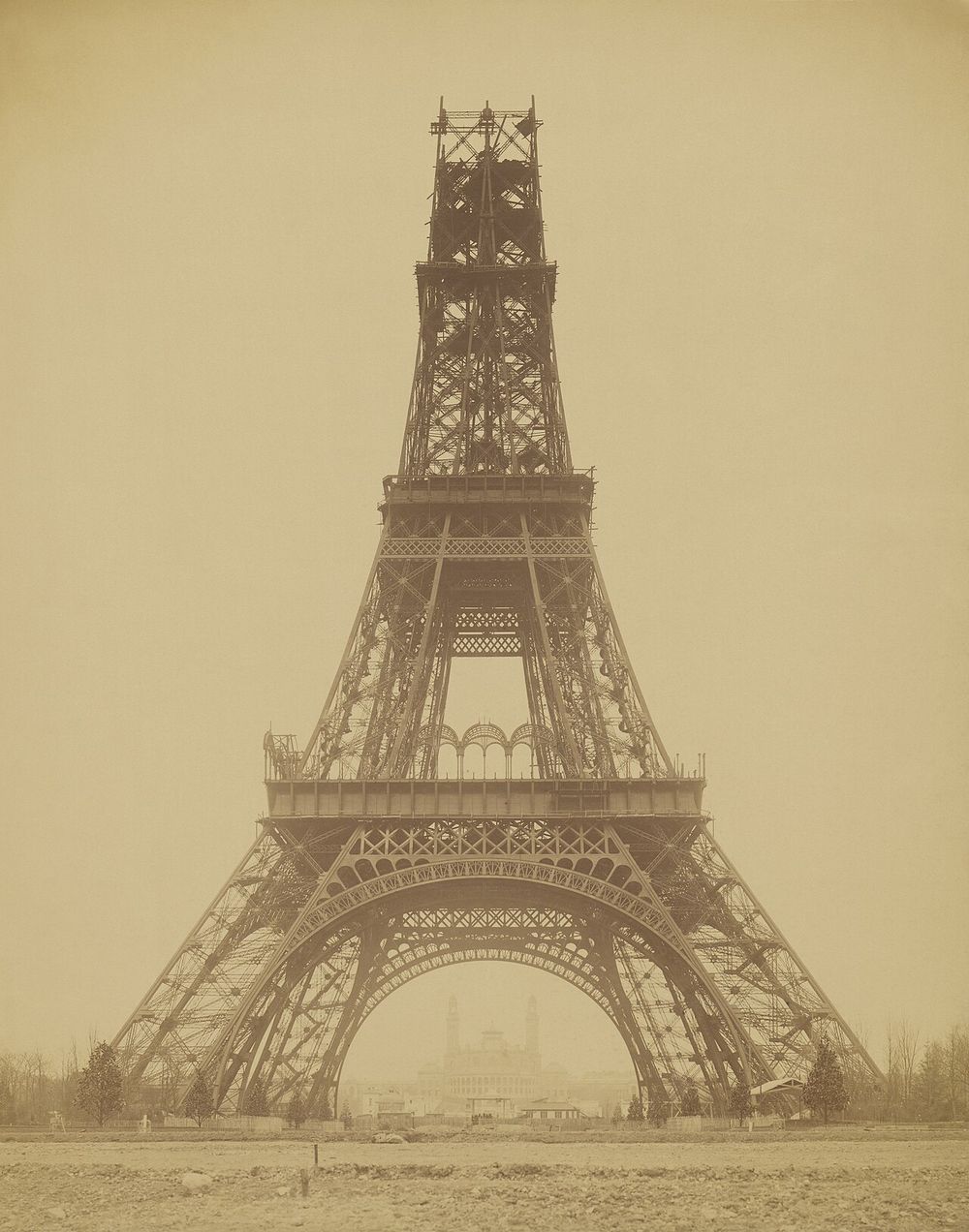
23 November 1888: the tower above the second floor, photographed by Louis-Émile DurandelleLouis-Emile Durandelle, Public domain
In February 1887, as the foundations were being dug, a letter appeared in the newspaper Le Temps. It was signed by some three hundred people, among them the composer Gounod, the novelist Maupassant, the younger Alexandre Dumas, and Charles Garnier, who built the Paris Opera. They called the tower a gigantic black factory chimney.
Eiffel answered that engineers have a beauty of their own, and that the laws of wind and weight, honestly followed, give a harmony. Then he built it.
Poets of the next generation loved it. In 1913 Guillaume Apollinaire opened a poem by speaking to the tower as a shepherdess.
Bergère ô tour Eiffel le troupeau des ponts bêle ce matin
Shepherdess, O Eiffel Tower, the flock of bridges is bleating this morning
Guillaume Apollinaire, "Zone", in Alcools (1913)
9. Saved by radio, and two wars
A drawing of 1914: the radio aerials strung from the topUnknown, Public domain
From 1903 the army officer Gustave Ferrié strung aerials from the top and sent messages farther each year. By 1908 the signal reached North Africa. When the permit ended in 1909, the city renewed it.
In September 1914 the station on the tower picked up German army messages during the battle of the Marne, which helped the French decide where to strike.
1925: the name Citroën in light bulbsUnknown authorUnknown author, Public domain
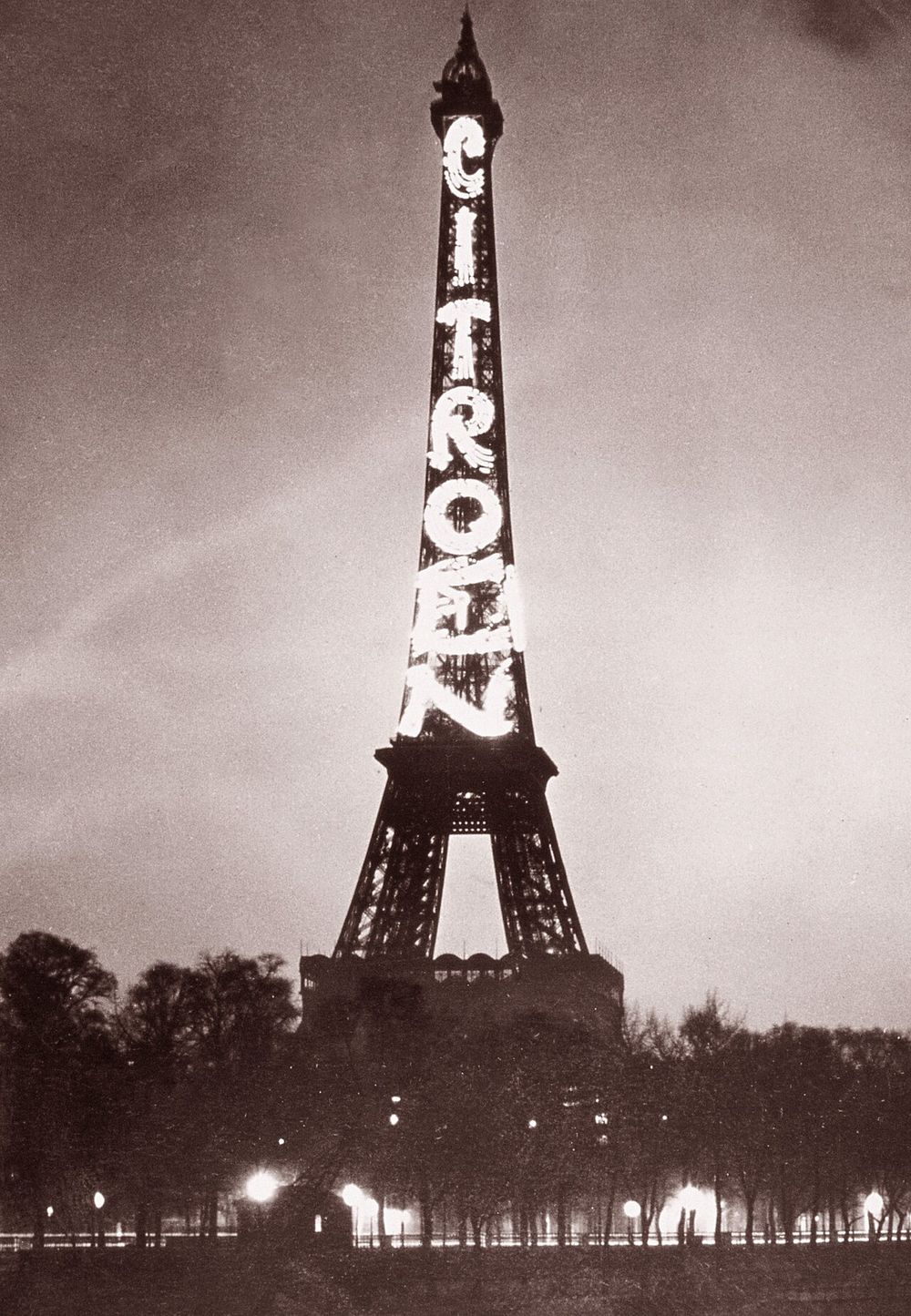
Between the wars the tower became an advertisement. From 1925 to 1934 the name of the car-maker Citroën ran down three sides in a quarter of a million light bulbs.
In June 1940 the Germans took Paris. The lift cables were cut, so soldiers who wanted to hang their flag at the top had to climb. In August 1944 Hitler ordered the city destroyed, the tower with it. The German commander did not carry out the order. On the day of the Liberation, firemen climbed up and raised the French flag.
In the Bond film A View to a Kill (1985), Roger Moore chases an assassin up these stairs, and she jumps from the tower with a parachute.
10. Paint, and the same years in China
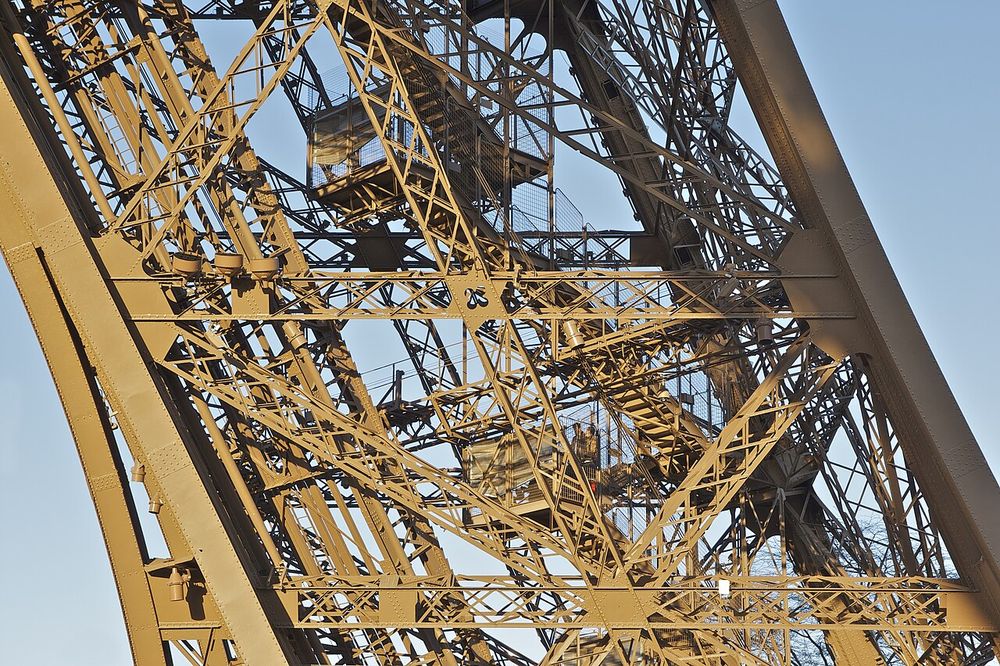
Ironwork of the south legYann Forget, CC BY-SA 4.0
Iron rusts, and paint is what keeps the tower standing. It has been repainted about every seven years, by hand, with brushes. It takes some sixty tonnes of paint. The colour has changed: red-brown in 1889, yellow in 1899, brown since 1968. The latest repainting goes back to the yellow-brown that Eiffel chose in 1907.
When the tower opened in 1889, the Guangxu Emperor of the Qing (1644–1912) had just begun to rule in his own name. The tallest old building in China was, and is, the timber pagoda at Yingxian in Shanxi, 67 metres, built in 1056.
In January 1964 France and China opened diplomatic relations. In the same year the tower was listed as a historic monument. Forty years later, in January 2004, it was lit red for the Chinese New Year.
It was the tallest structure in the world for forty-one years, until the Chrysler Building in New York passed it in 1930.
Meanwhile in the world
Year
Here
Elsewhere
1887
Building begins in January
Thirteenth year of the Guangxu Emperor; the Qing recognises Portuguese rule over Macau
1889
The tower opens for the world's fair
The Guangxu Emperor begins to rule in his own name; Japan adopts the Meiji Constitution
1909
The permit ends; the tower is kept as a radio mast
First year of the boy emperor Puyi
1914
The tower's station intercepts German messages
The First World War; Japan takes Qingdao from Germany
1930
The Chrysler Building passes it in height
The war of the Central Plains in China
1944
Paris is liberated; the French flag goes back up
China has been at war with Japan since 1937
1964
Listed as a historic monument
France and China open diplomatic relations
2004
Lit red for the Chinese New Year
The Year of China in France
One line to remember: built in two years for 1889, meant to last twenty, saved by radio.
Then and now
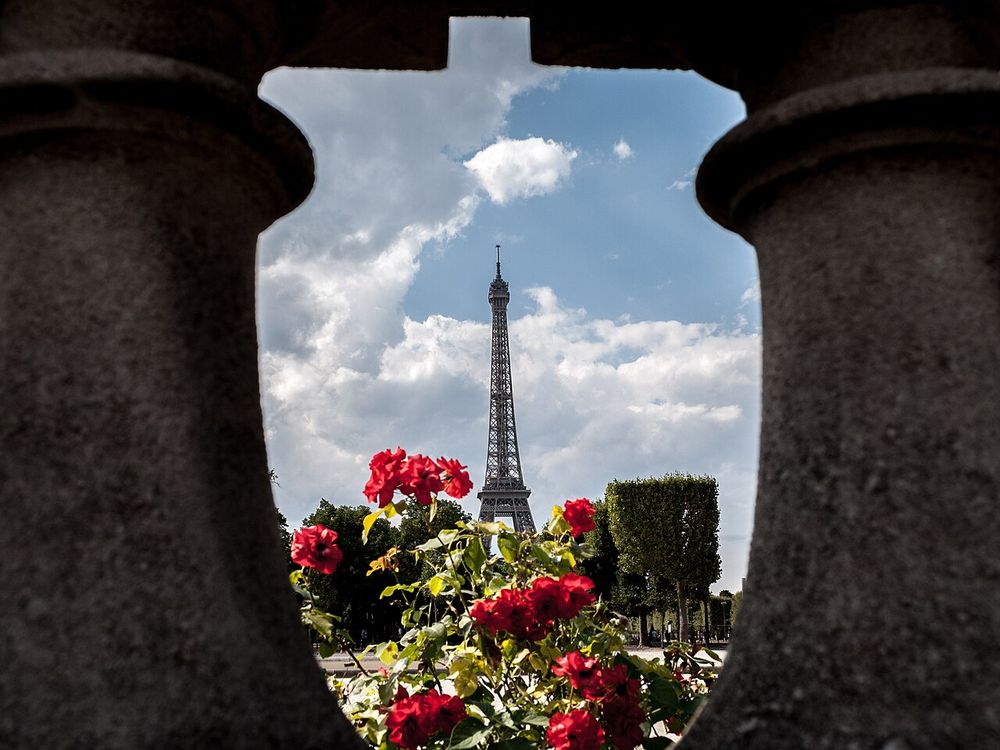
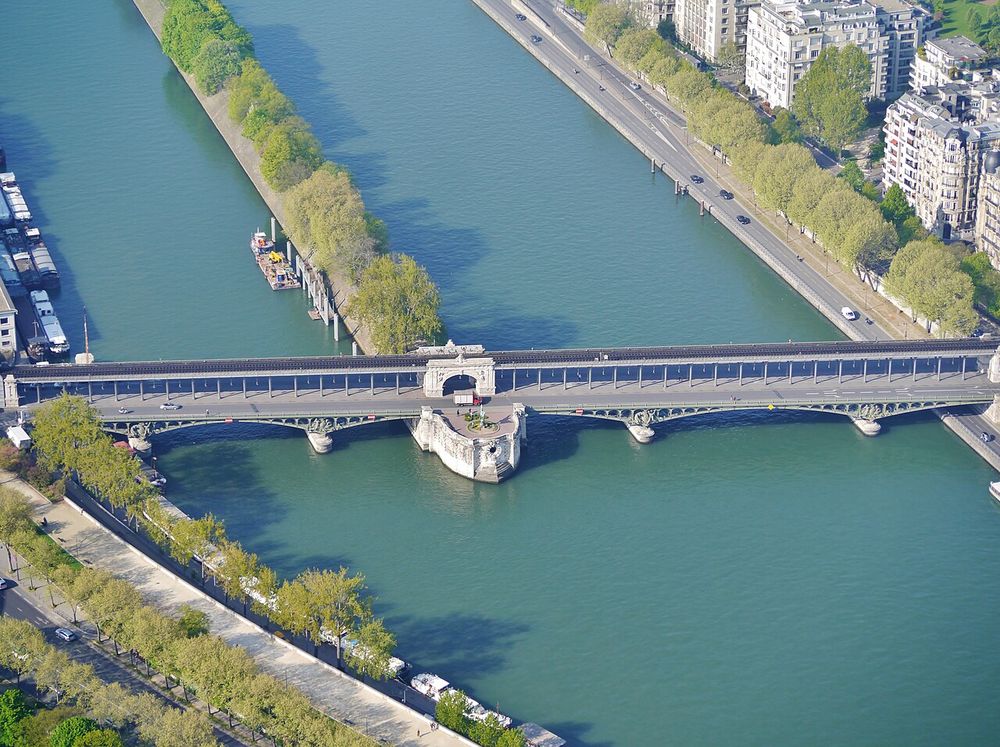
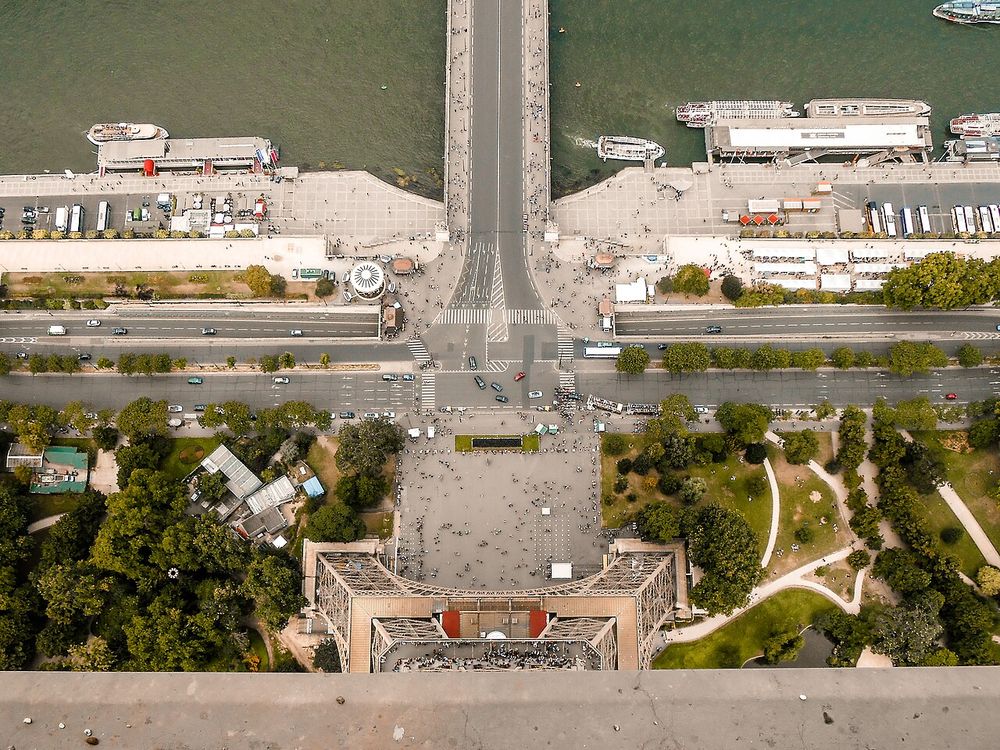
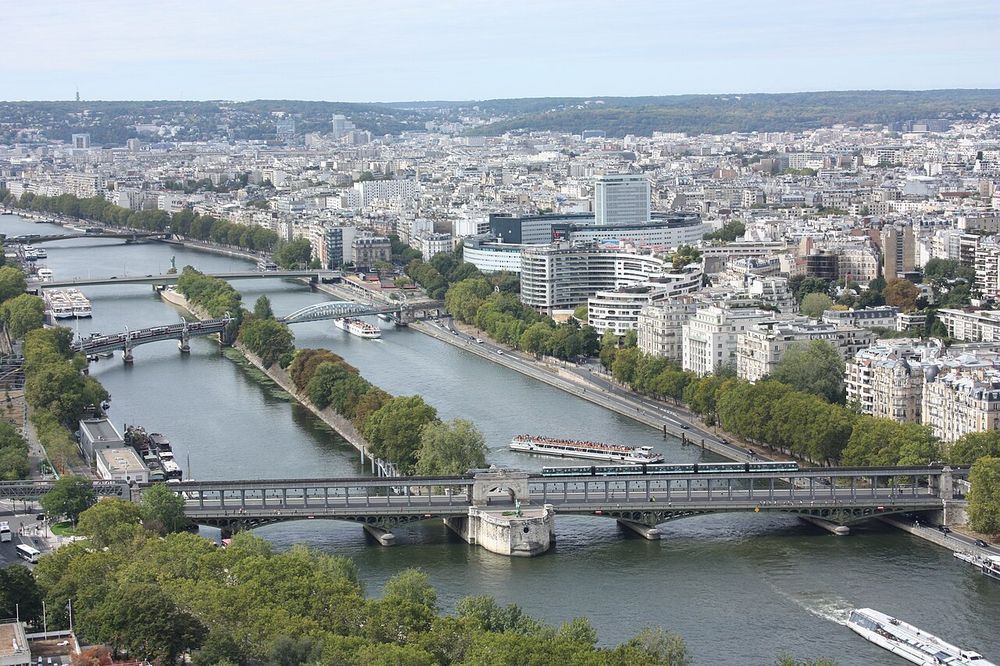
Paris from the Montparnasse Tower, with the Eiffel Tower on the skylineJim Linwood from London, CC BY 2.0, Wikimedia CommonsFrom the gardens of the Trocadérodconvertini, CC BY-SA 2.0, Wikimedia CommonsFrom the Trocadéro, with the Pont d'Iéna in frontChabe01, CC BY-SA 4.0, Wikimedia CommonsSunrise behind the towerTristan Nitot, CC BY-SA 3.0, Wikimedia CommonsFrom the Champ de MarsJebulon, CC0, Wikimedia CommonsThe whole tower from the lawnBenh LIEU SONG, Public domain, Wikimedia CommonsLooking up one sidedconvertini, CC BY-SA 2.0, Wikimedia CommonsThe tower and the Pont d'Iéna from the riverNikolai Karaneschev, CC BY 3.0, Wikimedia CommonsFrom the Pont de Bir-HakeimFrédérik Vuille, CC BY 2.0, Wikimedia CommonsA rainbow over the Seine and the towerMarc Baronnet, CC BY-SA 4.0, Wikimedia CommonsSeen through a balustrade near the École MilitaireSimonCourtecuisse, CC BY-SA 4.0, Wikimedia CommonsDirectly under the tower, looking upRedenimCrafts, CC BY 4.0, Wikimedia CommonsThe underside of the first floorNil Castellví nilcaste, CC0, Wikimedia CommonsThe lattice of one legJebulon, CC0, Wikimedia CommonsIronwork of the south legYann Forget, CC BY-SA 4.0, Wikimedia CommonsAn arch and the north legJebulon, CC0, Wikimedia CommonsThe south leg where it meets the first floorYann Forget, CC BY-SA 4.0, Wikimedia CommonsArago, Poisson and Monge on the friezeVictor R. Ruiz from Arinaga, Canary Islands, Spain, CC BY-SA 2.0, Wikimedia CommonsThe name of Broca on the friezeThank you to indicate this credit line next to the image in case of reuse: Credi, CC BY-SA 4.0, Wikimedia CommonsThe yellow lift machinery, seen through glassMith, CC BY-SA 3.0, Wikimedia CommonsThe first floor, with its glass floorIfoxxxx, CC0, Wikimedia CommonsLooking up from the second floorFrenchinspiration, CC BY-SA 3.0, Wikimedia CommonsThe upper shaft from the second floorbryan vallazza, CC BY-SA 4.0, Wikimedia CommonsThe top sectionGzen92, CC BY-SA 4.0, Wikimedia CommonsThe Champ de Mars from the topDiliff, edited by Fir0002, CC BY 2.5, Wikimedia CommonsThe Trocadéro and the Seine from the first floorNan Palmero from San Antonio, TX, USA, CC BY 2.0, Wikimedia CommonsParis from the second floor, with Montmartre on the horizonDomenico Convertini from Zurich, Schweiz, CC BY-SA 2.0, Wikimedia CommonsThe Pont de Bir-Hakeim from the topZairon, CC BY-SA 4.0, Wikimedia CommonsParis from the tower, July 2018A Chinese user, CC BY-SA 4.0, Wikimedia CommonsStraight down from the topFabrizio Verrecchia fabryv, CC0, Wikimedia CommonsThe bridges of the Seine from the tower, September 2026Sneeuwvlakte, CC BY-SA 4.0, Wikimedia Commons23 November 1888: the tower above the second floor, photographed by Louis-Émile DurandelleLouis-Emile Durandelle, Public domain, Wikimedia CommonsThe tower going up, seen across the Pont d'Iéna, 1888Unknown photographer, Public domain, Wikimedia CommonsThe tower and the fair from a balloon, 1889Photographer : Alphonse Liébert (1827–1913), Public domain, Wikimedia Commons1889: the tower and the fair from the TrocadéroUnknown, Public domain, Wikimedia CommonsUnder the arch during the fair of 1889USMC Archives from Quantico, USA, CC BY 2.0, Wikimedia CommonsThe stairs above the second floor, 1889Unknown authorUnknown author, Public domain, Wikimedia CommonsThe lift to the second floor, 1889Neurdein frères (Photographes). Photographe, Public domain, Wikimedia CommonsThrough the arch to the old Trocadéro palace, 1900Unknown authorUnknown author, Public domain, Wikimedia CommonsLightning strikes the tower, 3 June 1902, photographed by Gabriel LoppéGabriel Loppé, Public domain, Wikimedia CommonsA colour photograph of 1912Léon Auguste, CC0, Wikimedia CommonsA drawing of 1914: the radio aerials strung from the topUnknown, Public domain, Wikimedia Commons1925: the name Citroën in light bulbsUnknown authorUnknown author, Public domain, Wikimedia Commons
Local legends
These are stories people tell about this place. They are legends, not history, and each one says where it comes from.
LegendThe restaurant on the tower
Maupassant, who hated the tower, ate lunch in its restaurant day after day. Asked why, he said it was the one place in Paris from which he could not see it.
Source: Told by the critic Roland Barthes in 1964; no source from Maupassant's own time is known
LegendThe whole tower
In 1925 a swindler named Victor Lustig, posing as a government official, told scrap dealers the tower was to be pulled down in secret, and sold it to one of them. The buyer was too ashamed to go to the police.
Source: Lustig's story as told in later American accounts; French records of it are thin
LegendThe lifts
When Hitler came to Paris in June 1940 the lifts did not work, and he would not climb. So people say he conquered France but never the Eiffel Tower. After the Liberation the lifts are said to have been running again within hours.
Source: A saying repeated in Paris guidebooks
LegendThe top
Eiffel was offered great sums by rich Parisians for a single night in his rooms at the top, and refused them all.
Source: Told in accounts of the tower; we have found no first-hand source
Later, people who live here will be able to add the stories they grew up with, and say which of these they have heard.
Not certain, and where accounts conflict
How tall is it?
300 metres in 1889, or 312 with the flagpole. Aerials have raised it since. The figure has been 330 metres since a new aerial was fitted in 2022.
Who should have the credit?
Koechlin and Nouguier had the idea, Sauvestre shaped it, and Eiffel's firm worked out and built it. Koechlin himself said the tower was rightly Eiffel's, since without him it would not exist.
Did Barcelona turn it down first?
It is often said that Eiffel first offered the tower to Barcelona for its fair of 1888. We know of no document that shows it.
Is it in good repair?
Reports by engineers leaked to the French press in 2022 said rust was a serious problem and that painting over old layers was not enough. The operator says the tower is safe and well kept.
The cut lift cables of 1940
Nearly every account says the French cut them. We have not found who gave the order.
Visiting
Tickets and hours
Adult prices given for 2026: top by lift 36.70 euros; top by stairs then lift 28 euros; second floor by lift 23.50 euros; second floor by stairs 14.80 euros. Ages 12 to 24 pay about half and ages 4 to 11 about a quarter. Under 4 is free.
Usual hours are 9:30 to 23:45, opening at 9:00 in summer. The last lift goes up about an hour before closing. The tower was closed on 13 July in 2026 for the fireworks.
The top closes in high wind, and the whole tower can close for strikes. Check on the morning of your visit.
One guide reports that from 29 September 2026 the stairs ticket also has to be booked ahead. We could not confirm this.
Last checked 2026-11-12. Travel guides and price tables of 2026 that agree with each other; the tower's own site could not be opened from our tools.
Booking from abroad
Ticket window on site Tickets are also sold at the foot of the tower on the day. The queue for the lift can be two hours in summer; the queue for the stairs is usually short.
Note The tower's own site is toureiffel.paris, with an English version, and guides say it sells lift tickets up to 60 days ahead. We could not open it from our tools on the day we checked, so we give no link. Many look-alike sites sell the same tickets at higher prices.
Checked 2026-11-12
Where to start
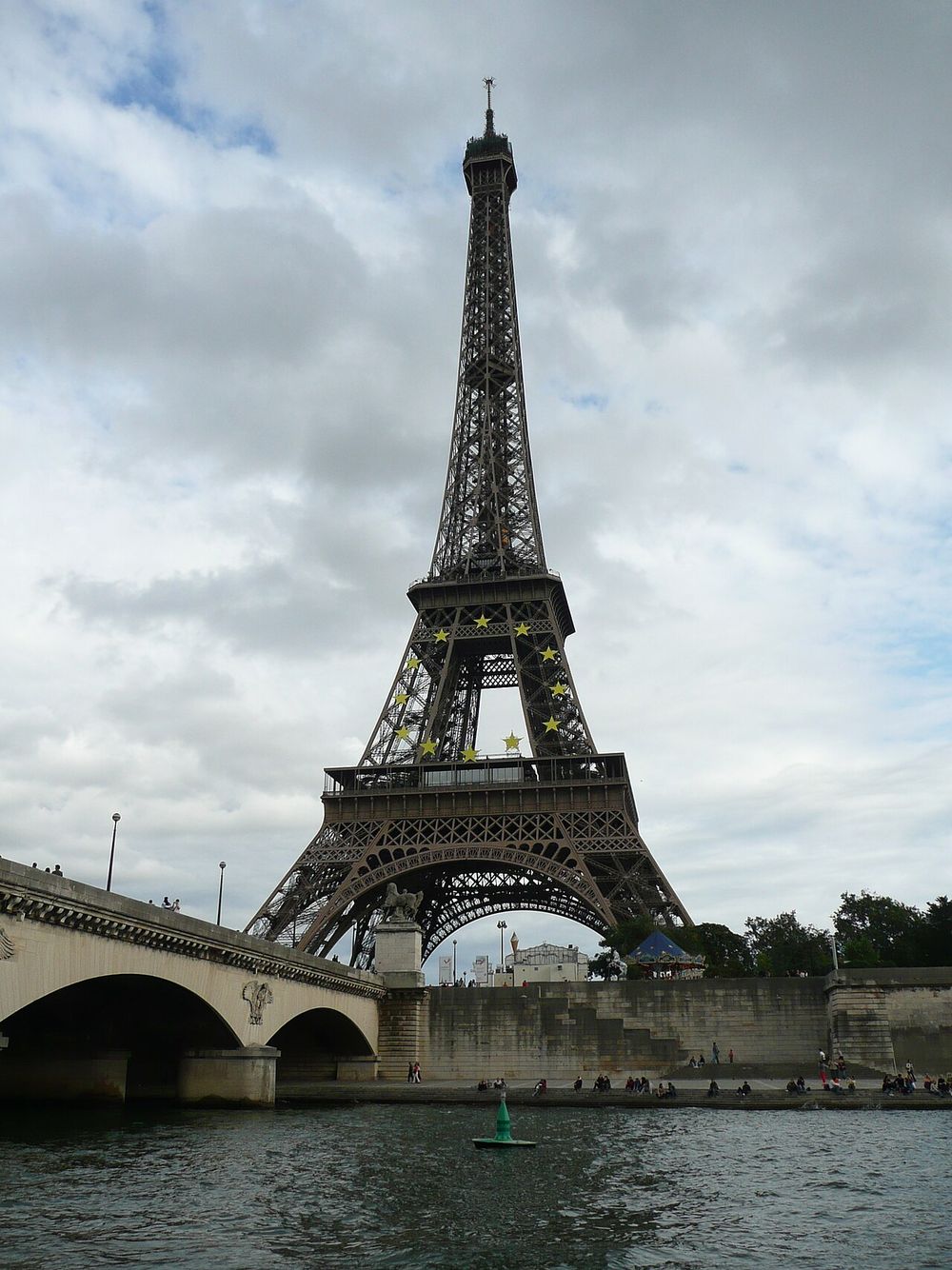
Start at the Trocadéro, across the river, for the view of the whole tower. Then walk down through the gardens and over the Pont d'Iéna.
There are two entrances to the square, on the south and east sides. Everyone goes through security there, with or without a ticket.
If your legs allow, walk up. The stairs take about half an hour to the second floor, and you are inside the ironwork all the way.
On the way down, stop at the first floor. Most people ride past it.
For the top, come about an hour before sunset and stay until dark.
Before you go
Metro: Bir-Hakeim on line 6, Trocadéro on lines 6 and 9, or École Militaire on line 8. The suburban train RER C stops at Champ de Mars–Tour Eiffel.
Large bags and suitcases are not allowed, and there is no left luggage. Glass bottles are taken away at security.
It is much colder and windier at the top than on the ground. Bring a layer, even in summer.
The top is reached only by lift, and visitors in wheelchairs can go as far as the second floor.
Customs and manners
In France you say "Bonjour" before anything else, to the guard, the ticket seller and the waiter. Asking a question without it is heard as rude.
Round the tower and on the Trocadéro, people will ask you to sign a petition, tie a string on your wrist, or bet on which cup hides the ball. All three are ways of getting your money. Say no and keep walking.
Keep your phone and wallet out of back pockets. Pickpockets work the queues and the metro stations here.
The lawn of the Champ de Mars is a public park, and Parisians picnic there in the evening. Take your rubbish with you.
The lights sparkle for five minutes on the hour after dark.
Look for these
From the ground, find the row of names under the first floor. Can you read one you know from school?
Under the tower, look for the yellow lift carriages. Which legs have them?
Stand in the exact middle of the square and look up. What shape do you see?
Count the rivets on one small plate. Now remember there are two and a half million.
Are the top, the middle and the bottom painted the same shade?
On the first floor, find the glass floor. How far down is the ground?
From the second floor, find a white dome on a hill and a gold dome near the river.
At the top, look into Eiffel's room. Who are the three wax figures?
I am here
Stand at the site, sign in, press the button, and collect its stamp. Your browser will ask to use your location. It is sent to us once to confirm that you are at the site; we keep how far you were from it, not the spot where you stood.
Your stamps are saved to your account, so they follow you to any device. Checking from a browser cannot rule out every false location; stricter checks arrive with the app.
Messages
Share your photos
Photos here show the place, not people. Each one is credited to the visitor who took it and appears after our team has looked at it. A photo with you in it belongs under “I am here”.