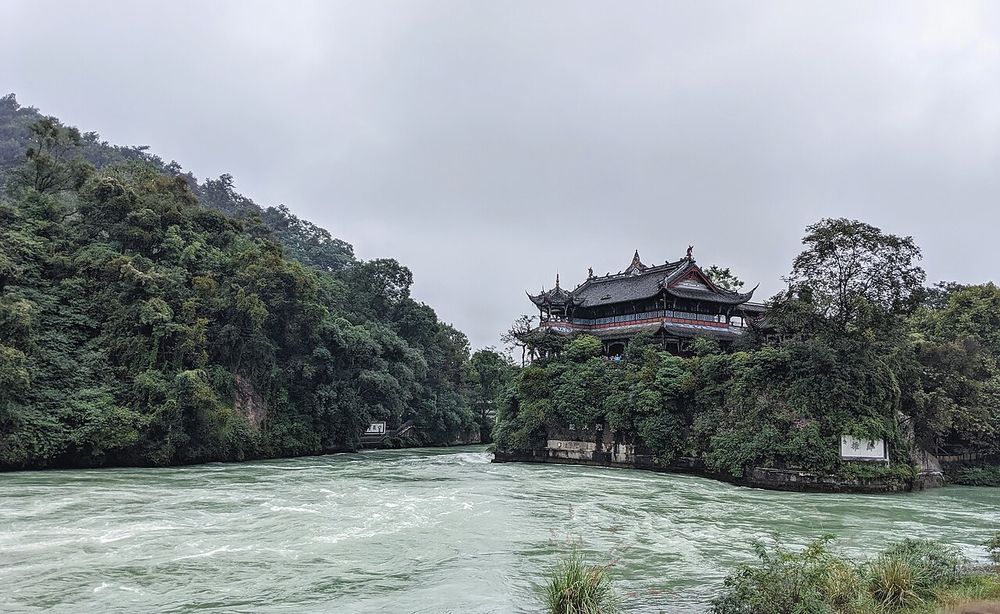
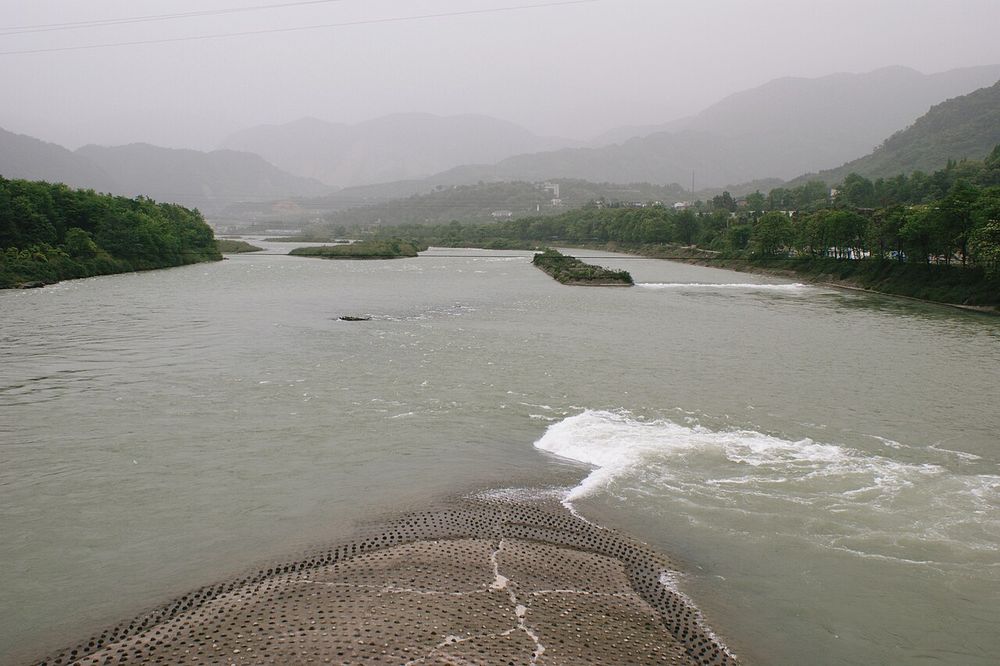
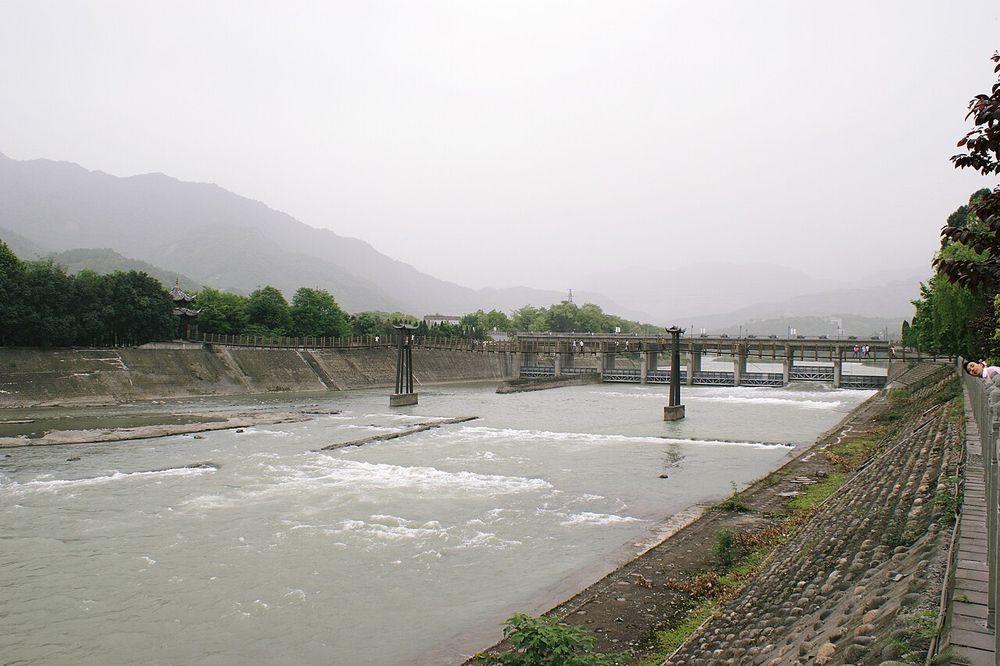
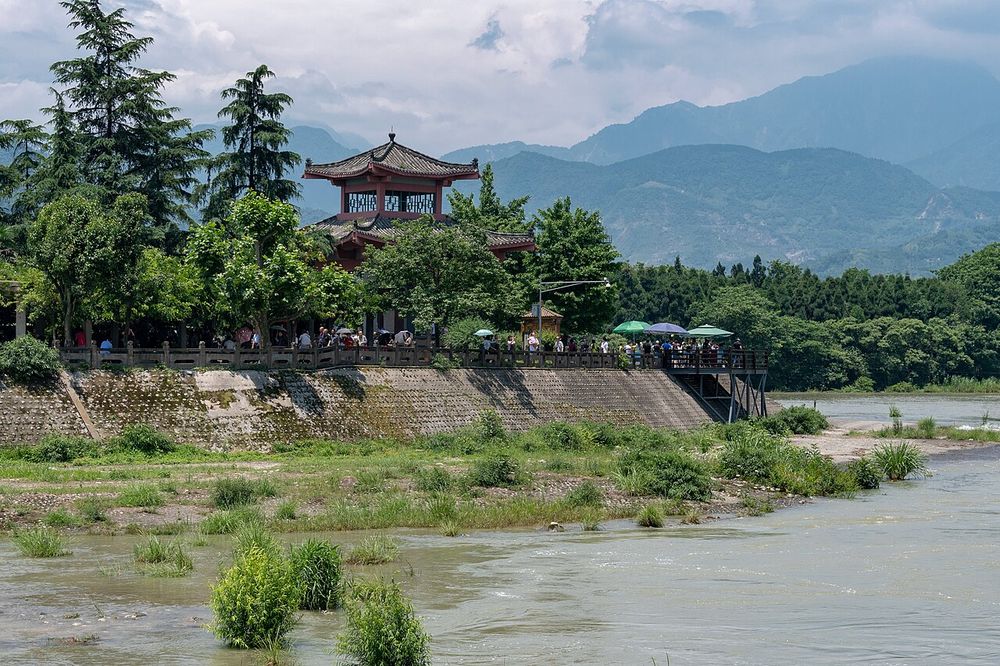
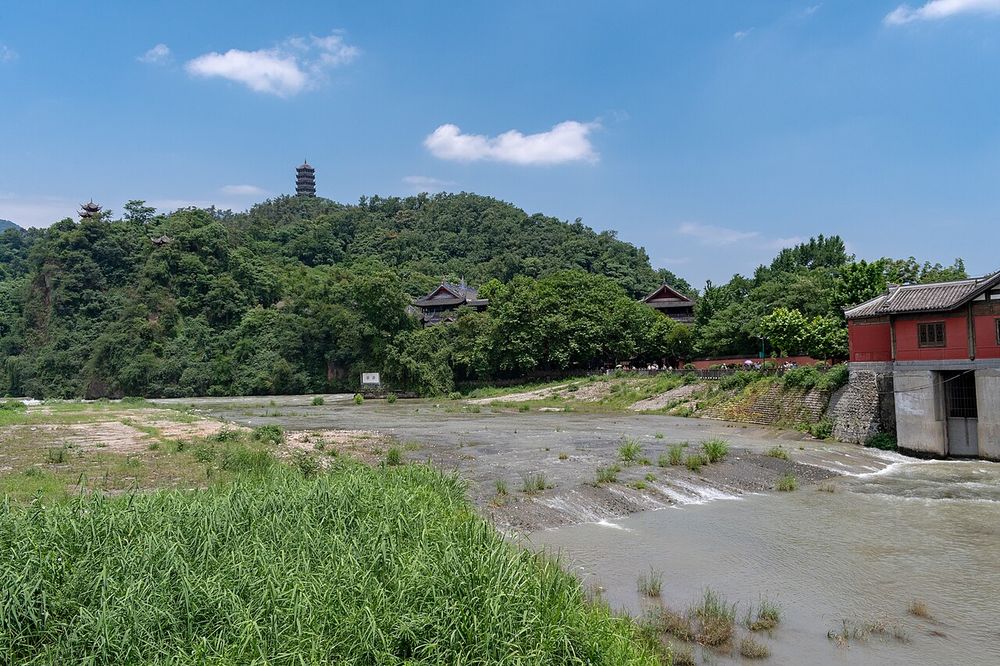
Around 256 BC a governor named Li Bing split the Min River where it leaves the mountains, with no dam at all: a stone-and-bamboo spit to divide the water, a low spillway to throw off floods and sand, and a channel cut through a hill to carry water to the plain. Twenty-two centuries later it still waters the Chengdu plain, the oldest working irrigation system of its kind in the world.
Photo: xiquinhosilva, CC BY 2.0, Wikimedia Commons
The story
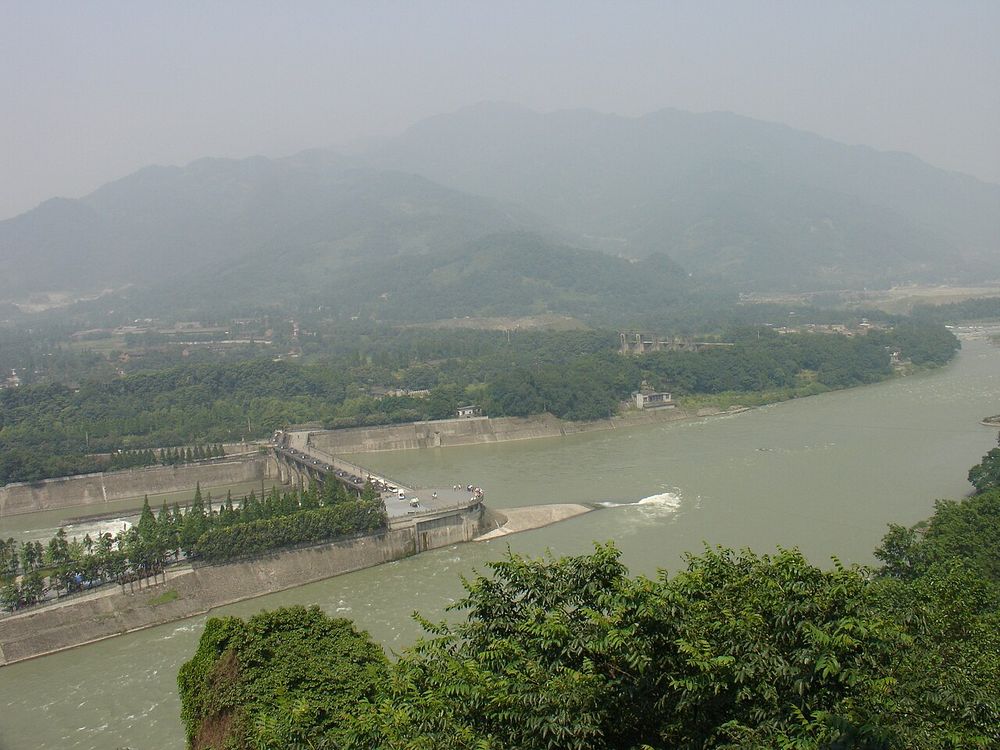
The Min River comes out of the Tibetan mountains fast and full of stones, and before Li Bing it flooded the Chengdu plain in summer and left it dry in winter. Li Bing, sent by the state of Qin (221–206 BC) to govern Shu, built a spit in midstream, the Fish Mouth, to split the river: the inner channel to the fields, the outer one carrying floods away. A low weir let the surplus spill back to the outer river, carrying sand and stones with it.
At the end of the inner channel his workers cut a gap through the hill of Yulei, heating the rock with fire and cracking it with water: the Bottle-Neck, which lets in only as much water as the plain can take. The system made Sichuan "the land of abundance" and fed the armies with which Qin united China. It was listed as a World Heritage Site in 2000, with Mount Qingcheng.
What is here
One ticket of 80 yuan covers the irrigation works, Lidui Park, the Erwang Temple and the bridges; buses and the escalator are extra.
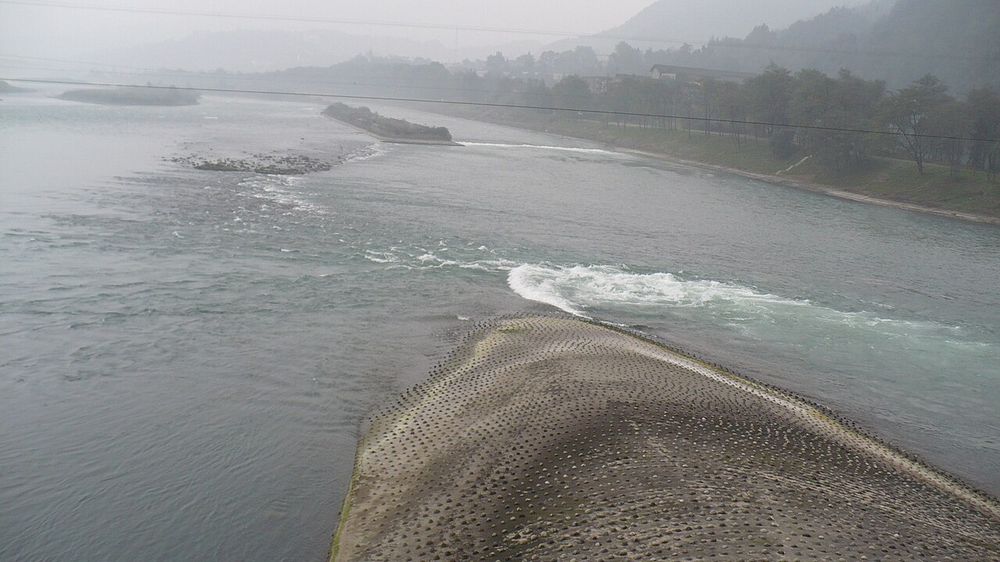
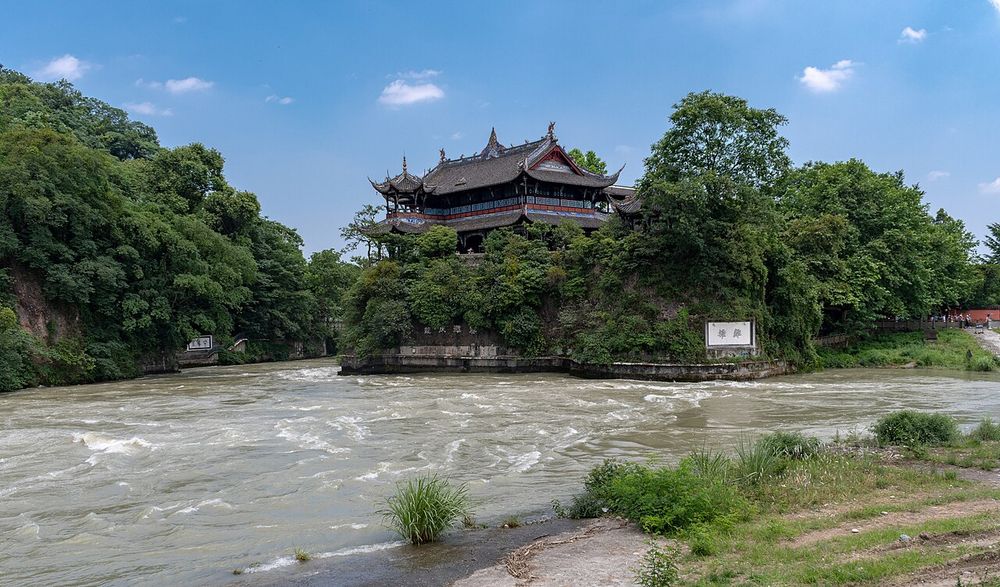
The Fish Mouth splitting the riverColin W, CC BY-SA 3.0
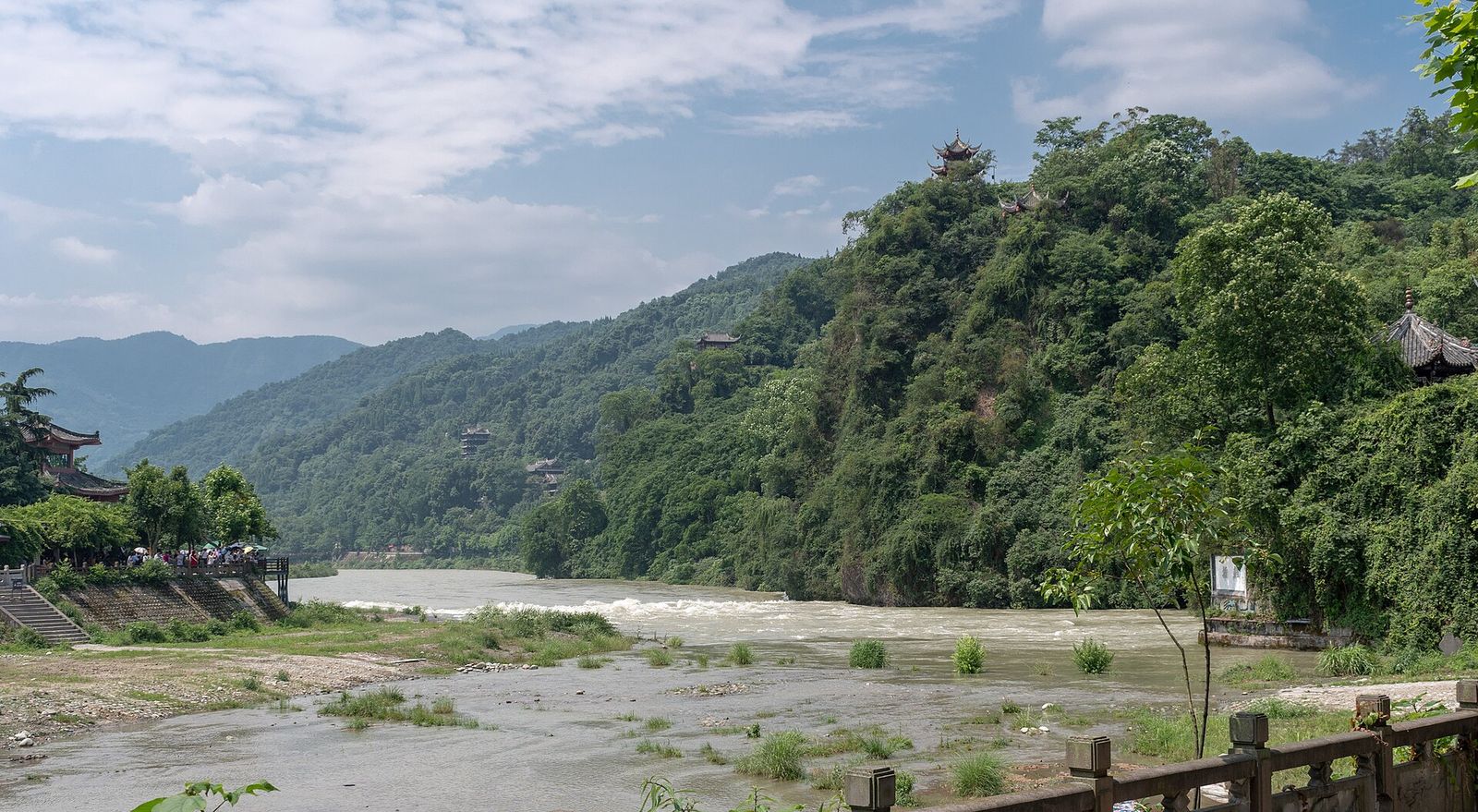
Stand at the tip of the spit, where the river splits in two. The inner channel is narrower but deeper, so in the dry season it takes about six-tenths of the water; in floods the wide outer river takes six-tenths. The same shape does both jobs, with no gates to open or close.
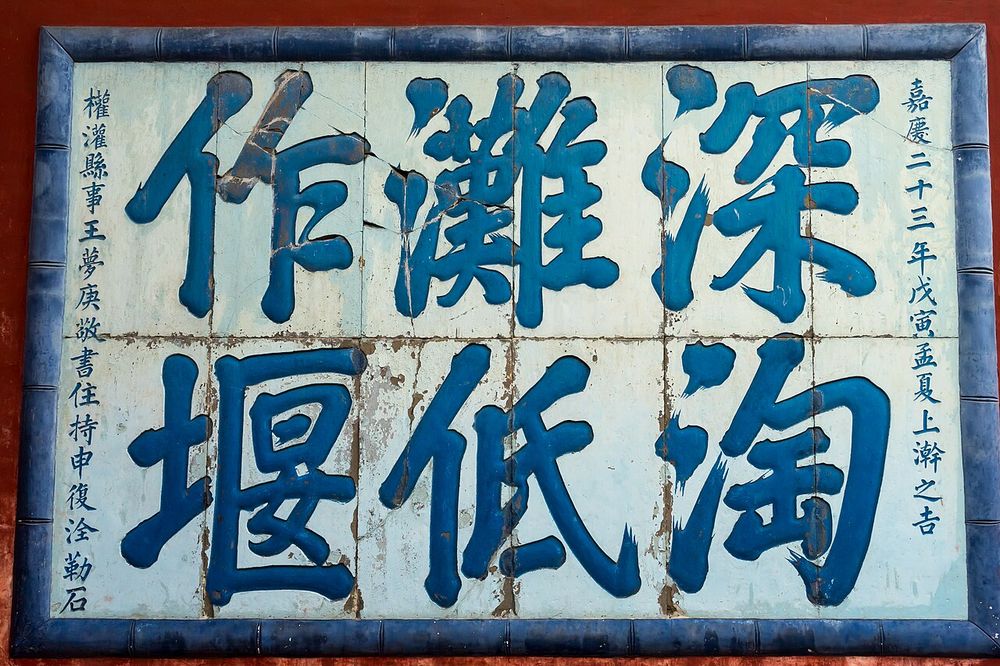
The rule Li Bing left for those who came after is carved in the Erwang Temple: "Dig the bed deep, keep the weir low." For two thousand years the channel was cleared each winter and the weir rebuilt with bamboo baskets of stones.
"Dig the bed deep, keep the weir low", 2017JianEn Yu, CC BY 2.0
Things people often get wrong
"It is a dam." There is no dam across the river: the water is divided and guided, not stopped. That is why it does not silt up like a reservoir.
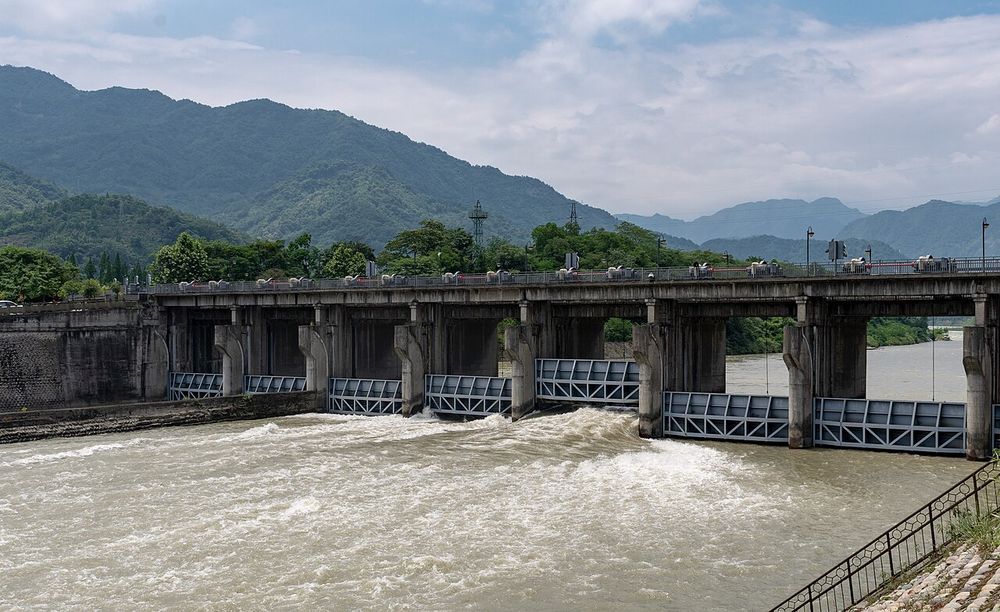
"The structures are all ancient." The idea and the layout are; the materials have been replaced again and again, and today the Fish Mouth is concrete and modern gates help control the flow.
People who stood here
We searched Chinese sources first for this list, then German and English ones.
Li Bing (governor of Shu, 3rd century BC)He designed and built the system; he and his son are honoured in the Erwang Temple above the river.
Sima Qian (historian, about 145–86 BC)He travelled west to see the Min River and the hill Li Bing had cut, and wrote the first account of the works.
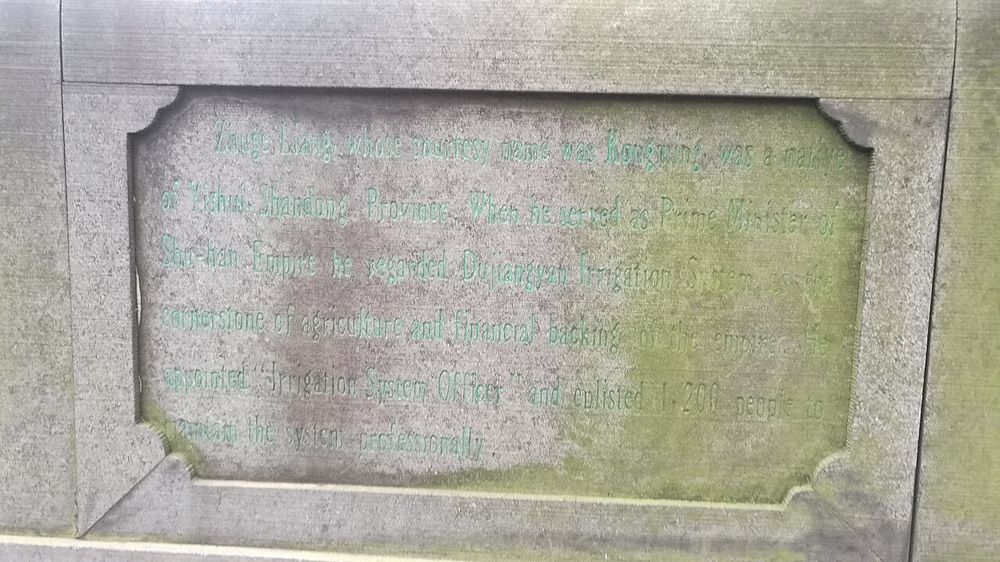
Zhuge Liang (statesman, 181–234)As chancellor of Shu Han he posted a guard of twelve hundred men to protect and maintain the weir.
Lu You (poet, 1125–1210)Serving in Sichuan, he visited the temple on the Lidui hill and wrote poems on Li Bing and the river.
Ferdinand von Richthofen (geographer, 1833–1905)The German geographer who named the Silk Road visited in 1872 and wrote that no irrigation in the world could compare.
Go deeper: from the Fish Mouth to the Bottle-Neck, six stops7 stops · about 1 min to read
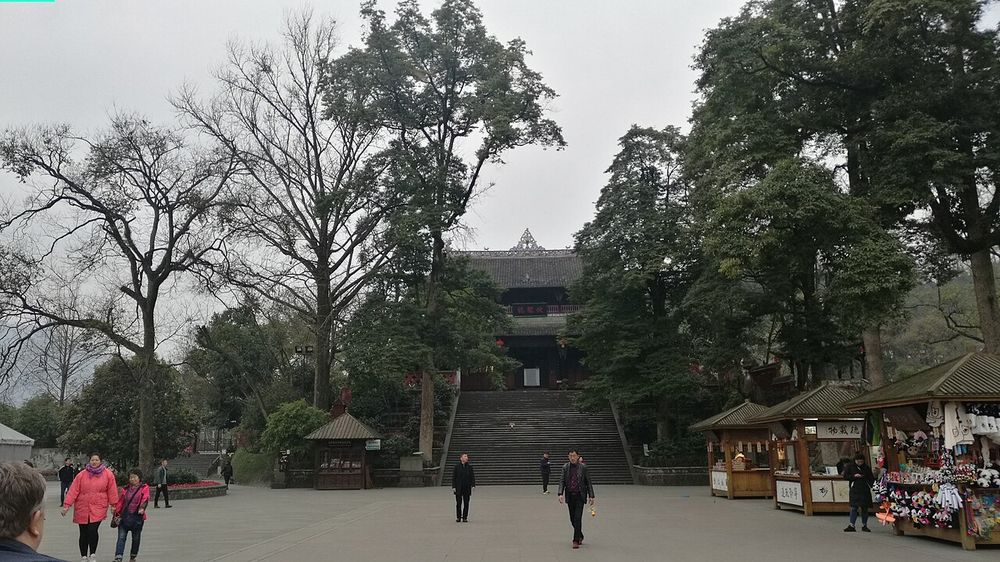
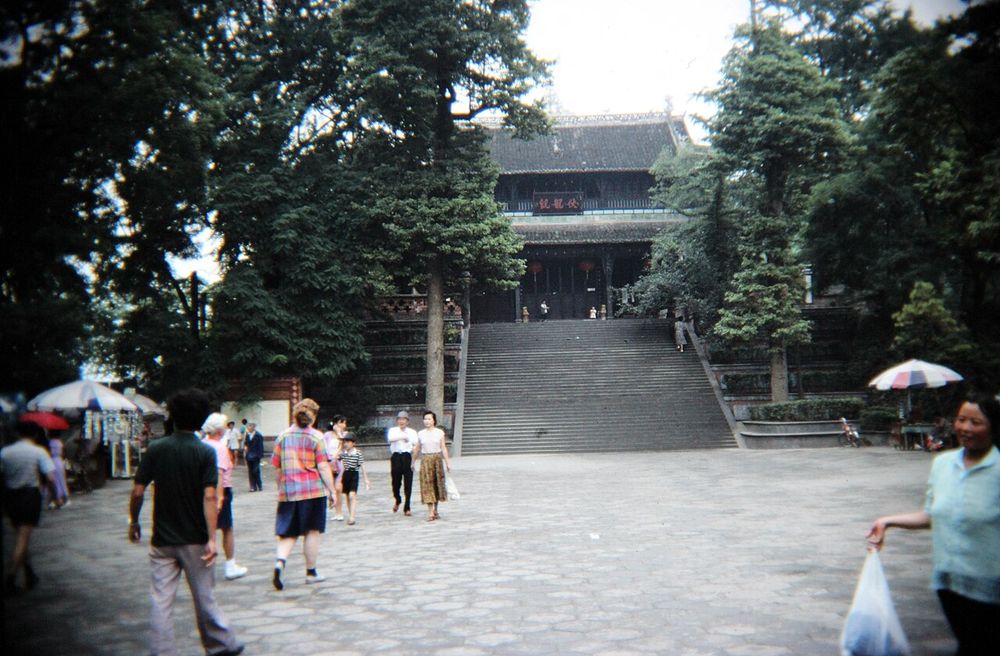
A loop of three to four hours; the bus from the stele pavilion to the Fish Mouth saves the first walk, and an escalator climbs to the Erwang Temple.
1. Lidui Park and the Fulong Temple
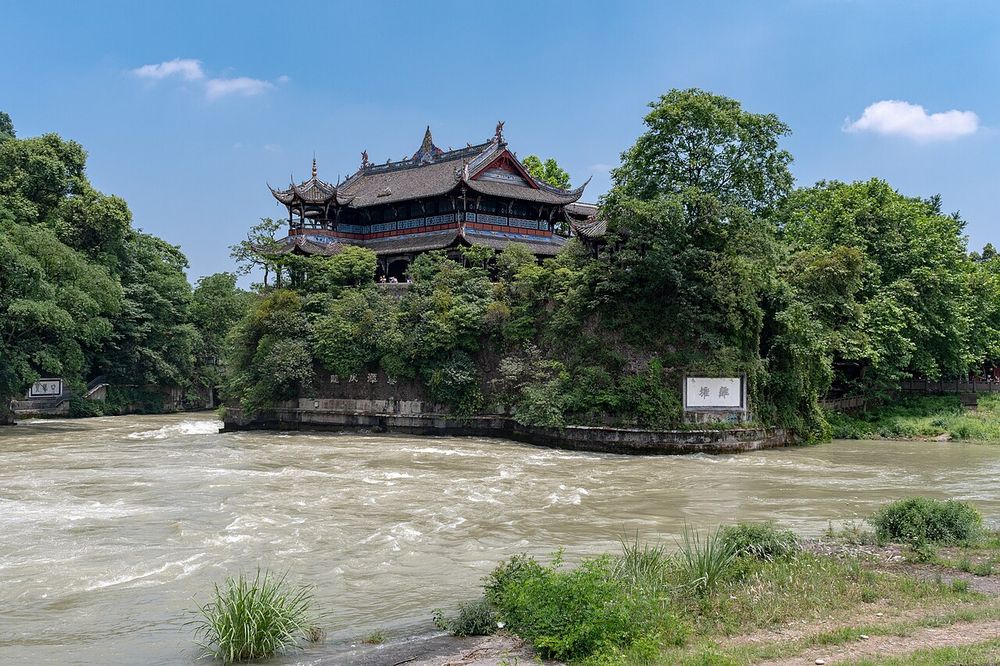
The Lidui and its temple, 2018xiquinhosilva, CC BY 2.0
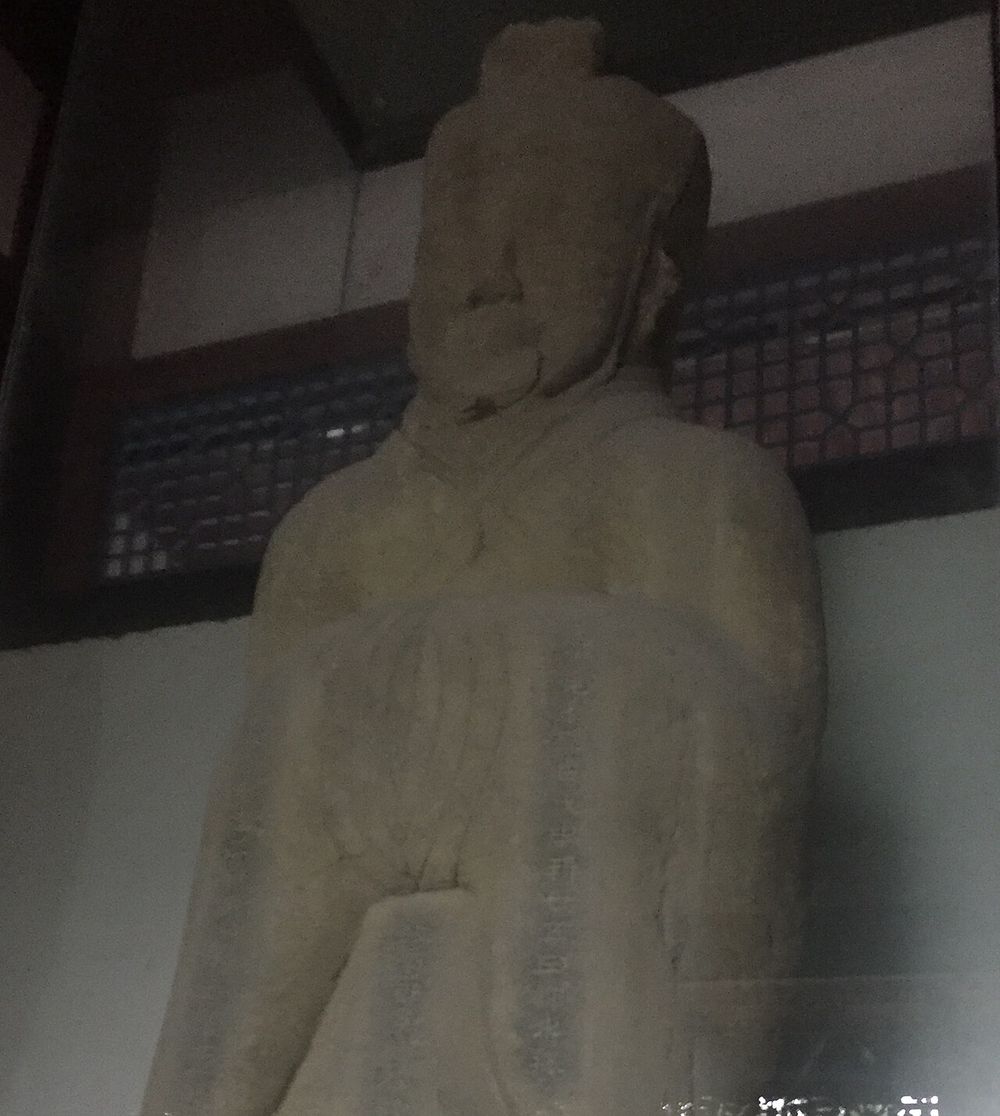
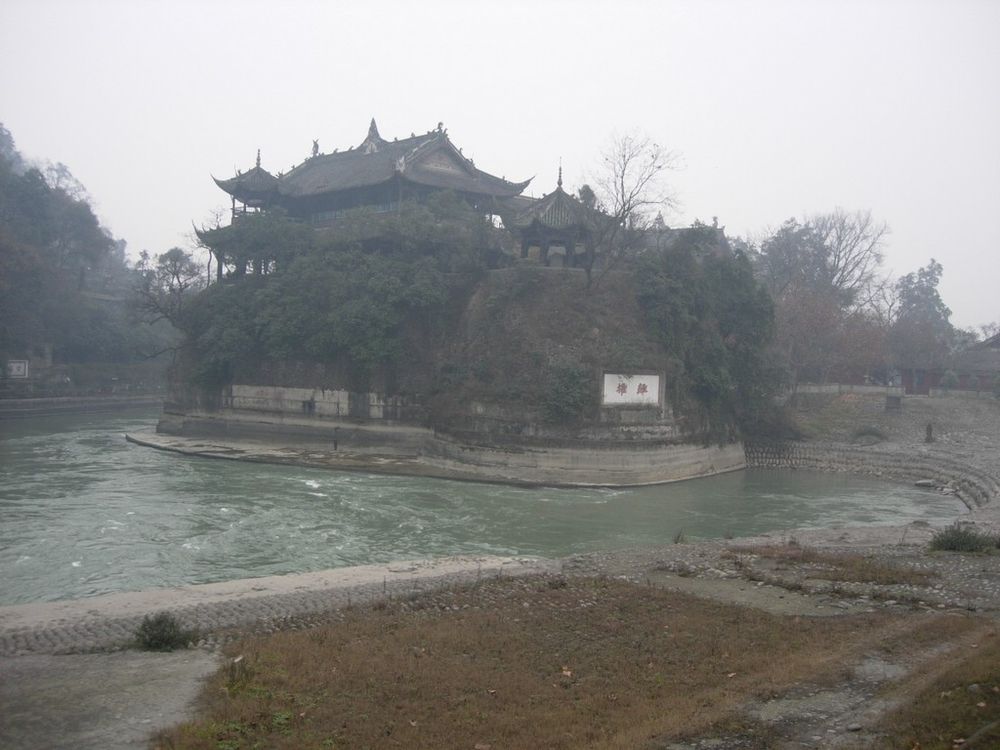
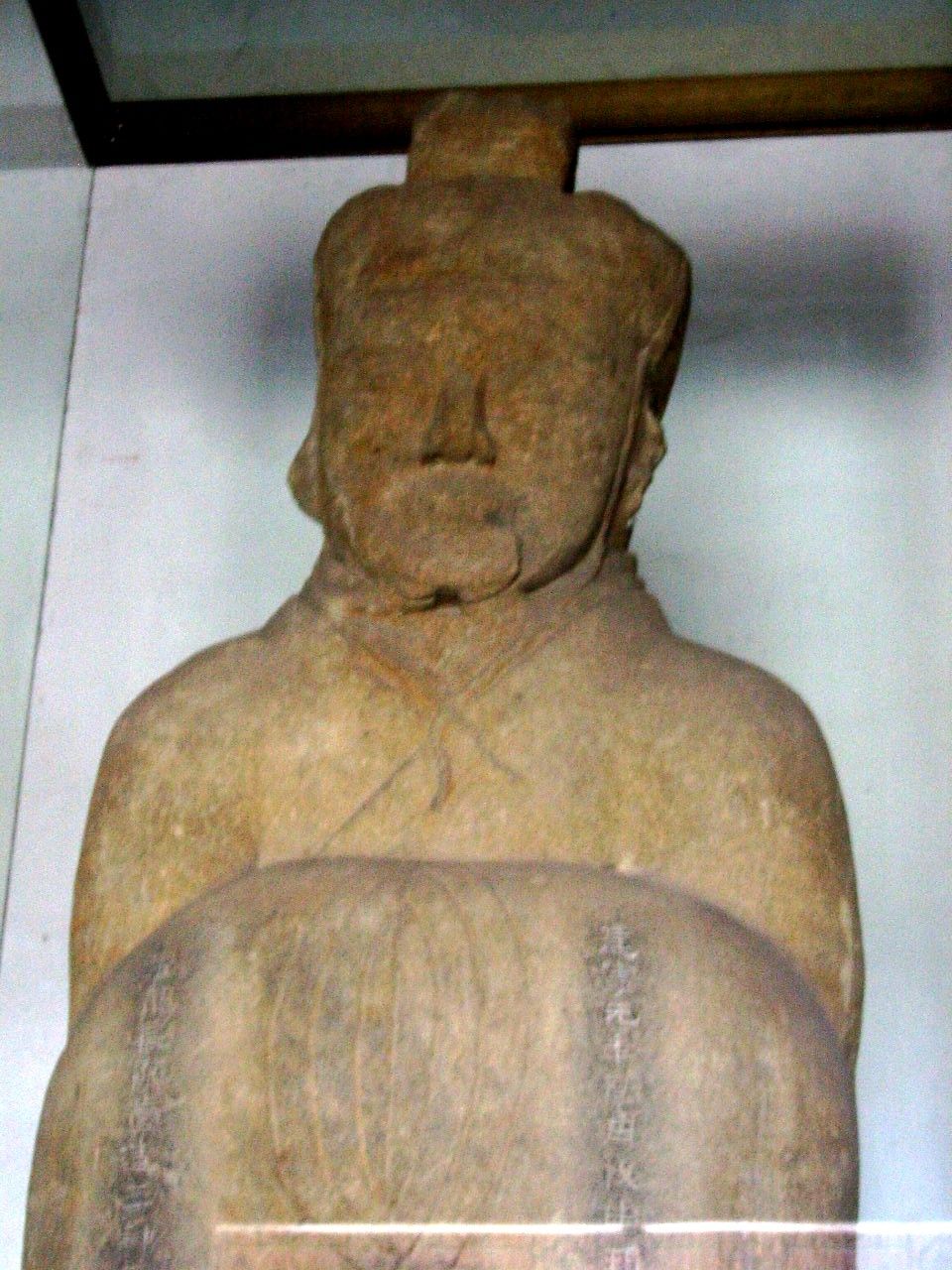
Enter through the park to the Lidui, the rock left standing when the Bottle-Neck was cut. The Fulong Temple on it shows a stone statue of Li Bing carved in 168 AD and found in the riverbed in 1974.
The stone statue of Li Bing, carved in 168Bairuilong, CC BY-SA 4.0
2. The Bottle-Neck
The Lidui and the Bottle-Neck, 2019Jason, CC BY 2.0
The cut through the hill, about twenty metres wide, through which the whole inner river rushes to the plain.
3. The Flying Sand Weir
The spillway between the channels, 2020Hugh Llewelyn from Keynsham, UK, CC BY-SA 2.0
The low spillway between the two channels. In flood, water pours over it and the current flings sand and stones into the outer river.
4. The Fish Mouth
The weir and the two channels, 2020Hugh Llewelyn from Keynsham, UK, CC BY-SA 2.0
The tip of the dividing spit, the heart of the system.
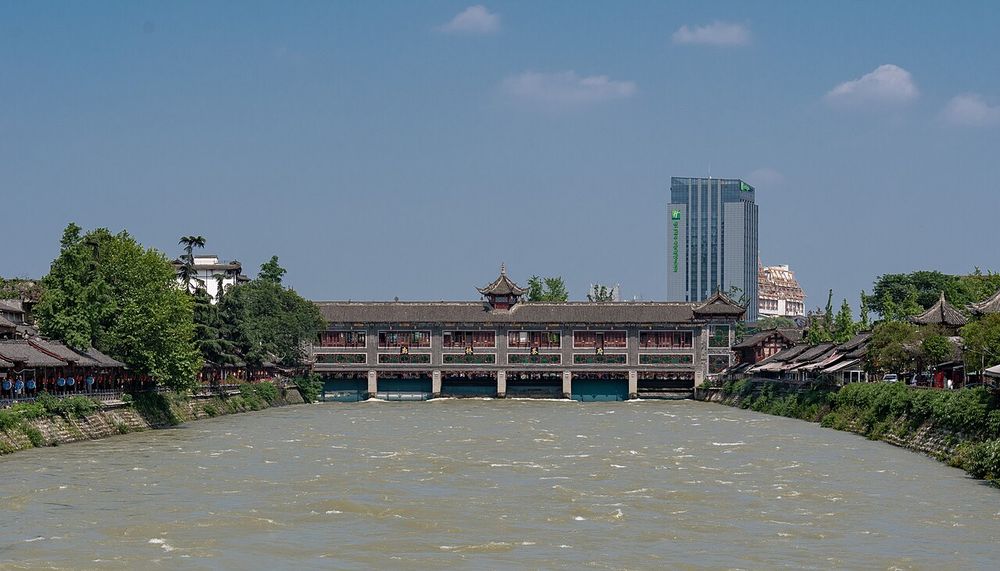
5. The Anlan Bridge
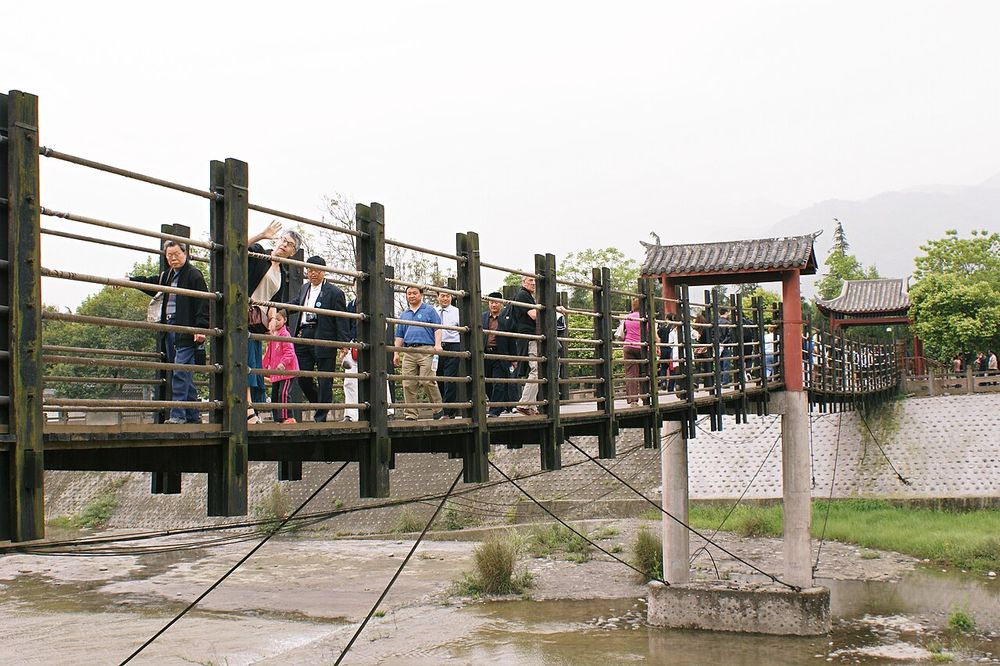
The Anlan Bridge from above, 2017JianEn Yu, CC BY 2.0
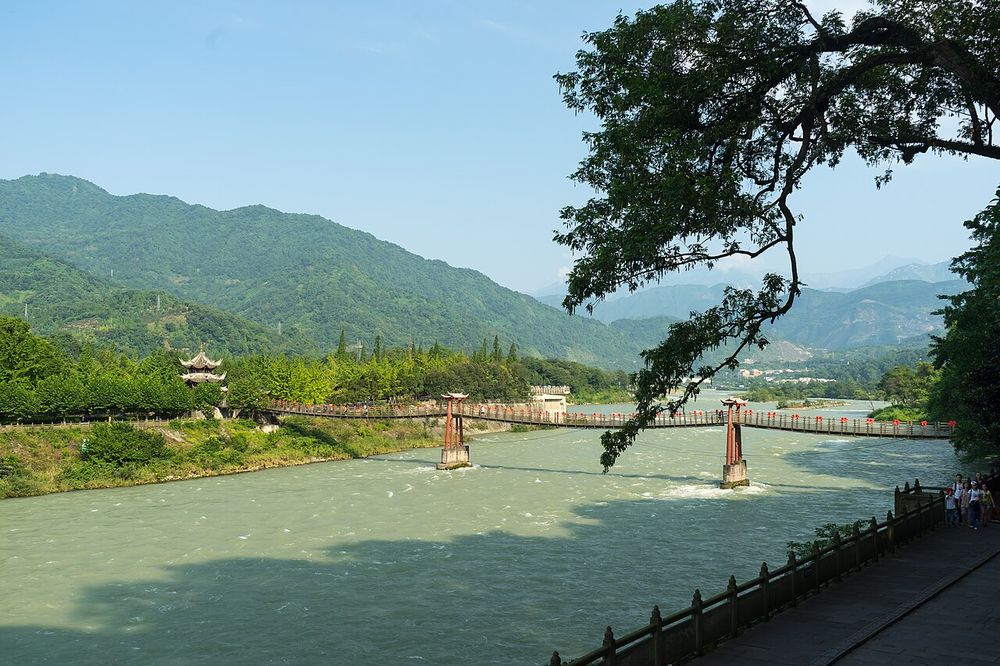
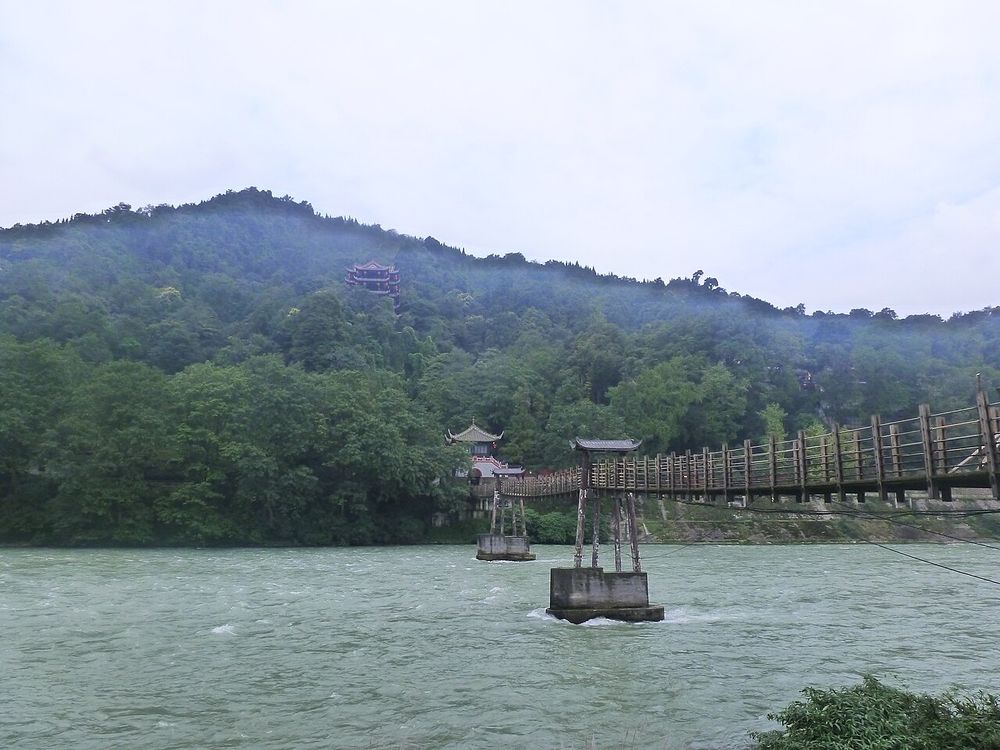
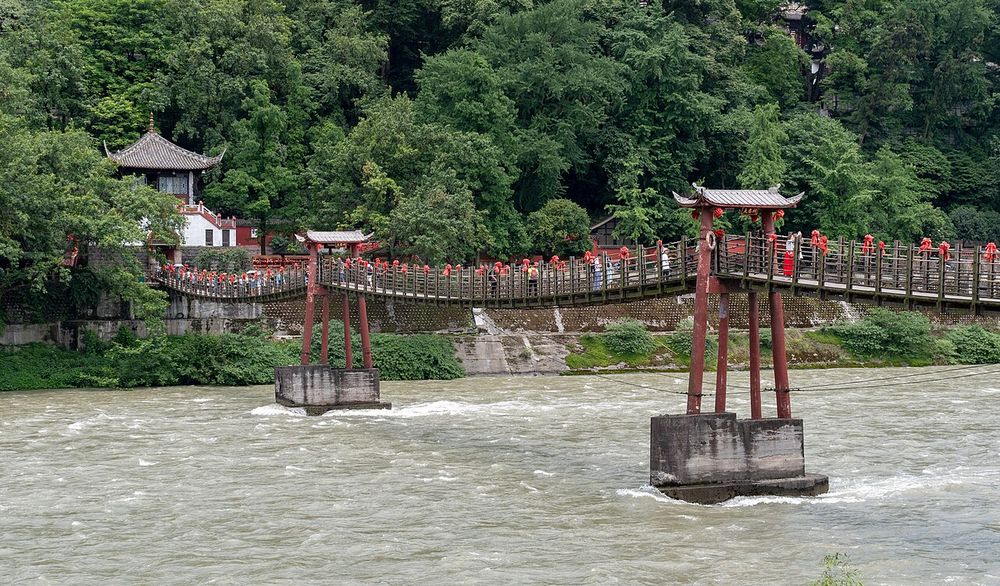
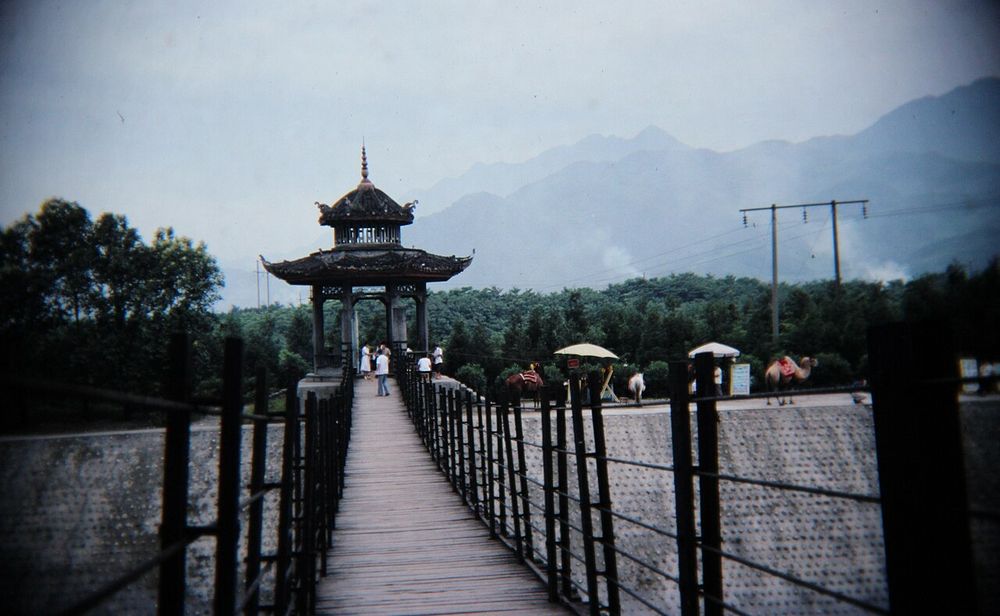
A swaying suspension bridge across both channels, rebuilt many times since the bamboo bridge of old; it was rebuilt again after the earthquake of 2008.
The bridge across the river, 2012Global Water Forum, CC BY 2.0
6. The Erwang Temple
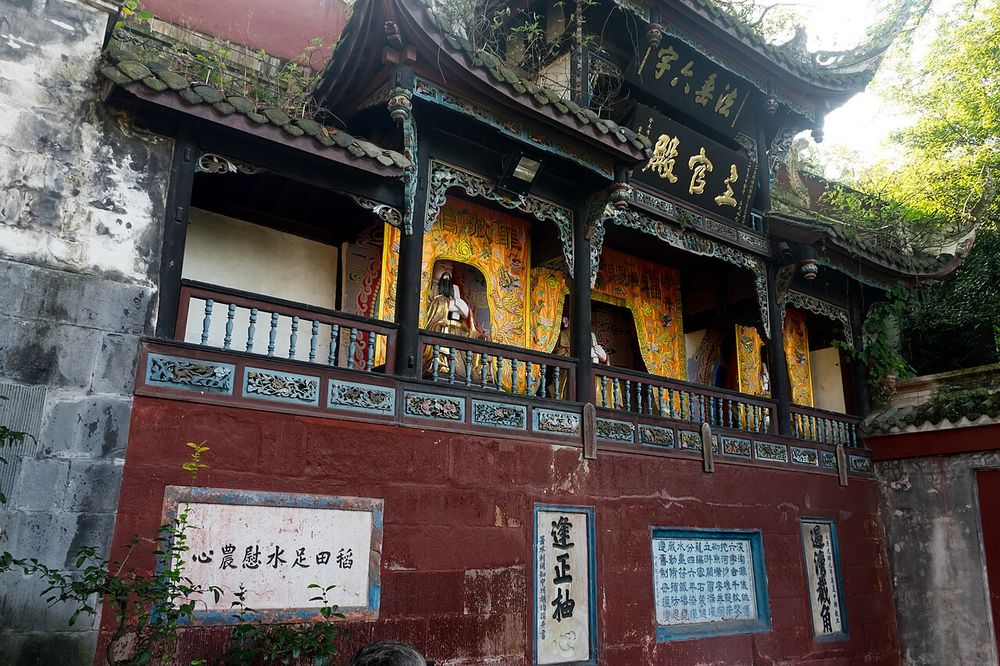
A hall of the Erwang Temple, 2017JianEn Yu, CC BY 2.0
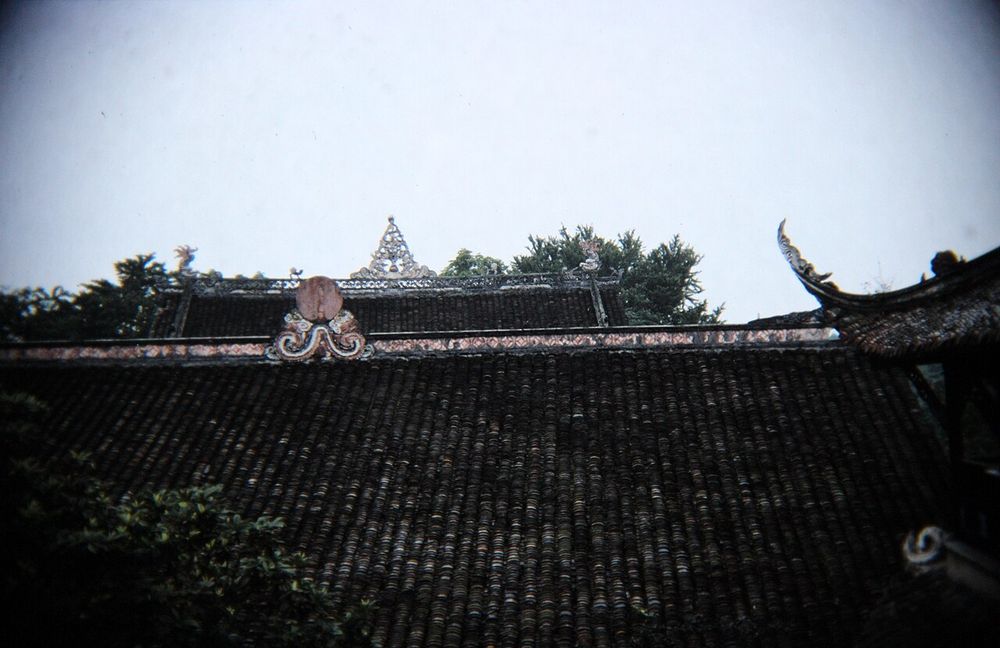
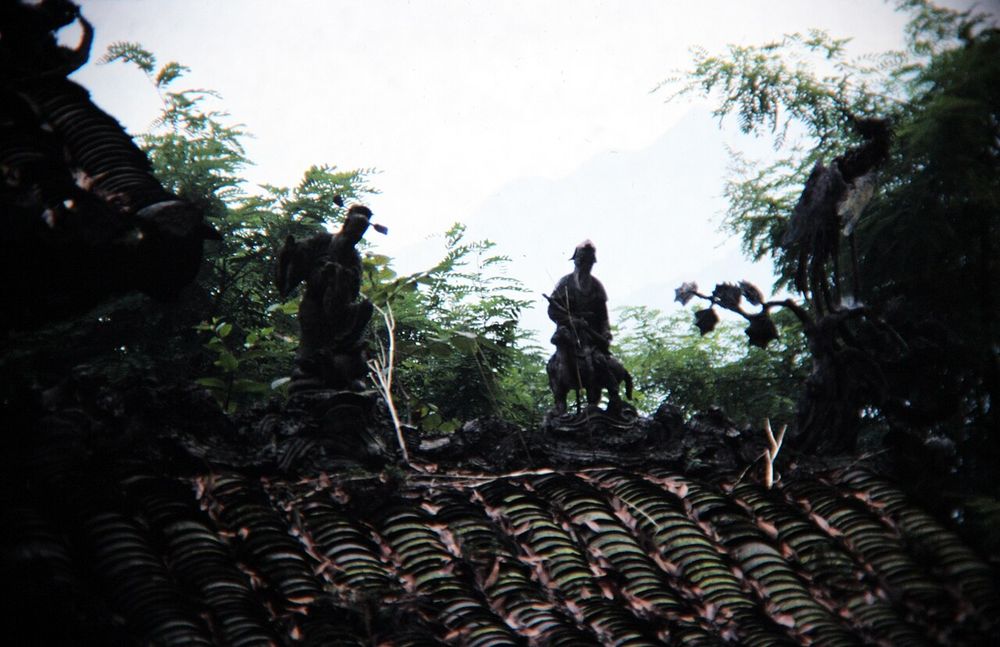
The temple of the "Two Kings", Li Bing and his son, on the slope above the river, with Li Bing's rules for the weir carved on its walls. It was badly damaged in 2008 and has been restored.
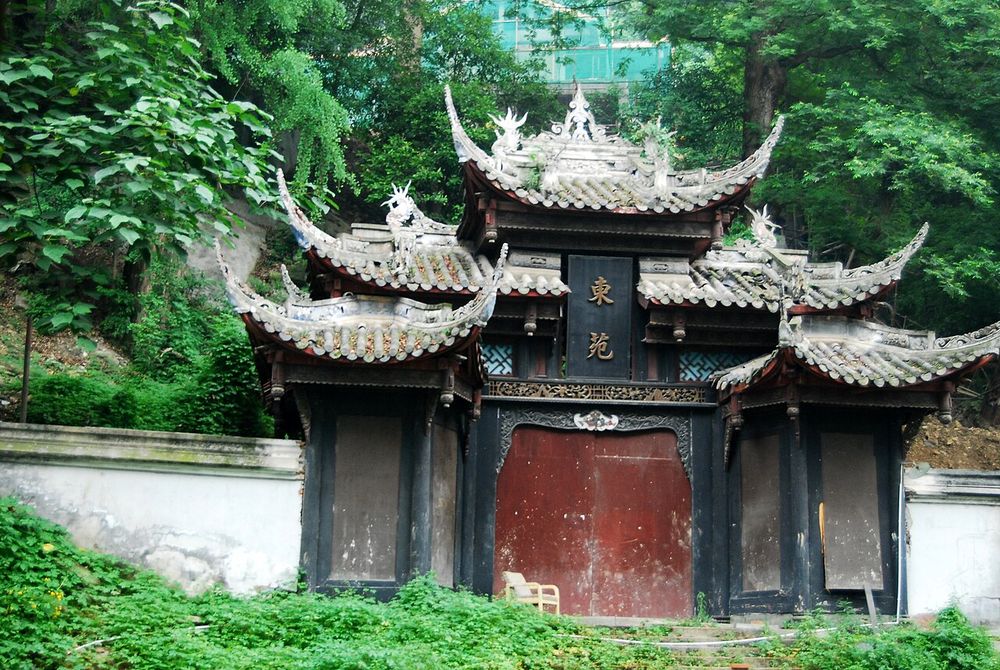
A temple gate after the earthquake, 2011shizhao, CC BY-SA 2.0
The weir and the same years elsewhere
In 256 BC, while Li Bing's men worked on the Min River, a Roman army under Regulus landed in Africa to fight Carthage.
Meanwhile in the world
Year
Here
Elsewhere
256 BC
Li Bing begins the works on the Min River
A Roman army lands in Africa to fight Carthage
168
A stone statue of Li Bing is carved and set in the river
Marcus Aurelius is fighting the Marcomanni on the Danube
1872
Ferdinand von Richthofen visits the weir
Yellowstone becomes the world's first national park
2000
Listed as a World Heritage Site with Mount Qingcheng
The first crew moves into the International Space Station
2008
The Wenchuan earthquake damages the temples; the weir holds
The collapse of Lehman Brothers sets off a world financial crisis
One line to remember: a river divided, not dammed, and still working after 2,200 years.
The river, the weir and the temples
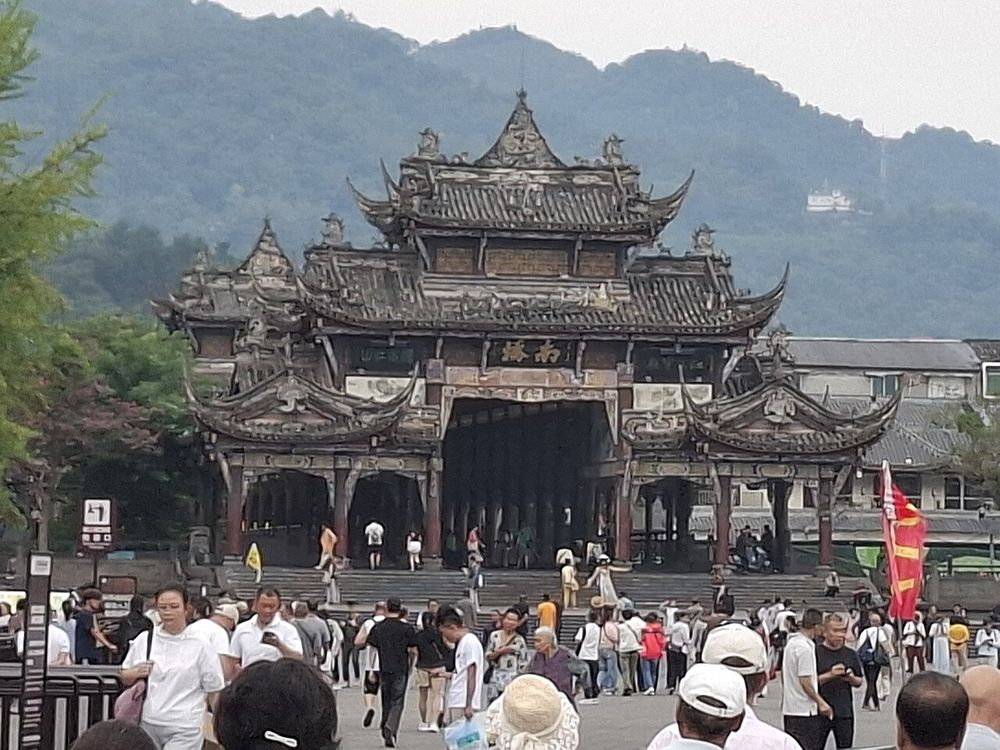
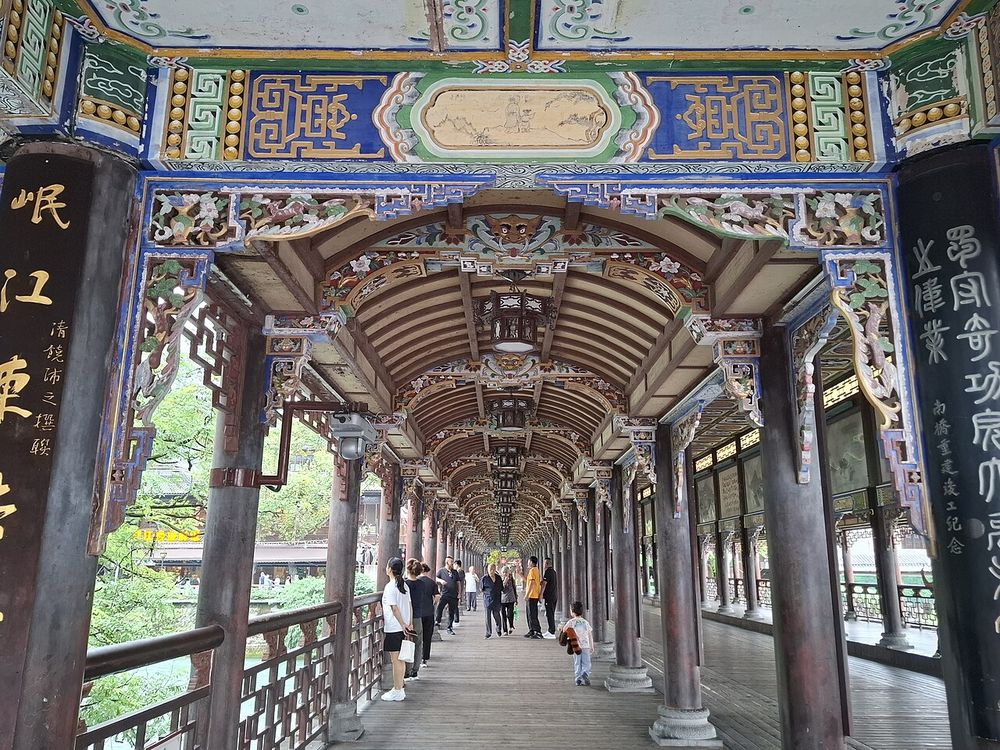
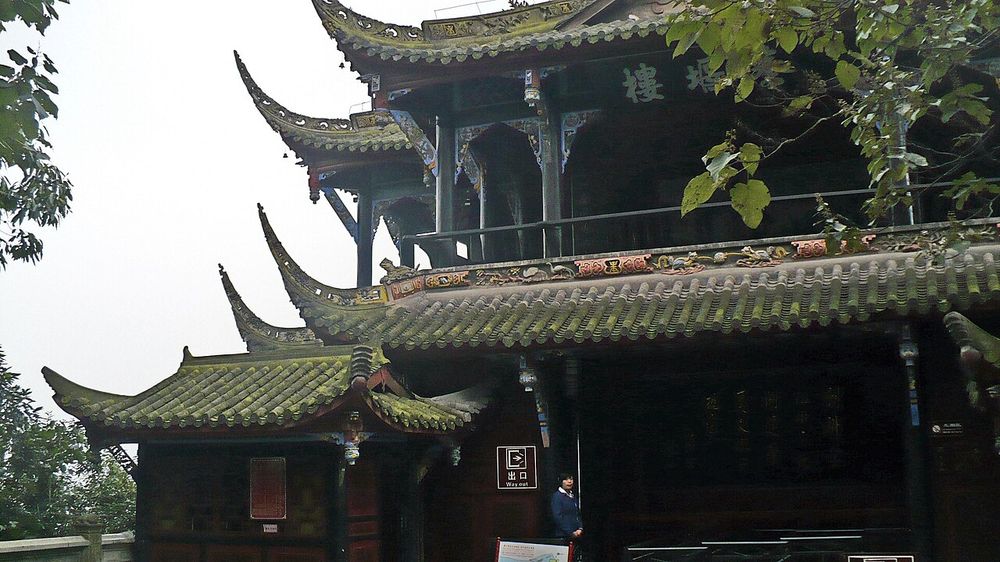
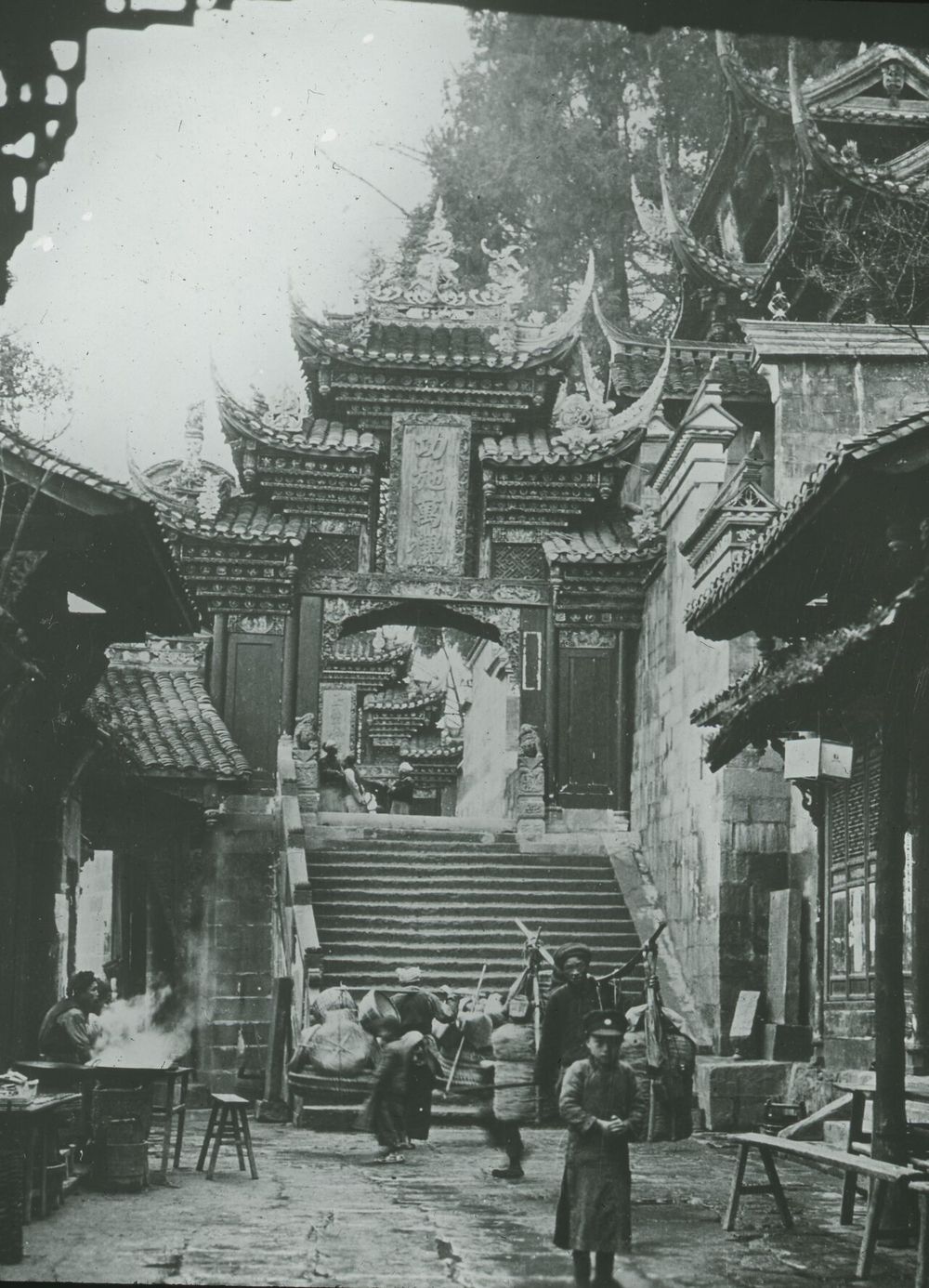
The Min River divided at Dujiangyan, 2018xiquinhosilva, CC BY 2.0, Wikimedia CommonsThe works from the hill, 2006张元柏, CC BY-SA 3.0, Wikimedia CommonsThe Fish Mouth splitting the riverColin W, CC BY-SA 3.0, Wikimedia CommonsThe weir and the two channels, 2020Hugh Llewelyn from Keynsham, UK, CC BY-SA 2.0, Wikimedia CommonsThe spillway between the channels, 2020Hugh Llewelyn from Keynsham, UK, CC BY-SA 2.0, Wikimedia CommonsVisitors at a viewpoint, 2020Hugh Llewelyn from Keynsham, UK, CC BY-SA 2.0, Wikimedia CommonsThe Lidui and the Bottle-Neck, 2019Jason, CC BY 2.0, Wikimedia CommonsThe Fulong Temple pavilion, 2020Hugh Llewelyn from Keynsham, UK, CC BY-SA 2.0, Wikimedia CommonsThe Bottle-Neck channel and the LiduiUnknown, CC BY-SA 3.0, Wikimedia CommonsA pavilion above the river, 2018xiquinhosilva, CC BY 2.0, Wikimedia CommonsThe river bank, 2018xiquinhosilva, CC BY 2.0, Wikimedia CommonsThe Lidui and its temple, 2018xiquinhosilva, CC BY 2.0, Wikimedia CommonsThe Lidui from downstream, 2018xiquinhosilva, CC BY 2.0, Wikimedia CommonsModern gates on the channel, 2018xiquinhosilva, CC BY 2.0, Wikimedia CommonsThe Anlan Bridge from above, 2017JianEn Yu, CC BY 2.0, Wikimedia CommonsThe Anlan Bridge, 2018xiquinhosilva, CC BY 2.0, Wikimedia CommonsThe bridge across the river, 2012Global Water Forum, CC BY 2.0, Wikimedia CommonsThe bridge in 1991Gary Todd from Xinzheng, China, CC0, Wikimedia CommonsA hall of the Erwang Temple, 2017JianEn Yu, CC BY 2.0, Wikimedia Commons"Dig the bed deep, keep the weir low", 2017JianEn Yu, CC BY 2.0, Wikimedia CommonsTemple roofs in 1991Gary Todd from Xinzheng, China, CC0, Wikimedia CommonsFigures on the temple roof, 1991Gary Todd from Xinzheng, China, CC0, Wikimedia CommonsA temple gate after the earthquake, 2011shizhao, CC BY-SA 2.0, Wikimedia CommonsA courtyard of the Fulong Temple, 2019RG72, CC BY-SA 4.0, Wikimedia CommonsSteps to the Fulong Temple, 1991Gary Todd from Xinzheng, China, CC0, Wikimedia CommonsThe stone statue of Li Bing, carved in 168Bairuilong, CC BY-SA 4.0, Wikimedia CommonsThe statue of Li Bing, 2008Mutt, CC BY-SA 4.0, Wikimedia CommonsA statue in the garden of famous engineers, 2018xiquinhosilva, CC BY 2.0, Wikimedia CommonsAn inscribed tablet, 2019RG72, CC BY-SA 4.0, Wikimedia CommonsThe Nanqiao covered bridge, 2018xiquinhosilva, CC BY 2.0, Wikimedia CommonsThe Nanqiao bridge from the square, 2018xiquinhosilva, CC BY 2.0, Wikimedia CommonsThe river through the town, 2018xiquinhosilva, CC BY 2.0, Wikimedia CommonsCrowds at the Nanqiao bridge, 2026TarnishedPath, CC BY-SA 4.0, Wikimedia CommonsInside the covered bridge, 2026TarnishedPath, CC BY-SA 4.0, Wikimedia CommonsEaves of a tower by the riverColin W, CC BY-SA 3.0, Wikimedia CommonsSteps up to a temple at Dujiangyan, early 20th centuryUnknown authorUnknown author, CC0, Wikimedia Commons
Local legends
These are stories people tell about this place. They are legends, not history, and each one says where it comes from.
LegendLi Bing fights the river god
The river god demanded two girls as brides each year. Li Bing offered his own daughters, then turned into a bull and fought the god in the water until he killed him.
Source: From the "Customs" of Ying Shao, 2nd century
LegendErlang chains the dragon
Li Bing's son Erlang is said to have chained an evil dragon under the Lidui, which is why the temple there is called "Subduing the Dragon".
Source: A local story of the Song dynasty and later
Later, people who live here will be able to add the stories they grew up with, and say which of these they have heard.
Not certain, and where accounts conflict
Did Li Bing have a son who helped?
Early records mention only Li Bing; the son, Erlang, appears in sources of later centuries and may have grown out of folk religion.
Visiting
Tickets and hours
80 yuan; open 8:00 to 18:00 from March to November, to 17:30 from December to February.
Over-60s and children under 7 enter free with ID; students half price.
Last checked 2026-11-12. Ticket, buses, escalator and booking from 2026 Sina guides and the scenic area's notice of February 2026 (The Paper).
Booking without WeChat
Official page in English All visitors must book online with real names, up to 15 days ahead, choosing a morning or afternoon entry slot, on the "青城山都江堰" official WeChat account or its mini-program.
International booking platform Ctrip (Trip.com) and Meituan also sell tickets, and a two-day combined ticket with Mount Qingcheng.
Note Foreign visitors book with a passport number.
Checked 2026-11-12
Where to start
Enter early through Lidui Park, see the Bottle-Neck first, then follow the river up to the Fish Mouth and back over the bridge.
Around Qingming in early April the water-releasing festival re-enacts the old ceremony of opening the channels.
Before you go
Fast trains run from Chengdu to Dujiangyan in about half an hour.
The old town of Guanxian next to the gate is free and good for dinner.
Customs and manners
The Erwang Temple is still a place of worship: be quiet in its halls.
Do not climb over the railings at the Fish Mouth; the current is strong.
Opening hours are given in the local time of the place. Prices are in the local currency. The figure after ≈ is approximate, at exchange rates checked on 9 November 2026, in .
Look for these
At the Fish Mouth, see which side the water prefers.
In the Erwang Temple, find the six characters of Li Bing's rule.
In the Fulong Temple, find the stone Li Bing pulled from the river.
I am here
Stand at the site, sign in, press the button, and collect its stamp. Your browser will ask to use your location. It is sent to us once to confirm that you are at the site; we keep how far you were from it, not the spot where you stood.
Your stamps are saved to your account, so they follow you to any device. Checking from a browser cannot rule out every false location; stricter checks arrive with the app.
Messages
Share your photos
Photos here show the place, not people. Each one is credited to the visitor who took it and appears after our team has looked at it. A photo with you in it belongs under “I am here”.