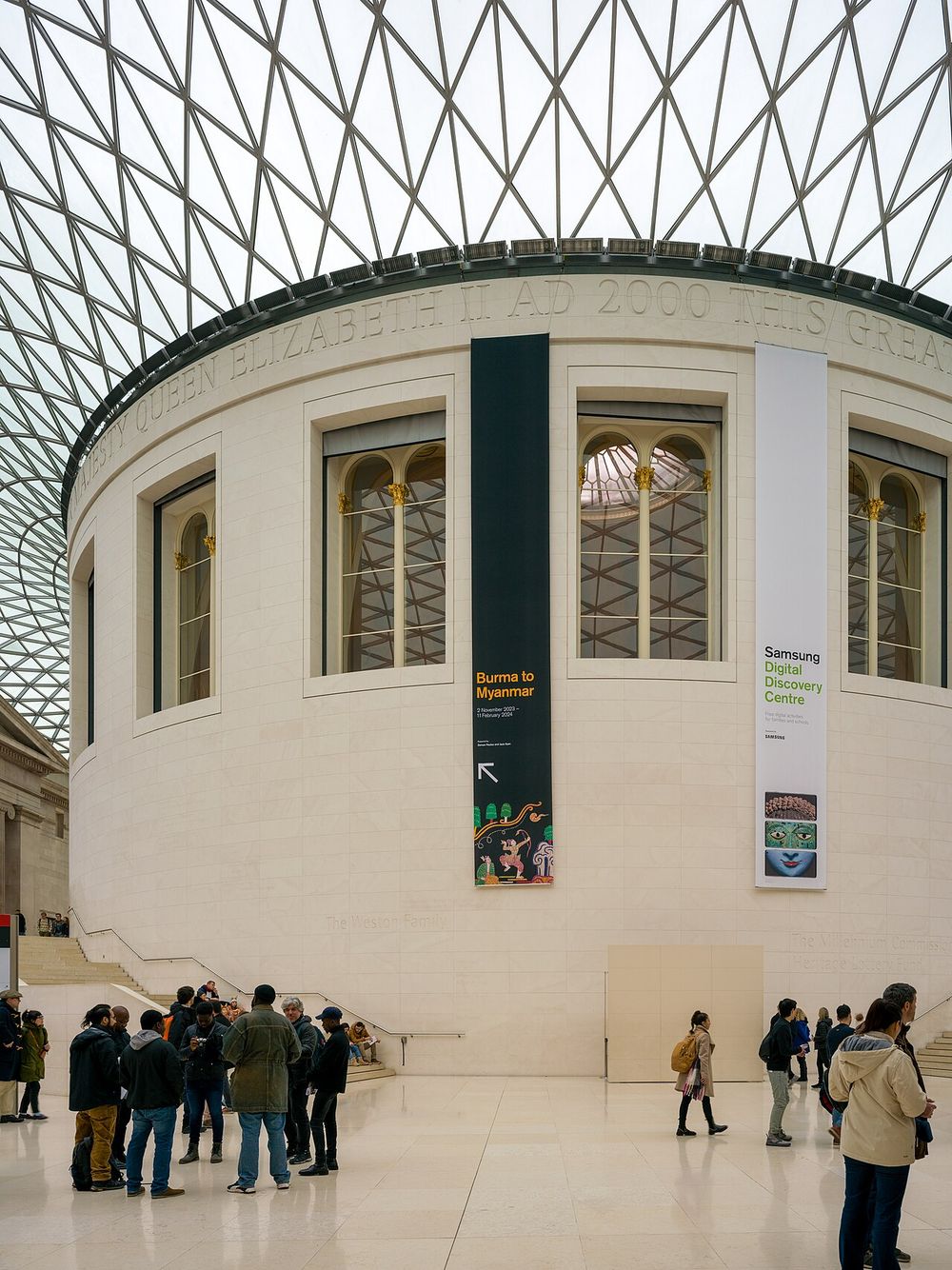
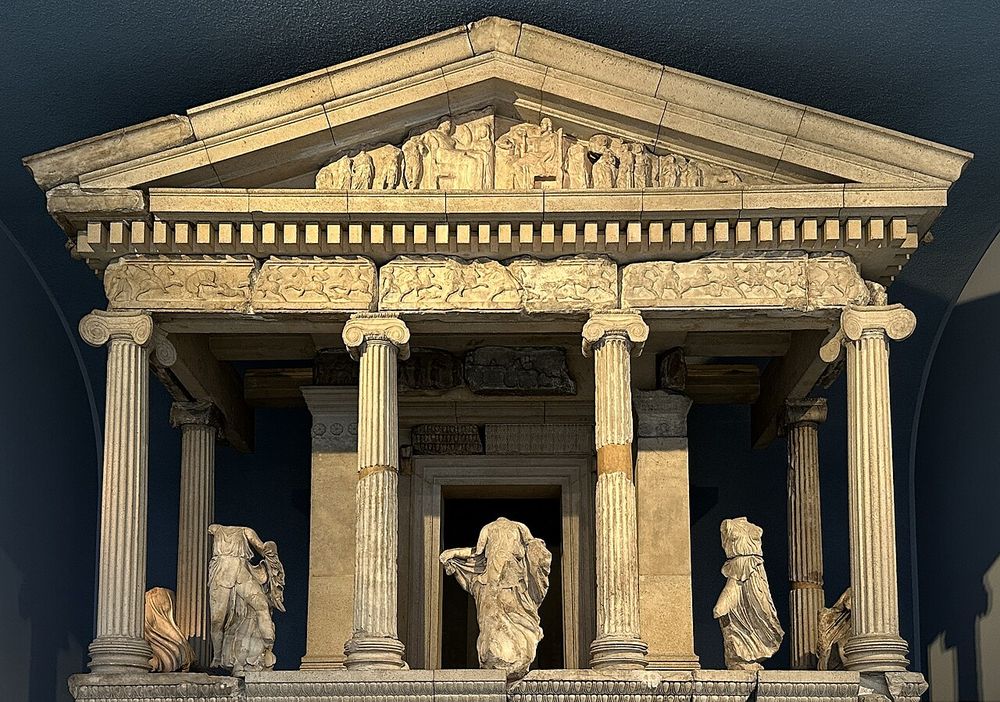
The first national museum open to the public, founded in 1753 and free ever since. It holds eight million things from every part of the world. How many of them should still be here is argued over every year.
Photo: Diliff, CC BY-SA 3.0, Wikimedia Commons
The story
You are standing in the largest covered square in Europe, in the middle of a museum that has never charged for admission. It opened in 1759 with the collection of one London doctor. It now holds about eight million objects, and shows about one in a hundred.
It was built up while Britain ruled a quarter of the world. That is why the best things from Egypt, Iraq, Greece, Nigeria and China can be seen under one roof, and why so many countries want some of them back.
What is here
The whole permanent collection is free. Special exhibitions are ticketed, and so, in 2026 and 2027, is the Bayeux Tapestry.
The Reading Room in the middle of the Great CourtDale Cruse from San Francisco, CA, USA, CC BY 2.0
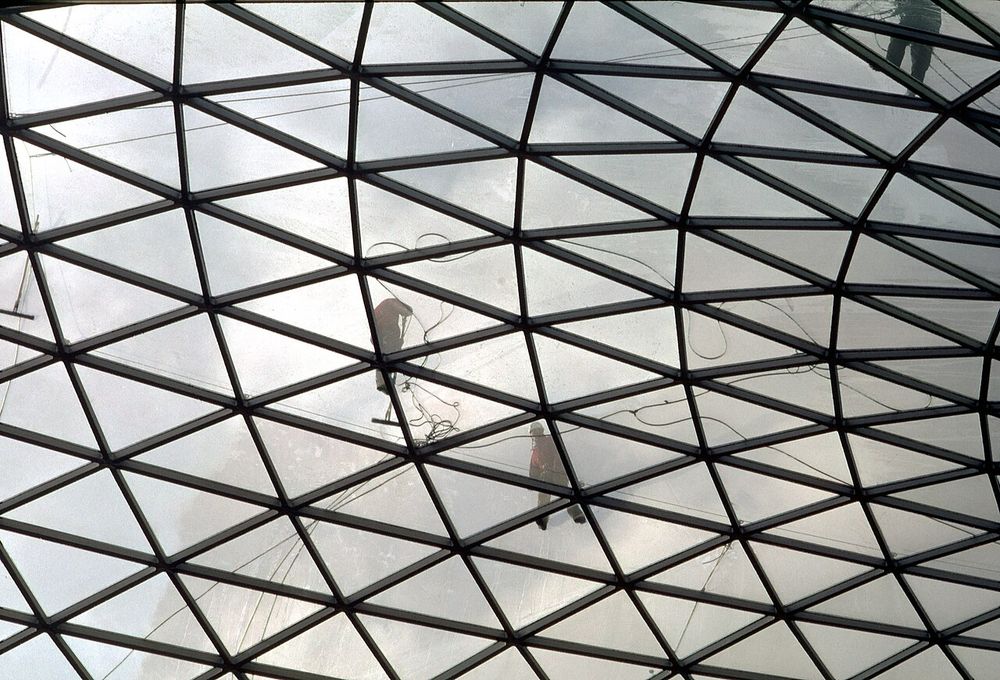
The round building in the middle is the old Reading Room. Karl Marx wrote Capital at its desks, and Sun Yat-sen read there too. The glass roof over the court was added in 2000.
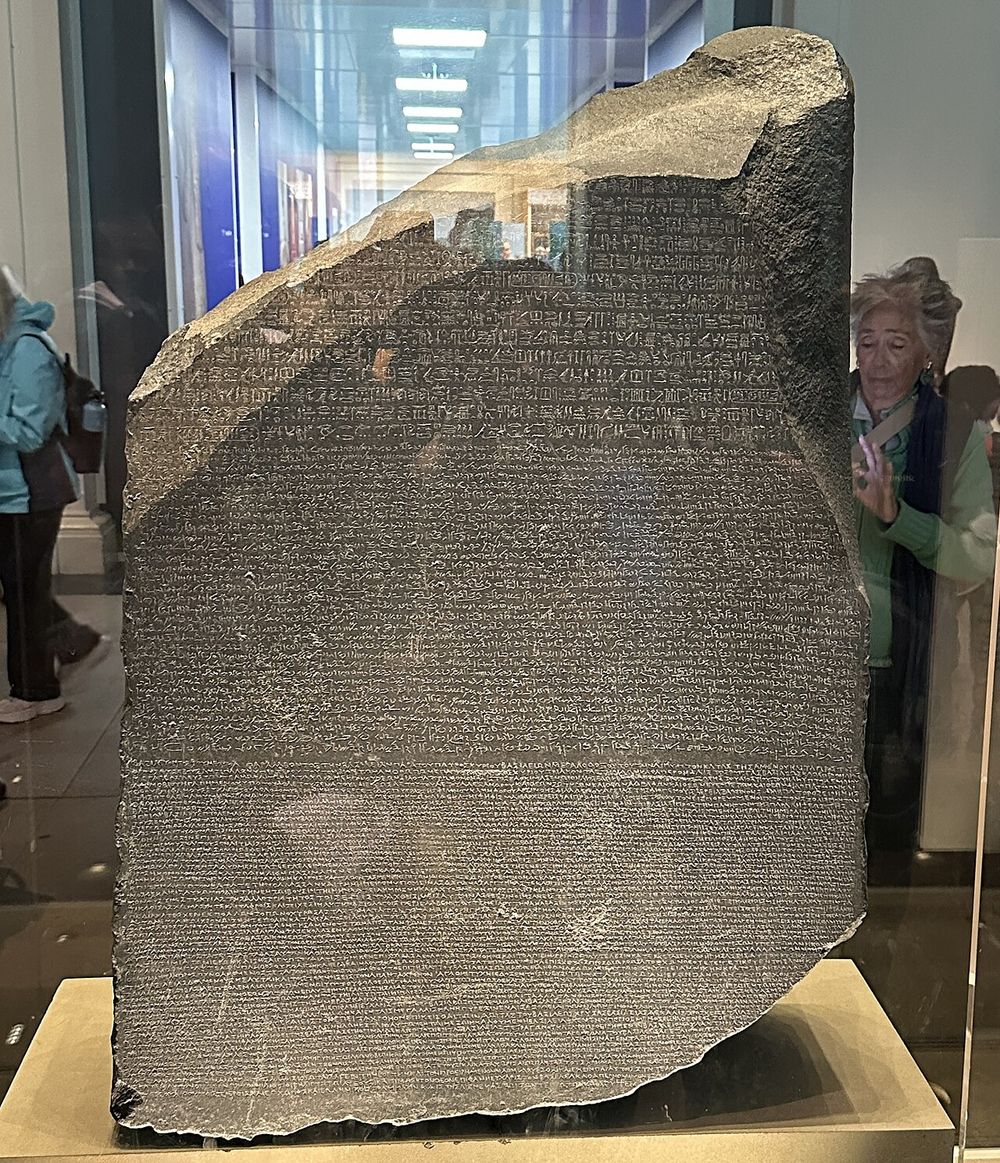
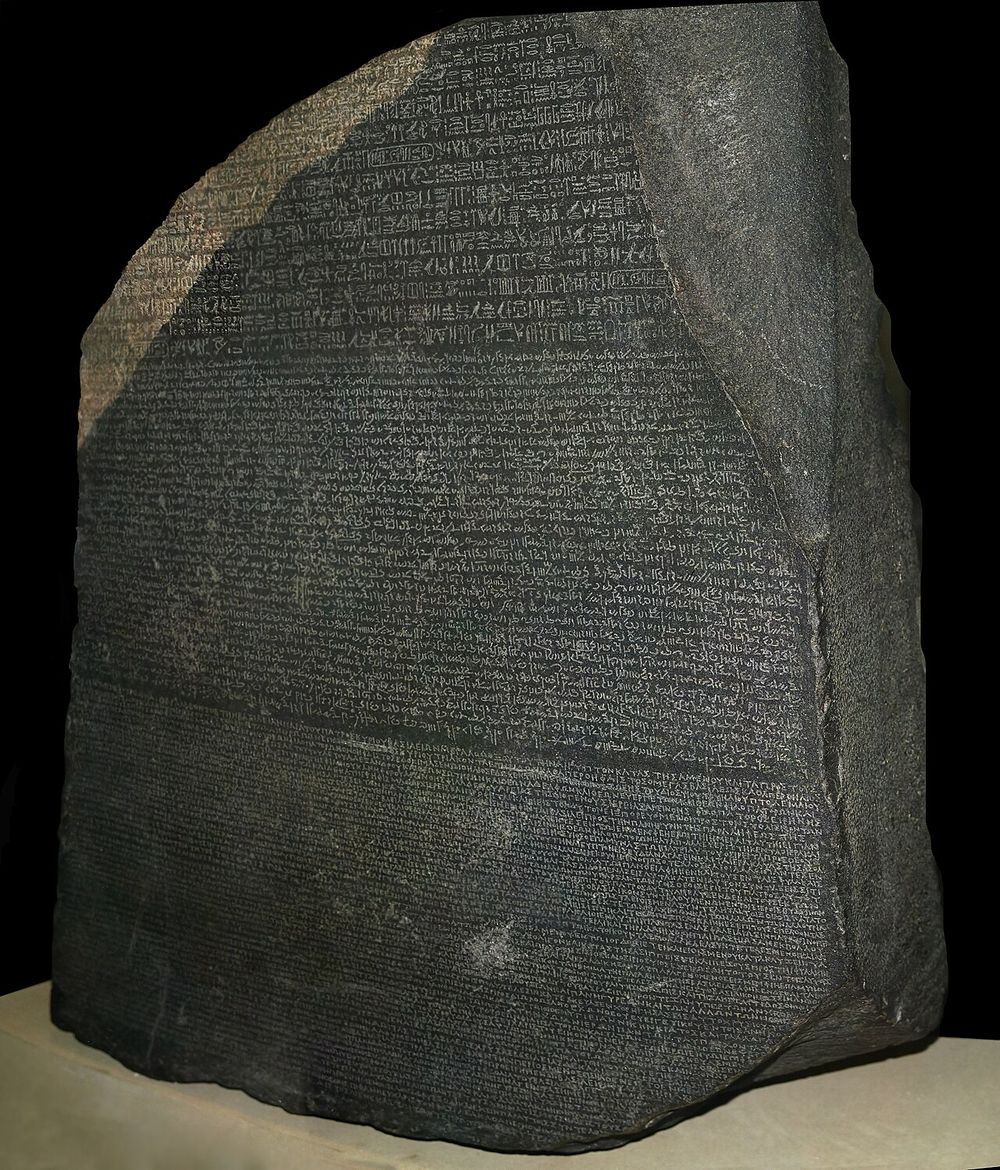
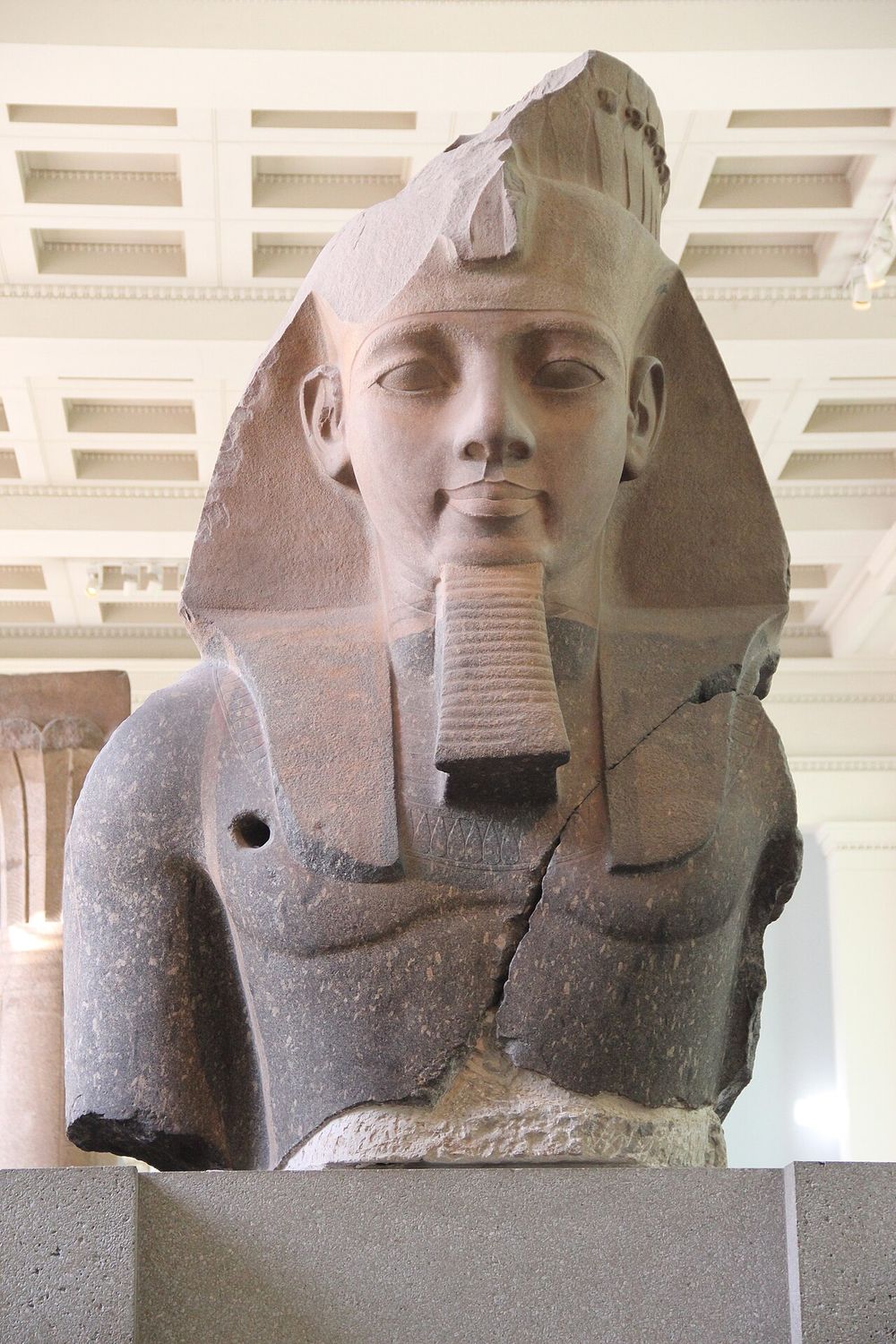
Turn left from the main door into the long gallery of Egyptian sculpture. A few steps in stands the Rosetta Stone, the slab that let scholars read Egyptian writing again after fourteen hundred years.
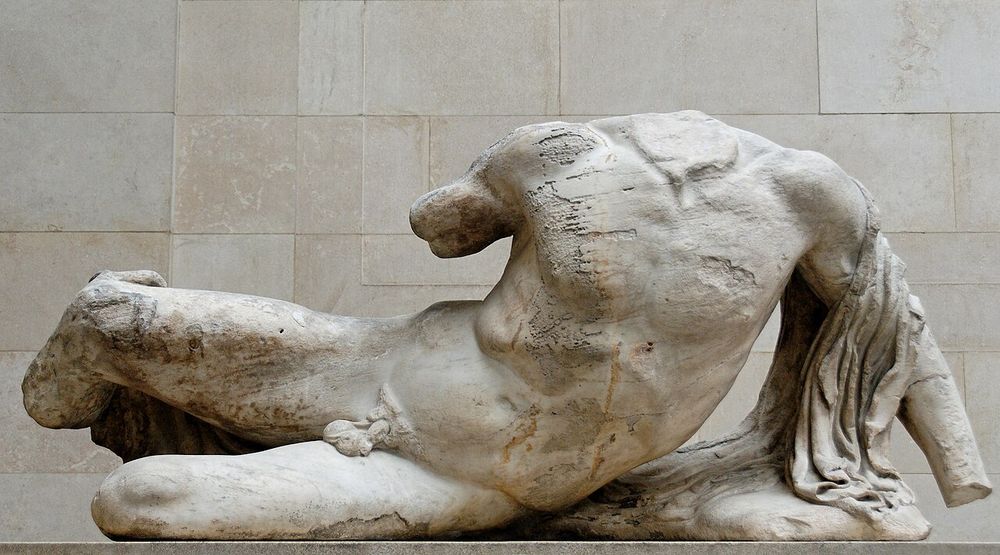
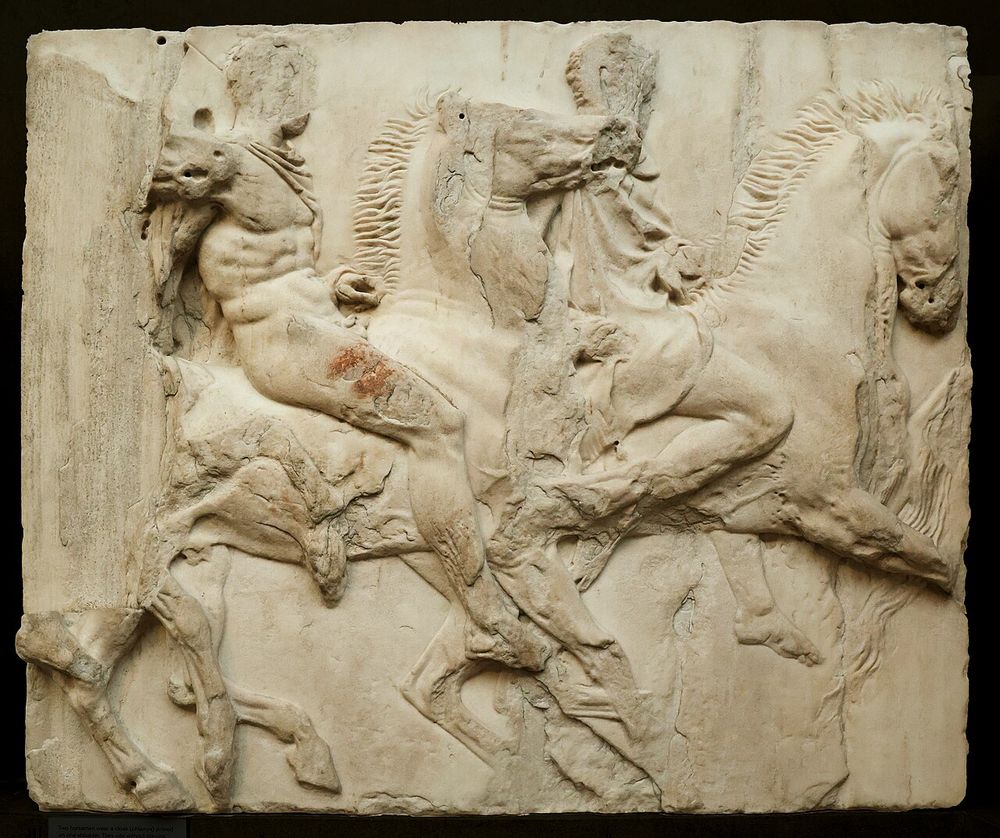
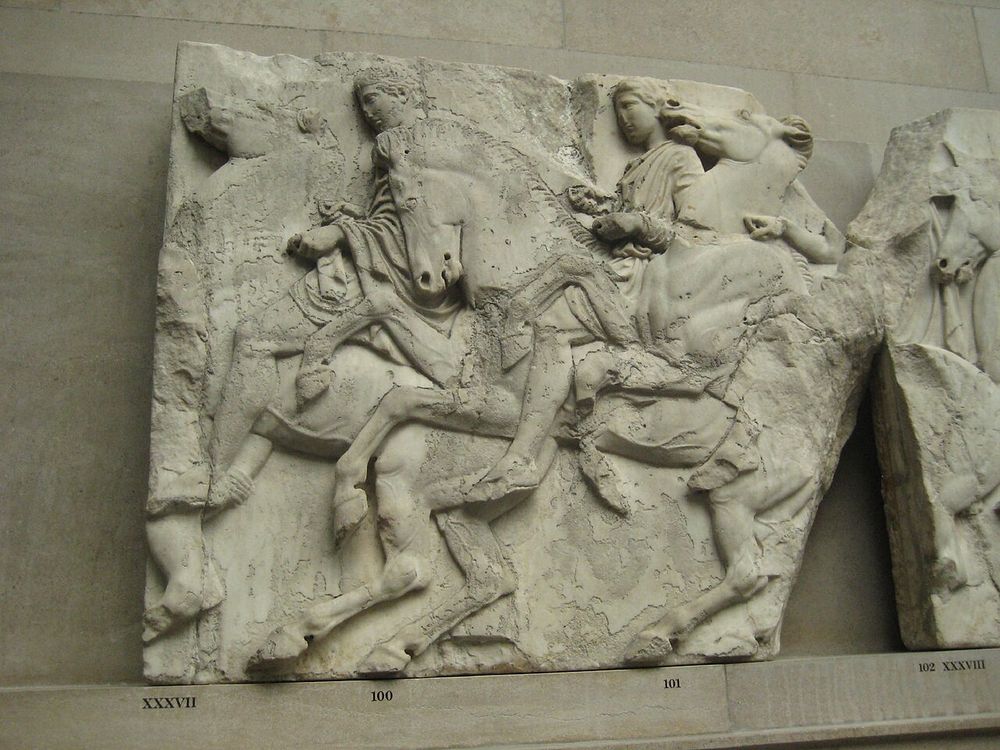
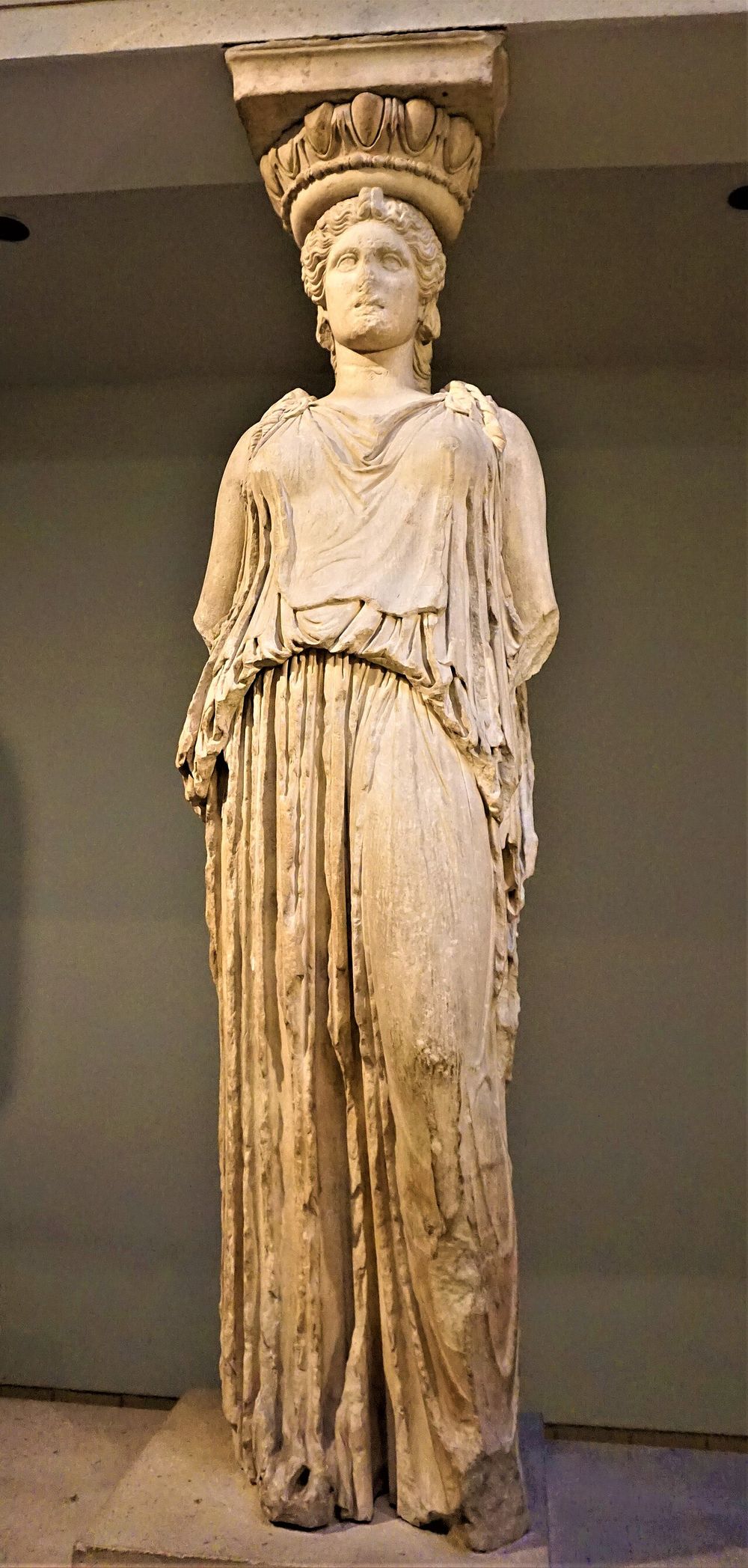
Beyond it are the carved walls of Assyrian palaces and, in a hall of their own, the sculptures from the Parthenon in Athens. Greece has asked for those for two hundred years.
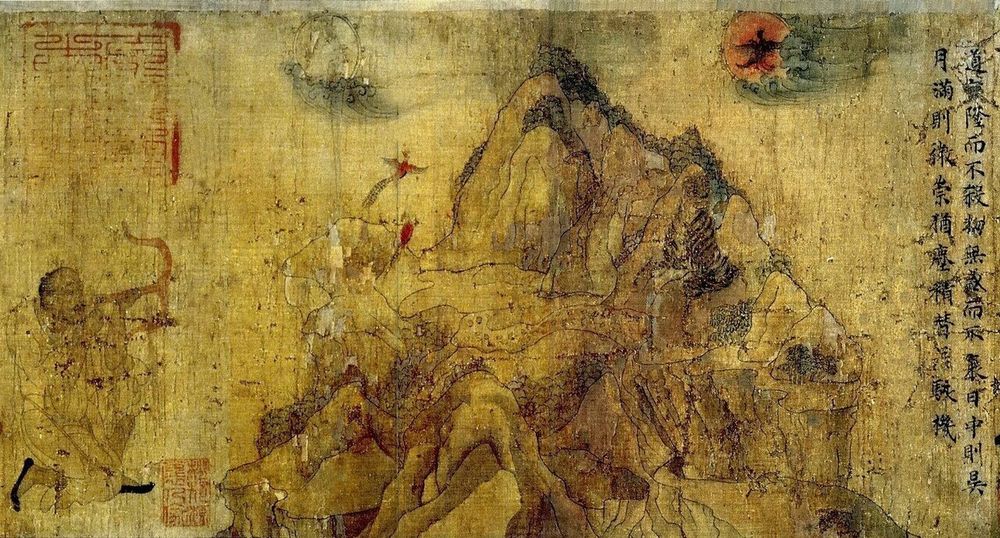
Go upstairs and to the back for China. One of the oldest Chinese paintings on silk is here. It is shown for only a few weeks each year.
Things people often get wrong
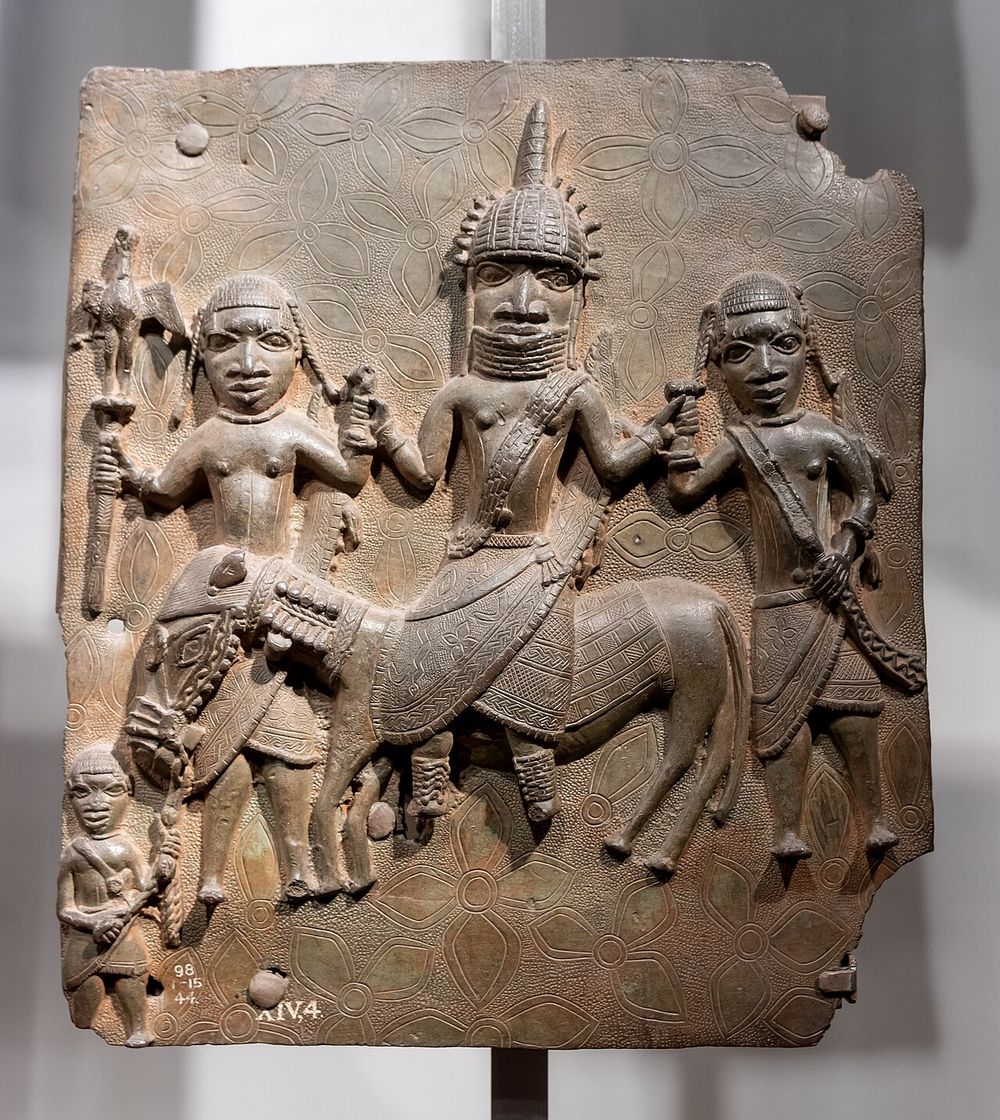
"Everything in it was stolen." Much was bought, dug up with permission, or given. Some was taken in war or by force: the Benin bronzes, for one. Each object has its own story, and the museum now tells more of them on its labels.
"The British Library is inside." The books left in 1997 for a new building at St Pancras, a mile to the north. The round Reading Room is now empty of readers.
"It is a museum about Britain." Only a few rooms are. Its subject is the whole of human history.
"Free means you can just walk in." You can, but on busy days people with a free timed ticket booked online go in first.
People who stood here
Karl Marx (German thinker, author of Capital)He came to London as a refugee in 1849 and got a reader's ticket the next year. For most of thirty years he walked here from his lodgings and sat from morning until the room closed, reading government reports and making notes. He may have crossed this court, then an open yard full of book stacks, thousands of times.
Sun Yat-sen (leader of the revolution of 1911 and first president of the Chinese republic)In October 1896 agents of the Qing government seized him in London and held him in their legation for twelve days. Released after a public outcry, he stayed in London for eight months. He spent many of those days in the Reading Room, studying politics, economics and farming. He said later that his main ideas took shape here.
Go deeper: nine stops through the building
The first six stops are on the ground floor. The last three are upstairs.
1. The front: a doctor's will
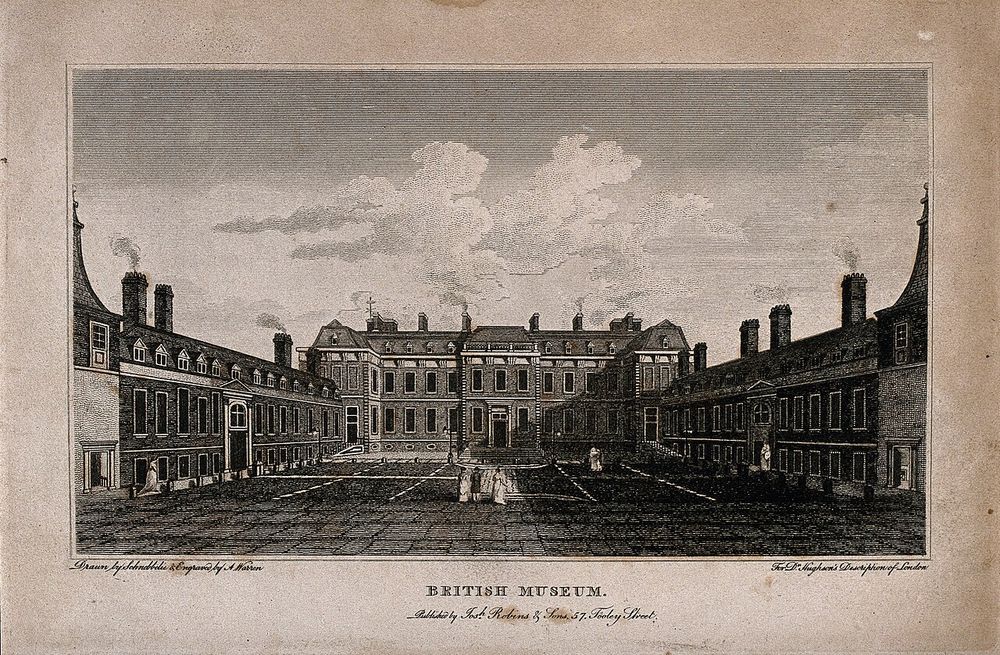
Montagu House, the museum's first home, in an engravingUnknown, CC BY 4.0
Sir Hans Sloane was a London physician who collected everything: plants, coins, shells, books, antiquities, 71,000 items in all. He died in 1753 and left them to the nation for a sum well below their value. Parliament raised the money by a public lottery and bought a mansion on this site to put them in.
Part of Sloane's money came from sugar plantations in Jamaica worked by enslaved Africans. In 2020 the museum moved his bust into a case with a label that says so.
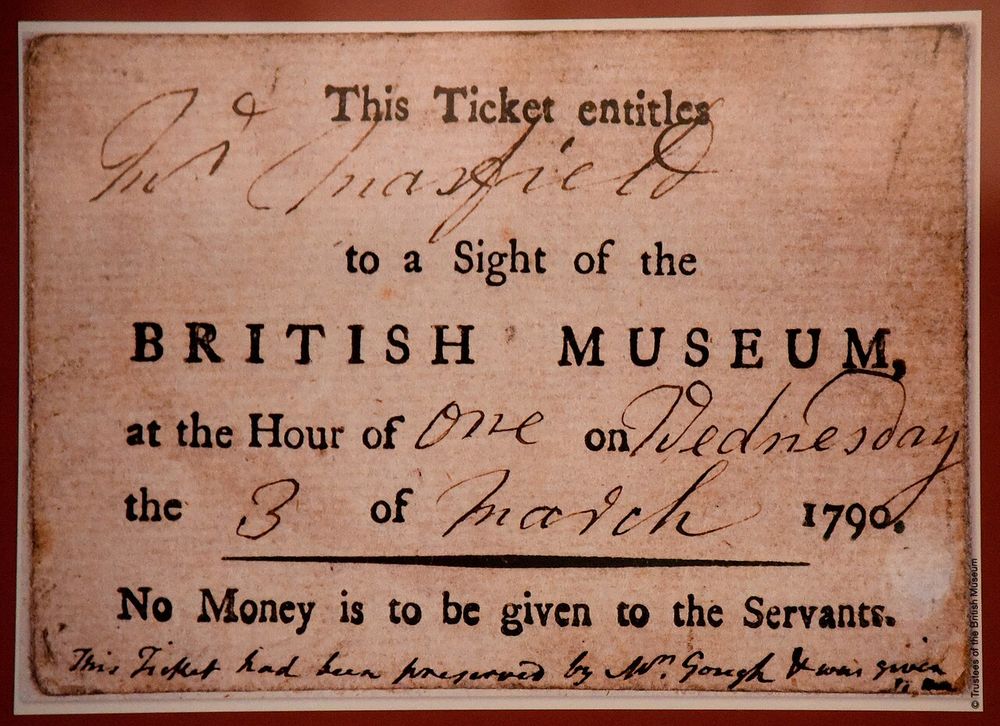
An entrance ticket for 3 March 1790Osama Shukir Muhammed Amin FRCP(Glasg), CC BY-SA 4.0
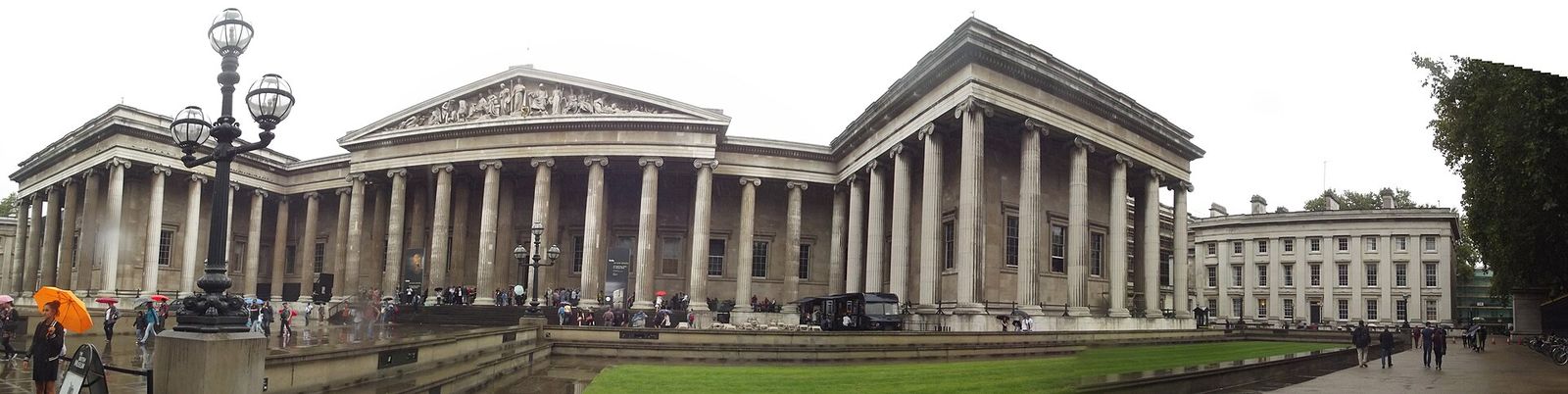
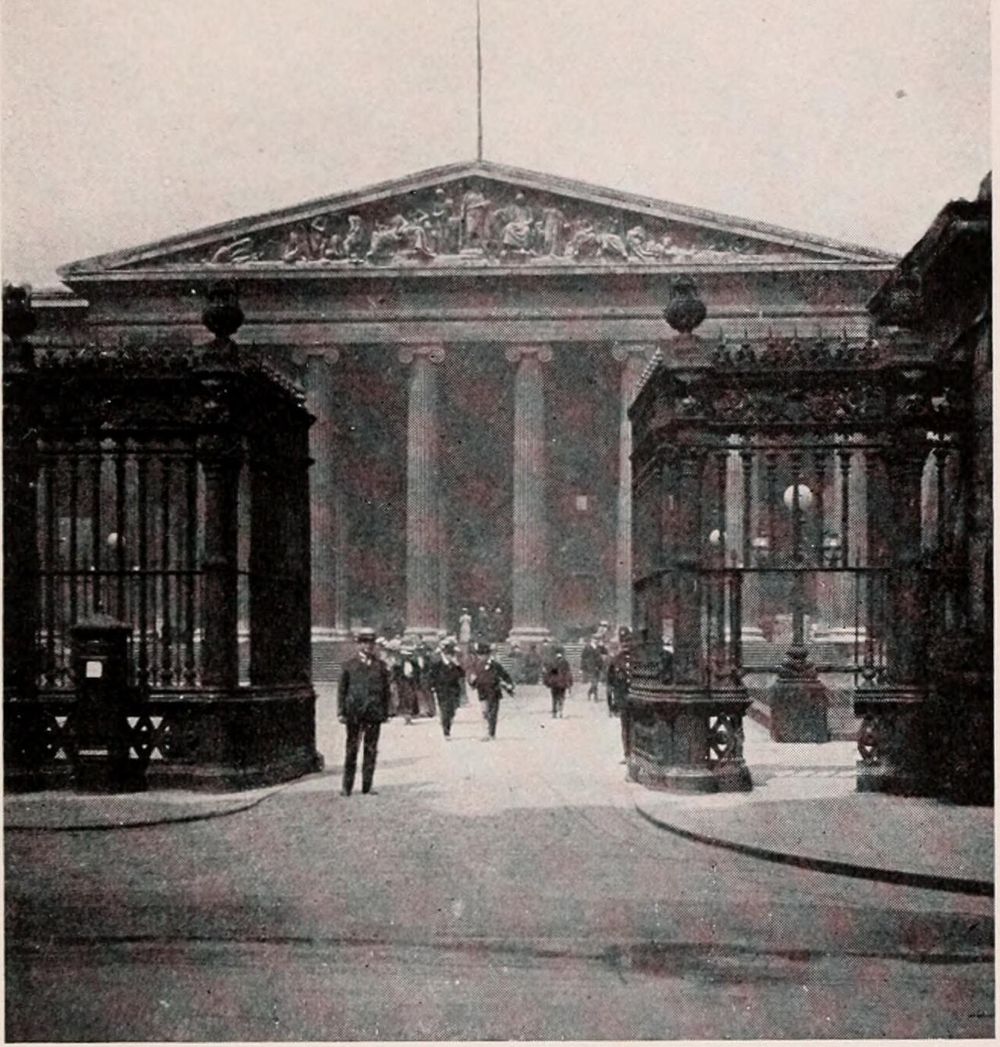
The museum opened on 15 January 1759, free to "all studious and curious persons". At first you had to apply in writing for a ticket and wait weeks. The temple front with its forty-four columns was built between 1823 and 1852.
2. The Great Court and the Reading Room
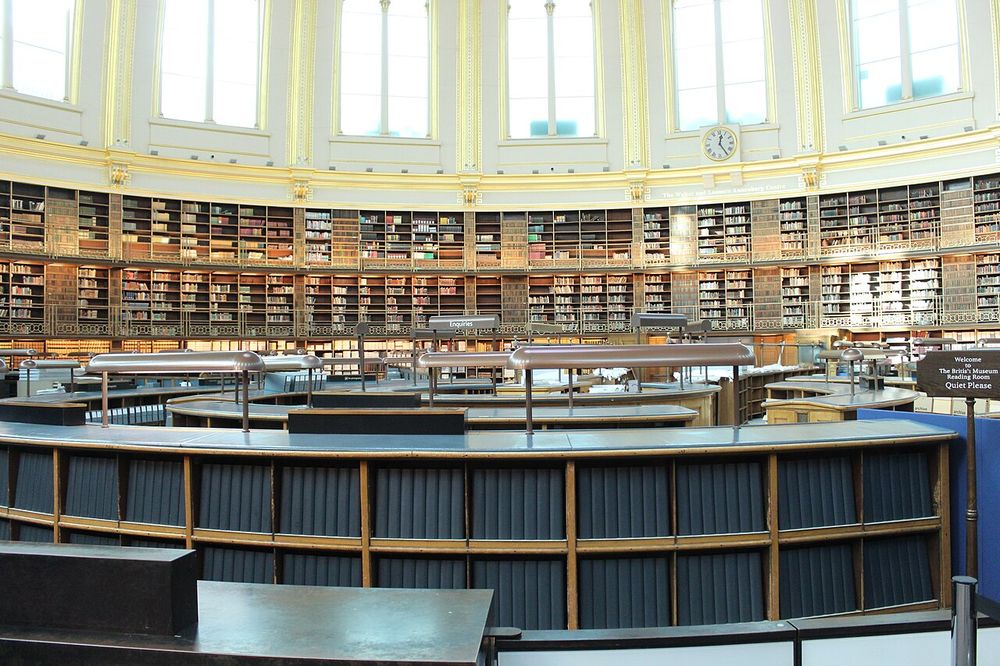
The Reading Room in 202414GTR, CC0
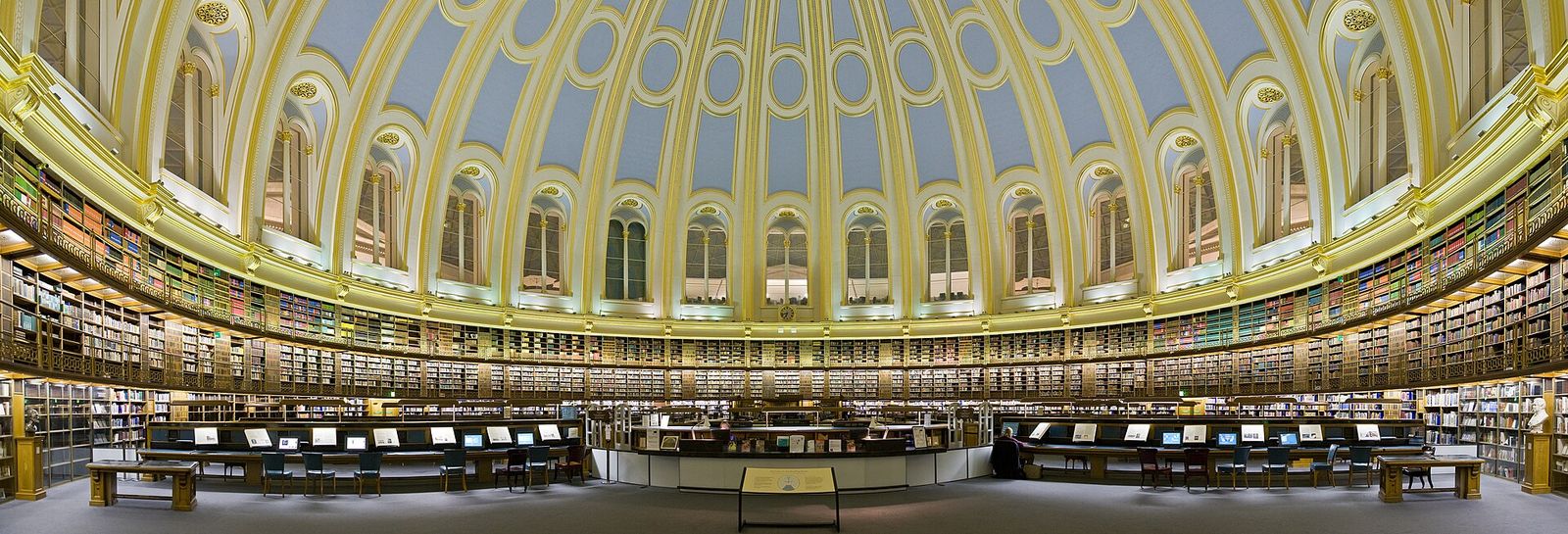
The Reading Room was built in the museum's courtyard in 1857. Its dome is 43 metres across, almost the size of the Pantheon in Rome. Anyone with a ticket could sit at its desks and ask for any book in the national library.
Dickens, Darwin, Oscar Wilde, Gandhi and Virginia Woolf held tickets. So did Lenin, under the name Jacob Richter.
The glass roof being cleanedscarletgreen, CC BY 2.0
The roof over the court, by the architect Norman Foster, opened in 2000. It has 3,312 panes of glass, and no two are the same shape.
3. The Rosetta Stone
The Rosetta Stone, 2026APK, CC BY 4.0
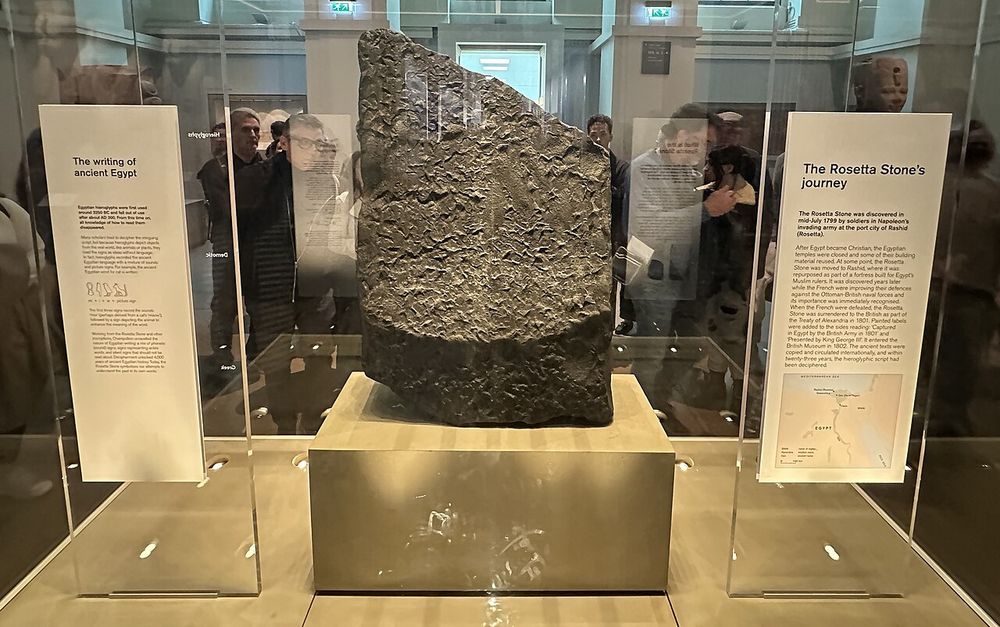
The stone carries one decree of 196 BC, written three times: in the picture-signs of the Egyptian priests, in the everyday Egyptian script, and in Greek. Scholars could read the Greek. In 1822 the Frenchman Champollion used it to work out the other two.
French soldiers found it in 1799 while rebuilding a fort in the Nile delta. Two years later the British defeated them and took it under the terms of surrender. Look at the left edge. Painted there in English is "Captured in Egypt by the British Army 1801".
It is the most visited object in the museum. Egypt has asked more than once for its return.
4. Assyria: winged bulls and a lion hunt
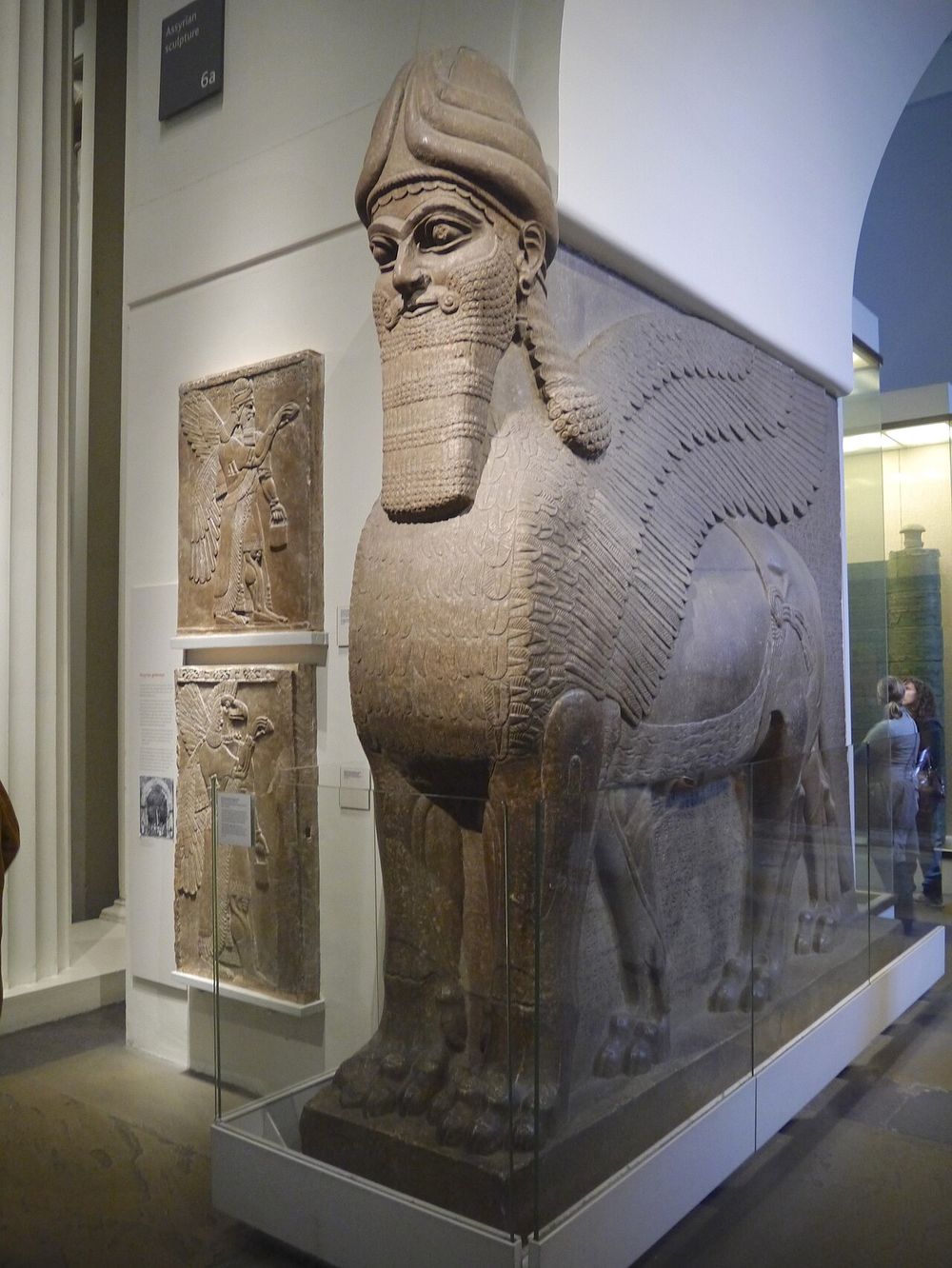
A winged bull from an Assyrian palace gateJay Galvin, CC BY 2.0
The human-headed winged bulls guarded the gates of Assyrian palaces in what is now northern Iraq, about 2,700 years ago. Each has five legs. From the front it stands still, and from the side it walks.
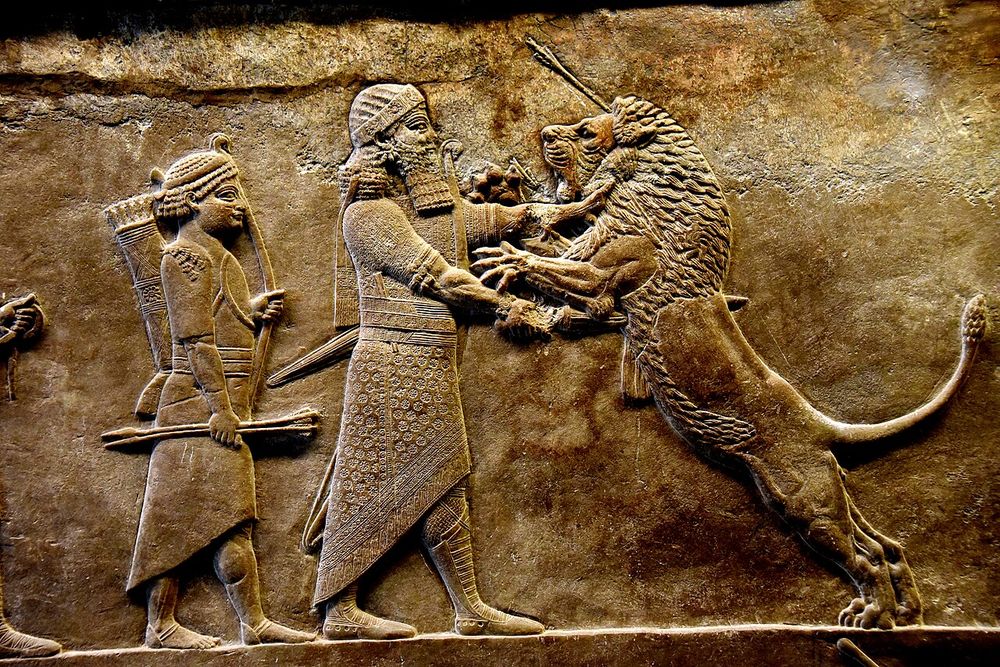
Ashurbanipal's lion hunt, about 645 BCOsama Shukir Muhammed Amin FRCP(Glasg), CC BY-SA 4.0
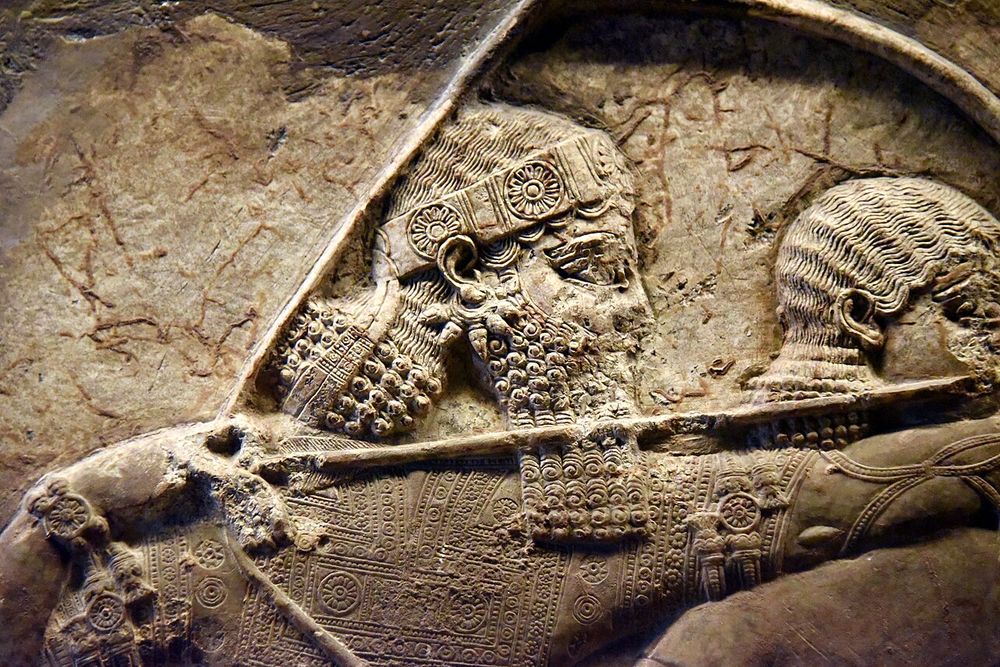
In the narrow rooms behind them, stone panels show King Ashurbanipal hunting lions, carved about 645 BC. The king is stiff and calm. The dying lions are among the most closely observed animals in ancient art.
Both were dug up in the 1840s and 1850s and shipped to London with the leave of the Ottoman sultan. Some of what stayed behind was smashed by the Islamic State group in 2015.
5. The Parthenon sculptures
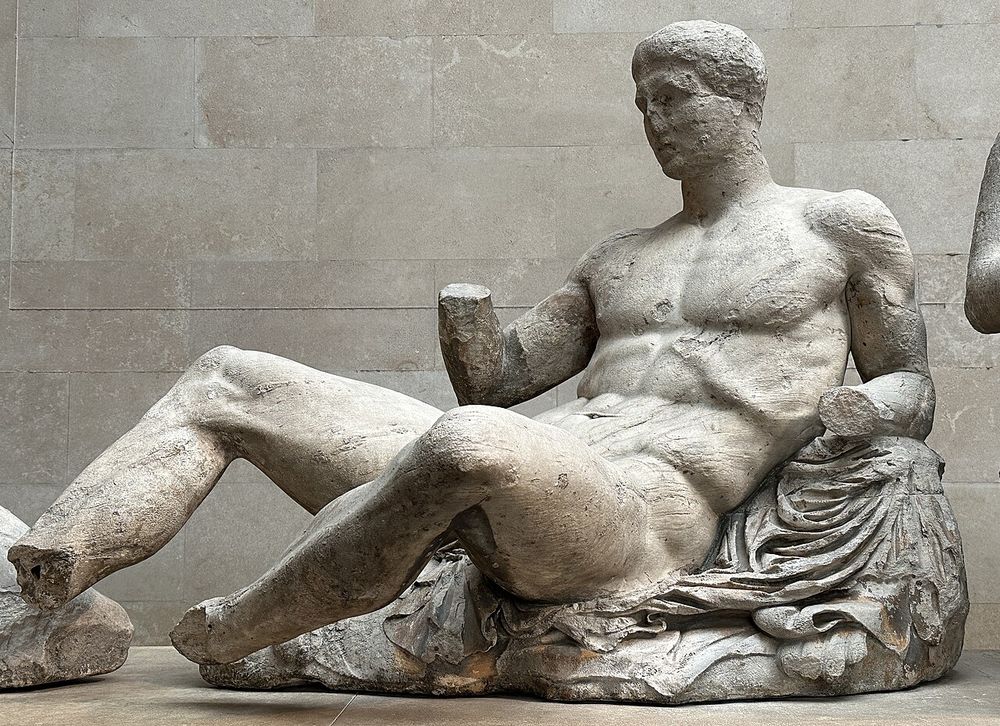
A reclining god from the east gable of the ParthenonAPK, CC BY 4.0
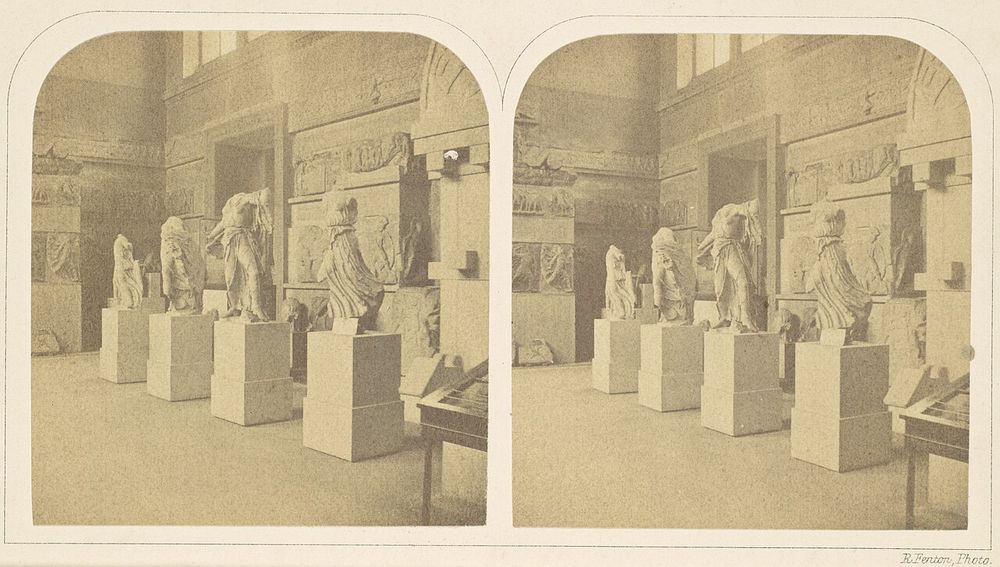
This hall holds about half of the surviving sculpture of the Parthenon: 75 metres of the frieze, fifteen of the square panels, and seventeen figures from the gables. Lord Elgin's men took them down between 1801 and 1805, when Athens was under Ottoman rule.
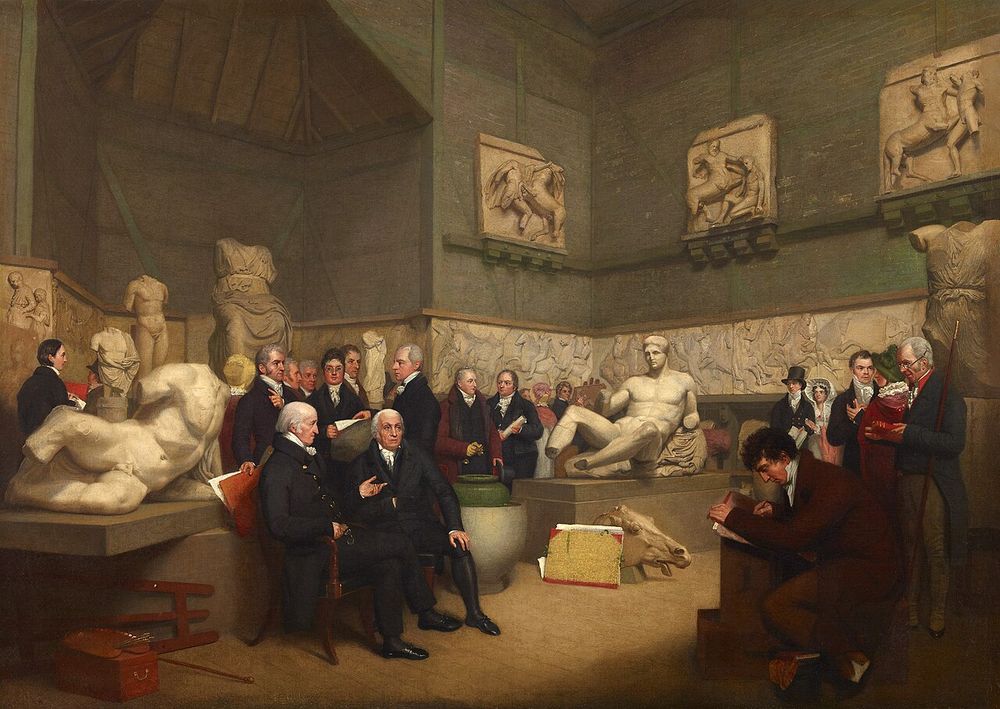
The trustees among the Parthenon sculptures in 1819, painted by Archibald ArcherArchibald Archer, Public domain
Elgin had hoped to decorate his house in Scotland. He ran out of money and sold them to Parliament in 1816 for £35,000, less than half his costs.
The other half is in Athens, in a museum built to receive these. The two sides have been talking since 2022. This site has a page for the Acropolis Museum, where the argument is set out from the Greek side.
6. Benin and Easter Island: taken by force
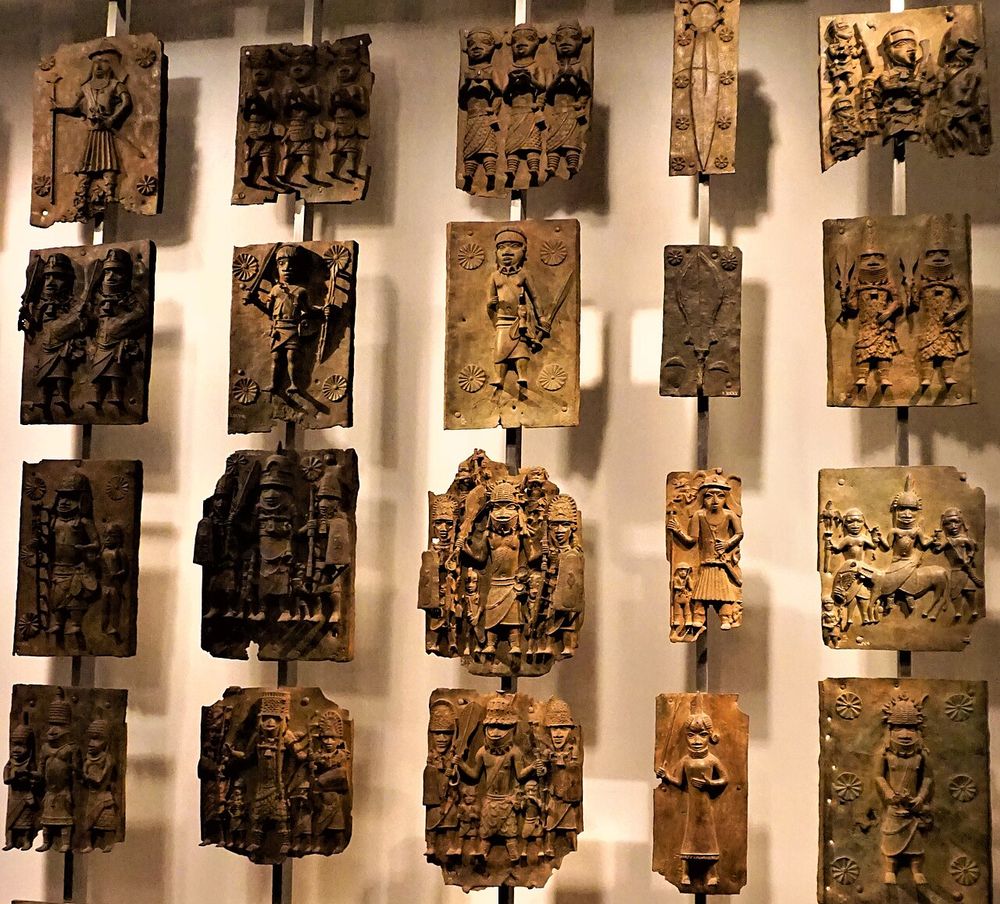
Brass plaques from the palace of BeninJoyofmuseums, CC BY-SA 4.0
Downstairs, in the Africa galleries, a wall is covered with brass plaques from the royal palace of Benin, in what is now Nigeria. In 1897 a British force burned the city and carried off several thousand works. About nine hundred are here.
Museums in Germany and elsewhere have handed their Benin pieces back since 2022. The British Museum says the law forbids it to give away its collection.
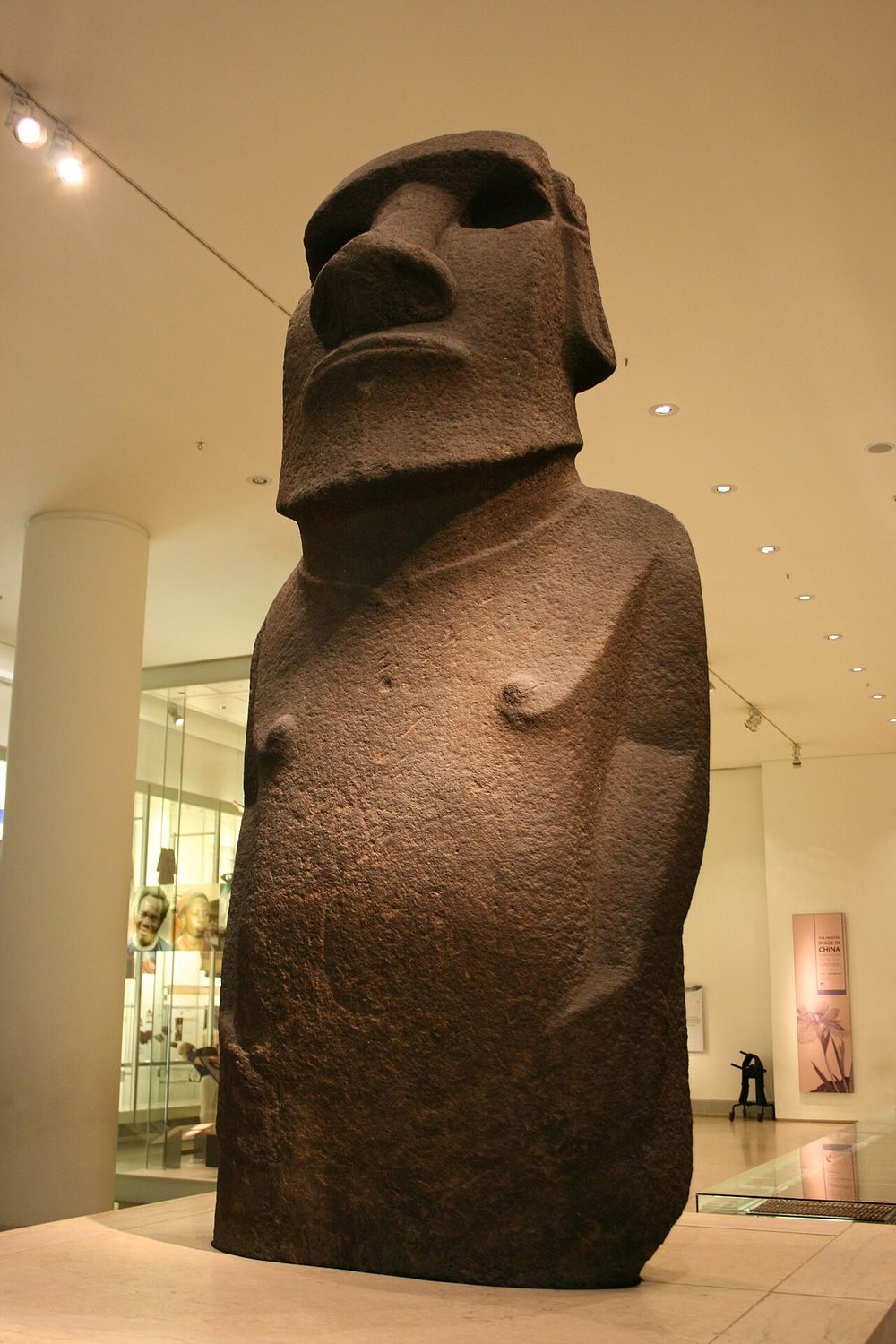
Hoa Hakananai'a, from Rapa NuiPhotograph by Mike Peel (www.mikepeel.net)., CC BY-SA 4.0
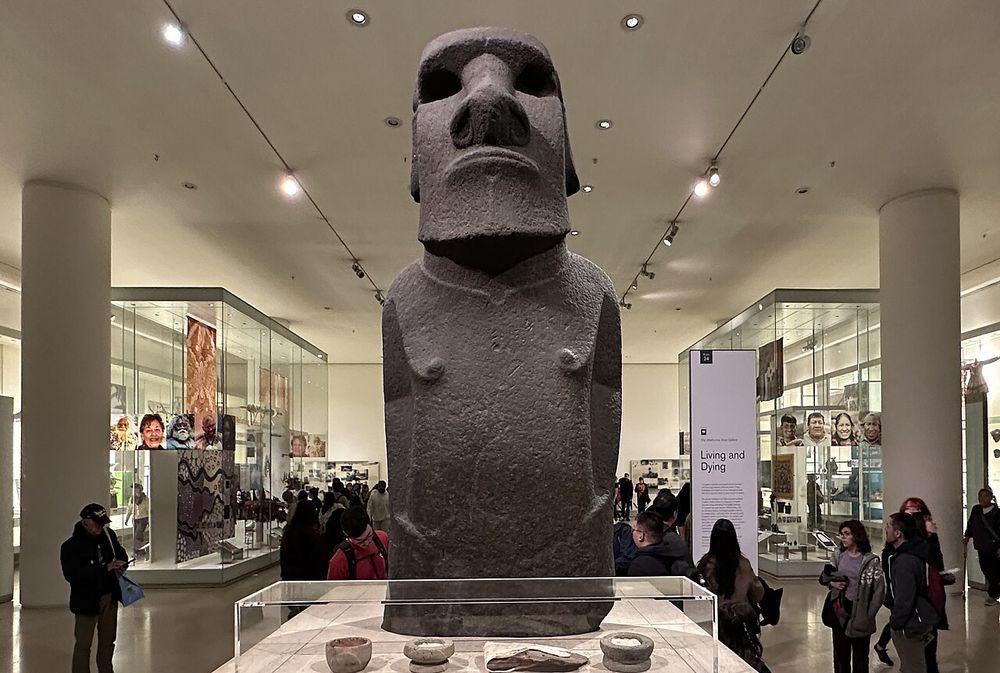
In a gallery off the Great Court stands a basalt figure from Rapa Nui, Easter Island, taken by a British warship in 1868. Its name means "lost or stolen friend". Islanders came to London in 2018 to ask for it.
7. Britain's own treasure: a ship burial and a box of chessmen
A replica of the Sutton Hoo helmet as it looked when newAPK, CC BY 4.0
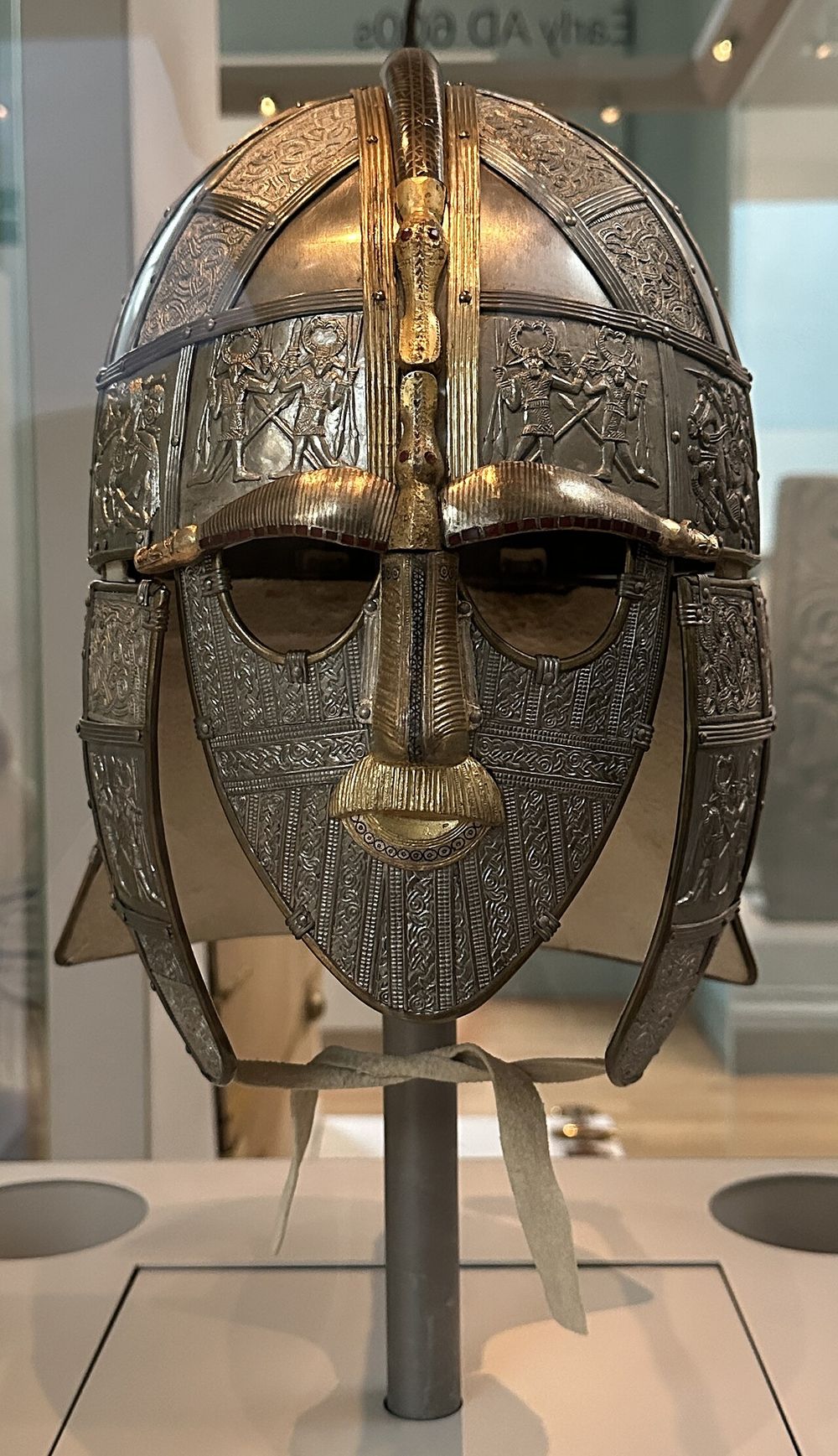
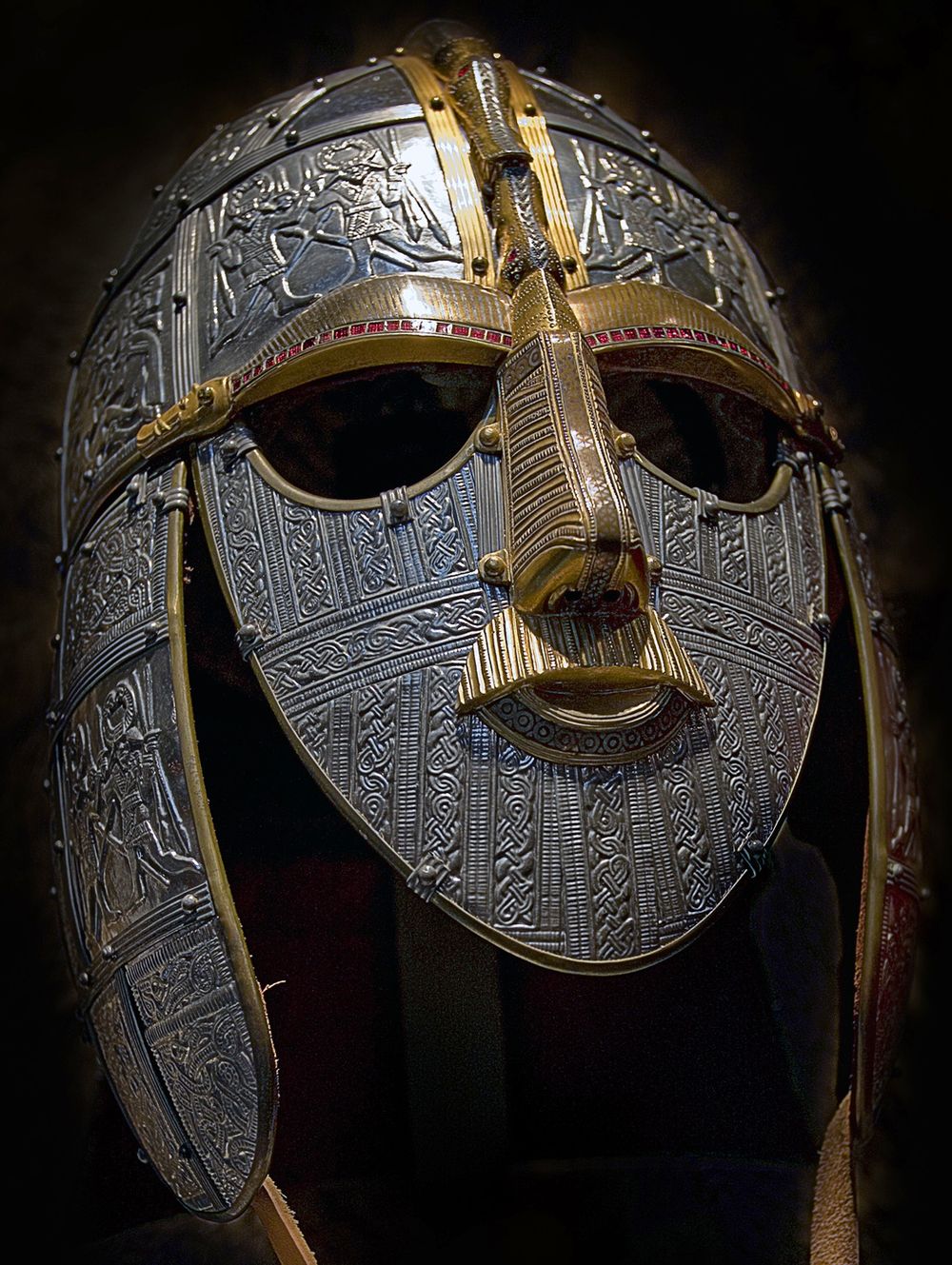
In 1939, on the eve of war, a landowner in Suffolk had the mounds on her estate dug. In the largest was the print of a ship 27 metres long, and in it the grave goods of an English king of about 625: gold, garnets and an iron helmet with a face. The helmet was in five hundred pieces.
The film The Dig (2021) tells the story, with Ralph Fiennes as the self-taught digger who found the ship.
The Lewis chessmenJoyofmuseums, CC BY-SA 4.0
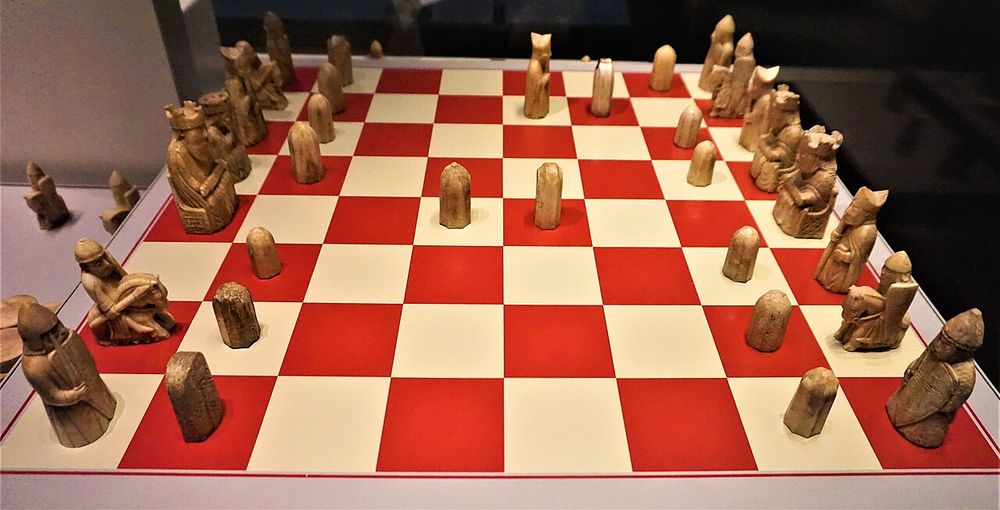
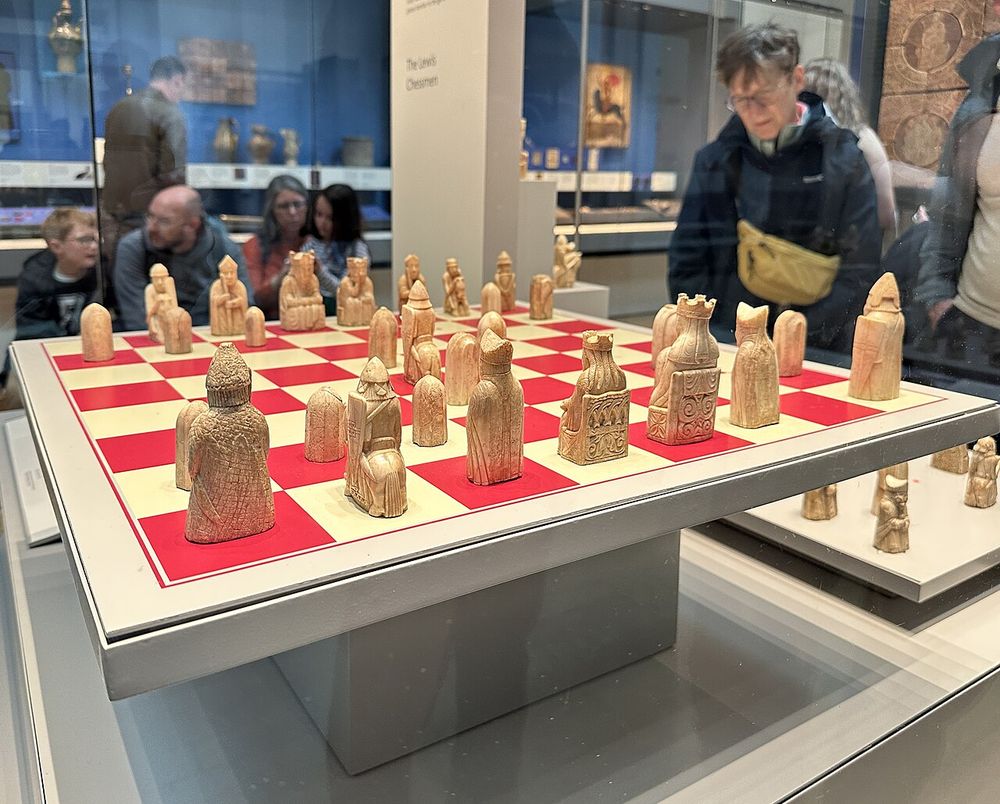
The chessmen were carved from walrus tusk about 1150, probably in Norway, and found in a sand dune on a Scottish island in 1831. Look at the queens, chin in hand, and the foot soldiers biting their shields. The wizard chess in the first Harry Potter film was modelled on them.
From September 2026 to July 2027 the museum is showing the Bayeux Tapestry, lent by France. In exchange, Britain agreed to lend the Sutton Hoo treasure and the chessmen to France. Check on the day whether they are here.
8. China: a scroll and two vases
The Admonitions Scroll: the bed sceneGu Kaizhi (c.345-c.406), Public domain
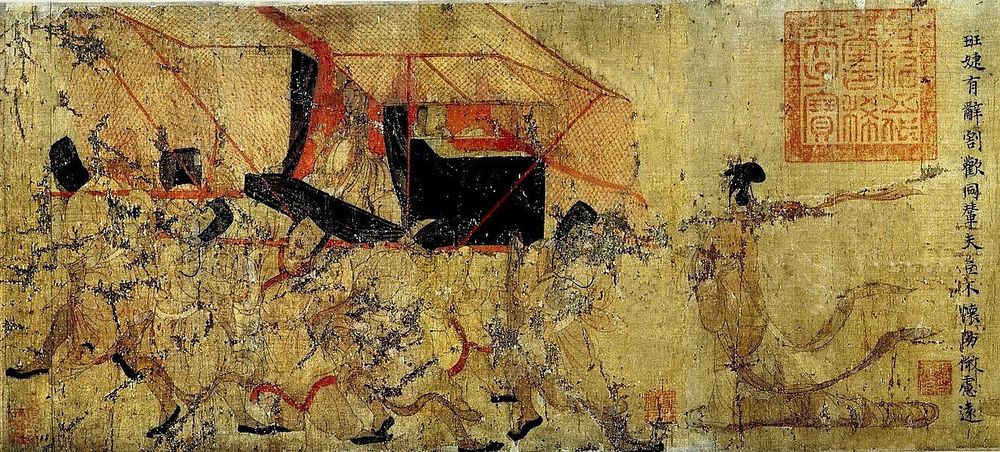
The Admonitions Scroll illustrates a text of advice to the ladies of the imperial court. The painting is linked to Gu Kaizhi, who lived about AD 345 to 406. Most scholars think this is a copy made between the fifth and the eighth century. Either way it is among the oldest Chinese scroll paintings left.
It was in the Qing imperial collection. In 1900, when foreign armies occupied Beijing after the Boxer rising, a British officer came by it, and in 1903 he sold it to the museum for £25. The museum later cut it into sections and pasted it flat, which harmed it. It is now too fragile for long display. In 2026 it was shown from 13 July to 24 August.
The David Vases, dated 1351BabelStone, CC BY-SA 3.0
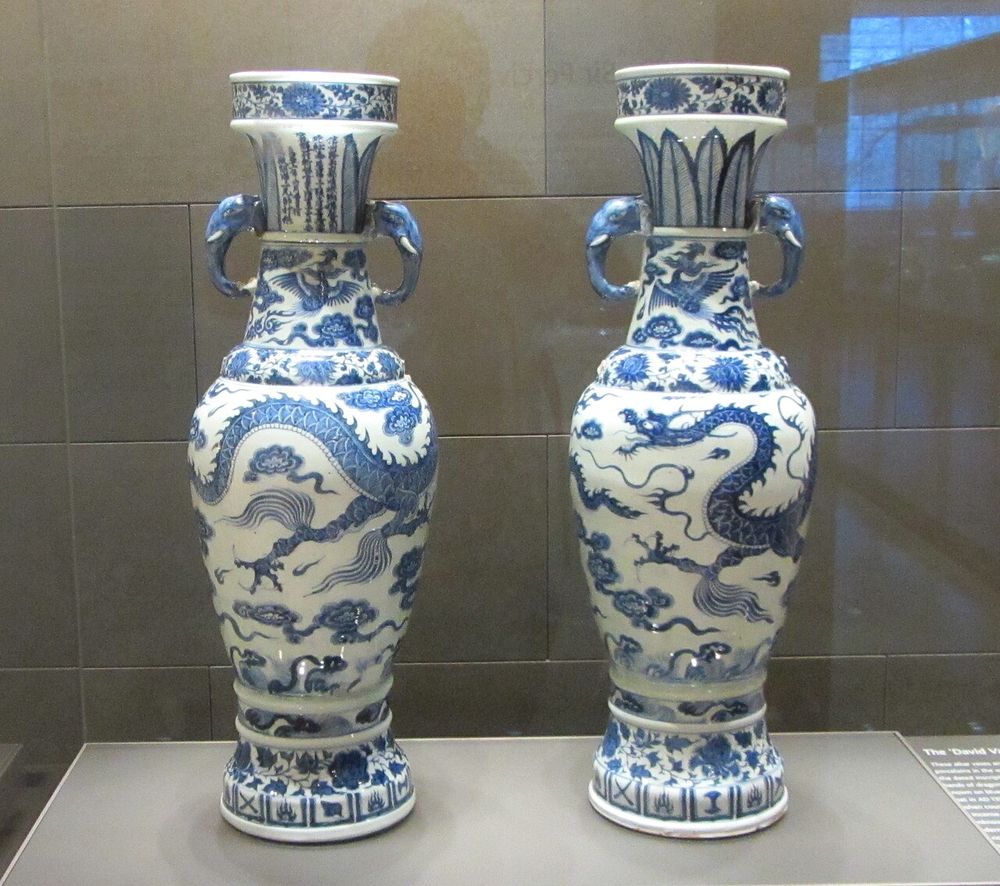
The two tall blue-and-white vases carry an inscription dating them to 1351, under the Yuan (1271–1368). They are the fixed point from which all early blue-and-white porcelain is dated. They belong to a collection of 1,700 Chinese ceramics formed by Sir Percival David and given to the museum in 2024.
9. The same years in China
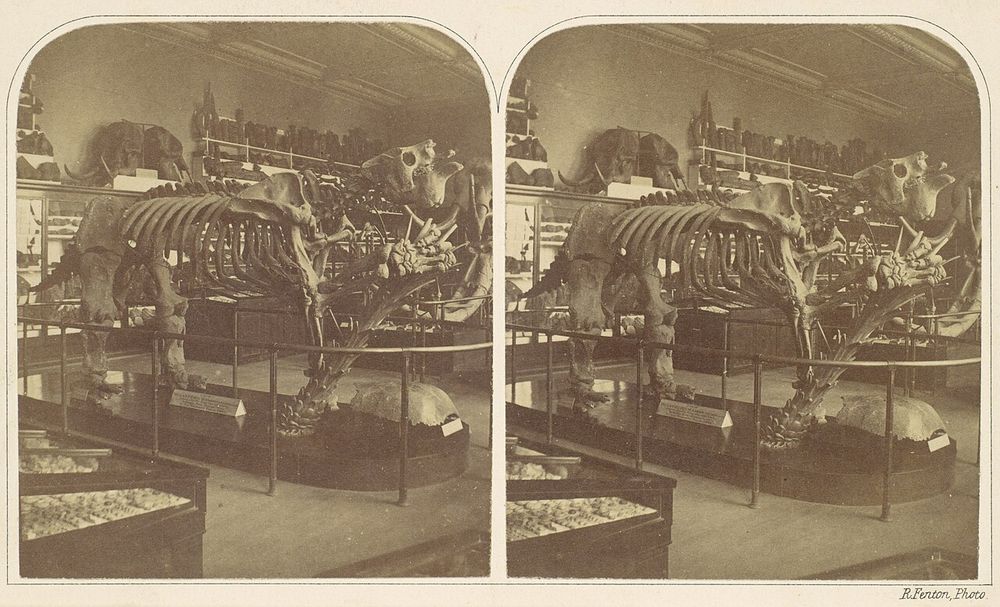
A sculpture gallery photographed by Roger Fenton in the 1850sRoger Fenton, CC0
The museum opened in 1759, the twenty-fourth year of the Qianlong Emperor, when the Qing (1644–1912) was at its largest. Qianlong was a collector too, and the Admonitions Scroll carries his seals and a small orchid he painted on it.
The Reading Room opened in 1857, in the middle of the second Opium War. Three years later British and French troops burned the Old Summer Palace outside Beijing. Things looted there are in museums across Europe, and a few are here.
In 2023 the museum admitted that about two thousand small objects had been stolen from its own stores over many years. Its director resigned. For Chinese commentators, and many others, the theft weakened the old argument that things are safest in London.
Meanwhile in the world
Year
Here
Elsewhere
1753
Parliament founds the museum
Eighteenth year of the Qianlong Emperor
1759
The museum opens, free
Qianlong completes the conquest of Xinjiang
1801–1816
The Rosetta Stone and the Parthenon sculptures arrive
The Jiaqing reign; a British embassy is turned away from Beijing in 1816
1857
The Reading Room opens
The second Opium War
1896–1897
Sun Yat-sen reads here
The year after the Qing loses the war with Japan
1903
The Admonitions Scroll is bought for £25
Three years after foreign armies entered Beijing
1939
The Sutton Hoo ship is found
China is in the third year of the war with Japan
2000
The Great Court opens
China is about to join the World Trade Organization
2026
The Bayeux Tapestry comes on loan from France
The Admonitions Scroll is shown for six weeks in summer
One line to remember: free since 1759, eight million objects, and an argument over who should keep them.
The museum and its treasures
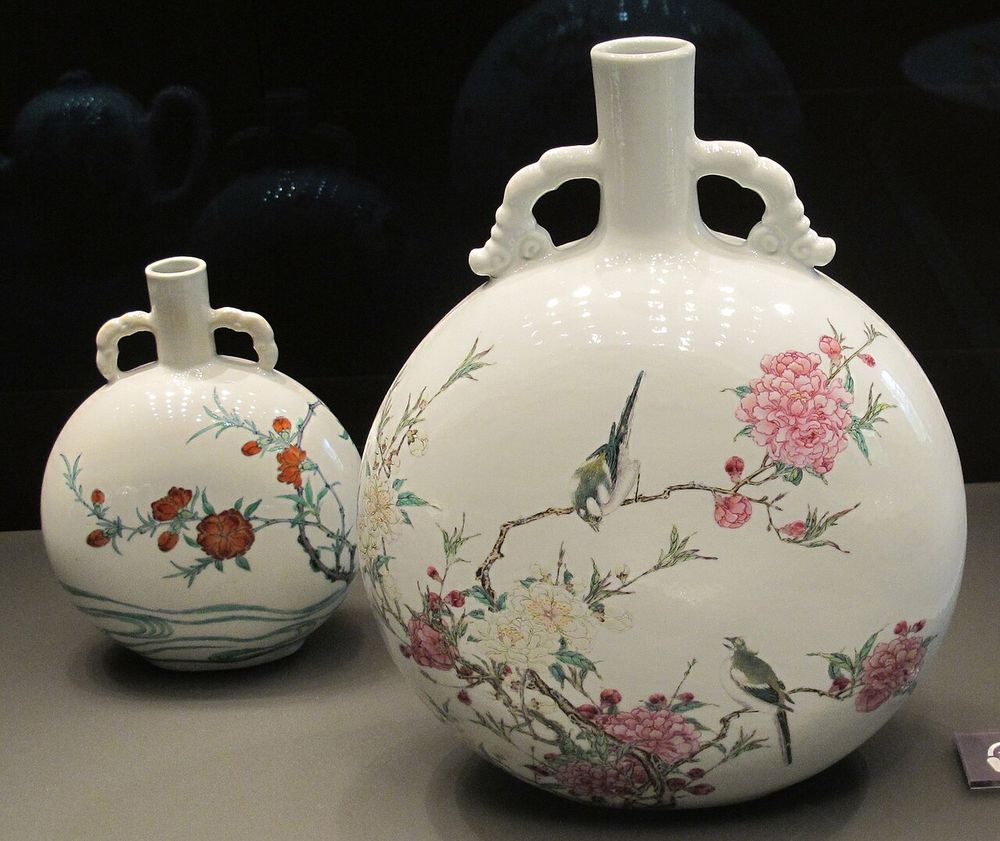
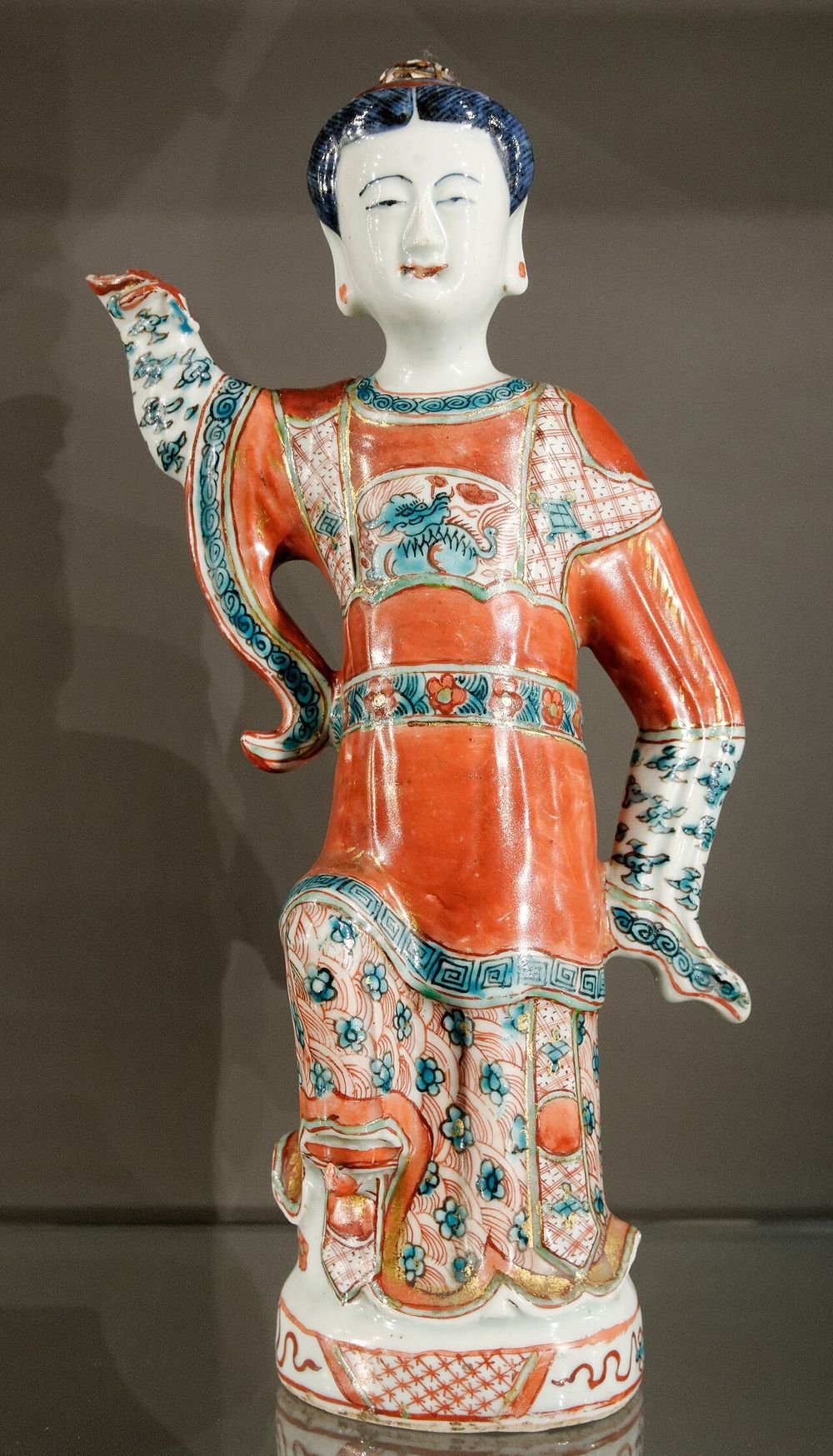
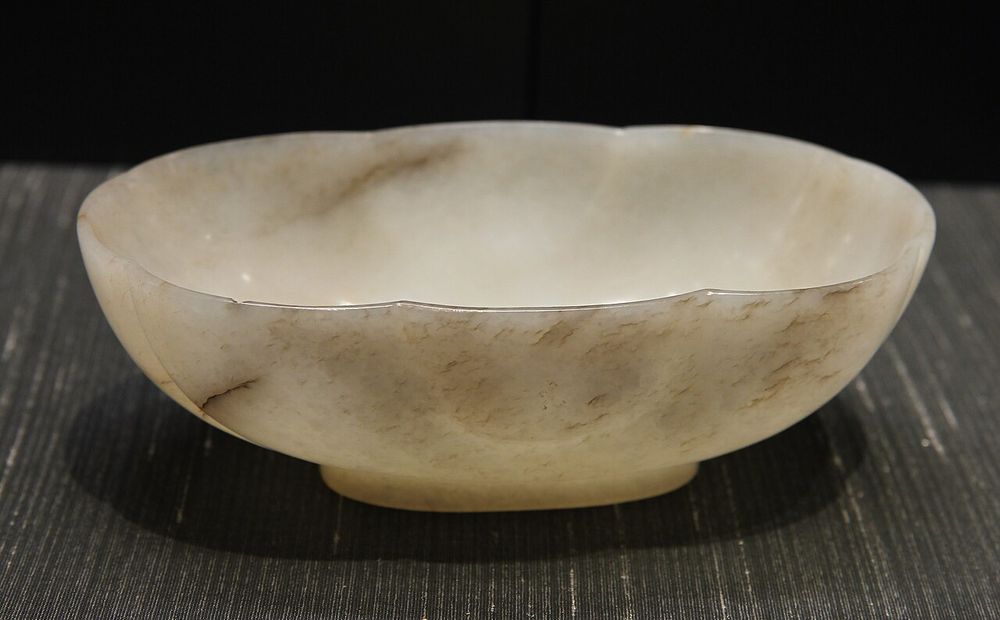
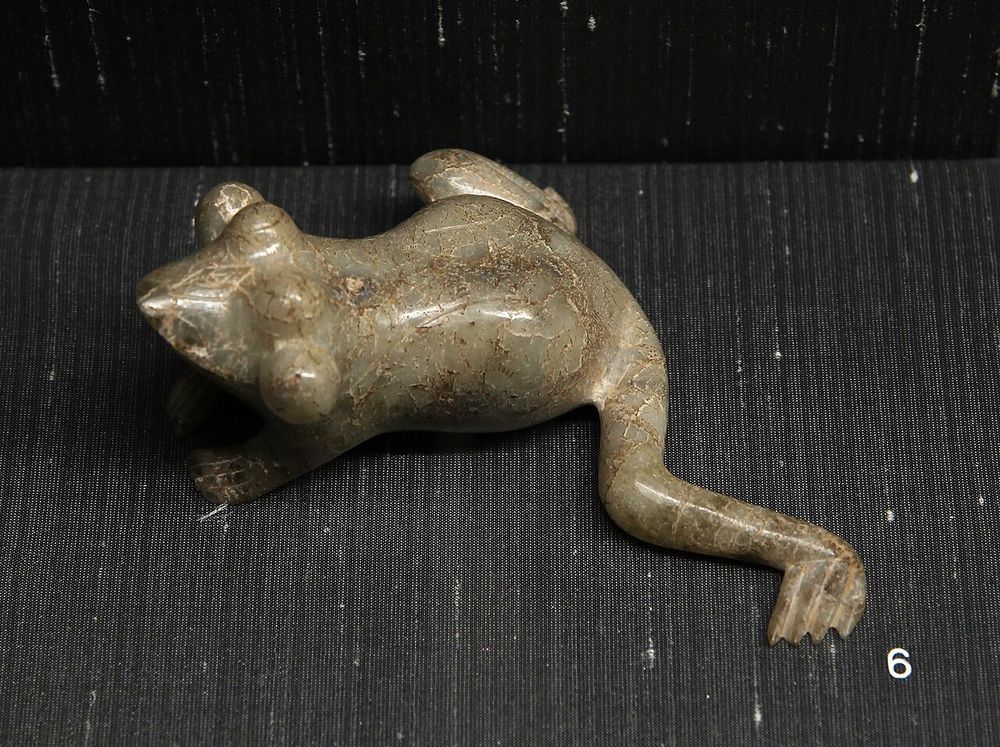
The front on Great Russell StreetElliott Brown from Birmingham, United Kingdom, CC BY-SA 2.0, Wikimedia CommonsThe east wing and the forecourtElliott Brown from Birmingham, United Kingdom, CC BY-SA 2.0, Wikimedia CommonsThe Reading Room in the middle of the Great CourtDale Cruse from San Francisco, CA, USA, CC BY 2.0, Wikimedia CommonsThe glass roof being cleanedscarletgreen, CC BY 2.0, Wikimedia CommonsInside the Reading Room, 2006Diliff, CC BY 2.5, Wikimedia CommonsThe Reading Room in 202414GTR, CC0, Wikimedia CommonsThe Rosetta Stone, 2026APK, CC BY 4.0, Wikimedia CommonsThe three scripts of the Rosetta StoneHans Hillewaert, CC BY-SA 4.0, Wikimedia CommonsThe back of the Rosetta Stone in its caseAPK, CC BY 4.0, Wikimedia CommonsRamesses II, carved about 1270 BCGary Todd from Xinzheng, China, CC0, Wikimedia CommonsA winged bull from an Assyrian palace gateJay Galvin, CC BY 2.0, Wikimedia CommonsAshurbanipal's lion hunt, about 645 BCOsama Shukir Muhammed Amin FRCP(Glasg), CC BY-SA 4.0, Wikimedia CommonsThe king draws his bowOsama Shukir Muhammed Amin FRCP(Glasg), CC BY-SA 4.0, Wikimedia CommonsA reclining god from the east gable of the ParthenonAPK, CC BY 4.0, Wikimedia CommonsA river god from the west gableUnknown, under supervision of Pheidias, CC BY 2.5, Wikimedia CommonsTwo horsemen from the Parthenon friezeSanjay ach, CC BY-SA 4.0, Wikimedia CommonsThe cavalcade on the friezeClaire H., CC BY-SA 2.0, Wikimedia CommonsThe sixth maiden of the Erechtheion; her five sisters are in AthensJoyofmuseums, CC BY-SA 4.0, Wikimedia CommonsThe Nereid Monument, a tomb from Lycia in TurkeyAPK, CC BY 4.0, Wikimedia CommonsBrass plaques from the palace of BeninJoyofmuseums, CC BY-SA 4.0, Wikimedia CommonsA Benin plaque: the king and his attendantsPhotograph by Mike Peel (www.mikepeel.net)., CC BY-SA 4.0, Wikimedia CommonsHoa Hakananai'a, from Rapa NuiPhotograph by Mike Peel (www.mikepeel.net)., CC BY-SA 4.0, Wikimedia CommonsThe figure in its gallery, 2026APK, CC BY 4.0, Wikimedia CommonsA replica of the Sutton Hoo helmet as it looked when newAPK, CC BY 4.0, Wikimedia CommonsThe Sutton Hoo helmet, rebuilt from five hundred piecesGernot Keller (Own work)- 2008-05-17-SuttonHoo.jpg - cropped & slightly brighten, CC BY-SA 2.5, Wikimedia CommonsThe Lewis chessmenJoyofmuseums, CC BY-SA 4.0, Wikimedia CommonsThe chessmen set out on a board, 2026APK, CC BY 4.0, Wikimedia CommonsA plaque from Ur in Iraq, about 2500 BCOsama Shukir Muhammed Amin FRCP(Glasg), CC BY 4.0, Wikimedia CommonsFinds from the royal graves of UrGary Todd, CC0, Wikimedia CommonsThe Admonitions Scroll: the bed sceneGu Kaizhi (c.345-c.406), Public domain, Wikimedia CommonsThe Admonitions Scroll: the mountain and the hunterGu Kaizhi (c.345-c.406), Public domain, Wikimedia CommonsThe David Vases, dated 1351BabelStone, CC BY-SA 3.0, Wikimedia CommonsTwo flasks painted with flowers, Qing, about 1730Ismoon, CC BY-SA 3.0, Wikimedia CommonsA porcelain figure from the David collectionMarie-Lan Nguyen, Public domain, Wikimedia CommonsA jade cup of the TangVassil, CC0, Wikimedia CommonsA jade frog of the HanVassil, CC0, Wikimedia CommonsMontagu House, the museum's first home, in an engravingUnknown, CC BY 4.0, Wikimedia CommonsAn entrance ticket for 3 March 1790Osama Shukir Muhammed Amin FRCP(Glasg), CC BY-SA 4.0, Wikimedia CommonsThe trustees among the Parthenon sculptures in 1819, painted by Archibald ArcherArchibald Archer, Public domain, Wikimedia CommonsA sculpture gallery photographed by Roger Fenton in the 1850sRoger Fenton, CC0, Wikimedia CommonsThe natural history gallery in the 1850s, before those collections moved outRoger Fenton, CC0, Wikimedia CommonsThe front in 1913Internet Archive Book Images, No restrictions, Wikimedia Commons
Local legends
These are stories people tell about this place. They are legends, not history, and each one says where it comes from.
LegendThe Egyptian rooms
A painted coffin lid in the Egyptian rooms, called the Unlucky Mummy, is said to bring death or ruin to those who own or mock it. One story has it sinking the Titanic.
Source: London newspapers from the 1900s; the museum notes that the board has never left the building
LegendThe Reading Room
Marx always sat at the same desk, and visitors from the Soviet Union and China used to ask to be shown it. The staff would point to a seat.
Source: Told by the Reading Room staff; no record of his seat exists, and readers took whatever desk was free
LegendThe disused station
A closed Underground station called British Museum lies under the street nearby. The ghost of an Egyptian princess is said to walk its tunnel at night and scream.
Source: A London ghost story, used in the film Bulldog Jack (1935)
Later, people who live here will be able to add the stories they grew up with, and say which of these they have heard.
Not certain, and where accounts conflict
Who painted the Admonitions Scroll?
The signature of Gu Kaizhi was added later. Dates proposed for the painting run from about AD 400 to the 700s. The museum's label gives the fifth to seventh century.
How did the scroll leave the palace?
The officer who sold it said a lady had given it to him. Most historians think it was taken during the looting of 1900. No record settles it.
Can the museum give things back?
An Act of 1963 forbids its trustees to dispose of objects, with narrow exceptions. Long loans are allowed. Changing the Act is for Parliament.
How many objects were stolen?
The museum said in 2023 that about two thousand were missing, stolen or damaged. It has since reported recovering several hundred.
Visiting
Tickets and hours
Free. A donation of about 5 pounds is suggested and not required.
Open daily from 10:00 to 17:00, and on Fridays until 20:30. Last entry is at 16:45, or 20:15 on Fridays.
Closed from 24 to 26 December.
The Bayeux Tapestry is on show from 10 September 2026 to 11 July 2027, with its own timed ticket. One guide gives the adult price as 33 pounds.
Last checked 2026-11-12. The museum's own pages as returned by a web search in November 2026; the pages themselves could not be opened from our tools.
Booking from abroad
Ticket window on site Without a booking you may still walk up and join the queue.
Note Entry is free. The museum's own pages recommend booking a free timed slot on britishmuseum.org to be sure of getting in. A web search returned those pages, but we could not open the site itself from our tools, so we give no link.
Checked 2026-11-12
Where to start
The main door is on Great Russell Street. The back door on Montague Place usually has a shorter queue.
For a first visit of two hours: the Rosetta Stone, the Assyrian lion hunt, the Parthenon hall, then upstairs to Sutton Hoo and China.
Come at 10:00 on a weekday, or on Friday evening, when the galleries are quiet.
The China gallery is at the far north end, up the stairs from the back door. Many visitors never find it.
Before you go
The nearest Underground stations are Tottenham Court Road, Holborn and Russell Square, each five to ten minutes on foot.
Every bag is searched at the gate. Suitcases and large rucksacks are not let in.
Rooms close in turn for lack of staff. If one thing matters to you, check on the day that its room is open.
Photographs are allowed in most rooms, without flash or tripod.
Customs and manners
The British queue, and they mind when others do not. Join the end of the line.
"Sorry" and "excuse me" are said constantly, even by the person who was bumped. Say them back.
Do not stop in doorways or on the stairs to take photographs.
Do not touch the sculpture, even where there is no glass.
Museum staff will answer questions about where things came from. It is an ordinary subject here, and you need not avoid it.
Look for these
In the Great Court, look up. Can you find two panes of glass the same shape?
On the Rosetta Stone, find the three kinds of writing. Which one is at the bottom?
Find the English words painted on the side of the Rosetta Stone.
Count the legs of a winged bull. Why five?
In the lion hunt, find a lion that is still alive. How did the sculptor show its pain?
In the Parthenon hall, find a horse's head with wide nostrils and a tired eye. Whose chariot did it pull?
Among the chessmen, find a soldier biting his shield.
On the David Vases, find the handles. What animal are they?
I am here
Stand at the site, sign in, press the button, and collect its stamp. Your browser will ask to use your location. It is sent to us once to confirm that you are at the site; we keep how far you were from it, not the spot where you stood.
Your stamps are saved to your account, so they follow you to any device. Checking from a browser cannot rule out every false location; stricter checks arrive with the app.
Messages
Share your photos
Photos here show the place, not people. Each one is credited to the visitor who took it and appears after our team has looked at it. A photo with you in it belongs under “I am here”.