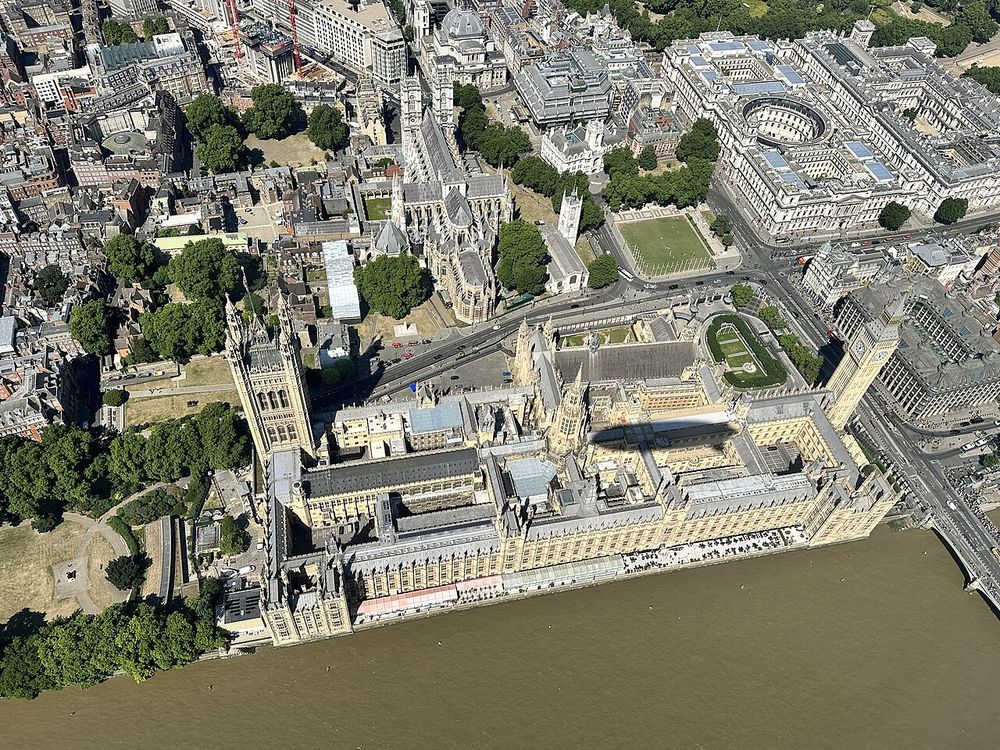
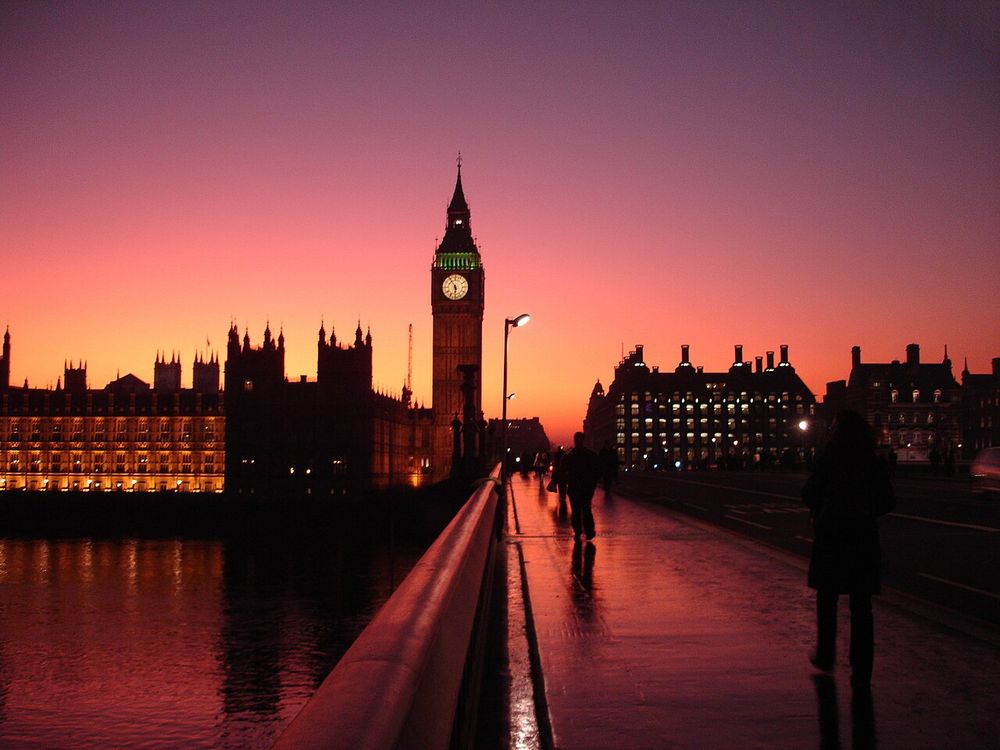
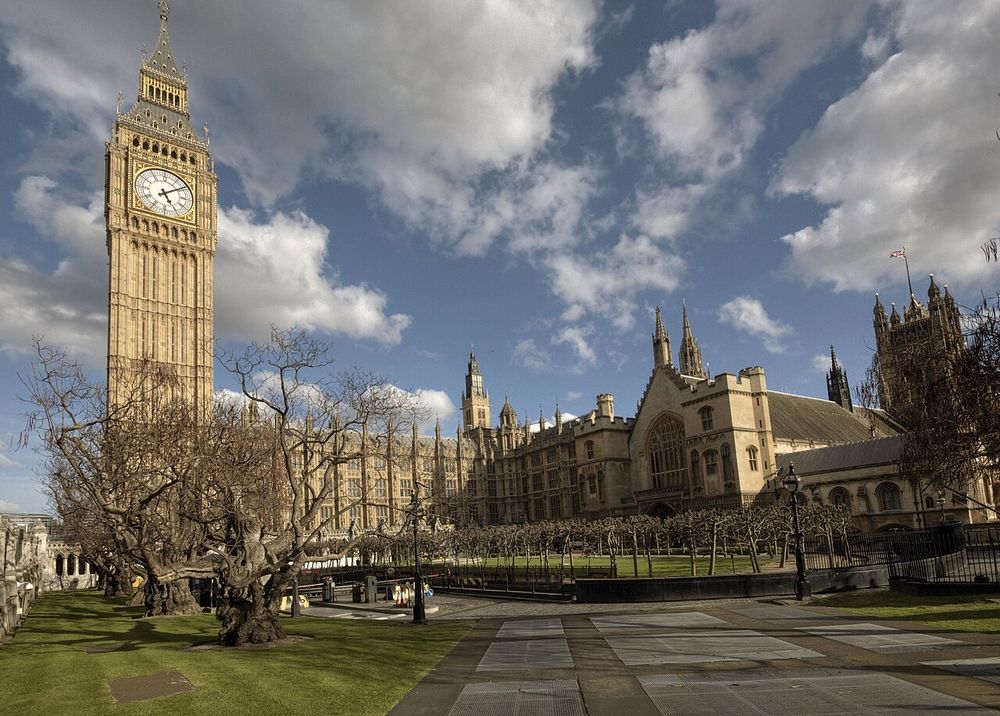
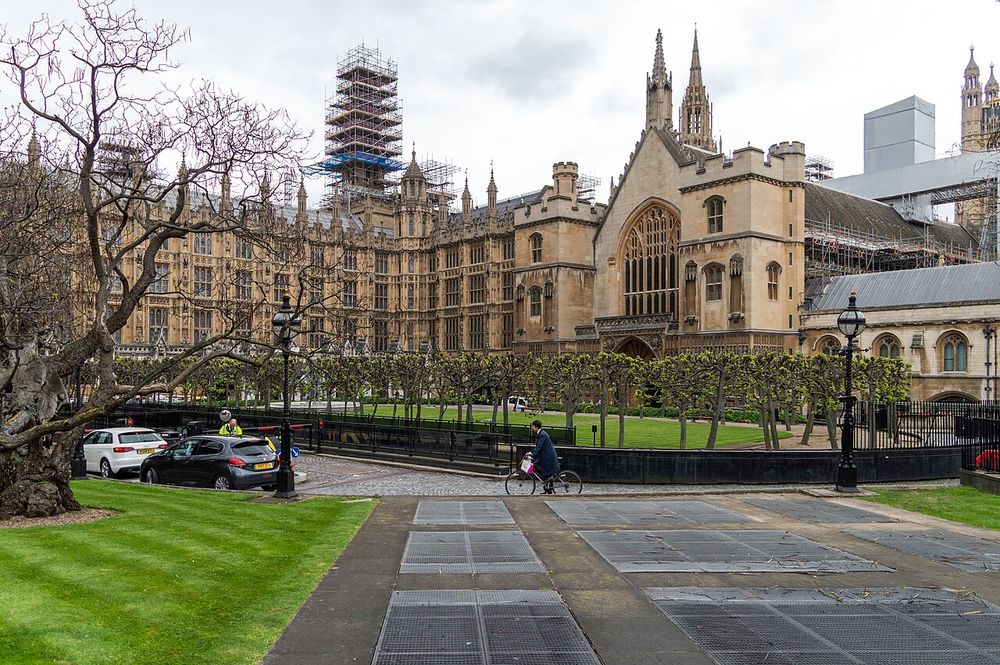
A palace on the river where the kings of England lived for nearly five hundred years and where Parliament has met for more than seven hundred. Nearly all of it burned down in one night in 1834. What you see is the rebuilding: eleven hundred rooms, a clock tower ninety-six metres high, and inside it a cracked bell that the whole world knows by a nickname.
Photo: Diliff, CC BY-SA 2.5, Wikimedia Commons
The story
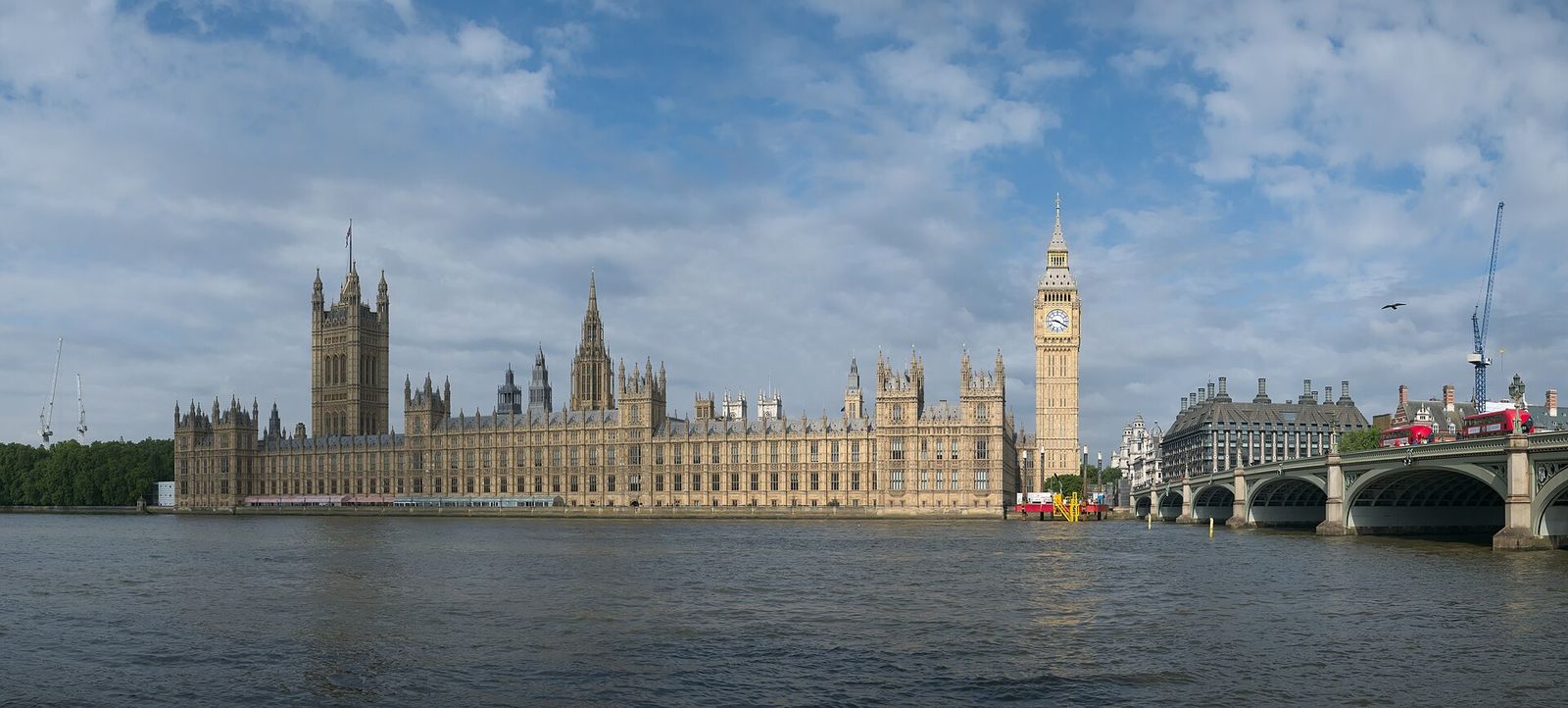
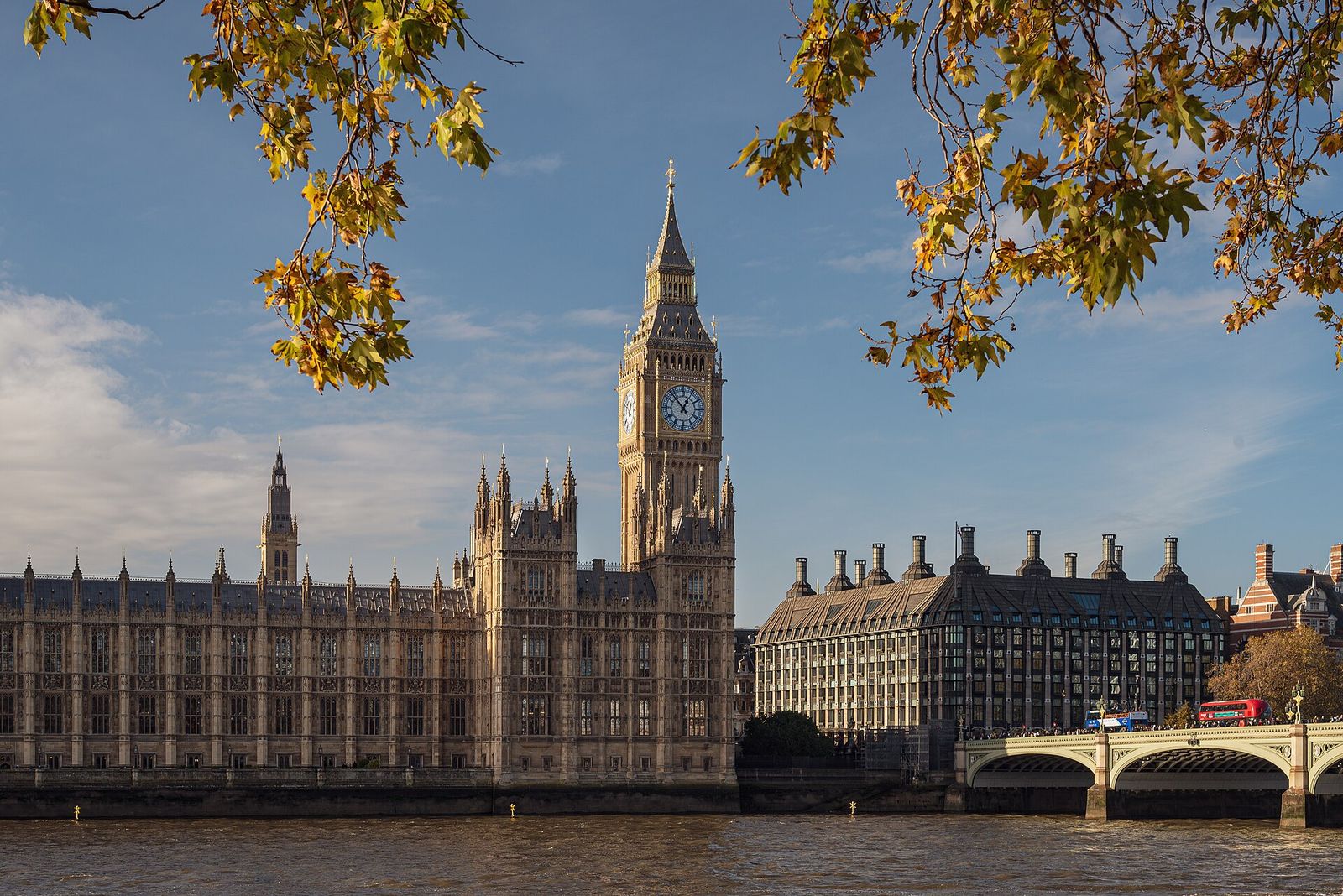
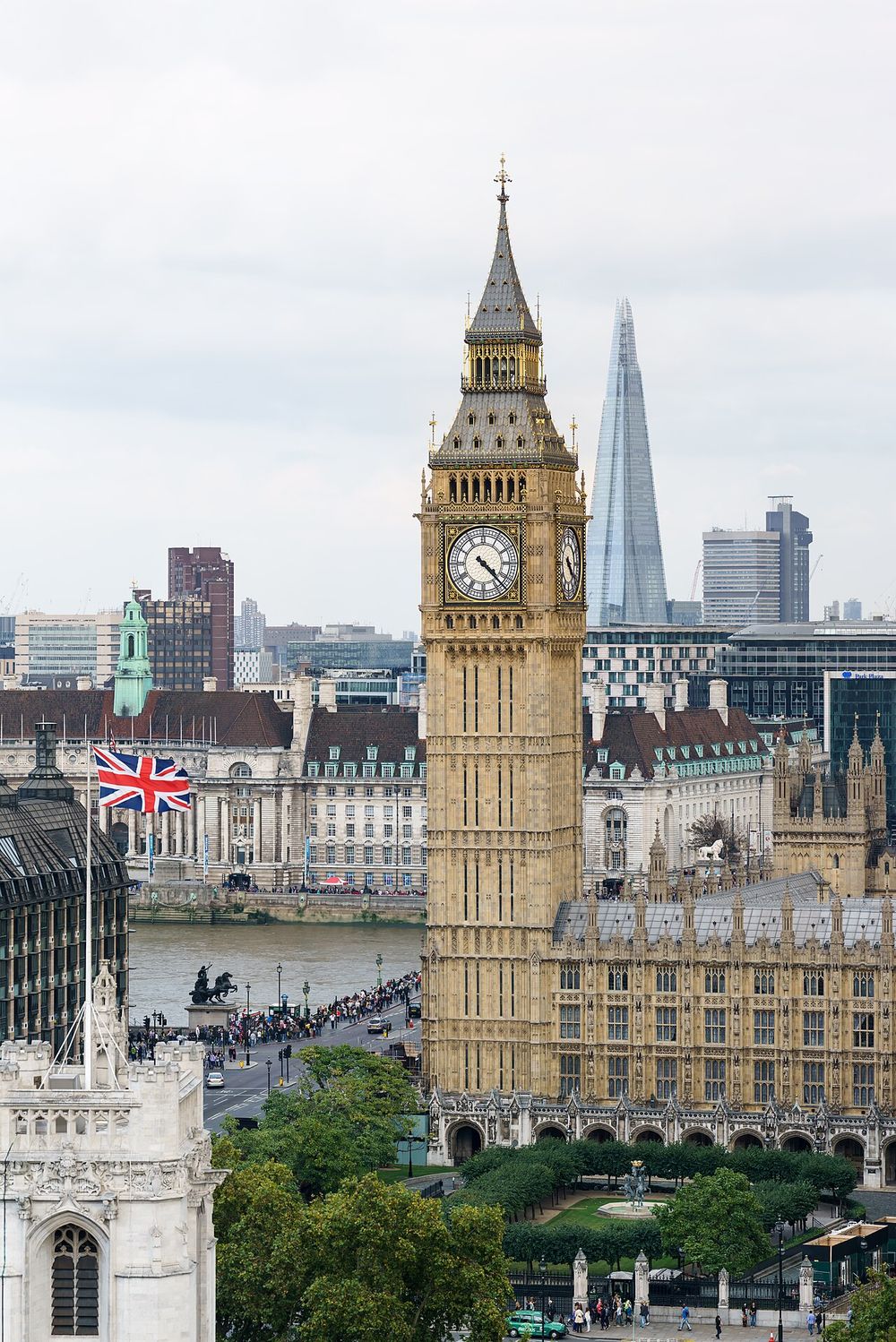
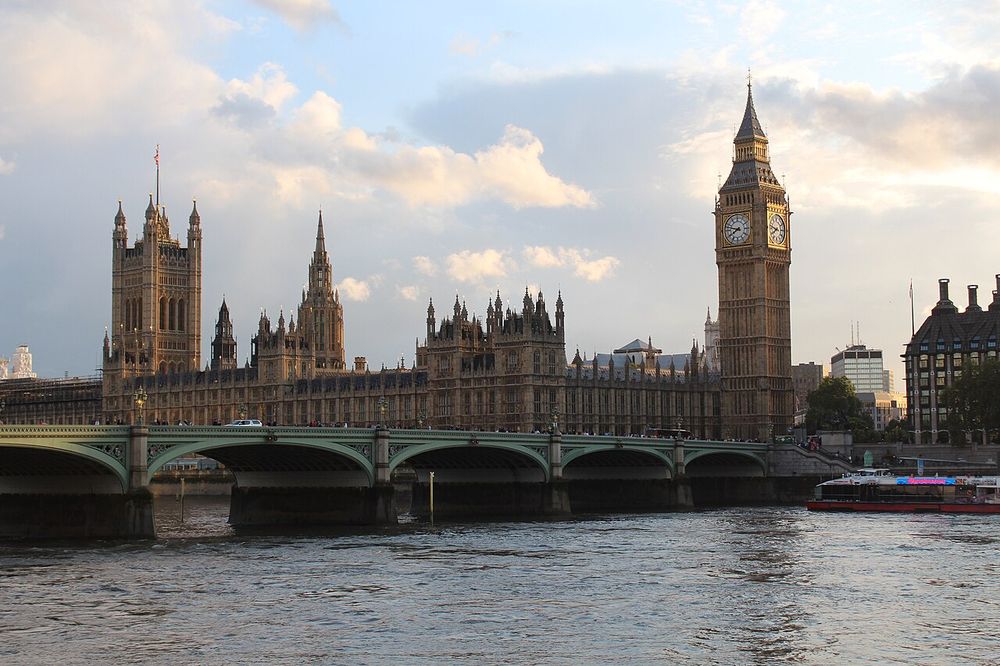
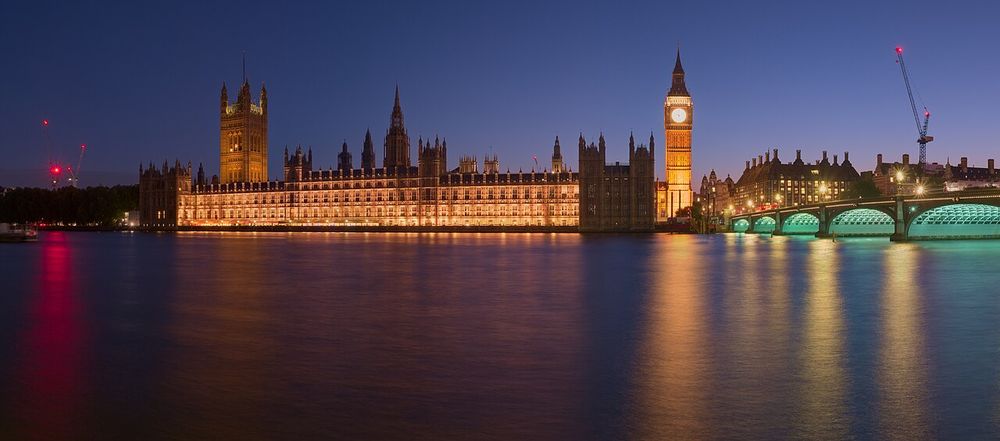
You are standing on a bridge over a wide brown river. On the far bank a building of honey-coloured stone runs along the water for more than a quarter of a kilometre, covered from top to bottom in upright stone ribs and small pointed spires. At the near end is a tall square tower with a clock face on each side. At the far end is a heavier tower with a flag.
On the hour, the clock plays sixteen notes and then a single deep bell begins to strike. That bell is Big Ben. It first rang over London in July 1859, the ninth year of the Xianfeng emperor in China, a few months before Darwin published his book on the origin of species.
What is here
The outside is free at any hour. Westminster Hall is seen on every tour and by anyone who comes to watch a debate. The two chambers are on the guided and audio tours. The clock tower needs its own ticket.
The whole river front from the south bankDomob, CC BY-SA 4.0
This is a palace, and it still belongs to the Crown. King Edward the Confessor built a house here beside his abbey before 1066. His successors lived in it until 1512, when a fire drove Henry VIII out. Parliament, which had begun as the king's council meeting in the king's house, stayed behind.
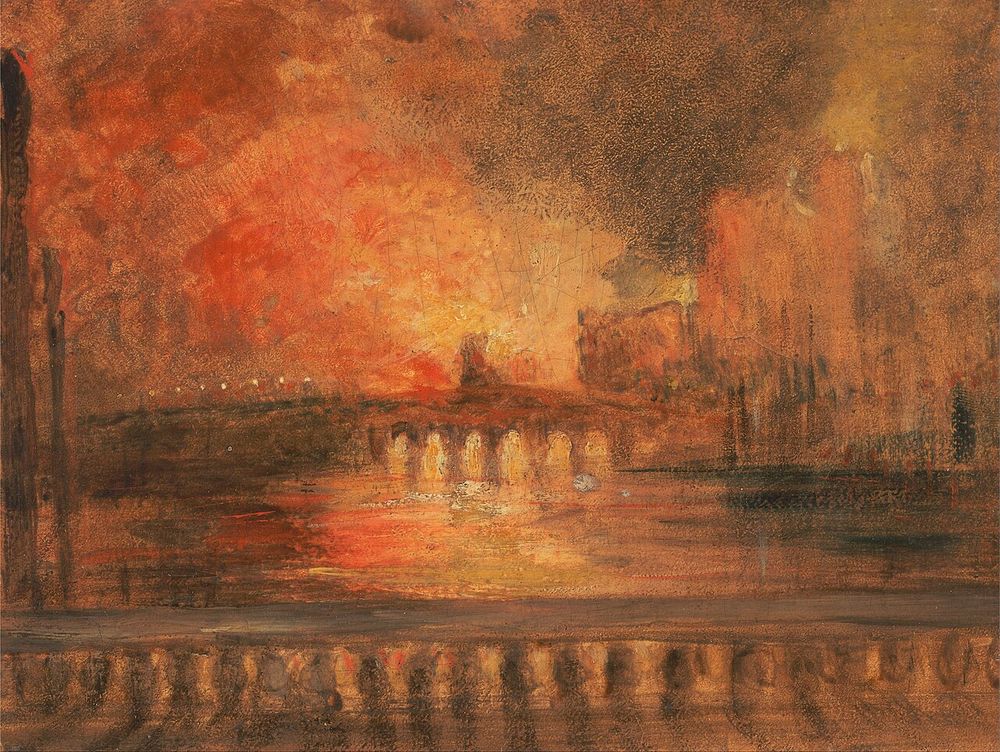
On the night of 16 October 1834, workmen burning old wooden tax records in the furnaces under the House of Lords overheated the flues. By morning the palace was gone, except for the great hall and a few old corners.
The new building took thirty years. Charles Barry drew the plan. Augustus Pugin designed everything you can touch: the carving, the tiles, the wallpaper, the door handles, the inkstands. Pugin died insane at forty, before the clock tower he had drawn was finished.
Things people often get wrong
"Big Ben is the tower." Big Ben is the largest bell inside it. The tower was called the Clock Tower until 2012, when it was renamed the Elizabeth Tower for the sixtieth year of the Queen's reign.
"It is a medieval building." Almost everything you see was built between 1840 and 1870, in the style of four hundred years earlier. The real medieval part is the plain grey hall behind the clock tower.
"Foreigners cannot go in." Anyone may watch a debate from the public gallery, free, and anyone may buy a ticket for a tour.
"The bell is cracked, so it must be broken." It has been cracked since two months after it was hung. It was turned a little and given a lighter hammer, and the crack is why it sounds as it does.
"The King opens Parliament in the House of Commons." No king or queen has entered the Commons while it is sitting since 1642. The King speaks in the House of Lords, and the members of the Commons are sent for.
People who stood here
King Charles I (king of England, 1625–1649)In January 1642 he walked into the House of Commons with soldiers to arrest five of its members. They had gone. Seven years later he sat in a red velvet chair in the great hall, on trial for his life, and refused to take off his hat. A brass plate in the floor marks the place.
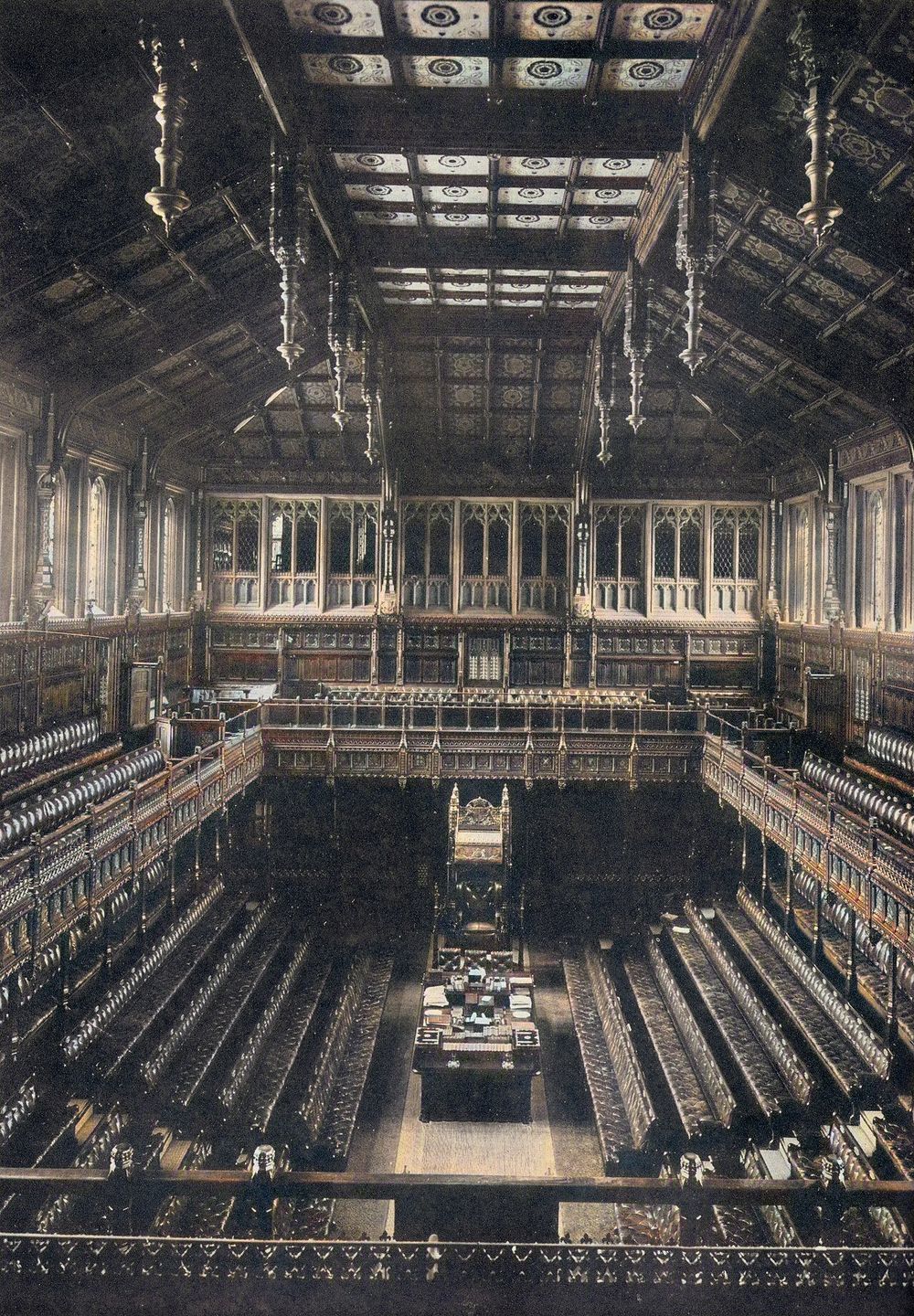
Winston Churchill (British prime minister in the Second World War)He sat in the Commons for more than sixty years. When bombs destroyed the chamber in 1941 he had it rebuilt to the same small size, too small for all its members, so that a full house would always feel crowded and urgent. In 1965 his coffin lay in the great hall for three days.
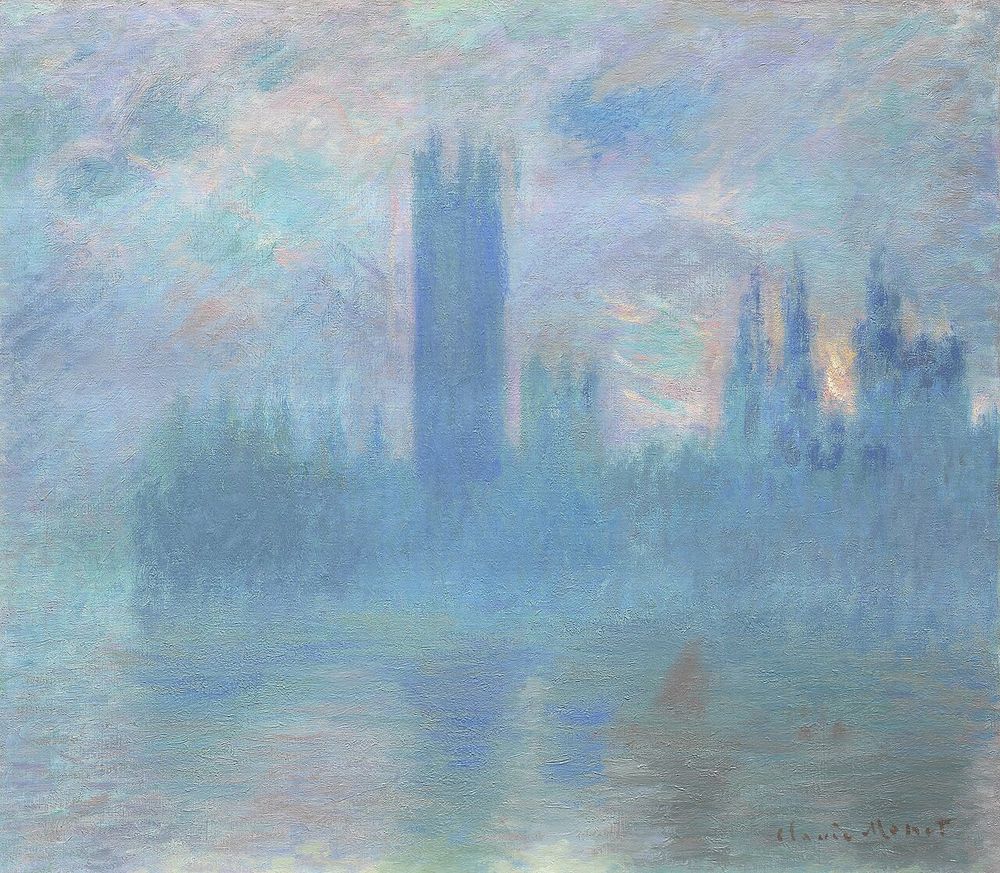
Claude Monet (French painter)In the winters of 1900 and 1901 he stood on a terrace of the hospital across the river, late each afternoon, and painted this building again and again as the sun went down behind it into the fog. He may have stood very near where you stand on the bridge.
Go deeper: eight stops, from the bridge to the old tower
The first three stops are outside and free. Stops four to seven are inside, on the route of the tours. The last is outside again, at the back.
1. The river front
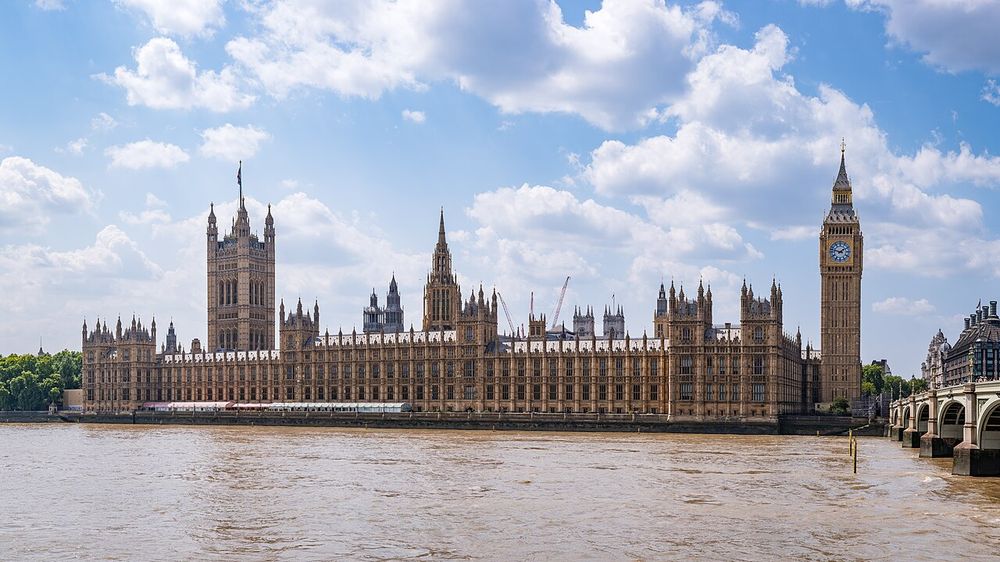
The palace across the ThamesChristian David, CC BY-SA 4.0
Barry was a classical architect, and his plan is as regular as a Greek temple: a long straight front with the two chambers in line on one axis. Pugin, who loved the Middle Ages, covered it in Gothic detail and then complained that it was all Greek underneath.
The stone is a soft sand-coloured limestone from Yorkshire. London's coal smoke began to eat it before the building was finished, and repairs have gone on ever since.
Earth has not anything to show more fair:
Dull would he be of soul who could pass by
A sight so touching in its majesty
William Wordsworth, Composed upon Westminster Bridge, September 3, 1802 (written of the view from the old bridge, before the fire)
2. The clock tower
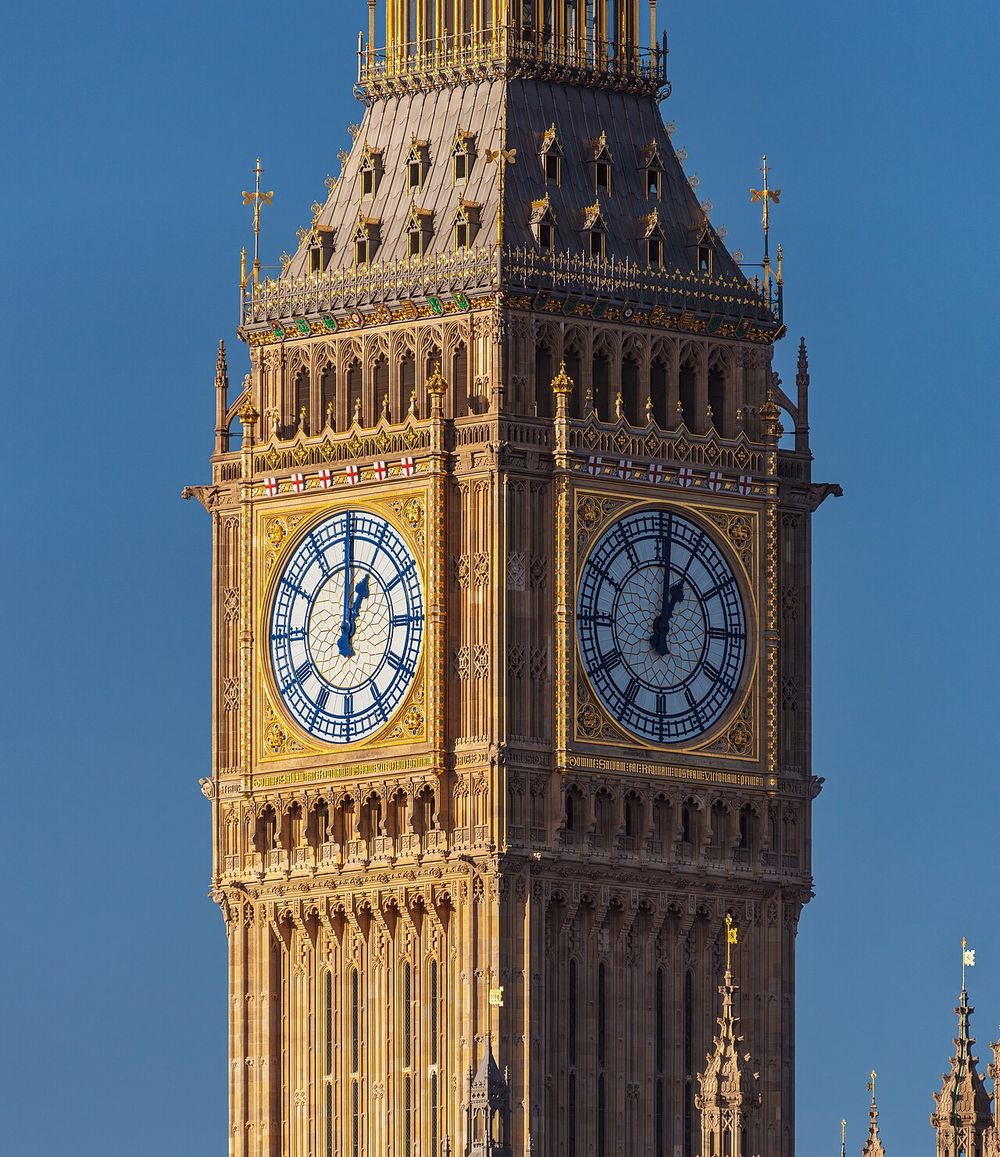
The clock tower after its repairJulian Herzog (Website), CC BY 4.0
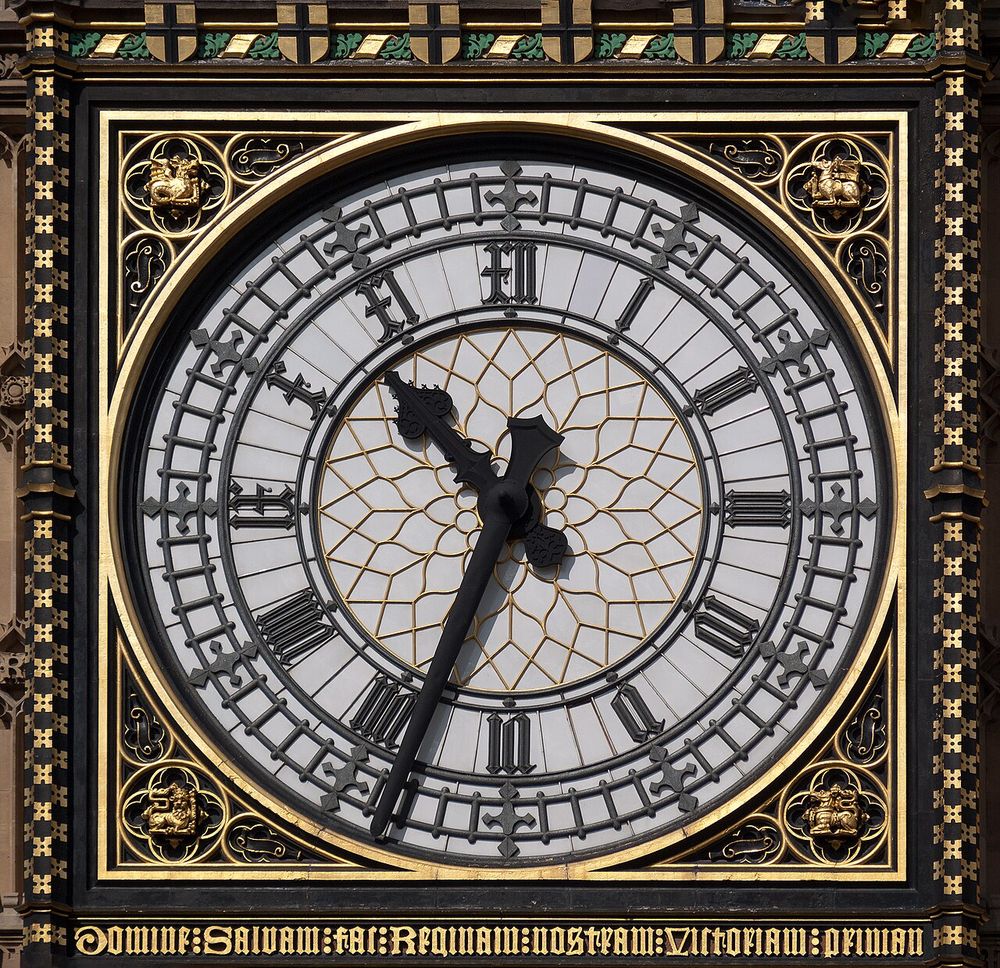
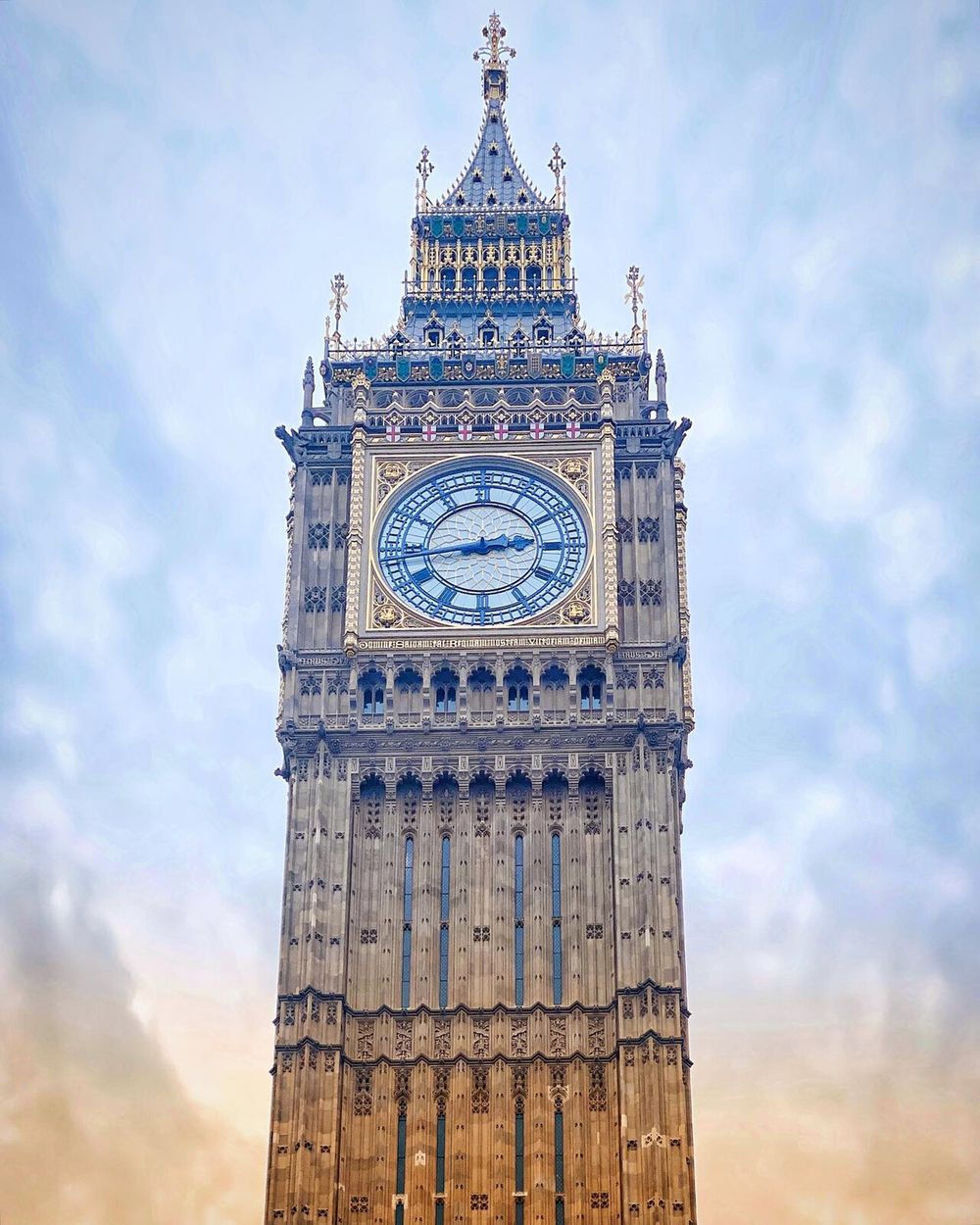
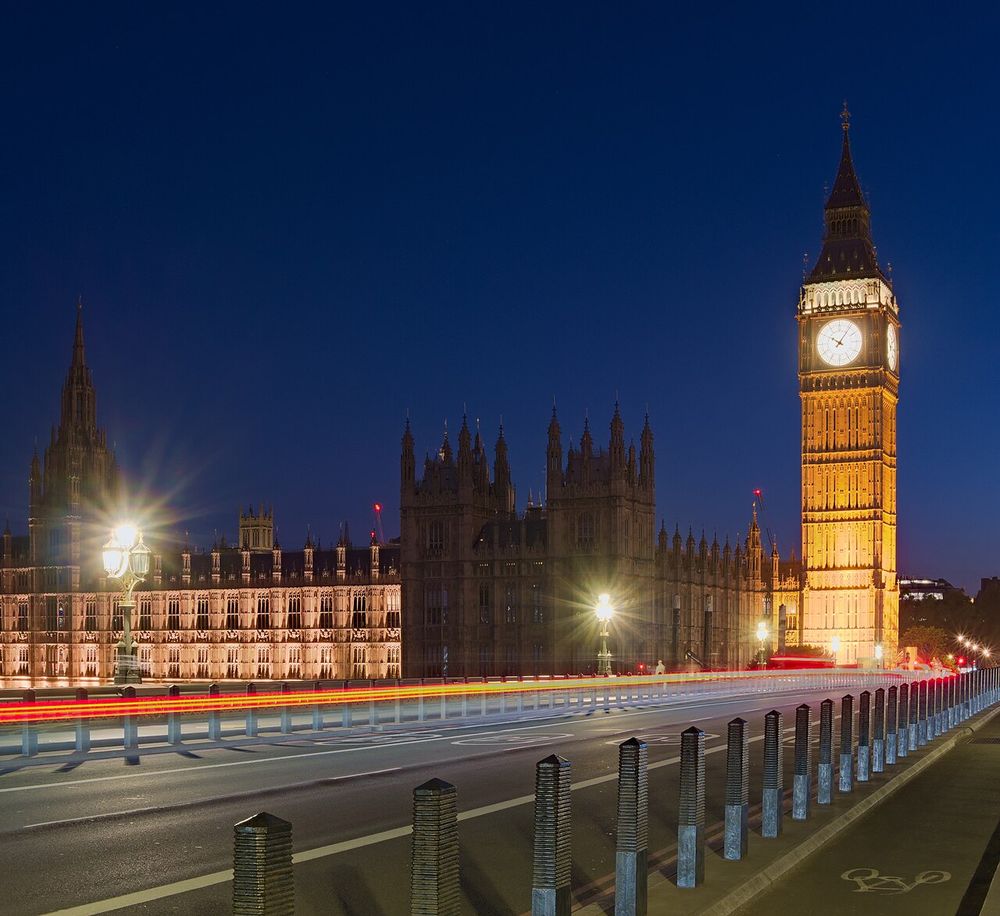
The tower is ninety-six metres high. Each dial is nearly seven metres across and is made of more than three hundred pieces of milk-white glass. The minute hands are four metres long.
Under each dial is a line of gilded Latin. It asks God to keep safe "our Queen Victoria the First".
After a repair that lasted from 2017 to 2022 the hands and frames are again the dark blue Pugin chose. Since the 1930s they had been painted black to hide the soot.
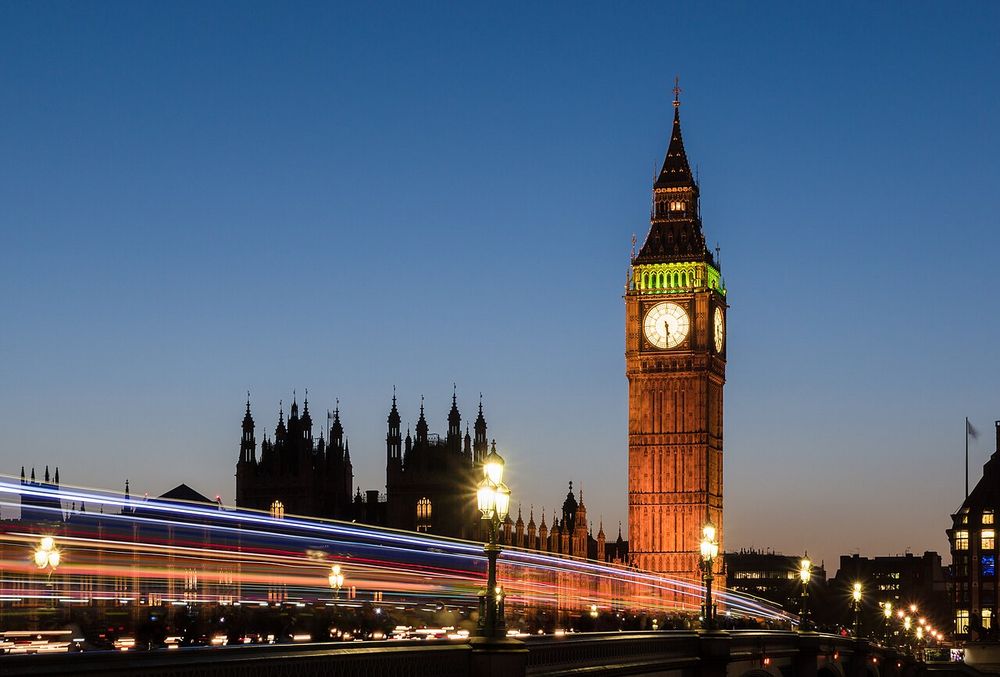
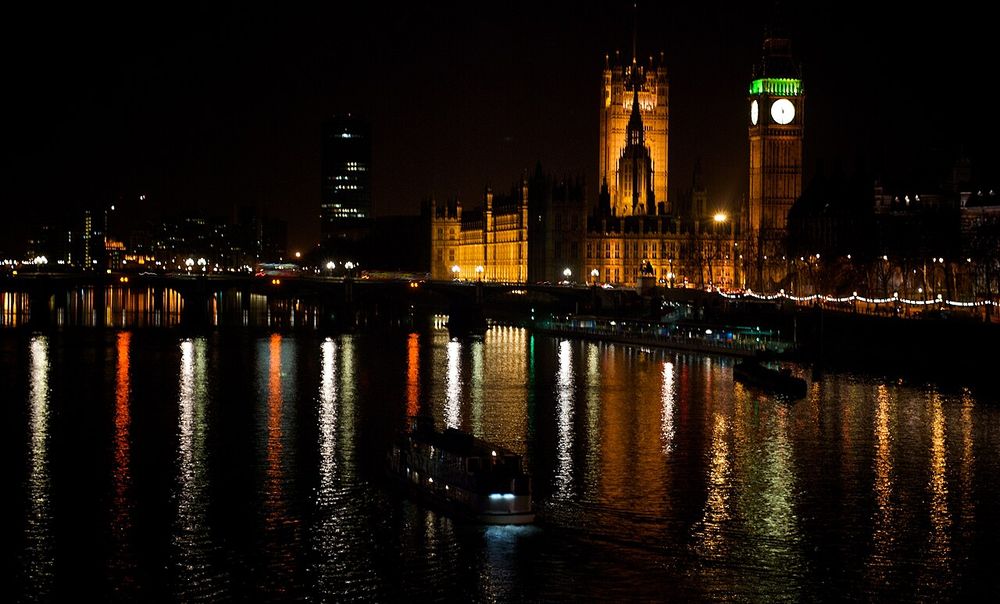
At night, look for a lamp above the clock. It is lit when either house is still sitting.
3. The bell and the clock
One dial close upErmell, CC BY-SA 4.0
The bell weighs nearly fourteen tonnes. The first one cast for the tower cracked on test and was broken up. The second was pulled through the streets by sixteen horses and hauled up the inside of the tower on its side, a job of many hours.
The clock was designed by a lawyer who quarrelled with nearly everyone he worked with. It is kept right with old pennies. A coin added to the top of the pendulum makes the clock gain two-fifths of a second in a day.
The tune before the hour comes from Cambridge. The hour is counted from the first stroke of the great bell, not from the tune.
4. The great hall
Westminster HallTristan Surtel, CC BY-SA 4.0
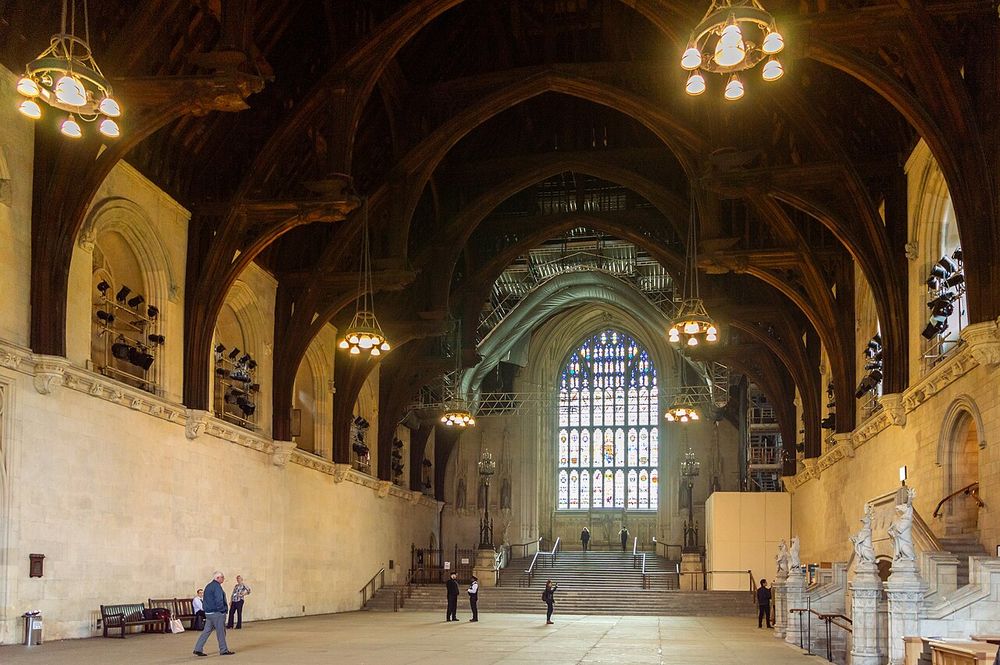
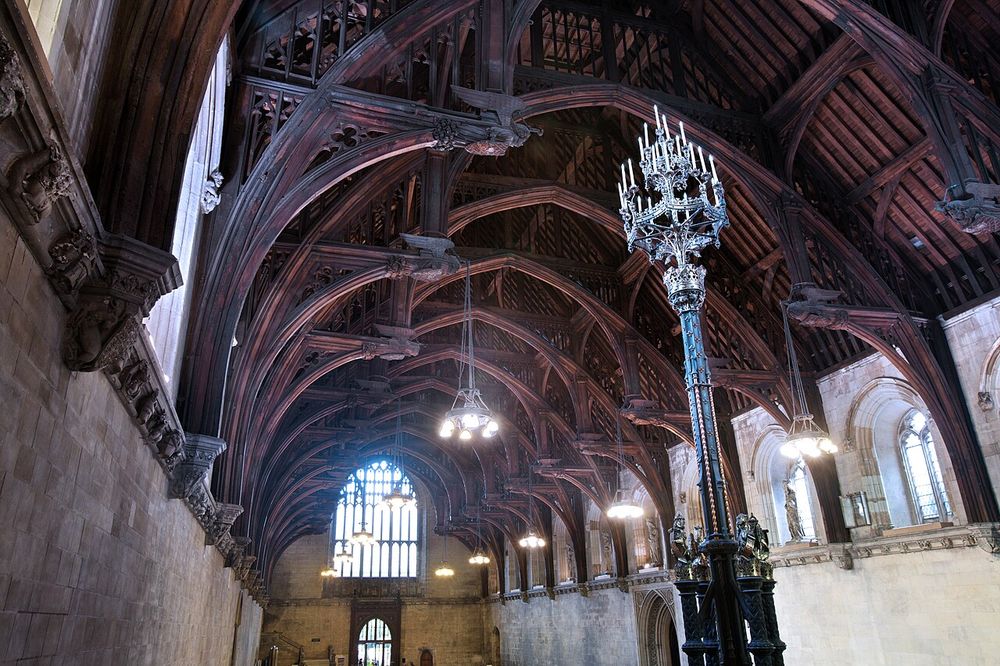
You enter through the oldest room. The walls were built in 1097 for William II, son of the Conqueror. In China this was the Northern Song (960–1127), the year the poet Su Shi was sent into exile on Hainan. The hall was the largest in Europe.
A carved angel at the end of a roof beamJon Worth, CC BY-SA 2.0
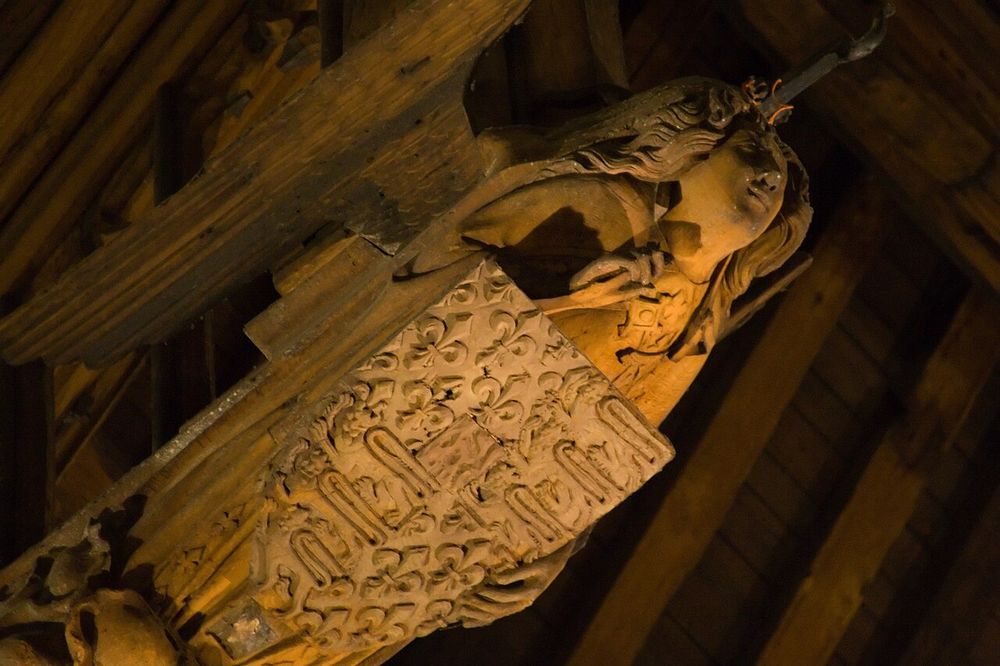
Look up. The oak roof was put on three hundred years later, in the 1390s, the last years of the first Ming emperor. It crosses twenty metres without a single post. Each great beam ends in a carved angel holding a shield.
For six centuries the chief law courts of England sat in the corners of this room, among bookstalls and sellers of toys. Brass plates in the floor mark where men stood trial for their lives.
5. The lobby
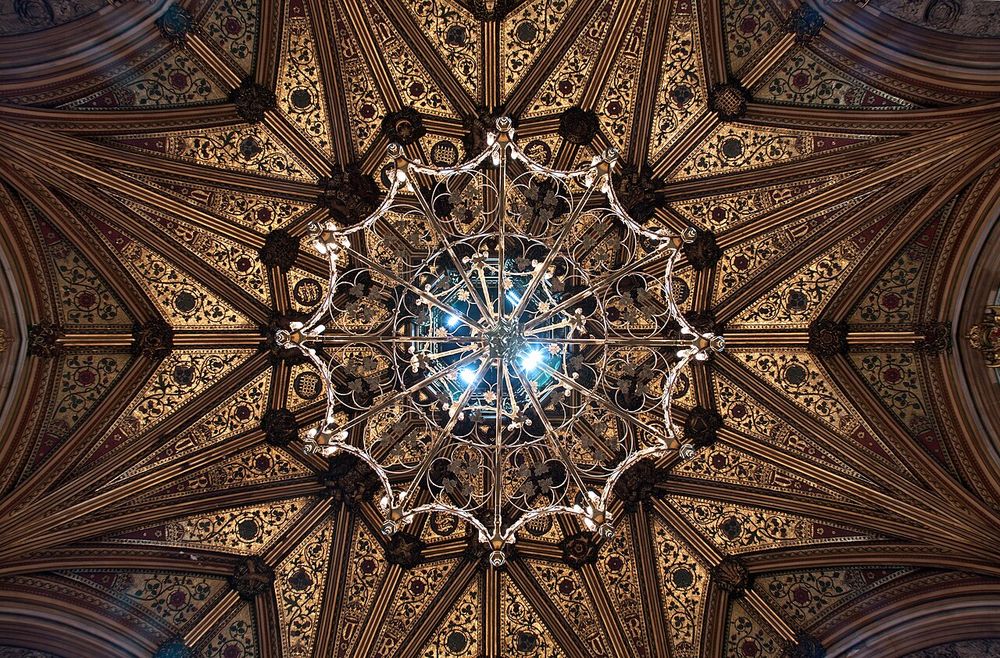
The vault of the Central LobbyJorge Royan, CC BY-SA 3.0
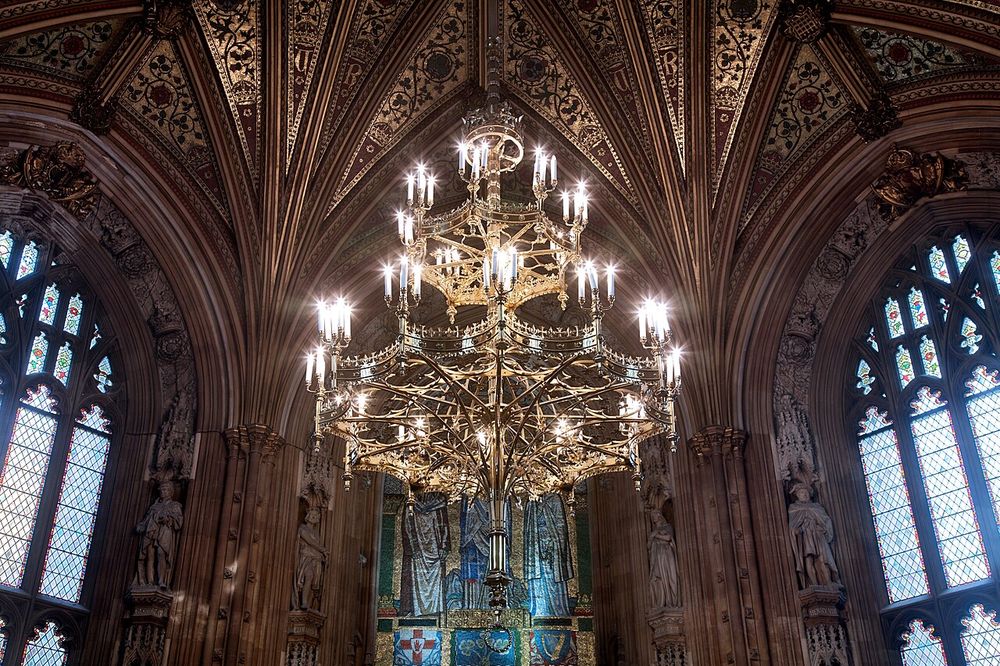
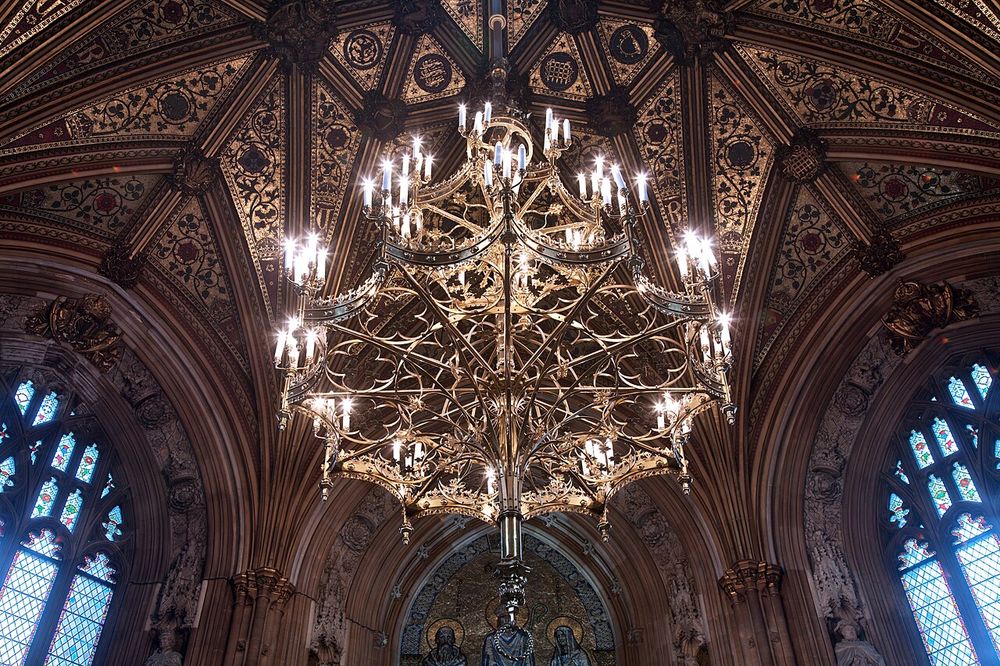
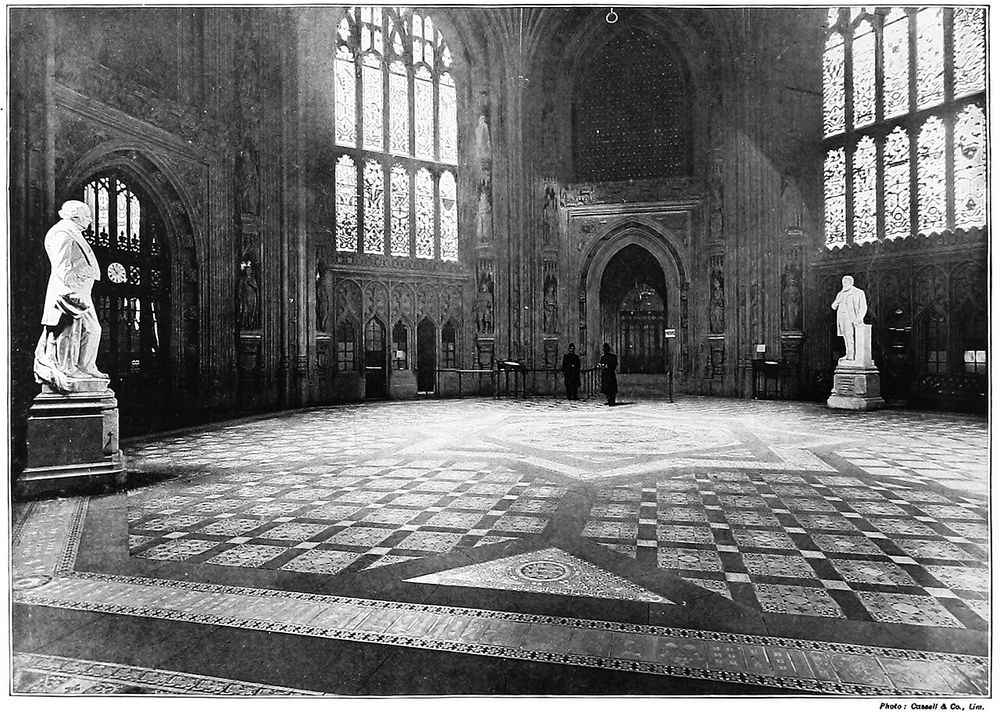
A flight of steps and a long hall lined with statues bring you to an eight-sided room under a high stone vault set with mosaic. Four doors lead out of it. One goes to the Commons, one to the Lords.
Any citizen may come here and send in a card asking to see the member for his district. The English word for pressing a politician, "to lobby", comes from rooms like this one.
Over the four doors are mosaics of the patron saints of England, Scotland, Wales and Ireland.
6. The Commons
The House of CommonsUK Parliament, CC BY 3.0
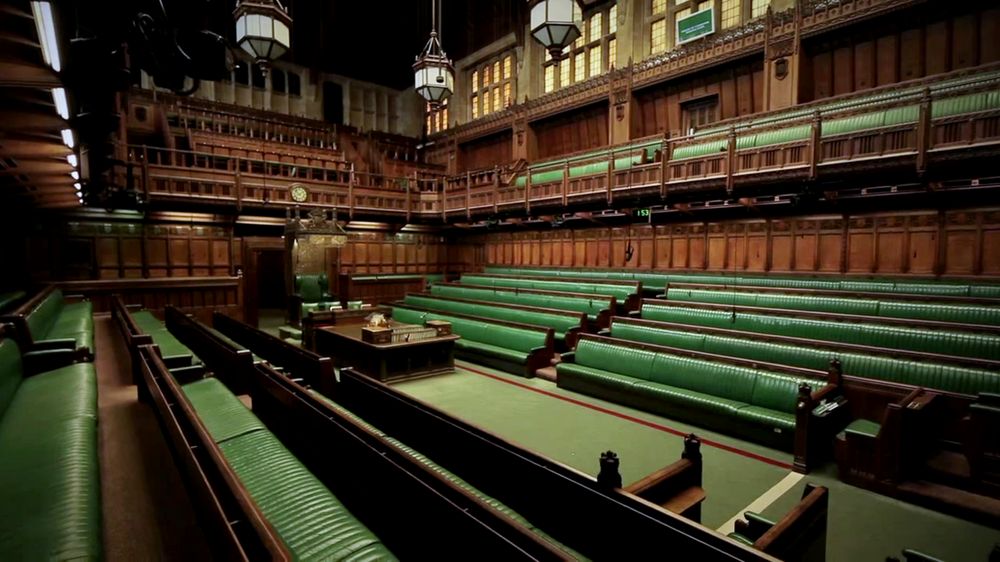
The room is plain, panelled in oak, with benches of green leather. The government sits on one side and the opposition faces it. There are seats for about two-thirds of the members.
Two red lines run along the carpet in front of the benches. A member speaking must not step over the line.
The stone arch at the entrance is chipped and blackened. It is from the chamber bombed in 1941, and was left as it was found.
7. The Lords
The House of Lords and the throneUK Parliament, CC BY 3.0
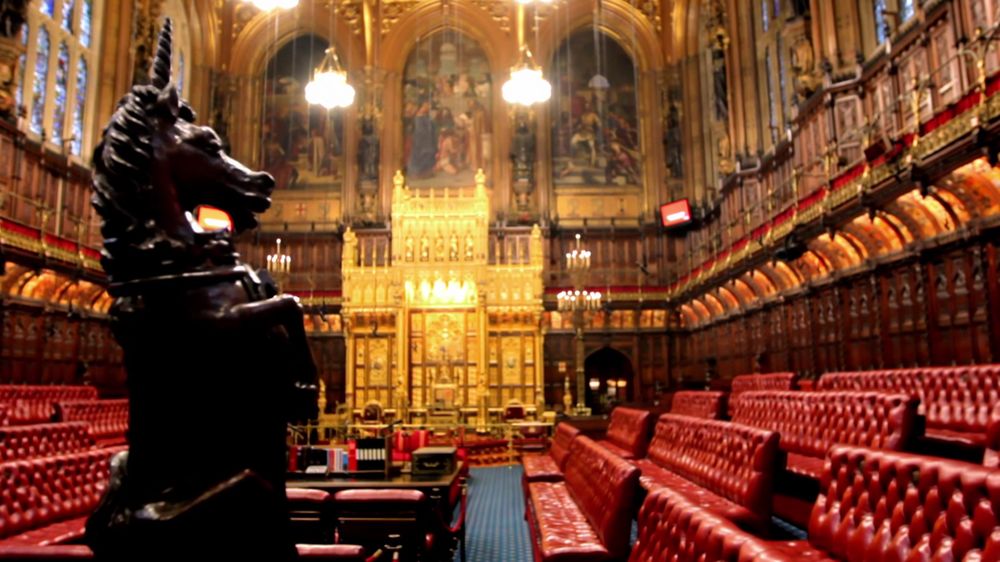
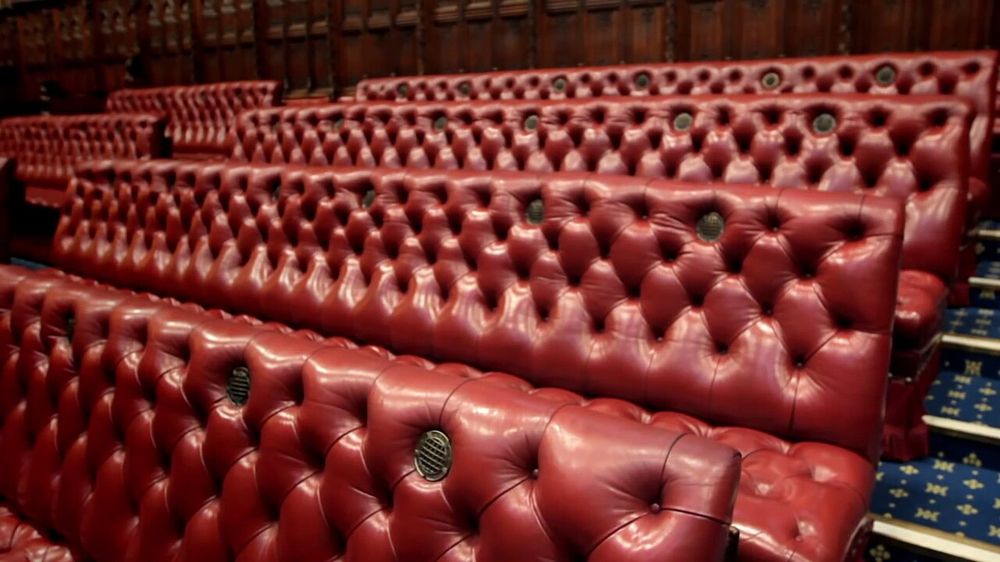
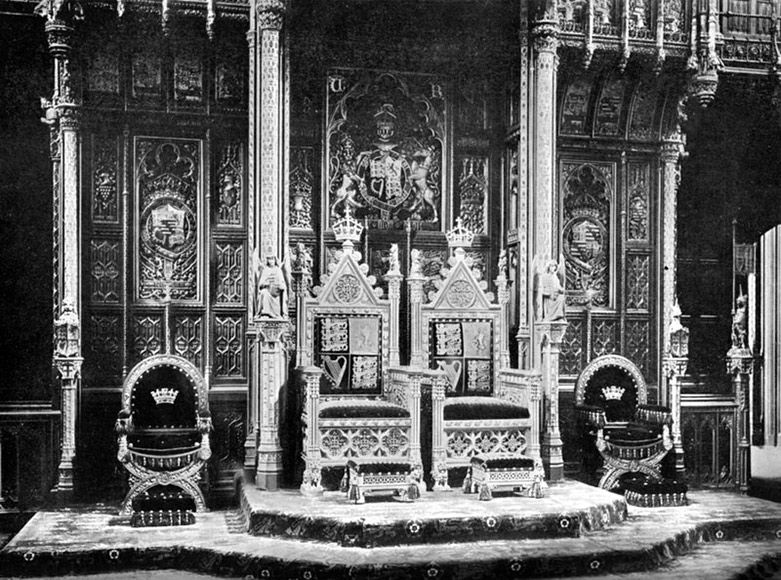
Here Pugin was allowed to do as he liked. The benches are red, the ceiling is gold, and at the end is a throne under a canopy of carved and gilded wood that took him and his craftsmen years.
In most years the King sits here once and reads out what his government means to do. An officer is sent to fetch the Commons. Their door is shut in his face, and he must knock three times with a black rod. The mark of the rod is worn into the wood.
8. The far tower and the old yard
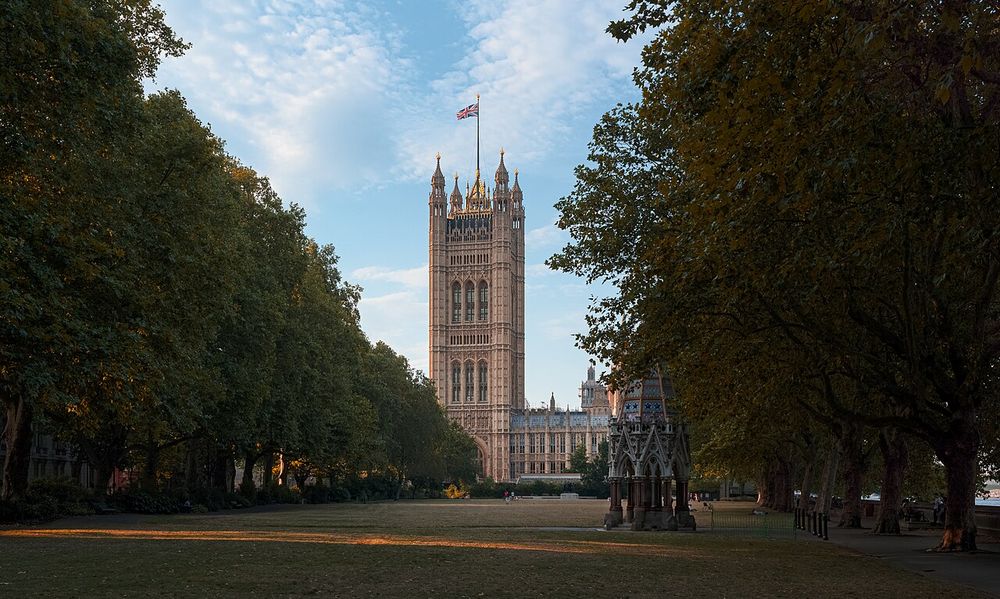
The Victoria Tower from its gardenJulian Herzog (Website), CC BY 4.0
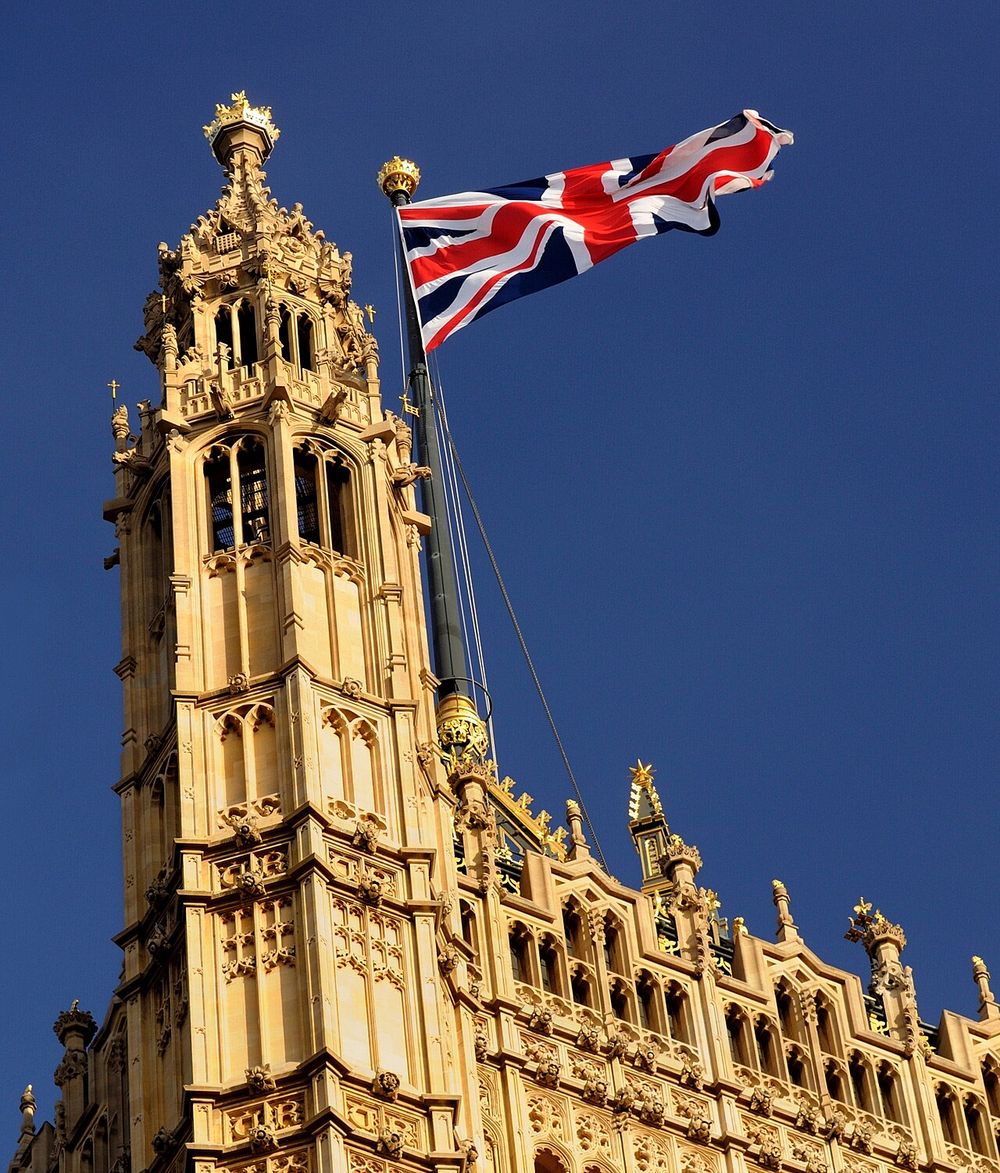
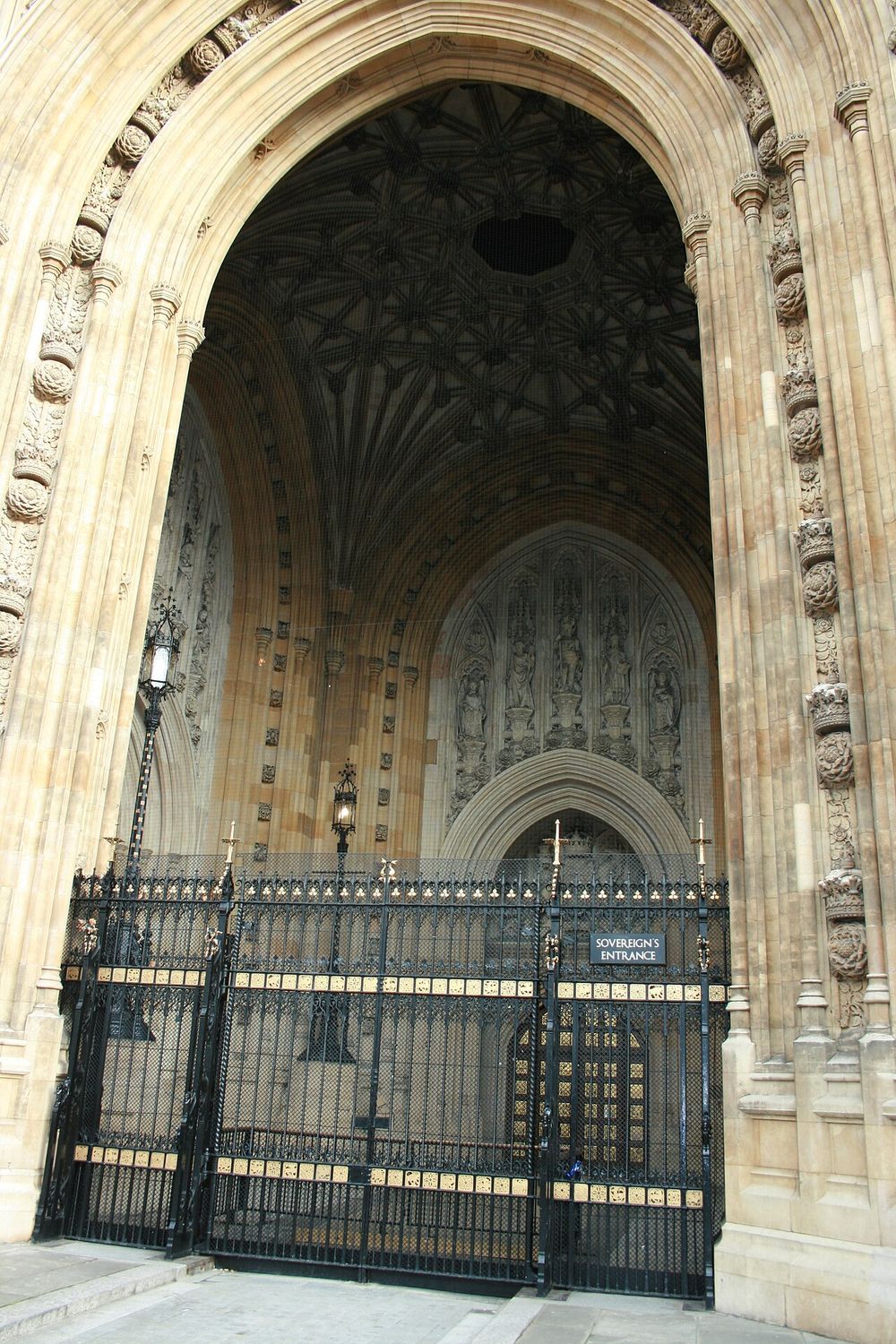
The square tower at the south end is the taller of the two by two metres. It was built as a fireproof store for the records of Parliament, after the fire had destroyed most of them. The arch at its foot is the King's door.
The Jewel Tower, 1365Philip Pankhurst, CC BY-SA 2.0
Across the road is a small stone tower with a dry moat. It was built in 1365 to hold the king's jewels and silver, and it is one of the few pieces of the old palace that the fire did not reach.
Meanwhile in the world
Year
Here
Elsewhere
1097
The great hall is built
Northern Song China; the First Crusade is on its way to Jerusalem
1390s
The oak roof is put on the hall
The last years of the Hongwu emperor, founder of the Ming
1605
A plot to blow up king and Parliament is found out
The Wanli reign in China; the Italian priest Matteo Ricci is living in Beijing
1649
The king is tried in the hall and beheaded
Five years after the fall of the Ming (1368–1644); the Shunzhi emperor is still a child
1834
The palace burns down
The Daoguang reign; a British envoy is turned away at Guangzhou
1859
The clock starts and the bell cracks
The Xianfeng reign; British ships are beaten off at the Dagu forts
1941
The Commons chamber is destroyed by bombs
The Second World War; the fourth year of China's war with Japan
2022
The tower comes out of its scaffolding; a queen lies in state in the hall
Elizabeth II had reigned for seventy years
Then and now
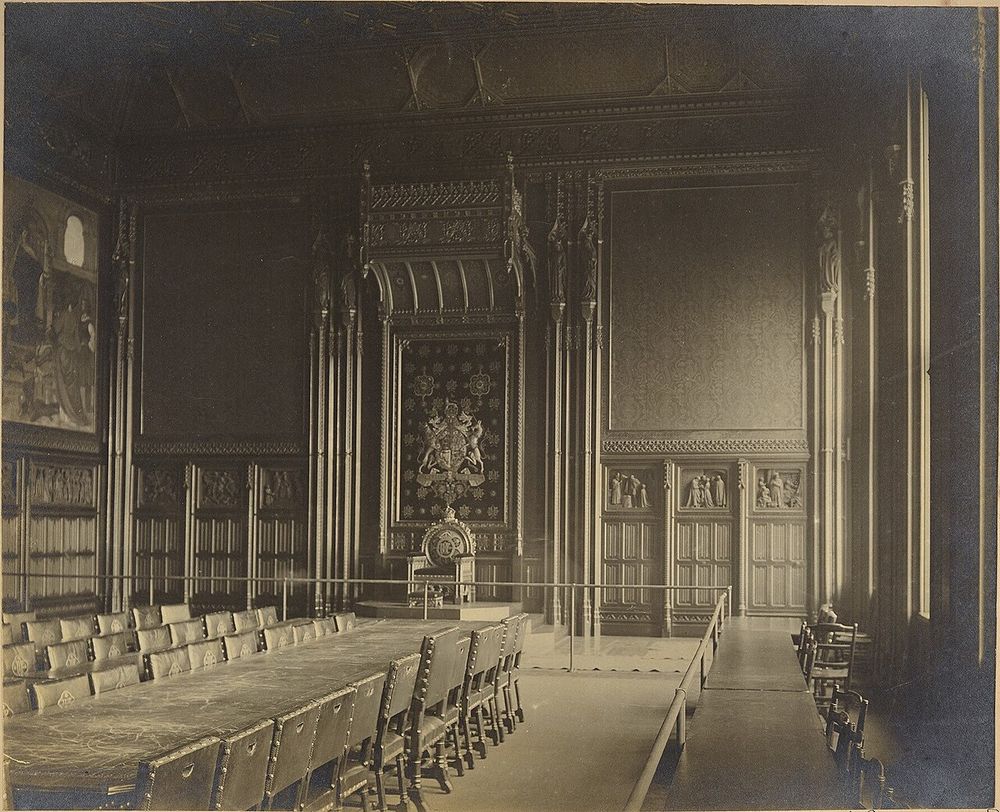
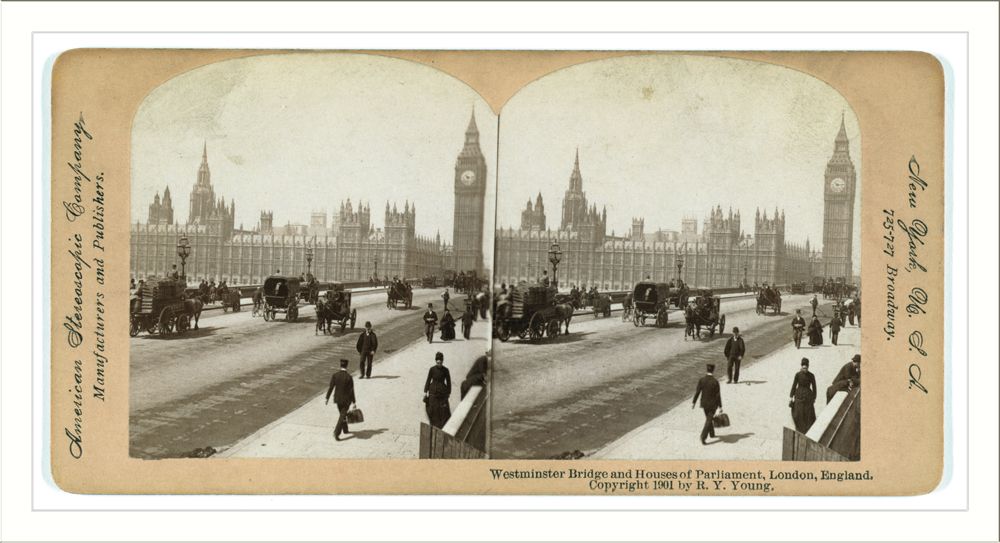
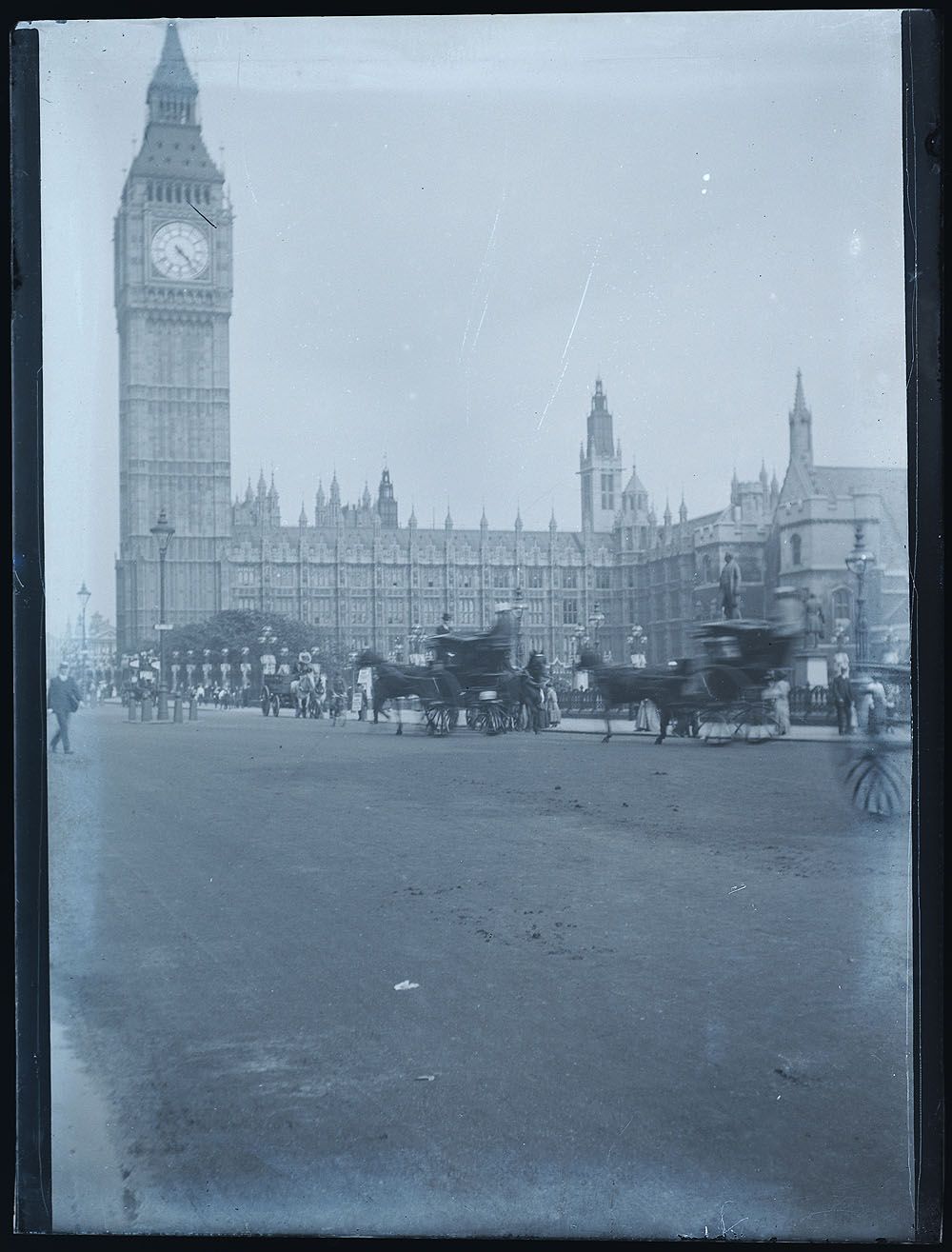
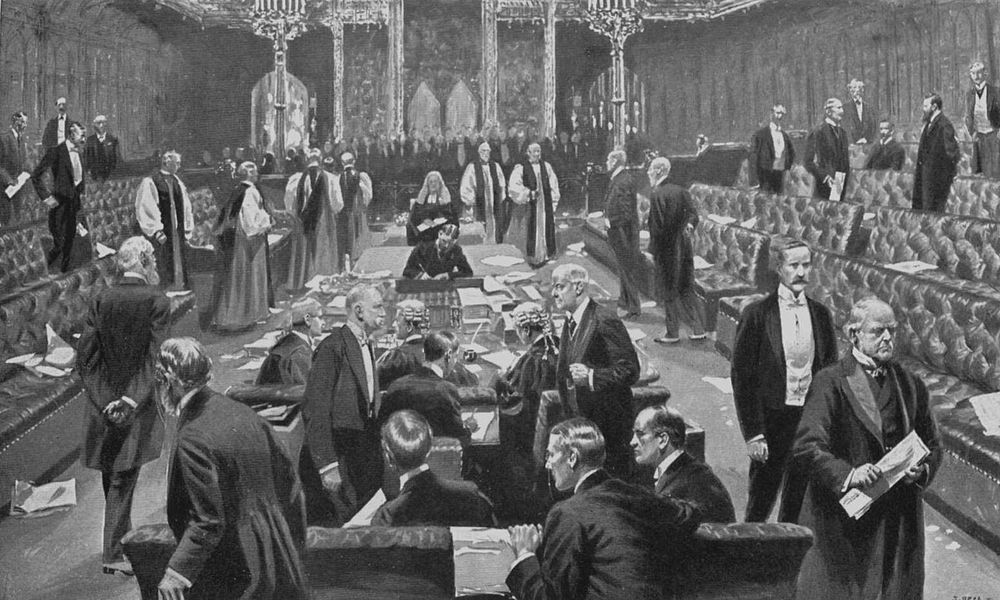
The whole river front from the south bankDomob, CC BY-SA 4.0, Wikimedia CommonsThe clock tower and Westminster Bridge in autumnJulian Herzog (Website), CC BY 4.0, Wikimedia CommonsThe palace across the ThamesChristian David, CC BY-SA 4.0, Wikimedia CommonsThe palace, the abbey and the river from the airAlan Hughes, CC BY-SA 2.0, Wikimedia CommonsWestminster from an airshipMatt Brown, CC BY 4.0, Wikimedia CommonsThe clock tower after its repairJulian Herzog (Website), CC BY 4.0, Wikimedia CommonsTwo of the four dialsNate Loper, CC BY 2.0, Wikimedia CommonsThe tower with the towers of east London behindColin, CC BY-SA 4.0, Wikimedia CommonsOne dial close upErmell, CC BY-SA 4.0, Wikimedia CommonsThe tower at duskColin, CC BY-SA 4.0, Wikimedia CommonsThe palace and the bridge at sunsetDeror_avi, CC BY-SA 3.0, Wikimedia CommonsWestminster Bridge at five to sixAngelina Archer from London, UK, CC BY 2.0, Wikimedia CommonsThe palace at night across the riverCristiano Betta, CC BY 2.0, Wikimedia CommonsThe river front lit at nightDomob, CC BY-SA 4.0, Wikimedia CommonsThe tower at night from the bridgeDomob, CC BY-SA 4.0, Wikimedia CommonsThe clock tower from the yard below itPrioryman, CC BY-SA 4.0, Wikimedia CommonsThe yard and the side of the great hallTristan Surtel, CC BY-SA 4.0, Wikimedia CommonsWestminster HallTristan Surtel, CC BY-SA 4.0, Wikimedia CommonsThe oak roof of the hall, 1390smutovkin, CC BY 2.0, Wikimedia CommonsA carved angel at the end of a roof beamJon Worth, CC BY-SA 2.0, Wikimedia CommonsThe roof of the hall from belowJorge Royan, CC BY-SA 3.0, Wikimedia CommonsThe vault of the Central LobbyJorge Royan, CC BY-SA 3.0, Wikimedia CommonsThe chandelier of the Central LobbyJorge Royan, CC BY-SA 3.0, Wikimedia CommonsThe Central Lobby, looking straight upJorge Royan, CC BY-SA 3.0, Wikimedia CommonsThe House of CommonsUK Parliament, CC BY 3.0, Wikimedia CommonsThe House of Lords and the throneUK Parliament, CC BY 3.0, Wikimedia CommonsThe red benches of the LordsUK Parliament, CC BY 3.0, Wikimedia CommonsThe Victoria Tower from its gardenJulian Herzog (Website), CC BY 4.0, Wikimedia CommonsThe top of the Victoria TowerВвласенко, CC BY-SA 3.0, Wikimedia CommonsThe King's entrance under the towerDamien Everett from Southampton, UK, CC BY 2.0, Wikimedia CommonsRichard the Lionheart in the old yardElliott Brown, CC BY 2.0, Wikimedia CommonsThe Jewel Tower, 1365Philip Pankhurst, CC BY-SA 2.0, Wikimedia CommonsThe old House of Lords before the fireWilliam Heath, Public domain, Wikimedia CommonsThe old House of Commons in 1808Thomas Rowlandson (1756–1827) and Augustus Charles Pugin (1762–1832) (after) Joh, Public domain, Wikimedia CommonsThe fire of 16 October 1834, in a painting of the timeUnknown authorUnknown author, Public domain, Wikimedia CommonsThe King's Robing Room in 1897John Benjamin Stone, Public domain, Wikimedia CommonsThe Central Lobby in 1899Various photographers, Public domain, Wikimedia CommonsThe bridge and the palace on a stereo card, about 1900American Stereoscopic Company, Public domain, Wikimedia CommonsThe clock tower from Whitehall, about 1900whatsthatpicture from Hanwell, London, UK, CC BY 2.0, Wikimedia CommonsMonet's Houses of Parliament, painted 1900–1903Claude Monet, CC0, Wikimedia CommonsThe thrones in the House of Lords, about 1902John Benjamin Stone (1838 – 1914), Public domain, Wikimedia CommonsThe Lords vote to limit their own power, 1911Samuel Begg (1854–1936), Public domain, Wikimedia CommonsThe Commons chamber that was bombed in 1941Parliament of the United Kingdom of Great Britain and Northern Ireland, Public domain, Wikimedia Commons
Video
Films from official channels, played from YouTube. Nothing is loaded until you press play.
Westminster Palace and Westminster AbbeyUNESCO · made with NHK; 3 min · checked 2026-11-12
Local legends
These are stories people tell about this place. They are legends, not history, and each one says where it comes from.
LegendThe name of the bell
The bell is named after Sir Benjamin Hall, a very large man who was in charge of public works when it was cast. During a long debate on what to call it, a member shouted "Call it Big Ben!" and the house laughed. Others say it was named after Ben Caunt, a heavyweight boxer of the day.
Source: No record of such a debate exists in the official reports of Parliament
LegendTwo swords apart
The red lines on the floor of the Commons are two sword-lengths and a foot apart, so that members on opposite sides could not reach each other with a blade.
Source: Told to every visitor; there is no record that members were ever allowed to bring swords into the chamber
LegendNo dying in the palace
It is against the law to die in the Houses of Parliament, because anyone who dies in a royal palace must be given a state funeral.
Source: A favourite of British newspapers; lawyers who looked for such a law found none
LegendThe king who found it too small
When William II first walked into his new hall, the largest in Europe, his courtiers praised its size. He answered that it was not half big enough, and was only a bedroom to the palace he meant to build.
Source: Henry of Huntingdon, History of the English, about 1130
Later, people who live here will be able to add the stories they grew up with, and say which of these they have heard.
Not certain, and where accounts conflict
Who designed it, Barry or Pugin?
Barry won the competition and ran the work. Pugin made thousands of drawings for him and was paid as an assistant. After both were dead their sons fought it out in print. Most historians now give the plan to Barry and nearly all the ornament, and the clock tower, to Pugin.
Is the building safe?
Parliament's own reports say that the pipes, wiring and stonework are in poor condition and that small fires are caught every year. A full repair has been discussed for many years. We did not find a start date.
Can you hear Big Ben every hour?
Since the repair ended in 2022 it has struck the hours again as a rule. It is stopped from time to time for maintenance, and we did not check the days.
Visiting
Tickets and hours
Tours run on Saturdays all year, and from Monday to Saturday when Parliament is on holiday.
The audio tour, in ten languages, costs 31 pounds for an adult booked ahead, with one child free; 24 pounds for ages 16 to 24.
The guided tour, in English only, lasts ninety minutes and costs 40 pounds; 30 pounds for ages 16 to 24; 20 pounds for ages 5 to 15.
The clock tower tour costs 55 pounds, or 35 pounds for ages 11 to 17. Children under 11 are not allowed.
These are the prices on the official list for tickets bought from 1 September 2026.
Last checked 2026-11-12. The UK Parliament's own visitor pages (parliament.uk), read in November 2026 for tours, prices and rules.
Booking from abroad
Official page in English The UK Parliament sells its own tours in English on its site, and takes foreign cards. Start from the official visitor page: parliament.uk, tours. Prices are on the official price list.
Ticket window on site The official price list says most tours can also be bought at the ticket office in Portcullis House, on Victoria Embankment, across the road from the clock tower. On the day an adult ticket costs 3 pounds more.
Note Tickets for the clock tower are released on the second Wednesday of each month at 10:00 London time, for visits three months later, and sell out quickly: parliament.uk, Big Ben tour. Watching a debate is free, and the official site says visitors from overseas are welcome; seats in the galleries are limited.
Checked 2026-11-12
Where to start
Westminster station on the Underground comes up at the foot of the clock tower.
For the picture, cross Westminster Bridge to the far bank and walk a little way upstream.
Be on the bridge at the hour to hear the bell. Noon gives you twelve strokes.
Visitors go in at the entrance in the middle of the side that faces the abbey.
Before you go
Everyone passes a security check like an airport's. Allow extra time for it.
The clock tower has 334 steps and no lift for visitors. It is loud at the top, and ear protection is handed out.
Photographs are allowed in the great hall and the hall of statues, and nowhere else inside.
Customs and manners
Do not sit on the green or the red benches. Only members may.
In the public gallery, do not speak, clap or hold up anything. You will be taken out.
The pavements round the square are crowded, and pickpockets work there. Keep your bag closed.
Opening hours are given in the local time of the place. Prices are in the local currency. The figure after ≈ is approximate, at exchange rates checked on 9 November 2026, in .
Look for these
How many clock faces has the tower? Can you see more than two at once?
What colour are the hands of the clock?
Find the gilded writing under the dial. What language is it?
Which of the two towers is taller?
In the great hall, look up. What is each angel holding?
In the floor of the hall, find a brass plate. Whose name is on it?
What colour are the benches in the Commons? And in the Lords?
At night, is the lamp above the clock lit?
I am here
Stand at the site, sign in, press the button, and collect its stamp. Your browser will ask to use your location. It is sent to us once to confirm that you are at the site; we keep how far you were from it, not the spot where you stood.
Your stamps are saved to your account, so they follow you to any device. Checking from a browser cannot rule out every false location; stricter checks arrive with the app.
Messages
Share your photos
Photos here show the place, not people. Each one is credited to the visitor who took it and appears after our team has looked at it. A photo with you in it belongs under “I am here”.