LegendThe rhinoceros
Lisbon tells that King Manuel set the rhinoceros to fight an elephant in front of the court in 1515, and the elephant fled.
Source: Told by the humanist Damião de Góis in the sixteenth century; historians doubt the details
Lisbon, Portugal
Torre de Belém · TOH-rruh duh beh-LAYNG
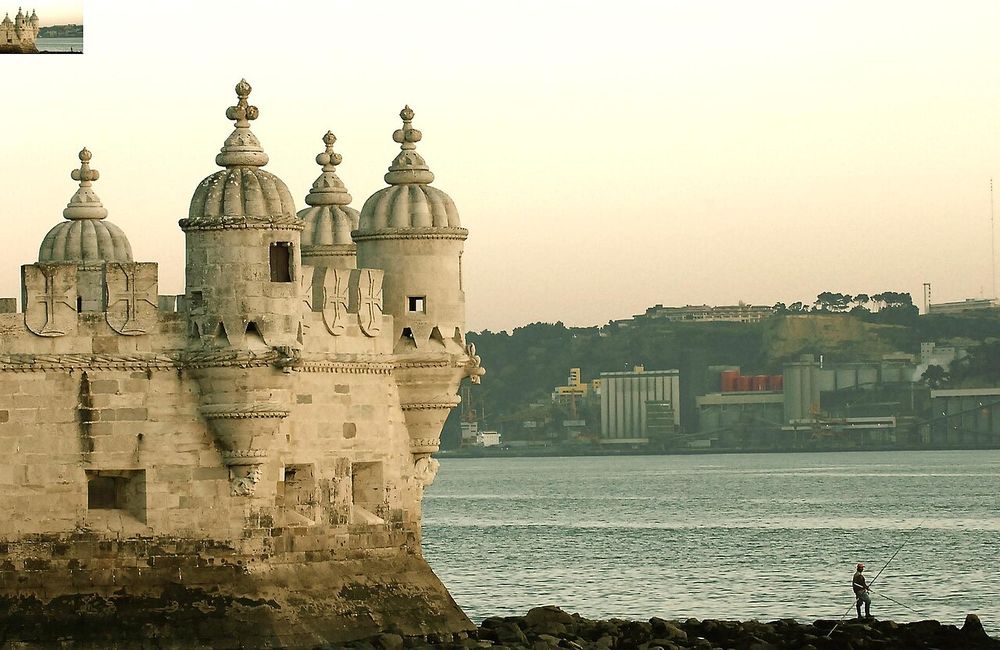
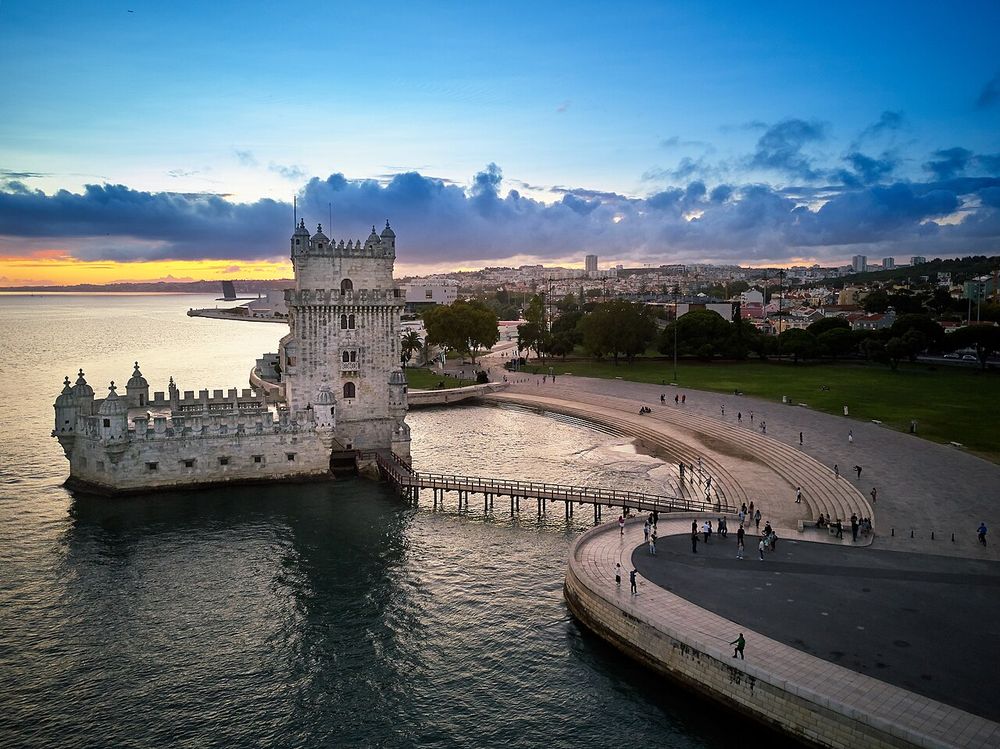
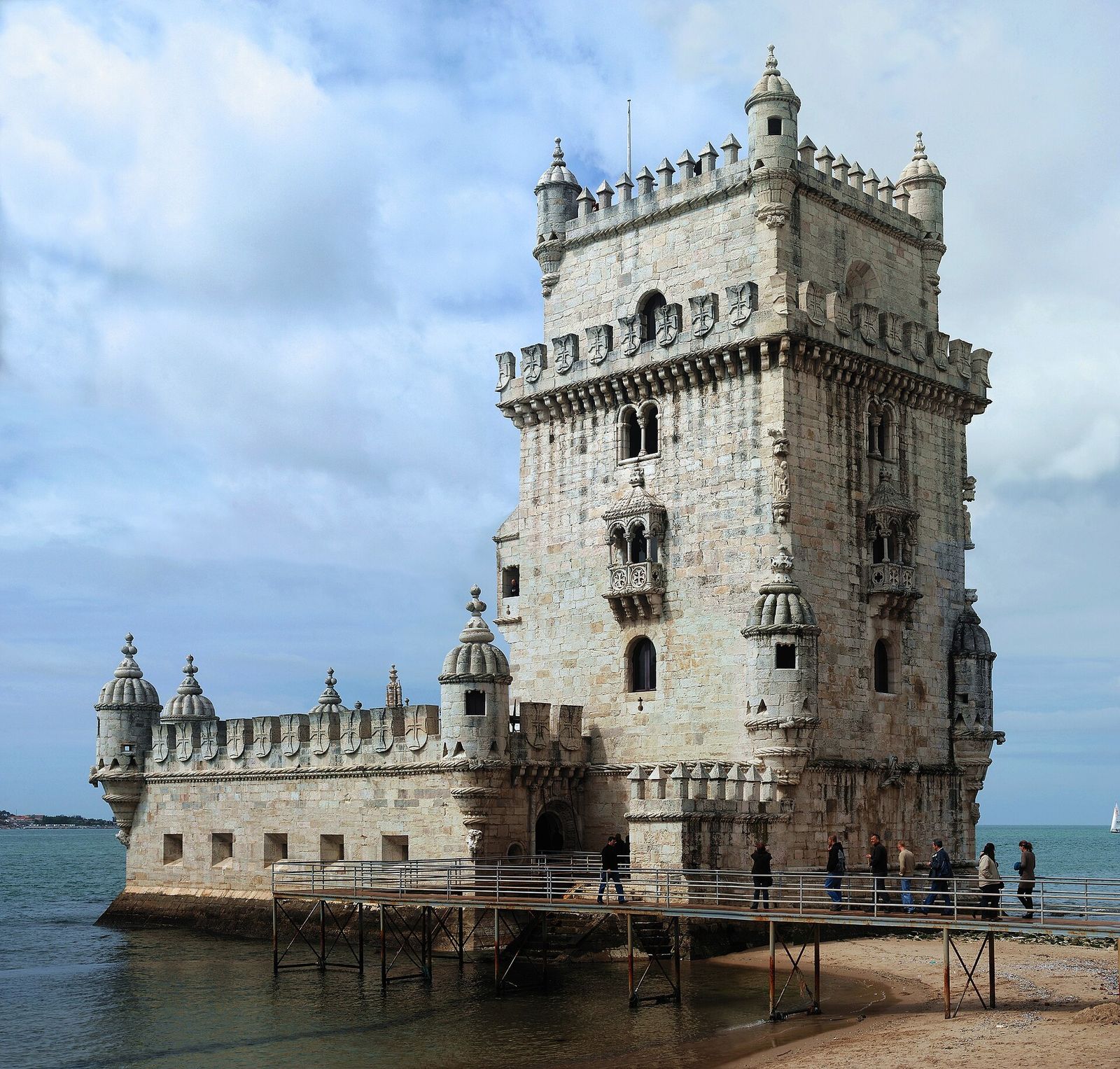
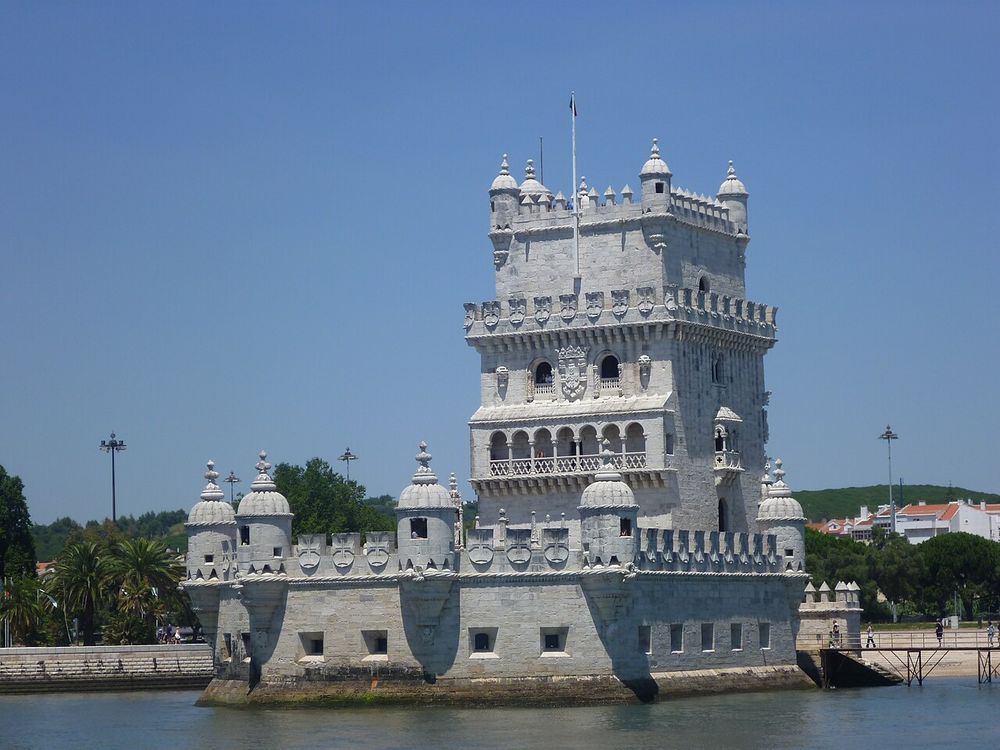
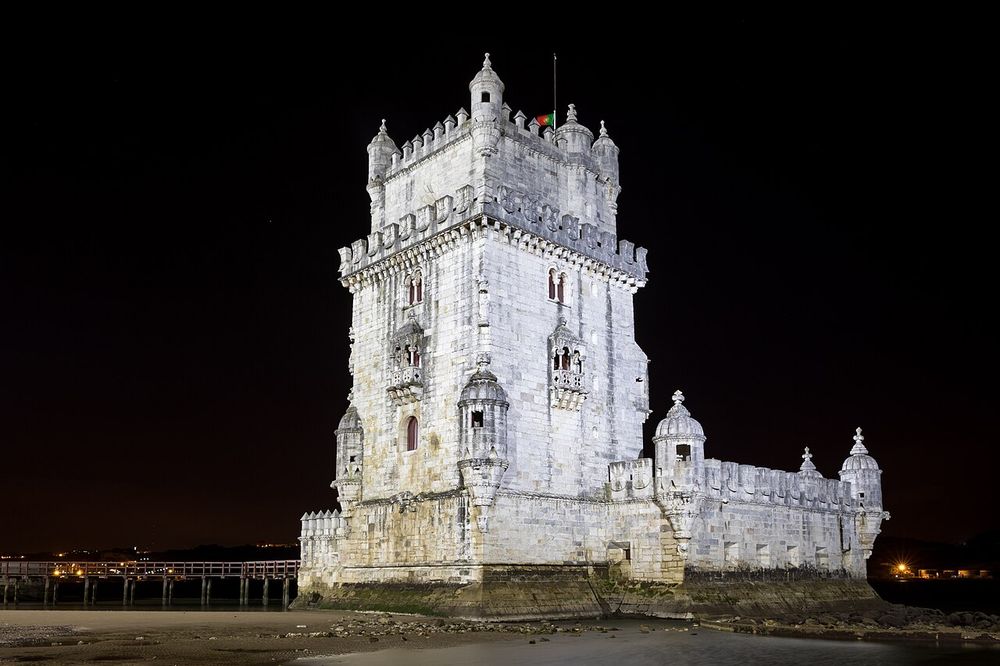
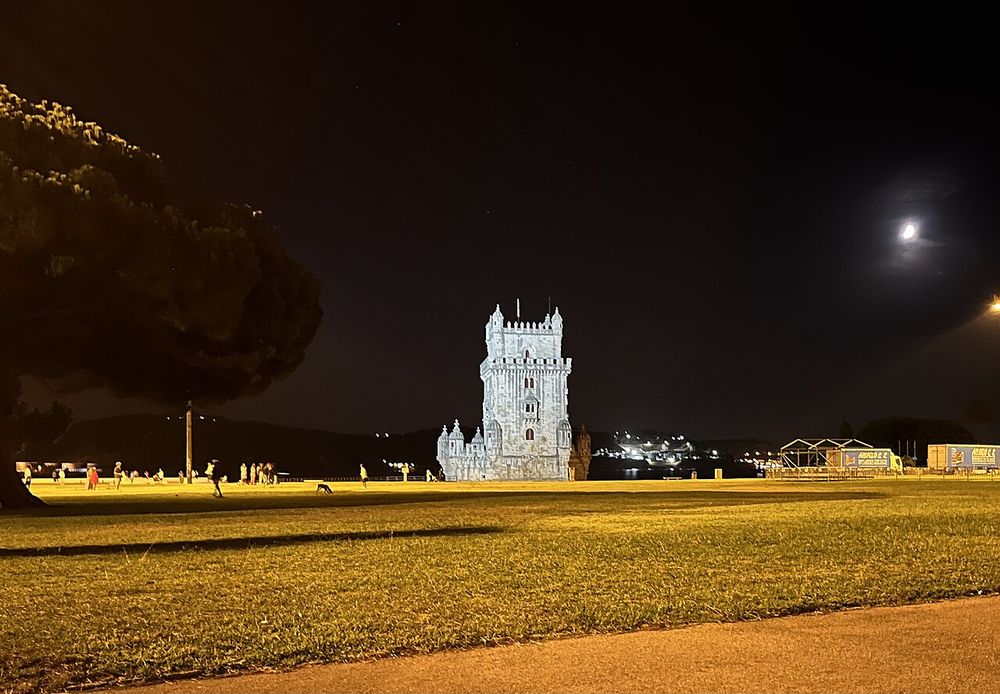
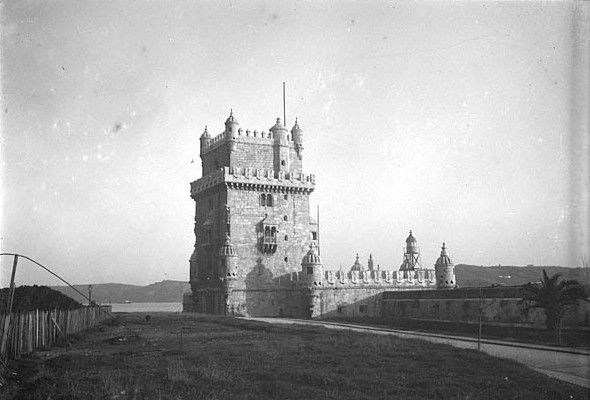
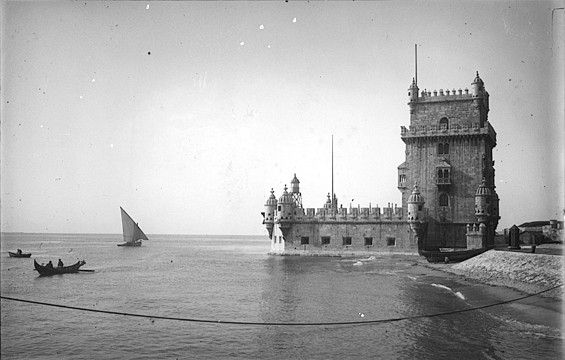
A small fortress of white stone that once stood in the river, guarding the way into Lisbon at the time when Portuguese ships were reaching India, Brazil and China. Carved on its side is the head of a rhinoceros, one of the first ever sculpted in Europe.
Photo: Deensel, CC BY 2.0, Wikimedia Commons
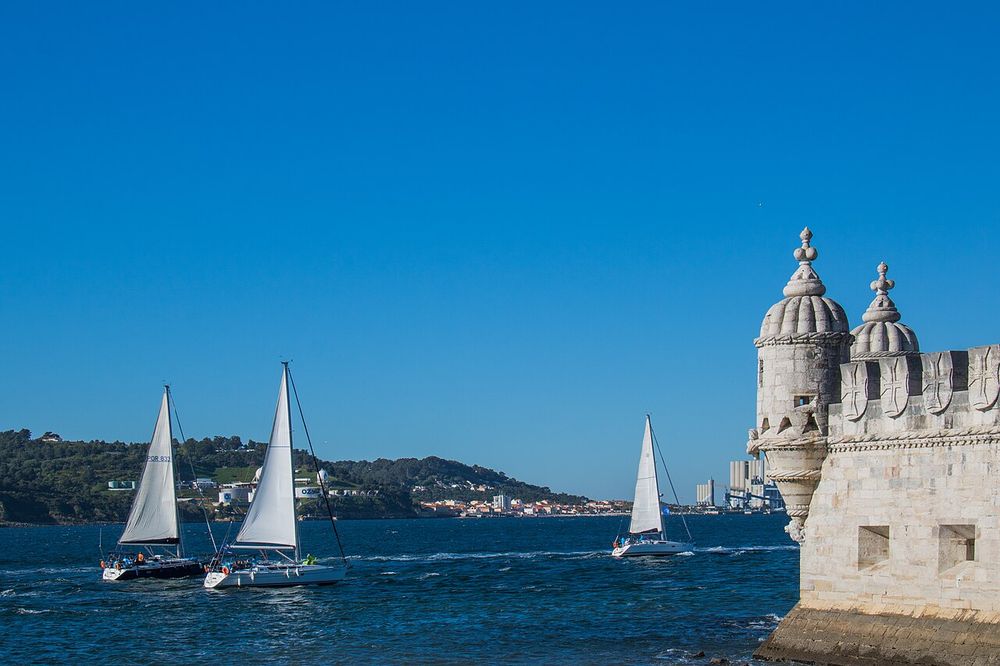
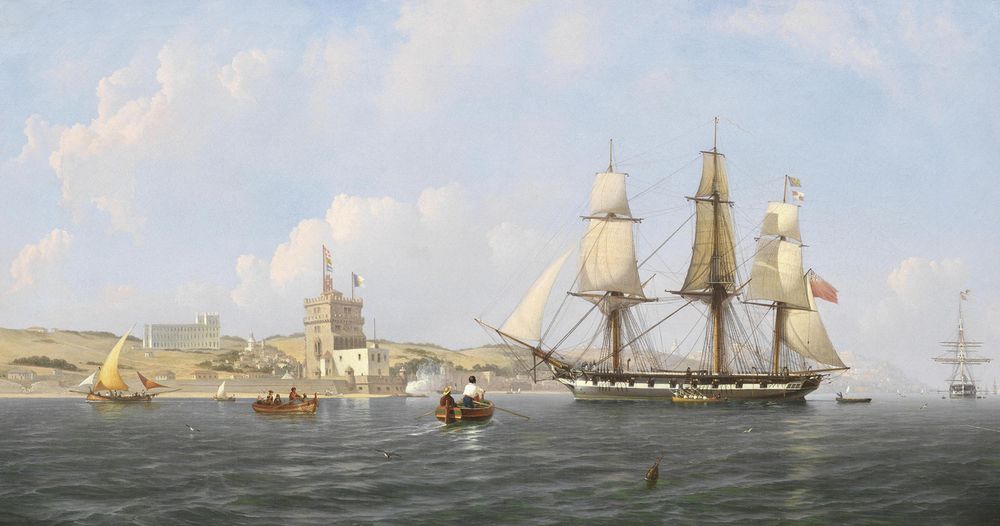
The tower was built between 1514 and 1519 for King Manuel I, on a rock in the Tagus where the river narrows before the sea. Cannon on its lower platform and on a fort across the water could cross their fire. No enemy ship could reach Lisbon without passing between them.
It was also a gateway. Ships setting out for India and Brazil left from this shore, and ships coming home with pepper, cinnamon and silk saw the tower first. In Portugal it became the picture of the age of discovery.
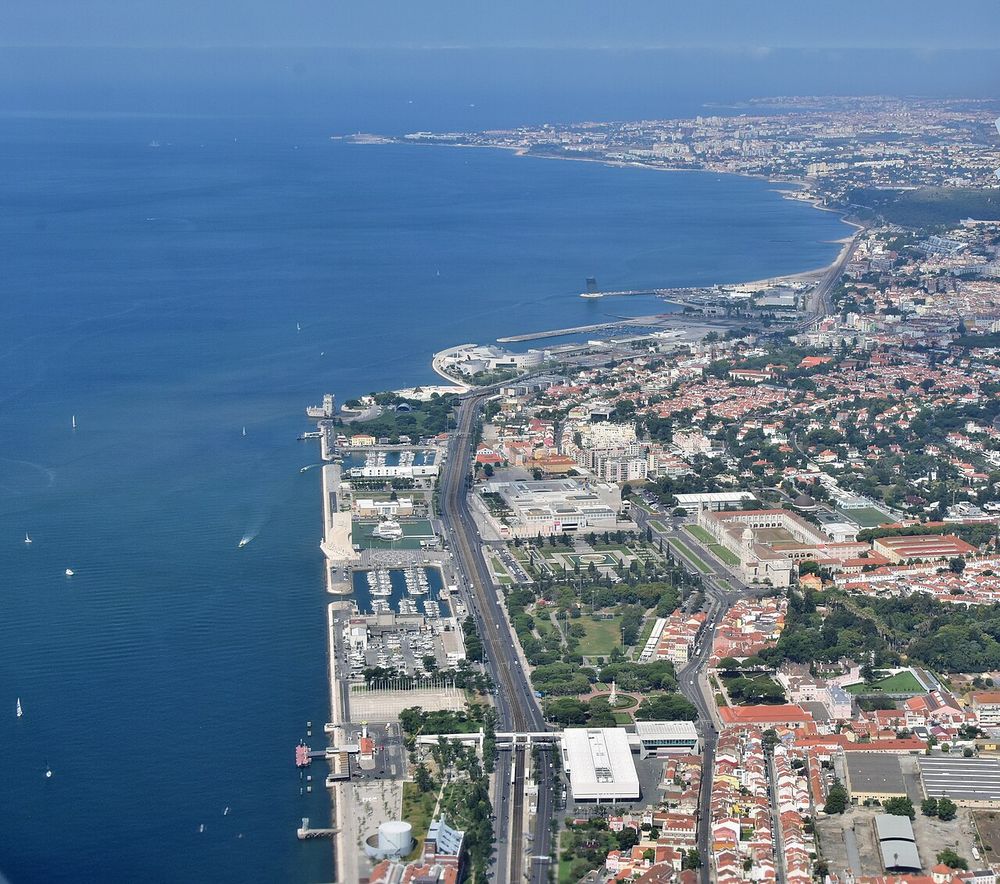
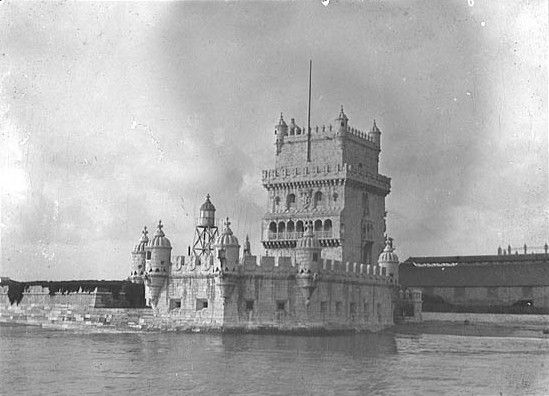
The river has moved. Earthquakes, silt and new land along the shore have left the tower almost touching the bank. At high tide the water still comes round it.
One ticket covers the bastion, the terrace and the four rooms of the tower, with a timed entry. The garden, the riverbank and the seaplane monument are free. The monastery across the road has its own ticket.
| Part | Ticket |
|---|---|
| The bastion and the cells | Included |
| The terrace and the Virgin | Included |
| The governor's and king's rooms | Included |
| The chapel and the roof | Included |
| The garden, the seaplane and the riverbank | Free |
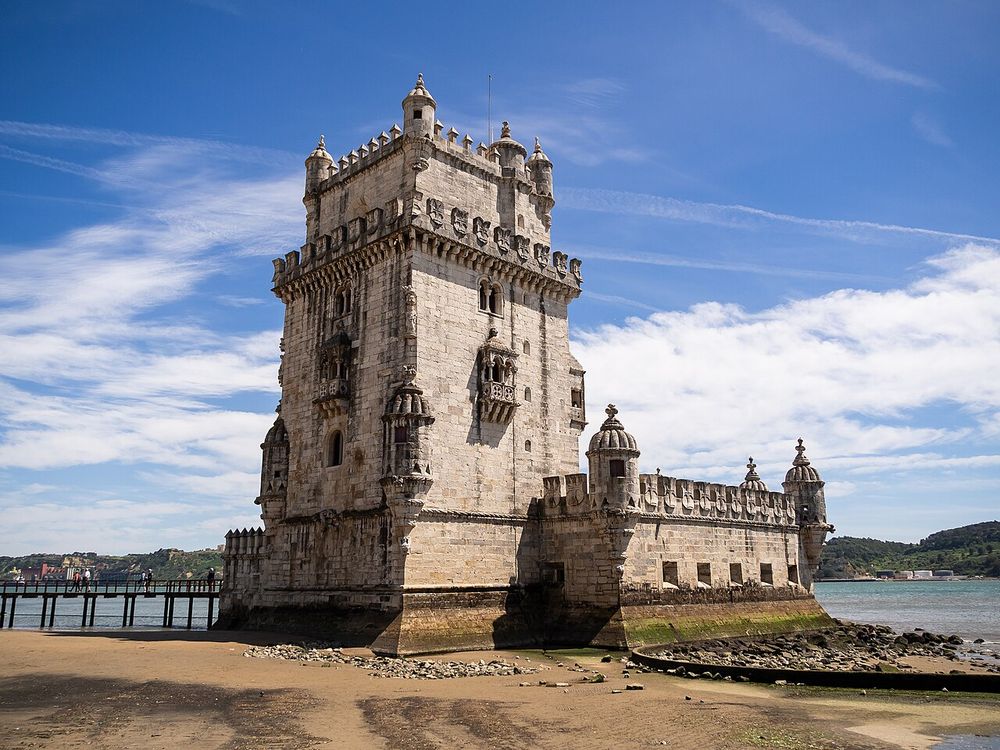
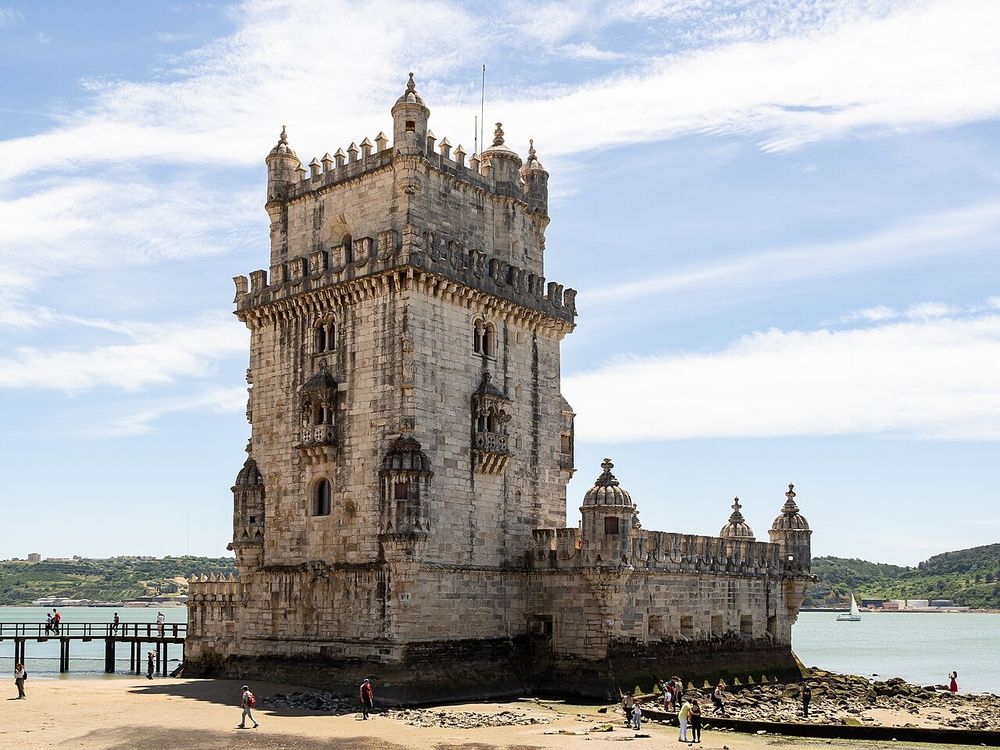
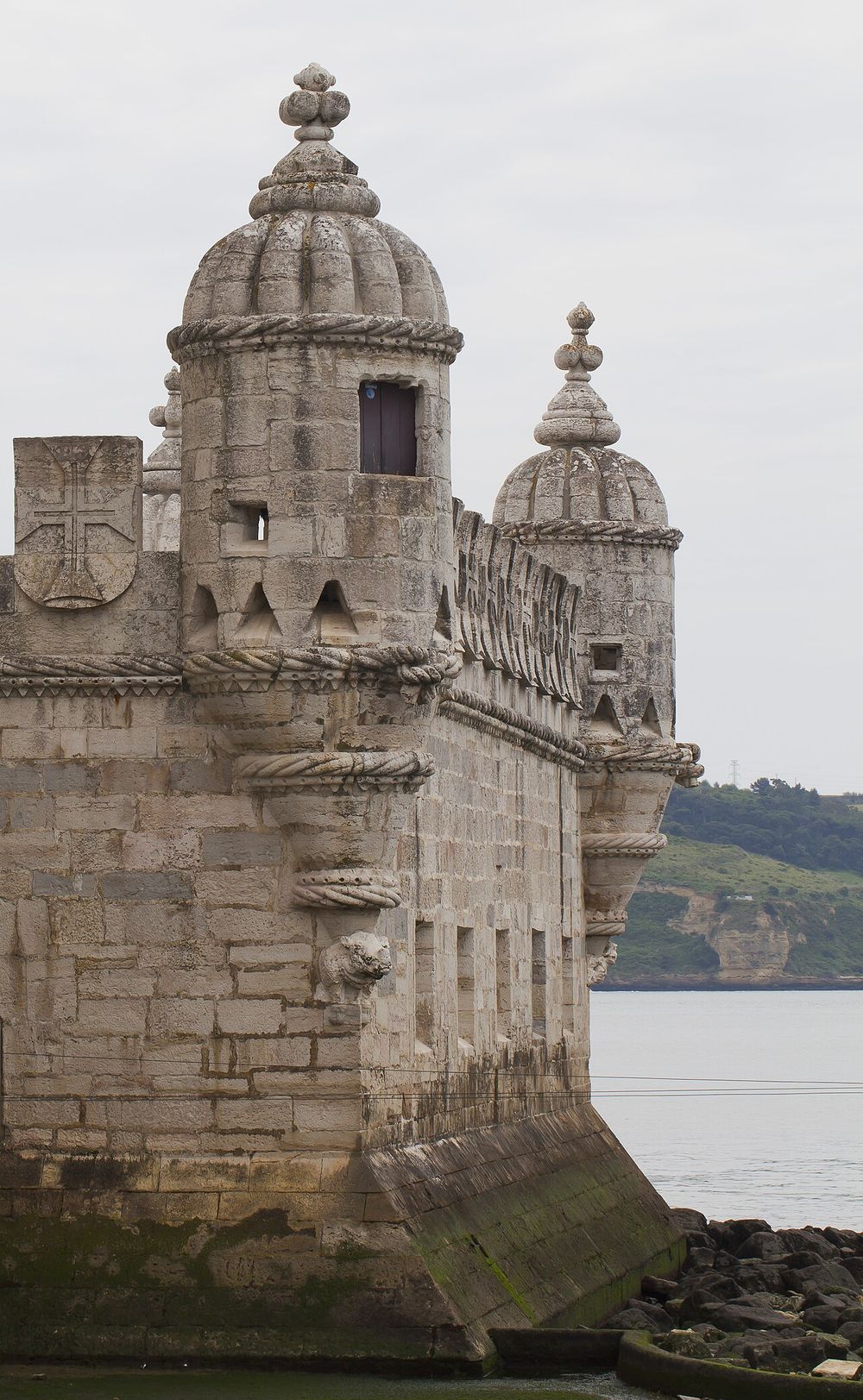
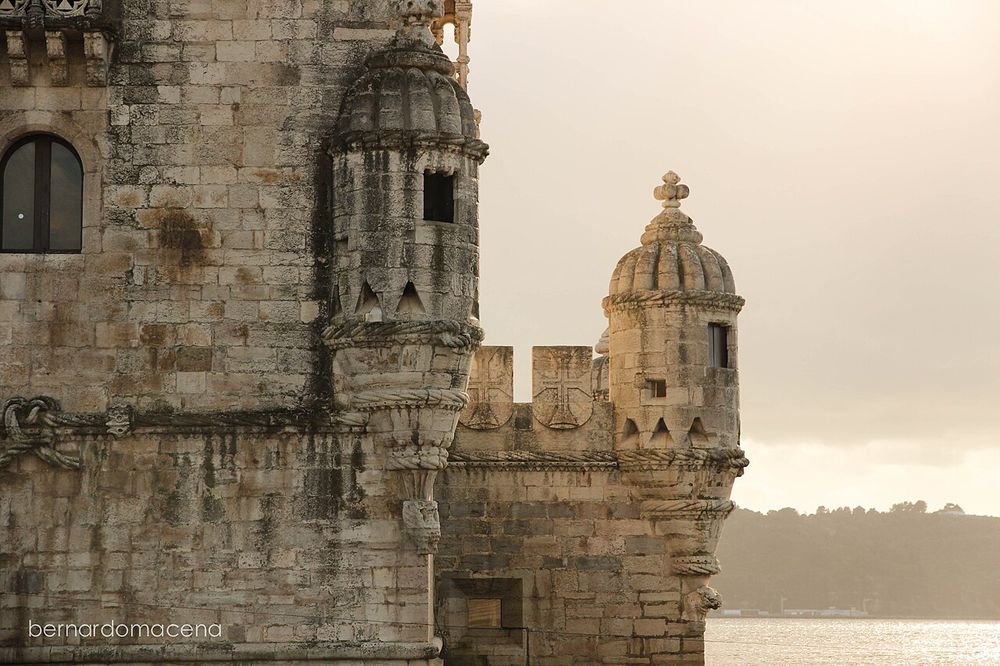
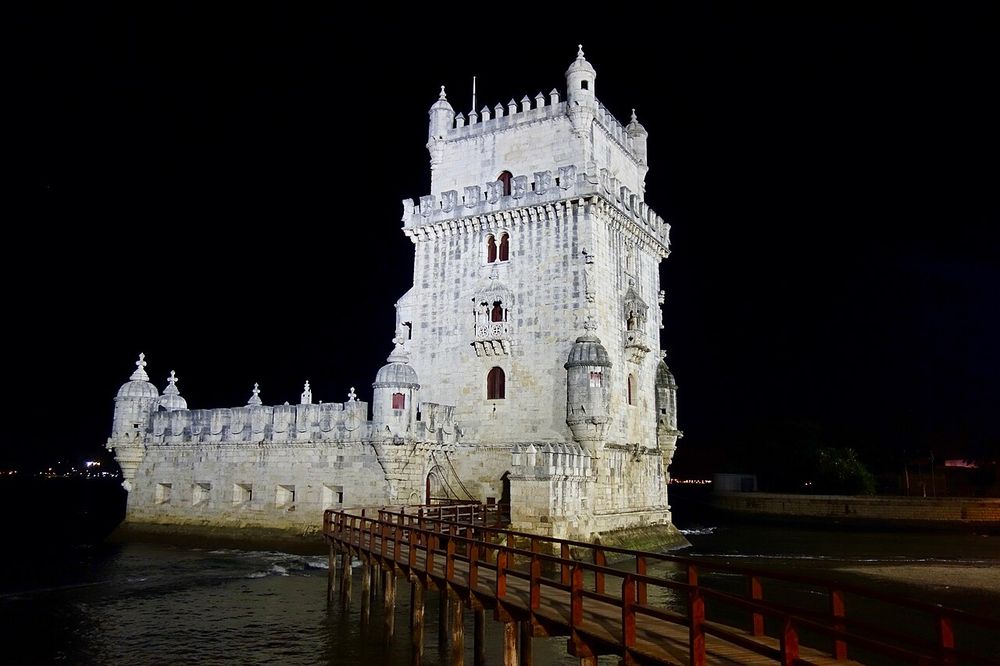
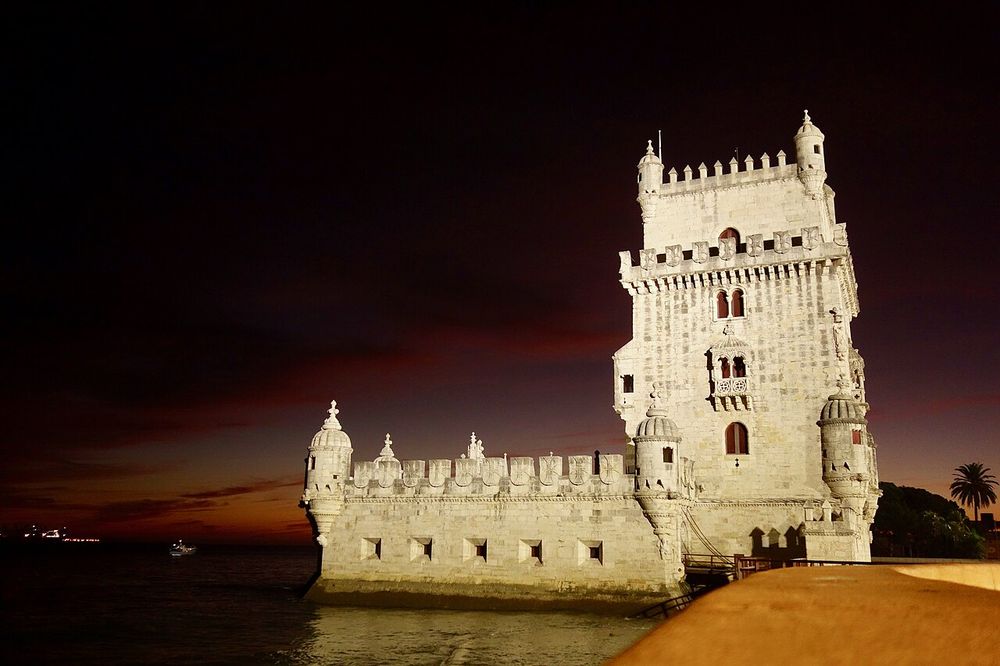
The low part in front, shaped like a ship's bow, is the bastion where the cannon stood. The tall part behind is the tower, four floors high. The little domed turrets at the corners copy watchtowers the builder had seen in Morocco.
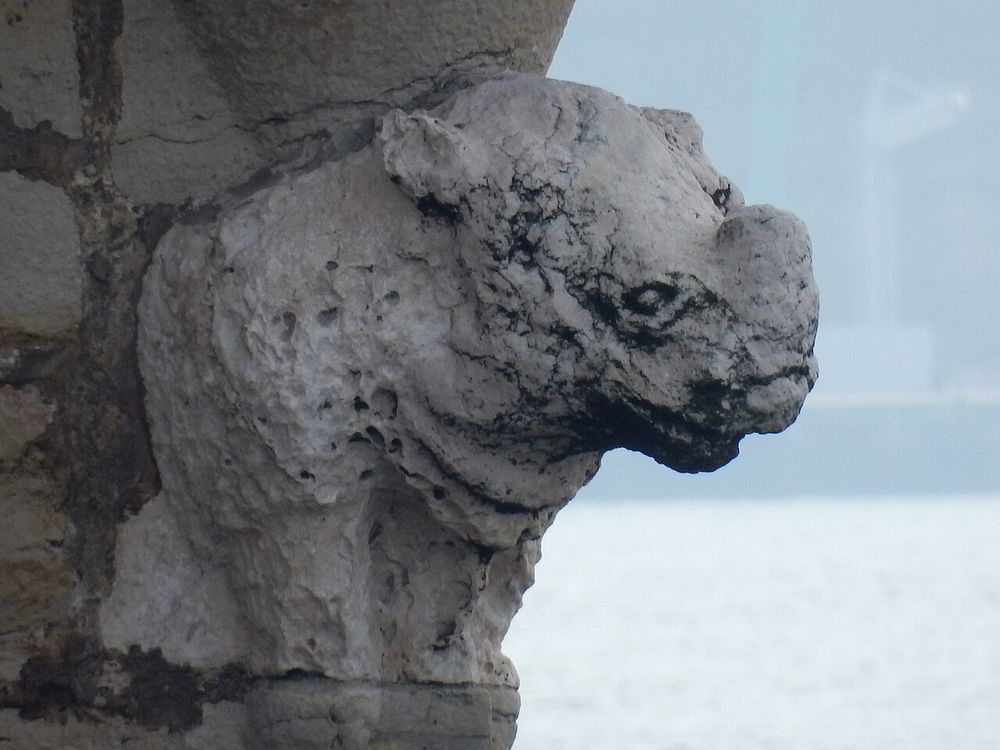
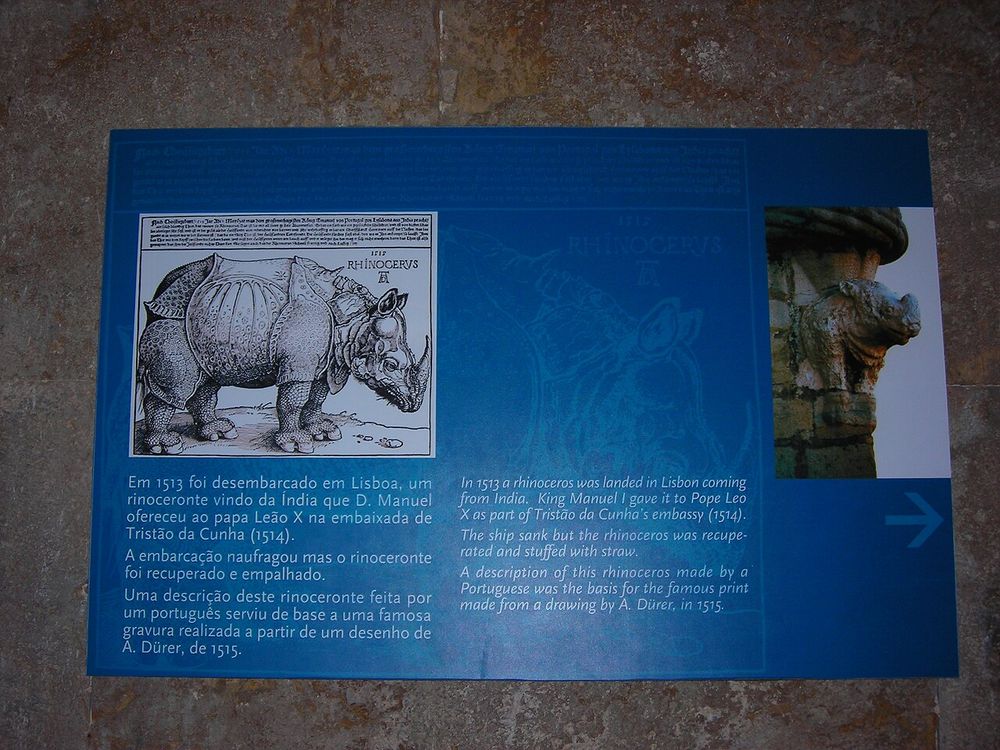
Walk round to the west side and look under the turret at the corner of the bastion. A stone rhinoceros head sticks out. In 1515 a live rhinoceros arrived in Lisbon, a gift from a sultan in India. No one in Europe had seen one for over a thousand years. The carvers saw it with their own eyes.
The German artist Albrecht Dürer never saw it. He drew it the same year from a letter and a sketch, with armour plates and a horn on its back. His print was copied in books for three hundred years.
"Vasco da Gama sailed from this tower." He sailed from this shore in 1497, before the tower was built.
"It was a lighthouse." For most of its life it was a fortress. It was also a customs post, a telegraph station, and for a time a prison, with cells below the water line.
"There is a lot to see inside." The rooms are almost bare. People come for the stone outside, the views, and the narrow climb.
"It is always open." It was closed for about a year of repairs and reopened at the end of May 2026, now with timed tickets.
We searched Portuguese and English sources for this list.
Visits are timed, and the stair inside is single and narrow. Lights at each floor tell you when you may go up or come down.
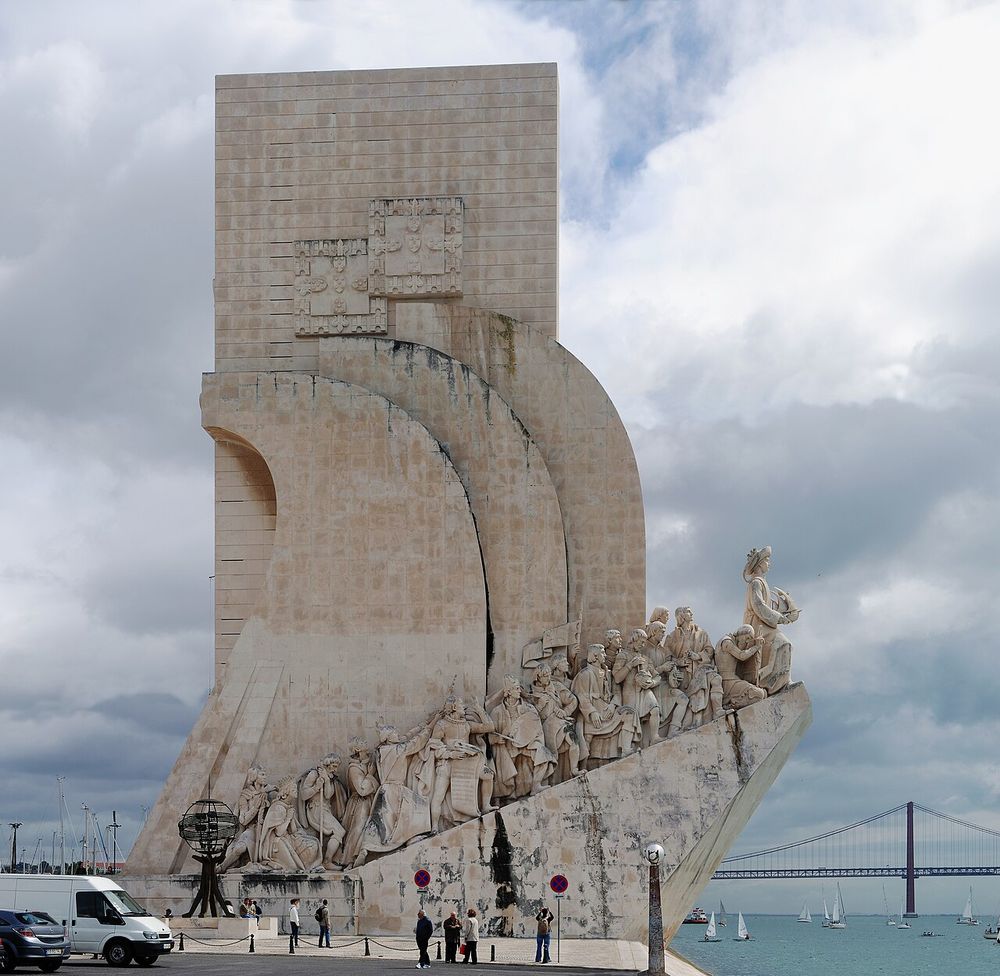
Walk along the river from the east. You pass the Monument to the Discoveries of 1960, a stone prow with Prince Henry the Navigator at its tip and thirty-two figures behind him. In the pavement in front of it is a great map of the world, marking the year Portuguese ships reached each place.
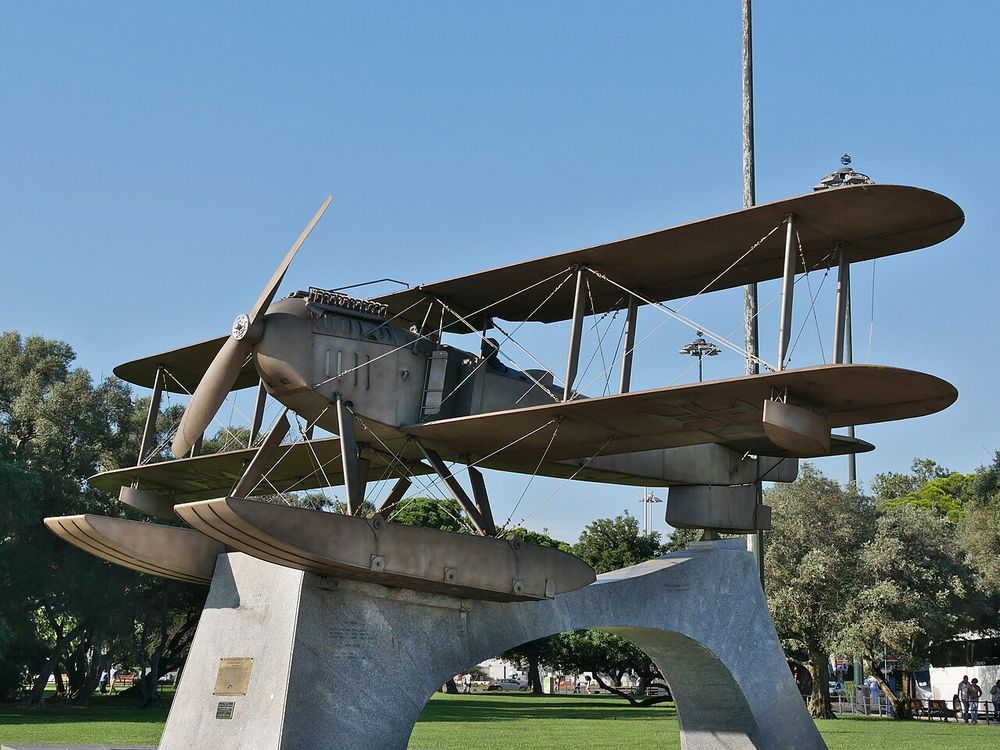
Near the tower stands the seaplane of 1922. The first flight across the South Atlantic took off from this water.
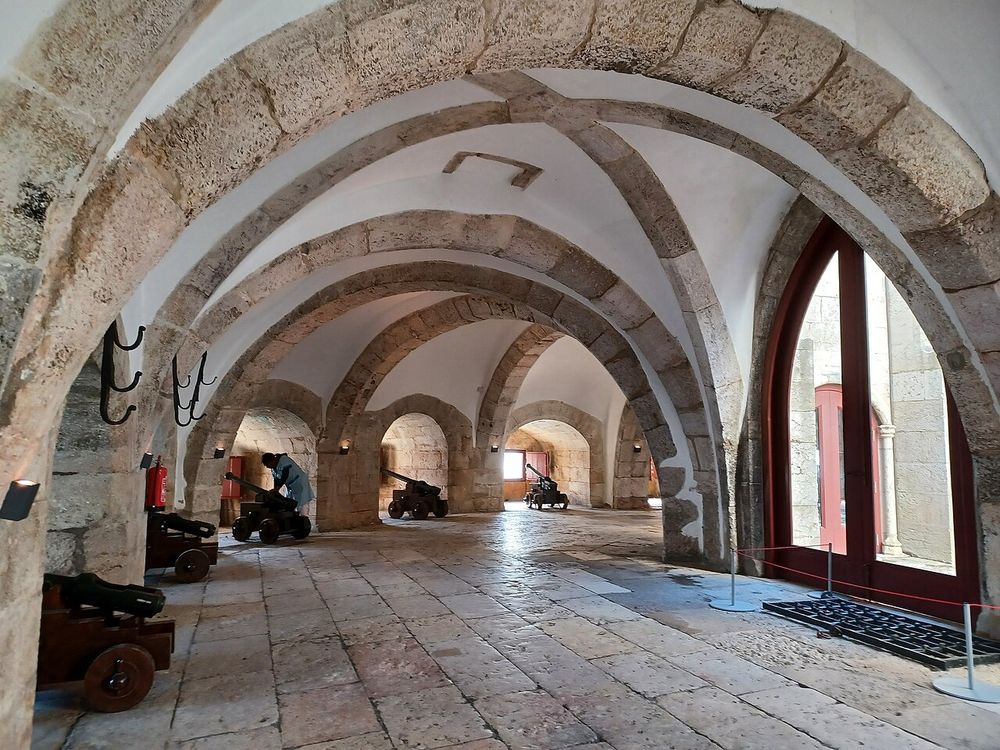
You enter by a drawbridge into the bastion. Sixteen gun ports look out at water level. Below the floor are the old magazines, later used as cells. At high tide the sea came in through the openings.
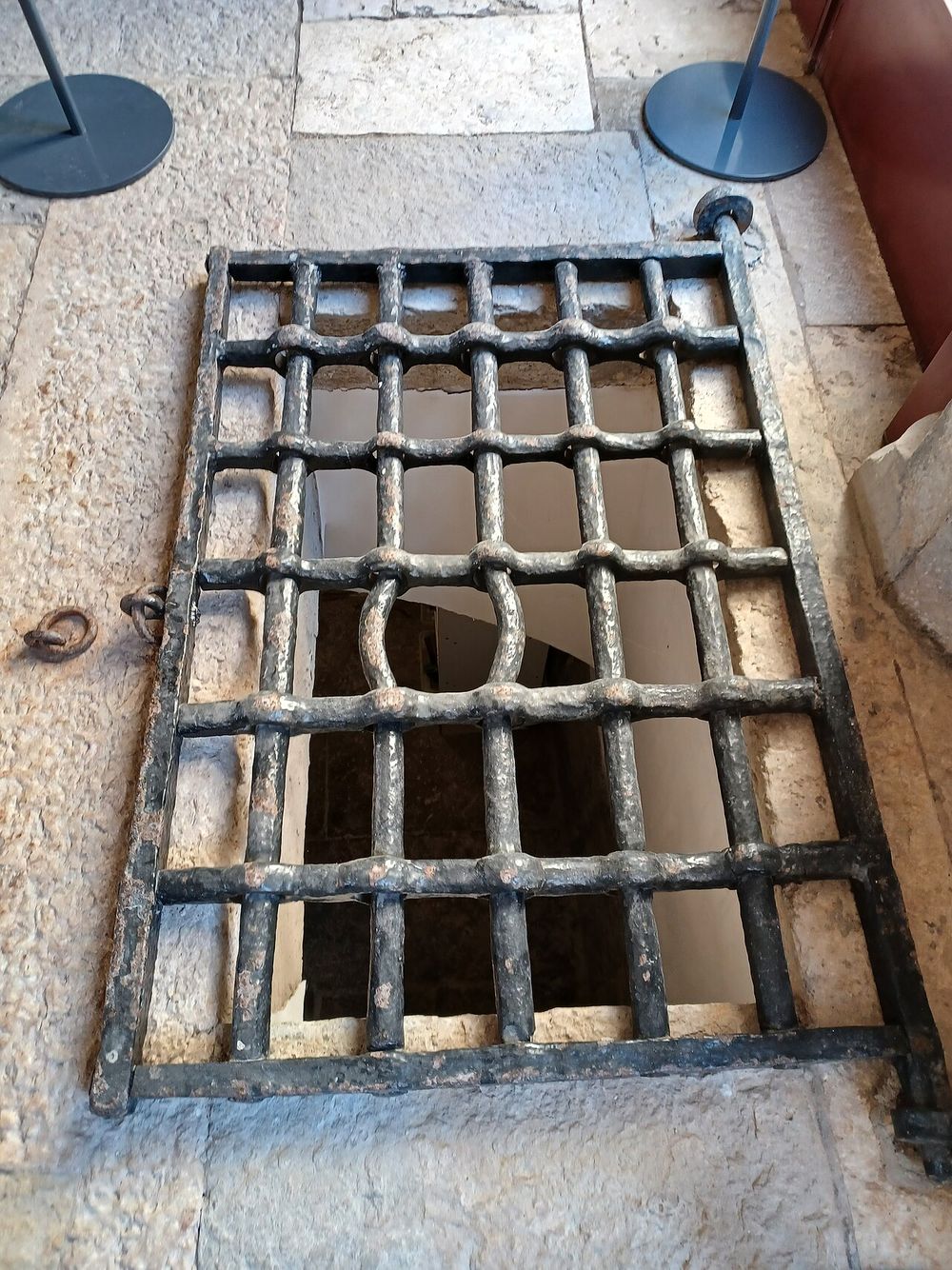
A grille in the floor opens onto that dark space. In the nineteenth century prisoners were held here, political prisoners among them.
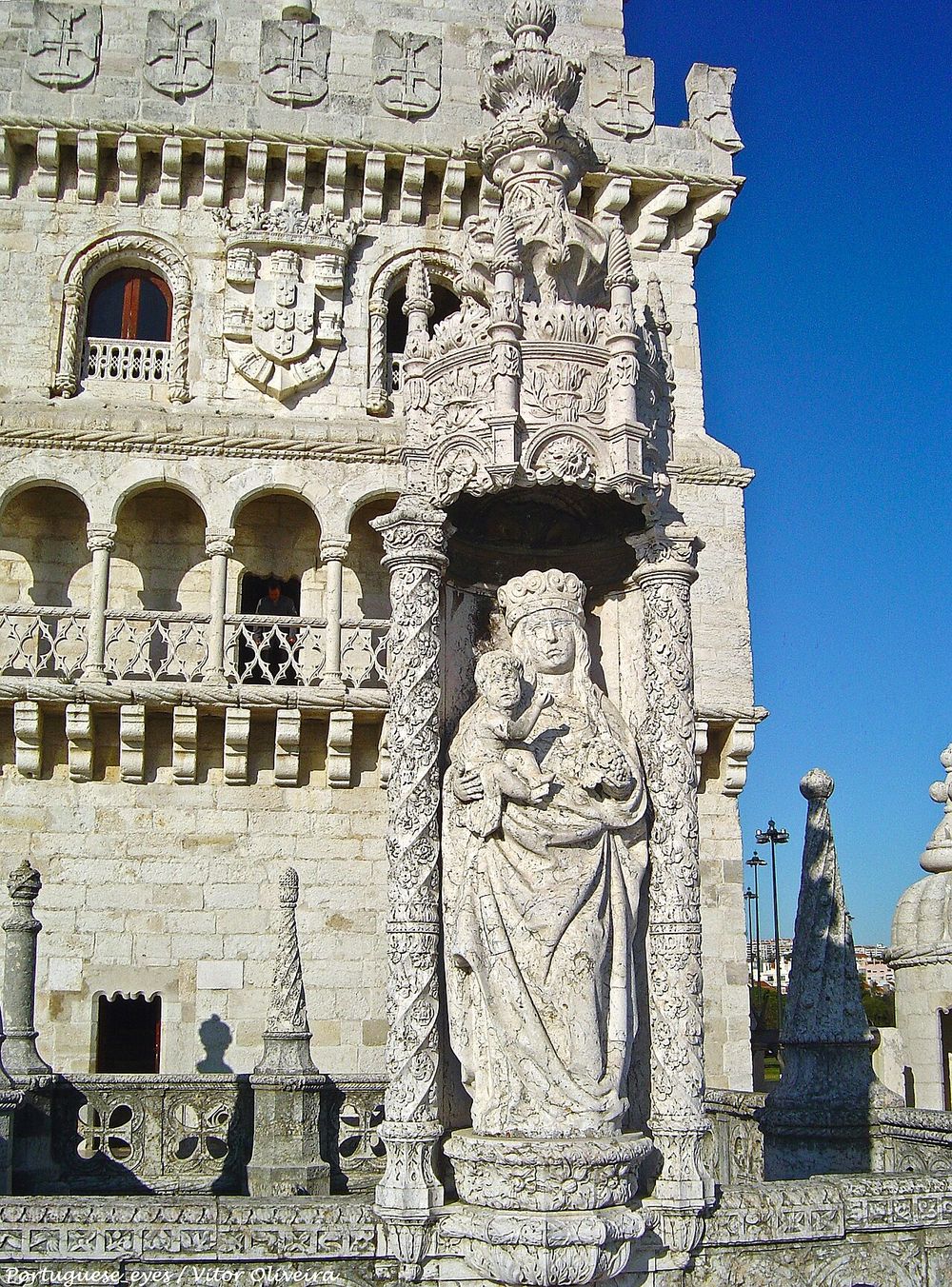
On the terrace above the bastion, facing the river, stands a statue of the Virgin holding the Child and a bunch of grapes. Sailors called her Our Lady of the Safe Homecoming. She faces out to sea, toward the ships coming in.
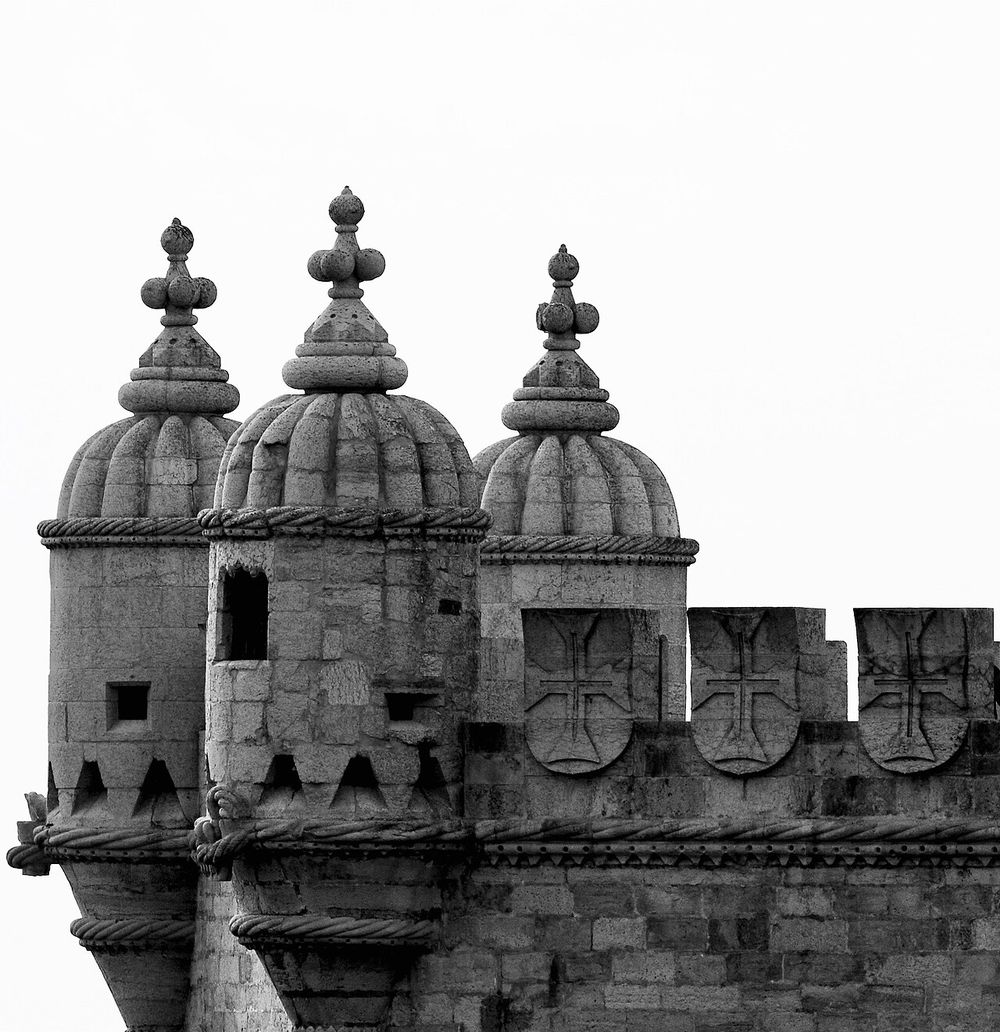
Look at the parapets. Each battlement carries the cross of the Order of Christ, the sign painted on the sails of the discovery ships.
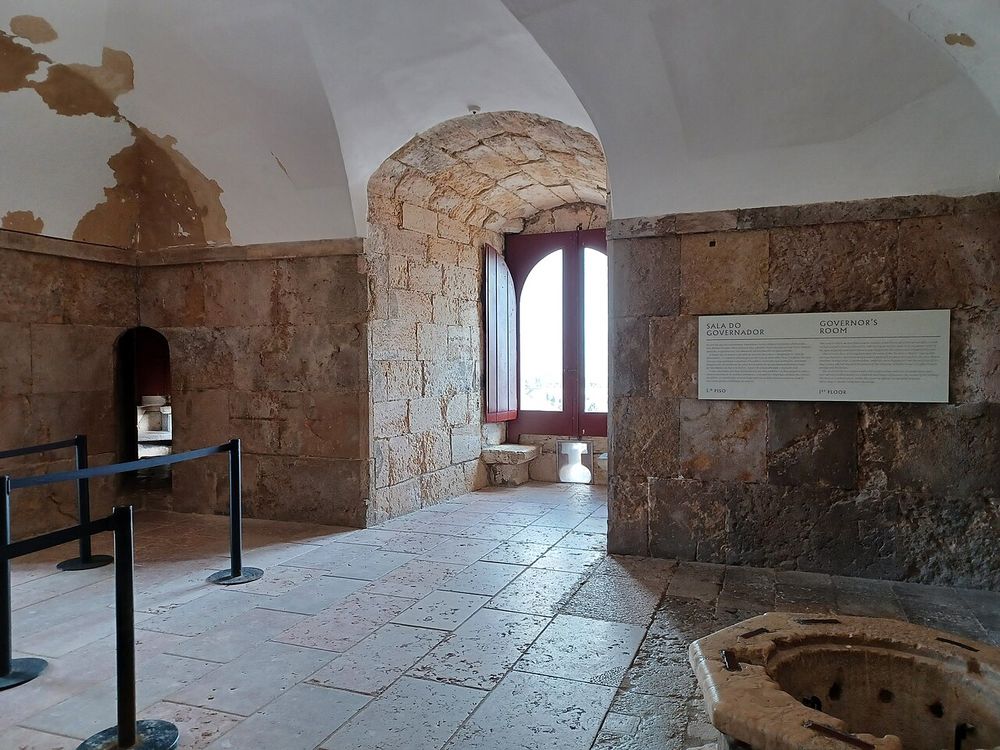
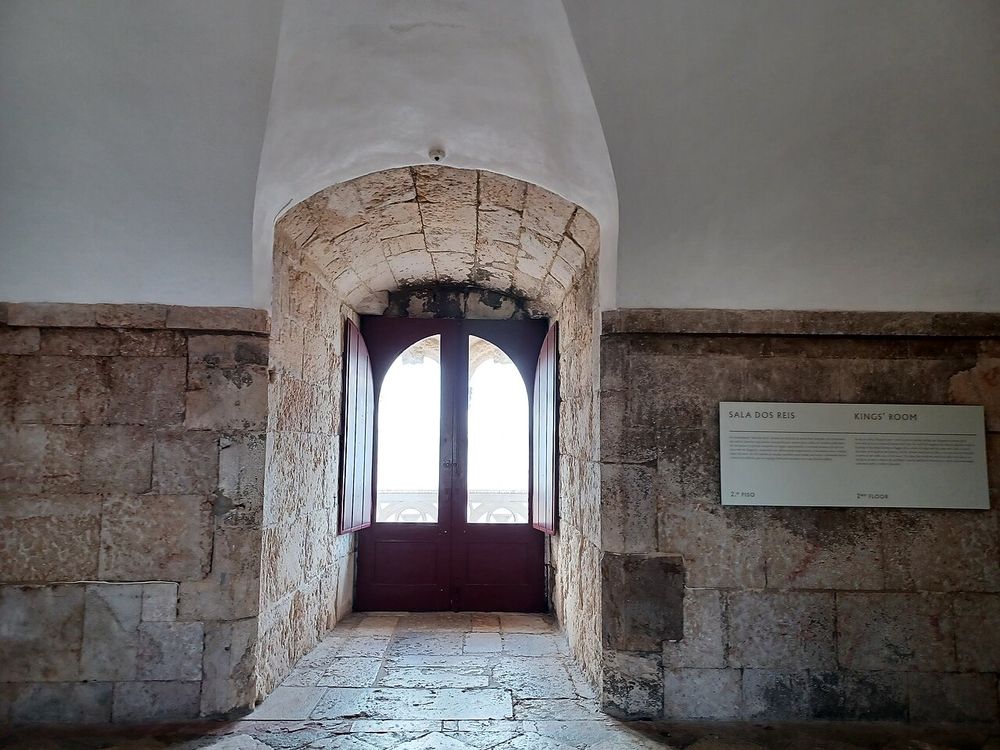
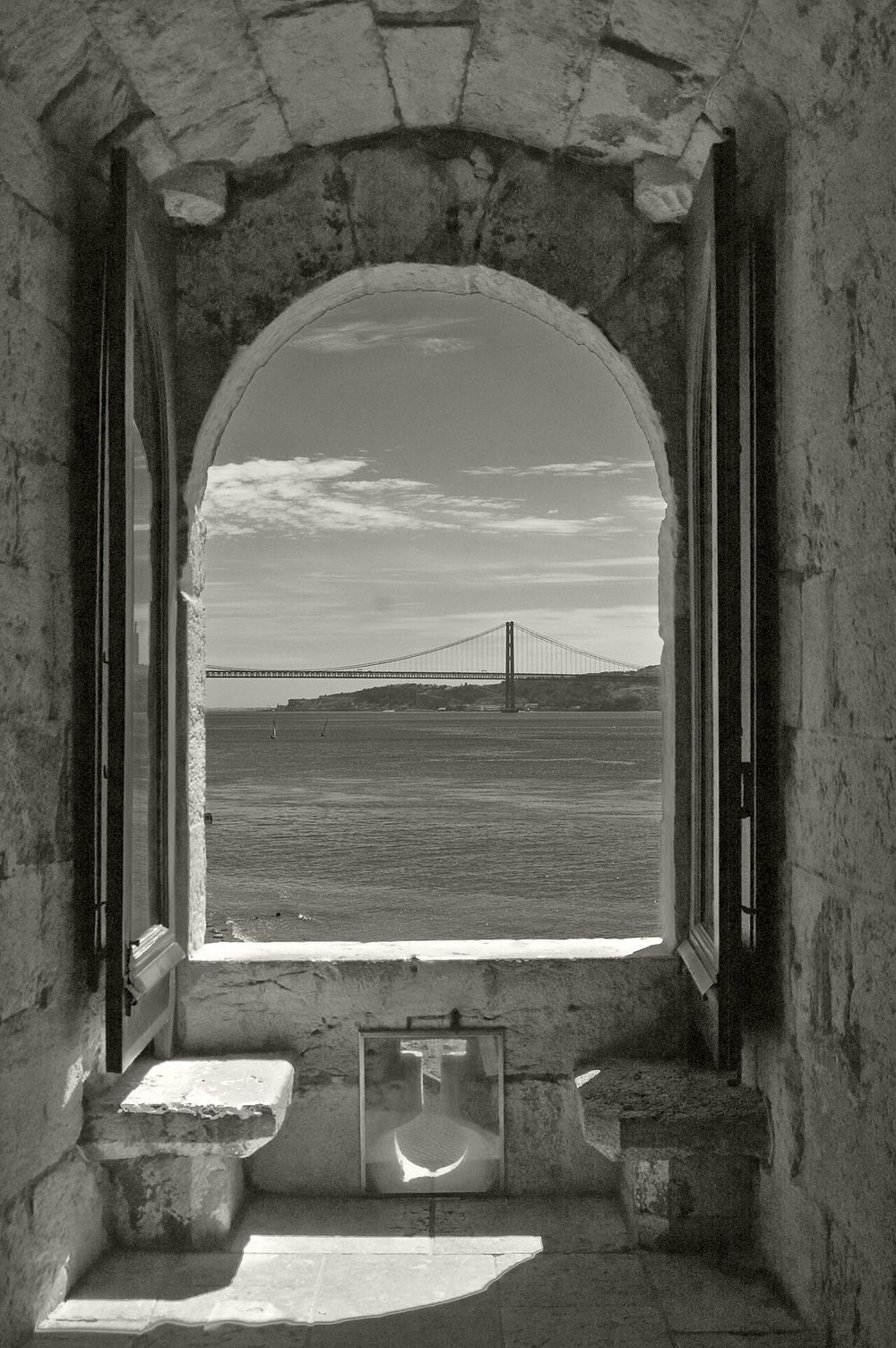
The tower has four rooms, one above the other. The governor's room has stone benches and a vault. The king's room above opens onto a loggia on the river side, an Italian idea, with arches for looking at the water.
The loggia is the finest carving on the tower. From it the king could watch his ships leave and return. Whether any king ever did is not recorded.
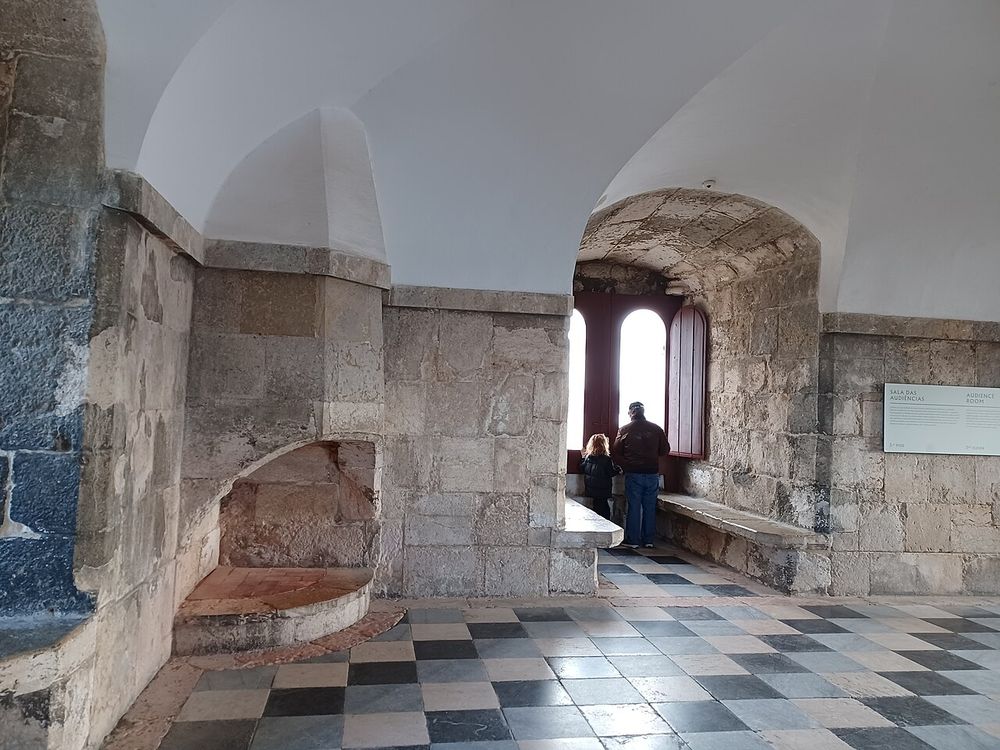
Higher up is a room for audiences, then a small chapel with a ribbed vault. On the way you climb a spiral stair of a hundred-odd steps, in turns with people coming down.
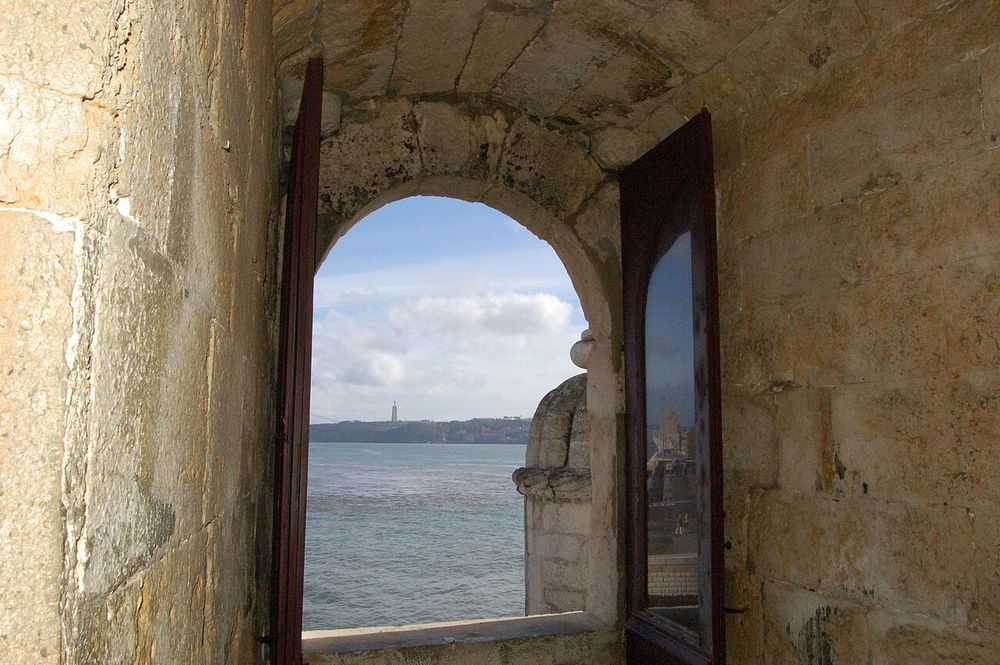
From the roof you see the river mouth, the red bridge of 1966, and the monastery across the road. Most of what you see along this shore was built later on land taken from the river.
While the tower went up, Portuguese ships were already in Chinese waters. In 1513 Jorge Álvares reached the Pearl River delta. In 1517 a Portuguese embassy under Tomé Pires came to Guangzhou during the reign of the Ming (1368–1644) emperor Zhengde (1505–1521). In 1557 the Portuguese settled in Macao, and held it until it returned to China in 1999.
Eighty years before the tower, Zheng He's fleets had sailed to East Africa, with ships many times larger than any here. China then stopped sending fleets. Portugal kept going.
| Year | Here | Elsewhere |
|---|---|---|
| 1497 | Vasco da Gama sails from this beach | Columbus is exploring the Caribbean |
| 1514–1519 | The tower is built | Martin Luther posts his theses, 1517 |
| 1515 | The rhinoceros arrives in Lisbon | Dürer makes his woodcut |
| 1557 | The Portuguese settle in Macao | Elizabeth I takes the English throne in 1558 |
| 1580 | Spain takes the tower and Portugal | Drake sails round the world |
| 1983 | A World Heritage site with the monastery | The first mobile phones are sold |
| 1999 | Macao is handed back to China | The euro is introduced |
One line to remember: the last thing the sailors saw as they left, and the first thing they saw when they came home.
These are stories people tell about this place. They are legends, not history, and each one says where it comes from.
Lisbon tells that King Manuel set the rhinoceros to fight an elephant in front of the court in 1515, and the elephant fled.
Source: Told by the humanist Damião de Góis in the sixteenth century; historians doubt the details
People in Belém say a tunnel once ran under the road from the tower to the monastery, so that the monks could reach the river unseen.
Source: Local tale; no tunnel has been found
Later, people who live here will be able to add the stories they grew up with, and say which of these they have heard.
Last checked 2026-11-12. The page of Museus e Monumentos de Portugal, opened on 12 November 2026, and Portuguese press of May 2026.
Checked 2026-11-12
Opening hours are given in the local time of the place. Prices are in the local currency. The figure after ≈ is approximate, at exchange rates checked on 9 November 2026, in .
Stand at the site, sign in, press the button, and collect its stamp. Your browser will ask to use your location. It is sent to us once to confirm that you are at the site; we keep how far you were from it, not the spot where you stood.
Your stamps are saved to your account, so they follow you to any device. Checking from a browser cannot rule out every false location; stricter checks arrive with the app.
Photos here show the place, not people. Each one is credited to the visitor who took it and appears after our team has looked at it. A photo with you in it belongs under “I am here”.