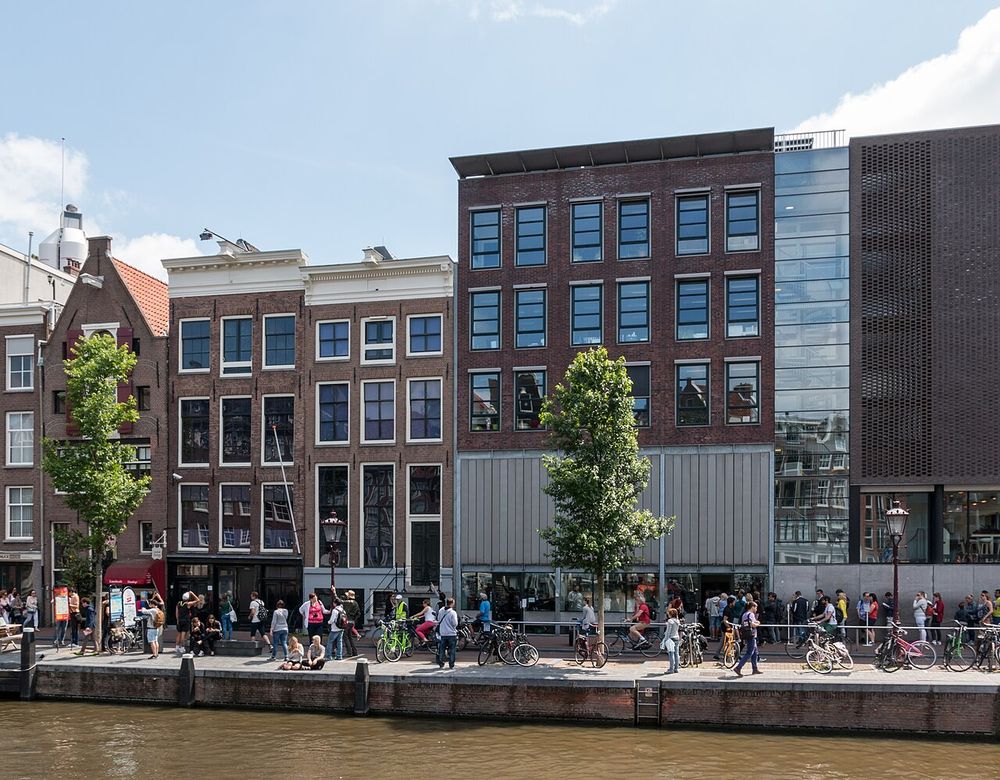
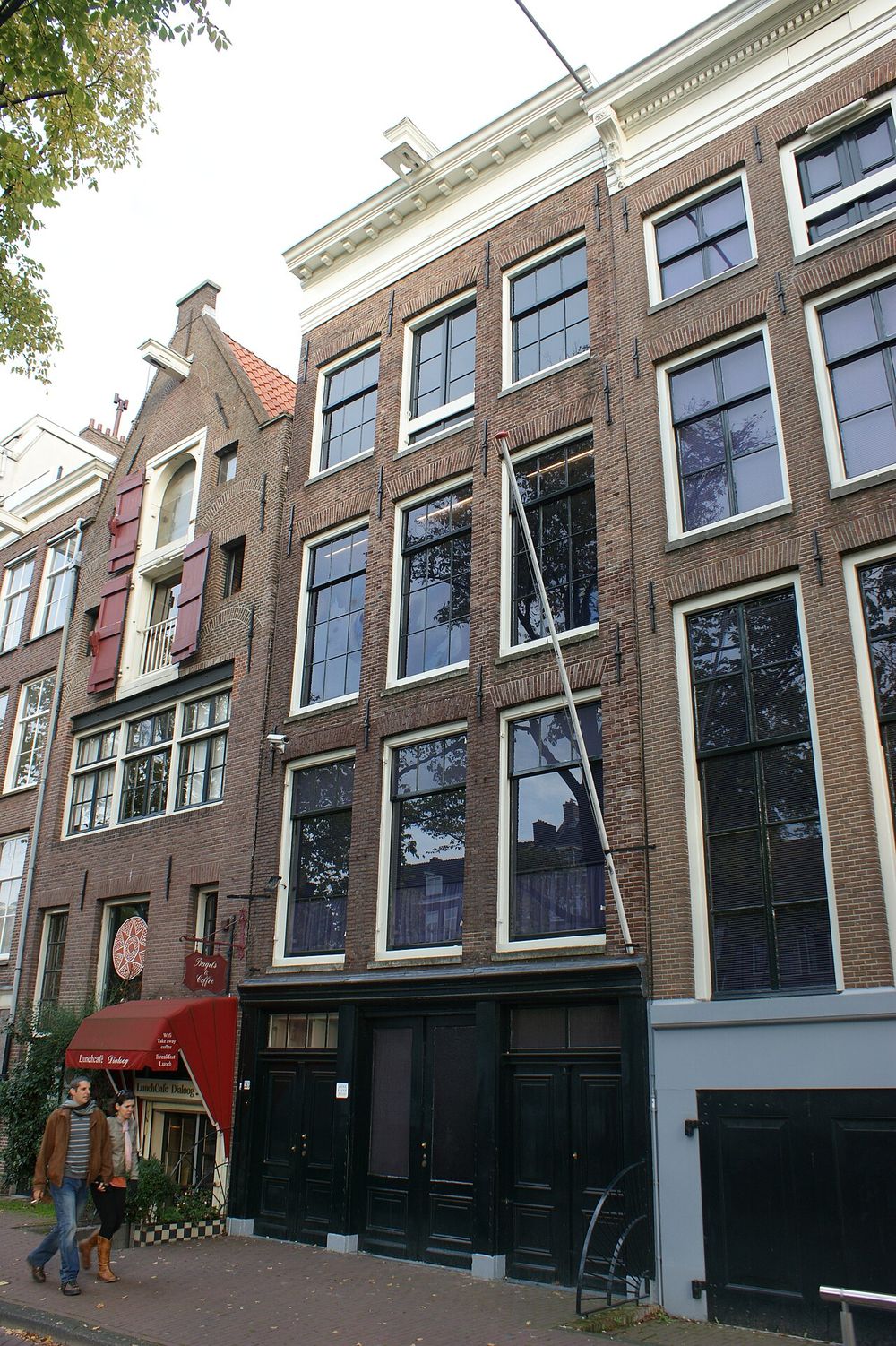
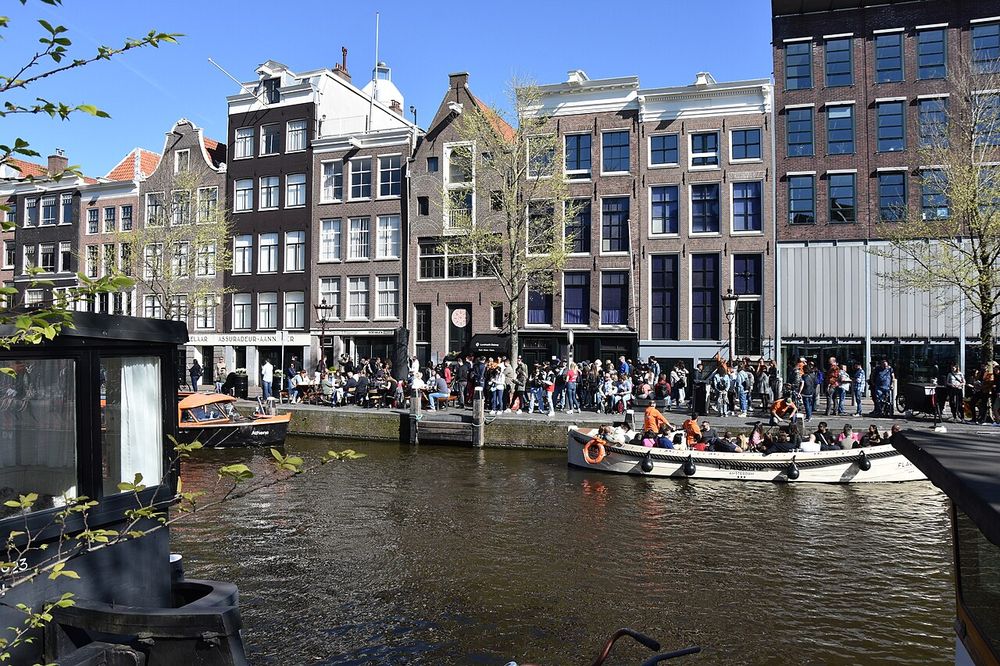
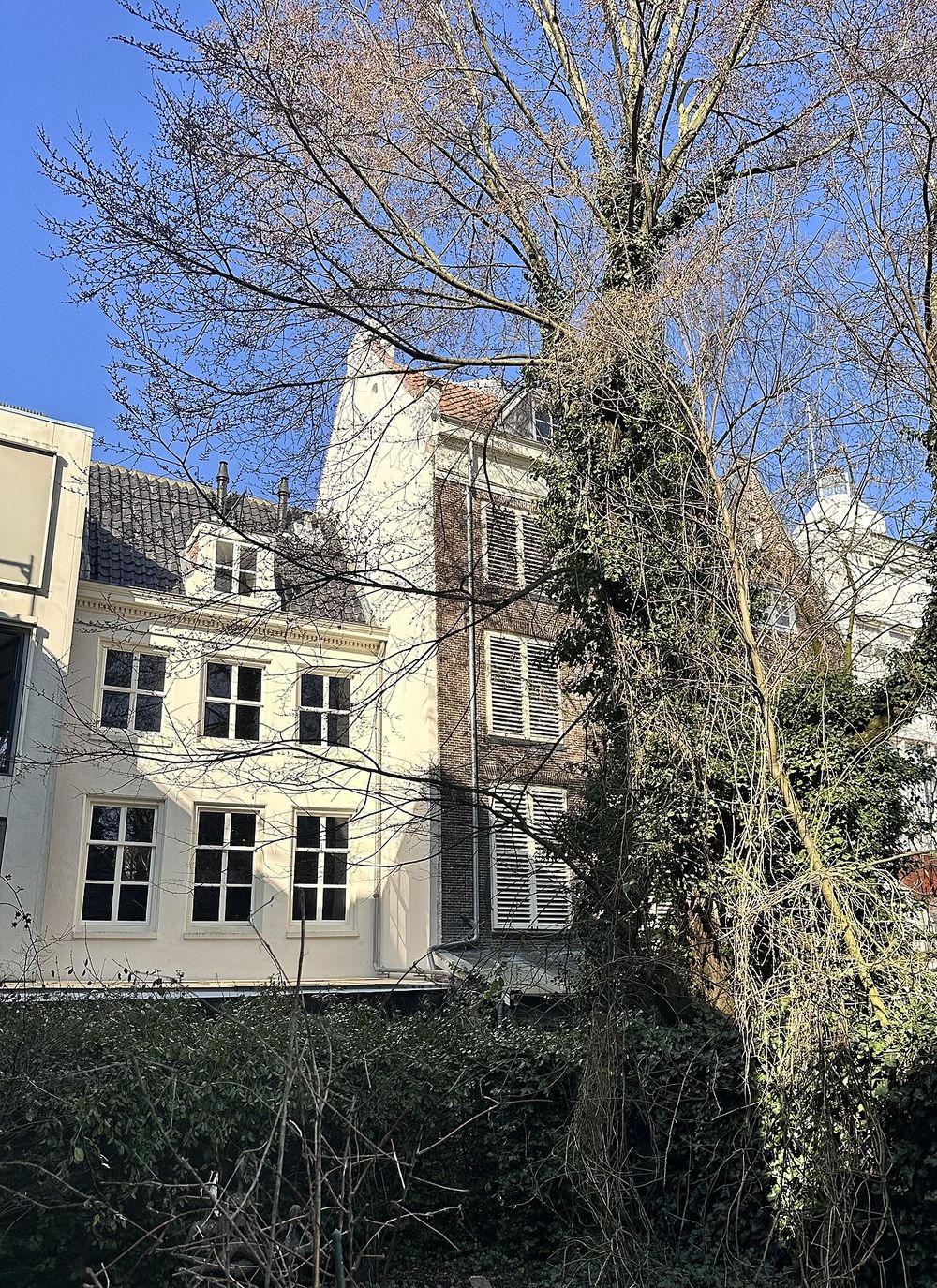
A canal house of 1635 with a warehouse below and a hidden annex behind. Eight Jews lived in the annex for two years during the German occupation, and one of them, a girl of thirteen, kept a diary. The rooms are empty now, as her father wanted.
Photo: Martin Furtschegger, CC BY 3.0, Wikimedia Commons
The story
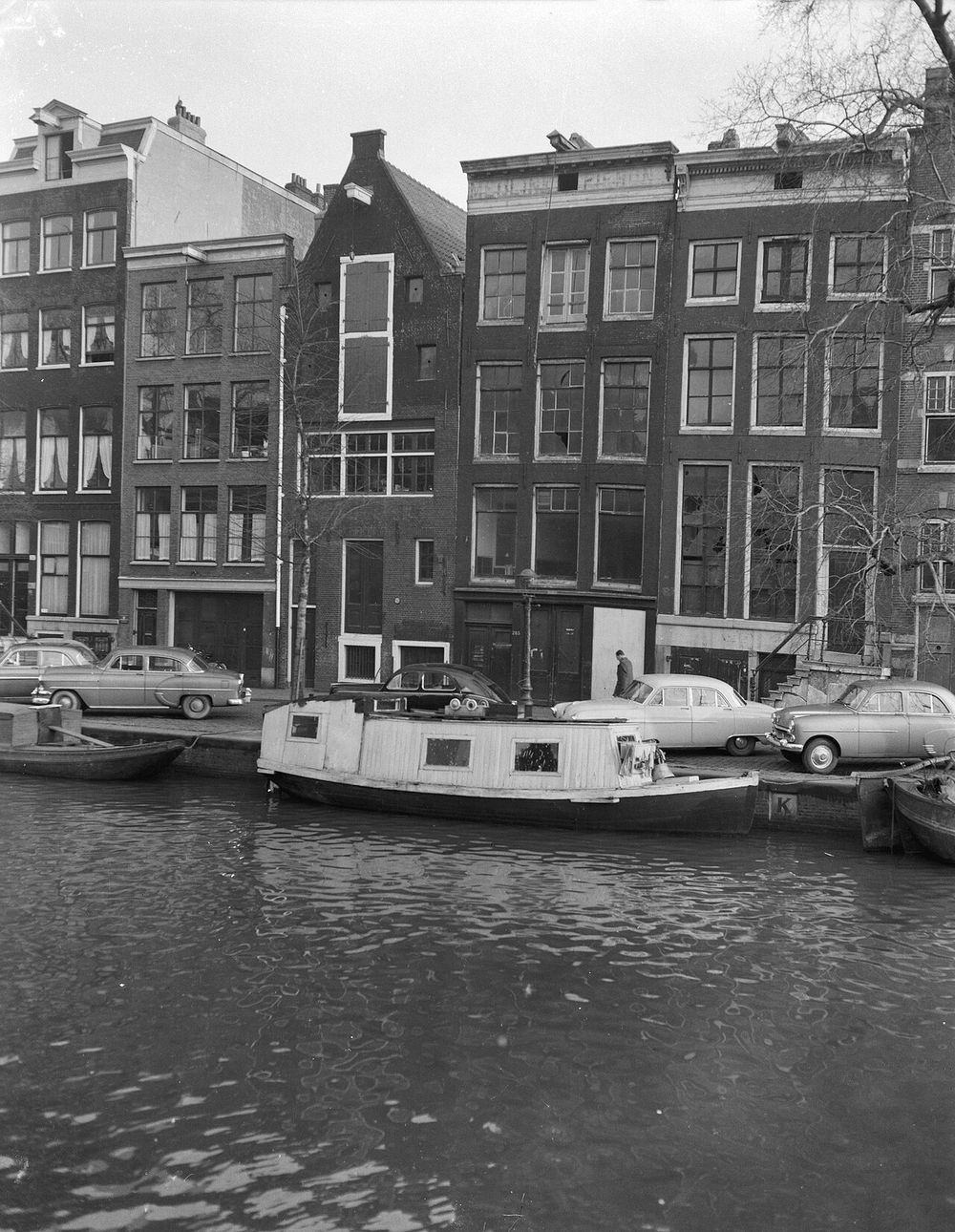
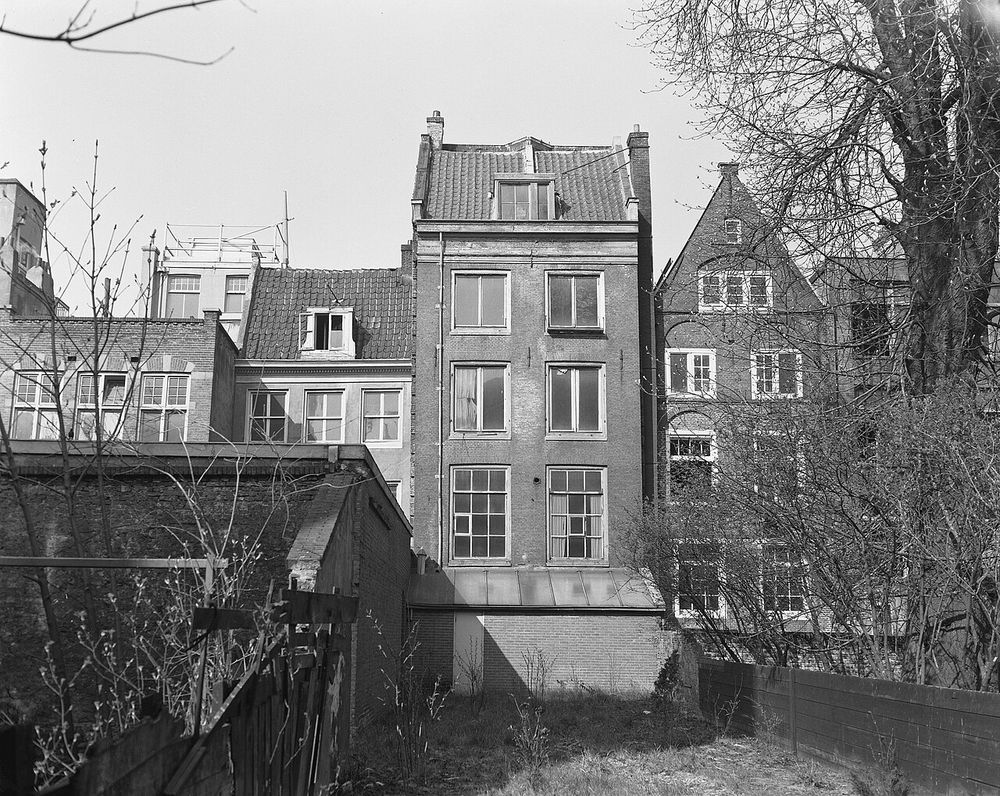
This is an ordinary Amsterdam canal house. Downstairs Otto Frank ran a small firm that sold pectin for making jam. At the back, joined by a short passage, stands an older wing that the Dutch call the achterhuis, the back house.
From July 1942 to August 1944 eight people hid in that back house: the four Franks, the three van Pels, and a dentist, Fritz Pfeffer. Four of Otto's staff brought them food and news. On 4 August 1944 the police came. Only Otto came back.
His younger daughter Anne had written a diary all that time. It has been translated into more than seventy languages. In China it is read as 《安妮日记》.
What is here
One ticket, one route. You see the front house, the annex and the museum wing in that order. There is nothing else to buy.
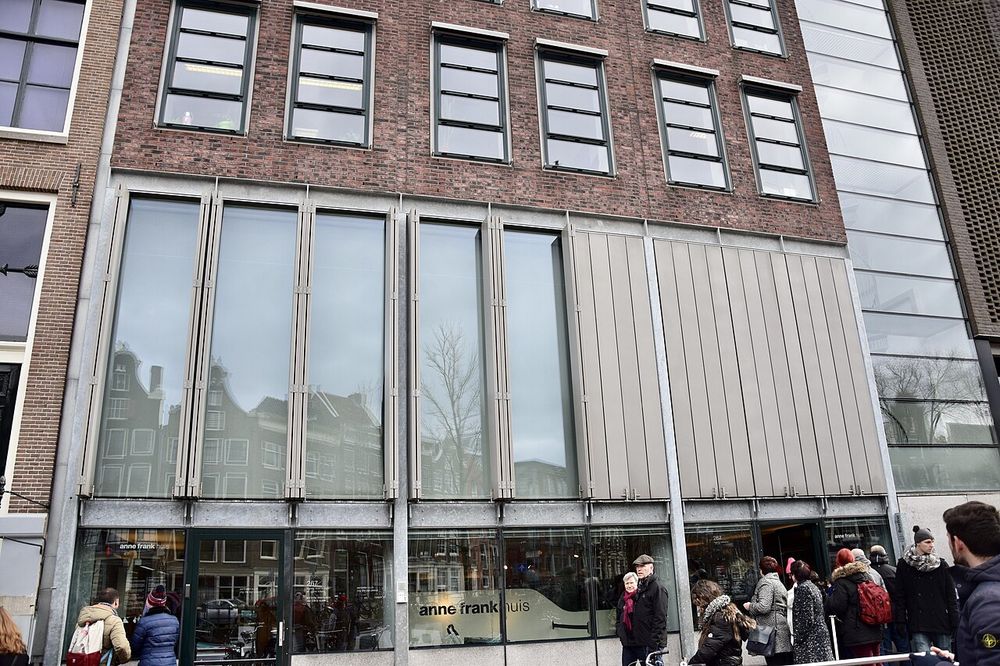
Number 263 and the museum wing, 2015Dietmar Rabich, CC BY-SA 4.0
The narrow brick house with the green door is the original. The glass and brick block beside it is the museum's newer wing. You go in through the new wing and come out through the old house.
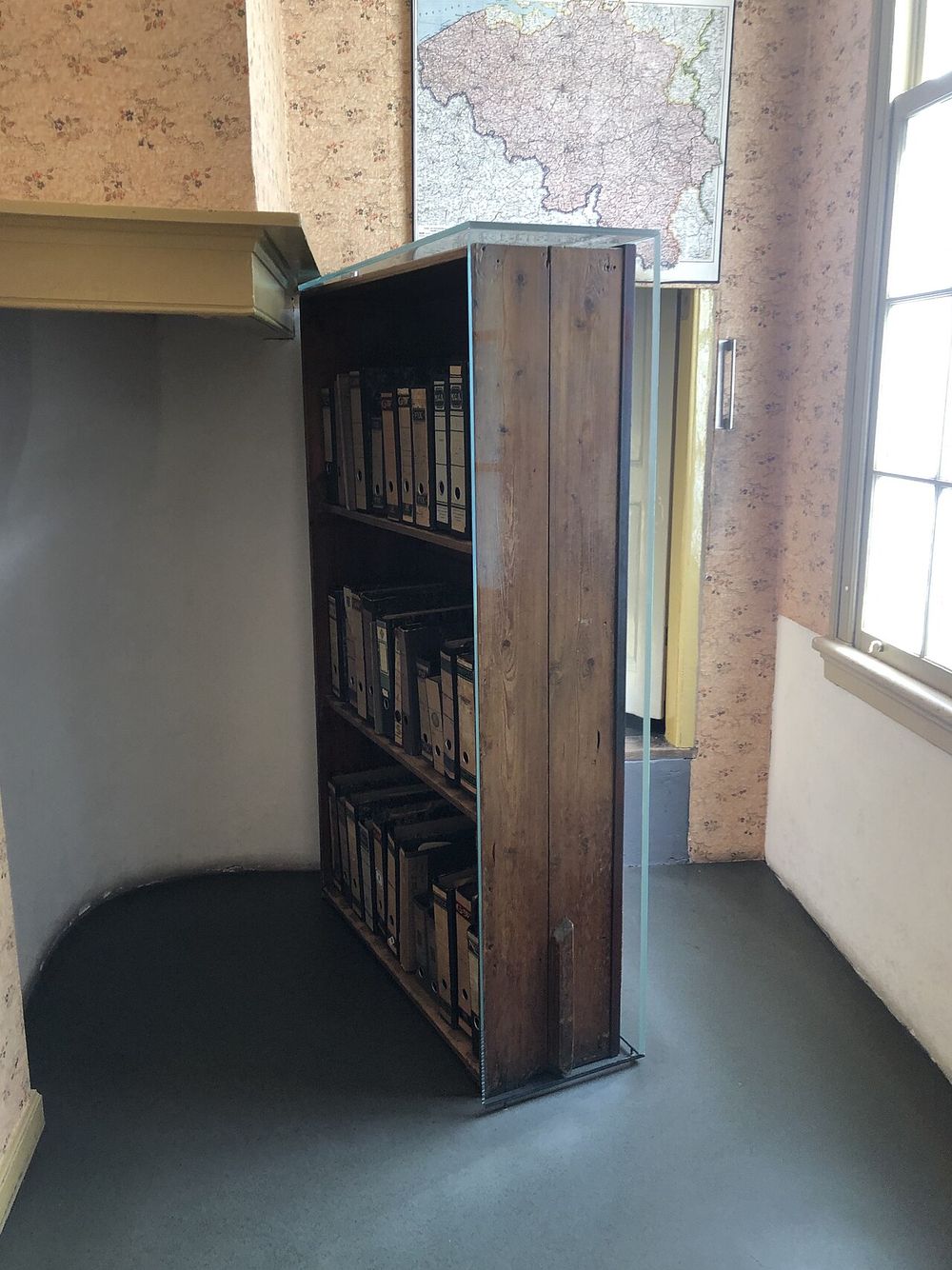
The bookcase, swung openHanno Lans, CC0
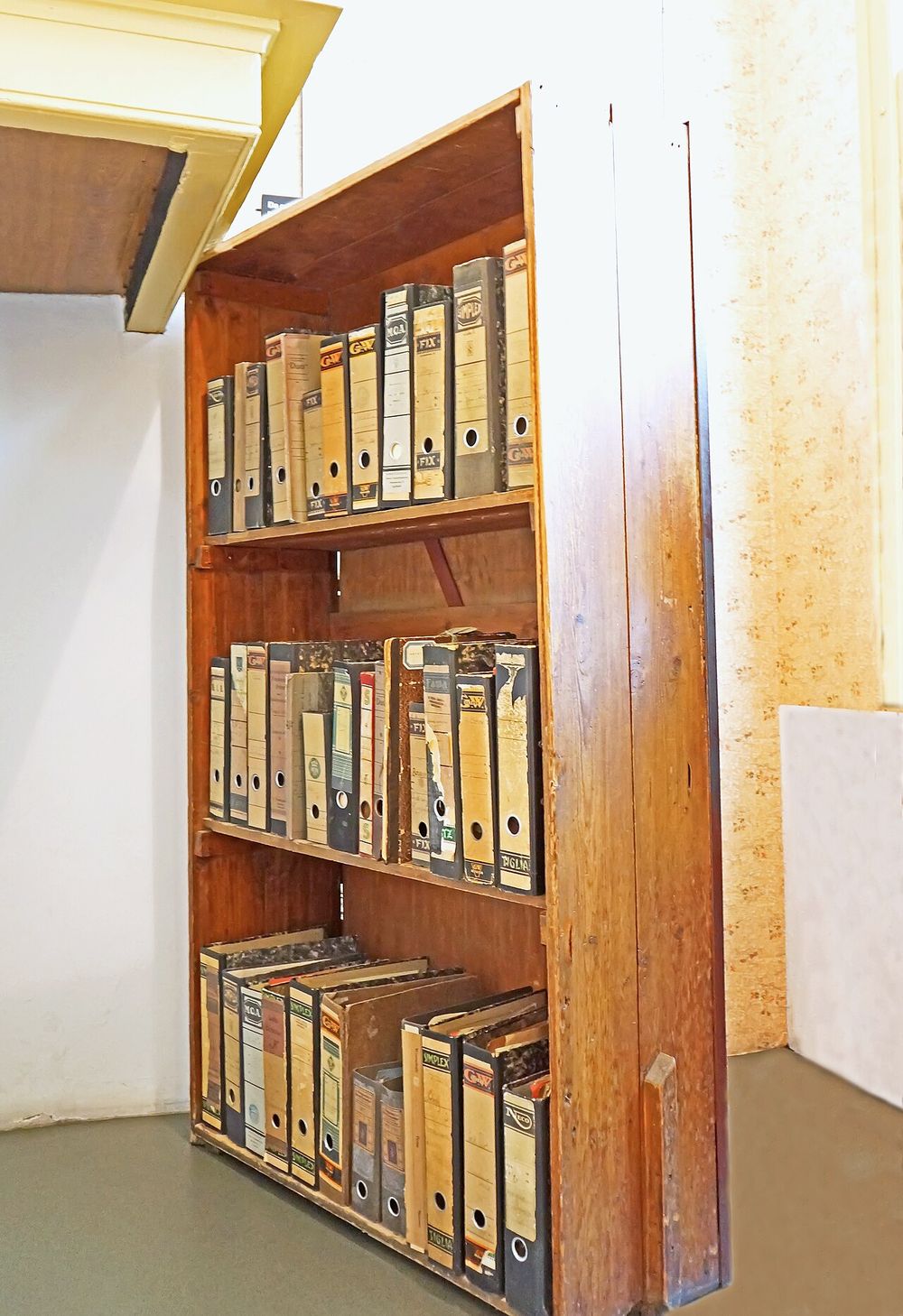
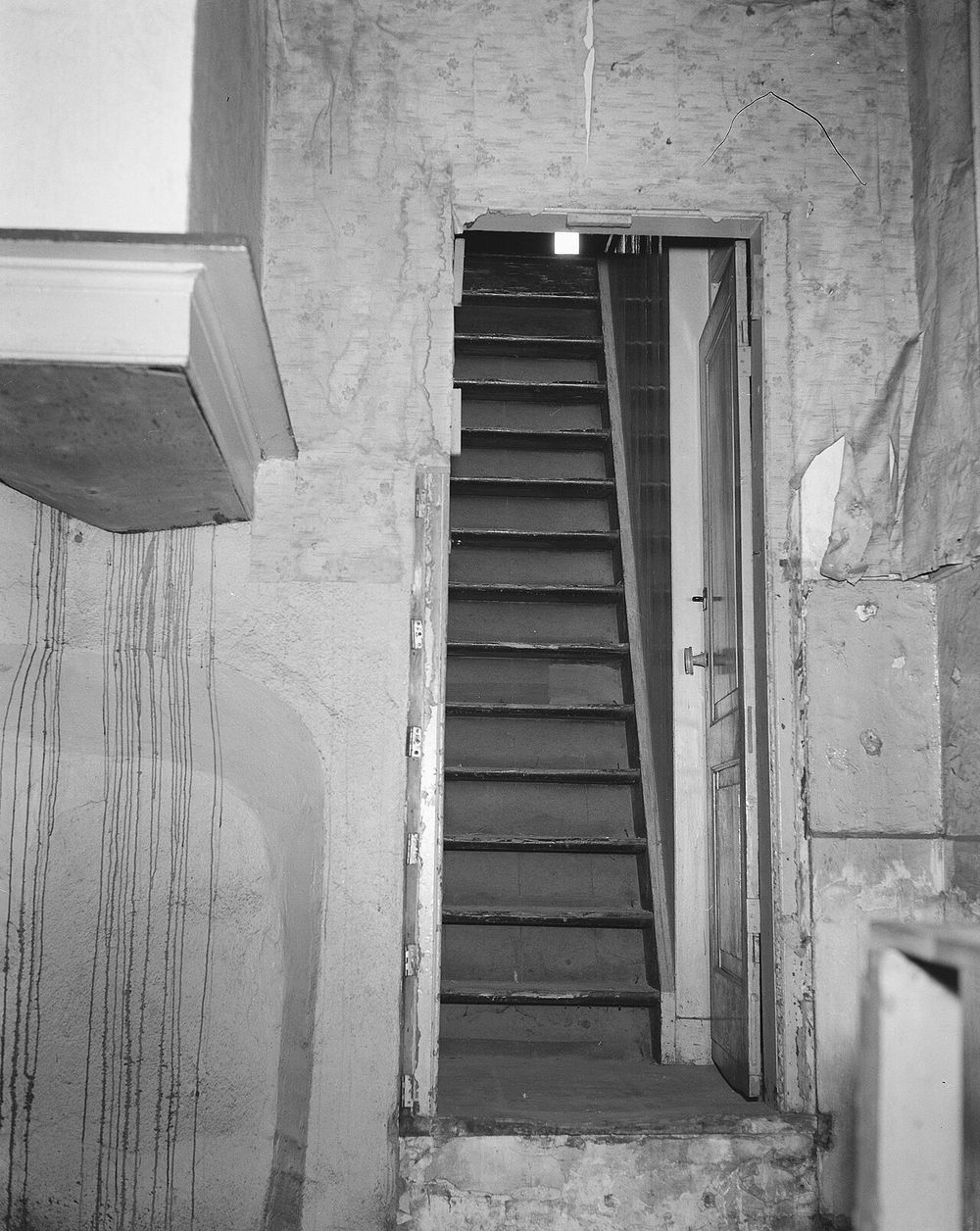
Upstairs a grey bookcase swings open like a door. Behind it is a steep stair. That was the way into the annex, and the only way out.
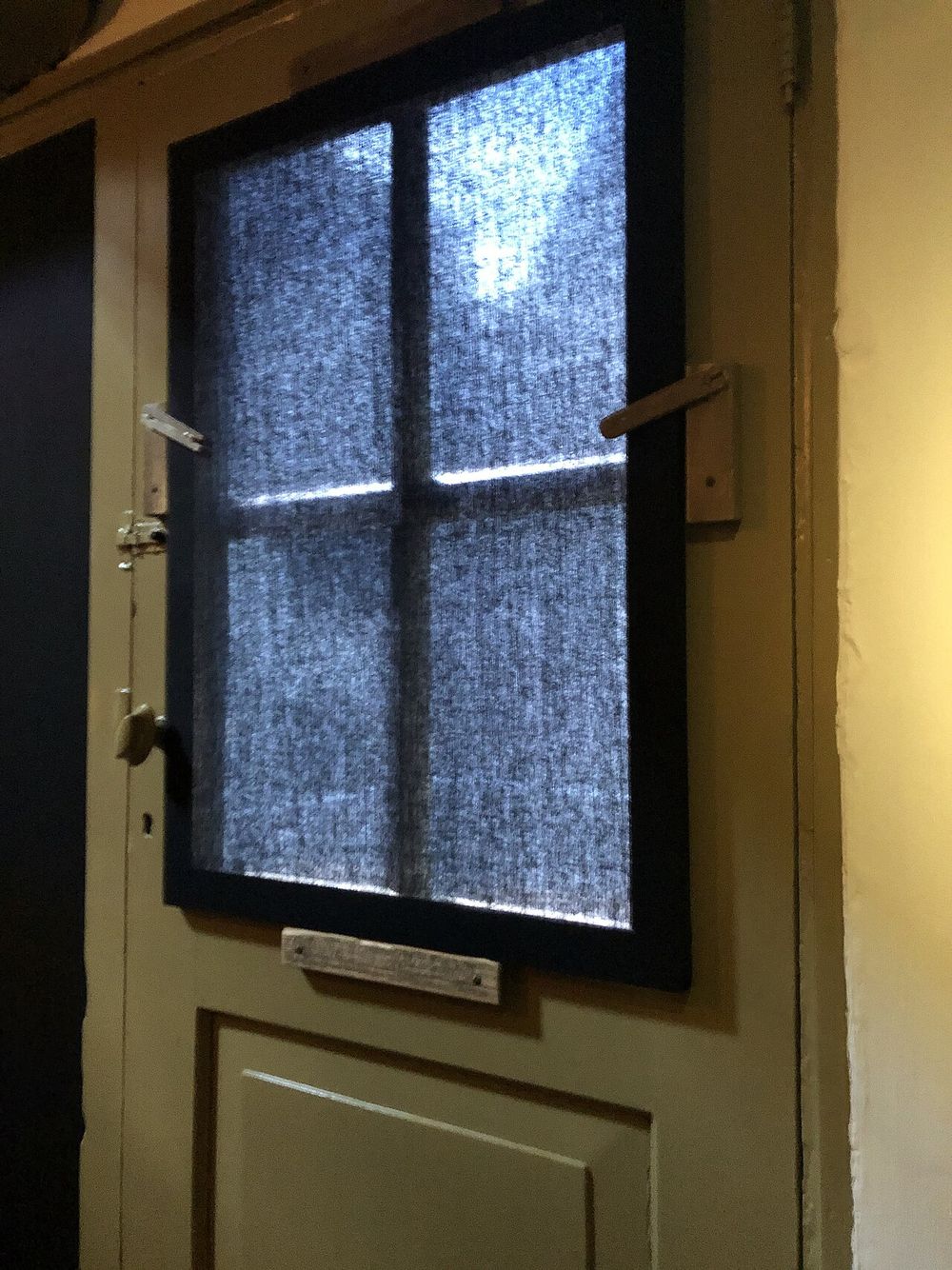
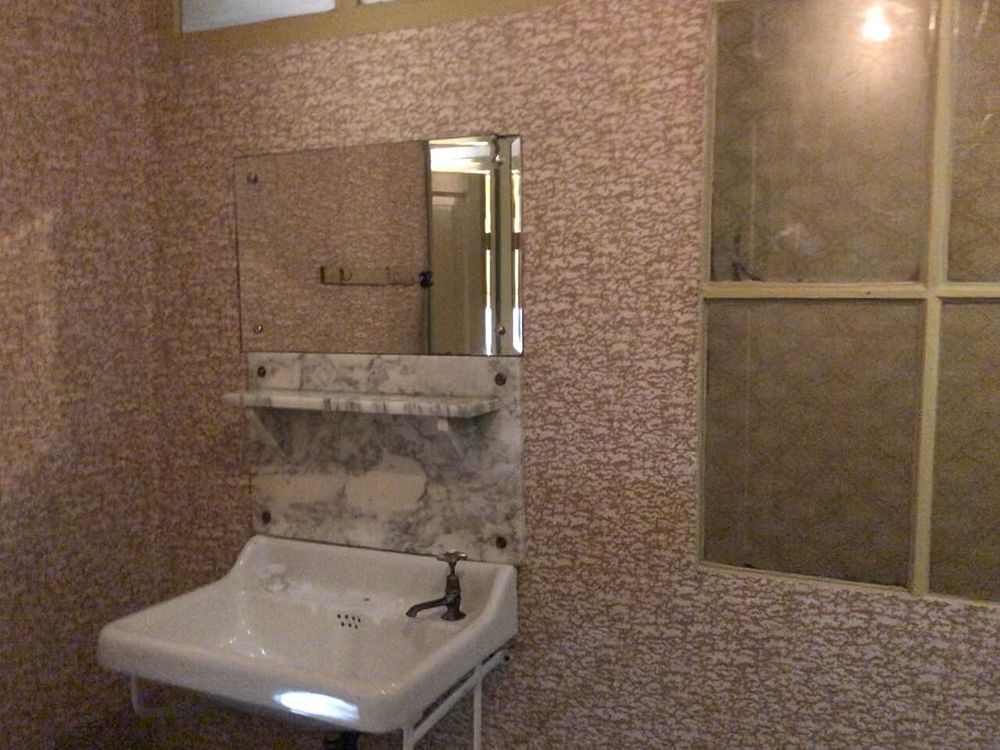
The rooms behind it have no furniture. Otto Frank asked for that when the museum opened in 1960. The empty rooms stand for what was taken away.
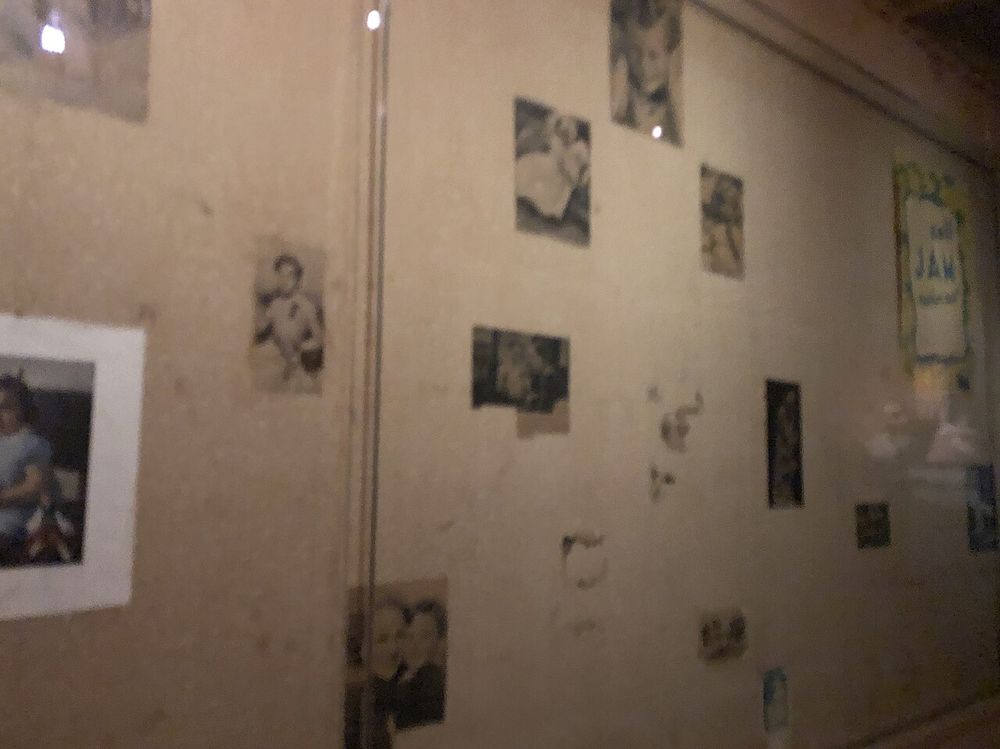
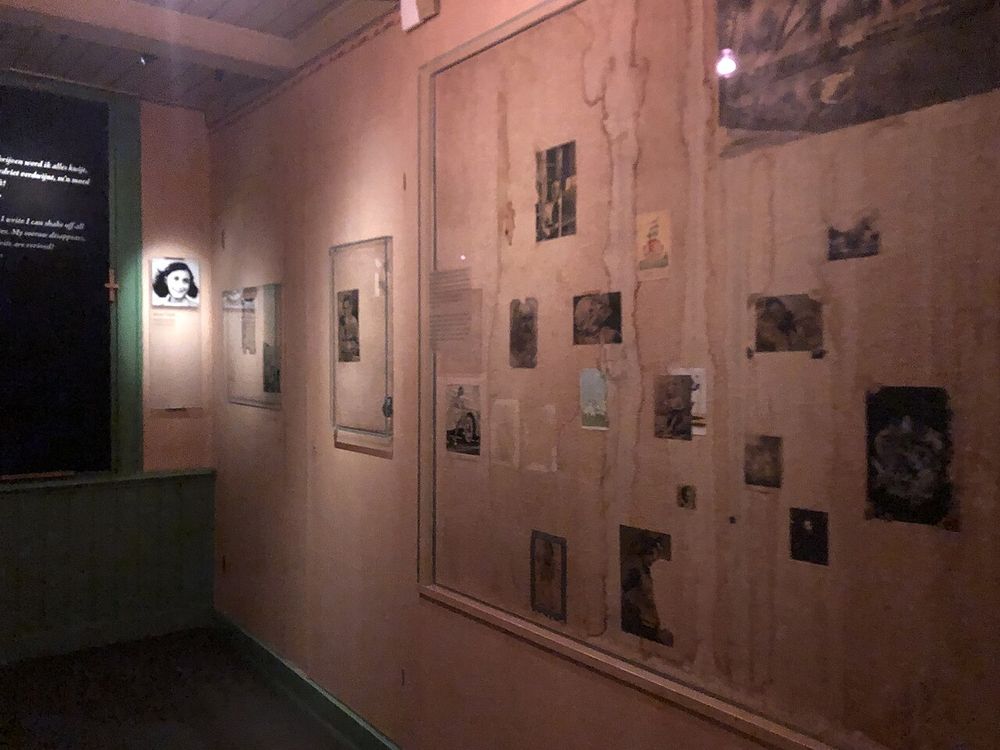
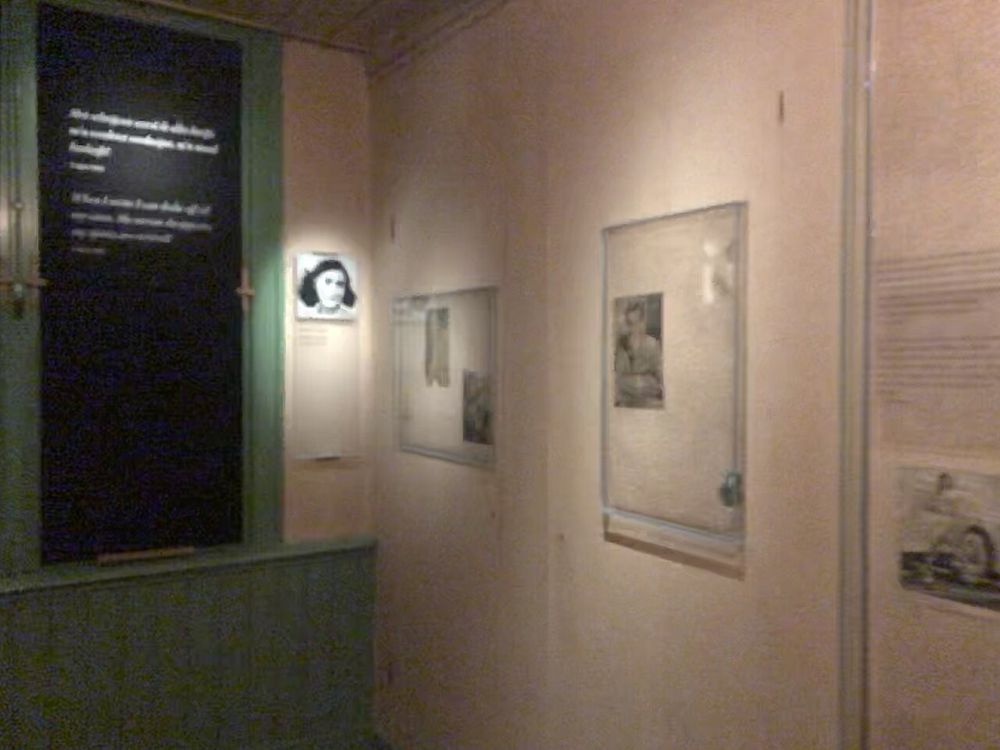
On the wall of Anne's room the pictures she glued up are still there: film stars, a royal princess, a painting by an old Dutch master. A girl of thirteen made her room her own.
Things people often get wrong
"You can buy a ticket at the door." You cannot. Every ticket is sold on the museum's own website, for a set time, and sells out weeks ahead. People who sell entry in the street are cheating you.
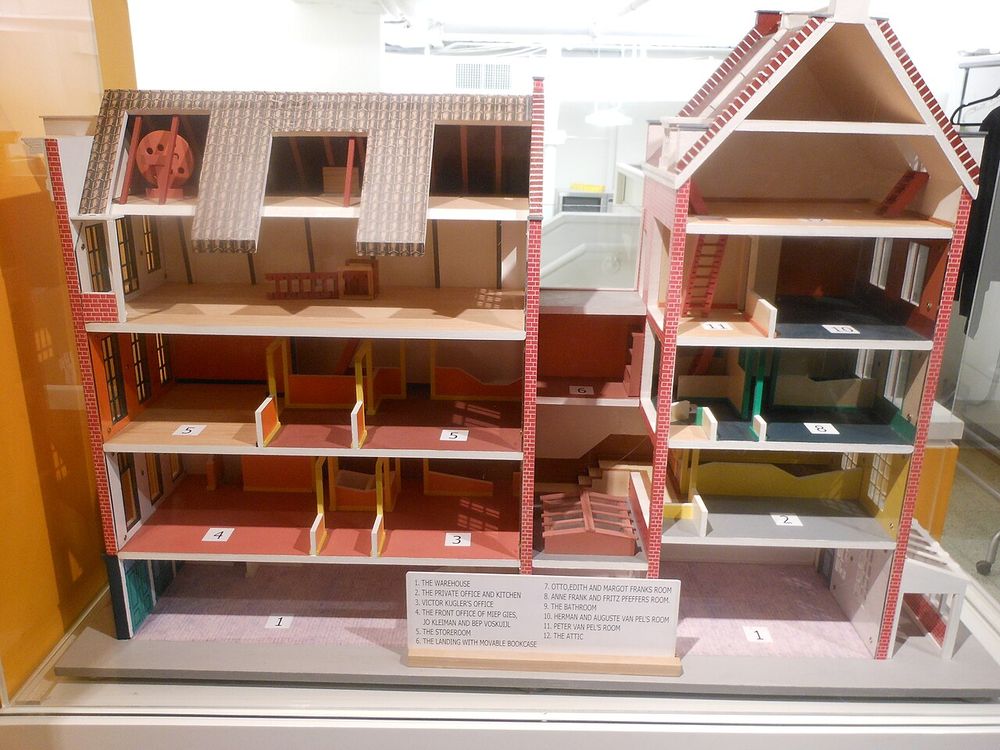
"The family hid in an attic." They hid in a whole wing of three floors and an attic, behind the business. The attic was only the top of it.
"Anne died in Auschwitz." She and her sister Margot were sent on to Bergen-Belsen in Germany, and died there of typhus early in 1945, weeks before the camp was freed.
"We know who betrayed them." We do not. Several people have been named over eighty years. None of the cases has been proved.
"The diary is a novel." It is a real diary. Anne also rewrote parts of it herself in 1944, hoping to publish it after the war. Scientists have tested the ink and paper.
People who stood here
We searched Dutch, English, German and Japanese sources for this list.
Anne Frank (diarist, 1929–1945)Born in Frankfurt, she came to Amsterdam at four. She wrote her diary as letters to an imaginary friend she called Kitty. In March 1944 she heard a minister on London radio ask the Dutch to keep their wartime diaries, and began to rewrite hers as a book.
Otto Frank (Anne's father, 1889–1980)The only one of the eight to survive. He came back to this building in June 1945, published the diary in 1947, and spent the rest of his life answering letters from readers. He helped save the house from demolition in the 1950s.
Miep Gies (helper, 1909–2010)Born in Vienna, she worked in Otto's office. For two years she bought food for eight people on ration cards that were not theirs. After the arrest she gathered Anne's papers from the floor and kept them unread in her desk. She gave them to Otto when they learned Anne was dead.
Golda Meir (later prime minister of Israel)She came here in 1964, when she was foreign minister. Dutch press photographers followed her up the stair behind the bookcase.
Millie Perkins (American actress)In 1959 she played Anne in the Hollywood film of the diary. Before filming she visited the annex.
Queen Juliana of the NetherlandsShe toured the house with Otto Frank in 1979, the year Anne would have turned fifty.
King Willem-Alexander of the NetherlandsOn 22 November 2018 he reopened the museum after two years of renewal, with a new entrance and an audio tour in nine languages.
Shimon Peres (president of Israel, Nobel Peace Prize)He made a private visit on 29 September 2013.
Justin Bieber (Canadian singer)In April 2013 he wrote in the guest book that he hoped Anne "would have been a belieber". The line went round the world, and so did the anger. Others pointed out that millions of his young fans heard Anne's name that week.
Brigitte Macron (wife of the French president)She came with Queen Máxima of the Netherlands and wrote in the guest book that Anne had touched their hearts.
René Descartes (French philosopher, "I think, therefore I am")In 1634, the year before this house was built, he lived across the square at Westermarkt 6. A plaque marks the house.
Rembrandt (Dutch painter)He was buried in 1669 in the Westerkerk, the church whose tower you see from the annex window. No one knows where in the church the grave is.
Go deeper: eight stops, from the canal to the attic
The route runs one way: through the warehouse and offices in the front house, behind the bookcase, up through the annex, and out by the front. The stairs are steep.
1. The canal and the tower
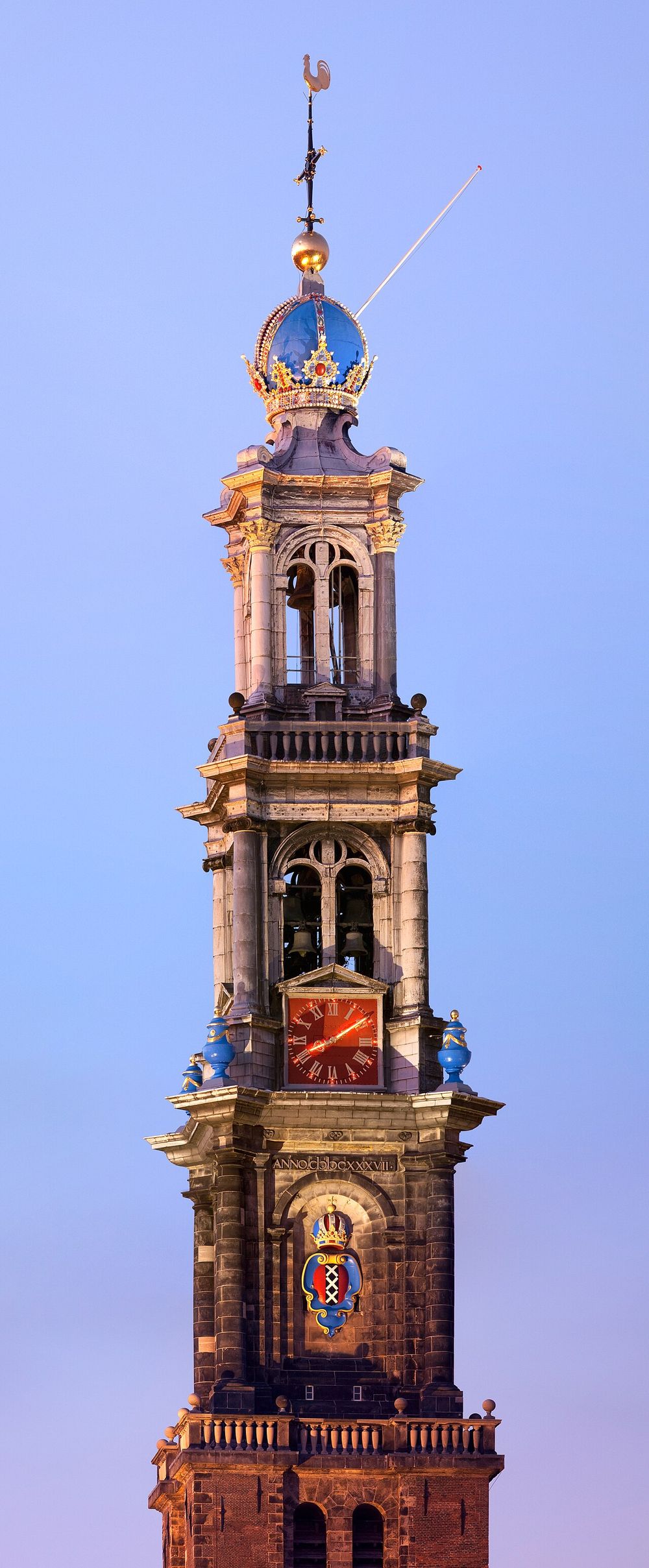
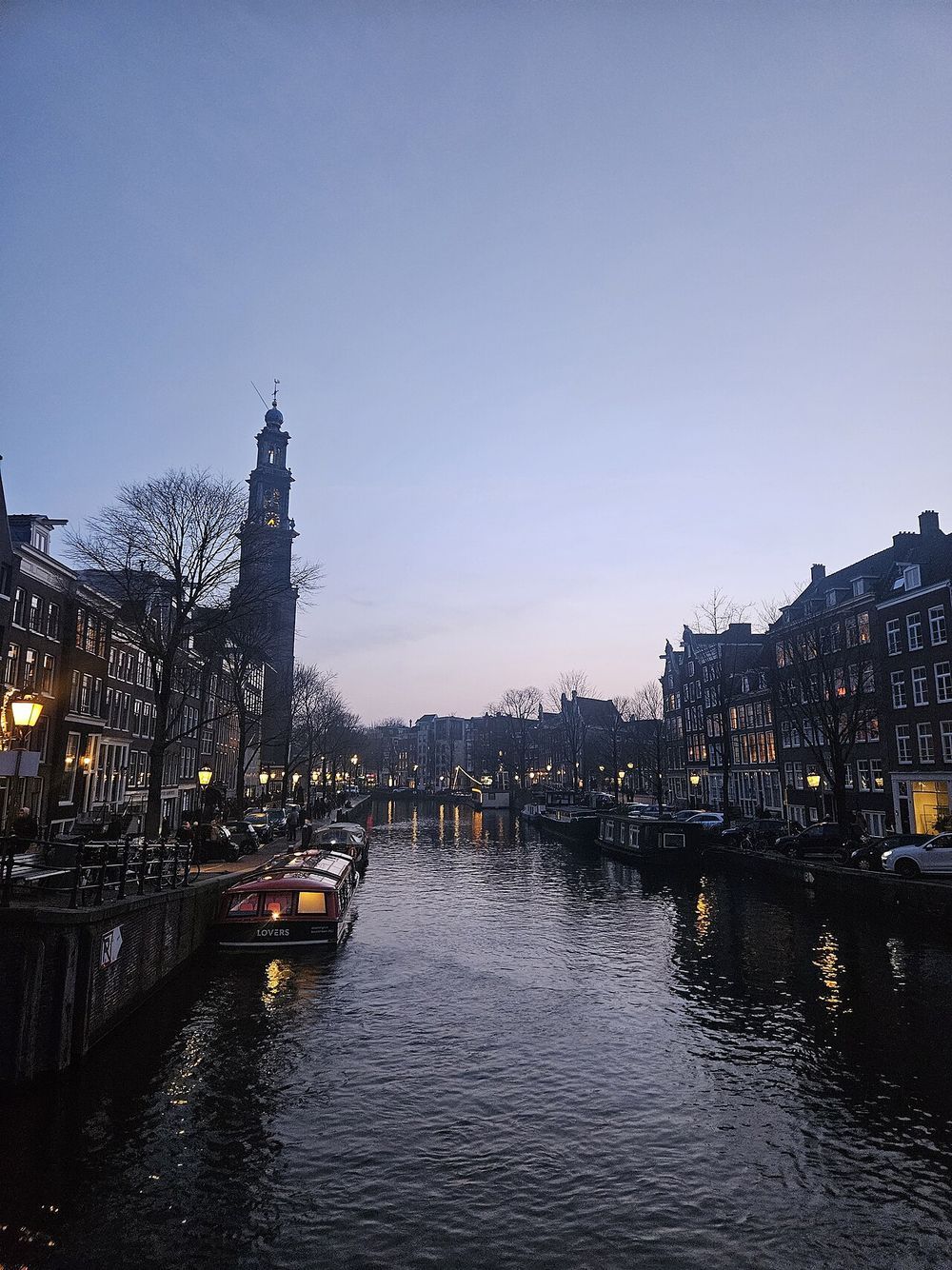
The Westerkerk tower at duskMassimo Catarinella, CC BY 3.0
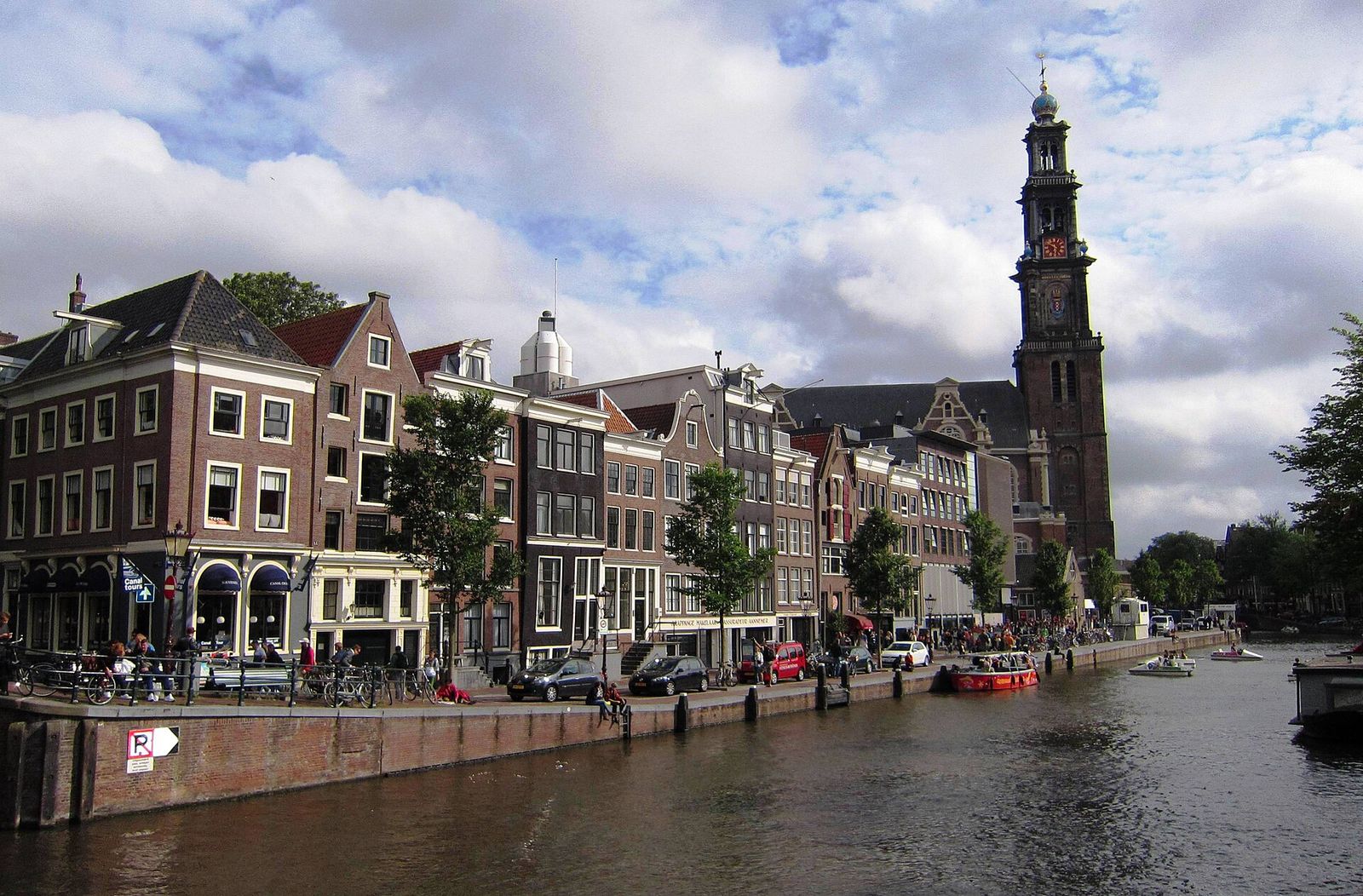
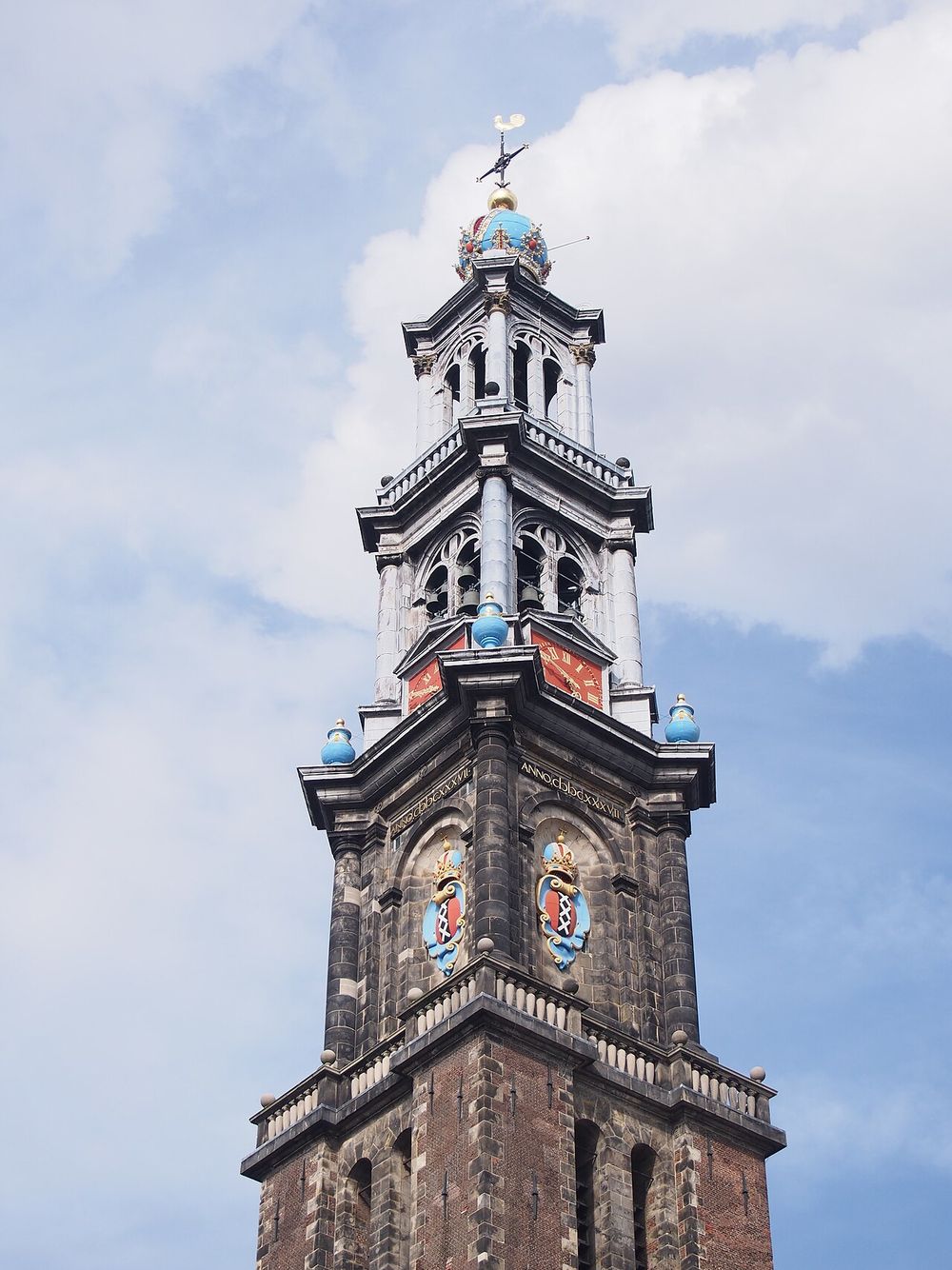
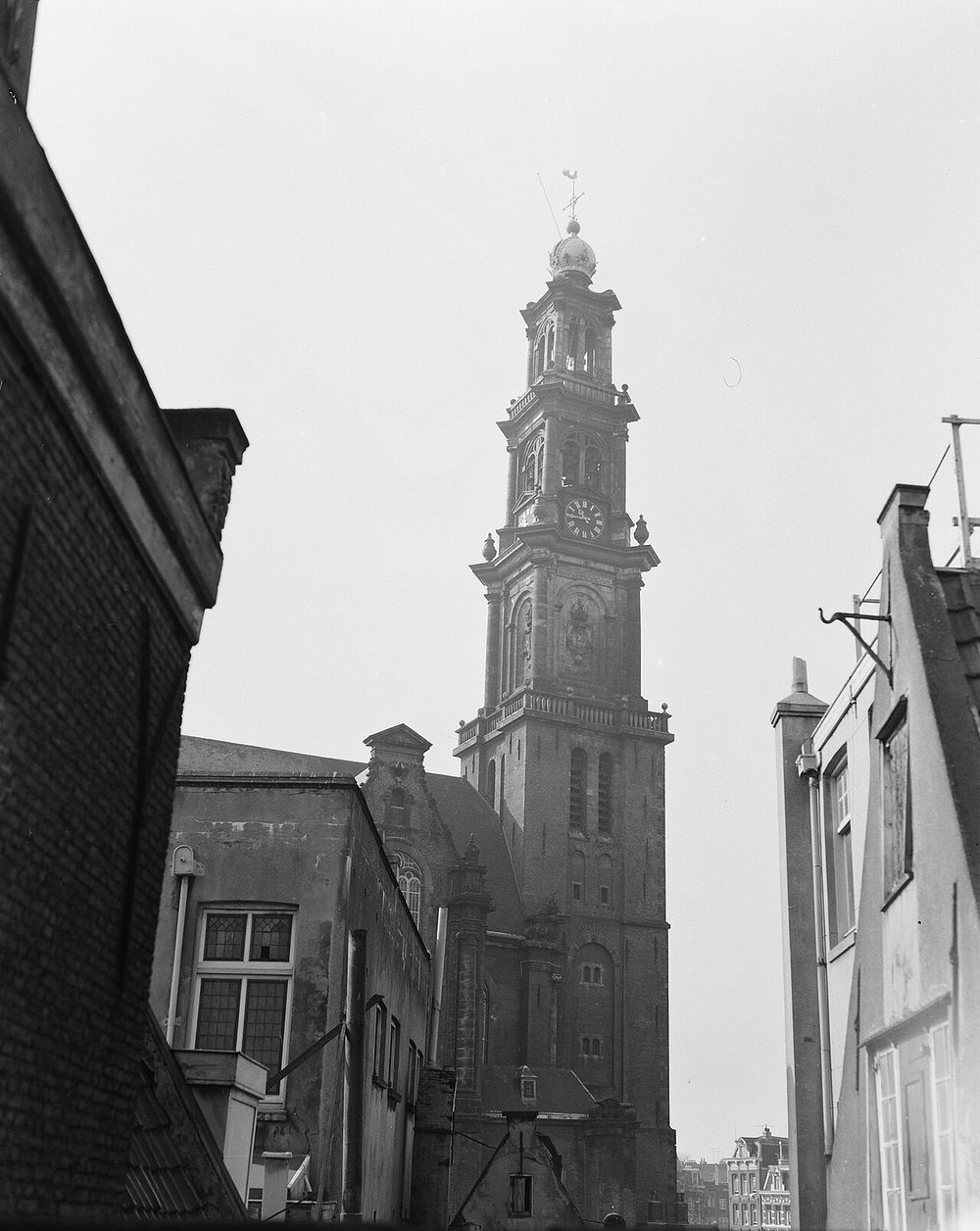
Stand on the bridge over the Prinsengracht and look along the canal. The tall tower is the Westerkerk, finished in 1631. At 85 metres it is still the highest church tower in the city. On top sits the crown of Emperor Maximilian, which he gave Amsterdam the right to use in 1489.
Its clock chimed every quarter of an hour. On 11 July 1942, five days into hiding, Anne wrote that her parents and sister could not get used to the chimes. She liked them from the start. They sounded so reassuring, she said, especially at night.
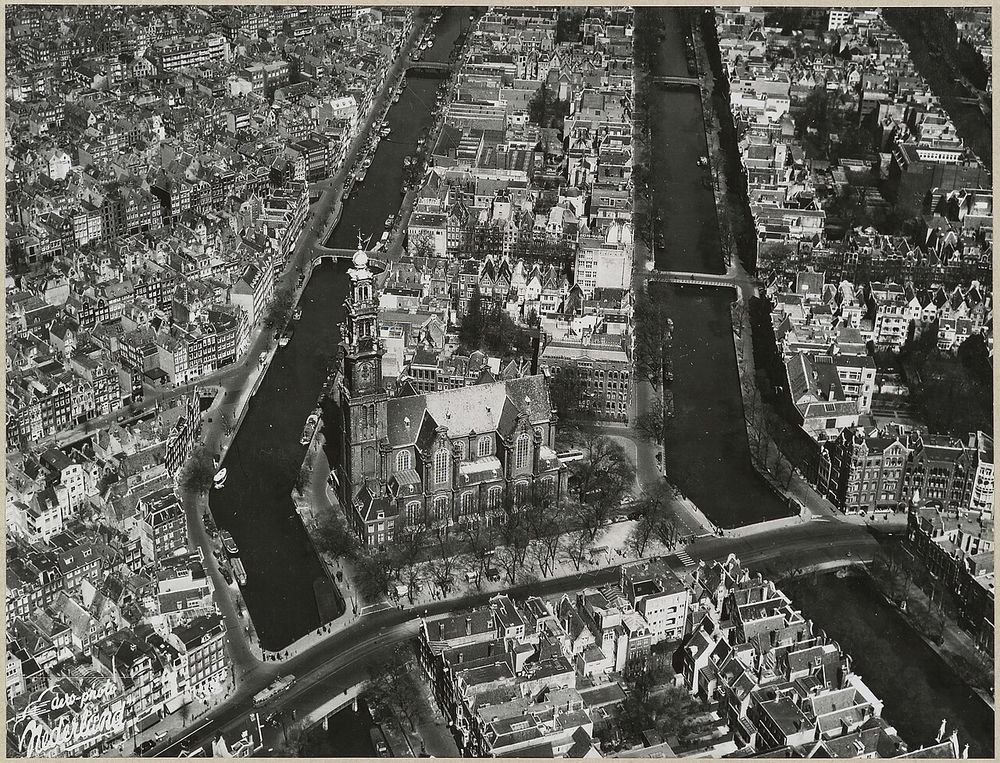
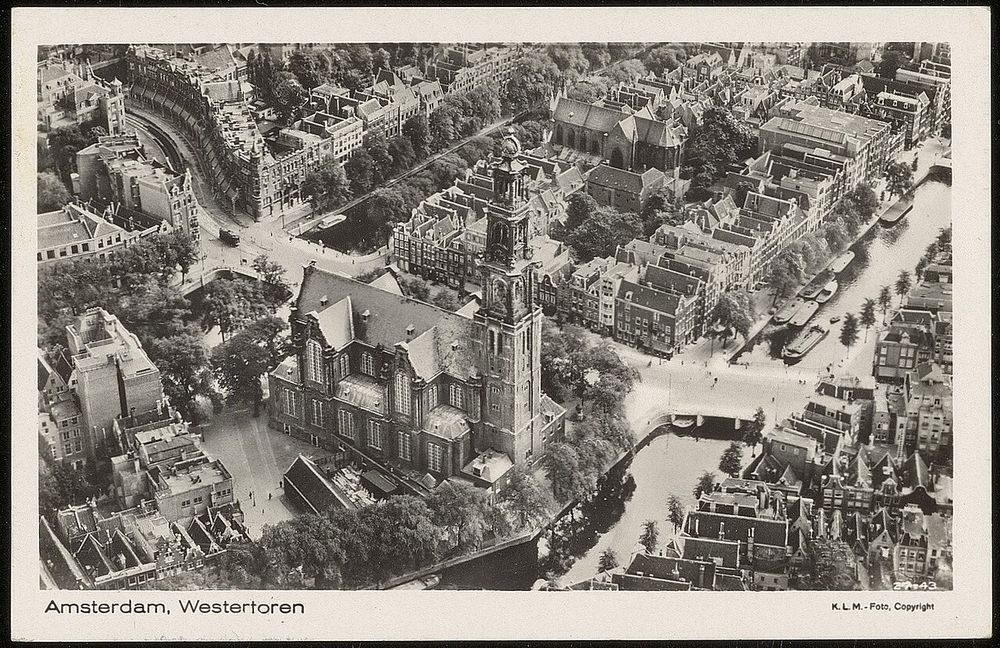
The Westerkerk and the canal ring from the airAEROPHOTO (Fotograaf), CC BY-SA 4.0
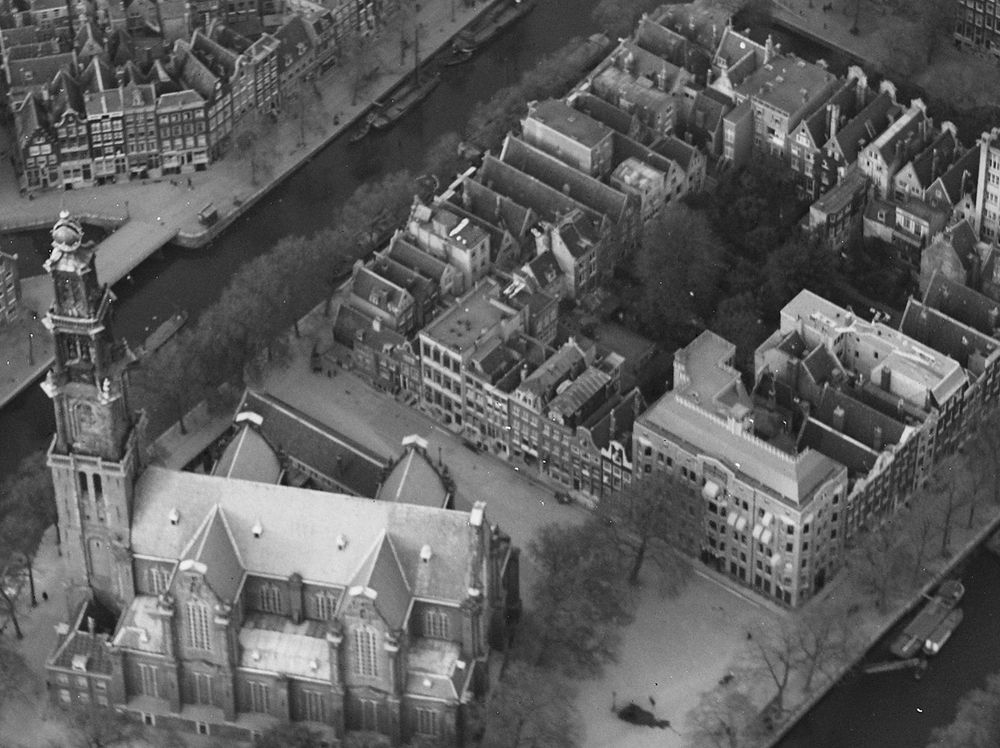
From the air you can see how these houses work. A front house faces the canal. A back house stands behind a small yard, invisible from the street. Thousands of Amsterdam houses are built this way. That was what made the hiding place possible, and also why it could be found.
2. The warehouse and the offices
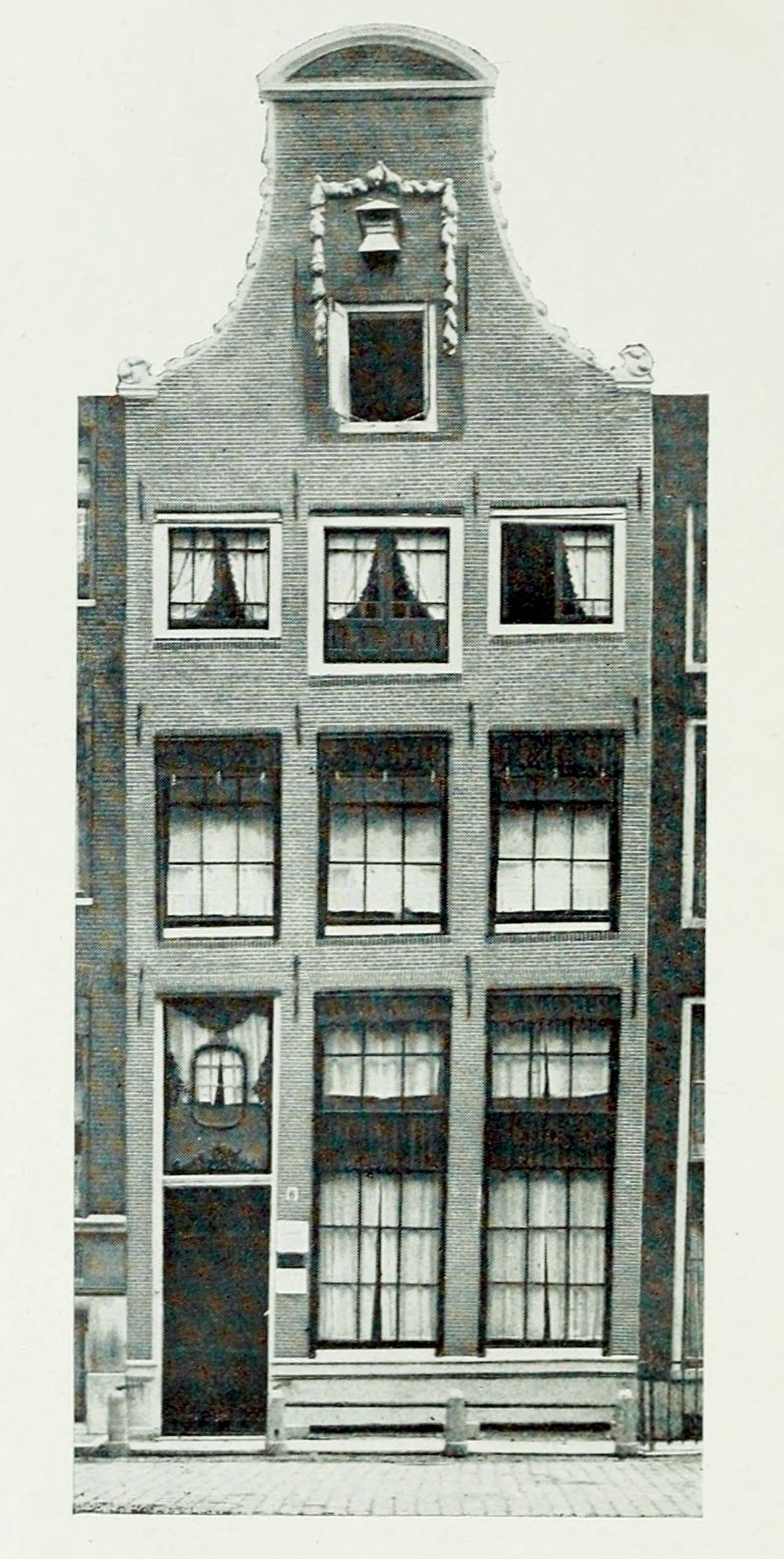
Prinsengracht 263, the house itselfRudolphous (talk), CC BY-SA 3.0 nl
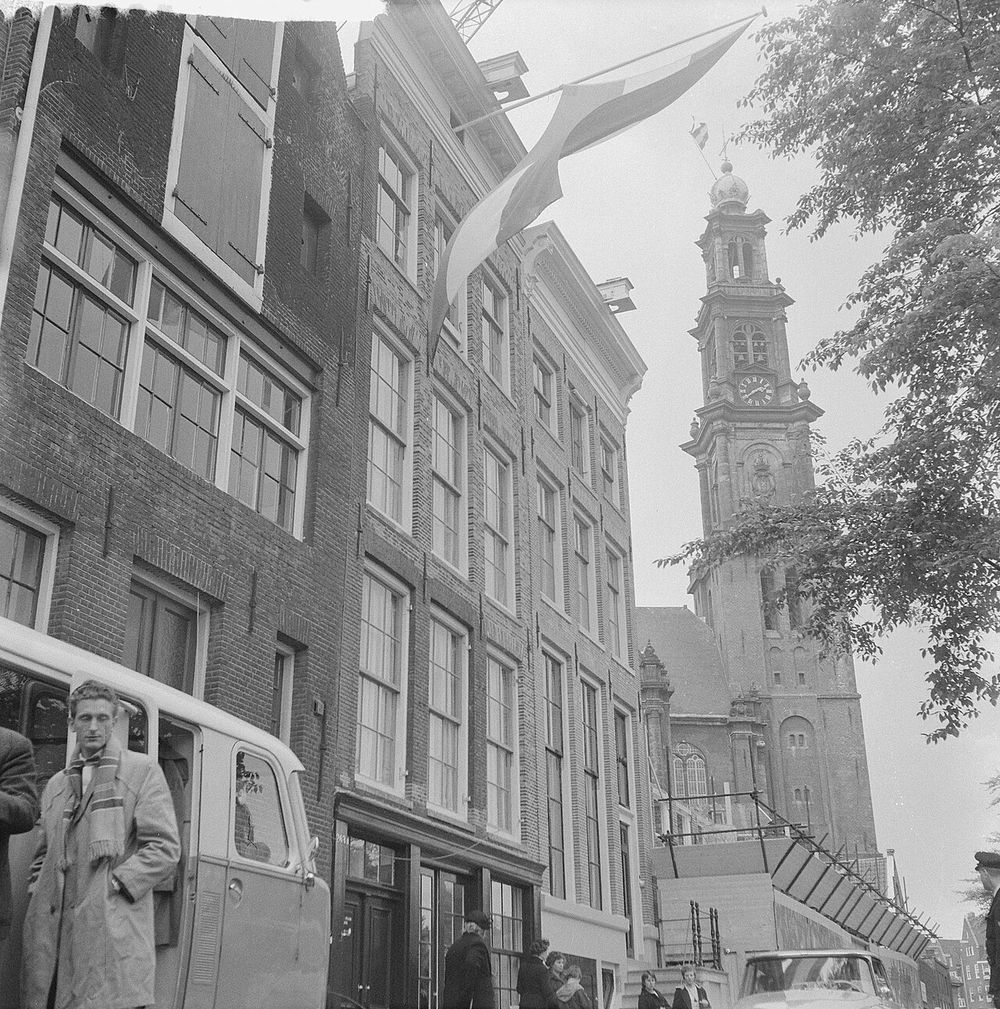
The house was built in 1635 for a merchant. Otto Frank's firm moved here on 1 December 1940. Opekta sold pectin, and a second firm, Pectacon, sold herbs and spices for butchers. The warehousemen below did not know who was living over their heads.
During working hours the eight in the annex could not run a tap or flush the toilet. Every sound carried down to the warehouse. They took off their shoes.
Upstairs are the offices where the four helpers worked: Miep Gies, Bep Voskuijl, Johannes Kleiman and Victor Kugler. Each of them risked prison or a camp, every day for two years.
3. The bookcase
The bookcase and its grey filesDennis G. Jarvis, CC BY-SA 2.0
At first the door to the annex was an ordinary door. In August 1942 Bep's father, Johan Voskuijl, who worked in the warehouse, built a bookcase in front of it. It is filled with grey office files and swings out on hinges.
The stair behind the bookcase, 1957Wim van Rossem for Anefo, CC BY-SA 3.0 nl
Behind it the stair is almost a ladder. This photograph was taken in 1957, when the building stood empty and was in danger of being pulled down.
4. The Franks' rooms and Anne's wall
The room Anne shared with Fritz PfefferHanno Lans, CC0
On the first floor of the annex the Franks had two small rooms. Anne first shared a room with her sister. When Fritz Pfeffer arrived in November 1942, Anne had to share hers with him, a man of fifty-three. They quarrelled over the table by the window, where she wanted to write.
Anne's wall of pictures, behind glassHanno Lans, CC0
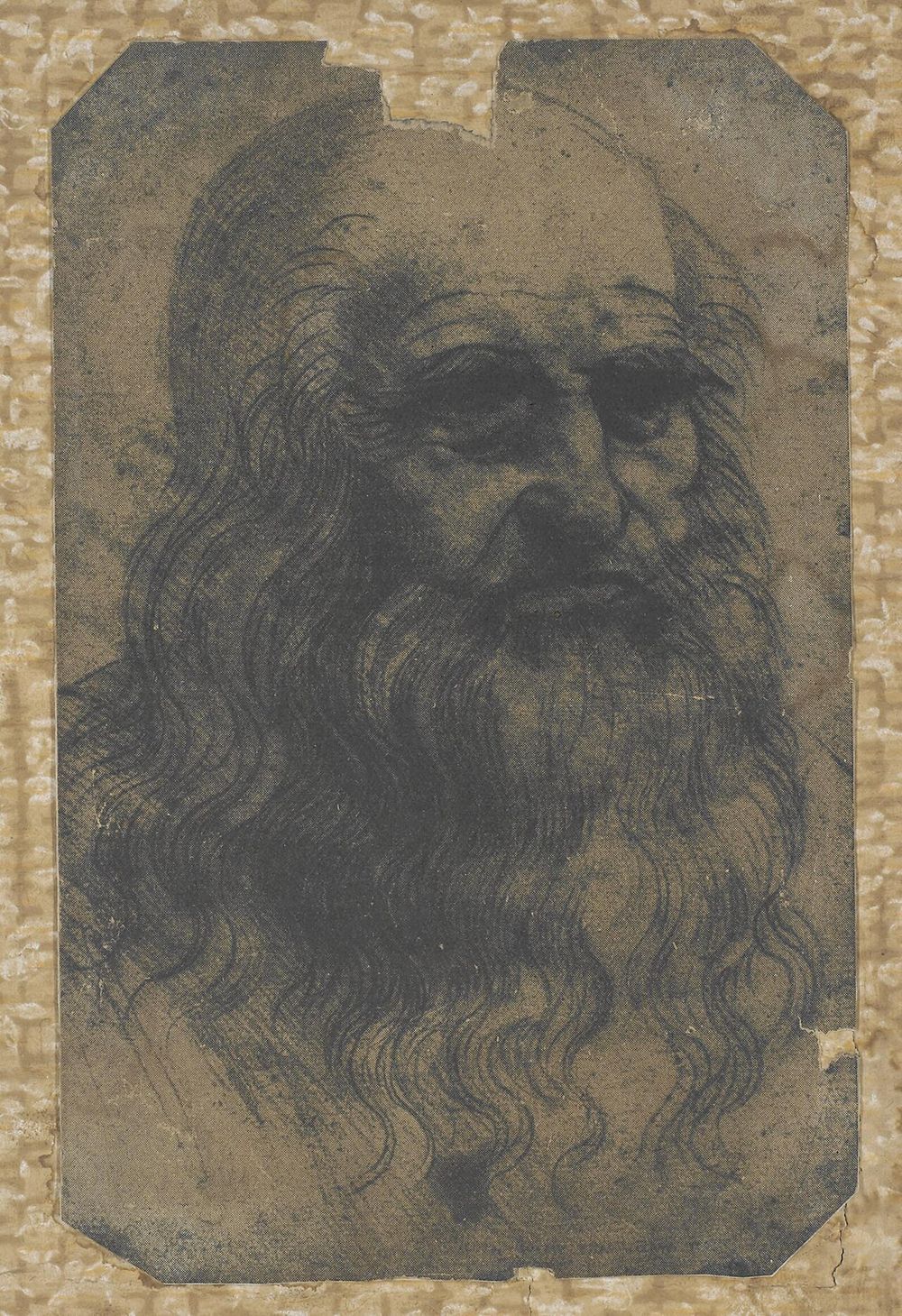
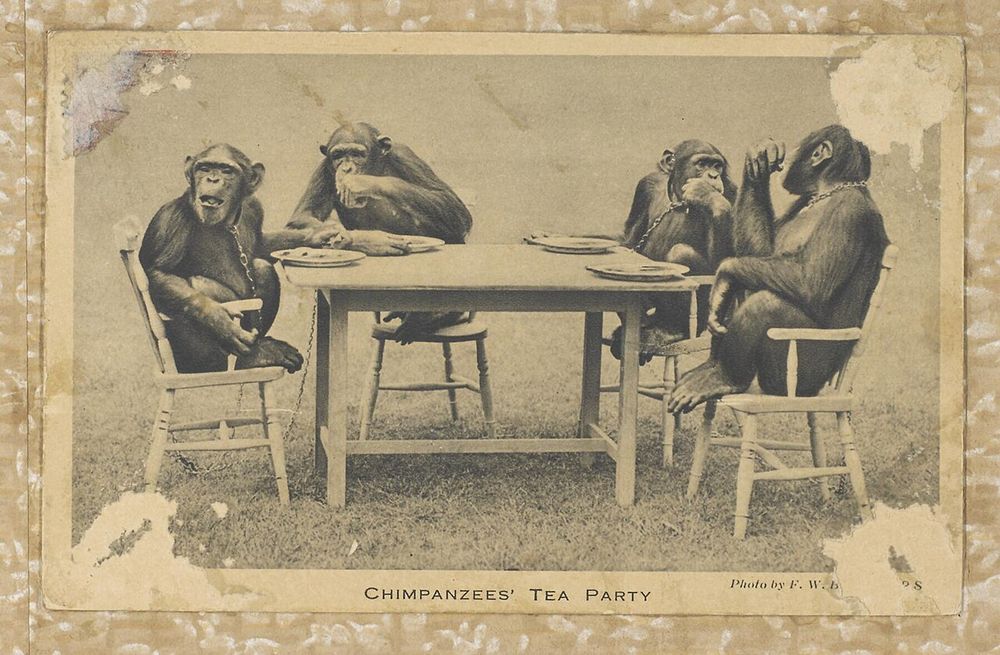
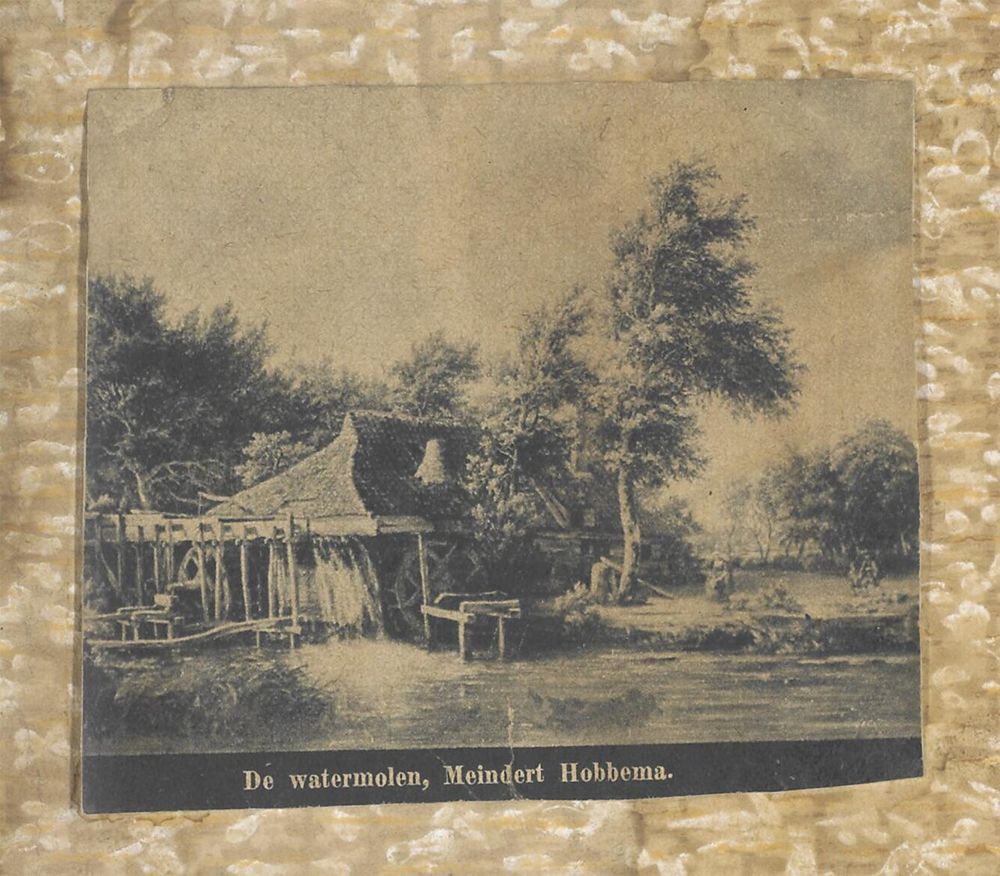
The pictures on the wall are hers, kept behind glass. Look for the American film star Deanna Durbin, Greta Garbo, and the young Princess Elizabeth of Britain. There is a postcard of chimpanzees at a tea party, a watermill by the Dutch painter Meindert Hobbema, and Leonardo da Vinci's self-portrait.
Leonardo da Vinci, from Anne's wallLeonardo da Vinci, Public domain
The princess on the wall, later Queen Elizabeth II, was only three years older than Anne. She lived to be ninety-six.
The chimpanzees' tea party, a postcard from Anne's wallFrederick William Bond, Public domain
On the door frame are pencil marks where Otto measured how tall his daughters had grown. Anne grew fast in hiding, and outgrew her clothes and shoes.
5. The van Pels' kitchen and Peter's room
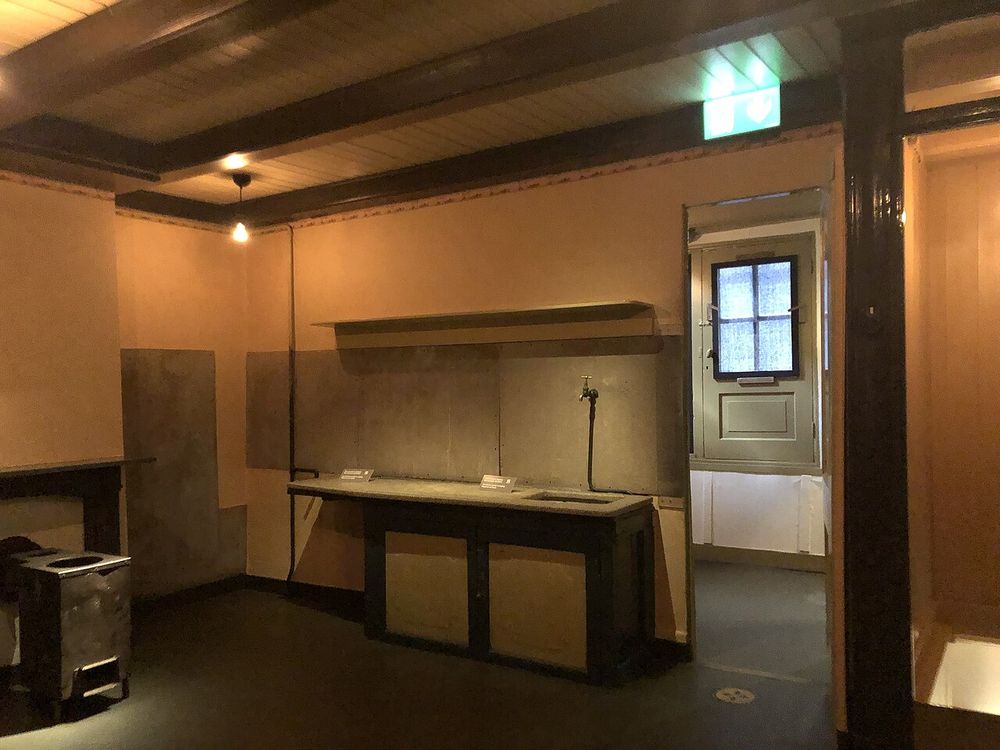
The kitchen on the second floorHanno Lans, CC0
The second floor was the van Pels' room by night and everyone's kitchen and dining room by day. Here the eight ate together, followed the war on the BBC and Radio Orange from London, and argued.
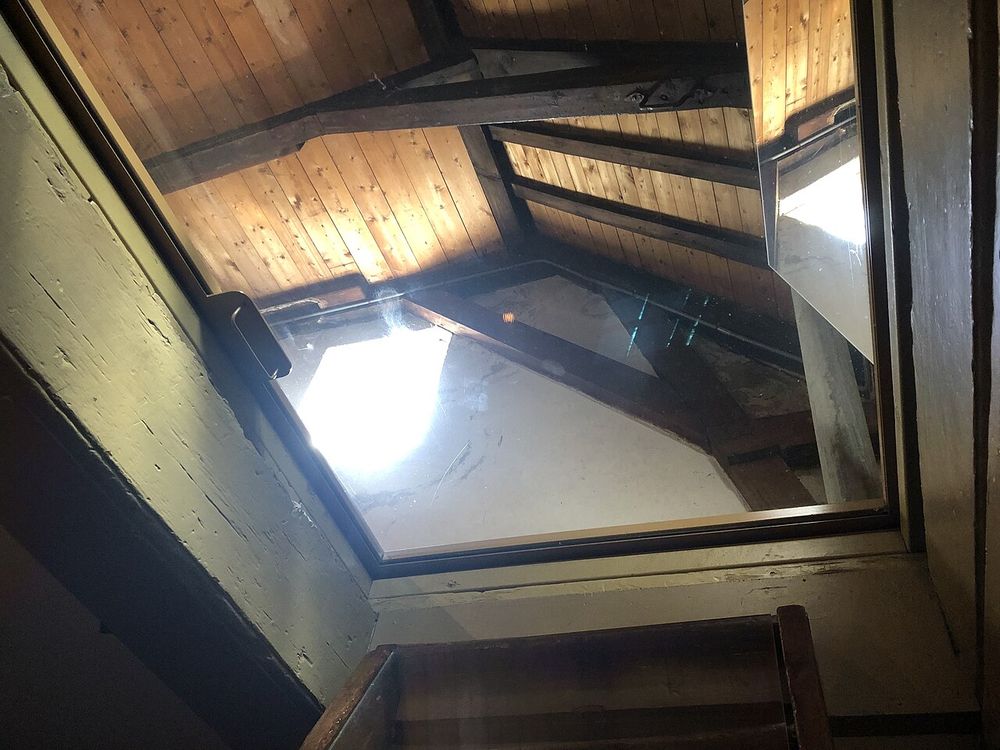
Next to it is the tiny room of their son Peter, three years older than Anne. From his room a ladder leads to the attic. In the spring of 1944 Anne and Peter went up there together to talk, and she wrote about her first kiss.
6. The attic window and the chestnut tree
The tower through the attic window, 1960Henk Lindeboom/ Anefo, CC0
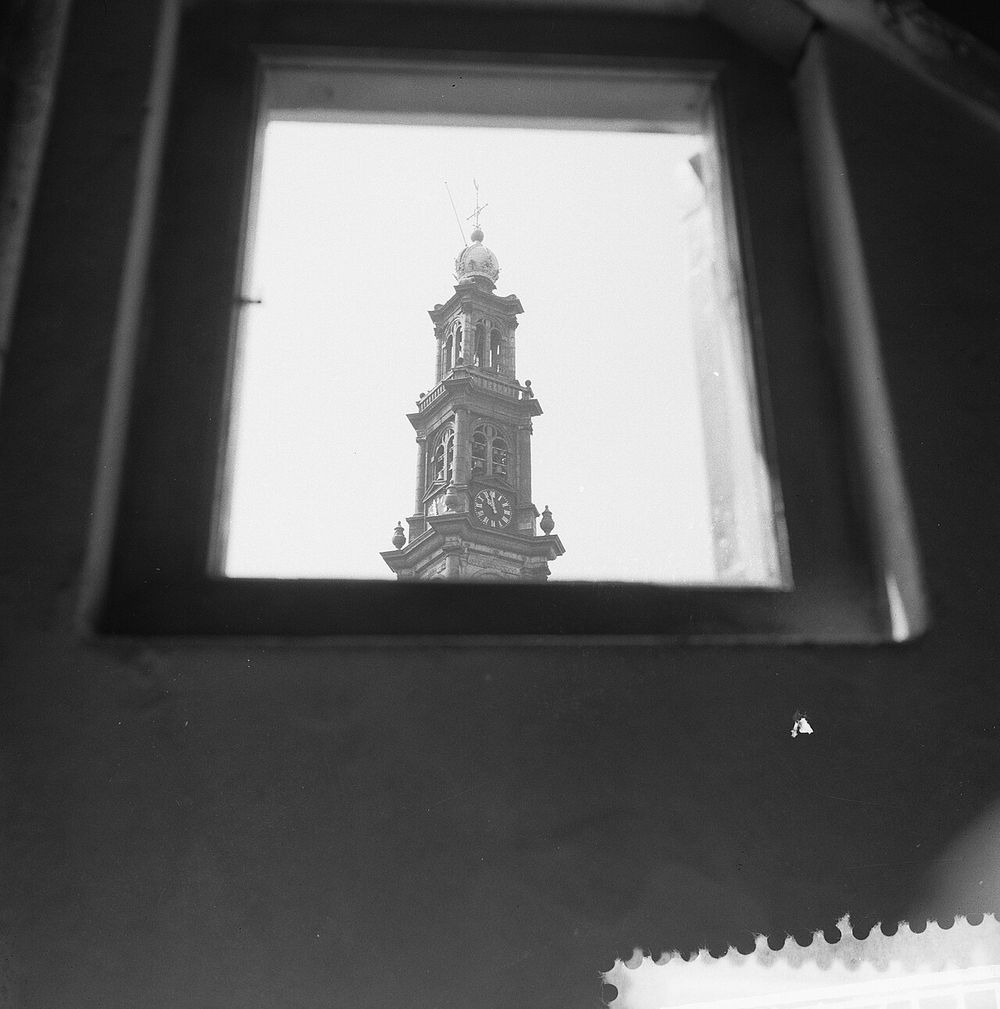
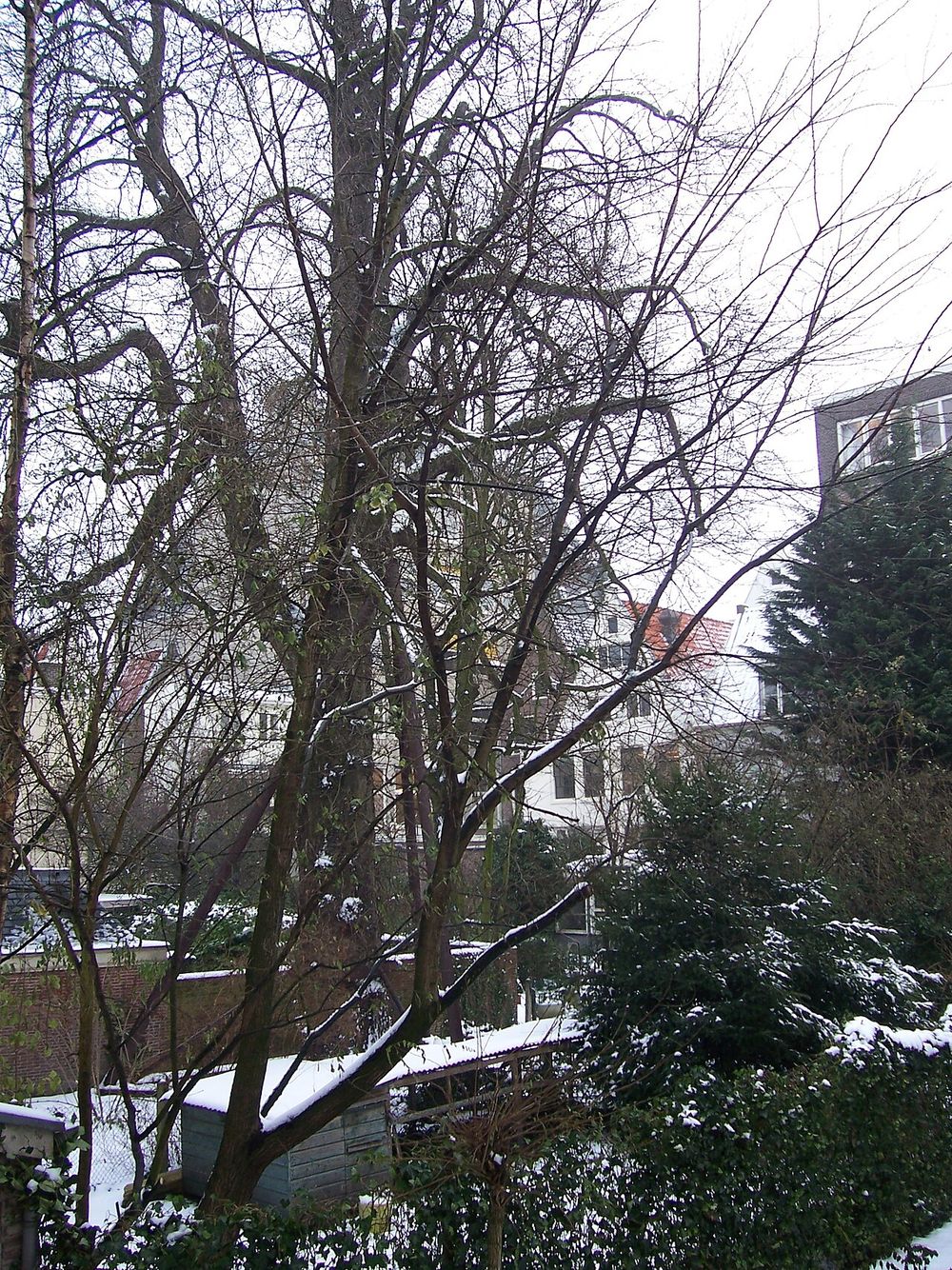
The attic is seen from below, through the opening. From its window Anne could see the Westerkerk tower and a great horse chestnut tree in the yard. On 23 February 1944 she wrote that she and Peter looked out at the bare tree and the blue sky, and could not speak.
The chestnut tree in its last winter, 2010Paul Munhoven, CC BY-SA 3.0
The tree was about 170 years old and sick with fungus. A storm brought it down on 23 August 2010. Its chestnuts had been sown first, and young trees grown from them now stand in many countries.
One of its chestnuts, in the RijksmuseumRijksmuseum, CC0
The Rijksmuseum, the national museum, keeps one of its chestnuts in a block of clear plastic.
7. The diary
Near the end of the route, in the front house, the red-and-white checked notebook lies in a glass case. Anne got it for her thirteenth birthday on 12 June 1942, three weeks before the family went into hiding. The last entry is dated 1 August 1944.
She filled it, and went on in exercise books and on loose sheets. After the arrest Miep Gies picked them up from the floor and locked them in her desk. Otto published a selection on 25 June 1947 under the title Anne had chosen, Het Achterhuis.
Also in the museum is the Oscar that the actress Shelley Winters won for playing Mrs van Pels in the 1959 film. She gave it to the house.
8. Out by the front, and the same years in China
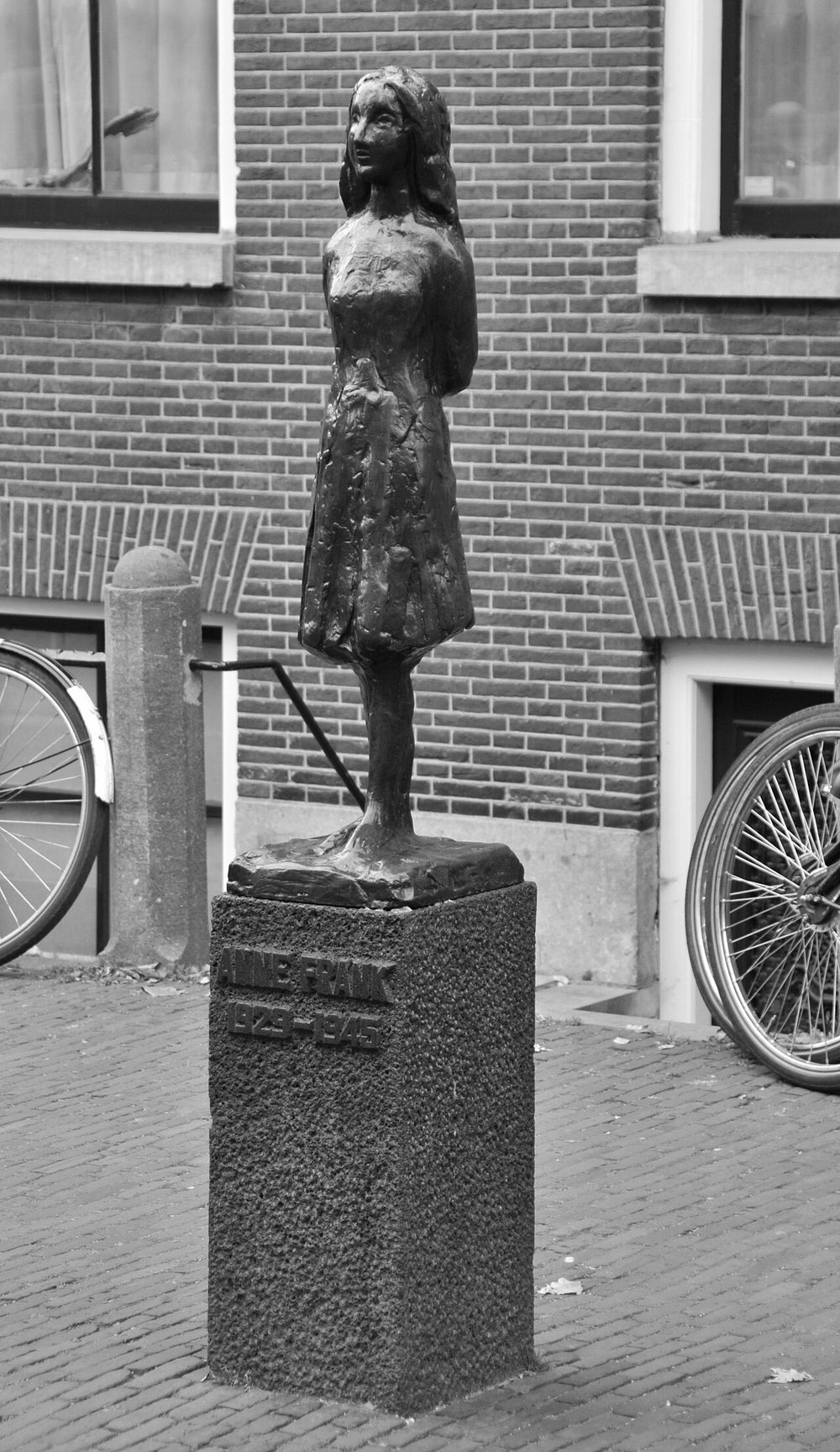
Anne on the Westermarkt, by Mari Andriessen, 1977Hnapel, CC0
Outside, round the corner on the Westermarkt, a small bronze girl stands with her hands behind her back. Mari Andriessen made her in 1977. Across the same square is the Homomonument, three pink granite triangles, remembering gay men and women persecuted then and since.
While Anne wrote here, China was in the sixth and seventh years of its war against Japan. In the same months, Jewish refugees from Germany and Austria were living in the Hongkou district of Shanghai, one of the few places in the world that took them in without a visa. About eighteen thousand survived the war there.
Anne wrote on 15 July 1944, three weeks before the arrest, that in spite of everything she still believed people were really good at heart. Many visitors leave with that sentence.
Meanwhile in the world
Year
Here
Elsewhere
1631
The Westerkerk is finished
Rembrandt moves to Amsterdam
1635
The house is built
The Dutch East India Company rules Taiwan from Fort Zeelandia
1940
Germany occupies the Netherlands; Otto's firm moves in
The Battle of Britain
1942
6 July: the family goes into hiding
The Battle of Midway; the first gas chambers at Auschwitz-Birkenau
1944
4 August: arrest
25 August: Paris is freed
1945
Anne dies at Bergen-Belsen; Otto comes back
The war in Europe ends in May
1947
The diary is published
India and Pakistan become independent
1960
The museum opens on 3 May
John F. Kennedy is elected
One line to remember: eight people, one bookcase, two years, one survivor, one diary.
Then and now
The Prinsengracht and the Westerkerk towerMartin Furtschegger, CC BY 3.0, Wikimedia CommonsThe canal front, 2022Lệ Xuân, CC BY-SA 4.0, Wikimedia CommonsNumber 263 and the museum wing, 2015Dietmar Rabich, CC BY-SA 4.0, Wikimedia CommonsPrinsengracht 263, the house itselfRudolphous (talk), CC BY-SA 3.0 nl, Wikimedia CommonsThe museum wing on the cornerAnk Kumar, CC BY-SA 4.0, Wikimedia CommonsThe Westerkerk tower at duskMassimo Catarinella, CC BY 3.0, Wikimedia CommonsThe crown of Maximilian on the towerC messier, CC BY-SA 4.0, Wikimedia CommonsThe Westerkerk and the canal ring from the airAEROPHOTO (Fotograaf), CC BY-SA 4.0, Wikimedia CommonsThe Prinsengracht at night, 2026Cristalmoon 27, CC BY-SA 4.0, Wikimedia CommonsThe back of the annex, seen from the yardHannolans, CC BY 4.0, Wikimedia CommonsThe bookcase, swung openHanno Lans, CC0, Wikimedia CommonsThe bookcase and its grey filesDennis G. Jarvis, CC BY-SA 2.0, Wikimedia CommonsThe room Anne shared with Fritz PfefferHanno Lans, CC0, Wikimedia CommonsAnne's wall of pictures, behind glassHanno Lans, CC0, Wikimedia CommonsA room in the annex, empty as Otto wishedHanno Lans, CC0, Wikimedia CommonsA blacked-out window in the annexHanno Lans, CC0, Wikimedia CommonsThe washroomHanno Lans, CC0, Wikimedia CommonsThe kitchen on the second floorHanno Lans, CC0, Wikimedia CommonsLooking up into the atticHanno Lans, CC0, Wikimedia CommonsA model of the house, cut openAlexisrael, CC BY-SA 3.0, Wikimedia CommonsLeonardo da Vinci, from Anne's wallLeonardo da Vinci, Public domain, Wikimedia CommonsA watermill by Hobbema, from Anne's wallMeindert Hobbema, Public domain, Wikimedia CommonsThe chimpanzees' tea party, a postcard from Anne's wallFrederick William Bond, Public domain, Wikimedia CommonsThe chestnut tree in its last winter, 2010Paul Munhoven, CC BY-SA 3.0, Wikimedia CommonsOne of its chestnuts, in the RijksmuseumRijksmuseum, CC0, Wikimedia CommonsAnne on the Westermarkt, by Mari Andriessen, 1977Hnapel, CC0, Wikimedia CommonsThe house in 1957, empty and threatenedWim van Rossem for Anefo, CC0, Wikimedia CommonsThe back of the annex in 1957Wim van Rossem for Anefo, CC0, Wikimedia CommonsThe Westertoren from the annex, 1957Wim van Rossem for Anefo, CC0, Wikimedia CommonsThe tower through the attic window, 1960Henk Lindeboom/ Anefo, CC0, Wikimedia CommonsThe stair behind the bookcase, 1957Wim van Rossem for Anefo, CC BY-SA 3.0 nl, Wikimedia CommonsThe house the year after it opened, 1961Jack de Nijs for Anefo, CC0, Wikimedia CommonsThe Westerkerk and the house from the air, 1920–1940Unknown photographerUnknown photographer, CC BY-SA 4.0, Wikimedia CommonsThe Westerkerk from the air, an old KLM postcardKLM Luchtfotografie, Public domain, Wikimedia CommonsWestermarkt 6, where Descartes lived in 1634Unknown authorUnknown author, Public domain, Wikimedia Commons
Local legends
These are stories people tell about this place. They are legends, not history, and each one says where it comes from.
LegendThe crown on the tower
Emperor Maximilian is said to have fallen ill on a pilgrimage to Amsterdam's shrine of the Holy Place, recovered, and given the city his crown for its arms in thanks. That is why the crown sits on top of the Westertoren.
Source: Amsterdam tradition; historians point rather to the money the city lent him
Later, people who live here will be able to add the stories they grew up with, and say which of these they have heard.
Not certain, and where accounts conflict
Who betrayed them?
Police inquiries in 1947–48 and 1963–64 found no one. Writers have named a warehouseman, a cleaner's family and others. In 2022 a team led by a former FBI agent named a Jewish notary, Arnold van den Bergh. Dutch historians criticised the evidence, and the publisher of the book apologised and withdrew the Dutch edition. The museum's own research of 2016 suggested the police may have come about ration fraud, not about the hiding place.
When did Anne die?
The Dutch Red Cross gave a date in March 1945. Research published by the Anne Frank House in 2015, drawing on survivors' accounts, puts the deaths of Margot and Anne in February 1945.
How old is the annex?
The front house dates from 1635. The present back house is usually dated to about 1740, replacing an earlier one. Building historians are not fully agreed.
16.50 euros for adults, 7 euros for ages 10 to 17, 1 euro under 10, booking fee included. The museum says the adult price rises to 17 euros in 2027.
Open every day 9:00 to 22:00. Shorter hours on King's Day (27 April) and on 25 and 31 December. Closed on Yom Kippur (21 September in 2026).
A ticket with a 30-minute introduction before the visit costs more.
Last checked 2026-11-12. The museum's own ticket page, opened on 12 November 2026.
Booking from abroad
Official page in English Tickets are sold only on the museum's own site, annefrank.org, in English and other languages, paid by bank or credit card. Every Tuesday at 10:00 Amsterdam time the tickets for the week six weeks later go on sale. Each ticket is for a set time slot and cannot be changed or refunded.
Ticket window on site There is no ticket desk at the museum. Nothing is sold at the door.
Note The I amsterdam City Card does not give entry. Holders of the Dutch Museumkaart pay only the 1 euro booking fee, but must still book.
Checked 2026-11-12
Where to start
The entrance is round the corner at Westermarkt 20, not at the canal door. Tram 13 or 17 to Westermarkt. From Central Station it is a twenty-minute walk.
Arrive in your time slot. Latecomers may be turned away.
The visit takes about an hour. A free audio tour is offered in nine languages.
Before or after, walk to the bridge where the Prinsengracht meets the Leliegracht for the view of the house and the tower together.
Before you go
The stairs in the annex are steep and narrow. The annex cannot be reached in a wheelchair. The museum publishes an accessibility guide.
Photography is not allowed inside.
Bags and coats go in the cloakroom. Large luggage is not accepted.
Tickets for summer and holiday weeks go in minutes. Set an alarm for the Tuesday release, Amsterdam time.
Customs and manners
This is a place of mourning. Speak quietly, and keep moving on the narrow stairs.
Many visitors are Jewish, and for some this is the story of their own family. Be careful with jokes and comparisons.
Dutch people are direct. If staff ask you to move on or to put a phone away, they mean it, and it is not rude.
Outside, watch for bicycles. The red paths are for bikes, and riders will not slow down.
Opening hours are given in the local time of the place. Prices are in the local currency. The figure after ≈ is approximate, at exchange rates checked on 9 November 2026, in .
Look for these
On the canal, find the hook at the top of the gable. What was it for? (Hoisting goods and furniture up the outside.)
Find the grey files on the bookcase. Are they real?
On Anne's wall, find the two princesses.
On the door frame, find the pencil marks. Whose are the highest?
From a window, find the Westertoren clock. Count the strokes at the quarter hour.
On the Westermarkt, find the little bronze girl and the pink triangles.
I am here
Stand at the site, sign in, press the button, and collect its stamp. Your browser will ask to use your location. It is sent to us once to confirm that you are at the site; we keep how far you were from it, not the spot where you stood.
Your stamps are saved to your account, so they follow you to any device. Checking from a browser cannot rule out every false location; stricter checks arrive with the app.
Messages
Share your photos
Photos here show the place, not people. Each one is credited to the visitor who took it and appears after our team has looked at it. A photo with you in it belongs under “I am here”.